Colorado takes important step in resolving Republican River dispute

Republican River Basin

From email from the Colorado Department of Natural Resources (Todd Hartman):

Colorado this week completed successful negotiations with Kansas and Nebraska to allow for operation of the Compact Compliance Pipeline to deliver water to the North Fork of the Republican River in 2014. The agreement marks an important step toward resolving long-standing disputes under the Republican River Compact and providing more certainty to the agricultural economy across the region.

The agreement allows Colorado to operate the pipeline in 2014 and demonstrate its benefits to agricultural operators in Kansas and Nebraska. The 12-mile pipeline will deliver irrigation water directly to the North Fork of the Republican River near the Nebraska state line, providing the water necessary for Colorado to meet its Compact obligations with Kansas and Nebraska.

“This is a great step forward,” said Colorado’s State Engineer Dick Wolfe. “This has been a hard-fought matter, and hopefully this demonstrates that we can work together as three States to address these challenging issues and come to a permanent resolution on the Republican River.”

Colorado sought arbitration of this matter in May after Kansas denied Colorado’s request to operate the pipeline indefinitely to comply with the Compact. This fall, Kansas proposed a path forward that would allow Colorado to operate the pipeline for Compact compliance in 2014 so all parties could gain experience with its operations.

On Thursday, the three states voted to approve a resolution to use the pipeline in 2014. The Colorado Department of Natural Resources and its Division of Water Resources, along with the State Engineer, express their appreciation to the Attorney General’s Office in its efforts to negotiate with Kansas, and also thank the Republican River Water Conservation District and the Sandhills Ground Water Management District for their efforts to assist in reaching a resolution.

From The Denver Post (Bruce Finley):

Colorado, Nebraska and Kansas have agreed to use a 12-mile pipeline to transfer water from wells in northeastern Colorado to the Republican River for agriculture in Kansas and Nebraska in 2014.

The deal made this week may help resolve a decades-old dispute over rights to water in the river, which flows from eastern Colorado into Kansas and Nebraska. Colorado hasn’t been meeting its obligations under the 1942 Republican River Compact that governs use of the river.

In May, Colorado officials sought arbitration after Kansas rejected a request to use the pipeline to meet its obligations under the compact.

Kansas also has argued that Nebraska farmers took more than their share of river water and tried to stop Nebraskans from irrigating 500,000 acres in the 5.8 million-acre Republican River Basin.

The pipeline would carry irrigation water pumped out of the ground into wells north of Wray and deliver that water to the North Fork of the Republican River near the Nebraska state line. Colorado natural resources officials said Friday the pipeline potentially could deliver 13,000 acre-feet of water a year to Nebraska.

State engineer Dick Wolfe called the deal to use the pipeline “a great step forward” in a hard-fought matter. “Hopefully this demonstrates that we can work together as three states to address these challenging issues and come to a permanent resolution on the Republican River.”

Colorado Attorney General John Suthers in recent years has convened state legal officials to encourage collaboration. Past agreements have aimed at state monitoring and control over water use to comply with the compact, which allotted 300,000 acre-feet a year for Nebraska, 240,000 acre-feet a year for Kansas and 40,000 acre-feet a year for Colorado.

More Republican River Basin coverage here and here.

Republican River Basin: Nebraska makes compact call

Republican River Basin

From the Imperial Republican (Russ Pankonin) via The Yuma Pioneer:

Based on the lack of surface water available for delivery in the Republican River Basin in 2014, the Department of Natural Resources has declared 2014 as a compact call year. DNR is forecasting that 2014 will be a “dry year.” That forecast leading to the compact-call-year declaration creates implications for both surface water and groundwater irrigators in the basin.

For surface water irrigators, it will mean that any water that comes into their storage reservoirs after Jan. 1, 2014, must be passed on through. It also means the water available to the surface water irrigators will likely be reduced again in 2014. In 2013, DNR made the same declaration.

More Republican River Basin coverage here.

Republican River Basin: Special Master William Kayatta, Jr. reduces Nebraska’s damages to $5.5 million

Republican River Basin

Here’s a report the Imperial Republican (Russ Pankonin) via The Yuma Pioneer. Click through and read the whole article. Here’s an excerpt:

Last Friday’s report by Special Master William Kayatta, Jr. gave Nebraska the upper hand in a dispute between Kansas and Nebraska that dates back to 2010.

“The decision could have only been $5.5 million better,” said Upper Republican Manager Jasper Fanning. Kayatta said Kansas was entitled to damages of $5.5 million versus the $80 million they had sought.

Fanning said the only way the report could have been more favorable for Nebraska was if Kansas hadn’t gotten any damages at all, he noted. Fanning said the reduction in damages was important. But even bigger was a change in the accounting process that ultimately determines how much water is available to Nebraska, he added. That will be worth many times more over the years than the $5.5 million Nebraska will have to pay Kansas, Fanning said.

In addition to the accounting change, Kayatta said Nebraska should not be charged for evaporation that occurred from Harlan County reservoir in 2006.

These two rulings will gain the basin from 16,000 to 18,000 acre feet towards water use calculations for 2007.

In addition, the accounting change will result in additional water supply annually, Fanning said. That additional water will be a boost in helping Nebraska stay in compliance with the 2002 settlement agreement reached with Kansas over basin water supplies, he added.

More Republican River Basin coverage here and here.

Republican River Basin: Arbiter Martha Pagel issues ruling on compliance pipeline

Republican River Basin

From the Yuma Pioneer (Tony Rayl) via the Imperial Republican:

Colorado and Nebraska entered into arbitration with Kansas earlier this year after Kansas’ representative on the Republican River Compact Administration voted against Colorado’s proposals on both issues.

The hearing was held before arbiter Martha Pagel earlier this fall, and Pagel issued separate rulings on both issues last Wednesday, November 27. In essence, Pagel ruled Colorado is taking the proper steps, but that Kansas remains “reasonable” in its objections.

“Although the Arbitrator found that Colorado’s revised Compact Compliance Pipeline (CCP) proposal had made significant progress in addressing unresolved issues from the prior arbitration proceeding, and that Colorado had offered a reasonable and persuasive proposal for modifying inputs to the Groundwater Model, the district is disappointed that Arbiter Pagel was not able to provide Colorado with any relief from the obstructionist behavior of Kansas officials,” stated the Republican River Water Conservation District in a statement issued by its legal representative, Peter Ampe of Hill & Robbins. Continue reading “Republican River Basin: Arbiter Martha Pagel issues ruling on compliance pipeline” →

Kansas and the Corps of Engineers are taking another look at the Kansas Aqueduct

Kansas Aqueduct route via Circle of Blue

From Circle of Blue (Brett Walton):

The new analysis, to be started this year and completed in 2015, will reassess the Kansas Aqueduct, one of four projects evaluated 31 years ago to provide water to high plains farms in Kansas and reduce the draw on the Ogallala aquifer, the region’s primary source of water for irrigation. None of the water transport projects that were evaluated in the 1982 study were built.

But one project, the Kansas Aqueduct, which would draw water from a turn in the Missouri River about 145 kilometers (90 miles) upstream of Kansas City, and drop it into a reservoir roughly 600 kilometers (375 miles) away in western Kansas, attracted significant attention.

The cost of the new $US 300,000 study will be shared equally by the state and the federal government, said Mark Rude, executive director of the Southwest Kansas Groundwater Management District. Rude added that the region’s strong farm economy and the urgency of extending the Ogallala’s life as a source of water to agriculture make this a useful period to reconsider the Kansas Aqueduct.

“The Kansas Aqueduct Project must be pursued while production income, property values and the economic system are in place to support the project,” Rude wrote in a June letter to state water officials…

Because of high plains geology and climate, water percolates into the aquifer each year in inches; but in order to sustain a thriving grain-and-cattle industry, water is pumped out in feet.

The farmers and cattlemen in Rude’s district in southwest Kansas know this fact all too well. Rude told Circle of Blue that current rates of groundwater extraction – mining, really – are about nine percent sustainable. In other words, the amount of water pumped out of that part of the aquifer would have to be cut by 90 percent to find a balance. Such a reduction would decimate the region’s towns.

Over the years, all that water has created a more prosperous life on the plains than the early pioneers could ever have imagined. The economic structure, formidable for the time being, collapses without water.

“Everything we need is here already,” Rude says, talking about the grain elevators, equipment dealers and related agricultural infrastructure in western Kansas. “But new investment needs water-confidence. How do we provide that when we are cutting water use? It’s ideal to have both cuts and new supplies and manage the aquifer more like a reservoir.”

Farmers in northwest Kansas, in Sheridan County, have agreed to self-imposed restrictions on the amount of water they draw from the Ogallala. It is an experiment that has yet to catch on elsewhere in the state.

Economics are foremost in Rude’s mind because the aqueduct would be a whopper of a project, at least double the estimated $US 3.6 billion price tag three decades ago, and comparable in scale to massive water diversions like the 540-kilometer (360-mile) Central Arizona Project that was approved before the Carter administration and built mostly with federal money.

Rude scoffs at the suggestion that a Kansas aqueduct is a relic of a by-gone age. “I’m comfortable if you say it’s a Roman project in the 21st century,” he said, recalling the channels that satiated Caesar’s capital more than two millennia ago. “The aquifer is a question that has to be dealt with.”

Yuma: EPA Q&A on Spill Prevention and Control Countermeasures June 26

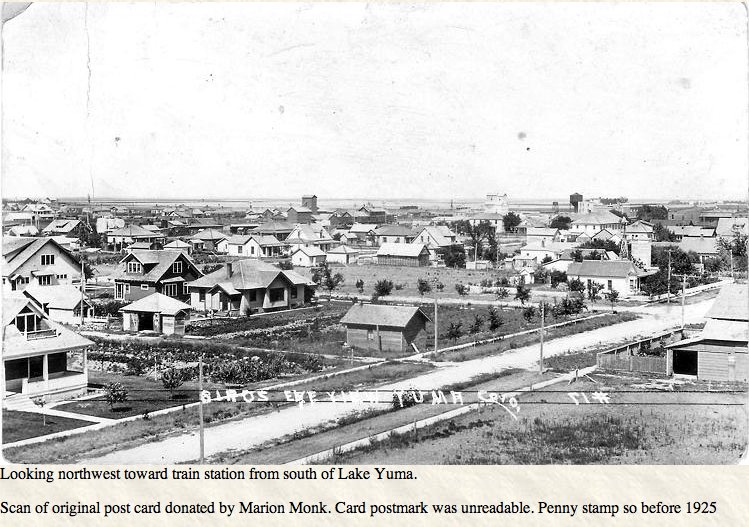
yumaaerialcirca1925

From email from US Representative Cory Gardner:

UPCOMING EVENT: Q&A on Spill Prevention and Control Countermeasures

In conjunction with the Colorado Farm Bureau, we will be hosting an informational session for farmers and ranchers regarding the Spill Prevention and Control Countermeasures (SPCC) on Wednesday June 26 at 9am at 529 N. Albany Street in Yuma.

A representative from the Environmental Protection Agency will be on hand to discuss what is expected under new SPCC guidelines for storing fuel and petroleum products. SPCC regulations apply to any agricultural operation that stores over 1,320 gallons of oil, and it went into effect on May 10, 2013.

Anyone with questions concerning SPCC is encouraged to attend this informational session.

WHO: Congressman Cory Gardner’s office and Colorado Farm Bureau

WHAT: Informational session and Q&A with EPA representative on SPCC guidelines

WHEN: Wednesday June 26 at 9am

WHERE: 529 N. Albany Street, Yuma in the gymnasium

Drought news: Many eyes are on the water in the Missouri River reservoirs #CODrought

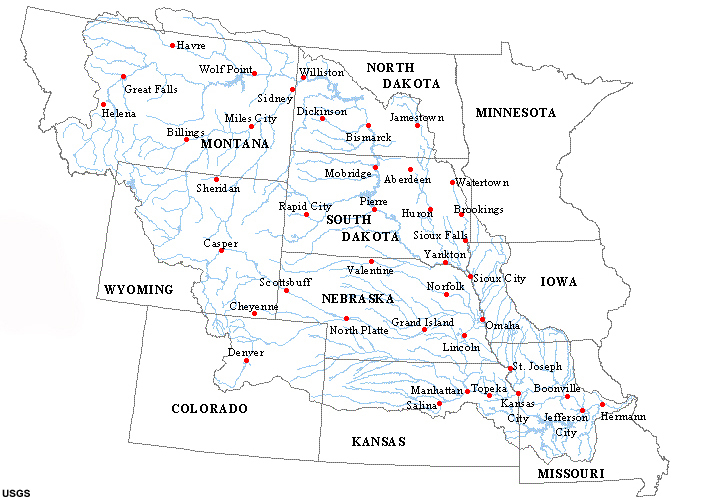
missouririverbasin.jpg

From The Winona Daily News (David A. Lieb):

From Montana to West Virginia, officials on both sides have written President Barack Obama urging him to intervene _ or not _ in a long-running dispute over whether water from the Missouri’s upstream reservoirs should be released into the Mississippi River to ease low water levels that have imperiled commercial traffic.

The quarrel pits boaters, fishermen and tourism interests against communities downstream and companies that rely on the Mississippi to do business.

“We are back to the age-old old battle of recreation and irrigation verses navigation,” said Sen. Claire McCaskill, a Democrat from Missouri.

If the water is held back, downstream states warn that shipping on the Mississippi could come to a near standstill sometime after Christmas along a 180-mile stretch between St. Louis and the southern Illinois town of Cairo. But if the water is released, upstream communities worry that the toll of the drought could be even worse next year for farms and towns that depend on the Missouri.

Obama has not decided whether to enter the dispute, nor has the White House set a timetable to respond. But tensions are rising in this decades-old battle.

From his perch as executive director of the Southeast Missouri Regional Port Authority, Dan Overbey watched this week as workers scrambled to ship out as much grain as possible before the Mississippi gets so low that it is not economically feasible or physically possible to move loaded-down barges…

More than 800 miles to the northwest, Michael Dwyer was also stewing. He’s the executive vice president of the North Dakota Water Users Association.

To Dwyer, the downriver interests are “taking selfishness” to “a level you can’t even comprehend.”

“We suffered the impact of these reservoirs” when they were created decades ago by dams that flooded 500,000 acres of bottomland, Dwyer said. “To have some use of the resource only seems appropriate.”

At the Mississippi River port near Cape Girardeau, Mo., about a million tons of cargo are loaded or unloaded annually, providing about 200 jobs, Overbey said.

The water is also vital in parts of the Dakotas, where the dammed-up Missouri River has spawned a tourism industry centered on boating and fishing…

Over the past three decades, more than a dozen lawsuits have been filed challenging the management of the river, many of which set Missouri and other downstream states against the Dakotas and other upstream states.

The battles started in 1982, when Missouri, Iowa and Nebraska challenged a government contract allowing water to be drawn from the Missouri River in South Dakota to flush coal through a pipeline to power plants in the southeast. The U.S. Supreme Court blocked the project, but other lawsuits followed, including an effort by upstream states to reduce the water released from dams in an attempt to boost sport fishing in the reservoirs.

Missouri, meanwhile, sued the Army Corps of Engineers when it held back water because of droughts and shortened the navigation season. Environmental groups also joined the court battles, advocating for spring surges and summer declines in downstream river levels to help threatened species of birds and fish.

So far, no lawsuits have been filed in the current competition for water. But battle lines have been drawn…

The Corps of Engineers, which manages both the Missouri and Mississippi rivers, says its guidelines prohibit it from releasing water from the Missouri River reservoirs for the primary purpose of improving navigation on the Mississippi. That position was backed up by a 1990 report from the federal government’s General Accounting Office, though officials from downstream states believe Obama could trump that by declaring an emergency to avoid an “economic calamity.”

Missouri River Reuse Project from Reclamation would water the Front Range and help the Ogallala aquifer

ogallalaaquiferriverbasins.jpg

From The Pueblo Chieftain (Chris Woodka):

A pipeline from the Missouri River to Colorado’s Front Range has the potential to bring water to two states — and into the Arkansas River basin — but has not been on the table in Colorado water discussions.

The Missouri River reuse option is being considered as one of about 100 proposals that would relieve pressure on diversion of water from the Colorado River basin. The Bureau of Reclamation began the study in 2009 to assess future supply and demand along the Colorado River and a final report should be coming out this month. Pueblo and other Front Range communities import water from the Colorado River basin each year, so new supplies could reduce that demand. The reuse would provide water to depleted aquifers across Kansas through diversion of up to 600,000 acre­feet annually from the Missouri River near Leavenworth, Kan. A description of the project on file with Reclamation indicates some of the water could reach the Arkansas River basin, north of Colorado Springs. It’s unclear from the documents available if the proposal has a sponsor.

The project would cost billions of dollars and likely face political hurdles. Although water would have to be pumped 600 miles and 5,000 feet uphill from Leavenworth in order to reach Denver, Reclamation rates the project as “technically feasible.”

Although specific plans to move water from Flaming Gorge and the Mississippi River, as well as more general options from the Missouri River, have been debated, the Kansas­Colorado plan has eluded discussion within Colorado.

“No, we have not talked about it,” said Gary Barber, chairman of the Arkansas Basin Roundtable. Barber also represents the roundtable on the Flaming Gorge Task Force, which has not reviewed the idea.

“We’ve gotten monthly reports on the Colorado River basin study,” said Alan Hamel, who represents the Arkansas River basin on the Colorado Water Conservation Board. “There has not been any discussion of this particular proposal.”

More coverage from Bruce Finley writing for The Denver Post. Here’s an excerpt:

Bureau of Reclamation officials on Tuesday said the “Missouri River Reuse Project” will be evaluated for feasibility following the release in coming weeks of a federal government study on water supply for the West.
“The state of Colorado has not taken a formal position on the pipeline or any of the options,” Colorado Department of Natural Resources spokesman Todd Hartman said…

The Missouri diversion described in Bureau of Reclamation documents would require a pipeline across Kansas, with water used to fill surface reservoirs and recharge depleted aquifers along the way to metro Denver.
It would convey 600,000 acre-feet of water a year depending on Midwestern needs. An acre-foot has been regarded as enough water to sustain two families of four for a year.

“Water would likely be stored in Front Range reservoirs such as Rueter-Hess, Carter, Barr and Chatfield,” a project summary said. “Colorado may choose to construct new reservoirs or enlarge existing reservoirs for the project.”

Some water could also be directed to the headwaters of the Colorado River Basin through pipelines and tunnels when there is great need to relieve drought in the basin, the summary continued…

The options for importing water reflect widening worries about future shortages. The Colorado River Basin, which spans Arizona, California, Colorado, New Mexico, Nevada, Utah and Wyoming, is the source of water for 30 million people. The government’s three-year Colorado River Basin Water Supply and Demand Study has found that within 50 years, the annual water deficit will reach 3.5 million acre-feet.

Bureau of Reclamation officials said their primary purpose was to define current and future imbalances in water supply and demand. They asked stakeholders and agencies across the seven basin states to submit ideas to prevent shortages. States have agreed to consider a Missouri River diversion. Other ideas are destined for an appendix.

Here’s the pitch from the U.S. Bureau of Reclamation:

The Missouri River Reuse option is a diversion of up to 600,000 AFY of water from the Missouri River for reuse within the Missouri River Basin of Kansas and Colorado. Water would be diverted from the Missouri River only when flows to support navigation and municipal water diversions along the river from Leavenworth, Kansas to Saint Louis, Missouri, are not impaired.

  • 1. Within Kansas, the water would be used to fill surface reservoirs and recharge depleted aquifers in the upper and lower Republican River Basins, Solomon River Basin, and Smoky-Hill/Saline River Basin as determined from assessment of need and feasibility by the Kansas State Water Office in cooperation with the Kansas Division of Water Resources, Army Corps of Engineers, and the States of Colorado and Nebraska. In particular, the water would be used for irrigation and municipal, commercial, and industrial use and to recharge the Ogallala aquifer in western Kansas. Each of these basins (including the Ogallala aquifer in northwest Kansas) is tributary to the Missouri River. The Ogallala aquifer discharges into the Republican River in northeast Colorado and northwest Kansas. Kansas may choose to construct new reservoirs or enlarge existing reservoirs for the project.
  • 2. Along the Front Range of Colorado, the water (totaling 500 cfs or more as Colorado determines)
    would be used for municipal, commercial, and industrial use with return flows allocated for agricultural irrigation use within the South Platte River Basin (a tributary of the Missouri River). Some water could be used to recharge the bedrock aquifers of the Denver Basin. In eastern Colorado, some water could be used for irrigation and municipal use and to recharge the Ogallala aquifer. Water would likely be stored in Front Range reservoir such as Rueter-Hess, Carter, Barr, and Chatfield and in designated alluvial storage along the South Platte River. Colorado may choose to construct new reservoirs or enlarge existing reservoirs for the project.

  • 3. Some water may be available for use outside the Missouri River Basin, particularly that portion of the water in the Missouri River which is non-native (originating as transmountain diversions from the
    Colorado and Arkansas Rivers in Colorado and nontributary Denver Basin ground-water withdrawals). Some of this water could be directed to the Arkansas River in western and central Kansas and in eastern Colorado beginning near Colorado Springs. Some water could also be directed to the headwaters of the Colorado River Basin through pipelines and tunnels when there is great need to relieve drought in the basin provided the navigation and municipal supply flows in the Missouri River are plentiful and other water needs of western Kansas and eastern Colorado are being reasonably satisfied.
  • The location of the Missouri River diversion point is in Leavenworth County, Kansas near the City of Leavenworth. The water would be treated and disinfected at a large treatment plant to be designed and constructed, as necessary, for subsequent conveyance and use. End-user treatment, such as water softening for municipal, commercial, and industrial use, is anticipated.

    Conveyance of water across Kansas and eastern Colorado would be through single or parallel largediameter pipelines located more or less adjacent to I-70. Infrastructure would include a series of highcapacity pumping stations (to be located, sized, and designed). The water conveyance infrastructure (pipeline and pumping stations) would be owned and operated by the Kansas Water Office in cooperation with the Corps of Engineers, Bureau of Reclamation, Kansas Division of Water Resources, Colorado Division of Water Resources, Colorado Water Conservation Board, and various public and private stakeholders. The diversion rights would owned by a Kansas entity

    The Missouri River Reuse Project is technically feasible as evidenced by other large diversion projects in the western United States including, but not limited to: (a) the numerous transmountain diversion projects in Colorado that bring tens of thousands of acre-feet of Colorado River and Arkansas River water to the Front Range through numerous tunnels; (b) the Colorado River Aqueduct that brings water from the Colorado River at Parker Dam to Southern California; (c) the Los Angeles Aqueduct that brings water from Owens Valley to Los Angeles; (d) the Central Arizona (canal) Project that brings Colorado River water to Phoenix and Tucson, and (e) the State Water Project of California that provides irrigation water to farms in the San Joaquin Valley, and is a major source of supply for cities in Los Angeles, Riverside, San Bernardino, and San Diego Counties and other parts of southern California. Many of these projects involve the Bureau of Reclamation, Corps of Engineers, and numerous state water resources agencies.

    A similar serious project has been proposed that would divert surface water from the Mississippi River and pump it west into the Colorado River Basin. Another large project has been proposed that would divert about 300,000 of acre-feet of surface water from the Green River at Flaming Gorge Reservoir in southwest Wyoming, pump the water across southern Wyoming along I-80 to Cheyenne and then south into the Denver Basin. Moreover, private energy and pipeline companies have constructed thousands of miles of interstate pipelines that pump vast quantities of natural gas and petroleum products across the United States.

    Legal, engineering and construction costs need to be determined for numerous possible options. Construction costs will likely be in the billions of dollars and would be borne by the various end users — water providers and irrigators in Kansas and Colorado with some participation by the Corps of Engineers and Bureau of Reclamation. Operating costs must be affordable for irrigators and municipal users for the project to be feasible. In exporting water out-of-state to Colorado, Kansas could charge and collect a reasonable severance tax, as well as the State Water Plan fee.

    The historic 2007 multi-state agreement among the seven Colorado River Basin States governing the future management of the Colorado River provides for the introduction and recovery of non-Colorado River system water and non-Colorado River system water exchanges. The Front Range of Colorado uses about 345,000 acre-feet of Colorado River water each year and releases that water into the South Platte River Basin, which is tributary to the Missouri River. According to the 2004 Colorado Statewide Water Supply Initiative (SWSI) report, the South Platte River Basin will need an additional 409,700 acre-feet of water by 2030 due largely to forecasted population increase. Bringing Missouri River reuse water to the Front Range provides an opportunity for Colorado to exchange all or a portion of this water for other water in the Colorado River Basin originating in the State of Colorado (such as from the Yampa, White, and Green Rivers) to the Lower Basin states. This exchange of water would engage the States of California, Arizona, Nevada, and New Mexico in helping to pay for the project. The federal government would also have a financial interest in the project because of the Colorado River treaty with Mexico.

    The Missouri River Reuse Project could have major interstate impacts on regional and local water supply. Congressional and state legislative approvals will likely be needed with an accompanying environmental impact statement under NEPA. A 404 permit will be needed from the Corps of Engineers including numerous state approvals. Water rights for the diversion will have to be obtained from the Kansas Department of Water Resources and will be held by a Kansas entity.

    Even though the water will be used in Kansas and Colorado, the reuse project will likely have profound and unprecedented positive impacts on the Colorado, Republican, and South Platte River compacts affecting Kansas, Colorado, Nebraska, Wyoming, Utah, Nevada, Arizona, New Mexico, California, and the Colorado River treaty with Mexico. The reuse project could also positively impact the North Platte and Arkansas River compacts involving Kansas, Colorado, Nebraska, and Wyoming. The State of Missouri will need solid assurance that the flows in the Missouri River will always be sufficient to support navigation and municipal water diversions in the state. A benefit to the states of Missouri and Kansas and Kansas City area water providers is the possible reduced risk of damage from flooding and river degradation.

    The project has numerous options that can be considered in terms of design, construction, operations, and costs. Each of these options needs to be fully explored, which will take time and money. The possible source(s) of funding need to be determined and evaluated. The project is large and will need to engage the cooperation (buy-in) and participation by numerous states and their respective water resources agencies and water providers, the Corps of Engineers, the Bureau of Reclamation, and various Missouri River stakeholders. Other federal agency cooperation will be needed from the Environmental Protection Agency, Fish and Wildlife Service, Natural Resource Conservation Service, US Department of Commerce, US Energy Department, US Forest Service, and the Bureau of Land Management. Considerable risk and uncertainty exists when seeking approval and consensus from such a cadre of stakeholders.

    Historic flows in the Missouri River demonstrate that the river it a reliable source of supply for navigation, irrigation, and municipal supply. Flows vary annually and seasonally. The main stem of the Missouri River is managed by the Corps of Engineers pursuant to an annual operating plan that is focused on flood control, navigation, municipal water supply, recreation, and habitat for fish and wildlife. The historic Missouri River flood of 2011 caused significant river-bottom degradation from Atchison, Kansas to Kansas City, Missouri, breached numerous federal and private levees, and considerable damage to public and private property. A large diversion from the Missouri River would provide another means for the Corps of Engineers to control flooding of the Missouri River in the Kansas City reach. During periods of low flow, projected river diversions would be reduced or suspended. Subsequent water stored in reservoirs west of the diversion point could be released as needed to ensure adequate supplies of water for municipal use, such as along the Kansas River.

    The amount of electrical energy required for operations would be substantial and needs to be determined based on consideration of reasonable design alternatives. Power supply to the pumping stations would be provided by a combination of existing and expanded coal-fired power plants and wind energy as determined most appropriate and feasible by objective engineering and economic analyses.

    Additional water for Kansas and Colorado reservoirs will positively support reservoir recreation activities. The reuse project would likely have a positive affect on the riparian habitat of the lower South Platte River basin, particularly for whooping cranes and other waterfowl in northeast Colorado and southwest Nebraska. Potential impacts on endangered and protected fish and waterfowl along the Missouri River would need to be determined.

    Project alternative studies, engineering, design, construction, legal support, and operations would be a significant economic benefit to the States of Kansas and Colorado in terms of employment and population growth. A large diversion works, treatment plant, and pumping station would likely employ hundreds of skilled workers and engineers in Leavenworth County, Kansas. Pipeline and booster pumping stations would likewise employ hundreds of skilled workers across Kansas and eastern Colorado. Severance tax revenue for state of Kansas from the export of water to Colorado would also be significant. The economic benefit could be similar to the Keystone Pipeline from Canada to the United States or nearly any of the aqueduct projects in California. The project could also yield substantial volumes of new water to the Lower Colorado River Basin states under the Colorado River Compact.

    More Missouri River Reuse Project coverage here.

    Junction City: The annual meeting of the Republican River Basin Compact Administration is October 16

    junctioncitykansas.jpg

    From the Associated Press via the Salina Journal:

    Officials from Kansas, Colorado and Nebraska meet later this month to discuss water-related issues and activities within the Republican River basin.

    The Republican River Compact Administration’s annual meeting is Oct. 16 in Junction City. Among the topics up for discussion is compliance with the compact. A work session is also planned Oct. 15.

    Both meetings are open to the public.

    More Republican River Basin coverage here and here.

    NGWA Conference on Great Plains Aquifers: Beyond the Ogallala — October 25-26

    ogallalaaquiferriverbasins.jpg

    Here’s the link to their registration webpage.

    More groundwater coverage here.

    Republican River Compliance pipeline dedication August 16

    republicanriverbasinbydistrict.jpg

    From the Republican River Water Conservation District (Deb Daniel) via The Yuma Pioneer :

    The Republican River Water Conservation District will be hosting the public dedication ceremony of the Compact Compliance Pipeline on Thursday, August 16, beginning at 7 p.m.

    The location of the ceremony will be at the outfall structure near Yuma County Road SS east of Laird.

    On July 14, 2011, during a quarterly meeting, the RRWCD Board voted to build the pipeline in an effort to assist Colorado in complying with the Republican River Compact. The groundbreaking ceremony was held on August 29, 2011, near the pipeline collection tank location.

    GEI Consultants, an engineering firm from Denver, has designed the pipeline, and Garney Construction, headquartered in Kansas City, Missouri, was selected as the general contractor. Construction of the pipeline started in early September 2011.

    Funding for the compact compliance pipeline has been provided through a loan from the Colorado Water Conservation Board and from water use fees paid by well owners throughout the Republican River Basin in Colorado.

    Speakers during the ceremony include: Congressman Cory Gardner, John Stulp, Special Advisor to Governor Hickenlooper on Water Issues, Dick Wolfe, State Engineer with the Colorado Division of Water Resources and Dennis Coryell, Chairman of the Republican River Water Conservation District.

    The ceremony will conclude with opening the main-line valve and delivering water into the North Fork of the Republican River.

    Everyone is welcome to attend. Transportation to the ceremony will be provided by the District. If you wish to attend the ceremony, please notify the District so ensure seating.

    More Republican River Basin coverage here and here.

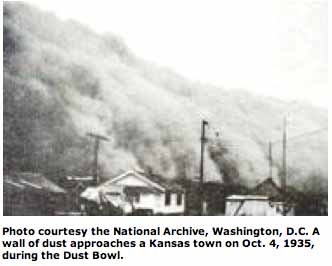
    Dust Bowl: ‘…greatest man-made ecological disaster in U.S. history’ — Ken Burns

    Click here to watch the trailer from Ken Burns new production The Dust Bowl, from the Huffington Post.

    More education coverage here.

    Republican River Water Conservation District meeting July 12

    usdroughtmonitor07032012.jpg

    From The Yuma Pioneer (Tony Rayl):

    The Republican River Water Conservation District will hold its quarterly meeting on Thursday, July 12, at the Phillips County Events Center in Holyoke. It will begin at 10 a.m. and last until about 4 p.m. Public comment will be heard at 1 p.m. State Engineer Dick Wolfe will be giving an update on the State of Colorado’s efforts to obtain approval from the State of Kansas for the compact compliance pipeline. GEI Consultants, Inc. will provide an update on the pipeline construction project. The board will be discussing whether to exercise the option to lease a portion of the Laird Ditch water right owned by the Yuma County Water Authority, for 2013-15. There will be engineering and legal counsel updates. The 2011 audit report will be presented at the meeting.

    More Republican River Basin coverage here and here.

    The Republican River compliance pipeline is slightly below budget

    republicanriverbasinbydistrict.jpg

    From The Yuma Pioneer (Tony Rayl):

    Currently, the whole project, including the purchase of more than 50 wells, is on track to be completed for $67.4 million. The RRWCD is recouping a total of $1.6 million in lease payments, putting the net cost at $65.722 million. Willard noted that GEI Consultants estimated in November 2007 that the total cost would fall between $61.3 million and $71.3 million…

    Willard noted that the RRWCD’s goal is compact compliance and to protect agricultural production within the basin. He said his opinion is the district should be careful about taking any more land out of production; to keep this in mind when making future decisions.

    More Republican River basin coverage here and here.

    Republican River compliance pipeline tour recap: On schedule the project should be complete in mid-July

    republicanriverbasinbydistrict.jpg

    From The Yuma Pioneer (Tony Rayl):

    More than 50 wells were purchased by the RRWCD, for approximately $49 million, from the Cure family in the hills about 12-14 miles north of Laird near the state line. Eight have been designated as primary wells, from which water will be pumped to the hilltop collection tank, from where the water will be sent down the pipeline through gravitational force to the outfall structure. Besides the eight primary wells, seven others have been designated as backup wells. Garney Construction submitted the winning bid of $13.54 million to construct the 12 mile pipeline, ending at the outfall structure on the North Fork of the Republican River less than one mile from the Colorado-Nebraska state line. Work is progressing as scheduled, with completion set for mid-July. It will be tested out later in the year.

    The pipeline will be used to make up any deficits from Colorado in regards to its obligations to the Republican River Compact, an agreement between Colorado, Nebraska and Kansas first enacted in 1942.

    More Republican River basin coverage here and here.

    The Bureau of Reclamation commits $413,000 for a study of the Republican River Basin

    republicanriverbasinbydistrict.jpg

    Here’s and excerpt from the release from the Bureau of Reclamation (Adam Fetcher/Dan DuBray):

    Secretary of the Interior Ken Salazar announced today that Interior’s Bureau of Reclamation is providing $2.4 million in funding for comprehensive water studies in California, Colorado, Kansas, Nebraska, New Mexico and Oklahoma…

    Republican River Basin Study (Colorado, Kansas and Nebraska) Federal Funding: $413,000; Non-Federal Funding: $435,000

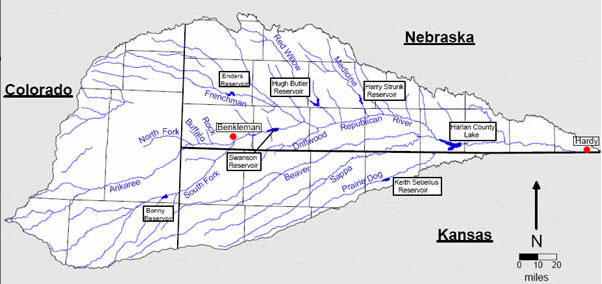
    The Republican River flows from its headwaters in Colorado into northwest Kansas, through southern Nebraska and back into north-central Kansas. It drains approximately 23,300 square miles of these three states and supplies water for municipalities, industries, surface and ground water irrigation, recreation and wildlife. The basin is subject to an interstate compact that was ratified in 1943. The three states have proposed a collaborative basin study that will cover the entire basin down to the Clay Center stream-gauging station in northeast Kansas. The study will identify mitigation and adaptation strategies that address the impacts of climate change on water resources in the basin.

    Thanks to the Lincoln Journal Star for the heads up.

    More coverage from Chris Woodka writing for The Pueblo Chieftain. From the article:

    In recent years, irrigation in the Colorado portion of the basin has been curtailed to meet conditions of the 1943 Republican River interstate compact. Among other measures, Bonny Reservoir north of Burlington had to be drained to provide water to downstream states. The study will identify mitigation and adaptation strategies that address the impacts of climate change on water resources in the basin.

    More Republican River basin coverage here and here.

    Twilight for Bonny Reservoir: The draining of the reservoir is nearly complete, thousands of fish die

    bonnyreservoir.jpg

    From 9News.com (Matt Flener):

    Since state officials started draining Bonny Lake’s water in the fall of 2011 because of the decision, thousands of fish have died at the reservoir. Last week, workers from the Federal Bureau of Reclamation, which owns Bonny’s land in cooperation with the State of Colorado, had to unclog the drain from the dam using pitchforks, because so many fish had piled up. Backhoes then buried fish underneath the reservoir’s soil.

    Colorado State Engineer Dick Wolfe says the practice has taken place, sometimes every other day, to keep water flowing to Kansas. Wolfe says his department has worked with the Bureau of Reclamation to humanely bury the fish so they would not become a health hazard or a visual problem at the lake in the long term. Knowing they would drain the lake, last year state officials tried to get fishermen to catch as many fish as possible by taking away catch limits at Bonny.

    More Republican River basin coverage here and here.

    The Republican River Water Conservation District is offering a tour of the Republican River compliance pipeline project March 9

    pipeline.jpg

    From The Yuma Pioneer:

    The Republican River Water Conservation District is offering a tour of the pipeline project for the public on Friday, March 9, beginning at 1:30 pm at the District meeting room located at 410 Main Street in Wray. Due to safety concerns, there will be a limited number of participants allowed to attend the tour.

    Garney Construction will be installing 36 inch ductile-iron transmission pipe during the tour. Sessions Construction of Wray will be installing pvc pipe connecting the collection lines in the well field.

    Anyone interested in attending the tour must contact the District office at (970) 332-3552. The District is limiting the number of participants for the tour and will offer additional tour dates if there is enough interest expressed from the public. If you have any questions concerning the pipeline or the tour please contact the District office at 970-332-3552.

    More Republican River basin coverage here and here.

    A request to move water out of basin for the Republican River compliance pipeline will be in front of the Sandhills Ground Water Management District January 24

    republicanriverbasinbydistrict.jpg

    From The Yuma Pioneer (Tony Rayl):

    The hearing will be held Tuesday, January 24, at 10 a.m. at the Wauneta Fire Hall, located north of Wray, at 50002 U.S. Highway 385. The [Republican River Water Conservation District] is seeking to send water from the Sandhills district down a pipeline to the North Fork of the Republican River, where it will flow east into Nebraska and then into Kansas. It part of Colorado’s efforts to come into compliance with the 1942 Republican River Compact.

    More Republican River coverage here and here.

    Republican River Water Conservancy District board meeting October 13

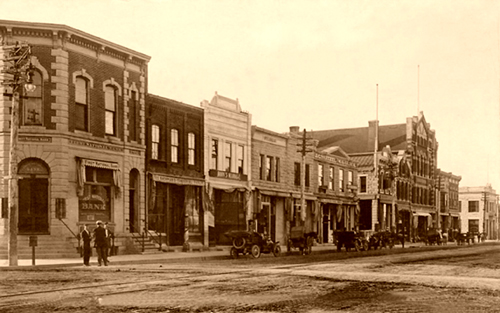
    wraycoloradopostcard.jpg

    From The Yuma Pioneer (Tony Rayl):

    It will be held Thursday, October 13, at the Wray Ambulance Facility, 304 W. Third St., beginning at 10 a.m. Public comment is scheduled for 1 p.m.

    New terms will be appointed for the seats belonging to Kit Carson and Phillips counties, as well as the Marks Butte and Arikaree ground water management districts, followed by an election of officers and a review of committee assignments. The district’s Water Activity Enterprise budget for 2012 will be up for consideration and approval at the meeting…

    For more information regarding the meeting, please contact RRWCD General Manager Deb Daniel at 332-3552, or email her at rrwcd@centurytel.net.

    More Republican River basin coverage here and here.

    State Engineer Dick Wolfe on draining Bonny Reservoir, ‘Draining Bonny Reservoir is a part of our efforts to bring Colorado into compliance with the 1942 Republican River Compact and the 2033 Final Settlement Stipulation’

    gunnisonriver.jpg

    Here’s are answers to questions about draining Bonny from the State Engineer, from The Yuma Pioneer (Tony Rayl). From the article:

    Q: Why weren’t other options considered?
    A: Many options were considered, and other steps have been taken to make up for the water shortfall to Kansas. Agencies have reluctantly concluded there are no viable legal or physical options available to bring us into compact compliance that will allow water to be stored in Bonny Reservoir and allow farmers and municipalities to continue pumping their wells…

    Q: Why can’t Kansas maintain Bonny Reservoir so water can be released when necessary to its irrigators?
    A: We explored many options with Kansas, including ones that would allow the reservoir to remain as a storage facility. Thus far, Kansas has not accepted any of these proposals.

    More Republican River basin coverage here and here.

    Bonny Lake Fish Salvage Authorized

    Here’s the release from Colorado Parks and Wildlife:

    Colorado Parks and Wildlife biologists have begun salvaging sport fish from Bonny Reservoir in Yuma County in preparation for the draining of the lake over the next two months.

    The State Engineer began releasing water from the reservoir on September 21 to satisfy a legal obligation to release all the water to Kansas and Nebraska. The result will most likely be the loss of the entire fishery.

    As long as conditions allow, biologists will trap as many fish as possible and relocate sport fish to other public fishing waters. Anglers can continue to remove fish provided the shoreline remains stable and access is safe.

    “Right now it looks like it might take as little as 90 days to drain the lake,” said Parks and Wildlife Area Wildlife Manager Cory Chick. “We encourage anglers to harvest as many fish as possible before the water is gone.”

    Under the salvage order signed by Southeast Regional Manager Dan Prenzlow, all legal methods of fishing will be allowed including the use of trotlines, jugs and seines. Commercial angling is prohibited. There are no limits on the number or species of fish anglers can keep, but everyone must have a valid Colorado fishing license to be in possession of fish and must complete an angler survey card available at the reservoir.

    Access may be closed to boats and/or anglers if the receding lake creates unstable banks or other hazards.

    “I grew up hunting and fishing at Bonny Lake State Park,” Prenzlow said. “This is difficult to watch.”

    Bonny Reservoir was created in 1951 when the U.S. Bureau of Reclamation built a flood control dam on the South Fork of the Republican River. Shortly after the completion of the project in 1951, the former Colorado Division of Game Fish and parks negotiated an agreement with the Bureau of Reclamation to manage fish, wildlife and recreational assets of the reservoir and the federal land around the lake.

    As a result of draining Bonny, Colorado Parks and Wildlife will transition Bonny from a State Park into a State Wildlife Area beginning Oct. 1, while simultaneously exploring other potential options with a variety of partners. Public hunting access areas will remain open to the public.

    Colorado Parks and Wildlife is working with Yuma County Commissioners, Three Rivers Alliance, and Yuma County Economic Development Council to determine whether management of 56 acres, including the Visitor Center and Wagon Wheel Campground along with other facilities in Bonny Lake State Park, can be transitioned to Yuma County.

    Pending completion of discussions with these local groups, the North Cove and East Beach Campgrounds will remain open in October, although without potable water sources. The Foster Grove campground facilities, however, will be shut down and winterized until a final resolution is reached with Yuma County and local groups. Tables and grills will be removed from isolated picnic sites on the north and south side to be distributed to other Parks and Wildlife areas in critical need of such items.

    For more information on the South Republican State Wildlife Area, please see: http://wildlife.state.co.us/LandWater/StateWildlifeAreas/.

    More coverage from KOAM TV:

    The eastern Colorado reservoir is being drained to send some 4 billion gallons of water to Nebraska and Kansas under a 1942 agreement among the three states. Colorado Parks and Wildlife announced Friday that it will take about two months to drain Bonny Lake.

    Colorado biologists say they’ll trap as many fish as possible and relocate sport fish to other public fishing waters. Anglers can continue to remove fish provided the shoreline remains stable and access is safe.

    More Republican River basin coverage here and here.

    State Engineer Dick Wolfe issues the order to drain Bonny Reservoir

    bonnyreservoir.jpg

    From The Yuma Pioneer (Tony Rayl):

    In a letter to Aaron Thompson, area manager for the Bureau of Reclamation based in Grand Island, Nebraka, Wolfe ordered that the release begin as soon as practicable, and in an amount that is the maximum safe and practicable flow through Bonny Dam…

    While Colorado is building a pipeline to send water down the North Fork of the Republican River for compact compliance, Kansas has insisted it also meet the compact requirements along the South Fork, which flows from Bonny through the northwest corner of Kansas into Nebraska. The Republican River Water Conservation District has determined the only way Colorado can get into compliance on the South Fork is to drain Bonny Reservoir to eliminate the evaporation that counts against Colorado in computing compact allocations.

    More Republican River basin coverage here and here.

    Republican River basin: Kansas Gov’s letter to Coloradan leaves the State Engineer’s office wondering if he has been paying attention

    republicanriverbasinbydistrict.jpg

    From the Lawrence Journal World (Scott Rothschild):

    In a recent letter to a Colorado resident, Brownback said the Bonny Reservoir in Yuma County, Colo., which abuts the border of northwest Kansas, is a valuable recreational area for many residents in surrounding communities. He added in the letter to Audrey Hase, who is trying to save the reservoir from being drained, “Because Colorado is a party to this compact, it is named in the lawsuit, but Kansas seeks no relief against Colorado at this time.”[…]

    Colorado State Engineer Dick [Wolfe] said Brownback was off base. “I’m not sure what the basis for that statement is,” [Wolfe] said Monday. “We do know that it is wrong,” he said.

    The release of water from Bonny Reservoir is necessary for Colorado to make up a water debt it owes Kansas and comply with the 2003 settlement of the 1942 Republican River Compact between Colorado, Nebraska and Kansas, [Wolfe] said…

    Wolf said he spoke with Kansas water officials to make sure Brownback wasn’t signaling a change of plans. He said they told him the plan hasn’t changed.

    More Republican River basin coverage here and here.

    Republican River basin: It’s twilight for Bonny Reservoir after labor day

    bonnyreservoir.jpg

    From 9News.com (Matt Flener):

    Nebraska, and ultimately Kansas, are about to receive approximately 4 billion gallons of water from Colorado’s Bonny Reservoir in Yuma County, under a decades old agreement between the three states to share water. Bonny Reservoir, which sits on the south fork of the Republican River, holds the best potential to make up a water debt owed to Kansas under the 1942 Republican River Compact, Colorado officials say…

    In 2003, Kansas won a Supreme Court battle to force Nebraska and Colorado to make up for water they reserved from the river in violation of the compact. “We have spent four years looking for a better solution than draining Bonny,” Colorado Assistant Director for Water Alex Davis said. “It is really a tragedy that we have to take this step.

    Here’s a look at the South Fork of the Republican River from Tony Rayl writing for The Yuma Pioneer. From the article:

    The South Fork of the Republican River, which actually is more like a nice creek, still runs in places, but in others it mostly comes to a standstill thanks to a huge amount of cattails and silt. “They’re like one big sponge,” said Fred Raish, supervisor of the Yuma County Pest Control District.

    Raish is leading an effort to clean up the cattails and Russian-olives along the South Fork, east and west of Bonny Lake State Park. The hope is eradicating the cattails, which are extremely thick immediately west of the reservoir, will help break loose the water and get it flowing at a higher rate into Bonny and beyond into Kansas. Raish led the same effort on the North Fork in recent years, putting more than $350,000 toward eradication of Russian-olives, salt cedar, and now cattails, over the past four years.

    He noted that he grew up in a flood irrigation family in Montrose and La Plata counties with the idea that “if you’re not cleaning up your ditches, you’re not fully utilizing your water.”[…]

    “This is not a water project, it’s a restoration project,” Raish said as he drove the bumpy trails along the South Fork where a hired crew is eradicating the Russian-olives west of Bonny. “Water just happens to be a main part of the equation.” He explained that the idea is to restore the river banks to the native species, which in turn helps with the wildlife. There has been $300,000 in grant money put toward the efforts in recent years, along with funds donated by Colorado Corn, Republican River Water Conservation District and W-Y Well Testing, along with wildlife groups, some federal money, and state funds through the Colorado Water Conservation Board. The current project entails cleaning up a two-mile stretch west of Highway 385, as well as a stretch on the east side of Bonny. The east side was cleaned up last year, and the native grasses already have returned where machinery left nothing but dirt a year before. Raish said Landsman Creek, which flows into the southwest corner of Bonny, also needs to be cleaned up to create a better flow. There have been some huge numbers thrown about in regards to how much it would cost to fully dredge and clean up the South Fork, some estimates have been put as high as $35 million.

    Here’s the link to a set of photos of the South Fork of the Republican River from The Yuma Pioneer.

    More Republican River basin coverage here and here.

    Groundbreaking for the Republican River compliance pipeline is scheduled for August 29

    republicanriverbasinbydistrict.jpg

    From the Holyoke Enterprise:

    The Republican River Water Conservation District (RRWCD) will be holding the groundbreaking ceremony of the Compact Compliance Pipeline Monday, Aug. 29, beginning at 10 a.m. It will be held 12 miles north of Laird on County Road RR near the location of the future pipeline collection tank. Interested members of the public are invited…

    GEI Consultants, an engineering firm from Denver, has designed the pipeline and Garney Construction has been selected by the [Republican River Water Conservation District] to be the general contractor. Garney will start construction in mid-September and plans to complete the pipeline no later than mid-July, 2012…

    Speakers during the groundbreaking ceremony will be Congressman Cory Gardner; Dick Wolfe, State Engineer with the Colorado Division of Water Resources; Jennifer Gimbel, director of the Colorado Water Conservation Board; Colorado State Senator Greg Brophy; and Dennis Coryell, chairman of the Republican River Water Conservation District.

    More Republican River basin coverage here and here.

    Republican River basin: The Yuma County Commissioners unanimously approve the Republican River Water Conservation District’s land use request for proposed compliance pipeline

    republicanriverbasinbydistrict.jpg

    From The Yuma Pioneer (Tony Rayl):

    The Yuma County Commissioners unanimously approved the RRWCD’s land use request to construct and operate the 12-mile pipeline system. The approval came last Friday, July 29, following a public hearing held during the commissioners’ regular meeting. Commissioners Dean Wingfield, Robin Wiley and Trent Bushner also approved a request for an exemption from subdivision in relation to the outflow structure and control building at the delivery point into the North Fork of the Republican River…

    Responding to a question regarding degradation of the groundwater level, RRWCD Board President Dennis Coryell explained that the wells purchased to provide water to the pipeline will be limited to the 10-year average historical consumptive use. He said the district also has a stipulation with the Sandhills Ground Water Management District, which must approve the exporting of the water, that not more than 2,000 acre feet will be pumped from any one well in a year. Coryell further explained that an agreement between Colorado and Nebraska calls for an annual minimum of 4,000 acre feet sent through the pipeline to the North Fork. He stressed that Colorado will send only what is needed up and above that minimum to meet compliance in a certain year with the Republican River Compact — which includes Kansas, along with Colorado and Nebraska…

    Pumping will take place during the irrigation offseason. Coryell said some will be sent in November, and then whatever is still needed to put Colorado into compliance will be sent downstream sometime between January through March.

    More Republican River basin coverage here and here.

    Republican River basin: Stan Murphy retires from the Republican River Water Conservancy District, Debra Daniel will take over

    A picture named republicanriversouthfork.jpg

    From The Yuma Pioneer (Tony Rayl):

    Debra Daniel, from Burlington, was recently hired from a field of 43 applicants to replace Stan Murphy as the General Manager for the Republican River Water Conservation District (RRWCD)…

    Daniel has an agricultural background which includes four years as the executive administrator of the Irrigation Research Foundation in Yuma, and five years as the district manager for the Plains and East Cheyenne Ground Water Management Districts in Kit Carson and Cheyenne counties.

    From The Holyoke Enterprise:

    During his [6.5 years] with the district, Murphy and his staff implemented various federal well retirement programs to convert irrigated land to dryland and permanently retire the wells to assist the State of Colorado to get into compliance. More than 30,000 irrigated acres have been enrolled in these programs to reduce consumptive use and increase stream flow for future compact benefit.

    Another project that Murphy has worked on is the $71 million Compact Compliance Pipeline to deliver ground water from a network of wells northeast of Wray to the North Fork tributary of the Republican River near the Colorado/Nebraska state line to help satisfy compact requirements. A general contractor for that pipeline project will be designated at the RRWCD Board meeting on July 14 in Holyoke, with plans to deliver water from that pipeline in fall 2012.

    More Republican River basin coverage here and here.

    Yuma: No drinking water violations in more than ten years

    A picture named waterfromtap.jpg

    From the Yuma Pioneer (Tony Rayl):

    Yuma tests for bacterial infections each month, while other items are tested once per year, and yet others every three years. The schedule stays that way unless a problem arises, then more frequent testing is done as steps are made to rectify the situation. “We’re in really good shape here in regards to our drinking water,” Strait said earlier this week…

    Yuma has not had a drinking water violation in well over 10 years. Yuma’s drinking water report did show that there was at least one water well close to the arsenic standard of 10 parts per billion. The Environmental Protection Agency changed the standard from 50 parts per billion to 10 parts per billion several years ago. Eckley and Sterling are among the municipalities that have spent big dollars having to upgrade their water systems because they were out of compliance with the new standard. It also is why Yuma had to shut off its Fairgrounds Well — it consistently tested at 11-12 parts per billion. The Hansen Well at the south end of town comes close to the standard, but so far has stayed just below it at nine parts per billion.

    The city of Yuma purchased two new wells a few years ago from farmers on the edge of town, so the city’s water supply actually is more than it was before the Fairgrounds Well was shut off. The town could afford to shut off one more well, but would have to take more drastic and expensive measures if more wells tested above the standard…

    With this being an agricultural area, Yuma officials also closely watch for nitrate levels. However, that has not even been close to a problem. The latest round of tests showed Yuma’s wells in the range of 2.9 to 3.7 parts per million in nitrate, well below the health standard of 10 parts per million…

    Sanderson noted before the interview was done that the City of Yuma maintains 1 million gallons of water storage, two square miles or 33 linear miles of water pipe, 150-some fire hydrants and 200-some valves, all while utility customers enjoy a water rate that is 60 percent below the state average.

    More Republican River basin coverage here.

    The Colorado Division of Wildlife to recommend suspending fish limits at Bonny Reservoir

    A picture named bonnyreservoir.jpg

    At the request of the Department of Natural Resources I’ve taken down my Bonny Reservoir post from Friday. Here’s the corrected release. There was a “mixup” according to a department spokesperson. He said in email, “Don’t ask how it happened,” so I won’t. It’s actually kind of nice to know that they read Coyote Gulch at DNR.

    Here’s the new release:

    As Colorado prepares to drain Bonny Reservoir to help the state come into compliance with the Republican River Compact between Kansas and Nebraska, the Colorado Division of Wildlife will recommend lifting bag and possession limits on all sport fish caught at the southeastern Yuma County reservoir.

    The Colorado Wildlife Commission will be asked to approve removing bag and possession limits at its May meeting in Salida. A press release issued Friday incorrectly stated that relaxed bag limits would go into effect May 1.

    This fall, the State Engineer will begin to drain the reservoir to satisfy a legal obligation to release all the water to Kansas and Nebraska. The result will most likely be the loss of the entire fishery.

    “Right now it is unknown how long it will take to drain the lake, but it looks like this might be the last year for fishing at Bonny,” said DOW Area Wildlife Manager Cory Chick. “The Division wants anglers to have an opportunity to harvest as many fish as possible before the water is gone.”

    At present, the water level at Bonny Reservoir is about 18 feet below normal, but the boat ramp at the State Park is still operational.

    Aquatic Biologist Gary Dowler said that recent sampling indicates that the overall number of sport fish is good, particularly for walleye and catfish. Numerous flathead catfish over 10 pounds were landed in 2010 and sampling efforts revealed a strong population of walleye with many fish over 20 inches.

    But Dowling said he expects fishing for larger wipers and white bass to be fair to poor because large wipers and bass were impacted by low water levels over the past few years.

    In addition to relaxing bag limits, the DOW will propose moving some of the sport fish to other reservoirs with public fishing.

    “We typically are able to move no more than 10 percent of the fish,” said Chick. “That is why we would like anglers to have an opportunity to try to catch as many as they can, too.”

    If the Commission approves the recommendation, recreational anglers will still need to have a valid Colorado fishing license, and must fill out a two-part form indicating the number and species of fish kept when they complete their fishing.

    Boating and shore access could be closed as a safety precaution in the event that unstable banks and muddy conditions create a danger to anglers.

    The reservoir will reach its lowest level when the water level drops to a point even with the outtake valve, which is expected to occur sometime in the fall or winter.

    “We won’t know the final depth of the reservoir until that happens, but it doesn’t look like the boat ramps will ever be usable again past 2011,” Chick said.

    Bonny Reservoir was created in 1951 when the U.S. Bureau of Reclamation built a flood control dam on the South Fork of the Republican River.

    Recreation on the reservoir, and the land on the east end of the lake, is managed by Colorado State Parks. The DOW manages the recreational use on the lands adjacent to the park and below the dam as the South Republican State Wildlife Area.

    Please contact Colorado State Parks website for hours of operation, current boat launching conditions as well as camping information http://parks.state.co.us/.

    For more information on the South Republican State Wildlife Area go to: http://wildlife.state.co.us/LandWater/StateWildlifeAreas/.

    More Republican River basin coverage here and here.

    Republican River basin: The U.S. Supreme Court clears the way for Kansas to get Nebraska back in court

    A picture named republicanriverbasinbydistrict.jpg

    From the Associated Press via the Lawrence Journal World:

    The high court gave Kansas permission to file a new petition over its allegations that Nebraska took more than its share of water in 2005 and 2006 — enough to supply a city of 100,000 people for a decade. Kansas sued Nebraska over the Republican River in 1998. The two states settled the case five years later, but Kansas contends Nebraska violated the terms of the agreement. Now Kansas wants to force Nebraska to reduce farm irrigation in its portion of the nearly 25,000-square-mile river basin and to pay Kansas back for the economic gains Nebraska allegedly saw for using too much water. Kansas previously calculated the amount of the potential payment at $72 million…

    If Kansas prevails, Nebraska will be forced to stop irrigating about 500,000 of the 1.2 million acres in its portion of the Republican River basin, and farmers there would have to rely on rain to grow crops. Nebraska officials have acknowledged some overuse of Republican River water but questioned Kansas’ accounting, and they’ve noted that Nebraska has been in compliance with the settlement since 2006…

    Lawsuits among states over water are filed directly with the Supreme Court, but it typically appoints a special master to review evidence and make recommendations to the justices. To hear Kansas’ latest petition, the Supreme Court appointed William J. Kayatta Jr., an attorney from Portland, Maine. Use of the Republican River’s water is governed by a 1943 compact between Colorado, Kansas and Nebraska. Colorado was given 11 percent of the water, while Nebraska was allotted 49 percent and Kansas, 40 percent.

    More Republican River basin coverage here and here.

    Twilight for Bonny Reservoir?

    A picture named bonnyreservoir.jpg

    From The Yuma Pioneer (Tony Rayl):

    The state agencies will hold the meeting at the Burlington Community and Education Center, located at 340 S. 14th Street, on March 7 at 6 p.m. Future management of Bonny will also be discussed at a joint meeting of the Colorado State Parks Board and the Colorado Wildlife Commission on March 10 in Denver at the Colorado Division of Wildlife’s Hunter Education Building at 6060 Broadway in Denver.

    Over the past several years, the amount of water available for storage in Bonny has decreased significantly. At the same time, Republican River compact obligations and other pressures require Colorado to reconsider recreation and reservoir management. Based on current and expected conditions, state officials anticipate that Bonny will shift from an actively managed flat water reservoir to a more passively managed State Wildlife Area with a much smaller or non-existent reservoir.

    More Republican River Basin coverage here and here.

    Burlington: 23rd annual Central Plains Irrigation Conference and Equipment Exposition in Feb. 22-23

    A picture named irrigation.jpg

    From the Holyoke Enterprise:

    All events will be held at the Burlington Community Center at 340 S. 14th St…

    Speaking at the general session on Tuesday is Craig Beyrouty, Colorado State University. He will cover “The Future of Global Food Supplies.” On Wednesday, Dick Wolfe, Colorado Division of Water Resources, will talk about “Water Issues in Colorado.”

    Technical sessions topics are “Limited/Deficit Irrigation,” “Irrigation Scheduling,” “Subsurface Drip Irrigation,” “Irrigation System and Pumping Plant Maintenance,” “Center Pivot Sprinkler Automation” and “Energy Crops for Irrigation.”

    The trade show will be open at various times throughout both days. It will close at 10:30 p.m. on the second day. It is open to the general public and there is no admission charge for it.

    Republican River Basin: The Upper Republican Natural Resources District approves pipeline to keep farmers irrigating

    A picture named republicanriverbasinbydistrict.jpg

    From The Yuma Pioneer (Tony Rayl):

    The irrigator-funded acre retirement and pipeline project approved Tuesday night will be the largest of its kind in the state and has the potential to help keep farmers throughout Nebraska’s Republican River Basin, where 1.2 million acres are irrigated, from being shutdown to stay in compliance with the Republican River Compact that divides water use between Nebraska, Colorado and Kansas. Complying with the compact has been a source of conflict that is expected to be considered by the U.S. Supreme Court. The project greatly reduces chances that producers who farm close to the Republican and its tributaries in the Upper Republican will have to be shutdown during dry times to help increase stream flow so the district doesn’t exceed its allotted amount of allowable stream flow depletions caused by groundwater irrigation. “This project is a cost-effective way to stay in compliance with the compact while protecting our water resources and keeping farmers in the basin in business,” said Jasper Fanning, Ph.d., general manager of the Upper Republican Natural Resources District. “It doesn’t negate the need for reduced water use to stay in compliance and the district, as it has for 30 years, will continue to be at the regulatory forefront of groundwater management.”

    The district’s Board of Directors on Tuesday night unanimously approved the purchase of nearly 3,300 irrigated acres with 24 center-pivot systems located just north of Rock Creek State Fish Hatchery, which is seven miles north of Parks in Dundy County, at a cost of $10 million. A portion, not all, of the water that historically has been used to irrigate the land will instead be piped into nearby Rock Creek, which flows into the Republican River near Parks. The water will be piped only when needed, during dry times, to stay in compliance with the compact. The land is expected to eventually return to natural vegetation. It is hoped that the pipeline will be in place in 2012. The project may only need to be used every three or four years, at the most. History suggests that during the driest of years, the district may need an additional 10,000 acre feet of water to stay in compliance with the compact. The proposed project has the potential to supply roughly that amount of water, and more water could be provided in the future granted the district retires more acres.

    The Upper Republican NRD worked cooperatively with the Nebraska Department of Natural Resources to analyze the feasibility and benefits of the project. “We believe this project has the potential to significantly aid efforts to stay in compliance with the Republican River Compact and the local integrated management plan,” said Brian Dunnigan, director of DNR. “This is the type of initiative needed to help farmers throughout the Republican River Basin.”

    More Republican River basin coverage here and here.

    Colorado Ag Preservation Society meeting February 3

    A picture named longspeak.jpg

    From The Holyoke Enterprise:

    The Colorado Agriculture Preservation Association (CAPA) will be hosting its annual meeting with featured speakers including the Colorado state engineer Dick Wolfe, first assistant attorney general Peter Ampe, assistant director for water of the Division of Natural Resources (DNR) Alex Davis and president of the RRWCD Dennis Coryell. They will explain the results of arbitration, what that means for North and South Fork users of the basin, what future plans are for compact compliance and the future of the compact compliance pipeline. The meeting will be held Thursday, Feb. 3 at 6:30 p.m. in Burlington at the Boy Scout building.

    More Republican River basin coverage here and here.

    Republican River Water Conservation District board meeting January 11

    A picture named republicanriverbasinbydistrict.jpg

    From The Yuma Pioneer (Tony Rayl):

    It will be held Thursday, January 13, at the Burlington Community and Education Center, 340 South 14th. The meeting will be from 10 a.m. to 4 p.m., with public comment at 1 p.m.

    The board recently approved moving forward with the proposed compact compliance pipeline, during a special meeting in Yuma last month. It will review the pipeline schedule at the January 13 meeting, as well as hear a presentation by GEI Consultants, Inc., which is doing the pipeline for the district.

    Board members will consider a potential legislative trip to Washington, D.C. They also will review and approve a notice for the position of general manager, as Stan Murphy will be retiring this year. They also will consider actions to prevent diversions by water rights that have been abandoned, look at committee assignments, receive reports on meetings and programs, and designate public places for posting notices of RRWCD meetings.

    More Republican River Basin coverage here.

    Republican River Water Conservation District board special meeting December 16

    A picture named republicanriversouthfork.jpg

    From The Yuma Pioneer (Tony Rayl):

    The future of the proposed compact compliance pipeline could be hanging in the balance when the Republican River Water Conservation District Board of Directors holds a special meeting in Yuma next Thursday, December 16. It is a fairly short meeting for the RRWCD Board as it is set to last only two hours, 1:30 to 3:30 p.m. Public comment will be heard at 2:15 p.m.

    The meeting will be held at Quintech, 529 N. Albany St. The agenda consists of “consideration of whether to proceed with the Compact Compliance Pipeline to comply with the amendment to the CWCB loan contract and to ensure the availability of loan funds.”

    More Republican River Basin coverage here and here.

    Yuma: Water rates going up in January

    From The Yuma Pioneer (Tony Rayl):

    The Yuma City Council gave final approval to an increased water rate at its regular meeting, last week, November 2. The basic rate for the first 5,000 gallons is increasing from $8 per month to $8.50. The charge for each additional 1,000 gallons is going up from 85 cents to $1.25. The higher rates will go into effect in January, which means city customers will not see it reflected on their bills until the one that is due in early March…

    Even with the increase, Yuma’s water rates still are half the average of the other northeast Colorado municipalities. The new revenue is expected to be about $77,000 annually. City Manager Doug Sanderson was questioned by City Attorney Roger Seedorf during the public hearing held prior to the council’s vote. Sanderson explained the Water Enterprise Fund currently is breaking even, and the new revenue will allow for reserves to be built to go toward future projects. Those projects include helping purchase a new SCADA system (a combined project with the Sewer Department), along with replacing old water lines, valves and such, purchasing water rights through the Yuma County Water Authority, and painting the inside of the water towers.

    More infrastructure coverage here.

    Republican River Water Conservation District board meeting recap

    A picture named republicanriverbasin.jpg

    From The Yuma Pioneer (Tony Rayl):

    The fate of Bonny, located in extreme southeastern Yuma County between Idalia and Burlington, was a topic of conversation during the Republican River Water Conservation District Board of Directors meeting, last Thursday, October 14, in Wray. The fate of Colorado’s proposed compact compliance pipeline also was a conversation piece. Arbitrator Martha Pagel presented her findings October 7, from the pipeline trial held in Kansas City…

    The board elected to hold off on making any decision until January’s quarterly meeting in regards to whether or not to move forward with the pipeline. There is hope Colorado and Kansas can continue to negotiate following Pagel’s ruling, and reach an agreement in which Kansas will approve the pipeline plan. The crediting issue is a key sticking point as Colorado had hoped to get 100 percent credit for all the pipeline water sent down the North Fork of the Republican River. Kansas had argued Colorado should receive 80 to 90 percent credit due to the negative impact of pumping water from the underground aquifer to feed the pipeline. The arbitrator had suggested the two states find a middle ground.

    As for Bonny, its fate seems sealed after Pagel upheld Kansas’ point that the pipeline to the North Fork cannot make up for Colorado’s shortages on the South Fork. “Until Bonny Reservoir is drained, Colorado will not meet this test,” RRWCD engineer Jim Slattery told the board during its meeting last week, referring to the South Fork Sub-basin Impairment Test. The surface water at Bonny works against Colorado in regards to its allocation on the South Fork. When asked later in the meeting, Slattery said draining Bonny should solve the South Fork issue forever. If so, that would leave little left for Kansas to object to in regards to the pipeline. Attorney David Robbins asked Pete Ampe of the Attorney General’s Office if the arbitrator’s ruling forced a decision on Bonny. Ampe said it does, and the Department of Natural Resources was talking to the federal Department of the Interior about that issue. The RRWCD has been pushing for the draining of Bonny the past few years. Robbins noted that Pagel’s ruling actually helps with getting that done.

    More Republican River basin coverage here.

    Republican River Basin: Arbitrator urges Colorado to accept Kansas’ proposals for compliance pipeline

    A picture named republicanriverbasinbydistrict.jpg

    Update: Here’s the reaction from State Attorney General John Suthers via a report from Tony Rayl writing for The Yuma Pioneer. From the article:

    “We’re obviously disappointed in the arbitrator’s decision.” Suthers said. “However, it is important to note that the arbitrator recognized Colorado’s fundamental right to proceed with a pipeline to assist in compact compliance, that the proposal provides a reasonable and necessary approach by Colorado, and that Kansas does not have an unfettered ability to block the project. Most of the arbitrator’s decision focused on additional details that she felt should have been included in the proposal. Colorado will continue to work to assure that we comply with the Republican River Compact while protecting the livelihoods and jobs of those living in the basin. I remain optimistic that Colorado and Kansas can reach an agreement on this pipeline to assure this happens.”

    Update: More coverage from Tony Rayl writing for The Yuma Pioneer. From the article:

    Colorado, Kansas, and Nebraska — the three states involved in the Republican River Compact — now have until November 1 to give notice on whether or they accept the decision. If any reject the decision — and it likely would be Colorado if any of them do — it would enter the appelate court system. Pagel’s decision is non-binding, but it likely sets the tone for any further legal wrangling concerning the pipeline. While Pagel sided with Kansas on nearly every disputed fact brought forth in the arbitration hearing held in July, her final decision made it clear Colorado’s plan to use a pipeline as an augmentation source was reasonable, and she outlined how the sides could come to a reasonable compromise to get the plan approved by all three states through the Republican River Compact Administration (RRCA)…

    Another key issue is if Colorado can replace overuse on the South Fork with water delivered to the North Fork. Pagel again recommended a compromise. She agreed the water from the pipeline can go toward determing Colorado’s overall compliance. However, she agreed with Kansas that Colorado still needs to meet the South Fork sub-basin test. She said the arguments presented by Kansas are not unreasonable. The concern is Colorado, over time, will “over-deliver” pipeline water into the North Fork sub-basin in order to build a surplus. That in turn would be a disincentive for Colorado to implement separate compliance measures in the South Fork sub-basin. Pagel concluded there is nothing currently in the pipeline proposal that would stop Colorado from doing so. She suggested the proposal be clarified to limit the amount of augmentation credit applied to the North Fork, and should not allow for overuse on the South Fork until Colorado comes into compliance in that sub-basin…

    Pagel finally ruled in favor of Colorado in regards to changes to the accounting procedures with a pipeline in place. She noted the changes were included in the revised resolution in August 2009, and Kansas never identified specific further changes, so its objection lacks merit. Pagel did note that the accounting procedures need to be reviewed in any final agreement to assure consistency…

    In the end, Pagel ruled that in general Colorado’s plan is reasonable and a necessary approach to meet compact compliance. She also ruled Kansas has not been unreasonable up to this point in regards to its objections to Colorado pipeline plan, meaning Colorado is not entitled to a recommendation from her that the pipeline proposal should be approved. However, she noted that it should be approved with the changes she recommended, and if Kansas continues to object at that point, it may suggest there is nothing Colorado can do to get Kansas’ approval.

    From The Topeka Capitol-Journal:

    …the arbitrator [Martha Pagel] urged Colorado to adopt most of Kansas’ proposals regarding construction of a “compliance pipeline” that would offset the effects of groundwater depletion on streamflows that affect the amount of water available downstream in Kansas.

    Kansas officials, while encouraged that Colorado is exploring ways to meets its legal obligations under the compact, note that the states have yet to agree on details of the plan…

    More information about the Republican River Compact, including the arbitrator’s decisions, is available on the Kansas Department of Agriculture website at www.ksda.gov/interstate_water_issues/content/142.

    More Republican River basin coverage here and here.

    Yuma: Water rates going up

    A picture named waterfromtap.jpg

    From The Yuma Pioneer (Tony Rayl):

    Following a long discussion, the Yuma City Council unanimously approved the first reading of the ordinance setting a new water rate. In keeping with councilmen’s wishes (led by Dan Baucke) to minimize the impact on those on fixed income, the basic rate is being increased only 50 cents, to $8.50 per month for up to 5,000 gallons. The charge for each additional 1,000 gallons per month is going up from 85 cents to $1.25…

    Several potential projects are driving rate increase, including a new SCADA system, which controls the water and sewer systems, replacing aging water lines and fire hydrants, and improvements to the water wells and towers, among other potential projects. The extra revenue, which is expected to be about $77,000 annually, will provide reserves for those projects, according to the city, as well as paying about $24,000 from the Water Enterprise to the Electric Enterprise for the electricity used to pump the wells. Even with the increase, the city’s water rates still will be half the average of other northeast Colorado communities.

    More infrastructure coverage here.

    Republican River Basin Water and Drought Portal

    A picture named republicanriverbasinbydistrict.jpg

    Say hello to the Republican River Basin Water and Drought Portal. From the front page:

    Water resources in the Republican River Basin are vital to the sustainability of the life that surrounds them. Not only is it important to the well being of people but it’s also necessary for crop production, animal life, and the hydrological cycle. This portal was created to provide comprehensive information on emerging and ongoing water and drought issues for anyone that has an interest in the Republican River Basin. It will give stakeholders the planning information and tools needed to develop sustainable water strategies as well as information to better prepare for and respond to water shortage and drought.

    Thanks to Fox 31 News for the link.

    More from the McCook Daily Gazette. From the article:

    The river has been a vital lifeline since prehistoric times, providing precious water to a parched prairie since before the region’s earliest European explorers named it in reference to the Kit-ke-hak-i, or Republican Pawnees…

    A new website won’t solve the all problems, but should prove to be a valuable resource as the process continues. Created by the National Drought Mitigation Center at the University of Nebraska-Lincoln School of Natural Resources, hosted by the Upper Republican Natural Resources District and created with the help of the Lower, Middle and Tri-Basin Natural Resources Districts, the site is at http://www.rrdp.org

    More Republican River Basin coverage here and here.

    Republican River Basin: Kansas still saying no to the compliance pipeline

    A picture named republicanriverbasin.jpg

    From the Sterling Journal Advocate (Judy Debus):

    An update on the progress of the Republican River Water Conservation District was given by Greg Larson, the Logan County representative on the Board of Directors whose term is up for renewal. He noted that Colorado and Nebraska support the proposed pipeline that is currently awaiting approval; however, Kansas does not due to issues with the South Fork.

    More Republican River Basin coverage here.

    The Republican River Compact Administration annual meeting is August 11-12

    A picture named republicanriverbasin

    From The Yuma Pioneer (Tony Rayl):

    A work session of the Engineering Committee kicks things off Wednesday at 2 p.m. The RRCA annual meeting then is set to begin at 9 a.m. on Thursday, August 12. All of it will be held at the Burlington Community and Education Center, 340 S. 14th St. State engineers from Colorado, Nebraska and Kansas comprise the RRCA board…

    There will be reports from the three states, federal agencies, and committees, as well as public comment. Figures in acre feet on how much Colorado and Nebraska were out of compliance with the Republican River Compact used to be released during the RRCA annual meeting. However, those figures have not been available in recent years as the states cannot agree on final accounting due to some active litigation issues.

    More Republican River Basin coverage here and here.

    Republican River Water Conservation District quarterly meeting recap

    A picture named republicanriversouthfork

    From the Yuma Pioneer (Tony Rayl):

    The Republican River Water Conservation District is moving forward with the environmental assessment needed for the proposed amendment to the Republican River [Conservation Reserve Enhancement Program]. The RRWCD Board unanimously approved spending up to, but not more than, $51,306.44, which is needed before the amendment can ever move forward approval by the U.S. Department of Agriculture. Action came during the board’s regular quarterly meeting, held last Thursday in the spacious new Phillips County Events Center in Holyoke. TEC Inc. is being used for the study. It was said last week that the USDA always uses TEC for its envirnomental assessments. Based back east, it also has a corporate office in Denver, as well as several other locations…

    District leaders explained the federal government always requires the requesting party, in this the State of Colorado, to pay for the studies. The State of Colorado has said it does not have money for the study, so has asked the RRWCD to pay for it. (Technically, it is the state, not the RRWCD, that enters into these CREP agreements with the USDA.) The amendment to the CREP cannot move forward without the environmental assessment…

    The board approved another amendment last Thursday, this one dealing with the loan contract from the Colorado Water Conservation Board (CWCB). The CWCB has granted a $60 million loan at 2-percent interest for the pipeline project. However, the pipeline has been delayed while Colorado tries to convince Nebraska and Kansas to support the project. Therefore, the board voted to extend the completion date for the pipeline project by two years, to December 31, 2012. The CWCB also has approved the extension, or at least has indicated it agrees to it…

    Legal counsel Dennis Montgomery and David Robbins updated the board on the pending arbitration trial, which took place earlier this week in Kansas City. (See last week’s Pioneer.) They noted Colorado and Nebraska came to an agreement several weeks ago, in which Nebraska finally agreed to support the pipeline. Among other things, they said Nebraska asked that some water be delivered early in the year and not delivered during the heart of the irrigation season, and then, if more is needed for Colorado to be in compliance with the Republican River Compact, for the rest to be sent late in the year. The lawyers touched on Kansas’ insistence that Colorado cannot make up for shortages along the South Fork by sending extra water down the North Fork. Robbins noted there is a sub-basin test, but there also is a statewide compliance test, as well as other tests, used to determine a state’s compliance to the compact. Robbins said State Engineer Dick Wolfe testified during disposition that the only way for Colorado to meet the South Fork sub-basin test would be to drain Bonny Lake State Park. Robbins said it was significant in that it was the first time a state official has said under oath that Bonny needs to be drained for Colorado to meet compliance on the South Fork.

    More Republican River Basin coverage here.

    State Engineer directs Reclamation to release recent precipitation gains from Bonny Reservoir

    A picture named bonnyreservoir

    From the Yuma Pioneer (Tony Rayl):

    Bonny Lake State Park saw its level increase by nearly 5,000 acre feet this past week due to a couple of significant rain events. It did not take long for the State of Colorado to get on top of that, as State Engineer Dick Wolfe issued an order today, July 8, for the release of water from the lake. The water will be sent down the South Fork of the Republican River in the state’s continuing efforts to be in compliance with the Republican River Compact.

    More coverage of the recent rainfall in the basin from Tony Rayl writing for the Yuma Pioneer. From the article:

    Meteorologist Mark Buller with the National Weather Service out of Goodland, Kansas, said the storm was the result of the perfect combination of several factors — in other words, the perfect storm. He said the air mass was very moist, and the winds in the atmosphere that would move it along were not very strong, “so it formed and stayed there.” Buller said the strong winds were the result of the incredible amount of rain that was coming down. “There is so much rain coming down, that it drags the air down, too.” He said. He offered the technical term of “precipitation drag.”[…]

    [Senior Park Ranger Bob Shade of Bonny Lake State Park] reported Tuesday that the water level at Bonny Lake had gone up 4.08 feet since Friday, equalling 4,857 acre feet. That raises the lake’s level to nearly 18,000 feet, the highest it has been in years. He added that more runoff was hitting the lake Tuesday from big rains that hit Burlington, Bethune and Flagler on Sunday, then flow to Bonny through Landsman Creek…

    Shade said the state park itself received three inches of rain at the visitor’s center on the south side, 5.5 inches on the north side at the Foster Grove Campground, and four inches at the dam. “The cell just parked northwest of the lake and rained hard,” Shade said.

    More Republican River Basin coverage here.

    Republican River Basin: Latest round of arbitration over Colorado’s proposed compliance pipeline ends with mixed bag of winners and losers

    A picture named republicanriverbasin

    From The Yuma Pioneer (Tony Rayl):

    Among [arbitrator Martha Pagel’s] findings was one in regards to Colorado’s motion to have Kansas’ issue pertaining to overuse of the South Fork of the Republican River be dismissed. Pagel denied the motion, keeping the South Fork issue in the arbitration. Kansas has not requested arbitration on the issue, but it is one of the reason’s the state is withholding its approval for the pipeline. Kansas asserts putting water in the North Fork does not make up for the shortage on the South Fork. Pagel ruled that, whether hypothetical or real, “the question of whether overuse in one sub-basin may be addressed by replacing flow in another sub-basin is relevant to a factual determination of what the CCP (Compact Compliance Pipeline) includes.

    Colorado did have another motion granted. It is in regards requesting that portions of a statement made by Kansas Chief Engineer David Barfield regarding the pipeline issue be stricken. Colorado argued that Barfield was making future interpretations of the requirements. Pagel noted that the testimony would not make or break the case. However, she ruled that a plain reading of the statement “reveals a conclusion of law regarding the interpretation, of certain sections in the final stipulation settlement. Therefore, she ruled to strike the statement.

    Included with the pipeline in the arbitration is a question on crediting brought forth by Nebraska. Kansas filed a motion to entirely strike the issue from the arbitration hearing, but Pagel ruled against the motion. Nebraska is trying to get determined that if a state pays monetary damages for being out of compliance, what year or years in the five-year rolling average would get credited to zero.

    And, of course, Kansas had filed a motion that the whole compact compliance pipeline issues should be dismissed in its entirety. Pagel denied the motion. Kansas had argued that the U.S. Supreme Court lacks the jurisdiction to approve the pipeline plan, nor does an arbitractor, because the Republican River Compact Administration (RRCA) did not grant approval. The state argued that since the RRCA declined to approve the plan, as expressly stated in the final settlement as necessary, then it cannot move on to the arbitrator or the Supreme Court. Extensively quoting case law, particularly Texas v. New Mexico, Pagel ruled the issue can move forward. She suggested that, if the states do not want the final settlement to be so broadly construed, they might want to consider modifying the final settlement to narrow the scope of issues subject to arbitration…

    The actual arbitration trial is set for July 12-14 in Kansas City, Kansas.

    More Republican River Basin coverage here and here.

    Nebraska reaches accord with Colorado over the proposed Republican River compliance pipeline

    A picture named republicanriverbasin.jpg

    From The Yuma Pioneer (Stan Murphy):

    The States agreed on a schedule for Pipeline deliveries that will avoid deliveries during the irrigation season to the maximum extent possible, which is consistent with the schedule developed by the RRWCD’s engineer. Colorado also agreed to support Nebraska’s proposed resolution of its Crediting Issue (which is to give Nebraska credit for the payment of damages in the running averages used to determine Compact compliance if Nebraska is required to pay damages to Kansas). The stipulation does not resolve Kansas’ issues with the Pipeline, but it removes one road block to completion of the Pipeline. The arbitration before the arbitrator selected by the States, Martha O. Pagel, an attorney from Portland, Oregon, is scheduled for July 12-14, 2010, in Kansas City, Kansas.

    Second, on May 4, Kansas filed a motion with the U.S. Supreme Court for leave to file a petition to hold Nebraska in contempt for violating the Decree in Kansas v. Nebraska and Colorado. Kansas said in the petition that no relief is sought against Colorado, but Kansas reserves the right to seek relief at a later time against Colorado for its violations of the Decree. In the petition, Kansas asked that Nebraska be adjudged in contempt and enjoined from further violations of the Compact, that Nebraska be ordered to pay over to Kansas the amount of Nebraska’s profits or Kansas’ losses resulting from Nebraska’s violations, whichever is greater, that Nebraska be ordered to pay preset sanctions in the event of future violations, that Nebraska be ordered to reduce groundwater pumping, and that a river master be appointed to monitor and ensure Nebraska’s compliance with the Decree.

    The filing of the petition underscores the need for the Compact Compliance Pipeline to bring Colorado into compliance with its Statewide Compact allocations. Kansas continues to insist that Colorado is in violation of the sub-basin non-impairment requirement in the South Fork sub-basin. Colorado views that as a separate issue and has filed a motion to dismiss that issue from the arbitration.

    More Republican River Basin coverage here and here.

    Republican River Basin: The Republican River Water Conservation District asks the CWCB for one year extension use compliance pipeline loan

    A picture named republicanriverbasin.jpg

    From The Yuma Pioneer (Tony Rayl):

    The $60 million loan from the Colorado Water Conservation Board initially was finalized on November 3, 2008, with the completion date set for November 3, 2010. RRWCD authorized spending $45 million last June to purchase the water rights to more than 50 wells north of Laird, to be used for the proposed pipeline that would deliver water to the North Fork of the Republican River at Colorado-Nebraska state line. The board made the move at that time as concerns arose the loan money might be taken away if not used due to Colorado’s financial crisis. The remaining $15 million is to be used toward the actual construction of the pipeline.

    However, getting to the construction phase has proved difficult. Kansas and Nebraska, who along with Colorado comprise the Republican River Compact Administration, have voted against the pipeline, as each has raised several concerns both states would like to see addressed to their satisfaction before granting approval. After the RRCA rejected Colorado’s revised proposal last August, Colorado invoked the matter go to fast track arbitration, as allowed by the final stipulation agreed to by the three states. Even that has gone slowly, with an arbitration schedule finally settled just two weeks ago. Due to all those circumstances, it has become obvious the pipeline would not be completed by the initial deadline. Attorney David Robbins recommended during the RRWCD Board’s regular quarterly meeting, last Thursday in Yuma, that the district request the completion date be extended for one year…

    Peter Ampe of the Colorado Attorney General’s Office met briefly with the RRWCD Board, last Thursday. He said Colorado’s stance will be that all the objections raised by Kansas and Nebraska are purely arbitrary and really have nothing to do with the pipeline itself. If [Arbiter Martha Pagel] agrees, during the motions phase of the process, then the trial itself simply will be about how the pipeline plan meets compact guidelines. The arbitrator’s decision is non-binding, but Ampe said it is admissible if the case ends up going to the U.S. Supreme Court.

    More Republican River Basin coverage here and here.

    Republican River Basin: New arbitration timeline announced for Republican River Compact compliance pipeline

    A picture named republicanriverbasin.jpg

    From The Yuma Pioneer (Tony Rayl):

    A new arbitration timeline finally has been set in regards to Colorado’s proposed compact compliance pipeline. A crediting dispute raised by Nebraska also is included in the arbitration process. Colorado, Kansas and Nebraska issued a joint notice of arbitration two weeks ago, and held an initial meeting with arbitrator Martha Pagel on Monday, March 29. Motions and briefs, and responses to them, will take place through May, culminating with Pagel issuing a decision on legal motions by May 17. The trial is to be held July 12-14 (the location has not been announced), and Pagel is supposed to issue a decision by September 30. The states have until November 1 to give notice on whether they accept the decision.

    Click through for the schedule details.

    More Republican River Basin coverage here and here.