Colorado-Big Thompson Project winter maintenance update

A picture named coloradobigthompsonmap.jpg

From the Loveland Reporter Herald (Pamela Dickman):

The U.S. Bureau of Reclamation received federal stimulus money to begin the project in July. The price includes some new equipment plus the paint job. The old coating on the pipes has held up well for 50-plus years, but it was time for a new coat, and the stimulus money was available, said Kara Lamb, Bureau of Reclamation spokeswoman.

Crews are blasting the current coating off the outside and inside of the pipes with a grit that is harder than rock, explained Gary Valasek, safety inspector. Because the old coating contains heavy metals, workers must follow strict safety guidelines.

More Colorado-Big Thompson coverage here.

Grand County: Denver Water and the Northern Colorado Water Conservancy District plan to coordinate efforts to manage the impacts of the Windy Gap Firming Project and the Moffat Collection System Project

A picture named coloradorivergranby.jpg

Here’s a report from Tonya Bina writing for the Sky-Hi Daily News. From the article:

The news that Colorado’s largest utility companies Denver Water and Northern would be working together to manage impacts of their respective firming projects was a small victory for West Slope residents, who’ve feared either project could be approved without factoring in river depletions from the other. The Colorado Division of Wildlife is charged with working with each water provider to “create a healthy system downstream of Windy Gap,” said Ken Kehmeier, the Division of Wildlife’s senior biologist of northeast Colorado, speaking of the threatened upper Colorado River. “We hope the workshops with stakeholders can be a give and take, to come up with the most viable plan we can for the river.”[…[

“We need to be very diligent and thoughtful about what we put together,” said John Singletary, a Pueblo rancher and one of three Wildlife Commissioners who were present at the SilverCreek Convention Center in Granby on Oct. 28, “because too often in Colorado’s past, mistakes were made that can’t be corrected. And so I hope we are very diligent … I for one am delighted to hear the Northern District and Denver are going to work together on this thing, because I don’t know how we could ever make a decision on the future of the Colorado River without having that … The Colorado is a special place, and if we don’t treat this right, this will truly be the river of no return.”

Representatives from both Northern and Denver say the pledge to approach river health jointly is simply a continuation of what the agencies have already been doing…

Northern’s Windy Gap Firming Project Manager Jeff Drager maintains that the “accumulative impacts” of the two projects already have been addressed in the district’s Draft Environmental Impact Statement and in the joint proposal of April 2009. But if working with Denver on the DOW’s plan “alleviates the fears from West Slope friends, then we’re fine with it,” he said…

Northern anticipates its Final Environmental Impact Statement will be released by this January, and Denver Water is planning for a mid-2011 release of its Moffat Final EIS, presently under review by the Army Corps of Engineers.

At its public meeting in Grand County, before individuals went to the microphone for the chance to voice their views, the Colorado Division of Wildlife presented its own data of East and West Slope impacts along with data from the Windy Gap draft EIS. The DOW highlighted a long list of river threats, such as decreases in trout populations, increased water temperatures, reduction in flows and decreases in fish food such as stoneflies and mayflies below Windy Gap, increased sedimentation, lower levels in Granby Reservoir and increased nutrient loading in Granby and Shadow Mountain reservoirs and Grand Lake. With the firming projects, the impacts would also affect kayaking and rafting on the Colorado River, create limited access to boat ramps on locations of Lake Granby, and create a detriment to fishing guide businesses — all hurting the local economy.

More Windy Gap coverage here and here. More Moffat Collection System Project coverage here.

Colorado-Big Thompson Project update

A picture named coloradobigthompsonmap.jpg

From email from Reclamation (Kara Lamb):

Annual maintenance work continues across the Colorado-Big Thompson Project. As a result, portions of the project remain off-line.

We are bringing a limited amount of water from the West Slope. We are moving some water through Marys Lake and generating a little power at the Estes Plant. This means that we are bringing some water into Lake Estes. By this evening Lake Estes should be close to full. It will drop a little over the weekend.

Releases from Olympus Dam to the Big Thompson River have increased slightly to about 75 cfs. They will remain near that flow rate through the weekend and drop back down to around 35 cfs by Monday.

Pinewood Reservoir remains drawn down to an elevation of about 6543–about 37 feet from full capacity. It will remain this low well into December while work is being completed in the Bald Mountain Pressure Tunnel.

Carter Lake Reservoir is currently at an elevation of 5687, approximately 72 feet down from full capacity. The North Pines and North boat ramps are both still well under water. The water elevation is anticipated to drop a few more feet next week. The water year ends on October 31.

Horsetooth Reservoir is currently sitting at an elevation of 5385–45 feet from full capacity. A few boat ramps are now out of the water, but the main six-lane ramp in South Bay is still in service. Like Carter, we anticipate the draw on Horsetooth will continue through the month when the water year ends.

More Colorado-Big Thompson Project coverage here.

Windy Gap Firming Project: Public meeting October 21 at Silver Creek

A picture named chimneyhollowreservoir.jpg

From the Summit Daily News:

Colorado Wildlife Commissioners Dennis Buechler and Allan Jones will hold a public meeting in Granby to hear concerns from the public on the potential impacts of the proposed Windy Gap Firming Project. The meeting will be held at the Inn at Silver Creek (62927 US Highway 40) 6-9 p.m. Oct. 21…

Review the draft EIS on the plan at http://www.usbr.gov/gp/nepa/quarterly.cfm.

Additional information on the project can be found at: http://www.northernwater.org/ or by calling northeast region public information officer Jennifer Churchill at (303) 291-7234 or jennifer.churchill@state.co.us.

More Windy Gap coverage here and here.

Windy Gap Firming Project: Colorado Division of Wildlife public meeting October 13

A picture named chimneyhollowreservoir.jpg

From IStockAnalyst.com:

Bob Streeter and David Brougham, commissioners with the Colorado Division of Wildlife, will hear public comments next week on the proposed Windy Gap Firming Project, which is proposed west of Loveland. The meeting will be 6:30-8:30 p.m. Oct. 13 at Thomas McKee Building at The Ranch in Loveland. The Windy Gap Firming Project is a new, 90,000 acre-foot Chimney Hollow Reservoir that would be built west of Carter Lake. The Northern Colorado Water Conservancy District is the management agency of the project, which is being paid for by Broomfield, Greeley, Longmont, Lafayette, Louisville, Loveland, Erie, Evans, Fort Lupton, Superior, the Central Weld County Water District, the Little Thompson Water District and the Platte River Power Authority.

More Windy Gap Firming Project coverage here and here.

Colorado-Big Thompson Project update

A picture named coloradobigthompsonmap.jpg

From email from Reclamation (Kara Lamb):

Now that fall has arrived, we have several maintenance projects going on across the Colorado-Big Thompson Project. To accommodate this work, most of the C-BT is basically shut down for the next few weeks.

On the C-BT West Slope, our operating partner for the Collection System, Northern Water, is working in the connecting channel between Shadow Mountain Reservoir and Grand Lake. You can learn more information on that project by visiting Northern’s “Latest News” section on their Website at LINK Diversion of West Slope water to the east portion of the C-BT is significantly slowed while this work is underway. The channel work is scheduled through October 30.

We are bringing a minimal amount of water through the Alva B. Adams Tunnel into the Estes Park area. Marys Lake is currently full and will remain high into next week. Similarly, Lake Estes is also near full. The water elevation there will remain around 7473–about two feet from full–through this weekend and into next week, as well. Marys and Estes could start going down sometime next week.

Releases from Olympus Dam on Lake Estes are currently bypassing native inflow–the amount of water normally in the Big Thompson River this time of year. We anticipate that the 35 cfs currently being released from the dam to the river will continue through October.

Pinewood Reservoir will be drawn to dead storage by this Sunday, October 3. The purpose of lowering the reservoir is to facilitate work inside the Bald Mountain Pressure Tunnel, the pipeline taking water from Pinewood to the Flatiron Penstocks. This work is scheduled through October and into mid- November. We anticipate we will start filling Pinewood Reservoir again in late November.

The water elevation at Carter Lake reservoir will continue to drop over the course of October. With Pinewood drawn down, deliveries to the water users on the Big Thompson River will be made from Carter Lake. This means, demands will be pulling water from Carter at both the Flatiron Plant and from Dam #1 for the rest of the month. Currently, Carter is at a water level elevation of 5703. That is approximately 56 feet down from full. While the South boat ramp is out of the water, the two boat ramps at the north end of the reservoir will likely not be impacted this year. The current rate of drop is about 3 inches a day, but that will vary day-by-day and is dependent on the weather. It is likely hotter weather will drive higher demands.

One of the most significant changes for fall operations is at Horsetooth Reservoir. Water levels at Horsetooth have been unusually high all year due to the snowpack, large run-off, and wet spring. Now that the C-BT project is down for one of its annual maintenance periods, no water is being delivered to Horsetooth. With the heat and the nearing of the water year’s end for the reservoir, water users are taking their water. As a result, approximately 760 cfs is currently being delivered out of Horsetooth. Today, the rate of drop was around 2/3 a foot, a day. But just like the draw from Carter, the rate of drop at Horsetooth will also fluctuate day-by-day throughout the month. As of this e-mail, the water elevation at Horsetooth is 5399, about 31 feet from full and about 12 feet above the 3-lane boat ramp in the South Bay. The majority of boat ramps at Horsetooth stay in the water until an elevation of 5385. Normally, we hit that elevation around Labor Day. This year, we might not see it until the second week of October. The water year at Horsetooth Reservoir ends on Halloween, October 31.

We typically complete our annual maintenance work and being bringing the C-BT system back up to full operating status in November. This includes beginning to refill Carter and Horsetooth reservoirs in late November and early December. We typically turn the pump on to Carter first, then start running water to Horsetooth. I will keep you all posted as best I can as we move through this season’s changes.

More Colorado-Big Thompson coverage here.

‘Big Thompson River Revival’ recap

A picture named bigthompson.jpg

From the Loveland Reporter-Herald (Sarah Bultema):

[Alan] Leger was one of as many as 200 volunteers who got their hands dirty for the waterway Saturday during the annual Big Thompson River Revival. Hosted by the city of Loveland and the Big Thompson Watershed Forum, the event called on community members to spruce up the river from Wilson Avenue to U.S. 287, while also teaching them the importance of keeping it clean. “It’s about cleaning up and revival and having fun,” said Zack Shelley, program director of the Big Thompson Watershed Forum.

As one of two cleanup events held each year, the revival is important in keeping the water safe, as well as the creatures that live in it, Shelley said. Metals and other materials left in the river can leach into the water, making it toxic to fish and other aquatic species…

Pesticides and fertilizers from lawns, oil drippings on driveways and even pets’ poop can wash into storm drains, which often run unfiltered into the Big Thompson River. “Whatever you’re doing in the community can affect our waterways,” said Joe Chaplin, the storm-water quality specialist with the city.

More Big Thompson watershed coverage here.

Colorado-Big Thompson Project update

A picture named olympusdam.jpg

From email from Reclamation (Kara Lamb):

This weekend, we will see the water elevation at Lake Estes fluctuate a little, but average out at 7471 feet. It will likely be above 7471 in the afternoons and early evenings, and at 7471, or slighly lower, in the mornings. Releases from Olympus Dam to the Big Thompson are matching the native flow on the Big Thompson River coming into Lake Estes. They will remain around 60 cfs. Pinewood Reservoir has started its more typical flucutation pattern due to power generation. The daily average of the water level elevation through the holiday weekend should be around 6573. Carter Lake is also seeing operations typical of this time of year. Water users continue to take water and the elevation is slowly dropping. We are also running water north from Carter to generate hydropower and meet demands on the Big Thompson River. As a result, the water elevation at Carter is at 5722. It will likely remain in the 5720s through the weekend, a fairly average water elevation for this time of year. Horsetooth continues to see a slow draw. It is at an elevation of 5402 and is anticipated to stay near the 5400 mark through the weekend.

From email from Reclamation (Kara Lamb):

We are currently releasing about 625 cfs from Green Mountain Reservoir to the Lower Blue. There might be some slight fluctuations, but 625 cfs will be the average release through the weekend.

More Colorado-Big Thompson Project coverage here.

Colorado River Basin: Trout Unlimited hires new Upper Colorado River coordinator

A picture named coloradorivergranby.jpg

Here’s the release from Trout Unlimited (Randy Scholfield):

Trout Unlimited’s Colorado Water Project today announced the hiring of Rob Firth as project coordinator for the Upper Colorado River Basin in Grand and Summit Counties.

Firth, a longtime resident of Hot Sulphur Springs, retired in 2008 after a distinguished 25-year career with the Colorado Division of Wildlife. For most of his career, he served as a district and area wildlife manager in Grand, Summit and parts of Routt and Eagle Counties in northwest Colorado. More recently, he served as the DOW’s statewide chief of law enforcement. Over the years, his varied duties included enforcement of game laws, protection of land and water resources, wildlife and fisheries management, and public education.

“We are excited to put Rob Firth’s experience and skills to work protecting fish and wildlife habitat in the Upper Colorado River Basin,” said Drew Peternell, director of TU’s Colorado Water Project, which works to improve stream flows and coldwater fisheries in the state. “Rob is a trusted local voice on resource issues. And he knows how to bring people together to find solutions. That makes him a perfect choice to coordinate projects on behalf of TU in the Upper Colorado.”

For many years, the health of the Upper Colorado River Basin, including the Fraser and Williams Fork Rivers and other important tributaries, has suffered as a result of large-scale diversions of water to Colorado’s Front Range, with low stream flows degrading coldwater fish habitat. Along with Colorado Water Project counsel Mely Whiting, Firth will work to assure that the proposed Windy Gap Firming Project and Moffat Tunnel Firming Project do not further damage an already over-tapped river system.

Firth will also plan and implement on-the-ground projects that improve coldwater habitat in the Upper Colorado River Basin. Among other duties, he will work closely with water users, private land owners and agency staff to identify opportunities to restore streams and implement cooperative agreements with irrigators that benefit agricultural operations and fish habitat simultaneously.

“I have always respected Trout Unlimited as an outstanding grassroots sportsmen’s conservation group,” said Firth. “I’m eager to work with local partners to find ways to protect and enhance our fisheries here on the West Slope.”

In 2005, Grand County presented Firth with an outstanding Citizen award. In 2007, he was named the Colorado Trapper’s Association Wildlife Professional of the Year.

More Colorado River Basin coverage here.

Colorado-Big Thompson Project update

A picture named coloradobigthompsonmap.jpg

From email from Reclamation (Kara Lamb):

It has been a busy summer on the Colorado-Big Thompson Project. We have had a couple projects over the past two months that influenced the flow of project water.

In mid-to-late summer, we began our third operational experiment as part of the Three Lakes Water Clarity program we have been working on collaboratively with our project partners on the West Slope Collection System. This reduced the amount of water coming across the Divide to approximately 250 cfs. At the same time, the August heat arrived and some demands came up along the Big Thompson River. As a result, water levels at Lake Estes trended down from an average daily water elevation of 7473 to 7471–two to four feet below completely full.

At Carter Lake, we began running Unit #3, our reversible unit normally used to pump water up to Carter Lake, to generate hydro-electric power and deliver water back down to the Big Thompson River. Consequently, after staying fairly full all summer, the water level at Carter Lake declined quickly over the course of August from approximately 5751 (eight feet below full) to about 5727, a fairly typical elevation for this time of year.

Pinewood Reservoir also saw a water level decrease in August, dropping quickly at the beginning of the month from 6579 (one foot below full) to about 6569. Today, Pinewood is back up to an elevation of 6572.

In more typical years, Carter would still see the elevation decline, but over the course of the summer months. Pinewood would fluctuate more on a daily basis.

Only Horsetooth has maintained a slow draw over the course of the summer. We are still above an elevation of 5400 going into Labor Day weekend.

The water clarity experiment ends the day after Labor Day. We will begin increasing flows through the Adams Tunnel that same day and anticipate we will be running a full project by the next weekend. We do not anticipate turning the pump up to Carter Lake back on for some time.

Residents around and visitors to Pinewood Reservoir will start seeing some construction traffic up to Pinewood Reservoir and on up towards the Pole Hill Power Plant following the holiday weekend. I will have more information on that project also after Labor Day.

More Colorado-Big Thompson project coverage here.

Energy policy — nuclear: Powertech plans ‘aquifer enhancement’ at proposed Centennial Project operation

A picture named uraniuminsituleaching.jpg

From the Fort Collins Coloradoan (Bobby Magill):

Powertech’s plan for in situ leaching now includes a process called “aquifer enhancement.” The report says aquifer enhancement involves raising the water table beneath the mine site by injecting fresh water into the ground around the perimeter of each field of wells used for uranium extraction. The fresh water, which will likely come from the Colorado-Big Thompson Project once water rights are purchased, will keep the oxygen levels around the uranium ore at the correct level so the ore can be extracted. The aquifer enhancement process will create a “hydraulic fence” around each well field, but the report says, “No modeling has been completed by Powertech to assess the effect of the hydraulic fence on the surrounding water resources during operation.”

David Berry, director of the Colorado Mined Land Reclamation Office, said he is uncomfortable speculating on what Powertech’s aquifer enhancement process might mean. “Regardless, state standards apply,” he said.

More nuclear coverage here and here.

Windy Gap Firming Project update

A picture named chimneyhollowreservoir.jpg

From the Longmont Times Call (Scott Rochat):

Tonight, the Longmont City Council will be asked to put another $137,646 into the Windy Gap reservoir project. That would help pay for the project’s final environmental impact statement, one of the last hurdles remaining before the federal government would allow construction to begin. “We would hope the decision comes out within the next few months,” said Dale Rademacher, the city’s director of public works and natural resources…

The project would build a new reservoir at Chimney Hollow near Carter Lake. It’s been a bit of a wait to bring everything together — phase one of the project began back in 2000. Over that time, the city’s share of the bill has come to more than $2.1 million. But it’s the result at the end that’s kept city officials swimming ahead. Once the reservoir is built, Longmont hopes to reserve up to 10,000 acre-feet of water for its own use, increasing the city’s water reserves — now about 30,000 acre-feet — by a third. To put that in perspective, Longmont uses about 18,000 acre-feet of water per year — roughly 5.8 billion gallons.

More Windy Gap coverage here.

Grand Lake: Long-term solution sought for clarity problems

A picture named grandlake

From the Sky-Hi Daily News (Tonya Bina):

The Northern Colorado Water Conservancy District, which supplies water to users from Broomfield to Fort Collins, was pumping water at the beginning of May, then shut off the pumps at the end of May and into June while heavy natural spring runoff filled Front Range and West Slope reservoirs to near capacity. During that runoff time, the clarity in Grand Lake decreased as high inflows brought a lot of suspended solids into the system, according to data from the Grand County Water Information Network, which records clarity readings from various parts of reservoirs and lakes. The readings show that Grand Lake clarity increased significantly as snowmelt subsided and as lake temperatures rose, all the while water flowed in its natural direction during ceased pumping activity.

But clarity deteriorated again around the time pumps were turned back on as temperatures increased and Shadow Mountain Reservoir water flowed into Grand Lake, according to the Network. Northern returned to pumping at 194 cfs on July 1, increased pumping, then dropped down to 225 cfs on July 18, according to Northern. Now nearly halfway through an eight-week experimental pumping regimen, the utility is hoping slow moving water pumped at a lower rate will prevent an algae bloom in shallow Shadow Mountain Reservoir, caused by water sitting too long in hot summer. This is the third summer where such pumping experiments have taken place. This year, because the system will be out of commission in October for replacement of the dam and walking bridge at the connection of Grand Lake to the canal, the utility is trying something different: instead of shutting pumps off for a two-week period in late summer, it is moving water at 225 cfs for eight weeks.

A 2009 study conducted by Associate Director for the Center for Limnology of University of Colorado, Boulder, James McCutchan, confirms that the shallowness of Shadow Mountain Reservoir causes high temperatures in the lake, leading to increased algae production and higher levels of suspended solids. When pumping is turned on, this water is transferred to Grand Lake, which experts believe reduces its transparency. McCutchan’s study found that non-algal particulate matter, which may include sediment, decaying leaves, weeds and dead algae, have the most direct impact to Grand Lake clarity, materials carried into the lake from Shadow Mountain Reservoir…

Northern maintains that clarity problems in Grand Lake could be created by many other factors, such as nutrient levels from surrounding development and summer’s rising water temperatures. A “Three Lakes Technical Advisory Team” through Northern’s multi-year “Nutrient Project” is charged with studying ongoing problems in the Three Lakes region, with an eventual look toward solutions to the problems. The team comprises representatives from Grand County, the Colorado River Water Conservation District, several watershed organizations, the EPA, Northern, the U.S. Geological Survey, Division of Wildlife, Bureau of Reclamation, the U.S. Forest Service, Northwest Colorado Council of Governments, Colorado Department of Health and Environment and the City of Fort Collins. Presently, the Advisory Team is studying the surrounding Grand Lake watershed for potential sources of pollution…

The low flows of 225 cfs for eight weeks, less than half of the system’s full flow capacity, is intended to keep Shadow Reservoir water “fresh.” The pump regimen came from a recommendation by Northern’s Water Quality Consultant Dr. Jean Marie Boyer, who has been studying water quality at the three lakes for more than a decade. She determined the flows are low enough so not to spill East Slope reservoirs, said Jeff Drager, project manager at Northern.

More Grand Lake coverage here and here.

July 31, 1976 Big Thompson flash flood remembered

A picture named bigthompsonflood073176

From 9News.com (Chris Gallegos):

The sun began to set on the bittersweet crowd as one by one, five candles were lit to commemorate the five people that were never found in the flood’s aftermath: Evelyn Kindred, 62; Vernon Oler, 51; George McCarty, 20; Teresa Graham, 10 and Rochelle Rogers, 2.

Windy Gap Firming and the Moffat Collection System Project: What are the potential long-term environmental effects?

A picture named grandlake

From The Denver Post (Bruce Finley):

“I know (Front Range residents) want to take showers, but we have to co-exist. They can’t destroy the beauty here — which is probably part of why they came to Colorado in the first place,” said Pat Raney, 66, one of a dozen or so volunteers who test water quality. Lying on her belly on the deck of a rocking pontoon boat on the lake, Raney lowered a disc used to measure underwater visibility: “7 feet 4 inches,” she reported to fellow volunteers. “Color is brown.” That’s less one third of the 30-feet visibility documented in 1941 before diversions here began…

While Grand Lake residents opposed to diversions tested water last week, Northern Colorado water district officials (who conduct their own water-clarity tests) were leading two busloads of Front Range residents on a moving seminar aimed at highlighting the need for new water.

Front Range water authorities contend that rearranging nature’s plumbing is not the only factor making Grand Lake water murkier. Residential and commercial development around Grand Lake may lead to septic system, lawn fertilizer and other contamination of water, Denver Water project manager Travis Bray said. The Front Range authorities now are trying to sweeten their proposals. They’re offering to improve the town of Fraser’s water-treatment plant — easing stress on that river. A cleaner Fraser flow into the Colorado would mean “no net change in the nutrient levels” in Grand Lake, Northern project manager Jeff Drager said. Northern would team with Denver Water to improve the facility, he said. “We’re talking maybe $4 million.”

The water providers also have offered to manage river flows in a way that ensures additional water to sustain fish.

More Colorado River Basin coverage here.

CWCB: Supply uncertainty dogs the Colorado River Water Availability Study

A picture named coloradoriverbasin

From The Pueblo Chieftain (Chris Woodka):

The final version of phase one of the study will be considered by the Colorado Water Conservation Board after a four-month review period ends on July 21. The study received $700,000 in legislative funding in 2007-08. But the conclusions of the study provide little certainty about the amount of water left for Colorado to develop under the Colorado River Compact — it could be anywhere from nothing to 900,000 acre-feet — or how the water would be used…

In the last five years, there has been a heightened concern about the ability of the river to deliver water if there were a call from downstream states, as well as the possibility of changing climate conditions that could alter the hydrology of the Colorado River. Politically, the study has been a sort of hinge in discussions on future water projects that could take even more water over the Continental Divide. Two water projects are looking at bringing water to Colorado from the Flaming Gorge Reservoir and the Green River in Wyoming, and at least four other concepts have been proposed to deliver water from various points in the basin. “The Colorado River is one of the most important sources of water supply for the state,” said Jennifer Gimbel, executive director of the CWCB in January. “Colorado needs solid information in order to make smart decisions about future water development.”[…]

[Study] conclusions:

– Basin roundtables need to refine state estimates about future use.

– Climate change will affect both future water supply and demand, but models do not agree on what the impact will be.

– Some of the models suggest Colorado has no water left for development.

– Models of water use in the study do not take into account changes in future use, but only extend historic use patterns.

– Decision support systems need to reflect transmountain diversions.

More Colorado River Basin coverage here.

Colorado-Big Thompson Project update: Granby spill 50-50

A picture named coloradobigthompsonin2007

From the Sky-Hi Daily News (Tonya Bina):

To avoid a Granby Reservoir spill, which would mean increased flows running in the stretch of the Colorado River downstream from the dam project, the Bureau, working with the Northern Water Conservancy District, is diverting water to store wherever available until later this week, at which time it may cut back, depending on the continuance of warm weather and the volume of public need on the Front Range.

In the meantime, the agencies may raise the Granby spill gate one-tenth of a foot so that the elevation that triggers a spill is 8,279.80 rather than the protocol standard of 8,279.50, Lora said. The reason, he said, is to not lose “project water” for the “benefit of the public in Colorado.” If the spill does occur, “it will probably be very little,” Lora said. “It’s not going to affect anyone downstream; all the runoff is dying off.”

From email from Reclamation (Kara Lamb):

We are nearing full at Green Mountain Reservoir. With the snowmelt run-off finally slowing down and with operations out of Denver Water’s Dillon Reservoir going east, we are seeing inflow to Green Mountain decrease. As a result, we continue to curtail our releases. We will decrease releases to the Lower Blue later [Thursday] afternoon by 100 cfs, putting the Lower Blue at about 800 cfs. [Friday] afternoon, we will decrease again by another 100 cfs, putting the Lower Blue at 700 cfs. We will maintain the 700 cfs into the Fourth of July weekend, but it is possible it might drop some more. Please be sure to check the gage before you head up.

More Colorado-Big Thompson coverage here.

American Rivers: Upper Colorado is sixth most endangered river

A picture named coloradorivergranby

From The Glenwood Springs Post Independent (Julie Sutor):

“We can’t continue to take and take water from the Upper Colorado without accounting for the serious impacts to fish and wildlife habitat,” said Ken Neubecker of Colorado Trout Unlimited. “This river is on the brink. A vibrant, healthy river system in the Upper Colorado is every bit as important to the future of Colorado as the water it supplies to our farms and cities.” Neubecker nominated the Upper Colorado for its designation on American Rivers’ 2010 list.

The diversions of concern to conservation groups (and headwaters communities like Summit County) are the proposed Moffat Project and Windy Gap Firming Project. Both proposals would expand reservoir storage capacity on the Front Range to move more West Slope water from the Colorado River and its tributaries, including the Blue River in Summit County and the Fraser River and Williams Fork in Grand County.

Denver Water and Northern Water, the two Front Range water providers behind the projects, say habitat protection and water conservation are big priorities, and such principles already figure into their project plans and their daily operations. “I think we’re going to take care of a lot of their concerns,” Northern Water spokesman Brian Werner said of the Windy Gap Firming Project, which would increase supply for a number of Front Range communities including Loveland, Broomfield, Longmont and Greeley. “We’ve been working long and hard to reach some West Slope compromises, and we’ve proposed some stuff that’s never been proposed in this state before, in terms of taking care of the Upper Colorado.”[…]

Neubecker doesn’t feel either the Moffat Project or the Windy Gap Project necessarily equates to a death sentence for the Upper Colorado. On the contrary, if done in the right way, both have the potential to enhance protections for the river’s aquatic ecosystem and adjacent riparian habitat. But for that to happen, he says, the projects must do two things: First, they should take into account the cumulative environmental impacts of existing water diversions and not just examine the impacts of the proposed projects in a vacuum. The Colorado headwaters have been subject to major water depletions for more than 100 years, and wildlife has paid the price, according to American Rivers. Second, guidelines for future diversions and flow management should be flexible enough to adjust for unforeseen environmental impacts — a concept called “adaptive management” — something Werner said Northern Water supports. “We need to have some serious and meaningful mitigations and have the proponents of these projects recognize the impacts they’re having on these rivers beyond the narrow legal concepts under Colorado water law. Lawns recover a lot faster than rivers do. For a river to lose that water is a matter of life and death,” Neubecker said.

More Colorado River Basin coverage here.

Colorado-Big Thompson Project update

A picture named carterlake

From email from Reclamation (Kara Lamb):

I hope everyone is enjoying the full reservoirs we have this spring. As most of you already know, Carter and Horsetooth are each only a couple of feet down from full. Horsetooth remains at a water level elevation of 5427; Carter is at an elevation of 5757.

We are anticipating these higher levels for a little while, although now that it is starting to get hot, we also anticipate we will start seeing water users begin to pull water from both reservoirs. Some water has already been going out of Carter. Although we had initially projected it would not come on for a few more weeks, we will actually resume pumping water to Carter tomorrow, Friday June 25.

Also, for more information on Horsetooth and Carter reservoirs, please visit our new Webpage. Bookmark it! www.usbr.gov/gp/ecao/horsetooth_carter/index.html.

More Colorado-Big Thompson coverage here.

Colorado-Big Thompson Project update

A picture named greenmountainreservoir

From email from Reclamation (Kara Lamb):

We’ve continued to drop releases from Green Mountain Reservoir to the Lower Blue over the past few days. It is likely, we will continue to drop through the weekend, as well. Inflows to the reservoir have been dropping and we are keeping pace. Today, the Lower Blue is flowing at just under 1200 cfs.

More Colorado-Big Thompson coverage here.

Colorado-Big Thompson Project operations update

A picture named coloradobigthompsonmap

From email from Reclamation (Kara Lamb):

Due to the recent high-rate of snowmelt run-off, we thought it would be best to provide folks in and around the area of Lake Granby some information about possible operations at Granby Dam later this month. With the elevated inflows we continue to see at Lake Granby, it is very likely we will fill the reservoir by the last weekend of June. Once the reservoir is full, inflow will be bypassed on downstream using both the outlet at the dam and the spillway. The last time we utilized the spillway to bypass inflow was in the year 2000.

More Colorado-Big Thompson project coverage here.

The Upper Colorado River named 6th most endangered river by American Rivers

A picture named coloradotransmountaindiversions

From The Aspen Daily News (Catherine Lutz):

For the third time in 25 years, the upper Colorado, from its headwaters in Rocky Mountain National Park to its confluence with the Roaring Fork River in Glenwood Springs, has made American Rivers’ top 10 list of most endangered rivers, which was released earlier this month. The nonprofit cited water diversions as the main threat to the upper Colorado, the central artery of a major ecosystem and a recreational gold mine for fishing, rafting and kayaking. After more than 100 years of diversions that have collectively degraded the river’s health, two major proposed diversion projects that would take water from the Western Slope to Front Range reservoirs could make it even worse, American Rivers’ report said.

Federal authorities are currently considering the expansion of the two diversion systems. The water authority governing the Windy Gap Firming Project, which transports water from a pipeline near Granby to the Front Range, wants to build a new reservoir that would take about 28,000 additional acre-feet of water per year across the Continental Divide. And the Boulder-area reservoir that’s on the receiving end of the Moffat Tunnel Collection System, which takes water from the Winter Park area, is proposed to be enlarged and would use an extra 18,000 acre-feet…

Another reason everyone should care about the upper Colorado’s issues is that it’s an example of what could happen in other watersheds, said [Ken Neubecker of Carbondale]. The Roaring Fork River, for example, already has the third and fifth largest transmountain diversions in the state: the Fry-Ark Project, which takes water from the upper Fryingpan River, and the Independence Pass Transmountain Diversion Project, which collects water for Twin Lakes from the headwaters of the Roaring Fork River…

…water quality is another issue people need to be concerned about if the increased diversions are approved. The water taken from the Winter Park and Granby areas is closer to the headwaters of the Colorado, and thus clean and pure. Further downstream, the river has picked up sediment, salts and other pollutants. And the more salts in the water the harder it is, said Neubecker…

Both diversion projects are currently making their way through a federal environmental analysis process, and various interested parties throughout the state are in negotiations over what the final projects will look like. Some environmental groups lately have been invited to the negotiating table, and the Glenwood Springs-based Colorado River Water Conservation District (CRWCB) is involved in the talks. Movement toward a final decision could happen sometime this year…

Neubecker, who is not involved in the process, said he doesn’t believe either water authority behind the two projects is looking at the cumulative impacts of their proposals. He added that Front Range diverters need to first “recognize that there is a problem,” and then accept an adaptive management strategy that would allow the river to get the flows it needs at certain times of the year to maintain its riparian health. He also said he wants to be able to revisit whatever agreement is reached in the next decade or so, in case some of the assumptions are wrong and it’s not working…

But CRWCB spokesman Jim Pokrandt said he sees hope in that Western Slope entities are more involved in talks than they had been before.“The good news is there are negotiations with the two projects that could provide improvements for the river, and can be a win-win for everybody,” he said.

More Colorado River Basin coverage here.

Colorado-Big Thompson Project update

A picture named vibratingwirepiezometer

Here’s a release from Reclamation (Kara Lamb):

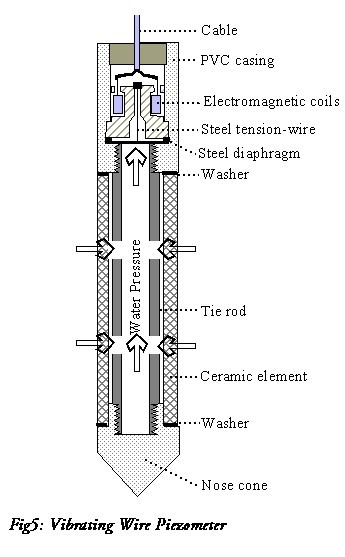
The Bureau of Reclamation has scheduled a routine drill program for Granby Dike #3 near Grand Lake, Colo. Work will begin June 16 and continue through August.

The road around Lake Granby will remain open during the work. Traffic will be temporarily reduced to one lane to accommodate the drill crew. Initial work will occur off of County Road 6 and will not restrict or impede traffic. Lane reduction will begin after the Fourth of July Holiday weekend on July 7 or 8. One-lane restrictions will be in place day and night for the duration of work taking place on top of the dike.

Work is being conducted as part of Reclamation’s Safety of Dams Program. Safety of Dams provides an ongoing assessment of Reclamation’s facilities in the 17 Western states. Drilling programs collect information from dams and dikes for evaluation and also provide a means for installation of new monitoring equipment.

Reclamation owns Lake Granby, Granby Dam, and all four dikes. The Northern Colorado Water Conservancy District provides operations and maintenance of the facilities.

For additional information, please contact Kara Lamb at Reclamation’s Eastern Colorado Area Office, (970) 962-4326, or e-mail, klamb@ usbr.gov.

More Colorado-Big Thompson Project coverage here.

Colorado-Big Thompson Project update

A picture named greenmountainreservoir

From email from Reclamation (Kara Lamb):

As high snowmelt inflows continue into Green Mountain Reservoir, we will be sending more of that native flow on through to the Lower Blue. This morning we will bump releases to the Lower Blue River up by 300 cfs. By noon, flows in the Lower Blue should be around 2400 cfs.

From email from Reclamation (Kara Lamb):

As snowmelt inflows into Lake Estes continue to drop off, we continue to curtail our releases through Olympus Dam to the Big Thompson River. This morning, releases to the Big T are around 522 cfs.

More Colorado-Big Thompson coverage here.

Colorado-Big Thompson Project update

A picture named olympusdam

From email from Reclamation (Kara Lamb):

As inflows to Lake Estes continue to decline and the reservoir elevation behind Olympus Dam drops slightly, we will curtail releases from Olympus Dam to the lower Big Thompson River. Earlier this morning, we closed four of the five gates at the dam. Our releases to the lower Big Thompson are now about 580 cfs and could drop further.

More Colorado-Big Thompson coverage here.

Colorado-Big Thompson Project update

A picture named coloradobigthompsonmap

From email from Reclamation (Kara Lamb):

We have seen the inflow to Lake Estes continue to drop through the day. As a result, we have reduced our releases from Olympus Dam to the Lower Big Thompson river to 800 cfs. We anticipate maintaining the 800 cfs through the night, although there is a slight possibility that could change.

Colorado-Big Thompson Project update

A picture named bigthompson

Update: From email from Reclamation (Kara Lamb):

At this time (3 p.m., June 7), we are increasing our releases from the Olympus Dam to the Lower Big Thompson again. We are going up approximately 130 cfs from 921 to 1050 cfs.

The 1050 cfs release is anticipated to remain through the afternoon and night and potentially into tomorrow. However, there remains a possibility that we could bump up releases again tonight, depending on the inflows coming into Lake Estes.

Some might also notice that we have done a gate change. We are now releasing from all five gates instead of just one. This provides some additional operational flexibility for us.

From email from Reclamation (Kara Lamb):

As you have probably already noticed, we are releasing 924 cfs from Olympus Dam to the Lower Big Thompson. We increased our releases late last night/early this morning around 3 a.m. It has been a busy weekend as we are seeing the Big Thompson River hit its annual spring peak from snow melt run-off. The heat we have been receiving melts the snow in the high elevations during the day. Travel times deliver that run-off to the Big Thompson River at night. We will continue the 924 cfs release through the morning, with a possible increase later this afternoon to 980 cfs. It is likely we will see this level of release from Olympus Dam through tonight and into tomorrow. When the snowmelt run-off starts to drop off, we will see our releases drop down as well.

More Colorado-Big Thompson coverage here.

Northern Colorado Water Conservancy District sets 80% quota for Colorado-Big Thompson Project shares

A picture named coloradobigthompsonmap

From the Northern Colorado Business Report (Steve Porter):

The water district felt confident enough in early April to increase a 50 percent initial quota set in October to 80 percent for Colorado-Big Thompson water share owners. A quota of 80 percent means each unit of C-BT water will yield eight-tenths of an acre-foot…

The 80 percent quota will make available a total of 248,000 acre-feet of C-BT water this year to its owners, which include 33 cities and towns, about 120 ditch and reservoir companies and around 1,800 individual allottees, according to Brian Werner, water district spokesman. Werner and [Karen] Rademacher said additional Western Slope snowfall after the 80 percent quota vote by the water district’s board of directors on April 9 has painted a much rosier picture than was foreseen mid-winter. “The numbers are definitely trending up,” Werner said. “We’re going into the (summer) with the highest storage in 10 years, and the soil moisture is way up.”

One example of this year’s heavy late season snow can be seen near Gould just across the Continental Divide in Jackson County. On May 24 the Colorado State Parks department reported that the Ranger Lakes, Bockman and North Michigan Reservoir campgrounds would remain closed through the Memorial Day weekend because of snowy conditions and the Crags Campground will be closed until July 1 because of still-deep snow…

About two-thirds of C-BT water is consumed by agriculture and the remaining third goes to municipal and industrial users. When it comes to ownership, Werner said those ratios are flipped, with cities owning two-thirds of the total 310,000 C-BT units and ag users owning about one-third.

Rademacher said another reason for the region’s water users to celebrate is the fact that most of April and the first part of May were cooler than normal. “It was cold,” she said. “The weather turned cold through much of April and stayed cold through mid-May, so that slowed the runoff.”

More Northern Colorado Water Conservancy District coverage here.

American Rivers: Upper Colorado is sixth most endangered river

A picture named coloradotransmountaindiversions

From the Sky-Hi Daily News (Tonya Bina):

[Grand County’s continued negotiations with Denver Water and the Northern Colorado Conservancy District Grand County Commissioner James Newberry] said, is sizing up better than putting the kibosh on diversion proposals altogether. “Enhancements,” or ways to improve the river, are being worked out with East Slope water providers outside of official National Environmental Policy Act processes. If Denver and Northern were forced not to do the projects at all, “then the enhancements are also gone and then we’re left with the third most endangered river being the Fraser and the sixth most endangered river being the Upper Colorado, with no way to fix them.”

Denver Water disagrees its proposal could amount to “sapping the life from the Upper Colorado,” as stated in an American Rivers June 2 press release about the river rating. “We’re working on enhancing stream flows, providing water for wildlife habitats, and working with diverse stakeholders to arrive at a solution related to the Wild and Scenic Act,” said Stacy Chesney, spokesperson for Denver Water. “From what I’ve read on the American Rivers website, they are about water efficiency and against short-sighted projects. The Moffat Collection System Project is a well thought-out part of Denver Water’s approach to ensuring a reliable water supply for the future. We’re doing it alongside conservation and recycled water, and are working to enhance the environment as well.”

And what is Northern’s take on the American Rivers posting? “We’re not taking exception to it. We certainly understand there are concerns that are being expressed,” said Northern spokesperson Brian Werner. But in trying to obtain permits for firming projects, “We think we’ve put a lot on the table over there,” he added, calling possible soon-to-be East and West Slope water agreements “precedent-setting.” Asked about the attention the American Rivers rating may draw to Northern’s increase-in-diversions request, “We’re trying to educate the public on what the projects are about, so we don’t shy away from that,” Werner said.

More Colorado River Basin coverage here and here.

Colorado-Big Thompson Project update

A picture named coloradobigthompsonmap

From email from Reclamation (Kara Lamb):

As runoff continues to come down from the high country, we continue to bypass the inflow through Green Mountain Dam to the Lower Blue River. At noon today, we increased our releases from Green Mountain to the Lower Blue by 200 cfs, putting the river at 800 cfs. Friday morning at 6 a.m. we will increase the releases again by 200 cfs, putting the Lower Blue at 1000 cfs. Saturday morning, we will increase another 200 cfs around 6:00 a.m and Saturday afternoon we will increase one last time by 200 cfs, resulting in a 1400 cfs flow in the Lower Blue by Saturday evening. We anticipate the flows will stay in place up to five days before we begin to scale back down.

These releases are part of the Coordinated Reservoirs Operations program that we, and other reservoir operators, voluntarily participate in during run-off seasons when we have surplus inflow. The surplus inflows are bypassed downstream to the Colorado River, for benefit of the four endangered fish under the Upper Colorado River Endangered Species Recovery Program. The Recovery Program will issue a news release tomorrow further detailing our releases and those of other reservoir operators in the Upper Colorado River Basin.

More Colorado-Big Thompson coverage here and here.

Colorado-Big Thompson Project update

A picture named coloradobigthompsonin2007.jpg

From email from Reclamation (Kara Lamb):

Now that it is spring, we will be increasing our releases from Olympus Dam to the Big Thompson River to meet the seasonal minimum stream flow. At 8 p.m. on Saturday, May 1, we will increase our releases to 100 cfs.

More Colorado-Big Thompson Project coverage here and here.

Colorado-Big Thompson Project update

A picture named coloradobigthompsonin2007.jpg

From email from Reclamation (Kara Lamb):

There will be some slight changes across the C-BT this weekend, but most will not notice. We are testing some of our equipment in the power plants and temporarily slowing down the flow through the project.

April 24, we will slow the rate of flow from the Estes Plant into Lake Estes. Lake Estes is currently at an elevation of 7472–only 3 feet below full. It will not be affected and should see its water elevation remain close to 7472 through the weekend.

Our releases from Olympus Dam to the Big Thompson River are not changing and will remain about 50 cfs.

Pinewood is currently rising–it is at 6575 today. Tomorrow (Saturday), it will drop again, stabalizing Sunday around a water level elevation of 6572–about 8 feet down from completely full.

Carter Lake is completely full and will remain that way for some time.

Horsetooth will continue to rise, but beginning Saturday, the inflow to Horsetooth will slow down, slightly. It is currently filling at a rate of about half a foot a day. By Monday, it will be rising a quarter of a foot a day. Currently, Horsetooth is at an elevation of 5415.75.

More Colorado-Big Thompson coverage here.

The Northern Colorado Water Conservancy District sets the Colorado-Big Thompson quota at 80%

A picture named coloradobigthompsonin2007

From The Fort Morgan Times:

The 80 percent quota will make available a total of 248,000 acre-feet of C-BT Project water. C-BT allottees — those water users within Northern Water boundaries who own units of C-BT water — include municipalities like the city of Fort Morgan, domestic water districts like the Morgan County Quality Water District, industries and farmers…

In determining the quota, the board also considers the need to maintain C-BT Project storage reserves. The board strives to utilize the supplemental water supply provided by the C-BT Project to complement the supplies available from native sources to ensure adequate regional water supplies through the current water year.

More Colorado-Big Thompson coverage here and here.

Loveland: Annual water cleanup Saturday

A picture named bigthompson

From the Loveland Reporter-Herald:

The cleanup is 9 a.m. to noon Saturday.

Check-in will be at the following locations:

• Civic Center, 500 E. Third St.

• World Beverage, 3655 Garfield Ave.

• Substation, half mile north of Taft Avenue and West 57th Street.

• Thompson School District headquarters, 800 S. Taft Ave, south gate.

• Walmart, U.S. 34 and Denver Avenue.

Residents are reminded to wear old clothing, work gloves and hats, and if they have them, bring waders. More information about the cleanup and other starting sites is available by calling 962-2627.

Estes Park: Public invited to tour new St. Mary’s water treatment plant on April 8

A picture named watertreatment.jpg

From the Estes Park Trail Gazette (Kate Rusch):

Town Trustees and staff invite the public to an open house to celebrate the completion of this state-of-the-art facility on Thursday, April 8 from 10:00 a.m. until 2:00 p.m. A ribbon-cutting ceremony will take place at 10:00 a.m. From 10:15 a.m. until 1:45 p.m., staff will be stationed throughout the facility to explain the water treatment process…

The Marys Lake Water Treatment Plant is located at 899 Lakewood Court near the southeast side of Marys Lake. Parking is limited and carpooling is encouraged. A shuttle will be available for those who park along Lakewood Court and Marys Lake Road. The facility now uses state-of-the-art membrane technology to treat water for the residents and visitors of the Estes Valley. The new system improves filtration to exclude particles less than 1 micron in size and requires fewer chemical additives to treat water. It also prepares Estes Park to meet more stringent water treatment regulations in the future. The plant`s treatment capacity has doubled to 4 million gallons per day (MGD) in the summer and at least 2.5 MGD in the winter. The membrane filtration systems are fully automated and water plant operators will be able to focus on maintaining the system which is cleaned several times a day.

More water treatment coverage here.

Windsor: Town is sorting out options for long-term supply

A picture named coloradobigthompsonin2007

From the Windsor Beacon (Ashley Keesis-Wood):

Windsor Engineering Director Dennis Wagner agreed, saying the CBT’s carryover system has allowed the town to manage its water needs. The carryover allows the town to “bank” a certain amount of water to be used the following year. The primary concern, and one that is addressed extensively in the new plan, is that the town’s water portfolio relies heavily on CBT water. “I know we’re in the NISP (North Integrated Supply Project) pool for water shares,” Vazquez said. “I do wonder though, with the delays in that project, whether that’s truly going to be the biggest bang for our buck.”

Vazquez said he felt the Windy Gap [Firming] project, which [will include the Chimney Hollow Reservoir] will be constructed near Carter Lake, would be a better buy. “I’m not saying we should abandon NISP but that we want to look at other options,” he said.

Wagner acknowledged the delays in NISP’s construction. “We definitely should meet with the Windy Gap participants and see about that,” Wagner said.

Windsor Town Manager Kelly Arnold recommended a joint work session between the town board and the Water and Sewer Advisory Board to discuss the next steps moving forward.

More Windsor coverage here.

Colorado-Big Thompson Project update

A picture named coloradobigthompsonmap.jpg

From email from Reclamation (Kara Lamb):

It is almost spring and that means we are in the middle of filling both Horsetooth and Carter reservoirs for the upcoming season.

For the last six weeks, we have been sending water into Horsetooth Reservoir at a rate of about 500 cfs. Those tracking the reservoir’s progress will note that it reached a water level elevation of just over 5400 feet earlier this week. Currently, it is sitting at almost 5403–about 11 feet down from where we typically start the water season. However, we are hoping to fill Horsetooth a little more than that, this year.

While we have been filling Horsetooth, Carter Lake has remained at a water level elevation of 5744–about 15 vertical feet from full. Because our goal is to have both Horsetooth and Carter at their highest elevation for the season by mid-May, it is time to resume pumping water to Carter. This means on Monday afternoon (March 8, 2010), we will once again begin pumping water into Carter Lake.

When we are pumping to Carter, we cannot send as much water into Horsetooth. Once the pump to Carter goes on, inflow to Horsetooth will drop to around 165 cfs. We anticipate we will fill Carter through the month of March, resuming our fill of Horsetooth by the second week of April. Both reservoirs are anticipated to reach their highest water level elevation for the season by the middle of May.

More Colorado-Big Thompson coverage here and here.

Northern plans to kick off their Regional Pool Program to expand leasing for Colorado Big-Thompson Project water

A picture named coloradobigthompsonmap.jpg

From The Fence Post:

Allocation of RPP water may come as soon as Friday, Feb. 12, when the Northern Water Board of Directors will decide whether to implement the program this year and, if so, how much water to place up for bid. Uncertainty about 2010 runoff potential might prompt the Board to postpone a decision until its March 12 meeting. RPP water is C-BT water that wasn’t needed by C-BT water users the year before. The Board allocates a quota of C-BT water each year for allottees, or unit holders. When allottees don’t use all their quota water, they can preserve, or carry over, some of it. If more remains, it automatically goes into the RPP and in certain circumstances can be leased the following year…

People who want to stay informed about the RPP can sign up for updates by e-mailing RegionalPool@NCWCD.org, check http://www.NorthernWater.org for the latest RPP news or call the Northern Water Distribution Systems Department at (970) 292-2500.

More Colorado-Big Thompson coverage here.

Colorado-Big Thompson update

A picture named coloradobigthompsonmap.jpg

From email from Reclamation (Kara Lamb, February 1, 2010):

It’s that time of year when we begin moving water east to start filling both Horsetooth and Carter reservoirs. For the past several weeks, we’ve been pumping water up to Carter while Larimer County has worked on some recreational improvements at Horsetooth. Currently, Carter is sitting at a water level elevation of 5746 feet—about 13 vertical feet down from full. It should remain at the elevation for a while.

Horsetooth has been rising very slowly over the last several weeks while the recreation work has been going on. We are currently at an elevation of 5384–about 30 feet down from our average fill elevation of 5414.

Today, we turned the pump to Carter off in order to begin sending more water to Horsetooth. Approximately 460 cfs is now going to Horsetooth. Those watching the reservoir water level should notice a sharper rate of increase by the end of the day, tomorrow.

More Colorado-Big Thompson coverage here and here.

Grand County: What are the tradeoffs with respect to the Moffat Collection System Project and the Windy Gap Firming Project?

A picture named coloradorivergranby.jpg

Folks in Grand County know their water law pretty well. 150 or so showed up to a briefing on the Moffat Collection System Project last Tuesday at Silver Creek. Here’s a report from Tonya Bina writing for the Sky-Hi Daily News. It’s a long article so click through and read the whole thing. Here are a few exerpts:

“What the EIS is proposing to do is take the flows off of the rising level of the hydrograph, and in our wettest times of the year, what our enhancements are proposing to do is to give us water back when our flows are the lowest. Is that an acceptable trade?” she asked.

“There’s skepticism out there, there’s a feeling out there that Grand County has this back-room deal going on,” said Grand County Commissioner James Newberry at the start of the meeting. “And the more I thought about this, yeah. We do. We really do. It’s a separate negotiating process.”

On its team, the county has assembled water attorneys, engineers, NEPA and Clean Water Act specialists and a professional negotiator to aid in deals and to advise on what to ask for. The county has spent some $2.8 million on water protection since 2003.

In the past year alone, county representatives have attended 65 meetings with the Northern Water Conservancy District, Denver Water and West Slope partners regarding water issues, according to county officials. “We’re going to be much better off than before the project happened,” Newberrry said, optimistically. But success is not guaranteed, at which point the county is prepared to litigate. “And even that is not a guarantee,” he said.

The county has stated it has better legal footing against the Northern Colorado Municipal Subdistrict’s Windy Gap Firming Project — concurrently being proposed — than it does Denver’s…

“We already have a river that is on the brink,” said Mely Whiting, senior attorney for Trout Unlimited. “Is this incremental 20 percent going to push us over the brink?” It’s a question that has been subjected to modeling, charting and graphing in countless studies.

But Jon Ewert, Division of Wildlife area biologist, said even with the most esteemed modeling, biology is really unpredictable. “There are cascading effects that can take years, if not decades to unfold,” he said. Both Denver Water and Northern have endorsed the science behind the [Grand County] Stream Management Plan (pdf), county officials say, although those water users may not agree on the implementation of it…

Attorney Mely Whiting of Trout Unlimited stressed along with county officials that any allowance for Denver to take more water from the river should be tied to a “reopener clause,” in which stakeholders would revisit the project if degradation of the river reached beyond what was predicted in the NEPA process.

More Moffat Collection System Project coverage here.

Carter Lake: Northern Colorado Water Conservancy District Carter Lake hydroelectric retrofit update

A picture named hydroelectricdam.jpg

From the Loveland Reporter Herald (Pamela Dickman):

The water district is on track to begin building a hydroelectric plant late next year that would provide power to the Tri-State Generation and Transmission Association by spring 2012. “We’re taking advantage of the elevation difference between the water level at Carter Lake and the canal downstream,” said Carl Brouwer, project manager with Northern Water. “Right now all that energy is just dissipated. We want to turn that into hydroelectric energy.” Northern Water received preliminary approval in November from the U.S. Bureau of Reclamation. And Wednesday, the Larimer County Planning Commission gave its nod to the project.

The small facility would be built at the south dam next to a new water outlet in an area that already has been disturbed by construction. And it would use water that already is being transferred, so it wouldn’t affect levels in Carter Lake, Brouwer said…

The plant would produce about 10 million kilowatt hours of electricity per year. “It’s roughly enough to supply a couple thousand homes,” Brouwer said.

More hydroelectric coverage here and here.

Moffat Collection System Project: Granby EIS hearing well attended by opponents

A picture named grandcountycollection.jpg

In recent years the conflict between Grand County residents and Denver Water has been held in check by continued open communication and the water utility’s being sensitive to riparian and instream flow needs. The old animosity didn’t take much provocation to bubble back up to the surface however. Here’s a report about Wednesday’s U.S. Army Corps of Engineers public hearing at Silver Creek, from Tonya Bina writing for the Sky-Hi Daily News. From the article:

[Fraser resident Kirk Klancke] took the podium Wednesday night at the Inn at SilverCreek in Granby where official comments on the draft EIS were being taken and outlined the dire need for flushing flows for first-aid treatment of the Fraser River and a plea for more time to review the 2000-page draft “environmental impact statement” document…

“If we don’t draw the line here, where are we going to draw it?” asked Mara Kohler of Kremmling. “How can we protect the rivers that sustain us, if we don’t sustain them?”

“There needs to be a massive education campaign in the Front Range and Denver,” said Randy Piper of Fraser during his three minutes, “educating them as to the dire circumstances we have. Tourism is a tremendous revenue-generator in this state. The people who come here don’t come to Denver to take long hot showers and run barefoot through the lawns. They come here to the mountains. The bottom line is: We need to conserve, not take more.”

Comments were directed to the meeting facilitator, Scott Franklin of the Denver division of the U.S. Army Corps of Engineers, the federal agency checking the methodology and modeling of Denver’s draft environmental impact statement in conformance with National Environmental Protection Agency protocol. The Corps’ objective, according to Franklin’s statements, is to keep in check “the national concern and protection of limited resources balanced against detriments.”[…]

“This project makes no mention of the horrendous degradation of the William’s Fork River,” commented Ray Miller of Grand Lake, a 30-year resident and former ranger. “And the Colorado River is over-allocated. This profound alteration of this watershed has been institutionalized so long, East Slope interests have come to (view) it as a given. It’s been going on so long, they’ve lost sight of how ecologically viable this watershed is in its natural state … The benefits of diversion pale in comparison to the benefits of sustaining this ecological system.”

More Moffat Collection System Project coverage here.

Moffat Collection System Project: Corps Denver hearing recap

A picture named eisenhowerfishing.jpg

The Fraser River of the 21st century is much different from the river that former President Eisenhower used to fish back in the day. Low flows due to transmountain diversions have diminished the fishery there.

The U.S. Army Corps of Engineers held a hearing last night in Denver for Denver Water’s Moffat Collection System Project which would divert additional water from the Fraser watershed. Residents, planners and politicians (many from Grand County) showed up to be heard. A majority of the speakers asked for the comment period to be extended 45 days.

Speakers for the most part voiced opposition to the proposed Denver Water expansion of Gross Reservoir and the increased diversions to fill the new space. The hope is to raise the dam 125 feet or so to get another 18,000 acre-feet of firm yield on the north side of their service area. They also hope to build a new reservoir on Leyden Creek.

“It breaks my heart to see a natural environment disappear while the east slope creates an environment that belongs east of the Mississippi River,” said Fraser resident Kirk Klanke during the hearing.

He also voiced support for an extension of the comment period. The EIS is a couple of thousand pages and many of the speakers said that they’ve not had enough time to probe the proposed workings.

Canton O’Donnell wants the Corps to evaluate the Moffat project in conjunction with the proposed Windy Gap Firming Project. Windy Gap is the Northern Colorado Water Conservancy District’s plan to increase municipal supply for the Front Range using the Colorado-Big Thompson project to transport water stored downstream of Granby Reservoir. One speaker asked the Corps to hold off on issuing permits for either the Windy Gap Firming Project or the Moffat Collection System Project until Denver Water and the Northern Colorado Water Conservancy District come up with their plan to coordinate the two projects to minimize impacts to the headwaters area.

“If your house is on fire and you have two bedrooms you’d want the fire department to take care of both,” said 4th generation Grand County rancher and county commissioner Gary Bumgarner in support of consolidating the environmental impact statements for both projects.

“This is a very bad project for many reasons,” said Grand Lake Mayor, Judy Burke, while reminding the Corps that pumping warmer water upstream to Grand Lake is causing algae blooms in the lake.

The Colorado-Big Thompson project moves water from Granby Reservoir, through Shadow Mountain Reservoir and into Grand Lake for transport under the Continental Divide through the Adams Tunnel. The Windy Gap Firming Project would increase the volume of water pumped up to the Adams tunnel so presumably the lake clarity problem will increase along with lowered water quality.

Whitewater enthusiasts oppose the drowning of the reach of South Boulder Creek just above Gross Reservoir. One commenter called it a, “Premier whitewater run.”

Interested parties have one more chance to speak publicly on the project next week in Keystone. Here’s the release from Denver Water with details about the hearings.

More Moffat Collection System Project coverage here.

Estes Park: Students learn about water quality while participating in ‘River Watch’ program

A picture named studentslesherjhsamples.jpg

From the Estes Park Trail Gazette (Juley Harvey):

The students became involved after participating with Merrill in the CloudSat program last year, where they collected data on clouds and precipitation. Merrill found the River Watch program and asked the trio to participate this summer. In the River Watch program, they analyzed samples and stored data on the Internet, to be reviewed and evaluated by the Department of Wildlife. They performed tests for pH levels, alkalinity, hardness, temperature, dissolved oxygen, metals and nutrients. Next, they will train their peers. They hope to test more rivers and headwater streams. They started out monitoring Fish Creek, but the project ended quickly, because “the water was like THAT wide. There was not good data.” “The cool parts,” they said, “were learning about and working with chemicals, collecting stuff and knowing we`re collecting our own data. We feel like we definitely made a difference. We learned how to test…and how rivers interact with the ecosystem and how important they are, and how streams are important to the ecosystem. There is only a little bit of streams left. We need to do what we can to keep them clean and healthy.”

More education coverage here.

Big Thompson River Revival

A picture named bigthompson.jpg

Here’s a recap of yesterday’s waterway cleanup sponsored by the city of Loveland and the Big Thompson Watershed Forum, from Pamela Dickman writing for the Loveland Reporter Herald. From the article:

The city of Loveland and the Big Thompson Watershed Forum jointly hold two waterway cleanups per year. This one, the fall cleanup, was called the Big Thompson River Revival. Volunteers found all sorts of debris in the river from flip-flops to alcohol bottles to a traffic cone to measuring tapes and more…

Alexander Alden, 7, and Jasmine Kristjansdottir, 10, stuck to the banks of the river with family members and friends. Alexander’s Boy Scout troop encouraged members to participate, but that is not the only reason he decided to pick up trash. Alexander said he was out at Fairgrounds Park “for the waterways.” “The water is what we drink,” he said. “It comes in all sorts of liquids we drink.” Jasmine added, “I’m here to help the world.”

More Big Thompson watershed coverage here and here.

Horsetooth Reservoir operations update

A picture named horsetoothreservoir.jpg

From email from Reclamation (Kara Lamb):

Today, Horsetooth Reservoir is sitting at an elevation of 5400 feet. To put some perspective on this, looking back about 20-years, our average elevation at Horsetooth this time of year is usually around 5385.

Right now, we are sending just over 200 cfs into Horsetooth. About 354 cfs is going out. This is a relatively slow draw on the reservoir. If demands remain about the same, I anticipate we will see an elevation in the mid-upper 5390s for Labor Day weekend. That should be plenty of water for all boat ramps.

More Colorado-Big Thompson Project coverage here and here.

Boulder: 3% Water and sewer increase?

A picture named barkerreservoir.jpg

From The Denver Post:

According to a memo being presented to the City Council during a Tuesday night study session, the Boulder Water Resources Advisory Board is recommending an increase in water, wastewater and stormwater rates. The proposal calls for an increase of 3 percent on water bills, 2 percent for wastewater and 1 percent for stormwater. Together, the increases would mean most residential customers would pay $1.40 more each month — or about $17 more annually. Water bills for businesses, such as restaurants, would increase about $162 per year, while heavy industrial users would see bills go up by $5,100.

More infrastructure coverage here.

Big Thompson Watershed Forum 11th annual meeting September 22

A picture named bigthompson

From The Greeley Tribune:

The Big Thompson Watershed Forum will host its 11th annual meeting — Protecting Our Watershed, Preserving Our Future — on Sept. 22. It will be at the Drake Center in Fort Collins and is scheduled for 8 a.m.-3:45 p.m.

The Big Thompson River Watershed, an area of about 900 square miles, provides drinking water to numerous cities in northern Colorado including Estes Park, Fort Collins, Greeley and Loveland. The Big Thompson River Watershed is vital to more than 800,000 people as it carries water from the Colorado-Big Thompson Project and is used for residential, commercial, agricultural, recreation and wildlife habitat purposes. The mission of the forum is to protect and improve water quality in the watershed through collaborative monitoring, assessment, education and restoration projects.

This year’s topics include a volunteer monitoring program water quality update; the future of the watershed movement in northern Colorado; Colorado’s source water assessment and protection program; what a changing climate means for the West’s water; Clean Water Act and proposed nutrient amendments; a model to plan, build and live water-smart; and an education and outreach panel discussion for the forum and local watershed groups.

State Rep. Randy Fischer, D-Fort Collins, will provide opening remarks. Cost is $15, which includes a continental breakfast and lunch.

For more information, e-mail Zack Shelley at zshelley@btwatershed.org.

More Big Thompson coverage here and here.

1976 Big Thompson Flood 33rd anniversary

A picture named bigthompsonflood073176.jpg

Today is the 33rd anniversary of the Big Thompson Flood. According to the Fort Collins Coloradoan there will be a ceremony tonight at to reflect on the tragic events of that day and the loss of 140 lives. From the article:

At 7 p.m. tonight, members of the Big Thompson Canyon Flood Memorial board of directors will again host a ceremony to recognize the devastation of the flood and share memories of tragedy and triumph. During the ceremony, four college students who lost their grandparents in the flood will be presented scholarships in memory of their loved ones…

For many Colorado residents, the memories of that devastating day in 1976 remain forever etched in our minds. For others, the impact of that tragic day does not truly resonate until they see the roadside memorial or read excerpts of books made available by people dedicated to ensuring the flood will never be forgotten.

As I remember it (highly unreliable), Mrs. Gulch and I had spent a week or so swimming through all the rain up in the Flat Tops Wilderness and were holed up that night in Steamboat Springs.

Estes Park: Water quality report available on town website, water quality passes with flying colors

A picture named watertreatment.jpg

From the Estes Park Trail (Kate Rushch):

The Water Quality Report is available on the Town’s website at http://www.estes.org/lightpower/waterdefault.aspx. Copies are also available at the following locations: Town Hall at 170 MacGregor Avenue; Town of Estes Park Water Department at 577 Elm Road; Estes Park Medical Center at 555 Prospect Avenue; Larimer County Health Department at 1601 Brodie Avenue.

More Coyote Gulch coverage here.