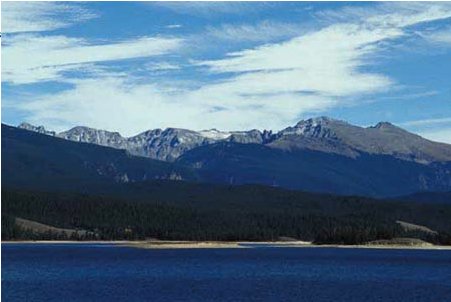
Runoff news: Horsetooth Reservoir is almost full

horsetoothreservoir.jpg

From the Fort Collins Coloradoan (Bobby Magill):

“Everybody’s just jazzed,” said Glen Werth, owner of Inlet Bay Marina on Horsetooth Reservoir. “The water levels are fabulous. Our rental business is fantastic. We have a lot of big boats, big groups.”

Brimming with water, Horsetooth Reservoir is expected to completely fill this week for the first time since 2004. “We do think Horsetooth is going to continue to rise,” said U.S. Bureau of Reclamation spokeswoman Kara Lamb. “We’re going to get pretty close to full.”

On Friday, Horsetooth Reservoir’s surface elevation was 5,425.25 feet above sea level, lower than its peak in 2010, when it hit 5,427 feet, said Brian Werner, spokesman for the Northern Colorado Water Conservation District. Horsetooth Reservoir’s full pool level is 5,430 feet. “By the end of next week, we will have Horsetooth full,” Werner said Friday.

The reservoirs are full here mostly because of the long, sustained runoff season from an abnormally large snowpack in the mountains. Werner said Northern Water’s forecasters say this year’s robust runoff is a “once-in-a-lifetime” event. “We’re smiling,” Werner said. “This is almost an ideal runoff year. We talk about this all the time and it never happens.” The runoff from the mountain snowmelt is expected to extend into August, which is nearly unheard of, he said.

Recent rains mean irrigators haven’t had to take water from the reservoir, allowing it to continue to rise. The Bureau of Reclamation has stopped taking water deliveries from the Colorado River through the Adams Tunnel, Lamb said.

More Colorado-Big Thompson Project coverage here.

From the Glenwood Springs Post Independent (Janice Kurbjin):

A sustained high water season on rivers in and around Summit County is coming to a close, and that means less juggling for local outfitters. “It was a challenge, for sure,” Arkansas Valley Adventures owner Duke Bradford said. AVA, like other companies, transferred trips based on flows to put ages and abilities on appropriate stretches. Someone who booked a Brown’s Canyon trip in the Arkansas River Valley may have gotten short notice that they’d now be running the more consistent Blue River, though it still ran quickly, about an hour north in Silverthorne…

“If you came to run whitewater, it’ll go down as one of the best whitewater seasons ever,” Bradford said, explaining that cooler temperatures helped sustain what many thought would be a sharp, severe spike in flows. Then, when the snowpack expired, rain and downstream water calls came. The high water lasted about six weeks…,/p>

Performance Tours and AVA have been back on the Numbers and Royal Gorge for about five days. And other trips are mostly back to normal minimum ages, with the exception of a still-high Clear Creek.

Colorado-Big Thompson Project update: Releases from Lake Granby to increase

A picture named granbyspill06222011

From email from Reclamation (Kara Lamb):

Recent rain storms and the tail end of snow melt run-off continue to produce high inflows into Lake Granby. As a result, we and Northern Water have been increasing releases from Granby Dam to the Colorado over the last few days. Today, releases are going up again, by about 300 cfs. We will soon be releasing upwards of 2200 cfs. The reservoir is just about full with only two and a half feet to go. Rain on the East Slope has reduced the need for diversions from the West Slope. As a result, more water must be released at the dam.

From email from Reclamation (Kara Lamb):

Just a quick heads up: late last night/early this morning, releases from Olympus Dam were scaled back by about 100 cfs. We are now releasing around 575 cfs from the dam to the lower Big Thompson River. Even though we have had some higher inflows from the recent storms, we are still capturing priority water (east slope run-off) in the C-BT project and using it to generate hydro-power and top off Horsetooth and Carter reservoirs. As a result, we have cut back diversions from the West Slope through the Adams Tunnel. With the tunnel low and the east slope water being taken through the system, we are able to reduce releases to the canyon a little bit.

More Colorado-Big Thompson Project coverage here.

Colorado-Big Thompson Project update: 3,300 cfs in the Blue River below Green Mountain Reservoir

A picture named coloradobigthompsonmap.jpg

From email from Reclamation (Kara Lamb):

Currently, we are releasing about 3300 cfs from the dam to the Lower Blue. The reservoir is about half an inch from completely full.

From email from Reclamation (Kara Lamb):

Just a quick note to say that both Horsetooth and Carter Lake reservoirs are pretty darn full…this is the highest the water elevation has been at Horsetooth since 2004. Currently, it’s at a water level elevation of 5421–and still rising!

From email from Reclamation (Kara Lamb):

As you’ve probably noticed, releases from Olympus Dam to the Big Thompson Canyon have not changed much over the last week. We wound up dropping just less than 100 cfs since my last note.. We are currently releasing about 730 cfs. The forecasted rain storms in the mountains could bring some changes. If we see a rain run-off inflow peak into Lake Estes that is substantial, we could increase releases from Olympus Dam. However, right now we are planning to keep the 730 cfs release in place.

More Colorado-Big Thompson Project coverage here.

Green Mountain Reservoir operations: 2,800 cfs in the Blue River below the dam

A picture named coloradobigthompsonmap.jpg

From email from Reclamation (Sterling Rech):

The inflow to Green Mountain Reservoir remains elevated, Dillon Reservoir’s release rate is being increased, and rain continues to be in the forecast. In order to slow the rate at which the reservoir is filling, the Green Mountain Reservoir release will be increased by 300 cfs today. This release rate increase will be accomplished in two steps of approximately 150 cfs each. Because the powerplant is currently running at maximum capacity, these release rate increases will be accomplished by raising the spillway gates. With the current release rate being approximately 2,500 cfs, these release rate increases will result in a flow rate of approximately 2,800 cfs at the Blue River gage below the dam by this afternoon.

Green Mountain Reservoir

Wednesday, July 6, 2011, 1300 hours – Increase the reservoir release from 2,500 cfs to 2,650 cfs (accomplished by raising all three spillway gates).

Wednesday, July 6, 2011, 1500 hours – Increase the reservoir release from 2,650 cfs to 2,800 cfs (accomplished by raising all three spillway gates).

Maintain the 2,800 cfs reservoir release until further notice.

More Colorado-Big Thompson Project coverage here.

Colorado River basin: Mitigating further declines to the riparian and stream environment from transmountain diversions in the upper river watersheds

A picture named eisenhowerfishing.jpg

A while back Trout Unlimited signaled pretty strongly that the Moffat Collection System Project and the Windy Gap Firming Project were in for a fight, even as Denver Water and Northern Water were making efforts to appease west slope concerns with increased diversions from the upper Colorado and Fraser rivers. Despite the historic agreement between Denver Water and west slope water wonks and the recently announced Colorado Division of Wildlife approval for mitigation there may be a long battle ahead for the two Front Range providers to move more water through the Adams and Moffat tunnels.

Here’s a guest commentary about new proposed diversions from Drew Peternell running in The Denver Post. Here’s an excerpt:

Earlier this month, Denver Water and the Northern District presented to the Colorado Wildlife Commission plans to mitigate the impacts of their projects. While the plans do include some meaningful provisions, they do not go far enough.

First, under the proposed mitigation, Denver can divert from the Fraser River even when diversions violate stream temperature standards designed to prevent fish mortality.

Second, the increased diversions could eliminate the spring high-water flows necessary to flush stream channels of sediment, which is choking many stretches of the river to death.

Third, the mitigation plans do not include a bypass of Windy Gap Reservoir, a measure that would reduce rainbow trout whirling disease and significantly improve conditions in the Colorado River downstream of the reservoir.

And fourth, while the mitigation plans include some funding for habitat projects to adapt the streams to the new, lower flow reality, the dollar figures fall short of what is needed by nearly $10 million, according to estimates by independent restoration contractors.

Yes, protecting the health of the upper Colorado River basin from the impacts of the proposed water diversions requires money. And $10 million may sound like a lot. But for Denver Water customers, it would be less than $1 a year per household, according to an analysis by Western Resource Advocates.

Denver Water and the Northern District won’t have to pay a nickel for the water they propose to take from the upper Colorado River basin, and they refuse to pony up the money needed to offset the impacts of their diversions, arguing that their customers won’t tolerate the rate increase.

Is saving our state’s namesake river worth a buck a year to you?

More Colorado River basin coverage here.

Colorado-Big Thompson Project update: 1,800 cfs in the Blue River below Green Mountain Dam

A picture named greenmountainreservoir.jpg

From email from Reclamation (Kara Lamb):

Tomorrow, Thursday June 30, we will be increasing the releases from Green Mountain Dam to the Lower Blue River. We will be bumping up to 1800 cfs. This change will be made in two stages; the first increase of about 150 cfs will be in the morning. The second increase of another 150 cfs will be in the afternoon. The 1800 cfs release will most likely be in place through the 4th of July holiday weekend.

From email from Reclamation (Kara Lamb):

With the high temperatures the last few days, nightly inflows to Lake Estes have been up and down. Peaks to Lake Estes continue to fluctuate between 900-1300 cfs. As a result, we are adjusting the release from Olympus Dam to the Big Thompson Canyon about every other day. Late tonight, June 29, releases to the canyon will jump up from 650 cfs to 790 cfs.

More Colorado-Big Thompson Project coverage here.

Colorado-Big Thompson Project update: Reclamation and Northern Water are curtailing releases from Granby Reservoir to top it off

A picture named granbyspill06222011

From email from Reclamation (Kara Lamb):

It is starting to look like we may have seen the peak of snow melt run-off inflow into the Three Lakes Area. As a result today, June 28, we and Northern Water have agreed to begin curtailing releases from Granby Dam to the Colorado River.

Earlier today, releases from the dam were as high as 2200 cfs. Starting this afternoon, we will cut releases back by 200 cfs a day until the release from the dam reaches about 1000 cfs. The reduced releases will speed the filling of Lake Granby.

Click here to view the cool video — shot by Tonya Bina who writes for the Sky-Hi Daily News — of the spill at Granby Reservoir from last week.

From email from Reclamation (Kara Lamb):

Forecasts are showing that snow melt run-off inflows into Lake Estes from the Big Thompson River are likely to drop off tonight. As a result, we’ll be cutting back our releases from Olympus Dam to the Big Thompson Canyon by about 40 cfs later tonight.

Around midnight tonight, June 28, releases from the dam to the canyon will drop to about 650 cfs.

More Colorado-Big Thompson Project coverage here.

Colorado-Big Thompson Project update: 690 cfs in the Big Thompson River below Olympus Dam

A picture named coloradobigthompsonmap.jpg

From email from Reclamation (Kara Lamb):

We’re anticipating that we’ll see high inflows again tonight into Lake Estes as the heat continues. Last night, inflows got to about 1200 cfs.

Consequently, we are bumping up releases from Olympus Dam on Lake Estes to the Big Thompson Canyon. We are bumping up in two steps. The first will be tonight/tomorrow morning at midnight. We’ll go up to 600 cfs–an increase of about 100 cfs. An hour later, at 1 a.m., we’ll go up another 90 cfs.

The resulting flow at the top of the canyon will be around 690 cfs.

More Colorado-Big Thompson Project coverage here.

Colorado-Big Thompson Project update: 550 cfs in the Big Thompson River below Olympus Dam

A picture named olympusdamrelease062011

From email from Reclamation (Kara Lamb):

Just a quick update: with the 90+ degree heat, we’ve seen increases in nightly snow melt run-off into Lake Estes. As a result, we upped releases from Olympus Dam to the lower Big Thompson River again last night, by 50 cfs. Today, there should be about 550 cfs flowing at the top of the canyon.

More Colorado-Big Thompson Project coverage here.

Colorado-Big Thompson Project update: 2,500 cfs in the Upper Colorado River below Granby Dam

A picture named granbyspill06222011

From email from Reclamation (Kara Lamb):

We are still on track with the release plan from Granby Dam to the Colorado River. Today [June 24], the combined release from the dam is in the mid-2200 cfs and continues to go up. We will cap the release at 2500 cfs.

From email from Reclamation (Kara Lamb):

With the warm temperatures today [June 24], we anticipate that we will see a spike in snow melt run-off inflows into Lake Estes late tonight. As a result, later tonight, we will increase releases from Olympus Dam to 500 cfs.

More Colorado-Big Thompson coverage here.

Colorado-Big Thompson Project: The Upper Colorado River benefits from the seventh spill in Lake Granby history

A picture named granbyspill06222011

From the Sky-Hi Daily News (Tonya Bina). Click through for the cool video footage of the spill that Ms. Bina shot yesterday. Here’s an excerpt from the article:

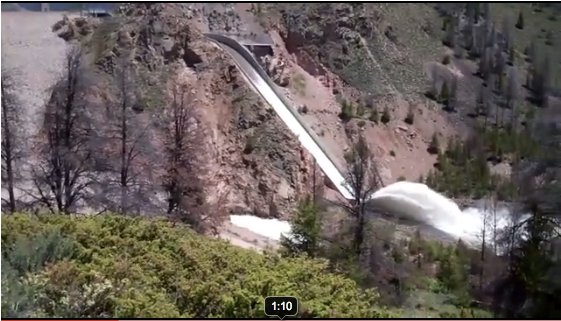
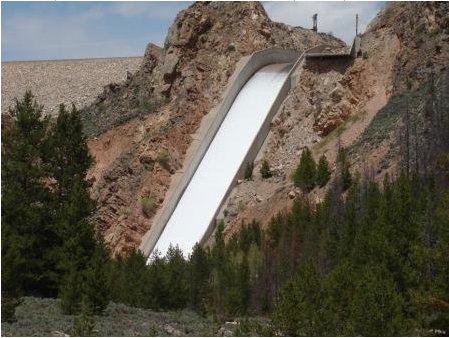
This is the seventh year that water has gone over the Granby spillway because of abundant runoff, according to Dana Strongin, spokesperson for the Northern Colorado Water Conservancy District. The last time was 14 years ago. Before the dam spillway was built in 1965, water would cascade over the cliff rocks into the pool of Colorado River water below.

Although that stretch of the Colorado River directly below the Granby Dam may pose some flood risks, it is now receiving long-awaited flushing flows deemed necessary to river health. Flushing flows remove sediment and make it easier for fish to spawn. They also rejuvenate the riparian areas adjacent to the river. Such areas are important since 90 percent of Colorado’s wildlife live in or near water…

Silt had accumulated at the river bed to a point that made it difficult to even wade in it, [Jon Ewert, DOW aquatics biologist based in Hot Sulphur Springs] said. Such conditions can choke life in the river. “From what I’ve seen on that section of river before this flow, it had some of the most impaired habitat on the Colorado in Grand County,” he said.

That Upper Colorado section can go years with average flows around 150 cfs, according to the state Division of Water Resources website. From a prescription set by the U.S. Secretary of the Interior in 1961 having to do with the management of the Colorado-Big Thompson Project, flows on the Colorado River in that section from May to July must be at a minimum of 75 cfs, and in late summer a minimum of 40 cfs…

On Wednesday, June 22, flows at the gauge below Granby dam were at a healthy flushing rate of about 1,800 cfs, which included flows coming out from the bottom of the dam.

More Colorado-Big Thompson Project coverage here.

Green Mountain Reservoir operations update: 750 cfs in the Blue River below the dam

A picture named greenmountainreservoir.jpg

From email from Reclamation (Kara Lamb):

Starting today [June 19], we’ll be doing a little work on one of the hydro-electric generating units at the Green Mountain Power Plant on Green Mountain Dam. As a result, releases from the dam to the Lower Blue began cutting back late last night/early this morning. By early afternoon today (June 19) we anticipate having releases down to around 750 cubic feet per second.

Releases are scaling back in 100 cfs increments. The first change was at 10 p.m. last night, then 1 a.m. this morning, and again this morning at 6 a.m. Early this afternoon, when the unit is removed from service for maintenance, we will drop the last 100 cfs. That last change will leave about 750 cfs going through the other generating unit and flowing down the Lower Blue.

Right now, we are estimating the work will complete by Wednesday. Once the unit is returned to service, we will start ramping releases up again. However, with new snow in the mountains lately, we are not yet sure how high the releases will go later this week. I will update you once we have a better idea.

As for the reservoir, it is currently at a water level elevation of 7930 feet. That’s about 20 feet down from full. The reservoir has been filling pretty steadily for the last two weeks. It has gone up half a foot since midnight.

More Colorado-Big Thompson coverage here.

Colorado-Big Thompson Project update: 1400 cfs and rising in the Upper Colorado River below Lake Granby

A picture named coloradobigthompsonmap.jpg

From email from Reclamation (Kara Lamb):

The gates at Granby Dam have been cracked open above the spillway so that water is pushing over the spillway. While the reservoir is still about 20 feet down from full, water is pushing over the spillway gates because the lip of those gates is also about 20 feet down from a full water elevation.

Consequently, we are seeing releases to the Colorado River below the dam steadily increase as run-off inflow increases. As the run-off inflow comes up, we are seeing the original plan we at Reclamation and Northern Water introduced back in April materialize.

We had originally forecasted that releases from Granby could get as high as 2500 cfs–and that is what we anticipate will happen come the top of next week, around Monday or Tuesday June 20 and 21. Today, releases from Granby Dam got upwards of 1400 cfs. They will continue to increase through the weekend.

Inflows to Shadow Mountain Reservoir, which releases to Granby, and other inflows to Granby, are on the rise. They bump up especially at night, when melted snow that has traveled down from high mountain elevations reaches the reservoirs. Today, Shadow Mountain was releasing about 2600 cfs.

Willow Creek Reservoir, whose drainage basin sits at a slightly lower elevation, has possibly seen its snow melt run-off peak (although I wouldn’t say that is certain). Inflow to the reservoir has dropped off since last week when it was as high as 1300 cfs. It is now steadily bypassing about 960 cfs of run-off inflows.

Next week, when Granby’s releases reach their high mark, the Colorado River below its junction with Willow Creek will likely have flows upwards of 3300 cfs.

From email from Reclamation (Kara Lamb):

Just a quick note that elevations are still on the rise for Horsetooth Reservoir, which will be above its average water level elevation for the coming Father’s Day weekend. And, Carter Lake remains full!

Colorado-Big Thompson update: Granby Reservoir is spilling, 920 cfs total into the Upper Colorado River

A picture named granbyreservoirreleases062011

From email from Reclamation (Kara Lamb):

Just a quick note to say we’re up to about 950 cfs out of Granby Dam. We are releasing about 430 cfs through the dam. The remaining 520 cfs is coming over the spillway.

More Colorado-Big Thompson Project coverage here.

Colorado-Big Thompson Project update: 400 cfs in the Big Thompson below Olympus Dam

A picture named olympusdamrelease062011

A picture named granbyreservoirreleases062011

From email from Reclamation (Kara Lamb):

You’ve probably noticed that throughout the weekend and for the last several days, we’ve been decreasing releases from Olympus Dam to the Big Thompson River. This is because we have been receiving a little more “priority water” into the Colorado-Big Thompson system.

When our junior east slope water rights, priority water, come into play for the C-BT, we decrease, or even turn off, imports from the west slope and collect the east slope run-off at Olympus Dam. So, instead of sending it all over the dam, we run it through our power generation system and deposit it into Horsetooth Reservoir. As a result, the release from Olympus to the Big Thompson has dropped to about 400 cfs…

Tonight [June 14], we’ll drop it again to about 375 cfs.

From email from Reclamation (Kara Lamb):

Just a quick update on what we are releasing from the collection system of the Colorado-Big Thompson Project.

We are up to about 773 cfs from Granby Dam. About 343 cfs is coming over the spillway; the 430 cfs is still being released through the dam.

But we have seen inflows to both Willow Creek and Shadow Mountain drop off in the last 24 hours. Willow Creek has dropped to about 954 cfs. Shadow Mountain is now releasing 2150 cfs.

Click on the thumbnail graphics above for screen shots of Ms. Lamb’s photos of the Olympus and Granby releases from this week.

More Colorado-Big Thompson Project coverage here.

Trout Unlimited: Upper Colorado River Mitigation Package ‘Not Enough’

A picture named cutthroat.jpg

Here’s the release from Colorado Trout Unlimited (Randy Schofield):

Trout Unlimited today expressed disappointment in a June 9 Colorado Wildlife Commission decision to approve without changes mitigation plans offered by Denver Water and the Northern Colorado Water Conservancy District for two new water diversion projects, saying the plans fall short of what’s needed to protect the fish and wildlife resources of the upper Colorado River basin.

“We appreciate the hard work the commission and its staff have put into reviewing the proposed Moffat Tunnel and Windy Gap expansion projects,” said Drew Peternell, director of Trout Unlimited’s Colorado Water Project. “While the mitigation package the commission approved yesterday is an improvement over the plans Denver and Northern offered originally, it is not enough to protect the rivers and streams of the upper Colorado River basin from the impacts of the new projects.”

For decades, large-scale water diversions to the Front Range have severely depleted and damaged the upper Colorado River and its major tributaries, including the Fraser River. Already, transbasin water diversion projects, including Denver Water’s Moffat Tunnel pipeline and the Northern Colorado Water Conservancy District’s Windy Gap project, take about 60 percent of the native flows of the upper Colorado River basin. The proposed expansions of the Moffat Tunnel and Windy Gap projects would take an additional 15 percent of flows and further stress an ecosystem that is on the tipping point of survival.

Trout Unlimited vowed to seek additional mitigation conditions in the next phases of project permitting and urged Denver Water and Northern to do more to offset the impacts of the proposed projects on the Colorado River and its tributaries.

At the Wildlife Commission meeting in Grand Junction Thursday, several wildlife commissioners expressed concerns that the final mitigation plans submitted by Denver Water and Northern were inadequate, but the commission voted unanimously to approve the plans anyway, without changes.

“We’re disappointed that commissioners apparently believed they didn’t have the statutory authority to recommend additional protections,” said Mely Whiting, counsel for TU’s Colorado Water Project. “We don’t believe that’s an accurate reading of the statute.”

Last week, TU, West Slope landowners and other stakeholder groups urged the Wildlife Commission to include several provisions in the final mitigation package to ensure the health of the rivers:

– Reconnecting the Colorado River by creating a “bypass” around Windy Gap Reservoir.
– A halt to diversions when water temperatures are on the verge of state “impaired” standards – water warm enough to kill trout.
– Adequate spring flushing flows to keep the rivers healthy and sustain riparian areas that are critical to wildlife.
– An ongoing plan to monitor stream conditions and identify needed habitat restoration projects.
– An endowment fund to pay for those restoration projects as an “insurance policy” for river health.

TU leaders stressed that these were reasonable requests. “We weren’t asking for perfection,” said Whiting. “We were simply asking for adequate mitigation, an ‘insurance policy’ that provides the minimal level of protection needed to keep the rivers and streams of the upper Colorado basin healthy into the future. Yesterday’s decision puts these irreplaceable resources at risk.”

The Fraser River was a big loser in the decision, said TU. Under the plan approved by the commission, Denver Water can divert through the Moffat Tunnel even when those diversions violate stream temperature standards designed to prevent lethal effects on fish. And the project could take so much water that flushing flows critical to clean the stream of harmful sediment would no longer be available. The mitigation plans had several other deficiencies, including:

– Funding for stream projects to protect the Colorado River fell significantly short—between $3 and $5 million short, according to TU’s calculations, based on estimates by independent restoration contractors.
– Funding for a potential bypass of Windy Gap Reservoir, which could significantly improve downstream Colorado River conditions, was not included in the package.
– Northern’s plan allows chronic stream temperature problems and provides insufficient flushing flows in the Upper Colorado River.

TU thanked the commissioners for their efforts and acknowledged the complex, difficult nature of these mitigation decisions. But the sportsmen’s group said that the overriding goal of ensuring the future of the river’s wildlife habitat and fisheries was not achieved.

“The bottom line is that under this mitigation package, the health of the upper Colorado River and its tributaries will continue to decline,” said Peternell.

To learn more about diversion impacts on the river and watch TU’s short video “Tapped Out,” go to www.defendthecolorado.org

More coverage from Scott Willoughby writing for The Denver Post. From the article:

Several wildlife commissioners echoed the sentiment that the final mitigation plans submitted by Denver Water and Northern were not ideal, but the commission voted unanimously to approve the plans anyway. The projects’ Fish and Wildlife Mitigation Plans now move to the Colorado Water Conservation Board, which has 60 days to affirm or modify the state’s position. Gov. John Hickenlooper will also have 60 days to affirm or further modify it before it’s submitted to federal permitting agencies…

Prompted by a coalition of stakeholders led by Trout Unlimited, both water utilities made concessions to plans previously submitted. Among the additional measures are improved safeguards for maintaining cool water temperatures and minimum flow protections, creation of contingency funds for unanticipated impacts and enhanced funding for river restoration plans. The restoration plans were not required by the permitting process but were offered by Denver and Northern to help address impacts from past water development. The agreements hinge on final federal approval of the water projects.

The additional measures are a step in the right direction, watchdogs say, but don’t go far enough. Trout Unlimited vowed to seek additional mitigation conditions in the next phases of project permitting and urged Denver Water and Northern to do more to offset the impacts of the proposed projects on the Colorado River and its tributaries…

Most significant among the stakeholders’ requests is a “reconnection” of the Colorado River by creating a yet-to-be- designed bypass around the 445-acre-foot Windy Gap collection pond that the group has pinpointed as a major problem area near the confluence of the Fraser and Colorado rivers. Most agree that the proposal has merit, although further study is required. “We feel that the reconstruction of the channel downstream is just as important,” DOW aquatic biologist Ken Kehmeier told the commission. “We feel that we can’t determine the necessity for a bypass until a study is done.”

More coverage from Janice Kurbjin writing for the Summit Daily News. From the article:

Trout Unlimited representatives say the plans fall short of what’s needed to protect the fish and wildlife resources of the Upper Colorado River Basin. They vowed in early June to fight the projects on several fronts, including at the federal permitting level, if the plan didn’t include strong protections for the Upper Colorado River. They are now focused on other permitting levels. “We want more,” said Drew Peternell, director of Trout Unlimited’s Colorado Water Project.

Groups such as the Fraser River Basin Landowners and the Upper Colorado River Alliance are on board with the fight…

According to the Division of Wildlife, restoration plans aren’t required by the permitting process but were offered voluntarily by the utilities. A DOW statement said the commission’s authority is limited to mitigating impacts from the proposed projects and restoring the river to a past condition is beyond the scope of commission authority…

Trout Unlimited and other West Slope landowners and stakeholders asked the wildlife commission earlier this month to include several provisions, they called it an “insurance policy,” to protect the health of the rivers. What’s been offered isn’t enough, they say. Despite flow and temperature monitoring proposed by Denver Water, Trout Unlimited claimed the utility is still allowed to divert through the Moffat Tunnel even when those diversions violate stream temperature standards designed to prevent lethal effects on fish. The diversions could also negatively affect flushing flows that clean the stream of sediment, they said. Both utilities agreed to a $600,000 “mitigation insurance policy” that falls between $3 and $5 million short, Trout Unlimited representatives said. In particular, there’s no funding for a Windy Gap Reservoir bypass, meant to improve downstream Colorado River conditions, nor was an endowment fund established to pay for future restoration projects that would be planned and monitored.

More Moffat Collection System Project coverage here and here.

More Windy Gap coverage here and here.

Colorado-Big Thompson update: 780 cfs in the Big Thompson below Olympus Dam

A picture named coloradobigthompsonmap.jpg

From email from Reclamation (Kara Lamb):

As more run-off comes down from the mountains above Estes, more of the east slope water rights come into play for the Colorado-Big Thompson Project. We call the east slope water rights “priority” water. As we continue to curtail our imports from the west slope accordingly, we are pulling more priority water into the C-BT system.

Changes to the system will be made late tonight [June 7 or] Wednesday morning around 2 a.m. We will cut back some additional C-BT water imported through the Adams Tunnel and collect a matching amount of priority water here on the east slope. As a result, the Olympus Dam release to the lower Big Thompson River will be cut back from around 905 cfs to about 780 cfs.

More Colorado-Big Thompson Project coverage here.

Colorado-Big Thompson Project update: 800 cfs in the Big Thompson below Olympus dam

A picture named coloradobigthompsonin2007

From email from Reclamation (Kara Lamb):

The warm (hot!) weather today [June 5] has melted some of that higher elevation snow. As a result, we are anticipating that inflows down the Big Thompson River into Lake Estes will bump up tonight, possibly higher than last night. We are adjusting the gates at Olympus Dam accordingly. Late tonight/early tomorrow morning (around 2 a.m.) we will bump releases from the dam to the river by about 150 cfs. The resulting flow from the dam will be about 800 cfs. On Friday, we cracked open two additional gates at Olympus, giving us a little more operational flexibility. The 800 cfs will be released through three of the five gates.

More Colorado-Big Thompson Project coverage here.

Vote Slated on Water Mitigation Plans

A picture named fraservalleycollection.jpg

Here’s the release from the Colorado Division of Wildlife (Theo Stein):

The Colorado Wildlife Commission plans to vote on the adequacy of plans to mitigate impacts to fish and wildlife resources from two proposed transmountain water development projects during its meeting in Grand Junction.

The vote will complete the Commission’s 60-day review of the Fish and Wildlife Mitigation Plans submitted by Denver Water and the Northern Colorado Water Conservancy District at the Commission’s April meeting in Meeker.

The Moffat Collection System Project proposes to firm up the yield from Denver Water’s existing water rights on the West Slope, primarily by diverting additional water from the Fraser, Williams Fork and Blue rivers to an enlarged Gross Reservoir in Boulder County. The Windy Gap Firming Project would firm up Northern’s yield from existing water rights in the Upper Colorado River by diverting additional water to the proposed new Chimney Hollow Reservoir west of Loveland. The mitigation plan review by the Wildlife Commission is part of each project’s federal permitting process.

Last month, Ken Kehmeier, a senior aquatic biologist with the Division, presented staff’s analysis of the plans during the Commission’s May meeting in Salida. Following Kehmeier’s analysis, Commissioners questioned whether additional protections might be needed to guard against high water temperatures and whether flushing flows contemplated by the plans would be enough to maintain channel health. They also asked for more consideration of mitigation and enhancement funding, and for a clarification of the role that the Division would play in developing and managing restoration projects.

As part of its mitigation package for the Fraser River and upper Williams Fork River, Denver has proposed to fund a Colorado River cutthroat restoration project and fund other aquatic habitat restoration work. On the Colorado River, Denver and Northern Water would monitor water temperatures and agree to release water in August if high temperatures threatened fish. East of the Divide, Denver would replace wetlands inundated by the enlarged Gross Reservoir and monitor stream channel stability in South Boulder Creek. Denver would also allow Boulder and Lafayette to store water in Gross Reservoir to boost minimum flows in the Boulder Creek drainage during winter.

Northern, for its part, has offered [to] manage their diversions to maintain water levels in Lake Granby and keep water temperatures cool in the Upper Colorado River below Windy Gap Reservoir. Northern also said it would contribute to water-quality projects designed to reduce nutrient loading in Grand Lake, Lake Granby and Shadow Mountain Reservoir. On the other side of the Divide, Northern would replace wetlands submerged by the new Chimney Hollow Reservoir and enhance nearby wildlife habitat.

Denver and Northern are also voluntarily proposing enhancement plans to improve conditions for fish and wildlife on a roughly 14-mile stretch of river between Windy Gap Reservoir and the Kemp-Breeze State Wildlife Area. The enhancement plans are not required by the Commission’s review process.

Once the Wildlife Commission adopts its final recommendation, the Colorado Water Conservation Board will have 60 days to affirm or modify the state’s position. Governor John Hickenlooper will also have 60 days to affirm or further modify it before it’s submitted to federal permitting agencies.

Recently, Denver Water announced it had reached a complex legal settlement with Grand County and 33 other groups regarding longstanding concerns about the health of the Colorado River. The settlement includes funding for aquatic habitat and for an adaptive management process designed to help maintain river health.

Additional information regarding the Wildlife Commission’s review, including links to the mitigation and enhancement plans being offered by Denver Water and Northern, can be found on the Division’s web site at: http://wildlife.state.co.us/LandWater/Water/MoffatWindyGapMitigationProjects/.

More Moffat Collection System Project coverage here and here.

More Windy Gap coverage here and here.

Colorado-Big Thompson Project update: 450 cfs in the Big Thompson below Lake Estes

A picture named coloradobigthompsonmap.jpg

From email from Reclamation (Kara Lamb):

With the warm weather today, we are expecting to see some snow melt run-off tonight coming into Lake Estes. Right now, we are planning on bumping up releases from Olympus Dam to the lower Big T to about 450 cfs. We are expecting to make that change around midnight. Typically, snow melt run-off reaches Estes Park and Lake Estes late at night.It is possible releases might be higher than 450 cfs, or even lower. It all depends on how the snow pack responded to today’s temperatures. But, at this time, we are projecting the release will be 450 cfs.

From email from Reclamation (Kara Lamb):

Several of you have noticed and given me a call: the release from Green Mountain Dam/Power Plant dropped [June 1] by about 300 cfs. This is because one of our hydro-electric generating units tripped off-line. We are currently releasing about 900 cfs to the Lower Blue. At this time, we estimate that the 900 cfs release rate will continue through the weekend and into the top of next week. Once the unit is back on-line, releases will likely resume the 1200 cfs release rate, depending on where we are in run-off, if the snow is melting by then.

More Colorado-Big Thompson Project coverage here.

Colorado-Big Thompson update: 400 cfs in the Big Thompson below Lake Estes

A picture named coloradobigthompsonmap.jpg

From email from Reclamation (Kara Lamb):

With the weather warming up, it looks like we might see more melting snow pack. However, we don’t have any major changes at Olympus Dam at this time. [Monday] afternoon, we scaled releases from the dam to the canyon back by 50 cfs and are currently only sending 400 cfs downstream. Maintaining that release actually dropped Lake Estes about a foot today. That gives a little space for regulating whatever inflow comes in later tonight.

From email from Reclamation (Kara Lamb):

The warm weather over the weekend bumped up activity on the west slope of the Colorado-Big Thompson Project. Inflows to Willow Creek picked up. As we continue to match outflow with inflow, releases from the dam were increased to around 1200 cfs. If the warm weather sticks around, we could see releases in that range for a while. We will do our best to keep releases from going over 1200 cfs through run-off by starting to store some water behind the dam, raising the water level elevation. In fact, the water level elevation at Willow Creek rose about a foot today, already. Currently, it’s at an elevation of 8099 feet.

Granby continues to release around 430 cfs. There was not much change in water level elevation at Granby. So far today it has only picked up about a tenth of a foot and is around 8253 feet.

The primary change was at Shadow Mountain, which releases to the Colorado River before it flows into Granby. With run-off starting to come down, there will be increased releases from Shadow Mountain Dam, both through the dam and over the spillway. In fact, I think we went over the spillway yesterday (Memorial Day). We got up to about a 1200 cfs release yesterday. We’ve since scaled back to about 500 cfs. But, if the warm weather continues, it could go up again as early as tonight.

More Colorado-Big Thompson coverage here.

Colorado-Big Thompson update: Flows in the Big Thompson below Olympus dam 450cfs

A picture named olympusdam.jpg

From email from Reclamation (Kara Lamb):

I just happened to be awake when our hydrologic engineer sent out the water order [early Monday morning]. So, please be aware we are bumping releases from Olympus Dam to the Big Thompson River upwards of 200 cfs. The resulting flow below the dam through the upper part of the canyon will be about 450 cfs.

Sunday was the first day it really started to warm up. As a result, some of the snow pack is melting. This made inflows to Lake Estes via the Big Thompson River start to rise. Travel times typically have snow run-off hit Estes after midnight. As a result we are bypassing, sending on down, that native flow. Most likely, we will probably curtail releases during the day on Memorial Day. But if the weather holds and we have more sun and pleasant temperatures, it is also likely releases will bump up again about 24-hours from now following a pattern similar to what we are seeing tonight. It all depends on how warm the holiday winds up being.

More Colorado-Big Thompson Project coverage here.

Estes Park: Historic Fall River hydroelectric plant open May 31

A picture named coloradodesignatedgroundwaterbasins.jpg

From EstesParkNews.com:

The Historic Fall River Hydroplant, listed on the National Register of Historic Places, was built by F. O. Stanley to provide electric power to the Stanley Hotel when it opened in 1909. It not only provided electric power to the Stanley Hotel, but was the exclusive source of electricity for the Town of Estes Park until the 1940s. Visit the Hydroplant to learn the details of its fascinating story. Located at 1754 Fish Hatchery Road, it will open for the season on Tuesday, May 31. Hours are 1:00 p.m. until 4:00 p.m. daily except Mondays. Admission is free. Private tours are available for a small fee by calling 970-577-3762. For more information, visit www.estes.org/hydroplant.

More hydroelectric coverage here.

Colorado-Big Thompson Project update: Releases from Granby Reservoir are 430cfs

A picture named coloradobigthompsonmap.jpg

From email from Reclamation (Kara Lamb):

It’s that time of year we all start looking for snow to melt, rivers to run and reservoirs to fill. While every year here in Colorado presents an interesting run-off season, this one is shaping up to possibly be more memorable than others.

We’re looking at a significant snow pack average on both sides of the Divide. Despite it being nearly the end of May, snow pack continues to hang on. Typically, snow pack is measured in daily averages. So, as long as that snow doesn’t melt, the daily averages climb. Right now, we’re looking at a snow pack in the Blue River Basin up above Green Mountain Reservoir of around 353% of average.

With that in mind, we’ve been generating power at the plant and moving water out of the reservoir in anticipation of the coming snow melt. Releases from the dam of about 1200 cfs will continue through the Memorial Day weekend. The reservoir is also starting to fill, albeit slowly, at a rate of just about a foot a day.

Moving up the Colorado River into Grand County, we’re seeing snow pack in the Upper Colorado River Basin (above Granby and Willow Creek) of around 286% of average. In anticipation of the snow melt run-off, Northern Water has drawn Willow Creek Reservoir down to almost dead storage and has been adjusting releases so that outflow matches inflow. It’s been fluctuating a little bit, getting as high as 900 cfs. We’re maintaining a fairly steady release out of Granby of around 430 cfs.

If all the C-BT’s west slope storage is combined, the average for this time of year is actually up a little bit at about 104% of average.

To date, we’ve been running a full Adams Tunnel, moving water from Granby and Shadow Mountain reservoirs to the east slope into Horsetooth, Carter, and on downstream. This means that the reservoirs in the middle of the system have been operating pretty normally. Lake Estes, Pinewood, and Flatiron reservoirs are basically full, with some water level elevation fluctuation for hydro-power generation. All three of these reservoirs should operate pretty normally through Memorial Day weekend.

As I’ve mentioned before, Lake Estes is not a regulating reservoir. Flows out of Rocky Mountain National Park and the surrounding area into the Big Thompson River above the reservoir are largely uncontrolled streams. We have some flexibility at Olympus Dam, which holds back Lake Estes, but we do have to bypass, send on through, native Big Thompson river flows. We continue to balance inflow and outflow there as best we can. Last night, we dropped the releases from Olympus Dam by about 50 cfs. Right now, we are releasing about 250 cfs to the canyon. Flows in the canyon could fluctuate 50 cfs up or down through the weekend.

The pump is on to Carter Lake and its water level elevation is steadily climbing. Today, it is at a water level elevation of about 5754 feet and still going up. We are planning on continuing to pump to Carter into June.

Likewise, Horsetooth Reservoir’s water elevation continues to rise. It’s at an elevation of about 5408. While that elevation is pretty typical for this time of year (we normally start the summer season and Memorial Day weekend somewhere between 5410-5414), it is likely to continue climbing past this weekend and into June.

Meanwhile, the first holiday weekend of the summer season is almost here. I’ve attached a news release Reclamation distributed this week reminding folks to take the proper CLEAN, DRAIN, DRY precautions regarding the invasive quagga and zebra mussels.

More Colorado-Big Thompson Project coverage here.

Colorado-Big Thompson Project update: Releases from Olympus dam increased to 300cfs

A picture named olympusdam.jpg

From email from Reclamation (Kara Lamb):

We are starting to see inflows to Lake Estes pick up again–and, as is typical–they pick up at night. As a result, we plan to increase releases from Olympus Dam by 50 cfs tonight [May 25] from 250 to 300 cfs. The change should occur around midnight.

More Colorado-Big Thompson Project coverage here.

Colorado River basin: Wildlife Commission hears water plan concerns

A picture named coloradorivergranby.jpg

Here’s the release from the Colorado Division of Wildlife:

Colorado Wildlife Commissioners heard a day of presentations and testimony Friday as they continued to evaluate draft plans to mitigate impacts to fish and wildlife resources submitted by proponents of two major transmountain diversion projects.

The public hearing came midway through the Commission’s 60-day review of mitigation and enhancement plans pertaining to Denver Water’s Moffat Collection System project and the Northern Colorado Water Conservancy District’s Windy Gap Firming project. The meeting was held at the Hampton Inn and Suites on Highway 50 in Salida.

Wildlife Commission Chairman Tim Glenn said he was encouraged that Denver and Northern had incorporated additional changes to their draft plans based on public input during the past several months.

“Denver Water and Northern have listened to the concerns about impacts to fish and wildlife in the Upper Colorado River system and improved their plans in response,” Glenn said. “I think everyone’s focus is the health of these rivers and we look forward to continuing these discussions through staff during the next month.”

Ken Kehmeier, a senior aquatic biologist with the Division, presented staff’s analysis of Denver’s and Northern’s plans for mitigating impacts from the proposed projects as well as enhancing existing conditions on the impacted streams and rivers.

Following staff and public testimony, Commissioners asked for additional information about whether the mitigation plans were sufficient to protect cool water temperatures in the headwaters of the Colorado and Fraser River systems.

They questioned whether flushing flows would be adequate to rejuvenate cobble beds important for trout spawning and trout forage that have been degraded by previous water development. Commissioners said that they would like to see additional funding to help restore healthy river conditions and a legally binding agreement to ensure restoration would occur. They also suggested the Division should have an integral role in developing and managing restoration projects through the adaptive management process known as Learning by Doing.

Denver Water’s Moffat Collection System Project is designed to firm up the yield from its existing water rights on the West Slope, primarily by enlarging Boulder’s Gross Reservoir and diverting additional water from the Fraser, Williams Fork and Blue rivers.

Northern’s Windy Gap Firming Project is proposing to firm up the yield from its existing water rights in the Upper Colorado River by diverting additional water to the proposed new Chimney Hollow Reservoir west of Loveland.

In addition to the Commission’s fish and wildlife mitigation plan process, Denver Water recently announced it had reached a complex legal settlement with Grand County and 33 other groups regarding longstanding concerns about the health of the Colorado River that includes funding for aquatic habitat and development of the Learn by Doing process.

The Wildlife Commission is scheduled to make a final recommendation on the adequacy of the mitigation plans at its June meeting in Grand Junction.

“Healthy river systems are critically important to the future of this state,” Glenn said. “The Commission’s review of these projects has been lengthy and we greatly appreciate all of the input we have received on how we can best fix the river. Water projects like this have to be done right if we’re going to have healthy wildlife and a healthy tourism economy.”

Additional information regarding the Wildlife Commission’s review, including links to DOW staff evaluations of the mitigation and enhancement plans being offered by Denver Water and Northern, can be found on the Division’s web site at: http://wildlife.state.co.us/LandWater/Water/MoffatWindyGapMitigationProjects/.

More coverage from Bruce Willoughby writing for The Denver Post. From the article:

The commission dedicated the day solely to public commentary on two controversial transmountain water diversion projects proposed for Colorado River headwaters, and river advocates crammed the docket with impassioned pleas for assurance that the projects won’t decimate fragile fisheries such as the Fraser River, Williams Fork, Blue River and the Upper Colorado itself. They came away with none…

Representatives from Grand County, Trout Unlimited, Northwest Colorado Council of Governments, Colorado River Landowners and Western Resource Advocates expressed concerns over the proposals by the Northern Colorado Water Conservancy District to annually draw thousands of acre-feet more water from Windy Gap Reservoir for Front Range storage and by Denver Water to increase diversions through the Moffat Tunnel to an enlarged Gross Reservoir near Boulder…

“I see dead brown trout on the bank every year in August because the water temperatures are too high,” said rancher Ron Jones, whose Fraser River frontage merits Gold Medal designation. “If they want to take the water, then they should put the money into doing what it takes to protect the rivers.”

It’s an interesting perspective — putting the health of the rivers ahead of the perceived need for more water elsewhere. There is some money on the table dedicated to enhancement of a portion of the Colorado, but consensus holds that it’s not nearly enough. And as currently proposed, many mitigation measures are conditional upon the volume of water already diverted and stored in East Slope reservoirs, not necessarily what’s happening in the rivers it’s being drawn from.

The Wildlife Commission, meanwhile, finds itself in the compromising position of attempting to address flaws it has identified in the proposals and finding a way to enforce its stance in the next month. After that, the Colorado Water Conservation Board will have 60 days to affirm or modify the commission’s recommendation as the state’s official position.

More Colorado River basin coverage here.

Colorado Division of Wildlife: Moffat Collection System and Windy Gap Firming projects hearings recap

A picture named coloradotransmountaindiversionscu.jpg

From The Mountain Mail (Joe Stone):

Commission chairman Tim Glenn pointed out that authority of the commission is limited to review of mitigation plans to address impacts to fish and wildlife by the proposed projects.

Representatives from Grand County, Trout Unlimited, Northwest Colorado Council of Governments, Colorado River Landowners and Western Resource Advocates urged commissioners to seek more extensive measures than those proposed in mitigation plans. Specific issues during public testimony include higher water temperature, insufficient flushing flow, nutrient loading, effect of climate change, need for monitoring and adaptive management and adequacy of long-term financing…

Studies cited during testimony indicate mayfly species below Windy Gap Reservoir have been reduced from 17 species in 1983 to five species in 2010. Stonefly species have declined from 10 to four during the same time. Both insects are important food sources for trout.

Commissioners heard from the City of Broomfield and Platte River Power Authority who support mitigation proposals. They said reservoir projects would strengthen their operations…

Final recommendation from wildlife commissioners is due in June. After the wildlife commission adopts a final recommendation, the Colorado Water Conservation Board will have 60 days to affirm or modify it.

More coverage from the Associated Press via the Aurora Sentinel. From the article:

At a meeting Friday in Salida, Grand County was among those who told wildlife commissioners to better preserve stream flows so that river temperatures are cool enough for fish to thrive, and so that river systems can be flushed of sediment that can choke bugs that provide food for trout…

Both water suppliers have proposed steps such as not diverting water to their systems in the summer when stream flows drop below a certain level or when water temperatures get too high. Critics said diversions should be restricted whenever those thresholds are crossed, not just on certain dates.

More Moffat Collection System Project coverage here. More Windy Gap coverage here.

Colorado-Big Thompson Project update: Making room for runoff

A picture named coloradobigthompsonmap.jpg

From email from Reclamation (Kara Lamb):

The end of this week brought some visible changes to the east side of the Colorado-Big Thompson Project. As most of you have probably already noted, we are preparing for a significant run-off season, when mountain snow melt comes down, increasing flows in rivers and streams. Additionally, some other changes are also going on.

Most importantly, Northern Water, the entity representing the water users for whom the C-BT was originally built, has declared the availability of non-charge water. As a result, yesterday May 5, releases from Carter and Horsetooth Reservoirs went up. Carter is currently releasing around 600 cfs. Horsetooth is releasing upwards of 1300 cfs. Most of that is through Horsetooth Dam, but about 55 cfs is being released for municipal use through Soldier Canyon Dam.

Tomorrow morning two more changes will occur. We will turn off the pump to Carter Lake first thing in the morning, around 7 a.m. Also about that same time, we will increase the release of water to the Big Thompson Canyon at the canyon mouth, right above the Dam Store. We have been releasing just under 200 cfs through today. Tomorrow morning, that release will jump to about 520 cfs. This water is also being released as part of the declared non-charge program. This will make for quite an impressive view from the Dam Store’s upper deck.

More Colorado-Big Thompson Project coverage here.

Colorado River Cooperative Agreement: Should the agreement have included more from a fisherman’s point of view?

A picture named eisenhowerfishing.jpg

The Fraser River was a favorite fishing hole for President Eisenhower whose wife had Colorado roots. The stream has changed much since those days and more changes are coming. In today’s Denver Post Scott Willoughby tempers his enthusiasm for the landmark agreement by asking the obvious question. Where do Colorado-Big Thompson diversions fit in? From the article:

If we can dismiss politics for a moment, the fisherman’s perspective might help simplify things. And by simplify, I mean, point out the obvious flaws in the plan before uncorking the champagne.

For starters, this so-called “global” pact regarding future use of the Colorado River was designed to push Colorado away from trans-basin water diversions, yet it failed to include the Northern Colorado Water Conservancy District, the single largest user of Upper Colorado River water. Northern’s Colorado-Big Thompson and Windy Gap trans-mountain diversions are responsible for removing more water from the Upper Colorado than anything else, and Northern currently has plans on the table to take another 30,000 acre-feet per year through its Windy Gap Firming Project. Yet, during the course of the five-year negotiation, Northern wasn’t at the table.

Denver Water was. And among the greatest rewards it received for playing is a tacit approval of the proposed Moffat Collection System Project that will draw another 18,000 acre-feet annually from the Colorado headwaters and move it to an expanded Gross Reservoir near Boulder…

The Windy Gap Firming Project alone is likely to decrease water level in Lake Granby, reduce trout habitat and food sources in the Colorado River and impose challenges to boaters floating the river at certain times of the year.

And, it seems, the Ute Water Conservancy District is not on board with the agreement. Here’s a report from TheDenverChannel.com. From the article:

The Grand Junction-based district is concerned about its water rights if the Shoshone Generating Station stops operating. The water right for the station is among the most senior on the Colorado River. Ute Water also doesn’t like the way water stored in Green Mountain Reservoir in central Colorado would be accounted for.

More coverage from Joe Hanel writing for The Durango Herald. From the article:

The agreement does not involve water from Southwest Colorado, although it will help the entire western half of the state by creating a new culture that requires agreement from everyone before water can be pumped east, said Eric Kuhn, head of the Colorado River Water Conservation District. “The West Slope’s interests were very simple and that is to preserve what makes Western Colorado special and unique, and that is the ecosystem, and the Colorado River is key to that,” Kuhn said.

Denver and 33 Western Slope groups, including towns and ski areas, signed on to the agreement. But other major Front Range utilities did not join in the accord.

Under the agreement, when water is scarce, Denver Water agrees not to use its legal right to draw down streams in Grand County unless Denver has banned residential lawn watering. In return, Denver secured Western Slope agreement to expand its service area by providing recycled water to its suburbs. The southern suburbs have been among the fastest-growing areas of the country the last 15 years, but they lack a reliable long-term water supply. Denver also agreed not to drain Lake Dillon – its main reservoir – too low, and to support a kayak park in Glenwood Springs that would require water to flow downstream, away from Denver’s system of pumps and reservoirs.

Western Colorado has long been wary of Denver because the city owns legal rights to pump Colorado River water east over the Continental Divide. The Denver suburbs are also on a desperate hunt for water, and their high populations give them the money to buy the rights to even more Western Slope water. Thursday’s agreement is historic because Denver agreed to take less water than it has the legal right to use. The city will devote some of its supply to Western Slope ski resorts and communities.

More Colorado River Cooperative Agreement coverage here.

Colorado-Big Thompson Project update: 450cfs in the Colorado River below Granby Reservoir

A picture named granbyreservoirindianpeaks.jpg

From email from Reclamation (Kara Lamb):

You probably noticed changes in releases from Granby Dam to the Colorado River today, April 29. Northern Water adjusted the releases from the dam so that about 450 cfs is now flowing into the Colorado River.

We are continuing to balance inflow with storage as we adjust our forecasting in anticipation of this year’s spring run-off season. With that in mind, Willow Creek Reservoir has been drained to make room for coming snow melt run-off.

We will be in Granby on Wednesday, May 4 for the River District’s annual State of the River meeting to share our spring run off forecast information.

Meanwhile, both we and Northern Water continue to keep information available and accessible on-line. Follow Northern’s blog at http://www.ncwcd.blogspot.com/. Reclamation has snow pack and reservoir storage information as well as a general update at http://www.usbr.gov/gp/ecao/.

More Colorado-Big Thompson coverage here.

Green Mountain Reservoir Operations update: 800cfs in the Blue River by Sunday night

A picture named greenmountainreservoir.jpg

From email from Reclamation (Kara Lamb):

The DOW will conclude their fish-shocking work in Gore Canyon tomorrow, April 29. As a result, we will start ramping Green Mountain releases back up tomorrow morning at 8 a.m. Increases will be made in 50 cfs increments, twice a day, through the weekend.

The schedule will be the same as before. Changes will be made at 8 a.m. and 8 p.m. Friday, Saturday and Sunday.

Currently, releases from the dam are about 500 cfs.They will go to 600 cfs Friday, 700 cfs Saturday, and level out around 800 cfs by Sunday evening.

We will be in Frisco presenting run-off information on Tuesday, May 3. We are participating in the River District’s annual State of the River meeting for the Blue River. Learn more about this meeting at http://www.crwcd.org/page_115.

Learn more about our operations at http://www.usbr.gov/gp/ecao/, http://www.usbr.gov/gp/lakes_reservoirs/colorado_lakes.htm; and for snow pack and reservoir levels: http://www.usbr.gov/gp/hydromet/curres_google.htm?lat=39.0959&lng=-105.5313&zoom=7.

More Colorado-Big Thompson Project coverage here.

The Town of Estes Park and Reclamation are holding a ‘Preparing for spring runoff’ meeting to discuss snowpack and possible flooding, May 2

A picture named chyennewyomingflood08011985

From the Estes Park News:

the Town of Estes Park invites residents and businesses to a public meeting on May 2 at 6 p.m. The meeting will take place in the Town Board Room of Estes Park’s Town Hall, 170 MacGregor Avenue. Staff from Larimer County and the Bureau of Reclamation will join the Town of Estes Park’s Police and Public Works Departments in providing helpful information to citizens about available resources and what to expect this year.

The “Preparing for spring runoff” meeting will include discussion from the Estes Park Police Department on emergency preparedness. The Town of Estes Park’s Public Works Department will provide information on the availability of sand bag materials, should the runoff create an urgent need for property owners along low-lying areas of the Big Thompson and Fall Rivers. Larimer County will discuss its role during runoff in unincorporated portions of the County. The Bureau of Reclamation will present what it is forecasting will be released from Olympus Dam down the Big Thompson River as well as what to expect at Marys Lake and Lake Estes reservoirs.

Meanwhile, the Elbert County News is reminding folks that there is a 30 day waiting for flood insurance coverage to start. From the article:

The Colorado Division of Insurance reminds people to take stock of their belongings and check their insurance policies before the water starts to rise in their neighborhood. Spring and summer are peak times for floods, and flood insurance has a 30 day waiting period before it takes effect, so the time to review your policy is now.

According to Kevin Houck, senior Engineer with the Colorado Water Conservation Board, a number of major watersheds are showing signs of very high snowpack, including upper Colorado at 128 percent, South Platte at 123 percent, North Platte at 137 percent, Yampa/White at 130 percent and Gunnison at 115 percent. “These are very high numbers for major watersheds,” Houck said, adding that some smaller sub-watersheds within these can have even higher readings. “These high snowpack numbers will increase the risk of snowmelt flooding in these areas.” Houck stressed that it’s impossible to predict if and when there will be a flood, and even with the slightly higher-than-average snowpack numbers, it’s possible Colorado could have an uneventful spring as far as floods.

Grand County: Denver Water and several west slope organizations to announce a deal on upper Colorado transmountain diversion projects on April 28

A picture named coloradotransmountaindiversionscu.jpg

The negotiations have been under a nondisclosure agreement. Here’s the link to Allan Best’s analysis running in TheMountainNews.net. He writes:

No single part of this agreement stands out. This is not like a new dam or tunnel. Yet collectively, these elements of compromise may well represent the most important single water news since the veto of the Two Forks Dam in 1990.

Now, the various water agencies will have to sell the deal to their constituencies. Heartburn may be evident on both sides of the Continental Divide. Denver residents may very well question why, if Denver owns the water, it must “pay” Summit and Grand counties to use it.

And for the Western Slope, this does represent further export of water.

Some potential details:

– Key Western Slope organizations remove their opposition to Denver’s plan to draw more water from the close-in headwaters areas near Winter Park and in Summit County.
– The Western Slope also withdraws potential legal opposition to Denver’s plans to sell recycled water from its diversions to thirsty suburbs that now depend upon wells.
– The deal also requires Denver to step up conservation and reuse efforts.
– [The deal] specifies several tens of millions of dollars in grants to Western Slope water organizations
– [It will create] more flexible water-management regimes intended to achieve environmental goals and benefit recreational interests…

This settlement arguably represents a new template for Front Range-Western Slope relations, one that reflects a new balance of power in Colorado and also new sensibilities. This is in sharp contrast with attitudes and laws prior to the late 1960s and early 1970s.

More coverage from Mr. Best running in the Summit Daily News. From the article:

-The deal will also place limits on future diversions by both Denver and key suburbs.
– The agreement also obligates Denver to provide some of its existing water in Summit County for use by local jurisdictions
– The deal obligates Denver to keep Dillon Reservoir nearly full except in specified drought conditions.
– The agreement also requires Denver to provide cash for water projects in Summit and Grand counties.

I wonder where the Shoshone right sits in all of this?

More Colorado River Basin coverage here.

Denver Water releases their Moffat Collection System mitigation plan

A picture named grossdam.jpg

From the Boulder Daily Camera (Laura Snider):

…the “Fish and Wildlife Mitigation Plan” released last week by Denver Water, which says the Gross Reservoir expansion is necessary to meet a projected shortfall of 18,000 acre-feet of water per year for its customers by 2030. The water to fill the newly expanded reservoir would be drawn from the Fraser and Williams Fork rivers — both tributaries of the Colorado River — and pumped across the Continental Divide to Boulder County via the Moffat Tunnel. The Colorado Wildlife Commission now has 60 days to review the mitigation plan, which addresses impacts on both sides of the divide, before providing a recommendation to the Colorado Water Conservation Board.

In Boulder County, the mitigation plan also calls for monitoring the stability of South Boulder Creek’s stream channel above Gross Reservoir, which would carry an increased amount of water if the expansion is approved. Denver Water would also add an extra 5,000 acre-feet of water to the reservoir that could be released in the winter to increase flows in South Boulder Creek below the dam.

The mitigation plan for the Gross Reservoir expansion was released at the same time as a mitigation plan for the Windy Gap Firming Project, which also seeks to bring more water to the Front Range from the Colorado River watershed. The Windy Gap project, which is being proposed by the Northern Colorado Water Conservancy District, would bring more water to some Boulder County towns, including Erie, Superior, Lafayette, Longmont and Superior…

Managers for the two projects also worked together to create an “enhancement plan” for the upper Colorado River tributaries that would address some of the ecological issues caused by low water flow in the area. Enhancements could include narrowing and deepening the river channel in some areas…

“The heavy focus on what they call enhancements — they are fine and good — but they really address past problems,” [Drew Peternell, director of Trout Unlimited’s Colorado Water Project] said. “What does this mean about these new projects?” Peternell said he also worries that the plan lacks teeth and clear thresholds for enforcement. For example, Trout Unlimited would like assurances that Denver Water will stop withdrawing water from the upper Colorado River if stream temperatures get too high, endangering fish. And they’re also concerned that spring “flushing flows” — which are ecologically important to the river — won’t be preserved.

Here’s the link to the Colorado Division of Wildlife website for the projects.

More Moffat Collection System Project coverage here and here. More Windy Gap coverage here and here.

Colorado-Big Thompson Project update: West slope operations meeting April 13

A picture named coloradorivergranby.jpg

From email from Reclamation (Kara Lamb):

Just a quick reminder that we and Northern Water will be hosting a West Slope C-BT operations meeting tomorrow night, April 13, at the Granby Library starting at 6 p.m. A flyer for the meeting is attached. We want to provide folks a heads up on what we are anticipating we will see through Shadow Mountain, Granby and Willow Creek reservoirs this run-off season.

More Colorado-Big Thompson coverage here.

Colorado Division of Wildlife: Commissioners begin water plan reviews

A picture named coloradotransmountaindiversionscu.jpg

Here’s the release from the Colorado Division of Wildlife (Theo Stein):

The Colorado Wildlife Commission Thursday received Fish and Wildlife Mitigation Plans from Denver Water and the Northern Colorado Water Conservancy District that describe the water providers’ proposals for addressing expected impacts from two transmountain diversion projects that would provide more reliable water supplies to the Front Range.

The meeting was held at the Fairfield Center in Meeker.

Under state statute, the Commission now has 60 days to evaluate the proposed mitigation and provide a recommendation to the Colorado Water Conservation Board. The Commission is expected to render its decision at the June Wildlife Commission meeting in Grand Junction.

Wildlife Commission Chairman Tim Glenn said that during the May meeting in Salida, the Commission would offer the public an extended opportunity to comment and provide input on the two mitigation plans as well as two voluntary enhancement plans also being submitted by the water providers. Commissioners have held numerous public and stakeholder meetings on the issue since October.

“We’ve said all along we’re going to take the time to do this right,” said Glenn, who added that he was grateful that Denver and Northern had already incorporated public input from the February release of pre-draft mitigation proposals into the plans presented last week. “And we’re going to allocate plenty of time in Salida to make sure everyone gets heard.”

The mitigation and enhancement plans, as well as other information regarding the projects, are posted on the Moffat and Windy Gap Mitigations Projects page on the DOW web site.

Denver Water’s Moffat Collection System Project is designed to provide 18,000 acre-feet per year of new water supply to firm up the yield from Denver’s existing water rights on the West Slope, primarily by enlarging Gross Reservoir near Boulder and diverting additional water from the Fraser and Williams Fork rivers.

This project’s likely impacts include reduced stream flows and increased temperatures in the Williams Fork, Fraser and Upper Colorado River systems. The lower flows may increase sedimentation in the affected reaches of these rivers and reduce their ability to support aquatic insects and fish life. The lower flows may also reduce the ability of the river channel maintain hydrologic function over the long term.

On the East Slope, the additional diversions would send more water through the Moffat Tunnel, down South Boulder Creek and into an enlarged Gross Reservoir. The project would create a larger reservoir for recreation, but longer periods of high flows in South Boulder Creek above Gross Reservoir would reduce its ability to support trout and other aquatic wildlife.

To mitigate likely impacts from the project on the Fraser River and upper Williams Fork River, Denver is proposing to fund a Colorado River cutthroat restoration project and other aquatic habitat restoration work. On the Colorado River, Denver would install two real-time temperature monitoring gages and agree to release water in August if high temperatures threatened fish.

East of the Divide, Denver would rebuild the Gross Reservoir Dam larger than necessary to allow Boulder and Lafayette to store water to maintain stream flows during winter months, create new wetlands to replace wetlands inundated by the larger reservoir and monitor stream channel stability to identify impacts from higher flows.

Northern’s Windy Gap Firming Project is designed to provide 30,000 acre-feet per year of new water supply to firm up the yield from its existing water rights in the Upper Colorado River by diverting additional water to the proposed new Chimney Hollow Reservoir west of Longmont.

West of the Divide, impacts could include a decrease of water level in Lake Granby, a reduction in trout habitat in the Colorado River due to lower stream flows and increases in water temperature. There would also likely be a reduction in river flows preferred by rafters and kayakers, with a potential impact on anglers who fish from personal floatation equipment. Fisheries east of the Continental Divide would benefit from potential development of a new flat-water fishery in the proposed Chimney Hollow Reservoir, though some wetlands and big game habitat would be flooded by the new reservoir.

To mitigate impacts from the project on the Upper Colorado River system, Northern is proposing to manage their pumping to maintain water levels in Lake Granby and look for ways to improve flushing flows and provide cooler summer water temperatures in the Upper Colorado River below Windy Gap Reservoir. Northern would contribute to water quality projects to reduce nutrient loading in Shadow Mountain, Lake Granby and Grand Lake. East of the Divide, Northern is proposing to replace lost wetlands and improve enhance wildlife habitat near the new Chimney Hollow Reservoir.

Under state statute, the Commission’s authority is limited to a review of plans to mitigate impacts from proposed projects. Restoring the river to a past condition is beyond the scope of the project approval process and Wildlife Commission authority. However, Denver and Northern are voluntarily proposing steps to address impacts of existing water development projects to fish and wildlife resources on both sides of the Continental Divide by enhancing current conditions.

The enhancement plans would support the Upper Colorado River Habitat Project, a collaborative plan that is designed to restore a more functional channel system and improve habitat for trout and other important aquatic species between Windy Gap Reservoir and the Kemp-Breeze State Wildlife Area.

With the plans submitted, the Division has 10 days to perform a completeness review of the proposals. When the Wildlife Commission submits its recommendation to the Colorado Water Conservation Board, the CWCB will then have 60 days to affirm the Commission’s recommendation as the official state position or modify the recommendation. If the CWCB makes revisions, the Governor will have 60 days to affirm or further modify the recommendation, which then becomes the official state position with regard to mitigation. The final state position is then transmitted to the appropriate federal permitting agencies.

Also during Thursday’s morning session, the Commission received a presentation on draft regulations to amend the existing prohibition on dogs at Lon Hagler and Lone Tree Reservoir State Wildlife Areas near Loveland.

Under the proposed change, dogs must be on a leash less than six feet long, unless they are on a boat. In addition, dogs would be prohibited from portions of both properties during certain times of the year except as an aid to hunting. The current dog ban would be maintained around the Lon Hagler annex pond and adjacent land to protect wildlife habitat. The Commission is scheduled to consider final approval of the change at the May meeting in Salida.

The Commission also heard a presentation on a mule deer research proposal for Middle Park that will help Division biologists better manage deer herds across the state. The proposed study is designed to measure natural buck survival under different harvest structures. During the study, buck hunting pressure would be maintained at current levels throughout the Middle Park data analysis unit for three years. During the following four years, harvest rates on half of the unit would be increased while harvest rates would be decreased on the remaining half of the unit. Natural buck survival would be measured on each half of the unit when hunting season is closed.

The results will help biologists understand the impact hunting pressure has on the survival of mule deer bucks and their subsequent availability for harvest, and improve the Division’s ability to inform sportsmen of tradeoffs between managing for big bucks and hunter opportunity.

The Wildlife Commission meets monthly and travels to communities around the state to facilitate public participation in its processes. During the rest of 2011, the Commission is scheduled to meet in Salida in May, Grand Junction in June and in locations to be determined from July through December.

The complete agenda for the April Wildlife Commission workshop, as well as a discussion of proposed regulation changes for Lon Hagler and Lone Tree state wildlife areas, can be found on the Wildlife Commission web page at: http://wildlife.state.co.us/WildlifeCommission/Archives/2011/April72011.htm.

More information on Denver Water’s Moffat Collection System proposal and Northern’s Windy Gap Firming Project may be found here: http://wildlife.state.co.us/LandWater/Water/MoffatWindyGapMitigationProjects/.

The Colorado Wildlife Commission is an 11-member board appointed by the governor. The Wildlife Commission sets Division of Wildlife regulations and policies for hunting, fishing, watchable wildlife, nongame, threatened and endangered species. The Commission also oversees Division of Wildlife land purchases and property regulations.

More Moffat Collection System Project coverage here and here. More Windy Gap coverage here and here.

Colorado River Basin: The impacted nature of the riparian environment at the headwaters should drive the environmental analysis of moving more water to the Front Range

A picture named eisenhowerfishing.jpg

Guaranteed flows would be a great start. Flushing flows at times. Something similar to the settlement over flows through Black Canyon. Click here for a video of the Crystal Dam Spill last May (William Woody and The Grand Junction Daily Sentinel).

Here’s a report about current impacts from Scott Willoughby writing for The Denver Post. From the article:

…the network of pipes eventually grows to include tunnels with names like Harold D. Roberts, Gumlick, Vasquez and Moffat that stretch across the Divide to move acres of water out of the Blue, Williams Fork, Fraser and other mountain streams. Rather than joining the collective headwaters that unite to form fish and wildlife habitat in the Colorado River, that water winds up in sprinklers and car washes, beer bottles and bathroom spigots along the Front Range.

More of that water is targeted for removal as Colorado’s population continues to swell. Proposals on the table from Denver Water and Northern Water Conservancy District to divert additional water from the Fraser, Williams Fork, Blue and Upper Colorado rivers are designed to keep water supply ahead of demand in municipalities from Denver to Greeley.

Yet, even as the water entities lay out plans required to mitigate the impacts on fish and wildlife from their Moffat Collection System and Windy Gap Firming Project, it’s increasingly evident that these troubled waters can’t accommodate the demands already placed on them. Aquatic species ranging from green drake mayflies to mottled sculpin minnows already have disappeared, whatever the blame. The whole situation is a hot mess. We can’t manufacture water. And apparently we can’t manage it very well, either.

More Moffat Collection System Project coverage here and here.

Colorado-Big Thompson Project update: The Northern Colorado Water Conservancy District sets an 80 percent quota for project water

A picture named coloradobigthompsonmap.jpg

Here’s the release from the Northern Colorado Water Conservancy District (Brian Werner):

An 80 percent quota for Colorado-Big Thompson Project water was agreed upon today by the Northern Water Board of Directors. The quota is a 30 percent increase from the initial quota set by the Board for this water year, effective Nov. 1, 2010.

The quota establishes the percentage of an acre foot that a C-BT allottee will receive during the current water year for every unit of C-BT water the allottee owns. The 80 percent quota means that each unit will yield eight-tenths of an acre foot.

Every year the Board bases its April quota decision on updated snowpack and storage information while striving to balance the overall water needs within Northern Water’s district boundaries. This year, the Upper Colorado River Basin’s snowpack is 42 percent above average, and C-BT reservoir storage is also above average. However, Board members said that dry conditions on the East Slope are a significant concern.

They said an 80 percent quota would help farmers who are trying to get their crops started in low soil moisture conditions. Precipitation in Northeastern Colorado is 30 percent below average year to date.

Several Board members emphasized that they want to revisit the quota in May. The Board has the ability to increase the quota in subsequent meetings.

“We want to watch precipitation. We’ll keep an eye on things and consider a supplemental quota next month,” said Director Bill Brown from Larimer County.

The quota will make 248,000 acre feet of C-BT water available to agricultural, municipal and industrial users within Northern Water’s boundaries until the end of the water year on Oct. 31, 2011.

Thanks to The Greeley Tribune for the heads up.

More Colorado-Big Thompson coverage here.

The Colorado Department of Wildlife is holding a meeting in Meeker about the proposed Moffat Collection System Project and the Windy Gap Firming Project April 7

A picture named windygapreservoir.jpg

From the Northern Colorado Business Report:

Under consideration will be the Northern Colorado Water Conservancy District’s proposal to divert additional water from the Upper Colorado Basin to the proposed new Chimney Hollow Reservoir west of Longmont, and Denver Water’s plan to firm up the yield from its existing water rights on the West Slope, primarily by enlarging Boulder’s Gross Reservoir and diverting additional water from the Fraser and Williams Fork rivers. Denver and Northern are both proposing steps to address impacts to fish and wildlife on both sides of the Continental Divide. Both the mitigation and enhancement plans will be presented to the Commission at the meeting.

More Moffat Collection System Project coverage here. More Windy Gap coverage here.

The Colorado Division of Wildlife commissioners will open a 60 day comment period for the Moffat Collection System Project and Windy Gap Firming Project Thursday

A picture named eisenhowerfishing.jpg

Here’s the release from the Colorado Division of Wildlife (Theo Stein):

The Colorado Wildlife Commission will initiate a formal review of plans to mitigate impacts to fish and wildlife resources that would be created by two major transmountain water development projects at its April 7 workshop at the Fairfield Center in Meeker.

The 60-day review of mitigation plans to be presented by Denver Water and the Northern Colorado Water Conservancy District is required by statute.

Denver Water is proposing to firm up the yield from its existing water rights on the West Slope, primarily by enlarging Boulder’s Gross Reservoir and diverting additional water from the Fraser and Williams Fork rivers. Northern is proposing to firm up the yield from its existing water rights in the Upper Colorado River by diverting additional water to the proposed new Chimney Hollow Reservoir west of Longmont.

Under state statute, the Commission’s authority is limited to a review of plans to mitigate impacts from proposed projects. Restoring the river to a past condition is beyond the scope of the project approval process and Wildlife Commission authority.

However, Denver and Northern are voluntarily proposing steps to address impacts of existing water development projects to fish and wildlife resources on both sides of the Continental Divide. Both the mitigation and enhancement plans will be presented to the Commission at the meeting.

In other business, the Commission will consider draft regulations to amend the existing prohibition on dogs at Lon Hagler and Lone Tree Reservoir state wildlife areas near Loveland.

Under the proposed change, dogs must be on a leash less than six feet long, unless they are on a boat in which case a leash is not required. Additionally, dogs would be prohibited from portions of both properties during certain times of the year except as an aid to hunting. The current dog ban would be maintained around the Lon Hagler annex pond and adjacent land to protect wildlife habitat.

The Wildlife Commission meets monthly and travels to communities around the state to facilitate public participation in its processes. During the rest of 2011, the Commission is scheduled meet in Salida in May, Grand Junction in June and in locations to be determined from July through December.

The complete agenda for the April Wildlife Commission workshop, as well as a discussion of proposed regulation changes for Lon Hagler and Lone Tree state wildlife areas, can be found on the Wildlife Commission web page at: http://wildlife.state.co.us/WildlifeCommission/Archives/2011/April72011.htm.

More information on Denver Water’s Moffat Collection System proposal and Northern’s Windy Gap Firming Project may be found here: http://wildlife.state.co.us/LandWater/Water/MoffatWindyGapMitigationProjects/.

Members of the public who are unable to attend Commission meetings or workshops can listen to the proceedings through a link on the DOW’s website. This opportunity is provided to keep constituents better informed about the development of regulations by the Commission and how they and DOW staff are resolving issues facing Colorado’s wildlife.

To access the live audio feed during the meeting, click on the “listen to live audio” link at the bottom of the Commission webpage at: http://wildlife.state.co.us/WildlifeCommission/

The Colorado Wildlife Commission is an 11-member board appointed by the governor. The Wildlife Commission sets Division of Wildlife regulations and policies for hunting, fishing, watchable wildlife, nongame, threatened and endangered species. The Commission also oversees Division of Wildlife land purchases and property regulations.

From The Denver Post (Scott Willoughby):

The Colorado Wildlife Commission will initiate a formal review of plans to mitigate impacts to fish and wildlife resources that would be created by two major trans-mountain water-development projects at its Thursday workshop at the Fairfield Center in Meeker.

Denver Water is proposing to firm up the yield from its existing water rights on the Western Slope, primarily by enlarging Boulder’s Gross Reservoir and diverting additional water from the Fraser and Williams Fork rivers. Northern Colorado Water Conservancy District is proposing to firm up the yield from its existing water rights in the Upper Colorado River by diverting additional water to the proposed Chimney Hollow Reservoir west of Longmont.

The 60-day review of mitigation plans to be presented by Denver Water and Northern is required by statute. A voluntary enhancement plan designed to address impacts of existing water-development projects also will be presented.

More Moffat Collection System Project coverage here and here. More Windy Gap Firming Project coverage here and here.

Colorado River basin: Are transmountain diversions degrading the Upper Colorado River riparian habitat?

A picture named fraservalleycollection.jpg

From The Denver Post (Scott Willoughby):

“We do a lot of guiding on the Fraser and Colorado rivers, and even before this we’ve lost a lot of insects. The green drakes on the Fraser are completely gone, a whole insect class that’s just disappeared,” said Ehlert, owner of Winter Park Fly Fisher and a 20-year guide with Grand County Fishing Company. “The other one was the salmonfly hatch on the Colorado. We still have them below Kremmling. But we used to get them on the river above Kremmling and now they are completely gone.” Ehlert believes he knows the culprit behind the mystery, and he’s not alone in pointing his finger squarely at trans-mountain water diversions he believes are sucking the life out of the Fraser River and Colorado headwaters. Shallow rivers and rising water temperatures have pushed the ecosystem to the brink, he said. “We’re fighting right now just to keep the water we have in the river, but I personally think we’re not being aggressive enough. We need to get the water back that’s gone,” he said. “If we lose any more, I think the whole system is going to crash. It may be too late now. Once the insects and food are gone, the fish are going to follow.”

Concerns over the health of the entire Upper Colorado River drainage have been magnified in recent months by proposals from Denver Water and Northern Colorado Water Conservancy District to annually draw an additional 45,000 acre feet from the Fraser, Williams Fork and Blue rivers through the Moffat Collection System Project and Windy Gap Firming Project. If approved, the water that would otherwise make its way into the Upper Colorado will instead be diverted across the Divide primarily for residential use among multiple municipalities along the Front Range from Greeley to Denver.

As part of the proposal, the water districts are expected to submit both a Fish and Wildlife Mitigation Plan and an Enhancement Plan to the Colorado Wildlife Commission at the April 7 workshop in Meeker. While the required FWMP addresses expected future impacts from the two projects, the optional enhancement plans are designed to address past and ongoing impacts to the river suffering the combined effects of development, agriculture, sediment loading, whirling disease and diversions, among others. The formal presentation of the plan starts a 60-day clock in which the Wildlife Commission will determine its official recommendation for or against the projects to the state.

More Colorado River basin coverage here.

Colorado Trout Unlimited’s new video ‘Tapped Out’

A picture named coloradotransmountaindiversions.jpg

From email from Colorado Trout Unlimited (Sinjin Eberle):

In Colorado, cold, clean water is our most precious resource. Healthy, free-flowing rivers support recreation opportunities like fishing, kayaking and rafting, while also supplying drinking and irrigation water to Colorado’s families and farms. Unfortunately, many of the rivers and streams that we depend on to sustain life and our western way of living are on the brink of collapse. The Colorado River is one such river on the brink.

Today, over 50% of the Upper Colorado River’s water is permanently removed and shipped across the Rocky Mountains to growing Front Range cities and suburbs, threatening the health of fish, wildlife and local headwaters communities. And Now, despite this, proposals like the Moffat and Windy Gap Firming Project threaten to TAKE MORE, leaving less for fisherman, farmers, and West Slope communities and threatening the very survival of our state’s namesake river.

In honor of World Water Day, please take a moment to watch our new video, ‘Tapped Out,’ then take the pledge to use our water resources wisely and keep the Colorado River flowing.

More Colorado River basin coverage here.

Energy policy — hydroelectric: New plant planned for Carter Lake

A picture named hydroelectricdam.jpg

From the Loveland Connection (Bobby Magill):

PVREA will receive up to 10 million kilowatt-hours of electricity from the Carter Lake hydropower station annually, enough to power about 1,000 homes. “We’re tapping onto an existing (water) outlet, so nothing changes at Carter Lake,” said Northern Water project manager Carl Brouwer. “We don’t change the operation. We don’t change the outflow from the reservoir.”

Today, water flowing from Carter Lake tumbles through a valve, and the energy is dissipated. “What we’re going to do is create electricity out of that instead,” Brouwer said.

The project will include two 1,200 kilowatt turbines, a 2,000 square foot powerhouse and connections to the existing Carter Lake Second Outlet and the St. Vrain Supply Canal.

From International Power & Dam Construction Magazine:

Northern Water’s Board of Directors recently approved a series of resolutions to move ahead with the project, which Northern Water will own, operate and maintain through its Hydro Water Activity Enterprise. It will include two 1300kW turbines supplied by Gilkes, a powerhouse and connections to the existing Carter Lake Second Outlet and the St. Vrain Supply Canal. The project will harness the pressure created by existing releases from the new outlet to make energy.

More hydroelectric coverage here and here.

Colorado River Basin: Where does your water come from?

A picture named coloradorivergranby.jpg

Here’s a post from Alan Predergast from the Westword Blogs. Click through for his links to videos on the subject. Here’s an excerpt:

[The video Tapped Out from Colorado Trout Unlimited] starts out with some ignoramus-on-the-street interviews along the Sixteenth Street Mall, in which Denver citizens are asked just that question: “Where does your water come from?” The most common answer? “The sink.”

As much as 60 percent of the metro area’s water consumption goes to landscaping — mostly that nice green grass imported from somewhere else.

More Colorado River basin coverage here.

Colorado-Big Thompson Project udpate

A picture named coloradobigthompsonmap.jpg

From email from Reclamation (Kara Lamb):

[On February 3], we began running some more water into Pinewood Reservoir. We anticipate the water level in the reservoir will steadily increase over the weekend. The reservoir is currently an elevation of 6563–about 17 feet from completely full. By Monday, February 7, we anticipate the reservoir will be at an elevation of approximately 6567. A week from today, it should be closer to 6570.

More Colorado-Big Thompson project coverage here.

Fort Collins: 12th annual Big Thompson Watershed Forum Feb. 24

A picture named bigthompson.jpg

From The Fence Post:

The 12th annual Big Thompson Watershed Forum will be 8 a.m.-4 p.m., Feb. 24 at The Drake Centre in Fort Collins…Cost is $30 at the door. Reservations may be made to Zack Shelley at (970) 613-6163 or by e-mail at zshelley@btwatershed.org.

More Big Thompson watershed coverage here.

Colorado-Big Thompson Project update

A picture named coloradobigthompsonmap.jpg

From email from Reclamation (Kara Lamb):

Just in time for the holidays, annual maintenance on the east slope of the Colorado-Big Thompson Project is wrapping up. Today, Friday December 17, we started running water through the southern power arm of the C-BT. We will continue to “water up” the east slope portion of the system through next week.

Lake Estes, which has remained fairly static through our maintenance projects, will drop a few feet over the weekend as we begin delivering water to Pinewood Reservoir. The release from Olympus Dam to the Big Thompson River remains unchanged at about 20 cfs.

By Monday, December 20, Pinewood Reservoir should be back to a few feet below full capacity. We have completed our work on the Bald Mountain Pressure Tunnel and started moving water to Pinewood this morning.

We are still drawing some water from Carter Lake to generate at the Flatiron Power Plant, but anticipate that to end by Tuesday, December 21. At that time, we will begin to refill Carter for the 2011 water year.

Inflow to Horsetooth has remained around 100 cfs for the past couple of weeks. It will bump up slightly later next week to around 120 cfs. It is currently at a water level elevation of about 5387 feet.

More Colorado-Big Thompson Project coverage here.

Moffat Collection System Project and Windy Gap Firming Project update

A picture named windygapreservoir.jpg

From KUNC (Kirk Siegler):

Over the years, Denver Water has built four trans-mountain diversions, five canals and 16 reservoirs to serve its 1.3 million customers. Northern Water relies on 110 miles worth of canals and even a tunnel beneath Rocky Mountain National Park to pump western slope water to its 13 reservoirs. Both agencies have pending projects to expand this footprint…

“This project allows us to take the water that we are currently entitled to take under the Windy Gap Project,” says Jeff Drager, Northern Water’s project manager overseeing the Windy Gap Firming Project. He says making the water more “firm,” or more reliable, means the water customers along the northern Front Range will be able to count on that water year in and year out…

These concerns set the backdrop of a State Wildlife Commission meeting on the two water projects last week in Colorado Springs. A relatively-unknown state law requires the commission to sign off on mitigation plans for water projects like these, which get passed on to federal regulators who have the final say on any proposal. “The number one concern of the Grand County Commissioners, and they said to say this very loudly, is to protect the aquatic environment,” said attorney Barbara Green, who represents the Grand County Commission. “That is their number one concern about these two projects.”[…]

Division of Wildlife biologist Ken Kehmeier said from 1985 to 2010, lower flows have led to some uninvited visitors, wiping out two mayfly and six stone fly insects that trout depend on. “We have chironomids and some muelids that are now dominant groups in some of these areas, these two species are generally indicators of water quality problems,” Kehmeier said. Which could have implications for all of us. So officials with Denver and Northern water say they’re working together to ensure that their projects’ impacts will be negligible.

Northern’s Jeff Drager says his agency’s plans could actually help the river, by carefully taking less water during dry months, and allowing more to flow down the western slope during peak runoff periods.

More Moffat Collection System coverage here and here. More Windy Gap coverage here and here.

Colorado-Big Thompson project update: Shadow Mountain/Grand Lake connecting channel work complete

A picture named grandlake.jpg

From the Sky-Hi Daily News:

The channel had been closed since early October for a rehabilitation project to increase the safety and efficiency of the 65-year-old structure. Because most of the project work is completed, normal water operations have resumed. Workers will continue paving and re-vegetation work through mid-November. The channel is part of the Colorado-Big Thompson Project, which is owned by the U.S. Bureau of Reclamation and operated by Northern Water, a public agency created in 1937 to contract with the U.S. Bureau of Reclamation to build the Colorado-Big Thompson Project, which collects water on the West Slope and delivers it to the East Slope through a 13- mile tunnel that runs underneath Rocky Mountain National Park.

More Colorado-Big Thompson Project coverage here

Colorado-Big Thompson Project update

A picture named coloradobigthompsonmap.jpg

From email from Reclamation (Kara Lamb):

We have passed the half-way mark in our annual maintenance across the Colorado-Big Thompson Project. There are roughly four weeks left.

This afternoon, we started running water through the Alva B. Adams Tunnel for some power generation on the upper portion of the project. As a result, Lake Estes is anticipated to rise a couple feet in water level elevation. It will begin a more typical pattern of water level fluctuation by Friday.

At 10:00 p.m. on Thursday, November 11, we will begin increasing releases from Lake Estes through Olympus Dam to the Big Thompson River. The first release will increase by 100 cfs, bringing the river below the dam to about 140 cfs. At 11:00 p.m., we will increase by about 150 cfs, putting 300 cfs in the river below the dam. We will increase by about 90 cfs around midnight, putting the river at about 440 cfs. We anticipate that releases to the Big T will range between 390-440 cfs for the next couple of weeks, possibly longer. The duration of the release through Olympus Dam, and the rate of flow, are largely dependent on freezing temperatures.

Water released to the river will be recaptured at the Dille Diversion near the mouth of the Big Thompson Canyon. From there it will run, via the Charles Hansen Feeder Canal, to Horsetooth Reservoir. Currently, Horsetooth is at an elevation of about 5378. It should start rising again by Friday afternoon.

Meanwhile, flows to the southern power arm of the system will remain on hold. Annual maintenance continues at the Pole Hill Power Plant, in the Bald Mountain Pressure Tunnel, at the Flatiron Power Plant, and along portions of the Charles Hansen Feeder Canal south of the Big Thompson Canyon. As a result, both Pinewood and Flatiron reservoirs remain drawn down to dead storage. We anticipate both reservoirs will start refilling in mid-to-late-December.

For the last week, Carter Lake has maintained an elevation around 5682 feet. However, it will likely drop more before the middle of next month. It is anticipated we will begin pumping water to Carter in late December.

More Colorado-Big Thompson Project coverage here.