Energy policy — nuclear meets oil shale: Low water use liquid metal-cooled reactors key to proposed process

A picture named liquidmetalcooledreactor.jpg

From Shale and Sands Oil Recovery LLC via PRNewswire:

The method, invented by Thomas O’Brien (Shale and Sands Oil Recovery LLC), utilizes a high temperature nuclear reactor since the output temperature is over 500 degrees Celsius. The types of reactors that produce this heat level are liquid metal-cooled reactors (which use negligible water to operate) and high temperature gas-cooled reactors. With this level of heat production, supercritical material, such as small amounts of water, can be injected into the shale formation initially causing a much higher degree of permeability then forming a reservoir of crude oil that can be pumped from the formation using conventional drilling methods. Thomas O’Brien, a geoscientist with over 30 years of experience and expertise, developed the method by studying and working in the reservoir analysis area then on the use of supercritical materials in concert with experts on oil shale.

Here’s the lowdown on liquid metal-cooled reactors from Wikipedia. From the article:

Disadvantages include difficulties associated with inspection and repair of a reactor immersed in opaque molten metal, and depending on the choice of metal, corrosion and/or production of radioactive activation products may be an issue.

More nuclear coverage here and here. More oil shale coverage here and here.
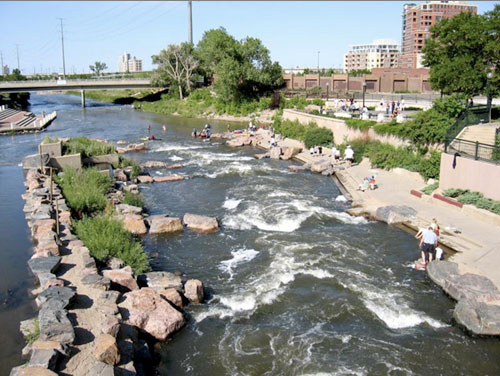
CSU Water Center and the Colorado Water Institute: September/October 2010 issue of the Colorado Water newsletter

A picture named confluenceparkdenver.jpg

Here’s the link.

More Colorado water coverage here.

Colorado Water Protective and Development Association open house in Ja Junta

A picture named lowerarkansasriver.jpg

From the Ag Journal:

Colorado Water Protective and Development Association is a non-profit organization whose primary purpose is to protect and develop underground and surface waters of the Arkansas River Basin.

The CWPDA Board of Directors and office staff would like to invite the public to attend a Fall Harvest Open House the week of Oct. 25 – 29 from 8 a.m. to 5 p.m. each day. Refreshments will be served and there will be a door prize drawing. CWPDA, members are invited to stop in and say hi. For those interested in CWPDA or for those looking for a water association to help manage their augmentation needs, come in and see what CWPDA is all about.

The CWPDA office is located at 15 W. 4th Street in La Junta. For more information go to www.cwpda.org or call (719) 384-2754.

More Arkansas River basin coverage here.

Climate change: A warming Arctic is pushing the jet stream further south

A picture named jetstreamwikipedia.jpg

From the Summit County Citizens Voice:

As the Arctic warms, changes in air pressure and circulation are pushing the jet stream farther south, according to the National Oceanic and Atmospheric Administration’s Arctic report card, released last week. The changes were especially noticeable inDecember 2009,when the normal climate pattern reversed. Higher pressures over the Arctic eliminated the normal west-to-east jet stream winds. That allowed cold air from the Arctic to penetrate all the way into Europe, eastern China, and Washington DC. As a result, December 2009 and February 2010 exhibited extremes in both warm and cold temperatures with record-setting snow across lower latitudes…,/p>

The changes in circulation include an unprecedented southerly wind flow from the Bering Strait across the North Pole. The Arctic Dipole Anomaly, as it’s been dubbed, was evident for the first time in 2007, when Arctic sea ice was at an all-time record low. The same wind pattern developed again in May and June 2009 and 2010. The NOAA scientists were cautious to say that individual weather extreme events cannot be directly linked to larger scale climate changes. But recent data analysis and modeling suggest a link between loss of sea ice and a shift to an increased impact from the Arctic on mid-latitude climate. ā€œWith future loss of sea ice, such conditions as winter 2009-2010 could happen more often, the report card concludes. ā€œThus we have a potential climate change paradox. Rather than a general warming everywhere, the loss of sea ice and a warmer Arctic can increase the impact of the Arctic on lower latitudes, bringing colder weather to southern locations.ā€

Trout Unlimited’s Kerber Creek Project receives U.S. Bureau of Land Management’s 2010 Hardrock Mineral Environmental Award

A picture named kerbercreek.jpg

From The Pueblo Chieftain:

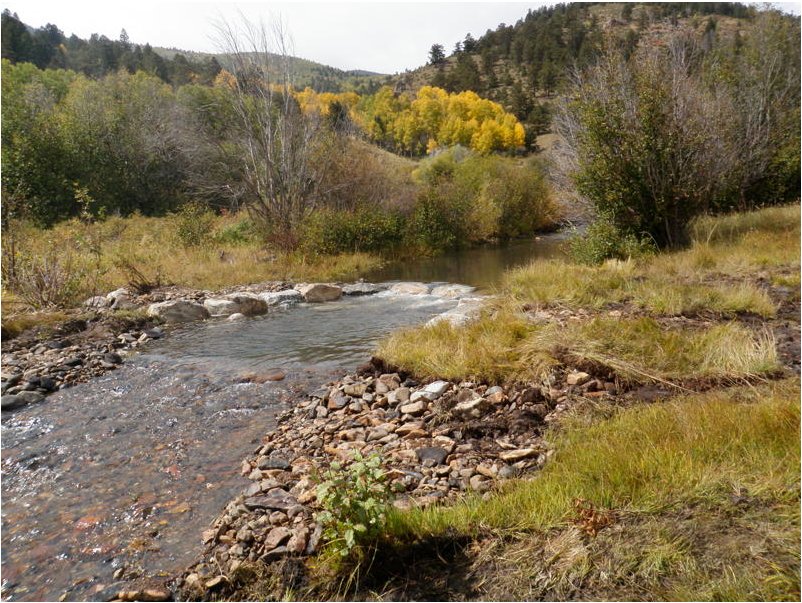
The BLM award is given to organizations that highlight environmental stewardship and acknowledges exceptional track records of meeting or exceeding federal, state or local reclamation requirements. ā€œThis project would not have been possible without the dedicated efforts of our project partners at the BLM and the Natural Resources Conservation Service, as well as from local landowners who are invested in restoring the creek from the effects of mining,ā€ said Elizabeth Russell, Trout Unlimited’s manager for the project.

Since 2008, TU and its partners, including the federal agencies and local partners, have spent more than $1.3 million to restore Kerber Creek, a stream at the north end of the San Luis Valley. They have restored more than 40 acres of mine tailings. The impacts of mining led to metals pollution and a degraded stream channel along a 17-mile stretch of the creek, requiring it to be placed on the list of Colorado’s most impaired waterways.

More restoration coverage here. More Kerber Creek coverage here and here.

Upper Arkansas Valley: Lake Fork Watershed Working Group update

A picture named arkansasriverleadville.jpg

From The Pueblo Chieftain (Chris Woodka):

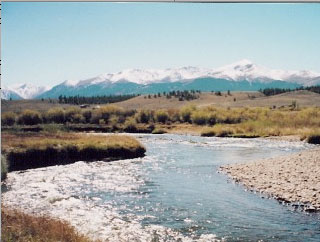
The watershed encompasses 86 square miles and includes Turquoise Lake as well as the former Sugarloaf Mining District. The elevation of the watershed ranges from 9,400 to 14.433 feet, and includes Mount Elbert and Mount Massive. The mining district was heavily mined and logged from the 1880s through the 1920s.
It drains into the Arkansas River south of Leadville. The goal of the program is to reduce the discharge of heavy metals such as zinc, lead, manganese and cadmium into the streams from old mine tailing piles…

A core of landowners who helped form the working group are still active but do not attend meetings as often as in the past, said Cathy Patti, CMC contract administrator. Federal agencies include the Bureau of Land Management, U.S. Geological Survey, EPA, Reclamation, U.S. Fish and Wildlife Service and the U.S. Forest Service. State agencies include the Department of Public Health and Environment, Division of Wildlife and the Division of Reclamation and Mining Safety. Local government, landowners and Trout Unlimited are also connected to the process. So far more than $1 million has been spent in restoration projects.

One of the pressing needs last year was to plug the Dinero Tunnel, which drains into Sugarloaf Gulch. Last week the group viewed three-dimensional maps that showed how water levels within old mining tunnels is backing up. New seeps are being tracked to determine whether water that once flowed out of the Dinero Tunnel is finding new ways out of the ground. Wetlands in the drainage also are maintained and monitored…

[Tor Parker and Rich Silky] were lining ditches with limestone above the Tiger Mine drainage to move water around tailings piles and to reduce acidity in water that drains off the piles. In addition, a large tailings pile at the mouth of the Tiger tunnel was moved and capped, and replanting has begun. Sulfur reduction ponds are being constructed where the tailings pile once sat. The progress of the work is judged by measuring the levels of contaminants in both the water and in fish tissue.

More Arkansas River basin coverage here.

Republican River Water Conservation District board meeting recap

A picture named republicanriverbasin.jpg

From The Yuma Pioneer (Tony Rayl):

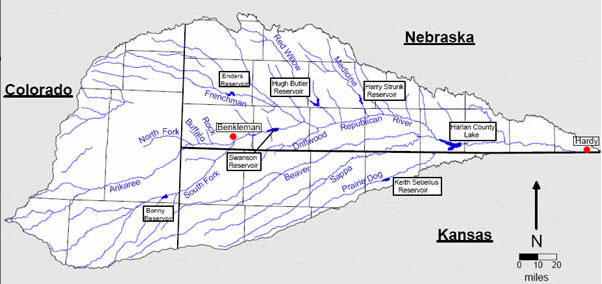
The fate of Bonny, located in extreme southeastern Yuma County between Idalia and Burlington, was a topic of conversation during the Republican River Water Conservation District Board of Directors meeting, last Thursday, October 14, in Wray. The fate of Colorado’s proposed compact compliance pipeline also was a conversation piece. Arbitrator Martha Pagel presented her findings October 7, from the pipeline trial held in Kansas City…

The board elected to hold off on making any decision until January’s quarterly meeting in regards to whether or not to move forward with the pipeline. There is hope Colorado and Kansas can continue to negotiate following Pagel’s ruling, and reach an agreement in which Kansas will approve the pipeline plan. The crediting issue is a key sticking point as Colorado had hoped to get 100 percent credit for all the pipeline water sent down the North Fork of the Republican River. Kansas had argued Colorado should receive 80 to 90 percent credit due to the negative impact of pumping water from the underground aquifer to feed the pipeline. The arbitrator had suggested the two states find a middle ground.

As for Bonny, its fate seems sealed after Pagel upheld Kansas’ point that the pipeline to the North Fork cannot make up for Colorado’s shortages on the South Fork. ā€œUntil Bonny Reservoir is drained, Colorado will not meet this test,ā€ RRWCD engineer Jim Slattery told the board during its meeting last week, referring to the South Fork Sub-basin Impairment Test. The surface water at Bonny works against Colorado in regards to its allocation on the South Fork. When asked later in the meeting, Slattery said draining Bonny should solve the South Fork issue forever. If so, that would leave little left for Kansas to object to in regards to the pipeline. Attorney David Robbins asked Pete Ampe of the Attorney General’s Office if the arbitrator’s ruling forced a decision on Bonny. Ampe said it does, and the Department of Natural Resources was talking to the federal Department of the Interior about that issue. The RRWCD has been pushing for the draining of Bonny the past few years. Robbins noted that Pagel’s ruling actually helps with getting that done.

More Republican River basin coverage here.