2010 Colorado elections: The Colorado Springs Gazette editorial board endorses Ken Buck

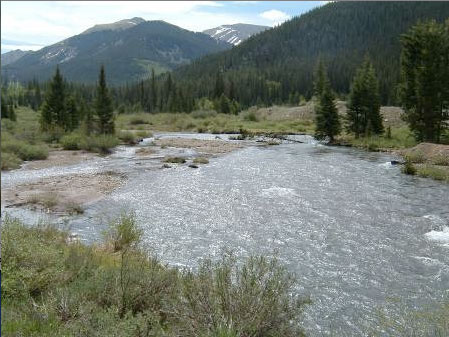
A picture named purgatoireriver.jpg

From The Colorado Springs Gazette:

Buck told the board he would not hesitate to battle anyone in Washington who interferes with Colorado water projects or reasonable economic development efforts. He wants to make it known to the military establishment that El Paso County is military-friendly. He has spent a substantial amount of time in El Paso County and exudes concern for southern Colorado. Vote for Ken Buck, a reasonable, moderate candidate who plans to succeed for all of Colorado.

More 2010 Colorado elections coverage here.

San Luis Valley: Surface and groundwater irrigators face mandatory cutoff November 1

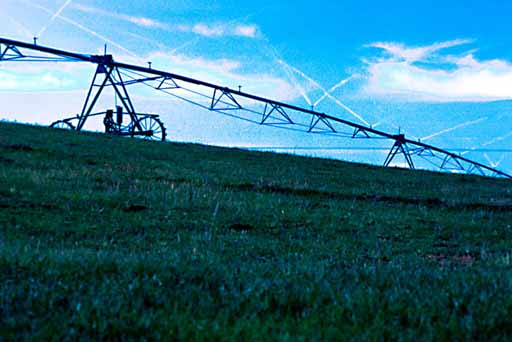
A picture named irrigation.jpg

From the Valley Courier (Ruth Heide):

State Engineer Dick Wolfe approved a presumptive irrigation season of April 1 to November 1, a time period that not only applies to surface irrigators but also groundwater irrigators. “This will affect wells also,” said Colorado Division of Water Resources Division 3 Engineer Craig Cotten. “We haven’t dealt with those much in the past. Usually in the wintertime we put notices in the newspaper asking well owners to shut down, usually artesian wells, during the winter time, but it’s been a voluntary process and this will be a mandatory process…

He said the process actually began with Senate Bill 222, the legislation that established the sub-district concept. It also stated that the state engineer had to establish criteria for setting the irrigation season for Division 3, the San Luis Valley. Wolfe enlisted the help of about 50 folks on an advisory committee to help develop the groundwater rules for Division 3. Those rules are nearly completed. As part of that task, the advisory committee set up a sub-committee to develop an irrigation season policy in conjunction with the state engineer, Cotten explained. Wolfe signed the policy on April 14, after the commencement of the irrigation season…

The policy sets the presumptive irrigation season as April 1 to November 1, but several criteria can be used to adjust that time period, Cotten explained. One factor that Cotten could use to adjust the irrigation season would be the status of the Rio Grande Compact deliveries on the Rio Grande and Conejos River systems. “That’s what we use usually in determining when to shut off the ditches on the Rio Grande right now,” Cotten explained. He added that deliveries are good right now, so that November 1 shut-off will probably hold true for the Rio Grande. On the Conejos system, Colorado is showing a little bit of over delivery in its compact obligations, Cotten said, “so we may let the irrigators run a little bit longer into November on the Conejos…

Another factor that Cotten will consider is the use of historical practices. Some people have historically iced their meadows in the wintertime. Those who would like to continue that practice must go through water court and obtain judicial confirmation of that historical practice. Several people have applied for that judicial confirmation already. Another factor will be winter irrigation of crops such as alfalfa that might require some moisture in a dry winter when there’s no snow on the ground. Cotten may consult with agronomic and irrigation experts to determine if such irrigation would constitute beneficial use for irrigation water. Well owners who plan to do that should contact the water division office. Those will be reviewed on a case-by-case basis…

Cotten said one of the reasons it is important to set an ending date for the irrigation season is so the reservoirs and those with winter recharge water rights know when they can begin using their rights, because their rights are junior to the ditches. “This first year will be a learning experience for everybody,” Cotten said.

More Rio Grande River basin coverage here.

Windy Gap Firming Project: Public meeting October 21 at Silver Creek

A picture named chimneyhollowreservoir.jpg

From the Summit Daily News:

Colorado Wildlife Commissioners Dennis Buechler and Allan Jones will hold a public meeting in Granby to hear concerns from the public on the potential impacts of the proposed Windy Gap Firming Project. The meeting will be held at the Inn at Silver Creek (62927 US Highway 40) 6-9 p.m. Oct. 21…

Review the draft EIS on the plan at http://www.usbr.gov/gp/nepa/quarterly.cfm.

Additional information on the project can be found at: http://www.northernwater.org/ or by calling northeast region public information officer Jennifer Churchill at (303) 291-7234 or jennifer.churchill@state.co.us.

More Windy Gap coverage here and here.

William Bergman (Snake River Water District) receives 2010 Distinguished Board Member Award from The Special District Association of Colorado

A picture named snakeriver.jpg

From the Summit Daily News:

The award was announced at the SDA Annual Conference which was held in Keystone, September 22-24. Bill has been instrumental in supporting policy implementation for the District which pertains specifically to the District’s water rights and future water supply. Bill supports district administrators by striving to keep water rates affordable while encouraging capital projects that increase the quality of service. When asked to share their feelings about Bill, the District staff said, “Bill is a remarkable Board member. His ability to discern a solution, render advice with inflection and simplify a problematic situation makes working with him a pleasure. Under no circumstances does Bill convey judgment or carry a personal agenda into the boardroom. Bill brings a sense of humor into any conversation which incites just the right amount of comic relief into a complex discussion. Bill leads from the wisdom he has obtained throughout a lifetime of legal and business knowledge, service to his community and personal experience.”

More Snake River watershed coverage here.

Should the Colorado National Monument and Dinosaur National Monument be designated national parks?

A picture named lodorecanyonfromdouglasmtnnps.jpg

From the National Parks Traveller (Kurt Repanshek):

Mary Risser, Dinosaur’s superintendent since 2005, answers the question by referring to the nomenclature of the National Park System.

“What they say is a national park contains a variety of resources and encompasses large land or water areas to provide adequate protection of the resources,” notes the superintendent. “A monument is intended to preserve at least one nationally significant resource. It’s usually smaller than a national park, and it lacks a diversity of attractions.

“So, when you look at the definition, Dinosaur would definitely qualify as a national park. When you think about the resources that we have here, you start with the Douglas Quarry, which is the world’s best window into the Jurassic-era dinosaurs, (and) we’ve just found probably one of the world’s most significant cretaceous area dinosaur quarries right across,” continues Superintendent Risser. “We have two of the West’s premier white-water rivers. … and then we have over 200,000 acres of wilderness. I think Dinosaur has features that you find in all the other national parks in the state (Utah).

“We can trace human history for 10,000 years here. It has the most complete geologic record in the National Park System, even more so than Grand Canyon. So it’s just a spectacular place.”

Energy policy — coalbed methane: Two Rivers Water Company inks MOA with Petroglyph Energy to study treating coalbed methane produced water

A picture named nontributarycoalbedmethane.jpg

From TradingMarkets.com:

Two Rivers Water Company, a company focused on acquiring and developing water, farming and alternative energy in southern Colorado, and Petroglyph Energy, Inc., an Idaho corporation, announced today they have entered into a non-binding Memorandum of Understanding to complete a feasibility study for the treatment of produced water originating from coal bed methane production in Huerfano County, Colorado.

More coalbed methane coverage here and here.