Wet Mountains: Water levels dropping at DeWeese Reservoir

A picture named wetmountains.jpg

From The Wet Mountain Tribune (Jacque Keller):

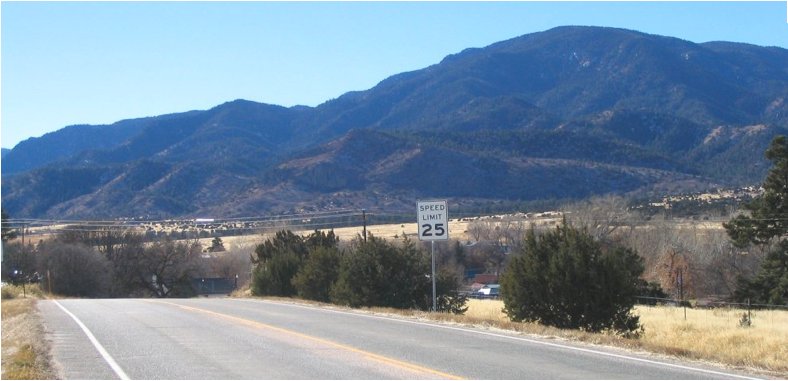
The low level of water at Lake DeWeese might seem alarming, but it’s really business as usual. The reservoir company is allowed to take water from the lake until mid-November. According to Dave Luscomb, superintendent of the DeWeese-Dye Ditch and Reservoir Company, the head gates were closed off last Saturday, Oct. 2 because they already took the allotted water while leaving 500 acre feet for the Colorado Division of Wildlife. Another reservoir of 266 acre feet of storage remains in the lake for Round Mountain Water District. Dick Poyner, vice president of the ditch company, said they released 22 cubic feet per second from the dam and by the time it reached the head gate, it was only 15 cfs due to evaporation.

More Arkansas River basin coverage here.

Yampa Valley: Elam Construction gets EPA order to mitigate non-permitted discharge into a wetlands area

A picture named yamparivereofmaybell.jpg

Here’s the release from the Environmental Protection Agency (Monica Heimdal/Richard Mylott):

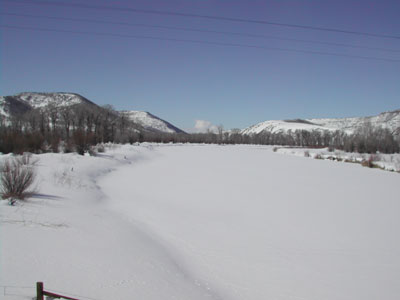
The U.S. Environmental Protection Agency (EPA) has issued a compliance order to Elam Construction and 4B Land & Livestock, LLC (owned by Scott and Sheila Brennise) for impacts to wetlands at a gravel mining site adjacent to the Yampa River near Craig, Colo. Elam Construction’s and 4B Land and Livestock’s actions were conducted without a required Clean Water Act permit from the U.S. Army Corps of Engineers (Corps).

“EPA is requiring Elam Construction and 4B Land and Livestock to complete projects to compensate for unauthorized mining activities that affected wetlands along the Yampa River,” said Mike Gaydosh, EPA’s enforcement director in Denver. “Those taking actions that impact surface waters and wetlands must secure appropriate permits to protect water resources and the functions they provide.”

In October 2009, the Corps conducted an inspection at the gravel mining site and observed that multiple piles of excavated shale material, as well as a portion of a berm created to keep flood flows out of the gravel pit, had been placed within an area that contained delineated wetlands. The Corps determined the area of impacted wetlands as 0.78 acre.

A mining plan submitted to the Corps on behalf of the parties indicated the intent to mine gravel in the wetlands without the placement of any fill, thereby avoiding the need for a Clean Water Act permit. Subsequent communications from the Corps clearly stated that wetlands existed at the site and that the discharge of dredged or fill material during mining was likely. Elam Construction has had significant experience with the Clean Water Act and the Corps permitting program since 1980, including three prior permits and at least one known prior violation.

EPA’s order requires Elam Construction and 4B Land & Livestock to develop and implement a mitigation plan that compensates for impacts to wetlands. While specific projects have not been determined, EPA may consider proposals to restore, create, enhance or preserve wetlands. Prior to undertaking the work, the respondents must submit the mitigation plan to EPA for approval.

The impacted wetlands adjacent to the Yampa River provided various functions and values including aquatic and wildlife habitat, flood-flow attenuation and aesthetics.

A Clean Water Act permit is required before performing any work that results in discharges of pollutants into rivers, lakes, streams and wetlands. These alleged violations could have been avoided if Elam Construction or 4B Land & Livestock had applied for and obtained a permit from the Corps prior to discharging material into wetlands. Any person planning to do such work on Colorado’s western slope should contact the U.S. Army Corps of Engineers’ Colorado West Regulatory Branch (400 Rood Avenue, Room 142, Grand Junction, CO 81501-2563; telephone: 970-243-1199) before beginning work to determine if a permit is needed.

U.S. Army Corps of Engineers: http://www.usace.army.mil/

For more information on the Clean Water Act, visit EPA’s compliance web page: http://www.epa.gov/compliance/civil/cwa/index.html

For more information about the importance of wetlands in flood control and habitat conservation, visit: http://www.epa.gov/owow/wetlands/

Help EPA protect our nation’s land, air and water by reporting violations: http://www.epa.gov/tips/

More Yampa River basin coverage here and here.

Dust on snow

A picture named dustonsnowsanjuans.jpg

Here’s Part 2 of Mike Horn’s series about the effects on runoff timing and duration from dust on snow events, running in The Crested Butte News. From the article:

Competing interests complicate water resource management, to put it lightly. Recreation is but one use among many, including agricultural and municipal uses. And even within the recreation category, different users, say fly fishermen, have different priorities and “ideal flows” compared to commercial boating operations on places like the Taylor River. All these pursuits have economic weight tied to them as well.

Locally, Frank Kugel, general manager for the Upper Gunnison River Water Conservancy District, is tasked with balancing the needs and wants of many stakeholders who place year-round demands on local water resources. And with climate models projecting runoff losses of 7 percent to 20 percent in the Colorado River Basin due to human-induced climate change, dust on snow doesn’t make Kugel’s job any easier. “We’re very supportive of the research, it’s important we understand the impacts of dust on snow,” said Kugel. “We want to be sure any future water-supply models include dust on snow. “For one example, the Colorado River Water Availability study is a major effort in determining how much water will be available in this basin for current and future needs. And future studies will need to take dust on snow into account,” Kugel concluded.

South Platte Basin Roundtable: September 14 meeting notes

A picture named uppersouthplattebasin.jpg

Here’s the link to the notes.

More IBCC — basin roundtables coverage here.

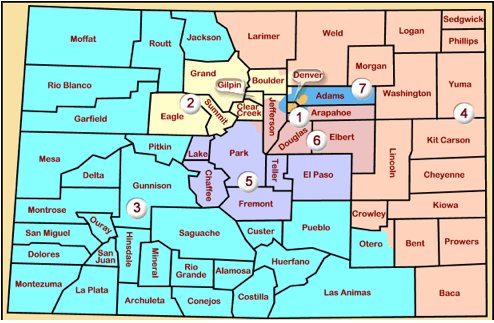
2010 Colorado elections: The Denver Post endorses John Salazar over Scott Tipton

A picture named coloradocongressionaldistrictboundaries2010

From the editorial staff at The Denver Post:

Salazar has shown an ability to work with people from differing political views to seek solutions that work for the district. In significantly advancing the prospects for a veterans’ cemetery in the Pikes Peak region, Salazar, an Army veteran, has worked with Republican Rep. Doug Lamborn and former Sen. Wayne Allard, and more recently with Democratic Sen. Michael Bennet. He also managed to get a $6 million appropriation for the Arkansas Valley Conduit, which will bring clean drinking water to 40 cities and towns along the 140-mile pipeline. The promise of clean drinking water to these poorer communities was made in the 1960s. It’s about time that promise is kept.

Salazar’s challenger in the race, Scott Tipton, is a conservative Republican and Cortez businessman who lost to Salazar by a wide margin in 2006. Tipton, a state lawmaker who also has deep roots in the district, is knowledgeable about the issues, and touts his private sector experience. He’s clearly qualified for the job.

We just think voters in the 3rd district will be better off with Salazar, a known quantity and reliable voice for the district.

More 2010 Colorado elections coverage here.

Republican River Basin: Arbitrator urges Colorado to accept Kansas’ proposals for compliance pipeline

A picture named republicanriverbasinbydistrict.jpg

Bump and update: From KansasReporter.org (Rachel Whitten):

The day after the Nebraska Cornhuskers routed the K-State Wildcats 48-13, a federally appointed arbitrator favored Kansas in a case where Nebraska tried to contend that monetary damages they paid the Sunflower State should also be applied toward credits for water from the Republican River. Nebraska has been paying Kansas monetary damages after it took more than its share of water from the river that starts up north and In this arbitration case, it wanted the independent arbiter—who is assigned by the U.S. Supreme Court—to rule that the money it paid in damages should also purchase water credits from Kansas. But the arbiter called a flag on the play. “[This] would result in a windfall to Nebraska, allowing accountability for potential future violations to be erased with a single payment for a past violation,” the arbiter wrote.

Update: From KWCH.com (Roger Cornish):

Colorado officials have proposed a compliance pipeline to offset the effects of groundwater depletion on streamflows. The arbitrator ruled in favor of the State of Kansas and against the State of Colorado and recommended further action by the states. The arbitrator agreed with Kansas on a number of details for the pipeline plan and concluded Colorado should adopt most of Kansas’ technical objections to the pipeline plan.

Update: Here’s the reaction from State Attorney General John Suthers via a report from Tony Rayl writing for The Yuma Pioneer. From the article:

“We’re obviously disappointed in the arbitrator’s decision.” Suthers said. “However, it is important to note that the arbitrator recognized Colorado’s fundamental right to proceed with a pipeline to assist in compact compliance, that the proposal provides a reasonable and necessary approach by Colorado, and that Kansas does not have an unfettered ability to block the project. Most of the arbitrator’s decision focused on additional details that she felt should have been included in the proposal. Colorado will continue to work to assure that we comply with the Republican River Compact while protecting the livelihoods and jobs of those living in the basin. I remain optimistic that Colorado and Kansas can reach an agreement on this pipeline to assure this happens.”

Update: More coverage from Tony Rayl writing for The Yuma Pioneer. From the article:

Colorado, Kansas, and Nebraska — the three states involved in the Republican River Compact — now have until November 1 to give notice on whether or they accept the decision. If any reject the decision — and it likely would be Colorado if any of them do — it would enter the appelate court system. Pagel’s decision is non-binding, but it likely sets the tone for any further legal wrangling concerning the pipeline. While Pagel sided with Kansas on nearly every disputed fact brought forth in the arbitration hearing held in July, her final decision made it clear Colorado’s plan to use a pipeline as an augmentation source was reasonable, and she outlined how the sides could come to a reasonable compromise to get the plan approved by all three states through the Republican River Compact Administration (RRCA)…

Another key issue is if Colorado can replace overuse on the South Fork with water delivered to the North Fork. Pagel again recommended a compromise. She agreed the water from the pipeline can go toward determing Colorado’s overall compliance. However, she agreed with Kansas that Colorado still needs to meet the South Fork sub-basin test. She said the arguments presented by Kansas are not unreasonable. The concern is Colorado, over time, will “over-deliver” pipeline water into the North Fork sub-basin in order to build a surplus. That in turn would be a disincentive for Colorado to implement separate compliance measures in the South Fork sub-basin. Pagel concluded there is nothing currently in the pipeline proposal that would stop Colorado from doing so. She suggested the proposal be clarified to limit the amount of augmentation credit applied to the North Fork, and should not allow for overuse on the South Fork until Colorado comes into compliance in that sub-basin…

Pagel finally ruled in favor of Colorado in regards to changes to the accounting procedures with a pipeline in place. She noted the changes were included in the revised resolution in August 2009, and Kansas never identified specific further changes, so its objection lacks merit. Pagel did note that the accounting procedures need to be reviewed in any final agreement to assure consistency…

In the end, Pagel ruled that in general Colorado’s plan is reasonable and a necessary approach to meet compact compliance. She also ruled Kansas has not been unreasonable up to this point in regards to its objections to Colorado pipeline plan, meaning Colorado is not entitled to a recommendation from her that the pipeline proposal should be approved. However, she noted that it should be approved with the changes she recommended, and if Kansas continues to object at that point, it may suggest there is nothing Colorado can do to get Kansas’ approval.

From The Topeka Capitol-Journal:

…the arbitrator [Martha Pagel] urged Colorado to adopt most of Kansas’ proposals regarding construction of a “compliance pipeline” that would offset the effects of groundwater depletion on streamflows that affect the amount of water available downstream in Kansas.

Kansas officials, while encouraged that Colorado is exploring ways to meets its legal obligations under the compact, note that the states have yet to agree on details of the plan…

More information about the Republican River Compact, including the arbitrator’s decisions, is available on the Kansas Department of Agriculture website at www.ksda.gov/interstate_water_issues/content/142.

More Republican River basin coverage here and here.

South Platte Forum October 20

A picture named southplattewatershed.jpg

Here’s the release from Colorado State University (Jim Beers):

The 21st annual South Platte River Forum will be held Wednesday, Oct. 20, and Thursday, Oct. 21, at the Radisson Conference Center, 1900 Ken Pratt Blvd., Longmont. The forum, “High Stakes Games in the South Platte,” will examine issues such as water resources, potential projects and water quality standards in the South Platte basin.

Day one of the forum will include a basin overview and a session on water resources planning. The keynote luncheon on Oct. 20 will include a virtual tour of water projects in the South Platte basin. The Friends of the South Platte Award will be presented to Les Williams, board member of Northern Water and former executive director of St. Vrain and Left Hand Water District.

The afternoon will include a session titled “Deal or No Deal: Project Updates,” which will look at potential water projects around the western United States.

Day two of the forum includes several presentations on nutrient quality standards and how those standards impact agriculture, the environment and urban residents. The keynote speaker on Thursday will be Ann Bleed, former director of the Nebraska Department of Natural Resources, who will discuss life along the South Platte downstream from Denver.

The afternoon session on Thursday is focused on alternatives to transferring agricultural water for municipal purposes.

The South Platte River begins high in the Colorado mountains near Fairplay. It flows through Denver and continues eastward into Nebraska, joining the North Platte River near the town of North Platte, Neb.

The South Platte Forum is sponsored by Tetra Tech, Colorado State University Extension, Aurora Water, Denver Water, Northern Water, Parker Water and Sanitation District, Colorado Water Institute, Metro Wastewater Reclamation District, Colorado Division of Wildlife, Deere and Ault Consultants, U.S. Fish and Wildlife Service, U.S. Environmental Protection Agency, U.S. Bureau of Reclamation and U.S. Geological Survey.

Registration is available at the door for $115 per person. For a schedule of events, visit http://www.southplatteforum.org or contact Jennifer Brown at (402) 960-3670 or Jennifer@jjbrown.com.

More South Platte River basin coverage here and here.

2010 Colorado elections: Roaring Fork Conservancy releases first ever ‘Voters Guide to Water Issues in the Roaring Fork Watershed’

A picture named cascadefallsroaringforkriver06082010

Here’s the link to the guide. Here’s a report from the Glenwood Springs Post Independent (Janet Urquhart). From the article:

The conservancy polled candidates seeking election to six different seats that represent part or all of the Roaring Fork Valley, asking each of them the same two questions (one question has two parts, so there are really three questions) and publishing their unedited responses. The conservancy is not endorsing any candidates, noted Rick Lofaro, executive director, but wanted citizens to hear the candidates’ views in advance of the Nov. 2 election. “Oftentimes, water is not part of the political discussion when candidates are running. It’s often overlooked,” he said. In his introduction to the guide, Lofaro notes that projections show Colorado’s population doubling by 2050 and water shortfalls approaching 600,000 acre feet per year, statewide, by 2030. That shortfall is enough water for 1.2 million families of four for a year, he writes.

More 2010 Colorado elections coverage here.

Colorado-Big Thompson Project: Pinewood Reservoir operations update

A picture named pinewoodreservoirberthoudrecorder.jpg

From email from Reclamation (Kara Lamb):

Work around Pinewood Reservoir that I have been referencing in my last couple of e-mails is well underway.

Truck hauling of the box culverts we will use to replace the open Pole Hill Canal at the top of Pole Hill Road has begun. Attached to this e-mail is a re-issue of the news release announcing the truck hauling. Four to five trucks will be making trips up Pole Hill Road several times a day throughout October to deliver the box culverts.

Residents around and visitors to Rattlesnake Dam at Pinewood Reservoir will also notice we are releasing a little bit more water than normal from the dam. Normally, the dam releases about a half of a cubic foot per second. This week, we are pumping an additional 1.5 cfs of water out of the reservoir to finish the draw down to dead storage. This means the total release is near 2 cfs. Our releases run into Cottonwood Creek. The draw down is necessary to facilitate some maintenance in the Bald Mountain Pressure Tunnel which connects Pinewood Reservoir to the Flatiron Penstocks–the water pipes that carry water from Pinewood down to the Flatiron Power Plant.

Meanwhile the Northern Colorado Water Conservancy District is working in the channel between Grand Lake and Shadow Mountain Reservoir on the west side of the project. Here’s a report from Tonya Bina writing for the Sky-Hi Daily News. From the article:

Built 65 years ago, the dam and bridge at the entrance to Grand Lake maintains the natural lake’s water level per federal guidelines to within 12 inches of the high water line when Shadow Mountain Reservoir, the water body connected to the lake, is lowered. According to Northern, in 1963 the dam structure located between the two bodies of water was modified to allow boats to travel from one lake to the other. Now, updates to the structure are intended to provide more safety features and operational efficiency. Other than new railings to bring the bridge up to code standards, it “won’t look very different,” said Northern spokesperson Dana Strongin.

This year’s rehabilitation project — under construction by the water-projects specialty company Garney Construction of Denver— includes dewatering about 70 feet of the channel by using a flexible membrane to control water on both sides of the bridge structure. Workers will be rehabilitating the bridge, repairing dam concrete and extending the concrete piers. According to Northern, there will also be an additional walkway along the east side of the structure upon project completion.

More Colorado-Big Thompson Project coverage here.