2010 Colorado elections: 2003’s Referendum A surfaces in gubernatorial attack ad

A picture named wellingtonlake.jpg

Most Colorado water watchers remember Referendum A back in 2003. It was an attempt by Governor Owens and others to set aside $2 billion for unspecified water projects. It was the “unspecified” nature of the referendum that stirred up labels like, “Water Grab,” over on the west slope — the rainy side of Colorado. It was defeated in all Colorado counties by a wide margin.

Move on the the governor’s race in 2006. Bill Ritter knew that Referendum A was widely unpopular so he hung the issue around his opponent neck — Bob Beauprez had supported it — and cruised to victory.

Here we are a couple of weeks out in the 2010 gubernatorial contest and lo and behold Referendum A has surfaced again. This time, a group named the Colorado Conservation Victory Fund is running a radio spot on the west slope reminding voters that Tom Tancredo supported the referendum. Here’s a report from Joe Hanel writing for The Durango Herald. From the article:

The ad is notable because it appears to be the only negative ad against Tancredo from an array of liberal groups that have come out swinging against other conservatives, like U.S. House candidate Scott Tipton and U.S. Senate candidate Ken Buck. Democrat John Hickenlooper remains the frontrunner in the governor’s race, but some recent polls have Tancredo within five points of the lead, and his campaign released a poll Friday that showed the race is tied…

The commercial is a series of rhymes that begins with a play on a line from “Rime of the Ancient Mariner” – “Water, water everywhere, nor any drop to drink.” “Tom Tancredo loved Ref A, and thus it was to our dismay to Denver lawns and pools he’d send our water on its way,” the male narrator says in the ad.

More 2010 Colorado elections coverage here.

Basalt: ‘Stunning environmental photo show’

A picture named coloradoriverbasin.jpg

Basalt photographer Pete McBride is showing some of his 15,000 photographs from up and down the Colorado River. Here’s a report from The Aspen Times (Scott Condon). Click through for the cool photo. Here’s an excerpt:

Some of the most stunning shots will be displayed at the gallery of the Wyly Community Arts Center in Basalt in an exhibit that opens Friday with a receoption from 6-8 p.m., and continues through Nov. 22. The Wyly is in its new home at the former Basalt library building in Lions Park.

McBride concentrated on getting images while flying over the river corridor because of the different perspective it offers. The aerial shots allow the river to be viewed more as a living entity, he said. When you try to absorb a tree, you don’t just look at a leaf; and when trying to understand what’s going on with the Colorado River and its major tributaries, it helps to get that bird’s eye view.

“Getting above things, that perspective highlights the human footprint,” McBride said.

More Colorado River basin coverage here.

Crested Butte: Town council approves water and sewer fee increases

A picture named crestedbutte.jpg

From The Crested Butte News (Mark Reaman):

The Town Council agreed to a rate increase for both water bills and sewer bills. Look for a 10 percent increase in the water bill and a 3 percent increase in the wastewater side of the equation. The final decision will come when the council adopts the 2011 budget…

“We are proposing increases for the water the sewer, the tap fees and the availability fees,” [Town finance director Lois Rozman] said. “If we don’t do a rate increase we’ll have an operating loss of $110,000 for water and $26,000 for sewer.” Rozman said times have changed. “In the past, we’ve lived on tap fees,” she said. “We knew we couldn’t do that forever and we are now at that time when new taps don’t bring in enough money anymore.”

More infrastructure coverage here.

Paonia: Town council awards bid for water treatment plant membrane filtration upgrade

A picture named membranetrain.jpg

From the Delta County Independent (Kathy Browning):

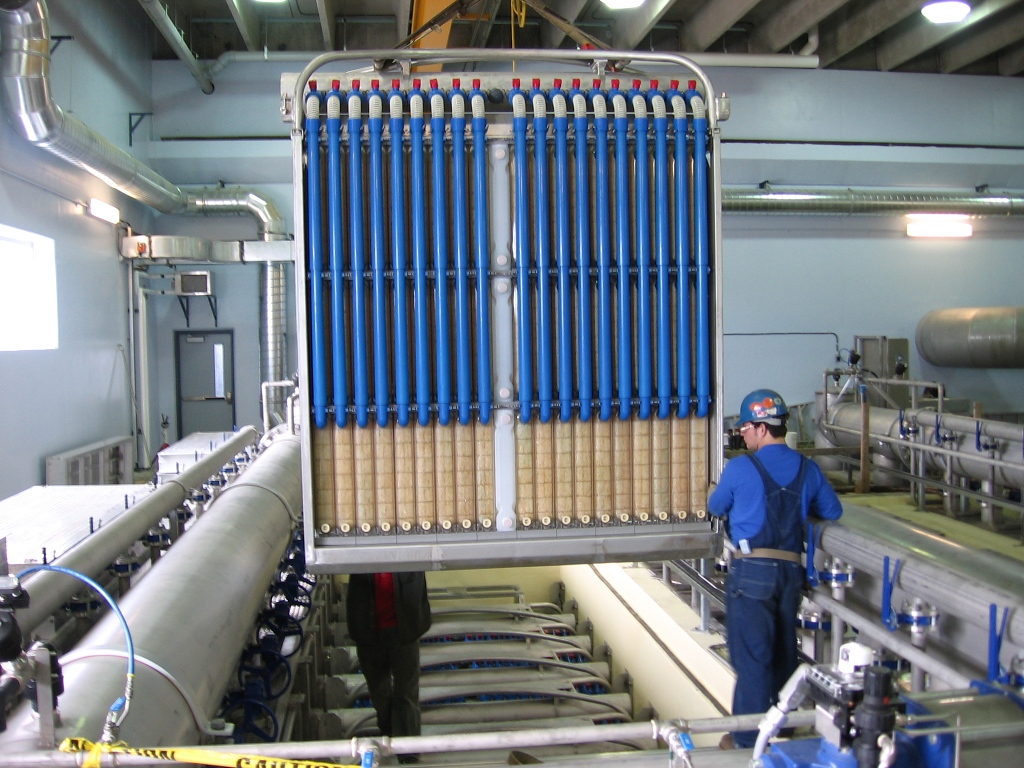
Public works director Scott Leon said after talking with their engineer, checking company references, verifying the contractor and subcontractors, and finding everything in order, he was recommending low bidder Eco Contracting LLC. The winning bid was $496,225.50, which was substantially less than the engineer’s bid of $527,640…David Weber moved to award the contract to Eco Contracting of Hotchkiss because they are qualified to do the job, they submitted the low bid and their bid was lower than the engineer’s bid. Blake Kinser seconded, and the council voted unanimous approval.

More infrastructure coverage here.

Forecasting water supplies in a La Niña year

A picture named winteroutlookprecip2_20102

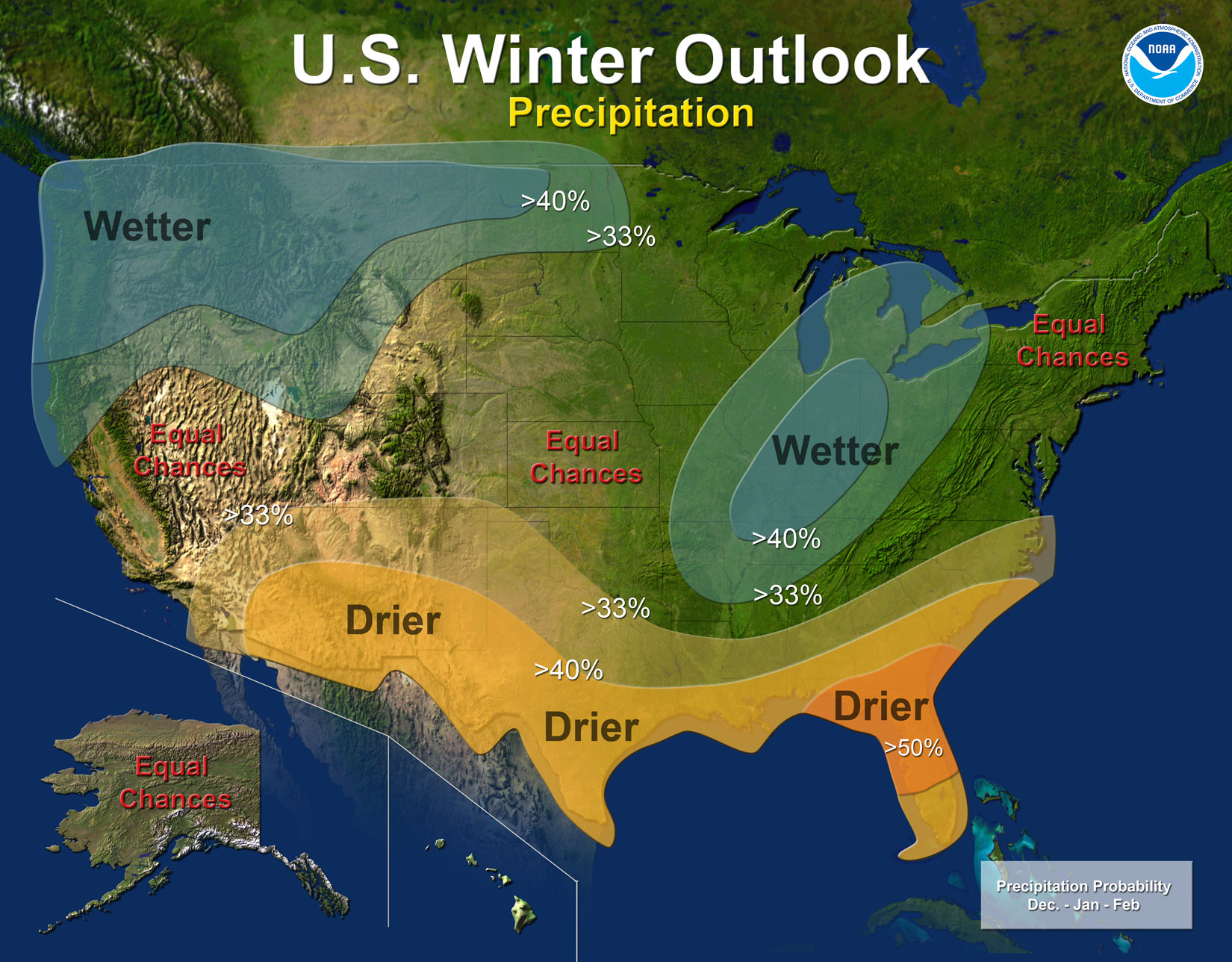
Our friends at NOAA have released a precipitation forecast graphic. Click on the thumbnail to the right for a larger view. It illustrates the usual La Niña pattern. This year’s event set up quick and big. Here’s their release (James Peronto). Here’s an excerpt:

Regional highlights include:

Pacific Northwest: colder and wetter than average. La Niña often brings lower than average temperatures and increased mountain snow to the Pacific Northwest and western Montana during the winter months, which is good for the replenishment of water resources and winter recreation but can also lead to greater flooding and avalanche concerns;

Southwest: warmer and drier than average. This will likely exacerbate drought conditions in these areas. All southern states are at risk of having above normal wildfire conditions starting this winter and lasting into the spring;
Northern Plains: colder and wetter than average. Likely to see increased storminess and flooding;

Southern Plains, Gulf Coast States & Southeast: warmer and drier than average. This will likely exacerbate drought conditions in these areas. All southern states are at risk of having above normal wildfire conditions starting this winter and lasting into the spring;

Florida: drier than average, with an equal chance for above-, near-, or below-normal temperatures. Above normal wildfire conditions;

Ohio and Tennessee Valleys: warmer and wetter than average. Likely to see increased storminess and flooding;

Northeast and Mid-Atlantic: equal chances for above-, near-, or below-normal temperatures and precipitation. Winter weather for these regions is often driven not by La Niña but by weather patterns over the northern Atlantic Ocean and Arctic. These are often more short-term, and are generally predictable only a week or so in advance. If enough cold air and moisture are in place, areas north of the Ohio Valley and into the Northeast could see above-average snow;

Central U.S.: equal chances of above-near-or below normal temperatures and precipitation;

Hawaii: drier than normal through November, then wetter than normal December through February. Statewide, the current drought is expected to continue through the winter, with several locations remaining on track to become the driest year on record. Drought recovery is more likely on the smaller islands of Kauai and Molokai, and over the windward slopes of the Big Island and Maui;

Alaska: odds favor colder than average temperatures with equal chances of above or below normal precipitation. The interior and southern portions of the state are currently drier than normal. A dry winter may set Alaska up for a greater chance of above normal wildfire conditions in the spring.

From The Denver Post (Kieran Nicholson) via the Grand Junction Free Press:

The National Oceanic and Atmospheric Administration announced today long-term weather outlooks for the nation. A current La Nina pattern is expected to get stronger, bringing colder wetter weather to the Pacific Northwest and the north, with warmer drier weather across the southern United States. In Colorado “temperatures will tilt toward a warm winter,” said Mike Halpert, deputy director of NOAA’s Climate Prediction Center. As for precipitation this winter in the state, “Colorado if anything should be drier,” Halpert said in a conference call. In general, NOAA forecasters are leaning toward a warmer and drier winter for Colorado this year, Halpert said.

Orchard City: Town trustees award contract for waterline project

A picture named fountainpavementdrawing.jpg

From the Delta County Independent (Hank Lohmeyer):

Williams Construction’s bid for the pipeline work was $2.14 million…

With the selection of the Norwood contractor’s low bid last week, the Orchard City trustees are piling up the savings on their West Side water line project. Orchard City is considered a “deprived area” under a federal EPA designation which qualified the town for a $2 million grant on its water line replacement project. When the project went out to bid, Williams submitted an estimate for a mile more water line than required for a $2.3 million price tag. The mistake was explained as a confusion over specifications in bid documents. Nevertheless, Williams Construction agreed to honor the unit cost of their bid, a move that shaved an additional $156,707 from the project estimates for the first phase work. That saved money was earmarked to come directly out of the town’s own $750,000 contribution to the project. Now instead, the money will stay in the town’s bank account along with the Orchard City’s other $3.9 million in cash reserves. In addition, the town will get its entire seven-plus miles of new water line laid in the project’s first phase, eliminating the need for a second phase to complete the work. That cuts another $1.65 million off the original estimated project cost. And, Williams Construction senior estimator, Phillip Leopold, said that recent declines in the price of resins used to manufacture the HDPE polymer pipe lines will give the town “the best price I’ve seen in ten years” on materials. All told, the town was expecting to pay $4.1 million for the project, and to take on 30-plus years of new debt. Now, the project is expected to be completed for $2.7 million, or less, with no new town debt.

More coverage from the Delta County Independent (Hank Lohmeyer):

During the bid acceptance at the town board’s Oct. 13 meeting, Phillip Leopold, senior estimator for Williams Construction, told the trustees that his pipe supplier can begin delivery on-site in two weeks from contract signing. That, hopefully, will allow the company to begin laying line this fall, at the top end of the project near the town water treatment plant, Leopold said. When weather turns bad at the higher elevations, pipeline crews hope to switch their focus and begin working uphill from the town’s Eckert water tank. That construction schedule has slipped significantly since last spring when a September work start date was set. Project engineer Larry Reschke said the contract specifies that the work be completed by next August at the latest. But, he added that “we expect it to be completed a lot sooner than that.” Some estimates call for a five-month time frame for completing the water plant-to-Eckert tank work. Weather is a wild card factor in the time table guesstimating…

The pipeline will be buried with three-feet of cover. The original project specifications called for four to five feet cover depth. The change to the shallower bury will save on cost. The builders will bore under paved roads, eliminating pavement cuts. The new pipeline will be pressurized for its entire length. Only part of the existing West Side line is pressurized. The new line will have a half dozen or more pressure relief valves along its length.

More infrastructure coverage here.

San Juan Basin: The Pagosa Area Water and Sanitation District restructures taps fees

A picture named sanjuan.jpg

From the Pagosa Sun (Chuck McGuire):

The Pagosa Area Water and Sanitation District Board of Directors voted Tuesday night to rescind Capital Investment Fees (CIF) imposed on new construction, in favor of collecting a $3,000 deposit per Equivalent Unit (EU) for connection to each of the water and wastewater systems. The move potentially reduces total CIF assessments by more than $1,800 per EU. As discussion during the five-hour PAWSD board meeting turned to consideration of district fees, director Roy Vega proposed a resolution placing an immediate moratorium on both the existing water and wastewater CIFs. Together, those fees equaled $7,831, with $3,579 going to the water enterprise fund, and $4,252 to the wastewater enterprise fund.

More Pagosa Springs coverage here.

Umcompahgre Valley Water Users forum recap

A picture named uncompahgrewatershed.jpg

From The Telluride Watch (Peter Shelton):

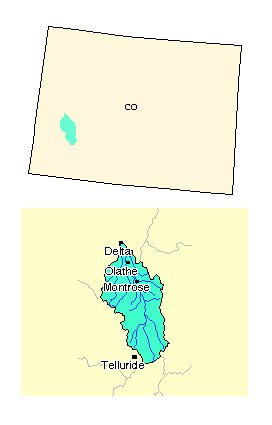
Mike Berry controls the valves to a lot of the drinking water in the Uncompahgre Valley. He’s the general manager of the Tri-County Water Conservation District. He’s a numbers guy. “We’re a local government entity, not a utility,” Berry told the crowd at the Holiday Inn Express conference room. TCW has a 15-member, state court-appointed board, and taxes property at 1.502 mils, generating $1.3 million annually. “We were born in 1957 to sponsor the Dallas Creek Project. Congress authorized us in 1968; 1978 was the groundbreaking for the [Ridgway] dam. In 1990 the reservoir was full, and Tri-County took over. “The lake receives 100,000 acre-feet of water every year. We exchange a 28,000 AF ‘pool’ of water in the reservoir one-for-one for Gunnison canal water, which goes into our distribution system. “The distribution system currently has 7500 taps, 610 miles of pipeline, 43 pumps and 21 tanks over a service area of 350 square miles. We sell 800 million gallons of water per year.”[…]

“We’re water rich,” he said. But he did talk about limits. We’re using only about half of the water available in the reservoir. But the population of the three downstream counties, Ouray, Montrose and Delta, is expected to double to about 150,000 by 2035. “And climate change, if that means hotter and dryer, can’t be a good thing on a water supply,” Berry said. But, he concluded, “Unlike Las Vegas, or anywhere south and west of us, I don’t think many people here go to sleep worrying about their water.”

Maybe they should, said State Senator Bruce Whitehead, himself a water engineer for 25 years with the Colorado Division of Water Resources. Whitehead wanted to talk about a bigger, more complex picture, the Colorado River Compact, and how increasing demand might change a lot of things. This year for the first time Colorado River water consumed (by agriculture, industry, and by 30 million people in seven states) exceeded the annual flow. The Southwest has been in a protracted drought – 11 years and counting. Lake Mead has shrunk to 40 percent capacity, an all-time low. Bad news, yes, for Nevada and California. But how does this affect Colorado, at the top of the water chain? Colorado’s share of the compact is 3.88 million acre-feet of water. We have, Whitehead said, perhaps half a million AF unused now. That’s enough to supply at least a couple million more people in the state. But here’s the problem: Colorado is linked to the water levels in Lake Mead and Lake Powell. If the Lower Basin states of California, Arizona and Nevada cannot get their allocated water from the reservoirs, the Upper Basin states of Colorado, Utah, Wyoming and New Mexico are obligated to curtail use until the Lower Basin allocation is met. This was the deal struck in 1922. This is the potential “call” on Colorado’s water. This, Whitehead said, is the dreaded “compact curtailment.”

More Uncompahgre River watershed coverage here and here.

Fountain Creek Watershed Flood Control and Greenway District board meeting recap

A picture named fountaincreek.jpg

From The Pueblo Chieftain (Chris Woodka):

The Fountain Creek Watershed Flood Control and Greenway District board agreed Friday to send the proposed [dam] study by the U.S. Geological Survey to its technical advisory committee in November. The board could approve the study at its next meeting on Dec. 10. The proposed study would cost $570,000 and would be used as a tool for where to build future flood control projects, most likely a series of smaller dams. It also could be used to show the effectiveness of a large dam on Fountain Creek, according to David Mau of the Pueblo USGS office…

The goal of the study would be to determine what measures could be taken to ensure the effectiveness of a levee system through Pueblo that was built in response to the 1965 flood. It also would look at how erosion and sedimentation could be best controlled. “We’re taking the next step to answer the question of, ‘Does it make more sense to build one big structure or several smaller dams or diversions on Fountain Creek?’ ” said Gary Barber, executive director of the district.

More Fountain Creek coverage here and here.

Arkansas Valley: Seep ditch enforcement met with consternation on the part of farmers

A picture named rockyfordditch.jpg

From The Pueblo Chieftain (Chris Woodka):

“It has been OK for 100 years. It does not seem right. It does not seem fair,” said Lynden Gill, a Lower Ark board member and Bent County commissioner, at the Lower Ark’s monthly meeting Wednesday. “In my mind, it brings up a lot of questions and concerns about how the state engineer has approached this.”[…]

Seep ditches intercept return flows — water that drains from other fields — and have water rights that are generally junior to the major ditches. Water Division 2 Engineer Steve Witte said he is enforcing the rights to bring them into compliance with the priority system.

The owners of the seep ditch rights argue that they have used them — for more than a century in some cases — without complaints from downstream senior water rights holders. At last month’s meeting, Witte and Wolfe said the enforcement is taking place to protect rights in Colorado, rather than to guard against more legal action by Kansas on the Arkansas River Compact…

[State Engineer Dick Wolfe] defended the action as working within the law to protect all water rights holders. “That’s the way our system has developed. If people want to change the law, we need to hear that, but this is embedded in the state Constitution,” Wolfe said at the September meeting. The Lower Ark plans to bring Wolfe back to meet with some of the affected farmers in November, said Jay Winner, general manager of the Lower Ark district.

More Arkansas River basin coverage here.