2010 Colorado elections: The Pueblo Chieftain editorial staff endorses Cory Gardner over Betsy Markey and John Salazar over Scott Tipton

A picture named republicanriversouthfork.jpg

From The Pueblo Chieftain:

As Republican whip of the Colorado House, Rep. Gardner consistently has voted for smaller and more responsible government. Before being elected, he was then-U.S. Sen. Wayne Allard’s natural resources aide and even helped to draft legislation for funding the Arkansas Valley Conduit to supply good drinking water to the Lower Arkansas Valley.

Rep. Gardner is committed to represent rural water interests, the ranchers against Pinon Canyon Military Maneuver site expansion and conservative tax and budget policies. In fact, he has been described as a responsible conservative Republican in the mold of former U.S. Sen. and 4th District Rep. Hank Brown.

From The Pueblo Chieftain:

On protecting the Arkansas Valley’s precious water supply, he’s been steadfast against further water raids by Aurora or any other entity. As a farmer himself who knows how it is to be at the end of an irrigation ditch, he will continue to defend Arkansas Valley farmers who want to maintain their way of life, of being suppliers of vital foodstuff for the rest of us.

More 2010 Colorado elections here.

Summitville superfund site update

A picture named summitvillemine.jpg

From The Pueblo Chieftain (Matt Hildner):

The water treatment plant, funded by $17 million in federal stimulus spending, has been eyed by federal and state environmental officials as a key component in limiting contamination from the site. It joins a new micro-hydro power plant and a dam spillway as projects crews worked on this summer. “There’s quite a lot going on this year,” said Austin Buckingham, project manager for the Colorado Department of Public Health and Environment…

Austin Buckingham said the new plant, which will draw water from the impoundment dam at the bottom of the site, will use lime to raise the pH balance of the contaminated water. The rise in pH forces the metals to precipitate. Those metals include copper, cadmium, manganese, zinc, lead, nickel, aluminum, and iron. With a capacity of 1,600 gallons per minute and the ability to run at night, thanks to automation, the plant is expected to have an easier time dealing with spring runoff from the site, which sits near tree line 18 miles southwest of Del Norte…

Other projects moving forward this year include the installation of a 56 kilowatt hydro power plant, which is expected to cut an estimated $15,000 per year off the site’s power bill. Turbines for the plant are expected to arrive in two weeks, she said. The turbines will be powered by water coming from the treatment plant on its way to Wrightman Fork, a tributary of the Alamosa River.

More Summitville Mine coverage here and here.

Arkansas Basin Roundtable meeting recap

A picture named lysimeter.jpg

From The Pueblo Chieftain (Chris Woodka):

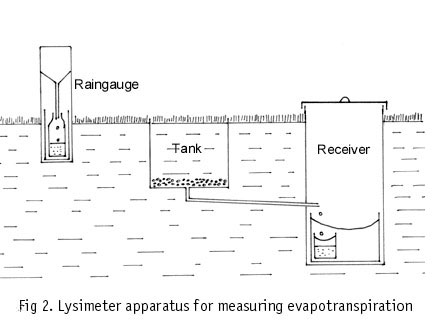
While there are numerous stream gauges on the Arkansas River and large tributaries like Fountain Creek and the Purgatoire River, there is little specific information about what happens along smaller feeders, said Tim Gates, a Colorado State University-Fort Collins researcher. “The focus of this work is to fill the gaps left by the absence of data in the Upper Arkansas Basin,” Gates told the Arkansas Basin Roundtable last week.

Gates and other CSU researchers have spent 10 years studying broad irrigation districts in the Lamar and La Junta areas to try to understand how irrigation affects water tables and salinity. Using a $600,000 grant obtained through the roundtable, the CSU team looked at 17 wells in the Upper Arkansas, along with about 200 wells it already was monitoring in the Lower Arkansas farming regions in order to track water movement year-around…

The team also looked at surface flows in the area, in an attempt to reconcile how much water flows back to the river, how much soaks into the ground and how long it takes the groundwater to return to the river. “We’re trying to get a basic understanding of how much water is being contributed on the tributaries, many of which may not be gauged,” Gates said. “We also did seepage tests on ditches in the upper basin to determine just how much is making its way back to the river.”

The study also is tracking the loading of solids, salt and contaminants like selenium or uranium, Gates said. One preliminary finding, for instance, was a hot spot for uranium near Brown’s Creek south of Buena Vista . Levels were below clean water thresholds, Gates said.

More IBCC — basin roundtables coverage here.

Bureau of Reclamation: Title XVI Water Recycling and Reuse Funding Criteria Available

A picture named waterreuse.jpg

From email from Reclamation (Peter Soeth):

The Bureau of Reclamation has published the funding criteria for the Title XVI – Water Recycling and Reuse Program. The funding criteria will be used for two new fiscal year 2011 Title XVI Funding Opportunity Announcements.

Earlier this year, Reclamation made draft criteria available for public comment. The final funding criteria and a compilation of the public comments received are available online at www.usbr.gov/WaterSMART.

This fall, two funding opportunities will be posted at http://www.grants.gov. One opportunity will be open for construction of Title XVI projects. Another funding opportunity will provide cost-shared assistance for the development of feasibility studies under the program.

Title XVI of P.L. 102-575 provides authority for Reclamation’s water recycling and reuse program. The Title XVI program is focused on identifying and investigating opportunities to reclaim and reuse wastewaters and naturally impaired ground and surface water in the 17 Western States and Hawaii. Title XVI projects have the potential to stretch water supplies using both time-tested methodologies and piloting new concepts.

WaterSMART is a program of the U.S. Department of the Interior that focuses on improving water conservation and helping water-resource managers make sound decisions about water use. It identifies strategies to ensure that this and future generations will have sufficient supplies of clean water for drinking, economic activities, recreation, and ecosystem health. The Program also identifies adaptive measures to address climate change and its impact on future water demands.

More reuse coverage here.

Wiggins: Council moves water project along

A picture named waterfromtap.jpg

From The Fort Morgan Times (Dan Barker):

Council members approved a resolution certifying that the current project to bring water from a new source into town is an appropriate use of taxpayer dollars, as well as an emergency ordinance establishing the Town of Wiggins Water Enterprise. This is part of the effort to complete a set of conditions created by the USDA for receiving a loan and a grant to pay for the project. Since the money for the project comes from American Recovery and Reinvestment Act stimulus funding, governments that receive such funding must certify that their projects are appropriate ways to spend the money, said Wiggins Town Attorney Sam Light. That was one of the conditions for the loan and grant. In order to create bonds to sell to pay off the loan, an attorney who specializes in that kind of work said it is best to officially name the Wiggins water system an “enterprise,” although that is already the way it has been run, Light said. As an enterprise, the water system is exempt from Taxpayers Bill of Rights (TABOR) requirements to have voters approve any increases in costs, he said. Basically, this amounts to renaming the water fund to the water revenue fund, Light said.

The town is also working on the other conditions for the loan and grant, Rogers said. The town has gathered documentation of some of the right of way easements required for running a pipeline from a well northwest of Wiggins into the town, but is still working on it, Holbrook said. A title company is working on certifying that those easements do not have any liens or other encumbrances on them, Rogers said. The town’s auditor has said that he is sending a letter to document the town’s financial condition, but that has not come in yet, he said.

The USDA will be coming to Wiggins to present an official check on Monday, Rogers said.

More Wiggins coverage here and here.