Energy policy — hydroelectric: The Pitkin County Healthy Rivers Fund board is ponying up $15,000 for mediation around Aspen’s proposed hydroelectric plan

A picture named microhydroelectricplant.jpg

From the Glenwood Springs Post Independent (Aaron Hedge):

The board wants to bring in independent contractors to find a middle ground between the city and a number of Pitkin County residents who have voiced concerns that the project will have deleterious effects on Castle and Maroon creeks, where flows would be reduced to feed the hydropower plant…

Ruthie Brown, chairwoman of the Healthy Rivers and Streams Board, said the mediation will bring in a “whole crew of experts in the field.” She declined Tuesday to talk in further detail about the personnel involved in the initiative because the board is still negotiating with contractors. “In three or four days, we will have a lot more information that we can go public with,” she said.

A county memo regarding the $15,000 expenditure says the “review process would be in conjunction with valley nonprofits and other public citizen boards.” The memo also indicates the expenditure will allow an independent review of the hydrology and other information the city has used regarding the project’s impacts on Castle and Maroon creeks.

More hydroelectric coverage here and here.

2010 Colorado elections: Water as an issue in the Governor’s race

A picture named sanjuan.jpg

From the Colorado Independent (Scott Kersgaard):

“We have to get serious about water,” Republican gubernatorial candidate Dan Maes said during a debate Saturday. When the Colorado Independent asked Democratic nominee John Hickenlooper on Friday what campaign issue was not getting enough coverage, his answer was “water.”[…]

Everybody knows water is an issue in the West. Hickenlooper brags regularly that Denver has cut per capita water use by nearly 20 percent during his tenure. According to The Times, Phoenix and Las Vegas have each made similar cuts in usage. Hickenlooper said he expects Denver consumption to continue going down. The fact that Denver has a legal right to a certain amount of water does not mean Denver should use it all, he said. Hickenlooper said some of the things that make Denver a great place to live require that other places in the state have water as well. In the past he has pointed to some of the recreational uses that Denverites rely on water for — such as fishing, skiing and whitewater rafting. At a debate recently in Loveland, he also pointed out that Denver needs the state’s agricultural community to have plenty of water so that people in the state can eat fresh, locally grown food. Toward that end, he said, it is important that Denver not use water just because it can.

Maes hasn’t always made a lot of sense when he’s talked about water, but he has the right idea: water will define Colorado’s future.

American Constitution Party candidate Tom Tancredo said a couple of weeks ago that Colorado has excess water storage capacity that isn’t being used because of environmental regulations and federal interference.

Hickenlooper, the mayor of Denver, said he wasn’t aware that the state had excess capacity, but did say it is very important that Colorado keeps all the water in the state that it is legally able to keep. “We need to make sure we control” all the water it is in the state’s power to control, he said.

More 2010 Colorad elections coverage here.

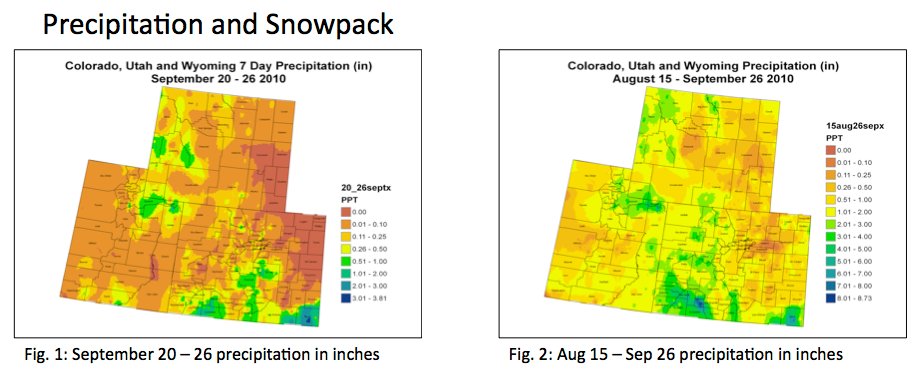
NIDIS Weekly Climate, Water and Drought Assessment Summary of the Upper Colorado River Basin

A picture named precipitationaugseptcolorado.jpg

Here are Henry Reges’ notes from Tuesday’s webinar.

More Colorado River basin coverage here.

Aspinall Unit update

A picture named blackcanyoninnercanyonnps.jpg

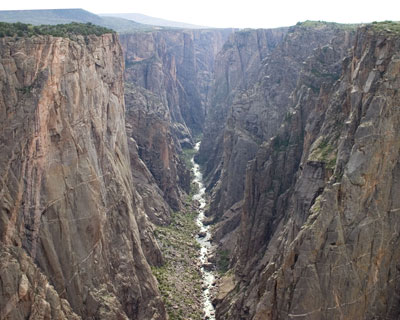
From email from reclamation (Dan Crabtree):

On Monday October 4th, flows in the Black Canyon and Gunnison Gorge will be increased temporarily to accommodate the Colorado Division of Wildlife’s trout census. Due to the equipment and procedures necessary for the work, the preferable flow is 800 cfs. Therefore, releases will be increased 200 cfs starting at 6:00 a.m. on Monday, October 4th and will remain at that level until Thursday, October 7th when they will return to 600 cfs. Flows in the Gunnison Gorge and Black Canyon will then remain at 600 cfs through the following week at which time another reduction will likely take place. Expect another notification prior to this mid-October reduction.

More Aspinall Unit coverage here.

Fryingpan-Arkansas Project update

A picture named coloradopikeminnow.jpg

From email from Reclamation (Kara Lamb):

[Wednesday], the Fish and Wildlife Service completed its call for Ruedi water for the Upper Colorado Endangered Species Recovery Program. As a result, we curtailed releases by about 50 cfs. Today, there is approximately 115 cfs in the Fryingpan River at the Ruedi Dam gage.

More Fryingpan-Arkansas Project coverage here.

High School Students, Community Invited to Colorado State University to Learn about Engineering Careers Saturday, Oct. 2

A picture named barkermeadowdam.jpg

Here’s the release from Colorado State University:

What/when:

High school students, their parents and community members can learn about engineering majors and careers at Colorado State University’s Engineering Exploration Day from 9 a.m. to 1 p.m. on Oct. 2. The informative event, which is free and open to the public, will be in the Engineering Building and Lory Student Center on CSU’s Fort Collins campus, with the opening session taking place in the Lory Student Center Main Ballroom.

Details:

Several hundred students and their parents are expected for their event. Engineering Exploration Day participants view numerous demonstrations from all engineering programs, including robotics and electronics displays. Participants will also learn about engineering majors and careers, and about undergraduate life at Colorado State University. Engineering professors will describe the university’s Biomedical Engineering, Chemical and Biological, Civil and Environmental, Electrical and Computer, Engineering Science, and Mechanical Engineering programs.

Scholarships, advising, housing and dining and the university’s financial aid program will also be discussed. Tours of the CSU campus and the Academic Village (living and learning community) are offered.

More education coverage here.

Energy policy — hydroelectric: The San Juan County Historical Society scores $105,000 from History Colorado for micro-hydroelectric project at the historic Mayflower Mill

A picture named mayflowermill.jpg

From The Telluride Watch (Peter Shelton):

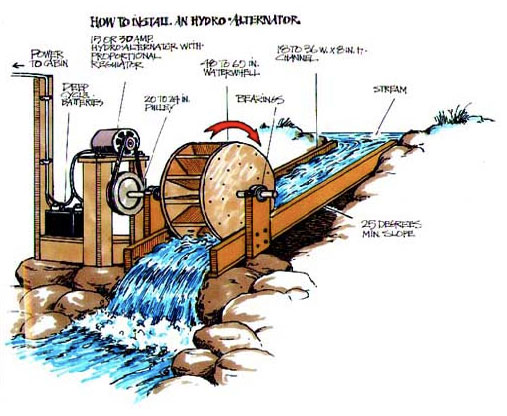
The grant recipient, the San Juan County Historical Society, which has owned the Mayflower since 1995 and operated it as a National Historic Landmark since 2000, will use the money to restore a water supply pipeline and install, with help from Telluride Energy, a micro-hydro turbine. When completed, it should offset the mill’s $600/month electric bill and, possibly, have enough left over to contribute power to the grid…

The Mayflower, also known as the Shenandoah/Dives Mill, is the last mill of its kind in the San Juans and is undergoing considerable restoration thanks to an earlier $375,000 grant from the State Historical Fund. “Your heritage effort here in Silverton is a model for rural economic development in small communities,” Nichols said. “You’re telling these stories together, as a community. You’re living proof that if you take that past and link it to the future – make this a current resource – you are creating a basis for a sustainable future.”[…]

The Mayflower was built in 1929 to take advantage of a new technology called flotation, “which allowed them to mine lower grades of ore profitably,” Rich said. In its time, the mill processed 1,940,100 ounces of gold and 30 million ounces of silver. “Charles Chase ran the mill clear up until 1952. He kept this town alive.” Then the mill was sold to Standard Metals which supplied the mill with ore from its Sunnyside Gold Mine until its closing in 1991. “One of our board members, Zeke Zanoni, said, ‘You know, all of the mills in the San Juans have been torn down. We oughta save this one.’ We got it in 1995. We’ve created a nice mill tour. We have the mine tour up the valley. Now we can tell the complete story of mining and milling. “Another thing we got,” Rich said of the acquisition by the Historical Society, “was the Arastra Creek water rights. A century ago, mills all over the San Juans were powered by hydroelectric. Now we have this new grant from the Sustainability Initiative. And here we are.” Past meets present meets future.

More hydroelectric coverage here and here.

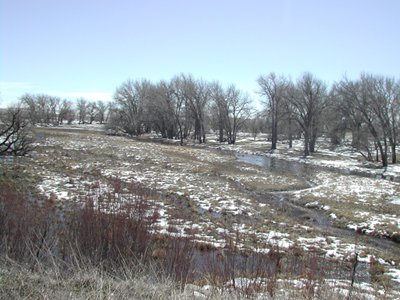
2010 Colorado elections: Amendment 60

A picture named kiowacreek.jpg

From The Telluride Watch (Barbara Uhles):

Here are the impacts Amendment 60 would have on the City of Ouray:

Amendment 60 could be the most devastating to Ouray services.

• The reduction of significant (50 percent) funding to Ouray Schools could force our school board to face some tough choices:

• Combining Ouray and Ridgway schools, resulting in lay-offs of teachers and causing larger class sizes,

• Lowering teachers’ already low salaries, resulting in not being able to keep good teachers,

• Reducing school office staff,

• Elimination of sports programs,

• Elimination of industrial arts and specialty classes,

• Lack of funding for school library,

• The dream of ever having the money to enlarge the school.

The stipulation that the state must backfill school funding seems impossible. A state budget that has already been trimmed to the bone because of the recession and the reduction of over $1 billion to the state budget if Proposition 101 passed, would make it impossible that the state could ever come up with the funding.

• Because all government entities would be forced to pay property tax, Ouray could have to pay property tax on City Hall, Community Center, Box Canon Falls Park, Children’s ski hill, Sewer treatment plant, both water storage tanks, Weehawken Springs area, Ouray Hot Springs Pool, Fellin Park, Rotary Park, and the Woman’s Club Park.

Due to the fact that Colorado’s business property tax rate is three times that of the residential property tax rate, this could equate to millions of dollars in property tax that the city would have to pay.

• Because of these additional property taxes that would have to be paid by the city if this Amendment 60 passed, Ouray residents, our visitors and utility users could possibly face:

• Significantly higher rates to use the hot springs pool, decreasing the usage of the pool, thus bringing in less money to the city,

• Local residents/children no longer being admitted to Box Canyon or pool free

• Significantly higher water and sewer rates

• The pool being closed in the winter

• Having to sell park property or vacant land owned by the city,

• Decreased maintenance levels for our beautiful parks and other city facilities.

• Because state authorities and enterprises (such as state universities, hospitals, etc.) will also have to pay property taxes, residents in Ouray and the rest of Colorado can expect to pay significantly higher college tuition, hospital bills, fishing and hunting license fees, increased fees for the use of other state owned authorities and enterprises.

• About one-fourth of the city’s property tax mill levy plus all of the mil levy for the Ouray Public Library has been de-Bruced, allowing the city and library to keep funds collected that were above the Tabor limit.

Amendment 60 would repeal the de-Brucing efforts of all these funds and force the city to incur the costs of elections to re-de-Bruce. Any funding source that does NOT pass this re-de-Brucing would have to reset its revenue maximum limits to the 1992 TABOR levels, meaning the city would have to return any income received that is over that. limit to “who knows who.”

• There are a number of homes owned by part-time residents to Ouray, some who might be here only one or two months out of the year. Provisions from this amendment allow for them to vote in any local election, having an impact on issues that might impact our school, property taxes, or any other important local issues.

• Because the provisions of this amendment allow citizens to sue a municipality or the State if they feel it isn’t enforcing the amendment, proponents of the amendment would be constantly harassing Ouray officials if they felt it was not being enforced to their satisfaction. This and the other two proposed initiatives are extremely complex and it will take a very long time to determine all their nuances. The cost in legal fees to Ouray could be significant if that occurs and could be a lawyer’s full-employment-for-life dream.

More 2010 Colorado elections coverage here.

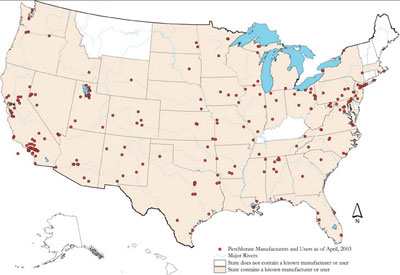
The EPA is taking another look at regulating perchlorate

A picture named perchloratebystate.jpg

From the Associated Press (Frederick J. Frommer) via AZCentral.com:

A government official briefed by the EPA told the Associated Press on Thursday night that the agency has proposed that the chemical, perchlorate, be regulated under the Safe Drinking Water Act. The official, who did not want to be named because a final decision has not been made, said the plan is now under interagency review…

The Defense Department used perchlorate for decades in testing rockets and missiles, and most perchlorate contamination stems from defense and aerospace activities.

In 2008, under President George W. Bush, the EPA decided against regulating the chemical, saying that setting a federal standard would do little to reduce risks to public health. That decision angered environmentalists and Democratic lawmakers. The Pentagon and EPA have tussled over the issue for years, with the Pentagon potentially facing liability if the standard were to force water agencies around the country to undertake costly cleanup efforts. Defense officials have denied trying to influence EPA’s decision and maintain that releases of perchlorate has been reduced as disposal practices have improved. Some states, like California and Massachusetts, have set their own standards.

An EPA spokeswoman, Betsaida Alcantara, said in a statement that the agency is in the process of making a decision on whether to set a drinking-water standard for perchlorate.

More water pollution coverage here. More perchlorate coverage here.

Hoover Dam’s 75th birthday bash

A picture named hooverdamaerial.jpg

From the Las Vegas Review-Journal (Henry Brean):

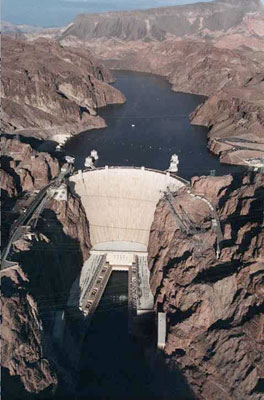
Franklin D. Roosevelt made a return trip to the dam he dedicated 75 years ago, albeit in the form of historical impressionist Peter Small. Speaking before a crowd of more than 100 people, the long-dead president said the dam “still looks brand new as if it hasn’t aged at all.”[…]

Michael Connor, commissioner of the U.S. Bureau of Reclamation, said the dam “conquered what had been previously unconquerable”: a famously fickle Colorado River prone to damaging floods and crop-killing dry spells. Before Hoover tamed it, Connor said, the silty river was often described as “too thick to drink and too thin to plow.”

Anne Castle, the Department of the Interior’s assistant secretary for water and science, used the occasion to preach conservation. “Growth has stressed water supplies, even with this massive dam,” she said. “We can’t let water become the next endangered species.”

More coverage from MyFoxPhoenix.com. From the article:

The U.S. Bureau of Reclamation celebrated the Hoover Dam’s diamond anniversary on Thursday with a re-creation of the dedication ceremony that started it all…

“This is the one dam within Reclamation that’s truly known around the world,” said Ken Rice, area manager for Hoover and the other federal dams along the lower Colorado River. “People here take pride and ownership in it.”

More Colorado River basin coverage here.

Southern Delivery System: Colorado Springs Utilities sells $180 million in stimulus-subsidized bonds

A picture named sdspreferredalternative.jpg

From the Denver Business Journal (Cathy Proctor):

The utility said the bonds were sold at an interest rate of 5.51 percent a year. Through the Build America Bonds program, part of the American Recovery and Reinvestment Act, the federal government will reimburse 35 percent of the bond’s interest cost. That subsidy brings the net interest on the bonds down to 3.62 percent, the utility said.

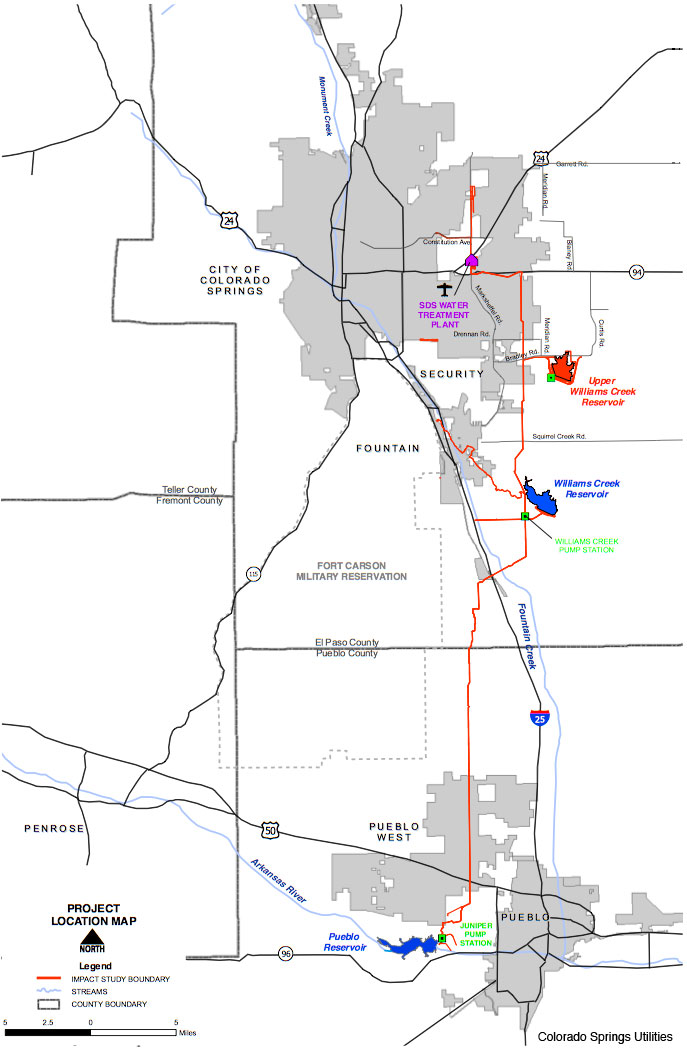
The bond money will pay for initial construction of a raw-water pipeline, a treated-water pipeline, a connection to the Pueblo Reservoir dam, land and engineering work on pump stations and a treatment plant, the utility said…

“Interest rates on 40-year bonds are at historic lows,” said Bill Cherrier, Colorado Springs Utilities chief planning and finance officer, in a statement. “This is an opportune time to build SDS. Contracted construction costs are less than we projected, and there is a strong pool of highly qualified contractors available and eager to work on the project.”

More coverage from Daniel Chacón writing for The Colorado Springs Gazette. From the article:

The interest rate on the so-called Build America Bonds is 5.51 percent, but since the federal government reimburses 35 percent of the interest cost on those bonds, the net interest rate is 3.62 percent, according to the municipally owned utility. “By executing this strategy, Colorado Springs Utilities estimates it will realize total savings in interest expense of $31.5 million over the life of the bonds,” Utilities said today.

More Southern Delivery System coverage here and here.