Greeley: The health effects of hydraulic fracturing will be the topic for a forum on June 25

marcellushydraulicfracturing

From The Greeley Tribune (Sarah Moe):

The health effects of hydraulic fracturing will be discussed in Greeley on June 25. Speaking will be Rep. Joann Ginal, D-Fort Collins, who serves on the House Health Environment Committee; Wes Wilson, a former geological engineer and water resources manager; and Phil Doe, an expert on agricultural water issues.

The experts were invited to speak because members of several grassroots groups — Weld Air and Water, Weld 350, Frack Files and Plains Alliance — want to educate the public about a process they think is moving too fast, said spokeswoman Hollis Berendt. She said some people in the community are concerned about the recent increase in fracking operations, noting that more than 100 people came to a Greeley City Council meeting when fracking was discussed — though most only listened. “We’re going at this too fast; we’re not using good judgment,” Berendt said.

She said the lure of fast money has distracted people from how little is known about the health and environmental risks posed by fracking. But many professors and experts have studied oil and gas development without choosing sides when it comes to fracking, countered Doug Flanders, director of policy and external affairs for the Colorado Oil & Gas Association, in a statement to The Tribune.

Green energy development has slowed, Berendt said, and increasing the use of fracking could cause “catastrophic climate change.” However, she said the focus of the Greeley forum will be the health risk of fracking — not the environmental impact.

Berendt accused the oil and gas industry of trying to make information about fracking vague and unavailable, and said even oil and gas workers don’t know all of the chemicals and risks associated with fracking.

Flanders said COGA is listening to the concerns of the public when it comes to fracking. “COGA acknowledges the concerns, risks and benefits associated with all forms of energy development. We value the conversations we have with concerned communities every day,” Flanders said. Flanders added that he thinks most Coloradans want to work with the oil and gas industry, and that the talk among most citizens is a calm and rational dialogue.

Health ailments can’t yet be proven to be linked to oil and gas because the list of chemicals used in hydraulic fracturing was only recently released, Berendt said, but she thinks it’s more than coincidence when people who work at and live around fracking sites are afflicted with ailments such as worsening asthma and other breathing issues.

Because other Colorado cities have passed fracking bans, Berendt said, “People in Greeley are going to be guinea pigs, because we are continuing to do it.”

Flanders said fracking in the state is a complex matter, and that practical concerns shouldn’t be ignored when enacting bans. “… Banning a product we all use every minute of our lives is both short sighted and damaging to the Colorado way of life,” Flanders said.

State officials said regulations are constantly evolving to make oil and gas operations safer. The oil and gas industry is highly regulated to make sure it is safe, said Todd Hartman, communications director for the Colorado Department of Natural Resources. He said the department is always alert for new information that could shape regulations, and that the oil and gas industry has operated safely and successfully in Colorado for more than a hundred years. “All the while, industry technology and regulatory requirements designed to reduce environmental and health impacts continue to advance,” Hartman said.

Ginal, a biologist with a doctorate in endocrinology, will recap the bill she presented last session, HB 1275. The bill, which died in committee, asked for a study to identify health aspects of oil and gas activity.

Wilson has a bachelor’s of science degree in geological engineering and a master’s of science degree in water resources administration. He was in the U.S. Army Corps of Engineers and worked for the Environmental Protection Agency in Denver until his retirement in 2010.

Doe is environmental issues director for Be the Change, a progressive grassroots political organization. He was formerly head of the policy office overseeing federal water subsidies to irrigated agriculture with the U.S. Department of the Interior. He was also a whistleblower against attempts by the agriculture industry to thwart congressional controls on agricultural water subsidies who appeared on “60 Minutes.” He has published a number of articles on water issues, including a recent EcoWatch article discussing fracking in Colorado.

More oil and gas coverage here and here.

Happy 100th birthday activated sludge

wastewatertreatmentprocess

From the (Water Environment Federation (Jeanette Brown):

One hundred years ago this year, H. W. Clark and S. De M. Gage from the Lawrence Experiment Station in Massachusetts reported results of studies on the purification of sewage using aeration in the 45th Annual Report to the State Board of Health of Massachusetts. They found that if you aerated sewage, you achieved a clarified sewage and a reduction of Total Kjeldahl Nitrogen. A year later, 1914, a team of British researchers, Edward Ardern and W.T. Lockett, added the concept of recycling sludge, patented the process, and published a paper which first used the term “Activated Sludge.” As we reflect on these past hundred years, we can truly realize the power of these discoveries.

While a few plants adopted the activated sludge process early on, its value was not recognized for many years. In fact, the activated sludge process was not implemented in many cities throughout the United States until after the Clean Water Act in 1972. Over the years, we have modified the process, improved upon it, made it more efficient, and used it to remove nitrogen and phosphorous as well as carbon. Moreover, we have come to understand the process on a microbial level, its complexity and power. I am still overwhelmed when I visit a treatment plant and see the quality of effluent that this amazing process can achieve.

More wastewater coverage here and here.

The Rocky Mountain Field Institute is looking at options to protect Colorado’s last population of Greenback cutthroats

cutthroattrouthistoricranges

From The Pueblo Chieftain (Chris Woodka):

Can the state’s last remaining native fish survive the human impacts on their stream?

The Rocky Mountain Field Institute wants a $100,000 state grant to improve the habitat of Bear Creek, west of Colorado Springs. The creek is home to the only remaining population of greenback cutthroat trout in Colorado. The trout were discovered last year through genetic testing by the University of Colorado. Bear Creek also is a popular recreation site, and roads, hikers, cyclists and other outdoor activities. “It’s the only native greenback population in the state,” explained Doug Krieger, aquatic biologist for Parks and Wildlife, at last week’s Arkansas Basin Roundtable meeting. “We want to protect this mother lode of fish.”

The roundtable approved the grant, which now goes to the Colorado Water Conservation Board.

The trout live in a 4-mile stretch of Bear Creek. They apparently were stocked there in the 1800s, because the species actually is native to the South Platte River basin. Native species of greenback cutthroat trout in the state’s three other river basins are believed to be extinct or genetically altered by contact with other species. The state last year moved 64 of the fish to fisheries to breed more stock, Krieger added.

The grant money would stabilize a draw that is responsible for loading most of the sediment into Bear Creek, restore a portion of the stream and develop a plan to take steps to reduce sediment loading from High Drive, which runs adjacent to the creek.

Several recreational groups are cooperating in the project.

More endangered/threatened species coverage here.

Arkansas River Basin: Colorado Parks and Wildlife hopes to build a 3,000 acre-foot reservoir off the Excelsior Ditch

arkbasinditchsystem

From The Pueblo Chieftain (Chris Woodka):

Another reservoir plan for the Excelsior Ditch east of Pueblo surfaced Wednesday. Colorado Parks and Wildlife wants to build a small reservoir and wetlands area on the Stonewall Springs site, located south of U.S. 50 near the Pueblo Chemical Depot. “The project would provide 1,800 acres open to public access, either as a park or a wildlife area,” Dan Prenzlow, CPW regional manager, told the Lower Arkansas Valley Water Conservancy District Wednesday.

The state initially would develop a 3,000 acre-foot reservoir on property it is trying to acquire from Stonewall Springs LLC, an El Paso County development group represented by Mark Morley. Because the state is in negotiations with Stonewall, no cost for the project was given.

The first reservoir is one of five that potentially could be developed on the Stonewall Springs property. Two other reservoir sites on the Southwest Farms property along the Excelsior Ditch are slated for development by Two Rivers Water & Farming Co., controlled by John McKowen, a Denver entrepreneur. The purpose of both projects would be essentially the same. They are trying to attract other municipal or agricultural water users who need storage in exchange for water. Two Rivers wants to charge a fee in water for storage and use it to augment irrigation wells.

Prenzlow said other state agencies such as the Colorado Water Conservation Board and Great Outdoors Colorado could be partners, as well as the recovery of yield municipal group and well augmentation groups.

Two Rivers has made an offer of $3.5 million to the Arkansas Groundwater Users Association to buy its 53 percent share of the Excelsior Ditch. Stonewall Springs owns the other 47 percent of the ditch.

More Arkansas River Basin coverage here and here.

Lamar: The city is lining up financing for a $2 million pipeline replacement project

romanleadpipesciencemuseumuk

From The Pueblo Chieftain (Chris Woodka):

Lamar’s looking to get its pipes cleaned. But the city of 7,800 needs some state assistance to get the job done. The Arkansas Basin Roundtable last week sent a request for a $200,000 state grant to the Colorado Water Conservation Board. The money will assist in a $2 million project that would be funded with a $985,000 grant from the Department of Local Affairs, and a $785,000 CWCB loan. Lamar water customers would pay an additional $1.07 per month if all of the state funds are approved.

The money is needed because of heavy corrosion and leakage in the pipes that bring water from wells to the city. Water from two separate well fields is high in dissolved solids, and must be blended in order to use it. “If they clean the pipes, they burst,” said Gary Berngard, an executive for Honeywell Building Solutions, the consultant on the project.

The project also will upgrade parts of the water system in anticipation of completion of the Arkansas Valley Conduit, which is several years down the road.

The replacement of the pipes will recover between 378-662 acre-feet of water per year that now are being lost. It also would free up water from other sources for other uses, including industrial and agriculture. “This affects half of the population of Prowers County,” Commissioner Henry Schnabel told the roundtable in supporting the project.

More infrastructure coverage here.

Drought/runoff news: The current drought isn’t over by a long shot, runoff on it’s way out #COdrought

usdroughtmonitor06112013

seasonaldroughtoutlookjune62013

From the Fort Collins Coloradoan (Bobby Magill):

Moderate drought conditions have returned to Northern Colorado after several weeks of warm, dry weather, according to this week’s Colorado Climate Center drought update.

For the last few weeks, climatologists have classified Northern Colorado as merely “abnormally dry” because of large amounts of snow and rain in April and May.

“June for the Front Range has been pretty dry,” said meteorologist Don Day, Jr., of DayWeather in Cheyenne. “It didn’t take much for us to slip back into (drought).”

Though some areas of the Front Range have seen some rain and severe weather in recent weeks, it hasn’t accomplished much to ease drought conditions because much of the rain water has run off instead of infiltrating into the soil, according to the Colorado Climate Center report…

Poudre River flows at the Poudre Canyon mouth peaked on June 9, two days earlier than the historical average.

Colorado-Big Thompson Project reservoirs, which supply Fort Collins and more than 800,000 other Colorado residents with water, are filling, but they are far from full.

The project’s biggest reservoir, Lake Granby, was 64 percent full on Wednesday, while Horsetooth Reservoir was nearly 80 percent full.

From The Pueblo Chieftain (Chris Woodka):

Pueblo boosted its water storage by about 25 percent during a brief, fast spring runoff this year. “We reached peak runoff last week,” Water Resources Manager Alan Ward told the Pueblo Board of Water Works Tuesday. “Our brief, but welcome runoff is on its way out.”

The water board’s goal this year was to replenish water supplies that dipped after a very dry 2012. While precipitation in Pueblo has been even less than last year, this year’s snowpack was heavier and lasted longer. “Runoff came later than in recent years, but mid-June is closer to normal,” Ward said.

Pueblo now has about 36,000 acre-feet in storage — more than a year’s supply — and added 7,000 acre-feet in the first two weeks of June.

While Pueblo benefits from runoff in the Arkansas River basin, it also imports water from the Colorado River, and most of the gain has been from its own ditches and tunnels that bring water across the Continental Divide, as well as the Fryingpan-Arkansas Project. Snowpack in both basins is up this year.

The Arkansas River, as measured at Wellsville just downstream from Salida, peaked on June 12 at 2,900 cubic feet per second.

The Fry-Ark Project has brought over 38,100 acre-feet for use in the Arkansas Valley this year, and is on pace to deliver an estimated 47,231 acre-feet, said Roy Vaughan, project manager for the Bureau of Reclamation.

Aspinall Unit update: 500 cfs in the Black Canyon and Gunnison Gorge

aspinallunit.jpg

From email from Reclamation (Dan Crabtree):

Flows at the Whitewater Gage on the Gunnison River near Grand Junction have declined to a point where additional releases from the Aspinall Unit are necessary to maintain environmental commitments. Tomorrow morning (Thursday the 20th) releases from Crystal Dam will increase by 200 cfs bringing flows to 500 cfs in the Black Canyon and Gunnison Gorge. An additional increase will likely take place next Wednesday the 26th, but we’ll send out a notice prior to that time with more details.

More Aspinall Unit coverage here and here.

Weekly Climate, Water and Drought Assessment of the Upper Colorado River Basin #COdrought #ColoradoRiver

wyutcoprecipitationjune1to162013

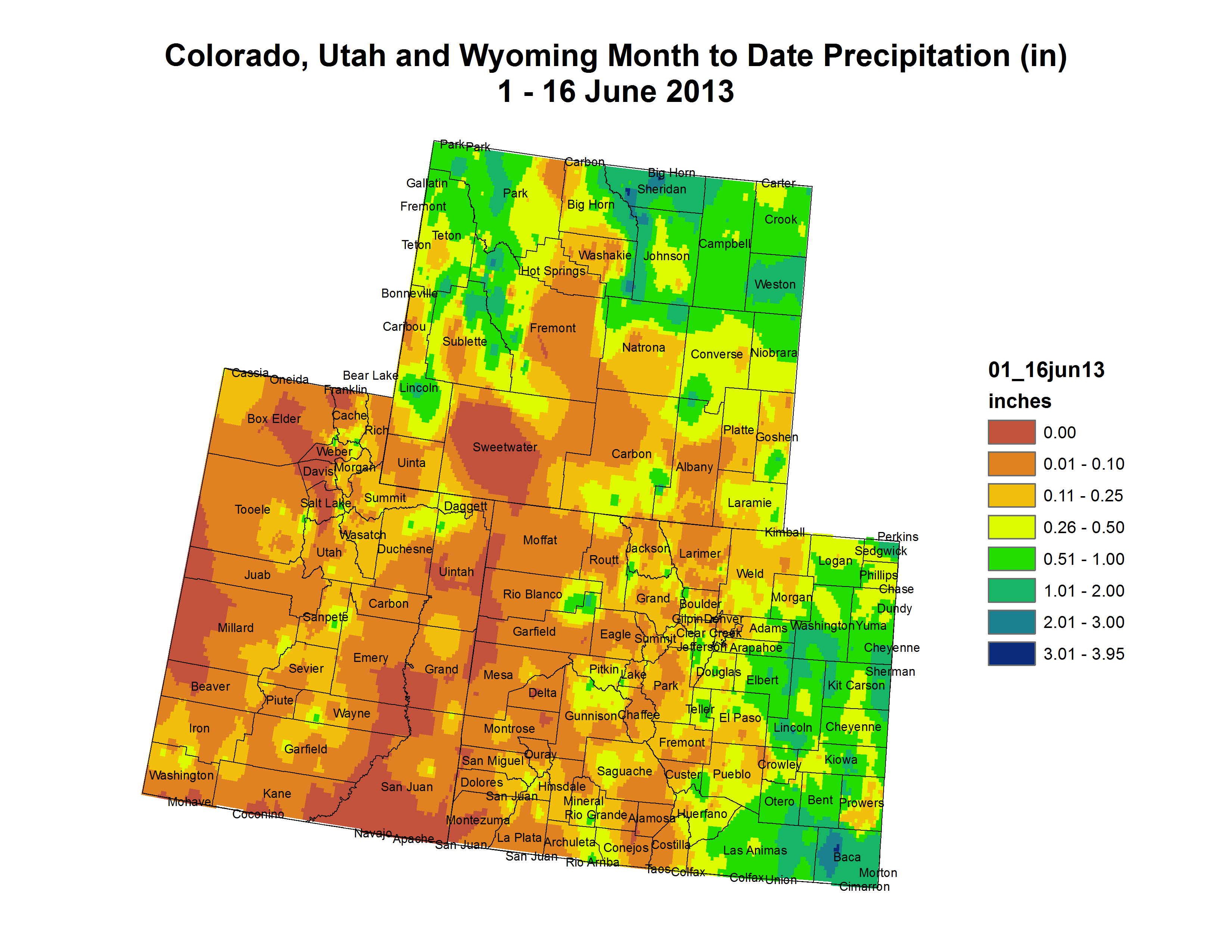
Click on the thumbnail for the preciptation map for the UCRB from the Colorado Climate Center. Click here to download a .pdf of the current assessment. Click here to read the current briefing on the Colorado Climate Center website.

More Colorado River Basin coverage here and here.

Drought news: Loveland implements voluntary watering schedule #COdrought

usdroughtmonitor06112013

seasonaldroughtoutlookjune62013

From the Loveland Reporter-Herald:

Loveland Water and Power is calling on all city water customers to do their part to help “Shave the Peak” this summer.

Businesses and residents are asked to follow a voluntary watering schedule that’s designed to help shave peak demand for water during what are typically the highest water use weeks of the summer.

The program, which the city has used for the past two years, started Monday and will run through Aug. 31. Water customers are asked to adopt an even/odd watering schedule to spread out the use of water throughout the city, with addresses ending in odd numbers watering on odd days of the month. Addresses ending in even numbers should water on even numbers of the month.

Trees, flowers, gardens, shrubs and sub-irrigation/drip systems are exempt from the watering schedule.

Those who are unable to set sprinklers on an odd/even schedule should water on Tuesday, Thursday and Saturday if it’s an even address. Addresses ending in odd numbers should water on Wednesday, Friday and Sunday.

Summer produces the largest demand for treated water, amounting to heavier demand on Loveland’s Water Treatment plant. The plant processes about 28 million gallons a day at peak times compared to only 6 million gallons per day in winter months.

For more information about “Shave the Peak” or tips for conserving water, visit http://www.cityofloveland.org/conservation.

Moab tailings clean up tallies 6 million tons #ColoradoRiver

moabcoloradoriverspanishval

From The Grand Junction Daily Sentinel (Gary Harmon):

The cleanup of the mill-tailings pile in Moab, Utah, is on schedule, having hit the 6-million ton mark this week. That leaves 10 million tons still to be hauled 30 miles north to Crescent Junction from the Cold War-era tailings pile on the opposite side of the Colorado River from Moab.

“We just keep clicking away, slowly but surely,” said Don Metzler, director of the cleanup for the U.S. Department of Energy. Metzler had predicted the cleanup would hit the 6-million-ton milestone on Monday.

The cleanup, which began in 2009, is expected to be complete by 2025. The tailings are the remainder of the uranium milling process and contain low levels of radiation. They are shipped by rail from Moab in lined containers and deposited in a disposal cell designed to blend in with the Book Cliffs behind them.

More nuclear coverage here and here.

Cañon City: Royal Gorge Whitewater Festival Friday and Saturday

canoncity

From The Pueblo Chieftain (Tracy Harmon):

From adventurers who like to build their own boat to those who prefer to show off in one ready-made, the Royal Gorge Whitewater Festival will offer a race tailor-made for all river rats.

The Whitewater Kayak and Recreation Park, affectionately dubbed, “WKRP-Canon City” at Centennial Park will be the site for the Royal Gorge Whitewater Festival Friday and Saturday “A big addition this year is the USA Rafting National competition. This will be the first time they have brought the nationals to Canon City,” said Kyle Horne, an organizer.

“There will be four events and the top team advances to the World Championships in New Zealand. It will be a wonderful opportunity for everyone to see some of the best men’s and women’s rafting teams in the country,” Horne said.

Enthusiasm for the festival is strong. With the Royal Gorge Fire 100 percent contained Sunday, organizers remind participants and spectators that 90 percent of the Arkansas River is open for the race. The only portion closedwas fire-involved.

The nationals kick off with a time trial at 2 p.m. Friday which will start at the First Street bridge and finish at the Whitewater Park. Viewing areas will be available along the Arkansas Riverwalk Trail and on both sides of the river at the finish.

From the Cañon City Daily Record (Brandon Hopper):

If ever an event existed that put competitors through a little bit of everything before the finish line, this might just be it. The Whitewater Adventure Race at the Royal Gorge Whitewater Festival presents racers with pipes to climb, fire to jump , mud to crawl through and an ice bath to soak in. And that’s just to name a few.

An adventure it surely is.

The event — which has 5K and and three-quarter mile options — will happen at 3:30 p.m. Saturday on the second day of the RGWF. The cost is $30 and includes free entry to RGWF and a New Belgium shirt. The race, for people 12 and older, begins at Veterans Park and ends at Centennial Park, where the majority of RGWF happens…

To register or for more information, visit royalgorgewhitewaterfestival.com.

More whitewater coverage here and here.

Drought news: Another day closer to rain? #COdrought

usdroughtmonitor06112013

seasonaldroughtoutlookjune62013

From the La Junta Tribune-Democrat (Candace Krebs):

For now, there’s no significant drought relief in sight and no reason for area farmers to shift out of drought survival mode. That’s the verdict of Dana Barth, conservationist with the Northeast Prowers Conservation District, who recently hosted a drought management meeting in Holly attended by around 60 producers.

Brian Bledsoe, a meteorologist based in Colorado Springs who has been giving dismal weather outlooks since last winter, saw no reason to change his tune during a presentation to the group.

“There’s nothing coming our way from what he’s seeing in his crystal ball,” Barth said. “Any rain is going to be scattered, none of the long soaking rains we would need to bring us out of the drought.”[…]

Even irrigated farmers in the area are running short of water. The Lower Arkansas Water Management Association, based in Lamar, has set restrictions on wells and ditch irrigation to honor a decades-old water compact with Kansas, Barth noted. However, farmers across the state border aren’t much better off, she added.

For now, most farmers are still able to joke that every day is one day closer to rain. But she also described them as “guarded,” wrestling with what to do next and with fear of the unknown.

Mental health professionals recommend farmers avoid becoming isolated by despair.

Here’s a guest post written by Taryn Finnessey (Colorado Water Conservation Board) that is running on the Denver Water Mile High Water Talk blog. Here’s an excerpt:

The Arkansas River basin, home to Colorado Springs, Pueblo and the delicious Rocky Ford cantaloupe has been hit the hardest with 40 of the last 49 months below average for precipitation — a total deficit of 22 inches. Over the last 13 months, Lamar has received a mere 5.81 inches of precipitation, and only about an inch since the beginning of the calendar year. The lack of precipitation, thousands of acres of failed crops (land where it is too dry to plant) and the warm summer temperatures have created the perfect conditions for dust storms that have battered the region.

The Rio Grande has also suffered since 2011, and spring streamflows this year have been well below normal. Many farmers and ranchers in the region said that they have never fully recovered from the 2002 drought. Reservoir storage is well below average at 54 percent, and streamflow forecasts are lower than 50 percent.

Over the last two years drought conditions in southwestern Colorado have been a mixed bag. The area has been fortunate enough to get some sizable winter snowstorms, but the hot summers have led to reports of drought impacts (including fires) affecting nearly all sectors. The Four Corners area remains dry, and the U.S. Drought Monitor has increased the severity of its drought classification from “severe” to “extreme.”

Even though each area has a unique situation, drought conditions persist across the entire state, and many municipalities have implemented water restrictions. To help customers determine what restrictions exist in their neighborhoods, the state has developed a Web portal at http://www.COH2O.co.

Sens. Bennet and Udall and Rep. Tipton are on board with Pueblo County’s application for Fountain Creek funds

pikespeak.jpg

From The Pueblo Chieftain (Chris Woodka):

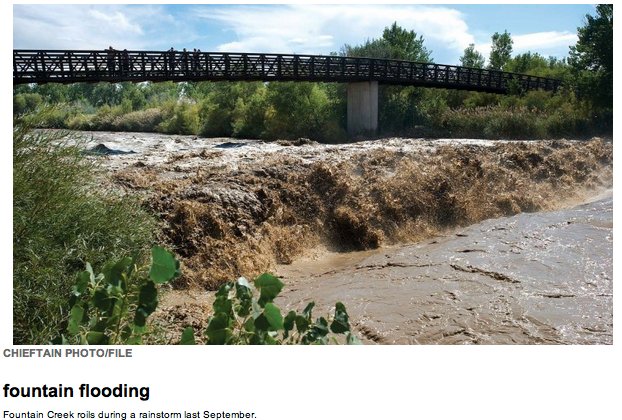
Plans for flood risk management on Fountain Creek through Pueblo have gained more federal support. U.S. Sens. Mark Udall and Michael Bennet, both Democrats, and Rep. Scott Tipton, R-Colo., sent a letter to the Army Corps of Engineers last week to support any federal efforts to remediate levee conditions on Fountain Creek through the East Side. The letter supports the Pueblo County commissioners’ request for a $3.5 million Army Corps project that could be applied to the levee for strengthening banks, planting native vegetation, improving wetlands and creating riparian buffer zones.

The project would stretch from Eighth Street to the confluence of Fountain Creek.

“Ironically, where we had a fire a few days ago could be turned into a beautiful riverside community park,” said Commissioner Sal Pace. “It’s about time Pueblo got its fair share.”

Vegetation on Fountain Creek near the East Fourth Street bridge caught fire Tuesday. The lower section of Fountain Creek is occasionally subject to flooding as well when rainfall upstream in the watershed is heavy.

The project was given high priority in a Corps study of Fountain Creek needs in 2009.

In January, commissioners requested congressional support for the project, also mentioning projects in El Paso County that could benefit Pueblo County as well. The letter highlighted cooperative efforts of the two counties through the Fountain Creek Watershed Flood Control and Greenway District.

A local match of 35 percent would be required for the project. Local money for the project is $1.225 million, which would come out of the remaining $1.9 million Colorado Springs Utilities paid to Pueblo County for dredging Fountain Creek under the 1041 permit for Southern Delivery System. Another $300,000 of those funds was spent earlier on a Fountain Creek demonstration project for side detention ponds and in-stream dredging.

More Fountain Creek coverage here.

Ute Water opposes public trust initiatives in effort to protect Colorado’s system of water rights

Pikes Peak Regional Water Authority is seeking funding for a cooperative plan that leads to efficiencies

pikespeak.jpg

From The Pueblo Chieftain (Chris Woodka):

El Paso County water providers are banding together to study how their systems could work together more efficiently in the future. A $242,000 study would include Colorado Springs Utilities and the Southern Delivery System as possible delivery sources of water for other communities, as well as ways to integrate the assets of other water systems. The Pikes Peak Regional Water Authority is seeking a grant of $75,000 from the Colorado Water Conservation Board, while kicking $88,500 in cash and $78,500 in in-kind contributions. Colorado Springs and El Paso County are included in the in-kind contributions.

Those groups have been aggressively pursuing water development for more than 30 years to meet rapid growth. Some past projects have been undertaken collectively.

The Arkansas Basin Roundtable approved the state grant this week, because it would help fill the greatest part of the municipal gap identified in the Statewide Water Supply Initiative. “I think this addresses the gap in a way that goes beyond individual projects such as SDS,” said Betty Konarski, who represents El Paso County on the roundtable.

Roundtable member Jeris Danielson, a former state engineer, asked if the study would include new sources of supply as well.

Sean Chambers, manager of the Cherokee Metropolitan District, said the main purpose of the study would be to look at how current supplies could be better managed for the mutual benefit of other communities.

The gap in El Paso County is projected to be 22,000 acre-feet annually — enough water for about 60,000 homes — by 2050. Of that, 13,000 acre-feet will be to replace nonrenewable groundwater and 9,000 acre-feet will be needed for growth.

The gap is the vast majority of the shortfall identified by SWSI.

More Arkansas River Basin coverage here.

Salida: FIBArk recap — Andy Corra wins the Downriver race for the ninth time

fibark2013themountainmail.jpg

From The Mountain Mail (Calley McDermott):

For the ninth time, Andy Corra, 52, Durango, crossed the finish line first in the 26-mile FIBArk Classic Downriver Race, with a time of 2 hours, 20 minutes, 55 seconds. The seasoned racer won his first Downriver in 1985.

Racers in the Classic Downriver Race travel from the Salida Whitewater Park to Cotopaxi.

Despite flows that had “dropped a bunch” since Thursday, Corra said, “It was a nice flow, with good clean lines in the rapids. It sure was a treat over last year.” He said the medium flow of about 1,500 cubic feet per second resulted in a “medium time.” Corra finished the race in 1:58:07 in 2009, the fastest recorded time since 1995.

With nine wins under his belt, he admitted he would like to win at least one more because “there is something perversely satisfying about the number 10.” However, he said he plans to “pass it on to Wiley.” Wiley Corra, 10, took third place in the 10-mile Cadet Downriver Race.

Jeremy Rodgers, Boulder, finished second overall with a time of 2:26:50. Rodgers flipped in the Cottonwood Rapid, east of Coaldale, and struggled to resurface.

Ben Morton, a safety boater, assisted in turning him back over. “At this water level you have to be decisive, and I hesitated. Cottonwood punishes. It’s great when the water level is lower and higher, but it’s tricky at 1,500 (cfs),” Rodgers said.

Last year Rodgers finished fourth.

About Corra, he said, “Andy sure shows up every year. He shows us younger paddlers what experience does for you.”

Steve Holmes, Salida, finished third overall with a time of 2:29:04.

First woman finisher was Lisa Adams, Durango, in a C2 boat. Adams finished fourth overall. Her teammate was not listed.

Some of the later downriver competitors paddled through rain, thunder and some lightening in Bighorn Sheep Canyon.

For the first time, organizers had the rafts leave 1½ hours before the classic race started, to allow the rafters to run the course without slowing the other boaters. Volunteer June Gober, Salida, said the early raft start “worked out well.”

“Mark Mattson’s Crew” from Salida won with a time of 1:40:27.

“Holly Harz and Crew” from Buena Vista entered two rafts; one finished second with a time of 1:42:37.

The other raft, with two more people than paddles, finished third with a time of 1:59:47.

Watching the race from the sidelines, Larry Zuk, 90, said it was his first time watching “from the road.” He competed in the race 10 times and was a slalom race champion in both K1 and C2 in 1976. “I’m writing a book about early canoeing in the Rockies,” Zuk added. Zuk was inducted into the FIBArk Hall of Fame this year.

Corra said, “It’s good to keep the tradition (of the Downriver Race) alive.”

From The Mountain Mail (Calley McDermott):

The 65th FIBArk Whitewater Festival kicked off with induction of Larry Zuk and Steve and Eric Frazee into the FIBArk Hall of Fame during Business After Hours Wednesday at Salida SteamPlant.

FIBArk board member Christopher Kolomitz introduced FIBArk Hall of Fame inductee Eric Frazee, who also accepted the award on behalf of his late father, Steve Frazee. Steve Frazee was born in Salida in 1909 and served as the 1959 FIBArk commodore. His son Eric, a longtime paddler, represented the United States in the 1954 International Slalom Competition in Germany. “I think it’s a great honor. I’m happy to accept it. I’m also happy to accept for my father, who is long gone now, who worked his rear-end off to make kayak competitions in the United States a success here in Salida,” Eric Frazee said.

“Right here in Salida we have the top international kayakers come from around the world. All I had to do was get in my little truck and drive my boat down to the river and compete. That was pretty cool.”

Kolomitz said Larry Zuk, another 2013 FIBArk Hall of Fame inductee, was unable to attend the event. Zuk first raced in FIBArk in 1954, earned the national championship in the K1 slalom race at FIBArk in 1956 and competed in the 1976 Olympics. Zuk is also the founder of the Colorado Whitewater Association. He recently published the book “Stories of a Century of Canoeing and Canoes” and is in the process of writing a second book titled “Early White Water Canoeing and Kayaking in the Rocky Mountains 1949-1969.”

Kolomitz introduced 2013 FIBArk Commodore Ed Loeffel, who congratulated FIBArk organizers for the success of FIBArk over its past 65 years. “FIBArk and I both qualify for Medicare this year,” Loeffel joked. “I’m now looking forward to my next duty as commodore – no public speaking is going to be required – only drinking the first pour of Eddyline beer tomorrow afternoon at 4. Hope to see you all there.”

Loeffel also cast the winning bid in a live auction for a signed print of this year’s FIBArk poster, designed by Lindsay Sutton. He bid $630.

“We’ve got great weather, great water, and we’re looking forward to a great FIBArk,” Kolomitz said.

More whitewater coverage here.

US Rep. Scott Tipton is pushing small scale hydroelectric generation

microhydroelectricplant.jpg

From The Greeley Tribune (Eric Brown):

Rep. Scott Tipton, R-Colo., for the past couple years has pushed for a bill that would allow hydropower development on irrigation ditches in Colorado and across the West.

Joshua Green — press secretary for Tipton, whose 3rd Congressional District covers nearly all of southern and western Colorado — took time out of his schedule recently to discuss Tipton’s “Hydropower and Rural Jobs Act” and how the bill is moving along in Washington.

Below are portions of those conversations:

Q — First of all, what exactly is this bill aiming to do?

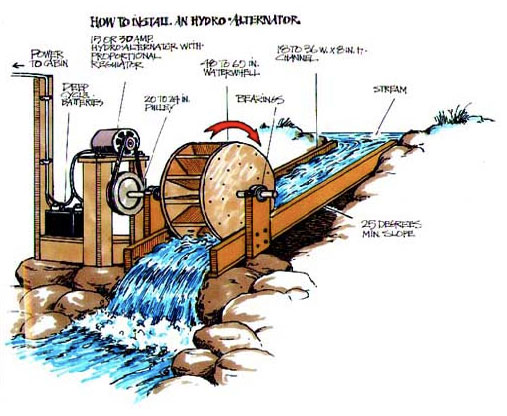
A — This would lift restrictions on hydropower development for irrigation districts, specifically on Bureau of Reclamation conduits, so they could use that water to generate electricity. The bill eliminates duplicative environmental analysis on these existing pipes, ditches, canals, etc., that have already received a full review under the National Environmental Policy Act. This bill asks that small-scale hydropower projects, five megawatts or less, can be put in place without having to go through further federal processes. The bill streamlines the federal regulatory process, and it reduces administrative costs for these ditch managers to install small hydropower projects.

Q — This is the second year Tipton has introduced the bill aimed at hydropower development on irrigation ditches. Why is this bill so important to him?

A — Costs are increasing to repair these aging water-supply systems, and making them more energy-efficient would save the ditch managers money. The electricity from these projects could also be sold to bring in money and help cover their expenses. The bill would also add clean electricity to the grid to power homes and communities. And this is a rural job creator; we would need people to build and then maintain these hydropower projects.

Q — What is the driving force behind this bill? Is hydropower development on irrigation canals something that Tipton’s constituents have been talking about for a while?

A — There’s absolutely an interest in Colorado and throughout the West. The Interior Department has identified at least 28 Bureau of Reclamation canal sites in Colorado, and 373 nationwide, that could be developed for hydropower purposes. These are small hydropower projects we’re talking about, and would cost relatively little to construct. However, with the way things are now, the federal permitting costs add up to be more than the construction itself, and that’s deterring people from going forward with these hydropower projects

Q — How are the discussions in Washington coming along?

A — Things are going very, very well. The bill passed the House 416-7 in April. Obviously we have the support and have had it for a long time. Rep. Tipton’s hydropower bill had passed the House last year, but we ran out of time to push it all the way through before the session was over. A companion bill from the Senate recently passed the Senate Energy and Natural Resources Committee, so things are going well over there, as well. Now, we’re just waiting to get all of this pushed through and see this become law.

Q — I read recently where there’s a similar hydropower bill in the House being pushed by Rep. Steve Daines of Montana. How are the two bills different?

A — Our bill amends the Reclamation Project Act of 1939, which authorized the vast majority of projects on Reclamation facilities. The Water Conservation and Utilization Act of 1939, on the other hand, authorized 11 Bureau of Reclamation facilities. Unlike the Reclamation Project Act of 1939, which our bill amends, a statute under the WCUA allows for only the federal government to develop hydropower on these 11 facilities. Daines’ bill seeks to address that statute in the WCUA and remove those hurdles, so private hydropower development in those facilities can move forward.

More hydroelectric coverage here and here.

Greeley Water is piloting an online water conservation tool

waterfromtap.jpg

From The Greeley Tribune:

In another effort to conserve water, Greeley officials have launched a pilot program that pinpoints residents’ water use though an online program. The WaterSmart program will allow 2,600 Greeley residents to personalize their water use online based on things like family size and the age of their toilets and sinks, according to a news release. It’s a new tool to complement the water budget, which city officials rolled out to all residential water customers this year, said Ruth Quade, a Greeley water conservation coordinator.

The water budget accompanies Greeley residents’ water bills each month, showing how much each household used compared to what was needed based on historic averages. Randomly selected residents in the WaterSmart program can now compare their household water use with neighbors, and the program will suggest targeted conservation techniques.

The pilot program will also allow residents to create a water savings plan and update their information for more accurate savings suggestions — all for free.

If the program is successful, it may go citywide.

In a test program for the water budget, city officials found that most Greeley residents are conservative with their water use, with about 18 percent using far more than necessary.

Jon Monson, Greeley’s water and sewer director, said before the program was rolled out to all residents this year that if every household in the city that exceeds the budget could bring use down to what the city recommends, Greeley could save 700 acre-feet of water, or about $70 million worth of new water, each year.

More conservation coverage here.

Buena Vista: Cottonwood Creek project improves fishery

buenavista.jpg

From The Mountain Mail (Nancy Best):

Trout Unlimited, a national conservation organization, is active in the local area through its Collegiate Peaks Anglers chapter. The chapter serves the Upper Arkansas Valley from Leadville to Cotopaxi and boasts some 300 members. Despite its name, Trout Unlimited is not a fishing club; indeed, there are members who do not fish. However, what is common among them is a love of the outdoors and natural settings.

One project that TU spearheaded was the creation of the Buena Vista Wildlife Area on CR 361 just off CR 306, from what was an inaccessible marshy meadow and a section of Cottonwood Creek that was too straight and shallow for fish to thrive in.

Local TU member Bob Gray explained what was involved. A year was spent writing and presenting a grant to the federal program Fishing Is Fun. A wetland mitigation plan was submitted, and many different aspects of the project that needed to be coordinated were put in place. Then, it took only the month of August 2006 to actually construct the BV Wildlife Trail and rebuild the section of Cottonwood Creek running alongside it.

Led by TU, it truly was a town effort. ACA Products donated gravel and boulders. Town trucks hauled gravel, local graphic designer Sherry York researched and wrote informational signs, and Weston Arnold and Zeke Farber, two students in the high school metal shop program, constructed a handicapped guardrail to make fishing accessible to those in wheelchairs. The Department of Corrections heavy equipment program, led by Tom Foreman and Tom Bowen, provided machines and labor.

Rod van Velson, before his retirement from Colorado Parks and Wildlife, mapped out a new stream, designing where rocks should be placed and how they should be oriented in order to direct the water flow, create holding pools, undercut banks, speed up or slow down the creek and stabilize banks, all to make an inviting home for brown trout.

The concerted effort of those mentioned, plus other businesses and many volunteers, led to the rewards of having a trout stream close to town and a trail with interpretive signs that has the potential to expand. Gray said, “I think of the future of this area and how spectacular it would be to one day see open space and a trail all along Cottonwood Creek.”

The brown trout living in other parts of Cottonwood Creek have realized what a nice home this specifically designed area is and have migrated to it, increasing in size and number, making this a naturally reproducing brown trout fishery.

For fishermen, what makes for an ideal habitat for the trout also makes for technically challenging fishing. At the same time, the area has been improved for animals and birds, with elk wintering in the town-irrigated meadow and bluebirds nesting in the locally made birdhouses.

Members of TU continue to monitor and maintain the area. Some members, like Boys & Girls Club Board President Karen Dils, pick up trash, while others transplant willow trees to keep the shoreline as it should be.

More Arkansas River Basin coverage here.

Barr Lake/Milton Reservoir Watershed Association Public Stakeholder Meeting June 25

barrlakeparksandwildlife.jpg

Click here to read the agenda.

Metropolitan State University
OWOW Center Student Success Building
Room 400
890 Auraria Parkway

More South Platte River Basin coverage here.

Yuma: EPA Q&A on Spill Prevention and Control Countermeasures June 26

yumaaerialcirca1925

From email from US Representative Cory Gardner:

UPCOMING EVENT: Q&A on Spill Prevention and Control Countermeasures

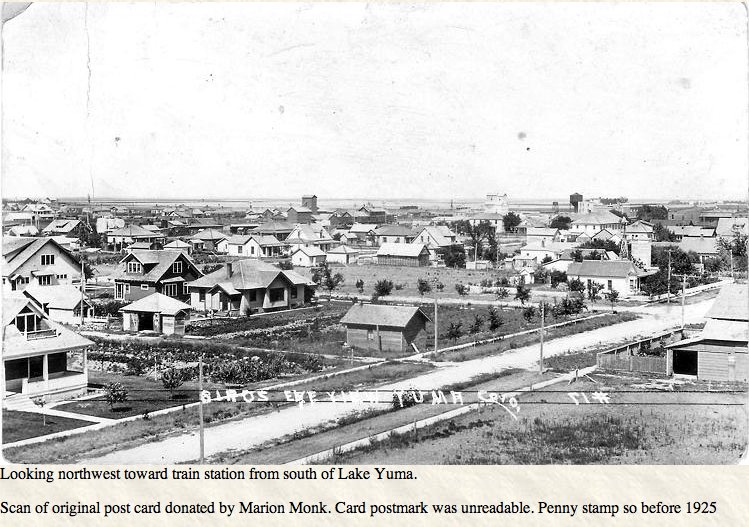
In conjunction with the Colorado Farm Bureau, we will be hosting an informational session for farmers and ranchers regarding the Spill Prevention and Control Countermeasures (SPCC) on Wednesday June 26 at 9am at 529 N. Albany Street in Yuma.

A representative from the Environmental Protection Agency will be on hand to discuss what is expected under new SPCC guidelines for storing fuel and petroleum products. SPCC regulations apply to any agricultural operation that stores over 1,320 gallons of oil, and it went into effect on May 10, 2013.

Anyone with questions concerning SPCC is encouraged to attend this informational session.

WHO: Congressman Cory Gardner’s office and Colorado Farm Bureau

WHAT: Informational session and Q&A with EPA representative on SPCC guidelines

WHEN: Wednesday June 26 at 9am

WHERE: 529 N. Albany Street, Yuma in the gymnasium

Parachute Creek spill: Recent testing (June 8-11) finds benzene in the creek #ColoradoRiver

northtosouthcrosssectioncoloradorivervalleyatparachutecgs

From The Grand Junction Daily Sentinel (Dennis Webb):

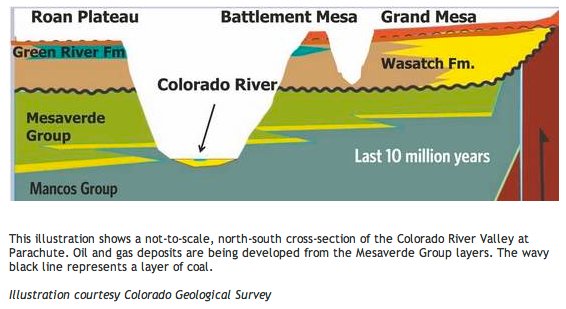
Benzene has again been detected, but at barely detectable levels, in Parachute Creek at the site of a natural gas liquids leak.

The carcinogen was measured at 1.4 to 1.5 parts per billion at a single location in the creek in daily samples between Saturday and Tuesday, according to updates from the Colorado Department of Public Health and Environment and Williams, the company responsible for the leak.

Benzene hadn’t been detected for more than two and a half weeks in the creek after previously having been measured at levels that briefly and barely topped 5 parts per billion. That’s the drinking water standard for the contaminant, although the creek isn’t regulated as a drinking water source by the state.

The contamination resulted from a leak from a faulty pressure gauge on a pipeline leaving Williams’ natural gas processing plant northwest of Parachute. Williams believes about 10,000 gallons of natural gas liquids contaminated soil and groundwater, with benzene also eventually reaching the creek.

The weekend benzene detections were at just the one location where benzene in groundwater has been sporadically entering the creek. Samples up and downstream aren’t currently showing any benzene contamination, and no hydrocarbon sheen has ever been seen on the creek, CDPHE says.

It says the sampling shows the size of the groundwater contamination plume remains stable, with benzene concentrations at the plume’s end staying constant.

Williams continues to operate a groundwater aeration system to remove benzene, and work continues on construction of a new facility to remove and treat contaminated groundwater so it can be returned to the watershed. The system’s major components are on site, and work is being completed on plumbing and electrical systems and on obtaining state water discharge and air emission permits.

More oil and gas coverage here and here.

Drought news: Hydraulic fracturing competes with crops for water #COdrought

marcellushydraulicfracturing

From the Associated Press (Garance Burke) via the Longmont Times-Call:

Hydraulic fracturing, or the drilling technique commonly known as fracking, has been used for decades to blast huge volumes of water, fine sand and chemicals into the ground to crack open valuable shale formations. But now, as energy companies vie to exploit vast reserves west of the Mississippi, fracking’s new frontier is expanding to the same lands where crops have shriveled and waterways have dried up due to severe drought. In Arkansas, Colorado, New Mexico, Oklahoma, Texas, Utah and Wyoming, the vast majority of the counties where fracking is occurring are also suffering from drought, according to an Associated Press analysis of industry-compiled fracking data and the U.S. Department of Agriculture’s official drought designations.

While fracking typically consumes less water than farming or residential uses, the exploration method is increasing competition for the precious resource, driving up the price of water and burdening already-depleted aquifers and rivers in certain drought-stricken stretches. Some farmers and city leaders worry that the fracking boom is consuming too much of a scarce resource, while others see the push for production as an opportunity to make money by selling water while furthering the nation’s goal of energy independence.

Along Colorado’s Front Range, fourth-generation farmer Kent Peppler said he is fallowing some of his corn fields this year because he can’t afford to irrigate the land for the full growing season, in part because deep-pocketed energy companies have driven up the price of water. “There is a new player for water, which is oil and gas,” said Peppler, of Mead. “And certainly they are in a position to pay a whole lot more than we are.” In a normal year, Peppler said he would pay anywhere from $9 to $100 for an acre-foot of water in auctions held by cities with excess supplies. But these days, energy companies are paying some cities $1,200 to $2,900 per acre-foot. The Denver suburb of Aurora made a $9.5 million, five-year deal last summer to provide the oil company Anadarko 2.4 billion gallons of excess treated sewer water…

In Colorado’s Weld County, home to Peppler’s farm and more than 19,000 active oil and gas wells, some officials see selling unneeded portions of their allotments from the Colorado River as a way to shore up city budgets. The county seat of Greeley sold 1,575 acre-feet of water last year to contractors that supply fracking companies, and made about $4.1 million. It sold farmers nearly 100 times more water but netted just $396,000.

More oil and gas coverage here and here.

Happy Father’s Day

orrkidsescalanteriver

I get dinner out with family to celebrate the day. Happy Father’s Day to all you fathers.

Thanks Hellchild, Goober and Beaver. You make me proud.

Drought/runoff news: Dillon Reservoir is close to filling, Standley Lake operationally full as of last Tuesday #COdrought

usdroughtmonitor06112013

seasonaldroughtoutlookjune62013

clearcreekatgolden05182013thru06162013

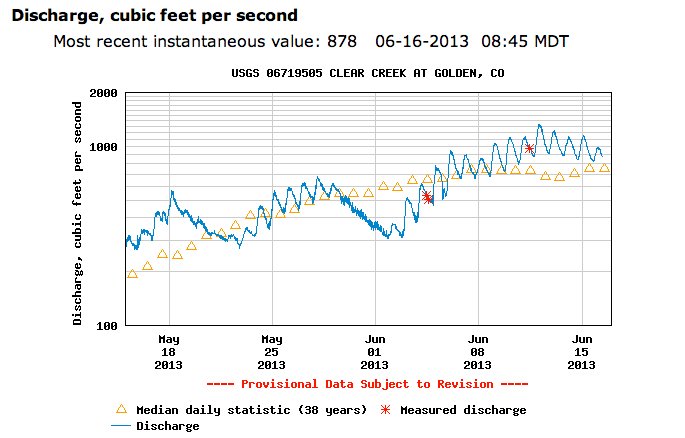
Standley Lake is the supply bucket for Westminster and Northglenn. Thornton also has storage in the reservoir. Staff from all three cities were breathing easier last week after the reservoir reached 95.5 feet and was declared operationally full by the dam tender. Clear Creek streamflow looks to have peaked on June 12 (click on the thumbnail for the hydrograph from the middle of May to today).

From the Summit County Citizens Voice (Bob Berwyn):

After a big weather turnaround in April and May, Dillon Reservoir is well on its way to filling, with the water level reaching an elevation of just about 9,008 on June 13, just nine feet below capacity. The last time the water level was this high was July 26, 2012. “We think it’s likely we’ll fill or at least get within a few feet of full elevation,” Denver Water spokesperson Stacy Chesney said.

Peak inflow into the reservoir was June 10, with the mainstem of the Blue River and the rest of the basin tributaries combining to deliver 1,754 cubic feet of water per second. The inflow hovered around that level early in the week, and started to drop a little bit by Thursday and Friday as the snowpack at higher elevations dwindled. By June 14, most of the automated SNOTEL sites had melted out, making it more difficult to assess how much runoff is still to come…

Chesney said Denver Water projects releasing between 50 and 100 cfs down the Lower Blue the next few months and will also divert water through the Roberts Tunnel to the South Platte, currently flowing at a rate of about 150 cfs.

Overall, Denver Water’s storage in the South Platte system is nearing capacity. Antero Reservoir just two feet below full and Eleven Mile Reservoir is at capacity, holding more than 98,000 acre feet. On the West Slope, Williams Fork Reservoir, Denver Water’s other big bucket, is about five feet below full, holding 89,000 acre feet, with a capacity of 97,000 acre feet.

Green Mountain Reservoir, administered by the U.S. Bureau of Reclamation, has also bounced back from what looked like it was going to be a woeful summer. As of mid-June, Green Mountain was about 76 percent full and still rising, according to BuRec spokesperson Kara Lamb.

From The Denver Post (Ally Marotti):

Northern Water officials aren’t waiting for the the [Big Meadows Fire] to be out to develop a protection plan. “It’s obviously a concern,” Northern Water spokesman Brian Werner said. “We’ve been talking for a couple years now about our watershed — what happens if and when it goes up in smoke. We’re gonna have some impact when the rains come.”

Northern Water partially supplies water to 860,000 people in 33 northern Colorado towns and cities. The company brings water to the Front Range from the Western Slope, and Grand Lake — 5-miles south of the fire — is the main reservoir.

Werner and his colleagues are worried all the debris from the fire will be washed into the lake when the summer rains come. “It’s anyone’s guess when that’ll happen,” Werner said. “It will happen.”

The sludge cannot be prevented from washing into the lake, Werner said. Northern Water has stepped monitoring, putting out extra sensors to keep track of the debris. The utility also is talking about preventative measures, such as anchoring debris booms in the lake to catch some of the sludge if the debris hits hard. But Werner said the fire, which was considered 30 percent contained as of Friday morning, isn’t as bad as it could be. Most likely, any debris washed into the lake will dissipate, settle on the bottom, and won’t harm the water supply.

From The Denver Post (Kieran Nicholson):

Twelve Colorado counties qualify for federal disaster relief because of drought conditions. Colorado Gov. John Hickenlooper was notified this week by U.S. Secretary of Agriculture Tom Vilsack about the designation, according to a Governor’s Office media release…

The primary counties are Dolores, Hinsdale, La Plata, Montezuma, Ouray and San Miguel. The contiguous counties are Archuleta, Gunnison, Mineral, Montrose, Saguache and San Juan.

The federal disaster relief includes Farm Service Agency (FSA) emergency loans. Farmers in eligible counties have eight months from the date of the declaration to apply for emergency loan assistance. FSA will consider each emergency loan application on its own merits, taking into account the extent of production losses, security available and repayment ability, the release said.

From The Pueblo Chieftain (Matt Hildner):

The U.S. Department of Agriculture has declared two San Luis Valley counties as natural disaster areas due to damages and losses caused by drought. Agricultural producers in Mineral and Saguache counties will now be eligible to apply for low interest emergency loans from USDA’s Farm Service Agency. Farmers have eight months from the date of the declaration to apply for loans to help cover part of their actual losses.

The declaration, issued Tuesday by the agency, also named 10 other counties in Southwestern Colorado. This year all but three Colorado counties, including Rio Grande County in the valley, have received the designation.

From the Albuquerque Journal (John Fleck):

Flows on the river are measured in cubic feet per second (cfs), an arcane but commonly used water flow metric on U.S. rivers. Normally at this time of June, the Rio Grande at Albuquerque’s Central Avenue Bridge is flowing at a bit more than 2,000 cfs. As I’m writing this, the river’s flowing at 527 cubic feet per second. But it will soon begin dropping significantly. Because of the drought, there is very little natural flow in the river. Most, if not all, of the river’s flow currently is water being released from storage behind dams on the Rio Chama. Without that, water managers say the river would be nearly dry by now in Albuquerque.

Since 2003, rules adopted by the U.S. Fish and Wildlife Service to protect the endangered Rio Grande silvery minnow required water managers to maintain a flow of 100 cfs at the USGS Central Avenue streamflow measurement gauge. But with supplies of supplemental storage water nearly exhausted, the river’s managers, with the concurrence of the FWS, have agreed to let the river drop to 50 to 60 cfs this summer.

The last time the river dropped below 100 cfs was late September and early October of 1989. The last time the river essentially went dry completely at Central was September of 1981.

From the CoCoRaHS blog:

New Mexico has become ground zero of the drought that has been in progress over the western U.S. the past two years. A little over 82 percent of the state is in Extreme to Exceptional Drought according to the latest U.S. Drought Monitor. That’s the highest percentage of any state currently affected. Conditions have significantly worsened over the last three months. At the start of the calendar year about 32 percent of the state was in Extreme to Exceptional Drought, and by March it was up to 50 percent.

CoCoRaHS observers have been documenting the drought impacts, and some of the descriptions sound like they could have come from the Dust Bowl. Here are two excerpts.

Santa Fe County
We are noticing that wild animals, birds and mammals, are increasingly desperate for water and therefore losing some of their instinctive fear of humans and other predators. The combination of severe drought and smoke from two wildfires nearby is making some mammals panic at times and come toward us rather than flee us when we are outside.

Luna County
Because we’ve had so little moisture fall from the sky and we’ve had daily winds from 20 to 65/70 mph at least 80% of the population is suffering from “allergies” we didn’t know we ever had! No one around here has a “lawn” of grass…instead we all measure just how deep the sand is now…the folks with the least amount of sand are considered lucky because they have less dusting/sand clean up to do on the inside of their homes. We’ve been told by a local farmer that he is now having to pay $20.00 for a bale of hay so he is going to have to sell all of his live stock next week – he can’t afford to feed them any longer. And, we’ve heard that the local rancher spent over $100,000.00 in the last nine months trying to keep his cattle heavy enough to get them to market. We know that we haven’t seen any of his cattle in our immediate area in the last 4 or 5 months…which means his heard head count is way down. Would you like us to start measuring the sand in our rain gauge rather than waiting for some moisture to land in it?

From jfleck at inkstain:

There was a round of press coverage last month (including from me) when Mike Connor, head of the U.S. Bureau of Reclamation, told reporters that internal Bureau modeling suggested as much as a one-in-three chance that Lake Mead would drop so low by 2016 that the federal government would make the first ever formal shortage declaration on the Colorado River.

New data out yesterday suggests that may have been too optimistic. The latest operational report from the Bureau now suggests a good chance of hitting the shortage trigger by mid-2015. Arizona and Nevada take the hit, and it’s a small hit initially, but it grows as Mead drops further. The latest monthly modeling report (the Bureau’s much-read 24-Month Study) now suggests Lake Mead’s surface elevation could drop to 1,075 feet above sea level – the level at which a formal shortage declaration is required – as early as June 2015. As I understand the rules, this would likely mean a reduction in water deliveries (initially, a small reduction) beginning in the fall of 2015.

Actually, it doesn’t exactly say we’ll be under 1075 in June 2015. The 24th month of the study (remember the name – it’s a 24-Month Study) is May 2015, at which point the Bureau figures Lake Mead’s elevation will sit at 1,075.28 feet above sea level. That’s 3 inches – the wake of a slow boat – above the drought trigger.

From The Durango Herald (Dale Rodebaugh):

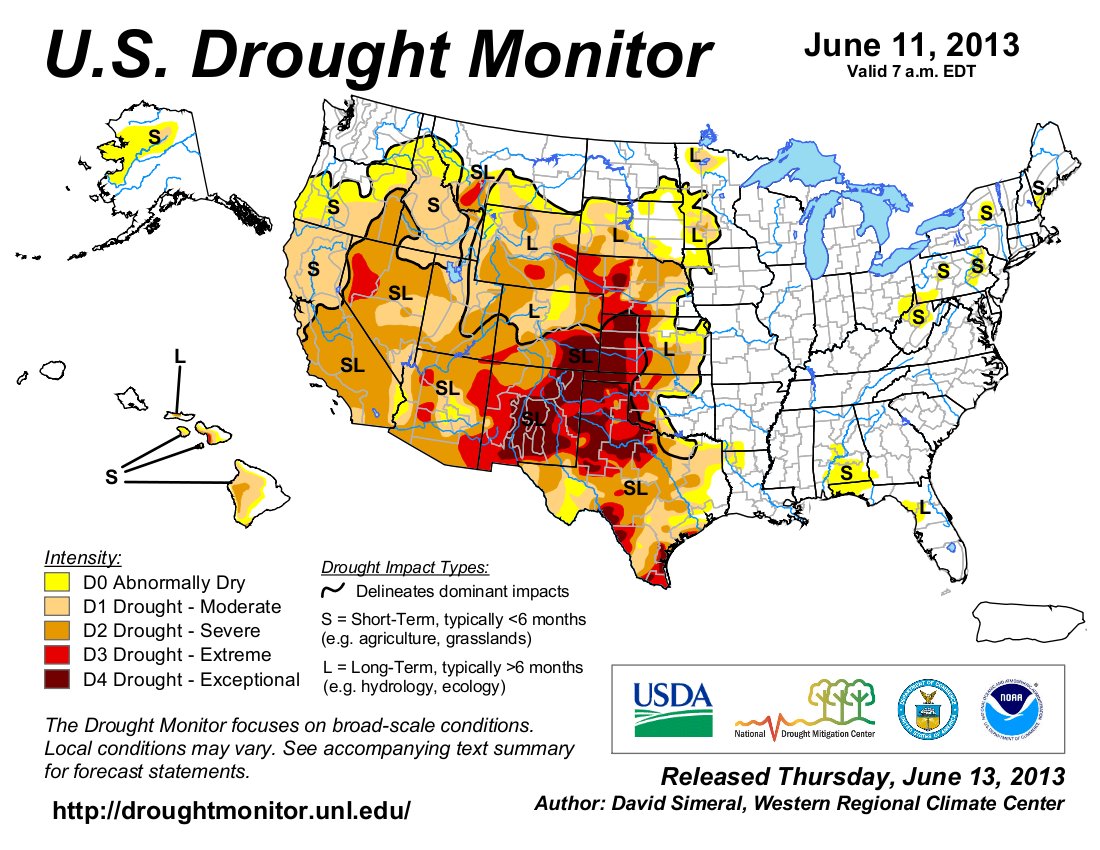
The three-month outlook appears dry and hot. The federal government on Wednesday declared six counties, including La Plata, as primary natural disaster areas because of ongoing severe drought conditions. A couple of events that don’t bode well are happening, said Mark Svoboda. The drought has definitely shifted to the West, Svoboda said, referring to his office’s color-coded map that shows Southwest Colorado in red (extreme drought) but not the purple of exceptional drought that is choking Colorado’s plains counties. Southeast Colorado is in the third year of drought. Six months ago, the map showed a lot of the east in red, Svoboda said…

A map produced by the Climate Prediction Center, an arm of the National Oceanic and Atmospheric Administration, shows all of Colorado, New Mexico, Arizona, Utah, Nevada, California and Wyoming and parts of Texas, Kansas, Idaho and Oregon as areas where drought can continue or intensify…

The possibility of a summer with continuing drought and its effect on water supply hasn’t caused Durango city officials to panic, spokeswoman Sherri Dugdale said Wednesday. The level of water in Terminal Reservoir, which stores the city’s water supply, is at stage 1, which requires no action, Dugdale said.

The June Water Conservation newsletter from Greeley Water is hot off the press

watersprinkler

Click here to read the newsletter.

Reclamation Seeks Public Input on Ruedi Contracts Draft EA

ruedidam

Here’s the release from the Bureau of Reclamation (Kara Lamb):

The Bureau of Reclamation is accepting public comment on a draft Environmental Assessment that analyzes site specific effects of proposed contracts for water out of Ruedi Reservoir as well as an administrative amendment of existing contracts.

Written comments will be accepted until close of business, Mon., July 1. To obtain a copy of the Draft EA, please visit: http://www.usbr.gov/gp/nepa/sopa.html#ecao.

Ruedi Reservoir is part of the federal Fryingpan-Arkansas Project. The reservoir helps compensate Colorado’s West Slope for project diversions made further upstream in the Fryingpan River Basin and also provides storage for West Slope use. Reclamation began marketing Ruedi water to the West Slope in 1982. In 2012, Reclamation received requests from 17 West Slope entities for the remaining 19,585.5 acre-feet of available contract water in the marketable pool.

Reclamation is preparing an Environmental Assessment in compliance with the National Environmental Policy Act on site specific effects of the proposed 17 West Slope contracts along with the administrative action of amending 31 existing Ruedi Round I and II contracts to remove the expiration date and confirm their status as perpetual repayment contracts. Comments received will help Reclamation identify issues relevant to the proposed contracts and elements of the environment that could be affected.

Please send written comments via regular mail, fax or e-mail to:

Bureau of Reclamation
Attn: Lucy Maldonado
11056 W. County Rd 18E
Loveland, CO 80537
Fax: 970-663-3212
lmaldonado@usbr.gov

More Fryingpan-Arkansas Project coverage here.

The US Supreme court decides in favor of Oklahoma in Tarrant v. Herrmann

tarrantvherrmannredriverbasinoklahomatexas

From the Associated Press via The Denver Post:

Justice Sonia Sotomayor’s opinion for the court made plain that the justices did not find this a close case. “We hold that Tarrant’s claims lack merit,” Sotomayor said.

The case arose from a federal lawsuit the district filed in 2007 against the Oklahoma Water Resources Board and the Oklahoma Water Conservation Storage Commission that challenged the state’s water laws and sought a court order to prevent the board from enforcing them. Lower courts ruled for Oklahoma, including the Denver-based 10th U.S. Circuit Court of Appeals. It found that the Red River Compact protects Oklahoma’s water statutes from the legal challenge.

Legislation adopted by the Oklahoma Legislature in 2009 said no out-of-state water permit can prevent Oklahoma from meeting its obligations under compacts with other states. It also requires the Water Resources Board to consider in-state water shortages or needs when considering applications for out-of-state water sales.

The Obama administration backed the Texas district at the Supreme Court, saying Oklahoma may not categorically prohibit Texas water users from obtaining water in Oklahoma. But the administration took no position on whether the Texans ultimately should get the water they are seeking in this case.

More coverage from the Fort Worth Star-Telegram:

The ruling holds implications for a large swath of North Texas because TRWD serves an 11-county area that includes the cities of Fort Worth, Arlington and Mansfield and gets thirstier as its population continues to grow rapidly.

Sotomayor noted that the population of Dallas-Fort Worth increased 23 percent from 2000 to 2010 (from 5.1 million to 6.4 million). “This growth has strained regional water supplies, and north Texas’ need for water has been exacerbated in recent years by a long and costly drought,” she wrote. TRWD has estimated that its clients will need an additional 400,000 acre-feet of water per year by 2060, which makes increasing the supply imperative…

…for more than six years, the water district also has been trying to tap up to 130 billion gallons from a Red River tributary through a decades-old agreement.

Texas, Oklahoma, Arkansas and Louisiana signed the Red River Compact in 1978, and Congress’ approval in 1980 made it federal law. But since 2007, TRWD and Oklahoma have been fighting in court over whether the pact allows states or their agencies to cross borders to get their share of water. Oklahoma said no because its state laws block any transfer past the river. The water district argued that the compact’s silence on cross-border movement allowed it to buy the water and that the Oklahoma laws unconstitutionally interfered with interstate commerce. The U.S. solicitor general sided with TRWD’s view that it could get water north of the river to secure its equal share, but the justices weren’t persuaded.

“States rarely relinquish their sovereign powers, so when they do we would expect a clear indication of such devolution, not inscrutable silence,” Sotomayor wrote. “Adopting Tarrant’s reading would necessarily entail assuming that Oklahoma and three other states silently surrendered substantial control over the water within their borders when they agreed to the Compact. … we find this unlikely to have been the intent of the Compact’s signatories.”

Sotomayor, though an East Coaster through and through, showed some appreciation for the long-running southern rivalry. “The Red River has lent its name to a valley, a Civil War campaign, and a famed college football rivalry between the Longhorns of Texas and the Sooners of Oklahoma,” she wrote. “But college pride has not been the only source of controversy between Texas and Oklahoma regarding the Red River. The River has been the cause of numerous historical conflicts between the two States, leading to a mobilization of their militias at one time, and the declaration of martial law along a stretch of the River by Oklahoma Governor ‘Alfalfa Bill’ Murray at another.”[…]

Water is essential. But getting enough to where it’s wanted won’t ever be simple.

More Tarrant v. Herrmann coverage here.

James Eklund named director of the Colorado Water Conservation Board

longdrawreservoirspill2010

From The Pueblo Chieftain (Chris Woodka):

James Eklund, senior deputy legal counsel for Gov. John Hickenlooper and a former assistant state attorney general, has been selected as the new director of the Colorado Water Conservation Board. Eklund was selected by the CWCB’s governing board and Mike King, executive director of the Colorado Department of Natural Resources this week. He will lead the state’s water policy and planning efforts, including the development of a statewide water plan as outlined in a recent executive order by Hickenlooper. He replaces Jennifer Gimbel. “James is the right leader at the right time to take on this critical project,” said King. “He brings experience, purpose and a clear-sighted approach that’s vital as Colorado addresses the ever-tougher challenges of natural resource protection and water allocation in an ever-growing state.”

While serving as senior deputy legal counsel to Hickenlooper, Eklund was deeply engaged in key legislative and legal matters, often pertaining to water and natural resources including state water rights, the reorganization of state wildfire responsibilities and groundwater concerns in the South Platte River Basin.

More coverage from the Northern Colorado Business Report:

Gimbel, whose last day at the water board was Monday, said in an email that she took a job as counselor to the assistant secretary for water and science at the U.S. Department of Interior. She will advise Assistant Secretary Anne Castle on water issues in the West.

State Department of Natural Resources Mike King told Gimbel that Hickenlooper “wanted his own person in that job.” Gimbel started as director during former Gov. Bill Ritter’s administration and had served as director for five years. She reapplied for the job when Hickenlooper took office and served in the position as an “at will” employee, meaning the governor could replace her at any time.

“I’d been told I was doing a great job by the governor’s office,” she said. “It was a shock.”

Gimbel made a variety of accomplishments despite cuts to the state’s water fund during her tenure. In Northern Colorado, she advanced the Windy Gap Firming Project by freeing up $2 million in state money for infrastructure. The project by the Northern Colorado Water Conservancy District proposes to build Chimney Hollow Reservoir west of Carter Lake near Loveland…

While at the attorney general’s office from 2006 to 2010, Eklund provided legal expertise on water policy and planning issues. He represented the water board, Colorado Department of Natural Resources, and the State Engineer’s Office in compact negotiations with other western states, the federal government and Mexico. He provided counsel on the Endangered Species Act and water quality laws and worked in several roles to protect state interests on the Colorado River.

The water board was created 75 years ago to provide policy direction on water issues. Governed by a 15-member board, the agency’s responsibilities range from protecting Colorado’s streams and lakes to water conservation, flood mitigation, watershed protection, stream restoration, drought planning, water supply planning and water project financing. The water board also works to protect the state’s water apportionments in collaboration with other western states and federal agencies.

Here’s the release from the Department of Natural Resources (Todd Hartman):

James Eklund, senior deputy legal counsel for the Governor and a former assistant state attorney general, has been selected as the new director of the Colorado Water Conservation Board.

Eklund, selected by the CWCB’s governing board and the executive director of the Colorado Department of Natural Resources, will lead the state’s water policy and planning efforts, including the development of a statewide water plan as outlined in a recent Executive Order from Governor John Hickenlooper.

“James is the right leader at the right time to take on this critical project,” said Mike King, executive director of the Colorado Department of Natural Resources. “He brings experience, purpose and a clear-sighted approach that’s vital as Colorado addresses the ever-tougher challenges of natural resource protection and water allocation in an ever-growing state.”

While serving as senior deputy legal counsel to Governor Hickenlooper, Eklund was deeply engaged in key legislative and legal matters, often pertaining to water and natural resources including state water rights, the reorganization of state wildfire responsibilities and groundwater concerns in the South Platte River Basin.

While at the Attorney General’s office from 2006 to 2010, Eklund provided legal expertise on many issues central to water policy and planning in Colorado. He represented the Colorado Department of Natural Resources, CWCB and the State Engineer’s Office in compact negotiations with other western states, the federal government and Mexico. He provided counsel related to compliance with the Endangered Species Act and water quality laws, and worked in several roles to protect state interests on the Colorado River.

“The Board is excited to have such a capable leader as James. His resolve will be crucial as we take the next step on completion of a statewide water plan,” said Alan Hamel, Colorado

Water Conservation Board chairman. “James’ lifelong connection with Colorado’s rich and often intricate water culture will serve him well as he guides us forward.”

Eklund is a fifth-generation Coloradan from the Western Slope. “I look forward to working with water leaders statewide to solve our significant water challenges,” Eklund said. “We are positioned to do so as a direct result of outstanding work by CWCB staff and former director Jennifer Gimbel.”

The Colorado Water Conservation Board was created 75 years ago to provide policy direction on water issues. Governed by a 15-member board, the agency’s responsibilities range from protecting Colorado’s streams and lakes to water conservation, flood mitigation, watershed protection, stream restoration, drought planning, water supply planning and water project financing. The CWCB also works to protect the state’s water apportionments in collaboration with other western states and federal agencies.

More CWCB coverage here.

Vote on sale of shares in the Excelsior Ditch to Two Rivers postponed

arkbasinditchsystem

From The Pueblo Chieftain (Chris Woodka):

A vote among shareholders of the Arkansas Groundwater Users Association on whether to approve the sale of its Excelsior Ditch shares has been postponed.

Two Rivers Water and Farming Co. wants to purchase the Excelsior shares for $3.5 million, making the water and use of the ditch available to AGUA. Two Rivers plans to build reservoirs on the Southwest Farms site and lease space to cities in exchange for water to apply to fields it owns on Bessemer Ditch. It needs the ditch to ensure the water can reach the reservoirs.

AGUA owns about 53 percent of the ditch. The remainder of shares belong to Stonewall Springs LLC. At shareholder meetings this week, AGUA members were uncomfortable with the details of a contract approved by its board in May. Two Rivers also requested more time to work out some of the missing pieces. So, a shareholder meeting to approve or reject the contract scheduled for Tuesday has been cancelled.

“It could be up to four months until all the details are worked out,” said Scott Lorenz, AGUA manager. “We’re going to take it slowly.” Under the agreement, Two Rivers planned to lease water from the ditch back to AGUA shareholders at $1 per year over a 10-year period, give the ditch group 10 percent of storage space up to 2,500 acre-feet, provide a portion of “toll” water to AGUA and allow AGUA to use the ditch for its recharge ponds. Two Rivers also would pay $3.5 million, paying off a state loan of $1.5 million that AGUA obtained when it purchased the ditch.

AGUA provides augmentation for well water for about 250 farms on the Arkansas River and Fountain Creek.

Two Rivers has purchased farm ground and other reservoir sites in Huerfano and Pueblo counties, with the goal of raising high-dollar vegetable crops.

More Arkansas River Basin coverage here and here.

Coyote Gulch outage

dscn2338

I’m heading to the hills today with Mrs. Gulch to celebrate our 40th wedding anniversary. I’ll see you tomorrow.

Stand up paddling is catching on

yampariverfestival05282011standuppaddling.jpg

From The Telluride Daily Planet (Heather Sackett):

While whitewater kayaking can be limiting because of its difficulty, stand up paddling is accessible to anyone. If you can stand up, you can SUP.

“It’s so appealing to so many demographics,” head buyer for Paragon/Bootdoctors and water sports enthusiast Galena Gleason said. “It’s for everyone really.”
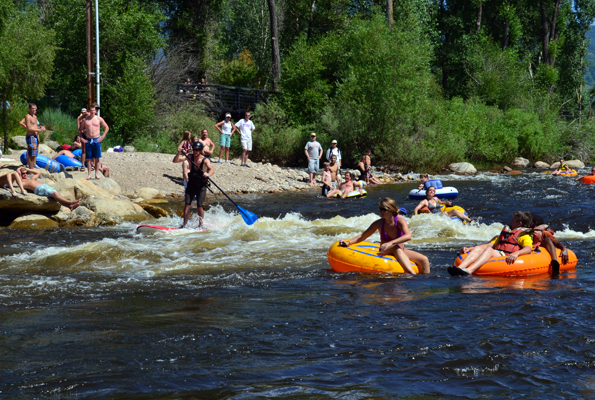
Paddlers stand up on a large, hard foam surfboard and use a long-handled paddle (usually about 6-10 inches taller than the paddler for the best leverage) to propel themselves through the water. Between one and three removable fins jut out from the underside of the board, depending on whether paddlers want better tracking or better maneuvering. The body position is similar to skiing with eyes, knees and toes aligned forward…

Andy Bagnall, manager of Telluride’s Four Corners Whitewater, said SUP’s popularity has spiked, particularly over the last two years. Four Corners bought just one board for the guides to use four years ago, and is now up to a fleet of 14. In addition to tours of local waterways, the company also offers multi-day trips on the Gunnison River and the Ruby-Horsethief section of the Colorado River.

One of the most appealing parts of SUP is the sense of freedom that comes from paddling. Unlike rafting or kayaking, there are relatively few rules and little equipment. You can kneel, sit down, lay down, practice yoga poses or take your dog along on a SUP adventure. And it offers a new perspective. The scenery looks different from a standing vantage point than it does from water level in a boat.

“The one rule about paddle boarding is there are no rules,” Bagnall said. “You can’t just hop out of a kayak but you can with a paddle board. It’s a great way to go swimming.”

More whitewater coverage here.

Drought news: 12 Colorado Counties receive disaster declaration #COdrought

usdroughtmonitor06112013

seasonaldroughtoutlookjune62013

Here’s the release from Governor Hickenlooper’s office:

Gov. John Hickenlooper was notified this week by U.S. Secretary of Agriculture Tom Vilsack that 12 counties qualify for federal disaster relief because of drought conditions. Six counties were declared primary natural disaster areas due to a recent drought and an additional six were declared as contiguous disaster counties.

The primary counties are Dolores, Hinsdale, La Plata, Montezuma, Ouray and San Miguel. The contiguous counties are Archuleta, Gunnison, Mineral, Montrose, Saguache and San Juan.

The federal disaster relief includes Farm Service Agency (FSA) emergency loans. Farmers in eligible counties have eight months from the date of the declaration to apply for emergency loan assistance. FSA will consider each emergency loan application on its own merits, taking into account the extent of production losses, security available and repayment ability.

Local FSA offices can provide farmers with more information.

Aspen: The city and the Colorado Water Trust work out a non-diversion agreement that will leave water in the Roaring Fork River

fryingpanarkansasproject

twinlakesdiversionsystem

From the Colorado Water Trust via the Aspen Business Journal:

For decades, large water diversions have reduced the amount of water flowing in the upper Roaring Fork River; only a fraction of the native flow reaches the City of Aspen. At times, more than ninety percent of the native flow of the Roaring Fork is diverted from the river for transmountain delivery to the Front Range and many local water diversions serving various beneficial uses. To begin exploring long-term streamflow solutions for the Roaring Fork, the City of Aspen is leading local efforts this year by using one of its senior water rights to benefit flows through a critical reach of the Roaring Fork River. On Monday, the Aspen City Council authorized a nondiversion agreement with the Colorado Water Trust to bypass some water that Aspen would otherwise divert from this reach of the Roaring Fork.

The agreement was the result of an effort last March when Aspen water officials analyzed the City’s water rights with the help of the Colorado Water Trust, a nonprofit organization with expertise in restoring and protecting streamflows. Aspen saw that it could increase flows through the City by adjusting the amount of water it takes from the Roaring Fork River at the Wheeler Ditch, one the three most senior water rights in a critical 2.5 mile reach of the Roaring Fork from just above Aspen to Castle Creek. Aspen determined that it can reduce its Wheeler Ditch diversions when the river falls below the 32 cfs instream flow. This could add as much as 8 cfs to the river. This water will help maintain parts of the Colorado Water Conservation Board’s six mile long instream flow water right which extends from Difficult Creek to Maroon Creek.

Aspen has a longstanding commitment to streamflow protection, as well as to providing both treated and untreated water for a wide range of municipal uses. In the summer, amenities such as Aspen’s parks, mall fountain, and ditch system contribute greatly to the beauty and tranquility of Aspen’s mountain community. To accommodate this project, Aspen will lease less water to third parties than it has in the past, reduce outdoor water use, and redirect other water supplies to meet the City’s critical needs. City Council agreed to pursue these actions and enter into a nondiversion agreement with the Colorado Water Trust, who will help monitor flows in the reach and help oversee the project. The nondiversion agreement specifies how Aspen will adjust the amount of water it takes from the Roaring Fork at the Wheeler Ditch.

“The City has long considered ways to add flow to the river, but was not finding a way to make an appreciable difference. Our [Roaring Fork] water rights are small in comparison to the amount of water that would flow through the stream under natural conditions,” said Dave Hornbacher, Aspen’s Director of Utilities and Environmental Initiatives. “After seeing the river suffer a hard year in 2012, a brainstorming group was formed in March to review the City’s water rights and to explore options for using those rights to benefit the Roaring Fork.”

“Leaving some of the City’s water in the Roaring Fork through this short-term nondiversion agreement will allow us to understand the benefits additional water can provide to the natural habitat,” added Hornbacher. “We see this project as a first step in crafting a broader, long-term solution for rewatering the Roaring Fork, an effort that will require the help of our entire community. This agreement allows Aspen to meet its water needs while providing as much water as possible to our river this year.”

Last year, during severe drought conditions, reaches of the Roaring Fork were nearly dry in parts of June, July, August, and October. While the outlook for this year is not as dire, Aspen is interested in temporarily changing its operations to improve flows through town and benefit the environment in the short-term as Aspen continues to look for long-term strategies to bolster the Roaring Fork River. Because of Aspen’s innovative thinking, commitment to the community, and leadership in improving streamflows, the river will be better off in 2013.

“Aspen was enthusiastic about weighing the options and pursuing the best strategy for putting its water rights in the Roaring Fork to benefit the river this year,” says Amy Beatie, executive director of the Colorado Water Trust. “Thanks to its pioneering attitude and incredible leadership, this agreement gives Aspen a mechanism for adding water to their river with both flexibility and accountability. It is inspiring to see a decade of discussions put into action, and we’re eager to see how this agreement benefits flows in the stream.”

By entering into a nondiversion agreement with the Colorado Water Trust, Aspen will be partnering with an organization that has a proven track record conducting water transactions for environmental and streamflow benefits in voluntary partnerships. Aspen hopes the anticipated benefit to the Roaring Fork from its nondiversion agreement with the Colorado Water Trust will help the City further its stream protection goals while still maintaining the summertime ambiance that makes Aspen such a great place to be.

More Roaring Fork Watershed coverage here and here.

Big Meadows Fire: Hard to fight with the potential to impact Colorado-Big Thompson facilities

bigmeadowsfireafternoonjune11

From the Fort Collins Coloradoan (Bobby Magill):

The team, which assumed command of firefighting efforts Thursday morning, can be only so aggressive because the Big Meadows Fire is burning through a “jacklegged” forest, he said. That’s the term foresters use for trees that have fallen on each other and are propped up by other trees, both living and dead. When the forest burns and the jacklegged trees shift, they fall, potentially crushing firefighters on the ground. The Big Meadows Fire is burning through a forest on the west side of Rocky Mountain National Park that is 80 percent dead and fallen trees. It was hit early in the region’s bark beetle epidemic. The trees there died long ago, and many have been standing dead for nearly a decade. The roots have rotted away and the trees have fallen on each other, forming layer after layer of dead trees and creating a “ladder” of wildfire fuel from forest floor to canopy, Bobowski said.

If the fire spreads, it will be extremely hazardous to stop. And that means the town of Grand Lake and the reservoirs on the Colorado River that supply Fort Collins with nearly half of its water supply are threatened. “Even at 600 acres, we will see some impacts from this,” said Brian Werner, spokesman for the Northern Colorado Water Conservancy District, the manager of the Colorado-Big Thompson Project, of which Horsetooth Reservoir is a part.

Tonahutu Creek spills directly into Grand Lake, which is where water the city takes from Horsetooth Reservoir is pumped beneath Rocky Mountain National Park. Small amounts of silt, ash and debris are likely to wash into Grand Lake and affect the level of sediment in the lake…

“This is not a panic situation,” Werner said, adding that Northern Water staff have met daily to assess how the Big Meadows Fire will affect the C-BT system, which is the supplemental water supply to more than 800,000 people on the Front Range.

‘Super Ditch has no contracts on either side, no end user and no firm supply’ — Terry Nelson

arkbasinditchsystem.jpg

Terry Scanga from the Upper Arkansas River Water Conservancy District called the Super Ditch the “Mother of all change cases” a couple of years ago. Here’s an update on a water court filing by objectors from Chris Woodka writing for The Pueblo Chieftain:

Water users on the eastern end of the Lower Arkansas Valley want water judge Larry Schwartz to dismiss a court case that would allow the Arkansas Valley Super Ditch to exchange water upstream. The motion to dismiss was filed last month in Division 2 water court.

The Super Ditch envisions exchanging water upstream under leasefallowing programs that would allow farmers to sell water to cities temporarily while keeping ownership of the water rights.

But several large water interests below John Martin Reservoir say the proposal is speculative and claims too much water — the entire flows of six canal companies that amount to 58,000 acre-feet per year. Tri-State Generation and Transmission Association, the Lower Arkansas Water Management Association, District 67 Ditch Association and the Amity Canal filed the motion to dismiss the application by the Lower Arkansas Valley Water Conservancy District and Super District on May 22. The exchange is being sought before water rights on the canal have been changed to allow other uses, they say.

At the same time, the Lower Ark District and Super Ditch have sidestepped water court by lobbying for changes in state law that allow water to be moved under state water officials without court adjudication, they said. Two bills were passed by the state Legislature this year — HB1130 and HB 1248 — that give the state engineer or the Colorado Water Conservation Board direct authority over water transfers. The Lower Ark District backed HB1248, and Rocky Ford area farmers involved with the Super Ditch testified in favor of HB1130. The bills were actively opposed by Tri-State lobbyists.

“It scares the hell out of us that multiple thousands of acres could be dried up and the state’s the policeman,” said Colin Thompson, who farms near Holly and is a member of the Amity Canal board. “I don’t want to have to run up and down the valley and police 2,000 fields.”

“Super Ditch has no contracts on either side, no end user and no firm supply,” said Terry Nelson, a Tri-State executive. “They’ve taken every effort to sidestep the court process. They’re setting it up to make it easier for the municipalities to take water out of the Arkansas Valley.”

Jay Winner, manager of the Lower Ark District, defended the Super Ditch proposal, saying it protects water in agriculture. “What we’re trying to do is enhance the water options for agriculture,” Winner said. “The state now has a gap in municipal supplies. Super Ditch provides an alternative to permanent transfers.”

More Arkansas Valley Super Ditch coverage here and here.

James Eklund named to take over for Jennifer Gimbel to lead the Colorado Water Conservation Board

From the Boulder Daily Camera (Joe Rubino):

The 15-member board and the executive director of the Colorado Department of Natural Resources named Eklund to the post.

A fifth-generation Coloradan, Eklund will lead state water policy and planning efforts, including establishing a statewide water plan, as outlined in a recent executive order from Hickenlooper.

As part of the governor’s administration, Eklund has worked on legislative and legal matters pertaining to water, including state water rights and groundwater concerns in the South Platte River Basin.

While with the attorney general’s office from 2006 to 2010, Eklund represented the Colorado Department of Natural Resources, the Water Conservation Board and the state engineer’s office in compact negotiations with other Western states.

More CWCB coverage here.

The Colorado Water Trust’s ‘RiverBank 2013’ event is just 5 days away

yamparivertubingstanduppaddler.jpg

From the Colorado Water Trust website:

Join us for both live and silent auctions, appetizers, an open (beer & wine) bar, good company, and the presentation of the David Getches Flowing Waters Award. Come help us celebrate our successes over the past year and help us raise funds for our future efforts. We hope you’ll join us for a fabulous, fun evening!

Tuesday, June 18, 2013
5:30 – 8:30pm
McNichols Civic Center Building
Civic Center Park
144 West Colfax, Denver, Colorado

– See more at: http://www.coloradowatertrust.org/campaigns/riverbank-2013#sthash.IroBtGnn.dpuf

Drought/runoff news: The latest climate briefing from Western Water Assessment is now available #COdrought

usdroughtmonitor06112013

seasonaldroughtoutlookjune62013

Click here to go to their dashboard and read the update. Here’s an excerpt:

Highlights

  • The region is heading into summer with long-term drought conditions comparable to or worse than early June 2012 in nearly all areas; significant drought impacts (water supply, agricultural, wildfire) can be expected
  • May precipitation was above average in central Colorado, far northern Wyoming, and portions of eastern Utah, and below-average in northern Utah, southeastern Wyoming, and southern and eastern Colorado.
  • Snowpacks have melted out except at the highest elevations; snowmelt occurred 1-3 weeks earlier than the median in most basins.
  • The latest (June 1) runoff forecasts continue to call for below-average or well-below-average spring-summer streamflow over nearly all of the region; observed flows in April and May were generally well below average
  • The NOAA CPC seasonal climate outlooks show a dry “tilt” for summer precipitation for southeastern Colorado, but no tilt elsewhere. The “SWcast” for July–September shows a slight wet tilt over eastern Colorado, and a dry tilt over north-central Colorado and northern Utah.
  • From the Albuquerque Journal (John Fleck):

    New Mexico’s drought conditions remain the worst in the nation, according to the weekly federal Drought Monitor, with 45 percent of the state, including the populous Rio Grande Valley, in “exceptional” drought.

    From the Fort Collins Coloradoan:

    Thanks to high temperatures and the late-season snows, the Poudre River is running about 1,800 cubic feet per second near the mouth of the canyon, normal for this time of year. The Poudre’s flows typically peak around this time of year, depending on the snowpack, mountain rains and air temperatures.

    In Fort Collins, some bike path underpasses have been temporarily closed due to high water, although that’s normal for this time of year. And safety officials have warned area residents to use extra care around the fast-flowing Poudre and irrigation ditches, because water levels are high and the water temperature remains low.

    The US Supreme court decides in favor of Oklahoma in Tarrant v. Herrmann

    tarrantvherrmannredriverbasinoklahomatexas.jpg

    From the Texas Tribune (Kate Galbraith):

    The U.S. Supreme Court on Thursday issued a unanimous ruling for Oklahoma over a North Texas water district in a case over delivery of water from the Red River.

    The case, Tarrant Regional Water District v. Herrmann, Rudolf J. et al, pitted fast-growing North Texas against the state of Oklahoma. The Tarrant Regional Water District, which serves Fort Worth and other North Texas communities, wanted to buy water from Oklahoma reservoirs, but Oklahoma passed laws that effectively meant it wouldn’t sell.

    The Tarrant district sued six years ago and has spent $6 million on the lawsuit, according to water district spokesman Chad Lorance. On Thursday, the Supreme Court upheld a ruling from the 10th U.S. Circuit Court of Appeals.

    “The Compact does not pre-empt the Oklahoma water statutes,” Justice Sonia Sotomayor wrote in the Supreme Court opinion. She was referring to the 1980 Red River Compact, which stipulates that signatory states — which include Texas and Oklahoma — get an “equitable” share of water. The Tarrant district wants water flowing south out of Oklahoma, but they say that by the time the water reaches Texas it is essentially unusable, so they want to tap the reservoirs further upstream. Oklahoma state lawmakers have declined their request.

    The decision could have implications for other parts of the country. For example, legal experts have been interested in whether Oklahoma’s efforts to stop or discourage out-of-state water sales would be trumped by a multi-state compact.

    Click here to read the decision written by Justice Sotomayor (Hat tip to Ms. Galbraith).

    More Tarrant v. Herrmann coverage here. More water law coverage here and here.

    Drought/runoff news: Inflows dropping into Twin Lakes #COdrought

    usdroughtmonitor06042013

    seasonaldroughtoutlookjune62013

    From The Pueblo Chieftain (Chris Woodka):

    Boaters on the Arkansas River below Pueblo Dam are being advised to take extreme caution because of fluctuating flows. The warning applies to tubers, kayakers, canoeists, fishermen and those using trails. “Anyone in or near the river below the dam should be aware of rapidly changing high-flows,” said Monique Mullis, assistant park manager at Lake Pueblo. “Water releases from the reservoir can fluctuate rapidly this time of year. Water levels can change without notice, so recreationists should exercise caution below the dam.”

    Tubing is allowed, but any boaters on the river are required to wear life jackets. Muddy spots near the shore can be dangerous, she added.

    From email from Reclamation (Kara Lamb):

    We’re matching infow to Twin Lakes with outflow. And, inflows have dropped slightly. As a result, today around 2: 30 we curtailed the release from Twin Lakes to Lake Creek and the Arkansas by about 100 cfs. That should put the flow in Lake Creek out of Twin Lakes Dam around 1285 cfs.

    From the Cortez Journal (Jim Mimiaga):

    Southwest Colorado started at a moderate (D1) drought category in March. It was upgraded to severe (D2) April 23, and then to extreme (D3) on June 4. Southeastern Colorado is sufferi ng from an exceptional (D4) drought, the most severe on the scale. Dry, windy conditions are creating massive dust storms around Lamar and La Junta, stripping farms of topsoil. Most of central New Mexico is categorized as exceptional (D4) as well.

    “We’re already in full-blown disaster mode,” said Paul White, director of the local Farm Services Agency. “Right now the soil moisture levels are fast depleting and that affects all aspects of farming and ranching.”[…]

    The 7-10 day outlook does not look promising, said Chris Cuoco, senior forecaster with the National Weather Service in Grand Junction. A persistent high pressure ridge and a jet stream positioned far to the north is preventing any moisture from entering the Four Corners area, he said.The El Nino/La Nina phenomenon in the southern Pacific Ocean is neutral right now, Cuoco said. If the waters off the coast of South America warm up (El Nino), the chance for precipitation in the Southwest increases.

    Monsoon rains pushing in from the south in late summer and fall are also heavily relied on for farmers and ranchers. “The good news there is that there has not been a year without a monsoon in 30 years, it is just that some are wetter than others,” Cuoco said…

    The Dolores Conservation District is offering an ag water management assessment course in late June, said board member Steve Miles. Sign up at the NRCS office, 628 W. 5th St. in Cortez. The class is $20 and includes a soil moisture probe. Information is available on a cost share program for replacement of side-roll nozzles. “It is about efficient use of water: application rates, distribution rates and if it is the right amount for the crop,” Miles said. “People are surprised when they push the moisture probe in and it goes down five feet. It shows they are wasting water.”

    From the Fort Collins Coloradoan (Trevor Hughes):

    Thanks to high temperatures and the late-season snows, the Poudre River is running about 1,800 cubic feet per second near the mouth of the canyon, normal for this time of year. The Poudre’s flows typically peak around this time of year, depending on the snowpack, mountain rains and air temperatures. In Fort Collins, some bike path underpasses have been temporarily closed due to high water, although that’s normal for this time of year. And safety officials have warned area residents to use extra care around the fast-flowing Poudre and irrigation ditches, because water levels are high and the water temperature remains low

    Dust Storms, Drought and Colorado’s Economy

    Here’s a roundup of the economic issues around drought from the Colorado Foundation for Water Education blog.

    Eagle County: The 2013 Eagle River Watershed Plan is complete

    eagleriverbasin.jpg

    Click here to read a copy of the report from Eagle County and the Eagle River Watershed Council. Here’s an excerpt:

    The Eagle River Watershed Plan was first adopted in 1996, and provides information, goals, strategies and action items related to water and land management practices in the Eagle River drainage basin. This 2013 document updates and replaces the 1996 plan in its entirety, and while it follows the general layout of that plan, it includes a great deal of new information, and a new chapter that discusses issues and opportunities associated with the Colorado River as it flows through the north western part of the county.

    More Eagle River Watershed coverage here.

    AWWA Annual Conference: Oklahoma City Water Utilities Trust wins the ‘Best of the Best Tap Water Taste Test’

    waterfromtap.jpg

    From the Denver Business Journal (Cathy Proctor):

    Tuesday I was a guest judge at the American Water Works Association’s 13th annual conference and exhibition’s “Best of the Best” Tap Water Taste Test. The convention, which runs through Thursday, drew about 10,000 people from all over the country to the Colorado Convention Center.
    I discovered that:

    • You can taste the difference between water providers across the country.
    • Water utility executives can be pretty competitive about their water.
    • And while Tuesday’s final judging rounds were a friendly competition, the taste of water has a very serious side.

    “It’s the way that people judge the safety of their water,” said Pinar Omur-Ozbek, an assistant professor at Colorado State University’s department of civil and environmental engineering in Fort Collins — and one of three professional taste testers on the panel. “If it doesn’t smell or taste the way people expect then they think there’s something wrong,” she said.

    From The Denver Post:

    Despite home-field advantage and three local judges among the five, three Colorado water providers failed to crack the winner’s circle in the Best of the Best Tap Water Taste Test this week. The contest, won by the Oklahoma City Water Utilities Trust, was part of the American Water Works Association’s annual conference that wraps up Thursday in Denver.

    Denver Water, Aurora Water and the town of Silverthorne were among the competitors in the contest made up of regional winners from water-tasting competitions across North America, according to the association.

    Tying for second place were the city of International Falls, Minn., and Northeast Sammamish Sewer and Water District in Sammamish, Wash. The People’s Choice winner, chosen by conference attendees, was Louisville Water Co. in Louisville, Ky.

    The three local judges were Dr. Pinar Omur-Ozbek of Colorado State University; Kimberly Lord Stewart, director of content for Modern Healthcare Professional and contributing food editor for Denver Life magazine and CBS Denver; and Cathy Proctor, a reporter for the Denver Business Journal.

    Here’ a guest commentary written by Denver Water’s David LaFrance that is running in The Denver Post. Here’s an excerpt:

    Every drop of water that reaches our homes and businesses first passes through an army of well-trained hydrologists, water quality engineers, scientists, treatment plant operators, distribution system workers and other professionals who are committed to keeping water safe and sustainable. Together, they are the first stewards of not only our water supplies, but also a magnificent system of treatment plants and storage tanks, pipes and valves, pumps and hydrants that keep our water safe and reliable every hour of every day.

    These people behind the water are usually invisible to us, just like the tens of thousands of miles of pipes beneath our streets. But this week, Denver is hosting more than 11,000 water experts from across the globe for the American Water Works Association’s 132nd Annual Conference and Exposition (ACE13) at the Colorado Convention Center. Colorado Gov. John Hickenlooper will be among the nearly 900 expert presenters, and the exposition hall will showcase water technology from more than 500 companies – many based right here in Colorado.

    There’s no better place for the world’s premier water conference than Denver, because the Mile High City is something of a nerve center for the North American water community. AWWA, the largest and oldest water association in the world with more than 50,000 members, is headquartered in southwest Denver, sharing space with the Water Research Foundation, a global leader in drinking water research. The AWWA building sits on a parcel of land adjacent to Denver Water’s Marston Reservoir, which supplies drinking water to much of the metropolitan area. Water for People, which solves water, sanitation, and hygiene problems in the developing world, is just south of Interstate 25 near downtown Denver.

    More infrastructure coverage here and here.

    Drought/runoff news: ‘We [Rio Grande Basin] are in trouble’ — Pat McDermott #COdrought

    usdroughtmonitor06042013

    seasonaldroughtoutlookjune62013

    From the Valley Courier (Ruth Heide):

    Current water conditions in the Rio Grande Basin are not the worst they’ve ever been — but close. “We are in trouble,” Colorado Division of Water Resources Staff Engineer Pat McDermott told members of the Rio Grande Roundtable yesterday.

    He said runoff peaks in other parts of the state were about the third week of May. The Rio Grande Basin peaked in March. Of 10 SNOTEL (SNOwpack TELemetry) basin sites only one still had snow at the end of May, he said…

    The June 1st forecast for the Rio Grande is only 300,000 acre feet, or 46 percent of the long-term average. Last year’s streamflow on the Rio Grande was 406,000 acre feet, and that was not a stellar year. A normal year would run 620,000 acre feet. That 300,000-acre-foot forecast puts 2013 as the fourth worst year on record, as long as records have been kept since 1890. The drought year of 2002 was the worst year with only 154,000 acre feet on the Rio Grande, 1902 the second worst year with 210,000 acre feet and 1977 the third worst year with 215,000 acre feet, “and now here we are on the Rio Grande with the fourth worst year ever,” McDermott said.

    The only positive thing about not having much water is the obligation to downstream states is practically nil. McDermott said of the predicted 300,000 acre feet on the Rio Grande, only 75,000 acre feet will be required by the Rio Grande Compact to be sent downstream to New Mexico and Texas. That translates to a mere 4-percent delivery obligation during the irrigation season…

    The forecast for the Conejos River system is currently 130,000 acre feet or 40 percent of the long-term average. Last year’s annual flow was 175,000 acre feet. Of the 130,000 acre feet, the Conejos system owes 12,000 acre feet to downstream states through the Rio Grande Compact. That requires zero curtailments during the irrigation season, and Division 3 Engineer Craig Cotten will likely extend the irrigation season on the Conejos well into December because no additional water will be required to go downstream in the winter months, McDermott explained.

    Not that the downstream states couldn’t use additional water. The Elephant Butte Reservoir, the Rio Grande Compact’s main storage reservoir in New Mexico, has less than one-tenth its total capacity in storage right now. The reservoir can hold about 2 million acre feet and currently has 187,000 acre feet in storage…

    Not able to create more moisture but hopefully make better use of the Valley’s water was a proposal for future funding to help improve snowpack and streamflow forecasting. The Conejos Water Conservancy District is taking the lead on a pilot project to improve forecasting in the Rio Grande Basin. The Colorado Water Conservation Board believes so much in its potential it has preapproved $215,000 towards the $544,000 project. Conejos Water Conservancy District Manager Nathan Coombs said his district would also be seeking $237,000 from state and basin water supply reserve accounts that along with some other funding will pay for this project.

    From the Associated Press via the Carlsbad Current-Argus:

    [New Mexico] Legislators were told Monday by the State Engineers Office that the precipitation outlook for June to August is likely below normal for the eastern two-thirds of New Mexico and the odds favor above normal temperatures for most of New Mexico. That’s based on the latest long-term forecast from the National Weather Service’s Climate Prediction Center, which says drought is expected to continue or intensify in New Mexico through the end of August.

    The State Engineers Office said precipitation was 47 percent of normal statewide from January to April.

    From 9News.com (Kevin Torres):

    Nearly 50,000 acres of land in Colorado have failed due to dry conditions, according to the State Department of Agriculture. Last year, that number was around 27,000. While the Department of Agriculture can’t pinpoint where all of that land has failed, the department does say it’s likely all along the eastern plains.

    Colorado State Representative Don Coram plans to shutter and restore four uranium mines

    usdroughtmonitor06042013

    From The Durango Herald (Joe Hanel):

    The action follows several years of legal pressure by activists on the state and federal government to shut down the old uranium mines that dot the landscape of San Miguel and Montrose counties.A 2008 state law required all uranium mines to meet a higher level of regulatory scrutiny. State mining regulators are now demanding that all mine operators either submit a detailed environmental-protection plan or shut down their mines and reclaim the land.“Economically, it seemed to be more feasible to me to do a reclamation plan. It was strictly a matter of economics,” said Coram, a Montrose Republican whose district includes Montezuma County. Coram’s company, Gold Eagle Mining Inc., bought the mines in 1998. Three are close to the Dolores River at Slick Rock. The fourth overlooks the Paradox Valley in Montrose County. They have been out of operation almost constantly since the early 1980s. The state has given him until May 2014 to finish reclamation of the sites.

    But even as they enter the cleanup stage, the mines remain as controversial as ever. A mining watchdog group called Information Network for Responsible Mining, or INFORM, has been hounding Coram and other mine operators, and the group submitted a harsh objection to Coram’s request earlier this year for an extension of his permit to leave the mines idle.“We will not mince words in criticizing the condition of the Slick Rock mines: They are dangerous to public health, to the Dolores River, to wildlife, and to the ecosystem they actively pollute. These mines represent egregious examples of neglect and mismanagement and have been allowed, for many years, to erode their toxic and radioactive contaminants directly into the Dolores,” INFORM’s objection stated.Coram sharply disputes the charges…

    Tony Waldron of the Division of Reclamation, Mining and Safety said Coram’s mines are not polluting the Dolores River…

    Radiometric readings near the mines show nothing above the natural background levels of radiation.However, stormwater does run off some of the mining waste piles, Waldron said. As part of the reclamation work, Gold Eagle will have to flatten the piles to reduce the risk of tainted water spilling off the site.Other reclamation work includes closing portals, replanting vegetation and removing old buildings.

    More nuclear coverage here and here.

    Nominations for the 2014 Wayne N. Aspinall Water Leader of the Year Award are now being taken

    davidrobbins2012aspinallawardwithpastrecipeints.jpg

    From email from the Colorado Water Congress:

    Nominations are open for the 2014 Wayne N. Aspinall Water Leader of the Year Award to be presented at the 2014 CWC Annual Convention.

    Nominations are due by August 31.

    Please see the following forms:
    Aspinall Award Guidelines
    Aspinall Award Nomination Form

    Please send to Mary M. Stirling at mmstirling@cowatercongress.org, or fax to (303) 837-1607, or mail to CWC, 1580 Logan St., #700, Denver, CO 80203.

    More often than not, nominations are submitted several times before being selected. Please submit again if you have done so in past years and your candidate has not yet been selected.

    Questions, contact Mary Stirling at mmstirling@cowatercongress.org or at (303) 837-0812.

    Weekly Climate, Water and Drought Assessment of the Upper Colorado River Basin #COdrought #ColoradoRiver

    wyutcojune3to92013precipitation.jpg

    Click on the thumbnail graphic for the June 3 thru June 9 precipitation map. Click here for the current briefing (June 11).

    More Colorado River Basin coverage here and here.

    Twin Lakes operations update: 1370 cfs in Lake Creek

    twinlakesdiversionsystem.jpg

    From email from Reclamation (Kara Lamb):

    Today [June 11] we continue the wrap up of native exchanges. As a result, we bumped up releases from Twin Lakes Dam to Lake Creek (Lake Creek flows into the Arkansas) in several stages:

  • This morning, June 11, 11 a.m. releases bumped up by 250 cfs to around 1160 cfs.
  • This afternoon, around 4 p.m. we will bump up approximately another 200 cfs to about 1370 cfs.
  • For both increases, releases stage up in roughly 15 minute increases starting at the top of the hour.
  • Shareholders on the Excelsior Ditch are considering Two Rivers’ offer for a controlling interest

    arkbasinditchsystem.jpg

    From The Pueblo Chieftain (Chris Woodka):

    Shareholders want more time to consider a deal that would give a water and farming company controlling interest in the Excelsior Ditch east of Pueblo. A meeting of the Arkansas Groundwater Users Association scheduled for next week likely will be postponed in order to give members more time to consider the sale of the Excelsior Ditch to Two Rivers Water & Farming Co. Details of the sale were explained at three separate meetings Tuesday.

    “Over the past month, it’s become clear we need more time to see the final product,” said Scott Lorenz, AGUA manager. “There’s a big list of things to take care of and no guarantee they’ll do any of the things they say they will.”

    Shareholders who attended the meetings expressed concerns that Two Rivers might sell the assets, take water out of agriculture or fail to build promised storage. Lorenz and attorney Jeff Kahn assured them the contract would prevent damage to AGUA and provide off-ramps for AGUA to exit the contract. “There are substantial benefits to AGUA if Two Rivers can pull this off,” Kahn said.

    Still, there are benefits to AGUA if Two Rivers purchases the Excelsior for $3.5 million, he said. The sale would pay off a $1.5 million loan AGUA obtained from the Colorado Water Conservation Board. More importantly, it could give AGUA guaranteed storage space, the opportunity to lease the water back cheaply and additional water from a “toll” charged by Two Rivers to use its proposed reservoir.

    Two Rivers wants to build reservoirs on sites it is purchasing from Southwest Farms. The contract under consideration would give AGUA 10 percent of storage space, up to a maximum of 2,500 acre-feet. It also would give the group some of the water Two Rivers plans to charge outside clients such as cities that would use the reservoirs. “That’s the jewel,” said shareholder Ron Fillmore. “But on the other side, this is not something we couldn’t have all for ourselves.” “But this accelerates it,” Lorenz said, adding that Two Rivers can raise money to build reservoirs sooner rather than later.

    From The Pueblo Chieftain:

    EXCELSIOR’S VALUE

    Two Rivers Water & Farming Co. is proposing to buy about 53 percent of the Excelsior Ditch from the Arkansas Groundwater Users Association.

    ● The other 47 percent is owned by the Stonewall Springs Quarry LLC, Colorado Springs developers represented by Mark Morley.

    ● As many as five separate reservoir sites have been identified. The Pueblo Board of Water Works, Colorado Springs and Aurora were interested in obtaining the Stonewall Springs site in 2005 as a possible place to store flows bypassed through Pueblo in the recovery of yield program.

    ● The ditch annually yields about 700 acre-feet of water, on average. This year, the total will be much less. That’s a small part of AGUA’s total need for 6,000 acre-feet, on average, most of which is leased. AGUA will use only about 30 percent this year, and sources of water are getting harder to find.

    ● The ditch also is used to move AGUA water to recharge ponds that help the well group meet augmentation requirements.

    From The Pueblo Chieftain (Chris Woodka):

    An entrepreneur who plans to grow high-dollar crops in Pueblo County said his plans to develop reservoirs on the Excelsior Ditch will benefit agriculture first. “We’re only going to contract with interests that would support agriculture and help in our goal to develop higher value vegetable crops,” John McKowen, CEO of Two Rivers Water & Farming Co., said Tuesday.

    Shareholders of the Arkansas Groundwater Users Association will vote in coming weeks on a proposal by Two Rivers to buy controlling interest in the Excelsior Ditch, one of AGUA’s assets in providing water for wellaugmentation plans, for $3.5 million. The plan also would give AGUA some storage space in a 4,110 acre-foot reservoir Two Rivers is planning to build on the Excelsior Ditch, located east of Pueblo. Two Rivers last month secured a $10 million Colorado Water Conservation Board loan toward the $12.5 million project. AGUA’s board of directors approved the sale of its Excelsior Ditch shares — 53.77 percent of the total — last month. Two Rivers benefits from AGUA as well, using its shares in order to operate wells on farms it has purchased on the Bessemer Ditch. Two Rivers also made some water it has leased from the Pueblo Board of Water Works to AGUA this year.

    This year, the company will plant about 250 acres on the Bessemer Ditch in cabbage and pumpkins. It also is farming about 150 acres in Huerfano County under its Orlando Reservoir system.

    While McKowen is in discussion with the Pueblo water board about storage partnerships, he said his main interest will be to get more water to crops. “We need to store water to have an effective augmentation plan,” McKowen said. “We think we’re going to succeed. I’ve got the funding to build the reservoir without the participation of the cities.”

    More Arkansas River Basin coverage here and here.