
Click the link to read the article on The Land Desk website (Jonathan P. Thompson):

The Canyon Country lost an important, fierce, and sometimes curmudgeonly voicelast month when Jim Stiles died at his home in Clearwater, Kansas. Stiles founded the Canyon Country Zephyr in Moab, Utah, in 1989, and continued to publish, edit, and do much of the writing for the publication in its various forms right up to his death.
I didn’t always agree with Stiles. We sparred, sometimes heatedly, over his opposition to the designation of Bears Ears National Monument. I think we felt a similar disappointment in the gentrification of Moab and other parts of the Canyon Country, but disagreed on the causes, and had it out a couple times over that. But I always admired and respected him, his writing, his thinking, and his tenacity in “clinging hopelessly to the past,” as the Zephyr’s tagline reads.
I don’t know what will happen to Zephyr going forward, though it’s hard to imagine it without Stiles’ involvement in some form. But for now the website still exists, with archives going back to 2011. I’d suggest heading over there and checking it out while you still can.
Watch for an essay on Moab, Stiles’ old stomping ground, in next Tuesday’s Land Desk.
🥵 Aridification Watch 🐫
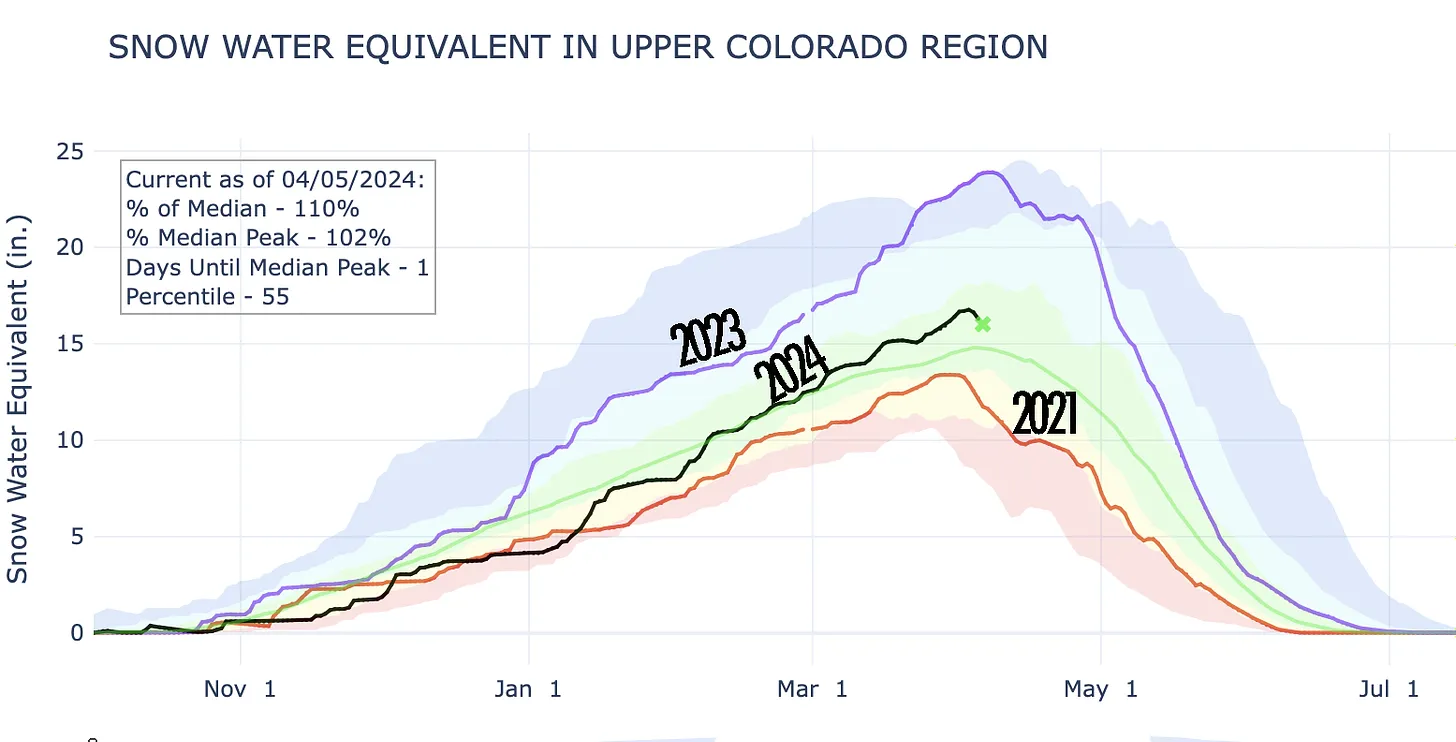
Just about normal: That sums up snowpack levels across much of the Southwest right now. And you know what? Normal feels like a reason to celebrate following more than two decades of aridification and megadrought. Except for one little thing. As the great Bruce Cockburn sings:
The trouble with normal is it always gets worse.
Okay, when it comes to snowpack it may not always get worse. But since “normal” is a moving average based on 30-year segments, and the current “normal” is pegged to 1990 to 2020 — one of the driest periods in the last 1,200 years or so — then it’s fair to conclude that normal has, indeed, gotten worse.
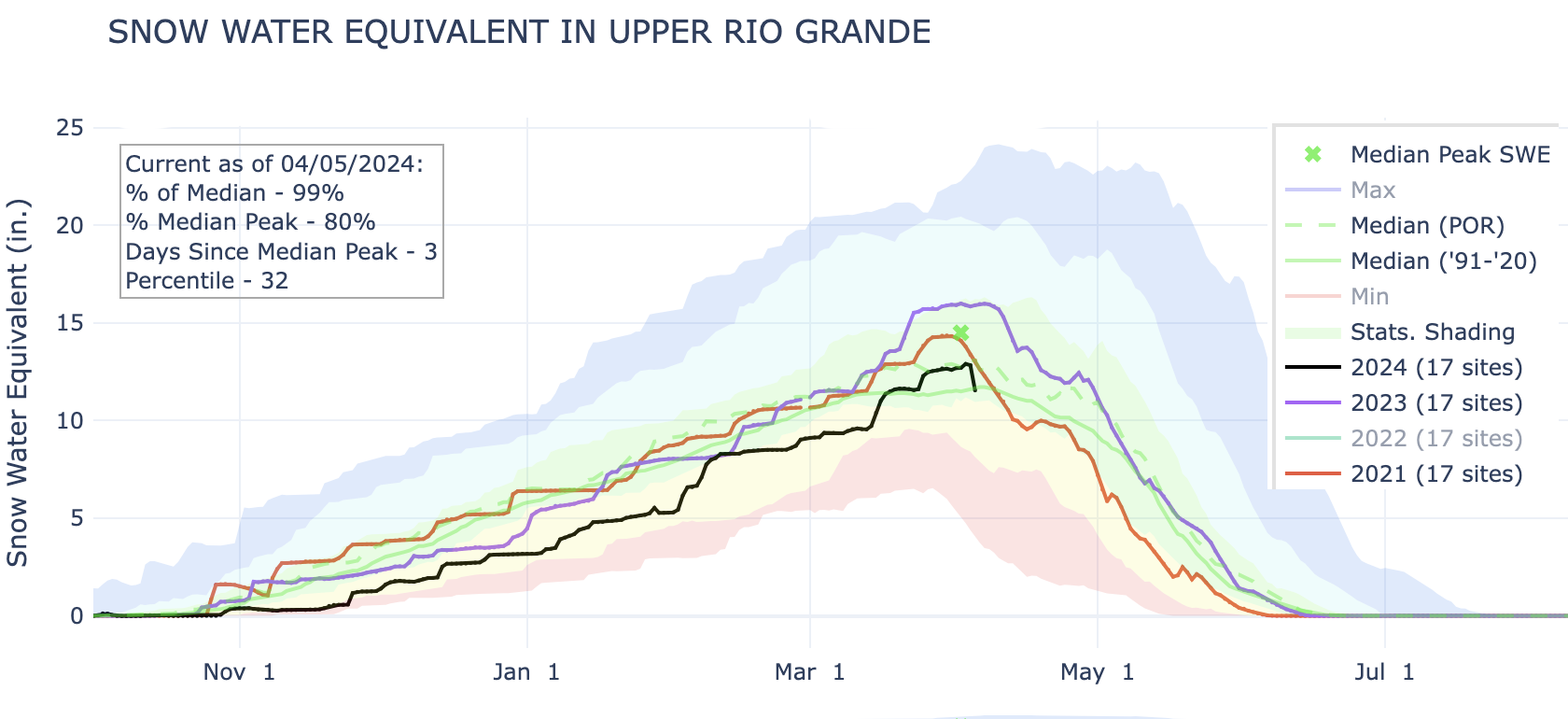

But even so, this year’s snowpack is a heck of a lot better in most places than it was a few years ago — at least so far. During that 1990-2020 period, the snowpack’s median peak for most watersheds has occurred in early April. Whether the spring runoff is as healthy as the snowpack, though, depends a lot on what happens next. A wet, cool spring could boost the snowpack even more, pushing the peak forward and delaying the peak runoff, which is good for lowland water supplies and could further boost reservoir levels.
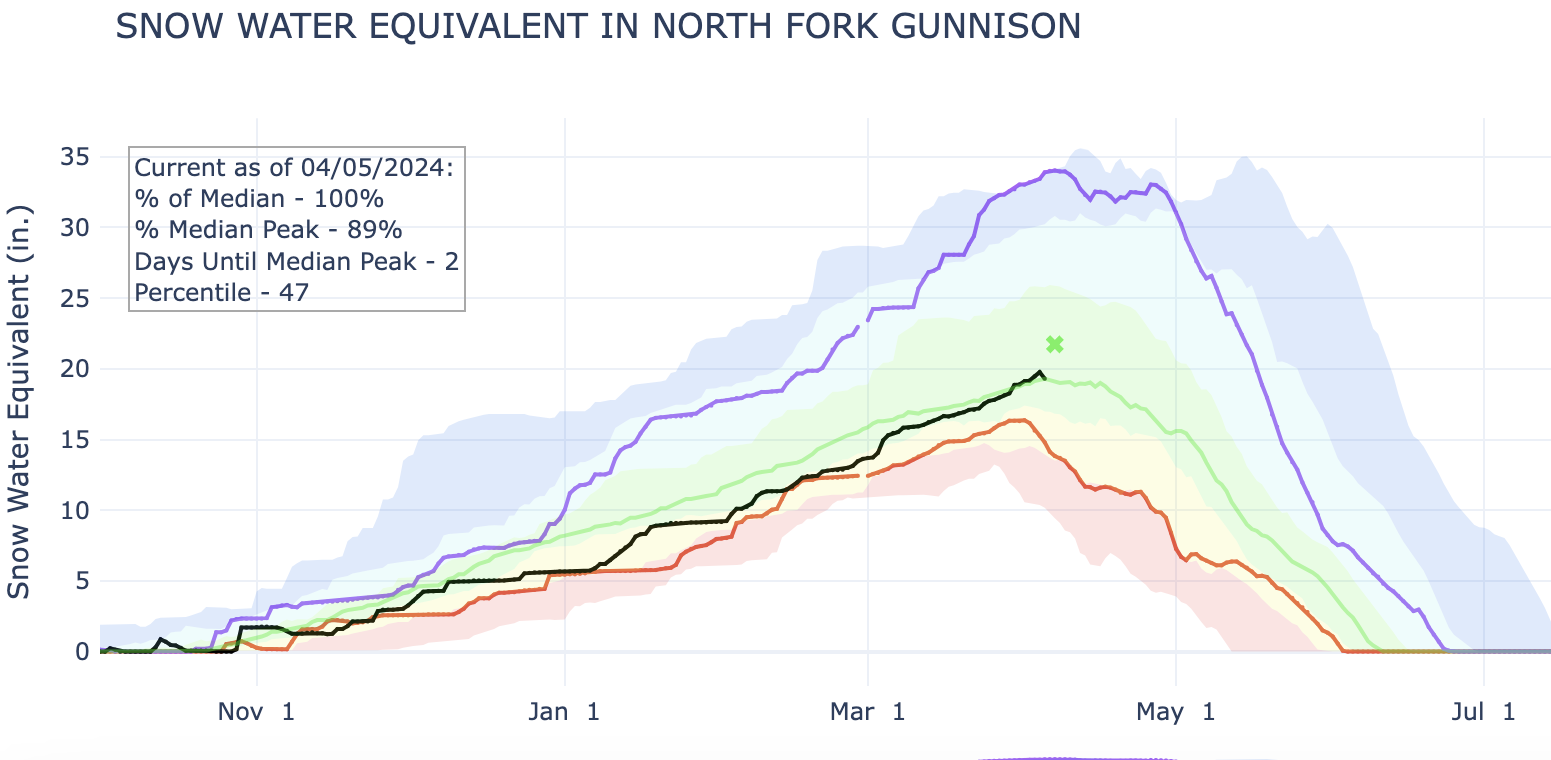
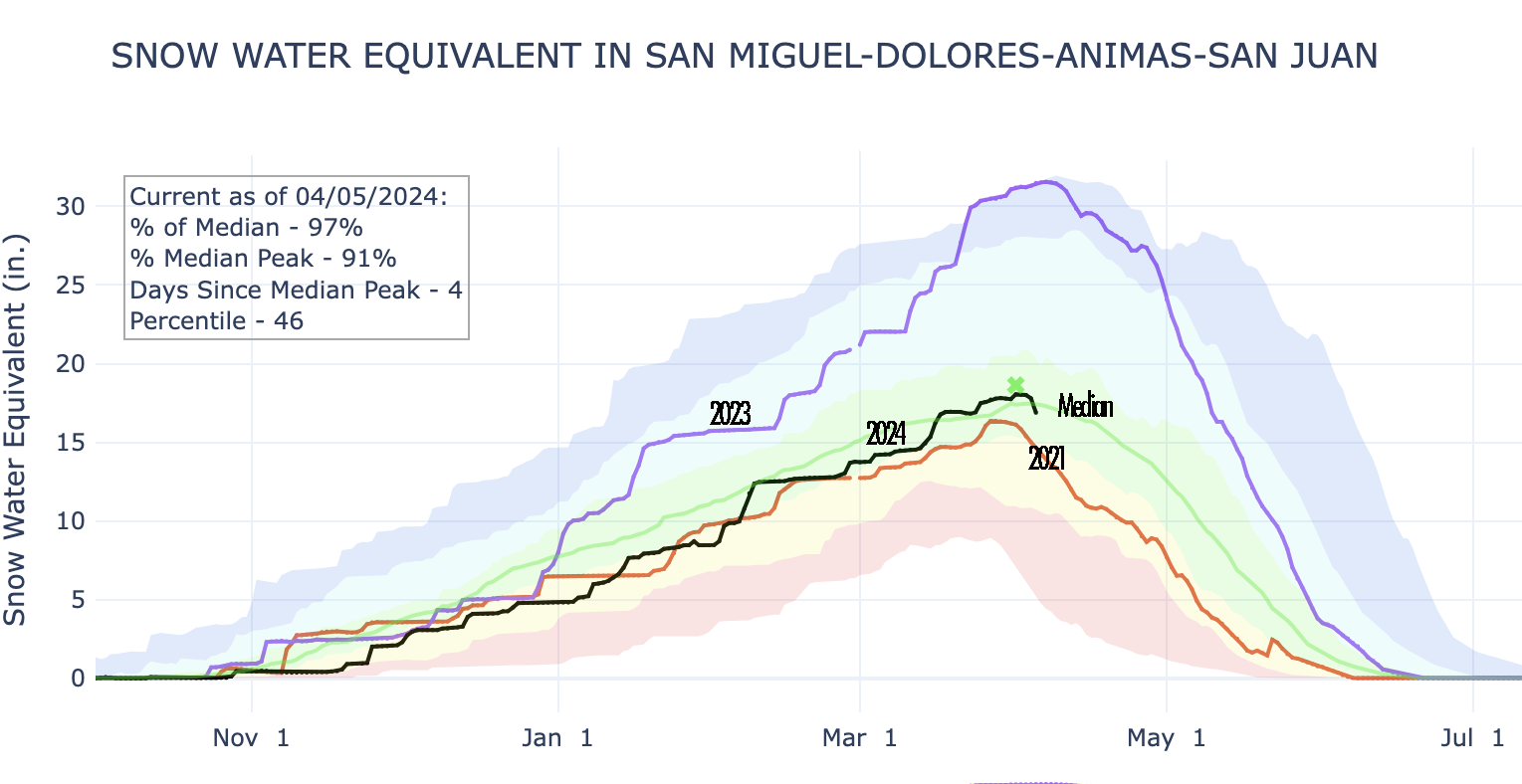
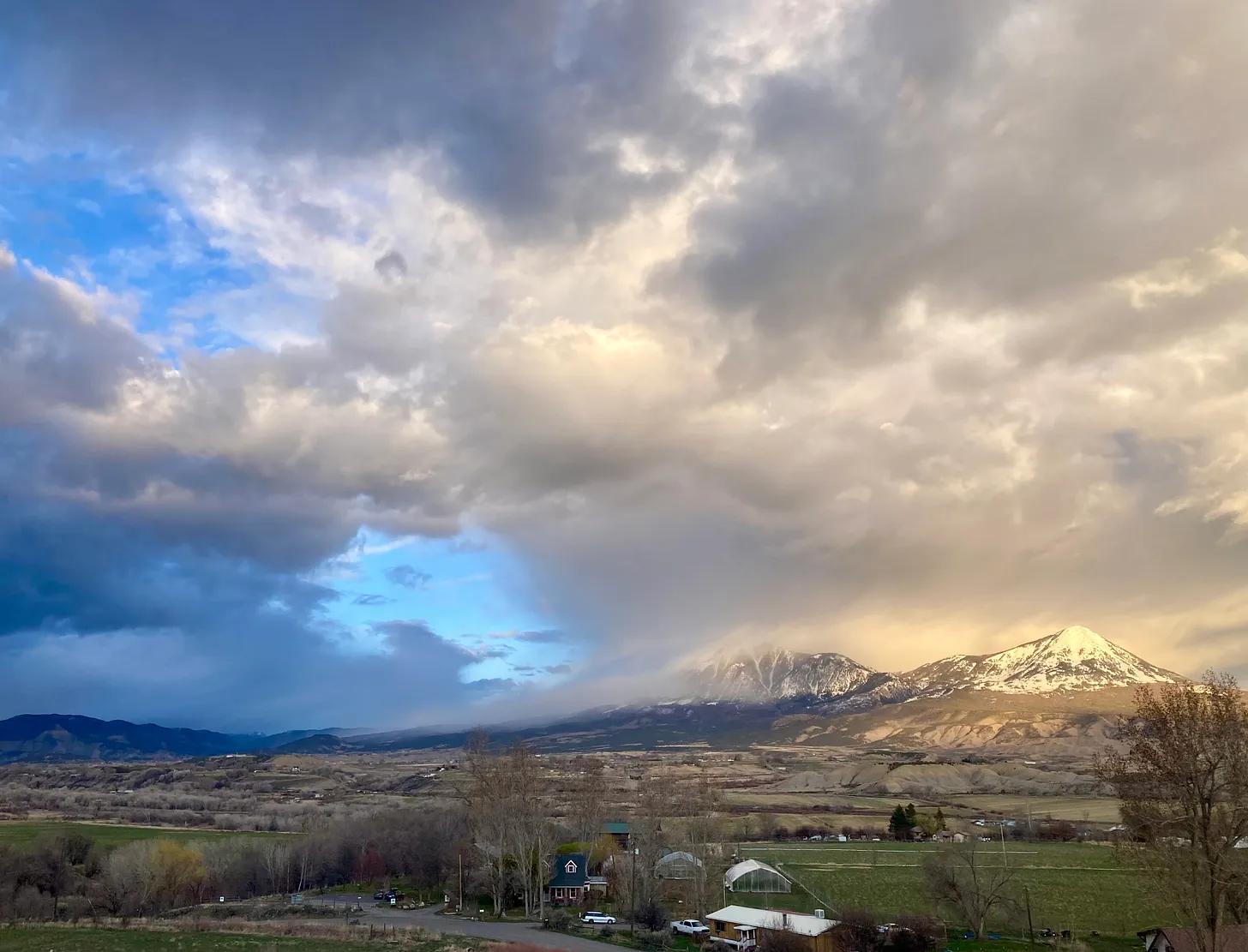
But a warm, windy, dry April and May? Not so good. Warm days and nights will speed up the snowmelt and affect runoff. But the real dastardly culprit is that wind (which is kicking up in the North Fork Valley as I write this), which not only sucks moisture out of the snow, but also lifts up dust from the lowlands and deposits it on the high country snowfields, lending them a reddish brown tint. That, in turn, reduces the snow’s albedo, or ability to deflect the sun’s rays, which causes the snow to melt and evaporate more quickly.
Either way, Lake Powell’s levels will rise somewhat over the next few months. The question is by how much and, more importantly, how significant the summer decline will be. Meanwhile, all that normal-ness should keep the reservoir from dropping to critically low levels for at least another year.

The same cannot be said for reservoirs further north, however. Snowpack levels in Montana and Wyoming and much of the Northwest are frighteningly low. While those rivers aren’t endangered in the way the Colorado River is, the meagre winter snows are expected to diminish hydropower output from the Northwest’s dams this summer, which will likely force grid operators to rely more heavily on fossil fuel generation.
Dust, snow, and diminishing albedo — Jonathan P. Thompson, May 7, 2021

“Most of us are poor now, like I am. Many of them blame John Collier, who made us reduce our flocks and herds because there was not enough grass for all. But I think the true reason is a change in the climate. When I was a young man this whole country was covered with tall grass. We had rains enough in summer to keep it alive and growing. Now the rains do not come and the grass dies. There are fewer sheep and horses now than when our family claimed this valley, yet all you can see is sand. The grass is gone.
“All we need to be rich again is rain.“
—Navajo elder Hoskannini-Begay, who lived on Naatsis’áán, or Navajo Mountain, near the confluence of the San Juan and Colorado Rivers, to Charles Kelly in 1945