How much water remains in southeast #Colorado’s aquifers?: Colorado legislative committee approves many millions for water projects in Colorado — including $250,000 for a study crucial for Baca County — Allen Best (@BigPivots) #OgallalaAquifer #RepublicanRiver #RioGrande

Corn in Baca County. Photo credit: Allen Best/Big Pivots

Click the link to read the article on the Big Pivots website (Allen Best):

Unanimous votes in the Colorado Legislature are rare, but they do happen. Consider HB24-1435, the funding for the Colorado Water Conservation Board projects.

The big duffle bag of funding for various projects was approved 13-0 by the Senate Water and Agriculture Resources Committee. It had bipartisan sponsors, including Rep. Marc Catlin, a former water district official from Montrose.

“Colorado has been a leader in water for a long, long time, and this is bill is an opportunity for us to stay in that leadership position,” said Catlin, a Republican and a co-sponsor.

“This is one of my favorite bills,” said Rep. Karen McCormick, a Democrat from Longmont and former veterinarian. She is also a co-sponsor.
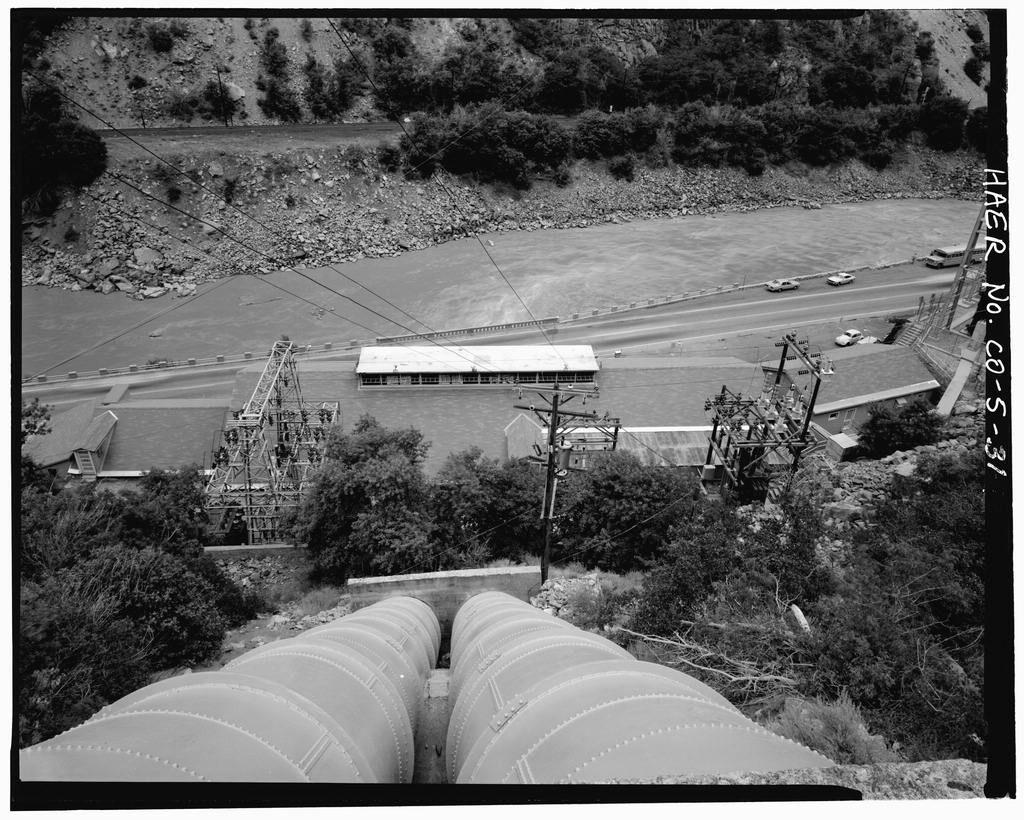
This historical photo shows the penstocks of the Shoshone power plant above the Colorado River. A coalition led by the Colorado River District is seeking to purchase the water rights associated with the plant. Credit: Library of Congress photo

The bill has some very big-ticket items, including $20 million for the Shoshone power plant agreement between Western Slope interests and Public Service Co. of Colorado, better known by its parent company, Xcel Energy. Andy Mueller, the general manager of the Glenwood Springs-based Colorado River District, called the effort to keep the water in the river “incredibly important” to those who make a living in the Colorado River Basin.

This map shows the 15-mile reach of the Colorado River near Grand Junction, home to four species of endangered fish. Map credit: CWCB

Mueller also pointed out that keeping water in the river will benefit of four endangered species of fish that inhabit what is called the 15-mile stretch of the Colorado River near Grand Junction.

Another $2 million was appropriated for the turf-replacement program in cities, a program first funded in 2022. Another mid-range item is telemetry for Snotel sites, to keep track of snow depths, the better to predict runoff. It is to get $1.8 million.

Among the smallest items in the budget is a big one for Baca County, in Colorado’s southeast corner. The bill, if adopted, would provide the Colorado Water Conservation Board with $250,000 to be used to evaluate the remaining water in aquifers underlying southeastern Colorado. There, near the communities of Springfield and Walsh, some wells long ago exhausted the Ogallala aquifer and have gone deeper into lower aquifers, in a few cases exhausting those, too. Farmers in other areas continue to pump with only modest declines.

What exactly is the status of the underground water there? How many more decades can the agricultural economy dependent upon water from the aquifers continue? The area is well aside from the Arkansas River or other sources of snowmelt.

A study by the McLaughlin Group in 2002 delivered numbers that are sobering. Wes McKinley, a former state legislator from Walsh, at a meeting in February covered by the Plainsman Herald of Springfield, said the McLaughlin study numbers show that 84% of the water has been extracted. That study suggested 50-some years of water remaining. If correct, that leaves 34 years of water today.

Tim Hume, the area’s representation on the Colorado Groundwater Commission, has emphasized that he believes this new study will be needed to accurately determine how water should be managed.

How soon will this study proceed? asked Rep. Ty Winter, a Republican from Trinidad who represents southeastern Colorado. Tracy Kosloff, the deputy director of the Colorado Division of Water Resources, answered that the technical analysis should begin sometime after July. “I would think it is reasonable to finish it up by the end of 2025, but that is just an educated guess.”

She said the state would work with the Baca County community to come up with a common goal and direction “about how they want to manage their resources.”

Ogallala Aquifer groundwater withdrawal rates (fresh water, all sources) by county in 2000. Source: National Atlas. By Kbh3rd – Own work, CC BY-SA 3.0, https://commons.wikimedia.org/w/index.php?curid=6079001

Unlike the Republican River area of northeastern Colorado, where farmers also have been plunging wells into the Ogallala and other aquifers, this area of southeastern Colorado has no native river. In the Republican Basin, Colorado is trying to remove 25,000 acres from irrigation by the end of 2029 in order to leave more water to move into the Republican River. See story. A similar proposition is underway in the San Luis Valley, where farmers have also extensively tapped the underground aquifers that are tributary to the Rio Grande. See story.

San Luis Valley Groundwater

The closest to critical questioning of the bill came from Rep. Richard Holtorf, a Republican who represents many of the farming counties of northeastern Colorado. He questioned the $2 million allocated to the Office of the Attorney General.

He was told that $1 million of that constantly replenishing fund is allocated to the Colorado River, $110,000 for the Republican River, $459,000 for the Rio Grande, $35,000 for the Arkansas and $200,000 for the South Platte.

Then there’s the litigation with Nebraska about the proposed ditch that would begin in Colorado near Julesburg but deliver water to Nebraska’s Perkins County. Colorado hotly disputes that plan.

Lauren Ris, the director of the Colorado Water Conservation Board, said Colorado is “very confident in our legal strategy.”

Holtorf also noted that the severance tax provides 25% of the funding for the water operations. The severance tax comes from fossil fuel development. As Colorado moves to renewable energy, “what happens to this Colorado water if we kill the goose that lays the golden egg?”

Ris replied said future declines in the severance tax is a conversation underway among many agencies in Colorado state government.
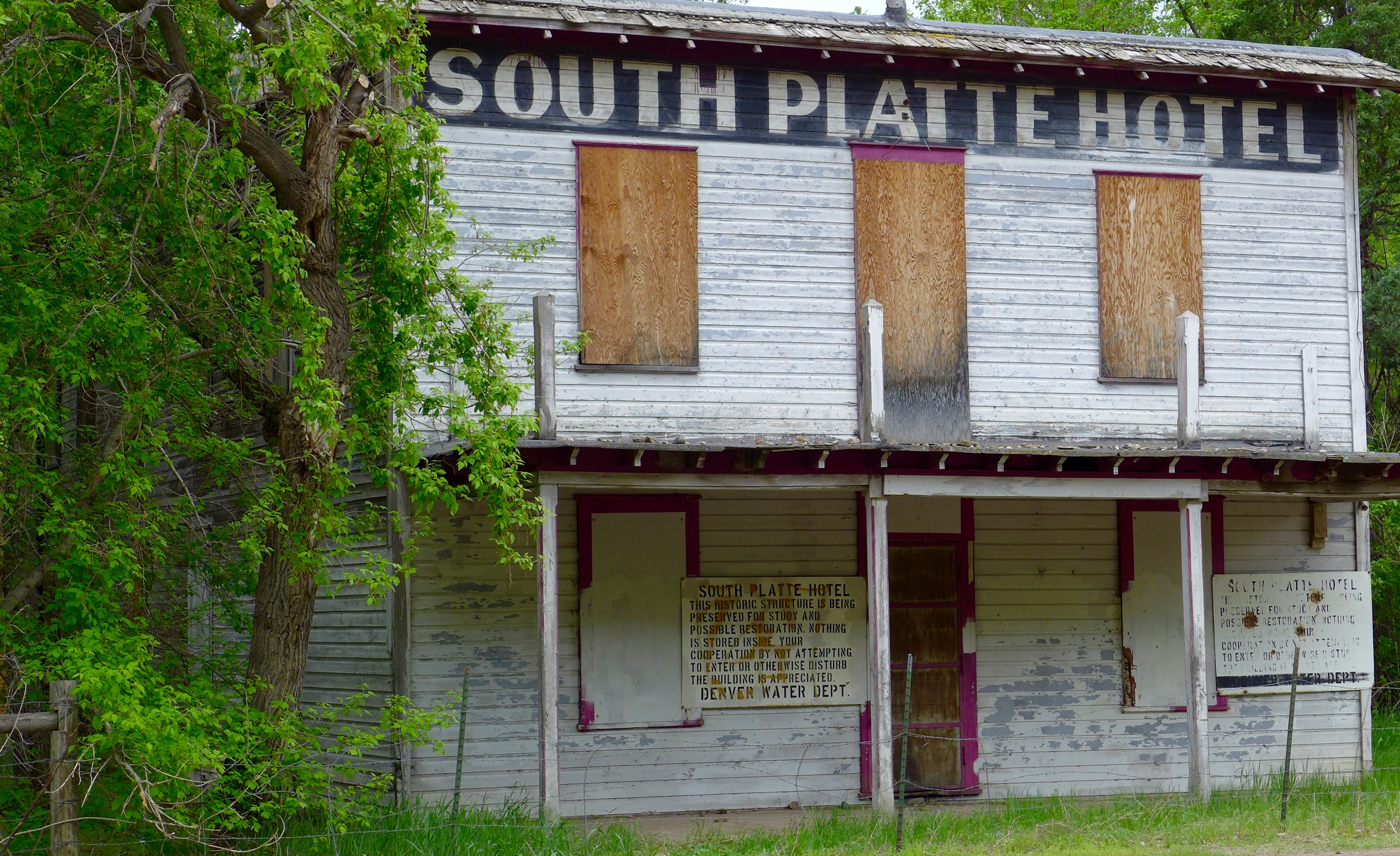
The South Platte Hotel building that sits at the Two Forks site, where the North and South forks of the South Platte River come together. Photo: Brent Gardner-Smith/Aspen Journalism

Revitalizing a 71-mile regional gem: High Line Canal Conservancy unveils ‘Great Lengths Campaign’ following GOCO award — News on Tap #SouthPlatteRiver

Click the link to read the article on the Denver Water website:

April 13, 2024

Last month, the High Line Canal Conservancy announced its “Great Lengths for the High Line,” a $33 million campaign poised to revitalize one of the region’s most cherished resources. 

This investment leverages public funding for a total investment of $100 million in the canal over five years, breathing new life into the 71-mile High Line Canal and ensuring its preservation, protection and enhancement for generations to come.

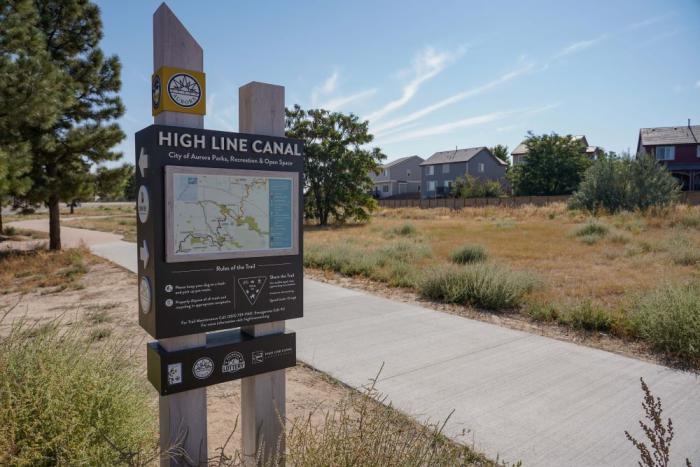
A sign along the High Line Canal trail in Aurora installed in 2021 provides a map to help trail users navigate the corridor. Photo credit: Denver Water.

In a significant leap toward this goal, the nonprofit on March 15 announced a $7 million contribution from Great Outdoors Colorado, often referred to as GOCO. 

The conservancy said the extraordinary award from GOCO adds to the significant philanthropic support from donors across Colorado to date, including $10 million from Denver Water, and leaves the conservancy with a remaining $1 million to raise. 


Learn more about the work behind the transformation of the High Line Canal. 


Completion of the campaign will ensure that the community vision for the canal is realized through more than 30 prioritized trail projects. The GOCO grant brings the conservancy closer to its goal, but there is still a great deal of work to be done.   

“For decades, the future of the historic High Line Canal has been in jeopardy. Today, with tremendous public and private investment, we can immediately begin fulfilling the community’s vision for the canal and, together with our many partners, ensure the High Line Canal will be improved and protected as a centerpiece of our region’s park system,” said Harriet Crittenden LaMair, CEO of the High Line Canal Conservancy. 

The High Line Canal is an irrigation ditch built in the 1880s. Denver Water still uses the canal to deliver irrigation water to customers when conditions allow. Photo credit: Denver Water.

Formed in 2014 to revitalize Denver Water’s historic 71-mile irrigation delivery system into one of the nation’s longest continuous urban trails, the High Line Canal Conservancy aims to enhance trail users’ experience and improve the region’s environmental health.

“Denver Water has a century-old canal that has outlived its usefulness as an irrigation canal,” said Alan Salazar, CEO/Manager of Denver Water. 

“We wanted to transform the canal into a recreational and environmental crown jewel for the region. And, after years of building partnerships with the help of our governmental partners and the leadership from the High Line Canal Conservancy, today, with GOCO’s investment, we celebrate a giant leap toward this vision. With $32 million in private funds raised by the conservancy and matching funding from local partners and Denver Water, we are thrilled to help make this vision a reality for our region,” Salazar said.


Are you on TAP? Get the free weekly email for water conservation tips, news and stories about the people who deliver the water.


In partnership with local jurisdictions and Denver Water, the Great Lengths campaign will support the conservancy’s work to improve safety, ecological sustainability, community vitality, and equitable access along the High Line Canal, which meanders continuously from Waterton Canyon in Littleton to the high plains near Denver International Airport.

Over the past seven years, the conservancy and its partners have engaged communities across the region to develop a comprehensive plan, “The Plan for the High Line Canal,” to protect and enhance the trail. 

Today, as one of the most exciting and largest urban trail projects in the country, the transformation of the canal with enriched landscape, safer crossings, improved access, better signage, and areas for gathering, play and education is becoming a reality. 

The High Line Canal Conservancy in March announced its “Great Lengths for the High Line,” a $33 million campaign aimed at reimagining the historic canal as one of the nation’s premier linear parks. Image credit: High Line Canal Conservancy.

“We owe our progress to the more than 10,000 community members across the region — countless volunteers, youth and leaders — that have participated and underscored the importance of safety, connectivity, access and comfort along the Canal,” said LaMair. 

“Now we look forward to High Line Canal users joining our Great Lengths for the High Line fundraising campaign, so this great work continues for decades to come.”

Projects along the canal will be implemented in partnership with the local governments, including counties, cities and special districts. No donation is too small and can be made by logging on to highlinecanal.org/great-lengths.


Join people delivering water to their community, at denverwater.org/Careers.


“We are grateful for this much-needed investment and commitment to improving accessibility and quality of life for residents across our region,” says Arapahoe County Board Chair Carrie Warren-Gully. 

“The county has long been a leading partner in efforts to enhance the High Line Canal corridor. This new investment reinforces the power of collaboration to ensure future generations can enjoy this treasured resource, especially along a stretch of the canal that has been historically underserved and underfunded. We are ready to roll up our sleeves and get the work done.”

From “Poem: I am not alone” — Greg Hobbs along the High Line Canal. Photo credit: Bobbi Hobbs

Serving more than 1 million trail users annually across 11 jurisdictions, the canal traverses some of the most diverse communities in the state. The 860-acre canal connects 24 schools, hundreds of neighborhoods, and millions of people to more than 8,000 acres of open space. 

“Investing in the Great Lengths Campaign is a wonderful way to improve the canal not just in your own community — but across all communities. It’s an opportunity for individuals to leverage their philanthropic dollars in a public-private partnership to create a legacy for generations to come,” said Tom and Margie Gart, co-chairs of the Great Lengths Campaign Committee.

Reclamation awards $1.9M for new water treatment technology

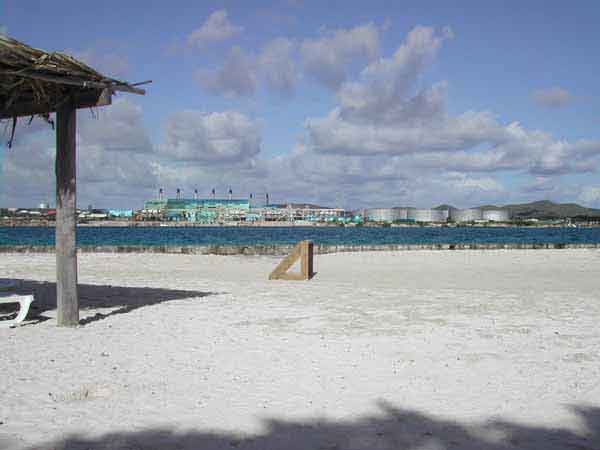
Desalination plant, Aruba

Click the link to read the release on the Bureau of Reclamation website (Chelsea Lair):

Apr 18, 2024

WASHINGTON – The Bureau of Reclamation’s Desalination and Water Purification Research program awarded eight projects funding totaling more than $1.9 million. Reclamation selected the projects from 80 eligible applications all submitting pioneering solutions to desalination and water treatment technologies.

“These awards allow us to tackle the climate crisis by investing in development and application of advanced water treatment technologies that expand access to otherwise unusable water resources,” said Research and Development Program Manager Ken Nowak. “These efforts increase water supply flexibility under the risks of long-term climate change and shorter-term drought.”

The Desalination and Water Purification Research Program provides financial assistance for advanced water treatment research and development, leading to improved technologies for developing water supply from non-traditional waters, including seawater, brackish groundwater, and municipal wastewater, among others.  

Recipients of the project funding have provided an additional $1.4 million of non-federal cost share to further support these research efforts.

ARIZONA

Arizona State University: Funds awarded ($209,708 federal funding, $424,479 total project cost) for Nanobubbles as a Chemical-Free Fouling and Scale Control Strategy for Reverse Osmosis Project. This project proposes a chemical-free solution during water desalination.

COLORADO

Mickley & Associates LLC: Funds awarded ($117,700 federal funding, $235.400 total project cost) for the Updated Survey of U.S. Municipal Desalination Plants Project. This project aims to identify an estimated 50 to 70 facilities and gather detailed information about U.S. municipal desalination facilities that have been built since 2017 and will be built through 2024. The project will also determine that status of facilities included in past surveys as several older facilities are no longer operating.

University of Colorado: Funds awarded ($250,000 federal funding, $339,133 total project cost) for the Advancing Water Reuse Through Improved Diagnostic Tools for Corrosion Control Project. This project will develop a new method for proactively assessing the presence of toxic metal release in water systems and the susceptibility of release due to changing water conditions. Current methods are limited, because they do not link the presence of a toxic metal to the likelihood of release into potable water.

MASSACHUSETTS

Harmony Desalination Corporation: Funds awarded ($390,871 federal funding, $781,742 total project cost) for the Field Pilot Testing a Batch RO Process Using Electrically Conducting Reverse Osmosis Membranes Project. This project proposes extended field testing of a high recovery batch reverse osmosis process using innovative anti-scaling and antifouling electrically conducting membranes in comparison with conventional reverse osmosis membranes.

NEW JERSEY

New Jersey Institute of Technology: Funds awarded ($249,940 federal funding, $396,971 total project cost) for the Enhanced Coagulation for the Removal of Per- and Polyfluoroalkyl Substances using Hydrophobic Ion Pairing Approach Project. This project proposes to utilize hydrophobic ion-pairing as a pretreatment to enhance the removal of both short-chain and long-chain per-/polyfluoroalkyl substances during coagulation/flocculation process.

New Jersey Institute of Technology: Funds awarded ($250,000 federal funding, $500,334 total project cost) for the Field-Effect Transistor Nanosensors for Testing Per- and polyfluoroalkyl Substances Impacted Water and Air Project. This project will fabricate novel field-effect transistor sensors, systematically examine the sensing performance, device stability, and reusability when probing per-/polyfluoroalkyl in synthetic water and air samples and conduct a field demonstration of the sensors.

NEW MEXICO

New Mexico State University: Funds awarded ($250,000 federal funding, $312,514 total project cost) for the Brine 2030: Enhanced Water Recovery with Mineral Valorization for Sustainable Cement Production Project. This project seeks to address two seemingly different problems: brine management and greenhouse gas emissions from cement manufacturing.

TEXAS

Texas State University: Funds awarded ($250,000 federal funding, $399,234 total project cost) for the Pilot Photobioreactor Development for Scalant Removal and Enhanced Water Recovery from Brackish Reverse Osmosis Concentrate Project. This project seeks to demonstrate continuous pilot photobioreactor operation using sunlight and reduction of the reactor footprint.

For more information on Reclamation’s Desalination and Water Purification Research Program visit http://www.usbr.gov/research/dwpr.

Every #NewMexico river endangered and vulnerable to contamination, according to national report — SourceNM.com

Water flows through the Rio Grande on April 16, 2024 near the Mesilla Valley Bosque State Park in Doña Ana County. (Photo by Leah Romero fr Source NM)

Click the link to read the article on the SourceNM.com website (Leah Romero):

Reasons include recent rollbacks to Clean Water Act protections and a state water permitting system that is still in the planning phase

There are over 108,000 miles of river in New Mexico, all of which were deemed the most endangered in the country recently by a national report. 

American Rivers is a national nonprofit organization concerned with conservation and advocacy on behalf of the country’s rivers. The organization releases an annual report listing the country’s top 10 endangered rivers for the year. 

New Mexico waterways have made the list in recent years. This year the organization found enough evidence to show that recent rollbacks in national streams and wetlands protections place up to 95% of the state’s rivers in jeopardy. 

“When you have a national report that singles out New Mexico, it should be a very big wake up call,” said Paula Garcia, executive director of the New Mexico Acequia Association. “We should be looking at how we can protect these waters because our state is unique in how dependent our communities are on these very small drain systems.”

The report cites the May 2023 U.S. Supreme Court opinion in the case of Sackett v. Environmental Protection Agency

The case reintroduced the question of what constitutes “waters of the U.S.” which have more protections under the 1972 Clean Water Act. 

The Supreme Court, in an opinion written by Justice Samuel Alito, ultimately decided that these waters were defined as “a relatively permanent body of water connected to traditional interstate navigable waters.” 

Wetlands were defined as having “a continuous surface connection with that water, making it difficult to determine where the ‘water’ ends and the ‘wetland’ begins.”

Water experts and conservationists note that the definition of a “relatively permanent” body of water is vague and places several of New Mexico’s rivers – which do not have water for months out of the year – at risk of contamination. 

New Mexico’s surface water is at a higher risk due to the state’s arid climate and reliance on dwindling waters for drinking, agriculture and recreation.

Garcia said New Mexico’s smaller streams and acequias, which flow as tributaries to larger rivers, are particularly endangered because they are reliant on open dams, rainfall or snowpack runoff.

New Mexico is one of three states, including New Hampshire and Massachuttes, without a state-based surface water quality permitting program. 

State environment department leaders and legislators started the process of implementing such a program before the Supreme Court decision, according to Tricia Snyder, Rivers and Waters program director for New Mexico Wild. 

The 2024 state legislature appropriated $7.6 million to the New Mexico Environment Department’s water quality management fund to develop the permitting program. The money was designated through the General Appropriation Act of 2024. However, planning is still in the early stages and it could be several more years before New Mexico has it set up. 

Source New Mexico reached out to the New Mexico Environment Department for comment but received no response. We will update if and when we receive that reponse.

Rachel Cann, deputy director at the water conservation organization Amigos Bravos, explained that the lack of a state permitting program was not a major priority in the past since the federal government issued permits.

She added that New Mexico’s smaller waterways and the lack of a permitting program is why the state is “really feeling the brunt” of the federal protection rollbacks. 

Matt Rice, southwest regional director for American Rivers, said this recent report is the first time in the organization’s 40 years where an entire state’s rivers were named on the list.

“There wasn’t just one river we could point to that was facing a specific threat,” Rice said. “Because there aren’t that many large rivers in New Mexico, all the rivers I think, have a more urgent importance.”

Rice pointed out that while New Mexico rivers have appeared on the endangered list in recent years, the contributing factors have largely been addressed by state and local governments as well as advocacy organizations. 

While the designation of most endangered in the country is striking, Rice said the story is “not a sad one.” The Gila, Pecos and Gallinas rivers have all appeared on the list in recent years for diversion plans, mining proposals and wildfire damage respectively. However, Rice said “tremendous progress” has been made in addressing the dangers to each river. 

“(The list) is showing that New Mexico is doing things the right way. They’re proactively working to establish their own program to protect their water, because only New Mexicans know how important their rivers and streams are to them,” Rice said. 

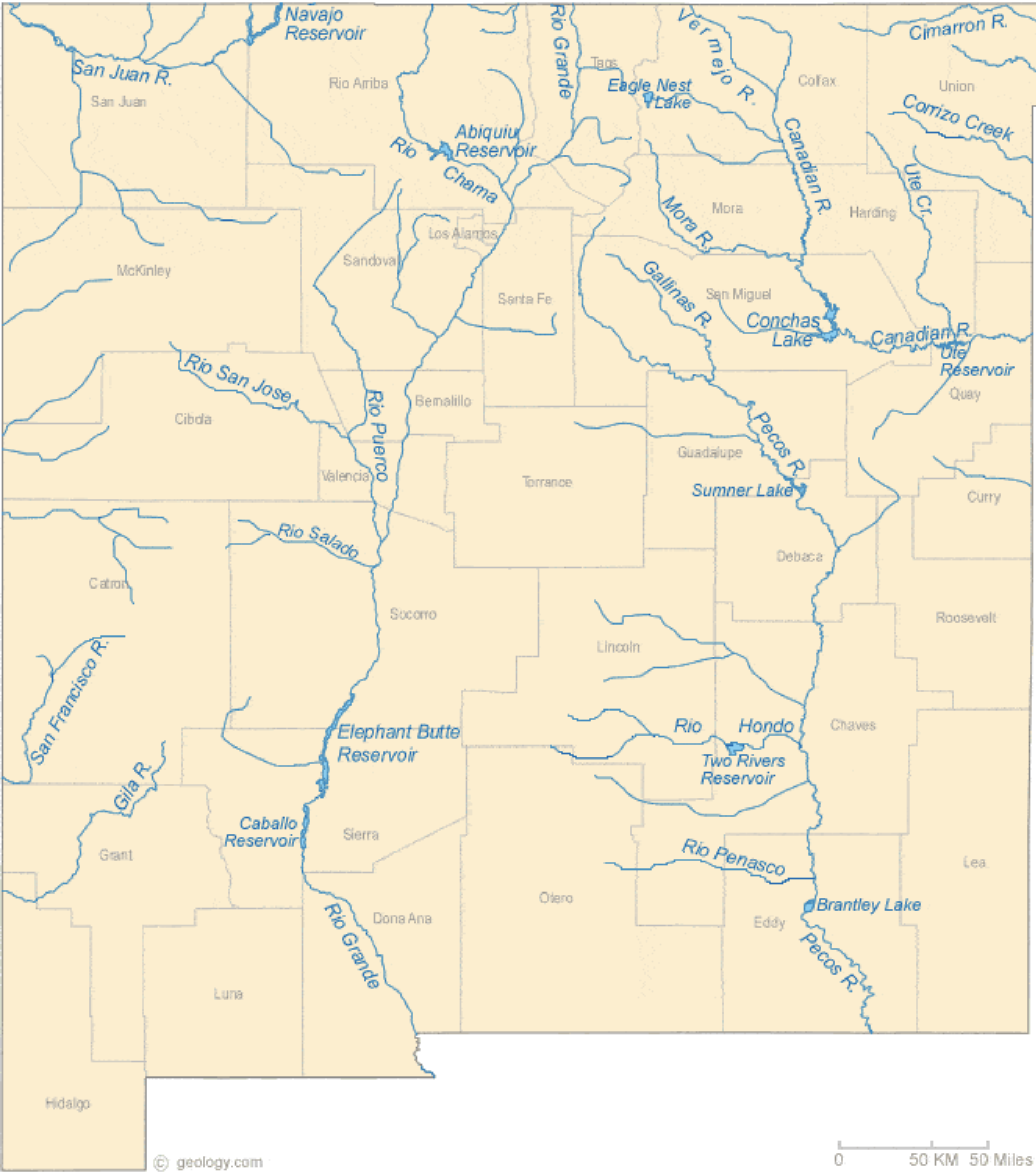
New Mexico Lakes, Rivers and Water Resources via Geology.com.

#Colorado Department of Natural Resources Produced Water Consortium Submits First Report: Best Practices for In-field Recycling and Reuse of Produced Water Report

Click the link to read the release on the DNR website:

(DENVER) -The Colorado Produced Water Consortium, an initiative within the Department of Natural Resources, released its first legislative deliverable, the Initial Guidance Documents and Case Studies to Promote Best Practices for In-field Recycling and Reuse of Produced Water Report

“I am proud to see the collaborative work of the newly developed Colorado Produced Water Consortium begin to bear fruit with the development of the Initial Guidance Documents and Case Studies to Promote Best Practices for In-Field Recycling and Reuse of Produced Water Report. The engagement, diversity of views, and expertise of the whole of the Consortium was utilized in the development of this report, which will continue to evolve as more technology, case studies, and research are incorporated in the future as we continue to implement HB23-1242 and explore ways to reduce the amount of freshwater used and increase the amount of reuse and recycling of produced water used in oil and gas operations across the state,” said Consortium Chair John Messner.

The Consortium collaboratively developed this synthesis report by identifying and reviewing over 130 research journal articles, best practices, and case studies. Key themes that promote best practices for in-field recycling and reuse of produced water throughout the state emerged from the review and will be used to inform the Consortium’s future recommendations. Given the ongoing and evolving nature of produced water research, the library of references is expected to grow over time.

“I congratulate the Consortium in submitting their first deliverable to the Colorado legislature and for working hard to bring together the expertise of a diverse set of stakeholders,” said Dan Gibbs, Executive Director, Colorado Department of Natural Resources. “This first report builds the expertise of Colorado’s policy makers and the public on produced water. I look forward to the Consortium’s continued work to inform produced water policy.”

The Colorado Produced Water Consortium was established in the Department of Natural Resources by HB23-1242 to help reduce the consumption of freshwater within oil and gas operations. The Consortium’s responsibilities also include making recommendations towards developing an informed path for reuse and recycling of produced water inside and potentially outside of oil and gas operations within the state and identifying measures to address barriers associated with the use of produced water.

The Consortium consists of 31 members representing state and federal agencies, research institutions, environmental groups, industry, local governments, environmental justice groups, and disproportionately impacted communities.

The full report is available online:  Initial Guidance Documents and Case Studies to Promote Best Practices for In-field Recycling and Reuse of Produced Water Report.

Are #Colorado’s Northeastern Plains prepared for #ClimateChange? — KUNC #ActOnClimate

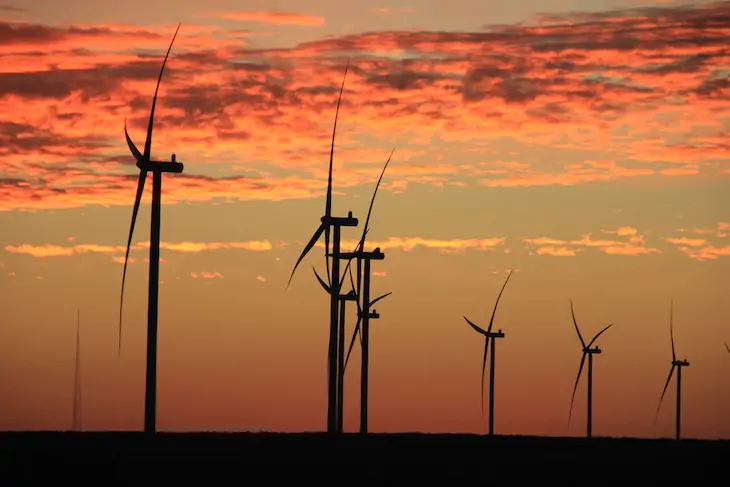
The Crossing Trails Wind Farm between Kit Carson and Seibert, about 150 miles east of Denver, has an installed capacity of 104 megawatts, which goes to Tri-State Generation and Transmission. Photo/Allen Best

Click the link to read the article on the KUNC website (Rae Solomon). Here’s an excerpt:

…the six counties that comprise Colorado’s Northeast Plains – namely, Morgan, Logan, Washington, Yuma, Phillips and Sedgwick Counties – seem to be lagging behind the rest of the state when it comes to mobilizing for climate change preparedness. Those communities do not have any plans for climate action and resiliency and a regional hazard mitigation plan for Northeast Colorado makes no mention of climate change.

“That region is among the lowest in the state,” said Karam Ahmad, director of the climate team at the Colorado Health Institute. “Cities and counties in that region don’t really have climate related plans, or strong commitments to climate adaptation.”

[…]

In a recent statewide survey, The Colorado Health Institute asked Coloradans if their communities were prepared for climate disaster. In all of Colorado, the Northeast Plains stood out for its lack of confidence in local climate change preparedness. More than 60% of respondents in Northeast Colorado reported they did not think their community was prepared for climate change. That’s compared to about 47% statewide.

#Earth’s record hot streak might be a sign of a new #climate era — The Washington Post #ActOnClimate

Colorado statewide annual temperature anomaly (F) with respect to the 1901-2000 average. Graphic credit: Becky Bolinger/Colorado Climate Center

Click the link to read the article on The Washington Post website (Sarah Kaplan). Here’s an excerpt:

April 19, 2024

As soon as the planet entered an El Niño climate pattern — a naturally occurring phenomenon associated with warming in the Pacific Ocean — scientists knew it would start breaking records. El Niños are associated with spikes in Earth’s overall temperature, and this one was unfolding on a planet that has already warmed 1.2 degrees Celsius (2.2 degrees Fahrenheit) from preindustrial levels…Yet this El Niño didn’t just break records; it obliterated them. Four consecutive days in July became the hottest days in history. The Northern Hemisphere saw its warmest summer — and then its warmest winter — known to science…

By the end of 2023, Earth’s average temperature was nearly 1.5 degrees Celsius (2.7 degrees Fahrenheit) higher than the preindustrial average — and about 0.2 degrees Celsius (0.36 degrees Fahrenheit) hotter than climate modelers predicted it would be, even taking El Niño into account. Researchers have spent the past several months investigating possible explanations for that 0.2 C discrepancy: a volcanic eruption that spewed heat-trapping water vapor into the atmosphere, changes in shipping fuel that affected the formation of clouds that block the sun. So far, those factors can only account for a small fraction of the anomaly, raising fears that scientists’ models may have failed to capture a longer-lasting change in the climate system…

Even if global average temperatures do return to a more predictable trajectory, the effects of warming on people and ecosystems have already entered uncharted territory. Sea ice around Antarctica shrank to its smallest extent ever last year. The mighty Amazon River has reached its lowest level since measurements began. Researchers this week declared a global coral bleaching event — just the fourth in history — and warned that the crisis in the oceans is on track to set a record.

Column: Changing our lives is scary. But the #climatecrisis is way scarier — @Sammy_Roth (The Los Angeles Times) #ActOnClimate

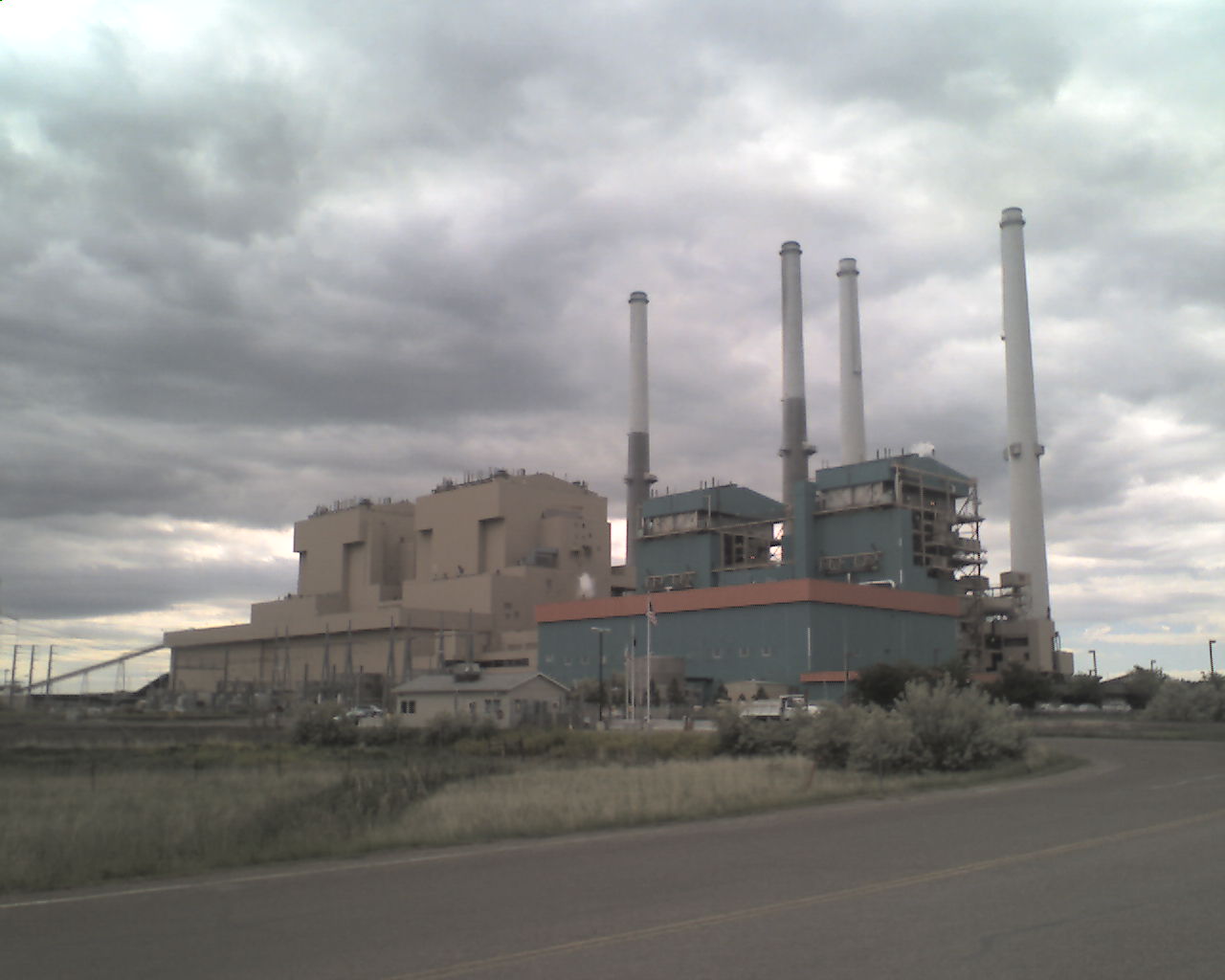
Colstrip Power Plants 1-4 from right to left. By P.primo (talk) – I created this work entirely by myself., Public Domain, https://en.wikipedia.org/w/index.php?curid=18292329

Click the link to read the column on The Los Angeles Times website (Sammy Roth). Here’s an excerpt:

April 19, 2024

Yet as I’ve traversed the American West over the last two years with my L.A. Times colleagues, exploring how the transition from fossil fuels to cleaner energy is reshaping sensitive ecosystems and rural communities, one lesson has risen above the rest: If we don’t embrace change now, while we still have a choice, far worse changes will eviscerate us later. That lesson crystallized for me over the last few months, as I wrote about a Montana coal town struggling to accept that its West Coast customer base no longer wants coal power — you can read my full story here — and as I struggled personally to figure out what kinds of stories I want to tell going forward, after a decade of reporting on challenges facing the energy transition…

Folks in Colstrip [Montana] and similar towns are justifiably worried that if big cities replace fossil fuels with renewable energy, their lives will change for the worse. They’re not totally opposed to wind and solar, but they’re skeptical those technologies will ever fully replace fossil fuels, in terms of the bountiful jobs, tax revenues and other economic benefits that coal, oil and gas have provided.

2024 #COleg: Keeping water rights on the #YampaRiver while utilities figure out future technologies — Allen Best (@BigPivots)

Power distribution lines in the Yampa River Valley October 2020. Photo credit: Allen Best/Big Pivots

Click the link to read the article on the Big Pivots website (Allen Best):

April 18, 2024

Bill moving through Colorado Capitol that would allow Xcel Energy and Tri-State G&T to keep water rights for 20 years after last coal plant closes

Colorado’s Yampa River Valley has five coal-burning units that will cease operations from 2025 to 2030. Two are at Hayden and three are at Craig. All require water for cooling.

What will become of that water once the coal plants close?

SB24-197, a bill that is rapidly moving through the Colorado Legislature, would allow Xcel Energy and Tri-State Power and Generation to hold onto their water rights, even if they are not using them, until 2050. That is a precedent-setting exception to Colorado’s famous use-it-or-lose-it provision in water law.

The utilities say they may very likely need the water once they figure out how they will replace the coal generation. Neither utility has announced specific plans, but in response to a question at the bill’s first hearing in a Senate committee last week, Xcel Energy’s Richard Belt identified pumped-storage hydro and hydrogen as leading candidates. The federal government has devoted considerable funding and support for development of both technologies, he said.

“Those are the two leaders,” said Belt. “There aren’t many on the horizon that would fill the niche in that decree.”

Both technologies would provide storage. Xcel and other utilities are on their way to having massive amounts of cheap renewable energy. Still to be solved is how to ensure reliability when winds quiet for long periods. And the sun, of course, always goes down.

Storage will be essential and perhaps some kind of baseload generation. Xcel’s current plans call for an increase in natural gas capacity to ensure reliability even if the natural gas plants are used only infrequently, say 1% or 2% of the time. Xcel Energy is also adding literally tons of four-hour lithium-ion battery storage.

Cabin Creek pumped hydro reservoir. Photo credit: EE Online

The company’s biggest storage device is still its oldest, the 324-megawatt Cabin Creek pumped storage unit. Water from the upper reservoir is released to generate electricity when it is needed most, then pumped back uphill when power is relatively plentiful.

A developer has secured rights from landowners at a site between Hayden and Craig. See story. Another pumped-storage hydro possibility has been identified in the area between Penrose and Colorado Springs.

Hydrogen has less of a track record, at least in Colorado. However, it is part of  Colorado’s all-of-the-above approach. See story. Hydrogen can be created from natural gas, but to meet Colorado’s needs it must be created from water. It would then be stored. Like pumped-storage hydro, it would be created when renewables are producing excess electricity, and the hydrogen could then be tapped to create electricity when needed most. That electrical generation would also use water for cooling, Belt said.

The bill, said Belt, proposes to allow Xcel the time for the economic and feasibility details of these emerging technologies to be resolved “instead of forcing a near-term decision driven by the processes of current water law.”

Normally, utilities would be required to demonstrate purpose of water, which can take several years, or risk abandonment. Because they will not have to, some see this as allowing the utilities to speculate. The utilities insist that it’s too soon to know exactly what their future water needs will be. But in addition to owning land in the Yampa Valley and water, they have expensive transmission linked to the rest of Colorado.

State Sen. Cleave Simpson, a Republican from Alamosa — and a former lignite coal-mining engineer, made note of that infrastructure on the floor of the Senate on Monday morning when he spoke in favor.

The bill will allow the utilities to hold onto the water in Western Colorado “so the region can have a true just transition and so hopefully it can continue to be an energy producing

region using existing infrastructure.” Upon advice of the Colorado Attorney General’s Office, the bill was amended by the Senate to specify that the water must remain in the Yampa River Basin.

Coyote Gulch near the confluence of the Little Snake and Yampa Rivers July 2021.

Since Colorado adopted carbon reduction targets in 2019, there have been questions about what might happen to the water in the Yampa Valley. It’s not a huge amount of water, but it can matter in a basin that since 2018 has had several calls on the river after having none for the previous 150 years.

The issue was hashed out by the legislatively-created Drought Task Force in 2023. The task force called attention to the idea of allowing utilities to preserve their water rights until 2050, but the idea failed to get a full endorsement.

Sen. Dylan Roberts, a prime sponsor, explained at the Senate Agriculture and Natural Resources Committee meeting that additional work in recent months has produced legislation that has ended objections. Indeed, Western Resource Advocates supported the full bill, as did others.

Jackie Brown, who represented Tri-State on the task force, told the Senate committee members that the measures in SB24-197 “provide Tri-State certainty that our water resources remain intact and available for future dispatchable carbon-free generation as needed and is projected in our electric resource plan. While we continue our planning process, keeping this utility water in the Yampa River helps all water users, creating a win-win situation.”

The Glenwood Springs-based Colorado River District in 2021 conducted a study of what happens to water when released from the Elkhead Reservoir, which is located near Hayden. The study found that 14% of the water was picked up by irrigators, 10% was lost to transit – and the rest of it flowed downstream. That suggests what will become of this water while it is not used.

Downstream lie segments of the Yampa where endangered fish species live. Those stretches have become nearly non-existent during the hot and dry summers of recent years.

Routt County Commissioner Tim Corrigan said his county supports the bill. He said hebelieved that Moffat County did also. He emphasized that the solution will help the environment as well as other users. The energy transition in northwest Colorado, he said “will take place over a very long time.”

The bill also has provisions applicable across Colorado. It allows the owner of a decreed storage water right to loan water to the Colorado Water Conservation Board for a reach of river for which the board does not hold a decreed instream flow water right. It also requires the CWCB to establish an agricultural water protection program in each of the state’s water divisions.

Simpson, on the Senate floor, also explained that the bill would create what he called a much-needed program, crafting a pathway to loan water from water storage for a reservoir to benefit an instream flow program “without going through the whole CWCB process with getting an adjudicated flow.”

Yampa/White/Green/North Platte river basins via the Colorado Geological Survey

This is all just a part of a natural cycle, right? — @KHayhoe #ActOnClimate

All this worry about warming when it’s just a natural cycle. The climate is always changing and today’s no different — right? Global Weirding is produced by KTTZ Texas Tech Public Media and distributed by PBS Digital Studios. New episodes every other Wednesday at 10 am central. Brought to you in part by: Bob and Linda Herscher, Freese and Nichols, Inc, and the Texas Tech Climate Science Center.