No sign of greenhouse gases increases slowing in 2023 — NOAA #ActOnClimate

Greenhouse-gas monitoring equipment. Credit: Lauren Lipuma

Click the link to read the article on the NOAA website (Theo Stein):

Levels of the three most important human-caused greenhouse gases – carbon dioxide (CO2), methane and nitrous oxide – continued their steady climb during 2023, according to NOAA scientists. 

While the rise in the three heat-trapping gases recorded in the air samples collected by NOAA’s Global Monitoring Laboratory (GML) in 2023 was not quite as high as the record jumps observed in recent years, they were in line with the steep increases observed during the past decade. 

“NOAA’s long-term air sampling program is essential for tracking causes of climate change and for supporting the U.S. efforts to establish an integrated national greenhouse gas measuring, monitoring and information system,” said GML Director Vanda Grubišić. “As these numbers show, we still have a lot of work to do to make meaningful progress in reducing the amount of greenhouse gases accumulating in the atmosphere.” 

The global surface concentration of CO2, averaged across all 12 months of 2023, was 419.3 parts per million (ppm), an increase of 2.8 ppm during the year. This was the 12th consecutive year CO2 increased by more than 2 ppm, extending the highest sustained rate of CO2 increases during the 65-year monitoring record. Three consecutive years of CO2  growth of 2 ppm or more had not been seen in NOAA’s monitoring records prior to 2014. Atmospheric CO2 is now more than 50% higher than pre-industrial levels.
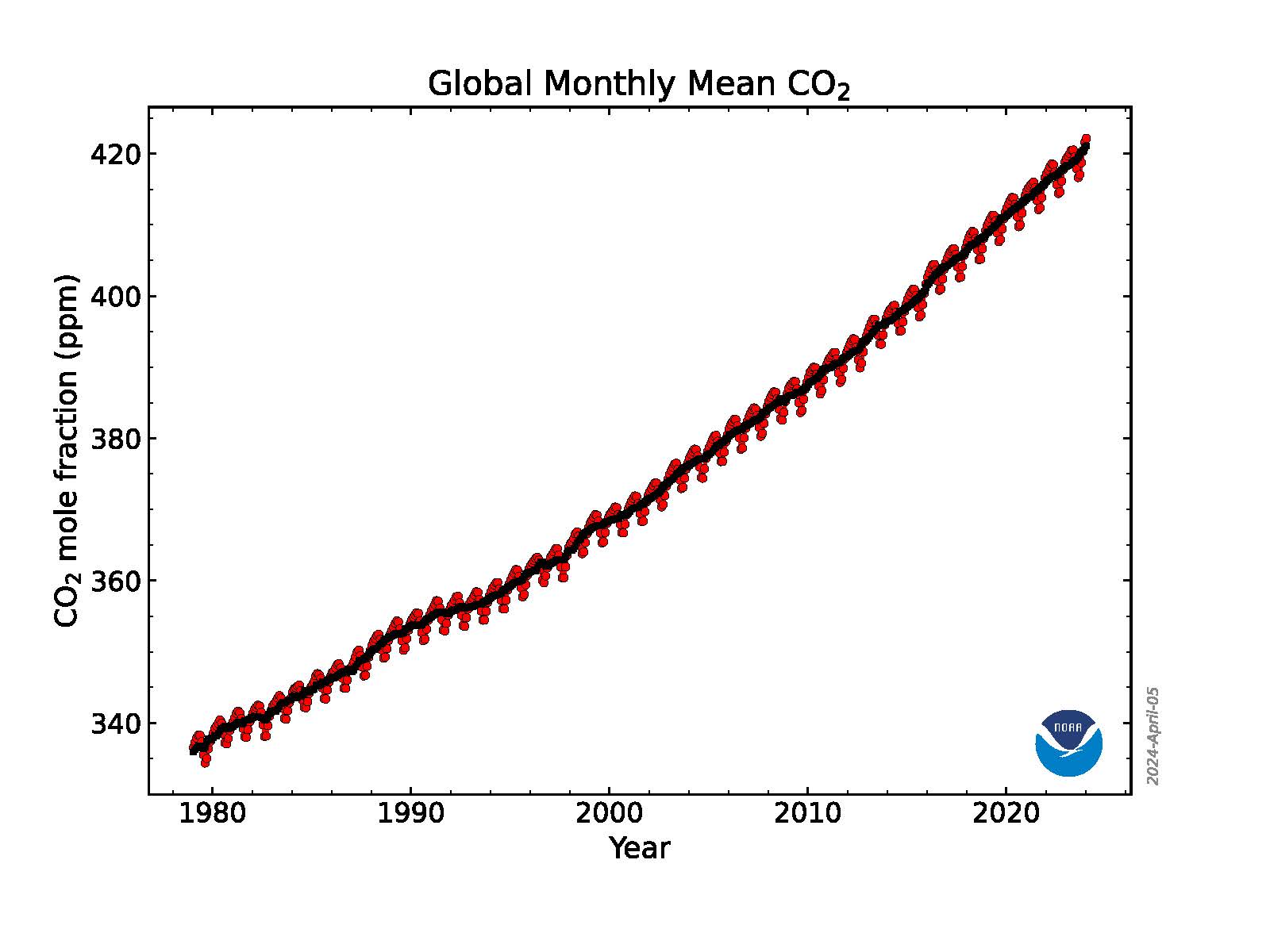
This graph shows the globally averaged monthly mean carbon dioxide abundance measured at the Global Monitoring Laboratory’s global network of air sampling sites since 1980. Data are still preliminary, pending recalibrations of reference gases and other quality control checks. Credit: NOAA GML

“The 2023 increase is the third-largest in the past decade, likely a result of an ongoing increase of fossil fuel CO2 emissions, coupled with increased fire emissions possibly as a result of the transition from La Nina to El Nino,” said Xin Lan, a CIRES scientist who leads GML’s effort to synthesize data from the NOAA Global Greenhouse Gas Reference Network for tracking global greenhouse gas trends.

Atmospheric methane, less abundant than CObut more potent at trapping heat in the atmosphere, rose to an average of 1922.6 parts per billion (ppb). The 2023 methane increase over 2022 was 10.9 ppb, lower than the record growth rates seen in 2020 (15.2 ppb), 2021(18 ppb)  and 2022 (13.2 ppb), but still the 5th highest since renewed methane growth started in 2007. Methane levels in the atmosphere are now more than 160% higher than their pre-industrial level.
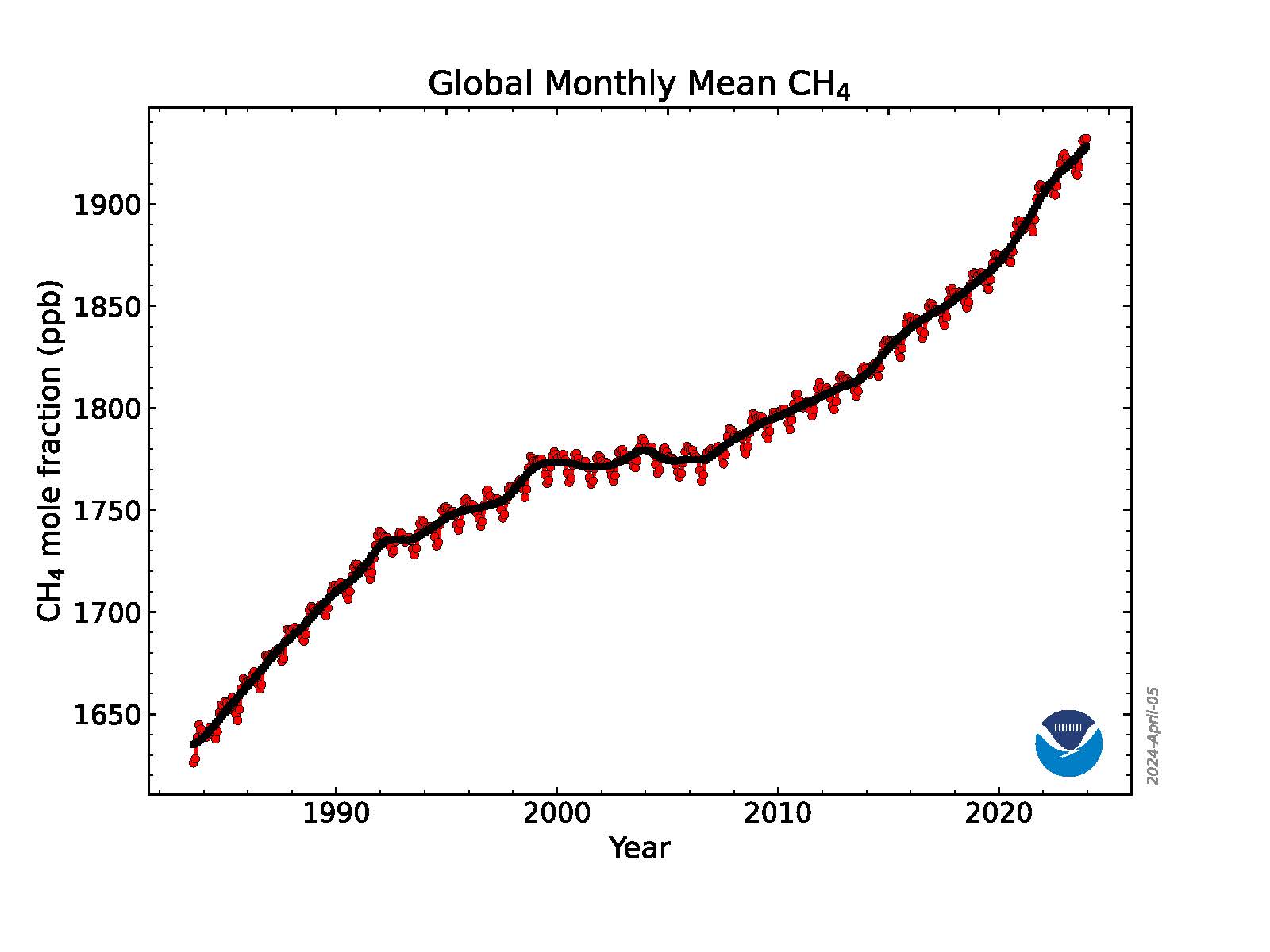
This graph shows globally-averaged, monthly mean atmospheric methane abundance determined from marine surface sites for the full NOAA time-series starting in 1983. Values for the last year are preliminary, pending recalibrations of standard gases and other quality control steps. Credit: NOAA GM

In 2023, levels of nitrous oxide, the third-most significant human-caused greenhouse gas, climbed by 1 ppb to 336.7 ppb. The two years of highest growth since 2000 occurred in 2020 (1.3 ppb) and 2021 (1.3 ppb). Increases in atmospheric nitrous oxide during recent decades are mainly from use of nitrogen fertilizer and manure from the expansion and intensification of agriculture. Nitrous oxide concentrations are 25% higher than the pre-industrial level of 270 ppb.

Taking the pulse of the planet one sample at a time
NOAA’s Global Monitoring Laboratory collected more than 15,000 air samples from monitoring stations around the world in 2023 and analyzed them in its state-of-the-art laboratory in Boulder,

Colorado. Each spring, NOAA scientists release preliminary calculations of the global average levels of these three primary long-lived greenhouse gases observed during the previous year to track their abundance, determine emissions and sinks, and understand carbon cycle feedbacks.

Measurements are obtained from air samples collected from sites in NOAA’s Global Greenhouse Gas Reference Network, which includes about 53 cooperative sampling sites around the world, 20 tall tower sites, and routine aircraft operation sites from North America. 

Carbon dioxide emissions remain the biggest problem 

By far the most important contributor to climate change is CO, which is primarily emitted by burning of fossil fuels. Human-caused CO2 pollution increased from 10.9 billion tons per year in the 1960s – which is when the measurements at the Mauna Loa Observatory in Hawaii began – to about 36.8 billion tons per year in 2023. This sets a new record, according to the Global Carbon Project, which uses NOAA’s Global Greenhouse Gas Reference Network measurements to define the net impact of global carbon emissions and sinks.
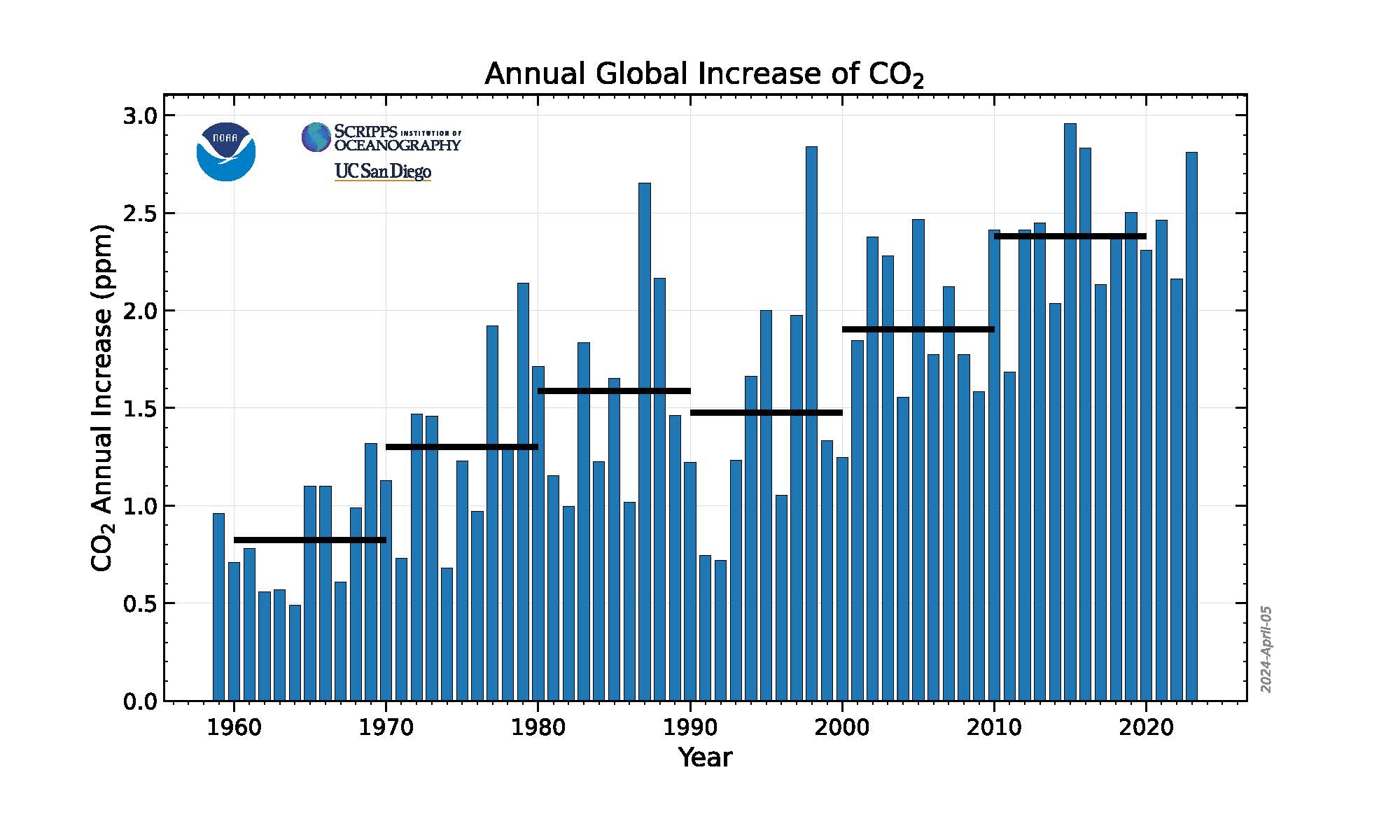
This graph shows annual mean growth rates of carbon dioxide based on globally averaged marine surface data. Decadal averages of the growth rate are plotted as horizontal lines. Credit: NOAA GML

The amount of CO2 in the atmosphere today is comparable to where it was around 4.3 million years ago during the mid-Pliocene epoch, when sea level was about 75 feet higher than today, the average temperature was 7 degrees Fahrenheit higher than in pre-industrial times, and large forests occupied areas of the Arctic that are now tundra. 

About half of the CO2 emissions from fossil fuels to date have been absorbed at the Earth’s surface, divided roughly equally between oceans and land ecosystems, including grasslands and forests. The CO2 absorbed by the world’s oceans contributes to ocean acidification, which is causing a fundamental change in the chemistry of the ocean, with impacts to marine life and the people who depend on them. The oceans have also absorbed an estimated 90% of the excess heat trapped in the atmosphere by greenhouse gases. 

Research continues to point to microbial sources for rising methane

NOAA’s measurements show that atmospheric methane increased rapidly during the 1980s, nearly stabilized in the late-1990s and early 2000s, then resumed a rapid rise in 2007. 

2022 study by NOAA and NASA scientists and additional NOAA research in 2023 suggests that more than 85% of the increase from 2006 to 2021 was due to increased microbial emissions generated by livestock, agriculture, human and agricultural waste, wetlands and other aquatic sources. The rest of the increase was attributed to increased fossil fuel emissions. 

“In addition to the record high methane growth in 2020-2022, we also observed sharp changes in the isotope composition of the methane that indicates an even more dominant role of microbial emission increase,” said Lan. The exact causes of the recent increase in methane are not yet fully known. 

NOAA scientists are investigating the possibility that climate change is causing wetlands to give off increasing methane emissions in a feedback loop. 

To learn more about the Global Monitoring Laboratory’s greenhouse gas monitoring, visit: https://gml.noaa.gov/ccgg/trends/.

Media Contact: Theo Stein, theo.stein@noaa.gov, 303-819-7409

#GunnisonRiver Basin ends winter season at about average #snowpack: Almost half the basin is dry or in moderate #drought — The #CrestedButte News

Click the link to read the article on The Crested Butte News website (Katherine Nettles). Here’s an excerpt:

April 17, 2024

As winter transitions to spring in the high country, the Upper Gunnison Basin might be heading into a warm and dry spell and holds at about average for the year on snowpack. A three-month forecast is predicting spring might be (mostly) here to stay, with warmer and drier weather to come. Spring runoff may be kicking into high gear in the next few weeks as the layers of dust within the snowpack from two recent wind events could lead to a faster melt off period as well…According to Upper Gunnison River Water Conservancy District (UGRWCD) senior program manager Beverly Richards, soil saturation and weather could make a difference for spring runoff season.

“The soil moisture at this time is a little dryer than this time last year so the combination may have an effect on runoff amounts and timing,” she said.

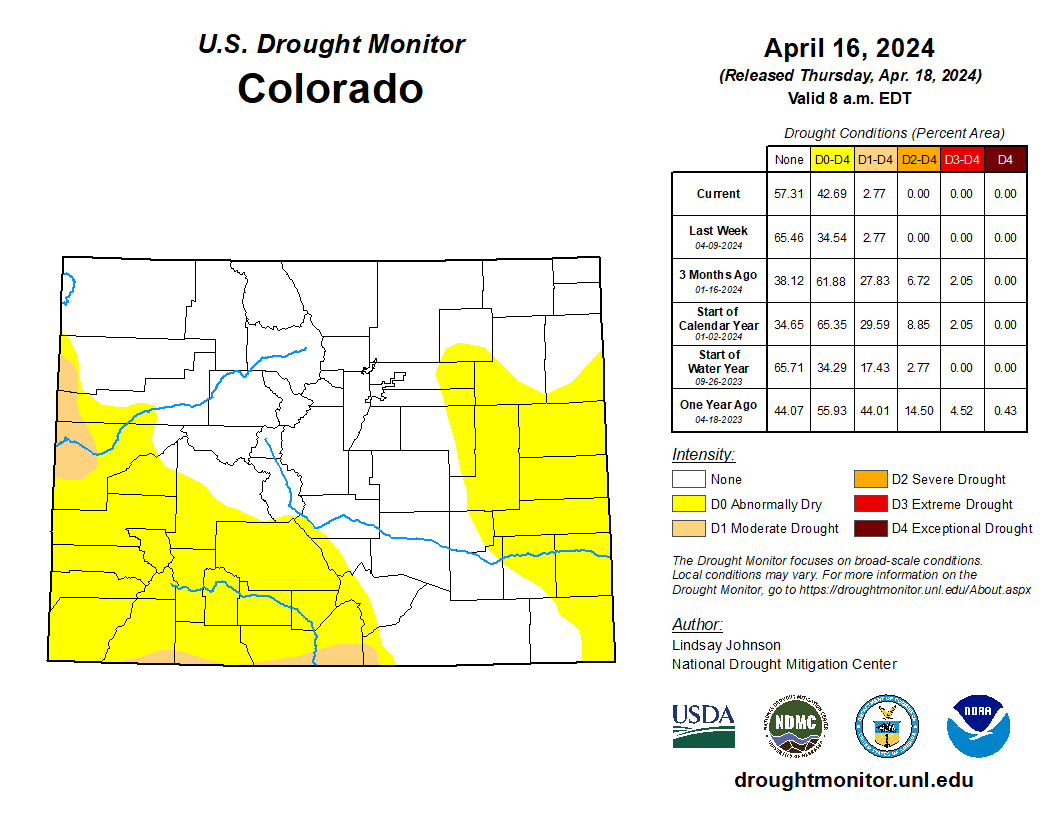
Drought conditions around the basin range from absent to moderate. As of April 2, 53% of Gunnison County was experiencing no drought conditions, and 47% of the county was experiencing abnormally dry to moderate drought conditions. In the 129-year record, this winter (January to February) was the 56th wettest year and February was the 64th driest, Richards said…

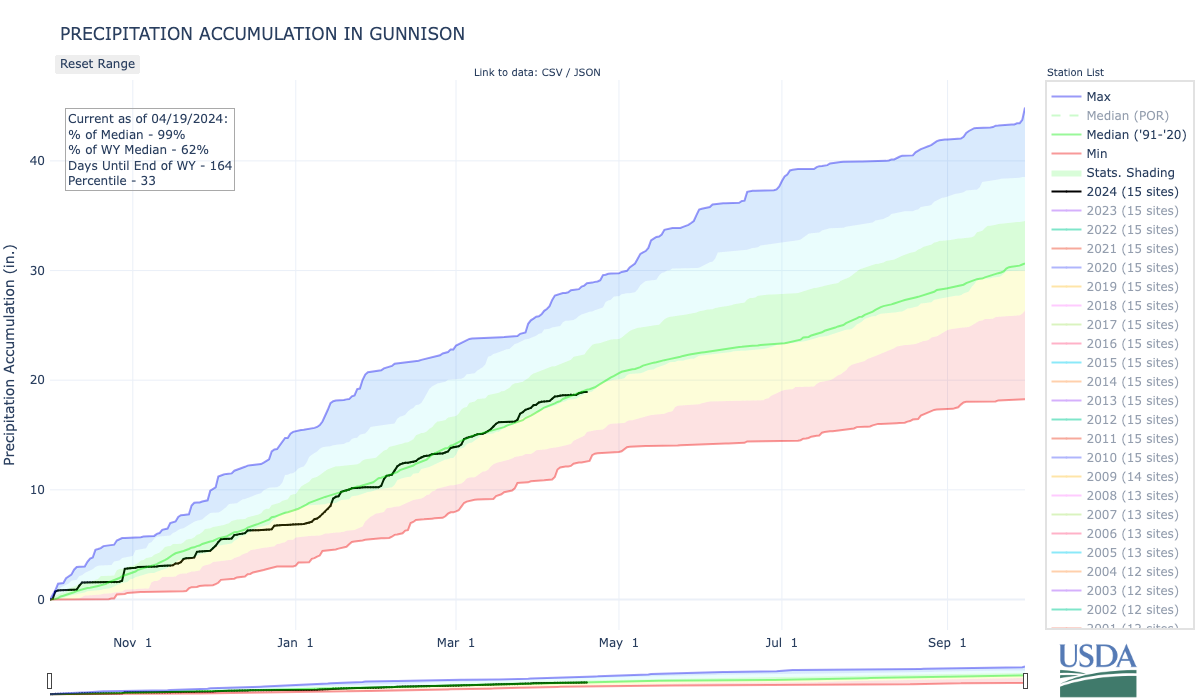
As of April 8, precipitation has ranged from 50% to 150% of normal in the county over the past 30 days, and a small portion in the southeastern corner of the county measured up to 200% of normal during the same period.

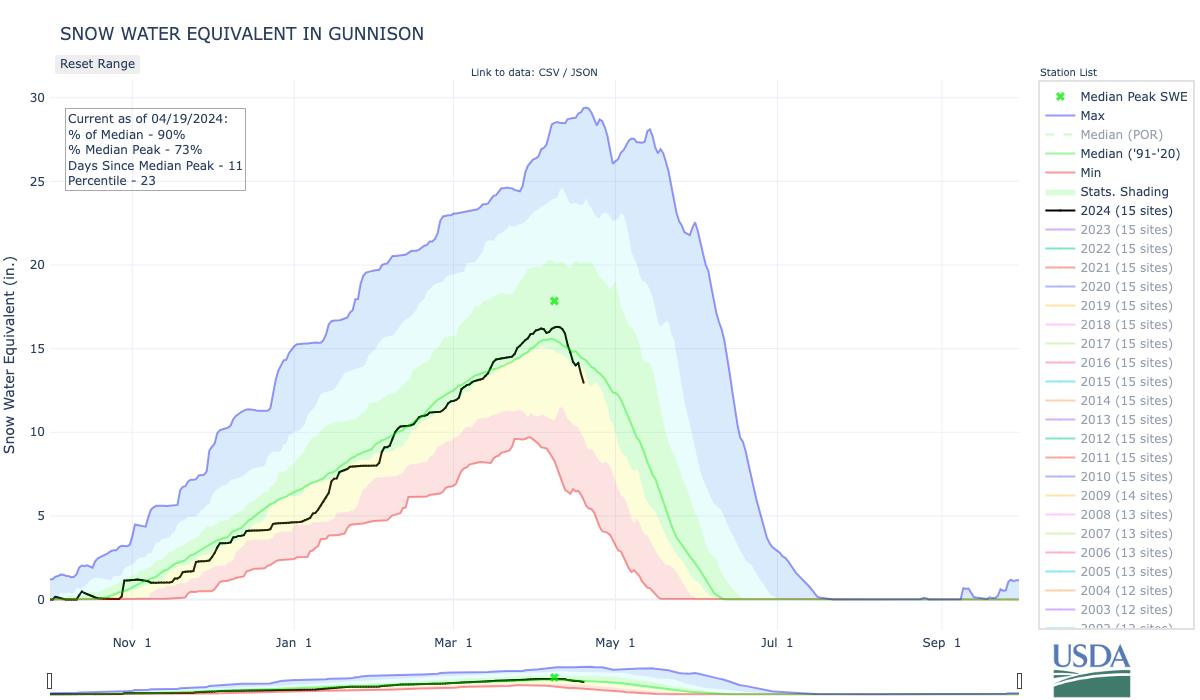
According to the National Resources Conservation Service (NRCS) the Upper Gunnison Basin snow water equivalent (SWE) as of April 7 has been measured as 116% of normal overall.  Specific locations measured as follows: 125% of normal at the Upper Taylor River location; 122% of normal at the Butte location; 107% of normal at Schofield; 126% of normal at Park Cone; 127% of normal at Porphyry Creek; and 92% of normal at Slumgullion. 

Aspinall Unit dams

Blue Mesa Reservoir is projected to fill to about 85% this spring. Reservoir storage for the entire Gunnison Basin is at 63% of average, and 65% for the Upper Gunnison Basin. The Bureau of Reclamation (BOR) has projected that Blue Mesa will fill to 85% in 2024. The National Park Service reported that Elk Creek boat ramp at Blue Mesa opened on April 11, and the reservoir was at 7,485 feet elevation as of April 10. This is about 34 feet (10 meters) below full pool at 7,519 feet (2291 meters). The BOR has reported that among reservoirs in the Upper Colorado River Basin, the Flaming Gorge is 86% full; Fontenelle is 33% full; Morrow Point is 94% full, Blue Mesa is 66% full, Navajo is 65% full, Lake Powell is 33% full and total storage across the basin is at 63%.

Colorado River Basin Plumbing. Credit: Lester Doré/Mary Moran via Dustin Mulvaney and Twitter

2024 #COleg: Bill would protect #YampaRiver Valley #coal plants’ water from abandonment: Water would stay in river after plants close in 2028 — @AspenJournalism #GreenRiver #ColoradoRiver #COriver #aridification

The coal-fired Tri-State Generation and Transmission plant in Craig is scheduled to close in 2028. Senate bill SB24-197 would allow the water rights associated with the plant to be protected from abandonment until 2050. Photo credit: Brent Gardner-Smith/Aspen Journalism

Click the link to read the article on the Aspen Journalism website (Heather Sackett):

April 17, 2024

State lawmakers are considering a bill that would let two energy companies with coal-fired power plants in northwest Colorado hang on to their water rights even after the plants’ planned closures in 2028.

Senate Bill SB24-197 says that industrial water rights held by Xcel Energy and Tri-State Generation and Transmission Association Inc. will be protected from abandonment through 2050. Under Colorado law, a water right that is not being used could end up on an abandonment list, which is compiled every 10 years.

Abandonment is the official term for one of Colorado’s best-known water adages: Use it or lose it. It means that the right to use the water is essentially canceled and ceases to exist. The water goes back into the stream where another water user can claim it.

Supporters of the bill say this protection from abandonment would give the companies a grace period to transition to clean-energy sources and eventually use the water again in new methods of energy production. In the meantime, the water will remain in the stream for the benefit of the environment, recreation and downstream irrigators.

State Sen. Dylan Roberts, D-Frisco, is one of the bill’s sponsors, and represents Clear Creek, Eagle, Garfield, Gilpin, Grand, Jackson, Moffat, Rio Blanco, Routt and Summit counties.

“The idea is if we can find a way to ensure that the water rights of the power companies are protected over the next couple of decades, this will give them a stronger incentive to find a new way to produce energy in the region,” Roberts said.

Tri-State plans to shut down its coal-fired power plant in Craig in 2028, the same year that Xcel Energy plans to close the Hayden Generating Station, which has prompted questions about what will happen to the water currently being used by the facilities.

Jackie Brown is a senior water and natural resource advisor at Tri-State. She said the bill preserves future opportunities for economic development by energy utilities in Moffat and Routt counties.

“The measures in this bill provide Tri-State with certainty that our water resources remain intact and available for future dispatchable, carbon-free generation as needed and projected in our Electric Resource Plan,” Brown said in a statement. “While we continue our planning process, keeping the utility water in the Yampa River helps all water users, creating a win-win situation.”

According to Brown, the water used from the Yampa River by both energy companies is estimated to be about 44 cubic feet per second of flow. But, if the bill passes, engineers will officially quantify by 2030 the amount of water that the industries have historically used, and that is the amount that will be protected from abandonment. Any portion of the water rights that the energy companies lease to a third party would not be protected from abandonment.

The Yampa River begins in the Flat Tops Wilderness, flows through the city of Steamboat Springs and west through Routt and Moffat counties to Dinosaur National Monument, and eventually joins with the Green River. The Yampa River basin was one of the last to be developed in the state and in recent years has begun experiencing some of the issues long present in other areas such as shortages, calls, an overappropriation designation and stricter enforcement of state measurement rules.

In 2018, irrigators placed the first call on the river, triggering cutbacks from junior water users. When an irrigator is not receiving the entire amount of water to which they are legally entitled, they can place a call, which requires water-rights holders with younger water rights to stop irrigating so the senior water user can get their share. The Colorado River Water Conservation District, the Colorado Water Trust and others have made releases out of Elkhead Reservoir to get extra water to these senior downstream irrigators and keep the call off the river.

The Lefevre family prepares to put their rafts in at Pebble Beach for a float down the Yampa River to Loudy Simpson Park in Craig in June 2021. When the coal-fired power plants shut down in 2028, the water they currently use will be left in the water to the benefit of the environment, recreation and downstream irrigators. From left, Marcie Lefevre, Nathan Lefevre, Travis Lefevre and Sue Eschen.
CREDIT: HEATHER SACKETT/ASPEN JOURNALISM

Support from environmental groups

SB 197 has gained support from environmental groups, including Conservation Colorado, The Nature Conservancy and Western Resource Advocates. Josh Kuhn, senior water campaign manager with Conservation Colorado, said leaving the water in the river will have environmental benefits such as lowering the often-too-high temperature of the Yampa, boost flows for recreation and the environment, and prevent calls on the river.

But the benefit to the river and water users from SB 197 may only be temporary. The energy companies will still own the water rights and may begin using them again whenever they want.

“It has been made clear that there’s no assurances that the water will be there on a permanent basis because Tri-State wants the ability to use that water to generate additional renewable clean-energy supplies in the future,” Kuhn said. “So there is a shared understanding that this is being done on a temporary basis.”

With the impending closure of the coal mines and power plants that by one estimate will result in 800 lost jobs, some see the Yampa River as an underutilized amenity that could supply recreation jobs and enhance quality of life. Supporters of the bill say keeping the energy companies’ water in the river and protected from abandonment will ensure that the water is not diverted out of the basin.

“The Yampa is already a river that suffers the impacts of climate-driven drought,” Kuhn said. “And so, in order to help protect that river and the economy that’s dependent upon it, they were looking for solutions to make sure that none of that water was exported to another basin.”

The protection of the energy companies’ water rights is just one facet of SB 197, which would also implement recommendations from last year’s Colorado River Drought Task Force. These include expanding the state’s instream-flow temporary loan program to let owners of water stored in reservoirs to loan it for the benefit of the environment in stream reaches where the state does not hold an instream-flow water right; expanding the state’s agricultural water rights protection program; and waiving the matching funds requirement for water project grants to the Southern Ute and Ute Mountain Ute tribal nations.

Roberts was the sponsor of 2023’s SB 295, which created the drought task force. Although the 17-member task force did not advance protections for industrial water rights from abandonment as an official recommendation (it failed on a 9-7 vote), it was included in the narrative section of the report that it provided to lawmakers.

“I’ve been working on this for months with the energy companies, with the state, with environmental groups and with local stakeholders in Routt and Moffat counties,” Roberts said. “And we narrowed the proposal significantly, and now almost everybody who was opposed on the task force is supportive of this idea moving forward.”

SB 197 passed unanimously in the Senate on Wednesday [April 17, 2024] and will now be up for approval by the House.

Yampa River Basin via Wikimedia.

Native American voices are finally factoring into energy projects – a hydropower ruling is a victory for environmental justice on tribal lands — The Conversation #ActOnClimate

Emily Benton Hite, Saint Louis University and Denielle Perry, Northern Arizona University

The U.S. has a long record of extracting resources on Native lands and ignoring tribal opposition, but a decision by federal energy regulators to deny permits for seven proposed hydropower projects suggests that tide may be turning.

As the U.S. shifts from fossil fuels to clean energy, developers are looking for sites to generate electricity from renewable sources. But in an unexpected move, the Federal Energy Regulatory Commission denied permits on Feb. 15, 2024, for seven proposed hydropower projects in Arizona and New Mexico.

The reason: These projects were located within the Navajo Nation and were proposed without first consulting with the tribe. FERC said it was “establishing a new policy that the Commission will not issue preliminary permits for projects proposing to use Tribal lands if the Tribe on whose lands the project is to be located opposes the permit.”

We are a cultural anthropologist and a water resource geographer who have studied tensions between Indigenous rights, climate governance and water management in the U.S. and globally for over 20 years. In our view, the commission’s decision could mark a historic turning point for government-to-government relations between the U.S. government and tribal nations.

How might this new approach shape future energy development on tribal lands throughout the U.S.? Given the federal government’s long history of exploiting Native American resources without tribal consent, we’re following FERC’s actions for further evidence before assuming that a new era has begun.

Extraction on tribal lands

Around the world, many Indigenous communities argue that their lands have been treated as sacrifice zones for development. This includes the U.S., where the federal government holds 56.2 million acres in trust for various tribes and individuals, mostly in western states.

The trust responsibility requires the U.S. government to protect Indigenous lands, resources and rights and to respect tribal sovereignty. Consulting with tribes about decisions that affect them is fundamental to this relationship.

Energy resources on U.S. Native lands include coal, oil, uranium, solar, wind and hydropower. There is a long history of coal and uranium mining in Navajo territory in the Southwest, and tribal lands now are targets for renewable energy projects. Large fractions of known reserves of critical minerals for clean energy, like copper and cobalt, are on or near Native lands.

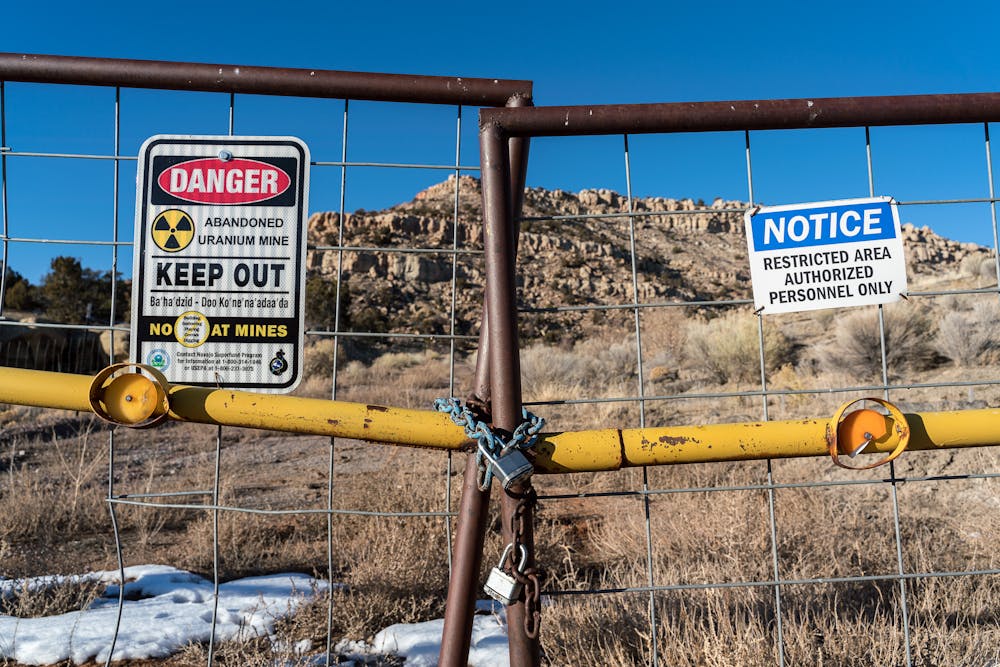
Signs on a wire fence read 'Danger,' 'Abandoned Uranium Mine' and 'Restricted Area'
Signs at an abandoned uranium mine near the Navajo community of Red Water Pond Road, New Mexico. Washington Post via Getty Images

Many past energy projects have left scars. Navajo lands are studded with abandoned uranium mining sites that threaten residents’ health. Over 1.1 million acres of tribal lands have been flooded by hundreds of dams built for hydropower and irrigation. Fossil fuel pipelines like Dakota Access in North Dakota and Line 5 in Wisconsin and Michigan carry oil across Native lands, threatening water supplies in the event of leaks or spills.

Hydropower project impacts

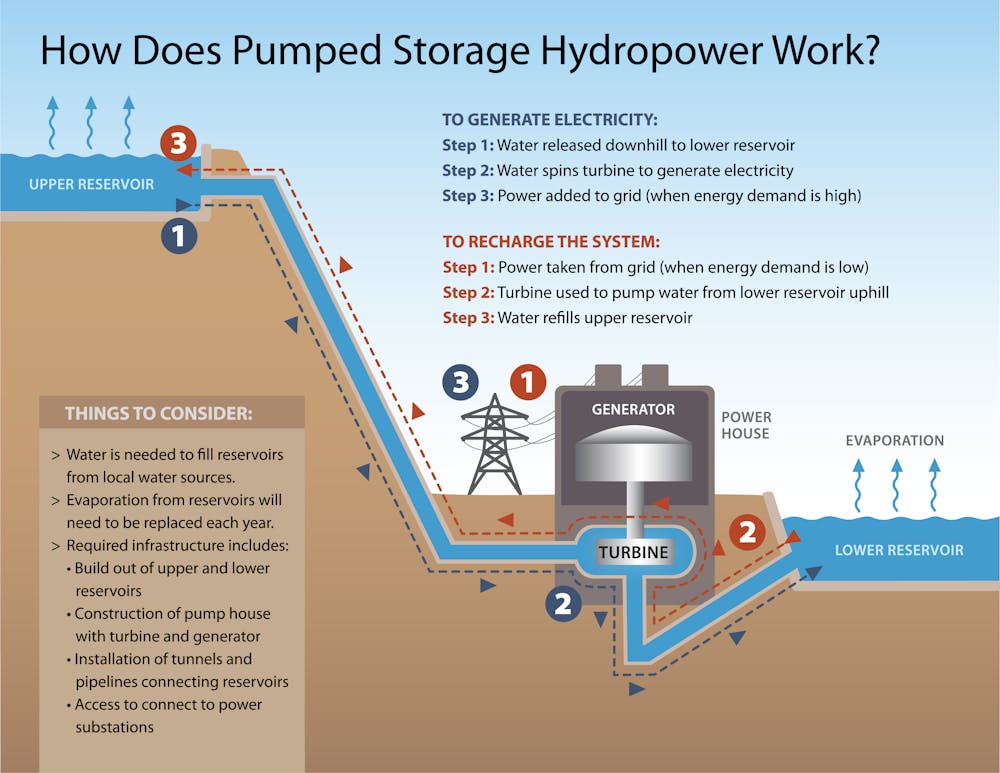
The seven permits FERC denied in February 2024 were requested by private companies seeking to build pumped hydropower storage projects. These systems pump water uphill to a reservoir for storage. When power is needed, water is released to flow downhill through turbines, generating electricity as it returns to a lower reservoir or river.

Currently there are over 60 pumped storage proposals pending across the U.S. Pumped storage typically requires constructing massive concrete-lined tunnels, powerhouses, pipelines and transmission systems that can damage surrounding lands.

Withdrawing water for hydropower could disrupt rivers and sacred sites that are culturally and spiritually important for many tribes. These projects also threaten water security – a critical issue in arid western states.

Colorado River water is already over-allocated among western states, which hold legal rights to withdraw more water than is in the river. As a result, many pumped storage projects would require groundwater to fill their reservoirs. The proposed Big Canyon project in Arizona, for example, would require up to 19 billion gallons of groundwater, taken from aquifers that support local springs and streams.

Infographic showing a pumped storage system
Pumped storage hydropower transfers water between two reservoirs to generate electricity. It requires a local water source to fill the reservoirs. Joan Carstensen, Grand Canyon Trust, CC BY-ND

FERC’s trust responsibility

The Federal Energy Regulatory Commission is an independent agency that licenses and oversees interstate transmission of electricity, natural gas and oil; natural gas pipelines and terminals; and hydropower projects. Under a 1986 law, the agency is required to consider factors including environmental quality, biodiversity, recreational activities and tribal input in making licensing decisions.

However, the U.S. government has a long record of carrying out projects despite Native opposition. For example, under the Pick-Sloan Plan, the U.S. Army Corps of Engineers built five dams on the Missouri River in the late 1950s and early 1960s that flooded over 350,000 acres of tribal lands. Tribes were not consulted, and communities were forcibly relocated from their ancestral homelands.

In 2000, President Bill Clinton issued Executive Order 13175, directing federal agencies to engage in “regular and meaningful consultation and collaboration with tribal officials” in developing federal policies that affect tribes. Each agency interprets how to do this.

In his first week in office in 2021, President Joe Biden reaffirmed this responsibility and nominated U.S. Rep. Deb Haaland as Secretary of the Interior – the first Native American to head the agency that administers the U.S. trust responsibility to Native Americans and Alaska Natives.

FERC’s new direction

Tribes have called FERC’s record of consultation with Native Americans “abysmal.” Recently, however, the agency has started to make its operations more inclusive.

In 2021, it created a new Office of Public Participation, a step its then-chair, Richard Glick, called “long overdue.” And in 2022, the agency released its Equity Action Plan, designed to help underserved groups participate in decisions.

In canceling the projects in February, FERC cited concerns raised by the Navajo Nation, including negative impacts on water, cultural and natural resources and biological diversity. It also stated that “To avoid permit denials, potential applicants should work closely with Tribal stakeholders prior to filing applications to ensure that Tribes are fully informed about proposed projects on their lands and to determine whether they are willing to consider the project development.”

Aligning clean energy and environmental justice

Many more energy projects are proposed or envisioned on or near tribal lands, including a dozen pumped storage hydropower projects on the Colorado Plateau. All 12 are opposed by tribes based on lack of consultation and because tribes are still fighting to secure their own legal access to water in this contested basin under the 1922 Colorado River Compact.

We recently analyzed FERC’s handling of the Big Canyon pumped hydropower storage project, which would be located on Navajo land in Arizona, and concluded that the agency had not adequately consulted with the tribe in its preliminary permitting. In the wake of its February ruling, the agency reopened the public comment period on Big Canyon for an additional 30 days, with a decision likely later in 2024.

The Biden administration has set ambitious targets for halting climate change and accelerating the shift to clean energy while promoting environmental justice. In our view, meeting those goals will require the federal government to more earnestly and consistently live up to its trust responsibilities.

Emily Benton Hite, Assistant Professor of Sociology and Anthropology, Saint Louis University and Denielle Perry, Associate Professor, School of Earth and Sustainability, Northern Arizona University

This article is republished from The Conversation under a Creative Commons license. Read the original article.

Biden-Harris Administration Finalizes Strategy to Guide Balanced Management, Conservation of Public Lands

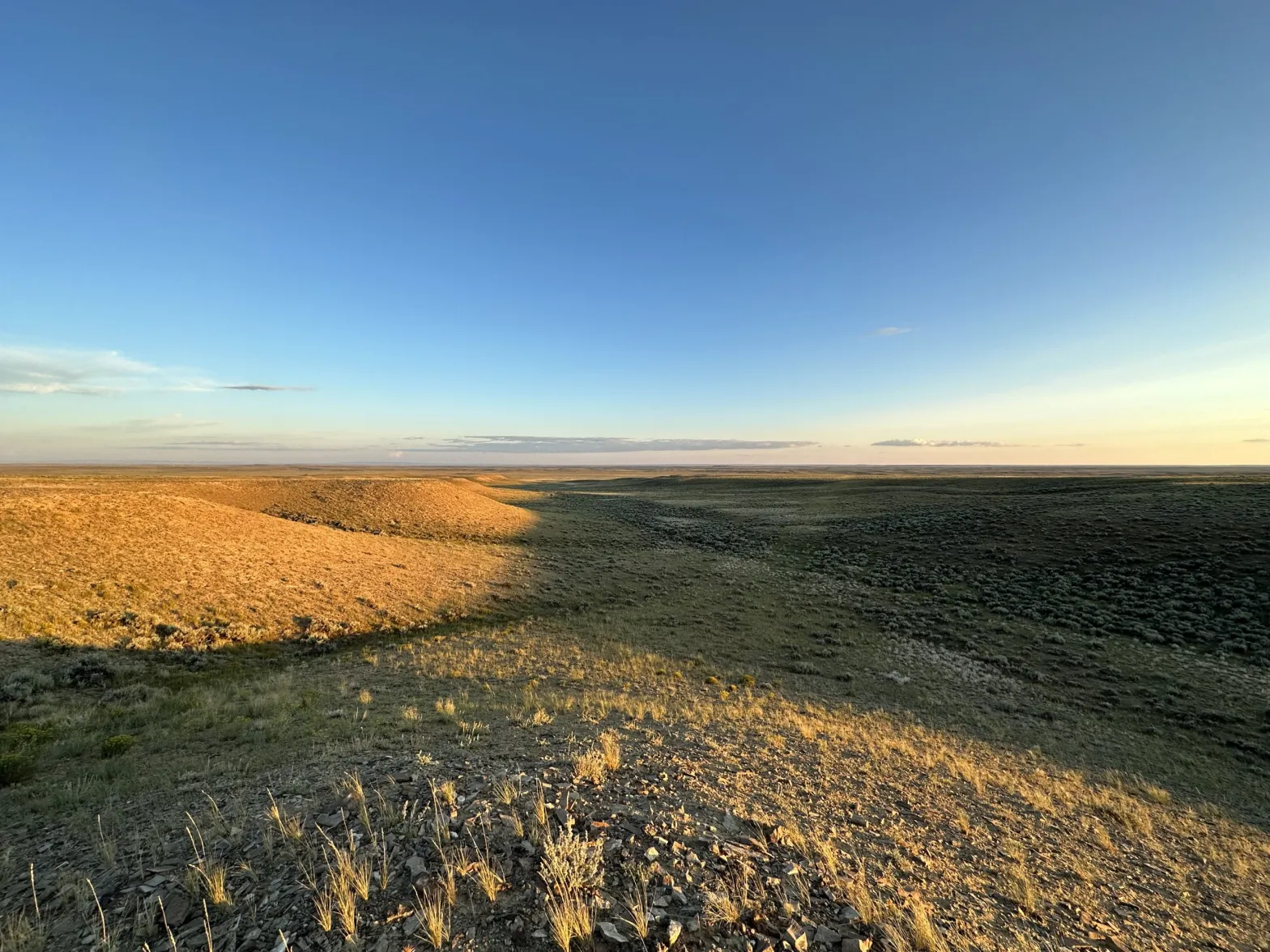
Tracts of unbroken sagebrush in the Green River basin, pictured, are part of the core of the biome. Restoration efforts have gone relatively smoothly in areas like Sublette County where non-native species haven’t gained major ground. (Mike Koshmrl/WyoFile)

Click the link to read the article on the U.S. Department of Interior website:

April 18, 2024

Public Lands Rule will help conserve wildlife habitat, restore places impacted by wildfire and drought, expand outdoor recreation, and guide thoughtful development

WASHINGTON — The Department of the Interior today announced a final rule to help guide the balanced management of America’s public lands. The final Public Lands Rule provides tools for the Bureau of Land Management (BLM) to help improve the health and resilience of public lands in the face of a changing climate; conserve important wildlife habitat and intact landscapes; facilitate responsible development; and better recognize unique cultural and natural resources on public lands. 

The Public Lands Rule builds on historic investments in public lands, waters and clean energy deployment provided by President Biden’s Investing in America agenda, which recognizes the critical value of our public lands to all Americans. It also complements the President’s America the Beautiful initiative, a 10-year, locally led and nationally scaled effort to protect, conserve, connect and restore the lands, waters and wildlife upon which we all depend. 

Building on decades of land management experience and emphasizing the use of science and data, including Indigenous Knowledge, to guide balanced decision-making, the rule applies the existing fundamentals of land health across BLM programs, establishes restoration and mitigation leases, and clarifies practices to designate and protect Areas of Critical Environmental Concern (ACECs). The rule will help to ensure the BLM continues to protect land health while managing other uses of the public lands, such as clean energy development and outdoor recreation. 

“As stewards of America’s public lands, the Interior Department takes seriously our role in helping bolster landscape resilience in the face of worsening climate impacts. Today’s final rule helps restore balance to our public lands as we continue using the best-available science to restore habitats, guide strategic and responsible development, and sustain our public lands for generations to come,” said Secretary Deb Haaland. “Complemented with historic investments from President Biden’s Investing in America agenda, we are implementing enduring changes that will benefit wildlife, communities and habitats.” 

“America’s public lands are our national treasures and need to be managed and made resilient for future generations of Americans,” said John Podesta, Senior Advisor to the President for International Climate Policy. “Today’s final rule from the Department of the Interior is a huge win for ensuring balance on our public lands, helping them withstand the challenges of climate change and environmental threats like invasive species, and making sure they continue to provide services to the American people for decades to come.” 

“The Interior Department is ensuring our public lands are managed with an eye to future generations, complementing President Biden’s ambitious conservation agenda,” said White House Council on Environmental Quality Chair Brenda Mallory. “From the most rugged backcountry spots to popular close-to-home recreation areas, these reforms will help deliver cleaner water, healthier lands, abundant wildlife, and more recreation opportunities for all of us.” 

The final rule comes amid growing pressures and historic challenges facing land managers. The impacts of climate change—including prolonged drought, increasing wildfires, and an influx of invasive species—pose increasing risks to communities, wildlife and ecosystems. The Public Lands Rule will help the BLM navigate changing conditions on the ground, while helping public lands continue to serve as economic drivers across the West.

“The BLM received and considered over 200,000 comments on the proposed rule from individuals, state, Tribal and local governments, industry groups and advocacy organizations, which led to important improvements in this final rule,” said Principal Deputy Assistant Secretary for Land and Minerals Management Dr. Steve Feldgus. “Continued broad collaboration with this diverse group of partners will be key to our implementation of this rule to ensure that our public lands are being managed for all Americans.” 

“Our public lands provide wildlife habitat and clean water, the energy that lights our homes, the wood we build with, and the places where we make family memories,” said BLM Director Tracy Stone-Manning. “This rule honors our obligation to current and future generations to help ensure our public lands and waters remain healthy amid growing pressures and change.” 

The final rule clarifies and refines concepts first proposed in April 2023. The BLM provided a 90-day comment period on this rule, holding five public meetings and receiving over 200,000 comments, the vast majority of which supported the effort. In response to the substantive comments received, the BLM clarified and refined concepts laid out in the proposed rule. 

The final rule:

  • Directs BLM to manage for landscape health. Successful public land management that delivers natural resources, wildlife habitat and clean water requires a thorough understanding of the health and condition of the landscape, especially as conditions shift on the ground due to climate change. To help sustain the health of our lands and waters, the rule directs the BLM to manage public land uses in accordance with the fundamentals of land health, which will help watersheds support soils, plants, and water; ecosystems provide healthy populations and communities of plants and animals; and wildlife habitats on public lands protect threatened and endangered species consistent with the multiple use and sustained yield framework.  
  • Provides a mechanism for restoring and protecting our public lands through restoration and mitigation leases. Restoration leases provide greater clarity for the BLM to work with appropriate partners to restore degraded lands. Mitigation leases will provide a clear and consistent mechanism for developers to offset their impacts by investing in land health elsewhere on public lands, like they currently can on state and private lands. The final rule clarifies who can obtain a restoration or mitigation lease, limiting potential lessees to qualified individuals, businesses, non-governmental organizations, Tribal governments, conservation districts, or state fish and wildlife agencies. Restoration and mitigation leases will not be issued if they would conflict with existing authorized uses. 
  • Clarifies the designation and management of ACECs. The final rule provides greater detail about how the BLM will continue to follow the direction in the Federal Land Policy and Management Act to prioritize the designation and protection of ACECs. Following public comments, the final rule clarifies how BLM consideration of new ACEC nominations and temporary management options does not interfere with the BLM’s discretion to continue advancing pending project applications.

The Public Lands Rule complements the BLM’s recently announced final Renewable Energy Rule, providing consistent direction and new tools for mitigation, helping advance the efficient and environmentally responsible development of renewable energy on BLM-managed public lands, providing greater clarity and consistency in permitting, and allowing for the continued acceleration of project reviews and approvals, while managing public lands under the principles of multiple use and sustained yield.

The final rule will publish in the Federal Register in the coming days.