A huge year for #Colorado #solar in 2023. And it’s just a beginning — Allen Best (@BigPivots)

Photo credit: Allen Best/Big Pivots

Click the link to read the article on the Big Pivots website (Allen Best):

April 4, 2023

Mike Kruger of the Colorado Solar and Storage Association explains why the big jump now and how storage has become an important component of the trade organization’s agenda.

First, a question for you: What is your first reaction to seeing the chart below. Is it wow! Or had you already realized that this was coming, this break-out year for solar in Colorado?

When I talked with Mike Kruger, who directs Colorado Solar and Storage Association, he assured me that most readers of Big Pivots will not be surprised. Most saw it coming – and, in fact, had it not been for Covid and the supply disruptions, Colorado might have had its big leap during 2021.

The chart comes from the Solar Energy Industries Association report of March 2024. The report — which brims with interesting data — says nearly 40% of Colorado’s 4,112 megawatts of installed solar capacity was installed in 2023. And that Colorado is projected to gain another 2,835 megawatts of capacity in the next five years.

Credit: Solar Energy Industries Association report of March 2024

A full admission: I said wow, and I had been tracking this story since roughly 2016 – which is one place where this story starts. Xcel Energy that year began its electric resource planning cycle. It got bids late in 2017 and announced them just after Christmas. I remember seeing the e-mail distributed by Leslie Glustrom, an Xcel shareholder and watchdog. Wind, especially, but solar, too, had delivered jaw-dropping offers. In that instant it became apparent to me that coal would soon to be in our rear-view mirror.

The Colorado Public Utilities Commission approved Xcel’s plans for a deep investment in renewables in September 2018.

That November Jared Polis was elected Colorado governor after having campaigned on a platform of 100% renewables.

In early December, Xcel Energy announced it planned to achieve an 80% reduction in carbon emissions by 2030 as compared to 2005 levels. Platte River Power Authority announced an even more ambitious goal in December but one festooned with conditions. And by the next May, Colorado had a law that required Xcel and Black Hills Energy to attain 80% decarbonization by 2030.

Kruger had arrived in the midst of this sudden pivot to take the reins of what was then called the Colorado Solar Energy Industries Association. At the time, the staff consisted of Kruger and one other individual. The organization now has six staff members, suggestive of the growth of the solar industry in Colorado.

On a recent Friday, between an emergency discussion about legislative affairs and his next appointment, Kruger talked with Big Pivots for about 25 minutes about the context for this graph and the story that lies beyond.

Big Pivots: What explains this big jump in solar during 2023 in Colorado?

Mike Kruger: We’re finally seeing the fruits of some of our labors here to decarbonize stuff. The big jump is explained largely by Thunder Wolf and Neptune, Xcel’s two big solar projects in Pueblo County. Nearly 500 MWs of new solar and 125 megawatts of battery as well. All are for Xcel Energy. And then we have the projects of the electrical cooperatives, including the 80-megawatt project out by Bennett (east of Denver). Hunter. That power goes to CORE Electric Cooperative and …

Holy Cross Energy.

Yeah. The Hunter project came on in 2023. Multiple other smaller projects entered service in 2023, too.

We’re just seeing the fruits of the labor by COSSA and other advocacy groups to decarbonize. Neptune and Thunder Wolf were a result of the solicitation in 2017 that came online in 2023. So it takes time to build these things. Obviously, we have a pandemic between them, which pushed the timeline even further.

Now that they’ve been set up, these dominoes are going to start falling. We’re going to really see hundreds, if not thousands, of megawatts of solar added to the grid every year through the rest of the decade.

In 2019, when we passed our first decarbonization bill, we had a 15-gigawatt system in Colorado. That was our peak demand. 80% of that is around 12 gigawatts of demand. Through 2019, we had installed about 2 gigawatts of renewables, mostly wind.

So, to meet those decarbonization goals, you have to build a lot of solar farms. You have to put up a lot of wind turbines. For the first time we’re seeing that legislative and policy work finally coming together.

We can only expect it to get bigger. The future now is 25 gigawatts by 2034, according to modeling by the Colorado Energy Office. To hit that we now have to add a gigawatt (of generation) every year for all the 2020s and then need to add two gigawatts a year for the first five years of the 2030s.

It’s a good time to be a solar installer, to be a solar developer. There’s a “gignormous” market in Colorado. It’s heavily competitive, but it‘s a big market.
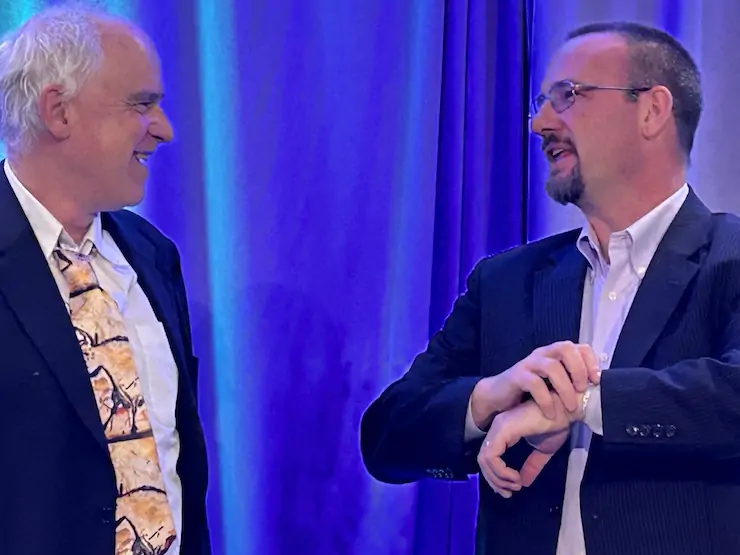
Mike Kruger, right, and Will Toor, director of the Colorado Energy Office, after a panel discussion about net-metering at the Colorado Solar and Storage Association annual conference in February. Credit: Allen Best/Big Pivots

How deeply is this understood within your industry. And how well do you think the general public understands this?

I suspect the world’s energy geeks recognize where solar is and where it’s going to be. I don’t think they would be surprised. In fact, I think most would be frustrated that the jump didn’t happen in 2021 rather than in 2023.

And I don’t think any Big Pivots readers would be surprised. They might be surprised by the size of the jump, but we are starting from a pretty small base.

As for people writ large, they have no idea that renewables were responsible last year for 30% of Colorado’s electric grid. I think most people would be shocked. If you were an Xcel customer, it was even higher, I think close to 50%.

And you didn’t experience outages, or at least any more outrages than you have experienced previously. You lost power for four hours in 2023, like you did in 2022, like you did in 2021, right? That speaks to how well the utilities are quickly figuring this stuff out. Kudos to them. They have one job, keep the lights on, and they’re doing it with now a much higher carbon-free mix and more intermittent generation.

OK, what we see here was basically an outcome of decisions made in 2017. If memory serves me, for much of that decade prices for solar had come down 10% a year. Although I think the costs have now leveled off.

Some of the best prices we had were in that Xcel RFP from 2017. The prices are up now. They’ve elevated, but they’re still tons cheaper than the alternatives. Go back to Xcel Energy’s most recent 120-day report. Even solar-plus-storage came in cheaper than gas. Nobody bid coal, but solar would come in cheaper than coal, even from the existing coal plants.

Is it as cheap as it ever was? No. But it’s still really cheap. And I think that whether you’re a homeowner or a utility — and increasingly we’re seeing corporate buyers, such as Amazon and Google — it’s a very viable option.

That’s combined with really strong (state) policy support. Our neighbors to the west gutted their efforts on solar support and generally climate friendly policies. And now they don’t have anywhere near the decarbonized electricity system that we do.

The neighbors to the west being Utah?

Yes, specifically Utah. They have one big city, like we do. No offense to our good folks in Colorado Springs and Pueblo. And they have similar geography: lots of mountains and high desert.
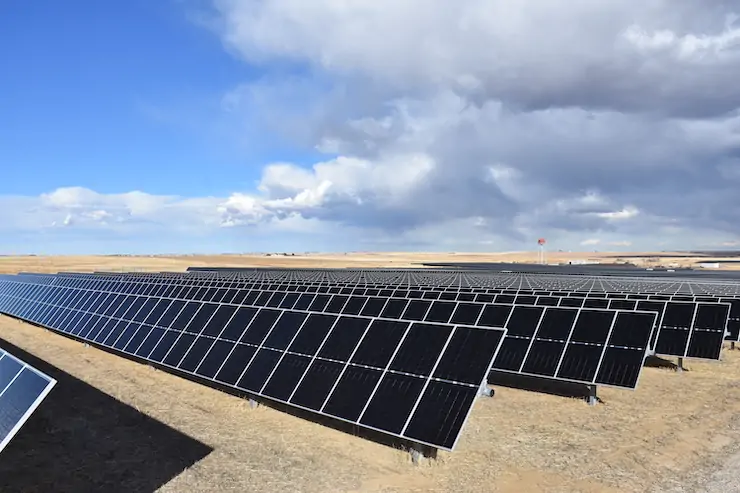
Hunter Solar, located east of Denver and south of Bennett, came online in late 2023. CORE Electrical Cooperative has 45 megawatts of the generating capacity and Holy Cross Energy has 30. Photo credit: Allen Best/Big Pivots

So your members are not surprised by this. They knew it was coming. They might’ve wished that it had happened earlier, if not for Covid. Is that surge then reflected in your organization? By that, I mean the number of members you have. And I’ve been noticing that you have added staff.

It’s a “virtuous cycle.” When I started, it was me and one other individual, and we had, I think it was, 83 to 85 members. We didn’t exactly know how many we had. This week we crossed 300 members. Now, we’re at almost four times the size. And I’ve gone from me and a single individual to now me and five others. We have six on our staff.

My membership has invested in me and the organization, and we have won a bunch of policy victories, which then opens the market even further. And then that allows those folks to invest further in the policy and advocacy work that we do.

We are getting pretty close to the top. An annual survey of companies doing work in each market shows about 350 in Colorado, and I have 300 of them. Using the kind-of-standard 80-20 rule. I think we’re probably pretty close to the top as far as membership numbers go.

That doesn’t mean those members won’t continue to grow. Part of the point of our work is to ensure that members who are currently doing two rooftop systems a week can, if their customer demand is there, expand to five a week.

Or consider Sandbox Solar in Fort Collins, which started in 2015. They were exclusively a rooftop company. All they did was residential rooftop. Now they’ve expanded into the commercial-industrial market and can be successful with multiple footprints. They’re a different company now than when they started.

If memory serves me, you came on in 2018, right?

Correct. I think my first day was Oct. 1. Then we (his family) moved here right around Halloween.

Then in the spring of 2019, my board said, we’re rebranding. We’re adding storage, so rename us, rebrand us, build a new website.

How important is that storage as a component of what you do? Do you have companies that are storage exclusive?

We have some companies that are exclusively developers of storage on a large scale.

Increasingly, we have solar folks expanding (into storage) Photon Brothers is a really good example. The company has been doing rooftop systems for maybe 10 years, and they are now the leading installer of (Tesla) Powerwalls in the state because they’ve really leaned into that. They have a group of customers for which they know so this makes good sense.

For solar of 20 megawatts or more to be bid into a utility RFP without the option to have batteries is almost unheard of.

In places that have price signals, like time-of-use rates, we see batteries being used there and also in places that are prone to outages. So we’re definitely seeing that as an expanded business opportunity, but almost always by a solar company that’s moving into that space. The exception, like I said, we have a few large-scale companies that do only battery storage.
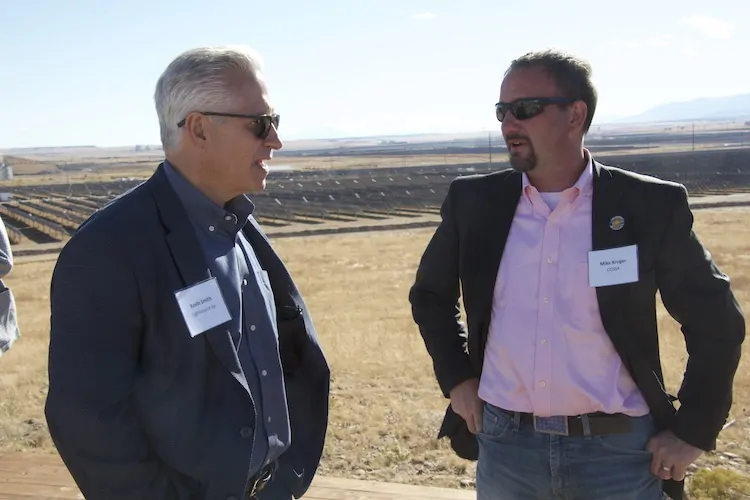
Mike Kruger, right, chats with Kevin Smith, then chief executive of Lightsource bp, upon the near completion of the Bighorn solar project in October 2021. The 300 megawatt solar project was built for Evraz, the owner of the steel mill in Pueblo. Since then Target, Walmart and Amazon have all installed solar projects associated with their operations in Colorado. Amazon has a 6-megawatt solar project in Aurora. Credit: Allen Best/Big Pivots

Looking back to before you arrived in Colorado, your predecessors spent a fair amount of time at the PUC and in meetings, trying to work toward policies. But it’s my sense that you now have two attorneys that can be engaged in the PUC process. Are there signal accomplishments that you think you’ve been able to achieve in the policy realm?

Some of the stuff I’m proudest of is still working its way through.

First, I want to be clear that I stand on the shoulders of the folks that came before me. I didn’t come into an organization that I created from scratch. We’re actually celebrating our 35th anniversary this year.

One item I’m very proud of is that we just got a tariff from Xcel and Black Hills about multi-unit net-metering so that for apartment dwellers you can put a large solar array on-site somewhere in the apartment or on the roof and the individual apartment occupants and renters can get solar credits. That’s a huge market that has not been tapped. That was a single issue that we pushed. There really wasn’t a lot of other folks pushing it. Once we got it to the Legislature and brought it to people’s attention, we picked up some allies. That’s one I’m proud of.

The most recent Xcel electric resource plan had a lot of small details, but those details add up. We’re getting 5,300 megawatts of new renewables being procured.

One of our big wins was in Xcel’s initial filing, they only wanted 400 megawatts of batteries. We forced them back to the drawing board. They are ending up buying 1,848 megawatts of batteries. So, more than four times what was originally planned.

Once you get all those batteries on the grid, we will better be able to integrate renewables. We’ll decarbonize faster. We’ll have less need for gas-peakers. And we’ll have an increasingly stable grid, right?

Batteries solve a lot of the intermittency issues that had had many utilities concerned. They don’t solve everything. I get that lithium-ion batteries have four-hour windows or six-hour windows. But four hours is better than nothing. And energy geeks like the Big Pivots readers will know that we really are only worried about four hours or thereabouts most days. Except for—

When you’re worried about a hundred hours when the wind isn’t blowing, right?

Yeah, exactly. There will be some point in the future when we have 10 days of no sun, no wind, and it will be dastardly cold or whatever. And we’ll need something bigger than that.

That’s why COSSA is involved in some of the conversations about regional markets and expanded transmissions, because it may be brutally cold here with no wind and no solar, but it won’t be in New Mexico or it won’t be in Idaho.

Hopefully we’re smart enough to grab a big geographic footprint to offset those few occasions.

Allen, there’s plenty more to do. The state is far from decarbonized. We have some policies in place, but not enough. And then we’re adding a boatload of new load (demand), right? New electrification of vehicle and fleets and industrialization and buildings. We’ve haven’t solved any of that. It’s a huge opportunity for my membership. It’s millions and millions of dollars of new private investment in mitigating climate change that we haven’t even tapped into yet.

Any workforce issues? As we talk about decarbonizing buildings, it’s brought up again and again that we don’t have the workforce familiar with heat pumps, for example.

Yes and no. Right now, solar is kind of in a steady state where we’re not hiring but we’re not firing. If you’ve been a student of this for a long time, we’ve had the “solar coaster” where we’ve ramped up and hired a bunch of folks and then the bottom dropped out and we let a bunch of folks go. Right now I think things are pretty steady state.

However, like other trades, we struggle to attract new individuals. You can make a lot of money being a crew lead or being a sales lead or a chief designer, but maybe it’s on us to do a better of communicating that. It’s not as sexy as say, going to Harvard or getting your master’s degree from CU or whatever.

All the trades have this problem. That includes plumbers and electricians. I applaud a bipartisan effort to draw attention to that through education. Honestly, though, if you wanted to become an electrician today, if you know where to look, you can do it for free. The grants are available, the training is available, and you can end up with a $150,000 job and have no debt.

What has changed? Why no workforce problems?

Interest rates, my friend. Interest rates.

Quick Facts from the SEIA report
  • National Ranking: 12th (4th in 2023) .
  • State Homes Powered by Solar: 838,462 homes.
  • Percentage of State’s Electricity from Solar: 9.03%.
  • Solar Companies in State: 394 (38 Manufacturers, 182 Installers/Developers, 174 Others).
  • Total Solar Investment in State: $7.7 billion.
  • Prices have fallen 47% over the last 10 years.
  • Growth Projection: 2,836 MW over the next 5 years (ranks 19th).

OK, and you have to go in a minute, but let’s talk land use.

I am not totally convinced that we have a problem to solve yet. I think there is potential for conflict, whether that’s on the local community with NIMBys or the environmentalists who are worried about specific species or ecosystems. However, we don’t have them yet.

For us to be solving a problem at the Legislature that we don’t have yet feels a little premature. I know there are folks on the other side who say, well, we should solve them before they become a problem. I get a little worried about solving a problem that doesn’t exist because we might solve it in the incorrect way and create all kinds of unintended consequences. Coming up on seven weeks left in the session, we don’t have a bill yet. To my knowledge, there’s still not an agreement about what a bill should contain.

But things could move quickly – as always.

And then Kruger was off to his next meeting. The land use in question was a non-bill that has been getting a lot of attention – including from Big Pivots. See: “Should Colorado tell counties how to review renewable projects?”  It would set a statewide standard for evaluating renewable energy projects by towns, cities and county governments. In late February, Sen. Chris Hansen told Big Pivots he planned to introduce it during March. As of early April, it has not.

What will have to wait are my questions about hail and solar panels. My in-house editor wants to know whether Colorado’s proclivity for hail made it somewhat less attractive to solar developers.

And then there’s the question about all those acres and acres of warehouse roofs that are proliferating along I-70 and I-76 on the eastern and northeaster edges of metropolitan Denver. What role might they place in the future? Will they be covered with solar panels some day?

Six Degrees of Plant Extinction — The Revelator

Click the link to read the article on The Revelator website (John R. Platt):

Credit: John R. Platt/The Revelator

April 5, 2024

Author’s note: My “Extinction Countdown” column will mark its 20th anniversary this summer. As that milestone approaches, let’s look back at some previous entries, which I’ll update for the world we find ourselves in today. A version of this article was published in 2016 in Scientific American.

Japanese knotweed. Purple loosestrife. Kudzu. Mesquite. Giant hogweed. Bitou bush. What do these plants have in common? Easy: They’re among the most “invasive” plant species on the planet. When humans bring these highly adaptable, fast-growing plants to new ecosystems, whether it’s on purpose or by accident, native species often get squeezed out and pushed toward extinction.

But, unlike predators such as rats and cats — which have threatened animal species and caused extinctions around the globe — have displaced plants like kudzu ever actually driven another plant species extinct? The authors of a 2016 paper published in the journal AoB Plants couldn’t document any confirmed cases.

Not yet, anyway. But that’s only because globalization is a relatively recent phenomenon.

“The main reason why there is no clear evidence of extinction that can be exclusively attributed to plant invasions is that invasions have not been around long enough,” co-author Dave Richardson of the Centre for Invasion Biology at Stellenbosch University, South Africa, said in a prepared release. “Our research shows that plant extinction is an agonizingly slow process. However, red flags are evident in numerous locations around the world — species that now exist in fragmented populations, with radically reduced opportunities to reproduce.”

Richardson and co-author Paul Downey from the University of Canberra looked at these “red flags” and came up with a six-point “extinction trajectory” for native plant species facing threats from displaced vegetation:

  1. Plants die more quickly than they can be replaced by their offspring in some locations.
  2. Plants disappear from some locations entirely, but potential offspring remain as “propagules,” seeds or spores that could regenerate a new cohort of individuals.
  3. Some locations lose both individual plants and their propagules. With no plants or seeds, this is a local extinction.
  4. The last locations hosting a species lose their individual plants, but in some places seeds or spores remain in the soil.
  5. The species is entirely lost in the wild, with no individuals or propagules. The only survivors are held in botanic collections.
  6. The remaining plants are lost, and the remaining seeds or spores are no longer capable of becoming new plants.

Downey said that this research suggests we need to start managing threatened plants much earlier than we currently do.

“If we wait until we have sufficient evidence to show that extinctions are occurring, it will be too late to save a great number of species,” he said. Hundreds of plants species, the authors warn, may already be functionally extinct and exist now only as “the living dead.”

The biggest risk point for many plant species appears to exist somewhere between points 2 and 4 on Downey and Richardson’s scale. As we’ve seen with many endangered plants, figuring out how to keep a species alive in a botanical setting is not as easy as simply sticking a seed in the ground. Many plants require very specific conditions in which to germinate — some rely on fire, for example, while others need to be consumed by an animal, after which stomach acids soften a seed’s outer layer before it is pooped back out. Other plants require specific pollinators, which may also disappear as humans destroy an ecosystem’s delicate balance.

Will we discover the details on how these endangered plants propagate in time to save them? That seems unlikely for many species. Another 2016 paper in Conservation Biology warned that plants in general remain understudied while scientists concentrate on mammals and other more charismatic species, much in the same way that scientists also ignore “ugly” creatures. The authors called this “plant blindness” and suggest that it could have severe implications for conservation of many species now and in the future.

As Downey and Richardson wrote in their paper, the lack of evidence for extinctions “does not mean we should disregard the broader threat.” In fact, that may just make it more urgent.

Gila River Indian Community says it doesn’t support latest #ColoradoRiver sharing proposals — KUNC #COriver #aridification

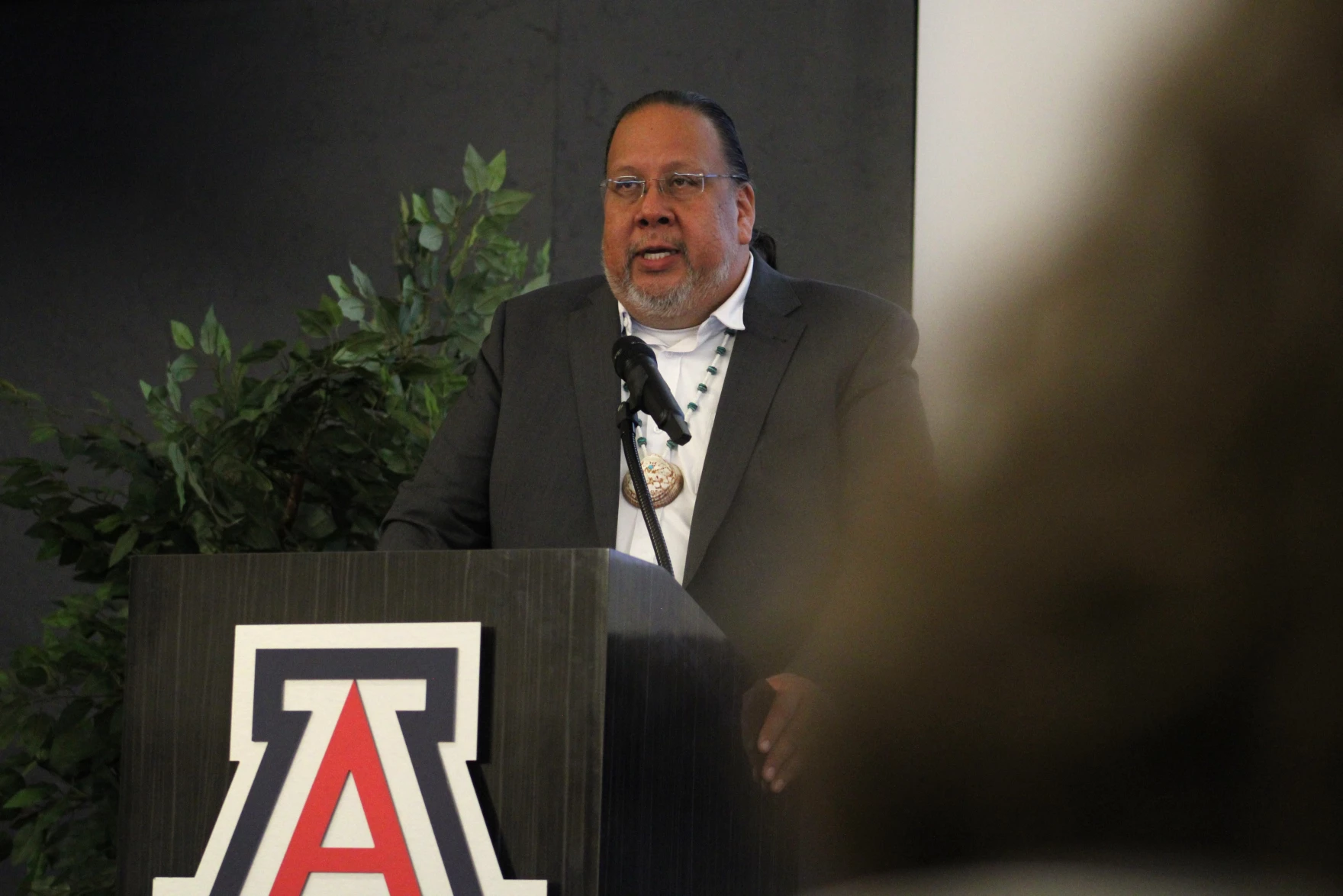
Stephen Roe Lewis, Governor of the Gila River Indian Community, speaks in Tucson, Ariz. on Mar. 13, 2024. The tribe has been a high-profile partner to federal and state water managers in recent years, but Lewis said it does not support the latest Lower Basin proposal for post-2026 Colorado River management. Credit: Alex Hager/KUNC

Click the link to read the article on the KUNC website (Alex Hager):

March 13, 2024

This story is part of ongoing coverage of the Colorado River, produced by KUNC in northern
Colorado, and supported by the Walton Family Foundation.

The Gila River Indian Community says it does not support a three-state proposal for managing the Colorado River’s shrinking supply in the future. The community, which is located in Arizona, is instead working with the federal government to develop its own proposal for water sharing.

The tribe is among the most prominent of the 30 federally-recognized tribes that use the Colorado River. In recent years, it has signed high-profile deals with the federal government to receive big payments in exchange for water conservation. Those deals were celebrated by Arizona’s top water officials. But now, it is diverging from states in the river’s Lower Basin — Arizona, California and Nevada.

Stephen Roe Lewis, The Gila River Indian Community’s Governor, announced his tribe’s disapproval of the Lower Basin proposal at a water conference in Tucson, Ariz., while speaking to a room of policy experts and water scientists.

“This is not the time to be standing on the sidelines,” Lewis said. “We all have a responsibility to do what we can. And that’s why The Community can’t support the current Lower Colorado River approach as it stands now.”

The announcement adds a new wrinkle to an already-complicated process. Last week, the seven states that use the Colorado River unveiled competing plans for managing its water. The Lower Basin states revealed one, and the Upper Basin states – Colorado, Utah, Wyoming and New Mexico – revealed another. The opposing plans represent stark ideological differences between the two groups of states, marking the latest disagreement between rival camps that have argued over water management for decades.

Lewis, who has positioned his tribe as an ally to the federal government in helping save water, outlined a few major sticking points that led Gila River to work on its own proposal.

Water enters an irrigation canal on the Gila River Indian Reservation on May 7, 2021. The Gila River Indian Community is among the most important tribal players in ongoing negotiations about using water from the Colorado River. Photo by Ted Wood/Water Desk

One issue, Lewis said, is that the Lower Basin’s proposal creates an “unfair burden” on the state of Arizona. Under the proposed plan, all seven states would have to cut back on demand for water if levels in the nation’s largest reservoirs — Lake Mead and Lake Powell — drop below a predetermined trigger in the future. Arizona would take the largest of those cutbacks.

Another, he said, is that the Lower Basin’s plan does not explain how it would mitigate the impact of those potential new water cutbacks. Lewis said he would like to see plans to identify new sources of water away from the Colorado River that could replace water lost to cutbacks, or financial compensation.

States are under pressure to agree on plans to manage the river before 2026, when the current guidelines for sharing its water expire. Both of last week’s plans came just ahead of a deadline from the Bureau of Reclamation, the federal agency which manages the West’s dams and reservoirs. The deadline was an effort to get the ball rolling on new river rules with enough time to implement them before a potential change in administration after the upcoming November election.

Reclamation officials said they expect to work with states over the spring and summer and reach a draft for post-2026 river management rules by the end of 2024.

Now, Lewis and his staff are working with Reclamation on what could potentially be a third competing proposal. He said he hopes a proposal will be released in “weeks,” rather than months.

“It’s potentially not just the Gila River, because this will affect other tribes as well,” Lewis said. “I wouldn’t be surprised if other tribes started to register their concerns as well.”

As states and the federal government draw closer to a new set of river management rules, some tribes have repeatedly expressed frustration about being excluded from negotiations. Tribal communities often lack reliable access to clean water due to aging infrastructure and a history of underinvestment, and many are calling for greater inclusion going forward.

Lewis said that was not the issue in this case, and that the Gila River Indian Community was included in talks.

“We were at the table,” Lewis said. “It’s just the proposal, the finished product as it is right now, doesn’t reflect our concerns.” [ed. emphasis mine]

North American Indian regional losses 1850 thru 1890.

Cooperative Conservation NEPA Alternative: Post-2026 #ColoradoRiver Operations and Strategies — via WaterForColorado.org #COriver #aridification

Click the link to read the proposed guidelines on the Water for Colorado website. Here’s the introduction:

On behalf of our respective organizations, the undersigned conservation groups (Conservation Groups or Groups) submit the Cooperative Conservation Alternative (Cooperative Conservation) to contribute to the ongoing dialogue shaping the future of the Colorado River through the post-2026 NEPA process for developing Colorado River Guidelines and Strategies.

The Groups request the Bureau of Reclamation include Cooperative Conservation in its analysis of post-2026 Colorado River Guideline Operations and Strategies as a forward-looking, comprehensive approach for addressing the pressing and evolving challenges facing the Colorado River Basin, its ecosystems, and the diverse community of sovereigns and stakeholders who rely upon its resources.

Cooperative Conservation is designed to inform and enhance one or more alternatives for consideration in developing the post-2026 Colorado River Operations and Strategies Environmental Impact Statement (EIS). It emerges from a synthesis of lessons learned, a deep understanding of the Basin’s environmental dynamics, and a commitment to collaborative, equitable water management, and endeavors to introduce innovative strategies that balance the needs of human and natural systems under the shadow of climate change and increasing water scarcity. [ed. emphasis mine]

The urgency to redefine the framework for Colorado River operations cannot be overstated. The Bureau of Reclamation’s (Reclamation) notice of intent to prepare an EIS for the post-2026 Colorado River marks a critical step toward addressing the Basin’s future needs (“Notice of Intent To Prepare an Environmental Impact Statement for Post-2026 Colorado River Operational Guidelines and Strategies for Lake Powell and Lake Mead,” 88 Fed. Reg. 12345 (June 16, 2023)). The existing guidelines, while pioneering at the time of their inception, are now recognized as insufficient to navigate the complexities of prolonged drought, escalating impacts of climate change, and pressing needs of a diverse array of sovereigns and stakeholders. Cooperative Conservation is rooted in the recognition that the Colorado River Basin has entered an era of uncertainty, where traditional management approaches must be reevaluated in light of scientific advancements, changing hydrological patterns, and the imperative of sustainability.

“New plot using the nClimGrid data, which is a better source than PRISM for long-term trends. Of course, the combined reservoir contents increase from last year, but the increase is less than 2011 and looks puny compared to the ‘hole’ in the reservoirs. The blue Loess lines subtly change. Last year those lines ended pointing downwards. This year they end flat-ish. 2023 temps were still above the 20th century average, although close. Another interesting aspect is that the 20C Mean and 21C Mean lines on the individual plots really don’t change much. Finally, the 2023 Natural Flows are almost exactly equal to 2019. (17.678 maf vs 17.672 maf). For all the hoopla about how this was record-setting year, the fact is that this year was significantly less than 2011 (20.159 maf) and no different than 2019” — Brad Udall

The significance of this Alternative lies not only in its aim to expand consideration of ways to address the immediate challenges, but also in its vision for a resilient and adaptive future that honors the interdependence of all who share this vital river. By embracing a holistic perspective that integrates scientific insight, stakeholder inclusivity, and environmental stewardship, our alternative is a framework for optimizing every drop of the Colorado River to better ensure it can remain a life-sustaining resource for future generations.

As the Conservation Groups submit this Alternative, we are mindful of the collective effort required to steward the Colorado River through the challenges ahead. We look forward to engaging in a constructive dialogue with Reclamation, the Basin States and Tribes, and all interested stakeholders involved in this essential process, united by our shared commitment to the River that sustains us all.

Map credit: AGU
Native America in the Colorado River Basin. Credit: USBR

Cattle are drinking the Colorado River dry

by Jonathan Thompson, High Country News
March 28, 2024

This is an installment of the Landline, a monthly newsletter from High Country News about land, water, wildlife, climate and conservation in the Western United States. Sign up to get it in your inbox.

In 2018, Brian Richter, a hydrologist and water sustainability expert, hooked a camper trailer to the car, and he and his wife embarked on a road trip up the spine of the Rocky Mountains. It was one of the driest years in a two-decade-long regional megadrought, and the entire Southwest was parched. Wildfires raged from British Columbia to Colorado, while reservoir levels continued to plummet.

As Richter traveled through the West’s uplands, he saw all the expected signs of drought: Tinder-dry forests, diminished streamflows, stressed vegetation and a ubiquitous pall of smoke that irritated eyes and lungs and blotted out the view. But he also noticed something that struck him: Nearly every valley bottom was still relatively verdant, even lush, despite the desiccating conditions.

The reason, of course, was irrigation. A major part of the settler-colonial project has been a determined effort to harness the West’s rivers and streams to raise crops and support a growing population. This has not only succeeded, it has altered much of the landscape, establishing a stark dividing line between irrigated and non-irrigated lands. “It’s part of our aesthetic as Westerners,” Richter said.

While golf courses, turf and booming desert cities gulp up a lot of water, the lion’s share of the West’s water still goes to growing crops and turning rural valleys green. Richter got to wondering: Precisely where was all that water going, and how were the different uses affecting various ecosystems? So he set out with a team of researchers to deconstruct the drivers of Western water consumption.  

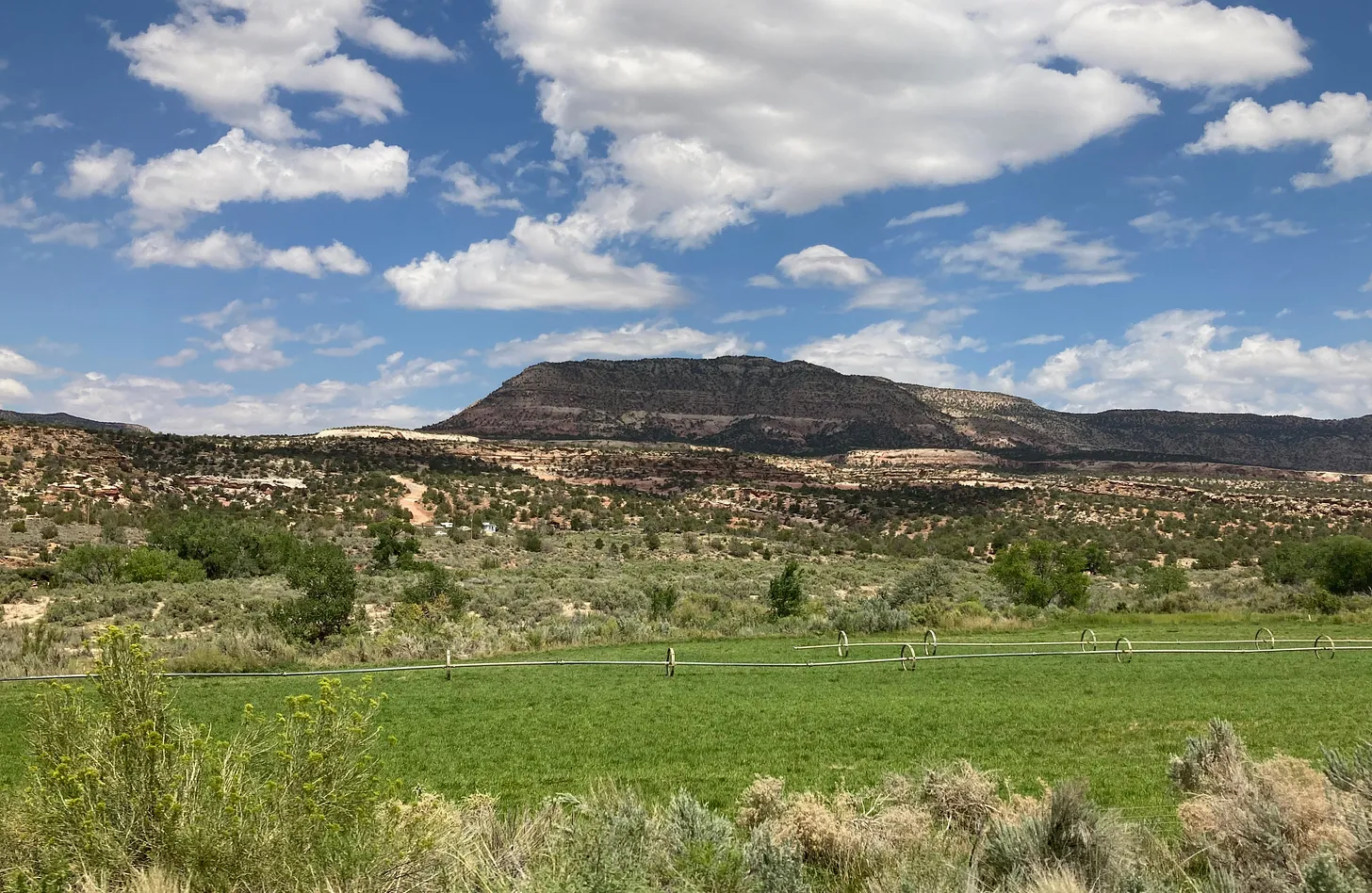
Irrigated landscape in McElmo Canyon in the summertime. Jonathan P. Thompson photo.

They found that 86% of the water consumed in the Western U.S. is used to irrigate crops. Everything else — from energy development to swimming pools to Las Vegas’ elaborate casino fountains — gets by on the remaining 14%. In the Colorado River Basin itself, things are marginally more balanced, with agriculture consuming about 79% of the water. Most of that, however, is used to grow food for cattle — alfalfa, hay and grass.

“We were quite surprised to see how large a proportion was going to cattle crops,” Richter told me in a Zoom interview earlier this month. The findings were published in Nature Sustainability in 2020. The article’s title — “Water Scarcity and Fish Imperilment Driven by Beef Production” — grabbed media attention and sparked many a news story that blamed the Colorado River’s demise on our appetite for cheeseburgers and steaks and the hay necessary to create them.

This spring, Richter and his team published an update of sorts, this time focusing entirely on the Colorado River. It’s the first-ever complete accounting of the system, encompassing water use from the Gila River, a tributary in New Mexico and Arizona, and all the consumptive uses[1] of the Colorado’s water, including reservoir evaporation and riparian and wetland evapotranspiration, as well as out-of-basin exports to places like Denver and the Rio Grande watershed, and water use in Mexico.

Sadly, this more complete tabulation exonerates neither bovines or beefeaters. Still, though the percentages going to cows and alfalfa farmers didn’t change significantly, it did provide more detail on those uses. Findings included:

  • Irrigated agriculture is by far the dominant consumer of Colorado River water, accounting for 52% of overall consumption (which includes reservoir evaporation and riparian and wetland evapotranspiration) and 74% of direct human consumption.
  • Cattle-feed crops (alfalfa and other hay) consume more Colorado River water than any other crop category, accounting for 32% of all water from the basin; 46% of direct water consumption; and 62% of all agricultural water consumed.
  • Cattle-feed crops consume 90% of all the agricultural irrigation water in the Upper Basin — three times more than is consumed by municipal, commercial and industrial uses combined.
  • 19% of the water  supports the natural environment through riparian and wetland vegetation evapotranspiration along river courses.

This accounting can help guide water managers in making the estimated 2-to-4 million acre-feet of cuts from the total annual consumption necessary to stabilize reservoir levels. Even larger reductions will be required to bring water consumption into balance with availability, as climate change-exacerbated drought and heating continues to further diminish the Colorado River. And yet, so far, the Upper Basin and Lower Basin states aren’t even close to agreeing on how those cuts should be made, or who should bear the burden.

Alfalfa and other cattle-feed crops consume 90% of all the agricultural irrigation water in the Colorado River’s Upper Basin.

The Lower Basin states — California, Nevada and Arizona — use far more water than the Upper Basin states. But when drought years shrink the Colorado River, the Upper Basin is forced to cut consumption under the 1922 Colorado River Compact. Therefore, the Upper Basin’s representatives argue, the Lower Basin should bear the burden of future cuts. The Lower Basin is willing to accept 1.5 million acre-feet of cuts, but beyond that, it wants its upstream counterparts to share the load. That amounts to an 814-billion-gallon gap between the competing proposals.

There’s a tendency to believe that rapidly growing desert cities — and ostentatiously profligate water-users, such as golf courses and lawns and swimming pools — ought to bear the burden of the cuts. But even if you cut off all the pumps in Lake Mead that serve Las Vegas, it wouldn’t make much of a difference. Southern Nevada’s consumptive Colorado River water use is about one-tenth of the Imperial Irrigation District’s in Southern California, where monumental amounts of water go to growing alfalfa and other food crops. And even as its population soars, Las Vegas is using less and less water, a phenomenon Richter terms “decoupling.”

“The only dial we have to work with is irrigated farming,” Richter said. His accounting would seem to offer an easy out: Just stop growing alfalfa and fallow the fields, or shift to less water-intensive crops. But it’s not quite that easy.

Cowgirls lasso calves so they can be branded and vaccinated at Harts Basin Ranch in April. The Delta County ranch, whose owners have been accused of water speculation, raises organic cattle. CREDIT: HEATHER SACKETT/ASPEN JOURNALISM

Alfalfa is a paradoxical crop: It’s thirstier than other crops, yet also relatively drought-tolerant. It doesn’t need to be replanted every year, meaning that less tilling of the soil is required. It can be harvested by machine, so it doesn’t require a lot of increasingly hard-to-find human labor. And it’s always in demand: Though beef cattle numbers are on the decline in some Western states, the dairy industry is burgeoning — and alfalfa is important for dairy operations.

Rather than reducing alfalfa acreage or production, some Colorado River Basin farmers, especially in Utah and Arizona, have begun growing more since the megadrought began. The federal government has forked out millions of dollars to pay farmers to stop growing alfalfa, or at least to stop irrigating their fields. But that can only achieve a fraction of the needed cuts, and it is hardly sustainable over the long term. And, by reducing overall supply, it drives up prices for hay, incentivizing other farmers to switch to alfalfa rather than away from it.

Besides, shutting down farmers’ ditches and spigots would imperil those emerald ribbons of green that curl through the West’s dry rocky valleys. Agricultural irrigation greens up more than crops: The farm fields’ runoff and leaky canals also nurture willows and wetlands as well as the wildlife that depends on them.

It’s quite the quandary, and it’s hard to see a clear path to sustainability. What is clear is that massive changes are long overdue, and those changes will alter the Western landscape, perhaps returning it to something that resembles the days before industrial-scale irrigation began.

“It’s really intriguing to me to think about how the Western landscape is going to have to change,” Richter said. “What we’re talking about is not unlike the fossil fuel industry, especially coal, as it goes into decline. The ramifications for regional and local economies and the culture and social fabric of communities are even going to be greater, especially for agricultural communities.

“It’s going to be an interesting decade ahead,” he added. “And I sure wouldn’t want to be one of those negotiators on the Colorado River.”

We want to hear from you!

Your news tips, comments, ideas and feedback are appreciated and often shared. Give Jonathan a ring at the Landline, 970-648-4472, or send us an email at landline@hcn.org.


[1]  Consumptive use is the amount of water withdrawn from the system and not returned to it. The Southern Nevada Water Authority, for example, withdraws about 450,000 acre-feet from Lake Mead annually — far more than the 300,000 acre-feet it’s entitled to under the Colorado River Compact. But it also returns more than 200,000 acre-feet in the form of treated effluent, giving it a consumptive use of 223,670 acre-feet in 2022.

This article first appeared on High Country News and is republished here under a Creative Commons license.

#Colorado’s #snowpack is looking a lot better than last year heading into warmer months: More than 70% of the state is reporting no #drought conditions — Vail Daily

Colorado Drought Monitor map April 2, 2024.

Click the link to read the article on the Vail Daily website (Scott Miller). Here’s an excerpt:

April 6, 2024

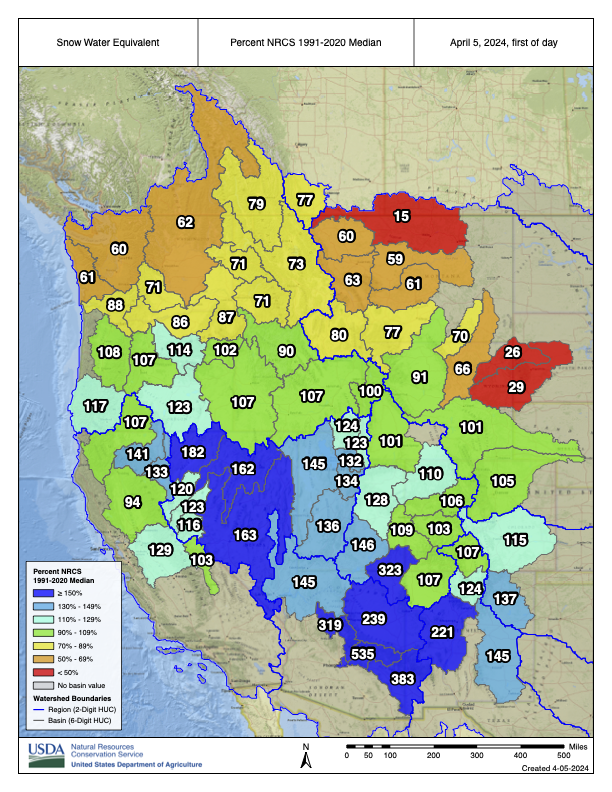
The good news is that the snowpack around Colorado is looking pretty good heading into spring and summer. In fact, more than 70% of the state is reporting no drought conditions, a significant change from the start of this year, when just less than 35% of the state was in zero-drought status…

After a slowish start, the snow water equivalent at measurement sites on Vail Mountain, Copper Mountain and Fremont Pass are all near or just above 100% of the 30-year median. The Copper Mountain site is nearest to the snow fields atop Vail and Shrine passes; the Fremont Pass site is closest to the headwaters of the Eagle River near Tennessee Pass…The Fremont Pass site is the highest and longest-lasting of those sites. It was also the slowest this season to hit 100% of the 30-year median, not hitting that mark until early March. All of those high-elevation sites — ranging from roughly 10,300 feet at Vail to 11,300 feet at Fremont Pass — hit their peak accumulation between late April and early May. That means we still have another few weeks to expect spring storms.

Westwide SNOTEL basin-filled map April 5, 2024.

Leann Noga Named Executive Director of the Southeastern #Colorado Water Conservancy District

Leann Noga

Here’s the release from Southeastern Water (Chris Woodka):

Leann Noga, a longtime employee of the Southeastern Colorado Water Conservancy District, was appointed Executive Director of the District at a special Board of Directors meeting on March 8, 2024.

“Each and every one of us very much look forward to working with you, ” Board President Bill Long said. “I think we all have confidence in you and your ability to lead the Southeastern District. It’s a great day for the District.”

Long also thanked Jim Broderick, who is retiring, for his 22 years of service to the District as Executive Director. Mrs. Noga, 43, started working for the District in 2004, and most recently was the Director of Finance and Administrative Services.

“I want to be the spokesperson for the District and carry forward the Board’s message,” Mrs. Noga said following the appointment. “The Board is made up of water experts, and I will draw on that expertise. I will lead by example and manage with fairness and accountability.”

She briefly outlined her goals:

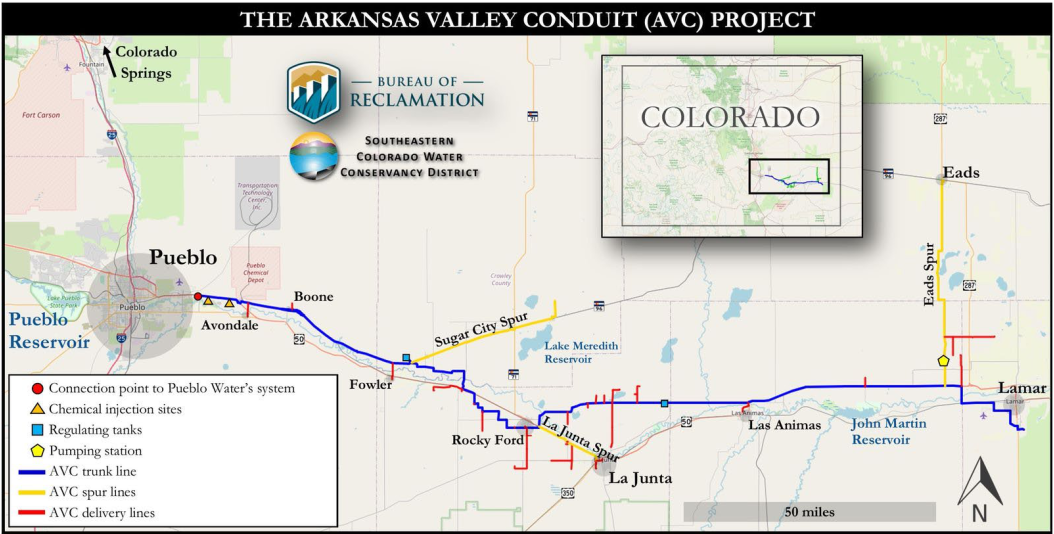
“At the top of the list of course is finishing the Arkansas Valley Conduit,” she said. “I also want to continue to develop relationships for the District, collaborate with others on water issues and protect the District and the value of its water.”

Mrs. Noga started in the District as an administrative support specialist but constantly continued to acquire the skills and education to advance within the organization. In 2013, she earned her Bachelor of Science degree in business administration from Colorado State University-Pueblo. In 2017, she earned a Master of Finance with a specialization in human resource management from Colorado State University.

At the same time, she and her husband Pat began raising a family. They have three children: Patrick, Mikey and Kayle. Pat attended the meeting in support of his wife on Friday. Mrs. Noga is also a member of the National Water Resources Association, Colorado River Water Users Association, Colorado Rural Water Association, Government Finance Officers Association, Colorado Water Congress, Water Education Colorado and Association for Records Management Association.

The Board’s decision was unanimous and came at the end of a search for a new Executive Director that began in December 2023. Several candidates were interviewed in February and Mrs. Noga was named the sole finalist by the Board at a February 21, 2024 meeting. Other Board members voiced strong support for Mrs. Noga.

“I think there is a real belief (in the Arkansas Basin) in your capacity to take on this leadership role and guide the next chapter of the District’s history,” said Board member Greg Felt, a Chaffee County Commissioner and Chairman of the Colorado Water Conservation Board. “There are a lot of people in this basin who are really proud of you, and I think there are lot of women who are exceptionally proud of you.”

Mrs. Noga pointed out after the meeting that the Board’s decision coincidentally occurred on International Women’s Day.

“It’s not lost on me than Leann literally started at the bottom and has worked herself to the top,” said Dallas May, a rancher who represents Prowers and Kiowa Counties. He is also chairman of the Colorado Parks and Wildlife Commission. “I think that’s so commendable that somebody could and would do that, and she’s done that at the same time as raising a family.”

“I think this decision is great for the District’s future,” said Alan Hamel, who represents Pueblo County on the Board. “You have a great staff. I’m sure with your leadership and the support of all 15 Board members, you’ll move the District forward. ”

The Southeastern District was formed in 1958 and includes parts of nine counties: Bent, Chaffee, Crowley, El Paso, Fremont, Kiowa, Otero, Prowers and Pueblo. The District is the state agency for the Fryingpan-Arkansas Project and administers the project in partnership with the U.S. Bureau of Reclamation. The two agencies are working together to build the Arkansas Valley Conduit.

Some of the District’s activities include allocation of Fry-Ark Project water, operation of the James W. Broderick Hydropower Plant at Pueblo Dam, an excess capacity storage contract for Pueblo Reservoir and the Upper Arkansas Voluntary Flow Management Program.

Arkansas Valley Conduit map via the Southeastern Colorado Water Conservancy District (Chris Woodka) June 2021.