
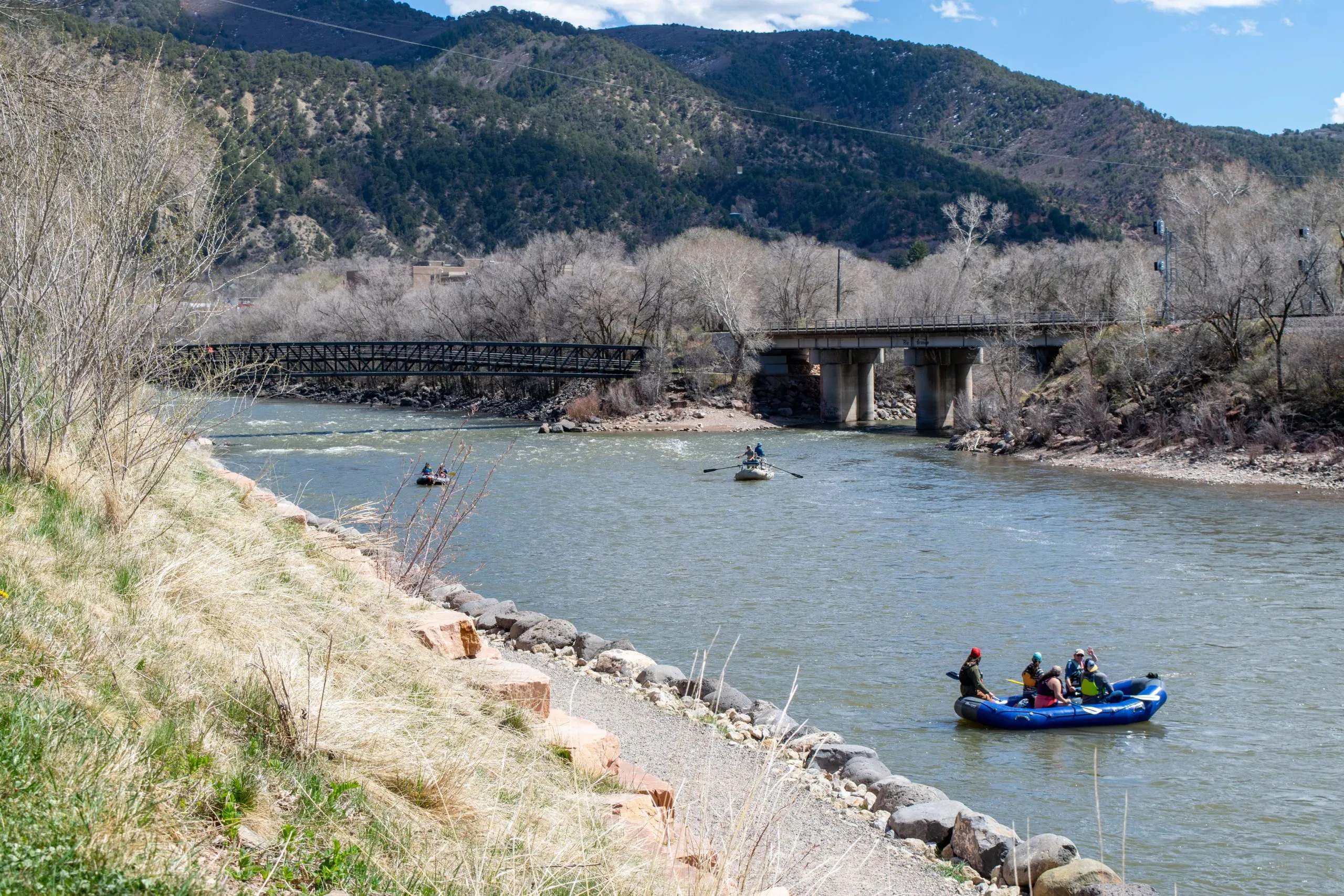
Click the link to read the article on the Aspen Journalism website (Heather Sackett):
April 12, 2023
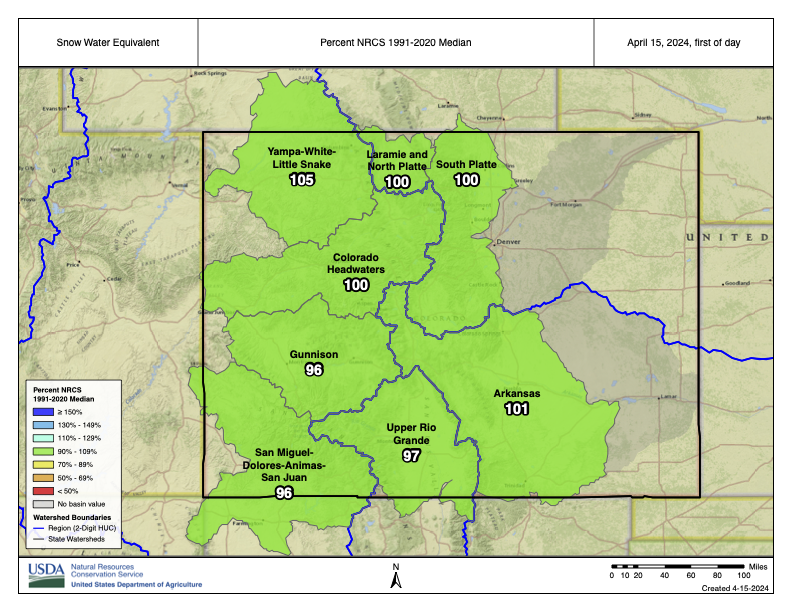
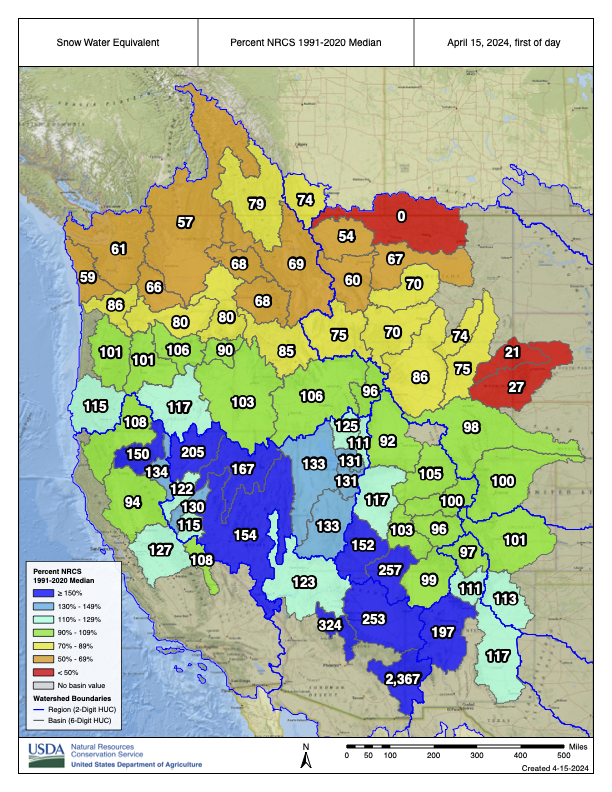
The month of March in Colorado was wet, with several storms bumping snowpack and spring runoff forecasts to above average across nearly all of the state.

That is the main take-away from the April 2024 Water Supply Outlook Report from the National Resources Conservation Service and good news for those who depend on water from the drought-plagued Colorado River basin.
All major river basins around the state received above-average precipitation for March, boosting snowpack to above median. March precipitation ranged from 138% of median in the northwest corner of the state to 186% of median in the Arkansas River basin.
“The March 13 through 15 storm cycle brought an even greater increase in precipitation across the state, with some areas of the Front Range and southern mountains receiving three to five feet of snowfall,” the report reads.
Snow water equivalent — a measure of how much water is contained in the snowpack — ranged from 121% of median in the South Platte basin to 104% of median in the San Miguel/Dolores/Animas/San Juan basin in the southwest corner of the state as of April 1. The Colorado River headwaters stood at 108% of median and the Roaring Fork River basin was at about 112% of median.
Since most of the West’s water supply is snowpack-driven, a snowpack snapshot at the end of the season can be a predictor of runoff volume. But there are other factors that could affect how much water ultimately ends up in rivers and eventually in the nation’s second largest reservoir, Lake Powell.
Higher-than-normal temperatures and windstorms that drop dust on the snowpack can both cause runoff to happen earlier and faster, and hot temperatures can also reduce streamflow amounts in other ways.
“What really influences our water supply is yet to come and that’s temperature, it’s dust, it’s weather,” said Dave Kanzer, director of science and interstate matters with the Colorado River Water Conservation District. “It’s not only the weather for the next 8 to 14 days, but 30 to 60 days that can quickly turn a good thing bad or a bad thing good. We are right at the fulcrum of our water supply.”

Streamflow forecast volumes across the state are at 103% of median. For the Colorado River headwaters streamflow is forecast at 105% of median; the Yampa/White/Little Snake is at 120% of median and the Gunnison River basin is at 104% of median. The southwest corner of the state is lagging behind, with a forecast of just 82% of median streamflow. Locally, streamflows in the Roaring Fork basin are forecast to be 104% of median.

High temperatures and dust on snow
Higher-than-normal temperatures can rob rivers of their flow. Studies have shown that Colorado River flows have declined nearly 20% from the 20th century average and that about one-third of that can be attributed to higher temperatures driven by climate change. Higher temperatures mean both a thirstier atmosphere and thirstier plants, which can suck up snowmelt before it makes it to rivers.
According to temperature data from snow telemetry (SNOTEL) sites, the months of October through February were all above average in the Colorado River headwaters. March temperatures, which set record highs worldwide according to the National Oceanic and Atmospheric Administration, were 100% of median in the Colorado River headwaters.
“We’ve had some cold snaps, but overall this warm winter doesn’t do us any favors in preserving the snowpack,” Kanzer said.

Like Kanzer mentioned, dust on snow can also cause rapid melting. White snow reflects the sun’s rays, but when the snowpack is coated with a darker layer of dust, it absorbs solar radiation, causing earlier and faster-than-normal melt out.
According to Jeff Derry, executive director of the Silverton-based Center for Snow and Avalanche Studies, Colorado’s mountains have experienced four storms that dropped reddish-brown dust from the desert southwest onto the snowpack, including a severe wind event March 1-3.
“That was a walloper, that was a biggie. It was pretty dirty,” Derry said. “Once that dirt layer is at the surface, it’s going to really kick things into gear.”
Oil and gas development, grazing, off-road vehicles and anything else that disturbs soil makes that soil susceptible to being carried by prevailing winds to the Colorado mountains. Derry said Colorado averages about eight or nine dust-on-snow events a year, some of which are probably yet to come.
“We get the most dust events in March, April and May,” he said. “So we are maybe just halfway through the dust season.”
Even though conditions are above average in the Colorado River headwaters, Lake Mead and Lake Powell still hover just above crisis level, a result of more than two decades of drought, increasing temperatures and overuse. In its mid-March 24-Month Study, which is the most recent available, the U.S. Bureau of Reclamation put the most probable spring runoff inflow forecast for Lake Powell at 78% of average. Lake Powell is currently about 33% full, at elevation 3,558 feet.
“From a water supply planning perspective, things are good short term and locally,” Kanzer said. “The long term, regional picture rapidly declines when you get to Lake Powell and below Lake Powell. Those chronic or persistent water supply concerns remain.”

Click the link to read the article on The Washington Post website (Scott Dance). Here’s an excerpt:
Missouri lawmakers say water has almost always been plentiful in their state, giving no reason to think twice about a concept known as riparian rights — the idea that, if you own the land, you have broad freedoms to use its water. But that could change under a bill advancing quickly in a state legislature that is normally sharply divided. The measure would largely forbid the export of water across state lines without a permit, even though there is no evidence that is happening on any large scale.
Just the specter of water scarcity is inspiring bipartisan support. Besides persistent drought in parts of the state and plummeting Mississippi River levels in recent months and years, lawmakers are wary of the West, and the chance that thirsty communities facing dwindling water supplies will look east for lakes and rivers to tap…
“They’re not being real responsible,” state Rep. Jamie Burger (R), one of the bill’s lead sponsors, said of states like California and Arizona. “We feel like we need to be responsible in Missouri and protect what we have.”
If passed, the new limits would be the latest domino to fall as climate change makes droughts more frequent and intense across huge swaths of the United States, and threatens to exhaust water supplies in some parts of the West within the foreseeable future. States including Oklahoma, Iowa and Nebraska already have similar safeguards on water exports in place, while a compact among Great Lakes states has largely banned exports beyond the limits of their watershed since 2008.
Meanwhile, California has struggled to capture vast amounts of rain water, Arizona faces booming growth and depleting aquifers, and states across the Colorado River basin are at odds over solutions to keep that vital waterway flowing.


From email from Reclamation (Erik Knight):
The next coordination meeting for the operation of the Aspinall Unit is scheduled for Thursday, April 18th 2024, at 1:00 pm.
This meeting will be held at the Western Colorado Area Office in Grand Junction, CO. There will also be an option for virtual attendance via Microsoft Teams. A link to the Teams meeting is below.
The meeting agenda will include a review of operations and hydrology since January, current soil and snowpack conditions, a discussion of hydrologic runoff forecasts, the weather outlook, and planned operations for this water year.
Handouts of the presentations will be emailed prior to the meeting.
Click the link to read the article on The Land Desk website (Jonathan P. Thompson):
April 12, 2024
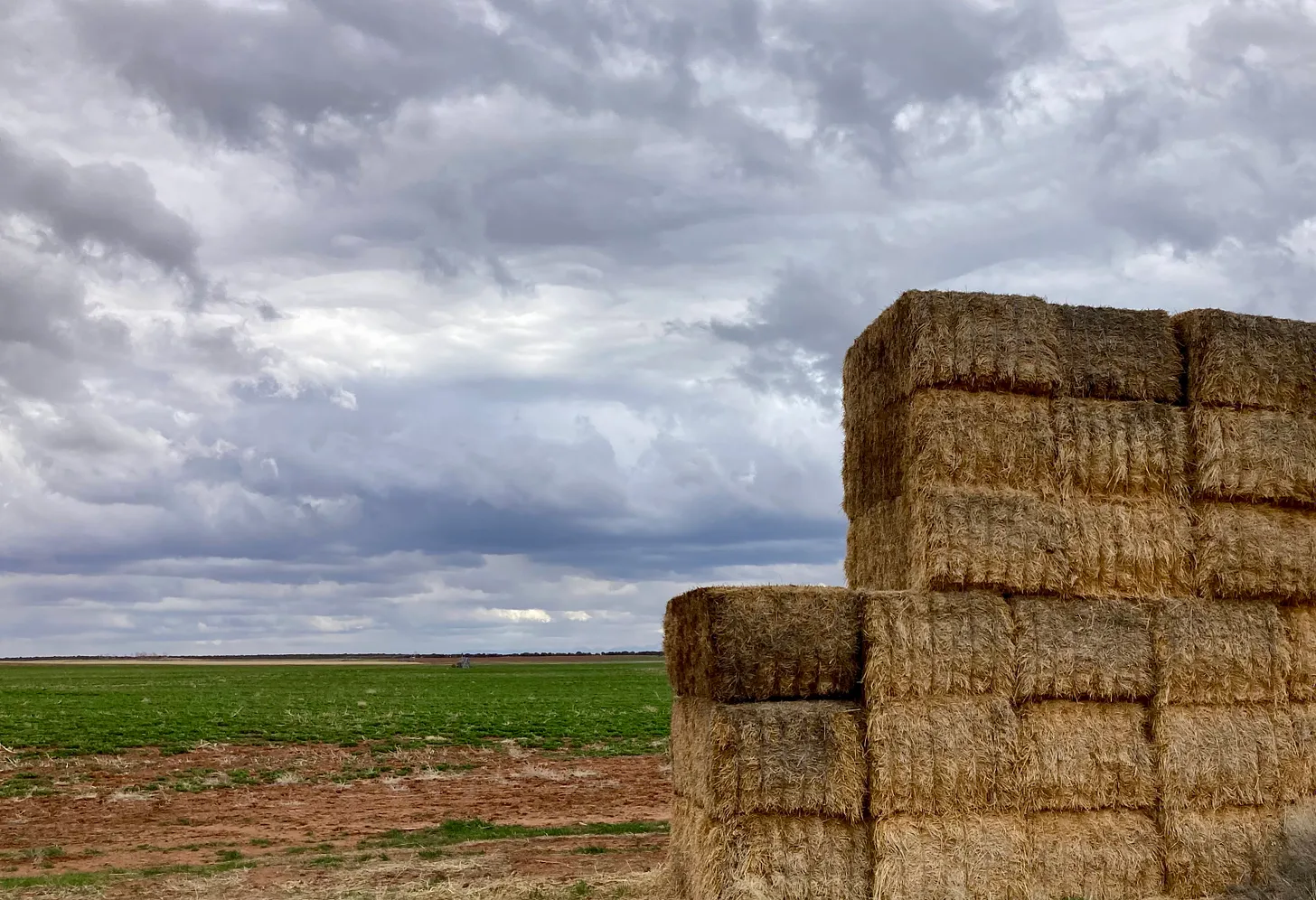
Pretty much every time I write about the amount of Colorado River water that is consumed to irrigate alfalfa and hay, readers respond with a comment or question about how much of the alfalfa — and therefore Colorado River water — is shipped overseas.
And then, sometimes, Teal Lehto, a.k.a. westernwatergirl, uses one of my pieces on alfalfa and water to do one of her cool and informative Instagram videos:
And that’s when the comments really start to fly, e.g.:
- “… pretty much all of that alfalfa doesn’t stay in the United States and is grown by Saudi Arabia …”
- “… Saudi Arabia is using most of the land and water to grow the alfalfa…”
- “The #$% kicker is that most of the alfalfa is being sold to foreign countries like China.”
Let’s look into this a bit.

It is true that Western farms export alfalfa to foreign countries. And it’s also true that Saudi Arabia-based food giant, Almari, owns at least one farm in Arizona where it grows alfalfa that is shipped overseas to feed its massive herd of dairy cattle. While Arizona Gov. Katie Hobbs cancelled some of the company’s state land leases, thereby ending groundwater pumping at those locations, the company still has other holdings in the state where it presumably continues to farm. A United Arab Emirates companyand a major global hay exporter also operates farms in Arizona and California.
But there’s a big caveat here: Many farms in Arizona — and most if not all of the Saudi Arabia owned ones — irrigate with groundwater, not with water diverted from the Colorado River. While groundwater pumping ultimately has an effect on surface waters, the water these farms pump is not counted against Arizona’s Colorado River use. So shutting down these farms’ groundwater spigots is unlikely to have much bearing on the Colorado River crisis.
And, similarly, the data below show each states’ total hay exports, because the Foreign Agricultural Service does not break it down by county. So some of the exported hay from California may be grown in, for example, the Central Valley, which would not be irrigated by Colorado River water. So while this is not an accurate representation of how much Colorado River water is exported in the form of hay, it does give a general sense of things. I took a look at stats from all seven Colorado River Basin states. But I didn’t include Colorado, Wyoming, or New Mexico in the charts because their export amounts were almost zero.
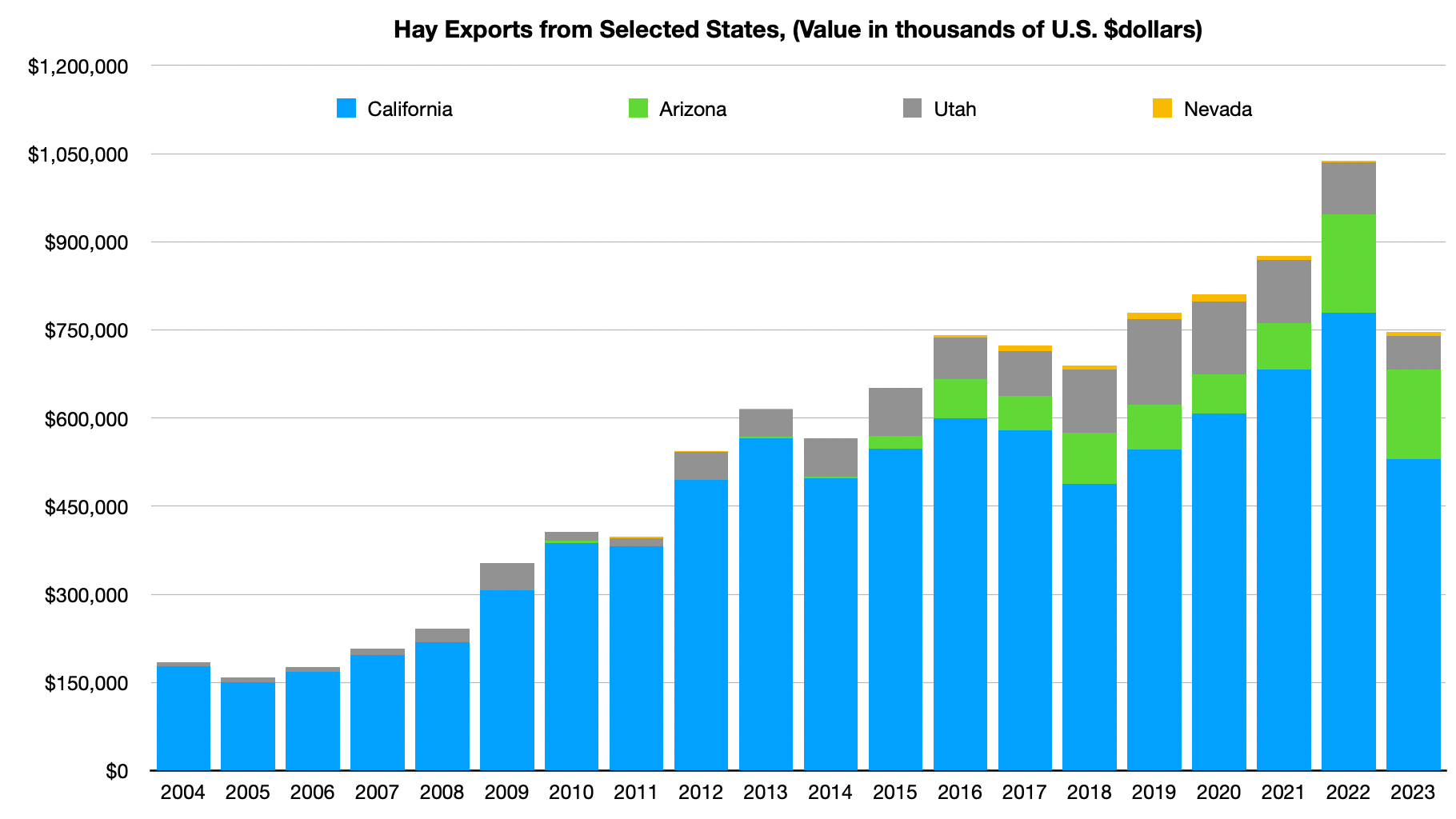
These four states exported about $1 billion worth of hay — alfalfa and other varieties — in 2022. The amount dropped significantly, mostly due to a cutback from California, in 2023. California also produced far less hay that year, most likely due to water shortages. It’s still a lot of hay. But how does it compare to totals?

Unfortunately, the FAS only supplies the value of the exports, not tonnage, which makes the comparison a bit squishy, it seems (since producers may fetch more or less per ton for exports). But as far as total value goes, it looks as if about 30% of the hay produced in the main exporting states of the Colorado River Basin is shipped overseas.
As you can see, hay, in general, is pretty big business in the West, with a value of more than $2.5 billion from these four states alone, about $2 billion of which is alfalfa.
And where does each state’s hay go?
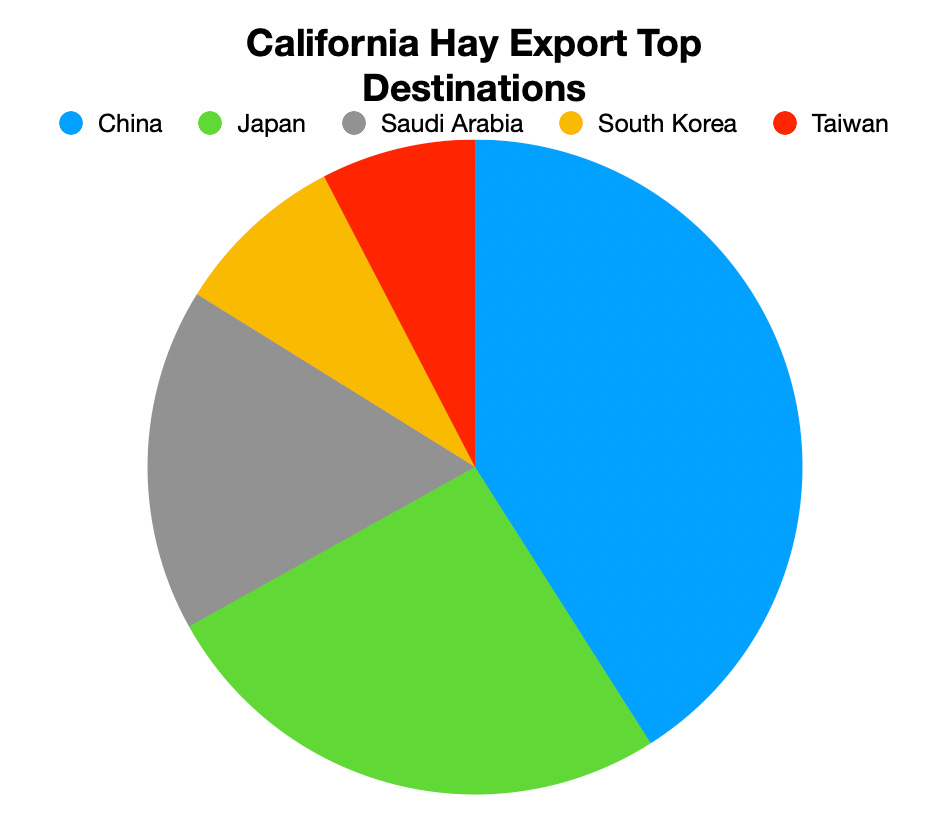
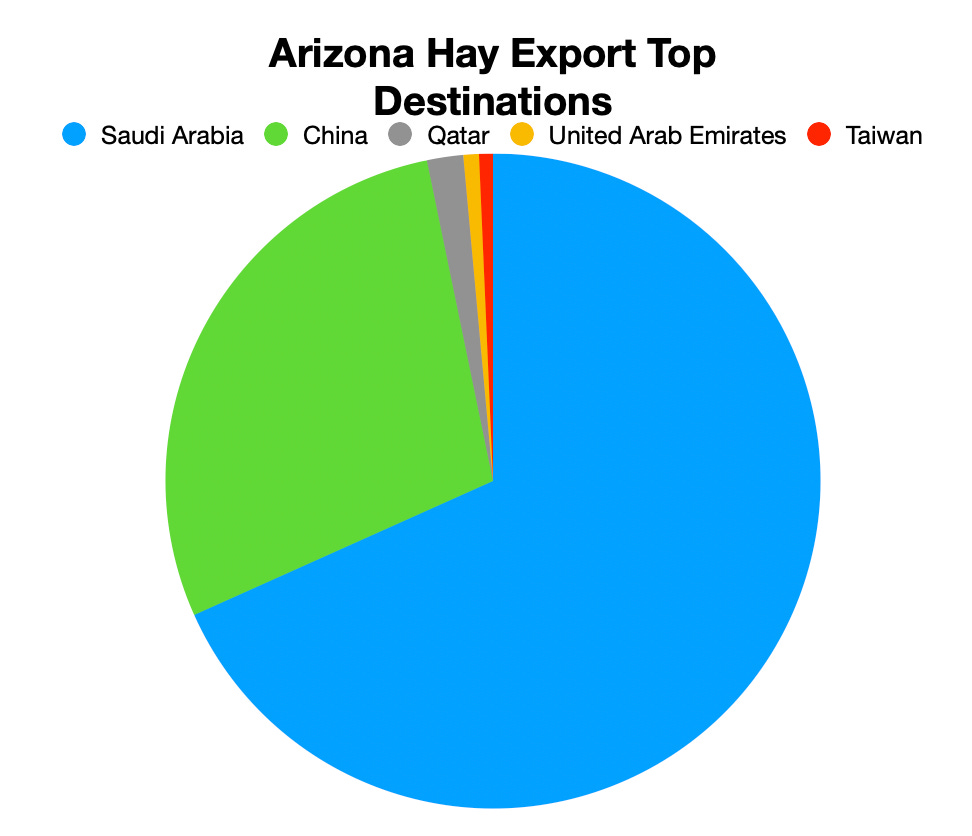
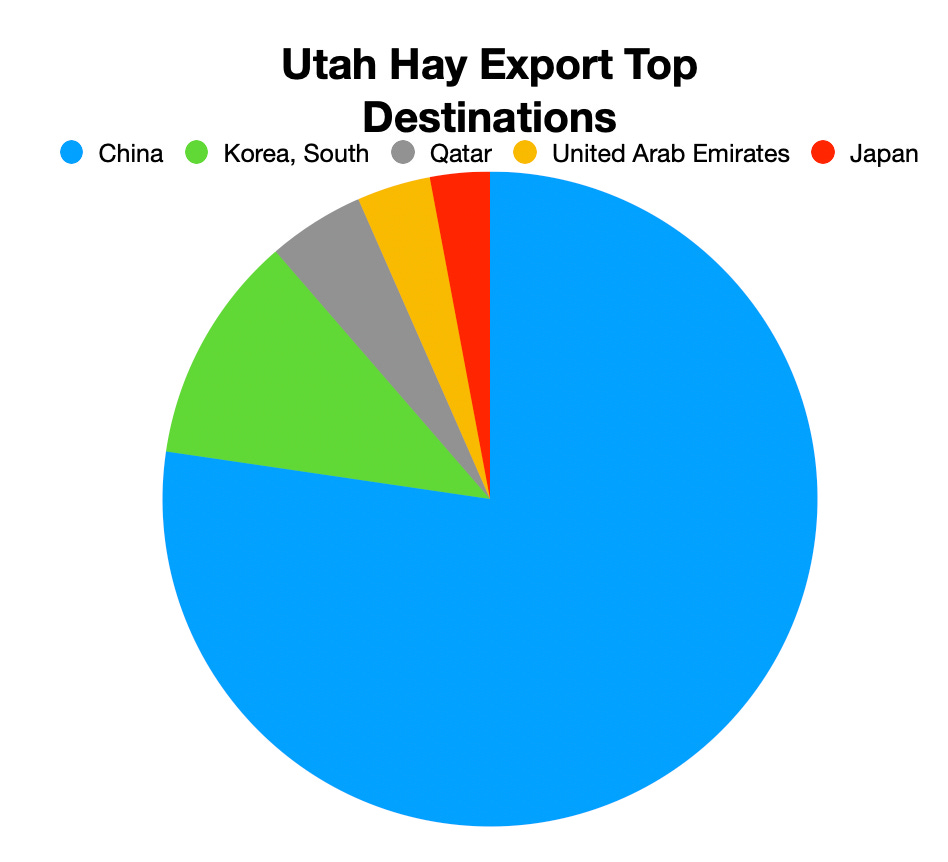
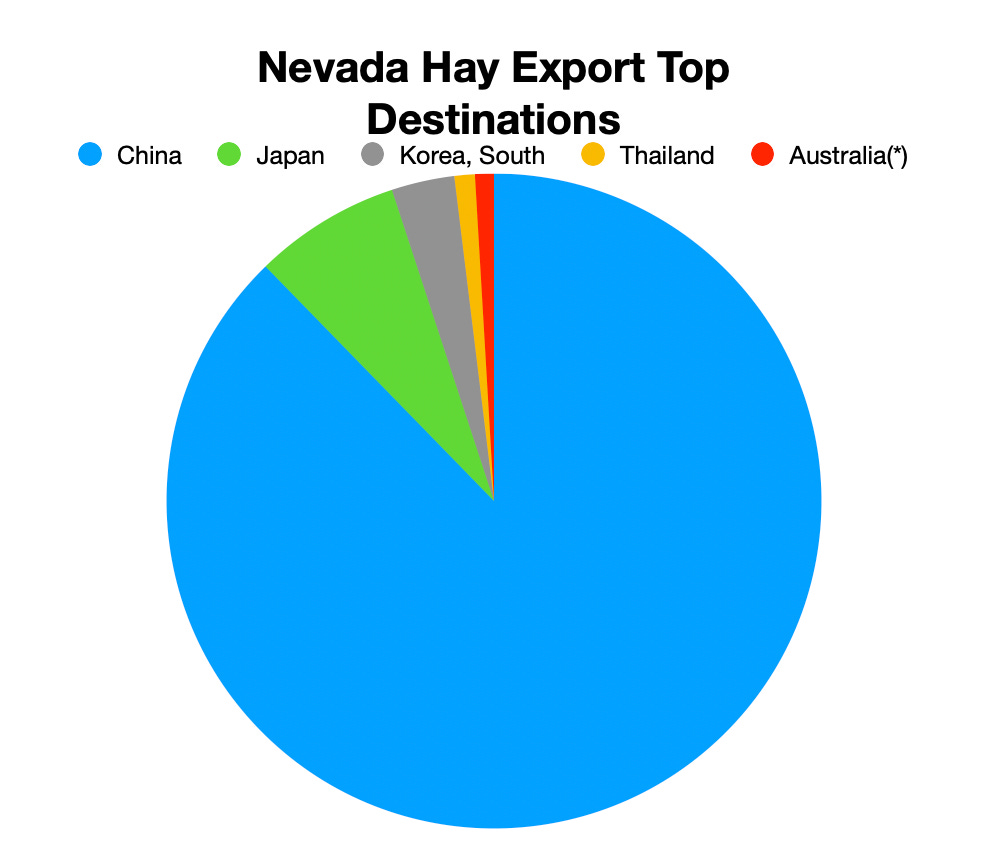
Overall, most Western U.S. hay exports are China-bound. But Arizona hay is most likely to be on its way to Saudi Arabia for the aforementioned reasons. It will be interesting to see if that changes this year as Almari cuts back farming in the state.