Click the link to read the article on the Glenwood Springs Independent website (Jaymin Kanzer). Here’s an excerpt:
August 25, 2025
Whether its potable water, agricultural needs, or recreation, seven different states between Colorado and the Pacific Ocean actively rely on the water that flows through Garfield County. Yet with consistently increasing yearly temperatures, decreasing yearly snowpacks, and constant threat of wildfires — the health of the legendary watershed has never been more important. The Colorado, Roaring Fork, Crystal, and Frying Pan Rivers all have individual and unique impacts that stretch from the local economy to produce and amenities…Following a “mixed” winter resulting in the lowest snowpack seen in 10 years, it was not unexpected that riverflows would fail to hit an 80-year median this summer season. But a dramatically dry summer took a bad situation and made it worse.
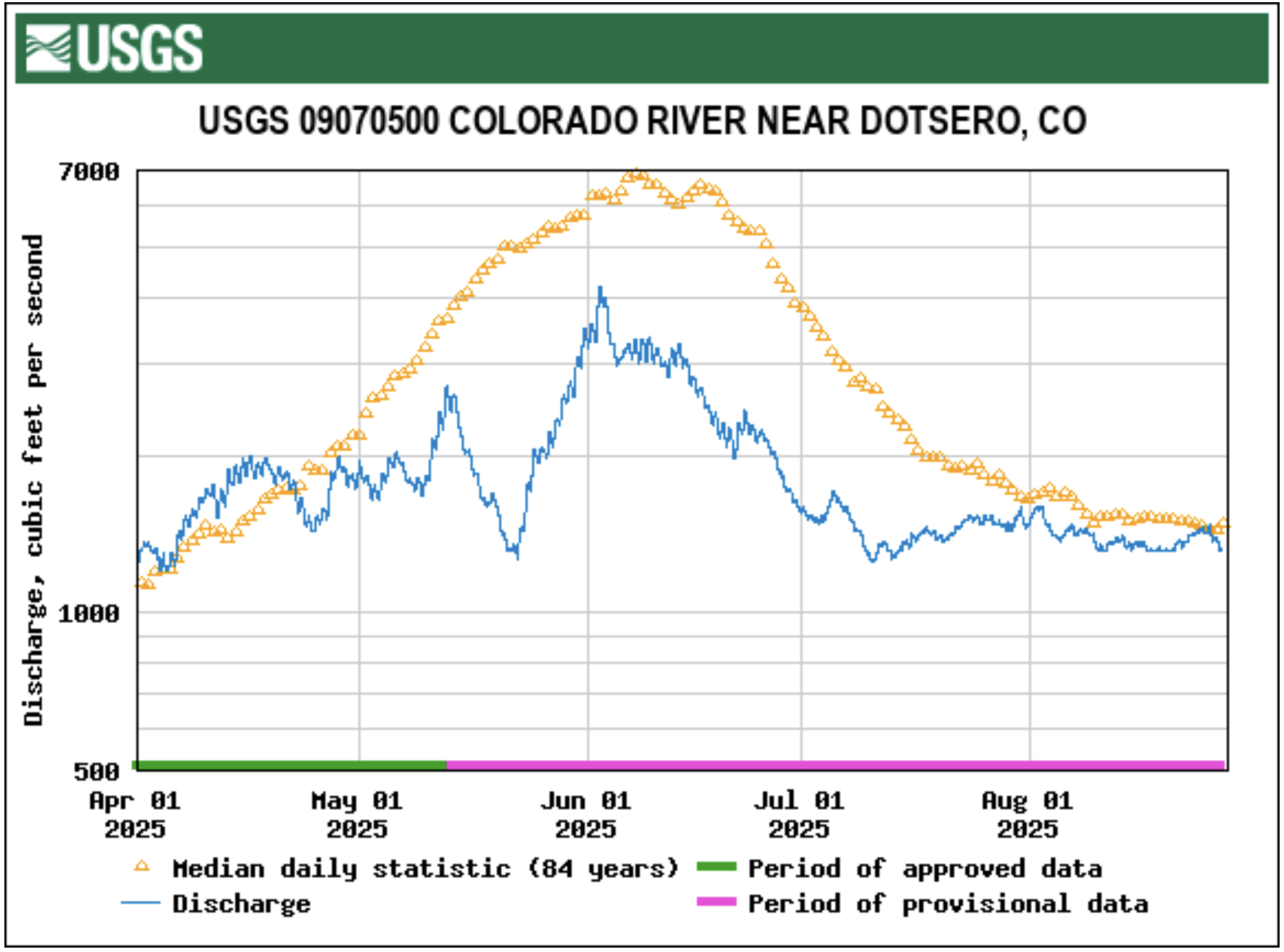
In 2025, the Colorado River peaked barely above 4,000 Cubic Feet per Second (CFS), measured by the United States Geological Survey near Dotsero. The 4,120 CFS peak on June 3 fell far short of the median of 6,200 CFS (1940-2025)…[Brendon] Langenhuizen said he was more concerned about the near-nonexistent monsoonal season this summer — and its implications for what future monsoon seasons could look like.
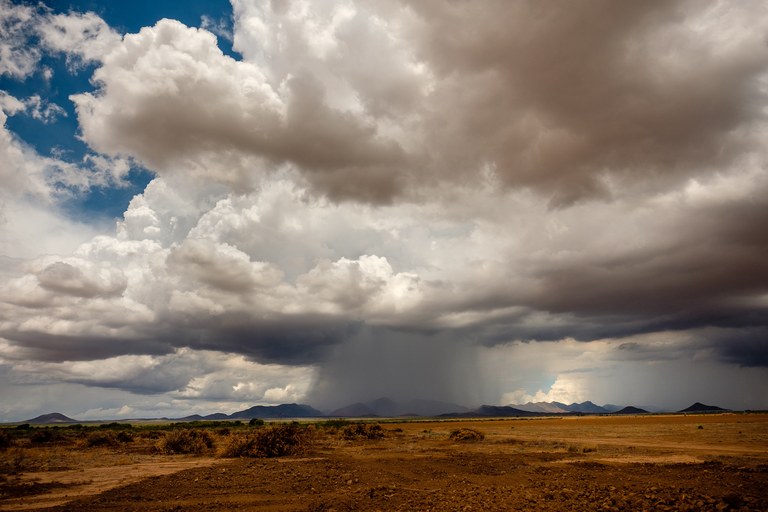
“The monsoons just aren’t really coming in like they were forecasted to three months ago,” he said.
He explained that the supplement of heavy rains in the higher alpine can both briefly reinvigorate the tributaries and provide much needed assistance to the ranching community.
“(The peak) means that it’s just a drier year,” Langenhuizen said. “I think that not getting those monsoons — which haven’t shown up yet — is really what has put us into this situation. We had average snowfall to lower yield, which put us into this dry category of year, and we haven’t had those monsoons that bolster those flows later throughout the late summer months.”