
by Robert Marcos, photojournalist
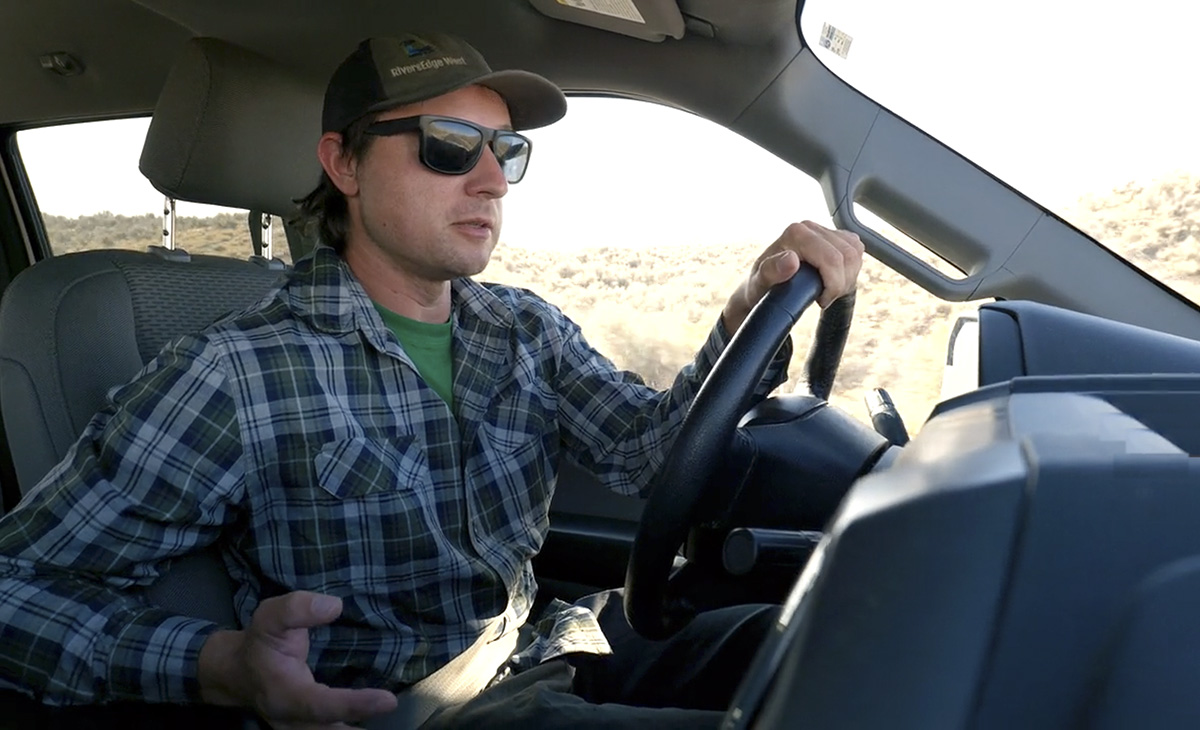
I met John Leary in the parking lot of a Tractor Supply in Rangely Colorado. There was something about the vehicles in that lot that made me think it might not be the best place to park a Toyota Yaris with California plates, so I parked around the corner, then moved my video gear into the back of John’s white utility truck.
John is a Senior Restoration & GIS Project Manager at RiversEdge West, a non-profit organization that’s leading the White River Partnership – a coalition of public, private, and nonprofit entities that are working to conserve and to restore riparian ecosystems along the White River and its tributaries.1
John had volunteered to show me some of the restoration work he and his teams had been doing on the riverbanks west of Rangely. The river had officially been designed as being “over-appropriated” in 2025. When a river is classified as being over-appropriated, it means that the total amount of water legally promised to water rights holders exceeds the supply of water that’s available in the river system at some or all times of the year.2 The designation acts as a formal recognition of water scarcity, where the demand for water is higher than the supply, often exacerbated by drought, climate change, and increased development.
John and his teams were working to reduce the number of invasive tamarisk and Russian olive trees that had crowded the White River’s banks, at the expense of wildlife and native vegetation like willows and cottonwoods. One of the methods John and his teams used was the application of tamarisk beetles. Tamarisk beetles originated in Eurasia – specifically central Asia, China, Kazakhstan, Greece, Uzbekistan, and Tunisia, and were introduced to North America as a biological control agent for invasive tamarisks. The beetles defoliate tamarisk trees by feeding on their leaves and on new growth, until the trees either weaken or die altogether.3
Since their introduction tamarisk beetles have spread across the Western U.S., including Nevada, Utah, Colorado, and even parts of Arizona, and in some areas have resulted in an 80% mortality rate for the invasive tamarisks.4 This removal method sounds better than what I witnessed in California’s Coachella Valley, where miles of tamarisk trees had been intentionally burned by the Southern Pacific Railroad – which planted the trees in the early 1900s to keep sand off their railroad tracks.5
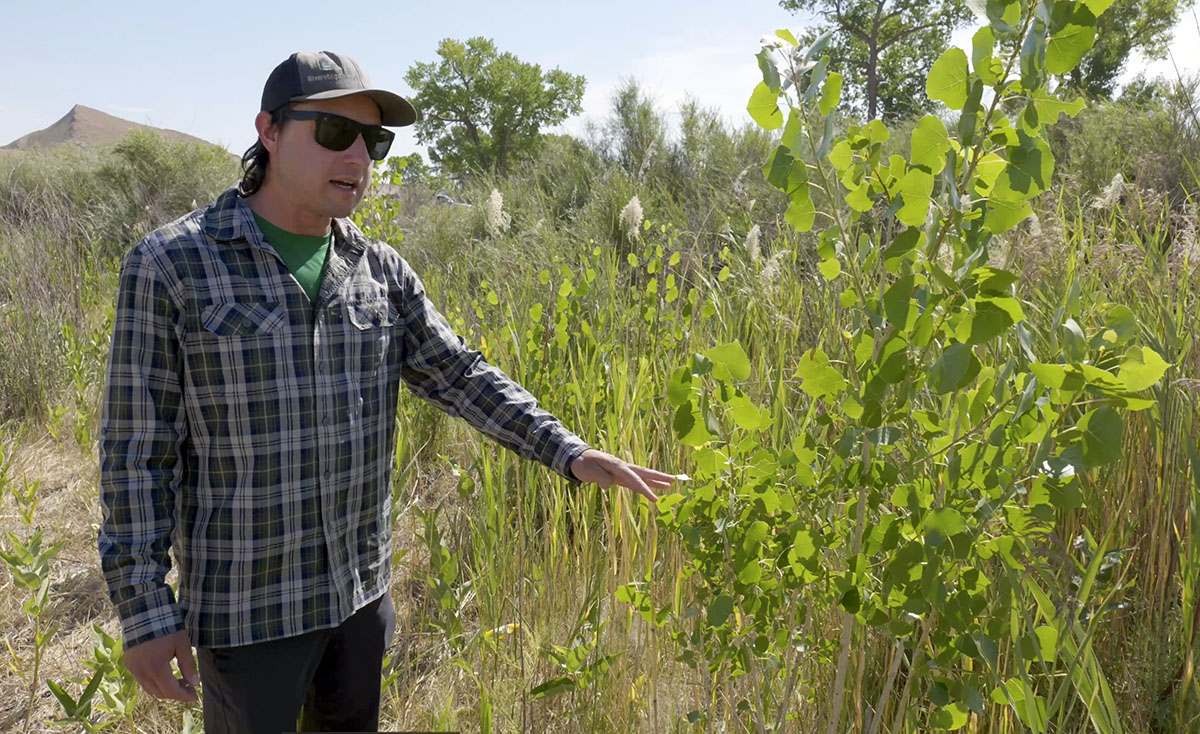
John and I drove west along the river and then finally parked. We hiked to a spot where John showed me a stand of native cottonwoods had sprouted up after his team removed tamarisks which had previously occupied that area. During the interview I filmed with John he repeatedly credited RiversEdge West and their partners in the White River Partnership, which included the Bureau of Land Management, Canyon Country Discovery Center, Colorado Northwestern Community College, Colorado Parks and Wildlife, State of Utah School and Institutional Trust Lands Administration, Town of Meeker, Colorado,Town of Rangely, CO, Uintah County Utah, Utah Conservation Corps, Utah Division of Wildlife Resources, Utah State University, Western Colorado Conservation Corps, the White River Alliance, and most importantly many ranchers and private land owners who supported the restoration efforts being carried out on their own riverfront property.6