Click the link to read the article on the Sky-Hi News website (Ryan Spencer). Here’s an excerpt:
February 23, 2026
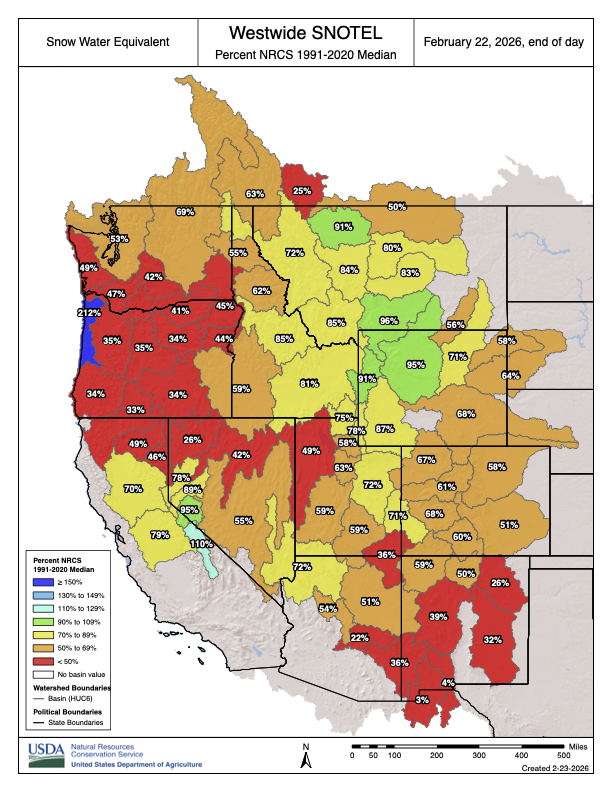
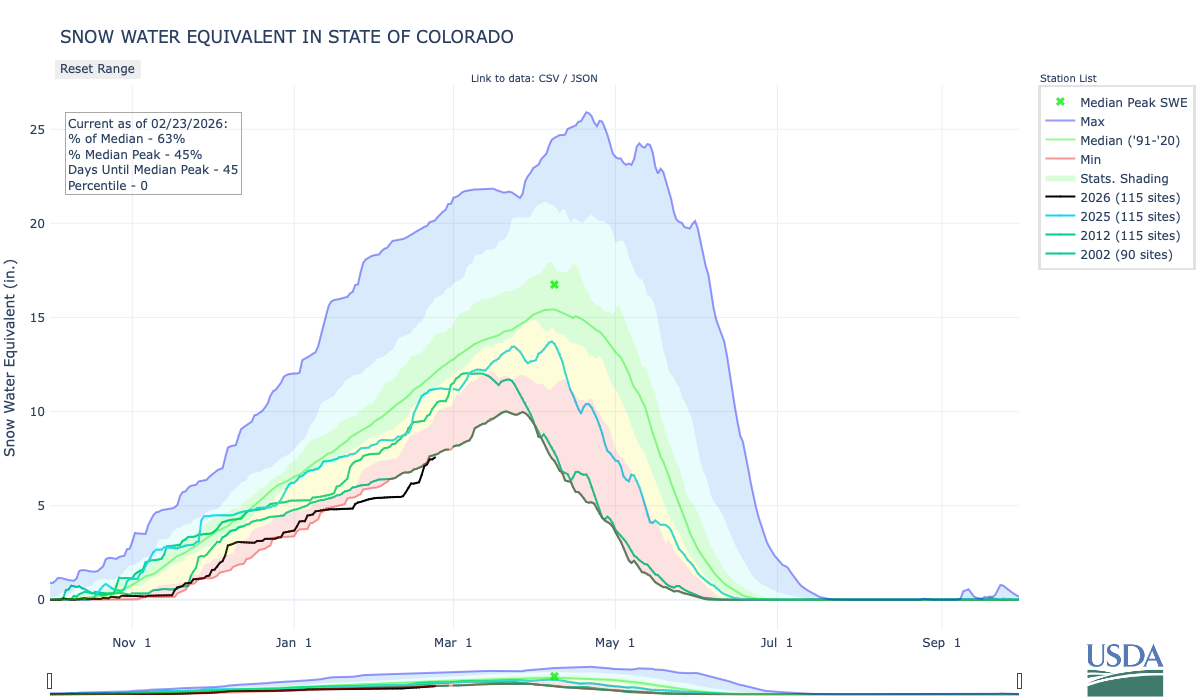
Colorado’s record-low snowpack is already raising concerns about increased wildfire risk and water shortages this summer, even as the mountains are still in the depths of winter. Statewide, the snowpack levels are just 61% of median for this time of year, and it would take consistent, record-breaking snowfall for the rest of the season to reach normal peak snowpack levels, according to the U.S. Department of Agriculture.
“We really should be bracing for an unusually early and potentially severe fire season,” Colorado Division of Fire Prevention and Control public information officer Tracy LeClair said. “Some of the conditions are worse than we saw in the big years, like 2012 and 2020, where we saw some of the largest fires and some of the most destructive fires in Colorado history.”
Those historic fire seasons were preceded by winters with well-below-average snowpacks, LeClair said. But this winter season, the snowpack is the worst Colorado has seen in decades. For weeks, the state’s snow telemetry network, which dates back to about 1987, has ranked the snowpack as the worst on record.
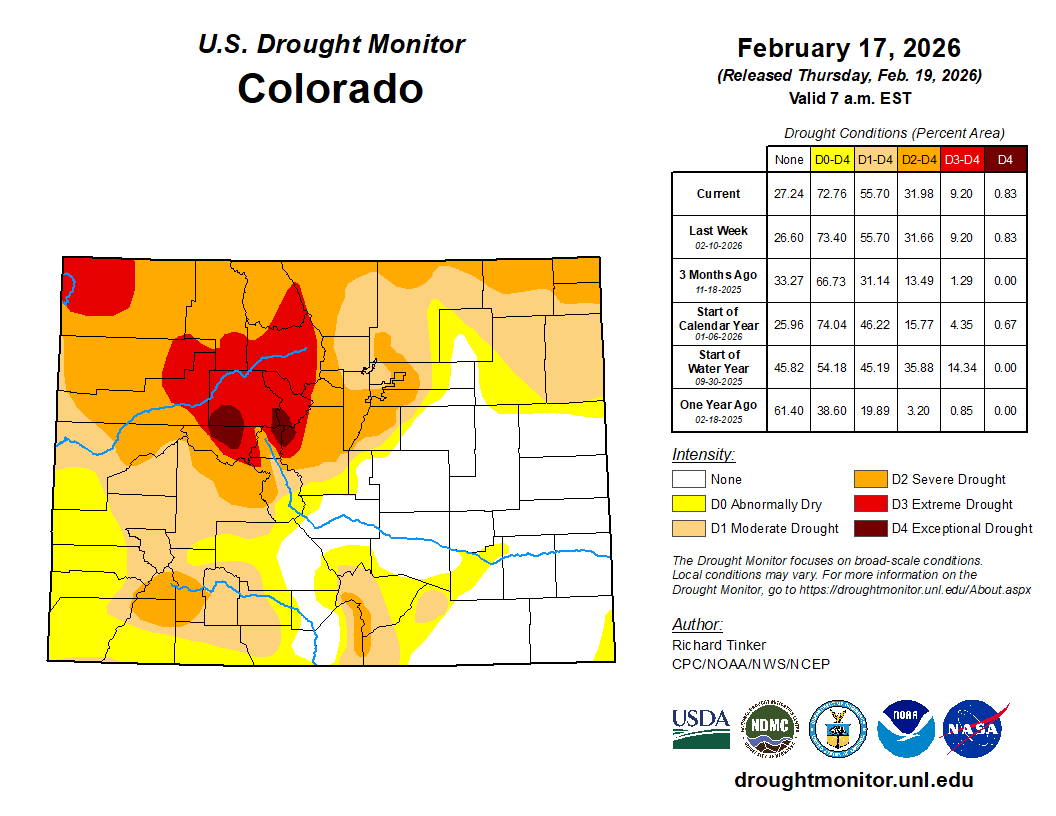
In the latest report from the U.S. Drought Monitor, parts of Summit, Eagle, Pitkin, Lake and Park counties were experiencing exceptional drought — the most intense level of drought. Meanwhile, most of northwest Colorado is under extreme drought or severe drought status…The snow drought that has persisted through the season has shifted the fire risk “into the late winter months,” LeClair said. She noted that lack of snow has also led fire agencies across the state to delay or cancel prescribed burn projects, like pile burns, which require snow on the ground to burn safely.