
by Robert Marcos
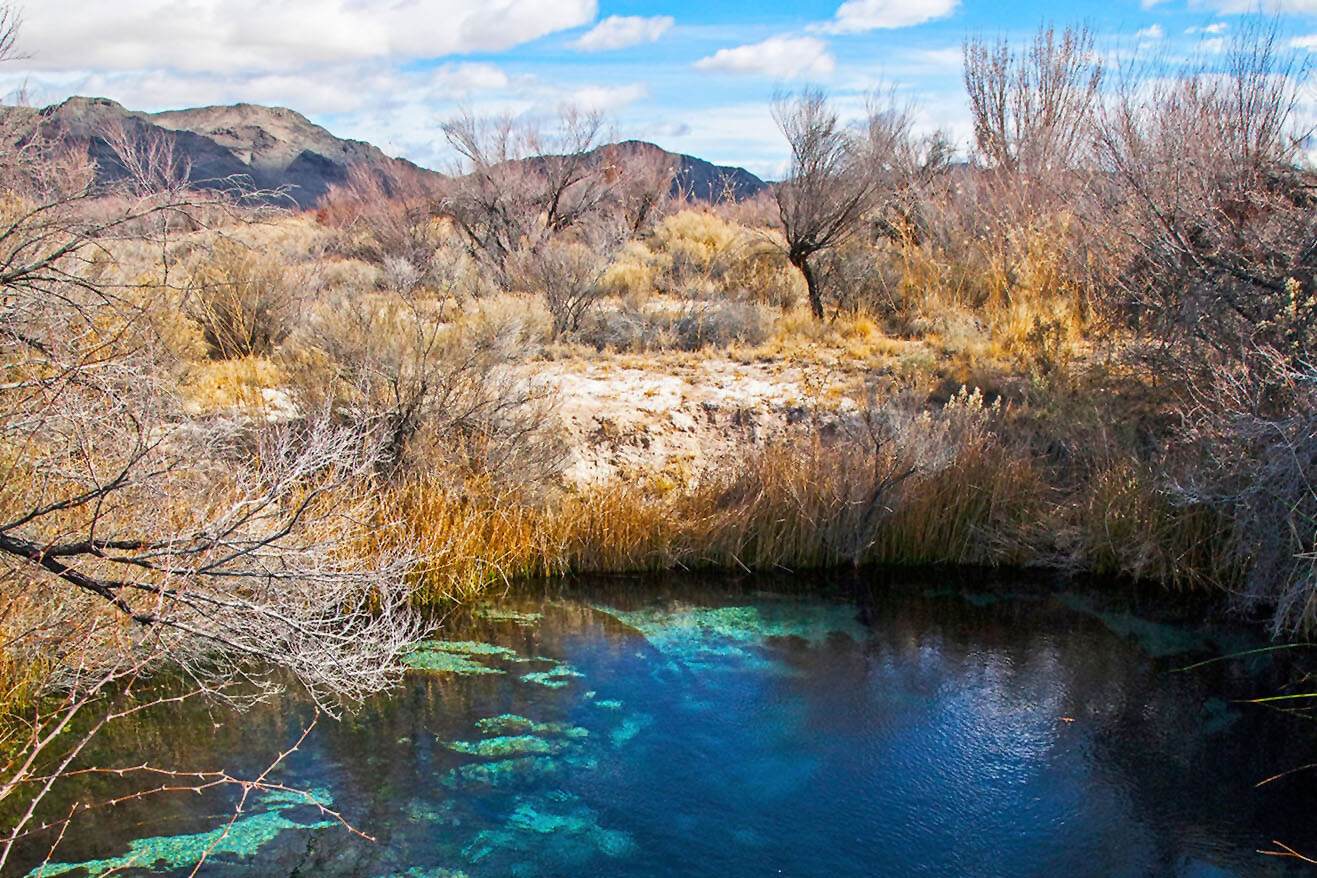
The water in Amargosa Valley is a scientific oddity in that it serves as a living time capsule, and it supports life in one of our planet’s harshest environments. The Amargosa River flows underground for roughly 185 miles – surfacing only occasionally to create lush oases in the Mojave Desert.
Here are some remarkable aspects of this unique water system:
Ancient “Fossil Water”: Much of the groundwater in the Amargosa Basin is fossil water that was recharged during the last Ice Age, between 10,000 and 100,000 years ago. The water travels through a massive regional aquifer of limestone and dolomite rock from sources as far away as the Spring Mountains.1
A “Bottomless” Cavern: The system feeds Devils Hole, a water-filled limestone cavern in the Ash Meadows National Wildlife Refuge. Divers have never found its bottom, but it has been explored to depths of over 500 feet.
Geological Sensitivity: The water level in Devils Hole is so precisely tuned to the Earth’s crust that it acts like a giant seismograph. Massive earthquakes thousands of miles away in Japan or Mexico have caused “tsunamis” several feet high inside this tiny desert pool.2
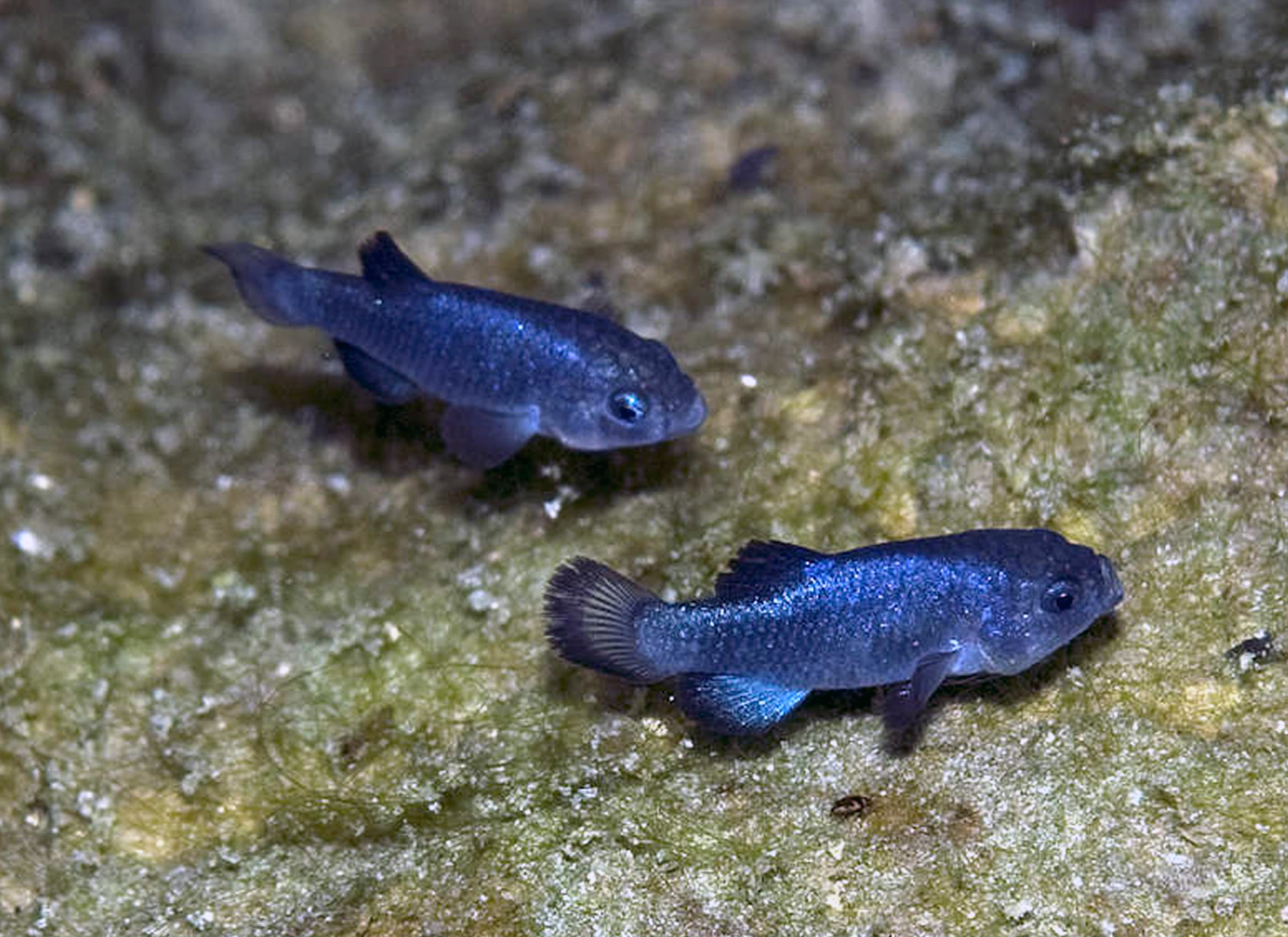
Extremophile Habitats: The valley’s springs support the Devils Hole pupfish, which has the smallest habitat of any vertebrate species on Earth. These fish survive in water that is 93°F and nearly devoid of oxygen, conditions that would be lethal to most other fish. The pupfish are closely monitored by an interagency group – consisting of the U.S. Fish and Wildlife Service, the National Park Service, and the Nevada Department of Wildlife. Scientists from these agencies frequently count the number of fish, collect their eggs, and are are undertaking captive rearing and “population augmentation” (which means they release captive-bred fish into the water in order to support the existing population, which is struggling).
Global Biodiversity Hotspot: Ash Meadows National Wildlife Refuge is home to 26 endemic species of plants and animals that exist nowhere else on Earth. This high concentration of unique life, isolated in “islands of water” within the Mojave Desert, has earned the area the nickname “The Galapagos of the Desert”. The endangered fish include the Devils Hole pupfish, Warm Springs pupfish, Ash Meadows Amargosa pupfish, and the Ash Meadows speckled dace. Several unique species of endemic plants include the Amargosa niterwortthe Ash Meadows milkvetch, the Ash Meadows blazingstar and Spring-loving centaury.3
Deep-Fault Thermal Springs: The heat in local thermal springs, such as those near Tecopa, is likely caused by deep water circulation along faults rather than a shallow volcanic heat source. The geothermally-heated water in the Amargosa Valley – including the water at Devils Hole, is heavily influenced by the region’s limestone and dolomite bedrock. As rainwater from the nearby Spring Mountains moves through deep underground fractures, it is heated by the Earth’s core and dissolves various minerals along the way.4