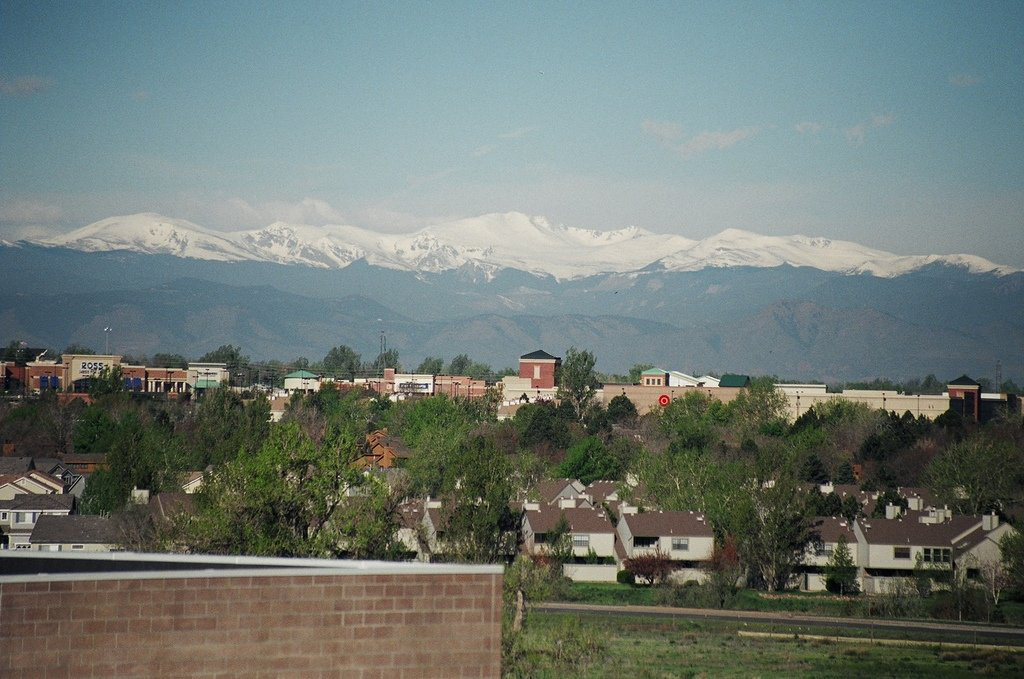
After 30 months of discussions, meetings and public input from 30,000 Coloradans, the Colorado State Water Plan is completed. As stated by Gov. John Hickenlooper in his executive order initiating the plan in May 2013, it is “Colorado’s first water plan, written by Coloradans, for Coloradans.”
For Latinos in Colorado, the plan is certainly an important first step.
It addresses many of our concerns about the protection of the Colorado River system, which is the primary source of water for Colorado and the Southwestern United States, and a significant part of Southwestern Latino culture. The river occupies a special place in Latino communities, and has been at the heart of our culture for centuries.
For us, protecting the river is not just smart water management; it also honors our heritage.
We applaud the attention paid in the plan to Latino conservation values and water priorities. The plan creates strong statewide water conservation targets in cities and towns, recommends annual funding for healthy rivers, and does not call for additional costly and controversial trans-mountain diversions, which harm rivers and local communities.
Rivers are so critical to Latino families, and before we consider large diversions, we must first ask how we protect our rivers, especially for agricultural uses that are the foundation for the economic well-being of many Latinos.
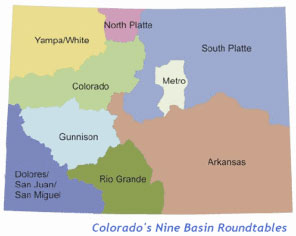
It is gratifying to see that for the first time ever the plan includes strong recommendations for funding to preserve and restore the state’s rivers and streams that play such an important role in Latino history and daily life. The plan proposes unprecedented investments in stream management plans for 80 percent of the priority list of rivers and streams as determined by Colorado’s basin roundtables. Latinos represent a sizeable percentage of the 40 million people in the Colorado River basin who rely on the river for drinking water; in fact, one out of every three people living in the states around the Colorado River is Latino (in Colorado it is one in five). While the Colorado Water Conservation Board, the water plan’s architect, was open to meetings and discussions as it developed the plan, Nuestro Rio believes the Latino community by its sheer numbers should be more involved in planning and helping to determine Colorado’s water strategies going forward.
Assuredly, hard decisions will come next as we implement key recommendations in the final state water plan.
And those decisions should not be made without more Latino voices at the table.
Our voices and values are similar to the vast majority of the 30,000 public comments submitted, supporting a strong statewide municipal conservation goal, funding to protect Colorado’s rivers, and opposing large new river-draining diversions of water from Colorado’s West Slope.
But for Latinos, the river and the land it nurtures, is also a very personal matter. For centuries, the river provides our culture with a collective sense of “querencia,” a place in which we know exactly who we are, the place from which we speak our deepest beliefs.
As we move onto the path set by the state water plan, Nuestro Rio and other Latinos in Colorado stand ready to work with Gov.
Hickenlooper and state leaders to implement the conservation values laid out in the plan — ensuring the protection of healthy river flows, our outdoor recreation industry, agricultural heritage, businesses and thriving cities — for our families now and for the generations to come.
Nita Gonzales is Colorado state director of Nuestro Río, representing Latinos living in Arizona, California, Colorado, New Mexico and Nevada, She works to educate elected officials and youth about the many ways Latinos are connected to the Colorado River. See nuestrorio.com.
Colorado now has a plan for its water supply future, motivated by the prediction of state population doubling to around 10 million people by 2050. The plan was released on Nov. 19. It contains well over 400 pages…
Sustainable funding for plan implementation is another objective. It says, “the State will investigate options to raise additional revenue in the amount of $100 million annually ($3 billion by 2050) starting in 2020.” CWCB would start this with $50 million from the Severance Tax Perpetual Fund. CWCB proposes to use this money to establish a repayment guarantee fund to help finance projects, also a green bond fund for large scale environmental and recreational projects.
Using these funds as proposed, the plan says, “an initial $50 million investment could leverage half a billion dollars of regional projects.”
Education to improve public awareness of water issues is the final objective, for better decision making about balanced water solutions.
The plan introduction lists steps that can be taken immediately:
Proactively protect the state’s interstate water interests; apply and strengthen the doctrine of prior appropriation.
Stress that every water conversation starts with conservation and includes water storage.
Investigate options to raise additional revenue to help implement the plan, with an estimated $20 billion needed over the next 30 years for water supply, infrastructure, recreation, and the environment.
Coordinate water uses and encourage projects that provide multiple benefits, including environmental flows, irrigation that also improves wildlife habitat, recreation, and interstate water compact compliance.
Increase efficiency and effectiveness of water project permitting while properly mitigating negative environmental impacts.
Strengthen outreach and education to the general public about water issues.
The plan’s objectives, goals, and critical action steps are consolidated in the plan’s chapter 10. While this was released as the final plan, it can have ongoing updates.
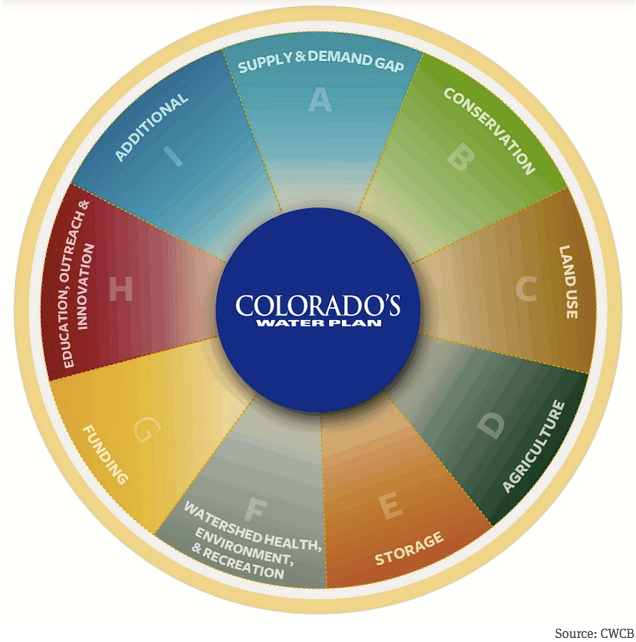
A screenshot from the website for Colorado’s Water Plan.
In 1893, after reviewing census records of settlement in the West three years prior, the historian Frederick Jackson Turner proclaimed the frontier closed. In Colorado, the new State Water Plan says much the same thing about the water frontier.
After almost 150 years of yoking its rivers with dams, canals and other water infrastructures, the state is substantially out of raw water to develop. If Colorado doesn’t have an empty water bucket, it can at see the bottom.
This might seem odd, given that Colorado is located at the crest of the continent. No state has a higher mean elevation than Colorado, 6,800 feet. Snowmelt from the silvery peaks make it the mother lode of rivers: the Arkansas, the Rio Grande, and the Platte, among others, plus the namesake Colorado, all of them slashing down through canyons of black gneiss and red sandstone toward gentle plains and scorching deserts.
Interstate compacts mandate two-thirds be allowed to flow downstream to Nebraska, Kansas and New Mexico, and also Nevada, Arizona and California. Of what Colorado can legally keep, farmers claim the vast majority, about 85 percent, with the balance going to cities and industry.
But the compelling water statistic is told in acre-feet. One is needed every year for two single-family households. Of the 13.7 million acre-feet that originate in Colorado, only an estimated 150,000 acre-feet remain for development. Even that figure is suspect, because it assumes the climate of the 20th century. That’s a risky assumption, given what we now know about the impact of warming temperatures in the Southwest. [ed. emphasis mine]
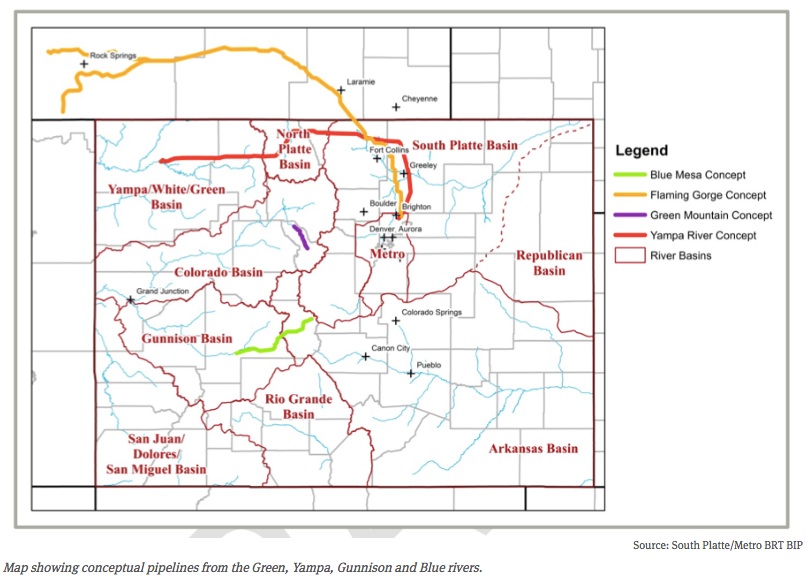
Still, the old ways die hard. One idea calls for Colorado to develop that final share of the Colorado River by building a $5 billion pipeline to divert water 400 miles from the state’s northwest corner to the rapidly growing cities at the foot of the Rocky Mountains.
This latter idea provokes Colorado’s traditional antagonisms about transmountain diversions. Some 80 percent of water originates west of the Continental Divide, such as near the resorts of Aspen and Vail, while 89 percent of residents live east of the divide, mostly in the Front Range urban corridor. The imbalance is addressed—and created—by the 25 tunnels, canals and ditches that altogether export 450,000 to 600,000 acre-feet per year from the Pacific Ocean side of the mountains eastward to the Great Plains.
While the state plan does envision new reservoirs, to store flood waters, it also emphasizes a new frontier of sharing. For decades, Colorado’s cities have been tapping agriculture water. Many farmers have been only too happy to sell their farms – and water, too, a practice called buy and dry. But Colorado Gov. John Hickenlooper, at the plan’s adoption in late November, made it clear that this is unacceptable. “It’s in the self-interest of everyone in this state that we don’t dry up the state’s agricultural counties,” he said in introducing the new state plan. But Colorado needs to figure out ways to keep farms even as Colorado’s current population, 5.3 million, to expand to 9 or 10 million by mid-century. The new plan doesn’t spell out how this water can be shared. Innovation—technological and legal—will be needed.
Another new frontier of water will be conservation. The plan identifies a goal of wringing 400,00 acre-feet per year of savings without sacrificing uses. That’s about as much as the natural flow of the South Platte River. Just talking about limiting the length of showers misses the point, said Hickenlooper. Conservation is a broader and deeper ambition. Many argue for a new cultural norm about what constitutes an aesthetically pleasing urban and suburban landscape.
Denver has been leading the way. Just a few decades ago the city’s water agency was reviled as both gluttonous and imperious, prompting a bumper sticker that said: “Damn the Denver Water Board.” But in recent years, it has been leading the way in conservation, with a 20 percent per capita reduction in water consumption in the last decade. “And we can do more,” says Jim Lochhead, the agency’s chief executive, without sacrificing quality of life.
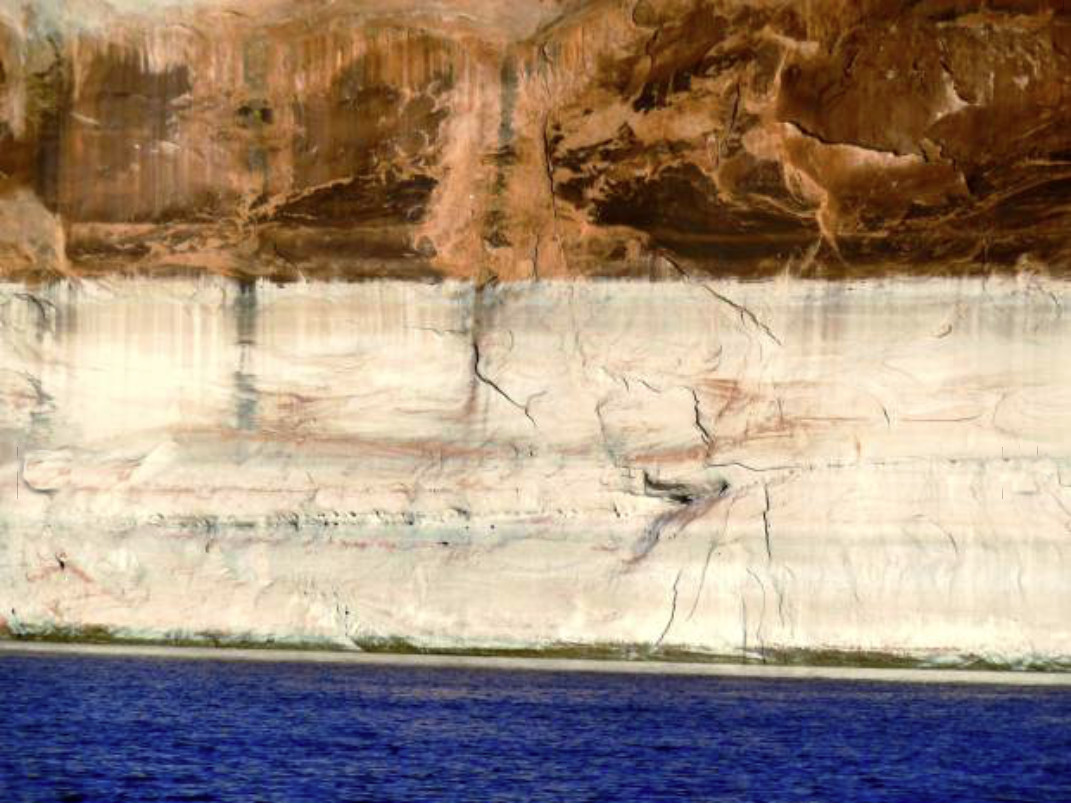
Colorado’s new ambitions should be viewed within the context of the seven states of the Southwest that share the Colorado River. Surpluses during the 1990s dissolved as drought left bathtub rings on the river’s two giant reservoirs, Mead and Powell. Now, even after good snow years in the headwaters, water levels in Mead continue to fall, now to 35 percent of capacity, the lowest since the 1930s, soon after Hoover Dam was completed in 1935.
Some predict even further declines as temperatures rise and population demands increase. Calculating the odds, Las Vegas bet on a new tunnel, its third into Mead, the city’s major source of water. The new tunnel, which was completed in September at a cost of $817 million, bores to the very bottom of the reservoir—just in case the reservoir empties altogether.
Water laws and infrastructure in Colorado and other Western states were created to share abundance. “Today that pendulum has swung to how ‘do you manage shortages for all?’ That’s a big difference,” says Russell George, a former state legislator in Colorado who is credited by many as the father of his state’s new plan. “So what we have to do now is sort of reinvent the total decision-making methodology based on scarcity.”
That’s a different conversation from the past, when the major argument was always that prosperity depended upon developing water and other natural resources. But with the water barrel empty, it’s time for a new conversation. In Colorado, the conversation has already begun.
Allen Best writes about energy and water issues from a base in Colorado.
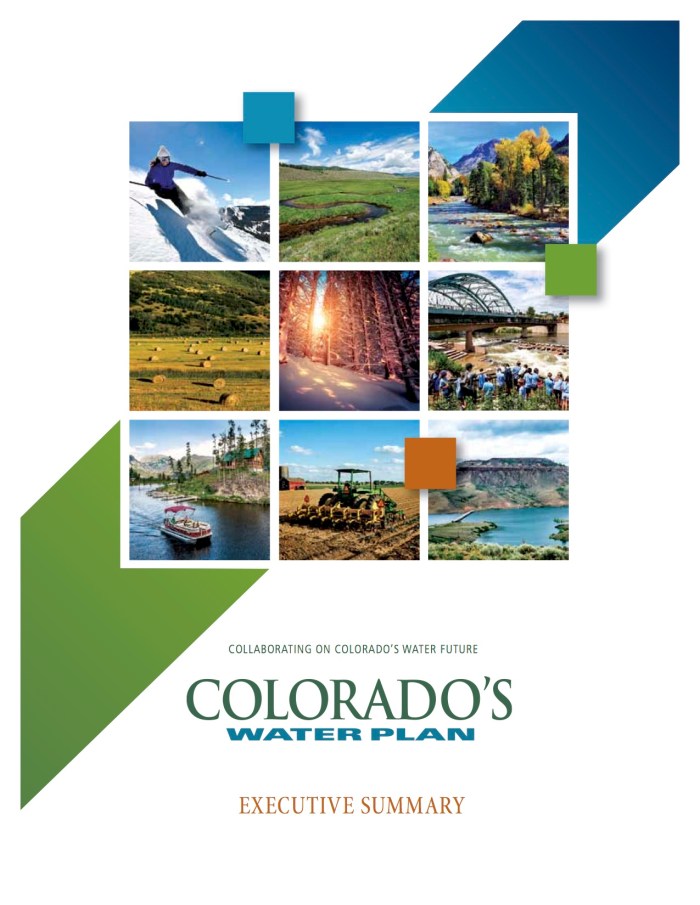
Click on the graphic below to read the Colorado Water Plan Executive Summary.
A way to look at any new transmountain diversions in Colorado has been dubbed “Colorado’s Conceptual Framework” in the Colorado Water Plan after previously being called “the seven points” and the “draft conceptual agreement” as it has evolved over the past two years.
It’s a lofty title for a framework that major water providers on the east slope are adamant does not carry any force of law, rule, or policy, and which still divides water stakeholders in Colorado.
But no matter what it is called the framework is, despite challenges, in fact included in the first-ever Colorado Water Plan, which was developed by the Colorado Water Conservation Board and presented to the governor on Nov. 19.
A number of Front Range entities told the CWCB that it should not adopt the conceptual framework or include it in the water plan.
“Even with wording changes, the basin roundtables recommend that the CWCB not adopt the framework as it is a work in progress that may be modified as dialogue continues,” wrote the S. Platte and Metro basin roundtables, two of nine regional water-supply groups that meet under the auspices of the CWCB, in a combined Sept. 17 comment letter.
In its introduction to the framework in Chapter 8, the water plan recognizes that “a long-standing controversial issue in Colorado is the development of water supply from the Colorado River system for use on the eastern slope. It is controversial because of supply gaps, environmental health, compact compliance, and other issues.”
The water plan describes describes the framework as providing “a path forward that considers the option of developing a new transmountain diversion and addresses the concerns of roundtables, stakeholders, and environmental groups. The conceptual framework presents seven principles to guide future negotiations between proponents of a new transmountain diversion, if it were to be built, and the communities it would affect.”
Some of the framework in the River House on the San Juan River.
The principles
The seven principles include concepts such as making sure a new transmountain diversion, or TMD, does not increase the likelihood of a compact call from states in the lower Colorado River basin, ensuring the eastern slope has other sources of water in dry years, and establishing guidelines for when diversions may need to be curtailed to keep enough water in Lake Powell.
The framework also says new diversions should not limit Western Slope development, that it’s important to increase both municipal and agricultural water-conservation efforts in Colorado, and that steps should be taken repair damaged river ecosystems with or without new diversions.
The water plan says the CWCB will “use the conceptual framework as an integrated package of concepts to: encourage environmental resiliency; set high conservation standards; develop stakeholder support for interstate cooperative solutions; and establish conditions for a new multi purpose and cooperative transmountain diversion (TMD) project if proposed in the future.”
The framework was drafted and adopted by the members of the Interbasin Compact Committee, which includes two representatives from each of the state’s nine basin roundtables, six gubernatorial appointees, two legislative appointees, and the director of compact negotiations on the IBCC.
The group’s “main charge is to work with the basin roundtables to develop and ratify cross-basin agreements,” the water plan says.
The end of the tunnel that brings water from Hunter Creek to the Fryingpan River drainage, and then on to the eastern slope.
Divergence
The water plan describes both the conceptual framework and the lingering geographic differences of opinion about future transmountain diversions.
“Generally, eastern slope roundtables identify the need for a balanced program to preserve the option of future development of Colorado River System water,” the plan says.
“Western Slope roundtables express concern regarding the impact on future development on the Western Slope, as well as the potential for overdevelopment related to both a Colorado River compact deficit and critical levels for system reservoir storage, such as the minimum storage level necessary to reliably produce hydroelectric power at Glen Canyon Dam,” the plan states.
The water plan also finds that the Colorado River basin roundtable, which meets regularly in Glenwood Springs, and the S. Platte and Metro roundtables, which meet in Longmont and Denver, respectively, have the “greatest divergence” when it comes to the idea of more TMDs.
“In its BIP, the Colorado Basin Roundtable points out the variability in hydrology, stating that TMDs ‘should be the last “tool” considered as a water supply solution, once the many and complex questions are addressed over hydrology,'” the plan says.
On the other side of the divide, the water plan says that “in the South Platte/Metro basin implementation plan, the roundtable advocates to ‘simultaneously advance the consideration and preservation of new Colorado River supply options.’”
“Both viewpoints recognize the constraints of water availability and Colorado water law, but differ in their beliefs about whether such a project fits into water supply planning,” the plan concludes.
The members of the Front Range Water Council also have made it clear to the CWCB that they don’t see the framework as binding.
In a Sept. 15 letter to the CWCB on the water plan, the council said that the framework “’has no regulatory force or effect. Rather, it is guidance, the implementation and use of which will depend on the positions taken by the parties who engage in good faith negotiations on the construction of future specific proposed projects.”
The Front Range Water Council includes Denver Water, Aurora Water, Colorado Springs Utilities, Northern Water, the Southeastern Colorado Water Conservancy District, the Twin Lakes Reservoir and Canal Co., and the Board of Water Works of Pueblo.
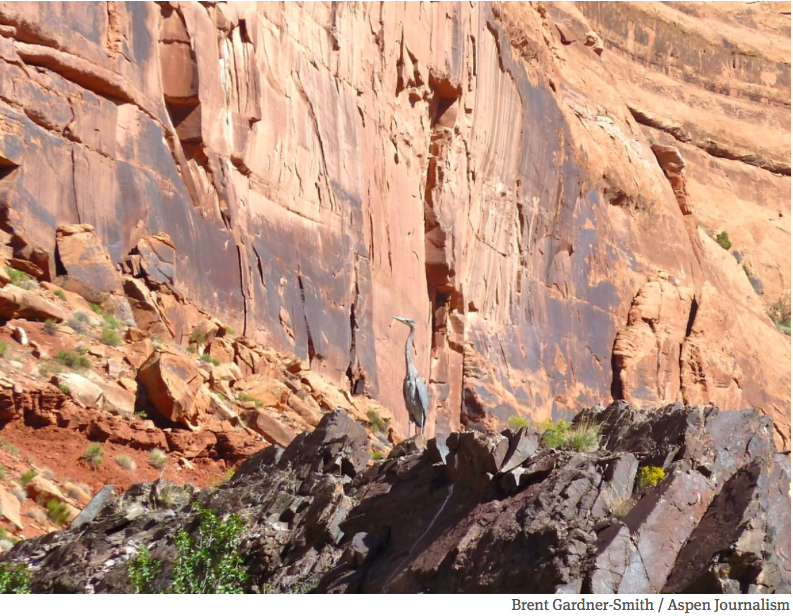
A heron at rest along the bank of the Colorado River.
Resiliency
The concept of “environmental resiliency” is also laid out in the framework and is done so on terms that are as environmentally staunch as any other statement in the water plan.
The framework says that “Colorado’s Water Plan, basin implementation plans, and stakeholder groups across the state should identify, secure funding for, and implement projects that help recover imperiled species and enhance ecological resiliency, whether or not a new TMD is built.“
In terms of next steps on the conceptual framework, the water plan only says that “the CWCB will monitor ongoing discussions” at the roundtable and Interbasin Compact Committee levels “that involve the topics associated with the seven principles of the conceptual framework.”
Principle 1: Eastern slope water providers are not looking for firm yield from a new transmountain diversion (TMD) and the project proponent would accept hydrologic risk for that project.
Principle 2: A new TMD would be used conjunctively with eastern slope supplies, such as interruptible supply agreements, Denver basin aquifer resources, carry-over storage, terminal storage, drought restriction savings, and other non-Western Slope water sources.
Principle 3: In order to manage when a new TMD would be able to divert, triggers are needed. Triggers are operating parameters that determine when and how much water a potential new TMD could divert, based upon predetermined conditions within the Colorado River system.
Principle 4: A collaborative program that protects against involuntary curtailment is needed for existing uses and some reasonable increment of future development in the Colorado River system, but it will not cover a new TMD.
Principle 5: Future Western Slope needs should be accommodated as part of a new TMD project.
Principle 6: Colorado will continue its commitment to improve conservation and reuse.
Principle 7: Environmental resiliency and recreational needs must be addressed both before and conjunctively with a new TMD.
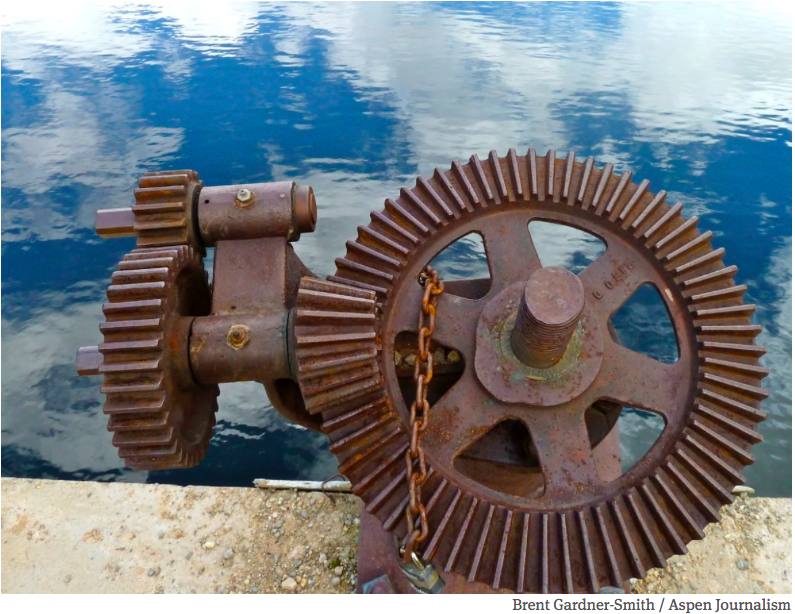
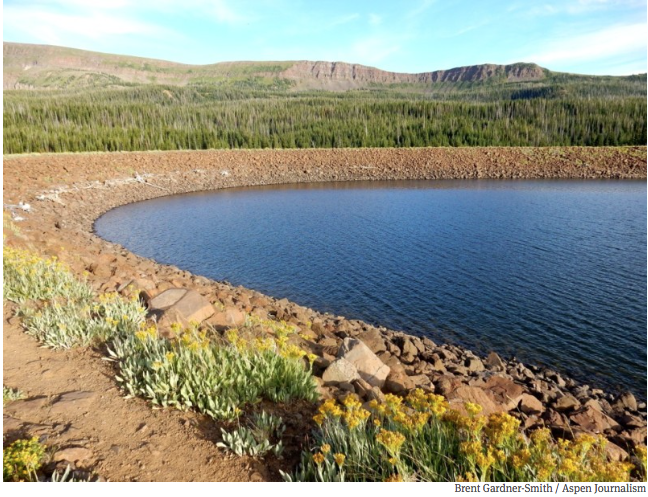
Gears on the top of the dam that forms Lost Man Reservoir, part of the diversion system on the upper Roaring Fork River headwaters.
There is much to be thankful for in our lives. This is especially true for Colorado’s rivers. We fish, boat, picnic, hike, swim and enjoy their serenity. The good news is the Colorado Water Plan is the first time the state has put together a plan for how to address water in Colorado, and it sets a course to ensure that all our kids and grandkids can enjoy thriving Colorado rivers for years to come.
So we raise our glasses to Gov. Hickenlooper and the Colorado Water Conservation Board for adopting a Colorado Water Plan on Nov. 19 that includes many strong elements! This is an important step forward on future water management.
We are extremely pleased that the new water plan sets the first-ever statewide water conservation goal. The Colorado Water Plan sets a goal of conserving 400,000 acre-feet of water by 2050, which is a nearly 1 percent annual reduction in per person water use in our cities and towns. This is a very doable and cost-effective strategy to stretch our existing water supplies, relying on innovation and new best practices that can maintain our high quality of life. This is a common sense approach and a key element for state water management.
Second, the water plan proposes annual funding for healthy rivers, creating ongoing financial support for river assessments and projects that help make our rivers resilient. For too long our state has been overly focused on pipes and concrete to move water around — and not on the impacts to our rivers. We have a $9 billion recreation industry in Colorado that relies on healthy rivers, and our own joy and happiness require healthy rivers. So it’s great to see the plan make a solid down payment toward future river health.
Finally, we applaud that the new plan makes large, new river diversions from the Western Slope to the Front Range highly unlikely. A framework presented in the plan about how to make decisions on these projects will help ensure the expense, time and alternative approaches are thoroughly considered. There are cheaper, faster and better ways to meet our water needs than piping water west to east over the Rockies.
James Eklund and Governor Hickenlooper roll out the Colorado Water Plan, Thursday, November 19, 2015 via The Colorado Independent
FromThe Grand Junction Daily Sentinel (Greg Walcher):
Ever since the writings of Solomon more than 900 years BC, it has been said that “there is nothing new under the sun.” He was not referring to Colorado’s continual water planning, but he could not have described it better.
Gov. John Hickenlooper just announced what he called Colorado’s “first-ever” comprehensive water plan. It is the final product of a decade of meetings, committees, and proposals. As finally adopted by the Colorado Water Conservation Board (CWCB), the 500-page plan calls for $20 billion worth of conservation measures, though no specific strategy for funding it.
Interestingly, the press reports mention the 10-year process, but also claim this governor ordered CWCB to begin statewide water planning in 2013. In fact it has been underway a long time — not one decade, but several. But when things go well, there is plenty of credit to go around, and much of this new water plan is praiseworthy.
It calls for a new statewide conservation goal of 400,000 acre-feet of water by 2050. It also mentions a projected shortfall in municipal and industrial water demand of 560,000 acre-feet by 2050, and proposes to reduce that shortfall to zero by 2030. Again, the math is a bit unclear, but whether we plan to conserve 400,000 or 560,000 acre feet, it would be a good thing either way.
Interestingly, the plan also calls for construction of 400,000 acre-feet of additional water storage — which many of us have advocated for years. Our state is growing, not shrinking, and our need for water will continue to grow. Colorado is entitled under interstate agreements to substantially more water than it uses, so it is simply irresponsible not to store the water we get during wet periods, so we can use it during dry periods. When I served on the CWCB 15 years ago, we advocated creative new ways to store water, by expanding existing reservoirs, and using underground storage in closed aquifers. Both techniques have been used successfully elsewhere, and both are now part of Colorado’s official state plan. Bravo.
Unfortunately, the plan also mentions the prospect of new trans-mountain diversions — which should not and will not happen. Half of the Colorado River is already diverted to the Front Range, more than enough. There are, as the plan points out, plenty of ways for Denver to conserve water, and to store more of its own supply. In fact, as Denver Water CEO Jim Lochhead points out, their residents have already reduced usage 20 percent over the last 10 years without any major problems. Lochhead was quoted saying, “We can go a lot lower without sacrificing quality of life.” He is right.
We have been down this road many times before, and the same giant unresolved issue is always present — funding. Much of the anticipated $20 billion cost of these water measures would be borne by utilities and their customers (who have not yet been asked if they want higher water bills), but the state also needs another $100 million a year for its share. The report suggests new federal funding (unlikely from today’s budget-sensitive Congress), tax increases (perhaps a statewide mill levy, higher severance taxes, or a sales tax increase) — or a new bond program. Only the latter approach would really be new, and believe me, it is a can of worms.
You see, new water projects are always viewed with suspicion in Colorado. A 2003 initiative [Referendum A] to create bonding authority for water projects became so thoroughly unpopular that it was defeated in every county, and became a campaign issue against candidates (including me) in three consecutive elections. That measure authorized no water projects; it was merely a future funding mechanism. Still, a century of history gave Coloradans good reason to suspect the worst: that someone might eventually use it to build trans-mountain diversions to “steal” water from one basin to another. So the proposal went down in flames at the ballot box and the result was, for another generation, no new water storage at all.
The comprehensive plan completed this week provides some hope that Coloradans might eventually emerge from those years of distrust and work together on a long-term solution. That could involve both conservation and creative new storage in every river basin of the state (instead of diverting water between them), public-private partnerships, bonding and other new funding sources, and a genuinely more prosperous future for all of Colorado. That would be something new under the sun, and would be worth all the effort that has gone into it.
Greg Walcher is president of the Natural Resources Group and author of “Smoking Them Out: The Theft of the Environment and How to Take it Back.” He is a Western Slope native.
Trout Unlimited praised the final Colorado Water Plan unveiled today by the Colorado Water Conservation Board, saying that it recognizes the key role that healthy rivers and streams play in sustaining the state’s economy and quality of life.
“We’re pleased that the Colorado Water Plan recognizes that healthy rivers are central to Colorado’s quality of life and help drive our booming, $13 billion recreation economy,” said David Nickum, executive director of Colorado Trout Unlimited. “If we want a future of Gold Medal trout rivers and outdoor opportunities, we need to plan for that future—and this plan is a step in the right direction.”
“Instead of fighting over a dwindling resource, with winners and losers, Coloradans should work together to find solutions that meet all of our diverse needs, from agriculture and industry to recreation and the environment. Collaboration is key,” said Drew Peternell, director of TU’s Colorado Water Project. “There are a number of concepts highlighted in the Water Plan that could lead Colorado to a better water future.”
Trout Unlimited pointed to three specific features of the Water Plan that, if adequately supported and funded by state lawmakers, will help protect Colorado’s rivers and sustain our economy:
1. The Water Plan calls for irrigation modernization.
Across Colorado, TU is a leader in working with ranchers and farmers on innovative irrigation modernization projects that improve water delivery while protecting river flows and habitat. “We are pleased that the plan recognizes the benefit of modernizing irrigation infrastructure,” said Peternell. “But ranchers and farmers need support and incentives to undertake these improvements.”
TU called on the Colorado General Assembly to provide increased funding for irrigation modernization and innovation projects and to enact substantive legislation to facilitate these projects.
Peternell noted that water rights are valuable property interests, and TU strongly believes that agricultural producers who use their water rights to improve stream flows should be compensated for doing so. “We look forward to working with state lawmakers, the CWCB and other stakeholders to promote irrigation modernization and innovation during the plan implementation,” said Peternell.
“We need to get money to the ground for good projects,” he added. “That’s the next challenge—moving from good ideas to on-the-ground action.”
2. The Water Plan encourages local communities to create stream management plans.
TU also praised the plan for encouraging local communities to create stream management plans (SMPs). SMPs will help stakeholders gain a better understanding of the stream flows necessary to support river health and recreational uses of water, while continuing to meet other water uses. Healthy flow levels can be integrated into community-driven water plans that meet diverse water needs.
“Steam management plans bring local water users together to determine how best to use limited water resources,” Peternell said. “They are an exercise in collaboration.”
TU applauded the CWCB and General Assembly for setting aside funding for SMPs through the 2015 projects bill. However, the $1 million currently earmarked will not be sufficient for these important plans in coming years. TU calls on the CWCB and General Assembly to increase funding for SMPs in future years.
The Water Plan establishes a framework for evaluating proposed trans-mountain diversions of water.
TU is also pleased that the Water Plan contains a “Conceptual Framework” for evaluating new proposed diversions of water from one basin to another. TU believes that the Conceptual Framework should prevent unnecessary, river-damaging trans-mountain diversions (TMDs).
TU has argued that Colorado should reject all new TMDs unless the project proponent (1) is employing high levels of conservation; (2) demonstrates that water is available for the project; and (3) makes commitments that guarantee against environmental or economic harm to the basin of origin.
The Colorado Water Plan, requested by Gov. Hickenlooper in 2013, is the product of more than two years of public meetings, thousands of public comments and eight Basin Implementation Plans. Trout Unlimited staff and volunteers have been actively involved throughout the Colorado Water Plan process, submitting comments and helping shape Basin Implementation Plans. Through its Our Colorado River program, TU has helped unite tens of thousands of Coloradans around core water values such as collaboration, infrastructure modernization, and conserving healthy rivers and streams.
While the final plan contains a host of strong ideas, TU said that implementing these good ideas will be the true measure of success.
“The Final Water Plan is a beginning not an end,” said Nickum. “The key to Colorado’s water future will be actual on-the-ground collaboration to meet our water needs while protecting our state’s rivers and agricultural heritage.”
Colorado transmountain diversions via the University of Colorado
“The final version of the Colorado Water Plan adds more clarity as far as the position on trans-mountain diversions,” said local water expert Frank Kugel. As general manager for the Upper Gunnison River Water Conservancy District, Kugel said the plan makes it clear that, “The Front Range interests—if they pursue trans-mountain diversion—understand there’s not a firm supply. They would accept the risk of any project development that the water may not be there when they need it.”
In addition, Governor Hickenlooper made it clear that diverting more water across the mountains will be a last resort.
According to the Denver Post, Hickenlooper stated that if water conservation is ramped up, water is incorporated into land-use planning and reservoir construction is done right, “the diversion of more water across the mountains won’t be necessary.”[…]
Kugel says that’s a good thing for the Western Slope.
“The other aspects of the water plan that are favorable for our basin are that there are other proposals [besides trans-mountain diversion] for meeting the gap between supply and demand,” he said.
They include reuse projects for the Front Range, limits to the permanent drying up of agricultural lands, opportunities to lease water rights and temporary fallowing of farmlands.
“The plan is a step in the right direction as far as providing for the future of Western Slope water. We certainly need to remain vigilant to guarantee that the protections laid out in the plan are followed through, but there has been a great deal of good work done to solve future water problems,” Kugel continued.
The plan also outlines projects for the local water basin, including about 130 projects to deal with decreasing water supplies. According to Kugel, climate change studies project that on a local level, warmer temperatures will lead to increased evaporation and transpiration and in turn a 10 percent to 20 percent reduction in water supplies by the middle of the century.
Droughts and shortages experienced in 2002 and 2012 could become more commonplace. In 2002, diversions on the East River and the Slate River completely dried up.
The projects outlined in the water plan will look at water consumption and shortages as well as environmental and recreation concerns. Stream management plans for Ohio Creek and the East River are already under way. While the projected population growth on the Front Range makes its water problems most noticeable, Kugel says that meeting water demand is a statewide issue.
“The shortages are state-wide. In the coming decades there are more acute projects for the Front Range because of growth… making conservation and other methods and efficiency efforts more important there. But as citizens of Colorado we all have obligations to maximize the use of water.”
From the Colorado Springs Independent (Pam Zubeck):
he state’s long-awaited water roadmap to assure adequate supplies decades into the future got a lot of coverage last week, with many cheering the plan…
But Colorado Springs Utilities’ managing engineer for water resource planning M. Patrick Wells, had harsh words for the plan.
In a Sept. 17 letter providing feedback on a draft version, Wells called the plan “a directionless recitation of guardrails without a road.”
The plan fails to establish a common vision for the state’s water supply future, and rather appears to be “a vehicle for managing growth,” he says.
The plan also lacks baselines against which to judge water development in the future, Wells says. For example, water projects have been labeled harmful in some cases for recreation and the environment. But the contrary is often true, he writes. “In many cases, water development has resulted in more reliable flows, improved habitat, better water quality, and improved recreation for key stream reaches versus pre-development conditions.”
Wells also objects to what he sees as the plan’s “anti-growth” and “anti-City” stance.
Utilities spokesman Steve Berry says the water plan won’t have a major impact on the city’s plans, mainly because it has “no teeth” in imposing costs on water users. But if the water plan dictates changes in how water is appropriated from the four rivers that originate in Colorado, that could affect Springs water users.
Berry says the city owns undeveloped water rights in both the Colorado River and Arkansas River basins. The Colorado River, which supplies eight states, including Colorado, and Mexico, could become a point of contention in coming years as water users look for other sources.
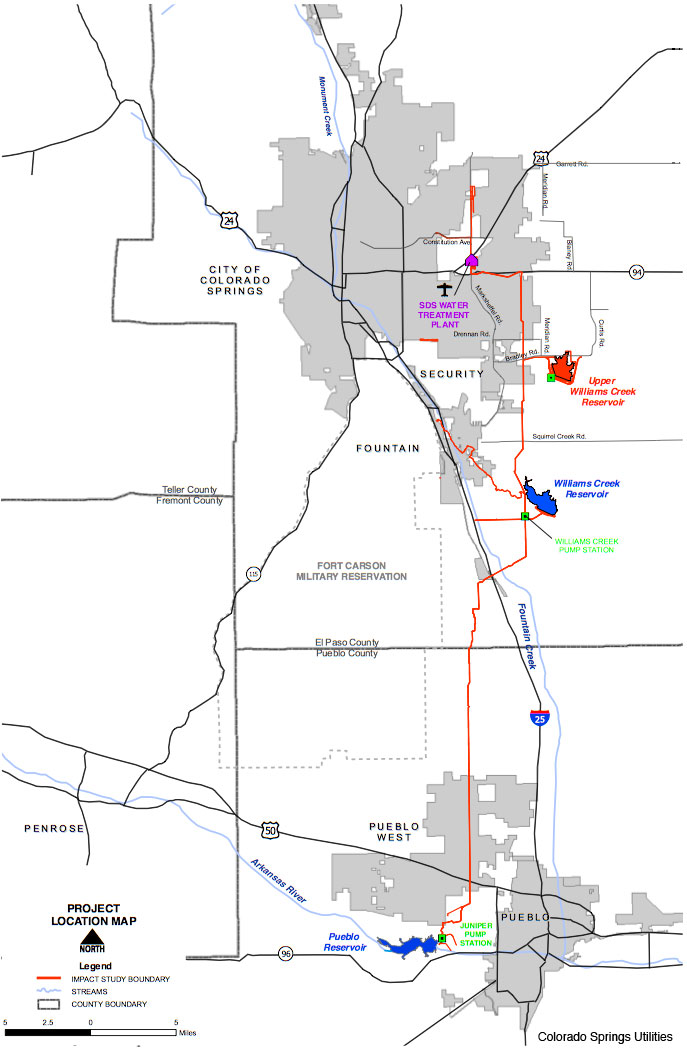
After the city failed to win approval of its second trans-mountain system, called Homestake II, in the 1990s, Utilities turned to developing its Arkansas River rights and built the $829-million Southern Delivery System pipeline from Pueblo Reservoir, which goes online next year.
Utilities officials, Berry says, don’t support a water plan that would impede the city from developing those rights. It’s worth noting that the new water plan doesn’t favor an additional trans-mountain water project to bring water from the Western Slope to the Front Range.
“We want to make sure through this water plan there are not unreasonable obstacles to developing our water rights in the future,” Berry says.
Lastly, Berry says Utilities is concerned the plan unduly emphasizes conservation. Through rates adopted amid drought conditions over the last decade, Utilities’ customers have dramatically cut usage — from 109 gallons per customer per day in 2006, to 85 gallons, he says. Of course CSU is in the business of selling water, and less usage could affect revenue.
Berry also notes Springs Utilities has long planned decades ahead for its water supply. SDS, for example, began in the 1990s.
Southern Delivery System route map — Graphic / Reclamation
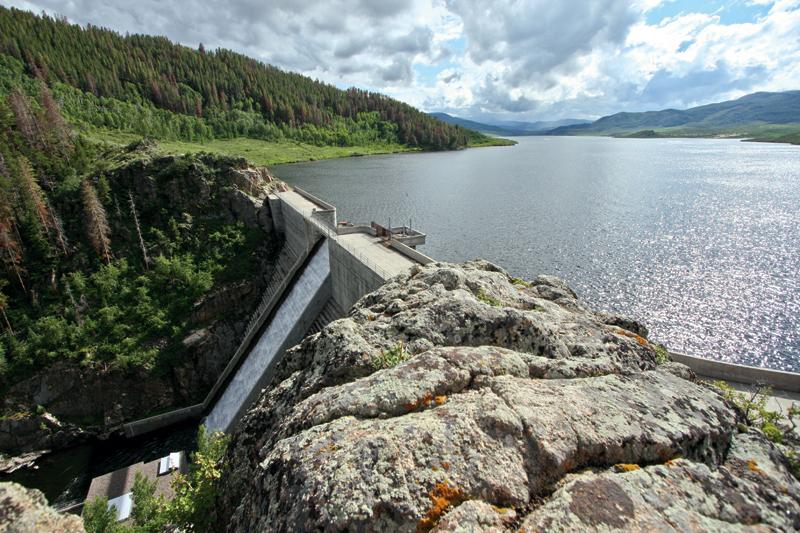
Stagecoach Dam and Reservoir via the Applegate Group
FromAspen Journalism (Brent Gardner-Smith) via the Glenwood Springs Post Independent:
In the just-released Colorado Water Plan it’s rare to see the word “dam” used.
And yet, dams and reservoirs are at the core of Colorado’s water-supply systems, past, present and future.
The word “dam” does not appear at all, for example, in Chapter 10 of the water plan, which is the “Critical Action Plan” for the future of water supply in Colorado.
Instead of using “dam,” or “dams,” the state water plan, and most people at water meetings in Colorado, use the word “storage,” as in “water storage” or “storage project” to describe some type of structure that backs up and holds water.
In Chapter 10, where “dam” is ignored altogether, “storage” merits 14 uses.
In Chapter 6.5, the word “dam” is used just twice in the 30-page chapter about “infrastructure,” while “storage” is used over 160 times.
And in Chapter 4, “dam” is used 13 times, as one might expect in a chapter called “Water Supply.” But “storage” is used 71 times.
In a state like Colorado that can store 7.5 million acre-feet of water in 1,953 reservoirs — all formed by dams of some sort — the practice looks a bit like “dam” avoidance.
There are, however, a few instances in the water plan where “dam” or “dams” are used in a routine way.
“While new storage projects will certainly play a role in meeting the state’s water needs, the enlargement and rehabilitation of existing dams and reservoirs will provide more options for the path forward, as Ch. 4 discussed,” the plan states, for example, in Chapter 6.5.
In that context, the use of “dams and reservoirs” sounds appropriate, and not overly damning, one would suppose.
Here’s another example.
“While storage is a critical element for managing Colorado’s future water supplies, new storage projects may be contentious and face numerous hurdles, including permitting and funding,” the plan states in Chapter 4. “In many cases, it may be more practical and efficient to reallocate or enlarge an existing dam and reservoir than to build a completely new structure.”
Again, a seemingly innocuous use of “dam and reservoir,” which is to the plan’s credit, at least linguistically.
But “dam” is not a popular term in the water plan.
“Storage” is the preferred word.
In an op-ed piece in The Aspen Times on Nov. 23, Gary Wockner of Save the Colorado said the use of “storage” was “an Orwellian double-speak way of saying more dams, diversions and river destruction.”
Double-speak or not, “storage” is used a lot in the plan, including four times in the two sentences below, which describe the priorities of the Arkansas River basin.
“Storage is essential to meeting all of the basin’s consumptive, environmental, and recreational needs,” the plan states in Chapter 6.2. “In addition to traditional storage, aquifer storage and recovery must be considered and investigated as a future storage option.”
To be fair, the water plan does discuss, and promote, the idea of “aquifer storage,” which does not require dams. It requires pipes and pumps to store water underground, but not dams. So aquifer storage is “storage,” but without “dams.”
BEYOND ‘STORAGE’
“Storage” was on the mind of Patti Wells during the Colorado Water Conservation Board meeting in Denver on Nov. 19, when she told her fellow board members that “words matter.”
Wells is general counsel of Denver Water and represents the South Platte River basin on the CWCB. She suggested that “storage” may have worn out its usefulness as a euphemism for “dam.”
“We keep saying storage and what that connotes for people is a big reservoir that takes the water out of the river and sends it down a pipe to a municipal treatment plant, and that’s what storage is,” Wells said. “But in fact, maybe we should call them ‘water management facilities.’
“Because as we all know, if you can store the water, you can manage the water,” Wells said. “And that may be for low-flow releases in the summer. That may be for a boat race through a whitewater park. So storage doesn’t just mean to meet the supply gap. It can also mean to meet all the other goals in the state water plan.”
Wells made her suggestion during the “basin directors’ report” section of the CWCB meeting, after the Colorado Water Plan had been approved and presented to the governor.
Earlier in his director’s report Russell George, who represents the Colorado River Basin on the CWCB, also said language was important in shaping perceptions about water, especially about “reuse” water.
“Because right now, when you’re having a conversation with anybody about reuse, it’s a negative,” George said, noting reuse was sometimes called “toilet to tap.”
“That sort of image isn’t helpful, but it’s real,” George said. “The idea is, let’s see if we can improve the tone of that conversation. I think we absolutely have to do that. It’s a cultural thing, and we know that reuse will increasingly be part of the solutions in the future, so we need to begin to change the language and the impact of language.”
“Reuse” water, by the way, is “water used more than once or recycled,” according to the WateReuse Association, which notes it is already a common municipal practice.
MULTIPURPOSE PR
Other words with layered meanings are also used in the water plan, including “multipurpose,” “balanced” and “education.”
“Multipurpose,” as in “multipurpose projects,” has a halo over it and the water plan seems to suggest as long as a project is “multipurpose,” it’s good to go.
“Those projects and methods that intentionally target consumptive and nonconsumptive benefits are categorized as multipurpose,” states Chapter 6.5, with an emphasis on “multipurpose,” as if defining the term.
But a sentence in Chapter 4 says “multipurpose” projects “take into account multiple users and multiple benefits, and diverse interests become involved during the planning process.”
But that could describe almost any “storage” project in Colorado.
Then there is “balanced,” which is often used by Front Range water providers and seems to suggest the use of Western Slope water to help meet the state’s water demands.
In Chapter 6.5 for example, the plan says the “primary message” of the South Platte and Metro basin roundtables was support for “water supply solutions that were ‘pragmatic, balanced, and consistent with Colorado water law and property rights.”
Joe Stibrich, the water resources policy manager at Aurora Water, and a member of the Metro Basin roundtable, told the CWCB on Nov. 19 that ”the development of additional storage was also identified as an essential tool for implementing these balanced solutions.”
And Joe Frank, head of the S. Platte River Basin roundtable, told the CWCB that his roundtable wants to see “a balanced program to investigate, preserve and develop Colorado River supply options.”
“Education” is another heavily used word in the water sector. Sometimes “education” means teaching students about water. But often it means “public relations.”
“Education” often is combined with “outreach” in the water plan, as in Chapter 9.5, which is called “Outreach, Education and Public Engagement.”
“‘Outreach’ creates public awareness of policies and processes, whereas ‘education’ promotes a deeper understanding of these topics,” the water plan states. “Both are prerequisites to ‘public engagement.’”
The word “public relations,” however, is not used in the chapter about “Outreach, Education and Public Engagement.”
But that doesn’t mean PR is absent from the plan, it’s just called “outreach and education activities.”
“With completion of the basin implementation plans and Colorado’s Water Plan in 2015, it will be imperative that the Colorado water community sustain momentum for outreach and education activities, and that funding for such activities increase as the community implements water supply solutions,” the plan states in Chapter 9.5.
Aspen Journalism is collaborating with The Aspen Times and the Glenwood Springs Post Independent on the coverage of rivers and waters. More at http://www.aspenjournalism.org.
From the San Juan Citizens Alliance via the Pagosa Daily Post:
Colorado’s leading conservation and recreation organizations American Rivers, American Whitewater, Audubon, Conservation Colorado, Environmental Defense Fund, High Country Conservation Advocates, San Juan Citizens Alliance and Western Resource Advocates agree that Colorado’s first-ever water plan is an important step forward for the state in terms of future water management.
The final plan reflects Coloradans’ values made clear in 30,000 public comments that revealed overwhelming support for conserving water in our cities and towns, protecting rivers and promoting a strong river-based recreation economy.
These conservation groups agree the plan will help protect Colorado’s $9 billion recreation and outdoor economy, our vital agricultural communities, and the birds and wildlife that depend upon healthy rivers for survival, while also helping to preserve our Western way of life. Specifically the groups applaud the fact the plan makes important progress in securing Colorado’s water future by:
Setting the first-ever state wide water conservation targets for cities and towns, prioritizing water conservation as never before
Helping preserve and restore our rivers by proposing annual funding for healthy rivers, which will create ongoing and unprecedented financial support for river assessments and restoration
Making new, costly and controversial large trans-‐mountain diversions, which harm rivers and local communities, much less likely
Together, these groups express optimism about the plan’s overall direction, and are committed to the implementation process. The groups emphasize that the plan will not be valuable without action from Colorado’s leaders to implement it.
Meeting all of Colorado’s water needs will require implementation and action in the same spirit of collaboration, flexibility and innovation that was shown in producing the plan. The groups will work with Governor Hickenlooper and the Colorado Water Conservation Board (CWCB) to protect Colorado’s environment by strengthening the water project evaluation criteria so the state engages only in those efforts that are cost-‐effective and have support from local communities. The groups look forward to collaborating with the state, water utilities, irrigators, the business community and others to adhere to and execute the plan and protect water for future generations.
Overall Colorado’s conservation experts agree the state is taking historic steps in the right direction by ensuring Colorado increases water conservation and recycling, keeps rivers healthy and flowing, and avoids new large trans-mountain diversions.
“The plan provides ample water for fast-growing Front Range cities, while recognizing the importance of protecting what makes Colorado special: gold-medal streams, flowing Rocky Mountain rivers, healthy western slope communities, and abundant wildlife. It’s clear that Coloradans value what our state has to offer and we are optimistic the plan will provide a down-payment for protecting healthy rivers and streams across the state. Now we have to get to work.”
— Matt Rice, Director of Colorado River Basin Programs, American Rivers
“We commend the CWCB and the Basin roundtables for ensuring actions to protect Colorado’s river systems and river-dependent recreation are incorporated into the plan. These critical actions need funding, stakeholder input, technical consultation and study as we manage water for the future and ensure that our recreation industry and whitewater rivers are world-class.”
— Nathan Fey, Director Colorado River Stewardship Program, American Whitewater
“The plan addresses the importance of preserving and restoring our rivers’ and steams’ environmental resiliency. Recognizing we still need more information and action to achieve that goal, the plan recommends that Colorado invest in stream protection and restoration. By 2030, the plan has a strong goal that 80 percent of a priority list of Colorado’s rivers and streams will have stream management plans.”
— Abby Burk, Western Rivers Outreach Specialist, Audubon Rockies
“Coloradans overwhelmingly support water conservation, and we are pleased to see this plan proposing our state’s first ever urban conservation goal. The plan recognizes that to meet our future water needs we must change the status quo from focusing on new, large trans-mountain diversions to prioritizing conservation, reuse and recycling. We look forward to the Governor moving forward and carrying out our state’s water plan to better protect our rivers and wildlife.”
— Theresa Conley, Water Advocate, Conservation Colorado
“Colorado is taking an historic step in the right direction with this first water plan. Meeting all of Colorado’s water needs moving forward will require implementation and action in the same spirit of collaboration, flexibility and innovation that was shown in producing the plan.”
— Brian Jackson, Associate Director, Environmental Defense Fund
“We commend the Governor and CWCB for committing to water conservation in such a commonsense manner. Making better use of the water we already have is the cheapest, fastest and most flexible way to meet new demands – it’s just a no-brainer.”
— Bart Miller, Water Policy Director, Western Resource Advocates
The San Juan Citizens Alliance advocates for clean air, pure water, and health lands – the foundations of resilient communities, ecosystems and economies in the San Juan Basin. For more information, visit our website at http://sanjuancitizens.org
James Eklund and Governor Hickenlooper roll out the Colorado Water Plan, Thursday, November 19, 2015 via The Colorado Independent
After accepting Colorado’s first-ever water plan at a press conference in Denver on Thursday, Gov. John Hickenlooper downplayed the prospect of future transmountain diversions of water from the Western Slope to the Front Range.
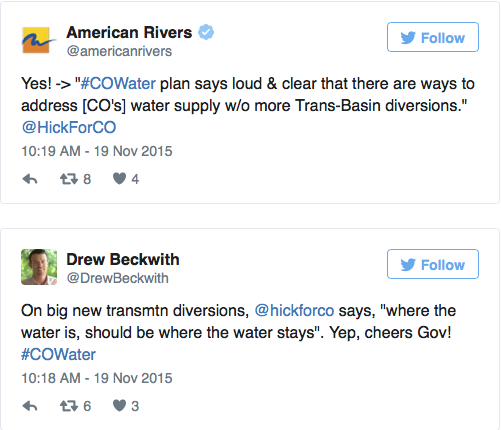
“What comes through loud and clear again and again in that water plan is that there ought to be ways to make sure that we have sufficient water to satisfy the growth along the Front Range without diverting the water across the mountains,” Hickenlooper said.
The need for more water from Western Slope rivers to meet growing population needs between Fort Collins and Pueblo has dominated much of the discussion among various river-basin roundtables in Colorado over the last two years as the water plan was developed.
Colorado has more than 25 such transmountain diversions in place today, including in the headwaters of the Colorado, Roaring Fork and Fryingpan rivers, and up to 600,000 acre-feet can be moved east in a given year.
But a number of Front Range water providers want to leave the option for more Western Slope water to meet their increasing demands, as they see the continued “buy and dry” of ag lands in eastern Colorado as the otherwise “default solution.”
“There is nothing in here that is trying to take someone’s private property or saying they can’t do this or can’t do that,” Hickenlooper said about potential future diversions. “But what we are trying to do is create a system where that is the last possible use and in most cases, if we are successful in going through this water plan, will not be necessary. We’ve addressed storage, conservation, you go down the list of all the approaches here, our goal from the very beginning was trying to make sure that where the water is, the water stays, but within the realm of the legal system that we operate in.”
The governor’s remarks seemed to please representatives from American Rivers and Western Slope Resources on Thursday, as they sent tweets quickly noting the governor’s take on diversions.
Differing views
Thursday’s press conference came during a break in a regular meeting of the Colorado Water Conservation Board, which is charged with managing the state’s water supply and whose staff has worked intensely hard on developing the water plan, which was due on the governor’s desk by Dec. 10.
At the CWCB meeting after the press conference, Joe Stibrich, the water resources policy manager of Aurora Water, and a member of the Metro basin roundtable, offered to the board members a different take on the future than the governor, and did so through something of a manifesto from Front Range water interests.
“I’ve had the privilege of working with CWCB staff, and other roundtable and other Interbasin Compact Committee members, in the collaborative, and I’d say often spirited, discussions that has lead to Colorado’s Water Plan,” Stibrich said. “These discussions have taken place since 2005 over the course of literally hundreds of meetings.
“And I believe these discussions have lead me, and I hope the other participants, to a deeper understanding of the water-related needs for all river basins and for all beneficial uses of Colorado’s water resources, and also the solutions to address those needs.
“The Metro roundtable represents water interests in the Denver metro area, but within the S. Platte basin. While those interests are predominantly municipal and industrial, or M&I, our membership also includes agricultural, environmental, recreational and other interests. This has given us the opportunity to learn from each other and work toward common goals.
“Once development of the basin implementation plans began as part of the roundtable role in Colorado’s Water Plan, the Metro and S. Platte realized that a basin implementation plan (BIP) for the combined roundtables and the entire S. Platte basin made sense, as we had many common interests and that successfully meeting the needs of the basin could only occur if we worked together.
“We especially recognized that without a unified BIP, agricultural buy and dry would continue as the default solution to addressing the basin’s M&I gap. The S. Platte BIP identified areas of focus whose successful completion will be integral to meeting the basin’s gap and ensuring that Colorado’s future needs are met.
“These are predicated on finding balanced solutions that equally promote conservation and resource, development of identified projects and processes, agricultural transfers, and preserving the ability to utilize Colorado’s entitlement under the Colorado River compact for the benefit of entire state. The development of additional storage was also identified as an essential tool for implementing these balanced solutions.
“The Metro roundtable will concentrate its future efforts on implementing its BIP, prioritizing balanced solutions. And in doing so, we fully expect to continue working collaboratively with the S . Platte basin roundtable.
“The IBCC offered us all an opportunity to identify issues and concerns that went beyond geographic and political borders. We openly discussed potential solutions, identified no-and-low regret alternatives that should be pursued in the interest of the state, and explored and developed the framework for exploring and discussing the potential development of future transbasin diversions.
“Frankly, the members of the IBCC faced criticism among many members of their respective roundtables, with many believing that their representatives went to far in implying any agreement to this framework. But I believe the framework is an important piece of the plan. It protects the ability of the state to develop our compact entitlement on the Colorado River, providing a balanced approach to meeting the state’s overall needs.
“We obviously still have many challenges ahead. While the plan provides an overall approach to move forward, we need to recognize that the many and varied water interests in this state will not stand still waiting for someone else to address their futures.
“For example, buy and dry is still the least expensive and only viable option for many smaller water providers, and without additional help from others, including support from the state, they will continue as they have in the past.
“Another challenge we face is meeting the M&I gap in a meaningful way, while recognizing the vital importance of preserving the quality of life associated with the urban landscape.
“Benefits from urban landscape range from better air, surface water and groundwater quality … providing surfaces for leisure activities, to enhanced aesthetics and improved mental health. Solutions that compromise the valuable contributions of these benefits to our local and state economy need to be considered cautiously.
“Slow but significant progress was made by the IBCC and basin roundtables since the year 2005. Frankly, I think this was set back some by the deadlines imposed by the executive order to develop Colorado’s Water Plan in a short time frame. And it caused many of the parties to pull back to earlier positions that were more directed toward protecting their own interests rather than moving forward with collaborative solutions.
“The plan did force us all to realize that we have a way to go to truly address the state’s need on a statewide basis. But now that the plan is final, I believe we can now move forward again with the cooperation and support of the state to develop and implement solutions using the plan as a guide that will address Colorado’s needs,’ Stibrich said.
The goal of “preserving the ability to use Colorado’s entitlement under the Colorado River Compact to the benefit of the entire state” is one way referencing the future ability to use more Western Slope water on the Front Range.
And Joe Frank, the chair of the S. Platte River basin roundtable, told the CWCB board that members of the S. Platte and Metro roundtables wanted to see “a balanced program to investigate, preserve and develop Colorado River supply options.”
“We truly believe that we need to solve our issues not just as a basin, not just as a Metro and S. Platte basin, but collectively as a state,” Frank said. “We take an “all-of-the-above approach,” he added, “including storage, which we believe holds all of the other solutions together.”
Now go to work
While the publication of the Colorado Water Plan clearly did not end the conversation about the possibility of moving more water to the Front Range, the plan does list eight primary goals, or “measurable outcomes,” that give something for every water professional in Colorado to work on.
“Now we all share the responsibilities of implementation,” Hickenlooper told the crowd of over 100 people gathered on Thursday at History Colorado for the release of the plan.
A screenshot from the website for Colorado’s Water Plan.
The top goal is eliminating a projected 560,000-acre-foot gap between water supply and demand, and doing so in large measure by setting a goal of “400,000 acre-feet of municipal and industrial water conservation by 2050.”
The plan also calls for the development of 400,000 acre-feet of water storage, saying “Colorado must also develop additional storage to meet growing needs and face the changing climate.”
Another goal, relating to land use, is that “by 2025, 75 percent of Coloradans will live in communities that have incorporated water-saving actions into land-use planning.”
The plan also includes an environmental goal to “cover 80 percent of the locally prioritized lists of rivers with stream management plans, and 80 percent of critical watersheds with watershed protection plans, all by 2030.”
And it seeks to “investigate options to raise additional revenue in the amount of $100 million annually” in order to help pay for new water projects.
Editor’s note: Aspen Journalism is collaborating the Glenwood Springs Post Independent and The Aspen Times on coverage of rivers and water in Colorado. The Times and the Post Independent published this story on Friday, Nov. 20, 2014.
FromThe Grand Junction Daily Sentinel (Dennis Webb):
Coloradans have spent years in discussion and in many cases debate about what should be in the state’s first-ever water plan.
And they’ll have years to wrangle over how to implement it.
But on Thursday, for a day anyway, residents on both sides of the Continental Divide took a break to simply celebrate the completion of the historic document.
“I think this is a moment that we should relish, savor,” Gov. John Hickenlooper said at a press conference.
The Colorado Water Conservation Board unanimously approved the plan, and immediately presented it to Hickenlooper, who had ordered its creation.
He declared, “We now have a plan with measurable objectives, concrete goals and detailed critical actions, all driven by our statewide water values, our system of how we think about water.”
James Eklund, director of the CWCB, said in an interview, “It’s a big deal because it demonstrates a new paradigm, a new way forward and certainly a heck of a lot of work.”
The plan looks at potential gaps between supply and demand in future decades and addresses conservation, reuse, storage and other means of filling those gaps. A key, and controversial, component of the plan provides a framework for discussing possible further diversions of more Western Slope water to the Front Range.
Those involved in the plan say it is the product of the largest act of civic engagement in the state. Roundtable groups from individual river basins held numerous meetings on the plan, which also elicited more than 30,000 comments submitted by the public.
Carlyle Currier, a Mesa County rancher who sits on the Interbasin Compact Committee, which addresses state water issues, said the plan’s completion is “certainly” historic.
He said it represents “a lot of years of work coming to, I shouldn’t say coming to fruition, because I think as someone would say it’s the end of the beginning, not the end. The work really starts now.”
Hickenlooper also spoke at length about the work ahead, including the need for “the Legislature’s help to make sure we have the right funding in the right places.”
The plan sets goals including 400,000 acre feet of water saved by urban conservation, and 400,000 acre feet of new storage, by 2050. It also calls for identifying 50,000 acre feet of agricultural water for voluntary alternative transfers that don’t permanently dry up farmland, and for having management plans cover 80 percent of locally prioritized streams and watersheds by 2030.
Jim Pokrandt, who works for the Colorado River District and chairs the Colorado Basin Roundtable, notes that the plan doesn’t back any specific project. Rather, it creates a plan for addressing a future with millions of more Coloradans in it, and with climate change expected to result in increasing drought.
The first low-hanging fruit from the Colorado River Basin’s perspective is urban conservation, which mostly means conservation on the Front Range, where most Coloradans live, he said.
“The Western Slope’s going to have to participate, but the big numbers (in terms of population and potential for conservation savings) are on the Front Range, no doubt about it,” he said.
One of the points of contention in recent months during the plan’s finalization has regarded whether the Front Range should cut back more on its watering of lawns and parks, and what that might do to quality of life.
Jim Lochhead, chief executive officer of Denver Water, said at Thursday’s press conference that his utility has reduced water use 20 percent over the last decade despite 10 percent growth in population in its service area.
“We can go a lot lower without sacrificing quality of life. We can still have landscaping, we can still have trees through efficiency and use.”
The prospect of further transmountain diversions also has dominated discussion this year, with Front Range water agencies saying more diversions must remain a possibility and many on the Western Slope saying the Colorado River has no more water to give.
The plan’s framework for transmountain diversion discussions says in part that any new diversions would occur only in wet years, environmental and recreational needs would be addressed in conjunction with any new diversion, and future Western Slope needs would be accommodated.
Hickenlooper said the state’s water rights law must be respected, but by addressing things like conservation and storage, the goal is to create a system where diversions are the last possible approach.
“Our goal from the very beginning was to try and make sure that where the water is the water stays, but within the realm of the legal system that we operate in,” he said.
Currier said he thinks no one is entirely happy with the plan, but it represents a lot of collaborative thinking and compromise.
“I think it provides a very good base from which to build on from here,” he said.
He believes the roundtable and Interbasin Compact Committee processes that date back a decade, to when Russell George pushed for their creation while director of the state Department of Natural Resources, have been important in that they forced people to talk and recognize the importance of various stakeholders. These range from agricultural, to municipal and industrial, to recreational and environmental interests.
“There are things that must be protected and we need to work in a way that we can to meet the future needs of a wide variety of stakeholders in the future,” said Currier, who believes the process has led to an increased appreciation of agriculture’s role in the state.
Eklund believes that through the roundtable process, “people have learned how to listen to each other in a greater capacity that I think no one thought possible.”
Eklund straddles both sides of the Continental Divide because of his job in Denver and his family roots in Collbran. He believes a lot has been learned in the planning process about the economic and other connections between the Western Slope and the Front Range. A lot was said during the water plan process about the importance of the Western Slope’s tourism and recreation economy to the state, and that economy’s reliance on water that fills rivers and irrigates scenic valleys.
“It’s really the Western Slope that’s a big, big part of our brand as a state,” Eklund said.
The Yampa River flows through the Carpenter Ranch. Photo courtesy of John Fielder from his new book, “Colorado’s Yampa River: Free Flowing & Wild from the Flat Tops to the Green.”
Gov. John Hickenlooper has made public Colorado’s first statewide water plan. Though the document is intended to save the state from a looming water crisis, neither he nor state lawmakers have any specifics on how to implement it.
With only one generation until Colorado’s water supply is projected to fall short, the administration set out two years ago to craft a strategy, which Hickenlooper had hoped to start putting in action immediately.
But, as the effort has taken shape, critics have blasted it as a plan without a plan — more of a snapshot of Colorado’s water woes than a blueprint for long-term fixes. The first draft promised a chapter on legislation recommendations, but that chapter was left blank. The second draft proposed “critical action items” that, although replete with goals, lacked concrete steps for real action.
In touting his final draft — a 560-page document that’s as thick as a phone book — Hickenlooper assured the crowd at his press conference Thursday morning that Colorado now has “a plan with measurable objectives, concrete goals and detailed critical actions, all driven by our statewide water values.”
But what the plan doesn’t have, still, are specifics on how the state will be able to quench its many water thirsts by 2050, when water demand is projected to vastly exceed supply. What it doesn’t say is who’s responsible for making sure the plan’s “goals and critical actions” move from paper into reality. In response to criticisms that earlier drafts lack substance, the administration went heavy on the term “measurable objectives” in its final draft. Problem is, there’s no strategy for how to meet those objectives.
Members of Hickenlooper’s water team say the plan is a guide for moving forward, even if it doesn’t exactly lay out just how to get there.
Water Conservation Board member Russell George, who served as executive director of the Department of Natural Resources in Gov. Bill Owens administration, has been looking at the state’s water shortages since the 2002 drought and played a major role in helping create “water roundtables” whose suggestions form the heart of the plan. George lauds the effort, even though he acknowledges the plan offers no actionable solutions for living within the state’s water means.
“It shouldn’t,” he said. “That’s a political decision. This is not a political document. This is a collaborative, almost scientific document, including social science and hydrology.”
As George tells it, Coloradans shouldn’t expect an actual plan in the water plan as much a “foundation to begin having the political conversation.”
Surrounded Thursday by dozens of people from across the state who worked on the document, Hickenlooper emphasized that the plan is only the beginning, saying all Coloradans must share in its implementation and make sure the work is “transformed into meaningful action.”
“Time is of the essence, and we have to get right to work,” he said. “Now’s the time to prepare bipartisan, collaborative legislation that will allow us to make progress on the plan’s measurable objectives, and to do so in the upcoming session.”
Asked what’s on his 2016 legislative agenda for water planning, he demurred, saying, “I’ve learned not to come up with specific requests until I’ve had a chance to talk to legislative leadership.”
The session is less than seven weeks away and lawmakers are already hurrying to submit legislation by December 1, the first of two deadlines for bills for 2016.
Critics point out that the plan is heavy on thinky concepts, but lacks specifics such as a list of water projects, funding mechanisms and hard-set requirements for water users. In a September 30 letter to the Colorado Water Conservation Board, Sen. Ellen Roberts, R-Durango, who chairs the state’s interim Water Resources Review Committee, summarized public concerns voiced in a series of meetings held throughout the state this summer.
“The committee heard strong support for including more specifics in the plan that would explain how the state will help implement” solutions, she wrote. Roberts said the plan should address how the state will fund the estimated $20 billion it will cost to pay for the water needed to make up for the projected shortfall.
The final draft doesn’t come much closer to addressing her — and the public’s — concerns.
Among the goals that don’t have concrete solutions: conserving 400,000 acre-feet per year by 2050. (One acre-foot of water is 352,851 gallons, about the amount of water used by two families of four per year). It’s what the administration calls a “stretch goal,” meaning it’s merely aspirational, with no requirements behind it and no details on how to achieve it on a volunteer basis.
Another goal without a solution: 400,000 acre-feet of water that should come from new or expanded reservoirs. There are several already in the works, including two new reservoirs planned for the Poudre River, expansion of two reservoirs in Grand County and Chatfield reservoir in Jefferson County. James Eklund, director of the Colorado Water Conservation Board, which drafted the plan, told The Colorado Independent that these projects alone could bring in 300,000 acre-feet of water. But, for reasons the administration hasn’t explained, these projects are mentioned only briefly in the water plan, and are absent in the chapter on water storage and what the regional water groups would do about it. Eklund indicated that listing projects in the plan, especially ones not in the works, would give ammo to those who oppose them.
Business leaders have complained that the plan, in previous drafts, doesn’t ask enough of agriculture, which uses 89 percent of the state’s water. No matter how many low-flow toilets you install or how much you cut back on watering lawns in the cities and suburbs, they point out, it’s just a drop in the proverbial bucket.
Those criticisms are scoffed at by some in agriculture, including state Sen. Jerry Sonnenberg, R-Sterling, who chairs the Senate’s powerful Agriculture, Natural Resources and Energy Committee. In his view, the plan doesn’t do enough for Colorado’s farms and ranches and gives merely “lip service” to agriculture. Instead of avoiding “buy and dry” — the practice of buying and fallowing agricultural land for its water rights — the plan embraces vague, conceptual new ways to do it, such as through temporary transfers of water rights that would cut the amount of productive agricultural land.
The plan estimates a cost of up to $20 billion to implement all its goals, but again, without a sense of where that money would come from. And, although Hickenlooper spoke Thursday of the need to address funding issues to implement it, he didn’t say whom he has in mind to foot the bill — or how. He said there are laws currently on the books that are counterproductive to the plan, but either couldn’t or wouldn’t specify which ones.
Hickenlooper’s office long has stayed mum about its water strategy, deferring questions to Eklund, who points to the plan’s list of 185 to 200 proposed “actions,” many of them legislative, but won’t say which, if any, he has in mind to push this session.
Alan Salazar, the governor’s chief strategist, told The Independent Thursday that the administration may have to rush to form a legislative agenda on water, given that lawmakers already are well in the process of figuring out what bills they want to carry in 2016.
Salazar noted that members of the legislature — specifically those on the House and Senate agriculture committees and the Interim Water Resources Review Committee, which takes the lead on water legislation each year — have been kept informed of the plan all along. The governor has asked them to “get behind the plan, see where you view opportunities.”
“We’re not trying to impose bills,” Salazar said. “The purpose of the plan is not to have a legislative blueprint. It’s to show the state’s collective vision for the next 50 years.”
“The governor is trying to be very diplomatic. The worst thing he can do is say, ‘Here’s the plan, and I already have a legislative agenda to implement it.’ That won’t work well with legislators,” especially with split control between the House and Senate, he added.
Some critics see Hickenlooper’s diplomatic approach as a cover for inaction.
Jim Lockhead, head of Denver Water — Colorado’s biggest municipal water agency — said this week that it’ll take leadership from the governor to unite “West Slope, East Slope, agriculture, municipalities and environmentalists – putting aside our individual interests and coming together to do what’s best for Colorado.”
Given the bitter divisions between those water users, some at the Statehouse want to see Hickenlooper use his political clout and status as a lame-duck to actively move the plan forward. Rep. Ed Vigil, D-Fort Garland, vice chair of the water resources review committee, told The Independent that Hickenlooper will need to take an active lead on bridging long, deep divisions between water users on both sides of the Continental Divide.
Senate Minority Leader Lucia Guzman, D-Denver, told The Independent Thursday that the water plan isn’t likely to get major traction in the 2016 session, and that it’s more likely it’ll be more of a focus in the 2017 General Assembly. As she sees it, lawmakers will need time to “unpack” the plan, learn what’s in it, and figure out their role in implementing it.
“I wouldn’t be surprised if we didn’t have any major bills” on the plan this session, Guzman said.
That would leave Hickenlooper, who’s term-limited out of office in three years, two legislative sessions to solve some of the state’s most longstanding, contentious and perplexing problems, including how to balance water usage between the West Slope farmers and ranchers who have first legal rights to water and the growing Front Range communities and businesses that can’t survive without it.
Some say the governor has done his job simply by ordering the state water plan and now needs to step back.
“Conservation and storage targets, funding, watershed health, they all sound pretty good on the surface,” said Doug Kemper, executive director of the Colorado Water Congress, a statewide association of more than 400 member organizations. The real work of building water projects, setting rules for conservation and otherwise implementing the plan will fall mostly to a host of regional water groups and water providers, not to the state, he argues.
“Colorado is fiercely decentralized, and that includes water,” added Chris Treese of the Colorado River District. He calls the water plan a positive step forward, but he also hopes the governor remains true to the plan’s bottom-up approach, which is to let local officials who sit on water roundtables in Colorado’s eight river basins and in Metro Denver take charge of implementation.
Said Sonnenberg, whose ag committee will take the lead on reviewing water bills tied to the plan: “It’s a great idea if we can figure out how to make it work.”
From the Glenwood Springs Post Independent (Brent Gardner-Smith):
While the Colorado Water Plan does not contain a list of water-supply projects endorsed by the state, the plan’s adoption still gives a boost to at least $2 billion worth of potential projects, as recently prioritized by regional water-supply planning committees, or basin roundtables.
“The old truck is on its way, and we’ve shifted a gear today,” said Russell George of Rifle, who represents the Colorado River basin on the Colorado Water Conservation Board, after the water plan was approved Thursday by the CWCB board.
“It’s projects, projects, projects,” George said of the CWCB’s new “gear.” “And our job here is keep the resources coming for the projects, because that answers need.”
The roundtables, through their “basin implementation plans,” have identified 880,000 acre-feet worth of new water supplies that could be developed across 91 projects, according to chapter 6.5 of the water plan, which focuses on water-storage.
The Yampa/White’s basin plan identified the potential to develop the most of any basin, with 317,316 acre-feet of new water supply from 12 projects.
The South Platte/Metro’s plan identified 191,980 acre-feet that could be developed from 23 projects, the Arkansas 166,500 acre-feet from 17 projects, and the Gunnison 139,406 acre-feet from 21 projects.
The Southwest basin identified 30,354 acre-feet of developable water from eight projects, the Colorado River basin 24,082 acre-feet from three projects, the North Platte 11,993 acre-feet from five projects and the Rio Grande 6,030 acre-feet from eight projects.
For a sense of scale, Ruedi Reservoir uphill from Basalt holds about 100,000 acre-feet of water.
The three potential water-supply projects in the Colorado basin plan include expanding Hunter Reservoir near Grand Junction to 1,340 acre-feet; expanding Monument Reservoir, near Collbran, to 5,255 acre-feet; and building Kendig Reservoir on West Divide Creek south of Silt, which could hold around 18,000 acre-feet of water.
Implementation of, yes, the basin implementation plans, or BIPs, is now a major theme of the water planning process in Colorado.
Consider that the first item in the water plan’s vaunted “critical action plan” says that the state will “support and assist the basin roundtables in moving forward priority … projects … in their basin implementation plans through technical, financial and facilitation support when requested by a project proponent and pertinent basin roundtable.”
After the water plan was approved Thursday, the CWCB board heard from representatives of various roundtables, including Michael “Sandy” White, a water attorney who represents Huerfano County on the Arkansas roundtable and is the group’s new chair.
“From our viewpoint, the Colorado Water Plan is, in the Arkansas basin, the basin implementation plan,” White said. “We are just beginning to implement it.”
“I know from your vantage point here, what happens at the state level is very important, and that’s where your focus will be,” White told the CWCB board. “But I encourage you not to forget that the basins are the locations of where the action will be. And we need your help in implementing the BIPs.”
James Eklund, the director of the CWCB, suggested after presentations from representatives of the Arkansas and Gunnison basin roundtables that Coloradoans could become fans of various water projects.
“Just like we had baseball cards, maybe we need to have water-project cards that show people where these projects are, how long they’ve been in the works, why they are important and what the stats are on them,” Eklund said.
And after hearing from all of the roundtable representatives, Russell George again put an emphasis on projects.
“I think we heard, as the representatives of the basins talk, it’s projects, projects, projects, and that’s as it should be,” George said.
Another sign of the rising importance of the roundtables in Colorado’s water-supply process is that they are now moving from groups of volunteers lightly overseen by CWCB staff to groups that can hire contractors to work on, yes, implementing their specific plans.
For example, on Wednesday the CWCB approved a three-year $150,000 grant for a part-time public relations coordinator for the Arkansas basin roundtable who will “undertake a structured public relations effort” to generate public acceptance of new water projects and “move these projects forward toward implementation.”
The Arkansas roundtable plans to focus on three projects a year.
“In the first year, identified projects will be chosen that focus on storage, multi-purpose storage projects and meeting the ‘gap’ in the Arkansas basin,” the roundtable said in its grant application.
When roundtable representatives do come forward to seek assistance for new water-supply projects from the CWCB, they will be expected to show that their projects are consistent with the newly adopted Colorado Water Plan.
George suggested to his fellow CWCB board members that “anyone that comes to CWCB asking for assistance — and we’ll continue to have many, many customers and we want to serve them — they will now be expected to research the state water plan and tell us where their project fits in the plan.”
Applicants seeking support for new storage projects will have find plenty of language in the Colorado Water Plan to work with.
“Colorado will require the implementation of many identified projects, storage, other infrastructure and methods to meet future municipal, industrial and agricultural needs,” the plan states, for example, in chapter 6.5.1.
Aspen Journalism is collaborating with the Post Independent and The Aspen Times on coverage of rivers and water. More at http://www.aspenjournalism.org.
San Pedro Acequia. The headgate of the second oldest acequia in Colorado. Photo by Devon G. Peña
FromThe Grand Junction Daily Sentinel (Eric Kuhn and Jim Lochhead):
We should all truly celebrate. Two years after the governor’s executive order, we finally have a Colorado Water Plan that lays out measurable objectives and metrics to help guide us toward a secure water future.
In the face of future challenges that include population growth and climate change, Colorado’s first-ever water plan is a call to action to all Coloradans to work collaboratively to ensure we protect our scarce water resources by using and developing our water supplies in the most efficient and responsible manner possible.
We applaud those who contributed to this plan, including those involved with the critical work of the basin roundtables. But, we are far from done.
The success of this plan will depend upon all of us — Western Slope, East Slope, agriculture, municipalities and environmentalists — putting aside our individual interests, and coming together to do what’s best for Colorado. This plan must be implemented. If not, all the years of effort would be wasted.
It won’t be easy. Each of us must be willing to change. We must be willing to experiment, try new ideas and even risk failure. But we can learn from our mistakes and find ideas and projects that will help prepare us for an uncertain future. It will require leadership, collaboration and energy. It may be uncomfortable at times, and everyone isn’t going to get everything they want. But if we’re willing to roll up our sleeves, we can realize much of what is proposed in this plan, from conservation to land use planning to storage.
The stakes are high. What makes Colorado great are our cities, agricultural economies, recreational opportunities and environment. What will keep Colorado great depends upon what we do today.
The Colorado Water Plan is a road map to help us all prepare for an uncertain climate future and pending water shortages. If we don’t prepare, we only have ourselves to blame for the cost to our citizens, to our economy, to our environment and to our future. So the question we now must ask is: Do we collaborate and implement this plan, or do we do nothing and hope tomorrow takes care of itself? Here’s to a move in the right direction.
When I first heard about a state water plan, I was skeptical as to how useful it would be. I thought about how notoriously difficult it can be to change water policy in Colorado; meetings are long, technical, and only have one person (among as many as 50) representing environmental interests.
However, two things made me optimistic about the plan.
First, the Executive Order required that the plan, and our water policies, reflect our water values. Second, the Colorado Water Conservation Board (CWCB) stated that we needed a water plan because “our current statewide water trajectory is neither desirable nor sustainable.” So the plan presented an opportunity for change.
Since Coloradans overwhelmingly prefer solving water challenges through conservation and recycling over diverting more water from our Western Slope rivers, we set out with four basic principles that guided our outreach to citizens and decision makers alike. The plan needed to:
Keep Colorado’s rivers healthy and flowing
Increase water conservation and recycling in our cities and towns (e.g., statewide conservation goal)
Modernize agriculture and water sharing practices
And avoid a new, large transmountain diversion.
We advocated strongly for these principles at water planning hearings, one-on-one meetings with designated planning representatives, and the public. We heard from roundtable members that they needed more information and data on how to best protect their streams. We heard pushback that a statewide conservation goal was impossible because it would be seen as a “mandate” and “one size fits all” requirement. We heard that more Colorado River water needed to be transported to the Front Range. We kept hearing these things but we kept pushing our principles.
We persevered.
Paddle Salute via The Weekender — Avery Johnson
This first iteration of Colorado Water Plan is an important step forward for Colorado because it reflects Coloradans’ values and priorities. The plan:
Sets the first-ever statewide urban water conservation goal;
Addresses the importance of preserving and restoring our rivers and streams including proposing annual funding for river assessments and restoration work;
Makes new, large, and controversial large trans-mountain diversions, which harm rivers and local communities, a lot less likely.
We are seeing conservation prioritized as never before, expanded language on reuse and water banking, and incentives and funding toward “alternative transfer methods” which replace water providers buying up agricultural land and then taking the irrigation water for municipal use. There is broad support for and a greater focus on stream health across the state including funding and the importance of preserving and restoring the environmental resiliency of our rivers and streams.
We’re excited about the plan and are now focusing our attention to getting it implemented.
The plan must be executed properly to be effective for Colorado. We also need more detailed and thorough water project evaluation criteria that determine which projects get state support (and which do not). We need to ensure that any tweaks to the state’s permitting authority maintains the strong environmental safeguards that protect our rivers and drinking water.
As the state implements this plan and looks to make changes to it, we will continue to advocate for what is best for Colorado and best for our rivers. Thanks to Governor Hickenlooper for tackling such a contentious issue as water and developing the first ever state plan!
There are 16 pages in the Colorado Water Plan devoted to the “Critical Action Plan.”
With the action plan’s language lightly rinsed and boiled down, a recipe of potential solutions emerges. See below.
Reduce the projected 560,000 acre-foot gap between water supply and demand to zero.
To do this, the state will support new supply projects through the regional basin roundtables and will collaboratively manage the Colorado River against a compact call.
Achieve 400,000 acre-feet of water conservation by 2050.
To do this, the state suggests that cities develop integrated water conservation plans and that the legislature require efficient residential sprinklers.
By 2025, 75 percent of Coloradoans will live in communities that have incorporated water-savings actions into land-use planning.
To do this, the state will train interested local government officials on the subject.
Share at least 50,000 acre-feet of agricultural water using voluntary alternative transfer methods by 2030.
To do this, the state will educate farmers and ranchers about lease and sale options, encourage ditch-wide planning, fund irrigation repairs, develop “flow agreement” language, figure out how to track saved water in the river, and explore additional funding.
Attain 400,000 acre-feet of water storage through projects in the works.
To do this, the state will provide financial support for storage projects, prioritize loans and grants, try and streamline the permitting process, participant in the NEPA process, assign a lead state agency and sign an MOU with other involved state agencies.
Cover 80 percent of the locally prioritized lists of rivers with stream management plans by 2030.
And cover 80 percent of critical watersheds with watershed protection plans by 2030.
To do these things, the state will work to prevent listing under the Endangered Species Act, study recreation and develop stream management plans.
The state will also “develop common metrics for assessing the health and resiliency of watersheds, rivers and streams,” along with trying innovative techniques, providing support for watershed master plans, and prioritizing projects in master plans.
Investigate options to raise $100 million ($3 billion by 2030) starting in 2020.
To do this, the state will seek an amendment to expand the CWCB loan program to cover other projects, explore private-public partnerships, provide lower interest loans for projects, provide $1 million a year for stream management plans, and create a new all-in funding plan.
Engage Coloradoans statewide on at least five water challenges (identified by Colorado Water Conservation Board) that should be addressed by 2020.
To do this, the state will create a fund so basin roundtables can spend money on public relations, survey Colorado citizens on water, and create an innovation award program.
Under a category called “additional” the CWCB says it will produce the Statewide Water Supply Initiative 2016, which is already underway.
And that it will continue to work with the basin roundtables on their regional basin plans.
The CWCB will also plan for climate change disaster, work on re-use projects and quietly pursue necessary legislation.
Colorado adopted a landmark $20 billion water plan Thursday to try to accommodate rapid population growth by conserving more, reusing more, storing more and sharing more between farmers and cities — and diverting less from west to east across the mountains.
“Now is the time to rethink how we can be more efficient,” Gov. John Hickenlooper said at a ceremony embracing the roughly 480-page document…
State officials emphasized a practical consensus that emerged after a decade of river basin negotiations. In a drought-and-flood-prone West where clean water increasingly is coveted, they contend Colorado residents are best served by rallying around a common plan.
Hickenlooper urged immediate work with everybody chipping in to implement the plan: residents shortening showers, lawmakers cooperating to ensure funds and fine-tune laws, utilities thinking regionally about effects of diversions, and farmers forging alternatives to selling their water rights to cities.
And the governor swiftly placed the plan into the context of an intensifying Western water struggle.
“The Western governors have agreed that we’re all going to work on water together,” Hickenlooper said, referring to pressure California’s water crunch puts on an over-subscribed Colorado River. “None of us knows with any certainty how that drought is going to continue and spread.”
Front Range cities rely on 24 tunnels and ditches to divert an average of 262 billion gallons of water a year west-to-east across the Continental Divide. This practice depletes streams and rivers, hurting ecosystems.
Diverting more to satisfy growing Front Range urban needs ought to be “the last possible use,” Hickenlooper said, adding state leaders’ goal is “where the water is, it stays.”
Environment groups and utility officials agreed a unified state stand may help prevent the federal government and other Colorado River Basin states from driving water decisions.
“Colorado has the ability to greatly influence what happens along other stretches of the Colorado River,” said Jon Goldin-Dubois, president of Boulder-based Western Resource Advocates.
Putting forth an unprecedented, detailed state plan “gives Colorado leverage in those interstate conversations,” he said…
Denver Water manager Jim Lochhead, pointing to a 20 percent drop in water consumption over the past 10 years despite population growth, said water-saving goals can be reached “without sacrificing quality of life.”
Lochhead anticipated benefits of changing land use in cities. “As we get denser … that’s going to reduce our overall water use.”
The plan depends on voluntary compliance since the Colorado Water Conservation Board lacks regulatory power. Colorado’s state engineer and the state Department of Public Health and Environment are the main state regulators around water.
Hickenlooper said the plan, if implemented, will “create a motivating context” for using water more efficiently out of self-interest.
“I’m not a huge fan of regulation,” he said. “This is designed so that we won’t need as much of the formal regulation we have now.”
Colorado transmountain diversions via the University of Colorado
Hickenlooper’s administration encouraged water managers — and users — from around Colorado to formulate the plan over a two-year period. James Eklund, head of the Colorado Water Conservation Board, led the effort. He told Colorado Matters on Wednesday the state favors more “carrot” and less “stick” in its approach to achieving the storage, conservation, distribution and management.
For example: The plan sets a specific conservation goal for cities but not for agriculture.
“The reason we don’t set a conservation goal for agriculture is because the [agricultural] user has got to produce a crop,” he said. “And if you’re asking them to conserve water, that means they are fundamentally diverting less water and growing less crop. That is a private property right in Colorado.”
“The challenges that we face as a state on water are so large that we have to really be hitting on all cylanders.” Eklund said. That includes pushing for new legislation and executive rulemaking, starting with his request for more flexibility in how the Colorado Water Conservation Board can spend the money it gets in appropriations from lawmakers each year.
“This is a moment for Coloradans to be proud,” Eklund, said Thursday at the plan’s unveiling. “For 150 years water has been a source of conflict in our state.”
“Now is the time when you rethink how you can be more efficient in the water you use,” Hickenlooper said during a ceremony at History Colorado, which was chosen as a location to highlight the historical significance of the water plan.
“I do think the cultural shift is underway, and I think those conversations, and everyone looking at how they can use water more efficiently, is critical,” the governor said…
Even with the collaboration, fights emerged, with a group of Western Slope officials recently expressing concerns that the plan would lead to transmountain diversion, in which water from western Colorado is used for municipalities along the Front Range. But the governor said the plan would actually minimize a need to divert water from rural Colorado, which is critical to agricultural needs.
“There ought to be ways to make sure we have sufficient water to satisfy the growth along the Front Range without diverting the water across the mountains,” Hickenlooper said. “If we are successful in going through this water plan, it will not be necessary.”
April Montgomery, a member of the Water Conservation Board representing the San Miguel, Dolores, Animas and San Juan rivers in Southwest Colorado, who attended the ceremony, said a process has now been established in the hopes of avoiding transmountain diversion. Steps must first be taken before diversions are agreed upon, including considering protecting future growth, development and the environment…
In some ways, the work of the plan begins now. Officials must pursue projects that meet the municipal water gap, provide safe drinking water, prioritize conservation and promote reuse strategies. Ideas include reducing lawn watering and evaluating storage options.
But with a $20 billion price tag, crossing the finish line will be difficult. State lawmakers this year have been encouraged to get the ball rolling with funding and outlining projects. The Hickenlooper administration has been careful not to prescribe too much in the plan, instead creating a vision for policymakers to act on.
Sinjin Eberle, with Durango-based American Rivers, also attended the ceremony, expressing optimism the water plan will help agricultural interests in Southwest Colorado.
“Keeping more water in the rivers keeps more security and more predictability for agriculture and making agriculture more sustainable,” he said.
FromThe Grand Junction Daily Sentinel (Dennis Webb):
Years of efforts by countless Coloradans reached fruition this morning with the completion of Colorado’s first water plan.
The Colorado Water Conservation Board unanimously approved the plan.
The plan looks at potential gaps between supply and demand in future decades and addresses conservation, reuse, storage and other means of filling those gaps. A key, and controversial, component of the plan provides a framework for discussing possible further diversions of more Western Slope water to the Front Range.
Those involved in the plan say it is the product of the largest act of civic engagement in the state. Roundtable groups from individual river basins held numerous meetings on the plan, which also elicited more than 30,000 comments submitted by the public.
Gov. John Hickenlooper promised a “speedy review of this plan” Thursday morning after receiving Colorado’s first ever comprehensive state-wide water plan.
In remarks during a press conference at Historic Colorado, Hickenlooper emphasized the spirit of cooperation among Colorado’s disparate water interests in formulating the plan. He said that no longer will Colorado’s water needs be met at the expense of agriculture…
After the formal presentation, Diane Hoppe, chairwoman of the CWCB board of directors, told the Journal-Advocate that the plan is “a good way to look at our future.”
“This is a way forward,” Hoppe said. “This is how we deal with a growing population, and stretching our limited water resources.”
Joe Frank, general manager of the Lower South Platte Water Conservancy District, said he’s happy with the emphasis the plan places on off-channel water storage.
“The only way to capture all of the water that we’re losing is to dam the river, and that’s just not going to happen,” Frank said. “But water storage doesn’t have to be above ground, either. Underground storage, recharge and augmentation are also important.”
Don Ament, former Colorado Agriculture Commissioner who has represented Colorado in water negotiations with Nebraska, Wyoming, and the Department of the Interior in developing a recovery plan for the South Platte River, said he likes the plan because it dovetails with his group’s work.
“This is a big piece of the puzzle for what my group is doing,” Ament said after the news conference. “There is a lot of excitement (in the water community) about this, and I think it provides some good momentum to carry forward with developing our water resources. This is a real good thing.”
This morning [November 19, 2015] the final version of Colorado’s Water Plan was presented to Governor Hickenlooper. This final plan comes after a long history of water development in the state, a decade of state-coordinated cooperation between and within Colorado’s river basins and a 2013 directive from Governor Hickenlooper setting the Colorado Water Conservation Board on a hard-working fast-paced course to develop the water plan. The plan is a roadmap that intends to put the state and its eight major river basins on a more collaborative and cooperative path toward managing water in the face of constrained supplies and growing population.
Colorado’s population is predicted to grow exponentially, rising from around 5.4 million people in 2014 to between 8.3 and 9.1 million by 2050, according to predictions by Colorado’s State Demographer, as reported in the Colorado’s Water Plan issue of CFWE’s Headwaters magazine. If population grows as expected, and the state continued to fill those emerging needs without planning, the status quo would result in a water supply gap of up to 500,000 acre-feet by 2050, leaving the equivalent of some 2.5 million people’s water needs unmet, or met in undesirable ways. Then pile on the challenges of rising temperatures, drought, the unpredictability of climate change, and others… and the state’s water future looks increasingly uncertain.
So Colorado’s Water Plan set out to grapple with those water supply challenges and today reflects agreement from water interests statewide on broad, near-term actions needed to secure Colorado’s water future, according to the Colorado Water Conservation Board. Those actions include efforts to conserve and store water, additional water reuse and recycling, and providing options to agriculture to avoid permanent dry-up of farm and ranch operations. The plan includes a set of measurable objectives that provide goals regarding water for farms, for the environment, and for cities and industry. The Denver Post reports:
The plan contains:
• A water-saving target of 130 billion gallons a year for cities and industry, left largely on their own to cut water consumption using methods from low-flow appliances to limits on lawn irrigation.
• A goal of increasing reservoir and aquifer storage space for 130 billion gallons and encouraging re-use of wastewater.
• A framework for assessing possible unspecified new trans-mountain diversions of water from the western side of the Continental Divide, when conditions permit, to Front Range cities and suburbs.
• A proposal to develop stream and river protection plans to cover 80 percent of “critical watersheds” by 2030.
• A strategy for slowing the loss of irrigated agricultural land as Front Range utilities buy up water rights — which state officials said threatens 700,000 more acres, or 20 percent of currently irrigated acres statewide. The strategy is to facilitate temporary transfers during wet years with farmers and ranchers retaining water ownership.
• A goal of linking county land use planning with water supply planning so that, by 2025, 75 percent of residents live in communities where new development is tied to water availability.
• Proposals for streamlined permitting of water projects designated by state planners for official support.
And so implementation will begin, and as the state moves forward, the plan will continue to be a living document that will adapt to ever-changing circumstances. From ABC News:
WHAT’S NEXT?
State government doesn’t have the power to force the plan on anyone. Instead, it will depend on the help of local governments, water utilities and farmers and ranchers. The Legislature would also have to pass laws and appropriate money, and the executive branch would have to steer some of the initiatives.
The plan would also require cooperation between the eastern and western halves of the state, which are often at odds over water.
Still, the plan holds promise, said Jim Lochhead, manager of Denver Water, the state’s largest utility.
“The Colorado water plan is our state’s best hope for a secure water future,” he said.
Be sure to read the full plan here, stay involved as implementation begins, and thank the Colorado Water Conservation Board and Governor Hickenlooper for taking action toward a secure water future.
Here’s the release from Governor Hickenlooper’s office:
Gov. John Hickenlooper today was joined by James Eklund, Colorado Water Conservation Board (CWCB) Director, Dr. John Stulp, Senior Adviser to the Governor, CWCB Board members and many members of Colorado’s water community to celebrate the completion of Colorado’s Water Plan, calling the project a historic step for the state.
The plan is the product of an unprecedented level of collaboration and public participation spanning two and a half years.
“This is how Colorado works: together, in partnership, to tackle head-on our toughest challenges,” said Hickenlooper. “Today we turn a new page on Colorado’s long and adversarial history on water. Colorado’s Water Plan shows us how we can move forward together to ensure we continue to enjoy sufficient supplies for our vibrant cities, productive farms and incomparable environment.”
In the spring of 2013, Hickenlooper directed the Colorado Water Conservation Board to develop Colorado’s Water Plan, a roadmap that would put the state and its eight major river basins on a more collaborative and cooperative path to manage our water in the face of constrained supplies and growing population.
The Plan reflects grassroots discussions that began with the Basin Roundtable process in 2005. Key to the plan’s success, too, has been the steady participation and counsel of water providers, agricultural organizations, environmental groups, the General Assembly, local governments and the business community as well as more than 30,000 public comments geared specifically to Colorado’s Water Plan since 2013.
The completed Plan represents the consensus view from this process that Colorado must take a strategic, proactive and statewide approach to water or face or risk leaving the fate of our water to decisions and actions from outside interests, the federal government and other states within the Colorado River Basin.
“This is a moment for Coloradans to be proud,” said James Eklund, director of the CWCB. “For 150 years water has been a source of conflict in our state. More recently, that story is changing, and Colorado’s Water Plan – a product of literally thousands of meetings and conversations across our state – is the best evidence yet for a new way of doing our water business. We are talking to one another. We are forging relationships. Even those who may see water-related issues from very different perspectives have worked hard to understand other points of view. And that kind of understanding leads to an environment of civility that helps us cooperate in fashioning solutions.”
Colorado’s Water Plan grapples directly with water challenges and highlights necessary near-term actions, including efforts to conserve and store water, additional reuse and recycling of water and providing more options to agriculture to avoid permanent dry-up of our valuable farm and ranch operations. It also sets out a framework for discussion of any future projects that may propose to move water between basins.
The final version of the plan, building on comments across interests and geography, includes a set of measurable objectives that help us move forward and provide a sense, statewide, of the goals Colorado should set for addressing our water challenges.
“Colorado’s Water Plan leaves no mystery as to what Colorado’s water challenges are and why we have to address them as we grow the next five million people in the state,” said Jim Pokrandt, chairman of the Colorado River Basin Roundtable. “It is now up to all of us to take this information and fashion a balanced approach to meeting the water supply gap while protecting current water users on the Colorado River system, the West Slope’s recreational economy and the environment.”
“We all need to be willing to experiment, try new ideas, and even be willing to fail,” said Jim Lochhead, CEO/Manager of Denver Water. “The important thing is that this is our opportunity to move the state forward to chart a path toward water security.”
“Water’s not just one of our most valuable natural resources, it is, without question, our most valuable resource,” Hickenlooper said during the official release of the final water plan.
While the plan is complete, a number of the recommendations will need a law to make them a reality.
“There’s going to be issues around funding for some of the implementation we’re going to need the legislature’s help to make sure we have the right funding in the right places,” the governor said.
That means the upcoming legislative session could see some of the plan’s suggestions come up as proposed bills.
“In the short-term, near-term here, we need to address funding of water infrastructure in Colorado. We need to address conservation,” said James Eklund, director of the Colorado Water Conservation Board, which helped shape the plan.
So far, leaders aren’t specifying which recommendations may come up in the session.
“Better not to come up with specific requests until I’ve had a chance to talk to legislative leadership,” Hickenlooper said.
There’s also the question of how to fund potential water projects. The plan itself calls for a potential $20 billion in infrastructure work and programs during the coming decades.
“We’re certainly going to see all the details as we go forward, different suggestions for funding, but at a large price tag for not only environmental needs, but for infrastructure needs, we’re going to have to become innovative in how we look at this funding source,” said Abby Burk, with Audubon Rockies.
Map of the Northern Integrated Supply Project via Northern Water
From the Fort Collins Coloradoan (Jacy Marmaduke):
The final version of the Colorado Water Plan, unveiled Thursday in a standing room only Denver press conference, has some interesting, if uncertain, implications for the Northern Integrated Supply Project.
The plan is Colorado’s first statewide attempt to confront a projected water supply shortage of 560,000 acre-feet — enough to fill Horsetooth Reservoir three and a half times — by 2050.
Sources were reluctant to speculate on whether the plan’s water storage goals — adding 400,000 acre-feet of storage by 2050 and an 80 percent success rate for a group of proposed storage projects that includes NISP — mean the state will back NISP. The state cannot legally give NISP a thumbs-up until federal review of the long-debated proposal is complete.
But the pro-storage aspect of the plan, coupled with the state’s suggestions for increased permitting efficiency for large-scale storage projects like NISP, means the state is not openly opposed to this kind of project. That lack of opposition on principal could bode well for Northern Water’s plan to create two reservoirs yielding 40,000 acre feet of water annually to 15 participants. Most of the water would come from the Poudre River.
“They recognize the need for 400,000 additional acre-feet of storage,” Northern Water general manager Eric Wilkinson said. “We feel that NISP … would help meet a significant portion of that goal.”
Colorado’s government has two points of entry for NISP: The Colorado Parks and Wildlife Commission and the Colorado Water Conservation Board have to review and approve a Northern Water-produced fish and wildlife mitigation plan for the project. Wilkinson said that process is in the early stages.
And the Colorado Department of Public Health and Environment decides whether to grant the project a 401 certification, a safeguard measure for states to block dams and diversions if they interfere with the health of wetlands. The 401 certification process will come after — and if — the U.S. Army Corps of Engineers rules in favor of building NISP…
Groups including American Rivers, Audubon Rockies, Conservation Colorado, the Environmental Defense Fund and Western Resource Advocates praised the plan for its urban conservation goal, river health focus, collaborative nature and action-oriented methodology.
“There’s a lot of kumbaya,” said Western Resource Advocates’ water policy manager Drew Beckwith, who also commended the plan’s “higher hurdles” for controversial trans-mountain diversion projects and push for funding to meet water goals. The plan projects a $20 billion funding shortfall during the next 30 years but estimates that water providers will meet most of it…
In an emailed statement, WildEarth Guardians’ Wild Rivers Program Director Jen Pelz said the plan isn’t all “unicorns and rainbows.”
“The plan tries to be all things to all people,” she wrote. “To meet the projected ‘gap’ in Colorado water supply and demand, all water users need to be at the table in order to solve the problem. Even though agriculture uses 80 percent of the water from our state, somehow water leasing and acquisition programs to make up shortfalls or put water back in our rivers are not strongly committed to in the final plan.”
Rather, the plan sets a goal to share at least 50,000 acre-feet of agricultural water with municipalities via voluntary alternative transfer methods by 2030…
Carlyle Currier, vice president of the Colorado Farm Bureau and vice chairman of the Colorado Agricultural Water Alliance, said the absence of a conservation goal for agriculture was intentional. Agriculture focuses on efficient use of existing water supply rather than conservation, which Currier described as “doing less with less.”
“That’s not really an option with agriculture,” he said. “If you’re using less water, you’re producing less crops. Is that really what our goal should be? Producing less?”
Now that the plan is completed, the Colorado Water Conservation Board will oversee the completion of the plan’s critical action items. The board will provide annual progress reports to the governor and the Colorado General Assembly.
“Water in the West isn’t rocket science,” said James Eklund, director of the Colorado Water Conservation Board. “It’s more complicated, and it can be more volatile.”
Eklund said that like President John F. Kennedy, who set a goal for rocket scientists to reach the moon within a decade, the water plan sets a lofty expectation of bridging the gap of an estimated 500,000-acre-feet shortfall of water in 2050.
“It’s clear that without the vision, courage and the will of the chief executive, it wouldn’t have happened,” Eklund said. He thanked the governor for initiating the water planning in the spring of 2013.
The plan, however, isn’t binding to anyone or anything.
Hickenlooper called on everyone to pick up their portion of the plan and run with it.
Lawmakers will likely address some of the issues during the 2016 legislative session that begins Jan. 12. He asked lawmakers to draft bipartisan legislation that can realistically be passed in a bicameral General Assembly.
“We all share the responsibility of implementation,” Hickenlooper said. “Of taking all of this work and making sure that it is transformed into meaningful action.”
He said all Colorado water users need to rethink their consumption.
“My son and I last night discussed the length of showers,” he joked.
Hannah Holm, the coordinator of the Hutchins Water Center at Colorado Mesa University, has followed the plan’s development since 2013. As 80 percent of the the state’s water lies on the Western Slope, Holm said the Western Slope had two major concerns for the plan.
The first: will agriculture areas be dried up to go urban areas? Holm said the plan is attempting to implement tools for alternative transfer methods, which is when farms provide a portion of water on a temporary basis to urban areas, instead of selling water rights permanently. Holm said this prevents buying out and drying up specific pieces of land.
The second: transmountain diversion, where water is taken from the Western Slope and brought to the Eastern Slope. Holm said the plan does not contain any endorsement for any project like it.
After years of preparation, the Colorado Water Plan was released on Thursday, and local water officials are pleased.
The plan lays out the state’s water policy goals: more conservation and more storage. Instead of legislating, the plan is designed to get leaders at all levels on the same page about Colorado’s water future.
“Everybody’s happy today,” said Northern Water Spokesman Brian Werner. “This is a good thing.”
Northern Water is a public agency that services about 880,000 people in northern Colorado and supplies irrigation water for 640,000 acres of farmland.
“The part that we’re most pleased with is the piece about storage,” Werner said.
Northern is involved in the federal permitting process for two proposed projects: the Windy Gap Firming Project and Northern Integrated Supply Project, or NISP. These two projects jointly include three new storage reservoirs in northern Colorado.
He said he’s hoping the plan will encourage officials to work with the federal government to update the permitting process for projects such as NISP and Windy Gap. Now, the processes are expensive and time consuming.
“We’re going to be (spending) 12-15 years on these projects,” he said.
Time is of the essence when it comes to water supply in the West.
With its growing population, Colorado faces a shortfall of about 182 billion gallons a year by 2050, according to state projections.
The plan will set specific goals for water storage and conservation, which environmental experts herald.
“Coloradans overwhelmingly support water conservation, and we are pleased to see this plan proposing our state’s first ever urban conservation goal,” Theresa Conley of Conservation Colorado said in a news release. “The plan recognizes that to meet our future water needs we must change the status quo from focusing on new, large trans-mountain diversions to prioritizing conservation, reuse and recycling. We look forward to the governor moving forward and carrying out our state’s water plan to better protect our rivers and wildlife.”
It will also propose a way to let farmers and ranchers sell their water to municipal utilities for a specific length of time but allow them to resume using that water themselves in the future. That would avoid a practice called “buy and dry,” where utilities buy farms and ranches to get their water, permanently taking the land out of agricultural production.
The plan encourages local governments to combine their water planning and land use planning to reduce outdoor uses such as lawn watering and encourage water recycling.
It also encourages management plans for rivers and streams to keep their ecosystems healthy.
Gov. John Hickenlooper started the process in spring 2013, according a release from his office. He directed the Colorado Water Conservation Board to develop Colorado’s Water Plan, a road map that would put the state and its eight major river basins on a more collaborative and cooperative path to manage water in the face of constrained supplies and growing population.
State government doesn’t have the power to force the plan on anyone. Instead, it will depend on the help of local governments, water utilities and farmers and ranchers. The legislature also would have to pass laws and appropriate money, and the executive branch would have to steer some of the initiatives.
“Russell George was instrumental in developing the bill, HB 1177, which established the basin roundtables and started the process of each basin talking to the others,” Treese said. He added that there was still much work to be done. “It is a milestone, not the end result, of Russell’s vision.”[…]
The plan is non-binding, and Eklund said it will require several legislative, executive and perhaps even judicial actions to implement it, noting that Colorado is the only state in the country with a water court.
Hickenlooper agreed that the Legislature will have to play a part but stopped short of suggesting any specific bills. “I have learned over the last several legislative sessions that it is better not to come up with specific legislation until I speak to legislative leadership,” he said. However, he acknowledged that there will be “issues around funding and around projects that we will need legislative help on.”
Eklund spoke to a number of potential areas where the General Assembly could take action. During the press conference, he noted a bill signed by the governor two years ago, SB 14-103, to phase in high-efficiency water options for indoor water and suggested that a bill to expand that to outdoor water fixtures could be a possibility.
Eklund said that funding was likely to be the biggest legislative issue. He said that one action that could be pursued is a measure to provide “agility to the Conservation Board to fund infrastructure projects,” saying that, “if your issue isn’t protected in the constitution, the funding for it gets squeezed out by other items.” He added that, in order to implement the various aspects of the water plan, “We need that agility quickly.” He said the Board would use new funding to deploy loans and grants to individual districts for projects. He also noted, “Water has to be a part of any TABOR fix.”
Another potential legislative measure could include what Eklund called “more market competitive alternatives to ‘buy-and-dry’” transactions.
John McClow, a CWCB board member and representative for the Gunnison-Uncompahgre River District, said that he thinks that it may be premature for the upcoming session to take much action on the plan.
“We need a chance for legislators to digest this,” McClow said. “We need to get the big picture, and make sure that everyone’s interests are represented in the conversations. We don’t want to be helter-skelter on this.”
Former state Sen. Gail Schwartz agreed, saying the state needs to be very thoughtful. Calling the plan a “working document”, she said, “The General Assembly needs to be careful how it weighs in.” On the funding issue, Schwartz, whose senate district covered a large part of the inter-mountain West Slope, including Eagle, Gunnison and Pitkin Counties, said that severance tax needed to be part of the conversation.
“We need to protect severance tax, especially as we see it diminish,” she said, adding that severance funds “need to be put into water infrastructure.”[…]
Early reactions to the plan were generally favorable, including a statement from Denver Metro Chamber of Commerce President and CEO Kelly Brough. “I applaud the Colorado Water Conservation Board for leading a truly collaborative process that took feedback from business and the broader community and integrated it into the plan,” she said, adding that “the planners recognized there is no silver bullet to facing this challenge and take a holistic, all-of-the-above approach.”
Craig Mackey, co-director of Protect the Flows, a nonpartisan business coalition advancing water conservation, innovations and technologies, said in a statement, “We congratulate the governor and the Colorado Water Conservation Board on the release of this plan, an important first step in managing and conserving Colorado’s most precious resource.”
A difficult, two-year slog to every corner of the state has produced the state’s first water plan.
“This is how Colorado works: together, in partnership, to tackle head-on our toughest challenges,” said Gov. John Hickenlooper. “Today we turn a new page on Colorado’s long and adversarial history on water. Colorado’s Water Plan shows us how we can move forward together to ensure we continue to enjoy sufficient supplies for our vibrant cities, productive farms and incomparable environment.”
Hickenlooper received the plan he asked for in 2013 from the Colorado Water Conservation Board on Thursday, shortly after the board gave the plan its final blessing.
The final plan promotes a list of projects identified during the process, but does not give priority or funding to any of them. But it does establish measurable outcomes and timetables to meet general goals.
Among those:
Reducing the projected 2050 municipal and industrial water gap of 560,000 acre-feet to zero by 2030. This reflects the gap first identified in the 2004 Statewide Water Supply Initiative.
Achieving 400,000 acre-feet of urban conservation by 2050. It also sets a goal of 75 percent of Coloradans living in communities that have incorporated water-saving ideas into land use.
Developing voluntary temporary transfers to share at least 50,000 acre-feet of agricultural water by 2030. That opens the door to programs like the Arkansas Valley Super Ditch.
Attaining 400,000 acre-feet of additional storage by 2050. Much of that would come from projects already on the drawing board that have bobbed along in a sea of controversy for a decade or more.
Raising $100 million annually in additional revenue to fund water projects from 2020-50, a total of $3 billion. That addresses aging infrastructure issues that have continued to worsen.
Covering 80 percent of critical watershed health needs by 2030.
Developing the water plan involved numerous meetings throughout the state and generated 30,000 public comments. Along the way, it was criticized as cumbersome and not specific enough in its outcomes — adjustments the CWCB staff tried to correct along the way.
Even more importantly, the water plan presents a framework for continued discussions.
“We are talking to one another. We are forging relationships,” said James Eklund, CWCB executive director. “Even those who may see water-related issues from very different perspectives have worked hard to understand other points of view. And that kind of understanding leads to an environment of civility that helps us cooperate in fashioning solutions.”
The plan also soothed the ruffled feathers of most environmental groups, who say they have been ignored or discounted in previous water planning efforts.
“The plan represents a needed change from historic management practices,” said Carlos Fernandez, Colorado director of the Nature Conservancy. “In the face of diminishing supplies and increasing demands on our state’s water resources, the plan identifies innovative solutions for water management that reflect nearly a decade of grass-roots discussions.”
“Coloradans overwhelmingly support water conservation, and we are pleased to see this plan proposing our state’s first-ever urban conservation goal,” said Theresa Conley of Conservation Colorado. “The plan recognizes that to meet our future water needs we must change the status quo from focusing on new, large transmountain diversions to prioritizing conservation, reuse and recycling. We look forward to the governor moving forward and carrying out our state’s water plan to better protect our rivers and wildlife.”
Colorado- Governor John Hickenlooper Feb. 26, 2012. USDA Photo by Lance Cheung.
From email from Governor Hickenlooper’s office:
Gov. John Hickenlooper will be joined by James Eklund, Colorado Water Conservation Board (CWCB) Director, Dr. John Stulp, Senior Adviser to the Governor, CWCB Board members and many members of Colorado’s water community to present the final draft of Colorado’s Water Plan at the CWCB meeting at History Colorado Center on Thursday, Nov. 19.
The plan, representing feedback from thousands of stakeholders in both urban and rural communities and an array of agricultural interests, environmentalists, local governments, state lawmakers, business groups and water providers is the end result of the governor’s executive order issued in May of 2013.
WHAT:
Press conference with Gov. Hickenlooper and CWCB Director Eklund following the Colorado Water Conservation Board meeting.
WHEN:
Thursday, Nov. 19, 2015 at 10:00 a.m.
WHERE:
History Colorado Center, The Colorado Room, 1200 Broadway St., Denver.
Colorado officials are unveiling an unprecedented water plan, after a decade of statewide negotiations, that prioritizes water-saving in a $20 billion push to allow population growth in the face of huge projected shortfalls.
State water planners on Thursday will present a roughly 480-page document to Gov. John Hickenlooper.
“Our footing is better now than it has ever been,” Colorado Water Conservation Board director James Eklund said Wednesday.
Priority action for the coming year: figuring out funding. Most of the $20 billion needed by 2050 would be paid by Front Range water providers. State costs of $3 billion to $6 billion — or $100 million a year, Eklund said — could come from new fees, private funders or a water tax if voters approve.
The plan contains:
• A water-saving target of 130 billion gallons a year for cities and industry, left largely on their own to cut water consumption using methods from low-flow appliances to limits on lawn irrigation.
• A goal of increasing reservoir and aquifer storage space for 130 billion gallons and encouraging re-use of wastewater.
• A framework for assessing possible unspecified new trans-mountain diversions of water from the western side of the Continental Divide, when conditions permit, to Front Range cities and suburbs.
• A proposal to develop stream and river protection plans to cover 80 percent of “critical watersheds” by 2030.
• A strategy for slowing the loss of irrigated agricultural land as Front Range utilities buy up water rights — which state officials said threatens 700,000 more acres, or 20 percent of currently irrigated acres statewide. The strategy is to facilitate temporary transfers during wet years with farmers and ranchers retaining water ownership.
• A goal of linking county land use planning with water supply planning so that, by 2025, 75 percent of residents live in communities where new development is tied to water availability.
• Proposals for streamlined permitting of water projects designated by state planners for official support.
[…]
“The plan is as actionable as it politically can get,” said Eric Kuhn, manager of the Colorado River District, representing the western side of the state.
The key is how it will be carried out, Kuhn said. “Who decides what they will subsidize?”
Eklund said other priorities for the coming year include working out and facilitating an economically competitive way for farmers to transfer surplus water to cities.
“And we need to fix the permitting system,” Eklund said. “Everyone agrees it is broken.”
Denver Water manager Jim Lochhead noted measurable objectives in the plan. “Now we need to look toward implementation. The plan’s success will depend upon all of us — West Slope, East Slope, agriculture, municipalities and environmentalists — putting aside our individual interests and coming together to do what’s best for Colorado.”
Environment groups welcomed the plan as an important step forward.
It lays out “a new path for water management, a chance to change the status quo approaches,” Western Resources Advocates water program director Bart Miller said. “This will help us be better prepared for the future.”
On November 19, Colorado’s first state water plan will arrive on Governor John Hickenlooper’s desk. The final document is the product of discussions that began more than a decade ago in every corner of the state about how to use — and protect — Colorado’s rivers, lakes and aquifers.
The plan is significant in other ways as well. Colorado is among the last Western states to develop a comprehensive water plan, a sign that the realities of drought, climate change and growing populations are creating a new urgency for state-level planning.
In the West, water is a private commodity so the tendency used to be to “let things happen as they happen,” says Anne Castle, a senior fellow at the University of Colorado Boulder law school and former assistant secretary for water and energy at the Department of the Interior. Rights-holders could do whatever they wanted with their water, municipalities could go dig a tunnel or buy up farmland to serve their customers and, by and large, states didn’t interfere.
In Colorado, that attitude comes as no surprise. The state aborted its first attempt at a water plan back in early 1980s, a time when Denver Water, the largest – and most powerful – water provider in the state, was pushing to build the massive Two Forks Reservoir…
“They wanted to control their own destiny,” says Eric Kuhn, the general manager of the Colorado River District, which tries to protect Western Slope water.
The hands-off approach meant there was no overarching vision for how water development occurred in the region. But leaving everyone to their own devices only works for a while, says Castle. “It doesn’t work when your supplies are getting tighter and particularly when you’re projecting a gap in supply and demand.”
Colorado finally began planning efforts in 2013, after 14 years of drought and new forecasts that predicted as many as 2.5 million Coloradans could be without sufficient water supplies by 2050. So Governor Hickenlooper directed the Colorado Water Conservation Board (CWCB) to oversee the first statewide water plan.
At the time, other Western states were taking similar steps: Idaho and Oregon published state plans in 2012. California, whose plan dates back to 1957, released an updated version last year. But where other states did things top-down, Colorado took a more grassroots approach, asking committees in each of the state’s eight river basins, plus the Denver metropolitan area, to assess their needs, their gaps, and propose solutions. Colorado also opted for extensive public participation – soliciting tens of thousands of comments from across the state.
For Castle, that fact alone makes Colorado’s water plan stand out. In the old days, discussions about water took place behind in smoke-filled backroom meetings without public input. “The public process has been an important and unique part of it – messy though it is,” she says.
The plan itself is broad but thin. Though Colorado has a long history of local control over development, the Colorado plan is a first attempt to write a comprehensive narrative about water use that boosts the state’s influence in deciding actions to ensure water supply.
The need is urgent. Colorado, like other western states, is experiencing rapid ecological and social change. It is one of the fastest growing states in the country. Snowfall and precipitation are increasingly erratic and temperatures are rising. State planners forecast a municipal water supply shortfall by 2050 that could equal 560,000 acre-feet, or 60 percent more than current demand. Farmers and rural communities, accustomed to controlling most of the state’s water, now feel the pressure of urban growth as cities vie for new water supplies. Rafting guides, fishing groups, and environmental advocates worry that protections for river flows are too weak.
To ensure adequate water is available for all uses, the Colorado plan recommends a range of responses: increasing reservoir storage by raising the height of existing dams, investing in water-saving practices, and facilitating transfers of water from farms to cities in ways that do not shatter rural economies. The plan also attempts to calm the conflict between several combative constituencies: politically powerful cities on the Front Range that want more water diverted across the Continental Divide, mountain towns on the Western Slope of the Rockies that are leery of an urban water-grab, and the farm sector, which consumes 89 percent of the state’s water.
The plan will not endorse specific projects, such as a controversial diversion of water across the Rockies, according to James Eklund, the state’s chief water planner…
A number of changes were made to Colorado’s water plan since a second draft was published in July. The water board added a list of “measurable objectives,” which establish targets for the plan’s main strategies. The targets include:
400,000 acre-feet of municipal and industrial water conservation by 2050
400,000 acre-feet of new storage capacity by 2050
50,000 acre-feet of agricultural water transfers that do not permanently dry up farmland
Develop protection plans for 80 percent of critical watersheds by 2030
Raise $US 3 billion in state funding by 2050 to help implement the plan
Incorporate water planning into local land-use plans that cover at least 75 percent of the state’s population
“If we hit the measurable objectives, we’re going in the right direction,” Eklund told Circle of Blue. “We think that by addressing the supply side with storage and the demand side with conservation we can cut that deficit by 2030.”[…]
To implement the plan, a mix of new legislation, board policies, and local responses will be necessary. A number of actions will take place immediately following approval, to “strike while the iron is hot,” Eklund said. The state will begin assessing potential locations for storing water underground and for expanding existing reservoirs. Officials will work with local districts and utilities to boost conservation. They will also seek to lower the legal barriers for land fallowing agreements, temporary leases, and other means of temporarily moving water from farms to cities. Currently these methods require more paperwork and bureaucratic maneuvers than outright purchases of a water right.
The measures are necessary because consequential changes are coming. Colorado’s population is expected to swell by 73 percent by 2050, to 9.2 million. If the world keeps pumping carbon into the atmosphere, Denver’s climate may be more like Albuquerque’s by then. As such, completing the water plan only opens the door to more discussion and debate.
“It feels like we’re ending a marathon, crossing the finish line and having the gun go off for the next marathon,” Eklund said.
When planning suburban neighborhoods, for instance, a developer might buy land to set aside as habitat in exchange for encroaching on existing habitat. Image Credit: Roger Auch, USGS.
FromThe Colorado Statesman (State Sen. Ray Scott and state Rep. Don Coram):
As state senators and representatives from the Western Slope, we believe three policies must be given priority in the forthcoming Colorado’s Water Plan and this month we (along with Republican state Sens. Ellen Roberts and Randy Baumgardner and Republican state Reps. J. Paul Brown, Bob Rankin, Dan Thurlow, Yeulin Willett) sent a letter outlining these priorities to Gov. Hickenlooper on behalf of our constituents:
Keep Western Slope rivers healthy and flowing to protect the economic, environmental, and social well being of our communities. The Colorado Water Plan cannot place Front Range development interests over the autonomy, heritage and economy of Western Slope communities. New transmountain diversions of Western Slope water to the Front Range will damage our recreation-based economy, agriculture and the environment. The Front Range must demonstrate a commitment to effective conservation measures and exhausting its own available water supplies.
Prioritize water efficiency and conservation in Colorado’s cities and towns, including a municipal water conservation goal. Aggressive conservation and efficiency measures are necessary to stretch Colorado’s finite water supply, minimize agricultural buy-and-dry, and reduce the need for any additional transmountain diversions from the Western Slope. Many West Slope communities are already working to set high conservation standards. Setting municipal water conservation goals will reduce urban dependency on rural water rights, improve stream health, and protect water on the Western Slope.
Continue efforts to build consensus on creating voluntary flexible water-sharing agreements between farmers, ranchers and other water interests, while respecting property rights. The Colorado Water Plan discusses alternative transfer methods in some detail, although it mostly calls for further research and data measurement. We must find low cost solutions to voluntary actions that minimize litigation and water court costs, and facilitate the promotion of water-sharing agreements to minimize permanent water transfers from agricultural use.
These three water priorities mirror a consensus of many major Western Slope groups and others across our state. Club 20, Northwest Colorado Council of Governments Water Quality/Quantity Committee, the Associated Governments of Northwest Colorado, the Grand Valley water users, and the Western Slope Basin Roundtables have recognized agriculture, recreation and tourism as critical attributes to life on the Western Slope, and named conservation a top priority.
The Colorado Water Plan can be a much-needed blueprint for our water policy in the coming decades. The plan’s release later this month will mark only the beginning of a dialogue among Colorado residents and leaders about how best to implement that plan.
As we proceed with collective decisions to answer the needs of the Western Slope, our shared environment, and the state of Colorado, may all of us who love being here make our guiding principle an ever-present awareness that “we are in this together.”
State Sen. Ray Scott and state Rep. Don Coram were joined by state Sens. Randy Baumgardner and Ellen Roberts and state Reps. J. Paul Brown, Bob Rankin, Dan Thurlow, and Yeulin Willett in signing a letter to Gov. John Hickenlooper outlining these priorities for the Colorado Water Plan.
Eklund on why the plan sets a specific conservation goal for cities but not for agriculture:
“The reason we don’t set a conservation goal for agriculture is because the [agricultural] user has got to produce a crop. And if you’re asking them to conserve water, that means they are fundamentally diverting less water and growing less crop. That is a private property right in Colorado. So, if you want to ask them to get more efficient on the other hand, they can amortize that out over time, that investment to move from, you know, flood irrigation to sprinkler irrigation, they can absorb that cost over time and make a business case as to why they should improve their efficiency.”
On how the plan tries to protect flows in rivers across the state:
“We have about 1.5 percent of our rivers under some sort of a management plan… it’s very small… Yet that is where we find ourselves with watershed health and stream flow management. We’ve got to get better at that and we need to do it really rapidly, so that we know where we need to spend our money on environmental projects.”
On why the plan does not include penalties for falling short of the goals it sets:
“You look just to the West… California ended their year at 5 percent average snowpack, so we know that if you have to plan in a crisis, you sometimes have a really hard time at making everybody happy… Our plan, we believe, does quite a bit with the carrot approach.”
On what he hopes will happen after the plan’s release on Thursday:
“The challenges that we face as a state on water are so large that we have to really be hitting on all cylanders.” Eklund says that includes pushing for new legislation and executive rulemaking, starting with his request for more flexibility in how the Colorado Water Conservation Board can spend the money it gets in appropriations from lawmakers each year.
Joe Frank, general manager of the Lower South Platte Water Conservancy District, was involved in writing the plan. He was on one of two South Platte Basin roundtable committees — the other represented the interests of the Denver metro South Platte users — that helped the IBCC formulate the plan.
Frank said while he hasn’t yet seen the final draft of the plan — no one will until it’s unveiled later this week — he’s happy with the direction it is taking. He said he thought a previous draft, on which the public has been commenting for several months, didn’t put enough emphasis on new storage projects.
“I’ve heard through staff members that they’ve taken our comments to heart,” Frank said. “The state has written a whole new chapter on storage (for the final draft.) Of course, funding is a big question on that, but at least now there is a direction.”
Frank said the importance of the comprehensive water plan can’t be overstated.
“It’s out there, and it’s a living document, and I hope stakeholders in water will take a piece of it and say, ‘I’m interested in that,’ and go out and implement it,” he said.
While the plan signals a new direction in cooperation, especially among the state’s eight river basins, it can’t replace necessary water litigation.
“Litigation is necessary to protect water rights, but with the plan out there, hopefully this is the new norm of groups getting together and negotiating it and not just fighting over it,” he said.
Don Ament, former Colorado Agriculture Commissioner who has represented Colorado in water negotiations with Nebraska, Wyoming, and the Department of the Interior in developing a recovery plan for the South Platte River, said he likes the plan because it dovetails with his group’s work.
“I like it because the governor has said we’re not going to make agriculture the default for our shortages,” Ament said. “We have shortages, primarily for municipalities, and they’ve bought water and will continue to (buy water) if we don’t harness some of that leaving the state. We’re faced with buy and dry on ag land.”
Ament referred to the practice of municipalities buying agricultural land with senior irrigation water rights and using the water to supplement domestic water use. Cities like Parker and Sterling have bought thousands of acres of river-irrigated farmland in Logan County for the purpose of using the water and allowing the land to “go dry.”
Ament said current management practices have allowed 4 million acre feet of water to run out of Colorado on the South Platte in the past six years. Only 500,000 acre feet was attributed to flooding in 2013.
“The water plan asks each basin to come up with their own plans on how to make up shortages in their own basins,” Ament said.
The water plan will be delivered to Gov. Hickenlooper Thursday morning at a press conference at 10 a.m. at History Colorado in downtown Denver.
Colorado Water Plan website screen shot November 1, 2013
Pikes Peak with Garden of the Gods in the foreground FromThe Colorado Springs Gazette (Ryan Maye Handy):
…despite the painstaking work of people in nine water basins, multiple drafts, dozens of public meetings, and pushback from utility companies, the water plan is not a panacea. To the question of where Colorado’s extra water will come from, there is no simple answer.
“We know there is not a silver bullet, at least not one that we have found,” Eklund said.
Colorado is one of the last Western states to develop a water plan, although water planning on a smaller scale has been going on for decades. Colorado’s Rocky Mountain spine is the headwaters for several major rivers that flow into 18 states, and water here has always been carefully watched.
The state has been credited as the birthplace of water law, after battles between miners and farmers over water rights broke out in the 19th century.
In the modern era, water uses are heavily regulated and litigated – but the state has never had a comprehensive plan for future water use, one that balances its opposing interests.
Since the plan began to compile information in 2013, it has had to juggle the disparate interests of nine water basins, which are home to big cities, rivers, farmland and rural communities. Residents in the Western Slope basins closely watch the Colorado River – which provides much-needed water to California – and push against channeling their water over to the Front Range. The South Platte basin, the state’s largest that covers the entirety of northern Colorado, is desperate for more water for it’s growing cities, and is looking to the Western Slope and to agriculture to provide some of it. Meanwhile, the Arkansas basin, home to Colorado Springs, has a little bit of everything – a dependence on Western Slope water, the state’s second largest city and agriculture that gives $1.5 billion every year to the local economy.
The solution to filling the water gap will come from a mixture of all of these – water from the Western Slope, from farmlands and from cities.
Some of the most scathing commentary of the plan has come from Colorado Springs Utilities, a water manager for the state’s second largest watershed, the Arkansas River basin. Despite the years of work, Utilities feels that the plan has done little more than create a rushed document that delivers a list of “don’ts” instead of a path forward for the future of water.
While Eklund defends the plan as something that is meant to be acted on, the plan’s suggestions are not binding without executive orders or legislation, he said. Because of this, Utilities believes that plan falls short of giving the state a clear direction when it comes to water.
“Without a firm and clear policy statement … the rest of the document is a directionless recitation of guardrails without a road,” wrote Utilities officials in a public commentary submitted in September, when the last draft of the plan was released.
The commentary also criticized the plan as being biased against municipal water use, and not having enough detail on building more water storage, one of Utilities’ preferred methods for girding the state’s growing population against water loss.
Utilities did praise the plan for putting together an impressive collection of water information. However, it also has said that the plan also slowed it’s regular water planning processes.
Despite Utilities’ tone, many of its suggestions resonated with concerns from others around the state. One major consensus to come out of the water plan is that the permitting system for building projects like the Southern Delivery System is broken, Eklund said. Projects like that can take decades and millions of dollars to get approved, both things that need to be cut.
For Eklund, the plan is more than just a collection of problems – it does offer solutions and ways forward for Colorado’s diverse water community. Eklund also thinks of the plan as a living document; once water board members vote on the plan on Thursday, it will continue to be updated and changed. To Eklund’s knowledge, the plan is also the largest civic engagement process the state has undertaken, a process that involved responding to every single one of the 30,000 comments received.
He is confident that Utilities will be happy with the final plan.
“We will just have to wait and see,” said Steve Berry, a spokesman for Utilities, on Sunday night.
“You know how these things go – they never reflect all of your feedback. The good thing is that we have a record of our thoughts on it, and that’s permanent, and that always been looked back on.”
Now that a plan for Colorado’s water future is nearly finished, there are some concerns it might not have much of a future itself.
“What’s going to happen to the Colorado Water Plan?” asked Jim Broderick, executive director of the Southeastern Colorado Water Conservancy District, at Wednesday’s Arkansas Basin Roundtable meeting. “Is it going to sit on a shelf?”
Alan Hamel, who represents the basin on the Colorado Water Conservation Board, was quick to reply that the final plan has more moving parts than its encyclopedic draft.
“There are dates so we have guidance and ways we can measure progress,” Hamel said. “If it sits on the shelf, we’ve wasted a lot of people’s time.”
The water plan will be finalized by the CWCB and presented to Gov. John Hickenlooper next week in Denver. The governor ordered the plan in 2013, and it has consumed the state’s roundtables for the past two years.
The primary purpose of the water plan, initially was to fill the supply gap for the state’s growing population, but it evolved to include conservation, land use and storage goals as well. It also includes agriculture, watershed health and funding goals.
In the process, the roundtables also developed basin implementation plans of their own.
It was clear at Wednesday’s meeting that the roundtable is not content to sit on its plan. Gary Barber, a former chairman of the roundtable, was hired to implement the plan.
State grant funding for the position is for just one year, and Barber’s job will be to keep projects moving ahead, said Sandy White, chairman.
Meanwhile, the roundtable has hired Deb Phenicie to coordinate its watershed health initiative and is in the process of selecting a coordinator for outreach and water education, also funded through the roundtable process.
Hamel tied the roundtable’s actions to the course the CWCB will take in implementing the water plan.
“It’s imperative for the CWCB to have regular reviews,” Hamel said, noting there was some disagreement about how often the state water plan would be reviewed. “Our goal in the Arkansas basin is to keep the project list current. The CWCB has to take a leadership role as we go from governor to governor.”
Colorado Water Plan website screen shot November 1, 2013
“I think we’ve made some major improvements and reached a better understanding throughout the state. But we still have a long way to go,” Summit County commissioner Karn Stiegelmeier said of the water plan.
The final draft of the plan will go to Hickenlooper on or before Dec. 10. In the meantime, each individual basin has drafted a set of local initiatives, as well statewide goals to help address the growing water supply gap that Colorado faces…
“Prioritizing the environment in that planning process, it’s exciting,” Theresa Conley, a water advocate for Conservation Colorado said. “The governor has repeatedly said since the executive order, every conversation about water needs to start with conservation. I think the plan advances that.”[…]
Colorado River Basin in Colorado via the Colorado Geological Survey
STREAM MANAGEMENT
The Colorado Basin, consisting of Summit, Eagle, Mesa, Grand, Routt and Garfield counties, has set its own implementation plan to be carried out under the Colorado Water Plan.
“For us in this part of the state, our economy is absolutely integrated with our water,” Stiegelmeier said. “That is also the economy of the whole state. The Front Range is very much tied to our economy.”
She noted that on the Western Slope alone, the water recreation industry brings in $9 billion.
To promote recreation and healthier rivers, the Colorado Basin has led state discussions on stream management, with a plan to assess streams that are crucial to the basin and are in need of improvement. The first step of the plan is to assess water flows and predict the impact of current usage as well as unused water rights on fish, the surrounding riparian habitat, water flows and several other factors.
“We don’t know what the real on-the-ground, in-the-stream impact is until we do a really complete stream management plan,” Stiegelmeier said.
Pennsylvania Mine Upper Peru Creek Basin
Take the example of Peru Creek — a stream that runs through the former Pennsylvania Mine, picking up waste from toxic metals unearthed during the mining era. Summit County is working on a collaborative effort to redirect the water away from the toxic metals, to allow more aquatic life in the Snake River downstream.
“We think it will take at least a year to see what that does to the stream by moving clean water out of the mines,” Stiegelmeier added.
This concept trickles up to the state level, where $1 million will be allocated per year for stream management planning, according to the current draft of Colorado’s Water Plan…
BRIDGING THE GAP
A key feature of the plan is to set a statewide conservation goal, to be implemented at the discretion of local water departments…
“We have stated over and over and over that there needs to be better land-use connection,” Stiegelmeier said. “You have your Kentucky bluegrass with every house, and that doesn’t make sense in a desert.”
A few proposed solutions are to leave native vegetation as open space and cluster buildings together. She pointed to Breckenridge as an example, with a tiered water-rate system encouraging conservation.
The state is also looking to improve water efficiency for agricultural uses. In the Kremmling area, part of the effort is to work on hay fields, where more efficient irrigation could benefit both farms and streams to an extent…
“When you have two years of low snowpack, you don’t have the luxury of having a conversation about conservation,” [Jim Pokrandt] said. “If things went to hell in a hand basket here in Colorado, you’d see the conversation getting sharper.”[…]
Colorado transmountain diversions via the State Engineer’s office
A DIVISIVE ISSUE
The most contentious piece of the water plan concerns the creation of new trans-mountain diversions, such as Lake Dillon Reservoir, that direct flows across the Continental Divide. The framework does not take a stance so much as create a series of requirements a new project must reach before getting started…
“Is it a radical shift? No. But it gets people on the same page,” Conley said. “In terms of guiding our water future, it’s a big step forward.”
From the Glenwood Springs Post Independent (Brent Gardner-Smith):
The Colorado Water Plan set to be released Nov. 19 will include a goal of developing 400,000 acre-feet of additional water storage in Colorado and a corresponding goal of reducing water use in the state by 400,000 acre-feet.
“The gap between supply and demand that we are forecasting is 560,000 acre feet by 2050, and if you add up 400,000 acre feet in conservation and 400,000 acre feet in storage, we zero out the gap,” said James Eklund, the director of the Colorado Water Conservation Board, which has been preparing the water plan for the last two years.
“And,” Eklund said, “while we are not saying which specific projects are going to have to come on line, we are saying that as an entire state we’ve got to work the problem of the gap from both the supply side and the demand side.”
Eklund said the goal of developing 400,000 acre-feet of additional water storage by 2050 was realistic.
As examples, Eklund cited, without officially endorsing, the proposed Moffat, Windy Gap and NISP projects, all of which are under review and include expanded reservoir storage.
Gross Reservoir, southwest of Boulder, is proposed to be enlarged to hold an additional 77,000 acre-feet of water as part of the expansion of the Moffat Collection System.
The proposed Chimney Hollow Reservoir, part of the Windy Gap Firming Project, would add 90,000 acre-feet of storage southwest of Loveland.
The proposed Glade and Galeton reservoirs, which are at the core of NISP, or the Northern Integrated Supply Project, would add 170,000 and 45,000 acre feet of new storage, respectively, near Fort Collins.
And the planned expansion of Chatfield Reservoir, south of Denver, of which the CWCB is an official sponsor, would add 20,600 acre-feet of storage.
In all, that’s 402,600 acre-feet of proposed additional storage on the Front Range.
“We think the projects on the books are going to get us most of the way there,” Eklund said. “So I don’t see the storage goal as pie-in-the-sky. And I don’t see it requiring some really big nasty project that somebody has been worrying about emerging.”
W. SLOPE NEEDS STORAGE
He also pointed to the growing potential to store water in underground aquifers near Denver as an additional opportunity. And, he noted, the Front Range “does not have a copyright on the idea of more storage.”
“The Western Slope needs more storage, too,” Eklund said. “They have gaps, municipal and industrial supply and demand gaps, just the like the folks on the Front Range. “
But the storage projects now in process may not be enough, or happen fast enough, for many Front Range water providers and planners, at least judging by the comment letters sent to the CWCB on the draft water plan by a Sept. 17 deadline.
Colorado Springs Utilities, in a Sept. 17 comment letter, told the CWCB it was “disappointed with the relative lack of discussion on storage” in the water plan.
“While we appreciate the plan’s focus on enlarging existing storage, we believe more attention should be paid to developing storage of all types, e.g., on-channel storage, off-channel storage, gravel pit storage, etc.,” wrote M. Patrick Wells, the managing engineer for water resource planning for CSU.
“The plan should include an affirmative statement that it is state policy to develop additional storage,” Wells said. “This cannot be stressed enough, and Colorado needs to do as much as it can to secure as much additional storage of all types within its borders as is possible.”
‘STRETCH GOAL’
The city of Westminster, which sits between Denver and Boulder, “believes that many of the components of the water plan will be successful only if there is the political will to create more water storage, including identifying new storage locations, expanding existing storage and encouraging regional storage solutions,” Westminster Mayor Herb Atchison wrote in a Sept. 17 letter.
And John Kaufman, the general manager of Centennial Water and Sanitation District, which serves customers south of Denver, told the CWCB “more storage, particularly on the East Slope of the Continental Divide, is needed. And creative ways to bring more West Slope water to the East Slope should be explored in a manner that also benefits West-Slope interests.”
Kaufman also said in his Sept. 17 letter that the water plan “will not achieve full success if conservation is viewed as the keystone of the plan.”
While there is abundant enthusiasm for additional storage among Front Range water providers, there is less support for, and even belief in, the CWCB’s goal of conserving an additional 400,000 acre-feet, which has been dubbed a “stretch goal” during the development of the water plan.
Aurora Water, for example, questioned the assumptions used by CWCB in reaching its 400,000 acre-foot goal.
Joe Stibrich, Aurora Water’s water resources policy manager told the CWCB in a Sept. 17 letter he understood CWCB added up 154,000 acre-feet of potential “passive conservation” savings, 166,000 acre-feet of “active conservation” savings, and 80,000 acre-feet of “aspirational stretch” savings to reach its goal.
Stibrich said “additional work is needed to validate the numbers” and that it would be more useful to “define potential saving in a range” such as 320,000 to 400,000 acre-feet.
And he said CWCB should make sure people know its “stretch goal” is just aspirational.
“By its very nature, a stretch goal is aspirational and is not achievable under current policies and with existing technology and programs,” Stibrich said.
CONSERVATION LIMITS?
And the Front Range Water Council, made up of the largest water providers in Colorado, told the CWCB that reaching the conservation goal couldn’t be expected to come before new storage.
“The plan should reject the notion that project approvals should be contingent of first meeting any sort of conservation goals or targets,” the letter from the council said. “Passive and active conservation savings occurs over time as a result of technological innovation, education, market penetration and other factors and as a result, does not naturally lend itself to being ‘sequenced’ ahead of other water supply options. “
Burt Knight, Greeley’s director of water and sewer, bluntly warned against relying on conservation.
“We cannot conserve our way out of the anticipated gap, and the conservation mandates proposed in this draft could have a domino effect on our environment, our economy, our public health and our quality of life,” Knight wrote.
Offering another perspective, Richard Van Gytenbeek, the outreach coordinator for Trout Unlimited’s Colorado Water Project, said the state should go beyond the 400,000 acre-foot goal in the plan and set a goal of saving 460,000 acre-feet.
“A stretch goal, by its very definition, should be aggressive and go beyond what we know we can do using the types of strategies already in place,” Van Gytenbeek told the CWCB in a Sept 17 letter. “Colorado needs to be aggressive and discover how far we truly can go in water efficiency.”
And in addition to the full-throated call for more storage in the comment letters to the CWCB, there are also words of caution about new dams and reservoirs.
“Reservoirs can provide beneficial stream flows downstream, but they can also do the opposite,” said Ken Neubecker, the assistant director for the Colorado River Program at American Rivers, in a Sept. 14 comment letter.
While Neubecker concedes that additional water storage “must be considered,” he told the CWCB ”we must also recognize that politically such storage will be difficult.”
“It is easy for politicians and roundtables to demand more storage,” Neubecker said, “until they identify the specific ‘backyard’ they want to fill, the source they wish to deplete and the existing uses they intend to deprive.”
Aspen Journalism is collaborating with the Glenwood Springs Post Independent and The Aspen Times on coverage of water and rivers in Colorado. More at http://www.aspenjournalism.org.
Gross Dam enlargement concept graphic via Denver Water
Site of proposed Chimney Hollow Reservoir — Windy Gap Firming Project via the Longmont Times-Call
Proposed reallocation pool — Graphic/USACE
Northern Integrated Supply Project via The Denver Post
From the Glenwood Springs Post Independent (Brent Gardner-Smith):
Letters sent to the Colorado Water Conservation Board in September about the draft Colorado Water Plan reveal a range of opinions about potential new transmountain diversions and the merits of using a “conceptual framework” to evaluate them.
Various Front Range water providers and interest groups told the CWCB that the conceptual framework should not be included in the water plan, should not be a regulatory requirement, and should not apply to transmountain diversion projects already in the planning and approval stage.
“Even with wording changes, the basin roundtables recommend that the CWCB not adopt the framework as it is a work in progress that may be modified as dialogue continues,” wrote the S. Platte and Metro basin roundtables, two of nine regional water-supply groups that meet under the auspices of the CWCB, in a combined Sept. 17 comment letter.
But a number of organizations based on the Western Slope or that focus on the Colorado River basin say the framework is a good step forward.
Officials at the Getches-Wilkinson Center for Natural Resources, Energy and the Environment at the University of Colorado Boulder, for example, gave an enthusiastic endorsement of the framework.
“This is a revolutionary document and a quantum leap forward in Colorado water history,” Lawerence MacDonnell and Anne Castle, both of the Getches-Wilkinson Center, wrote in a Sept. 17 letter to the CWCB. “The conceptual framework is a critically important part of the Colorado Water Plan and should be formally adopted in the plan and by the CWCB, not just monitored.”
The final water plan is expected to be approved by the CWCB board of directors at their meeting on Nov. 19 at the History Colorado Center in Denver.
The conceptual framework includes seven principles “to guide future negotiations between proponents of a new TMD and those communities who may be affected were it built.”
The concepts covered include a recognition that there may not be water to divert in dry years, that new diversions should not increase the likelihood of a compact call from California, that municipal conservation should also be pursued and that environmental needs must be addressed.
Brent Newman, a program manager in the water supply planning section of CWCB, said Friday that the framework is going to be included in the final water plan and will be called “Colorado’s Conceptual Framework.”
“Folks may not agree with every single principle, or even with discussing the concepts of a transmountain diversion out loud, but it represents a historic milestone in Colorado water policy that’s a long way from ‘Not One More Drop’ or ‘We’ll See You in Court,’” Newman said, citing the long-held positions of the Western Slope and the Front Range, respectively.
RANGE OF VIEWS
Comments on the second draft of the water plan were due Sept. 17 and water-focused organizations filed more than 50 substantive letters.
It’s not hard to pick up on the differing views in the letters about the framework, which was developed over the last two years by members of the Interbasin Compact Committee, which serves as an executive committee for the CWCB’s nine basin roundtables.
Those who don’t think new transmountain diversions are a good idea tend to support the framework. But those who see new diversions as necessary diminish the framework’s authority and reject its potential restrictions.
Castle and MacDonnell of the Getches-Wilkinson Center clearly support the framework, but they see big problems with taking more water from the upper Colorado River basin.
The pair told the CWCB that “development of significant new Colorado River supplies increases the risk of future curtailment to all existing, post-1922 Colorado River water users, reduces the production of renewable hydropower at Colorado River Storage Project reservoirs, and could ratchet up unwelcome and counterproductive political dynamics among the Colorado River basin states.”
But officials at Colorado Springs Utilities, while aware of potential issues with downstream water users in other states, see new TMDs as a likely necessity.
M. Patrick Wells, the managing engineer for water resource planning for CSU, told the CWCB in a Sept. 17 letter that the draft water plan “consistently overlooks the fact that one or more new TMDs will ultimately need to be constructed to address Colorado’s water supply gap.”
As such, Wells said the final water plan “should contain a definitive statement that a new TMD will be constructed, even if no formal concept has been proposed.”
Wells also said CSU has “a significant concern” that adhering to the framework will become a regulatory requirement of new water projects.
The utility “strongly requests” that language be added to the water plan to “make it abundantly clear that the conceptual framework is not a statement of state policy, and is not in any way to be interpreted or construed as a basis for any conditions or requirements in any water court case, state or federal permitting process, or contract negotiation.”
The members of the Front Range Water Council agree with Colorado Springs Utilities on this point.
In its Sept. 15 letter, the council pointed to recent remarks about the framework made by John McClow, a CWCB board member from the Gunnison River basin.
“As board member McClow stated in his remarks at the summer Colorado Water Congress convention, the framework has no regulatory force or effect. Rather, it is guidance, the implementation and use of which will depend on the positions taken by the parties who engage in good faith negotiations on the construction of future specific proposed projects.”
The council includes Denver Water, Aurora Water, Colorado Springs Utilities, Northern Water, the Southeastern Colorado Water Conservancy District, the Twin Lakes Reservoir and Canal Co., and the Board of Water Works of Pueblo.
MORE WATER EAST
A few organizations have told the CWCB that the framework should apply to both potential new transmountain diversions and the “firming” of existing transmountain water supplies.
Today, about 600,000 acre-feet of water a year is sent east under the Continental Divide and over 500,000 acre feet of that is diverted from headwaters in Grand, Summit, Eagle and Pitkin counties.
And another 120,000 to 140,000 acre-feet of water could be sent east after changes are made to existing transmountain diversion systems, according to the Colorado River basin roundtable.
Included in that 140,000 acre-feet figure is 20,000 acre-feet more from the Windy Gap project in Grand County, 18,000 acre-feet more from the Moffat Collection System above Winter Park, and 20,000 from the Eagle River MOU project, which potentially includes an expansion of Eagle Park Reservoir at the Climax Mine and a new dam and reservoir on lower Homestake Creek.
In addition to those, the water quality and quantity committee of the Northwest Colorado Council of Governments told the CWCB that there are other projects in the works that could send more water east, including “future Dillon Reservoir diversions, firming in the upper Roaring Fork and Fryingpan rivers, and Colorado Springs Utilities expanded diversions from the upper Blue River.”
In the language of the Colorado Water Plan, these projects already on the books are called IPPs, for “identified projects and processes.”
The Pitkin County commissioners, in a Sept. 15 letter, told the CWCB that the county “wholeheartedly endorses” the framework but “strongly believes” the framework’s core principles need to be “expanded in scope to apply equally to the various IPPs that involve trans-basin diversions.”
The Pitkin County Healthy Rivers and Streams Board, a tax-funded organization dedicated to leaving more water in the Roaring Fork River and its tributaries, feels the same way.
“The IPPs are the result of simple community canvassing to obtain information as to any potential plans or processes that are being contemplated around the state,” the board wrote in a Sept. 17 letter. “The IPPs have not been vetted and vary widely in size, impact and feasibility. “
SOME PLAIN LANGUAGE
Trout Unlimited, which has been paying close attention to the development of the water plan, said it supports the framework.
But it also gave the CWCB some plain-language criteria it thinks should be used to judge new TMDs.
“These transmountain diversions of water can cause severe economic and environmental damage to the areas of origin,” wrote Richard Van Gytenbeek, the Colorado River Basin outreach coordinator for Trout Unlimited, in a Sept. 17 letter to the CWCB.
As such, Gytenbeek told the CWCB it “should reject all new TMDs” unless the project proponent is already “employing high levels of conservation,” can show “that water is available for the project,” and “makes commitments that guarantee against environmental or economic harm to the basin of origin.”
The Colorado River District, which has board members from 15 Western Slope counties, said it supports the framework.
The river district’s general manager, Eric Kuhn, has been instrumental as a member of the IBCC in developing many of the framework’s key concepts.
“Admittedly, there are elements of the framework that we would prefer to edit but recognize there are others who would address those same edits in an opposite fashion,” the River District told the CWCB in a Sept. 17 memo.
However, the River District said the framework “represents a ‘way forward’ for constructive discussion about possible development of Colorado River basin water resources for out-of-basin use.”
Aspen Journalism is collaborating with the Post Independent and The Aspen Times and on coverage of statewide water issues. More at http://www.aspenjournalism.org…
SEVEN PRINCIPLES
1. East Slope water providers are not looking for firm yield from a new TMD and the project proponent would accept hydrologic risk for that project.
2. A new TMD would be used conjunctively with East Slope supplies, such as interruptible supply agreements, Denver Basin Aquifer resources, carry-over storage, terminal storage, drought restriction savings and other non-West Slope water sources.
3. In order to manage when a new TMD would be able to divert, triggers are needed. Triggers are operating parameters that determine when and how much water a potential new TMD could divert, based upon predetermined conditions within the Colorado River System.
4. A collaborative program that protects against involuntary curtailment is needed for existing uses and some reasonable increment of future development in the Colorado River System, but it will not cover a new TMD.
5. Future West Slope needs should be accommodated as part of a new TMD project.
6. Colorado will continue its commitment to improve conservation and reuse.
7: Environmental resiliency and recreational needs must be addressed both before and conjunctively with a new TMD.
Colorado transmountain diversions via the University of Colorado
Governor Hickenlooper and James Eklund at the roll out of the Colorado Water Plan December 11, 2014 via The Durango Herald
FromThe Grand Junction Daily Sentinel (Gary Harmon):
Building a transmountain diversion in Colorado is one thing — 11 on a difficulty scale of 5 — but increasing water storage might be far easier, the head of the Colorado Water Conservation Board said.
The board is nearing completion of the state’s first water plan, which Gov. John Hickenlooper ordered drawn up in 2013 to address a water-supply gap of 560,000 acre-feet of water by 2050. For perspective, the state’s largest impoundment, Blue Mesa Reservoir, contains about 830,000 acre-feet when full.
As the drafters have tackled the storage section of the plan, it’s become clear that the state could increase its water storage significantly simply by looking anew at existing dams, water official James Eklund said.
There are “about 100,000 acre-feet that could be snatched up pretty quickly” without so much as turning a shovel, Eklund said.
Many dams were originally constructed in an abundance of caution to contain more water than they actually have, Eklund said.
Taking the additional storage into account “could produce a new chunk of water” that could be held back in reservoirs, Eklund said.
Eklund is to unveil the entire plan Nov. 19 at History Colorado in Denver, just under a month ahead of schedule. It was ordered to be complete by Dec. 10.
The plan will contain several objectives that, if reached, would move the state toward filling the gap between the demands of 5 million more Coloradans by 2050 and the amount of water available within the state.
Among the goals are increasing municipal and industrial conservation by 400,000 acre-feet per year and boosting to 50,000 acre-feet annually the amount of water involved in voluntary alternative transfer projects, up from 3,000 acre-feet annually now.
We know that the boat is definitely pointed in the right direction. We look forward to participating in the plan’s implementation so future water decisions continue to reflect the values and priorities outlined in the plan.
We are pleased to see the plan include many of the points Coloradoans have expressed overwhelmingly—through more than 30,000 public comments submitted to the state—including a strong statewide urban conservation goal and proposed funding for healthy rivers and streams across our state.
Over the next year, we urge the CWCB and the Hickenlooper administration to maintain this positive momentum to ensure there will be inclusive implementation, specific, stringent criteria for project selection and adequate funding to protect our rivers, outdoor recreation industry, agricultural heritage, and thriving cities.
Colorado Water Plan website screen shot November 1, 2013
Conservation groups say the upcoming Colorado Water Plan has moved their concerns to the forefront, but more work is needed to ensure future water projects are environmentally friendly.
“What we don’t have are criteria for which projects the state will support and why,” said Drew Beckwith of Western Resource Advocates. “A $20 billion water plan is not a water plan, because we don’t have $20 billion to spend.”
Still, with each new version of the water plan, conservation groups are seeing more attention to ideas like urban conservation, land use planning and protection of the environment.
“There is more environmental resiliency,” said Theresa Conley of Conservation Colorado. “It makes a large water transfer less likely.”
The final version of the water plan is expected to be presented to Gov. John Hickenlooper by the Colorado Water Conservation Board on Nov. 19. It’s the result of two years of meetings launched by Hickenlooper’s executive order in 2013.
From the start, conservationists saw a better chance to incorporate their perspective into the document. Prior to the executive order, they were releasing competing visions for addressing the gap between a growing population and a finite water supply.
Throughout the process, new voices have been heard, Beckwith said.
“There were 30,000 comments. When’s the last time the CWCB got even 30 comments on a water policy issue?” Beckwith said.
Western Resource Advocates also supports voluntary, fairly compensated temporary transfers of agricultural water to meet urban needs.
“The default is that it’s too easy to go buy a farm and dry up the land,” Beckwith said.
Conley said the water plan must be a living document.
“We will be watching and mindful of what’s coming out of the Legislature,” she said. “There is still more that needs to be hashed out.”
Colorado transmountain diversions via the University of Colorado
A group of Front Range water providers have told the Colorado Water Conservation Board to stop denigrating lawns and civic landscapes in the Colorado Water Plan, while at the same time, Western Slope organizations are telling cities to use less water to grow grass.
“Urban dwellers are entitled to a ‘reasonable recreational experience’ in the environment in which they reside,” the Front Range Water Council wrote in a Sept. 15 letter about the water plan.
“This includes adequate irrigation supplies for yards, public parks, recreation fields, open space, etc.,” the council said. “Many urban citizens, including those of limited economic means or physical limitations, or those who simply are not kayakers, fisherman, backpackers or skiers, engage in enjoyable outdoor recreational activities ‘in their own backyard.’”
The members of the Front Range Water Council are Aurora Water, Colorado Springs Utilities, Denver Water, Northern Water, the Pueblo Board of Water Works, the Southeastern Water Conservancy District and the Twin Lakes Reservoir and Canal Co.
The deadline for comments on the draft water plan was Sept. 17. The finished document is to be released Nov. 19 at a CWCB meeting in Denver.
Colorado Springs Utilities also sent its own letter to the CWCB, signed by M. Patrick Wells, the managing engineer for water resource planning for the utility.
“Many city dwellers value their city parks, ball fields, and backyards just as much as the scenic rivers or bucolic valleys, and they enjoy their urban environment far more often,” Wells said in his Sept. 17 letter.
But Ken Nuebecker, the associate director of the Colorado river program at American Rivers, walked across the Front Range’s lawn argument in his own comment letter to the CWCB on Sept. 14.
“While parks, ball fields and the urban forest have their place, we need to make sure that these engineered areas, which can easily be rebuilt, are not ‘protected’ at the expense of far more complex rivers systems which are not so easily ‘rebuilt,’” Neubecker said.
But lawns can lead people to nature, and to rivers, Wells told the CWCB.
“How can we expect current and future generations of citizens in urban areas to understand or appreciate the value of locally grown food in the lower Arkansas Valley or the importance of healthy rivers on the West Slope if they do not have healthy, sustainable outdoor spaces of their own to first make a connection with nature,” Wells wrote.
Wells also said “there remains too much focus on curbing outdoor water use” which “currently accounts for less than 4% of Colorado’s total water use.”
However, Andre Wille, the chair of the Pitkin County Healthy Rivers and Streams Board, suggested to the CWCB that healthy rivers may be a higher priority for many than lush lawns.
“Truly, no Coloradan believes our water supply should be satisfied by sacrificing our quality of life or the very natural environment that has brought so many of us here and supports at numerous levels our state’s vibrant and growing economy,” Wille said in an Sept. 15 letter to CWCB.
This sign, on the irrigated lawn outside the Aspen music tent, could well sum up how Front Range and Western Slope water organizations view each other.
The dissing of summer lawns
Denver Water CEO Jim Lochhead told the CWCB that the tone of the draft water plan was overly negative in regard to outdoor urban water uses.
“The assumption and tone of the plan that municipal use (particularly the roughly 3% of the state’s water use that supports urban landscaping) is somehow wasteful or less valuable than other uses of water needs to be removed and replaced with language that is respectful of all uses of water that are done in an efficient manner,” said Lochhead in a Sept. 17 letter.
Wells of Colorado Springs Utilities also said the tone of the first section of the water plan was “anti-growth and anti-city.”
“If the plan is to reflect the values of the citizens of Colorado, it must recognize and validate the values clearly espoused by the silent millions in the state who have voluntarily chosen the municipal lifestyle of single family residences with a reasonable amount of bluegrass lawn,” Wells wrote.
But the vision of a new wave of “silent millions” enjoying thirsty lawns on the Front Range creates apprehension on the West Slope.
The Roaring Fork Conservancy, which works to protect the heavily-diverted Roaring Fork River watershed, told that the CWCB that “outdoor water use is an area ripe for major conservation gains.”
“While Roaring Fork Conservancy doesn’t insist lawns are a thing of the past, local land use codes ought to mandate green infrastructure and water-efficient native landscaping in new development, and incentivize conversion for existing development,” said Rick Lofaro, the conservancy’s executive director, in a Sept. 17 letter to the CWCB.
And the Colorado River Basin Roundtable, which meets in Glenwood Springs under the auspices of the CWCB, took an even stronger stance on suburban lawns and civic landscapes.
“It has been said that municipal outdoor irrigation is but three percent of the state’s water use,’ the roundtable said in its Sept. 17 comments. “Outdoor water use, however, is roughly 50 percent of municipal demands in the irrigation season. In totality, it is the municipal gap – most often described as 500,000 acre-feet — that is driving the water plan. A high conservation level closes better than 90 percent of the gap.”
Denver Water’s Lochhead comes at it from the other side of the fence.
“Denver Water serves almost a quarter of the state’s population using less than two percent of all the water used in Colorado,” Lochhead told the CWCB. “Even if we eliminated all outdoor water use (approximately half of our total water demands), we would only make a one percent change in the State’s water usage.”
Meanwhile, the Colorado River District, which represents 15 counties on Colorado’s Western Slope, acknowledged the Front Range’s sensitivity about its lawns and civic landscaping.
“The River District does not wish to ‘demonize, lawn grass, the district told the CWCB in an unsigned memo on Sept. 17. “However, outdoor landscaping is by far the greatest, single consumptive use of municipal water supplies. Accordingly, the plan must include specific, measurable goals for turf-related conservation.”
Enjoying a recreational experience on grass.
Lawns aside, more water
And while Front Range water utilities tend not to intertwine their defense of lawns with a call for new water supplies, most of their letters do include direct calls for more water storage projects – new dams and reservoirs – and new transmountain diversions.
The Front Range Water Council told the CWCB that the water plan must “emphasize the need for ‘new’ storage as well as the expansion of existing facilities, and the state must advocate for policies that advance this end.”
Denver Water’’s Lochhead said that “conservation alone will not be enough to close the gap. Additional storage will be required to allow us to manage water efficiently and for multiple benefits.”
And Wells of Colorado Springs Utilities told the CWCB, somewhat deeper in its letter than the section about the virtue of lawns, that “the final plan should contain a definitive statement that a new transmountain diversion will be constructed, even if no formal concept has been proposed. Any plan that fails to include a section on new supply development … cannot be considered a comprehensive, strategic vision for meeting Colorado’s future water needs.”
Editor’s note: Aspen Journalism is collaborating with The Aspen Times and the Glenwood Springs Post Independent on the coverage of statewide water issues and the development of the Colorado Water Plan. The Post Indy ran a version of this story on Tuesday, Oct. 3, 2015.
Colorado transmountain diversions via the State Engineer’s office FromAspen Public Radio (Marci Krivonen):
In October, a petition signed by 1500 Western Slope residents was delivered to Governor Hickenlooper, urging no new transmountain diversions be included in the Colorado Water Plan.
Then, at a meeting last Monday, Western Slope lawmakers reiterated the need to keep water in their region. Representative Bob Rankin was at the gathering in Glenwood Springs.
“We on the Western Slope contend that there is no more water to divert. We are already diverting a very large amount of water every year. The Denver/metro area and the farmers could always use more water. We on the Western Slope think there is no more water to be diverted.”
In an October 20th Denver Post article, Front Range conservancy districts that provide water to consumers said they want transmountain diversion plans included in the statewide plan. Jim Pokrandt contributed to the build-out of the plan. He chairs a group that focused on the Colorado River basin.
“Everybody got pretty excited about that Denver Post story but it’s not even clear where all those comments came from that indicated a transmountain diversion might happen,” he says.
He adds the Colorado Water Conservation Board assured him nothing radical – like a new diversion – would be added to the plan. The Board is in charge developing the plan. What was added is a goal for water storage, where reservoirs may expanded or be built.
“But, as some folks have said, you can build storage but you can’t store your way out of the problem. There are opportunities to store more water but storage is certainly not a silver bullet.”
The plan does mention some on-the-ground projects, but Representative Bob Rankin thinks more specificity is needed. Plus, the state aims to start raising $100 million annually starting in 2020, to implement it. Rankin wonders where the money will come from.
“We have to figure out where that money’s going to come from – is it user fees from water users? Is it a tax increase across the board? That’s a big question.”
Pokrandt says once the plan hits the governor’s desk later this year, it’s not a done-deal.
“There will be a chance to make more comment and edit it further down the road.”
The plan is aimed at addressing a projected 163 billion gallon shortfall in the state due to climate change and population growth.
Conceptual vision of potential transmountain diversions from the South Platte Roundtable Basin Implementation Plan
Officials at the Colorado Water Conservation Board are going to add more action items with deadlines to the final Colorado Water Plan by the board’s next meeting on Nov. 19 and 20 in Denver.
Final public comments on the draft water plan were due by Sept. 17. And on Oct. 6, the Colorado Water Conservation Board met in a five-hour work session to go over the latest draft of the state’s first official water-supply plan.
At that meeting, board members told staff to add to the plan specific “measurable objectives” with “date certain” deadlines, according to James Eklund, the director of the Colorado Water Conservation Board.
The board wants to see “clear measurable goals” for water conservation, water storage, land use and other issues, Eklund said, noting that Gov. John Hickenlooper also wants to see action items with deadlines.
“He was very clear that we cannot surrender the momentum we’ve developed during the drafting of the water plan,” Eklund said.
The final water plan is due on Hickenlooper’s desk by Dec. 10, but Eklund said he and his staff are working hard to get the document finished and approved by the board at its next regular meeting, set for Nov. 19 and 20 in Denver.
“It’s a target date,” said Eklund of Nov. 19, noting that the CWCB was slated to meet at the History Colorado Center and approval of the state’s first statewide water plan there would be a fittingly historic moment.
One of a number of dams on the headwaters of the Yampa River. Interests on both the West and East slopes are eager to see more water storage project build in Colorado.
More storage, conservation
Alan Hamel, a board member, told the members of the Arkansas River basin roundtable on Oct. 14 about a number of actions that are now to be included in the final water plan, according to an Oct. 16 article in the Pueblo Chieftain.
The action items included “obtaining an additional 400,000 acre-feet of (water) storage by 2050, reducing the municipal (water supply) gap from 560,000 acre-feet annually to zero by 2030,” and “setting a goal of 400,000 acre feet of urban conservation by 2050,” according to the Chieftain.
Hamel also said the list of such action items in chapter 10 of the water plan was to be trimmed from 200 items to 36, according to the Chieftain article, which was written by veteran water reporter Chris Woodka.
The potential addition of these and other specific action items has caught the interest of officials at the Colorado River District, which met Tuesday in Glenwood Springs.
Erik Kuhn, the director’s general manager, told the district’s board that he had talked Monday with Eklund about the addition of new action items into the plan and told him he would like to see and comment on the list before they are included in the final water plan.
The River District, which closely guards Western Slope water, is also concerned with “what happens next” after the water plan is approved.
Kuhn posed a question in a memo to his board that many people in the state also are asking.
“Will the plan sit on the shelf, collect dust and largely be ignored?” Kuhn wrote. “Or, will we find a way to use it as a template and move forward?”
Kuhn said one key is if the Colorado Water Conservation Board will help or hinder the state’s river basin roundtables as they get started on water projects identified in various “basin implementation plans” developed as part of the water plan process.
Other issues raised by Kuhn include where the state will find the money to pay for both water projects and environmental protections and if a statewide water conservation goal of 400,000 acre feet of water is feasible — especially given the doubts voiced by several Front Range municipal water providers.
In a Sept. 17 comment letter to the board, the River District also raised a series of concerns, including the need to avoid a “compact call” from lower basin states, whether measures to reduce the use of water by agriculture will be effective and the need to improve coordination of local land-use policy and water supply.
The district also addressed the emerging concept of developing “stream management plans” to better understand how water diversions in the state’s rivers are affecting the environment. The district suggests that the $1 million budgeted by the state for such plans is likely not enough.
Also Tuesday, a group called Citizens for Western Slope Water said it had delivered a petition to Hickenlooper and Eklund signed by 1,500 residents of western Colorado, including many citizens from Grand Junction and Durango.
“The Western Slope in Colorado has no more water to give,” the petition states. “We the undersigned western Colorado residents, strongly urge you to oppose any new transmountain diversion that will take more water from the Western Slope of Colorado, as you develop Colorado’s Water Plan. We cannot solve our state’s future water needs by simply sending more water east.”
Editor’s note: Aspen Journalism has been collaborating with The Aspen Times and the Glenwood Springs Post Independent on coverage of rivers and water. Both the Times and the Post Independent published this story on Tuesday, Oct. 20, 2015.
Brent writes on Twitter: “Your wknd reading: the Sept. 17 letters to CWCB on the Water Plan.”
Click here to read the documents on Document Cloud.
Members of the Western Slope delegation to the state Legislature said Monday the Colorado Water Plan is a good starting point, but it doesn’t provide clear solutions to the state’s water challenges. Representative Bob Rankin, a Republican who represents House District 57, which includes Garfield County, said the water plan lacks a prioritized list of specific water projects, a financing plan and a schedule.
“So, I view this as the start of a negotiating process on all of those details that will be worked out,” Rankin said. “So, I hope we’re positioning ourselves as a Western Slope for a negotiating process that’s going to go on for a couple of years.”
Rankin spoke Monday at a meeting of the Colorado River Basin Roundtable in Glenwood Springs along with seven other Western Slope state lawmakers: Reps. Millie Hamner, Diane Mitsch Bush, K.C. Becker, Yeulin Willett, Dan Thurlow, J. Paul Brown and state Sen. Kerry Donovon.
Rankin pointed out that there are only 12 Western Slope legislators in the 100-member Colorado Legislature and as such, it can be hard to adequately represent Western Slope interests in Denver.
Almost all of the lawmakers at the meeting praised the hard work the roundtable has done over the past two years to develop a basin-specific water-supply plan and to help shape the statewide plan.
But many also said the forthcoming plan — now expected to be finalized by Nov. 19 — will not resolve issues such as the potential for a new transmountain diversion of water to the Front Range. And not surprisingly, none of the lawmakers called for more Western Slope water to be moved east.
“Another transmountain diversion is not only bad for the Western Slope, it’s bad for Colorado, it’s bad for our state’s economy, it’s bad when, not if, there is going to be a compact call, and it’s very, very bad obviously for our recreational and environmental-based economy,” said Mitsch Bush, a Democrat who represents Eagle and Routt counties in House District 26.
Mitsch Bush said the employees in new businesses relocating along the Interstate 25 corridor “don’t come here to Colorado and bring jobs and money with them because they want to hang out on I-25, they want to see free-flowing Western rivers.”
Willett, a Republican representing House District 54, which includes rural Mesa County and Delta County, said he’s begun to wonder if it is time for the state to stop accommodating Front Range growth, especially in light of calls to add more lanes to I-25.
“When do we say ‘no more’?” Willitt asked. “When do you say no more highway lanes, … no more diversions? You want to start a business, you want to expand, come to the West Slope. I don’t say that is my position, but it is certainly one I’m starting to consider.”
Thurlow, a Republican who represents the portion of Mesa County around Grand Junction in House District 55, said his background was in the printing business and that when he started his job as a legislator, he didn’t know anything about water.
He said his fellow legislator, Rep. Don Coram, told him, “Don’t worry, go to the meetings and stand up and say, ‘I’m not going to let the bastards steal any more of our water,’ and you’ll be fine.”
But Thurlow, who said he’s been reading the draft water plan, asked the roundtable whether it might be advantageous to perhaps take a different approach and ask if the Western Slope might get something out of a new transmountain diversion project, such as new storage projects of its own.
“What should the negotiation strategy be? Hard-line or ‘Let’s talk about this’?” Thurlow said.
Becker, a Democrat from Boulder who represents both Front Range and Western Slope counties, said she feels the water-plan process has generally been a good thing, but she said there are some “troubling aspects” to the draft plan.
Most troubling to Becker is the emphasis on “streamlining” the approval and permitting processes for new water projects, especially as a bill along those lines is expected to be introduced when the Legislature reconvenes.
“We have to be really thoughtful about how we permit water projects,” said Becker, an attorney with extensive experience managing federal review processes while at the Department of Interior.
She said any new water-storage project has to “respect the values of all the interests, because there are a lot of interests,” and that “when it comes to moving water around, you are going to have fights about it.”
Aspen Journalism is collaborating with The Aspen Times on coverage of rivers and water. More at http://www.aspenjournalism.org.
Colorado transmountain diversions via the State Engineer’s office
FromThe Grand Junction Daily Sentinel (Dennis Webb):
State lawmakers representing Western Slope constituents are viewing a nearly complete Colorado water plan with a mix of hope and fear.
Eight of them addressed the Colorado Basin Roundtable Monday, with their thoughts not surprisingly mirroring those expressed by roundtable members and the Western Slope more broadly regarding the plan. Those thoughts included concern that the plan could open the door to more diversion of Western Slope water to the Front Range, and hope that it is bringing about useful statewide discussion about water issues.
State Rep. Diane Mitsch Bush, D-Steamboat Springs, was alarmed by a Denver Post story last week quoting Front Range water interests as pressing to have the plan specifically include new reservoirs, along with plans for new diversions across the Continental Divide to fill them.
“Another transmountain diversion is not only bad for the Western Slope, it’s bad for Colorado, it’s bad for our state economy,” said Mitsch Bush.
She said companies that come to the Front Range want to see free-flowing western rivers.
“They use them, and that’s one of the reasons they come here,” she said.
Other lawmakers talked of the need for more growth to occur in western Colorado, rather than the region just being looked to as a source of water for continued growth on the Front Range.
“Economic development on the Western Slope ought to be a big part of the water argument, in my point of view,” said state Rep. Bob Rankin, R-Carbondale.
State Rep. Yeulin Willett, R-Grand Junction, said that just as the idea arises at some point about saying “no more” to continued expansions of highways to accommodate increased traffic, he wonders if there’s a point where the same thing has to be said about more transmountain diversions.
“If you want a business, you want to expand, come to the Western Slope,” he said of the alternative to diversions, adding that he’s not taking that position now, but it’s one he’s considering.
The water plan currently contains a seven-point framework for discussing possible transmountain diversions. Last week, a group called Citizens for West Slope Water delivered Gov. John Hickenlooper a petition signed by almost 1,500 Western Slope residents opposing any further diversions to the Front Range.
James Eklund, director of the Colorado Water Conservation Board, told The Daily Sentinel last week that he thinks the projected future gap between supply and demand in the state can be met through new storage projects already under way and conservation, and no further diversions are needed to meet it.
State Sen. Kerry Donovan, D-Vail, sees a strength of the water plan as being that it was developed “from the river bottom up,” through the work of individual basin roundtables like the Colorado River one. She voiced hopes that it will be looked to for years to come for guidance as to what goals the state should be working toward.
But she added, “I hope it’s the basis for discussion and not an assumption for approval.”
Donovan worries that interests will pull parts of the plan out of context to justify pet projects. She said she also hopes the framework for transmountain discussions isn’t viewed by state lawmakers, lobbyists and the state executive as “something that has wholehearted endorsement” in western Colorado, when that’s not the case.
Willett said he worries that the framework could end up being “a broad proclamation that is going to be subject to interpretation” later, resulting in the Western Slope having to live with something that’s been put in writing.
State Rep. J. Paul Brown, R-Ignacio, said he’s not sure what the water plan is worth.
“The one thing it has done, it has made us talk about what the problems are, and from here I think we need to look at what really is a solution to our water needs in Colorado. It’s made us look at conservation and it’s made us look at storage, really, where the water is.
“In that it has stimulated that conversation, it’s been a good thing. Otherwise it’s worthless,” he said.
Other lawmakers at Monday’s discussion were state Rep. Dan Thurlow, R-Grand Junction; state Rep. Millie Hamner, D-Dillon; and state Rep. K.C. Becker, D-Boulder, whose House district extends west of the Continental Divide.
Hamner called the water plan “a brilliant idea” by Hickenlooper, and said the more that Western Slope water interests can reach consensus on water issues, the more that Western Slope lawmakers can reach consensus and get the right things done regarding water.
The state’s top water official is urging calm after some on the Western Slope raised fears that a proposed strategy for the future of water in Colorado may include transmountain diversion plans.
Development of Colorado’s Water Plan – stemming from more than 10 years of conversations – has been relatively smooth and collaborative up until the last week. A group from the Western Slope on Tuesday delivered a petition to Gov. John Hickenlooper urging his opposition to any transmountain diversions that would take water from Western Colorado for use along the Front Range.
James Eklund, director of the Colorado Water Conservation Board – and a key Water Plan stakeholder – has found himself puzzled by the petition, signed by nearly 1,500 Western Slope residents.
For one thing, Eklund pointed out that the plan deliberately does not prescribe policy, instead outlining goals to conserve 400,000 acre-feet of water. The goals, however, could lead to policy, which has always been the intent of the Water Plan.
“We’ve always said that we’re not going to name any projects in the plan, and we continue to say that,” Eklund said.
The plan focuses on conservation, storage, agriculture, land use, water gaps, innovation, funding, the environment and watershed health…
But some Western Slope interests worry after large Front Range municipalities pushed officials to include transmountain diversion in the final plan, which is expected to be submitted to the governor Nov. 19.
“The simple truth is that the Western Slope in Colorado has no more water to give,” said Michael Langhorne, president of the Rifle Regional Economic Development Corporation and a member of Citizens For West Slope Water. “The impacts of additional transmountain diversions to the Front Range would be an economic disaster for us.”
Many of the demands outlined by the Western Slope interests already are included in the Water Plan, including focusing on storage and delivery innovations, considering agricultural needs and prioritizing conservation…
We have the best framework for that conservation that we’ve ever had,” Eklund said. “It’s value added to the Front Range and it’s value added to the Western Slope to have the discussion laid out in front of everybody before the deal gets done.”
He questions the value of the recent petition, pointing out that it simply continues an old conversation.
“The petition is not anything more than the ‘not one more drop’ statement, which I do not think has been effective for the Western Slope, it’s not been effective for the state of Colorado, and I don’t think it’s going to start working magically all of a sudden right now because 1,500 petitioners sent us something,” Eklund said. “If I were getting a new idea through a petition signed by 1,500 people from any part of the state, then I would think, ‘maybe we do need to start scrambling.’”
Governor Hickenlooper and James Eklund at the roll out of the Colorado Water Plan December 11, 2014 via The Durango Herald
FromThe Grand Junction Daily Sentinel (Gary Harmon):
Much of the water storage contemplated in the Colorado water plan already is under study, said the head of the Colorado Water Conservation Board.
“There are all sorts of good reasons to think we can close the gap” between current supplies and the demands expected by 2050, said James Eklund, executive director of the CWCB, which has a Dec. 10 deadline to present a state water plan to Gov. John Hickenlooper.
Completion of four projects already in process could account for the 400,000 acre-feet of water expected to be needed annually more than three decades from now, Eklund said.
“We could essentially zero out the gap by 2030” with greater conservation and moving ahead with existing storage plans, Eklund said.
“And we could do it reasonably,” Eklund said. “We’re not putting all our eggs in one basket in a West Slope water transfer or in buy and dry” on the Eastern Slope.
Even if that’s the case, there are fears that a surprise could lurk in the plan.
“The issue that has people concerned and disappointed is going to be the unnamed and unforeseen project,” said Chris Treese, spokesman for the Colorado River Water Conservation District.
While Eklund said the plan will include a framework under which transmountain diversions can be discussed, the fact is that Colorado won’t need another transmountain diversion.
“We can get to a pretty good spot” with existing projects and conservation, Eklund said.
The existing network of transmountain diversions now sends as many as 600,000 acre-feet of water from west to east.
That doesn’t necessarily preclude additional storage, however, Eklund said.
Each of the state’s river basins have a gap between existing supplies and projected demands, Eklund said.
“Our goal is to make storage, and conservation is going on,” Eklund said.
Objections from Front Range cities are forcing state officials to make a last-minute overhaul of Colorado’s water plan and pledge to build new reservoirs that enable population growth.
Aurora, Colorado Springs, Denver and Northern Water providers also are demanding that the state detail plans for the diversion of more water across mountains to the Front Range.
That puts them at odds with western slope residents, who on Tuesday weighed in with their own demand that Gov. John Hickenlooper block diversion of more water…
Colorado Springs lambasted it as “guardrails without a road” — a list of what Colorado must not do — and said it was biased against cities and failed to direct action to meet growing needs.
Springs utilities officials issued a 14-page critique demanding corrections to secure city support, asserting that “one or more new transmountain diversions will ultimately need to be constructed to address Colorado’s water supply gap.” The plan “should include an affirmative statement that it is state policy to develop additional storage.”[…]
The state’s chief planner said in a Denver Post interview that 46 staffers are scrambling to fix the plan and include a massive new commitment for new reservoir storage of 130 billion gallons.
That’s equal to what planners propose to gain from city water-saving such as less watering of lawns.
But there’s still no consensus over where water to fill new reservoirs would come from to meet a projected 2050 annual shortfall of 163 billion gallons.
Aurora shares some of Colorado Springs’ concerns about lining up sufficient supplies and storage, Aurora Water director Marshall Brown said. It also is disappointed the plan emphasizes urban conservation when agriculture uses 85 percent of water statewide, Brown said.
“We’re still committed to making progress on conservation but that progress isn’t going to be enough to solve the water deficit,” he said.
Northern Water also urged state planners to make changes, contending increased diversion from the western slope “has got to be on the table,” spokesman Brian Werner said. New reservoirs are essential, he said.
Denver Water manager Jim Lochhead favored “a more specific action plan” from the state, adding that Denver is optimistic a final plan will help meet water challenges.
Meanwhile, 1,500 western Colorado residents petitioned Hickenlooper opposing more siphoning to Front Range cities and suburbs.
“That water’s our livelihood. Our ranchers use it. Farmers use it. We use it for recreation, tourism,” said Bryan Fleming, mayor in the town of Silt.
“We stand together. We cannot afford to lose any more water on this side of the mountains. We understand they have water issues but we need to come to a comprehensive plan with conservation. We need to watch building and developers should have to secure water before building.”
A Colorado Water Plan lacking support from Front Range cities and suburbs, where 80 percent of the state’s 5.3 million people live, could be hard to implement, forcing state lawmakers to try to manage water scarcity.
Colorado Water Conservation Board director James Eklund said he’s aware of Front Range cities’ objections and acknowledged the current plan contains no target for increased reservoir storage.
“We’re going to correct that,” he said. “We’re going to add a storage goal, a measurable objective.”
Ensuring new storage space to hold 130 billion gallons would address “a huge chunk of the gap” between water expected to be available and expanded demands, Eklund said.
Colorado transmountain diversions via the State Engineer’s office
Meanwhile Citizens for West Slope Water are against another transmountain diversion. Here’s a report from Gary Harmon writing for The Grand Junction Daily Sentinel:
The soon-to-be completed first version of the Colorado water plan should reject a new diversion of water from the Western Slope to the Front Range, according to a group of Western Slope stakeholders.
Citizens for West Slope Water on Tuesday delivered a petition to Gov. John Hickenlooper calling for the water plan to recognize that no more diversions are practical.
“The simple truth is that the Western Slope in Colorado has no more water to give,” said Michael Langhorne, president of Rifle Regional Economic Development Corp. “The impacts of additional transmountain diversions to the Front Range would be an economic disaster for us. Our families, our local economies and our very lives depend on the responsible use of our water resources, and I believe we should first be looking for ways to conserve and re-use water across the state.”
The petition contained almost 1,500 signatures of Western Slope opponents of transmountain diversions, the organization said.
The existing network of diversions now sends as many as 600,000 acre feet of water from the west side of the Continental Divide to the east side.
As currently drafted, the state water plan includes provisions under which transmountain diversions could be discussed, but there is no prohibition and the plan isn’t binding.
The petition calls for the plan to recognize the priority of modernizing and maximizing municipal conservation and re-use.
The petition cites a letter from the Associated Governments of Northwest Colorado that says growth on the Front Range could outstrip existing water needs by 600,000 acre feet by 2050.
The state water plan will likely include a conceptual framework that set the terms for how any proposed transmountain diversion will be handled, said James Eklund, executive director of the Colorado Water Conservation Board, which is drafting the water document.
The framework rightfully has been praised by county commissioners and water officials on both sides of the state, Eklund said,
“To be clear, absent this framework approach, the status quo is the standard fistfight in water court that leaves everyone unhappy,” including West Slope Citizens for Water, Eklund said.
FromAspen Journalism (Brent Gardner-Smith) via The Aspen Times:
Officials at the Colorado Water Conservation Board are going to add more action items with deadlines to the final Colorado Water Plan by the board’s next meeting on Nov. 19 and 20 in Denver.
Final public comments on the draft water plan were due by Sept. 17. And on Oct. 6, the Colorado Water Conservation Board met in a five-hour work session to go over the latest draft of the state’s first official water-supply plan.
At that meeting, board members told staff to add to the plan specific “measurable objectives” with “date certain” deadlines, according to James Eklund, the director of the Colorado Water Conservation Board.
The board wants to see “clear measurable goals” for water conservation, water storage, land use and other issues, Eklund said, noting that Gov. John Hickenlooper also wants to see action items with deadlines.
“He was very clear that we cannot surrender the momentum we’ve developed during the drafting of the water plan,” Eklund said.
The final water plan is due on Hickenlooper’s desk by Dec. 10, but Eklund said he and his staff are working hard to get the document finished and approved by the board at its next regular meeting, set for Nov. 19 and 20 in Denver.
“It’s a target date,” said Eklund of Nov. 19, noting that the CWCB was slated to meet at the History Colorado Center and approval of the state’s first statewide water plan there would be a fittingly historic moment.
MORE STORAGE, CONSERVATION
Alan Hamel, a board member, told the members of the Arkansas River basin roundtable on Oct. 14 about a number of actions that are now to be included in the final water plan, according to an Oct. 16 article in the Pueblo Chieftain.
The action items included “obtaining an additional 400,000 acre-feet of (water) storage by 2050, reducing the municipal (water supply) gap from 560,000 acre-feet annually to zero by 2030,” and “setting a goal of 400,000 acre feet of urban conservation by 2050,” according to the Chieftain.
Hamel also said the list of such action items in chapter 10 of the water plan was to be trimmed from 200 items to 36, according to the Chieftain article, which was written by veteran water reporter Chris Woodka.
The potential addition of these and other specific action items has caught the interest of officials at the Colorado River District, which met Tuesday in Glenwood Springs.
Erik Kuhn, the director’s general manager, told the district’s board that he had talked Monday with Eklund about the addition of new action items into the plan and told him he would like to see and comment on the list before they are included in the final water plan.
The River District, which closely guards Western Slope water, is also concerned with “what happens next” after the water plan is approved.
Kuhn posed a question in a memo to his board that many people in the state also are asking.
“Will the plan sit on the shelf, collect dust and largely be ignored?” Kuhn wrote. “Or, will we find a way to use it as a template and move forward?”
Kuhn said one key is if the Colorado Water Conservation Board will help or hinder the state’s river basin roundtables as they get started on water projects identified in various “basin implementation plans” developed as part of the water plan process.
Other issues raised by Kuhn include where the state will find the money to pay for both water projects and environmental protections and if a statewide water conservation goal of 400,000 acre feet of water is feasible — especially given the doubts voiced by several Front Range municipal water providers.
In a Sept. 17 comment letter to the board, the River District also raised a series of concerns, including the need to avoid a “compact call” from lower basin states, whether measures to reduce the use of water by agriculture will be effective and the need to improve coordination of local land-use policy and water supply.
The district also addressed the emerging concept of developing “stream management plans” to better understand how water diversions in the state’s rivers are affecting the environment. The district suggests that the $1 million budgeted by the state for such plans is likely not enough.
Also Tuesday, a group called Citizens for Western Slope Water said it had delivered a petition to Hickenlooper and Eklund signed by 1,500 residents of western Colorado, including many citizens from Grand Junction and Durango.
“The Western Slope in Colorado has no more water to give,” the petition states. “We the undersigned western Colorado residents, strongly urge you to oppose any new transmountain diversion that will take more water from the Western Slope of Colorado, as you develop Colorado’s Water Plan. We cannot solve our state’s future water needs by simply sending more water east.”
Aspen Journalism has been collaborating with The Aspen Times and the Glenwood Springs Post Independent on coverage of rivers and water. More at http://www.aspenjournalism.org.
Among the critical issues identified by the panelists: storage and the permitting process for building or expanding reservoirs. Former Commissioner of Agriculture Don Ament told the audience the state cannot spent another 10 years waiting on federal permits.
James Eklund, director of the Colorado Water Conservation Board, said it’s also about innovation, whether with storage, conservation, agriculture or the environment. “We have to utilize the innovative community at our disposal,” including the business community, he said.
Eric Kuhn, director of the Colorado River District, said everyone needs to recognize that every drop of the Colorado River has been used since 1998, and there isn’t any more water coming into the system. In fact, he said, there will probably be less water available from the river in the future, and what does flow between its banks is fully appropriated. It’s a cautionary note to those on the Eastern Slope who want another transmountain diversion of water from the Colorado through the Continental Divide, as has been suggested in the plan…
Robert Sakata of Brighton’s Sakata Farms noted that innovation in agricultural technology is helpful but also expensive. He showed off a GPS receiver, part of a system that helps with his farm’s water use. The receiver alone cost $8,000, and he has to sell half a million onions to cover that cost, he said.
The test of the state’s water plan will be whether it can be financed, said Ament, adding that he’s nervous about how the state will find the money and meet the regulatory requirements…
[Kelly] Brough also laid out the chamber’s wish list for the water plan. The business community must lead on this, she said. The days are gone “when we can look to somebody else to solve the challenges we face.” And this is one of those issues where Coloradans don’t want someone else to step in and solve it for them, she said.
Among the solutions: changing how Coloradans use water. As a business community, “we must lead,” by showing a commitment to conservation and efficiency, Brough said. Colorado needs to do more to support the population growth that is coming. The state also needs to move forward beyond conservation and work toward maximum economic use of water, she said. That includes more “green” infrastructure, use of recycled “grey water,” underground storage, reservoir expansion, improved permit processes and even rain barrels, she said. Brough also called on Gov. John Hickenlooper to take the lead improving the permitting process, arguing that problems with the process have caused years and even decades of delay building or expanding water storage in Colorado.
“We don’t have limited choices,” Brough said. “We have many choices.” She added that there’s a real cost to doing nothing. “I don’t know what it is,” she said, “but we can’t afford it.” State water policy must find cost-effective solutions to ensure economic success for Colorado she said. “The water plan is our first step.”
The state is looking at an early release of the Colorado Water Plan, possibly as soon as the November Colorado Water Conservation Board meeting.
“The board worked on the final draft of the plan last week,” Alan Hamel, who represents the Arkansas River basin on the board, told the Arkansas Basin Roundtable Wednesday.
The CWCB staff is working to get the final document ready for presentation to Gov. John Hickenlooper by its Nov. 19 meeting in Denver, Hamel said.
“The meeting will be at History Colorado, and this is history,” he said.
Hickenlooper ordered the CWCB to develop the water plan by Dec. 10 back in 2013. The board wants to complete it sooner after collecting input for the past two years on how to satisfy the water demand of a growing population.
Some changes are coming, based on more than 30,000 comments from the public as the plan was being developed. Some of them criticized the plan for not whittling down a long list of actions to a manageable number in order to prioritize projects.
The board directed staff to streamline the critical action item contained in Chapter 10 of the plan to just 36, down from a suite of 200 total actions. All of the actions are included in earlier chapters, but the board wanted to focus on the most important tasks.
“The other thing we heard was that it was important to have measurable objectives,” Hamel said.
He gave the roundtable some of the specific things that will be included in the final plan:
Reducing the municipal gap from 560,000 acre-feet annually to zero by 2030.
Setting a goal of 400,000 acre-feet of urban conservation by 2050.
Obtaining an additional 400,000 acre-feet of storage by 2050.
Maximizing the productivity of agriculture while identifying 50,000 acre-feet of voluntary alternative transfers that will not permanently dry up farmland.
Setting an objective to have 75 percent of the state’s population living in communities that have incorporated water-saving options by 2025.
Covering 80 percent of locally prioritized streams and watersheds with management plans by 2030. About 48 percent are covered now.
“It is an exciting time,” Hamel said. “A plan isn’t any good unless something gets done.”
Colorado’s first-ever formal water plan needs to offer specific, actionable, measurable goals that the state’s leaders can use to fill a massive gap in the amount of water the state will have to support a growing population, business leaders were told Thursday.
And it needs to be a bold plan, said Kelly Brough, president and CEO of the Denver Metro Chamber of Commerce.
Brough spoke at the chamber’s “2015 State of Water” forum held Thursday at Hyatt Regency Denver at Colorado Convention Center. Speakers included Jim Lochhead, CEO of Denver Water, former Colorado Agriculture Commissioner Don Ament, Colorado River District General Manager Eric Kuhn and Robert Sakata, owner of Sakata Farms in Brighton…
…the chamber would like to see more attention to innovative and market-based solutions to filling the gap.
Brough referred to one idea as “buy and grow,” a twist on the “buy and dry” scenarios common across Colorado — in which cities and towns buy water used by farmers, shift it to the city, and let the field dry out due to lack of irrigation.
A buy and grow concept might make cities an outside investor for farmers who want to conserve their water but don’t have the financial means to buy expensive, new equipment to do so. The cities could provide the money, and the farmer could share the water that’s saved with the city, Brough said.
Such an arrangement also ensures that the water right, which is a property right in Colorado, remains in the hands of the farmer, she said.
“The current draft plan calls for 400,000 acre feet of new water through conservation, that’s nice but we don’t think it’s enough,” Brough told the business leaders assembled at the forum.
“Colorado needs to do so much more, and move to a future — beyond conservation — to maximum economic use of this precious resource,” she said.
Business leaders Thursday said they hope to replace the practice of “buy-and-dry” with “buy-and-grow,” a plan that would allow farmers to share their water rights with municipalities.
The idea was proposed at a meeting in Denver with state and local water officials, hosted by the Denver Metro Chamber of Commerce.
Kelly Brough, chief executive of the chamber, said “buy-and-grow” could usher in a new wave of water policy. The new plan could overshadow conversations about other controversial issues, such as transmountain diversion.
“By implementing measures that will streamline flexible water sharing between ag and urban areas, in ways that allow ag to continue to grow through using efficiencies, protect their water rights and reducing the transitional cost, while delivering water to an urban area,” Brough said of the plan…
“Buy-and-grow” would essentially boil down to sharing between urban and rural communities. Governments and private interests could help farmers with investments into water-conservation technology and other equipment, thereby helping farmers grow. The farmers would then turn around and share the water that they don’t need anymore because of the savings.
“They’re still growing, still producing, they’re more efficient and they don’t lose their water right,” Brough said.
Robert Sakata, owner of Sakata Farms in Weld County, who spoke at the meeting, acknowledged the reality of ag dry-up, pointing out that millions of acres stand to dry up by 2050.
“In order to feed the world, we’re going to need water,” Sakata said.
Colorado Water Plan website screen shot November 1, 2013
“A statement implying that the efforts that cities and water suppliers have used to plan for water supply projects is based on ‘blind hope’ instead of careful analysis is misleading and unacceptable,” wrote Aurora Mayor Steve Hogan to Gov. John Hickenlooper in response to the second draft of the plan, released in September.
The plan — which says that the state will run out of water for a fast-growing population by 2050 — presents a dizzying array of solutions for more water that include improving the permitting process, funding more storage and reducing the state’s projected 2050 municipal water demands by 400,000 acre-feet through conservation. That equates to a nearly 1-percent annual reduction in water use for the state’s cities and towns, according to the advocacy groups Conservation Colorado and Western Resource Advocates.
Joe Stibrich, a water resources policy manager with the city, said the plan also discourages more water diversions, stating Colorado watersheds and ecosystems cannot handle any more of them.
“In fact, new diversions and storage will be needed to develop collaborative, regional projects,” Stibrich and other Aurora Water staff wrote in a response to Hickenlooper about the plan.
Stibrich said Aurora Water is also concerned about the 400,000 acre-feet stretch goal because the number could overly burden Front Range cities.
“The concept itself is good but it’s a number that hasn’t been verified,” he said, adding that the stretch goal will not likely be achievable under current policies and with existing technology. Stibrich said he would like to see experts work with legislators to come up with an achievable range rather than a specific number.
A hearing on the plan in its second draft drew mostly advocacy groups to the Aurora Municipal Center in September. Those who testified at the meeting had concerns similar to those expressed by city officials.
Barbara Biggs, chair of the metro basin roundtable, also questioned the 400,000 acre-feet goal put into the plan at the meeting.
“Applying it in a one-size-fits-all goal makes us nervous. We think the stretch goal needs to recognize what different communities are going to be able to accomplish different things in their water conservation efforts,” she said…
Anne Castle, an expert with the University of Colorado’s Getches-Wilkinson Center for Natural Resources, Energy, and the Environment, testified that the second draft of the water plan remained too vast in its goals and vague in its action plan.
“We’re recommending the hundreds of action items in the plan be prioritized,” she said. “We need to prioritize those actions in order to have a practical implementation strategy. We can’t do everything at once.”
Castle recommended that the state’s water conservation board come up with a criteria for funding water projects and programs. Right now, the plan says the state will need $20 billion to pay for necessary water projects in the coming decades without specifically describing what those water projects are.
Colorado transmountain diversions via the State Engineer’s office
FromThe Grand Junction Daily Sentinel (Ken Neubecker):
It has been pointed out several times that the recent mine spill into the Animas River was, in one sense, a good thing. It re-awoke the public to Colorado’s checkered mining heritage, and the damage done to our rivers for more than a century. But Colorado’s mining legacy is more than old mines polluting mountain streams. It also gave us the fundamental laws and traditions that govern our rivers and the water they hold.
In 1859, David Wall dug a small ditch from Clear Creek to irrigate his two-acre garden, from which he sold produce to the miners up stream in Gregory Gulch. People back east objected to Wall’s diversion to land not directly adjacent to Clear Creek. But the miners from California who had come to Colorado brought with them a new idea of water allocation called prior appropriation. On November 7, 1859, the territorial legislature passed a law making Wall’s and any other agricultural diversion legal under the “rules of the diggings.”*
For the next 114 years dams and diversion projects were built with no concern for rivers or the health of the ecosystems they support. Water left in the stream was considered a waste and many rivers were severely degraded from altered flows and lack of water. That began to change in 1973, with the passage of Colorado’s in-stream flow water rights program. While not perfect, and not as protective as some might want to think, it recognized the natural environment as a beneficial user of water.
Now Colorado is developing a coordinated plan for the growing water needs of farms, ranches, communities, and — for the first time — the environment and the recreational economy that supports so much in Colorado. Rather than a simple endorsement for more projects that could further harm rivers, this water plan lays out all of the anticipated needs and myriad ideas for meeting them. Indeed, it lays out a path by which we may start saving our rivers.
The Colorado Water Plan has been in the making for more than 10 years, crafted by water stakeholders and the public from all across the state through the Basin Roundtables. Ranchers, farmers, municipal water providers and utilities have worked closely with many from the environmental and recreational communities to make sure that the plan incorporates serious consideration of the health of rivers, including bringing them back from the damage caused by past projects.
This has not been an easy task, and completion of the Colorado Water Plan does not guarantee success. A lot of time has been spent simply building trust after a long history of distrust between people with competing needs and values, and there are still stark differences between competing water uses that must be overcome. Colorado faces a daunting future — balancing the needs of agriculture, cities and rivers will not be easy. Growth, climate change, new economies and values, the need to fulfill downstream compact obligations and the simple reality of living in an arid region where water supply is shrinking, all make the transition from the Colorado of Dave Wall’s irrigation ditch to 21st century water management complex and challenging. Solving the puzzle of our water needs and restoring rivers will take all of us, working together, looking to the future, not the past.
As important as the Colorado Water Plan is to the future of our state and its hunting and angling heritage, we can’t lose sight of what is happening in Washington, D.C. Several pieces of legislation are working their way through Congress to respond to drought in California and throughout the West. Federal agencies are pumping millions of dollars into drought-relief efforts and scrambling to find ways to make our country more resilient to future droughts, too.
Lawmakers can help sportsmen by spurring and supporting state and local solutions that work for entire watersheds, making it less likely that we will reach a crisis point in future droughts. We can build in assurances by using federal water programs to create:
Flexibility. In an over-allocated system like the Colorado River, we need federal programs that allow the transfer of water voluntarily and temporarily to other users in times of need without jeopardizing property rights, sustainable farming and ranching, or healthy fish and wildlife populations.
Incentives. Watershed groups demonstrating successful drought solutions on the local level — where they work best — should be rewarded, and the federal government should encourage the development of similar groups in other watersheds.
Access. With dozens of programs available across multiple federal agencies to improve water resources, it is difficult for Coloradans to know where to turn for assistance or how to navigate the different bureaucracies. We can get more out of limited resources by making these programs more accessible and decreasing the transaction costs of working with the federal government.
Healthier watersheds, overall. It’s the most cost-effective means of increasing water supply, reducing wildfire threats, protecting against floods, and improving drought resilience, and improving watersheds is something we can start doing right now.
From the fisherman pulling trout out of a high mountain reservoir to the Front Range city responsible for providing drinking water to its residents, we are all in this together. Colorado’s representatives in Congress must advance widely-supported conservation and efficiency measures, along with creative financing mechanisms, to meet water demands while protecting and restoring healthy river flows. Sacrificing species or targeting agriculture are not lasting solutions.
One of the outcomes of the Colorado water plan has been to draw new voices to talk about a question that’s older than the state itself: How can a sparse resource be used to meet the needs of a growing population?
So, a group primarily concerned with the Colorado River recently reached out to Pueblo to gather perspective.
Nuestro Rio — “our river” in Spanish — invited Puebloans to talk about water on the last day for comments on the final plan recently.
“My concern was that people could become more familiar with it and to make sure Southern Colorado knew it has a voice,” said state Sen. Leroy Garcia, D-Pueblo, who helped set up the meeting.
About 50 people, ranging from elected o_cials to farmers, attended. Also present was state Rep. Ed Vigil, D-Fort Garland, a member of the Interim Water Resources Review Committee.
“One of the goals of Nuestro Rio is to remind people of the importance of the river but to also involve more young people,” Garcia said.
While Nuestro Rio formed to emphasize the importance of the Colorado River to Latinos, a series of statewide outreach meetings showed there are concerns common to all rivers in the state, said Nita Gonzales, Colorado director for the organization.
“The main thing we heard was that diverting water cannot be the only solution,” Gonzales said. “Rivers are critical to Latino families, and before we move to big projects, we have to ask how do you protect the rivers.”
That includes maintaining agricultural uses that are the foundation for the economic wellbeing of many Latinos, Gonzales said.
“The other thing we heard is that elected officials are not as involved in water, but it is so important to the communities to make sure it is addressed in policy and budgets,” she said.
Garcia agreed.
“My own colleagues have to see this as one of the most important issues in the state,” he said. “We talk about transportation, education and economic development, but none of those things happens without water.”
On the state water plan, Garcia said he favors some of its openended approaches.
“There is a lot of misunderstanding on water issues,” he said. “The plan is very basin specific.”
Barker Meadows Dam Construction From the Fort Collins Coloradoan (Jacy Marmaduke):
The Colorado Water Plan, more than two years in the making, reached the end of its final public comment period last week. Now, the Colorado Water Conservation Board is combing through an estimated 26,000 comments with the intent to respond to them and prepare a final draft for the Dec. 10 due date.
The hardest part, board members and water wonks say, will be whittling down the second draft’s 16-page list of goals into a shortlist of action items. The goals were derived from eight regional “basin implementation plans.”[…]
It’s too early to tell exactly which action items will make the cut for the final draft, but Eklund said it will prioritize conservation – the point at which every water conversation must start, as Gov. John Hickenlooper likes to say — and storage.
The plan will be action-oriented, Eklund said, although the document can’t directly instigate action. That power lies in the hands of Hickenlooper, government agencies and the Colorado Legislature. New water projects will need regional coordination and funding.
Fort Collins is part of the South Platte River Basin, which also includes Boulder, Windsor and Greeley. The South Platte Basin worked with the Metro Basin – Denver – to come up with a basin implementation plan.
The basin goals include:
Initiating new water storage projects, especially ones that integrate the South Platte River
Finding alternatives to buy-and-dry, or the municipal purchase of farm land for water use
Instilling stricter requirements for efficiency in plumbing fixtures, appliances and landscaping to conserve water
There’s one thing the final plan won’t include: a transmountain diversion project. The second draft included seven tough criteria for evaluating proposals for those kinds of projects, and none of the basin plans advocated for one…
The [CWCB] wanted the plan to present a wide range of viewpoints in language that “you don’t need to be a Ph.D. water scientist to understand.”
Fort Collins’ state legislators will host a forum on the Colorado Water Plan on Saturday.
The forum will include a panel discussion with local water experts and presentations. Time for audience questions, comments and ideas will follow. Sen. John Kefalas, and Reps. Joann Ginal and Jeni Arndt, all Democrats, will host the event.
The free event will run from 10:30 a.m. until noon Saturday at the Old Town Library, 201 Peterson St., Fort Collins.