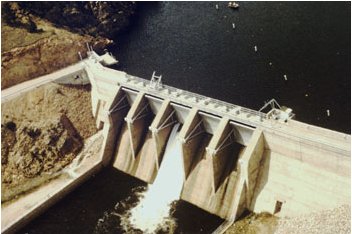
The Loveland City Council approves 50% participation in the repair of the Big Dam #COflood

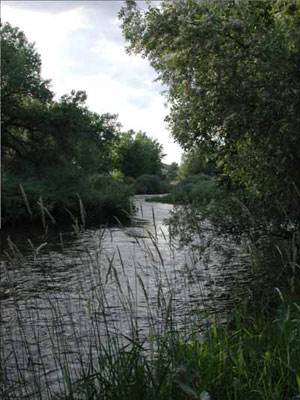
Big Thompson River near RMNP
Big Thompson River in RMNP

From the Loveland Reporter-Herald (Jessica Maher):

During September’s flood, the structure that diverts water on the Big Thompson River for both Home Supply and the city of Loveland sustained significant damage. As a result, the city is unable to divert river water into the Water Treatment Plant, which is located just downstream of the dam in the Big Thompson Canyon.

Because both the city and Home Supply both divert critical supplies at the structure, Home Supply officials advocated for the even split during an Oct. 15 study session, but councilors directed staff to work on a contract document that would evaluate options and return with a recommendation.

Larry Howard with Loveland Water and Power told the council that several options were considered, including following the city’s original 1895 agreement with Home Supply that lays out an 11 percent city responsibility of any repair, or splitting costs according to diversions, which would amount to about 25 percent…

The first phase of repair will cover flood-related damage and is estimated to cost about $800,000. Negotiations would continue over the next several months for future maintenance and repair of the dam.

More infrastructure coverage here.

September flooding changed the Cache la Poudre and Big Thompson River channels #COflood

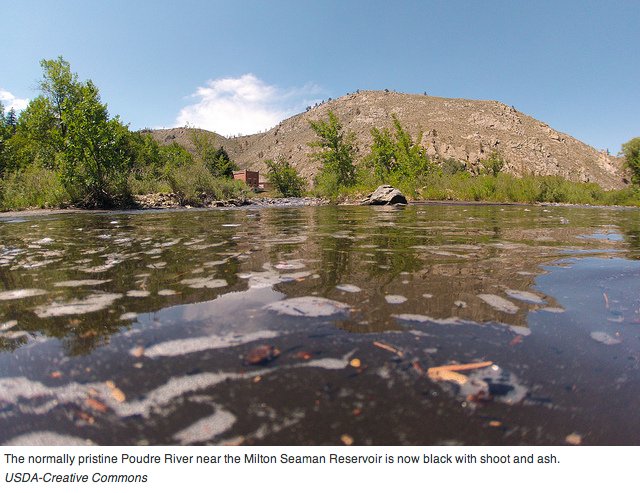
Ash and silt pollute the Cache la Poudre River after the High Park Fire September 2012

Here’s an in-depth look at the Cache la Poudre and Big Thompson Rivers in the aftermath of the September floods, from Ryan Maye Handy writing for the Fort Collins Coloradoan. Click through and read the whole article: Here’s an excerpt:

Record water levels churned the river’s bottom, washing a year’s worth of ash from its banks and stream bed. Residents of Fort Collins and Poudre Canyon say the iconic river looks “magnificent,” a stark contrast to the black sludge that choked it after the 2012 High Park Fire…

The flood also changed the Big Thompson’s course through Loveland, swallowing golf courses, bike paths and front yards. In many places, the river chose its natural path, from which it was diverted a century ago. This presents a struggle for city officials: Do they change the river, again, or let it run its chosen course?

Letting rivers be rivers is best, whether they are the pristine Poudre or the fetid Big Thompson, said professor Ellen Wohl, a geomorphologist at Colorado State University. While the September floods were devastating for cities along the Front Range, their high waters can reset a river’s cycle, encouraging everything from new trout habitat to new cottonwood saplings.

“There is no question that they are really good for rivers,” Wohl said of catastrophic floods.

Although Whol said there’s value in letting the rivers pick their own courses, Colorado residents are too dependent on the rivers’ dammed and diverted waters. In some places, both rivers will be rerouted to spare costly sewage and utilities systems that their new courses threaten…

Poudre Canyon resident Bill Sears has marveled at the river’s transformation since the floods. After 28 years of watching the river, he had never seen anything like the black water that coursed in it after the High Park Fire.

“It was like a slug,” he said of the river’s movement through the canyon. “It was more like asphalt — fresh black stuff. It coated everything.”

But after several days of September rains, the churning water — so powerful that it gnawed away roads and consumed bridges — scrubbed the river cleaner than it had ever been in Sears’ memory.

“In the long run, the flood is probably a pretty good thing,” said John Stokes with the Fort Collins Natural Resources Department. “It tends to turn the riverbed over, which cleans the river up. The bottom of the river is quite stable. It takes a big flood to turn rocks around.”[…]

On Sept. 11, the Big Thompson was not an idyllic trickle winding groggily through the hill country west of Loveland. Normally, the Big Thompson runs at 15 cubic feet per second (cfs) — like watching 15 basketballs float by every second. During the flood it pushed 19,000 cfs of water down the Big Thompson Canyon, more than the Poudre at its highest peak.

The river ruptured 6 miles of sewage lines in Estes Park, leaving about 2,000 residents without sewer service, Gunderson said. Since September, when Gunderson last sampled the river water, human waste has been dumped into the river, giving it high levels of E. coli.

Carlson’s Big Thompson “trickle” erupted in Loveland during the flood, flowing over 11 bridges and covering some of the city’s most important sewer pipes.

The river also dramatically changed its course.

Loveland Water Utilities Manager Chris Matkins had spent many years working along the Big Thompson and said he knew it as well as anyone could know a landscape. But when he saw the swollen river crash through Home Supply Dam, near the water treatment plant on County Road 29, he recognized nothing…

“It’s really unbelievable. I couldn’t get my bearing where I was,” he said. “I was standing in these river corridors, and it was like standing on the moon.”

The quiet creeklike trickle became a Poudre-sized river. It tore away rock cliffs and cracked portions of the nearby highway into splinters. Carlson remembered listening to the surging water and hearing a grinding, the sound of boulders rolling on the river bottom.

Worst of all, Loveland’s three main sewer lines were now stuck beneath the river’s new course — one had survived intact, two others were destroyed. The river had to be moved.

“You can’t just move a river,” Carlson said. “You have to train the river to move.”

The old channel had been all but obliterated, filled with “so much sediment you couldn’t even tell there was an old channel,” Carlson said. Using 18-inch pink limestone boulders — called “riprap” — city officials coaxed the river back to its former channel, nearly 300 feet away.

It was a colossal effort that cost $700,000. And it’s not something the city will do for the numerous other spots where the river left its old course. All told, Matkins thinks it will cost Loveland about $2.5 million to repair all the damages to its water treatment facilities.

Big Thompson River: Twilight for the Idylwilde Dam #COflood

Idylwilde Dam via Loveland Water and Power

From the Loveland Reporter-Herald (Jessica Maher):

In a resolution added to Tuesday’s special meeting of the Loveland City Council, councilors voted unanimously to authorize negotiations with Kiewit Corp., the contractor selected by the Colorado Department of Transportation for the U.S. 34 reconstruction project.

The agreement will include demolishing and disposing of the Idylwilde Dam. The silt, sand, cobbles and boulders now located behind the dam would go to Kiewit for much-needed project material.

Loveland Water and Power Director Steve Adams said he worked last week with the U.S. Army Corps of Engineers, the Federal Energy Regulatory Commission (FERC) and the U.S. Forest Service to fast track approvals needed to move forward with negotiations.

“We felt like this is an opportunity that presents itself to us and we wanted to take advantage of it,” Adams said. “We feel like the dam has been compromised — it was compromised in its reconstruction by a quarter of it not being anchored to bedrock — and this was even more evidence to us that the dam should be removed for safety purposes and also to help the reconstruction effort.”[…]

The Idylwilde Dam went online in 1925 and was at that time the power plant for the city. It generates about 900 kW, which is now a fraction of what Loveland Water and Power now produces, and the facility was used in recent years to help reduce the city’s costs when the Platte River Power Authority hit its peak demand.

The dam area represents about 100,000 cubic yards that contractor could use to help reconstruct the highway, according to Adams, who said the city has been in contact with Kiewit Corp officials.

From the Longmont Times-Call (Tony Kindelspire):

Longmont homeowners will see an increase in their average monthly utility bills of about 12 1/2 percent starting Dec. 1, according to votes passed Tuesday night by the Longmont City Council. Primarily because of stormwater and parks and greenway maintenance fee increases, Longmont residents’ utility fees will soon be $153 a month, up from $136 a month. The Longmont City Council voted unanimously to increase stormwater fees to $13.60 a month, which is nearly double what was proposed by the city’s public works and natural resources department. That increase — ironically — included flood control measures on stretches of the St. Vrain River.

Dale Rademacher, director of public works and natural resources, said the preliminary cost estimate of total damage to the river is about $80 million.

Barbara McGrane, the business manager for the public works department, told council that the city originally had planned $470,000 in capital projects for 2014. Post-flood, that figure is now about $3.6 million, she said. Federal Emergency Management Agency funds will reimburse the city for a portion of the needed repairs, but how much remains to be seen, McGrane said.

“We don’t really know yet what FEMA is going to want us to do with the river, but the riverbed repairs — big dollars,” McGrane said.

From The Denver Post (Electa Draper):

Garbage day after the Colorado floods is turning apocalyptic. The potential volume of flood debris is mind-blowing, given preliminary estimates of more than 1,800 homes destroyed and more than 16,000 damaged and full of soggy ruins.

State regulators are working on waivers for safety and environmental standards at landfills so they can handle the toxic mounds of refuse heaped in city drop-off sites and piled in debris fields along creeks and rivers.

Earlier this week, traffic leading to dumps, including two in Erie, was so heavy that haulers pulled out of long lines in frustration with wait times.

“It’s been wild,” said Dan Gudgel, division manager for Waste Connections, which runs the Erie landfills. “We’ve had a tremendous amount of rain here — 15 to 20 inches — and we drive on soil. We struggled Monday, but now we’re going full-bore.”

Heaps of ruined possessions are an immediate threat to public health, but they also are constant reminders of the disaster and are among the biggest obstacles to economic recovery and a restored sense of well-being, FEMA spokesman Jerry DeFelice said.

“At the forefront of recovery is debris removal,” DeFelice said.

FEMA reformed policies for helping communities with the high cost of cleanup after Hurricane Sandy, now offering reimbursement along a sliding scale for speedy removal — in excess of 75 percent of eligible costs.

“The idea is to give communities incentives to plan for disaster cleanup,” DeFelice said.

The Colorado counties so far eligible for this type of FEMA assistance are those hardest hit — Adams, Boulder, Larimer and Weld — among 17 flooded counties. The volume of refuse the cleanup will generate is impossible to estimate, Colorado Department of Public Health and Environment officials said.

Waste Connections — which operates the adjacent Denver Regional and Front Range landfills in Erie — has sent out several hundred 30- to 40-cubic-yard roll-off trash containers to storm- wrecked communities. A half dozen other companies have placed hundreds more containers.

The huge debris-filled bins are due back soon, perhaps at the end of this week, Gudgel said.

“The order of magnitude here is unreal. I couldn’t begin to guess at an amount,” Gudgel said. “I worked back east, with debris from tornadoes and ice storms, but this is unbelievable.”

It’s also impossible to determine the health risks of muck-coated possessions, including some contamination by raw sewage and now mold.

Hard-hit homeowners vouch that the yuck factor is off the charts.

“There are a lot of people who are going to be involved with this (cleanup),” said Roger Doka, CDPHE’s solid-waste permitting unit leader. “We are meeting with our water quality, hazardous waste and air pollution divisions and with local governments.”

Flood-damaged furnishings and other possessions on private property are the responsibility of the property owner, said Colorado Office of Emergency Management spokeswoman Micki Trost.

But with whole houses collapsed into waterways, propane tanks hissing down fast-moving creeks and unidentifiable objects bobbing along or deposited along stream banks, local governments aren’t sure when they’ll get on top of this mountain of debris.

Larimer County hasn’t had a break in disaster-generated debris since the 2012 High Park fire, county

Mark Taylor helps neighbors unload flood-damaged belongings Wednesday at a dump in Boulder, where residents started to clean up from last week’s massive flooding. (RJ Sangosti, T he Denver Post)
recovery manager Suzanne Bassinger said. Residents there were given three years from the date of the fire’s containment, June 30, 2012, to remove charred materials from their properties. Fire debris has been washing down creeks for months in post-fire flooding previous to last week’s catastrophic flooding in northeastern Colorado.
“We’ve never really had any let-up,” Bassinger said.

In Boulder County, emergency managers are still focused on evacuating people and using resources to carve routes to stranded communities.

“You are asking ‘the recovery question.’ We’re still trying to get our hands around that,” Boulder Office of Emergency Management spokesman Ben Pennymon said.

Managers from different departments are beginning to form a team to coordinate cleanup, he said.

But Boulder residents already are dumping around the clock into containers at 21 collection sites — even burying and surrounding them with trash. Crews are working around the clock to haul full containers away but are struggling to keep up.

The state health department is working to develop waivers that will allow landfills to accept some amounts of typically prohibited materials, such as asbestos-contaminated construction debris, Doka said.

“Every landfill has the right of refusal for materials,” Doka said. “But they all are positioning themselves to accept flood debris. I’ve contacted all of the landfills in the area to ask about air space — or how much room they have. They all say they have adequate space.”

Yet it could turn out that some landfill operators will have to excavate additional cells, he said.

Gudgel said the Erie landfills have room — including a new $2.5 million cell (a large hole for waste lined with clay and plastic and graded so fluids drain out). Work began on it earlier this summer and could be completed in a few weeks.

The Erie landfills have a remaining life expectancy of 40 years, he said, and he doesn’t think the flooding will significantly diminish that.

“We’ve got room,” Gudgel said.

Cache la Poudre River: Fort Collins Utilities tour recap

cachelapoudrehighparkpollutionusdaseptember2012.jpg

From the North Forty News (Dan MacArthur):

Sponsored by Fort Collins Utilities Services, the July tour took participants through forests scorched by the High Park Fire to learn about the special challenges of treating water laden with ash and sediment flowing from charred slopes.

From there it moved to the top of Cameron Pass, where the Upper Cache la Poudre River watershed begins. A stop at the Gateway Natural Area on the return trip offered the opportunity to identify the microscopic bacteria in the river that could make one dance a more frantic jig were they not intercepted before flowing from our taps.

“Basically the reason (Fort Collins) was founded was water,” explained Clyde Greenwood. The utility and water supply supervisor serves as the utility’s resident historian.

Greenwood said Fort Collins was fortunate in that there were no mines in the Poudre Canyon watershed. A watershed is the territory that drains into a body of water.

“Fort Collins is a unique town with pristine water,” he said…

Fort Collins takes half of its water from the Colorado-Big Thompson project’s Horsetooth Reservoir. The other half comes from the Poudre. As a result of quality problems caused by the fire, water supply engineer Adam Jokerst said last year the city took no water from the Poudre for 100 days and depended solely on Horsetooth. This helped the city avoid water restrictions, but reduced the amount of reservoir water it could carry over to this year.

This year, last-minute heavy snows in the high country, the availability of more C-BT water, and the ability to once again take water from the Poudre allowed the city to avoid restrictions, he said.

The main problem plaguing the city’s water supply, he said, is the lack of flexibility with limited reservoir space. “We kind of live from year to year. If we get storage, our system is pretty robust.”

More Cache la Poudre River watershed coverage here and here.

Big Thompson Flood — July 31, 1976 — remembered

bigthompsonflood073176.jpg

From the Loveland Reporter-Herald:

Residents of the Big Thompson Canyon and others who remember the July 31, 1976, flood there gathered at the flood memorial Wednesday night for an annual memorial service. The flood happened after a thunderstorm stalled over the area and dumped more than a foot of rain. Pounding rain caused a wall of water to roar through the canyon, 19 feet high in places.

It destroyed homes, businesses, U.S. 34 and, worst of all, took 139 lives. Six more people were never found.

More Big Thompson River flood coverage here and here.

Big Thompson Flood anniversary July 31

USDA and Interior Announce Partnership to Protect America’s Water Supply from Increased Wildfire Risk #COdrought

baseballandblackforestfirefrompetermcevoyontwitterviacbs.jpg

Here’s the release from the US Department of Interior:

U.S. Department of Agriculture Secretary Vilsack and U.S. Department of the Interior Secretary Sally Jewell today announced a federal, local and private partnership that will reduce the risks of wildfire to America’s water supply in western states. The Western Watershed Enhancement Partnership is part of President Obama’s Climate Action Plan, which outlines a comprehensive approach to reduce carbon pollution and better prepare the United States for the impacts of climate change, including increased risk of wildfires and drought.

Through the Western Watershed Enhancement Partnership, the U.S. Department of Agriculture (USDA) and the U.S. Department of the Interior (Interior) will work together with local water users to identify and mitigate risks of wildfire to parts of our nation’s water supply, irrigation and hydroelectric facilities. Flows of sediment, debris and ash into streams and rivers after wildfires can damage water quality and often require millions of dollars to repair damage to habitat, reservoirs and facilities.

USDA’s Forest Service and Interior’s Bureau of Reclamation will kick off the new partnership through a pilot in the Upper Colorado Headwaters and Big Thompson watershed in Northern Colorado. The partnership will include the Northern Colorado Water Conservancy District and Colorado State Forest Service and builds off of past agreements between the Forest Service and municipal water suppliers, such as Denver Water’s Forest to Faucets partnership.

“Today’s announcement brings together the West’s largest forest land manager with the West’s largest water provider to ensure the resilience of our forests and their capacity to provide water supply amid climate threats,” said Vilsack. “This partnership will increase forest resilience, improve water quality, and reduce the risk of catastrophic damage from wildfire. This is good news for anyone who pays a water bill, and it is good news for our environment.”

“In the West, more than forty Reclamation dams and facilities are on or downstream from Forest Service lands where drier, hotter weather has exacerbated the risk of wildfire,” said Jewell. “This partnership can serve as a model for the West when it comes to collaborative and targeted fire threat reduction and restoration efforts to protect our critical water supplies.”

The Memorandum of Understanding signed today at Horsetooth Reservoir outside of Ft. Collins, Colo., will facilitate activities such as wildfire risk reduction through forest thinning, prescribed fire and other forest health treatments; minimizing post-wildfire erosion and sedimentation; and restoring areas that are currently recovering from past wildfires through tree planting and other habitat improvements.

Horsetooth Reservoir is part of the Colorado Big-Thompson water system which provides water to 860,000 people within eight counties (Boulder, Broomfield, Larimer, Logan, Morgan, Sedgwick, Washington and Weld) and to more than 650,000 acres of agricultural land. It also generates enough electricity to power 58,300 homes annually. The area has experienced several fires in the last few years, including the destructive High Park Fire in June, 2012.

USDA and Interior are working with state and local stakeholders toward formalizing additional partnerships in the following areas:

  • Salt River-CC Cragin project in Arizona;
  • Boise River Reservoir in Idaho;
  • Mid-Pacific Reclamation Region in California;
  • Yakima Basin in Washington State; and Horsethief Reservoir/Flathead River in Montana.
  • Nationwide, the National Forest System provides drinking water to more than 60 million Americans. The share of water supply originating on national forest lands is particularly high across much of the West, including the upper Colorado River basin where nearly half of all water comes from National Forests. Healthy forests filter rain and snowmelt, regulate runoff and slow soil erosion – delivering clean water at a far lower cost than it would take to build infrastructure to replace these services.

    The goal of the Western Watershed Enhancement Partnership is to restore forest and watershed health and to proactively plan for post-wildfire response actions intended to protect municipal and agricultural water supplies, infrastructures and facilities, water delivery capabilities and hydro-electric power generation. Forest and watershed restoration activities and proactive planning can help minimize sedimentation impacts on reservoirs and other water and hydro-electric infrastructure by reducing soil erosion and the impacts of wildfires, helping water managers avoid costs for dredging, water filtration, and the need to replace damaged infrastructure.

    Although comprehensive data on wildfire costs for water users is unavailable, several wildfires in recent decades illustrate the diversity and magnitude of direct costs:

  • The 1997 Buffalo Creek and 2002 Hayman Fires forced Denver Water to spend more
    than $26 million on dredging Strontia Springs Reservoir, treating water and reseeding the forests in the watershed;
  • The 2000 Cerro Grande Fire cost the Los Alamos Water Utility more than $9 million and generated about $72.4 million in emergency rehabilitation, restoration and flood mitigation cost;
  • The 2009 station fire and ensuing storms in 2010 cost the Los Angeles County Department of Public Works $30 million in the aftermath to remove sediment from debris basins. LA County Public Works plans to spend an additional $190 million dredging four reservoirs that are no longer able to reliably meet the county’s needs for flood control and water storage capacity; and
  • The 2011 Las Conchas Fire prompted the cities of Santa Fe and Albuquerque to shut down their water supply intake systems in affected rivers and reservoirs due to ash accumulation.
  • From The Denver Post (Bruce Finley):

    Top U.S. environmental officials Friday began a push to protect the nation’s federally run water-supply reservoirs against wildfires. The fear is that worsening wildfires will trigger erosion that damages dams, canals and pipelines, and shrinks water storage, ultimately driving up water costs for ratepayers.

    “Climate change is upon us, our ecosystems are changing and it’s up to us to work collaboratively,” Interior Secretary Sally Jewell told state, federal and local participants before signing a teamwork agreement at Horsetooth Reservoir, west of Fort Collins, an area where 11 wildfires since 2010 have unleashed sediment that threatens to clog water facilities.

    From KUNC (Grace Hood):

    “The sad reality is that when we’re faced with ever-increasing fires and the intensity of these fires, it threatens that water supply,” said USDA Sec. Tom Vilsack. “It threatens the quality and the affordability because if this water has to be treated because of sediment and ash and so forth, it obviously can increase the cost.” Vilsack was joined by Interior Secretary Sally Jewell in Fort Collins near Horsetooth Reservoir. Burn scars from the High Park and Galena fires were faintly visible in the distance.

    Flows of ash and debris into streams after the High Park Fire have caused headaches for local municipalities like Greeley and Fort Collins. To reduce this problem, the Western Watershed Enhancement Partnership will focus on restoration and prevention efforts including forest health treatments and efforts to minimize post-wildfire erosion.

    Colorado’s pilot project brings together a large group of local, state and federal agencies including the Colorado State Forest Service, Northern Water, the Bureau of Reclamation and the U.S. Forest Service.

    From the Fort Collins Coloradoan (Kevin Duggan):

    Secretary of the Interior Sally Jewell and Tom Vilsack, the secretary of agriculture, signed a document committing their agencies to work with state and local officials and private landowners in reducing the risk and impact of massive fires. The partnership also is expected to enhance coordinated efforts to keep ash, sediment and other fire debris out of storage facilities such as Horsetooth Reservoir, Vilsack told dignitaries gathered for the signing ceremony. “It will improve water quality; it will protect habitat; and we believe over time it will reduce fire risk,” he said.

    Projects that would be pursued through the partnership include reducing “fuel loads” in forested areas through thinning and controlled burns. Controlling erosion after a fire to protect municipal and agricultural water supplies would be another major focus.

    A pilot program involving the Northern Colorado Water Conservancy District, the Colorado State Forest Service and federal agencies would target the watersheds of the Upper Colorado and Big Thompson rivers. The state forest service has organized a timber sale on land near Northern Water facilities. Proceeds from the sale would go toward restoration programs, said Mike Lester, the Colorado state forester.

    From the Denver Business Journal (Cathy Proctor):

    The agreement — called the Western Wastershed Enhancement Partnership — will make it easier for the two agencies to work on forest thinning and prescribed fires, which reduce erosion, and restoring burned areas through tree planting and other habitat improvements, according to the agencies. The pilot program will focus on northern Colorado, the headwaters of the Colorado River and the Big Thompson River watershed.

    U.S. Sen. Mark Udall, D-Colo., hailed the agreement. “Rivers running thick with soot and flash flooding have tragically shown how the threats wildfires pose to Coloradans and our drinking-water supplies persist long after their final embers are extinguished,” Udall said.

    From The Durango Herald (Joe Hanel):

    Agriculture Secretary Tom Vilsack and Interior Secretary Sally Jewell inked the agreement in front of the symbolic backdrop of Horsetooth Reservoir above Fort Collins. Black and red remains of burned trees from two recent wildfires loomed over the reservoir, a reminder that fires lead to erosion that clogs water pipes. The agreement is designed to get around bureaucratic barriers and get going on forest thinning projects to prevent fires, and restoration projects after a fire. “It will improve water quality, it will protect habitat and we believe, over time, it will reduce fire risk,” Vilsack said.

    For the Forest Service, the agreement means moving quickly in response to fires such as the West Fork Complex. “We’re concerned about the Rio Grande River and the headwater area there. We’re going to be aggressive in our conservation efforts to make sure we maintain the quality and the safety of that water supply,” Vilsack said.

    From the Loveland Reporter-Herald (Saja Hindi):

    “Holding the signing here in Colorado highlights the fact that we’ve established a pilot project called the Colorado-Big Thompson partnership that brings together Northern Water Conservancy District, Colorado State Forest Service, United States Forest Service, the Bureau of Reclamation, and the Western Area Power Administration,” said Glenn Casamassa, Arapaho and Roosevelt National Forests and Pawnee National Grassland forest supervisor…

    Water quality is a paramount concern, according to Eric Wilkinson, manager of the Northern Colorado Water Conservancy District. “Wildfire also affects the water supplies that are vitally important to our agriculture economy in this area,” he said.

    From the Associated Press (Catharine Tsai) via The Pueblo Chieftain:

    Federal and local agencies will try to speed up efforts to thin vegetation that could fuel catastrophic wildfires which threaten water supplies and hydroelectric facilities, federal officials said Friday. The Western Watershed Enhancement Partnership was announced at Horsetooth Reservoir near Fort Collins by Interior Secretary Sally Jewell, Agriculture Secretary Tom Vilsack and Sen. Mark Udall, D-Colo. It will focus on accelerating forest restoration around reservoirs, dams, irrigation systems and hydroelectric projects to reduce the risk of intense fires.

    “When a forest fire takes place, it can compromise the water supply that is in those reservoirs,” Vilsack said. “Sediment can build up, and the ash created by fires can cause huge problems downstream in terms of water quality.” The partnership will help agencies leverage resources to reduce the risk of rivers and water projects getting sullied, Vilsack said.

    The U.S. Forest Service and U.S. Bureau of Reclamation are launching the effort with a pilot project in the Upper Colorado headwaters and Big Thompson watershed in Northern Colorado, where the High Park Fire burned last year. Under the project, the Northern Colorado Water Conservancy District and Colorado State Forest Service will work with the federal agencies on forest thinning and prescribed burns. The work also will include reseeding and restoring burned forests so not as much sediment will run off from burned areas.

    The U.S. Department of Agriculture, which oversees the Forest Service, and the Interior Department, which includes the Bureau of Reclamation, are working to formalize similar partnerships around the Salt River-CC Cragin project in Arizona; Boise River Reservoir in Idaho; Mid-Pacific Reclamation Region in California; Yakima Basin in Washington state; and the Horsethief Reservoir and Flathead River in Montana.

    The initiative builds from the successful “Forest to Faucets” partnership the Forest Service reached with Denver Water, Colorado’s largest water utility, to share costs of mitigating wildfire risks and effects in Colorado.

    More water pollution coverage here.

    Colorado-Big Thompson Project update: 250 cfs in the river below Olympus Dam

    coloradobigthompsonprojecteastslopesystemncwcd.jpg

    From email from Reclamation (Kara Lamb):

    Earlier this morning, we saw run-of inflows to Lake Estes jump up. As a result, the water level elevation at Lake Estes has come up a few feet and we are increasing releases from Olympus Dam to the Big Thompson Canyon. Flows in the Big T canyon are increasing from around 125 cubic feet per second to about 225 cfs. We might only need to keep the 225 cfs release for a few hours. It is possible we could cut the release back slightly before noon.

    More Colorado-Big Thompson coverage here.

    Colorado-Big Thompson Project update: Carter Lake is about 94.5% full

    coloradobigthompsonprojecteastslopesystemncwcd.jpg

    From email from Reclamation (Kara Lamb):

    You might have already heard, but today [May 3] we turned off the pump to Carter Lake. Carter is now about 94.5% full. With the pump to Carter off, about 508 cfs is now flowing north to Horsetooth Reservoir. Horsetooth is about 75% full and will continue to rise through May.

    More Colorado-Big Thompson Project coverage here.

    Runoff news: Northern Water decides to wait see how the runoff shapes up regarding C-BT quota #COdrought #ColoradoRiver

    coloradobigthompsonmap.jpg

    From the Northern Colorado Business Report (Steve Lynn):

    Northern Colorado Water Conservancy District board members met Thursday to discuss whether to raise the 60 percent quota that they issued last month. The quota means that farmers and cities will receive 60 percent of water units allotted to them under the project. The board members said they will wait at least until their next meeting before deciding whether to adjust the amount of water distributed from the project.

    Northern Water employees told board members that although state snowpack levels had risen after recent storms, concerns remained about low water-storage levels.

    Northern Water General Manager Eric Wilkinson cautioned that raising this year’s quota could limit the organization’s flexibility when it determines how much water to distribute next year. “I’m not willing to say that the drought is over,” Wilkinson said. “We’re still water short.”

    More Colorado-Big Thompson Project coverage here.

    Colorado-Big Thompson Project update: 100 cfs in the Big Thompson below Olympus Dam #ColoradoRiver

    olympusdamrelease062011

    From email from Reclamation (Kara Lamb):

    We’re starting to see a little bit of run-off come down the Big Thompson River and into Lake Estes. As a result, we’ll be bumping up releases from Olympus Dam on Lake Estes to the Big Thompson Canyon later tonight to pass the native flow on downstream.

    We have been releasing about 45 cfs out of Oympus Dam to the lower Big Thompson River. Tonight, April 30, at midnight, we will bump releases up by about 60 cfs to around 100 cfs.

    If the forecast storm for tonight and tomorrow cools things off, we could be making another change late in the night of May 1 to reduce releases again. I will keep you posted.

    [Drought] ‘It’s this slow, creeping death by 1,000 cuts’ — Chris Kraft #COdrought #ColoradoRiver

    coloradobigthompsonmap.jpg

    From the Northern Colorado Business Report (Steve Lynn):

    A record crowd of 250 people attended the spring meeting of the Northern Colorado Water Conservancy District at the Ranch in Loveland. Farmers pleaded with Northern Water officials for at least 70 percent of their share of water from the Colorado-Big Thompson Project…

    “The worst thing in the world for agriculture is a drought, which we’re in right now,” said Chris Kraft, a Fort Morgan dairy farmer. “It’s this slow, creeping death by 1,000 cuts.”

    Northern Water board members are scheduled to decide Friday how much water they will distribute. Northern Water provides water to portions of eight counties with a population of 850,000 people and serves more than 640,000 acres of irrigated farm and ranch land. Farmers use about two thirds of the water coming from the project while cities use one third, while cities use one third, Northern Water spokesman Brian Werner said…

    …Eric Wilkinson, Northern Water’s general manager, said that this year would mark the second time in the water wholesaler’s history that it would base its quota on “availability” of water rather than “need.”

    Officials from several Northern Colorado cities argued at Thursday’s meeting that a quota of any more than 50 or 60 percent would overextend the already scarce resource. Donnie Dustin, the city of Fort Collins’ water resources manager, believes the city will face having a lower quota in future years if Northern Water adopts more than a 60 percent quota. However, Fort Collins doesn’t want Northern Water to go too low. The city would have to pass further water restrictions if Northern Water adopted a 50 percent quota, Dustin said…

    Farmers contend that a 60 percent quota will mean planting fewer fields with crops that use more water, such as corn. That will have consequences for Weld County’s dairy industry, they say. “We got so many dairies in this country,” said Bill Markham, who farms corn, barley and sugar beets in Berthoud. “I don’t know where they’re going to get their feed.”

    Kraft said a lower water quota would lead him to downsize his dairy farm. “If we don’t get the feed we need, we have to sell animals,” he said. “We’ll be shrinking down.”

    From The Greeley Tribune (Eric Brown):

    For only the second time in 56 years, the quota set for the Colorado-Big Thompson Project will be limited by how little water is available, rather than based on the demands of the region. After hearing suggestions from its water users Thursday, the Northern Colorado Water Conservancy District’s board of directors will set a quota for the C-BT Project today to determine how much water will be released this year from the system — which, with its 12 reservoirs, is the largest water supply project in the region. But, because reservoir levels are low and snowpack in the mountains is limited, the board will be restricted in how much water it can allow farmers and cities to use in 2013.

    In nearly all years, the board can set a quota of 100 percent — although it rarely does — and still have at least some water in storage for the following years. But this year, a quota of 87 percent would deplete everything in the C-BT Project’s reservoirs, according to Brian Werner, a spokesman and historian with Northern Water. And the limited runoff from this year’s meager snowpack isn’t going help much, Werner added. The only other year the board has been so limited in the quota it could set was 2003 — following the historic drought year of 2002, said Werner, who’s been with Northern Water for more than 30 years.

    Although C-BT water is limited this year, it’s still needed — particularly by farmers, many of whom cut back on production last year while battling drought, and fear they’ll have to plant even fewer acres this year because of the water shortages.

    The historic predicament now facing the 12-member Northern Water board was brought on by the combination of continued drought, the board setting a historically high C-BT quota last year, the expectation of more dry weather, and because the region’s water demands are continually growing due to increased population, according to some of the experts who spoke at Thursday’s water users meeting. And, as water demands have increased, the availability of stored water hasn’t kept pace, added Werner.

    Since the C-BT project went into use in 1957, the Northern Water board has set a quota every year in April to balance how much water could be used through the upcoming growing season and how much water needed to stay in storage for future years. The historic average for the C-BT quota has been just above 70 percent, according to Werner. A 70-percent quota means that for every acre-foot of water a C-BT shareholder owns, they’ll get 70 percent of an acre-foot to use throughout the year. An acre-foot is approximately 326,000 gallons of water.

    Differences of opinion

    Before setting its quota each year, the board takes suggestions from its water users. Thursday’s water users meeting drew about 250 people — a record-high attendance for Northern Water’s April meeting, Werner said. At the meeting, officials from local cities generally pushed for a quota of about 50-60 percent, wanting to keep it relatively low and save as much water as possible for the future. However, many farmers in attendance — who either are or will soon be planting crops, and need to know soon how much water they’ll have for the growing season — asked for a quota of about 70 percent.

    The difference between a 50 percent water quota and a 70 percent quota amounts to more than 20 billion gallons of available water to northern Colorado.

    Farmers said they’ll need as much water as possible to raise their crops and the feed needed by the region’s many dairies and feedlots. Many are worried that cutting back on planting again this year will have a negative trickle-down impact on the region’s overall economy — especially in Weld County, where agriculture is a $1.5 billion contributor. Each year, about two-thirds of the C-BT Project’s water goes to agriculture uses, but farmers and ranchers only own 34 percent of the water. To make up that gap, farmers and ranchers lease water from cities. However, because of the water shortages, many cities have said it’s unlikely they’ll have any extra water available in 2013.

    Water officials from Greeley and Fort Collins said this would be the first time in about 10 years — dating back to 2003 — that they wouldn’t be able to lease extra water to local agricultural users. “You can get a flavor for the dilemma our board is in,” Eric Wilkenson, general manager of Northern Water, said to the crowd after hearing comments from concerned water users. But, with the C-BT’s overall reservoir levels 27 percent below average as of April 1, and snowpack in South Platte Basin 29 percent below average on Thursday and 24 percent below average in the Colorado River Basin, the Northern Water board can only do so much.

    C-BT water flows to more than 640,000 acres of irrigated farm and ranch land and about 860,000 people in portions of eight counties, according to Northern Water numbers.

    Last April, concerns for farmers led the board to declare a 90 percent quota for C-BT water, the highest set in April since 1977. As drought persisted, the Northern Water board increased the C-BT water quota to 100 percent in May. The board could set that quota then because reservoir levels were high, due to above-average snowpack in previous years. With last year’s heavy water usage, reservoir levels dropped and are now expected to stay low since little snow has accumulated in the mountains.

    More Northern Colorado Water Conservancy coverage here and here.

    It will be standing room only at the Northern Water board meeting Thursday #ColoradoRiver

    Colorado-Big Thompson Project operations update: 80 cfs in the Big Thompson below Olympus Dam #coriver

    coloradobigthompsonmap.jpg

    From email from Reclamation (Kara Lamb):

    Over the weekend, releases from Olympus Dam to the Big Thompson River bumped up slightly. We are now sending about 80 cfs down through the canyon. We are collecting about 50 cfs at the Dille Diversion Dam and sending it on to Horsetooth Reservoir.

    We are running some Colorado-Big Thompson Project water through the canyon while some routine maintenance is being conducted on the Charles Hansen Feeder Canal. When the work wraps up in a couple of weeks, we will begin moving water back through the canal rather than running it down the canyon.

    To learn more about Lake Estes and Olympus Dam, please visit our website. Data on this website is updated every night at midnight.

    More Colorado-Big Thompson Project coverage here and here.

    Colorado-Big Thompson Project update: Carter Reservoir 80% full

    coloradobigthompsonprojecteastslopesystemncwcd

    From email from Reclamation (Kara Lamb):

    Just a quick e-mail to let you all know that the routine work we were doing down around Flatiron has completed. As a result, Pinewood water levels are on their way back up to more typical elevations for this time of year. Flatiron Reservoir water levels will start to come back up–and begin fluctuating again, as is normal. And, the pump to Carter Lake will go back on before the end of the day Thursday, March 28. As of this afternoon, Carter Lake is 80% full.

    More Colorado-Big Thompson Project coverage here.

    Colorado-Big Thompson Project operations update: Flatiron power plant testing next week

    coloradobigthompsonprojecteastslopesystemncwcd

    From email from Reclamation (Kara Lamb):

    We have a little more maintenance to do on the power arm of the Colorado-Big Thompson Project starting top of next week. While we’re doing some testing at the Flatiron Power Plant, we will drop Pinewood down as we move water out and also suspend pumping to Carter Lake. Residents around and visitors to Pinewood Reservoir should notice the reservoir elevation going down the end of this week. By Sunday or Monday, March 24 or 25, the reservoir could get down to an elevation of 6562 feet, perhaps just a little lower. However, that is not low enough to impact local water provision to the community around Pinewood. The pump to Carter Lake will go off during that same time frame, returning to service by Thursday, March 28. The reservoir has come up quite a bit over the past several weeks. It is currently around 75% full.

    While these operations are underway, water will continue being delivered to Horsetooth Reservoir. Water to Horsetooth will drop Flatiron Reservoir down between Tuesday and Wednesday of next week. Flatiron fluctuates daily, but visitors to that reservoir might notice a lower water line than typical for this time of year.

    Pinewood Reservoir is expected to start rising again on Tuesday, March 26 and should be back to a typical water elevation for this time of year by Thursday, March 28. Flatiron should start going up again by Friday and be back to a more typical water elevation by the last weekend of March.

    From email from Reclamation (Kara Lamb):

    Downstream demands on the Colorado River have been fluctuating quite a bit the last two days. Yesterday we dropped down from 145 cfs to 120 cfs. Today, March 19, we dropped again from 120 to 100 cfs. This might help us store a little water behind Green Mountain Dam. The reason for these changes is that the Shoshone Power Plant has a relaxed call on the river and part of the Green Mountain water right is in effect.

    More Colorado-Big Thompson Project coverage here.

    Reclamation to start pumping to Carter Lake on Monday

    More Colorado-Big Thompson Project coverage here.

    10 Weld county students win awards in ‘Caring for our watersheds’ competition

    cachelapoudre.jpg

    From The Greeley Tribune (Eric Brown):

    The ambition of local youth will soon result in new drinking-water stations at school to reduce the amount of plastic bottles used, new composting programs and the implementation of many other strategies aimed at efficiency and reducing waste.

    Ten Weld County teams from five schools placed in the top 10 or earned honorable-mention recognition in the recent Caring for Our Watersheds contest.

    Now, the high-placing local students will use money from the competition’s sponsor — Canada-based Agrium, Inc., an international agricultural-products supplier with offices in Loveland — to watch their ideas come to fruition in their schools.

    In recent months, 55 total teams from schools across northern Colorado examined the local Poudre and Big Thompson watersheds, identified problems, developed strategies to address them and then created presentations, which were judged at a recent awards banquet at the University of Northern Colorado.

    All top-10 finishers walked away from the banquet with $300 to $1,000 cash prizes, and a matching cash prize went to the teachers who sponsored those students in the contest.

    Additionally, Agrium will pay up to $1,000 for each of the top-10 and honorable-mention projects to be implemented at the students’ schools.

    This is the fourth year that local schools have participated in the Caring for Our Watersheds competition.

    There are now 12 different contests across North America, South America and Australia.

    First place went to a team from Resurrection Christian School in Loveland, but it was Greeley Central High School that came away with the most prize money.

    Greeley Central had five teams finish in the top 10, while another team from the school earned an honorable-mention nod.

    Ivonne Morales of Greeley Central placed the highest among all Weld County students, taking second place with her project, Easy Peasy H2O, which looks to reduce the amount of bottled water consumed in schools.

    With the dollars from Agrium, she’ll help bring water-refilling stations to Greeley Central, encouraging students to refill reusable bottles instead of buying plastic-bottled water from vending machines.

    The water-refilling stations would replace water fountains, alleviating the sanitary concerns some students have, Morales added.

    Morales — president of the school’s Green Cats organization, and the Colorado representative for the Alliance for Climate Education who took part in a 35,000-person march in Washington, D.C., this month — has learned through her research that 1,250 plastic water bottles are thrown away every second in the U.S.

    Also, it takes 17 million barrels of oil to produce the amount of plastic used for bottled water in our country, and that doesn’t even factor in the amount of oil needed to transport the bottled water to the consumer, she noted.

    Additionally, she said, there are concerns and a lack of understanding regarding the chemicals used in the plastic, like Bisphenol A.

    Because her project placed high enough to earn money to be implemented, and because of the impact her project could have, Morales said her time dedicated to the competition was well worth it.

    “It means a lot to me,” said Morales, who also works as a part-time custodian at her school to help support herself and also to save money for a trip to Costa Rica this summer, where she’ll learn about the country’s highly regarded sustainability programs.

    Greeley Central High School science teacher Liz Mock-Murphy, who’s made the competition part of her curriculum in certain classes, and Ray Tscillard, director of the Poudre Learning Center in Greeley that organizes the competition locally, said they are amazed each year by all of the students’ effort and dedication to the contest.

    “This competition is truly empowering … allowing these students to really make a difference,” Mock-Murphy said, noting that some of Greeley’s schools today have low-flow toilets, biodegradable sporks in the cafeterias and single-stream recycling programs as a result of projects executed through the Caring for Our Watersheds competition. “It’s been an amazing thing for our students.”

    More South Platte River Basin coverage here and here.

    Big Thompson Watershed Forum meeting in Greeley Thursday

    bigthompson.jpg

    From The Greeley Tribune:

    The Big Thompson Watershed Forum will have its meeting Thursday in Greeley. The meeting, titled “Critical Surface Water Issues — 2013,” will focus on agriculture water sharing and development, wildfire effects on water quality and watershed management, fracking and other issues.

    The Big Thompson River Watershed, an area encompassing more than 900 square miles, provides drinking water to numerous cities in northern Colorado including Greeley, Estes Park, Fort Collins and Loveland, and is used for commercial, agricultural, recreation, and wildlife habitat purposes.

    Of the 12 presenters on hand, Patricia N. Limerick — professor of history at the University of Colorado and faculty director and chairwoman of the Center for the American West — will be the keynote speaker.

    The meeting will take place from 8 a.m.-4 p.m. at the Island Grove Regional Park’s Events Center, 425 N. 15th Ave.

    The cost to attend the meeting is $40 and includes breakfast, snacks and lunch. Cash or check will be accepted at the door.

    For more information, go to http://www.btwatershed.org/, or contact Zack Shelley at (970) 613-6163 or zshelley@btwatershed.org.

    More Big Thompson Watershed coverage here.

    Colorado-Big Thompson update: Reclamation is moving water through the Adams Tunnel

    Check out the photo of a low Carter Lake.

    From email from Reclamation (Kara Lamb):

    Just a quick note to let you know that we are finishing up our annual maintenance on the east slope of the Colorado-Big Thompson Project. That means, we have begun to once again divert water through the Adams Tunnel from Granby and Shadow Mountain reservoirs on the West Slope.

    We began the trans-basin diversions last week. With water starting to come back through the tunnel, the water level at Lake Estes began to rise. Tonight, the reservoir is at an elevation of about 7470 feet. That’s roughly five feet down; pretty average for this time of year.

    Yesterday, 12-12-12, we began sending water through Olympus Tunnel to Pinewood Reservoir. Today, the reservoir started at an elevation of about 6563 feet and is on the rise.

    This morning, we turned the pump on to Carter Lake. With the hot and dry summer and fall, the water level elevation at Carter dropped to 36% of its full content; an elevation of 5686 feet, or about 73 feet down from full. With the pump back on, water levels should start slowly ticking up again.

    Likewise, we are once again sending water to Horsetooth; although with the pump on to Carter, inflows to the reservoir will likely fluctuate between 100-200 cfs. Horsetooth got down to a water level elevation of roughly 5377 feet, or 44% full. It’s water level will now slowly start rising, too.

    More Colorado-Big Thompson Project coverage here.

    Grand County Approves Windy Gap Firming Project Permit, Agreements #CORiver

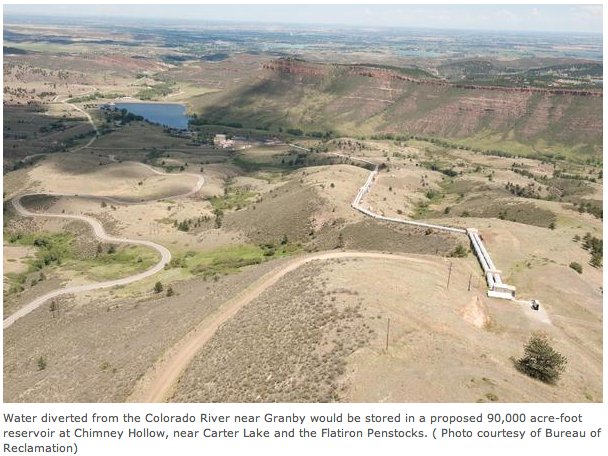
    chimneyhollowsitedpviareclamation.jpg

    From Westword (Alan Prendergast):

    Last week, Trout Unlimited and the Upper Colorado River Alliance, plus county and water conservancy district officials, announced an agreement that commits cash and conservation measures to the project. The permit approved by the Grand County commissioners includes a host of conditions that should help improve river health (and water quality in Grand Lake), including a $2 million bypass channel to reconnect the river and periodic “flushing flows” to cleanse the river and remove sediment.

    “For years, those of us living in Grand County have seen the once-mighty Colorado in a state of serious decline,” said Kirk Klancke, president of Trout Unlimited’s Colorado River Headwaters Chapter, in a prepared statement. “This agreement will provide protections and new investments in river health that can put the Colorado River on the road to recovery.”

    While the deal doesn’t give the activists everything they wanted, it does avoid the worst-case scenario some had feared. The headwaters defenders can now turn their energy to another looming threat: Denver Water’s plans to expand its Moffat Tunnel diversion system, sucking the life out of the much-besieged Frasier River, as well as the Colorado.

    More Windy Gap coverage here and here.

    ‘Holding back water would happen regardless of the amount of snowpack’ — Donnie Dustin #CODrought

    cachelapoudrehighparkpollutionusdaseptember2012.jpg

    From The Denver Post (Bruce Finley):

    The problem: soot, sediment and debris washing from burned forests have made the Cache la Poudre River less reliable as Fort Collins’ main water supply for urban households. Particles clog treatment facilities. So, city officials say, they must heavily tap their secondary supply — water piped under mountains from the Western Slope. That water typically has been leased to farmers…

    In the big picture, this intensifying water crunch reflects a shifting balance of power between cities and the agriculture that traditionally has anchored life along Colorado’s northern Front Range. Drought and the oil-and-gas industry’s appetite for drilling water already have weakened farmers’ position. Cities in recent years have purchased interests in irrigation-ditch companies. Farmers have sold their water rights, taking advantage of high prices. Financial stress and low commodity prices forced some to sell. Others simply sought profit. The result is that city interests increasingly dominate decision-making…

    “We’ve got this twofold issue of drought complicated by fire, and the issue of more fires. What that will do to our water yields is very unknown,” said John Stulp, a Colorado agriculture leader serving as a special water adviser to Gov. John Hickenlooper…

    For farmers, the trouble is hitting five months after the High Park fire, just as they prepare to make business decisions for the coming year. Given the uncertainties of sediment polluting the Poudre, Fort Collins “is extremely unlikely to make any water rentals” next year, city water-resources manager Donnie Dustin told farmers in a Nov. 14 e-mail. Holding back water would happen “regardless of the amount of snowpack,” Dustin wrote. “The ability to consistently treat Poudre River water is likely to be an ongoing concern for the next few years.”

    Cities cannot be blamed for holding back water they now control, said Rocky Mountain Farmers Union president Kent Peppler. “Their first priority has to be domestic use, and if they think runoff from the fire is going to pollute their supplies, they have to do this,” he said. But agriculture “isn’t going to get any easier if these fires continue…

    “We’ve been under stress this whole decade,” said Grant Family Farms owner Lewis Grant, 89, who serves on advisory boards for Larimer County and Fort Collins and is involved in efforts to preserve farms amid spreading subdivisions. “It’s almost hopeless for younger farmers. Land is so expensive. Water is so expensive.”

    On the sprawling farm northwest of Wellington, Grant produces eggs that end up in Whole Foods Markets. The farm’s produce — including squash, lettuce, spinach, cauliflower, kale and cabbage — is sold by King Soopers and other markets. Water rented from Fort Collins irrigates about 25 percent of his crops, he said. One solution may be for Fort Collins to install extra sediment-control tanks to enable consistent use of the Poudre. “That would seem reasonable to me,” Grant said.

    City officials say they’re considering costs. Such facilities likely would force higher water bills for city dwellers and higher prices for farmers and energy companies that vie for city water.

    More Cache La Poudre watershed coverage here.

    Colorado-Big Thompson Project update: Lake Estes lowered for winter maintenance

    estespark.jpg

    From the Estes Park Trail-Gazette (John Cordsen):

    The bureau stopped diverting water through the Adams Tunnel into the lake on Nov. 5, as well as moving water from Lake Estes through the Olympus Tunnel to the southern power arm of the Colorado-Big Thompson water diversion, storage and delivery project, of which Estes, Marys and East Portal are a part. This was in preparation for some regular maintenance projects on that section.

    Water that would normally hit the three power plants between Lake Estes and the mouth of the Big Thompson Canyon was instead released directly from Olympus Dam to the Big Thompson River. That bumped flows in the canyon up to around 150 cubic feet per second where they stayed for about a week.

    “With the 150 cfs being released from Lake Estes, but no water coming in, the water level elevation at Estes dropped a little over a foot a day until it reached the elevation it is currently at now: 7460 feet, or about 15 feet down from full,” said Kara Lamb, the Bureau of Reclamation public information officer. “Then, we curtailed the releases back to native inflow and are now holding steady. Our plan is to keep Lake Estes at this elevation until mid-December.”

    Lamb said the bureau, the agency that manages the lake, drops the water level down to this elevation every two to three years for regular maintenance projects.

    More Colorado-Big Thompson Project coverage here.

    Reclamation releases Supplemental Information Report to Windy Gap Firming EIS

    windygapreservoirnorthernwater.jpg

    Here’s the release from Reclamation (Kara Lamb):

    The Bureau of Reclamation announces the availability of a Supplemental Information

    Report and related errata to the Final Environmental Impact Statement, which analyzed impacts of the proposed Windy Gap Firming Project. Both the SIR and the errata are available at http://www.usbr.gov/gp/ecao.

    “A SIR analyzes new information received after the completion of the Final EIS to determine if there are significant new circumstances or information relevant to environmental concerns on the proposed action or its impacts,” said Michael J. Ryan, Regional Director for Reclamation’s Great Plains Region.

    An errata is a list of corrections to a publication.

    After publication of the Final EIS in December 2011, Reclamation received new information regarding the Multiple Metric Index methodology for aquatic invertebrates in the Colorado River. Invertebrate values were updated and rerun based on this new information.

    The findings in the SIR explain that the revised aquatic invertebrate values did not change the conclusions in the Final EIS.

    More Windy Gap coverage here and here.

    Colorado-Big Thompson Project fall operations update

    coloradobigthompsonmap.jpg

    From email from Reclamation (Kara Lamb):

    It’s that time of year again: maintenance season for the Colorado-Big Thompson Project. If you are receiving this e-mail it is because our maintenance schedule will be affecting a reservoir or river flows in which you are interested. Because all of these operations tie together, it’s a lengthy e-mail, so please bear with me:

    Monday, Nov. 5: We will stop diverting through the Adams Tunnel. This will temporarily slow the draw on Granby Reservoir because we will not be pumping up to Shadow Mt. Reservoir and the Tunnel. Releases from Granby to the Colorado River should remain at or above 20 cfs at the Y gage for the rest of the calendar year.

    This same day, we will also stop moving water from Lake Estes through the Olympus Tunnel to the southern power arm of the C-BT so we can start some regular maintenance projects on that section.

    Water that would normally hit those three power plants will instead be released from Olympus Dam to the Big Thompson River, bumping its flows up from around 40 cfs to 150 cfs. We will change the release from the dam in the early morning hours of Nov. 5 before 5:30 a.m.

    The project water released to the Big T River will be recaptured at the Dille Diversion Dam in the narrows section of the canyon. The Dille redirects the water back on course to Horsetooth Reservoir via the Charles Hansen Feeder Canal.

    With 150 cfs being released from Lake Estes and no water coming in, the water level elevation at Estes will start to drop a little over a foot a day for about a week.

    Monday, Nov. 12: The water level at Lake Estes will hit an elevation of about 7460 feet by day’s end. We will hold it there until the second week of December.

    While water through the tunnels is off and the Lake Estes water level is down, our maintenance work will be on. During this same time, the Estes Sanitation District will be performing sand removal from the western side of Lake Estes.

    Water levels at Marys Lake will not be drawn down this year.

    Nov. 13: Delivery of C-BT water from Olympus Dam to Dille Dam via the Big Thompson River will stop. Releases to the river will go back to around 40 cfs—the typical native flow of the Big Thompson River this time of year. We will start delivering C-BT water from Pinewood Reservoir.

    Pinewood, downstream of Lake Estes and Olympus Dam on the C-BT’s southern power arm, will stay at a high water elevation through the first part of the maintenance work. With no water coming from the West Slope, it will take over the role of delivering project water when Lake Estes hits its 7460 foot water level elevation. Because Pinewood’s own water levels are currently high, residents near and visitors to Pinewood will likely not notice its water level start to decline until the last week or two of November. It will continue to drop until the first week of December.

    Dec. 7-14: All annual maintenance projects scheduled for this fall on the C-BT start to wrap up. Diversions through the Adams Tunnel will resume, the water level elevation at Lake Estes will start to rise, and it will resume delivering water through Olympus Tunnel to the southern power arm. Pinewood’s water elevation will start to come back up.

    Deliveries to Horsetooth Reservoir will experience a slowdown during the middle of the maintenance work, but continue through December. The reservoir will officially start to refill in mid-to-late December, as is its normal schedule.

    More Colorado-Big Thompson Project coverage here.

    Windsor: The town board approves a third water rate tier

    windsorlakemummyrange.jpg

    From the Windsor Beacon (Ashley Keesis-Wood):

    The town’s current water system for single-system residential users features a base fee of $14.81 a month, with a $3.30 charge per 1,000 gallons a month until the users reach the first-tier threshold of 15,700 gallons a month. The second tier’s charge is $4.93 a month per 1,000 gallons. The new tier rate structure would increase the first-tier usage, raising it to 16,000 gallons a month before the second tier would begin. The new tier, at 2011 prices, would begin at 22,501 gallons a month at a cost of $7.35 per 1,000 gallons. The new rate will go into effect Jan. 15…

    When developers build homes, they are required to pledge a certain amount of water from the Colorado Big Thompson, or CBT, project to account for the households’ use of water. The highest tier, the 22,501 gallons, equates to full usage of the allotted CBT water for each household. “This will still promote and encourage conservation,” said Mayor John Vazquez.

    More infrastructure coverage here.

    Grand County Commissioners continue Windy Gap Firming Project hearing to October 30

    windygapreservoirnorthernwater.jpg

    From the Sky-Hi Daily News:

    Grand County commissioners on Tuesday, Oct. 2, continued the hearing for the Windy Gap Firming Project permit to Oct. 30. The decision to continue the hearing was made during the Board of Commissioners regular weekly meeting.

    More Windy Gap Firming Project coverage here and here.

    Colorado-Big Thompson Project update: Lake Granby at 63% of capacity

    granbyreservoirindianpeaks.jpg

    From email from Reclamation (Kara Lamb):

    As we move into fall, operations on the Colorado-Big Thompson Project start to shift gears a little bit.

    I mentioned earlier this week that the pump to Carter has gone off for the season. Water we were sending up to Carter, we are now taking over to Horsetooth to begin bringing that water level up a little bit as we start to get ready for next year. This is good news for Horsetooth as it is currently just over 30% full.

    We could still see some more demands come out of both Carter and Horsetooth in late September and well into October, but right now, the water level elevation at Horsetooth has started to gain, just a little bit and the water level at Carter has held fairly steady. It remains just above 50% full. We are currently delivering around 500 cubic feet per second to Horsetooth.

    Pinewood Reservoir is back to more average operations, fluctuating with power generation down at the Flatiron Power Plant.

    Similarly, Lake Estes has maintained a typical operation schedule as we continue to bring C-BT water over from the West Slope, generate hydro-electric power and deliver the water to Horsetooth. We are no longer releasing project water through Olympus Dam to the canyon. We are bypassing what is natively in the Big Thompson River on through Lake Estes down the river. That’s been about 50 cfs all week this week.

    With the diversion from the West Slope still on and the Adams Tunnel running, the water level elevation at Granby will continue to go down. That is typical for this time of year, but more noticeable than in years past because of the heavy draws the entire C-BT system has seen this summer due to drought conditions. As a result, Granby is around 63% full.

    More Colorado-Big Thompson coverage here.
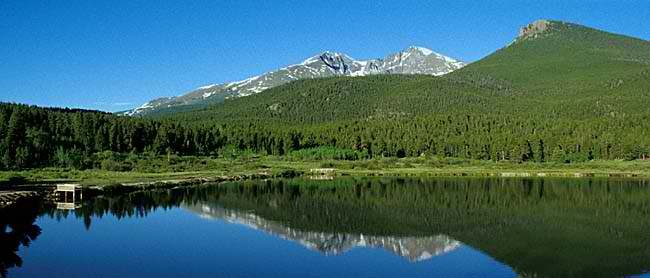
    The Northern Colorado Water Conservancy celebrates its 75th anniversary

    coloradobigthompsonmap.jpg

    From the Loveland Reporter-Herald (Pamela Dickman):

    The Northern Water Conservancy District formed on Sept. 20, 1937, specifically to build the Colorado-Big Thompson water project to bring water from the Colorado River to what is now the growing, vibrant Front Range.

    A small group shared that idea during the country’s greatest financial crisis and during a time of unparalleled drought.

    Residents were out of work, families starving during The Great Depression.

    Walls of dust were swirling enough to cause pneumonia, to kill cattle to smother crops, to cause havoc during what is now known as the Dust Bowl.

    Yet residents had a vision and pushed through opposition, through financial roadblocks to create a then unprecedented contract with the U.S. Bureau of Reclamation, to build the $164 million tunnel, reservoir and canal system, and to turn what seemed like an impossible feat of the imagination into the foundation of our region.

    “They gave this region the future, a priceless gift that many of us take for granted,” Eric Wilkinson, general manager of the water district, told hundreds at a celebration Thursday — 75 years to the day that the district, now known at Northern Water, was formed.

    Just less than 10 years after the district formed in 1937, crafted an agreement with the Bureau of Reclamation and convinced voters to support the project by a 17-1 margin, the first drops of water flowed through the Adams Tunnel over the continental divide and into the Big Thompson River.

    That foundation of the project still exists with water stored in reservoirs on the west side and throughout Larimer County, including Carter Lake, Horsetooth, Flatiron and Pinewood Reservoirs.

    From the Northern Colorado Business Report:

    Former U.S. Rep. Hank Brown, historian Dan Tyler and U.S. Bureau of Reclamation Regional Director Mike Ryan were all taking part in the event.

    From The Greeley Tribune (Eric Brown):

    Northern Water was established in 1937 as the first water conservancy district in the state and was tasked to work with the federal government to contract for and then build and operate the C-BT Project.

    That project is made up of 11 reservoirs that collectively divert about 260,000 acre-feet of water annually from the Colorado River headwaters on the Western Slope to the Big Thompson River, which is a South Platte River tributary on the Eastern Slope, for distribution to lands and communities in eight northern Colorado counties, including Weld.

    When constructed in 1937, the C-BT project — the brainchild of a group of Greeley residents — was then the largest transmountain water-supply project in the state. Its 13.1-mile tunnel at the time was the longest in the world dug from two headings, and in the 75 years of its existence, it’s responsible for much of the economic and population growth in northern Colorado, according to those who spoke Thursday…

    Today the C-BT Project — completed in 1957, and spreading over 250 square miles — supplies about 850,000 residents and about 640,000 irrigated farm acres. C-BT water was collectively worth about $500,000 at the time the project was built. Today, it’s worth about $3.1 billion.

    More Northern Colorado Water Conservancy District coverage here.

    Colorado-Big Thompson Project update: The Carter Lake pump is off for the season

    carterlake.jpg

    From email from Reclamation (Kara Lamb):

    Just a quick note to let you know that as of today, September 17, the pump up to Carter Lake has gone off for the season.

    More Colorado-Big Thompson Project coverage here.

    Northern Colorado Water Conservancy District 75th Anniversary bash September 20

    firstwaterfromadamstunnel1947.jpg

    Here’s the link to the 75th Anniversary webpage from Northern Water:

    The public is invited to come celebrate Northern Water’s 75th anniversary at its Berthoud headquarters on Sept. 20.

    The celebration kicks off at 1 p.m. with an open house and tours of Northern Water’s award-winning Conservation Gardens and an interpretive model of the Colorado-Big Thompson Project – the reason for Northern Water’s creation on Sept. 20, 1937.

    The Sept. 20 celebratory remarks will begin at 2 p.m. Speakers include former Congressman Hank Brown, historian Dan Tyler and Mike Ryan, regional director for the U.S. Bureau of Reclamation.

    After the program, Conservation Gardens tours will continue, along with the opportunity to walk through the Berthoud campus, 200 Water Ave., and learn more about Northern Water’s operations and activities from employees firsthand. Refreshments will be provided.

    More Northern Colorado Water Conservancy District coverage here.
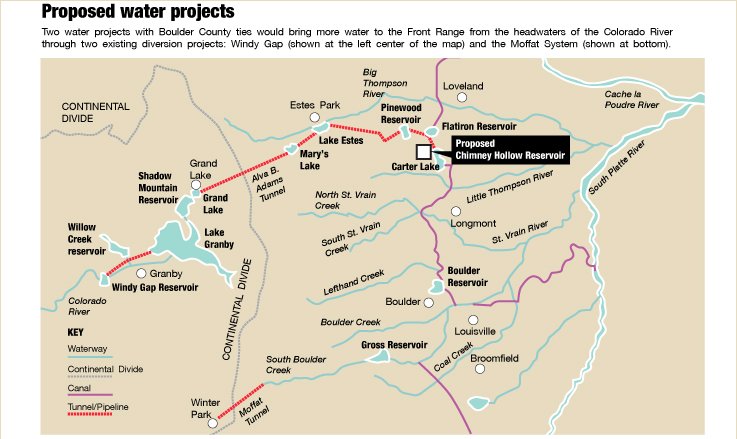
    Colorado-Big Thompson Project update: 61 cfs in the river below Olympus Dam

    olympusdam.jpg

    From email from Reclamation (Kara Lamb):

    [September 13] Late tonight/early tomorrow morning, we will be cutting back releases from Olympus Dam to the Big Thompson River. Currently, flows are around 215 cfs. By early tomorrow morning, September 14, they should be under 100 cfs.

    Starting last weekend, we began bumping up releases from the dam to the river in order to deliver Colorado-Big Thompson Project water to water users while a section of the Charles Hansen Feeder Canal was down for inspections. Now that the work is wrapping up, we can begin moving C-BT water back through its system again, reducing the amount of water down through the canyon.

    This time of year, releases from Olympus Dam typically reflect inflows to Lake Estes. Whatever the Big T brings into Lake Estes, we pass through Olympus Dam down the canyon. Inflows to Lake Estes are currently about 61 cfs.Unless we have a significant rain event, it is likely releases from Olympus Dam will be around 61 cfs by tomorrow.

    More Colorado-Big Thompson Project coverage here.

    Colorado-Big Thompson Project update: Releases to the Big Thompson River draw down Pinewood Reservoir

    pinewoodreservoirberthoudrecorder.jpg

    From email from Reclamation (Kara Lamb):

    You’ve likely noticed that Pinewood has dropped down low again, similar to its activity a week or so ago. The same situation applies: we continue to adjust operations of the Colorado-Big Thompson Project to meet on-going demands for water along the Big Thompson River.

    Just as before, we have run water directly from Pinewood to the Big Thompson River to meet the continued downstream demand. Boyd, Lake Loveland, and others have been using their C-BT water.

    We will continue to balance distribution of project water across the facilities as we move into late summer/early fall. As a result, residences near and visitors to Pinewood might see the water level elevation continue this range of fluctuation for a while.

    As of this evening [September 6], though, the water level at Pinewood should begin to rise again.

    More Colorado-Big Thompson Project coverage <a href="

    Grand Lake: Reclamation lays out alternatives to help restore the lake’s historical clarity

    grandlake.jpg

    From the Sky-Hi Daily News (Reid Tulley):

    Some of the alternatives for improving the clarity of Grand Lake that are discussed in the report include: Stopping pumping at the Farr Pumping Plant in July, August, and September; modify pumping at the plant during these three months; bypass Grand Lake with a buried pipeline and pump flows directly to Adams Tunnel; or bypass both Grand Lake and Shadow Mountain Reservoir with a buried pipeline and pump flows directly to Adams Tunnel…

    Two standards for the clarity of Grand Lake were adopted by the Colorado Water Quality Control Commission in 2008.

    The first standard is a narrative clarity standard requiring “the highest level of clarity attainable, consistent with the exercise of established water rights and the protection of aquatic life,” according to the report.

    The second standard is a numerical clarity standard of a 4 meter Secchi disk depth that will be assessed by comparing 85 percent of available recordings from the months of July, August, and September. That means at least 85 percent of the measurements taken during those three months must meet the 4 meter Secchi disk depth standard, while 15 percent can be below the minimum requirement.

    More Colorado River Basin coverage here and here.

    Rocky Mountain National Park: The Lily Lake Dam Project will start turning dirt September 4

    lilylakermnp.jpg

    From The Estes Park Trail (John Cordsen):

    “…the only option available to the park is to repair the dam, ” said park superintendent Vaughn Baker during his May report to the Estes Park board of trustees.

    The work was required after the U.S. Bureau of Reclamation rated the Lily Lake Dam, located in Rocky Mountain National Park, as a high-hazard dam. This study was released in 2010. Failure of the dam was not imminent, which gave park staff time to evaluate long-term solutions, which ultimately became one option because of the legal requirements to maintain the water rights.

    The Lily Lake Dam is situated at the headwaters of Fish Creek, which flows into Lake Estes in Estes Park. Fish Creek is about 5 miles in length and the elevation difference between Lily Lake and Lake Estes is about 1,500 feet. If the dam were to fail, the ensuing floodwaters could result in the loss of life and property along Fish Creek…

    Repair to the Lily Lake Dam will be done in a manner to retain the lake and its features in a manner similar to what currently exists. The repair work may last through the end of November. During the repair work, a roughly 500-foot area of the Lily Lake Trail across the dam will be closed…

    The repairs will involve the removal of surface vegetation on the downstream face of the dam, stripping and salvage of topsoil, regrading the downstream face of the dam and the area around the toe of the dam, placement of filter fabric (geotextile), filter gravel and another layer of filter fabric and installation of articulated concrete blocks (ACB).

    More infrastructure coverage here and here.

    Loveland: City councillors are debating long-term debt and water rate increase for 2013

    lakeloveland.jpg

    From the Loveland Reporter-Herald (Tom Hacker):

    Whether it’s 13 percent, the smallest bump among options that city councilors will hear about Tuesday, or 71 percent will depend on whether Loveland is willing to assume some long-term bonded debt. If the city tries to pay for water system improvements on its traditional pay-as-you-go basis, rates will rise by nearly three-quarters…

    Even the staunchest advocates for pay-as-you-go financing have opened their thinking to issuing bonds and taking on debt, given the historically low interest rates that the bonds carry.

    “The last figure we got, the one that we’ve been basing these discussions on, is 1.82 percent,” said councilor Daryle Klassen, the council’s liaison to the Loveland Utilities Commission, a group that takes its recommendation for long-term bonding to the council on Tuesday…”When we measure that against what the inflation rate is going to be over the course of the bond, you’d be foolish not to borrow the money.”[…]

    Miles of old water lines under Loveland streets are springing leaks twice weekly on average this year, compared to twice monthly seven years ago. The average cost to repair each leak in that time has risen from just over $3,500 to more than $5,000. Meanwhile, the city’s treatment plant is also nudging close to its capacity, and needs expensive short-term expansion to keep it in line with the city’s projected growth. Utilities commissioners at a meeting earlier this month found that a plan to issue $16 million worth of bonds with a 30-year maturity would fund the needed projects and spread the cost to ratepayers in a more bearable way…

    The average monthly residential water bill in Loveland, under the long-term debt plan, would rise from the current $19.69 to $24.25 in 2013.

    More infrastructure coverage here.

    Final Preliminary Alternatives Development Report on Grand Lake Now Available

    grandlake.jpg

    Here’s the release from the U.S. Bureau of Reclamation (Kara Lamb):

    The Bureau of Reclamation has finalized its Colorado-Big Thompson Project West Slope Collection Preliminary Alternatives Development Report that addresses concerns of water clarity at Colorado’s Grand Lake. The report is available at http://www.usbr.gov/gp/ecao.

    “The Department of the Interior is prioritizing efforts to improve water quality conditions in Grand Lake,” said Assistant Secretary for Water and Science Anne Castle. “The Bureau of Reclamation, Interior’s water management agency, is committed to protecting the aesthetic values of Grand Lake and maintaining a secure water supply for its customers. We recognize the problem and are working hard with state and local leaders to understand the causes and find appropriate solutions.”

    Grand Lake is part of the Colorado-Big Thompson Project’s West Slope collection system, which diverts water under the Continental Divide to Colorado’s East Slope and Front Range. A proposed state of Colorado water standard for the lake is scheduled to take effect in 2015. The Preliminary Alternatives Development Report is the first step toward improving water quality in Grand Lake in an effort to meet this state standard and improve this resource for its many uses. Four alternatives are considered in the report ranging from ceasing pumping during the summer season to building a bypass for project water to be delivered to the East Slope. The viability of each alternative is evaluated for a number of measures.

    Reclamation continues to collaborate with water and power customers, stakeholders in and around Grand County, citizens groups around Grand Lake and Shadow Mountain Reservoir, recreation managers at affected water bodies and other local, state and federal agencies.

    The final Alternatives Development Report has been provided directly to stakeholders and posted to Reclamation’s website for the general public. Next steps include the Technical Review, which begins this fall and completes in fall 2013, and will examine the technical and financial feasibility of the alternatives presented in the Alternatives Development Report.

    To download the report in PDF, please visit www.usbr.gov/gp/ecao.

    More Colorado-Big Thompson Project coverage here.

    Governor Hickenlooper requests speedier reviews for Moffat Collection System and NISP

    nisppreferredalternative.jpg

    windygapmoffatfirmingboulderviewpoint.jpg

    From The Denver Post (Bruce Finley):

    A letter to Obama seeks help spurring decisions on Denver Water’s diversion of 18,000 acre-feet of Colorado River Basin water from the west side of the Continental Divide to an expanded Gross Reservoir west of Boulder. A separate letter to the U.S. Army Corps of Engineers asks that the Northern Integrated Supply Project — which would siphon the Cache la Poudre River into new reservoirs storing 215,000 acre-feet of water — be given a high priority.

    Colorado faces “a significant gap in our supplies to provide water for future growth — a gap that cannot be met by conservation and efficiencies alone,” Hickenlooper began in a June 5 letter sent to the White House and copied to cabinet secretaries and agency chiefs. “We urge you to exercise your authority to coordinate your agencies and bring an expeditious conclusion to the federal permitting processes for this essential project, in order that we can have certainty moving forward as a state,” he wrote.

    Click here to read the letter to President Obama. Click here to read the Governor’s letter to the U.S. Army Corps of Engineers.

    More Moffat Collection System Project coverage here. More Windy Gap Firming Project coverage here.
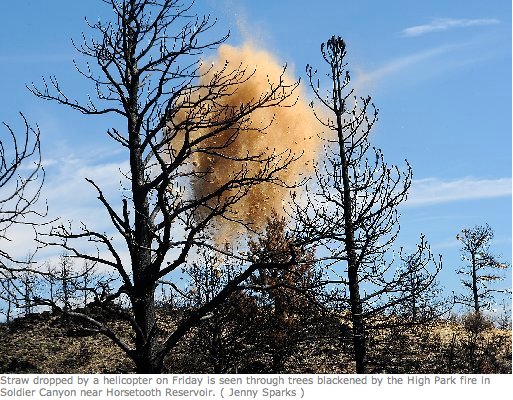
    Green Mountain Reservoir operations update: 330 cfs in the Blue River below the dam

    greenmountainreservoir.jpg

    From email from Reclamation (Kara Lamb):

    We have another change at Green Mountain Dam. As has been typical the last six or so weeks, we are seeing operational changes at the dam about every three to four days.

    In collaboration with other reservoir operators, we continue to follow Mother Nature’s storms, adjusting releases as we go. Recent rains have boosted flows in the Colorado River slightly, so we have been asked to cut back our releases from the dam to the Lower Blue.

    Around 11 a.m. today, August 13, we cut back by 50 cfs, to about 330 cfs. The Lower Blue River should now be running at about 330 cfs.

    More Colorado-Big Thompson Project coverage here.

    Windy Gap Firming Project: ‘No bypass or increased flushing flows, no permit’ — Kirk Klancke

    windygapmoffatfirmingboulderviewpoint.jpg

    From the Sky-Hi Daily News (Reid Tulley):

    The hearing gave all of the interested parties a chance to voice their opinions and concerns about the project before it was submitted to the Grand County Commissioners for approval or denial.

    Enhancements and mitigations to the Colorado River, Grand Lake, and Willow Creek are part of the proposed agreement and include a bypass around Windy Gap Reservoir, larger flushing flows for the Upper Colorado River, and a list of other possible mitigation measures.

    Planned mitigation measures

    The existing diversions at Windy Gap take 60 percent of native flows out of the Upper Colorado and the proposed expansion to the project would take another estimated 15-20 percent of flows, according to Trout Unlimited.

    “Under present plans, expanding Windy Gap would make a bad situation worse because it would increase periods of low flows and significantly reduce runoff, which is critical to clean the river of excess silt and sediment contributed by Windy Gap Reservoir,” said Amelia Whiting, counsel for TU’s Colorado Water Project.

    Mitigations and enhancements meant to address the impacts are proposed in the agreement for the Colorado River, Grand Lake, and Willow Creek.

    “We are not opposed to this project, we just want to see the right mitigations take place,” said Kirk Klancke, president of the Headwaters of the Colorado chapter of Trout Unlimited. “No bypass or increased flushing flows, no permit.”

    The enhancements that are proposed were the main topic of discussion during the meeting as interested parties made arguments for specific mitigation’s and enhancements.

    Each party agreed that the river would be better off with the proposed mitigations and enhancements than it would be without them. However, the parties differed about which mitigations should take priority.

    Some of the parties who voiced their opinions about the proposed mitigation’s and enhancements include the Upper Colorado River Alliance, Trout Unlimited, Colorado River Water Conservation District, the Town of Grand Lake, and members of the public.

    Some of the main enhancements that are proposed are the construction of a bypass around or through Windy Gap Reservoir and increased flushing flows to the Colorado, which would help to restore the habitat of the gold-medal fishing waters below the Windy Gap Dam.

    More Windy Gap coverage here and here.

    Reclamation bumps releases at Green Mountain and Ruedi reservoirs

    fryingpanarkansasproject.jpg

    From email from Reclamation (Kara Lamb):

    As we continue to balance inflows and outflows with the demands downstream along the Colorado River, we have adjusted releases from both Green Mountain and Ruedi Dams today [August 6].

    Green Mountain has increased by about 40 cfs to 405 cfs.

    Ruedi has increased 30 cfs to 225 cfs.

    Windy Gap Firming Project: Grand County Commissioners’ public hearing recap

    coloradorivergranby.jpg

    From the Sky-Hi Daily News (Reid Tulley):

    The hearing drew a full crowd comprised of invested and concerned parties to the Grand County Board of Commissioners meeting room during the two days. Testimony was presented by a number of interested parties about the negative environmental impacts Windy Gap Reservoir has had on the Upper Colorado River as well as the possible mitigations and enhancements to the river that could take place if the commissioners approve the permit with those conditions attached.

    Denver Water offered an additional $1 million to the downriver mitigation and enhancement fund, which in turn would be used by the Municipal Subdistrict of the Northern Colorado Water Conservancy District toward the construction of the bypass around Windy Gap Reservoir.

    The Subdistrict has pledged $250,000 to research the bypass, which would be conducted immediately after the approval of the permit by the commissioners. If it is found that the bypass would benefit the Colorado River, construction of the bypass would start immediately and the Subdistrict would put a total of $3 million toward the project, including the $1 million pledged by Denver Water.

    A condition of the agreement of the Subdistrict to apply funds toward the construction of the bypass would be that construction of Chimney Hollow Reservoir would start at the same time they apply the funds and that this would be an endpoint to the permit process…

    Increased flushing flows are a proposed part of the agreement and are set at a minimum of 600 cubic feet per second…

    The Grand County staff members who worked on this agreement recommended that the board of commissioners approve the permit. The commissioners have 120 days to take the 1041 permit agreement under advisement and to provide the Subdistrict with an answer.

    More Windy Gap coverage here and here.

    The Grand County Commissioners are pondering the Windy Gap Firming Project 1041 permit this week

    windygapmoffatfirmingboulderviewpoint.jpg

    From the Summit County Citizens Voice (Bob Berwyn):

    The Windy Gap Project consists of a diversion dam on the Colorado River, a 445-acre-foot reservoir, a pumping plant, and a six-mile pipeline to Lake Granby. Windy Gap water is pumped and stored in Lake Granby before it is delivered to water users via the Colorado-Big Thompson Project’s East Slope distribution system…

    “The Upper Colorado River is under severe stress from multiple impacts, from drought to diversions,” said Kirk Klancke, president of Trout Unlimited’s Headwaters chapter. “This is the last best opportunity for Grand County officials to push for stronger protections to ensure that the Windy Gap project doesn’t destroy the health of our rivers.”[…]

    The Grand County Commissioners are currently accepting comments and have scheduled a two-day hearing in Hot Sulphur Springs that will include public testimony on August 1-2…

    State studies show that the Upper Colorado below Windy Gap Reservoir has suffered a sharp decline since the construction of the reservoir , including an almost total loss of once-plentiful stoneflies and mottled sculpin — key aquatic species that are an important link in the food chain for trout and other fish. The studies point to the reservoir’s contribution of silt combined with a lack of healthy flows, which has caused a spike in water temperatures, algae, sediment and other negative impacts on river and fishery health.

    More Colorado River Basin coverage here and here.

    Big Thompson Flood: July 31, 1976

    bigthompsonflood073176.jpg

    The night of July 31, 1976 I was holed up in Steamboat Springs. I had been backpacking with Mrs. Gulch in the Flattops Wilderness for a week or so — drizzle in between downpours during the Colorado monsoon season – and bailed out for the usual, hot shower, cold beer and someone else’s cooking.

    I called Denver to check in. My mother asked, “Johnny, are you anywhere near the Big Thompson Canyon?”

    “Nope,” I said.

    She added, “There’s been a terrible flood.”

    Click here for my post from a while back with the link to a 9News (Chris Gallegos) piece about the 30th memorial service.

    Drought/precipitation news: Horsestooth Reservoir levels dropping, marina prepares to close

    horsetoothreservoir1.jpg

    From the Northern Colorado Business Report (Steve Lynn):

    Water levels are dropping so fast that owners of about 300 boats docked at the Inlet Bay Marina at Horsetooth Reservoir will have to remove their vessels earlier than normal…

    The reservoir was 34 feet below capacity Monday and could drop another 16 feet by the end of August, said Brian Werner, spokesman for the Northern Colorado Water Conservancy District. Water levels are decreasing from a few inches to a foot daily as farmers and cities draw on their allotments from the Colorado-Big Thompson Project.

    Water levels are about 5 percent below average as farmers and cities contend with the ongoing drought, Werner said. The effects of the High Park Fire on the Poudre River also have led the city of Greeley to use more reservoir water than it normally would this time of year.

    More Colorado-Big Thompson Project coverage here.

    From Steamboat Today (Scott Franz):

    The 3.05 inches Steamboat measured so far this month is nearly double the city’s historic average of 1.61 inches of rain for July…

    The Yampa River, bolstered by the recent storms and continued release of water from Stagecoach Reservoir, was flowing at 117 cubic feet per second under the Fifth Street Bridge on Sunday afternoon. The recent abundance of rainfall also has spurred some Northwest Colorado fire officials to call for easing the Stage 2 fire restrictions that have been in place in Routt County since late last month.

    Windy Gap Firming Project: Grand County 1041 permitting process underway #coriver

    coloradorivergranby.jpg

    From the Sky-Hi Daily News (Kirk Klancke):

    The county is negotiating enhancements to help the degradation that we are already experiencing in the Colorado River below the Windy Gap reservoir but without additional mitigation for the new project, the enhancements will not solve all of the issues facing the river. We need to make sure that our elected officials here in Grand County require all of the mitigation needed to protect the Upper Colorado River below Windy Gap from the new Windy Gap Firming project.

    This is our best opportunity as individuals to influence the permit process. This influence can be exercised through letters or emails to the commissioners or by attending the public hearings in the commissioners’ board room on Aug. 1 and 2…

    This is your chance to influence the future of the headwaters of the Colorado River. If you were wondering what you could do to help, this is your best opportunity. Please write your letter and come to the hearing to speak.

    Update: Here’s the release from Trout Unlimited (Randy Scholfield):

    Trout Unlimited today urged the Board of County Commissioners of Grand County (BOCC) to deny a permit for the Windy Gap Firming Project unless the BOCC is willing to include protective measures to keep the Upper Colorado River and its gold-medal trout fishery alive.

    “The Upper Colorado River is under severe stress from multiple impacts, from drought to diversions,” said Kirk Klancke, president of Trout Unlimited’s Headwaters chapter. “This is the last best opportunity for Grand County officials to push for stronger protections to ensure that the Windy Gap project doesn’t destroy the health of our rivers.”

    He added, “Without stronger protections, this river faces a long, slow decline—and so do our communities, ranches and recreation economy. That’s just not acceptable. I want my grandchildren to be able to fish here and enjoy this river, as I have. I want our local businesses to thrive. I know that many other Grand County citizens feel the same way.”

    The BOCC will soon decide whether to issue a 1041 permit for Northern Colorado Water Conservation District’s Windy Gap Firming Project (WGFP) and, if so, under what conditions. The BOCC is currently accepting public, written comments and has scheduled a two-day hearing in Hot Sulphur Springs that will include public testimony on August 1-2.

    At present, Northern’s Windy Gap diversion is taking about 60 percent of flows out of the Upper Colorado and pumping it through the Continental Divide to Front Range communities. The proposed expansion of the project would take another 15-20 percent of flows, putting the river at a dangerous tipping point for aquatic life and ecosystem health. State studies show that the Upper Colorado below Windy Gap Reservoir has suffered a sharp decline since the construction of the reservoir , including an almost total loss of once-plentiful stoneflies and mottled sculpin—key aquatic species that make up an important link in the food chain for trout and other fish. The studies point to the reservoir’s contribution of silt combined with a lack of healthy flows, which has caused a spike in water temperatures, algae, sediment and other negative impacts on river and fishery health.

    “Under present plans, expanding Windy Gap would make a bad situation worse because it would increase periods of low flows and significantly reduce runoff, which is critical to clean the river of excess silt and sediment contributed by Windy Gap Reservoir,” said Mely Whiting, counsel for TU’s Colorado Water Project.

    According to a recent Colorado Parks and Wildlife report, construction of a bypass around Windy Gap reservoir and maintenance of adequate runoff are essential. “Without a bypass, it’s hard to see how the river can remain healthy when even more flows will be taken out,” said Whiting. “Grand County must press Northern to build the bypass.”

    TU called on the BOCC to include several requirements in the permit, including:

    – Northern should stop Windy Gap pumping when stream temperatures approach State acute and chronic standards.
    – Northern should be required to not only study a bypass channel around the Windy Gap Reservoir, but also build it if the study determines that a bypass is beneficial.
    – Northern must work with Grand County to monitor spring river flows and provide an adequate flushing flow to prevent sediment from collecting in the river bed and smothering aquatic habitat.
    – Northern must fund a robust stream monitoring program that can accurately track the health of the aquatic species in the river and react to any declines that can’t be explained by normal fluctuation.

    Trout Unlimited will present testimony at the BOCC public hearings in Hot Sulphur Springs on Aug. 1-2.

    More Colorado River Basin coverage here and here.

    High Park Fire: The NRCS, et al., have started restoration efforts above Horsetooth Reservoir

    strawdroppedbyhelicoptersoldiercanyonhighparkfire.jpg

    From the Longmont Times-Call (Pamela Dickman):

    All told Thursday and Friday, the team planted 1,120 pounds of grass seed across 40 acres and covered it with 105 bales of agricultural straw and wood chips — a layered approach to protecting the nearby glistening waters from the ash and debris of the High Park Fire…

    The ash and debris have already blackened much of the Poudre River, so Fort Collins, Greeley and the Tri-Districts (North Weld County, Fort Collins-Loveland and East Larimer County water districts) have instead been pulling water for their customers from Horsetooth Reservoir. The waters of Horsetooth remain clean, but the threat of fire pollution is real. When rains fall, the now barren Soldier Canyon could mirror a slip-and-slide, sending debris from the fire right into Horsetooth Reservoir — and the water supplies for Fort Collins, Greeley and the Tri-Districts.

    From The Denver Post (Erin Udall):

    By dropping a mix of seed and straw mulch on the area, Natural Resources Conservation Service (NRCS) officials hope to trigger plant growth and create a filter that will keep debris, erosion and sediment runoff from getting into the reservoir…

    “Think of the Poudre (River) as the hose, and Horsetooth (Reservoir) as the bucket,” [NRCS district conservationist Todd Boldt] said, explaining that the river provides drinking water for more than 300,000 people in the area. “They rely on the hose, but when they can’t, they turn to the bucket. That’s why it’s crucial to maintain Horsetooth.”

    Here’s the release from the Natural Resources Conservation Service (Todd Boldt):

    Helicopters are hovering near Horsetooth Reservoir for a responsive, cooperative project to protect the reservoir’s water quality in the wake of the High Park Fire.

    Helicopters are dropping an erosion control seed mix and straw mulching materials on about 40 acres that suffered the most soil burn severity within the 400-acre burn area in the Soldier Creek drainage, which sits in Lory State Park on the west side of Horsetooth Reservoir.

    The helicopters, from contractor Western States Reclamation, will apply a seed mix of native species. The seeds are large, with the expectation that they will break through the fire-caused debris and establish roots without requiring much moisture. Helicopters will also drop straw mulch, then a layer of wood straw on top, to retain moisture, shelter the seed from the wind and provide soil erosion protection.

    Experts expect the project to trigger plant growth in the Solider Creek area, creating a filter to prevent debris, erosion and sedimentation runoff into Horsetooth Reservoir, a key water source for area cities.

    The Natural Resources Conservation Service is providing much of the technical and financial support for this $91,320 project, which is part of its Emergency Watershed Protection Program. Other sponsors are Northern Water, the cities of Greeley and Fort Collins, and the Tri-Districts (the North Weld County, Fort Collins-Loveland, and East Larimer County water districts).

    The helicopters, which are staged within Lory State Park, first took off Thursday morning and will likely finish Saturday.

    More restoration coverage here and here.

    Green Mountain Reservoir operations update: 365 cfs in the Blue River below the dam

    coloradobigthompsonmap.jpg

    From email from Reclamation (Kara Lamb):

    At about 7 this morning, July 25, we cut back releases to around 365 cfs. The flow in the lower Blue River below Green Mountain Dam will remain at 365 cfs until the next change.

    There has been some recent rain in the upper Colorado River Basin and the river’s flows are up slightly. As a result, we cut back on Green Mountain’s contributions to the river system. We, the State, and other reservoir operators will continue responding to Colorado River flows as best we can throughout this water year. So please be aware that there will likely be additional changes.

    Estes Park: Lawn Lake Dam failure remembered

    lawnlakefloodwaters1982.jpg

    From the Estes Park Trail Gazette (John Cordsen) via the Loveland Reporter-Herald:

    The flood was first reported a little after 6 a.m. by former town trustee Stephen Gillette, who was a driver for A-1 Trash Service at the time.

    He was making a pickup at the Lawn Lake trailhead and “heard a roar and saw debris in the air,” he said in an interview following the flood in 1982. “It was like a jet had crashed into the mountain.”

    Millions of gallons of water rushed down Roaring River, creating the alluvial fan that is still visible today. The water merged with Fall River in Horseshoe Park and collapsed the Cascade Dam before joining the Big Thompson River and dumping into Lake Estes. The water hit the west edge of Estes Park around 8:12 a.m.

    Flood waters destroyed 18 bridges, damaged road systems (particularly Fall River Road), inundated 177 businesses (75 percent of Estes Park’s commercial activity) and damaged 108 residences. Most businesses reported 3 to 4 feet of water, and as much as 2 feet of mud, in their establishments.

    More South Platte River basin coverage here and here.

    Colorado-Big Thompson Project operations update: Reclamation is releasing 270 cfs to the Big Thompson below Olympus Dam

    olympusdamrelease062011.jpg

    From email (July 7, 2012) from Reclamation (Kara Lamb):

    Over the past two hours, we have been slowly increasing releases from Olympus Dam to the lower Big Thompson River. We are making space in the reservoir for rain that is forecast for this afternoon, evening, and tomorrow.

    Inflow to Lake Estes has been picking up with the recent rain storms and more is on the way. This morning, inflow to Lake Estes got as high as 290 cfs. So, we have been steadily increasing our release the last two hours. We’ve been doing it in 20 cfs increments, every half an hour.

    By 2:00, we should be releasing 270 cfs from Olympus Dam to the lower Big Thompson River in the canyon.

    Normally, this type of increase is not considered too significant. But, we typically make these sorts of operational changes very late at night when few people are out on the river. Also, with the low snow pack and resulting river flow and above average temperatures across the state, we also anticipate people visiting the Big Thompson Canyon might not be expecting an increase in river flow in the middle of the day. So, please feel free to share this information with anyone you know who might be visiting the canyon this weekend.

    There is a possibility releases could go as high as 300 cfs. That will be entirely dependent on just how much rain we get and for how long. Folks visiting any river system this weekend should maintain awareness that the forecast weather patterns could quickly change flows.

    More Colorado-Big Thompson Project coverage here.