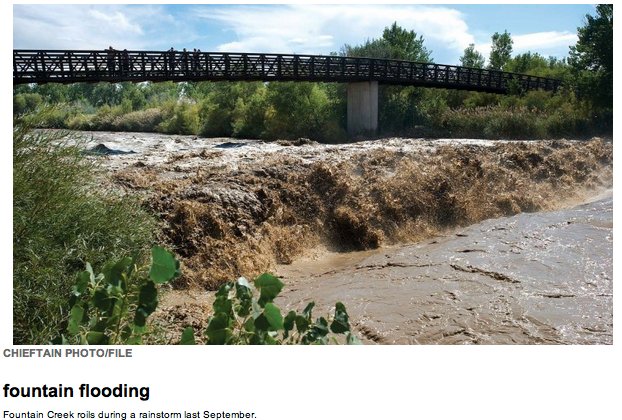
Fountain Creek: ‘What things are they doing to rein in the floodwaters that arrive in Pueblo County’ — Terry Hart

fountaincreekstormwater092011chieftain.jpg

From The Pueblo Chieftain (Chris Woodka):

Less than $2 million of the $46 million in stormwater projects on Colorado Springs’ list meet the criteria set out by Pueblo County commissioners for a 1041 permit for the Southern Delivery System.

The commissioners instructed water attorney Ray Petros to review the list submitted this week to commissioners and Pueblo City Council and he determined that most projects related to either the Waldo Canyon Fire or internal Colorado Springs issues.

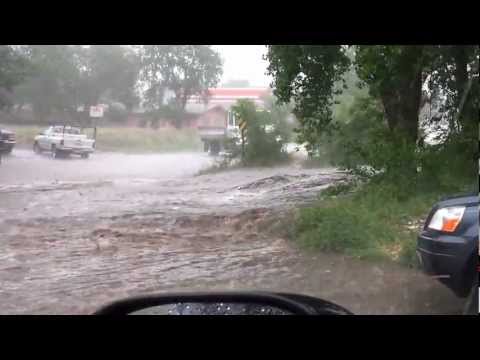
“As a starting point, what we’re looking for is a list of major projects that have a significant impact for Pueblo County,” said Commission Chairman Terry Hart. “What things are they doing to rein in the floodwaters that arrive in Pueblo County and to assure water quality?”

The county still wants an accounting of the scope of stormwater control that was envisioned prior to 2009. While Waldo Canyon creates a new set of problems, Colorado Springs had agreed to address past problems on Fountain Creek through the stormwater enterprise, Hart said. Commissioner Sal Pace shared those concerns, adding that Colorado Springs needs to provide evidence of long-term funding, rather than shortterm emergency funds.

“That’s one-time money. What they need to do is show how there will be a continuous supply,” Pace said.

From The Pueblo Chieftain (Chris Woodka):

In response to criticism of his city’s stormwater efforts, Colorado Springs Mayor Steve Bach visited with several Pueblo community leaders Friday to make the case that the city is working on a stormwater solution. Bach was accompanied by Colorado Springs Council President Keith King, Councilman Merv Bennett and City Attorney Chris Melcher. “What we’re working on are steps to develop a full and definite plan that we can take to voters,” Bach said. “We want to make sure that we’re taking the best approach.”

Bach stressed that the Waldo Canyon Fire, which destroyed 347 homes in Colorado Springs last summer, is the top priority. But the city also realizes its commitment to protect downstream users from disastrous floods. Bach has initiated an independent study after a regional study found nearly $700 million in stormwater needs for Colorado Springs and $900 million for El Paso County. He wants Colorado Springs, not a new regional authority, to confront the problem.

Bach acknowledged the fact that development in Colorado Springs, coupled with the burn scar from the Waldo Canyon Fire, has increased the risk of more dangerous floods on Fountain Creek.

Colorado Springs has to come up with a way to continue annual funding to address stormwater needs that had been identified before 2009, when Pueblo County issued a 1041 permit for the Southern Delivery System predicated on the idea that a stormwater enterprise was in place.

Melcher said the Colorado Springs City Council’s hands were tied by voters in November 2009 that effectively eliminated the stormwater enterprise approved by council in 2005.

Bennett said a sustainable funding source for stormwater projects is needed, and King, a former state legislator, suggested several ways that up-front funding could be leveraged.

Bach promised to share more specific information about what Colorado Springs intends to do by no later than this fall.

More Fountain Creek coverage here and here.

The USFS and the BLM are taking comments for proposed management plan for the La Garita Hills

stormoverthelagaritahills.jpg

From The Pueblo Chieftain (Matt Hildner):

The U.S. Forest Service and the Bureau of Land Management are seeking public comment on a string of proposed projects in a 188,000-acre area of La Garita Hills. “We feel this process will create multiple projects that complement each other and will more efficiently manage the greater La Garita Hills area,” said Jim Pitts, a district ranger for the Rio Grande National Forest.

The projects, which would take place anywhere from three to 15 years, include timber harvest on spruce-beetle infested forests; the removal of hazard trees near campgrounds and other developed sites; and the relocation of forest roads to reduce sedimentation in streams.
Thinning of conifers also would happen near riparian areas to improve habitat, while other treatments would reduce the threat of fire near private lands. All told, the proposals include 12 different actions for the area that borders the northwestern corner of the San Luis Valley.

Comments can be mailed to LGH Project, Saguache Ranger District, 4625 Colorado 114, Saguache, CO 81149; or emailed to comments-rocky-mountain-rio-grande-saguache@fs.fed.us.

More information about the proposals can be found under the projects section of the Rio Grande National Forest website.

More Rio Grande River Basin coverage here and here.

Southern Delivery System: Colorado Springs stormwater plans fail to address Pueblo county 1041 permit requirements

sdspreferredalternative.jpg

From The Pueblo Chieftain (Chris Woodka):

Colorado Springs may be spending nearly $46 million on stormwater projects this year, but Pueblo County commissioners are trying to determine if the money is being spent in the right places. “It’s fine that they’re spending the money, but it really doesn’t answer our question about whether the list of pre-2009 projects is being addressed,” said Commissioner Sal Pace.

Colorado Springs Mayor Steve Bach and Council President Keith King Thursday responded to questions raised earlier in the week by commissioners about whether stormwater spending is fulfilling the 1041 permit conditions for Southern Delivery System designed to mitigate flooding on Fountain Creek caused by increased growth from SDS. “Considering these tough economic times and the daunting task of ongoing fire recovery efforts, we are pleased that staff was able to find a way to more than triple the initial projections of funding for stormwater improvements in 2013,” Bach and King wrote in a letter to commissioners and Pueblo City Council.

On Monday, Pueblo County commissioners expressed concern about the progress of a stormwater task force in El Paso County. The task force was formed last year and determined there are more than $900 million in stormwater needs that should be addressed on a regional basis.

Bach, however, is seeking an independent accounting of the $686 million in projects that represent Colorado Springs’ share of the burden. He has advocated for Colorado Springs taking care of its own obligations.

Pueblo County commissioners want to know which of the projects on the list are among the $500 million in identified needs in 2009, when Colorado Springs indicated a stormwater enterprise was in place as part of conditions for the SDS permit. Colorado Springs City Council abolished the stormwater enterprise on a split vote following a 2009 election. Last year, city attorney Chris Melcher offered an opinion that Colorado Springs should be spending at least $13 million annually on stormwater to fulfill its SDS obligations.

“It seems like there is a lot of additional money being spent to address new flooding threats because of the Waldo Canyon Fire,” Pace said Thursday. “Colorado Springs has to meet that need, but that doesn’t replace what they should already be addressing.”

More coverage from the Chieftain:

Colorado Springs this week provided an accounting of $45.7 million in planned expenditures this year to address stormwater concerns.

  • $14.2 million for new grade structures, stabilization projects, operation, maintenance and salaries.
  • $681,000 for Waldo Canyon Fire mitigation projects.
  • $12.8 million for Colorado Springs Utilities projects, including stabilization of lines crossing creeks, and repair of damage from washouts related to the Waldo Canyon Fire.
  • $8.8 million for Camp and Douglas Creek restoration.
  • $1.4 million for Colorado Springs Airport drainage projects.
  • $350,000 for Pikes Peak Highway drainage.
  • $7.5 million for remedial work on the Waldo Canyon Fire emergency watershed projects.
  • More Southern Delivery System coverage here and here.

    El Paso County Watershed Assessment of River Stability and Sediment Supply meeting May 2

    waldocanyonfirejuly2012

    From the Colorado Springs Indpendent (J. Adrian Stanley):

    Ever since the Waldo Canyon Fire charred our hillsides, Colorado Springs and the small communities that dot our foothills have been at extremely high risk for flooding. The WARSSS is an escape route — a detailed plan on how best to control the water, mud and debris.

    The WARSSS will tell us how water moves and how to trap it. It will show us where to build the detention pond that will prevent the Pleasant Valley neighborhood from drowning, and how to control a wild rush of water out of Williams Canyon that is pointed at the center of Manitou Springs.

    Thus, it is with excitement that I tell you the study will be presented to the El Paso County Commissioners on Thursday, May 2. Woo-hoo, indeed.

    Waldo Canyon Fire WARSSS to be Presented May 2

    Colorado Springs, CO, Thursday, April 25, 2013 — The Watershed Assessment of River Stability and Sediment Supply (WARSSS) Study will be presented by Dr. David L. Rosgen of Wildland Hydrology at 2:30 to 4:30 p.m. on Thursday, May 2, 2013, in the Hearing Room at the Pikes Peak Regional Development Center located at 2880 International Circle, Colorado Springs.

    WARSSS is a technical procedure for water quality scientists use in evaluating streams and rivers impaired by excess sediment. It will predict how water, sediment and debris will move along and off the Waldo Canyon Fire burn scar. Based on its findings, it will assist in providing a list of prioritized mitigation projects.

    More stormwater coverage here and here.

    SDS: Pueblo County is looking at advance payments from Colorado Springs for Fountain Creek projects

    sdspreferredalternative.jpg

    From The Pueblo Chieftain (Chris Woodka):

    Pueblo County commissioners want to explore the possibility of jumpstarting projects on Fountain Creek with advance payment of money promised by Colorado Springs Utilities as a condition for Southern Delivery System.

    “We need clarity on the acceptability of using the $50 million, using it in advance,” Commissioner Terry Hart said.

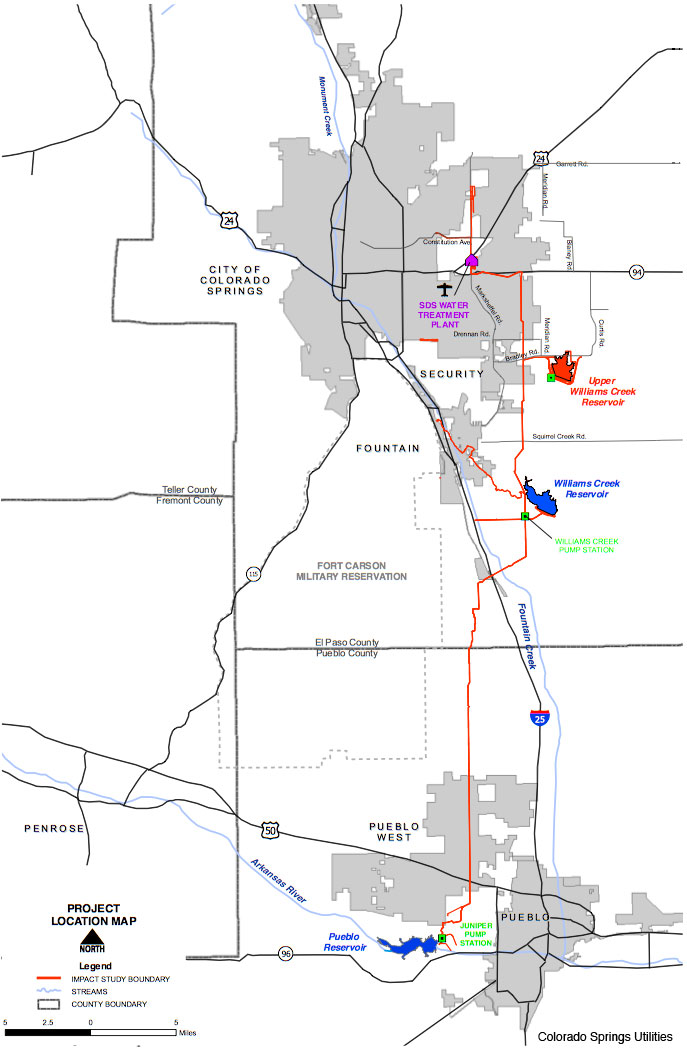
    Under its 1041 permit for the Southern Delivery System, a $1 billion pipeline that takes water from Pueblo Dam to El Paso County, Colorado Springs promised to pay $50 million for flood control projects south of the city that benefit Pueblo County.

    The money is scheduled to begin arriving in five installments to the Fountain Creek Watershed Flood Control and Greenway District in 2016, after SDS goes online.

    But $600,000 already has been paid to the district — $300,000 for a flood control study and $300,000 that was used to complete a master corridor study and as its share to provide interim funding to the district.

    Last week, Hart, who sits on the Fountain Creek board, was approached with the idea of asking for another $100,000 from the Colorado Springs fund to continue interim funding until the district settles on a strategy for securing a funding source. Commissioner Sal Pace asked attorneys if the county could ask for the entire $50 million to be paid sooner.

    “If we bring it in sooner, it could be used to leverage other money,” Pace said.

    Commissioner Liane “Buffie” McFadyen said flooding on Fountain Creek is likely to be more intense after the Waldo Canyon Fire and supported using the money sooner, rather than later.

    Ray Petros, the county’s water attorney, was uncertain if advance payment is possible. Colorado Springs asked for the five-year schedule for mainly financial reasons, and the payment is just one of a series of conditions that must be met over time. “We’d have to be careful from our side that we weren’t acknowledging that SDS wouldn’t be suspended for some other reason,” Petros said.

    From The Pueblo Chieftain (Chris Woodka):

    County staff and Colorado Springs Utilities are discussing the adequacy of revegetation requirements on the pipeline route of Southern Delivery System through Pueblo West.

    The pipeline is buried, but cuts a 100-foot-wide swath through 7 miles of Pueblo West on its way from Pueblo Dam to Colorado Springs.

    As part of Pueblo County 1041 conditions for SDS, Colorado Springs is bonded for two years while revegetation is completed. Although droughtresistant species are being used, seeds must be irrigated to sprout. That raised some questions Monday in a work session on SDS issues.

    “We’re in the throes of a drought, and my question is whether this is a good time to do revegetation,” Commissioner Terry Hart said. “If we’re going to be irrigating it for two years and suddenly pull off the water, what happens?”

    Attorney Gary Raso said experts from Colorado Springs Utilities and the county’s consultant, Warren Keammerer, are meeting on the issue, but the results likely won’t be known at the end of two years. The county is concerned that too many “weedy” species will take hold, rather than beneficial grasses.

    “It became clear to me that at the end of two years, the best you could conclude is that it was going in the right direction,” Raso said. “The experts don’t like being tied to (the two-year limit).”

    Hart questioned what recourse the county would have if problems surfaced five years after revegetation was deemed complete. The county has in the past altered the 1041 conditions with Colorado Springs on $2.2 million for dredging Fountain Creek through Pueblo and accepting a $15 million payment for restoration of Pueblo West roads damaged during construction.

    There also are unresolved revegetation issues with the portion of the pipeline that crosses Walker Ranches north of Pueblo West.

    Commissioners agreed that they need to further discuss issues with Keammerer.

    More Southern Delivery System coverage here and here.

    SDS: ‘My central issue is that we need a concrete plan to identify stormwater needs’ –Terry Hart

    sdspreferredalternative.jpg

    From The Pueblo Chieftain (Chris Woodka):

    Pueblo County commissioners want Colorado Springs to explain its stormwater plan as soon as possible, and hinted Monday that a hearing on the 1041 permit for Southern Delivery System could be necessary if answers aren’t forthcoming. “We as a community are very concerned that when the stormwater enterprise disappeared, the conditions in the 1041 permit disappeared,” Commission Chairman Terry Hart said. “The community has been patient.”

    Colorado Springs City Council in 2009 eliminated its stormwater enterprise and $13 million annual funding for identified needs. Since then, a new majority of the council has been elected in 2011 and 2013, and Steve Bach was elected mayor under a new governance system. A regional stormwater task force has formed, but apparently it does not have Bach’s support and it won’t begin making recommendations on funding nearly $1 billion in projects until July at the earliest.

    At a workshop Monday, commissioners reviewed several parts of the 1041 permit, including revegetation of the pipeline scar through Pueblo West and Walker Ranches and the potential for acceleration of $50 million in payments for improving Fountain Creek. But the big issue was stormwater. The commissioners want an accounting of which projects were on the Colorado Springs stormwater list, what was addressed when the fee was in place and what remains to be done. “My central issue is that we need a concrete plan to identify stormwater needs and how they are going to pay for it,” Hart said.

    Colorado Springs Utilities has asked Pueblo County to wait until July to hold an explanatory meeting, in order to allow stormwater task force committees to complete their work.

    More Southern Delivery System coverage here and here.

    Colorado Springs Utilities plans to spend $6 million on efforts to mitigate the Waldo Canyon burn scar

    waldocanyonfirejuly2012

    From the USDA Blog (Mike Stearly):

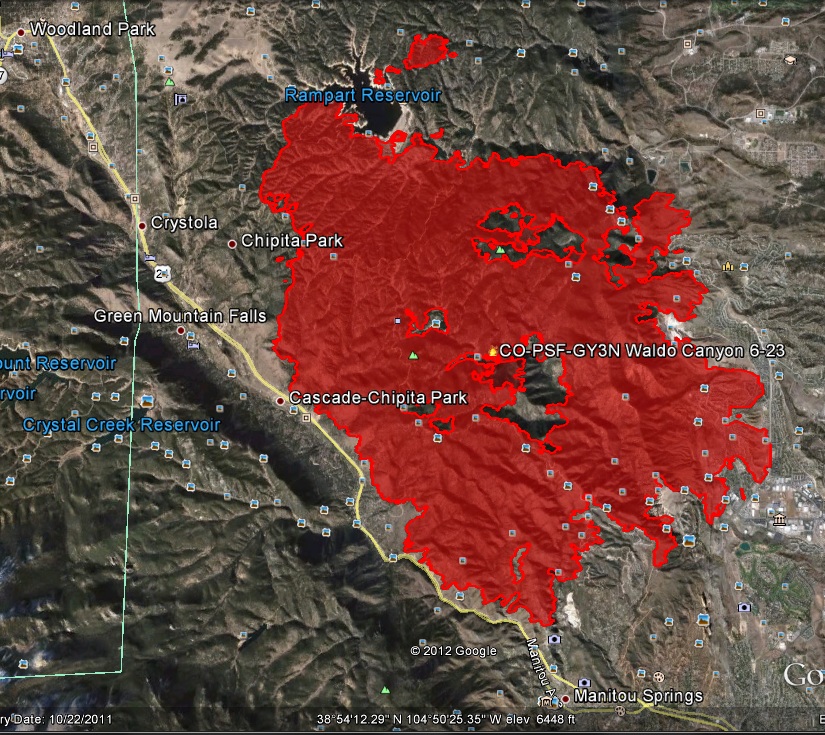
    The U.S. Forest Service and Colorado Springs (Colo.) Utilities recently announced a new 5-year partnership to help restore the areas burned by the devastating Waldo Canyon Fire that tore through part of the west side of the city in 2012.

    Through the partnership, Colorado Springs Utilities will invest approximately $6 million in support of the watershed health goals and activities over the next five to 10 years. The Forest Service will complete on-the-ground project planning and treatment in areas that complement Colorado Springs Utilities investments.

    During an event at the Flying W Ranch – a 60-year-old tourist attraction destroyed in the fire – Harris Sherman, USDA Under Secretary for Natural Resources and Environment, met with Congressman Doug Lamborn, U.S. Senators Mark Udall and Michael Bennett, and representatives from the Coalition for the Upper South Platte, El Paso County Commissioners and the city of Colorado Springs.

    “This partnership will ensure improved water quality for the residents of Colorado Springs,” Sherman said. “Collaborating on watershed restoration will have a long-term positive impact on forest and watershed health and allows us to accomplish more on-the-ground projects.”

    The innovative partnership between Colorado Springs Utilities and the Forest Service is preserving and protecting crucial watersheds that provide water to Colorado’s second largest city. The signing of the agreement establishes work to reduce wildfire risk, restore burned areas, minimize erosion impacts and coordinates pre-suppression wildland fire efforts.

    “This agreement … solidifies a critical partnership with the Forest Service, a partnership that has benefited our water supply and community for decades,” said Gary Bostrom, chief water services officer for Colorado Springs Utilities. “Our ongoing relationship with the Forest Service will help us channel customer rate dollars in the most efficient way possible to protect our most vital resource and the forest that surrounds it.”

    The human-caused Waldo Canyon fire started June 23, 2012, and left a scar of more than 18,000 acres, cost millions of dollars to fight, caused the evacuation of 32,000 people, destroyed 346 homes and killed two people. The fire has since been labeled the largest, most expensive and destructive fire in Colorado’s history.

    More Colorado Springs Utilities coverage here and here.

    Fountain Creek: ‘Colorado Springs has taken its job very seriously’ — Steve Gunderson

    fountaincreekthrucoloradospringsfromdippity

    From The Colorado Springs Gazette (Barbara Cotter) via The Denver Post:

    Nearly 10 years, $450,000 in penalties and $170 million in fixes later, Colorado Springs Utilities is done with a compliance plan the state imposed over series of wastewater spills into Fountain Creek and some of the tributaries that feed it.

    “I would say this has been quite a success story, and Colorado Springs has taken its job very seriously,” said Steve Gunderson, director of the Water Quality Control Division of the state Department of Public Health and Environment. “Why we decided to take enforcement action almost 10 years ago is that we were seeing a pattern of problems. Really, it’s amazing how that pattern has largely disappeared.”[…]

    Earlier this month, the Water Quality Control Division sent a letter to Utilities officials notifying them that it was closing the books on the order because all requirements had been met.

    More Fountain Creek coverage here and here.

    Colorado Springs stormwater: ‘Ironically, Waldo Canyon may be the impetus to get them moving on stormwater’ — Sal Pace

    fountaincreekerosionpueblocountychieftain

    From The Pueblo Chieftain (Chris Woodka):

    While Colorado Springs debates how it will handle stormwater issues, critics of the city’s stance on flood control say action is needed now.

    “There have been any number of studies, and now it’s time for action,” said Jay Winner, general manager of the Lower Arkansas Valley Water Conservancy District. “You can do different studies and get many different results. The outcome may be: ‘We have no stormwater problem.’ ” On Monday, Colorado Springs Mayor Steve Bach announced a request for proposals to evaluate the city’s stormwater needs has been issued. The deadline for submitting proposals is April 5, three days after the upcoming municipal election. Bach has pressured Colorado Springs Utilities, which is governed by City Council, to pay for stormwater needs. Six of nine seats on council are up for election this year. A stormwater task force of El Paso County communities found nearly $900 million in stormwater needs on Fountain Creek, with $686 million in Colorado Springs alone. Bach requested a second opinion because the amount is 37 percent higher than earlier estimates. Colorado Springs should control the funding, management and construction of its improvements, because it faces the lion’s share of payments, Bach said in a news release. Pueblo County has taken the position that the needs identified in 2009 under a 1041 landuse permit must be addressed before the Southern Delivery System begins operations, said County Commissioner Sal Pace.

    “From our perspective, they have a huge backlog of projects to address before they pump SDS,” Pace said. “As I understand it, they are quibbling about the amount through internal politics. That’s not our concern.” Pace said projects identified by the nowdefunct stormwater enterprise are referred to in the 1041 permit. Since then, Colorado Springs has a new set of problems associated with last summer’s Waldo Canyon Fire. The area is subject to mudslides and erosion until it can be revegetated and stabilized.

    “Ironically, Waldo Canyon may be the impetus to get them moving on stormwater,” Pace said.

    More stormwater coverage here.

    Colorado Springs: Mayor Steve Bach is going to ask for an outside consultant for stormwater needs

    pikespeak.jpg

    From The Colorado Springs Gazette (Matt Steiner):

    Mayor Steve Bach announced Sunday night that he’ll seek an outside consultant on Colorado Springs stormwater needs for a second opinion on an issue that’s drawn regional concern…

    A regional stormwater panel has said the city has a backlog of $687 million in stormwater projects, the bulk of the region’s nearly $880 million in stormwater needs. The Stormwater Task Force has backing from El Paso County and smaller municipalities, but the city has been cool to the panel’s findings. Bach has contended that the estimate for Colorado Springs appears high and in January said a second look at the numbers, as well as the scope and proposed priorities of the stormwater work, was needed. “The city’s 78 percent share of the region’s $880 million in needed improvements means that Colorado Springs is by far the largest stakeholder in solving this issue,” the city said in an 8:41 p.m. Sunday news release. “The Mayor has welcomed other regional jurisdictions to use the services of the city’s consultant to also vet their own stormwater needs”

    The city has set a April 5 deadline for bids for the consulting work.

    Sunday night, the city said Bach also wants Colorado Springs to control cash that might be used for stormwater work in the city, rather than putting money in a regional pool for projects.

    More stormwater coverage here and here.

    Fort Morgan: City Council hopes to score some grant money to study stormwater needs

    fortmorgan.jpg

    From The Fort Morgan Times (Jenni Grubbs):

    The Fort Morgan City Council on Tuesday directed city staff to seek out grants to cover the cost of a study for how to implement a stormwater fee.
    “The recommendation from the (Stormwater) Ad Hoc Committee was to assess a fee to address stormwater issues,” Wells said. But he said that staff were not sure yet what fee would need to be to cover everything it would need to cover, or if that was what the council wanted.

    “If we do this, we want to make sure we do it the right way,” he said, suggesting a study. He said that some Colorado municipalities had put in place stormwater fees without studies, leading to questions from the people paying fees and even ballot issues eliminating the fees…

    The third option, which was the one that was recommended by the committee, would be to create a stormwater utility and assess a monthly fee to city residents. Wells explained that a big issue with this was how the money would be allocated in the budget between a new enterprise fund and where it used to come out of the general fund…

    The council did direct Wells and staff to find out more about the costs of study for stormwater fees, as well as seek grants to pay for that type of study. Wells did say that a stormwater fee study likely would cost between $30,000 to $50,000, but that grants may be available to cover about half of that cost.

    More stormwater coverage here and here.

    The Pikes Peak Regional Stormwater Task Force hopes for a regional solution

    fountaincreekmonsoonjuly2012

    From The Colorado Springs Gazette (Bob Stephens):

    The group’s goals are to prioritize stormwater projects and identify funding to pay for the $906 million estimated cost of projects in the region.

    Absent from the meeting were Colorado Springs city staffers, some of whom were scheduled to present information.

    “This is a difficult, fairly charged issue,” said county commissioner Amy Lathen, who led the meeting along with Colorado Springs City Council member Brandy Williams. “We’re going to barrel on through.”

    The event drew 50 people, including business representatives, county politicians, military officials, and officials from Manitou Springs and Fountain.

    Williams said she’s excited about the task force moving forward with a regional approach and with representatives from across the community.

    The task forces estimates that Colorado Springs needs nearly $687 million in stormwater work — 76 percent of the region’s stormwater problem.

    Mayor Steve Bach has said his idea to pay for stormwater projects is to have public-owned Utilities shoulder the brunt of the $687 million.

    More coverage from Barbara Cotter writing for The Colorado Springs Gazette. From the article:

    There might be uncertainty about whether Colorado Springs will sign on to participate in a regional stormwater plan, but Public Works Director Helen Migchelbrink makes it clear the city isn’t waiting to tackle some high-profile projects this year. “The (regional) study is sort of a global look, but while we’re looking at everything globally, we still have to keep working on projects,” she said this week.

    So, look for about $8.5 million in stormwater work to take place soon, including replacement of a decrepit drainage channel near Union Boulevard and Lexington Drive that crumbled during a heavy rainstorm in July, sending concrete chunks flying in the air. The stormwater flooded the basement of one home, and threatened a cluster of nearby townhomes in the Preserve at Briargate…

    The Mirage Channel project is estimated to cost about $1.7 million, and will be paid for out of a $2 million appropriation from the general fund that City Council approved for critical stormwater needs for this year. The final design should be completed by May, and work could begin in early summer.

    Other projects include:

    • Beefing up a “drop structure” on Cottonwood Creek near La Madrina Lane. Drop structures are typically created with grouted boulders and are designed to slow the speed of water. The cost is $250,000.

    • Bank stabilization at Cottonwood Creek near Vincent Drive and the Greencrest channel at Austin Bluffs Parkway, just west of Academy Boulevard. Each received a $3 million federal grant for pre-disaster mitigation. The Greencrest embankment is unstable, and erosion is threatening a nearby business and parking lot, Ross said.

    • Installing two “debris racks” in the Waldo Canyon burn area near The Navigators headquarters, north of Garden of the Gods. Migchelbrink said the city is working with The Navigators to put in the “state of the art” devices to catch debris when it rains. The project is expected to be finished by the end of March.

    The scheduled projects are not part of the 280 stormwater needs the regional Stormwater Task Force identified for the city.

    More stormwater coverage here and here.

    Say hello to StopStormWaterUtility.com

    stopthestormwaterutilitytaxadamscount.jpg

    From the Brighton Standard Blade:

    The outcry from residents over the new stormwater fee in Adams County has prompted another public meeting. A group, dubbed Adams County Stormwater Utility Citizens in Opposition, is set to meet at 7 p.m. Monday, Feb. 25, at Werth Manor Event Center, 8301 Rosemary Dr., in Commerce City. Gary Mikes and attorney Sean Gallagher will present information on a litigation plan to stop the implementation of the county’s new stormwater utility. For more information, contact Gary Mikes at 303-475-0413 or http://www.garymikes.com or visit http://www.stopstormwaterutility.com.

    We’ll see if they are as successful and Douglas Bruce and his cronies in Colorado Springs were when voters passed a poorly-worded Issue 300. Anti-tax zealots have severely impacted the city’s ability to deal with stormwater issues, including placing a burden of millions of dollars on the Colorado Springs Utilities enterprise fund budget.

    Meanwhile, Adams County is working to correct billing errors in the system. Here’s a report from Yesnia Robles writing for The Denver Post. Here’s an excerpt:

    Adams County commissioners approved the stormwater fee last fall, telling residents that new federal mandates and the inability to fund stormwater mitigation from the general fund led them to pass on the tab to residents of the unincorporated county. Not doing so put them at risk for costly federal fines for not complying with the regulations, officials told residents at a handful of community meetings. The fee took effect Jan. 1.

    Now the county has hired an outside consultant and is working with temporary staff to review 27,000 bills sent to residents. The county estimates it will spend about $100,000 to correct the errors before April 30, when payments are due.

    Of the 6,600 parcels reviewed to date, 2,298 have been adjusted — about a 34 percent error rate. “We knew there was going to be some calculations that would have to be adjusted, but, in part, the photography we used made things more difficult,” said deputy county administrator Todd Leopold. “It was more than we anticipated.”

    Residents are assessed based on how much of their property doesn’t allow stormwater to soak into soil. The county estimated that a single-family home would be assessed an average of $62.64 per year. Some residents, however, reported bills as high as $900. Adams County used photography it already had and contracted another vendor to analyze the photos. But, Leopold said, the pictures weren’t detailed enough to differentiate between impervious surfaces — such as roofs or concrete, which repel water — and hard surfaces — such as cracked asphalt or hard dirt, which allow water to soak in.

    More stormwater coverage here.

    Source water protection plan for I-70 corridor from Newcastle and Parachute indentifies pollution sources

    newcastleredslipperdiary.jpg

    From the The Rifle Citizen Telegram (Nelson Harvey):

    The Source Water Protection Plan, an inventory of drinking water resources for several towns along the Interstate 70 corridor, also identifies other activities that could contaminate drinking water, including natural gas drilling, fires, pesticide use, landfills and others, but it does not highlight existing water pollution problems.

    “We just want to make people aware that they have the potential to contaminate our source water,” said Mark King, public works director for the town of Parachute. “The whole point is just to educate people of the hazards. The oil field, the railroad, they carry all kinds of [pollutants].”

    King worked on the report, along with a coalition of public works officials from Rifle, Silt and New Castle. The effort was funded by a grant from the Colorado Department of Public Health and Environment to meet a federal Clean Water Act requirement of every state to have plans in place to protect water sources.

    In Rifle, according to the report, the largest potential water pollution threats, aside from road runoff, are gas operations, gas pipelines, and spills or runoff from train travel through the area.

    In Silt, issues of concern include gas drilling and railroads. Those threats are also present in Parachute, according to the report, where other potential threats include leaking septic tanks at private homes and uncertainty about how water migrates into Revelle Springs, a drinking water source.

    The report authors recommend that Parachute fund a formal study to pinpoint the sources of groundwater seeping into the springs, to ensure those areas are protected…

    To better protect water quality, the report contains only recommendations, rather than new regulations or policy suggestions.

    Those include distributing copies of the report and cards with emergency contact information to gas companies for use in the event of a spill, and researching the long-term effect of magnesium chloride, a compound used to melt ice on roadways, on local water supplies.

    And since fire poses a major contamination risk to water supplies by increasing erosion and destroying features that absorb water, the authors also recommend that local officials collaborate with firefighters to include water supplies on maps of high risk fire areas.

    More Colorado River Basin coverage here.

    Adams County stormwater fees foment a rebellion of sorts from residents

    floodplain.jpg

    From the Commerce City Sentinel-Express (Gene Sears):

    Hundreds of angry property owners gathered Jan. 24, incensed over a county mandate to implement a stormwater utility and the soaring fees accompanying the measure. Those fees, levied against impervious surfaces on each property, resulted in annual payments due to the county in many cases in the hundreds of dollars where none existed before.

    Promising “total transparency,” Adams County Deputy Administrator Todd Leopold addressed the throng, reassembled in a maintenance bay after overflowing a classroom at the station. Both Leopold and Adams County Stormwater Coordinator Andrea Berg shared the floor, taking questions while providing details of the project’s implementation. The pair faced a tough crowd, disillusioned by county efforts to inform and involve residents in the process leading up to levying what most see as a tax on their property.

    The county says it adopted the fee schedule in response to an unfunded Environmental Protection Agency mandate, with the funds collected to “address water quality regulations, capital improvement drainage projects and flooding to the maximum extent practicable. Often drainage problems are not easily attributed to a single source, and are usually the result of a combination of things that increase the amount of impervious surfaces (roads, driveways, and development) and affect water quality (erosion, fertilizers, and petroleum products).”

    Critics see it as a carefully crafted tax to boost revenues more than $5 million annually, on the backs of unincorporated residents with little or no recourse.

    Most rancorous was the estimation of fees owed, which most saw as wildly inaccurate in relation to their actual impermeable surface areas. Some claimed hundreds of dollars assessed on properties with no impermeable surface whatsoever, such as farm fields and pasture. Taken from aerial surveys, the estimations were based largely on shading of roadways and rooftops, with a clear margin of error. The estimations ran into hundreds of dollars per year for properties with rooftops similar in size to suburban homes.

    More stormwater coverage here.

    Colorado Springs Utilities’ funds to pay for stormwater facilities?

    fountaincreekthrucoloradospringsfromdippity.jpg

    From the Colorado Springs Independent (J. Adrian Stanley):

    After the election, Council did away with the Stormwater Enterprise and its hated “fees,” but quickly found a loophole that allowed Utilities to continue paying the city about $31 million a year.

    Now, Mayor Steve Bach is seeking an even bigger loophole in Issue 300 — one that would allow Utilities to foot the bill for $687 million in needed city stormwater projects. That funding is especially crucial after the Waldo Canyon Fire, because flooding off the burn scar this spring is expected to be catastrophic.

    In a recent interview with the Independent, City Attorney Chris Melcher said he had brainstormed several ways to get the money on Bach’s behalf, including: charging Utilities for the use of city land and water rights; reducing Utilities’ overhead costs and passing the savings on to the city; and creating an entirely new utilities service with its own charges (much like water or electric).

    Echoing Bach, Melcher said he believes Utilities can fork over the money without increasing rates.

    Yet Utilities spokespeople and City Council President Scott Hente — both of whom are also supposed to be represented by the city attorney — say it’s virtually impossible.

    “[Bach and Melcher] think there’s this pot at the end of the rainbow laden with money, and it’s there for the taking,” Hente says. “It shows their complete lack of experience in dealing with large organizations that have large business and large obligations.”

    During his campaign for mayor in 2011, Bach pledged not to raise taxes while in office. But the right thing to do for stormwater, Hente argues, is to ask for an increase…

    Of all Melcher’s ideas for making Utilities pay, the most intriguing involves water and property ownership.

    “Remember, the city owns the water,” Melcher says. “The city provides — all the water rights of the entire city are held in the name of the city, so the city provides the water to the utility company. The city also provides free access to all the right-of-ways in the city to the utility.

    “For example, if you have a private utility, they pay taxes, [a] right-of-way fee, [a] franchise fee. So there’s a number of different things that need to be examined and researched to see if there are funds or monies that could be available for other purposes, such as stormwater.”

    Of course, Utilities already pays the aforementioned $31 million to the city annually to cover some of these costs; Melcher just believes more may be justified.

    But asking a municipally owned utility to pay for the use of city water rights appears to be unusual. The Independent contacted four Colorado water attorneys on the issue to see if such a scenario was legal, or had been used before. Two said they didn’t know the answer and wouldn’t comment anyway, because their work was connected to Utilities. The other two did not call back. Utilities’ own lawyers could not comment objectively on the issue because Melcher is their boss.

    The Independent also called water service offices in Pueblo, Aurora and Denver. Each utility owns its own water rights.

    The Colorado Municipal League says it doesn’t know enough about its member cities to comment on such an issue. The American Water Works Association did not return phone calls.

    Only Aurora Water offers any guidance. Spokesperson Greg Baker says that leaders in his organization aren’t sure about the legality of charging for water rights, but they think such a scenario could run into problems with the Taxpayer’s Bill of Rights and the state constitution, given language about the separation of municipalities and their enterprises…

    Utilities spokespeople roundly object to the notion that the business is a cash cow ripe for the slaughter.

    Nor do they buy into the notion that they haven’t done enough for their hometown. Spokesperson Steve Berry notes that Utilities already performs city stormwater projects, because they often protect pipes from damage. Those projects also incidentally benefit bridges, roads and neighborhoods. This year alone, Utilities will spend $12.8 million on such projects.

    As for extra money, Utilities is about $30 million short in funding for its own capital projects this year, due to a sagging economy. That means fewer upgrades and less maintenance to the system, and a greater risk of costly failures.

    If Utilities were suddenly saddled with paying for all the city’s stormwater issues, Berry says, rates would have to increase to cover those bills. And Utilities could be hit in another way, too, through higher interest rates on its billions in debt.

    “The more you start bringing in another function, what then does that do to your ability to borrow at a low interest rate?” Berry asks. “Because that’s considered increased risk.”

    More stormwater coverage here.

    Fountain Creek: Mill levy on the horizon for Pueblo and El Paso counties?

    fountaincreekerosionpueblocountychieftain.jpg

    Here’s a report from Chris Woodka writing for The Pueblo Chieftain:

    A report from the Trust for Public Lands next month could help solidify plans by a Fountain Creek improvement district to ask voters for a mill levy. “Our current funding runs out at the end of this year,” said El Paso County Commissioner Dennis Hisey. “We may be passing the hat next year.”

    The Fountain Creek Watershed Flood Control and Greenway District last year signed an agreement to work with the trust to poll voters about what kind of ballot issue would likely be supported to provide more sustainable funding for the district. “When we get to the big question, we have to find out what the will of the people is,” said Pueblo County Commissioner Terry Hart.

    Under state law, the district can ask voters in Pueblo and El Paso counties for up to 5 mills. Apparently, the majority of voters in both counties would decide the issue. In other words, a mill could not be passed in one county and rejected in another.

    Hisey said the size of the mill levy could depend on whether the district intends to fund its basic operations, leverage grant money or tackle larger problems. The distribution of funding could be arranged in such a way that El Paso County could pay more than Pueblo County and use money to address its nearly $1 billion in backlogged stormwater projects, the board agreed during discussion.

    “But Pueblo money cannot go north,” Hisey said. Hart agreed.

    “The formula has to make sure the money is being spent in the county being taxed,” he said.

    The district so far has survived largely on funding from Colorado Springs Utilities and the Lower Arkansas Valley Water Conservancy District. Under its 1041 permit with Pueblo County, the district would receive the remainder of $50 million promised from Colorado Springs over five years after the Southern Delivery System is completed in 2016.

    From The Pueblo Chieftain (Chris Woodka):

    A district formed to improve Fountain Creek will put some additional money into a project designed to showcase methods to reduce erosion.

    The Arkansas Basin Roundtable earlier this month kicked back a grant for an erosion control project on the Frost Ranch south of Fountain in El Paso County saying more matching funds were needed.

    Last week, the Fountain Creek Watershed Flood Control and Greenway District board agreed to pay another $35,000 toward the project, while landowner Jay Frost agreed to contribute $7,000. The district is seeking $105,000 in funds — reduced from a $150,000 request — from the Colorado Water Conservation Board, with a $31,000 inkind contribution from Colorado Springs Utilities. The district, which already committed $10,000 to the project, will use money from the Fountain Creek master plan fund to pay its share. The fund is equally supported by Colorado Springs and the Lower Arkansas Valley Water Conservancy District.

    Engineer Graham Thompson explained the project would use natural methods and native plants to create a healthy channel. The Frost Ranch was chosen because the ranch is within an area that is otherwise healthy.
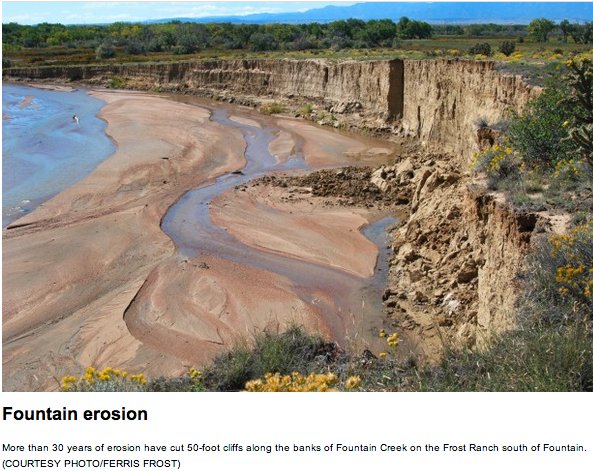
    “It opens the door for other grant cycles,” Thompson said. “More and more I’m convinced that the sediment load in Pueblo County is coming from the banks (of Fountain Creek).”

    While the board has limited money left in the master plan fund, about $100,000, projects like the Frost Ranch will provide leverage for future grants as well as show other landowners what can be done, said Executive Director Larry Small. “We have the money, so we need to do the work,” said board member Richard Skorman.

    From The Pueblo Chieftain (Chris Woodka):

    During a hand­off of seats on a board dedicated to protecting Fountain Creek Friday, Pueblo County Commissioner Terry Hart nearly fumbled the baton. Otherwise, things went smoothly.

    Hart, who replaced District Attorney Jeff Chostner on the board, told the Fountain Creek Watershed Flood Control and Greenway District board he was pleased to be sitting at the “adults’ table,” invoking an analogy of Thanksgiving dinner. There were some amused groans from the “children’s table” in the audience and one committee member laughingly quipped he would have to “take out his pacifier” before addressing the board. Hart formerly chaired the citizens advisory group and has attended Fountain Creek meetings for the past year.

    Chostner was lauded by his fellow board members for his service and involvement since the formation of the Fountain Creek Vision Task Force in 2006. “You’ve been the glue for this board in a lot of ways,” Richard Skorman, a former Colorado Springs councilman, told Chostner. “You’ve come to El Paso County a lot and reached out in a way no one else has.”

    “The beauty of this board is that we can be friends,” Chostner replied.

    The board elected officers for the coming year. Fountain Mayor Pro Tem Gabe Ortega was elected chairman; Pueblo City Councilwoman Eva Montoya, vice chairman; Colorado Springs Councilwoman Brandy Williams, secretary; and Fountain Creek Pueblo County resident Jane Rhodes, treasurer. Other members are Palmer Lake Mayor Pro Tem Michael Maddux, Lower Arkansas Valley Water Conservancy District board member Melissa Esquibel, El Paso County Commissioner Dennis Hisey and Hart. The district was formed by the state Legislature in 2009 to address common Fountain Creek concerns in El Paso and Pueblo counties.

    More Fountain Creek coverage here and here.

    Pueblo: Stormwater rates to increase 20% in February

    detentionpond.jpg

    From The Pueblo Chieftain (Chris Woodka):

    Pueblo stormwater fees will increase 20 percent next month, after action earlier this month by Pueblo City Council. For most homes in Pueblo, that will mean between $2.40 and $4.20 per month. “We still aren’t up to the average rate in Colorado, which is $5 per month,” said Earl Wilkinson, Pueblo director of public works. “We haven’t had an increase in fees since they began in 2004.”

    The increase will mean an additional $560,000 in revenue, on top of the $2.8 million generated each year under the existing fee structure.

    Like Colorado Springs, Pueblo has a backlog of stormwater projects, but is tackling them in five­year bites focusing on projects which can be completed. They can be expensive, with whole streets torn up and rebuilt.

    For example, a $1.6 million project is planned in the area near 29th Street and Baltimore Avenue. “There is continued high water in the area,” Wilkinson said. “While it hasn’t damaged any homes, there has been damage to streets and yards after heavy rains.”

    The city’s stormwater fee also pays for employees and maintenance of more than 114 miles of storm sewers, 6,300 catch basins, 18 miles of storm channels and 31 detention basins. The stormwater fee also is repaying the Pueblo Board of Water Works $1 million over three years for a drainage pipeline from the St. Charles lakes to Lake Minnequa as part of a cooperative agreement that’s designed to keep more water in Minnequa as a new city park is developed.

    In the future, fee increases will be more gradual, Wilkinson said. “We’re finally getting an idea of what kind of funding we’ve needed,” he said.

    More infrastructure coverage here.

    Steamboat Springs task force will tackle stormwater facility maintenance and upgrades

    steamboatsprings.jpg

    From Steamboat Today (Scott Franz):

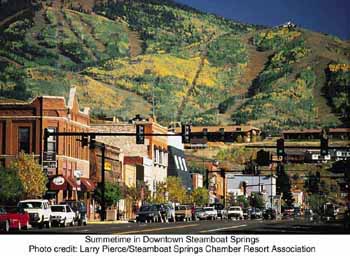
    The Steamboat Springs City Council on Tuesday night endorsed the creation of a new citizen-heavy task force that soon will help to decide how the city should execute and pay for costly upgrades to its stormwater infrastructure. The council also got a better idea of how costly the upgrades will be and when they will be needed.

    Recognizing it never has had a comprehensive plan to improve and maintain the bridges, culverts and dams that make up its stormwater system, the city last year tapped Short Elliott Hendrickson — a firm of engineers, architects, planners and scientists — to perform the $180,000 study of the infrastructure.

    Council members heard the preliminary findings of that report Tuesday night.

    Public Works Director Chuck Anderson cautioned there still are some unknowns, including the extent of any new federal mandates for municipalities like Steamboat to improve stormwater systems to accommodate growing populations…

    He said the task force will take five months to become experts on the plan and return to council with a recommended course of action.

    The city also will host an open house Feb. 7 to explain the plan to the public.

    The master plan from Short Elliott Hendrickson estimates that to upgrade, repair and improve the city’s stormwater infrastructure will cost $20 million to $33 million. Short Elliott Hendrickson engineer Steve Gardner told the council his firm’s study estimated that the immediate maintenance to the stormwater infrastructure will cost Steamboat $250,000 to $1 million…

    Hinsvark has said the city lacks a dedicated source of revenue to pay for the projects, and it may need to consider proposing a fee or a new tax on property owners to help with funding. A fee system is used commonly in many municipalities along the Front Range…

    In addition to city staff, Anderson is proposing that community members serve on the task force that will be charged with identifying a funding mechanism. He is recommending the group include a lawyer; a representative from the development, engineering and construction communities; an at-large resident; a home or business owner impacted by flooding; and a flood insurance provider, among other members.

    More stormwater coverage here.

    Proposed Colorado Springs’ stormwater actions on Fountain Creek will likely go to the voters

    floodingcoloradospringsjune62012.jpg

    From The Pueblo Chieftain (Chris Woodka):

    Colorado Springs is looking at several options to secure stormwater funding, any of which would most likely mean a vote of the people. “Technically, it’s possible to implement it as a fee, but it has to be in front of voters politically,” Colorado Springs Utilities executive Mark Pifher told the Pueblo Board of Water Works this week.

    Pifher updated the board on the work of a stormwater task force created by El Paso County commissioners and the Colorado Springs City Council. The task force decided to recommend the county and cities study ways to find sustainable funding for more than 400 projects and $900 million in funding needs identified in the first phase.

    Commissioners and the City Council are considering the recommendation.

    The issue is of concern to Pueblo because the stormwater from the most populated areas of El Paso County funnels into Fountain Creek and could make flooding worse if not controlled. There is urgency in El Paso County because of commitments to Pueblo County for a permit to construct the Southern Delivery System and increasing damage from stormwater structures in place.

    A white paper last year by Summit Economics outlined several possible funding sources, Pifher explained.
    A new El Paso County entity, similar to the Denver Urban Drainage and Flood Control District, could be formed or the payment for stormwater could be managed by the Fountain Creek Watershed Flood Control and Greenway District. Another possibility would be to create a stormwater utility for Colorado Springs, which already operates gas, electric, sewer and water utilities.

    Colorado Springs City Council abolished the city’s stormwater utility, created without a vote of the people, in 2009, after anti­tax activist Doug Bruce persuaded voters to approve city Issue 300, calling the stormwater fee a “rain tax.”

    More stormwater coverage here.

    U.S. Senator Bennet is pushing for funds for wildfire mitigation #codought

    highparkfiredenverpost06142012.jpg

    If snow doesn’t fall many are worried about the upcoming fire season. U.S. Senator Michael Bennet learned on Monday that the effects of the 2012 fire season are still with us and will be for the foreseeable future. Here’s the release from Senator Bennet’s office:

    During a visit to the Greeley-Bellvue Water Treatment Plant today, Colorado U.S. Senator Michael Bennet highlighted the need for federal resources to protect drinking water in the wake of last summer’s wildfires and urged the House to take action.

    “Colorado communities are still reeling from the effects of last year’s devastating wildfires,” Bennet said. “These resources for the Emergency Watershed Protection program are critical as our communities work to safeguard and rebuild their water infrastructure.”

    “Just a few weeks ago in the Senate, we successfully passed a disaster recovery package that included resources for Colorado. Now the House needs to act.”

    Bennet’s visit comes a day before the House of Representatives is scheduled to vote on a Hurricane Sandy disaster aid package. A similar package passed the Senate in late December and included $125 million for the Emergency Watershed Protection (EWP) program that Senator Bennet, along with Senator Mark Udall, helped secure. However, the House of Representatives failed to vote on the bill before adjourning its session on January 2. Now in a new Congress, there is no guarantee the EWP funding will be included in the House’s version of the bill.

    During today’s visit, Bennet, local experts and leaders from Greeley, Fort Collins and Larimer County discussed the region’s work to preserve and protect watersheds that are at risk due to last season’s wildfires. The wildfires damaged watersheds throughout the state, increasing the risk of flash flooding and road washouts and compromising clean drinking water supplies.

    The federal EWP program is designed to support efforts to restore eroded watersheds and damaged drinking water infrastructure. In addition to helping secure the $125 million in EWP funding in the aid package that passed the Senate in late December, Senator Bennet led efforts in November to urge President Obama and Congressional Appropriators to include EWP funding in a Hurricane Sandy disaster recovery package.

    The EWP program falls under the jurisdiction of the Senate Agriculture Subcommittee on Conservation, Natural Resources and Forestry, a subcommittee Bennet chairs.

    Here’s a report from Pamela Dickman writing for the Loveland Reporter-Herald. Here’s an excerpt:

    “We went through hell this summer, and the last thing we need is a bunch of floods that turn the river black,” Bennet said referring to wildfires across Colorado in 2012 during a visit to the Greeley-Bellvue Water Treatment Plant on Monday. Instead, he urged his colleagues in the U.S. House of Representatives to approve $20 million in emergency watershed money for Colorado to help protect water, roads and residents from the increased risk of flooding because of the fires…

    The Senate passed a bill with $125 million in Emergency Watershed Protection money, including about $20 million for Colorado, in late December, but the House failed to vote before adjourning its session Jan. 2. Now, a new Congress is in session, and Bennet wants them to add the money for Colorado back into a Hurricane Sandy disaster package. The decision is expected Tuesday.

    And while Bennet cannot predict what will happen, he urged local elected officials and residents to contact their U.S. Representatives and plead for money to help with additional protection measures. “It’s frustrating to hear talk about being fiscally responsible, when they’re creating a set of circumstances that will be much more expensive,” said Bennet.

    More coverage from Bobby Magill writing for the Fort Collins Coloradoan. Here’s an excerpt:

    The High Park Fire-charred slopes above the Poudre River have created an ongoing emergency situation for homes, highways and drinking water supplies. If Congress doesn’t commit money to fix the problem now, cautioned U.S. Sen. Michael Bennet, it’s going to cost much more to fix it later.

    That was Bennet’s warning Monday to Greeley and Larimer County officials at the Greeley water treatment plant in Bellvue the day before the U.S. House of Representatives was expected to decide what additional funding might be included in a Hurricane Sandy disaster relief bill.

    Between $17 million and $20 million are needed to stabilize fire-ravaged slopes in Colorado, money that would help prevent tons of sediment from washing into the Poudre River and mucking up the Fort Collins and Greeley water treatment plants, both of which take water from the Poudre, Bennet said.

    If emergency funding isn’t approved, the cost of restoring roads, water treatment plants and other infrastructure damaged by future flooding and sediment washing off the slopes may be up to five times as much money needed to fix the problem today, said Greeley Mayor Tom Norton…

    Bennet said he has given up predicting what the U.S. House will do [ed. emphasis mine], but he had scant optimism that the money would be included in the bill today.

    From KUNC (Nathan Heffel):

    Holding a beaker filled with Poudre River water polluted black with soot and ash from the High Park wildfire, Senator Bennet said the critical funding should be included in a second Hurricane Sandy disaster relief bill being considered by the House Tuesday.

    “We went through hell this summer here, with these fires. And the last thing we need is a bunch of floods that end up turning our river water black,” Bennet says. “This is a huge problem for Greeley, it’s a huge problem for Fort Collins, it’s also a huge problem for Colorado Springs.”

    The soot and ash forced the city of Greeley and Fort Collins to significantly cut their use of the Poudre River after last summer’s fire.

    Bennet and Colorado Senator Mark Udall successfully included the watershed protection funding in a Senate approved Sandy disaster relief bill late last year. However, in a surprising move, the House failed to bring that bill to a vote effectively killing it. Bennet says the delay is frustrating…

    There is no guarantee the funding will be included in the House version of a Sandy relief bill. Bennet says he will reintroduce the issue in the Senate if the house fails to act.

    From Northern Colorado 5 (Alex Ruiz):

    The sound and sight of fire was all too familiar to Northern Colorado residents back in June and the sting of the High Park fire may be getting farther and farther in people’s memories, but environmentalists say this is just the start No matter where you go, water is a hot commodity, but it’s especially important when the main source of drinking water the Poudre River and Horsetooth are contaminated with fire debris, and because of the drought we haven’t had a whole lot of fresh water to wash out the old.

    Lawmakers spoke to Colorado US Senator Michael Bennet at the Bellevue-Greeley water plant showing him the poor conditions of the water and asking what the federal government can do to help. Those in attendance included the Mayor of Greeley, Tom Norton, Greeley’s Director of Water Suppply, Jon Monson, and Suzanne Bassinger who is the designated high park fire recovery manager. And although they all serve in different districts and counties, they all highlighted the importance of getting funds to help with water recovery.

    More stormwater coverage here.

    Warren Mesloh has been appointed manager of the North Front Range Water Quality Planning Association

    lakeloveland.jpg

    From the Longmont Times-Call:

    Warren Mesloh has been appointed manager of the North Front Range Water Quality Planning Association.

    Mesloh brings more than 30 years in engineering to his new position, which he started at the beginning of the year. He is the former owner and president of The Engineering Co. in Fort Collins and has been a private consultant to wastewater districts in the region.

    Mesloh replaces Connie O’Neill, who had been manager for the past eight years. She will be staying on for a couple of months to help with a smooth transition, according to the association.

    The first official meeting of the association under Mesloh will be at 1 p.m. Thursday, Jan. 24, at the Southwest Weld County Service Center in Del Camino.

    More South Platte River Basin coverage here.

    El Paso County stormwater needs total $906 million, Colorado Springs on the hook for most of the bill

    fountaincreekthrucoloradospringsfromdippity.jpg

    Colorado Springs Mayor Steve Bach is saying that the city will fund their needs with operational efficiencies and through Colorado Springs Utilities. Good luck with that. I’ll bet that Utilities’ rate payers will have something to say about enterprise funds being used for general fund purposes. City voters disbanded the stormwater enterprise fund a while back so now there is really no funding mechanism for stormwater related expenses.

    From The Colorado Springs Gazette (Daniel Chacón):

    Mayor Steve Bach is trying to hijack a regional stormwater task force and censor its findings, two civic leaders said Monday [January 7, 2013]. The group has worked for months to assess stormwater needs in the Pikes Peak Region and prioritize critical projects. Members of the group said they were summoned to the mayor’s office Friday and rudely dismissed by Bach, who told them he was taking over the task force and handing the project over to a consultant…

    During the meeting, Bach said he stressed the importance of regional collaboration in sequencing stormwater improvements with other jurisdictions. When a regional tax was suggested, Bach said he told the group that the city would fund its stormwater requirements through operational efficiencies in the municipal government and Colorado Springs Utilities and through increased sales and use tax revenues from a growing economy…

    “I explained that we are now asking for an expedited, outside engineering expert second opinion on the scope and priorities so that the community can be comfortable that the internal analysis is accurate,” Bach added. “When a participant in the meeting suggested that the task force announce publicly that the storm water backlog is much higher than previously suggested, we did request a hold on that until the outside opinion is in hand.”

    But task force members Jan Doran, a longtime neighborhood activist, and Robin Roberts, president of Pikes Peak National Bank, disputed the mayor’s account.

    Doran said the group was asked to brief the mayor Friday at 11 a.m. in advance of a series of briefings planned for the Colorado Springs City Council, the El Paso County Commission and others. A previously scheduled task force meeting at 1 p.m. Thursday at the City Administration Building is still on the calendar.

    On Friday, Doran and Roberts said the group never got a chance to give its presentation to the mayor. Bach and City Attorney Chris Melcher cut them off before they could get started, Doran said…

    A previous City Council created a Stormwater Enterprise in 2005 to raise money for a backlog of drainage projects after sewage spills led to fines and lawsuits against the city. The enterprise, which levied a fee on property owners, was eliminated after the passage of ballot Issue 300 in November 2009.

    More coverage from Daniel Chacón writing for The Colorado Springs Gazette. From the article:

    After finding nearly $1 billion in regional stormwater needs, members of a task force working on the project for months recommended Thursday [January 10, 2013] moving into phase two, including identifying ways to pay for projects.

    But the city of Colorado Springs, which accounts for most of the stormwater needs, plans to hire an outside engineering firm to vet the numbers first. “We’re not doing this to stall the process. We’re doing to it add validity to it, to add credibility,” Public Works Director Helen Migchelbrink told the task force during a meeting at the City Administration Building downtown…

    The future of the task force remains unclear. For now, it plans to present its findings to El Paso County commissioners Jan. 17 and then to the City Council in February…

    Thursday’s meeting started with questions from citizens about a meeting last Friday between Mayor Steve Bach and task force members, who said they were rudely dismissed by Bach and told that their work was done.

    Neumann called it “the elephant in the room.”

    “Yes, what was written in the paper was mostly true,” she said.

    “I mean, some of the facts are wrong. We could debate that. I could say, ‘No, that’s not exactly what happened and so forth.’ That happens all the time. But I believe there were people who felt like their ideas didn’t matter, they were not appreciated. They volunteered good time and expertise. That was not the intent. That was not the intent of the meeting. I’m very sorry for that perception because I think it made a stumble on something that’s very significant, so what I would like to do is kind of dust ourselves off and move forward and try to make a difference with what the real issue is,” she said.

    Neumann said she wasn’t there to apologize on behalf of Bach, who was in Denver at the governor’s State of the State speech.

    “If he could be at this meeting, he would speak for himself,” she said. “But I will say that I know that he was very disappointed that that was the perception at the end of the meeting. But he does know he had a hand in that, and it was unintentional.”

    More coverage from Chris Woodka writing for The Pueblo Chieftain:

    A task force found $906 million in stormwater needs and is recommending El Paso County and cities in the county find ways of paying the bill. Colorado Springs, which has $686 million in needs, plans to hire an outside engineering firm to verify the figures, however.

    The task force had its final meeting last week. It also identified $10.9 million in annual maintenance and permit needs — Colorado Springs accounts for $8.6 million. Another $3 million in planning and other onetime costs is needed. The task force identified only $6.7 million in sustainable funding to meet all stormwater needs — Colorado Springs accounts for $5.7 million of that amount.

    The findings will be presented to El Paso County commissioners on Jan. 17 and to Colorado Springs City Council in February.

    Two subcommittees strongly encouraged continuing the task force.

    A citizens group said problems are getting worse and long­term funding is needed, saying it is cheaper to maintain the Fountain Creek drainage system than replace it. A business group said the task force should continue so it could priotize capital projects and work toward a regional solution.

    Colorado Springs is being pressed by Pueblo County and the Lower Arkansas Valley Water Conservancy District to put funding in place equal to what would have been generated by the stormwater enterprise — $13 million or more annually. Council disbanded the enterprise following a 2009 city ballot issue promoted by anti­tax activist Doug Bruce.

    More coverage from Bob Stephens writing for The Colorado Springs Gazette. From the article:

    El Paso County engineer Andrè Brackin has addressed stormwater issues since joining county staff in 1996. He’s not confident the problem will be solved any time soon.

    “This scenario plays out the same every time,” Brackin said Tuesday in the aftermath of a dust-up between Colorado Springs officials and stormwater task force members. “They crunch the numbers and it turns out the same. All I have to do is pull a file from before. And then it always stops with elected officials.

    “In 2000 we had the exact same scenario, just different players in different positions.”

    A regional task force to study stormwater needs and prioritize critical projects in the Pikes Peak Region was formed several months ago. The five county commissioners agree that stormwater is a regional issue, to be solved with collaboration among several municipalities and entities.

    But they’re not sure Colorado Springs Mayor Steve Bach feels the same way.

    “We can’t look at this based on boundaries,” said commissioner Amy Lathen. “There is no room for turf wars. We need to deal with this regionally. Water does not recognize municipal boundaries.”

    Bach, who called it a “mayor’s task force” Tuesday, said, “We certainly want to collaborate on planning and implementation. Where we part is funding.”

    From The Colorado Springs Gazette (Barbara Cotter):

    …a coalition of business and government leaders from El Paso County is pushing Colorado’s congressional delegation to support a House bill drawn up with the primary purpose of funding relief efforts in the areas hit by Superstorm Sandy. But Emergency Watershed Protection funding may be included in an amendment.

    “We need to make sure that amendment and the bill has the language and resources to address this issue,” said Joe Raso, president and CEO of the Colorado Springs Business Alliance, which is part of the coalition. “We want to make sure our delegation — our House delegation — does what’s necessary to make that happen, and if not, what are the additional steps they’re going to take to get the necessary funding we requested? We need those dollars.”

    Colorado Springs Utilities also has been involved in trying to procure the funds, and while it’s not clear how much might funnel into the Pikes Peak area or how much any one entity might get, the city utility would use the money to pay for about $12 million in repair, flood mitigation, erosion control and drainage projects.

    More stormwater coverage here.

    Fountain Creek: ‘The plan was hit by a rain of criticism, however’ — Chris Woodka

    fountaincreekerosionpueblocountychieftain.jpg

    Here’s a recap of this week’s Arkansas Basin Roundtable meeting, from Chris Woodka writing for The Pueblo Chieftain:

    A plan to stabilize the banks of Fountain Creek on an El Paso County ranch went around a few more bends than usual at the Arkansas Basin Roundtable Wednesday. The roundtable routinely passes grant requests with few ripples, but the Fountain Creek proposal hit more than the usual number of snags. In the end, the plan was kicked back to its sponsors with instructions to obtain more matching funds.

    “What we’re after is the long­term stability of Fountain Creek,” said Graham Thompson, an engineering consultant for the Fountain Creek Watershed Flood Control and Greenway district. “We’re trying to mimic the river’s natural flow.”

    The district sought more than $150,000 in state grants to restore natural curves and stabilize banks on the Frost Ranch. The plan incorporated $30,000 in in­kind contributions from Colorado Springs Utilities, based on lessons learned at the nearby Clear Springs Ranch. Thompson said the Frost Ranch was chosen after 10 properties were looked at, partly because the landowners were willing to work with the district. The demonstration project could be useful in convincing other landowners to make improvements that are designed to reduce erosion and sedimentation.

    The Fountain Creek district board last month committed to pursuing more grants until it can put permanent financial sources in place. The district has been looking at asking voters for a property tax, but otherwise will continue to patch together budgets until 2016, when it begins receiving $50 million that was promised by Colorado Springs Utilities after the Southern Delivery System goes online.

    The plan was hit by a rain of criticism, however.

    On a technical level, some roundtable members questioned whether the improvements would hold up to the next flood. “You’re messing with Mother Nature and things tend to get moved around in high flows,” said David Taussig. On a financial level, some asked why Colorado Springs and the landowners are not putting cash money into the improvements.

    Others thought it more important to try to make improvements on Fountain Creek. Beulah rancher Reeves Brown said paying some of the bill for landowners has the same value as a conservation easement.

    “This plan has good things that will benefit the roundtable,” said Betty Konarski, who represents El Paso County. “If you can show a project that works, you’ll have more people working with the district.”

    More Fountain Creek coverage here and here.

    Restoration: The Fountain Creek watershed district plans to spend $25,000 for stream bank stabilization in 2013

    fountaincreekwatershed.jpg

    From The Pueblo Chieftain (Chris Woodka):

    A district formed to fix Fountain Creek plans to line up more projects next year as it prepares to ask voters for a mill levy at some point in the future. The Fountain Creek Watershed Flood Control and Greenway District board agreed Friday to use up to $25,000 of its $240,000 budget for 2013 to leverage other grants for projects to improve stream banks, reduce sediment or make other improvements along the creek.

    Projects are being developed in cooperation with the Lower Arkansas Valley Water Conservancy District and Colorado Springs Utilities. “It’s a great opportunity to do some things to make the district more visible,” said El Paso County Commissioner Dennis Hisey.

    Executive Director Larry Small said up to nine locations along Fountain Creek have been identified for potential work. Many grants require just a 5 percent match, and communities along Fountain Creek have shouldered the bulk of matching funds in the past. Grants could come from either federal or state sources, explained Carol Baker of Colorado Springs Utilities.

    Board member Jane Rhodes of Pueblo County, who represents landowners along Fountain Creek, said projects are needed. The district played a role in getting Great Outdoors Colorado grants for trails in Pueblo and parts of El Paso County this year. It also helped the city of Pueblo in a demonstration project aimed at flood control and sediment removal. But landowners have seen further damage from relatively minor flooding.

    “I just feel it’s time to look up and down Fountain Creek and get something done for us,” Rhodes said.

    The district, formed in 2009 and encompassing all of El Paso and Pueblo counties, has not set a timetable for when it would ask voters to approve a mill levy or decided how much the mill levy would be. State legislation forming the district authorizes it to ask for up to 5 mills.

    More Fountain Creek coverage here and here.

    Jeff Chostner has, ‘been at the center of water fights for the last decade’ — Chris Woodka

    fountaincreekmonsoonjuly2012.jpg

    From The Pueblo Chieftain (Chris Woodka):

    When Jeff Chostner becomes Pueblo district attorney in January, he will jump from one pool of water issues to another. It’s not the first time. Chostner’s been at the center of water fights for the last decade. “It’s bittersweet,” Chostner said, of leaving his current posts. “I’ve come full circle.”

    Chostner was on Pueblo City Council when it voted on intergovernmental agreements in 2004 — he voted against them — that removed the city’s opposition to the controversial Southern Delivery System proposed by Colorado Springs and its partners to divert up to 78 million gallons of water daily from the Arkansas River to El Paso County.
    In 2006, he was elected to the Pueblo County Board of Commissioners, and was part of the board when it staged public hearings on SDS and issued a 1041 land­use permit for the project in 2009. During that time, he became active on the Fountain Creek Vision Task Force, and helped to form and now chairs the Fountain Creek Watershed Flood Control and Greenway District.

    In those roles, he has been a watchdog for the 1041 provisions of SDS, making sure they are followed and overseeing several changes that improved Pueblo County’s
    end of the deal.

    Now, moving into the district attorney’s role, Chostner will inherit a piece of the contentious dealings outgoing District Attorney Bill Thiebaut set in motion. A decision earlier this year by District Court Judge Victor Reyes ordered the Colorado Department of Public Health and Environment to rework the SDS waterquality permit.
    The state and Colorado Springs have appealed the decision.

    If the appeals court rules in favor of Reyes’ decision, it’s likely to be appealed to the Colorado Supreme Court. If it overturns it, Chostner would review whether to appeal. “If it goes against Colorado Springs, I would certainly defend a successful case,” Chostner said. “If it goes against us, I would have to read the language of the opinion before making a decision.”

    Even though there will be three new county commissioners and a new county attorney after the first of the year, Chostner thinks Pueblo County staff is well aware of the conditions of the 1041 agreement. Three conditions, in particular, require Colorado Springs Utilities to fund projects affecting Fountain Creek. Colorado Springs also is required to make other improvements at property it owns south of Fountain under the 1041 conditions. The city also indicated it would fully fund stormwater projects.

    Sewer lines

    Colorado Springs Utilities is required to spend $75 million by 2024 to fortify sewer collection lines that cross tributaries of Fountain Creek. The county has to assure that the money is being spent on identified projects, and that the projects do not duplicate other regulatory efforts. So far, annual reports from Utilities indicate those payments are in line. In November, at a meeting to tackle regional stormwater issues in Colorado Springs, Chostner questioned Springs officials on whether any amount of the $28 million in stormwater projects would be applied toward the $75 million commitment. He was assured they would not.

    Flood control

    When SDS is complete, probably in 2016, Colorado Springs will make annual payments totalling $50 million over five years to the Fountain Creek district. “That money is to be spent in Pueblo County,” Chostner said. “At the time (2009), I talked to Sen. Ken Salazar, who agreed that $50 million was a good settlement and we would be able to parlay that into $100 million or $150 million for a dam or other water restraint systems on Fountain Creek. That money is there for a dam, if that’s what the district chooses to do.”

    While The Pueblo Chieftain editorially has championed building a dam — the idea originally was proposed by Pueblo County water attorney Ray Petros — much of the discussion has focused on smaller detention ponds. Colorado Springs, at the insistence of Pueblo County, is helping to fund a federal study of hydrologic impacts of flood control structures, using part of the $50 million. Regardless of the final decision, Chostner is confident the money will be spent in Pueblo County.

    Dredging

    Chostner also has zealously guarded funding projects from the $2.2 million Colorado Springs paid the county in 2010 to satisfy a requirement for onetime dredging of Fountain Creek through Pueblo. Of the money, $350,000 already has been spent on a city of Pueblo demonstration project that includes a sediment collector, which removes sediment from the water as it flows. It was also suggested that some of the money could be used to remove a problematic railroad bridge from the creek bed. Part of the bridge has been dismantled by the Union Pacific Railroad. “I would stress that the use of that money is not a Fountain Creek decision, or a city of Pueblo decision, but solely a Pueblo County commission decision,” Chostner said. “My personal recommendation is to remove the bridge.”
    Fountain Creek board

    Chostner has spent the last year pushing the Fountain Creek district toward its ultimate task of asking voters in El Paso and Pueblo counties for a mill levy. He has met with the city councils of Pueblo and Colorado Springs, and other groups. He’ll step off the board in January. “I’ve tried to be active in the last six months, reminding people we’re still here and that we’re considering a mill levy,” Chostner said.

    More Arkansas River Basin coverage here.
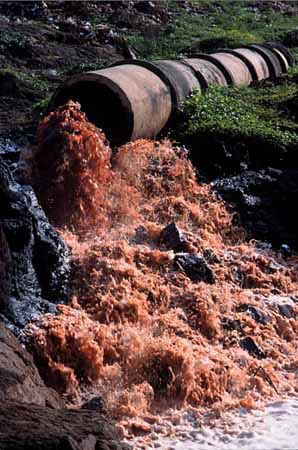
    Fountain Creek: Stormwater needs through Colorado Springs and El Paso County could total $1 billion

    fountaincreekwatershed.jpg

    From The Pueblo Chieftain (Chris Woodka):

    Stormwater needs in the Colorado Springs area could total more than $1 billion, while less than $10 million annually in funding is available from year to year. “This is not going to get done overnight,” said Springs Councilwoman Brandy Williams. “It took 30 years to get here, and I hope it won’t take 30 years to get out.”

    An El Paso County stormwater task force Thursday reviewed a partial list of about 500 capital projects in the Fountain Creek watershed with a price tag of more than $760 million, along with annual estimated maintenance needs of $7.5 million annually. The list includes incorporated areas and military bases, and does not factor in a possible $180 million more in projects in unincorporated El Paso County. It will be finalized at the task force’s final meeting in January. Colorado Springs has the greatest need, with $684 million in capital projects and $4.9 million in annual maintenance, while Fountain needs $46 million and the Air Force Academy $24.5 million in construction.

    “We will have identified $1 billion in needs and have only about $10 million budgeted,” said Tim Mitros, stormwater engineer for Colorado Springs. “What we’re going to have to look at in phase II is where the money is coming from.” Some concrete structures are more than 50 years old and reaching the end of their usefulness. New methods of controlling flooding are being explored, he added.

    The meeting also addressed the need for Colorado Springs to control its stormwater in order to turn on the $986 million Southern Delivery System. When SDS was approved by the Bureau of Reclamation and Pueblo County commissioners, a stormwater enterprise was in place. Stormwater funding is just one part of the requirement, said Mark Pifher, a Colorado Springs Utilities executive. The other major piece is a drainage criteria manual, which should be completed by the city of Colorado Springs next spring. “Our hope is that the drainage criteria manual will allow no increase in flows from new development, which would assure that conditions of the permit are met,” Pifher said.

    More coverage of Colorado Springs’ rehab work required by the Waldo Canyon Fire, from Chris Woodka writing for The Pueblo Chieftain:

    Colorado Springs Utilities will spend about $12 million reinforcing pipelines below Rampart Reservoir, already starting to wash out because of the Waldo Canyon Fire last summer. “Flood flows out of the area are greater than they were before the fire,” said Mark Shea, watershed planning supervisor for Colorado Springs Utilities. He made his comments at a stormwater task force meeting Thursday.

    The severity of flooding is 4 to 10 times worse, even for small storms and swells dry creeks to the point where they overflow their banks. Roads and bridges can be washed out as additional sediment clogs drainages.

    A back­up water supply main runs from Rampart Reservoir, north of the city, where 80 percent of Colorado Springs water is stored. While the reservoir itself will need some rehabilitation, the supply line is of paramount importance, Shea said. Another $25 million to $50 million will have to be spent to protect other parts of Colorado Springs where mud flows are likely in the wake of the fire.

    Ultimately, the sediment would find its way into Monument and Fountain creeks, creating problems for Colorado Springs at its wastewater treatment plant, landowners on Fountain Creek and Pueblo County. The ash from the fire already has caused water quality problems for downstream water users.

    The fire started June 23 and burned more than 18,000 acres, destroyed 350 homes and took two lives before it burned out in July. About 10,600 acres suffered moderate to high damage. Threequarters of the land is in the National Forest, but the impacts of flooding will be felt by area property owners.

    Based on the experience of the Hayman Fire in 2002, it could be years before the worst effects of the fire show up. So far, mulch of straw and wood chips has been spread on the most damaged hillsides to try to stem erosion.

    More Fountain Creek Watershed coverage here and here.

    Steamboat Springs is considering establishing a stormwater enterprise

    detentionpond.jpg

    From Steamboat Today (Scott Franz):

    Interim City Manager Deb Hinsvark said [November 8] that the scope of the fee, or whether it will be assessed at all, will depend on the results of a $180,000 infrastructure study of Steamboat’s bridges, culverts and dams that is expected to be completed by the end of this year…

    If a fee system is implemented, Steamboat would join several other growing Colorado municipalities that already charge residents a monthly bill to help pay for their own infrastructure upgrades. A March 2011 study conducted for the city of Greeley by AMEC engineering showed residents in 30 Front Range municipalities from Lakewood to Fort Collins typically were paying between $1.98 per month to $14.26 per month for stormwater infrastructure. Fort Collins represented the high end of the spectrum.

    More infrastructure coverage here.

    Eagle County: Beavers are impacting Brush Creek mitigation ponds

    beaverbwdrawing.jpg

    From the Eagle Valley Enterprise via Vail Daily (Derek Franz):

    The storm ponds are the main concern, however. They are a filtration system for water going back into Brush Creek from the Eagle Ranch development. By flowing from one pond to the next, pollutants such as fertilizers and petroleum are strained from the water before it goes into the creek.

    “The beavers had raised the water level of the ponds a little more than a foot over the weekend,” Boyd said last week. “I noticed that some sticks and debris from the bottom of the pond were piled over the grate (where water drained from one pond to the next).” The beavers were damming the outlets of the last two ponds. The final pond is only separated from Brush Creek by a narrow berm.

    “At that rate, it wouldn’t be long before the pond water washed out the berm and went straight into the creek,” Boyd said.

    The final pond is very clean, but it wouldn’t be that way if the pond above it washed out, as well.

    More restoration/reclamation coverage here.

    ‘It costs 10 times more to clean out a reservoir than to build a new one’ — Jon Monson

    miltonseamanreservoiroutlettunnel07252011.jpg

    From the Fort Collins Coloradoan (Bobby Magill):

    Experts from around the region painted an uncertain picture of the area’s water future Wednesday morning at Northern Water’s fall water user’s meeting in Greeley.

    As ash and silt continue their relentless descent into the Poudre River during even tiny rainstorms, Fort Collins will have to spend much more money on water filtration and purification in the coming years and potentially treat drinking water with additional chemicals to ensure the muck stays away from your faucet, Fort Collins water production manager Lisa Voytko said. The silt washing into Seaman Reservoir from the Hewlett and High Park wildfire burn areas could be costly to Greeley, said Jon Monson, the city’s water and sewer director…

    Voytko said she’s worried about spiking levels of total organic carbon in Poudre River water every time it rains. That’s because the carbon has to be removed with chlorine, a process that creates potentially toxic byproducts in drinking water that have to be removed at great expense. Polymers have to be used to remove the turbidity from the drinking water, and it’s expensive to dispose of the byproducts of that process, she said…

    The summer’s wildfires have clogged Fort Collins’ water intake structures on the Poudre River with sediment and debris, reducing their intake capacity. The sediment washing off the burn areas is so extreme that the city had to flush out its intake structures four times in September. Normally, the city flushes them once a year. Then there’s a concern all the silt and muck in the Poudre River and Seaman Reservoir could cause major algae blooms, further degrading the water quality and treatment expense, Voytko said.

    More water pollution coverage here.

    Fountain Creek: ‘The creek we used to play in is a filthy mess’ — Melissa Esquibel

    fountaincreekmonsoonjuly2012.jpg

    From The Pueblo Chieftain (Chris Woodka):

    A stormwater structure for Colorado Springs and the surrounding communities has to be in place before Southern Delivery System goes online. That’s a must for a downstream water district, and a top priority for Colorado Springs.
    Two members of the Lower Arkansas Valley Water Conservancy District board met Tuesday with two Colorado Springs City Council members to begin talks aimed at clearing the air on stormwater issues. The meeting was hosted by Pueblo County Commissioner Anthony Nunez; more meetings are expected.

    “I’m cynical. I grew up a block from Fountain Creek,” said Melissa Esquibel, a member of the Lower Ark board. “The creek we used to play in is a filthy mess.”

    “Waldo Canyon (Fire) has created a sense of urgency for you,” Nunez added. “We’ve had that sense of urgency for 100 years.”

    Colorado Springs council members Merv Bennett and Brandy Williams sat at the other end of the table and said they are diligently working on a regional stormwater solution. Bennett said the collections of $15 million per year that would have occurred under the now­ defunct stormwater enterprise may not have been enough to fix Fountain Creek. He touted the $28 million for stormwater in next year’s Colorado Springs budget and asked for patience and trust.

    “We’ll prove our trust by our behavior,” Bennett said.

    Jay Winner, general manager of the Lower Ark district, emphasized that the district met with a different set of council members in 2005, only to start over on the same issues now. He said Colorado Springs will be a regional water provider through SDS, which makes it imperative that Colorado Springs takes the lead in controlling flows into Fountain Creek.

    “We’ve set a lofty goal with the stormwater task force,” Williams said. “We have to establish what the region’s needs and expenditures are.”

    More Fountain Creek coverage here and here.

    Pueblo County DA Thiebaut is driving tighter standards for the Arkansas River ahead of increased streamflow from SDS

    sdspreferredalternative.jpg

    From The Pueblo Chieftain (Chris Woodka):

    Pueblo District Attorney Bill Thiebaut is challenging Pueblo’s response to water quality issues on the Arkansas River. In documents filed Tuesday by Thiebaut’s environmental attorney, John Barth of Hygiene, Thiebaut asked the Colorado Water Quality Commission to deny extension of temporary modifications for selenium and sulfate levels in the Arkansas River from Fountain Creek to Avondale. The commission will decide the matter at a Dec. 10 hearing.

    Thiebaut, who leaves office in January, said he filed the challenge because that reach of river will deteriorate from increased flows down Fountain Creek when Southern Delivery System goes on line. “We have serious water quality problems in Pueblo County that pose a threat to our health, economy and environment,” Thiebaut said. “The SDS system will only make our water quality problems worse.”

    Pueblo has requested temporary modifications for another five years, until 2018, after obtaining extensions from the original waiver in 1998.

    More Southern Delivery System coverage here and here.

    Fountain Creek: ‘Clearly, our work is not done’ — Helen Migchelbrink (Colorado Springs Public Works)

    fountaincreekwatershed.jpg

    From The Pueblo Chieftain (Chris Woodka):

    Last summer’s Waldo Canyon Fire may rearrange funding priorities for stormwater containment in El Paso County, but downstream interests still are pushing Colorado Springs to honor its past commitments. A stormwater task force formed in August is trying to sort out funding resources and needs throughout the Fountain Creek watershed by January, in an effort to begin addressing massive needs that total more than $500 million.

    “Clearly, our work is not done,” said Helen Migchelbrink, Colorado Springs director of public works. “Next year, we have $28 million worth of work to do. We’re going to be looking at more creative solutions.” The Waldo Canyon Fire, which burned more than 18,000 acres, has increased potential flood severity on both the Upper Fountain and Monument Creek.

    That’s a good start, said Pueblo County Commissioner Jeff Chostner, who attended the task force meeting to make sure that past commitments by Colorado Springs are not simply shifted into the stormwater category. He also urged the task force to coordinate its efforts with the Fountain Creek Watershed Flood Control and Greenway District. “How does this fit in with the Pueblo County 1041 permit for Southern Delivery System?” he asked at the meeting.

    Gary Bostrom, chief of water services for Colorado Springs Utilities, assured Chostner the $75 million for sewer line fortification and $50 million for flood control on Fountain Creek remain separate commitments.

    Colorado Springs on Friday released a broad outline of $27.7 million in projects next year that involve stormwater control or planning. That follows the task force’s line of reasoning in getting all El Paso County communities to identify resources.

    The group also is looking back, trying to determine what the nowdefunct stormwater enterprise accomplished — watershed planning, project priorities and maintenance activities — when it was funded from 2007­09.

    More coverage from Amy Gillentine writing for the Colorado Springs Business Journal. Here’s an excerpt:

    The money ($27.7 million) will be spent on:

    – $ 2 million in capital projects funding, including the Mirage channel near Rampart High School and Cottonwood creek grade-control structures between Academy and Union.

    – $2.09 million transferred from the now-defunct Springs Ranch General Improvement District. The money will be used for two detention ponds north of Woodmen Road.

    – $3 millionfrom a pre-disaster mitigation grant for the Greencrest Channel. The project will stabilize the channel in order to allow the Austin Bluffs project to move forward. Widening Austin Bluffs west of Academy will be paid for through money from the Pikes Peak Regional Transportation Authority.

    – $3 million pre-disaster mitigation grant for Cottonwood Creek at Vincent Drive. The project will stabilize the creek, protecting the Vincent Drive bridge upgrade.

    – $509,500 for street division operations and maintenance.

    – $980,000 for salaries and benefits for the public works and city engineer’s stormwater staff.

    – $592,315 for public works and city engineering stormwater operations, including expenses.

    In addition, the city will use money from grants related to the Waldo Canyon fire to mitigate stormwater issues in the burned area:

    – $461,547 National Resources Conservation Service – Emergency Watershed Protection Program grant for Navigators.

    – $75,000 National Resources Conservation Service – Emergency Watershed Protection Program grant for Flying W Ranch.

    – $30,000 2012 fire relief fund grant for debris racks south Douglas Creek.

    – $25,000 2012 fire relief fund grant for the spillway at Autism Pond.

    – $24,795 Colorado Post – Wildfire Flooding Early Warning Grant (Camp Creek).

    Colorado Springs Utilities (CSU) proposed 2013 budget items related to Stormwater Management:

    – $6.2 million for storm runoff mitigation for fire impacts.

    – $2.7 million to protect utilities infrastructure.

    – $1.5 million for proactive watershed management.

    Update: From The Pueblo Chieftain (Chris Woodka):

    Last summer’s Waldo Canyon Fire has pulled in resources for dealing with stormwater in Colorado Springs, but more needs to be done for impacts of development on Fountain Creek, an area water leader said Thursday.

    “Colorado Springs is about to learn what sediment is, but those of us downstream have been dealing with it for 100 years,” said Jay Winner, manager of the Lower Arkansas Valley Water Conservancy District. “We will do everything we can to help with the impacts of the Waldo Canyon Fire, but Colorado Springs has to live up to its commitments on Fountain Creek.”

    Lower Ark and Colorado Springs officials plan to meet next week to talk about resolving differences between the two entities dating to 2005. Both have been in contact with the Bureau of Reclamation regarding the Lower Ark’s request in August to reopen an environmental impact statement on the Southern Delivery System. The original EIS, as well as Pueblo County’s 1041 permit for SDS, included.

    More stormwater coverage here and here.

    Colorado Springs plans to spend $28 million on stormwater next year, critics do not see a long-term committment

    fountaincreek1999floodcwcb.jpg

    From The Pueblo Chieftain (Chris Woodka):

    Colorado Springs plans to spend $28 million next year on stormwater issues, but local critics say it’s mainly a reaction to last summer’s devastating Waldo Canyon Fire and not a long­term fix for future damage. “It’s a start, but they still need to find a sustainable revenue stream in the future,” said Jay Winner, manager of the Lower Arkansas Valley Water Conservancy District.

    City Councilwoman Brandy Williams shared the list of projects with the Fountain Creek Watershed Flood Control and Greenway District board Friday.

    Among the projects are $2 million for the Mirage Channel, which has attracted attention in Colorado Springs media; $2 million in transferred funds from a defunct improvement district; $6.6 million in federal grants, matched by $2.2 million in local funding for stabilizing tributaries; $2 million for street and stormwater staff and programs and $12.8 million for Colorado Springs Utilities fire mitigation or stream fortification projects. About $7 million directly addresses Waldo Canyon drainage stabilization.

    “This is a beginning to a continuous process,” said Pueblo County Commissioner Jeff Chostner, who chairs the Fountain Creek board. “As commissioners, we’ve tried to talk to (Colorado Springs) Mayor Steve Bach about the stormwater issues, but he hasn’t met with us to explain anything.”

    Chostner plans to attend a meeting of the El Paso County stormwater task force next week, as it reviews area responses to stormwater needs.

    Winner said it appeared Colorado Springs is shifting city functions like streets, utilities infrastructure and response to the Waldo Canyon Fire into stormwater, rather than strictly addressing issues once covered by the nowdefunct stormwater enterprise.

    “As I look through the list, I don’t think it’s a solution to fix Fountain Creek for the benefit of Pueblo,” Winner said. “I hope in the future they are as concerned with the downstream stormwater needs as they are their own.”

    Pueblo County and the Lower Ark district have asked for annual Colorado Springs stormwater funding levels of at least $15 million.

    More coverage from Daniel Chacón writing for The Colorado Springs Gazette. Here’s and excerpt:

    The city and the public utility issued a joint news release Friday outlining their proposed stormwater-related expenditures in 2013. The funding includes $7 million to address impacts caused by the Waldo Canyon fire and $980,000 in salaries and benefits for employees who work explicitly on stormwater projects.

    “I am pleased that our staff has been able to find additional resources for the city’s critical stormwater needs and will be coordinating with Colorado Springs Utilities to ensure their funding is also directed at the most urgent stormwater needs,” Mayor Steve Bach said in a statement.

    For months, Bach advocated Utilities’ financial involvement in funding stormwater, which the four-service utility said it was already doing.

    Helen Migchelbrink, the city’s public works director and city engineer, said the stormwater spending for 2013 was released in anticipation of a meeting Tuesday of a task force that will look at stormwater funding regionally…

    Chairman Anthony Nuñez and Commissioner John Cordova said they wanted to review the city’s list of projects before saying whether the funding was sufficient. But both said Colorado Springs has a long way to go.

    Utilities obtained a permit from Pueblo to build the Southern Delivery System water pipeline with the promise to address stormwater needs.

    “I realize it’s tough times, but with $500 million worth of needs … it seems a little shy,” Cordova said.

    From The Pueblo Chieftain (Chris Woodka):

    Jane Green, who owns property on Fountain Creek south of Fountain, has become a regular at meetings of a district designed to fix the troubled waterway. She’s spoken to the board several times since a flood washed out a levee protecting her home in September 2011, without many clear­cut suggestions about how to go about fortifying the bank before the next wave of water hits. But Friday, the Fountain Creek was moved to begin taking action to help her and other landowners who experience erosion or flooding from sudden storms on the creek.

    “I think we can move forward on this,” said Richard Skorman, a Colorado Springs businessman who sits on the board of the Fountain Creek Watershed Flood Control and Greenway District.

    Ferris Frost, another woman who owns land in the creek channel and a member of the district’s citizens advisory committee, showed the board slides of her own property. A logjam 100 feet wide by a quarter­mile long clogged an irrigation headgate last year. The creek has cut away 50­foot cliffs over the last three decades. “Jane Green has been to the district three times this year, and found no one to help,” Frost said. “It should be one of our functions.”

    The district did tell her to contact the Corps of Engineers and Natural Resources Conservation Service for help in repairing the levee, and got a permit to do work in the stream, but she had to line up her own materials. The concrete chunks thrown in the creek as a stop­gap measure go against the plans, which were developed during years of meetings leading up to the formation of the district in 2009.

    Jay Winner, manager of the Lower Arkansas Valley Water Conservancy District, said state funds for stream stabilization projects went unused last year. The funds are available for public entities like the Fountain Creek district, but not landowners. Board chairman Jeff Chostner set up a special committee to look into options for grants and programs the district can use to help landowners.

    From The Pueblo Chieftain (Chris Woodka):

    A board dedicated to fixing Fountain Creek took a few more baby steps toward finding permanent funding last week, tempering the desire to get things done with finding the right approach to voter approval. “As I said before, let the discussion begin,” said Pueblo County Commissioner Jeff Chostner, chairman of the Fountain Creek Watershed Flood Control and Greenway District. “There are going to be a lot of nuances.”

    Chostner has prodded the board throughout the year to talk about the timing of asking voters for a mill levy. The district’s funds are dwindling, and the only funding in sight is a one-time payment of $50 million to the district in 2016, if Southern Delivery System is online by that time. The district also must ask voters to suspend Taxpayer’s Bill of Right provisions on revenue growth to receive even that money, said general manager Larry Small. Under the 2009 legislation creating the district, which includes all of Pueblo and El Paso counties, the district can assess a tax of up to 5 mills. There are also provisions for subdistricts — a potential way to fund stormwater, for instance — in just parts of the area that would not affect the mill total, Small said.

    The board got some more tools to work with as its discussions continue:

    – The Trust for Public Land agreed to provide advice and technical assistance in a survey of voters regarding the timing and wording of a ballot issue.

    – Sample language for a ballot issue, including stating the district’s objectives, was presented. Flood prevention, water quality, drainage, open space, recreation and wildlife were included.

    – Financial projections show the assessed valuation is $6.32 billion in El Paso County, and $1.56 billion in Pueblo County, or $7.88 billion total. Each mill would raise $7.88 million, representing an annual payment of about $20 for a $250,000 home, or $145 for a $500,000 business.

    More stormwater coverage here and here.

    Colorado Springs: Stormwater proposal = $12.8 million to protect Colorado Springs Utilities’ infrastructure

    October 18 — Happy Birthday Clean Water Act

    arkansasriverbasin.jpg

    From The New York Times (Robert B. Sempla Jr.):

    Thursday, Oct. 18, marks the 40th anniversary of the Clean Water Act, a critical turning point in the nation’s efforts to rescue its rivers, streams, lakes and wetlands from centuries of industrial, municipal and agricultural pollution. But what should be a moment of celebration is also a moment of apprehension: Republicans in the House have spent the last two years trying to undercut the law, and should they gain control of the White House and Congress in next month’s elections, they could well succeed.

    These same Republicans are either ignorant of their political heritage or have no use for it. Richard Nixon, a savvy Republican who appreciated the raw force behind an environmental movement that had coalesced only two years before around Earth Day, was among those pushing hardest for the law. Nixon sent a clean water bill to Congress, then vetoed the final product on Oct. 17 after it had nearly doubled in size, forcing Congress to override the next day. But he did so on budgetary grounds, not because he objected to its substance. “The pollution of our rivers, lakes and streams degrades the quality of American life,” he said. “Cleaning up the nation’s waterways is a matter of urgent concern to me.”

    More Clean Water Act coverage here.

    Buy a water bottle from regrowco.org and help restore the Waldo Canyon Fire burn scar

    waldocanyonfiremanitouspringstwitter.jpg

    From Fox21News (Sade Malloy):

    The Colorado Springs firefighters that worked tirelessly to spare our community from the most devastating fire in Colorado history are now working to replant and regrow the area it destroyed.

    “I’m new to the community and it really just meant a lot to see how the community came together and helped support,” Laura Trivett a Colorado Springs resident said.

    Colorado Springs locals have shown their support for the cause, and bought 1,000 water bottles off of http://www.regrowco.org.

    But now that they’re narrowing in on their goal of selling 1,600 water bottles, a two-man crew with the Colorado Springs Professional Firefighters Local 5, worked the Women’s Expo Saturday to help push their sales and spread the world.

    “I just think they did amazing work and I wanted to support them,” Bruce Roderick, a Colorado Springs resident said.

    More Fountain Creek Watershed coverage here and here.

    Colorado Springs to pony up $15.5 for infrastructure protection and stormwater projects in 2013

    waldocanyonfirecoloradosprings06262012chieftain.jpg

    From The Pueblo Chieftain (Chris Woodka):

    While Colorado Springs continues to meet with El Paso County and other communities on stormwater solutions, some of the money in its general fund and utilities budgets will be going to meet stormwater needs.

    The city budget includes $2.5 million for critical stormwater projects, basically maintaining drainage systems to meet permit requirements.

    Meanwhile, Colorado Springs Utilities has included $13 million in its budget to protect infrastructure from flooding.

    However, until the stormwater task force completes its assessment, it’s unknown how much of the funding could be applied toward the $500 million backlog in stormwater projects. “It is our understanding that the primary purpose of most of the projects that make up the city’s backlog is to improve local drainage conditions and repair and improve local infrastructure, for example, bridges, streets and culverts,” said Janet Rummel, spokeswoman for Utilities.

    About $6 million of the money for stormwater projects in Utilities’ budget would go toward protecting infrastructure from runoff from the Waldo Canyon Fire burn area. Another $2.4 million would go toward realignment of Fountain Creek near Pikes Peak International Raceway, a condition of the Pueblo County SDS permit. Utilities would spend $2.7 million to fortify lines within waterways.

    “Utilities does not have direct oversight for stormwater management in Colorado Springs,” Rummel said. “However, we have a history of investing in improvements along area waterways, while partnering with the city, when there is a nexus to protecting utilities infrastructure.” Mayor Steve Bach, who has proposed that Utilities could find $15 million for stormwater in its $1 billion budget. Utilities, which is governed by City Council, maintains that its services are limited to water, wastewater, gas and electric, but not stormwater.

    More Colorado Springs Utilities coverage here.
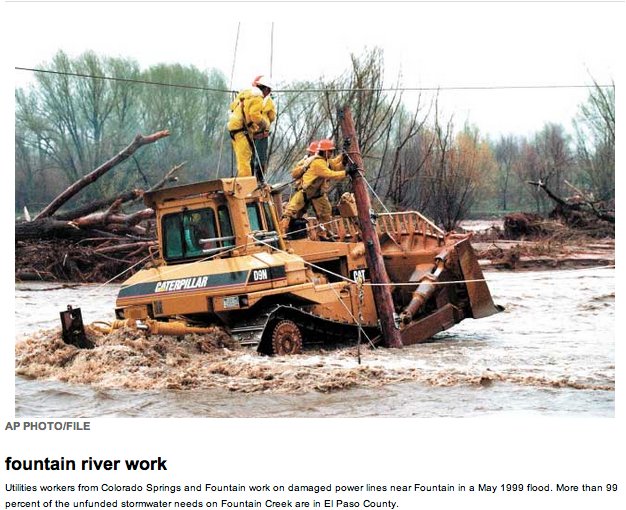
    Fountain Creek: Colorado Springs Utilities $2 million 2013 budget for stormwater ‘woefully inadequate’ — Jeff Chostner

    dirtatracterfountaincreekchieftain07302011.jpg

    From The Pueblo Chieftain (Chris Woodka):

    Pueblo County commissioners are concerned that Colorado Springs is not spending enough money on stormwater
    issues, as it promised to do when obtaining county permits for the Southern Delivery System. “I was given information at the Fountain Creek district meeting Friday that Colorado Springs is looking at only $2 million in its budget next year,” said Commissioner Jeff Chostner. “That’s woefully inadequate.”

    Chostner said part of the reason for that may be because restoration for the Waldo Canyon Fire in June and July is estimated to be $10 million-$15 million. “That money will have some impact on stormwater, but we need solutions for the long-term welfare of the watershed,” he said. The concern is that flows on Fountain Creek will increase when SDS goes online.

    Commissioner Anthony Nunez, who also sits on the Lower Arkansas Valley Water Conservancy District board, agreed with Chostner that Colorado Springs needs to be spending more on stormwater mitigation. “We have not seen the Colorado Springs budget, but we’ve got to force it to where they’re going to do something,” Nunez said.

    The Lower Ark board has sent two letters to the Bureau of Reclamation requesting a supplemental environmental impact study to look at stormwater.

    “We’re telling Colorado Springs that until you have stormwater, you The Colorado Springs City Council eliminated its stormwater enterprise in 2009, following voter approval of a Doug Bruce measure protesting a “rain tax.” City Attorney Chris Melcher told council earlier this year that the city is obligated by SDS requirements to spend $13 million-$15 million annually toward its $500 million backlog in stormwater projects.

    More Fountain Creek Watershed coverage here and here.

    Funding running out for the Fountain Creek Watershed Greenway and Flood Control District — mill levy vote needed?

    fountaincreekwatershed.jpg

    From The Pueblo Chieftain (Chris Woodka):

    Efforts to fund a district devoted to improving Fountain Creek have to be stepped up, Pueblo County commissioner Jeff Chostner said Friday. “I’m trying to push this, because this district has such potential,” Chostner told the Fountain Creek Watershed Flood Control and Greenway District board. “I’m trying to start the discussion because I feel like we’re treading water.”

    Chostner, who won the Democratic primary for district attorney and faces no competition in the November election, will likely leave the Fountain Creek board in January. That’s given him a sense of urgency in working toward his goal, announced earlier this year, of developing a mill levy proposal to take to voters.

    The district faces the prospect of operating in the red by the end of next year if more funding cannot be found.

    More Fountain Creek coverage here and here.

    Brush: City Council approves stormwater rate hike

    brush.jpg

    From the Brush News-Tribune (Katie Collins) via The Fort Morgan Times:

    Stormwater rates will experience a three-cent hike as of Oct. 1, meaning that owners or occupants of property in Brush will see an increase to their city bill near the end of October.

    The rate hike follows on the heels of the city’s Stormwater Activity Enterprise, established by a previous ordinance that assigned that enterprise the fiscal responsibility for both street cleaning and stormwater system maintenance and operation.

    With Brush looking to tackle not only drainage issues downtown, but in four other areas of the municipality, the increase will aid in providing funding for such projects.

    Although the City of Brush did not raise stormwater rates in 2011, the three-cents per lineal foot hike has generally been an annual increase and this move will set rates from the previous $.16 per month per lineal foot of a property’s frontage to $.19.

    Fountain Creek: Uncontrolled Colorado Springs stormwater funneled to Pueblo

    fountaincreekflood1999apviachieftain.jpg

    From The Pueblo Chieftain (Chris Woodka):

    New rule of thumb: An inch of rain in Colorado Springs equals a foot rise for Fountain Creek in Pueblo. And corresponding demands for stormwater control.

    “It’s one big funnel,” said Jay Winner, manager of the Lower Arkansas Valley Water Conservancy District. “Because Colorado Springs is unable to control its stormwater, it all flows very quickly into that narrow area we call Fountain Creek. Geographically, it’s a tight funnel that fills up very fast.”

    Sites throughout Colorado Springs received anywhere from 0.7 to 1.4 inches of rain that fell throughout the city, heaviest over the Waldo Canyon burn scar, which increases the amount of mud. About 12 hours later, Fountain Creek changed from a meandering stream to a full-blown dirty river in Pueblo, with the level increasing by one foot.

    More Fountain Creek coverage here and here.

    NWS: South Platte River’s response to today’s rain event

    Brush: Council raises stormwater rates

    chyennewyomingflood08011985.jpg

    From the Brush News-Tribune (Katie Collins) via The Fort Morgan Times:

    Stormwater rates will experience a three-cent hike as of October 1, meaning that owners or occupants of any real property in Brush will see an increase to their city bill near the end of October. The rate hike follows on the heels of the city’s Stormwater Activity Enterprise, established by a previous ordinance that assigned that enterprise the fiscal responsibility for both street cleaning and stormwater system maintenance and operation. With Brush looking to tackle not only drainage issues downtown, but in four other areas of the municipality, the increase will sufficiently aid in providing funding for such projects. Although the City of Brush did not raise stormwater rates in 2011, the three-cents per lineal foot hike has generally been an annual increase and this move will set rates from the previous $.16 per month per lineal foot of a property’s frontage to $.19 cents.

    More stormwater coverage here and here.

    Runoff contamination in the Cache la Poudre River from the High Park Fire is causing a supply problem for Greeley Water

    cachelapoudrehighparkpollutionusdaseptember2012.jpg

    From KUNC (Kirk Siegler):

    John McCutchan of Greeley Water says since the High Park Fire, area water managers have had to throw out the book on how they treat water coming from the Poudre River.

    “It’s new for us to have to be watching the Poudre night and day. We’re all faced with the same situation.”

    Many Northern Colorado water utilities are tied to the Poudre. And McCutchan says Greeley’s water rights on the river are too important to “Let go down stream. Especially in a drought period.”

    McCutchan is the Superintendent of Greeley’s Bellevue Water Treatment Plant which filters water from the Poudre River -a key source for Greeley’s drinking supply.

    The normally “pristine” Poudre is the cleanest source of water in the country, McCutchan says. But since the recent fires, the river has been running black with ash and other contaminants. And that has the potential to clog up the Bellevue Plant…

    But runoff from the scorched-black earth around the Poudre has sent large particles of ash along with increased levels of iron and manganese swirling down the river.

    If massive amounts of these contaminates were allowed to enter the filtration system, it could render the holding ponds useless because they’d quickly fill up with sludge and sediment.

    To help mitigate any damage and very costly repairs, Greeley has limited its intake of Poudre River water to just 5 percent after the fire compared to an average of 25 percent for this time of year…

    This means the city of Greeley and John McCutchan are going to have to take a hard look at what’s going to happen when they’re forced to rely more heavily on the contaminated Poudre.

    “Everyone has had the same kind of problems. You can remove most of the contaminates, but some of the compounds that bring the taste and odor issues, the smoky flavor, are very difficult to remove.”

    The city of Fort Collins has just started blending water from the Poudre back into its supplies. Each water utility knows that things will change depending on rain and the subsequent runoff into the Poudre. They’re also looking ahead to next spring and the annual winter snow melt, and what that runoff will mean for the river and next year’s water supply.

    More Cache la Poudre River coverage here and here.

    The Fountain Creek Watershed Flood Control and Greenway District hopes to set up a funding mechanism for the district

    fountaincreekwatershed.jpg

    Good luck. Here’s a report from Chris Woodka writing for The Pueblo Chieftain. From the article:

    The Fountain Creek Watershed Flood Control and Greenway District followed up on a suggestion by board member Richard Skorman and voted unanimously Friday to ask the Trust for Pueblo Land for technical advice on how to set up a funding mechanism for the district.

    El Paso County Commissioner Sallie Clark brought up the possibility that the district could be the funding mechanism for stormwater efforts in that county, if different mill levies could be assessed for the two counties. She acknowledged that Pueblo County does not want to, and should not have to, pay for projects that are El Paso County responsibilities.

    Executive Director Larry Small said those types of questions are what the district would ask the land trust to sort out.

    From The Pueblo Chieftain (Chris Woodka):

    This week, the Waldo Canyon Burned Area Emergency Response team began aerial mulching with straw and shredded wood, which is expected to reduce runoff and sediment by 20 percent on about 3,000 acres in the most badly burnt areas. “This treatment should reduce the immediate response following a storm to give people time to safely get to higher ground in areas that could be impacted by increased water and sediment flows,” said hydrologist Mary Moore.

    The team, which includes the U.S. Forest Service, Colorado Springs, El Paso County and other agencies, is also working on long-term restoration efforts, Mark Shea of Colorado Springs Utilities told the Fountain Creek board.

    More Fountain Creek coverage here and here.

    South Park: The BLM is gearing up for expanded oil and gas activity

    aspenssouthpark0909.jpg

    From The Denver Post (Bruce Finley):

    …Aurora Water, local authorities and conservationists are pushing back, demanding careful planning before any land is leased…

    “We want to preserve our environment, our water quality, our air quality, our wildlife corridors, our wildlife and fisheries,” [Park County administrator Tom Eisenman] said. “Our economy is based on recreation.”

    Aurora Water wants a 1-mile buffer around Spinney Reservoir, utility spokesman Greg Baker said. “We’re concerned about surface contamination,” he said.

    The leases being considered for early next year would allow drilling on 2,850 acres, including land within a half mile of Spinney, the large reservoir that holds water for Aurora.

    SDS: ‘It seems like Colorado Springs Utilities and city officials are doing a lot of talking’ — Jay Winner

    sdspreferredalternative.jpg

    From The Pueblo Chieftain (Chris Woodka):

    The Lower Arkansas Valley Water Conservancy District has made a formal request to the Bureau of Reclamation to reopen environmental studies for the Southern Delivery System because the 2008 study assumed a Colorado Springs stormwater enterprise was in place…

    “It seems like Colorado Springs Utilities and city officials are doing a lot of talking,” said Jay Winner, general manager of the Lower Ark district Wednesday. Forming a regional task force isn’t enough, he said. “They talk as if this could be done by the end of the year, but that’s not going to happen. While they meet with a task force, we’re the ones who suffer.”

    Last week’s letter identified broad concerns about the repeal of the stormwater enterprise, while this week’s letter from Peter Nichols, attorney for the district, deals with more specific points related to SDS documents. The letter points out that the $15 million annually generated by the former stormwater enterprise would have been sufficient to cover the nearly $500 million in backlog of stormwater projects and maintenance identified in Colorado Springs. “Reclamation has a continuing duty to analyze significant changes in conditions that affect the environment and that call into question the original decision,” the letter stated.

    More Southern Delivery System coverage here and here.

    El Paso County Communities stormwater funding falls short

    floodcontrolchannelerosionbriargatecspringschieftainjuly2012.jpg

    From The Pueblo Chieftain (Chris Woodka):

    At a kickoff event for a stormwater task force on Tuesday, they stressed the need to educate residents about the impact of stormwater on people’s daily lives…

    In unincorporated areas of the county that have been built up, such as Security and Widefield, there are no underground storm sewers.

    While Colorado Springs has nearly $500 million in unfunded stormwater needs, there are an estimated $100 million more in other areas of El Paso County along Fountain Creek. In addition, a potential $150 million in projects are contemplated by the Fountain Creek Watershed District.

    Pueblo has $85 million in identified long-term projects that are being funded through its stormwater enterprise.

    More coverage from Daniel Chacón writing for The Colorado Springs Gazette:

    “For decades, there have been discussions about stormwater in this area,” El Paso County Commission Chairwoman Amy Lathen said during the so-called Sand Creek Summit, where officials met under a tent next to the creek near Airport Road…

    Officials chose Sand Creek for the summit to show erosion problems there that include, among other things, exposed Utilities lines. Various agencies are pooling resources to address the problems there.

    A regional stormwater task force that met for the first time last week plans to compile a list by the end of the year of the infrastructure capital improvement needs in the region and how much money each government entity can contribute to address the problem, said City Councilwoman Brandy Williams. The task force’s next meeting is in September.

    More stormwater coverage here and here.

    It turns out that Colorado Springs did need a stormwater enterprise after all: The search for $millions continues

    floodingcoloradospringsjune62012.jpg

    From The Pueblo Chieftain (Chris Woodka):

    Chris Melcher, city attorney for Colorado Springs, reiterated Tuesday that he believes the city needs to fund $13 million-$15 million annually in stormwater maintenance or improvements to meet the conditions of 2009 SDS agreements with Pueblo County and the federal Bureau of Reclamation. Those agreements are embodied in the 2010 SDS contract. Since March, when Melcher first gave that opinion, the Pueblo County commissioners have asked for at least $15 million in next year’s budget, and the Lower Arkansas Valley Water Conservancy District suggested $18 million$20 million is needed…

    Mayor Steve Bach has asked Utilities to find $15 million in its budget for stormwater next year. Utilities, which answers to City Council, not the mayor, does not operate a stormwater utility, but maintains that some of its budget goes to stormwater projects.

    More stormwater coverage here and here.