
Happy Pi Day!

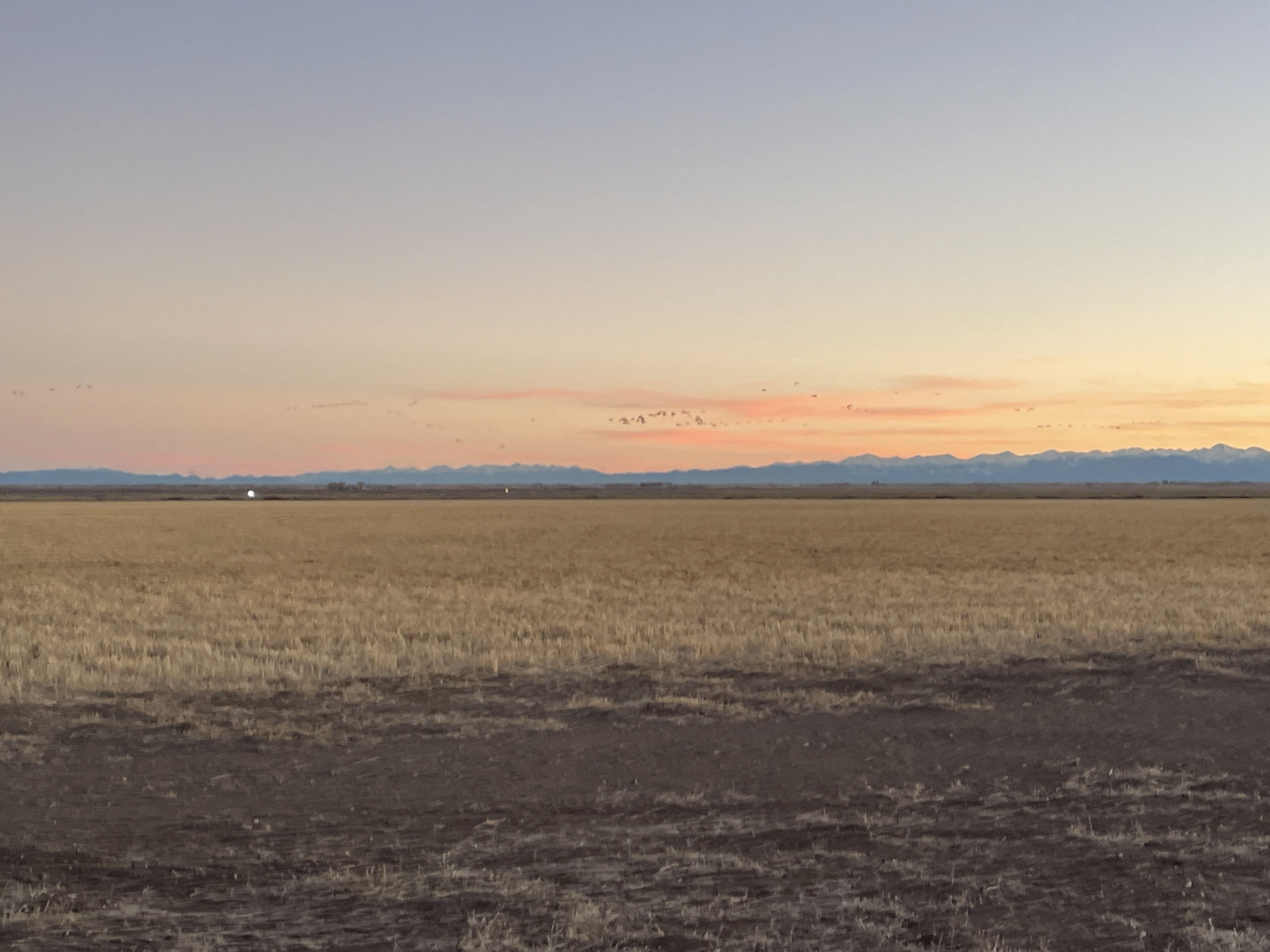
We woke up to clear skies and very cold temperatures (6°F) for Sandhill crane viewing on March 8, 2026. The Sandhills spend the night on the ground, usually in shallow water as they do not perch, and then start stirring and looking for a good breakfast spot like the field in the foreground in the photo above.
Charging during the festival was easy as pie at the Colorado Welcome Center in Alamosa. For the trip home I charged in Salida (excellent food at Mojo’s Eatery) and Bailey. Charging to and from the San Luis Valley from Denver is convenient and reliable. There is no reason any longer in Colorado to drive a vehicle with a tailpipe and pollute the atmosphere.
Here’s a writeup from The Alamosa Citizen:
Monte Vista saw big crowds for the 43rd annual Crane Festival. The Outcalt Event and Conference at Ski Hi Complex was teeming with people participating in the crane tours and nature work sessions. The retail vendors reported healthy sales. The sandhill cranes themselves didn’t disappoint. The majestic long-legged creatures were in the tens of thousands in the fields around the Monte Vista Wildlife Refuge. The cranes will stick around a bit longer.
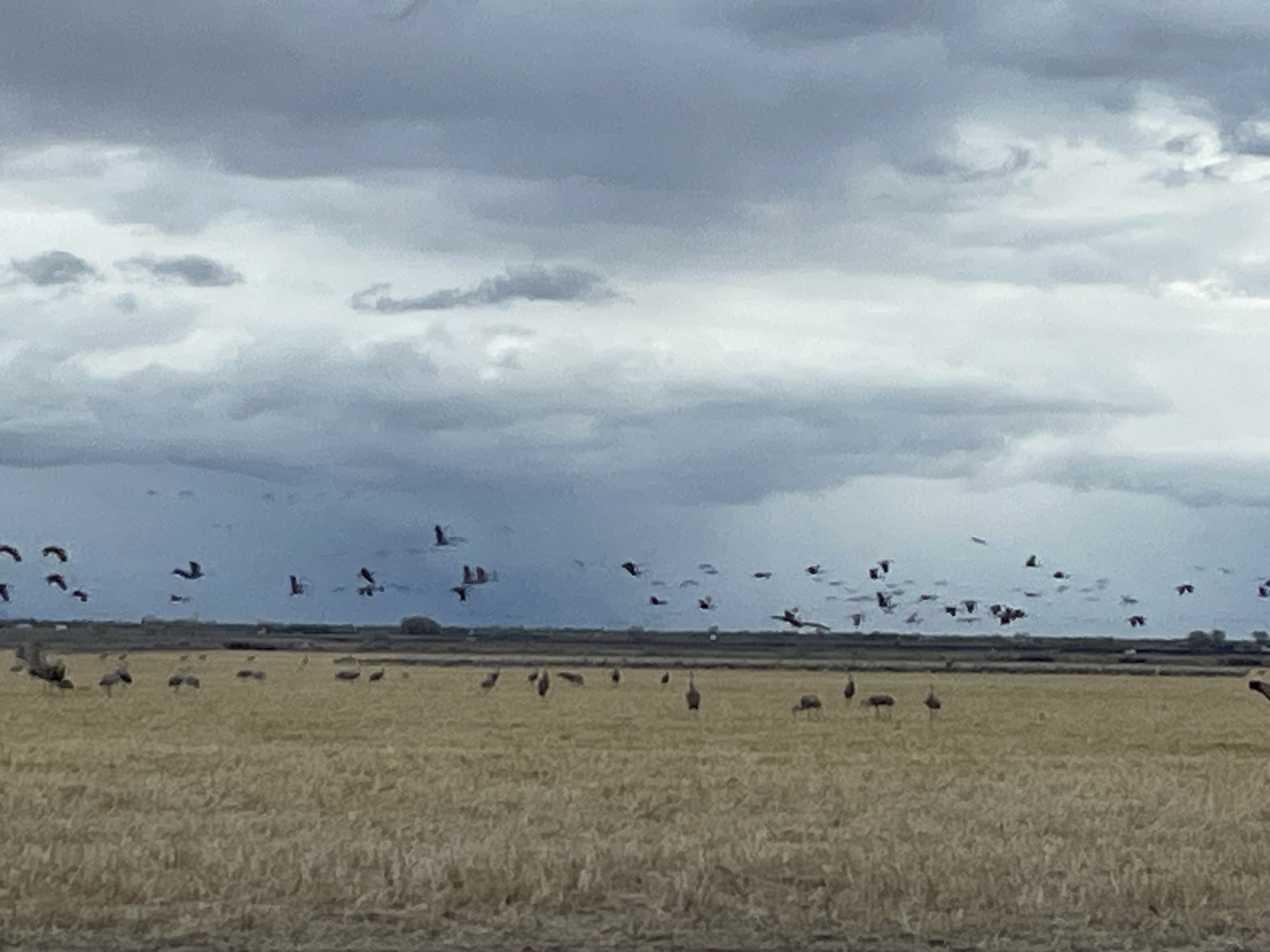
I’m in the San Luis Valley for the 2026 Monte Vista Crane Festival. The Sandhills were very active this morning off Road 8S in the Monte Vista National Wildlife Refuge.
I charged in Pueblo and Cañon City on the way here. It is a breeze charging between Denver and Alamosa, even if you need a CHAdeMO connector like my Nissan Leaf. (Posting will be intermittent this weekend because the Wi-Fi signal in my hotel room is very weak. I posted this from the hotel lobby.)
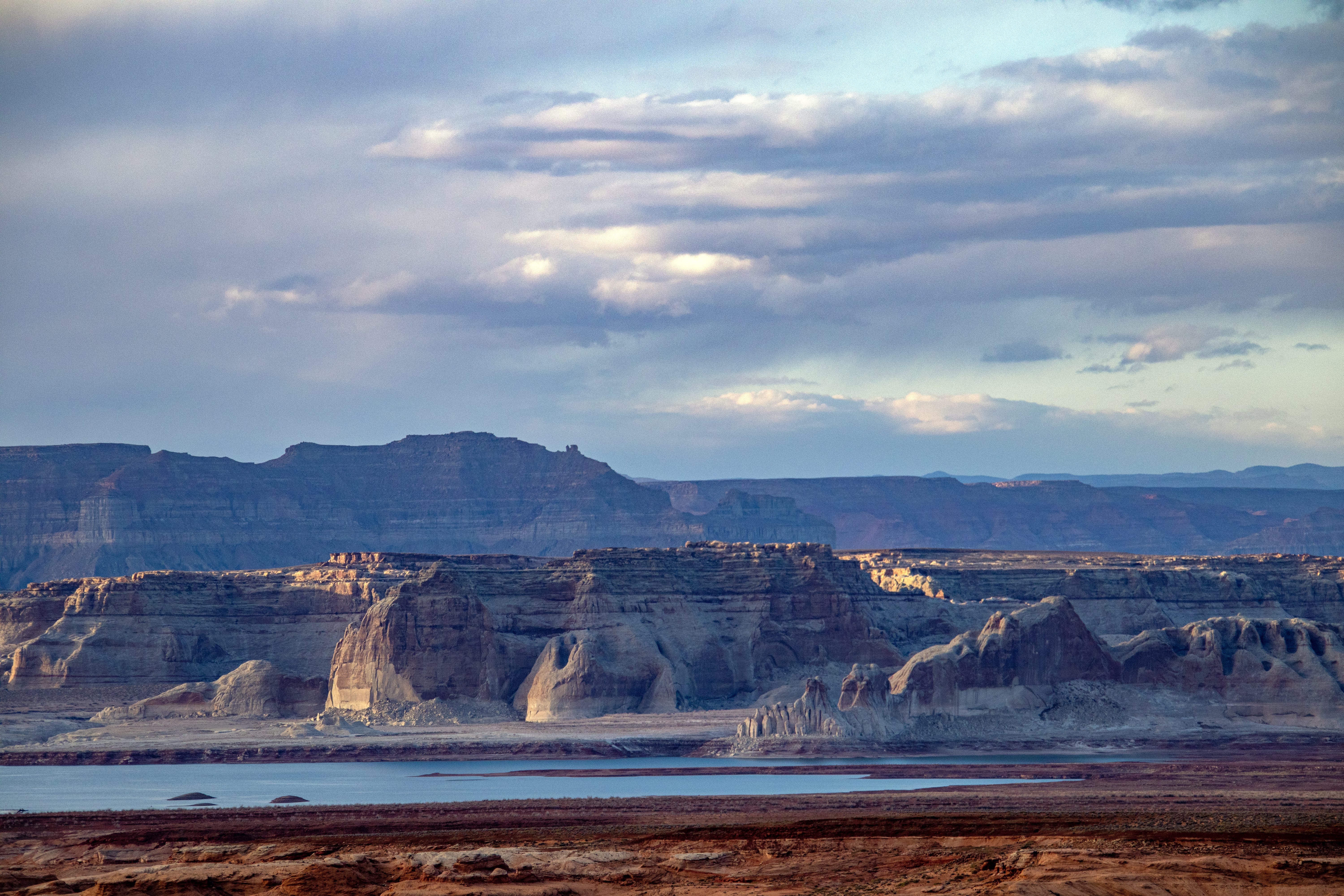
Click the link to read the article on The Land Desk website (Jonathan P. Thompson):
February 6, 2026
🌵 Public Lands 🌲
Sen. Mike Lee, the MAGAt from Utah, appears to be vying to be the most anti-public land politician in history. The Trump sycophant was, of course, behind last year’s congressional bids to sell off public land to real estate developers and various other schemes. His latest assault is the Historic Roadways Protection Act, which passed through a Senate committee yesterday. It would block the Bureau of Land Management from “closing historical roads” and implementing travel management plans across a broad swath of federal lands in Utah until a federal court rules on thousands of county RS-2477 claims.
RS-2477 is an 1866 statute that allowed highways to be constructed across federal lands to access mining claims and homesteads. It was repealed in 1976 when Congress passed the Federal Land Policy Management Act, or FLPMA. But FLPMA grandfathered in existing “highways” that had been constructed under RS-2477. In 2010 and 2011, Utah and its counties filed some 12,000 RS-2477 claims on about 35,000 miles of “highways” on federal lands, many of which are no more than old livestock tracks, in hope of gaining control of the paths so they can grade them, widen them, and even pave them. Settling all of these claims could take decades, meaning Lee’s bill would essentially be banning the BLM from managing travel on these areas forever.
Albert Bacon Fall, the New Mexico Senator and disgraced Interior Secretary under President Warren G. Harding still has my vote for the most anti-public land politician. But maybe that’s because Fall was actually a colorful character. Lee’s most interesting trait is that he holds Jell-O socials in his Capitol office.
Longread: The F%$^hell Canyon Saga — Jonathan P. Thompson
Oil, milkshakes, and DRAINAGE! — Jonathan P. Thompson
One of the things I like about Page, Arizona, are the weird and ubiquitous contrasts that characterize the place. There’s the surreality of a lakeside city in the desert and the striking juxtaposition of golf course greens against stone. But perhaps the most jarring of all is the sensation of wandering Safeway’s aisles in a distinctly American town and hearing fellow patrons speaking languages from all over the world.
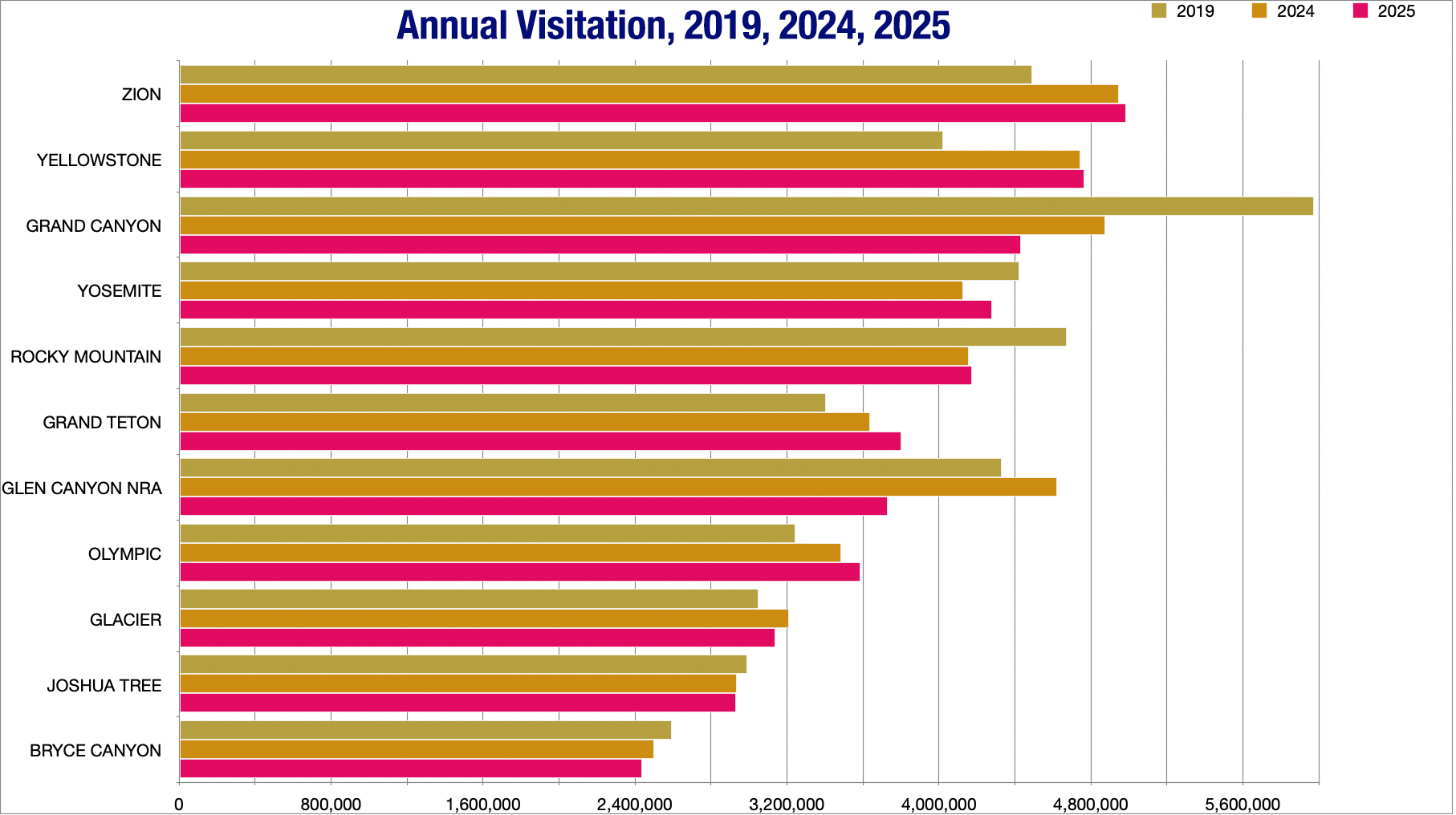
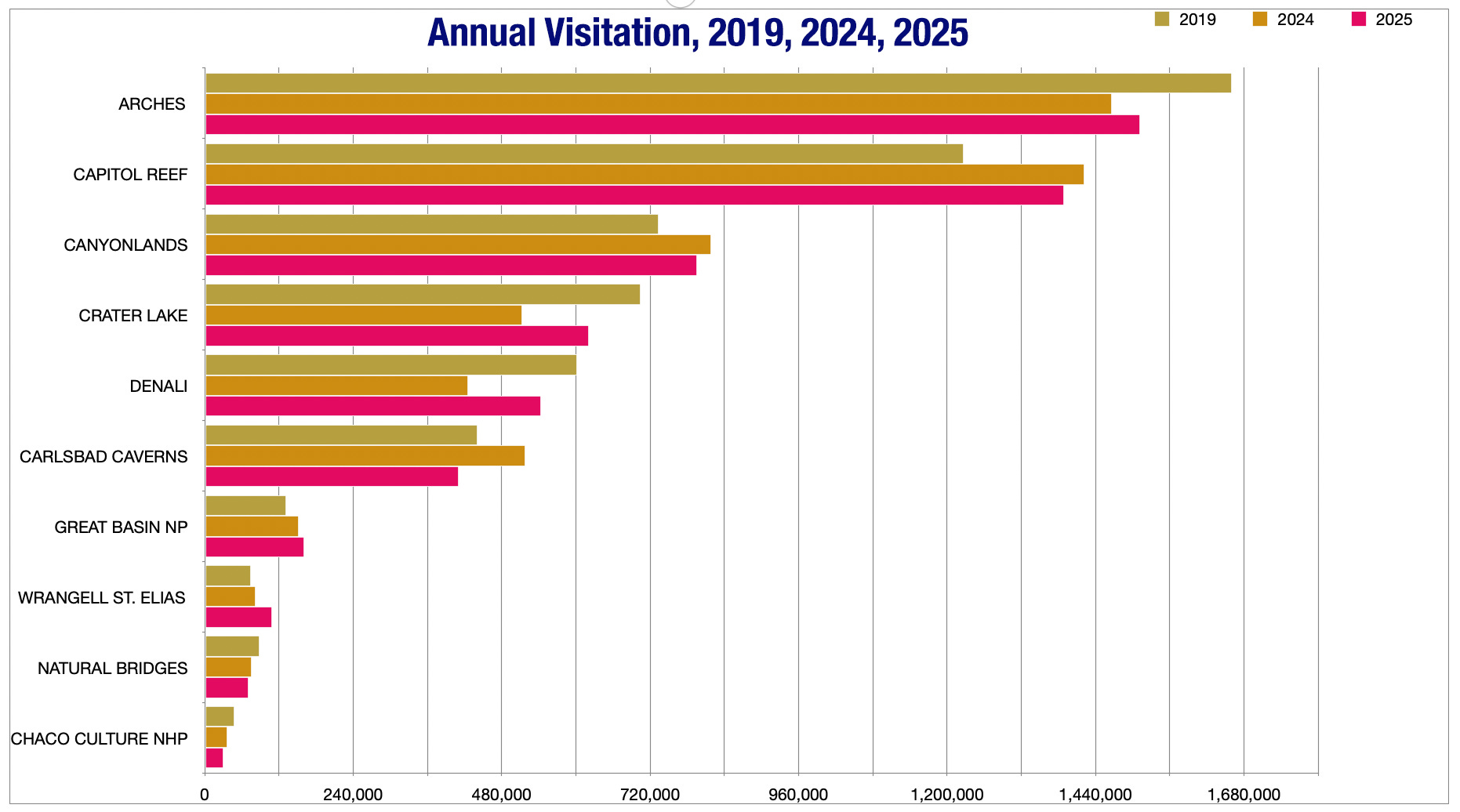
The Southwest attracts visitors from across the globe and, as a result, the increasingly dominant tourism and outdoor recreation industries have come to depend on international travelers. After Trump was inaugurated and implemented his America First creed, which tends to manifest as hostility towards every other nation, international travel to the U.S. dropped. That’s in spite of the fact that Trump’s economic policies have also caused the dollar’s value to plummet, making the U.S. a cheap vacation spot for Europeans.

Over the summer of 2025, that appears to have led to a drop in visitation to most national parks in the Southwest. However, visitation tended to rebound in the fall — perhaps due to lower gas prices — bringing the annual numbers back up to close to what they were in 2024.
One exception was Glen Canyon National Recreation Area, which saw a huge drop in visitors last year, probably due to a combination of low reservoir levels at Lake Powell, a massive wildfire on the Grand Canyon’s North Rim, and the drop in international visitation. But if tax revenues are any indication, it hasn’t hurt the overall tourism industry in Page that badly. Sales tax, hotel/motel tax, and online lodging tax revenues for January through September 2025 were up significantly from the previous year, according to the City of Page’s statistics.
🏠 Random Real Estate Room 🤑
You’ll all be thrilled, I’m sure, to learn that the uber-wealthy had a pretty good year in 2025, at least if high-end home and land sales are any indication. Luxury real estate sales in Jackson, Wyoming, reportedly are “surging” and “closed the year with exceptional momentum.” That’s the latest from The Viehman Group’s Jackson Hole Report, something I read when I want that lovely sensation of barfing in the back of my mouth.
Thirty-seven homes sold for over $10 million in the region last year, with 25 of them netting a sale price of over $15 million. The most expensive home sale was the Bar B Bar Ranch 4, with “multiple enhanced spring creeks for fishing,” which went for a modest $43 million.
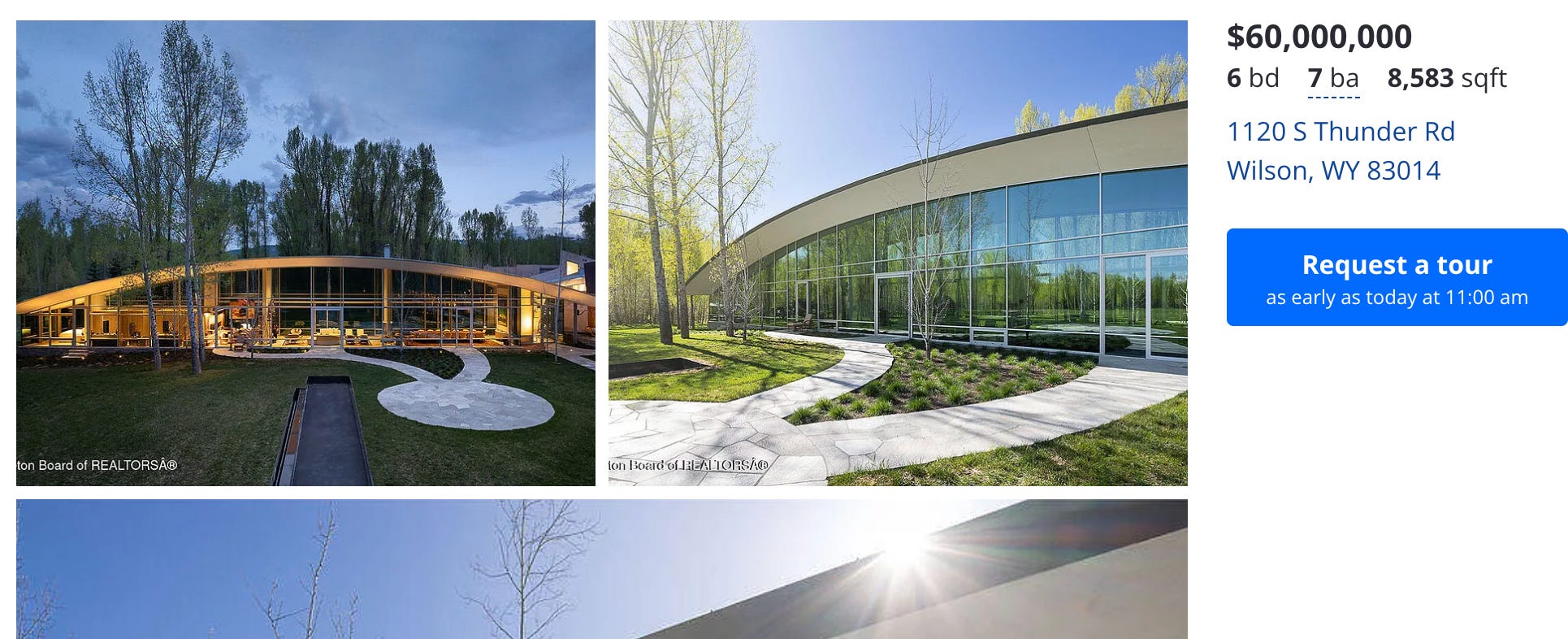
But don’t worry! Overpriced luxury homes remain for the taking! For instance, you can buy a glorified quonset hut — er, an 8,583-square-foot steel, glass, and stone mansion — for $60 million. I know that seems like a lot, but according to Zillow’s BuyAbility calculator, the monthly payments would be a mere $320,673 after a $12 million down payment.
The median earnings for full-time year-round workers in Teton County are about $70,000 per year, which, according to Zillow’s mortgage calculator, could allow one to afford a $220,000 home with a $10,000 down payment. Meanwhile, the median home sale price in Teton County is about $3.8 million. And the cheapest home on the market is a 1970s, 644 sf condo listed for $695,000 (after a $30k reduction).
So, yeah, the West’s housing affordability crisis is as bad as ever, and the gap between the uber-rich and everyone else continues to grow.
🥵 Aridification Watch 🐫
The Abundance movement has reached the Colorado River, brought by an unexpected flag-bearer. The motorized recreation organization, BlueRibbon Coalition, is proposing the Colorado River Abundance Act. The vision, writes the coalition, is simple: “The American Southwest does not have to settle for managing a dwindling resource. It can choose abundance and start building.”
Building what? You ask. The answer: “A coordinated suite of desalination plants — offshore, onshore, and binational — supported by pipelines, pumping systems, brine-management facilities, and sediment removal programs.” These plants would crank out as much as 7 million acre-feet of water per year and deliver it to the river and/or directly to Lower Basin water users. That would allow more water to stay in Lake Powell and Lake Mead, thereby buoying reservoir levels.
And that would, among other things, improve boating and other recreation on those reservoirs, which is why the BlueRibbon Coalition is pushing the concept. In addition to creating funds for building a massive amount of water desalination and transportation infrastructure, the proposed legislation would also “elevate recreation to a coequal project purpose, establishing Recreation Modernization Plans for key reservoirs,” and pushing major upgrades to marinas, launch ramps, docks, trails, and shoreline facilities, “including a top-priority requirement to rebuild mid-lake services at Lake Powell with fast-track approval.”
That’s referring to the late Dangling Rope Marina, a remote floating boat refueling and restocking station in Dangling Rope Canyon, located about halfway between the down-lake marinas and Halls Crossing in the upper section of the reservoir. But low water levels and a damaged electrical system forced the National Park Service to shutter it in 2021, and it has not been reopened or replaced.
This abundance approach could work, in theory. But consider this: the largest desalination plant in the world, Ras Al Khair in Saudi Arabia, can treat about 306,500 acre-feet of water per year. It reportedly cost about $7 billion to construct, and uses about 3,626 megawatt-hours of electricity each day — that adds up to 1,323 gigawatt-hours annually, or enough to power tens of thousands of homes (or a handful of data centers). You’d need about 20 of those leviathans and a crapload of generation capacity to reach the 7 MAF/yr target of this plan, not to mention the extensive pumping and piping infrastructure to get the water to where it needs to go.
At some point, doesn’t it seem just a little bit easier, and a hell of a lot less expensive, to live within our means?
You can read the Colorado River Abundance Act here.
I will say that the Abundance approach is a step up from a, let’s say Archimedean, proposal to raise Lake Powell’s level by, wait for it, throwing a bunch of car batteries into the reservoir. If you’re wondering if this was a serious idea or not, just consider from where it came: The Sonoran Avalanche Center.
The SAC was sincere enough to write its own song for the occasion.
The Land Desk has been talking a lot about the effects the low snowpack will have on water supplies, Lake Powell, and irrigators. But it’s also hurting the ski industry — Vail Resorts reported a 20% drop in skier visits this winter — and that’s hurting the communities and workers that rely on that industry. The news clip below reports on how a Summit County food bank is being overwhelmed by new demand this winter.
The median home price in Summit County, by the way, is about $995,000.
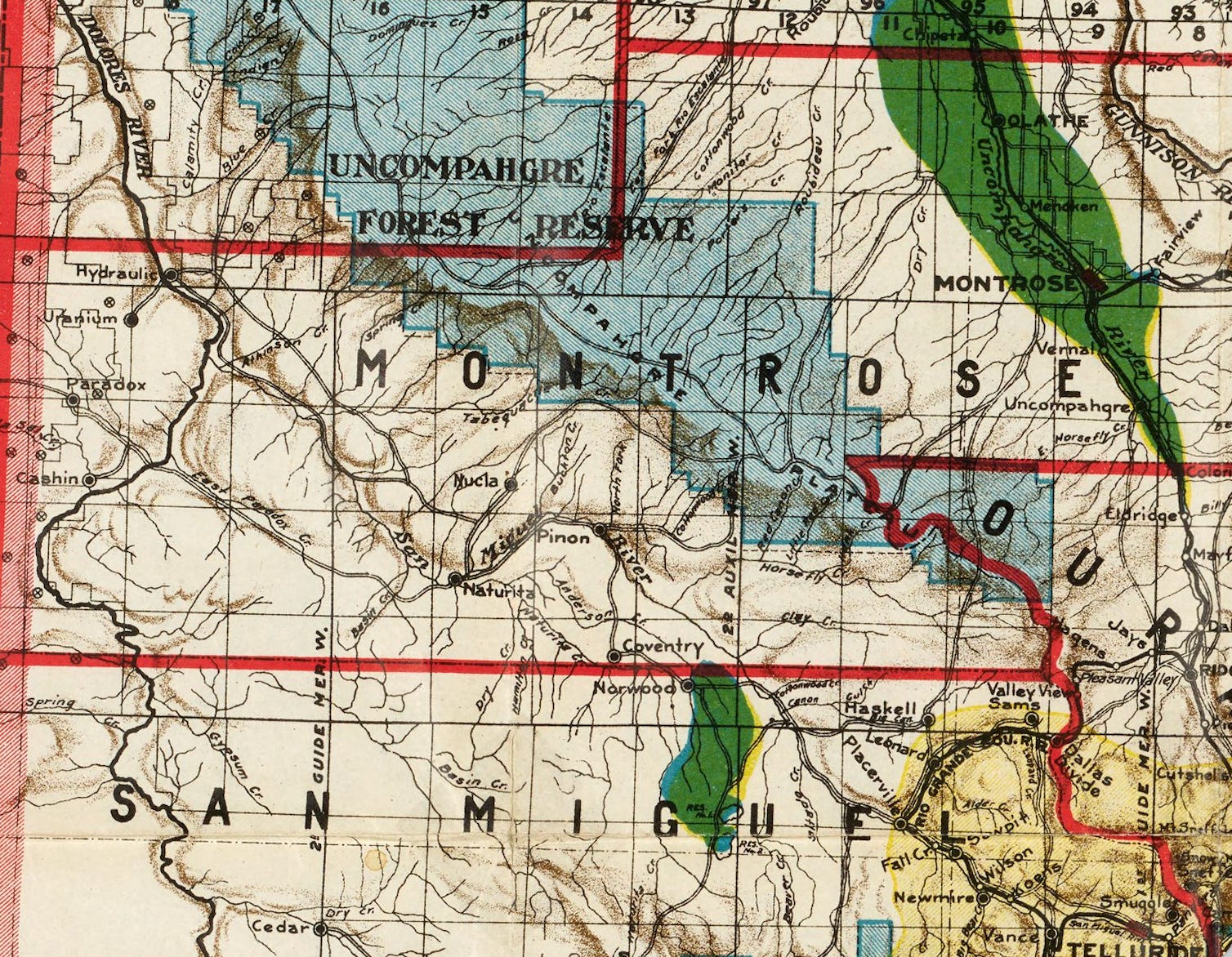
🗺️ Messing with Maps 🧭
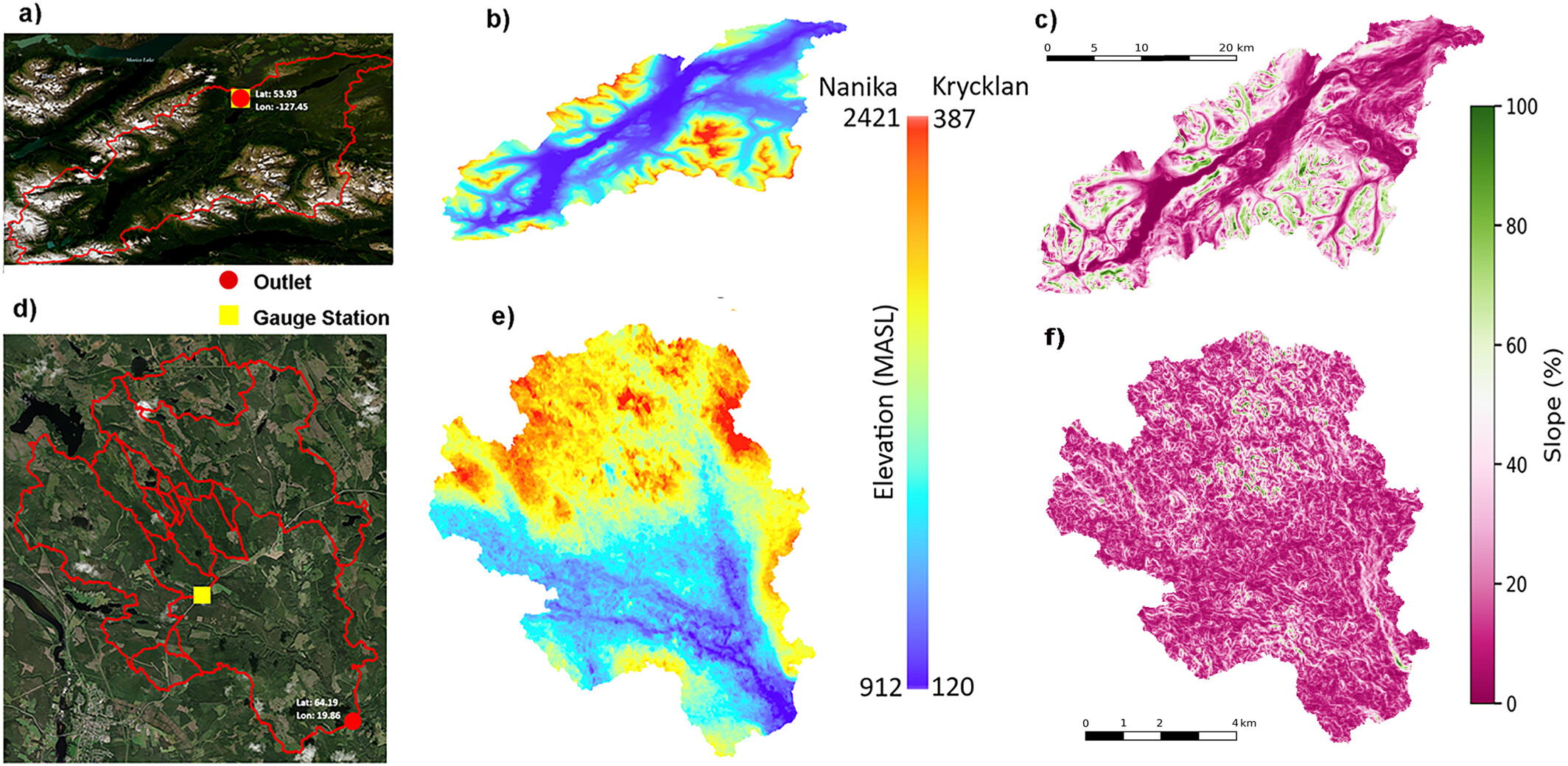
Click the link to access the article on the AGU website (Mahbod Taherian, Ali A. Ameli). Here’s the abstract:
January 9, 2026
Understanding how snowmelt is partitioned into different hydrologic flowpaths/storages—and how this partitioning varies over time—is essential for predicting water availability and quality under climate variability. In this study, we examine the time-variance of snowmelt partitioning patterns (SPP) in response to interannual variations in antecedent (Fall) rainfall before snowmelt seasons, across two snow-dominated catchments in Canada and Sweden with contrasting geologic and topographic features. Using integrated subsurface–surface flow and transport modeling, combined with observational data, we simulate the partitioning of snowmelt into shallow flowpath, deep flowpath, evapotranspiration, and long-term storage. To generalize our findings beyond the two case studies, we design a suite of virtual experiments that systematically vary catchment slope and the extent of the hydraulic conductivity’s vertical and lateral heterogeneity. Results show that lateral heterogeneity in conductivity mediates the sensitivity of snowmelt partitioning to interannual variations in antecedent rainfall. While laterally homogeneous catchments display minimal sensitivity of snowmelt partitioning pattern to wet or dry Fall rainfall conditions, catchments with heterogeneous lateral structure store a significantly larger portion of snowmelt and reduce snow-sourced shallow flow contributions in years with high pre-snow rainfall than years with low pre-snow rainfall. In contrast, while slope and vertical conductivity architecture govern SPP, they play a limited role in mediating SPP’s temporal sensitivity to antecedent rainfall variability. These findings reveal that subsurface structure—including the extent of lateral subsurface heterogeneity—modulates the influence of climate variability on snowmelt partitioning and catchment hydrologic function. This has implications for predicting streamflow responses, groundwater recharge, and solute transport under changing climate regimes, and highlights the importance of representing time-variable hydrologic behavior in hydrologic models.
Plain Language Summary
Knowledge of how snowmelt moves through a watershed is essential for managing water supplies and ecosystems in snow-dominated regions. Snowmelt can either run quickly to streams or infiltrate to recharge groundwater, and this balance shifts from year to year with climate and watershed structure. We studied two snowy watersheds that differ in slope and subsurface properties to test how late-summer/fall rainfall (which sets pre-snowmelt wetness) shapes winter snowmelt pathways. In steep terrain with horizontally variable (patchy) subsurface hydraulic conductivity, dry pre-snowmelt conditions direct meltwater horizontally to streams, whereas wetter pre-snowmelt conditions favored deeper infiltration and storage. To generalize, we ran virtual experiments that systematically altered the extent of horizontal variability of hydraulic conductivity. A consistent signal emerged: patchy subsurface hydraulic conductivity produced stronger year-to-year swings in how snowmelt is partitioned between runoff and storage, while horizontally uniform subsurface hydraulic conductivity led to more predictable, stable watershed responses. These results show that antecedent wetness and the horizontal structure of subsurface permeability jointly control the time-variability of snowmelt partitioning. Incorporating these controls can improve forecasts of streamflow and groundwater recharge, and guide planning for flood and drought risks in snow-dependent watersheds under increasing climate variability.
Key Points
- Pre-snow rainfall variability alters snowmelt partitioning pattern (SPP) into storage versus runoff, with the magnitude of impact mediated by the extent of hydraulic conductivity’s lateral heterogeneity
- Catchments with greater lateral heterogeneity in hydraulic conductivity store (release) a larger (lesser) portion of snowmelt in years with large pre-snow rainfall
- Slope and vertical conductivity architecture influence SPP but exhibit limited modulation of SPP temporal sensitivity to pre-snow rainfall variability
Click the link to read the article on the Colorado Newsline website (Chase Woodruff):
January 30, 2026
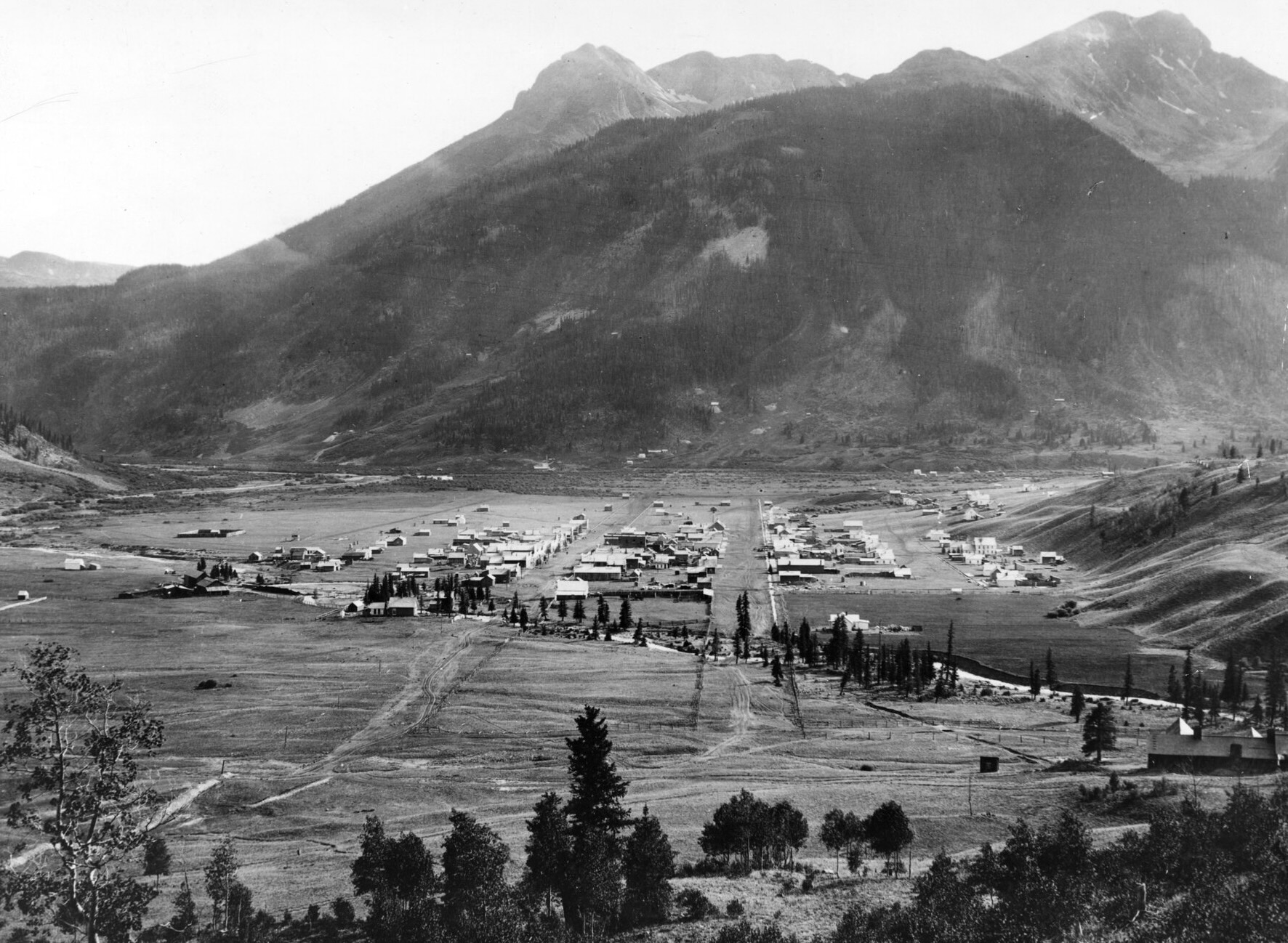
In the years leading up to Colorado statehood, nearly all of the territory’s western half still belonged to the Ute people, who had inhabited the northern Colorado Plateau for centuries.
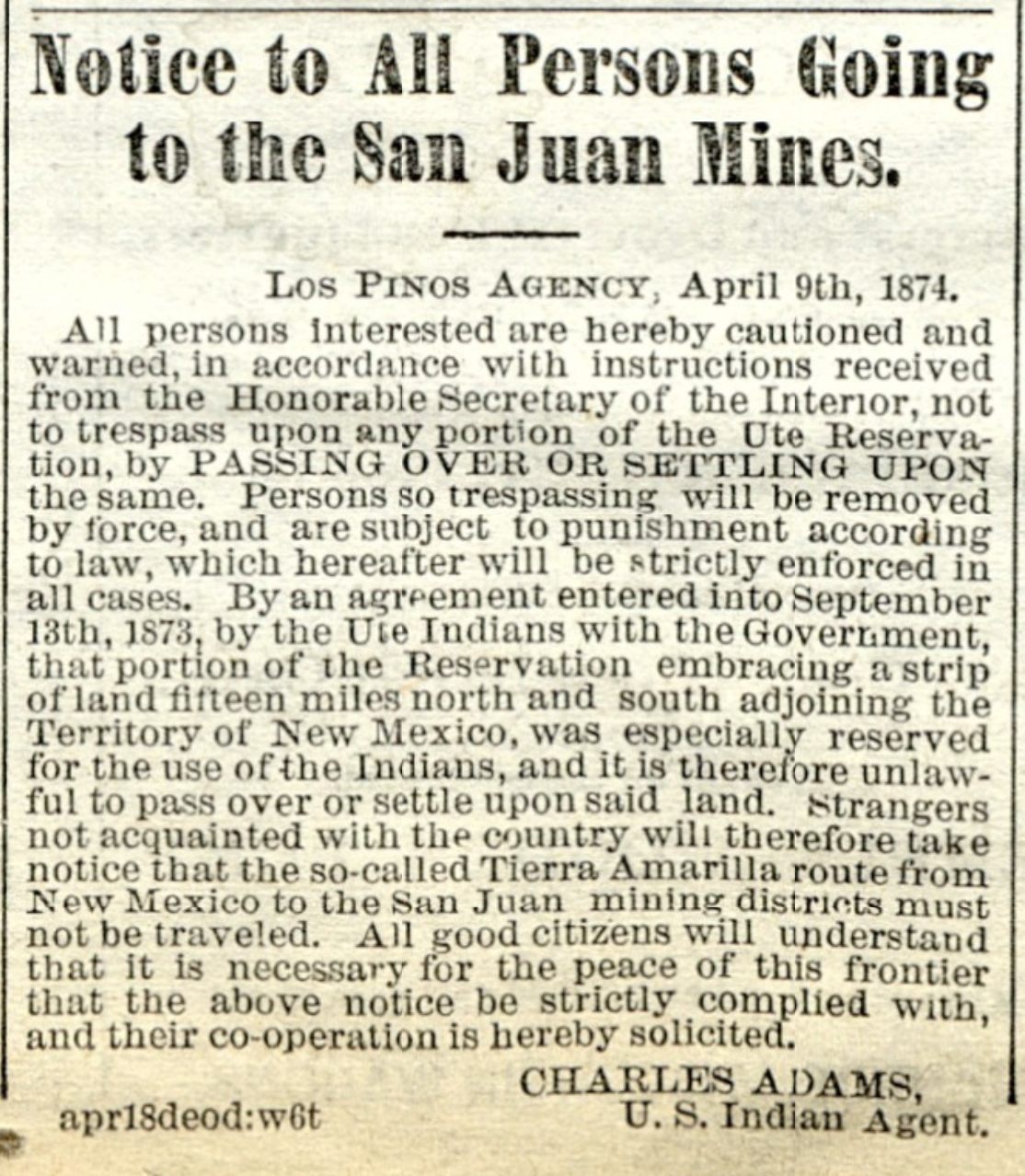
An 1868 treaty between the U.S. government and six bands of the Ute tribe reserved nearly all of the western half of the Colorado Territory for their “absolute and undisturbed use and occupation,” and stated that “no persons … shall ever be permitted to pass over, settle upon, or reside in the territory described.”
The agreement lasted just four years.
By 1872 prospectors for gold and silver in the San Juan Mountains were routinely trespassing on Ute lands, and the following year the federal government — under pressure from territorial leaders demanding access to the region’s “large bodies of mineral and agricultural resources” — pushed the Utes to cede a 3.7-million-acre area surrounding the San Juans in what was known as the Brunot Agreement.
So began the Colorado Territory’s next major mining boom, and the first to be concerned principally with silver — the extraction and minting of which would dominate the soon-to-be state’s economy and politics for the next several decades.
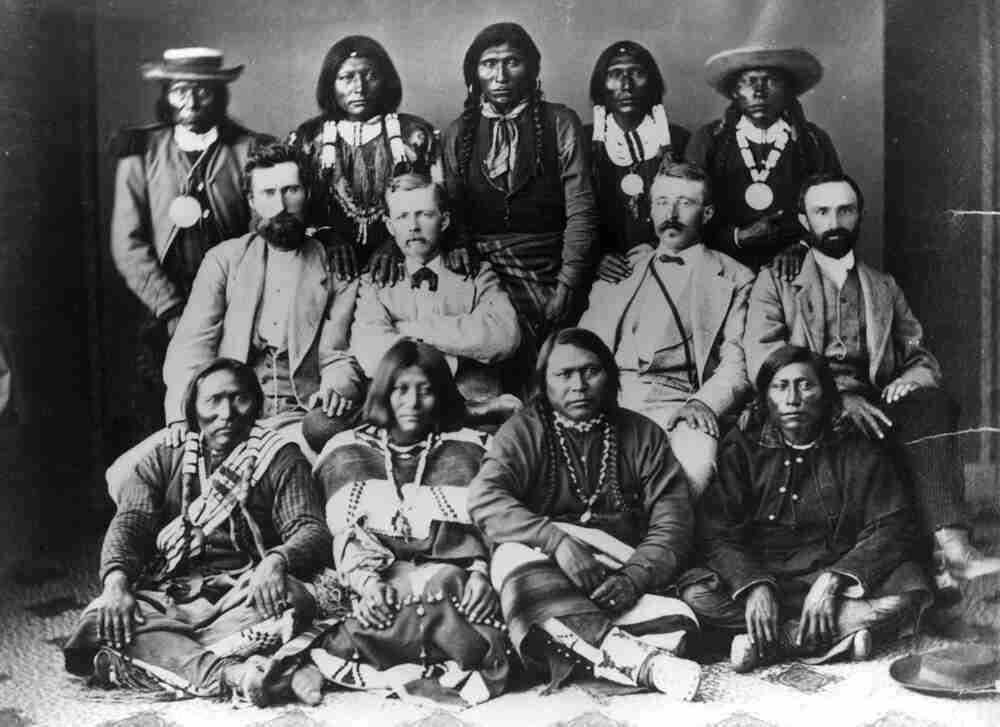
By 1876, fortune seekers could reach the San Juans by taking the Denver and Rio Grande Railroad to Cañon City, and from there traveling on grueling mountain toll roads to mining settlements like Ouray, Silverton and Lake City. In late January 1876, the Silver World of Lake City advised that despite “the unusual quantity of snow,” the wagon road that passed through Saguache was manageable with sleighs, but the more southerly route through Del Norte was “almost impassable.”
The silver rush had helped revive the fortunes of southern Colorado, turning towns like Pueblo and Cañon City, where residents had long felt ignored by the territory’s northern establishment, into important transportation and commercial hubs serving the remote San Juan mining district.
Other Front Range towns, including Colorado Springs, regretted “the outflow of men consequent upon the San Juan and other mining excitements.” A gold rush to the Black Hills of the Dakota Territory was also underway at the time — another treaty-breaking incursion into Native American lands, which would soon lead to a war with the Lakota people and the Battle of Little Bighorn later in 1876.
The San Juan mines, wrote the Silver World, required “earnest, energetic men … who can submit to the deprivation of the luxuries of a higher civilization.” The paper’s weekly editions from the winter of 1876 contained few reports of serious crime, though the threat of “snowslides,” frostbite and mountain lions were often mentioned.
But by then the region’s boomtowns were beginning to evolve from rough-and-ready mining camps into something more established — incorporating municipal governments, forming school districts and issuing bonds for the construction of new wagon roads and other public improvements. Ordinances approved by Lake City’s new board of trustees included a schedule of fines levied for misdemeanors, published in the Silver World on Jan. 15.
“Read the ordinances which appear in this issue,” the paper’s editors advised, “and save yourself the possibility of being fined or getting in the ‘jug.’”
Public intoxication or animal cruelty could cost an offender up to $50, while the penalty for impersonating a police officer or “immoderately” riding or driving horses on town streets could run up to $100. To “quarrel in a boisterous manner” was considered a breach of the peace and carried a fine of between $5 and $25.
Arriving in Denver for the meeting of the territorial Legislature in January, Rep. Reuben J. McNutt of Silverton had brought a petition from his fellow settlers for the creation of a new county encompassing the western San Juan boomtowns. The Legislature soon passed House Bill No. 1, and Gov. John Routt signed it into law on Jan. 31, officially creating the new San Juan County, from which the present-day counties of Ouray, San Miguel and Dolores would later be carved out.
Alongside these administrative necessities, some inhabitants of the remote mining towns aimed for the cultural betterment of settlements like Lake City, where the Silver World reported billiards were still the “principal amusement.” The Lake City Dramatic Club staged its first theater production on Feb. 2, 1876, performing George Melville Baker’s “Among the Breakers,” and the cast of amateurs won a rave review from the local paper.
“The universal testimony of all who witnessed it was that it would have been difficult for professionals to have surpassed it,” declared the Silver World. “The play was in all respect (was) well mounted and in no instance were there any of those hitches so common in entertainments of this nature, and which tend alike to embarrass the performers and distract the attention of the audience.”
The gradual dispossession of Ute lands in western Colorado would not end with the Brunot Agreement and the rush to the San Juans. The so-called northern or White River Utes were expelled from Colorado beginning in 1880, and today reside on the Uinta and Ouray Indian Reservation in Utah. Three other bands of the tribe grouped together as the southern Utes — the Capote, Mouache, and Weenuche — agreed in 1878 to cede all but a small portion of their lands in far southwest Colorado along the New Mexico border.
The southern Utes later split into the Southern Ute Indian Tribe, consisting of the Capote and Mouache bands, and Ute Mountain Ute Tribe, made up of the Weenuche band. Today, the Southern Ute and the Ute Mountain Ute are the only two federally-recognized tribes within Colorado’s borders.

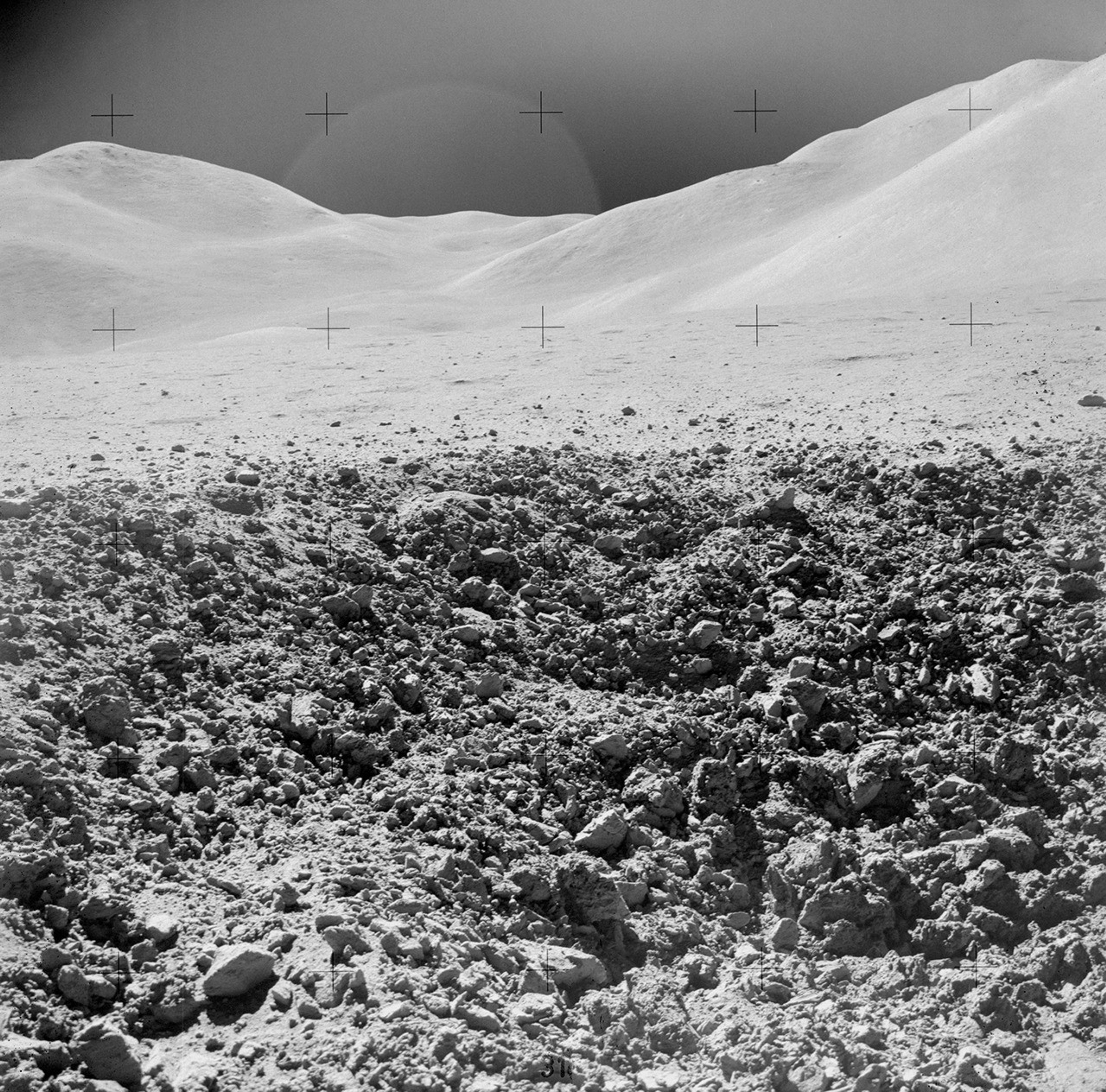
Click the link to read the article on the NASA website (Rachel Barry):
January 23, 2026
A new NASA study of its Apollo lunar soils clarifies the Moon’s record of meteorite impacts and timing of water delivery. These findings place upper bounds on how much water meteorites could have supplied later in Earth’s history.
Research has previously shown that meteorites may have been a significant source of Earth’s water as they bombarded our planet early in the solar system’s development. In a paper published Tuesday in the Proceedings to the National Academy of Sciences, researchers led by Tony Gargano, a postdoctoral fellow at NASA’s Johnson Space Center and the Lunar and Planetary Institute (LPI), both in Houston, used a novel method for analyzing the dusty debris that covers the Moon’s surface called regolith. They learned that even under generous assumptions, meteorite delivery since about four billion years ago could only have supplied a small fraction of Earth’s water.
The Moon serves as an ancient archive of the impact history the Earth-Moon system has experienced over billions of years. Where Earth’s dynamic crust and weather erase such records, lunar samples preserve them. The records don’t come without challenge, though. Traditional methods of studying regolith have relied on analyzing metal-loving elements. These elements can get muddied by repeated impacts on the Moon, making it harder to untangle and reconstruct what the original meteoroids contained.
Enter triple oxygen isotopes, high precision “fingerprints” that take advantage of the fact that oxygen, the dominant element by mass in rocks, is unaffected by impact or other external forces. The isotopes offer a clearer understanding of the composition of meteorites that impacted the Earth-Moon system. The oxygen-isotope measurements revealed that at least ~1% by mass of the regolith contained material from carbon-rich meteorites that were partially vaporized when they hit the Moon. Using the known properties of such meteorites allowed the team to calculate the amount of water that would have been carried within.
“The lunar regolith is one of the rare places we can still interpret a time-integrated record of what was hitting Earth’s neighborhood for billions of years,” said Gargano. “The oxygen-isotope fingerprint lets us pull an impactor signal out of a mixture that’s been melted, vaporized, and reworked countless times.”
The findings have implications for our understanding of water sources on Earth and the Moon. When scaled up by roughly 20 times to account for the substantially higher rate of impacts on Earth, the cumulative water shown in the model made up only a small percent of the water in Earth’s oceans. That makes it difficult to reconcile the hypothesis that late delivery of water-rich meteorites was the dominant source of Earth’s water.
“Our results don’t say meteorites delivered no water,” added co-author Justin Simon, a planetary scientist at NASA Johnson’s Astromaterials Research and Exploration Science Division. “They say the Moon’s long-term record makes it very hard for late meteorite delivery to be the dominant source of Earth’s oceans.”
For the Moon, the implied delivery since about 4 billion years ago is tiny on an Earth-ocean scale but is not insignificant for the Moon. The Moon’s accessible water inventory is concentrated in small, permanently shadowed regions at the North and South Poles. These are some of the coldest spots in the solar system and introduce unique opportunities for scientific discovery and potential resources for lunar exploration when NASA lands astronauts on the Moon through Artemis III and beyond.
The samples analyzed for this study came from parts of the Moon near the equator on the side of the Moon facing Earth, where all six Apollo missions landed. The rocks and dust collected more than 50 years ago continue to reveal new insights but are constrained to a small portion of the Moon. Samples delivered through Artemis will open the door for a new generation of discoveries for decades to come.
“I’m part of the next generation of Apollo scientists —people who didn’t fly the missions, but who were trained on the samples and the questions Apollo made possible,” said Gargano. “The value of the Moon is that it gives us ground truth: real, physical material we can measure in the lab and use to anchor what we infer from orbital data and telescopes. I can’t wait to see what the Artemis samples have to teach us and the next generation about our place in the solar system.”
For more information on NASA’s Astromaterials Research and Exploration Science Division, visit: https://science.nasa.gov/astromaterials

Click the link to read the article on The Land Desk website (Jonathan P. Thompson):
January 23, 2026
🌵 Public Lands 🌲
St. George, in Utah’s southwest corner, is one of the nation’s fastest growing communities. This is partly because of a nice climate, access to a major interstate, and relative closeness to Salt Lake City and Las Vegas. But it’s also because the landscape in which it sits is stunning, characterized by burnished red sandstone punctuated by dark volcanic formations and the green ribbons of the Santa Clara and Virgin Rivers, all set against the backdrop of the Pine Valley Mountains. In 2009, Congress created the Red Cliffs National Conservation Area on about 45,000 acres of BLM land just north of St. George to protect some of this landscape and its wildlife, and to offer a refuge from the burgeoning mass of humanity.

But the Trump administration — and the state of Utah — have other plans. This week, the Bureau of Land Management approved Utah’s plans to build a four-lane highwaythrough the south end of the conservation area. The stated aim is to accommodate growth, reduce congestion, and speed up the car trip from one section of sprawl to another. But really it will only induce growth and more traffic, while also diminishing one of St. George’s most appealing assets.
The idea for a Northern Corridor Highway has been bantered about for a couple of decades. The proposal seemed to perish in 2016, when the BLM denied Washington County’s bid to build the road through the national conservation area. But when Donald Trump was elected president the first time, the county and the Utah Department of Transportation seized the opportunity to apply for a right of way to build a 4.5 mile, four-lane highway across a portion of the conservation area.

In January 2021, the outgoing Trump administration’s BLM approved the right of way, even though its own analysis acknowledged that it would destroy tortoise habitat, spread invasive species, and essentially chop off the southern end of the conservation area, destroying trails and damaging the recreation experience. A large coalition of environmental groups under the banner of the Red Cliffs Conservation Coalition sued the BLM, and the agency ultimately agreed to redo the environmental analysis — finally rejecting the proposed highway at the end of 2024 and recommending an expansion of the existing Red Hills Parkway, instead.
Once Biden was out of office, however, the state and Washington County once again appealed to the feds to grant them a right-of-way, arguing that the Red Hills Parkway idea was not feasible. And since the Trump administration and Utah’s elected leaders tend to value roads and more suburban sprawl over tortoises, beauty, and the thriving desert landscape, the BLM opened the door to bulldoze more land to indulge Utah’s road fetish and to make way for yet another monument to America’s car-centric culture.
***
A couple of dispatches ago, I wrote about how curious it was that the Trump administration had yet to move to diminish or eliminate any national monuments during this second term. It may be because they are outsourcing the task to Congress.
Utah’s congressional delegation is expected to introduce federal legislation that would use the Congressional Review Act to overturn the Biden-era Grand Staircase-Escalante National Monument management plan. If the “resolution of disapproval” passes both chambers of Congress with a simple majority vote, it would erase the plan and bar the Bureau of Land Management from issuing another plan that is “substantially the same” in the future.
This wouldn’t change the boundaries of the monument, but would likely cause management of the area to revert back to the 2020, Trump I-era plan. That plan was not only less protective than the newer one, but only applied to a much smaller area, since in 2017 Trump had significantly shrunk the national monument. Revoking the current management plan, then, would leave vast areas of the monument in a sort of management limbo.
“I strongly denounce any attempt to use the Congressional Review Act to overturn the Grand Staircase-Escalante National Monument Resource Management Plan. This plan reflects years of public input, scientific research, and meaningful Tribal consultation, and dismantling it through procedural shortcuts undermines good governance, responsible land stewardship, and the protection of irreplaceable cultural landscapes,” said Autumn Gillard, Southern Paiute, Grand Staircase-Escalante Inter-Tribal Coalition member, in a written statement. “At this time, I urge lawmakers from both sides of the aisle to uphold the approved resource management plan from January 2025.”
Feds seek public input on Grand Staircase-Escalante management plan — Jonathan P. Thompson
***
Utah officials often say they dislike new national monument designations because, in their minds, protecting land and cultural resources is bad for the economy, mostly because they block new mining and drilling. A new study shows they are wrong.
Headwaters Economics analyzed economic conditions and trends in 30 national monument gateway communities, and found that national monument designations do not disrupt local economies. They also don’t give nearby communities a substantial economic boost. “Employment and population trends continue on the same trajectory after designation,” Headwaters found, “and income growth tends to improve modestly over time.”
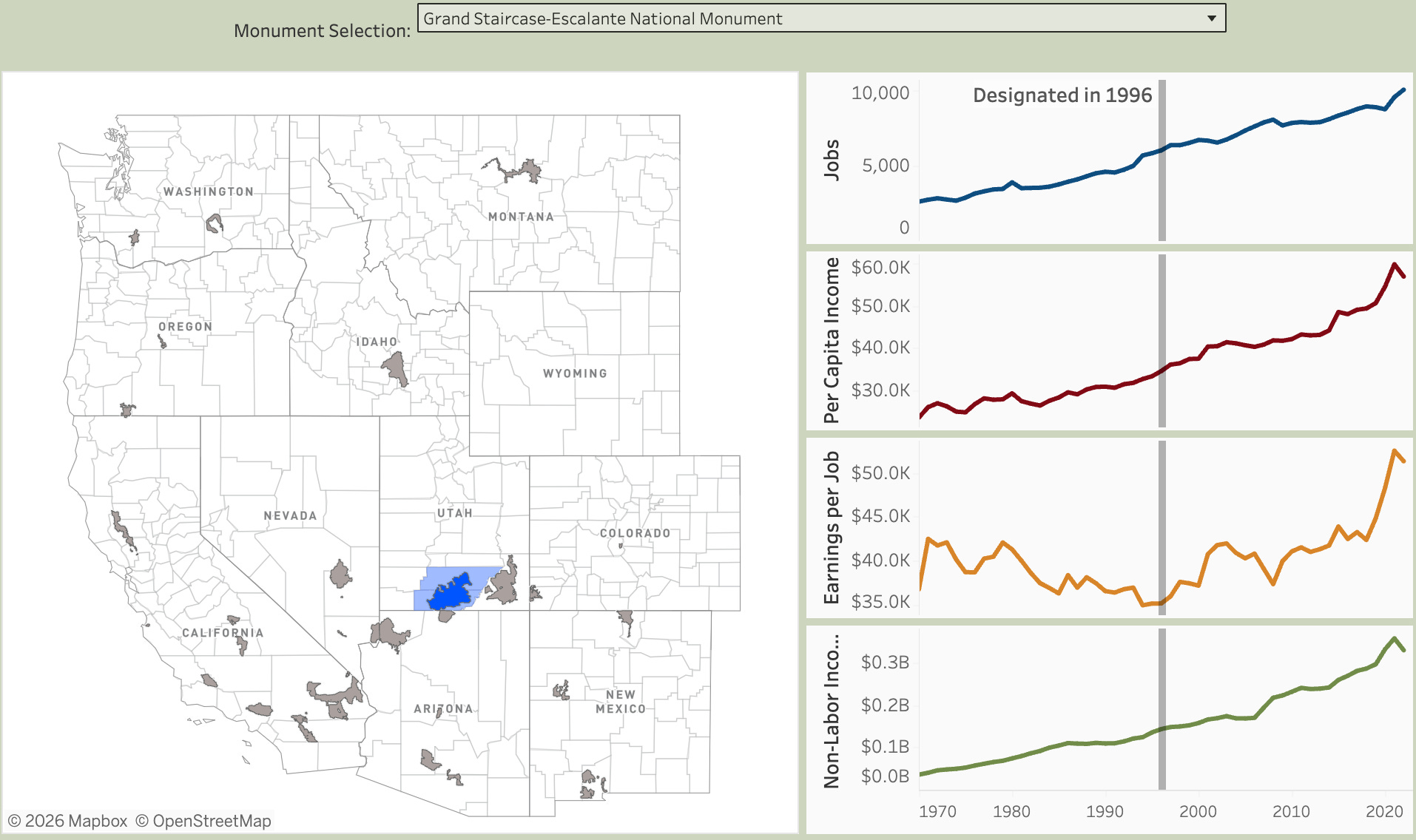
The findings match up with what one would intuitively expect. National monuments are rarely designated in areas that are currently targeted for new drilling and mining, meaning they are unlikely to affect the existing extractive economies. Meanwhile, they are often established in places that are already experiencing an increase in visitation, meaning that designation wouldn’t necessarily cause a significant jump in tourism.
Take Bears Ears National Monument, for example. It was established in 2016 on federal land in San Juan County, Utah. Both the oil and gas and uranium mining industries were (and are) active in the county. But they weren’t interested in drilling new wells or opening new mines within the monument’s boundaries. Previous oil and gas wells had mostly come up dry — drillers have found much more success in the Aneth and McElmo fields east of the monument. And the Daneros uranium mine, which is been on standby status for years, is outside the boundaries, as well. In other words, monument designation had absolutely zero effect on either industry.
Meanwhile, fears that establishing a national monument in this corner of southeastern Utah would lead to its “discovery” by the masses were overblown, simply because the internet and social media had already lured folks to the area. Indeed, part of the reason people pushed for designation was to try to get a handle on increased visitation and its impacts on natural and cultural resources.
Headwaters has a nice interactive graphic on which you can check out the economic trends around the 30 national monuments. The trends, themselves, are interesting to see: They make it abundantly clear that other factors, especially COVID-19, had a much bigger effect than any national monument designation.
The Meaning of Monuments — Jonathan P. Thompson
🤖 Data Center Watch 👾
The Big Data Center Buildup is accelerating. Nearly every day I get news of another proposed hyperscale facility somewhere in the West. A lot of them are not planning on connecting to the power grid, which is good for other utility users, because they won’t have to pay for associated infrastructure upgrades. But in almost every case, their proposed power sources include at least some gas-fired generation. And natural gas, i.e. methane, is not clean energy by any means.
So, while the data center boom has the potential to accelerate the clean energy transition by encouraging more solar, wind, and battery storage, it is also slowing the transition by perpetuating fossil fuel burning and even prompting construction of new fossil fuel-fired facilities.
Projects that have come onto my radar recently include:
- Laramie County, Wyoming’s commissioners approved Crusoe Energy Systems’ and Tallgrass’ proposed AI data center complex near Cheyenne, despite residents’ pushback over the project’s massive scale. If this thing is built as planned, it will be ginormous, with estimated capital costs of $50 billion. That would not only include the Project Jade’s five data centers and associated structures, but also a 2,700 MW gas-fired power plant — which would be among the largest of its kind in the West. The developers plan to use a closed-loop cooling system, which is less water-intensive than conventional evaporative systems but uses more energy.
- About 150 miles west of there, Power Company of Wyoming, an Anschutz Corporation subsidiary, is proposing a 2,000 MW gas generating facility in Carbon County to serve growing data center-driven power demand. These are the same folks who are building the Chokecherry Sierra Madre wind project and the TransWest Express transmission line. The controversial, 732-mile TransWest Express was originally billed as a clean-energy line that would carry Wyoming wind to California. Looks like it also will be moving fossil fuel-fired power, as well.
- Residents of Surprise, Arizona, a section of Phoenix’s sprawl, are getting a little surprise of their own: A proposed data center and dedicated 700 MW natural gas plant adjacent to a residential neighborhood. Residents are not too pleased, according to a story in the Arizona Republic, and are worried about the environmental and health impacts of a gas plant and the data center. The data center would run off the gas plant for the first couple years of operation before connecting with the grid. Then the plant would serve as backup for the center as well as a “peaker” plant, meaning it is fired up during peak demand.
🫣 Correction 🙀
In this week’s Colorado River glossary and primer I inadvertently shrunk the Colorado River watershed quite significantly by leaving out two zeros. It covers about 250,000 square miles, not 2,500. Duh.
Cool Opportunity
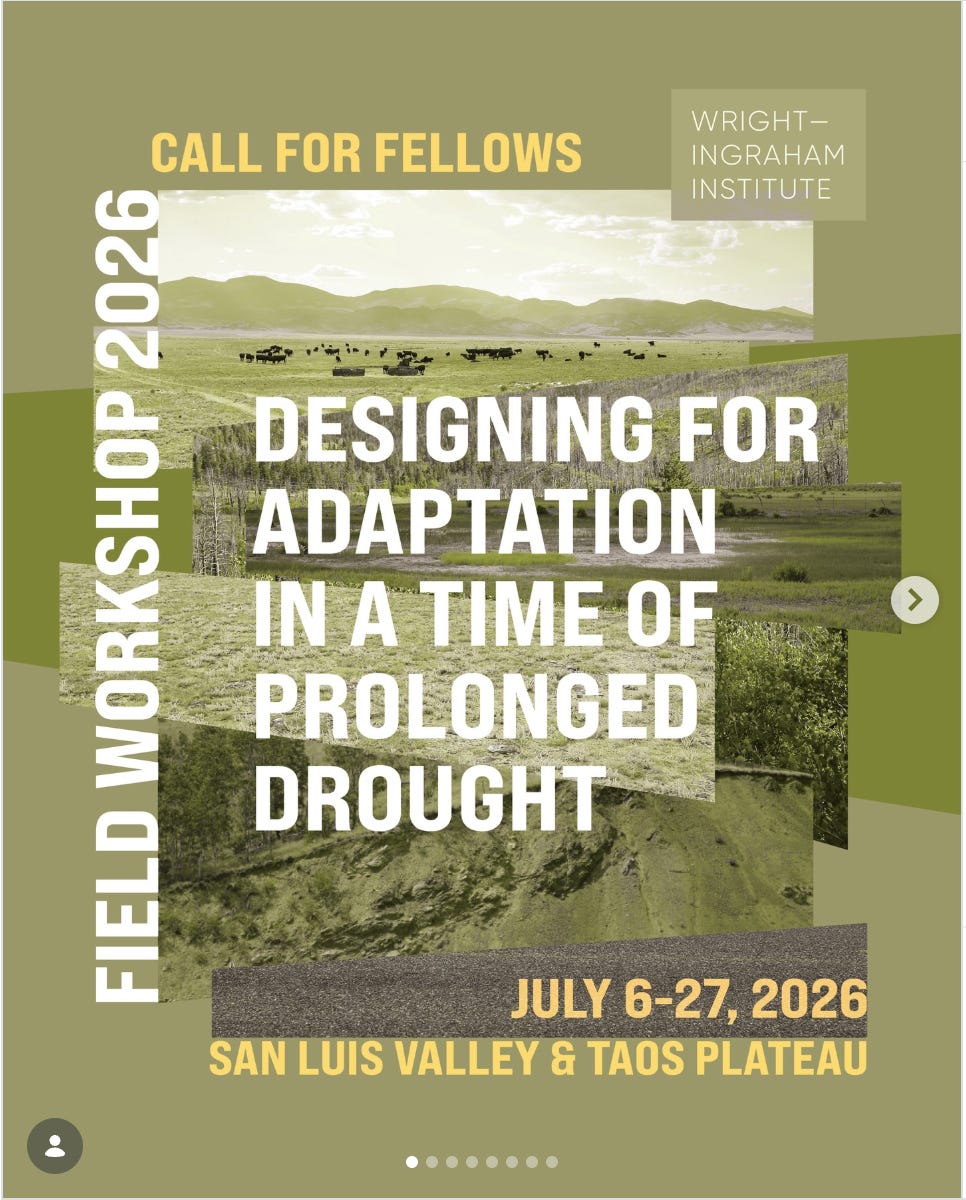
The Wright-Ingraham Institute is now taking applications for its three-week immersive fellowship for graduate students and early-career professionals in science, design, policy, the arts, and beyond. This year’s field workshop focuses is on “designing for adaptation in a time of prolonged drought,” and will be held in the San Luis Valley and Taos Plateau from July 6-27. Read more and apply here.
📸 Parting Shot 🎞️
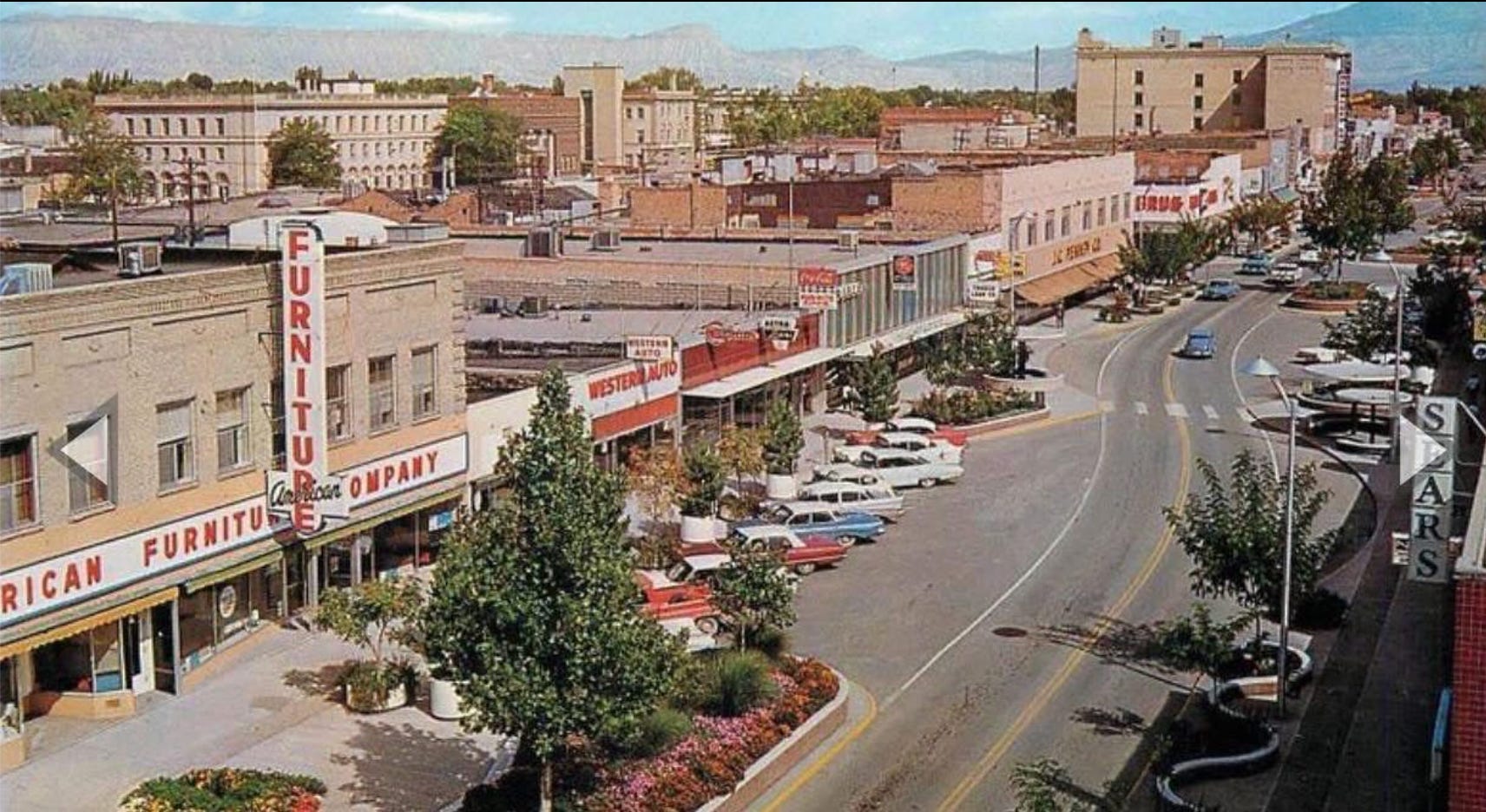
This one popped up on my Facebook feed and I just had to purloin it. It’s downtown Grand Junction in the 1960s (I believe), not long after they refashioned the main drag to make it more people-friendly. It’s funny because a lot of folks in my hometown of Durango are freaking out about a proposal to do something kind of like this, but even less radical, to its downtown. They claim that widening sidewalks and so forth will destroy the historic integrity of the streetscape. In my mind, this photo illustrates how untrue that claim is.
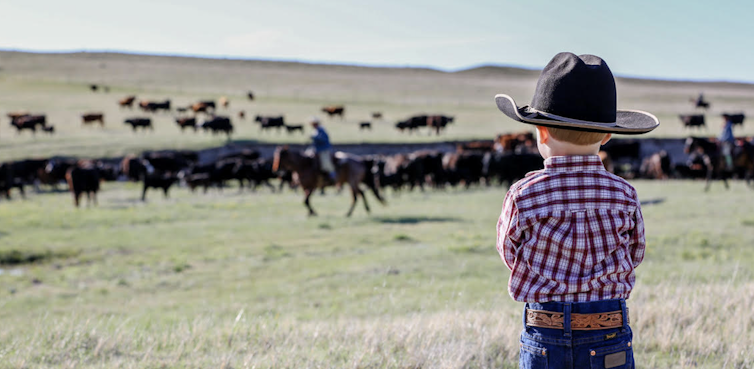
Jordan Kraft Lambert, Colorado State University; Jennifer Martin, Colorado State University; Kim Stackhouse-Lawson, Colorado State University, and Sara Place, Colorado State University
Cowboys guided a herd of longhorn cattle through downtown Denver to celebrate the opening of the annual National Western Stock Show on Jan. 8, 2026. As ranchers bring their best cattle to compete for blue ribbons over the course of this month, it’s a good time to consider whether beef production can be part of a circular economy.
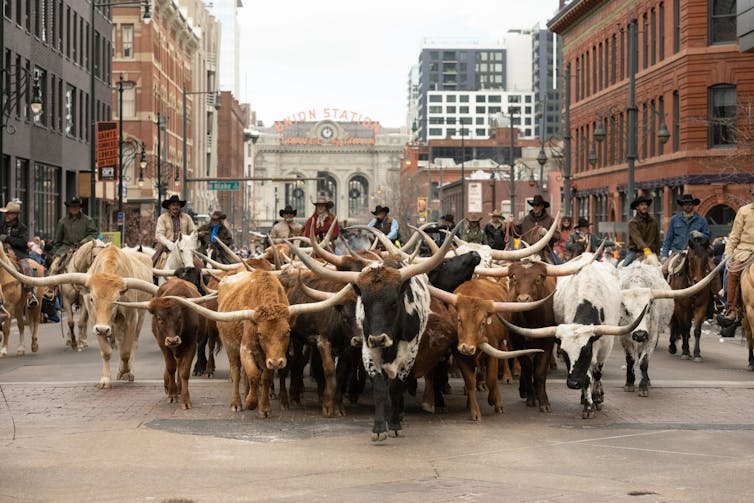
Circularity is an economic model where raw materials are responsibly sourced, waste products are put to best use and the system maximizes ecosystem functioning and human well-being.
As with most human activities, beef production provides a valuable contribution to human health while also impacting the natural environment, sometimes in negative ways.
We are innovators and researchers who live in Colorado and study the beef supply chain. Our work broadly focuses on investigating ways to make beef production more circular and sustainable.
Kim Stackhouse-Lawson and Sara Place are experts in cow burps and technologies to mitigate the methane associated with them. Jennifer Martin is an expert in meat processing and supply chains for byproducts like organ meats. Jordan Kraft Lambert is an expert in commercializing technologies that help farmers and ranchers steward the environment while feeding the world.
Beef is a source of complete protein. It has the full complement of amino acids humans need to build muscle and is a rich source of vitamin B12, which is necessary to ensure nervous system function and red blood cell formation. Beef produced in the U.S. each year meets the total protein needs of 40 million people and provides enough B12 to meet the needs of 137 million people, according to research.
In 2019, U.S. beef cattle production comprised about 3.7% of the country’s greenhouse gas emissions. Beef cattle production is also responsible for approximately 5% of U.S. water withdrawn from surface or groundwater, and 0.7% of the nation’s fossil fuel energy use.
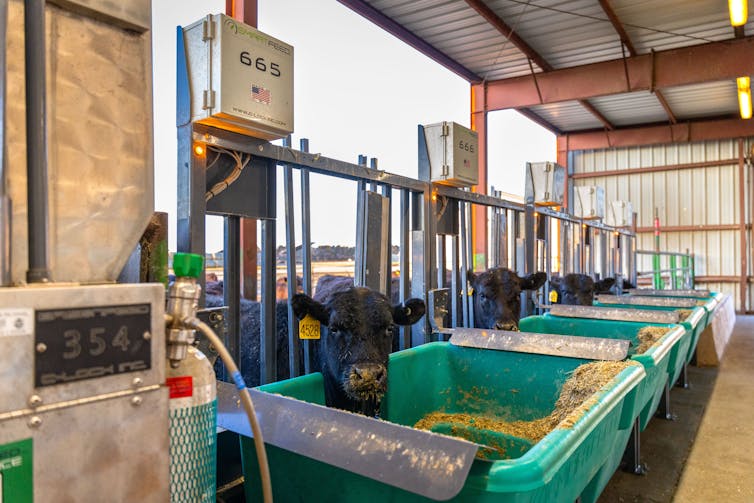
Cows are able to digest tough, fibrous plant material that humans, pigs and chickens can’t. This makes them an important part of a circular economy because they can digest what would otherwise be considered waste from other industries, like the grain left over from making beer and almond hulls from almond milk. By using these ingredients to feed cattle instead of letting it rot in landfills, U.S. feedlots decreased the amount of human-edible feeds required to produce more beef protein.
When cattle are being fed waste products like almond hulls and spent grain, it’s easy for producers to include feed additives, like herbs and custom-made molecules. These additions may reduce the cows’ methane production by changing how the microbes in their stomachs process carbohydrates.
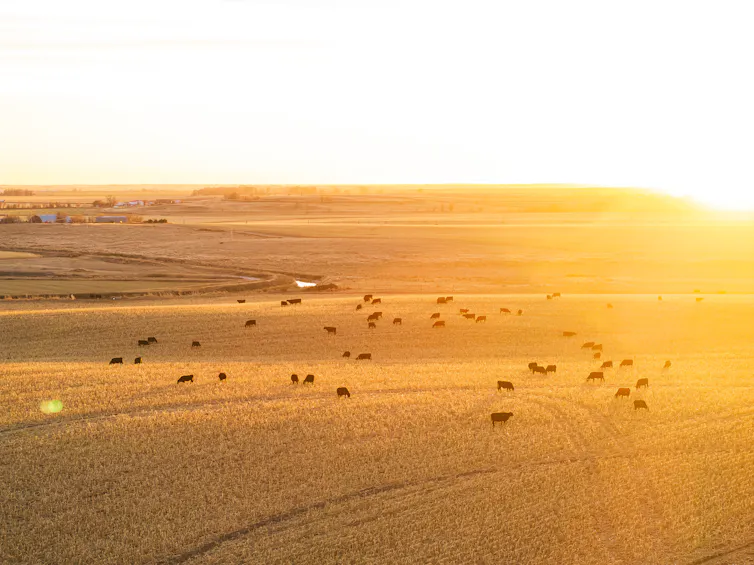
For the same reason that cows can digest what would otherwise be considered waste, cows are able to eat grass. Grazing is important in dry regions like the mountains and high plains of Colorado. If the grass isn’t removed via grazing, it dries and becomes tinder for wildfire. In addition, many of these mountainous areas are too cold, rocky and steep to grow crops. Grazing can turn land that would otherwise be difficult to farm into food-producing land.
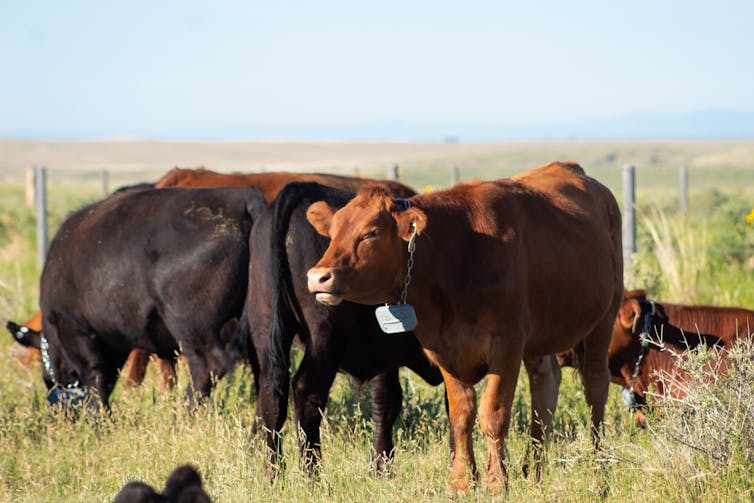
Until now, grazing required physical fences, which are costly to maintain and limit wildlife movement. But new technologies like virtual fencing allow Western Slope ranchers to use their smartphones to set digital boundaries. A collar on the cow beeps and buzzes to tell the cows where to go. Virtual boundaries are easy to change and visible only to the cow; thus, they support more environmentally-friendly grazing practices, protect streams and wildlife habitat and reduce wildfire fuel in dry seasons. While our recent research shows that this technology needs more development, it could be an important tool for beef’s role in a circular economy.
In our experience, many U.S. consumers rarely eat cuts beyond steaks and ground beef — often due to a bad first experience with organ meats, like liver, or unfamiliarity with how to cook lesser-known cuts, like heart.
When customers won’t buy these cuts, Colorado’s beef producers who sell online or at farmers markets have to send them to the landfill. That costs the producer money and wastes the water, land and feed used to make these cuts.
Studies show that these cuts are among the most nutrient-dense parts of the animal, providing high levels of iron, B vitamins, choline and and other micronutrients. Making use of these lesser-known cuts can reduce emissions by using more of the animal and keep edible meat out of landfills, where it would otherwise rot, releasing greenhouse gases.
This does not mean anyone has to suffer through a meal of rubbery liver to save the planet. Many cultures globally value organ dishes, and U.S. tastes are expanding to include foods like lengua tacos made from beef tongue. Meanwhile, cooking tools such as sous vide can improve tenderness and juiciness by holding meat at precise temperatures for longer times.
Pets also benefit from eating organ meats, so these cuts are a key ingredient in pet foods and treats.
Consumer fashion choices matter too. About 270 million bovine hides are produced globally each year, and about 70% are turned into leather. Due to insufficient demand, remaining hides are burned or sent to the landfill, both of which release greenhouse gases.
Rather than letting these hides rot, they can be turned into leather, a durable, breathable and biodegradable high-performance material. When consumers choose to buy genuine leather boots, belts and car seats, they’re engaging in the circular economy.
For these reasons, Colorado State University is hosting Future Cowboy on Jan. 25, 2026, at the National Western Stock Show. It’s an event that lets Colorado foodies, fashionistas and cattle producers come together to explore circularity firsthand. The event will feature a leather fashion show, a ranch technology showcase and an opportunity try chef-prepared bison tongue and beef heart.
Jordan Kraft Lambert, Director of Ag Innovation and Partnerships, College of Business, Colorado State University; Jennifer Martin, Associate Professor of Animal Sciences, Colorado State University; Kim Stackhouse-Lawson, Professor of Animal Science, Colorado State University, and Sara Place, Associate Professor of Feedlot Systems, Colorado State University
This article is republished from The Conversation under a Creative Commons license. Read the original article.

Click the link to read the article on the KUNC website (Scott Franz). Here’s an excerpt:
January 20, 2026
Steamboat Springs author and adventurer Eugene Buchanan has lived near the banks of the Yampa River long enough to notice its rhythms and moods are often mirrored by the residents in his northwest Colorado ski town.
“The river’s pulse kind of matches your own,” he said Thursday. “You know, come springtime, you’re jazzed up, and the rivers crankin’ and flooding, and the surf waves are in and people are rafting it and (stand up paddleboarding). Then it slows down to a trickle later in the summer and people are inner-tubing it. Fly fishing it. That’s a little more of a tranquil time.”

But as Buchanann warns in the first chapter of his new book, Yampa Yearnings, “not all is hunky dory in Yampaland.” Last summer marked the fourth time in history that there was a call on the Yampa due to drought conditions and upstream users were forced to cut back their intake. And like other rivers across the West, Buchanan said the waterway faces growing threats from climate change and increased demands from water users. Buchanan’s book is not all about hard times and drought on the river. In between his history lessons about the Yampa and the challenges it has faced, readers will also learn about the fate of Buchanan’s efforts to help a rancher get his lost cattle back across the raging waterway. There’s also a tale of his friend’s paddling adventure from Colorado to Utah to prove the waterway can facilitate ‘interstate commerce.’ KUNC water and environment reporter Scott Franz interviewed Buchanan about his book and the state of the Yampa. Answers have been lightly edited for length and clarity.
Franz: What impact do you hope this book has for the Yampa River and its future?
Buchanan: It’s hard to say how much impact a book like this will have. It’s my hope that those who are familiar with the Yampa learn to appreciate it a little more. Maybe look at it with a different eye next time they see it. If people aren’t familiar with the Yampa and they live somewhere else, maybe they’ll look outside and see their backyard creek flowing through their town and just think about it a little more. Maybe they’ll donate to a local nonprofit that’s trying to help preserve it, or they’ll pick up some trash or get involved. Or they’ll vote appropriately, how they want to, perhaps preserve it.

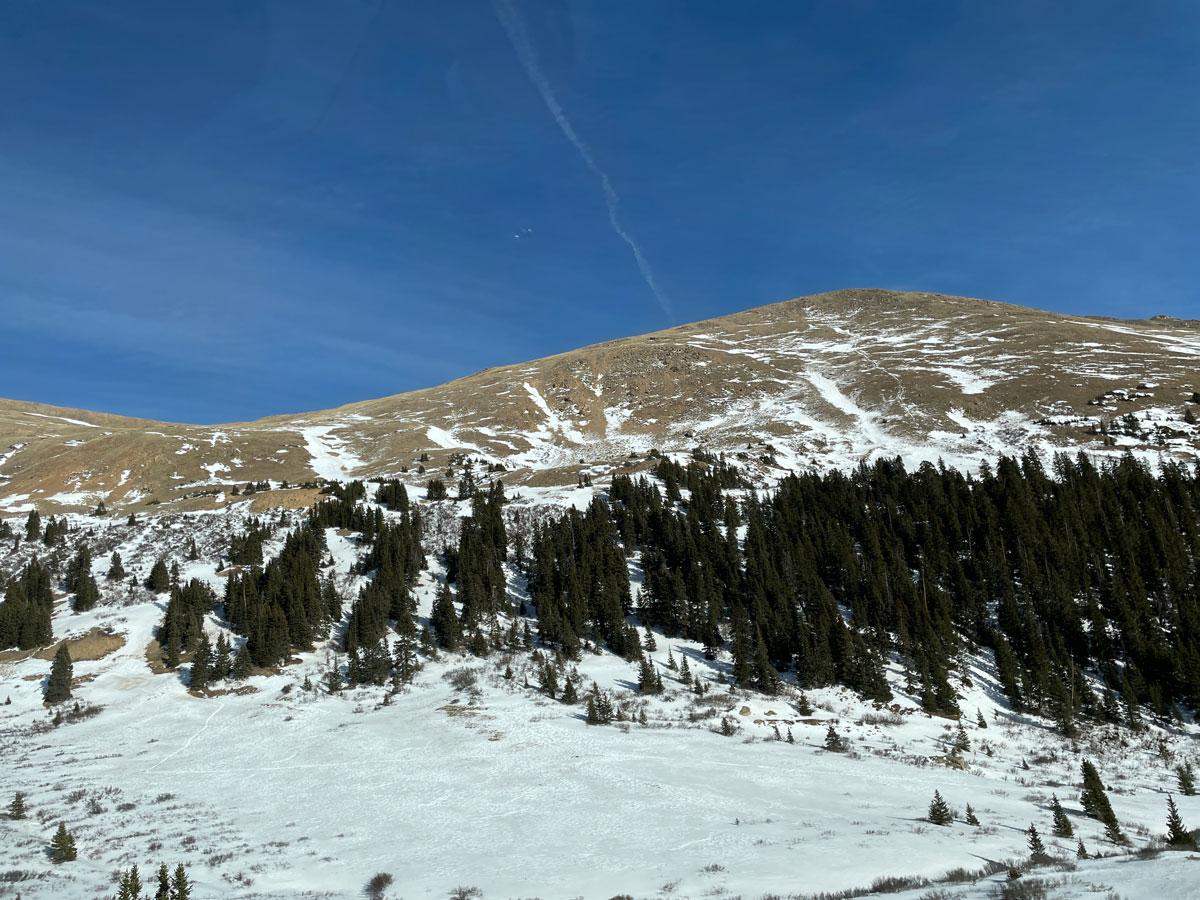
Click the link to read the article on the NOAA website. Here’s an excerpt:
January 15, 2026
From the catastrophic wildfires in Southern California to historic low-water levels on the Mississippi River and record-low streamflow in the Northeast, drought and its impacts touched nearly every corner of the country. The year saw the unusual return of two La Niña events and devastating weather whiplash that brought historic floods to drought-stricken Texas. 2025 showed us that drought is even more devastating when compounded with other climate hazards, such as wildfire and flood. This list breaks down some significant drought-related events of 2025 that made 2025 a year of water extremes across the United States.
Our thoughts are with those who lost loved ones, homes, and livelihoods in the Texas flooding and California wildfires. We hope for healing and comfort for those dealing with significant losses from these events.
Most of the U.S. Experienced Some Drought Last Year
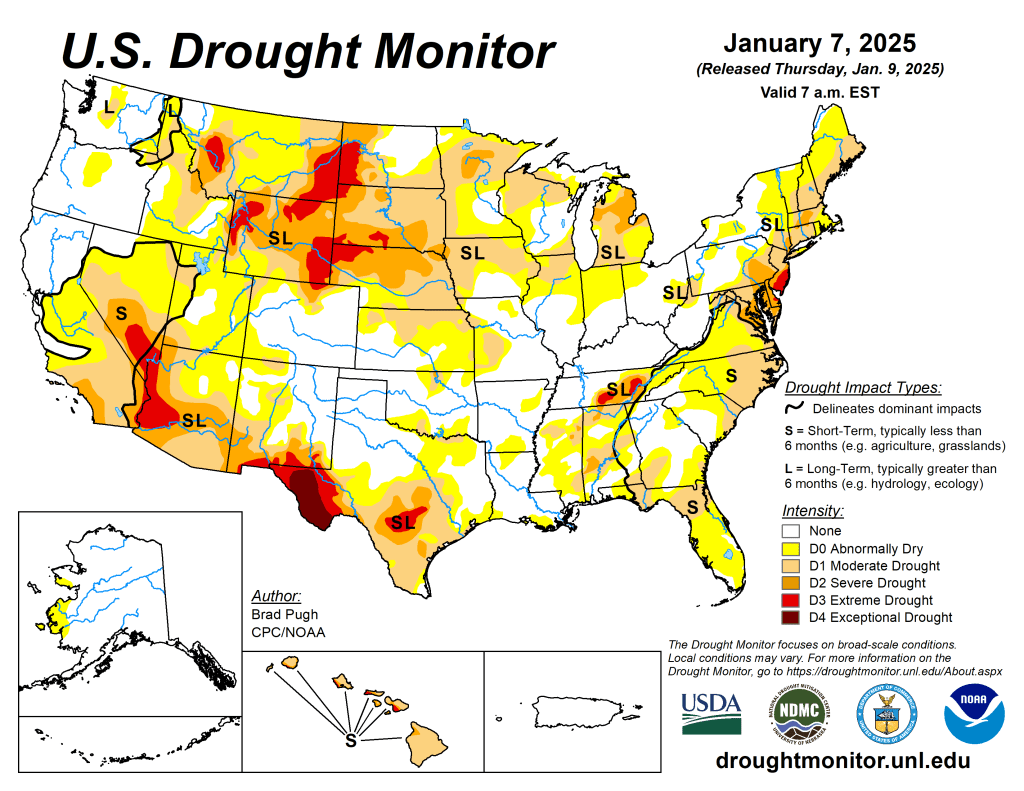
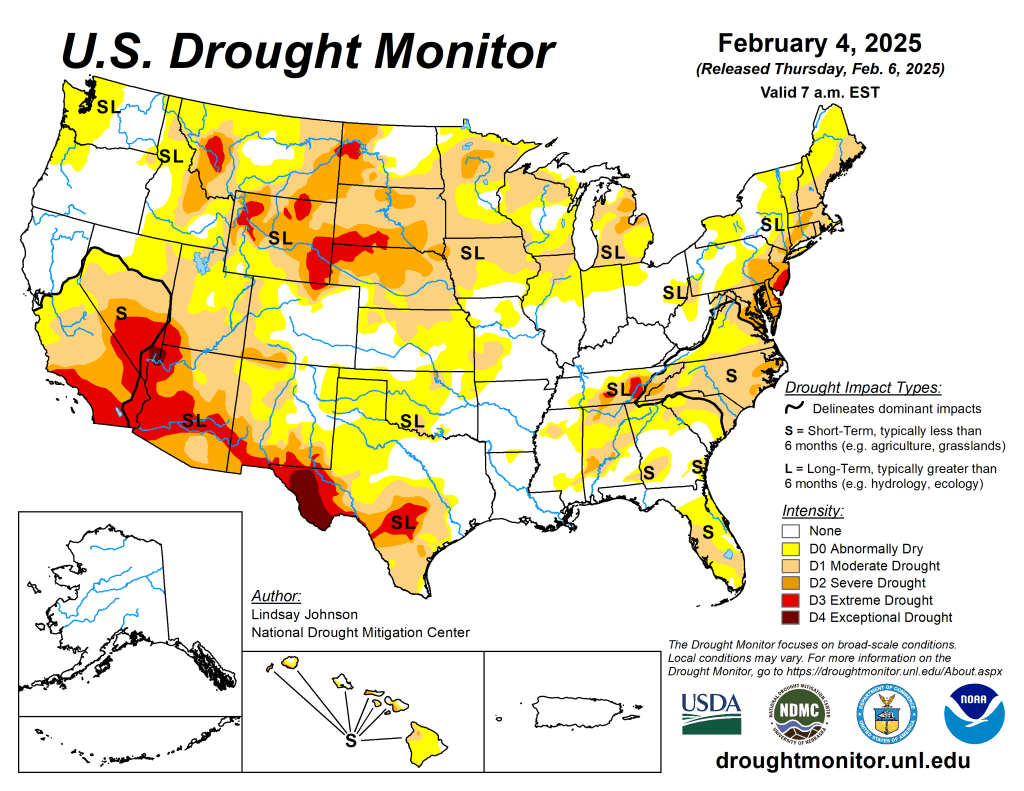
Much of the West started and ended 2025 in drought, according to the U.S. Drought Monitor. Drought impacted the Upper Missouri River Basin and Northeastern U.S. as winter turned into spring, just as Extreme and Exceptional Drought (D3-D4) emerged in Florida and the Southwest. By late summer, drought largely improved in the East, only to emerge again in force in the Northeast U.S. In fall, drought developed in the Midwest and Southeast, and expanded in the Southern Plains and West. New Year’s Eve found drought covering 35.8% of the Nation.
Below is a slideshow of US Drought Monitor maps for 2025.
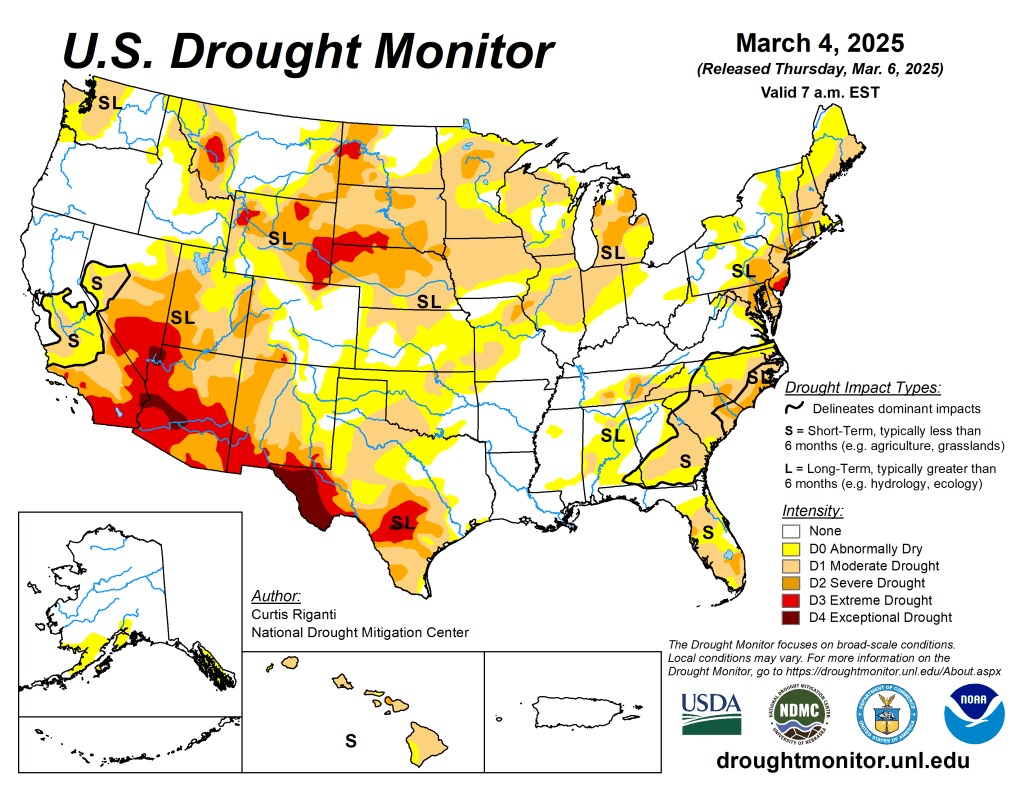

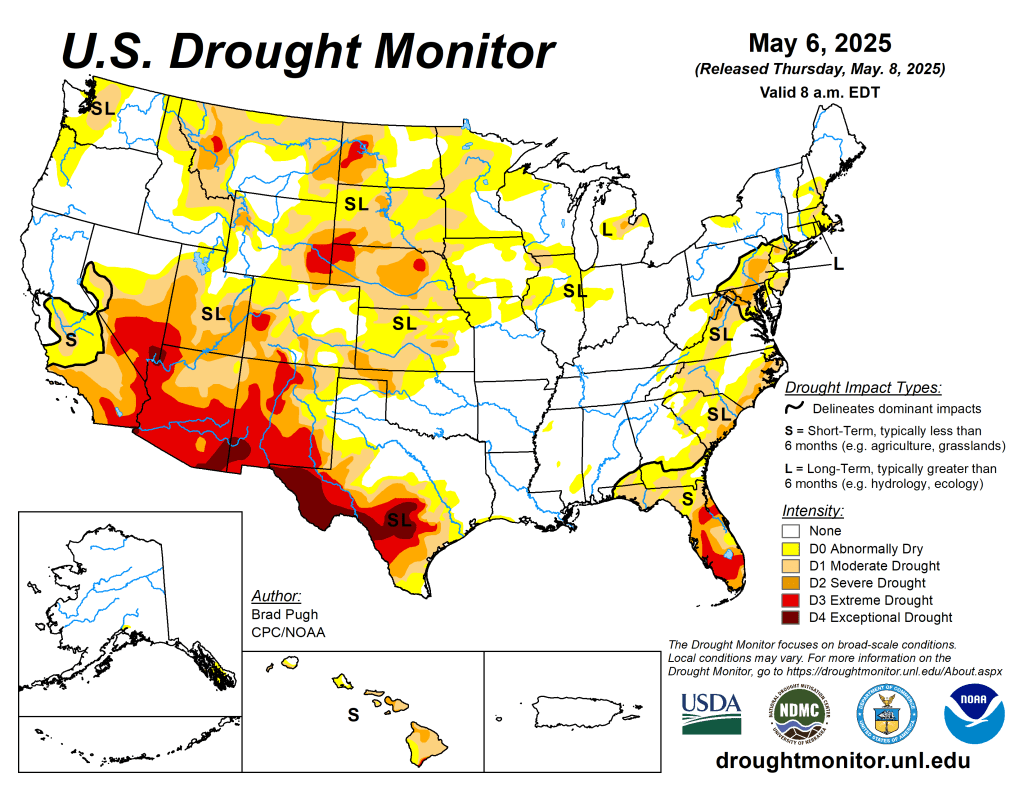
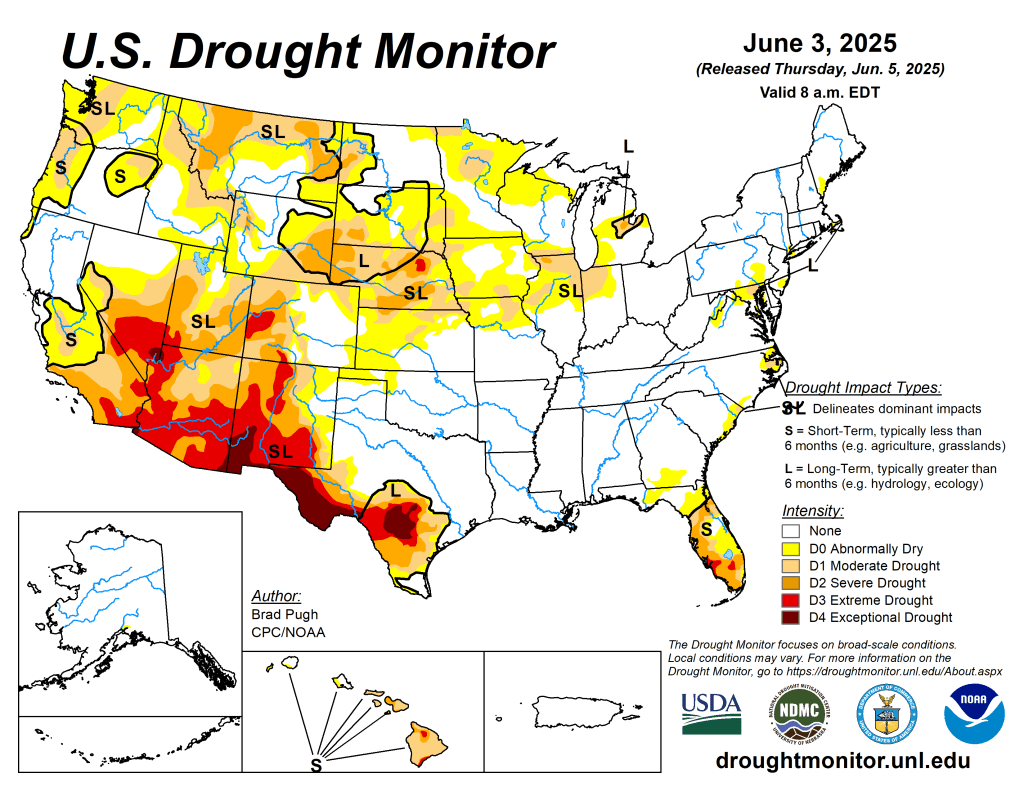
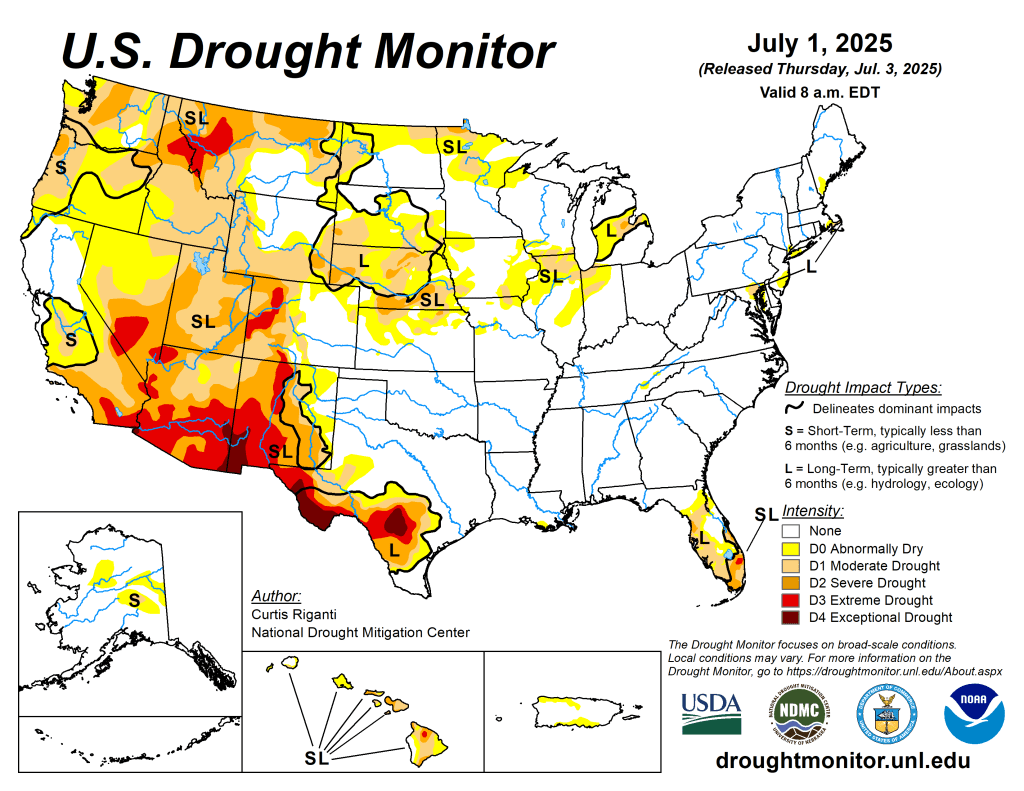
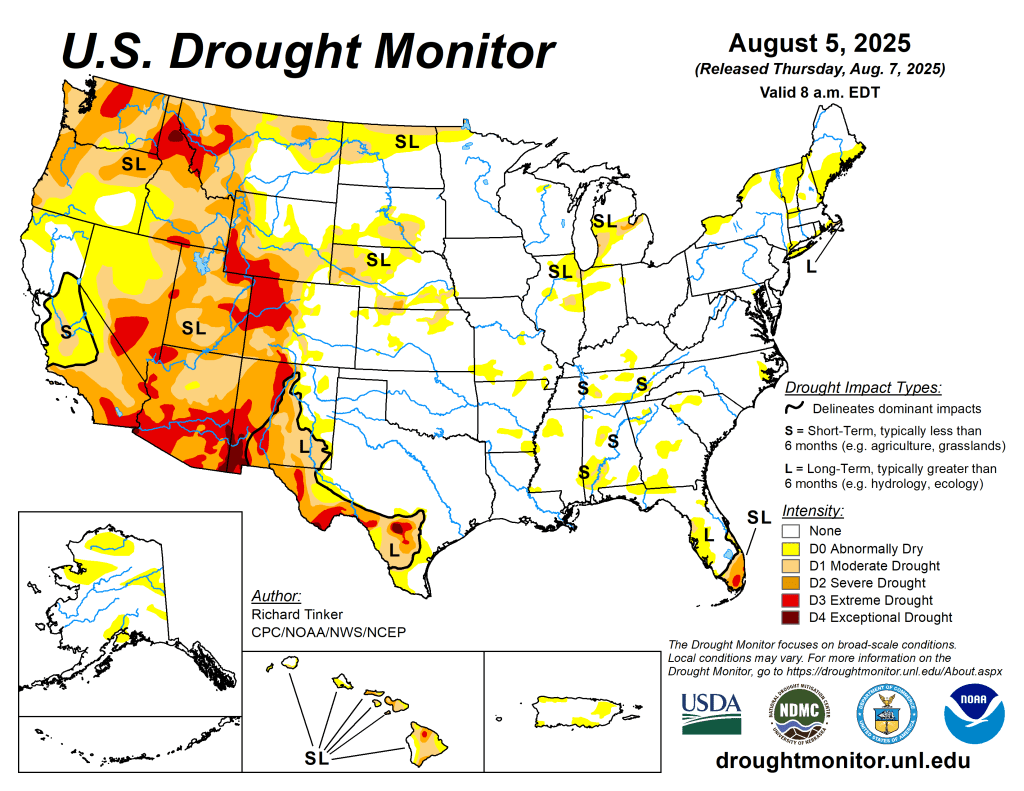
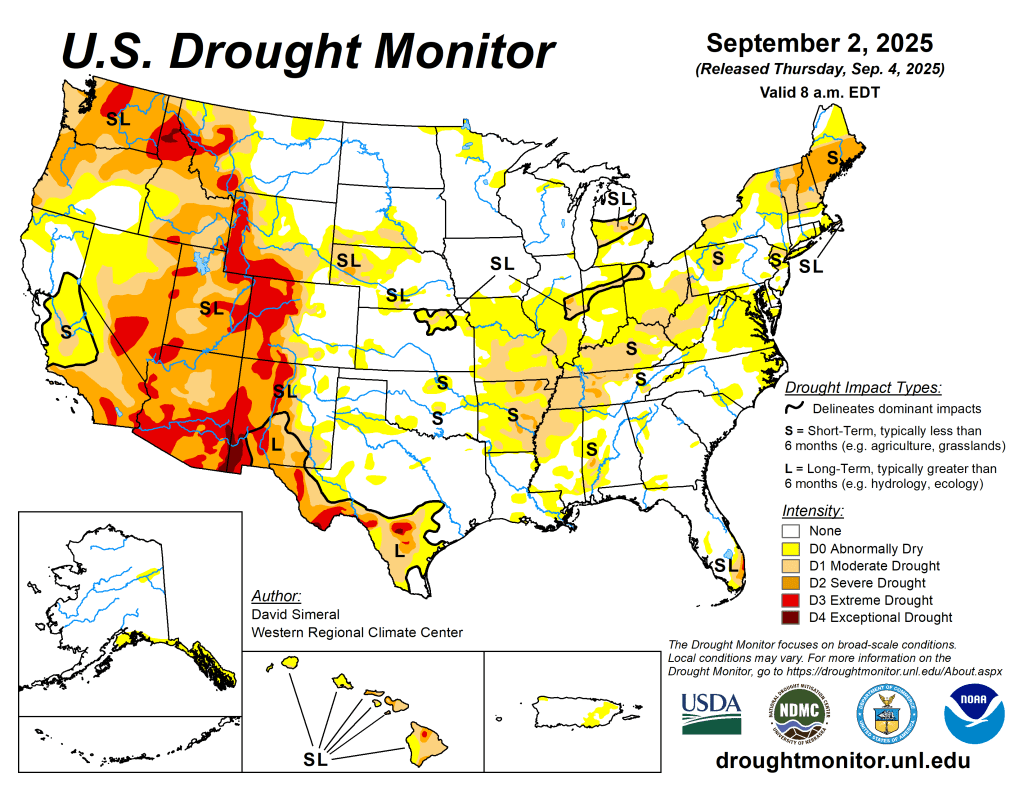
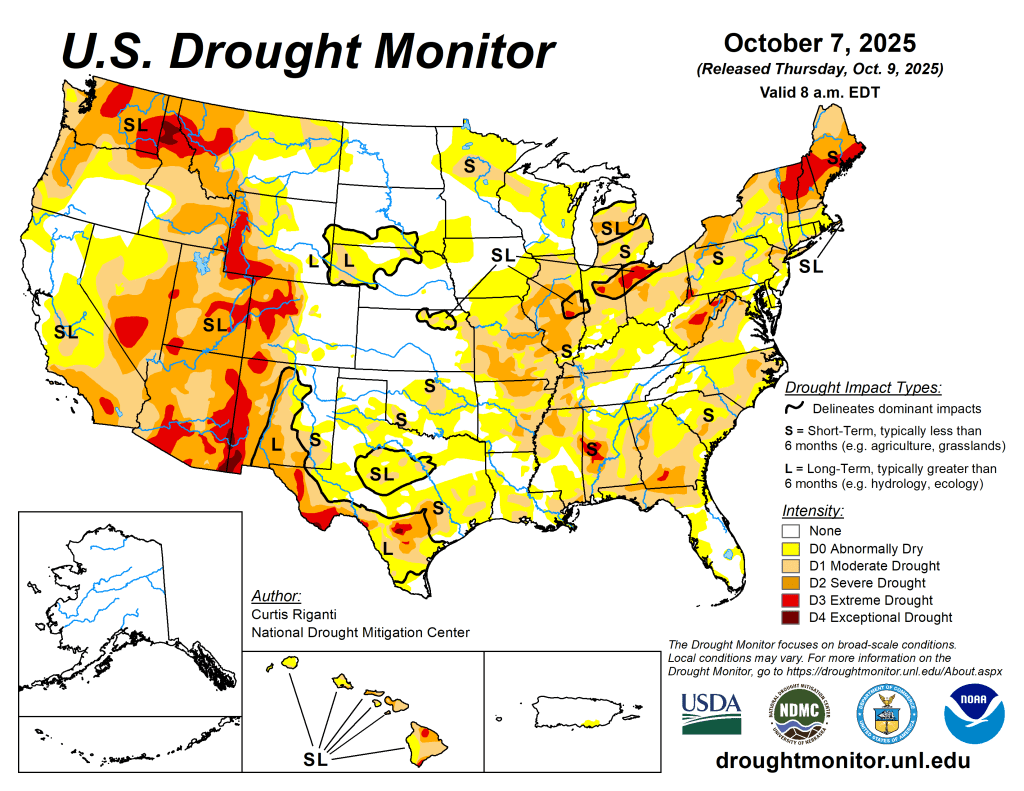


2025: A Warm Year Overall
Across much of the U.S., 2025 was a warm year, with annual temperature averages of up to 5° Fahrenheit (F) above normal in most areas. The greatest departures were in the Great Basin, Northern Rockies, and along the southern border. A few spotty areas around the Nation were slightly cooler than normal in 2025, particularly east of the Mississippi River.
2025 brought a mix of precipitation to the U.S. The Pacific Northwest, Mountain West, Midwest, South, and Northeast were drier than normal. Conditions were particularly poor in the Mountain West and South Texas, where annual precipitation was 50-90% of normal. Southern California, the Dakotas, and southeastern Arizona were wetter than normal.

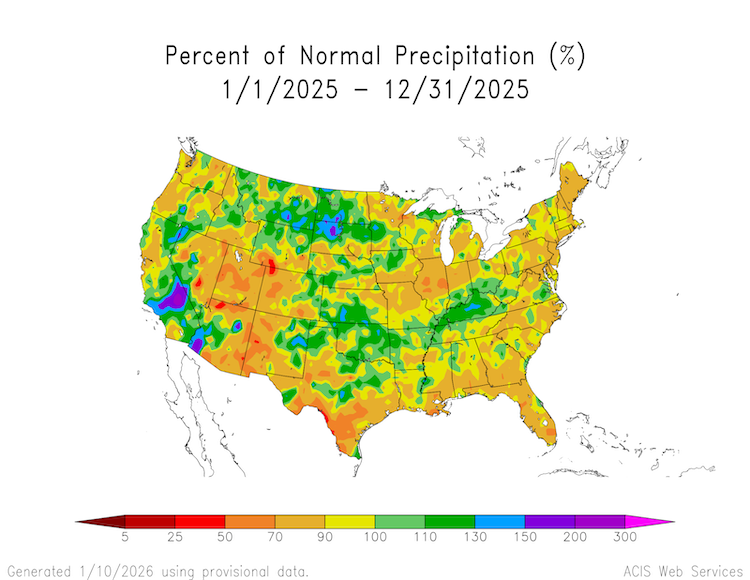
Heatwave Leads to Early Snowmelt, Runoff in Western U.S.
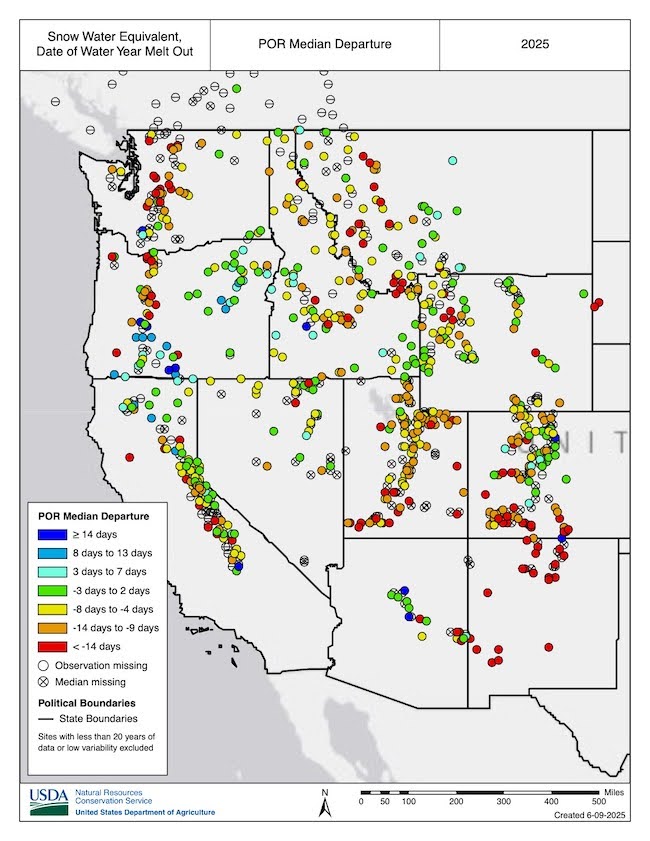
In the West, about 70% of the water supply comes from snow stored in the mountains. Across the West, snow water equivalent on April 1, 2025 was near-normal in most northern watersheds and below normal in watersheds south of the Central Rockies. But April and May brought heatwaves to the mountains, melting snow out much earlier than normal. Rapid melt out occurred across Utah, Colorado, and New Mexico, pushing some basins from above-average snowpack to snow drought conditions in under a month, with snow disappearing 1-4 weeks early.
La Niña Double Dips
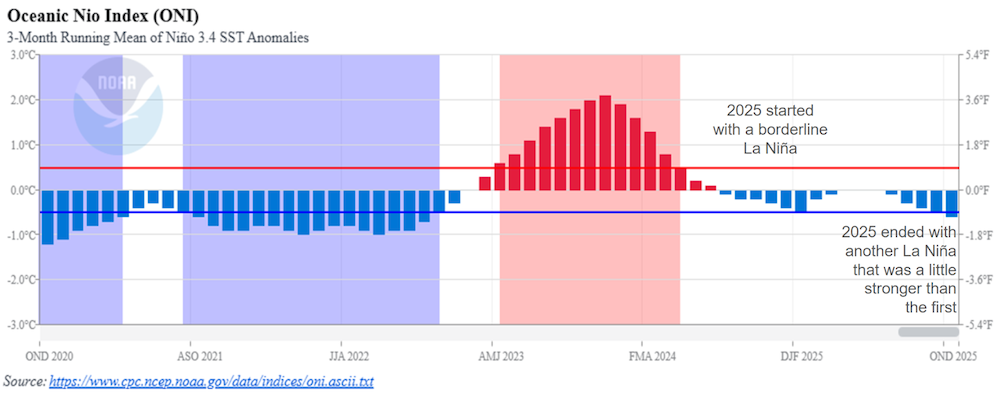
2025 was shaped by two La Niña events. La Niña is one of two phases of the El Niño-Southern Oscillation. La Niña typically brings cool, wet winter conditions to the Northwest U.S., and warm, dry winter conditions to the Southern U.S. The first La Niña was a borderline event, which peaked around January 2025, and then waned by the end of spring. The second was a little stronger, but still considered weak compared to most historical La Niña events. It began developing around August and continues through winter 2025-26.
Low Water Levels on the Mighty Mississippi
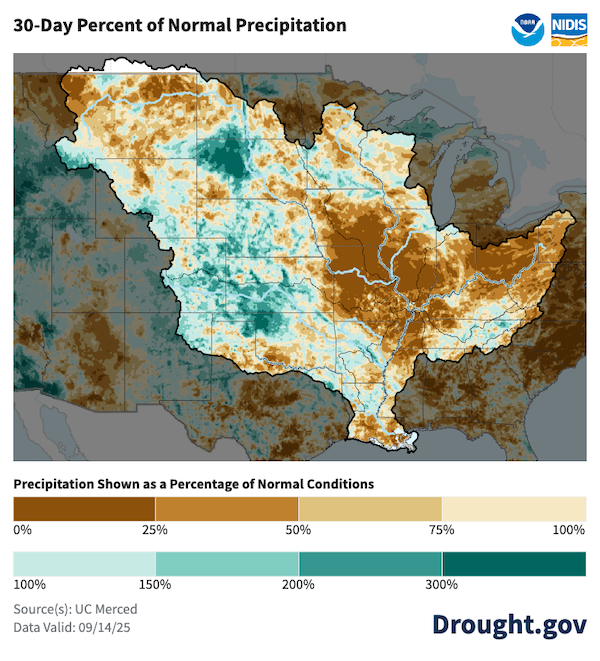
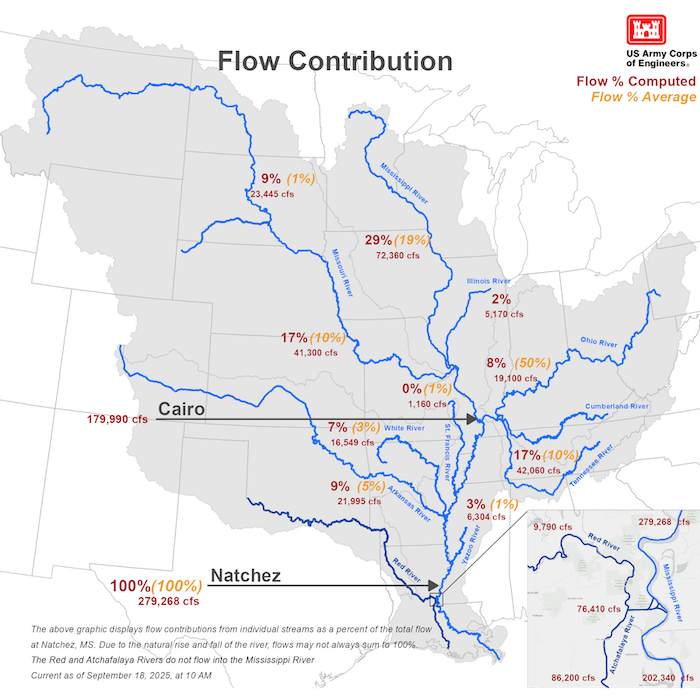
Extremely dry conditions across the Ohio River Basin and southern portions of the Midwest in August and September led to the rapid expansion of drought and decreased flows on the Ohio River and portions of the Lower Mississippi River. In Mid-September, the Ohio River was contributing only 8% of the overall water flow in the Lower Mississippi River, compared to its typical 50% contribution. The Ohio River at Cairo, Illinois (where the Ohio meets the Mississippi River) fell below 10 feet.
Drought Peaked in November at 36%
In late November, the 2025 drought reached its national peak, with 36.65% of the U.S. in drought (D1-D4) according to the U.S. Drought Monitor. November 2025 temperatures were above to much above average throughout most of the Western and Central U.S. Idaho, Nevada, Oregon, Texas, and Utah set new statewide records for November average temperatures. Portions of the northern Great Basin, Northwest, and Rockies and much of the country east of the Mississippi River saw below-average precipitation.

Winter Brings Rain Instead of Snow to the West
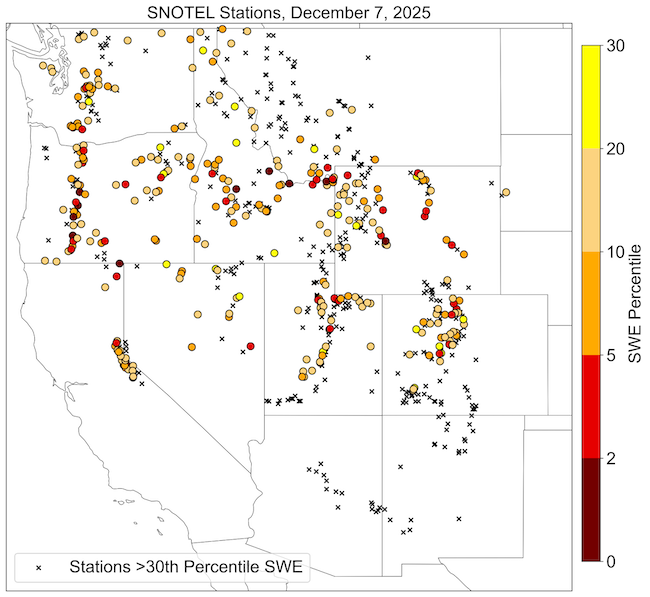
Winter 2025-2026 kicked off with warm weather and rain instead of snow. Nearly every major river basin in the West experienced a November among the top 5 warmest on record. On December 7, 2025, snow cover across the West was the lowest amount for that date in the MODIS satellite record (since 2001), at 90,646 square miles. Water Year 2026 (October 1, 2025–September 30, 2026) precipitation to date was near or above median for many parts of the West in late December. However, much warmer-than-normal temperatures caused precipitation to fall as rain instead of snow in many basins, leading to snow drought despite wetter-than-normal conditions across most of the West. At the end of 2025, snow drought was most severe across much of the Sierra Nevada in California, the Cascade Range in Washington and Oregon, the Blue Mountains of Oregon, and the Great Basin in Nevada.
Keep Up With the Latest Conditions and Outlooks
Find maps, publicly accessible data, and recent research about drought and wildfire on drought.gov. You can also subscribe to NIDIS emails for the latest regional drought updates, webinars, and news in our drought early warning system regions. To stay up to date on the latest drought conditions, sign up to receive drought alerts for your city/zip code when the National Weather Service updates their U.S. Drought Outlooks.

Click the link to read the article on the Sibley’s Rivers website (George Sibley):
January 20, 2026
There continues to be no new information from the ongoing negotiations among the protagonists for the seven states trying to work out a new two-basin management plan for the Colorado River. The Bureau of Reclamation, however, is pressing ahead; it recently went public with its ‘Draft Environmental Impact Statement’ (DEIS) for ‘Post-2026 Operational Guidelines and Strategies for Lake Powell and Lake Mead.’
The five alternative ‘operational guidelines and strategies’ analyzed in this DEIS were announced back in the fall of 2024; the Bureau has spent the past year-plus examining their environmental impacts. I’m not going to go into their analyses right now; I’m still working on skimming, skipping, sprinting and plowing my way through enough of the 1600 pages or so of the report to feel reasonably informed on its contents.
But I will note that the first action analyzed (skipping past the mandatory ‘No Action’ alternative) is for the Bureau to go ahead and run the river system as it sees fit, without input from the seven states/two basins – not something they want to do, but would have to do since the system will not wait while the states stare at their chessboard stalemate. That action would of course precipitate lawsuits from some of the states since the Bureau would have to go ahead with some of the things that are part of non-debate behind the stalemate.
Anyone wishing to submit themselves to the torture of an EIS can find the home page and Table of Contents for the report by clicking here.
And in the meantime, I’ll go off again on what I hope might be at least a more interesting tangent, and maybe more creative – fully believing that the only way out of our ever-unfolding river mismanagement is some centrifugal push to get beyond the tight centripetal pull of the Colorado River Compact and its two-basin expedient that has become gospel.
Two posts ago here, I acknowledged a need to explain why I titled all these posts ‘Romancing the River’ – ‘romance’ being a degraded term these days for many people, most commonly referring to formulaic fiction about chaotic and improbable couple-love relationships. This is a sad degradation of a word that, in more imaginative times, referred to a much larger quality or feeling of adventure, mystery, something beyond or larger than everyday life – ‘your mission should you choose to accept it,’ as it was expressed in Mission Impossible and The Hobbit.
‘Romance’ has been used to describe our relationship with the Colorado River for more than a century. C. J. Blanchard, a spokesperson for the Bureau of Reclamation in 1918, spoke of the ‘romance of reclamation,’ observing that ‘a vein of romance runs through every form of human endeavor.’ The first book compiling the history of the Euro-American exploration of the Colorado River was titled The Romance of the Colorado River. Written by Frederick Dellenbaugh, something of an explorer himself, he first encountered the Colorado River in the company of one of the river’s greatest romantics, John Wesley Powell, on Powell’s second adventure into the canyon region of the river.
Now wait a minute, you may say: John Wesley Powell a romantic? Everyone knows he was a scientist! Well, yes, that too. A romantic scientist. Let me try to explain.
Science is a discipline, perhaps summarized in the caution: Look before you leap. Science is the discipline of looking, studying, analyzing for causes in some studies, for effects in others, basically trying to map out what is demonstrably going on in the system or structure being studied. But most scientists will acknowledge being also moved by feelings, convictions, beliefs that lie outside of or beyond the linear relationships of cause and effect explorations. The extreme example might be scientists who believe in a god or gods that oversaw the creation they are studying. More subtly, the very desire to pursue a life in science reflects a belief beyond evidence that the work is important as well as interesting. This is the ‘romance’ underlying science and those who pursue it.
The same year Dellenbaugh published his Romance, 1903, another southwestern writer, Mary Hunter Austin, came out with her Land of Little Rain, a poetic collection of her explorations in the deserts of the lower Colorado River region. In that book she offered what might be a cautionary note about ‘romancing the river.’ In an observation about a small central Arizona tributary of the Colorado River, ‘the fabled Hassayampa,’ she reports an unattributed legend: ‘If any drink [of its waters], they can no more see fact as naked fact, but all radiant with the color of romance.’
That could be construed into a kind of spectrum, the ‘naked facts’ of any situation at one end, the ‘radiant colors of romance’ dressing up the naked facts at the other end. The discipline of science is to stay as close to the ‘naked facts’ as possible. But is it a bad thing to allow feelings or beliefs to dress up the naked facts with the radiant color of romance?
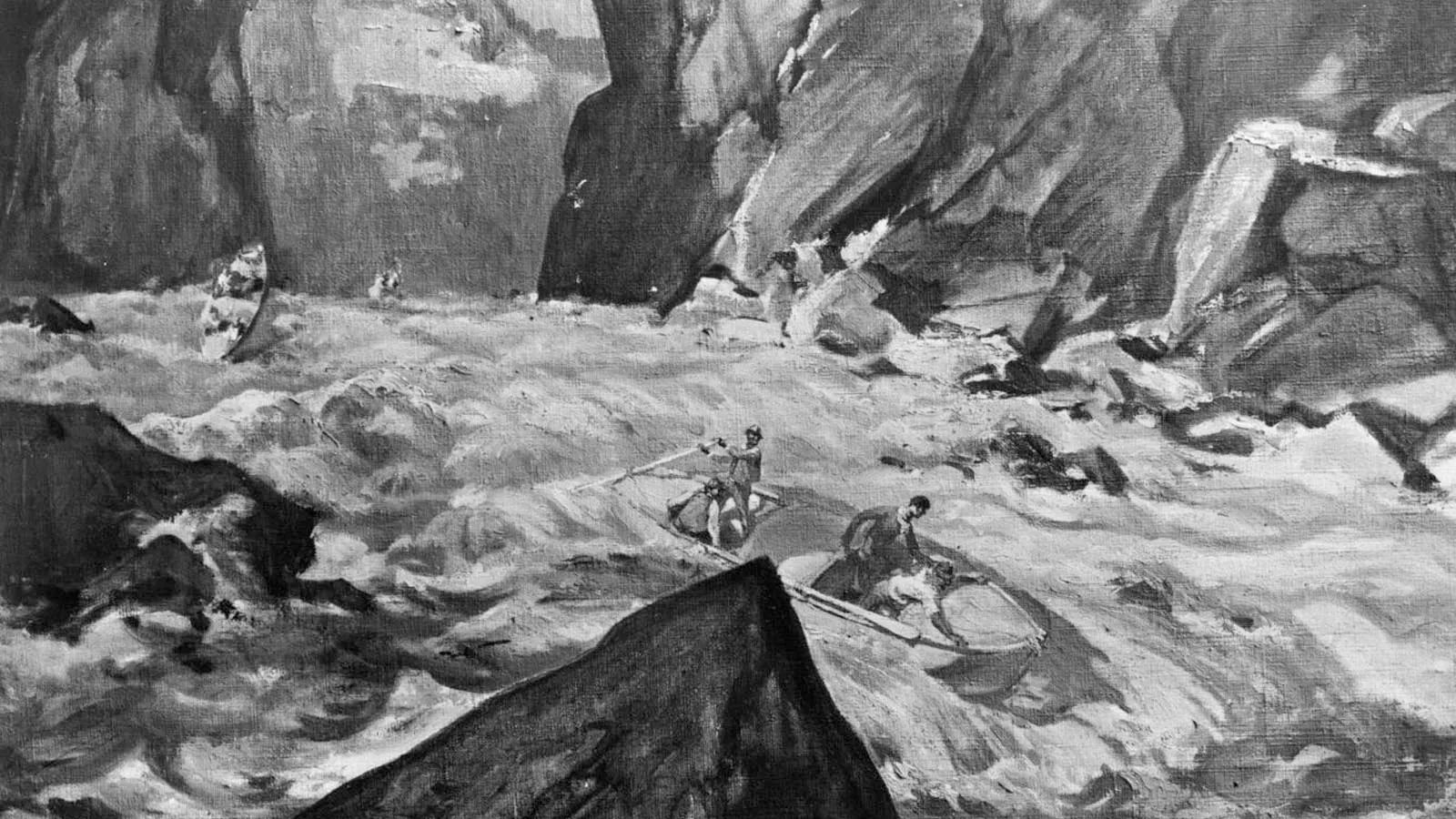
Hold that question for a bit, and back to Major John Wesley Powell. Powell was a scientist by nature – meaning born a curious fellow who collected information about things that made him curious. He studied science in a couple of colleges, but never completed a degree – partially, probably, because college science was a little too tame. One of his early ‘field trips’ was a solo trip the length of the Mississippi River in a rowboat. Another was a four-month walk across the ‘Old Northwest Territory’ state of Wisconsin. Both of those trips pretty unquestionably fall more into the category of ‘romantic adventures’ than ‘scientific expeditions.’
As a son of an itinerant farmer/preacher immigrant, growing up on farms in rural New York, Ohio and Illinois, he also shared, to some extent, the romantic Jeffersonian vision of ‘another America,’ a nation of small decentralized and mostly locally-sufficient communities of farm families – now just a nostalgic fantasy-vision of nation building that still haunts the imperial urban-industrial mass society that America has become. But trips to the west had convinced Powell that the mostly arid lands of the West were largely unsuitable for the spread of that agrarian vision, without the development of an appropriate system for settlement and land management specifically for the arid lands.
He had ideas about that, things to say, but he was basically just a high-school teacher who spent his summers adventuring west; how could he get a hearing for his concerns and ideas? He needed some way to gain public attention. So he turned his destiny over to his romantic adventurer side: he would do a scientific investigation into one of the remaining blank spots on the continental map, the region beginning where the rivers draining the west slopes of the Southern Rockies disappeared into a maze of canyons, and ending where a river emerged from the canyons – a river thick with silt and sand, indicating a pretty rough passage through canyons still in the creation stage.

Wallace Stegner, in his great book about Powell and the development of the arid lands, Beyond the Hundredth Meridian, credited Powell’s scientific grounding with getting him through his 1869 expedition into the canyons: ‘Though some river rats will disagree with me, I have been able to conclude only that Powell’s party in 1869 survived by the exercise of observation, caution, intelligence, skill, planning – in a word, Science.’
I’m one of those who disagree with Stegner on that point. The advance planning for the trip sank in the first set of Green River rapids, with the wreckage of one of the boats containing a large portion of both their food supply and scientific instruments. They gradually acquired some skill at negotiating rapids (and knowing when to portage instead), but they started with no skill and paid the price. Observation was limited to the stretch of river before the next bend. Dellenbaugh asked Powell, on the second trip in 1871-72, what he would have done had he come to a Niagara-scale waterfall with sheer walls, no room for portage and no way back upriver. Powell answered, ‘I don’t know.’ Scientific caution was not a factor in this trip; they leapt before looking because there was no way to look first.
Stegner to the contrary, I would argue they survived the way adventurers survive (and sometimes don’t): a kind of adaptive intelligence, for sure, figuring out how to make rotten bacon and moldy flour edible, how to fabricate replacement oars, how to deal with the unexpected quickly and decisively. But mostly, just gutting it out, keeping spirits from crashing completely with morbid humor and routines – Powell getting out the remaining instruments to take their bearing rain or shine, getting back in the boats every morning and turning their lives over to the will of the river again.
And it worked out. Ninety-one days after starting, they made national headlines when they floated half-starved into a town near the confluence with the Virgin River. And Powell, a national hero after that, procured a government job doing a ‘survey’ of the Utah territory.
Then Powell the scientist took over – but the romantic side of his nature shaped his scientific work. The unstated purpose of the western surveys by the 1870s was to map out potential resources for the fast-growing industrial empire ‘back in the states’; Powell covered those bases, but the heart of his 1879 ‘Report on the Lands of the Arid Region…’ was analysis of the potential of the arid lands for fulfilling Jefferson’s romantic agrarian vision for America. All agricultural activity, he argued, would require irrigation, and there was only enough water to irrigate many three percent of the land.
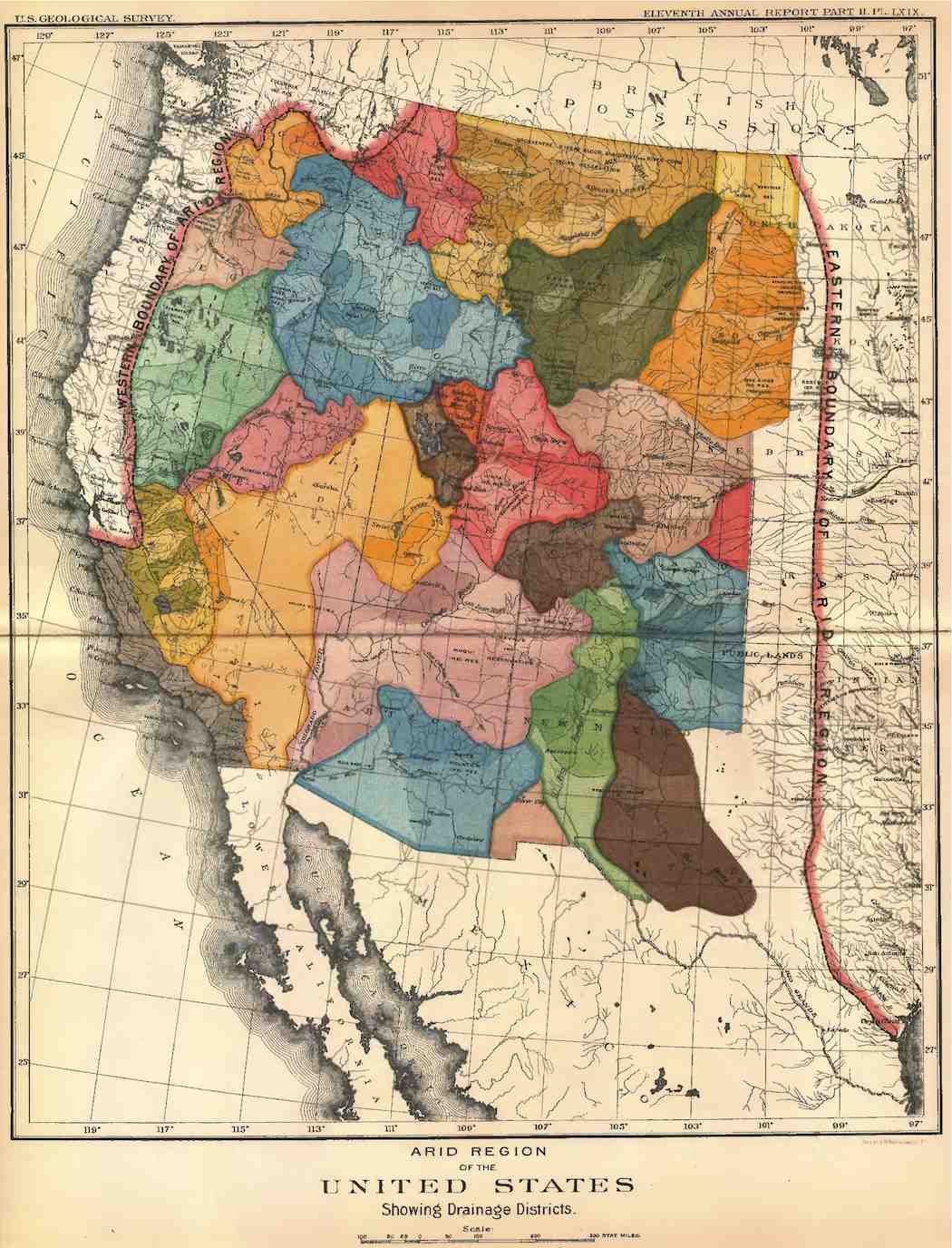
He made a strong case for replacing the Homestead Act’s one-size-fits-all 160-acre homestead allotments with two alternatives for the arid lands: 1) 80-acre allotments for intensive irrigated farming, that being as much as a pre-tractor farm family could successfully tend; or 2) ‘pasturage’ allotments on unirrigable land of 2,560 acres, four full sections, for stockgrowers, with up to 20 irrigable acres for growing some winter hay and the ubiquitous kitchen garden. He went even further than that: settlement should not be done on a willy-nilly ‘first-come-first-served basis’; instead each watershed should be developed by an organized ditch company working from a plan assuring that every member got a fair allotment of water and that the water was most efficiently distributed. And the right to use that water should be bound to the land, he said. No selling your water right to some distant city!
Powell did not just recommend this in his report; he included model bills for state and federal legislation. He was of course thoroughly ignored because everything that he suggested was contrary to the romantic mythology of the Winning of the West – Jefferson’s legendary ‘yeoman’ conquering the wilderness, the rugged American individualist going forth with rifle, ax and Bible.
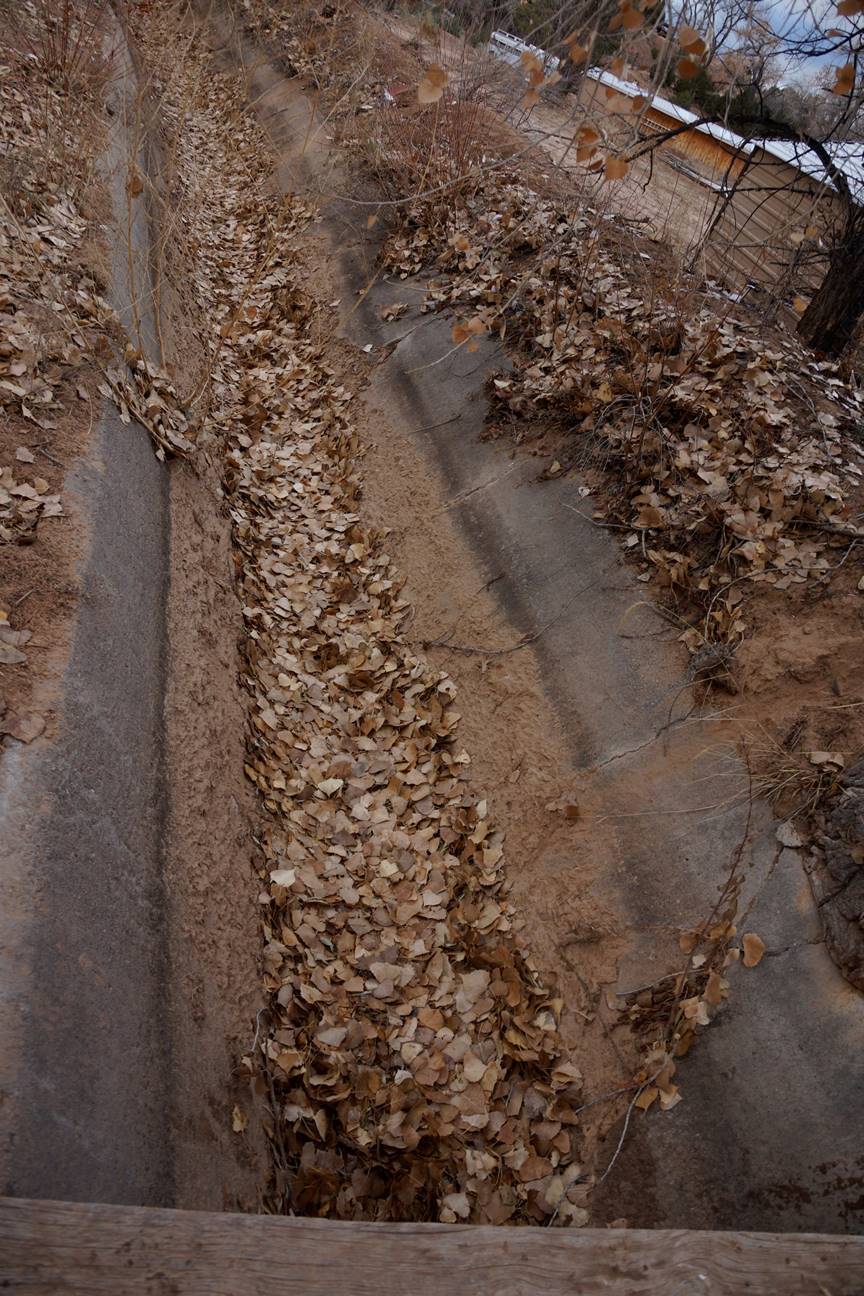
That American mythology from the start was always ‘all radiant with the color of romance,’ with very little attention to ‘the naked facts’ – which is the main reason why two out of three homesteads failed as settlement moved into the semi-arid High Plains and the arid interior West. ‘The naked facts’ of aridity, on the other hand, had been foundational to the communal land-grant system imported from Spain to Mexico, and it was already known to many of the native peoples already in the Americas: it takes a village and a stream to raise good crops in the arid lands. Powell observed it in the Utah Territory, where the Mormons had borrowed it from the natives and Mexicans.
Powell was philosophical about being ignored – and kept on pushing. He was ‘present at the creation’ of the United States Geological Survey (USGS) in 1879, the same year he presented his ‘Report on the Lands of the Arid Region.’ And two years later he became director of the USGS, where he tried to keep both the Agrarian Romance and ‘the naked facts’ of aridity front and center. He tried to sell the idea of doing a complete survey of the interior West to map its water resources and the adjacent areas of possible successful settlement, and he was actually a vote or two from achieving that, and actually shutting down the homesteading process until the study was done. But once some of the senators fronting for the industrialists realized what he was doing, they shut him down with a vengeance – he quickly realized that to save the USGS, he had to resign from it, and did so in 1894. Western extractive industries depended to some extent on failed homesteaders for their labor supply.

Powell was not out of work, however. From his pre-canyon days he had been interested in the First Peoples of the West. While most Euro-Americans saw them, at best, as raw material for conversion to Christianity and industrial labor, and at worse, as vermin to be wiped off the land, Powell saw them as people who had survived and even thrived in the region with Stone Age technology, some still semi-nomadic, some settled in agrarian communities, and therefore people from whom something might be learned. His efforts to communicate with those he encountered in his Utah survey led to the 1877 publication of a book, Introduction to Indian Languages – which led, two years later to the creation of the U.S. Bureau of Ethnology in the Smithsonian Institute with Powell as director – a position he held until his death in 1902, finally producing the first comprehensive linguistic survey of indigenous tongues, Indian Linguistic Families of America, North of Mexico(1891).
In both ethnology and the geology survey Major Powell established a high standard for government science – attention to the naked facts while still trying to carry forward what Bruce Springsteen called ‘the country we carry in our hearts’ – the ever evolving, devolving, careening, diverted, perverted, and currently severely damaged Romance of the American Dream. Next post, we’ll take a look at what happens when that standard gets out of balance.
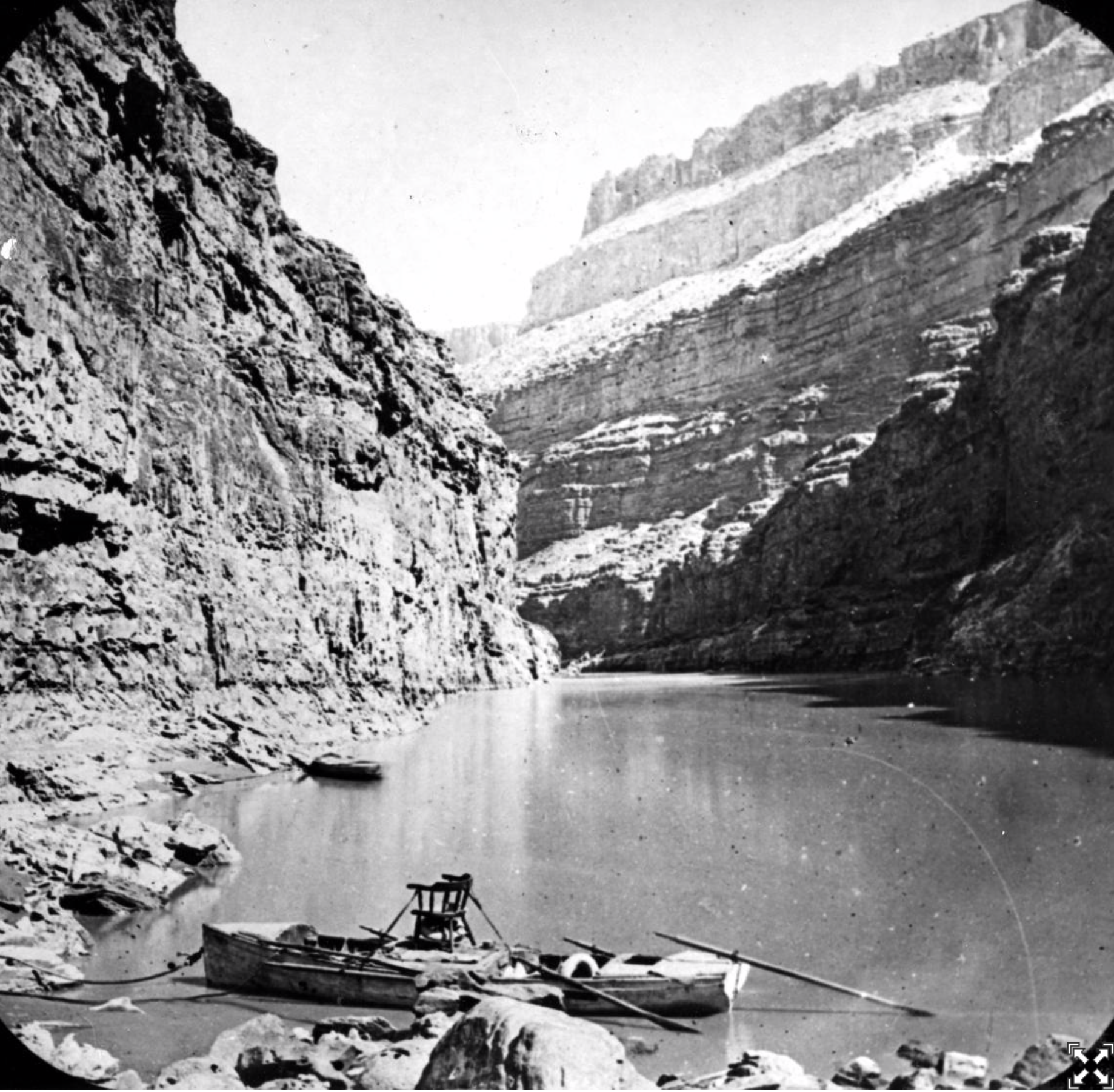
But I want to leave you with a Colorado River image of Powell, related in Dellenbaugh’s Romance of the Colorado River: there were afternoons in that second voyage in the canyons, in the placid stretches between rapids, when the men would rope the boats together, and Major Powell would sit in his chair on the deck of the Emma Dean and read to them from the romantic adventure stories of Sir Walter Scott. Romancing the River.
Kaveh Madani, United Nations University
January 20, 2026
The world is now using so much fresh water amid the consequences of climate change that it has entered an era of water bankruptcy, with many regions no longer able to bounce back from frequent water shortages.
About 4 billion people – nearly half the global population – live with severe water scarcity for at least one month a year, without access to sufficient water to meet all of their needs. Many more people are seeing the consequences of water deficit: dry reservoirs, sinking cities, crop failures, water rationing and more frequent wildfires and dust storms in drying regions.
Water bankruptcy signs are everywhere, from Tehran, where droughts and unsustainable water use have depleted reservoirs the Iranian capital relies on, adding fuel to political tensions, to the U.S., where water demand has outstripped the supply in the Colorado River, a crucial source of drinking water and irrigation for seven states.
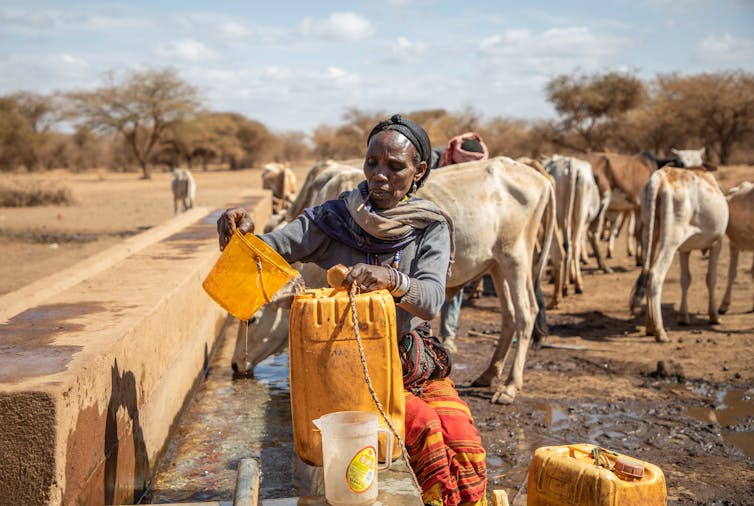
Water bankruptcy is not just a metaphor for water deficit. It is a chronic condition that develops when a place uses more water than nature can reliably replace, and when the damage to the natural assets that store and filter that water, such as aquifers and wetlands, becomes hard to reverse.
A new study I led with the United Nations University Institute for Water, Environment and Health concludes that the world has now gone beyond temporary water crises. Many natural water systems are no longer able to return to their historical conditions. These systems are in a state of failure – water bankruptcy. https://www.youtube.com/embed/rnMDoX_2vR8?wmode=transparent&start=0 Kaveh Madani, director of the United Nations University Institute for Water, Environment and Health, explains the concept of “water bankruptcy.” TVRI World.
In financial bankruptcy, the first warning signs often feel manageable: late payments, borrowed money and selling things you hoped to keep. Then the spiral tightens.
Water bankruptcy has similar stages.
At first, we pull a little more groundwater during dry years. We use bigger pumps and deeper wells. We transfer water from one basin to another. We drain wetlands and straighten rivers to make space for farms and cities.
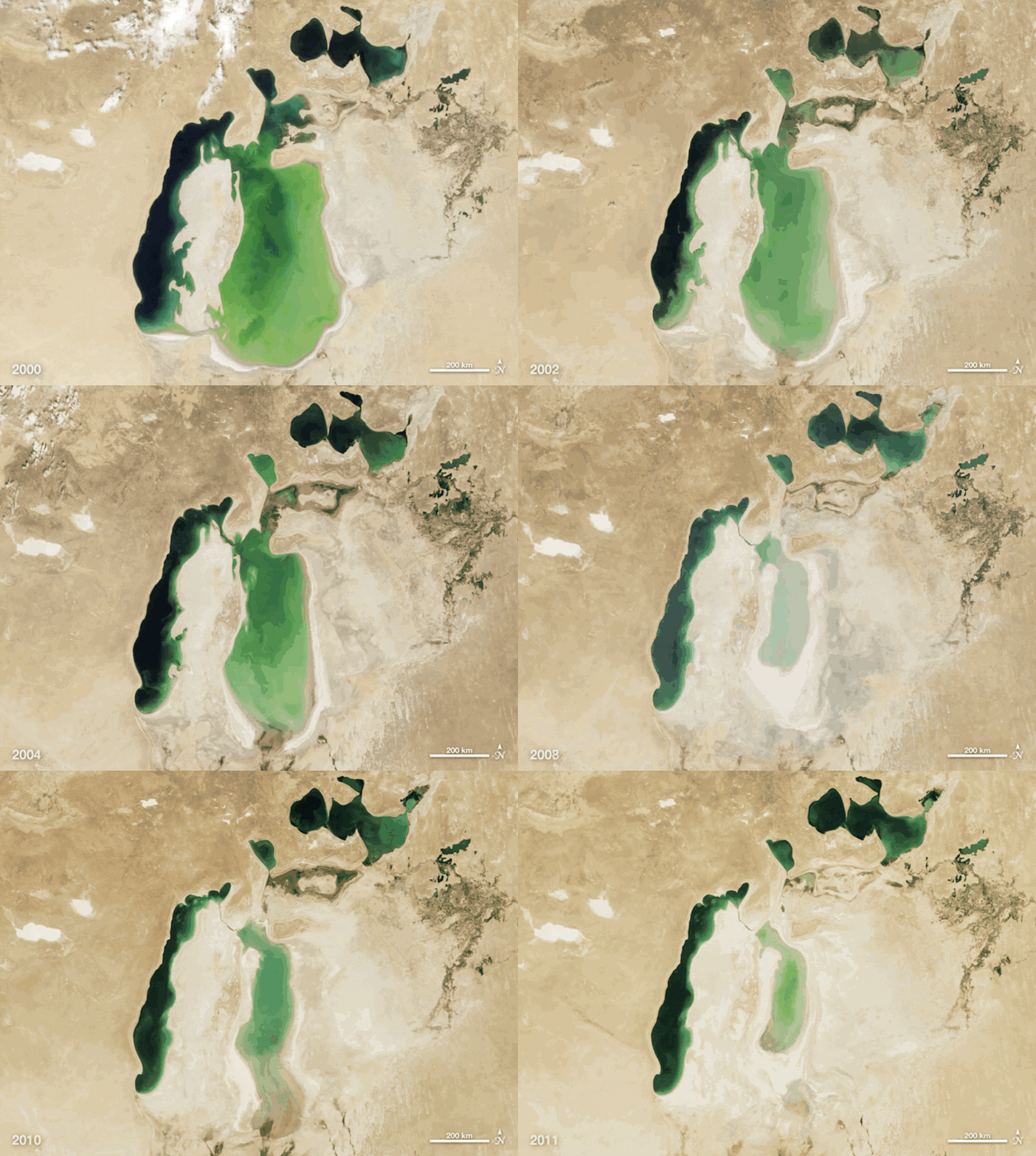
Then the hidden costs show up. Lakes shrink year after year. Wells need to go deeper. Rivers that once flowed year-round turn seasonal. Salty water creeps into aquifers near the coast. The ground itself starts to sink.
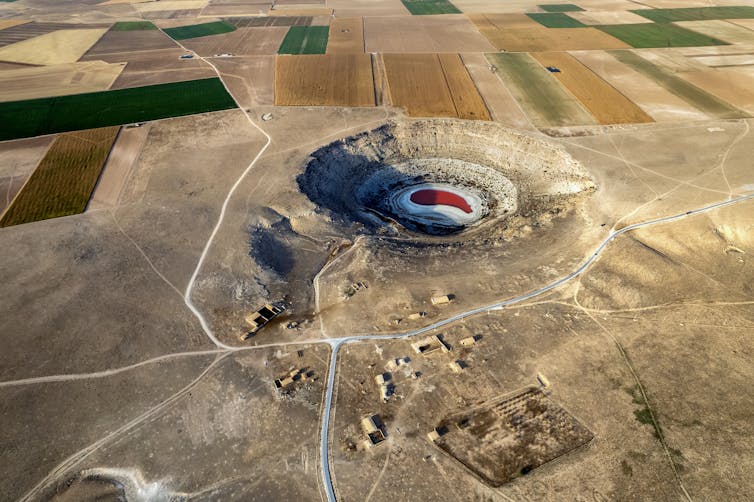
That last one, subsidence, often surprises people. But it’s a signature of water bankruptcy. When groundwater is overpumped, the underground structure, which holds water almost like a sponge, can collapse. In Mexico City, land is sinking by about 10 inches (25 centimeters) per year. Once the pores become compacted, they can’t simply be refilled.
The Global Water Bankruptcy report, published on Jan. 20, 2026, documents how widespread this is becoming. Groundwater extraction has contributed to significant land subsidence over more than 2.3 million square miles (6 million square kilometers), including urban areas where close to 2 billion people live. Jakarta, Bangkok and Ho Chi Minh City are among the well-known examples in Asia.
Agriculture is the world’s biggest water user, responsible for about 70% of the global freshwater withdrawals. When a region goes water bankrupt, farming becomes more difficult and more expensive. Farmers lose jobs, tensions rise and national security can be threatened.
About 3 billion people and more than half of global food production are concentrated in areas where water storage is already declining or unstable. More than 650,000 square miles (1.7 million square kilometers) of irrigated cropland are under high or very high water stress. That threatens the stability of food supplies around the world.

Droughts are also increasing in duration, frequency and intensity as global temperatures rise. Over 1.8 billion people – nearly 1 in 4 humans – dealt with drought conditions at various times from 2022 to 2023.
These numbers translate into real problems: higher food prices, hydroelectricity shortages, health risks, unemployment, migration pressures, unrest and conflicts. https://www.youtube.com/embed/pWDoe7PVNrw?wmode=transparent&start=0 Is the world ready to cope with water-related national security risks? CNN.
Every year, nature gives each region a water income, depositing rain and snow. Think of this like a checking account. This is how much water we receive each year to spend and share with nature.
When demand rises, we might borrow from our savings account. We take out more groundwater than will be replaced. We steal the share of water needed by nature and drain wetlands in the process. That can work for a while, just as debt can finance a wasteful lifestyle for a while.

Those long-term water sources are now disappearing. The world has lost more than 1.5 million square miles (4.1 million square kilometers) of natural wetlands over five decades. Wetlands don’t just hold water. They also clean it, buffer floods and support plants and wildlife.
Water quality is also declining. Pollution, saltwater intrusion and soil salinization can result in water that is too dirty and too salty to use, contributing to water bankruptcy.

Climate change is exacerbating the situation by reducing precipitation in many areas of the world. Warming increases the water demand of crops and the need for electricity to pump more water. It also melts glaciers that store fresh water.
Despite these problems, nations continue to increase water withdrawals to support the expansion of cities, farmland, industries and now data centers.
Not all water basins and nations are water bankrupt, but basins are interconnected through trade, migration, climate and other key elements of nature. Water bankruptcy in one area will put more pressure on others and can increase local and international tensions.
Financial bankruptcy ends by transforming spending. Water bankruptcy needs the same approach:

With water, as with finance, bankruptcy can be a turning point. Humanity can keep spending as if nature offers unlimited credit, or it can learn to live within its hydrological means.
Kaveh Madani, Director of the Institute for Water, Environment and Health, United Nations University
This article is republished from The Conversation under a Creative Commons license. Read the original article.

Click the link to read the article on The New York Times website (Ben Sisario and Mark Walker). Here’s an excerpt:
January 10, 2026
Bob Weir, a guitarist and songwriter who was a founding member of the Grateful Dead, which rose from jug band origins to become the kings of psychedelic rock, selling millions of records and inspiring a small nation of loyal fans, has died. He was 78…The band, which was founded in the San Francisco Bay Area in 1965, blended rock, folk, blues and country, with mellow ease and a gift for improvisation that became its trademark. In a rock milieu that was still based on short songs and catchy hooks, the Grateful Dead created a niche for meandering, exploratory performances that each seemed to have their own personalities…The band became the pied pipers of the wider hippie movement, providing the soundtrack for 1960s dropouts and LSD dabblers…Even after hippie culture faded, the band retained a gigantic fan base — called Deadheads, a term worn with pride and later adapted for numerous other fandoms — which followed the group wherever it played, traded recordings of its concerts and set up mini-encampments, complete with craft bazaars, oceans of tie-dye and no small amount of drugs.
It was one of rock’s original subcultures. “Our audience is like people who like licorice,” the band’s lead guitarist and singer, Jerry Garcia, once said. “Not everybody likes licorice, but the people who like licorice really like licorice.”
In the band, Mr. Weir — who, like Mr. Garcia, had an early fascination with folk music — stood alongside strong musical personalities. Mr. Garcia was a wizard of improvisation, and gave the group its aesthetic and conceptual direction. Phil Lesh, its bassist, had training as a composer. Mickey Hart, a percussionist, had eclectic tastes and played a major part in introducing Western audiences to world music…But Mr. Weir also developed a reputation for inventive timing on the rhythm guitar, his chords alternately grounding and contending with the melodic chaos of Mr. Lesh and Mr. Garcia’s instruments. Although Mr. Garcia and Robert Hunter, the group’s lyricist, were the Dead’s primary composers, Mr. Weir was also a contributor to the writing of key songs like “Playing in the Band” and “Sugar Magnolia.”
Click the link to read the article on the WyoFile website (Dustin Bleizeffer):
December 30, 2025
It was a balmy, gusty Christmas for much of Wyoming, where only high elevations in the western portion of the state saw fresh snow. It rained in Jackson Hole while lower elevations in central Wyoming saw temperatures in the 60s with 60-plus mile-per-hour winds, according to reports.
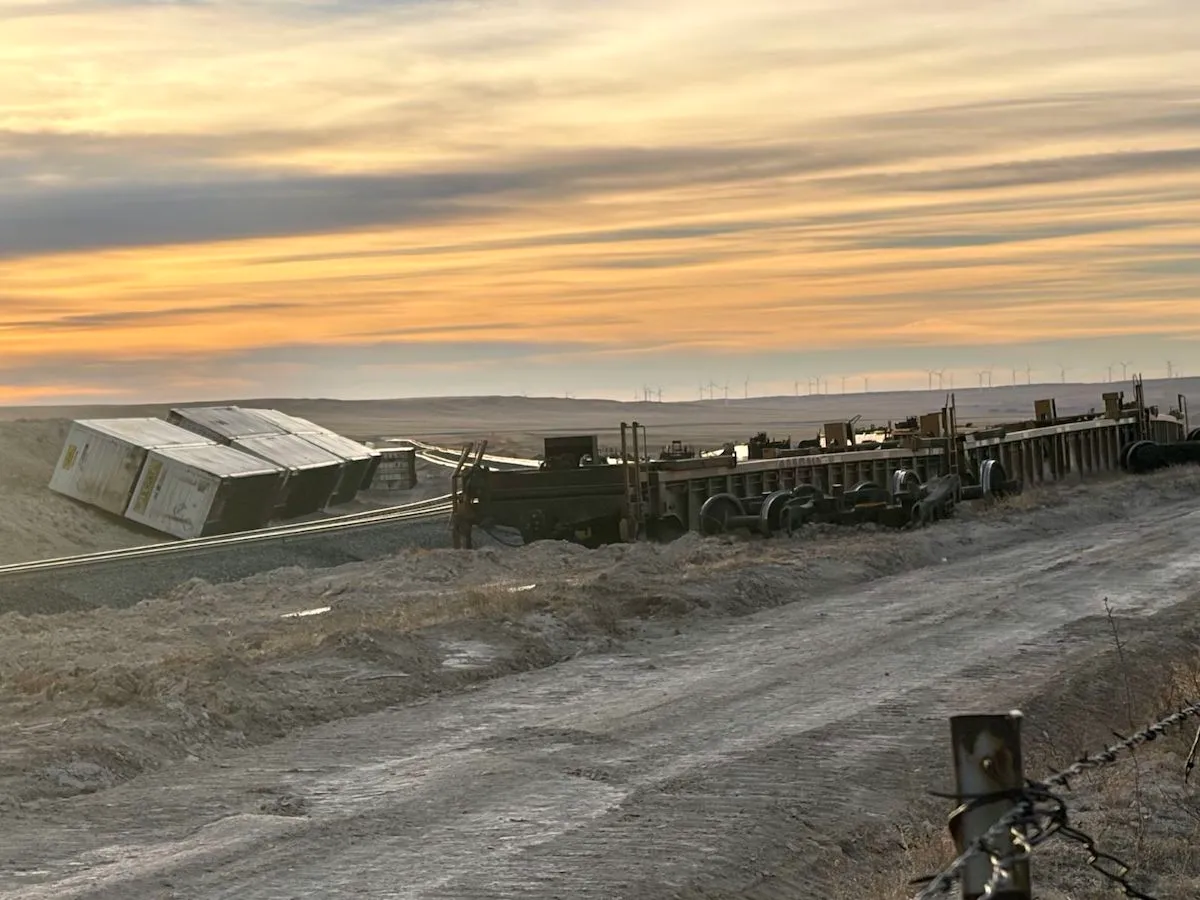
The holiday was a continuation of a theme in which weird and wild weather defined much of December as high-pressure systems lingered over the region for the better part of three weeks, the National Weather Service in Riverton said. Residents and travelers alike battled sustained high winds from border to border, and a Dec. 19 blast measured 144 miles per hour — Category 4 hurricane speed — at Mount Coffin in western Wyoming. Another wind blast the same day tossed a train off the tracks near Cheyenne, BNSF Railway confirmed.
Wyoming Highway Patrol responded to 39 blow-over accidents in just three days in December, according to state officials.
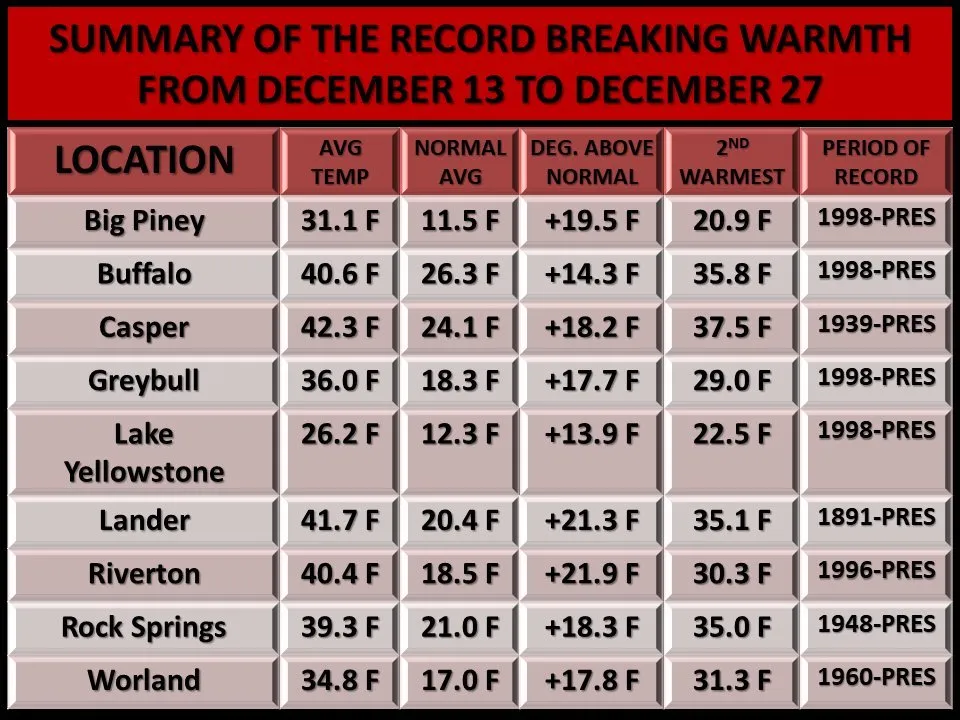
As the wind wreaked havoc, nine Wyoming locations saw unseasonably high temperatures averaging 13 to 22 degrees Fahrenheit above normal from Dec. 13 through Dec. 27, according to the National Weather Service. Both Lander and Casper are on track to notch their warmest Decembers since 1892 and 1948, respectively, NWS Riverton meteorologist Adam Dziewaltowski said. Casper, as of Monday, had marked 10 record-breaking daily highs, while Lander saw a record high of 65 degrees on Christmas Eve.
Yet for all the bluster and heat, meteorologists caution against reading too much into what it might portend for the remainder of winter. Cold and snow returned over the weekend, and the state frequently receives most of its snow in early spring, sources say.
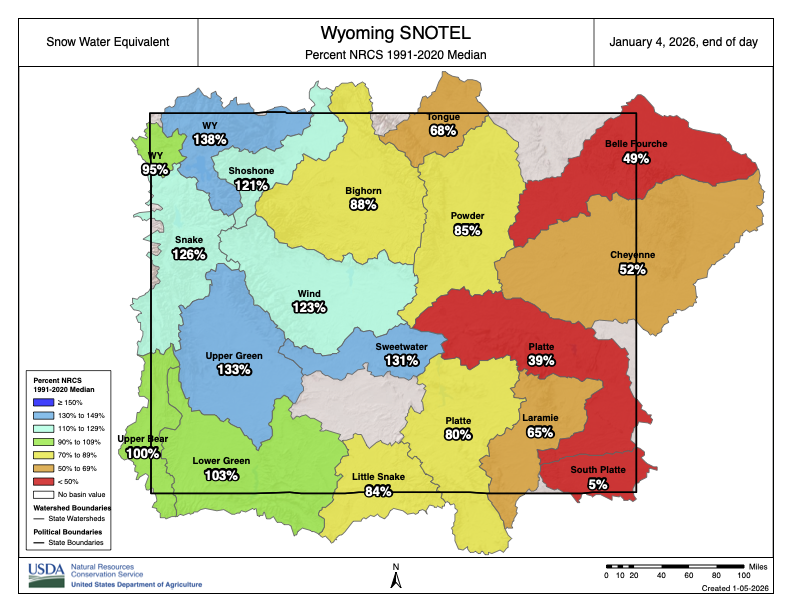
Currently, Wyoming’s “snow-water equivalent” is above average for most of western Wyoming, while areas on the east side of the state lag behind late December norms. Central-east and southeast Wyoming are the driest, with the southeast measuring just 5% of its typical snow-water equivalent, according to a U.S. Department of Agriculture report on Monday.

But even in some areas of the state, like Jackson, where precipitation is above average, a portion of the wet stuff has come in the form of rain instead of snow.
“Right now, [Jackson is] almost two inches above normal for precipitation — liquid-wise,” Dziewaltowski said. “They’ve definitely gotten precipitation, but it’s been so warm that it hasn’t fallen as snow.”
Some high elevations have seen rain-on-snow events, which can create adverse conditions for slides, Dziewaltowski added.
Though the weather took a turn after Christmas, swinging from the balmy 60s to below zero in just 48 hours in some areas, the forecast calls for more unseasonably warm temperatures later this week, according to the Weather Service.
December’s wild and warm conditions made for odd outdoor experiences.
Laramie angler Eric Wiltse posted his December fishing outings to Facebook and confirmed with WyoFile several “alarming” seasonal observations. Early this month, he waded into Twin Buttes Lake, which had been frozen just days before. He saw rain at 7,200 feet of elevation, and while fishing in Curt Gowdy State Park on Christmas Eve, he shared the open water with other outdoor enthusiasts who typically don’t appear in the winter.
“Crazy to be fly fishing on Christmas Eve at 7,500 feet in Wyoming,” Wiltse posted. “Even crazier to see a paddleboard on the lake.”


Click the link to read the article on The Denver Post website (Elise Schmelzer). Here’s an excerpt:
Colorado farmers plant tens of millions of corn seeds every year, nearly every one of them covered in a thin layer of insecticide. The neonicotinoids used in the coatings protect the seed from pests in the soil and, as the crop matures, the chemical is absorbed into the plant’s tissue, where it continues to paralyze and kill insects that chomp on the crop. Farmers say the insecticide is necessary, but growing concerns about its impact on crucial pollinator species and the wider environment are prompting a push in Colorado for more regulation of the widely used class of chemicals. Environmental advocates plan to seek a bill in the state legislature in 2026 that would limit their use in hopes of protecting pollinators and water quality. While a draft bill has not yet been made public, the environmental groups working on it said the legislation would ban the use of neonicotinoids without prior approval by inspectors overseen by the Colorado Department of Agriculture.

Click the link to read the article on the American Rivers website (Hannah Axtell):
December 19, 2025
Despite the escalating threats to rivers, this past year brought real progress worth celebrating. To highlight the positive strides being made across the country, we’ve curated a list of 10 exciting wins for rivers, community safety, people, and wildlife. From proposed Wild and Scenic protections for nearly 100 miles of the Gallatin and Madison rivers, to major investments in river restoration and wildfire resilience in California, and stronger permit safeguards for the Rappahannock River, 2025 proved to be a year of meaningful breakthroughs for waterways nationwide.
In no particular order, here’s a snapshot of 10 of our biggest river wins of 2025:
- Secured major wins for America’s Most Endangered Rivers® of 2025
Our 2025 America’s Most Endangered Rivers® report ranked the Tijuana River #2 due to toxic pollution threatening border communities. This designation, developed with partners Surfrider Foundation and Un Mar de Colores, helped catalyze swift federal action. Within three months of the April report release, American Rivers and others were invited to meet with EPA Administrator Lee Zeldin in southern California, which helped build momentum for a landmark agreementbetween the United States and Mexico to address the ongoing public health crisis. This demonstrates how strategic advocacy, combined with persistent community leadership, drives solutions for rivers and their communities.
The Rappahannock River’s designation as one of America’s Most Endangered Rivers® of 2025 brought crucial national attention to the threats facing Virginia’s longest free-flowing river. But this spotlight did more than raise awareness; it galvanized action that delivered tangible results. Working alongside our dedicated partners, The Friends of the Rappahannock, the Rappahannock Tribe, and the Southern Environmental Law Center, we achieved a significant victory for the river and the communities that depend on it. This collaborative effort secured permit changes for a proposed data center, banning industrial cooling withdrawals and reducing drought withdrawals by millions of gallons.
- Mobilized action to protect Public Lands and Roadless Areas
Bipartisan public outcry over a disastrous sell-off provision in a massive tax and spending bill led to the protection of public lands and the rivers that flow through them. Victory was snatched from the jaws of defeat thanks to supporters like you.
The Trump administration is looking to rescind the Roadless Rule, which protects clean water and wildlife habitat by preventing road construction and timber harvest on roughly 45 million acres of national forests. This would be a significant setback (100,000 river miles) to our goal of protecting one million miles of rivers. Our team is making sure decision makers understand the impacts to clean drinking water supplies and we are mobilizing our supporters (we’ve collected more than 10,000 signatures so far) in support of these important river protections.
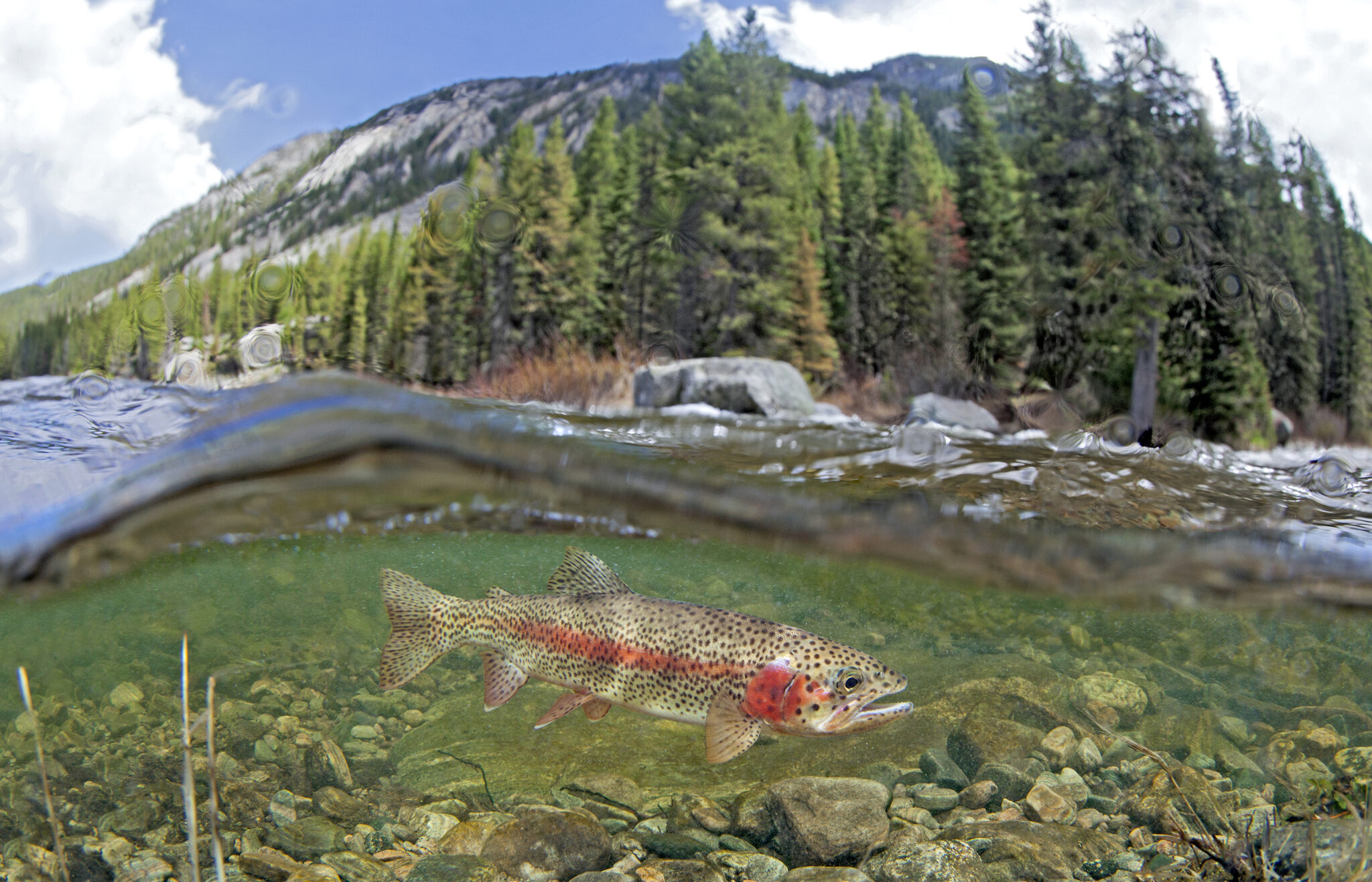
- Safeguarding Montana’s Gallatin and Madison Rivers
Rep. Ryan Zinke (MT) introduced the Greater Yellowstone Recreation Enhancement and Tourism Act (GYREAT Act) – Wild and Scenic legislation to protect nearly 100 miles of the Gallatin and Madison rivers and their tributaries in southwestern Montana. This legislation was developed through collaboration with American Rivers and our partners. If passed, these protections would create a vital corridor linking the rivers of Yellowstone National Park to the headwaters of the Missouri River.
- Defending healthy rivers and Tribal sovereignty
American Rivers helped rally national, regional, and local partners in urging the Department of Transportation to protect aquatic connectivity programs — efforts that restore fish passage, reconnect rivers and wetlands, and replace outdated culverts and road crossings. The joint comment letter was signed by 140 groups — including Tribes, anglers, businesses, universities, research institutions, conservation organizations, community leaders, agencies, faith groups, and planners — all united for healthier, more connected waterways.
Additionally, when the Department of Energy urged the Federal Energy Regulatory Commission to roll back its 2024 policy protecting Tribal sovereignty in hydropower permitting, American Rivers acted fast. Working with Tribal attorneys, Native networks, and partner organizations, we mobilized national opposition and filed formal comments — demonstrating our deep commitment to Tribal leadership and ensuring healthy rivers. We’ll continue working alongside Tribal partners to ensure these protections remain strong.
- Restoring mountain meadows in California
American Rivers is a key member of The Sierra Meadows Partnership, a coalition of environmental organizations working together to restore 30,000 acres of mountain meadows by 2030. These meadows act as natural sponges that store water, improve drought resilience, and provide essential wildlife habitat. Through this collaborative effort, we successfully secured a $24.7 million block grant from the Wildlife Conservation Board to support our restoration work.

- Advanced critical protections for New Mexico’s waterways
After naming New Mexico’s waterways #1 on America’s Most Endangered Rivers® of 2024 list, we’re celebrating significant wins across the state. In the Pecos watershed — home to elk, black bears, Rio Grande cutthroat trout, and generations-old acequia farms — the Department of Interior paused new mining claims across 165,000 acres while pursuing longer-term protections. Through advocacy with our partners, we helped secure Outstanding National Resource Waters protection for over 250 miles of rivers across five watersheds, including the Rio Grande. And now, Senator Heinrich (NM) and the All Pueblo Council of Governors are championing protection of the Caja del Rio — a 107,000-acre landscape along the Rio Grande and Santa Fe rivers that holds deep cultural significance for Puebloan and Hispanic communities while supporting diverse wildlife.
- Furthering community safety through dam awareness
American Rivers spoke on panels and hosted webinars addressing the deadly threat of low head dams, generating hundreds of participants from across the dam removal and safety industries. A low head dam is a human-made structure that spans the full width of a river and is designed to allow water to continuously flow over it, creating a dangerous hydraulic and earning them the nickname “drowning machines.” Our educational workshops brought together leading experts to discuss solutions for addressing these public safety hazards while advancing river restoration solutions.
- Building momentum for dam removal across the Northeast
American Rivers is celebrating a wave of funding that will free multiple rivers across the Northeast. We were awarded $220,000 to remove the Yopp Pond dam on the Fourmile River in Connecticut — the first barrier blocking this coastal river that drains to Long Island Sound. Fisheries biologists note this removal will be transformational for alewife runs in this critical watershed. Additionally, New Hampshire Fish and Game committed $150,000 to support two strategic dam removals: North Branch Gale dam in the Upper Connecticut River watershed and Mead Brook dam in the Contoocook River watershed. Both dams impact excellent cold-water habitat and are scheduled for removal in 2026. Additionally, the Davis Conservation Foundation granted $20,000 for our hydropower relicensing work in Maine.
- Defended Idaho’s Salmon River
Along with our partners at Advocates for the West and coalition members in Idaho, American Rivers and our Action Fund filed a lawsuit against the Forest Service to prevent a massive open-pit gold mine at the headwaters of the South Fork Salmon River. This important waterway is a national treasure that provides critical spawning habitat for the longest-distance, high-elevation salmon migration on Earth, as well as world-class whitewater recreation and fishing. It has been listed as one of America’s Most Endangered Rivers® for three consecutive years.
- Improved wildfire resilience in California
American Rivers and our partner, Terra Fuego Resources Foundation, completed prescribed fire burns on 160 acres as part of a 570-acre fuel reduction and prescribed fire project — a critical effort to protect the South Yuba River and the communities of Nevada City and Grass Valley from catastrophic wildfire. In a major boost for river restoration, the California Wildlife Conservation Board approved nearly $5 million to launch the Pickel Meadow Restoration Project on the West Walker River. Construction begins this summer, marking an exciting next chapter for this important watershed.

Click the link to read the article on the AZCentral website (Debra Utacia Krol). Here’s an excerpt:
December 29, 2025
Key Points
- A new intertribal land trust has acquired 10,000 acres of land along the Klamath River from former dam operator PacifiCorp.
- The land transfer is a key step in restoring the river basin’s ecosystem following the removal of four dams.
- Indigenous values and traditional practices will guide the restoration of the land, which includes important salmon habitat.
Another milestone in restoring the Klamath River Basin has been reached. A new land trust received title to land on Dec. 22 that includes important salmon habitat and lands upstream of and adjacent to four now-removed dams and the shallow reservoirs that impeded fish and nurtured deadly algae in northern California and southern Oregon. The Klamath Indigenous Land Trust was formed by a coalition of members from four basin tribes after the historic 2002 fish kill to remove the dams as the beginning of a long-term effort to restore health to one of the West’s most imperiled rivers. PacifiCorp, the previous landowner and former hydropower operator, agreed to sell 10,000 acres to the land trust to return stewardship to the tribes who fought for decades to remove the dams as the first step in river recovery. Indigenous values and millennial-long practices which once made the basin one of the West Coast’s largest salmon habitats will direct the job of restoring the ecology of the area, which is the size of West Virginia. The Catena Foundation, the Community Foundation of New Jersey and an anonymous donor provided the funding for the purchase, which is one of the largest such purchases by an Indigenous-led land trust to date…
“Dam removal allowed the salmon to return home,” said Molli Myers, the land trust’s board president and member of the Karuk Tribe. “Returning these lands to Indigenous care ensures that home will be a place where they can flourish and recover.”
“PacifiCorp is pleased to see these lands transition to a stewardship model that honors their cultural and ecological significance,” said Ryan Flynn, president of Pacific Power, the division of PacifiCorp that serves customers in the Northwest.

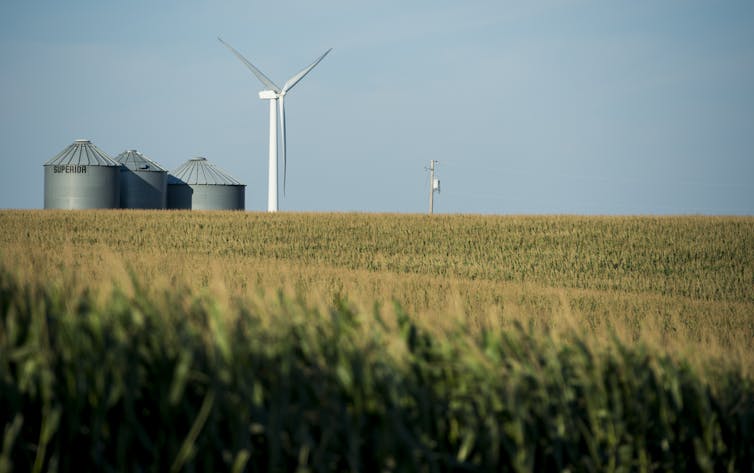
Paul Mwebaze, University of Illinois at Urbana-Champaign
Drive through the plains of Iowa or Kansas and you’ll see more than rows of corn, wheat and soybeans. You’ll also see towering wind turbines spinning above fields and solar panels shining in the sun on barns and machine sheds.
For many farmers, these are lifelines. Renewable energy provides steady income and affordable power, helping farms stay viable when crop prices fall or drought strikes.
But some of that opportunity is now at risk as the Trump administration cuts federal support for renewable energy.
Wind energy is a significant economic driver in rural America. In Iowa, for example, over 60% of the state’s electricity came from wind energy in 2024, and the state is a hub for wind turbine manufacturing and maintenance jobs.
For landowners, wind turbines often mean stable lease payments. Those historically were around US$3,000 to $5,000 per turbine per year, with some modern agreements $5,000 to $10,000 annually, secured through 20- to 30-year contracts.
Nationwide, wind and solar projects contribute about $3.5 billion annually in combined lease payments and state and local taxes, more than a third of it going directly to rural landowners.
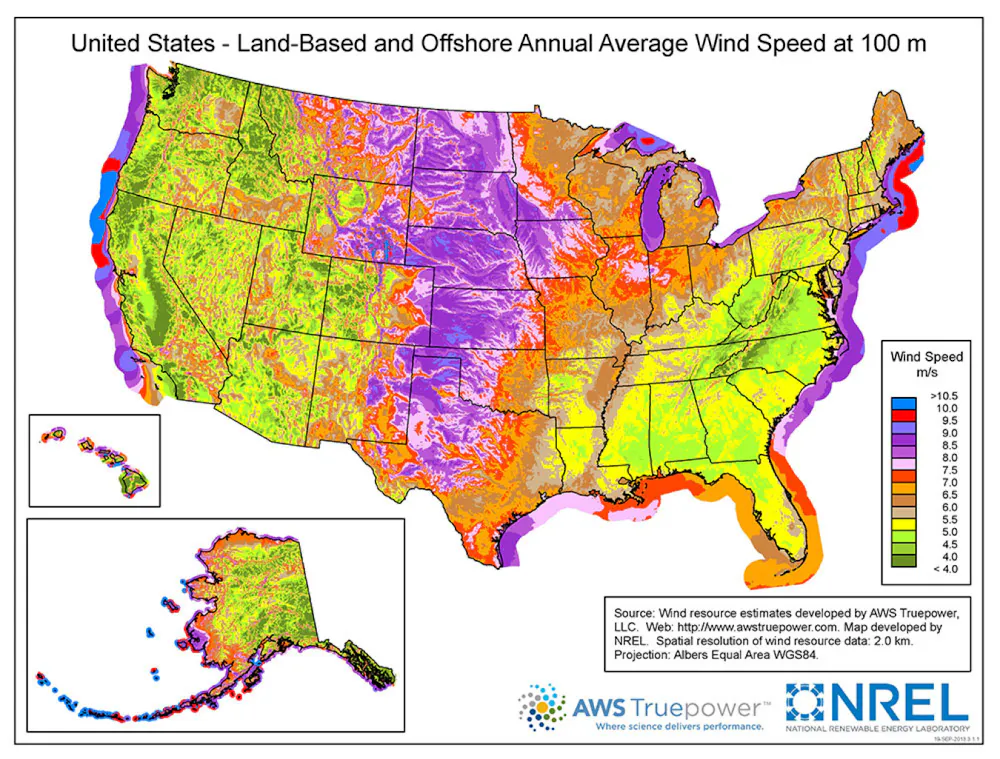
These figures are backed by long-term contracts and multibillion‑dollar annual contributions, reinforcing the economic value that turbines bring to rural landowners and communities.
Wind farms also contribute to local tax revenues that help fund rural schools, roads and emergency services. In counties across Texas, wind energy has become one of the most significant contributors to local property tax bases, stabilizing community budgets and helping pay for public services as agricultural commodity revenues fluctuate.
In Oldham County in northwest Texas, for example, clean energy projects provided 22% of total county revenues in 2021. In several other rural counties, wind farms rank among the top 10 property taxpayers, contributing between 38% and 69% of tax revenue.
The construction and operation of these projects also bring local jobs in trucking, concrete work and electrical services, boosting small-town businesses.

The U.S. wind industry supports over 300,000 U.S. jobs across construction, manufacturing, operations and other roles connected to the industry, according to the American Clean Power Association.
Renewable energy has been widely expected to continue to grow along with rising energy demand. In 2024, 93% of all new electricity generating capacity was wind, solar or energy storage, and the U.S. Energy Information Administration expected a similar percentage in 2025 as of June.
Solar energy is also boosting farm finances. Farmers use rooftop panels on barns and ground-mounted systems to power irrigation pumps, grain dryers and cold storage facilities, cutting their power costs.
Some farmers have adopted agrivoltaics – dual-use systems that grow crops beneath solar panels. The panels provide shade, helping conserve water, while creating a second income path. These projects often cultivate pollinator-friendly plants, vegetables such as lettuce and spinach, or even grasses for grazing sheep, making the land productive for both food and energy.
Federal grants and tax credits that were significantly expanded under the 2022 Inflation Reduction Act helped make the upfront costs of solar installations affordable.

However, the federal spending bill signed by President Donald Trump on July 4, 2025, rolled back many clean energy incentives. It phases down tax credits for distributed solar projects, particularly those under 1 megawatt, which include many farm‑scale installations, and sunsets them entirely by 2028. It also eliminates bonus credits that previously supported rural and low‑income areas.
Without these credits, the upfront cost of solar power could be out of reach for some farmers, leaving them paying higher energy costs. At a 2024 conference organized by the Institute of Sustainability, Energy and Environment at the University of Illinois Urbana-Champaign, where I work as a research economist, farmers emphasized the importance of tax credits and other economic incentives to offset the upfront cost of solar power systems.
The cuts to federal incentives include terminating the Production Tax Credit for new projects placed in service after Dec. 31, 2027, unless construction begins by July 4, 2026, and is completed within a tight time frame. The tax credit pays eligible wind and solar facilities approximately 2.75 cents per kilowatt-hour over 10 years, effectively lowering the cost of renewable energy generation. Ending that tax credit will likely increase the cost of production, potentially leading to higher electricity prices for consumers and fewer new projects coming online.
The changes also accelerate the phase‑out of wind power tax credits. Projects must now begin construction by July 4, 2026, or be in service before the end of 2027 to qualify for any credit.
Meanwhile, the Investment Tax Credit, which covers 30% of installed cost for solar and other renewables, faces similar limits: Projects must begin by July 4, 2026, and be completed by the end of 2027 to claim the credits. The bill also cuts bonuses for domestic components and installations in rural or low‑income locations. These adjustments could slow new renewable energy development, particularly smaller projects that directly benefit rural communities.
While many existing clean energy agreements will remain in place for now, the rollback of federal incentives threatens future projects and could limit new income streams. It also affects manufacturing and jobs in those industries, which some rural communities rely on.
Renewable energy benefits entire communities, not just individual farmers.
Wind and solar projects contribute millions of dollars in tax revenue. For example, in Howard County, Iowa, wind turbines generated $2.7 million in property tax revenue in 2024, accounting for 14.5% of the county’s total budget and helping fund rural schools, public safety and road improvements.
In some rural counties, clean energy is the largest new source of economic activity, helping stabilize local economies otherwise reliant on agriculture’s unpredictable income streams. These projects also support rural manufacturing – such as Iowa turbine blade factories like TPI Composites, which just reopened its plant in Newton, and Siemens Gamesa in Fort Madison, which supply blades for GE and Siemens turbines. The tax benefits in the 2022 Inflation Reduction Act helped boost those industries – and the jobs and local tax revenue they bring in.
On the solar side, rural companies like APA Solar Racking, based in Ohio, manufacture steel racking systems for utility-scale solar farms across the Midwest. https://www.youtube.com/embed/Bcet_aaaMq8?wmode=transparent&start=0 An example of how renewable energy has helped boost farm incomes and keep farmers on their land.
As rural America faces economic uncertainty and climate pressures, I believe homegrown renewable energy offers a practical path forward. Wind and solar aren’t just fueling the grid; they’re helping keep farms and rural towns alive.
Paul Mwebaze, Research Economist at the Institute for Sustainability, Energy and Environment, University of Illinois at Urbana-Champaign
This article is republished from The Conversation under a Creative Commons license. Read the original article.

Click through to read the article on the WyoFile website and to view the rainbow photo (Katie Klingsporn):
December 26, 2025
December ushered an array of weird meteorological conditions to Wyoming — from record-high temperatures to hurricane-strength winds and the rare winter rainbow.
The prismatic arch appeared over central Wyoming on Dec. 17, a rare spot of beauty amid raging wind gusts that wreaked havoc across the state.
That day, winds hit speeds of 123 miles per hour in Red Canyon, 144 miles per hour on Mount Coffin and 91 miles per hour in Hiland, according to the National Weather Service Riverton Office.
In nearby Lander, the wind knocked down trash cans and fences. It blew Christmas decorations halfway to Colorado, peeled shingles off of roofs, closed the highway to South Pass and felled trees.
Elsewhere, high winds have knocked out the power to traffic signals in Casper and forced city officials to close the landfill. December gusts also toppled dozens of semi-trucks on highways like Interstate 80, the Wyoming Department of Transportation reported.
Balmy temperatures have attended the winds, breaking records in places ranging from Riverton to Worland and Rock Springs — where a high of 59 was the warmest temperature on record in December, according to the National Weather Service.
Residents accustomed to bundling up for single-digit temperatures, snowfall and ice skating during the holidays may instead reach for a windbreaker and umbrella this year.

Mrs. Gulch (Early 1973): Since we’re taking the summer off for a honeymoon let’s go backpacking.
Me: No thanks, I backpacked during my time in the Boy Scouts before being asked to find another outlet for my Junior High attitude.
Mrs. Gulch: What didn’t you like about backpacking.
Me: At the top of the list — I don’t like cooking over a campfire.
Mrs. Gulch: We can get a backpacking stove.
Me: A what?
Mrs. Gulch: A backpacking stove, they use white gas that you carry in a Sigg bottle. Let’s go to the backpacking store, things have changed since you were a Boy Scout.
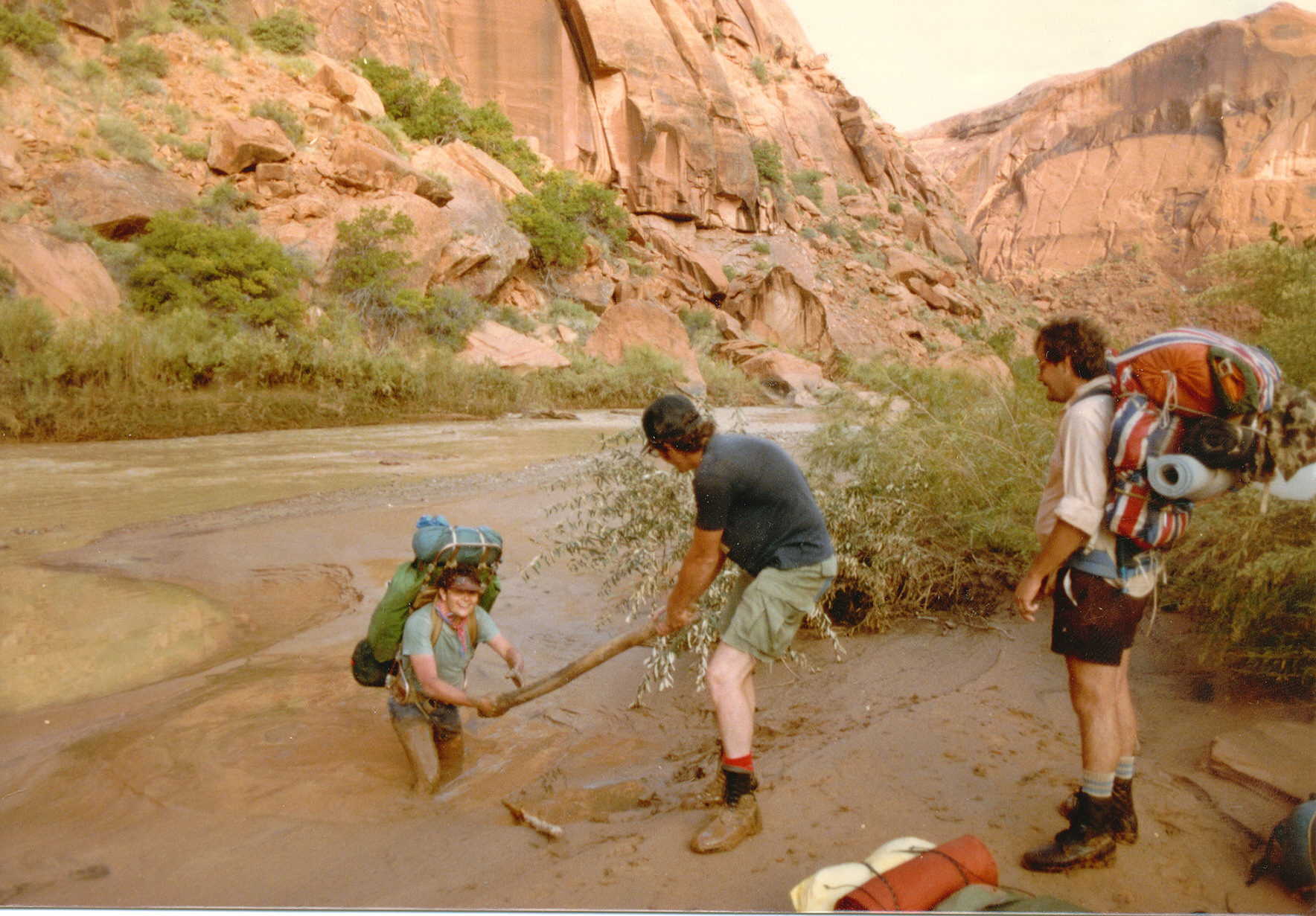
That was my introduction to Mrs. Gulch’s knowledge of backpacking. Of course she was way more experienced than I was but didn’t gloat. She wanted to be on the trail and she wanted to take me along. That opened up a world for me and I became obsessed with backpacking — mountains and desert — it didn’t matter, and much of my time during winter, from then on, was spent looking over USGS topo maps, trying to find a cool route to follow. Subsequent years you could find us on the trail in Colorado, Utah, Montana, Washington, and New Mexico most often with my good friend Joe. We took many folks on their first backcountry trek over the years and alternated mountains then desert, year after year.
There is a standout trek for me. Four of us started in Harris Wash, a trib of the Escalante River and walked to Coyote Gulch, another trib of the river. Mrs. Gulch and another friend met us there with a food drop so that she and I could go back upriver to our VW bus parked at the Harris Wash trailhead.
During the hike to Coyote Gulch we met up with hoards of biting flies until below 20 Mile Wash. It was miserable at times but we learned to get in the shade, kill a few, slather up with DEET, cool off and hydrate.
When Mrs. Gulch and I left the group in Coyote Gulch my friend Don asked, “You’re going back through the flies?”
When she and I hit the fly space upstream we ended up hiking from early morning until nighttime to get done as quickly as possible. The last day I was pretty agitated and tired from the trek and I missed the exit to Harris Wash. I was worried and anxious also and a little (maybe a lot) of panic set in. I’ve mentioned before how much I depended on Mrs. Gulch’s wise counsel during our 50 years of marriage and that day it showed up again.
Mrs. Gulch (calmly): Let’s get in the shade, kill a few flies. You can get your compass and the topo sheet out of your pack and figure out where we are.
Me: These flies! We missed Harris Wash? We need to get back to the bus and back to Denver! Blah, blah, blah!
Mrs. Gulch (repeating herself calmly): Look there’s a shady alcove over there, let’s go there, kill a few flies, and you can get your compass and the topo sheet out of your pack and figure out where we are.

After orienting the map and taking a good look at the terrain I saw a side canyon (Silver Falls Creek) coming into the Escalante River canyon just upstream and found it on the map. As it turns out we just needed to go back downstream a bit (just around the bend) and we would be at the confluence with Harris Wash. We didn’t miss it by much.
Wise counsel indeed.
Happy 71st birth anniversary Mrs. Gulch and thank you for your humor and wise counsel over the years.
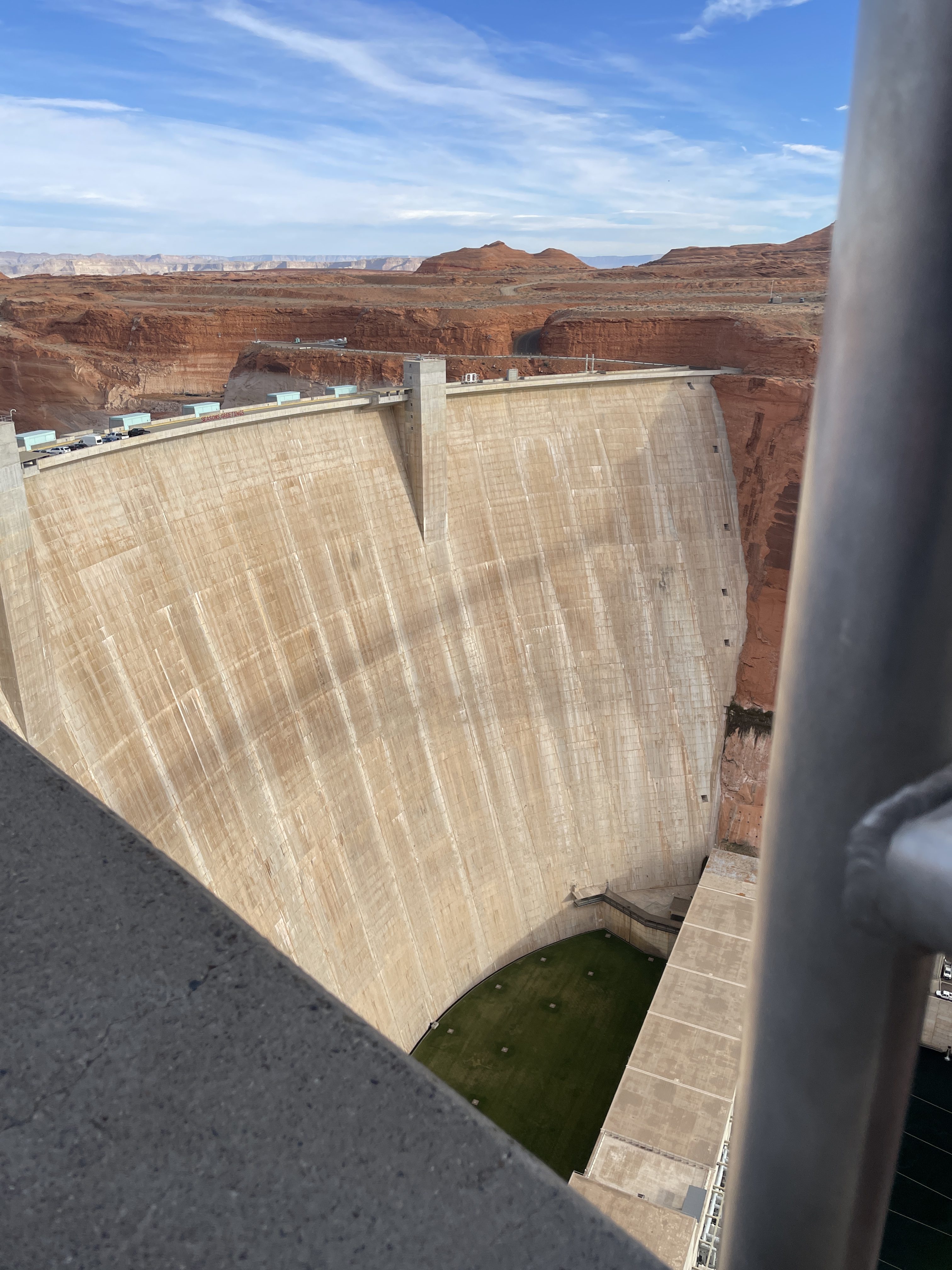
Update: I found a more complete rendering of Seldom Seen’s Prayer in the Coyote Gulch archives. Scroll to the bottom.
I’m on the road back to Denver. I decided to take a southerly route east from St. George through southern Utah and Northern Arizona to travel through country I had not seen before. A short drive from Kanab on Friday put me at Glen Canyon Dam. Although I am not religious I wanted to stop there and recite Seldom Seen’s Prayer from Edward Abbey’s “Monkey Wrench Gang” which I first read while walking down the Escalante River. My sisters and brothers that walk the tribs off Glen Canyon understand.

“Dear old God, you know and I know what it was like here, before them bastards from Washington moved in and ruined it all. You remember the river, how fat and golden it was in June, when the big runoff come down from the Rockies?… Listen, are you listenin’ to me? There’s somethin’ you can do for me, God. How about a little old pre-cision-type earthquake right under this dam? Okay? Any time. Right now for instance would suit me fine.” -Seldom Seen Smith (H/T Fisher Brewing Company)

What a joy it is to drive the Model Y with self-driving. Self-driving was particularly useful in Las Vegas with all the traffic and unfamiliar (to me) roads. The integration of the Navigation system and the Tesla Charging Network takes quite a load off cross-country road trips. For the leg between St. George and Pagosa Springs I charged at St. George, Page, Kayenta, and Durango.
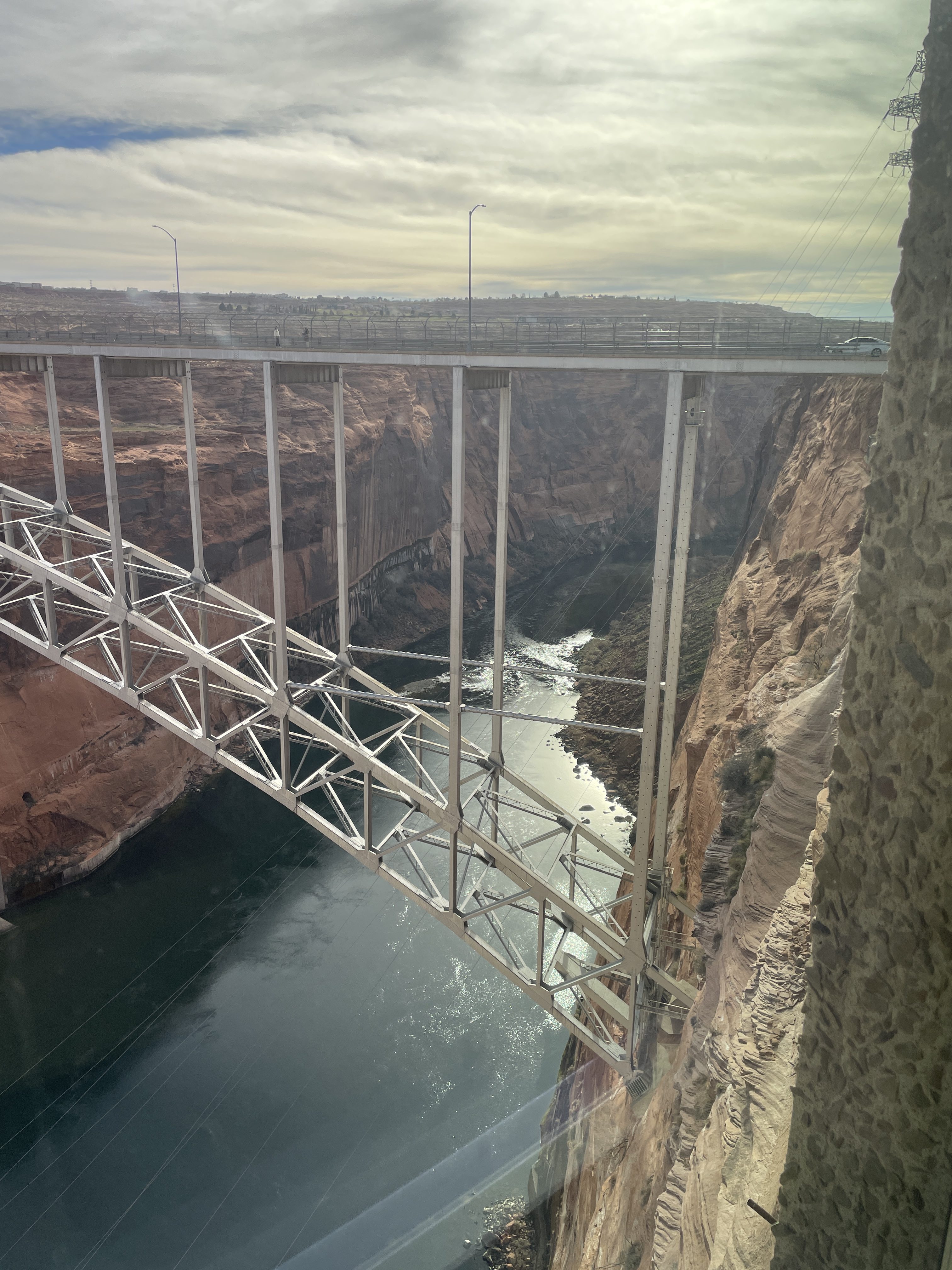
I found a more complete rendering of Seldom Seen’s prayer in the Coyote Gulch archives.
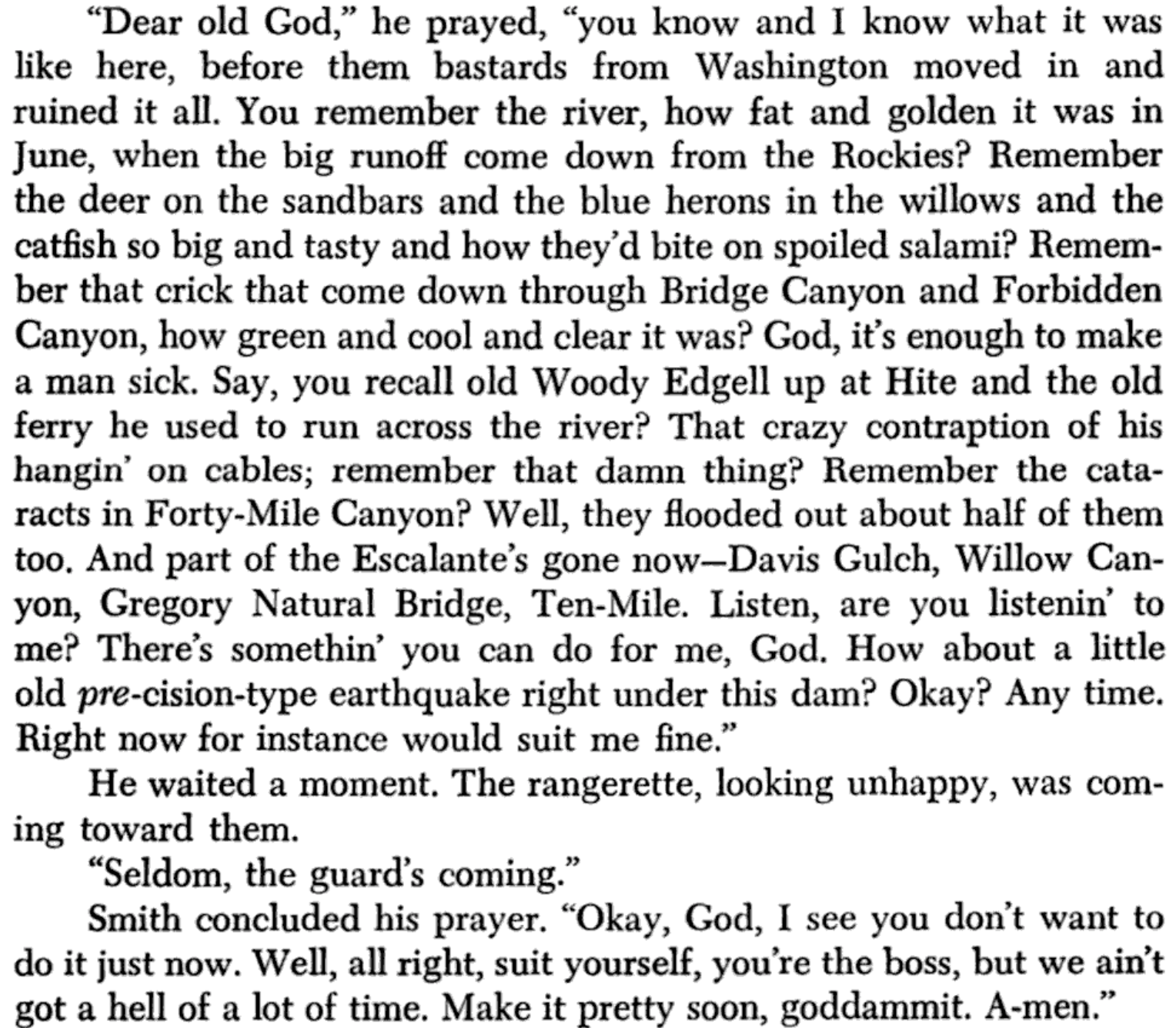

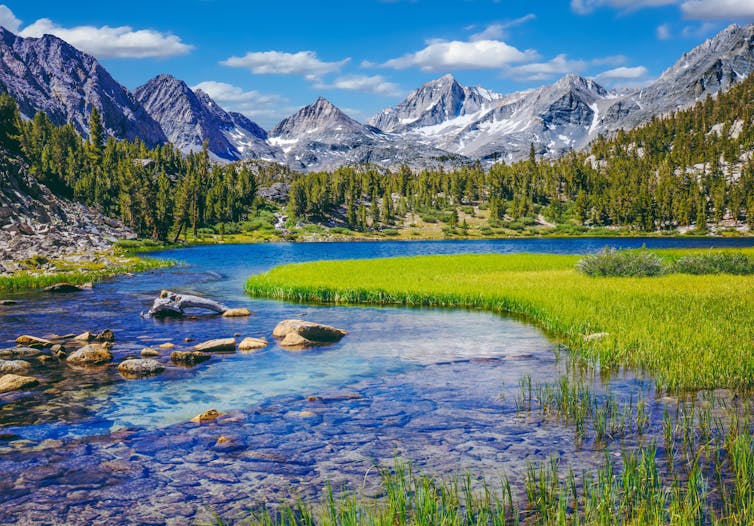
Toni Lyn Morelli, UMass Amherst; U.S. Geological Survey and Diana Stralberg, University of Alberta
The idea began in California’s Sierra Nevada, a towering spine of rock and ice where rising temperatures and the decline of snowpack are transforming ecosystems, sometimes with catastrophic consequences for wildlife.
The prairie-doglike Belding’s ground squirrel (Urocitellus beldingi) had been struggling there as the mountain meadows it relies on dry out in years with less snowmelt and more unpredictable weather. At lower elevations, the foothill yellow-legged frog (Rana boylii) was also being hit hard by rising temperatures, because it needs cool, shaded streams to breed and survive.

As we studied these and other species in the Sierra Nevada, we discovered a ray of hope: The effects of warming weren’t uniform.
We were able to locate meadows that are less vulnerable to climate change, where the squirrels would have a better chance of thriving. We also identified streams that would stay cool for the frogs even as the climate heats up. Some are shaded by tree canopy. Others are in valleys with cool air or near deep lakes or springs.
These special areas are what we call climate change refugia.
Identifying these pockets of resilient habitat – a field of research that was inspired by our work with natural resource managers in the Sierra Nevada – is now helping national parks and other public and private land managers to take action to protect these refugia from other threats, including fighting invasive species and pollution and connecting landscapes, giving threatened species their best chance for survival in a changing climate.

Across the world, from the increasingly fire-prone landscapes of Australia to the glacial ecosystems at the southern tip of Chile, researchers, managers and local communities are working together to find and protect similar climate change refugia that can provide pockets of stability for local species as the planet warms.
A new collection of scientific papers examines some of the most promising examples of climate change refugia conservation. In that collection, over 100 scientists from four continents explain how frogs, trees, ducks and lions stand to benefit when refugia in their habitats are identified and safeguarded.

The study of climate change refugia – places that are buffered from the worst effects of global warming – has grown rapidly in recent years.
In New England, managers at national parks and other protected areas were worried about how species are being affected by changes in climate and habitat. For example, the grasshopper sparrow (Ammodramus savannarum), a little grassland songbird that nests in the open fields in the eastern U.S. and southern Canada, appears to be in trouble.
We studied its habitats and projected that less than 6% of its summer northeastern U.S. range will have the right temperature and precipitation conditions by 2080. https://www.youtube.com/embed/W2VmrdbCbmU?wmode=transparent&start=0 The grasshopper sparrow. American Bird Conservancy
The loss of songbirds is not only a loss of beauty and music. These birds eat insects and are important to the balance of the ecosystem.
The sand plain grasslands that the grasshopper sparrow relies on in the northeastern U.S. are under threat not only from changes in climate but also changes in how people use the land. Public land managers in Montague, Massachusetts, have used burning and mowing to maintain habitat for nesting grasshopper sparrows. That effort also brought back the rare frosted elfin butterfly for the first time in decades.
In Canada, the climate is warming at about twice the global average, posing a threat to its vast forested landscapes, which face intensifying drought, insect outbreaks and destructive wildfires.
We have been actively mapping refugia in British Columbia, looking for shadier, wetter or more sheltered places that naturally resist the worst effects of climate change.

The mapping project will help to identify important habitat for wildlife such as moose and caribou. Knowing where these climate change refugia are allows land-use planners and Indigenous communities to protect the most promising habitats from development, resource extraction and other stressors.
British Columbia is undertaking major changes to forest landscape planning in partnership with First Nations and communities.
On the sweeping vistas of East Africa, dozens of species interact in hot spots of global biodiversity. Unfortunately, rising temperatures, prolonged drought and shifting seasons are threatening their very existence.
In Tanzania, working with government agencies and conservation groups through past USAID funding, we mapped potential refugia for iconic savanna species including lions, giraffes and elephants. These areas include places that will hold water in drought and remain cooler during heat waves. The iconic Serengeti National Park, home to some of the world’s most famous wildlife, emerged as a key location for climate change refugia.

Combining local knowledge with spatial analysis is helping prioritize areas where big cats, antelope, elephants and the other great beasts of the Serengeti ecosystem can continue to thrive – provided other, nonclimate threats such as habitat loss and overharvesting are kept at bay.
The Tanzanian government has already been working with U.S.-funded partners to identify corridors that can help connect biodiversity hot spots.
By identifying and protecting the places where species can survive the longest, we can buy crucial decades for ecosystems while conservation efforts are underway and the world takes steps to slow climate change.
Across continents and climates, the message is the same: Amid our rapidly warming world, pockets of resilience remain for now. With careful science and strong partnerships, we can find climate change refugia, protect them and help the wild things continue to thrive.
Toni Lyn Morelli, Adjunct Full Professor of Environmental Conservation, UMass Amherst; U.S. Geological Survey and Diana Stralberg, Adjunct professor, Department of Renewable Resources, University of Alberta
This article is republished from The Conversation under a Creative Commons license. Read the original article.
Shuang-Ye Wu, University of Dayton
The summer of 2025 brought unprecedented flash flooding across the U.S., with the central and eastern regions hit particularly hard. These storms claimed hundreds of lives across Texas, Kentucky and several other states and caused widespread destruction.
At the same time, every hurricane that formed, including the three powerful Category 5 storms, steered clear of the U.S. mainland.
Both scenarios were unusual – and they were largely directed by the polar jet stream.
Jet streams are narrow bands of high-speed winds in the upper troposphere, around four to eight miles (seven to 13 kilometers) above the surface of the Earth, flowing west to east around the entire planet. They form where strong temperature contrasts exist.
Each hemisphere hosts two primary jet streams:

The polar jet stream is typically found near 50 to 60 degrees latitude, across Canada in the Northern Hemisphere, where cold polar air meets warmer midlatitude air. It plays a major role in modulating weather systems in the midlatitudes, including the continental U.S. With winds up to 200 mph, it’s also the usual steering force that brings those bitter cold storms down from Canada.
The subtropical jet stream is typically closer to 30 degrees latitude, which in the Northern Hemisphere crosses Florida. It follows the boundary between tropical air masses and subtropical air masses. It’s generally the weaker and steadier of the two jet streams.

These jet streams act like atmospheric conveyor belts, steering storm systems across continents.
Stronger (faster) jet streams can intensify storm systems, whereas weaker (slower) jet streams can stall storm systems, leading to prolonged rainfall and flooding.
Most summers, the polar jet stream retreats northward into Canada and weakens considerably, leaving the continental U.S. with calmer weather. When rainstorms pop up, they’re typically caused by localized convection due to uneven heating of the land – picture afternoon pop-up thunderstorms.
During the summer of 2025, however, the polar jet stream shifted unusually far south and steered larger storm systems into the midlatitudes of the U.S. At the same time, the jet stream weakened, with two critical consequences.
First, instead of moving storms quickly eastward, the sluggish jet stream stalled storm systems in place, causing prolonged downpours and flash flooding.
Second, a weak jet stream tends to meander more dramatically. Its broad north-south swings in summer 2025 funneled humid air from the Gulf of Mexico deep into the interior, supplying storm systems with abundant moisture and intensifying rainfall.

This moisture surge was amplified by unusually warm conditions over the Atlantic and Gulf regions. A warmer ocean evaporates more water, and warmer air holds a greater amount of moisture. As a result, extraordinary levels of atmospheric moisture were directed into storm systems, fueling stronger convection and heavier precipitation.
Finally, the wavy jet stream became locked in place by persistent high-pressure systems, anchoring storm tracks over the same regions. This led to repeated episodes of heavy rainfall and catastrophic flooding across much of the continental U.S. The same behavior can leave other regions facing days of unrelenting heat waves.
The jet stream also played a role in the 2025 hurricane season.
Given its west-to-east wind direction, the southward dip of the jet stream – along with a weak high pressure system over the Atlantic – helped steer all five hurricanes away from the U.S. mainland.
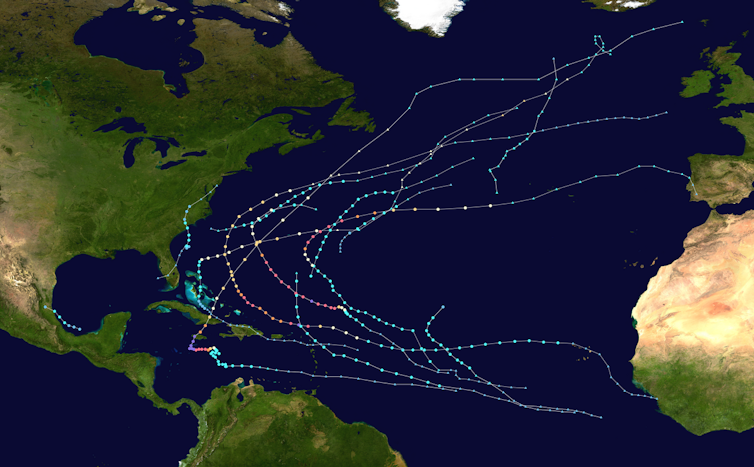
Most of the year’s 13 tropical storms and hurricanes veered off into the Atlantic before even reaching the Caribbean.

So, how does climate change influence the jet stream?
The strength of jet streams is controlled by the temperature contrast between the equatorial and polar regions.
A higher temperature contrast leads to stronger jet streams. As the planet warms, the Arctic is heating up at more than twice the global average rate, and that is reducing the equator-to-pole temperature difference. As that temperature gradient weakens, jet streams lose their strength and become more prone to stalling.

This increases the risk of persistent extreme rainfall events.
Weaker jet streams also meander more, producing larger waves and more erratic behavior. This increases the likelihood of unusual shifts, such as the southward swing of the jet stream in the summer of 2025.
A recent study found that amplified planetary waves in the jet streams, which can cause weather systems to stay in place for days or weeks, are occurring three times more frequently than in the 1950s.
As the global climate continues to warm, extreme weather events driven by erratic behavior of jet streams are expected to become more common. Combined with additional moisture that warmer oceans and air masses supply, these events will intensify, producing storms that are more frequent and more destructive to societies and ecosystems.
In the short term, the polar jet stream will be shaping the winter ahead. It is most powerful in winter, when it dips southward into the central and even southern U.S., driving frequent storm systems, blizzards and cold air outbreaks.
Shuang-Ye Wu, Professor of Geology and Environmental Geosciences, University of Dayton
This article is republished from The Conversation under a Creative Commons license. Read the original article.

I’m heading to Las Vegas this morning for the 2025 Colorado River Water Users Association annual conference. Follow along on the CRWUA Twitter Feed.
I am using Turo for my EV rental this trip. I was able to snag a Tesla Model Y. The combination of the Model Y, the Tesla charging network, and the integration with the Tesla navigation system can’t be beat for these EV road trips.

Click the link to read the article on the Colorado State University website (Stacy Nick):
November 18, 2025
We’ve all heard the phrase, “Don’t eat the yellow snow.” But are there other things in snow that aren’t so obvious?
Colorado State University snow hydrologist Steven Fassnacht says absolutely.
Snow has more surface area than rain, so it can pull more contaminants out of the air, Fassnacht recently said on CSU’s The Audit podcast. That can be anything from forever chemicals to heavy metals and dust.

“The big ones that we see around here are nitrogen and sulfur-based,” he said. “They come out of the tailpipe, out of the smokestack, et cetera. So, if you’re downwind from a major industrial source of these, then the likelihood that you have these in the snowpack is a lot higher.”
While it’s less obvious than a billowing smokestack, microplastics are another contaminant that researchers are studying in snow.
“There are just so many little bits and pieces of plastic around,” Fassnacht said. “Think about going out in the snow. You’ve got plastic ski boots on and plastic skis and poles, and your jacket and all your equipment, that’s all plastic. Any breakdown of that – which will happen over time – is going to put microplastics onto the snowpack.”
But all of this doesn’t mean you should never catch another snowflake on your tongue, he said. Just be aware of where that snow is coming from.
Fassnacht recommends avoiding snow from nearby roadways or industrial areas. Likewise, if there’s been a recent forest fire or dust storm.
“There is a lot of physics and chemistry involved in what you get within the snowpack itself and where it comes from,” Fassnacht said. “So, do you want to eat the snow? Maybe. That’s not an answer that people want to hear. They want to hear “yes” or “no.” Most of the time you’re probably OK, but you want to really be aware of where you are eating this snow from.”
Listen to this and other episodes of CSU’s The Audit here or wherever you get your podcasts.
Audio transcript (Lightly edited for clarity)
INTRO: We’ve all heard the phrase, “Don’t eat the yellow snow.” But with all the atmospheric contaminants out there – including forever chemicals from manufacturing facilities, heavy metals from car emissions and microplastics from virtually everything – should we really be eating any snow?
To find out, we talked to Colorado State University snow hydrologist Steven Fassnacht. A professor with the Warner College of Natural Resources, Fassnacht’s research focuses on studying water availability by looking at how snow and related environmental factors change over time and across different locations.
We asked him about what contaminants are making their way into snow and how and where to find the cleanest snow if you decide to partake on an icy treat.
HOST: So, really should we be eating any snow, not just avoiding the yellow kind?
FASSNACHT:We really should be looking at the snow visually; that’s often the marker, so don’t eat the yellow snow. And for other obvious visual contaminants, things like dust and airborne pollutants and sand and things like that which are pretty obvious. Needles, you don’t want to eat pine needles. But in terms of what you can find in the snow that you should really be concerned about, those are ones that we cannot see. So, that is more of an understanding of where you are and what the sources of some of those contaminants could be.
The big ones that we see around here are nitrogen and sulfur-based. So, things that we call our NOx – our nitrates, nitrites – and our SOx – sulfates, sulfites, et cetera. We have our phosphorus-based equivalents as well, and these all come from emissions. They come out of the tailpipe, out of the smokestack, et cetera. So, if you’re downwind from a major industrial source of these, then the likelihood that you have these in the snowpack is a lot higher. There is a lot of physics and chemistry involved in what you get within the snowpack itself and where it comes from. So, do you want to eat the snow? Maybe. That’s not an answer that people want to hear. They want to hear “yes” or “no.” Most of the time you’re probably OK, but you want to really be aware of where you are eating this snow.
HOST: As you mentioned, a lot of contaminants are invisible to the naked eye, but things like dust can also be an issue. That’s something that actually impacts snow melt and runoff rates too, correct?
FASSNACHT: Dust on snow and other things that are dark on the snowpack really affect the melt rates. Here in Colorado, most of our snow melt is driven by the sun. We have 300-plus sunny days. We’re here in Colorado because we love the weather. We know that from the sunburns we get because the sun’s coming at us and is reflecting off the really shiny snow. But at the same time, then you add dust, ash and black carbon from industrial sources, and that lowers the reflectivity of the surface, how shiny it is. Technically, we call that albedo. Our snowpack here in Colorado, that melt is really driven by the albedo, by the reflectivity. When we have dust coming in, that can lower it and make the snow melt a lot faster. The sources of dust are typically from the Four Corners area, the Colorado Plateau. So, in Northern Colorado, you see it a little less than you will in the San Juans, for example.
HOST: So, is shinier snow better snow?
FASSNACHT: Not necessarily. Shinier snow is just newer snow. Does that mean that it’s better quality? Not necessarily. If you have dust on the snow, that’s going to be obvious. The snow, once it’s on the ground, is going to become less shiny because it’s just changing. Think of the snowflake that you cut out when you were in kindergarten, that piece of paper, that delicate nature of snow. Well, the snow doesn’t last like that for very long. It’s going to end up being rounded, it’s going to melt, so it may be less shiny, but it still could be of good quality. By that I mean you could still eat it without having a lot of contaminants in it.
HOST: We also talk a lot about microplastics and forever chemicals in our drinking water. I’m assuming those can also be found in snow.
FASSNACHT: Definitely. That is a relatively new area that people have been exploring. We see all this in our water. We see things like caffeine; we see things like pharmaceuticals. Those make a bit more sense to be in our water because of our water treatment plants. Whereas in the snow it’s a little bit different in terms of pharmaceuticals or things that go through the human body. But we can have microplastics; we can have other forever chemicals. It depends on how they get there. So, that is part of the process as well. We typically think of dust and fine particles in the clouds when those snowflakes are forming. That’s the core of a snowflake that’s coming down. But then as the snow falls, because think of the snow again, it’s your kindergarten cut out of the piece of paper and all those different angles and all those shiny bits. That means that snow has a lot of surfaces. If you compare that to rain, rain is a ball, and the snow has many more surfaces. When it falls through the atmosphere, it can then pick up a lot more particles that are in the air. So, if you have anything that’s airborne – I think about the Cameron Peak fire of 2020 and how yellow and brown the air was – if you had rain and even more effectively if you had snow that was falling, it would wash all of those things out of the air and that then would end up in our snowpack. How do the forever chemicals and microplastics get into snow? That is not exactly known. The microplastics, there are just so many little bits and pieces of plastic around. We have the huge issue of the garbage island, the plastic island floating around the Pacific. Well, that’s big chunks of plastic, but microplastics can be anything. Just think of all the plastic we have in our lives. It can break off from whatever, and then you get these little, tiny bits. They’re pretty light, and so they can easily end up in the air. Do you have a big cloud of microplastics? Probably not. But do you have those microplastics in the air? Sure. They come off of tires, they come off of car parts, they come off your Gore-Tex coat, et cetera. There’s lots of sources. Think about going out in the snow. You’ve got plastic ski boots on and plastic skis and poles, and your jacket and all your equipment. That’s all plastic. Any breakdown of that – which will happen over time – is going to put microplastics onto the snowpack. Where do we have microplastics? Well, probably lots of places. Where do they come from? It’s not quite as obvious as a big smokestack and something being blown downwind.
HOST: What about the effects that those kinds of contaminants can have on the body when ingested? I’m guessing you’d have to eat a lot of snow to have it have an impact, but what could that possibly mean?FASSNACHT: Our snow in Colorado is still good quality. We don’t have huge industrial sources that are bringing in all of these contaminants. So, can we eat the snow? Probably. What does that mean? Usually not very much. Microplastics tend to just go through your body or they bioaccumulate. But it’s not like mercury in fish. These are things that are not as hazardous, at least as far as we know now. I am not a microchemist. I’m not a microbiologist. I don’t know how this actually will impact the body, but if you don’t have many, then it’s going to be a bit less of a hazard. It doesn’t mean you’re not going to have them. If you’re going to go out and eat snow all the time and have that as your water source, then you want to think about how you can filter some of these things out. Microfiltration is one of the better methods of taking out a lot of these constituents, but you need to know what’s in there before you can know what to take out.
HOST: I recently saw a video on social media of a woman from the Appalachian region, and she was making snow cream, which was a dessert made by mixing snow with milk, sugar and vanilla. She made a point that it needed to be fresh snowfall. But I’m wondering, one, is that a good idea, and, two, does having fresh snowfall really make that much of a difference? Her point was that it needed to be really fresh, like within the last hour or so.
FASSNACHT: That’s not going to make a difference. I’m now familiar with snow cream. I was out in the field last winter with some students, and one of the students brought a big bowl and brought some powdered sugar and some condensed milk. I don’t remember the vanilla part of it, but I’m sure you could add that. It was really tasty. Are you eating gallons and gallons? No, because think about the brain freeze, the ice cream headache you would have if you ate gallons and gallons of that, and how much sugar there would be in there. But getting back to the snow itself, to me it would be more of a texture issue. The texture of fresh snow, the characteristics, and the shape of that snow compared to older snow. And it’s just a bit more fun and it’s a bit more joyous and festive. This doesn’t have to be a holiday thing but being out in the woods and eating some of the snow, it just feels better to have this light fluffy powder. But from a contamination perspective, it’s not going to make that big a difference. The density of fresh snow is much less than that of older snow. We think of the really light fluffy powder, the stuff you can blow off your hand or blow off your windshield. It’s going to be a lot less dense and because of that you’re not necessarily having as much contaminant per unit mass, so to speak. But it’s more about texture, it’s a feeling. Chemical wise, it’s not really going to change anything.
HOST: So, is there a stratum where you want to eat the top layer of snow versus the middle layer of snow versus near the bottom? Do the contaminants sink?
FASSNACHT: The dissolved contaminants do get washed through the snow – our nitrogen, and phosphorus products, sulfur products. When the snow starts to melt, those get washed out first. So, if the snowpack is melting, those actually appear in the stream, and you see this big pulse of whatever’s in the snowpack. Any of the larger particles that don’t dissolve, our sand, our dust, et cetera, those stay within the snowpack, and what actually happens is the snowpack will melt down to them. We have a big dust storm in March that covers the landscape. Well, if we’re high enough up, we’ll get multiple snowstorms after that, and that’ll cover that dust layer. But then as the snow melts, it melts down to those physically visible layers. So, we get accumulation that way. Are you going to eat that snow? Not really. So yeah, later in the season, and maybe this goes back to the woman’s idea of eating fresh snow. It’s not going to have that accumulation where you’ve combined different layers of dust and whatnot.
HOST: Better or worse from an atmospheric contaminant perspective, catching a raindrop on your tongue or a snowflake?
FASSNACHT: It’s likely that the raindrop is going to be cleaner than the snow. But it just depends on what’s in the air. It depends on what was in the clouds when the raindrop versus the snowflake formed, and then what is below the clouds. So, if it’s a nice clean day and you don’t have a lot of chemicals in the air, then it doesn’t really matter because you’re not pulling out those chemicals when it’s raining or when it’s snowing. I can’t give you a solid answer. The conditions of what’s in the air are going to be a function of the temperature. Think of the front range and think of when do we have the haze, when do we have that brown cloud. There is some seasonality to it, so I’d be aware of that. I’d look around and think, what were the conditions when these clouds were forming? And what’s in the air?
HOST: You mentioned earlier the idea of kids cutting out the snowflake, and the raindrop is the ball, and the snowflake has a lot more surface area. Does that have an impact?
FASSNACHT: Yes. So, think of a ball. A ball is round and doesn’t have a lot of surface area to mass. A polar bear is a big round ball of fur with legs so that they minimize how much heat loss they have. And then if you think about the raindrop, that’s the same thing. Versus a snowflake which is a millipede, because it has all of these different arms. That’s a bad analogy, but I think you know where I’m going with this. It just has a lot more area per unit of mass, orders of magnitude, a hundredfold or maybe even a thousandfold, depending on how ornate the snow is. So, if there are things in the air, there’s just more surfaces to pick up whatever those chemicals are. But if you don’t have the chemicals in the air, if you’re in a clean atmosphere, then it’s not really a problem. The physics of what happens and then adding in the chemistry gets really complicated. You can have snow forming in the clouds, but then if it falls through a warm atmosphere, then it’s going to melt. It’s going to start as snow but end up as rain. Is that different than if that snow didn’t melt and you caught it with your tongue? Probably not. Again, depending on what it falls through. You can have the opposite too if you have rain forming in the clouds and then it freezes. If you have an inversion where the ground is colder than the air – it doesn’t happen that often – then it would freeze. But that’s the same as hail. Do you want to capture balls of hail on your tongue?
HOST: Ouch. I don’t think so.
FASSNACHT: I don’t think so either.
HOST: If you were going to eat snow, where would you go? Where would the safest, cleanest snow be?
FASSNACHT: I would go further away from the Front Range because the Front Range has a lot of people living here; we have a lot of industry. And if the wind is blowing up the hill, we often get upslope events where they’re coming from the east and blowing up the hill, then that’s going to be bringing those chemicals into the air and into our snowpack. Research from Niwot Ridge behind Boulder and research from Loch Vale in Rocky Mountain National Park has shown that there’s elevated nitrogen and sulfur constituents there. Not all year round, but part of the year. They’re downwind from these industrial sources, from the cars, from where all the tailpipes and the smokestacks are. So, I would shy away from areas like that. Can you eat a handful of snow? Yes. Do you want to subsist on snow coming out of the tailpipe of your car? No. If I were to go and pick a place, I’d go further away from industrial sources. I wouldn’t go right to the side of the road because you have tailpipes. I’d hike a hundred or two hundred feet in where you’re a little bit further away.
HOST: Knowing everything you know, do you ever eat snow?
FASSNACHT: I do eat snow. I take a lot of water with me when I’m out in the field, but I’ll eat a handful of snow. Yeah, I’ll eat fresh snow. For me it’s a texture thing. That density, the fresh snow is so light that you can take a handful, and you’re not getting a lot of water. Realistically, if you want a lot of water, you should stick your hand into the snow and get the older, rounder snow because you’ll have a lot more water for a handful than you would for fresh snow.
HOST: As a snow hydrologist, has your line of work changed how you see snow? Maybe while the rest of us are thinking about skiing or sledding or even shoveling, are you calculating snowpack properties and thinking about runoff rates? Does knowing so much about snow ruin the magic of it for you?
FASSNACHT: It’s a different magic. There’s science magic. There’s curiosity. There’s the questioning. During the pandemic, I told my spouse that I was going to shovel off the deck. She was looking for me a few hours later, and only half the deck – and the deck is 10 feet by 10 feet, like this is pretty small – but only half the deck was actually shoveled off because I was on my hands and knees measuring the snow properties because there were some really interesting melt features. I wanted to look at how the density and that amount of water changed because you had preferential melt, and there were certain areas in the shadows. So, yeah, I’m looking at snow from a science perspective, but there’s the curiosity, maybe not magic, but the curiosity. I spend a lot of time enjoying the snow, but from a different perspective than other people.
HOST: Well, now I think our listeners will probably be looking at it from a different perspective, too. Stephen, thank you so much for your time. I really appreciate it.
FASSNACHT: Yeah, you’re welcome. Thanks for chatting with me.
OUTRO: That was CSU snow hydrologist Steven Fassnacht speaking about the contaminants found in snow. I’m your host, Stacy Nick, and you’re listening to CSU’s The Audit.
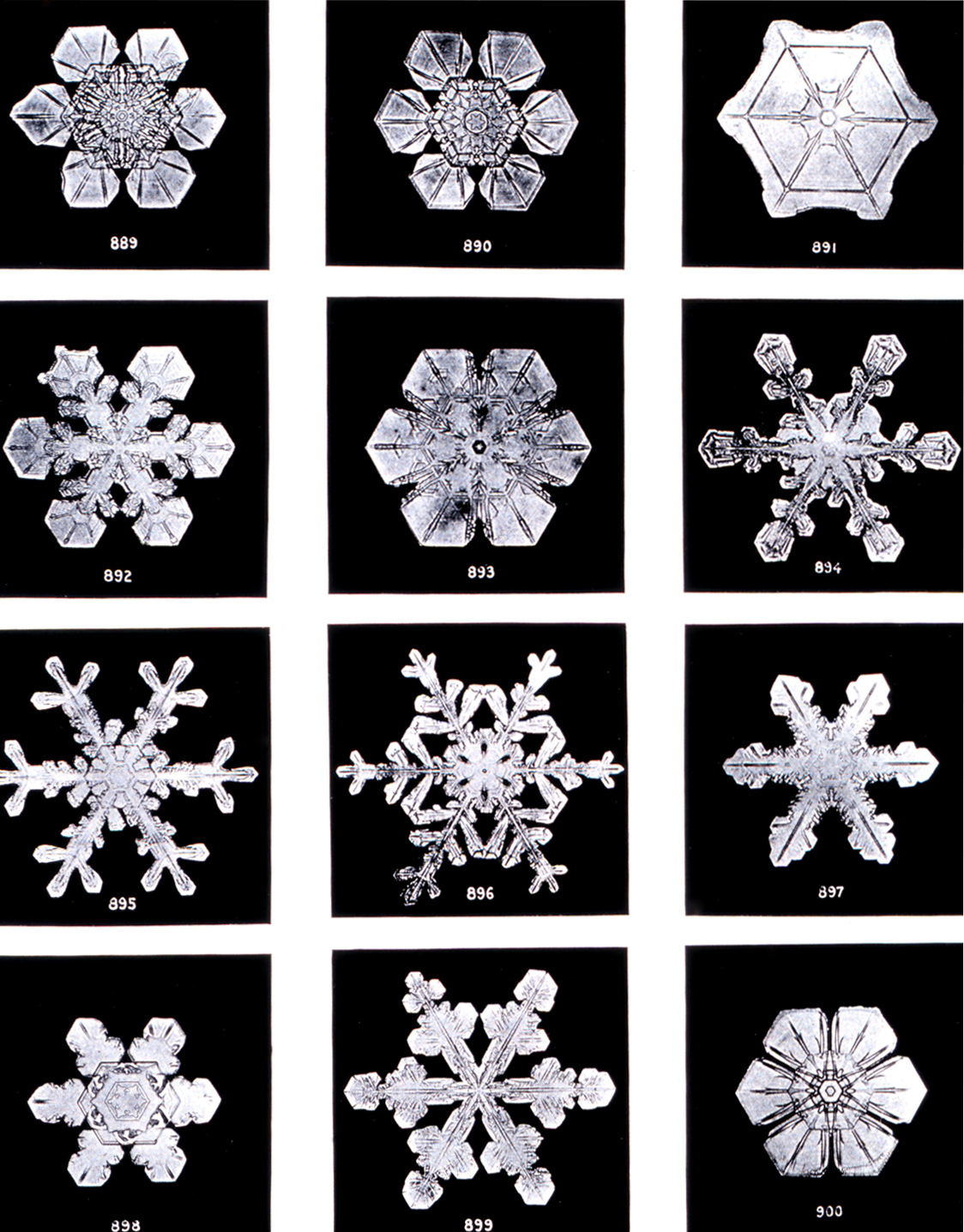
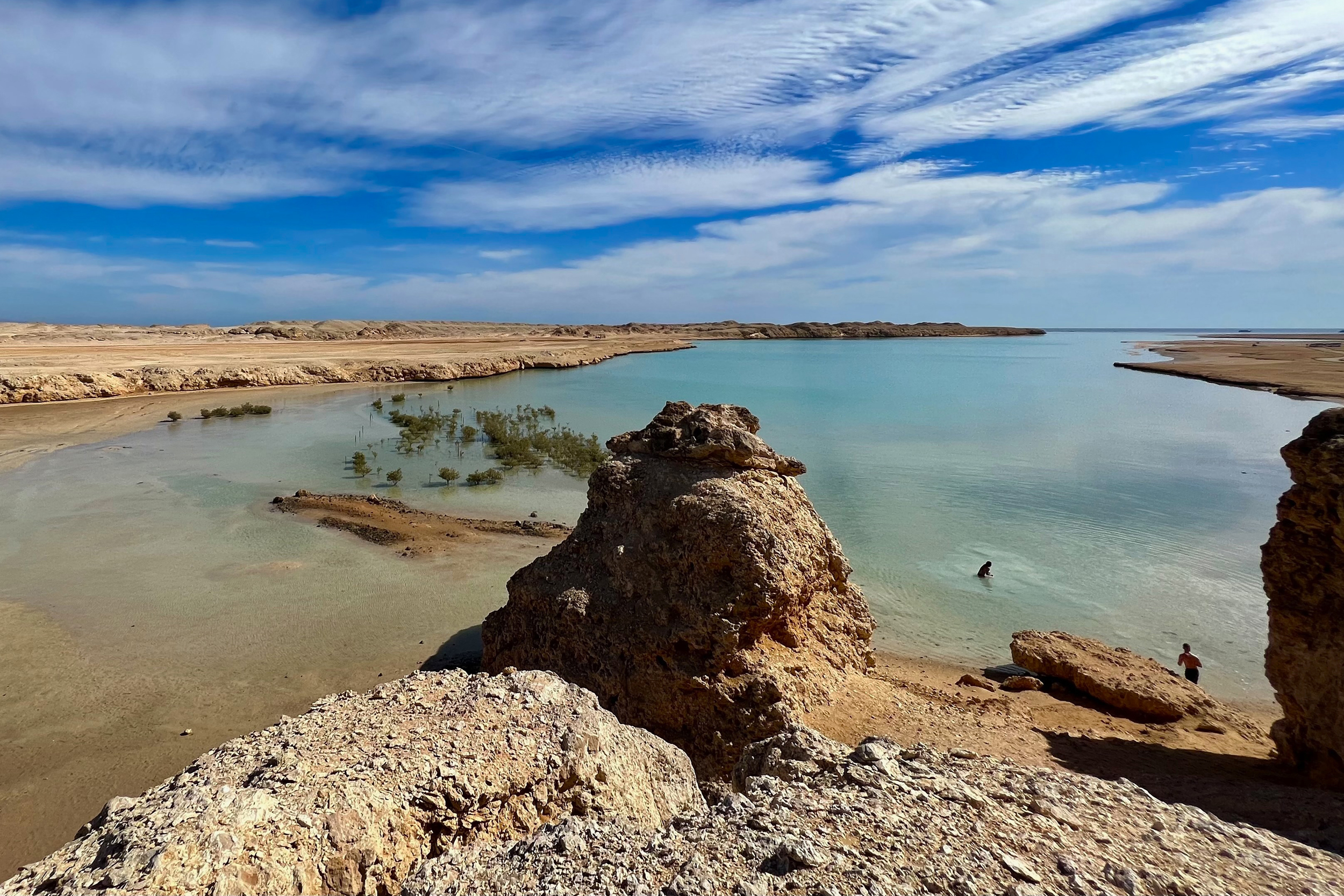
Click the link to read the article on the Inside Climate News website (Bob Berwyn):
December 4, 2025
As global warming accelerates, about 480 million people in North Africa and the Arabian Peninsula face intensifying and in some places unsurvivable heat, as well as drought, famine and the risk of mass displacement, the World Meteorological Organization warned Thursday.
The 22 Arab region countries covered in the WMO’s new State of the Climate report produce about a quarter of the world’s oil, yet directly account for only 5 to 7 percent of global greenhouse gas emissions from their own territories. The climate paradox positions the region as both a linchpin of the global fossil-fuel economy and one of the most vulnerable geographic areas.
WMO Secretary-General Celeste Saulo said extreme heat is pushing communities in the region to their physical limits. Droughts show no sign of letting up in one of the world’s most water-stressed regions, but at the same time, parts of it have been devastated by record rains and flooding, she added.“Human health, ecosystems and economies can’t cope with extended spells of more than 50 degrees Celsius. It is simply too hot to handle,” she said.
The region in the report stretches from the Atlantic coast of West Africa to the mountains of the Levant and the deserts of the Arabian Peninsula. It spans more than 5 million square miles, roughly the area of the continental United States west of the Mississippi River. Most people live near river valleys or in coastal cities dependent on fragile water supplies, making the entire region acutely sensitive to even small shifts in temperature and rainfall.
Egypt’s Nile Delta, one of the world’s lowest-lying and most densely populated coastal plains, is particularly vulnerable. The delta is sinking and regional sea levels are rising rapidly, putting about 40 million residents and more than half of the country’s agricultural output at risk.
The most recent Intergovernmental Panel on Climate Change report warns that large parts of the Nile Delta will face chronic flooding, salinized soils, and permanent inundation under nearly every future warming scenario. Some projections indicate that a third of the area’s farmland will be underwater by 2050. Because the delta is so low and flat, even modest sea-level rise will push saltwater far inland.
The new WMO report shows that the foundations of daily life across the Arab region, including farms, reservoirs and aquifers that feed and sustain millions, are being pushed to the brink by human-caused warming.
Across northwestern Africa’s sun-blasted rim, the Maghreb, six years of drought have slashed wheat yields, forcing countries such as Morocco, Algeria and Tunisia to import more grain, even as global prices rise.
In parts of Morocco, reservoirs have fallen to record low levels. The government has enacted water restrictions in major cities, including limits on household use, and curtailed irrigation for farmers. Water systems in Lebanon have already crumbled under alternating floods and droughts, and in Iraq and Syria, small farmers are abandoning their land as rivers shrink and seasonal rains become unreliable.
The WMO report ranked 2024 as the hottest year ever measured in the Arab world. Summer heatwaves spread and persisted across Syria, Iraq, Jordan and Egypt. Parts of Iraq recorded six to 12 days with highs above 50 degrees Celsius (122 degrees Fahrenheit), conditions that are life-threatening even for healthy adults. Across the region, the report noted an increase in the number of heat-wave days in recent decades while humidity has declined. The dangerous combination speeds soil drying and crop damage.
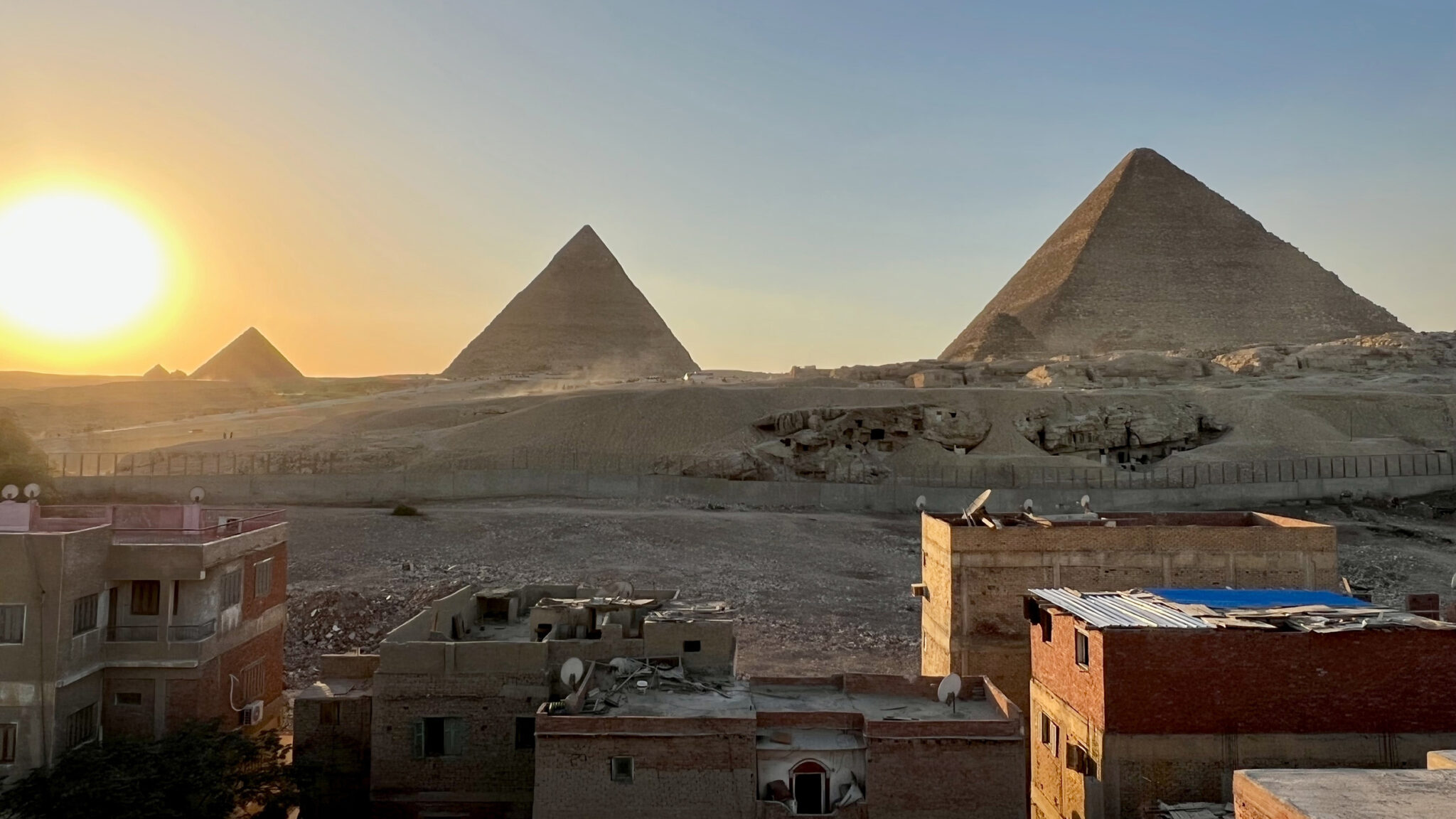
By contrast, other parts of the region—the United Arab Emirates, Oman and southern Saudi Arabia—were swamped by destructive record rains and flooding during 2024. The extremes will test the limits of adaptation, said Rola Dashti, executive secretary of the Economic and Social Commission for Western Asia, who often works with the WMO to analyze climate impacts.
Climate extremes in 2024 killed at least 300 people in the region. The impacts are hitting countries already struggling with internal conflicts, and where the damage is under-insured and under-reported. In Sudan alone, flooding damaged more than 40 percent of the country’s farmland.
But with 15 of the world’s most arid countries in the region, water scarcity is the top issue. Governments are investing in desalination, wastewater recycling and other measures to bolster water security,
but the adaptation gap between risks and readiness is still widening.
The worst is ahead, Dashti said in a WMO statement, with climate models showing a “potential rise in average temperatures of up to 5 degrees Celsius (9 degrees Fahrenheit) by the end of the century under high-emission scenarios.” The new report is important, she said, because it “empowers the region to prepare for tomorrow’s climate realities.”
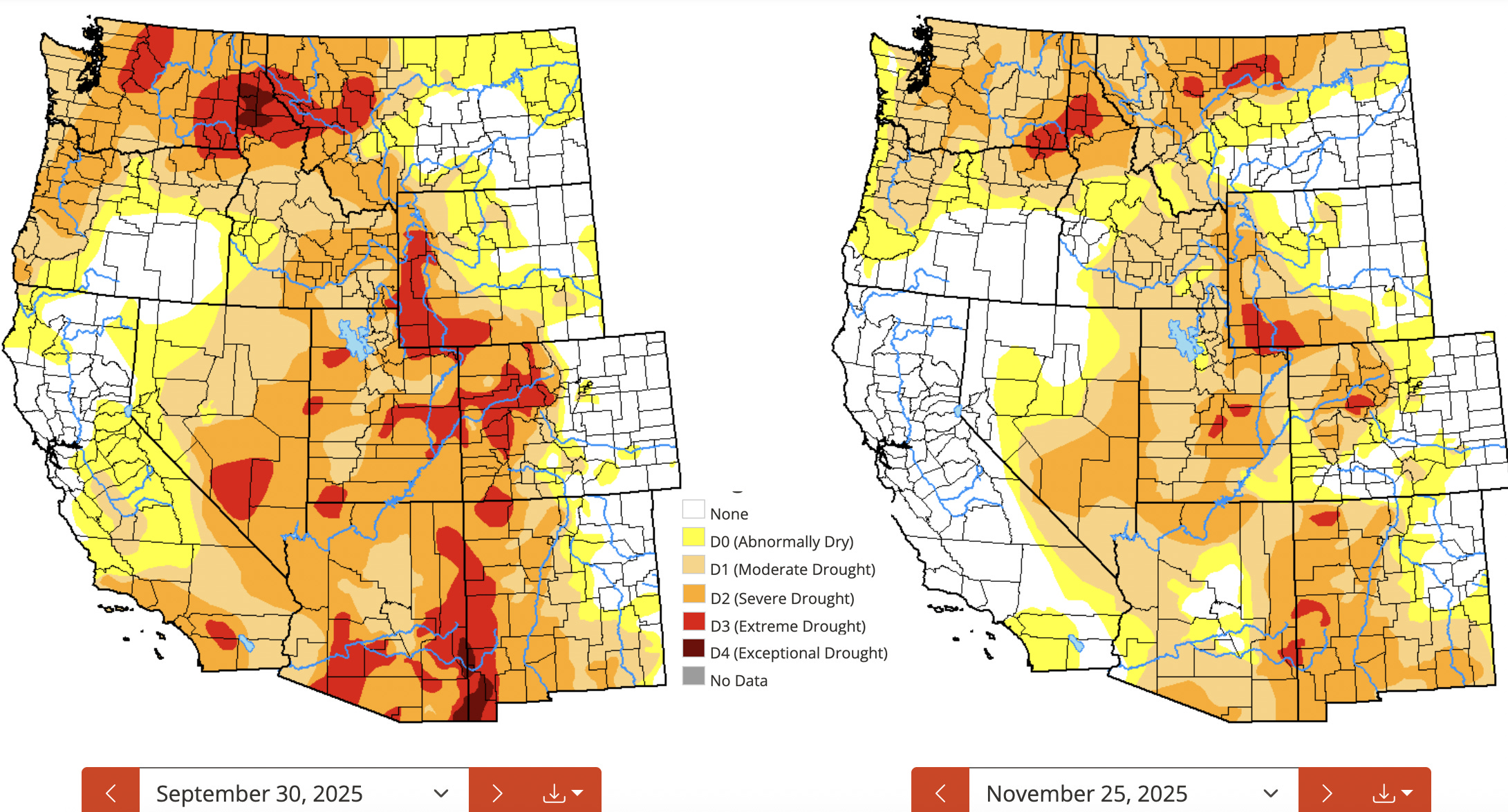
Click the link to read the article on The Land Desk website (Jonathan P. Thompson):
December 2, 2025
⛈️ Wacky Weather Watch⚡️
We are now two months into the water year — and a couple of days into meteorological winter — and so far both are pretty weird. On the one hand, much of the West is covered by one of the scantest snowpacks for early December in decades. On the other, it’s also been one of the wettest beginnings to the water year in recent memory.

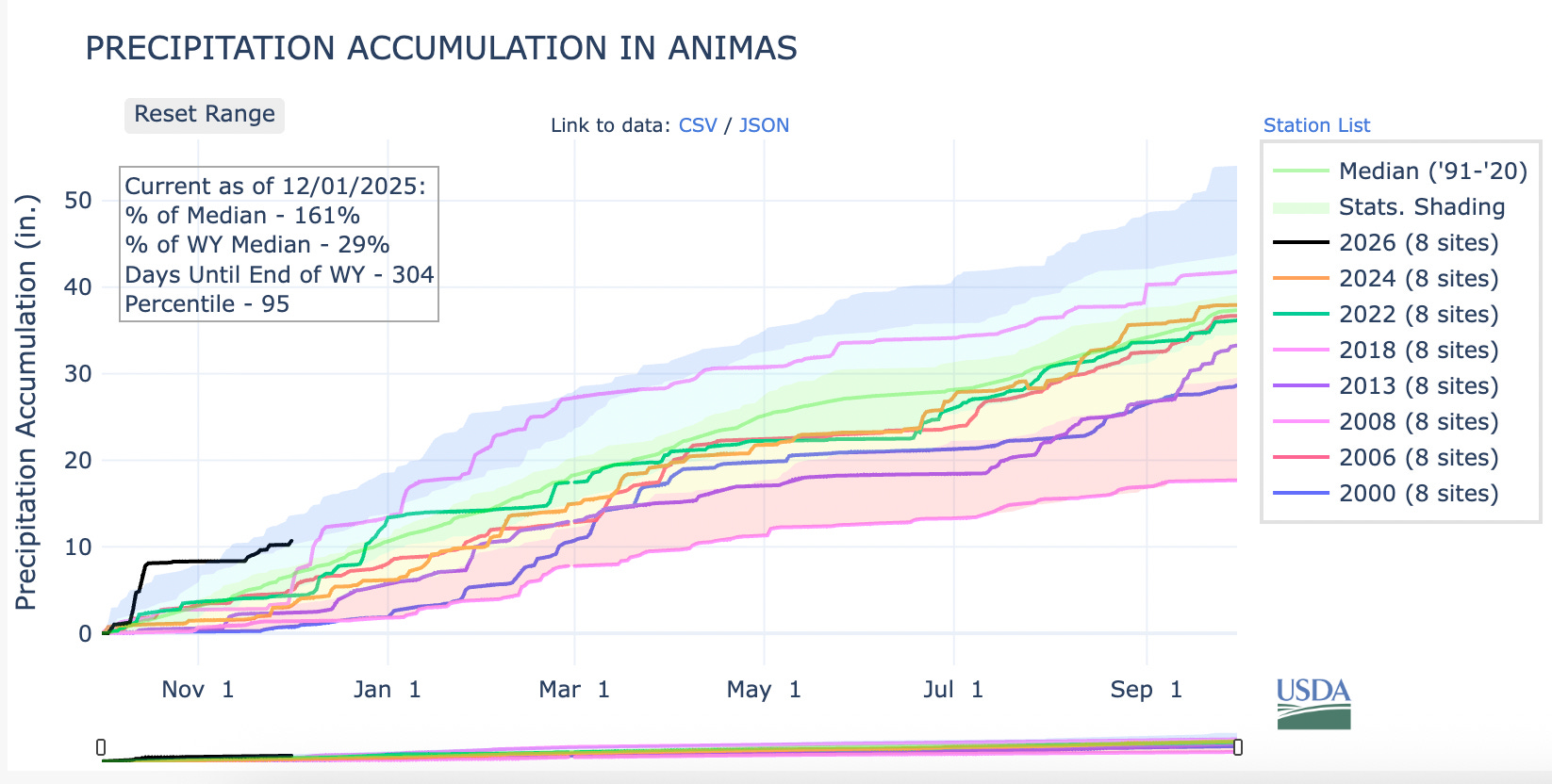
Adding to the uncanniness has been the wave of generous storms that have dumped up to a foot of snow on Colorado ski areas and snarled traffic, leading to at least two multi-car pileups on I-70 and shutting down other arteries — yet still failing to bring snowpack levels to anywhere near “normal.”
It’s a big ol’ mixed bag, in other words. The big October deluges eased the drought in much of the region, but the warm temperatures and snow drought don’t bode well for next spring’s runoff. Meagre early winter snowpacks can make and have made dramatic comebacks (e.g. water year 2008 in southwestern Colorado), and another storm is moving into the region as I write this, yet the National Weather Service’s is predicting an abnormally warm and dry winter for much of the Southwest.
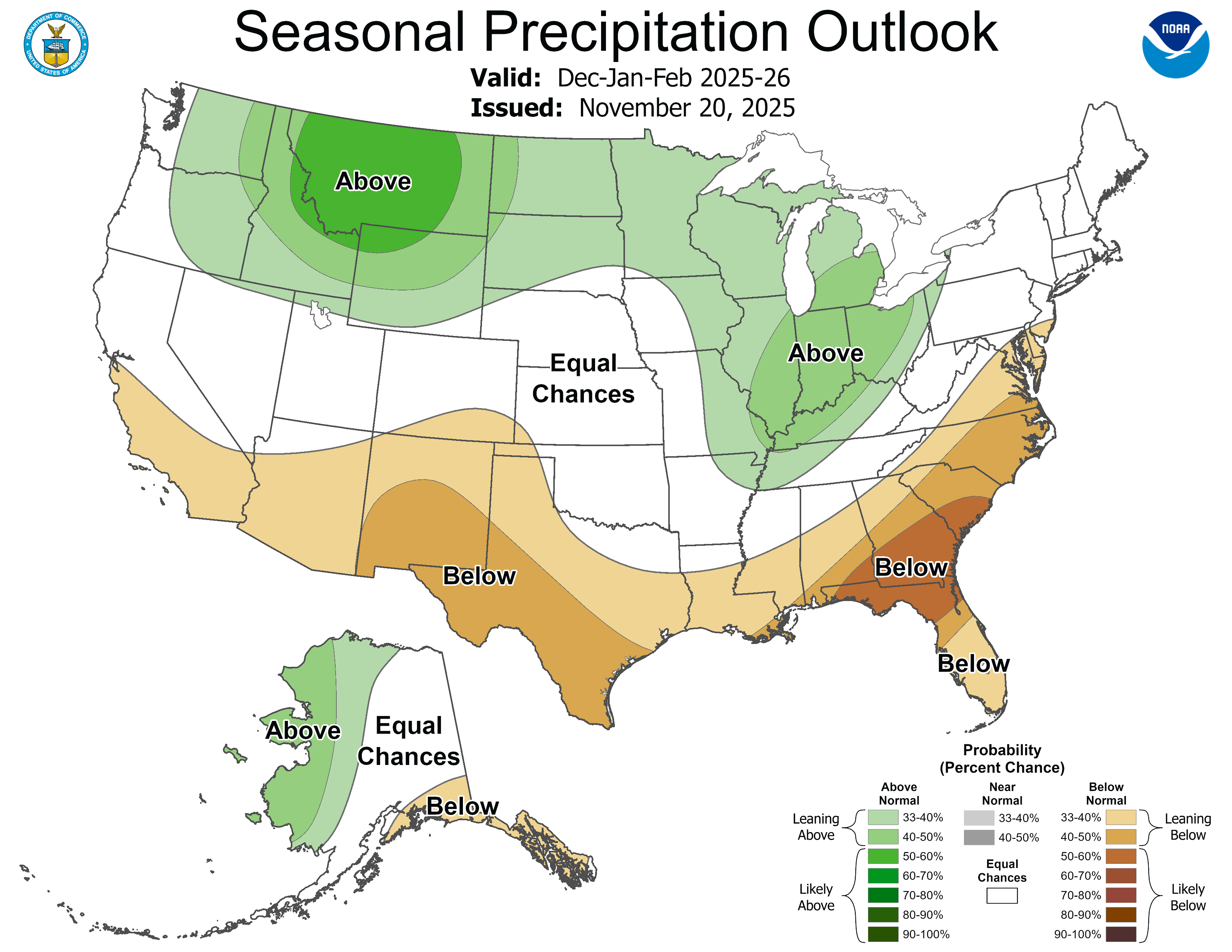
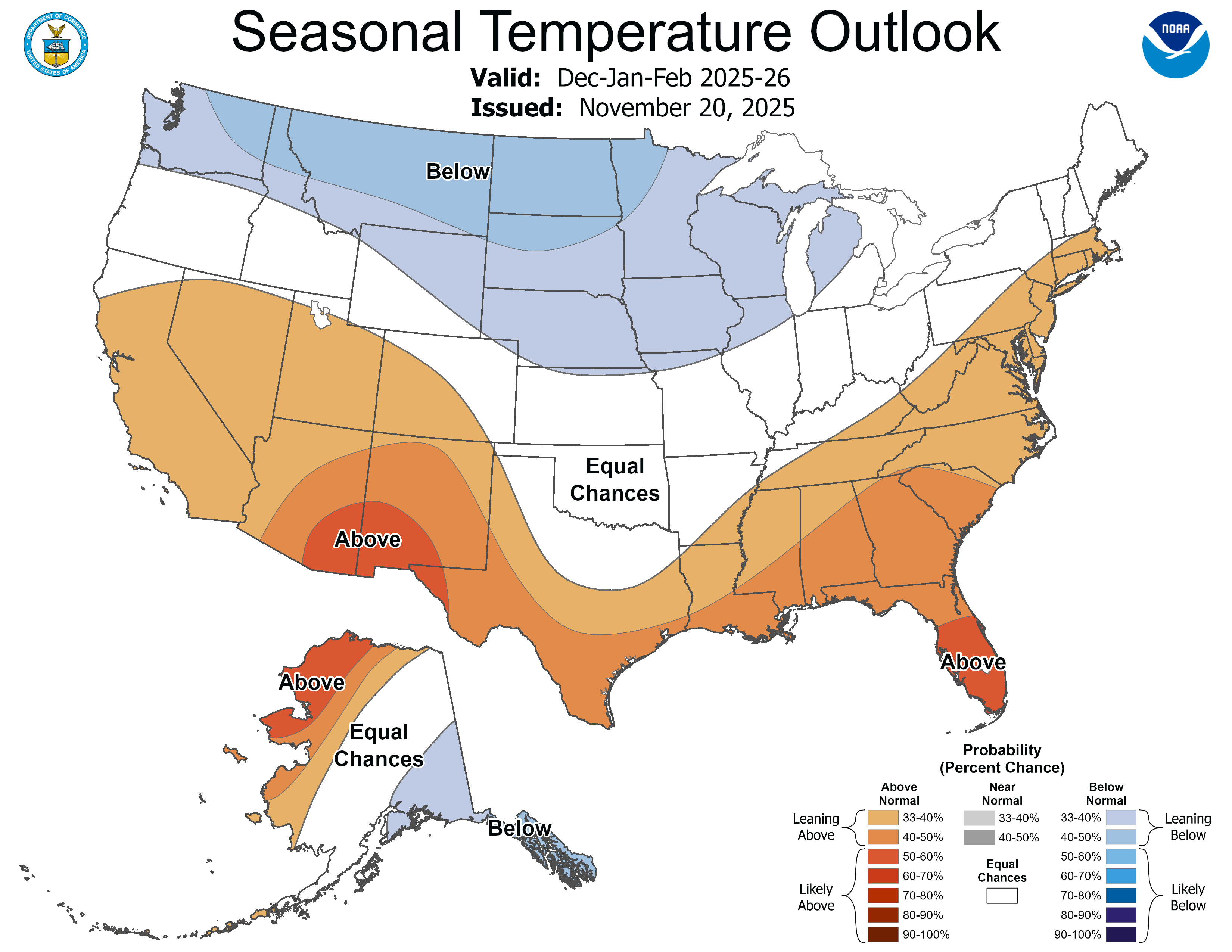
🌵 Public Lands 🌲
The Grand County commissioners’ “Access and Capacity Enhancement Alternative” plan aimed at increasing visitation at Arches National Park was just the tip of an iceberg, it seems. Yesterday (Dec. 1), Commissioner Brian Martinez presented the plan to a group of state and federal officials at a closed State of Utah and National Park Service Workshop in Salt Lake City.
Moab seeks bigger crowds? — Jonathan P. Thompson
The meeting’s purpose, according to the official agenda, is:

This may sound fairly innocuous (and maybe it is). But given some of the players, it may also be the latest volley in Utah’s long-running effort to seize control of public lands. The meeting was run by the Interior Department’s associate deputy secretary, Karen Budd-Falen, and Redge Johnson, who leads Utah’s Public Lands Policy Coordinating Office.
Budd-Falen built her legal career on fighting federal agencies, including the Interior Department, and was part of the Sagebrush Rebellion and the Wise Use movements that endeavored to turn federal land over to states and counties and to weaken regulations on the extractive industries. Johnson, meanwhile, was a driving force behind the state’s effort to take control of 18.5 million acres of Bureau of Land Management land in the state.
A Sagebrush Rebel returns to Interior — Jonathan P. Thompson
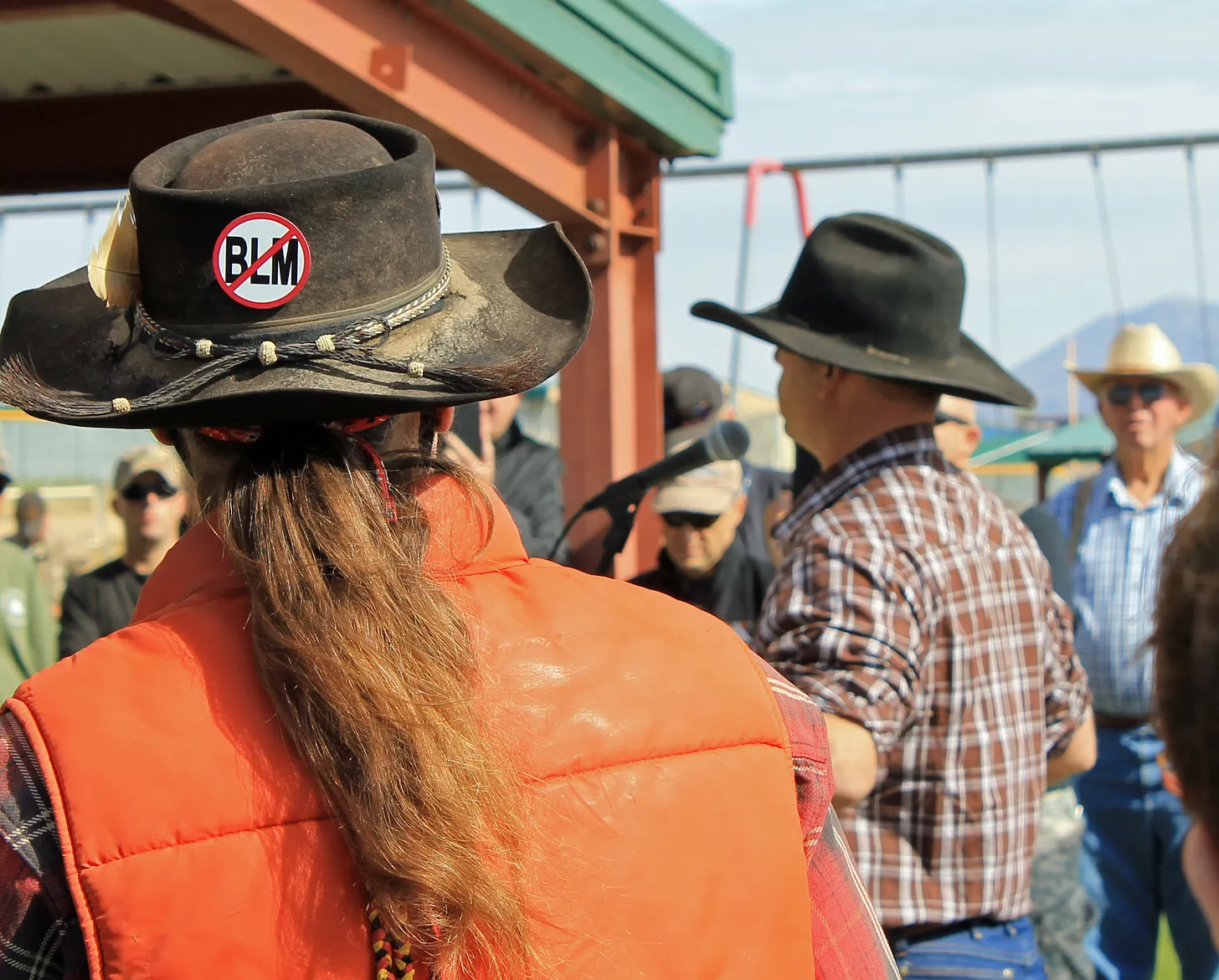
It’s not clear what is meant when they say the meeting is aimed at achieving Trump’s agenda. As far as national parks go, the administration has been rather chaotic: Freezing hiring, laying off thousands of staff (only to rehire some of them), slashing budgets, and allowing visitors to run roughshod over the parks during the government shutdown.
It sure looks like they are trying to cause the parks to fail, which would give them an excuse to further privatize their functions. Private for-profit corporations already run the lodges, campgrounds, and other services inside many parks. That’s why, during the shutdown, concessionaire-run campgrounds within parks continued to operate, while all of the government-run functions, such as entrance-fee-collection, were shuttered. In this way a false contrast was created between the functional privately-run operations and the dysfunctional public ones; visitors during that time would be excused for preferring the former.
The timing of this meeting, purportedly to receive input from gateway communities, is kind of odd. I have to wonder whether the Interior Department consulted local elected officials before raising entry fees for foreign visitors to $100 at Zion and Bryce Canyon National Parks in Utah, along with Grand Canyon, Acadia, Everglades, Glacier, Grand Teton, Rocky Mountain, Sequoia & Kings Canyon, Yellowstone, and Yosemite National Parks.
The Southwest’s tourism industry is highly reliant on international visitors. Visitation from abroad is already down, thanks mostly to the Trump administration’s “America First” creed and its general hostility to the rest of the world. Singling out foreign travelers for these higher fees — even if only at the most popular parks — is likely to dampen visitation from abroad even more, which will ripple through Western economies.
Grand County’s bid to cram even more visitors into Arches National Park won’t be too effective if would be visitors don’t even make it to the United States …
🗺️ Messing with Maps 🧭
This is just another old map that caught my attention, in part because it’s a reminder of how extensive the railroad network was, even in the rugged parts of Colorado, back in the late 1800s and early 1900s. This one shows the Denver & Rio Grande rail lines in 1893.


Click the link to read the article on the InkStain website (John Fleck):
December 3, 2025
Inspired by this morning’s Downtown Albuquerque News Climate and Transport Index (come for the bus boardings and river flow data, stay for the Shawarma restaurant news), I give you data, one of those “Science confirms the obvious, but with graphs!” things.
The overnight lows were 2.5F higher than the recent average. I wonder if that sensibly improves your quality of life if you’re sleeping rough?


Getting to my daughter’s house was smooth sailing but the drive home was long and unsettling. It snowed Saturday in eastern Missouri so we hunkered down and worked on a jigsaw puzzle she purchased from the Endangered Wolf Center in Eureka.
I kept an eye on the NWS Kansas City Twitter feed noting that a storm was expected to hit KCMO around 9:00 AM on Monday. My thinking was to hit the road very early in the morning and drive into the storm there. On Monday the storm had already hit and was moving east towards me along Interstate 70.
East of Columbia I drove into the storm. It was not white out conditions but the snow was nice and wet and the roads became icy and snow packed, but well-traveled, and MODOT had the plows out. My daughter texted me that I-70 was closed between Columbia and Kansas City but I hoped that the wreckage would be cleared and the highway reopened before I got there.
As luck would have it the highway was opened back up but that stretch was littered with tractor trailer rigs and passenger cars in the median and off the side of the highway. About 40 miles from Kansas City the NWS office said that another wave of snow was moving into the metro area. It was getting dark so I checked into a hotel in Higginsville hoping that conditions would improve knowing that it is easier to drive in the snow during daylight.
The drive through Kansas City Tuesday morning was okay but slow-going with ice on the roadway in places and rush hour traffic filled with folks hurrying to their destinations. As I hoped, the highway dried out west of there and I was back up to the speed limit from there to Limon.
I had decided to drive all the way to Denver to avoid the storm there that was forecast to move in after midnight. The storm moved into the area early and I drove into it just east of Bennet which was a bummer.
The Kia Niro handled well in the crappy conditions. It is a nice EV but the one Avis rented me did not have battery conditioning for charging so I was at the mercy of battery temperature which made it slow to charge much of the time.
I had driven the route in my Leaf before which required a CHAdeMO connecter so I missed the proliferation of fast chargers along I-70. You can be assured that you will find sufficient places to fuel up your EV all along the route.
Next up, the CRWUA 2025 Conference in Las Vegas December 16-19, 2025.

Happy Thanksgiving Day to you! Thanks for coming by Coyote Gulch.
I am so grateful for all the readers. When I’m up early in the morning looking for water news it is great to know that the blog is reaching so many folks.
Also, a huge thank you to family and friends that have helped keep me focused on the future, while not forgetting those 50 years of marriage, after Mrs. Gulch passed in 2023. I love you all.

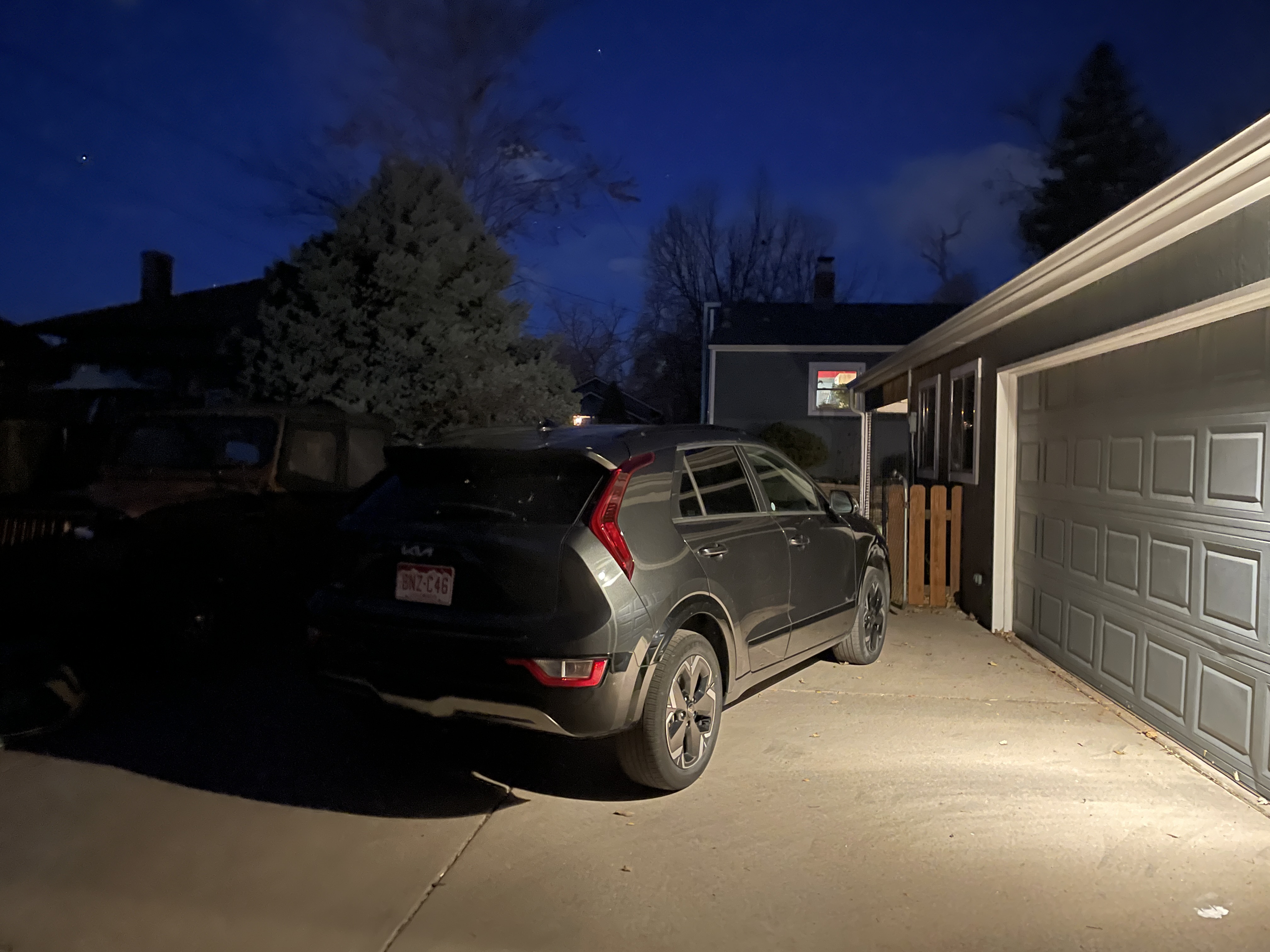
I’m heading out to celebrate Thanksgiving with Hellchild and her husband. The Kia Niro is a rental from Avis. I had a bit of time to drive it around yesterday and I approve. DC Fast Charging with a CCCS1 adapter.

Click the link to read the article on the Aspen Journalism website (Paul Andersen):
November 15, 2025
As generous and readily available as local land grants were, the Roaring Fork Valley was small potatoes compared with enormous public land grants that mark vast Western landscapes today and could foreshadow a similar trend if the political powers that be in Washington take on the directives and intentions of the current Trump administration.
“… a shady world of back-room deals, special interests and cronyism.”
— Erica Rosenberg, Western Lands Project
The future of federal public lands lies in the hands of the U.S. Congress as empowered by the American public. Whatever winds of influence and ideology blow through Washington also stir across vast acreages of American lands in the public domain of the commons.
In Aspen, Pitkin County and the greater Roaring Fork Valley, land giveaways have been many, although nothing near the scale of the decades preceding Aspen’s founding when, throughout the American West, land grants were excessive and often rife with fraud and scandal. By the time Aspen was settled in the 1880s, the outrages of earlier land grants had received pushback by a concerned public and were acted upon by congressional oversight that ended the most egregious giveaways.
Still, plenty of public land was doled out regionally to mining interests, homesteaders, railroads, schools, churches and others for what today seem like absurdly low valuations. An Aspen Journalism analysis conducted by Data Editor Laurine Lassalle of records available through the Bureau of Land Management (BLM), General Land Office and Pitkin County turned up 1,175 patents issued in Pitkin County between 1880 and 1900. Information below is based on a further review of 97 of those patents.
For example, Roaring Fork Valley rancher Fred Light (1856-1931) filed for 160 acres of public lands in 1883 and, in 1886, paid $200 when the patent was approved. Light bought the land under a federal provision that invited homesteaders to file for patent under the 1820 Sale Cash Entry Act. The price was $1.25 per acre, about $40 per acre in today’s dollars.
Light’s “Box L Ranch,” in the Capitol Creek Valley, grew by additional acquisitions, including Light’s purchase of his wife’s family’s nearby ranch. A tribute written about Light as a civic leader recounted the profitability and size of his holdings. “Owning and operating with skill and success one of the finest ranches in Pitkin County, which is of ample size, comprising nine hundred and forty acres, and sufficiently fertile and productive to yield abundantly of cereals and hay and liberally support large numbers of cattle and horses. Frederick Light, of near Snow Mass, is so situated that he may laugh adversity to scorn and feel secure of an expanding and substantial prosperity during the remainder of his days.”
Light’s former homestead has, of course, escalated in value since his ownership. Today, the average value per acre in the Capitol Creek Valley is $69,000 for agricultural properties and $171,500 for agricultural/residential, according to an analysis of Pitkin County Assessor’s Office records.
Under a different federal land grant program, mining claims were granted to anyone who could prove that a property was economically viable, a stipulation of the Mining Law of 1872. Under this law, which is still on the books and widely considered antiquated, miners paid $5 per acre for both surface and mineral rights. Filers would often accrue multiple claims, as did a number of local partnerships from the early 1880s in Aspen’s first acquired mineral patents.
In 1884, a partnership of 10 individuals — including Josiah Deane, Aspen’s first lawyer and later patriarch of the T-Lazy-7 Ranch on Maroon Creek — was issued a patent on 4.49 acres for a mineral lode called “Mountain Ranger,” located near Little Annie Basin on the backside of Aspen Mountain. They paid $22.45 on the location claim first filed in 1881, the year the city of Aspen was incorporated with Deane’s legal guidance.
In 1884, a six-way partnership filed for a patent on a 5.85-acre mineral patent claim named “Grand Prize,” for which they paid $29.25. The partnership included David R.C. Brown and Henry “Grandpap” Cowenhoven, two of Aspen’s founding fathers who had arrived here in the summer of 1880 by wagons over Taylor Pass — the first wagons to enter the Roaring Fork Valley.
Brown is recorded in another partnership filed in 1887 with three others for the “Monongahila,” a mineral lode of 8.31 acres for which they paid $41.55. Brown and Cowenhoven partnered again in 1889 with four others on a claim called “Idlewild” of 13.04 acres for which they paid $65.20. Brown and Cowenhoven (sometimes in the name of Cowenhoven’s wife, Margaret, and Brown’s wife, Catherine, the daughter of the Cowenhovens’) appear in numerous entries, attributing to sound investments that made them Aspen’s first self-made millionaires.
Another Aspen namesake, Henry Tourtelotte, also appears in a number of entries, establishing patents on claims named “Tanner,” “Buckhorn,” “Castle” and “Silver Bell.” Many of these claim names are familiar today as mountain peaks, ski runs and campgrounds. Another local mining scion, Horace Augustus Warner (HAW) Tabor, shows up in many records associated with Montezuma Basin and the Montezuma claim, a mine he owned that remains visible today at a nosebleed altitude high above Castle Creek. Tabor, known as “The Silver King of Leadville,” brought his entrepreneurial reputation to Aspen along with an opera singer named Baby Doe with whom he had a notorious love affair.
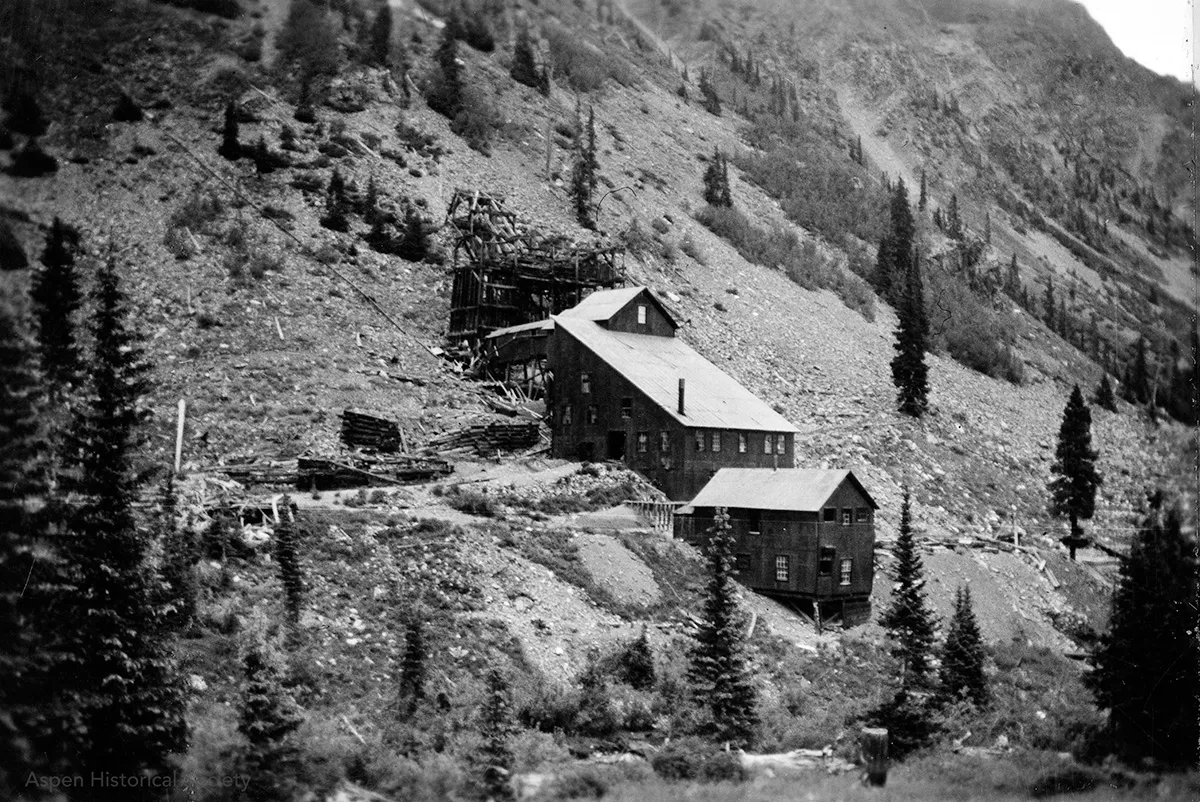
Prominent founding Aspenites David Hyman and Jerome B. Wheeler are also listed in numerous patent entries as among the earliest investors in Aspen mining claims such as “Mose,” “Little Maggie,” “Dolly Dot,” “Morning Star,” “Little Nell,” “Alaska,” “Siberia” and “Durant.” Hyman and Wheeler represented Eastern capital, which was essential to Aspen’s development and which enabled the nascent city to sustain ore production years before the city’s two railroads ran tracks to Aspen and gave it economic viability. Hyman was a prominent lawyer from Cincinnati and was Aspen’s first major mining investor. Wheeler, for whom the Hotel Jerome and the Wheeler Opera House are named, was married into the Macy family wealth, owners of New York City’s first department store.
The Smuggler Mining Co., whose name still marks the mountain and open space playground bounding Aspen to the east, shows patents that provided access and ownership to one of Aspen’s richest silver mines. It was from the Smuggler Mine in 1893 that the largest-ever nugget of almost-pure silver, weighing more than 1,800 pounds, was broken into three pieces so it could be extracted and paraded on a horse-drawn wagon through the thriving city at the verge of the Silver Crash of 1893 when silver was demonetized and the U.S. currency shifted to the gold standard, abruptly and dramatically curtailing Aspen’s thriving mining industry.
Today, historic patented mining claims hold far-different valuations, not for industrial mining potential, but as real estate valued as high-end properties in Aspen’s resort economy. For what the records show as “mines” in Aspen, the valuation goes from an historic low of $4.50 per acre to $500,000 per acre today.
The Denver & Rio Grande Western (D&RGW) and the Colorado Midland built their tracks to Aspen from Leadville, surmounting the Continental Divide on trestles, through tunnels and around winding switchbacks, the construction of which required monumental physical labor. Those rights-of-way remain public thoroughfares today as the Rio Grande Trail (D&RGW) and Highway 82 (Colorado Midland).
The railroads were granted swaths of public lands as an incentive to build tracks and open the West to resource development. Roaring Fork commerce served silver mining and agriculture for which two competing railroads laid tracks over and through the mountains. Unlike earlier railroad ventures in the U.S. that brought commerce and trade to the nation and received vast land grants, Aspen’s two local railroads were granted only their rights-of-way, which still added up to considerable acreage, albeit linear and confined to specific corridors.
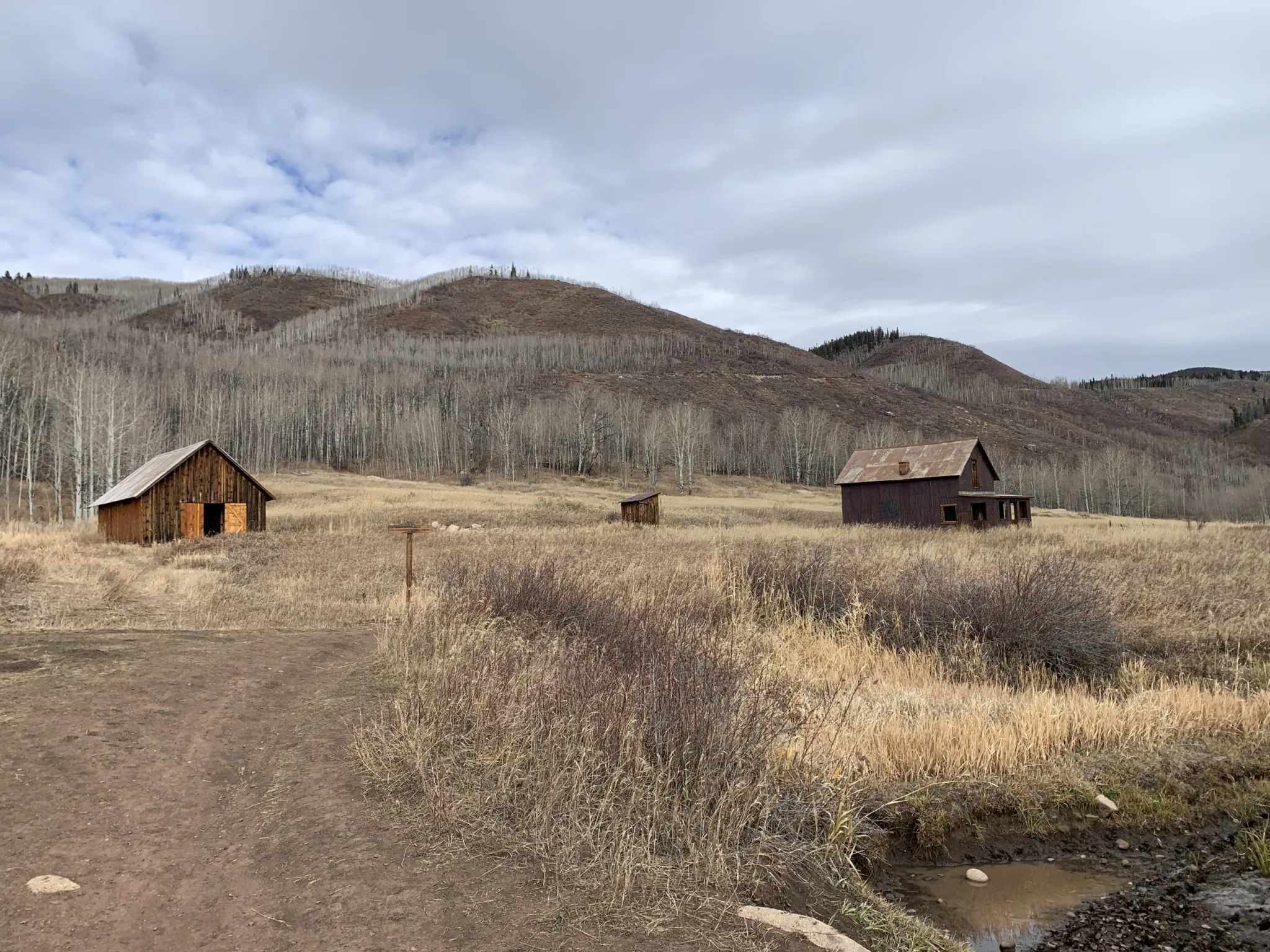
Cashing out the commons
As generous and readily available as local land grants were, the Roaring Fork Valley was small potatoes compared with enormous public land grants that mark vast Western landscapes today and could foreshadow a similar trend if the political powers that be in Washington take on the directives and intentions of the current Trump administration.
In a comprehensive 2009 report published by the Western Lands Project, “Carving Up the Commons: Congress & Our Public Lands,” its author, Janine Blaeloch, lays out the history of public land divestitures and describes the many ways public lands can become privatized, something the Trump administration has been applying as a means of capitalizing on extractive national assets. This is not the first time a Republican administration has attempted to commoditize the commons.
“Ronald Reagan’s Interior Secretary, James Watt, famously proposed during Reagan’s presidency (1981-1989) that public lands be sold to pay down the federal deficit,” Blaeloch wrote. “The Bush administration’s (2001-2009) budget for 2007 called for the sale of $800 million worth of U.S. Forest Service lands over five years and $182 million in public lands managed by the Bureau of Land Management (BLM) in the same time period.
“These periodic high-profile, sweeping, ideologically driven land disposal schemes gain the public’s attention because they are so over the top. What the public is largely not aware of is the fact that smaller scale disposal schemes are being enacted every day — often by the same politicians who declaim their love for the environment and public land.”
Legislative initiatives are receiving strong encouragement from the current Trump administration to parcel and sell off, trade or otherwise divest national public lands and put them into private hands, severing existing protections, means of preservation and ultimately public access. Although such current directives may lead to a new precedent of commoditization, they are part of a long and controversial history.
On April 23, historian and blog phenomenon Heather Cox Richardson wrote in her daily “Letters From an American” a warning that the Department of Agriculture (which administers the U.S. Forest Service) and the Bureau of Land Management (which is under the Department of the Interior) have been gearing up for a wholesale liquidation of the American commons.
“Today,” wrote Cox Richardson, “the White House under President Donald J. Trump celebrated Earth Day by announcing that the White House champions ‘opening more federal lands and waters for oil, gas and critical mineral extraction.’”
Cox Richardson pointed out that, in fact, public lands already benefit the nation by generating billions of dollars a year for the United States through tourism.
“Since the 1970s,” she wrote, “the right wing has come to see the public ownership of lands as an affront to the idea that individuals should be able to use the resources they believe God has put there for them to use.
“Developers have encouraged that ideology, for privatization of America’s Western lands has always meant that they ended up in the hands of a few wealthy individuals.”
The conservative political agenda outlined in Project 2025, she noted, calls for a giveaway to oil and gas and mining interests by “opening up more of our federal land to energy development, rolling back protections on federal lands, and selling off more land to private developers.”
Interior Secretary Doug Burgum made it clear in his January confirmation hearings, Cox Richardson wrote, “that he sees selling the public lands as a source of revenue, referring to them as ‘America’s balance sheet.’”
“We’ve got $36 trillion in debt,” Burgum said, as quoted by Cox Richardson, “but we never talk about the assets, and the assets are the land and minerals. The Interior Department has got close to 500 million acres of surface, 700 million acres of subsurface, and over 2 billion acres of offshore. That’s the balance sheet of America. I believe we ought to have a deep inventory of all the assets in America. We ought to understand … what [is] our assets: $100 trillion, $200 trillion? We could be in great shape as a country.”

Bipartisan support for public lands
The Trump-era initiative to monetize public lands hit a roadblock, however, after bipartisan support for public lands overwhelmed the direction Burgum and the Trump administration had fomented both as an ongoing policy directive and as described in the GOP’s Big Beautiful Bill, which was voted in by Congress and signed into law by the president July 4.
A draft version of that bill had called for selling 0.5% to 0.75% of U.S. Forest Service and BLM lands in 11 Western states and for selling 0.25% to 0.5% of BLM lands within 5 miles of the border of a U.S. population center.
“A proposal to sell federal public lands,” Caitlyn Kim on Colorado Public Radio News reported June 29, “has officially been taken out of the Republicans’ spending and tax bill after facing strong pushback from hunters, fishermen, outdoor recreation users and, most importantly, Republicans in the U.S. Senate and House.”
U.S. Sen. Mike Lee (R-Utah), the chief elected Republican advocate for the sell-off, announced the removal of the public lands divestiture from the bill, blaming the decision on the budget reconciliation process and explaining that he could not get a safeguard to guarantee that the land would be sold only to American families.
CPR News reported that Lee “said he continues to believe the federal government ‘owns far too much land’ that he said is mismanaged and that ‘massive swaths of the West are being locked away from the people who live there.’ He indicated that he wasn’t giving up altogether, adding that he would work with President Donald Trump to ‘put underutilized federal land to work for American families.’”
However, according to the CPR report, “the decision [to delete public-land sales] also came after other Senate Republicans from the West said they opposed the idea and would offer an amendment to get it taken out of the bill. Five House Republicans also said they would vote against the GOP’s Big Beautiful Bill if it remained in.”
Colorado lawmakers celebrated the removal of public-land sales from the GOP bill as a defining endorsement for the value most Americans feel toward protecting the American commons. Rep. Joe Neguse (D-Colo.) wrote on social media: “The American people — and our public lands — have won!”
CPR News reported that Neguse and Rep. Jeff Hurd (R-Colo.) had issued a joint statement opposing public-land sales in an acknowledgment of unity for protecting a key American legacy that crosses the aisles of Congress. “Republican or Democrat — representing red, purple or blue districts — one sentiment continues to ring true: Public lands are not for sale.”
Sen. Michael Bennet (D-Colo.) wrote on social media: “This is a huge victory for Colorado and the West. Thank you to everyone who made their voice heard and fought back against this dangerous provision. America’s public lands belong to all of us.”
“Protecting public lands is the most nonpartisan issue in the country,” Chris Wood, president and CEO of Trout Unlimited, said in a statement quoted by CPR News. “This is certainly not the first attempt to privatize or transfer our public lands, and it won’t be the last. We must stay vigilant and defend the places we love to fish, hike, hunt and explore.”

Taking a stand on the land
Despite this most recent halt of public land sales, the threat is far from over, warns Blaeloch, whose 20-year advocacy mission before the Western Lands Project ceded its role to Wild Earth Guardians in 2016 was to “scrutinize public land trades, sales, giveaways and any project that would cede public land, and their impacts on habitat and wildlife, natural resources, land use and communities. The goal of Western Lands Project is to keep public lands public.”
“We are about to return to the Golden Age of land acquisitions for private benefit,” Blaeloch said in an Aspen Journalism interview in April. In her focused role as public lands defender, Blaeloch said, “We realized that the Forest Service and BLM conduct hundreds of land deals every year, mostly without public involvement. I like clarity and transparency, and I thought it was unfair that deals were being made without the public interest.”
Erica Rosenberg, a former president of Western Lands Project, concludes in the introduction to Blaeloch’s report: “Congressional processes threaten to trade away, sell or give away our public land heritage — piece by piece — through a shady world of back-room deals, special interests and cronyism.”
So, Blaeloch, digging into her background as a career environmental planner, has pushed back with the goal of making federal land management agencies accountable by tracking land deals, educating the public at the grassroots, and also by educating Congress on what has long been a veiled aspect of American land use on the federal level.

Free land for railroad and lumber industries
Blaeloch’s report for the Western Lands Project stated that the most opportune era in U.S. history for collusion in acquiring public lands dirt cheap or at no cost at all took place from the mid-1800s up to the early 1900s through manipulative deals benefitting large railroad interests and the fast-growing lumber industry.
“Between 1850 and 1870,” writes Blaeloch, “the federal government granted 131 million acres of public land to railroad corporations as incentive for westward expansion. These railroad land grants comprised one of the largest categories of public land disposal in U.S. history, after cash sale, homestead grants to individuals, and grants to the states for education and other purposes.”
For example, Blaeloch reports, “the Northern Pacific Railroad, which was to construct its line from St. Paul, Minnesota, to Tacoma, Washington, was granted 38.9 million acres, including 9.6 million acres in Washington state. Several other land grants were added to what would more than a century later become the Burlington Northern-Santa Fe Railroad, for an additional total of more than 47 million acres.”
These generous railroad land grants were typically given in alternating square miles extending out from the railroad lines and forming a “checkerboard” land-ownership pattern of public/private land that is still visible on many maps and to anyone who chances to gaze out the window of an airplane while flying over the clear-cut forests of the Pacific Northwest.
Land giveaways to railroads were originally intended to encourage Western settlement as the American frontier expanded. It was assumed that land along the railroad lines would become desirable, enabling the railroads and federal government to capitalize by selling their alternating public/private parcels to settlers who would benefit from nearby rail service.
“In fact,” writes Blaeloch, “the railroads kept much of their grant land, and the federal government designated many of its checkerboards as national forest. Nearly all of the railroad land ‘grants’ were in fact intended to be temporary transfers of public land that the railroads were supposed to sell in turn to ‘actual settlers’ to raise money for railroad construction.”
Some railroad companies kept their land grants even though they failed to build, and some transferred former public lands and the wealth they generated to cronies, including elected officials.
“By 1870,” writes Blaeloch, “the public had grown disgusted with the scandals and waste flowing from the railroad land grants, and this particular brand of public land giveaway ceased. By this time, too, the public was increasingly concerned about having reached the limits of free land and resources, and there was great controversy around the rapid liquidation of the country’s forests.”
By the end of the 19th century, the debate between forest preservation and utilitarian wise use was at full pitch. Preservation was strongly advocated by Sierra Club founder John Muir and his disciples. Utilitarian wise use was advocated by Gifford Pinchot, the country’s first Forest Service chief under President Theodore Roosevelt. Timber and mining industries actively lobbied for Pinchot’s view of the land as commodity, countering Muir’s view of the natural landscape as a necessary and valid public benefit.
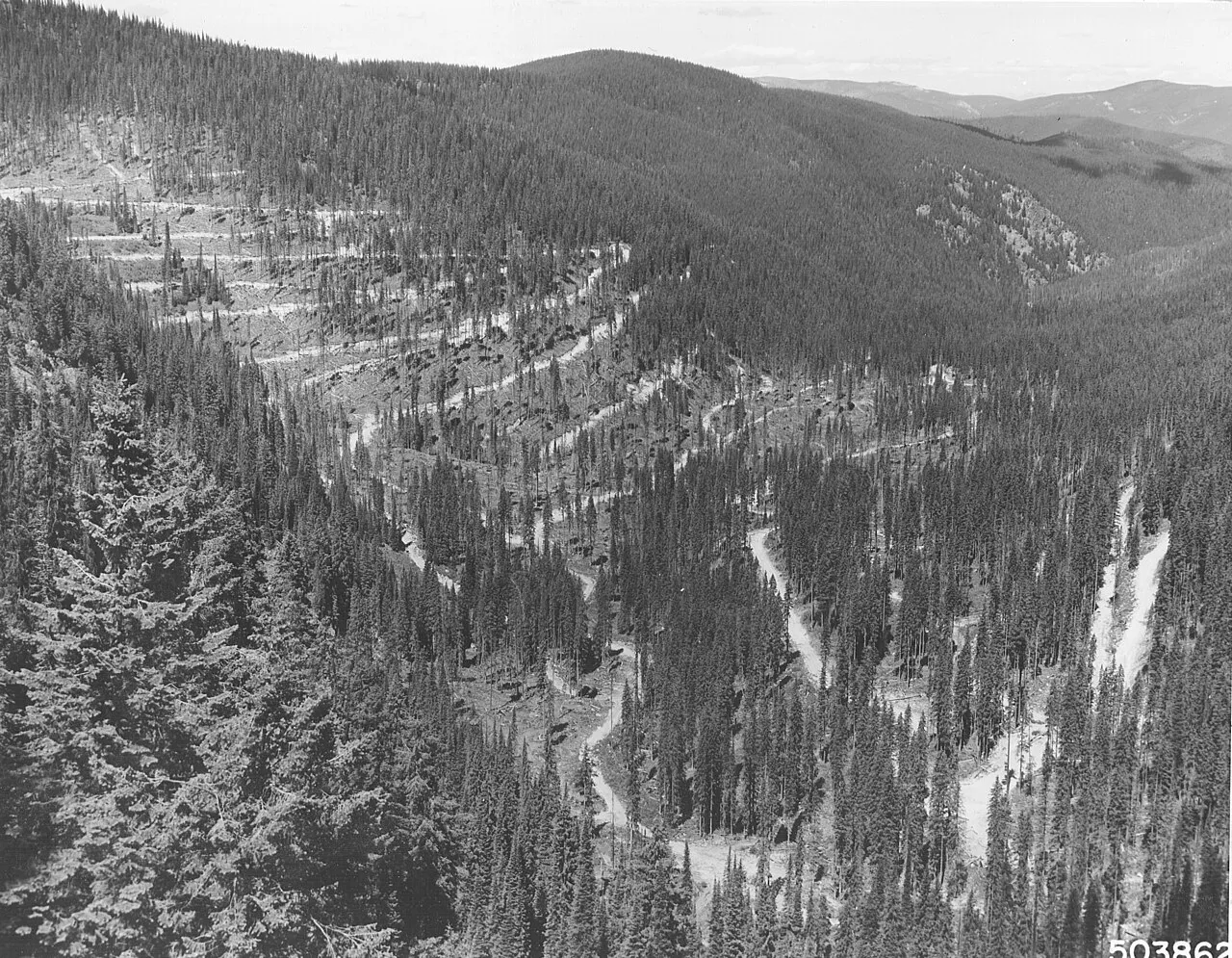
Despoiling the garden
In his 1982 book, “Westward in Eden: The Public Lands and the Conservation Movement,” author William K. Wyant, a former Washington correspondent for the St. Louis Post-Dispatch, raises, as a popular conception, the idea of the land as ultimately exploitable: “The American has usually seen real estate as expendable,” he writes. “It is something of which there is assumed to be plenty more … somewhere else.”
When Ronald Reagan won the presidency in 1980, writes Wyant, the Republican mandate was to shrink government and its influences, and to cut regulations on industry. This afforded a propitious launch of the Sagebrush Rebellion, which advocated shifting federal lands in the West to the states. “The United States had at the outset an incomparable Garden of Eden to dress and keep, as the Old Testament phrases it,” wrote Wyant. “Its husbandry has been at sometimes profligate, greedy and short-sighted and at other times blessed with extraordinary vision.”
Wyant idealistically describes the continental United States as a vast and pristine wilderness, “a domain of incredible richness — virgin forests, great rivers, the prairies and high plains, the shining Rockies, the arid and sandy wastes and the golden Pacific shore. The early settlers found it majestic and unspoiled, and they plunged into it, defiant of restraints.”
But without restraints, the commons suffered immeasurable abuse and exploitation, as a statement from Pinchot made clear in the early 20th century: “Outside the tropics, American forests were the richest and most productive on Earth, and the best able to repay good management. But nobody had begun to manage any part of them with an eye to the future. On the contrary, the greatest, the swiftest, the most efficient and the most appalling wave of forest destruction in human history was then swelling to its climax in the United States; and the American people were glad of it.”
Rapacious companies such as logging giant Weyerhaeuser saw forested public lands not as cathedrals, as did Muir, but as wood lots. By 1974, cites Wyant, Weyerhaeuser owned outright more than 5.5 million acres, a holding bigger than the state of Massachusetts.
U.S. Sen. Gale McGee (1915-92) who served in Congress from 1959 to 1977 as one of the last Democrats to hail from Wyoming, in testimony in 1971, said, “Today, the once-great forests of our nation have been depleted to the point that would shame Paul
Bunyan. It is time to cease measuring the value of our public forests on the scale of board-feet of timber.”
Vast land giveaways were enabled by the 1862 Railroad Act, writes Wyant, when a number of private railroad companies were allocated $65 million in federal loans and handed a total 110 million acres of public domain. In 1864, an even more generous provision was made when the Northern Pacific Railroad, then building a 2,128-mile line from St. Paul to Tacoma received millions of acres of public lands, including about one-fourth of the state of North Dakota and 15% of Montana.
This largesse was coupled with political influence from railroad magnates who lobbied Congress for more land. Support for outrageous public behests also came from politicians who favored rail subsidies in exchange for locating lines in cities and towns that benefitted their constituents in blatant acts of patronage. Industry and business were in on the take at the expense of the commons.
“All in all,” writes Wyant, “Congress gave to the railroads an area nearly twice the size of Colorado and one-third as large as Alaska.” Another gift of the commons came to the railroads in the Forest Management Act of 1897, which allowed land-holders within newly designated and protected forest reserves to exchange, acre-for-acre, their holdings for lands that were outside the reserves.
Under this act, writes Wyant, rail barons were permitted to swap millions of acres of mountainous, desert, cutover or otherwise useless land for “in lieu” timber acreage of far greater value. The railroads then made deals with lumber companies by not only selling their holdings, but transporting for a profit the timber that was harvested from them. Loggers and railroads latched onto the mutual benefits of collusion in the exploitation of public lands, with no evident moral, ethical or ecological considerations.
After a hue and cry of protest from rising ranks of conservationists, the “in lieu” provision was repealed in 1905. However, eight years of rampant profiteering had already privatized huge chunks of the commons.
“In addition to the scars on the land,” writes Blaeloch, “the behavior pattern, too, was carried forward, and the companies established a paradigm that brought them enormous profits at the expense of the public interest, neatly disguised as ‘win-win’ deals. It is a pattern that shows itself time and again in land deals driven by politics, privilege and greed.”
A regional comparison is necessary to grasp the scale of land acquisitions by logging companies: The White River National Forest covers 2.3 million acres, one of the largest forests in the United States. The Emmerson family, which owns and operates Sierra Pacific Industries, a family legacy company since 1949 that logs usable lumber after forest fires and sells it to lumber retailers, owns 2.4 million acres in three Western states: California, Oregon and Washington. How did one family carve out of the American commons acreage greater than the largest national forest in Colorado? Timber.
Still, Wyant surmises, rising ranks of professional and educated conservationists have achieved national influence in the aftermath of public lands feeding frenzies. “An impressive machinery for the defense of the environment and public lands has been built,” he concludes. “Until it is more firmly in place and has the steady acceptance of the American people, we shall owe a heavy debt to the corporal’s guard of environmental lawyers and professional conservationists who man the ramparts while others sleep.”
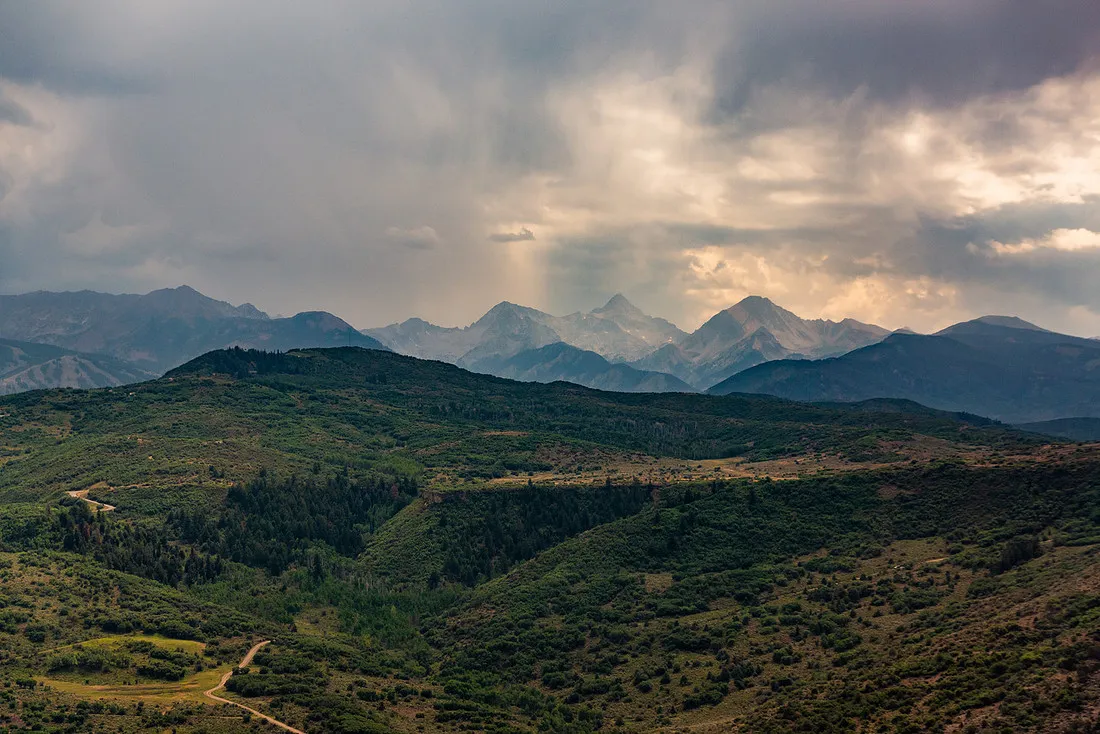
Congress, freewheeling land deals and FLPMA
The Congress shall have Power to dispose of and make all needful Rules and Regulations respecting the Territory or other Property belonging to the United States. — U.S. Constitution, Article IV, section 3, clause 2 (Property Clause)
As environmentalists and public land activists have become aware of the chipping away of public lands through land sales and exchanges, they realized that deals were being made through Congress with questionable legitimacy.
“Congress members,” writes Blaeloch, “were free to wheel, deal, carve up and give away public lands with no rules to hinder them.”
Although some deals were negotiated with bipartisan agreement, many were split down party lines. Geography has also played a role. Blaeloch reports that in the area of protecting public lands, “Republicans favor less of it than Democrats. As a party, Democrats have a far better record on public land protection, but the more consequential split is between Western and Eastern politicians, with easterners being more protective than westerners where public lands are in far greater supply.”
“However, it is by no means just ideology or geography that inspires congressional land deals,” writes Blaeloch. “Frequently, the bottom line is the direct, pragmatic opportunity to reward friends or curry political favor through the gift of public lands.”
In reaction to the gradual expansion of a national conservation ethic, Congress in 1976 passed the Federal Land Policy and Management Act (FLPMA), which gave broad authority to the BLM and Forest Service to implement land transactions by ideally providing a more rational, consistent and transparent process.
“It was not until 1976,” writes Blaeloch, “with the passage of FLPMA, that Congress officially closed the frontier, declaring that ‘it is the policy of the United States that the public lands be retained in federal ownership, unless as a result of the land use planning procedure provided for in this Act, it is determined that disposal of a particular parcel will serve the national interest.’ FLPMA established procedures, primarily for the BLM, to identify areas that should be retained for conservation purposes.”
According to an artificial intelligence search, FLPMA “mandates a multiple-use and sustained-yield approach, balancing resource extraction and commercial activities with conservation of natural and cultural resources. The act requires the BLM to periodically inventory public lands and their resources to develop management plans that balance various uses. FLPMA also requires the BLM to coordinate with state and local governments and provide for meaningful citizen involvement in land use planning such as land exchanges that allow the BLM to trade federal land for other land of potentially greater public value. FLPMA also mandates the protection of scientific, scenic, historic, ecological, and other resources, and the management of areas like wilderness study areas and Areas of Critical Environmental Concern (ACEC).”
Such managerial responsibilities provide oversight, explains Blaeloch, making land transfers more transparent and, as a result of increased public and administrative input, more complex. Many transfers are undertaken to eliminate private inholdings within the public domain, thereby consolidating larger areas of contiguous public land for more effective management. Other benefits include protecting watersheds or other sensitive lands and to serve other genuine public interest purposes.
Regarding the giving away or selling of public lands, writes Blaeloch, federal land agencies have been limited in their authority and they are not allowed to give it away. “By contrast, members of Congress may approve sales or giveaways of any size or nature, limited only by what they believe they can justify.” She warns, however, that congressional exchanges are often subject to little scrutiny or public involvement, with vague language in the FLPMA establishing a guideline that land disposals must “serve the national interest.” Defining “national interest” is key to the future of public lands.
Regarding land transfers, Blaeloch writes: “Perhaps their most basic flaw is that most are designed to serve narrow special interests, even where they purport to serve a greater good. It is now well established that land exchanges and sales implemented by the public land agencies — that is, through the administrative process — can be ill-conceived, badly executed and damaging to the public interest.”
One safeguard is the National Environmental Policy Act (NEPA), which provides strict guidelines by requiring environmental analysis and disclosure, as well as opportunities for citizen input. FLPMA dictates that land exchanges must serve the public interest and yield equal value to both or multiple sides in the transaction.
The following protections are required under NEPA and FLPMA against specious land exchanges:
- Public notification to ensure that the affected communities are aware of the proposal and its scope.
- Environmental analysis of the trade’s impacts, including the impact on public lands that would be traded away.
- Analysis of a range of alternatives for the exchange including “no action,” different exchange configurations, outright purchase of private lands, and development restrictions on land traded to the private party.
- Analysis of the ecological and other values on lands that would come into public ownership.
- Formal opportunities for the public to respond to and ask for changes in the proposal, including public hearings and comment periods. In addition, the agency is required to respond to substantive comments and incorporate legitimate concerns into the proposal.
- A “public interest determination” compiled by the agency that outlines the reasons/justification for the trade.
- The right to appeal the decision if it is not in the public interest and/or the right to challenge the adequacy of the NEPA analysis.
- Public disclosure of appraisal information once the agency’s “preferred alternative” is identified and before the land deeds are transferred.
Blaeloch cautions that the administrative route to land sales and exchanges provides a clearly delineated, predictable process. By contrast, she lists the reasons why the congressional route guarantees none of the safeguards provided in statutes and regulations:
- A member of Congress can put any kind of land deal he or she desires into a piece of legislation, and none of the provisions listed above need to be included.
- Public notification is not required; citizens learn about a legislated land trade by luck; by the grace of the proponent or congressional sponsor; in the news; or by searching the congressional website.
- Environmental analysis is occasionally required but is often truncated and far more often omitted altogether.
- Opportunities for public input are available through contacting members of Congress or submitting written or oral testimony for congressional hearings.
- There is no right to appeal a land bill. Citizens cannot file an appeal against or sue Congress. In rare cases, it is possible to sue the agency over its implementation of a legislated exchange if it does not comply with the legislation that directed it.
- There is no requirement for the disclosure of appraisal information. A “summary” of appraisal data may be made available; otherwise, complete appraisal information for a congressional land trade is probably available only after deeds have changed hands — assuming appraisals were conducted in the first place.
“Custom-written bills can provide the proponents with special provisions and guarantees they would not be able to secure through the agencies,” writes Blaeloch. “Proponents can manipulate the appraisal standards, bypass environmental analysis, set an absolute deadline for the transfer of deeds, and add custom provisions that are beneficial to the private parties. This emphasizes why it is a civic duty for American citizens to become involved in any decisions regarding public lands, whether management or transactions.”
Key events in the historic transfer of public lands to private hands (from “Carving Up the Commons,” published in 2009 by the Western Lands Project).
- The Land Act of 1796 authorized public auctions of federal land.
- The General Land Office was created in 1812 to administer the disposal of public lands.
- By 1820, Congress had passed 24 acts granting to settler-squatters the right of preemption, allowing them to buy land without competitive bidding.
- A series of railroad land grants between 1850 and 1870 allowed several dozen private railroads to acquire and sell public lands in order to raise capital to build the nation’s railroad and telegraph systems.
- The 1862 Homestead Act authorized settlers to claim 160 acres of any land subject to preemption, and later to any unsurveyed land. The homestead was granted free for a nominal filing fee, but title was not transferred until the land had been settled and cultivated for three years.
- The General Mining Law of 1872 allowed anyone to file a mineral claim on public lands and receive a patent to the land for $5 per acre or less. Under this law, more than 3 million acres of federal land have been patented. The law is still on the books.
- The Desert Lands Act, Timber Culture Act, and Timber and Stone Act — all of which were advanced in the 1870s — made more land available to settlers and industries.
- By the early 20th century, the federal government had granted or sold more than 1 billion acres, or 70% of the continental United States.
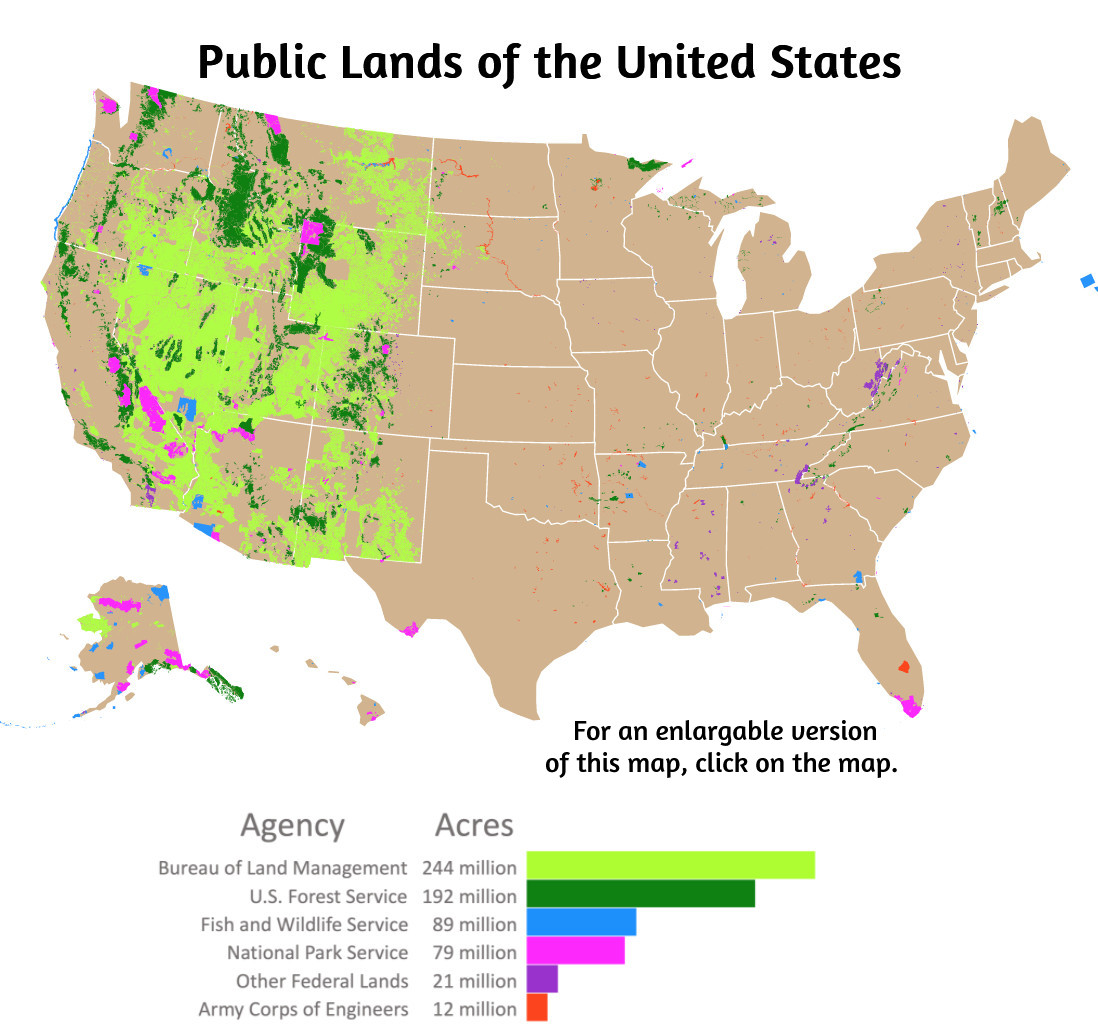

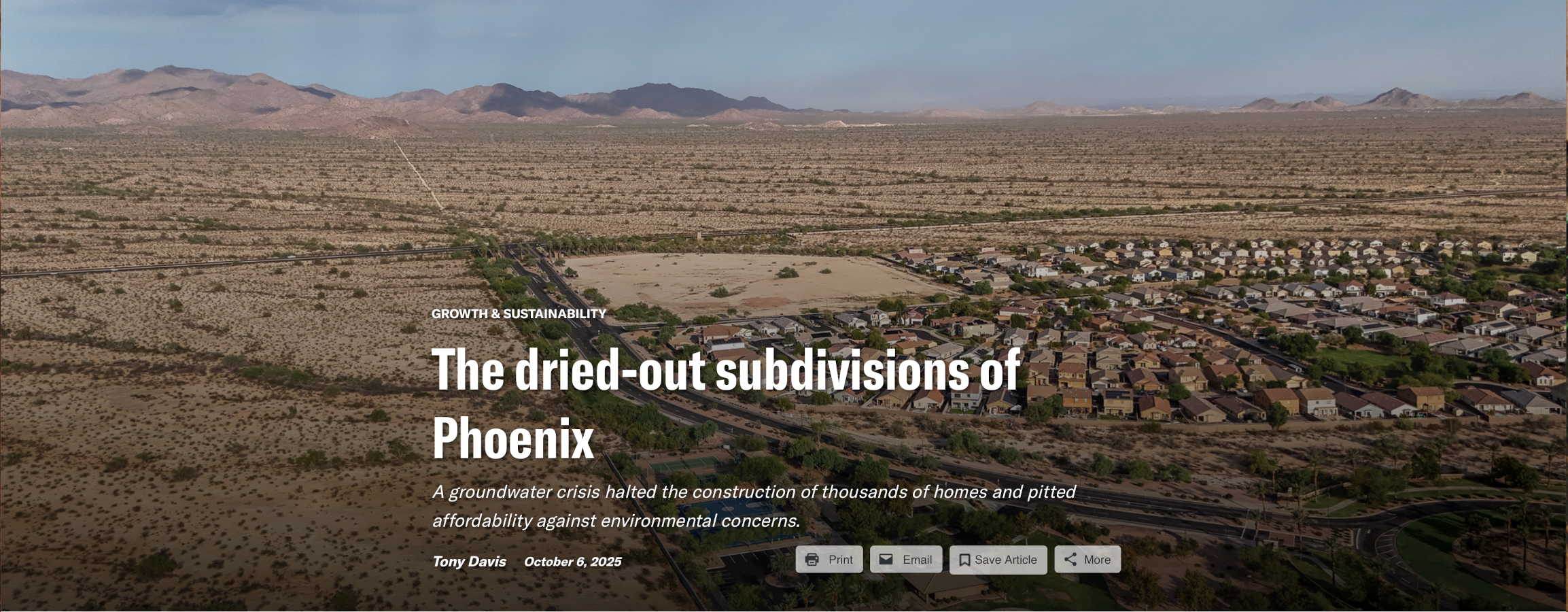
Click the link to read the article on the High Country News website (Tony Davis):
October 6, 2025
On the far edge of suburban Phoenix, a giant concrete arch spans the Central Arizona Project, dubbed a “Bridge to Nowhere” by developers and neighborhood activists alike. Nobody can use it; even pedestrians are barred by a chain-link fence sporting a huge “Road Closed” sign. To the bridge’s north, the desert sits as raw as ever.
The bridge was built in recent years to connect an existing subdivision to the planned North Star Ranch and its proposed 9,600 homes. North Star was to be the latest of many new master-planned communities in Buckeye, one of the fastest-growing cities in one of the nation’s fastest-growing metro areas.
But now, this development is on hold over concerns that there’s not enough groundwater to supply the community. And it’s not the only project: High Country News found that almost half a million homes, including thousands in North Star, are currently on pause, far more than developers or local elected officials have acknowledged publicly.
Developments like North Star have long represented the future of housing for local developers and prospective homebuyers. Phoenix has sprawled endlessly in every direction since World War II, a beacon of the Sun Belt. The city’s rampant growth has transformed former agricultural fields and open desert into homes and tested the bounds of the water supply in Maricopa County, which usually ranks as one of the nation’s fastest-growing counties. The proposed new developments would stretch past the White Tank Mountains, a low-slung collection of peaks that has long served as Phoenix’s unofficial western boundary, making them the most remote developments yet.
But then, in June 2023, state modeling studies concluded that Phoenix and the surrounding areas had “reached the anticipated limits of growth on groundwater supplies,” and the Arizona Department of Water Resources (ADWR) made the stunning decision to stop issuing new water supply certificates to developments served by groundwater in the city’s outer ring of suburbs. Nowhere on Phoenix’s edges did this moratorium hit harder than in Buckeye, where many of the halted projects were slated to be built.
The decision stemmed from a provision in the state’s pioneering 1980 Arizona Groundwater Management Act that required metro areas and developers to prove that new subdivisions have enough water to last 100 years.
A slew of sensational headlines followed. The New York Times said it likely signaled the “beginning of the end to the explosive development that has made the Phoenix area the fastest growing metropolitan region in the country,” a prediction echoed by other outlets. The number of homes halted due to unsustainable reliance on groundwater is a striking indication of how widespread the practice has become — and of the state’s determination to rein it in.
The moratorium’s impacts heightened a political crisis that had been building in Phoenix for years as the demand for cheap housing and the limits on its water supply collided. Not only did the moratorium come during the worst drought to hit the Southwest in at least 1,200 years, it also hit in the midst of a nationwide housing crisis that has impacted even the Phoenix area, once a bastion of affordability. Developers and their supporters argue that it has caused real economic harm to homebuyers, because they say growth has stopped where the housing is most affordable. But the moratorium could also encourage denser growth in the city — something urban planners say would be healthy for Phoenix and also preserve desert habitat, conserve water and bolster the sense of community.
In the two years since the moratorium began, the housing and water pressures on the area have only increased. Phoenix has become trapped between a demand for affordable homes that meet people’s expectations for a good middle-class life and what government officials say is the dwindling amount of water available to supply those homes. And decision-makers have splintered along partisan lines, seemingly intractably, divided over the best way forward. Republican legislators have pushed hard for bills that would ease or lift the moratorium, while Democratic Gov. Katie Hobbs, whose administration introduced it, and most Democratic legislators have continued to stand by it.
Phoenix is at an inflection point, Tom Buschatzke, Arizona’s water chief, said at a June 2023 press briefing announcing the new restrictions. The question remains: In which direction will Phoenix tip?

ONCE A QUIET FARMING COMMUNITY, Buckeye has rapidly mushroomed; town officials say about 125,000 people live here today, making it about 19 times larger than it was in 2000. That’s nothing, though, compared to the future growth already approved by the Buckeye City Council — enough new development to push the city’s population to more than 1 million.
State officials and local governments like Buckeye’s have routinely enabled this kind of growth through zoning and planning policies that treat sprawl as a way of life. Homes built within the urban core typically use less land, consume less water and require less infrastructure. Although they’re more expensive to build due to land costs, their urban location preserves desert habitat. But development on the edges has long been seen as the quickest, simplest way to meet people’s housing needs.
“In Phoenix, land development has always been as natural as breathing,” Andrew Ross observed in his 2011 book Bird on Fire, one of the few works that has ever taken a critical look at the region’s growth practices. “Any corner of the landscape is a parcel, begging for a contract; each building is a renovation opportunity, every open space a ‘vacant lot,’ awaiting its approver, and, with a little backing, it could be you.”
Efforts to rein in sprawl have run into economic — and political — walls. Growth-related industries such as construction and real estate account for a substantially larger share of the area’s economic base than they do in the U.S. as a whole — nearly 19% compared with 14.3% nationally. In 2000, the Sierra Club led a high-profile ballot initiative to compel Arizona cities to form growth management plans and impose urban growth boundaries on all cities with more than 2,500 people. A sizable majority of voters favored it initially, but the effort ultimately crashed at the polls, crushed by the real estate industry’s over $4 million opposition campaign.
Kathleen Ferris, a former state water director who is now a senior researcher studying water supply issues at Arizona State University, takes a particularly cynical view of the local attitude toward development — the “god of growth,” as she calls it.
An architect of the 1980 law that, years later, would halt North Star Ranch and the hundreds of thousands of other new suburban homes, she sees the restrictions as a protection against the worst of Arizona’s past excesses. “We are not going to have growth without water,” she said. “We will have water in hand before growth is allowed.”
Today, Ferris, at 76, is a key player in the ongoing struggle over the city’s water issues — one part water lawyer, one part researcher and one part crusader. She regularly talks with legislators and gives ADWR a piece of her mind about pending bills and regulations. As a water expert and a prominent voice speaking against groundwater-based development, her presence has become almost obligatory in discussions of Arizona’s water troubles.

In 1980, her presence loomed even larger: She was at the center of Arizona’s seemingly intractable groundwater wars. Back then, when lawmakers were drafting the bill that would ultimately spawn the current moratorium, the state’s groundwater levels were already nearing a crisis point: There were essentially no limits on groundwater pumping in any sector of the state’s economy, which was booming with the same intensity as it is today. Cities, farms and mines were at one point pulling at least 1.9 million more acre-feet a year out of the state’s aquifers than rainfall and snowmelt could replenish. In some areas, the aquifers were so depleted that they were collapsing, causing the land to sink and subside.
Around 200 miles of earth fissures caused by this subsidence have been mapped across Arizona. In both rural and suburban areas, earth fissures have undermined and closed roads, power lines, irrigation canals and sewer systems. In 2007, a horse fell into a 10-foot-deep, 15-foot-wide fissure in suburban Phoenix and died before it could be rescued.
Arizona already had a well-earned national reputation as a haven for land fraud. Legendary swindlers like Nathan Waxman, the self-proclaimed godfather of land fraud, were behind the sale of lots without any water supplies, roads or a clear understanding of who even owned the land. In the 1960s and 1970s, Waxman, working secretly with some of Arizona’s most prominent businessmen, “had scammed millions of dollars from Easterners who thought they were buying a retirement home rather than a chunk of barren desert,” reporters for the Arizona Project wrote.
“It just seemed horrible to me,” Ferris recently recalled. “Growth was really starting to happen big-time in Arizona. We were using way too much groundwater.”
In late 1979 and into 1980, then-Gov. Bruce Babbitt and more than a dozen lobbyists and legislators gathered in a downtown Phoenix law office for a closed-door meeting to hammer out details of what would become the state’s Groundwater Management Act. Ferris, one of the state’s preeminent groundwater authorities, and one of her staff members were the only women in the room.
Ferris was a few months shy of 31, but she was already regarded as an authority on groundwater. She had been intimately involved in day-to-day negotiations and politicking over the groundwater law. She spent countless mornings and evenings with Babbitt, the law’s prime architect, sifting through the bill’s fine points and hashing out the details.
As director of the Arizona Groundwater Management Study Commission, she spent nearly two years during the late 1970s traversing the state, seeking public comments on how to cobble together a new law regulating groundwater pumping. The committee’s recommendations would form the basis of the negotiations over the 1980 law.
Congress authorized construction of the $4 billion Central Arizona Project (CAP) in 1968, hoping to ease the groundwater deficit and deliver Colorado River water to Phoenix and Tucson. It was still under construction in the late 1970s, but a report commissioned by then-State Water Engineer Wes Steiner predicted that CAP would only bring in enough river water to fill two-thirds of central Arizona’s total overdraft — even if substantial farmland was retired.
Ferris agreed. She worked with Babbitt to orchestrate a quiet, successful effort to induce then-Interior Secretary Cecil Andrus to threaten to cut off federal funding for finishing CAP’s construction unless Arizona enacted a groundwater law.
But at one spring 1980 meeting, Bill Stephens, an attorney for the Arizona Municipal Water Users Association, made it clear that his group had strong objections to the assured water supply rule. And his association, which represented water utilities in Phoenix and its largest suburbs, had plenty of influence. Many of its members were already formalizing contracts to buy very expensive CAP water, and Stephens felt the rule was unfair.
“We were late in the negotiations, and I just remember Babbitt saying something like ‘I guess we’re going to have to put the issue aside. We’re not going to resolve this one,’” Ferris said.
“I just lost it,” Ferris recalled. “Tears were starting to flow down my face. I gathered up my books and my papers, and I walked out of the room. I was demoralized; I was so sad. I just had to get out of the room. I left while all those men were sitting around the table watching me.”
Within days, though, cooler heads prevailed. Ferris’ supporters among the negotiators convinced her to stay. If she walked out, it would permanently sink the bill. Some crafty negotiating got the cities back on board with the assured supply provision.
The law’s “over-arching objective” — explicitly spelled out — was to reduce and manage groundwater use in key areas of the state, including the Phoenix and Tucson metros. But only in recent years has that law actually stopped any development on a large scale — first in 2019 in Pinal County, a much smaller but also fast-growing slice of suburbia to Phoenix’s southeast — and now the city’s desert suburbs.
After the law was passed, Ferris became the first chief counsel of the Arizona Department of Water Resources, which the law created, then the director. These days, she sits on a water policy council that Gov. Katie Hobbs appointed shortly after taking office.
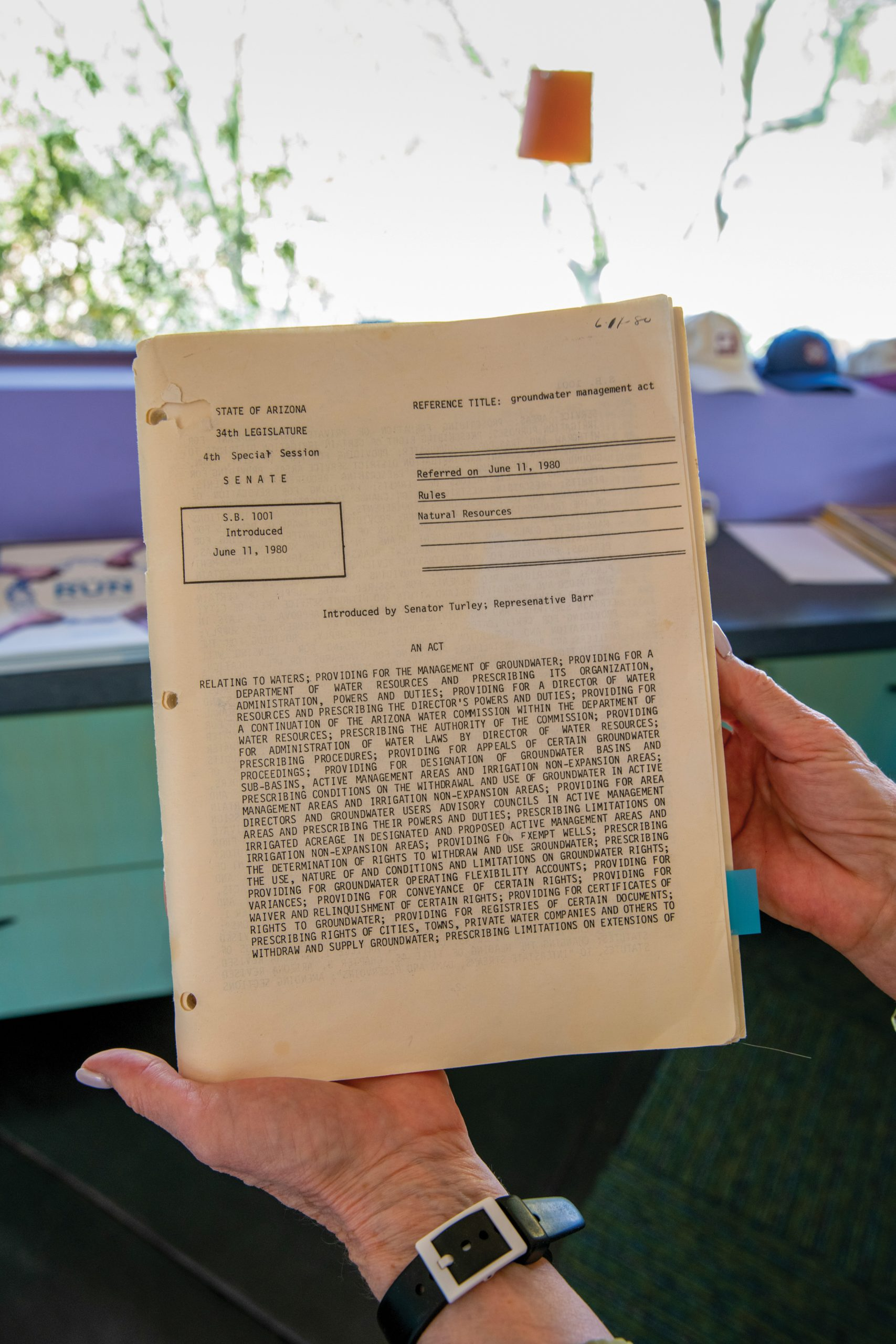
WHEN NEWS BROKE OF THE STATE’S 2023 BAN on new groundwater-based subdivisions, sparking apocalyptic national coverage, local and state officials switched into defense mode.
“It seems in some ways like there’s criticism for us for doing planning and smart development,” Phoenix Mayor Kate Gallego told the Arizona Republic after the ADWR moratorium was announced. “It is a strength, not a weakness. We are planning ahead. We have a very simple principle: Water first, then development.”
While the moratorium is unlikely to stop the area’s runaway growth — 80,000 lots had already been approved — the initial response far downplayed the number of homes on hold, according to a High Country News review of state records.
Developers had filed for confirmation that they had enough water to move ahead on roughly 300,000 home lots when the state decision came down. Another 162,000 home lots on state-owned land from Phoenix west to Buckeye also remain undeveloped due to water shortfalls, ADWR records show. Arizona’s Constitution mandates that such lands be sold or leased to help fund public schools, meaning it’s usually developed with housing. But the application process for the assured water supply certificates started in the 2000s and never came through. The development plans were halted.
Among the biggest developments currently on hold are Teravalis and Belmont. Both have been in the works more than two decades. The aftereffects of the 2008 real estate crash delayed them, but they had recently been revived.
Teravalis, at 100,000 homes on nearly 37,000 acres, heralds itself as “the community of your future” and “the nation’s next premier master planned community.” Its website is packed with photos of sunset-drenched saguaros and chollas, and it promises to reduce water use by promoting native landscaping and to set aside 7,000 acres as natural open space, parks and trails. To its west runs Sun Valley Parkway, a seldom-traveled, 30-mile-long four-lane road, itself long known as the Road to Nowhere. Belmont would be only a little less grandiose, building 80,000 homes on 24,000 acres in unincorporated Maricopa County, along with data centers and autonomous vehicles, according to a 2017 press release.
In 2022, developers began construction on 8,000 homes in Teravalis that already had a guaranteed water source. Some are now listed for sale; model homes are already up and the first homes could be occupied by early 2026. But since none of the other planned homes were certified prior to the ruling, the rest of the project is on hold.
THE MORATORIUM CAME AS A COLLECTIVE SHOCK to the Phoenix-area homebuilding industry. But it shouldn’t have: For more than two decades, Arizona water officials had been sending out warnings, echoed by Ferris’ high-profile criticism. Time after time, they concluded that far less groundwater was available for proposed subdivisions than the developers claimed.
Belmont’s original developers, for example, wanted permission to use 39,000 acre-feet of groundwater per year. But back in 2003, ADWR determined that barely half that amount was physically available. Around the same time, Tartesso’s developer asserted that 26,000 acre-feet was available, while ADWR said it was actually only about 19,000 acre-feet. Similar discrepancies arose around proposed developments across the West Valley.
Then, in 2021 and 2022, ADWR told the developers of several subdivisions, including Festival Ranch and North Star Ranch, that it was finalizing a computer model for the West Valley area that showed the subdivisions’ groundwater demands likely exceeded known supplies.
But then-Gov. Doug Ducey’s Republican administration was said to have prevented the model’s public release. The day after Gov. Hobbs took office in January 2023, Ferris urged the new governor to release the study in an opinion piece for the Arizona Republic. Hobbs did so six days later. Alarm bells began to go off for developers and builders.
The moratorium that ADWR declared five months later “had pretty devastating impacts to housing,” homebuilder lobbyist Spencer Kamps told an ADWR advisory committee meeting a few weeks after its release. “We are the only land use that does meet the 100-year requirements,” since apartment, commercial and industrial development were not covered by the 1980 law.

He estimated that developers and homebuilders were sitting on at least $2 billion worth of investments in infrastructure in the Buckeye area, including roads and sewer and water lines, along with the Bridge to Nowhere. His estimate rose to $4 billion as the moratorium continued. Kamps also said it contributed to rising housing costs as well, adding to the existing 45,000-unit housing shortage in the metro area.
The moratorium has also intensified the isolation of suburban areas where new development had been planned. Emilie Myth moved to Tartesso, a subdivision of Buckeye, well over three years ago. She had been living in Torrance, south of Los Angeles, but found herself stressed by the cost and concerned about the safety of her neighborhood. Late one night, for example, she found a woman sleeping in her garage and was barely able to wake her and get her to leave.
So she moved to Tartesso, where the mortgage for a four-bedroom house costs the same as the rent for her one-bedroom apartment back in California: about $1,600 a month.
The downside is being marooned on a service-less island. Tartesso, with its 3,400 homes housing 10,000 residents, is about 10 miles east of the nearest gas station and 20 miles west of the nearest place to buy groceries. A convenience store is expected to open a few miles away at the end of this year. The only food service available comes from the handful of food trucks that spend evenings in one of Tartesso’s many parks. Similarly, North Star Ranch would lie an hour’s drive north of downtown Buckeye. Just south at one of Festival Ranch’s subdivisions, there’s a lone restaurant attached to a golf course, and a single Subway outlet and convenience market at the development’s entrance. The nearest grocery store is a Safeway 20 miles east.

Yet, in some ways, Myth enjoys the isolation. “I like the quiet,” she said. “The only things you hear are cars going by, people talking and dogs barking, whereas in cities it was traffic, 24-7.
“I never felt at peace.”
But it’s been an adjustment, too. She grew up in South Sacramento, where she could take the bus to the movies or walk to the convenience store to get a candy bar. “What do kids do around here? What do teenagers do around here?” she wondered. “I just feel like as a kid I could be more independent than a child is here.”
The very thing she struggles with now contributes to her new neighborhood’s low cost: Since World War II, homebuilders have hopped over the urban fringe and alfalfa and cotton fields to develop the vast swaths of cheap desert land beyond them. This made the housing more affordable; denser construction would have cost more per unit, as would including commercial services.
Buckeye, for example, is among the handful of areas in the Phoenix area where homeowners can find a new home for under $400,000, a study by longtime Phoenix economic consulting firm Elliott D. Pollack and Co. found. Between June 2019 and June 2025, the median home price in Maricopa County jumped 65% to nearly $474,000, according to one real estate company, putting home ownership out of reach for much of the working class. In a 12-month stretch, though, more than a quarter of the 2,700 homes that sold for less than $400,000 were in Buckeye. According to Pollack, “There are few suitable alternatives for affordable homes in the region if Buckeye cannot continue to develop homes.” Pollack’s study was commissioned by the Home Builders Association of Central Arizona.
Other reports, though, suggest that the moratorium may have had less of an impact than developers claim. There are dozens of homes listed in Tartesso, Festival Ranch and Buckeye in general for under $400,000. And a variety of other factors affect housing prices, according to a recent study from ASU’s Kyl Center for Water Policy: federal interest rates, inflation, supply chain interruptions, migration patterns, remote work, labor markets, inventory and local, state and federal government policies and regulations.
For example, the single-family, low-density zoning that covers most of the metro area can discourage lower-cost housing development and increases the cost of infrastructure such as roads and utilities. Macroeconomic influences account for much of the housing costs and availability, the study found. “In the absence of economic studies, it is difficult to say whether or how the (ADWR) moratorium might impact housing affordability.”
But it does mean that residents like Myth will likely continue to live in suburban isolation. “In a lot of ways, it sucks,” said Myth. “I understand why the governor wants to do that. We don’t want to turn off water for some people and have other people have it. But at the same time, when I moved here, I was told there is going to be more housing soon and eventually there will be a grocery store. That looks like it’s not going to happen for decades now.”
Some Tartesso homeowners told HCN they were leaving, or at least considering it, due to the long bus rides for schoolchildren and the onerous drives to get basic groceries. Not Myth, though. “I’ll probably stay here,” she said, since anywhere else, her mortgage bill could easily double.

WITH TIME, THE FIGHT OVER THE MORATORIUM has hardened along familiar lines. Republican legislators have essentially accused ADWR of waging war against affordable housing, while ADWR and its backers say they’re standing firm on behalf of the state’s 45-year-old tradition of responsible groundwater management. A complicated history and a challenging present, distilled into a simple fight: affordability versus environment.
Duane Schooley Jr. bought two houses in Tartesso to rent out at first back in 2018 and 2019 because “we figured that Arizona was going to be a hot spot.” But Schooley, a local Republican party activist, is now openly disdainful of the state’s decision to stop allowing new homes to be built on groundwater supplies. He even doubts the state’s talk of a water shortage.
“When I moved here, it was all farmland, all of it,” Schooley recalled “Now, you have the Walmarts, the Boeings, the distribution centers. You displaced 1.3 million square feet of farmland for a concrete warehouse. Where did the water rights go? How much water were they using?” ADWR’s model found, however, that even those kinds of reductions in water use — moving away from farming, cutting back water use — hadn’t been enough.
Arizona officials are “playing with fire” and are “kind of short-sighted” by stopping so much development simply because of water, he added. “It seems kind of heavy-handed.”
Homebuilders began looking for a way around the moratorium just weeks after it was implemented. Industry representatives argued that developments that had been in process should be allowed to move forward, but state legislation on that got nowhere. After that and other efforts to overturn the moratorium failed, they pushed for a bill to allow new subdivisions to be built on retired farmland, since homes generally guzzle less water than cotton fields. The Legislature passed it in 2024, but Hobbs vetoed it after ADWR officials claimed it could actually lead to more water use in those areas. Developers have also challenged the accuracy of the forecasts made by ADWR’s groundwater model, saying its forecasts make faulty assumptions about where wells would be placed, overestimate future demands and underestimate supplies. Their consultant prepared an alternative model that projected groundwater supplies would more than suffice for 100 years. ADWR, however, pushed back on its findings.
For now, the department has focused instead on extending the responsibility to restrict groundwater use to some cities as well, by requiring them to cut groundwater use once renewable supplies arrive. While the rule’s backers say this provision is essential for reducing dependence on native groundwater, homebuilders and Republican legislative leaders have claimed it is an illegal “tax.” (ADWR has denied this, saying that it isn’t a tax.)
In early 2025, the Home Builders Association of Central Arizona joined two lawsuits against ADWR. One was filed on their behalf by the Goldwater Institute, a conservative think tank. This complaint challenged ADWR’s decision to stop issuing certificates for development, while the other, which was filed along with the Arizona Senate and House of Representatives, went after the requirement that cities importing renewable water cut groundwater use by 25%.
The Goldwater Institute lawsuit alleges that ADWR lacked the authority under state law to impose its moratorium in the first place, arguing that ADWR’s rules have become “insurmountable obstacles” to obtaining state certification of a 100-year supply.
In response, ADWR filed to have that lawsuit dismissed. “What is at stake in this lawsuit is the ability of the state to protect the Arizonans that are here today, by ensuring that their water supplies don’t run out or water levels fall to alarming depths of 1,000 feet due to new groundwater pumping,” Buschatzke, a defendant in the Goldwater lawsuit, wrote in an op-ed. “The Goldwater lawsuit would create a policy directive to rubber-stamp new developments if water was available beneath them, while forcing ADWR to ignore any potential impacts to neighboring homeowners or communities.”
The various factions have found one area of compromise, however: Legislation was passed this summer that could allow several hundred thousand new homes to be built on farmland. New subdivisions can only be built if they use as much as 1.5 acre-feet of groundwater per acre of developed land — enough water to serve three Phoenix-area homes for a year but far less than the farms themselves would have used.
But the new law won’t help the hundreds of thousands of planned homes in Buckeye and other suburbs in the desert. Instead, it focuses on developments that are less likely to move quickly.
Developers of master-planned communities want to build in lush desert mountain landscapes because they are selling atmosphere, said Sarah Porter, director of ASU’s Kyl Center. “They are designed from top to bottom, and everything is beautifully designed for a look, to work well together. It’s very hard to do that in an old farming town.”

WHATEVER THE OUTCOME of the various debates and lawsuits, Phoenix’s future growth ultimately depends on the public’s willingness to pay. “For enough money, people can dig a trench between Phoenix and the ocean to bring water. It might cost a trillion dollars, but it can be done,” said Brett Fleck, a water resources manager for the city of Peoria, northwest of Phoenix. “It’s not about running out. It’s about: Are you willing to pay for what it costs?”
Even relatively straightforward solutions are expensive and quickly run into problems. The city of Buckeye, for instance, agreed in early 2023 to pay $80 million to buy rights to 5,926 acre-feet of groundwater a year — enough to serve more than 17,000 homes annually — from a company that represents farms west of Phoenix. The town of Queen Creek spent $30 million for about 5,000 acre-feet from farms in the same area a year earlier.
In July, ADWR allowed the cities to take the water. But they still need the Central Arizona Project’s permission to put the water into the canal to bring it about 60 miles to the Phoenix area. That won’t be easy, since the water will require costly treatment: Much of it is contaminated with unsafe levels of naturally occurring arsenic and nitrates from crop fertilizers. If it’s put in the canal untreated, it would make water flowing to other houses and farms unusable.
And the CAP canal itself may very well be carrying less water soon. It has delivered renewable Colorado River water supplies to the state’s hot, dry interior since 1985, but with officials of the seven river basin states locked in tense negotiations over how to apportion the water supply from the oversubscribed river, the prospect of cuts looms large. Water officials of five Phoenix-area suburbs that get Colorado River water told HCN that they may have to scale back their future growth plans if the region sustains a significant cut to CAP deliveries.
Another proposal is to raise the Bartlett Dam on the Lower Verde River northeast of Phoenix so it can store an additional 323,000 acre-feet of water for metro-area cities in central Arizona. But one projection estimated it will cost about $1 billion, needs congressional authorization and wouldn’t go online until the late 2030s. The city of Phoenix is considering a facility that would treat upward of 80 million gallons of wastewater per day to make it drinkable — projected to cost $4 billion to build, and that’s a decade away.
Former Gov. Ducey proposed spending more than $1 billion for seawater desalinization plants on the Gulf of California and a pipeline to ship the treated seawater 200 miles north to the CAP canal. Ducey proposed this billion-dollar allocation toward the cost of such a project to the Arizona Legislature in 2022, but major state revenue shortfalls in 2024 led to a more than $400 million cut to the funding, leaving the prospect for water imports uncertain at best.
Myth would like to see some of these options considered more seriously. Why not, she asks, if the question is having enough water for people to drink and to bathe and to live?
“I would say that we are not being as imaginative about water as we could be,” she said. “If we could pipe oil from Canada to the Gulf of Mexico, why can’t we pipe water from the Great Lakes here, or bring water up from the Sea of Cortez and treat it up here?”

But for some residents the moratorium has offered unexpected benefits. They have come to love their subdivisions marooned in the desert and dread the revival of the growth machine. Tom Berry began thinking of moving to Arizona more than a decade ago but dismissed Phoenix’s rural suburbs as an option. “I thought, ‘Who in their right mind would ever live out there?’ It was so remote.” But after years living in a booming neighborhood of northern Peoria west of Phoenix, he grew concerned about all the development he could see coming. “It was really going to impact our lifestyle.” So he drove to Festival Ranch “on a whim,” and bought a new home there in September 2021. Like many Festival Ranch residents, he was delighted that the state had blocked North Star Ranch.
“(The city is) enamored with the high growth rate of Buckeye,” he said. “It is growth at any cost, and too bad if you already live here.”
Just across the Sun Valley Parkway from his neighborhood lies the huge White Tank Mountains Regional Park, he noted. The parkway drive passes through open desert where cattle that graze on neighboring state land occasionally break through fences and stroll onto the road. Authorities have posted signs between Festival Ranch and Surprise warning drivers to “Watch for cattle.”
“So one of my friends said, ‘How about we put signs on the fenceline facing the desert that says ‘Watch for cars?’” Berry said.
A few streets over, Billy Ryan, a 39-year-old paramedic and Phoenix-area native whose four-bedroom house lies a block away from the bridge, was also cautiously celebrating the halt on new homes.
“I don’t want any development up there. It’s more traffic, more people, more everything,” said Ryan. “The whole reason I moved out here was to get away from that.
“You go five miles down the road and you’re in open desert. You see snakes and bugs. There’s nothing to the north of us, to the east or to the west. We’re kind of like an island,” he added. “If you like being outside, in nature, it’s ideal.”
Still, he tempers his relief at the indefinite delay imposed on the North Star Ranch project with the intuitive awareness of someone born in the state that “you can’t stop progress.
“It will happen,” he said. “The developers always get their way. At the same time … if people want to develop here, they need to find a better way to get the water.
“I don’t know where they are going to get the water, it is a finite resource, to be sure. But at the end of the day, developers are the ones with cash. If not this election cycle, not now, four years later, five years later, 15 years later, it will get done.”
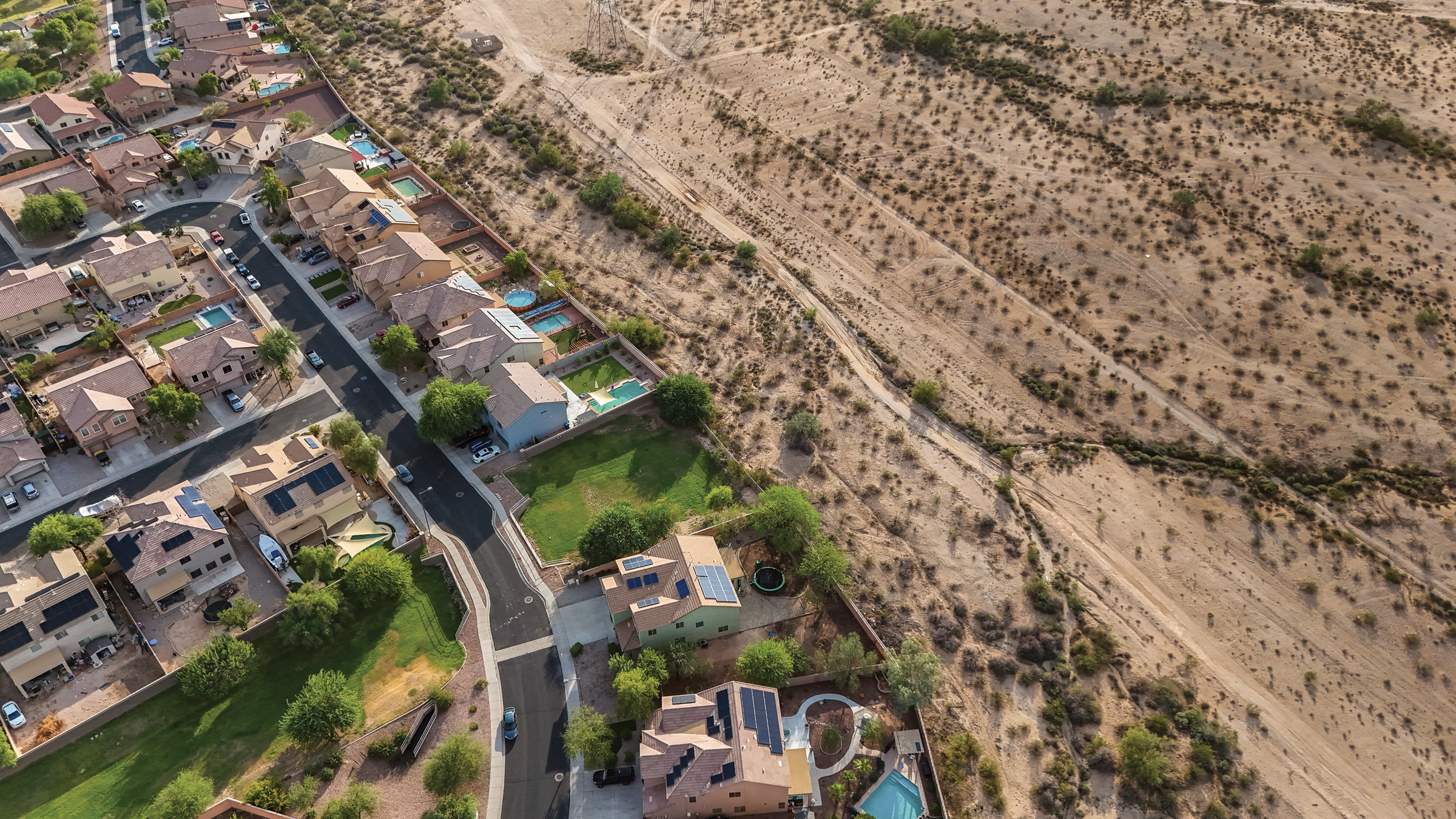
We welcome reader letters. Email High Country News at editor@hcn.org or submit a letter to the editor. See our letters to the editor policy.
This article appeared in the October 2025 print edition of the magazine with the headline “Dried out in Phoenix.”

Click the link to read the article on The Land Desk website (Jonathan P. Thompson):
November 4, 2025
The San Juan Basin in northwestern New Mexico and southwestern Colorado is known for producing oodles of fossil fuels over the last century. But it is really so, so much more than that: An epicenter of cultures, lovely landscapes, and geological wonders. It is also a hotspot for fossils, some of which recently have yielded new information about the dinosaurs’ last days on earth.
While it’s generally accepted that non-avian dinosaurs were wiped out by an asteroid some 66 million years ago, researchers have long debated whether the big reptiles were doing well leading up to the cataclysmic event, or were already in decline and headed for extinction. A study published last month in Science, based on the fossil record of the San Juan Basin, finds that a diverse array of dinosaurs were actually flourishing at the end of the Cretaceous period. Had it not been for that asteroid, they might have stuck around for quite a bit longer.
The authors sum up their findings:
Pretty cool stuff. Read the study here.
And that’s not all for San Juan Basin dinosaur news! In September, a team of researchers announced they had identified a new species of duck-billed dinosaur in northwestern New Mexico. The Ahshiselsaurus, an herbivore, weighed up to nine tons and spanned up to 35 feet from bill to tail.
In a news release, the New Mexico Department of Cultural Affairs notes that the bones that led to the identification were unearthed in 1916 in what is now the Ah-shi-sle-pah Wilderness in San Juan County. “In 1935, the fossils were classified as belonging to another hadrosaurid called Kritosaurus navajovius. However, this new research identified distinctions between these fossils and all known hadrosaurids, including several key differences in the animal’s skull.”

🥵 Aridification Watch 🐫
This past weekend, my sister held the annual garlic-planting and apple cider-making ritual at her farm in the North Fork Valley in western Colorado. Folks from all around gather to help put thousands of garlic cloves into the ground. At the same time, a handful of us crank the handle and toss apples into the 125-year-old cider press that my ancestors brought to the Animas Valley from Pennsylvania in the early part of the century.
It was a lovely day, with an intensely blue, cloudless sky and high temperatures in the 60s. We felt lucky to have such conditions in early November, but they weren’t wildly abnormal. Though a few places in the region set daily high temperature records, at least as many also set daily low temperature records as the mercury dipped down to around 22° F, even in the lowlands, overnight.
More striking to me was when I stopped in Silverton on the trip back to Durango to take a bike ride on the new trails on Boulder Mountain. That mountain biking is even an option in Silverton in early November is a little odd. That the trails were bone dry at 10,600 feet in elevation is even odder. And that I was not just warm, but downright hot and sweaty in just short sleeves and shorts felt downright weird.
A cursory look at the data reveals that this has been one of the wettest — and least snowiest — starts to a water year on record, at least in southwestern Colorado. The huge, flood-spawning rains of October pushed the accumulated precipitation levels up into record high territory. But most of that liquid abundance fell as rain, not snow, even at high elevations. And the warm temperatures that followed has deteriorated what little snowpack existed. It’s striking to see only a thin layer of white painting its designs on north-facing slopes at 12,000 or 13,000 feet. And without a radical shift in weather (which is certainly possible), it’s hard to imagine ski areas opening by Thanksgiving.

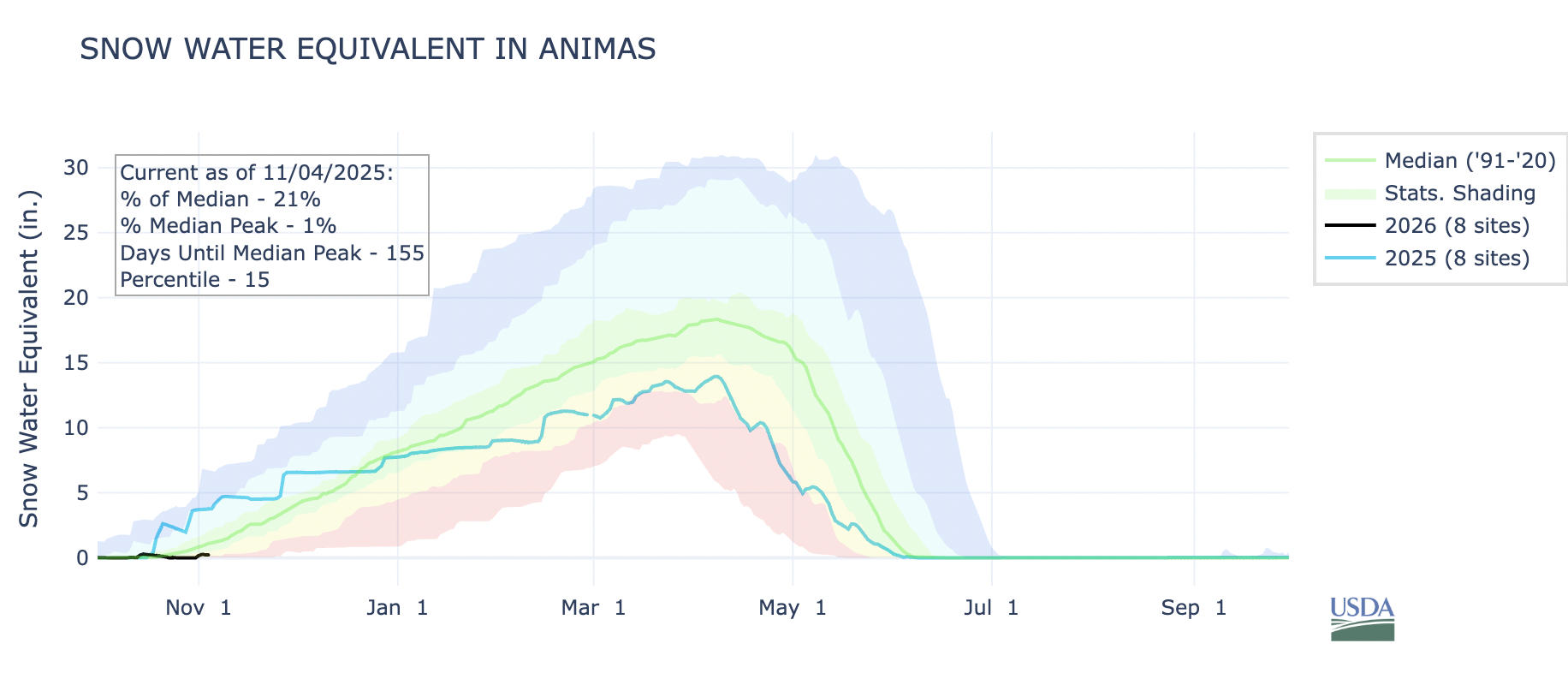
Still, we’re only about one month into the 2026 Water Year, so it’s far too early to draw any conclusions from the data. Last year started out as one of the snowier seasons on record, before fading out into a pretty sparse snow year.
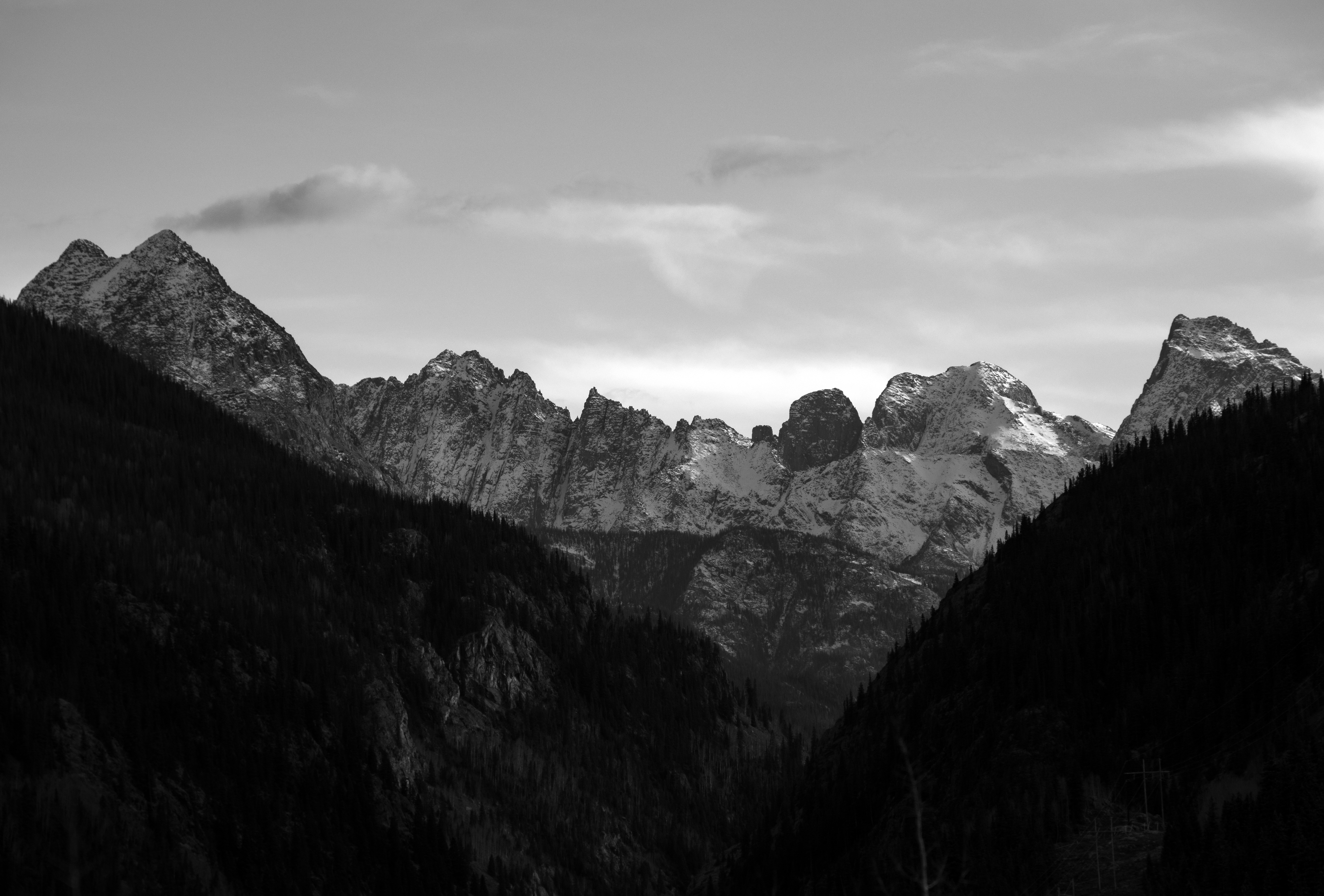
📖 Reading Room 🧐
- Nick Bowlin and ProPublica just published an extensive investigation into oil and gas field “purges,” which is when injecting produced wastewater underground forces toxic water to spew out of old wells in mind-blowing volumes, killing vegetation and trees and contaminating the earth.|
Bowlin’s investigation focuses on Oklahoma — where regulators are doing little to address it — but these purges occur anywhere that produced wastewater is injected into the ground as a way to dispose of it, which is to say every oil and gas field from Wyoming to New Mexico. Each barrel of oil pulled from the ground is accompanied by anywhere from three to 30 barrels of brackish wastewater that can be contaminated with an assorted soup of hazardous chemicals. This means that hundreds of billions of this stuff must be disposed of each year, usually by deep injection.
As oil production continues, and as more and more wells are “orphaned” or abandoned without being plugged, the purge problem will only grow worse.- KUNC’s Alex Hagar has a nice, good-news piece on how beavers are returning to Glen Canyon and its tributary canyons as Lake Powell’s water levels recede. It’s yet more evidence that if — when — Lake Powell disappears, the canyons it and ecosystems it drowned will eventually recover, and may do so far more quickly than might be expected.
🔋Notes from the Energy Transition 🔌
Those of you who watch Denver television will certainly recognize longtime Denver 7 weather forecaster. He retired a little while back and has taken on a sort of second career advocating for a Super Grid — an integrated, nationwide, direct current, underground power grid designed to move power from where it’s generated to where it’s needed when it’s needed.
It’s a cool idea, but also a very, very ambitious one. Instead of rehashing all of the details, I’ll let you watch this video of his presentation, which gives a very informative overview of the whole energy situation.


Click the link to read the article on the KVNF website (List Young). Here’s an excerpt:
October 6, 2025
Black eyed peas could replace water thirsty crops on the Western Slope. That’s the hope of Srinivassa Pinnamaneni, Ph. D, at Colorado State University’s College of Agricultural Sciences in Fruita, Colorado. Pinnamaneni, said the project was initiated in his brain after seeing the decrease in pinto beans in the state. He said in the last three decades the crop has decreased from almost 300,000 acres to currently 25,000 acres in Colorado. He said most farmers have replaced pinto beans with corn, in part due, to more pests and diseases plaguing the bean crops.
“We want to introduce a new crop that saves water at the same time increases on farm returns and also take care of soil health. So the crop that came into my mind is black eyed peas. They have same duration, like 85 to 95 duration like pinto beans. And you farmers need not change any machinery for growing black eyed peas,” said Pinnamaneni.
Prior to the pilot program on the Western Slope, Pinnamaneni reached out to Trinidad Benham in Nebraska for a contract on the black eyed peas raised by Mike Ahlberg of Delta, Colorado.
“I went there to Gering, Nebraska to get the seeds and this spring I gave them to Mike Ahlberg, who planted them on Memorial Day and harvested on 13th of September.”
The researcher said Ahlberg’s pinto beans yielded around 30 hundred weight while the black eyed peas, they gave 25 hundred weight. He also noted that the current price of pinto beans nationally is $28 dollars to anywhere between $24 to $28 dollars per hundredweight. Trinidad Benham Corporation has made a contract with Ahlberg to buy the black eyed peas at $49 nine dollars per hundredweight.
“Luckily, they are trying to send the semi this week to ship these beautiful peas back to their processing plant at Sterling, Colorado,” Pinnamaneni said.
He said next year the Colorado Department of Agriculture will once again fund the project that could improve both soil health and save water.
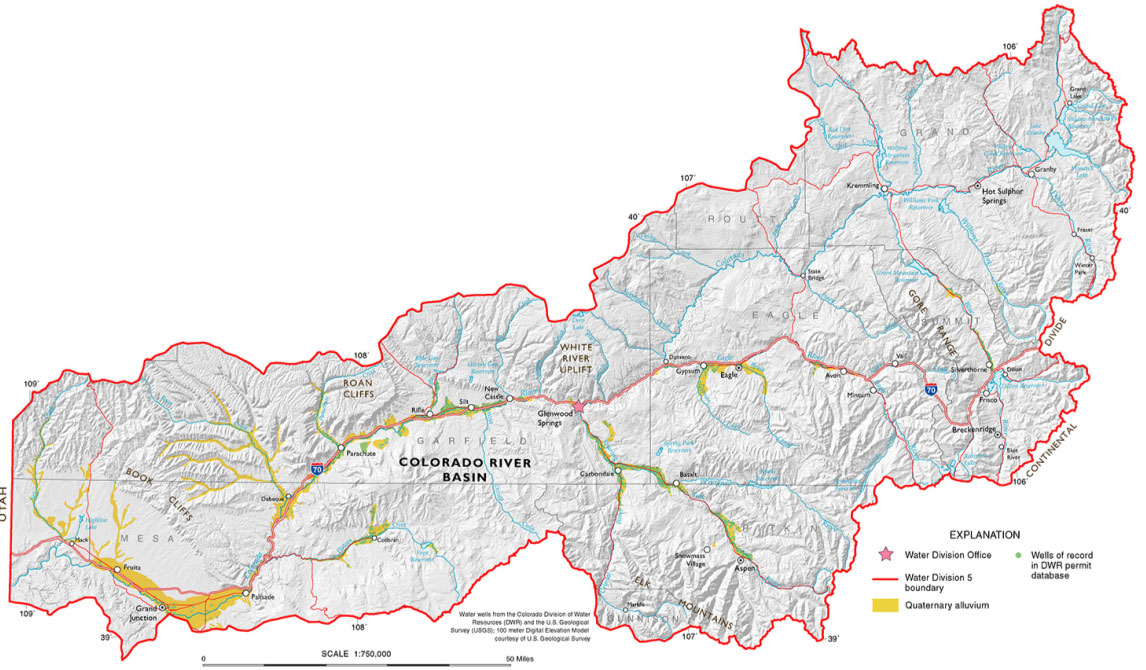
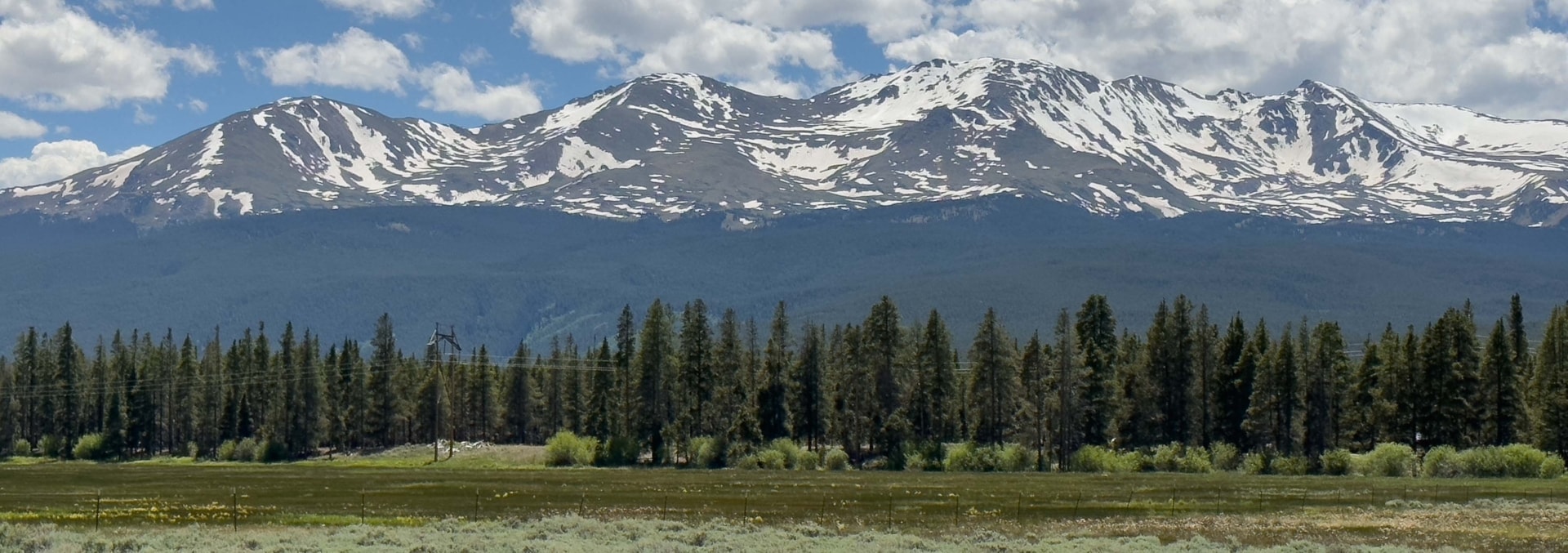
Click the link to read the release on Governor Polis’ website:
November 5, 2025
The Colorado State Board of Land Commissioners (State Land Board) has approved the acquisition of the approximately 800-acre Lake Fork Ranch, located just west of Leadville in Lake County. The purchase represents a strategic reinvestment of trust land proceeds into a high-quality property with strong natural and agricultural values, diverse income potential, and long-term value-appreciation prospects. Through this acquisition, continued agricultural use and carefully planned recreation access will ensure that the ranch remains an active and productive part of the local economy.
“With this acquisition, we are protecting a special and amazing outdoor space in Lake County, expanding recreational opportunities, investing in Colorado students, and supporting economic success in our rural communities. Today’s announcement highlights our work to bolster local communities, protect Colorado’s natural resources and lands, and ensure long-term funding and preservation for the next generation and in Lake County,” said Governor Polis.
“I’m proud of the work the State Land Board is continuing to do to preserve agricultural use and to thoughtfully plan recreation activities,” said Dan Gibbs, Executive Director of the Colorado Department of Natural Resources.
“Lake Fork Ranch exemplifies how we’re building a more resilient and forward-looking land portfolio for Colorado’s public schools,” said Dr. Nicole Rosmarino, Director of the State Land Board. “It’s an investment in both the economic and ecological future of our trust lands—balancing water, recreation, and natural-capital assets that will generate returns for generations to come.”
A Strategic Investment
The acquisition aligns with the agency’s current strategic plan—to grow recurring, diversified revenue through entrepreneurial, non-extractive ventures.
Located three miles west of Leadville and framed by dramatic views of Mt. Elbert and Mt. Massive, Lake Fork Ranch includes irrigated meadows, creek bottomland, and forested uplands served by numerous water rights. The property is one of the last large, intact, non-eased ranches near Leadville and offers year-round access via state and county roads.
The purchase was funded through Non-Simultaneous Exchange (NSE) proceeds—funds generated from prior trust-land dispositions that must be reinvested into new properties within two years. If NSE proceeds are not invested in real property within this timeframe, the funds are transferred to the Permanent Fund—an inviolate fund invested in financial instruments.
Building a Modern Land-Use Portfolio
The State Land Board will implement a phased business plan for Lake Fork Ranch through 2028, designed to engage multiple lines of business and with the goal of achieving recurring annual yields of 2 percent or greater, with the potential for outsized one-time returns through ecosystem-services projects. “This acquisition reflects the significant collaboration and analysis by our dedicated team working group that looked closely at how Lake Fork Ranch could strengthen our portfolio as a long-term asset,” said Matt LaFontaine, Acquisition and Disposition Manager for the State Land Board. “Our staff will continue to meet and develop the business plan for this property. I’m particularly proud to add a property that not only fits our investment strategy, but will also generate future opportunities for the schoolchildren of Colorado—the ultimate beneficiaries of every decision we make.”
Potential future initiatives on the property include:
Mitigation Banking: Lake Fork Ranch has strong potential for ecosystem services projects and associated revenue. In particular, the west side of the property contains significant riparian area and wetland soils.
Soil Carbon Sequestration: Staff believes that implementing a soil management carbon protocol can provide a reasonable income stream.
Biodiversity Voluntary Market Project: The property has the potential to generate biodiversity credits and soil carbon credits, due in part to the property’s two fens and several areas of high priority wildlife habitat.
Agritourism-Ecotourism and Short-term Rentals: Agritourism/ecotourism is an increasingly desirable recreation opportunity. The existing residential structures can provide a nucleus, and select development of a few small cabins and a two-unit bathhouse would ideally position the property for this use.
Traditional Recreation: One of the property’s greatest natural resources is Lake Fork Creek. A rod-fee based fishing lease on the creek to outfitters would be easy to implement in the Board’s first year of ownership. In addition, Staff believes that a small campground could be ideally located on the north side of the property.
Water Development: Lake Fork Ranch benefits from numerous water rights. There are potential leasing opportunities for the rights including for the irrigation of the property to produce hay.
Cultural Resource Preservation: The property’s historic ranch structures, including improvements dating to the 19th century, add cultural depth to its natural and financial value. Their restoration could support heritage tourism, interpretive programming, or similar offerings, complementing recreation and agritourism uses. Staff will assess the feasibility of these efforts.
Initial capital improvements—estimated at $2 to $3 million—could address infrastructure needs and position the property for these new revenue streams. Staff will return to the Board in the future to request expenditure authorization once project scopes are finalized.
A Smart Investment in Colorado’s Future
Through thoughtful management, Lake Fork Ranch will serve as an example of how working lands can produce income for Colorado’s public schools while simultaneously advancing the State’s broader goals for recreation, biodiversity, and water conservation.
“From wetland restoration to fishing access, Lake Fork Ranch gives us a living laboratory for nature-based enterprise,” said Eliot Hoyt, Assistant Director for Sustainability and Working Lands. “It’s part of our commitment to generate dependable revenue while protecting the landscapes that define Colorado.”
Future investments in habitat restoration and wetland protection will not only enhance the property’s long-term value, but also position the State Land Board for participation in emerging conservation markets that reward landowners for measurable ecological outcomes. Meanwhile, continued agricultural use and carefully planned recreation access will ensure that the ranch remains an active and productive part of the local economy.


By Anika Jane Beamer
November 3, 2025
This article originally appeared on Inside Climate News, a nonprofit, non-partisan news organization that covers climate, energy and the environment. Sign up for their newsletter here.
The U.S. Department of Energy has announced up to $100 million in federal funding for projects modernizing the nation’s remaining coal plants, nearly half of which were slated to close by 2030.
The investment, a fraction of what would be needed for a comprehensive upgrade, is unlikely to make coal power more affordable, energy experts and anti-coal advocates say.
On Friday, U.S. Secretary of Energy Chris Wright issued the Notice of Funding Opportunity, calling for applications to design, implement, or test refurbishments and retrofit systems that allow coal plants to “operate more efficiently, reliably, and affordably.”
The announcement outlined three key areas for development projects: advanced wastewater management systems, systems that enable plants to switch between coal and natural gas, and advanced “co-firing” systems that allow simultaneous combustion of both fuel types.
The funding comes just a month after the department announced $625 million to “expand and reinvigorate” America’s coal industry.
That investment already included $350 million to recommission closed coal power plants or modernize plants and $100 million for the three development areas outlined in Friday’s announcement. The DOE did not respond to questions about why additional funds were announced just a month later.
Trump’s investments in coal are a drop in the bucket of what would realistically be needed to revamp the plants, said Michelle Solomon, a manager in the electricity program at Energy Innovation, a nonpartisan energy and climate policy research firm based in San Francisco.
“Those types of retrofits for a single plant can cost hundreds of millions of dollars,” said Solomon. “To do that for every plant in the coal fleet, you’re looking at billions of dollars. And you’d be putting those billions of dollars into clunkers. Literally burning that money.”
In April, following Trump’s “Beautiful Clean Coal” executive order, the Department of Energy rolled out a series of actions intended to reinvigorate American coal production. The department reinstated the National Coal Council as a federal advisory committee, offered long-term financing for coal infrastructure, designated coal as a critical material and mineral and ended a moratorium prohibiting new coal mining leases on federal land.
“You’d be putting those billions of dollars into clunkers. Literally burning that money.”— Michelle Solomon, Energy Innovation
Last week’s funding announcement advances Trump’s commitment to restore U.S. energy dominance, the official press release read.
“For years, the Biden and Obama administrations relentlessly targeted America’s coal industry and workers, resulting in the closure of reliable power plants and higher electricity costs,” U.S. Secretary of Energy Chris Wright said in the report. “Thankfully, President Trump has ended the war on American coal and is restoring common sense energy policies that put Americans first.”
Yet Trump’s attempt to save coal from the brink is unlikely to succeed.
In 2001, coal made up half of the electricity generated by utility-scale facilities in the United States. Today, it accounts for less than a fifth of generated power; the decline reflects the changing energy landscape.
The decline of coal energy is due to rising coal prices and the proven cost-effectiveness of alternative energy sources, including solar, wind and natural gas, said Solomon.
Analysis by Energy Innovation found that coal prices increased 28 percent between 2021 and 2024, while inflation rose only 16 percent in that time.
At 99 percent of U.S. coal plants—209 out of 210—it would be cheaper to replace energy with new wind and solar than to keep them operating, a 2023 Energy Innovation analysis found.
The Sierra Club has led the charge to close power plants in the U.S. through their decades-long “Beyond Coal” campaign. The new coal funding is “just the latest Trump administration action that harms people and the planet,” Sierra Club climate policy director Patrick Drupp wrote in a statement to Inside Climate News.
“Their pro fossil fuel agenda is intent on keeping deadly and expensive coal plants alive while Americans foot the bill and suffer the public health damage,” Drupp added.
Trump’s emergency orders to keep operating multiple coal plants slated for retirement have cost ratepayers tens of millions of dollars in the last year alone.
A 90-day emergency order requiring continued operation of Consumers Energy’s J.H. Campbell coal plant in Michigan has generated an additional $80 million in costs since May. The company has said that it will seek payment from ratepayers across the Midwest, in accordance with the cost-collection process set by the U.S. Department of Energy.
Trump has repeatedly argued that coal is critical to improving the reliability of the American energy grid amid surging power demand. But the reliability of coal plants may be overstated.
Between 2013 and 2024, forced-outage rates (excluding planned outages for maintenance) for coal exceeded those for other major sources of electricity, including gas, nuclear and hydroelectric power, according to a report by the North American Electric Reliability Corporation.
Most coal plants in the U.S. were built before 1990. Keeping those plants running as they age requires more and more money, leading utilities to schedule retirement dates for nearly half of all plants.
Solomon uses the analogy of car ownership to explain the decline of coal energy in the U.S. “If you have a car that has 250,000 miles on it, very little is going to bring that car back to new,” she said. “You can only do so much when the infrastructure is that old.”
Correction: This story was updated Nov. 4, 2025, to reflect that inflation rose 16%, not 6%, between 2021 and 2024, according to Energy Innovation’s analysis.
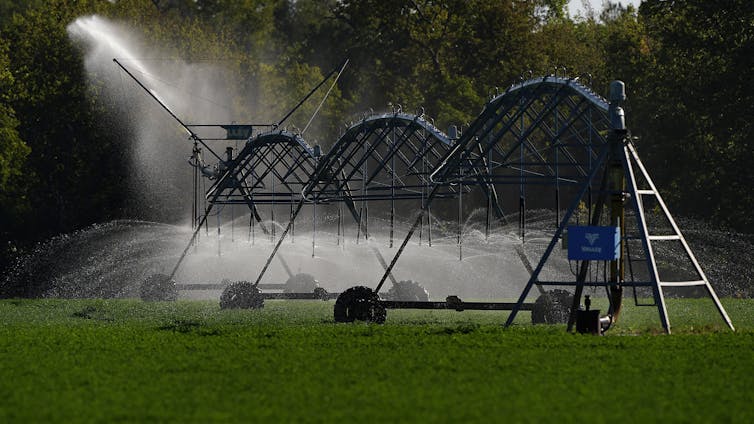
Huma Tariq Malik, Colorado State University and Thomas Borch, Colorado State University
As the world’s climate warms and droughts and water shortages are becoming more common, farmers are struggling to produce enough food. Farmers continue to adapt, but there are ways for you to help, too.
For decades, farmers have sought to conserve water in agriculture, with a focus on improving irrigation efficiency. That has included decreasing the practice of flood irrigation, in which water flows through trenches between rows of plants. Instead, many farmers are adopting more precise methods of delivering water to plants’ roots, such as sprinklers and drip systems.
In recent years, policymakers, researchers and consumers have come to look more closely at opportunities to conserve water throughout the entire process of growing, shipping, selling and eating food. Working with colleagues, we have identified several key ways to reduce water used in agriculture – some of which directly involve farmers, but two of which everyone can follow, to help reduce how much water is used to grow the food they eat.
Farmers can match crops to local land, water and climate conditions to reduce stress on scarce resources and make food production more sustainable in the long run. That could include reducing the amount of alfalfa and other hay crops used to feed livestock, or swapping out wheat and sorghum and instead planting corn and potatoes.
The condition of the soil also matters. Many farmers have focused on short-term productivity, relying on fertilizers or frequent tillage to boost yields from one season to the next. But over time, those practices wear down the soil, making it less fertile and less able to hold water.
Soil is not just a surface to grow things on. It is a living system that can be built and fed or depleted. Practices such as planting cover crops in the off-season to protect the soil, reducing tillage, applying compost and rotating different types of crops can all help soil hold more water and support crops even during droughts.
Adapting on-farm practices addresses only part of the water conservation effort. While crops are grown in fields, they move through a vast network of processors, distributors, supermarkets and households before being eaten, wasted or lost. At each link in this chain, consumers’ choices determine how much agricultural water is ultimately saved.
People’s dietary preferences, in particular, play a major role in agricultural water use. Producing meat requires significantly more water than growing plant-based foods.
Per capita, Americans consume nearly three times the global average amount of meat each year.
While eliminating meat altogether is not everyone’s goal, even modest shifts in diet, whether reducing overall meat consumption or selecting proteins that use less water to produce, can ease the strain. Producing a pound of beef requires an estimated 1,800 gallons of water, compared with about 500 gallons for a pound of chicken.
Replacing all meat with the equivalent quantities of plant-based foods with comparable nutrition profiles could cut the average American’s food-related water use by nearly 30%. Even replacing a small amount of meat with plant-based foods or meats that require less water can make a difference.
While a single meal may seem inconsequential, if multiplied across millions of households these choices translate into meaningful water savings.

Perhaps the simplest and most powerful step people can take to save water used in agriculture is to cut back on food waste.
In the United States, 22% of total water use is tied to producing food that ultimately goes uneaten.
In developing countries, losses often result from limited storage and transportation, but in high-income nations like the United States, most waste happens at the retail and household level. In the U.S., households alone account for nearly 50% of all food discarded nationwide.
This creates a major opportunity for everyone to contribute to water conservation. Understanding the water embedded in different foods can make people more mindful about what ends up in the trash.
And on top of feeling good about helping the environment, there’s a financial reward: Wasting less food also means saving the money spent on food that would have gone to waste.
Huma Tariq Malik, Ph.D. Student in Soil and Crop Sciences, Colorado State University and Thomas Borch, Professor of Environmental and Agricultural Chemistry, Colorado State University
This article is republished from The Conversation under a Creative Commons license. Read the original article.

Click the link to read the release on the University of California San Diego website:
November 03, 2025
A new University of California San Diego study uncovers a hidden driver of global crop vulnerability: the origin of rainfall itself.
Published in Nature Sustainability, the research traces atmospheric moisture back to its source—whether it evaporated from the ocean or from land surfaces such as soil, lakes and forests. When the sun heats these surfaces, water turns into vapor, rises into the atmosphere, and later falls again as rain.
Ocean-sourced moisture travels long distances on global winds, often through large-scale weather systems such as atmospheric rivers, monsoons, and tropical storms. In contrast, land-sourced moisture—often called recycled rainfall—comes from water that evaporates nearby soils and vegetation, feeding local storms. The study finds that this balance between oceanic and terrestrial (land) sources strongly influences a region’s drought risk and crop productivity.
“Our work reframes drought risk—it’s not just about how much it rains, but where that rain comes from,” said Yan Jiang, the study’s lead author and postdoctoral scholar at UC San Diego with a joint appointment at the School of Global Policy and Strategy and Scripps Institution of Oceanography. “Understanding the origin of rainfall and whether it comes from oceanic or land sources, gives policymakers and farmers a new tool to predict and mitigate drought stress before it happens.”

A New Way to Forecast Drought Risk
Using nearly two decades of satellite data, Jiang and co-author Jennifer Burney of Stanford University measured how much of the world’s rainfall comes from land-based evaporation. They discovered that when more than about one-third of rainfall originates from land, croplands are significantly more vulnerable to drought, soil moisture loss and yield declines – likely because ocean-sourced systems tend to deliver heavier rainfall, while land-sourced systems tend to deliver less reliable showers, increasing the chance of water deficits during critical crop growth stages.
This insight provides a new way for farmers and policymakers to identify which regions are most at risk — and to plan accordingly.
“For farmers in areas that rely heavily on land-originating moisture — like parts of the Midwest or eastern Africa — local water availability becomes the deciding factor for crop success,” Jiang explained. “Changes in soil moisture or deforestation can have immediate, cascading impacts on yields.”
Two Global Hotspots: The U.S. Midwest and East Africa
The study highlights two striking hotspots of vulnerability: the U.S. Midwest and tropical East Africa.
In the Midwest, Jiang notes, droughts have become more frequent and intense in recent years — even in one of the world’s most productive and technologically advanced farming regions.
“Our findings suggest that the Midwest’s high reliance on land-sourced moisture, from surrounding soil and vegetation, could amplify droughts through what we call ‘rainfall feedback loops,’” Jiang said. “When the land dries out, it reduces evaporation, which in turn reduces future rainfall—creating a self-reinforcing drought cycle.”
Because this region is also a major supplier to global grain markets, disruptions there have ripple effects far beyond U.S. borders. Jiang suggests that Midwestern producers may need to pay closer attention to soil moisture management, irrigation efficiency and timing of planting to avoid compounding drought stress.
In contrast, East Africa faces a more precarious but still reversible situation. Rapid cropland expansion and loss of surrounding rainforests threaten to undermine the very moisture sources that sustain rainfall in the region.
“This creates a dangerous conflict,” Jiang said. “Farmers are clearing forests to grow more crops, but those forests help generate the rainfall that the crops depend on. If that moisture source disappears, local food security will be at greater risk.”
However, Jiang sees opportunity as well as risk:
“Eastern Africa is on the front line of change, but there is still time to act. Smarter land management — like conserving forests and restoring vegetation — can protect rainfall and sustain agricultural growth.”
Forests as Rainmakers
The research underscores that forests and natural ecosystems are crucial allies in farming. Forests release vast amounts of water vapor into the atmosphere through evaporation and transpiration (when plants produce moisture), effectively seeding the clouds that bring rain to nearby croplands.
“Upland forests are like natural rainmakers,” Jiang said. “Protecting these ecosystems isn’t just about biodiversity—it’s about sustaining agriculture.”
A Tool for Smarter Land and Water Management
Jiang’s research provides a new scientific framework connecting land management, rainfall patterns and crop planning — a relationship that could become central to future drought resilience strategies.
The study’s novel satellite-based mapping technique could help governments and farmers identify where to invest in irrigation infrastructure, soil water storage and forest conservation to maintain reliable rainfall.
Read the full paper, “Crop water origins and hydroclimate vulnerability of global croplands.”

