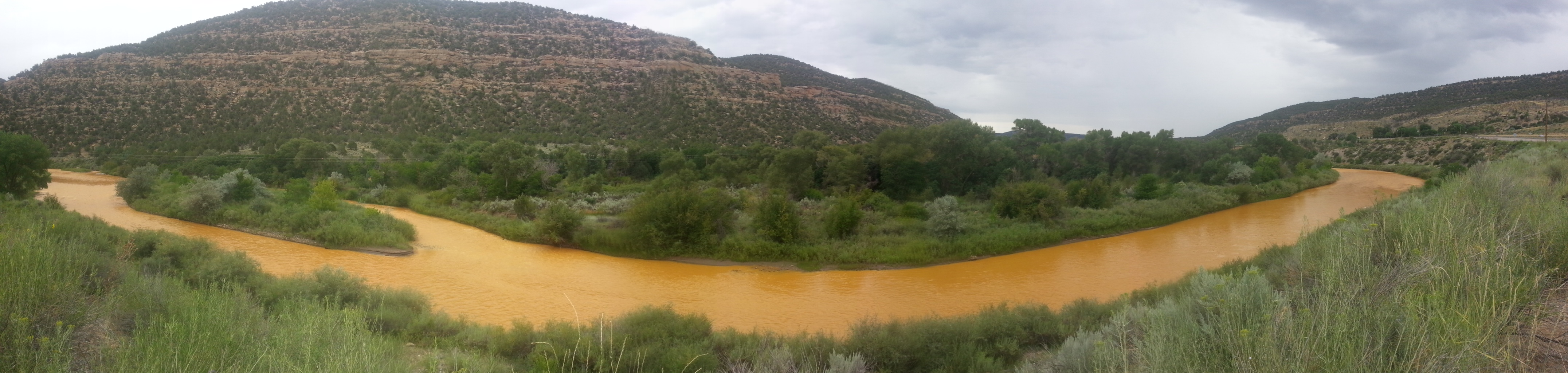
#AnimasRiver: “…shift here from skepticism toward energetic stewardship” — The Denver Post #GoldKingMine

Confluence of Cement Creek and the Animas River from the Coyote Gulch archives (11/21/2010)

From The Denver Post (Bruce Finley):

Animas River headwaters contamination exceeds state standards for cadmium, copper, lead and other toxic acid metals draining from inactive mines, officials from the Environmental Protection Agency and Sunnyside Gold Corp. revealed Tuesday.

Until now, federal pronouncements after the EPA-triggered Aug. 5 Gold King blowout touted a return to pre-disaster conditions along the river.

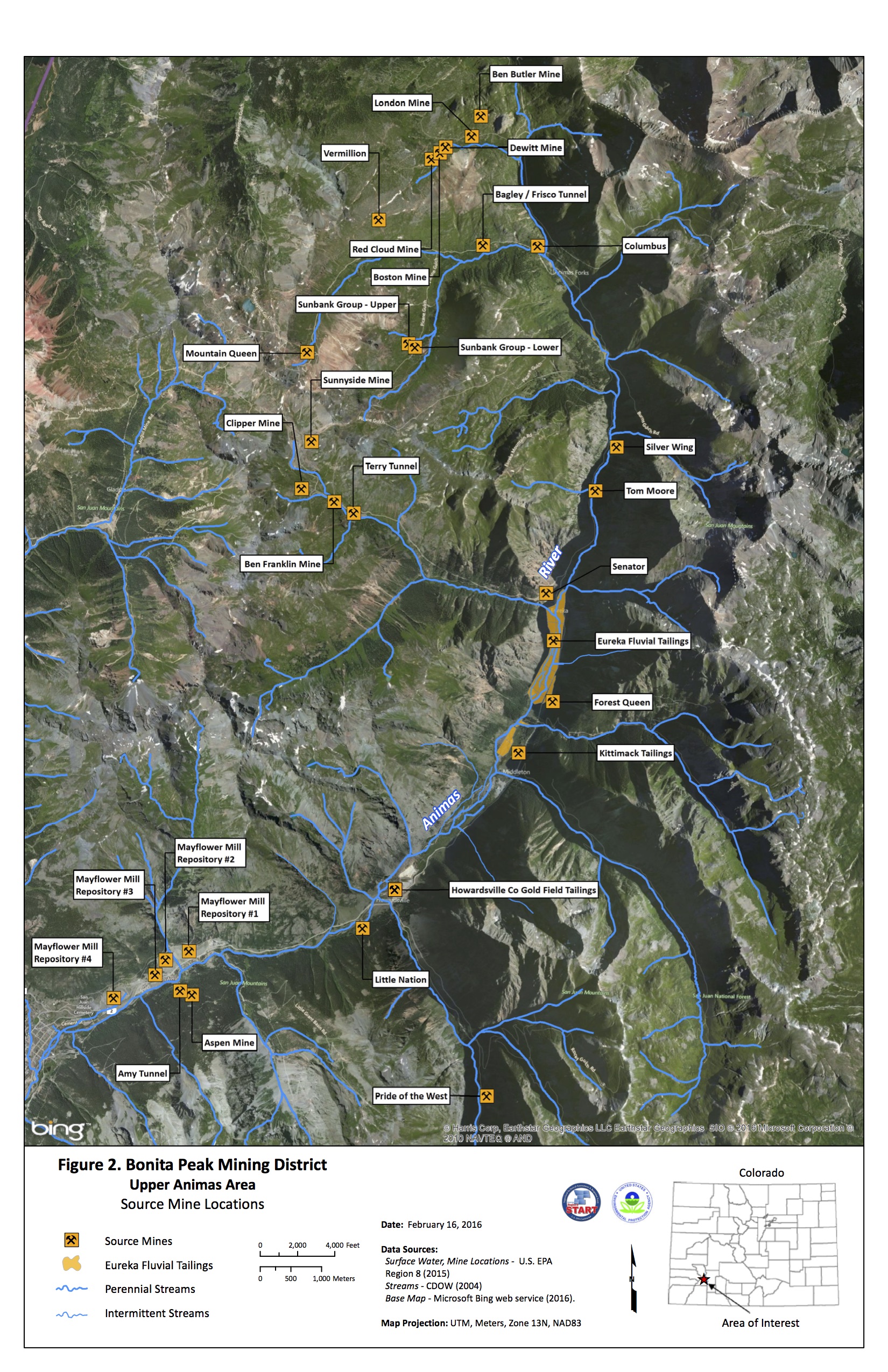
But the move toward an ambitious Superfund cleanup of 48 mine sites in southwestern Colorado has catalyzed cooperation and a far more aggressive, comprehensive and precise approach toward acid mine drainage.

At Tuesday’s Animas River Stakeholders Group forum, locals along with EPA and Sunnyside officials all said they now find those “pre-spill conditions” intolerable. Fish haven’t been able to reproduce in the Animas for a decade, even 50 miles to the south through Durango.

Beyond the Gold King and other Cement Creek mines, “there are elevated levels (of heavy metals) in all three drainages” flowing into the Animas, said Rebecca Thomas, the EPA’s project manager. “It is a much broader look now.”

[…]

EPA officials this week are holding forums in tribal communities, Durango and Silverton to discuss their Superfund process, which usually drags out for more than a decade. An official listing of the Animas area as a National Priority List disaster, a step toward funding for cleanup, isn’t expected until fall.

The shift here from skepticism toward energetic stewardship is reflected in more community groups demanding, and in some cases conducting, increased testing of river water and sediment to monitor contamination.

The Mountain Studies Institute, a Durango-based research group, did an investigation of aquatic insects that live in sediment on river banks and found that copper levels increased between 2014 and 2015.

Sunnyside Gold Corp. manager Larry Perino presented data from tests of mining wastewater launched last fall on the day of the Gold King disaster. Contractors sampled on Sunnyside properties a couple of miles east of Silverton — a different drainage from Cement Creek — where mining waste tailings sit along the main stem of the upper Animas.

Those tailings as water rushes over them apparently are leaking the cadmium, copper and six other metals at levels exceeding Colorado Department of Public Health and Environment standards. The cadmium and copper had dissolved into Animas headwaters.

Sunnyside shared the data at Tuesday’s meeting in Silverton.

Dan Wall of the EPA then presented federal data showing lead contamination of soils along Cement Creek and in water near the tailings heaps containing elevated cadmium, zinc, manganese and copper.

EPA crews have done tests around Animas basin for decades and increasingly are trying to pinpoint mine site sources of contamination.

“We have to do more high-resolution work before we start talking smoking guns,” Wall told the locals at the forum.

A broadening cooperation is happening despite EPA efforts to target Sunnyside, owned by the global mining giant Kinross, as a responsible party obligated to pay a share of Superfund cleanup costs.

“Just because you are a potentially responsible party doesn’t mean it has to be adversarial,” Perino said.

Conservation groups such as Trout Unlimited have raised concerns about possible re-churn of heavy metals from the 3 million-gallon Gold King deluge as snow melts, increasing runoff into the upper Animas. But biologists also point to benefits of dilution to reduce concentrations of dissolved heavy metals.

Colorado Parks and Wildlife aquatic biologist Jim White confirmed that, since the shutoff of a water treatment plant on Cement Creek in 2005 when Sunnyside’s American Tunnel was plugged, fish populations deteriorated along a 30-mile stretch of the Animas south of Silverton.

There are few rainbow and brown trout today, and brook trout decreased by 80 percent after 2004, White said.

“It is not healthy. Things have gotten worse in the Animas River since 2004 or 2005,” he said. “We’ve seen this consistent dropoff — the primary thing is the dissolved metals” including zinc, cadmium and aluminum.

Even 50 miles south in Durango, the fish put into the river in stocking programs have not been able to reproduce, he said.

“We’re just not seeing young fish surviving, in Durango as well,” White said.

Other forces, such as sediment from urban development and fertilizer runoff, also play a role downriver in addition to acid metals drainage from inactive mines.

Hundreds of inactive mines continue to drain more than 1,000 gallons a minute of toxic acid heavy metals into Animas headwaters. It is one of the West’s worst concentrations of toxic mines.

For at least a decade before the Gold King disaster, the mine drainage reaching Animas canyon waters along a 30-mile stretch south of Silverton “had a hideous impact,” Trout Unlimited chapter president Buck Skillen said.

“We’ve lost almost all of the trout and a number of bugs,” Skillen said. “We’ve had the equivalent of the Gold King spill every four to seven days over the last 10 years. But the water didn’t turn orange. So it wasn’t on everyone’s radar.”

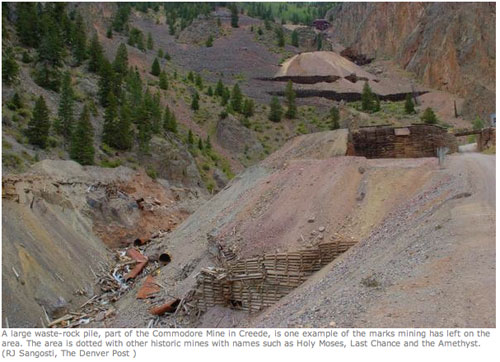
Nelson Tunnel/Commodore Rock Pile Superfund Site update — EPA lawsuit

Commodore waste rock superfund site Creede

From The Pueblo Chieftain (Matt Hildner):

Federal and state officials have agreed in principle to a $6 million settlement with a mining company to recover cleanup costs at the Superfund site just north of town.

A proposed consent decree with Denverbased CoCa Mines was filed in U.S. District Court in Denver Thursday.

The proposal would still be subject to a 30-day public comment period and the approval of the court.
Through last June, the U.S. Environmental Protection Agency had spent $10 million on the Nelson Tunnel/Commodore Waste Rock Pile Superfund site.

More than half of that money went toward the stabilization of the waste rock pile and the reinforcement of the West Willow Creek channel that runs along side it during an emergency response in 2008 and 2009.

In a complaint filed the same day as the proposed consent decree, EPA alleged that a company operating under a joint venture partnership with CoCa had sent 500 tons of mine waste onto the waste rock pile and contributed to its destabilization.

The complaint also alleged that CoCa inherited liability for the site when it bought out its former partner in 1989 and thereafter failed to conduct cleanup.

CoCa Mines owned and operated in an area that’s now part of the Superfund site from 1973 to 1993.
Cleanup work at the Superfund site has come to a halt while EPA conducts a feasibility study on potential remedies for the Nelson Tunnel, which is responsible for the majority of the contaminants in West Willow Creek.

One potential option would involve the dewatering of the collapsed tunnel, although it would be dependent upon the initiation of mining by Rio Grande Silver at the nearby Bulldog Mine. The tunnel, completed in 1902, was used to drain and ventilate mines along the Amethyst vein, while also providing a route to haul ore out of the mines.

EPA initiates lawsuit over Nelson Tunnel/Commodore Mine Waste Rock Pile Superfund Site

From The Denver Post (Kirk Mitchell):

The Environmental Protection Agency has sued a mining company operating in Mineral County in federal court to recoup hazardous waste cleanup costs.

The U.S. sued Coca Mines Inc. for cleanup of hazardous substances in the Nelson Tunnel and the Commodore Waste Rock Pile Superfund Site.

The superfund site is in the San Juan Mountains less than 2 miles from the town of Creede. Shafts were dug in a series of hard-rock silver mines operated between 1889 and the 1980s tapping the “Amethyst Vein.” Horizontal tunnels also were bored, including the Nelson Tunnel.

The Nelson Tunnel is partially collapsed but continues to drain acid runoff.

The Commodore Waste Rock Pile, just outside the entrance of the Nelson Tunnel, included a water conveyance system that failed around 1995, releasing mine waste containing heavy metals including arsenic, cadmium, lead, manganese and zinc into West Willow Creek.

The creek flows into the Rio Grande River 4 miles below the site.

In 2008 and 2009, the EPA conducted waste removal studies at the waste pile site.

The EPA is now in the process of completing a feasibility study of remedial actions for the site.

Through June 30, 2015, the EPA incurred nearly $10 million in costs. Some of those costs were covered by the Asarco Environmental Trust.

The lawsuit says the discharge each day from the Nelson Tunnel into Willow Creek carries 375 pounds of zinc, 1.37 pounds of cadmium and 6.39 pounds of lead. Zinc levels have hit 25,000 parts per billion, hurting fish reproduction for more than 4 miles down to a confluence with the main stem of the Rio Grande, where dilution eases the impact.

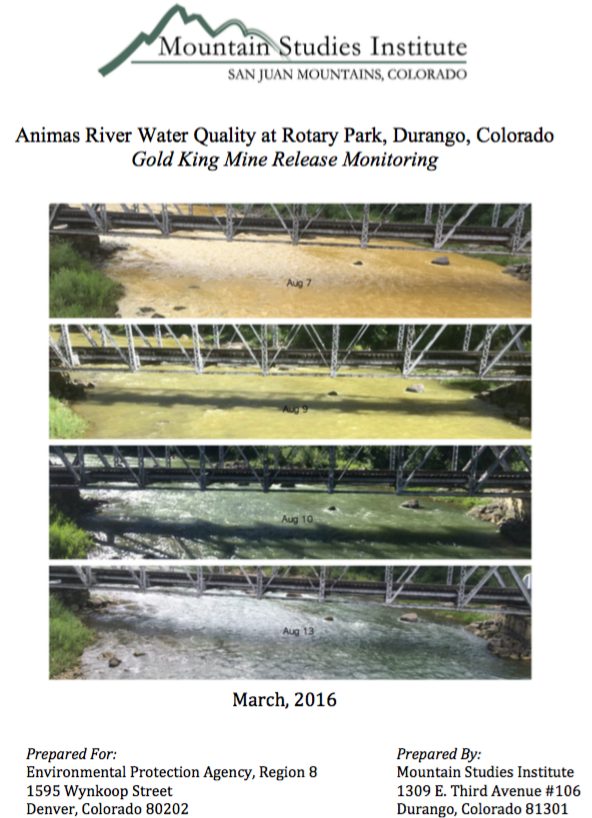
#AnimasRiver Water Quality at Rotary Park, Durango, Colorado — Mountain Studies Institute #GoldKingMine

animasriverrwaterqualityatrotaryparkmoutainstudiesinstitutecover

Here’s the release from the Mountain Studies Institute:

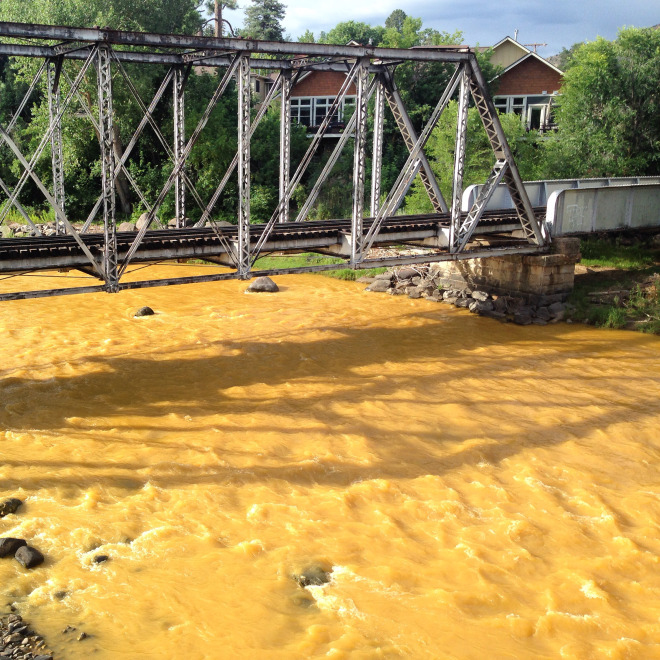
The fact that people in the community noticed when the Animas River was distinctly yellow-brown in color on February 15, 2016 reflects a heightened awareness of changes in water quality since the Gold King Mine release. Warm temperatures in mid-February initiated the first increase in runoff since last fall’s storms, picking up sediment in the process.

Mountain Studies Institute (MSI), a nonpartisan independent research station, has been monitoring water quality of the Animas River since before, during, and after the Gold King Mine release. MSI received lab results back from water quality samples collected from the Animas River at Rotary Park on February 15, and March 1, 2016.

“These samples are the first in a series of sampling that will occur as part of a monitoring program that aims to understand changes in water quality during 2016 storm events and spring runoff” said Scott Roberts, MSI’s aquatic ecologist. The monitoring program is part of a partnership between MSI and the City of Durango to convey Animas River water quality information to the public.

“Because we know that people are curious to see the data, MSI has posted water quality monitoring results and an explanation of those results on our website, http://www.MountainStudies.org” said Marcie Bidwell, MSI’s director. “By posting updated information on our website, we hope to keep the public informed as the season progresses. Links will also be available on the City’s website, http://www.durangogov.org.”

Results from the spring samples indicate some encouraging news. Metals of concern for human health (Arsenic, Lead, and Mercury) and those thought to be most harmful to aquatic life (Copper, Zinc, and Selenium) were found to be at levels considered safe by Colorado Department of Health and the Environment (CDPHE) water quality standards. All metals analyzed from these two spring samples were at levels considered safe for agriculture and domestic water supply use (based on CDPHE water quality standards). Additionally, all metals were below Environmental Protection Agency’s recreational screening levels, which represents the level at which no adverse health effects are expected to occur in humans consuming 2 liters of filtered water per day, from the Animas, orally, for 64 days each year for a total of 30 years.

However, the yellow-brown color of the Animas River at Rotary Park in Durango on February 15th did contain high levels of certain metals. Concentrations of Aluminum and Iron surpassed chronic water quality standards set by CDPHE to protect aquatic life from persistent, long-term exposure to metals. The brief exceedances of chronic water quality standards from one sample on one day do not necessarily indicate potential harm to aquatic life unless these levels persist continuously over a 30-day period.
The visible yellow or orange color of the river is mostly Iron and Aluminum. Iron particles of various sizes are suspended in the water column. Other metals, such as Zinc, readily bond to the Iron particles.

“MSI’s data supports the conclusions of local, state and federal partners that, from a public health standpoint, this year’s spring runoff is unlikely to be different from previous years. Monitoring and notification procedures are also in place to notify the public if conditions change.” said Liane Jollon, executive director of San Juan Basin Health (SJBH). “SJBH advises the public that it is always good practice to wash with soap and water after exposure to any untreated body of water, including the Animas River. Further information and more health tips for river users are available on our website at http://sjbhd.org/public-health-news/animas-river-health-updates/.”

In a partnership with the City of Durango, MSI plans to continue to monitor the water quality of the Animas River throughout 2016, focusing on understanding chronic exposure to aquatic life before runoff, during runoff, and into the summer season.

Please keep in mind that these observations are from only one location (Rotary Park in Durango) on the Animas River and may not be indicative of the entire Animas River watershed.

Visit http://www.MountainStudies.org to learn more about MSI’s monitoring efforts and results.

From the Associated Press (Dan Elliott):

Runoff from autumn storms kicked up the levels of some contaminants in a southwestern Colorado river after a massive spill of toxic mine waste, but concentrations of other pollutants declined or didn’t change, researchers said Friday.

A report released by the Environmental Protection Agency could offer clues about what will happen to the Animas River this spring and summer when melting snow from the San Juan Mountains makes the waterway run higher, potentially stirring up pollutants that had settled to the bottom after the spill.

But the researchers said they couldn’t be sure that the pollutants they measured came from the Gold King Mine — source of the 3-million-gallon spill last August — or if they were from other mines that riddle the area. They also said they didn’t have enough historical data to know whether storms that hit after the Gold King spill stirred up more pollutants than ones before it…

Most of the metals settled to the bottom of the Animas before reaching the San Juan River in New Mexico, the EPA said. Experts have differed on whether and how much those metals will be stirred up when river flows increase after storms and from the spring snowmelt.

The nonprofit Mountain Studies Institute in Silverton monitored the river for the EPA in Durango, Colorado, about 60 miles downstream from the mine, and compiled a report.

Seven storms increased the flow of the Animas in Durango between Aug. 9 and Oct. 26. Concentrations of six contaminants increased after some of those storms, including aluminum and copper, the institute’s report said.

Levels of mercury and five other contaminants decreased after some storms, while the levels of seven others didn’t change.

State water officials don’t expect floods or above-normal flows in the Animas this spring and summer. The San Juan Mountain snowpack that melts into the river was only 66 percent of the long-term average on Friday.

Even if a weekend storm drops up to 2 feet of snow on the San Juans as predicted, it probably won’t be enough to cause the Animas to flood, said Kevin Houck, chief of watershed and flood protection for the Colorado Water Conservation Board.

#AnimasRiver: Gov. Hickenlooper, members of federal delegation send letter to #EPA requesting additional support

Here’s the release from Governor Hickenlooper’s office:

Gov. John Hickenlooper and members of Colorado’s federal delegation yesterday sent a letter to EPA Administrator Gina McCarthy asking for additional support for the Bonita Peak Mining District. Senators Michael Bennet and Cory Gardner, and Congressman Scott Tipton joined Hickenlooper on the letter in support of the local communities including the Towns of Silverton and Durango, San Juan and La Plata Counties.

“As part of Superfund designation process, we reiterate the importance of addressing the concerns expressed by the Town of Silverton and San Juan County and that cleanup moves forward in a way that works for all affected localities,” said Hickenlooper.

Specifically, the letter urges the EPA to expand the scope and planned timeline to operate the temporary water treatment plant on Cement Creek as well as provide adequate funding and collaborate with local governments, tribes, and the state to conduct long-term monitoring along the Animas River and at sites of specific concern to each community. The letter also reiterated support for an expedited claims and reimbursement process for the communities.

Click here to read the letter.

From The Denver Post (Bruce Finley):

Gov. John Hickenlooper, Sens. Michael Bennet and Cory Gardner and Rep. Scott Tipton this week asked EPA Administrator Gina McCarthy for extra support — emphasizing the EPA role triggering the Aug. 5 Gold King disaster.

They’re demanding that the EPA ensure sufficient funding for cleanup as promised, that Silverton and nearby communities get a seat at the table as promised, and robust interim cleanup of creek water as promised.

“We urge you to prioritize funding for this project as soon as possible to restore the health of the Animas River watershed, protect public health, and maintain the local recreation and tourism economy,” Hickenlooper and the lawmakers said in a letter to McCarthy.

While EPA officials have proposed a priority listing of mine sites around Silverton and say they’ll treat the Gold King cleanup like any other site, the Colorado leaders insisted that “the EPA must recognize its role in the most recent spill and its subsequent obligation to this community.”

They contend a temporary treatment plant on Cement Creek “may not operate” beyond this fall and that “this facility has the ability to treat more of the acid mine drainage in the watershed.”

They asked EPA officials to expand the scope of those water-cleaning operations, to be continued until overall cleanup is done, and to speed up reimbursement of costs that towns, counties, tribes and businesses incurred due to the 3 million-gallon deluge — caused by botched EPA efforts to drain the Gold King Mine.

“We also have heard significant concerns from local communities that the current water quality monitoring on the Animas River is not sufficient,” the letter said. “It is likely that spring runoff will remobilize the sediments and metals deposited during the spill. … The EPA must provide adequate funding. … The funds pledged to date by EPA for these needs are insufficient.”

Meanwhile, Republicans in Congress continue to harass the EPA. Here’s a report from Matthew Daly writing for the Associated Press via 12NewsNow.com:

Senate Republicans vowed Tuesday to issue a subpoena to force the head of the Environmental Protection Agency to appear at a field hearing in Phoenix next week on a toxic mine spill that fouled rivers in three Western states and on lands belonging to two Native American tribes.

Wyoming Sen. John Barrasso said the Senate Indian Affairs Committee will vote Wednesday on a plan to subpoena EPA Administrator Gina McCarthy.

Barrasso chairs the Indian Affairs panel, which is conducting an April 22 hearing on the 3-million gallon spill at Colorado’s abandoned Gold King Mine. The Aug. 5 spill contaminated rivers in Colorado, New Mexico and Utah, as well as in the Navajo Nation and Southern Ute Reservation.

If approved, the subpoena would be the first issued by the Indian Affairs panel since 2004, during the Jack Abramoff lobbying scandal. Abramoff was a prominent Republican lobbyist who pleaded guilty to charges including conspiracy, fraud and tax evasion in the purchase of gambling cruise boats. He spent 3 and 1/2 years in prison…

Barrasso said the EPA has been “reckless,” first in causing the spill and then in failing to address it.

“They took their eye off the ball,” Barrasso said of the EPA. “They caused this toxic spill and now they are still not focused on cleaning up the mess they caused.”

An EPA spokeswoman said Tuesday that McCarthy was never invited to attend the hearing; an official who oversees emergency management was asked to testify.

In a letter to the committee, the EPA said it will make two high-ranking officials available to testify, including Mathy Stanislaus, an assistant EPA administrator who originally was invited to testify. Stanislaus initially said he had a scheduling conflict. The Associated Press obtained a copy of the letter Tuesday night.

Spokeswoman Melissa Harrison said earlier that the agency has agreed to provide written testimony for the hearing, scheduled for Earth Day.

McCarthy testified before the Senate Indian Affairs and Environment committees on the spill last year.

Barrasso called the agency’s initial response another indication that the EPA “has grown too big, too arrogant, too irresponsible and too unaccountable” to the American people.

“On Earth Day, the EPA ought to be there to confess the failures of the (Obama) administration” to those affected by the spill and specify “what they are going to do to correct it,” Barrasso said.

Barrasso cited news reports indicating that McCarthy is likely to be among U.S. officials joining Secretary of State John Kerry in New York at an Earth Day ceremony to sign a global climate change agreement reached in Paris last year. The agreement calls for the U.S. and nearly 200 other countries to reduce greenhouse gas emissions blamed for global warming.

McCarthy would rather be in New York “talking about what happened in Paris instead of going to Arizona to face the people who her agency has abandoned,” Barrasso said. “That’s what she thinks is more important.”

McCarthy plans to spend Earth Day in Washington, Harrison said.

The EPA recently announced it would spend $157,000 to help the Navajo Nation recover costs incurred during the response to the Gold King spill. The money is in addition to more than $1.1 million spent by the EPA in response costs for the Navajo immediately following the spill.

The EPA has awarded the Navajo more than $93 million in grants to develop environmental and infrastructure programs, Harrison said.

Photo via the @USGS Twitter feed

#AnimasRiver: Bonita Peak Mining District superfund site?

A “get well soon” balloon floats in the contaminated waters of the Animas River flowing through Durango on Monday afternoon August 10, 2015 -- photo The Durango Herald, Shane Benjamin
A “get well soon” balloon floats in the contaminated waters of the Animas River flowing through Durango on Monday afternoon August 10, 2015 — photo The Durango Herald, Shane Benjamin

From the Associated Press via the The Colorado Springs Gazette:

Republican Rep. Scott Tipton said Thursday a Superfund cleanup would be overseen by the U.S. Environmental Protection Agency, which caused an August mine spill that prompted the cleanup.

Tipton says it would be better to fund the effort another way. He didn’t offer specifics.

The EPA on Wednesday proposed adding the Gold King Mine and other sites to the Superfund list. Officials in Silverton and San Juan County and Gov. John Hickenlooper have endorsed it.

From The Denver Post (Bruce Finley):

A cluster of 48 mining sites near Silverton, including the Gold King Mine, is expected eventually to find a spot on the National Priorities List of the nation’s worst disasters threatening public health and the environment.

But the EPA’s process requires this first step, followed by a period for comments. There’s no guarantee listed sites would receive funding for cleanup.

“I’m excited. This shows our work negotiating with the EPA is paying off,” Silverton town administrator Bill Gardner said. “It shows they are true to their word that there’s going to be a commitment from them, and that we are going to move forward quicker rather than slower.”

[…]

“The agency will follow the same process at the Bonita Peak Mining District as for all other proposed NPL sites,” spokeswoman Christie St. Clair said.

The priorities list serves as a basis for enforcement actions against potentially responsible polluters and for securing cleanup funds. For 35 years, the Superfund program has run on the principle that polluters should pay for cleanups, defraying costs to taxpayers. EPA officials hunt for parties legally responsible for contaminating a site and try to compel them to cover cleanup costs.

“The process is moving forward,” said Peter Butler, coordinator of the Animas River Stakeholders Group, which since 1994 has worked to stop contamination from hundreds of leaking inactive mines.

“Hopefully, actual metal reductions to the river happen sooner rather than later,” Butler said…

Gov. John Hickenlooper in February backed up southwestern Colorado residents in requesting EPA action to address the Gold King and other inactive mines contaminating headwaters of the Animas River — water that flows into New Mexico, tribal nations, Utah and eventually the Grand Canyon toward California.

“We are pleased the EPA proposed adding the Bonita Peak Mining District to the National Priorities List (NPL). This is a crucial next step in making the region eligible for necessary resources and comprehensive cleanup efforts under EPA’s Superfund program, but our work is not done,” Hickenlooper said Wednesday morning.

“We are working with the EPA to ensure that adequate funding for this site is provided, including immediate interim measures and options to mitigate any further water quality deterioration. We are also working to ensure state and local officials continue to have an active role and that there is robust and significant community involvement,” he said.

“Lastly, we continue to support efforts by our congressional delegation to reach consensus around ‘Good Samaritan’ legislation, which is one of the most significant tools at our disposal to allow for voluntary cleanups of draining and abandoned mines.”

EPA proposes Superfund for San Juan County — The Durango Herald

From The Durango Herald (Peter Marcus):

The recommendation will be published in the Federal Register on Thursday, which sets off a 60-day public comment period before the rule can be finalized.

The proposal calls for adding eight new sites to the National Priorities List, including Bonita Peak Mining District in San Juan County.

The EPA recommended the site after Gov. John Hickenlooper sent a letter to federal officials in February backing the designation, which would inject large amounts of federal dollars into permanent restoration efforts. The action came in the wake of the Aug. 5 Gold King Mine spill.

Hickenlooper sent the letter to the EPA after Silverton and San Juan County expressed support for the listing.

“This is a crucial next step in making the region eligible for necessary resources and comprehensive cleanup efforts under EPA’s Superfund program, but our work is not done,” Hickenlooper said. “We are working with the EPA to ensure that adequate funding for this site is provided, including immediate interim measures and options to mitigate any further water quality deterioration.”

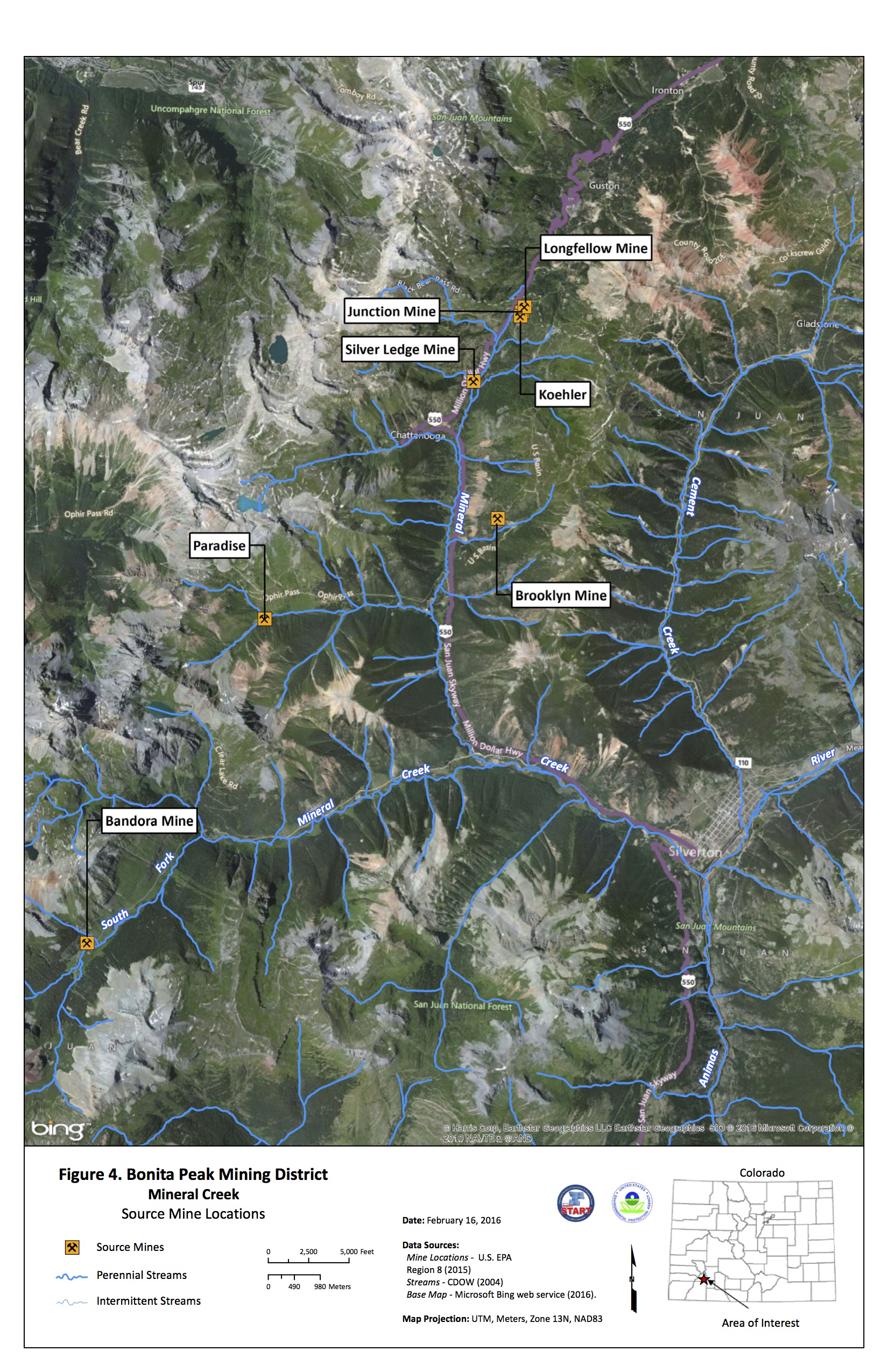
The listing would impact as many as 50 mining-related sites in the Gladstone area that have contaminated the Upper Animas, Mineral Creek and Cement Creek for more than a century.

Restoration efforts would likely include a permanent water-treatment facility, as well as long-term water quality monitoring…

Local officials, however, vow to closely watch the process, which could last for many years. They want a voice at the table and to ensure that boundaries of the proposed Superfund site don’t expand. Some also worry about blocking access to the backcountry.

Meanwhile, Hickenlooper on Wednesday renewed his support for Congress to pass Good Samaritan legislation, which would ease liability concerns for government and private entities to restore draining mines.

And the state Legislature on Wednesday advanced a bill that would allow the state to use emergency response funds for hazardous conditions at a legacy hard rock mine site that is a danger to the public. Currently, the state can only use those funds at mining sites subject to the state’s regulatory authority, so the bill would expand the state’s authority.

House Bill 1276 passed the House Agriculture, Livestock and Natural Resources Committee unanimously without any conversation. It now heads to the full House for approval.

#AnimasRiver: “I don’t believe they are manipulating the samples or the results” — Ryan Flynn

From Environmental Technology Online:

Utah has joined a growing list of disgruntled states who are unhappy with the manner in which the Environmental Protection Agency (EPA) has handled the Gold King Mine disaster last year. In summer 2015, almost 400 tonnes of heavy metals were released into the Animas River after a collapse in the mine, prompting fears that nearby water supplies would become contaminated.

In the intervening months, several states have become so impatient and unsatisfied with the efforts of the EPA in monitoring the river that they have set up their own initiative to safeguard the citizens living in towns and cities downstream of the accident.

An Independent Monitoring System

Monitoring water quality levels is important at the best of times, but in the wake of last summer’s disaster, it has taken on a new dimension for the states living in close vicinity to the mine. Utah is the latest state to join with New Mexico and Colorado, along with the Navajo Nation, in demanding better sampling of the affected rivers.

The conglomerate hope to collect samples from the Animas River and the nearby San Juan River on a weekly basis and have them assessed for heavy metal content, including cadmium, copper, lead and zinc.

They also wish to gather real-time information on the turbidity of both rivers to determine how much sediment is passing through them at any given time. This will be achieved via the installation of a series of multiple sensors and probes – much like the remote water quality monitors mentioned here – at key locations along the rivers.

In this manner, the concerned states hope to be aware of any impending influx of sediment into their water supplies and make the relevant warnings to residents and preparations for alternative drinking water supplies.

Unhappy with the EPA

Though the EPA met with the states at the beginning of March to thrash out a firm plan of action, pledging to provide $2 million towards the initiative, such steps have done little to appease some of the officials involved.

On the one hand, officials from the state of New Mexico claim that the EPA have been misconstruing or distorting the actual effects of the mine disaster. Ryan Flynn, who is the environment secretary for New Mexico, says that the EPA are using a different set of standards to require governmental action than they normally do, and that they have claimed downstream ditches had not been affected when they actually had.

“I don’t believe they are manipulating the samples or the results,” Flynn explained. “But when it comes to communicating those results, the EPA is totally misleading the public and the states about what is actually occurring.”

Secondly, Flynn and his Utah counterpart Erica Gaddis were also critical of the low sum the EPA had pledged towards the monitoring operation. Utah has already spent $400,000 on monitoring equipment and recently committed to spending $200,000 more, while New Mexico struggled to find $100,000 to purchase its own monitoring apparatus.

“We are a poor state, and we have some real stress on our budget because of oil and gas prices,” Flynn went on, “but this mission is critical to protecting our communities.”

As a result, both Utah and New Mexico plan to sue the EPA for compensation and damages once the catastrophe has been averted. For now, though, the priority remains to make sure no sediment makes it into local drinking water supplies – especially with the imminence of snowmelt engendered by the arrival of spring.

The Animas flows orange through Durango on Aug. 7, 2015, two days after the Gold King Mine spill. (Photo by Esm Cadiente www.terraprojectdiaries.com)
The Animas flows orange through Durango on Aug. 7, 2015, two days after the Gold King Mine spill. (Photo by Esm Cadiente http://www.terraprojectdiaries.com)

#AnimasRiver: “What we have here is a totally different animal” — AG Cynthia Coffman

Cement Creek aerial photo -- Jonathan Thompson via Twitter
Cement Creek aerial photo — Jonathan Thompson via Twitter

From The Durango Herald (Peter Marcus):

Colorado Attorney General Cynthia Coffman is preparing defensive and offensive strategies to legal disputes in the wake of the Gold King Mine spill…

Some observers wonder why Coffman hasn’t sued the EPA, which admits that excavation during restoration work led to the blowout. Also, there are accounts that the agency knew a blowout was possible.

Coffman says she is not shy about suing federal agencies, having joined the state in three lawsuits, including most recently over implementation of EPA carbon standards, known as the Clean Power Plan.

“What we have here is a totally different animal because we have an environmental incident, whether accidental or intentional, whatever you want to call it, that requires a totally different approach,” Coffman said…

“Am I prepared to apportion who has what liability? I’m not. I don’t feel like we know enough,” Coffman said.

If lawsuits are filed, they’re likely to drag on for years, if not decades, Coffman said, pointing to the complicated nature of environmental cases, the long list of parties involved and leaking mines in the area.

Hanging over the process is a potential Superfund listing, which would inject large amounts of cash into permanent restoration efforts at as many as 50 mining-related sites in the Gladstone area that have contaminated the Upper Animas River, Mineral Creek and Cement Creek for more than a century.

A Superfund listing itself could result in a lawsuit from environmental groups, who may fear that restoration efforts don’t go far enough.

Coffman said Superfund lawsuits are tricky, and there is a lack of institutional knowledge because Superfund listings are relatively rare. The attorney general’s office downsized its Superfund unit several years ago.

“You have a new generation of attorneys in this office who may not have seen a Superfund case,” she said.

Coffman said after receiving the two Notice of Intent to sue letters from New Mexico and Utah, her office assembled a 10-person Gold King Mine team, including environmental attorneys and governmental immunity and civil litigation experts.

The attorney general’s office also has held weekly conversations with the governor’s office. Coffman said Gold King Mine is “near the top of the list.”

“Litigation, it’s an important tool that attorneys have, but negotiation is equally important,” Coffman said. “Once you start litigation, the tone automatically changes, and sometimes irrevocably.”

Democratic Gov. John Hickenlooper is optimistic that he can reach resolution with the two states out of court. But he said: “If they sue us, I think that unifying effort will be diminished.”

Hickenlooper said he spoke with New Mexico Gov. Susana Martinez recently. New Mexico is concerned with water-testing plans, which the governor believes the two states can resolve.

“The EPA … admitted responsibility, they said they would hold themselves to the same high standards they would any private-sector business and they were going to make good on what damages there were. Let’s wait and see before we pick up the telephone and call in the lawyers. Let’s see how well they live up to that commitment,” he said…

Coffman may have to intervene if the EPA does not follow through, or if the agency’s efforts seem inadequate. She sent the agency a letter on March 15 urging it to settle at least 51 unpaid claims from individuals, which total nearly $5 million. Coffman said she has not yet received a response from the agency.

“It’s easy to admit fault,” Coffman said. “It’s much harder to take responsibility and pay for the consequences of your actions.”

#AnimasRiver: #Colorado AG Coffman weighing options for lawsuit

A “get well soon” balloon floats in the contaminated waters of the Animas River flowing through Durango on Monday afternoon August 10, 2015 -- photo The Durango Herald, Shane Benjamin
A “get well soon” balloon floats in the contaminated waters of the Animas River flowing through Durango on Monday afternoon August 10, 2015 — photo The Durango Herald, Shane Benjamin

From The Denver Post (Jesse Paul):

Colorado’s top prosecutor said Tuesday that litigation in the wake of the Gold King Mine spill is an option she’s hoping to avoid as the state works to negotiate compensation after the August disaster.

But Attorney General Cynthia Coffman explained all options are still on the table as fallout continues to unfold, and that the site’s current and previous owners, as well as the owner of a nearby mine, are all potential defendants if a lawsuit is filed.

“I think we have to look at everyone involved in order to do a good job representing the state of Colorado,” she said in an interview with The Denver Post. “We look to everyone who has a piece of the puzzle and was part of the story.”

Coffman has been weighing legal action against the Environmental Protection Agency since its contractors triggered the 3 million-gallon disaster, but now appears to be taking a broader assessment of those with links to the incident.

A team of 10 attorneys in her office has been looking into the possibility of filing a lawsuit and working on possible defenses to threats of legal action against the state…

“I would say we are still in the initial phases of the process,” she said of investigating whether to take any legal action. “For the first few months, this was really the governor’s project and responsibility… We were in a holding pattern in terms of litigation.”

[…]

The attorney general’s office is reviewing the history of the Gold King and the nearby American Tunnel and Sunnyside Mine — both owned by the Canada-based conglomerate Kinross — as part of their process.

Coffman said engineered plugs in the American Tunnel, installed to limit heavy metal drainage, likely were a factor in the Gold King’s contaminated water buildup and eventual release.

Kinross said it has no role or responsibility in the spill despite claims from the Gold King’s owner, Todd Hennis, who has implicated them in the disaster.

“We will vigorously defend ourselves from any potential legal action,” said Louie Diaz, a Kinross spokesman.

Hennis bought the Gold King in 2005 after it went into foreclosure and then allowed the EPA to work on remediating the site. Agency contractors were excavating the mine’s collapsed opening when they accidentally triggered the disaster.

Hennis declined to comment on any potential legal proceedings.

Coffman said her staff has been in close contact with Gov. John Hickenlooper’s office over any Gold King legal action and that their interactions have been productive.

Coffman and Hickenlooper battled in the state’s highest court over her decision to join a lawsuit challenging the EPA’s Clean Power Plan, with the attorney general coming out at the victor.

Since then, Coffman said, their relationship has improved, making Gold King work easier.

“The EPA admitted responsibility, agreed to hold themselves to the same high standards they would any private business, and they were going to make good on any damages,” Hickenlooper said Tuesday. “Let’s see how well they live up to that commitment before we jump into litigation.”

Coffman said that while she still thinks the EPA could have been more transparent and accountable after the spill, it has made good strides in its response.

Now, as far is she is concerned, is time to investigate the disaster and weigh the appropriate next steps.

“This is a classic who did it,” she said. “Who is the most responsible and what are they going to pay?”

Gold King Mine circa 1899 via The Silverton Standard

EPA tightens controls for work at West’s blowout-prone old mines — @DenverPost

From The Denver Post (Bruce Finley):

EPA chiefs are ordering extra headquarters reviews of all plans for work at blowout-prone old mines — policy tightening aimed at avoiding a repeat of the Gold King disaster.

And Environmental Protection Agency officials on Thursday declared testing is done for a better early-warning system that would alert communities to surges of toxic mine muck.

Separately, the EPA’s internal inspector concluded an investigation finding deficiencies in securing financial guarantees from companies that hurt the EPA’s ability to complete cleanups…

The boosted review reflects efforts to increase work at hundreds of inactive mines contaminating waterways, work that EPA Administrator Gina McCarthy partially suspended in the aftermath of the Aug. 5 Gold King disaster. An EPA crew botched work at the Gold King Mine above Silverton, trying to drain it but triggering a 3 million-gallon torrent of acidic metals-laced mine water that turned the Animas River mustard-yellow…

An EPA inventory, unveiled Thursday, listed some of the worst potential hazard sites — among an estimated 500,000 inactive mines in the West — including four in Colorado. The inventory lists 20 more sites around Colorado where toxic muck is known to be backed up yet the hazard has not adequately been assessed. It lists another 115 inactive mine sites, including 26 in California and more in Arizona, Idaho, Montana, Nevada, New Mexico, Oregon, Utah, Washington and Wyoming.

The new rules require EPA crews to follow best practices to try to ensure that experts with the right engineering and other skills are involved. EPA crews also must give headquarters supervisors a technical assessment of blowout potential before beginning work, written documentation of talks with state and tribal officials and verification that emergency response plans are in place with satellite phones and other equipment available.

At sites where states or tribes lead cleanup, regional EPA officials must define their support roles and, if landowners deemed responsible are involved, document owner willingness to handle emergency response.

“No impactful delays are expected,” EPA spokeswoman Nancy Grantham said.

The EPA this week completed final drills aimed at improving a system for notifying downstream communities ahead of blowouts via e-mail and phones. Improved early-warning plans were done to address concerns after the Gold King disaster raised by people living along the Animas in Colorado, New Mexico, Utah and tribal nations.

The EPA’s Inspector General probe found environmental and financial risks resulting from a failure to collect accurate and complete data from companies responsible for contamination. The report said “data quality deficiencies and a lack of internal controls prevent the EPA from properly overseeing and managing its financial assurance program” — which is designed to ease the burden on taxpayers in dealing with environmental disasters.

“If the EPA cannot determine if it has secured valid and sufficient financial assurance instruments from those private parties, taxpayers are at risk for paying significant amounts of those parties’ financial obligations,” the report said. “Public health protections may be delayed or deferred,” it said. And while the EPA is aware of the risks “it has not taken meaningful steps to address the problem” or disclosed this vulnerability.

This image was taken during the peak outflow from the Gold King Mine spill at 10:57 a.m. Aug. 5. The waste-rock dump can be seen eroding on the right. Federal investigators placed blame for the blowout squarely on engineering errors made by the Environmental Protection Agency’s-contracted company in a 132-page report released Thursday [October 22, 2015]

#Colorado and the Feds meet to update abandoned mines inventory

Colorado abandoned mines

From The Denver Post (Bruce Finley):

The Colorado Department of Public Health and Environment estimates that acidic metals-laced mine water contaminates more than 1,600 miles of streams and rivers. There are an estimated 23,000 inactive mines in Colorado — 22,000 on federally managed public land — that companies have abandoned. These are a main source of harm to waterways that affects human health and ecosystems.

While multiple federal and state agencies hold information on inactive mines, there’s no comprehensive data hub that could be used to assess impacts, risks and costs for cleanup.

Government officials from the CDPHE, Colorado Geological Survey, Colorado Department of Natural Resources, U.S. Forest Service, Bureau of Land Management and Environmental Protection Agency met Wednesday at the regional Forest Service headquarters to focus on how best to share data and identify gaps.

CDPHE and the CGS are leading a $300,000 inventory initiative.

“I don’t think we really know what the cumulative impacts of all these are,” CGS director Karen Berry said.

Colorado officials also advocate legal changes to encourage voluntary cleanups. So-called “good Samaritan” legislation, introduced in Congress, would let companies and conservation groups launch projects to reduce contamination in streams without being liable, under the Clean Water Act, for remaining contamination, state abandoned mines program director Bruce Stover said.

Such a change would make a difference, Stover said, and volunteer groups wouldn’t be held liable if well-intentioned cleanup work causes spills, such as the Aug. 5 Gold Mine incident where a 3-million-gallon torrent turned the Animas River mustard-yellow.

Lawmakers also are considering reform of the nation’s 1872 mining law to charge hard-rock mining companies fees to create a fund that could be used to help deal with drainage from inactive mines.

Gov. John Hickenlooper has met with fellow western governors and federal agency chiefs and found that a consensus has emerged to make cleanup of old mines a priority. At least 230 are known to be draining into Colorado waterways with 148 largely unaddressed — not visited since the 1990s.

State officials say natural resources crews aim to visit those sites and test water this year to assess the harm.

#AnimasRiver: Rebecca Thomas appointed remedial project manager for the Bonita Peak Mining District Superfund site

From The Durango Herald (Jessica Pace):

First priorities are water sampling, public outreach

Water sampling and community coordination will be the first items of business for Rebecca Thomas, the Environmental Protection Agency’s newly appointed remedial project manager for the Bonita Peak Mining District Superfund site.

Thomas has done remedial work on Superfund sites in Libby, Montana, which endured asbestos contamination, and the California Gulch and Kennecott Copper Mine projects, which were both affected by mine pollution similar to the Bonita Peak site.

With a team that includes ecological risk assessors and a community involvement coordinator, Thomas said she will be working not only with the communities of Silverton and San Juan County, but also Durango, La Plata County and the Ute Mountain Ute and Southern Ute Indian tribes.

“We’ll be explaining what Superfund is all about and getting consensus on paths forward,” Thomas said. “We want to take full advantage of sampling season to continue our investigation and answer some of the questions we have.”

The Bonita Peak Mining District, which encompasses about 48 properties around Cement Creek, Mineral Creek and the Upper Animas, will be listed on the federal register and likely receive official Superfund designation next month.

The EPA spends an average six years on research before remedial action is taken at Superfund sites. But some smaller, less-complex mining properties may be eligible for early action, Thomas said.

Sampling will start as early as next month, and the EPA will coordinate with the U.S. Forest Service and Bureau of Land Management. Most existing data addresses risks associated with Cement Creek; Thomas said her team will be digging deeper into human health and ecological risk assessment for Mineral Creek and the Upper Animas.

“We’ll also be working with the BLM to conduct cultural resource surveys for historic sites and wetland inventory,” she said…

Thomas made rounds in Silverton earlier this week, introducing herself to the community, and plans to be a regular presence – in Silverton at least one week out of the month, she said. There are tentative plans for public meetings in both Silverton and Durango in late April.

“At this point, I’m not sure,” said Animas River Stakeholders Group co-coordinator Peter Butler, when asked how the organization will be working with the EPA throughout the process. The group has invested decades on regional mine cleanup projects and supplied the federal agency with data sets after the spill.

Bonita Mine acid mine drainage

Hickenlooper: ‘Time is now’ to move on West’s leaking mines — The Denver Post

Colorado abandoned mines

From The Denver Post (Bruce Finley):

Feb. 21 confab in Washington, D.C., with the EPA-triggered Gold King disaster still roiling, Hickenlooper determined that a consensus had emerged: make tackling these tens of thousands of ecological time bombs a priority.

“There was a consensus the time is now,” Hickenlooper said, conveying his vision in an interview last week. “Let’s get a thorough inventory, assess — or, let’s say, reassess because almost all these mines have been assessed in the past — and begin looking at real timelines. How much would this cost? And what would be the best way to get the maximum reduction in toxicity?”

The problem is huge, even after so many Superfund cleanups, Hickenlooper said, “but it doesn’t mean you quit.”

“What Gold King did is put it front and center,” he said. “So, I think, there is a willingness to go.”

As part of the push, Hickenlooper said he would like to call a water summit at Four Corners with governors from New Mexico, Arizona and Utah.

And he’s “all for” turning Silverton, beneath the Gold King Mine in southwestern Colorado, into a research hub to find the best way to neutralize old mines — short of installing water treatment plants on every contaminated waterway.

Bonita Mine acid mine drainage

#AnimasRiver: Whither runoff and pollutants?

From the Associated Press (Dan Elliott) via WRAL.com:

More than two dozen state, tribal and local agencies said they will monitor the Animas and San Juan rivers in Colorado, New Mexico and Utah at about 18 sites.

It isn’t clear yet what effect the spring and summer runoff will have on any metals that settled to the bottom of the rivers after the spill.

Snowpack in the Colorado mountains that feed the Animas — which joins the San Juan in New Mexico — was 81 percent of the long-term average Thursday. Kevin Houck of the Colorado Water Conservation Board said he didn’t expect a higher-than-normal runoff.

That could change if spring snows are heavy, Houck said, adding that the outlook will become clearer next month.

A crew led by the U.S. Environmental Protection Agency inadvertently triggered the 3 million-gallon spill at the inactive Gold King Mine Aug. 5 during preliminary cleanup work.

The EPA estimates the spill sent 880,000 pounds of metals into the rivers, and some settled into the sediment on the bottom.

The metals included arsenic, cadmium, copper, lead, mercury, nickel and zinc. Water utilities briefly shut down their intake valves and farmers stopped drawing from the rivers. The EPA says the water quality quickly returned to pre-spill levels.

Colorado, New Mexico and Utah joined with the Navajo, Southern Ute and Ute Mountain Ute tribes — whose land is crossed by the rivers — to compile a plan to monitor the waterways and some wells. They will also test the sediment in the delta where the San Juan empties into Lake Powell, the massive reservoir in southern Utah and northern Arizona.

They said they will share their data and will train first-responders and water users about what to do in the event of a flood or other emergency.

Cities, counties, health departments and water districts along the rivers are also participating in the preparations.

Separately, the EPA released an updated plan Thursday for its own water-quality monitoring to last at least through August.

The agency said it planned to monitor 30 river locations in the three states. At least some of those sites appeared to be the same ones the states will monitor.

Meanwhile the Democrats in Congress are pushing for reform of the General Mining Act of 1872. Here’s a report from Bruce Finley writing for The Denver Post. Here’s an excerpt:

“While voluntary and philanthropic efforts may provide relief in certain instances, they cannot come close to truly addressing the vast scale of the problem,” said a letter from the lawmakers, including Natural Resources Committee ranking member Raúl Grijalva (D-Ariz.), Colorado Rep. Jared Polis and four others.

They sent the letter to committee chairman Rep. Rob Bishop (R-Utah) and Energy and Mineral Resources subcommittee chairman Doug Lamborn (R-Colo.) and are requesting a hearing on two bills aimed at tackling the inactive mines problems.

The Environmental Protection Agency estimates there are 500,000 inactive mines around the West and that tens of thousands are leaking, contaminating water with acidic, metals-laced drainage from mines.

The Hardrock Mining Reform and Reclamation Act would create a fund from fees on industry to clean up abandoned hardrock mines…

Lawmakers also are considering legislation to encourage voluntary cleanups by reducing liability under the Clean Water Act when well-intentioned work causes more harm…

And the EPA aims to stabilize the first 60 feet of the collapsed Gold King Mine portal and install a structure to control drainage, Grantham said.

“Operations at the Gold King Mine will resume as early as possible in the late spring, early summer, depending upon road conditions and any remaining avalanche hazards around the mine,” she said.

Finally, the EPA has released their final monitoring plan in the aftermath of the Gold Kind Mine spill. Here’s a report from Peter Marcus writing for The Durango Herald. Here’s an excerpt:

The Environmental Protection Agency said it plans to examine water and sediment quality, biological communities and fish tissue at 30 locations under a variety of flow and seasonal river conditions along the Animas and San Juan rivers.

After the first year, “the need for additional monitoring and assessment and the entities best suited to undertake further monitoring will be determined,” according to the plan…

The EPA on Thursday also announced that it would make $2 million available for additional monitoring needs designed to complement the yearlong effort.

Colorado, New Mexico, Utah and the Navajo Nation will monitor the spring runoff.

Spring 2016 is the first snowmelt season in the Animas and San Juan watershed since the spill. There is concern that heavy metal concentrations in the river may rise as flows increase, posing a risk to downstream communities and aquatic life. A large spring snowpack has increased those concerns.

The preparedness plan includes sensors providing real-time data, including turbidity and flow levels. The plan also calls for water quality sampling at regular intervals to track river conditions.

The San Juan Basin Health Department will rely on the real-time data, beyond the periodic sampling performed by the EPA.

“Based on currently available data, San Juan Basin Health believes that use of the river this year poses no additional health risks as compared to previous years, but as conditions change over the course of the monitoring program, we will assess data from all sources in order to improve our decision-making and keep the public safe,” said Liane Jollon, executive director of the San Juan Basin Health Department.

“EPA’s comparison of current and historic data at long-term monitoring sites will be essential for determining if the August incident has changed river conditions,” she added.

Durango Mayor Dean Brookie questioned whether the EPA should commit to more than a year of sampling, suggesting that a more permanent monitoring plan could come as part of Superfund efforts.

Local communities and the state have expressed support for a Superfund designation, which would inject large amounts of dollars into treatment.

“To me, that’s not long term, that’s a start, and sets up the basis for long-term monitoring,” Brookie said.

San Juan County Administrator William Tookey pointed out that monitoring is not as critical to his community because it does not use the Animas for drinking or agriculture.

“Our concern is that there’s adequate monitoring in there so that our downstream partners get the protection and notice they need so it doesn’t put them in a bind,” Tookey said.

La Plata County Commissioner Gwen Lachelt added: “I’m pleased with the cooperation amongst the downstream entities to monitor the spring runoff in the wake of the Gold King Mine spill. With the winter snowpack and ongoing acid mine drainage in the Animas watershed, it’s critical we have this level of cooperation not only this year but throughout the Superfund cleanup process.”

Fall data, also released on Thursday, showed that sampling from 27 locations were below “risk-based recreational screening levels,” according to the EPA. Officials added that the data were consistent with pre-event conditions.

Data are compared to recreational screening levels for long-term exposure. The analysis takes into account such things as how a person would contact the river and for how long.

An EPA spring sampling event is underway, which will be followed by additional sampling in June and again in the fall.

After collecting data for a year, the EPA will assess it, consult with partners and decide what further monitoring or other actions are needed.

The goal is to consistently evaluate river conditions over time to assess impacts to public health and the environment. Researchers will examine fluctuations over time and location based on seasonal factors, such as precipitation and snowmelt.

The sampling locations will span Cement Creek, the Animas and San Juan rivers, and the upper section of the San Juan arm of Lake Powell.

Here’s a photo gallery about the spill from The Durango Herald.

#AnimasRiver: New Mexico still irked, seeks water tests, $1.5 million after #GoldKingMine — The Denver Post

The orange plume flows through the Animas across the Colorado/New Mexico state line the afternoon of Aug. 7, 2015. (Photo by Melissa May, San Juan Soil and Conservation District)

From The Denver Post (Bruce Finley):

New Mexico officials Tuesday accused Colorado of blindly accepting assurances from the Environmental Protection Agency that the Animas River has returned to conditions that existed before the Gold King Mine disaster — and warned they’re still mulling a legal battle.

New Mexico’s chief environmental official also is pressing the EPA to reimburse $1.5 million spent responding to the agency-triggered Aug. 5 blowout, which spilled 880,000 pounds of acidic heavy metals downriver.

“Colorado and the EPA keep saying everything has returned to pre-event levels. That’s just false, not backed up by the data,” said New Mexico’s Ryan Flynn, a Cabinet secretary who runs the state Environment Department.

“There’s still a hazard. The risk is still there. We’re having to deal with that risk. We shouldn’t be having to address, on our own, a risk that was created by others,” Flynn said.

Colorado officials didn’t respond.

EPA spokeswoman Nancy Grantham said the agency has been working with New Mexico “and will review their submission as quickly as possible.” New Mexico sought reimbursement for about $375,000 about a week ago then revised that to include additional response costs, Grantham said…

New Mexico residents in Farmington, Aztec and other communities have raised concerns about lead and other heavy metals deposited along river banks. They contend that heavy rain and flooding dislodge contaminants, causing spikes in lead levels. They acknowledge that municipal treatment plants remove contaminants and that lead may have existed in soil before the disaster — but they demand further study…

And New Mexico also is pleased that Silverton residents and Gov. John Hickenlooper have asked the EPA to launch a Superfund cleanup, he said. “But the jury is still out on whether we’re going to move forward to court.”

From The Durango Herald (Peter Marcus):

A $1.5 million bill sent by New Mexico to the Environmental Protection Agency on Friday could be the last chance for federal officials and the state of Colorado to avoid a lawsuit related to the Gold King Mine spill.

Meanwhile, Colorado Attorney General Cynthia Coffman on Tuesday asked the EPA to quickly resolve individuals’ claims, which have not been settled more than seven months after the incident.

The requests from New Mexico and Colorado highlight the uncertainty that lingers in the aftermath of the spill.

New Mexico Environment Department Secretary Ryan Flynn told The Durango Herald on Tuesday that his researchers reject assertions from Colorado Gov. John Hickenlooper and Colorado environment officials that the Animas River quickly returned to safe pre-event conditions after the Aug. 5 spill of toxic heavy metals.

The rift between New Mexico and Colorado is a departure from the unity promised when Coffman hosted the attorneys general of New Mexico and Utah in Rotary Park in Durango just a week after the spill…

New Mexico also asked the EPA to provide financial and technical support for a long-term monitoring plan it developed in partnership with Utah. And the state wants a seat at the table for ongoing Superfund discussions.

“If we can’t come to alignment on those issues, then ultimately the state of New Mexico will have to do what is necessary to make sure our communities are protected,” Flynn said.

Coffman said her office has been in communication with New Mexico.

“I think these interstate matters are best resolved by talking to one another rather than lashing out in the press …” she said in an email to The Durango Herald. “We are committed to working with all the parties affected by this catastrophe to reach a good outcome as quickly as possible.”

Coffman’s letter to EPA Administrator Gina McCarthy expressed concern for EPA’s “apparent failure to process claims of citizens” affected by the spill.

Fifty-one claims from individuals totaling nearly $5 million have not been paid, despite the EPA promising to “make every effort” to respond quickly.

“EPA’s inaction effectively forces Colorado citizens into federal court to resolve their claims or they must suffer further delay and uncertainty …” Coffman wrote to McCarthy. “Neither is fair or consistent with your commitment to take full responsibility for the damage.”

In January, New Mexico officials filed a notice of intent to sue the EPA and Colorado. A lawsuit could come as early as mid-April.

Colorado would become entangled in the lawsuit, as Flynn and attorneys for his department suggest that the state is liable for the incident. He added that his office is working “in lockstep” with New Mexico Attorney General Hector Balderas’ office…

Colorado officials with the Department of Natural Resources have maintained since September that its Division of Reclamation, Mining and Safety was never on board with the EPA’s restoration plan.

The disagreement came to light after the Aug. 24 release of an internal investigation by the EPA that determined that the Colorado Division of Reclamation, Mining and Safety agreed to put drainage piping through the entrance of the mine, contributing to the spill.

But former Colorado Department of Natural Resources Director Mike King wrote in response to the EPA’s investigation: “DRMS did not have any authority to manage, assess, or approve any work at the Gold King Mine … Operations at Gold King were entirely under EPA management using EPA contractors on an EPA response action.”

For its part, Colorado state officials submitted a request to the EPA for reimbursements of approximately $315,000. The request is being evaluated.

Separately, the EPA made initial payments of $197,792 to La Plata County and $220,000 to San Juan County. Another $71,571 is pending to the San Juan Basin Health Department…

The EPA also is working with states and tribal governments to allocate $2 million for water-quality monitoring, according to Grantham. She added that the agency is addressing New Mexico’s $1.5 million request.

A spokeswoman for Hickenlooper said the office would “not weigh in on Mr. Flynn’s comments. We remain focused on the work at hand which is supporting our local communities.”

“From afar, there seems to be this strange dance that’s occurring between the state of Colorado and EPA, where on one hand you have certain agencies like CDPHE (Colorado Department of Public Health and Environment) who seem strongly aligned with EPA and … on the other hand, you have agencies like the Department of Natural Resources in Colorado who really seem to be disagreeing with EPA …” Flynn added. “I’m hopeful that Colorado will join the other downstream communities and really have that conversation so we can put in place some measures … to move forward.”

#AnimasRiver: The Animas Watershed: A Community Update, April 7

animaswatershdedcommunitityupdate'

#AnimasRiver: New Mexico delegation wants EPA to move on compensation — Artesia News #GoldKingMine

From the Associated Press via the Artesia News:

New Mexico’s congressional delegation has concerns with the U.S. Environmental Protection Agency over delays in compensation for expenses and damages caused by the Gold King Mine spill.

The delegation announced Monday that it sent a letter to EPA Administrator Gina McCarthy. It asks her agency to process millions of dollars in reimbursement claims submitted by the state and the Navajo Nation and to set up a claims office to begin processing compensation for victims.

The lawmakers also want EPA to adopt a robust, long-term plan for the independent monitoring of the area’s water quality.

“We are deeply troubled that these two issues are still far from resolved six months after the spill,” the lawmakers wrote.

The delegation also warned that the spring snowmelt will increase water flow in the Animas and San Juan rivers and that could stir up lead, arsenic and other contaminants deposited in the wake of August 2015 spill.

The EPA recently announced that it plans to return to the Gold King Mine in southwestern Colorado this spring or early summer to resume preliminary cleanup work after it triggered the 3-million-gallon spill of wastewater that fouled rivers in Colorado, New Mexico and Utah…

The EPA is considering Superfund status for the Gold King and 47 other mining sites in the Bonita Peak Mining District north of Silverton, which would free up millions of dollars in federal funds for an extensive cleanup.

The EPA estimates that about 5.4 million gallons of acidic mine waste flows from those sites each day, eventually reaching the Animas River.

#AnimasRiver: Secretary Jewell on the hot seat #GoldKingMine

This image was taken during the peak outflow from the Gold King Mine spill at 10:57 a.m. Aug. 5. The waste-rock dump can be seen eroding on the right. Federal investigators placed blame for the blowout squarely on engineering errors made by the Environmental Protection Agency’s-contracted company in a 132-page report released Thursday [October 22, 2015]

From The Denver Post (Bruce Finley):

House Republican lawmakers grilled Interior Secretary Sally Jewell Tuesday challenging her agency’s review of the Environmental Protection Agency’s Gold King Mine disaster — and Jewell maintained it was an accident.

“Do you want to amend that statement or retract it at all?” House Natural Resources Committee chairman Rep. Rob Bishop, R-Utah, said in a brief exchange during a three-hour budget oversight hearing.

Bishop showed an Aug. 7 e-mail from a Bureau of Land Management official in Colorado. That official informed superiors that “the EPA was attempting to relieve hydrologic pressure behind a naturally-collapsed adit/portal of the Gold King Mine. … While removing small portions of the natural plug, the material catastrophically gave-way and released the mine water.”

House staffers interpreted that e-mail to mean the EPA was “deliberately” removing small portions of a plug to relieve pressure when the Aug. 5 blowout occurred.

Jewell told Bishop she stood by her previous testimony to committee lawmakers and the conclusions of Interior’s Bureau of Reclamation technical review of EPA actions leading up to the mine disaster.

But Bishop said the e-mail “basically says the EPA was deliberately removing a small portion of the plug to relieve pressure in the mine.”

Jewell said the EPA work at the mine was “preparatory” for future work at the mine — rejecting notions that the EPA purposely triggered the blowout.

“It was an accident,”Jewell said…

Rep. Raul Grijalva, D-Arizona, noted that Jewell runs the Interior Department, which is separate from the EPA, and cannot compel the EPA to produce requested documents. Grijalva also put the 3 million-gallon Gold King deluge in the context of more than 330 million gallons leaking annually from the Gold King and other inactive mines in the area — “which the EPA was trying to fix.”

EPA officials on Tuesday declined to comment directly on House Republicans’ interpretation of the BLM e-mail. However, EPA spokeswoman Nancy Grantham referred to an EPA addendum to its internal review of the blowout that describes the EPA crew on Aug. 4 “slowly and carefully” scraping away “loose soil and rubble” near the mine opening to try to find blockage. On Aug. 5, the EPA crew “began additional excavation to identify the location of bedrock above and around the adit. Through this careful scraping and excavation, they were able to locate the bedrock.”

Then as state mining officials who had been at the scene moved to other nearby mining sites, the EPA document says, somebody at the site “continued to oversee the final cleanup work, which included clearing of the loose colluvium near the adit. Just prior to finishing, the team noticed a water spout a couple of feet high in the air near where they had been excavating above the top of the adit. Within a few minutes, the spout had turned into a large gush of yellow/orange water that ultimately resulted in a release of an estimated 3 million gallons.”

Colorado Sens. Bennet, Gardner urge law to spur cleanup at old mines — The Denver Post

Bonita Mine acid mine drainage

From The Denver Post (Bruce Finley):

Colorado’s senators Wednesday urged fellow lawmakers to support “good Samaritan” legislation to spur voluntary cleanups at dormant mines polluting waterways around the West.

Sen. Michael Bennet also is pushing a more-ambitious reform of the nation’s 1872 Mining Law to raise funds.

The bill he and Sen. Cory Gardner propose would protect companies and conservation groups if things go wrong.

“There’s no time like the present,” Gardner said in a Senate Environment and Public Works Committee hearing.

Bennet called the bill “a very important step forward.”

But with thousands of mines draining acid heavy metals into western headwaters — for which the EPA estimates cleanup costs as high as $50 billion — Bennet and others say voluntary work isn’t sufficient.

“The Gold King Mine spill has served as a catalyst to focus Congress’ attention on the dangers posed by the thousands of abandoned mines in Colorado and throughout the West,” Bennet said.

“Mining has been intrinsically linked to our history, economy, development and culture, but it’s also left scars that are hurting communities in our state. We need to take action to help clean up the hundreds of mines in Colorado that are leaking acid mine drainage, polluting our headwaters and worsening water quality for the communities downstream.”

[…]

“It requires a large-scale solution — 1872 Mining Law reform,” Jennifer Krill, director of the advocacy group Earthworks, said at the hearing. “We’re looking forward to moving beyond the good Samaritan debate to get to the heart of the problem: the lack of funding for cleanups.”

Sen. Barbara Boxer, D-Calif., lauded Gardner and Bennet but cited “problems” with the bill. “I want to make improvements to the legislation so that it will protect the environment and ensure that taxpayers will not be on the hook if a good Samaritan makes the pollution worse.”

Bennet said volunteers causing a spill “is extremely unlikely.”

#AnimasRiver: “I just don’t want to lose that sense of stewardship that only a close community collaboration can develop” — Bill Simon

From The Durango Herald (Jonathan Romeo):

After more than 20 years leading the cleanup of mine waste in the Animas River basin, the future is a bit of a mystery for the Animas River Stakeholders Group now that a Superfund listing is officially in the works.

“I think it’s really just up in the air,” said Peter Butler, a coordinator with the group. “We don’t know at this point. It’ll make it more challenging to do any more remediation projects for sure.”

[…]

In Superfund’s stead, a coalition of local, state and federal agencies, as well as mining companies and interested individuals, banded together in 1994 as the Animas River Stakeholders Group to improve the river’s degrading water quality.

The group embarked on an extensive project characterizing the entire Animas basin and the inactive or abandoned mine sites contributing heavy-metal laden water, also known as acid mine drainage. A total of 34 mine waste piles and 33 discharging portals were identified as accounting for 90 percent of the metal loading in the basin, and the stakeholders group drafted a 20-year plan of action.

Strangely, Butler said, stakeholders were just about done with their list when the Environmental Protection Agency triggered the Gold King Mine blowout in August.

“We were at the end of what we could address,” Butler said. “Not what we wanted to address.”

What has limited the stakeholder group is the lack of adequate protection against potential liability when undertaking a remediation project. Though some advocates push a good Samaritan Law year after year in Congress, the legislation ultimately fails.

As a result, despite the group’s successes in the basin, water quality in recent years has diminished in the Animas River, mainly from the mines discharging into one of the river’s tributaries, Cement Creek…

“I think we were mildly surprised (on the size of the Superfund site),” Gardner said. “On the other hand, the last thing we want to do is have a Superfund listing and not address the problem completely. That would be foolish.”

EPA and the Colorado Department of Public Health and Environment have vowed community involvement throughout the Superfund process, but some local officials remain skeptical.

Doug Jamison, of the health department, said it’s likely some sites will drop out during the Superfund review process, and that could open some opportunities for the stakeholders group to do additional work.

“Nothing changes with their operating parameters,” said Jamison, adding ARSG could also function as a community advisory group.

“The fact it serves as a useful forum to share information and expertise, I don’t see any reason why that wouldn’t continue.”

Still, with no good Samaritan law, the EPA’s authority over most of the basin and a potential cease in funding due to the arrival of Superfund dollars, the group’s days might be numbered.

“I don’t know what our role will be,” said Bill Simon in January. Simon was a founder of the group, and retired in October after 21 years as the group’s lead coordinator.

“I’m not against Superfund, I just don’t want to lose that sense of stewardship that only a close community collaboration can develop.”

Butler said the group had no plans to undertake remediation projects this summer. He said there are sites not included in the Superfund listing that the group wishes to address, but it will wait until local, state and federal agencies have had more time to review the plan.

#AnimasRiver: #AZ universities to study effects of #GoldKingMine spill

The orange plume flows through the Animas across the Colorado/New Mexico state line the afternoon of Aug. 7, 2015. (Photo by Melissa May, San Juan Soil and Conservation District)

From the Farmington Daily Times (Noel Lyn Smith):

Researchers from the University of Arizona and Northern Arizona University will share information this weekend about a study that will focus on three Navajo Nation communities affected by the Gold King Mine spill…

At a community listening session on Sunday in Upper Fruitland, members of the research team will explain the intention of the study and how data will be collected.

The study will focus on the communities of Upper Fruitland and Shiprock and Aneth, Utah, said Karletta Chief, principal investigator for the team. The communities were selected based on the residents’ use of water from the San Juan River and their responses to the spill, Chief said.

She explained Upper Fruitland was chosen because it was the first community on the Navajo Nation exposed to the toxic metals in the river water. Shiprock was selected because the chapter membership opposed the delivery of river water by the tribe’s irrigation system. The team also looked at Aneth because it is located farther downstream from the spill.

The study has three goals, Chief said. The first is to assess changes in sediment, agriculture, soil, river and well water in the three chosen communities.

Chief said team members collected the first round of water samples late last year and are planning to do more collecting in March.

The other goals are to determine the differences in toxic metal exposure among the communities and the association between the perception of risk and actual risk from the mine spill.

The researchers are partnering with the Navajo Community Health Representatives program to recruit 30 households in each community to participate in the study.

The community health representatives will assist in collecting residents’ blood and urine samples, which will be tested for lead and arsenic levels.

The team is also developing focus groups in each community to gather further information. Chief said the identity of participants will be confidential.

The community listening session will start at 9 a.m. Sunday at the Upper Fruitland Chapter house.

For more information, contact Chief at 877-535-6171 or kchief@email.arizona.edu.

#AnimasRiver: La Plata County commissioners press EPA for #GoldKingMine spill answers — The Durango Herald

A “get well soon” balloon floats in the contaminated waters of the Animas River flowing through Durango on Monday afternoon August 10, 2015 -- photo The Durango Herald, Shane Benjamin
A “get well soon” balloon floats in the contaminated waters of the Animas River flowing through Durango on Monday afternoon August 10, 2015 — photo The Durango Herald, Shane Benjamin

From The Durango Herald (Edward Graham):

While skeptical of the EPA officials’ lack of specifics on such things as reimbursements to downstream entities for monitoring efforts, the commissioners said the agency seemed receptive to their concerns.

“To me, the meeting was a commitment to engagement, which might be an adequate, realistic expectation,” said Commissioner Julie Westendorff. “I do think we were heard, and I think based on the comments that they shared, I think they were sincere in thanking us for coming and telling them what it looks like on the ground.”

The commissioners were in town to attend the National Association of Counties legislative conference, but Commissioner Gwen Lachelt said that a priority during the visit was to press the EPA about its commitment to long-term monitoring.

“The timing of our trip is not just happenstance,” Lachelt said. “We really wanted to have this meeting with the EPA to make sure that they help get all of these programs in place in time. They told us that they’ve spent $8 million so far responding to the spill, so that includes the $2 million treatment plant (for Cement Creek), and probably a lot of personnel costs and water testing.”

A major focus of their hour-long meeting was to discuss spring runoff and the possibility of heavy metal pollutants, laced with river sediment, being disturbed from the Animas riverbed. The EPA previously stated its plans to monitor before, during and after the spring runoff because of the Aug. 5 spill that sent 3 million gallons of mining heavy-metal-laden sludge into the river.

“La Plata County doesn’t have the expertise to come up with a monitoring plan or response plan, and so we need to get help from the state and from the EPA to help us do this,” Westendorff said…

Lachelt said coordination between the EPA regions was severely lacking, especially in response to the spill. She said the agency needs to establish a more direct contact to respond to spill-related issues across the regions…

While the EPA didn’t offer the commissioners much in the way of long-term, agency-led solutions, they agreed that the meeting was a productive step toward establishing a working relationship with the agency. And the commissioners are willing to branch out to push for more meaningful responses.

#AnimasRiver: Silverton and San Juan County OK superfund plan #GoldKingMine

From Colorado Public Radio (Grace Hood):

Silverton and San Juan County leaders voted unanimously to pursue Superfund status on Monday to clean up the Gold King and other inactive mines in the area. The plan includes 46 mines and two settling areas.

“I think history has been made. This is one of the most important decisions ever made by county commissioner or town council,” said San Juan County Commissioner Scott Fetchenhier…

“There were two big concerns about Superfund that this community had,” Silverton Standard editor Mike Esper told CPR News January. “One: It would kind of foreclose on the future of returning to mining. And the other one, the big one: The bad publicity. We are totally reliant on tourism at this point. … But, the Aug. 5 blowout … kind of blew that argument out of the water. That game is over. We had the bad publicity by not having Superfund, and by not addressing the problem that’s only going to make the publicity worse.”

The spill also brought new and wider attention to southwestern Colorado’s inactive mines beyond the Gold King, some of which leach water laced with heavy metals like zinc and iron.

Fetchenhier worked closely with the EPA before the vote to secure certain assurances in writing. Those included making sure that town and county leaders have a seat at the table during the long remediation process. That’s where EPA officials decide which mines need work, and what that work will be.

The Superfund site could be finalized as soon as this fall. But it will take years of research before actual clean up can begin.

From the Farmington Daily Times (Steve Garrison):

The town of Silverton and San Juan County, Colo., will request that Colorado Gov. John Hickenlooper support a Superfund designation for 48 polluted mines in the mountains north of Silverton.

The request will come in the form of a letter to Hickenlooper, specifically asking him to work with U.S. Environmental Protection Agency officials to add the Bonita Peak Mining District — the name selected for the cleanup site — to the Superfund National Priorities List as a federal cleanup site.

Town and county officials have negotiated in the past months with the EPA regarding what mines and mine-related sources would be included for cleanup as part of the Bonita Peak Mining District.

The EPA states in a letter to Hickenlooper dated Feb. 19 that the 48 mines and mine-related sources dump arsenic, cadmium, copper, manganese, zinc, lead and aluminum into the Animas River at a rate of 3,740 gallons per minute or 5.4 million gallons per day.

Hickenlooper must inform the EPA by Feb. 29 whether he supports the designation.

The Superfund designation would allow the EPA to use funds appropriated by Congress to remediate the mining district and sue parties responsible for the contamination. The EPA’s Superfund appropriation in fiscal year 2015 was $1.1 billion, according to the U.S. EPA’s website.

Town and county officials voted unanimously in favor of the decision at a special meeting held here Monday afternoon.

Officials told the approximately 80 residents in attendance that voting in favor of the Superfund designation meant Silverton would continue to be involved in the remediation process.

From The Denver Post (Bruce Finley):

Reversing decades of opposition, Silverton and San Juan County leaders voted Monday to ask the state to pursue a Superfund cleanup of the Gold King and 45 other inactive mines contaminating headwaters of the Animas River.

Local leaders also are lining up Gov. John Hickenlooper and Sen. Michael Bennet as backup for dealing with the Environmental Protection Agency…

And local officials are demanding the EPA continue running a temporary water treatment plant above Silverton to reduce contamination until a final cleanup is done. Superfund cleanups typically take longer than a decade, depending partly on congressional funding.

“I was not in favor of Superfund. I still don’t like it. But if we don’t do it, it will be done for us,” Commissioner Ernie Kuhlman told 90 or so residents packing Silverton’s Town Hall before the vote.

“If we don’t make this move, they will, and we won’t have a seat at the table.”

Silverton’s seven town trustees and San Juan County’s three commissioners voted unanimously to send a letter to Hickenlooper urging him to ask the EPA to designate a “Bonita Peak Mining District” environmental disaster — the first step toward a Superfund cleanup…

The locals are pressing the EPA to commit to running a temporary water treatment plant above Silverton until a final cleanup is done and perhaps install another plant.

The EPA put in the plant to remove millions of tons of metals sludge still draining from the Gold King, although not from other nearby mines.

Silverton officials say they want the EPA to treat waste from those mines, too, during a multiyear Superfund process.

#AnimasRiver: Proposed Superfund site boundaries, name released — The Durango Herald

From The Durango Herald (Jessica Pace):

Nearly 50 mines in and around San Juan County are proposed by the Environmental Protection Agency to be part of a Superfund site that would be called the Bonita Pike Mining District Site, according to documents released Friday

The release comes before a Monday vote by San Juan County Commissioners and Silverton town trustees on a resolution directing Gov. John Hickenlooper to request National Priorities Listing to clean up mine pollution affecting the Animas River.

The community has spent months coming to terms with the EPA over the nuts and bolts of Superfund listing to address area mines that have polluted the watershed for years. The documents posted Friday list 26 mines affecting the Upper Animas, seven that impact Mineral Creek and 15 that affect Cement Creek, including the Gold King Mine, from which 3 million gallons of metal-laden sludge poured on Aug. 5, 2015, when an EPA team breached the portal.

Also posted is a letter from the EPA promising to include the community in decisions related to Superfund cleanup, which Silverton has demanded from the start.

The site boundaries for Superfund were narrowed after Silverton protested the parameters were too big. The EPA also has agreed to look at establishing a community advisory group to keep the Silverton community informed throughout the process.

Long-term objectives include prolonging the operation of the EPA’s water treatment plant, ensuring that the EPA will not go after innocent landowners, and continued monitoring of the area’s water quality.

Monday’s meeting, set for 4 p.m. at Town Hall, will be the community’s last chance to vote on the matter, as Hickenlooper has a Feb. 29 deadline to formally appeal to the EPA to be considered in March for Superfund status. A vote scheduled for January was delayed over unresolved issues with the EPA.

Here’s the release from the Town of Silverton:

Silverton – The Town of Silverton and San Juan County officials announced today that they have posted documents related to the proposed Superfund listing on the town and county websites: https://www.colorado.gov/townofsilverton and http://www.sanjuancountycolorado.us

The documents posted include:

  • A brief description of what the working group was able to achieve and areas that still need to be addressed during the Superfund process – if approved by Town and County elected officials;
  • The letter from the Environmental Protection Agency to the Town and County confirming its commitments;
  • Mine sites under consideration for the listing;
  • A map of the mine sites under consideration for the listing;
  • An EPA fact sheet;
  • A document that outlines the cleanup measures that have been taken over the past decades.
  • “This has been a long and intense process with a lot of back and forth with the EPA. We are posting this information in advance of Monday’s joint meeting of the San Juan County Commissioners and the Town of Silverton Board of Trustees so people can review it and come to the meeting with any questions they might have,” said Willy Tookey, county administrator.

    “We hope members of the public will review the information we have posted on the website and come to Monday’s meeting with any questions they have. This is a tough decision for everyone in our community,” said Bill Gardner, town administrator.

    “We were briefed by the negotiating team and it sounds like we’ve made good progress in the meetings with the EPA. I am reviewing the documents and all the information in preparation for Monday’s public meeting,” said Ernie Kuhlman, chair of the San Juan County Commission.

    Monday’s meeting will be at 4 p.m. at the Town Hall.

    BonitaPeak_Fig2_UAnimas

    BonitaPeak_Fig3_CementCr

    BonitaPeak_Fig4_MineralCr

    #AnimasRiver: Environmental Protection Agency inches closer to meeting Silverton demands — The Durango Herald

    Bonita Mine acid mine drainage
    Bonita Mine acid mine drainage

    From The Durango Herald (Jonathan Romeo):

    The Environmental Protection Agency on Friday sent a letter to Silverton officials proposing a Superfund site for the discharging mine district responsible for degrading water quality in the Animas River…

    In his letter, Superfund remedial program director Bill Murray inches toward meeting Silverton’s terms, albeit under the legalese of a large bureaucratic federal agency.

    “The EPA acknowledges that there is a vast amount of local knowledge, information and expertise relating to the potential Superfund site, and will actively involve the Town and County governments in the Superfund process to the maximum extent practicable,” Murray wrote.

    Murray goes on to say the EPA is committed to considering new technologies for remediation and naming the site the Bonita Peak Mining District Site. He even suggests the community set up an advisory group to remain engaged in the cleanup process.

    The actual Superfund site boundaries, however, remain unclear.

    “Because the boundaries of the site are being defined so as to permit study of possible sources, if data gathered during the project demonstrate that any property is not a significant contributor to contamination of the Animas River or its tributaries, the EPA may redefine the site boundaries as appropriate and will provide a confirming letter to the relevant property owners,” Murray wrote.
    Silverton and San Juan County officials have until Feb. 29 to decide whether to accept federal intervention, a notion the town has rebuffed for the last 20-plus years as water quality has worsened in the Animas basin, resulting in the decline of trout in the river.

    In a prepared statement, Silverton and San Juan County spokesman Mark Eddy was noncommittal on what the town’s response to the EPA’s letter would be.

    “We received the letter shortly before it was made public,” Eddy wrote. “We have made good progress in our discussions with the EPA regarding a Superfund listing. We are reviewing the letter to determine the full impact of the commitments the EPA has made.”

    For Silverton and San Juan County to formally pursue a Superfund listing, officials would have to hold a special meeting and vote on a resolution, directing Hickenlooper to request the EPA’s hazardous cleanup program.

    Colorado abandoned mines
    Colorado abandoned mines

    Meanwhile, state legislators are hoping to send a strong, unified message to the feds about the need for cleanups. Here’ a report from Peter Marcus writing for The Durango Herald. Here’s an excerpt:

    State lawmakers on Thursday advanced a measure that would urge Congress to pass so-called “Good Samaritan” legislation.

    The Senate Agriculture, Natural Resources and Energy Committee backed Senate Joint Memorial 1 unanimously. It now heads to the full Senate for consideration.

    The measure calls on Congress to pass legislation that would allow government and private entities to restore toxic inactive mines, without facing liability concerns.

    While the memorial is largely symbolic – as the Legislature can’t force the hand of Congress – lawmakers hope to send a strong message.

    “This was stimulated in part, but not solely, because of what happened on the Animas River this summer,” explained the legislation’s sponsor, Sen. Ellen Roberts, R-Durango…

    “Most of those mine remediation projects have been based upon working with mine waste, even though the draining mines provide more metals to the river system than the mine waste piles do,” explained Peter Butler, co-coordinator of the Animas River Stakeholders Group and former chairman of the Colorado Water Quality Control Commission.

    “A big part of that is because of liability issues in addressing those draining mines, so not very many of those draining mines have been addressed.”

    Several legislative efforts are before Congress. State lawmakers and water stakeholders hope to encourage Congress to move faster on the Good Samaritan bills.

    “Here, in Southwest Colorado, we all learned together in August 2015 that this type of threat can be directly caused by abandoned mines,” said Liane Jollon, executive director of the San Juan Basin Health Department.

    Bruce Whitehead, executive director of the Southwestern Water Conservation District, said it is an issue that impacts watersheds statewide.

    “Without that, and without litigation against responsible parties, there probably won’t be much more work done on these mines up here that are a problem, and will continue being a problem,” Whitehead said.

    #AnimasRiver: Durango sends letter to Colorado governor in support of Superfund — The Durango Herald

    Animas River through Durango August 9, 2015 photo credit Grace Hood
    Animas River through Durango August 9, 2015 photo credit Grace Hood

    From The Durango Herald (Jessica Pace):

    Mayor to meet Friday with Hickenlooper

    As Silverton and San Juan County officials continue struggling with the terms of Superfund designation, Mayor Dean Brookie said the city of Durango sent a letter this week to Gov. John Hickenlooper supporting National Priorities Listing for a Silverton-area mining network, pointing to concerns about water quality for Durango residents.

    “What Durango needs might be different from what Silverton needs,” Brookie said. “This is not to upstage Silverton in any way, but the 20,000 people on our water system, compared with the repairs needed on our water system, creates vulnerability for next summer. This is a way to make sure we have a safety net in the event of another spill.

    “This is fairly urgent on our part, and independent of Silverton action.”

    […]

    Last month, the La Plata County Board of Commissioners approved a resolution of support for Superfund designation. Commissioner Julie Westendorff has expressed in public meetings that she thinks La Plata County should take a supporting role to Silverton’s lead, though Commissioner Gwen Lachelt said she would support sending pro-Superfund communication to the governor ahead of Silverton.

    However, all commissioners are unanimous in their support for Superfund.

    Brookie said he will meet with the governor on Friday to discuss Durango’s needs.

    #AnimasRiver: Silverton’s vote on Superfund letter won’t happen this week as planned — The Denver Post

    From The Denver Post (Jesse Paul):

    Silverton’s elected leaders will not decide this week on whether to approve a draft letter to Colorado’s governor supporting Superfund cleanup for the area’s leaching, abandoned mines…

    Lawyers representing the two groups have been working to finalize language in the letter in the best interest of the community. Specifically, leaders want to clarify boundaries of any federal cleanup sites, reimbursement for costs incurred by the town and assurances any impacts will be mitigated.

    “The talks are proceeding slower than we had hoped and while we have made good progress, the team is not ready to present a package to the county commissioners and town board this week,” said Mark Eddy, spokesman for the town and county. “There are still important details to be worked out.”

    On Tuesday night, the group working on the letter will present to the town council members and county commissioners and the public will have an opportunity to ask questions and comment…

    “The team is continuing its discussions with the state and EPA and everyone is working hard to try make the timeline so if there is a decision to move forward the site can be considered for listing by the EPA in March,” Eddy said.

    The Animas flows orange through Durango on Aug. 7, 2015, two days after the Gold King Mine spill. (Photo via www.terraprojectdiaries.com)
    The Animas flows orange through Durango on Aug. 7, 2015, two days after the Gold King Mine spill. (Photo by Esm Cadiente http://www.terraprojectdiaries.com)

    Silverton officials hold Superfund hearing Tuesday ahead of Thursday vote — The Durango Herald

    Silverton, Colo., lies an at elevation of 9,300 feet in San Juan County, and the Gold King Mine is more than 1,000 feet higher in the valley at the left side of the photo. Photo/Allen Best
    Silverton, Colo., lies an at elevation of 9,300 feet in San Juan County, and the Gold King Mine is more than 1,000 feet higher in the valley at the left side of the photo. Photo/Allen Best

    From The Durango Herald (Jonathan Romeo):

    It’s going to be a busy and potentially landmark week for the town of Silverton as officials look to stamp a letter addressed to Gov. John Hickenlooper requesting Superfund status by Thursday.

    All this week, Silverton Town Trustees along with San Juan County Commissioners will enter final negotiations with the Environmental Protection Agency over its hazardous cleanup program with the hopes of a final vote on Thursday. The town will also hold a public hearing Tuesday.

    “We’re negotiating the next 20 to 30 years of our county,” said Silverton Town Trustee Pete Maisel. “So it’s weighing pretty heavy on our shoulders.”

    […]

    Despite local efforts, the long-inactive mining district has degraded water quality in the Animas River to the point that the presence of trout has all but disappeared in the 25-mile stretch downstream from Silverton, with 3 out of 4 species now gone.

    But when the EPA accidentally triggered the Gold King Mine blowout in August, the sight of a disturbing bright-orange river cast a normally unseen problem into the spotlight of public attention. For Silverton officials under pressure from downstream communities, few options were left aside from a Superfund status.

    “There’s really no other program out there with the financial resources to take care of the necessary remediation for this area,” San Juan County Manager Willie Tookie said in November. “Superfund is pretty much it.”

    The EPA considers polluting sites for its National Priorities List twice a year: once in March and again in September. To be considered this spring, Silverton officials must send a letter to Hickenlooper, directing the governor to request Superfund status.

    Throughout negotiations, three main points of contention have emerged: the boundaries of the Superfund designation; the promise of federal funding; and the name of the Superfund project.

    “This is not going to be a fast solution, but we’re also not dragging our feet,” Maisel said. “Negotiations are going well, we’re working hard on it.”

    #AnimasRiver: EPA, CDPHE face local blitz on superfund fix for #GoldKing disaster — The Denver Post

    This image was taken during the peak outflow from the Gold King Mine spill at 10:57 a.m. Aug. 5. The waste-rock dump can be seen eroding on the right. Federal investigators placed blame for the blowout squarely on engineering errors made by the Environmental Protection Agency’s-contracted company in a 132-page report released Thursday [October 22, 2015]
    This image was taken during the peak outflow from the Gold King Mine spill at 10:57 a.m. Aug. 5. The waste-rock dump can be seen eroding on the right. Federal investigators placed blame for the blowout squarely on engineering errors made by the Environmental Protection Agency’s-contracted company in a 132-page report released Thursday [October 22, 2015]

    From The Denver Post (Bruce Finley):

    Colorado mountain residents blitzed EPA and state officials with questions about cleanup of inactive mines, deeply mistrustful after the EPA-triggered Gold King disaster yet largely leaning towards a superfund approach to stop contamination of Animas River headwaters.

    Nearly 50 gathered for a first public meeting Wednesday night in Silverton after local elected leaders held closed talks exploring possible federal help.

    “If we do go down this process. … what assurances do we have that we’ll have funding to go into the remedial phase?” San Juan County Commissioner Pete McKay asked, leading off questioning.

    “Are we just going to have more and more meetings?… We want to see some action,” Commissioner Ernest Kuhlman asked.

    Among life-long residents of the area, contractor John Richardson, 68, a fly fisherman, said he favors a broad multi-basin cleanup. “I wouldn’t mind seeing mining come back, but I want to see it all cleaned up,” he said outside the town hall.

    In the talks, the Environmental Protection Agency and Colorado Department of Public Health and Environment officials and local elected leaders reached agreement on a goal of cleaning up Animas headwaters and that the town of Silverton would not be included in a possible disaster designation to launch a superfund cleanup – a key local demand.

    But the EPA and locals disagree as to whether an EPA-run cleanup would include just upper Cement Creek — the local preference — or other basins where acidic, metals-laced drainage from inactive mines drains into the Animas River.

    The scope of a National Priority List designation was a big part of the talks, said EPA’s Johanna Miller, regional director of superfund site assessment, in an interview.

    “We’re all agreed the town of Silverton would not be included, because that is a soils issue, not a water issue,” Miller said. A broader cleanup, beyond Cement Creek to include the Eureka Basin area just east of Silverton, may be necessary, she said. “Limiting it to one basin might not achieve the water quality improvements.”

    […]

    While EPA officials favor a broad National Priority List designation, Silverton and San Juan County officials have been raising local concerns such as the potential for truck damage to Silverton’s streets and housing for workers they say the EPA would need to provide. And residents widely are worried about timing. “Do you think the remedial process will happen in our lifetimes?” ski businessman Grady Ham asked in the meeting. Superfund cleanups typically run for decades, limited by congressional funding.

    Silverton and San Juan County officials have pressed for a narrow environmental disaster designation, covering only the upper Cement Creek area where the Gold King, Red and Bonita, Mogul and Sunnyside and other inactive mines are located, about seven miles north of Silverton. Gov. John Hickenlooper would have to request any designation — by early February if EPA officials are to consider it for a listing this year.

    EPA and CDPHE officials have said it’s too early to discuss details of any remedy because the EPA and CDPHE would have to conduct a remediation investigation and a feasibility study.

    The EPA set up a temporary water treatment system near the Gold King and Red and Bonita mines to filter out and neutralize heavy metals in settling ponds.

    Whether or not to seek an official environmental disaster designation is a question that vexes residents of Silverton (pop. 500), an icy mountain hamlet beneath dozens of old mines leaking acidic metals-laced waste into creeks, which also contain natural concentrations of minerals. And residents’ ambivalence was clear as they asked about whether property owners could be prosecuted and whether, since the EPA caused the Gold King Disaster, the agency would be charged with running a water treatment plant in perpetuity.

    “It looks like we don’t have any other choice” but to seek a federal Superfund cleanup, said Vicky Skow at the Kendall Mountain Cafe. “We need the money to clean up, or people won’t come to town.”

    […]

    Among those opposed to a Superfund cleanup is Todd Hennis, owner of the Gold King Mine and of land near the former town of Gladstone where the EPA has set up the temporary water treatment system.

    The latest “The Current” newsletter is hot off the presses from the Eagle River Watershed Council

    Colorado River in Eagle County via the Colorado River District
    Colorado River in Eagle County via the Colorado River District

    Click here to read the newsletter. Here’s an excerpt:

    Progress made during 2015 set to help improve watershed

    The Eagle River, its tributaries and streams and the 55 miles of the Colorado River that runs through Eagle County are directly related to our economic wealth. A healthy watershed means a strong tourism economy, the main driver in our area. And it’s not only about the money. The water attracts wildlife — moose, bear, eagles and foxes frequent our waterways. It’s drinking water for our entire
    community. It is important that the visitors and residents of Eagle County understand this, and also understand the threats to and condition of our watershed, especially as the population grows. The more each of us knows about the issues affecting our watershed, the more able we are as a community to take steps as needed. At the policy making level, awareness will help our representatives make educated and responsible decisions.

    Eagle River
    Eagle River

    This year was a busy year for Eagle River Watershed Council. One exciting accomplishment was launching new projects on the 55 miles of the Colorado River in Eagle County, each recommended in the 2014 Colorado River Inventory and Assessment. Among these are restoration projects that foster new alliances with the ranching community. Through collaborative efforts with private landowners, federal agencies and other nonprofit organizations, we have improved the health of this stretch of the Colorado River and provided an example of
    progressive environmental attitudes toward the watershed.

    Gore Creek
    Gore Creek

    GORE CREEK IMPROVEMENTS
    Deserving recognition at year end is the town of Vail for its efforts along Gore Creek. The town of Vail is committed to improving the health of its gold medal stream. In 2015, Vail completed the Gore Creek Water Quality Improvement Plan and has moved forward with the implementation phase of the program. Key components of the plan are to revise land-use regulations, repair damaged sections of the riparian zone and work with Colorado Department of Transportation to improve stormwater runoff systems near Interstate 70. Vail has identified 42 restoration projects and 61 stormwater runoff enhancements. Eagle River Watershed Council is excited to be working with the town of Vail to implement revegetation projects that will serve as examples of beautiful, river-friendly landscaping. The Watershed Council will continue to lead the Urban Runoff Group to create similar action plans for downstream communities.

    Eagle Mine
    Eagle Mine

    MAKING DIRTY WATER CLEAN AGAIN
    While the images from the Gold King Mine Spill shocked us, the reality is that amount of acid mine runoff is spilled into Colorado’s mountain streams every two days from thousands of abandoned mining sites. We’ve seen what the Eagle Mine is capable of doing to our river when left unchecked. In fact, this is where the Watershed Council has its roots. Every minute, 250 gallons of acid mine runoff flow into a water treatment plant in Minturn created solely for the treatment of Eagle Mine water. The plant removes an astounding 251 pounds of metals each day. The Watershed Council’s diligent efforts have held the responsible party accountable and have helped to develop a strategy to prevent a major event like the one in Silverton.

    The Basin of Last Resort has been a problem for years. This is the pond on Vail Pass which catches traction sand from I-70 and prevents it from migrating into Black Gore Creek, a tributary to the Gore. The basin has reached a critical level more than once, and the permitting process to remove the sand has been cumbersome in the most bureaucratic sense. The Watershed Council is helping CDOT to design and implement a plan that allows more efficient access to the basin so that it can be cleaned more regularly. This approach will likely not be implemented until 2017, but the end result will be a long-term solution.

    The Watershed Council is fortunate to have an incredibly-competent staff, expert consultants and a compassionate board of directors to guide it. But it is the support of the Eagle County community that allows us to succeed; the individuals and businesses who donate, the municipalities, the volunteers. We have a dedicated and reliable group of people who regularly attend our events. We thank you for your continued participation and want to let you know that there is always room for more. Please join us as a volunteer or at our Watershed Wednesday educational series, where we discuss and dissect relevant water topics. Also, if you share our values, then please donate or contact us about aligning your business with the Watershed Council’s Business Partner Program.

    Eagle River Basin
    Eagle River Basin

    La Plata County tests for elements not previously sampled at #GoldKing Mine — The Durango Herald

    Gold King Mine entrance after blowout August 2015
    Gold King Mine entrance after blowout August 2015

    From The Durango Herald (Shane Benjamin):

    The study was done in September by Wright Water Engineers on behalf of La Plata County government. The analysis found results similar to those reached by the Environmental Protection Agency, but the independent analysis screened for elements that had not been sampled by the EPA, including radium and uranium.

    Both the EPA and Wright Water Engineering collected surface water and sediment samples in September at a location about 50 feet inside the Gold King Mine. At the request of La Plata County government, Wright Water Engineering analyzed EPA’s samples to see if it drew similar results.

    Overall, water quality and sediment sampling results were consistent with EPA findings…

    Wright Water Engineering’s sediment sample detected not even one part (0.149 pCi/g) of uranium-238, which is the most common uranium isotope found in nature and can be used in nuclear weapons. By comparison, the EPA regional screening level for residential exposure for uranium is 155 pCi/g, according to the Wright Water Engineers report.

    Radium concentrations also did not exceed the 1.1 pCi/g national average found in soil across the country, the report concluded.

    Neither the EPA nor Wright Water Engineers found detectable amounts of cyanide, dioxins, furans, PCBs, volatiles, semivolatiles, thallium or chromium.

    EPA samples contained concentrations of lead and arsenic above national drinking water standards, but the samples were taken upstream from a water treatment plant near the mine. The water treatment facility appears to be effectively treating discharged water, as water quality in the Animas River has generally returned to “pre-spill” conditions, the Wright Water Engineers report says.

    “As expected, there are elevated concentrations of metals in the adit water and sediment samples, many of which exceed regulatory screening levels,” the report concludes. “However, the non-metal and radionuclide parameters analyzed in this report do not occur in concentrations exceeding regulatory limits.”

    #AnimasRiver: La Plata County OKs agreement with EPA on mine spill remediation — The Durango Herald

    This image was taken during the peak outflow from the Gold King Mine spill at 10:57 a.m. Aug. 5. The waste-rock dump can be seen eroding on the right. Federal investigators placed blame for the blowout squarely on engineering errors made by the Environmental Protection Agency’s-contracted company in a 132-page report released Thursday [October 22, 2015]
    This image was taken during the peak outflow from the Gold King Mine spill at 10:57 a.m. Aug. 5. The waste-rock dump can be seen eroding on the right. Federal investigators placed blame for the blowout squarely on engineering errors made by the Environmental Protection Agency’s-contracted company in a 132-page report released Thursday [October 22, 2015]

    From The Durango Herald (Jessica Pace):

    A 10-year cooperative agreement in which the Environmental Protection Agency provides $2.4 million for remedial efforts related to the Aug. 5 Gold King Mine spill received unanimous support from La Plata County Board commissioners on Tuesday.

    EPA officials have until Feb. 1 to sign off on the agreement, which includes eight tasks for ensuring the future health and safety of the county’s residents and environment. Those include continued work with Wright Water Engineers, which has conducted for the county an analyses on the Animas River’s health, independent of the EPA.

    Other initiatives include a real-time water-monitoring system to alert the county of changes in water quality, developing a response plan for future environmental incidents and hiring a contractor for community outreach – to explain pre- and post-spill data to the public.

    The county has accomplished one of the tasks, which is to investigate the feasibility of a Superfund designation for the Silverton area.

    County Manager Joe Kerby will serve as recovery manager and oversee, with other county staff, the implementation of the agreement.

    A complete draft of the cooperative agreement can be found on the La Plata County website.

    The $2.4 million, to be spent over 10 years as the plan is carried out, is an estimate, and it would be allocated as needed.

    The EPA has reimbursed about $200,000 to the county for expenditures between Aug. 12 and Sept. 11.

    Cement Creek aerial photo -- Jonathan Thompson via Twitter
    Cement Creek aerial photo — Jonathan Thompson via Twitter

    Commissioners unanimously agreed Tuesday to postpone until January a vote on an official statement of support of a Superfund designation for the Upper Cement Creek Basin.

    “I’d like to continue this pending action from Silverton and San Juan County,” Commissioner Julie Westendorff said…

    Silverton and San Juan County officials will meet again with the EPA and the Colorado Department of Public Health and Environment in early January.

    A “get well soon” balloon floats in the contaminated waters of the Animas River flowing through Durango on Monday afternoon August 10, 2015 -- photo The Durango Herald, Shane Benjamin
    A “get well soon” balloon floats in the contaminated waters of the Animas River flowing through Durango on Monday afternoon August 10, 2015 — photo The Durango Herald, Shane Benjamin

    Lincoln Park/Cotter Mill update: Replacement pipeline in the works

    Lincoln Park/Cotter Mill superfund site via the Environmental Protection Agency
    Lincoln Park/Cotter Mill superfund site via the Environmental Protection Agency

    From The Pueblo Chieftain:

    After two recent breaks in the Cotter Corp. Uranium Mill’s pumpback pipeline which returns contaminated water to an impoundment, officials on Friday outlined a plan to replace 3,500 feet of the pipeline.

    Cotter officials reported two leaks occurring at the end of November and in early December in a pipeline that captures contaminated water that seeps past an earthen dam on Cotter Corp. Uranium Mill. It appears that both times the leaks were contained to Cotter property, according to Warren Smith of the Colorado Department of Public Health.

    The now-defunct mill is undergoing the decommissioning process as health officials decide how best to safely retire the site. The pipeline proposal can be seen at http://recycle4colorado.ipower.com/Cotter/docspubreview.htm.

    D.C. lawmakers meet inside Colorado mine — The Durango Herald

    From The Durango Herald (Peter Marcus):

    The first-ever congressional hearing inside a mine was held Monday, offering a dramatic image of the impact the Gold King Mine spill has had on policy talks.

    The Subcommittee on Energy and Mineral Resources held its field hearing inside the Edgar Mine in Idaho Springs, where the panel discussed legislation aimed at training and recruiting engineers to work on mining reclamation efforts…

    This image was taken during the peak outflow from the Gold King Mine spill at 10:57 a.m. Aug. 5. The waste-rock dump can be seen eroding on the right. Federal investigators placed blame for the blowout squarely on engineering errors made by the Environmental Protection Agency’s-contracted company in a 132-page report released Thursday [October 22, 2015]
    This image was taken during the peak outflow from the Gold King Mine spill at 10:57 a.m. Aug. 5. The waste-rock dump can be seen eroding on the right. Federal investigators placed blame for the blowout squarely on engineering errors made by the Environmental Protection Agency’s-contracted company in a 132-page report released Thursday [October 22, 2015]
    Some of the focus [after the Gold King Mine spill] has been placed on whether federal agencies have enough engineers and other mining experts on staff to consult on reclamation projects. Out of that discussion came the legislation that would direct funding to mining schools to train a talent pool.

    “The generation coming up wants to make a difference. Right now, the mining industry is not perceived as a way to do that,” said Leigh Freeman, a mining consultant who testified Monday inside the mine in support of the legislation.

    With at least 23,000 inactive mines identified in Colorado alone, the restoration issue has left Congress searching for answers.

    Several good Samaritan proposals remain on the table – including one from U.S. Rep. Scott Tipton, R-Cortez – in which private entities would be empowered to restore inactive mines by limiting their risk of liability.

    Other more contentious legislative proposals include assessing fees and royalties on mining activities to establish a fund for restoration. The GOP is opposed to this approach.

    Doug Lamborn, R-Colorado Springs, said the discussion needs to be narrow in scope, which is what his hope is with a separate good Samaritan bill he introduced as part of a larger package of mining reforms.

    “If you try to tackle everything globally, there’s just too many moving parts, and the legislation does not end up going anywhere,” he said.

    The Edgar mine, the Colorado School of Mines Experimental Mine, is a contemporary to that era. In the 1870s, it produced high-grade silver, gold, lead and copper. Today, as an underground laboratory for future engineers, it produces valuable experience for those who are being trained to find, develop, and process the world's natural resources. Photo via http://inside.mines.edu/Mining-Edgar-Mine [Colorado School of Mines]
    The Edgar mine, the Colorado School of Mines Experimental Mine, is a contemporary to that era. In the 1870s, it produced high-grade silver, gold, lead and copper. Today, as an underground laboratory for future engineers, it produces valuable experience for those who are being trained to find, develop, and process the world’s natural resources. Photo via http://inside.mines.edu/Mining-Edgar-Mine [Colorado School of Mines]

    The importance of designing industrial locations for spill containment, they will happen

    Lincoln Park/Cotter Mill superfund site via the Environmental Protection Agency
    Lincoln Park/Cotter Mill superfund site via the Environmental Protection Agency

    From The Canon City Daily Record (Sarah Rose):

    The Cotter Corp. reported a water spill at their site [November 26, 2015] to the Colorado Department of Public Health and Environment, the CDPHE said.

    “(Cotter) discovered a spill of approximately 1,800 gallons of water at the pumpback line immediately upstream of the SCS dam on Cotter property,” a CDPHE email states. “They believe that the spill occurred overnight or early that morning. All water was drained back to the sump and no standing water was left on the ground. The leak has been repaired and the pumps have been turned back on.”

    The CDPHE stated this incident is currently under investigation, but they believe water did not go beyond the property.

    “A multi-part containment system keeps surface water and groundwater on Cotter property from entering Lincoln Park,” the email stated. “System features include a compacted clay barrier extending to non-porous shale on the upstream side of the Soil Conservation Service Dam, a water collection pipe and three pumps. An underground cutoff wall downstream adds another layer of protection.”

    Meanwhile there was another spill yesterday, December 3, 2015. Here’s a report from Sarah Rose writing for The Canon City Daily Record. Here’s an excerpt:

    Thursday morning Cotter employees discovered that the pumping system shut down, CDPHE said.

    “Cotter personnel then inspected the SCS pumpback line and found the location of the break,” a CDPHE email stated. “Based on the amount of time between the morning inspection and observing the 10 a.m. shutdown, Cotter estimates that approximately 500 gallons of water leaked from the pipe line. Leaked water flowed approximately 20 feet, ponded in a slight depression and infiltrated into the soil. It appears that the water stayed on Cotter property.”

    Silverton, San Juan County leaders say ‘Let’s talk Superfund’ — The Durango Herald

    Bonita Mine acid mine drainage
    Bonita Mine acid mine drainage

    From The Durango Herald (Ann Butler/Jonathan Romeo):

    San Juan County commissioners and Silverton Town Board trustees on Monday voted unanimously to direct city staff members to pursue a Superfund listing with the Environmental Protection Agency and the Colorado Department of Public Health and Environment to clean up leaking, inactive mines north of Silverton.

    “We need to do what’s best for the town, the county, the environment and our downstream neighbors,” Silverton Mayor Chris Tookey said after the meeting, “and at this point, it appears (the National Priority List) will provide the most comprehensive cleanup in the shortest time frame.”

    Last week, when Silverton officials announced they would propose the motion, it seemed to have unanimous support after they had toured several Superfund sites in Colorado with La Plata County commissioners and Durango city councilors. Part of their decision will be based on a promise from the EPA that the designation would not include the area inside the Silverton town limits.

    “We approved staff and our attorney Jeff Robbins to engage in talks,” said Silverton Trustee Pete Maisel, who, along with San Juan County Commissioner Scott Fetchenhier, will serve as liaisons for the project of requesting a ranking on the Superfund National Priorities List.

    The two governmental entities haven’t set any deadlines, and they don’t expect it to be a quick negotiation, he said.

    “We’re hoping the Colorado public health department will take the lead on this,” Maisel said…

    On Thursday, Silverton officials admitted the EPA’s hazardous cleanup Superfund program has many drawbacks – with uncertainty over funding, the potential for mistakes and inevitable clashing of opinions – but ultimately, they said, it’s the only viable option to improve water quality in the Upper Animas River Basin.

    After the Superfund tour two weeks ago, San Juan County commissioners and Silverton Town Board trustees expressed a tangible shift of opinion toward Superfund. The listing has been largely supported by downstream communities.

    “Over the last 25 years, (the Colorado Department of Public Health and Environment) and EPA have learned a lot about how to conduct these cleanups,” Tookey said. “After talking with people in other communities, we feel it is appropriate to engage in conversations with the two agencies about listing.”

    From The Denver Post (Jesse Paul):

    The decision puts the community closer to clean-up of the scores of abandoned mines that dot its surroundings and have been leaching contaminants into the Animas River watershed for more than a century.

    “It’s a big step,” said Pete Maisel, a town trustee. “We are going to get the ball rolling.”

    The news comes less than two weeks after representatives from Silverton and San Juan County spent three days touring four of Colorado’s largest mine Superfund sites as part of a fact-finding mission.

    Leaders say the tour helped them decide to start working toward implementing Superfund.

    Maisel and county Commissioner Scott Fetchenhier were elected to represent the Silverton community in talks with the Environmental Protection Agency and the Colorado Department of Public Health and Environment…

    “We’ve done a lot of research, and it appears at this time that the national priorities list is the best way to get these mines cleaned up quickly,” Ernie Kuhlman, chairman of the San Juan County board of commissioners, said in a statement. “All of us — Silverton, San Juan and our downstream neighbors — want something done immediately.”

    “We have a lot of hard conversations ahead of us about what this all will look like,” he added. “We want those talks to start as soon as possible.”

    From the Associated Press via the Farmington Daily Times:

    Silverton and San Juan County leaders voted unanimously Monday to direct city staff members to pursue a Superfund designation with the Environmental Protection Agency and the Colorado Department of Public Health and Environment.

    The tourism-dependent community has been wary of seeking a Superfund designation for nearly two decades, fearing stigma and red tape. Officials say a tour of four Superfund sites this month changed their minds, showing them that the process could be difficult but successful.

    Silverton Mayor Chris Tookey told The Durango Herald that it appears that route would provide the most comprehensive cleanup in the shortest amount of time.

    “We need to do what’s best for the town, the county, the environment and our downstream neighbors,” Tookey said after the vote.

    A “get well soon” balloon floats in the contaminated waters of the Animas River flowing through Durango on Monday afternoon August 10, 2015 -- photo The Durango Herald, Shane Benjamin
    A “get well soon” balloon floats in the contaminated waters of the Animas River flowing through Durango on Monday afternoon August 10, 2015 — photo The Durango Herald, Shane Benjamin

    New-found attention to #AnimasRiver health called ‘silver lining’

    A “get well soon” balloon floats in the contaminated waters of the Animas River flowing through Durango on Monday afternoon August 10, 2015 -- photo The Durango Herald, Shane Benjamin
    A “get well soon” balloon floats in the contaminated waters of the Animas River flowing through Durango on Monday afternoon August 10, 2015 — photo The Durango Herald, Shane Benjamin

    From The Durango Herald (Jonathan Romeo):

    Not wanting to let attention waiver on the need to improve water quality in the Animas River watershed, key stakeholders on Sunday held an informational open house at the La Plata County Fairgrounds.

    “If there is a silver lining, it’s that now there is all this awareness concerning the health of the river,” said Ann Oliver of the Animas Watershed Partnership.

    Oliver’s concentration has been monitoring the lower Animas, near the Colorado-New Mexico border. There, she told interested participants that the water is less affected by acid mine drainage. Instead, high levels of E. coli and other potentially dangerous nutrients pollute the river.

    “It’s not as visible an issue,” she said. “It doesn’t color the water. It’s not coming from a specific point source. So it’s hard to say, ‘Let’s fix this.’ But it’s an issue we need to keep working on.”

    Priscilla Sherman has been in Durango full-time for eight years, but has lived in and around the area since 1972. She was well-aware of mine contamination before the Aug. 5 Gold King Mine blowout.

    “I used to hike all around Silverton, and for years wondered what the heck was coming out,” she said. “I’ve been very interested in the health and future of the Animas River, and I’ve become more knowledgeable with real facts. I’m really happy to see there continues to be a movement to be proactive in the cleanup.”

    A major step in that direction is the push from the San Juan Clean Water Coalition to provide stronger legal protection for local groups that look to address mine drainage, known as the good Samaritan law.

    “The question now is what to do post-spill,” said Ty Churchwell, a campaign coordinator for the coalition and coordinator for Trout Unlimited. He added that a good Samaritan law would offer an alternative to a Superfund listing.

    However, Kristine Johnson, a member of the Great Old Broads for Wilderness, took her Sunday afternoon to seek answers why stakeholders are opposed to the Environmental Protection Agency’s hazardous cleanup program.

    “I’d like to know who are all the members (of the Animas River Stakeholders Group) and why they’re so reluctant to do Superfund,” Johnson said. “I realized two years ago the Stakeholders’ mission was to stave off Superfund, and it’s very unclear why.”

    Mining industry backs ‘Good Samaritan’ fix for Gold King — The Colorado Statesman

    Summitville Mine superfund site
    Summitville Mine superfund site

    From The Colorado Statesman (David O. Williams):

    Mention the practice of re-mining to anyone familiar with Colorado mining history, and the specter of the 1990’s Summitville disaster — dwarfing last summer’s Gold King Mine spill into the Animas River — is likely to loom large.

    Taxpayers have doled out more than $150 million to try to clean up the mess left by a Canadian company that declared bankruptcy in 1992 after it dug up old mine works in the San Juan Mountains near Del Norte and piled them into a cyanide heap leach to extract gold, silver and copper.

    But once the company pulled the plug, acid mine drainage made its way downstream, where it killed off a 17-mile stretch of the Alamosa River. Colorado and federal regulators had to scramble to keep the situation from becoming even worse.

    Re-mining, or going back in to recover minerals from old, abandoned mines, is now being mentioned as a possible means of getting modern mining companies to help clean up the toxic drainage from thousands of old, abandoned hardrock mines contaminating streams across the West – like the Gold King Mine near Silverton.

    “Yes, I support [re-mining] as long as it’s done in a safe and responsible manner,” U.S. Rep. Doug Lamborn, a Colorado Springs Republican, recently told The Colorado Statesman. Lamborn last month introduced the Locatable Minerals Claim Location and Maintenance Fees Act to “incentivize private sector actors to remediate abandoned mine lands.”

    Under Lamborn’s bill, so-called “Good Samaritan” permits would provide limited liability protections for non-profit groups, local governments and the mining industry to clean up abandoned mines. Under current law, Lamborn says the most qualified parties for cleanup efforts are “scared away” by the possibility of assuming 100-percent liability for old mine sites.

    Re-mining is floated as a way to incentivize and help pay for cleaning up old mines, but some environmental groups balk at the idea of letting modern mining companies take on old mine messes because of the possibility of making things worse.

    “That’s why we wrote the bill so that if you act in a grossly negligent or even willfully negligent way, you still have huge liability, so only people who are using good-faith efforts are able to be exempt from liability,” Lamborn said. “Anyone else who’s a bad actor is not let off the hook.”

    Lauren Pagel, policy director of the nonprofit environmental group Earthworks, testified last month before the U.S. House Subcommittee on Water Resources and Environment that the mining industry cannot be allowed to call the shots with Good Samaritan cleanup legislation.

    “If a ‘Good Sam’ version passes that the mining industry favors, it would allow a private entity to create an Animas [River]-type spill, and exempt the polluting party from responsibility for their mistake or from compensating damaged communities downstream,” Pagel said.

    But Stuart Sanderson, president of the Colorado Mining Association, said Good Samaritan legislation will remove the disincentives to private-sector cleanups of abandoned mines, which include perpetual liability under the Clean Water Act and operator status under the Comprehensive Environmental Response, Compensation, and Liability Act, or CERCLA — the law overarching EPA Superfund.

    “Public sector and EPA cleanups will continue, but to the extent that private-sector mining companies are allowed to participate, there is no harm in allowing those companies to help defray costs through the removal of any minerals they may be able to extract,” Sanderson said.

    Doug Young, senior policy director of the Keystone Policy Center, a nonprofit conflict-resolution organization based in Keystone, is working is help draft Good Samaritan legislation that works for everyone. He told the House Subcommittee on Water Resources and Environment he’s been working on the issue for 20 years and hopes to avoid the usual pitfalls.

    “There are folks who are nervous about the idea of re-mining, because it could be a loophole that could be abused, meaning people go in and the cleanup is secondary to recovering minerals,” Young told The Statesman, adding that cleanup has to come first. “We don’t want more Summitvilles or more Gold King Mines. There’s a way you can craft it to be careful about that.”

    Good Sam sans mining reform

    Pagel argues the EPA already has a process called an Administrative Order of Consent that removes liability for groups truly interested in cleaning up old mines. What’s really needed, in her opinion, is reform of the antiquated 1872 Mining Law, which does not require royalties for mining hardrock minerals on public lands. Such a pool of money could be used for cleanup of the thousands of abandoned mines leaching into streams around the West.

    “The only way to begin to address the pollution associated with old mine sites is to create a robust Hardrock Mine Reclamation Fund — similar to the fund that was created in the 1970s for the coal mining industry,” Pagel testified.

    Lamborn, however, says mining reform is a non-starter in a Congress controlled by his party, primarily because it will kill mining projects and jobs.

    “[Earthworks’] approach to reforming the mining act is never going to happen, so they’re chasing a pipe dream — plus it’s a totally different subject anyway,” Lamborm said. “To obtain a global solution is simply beyond what can be accomplished right now, so some people are letting the perfect be the enemy of the good.”

    Colorado Sen. Michael Bennet last week joined New Mexico Sens. Tom Udall and Martin Heinrich, all Democrats, introducing the Hardrock Mining and Reclamation Act of 2015, which would reform the mining act to charge royalties and create a cleanup fund.

    But Young, who worked on Good Samaritan legislation for years for Tom Udall’s cousin, former Colorado Sen. Mark Udall, says mining reform is too tough a fight in the current congressional gridlock.

    “If you create a program of Good Samaritan and deal with the liability, the funding will come without having to do a frontal, uphill political battle of either amending the 1872 Mining Law or proposing other fees and royalty funding provisions,” Young said, adding there are 30 watershed groups in Colorado focused primarily on abandoned mine drainage.

    Superfund tour through Colorado paints positive picture — The Durango Herald

    From The Durango Herald (Jonathan Romeo):

    It was a long, difficult road as the community of Leadville went through a more-than-20-year process through the Environmental Protection Agency’s hazardous cleanup Superfund program. But local government officials here on Thursday told a large constituency of Southwest Coloradoans that, ultimately, it was worth it.

    Various agencies from the Animas River watershed are on a three-day tour of several Superfund sites in Colorado, hoping to gain knowledge on the process as stakeholders look to make a decision about long-term water treatment in the Animas basin.

    The situation in Leadville, in many ways, has a striking similarity with the leaking mine network north of Silverton – with its long mining history, relative isolation and fragile economy…

    But after more than a century of unregulated mining in Leadville, a two-hour drive west of Denver, an adit suffered a blowout, causing a die-off along the Arkansas River down to Pueblo. In 1983, Leadville was placed on the EPA’s Superfund list, just a few years after the program was signed into law by President Jimmy Carter.

    It wasn’t until 2007 that the town was officially taken off the National Priorities List. After the many battles between local, state and federal agencies, local officials there said it left a bittersweet feeling throughout the community.

    “In the beginning, it definitely had an impact on our economic development,” said Howard Tritz, an assessor at the time. “It was a real obstacle. But the stigma of being a Superfund site has pretty much blown away; people are starting to come back here. It was bittersweet.”[…]

    Melissa Sheets, a reclamation project manager with the Colorado Department of Public Health and Environment, said this week’s tour, which includes a number of stakeholders, is a sign the agencies have learned from past mistakes in dealing with local communities.

    “I think we’re learning as Superfund grows up,” Sheets said. “Unfortunately for this community (Leadville), they got the Superfund designation when this program was brand new, so I think they got a lot of the bumps in the road. This outreach we’re doing is absolutely unprecedented. We’re trying to make sure everyone has an opportunity for input.”

    After visiting Leadville, the group went to Minturn’s Eagle Mine Superfund site, where residents said there really was no other option beside Superfund.

    “There’s always some tension and disagreement as to what cleanup measures are going to be most effective,” said Bob Weaver of Leonard Rich Engineering. “But it’s really important to realize everybody wants to achieve the same goal. You’re not always going to agree, but it’s a lot better than doing nothing.

    Representatives from the Animas River were sure to point out the many differences between Leadville and Minturn, ranging from potentially responsible parties to differences in geology. But San Juan County Commissioner Ernie Kuhlman said overall it’s been a productive trip.

    “I’ve learned a hell of a lot,” he said. “Anything we’re going to get is from working together. That’s what we’re doing here.”

    Durango Mayor Dean Brookie said seeing the actual physical implementation of Superfund helped push the decision-making process…

    Leadville Mayor Jaime Stuever offered one last bit of advice for the group before a tour of the California Gulch Superfund site.

    “We live in an environment in today’s world were we have problems,” he said. “If you look at how many years mining took place here, you realize it takes a long time to clean up a mess that’s been here many, many years. How could we have done it ourselves? We couldn’t have done it ourselves.”

    Superfund site tour for SW Colorado officials starts today

    From Colorado Public Radio (Grace Hood):

    The small 600-person town of Silverton is doing some soul-searching after an EPA-triggered spill of 3 million gallons of orange wastewater last summer.

    The question is how to limit hundreds of other abandoned mines from negatively impacting rivers and streams in southwestern Colorado.

    Proposed Good Samaritan legislation has been floated as one possible solution, although some mines in the area are seen as too complex to be addressed by this fix.

    Outside the area, the answer might seem simpler: pursue a National Priorities Listing under the Environmental Protection Agency’s Superfund site program.

    San Juan County Commissioner Ernie Kuhlman says that the county is going to become “more knowledgeable about Superfund.” Local leaders are planning on a fact-finding mission Nov. 9-13 to visit other towns like Leadville and Idaho Springs that have handled clean-ups through a National Priorities Listing.

    But there’s a history with this issue in Silverton.

    In 2012, the EPA dropped a listing bid lacking support from town and county leaders, reported the Silverton Standard…

    …Mark Esper, editor and publisher of the Silverton Standard, wrote an editorial after the spill to encourage town leaders to pursue a Superfund priority listing. He says the town already has a stigma after 3 million gallons of orange wastewater from the Gold King Mine polluted the Animas River.

    “We have to address the problem. By looking like we’re dragging our feet–that’s the real bad publicity that we’re getting right now,” he said. “I think we have to face the reality that this has affected everyone from here to Lake Powell,” said Esper.

    Town leaders like San Juan County Commissioner Ernie Kuhlman do say there has been a shift in mindset.

    Walk around town and the conversations about Superfund status are wide-ranging and opinions are strong. Some are sharply in favor the idea. Others are dismissive of the plan. A small minority believe that the EPA intentionally caused the Gold King Mine spill.

    DeAnne Gallegos with Silverton’s Chamber of Commerce said since the spill, trust of the EPA is low.

    “Trust is a key word. But trust is not purchased, nor guaranteed, it is earned,” she said.

    To that end, Silverton and San Juan County leaders will continue to discuss the issue with EPA officials. The agency recently responded to a detailed list of 16 questions about the Superfund listing process and its impact.

    From the Associated Press (Dan Elliott) via The Pueblo Chieftain:

    With inactive mines bleeding millions of gallons of acidic wastewater into Southwestern Colorado rivers every year, officials are touring Superfund sites around the state this week to see if the federal cleanup program is the best way to heal the damage.

    A 3-million-gallon spill from the Gold King Mine on Aug. 5 intensified a years-long debate over how best to clean up that mine and hundreds like it in the San Juan Mountains north of Silverton.

    An Environmental Protection Agency crew inadvertently triggered the spill, unleashing water tainted with heavy metals into Colorado, New Mexico and Utah rivers. The Southern Ute Reservation and the Navajo Nation were also affected.

    The three-day tour of Superfund sites is set to start today and includes mining-related cleanup projects in Creede, Leadville, Minturn and Idaho Springs. Officials from Silverton and surrounding San Juan County are participating, along with others from adjacent La Plata County and the Southern Utes. State and EPA officials will also go along.

    Officials will see cleanup projects firsthand and talk to residents about the impact that Superfund had on their communities.

    The EPA says it first considered a Superfund designation for the mines north of Silverton in the 1990s but twice backed off because local cleanup efforts were underway and residents had concerns about EPA involvement.

    Many residents say they want the mines to be cleaned up but need more answers before agreeing to a Superfund project, including how soon money would be available.

    “It needs to be started right away,” Silverton Town Administrator Bill Gardner said.

    Residents worry that a Superfund listing would lower property values, make banks reluctant to lend and send an influx of workers into tiny Silverton, which already has trouble housing workers for its all-important tourism business.

    But after the Gold King spill, fewer people are worried that a Superfund listing will hurt tourism, said Mark Esper, editor of the Silverton Standard newspaper.

    “It made a lot of news, and finally we’re getting something done,” he said.

    The EPA has said it won’t proceed with a Superfund designation without support from Gov. John Hickenlooper. The governor says he won’t press such a cleanup unless area residents and officials want it.

    State officials have been talking with residents about the implications of a Superfund listing. Hickenlooper said he takes all the concerns seriously and state officials should address each one.

    He was noncommittal on whether Superfund is the best approach but said it has worked well elsewhere in Colorado. Others see few alternatives.

    From The Durango Herald (Jonathan Romero):

    Officials from La Plata County, the San Juan Basin Health Department, San Juan County, Silverton, Southern Ute Indian Tribe, the Colorado Department of Public Health and Environment and the Environmental Protection Agency will begin their outing Wednesday at the Nelson Tunnel Superfund site in Creede.

    From there, the group will visit the California Gulch Superfund site in Leadville and the Eagle Mine site in Gilman-Minturn on Thursday, and end its tour Friday, visiting the Clear Creek-Central City Superfund site in Idaho Springs.

    “We’ve heard conceptually how it works. Now, lets see how it works on the ground,” said La Plata County Manager Joe Kerby.

    All along the way, local officials will be able to meet with leaders in respective towns to discuss their area’s experience with the EPA’s hazardous cleanup designation and how it’s affected their towns.

    House Subcommittee on Water Resources and Environment hearing recap

    Colorado abandoned mines
    Colorado abandoned mines

    From The Durango Herald (Peter Marcus):

    Mining-reclamation experts this week told a congressional panel that good Samaritan legislation and funding for restoration efforts are “inseparably tied together.”

    The comments came during a hearing Wednesday on good Samaritan cleanups of abandoned mines, held by the House Subcommittee on Water Resources and Environment…

    In the wake of the Gold King incident, Congress has taken a look at how to address tens of thousands of inactive leaking mines across the nation. At least 23,000 mines have been identified in Colorado alone.

    The debate has hit familiar political currents, with Republicans pushing back against efforts to collect fees and royalties from hard-rock mining to fund restoration efforts. Instead, the GOP favors legislative efforts to eliminate liability concerns for private entities – referred to as good Samaritans – who want to independently restore inactive mines…

    “The lesson from Gold King is not so much that an EPA contractor screwed up, as it is that we need to have a much greater sense of urgency about addressing the problem of pollution from abandoned mines all across the nation,” said Chris Wood, president and chief executive of Trout Unlimited.

    Republicans on the committee pushed back, highlighting that good Samaritan legislation might be the only pragmatic thing to consider.

    “Would you prefer having no cleanup be performed at an abandoned mine site, or having a good Samaritan perform a cleanup?” asked Rep. Todd Rokita of Indiana.

    Lauren Pagel, policy director for Earthworks, said it is not an either/or conversation.

    “I would hope we could also get good Samaritans additional funding from reclamation funds to do these cleanups,” Pagel said.

    Doug Young, senior policy director for the Keystone Policy Center in Colorado, cautioned against repeating the same discussions from the past, encouraging lawmakers to steer away from addressing the issue through the Clean Water Act.

    Instead, Young suggested taking a look at reforms to the federal Superfund program, which targets blighted areas. He also advocated for offering incentives to good Samaritans to bring their own resources.

    “I agree this is a major funding issue,” Young said. “I just think there’s a way we can do this without directly having to assess a fee or royalty.”

    Lincoln Park/Cotter Mill superfund site update: Comments sought for decommission plan

    From The Pueblo Chieftain:

    Public comment is being sought on a Quality Assurance Project Plan designed to help health officials oversee decommissioning of the Cotter Corp. Uranium Mill.

    The plan establishes the requirements for environmental data collection. It can be viewed at recycle4colorado.ipower.com/Cotter/docspubreview.htm

    State health officials will be accepting informal public comments until Nov. 13. Submit comments to Jennifer Opila at jennifer.opila@state.co.us.

    Eagle River cleanup: Steady progress over 30 years as a superfund site

    Eagle Mine
    Eagle Mine

    From the Eagle River Watershed Council (Kate Burchenal):

    As we all know, Colorado has a rich and fascinating history of mining that dates back to the late 1800s. Between 1991 and 1999, the Colorado Geological Survey inventoried abandoned and inactive mine sites on National Forest lands across the state. Of the 18,000 mine features they inventories, 900 presented environmental problems significant enough to warrant future study. About 250 of those were found to be causing significant or extreme environmental degradation.

    For those of you who read the previous installment of this series and have been thinking that the story of the Gold King Mine and the Animas River sounds familiar, you’re correct. One of these abandoned mines happens to be in our backyard, right here in Eagle County. In 1984, that particular mine spilled thousands of gallons of metal-laden water into the Eagle River. The river ran orange, wiping out fish populations and causing Vail Resorts to blow orange snow on their mountains.

    But where our story differs somewhat from the Gold King Mine is that we have been fortunate to have willing partners in the cleanup effort. In some parts of the state, mine owners will spend millions of dollars in court to avoid cleaning up harmful mines; here, those millions have gone to greatly improving the situation.

    The Eagle mine has been listed as a Superfund site for the better part of three decades. Much progress has been made in that time thanks to coordinated efforts from entities such as the Eagle Mine Limited, Eagle River Watershed Council, Eagle River Water and Sanitation, CBS (the mine owner), Colorado Department of Public Health and Environment and the U.S. Environmental Protection Agency.

    Water Treatment

    The main goal is and has been to treat all contaminated water before putting it back into the Eagle River, and to divert fresh, clean water around the mine so it remains uncontaminated and out of the water treatment plant. The water treatment facility treats 250 gallons of water every minute and removes 251 pounds of metals from the water passing through each day.

    That is not to say, however, that the problem has been solved. Quite the opposite actually, since the mine tunnels and metal-rich rocks below Gilman aren’t going anywhere. This is an issue that will be with our community in perpetuity and so we must guard against complacency. We haven’t seen any large-scale, dramatic spills recently, but that doesn’t mean it couldn’t happen.

    Our Best Defense

    From here, the best defense we have against a spill like the one at the Gold King Mine is to emphasize existing and augmented preventative measures. While we can’t rule out the possibility of future spills from the Eagle Mine, we can do our best to implement preventative and proactive measures that safeguard our river and our community.

    The cleanup contractors have a regular maintenance and monitoring schedule to keep the pipeline – which carries contaminated water to the treatment facility – functioning properly, free of leaks and other issues. This aspect is critical, and very much achievable. Adding in satellite technology will provide remote, real-time monitoring for spills and leaks. This equipment will not eliminate the need for having people on the ground inspecting the mine and pipeline, but rather will provide an added layer of security.

    The initial, catastrophic spill from the Eagle Mine in 1984 made the river uninhabitable for the entire fishery that once called it home. Today, hardier fish such as brown trout have returned, while species more sensitive to metals – such as rainbow trout and sculpin – are less prevalent. Though the species diversity is not what we would like to see, this return is a big accomplishment in and of itself.

    We have seen this progress because our community pushed for it. The stakeholders in the mine cleanup listened, collaborated and took action. But we can’t pat ourselves on the back too heartily; as a community, we must stay engaged. The Gold King Mine spill is a reminder of what could happen and why we can’t let our guard down.

    Kate Burchenal is the education and outreach coordinator for the Eagle River Watershed Council. The council has a mission to advocate for the health and conservation of the Upper Colorado and Eagle River basins through research, education and projects.

    Small spill at Standard Mine not expected to impact town watershed — The Crested Butte News

    From The Crested Butte News (Mark Reaman):

    The accidental spill from a holding pond at the Standard Mine reclamation project west of Crested Butte is not expected to have any negative impact on the town’s drinking water. The spill occurred late Wednesday and is believed to have involved approximately 2,000 gallons of water and gray-colored sentiment.

    The town issued a press release Thursday afternoon stating that the Environmental Protection Agency (EPA) notified them of the accident Wednesday evening. The town was told that a contractor had been dewatering the pond “containing un-mineralized sediment from drilling operations and water from the lower mine adit. The contents had been treated to a neutral PH of 7. The treated water from the pond was being discharged into Elk Creek as part of a planned maintenance activity. A vacuum truck siphoning clear water from the surface of the pond accidentally dipped into gray-colored sentiment leading to the accidental discharge of sediment and gray-colored water into Elk Creek. The discharged material contained a mixture of PH-neutral rock slurry and water from the mine.”

    In a statement from the EPA headlined “Standard Mine Vacuum Truck Release”, the agency said local and state governments were notified right away. “EPA immediately notified the Town of Crested Butte water treatment plant and called the Colorado Department of Public Health and Environment spill hotline that an EPA contractor dewatering a sediment pond into Elk Creek at the Standard Mine Superfund Site released an estimated 2,000 gallons of water and sediment into nearby Elk Creek,” the statement relayed.

    “Based on the neutral pH levels, the quantity of water released, and flow levels downstream in Coal Creek, the Town of Crested Butte did not close its water intakes. Subsequent investigation found no visible plume or signs of significant impacts in downstream locations. All work on the sediment pond is complete. The EPA continues to coordinate closely with Crested Butte officials on this matter.”

    The town’s statement on the matter explained that based on the size and content of the spilled material, the flow levels downstream and the 10-million gallon storage reservoir at the Crested Butte treatment plant, “the Town Department of Public Works has determined that any impact to the town’s drinking water would be negligible.”

    EPA crew at Standard Mine above Crested Butte triggers waste spill — The Denver Post

    Fault vein in Standard Mine Gunnison County
    Fault vein in Standard Mine Gunnison County

    From The Denver Post (Bruce Finley):

    Only an estimated 2,000 gallons spilled Tuesday, amid efforts to open a collapsed portal. The impact on town water is expected to be minimal…

    The Standard Mine, five miles west of Crested Butte and abandoned, has been designated an environmental disaster since 2005 and targeted for a superfund cleanup. It is one of an estimated 230 inactive mines in Colorado that state officials know to be leaking toxic heavy metals into headwaters of the nation’s rivers.

    The spill happened at 1:30 p.m. Tuesday, and the EPA said it immediately informed public works officials. Residents weren’t notified. Crested Butte Mayor Aaron Huckstep said he wasn’t notified until Thursday.

    EPA officials on Wednesday, responding to Denver Post queries about the mine, didn’t reveal the spill. On Thursday afternoon, the agency issued a prepared statement saying that, based on neutral acidity and creek flow levels, Crested Butte didn’t close its water intakes.

    “Subsequent investigation found no visible plume or signs of significant impacts in downstream locations,” the EPA said.

    At the cleanup site, acidic wastewater laced with cancer-causing cadmium and other toxic heavy metals leaches out of the mine into Elk Creek, which flows into Coal Creek — a primary source of water for Crested Butte. The Colorado Department of Public Health and Environment has determined that the levels of arsenic, cadmium and zinc in Coal Creek exceed state standards.

    Huckstep requested EPA help testing water in Elk Creek, Coal Creek and in town.

    “I want to make sure that the EPA’s work is being done in a diligent manner and that their contractors are following the right procedures. We’d like to see these types of events not happen,” Huckstep said.

    “Obviously, after Gold King, there’s a high level of public concern and attention — rightfully so. … The EPA is willing to come in and do the work. We support that. But we want to make sure that these types of circumstances don’t happen.”

    The local Coal Creek Watershed Coalition began additional water sampling along the waterways “to determine what the impact of the spill was,” director Zach Vaughter said.

    “While this event is unfortunate, we have a great cooperation and partnership with the EPA working on our watershed. … From what I understand, they’ve kept town staff and the coalition in the loop.”

    The EPA has been working toward installation of a long-planned bulkhead plug inside the mine, an effort to reduce the flow of acidic wastewater leaching cadmium, arsenic, lead and manganese from tailings and tunnels.

    EPA crew members were drilling a new opening at the mine, parallel to a portal that is partially collapsed. They were using a vacuum truck to siphon water from a waste pond, but the truck “dipped too low,” the EPA’s statement said, causing grey-colored water from inside the mine and sediment to spill into Elk Creek.

    From The Gunnison Country Times:

    The Town of Crested Butte has been notified by the Environmental Protection Agency (EPA) of a spill estimated at 2,000 gallons or less of water and gray-colored sediment from a holding pond at the Standard Mine.

    According to the EPA, a contractor had been dewatering the pond containing un-mineralized sediment from drilling operations and water from the lower mine adit. The contents had been treated to a neutral PH of 7. The treated water from the sediment pond was being discharged into Elk Creek as part of a planned maintenance activity. A vacuum truck siphoning clear water from the surface of the pond accidentally dipped into gray-colored sediment leading to the accidental discharge of sediment and gray-colored water into Elk Creek. The discharged material contained a mixture of PH-neutral rock slurry and water from the mine.

    Based upon the size and content of the spilled material as understood from the EPA, the flow levels downstream, and the 10 million gallon storage reservoir at the town’s treatment plant, the Town Department of Public Works has determined that any impact to the town’s drinking water would be negligible. The town has also hired an independent contractor to perform additional testing to ensure that there is no negative impact to the town watershed or drinking water.

    Work on the holding pond is now complete.

    The town is communicating and working closely with the EPA on this issue. The EPA has additionally contacted the Colorado Department of Public Health and Environment, Gunnison County and the Coal Creek Watershed Alliance. The town is also in contact with these agencies.

    After spill, work suspended at 10 mine sites — The Fort Collins Coloradan

    Colorado abandoned mines
    Colorado abandoned mines

    From the Associated Press via the Fort Collins Coloradan:

    Site investigations and some cleanup work at 10 polluted mining complexes in four states were suspended because of conditions similar to those that led to a massive wastewater blowout from an inactive Colorado gold mine, U.S. Environmental Protection Agency officials said.

    The sites include three in California, four in Colorado, two in Montana and one in Missouri, according to details obtained by The Associated Press following repeated requests for the information.

    They have the potential for contaminated water to build up inside mine workings, EPA Assistant Administrator Mathy Stanislaus said. That would set the stage for a possible spill such as last month’s near Silverton, Colorado, where an EPA team triggered a 3 million gallon blowout of toxic sludge while doing excavation work on the inactive Gold King Mine.

    The accident fouled rivers in three states and attracted harsh criticism of the EPA for not being prepared despite prior warnings that such a spill could happen.

    “We want to take extra caution before we initiate any work,” Stanislaus said of the work suspensions. Some the mines were abandoned decades ago and have grown more unstable over time, raising the risk of an accident.

    The stop-work order was issued last month but officials for weeks refused to disclose specifics.

    Cleanup efforts on some of the mines have been going on for years yet remain unfinished, underscoring the complexity of a long-running attempt to address an estimated 500,000 abandoned mines across the U.S. Work on others was in the early stages.

    In a report to Congress delivered Friday, the Government Accountability Office said federal agencies identified thousands of contaminated mine sites in recent years — even as their attempts to assess what harm is being done to people and the environment have lagged.

    Further investigations were needed to gauge the danger posed by the 10 mining complexes under the suspension before work could safely resume, according to internal EPA documents released by the agency.

    That includes categorizing their level of hazard. For those deemed a “probable hazard,” the EPA plans to keep the work stoppage in place until emergency plans are drawn up to deal with any accident.

    The agency also wants to get the results of an Interior Department investigation into the Colorado accident before proceeding on most of the other sites. That’s expected in late October, department officials said.

    Prior to the Aug. 5 Gold King spill, the EPA and its contractor, Environmental Restoration LLC of St. Louis, appeared to have only a cursory emergency response plan in the event of a spill, according to documents released under public records requests.

    There was no cellphone coverage at the remote site in the San Juan Mountains, and the workers did not have a satellite phone, according to EPA documents. As a result, they had no way to immediately communicate with the outside world when the rust-colored water loaded with heavy metals, including lead and arsenic, began rushing toward downstream communities.

    Fault vein in Standard Mine Gunnison County
    Fault vein in Standard Mine Gunnison County

    One of the sites where cleanup work was subsequently halted was the Standard Mine in the mountains above Crested Butte, a ski town in west-central Colorado. Crested Butte Mayor Aaron Huckstep said that after work was suspended, the EPA met with residents and officials and made sure cleanup workers could communicate directly with the town in an emergency.

    “They understood that they needed to make sure that the communication channels and the communication protocols were in place and the folks knew who to call and when to call them,” Huckstep said.

    EPA documents show wastewater at the site periodically spills over a crudely-built impoundment, raising concerns about a “potential catastrophic failure” and the possibility of tainting Crested Butte’s drinking water. But Huckstep said he didn’t believe the Standard Mine was a threat to blow out, based on EPA statements and differences in the land.

    The EPA said the town’s water meets safety standards.

    Colorado Department of Public Health and Environment spokesman Warren Smith said wastewater flowing from the mine was not considered an acute health threat. Work on the site resumed Sept. 4 after officials determined appropriate safety measures were in place.

    The Aug. 12 stop-work order from EPA Administrator Gina McCarthy did not apply to sites where halting operations would pose a threat to people or increase the potential for harm to the environment, according to internal EPA documents.

    Also exempted were portions of the 10 stopped projects where construction already was completed, such as treatment systems for contaminated water that pours continually from many abandoned mine shafts.

    That’s the case for two sites listed in northern California — the Leviathan sulfur mine near the town of Markleeville and the Iron Mountain metals mine near Redding. Water continues to be collected at the sites, to be treated and then discharged.

    “We have not received any direction from EPA to shut down our treatment. It’s been business as usual for us out there,” said Scott Ferguson with the Lahonton Regional Water Quality Control Board, which is involved with the Leviathan mine.

    EPA spokeswoman Laura Allen said other work at the two mines has stopped, including plans to remove a beaver dam at Leviathan.

    @EcoFlight: Flight Across America 2015 #ColoradoRiver #drought #COWaterPlan

    ecoflightlogo

    From the EcoFlight website:

    Project Overview

    EcoFlight’s Flight Across America program dynamically engages college students about environmental issues, using a broad range of perspectives, both aerial and on the ground, to bring attention to pressing conservation issues. Students learn how such issues impact their lives and the world around them, and how to personally participate in advocacy work. Through the aerial perspective and discussions with diverse stakeholders and experts on the ground, EcoFlight offers a tangible educational experience, engaging students in the complexities of environmental issues throughout the West. It is our hope that by offering students the opportunity to delve deeply into issues central to the West, they become better prepared to participate in meaningful discussions public lands and advocate for their beliefs, as the next generation of leaders.

    Flight Across America 2015 will focus on water conservation concerns in the West, emphasizing the crucial role water plays in sustaining life, and the mega drought happening in many states across the West. The program provides an excellent learning environment for students, combining the aerial perspective of the role of water in the health of ecosystems and how watersheds connect landscapes, with on-the-ground discussions of the impact of energy development, urban planning, recreation and agriculture on our water resources. The Colorado River Basin is in its 14th year of drought, and water is a top concern for population centers and agriculture. We will discuss the coping mechanisms of multiple states in the West, as they plan for the future in an attempt to balance an already over-allocated water supply with growing domestic demand. Climate models are predicting an even drier future, with sustained periods of sparse precipitation and significant loss of soil moisture that span generations, about 10 times as long as a normal three-year drought. In the face of these “mega-droughts” it is imperative that we begin thinking in terms of the future and not just the present for water management in the West.

    In a five-day tour of four states, FLAA 2015 will engage college students with diverse conservation concerns of water in the West. EcoFlight will provide aerial tours of water storage and diversion projects, over energy development (both fossil fuel and renewable), over agriculture, and wild landscapes, and watersheds that are vulnerable to drought and water-loss. On the ground students will meet with diverse stakeholders – planners, public officials, conservation groups, sportsmen, energy industry representatives, Native Americans, recreationists and journalists to discuss the different and often competing interests in water and water conservation.

    Colorado River Basin including Mexico, USBR May 2015
    Colorado River Basin including Mexico, USBR May 2015

    #AnimasRiver: Why Silverton still doesn’t want a Superfund site — High Country News

    Silverton, Colo., lies an at elevation of 9,300 feet in San Juan County, and the Gold King Mine is more than 1,000 feet higher in the valley at the left side of the photo. Photo/Allen Best
    Silverton, Colo., lies an at elevation of 9,300 feet in San Juan County, and the Gold King Mine is more than 1,000 feet higher in the valley at the left side of the photo. Photo/Allen Best

    From the High Country News (Krista Langlois):

    But Superfund — the federal program designed to clean up America’s most toxic sites — usually only proceeds with community support. And in Silverton, that’s lacking. Even after the Aug. 5 spill captured national attention and reinvigorated downstream communities’ insistence that the leaky mines be cleaned up, locals continue to bristle at the suggestion of Superfund. “We’re a tourist area,” Bev Rich, a lifelong Silverton resident, told the Durango Herald in 2013. “You hear the word ‘Superfund’ site and 99 percent think ‘danger.’ So why would you want to go to a Superfund site?”

    Those who support Superfund, however — including many residents of the downstream city of Durango — say that there’s simply no other way for the region to move beyond its toxic past. Travis Stills, a Durango lawyer who’s worked on and studied Superfund sites, thinks the problem is too politically entrenched (and expensive) to be handled by state or local authorities alone.

    Fearn disagrees. The 71-year-old engineering consultant and former mine owner is one of the strongest voices in Silverton’s anti-Superfund contingent. In 1994, he helped form the Animas River Stakeholders Group to try to prove that acidic drainage from the watershed’s mines could be cleaned up without interference from the federal government. And in recent weeks, he’s explained to the New York Times and other national media why Superfund still isn’t right for Silverton. Among the reasons: a designation would stigmatize the town and turn away tourists. Litigation and bureaucracy could delay the clean-up. Property values could decrease, new mining ventures be deterred, and local input be ignored.

    All are valid fears — but not entirely rooted in fact. True, the idea of visiting a Superfund site doesn’t exactly appeal to tourists, but neither does the idea of visiting a Superfund-eligible site. And any stigma seems not to linger after the project is completed: There was a Superfund project in Aspen, Colorado, where million-dollar homes now stand. According to the U.S. Environmental Protection Agency, a peer reviewed study found that residential property values within three miles of Superfund sites increased 18.6 to 24.5 percent after the sites were cleaned up and deleted from the National Priorities List…

    …asking Congress for emergency funds to deal with a long-term problem is unrealistic, and the piecemeal approach the Animas River Stakeholders Group has used isn’t a long-term solution either. While the group has been been moderately successful — it’s relocated mine waste away from streams, bought water rights and diverted ditches, and completed more than a dozen mitigation projects that have helped bring fish back to a once-lifeless stretch of the Animas — it hasn’t solved the problem. After more than 20 years of work, the Gold King Mine alone continues to dribble 200 gallons of tainted water per minute. More than a dozen others have similar discharge.

    Mine Spills Not That Rare — Colorado Central Magazine


    From Colorado Central Magazine (Christopher Kolomitz):

    The blowout reminded Central Colorado residents of two eerily similar incidents that fouled the Arkansas River in 1983 and 1985. The toxic discharges on the local river occurred in a period of time when the Environmental Protection Agency was beginning Superfund clean-up of old mines around Leadville. The culprit of both discharges was the Yak Tunnel, which was one of three constructed to drain mines in the district.

    Leading up to Superfund designation, the years of inaction were becoming a public health emergency. Drainage ditches in Leadville neighborhoods were turned orange or red because of the heavy metals coming from the historical mines. Annual discharge from the Yak Tunnel was pumping 210 tons of heavy metals into California Gulch, which was then reaching the river, according to the EPA.

    A few days after the incident, the river through Salida was running clear but state wildlife officials were worried about the impact upon the brown trout spawn, and they estimated up to half of the eggs may have been lost, the local paper reported. Subsequent research found that high levels of cadmium prevented fish from living more than three or four years, wildlife officials said.

    Threat of another catastrophic discharge surfaced once again in February 2008, when alarm was raised over the potential blowout of the Leadville Mine Drainage Tunnel. Tunnel collapses and blockages had created a potentially dangerous situation for an uncontrolled surge. In response the EPA drilled a relief well, which worked to reduce the danger.

    Twelve specific cleanup units were identified as part of the Superfund designation and to date, seven have been wrapped up to a point where regulators are calling them deleted from the operational plan. Examples of the process include construction of water diversion channels and settling ponds to prevent heavy metals from reaching surface water, and consolidation of smelter waste and mine tailings which were then covered with clean soil.

    At the Yak Tunnel, a water treatment plant has been credited with dramatically improving water conditions in the Arkansas River, and the overall cleanup has been hailed as a success, although the EPA has ruffled some local feathers. The river now supports a vibrant, healthy fishery with greater public access, and the residents of Leadville and downstream are living around less toxicity.