More states ban #PFAS, or โ€˜forever chemicals,โ€™ in more products: In total this year, at least 16 states adopted 22 PFAS-related measures — Stateline

Products that contain PFAS. Graphic credit: Riverside (CA) Public Utilities

Click the link to read the article on the Stateline website (Shalina Chatlani and Alex Brown):

October 22, 2024

Legislative momentum against PFAS has surged this year, as at least 11 states enacted laws to restrict the use of โ€œforever chemicalsโ€ in everyday consumer products or professional firefighting foam.

The legislation includes bans on PFAS in apparel, cleaning products, cookware, and cosmetic and menstrual products. Meanwhile, lawmakers in some states also passed measures that require industries to pay for testing or cleanup; order companies to disclose the use of PFAS in their products; and mandate or encourage the development of PFAS alternatives, according to Safer States, an alliance of environmental health groups focused on toxic chemicals.

In total this year, at least 16 states adopted 22 PFAS-related measures, according to the group. Since 2007, 30 states have approved 155 PFAS policies, the vast majority of them in the past five years.

The thousands of chemicals categorized as perfluoroalkyl and polyfluoroalkyl substances, or PFAS, do not naturally break down and are found in the blood of 97% of Americans. Some PFAS compounds can harm the immune system, increase cancer risks and decrease fertility.

Earlier this year, the U.S. Environmental Protection Agency released new standards limiting PFAS in drinking water. Water systems have five years to comply with the rules. Even before the EPA action, 11 states had set their own limits on PFAS in drinking water, starting with New Jersey in 2018.

Water utilities and chemical manufacturers are challenging the new EPA standards. But states also are heading to the courthouse: So far, 30 states have sued PFAS manufacturers or key users for contaminating water supplies and other natural resources, according to Safer States.

โ€œOver the past two decades, the knowledge of PFAS health effects has really exploded,โ€ Jamie DeWitt, a professor of environmental molecular toxicology at Oregon State University, told Stateline.

โ€œWe now know that theyโ€™re linked with different types of cancer, suppression of the vaccine antibody response, liver damage, elevated cholesterol and developmental effects,โ€ said DeWitt, who is also director of the universityโ€™s Environmental Health Sciences Center.

But the chemical industry and some companies that use PFAS in their products argue that states are going too far. PFAS compounds have properties that make them nonstick, stain-repellent, waterproof or fire-resistant. In addition to being used in everyday consumer goods, they are critical to renewable energy, health care and electronics, defenders say.

โ€œPFAS are a diverse universe of chemistries. They have differing health and environmental profiles. It is not scientifically accurate or appropriate to treat all PFAS the same,โ€ Tom Flanagin, a spokesperson from the American Chemistry Council, told Stateline in an email.

โ€œConsumers should also know that PFAS chemistries in commerce today have been reviewed by regulators before introduction, are subject to ongoing review, and are supported by a robust body of health and safety data.โ€

In California, which has enacted 19 PFAS-related laws since 2007, the state Chamber of Commerce โ€œopposes any blanket ban on all commercial products containing PFAS,โ€ according to Adam Regele, vice president of advocacy and strategic partnerships. There are more than 15,000 chemicals in the PFAS category, Regele said, and there arenโ€™t viable alternatives for all of them.

Scott Whitaker, president and CEO of AdvaMed, a trade association representing medical technology companies, told a congressional committee last year that โ€œit is hard to imagine the medical industry without the many important products that contain fluoropolymers,โ€ a type of PFAS. Whitaker noted that CPAP machines, prosthetics, IV bags, surgical instruments and many other medical products contain PFAS.

The semiconductor industry also has expressed concern about far-reaching bans on PFAS, which it uses to manufacture computer chips. It wants exceptions to the new rules as well as time to develop alternatives.

But Sarah Doll, national director of Safer States, said one reason states have been so successful in enacting PFAS limits is that more companies are willing to stop using the chemicals.

โ€œWhen California restricted PFAS in textiles, all of a sudden you saw companies like REI saying, โ€˜We can, weโ€™re going to do that. Weโ€™re going to move to alternatives,โ€™โ€ Doll said.

In Vermont, state lawmakers in April unanimously approved a measure banning the manufacture and sale of PFAS in cosmetics, menstrual products, incontinence products, artificial turf, textiles and cookware.

โ€œThe same as everyone else, like Democrats, we want to make sure that we remove PFAS and get it out of products as soon as we can,โ€ said Vermont Republican state Rep. Michael Marcotte, who said his district includes cosmetics manufacturer Rozelle Cosmetics, in Westfield.

Democratic state Sen. Virginia Lyons, the chief sponsor of the Vermont bill, said it is particularly important to get PFAS out of products that are essential to consumers.

โ€œThere are some consumer products where you can say, โ€˜I donโ€™t need to buy that, because I donโ€™t want PFAS,โ€™โ€ Lyons said. โ€œBut itโ€™s really tough to say that [about] a menstrual product.โ€

Californiaโ€™s latest PFAS measure, which Democratic Gov. Gavin Newsom signed last month, specifically bans the use of PFAS in menstrual products. Democratic Assemblymember Diane Papan, the author of the bill, said it was particularly strong because it covers both intentional and unintentional uses of PFAS, so โ€œmanufacturers will have to really be careful about what comes in their supply chain.โ€

While more states enact laws focused on specific products, Maine is preparing to implement the worldโ€™s first PFAS ban covering all consumer goods. The Maine law, which is scheduled to take effect in 2030, will include exceptions for โ€œessentialโ€ products for which PFAS-free alternatives do not exist. Washington state has also taken a sweeping approach by giving regulators strict timelines to ban PFAS in many product categories.

Agencies from Pitkin County to #GlenwoodSprings are collaborating on a regional recreation, conservation planning effort: Watershedwide approach looks to balance biodiversity and human footprint — @AspenJournalism #RoaringForkRiver

Full parking lots, like those at the base of Smuggler Mountain on a recent fall morning, can contribute to a sense of crowding on the trail, according to researchers with Utah State University who are conducting recreational surveys for the Roaring Fork Outdoor Coalition. The coalition is working to develop plans that strike a balance between recreation and conservation at a regional level. Credit: Elizabeth Stewart-Severy/Aspen Journalism

Click the link to read the article on the Aspen Journalism website (Elizabeth Stewart-Severy):

October 21, 2024

Thereโ€™s a certain whiplash that accompanies conversations about trails, crowding and conservation in the Roaring Fork Valley. 

Sure, the parking lots are full, but does that mean that trails are crowded? Maybe your answer depends on how recently you tried to hike or bike somewhere else, east of the Continental Divide or farther west, or how long ago your core memories of that particular trail were imprinted.

More broadly, are we making the right recreational choices at the right time of year to protect wildlife and the landscapes that draw so many people to the Roaring Fork Valley?

The 3-year-old Roaring Fork Outdoor Coalition, headed up by Pitkin County Open Space and Trails, is looking for expert and community involvement to help answer those questions and establish a plan for natural resource conservation and recreation in the Roaring Fork Valley. 

The coalition, which includes representatives from six local governments, two federal land management agencies and Colorado Parks and Wildlife, has entered the third and final phase of a five-year process with a $125,000 grant from the state. Representatives from Pitkin and Eagle counties, the cities of Aspen and Glenwood Springs, and the towns of Basalt and Snowmass Village are working with the state wildlife agency, the Bureau of Land Management and the U.S. Forest Service to identify regional priorities and possible projects, and map out a guide for future decisions involving recreation and conservation. 

The coalition will also include a community advisory group and is asking for participation from experts and stakeholders, including conservation-focused organizations such as Wilderness Workshop and American Rivers, local fire and ambulance districts, recreation heavy-hitters such as Aspen Skiing Co., outfitters and guides, and more. 

Some of these groups have given feedback on the first two phases of the project, which included listening sessions, gathering data and building a framework for the coalitionโ€™s work. In the final phase, land managers aim to create a plan that helps anticipate current and future trends while exploring the best strategies to harmonize recreation and conservation. 

Although there are many documents that guide recreation and conservation decisions around the valley, โ€œWe havenโ€™t worked at the valleywide scale before,โ€ said Carly Oโ€™Connell, senior planner and landscape architect for Pitkin County Open Space and Trails. Even when trails cross several jurisdictions, such as the Rio Grande Trail, recreation and conservation management โ€œhappens ad hoc, as needed, and thereโ€™s not a ton of coordination.โ€ 

Oโ€™Connell said the regional effort is not meant to replace any existing plans.

โ€œWe want this to be a strategic and higher level vision for the planning of recreation and conservation in the valley,โ€ she said. 

Colorado Gov. Jared Polis signed an executive order in 2020 that called for the creation of regional planning groups such as the Roaring Fork Outdoor Coalition and for funding to support those efforts. 

โ€œThe state is looking for actions and priority projects to fund that have widespread support,โ€ Oโ€™Connell said, so part of the coalitionโ€™s goal is to identify those projects in this area. 

Winter is a critical time for elk and deer, since food is scarce and the animals are more sensitive to disturbance from recreation. Research from the Colorado Natural Heritage Program identified the best habitat quality for elk and deer in the winter; the data will help inform conservation and recreation decisions as the Roaring Fork Outdoor Coalition works on a regional plan. Credit: Courtesy CNHP and Watershed Biodiversity Initiative

Watershed biodiversity report informs conservation values and needs  

Recreation and conservation are both at the heart of Roaring Fork Valley community values, and are simultaneously in tension and deeply reliant on each other. 

โ€œThe regionโ€™s growing popularity threatens to overwhelm the very attributes that make it special,โ€ the Roaring Fork Outdoor Coalitionโ€™s March 2024 vision framework notes. โ€œThe surrounding White River National Forest is the most heavily used National Forest with more than 18 million annual visitors. Land managers in various agencies and organizations are at capacity responding to growing recreational pressure at portals within their respective jurisdictions.โ€

It is less clear if the lands and trails themselves are at or near capacity. Two recent studies have worked to unpack the realities involving both recreation and conservation in the area, and the coalition will work to bring the studies together to inform future planning. 

Beginning in 2018, the Watershed Biodiversity Initiative set out to identify and map the biodiversity and habitat quality for both wide-ranging, large animals such as deer and elk and rare species in the Roaring Fork Valley. The local nonprofit hired scientists with Colorado State Universityโ€™s Colorado Natural Heritage Program (CNHP) to produce the Roaring Fork Watershed Biodiversity and Connectivity Study, which includes detailed mapping and ranking of habitat by conservation and restoration value.

โ€œWhat we saw is that the overall conservation health or conservation index for the Roaring Fork Valley is really quite healthy. It really has a lot of conservation value,โ€ said Renee Rondeau, conservation planner and ecologist at CNHP and a lead scientist on the report. Rondeau will serve as a biodiversity expert for the Roaring Fork Outdoor Coalition. 

There are areas that are heavily impacted by development, particularly along Highway 82 and Highway 133. 

โ€œThose highways have a huge impact on large wildlife, especially deer and elk,โ€ Rondeau said. โ€œAs density goes up, it impacts biodiversity. As our footprint increases, it impacts biodiversity.โ€ 

Researchers at the Colorado Natural Heritage Program studied the habitat quality and conservation values across the Roaring Fork watershed to identify the areas that are most critical for conservation and those with potential for restoration to protect local biodiversity. Red and orange areas on the map show spots โ€“ many along highways 82 and 133 โ€“ where restoration work could improve habitat connectivity for elk and deer. Credit: Courtesy CNHP and Watershed Biodiversity

As both Coloradoโ€™s population and the popularity of recreation grow, Rondeau expects to see human impact on biodiversity and habitat increase as well. A main concern is conserving low-elevation lands where deer and elk spend winters, a critical time for the animalsโ€™ health. 

โ€œHow can we make sure that people have a place to live and thrive and enjoy life, but also protect all those things that people came here for?โ€ Rondeau said. โ€œBiodiversity is at the forefront.โ€

Certainly, recreation is not the only stressor for biodiversity and wildlife, and the impact that recreation has is both species- and timing-specific. For example, recreation during summer months in many popular areas does not impact elk and deer, but recreation can be highly disruptive in the spring months during calving season or in the winter when the animals are trying to conserve energy.

The biodiversity and connectivity report gives a general overview of the conservation values across the watershed, and its advanced mapping tools also can provide highly specific details about when and why some areas are critical to protect.  

โ€œIโ€™m going to help [the Roaring Fork Outdoor Coalition] make sure that people know how to unpack this and use it wisely,โ€ Rondeau said.  

Rondeau anticipates helping the coalition identify a series of questions that will guide decision-making and plans for conservation and recreation, something like a dichotomous key for planning. And she will be an advocate for conservation as a top priority, because once land is used for other purposes, itโ€™s very difficult to go back. 

โ€œRestoration is super, super expensive,โ€ Rondeau said. โ€œConserving the land, if itโ€™s in good shape, is the cheapest thing you could possibly do.โ€

Rondeau also sees the value in recreation, alongside measures to protect the best remaining lands for biodiversity and habitat. 

โ€œRecreation is super important for lots of reasons, from economics to our well-being, our joy, our children. We canโ€™t say no to recreation,โ€ Rondeau said. โ€œMost conservation biologists understand that there are some compromises that we have to make, even for the benefit of some animals. The more people who get out and observe them, the more likely they are to want to protect them.โ€ 

Responses from surveys at trailheads show that trail users, including hikers and mountain bikers, do not feel that local trails are too crowded. The Roaring Fork Outdoor Coalition will use data from the surveys and a biodiversity report to generate a regional plan for recreation and conservation. Credit: Elizabeth Stewart-Severy/Aspen Journalism

Trailhead surveys show limited concerns about crowding, even at recreational hotspots

A series of surveys paid for by the coalition and begun in 2022 and are ongoing look closely at the motivations and experiences of people recreating in the Roaring Fork Valley. The coalition will use the survey responses alongside the biodiversity report and mapping data, working to bring the reports together for the first time. Oโ€™Connell said such an inquiry will help answer key questions for the coalition. 

โ€œAre these portals for recreation in the right spot? Are we managing for the right experiences in the right places?โ€ she asked. โ€œAre there places that are seeing high levels of use that maybe shouldnโ€™t be? And are there places in the valley that could accommodate higher levels of use where we could be prioritizing recreation?โ€

Recreation experts from Utah State University conducted a series of surveys at 14 trailheads in the Roaring Fork Valley that they labeled as primitive, semiprimitive, concentrated, or urban-proximate and developed. At each location, the researchers looked to understand the visitorsโ€™ demographics, motivations and perceptions of crowding, as well as the use patterns of each spot. 

Christopher Monz, who is with Utah Stateโ€™s Recreation Ecology Lab, headed up the research and will serve as a recreation expert for the Roaring Fork Outdoor Coalition. He said the information is meant to provide a baseline from the perspective of visitors to local trails, but it is not meant to dictate what management should be. 

Instead, it reveals what drives people to visit certain trails and what their experiences are like once there. 

The report reveals some commonalities in why people visit certain areas, including a desire for exercise and fitness at trails such as the Ute Trail in Aspen and Arbaney Kittle near Basalt, and more focus on nature and tranquility at more remote trailheads such as Capitol Creek and Snowmass Creek. 

โ€œVisitors come to those locations with very different motivations,โ€ Monz said. โ€œWe need to know that to be able to provide a fulfilling experience.โ€

With more people than ever recreating in Colorado, crowding has been a concern. 

Monzโ€™s team asked visitors to rate statements such as โ€œtrailhead parking is adequateโ€ and โ€œother people affected my recreation experienceโ€ on a scale of 1-5. Monz notes that visitor demographics โ€“ their age, where they live, how long theyโ€™ve been recreating in a particular location โ€“ all affect perceptions of crowding. Most of the 1,212 surveys indicated that people do not feel that local trails are very crowded. 

โ€œIn a very broad brush, weโ€™re not seeing strong signals from this group that crowding is at some sort of critical level,โ€ Monz said. 

Asked to rate if other people affect their recreational experiences, survey respondents had a mean score that fell near 2 on the scale โ€“ โ€œsomewhat disagreeโ€ โ€“ across primitive, semiprimitive and concentrated sites. At urban-proximate trails such as the Ute Trail and Smuggler, the mean was closer to 2.5 โ€“ between โ€œsomewhat disagreeโ€ and โ€œneither agree nor disagree.โ€ 

Asked if parking is adequate, the same respondents had a mean score between 3.4 and 4.2 โ€“ between โ€œneither agree nor disagreeโ€ and โ€œsomewhat agree.โ€ 

โ€œIf you can obtain a parking spot at your desired destination with relative ease, thereโ€™s a perception that itโ€™s not very crowded,โ€ Monz said. โ€œIf you canโ€™t, then thereโ€™s this sense that it is highly crowded, regardless of the experience you have when you get out on the trail.โ€

Survey respondents reported using different trails, visiting trails during less busy times of the day or year and avoiding places with difficult parking; Monz and his team call such adjustments โ€œcoping behaviorโ€ that shows adjustment to growing crowds. 

Surveys given at trailheads such as this are inherently limited โ€” not only because people donโ€™t want to spend much time filling out a survey, but also because they do not reach the very people who feel most impacted by crowds. Those who opt out of hiking the Ute because itโ€™s too crowded will not be filling out a survey at the base of the trail. 

โ€œEverybody wants to turn the clock back 30 years or 40 years, but thatโ€™s not the reality. What we can do is try to manage the current conditions with the best information possible,โ€ Monz said. โ€œWe have some responsibility to the contemporary visitor.โ€ 

The Utah State team also collected vehicle traffic data from 50 trailheads, including more remote locations, around the Roaring Fork Valley this year, and Oโ€™Connell said she expects an analysis of that data early next year. 

Oโ€™Connell said the coalition is also planning to conduct both a statistically valid and an online opt-in survey about recreational use that will target more households in the Roaring Fork Valley.

Aspen Journalism is supported by a grant from Pitkin Countyโ€™s Healthy Community Fund. Aspen Journalism is solely responsible for its editorial content. 

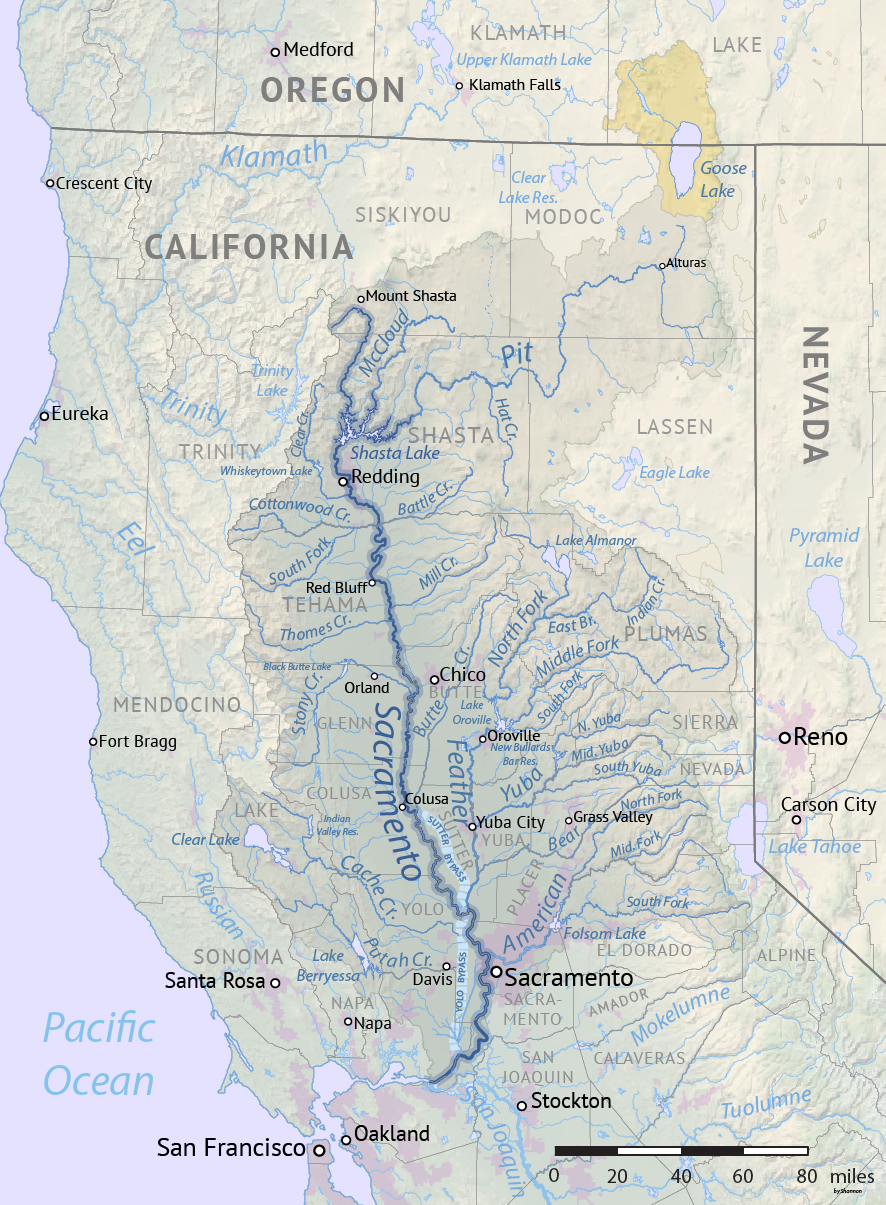
Map of the Roaring Fork River drainage basin in western Colorado, USA. Made using USGS data. By Shannon1 – Own work, CC BY-SA 4.0, https://commons.wikimedia.org/w/index.php?curid=69290878

Part I: #ColoradoRiver Compact curtailments? Manager of Western Slope Colorado River District contends #Colorado should begin planning for potential curtailment of diversions. State official says first things first — Allen Best (@BigPivots) #COriver #aridification

Colorado River headwaters-marker. Photo credit: Allen Best/Big Pivots

Click the link to read the article on the Big Pivots website (Allen Best):

October 20, 2024

Andy Mueller, the general manager of the Colorado River District, delivered a strong message at the organizationโ€™s annual seminar in September. It was time, he declared, for Colorado to plan for potential curtailment of Colorado River diversions as necessary to comply with the compact governing the river among the seven basin states.

Colorado transmountain diversions via the State Engineer’s office

Compact curtailment, sometimes described as a compact call, means that those with water rights junior to or filed since the Colorado River Compact of 1922 would be vulnerable to having no water. That could potentially include most of Coloradoโ€™s Front Range cities, which get roughly half of their water from the Colorado River and its tributaries. It could also include some towns and cities on the Western Slope and even some farmers and ranchers on the Western Slope as well as some ag users reliant upon transmountain diversions.

The precise trigger for such a call, reduced flows to lower-basin states, is open to argument. An ambiguous clause in the compact could be hotly debated, and likely will be, if river flows continue to decline. Mueller spoke of legal saber rattling by lower basin states.

This is not entirely a new subject. Colorado has been talking about the potential for compact curtailment for about 20 years but has not pursued it. The state government disputes the immediate need. What almost everyone can agree upon, however, is that it will be foolish to assume that the near-average or better river flows of the last two years will prevail.

Reservoir levels in the basin have been sagging for most of the 21st century. Most dramatic was the runoff in 2002 when the river yielded only 3.8 million acre-feet. Delegates of the seven basin states who had gathered near Santa Fe in 1922 to apportion the river assumed average flows of at least five times that much.

“New plot using the nClimGrid data, which is a better source than PRISM for long-term trends. Of course, the combined reservoir contents increase from last year, but the increase is less than 2011 and looks puny compared to the โ€˜holeโ€™ in the reservoirs. The blue Loess lines subtly change. Last year those lines ended pointing downwards. This year they end flat-ish. 2023 temps were still above the 20th century average, although close. Another interesting aspect is that the 20C Mean and 21C Mean lines on the individual plots really donโ€™t change much. Finally, the 2023 Natural Flows are almost exactly equal to 2019. (17.678 maf vs 17.672 maf). For all the hoopla about how this was record-setting year, the fact is that this year was significantly less than 2011 (20.159 maf) and no different than 2019” — Brad Udall

Flows in 2003 and 2004 were only marginally better. Slowly, there was acceptance of extended drought unknown in the 20th century. In 2017, a study by Brad Udall and Jonathon Overpeck identified warming temperatures as just as important as drought in explaining the declines. They called it aridification.

By May 2022, the situation looked grim at Powell, the reservoir that the upper basin uses to fulfill its commitment to lower basin states as specified by the compact to the lower-basin states. Water levels had receded so much that tracks laid into the canyon wall to construct Glen Canyon Dam emerged. They had been underwater since the reservoir began filling in the mid-1960s.

It might have worsened. Modeling evaluated the risk of Powell having too little water to generate electricity by the next year. Some talked about potential for the reservoir to have too little water to pass any downstream, what is called dead storage.

Snow fell in prodigious quantities in the winter of 2022-2023 in Steamboat Springs andย  some other locations along the headwaters of the Colorado River and its tributaries, temporarily averting crisis on the Colorado River.ย Photo/Allen Best

Instead of further decline, snow fell in prodigious quantities during the next winter of 2022-2023 across parts of Colorado, which is responsible for 55% of total flows in the river, as well as in Wyoming and other upstream locations. Stock fences were entirely buried in some places of the Yampa Valley.

The runoff that resulted was the third-best in the Colorado River in the 21st century. Five more consecutive runoffs of the same magnitude would fill Powell and all the other reservoirs in the Colorado River Basin, according to Utah State Universityโ€™s Jack Schmidt.

What if, instead of epochal snows in the Rockies, pitiful runoffs parallel to those of 2002 to 2004 return?

โ€œLetโ€™s hope for the best and plan for the worst,โ€ Mueller said at the seminar in Grand Junction held by the River District. The Glenwood Springs-based district โ€” its official title is the Colorado River Water Conservation District โ€” was created in 1938 to represent the interests of 15 of the 20 counties on the Colorado River drainage.

Several people who heard Muellerโ€™s remarks applauded them. Colorado, they say, should not wait until the very last minute before devising a strategy. Curtailing water use will be a very difficult and lengthy process. Better to get on it now.

But there is also another level to the discussion, one of moral and ethical questions, according to one long-time Colorado Rive observer

โ€œHow do we, as a community of two nations, seven states and Mexico, and 30 sovereigns (Native American tribes) โ€” how do we come together to recognize that this is a shared resource, and climate change is changing the resource. We need to understand how to collaboratively share the resource in a way that will be necessary to live in a climate-altered world,โ€ says John Fleck, an Albuquerque-based author of several books, including โ€œWater is for Fighting Over: And Other Myths about Water in the West.โ€

Colorado and other upper basin states, he observes, are saying itโ€™s not their problem because they have met their commitments.

โ€That is morally wrong to me,โ€ he said in an interview. As a practical matter, itโ€™s also โ€œseems really dumbโ€ because in the political and legal system the upper basin states are unlikely to win that argument in a drier 21st century. โ€œThat just ainโ€™t gonna work.โ€

The Colorado River Compact of 1922 apportions waters between the upper and lower basins. Lee Ferry, just a few miles below Glen Canyon, along the Utah-Arizona border, divides the two. Water from the river is also exported outside the basin to agricultureal areas of eastern Colorado and cities of the Front Range as well as southern California, Albuquerque and other places. Map credit: AGU

The 1922 compact apportioned 7.5 million acre-feet for the upper basin states โ€“ Colorado as well as New Mexico, Utah and Wyoming โ€” and 7.5 million acre-feet for the three lower basin states of Arizona, California and Nevada. The compact assumed deliveries to Mexico would be required by a future compact, and they also realized significant evaporation. Altogether, they assumed more than 20 million acre-feet flows in the river. That has rarely happened.

The debated clause is called the โ€œnon-depletion obligation.โ€ It says the upper basin states must allow river flows of 75 million acre-feet over a rolling 10-year average at Lee Ferry. Lee Ferry is in Arizona, just below Glen Canyon and a few miles above the Grand Canyon.

Coloradoโ€™s position is two-fold. It argues that the lower basin overuse remains the primary problem coupled with climate change. And Colorado and its siblings in the upper basin didnโ€™t create either.

โ€œWe take the position that we are not the cause of trending lower flows over the past 20 years,โ€ said Jason Ullman, the state water engineer in a statement from the Colorado Department of Water Resources in response to a query by Big Pivots. โ€œClimate change and aridification impact snowpack and soil moisture, which in turn reduce flows into the Colorado.โ€

Colorado and other upper-basin states altogether use between 3.5 and 4.5 million acre-feet annually compared to roughly 10 million acre-feet by the lower-basin states.

Denver Water, which provides water for the city and many of its suburbs, warns that compact curtailment planning might distract Colorado from negotiations with other states.ย Photo/Allen Best

โ€œThis is why Colorado believes that the responsibility to bring the river back into balance primarily lies with the lower basin and the need to bring uses within their compact apportionment with a plan to use less during times of shortage,โ€ Ullman said.

Mueller, in his remarks at Grand Junction, didnโ€™t disagree with that stance. But he insisted that Colorado needs to prepare a backup plan if the state must releases more water downstream, forcing the curtailment of its diversions.

โ€œI think the best thing our state can do is, while continuing to make a very good case that weโ€™re not the cause of this and that climate change is causing it, we need to be prepared in the event it occurs,โ€ said Mueller

River District directors had recently asked Ullmann to โ€œplease get moving with compact curtailment rules,โ€ he said.

The state needs to come up with the โ€œright funds, have the right personnel, and get moving with our compact curtailment rules,โ€ said Mueller.

This, he added, should not be seen as a sign of weakness by Colorado in the interstate negotiations, but rather as a sign โ€œthat weโ€™re smart, that weโ€™re helping our water users and our communities plan for the future.โ€

Colorado and other basin states are in the midst of negotiating new guidelines that govern operation of the two big reservoirs, Mead and Powell. The first set of guidelines were adopted by the states and the Bureau of Reclamation in 2007.

The regulations were abetted by the  drought contingency plan, which brought cuts in water use to the lower basin and new water management tools to the upper basin.

The 2007 guidelines expire at the end of 2026. The states must come up with a new agreement that recognizes the shifted realities by the end of 2025.

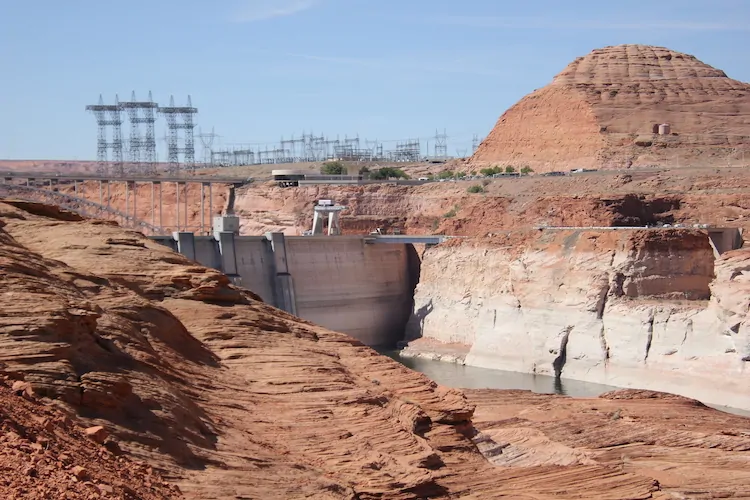
Lake Powell was at 22% of capacity in May 2022 when this photograph was taken, revealing a ledge near the dam that had been used to construct Glen Canyon Dam. Photo/Allen Best
Lake Powell was at 22% of capacity in May 2022 a few weeks prior, a track used in that construction emerged from the receding waters, the first time it had been above water since Powell filled in the 1960s.ย Photo/Allen Best

State government does not absolutely reject the need for compact compliance rules, but the statement attributed to Ullman cites these negotiations.

โ€œIt would be imprudent to undertake any rule-making for compact compliance without knowing the terms of any seven-state consensus regarding operating guidelines that includes releases from Powell. Therefore, it is the position of the state engineer that undertaking compact compliance rule-making now would be premature.โ€

That sounds like no. But thereโ€™s more.

The state engineer has the exclusive authority to make and enforce regulations that enable Colorado to meet its compact commitments.

โ€œColorado recognizes that the first critical step in being able to administer to the compact, if necessary, is the ability to accurately measure diversions,โ€ said Ullman in the written statement. โ€œThe state engineer is pursuing measurement rules for diversions to establish accuracy standards and better define where measurement is necessary. The goals of this effort include increasing the consistency of water right measurement so that Colorado sends only what is required to maintain compact compliance and not more.โ€

How much Colorado might have to curtail would depend upon findings of the Upper Colorado River Commission, which is governed by a 1948 compact.

The state engineer has adopted rules for one of the four water divisions on the Western Slope, and work is progressing in a second district. The engineer plans to also adopt measurement rules in the other two districts.

What do the big Front Range diverters with post-compact water rights have to say?

Denver Water’s entire collection system. Image credit: Denver Water.

Denver Water falls in line behind the state position. It has major diversions from the Colorado River tributaries in Grand and Summit counties.

โ€œWe recognize interest from some in rules for compact administration, but itโ€™s very important that this effort be undertaken at the right time, with thoughtful collaboration among water interests statewide. We know that the State Engineer laid out a potential process a few years ago, with the first step being a focus on measurement rules. If and when it becomes necessary to take further action, we trust the State Engineer to so do. In the meantime, we think itโ€™s critical that states, including Colorado, should keep their focus on the post-2026 guidelines being negotiated now, and not be distracted during a process of the greatest importance to Coloradoโ€™s future.โ€

Northern Water, operator of the Colorado Big-Thompson diversions from the Colorado River headwaters in Grand County, says it will defer to the state. โ€œNorthern Waterย looks to the State of Colorado as the leader on matters related to interstate water agreements,โ€ said public information officer Jeff Stahla.

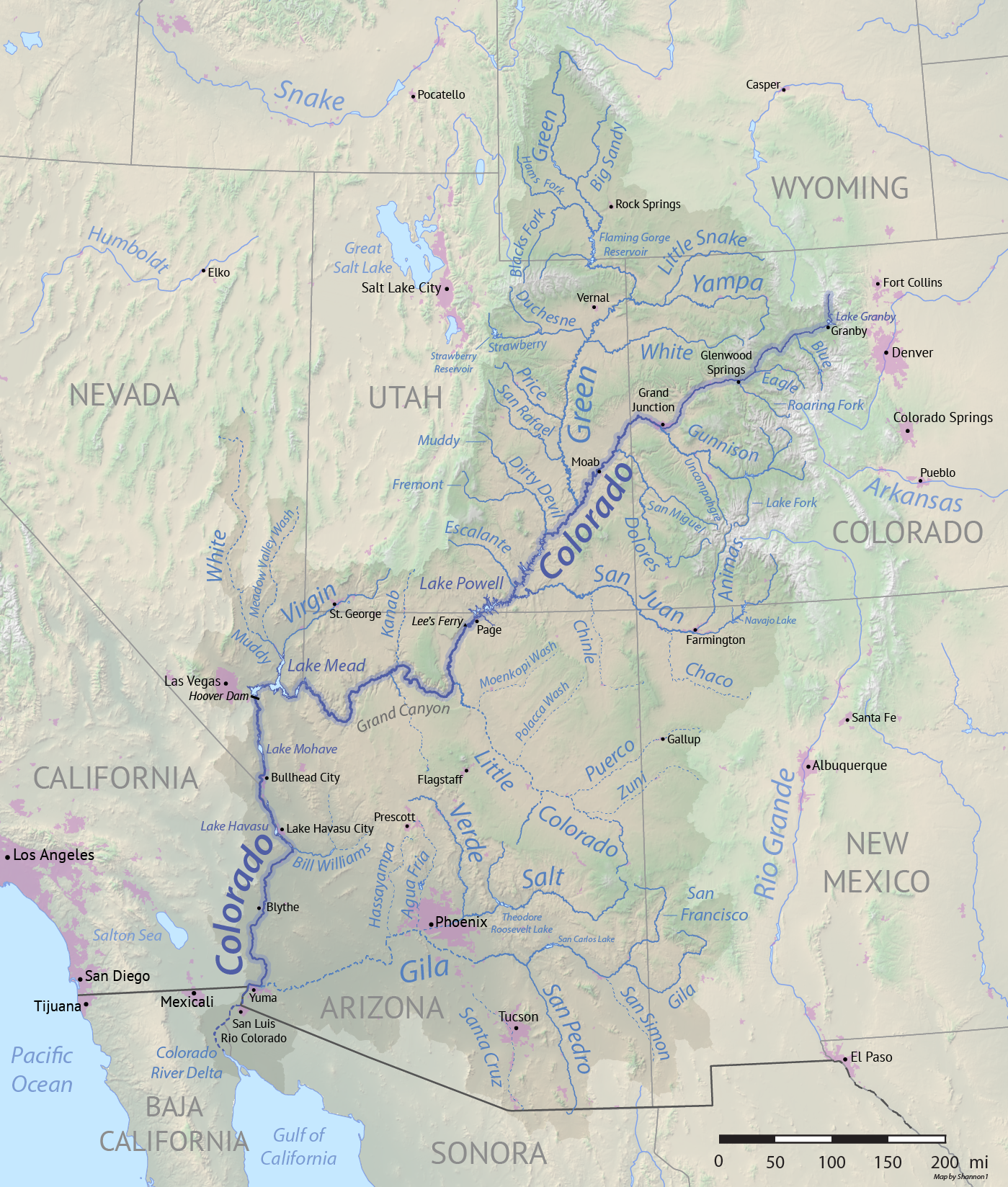
Map of the Colorado River drainage basin, created using USGS data. By Shannon1 – Own work, CC BY-SA 4.0, https://commons.wikimedia.org/w/index.php?curid=65868008

Eagle County, environmental groups file Supreme Court briefs opposing Utah oil train project: Uinta Basin Railwayโ€™s approval was overturned by a lower court — #Colorado Newsline #ActOnClimate

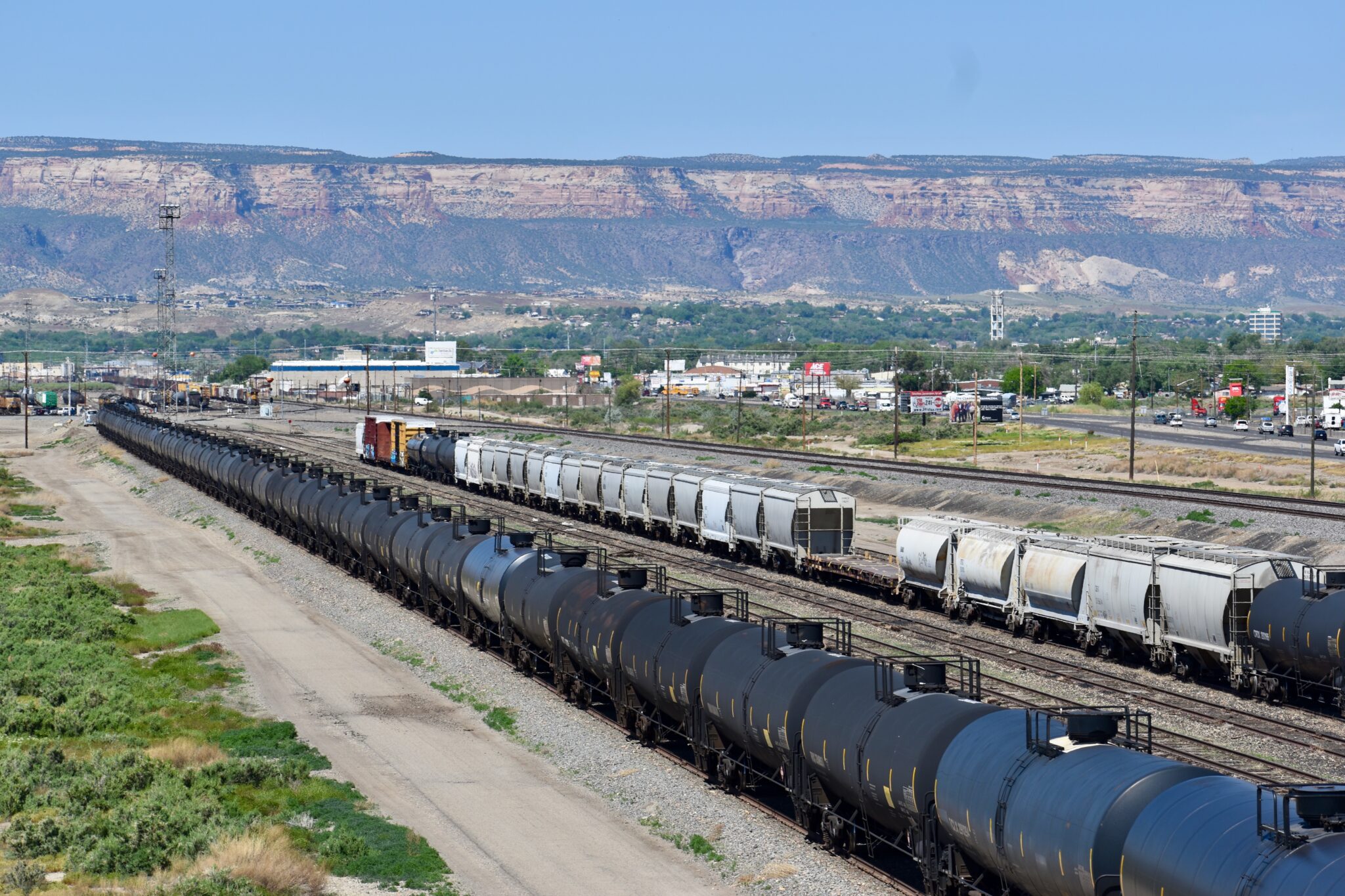
Freight trains sit idle in rail yards in Grand Junction on May 16, 2023. (Chase Woodruff/Colorado Newsline)

Click the link to read the article on the Colorado Newsline website (Chase Woodruff):

October 21, 2024

Coloradoโ€™s Eagle County and a coalition of environmental groups are urging the U.S. Supreme Court to reject what they called an attempt to โ€œdramatically remakeโ€ federal environmental law by the backers of a controversial oil-by-rail project in eastern Utah.

First proposed in 2019, the 88-mile Uinta Basin Railway would connect Utahโ€™s largest oil field to the national rail network, allowing drillers there to ship large volumes of the basinโ€™s โ€œwaxyโ€ crude oil to Gulf Coast refineries โ€” with the vast majority of the traffic routed through Colorado.

Eagle County and five environmental groups sued to overturn the railwayโ€™s 2021 approval by federal regulators, and in a decision last year the U.S. Court of Appeals for the D.C. Circuit sided with the plaintiffs, finding โ€œnumerousโ€ and โ€œsignificantโ€ violations of the National Environmental Policy Act in regulatorsโ€™ analysis of the projectโ€™s risks. The Seven County Infrastructure Coalition, a group of Utah county governments backing the project, appealed that ruling to the Supreme Court, which agreed to hear the case this year.

In separate briefs filed Friday, attorneys for both Eagle County and the environmental groups urged the court, where conservatives hold a 6-3 majority, to affirm the Court of Appeals decision.

โ€œPetitioners are asking this Court to impose limits on NEPA that have no basis in its text whatsoever,โ€ Eagle Countyโ€™s attorneys wrote in their filing. โ€œThey ask this Court to give agencies broad permission not to study the consequences of their actions.โ€

The Court of Appealsโ€™ August 2023 ruling found that Surface Transportation Board regulators had violated NEPA by failing to analyze a wide range of โ€œreasonably foreseeable upstream and downstream impactsโ€ of the railwayโ€™s construction, including increased air pollution and the โ€œdownlineโ€ risk of train derailments and wildfires in Colorado and elsewhere. If the lower courtโ€™s decision is ultimately upheld, the project would be remanded back to the STB for a more thorough environmental review.

โ€œItโ€™s disgraceful that the railroadโ€™s backers want federal agencies to turn a blind eye to those harms,โ€ said Wendy Park, a senior attorney at the Center for Biological Diversity, one of the groups that sued to block the project, in a press release Friday. โ€œA robust environmental review that takes a hard look at all the trainโ€™s threats is crucial for protecting communities near and far from this railway.โ€

At an estimated capacity of up to 350,000 barrels exported per day, the Uinta Basin Railway would rank among the largest sustained efforts to transport oil by rail ever undertaken in the U.S., singlehandedly more than doubling the nationwide total in 2022, and causing a tenfold increase in hazmat rail traffic through environmentally sensitive and densely populated areas in Colorado.

In their petition for Supreme Court review, the railwayโ€™s backers argued that federal agencies conducting NEPA reviews must be limited to considering โ€œproximate effects of the action over which the agency has regulatory authority.โ€

โ€œThere is simply no role under NEPAโ€™s text and this Courtโ€™s precedents for stymying development projects based on environmental effects that are so wildly remote in geography and time,โ€ attorneys for the Seven County Infrastructure Coalition wrote in an Aug. 28 brief.

A long list of conservative advocacy organizations and fossil fuel industry groups have filed amicus briefs in support of the Seven County Infrastructure Coalitionโ€™s argument. Among them is a filing by Anschutz Exploration Corporation, the oil and gas company owned by conservative Colorado billionaire Phil Anschutz, whose ties to Supreme Court Justice Neil Gorsuch have repeatedly come under scrutiny.

In their response brief, Eagle Countyโ€™s attorneys argued that adopting the petitionersโ€™ view of NEPAโ€™s requirements would โ€œchange it beyond recognition.โ€

โ€œNEPA makes clear that agencies must study the โ€˜reasonably foreseeableโ€™ environmental consequences of their actions,โ€ they wrote. โ€œAnd the environmental consequences of, for example, a derailment of an oil-laden train next to the river are eminently foreseeable.โ€

Oral arguments in the case, Seven County Infrastructure Coalition v. Eagle County, are scheduled to be heard on Dec. 10.

Election Throws Uncertainty Onto Bidenโ€™s Signature #Climate Law — Inside Climate News

President Joe Biden signs H.R. 5376, the โ€œInflation Reduction Act of 2022โ€, Tuesday, August 16, 2022, in the State Dining Room of the White House. (Official White House Photo by Cameron Smith)

Click the link to read the article on the Inside Climate News website (Nicholas Kusnetz):

October 19, 2024

President Joe Bidenโ€™s signature climate change law passed Congress by the narrowest of margins, without a single Republican in favor. GOP leaders have attacked the bill and promised to repeal it.

Yet despite the lawโ€™s hyper-partisan creation story, the Inflation Reduction Act, or IRA, could prove difficult to roll back, whatever the outcome of next monthโ€™s election.

The IRA was the nationโ€™s largest single investment in reducing climate-warming pollution, with an array of programs that are beginning to shower the economy with grants, loans and tax incentives. The total sum is expected to reach into the hundreds of billions of dollars over a decade, funding that will leverage much more in private investment. And by design, the money is flowing throughout the country, with most of it being spent in conservative-leaning states.

One report by E2, a pro-environment business group, identified at least 334 โ€œclean energy and clean vehicleโ€ projects announced since the lawโ€™s enactment, with the potential to create 110,000 jobs. Those projects were spread across 40 states, with nearly 60 percent in congressional districts represented by Republicans.

Another assessment, by the Rhodium Group, examined total โ€œclean technologies and infrastructureโ€ investment by businesses and consumers in the two years after the billโ€™s enactment, and found it had climbed to nearly $500 billion, a 71 percent increase from the two preceding years.

โ€œThis is a huge investment. We are really seeing its impacts,โ€ said Jackie Wong, a senior advisor to the NRDC Action Fund, an environmental political advocacy group that has endorsed Kamala Harris. โ€œThis isnโ€™t just about climate. This is also about public health and about jobs and about revitalizing American manufacturing.โ€

Trump and his advisers and spokespeople have said he would seek to roll back the lawโ€™s spending, a step Wong said โ€œwould be devastating for climate and economic health.โ€

And yet all the spending that has begun going out helps explain why there might not be much appetite in Congress for a wholesale repeal. In August, 18 House Republicans sent a letter to Speaker Mike Johnson urging caution in any efforts to reform or repeal the law, noting that its tax credits for clean energy โ€œhave spurred innovation, incentivized investment, and created good jobs in many parts of the countryโ€”including many districts represented by members of our conference.โ€ 

The lawโ€™s designโ€”which created, expanded or extended a wide array of tax credits for everything from wind and solar power generation to battery manufacturing, electric vehicles, clean hydrogen production and sustainable aviation fuelโ€”has made it broadly popular among businesses big and small. Now that those credits are in place, industry leaders expect them to last, said Frank Maisano, a senior principal at Bracewell LLP, a law and lobbying firm that represents clients across the energy industry.

โ€œThey think this is not going away because of the good things it can do,โ€ Maisano said. He added that the bill included policies that have generally drawn bipartisan support, and that while it may get tweaked, โ€œI donโ€™t think Congress is going to go back on these things that are happening in their districts.โ€

But if a full repeal is unlikely, many of the lawโ€™s supporters worry that a second Trump administration or a Republican-controlled Congress could use executive authority, hearings or oversight to constrain or reshape spending in ways that would undermine the lawโ€™s goals.

The tax credits, for example, require guidance issued by the Treasury Department to help define which projects are eligible. In the case of a clean hydrogen tax credit, a Trump administration could issue guidance that would skew the credit toward more polluting fossil fuel projects. For electric vehicles or wind and solar generation, new guidance could restrict how many vehicles or projects qualify for the credits or could simply cast uncertainty over the programsโ€™ future, discouraging private investment.

Derek Sylvan, strategy director at the Institute for Policy Integrity at New York University, said the tax credits have the potential to drive tremendous emissions cuts with hundreds of billions of dollars in benefits. But many, like the hydrogen credit, have the potential to be skewed in favor of fossil fuels or other polluting technologies.

โ€œThat could be really huge,โ€ Sylvan said. โ€œYou could imagine that for any particular tax credit, if that changes and suddenly a lot of funds are going to activities that have pretty limited or even negative climate benefits, that could certainly undermine the climate impacts of the IRA.โ€

A study published last year in Science estimated that the IRA is expected to slash the nationโ€™s climate pollution 43 percent to 48 percent below 2005 levels by 2035, compared to an expected reduction of 27 percent to 35 percent without the legislation.

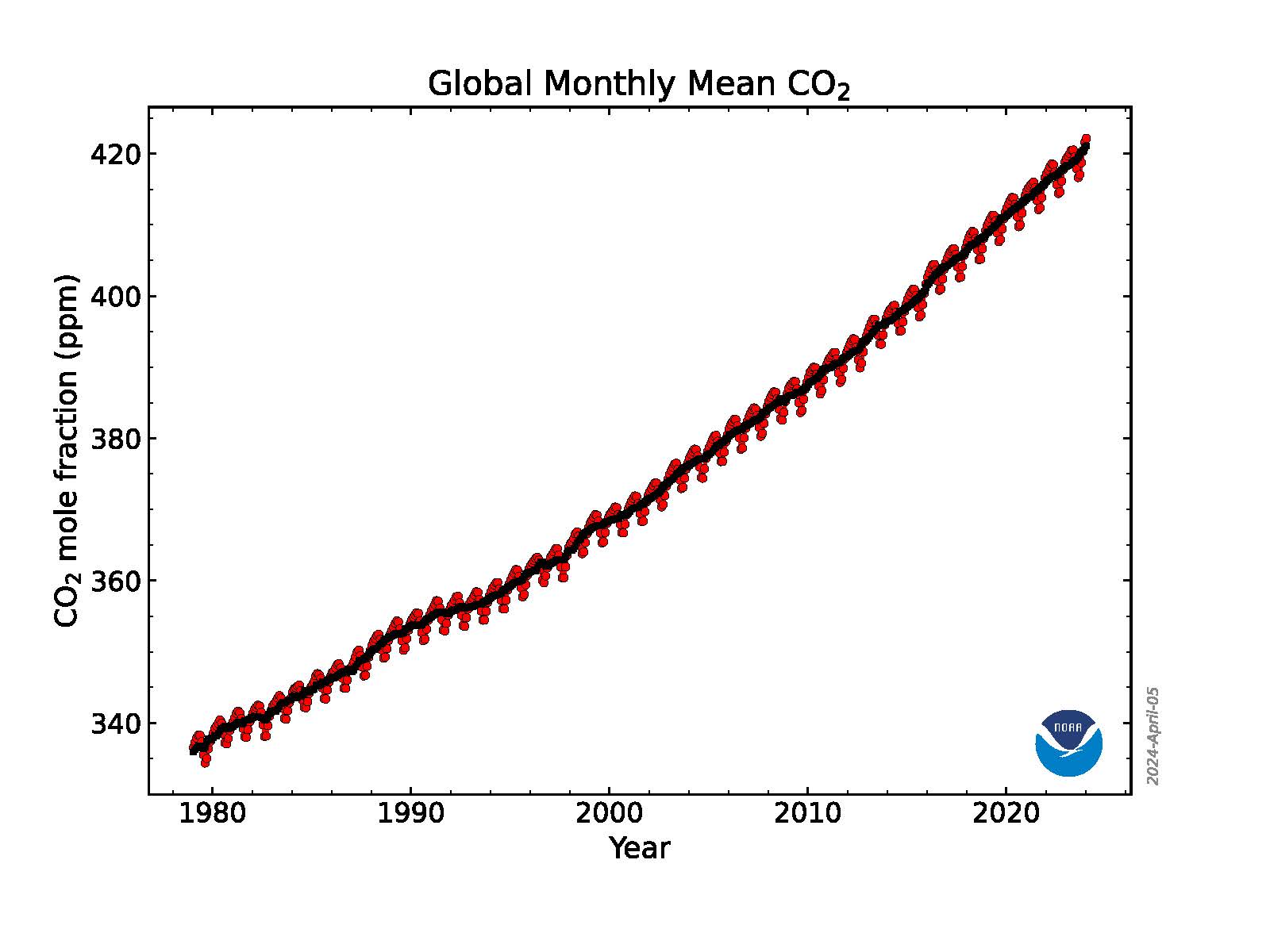
This graph shows the globally averaged monthly mean carbon dioxide abundance measured at the Global Monitoring Laboratoryโ€™s global network of air sampling sites since 1980. Data are still preliminary, pending recalibrations of reference gases and other quality control checks. Credit: NOAA GML

Many of the IRAโ€™s programs came in the form of grants, loans or direct spending that has already been committed. One of the largest is the Greenhouse Gas Reduction Fund, a $27 billion โ€œgreen bankโ€ program. Most of that money was awarded in August to nonprofits, which will now be able to lend the funds directly to emissions-cutting projects or distribute them to a network of green banks around the country. Some of its programs are intended to benefit communities that have limited access to financing for things like rooftop solar or energy-efficiency retrofits.

Reed Hundt, chief executive of the Coalition for Green Capital, one of the recipients, said the fund differs from tax credits because his group can choose projects that will have outsized climate impacts. It is also looking to fund projects in rural and often conservative states that might be less likely to get commercial loans for renewable energy projects, Hundt said.

The Greenhouse Gas Reduction Fund money has been obligated, meaning it would take violating a contract to pull it back. But a hostile administration or Congress could use hearings, oversight or staff cuts to make it harder for the banks to spend the money, said Kyle Kammien, policy director of the Green For All program at Dream.org, an advocacy group focused on green jobs and criminal justice.

โ€œIn some ways itโ€™s safe, but you could see how political levers could make it less effective or slow it down,โ€ Kammien said.

For other programs, simply cutting staffing at agencies could make it harder to spend money thatโ€™s already been obligated.

Still, the architects of the IRA designed it with elections in mind, said Kate Gordon, a former senior adviser to U.S. Energy Secretary Jennifer Granholm and now chief executive of California Forward, an economic development nonprofit. The billโ€™s timelines, its broad distribution of funding across the economy and the country, were all meant to make it more popular and durable.

โ€œIt brings a lot more people and places into the conversation versus your typical government policy that says, โ€˜We are going to build a big thing,โ€™โ€ Gordon said. She told the story of a visit she made to a summit in Wyoming organized by the stateโ€™s governor and senators, neither of whom had voted for the IRA.

โ€œThey didnโ€™t vote for it for political reasons, Iโ€™m sure, but they were 100 percent in in taking advantage of it,โ€ Gordon said. She compared the IRA to President Barack Obamaโ€™s health care legislation, which was attacked for years but has remained in place.

โ€œMy gut is that there will be a lot of talk about repealing things,โ€ she said, โ€œand not a lot of action.โ€

Upper #YampaRiver Conservancy launches watershed data dashboard — Steamboat Pilot & Today

Screenshot from the Yampa River Dashboard

Click the link to read the release on the Steamboat Pilot & Today website:

The Upper Yampa Water Conservancy has launched a new website gathering historic, current and forecasted watershed data from the Yampa River Basin last week. The new website,ย the Yampa River Dashboard, provides a centralized location to access watershed data as a way to assist local water managers and the public with timely information related to recreation, water quality standards, flood irrigation and reservoir management.

โ€œThe new Yampa River Dashboard is an essential tool for the City in our ongoing efforts to monitor, protect and enhance the health of the Yampa River,โ€ said Julie Baxter, water resources manager for the City of Steamboat Springs, in a statement. โ€œThe dashboard is also a valuable resource for community members, offering updated information on river conditions.โ€

The conservancy is encouraging both water professionals and the public to utilize the new tool.ย  Whether looking for recreational opportunities, timing flood irrigation, managing reservoir releases, or looking for water quality standards, users can find the data needed to make more informed decisions about the Yampa River.

Navajo Dam operations update: Bumping down to 450 cfs October 22, 2024

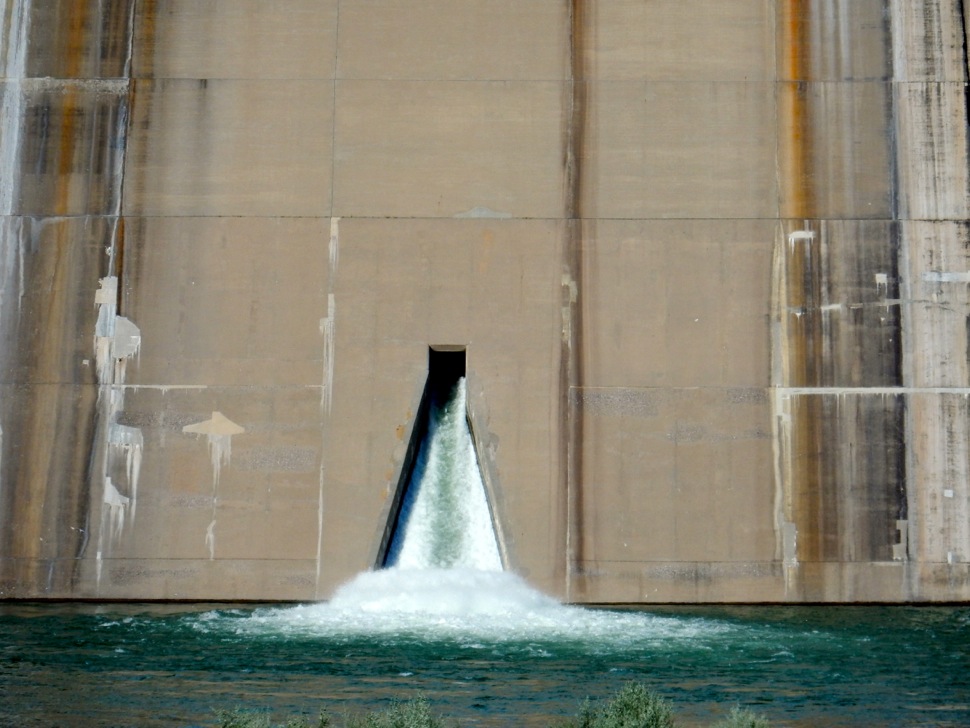
The outflow at the bottom of Navajo Dam in New Mexico. Photo: Brent Gardner-Smith/Aspen Journalism

From email from Reclamation’s Western Colorado Area Office:

With forecast sufficient flows in the critical habitat reach, the Bureau of Reclamation has scheduled a decrease in the release from Navajo Dam from 550 cubic feet per second (cfs) to 450 cfs for Tuesday, October 22nd, at 7:00 AM. Reclamation is still currently utilizing the 4×4 for the release point due to a maintenance project. This project will continue throughout October and November.

Releases are made for the authorized purposes of the Navajo Unit, and to attempt to maintain a target base flow through the endangered fish critical habitat reach of the San Juan River (Farmington to Lake Powell).  The San Juan River Basin Recovery Implementation Program recommends a target base flow of between 500 cfs and 1,000 cfs through the critical habitat area.  The target base flow is calculated as the weekly average of gaged flows throughout the critical habitat area from Farmington to Lake Powell.  

Life Cycle Assessment of New Closed-Loop Pumped Storage #Hydropower Facilities — NREL #ActOnClimate

Click the link to read the article on the NREL website (Stuart Cohen):

NREL has developed a tool that enables developers to evaluate the life cycle greenhouse gas emissions associated with new, domestic closed-loop pumped storage hydropower facilities.

In a 2023 study, NREL researchers compared the life cycle greenhouse gas emissions of closed-loop PSH with other energy storage technologies, finding PSH to have the lowest life cycle emissions among the technologies studied. The black bars represent a range of scenarios explored in the study. Graphic by Tara Smith, NREL

View Interactive Tool on OpenEI

Pumped storage hydropower (PSH) is an established technology that can provide grid-scale energy storage and support an electrical grid powered in part by variable renewable energy sources such as wind and solar. Despite recent interest in PSH, questions remain regarding the overall sustainability of PSH projects, and information about the life cycle of greenhouse gas (GHG) emissions associated with PSH technologies has been limitedโ€”until now.

In 2023, NREL researchers published a wide-ranging study that included a full life cycle assessment of new closed-loop PSH projects in development in the United States. The majority of GHG emissions from PSH are attributed to the grid mix of energy used to pump water from a facilityโ€™s lower reservoir to its upper one, as this mix is not usually made of 100% carbon-free energy sources. As such, GHG emission levels decrease in locations with a higher level of renewable energy sources in the grid mix. Additional emissions stem from a plantโ€™s construction (e.g., from diesel-powered equipment, concrete, or steel) and ongoing plant operations.

In the study, researchers compared their results to published data on the GHG emissions of other energy storage technologies, including compressed air energy storage and different battery types. The results showed that GHG emissions associated with PSH were lowest among the group studied.

JOAN CARSTENSEN

Interactive Data

The success of the study inspired the creation of an interactive tool on OpenEI that uses the study data to enable developers to calculate the GHG emissions of potential PSH sites in the United Statesโ€”with the goal of promoting PSH development with configurations and locations with the lowest global warming potential.

Users can input specifications for PSH facilities at varying levels of detail, such as reservoir volume, dam material and dimensions, number and capacity of turbines, and the length of the transmission line that connects the PSH system to the grid. They can then compare different PSH scenarios side by side and view the emissions by component, material, and life cycle phase.

Using the Tool

To use the tool, users first select between a Basic and an Advanced scenario, in which they can specify a site configuration and explore GHG outcomes. Basic mode offers a smaller set of options for a simpler user experience, whereas Advanced mode allows the user to submit detailed specifications for PSH system components (e.g., number of reservoirs being built, dam material, and distance to grid connection).

Multiple scenarios with different inputs can then be viewed side by side and subsequently edited with different inputs to produce the desired outcome.

Tool Methodology

The tool was built using the data and methods from the 2023 study, where researchers conducted a life cycle assessment of closed-loop PSH under a variety of assumptions. This data includes all GHG emissions from facility construction, operation, and maintenance and exclude any emissions that might occur during decommissioning or any reservoir-based emissions. We do not consider nonpower uses of the PSH site, which in practice could bear some responsibility for life cycle GHG emissions.

Publications

Life Cycle Assessment of Closed-Loop Pumped Storage Hydropower in the United StatesEnvironmental Science & Technology (2023)

Life Cycle Assessment for Closed-Loop Pumped Hydropower Energy Storage in the United States, Hydrovision International, NREL Presentation (2022)

Documentation For Material and Energy Input Calculations (2024)

Why Indigenous-Led Management Is Integral to Reconciliation and Restoration Efforts — The Revelator

Photo credit: Bureau of Land Management

Click the link to read the article on The Revelator website (Jillian Everly):

October 15, 2024

Western science structures are embedded in a deeply rooted settler-colonial mindset. Indigenous traditional knowledge has the potential to overturn western systems destined for doom.

As a legislative policy fellow and anthropologist who studies womenโ€™s well-being in coastal communities of Chile and Indigenous salmon management in Alaska and Canada, Iโ€™ve witnessed how genocidal attempts to eradicate Indigenous peoples and their cultures have also damaged the environment. We see it in current managementโ€™s low returns in fish, high levels of runoff and nutrient input into ocean systems, and generally unsustainable levels of resource extraction.

Iโ€™ve also seen the opposite: I interviewed managers and biologists in Vancouver, Canada, who described the substantial improvements of Indigenous-led, bottom-up approaches to conservation. They see fish return and people fulfilling their well-being and nutrition needs. They see political and economic reform and a revitalization of social and cultural practices.

Unfortunately this is still not the norm, as we saw in a recent international agreement between the United States and Canada that placed a seven-year fishing moratorium on Chinook salmon to encourage fish populations to rebound. Most people would agree that this is a worthy goal for the conservation of both the species and the people who depend on Chinook. However, the new agreement fails to factor in Indigenous access to resources for ceremonial and subsistence harvest, which is mandated by law, nor did legislators acknowledge public comment that supported that access.

American Progress (1872) by John Gast is an allegorical representation of the modernization of the new west. Columbia, a personification of the United States, is shown leading civilization westward with the American settlers. She is shown bringing light from east to west, stringing telegraph wire, holding a book, and highlighting different stages of economic activity and evolving forms of transportation. By John Gast – This image is available from the United States Library of Congress’s Prints and Photographs division under the digital ID 09855, Public Domain, https://commons.wikimedia.org/w/index.php?curid=373152

The marginalization of Indigenous peoples today, as seen in this agreementโ€™s failures, can be traced back to colonialism.

The history of colonialism is steeped in human-rights violations such as the outlawing of Indigenous salmon-management practices that settlers later appropriated for their own economic gain. Settler wealth was achieved only through the exploitation of resources and forced relocation of Indigenous peoples out of economically advantageous spaces and acculturation into oppressive colonial ones.

โ€œSettler governments [are] primarily concerned with economic gain,โ€ a British Columbia-based project manager focused on salmon restoration told me during an interview. โ€œTheir mandate is to work commercial fisheries or recreational ones that generate economic value for their states, provinces, or countriesโ€ฆThatโ€™s the starting point; when human well-being is the starting point โ€” like it is with Indigenous people โ€” then it leads to a very different kind of management.โ€

A Broader Worldview

Indigenous traditional knowledge incorporates a worldview that recognizes humans as a part of, rather than separate from, the animal family. As the restoration manager explained: โ€œThat changes everything if you really think it through, because weโ€™re no longer in control. Weโ€™re not in charge, nature doesnโ€™t exist to serve us, nature isnโ€™t there to be exploited for our own benefit.โ€

For example, the Nisgaโ€™a Nation โ€” whose treaty with the government of British Columbia and Canada protects their right to manage and harvest fish species and other resources โ€” place value on whatโ€™s left behind, not how much is extracted. Here, colonial extractive ideologies are challenged by traditional regenerative strategies that have sustained fisheries and Indigenous societies for thousands of years.

Nisga’a Museum sign. Photo credit: Connie Azak via Flickr

Incorporating an embedded subsistence culture and traditional knowledge into ongoing and future reconciliation and restoration efforts would benefit from a concept called transformative conservation.

Transformative conservation recognizes environmental contexts as inextricably linked to cultural, social, economic, and political ones, confront issues as they arise, and therefore operate in less limited, binding boundaries.

As the project manager explained: โ€œEpistemologically, western science is very naรฏve about how the world actually functions. Indigenous people have much more sophisticated (in my view) worldviews that are quite effective in actually integrating western science outputs into their management systems. Western science is by its nature a methodology thatโ€™s reductionist. It operates most effectively when it can reduce problems to very simple systems, models, variables and then test them out. Itโ€™s a very powerful knowledge creation system but it has real limitations when it comes to then building back up again, to develop an integrated view of ecosystems and how they function.โ€

We can see this at work in Canadaโ€™s Department of Fisheries and Oceans. On its website the agency says it โ€œhelps to ensure healthy and sustainable aquatic ecosystems through habitat protection and sound science. We support economic growth in the marine and fisheries sectors, and innovation in areas such as aquaculture and biotechnology.โ€ In practice this appears to give little attention to the needs of Indigenous peoples.

My interviewee described the agencyโ€™s purpose as obsolete. โ€œThere are times when institutions are too far gone to rehabilitate, and DFOโ€™s raison dโ€™etre has ceased to hold true.โ€

For everything there is a season, and โ€œgovernment organization has a shelf life,โ€ the manager said.

DFO is not alone. Structural change and institutional reform, not merely Indigenous inclusion, are necessary for true representation of Indigenous people in all forms of governance. Writing in the book Pathways of Reconciliation, scholars Melanie Zurba and John Sinclair argue โ€œstructural forms of oppressionโ€ in state-sanctioned, top-down forms of governance โ€œinhibit meaningful First Nations participationโ€ and wield โ€œIndigenous people into becoming instruments of their own dispossessionโ€ โ€” thus reproducing colonial violence and marginalization against Indigenous people while moving away from ecological resilience fulfilled only in tandem with Indigenous self-determination and agency in decision-making.

In addition to institutional reform, Indigenous self-determination requires capacity building made possible with funding and resources devoted to tangible improvements through bottom-up, grassroots co-management approaches within and between First Nations and Tribes. The Kuskokwim Intertribal Fish Commission is an example of successful co-management between Tribes and the U.S. Fish and Wildlife Service.

Change Is Necessary

These approaches would serve the needs of both Chinook and people. In this case, thereโ€™s great potential for DFO and the Alaska Department of Fish and Game to adopt co-management agreements similar to the Kuskokwim to reach holistic approaches to salmon management. My interviewee elaborated: โ€œIโ€™d suggest the best thing DFO and all those other orgs could do would be go to Indigenous scientists and managers and say: โ€˜You guys set up a system and tell us how we can feed into that, because we trust you.โ€™ Thatโ€™s how I do it.โ€

The unwillingness of settler governments to resign their power to Indigenous people has strained the potential of climate adaptation and species and habitat preservation. Complex, multiscale problems require complex solutions โ€” discussion across geographical boundaries and multiple scales of formal and informal governance, a discourse around institutional reform, a sticky un-meshing and remeshing of knowledge systems, and an overall willingness for actors to learn, fail, re-learn, and think beyond self-imposed boundaries with enduring hope.

Current methods are simply not working. Itโ€™s time we look to those who view salmon survival through a holistic lens, those who are dependent on salmon both economically and culturally, and those Indigenous peoples who have successfully managed, protected, and cared for salmon for thousands of years. An active rather than passive representation of Indigenous voices and an incorporation of their worldviews into policy and management initiatives will not only establish a starting point to solve complex ecological problems such as climate change but also lead down a long-ignored path toward true reconciliation.

The opinions expressed above are those of the author and do not necessarily reflect those of The Revelator, the Center for Biological Diversity or their employees. 

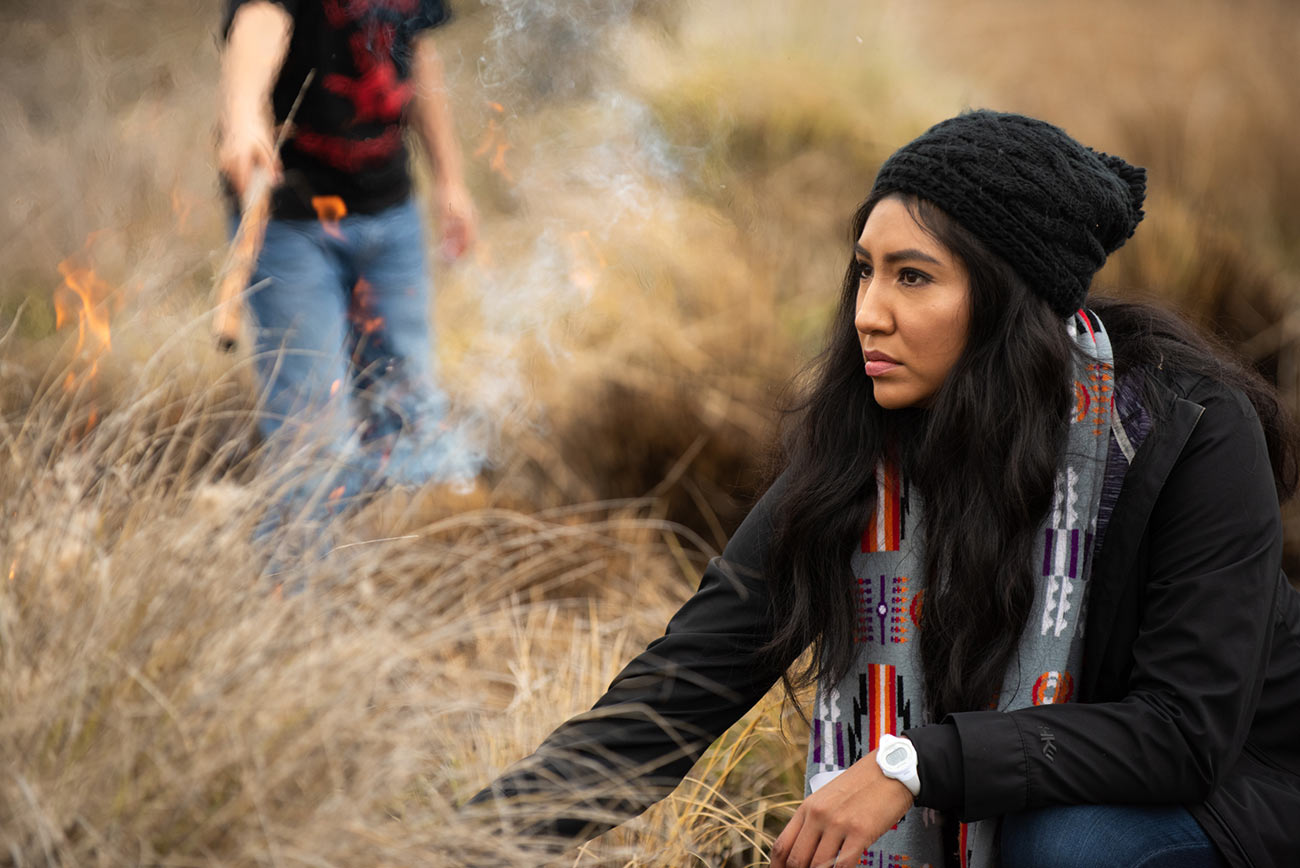
Melinda Adams lights a field of deergrass on fire during the Tending and Gathering Garden Indigenous fire Workshop at the Cache Creek Nature Preserve in Woodland, Calif. Photo: Alysha Beck/UC Davis

Monday Briefing — @AlamosaCitizen #SanLuisValley #RioGrande

From email from the Alamosa Citizen:

October 21, 2024

Wet and dry 

In the case of the Upper Rio Grande Basin, two conflicting conditions can both be true at once. On one hand, the year has brought much more rain than is typical. With more than an inch of rain over the weekend, the San Luis Valley has seen more than 10 inches of total precipitation so far in 2024, or 3 inches above whatโ€™s normal, according to the National Weather Service. On the other hand, low snowpack in the San Juans and Sangre de Cristos from a winter ago left Valley farmers with less than a normal water year for irrigation. On May 6, the Rio Grande Basin had half of the typical snowpack, according to the Colorado Climate Center, and we know theย unconfined aquifer relied on by so many irrigators remains a major problem. The state currently has a five percent curtailment on groundwater wells in the San Luis Valley. In calculating its downstream water obligations to New Mexico under the Rio Grande Compact, Colorado is anticipating the Rio Grande to finish the irrigation season at 78 percent of whatโ€™s normal for flows and 80 percent on the Conejos River, according to Craig Cotten, division engineer for the Colorado Division of Water Resources.

San Luis Valley Groundwater

New conservancy district forms

Winding its way through Colorado Division 3 Water Court is an application from a group of Valley irrigators to form the Southern Colorado Water Conservancy District and Groundwater Management Subdistrict. The initial board of directors would be Art Artaechevarria, William Meyers, and Les Alderete, according to the application submitted to state water court in Alamosa. The formation of a new water conservancy district will allow the group of farmers to manage their own affairs when it comes to meeting Coloradoโ€™s rules governing groundwater pumping in the San Luis Valley. Like the Rio Grande Water Conservation District and its subdistrict formations, the new SOCO Water Conservancy District would impose a mill levy tax upon the farms operating within it to pay for its operations and strategy to adhere to the stateโ€™s groundwater pumping rules. The Southern Colorado Water Conservancy District has membership among farmers in Saguache, Rio Grande and Alamosa counties. The new water conservancy district will include approximately 250 wells, and in its application it tells the water court that the subdistrict plans to obtain approximately 6,000 acre-feet to augment depletions from wells and estimates it will cost $40 million to obtain the water. Thereโ€™s a lot more to this developing water story. More in the coming week.

Rio Grande and Pecos River basins. Map credit: By Kmusser – Own work, Elevation data from SRTM, drainage basin from GTOPO [1], U.S. stream from the National Atlas [2], all other features from Vector Map., CC BY-SA 3.0, https://commons.wikimedia.org/w/index.php?curid=11218868

Hearing this week on Rio Grande Compact case

The decade-long Rio Grande Compact case of Texas v. New Mexico and Colorado will have a hearing before retired Chief Judge D. Brooks Smith on Wednesday, Oct. 23, in Denver. Smith, who retired as chief judge of the U.S. Third Circuit Court of Appeals in 2021, was appointed new Special Master in the case by the U.S. Supreme Court in July. The appointment came after the U.S. Supreme Court agreed with the U.S. Department of Interior and denied a consent decree that the states had negotiated which would have settled the case. Smith now takes over the case and is expected to set a course of action during the hearing this week.

First snows in #Colorado — @Russ_Schumacher (@ColoradoClimate Center) #snowpack

Click the link to read the article on the Colorado Climate Center blog (Russ Schumacher):

October 18, 2024

Our last blog post took a look at the timing of first freezes in Colorado. October has been extremely warm thus far, and many parts of the state are still awaiting their first freeze of the fall (though some of those locations may get one this weekend with the cold air moving in.) In this post, weโ€™ll look at the data for another sign of autumn in Colorado: the first snowfall.

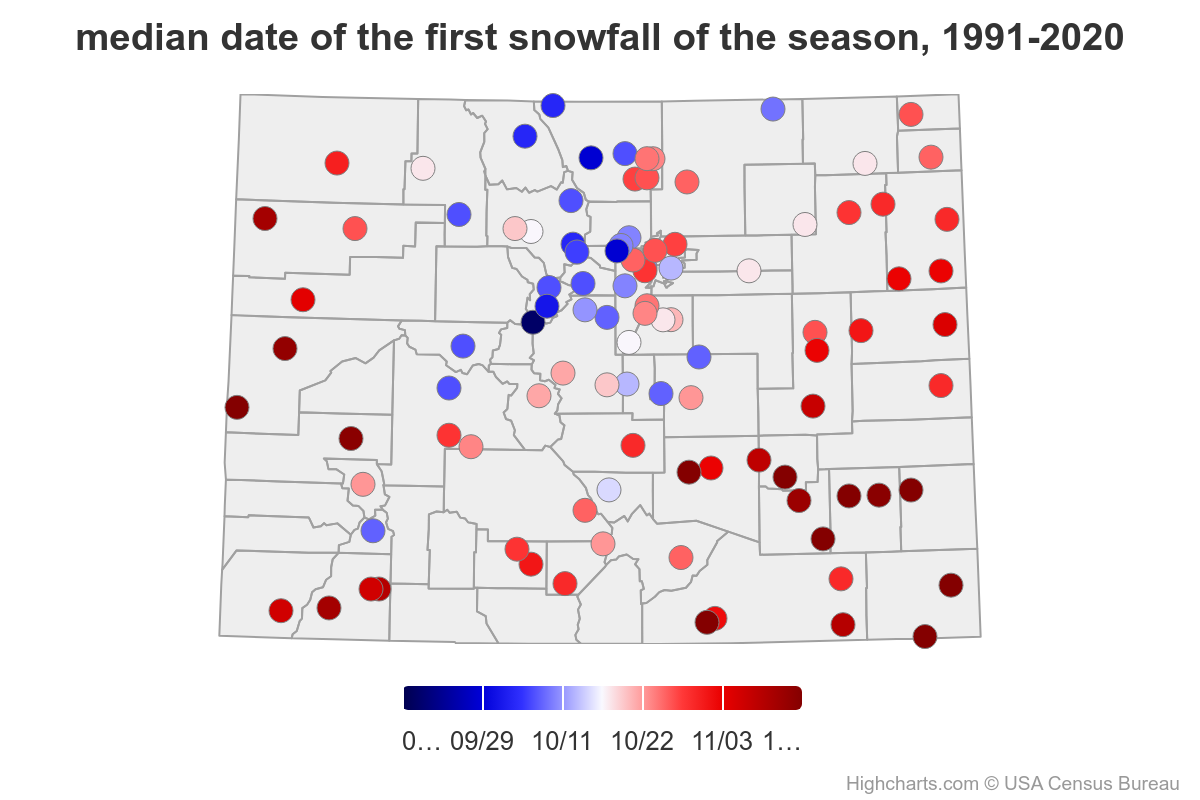
Colorado Public Radioโ€™s Joe Wertz published a nice summary of when the average first snow happens in Colorado. When he asked me about this data, it turned out to be surprisingly difficult to find! The average date of first snow is not a part of the official NOAA โ€œnormalsโ€ dataset, so I had to do some calculations myself. The CPR story has an interactive map, and we now have one on our website here. I encourage you to read the story, and weโ€™ll add a little more detail here.

Map showing the median date of the first snowfall of the season. See an interactive version (where you can mouse over each individual station) at https://climate.colostate.edu/normals_stn_select_snow.html

As with first freezes, the timing of the first snow varies a lot across Colorado, and it is largely tied to elevation. Among long-term climate stations, the median earliest (i.e., half of years would be earlier and half of years later) first snow is at Climax in Lake County, at over 11000 feet in elevation, on September 20. (If we had observing stations on the highest mountain peaks in Colorado, the idea of โ€œfirst snowโ€ would not be helpful, as they can get snow at any time of year.) At the other extreme are low-elevation stations in western and southeastern Colorado, where the first snow doesnโ€™t fall until sometime in November in most years. Gateway in Mesa County, one of the warmest locations in the state, takes the prize for latest average first snow: November 25. The rest of the state falls somewhere in between. For the Front Range urban corridor, mid-to-late October is the most typical time for the first snow, while areas in the foothills and mountains are generally in late September or early October. Some mountain locations got their first snow of this fall in the September 22-23 storm: if they did, that was a little earlier than usual. And the rest will likely get their first in the current storm, which is a little later than usual.

Of course, the averages are just averages, and in Colorado we know that variations can be huge. As one example, in Fort Collins, the most common timing for the first snow is in late October, but it has happened as early as September 8, which just happened in 2020, and as late as December 13, in 1965.

Is the snow season changing?

Next, weโ€™ll take a look at the stations that have consistently reported snowfall since at least 1980, and see whether the timing of the first and last snowfall has been changing. Along the Front Range and the southeastern Plains, the timing of the first snow has been creeping later in recent decades, by a week or two at most stations. But the last snow in the spring has also been trending later. So the length of the snow season is somewhat shorter in these areas, but overall it is mainly starting a little later and ending a little later.

Map showing the change over the period 1980-2024 in the median date of first snow in the fall. Trends toward longer snow seasons (earlier in the fall, later in the spring) are shown in blue; toward shorter snow seasons in red.
Map showing the last snow in the spring. Trends toward longer snow seasons (earlier in the fall, later in the spring) are shown in blue; toward shorter snow seasons in red.

Mountain locations donโ€™t show much change in timing, and there are a few mountain stations where the first snow has trended earlier over this time period. What caught my eye on these maps was far northeast Colorado: the stations at Holyoke and south of Sedgwick. (These stations have excellent records with very diligent volunteer observers.) The average first snow has shifted about a week earlier, and the last snow about 2-3 weeks later, meaning that the snow season is around a month longer now than it was a few decades ago. Cochetopa Creek, south of Gunnison, and Crestone in Saguache County, have similar trends toward longer snow seasons.

What does this all mean?

These trends in the timing of the first snow in eastern Colorado do generally line up with recent trends in temperature in Colorado, where the falls have gotten a lot warmer, but the springs havenโ€™t warmed nearly as much.  Because it needs to be relatively cold to snow, it makes sense that the odds have been tilted away from early-fall snow, but still allow snow to regularly happen in April and May. But itโ€™s also important to take these changes with a grain of salt: as I told CPR, snow is very challenging to measure accurately, and measurement protocols have been inconsistent over time, so some of the changes may be as much a function of measurement differences than of real changes in the climate.

And lastly, is there a connection between whether the first snow is early or late, and the total amount of snow that falls over the season as a whole? Again, it depends where you are. In places that average a lot of snow every year (i.e., the mountains), thereโ€™s no correlation between the timing of the first snow and the seasonal total. Starting the accumulation season a week or two early or late comes out in the wash when you get hundreds of inches of snow each year. But the relationship is stronger than I might have expected in the less-snowy parts of the state.

Correlation between the date of the first snow in the fall and the total snowfall over the entire season. Blue shading indicates that a later first snow is correlated to less total snowfall for the season.

At most lower-elevation stations, there is a modest negative correlation between the date of the first snow and the total snowfall for the season (shown in blue on the map), meaning that a later start tends to mean less snow overall. On the northern Front Range, these correlations are pretty weak, but at some southeastern Colorado stations, the correlation is surprisingly strong. For example, here is the graph for Rocky Ford:

Comparison of the date of the first snowfall (horizontal axis) to the season total snowfall (vertical axis, in inches), at the Rocky Ford 2SE station. The median first snowfall date (November 16) and the average seasonal total (24.6โ€ณ) are shown with dashed lines. The regression line for these two quantities is shown in the thick blue line, and the correlation coefficient is -0.44. This indicates that years with a later first snow have some tendency to also have less total snowfall.

The average first snow at Rocky Ford is in mid-November, and the average total is about 25โ€. An early first snow doesnโ€™t guarantee a large seasonal total: some very dry winters had an early start. But interestingly, thereโ€™s never been a big snow year at Rocky Ford if thereโ€™s no snowfall until late November (or later). This may be a bit of a โ€œchicken-or-eggโ€ argument: is the total lower because the snow season was shorter, or was the season shorter because the weather patterns didnโ€™t favor snow in the fall? Either way, there is at least some connection at these lower-elevation locations.

To summarize, if youโ€™re concerned about this yearโ€™s snowpack in the mountains, thereโ€™s no reason to be worried by the fact that there hasnโ€™t been much snow yet โ€“ there is a very long accumulation still ahead. But if you like to see lots of snow at your lower-elevation location, the chances of a big snowfall year do start to decline when the first flakes donโ€™t fly until late in the fall.

First salmon since 1912 spotted in #Oregonโ€™s Klamath Basin months after dam removal — Oregon Department of Wildlife

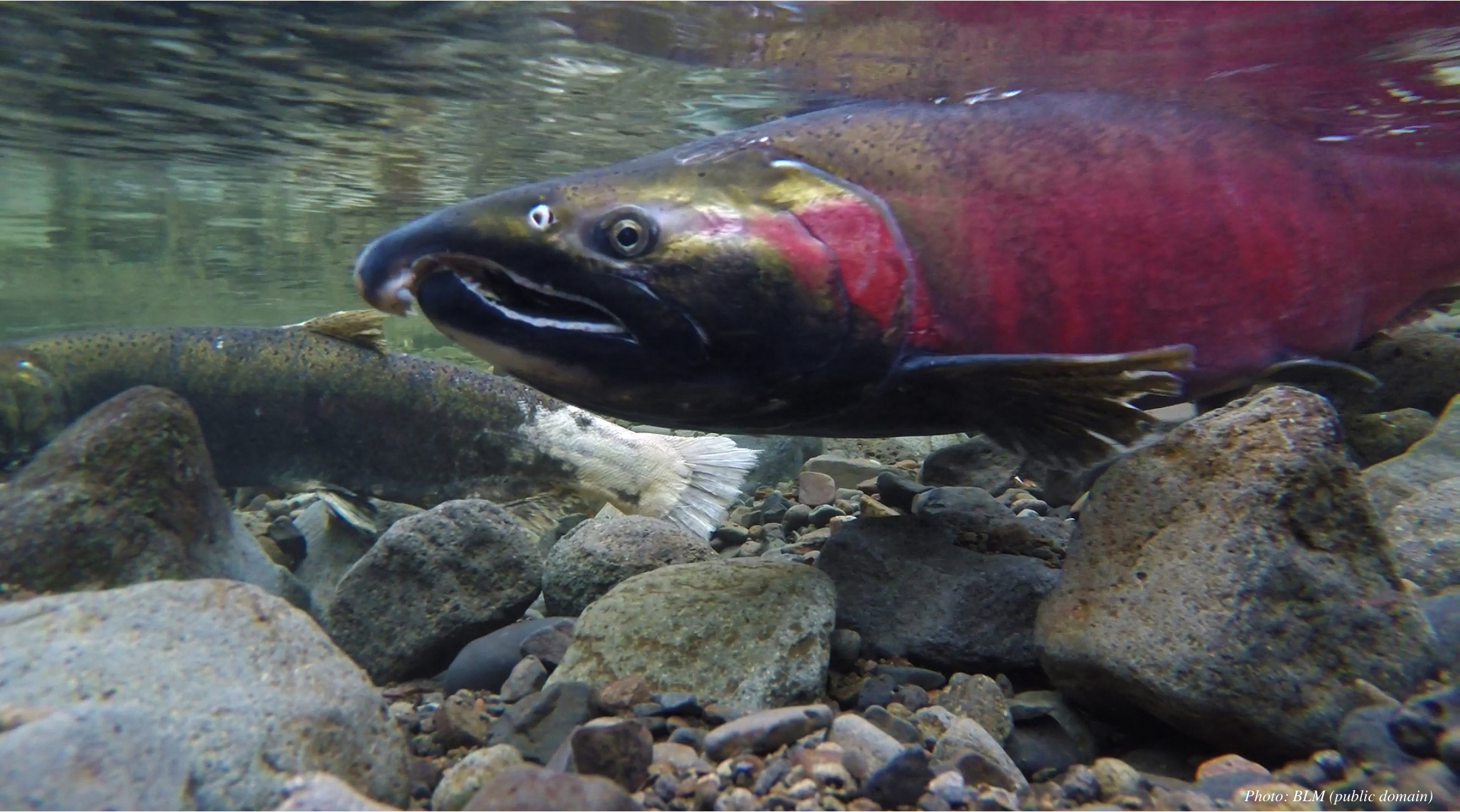
Fall-run Chinook Salmon, Oct. 16, 2024, photo by Mark Hereford, ODFW.

Click the link to read the release on the Oregon Department of Wildlife website (Mark Hereford and Benji Ramirez):

Oct. 17, 2024

KLAMATH FALLS, Ore. โ€“ On October 16, a fall-run Chinook salmon was identified by ODFWโ€™s fish biologists in a tributary to the Klamath River above the former J.C. Boyle Dam, becoming the first anadromous fish to return to the Klamath Basin in Oregon since 1912 when the first of four hydroelectric dams was constructed, blocking migration.

The salmon and others likely traveled about 230 miles from the Pacific ocean to reach the tributary only months after four Klamath River dams were removed to ensure fish passage from California to Oregon.

โ€œThis is an exciting and historic development in the Klamath Basin that demonstrates the resiliency of salmon and steelhead,โ€ said ODFW Director Debbie Colbert. โ€œIt also inspires us to continue restoration work in the upper basin. I want to thank everyone that has contributed to this effort over the last two decades.โ€

A closer look at same fall-run Chinook Salmon seen on Oct. 16, 2024, in a tributary of the Klamath River after removal of the dams marking the first fish to return since 1916. Photo by Jacob Peterson, ODFW.

โ€œThe return of our relatives the cโ€™iyaalโ€™s is overwhelming for our tribe. This is what our members worked for and believed in for so many decades,โ€ said Roberta Frost, Klamath Tribes Secretary. โ€œI want to honor that work and thank them for their persistence in the face of what felt like an unmovable obstacle. The salmon are just like our tribal people, and they know where home is and returned as soon as they were able,โ€ added Frost.

“cโ€™iyaalโ€™s are culture carriers,โ€ said Natalie Ball, Klamath Tribes Council Woman. โ€œI’m excited for their return home and for us to be in relation with them again.โ€

Fish biologists have been surveying the Klamath River and tributaries since dam removal as part of the agencyโ€™s responsibility to monitor the repopulation of anadromous fish species to the basin in collaboration with The Klamath Tribes.

Mark Hereford, ODFWโ€™s Klamath Fisheries Reintroduction Project Leader, was part of the survey team that identified the fall-run Chinook. His team was ecstatic when they saw the first salmon.

โ€œWe saw a large fish the day before rise to surface in the Klamath River, but we only saw a dorsal fin,โ€ said Hereford. โ€œI thought, was that a salmon or maybe it was a very large rainbow trout?โ€ Once the team returned on Oct. 16 and 17, they were able to confirm that salmon were in the tributary.

ODFW, The Klamath Tribes and other partners have been working together on this historic restoration project to monitor Chinook salmon, coho salmon, steelhead, and Pacific lamprey once they are able to repopulate habitat above the dams.

Photos and video by ODFW:
A fall-run Chinook Salmon seen on Oct. 16, 2024, in a tributary of the Klamath River after removal of the dams marking the first fish to return since 1916. Photo by Mark Hereford, ODFW.
https://dfw.state.or.us/news/images/2024/Oct_16_2024_Fall-run_Chinook_Salmon_Klamath_River_Oregon_01_ODFW_photo.jpg

A closer look at same fall-run Chinook Salmon seen on Oct. 16, 2024, in a tributary of the Klamath River after removal of the dams marking the first fish to return since 1916. Photo by Jacob Peterson, ODFW.
https://dfw.state.or.us/news/images/2024/Oct_16_2024_Fall-run_Chinook_Salmon_Klamath_River_Oregon_02_ODFW_photo.jpg

Fall-run Chinook Salmon, Oct. 16, 2024, photo by Mark Hereford, ODFW.
https://dfw.state.or.us/news/images/2024/Fall-run_Chinook_salmon_in_tributary_of_Klamath_River_Oregon_first_salmon_survey_post_dam_removal_Oct_16_2024_ODFW_photo_4.jpg

Underwater video of a fall-run Chinook Salmon on Oct. 16, 2024, in a tributary of the Klamath River after removal of the dams: https://youtu.be/uqHou-eHwDg

fall-run Chinook Salmon seen on Oct. 16, 2024, in a tributary of the Klamath River after removal of the dams marking the first fish to return since 1916. Photo by Mark Hereford, ODFW.

#Wyoming shoots itself in the foot: Veering away from the more pragmatic conservatism of Teddy Roosevelt or even Ronald Reagan, and into the hard right, anti-government quagmire — Jonathan P. Thompson (WritersOnTheRange.org)

Click the link to read the article on the Writers on the Range website (Jonathan P. Thompson):

October 14, 2024

This summer, the Biden administration offered Wyoming $35 million to help the state plug and clean up abandoned oil and gas wells. When Wyoming turned down the cash, it seemed hard to believe.

It could cost the state more than twice that amount to reclaim its 1,000 or so defunct wells that remain unplugged. Economists have also warned that market forces will continue to diminish the stateโ€™s main revenue sourceโ€”severance taxes on fossil fuels.

Thatโ€™s not all. Last year, Wyoming turned down federal money for electric vehicle charging stations. Then, when Governor Mark Gordon refused to take part in the EPAโ€™s pollution reduction program, the state lost tens of millions of dollars in federal funding.

Meanwhile, the state is spending millions of taxpayersโ€™ dollars on lawsuits seeking to eviscerate Biden administration rules aimed at protecting the environment and human health and mitigating harmful effects of climate change.

Itโ€™s all part of a disturbing shift among Western Republicans and the states they dominate. They are veering away from the more pragmatic conservatism of Teddy Roosevelt or even Ronald Reagan, and into the hard right, anti-government quagmire.

Governor Gordon has been swept up in this shift. Gordon was born in New York City and grew up on the family ranch in Kaycee, Wyoming. He registered as a Republican at age 18, attended Vermontโ€™s Middlebury College, then came back to Wyoming to continue ranching. At the same time, he pushed back on the coalbed-methane drilling boom that was ravaging his state, a fact missing from his official biographies.

Gordonโ€™s activism included serving on environmental groupsโ€™ boards and he went on record attacking the energy industry for turning Buffalo into โ€œthe place that stinks on the way to Casper.โ€ Nevertheless, he later worked for an oil company as its conservation director.

He still straddled the fence politically, donating to both Republican and Democratic candidates and committees on a state and national level during the 1990s and early 2000s. But he was not an anomaly; this sort of ideological flexibility was once common in Western states.

When Gordon ran for Congress as a moderate in 2008, he said both the Republican Party and the Sierra Club had โ€œgotten off track,โ€ with the GOP moving too far to the right and abandoning Roosevelt-style conservationism. He said environmentalists also became less willing to compromise, particularly on public-land grazing issues.

Gordon ended up losing the primary to hardliner Cynthia Lummisโ€”now a U.S. senatorโ€”after she attacked Gordon for his environmental ties and bipartisan tendencies. But Gordon stuck to his relatively moderate stance when he ran for governor in 2018 and defeated hardliner Harriet Hagemanโ€”who would later unseat Liz Cheney.

As governor, Gordon has acknowledged human-caused climate change and supported clean-energy development, while also looking to keep the fossil fuel industry afloat by pushing carbon capture rather than closing coal plants or regulating drilling.

He was forceful and eloquent in condemning the January 6, 2021 attack on the Capitol, tweeting: โ€œInterfering with the peaceful transfer of power is an affront to the very Constitution that has made our country what it is. I believe America will notโ€”cannotโ€”stand for this assault on our democracy.โ€

This centrism has played well with voters. Gordon easily won a second term in 2022. But the radical right-wing, climate-denying branch of Wyomingโ€™s legislature, the Freedom Caucus, has relentlessly blasted him for it.

In purple states, such as Arizona, the radicalization of the GOP has been met with backlash from moderates, who can seek refuge in a growing Democratic Party. But in Wyoming, newcomers fleeing more liberal states are turning the legislature a deeper shade of red, lending power and members to the Freedom Caucus.

The Wyoming governor has struggled to hold his ground. His rhetoric on Bidenโ€™s purported โ€œwar on fossil fuelsโ€โ€”and the stateโ€™s legal challenges to common-sense environmental protectionsโ€”have grown more strident, even though Gordon knows full well that market forces, not regulations, are behind the industriesโ€™ decline.

The intent here is not to heap criticism on Gordon; he gets enough of that from his party members. Rather it is to lament the imminent extinction of the moderate, conservation-leaning, pragmatic Western Republican.

Jonathan Thompson

Think of all those missed opportunities. In todayโ€™s political climate, Gordon either must adapt or be thrown out of office, and thatโ€™s not good for Wyoming or the West.

Jonathon Thompson is a contributor to writersontherange.org, an independent nonprofit dedicated to spurring lively conversation about the West. He is the editor of The Land Desk and a longtime Western author and writer.

ย Jonathan Thompson

The system that moves water around the Earth is off balance for the first time in human history — CNN

Diagram credit: USGS

Click the link to read the article on the CNN website (Laura Paddison). Here’s an excerpt:

October 16, 2024

Humanity has thrown the global water cycle off balance โ€œfor the first time in human history,โ€ fueling aย growing water disasterย that will wreak havoc on economies, food production and lives, according to a landmark new report. Decades of destructive land use and water mismanagement have collided with theย human-caused climate crisisย to put โ€œunprecedented stressโ€ on the global water cycle,ย said the report published Wednesday by the Global Commission on the Economics of Water, a group of international leaders and experts.

Credit: Stefan Rahmstorf

Disruptions to the water cycle are already causingย suffering. Nearly 3 billion people faceย water scarcity.ย Crops are shrivelingย andย cities are sinkingย as the groundwater beneath them dries out. The consequences will be even more catastrophic without urgent action. The water crisis threatens more than 50% of global food production and risks shaving an average of 8% off countriesโ€™ GDPs by 2050, with much higher losses of up to 15% projected in low-income countries, the report found.

โ€œFor the first time in human history, we are pushing the global water cycle out of balance,โ€ said Johan Rockstrรถm, co-chair of the Global Commission on the Economics of Water and a report author. โ€œPrecipitation, the source of all freshwater, can no longer be relied upon.โ€

Graphic showing the movement of “green water” and “blue water” in the global water cycle. Global Commission on the Economics of Water

The report differentiates between โ€œblue water,โ€ the liquid water in lakes, rivers and aquifers, and โ€œgreen water,โ€ the moisture stored in soils and plants. While the supply of green water has long been overlooked, it is just as important to the water cycle, the report says, as it returns to the atmosphere when plants release water vapor, generating about half of all rainfall over land. Disruptions to the water cycle are โ€œdeeply intertwinedโ€ with climate change, the report found. A stable supply of green water is vital for supporting vegetation that can store planet-heating carbon. But the damage humans inflict, including destroying wetlands and tearing down forests, is depleting these carbon sinks and accelerating global warming. In turn, climate change-fueled heat is drying out landscapes, reducing moisture and increasing fire risk.

Windy Gap Reservoir nearly crashed an aquatic ecosystem. A $33 million water project is undoing the damage — Fresh Water News #ColoradoRiver #COriver #SouthPlatteRiver

The $33 million Colorado River Connectivity Channel diverts the river around the Windy Gap Dam to improve river health, fish passage and habitat in the upper headwaters of the Colorado River. (Northern Water, Contributed)

Click the link to read the article on the Water Education Colorado Website (Shannon Mullane):

October 17, 2024

With the snip of a ribbon Tuesday, Colorado water managers officially opened a new waterway in Grand County that reconnects a stretch of the Colorado River for the first time in four decades to help fish and aquatic life.

The milelong waterway, called the Colorado River Connectivity Channel, skirts around Windy Gap Reservoir, where a dam has broken the natural flow of the river since 1985. The $33 million projectโ€™s goal is to return a stretch of the river to its former health, a river where aquatic life thrived and fish could migrate and spawn. But getting to the dedication ceremony Tuesday took years of negotiations that turned enemies into collaborators and can serve as a model for future water projects, officials say.

โ€œIt speaks to the new reality of working on water projects, which is that it doesnโ€™t have to be an us-versus-them situation,โ€ Northern Water spokesperson Jeff Stahla said. โ€œPeople can get together and identify things that can help not only the water supply, but also help the environment.โ€

Windy Gap Reservoir and the new channel are just off U.S. 40 near Granby, a few miles southwest of popular recreation areas around Lake Granby and Grand Lake.

The reservoir was designed to deliver an average of 48,000 acre-feet of water per year from Grand County through numerous reservoirs, ditches, canals and pipelines to faucets in homes and sprinklers on farms across northeastern Colorado. One acre-foot roughly equals the annual water use of two to three households.

But soon after construction finished in 1985, locals and fly fishermen started noticing problems โ€” starting with the bugs.

Drivers used to cleaning insects out of their radiators suddenly had one less chore as certain types of mayflies, stoneflies and caddisflies disappeared. In 2011, state biologists calculated a 38% loss in diversity between the early 1980s and 2011.

The dam blocked fish passage, and the reservoir became a breeding ground for whirling disease, a deadly condition for local trout caused by a microscopic parasite.

Windy Gap Reservoir before construction started for the Colorado River Connectivity Channel. The dam, built in 1985, blocked the Colorado River and inhibited a healthy fishery. The new channel around the reservoir will improve the health of the Upper Colorado River. (Northern Water, Contributed)

It choked seasonal high flows. Without the flows to flush the sediment from between small rocks, the habitat for a fundamental food source, small organisms called macroinvertebrates, diminished. The sculpin, a small fish that often serves as an indicator of river health, disappeared entirely.

Macro Invertebrates via Little Pend Oreille Wildlife Refuge Water Quality Research

โ€œThe ecosystem started crashing,โ€ said Kirk Klancke, a longtime conservationist in the area. โ€œIt didnโ€™t die out completely, but it certainly started crashing. We lost all the sensitive, most important macroinvertebrates.โ€

The fisheryโ€™s gold medal status was threatened, and losing that would have been a blow to the local economy, he said.

The reservoir also couldnโ€™t reliably serve its main purpose: catching water and pumping it 6 miles to Lake Granby to eventually reach the Front Range. When the lake is filled to the brim in wet years, it canโ€™t store Windy Gapโ€™s water, leaving northeastern communities in the lurch, according to Northern Water.

Restoring a river channel in the Upper Colorado Basin. Graphic credit: Northern Water

The new channel is the fix.

To create the channel, the Northern Colorado Water Conservancy District started work in 2022, draining Windy Gap Reservoir and cutting its size in half. The result is a smaller reservoir and a floodplain through which the channel flows.

Crews built a new diversion headgate โ€” the main focus of the dedication this week โ€” that manages how much water enters the reservoir from the channel. They removed a small, upstream dam crossing the Fraser River that blocked fish passage.

After vegetation is established, the channel will open to fishing and recreation, likely around 2027.

Water has been flowing through the channel for about a year, and officials are already seeing benefits: Colorado Parks and Wildlife said Tuesday that the sculpin has been detected in that stretch for the first time in 20 years.

โ€œSeeing the project come to fruition, and then getting the bonus of having wildlife biologists tell you, โ€˜Yep, weโ€™re already seeing signs of biological healing,โ€™ was just mind blowing,โ€ said Tony Kay, former president of Trout Unlimited who has been working on connecting the river for 26 years.

It was emotional. Not everyone who started this process was able to see it through to the end, like Bud Isaacs, a downstream landowner who was one of the first to raise the alarm and who passed away in 2022, Kay said.

โ€œWe never actually thought that this would happen,โ€ he said.

The channel is also one facet of a sweeping, multimillion-dollar plan to fix multiple problems in one go.

Through the Windy Gap Firming Project, growing Front Range communities will have more reliable water storage in the form of Chimney Hollow Reservoir, which is under construction near Loveland and will work in tandem with Windy Gap to provide water supplies.

The effort to build the connectivity channel has seemed slow moving at times, but officials, environmentalists and urban areas are celebrating it as an example of hard-won collaboration.

โ€œIt was a gamble to partner with Front Range water diverters. There were a lot of people who told us you canโ€™t do deals with the devil. Youโ€™re going to end up really regretting it,โ€ Klancke said. โ€œThe connectivity channel has proved we went down the right road.โ€

Itโ€™s also just one step in addressing chronic low-flow issues along the upper Colorado River caused by drought and massive water diversions to Coloradoโ€™s Front Range, Klancke said.

In five years time, Kay hopes to see a healed river through the new channel and farther downstream. Heโ€™ll be saying โ€œthank youโ€ every time he drives past that stretch of the river.

โ€œBud would be over the moon,โ€ he said.

More by Shannon Mullane

Colorado transmountain diversions via the State Engineer’s office

Topsoil Moisture % short/very short (s/vs) October 13, 2024: 62% of the Lower 48 is s/vs, 10% more than last week. — @NOAADrought

Soils in much of the West & Central U.S. dried out; many states in the MS & OH River basins saw 10-20% increases in s/vs soil moisture.

The latest seasonal outlooks through January 31, 2025 are hot off the presses from the #Climate Prediction Center

U.S. Army Corps of Engineers’ approval of Gross Reservoir dam expansion violated environmental law, judge rules — The #Denver Post

The dam raise process begins at the bottom of the dam using roller-compacted concrete to build the new steps that will go up the face of the dam. Photo credit: Denver Water.

Click the link to read the article on The Denver Post website (Elise Schmelzer). Here’s an excerpt:

October 17, 2024

The U.S. Army Corps of Engineers violated the Clean Water Act and the National Environmental Policy Act when approving permits for the construction of the dam, U.S. District Court Judge Christine Arguello found in the ruling, issued Wednesday. The federal agency failed to sufficiently consider other options that could be less environmentally damaging than dam expansion,ย Arguello wrote in her order. Arguello did not order Denver Water to stop construction on the dam, in part because the utility already plans to halt construction in November for the winter season. An abrupt halt to the project could also affect the integrity of the dam, she wrote. The defendants and plaintiffs will now work to create a remedy for the improperly issued permits. Each side must submit briefs on proposed solutions to Arguello by Nov. 15. In a statement, Denver Water said it still hopes โ€œto move the project toward completion.โ€

[…]

Denver Water argued in its filings that the issues raised were moot since construction had already begun and one of the permits in question already used. Arguello, however, dismissed that argument, as the reservoir had not yet been expanded and the 400 acres of land and 500,000 trees it would drown still remained above water…

One of the Army Corps of Engineersโ€™ failures was its lack of analysis of how climate change could impact the project. As climate change shrinks the amount of water available in the Colorado River system, Arguello asked, is it practical and reasonable to build a reservoir to store water that doesnโ€™t exist? The lack of analysis shows that the USACE did not fully analyze the practicality of the dam project, as required by law, she wrote.

#Colorado Leading on #Geothermal: Governor Polis Congratulates Colorado Mesa University on Being a Featured Department of Energy Top Case Study

The benefits of this geo-exchange system extend beyond environmental impact. By significantly reducing energy costsโ€”saving millions of dollars each yearโ€”CMU is able to keep tuition affordable. These savings directly support the CMU Promise, additional merit aid, more scholarships, and other cost-saving initiatives that benefit students. Photo credit: Colorado Mesa University (June 7, 2024)

Click the link to read the release on Governor Polis’ website (Eric Maruyama):

October 11, 2024

Today, Governor Polis celebrated Colorado Mesa Universityโ€™s (CMU) nation-leading geothermal heating system for being recognized as one of only 19 case studies across the nation by the Department of Energy as one of the best geothermal systems. 

โ€œCongratulations to Colorado Mesa University for being featured as a U.S. Department of Energy case study for geothermal heating. CMU has one of North America’s largest geothermal heat pump systems and connects 16 buildings, providing 90% of the energy required to operate the campus. Plans are underway to connect the remaining campus buildings, comprising 800,000 square feet, to the central loop to achieve a 100% geothermal campus. CMUโ€™s work is a great example of Coloradoโ€™s leadership in providing clean, low-cost energy resources,โ€ said Governor Polis. 

CMUโ€™s gold-standard geothermal system regulates 1.2 million square feet of building space, has saved the university $15.9 million in heating and cooling costs since 2008, and reduces CMUโ€™s carbon footprint by nearly 18,000 metric tons of CO2 each year. As chair of the Western Governorโ€™s Association, Governor Polisโ€™s Heat Beneath Our Feet Initiative focused on advancing innovative geothermal solutions. Earlier this year, Governor Polis announced $7.7 million in awards for 35 Geothermal projects across the state. Governor Polis and the Colorado Energy Office also recently launched Tax incentives to increase Geothermal electricity production. 

#Drought news October 17, 2024: Moderate and severe drought expanded over eastern #Colorado and abnormally dry conditions expanded over portions of northeast #Colorado and into #Wyoming and #Nebraska, most all of the West was dry this week

Click on a thumbnail graphic to view a gallery of drought data from the US Drought Monitor website.

Click the link to go to the US Drought Monitor website. Here’s an excerpt:

This Week’s Drought Summary

Precipitation across the country was pretty much nonexistent over the past week. The outliers were in Florida as Hurricane Milton came ashore and brought with it copious amounts of rain over much of the peninsula, as well as some rains in the upper Midwest into New England, and some coastal areas of the Pacific Northwest. From the Mississippi River west, most areas were warmer than normal, with departures of 9-12 degrees or more above normal over much of the southern Plains, Rocky Mountains, and into the desert Southwest. Cooler-than-normal temperatures were recorded along the Eastern Seaboard with departures of 3-6 degrees below normal quite common…

High Plains

The dry pattern continued over the High Plains with only a small area of North Dakota recording any precipitation this week. The warm temperatures continued as well with most areas 4-8 degrees above normal and even greater departures of 8-12 degrees above normal in the plains of Wyoming and Colorado and portions of western Nebraska and South Dakota. Degradation took place from North Dakota to Kansas and into the plains of Montana, Wyoming, and Colorado. Moderate and severe drought were expanded in North Dakota, mainly in the south and west portions of the state. South Dakota had moderate and severe drought expand in the northern, southern, and western portions of the state and had extreme drought expand in the northwest and a new area in southern portions of the state. Nebraska and Kansas both had severe and moderate drought expand over many areas of the state. Kansas had extreme drought expand in the far southeast. Moderate and severe drought expanded over eastern Colorado and abnormally dry conditions expanded over portions of northeast Colorado and into Wyoming and Nebraska. Eastern Wyoming had moderate, severe, and extreme drought conditions expand…

Drought Monitor one week change map ending October 15, 2024.

West

As with the Plains and the South, most all of the West was dry this week with only some coastal areas of California and Washington measuring any precipitation. Warm temperatures dominated the region with almost everyone at least 3-6 degrees above normal for the week and areas of Utah, Idaho, Colorado, Nevada, Wyoming and southern Montana 9-12 degrees above normal. Abnormally dry and moderate drought conditions expanded over Washington and Oregon. In Arizona, moderate and severe drought expanded in the southern portions of the state and into southern California. Moderate drought also expanded in central Arizona. The heat that has impacted the Southwest has been record-setting. Phoenix went 21 straight days of setting all-time daily high temperature records that ended on October 15, when the high temperature of 99 degrees Fahrenheit did not break the daily high. New Mexico had severe and extreme drought expand over southern parts of the state, while abnormally dry conditions filled in more of the west. Moderate drought emerged in southwest Colorado, with severe drought expanding and a new area of extreme drought in the north central portions of the state. Utah had abnormally dry conditions and moderate drought expand in the east. In Wyoming, moderate drought expanded over the southwest part of the state, severe drought expanded in the central area, and moderate drought expanded in the northwest…

South

Warm temperatures dominated the region with some areas of Texas having temperatures greater than 10 degrees above normal. The entire region was warmer than normal outside of far south Texas and portions of southern Louisiana. Like the High Plains, precipitation was pretty much nonexistent in the region this week, and coupled with the warm temperatures, degradation took place over much of the region. In Oklahoma, moderate and severe drought expanded in the central portions of the state while extreme drought expanded in the northeast. Northwest Arkansas had moderate, severe, and extreme drought all expand, while in Louisiana, moderate drought expanded in the north and in the south, with a new pocket of severe drought introduced in the south. A new area of moderate drought emerged in southern Mississippi and into southern portions of Louisiana. Moderate drought expanded over portions of central Tennessee. Texas had widespread degradation over much of the east and central portions of the state as well as expansion of moderate drought over the Panhandle. Severe and extreme drought expanded in the central portion of the state, where long-term indicators are showing drought at various timescales. Along the border with Oklahoma, severe and extreme drought expanded slightly…

Looking Ahead

Over the next 5-7 days, it is anticipated that much of the Rocky Mountain and central Plains areas will have the best chances for measurable precipitation. The highest amounts are anticipated over northeast New Mexico, southeast Colorado, and parts of the Oklahoma and Texas panhandles, where 2 or more inches may be recorded. Most of the other areas are expecting an inch or less. Temperatures during this time are anticipated to be above normal over much of the Plains, Midwest, and into the Northeast, with departures of 10-15 degrees above normal over the upper Midwest. Cooler than normal temperatures of 2-4 degrees below normal are expected over the Four Corners region and the Rocky Mountains.

The 6-10 day outlooks show that above-normal temperatures will continue for almost all of the country through the end of October, especially from Texas into the Midwest. The coastal areas of the Pacific Northwest have the greatest probabilities of below-normal temperatures during this time. Outlooks show that the greatest chances of below-normal precipitation are from the Gulf Coast into the Midwest and over much of the East. The highest probabilities of above-normal precipitation will be in the central to northern Plains, northern Rocky Mountains and into portions of the Pacific Northwest.

US Drought Monitor one week change map ending October 15, 2024.

#Colorado Supreme Court โ€œslow sipโ€ ruling could affect city water supplies from fast-growing #Greeley to #CastleRock — Fresh Water News

Water stored in Coloradoโ€™s Denver Basin aquifers, which extend from Greeley to Colorado Springs, and from Golden to the Eastern Plains near Limon, does not naturally recharge from rain and snow and is therefore carefully regulated. Courtesy U.S. Geological Survey.

Click the link to read the article on the Water Education Colorado website (Jerd Smith):

October 10, 2024

Nearly 40 years ago, after watching aquifers below Douglas County plunge amid fast growth and heavy use, Colorado lawmakers adopted a โ€œsip slowlyโ€ management process that required communities such as Parker and Castle Rock to pump out fixed amounts of nonrenewable groundwater each year in an effort to make the resource last at least 100 years.

Fast forward to 2020. That year, the state directed well owners to sip even slower, explicitly stating how much water their permits entitled them to, and requiring them to stop pumping at the end of that 100-year period if they have fully used the water to which they were entitled when the original well permits were issued.

But Parker and Castle Rock objected, suing the state over the new permitting language. They argued that the original volume estimates used to calculate their annual pumping rates were never meant as formal, total volume limits. Those limits, they argued, could sharply limit their future water supplies because they were essentially a best guess, based on measuring technology that has changed considerably since then.

Aurora and Greeley joined the case, siding with the state. A special water court ruled against Parker and Castle Rock, which together appealed to the Colorado Supreme Court. The high court is expected to issue a ruling in the case before the end of the year, according to spokeswoman Suzanne Karrer.

Under Coloradoโ€™s so-called 100-year rule, well owners can extract no more than 1% of the water under their lands each year, pumping all the water within 100 years of the issuance of their permits. But prior to use of the new permitting language, the total volume of water that could be taken out over the life of the permit was never explicitly stated on the permits themselves, though it was used to calculate the annual extraction rate.

State officials said they added the water volumes to ensure wells are regulated in a uniform way and that well owners are informed at the start of that 100-year clock how much actual water they can pump.

Deputy State Engineer Tracy Kosloff explained, via email. โ€œIf the amount pumped is less than the annual maximum, the length of time it takes to reach the total allowed withdrawal will be more than 100 years. For instance, if one pumps half of the maximum each year, it will take 200 years to reach the total.โ€

However, if the maximum allowed each year is pumped, then the permit will expire at the end of the 100 years, and the well owner would have to stop pumping and find other water sources, Kosloff said.

But Parker and Castle Rock argue that water levels in the aquifer vary and that over that 100-year period more water might actually be available to them. Establishing a lifetime limit, especially one based on an estimate and old measuring technology, could deprive them of water to which they are entitled.

Colorado designated groundwater basins.

Colorado is home to several aquifer formations, some of which can be easily recharged via rainfall and snowmelt, and are considered renewable. Others cannot be readily recharged and thus are considered to be nonrenewable. These are known as nontributary aquifers and wells drilled in these areas are at the heart of the dispute.

Sean Chambers, Greeleyโ€™s director of water and sewer utilities, supports water regulatorsโ€™ effort to more closely manage nonrenewable underground supplies by including a specific volume on permits because it will better protect everyone over the long run.

Greeley is planning a major new aquifer storage facility on the Wyoming border known as the Terry Ranch. The city wants to ensure water it stores underground isnโ€™t inadvertently tapped by other users whose pumping could siphon off the cityโ€™s supplies, Chambers said via email.

When it became clear in the 1980s and 1990s that the aquifers were in decline, Douglas County communities began reducing the amount of water they were taking out of the aquifers, adding surface supplies from the South Platte River and Cherry Creek, and building multimillion dollar water recycling plants so they can reuse the water they already own.

Parker once relied on nonrenewable groundwater for more than 90% of its supplies, but has since reduced that use to roughly 35%. By 2050, it hopes to drop that amount to 25% of its supplies, according to Ron Redd, manager of the Parker Water and Sanitation District.

Ultimately, Redd said, itโ€™s likely that the state laws on the books now will have to be changed as a result of the dispute.

โ€œIf we lose, we will try to run legislation upholding our interpretation of the law,โ€ he said. โ€œWe were surprised by this. No one knew it was coming until suddenly we saw this condition on our well permits.โ€

More by Jerd Smith. Jerd Smith is editor of Fresh Water News. She can be reached at 720-398-6474, via email at jerd@wateredco.org or @jerd_smith.

Water treatment process in Greeley. Graphic via Greeley Water

#Californiaโ€™s new water recycling rules turn #wastewater to tapwater — LAInst.com

Rupam Soni, MWDโ€™s community-relations team manager, gives a tour of MWDโ€™s Pure Water Southern California demonstration facility. MWD is hoping to soon use recycled wastewater, known as direct potable reuse, to augment its supplies from the Colorado River. CREDIT: HEATHER SACKETT/ASPEN JOURNALISM

Click the link to read the article on the LAInst.com website (Erin Stone). Here’s an excerpt:

October 7, 2024

This month,ย statewide regulationsย for whatโ€™s technically called โ€œdirect potable reuseโ€ went into effect. The rules allow wastewater โ€” yes, the water that goes down the drain or is flushed down the toilet โ€” to be treated to drinkable standards then distributed directly to homes and businesses. Mickey Chaudhuri, treatment and water quality manager for the Metropolitan Water District of Southern California (MWD), said the new rules are โ€œa gamechanger.โ€

Previously, California law only allowed โ€œindirectย potable reuse,โ€ which is what the Fountain Valley facility does โ€” highly treated wastewater is injected underground into an aquifer, where further, natural filtration occurs. Then that water is put into the pipelines to our homes and businesses. Directย potable reuse, which is what these newly effective regulations are about, skips that step where the water is injected into groundwater basins. Instead, the highly treated sewage water goes directly to drinking water treatment plants and then is distributed…ecause these new regulations allow recycled water to be put directly into the local water system, more cities can recycle water for drinking that donโ€™t happen to have an underground basin, or donโ€™t have enough space in groundwater basins because of past pollution, which isย the case for cities such as L.A.ย and Santa Monica.

Wildfires donโ€™t just burn farmland โˆ’ they can contaminate the water farmers use to irrigate crops and supportย livestock

A water pipe that was used to carry water to livestock crosses land burned in the Maui fires in August 2023. Andrew Whelton/Purdue University, CC BY-ND

Andrew J. Whelton, Purdue University

The wildfires that burned across Maui, Hawaii, in August 2023 became the deadliest conflagration in the United States in more than a century. While the harm to homes and tourism drew the most attention, agriculture was also heavily affected across the island, and the harm did not stop once the flames were out.

In some cases, fires smoldered underground for weeks. Water systems were destroyed, and some were contaminated in ways scientists are only beginning to understand.

smoke comes from a burned area underground.
Two weeks after the Maui fires began, they were still smoldering below ground. Andrew Whelton/Purdue University, CC BY-ND

As an environmental engineer, I work with communities affected by wildfires and other disasters. I also led a team of university and public works professionals to assist in Mauiโ€™s response to the fires.

In a new study based on that effort, my team worked with the Hawaii Department of Agriculture to assess damaged water systems, including water pipes, wells and pumps that are essential for livestock and crops. It was the first study of its kind to examine wildfire damage to agriculture water systems.

The results show the types of damage that can occur when a fire burns through property, and they offer a warning to agricultural regions elsewhere. With the U.S. averaging over 60,000 wildfires and 7.2 million acres burned each year, it is clear that wildfires have become a whole-of-society problem.

Contaminated water infrastructure poses risks

Wildfires often knock out power, which can disable water pumps that farmers and ranchers rely on. They can also damage pipes in ways that can release toxic chemicals and have long-lasting effects.

Recent municipal water system studies by my team and others have shown that water sources and even the pipes and tanks can become unsafe to use. Studies in fire-swept areas have found levels of volatile organic compounds, or VOCs, such as benzene, a carcinogen, above hazardous waste limits. Exposure to this water can cause immediate harm to people.

When water pumps stop working or components are destroyed, municipal water systems lose pressure. When that happens, VOCs can enter from heated or burning plastics, structures and vegetation.

Two water tanks in a field.
Even when tanks are untouched by fire, the pipes serving them can be contaminated if they heat up. Andrew Whelton/Purdue University, CC BY-ND

An insidious challenge is that VOCs penetrate plastic water lines, gaskets and tanks like water going into a sponge. Even after bad water is flushed out, chemicals can leach from the plastic and make the water unsafe for weeks to months. Damaged components have to be replaced.

In the wake of the Maui fires, however, there was no immediate guidance on how farmers and ranchers should inspect and test their water systems.

Learning from Mauiโ€™s experience

Farms and ranches had many plastic water system components. On one ranch, fire destroyed more than nine miles of plastic water pipe. Much of the pipe ran above ground alongside fencing, which also burned.

Plastic irrigation systems were destroyed. Numerous other components melted, were leaking or lacked water. The loss of power sometimes prevented water pumps from keeping the pipes full of water.

A melted pipe with a hole in it lays on the ground.
Some plastic water lines burst due to the temperature and water pressure during the fire. Andrew Whelton/Purdue University, CC BY-ND
A melted pipe in a wooded area.
More than 9 miles of plastic polyethylene water lines were destroyed by the fire. Andrew Whelton/Purdue University, CC BY-ND

While wells can become contaminated and well casings can burn, the wells themselves were not contaminated. This was mostly because the wells were set back from combustible materials and because firefighters and property staff helped to protect them.

Debris and particles from smoke, however, did enter animal troughs, buckets and waterers. These items had to be drained and cleaned for the safety of the animals. Water systems were repeatedly flushed with clean water after the fire, and VOC testing of the water supplies did not find lingering contamination.

Lots of questions still to answer

There are still many unanswered questions. Since there was no VOC testing procedure for agricultural water systems before the fires, there is no data to show the frequency and severity of this kind of contamination.

Not all municipal water systems that suffer fires become contaminated. Contamination is related to differences in the sites, systems and the fires themselves.

A plastic bowl attached to a fence with a water line coming into it.
Animal watering systems are often supplied by plastic pipes. Andrew Whelton/Purdue University, CC BY-ND

There is also no data on the degree to which this wildfire-contaminated water would harm animals and crops. Would animals avoid the water and become dehydrated? Can crops become contaminated? Will exposure affect the meat of livestock? Many of these unanswered questions will require the expertise of veterinary medicine and crop and soil scientists.

What are the solutions?

One thing that was clear is that farmers and ranchers lack adequate guidance to prevent wildfire-caused pollution of their water systems. Some practical lessons learned can help these community members bounce back:

  • Defensible space should be established by keeping equipment 30 feet away from combustible materials. Burying plastic components 3 feet underground helps protect them from fire.
  • Similar to municipal water systems after a fire, damaged agriculture water system components should be isolated. Pipes and tanks should be rapidly refilled and extensively flushed with water to help remove potential contamination.
  • Water delivery devices, including troughs, buckets and tire waterers, should be drained and cleaned. When contamination is a concern, chemical water testing should be conducted. In some cases, components will have to be replaced.
A cow in a field with burn landscape behind it.
Pipes and wells to get water to cattle can also be at risk in wildfires. Andrew Whelton/Purdue University, CC BY-ND

A 2024 survey of California farmers shows that the top three resources โ€œrelied on and wished for during wildfireโ€ were generators, water pumps and water storage tanks. These items would help prevent water system pressure loss and contamination.

Who can help?

Wildfire risk to farms and ranches can be reduced. State and federal agriculture departments and insurance companies can provide financial assistance. Technical assistance is available from universities.

Lessening the impact of wildfires and expediting recovery can help farms and ranches do yeomanโ€™s work to support health and the economy.

Andrew J. Whelton, Professor of Civil, Environmental and Ecological Engineering, Purdue University

This article is republished from The Conversation under a Creative Commons license. Read the original article.

A receding #LakePowell is bringing #ColoradoRiver rapids in #Utah back to life — National Public Radio #COriver #aridification

Raft in the Big Drop Rapids, Cataract Canyon. By National Park Service – National Park Service, Public Domain, https://commons.wikimedia.org/w/index.php?curid=8327636

Click the link to read the article on the National Public Radio website (Ari Shapiro/Luke Runyon). Here’s an excerpt:

October 15, 2024

Thereโ€™s a lot of anxiety about climate change shrinking Lake Powell, but it also means whitewater rapids upstream have re-emerged. Thrillseekers can now run them for the first time since the 1960s.

ARI SHAPIRO, HOST: 

At the bottom of a deep, red rock canyon in the desert southwest, the Colorado River is restoring itself, or at least a part of itself, even as climate change shrinks its volume. And that has river enthusiasts celebrating. Long-forgotten whitewater rapids are reemerging upstream. Reporter Luke Runyon set out to find more.

LUKE RUNYON, BYLINE: Ah. We just docked our boats to scout Gypsum Canyon Rapid. The sky is blue. The sun is out. It’s hot, and you can hear the water roaring.

PETE LEFEBVRE: I’m just going to go down this main wave train and look for this doamer (ph) rock and tuck underneath that.

RUNYON: Professional river guide Pete Lefebvre has been down Cataract Canyon more than 130 times, but he’s never seen Gypsum Rapid. And it looks mean, a churning, roiling mess of water and boulders.

PETE LEFEBVRE: It’s steep. It’s sharp. It’s a must-make move. And I’m nervous (laughter).

RUNYON: Lefebvre has never seen this rapid because for more than 50 years, it’s been buried under mud. Cataract Canyon is a transition zone, where the dammed up waters of Lake Powell start backing up, and sediment buries whatever’s on the bottom. But since 2000, Lake Powell has dropped 100 feet. So here, the river is starting to behave like a river again, carving down and excavating these long-buried boulders. Mike DeHoff is another experienced river-runner.

MIKE DEHOFF: Cataract Canyon, I think, these days is like a friend that was in a car accident or had a terrible sickness that has come home from the hospital.

RUNYON: In 2019, he and Pete Lefebvre started the Returning Rapids Project. DeHoff’s wife, Meg Flynn, a librarian in nearby Moab, keeps its archive. Using old photos from before Lake Powell’s dam was built, they anticipate when and where new rapids might again show themselves.

MEG FLYNN: We see here how flowing water brings life and that the river, if you give it a chance, can recover at a rate that is really astounding to all of us.

How much runoff comes from the Westโ€™s #snowpack? Snowmelt dominates many Western rivers, but #ClimateChange will reduce that contribution as raindrops replace snowflakes — Mitch Tobin (WaterDesk.org)

Aerial view of Paonia Reservoir on Coloradoโ€™s Western Slope on December 24, 2020. Photo by Mitch Tobin, The Water Desk.

Click the link to read the article on the WaterDesk.org website (Mitch Tobin):

October 10, 2024

Snow is a cornerstone of the American Westโ€™s water supply, but just how important is it to the regionโ€™s streams, rivers and reservoirs?

In the popular press and academic papers, the sizable share of runoff that originates as snowmelt is often cited as a reason why the Westโ€™s snowpack is so crucial to both cities and farms, not to mention the regionโ€™s wildlife and very way of life.

But when a team of researchers set out to study the question, they found a wide range of estimates cited in 27 scientific papers. They concluded that โ€œa detailed study of the contribution of snow to the runoff over the western U.S. has not been conducted.โ€

To clarify the connection between the snowpack and streamflowโ€”and project how climate change is altering the relationshipโ€”the scientists used computer simulations and hydrological modeling in a 2017 paper in Geophysical Research Letters to estimate snowโ€™s significance for runoff across the West. Hereโ€™s what they found:

  • 53% of total runoff in the West originated as snowmelt, even though only 37% of the precipitation fell as snow.
  • In mountainous parts of the region, snowmelt was responsible for 70% of runoff. Specifically, it was 74% for the Rockies, 73% for the Sierra Nevada and 78% for the Cascades (see graphic below).
  • A quarter of the Westโ€™s land area, primarily in the high country, produced 90% of total runoff on average.

Climate change will reduce the snowpackโ€™s contribution to runoff, according to the study, as warmer temperatures make it more likely that precipitation will fall as raindrops, rather than snowflakes, leaving downstream water users vulnerable.

โ€œThe snowpack is more efficient at producing runoff and streamflow than liquid precipitation,โ€ said co-author Jennifer Adam, a Professor of Civil and Environmental Engineering at Washington State University. โ€œWhen itโ€™s cold, you have less evaporative demand.โ€

How much runoff is derived from snowmelt?

Chart: Mitch Tobin/The Water DeskSource: Li, D., et al. (2017). How much runoff originates as snow in the western United States, and how will that change in the future? Geophysical Research Letters, 44(12), 6163โ€“6172. Created with Datawrapper

Climate change threatens snowpack

A diminished snowpack and less snowmelt in rivers โ€œwould likely exacerbate the dry-season water scarcity in the future,โ€ according to the study. โ€œIn addition, the earlier snowmelt will strain storage capacity of the hydrologic infrastructure and further reduce the water availability in the prolonged dry season.โ€

Future runoff in the West will be affected by many other factors, including land-use changes, water policies and water efficiency trends. But the researchers caution that โ€œdue to the profound reliance on snow as water resources, future declines in snow accumulations in the West will pose a first-order threat directly on the regional water supply, especially in the late summer and fallโ€ when water demand peaks.

Looking ahead, the study used two climate change scenariosโ€”known as Representative Concentration Pathway (RCP) 4.5 and 8.5โ€”to project how the snowpackโ€™s contribution to streamflow will respond to warming temperatures and altered precipitation.

As I noted in a previous post, RCP 8.5โ€™s business-as-usual projections for the carbon output of the global economy now appear too pessimistic, so the more moderate emissions scenario in RCP 4.5 may be more plausible.

Using RCP 4.5, the study projects that by 2100, the fraction of runoff coming from the snowpack will decline from 53% to 39.5%. For streams and rivers draining the regionโ€™s major mountain ranges, the figure will drop from 71% to 57%.

The declines are even greater when using the higher-emissions RCP 8.5 scenario: snow-derived runoff in the West falls to 30.4%, and in mountainous areas, itโ€™s down to 45%.

In other words, with enough warming and time, the Westโ€™s snowpack will no longer be responsible for the majority of runoff in the region. The change in character and timing of runoff will pose serious challenges, not only for humans who have built elaborate water infrastructure based on snowmelt but also for other species that have come to depend on snow-dominant systems.

Snowmelt-derived runoff projected to fall due to warming

Notes: Moderate Emissions scenario is RCP 4.5 and High Emissions scenario is RCP 8.5 Chart: Mitch Tobin/The Water DeskSource: Li, D., et al. (2017). How much runoff originates as snow in the western United States, and how will that change in the future? Geophysical Research Letters, 44(12), 6163โ€“6172. Created with DataWrapper

Snowmeltโ€™s contribution to reservoirs

The 2017 study also examined the snowpackโ€™s importance to each of the regionโ€™s largest 21 reservoirs, which collectively have more capacity than the 2,300+ other reservoirs in the West combined.

Overall, snowmelt accounts for 67% of storage in these reservoirs. For the largest three in the Westโ€”Mead, Powell, and Fort Peckโ€”the figure is 70%. In the map below, the circles are sized according to each reservoirโ€™s storage capacity and shaded by the percentage derived from snowpack (click on circles for more data).

Map: Mitch Tobin/The Water DeskSource: Li, D., et al. (2017). How much runoff originates as snow in the western United States, and how will that change in the future? Geophysical Research Letters, 44(12), 6163โ€“6172. Created with DataWrapper

Reservoirs are collection points for runoff, so to understand why some are more or less dependent on snowmelt, the researchers looked at the watersheds upstream. The map below shows that dependence on snowmelt varies greatly across the vast and topographically diverse region, with the bluest shading representing areas most dependent on snowmelt and the yellow shading showing places least reliant on snow.

Source: Li, D. et al. (2017).

What explains the geographic pattern?

โ€œWinter temperature and then also the fraction of annual precipitation that falls in the winter are the two key pieces,โ€ Adam said.

In some parts of the region, itโ€™s cold enough at high elevations for it to snow and most of the yearly precipitation falls in winter. But at lower elevations and in other parts of the West, thereโ€™s more precipitation outside of winter, and even during the colder months rain may fall instead of snow.

Aerial view of the San Juan Mountains snowpack, Electra Lake and the Animas River, north of Durango, Colorado, on May 26, 2024. Photo by Mitch Tobin, The Water Desk, with aerial support from LightHawk.

Warming reshapes river flows

Climate change will not only alter the snowpackโ€™s contribution to runoff but also profoundly change the timing of those streamflows and the fundamental character of many waterways.

Adam noted that another study, published in 2010 in Climatic Change, classified tributaries into three categoriesโ€”rain-dominant, transient rain-snow, and snowmelt-dominantโ€”based on their precipitation patterns. The graphics below show that each of these regimes lead to very different hydrographs, which are visualizations of streamflow over time that essentially tell the story of a riverโ€™s discharge through the seasons.

Graph โ€œaโ€ shows a rain-dominant system, represented by the Chehalis River, east of Aberdeen, Washington and near the Pacific Coast. This hydrograph peaks early in the winter because rainfall quickly runs to the river. Graph โ€œbโ€ shows the transient rain-snow system, in this case represented by the Yakima River in south-central Washington, where the streamflow exhibits two peaks: a smaller one due to winter rains and a much larger one due to the spring snowmelt from higher elevations. Finally, graph โ€œcโ€ shows a snowmelt-dominant system, in this case the Columbia River at The Dalles, Oregon, where the streamflow remains low throughout the winter but then ramps up in spring and peaks in summer due to the high-country snow melting out.

Source: Elsner M., et al. (2010).

These three hydrographs depict very different rivers in terms of the timing and magnitude of their flows. The hydrographs also lead water agencies to pursue varying management strategies to ensure that customers get enough water, while individual species and entire ecosystems have evolved through the ages to cope with the streamflow regimes. In the 21st century, however, warming temperatures will reshape these curves by making these systems more dependent on rain than snow.

โ€œIn those places that are snowmelt dominant historically, youโ€™re going to see a lot of vulnerability to warming temperatures,โ€ Adam said, adding that junior water rights holders are most at risk. โ€œMore of our modeling is looking at the water rights and trying to understand where the water restriction is going to be felt.โ€

Ecologists have long warned that reduced streamflows pose a dire threat to cold-water fisheries, such as trout. Adam said a shift from snowmelt to rain could compound the problem. โ€œOne of the problems with the loss of snowpack is that snowmelt cools down the system,โ€ she said. โ€œItโ€™s not just about water volume, but itโ€™s also about cooling the rivers.โ€

Looking ahead, climate models are crystal clear in projecting warmer temperatures, but the story for precipitation is clouded by uncertainty, making it especially hard to predict runoff at lower elevations.

โ€œWe donโ€™t really know whatโ€™s going to happen to the rain dominant systems: Are they going to get wetter? Are they going to get drier? We just donโ€™t know,โ€ Adam said. โ€œAt least we know with confidence that the snowmelt-dominant systems are going to become more and more stressed.โ€

Aerial view of the Blue River, a popular trout fishery near Silverthorne, Colorado, on December 22, 2019. Photo by Mitch Tobin, The Water Desk.

The Water Deskโ€™s mission is to increase the volume, depth and power of journalism connected to Western water issues. Weโ€™re an editorially independent initiative of the Center for Environmental Journalism at the University of Colorado Boulder.

A majority of #Coloradoโ€™s congressional leaders show support for $99 million Shoshone Water Rights purchase — Sky-Hi Daily News #ColoradoRiver #COriver #aridification

The penstocks feeding the Shoshone hydropower plant on the Colorado River in Glenwood Canyon. Photo credit: Brent Gardner-Smith/Aspen Journalism

Click the link to read the article on the Sky-Hi Daily News website (Ali Longwell)

October 15, 2024

On Monday, Oct. 7, six members of the stateโ€™s congressional delegationย sent a letterto the U.S. Bureau of Reclamation, demonstrating support for the districtโ€™s forthcoming application for funding from the Inflation Reduction Act. The district anticipates seeking $40 million toward the total $99 million required to acquire the water rights.ย  The letter was signed by Coloradoโ€™s U.S. Sens. Michael Bennet and John Hickenlooper and four of its eight representatives, Reps. Joe Neguse, Jason Crow, Brittany Pettersen and Diana DeGette. All six lawmakers are Democrats. According to a spokesperson from Bennetโ€™s office, all members of the Colorado delegation were approached to sign the letter…

โ€œWe recognize the Shoshone Permanency Projectโ€™s complex nature and ongoing technical review, but believe the opportunity to protect historical Colorado River flows deserves your attention,โ€ the letter reads. โ€œWe encourage you to give the River Districtโ€™s proposal your full and fair consideration consistent with all applicable rules and regulations.โ€

The letter comes less than a week after a group of 16 state lawmakers asked the U.S. senators for their support of the acquisition

Appeals court rejects lawsuit, says Northern Integrated Supply Project can move forward — #Colorado Public Radio #NISP

The Northern Integrated Supply Project, currently estimated at $2 billion, would create two new reservoirs and a system of pipelines to capture more drinking water for 15 community water suppliers. An environmental group is now suing the Army Corps of Engineers over a key permit for Northern Waterโ€™s proposal. (Save the Poudre lawsuit, from Northern Water project pages)

Click the link to read the article on the Colorado Public Radio website (Ishan Thakore). Here’s an excerpt:

October 8, 2024

The Colorado Court of Appeals rejected a lawsuit from environmentalists last week that sought to force Larimer County to reevaluate a massive northern Colorado water project, which would eventually supplyย 13 billion gallons of water to 15 Front Range communities.ย  Theย Northern Integrated Supply Projectย would pump water from the Poudre River into two large reservoirs that would be built near Fort Collins and Greeley and would include dozens of miles of new pipelines and a major renovation of existing canals. The utility proposing the project, Northern Water,ย saysย itโ€™s the only way to meet demand for an additional 500,000 customers it expects to serve by 2050…In promotionalย materials, Northern Water said the reservoir project would add water into the Poudre River during dry spells, and that the project would improve water quality in the river basin…

In 2019, Save the Poudre and No Pipe Dream, another advocacy organization, sued the Larimer County Board of Commissioners for approving a local permit for the project. The groups alleged that two commissioners were biased in favor of the project and that the permit โ€” a critical step before construction โ€” should be denied. In an Oct. 3ย decision, the appeals court upheld a lower court decision and confirmed the permit was properly issued…The ruling inches the reservoir project one step closer to construction more than 20 years after it started in earnest. Northern Waterย first startedย planning for the project in the 1980s. It has already cleared significant hurdles, including approval from multiple state and county agencies and the federal government through the U.S. Army Corps of Engineers…

The reservoir project may still require a local permit from Fort Collins, since part of its pipelines may cut through the city. For years, the cityย opposedย the project because of its potential impact to wetlands and other natural features. In 2023, the city strengthened its approval process for large infrastructure works, which means it will have to be impartial when evaluating those permits. In July 2024, the city council formally rescinded its opposition to the project.

Migrating birds find refuge in pop-up habitats: A program that pays rice farmers to create wetland habitats is a rare conservation win — @HighCountryNews

Photo credit: Think Rice U.S. Grown

Click the link to read the article on the High Country News website (Natalia Mesa):

October 11, 2024

Every July, the western sandpiper, a dun-colored, long-beaked bird, leaves the shores of Alaska and migrates south. It may fly as far as the coast of Peru, where it spends several months before making the return trip. Western sandpipers travel along the Pacific Flyway, a strip of land that stretches along the Western coast of the Americas, from the Arctic down to Patagonia. The wetlands of Californiaโ€™s Central Valley offer sandpipers and thousands of other species a crucial place to rest and feed along the way. In September, at the peak of the southward migration season, tens of millions of birds stop there.

But intensive farming and development have destroyed 95% of the Central Valleyโ€™s wetlands, and as the wetlands have disappeared, the number of migrating birds has plummeted. Shorebirds like the western sandpiper, which dwell in seashores and estuaries, are particularly imperiled, declining by more than 33% since 1970.

In 2014, in the middle of a particularly punishing drought in California, a network of conservation organizations called the Migratory Bird Conservation Partnership tried a new strategy to help migrating birds: paying rice farmers to create โ€œpop-upโ€ habitat. The program, which is called BirdReturns and was initially funded by The Nature Conservancy, has since created tens of thousands of acres of temporary wetlands each year.

Map showing the global routes of migratory birds. Credit: John Lodewijk van Genderen via Reseachgate.net

Rice farmers in the Central Valley flood their fields when the growing season ends, generally around November, and keep them flooded until February to help the leftover vegetation decompose. They plant their crop after the fields dry out in late spring. The program pays rice farmers in the birdsโ€™ flight path to flood their fields a bit earlier in the fall and leave them flooded later in the spring. This creates habitat when the migratory birds need it the most, as they fly southward in the late summer and early fall and pass through again on their way north in the spring.

Daniel Karp, a researcher at UC Davis who studies conservation in working landscapes and is not involved in BirdReturns, sees the program as a rare conservation win. Most of the time, small farms that grow many different crops, plant hedgerows and pollinator-friendly flowers are the best way to conserve biodiversity in human-dominated landscapes. But although rice farmers grow only one crop, their large fields are an exception. While itโ€™s far from a complete solution, โ€œitโ€™s this weird rare circumstance where you have a large industrial-scale intensive agricultural system that can simultaneously support wildlife,โ€ Karp said.

Map of the San Joaquin River basin in central California, United States, made using public domain USGS National Map data. By Shannon1 – Own work, CC BY-SA 4.0, https://commons.wikimedia.org/w/index.php?curid=63080408

BirdReturns started with just 10,000 acres in the Sacramento Valley. In 2021, it expanded to the San Joaquin Valley Delta. The program now has a network of regional partners who lead their own reverse auction programs, such as the similar Bid4Birds, piloted by the California Ricelands Waterbird Foundation.

Map of the Sacramento River drainage basin. The historically connected Goose Lake drainage basin is shown in orange. Made using USGS National Map and NASA SRTM data. By Shannon1 – Own work, CC BY-SA 4.0, https://commons.wikimedia.org/w/index.php?curid=79326436

Over the last nine years, BirdReturns has created 120,000 acres of bird habitat. Though itโ€™s a far cry from the 4 million acres of wetlands present before colonial settlement, studies have shown that shorebird density is 2 to 3.5 times greater in pop-up wetlands than in other rice fields. And BirdReturns is fine-tuning its approach based on data, feedback from farmers, and ongoing research: A study published in early September analyzing nearly 9,000 field observations over five years gave scientists more information about the factors that create good shorebird habitat. For example, more shorebirds tend to visit fields where the water is shallow, especially if theyโ€™re flooded consistently, for months at a time as well as year after year.

BirdReturns also has the flexibility to adapt as conditions change from year to year. During droughts, for example, the program prioritizes places that birds have visited in the past. In wetter years, it might scale back. โ€œThe findings of your results are applied right away to on-the-ground actions,โ€ said Greg Golet, senior scientist for The Nature Conservancy, who is involved in the program.

Challenges remain, though. The migration and agriculture cycles are not fully synchronized, making it difficult for rice farmers to flood their land early enough to create habitat for shorebirds, especially the long-distance migrants that might appear as early as July. BirdReturns has recently tackled other strategies, partnering with tomato farmers, who grow crops a bit earlier in the year and thus can flood their fields earlier.

And thereโ€™s still the question of how this practice can continue sustainably, especially as climate change-fueled drought makes water increasingly scarce, Karp said. In drought years, itโ€™s costly to pay farmers to keep their lands flooded, if they have any water to spare at all. Thereโ€™s no simple solution or easy answers, but for now, BirdReturns and similar programs are coming up with โ€œcreative solutions,โ€ Karp said. โ€œWe thought we could rely on protected areas to conserve habitat globally, and we now know thatโ€™s not enough, and we need to complement that with a suite of different conservation strategies,โ€ said Natalia Ocampo-Peรฑuela, a conservation ecologist at University of California, Santa Cruz, who is not involved with BirdReturns. While market-based solutions shouldnโ€™t be the only answer, she said, they are โ€œa piece of the puzzle.โ€

Modeling the Future of the #ColoradoRiver in a Changing #Climate — Fresh Water News #COriver #aridification

dCrystal Lake with San Juan mountains in the background near the Uncompahgre River โ€“ one of the tributaries of the Colorado River. Photo by M. Raffae

Click the link to read the article on the Water Education Colorado website (Raffae Muhammed):

October 11, 2024

The importance of the Colorado River cannot be overstated for the American West. The river and its tributaries serve more than 40 million people by providing drinking and municipal water. The water from the river basin irrigates more than 5 million acres of land, which produces around 15% of the nationโ€™s crops. The dams in the basin generate 4,200 megawatts of hydro-power. Overall, the river system sustains over 16 million jobs, contributes $1.4 trillion per year to the economy, and supports terrestrial and aquatic ecosystems (USBR, 2012.)

West Drought Monitor map October 8, 2024.

However, the current drought that has lingered for decades now poses a significant threat to everything that depends on the mighty Colorado River. The river basin lies in the region which is infamous for its natural variability. Over the course of history, the region has had cycles of dry and wet periods, which may also make the present drought look like a natural phenomenon alone. However, a study conducted in 2021 showed that around 19% of the current drought conditions can be attributed to human-induced climate change. Not only that, but the conditions are worse than they have been in at least 1200 years.

Since 90% of the streamflow in the Colorado River originates in the upper part of the basin,several studies over the years have focused on watershed modeling in that region many studies have investigated historical flows, while others have included baseflow โ€“ the steady release of groundwater that seeps into a stream or river. Some have gone further to use historical streamflow and baseflow to predict future conditions in the river basin using various climate models. However, almost all studies have either used pre-development scenarios โ€“ conditions when there was little to no water infrastructure such as dams, canals, levees, etc., management, and regulations โ€“ or have used oversimplified models that ignore the complexities of groundwater movement, storage, and interactions with the surface water.

The Colorado River Basin is one of the most highly regulated and over-allocated river systems in the world. As a result, basing studies on pre-development scenarios seems to be of little practical importance in this day of rapidly changing climate. Moreover, the importance of groundwater and its interactions with surface water cannot be ignored, as more than half of the streamflow in the basin is contributed by baseflow.

Colorado transmountain diversions via the State Engineer’s office

The river basin also has trans-basin or trans-mountain diversions. These diversions bring water from the western slope of the Rocky Mountains, which are in the Colorado River Basin, to the eastern slope of the Rockies outside of the basin. These diversions have also been ignored in previous models.

Map credit: AGU

Therefore, my team, which includes my Ph.D. advisor at CSU, Associate Professor Ryan Bailey, and two scientists from the Agricultural Research Service, is working to address this knowledge gap by incorporating key hydrological processes that were overlooked in previous research studies. We are using a physically based and spatially distributed model to build and quantify historical streamflows and groundwater levels in the Upper Colorado River Basin for the post-development scenario. A physically based model simulates how water moves through the environment, using real-world processes, instead of relying on statistical patterns. A spatially distributed model, on the other hand, takes into account differences in the landscape and natural features across different areas. In our model, we have included reservoirs, canals, irrigation schedules, floodplains, trans-basin diversions, and tile drainage โ€“ an agricultural drainage system that removes excess subsurface water from irrigated fields. The model also simulates groundwater fluxes such as groundwater recharge, canal seepage, tile drainage flow, saturation excess flow, lake and reservoir seepage and evaporation, and groundwater-floodplain exchanges, which can be used to identify spatio-temporal patterns in the river basin.

Once we simulate the historical hydrology and fluxes, we plan to run what-if scenarios, hypothetical situations to help us analyze different options, for several water management, land use change, and climate change scenarios. This will allow us to come up with best management practices to address water issues and manage water resources more effectively and efficiently.

Historic photo of the Lee’s Ferry gage on the Colorado River. Photo credit: USGS

In the final phase of the study, we use what-if scenarios to assess the political and socio-economic aspects of the model. This includes, crop budgets, agricultural productivity in monetary terms, possibility and probability of Denver getting shut out from trans-mountain diversions in case of a drought, economic implications of sustainable groundwater use, the amount of water flowing at Leeโ€™s Ferry in Arizona โ€“ the dividing point of the upper and lower basins, and so on.

The findings of this study can influence how water managers, government agencies, farmers, and other stakeholders approach water use and management for higher revenues and sustainability. Ecologists can gain insights into future streamflows and their potential impacts on aquatic ecosystems. Additionally, it will provide the scientific community with a solid foundation and valuable catalyst for future research. In the long run, these findings can help shape water policy, advancing the goal of achieving integrated regional water management.

M. Raffae

The fate of the Colorado River Basin does not only depend on the climate and its variability, but also on the policies we create that define how we store, move, use, and manage our water. To come up with policies that help us sustain the economy, environment, and society, it is imperative that we conduct a comprehensive hydrological modeling study for the post-development scenario that shows us both our best- and worst-case scenarios for the future to better prepare for it. This study is an ambitious attempt to do so.

About the author:ย M. Raffae is a Ph.D. student in the Department of Civil and Environmental Engineering at Colorado State University (CSU) funded by the Fulbright Foreign Student scholarship program. He is also a fellow in the NSF Research Traineeship (NRT) Program InTERFEWS at CSU.

Steamboat II Metro District water, sewer rates facing significant increase — Steamboat Pilot & Today

With leaky water and sewer pipe infrastructure dating to the early 1970s, the Steamboat II Metropolitan District is facing a proposed steep increase in water and sewer base rates to be voted on at a board meeting Monday, Oct. 21, 2024. The district water and sewer service covers three neighborhoods, two schools and a church, pictured in 2022 from above. Charlie Dresen/Courtesy photo

Click the link to read the article on the Steamboat Pilot & Today website (Suzie Romig). Here’s an excerpt:

October 11, 2024

With aging water and sewer pipe infrastructure dating to the early 1970s, a water main break repair and a section of line replacement in the Steamboat II Metropolitan District in 2022 cost more than $500,000…Those types of expensive repairs hit hard for the special taxing district that currently has $600,000 in reserves for capital improvements, said Jeb Brewster, a mechanical engineer and Steamboat II metro district manager since April. Regional experts say shortages in funds to repair aging infrastructure is a problem threatening various residential-based special taxing districts across Routt County that do not have as deep of pockets as cities and counties.

So, the Steamboat II district that serves water and sewer customers for some 420 residential properties, two schools and a church is faced with approving a proposed water and sewer combined rate jump of approximately 46%. The five-member volunteer district board is expected to vote on the increase at its next meeting Oct. 21…Metro district leaders note the water and sewer base rates charged to their customers have not increased significantly for at least 20 years except for minor increases in usage tiers. Water tap fees for homes being built helped supplement the budget in the past, but now the district is very close to full build-out.

Let’s check in and see how October temperatures in #Alaska have changed over the last 50 years — Brian Brettschneider (@Climatologist49)

Atmospheric rivers are shifting poleward, reshaping global weatherย patterns — The Conversation

Atmospheric rivers are long filaments of moisture that curve poleward. Several are visible in this satellite image. Bin Guan, NASA/JPL-Caltech and UCLA

Zhe Li, University Corporation for Atmospheric Research

Atmospheric rivers โ€“ those long, narrow bands of water vapor in the sky that bring heavy rain and storms to the U.S. West Coast and many other regions โ€“ are shifting toward higher latitudes, and thatโ€™s changing weather patterns around the world.

The shift is worsening droughts in some regions, intensifying flooding in others, and putting water resources that many communities rely on at risk. When atmospheric rivers reach far northward into the Arctic, they can also melt sea ice, affecting the global climate.

In a new study published in Science Advances, University of California, Santa Barbara, climate scientist Qinghua Ding and I show that atmospheric rivers have shifted about 6 to 10 degrees toward the two poles over the past four decades.

Atmospheric rivers on the move

Atmospheric rivers arenโ€™t just a U.S West Coast thing. They form in many parts of the world and provide over half of the mean annual runoff in these regions, including the U.S. Southeast coasts and West Coast, Southeast Asia, New Zealand, northern Spain, Portugal, the United Kingdom and south-central Chile.

California relies on atmospheric rivers for up to 50% of its yearly rainfall. A series of winter atmospheric rivers there can bring enough rain and snow to end a drought, as parts of the region saw in 2023.

Atmospheric rivers occur all over the world, as this animation of global satellite data from February 2017 shows. NASA/Goddard Space Flight Center Scientific Visualization Studio

While atmospheric rivers share a similar origin โ€“ moisture supply from the tropics โ€“ atmospheric instability of the jet stream allows them to curve poleward in different ways. No two atmospheric rivers are exactly alike.

What particularly interests climate scientists, including us, is the collective behavior of atmospheric rivers. Atmospheric rivers are commonly seen in the extratropics, a region between the latitudes of 30 and 50 degrees in both hemispheres that includes most of the continental U.S., southern Australia and Chile.

Our study shows that atmospheric rivers have been shifting poleward over the past four decades. In both hemispheres, activity has increased along 50 degrees north and 50 degrees south, while it has decreased along 30 degrees north and 30 degrees south since 1979. In North America, that means more atmospheric rivers drenching British Columbia and Alaska.

A global chain reaction

One main reason for this shift is changes in sea surface temperatures in the eastern tropical Pacific. Since 2000, waters in the eastern tropical Pacific have had a cooling tendency, which affects atmospheric circulation worldwide. This cooling, often associated with La Niรฑa conditions, pushes atmospheric rivers toward the poles.

The poleward movement of atmospheric rivers can be explained as a chain of interconnected processes.

During La Niรฑa conditions, when sea surface temperatures cool in the eastern tropical Pacific, the Walker circulation โ€“ giant loops of air that affect precipitation as they rise and fall over different parts of the tropics โ€“ strengthens over the western Pacific. This stronger circulation causes the tropical rainfall belt to expand. The expanded tropical rainfall, combined with changes in atmospheric eddy patterns, results in high-pressure anomalies and wind patterns that steer atmospheric rivers farther poleward.

An animation of satellite data shows sea surface temperatures changing over months along the equator in the eastern Pacific Ocean. When they're warmer than normal, that indicates El Niรฑo forming. Cooler than normal indicates La Nina.
La Niรฑa, with cooler water in the eastern Pacific, fades, and El Niรฑo, with warmer water, starts to form in the tropical Pacific Ocean in 2023. NOAA Climate.gov

Conversely, during El Niรฑo conditions, with warmer sea surface temperatures, the mechanism operates in the opposite direction, shifting atmospheric rivers so they donโ€™t travel as far from the equator.

The shifts raise important questions about how climate models predict future changes in atmospheric rivers. Current models might underestimate natural variability, such as changes in the tropical Pacific, which can significantly affect atmospheric rivers. Understanding this connection can help forecasters make better predictions about future rainfall patterns and water availability.

Why does this poleward shift matter?

A shift in atmospheric rivers can have big effects on local climates.

In the subtropics, where atmospheric rivers are becoming less common, the result could be longer droughts and less water. Many areas, such as California and southern Brazil, depend on atmospheric rivers for rainfall to fill reservoirs and support farming. Without this moisture, these areas could face more water shortages, putting stress on communities, farms and ecosystems.

In higher latitudes, atmospheric rivers moving poleward could lead to more extreme rainfall, flooding and landslides in places such as the U.S. Pacific Northwest, Europe, and even in polar regions.

A long narrow band of moisture sweeps up toward California, crossing hundreds of miles of Pacific Ocean.
A satellite image on Feb. 20, 2017, shows an atmospheric river stretching from Hawaii to California, where it brought drenching rain. NASA/Earth Observatory/Jesse Allen

In the Arctic, more atmospheric rivers could speed up sea ice melting, adding to global warming and affecting animals that rely on the ice. An earlier study I was involved in found that the trend in summertime atmospheric river activity may contribute 36% of the increasing trend in summer moisture over the entire Arctic since 1979.

What it means for the future

So far, the shifts we have seen still mainly reflect changes due to natural processes, but human-induced global warming also plays a role. Global warming is expected to increase the overall frequency and intensity of atmospheric rivers because a warmer atmosphere can hold more moisture.

How that might change as the planet continues to warm is less clear. Predicting future changes remains uncertain due largely to the difficulty in predicting the natural swings between El Niรฑo and La Niรฑa, which play an important role in atmospheric river shifts.

As the world gets warmer, atmospheric rivers โ€“ and the critical rains they bring โ€“ will keep changing course. We need to understand and adapt to these changes so communities can keep thriving in a changing climate.

Zhe Li, Postdoctoral Researcher in Earth System Science, University Corporation for Atmospheric Research

This article is republished from The Conversation under a Creative Commons license. Read the original article.

Ben Goldfarb talks beavers at Sacramento Creek Ranch — The #Fairplay Flume #SouthPlatteRiver

American beaver, he was happily sitting back and munching on something. and munching, and munching. By Steve from washington, dc, usa – American Beaver, CC BY-SA 2.0, https://commons.wikimedia.org/w/index.php?curid=3963858

Click the link to read the article on The Fairplay Flume website (Meryl Phair). Here’s an excerpt:

October 8, 2024

A beaver evangelist of sorts, Goldfarb has dived deep into the world of beavers in writing his 2018 book โ€œEager: The Surprising, Secret Life of Beavers and Why They Matterโ€. The volume explores the environmental consequences of losing the water-loving rodents that once inhabited lakes and rivers across the country at a population size between 100 to 200 million. Hunted for their fur, beavers were nearly extinct in North America by the late 1800s. The loss of their damming activities dramatically changed our landscapes, leading to the erosion of streams and the loss of wetlands and riparian habitat…While beaver populations are estimated to be only a tenth of what they once were, many projects are working to boost beaverย populations including some locally in Park County. The rodents are even being revered as critical players in fighting complex environmental challenges including drought, flooding, wildfire, extinction and climate change. Some of these beavers have made their home at SCR, a 71-acre property owned and managed by the Mountain Area Land Trust (MALT) which hosts educational programming, high alpine research, publicly accessible walking trails and of course, beaver ponds. Hosted inย collaboration with the local Mosquitoย Range Heritageย Initiative, theย eveningโ€™s beaver walk and talk with Goldfarb was well attended.ย 

Goldfarb asked participants why the rodents canโ€™t seem to get enough of creating wetlands, blocking streams and rivers with their signature dams to create wide still stretches of water. 

โ€œBeavers are tireless when it comes to repairing dams,โ€ said Goldfarb. โ€œIf we tore some of those logs out and started to drain this pond, the beavers would be at that spot tonight.โ€

It didnโ€™t take long to identify the need to create wetlands helps beavers protect themselves from predators like wolves, coyotes and mountain lions that would easily make a tasty treat out of a stay beaver. โ€œTheyโ€™re a fat, slow-moving meat packet,โ€ย said Goldfarb. With iron teeth that neverย stop growing, fur that traps air and a second set of lips, Goldfarb says if someone described a beaver, you probably wouldnโ€™t think it was real.

The South Platte River Basin is shaded in yellow. Source: Tom Cech, One World One Water Center, Metropolitan State University of Denver.

On climatic dissonance and a new water year: With images of the confusing Western weather and a dire warning — Jonathan P. Thompson #ActOnClimate

In the Gunnison River Valley in Western Colorado, cottonwoods are still green and some cornfields still havenโ€™t been harvested. Jonathan P. Thompson photo.

Click the link to read the article on The Land Desk website (Jonathan P. Thompson):

October 11, 2024

The autumn-afternoon ache comes on as I pilot the Silver Bullet past the undulating fields south of Dove Creek. The feeling of regret, melancholy, nostalgia, and relief infuses both senses and mind every year at this time. Maybe itโ€™s the harsh light of early October that does it, or the merciless blue sky, or the apples and pears hanging heavy on sagging, yellow-leafed branches, or just the knowledge that another summer has passed and Juneโ€™s dreams and aspirations went unfulfilled.

But this year the weather seems confused โ€” or maybe just confusing. For instead of the scent of piรฑon smoke wafting from chimneys, the air is infused with the smell of freshly cut hay. Even as leaf-peepers race to see high country hillsides burn with the brilliant yellows, oranges, and reds of the changing aspens, Wyoming ranchers scramble to ferry thousands of head of cattle out of the path of raging wildfires in the Bighorn Mountains and the foothills of the Wind Rivers โ€” places that during many Octobers might be blanketed with snow.

The aspens on the southern slope of the La Plata Mountains in southwestern Colorado were right in the middle of their autumn transformation last week, with higher elevation clones already leafless and lower elevation ones still deep green. Jonathan P. Thompson photo.

It is October, according to the calendar and the angle of the sun. But the weather might disagree: In Colorado, farmers are still harvesting tomatoes and raspberries, and theyโ€™re getting a third or fourth cutting of hay. The mercury in Phoenix has surpassed 100ยฐ Fahrenheit on every day so far this month, resulting in an average maximum temperature of 109ยฐ. Even the highest peaks are suspiciously devoid of snow, though it can be hard to tell since smoke from distant wildfires have obscured the views on several days this month, as though it were July or August.

It all makes for a deceptive end to the 2024 water year. Deceptive because, for as dry as it all feels right now, most of the Southwest received a weirdly normal amount of precipitation over the last 12 months.

The orange line in the middle that uncannily traces the median precipitation accumulation for the โ€˜91-โ€™20 period โ€” i.e. โ€œnormalโ€โ€” is for the just-ending water year. WY 2021 (abnormally dry) and 2023 (abnormally wet) are included for comparisons. USDA NRDC.

โ€œNormalโ€ precipitation levels, unfortunately, arenโ€™t enough to wipe out drought. In fact, drought conditions have gotten worse in much of the Upper Colorado River Basin and northern California in the past year, while subsiding somewhat in southern New Mexico and the Pacific Northwest. Remember that water year 2023 was super wet in the Southwest.

Drought has intensified in much of Wyoming over the last year, thanks to warmer than normal temperatures and a weak winter snowpack. That has contributed to some particularly nasty fires, including the Pack Trail in Teton County, which has burned through 68,377 acres since igniting in mid-September, and the Elk in Sheridan County, which has charred about 79,000 acres. National Drought Monitor.

When water falls from the sky it goes into rivers and reservoirs, allowing irrigators to pour it onto their fields long after ditches normally would have been shut off. That allows for the odd juxtaposition of sprinklers soaking emerald green alfalfa fields against adjacent khaki-colored corn or sorghum crops.

Sprinklers spray fields near Pleasant View, Colorado. The crop in the foreground is a type of forage sorghum, I believe, which is a less water-intensive substitute for alfalfa. In the background the alfalfa is still green and being irrigated and farmers are getting another cutting of hay. Jonathan P. Thompson photo.

But the normal amounts of precipitation have been offset somewhat by warmer temperatures. And, yes, the temperatures are getting warmer everywhere โ€” and not just in October. Much of the Southwest experienced the hottest summer on record. Phoenix has sweltered through 138 days of 100-degree-plus heat this year so far, with the mercury surpassing 110ยฐ F on 70 of those days, smashing last yearโ€™s record of 55 days of that level of scorcher. It was 120ยฐ or hotter in Death Valley on 36 days.

I hoped to give you an updated map of temperature deviations for the entire water year, but the National Centers for Environmental Information has yet to issue their September climate report because, in an ironic and troubling twist, the Asheville, North Carolina, headquarters were damaged by the climate change-exacerbated Hurricane Helene. So hereโ€™s one for January through August.

Iโ€™d be lying if I were to say I wasnโ€™t enjoying the unseasonable warmth. Soaking up the sun on these bluebird days eases that autumnal ache, somewhat, and being able to lay on my sleeping bag on the sandstone at night and gaze up at a sky full of stars (and Northern Lights โ€” holy cow that was cool!) without even getting chilled is kind of nice.

But then I start thinking of the water year that just commenced, and wonder whether this beginning is an auspicious omen of whatโ€™s to come or perhaps just the calm before a whopper of a winter? One thing we can be sure of is that weโ€™re in the new abnormal era, brought on by human-caused climate heating, when the strangest weather phenomenon is the, well, norm.

And my revelry is broken by thoughts ofย โ€œThe 2024 State of the Climate Reportโ€ย recently published inย BioScience. The authors warn that in spite of all the warnings the planet has sent, its human inhabitants continue to burn more fossil fuels, cut down and burn more forests, and emit more greenhouse gases โ€” โ€œin part because of stiff resistance from those benefiting financially from the current fossil-fuel based system. โ€ฆ Human population and ruminant livestock population have been increasing at approximately 200,000 and 170,000 per day respectively,โ€ they write. โ€œDecoupling the growth in all of these variables with greenhouse gas emissions may be difficult.โ€ [ed. emphasis mine]

As a result, global temperatures keep rising as do heat-related mortalities. Severe weather events have become more extreme and unpredictable. They conclude:


Cosmos in full-summertime bloom in the North Fork Valley in October 2024. Jonathan P. Thompson photo.

๐Ÿ“ธย Parting Shotย ๐ŸŽž๏ธ

Campaign signs in southeastern Utah October 2024. Jonathan P. Thompson photo.

People โ€” and salmon โ€” return to restored #KlamathRiver to celebrate removal of 4 dams — Deb Krol (AZCentral.com)

Click the link to read the article on the AZCentral.com website (Debra Utacia Krol). Here’s an excerpt:

October 12, 2024

The vinyl decals, featuring salmon crying to get beyond the first of the dams, were wrinkled, the banner itself battle-scarred in places. But the message was still clear: “Un-dam the Klamath now!”

That message became fact at the end of September, when the final hunks of concrete were trucked away from the last of theย four dams that had impeded fish migration for nearly a century. The world’s largest dam removal project to date was complete, and about 500 people came to a meadow about 10 miles south of the Klamath on Oct. 5 to celebrate and to look forward to the next phase of restoring an entire basin the size of West Virginia…The Klamath River Basin suffered a near-death experience after being subjected to more than 100 years of mismanagement and injustices against tribal communities. Governments and private industry built dams on ancestral Shasta Nation lands, replumbed the Upper Klamath Basin for agriculture and channelized a key tributary, resulting in massive amounts of phosphorus flowing into the Upper Klamath Lake and eventually, the lower river…

Immediately, he said, the tribe lost 25% of its food supply. In 1984, the tribe was forced to stop fishing altogether when their other two major fish species, theย c’waam and koptu, plummeted in numbers, victim to toxic waters in Upper Klamath Lake and the depleted water supplies as farmers asked for more water to be diverted for crops where the Lower Klamath Lake once stood…The two sucker fish, a cultural touchstone for the Klamaths, were listed as endangered in 1988 and have yet to recover. The tribe is the only one in the basin that holds treaty rights, and has made several “water calls” to keep enough water in Upper Klamath Lake to support the dwindling c’waam and koptu stocks. But that hasn’t proved to be very successful, and [William] Ray said that he is “upset, concerned, angry and frustrated at the prospect of extinction.”

Klamath River Basin. Map credit: American Rivers

Hunter and Woody Creeks and Avalanche and Thompson creeks in the #CrystalRiver Basin are now designated Outstanding Waters by the #Colorado Water Quality Control Commission — The #Aspen Times

This photo shows the Thompson Creek drainage on the right as it flows into the Crystal River just south of Carbondale. A company with oil shale interests has voluntarily abandoned its conditional water rights for a reservoir on Thompson Creek. CREDIT: ECOFLIGHT

Click the link to read the article on The Aspen Times website (Westley Crouch). Here’s an excerpt:

September 6, 2024

The Colorado Water Quality Control Commission on Aug. 21 unanimously designated roughly 385 miles of waterways across 15 rivers and streams in the upper and lower Colorado, Eagle, Yampa, and Roaring Fork River basins as Outstanding Waters. The Outstanding Waters designations are authorized by the Colorado Water Quality Control Act and the Clean Water Act…

โ€œAn Outstanding Waters designation is a protection that can be given to reaches of streams that offer water quality protection. It is the highest level of water quality protection that can be given by the state of Colorado,โ€ Anderson said. โ€œWith the protection, future projects that may happen along these reaches have to ensure that the water quality will not be diminished.โ€

This designation can protect creeks and rivers from future developments and pollution. He noted that all existing industries, ranches, homes, and utilities along these sections of designations will be grandfathered in…For creeks, streams, and rivers to receive this designation, the water quality must already be of a high standard. Eleven respective criteria points must be met as it relates to water quality before this designation can be obtained.

From Coors to Leprino, #Colorado companies dial down water use as water shortages loom — Fresh Water News

Beer bottles are washed on a conveyor belt in a microbrewery. Less water used in the cleaning process is one way factories are trying to increase water savings. Photo by AETB

Click the link to read the article on the Water Education Colorado website (Emily Payne):

September 5, 2024

Denver-based Leprino Foods Company generates some of its own water. In fact, the company holds a water right for water developed at its Greeley manufacturing facility.

โ€œWe actually are contributing more water to the river than we take in from our municipal source,โ€ says Erik Nielsen, associate general counsel at Leprino Foods, which is the worldโ€™s largest producer of mozzarella cheese and a global producer of whey protein and other dairy ingredients.

Leprino has been a net contributor to Colorado watersheds since at least 2017. In 2020, the company was granted a water right associated with the quantity of water that it conveys to the Poudre River after deducting the amount of water that it takes in from municipal sources.

Milk is about 87% water. The process of evaporating or concentrating milk products produces condensate of whey water. Leprino recovers this water and stores it on-site in silos, often reusing it multiple times. Later, it is cleaned to stream quality standards and discharged. This, in addition to other water efficiency and recovery projects, generates about 600 acre-feet per year, or enough water to supply around 1,000 homes for a year. Leprino licenses most of this byproduct water to the City of Greeley for municipal uses, says Nielsen.

These water-saving processes not only reduce the companyโ€™s environmental footprint but are also critical to Leprinoโ€™s manufacturing future in Colorado.

โ€œIt seems like you shouldnโ€™t be doing business in Colorado if youโ€™re not thinking really deeply about water,โ€ says Nielsen. โ€œYouโ€™ve probably heard the saying, you never think about the value of water until the well runs dry.โ€

Water is required for cooling, heating, washing, diluting and other processes at nearly 6,000 manufacturing facilities in Colorado. As historic droughts threaten water availability across the state, consumers increasingly demand water-smart practices, and inflation continues to squeeze the private sector, many manufacturers are shifting their approach to water use and conservation.

โ€œManufacturers are increasingly becoming good stewards of water,โ€ says JC Ye, corporate business director of water reuse at Veolia, a global water services company. โ€œMany have a strong incentive to implement water stewardship practices and invest in improving the reliability of water supply. In most industrial processes, disruption of water availability has an immediate, acute impact on manufacturing operations.โ€

But water is highly contextual. Every river and stream has a unique ecosystem and different needs depending on the season. Solutions to protect and restore these resources are just as complex. Companies are taking a variety of approaches to water stewardship, from investing millions in local conservation work to making small but impactful infrastructure upgrades.

Leprino Foods processing facility. Photo Courtesy Leprino Foods

A reputational imperative

The original Coors brewery was built in Golden specifically for Clear Creekโ€™s remarkable water quality. The company has a history of conducting projects aimed at protecting this water, which ends up in its product. As a founding member of the Clear Creek Watershed Foundation, the Molson Coors Beverage Company has helped to clean up some of the estimated 1,600 orphaned mines in the watershed, which threaten water quality by overflowing and discharging heavy metals and mine drainage into the river.

These days, water stewardship is about both public perception and product quality: Consumer-facing brands like Coors know that they face a reputational risk if they donโ€™t invest in water-use reduction and watershed protection.

โ€œ[People] need to have confidence that we are serious about our water use, that weโ€™re serious about protecting the watershed,โ€ says Ben Moline, director of water resources and environmental policy for Molson Coors Beverage Company.

The entire state of Colorado has experienced severe to extreme drought on and off for more than two decades. The public is watching water use more closely as resource scarcity becomes a more serious concern. Recently, some communities have pushed back against water consumption for manufacturing.

BlueTriton โ€” the owner of major U.S. bottled water brands, including Poland Spring โ€” has been embroiled in legal battles with water boards, environmentalists, and other activists across the country for years. The company pumps water from Coloradoโ€™s Upper Arkansas River Basin, a semi-arid region particularly impacted by historic drought. In July 2021, about 20 community members protested outside of the Chaffee County Courthouse, opposing the renewal of a permit that allows BlueTriton to export 65 million gallons of water per year. After negotiating more than $1.25 million in community contributions from BlueTriton, county commissioners approved the permit the following month.

Veolia found in a 2023 study that fewer than 30% of surveyed companies had set water conservation goals, with water lagging behind carbon and waste as the environmental priority for companies. But Ye notes a recent shift in the way companies approach sustainability. Water scarcity concerns, public pressure, reputational risk, and cost-saving opportunities are leading to the proliferation of water initiatives across the private sector.

Michael Kiparsky, founding director of the Wheeler Water Institute at the University of California Berkeley School of Law, sees this as an opportunity: โ€œCan we use transparency coupled with some degree of public awareness of water as a resource to put pressure on corporate entities to do something that might not be strictly in their economic interest otherwise?โ€

Small changes, big impact

The Coors brewery in Golden uses an estimated 2.7 billion gallons of water from Clear Creek each year: about 782 million gallons for its products, and 2 billion gallons for brewing processes, including production and malting. Of those 2 billion gallons of process water, 95% is cleaned and returned to Clear Creek.

This is representative of manufacturers at large: According to the Colorado Water Plan, industrial users account for only 3% of Coloradoโ€™s total annual water consumption, or water that is permanently removed from its source.

โ€œWe are diversion heavy, but depletion light,โ€ says Moline, noting that Molson Coors is actively working to bring its water consumption rate even lower, while continuing to work with the Colorado Department of Public Health and Environment (CDPHE) to ensure wastewater discharged back to Clear Creek after treatment meets permit requirements.

Molson Coors treats wastewater from its operations as well as much of the City of Goldenโ€™s wastewater. The company entered into a consent order with CDPHE earlier this year to address permit exceedences for total suspended solids, metals, oil and grease, and whole effluent toxicity in its discharge water. Even before the consent order, the brewery began upgrading its wastewater treatment plant in preparation for meeting tightening water quality limits. Water treatment improvements are big changes with big impact, but small infrastructure changes also lead to big results โ€” for example, fermentation tank design.

A few times per month, depending on the type of beer, the brewing team empties each fermentation tank through a valve on its side, leaving a small amount of beer just below the valveโ€™s opening. The team clears the excess beer and thoroughly cleans the floor of the tank to prepare for the next batch, using water and a squeegee multiple times over. Across more than 100 fermentation tanks of varying sizes, which produce approximately 9.7 million barrels of beer per year, a portion of beer is lost in the cleaning process.

Molson Coors Beverage Company is updating its fermentation tanks to a new, vertical design with a cone-shaped bottom, through which a valve completely empties the beer directly below the tank. Now, the brewery can produce the same number of barrels for less, because beer โ€” and water โ€” isnโ€™t left on the tank floor. This means less water used for malting, heating and cooling beer that ultimately doesnโ€™t make it to consumers, and less water used in the cleaning process.

The upgrades are a part of Molson Coors Beverage Companyโ€™s G150 project, in honor of the 150-year anniversary of the Coors breweryโ€™s inception. The company has invested โ€œseveral hundred million dollarsโ€ in the project, which is expected to save 80 million gallons of water annually after its completion by the end of 2024. Moline says that upgrading its fermentation tanks is contributing a large part of these water savings.

Other food and beverage manufacturers are updating infrastructure to save water: Swire Coca-Cola, which produces, sells, and distributes Coca-Cola and other beverages in 13 states across the American West, says that it installed a new filtration and recovery system at its Denver plant to reduce water usage by about 20%. And Bellvue-based Morning Fresh Dairy, a fifth-generation dairy farm that produces the nationally popular Noosa Yogurt brand, installed an automated clean-in-place system to clean the interior of food and beverage process pipes, reducing water consumption by 30%.

Corporate mandates

PepsiCo, Amazon, Google and Facebook have all committed to being water-positive, or replenishing more water than they use from natural systems, by 2030. In addition to water-efficiency projects, much of this work is done through cross-sector partnerships, which have provided critical support to local water stewardship efforts.

โ€œCorporate support has been very important to our ability to staff project work and, even more so, to purchase water for streamflow restoration,โ€ says Kate Ryan, executive director of the Colorado Water Trust.

For example, the tech giant Intel relies on the Colorado River and the Rio Grande to supply water downstream to its Arizona and New Mexico manufacturing facilities. The company has partnered with the Colorado Water Trust and Trout Unlimited on multiple projects to support the Colorado River watershed. Intel reports that 120% of the water it used across the U.S. in 2023 was either returned to the source or restored through investment in water stewardship projects.

The Colorado Water Trust has received more than $421,000 in corporate funding from companies like Intel, Coca-Cola, MCBC, Seltzer, and Niagara Cares, a philanthropic arm of Niagara Water, since 2019. This money, in addition to foundation funding, individual contributions, and water donations, has enabled the organization to lease well over 10,000 acre-feet of water, which would typically cost $400,000 to $2,500,000, depending on the water right, says Ryan. The projects improved flows on the 15-Mile Reach of the Colorado River โ€” a critical stretch of river for endangered fish species near Grand Junction, Colorado โ€” as well as on the Yampa River and tributaries to the Fraser River.

And while BlueTriton has received pushback from community members on its water use, the company has partnered with Colorado Parks and Wildlife to dedicate a conservation easement to preserve 122 acres of wildlife habitat and protect groundwater resources along the Arkansas River.

โ€œThese sustainability programs work well, and Western rivers would benefit from more of them,โ€ says Ryan. โ€œThe amount of water they have made possible for streamflow restoration in recent years is significant.โ€

But experts agree that the pathway to meet water-positive goals, or even water-neutral goals, is not straightforward.

Context is key

A Colorado Water Trust project benefits the Little Cimarron River using a senior water right that keeps productive land irrigated in a split-season arrangement, where water is applied to fields in the first part of the season, then left in the river during later summer months when fish need it most. The trust also partners with corporations, such as Coca Cola, to secure funding for water conservation work. Courtesy Colorado Water Trust

โ€œBeing โ€˜water neutralโ€™ in an honest way requires a great amount of thought and engagement with people who have direct interest or represent the interest of the communities and environment that might be affected,โ€ says Kiparsky.

In 2023, the nonprofit Ceres published a benchmark analysis of 72 companies from four water-intensive industries โ€” apparel, beverage, food, and high-tech โ€” and found that only 35% consider contextual factors such as local watershed conditions, regulatory dynamics, and community water needs when assessing water use risks. Only 14% consider contextual factors when assessing water quality risks.

โ€œ[We] found that while many companies are setting goals aimed at using less water, most are not setting strong targets to reduce water pollution,โ€ says Kirsten James, senior program director for water at Ceres. โ€œWe also noted a lack of commitment around protecting freshwater ecosystems and clean water supplies for communities.โ€

Where and when water is replenished makes a significant difference for water systems. Simply measuring the amount of water a company uses and returns to its source each year, for example, does not account for when that water was used or returned. If most water is pumped during the summer and returned during the winter, these activities could still be disruptive to wildlife, ecosystems, and overall river flow rates.

โ€œUnlike in sustainability efforts involving carbon offsets, there is no single atmosphere to improve. Every river has different needs at different times of the year,โ€ says Ryan.

Implementation of corporate water goals requires detailed reporting and independent validation to ensure the efforts are sustaining or restoring and not damaging ecosystems.

โ€œItโ€™s a simple concept, becoming water neutral, but putting it in practice is not simple,โ€ says Kiparsky. โ€œA lot of the implications are going to rely on analysis by third parties that are experts in understanding water impact.โ€

This year, the U.S. Securities and Exchange Commission (SEC) began requiring most public companies to disclose climate-related information, including water-related financial risks, so investors can consider how companies are managing climate risks when making investment decisions. James says this is an important step that will help raise the bar with U.S. companies on water-related disclosures.

โ€œAs water risk continues to escalate, investors and companies need full transparency to be able to manage and adapt to these threats,โ€ says James.
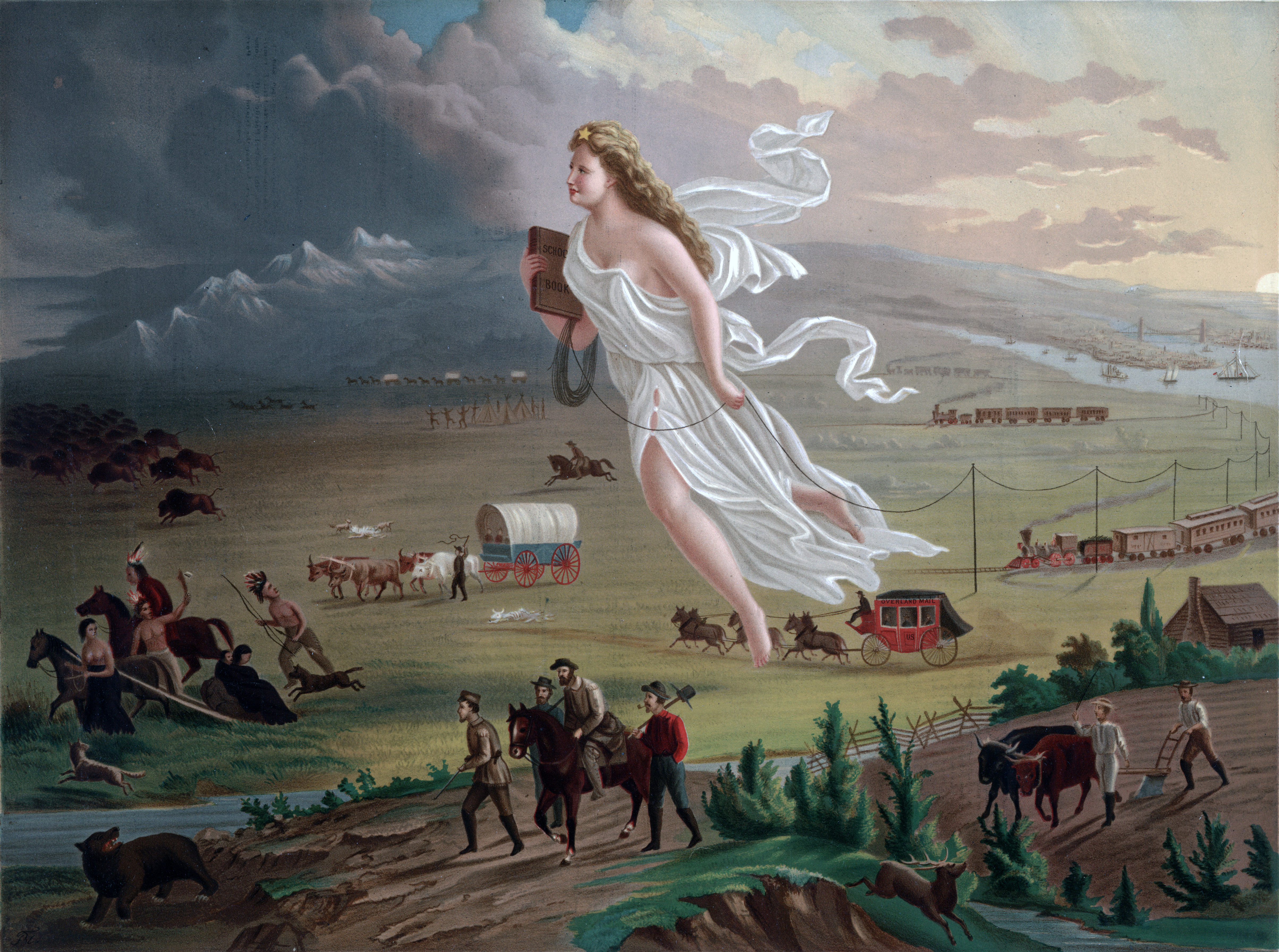
What tribal leaders think about Interiorโ€™s dams report: The federal government has acknowledged the harms of #ColumbiaRiver dams. Now what? — @HighCountryNews

Kettle Falls in 1860. By Unknown author – Library of Congress archives at http://hdl.loc.gov/loc.pnp/ppmsca.03399, Public Domain, https://commons.wikimedia.org/w/index.php?curid=3923552

Click the link to read the article on the High Country News website (B. โ€˜Toastieโ€™ Oaster):

September 1, 2024

There was a time you could catch tons of salmon in a single day at Kettle Falls, a series of pools cascading into each other on the Columbia River in northern Washington. That was before the U.S. government built Grand Coulee Dam in 1942. After 82 years, in June of this year, the Department of Interior published Historic and Ongoing Impacts of Federal Dams on the Columbia River Basin Tribesan analysis that explores how 11 hydropower dams on the mainstem Columbia, Snake and North Fork Clearwater rivers have hurt Indigenous economies, cultures, spiritual practices, environments and healthThose historic and ongoing harms include the destruction of important cultural sites like Kettle, as well as Celilo Falls, another ancient fishery that was also a magnificent international marketplace. Dams are also famously driving the basinโ€™s salmon stocks toward extinction. โ€œOf sixteen once existing salmonid stocks, four have been extirpated โ€” Mid-Columbia River Coho, Mid-Columbia River Sockeye, Upper Columbia River Coho, and Snake River Coho,โ€ the report reads. All but five of the remaining stocks are now endangered or threatened. 

Indigenous people have long known about the damage dams cause, but to hear the federal government admit it is another thing. HCN spoke to Shannon Wheeler, chair of the Nez Perce Tribe; Phil Rigdon, superintendent of the Natural Resources Department at the Confederated Tribes and Bands of the Yakama Nation; and Corinne Sams, whoโ€™s on the board of trustees for the Confederated Tribes of the Umatilla Indian Reservation and is also chair of the Umatilla Fish and Wildlife Commission and the tribal nationโ€™s representative at the Columbia River Inter-Tribal Fish Commission. Hereโ€™s what they have to say about Interiorโ€™s report.

These conversations have been edited for brevity and clarity.

High Country News: What was tribal involvement in creating the Interior Departmentโ€™s report?

Shannon Wheeler: We are the ones that submitted (it) to them. We had already completed this in the 1990s. We revamped it and gave them the newest version over the past eight months, and thatโ€™s what they have been working (from).

Corinne Sams: Weโ€™ve always been heavily engaged with the Department of Interior, along with the recent Columbia Basin Restoration Initiative, which is now being called the Resilient Columbia Basin Agreement, with the United States government. That was solidified in January of this year. Over the last three years, Umatilla Tribe and our staff have worked vigorously to ensure that the United States government understands the impacts and the losses that have occurred to salmon and other anadromous fish within the Columbia and Snake Basin. So weโ€™ve played an enormous role.

Phil Rigdon: The Department of Interior came, and we did a consultation with the federal government on (the report). Our leadership expressed concerns (about) the impacts that the dams have had on our salmon, lamprey, sturgeon and fish species, but also the knowledge of our connection to the Columbia River. Our lives have changed forever, ever since those (dams) were in. But we continue to advocate and go fish and continue to practice our culture and our way of life. This report comes out in a manner that highlights a lot of broken promises to our people, but we continue to push and advocate on behalf of resources that we hope will be returned back to the levels they should be

HCN: Is there anything you think the report gets wrong or leaves out?

SW: No.

CS: No. This is the first time the federal government has ever recognized the true impacts to our people and to our ecosystem in regard to hydro systems, so weโ€™re very optimistic and encourage individuals to read the report, to become informed. Because our ultimate goal is to decarbonize and replace the energy sector, which will eventually, hopefully, replace those hydro systems. We recognize that this isnโ€™t only about fish. We have several other interests in the basin: transportation, recreation, irrigation. All of those components are important, and we donโ€™t want to leave one out. Weโ€™re really pushing for everybody within the basin to remain whole. 

PR: These reports are important. But sometimes (itโ€™s) tough to understand the heart of it. Our people are still down (there) fishing right now. Our people continue to carry our way. But the report is an important step into highlighting those things that we consider problematic over the history of the dams.

HCN: What kinds of federal actions do you want to see based on this report?

SW: Consideration for breaching of the four Lower Snake River dams.

CS: Thereโ€™s a billion-dollar backlog on infrastructure and hatchery maintenance, and we utilize those hatcheries as mitigation fish, for the loss of the abundant natural runs. But our ultimate goal is to get our natural runs back to healthy and harvestable levels. Weโ€™ve done a significant amount of work and have been co-managing these resources (with government agencies) for decades, but the tribes have been managing these resources for millennia. This isnโ€™t just a tribal effort. This is for all Americans that live within the basin.

PR: Thereโ€™s Bateman Island Causeway down at the mouth of the Yakima (River) that causes the thermal block that causes enormous problems for juvenile and adult fish migration up to the Yakima Basin. The small things really need to be invested in and done now. Some of these things that have been a problem for a long time are critical. And then to look at the big things, like the Lower Snake River dams, and really come up with solutions. But we also believe it canโ€™t be like it was for us. We canโ€™t leave people behind in the manner that we were left behind, putting the dams in for the energy development. There is a balance here that needs to be achieved through what these reports do, but also what weโ€™re trying to do as a people.

HCN: Do you think any federal action hinges on Democrats winning the upcoming presidential election?

SW: Tribal nations across the country have all had impacts one way or another regardless of what type of administration is in. But I also believe that this administration understands that thereโ€™s impacts that the United States has had on its people.

CS: Absolutely. If we see a shift in administration, all of these agreements, all of these reports, become uncertain.

PR: I think itโ€™s not important. Republicans fish, and Democrats fish, too. We need to come together to find solutions. I donโ€™t think we should make it all dependent on who wins an election, but we should be thinking about how we solve long-term problems. The polarization that you see is sad, in a lot of ways, because I donโ€™t think weโ€™re getting to the right conversations. I donโ€™t think we want to go political. I have red-state Republicans advocating for our work in the Yakima. Thatโ€™s unique because of our partnerships, but also how weโ€™re trying to build trust within our local communities. Weโ€™re from rural communities, rural America, tribal people. Sometimes weโ€™re less concerned about the politics. Weโ€™re thankful for the Biden administration and the leadership theyโ€™re showing in doing these studies. I donโ€™t want to discount that at all. But we want to make sure itโ€™s not dependent upon who gets elected, but that we continue moving forward as a people.

Native salmon fishermen at Celilo Falls. Russell Lee, September 1941. By Russell Lee – This image is available from the United States Library of Congress’s Prints and Photographs divisionunder the digital ID fsa.8c22374.This tag does not indicate the copyright status of the attached work. A normal copyright tag is still required. See Commons:Licensing., Public Domain, https://commons.wikimedia.org/w/index.php?curid=3923525

HCN: Do you think thereโ€™s a path here to bringing back Celilo Falls?

CS: When they inundated Celilo Falls, several years after that they did sonograms. And they say the falls are still under there. I think deep in our hearts we always hope to see the return of that fishery, that place. Our ancestors and our old people talk about just the sound alone, the sound of those falls. They miss that sound. 

PR: I would love to see that. I donโ€™t want to get our hopes up, either.    

We welcome reader letters. Email High Country News at editor@hcn.org or submit a letter to the editor. See our letters to the editor policy.

This article appeared in the September 2024 print edition of the magazine with the headline โ€œWhat tribal leaders think about Interiorโ€™s dams report.โ€

Map of the Columbia River watershed with the Columbia River highlighted. By Kmusser – self-made, based on USGS and Digital Chart of the World data., CC BY-SA 3.0, https://commons.wikimedia.org/w/index.php?curid=3844725

Denver measures second hottest summer on record: โ€œFour of the top five are in the last five yearsโ€ — The #Denver Post

Colorado Drought Monitor 6 month change map ending October 8, 2024.

Click the link to read the article on The Denver Post website (Bruce Finley). Here’s an excerpt:

September 4, 2024

This summer in metro Denver ranks as the second hottest on record, in line with global warming, according to theย National Weather Service. A hot, dry July extended through August. While much of northcentral and northeastern Colorado had above-normal rain in August, most of the metro Denver area received less than 1.5 inches. High temperatures reached 100 degrees on six days and topped 90 degrees on 57 days as of Tuesday,ย weather service recordsย from June 1 through August 31st show. Denverโ€™s average summer temperature measured 75 degrees โ€” which is 2.7 degrees above the norm, meteorologists said. Only the summer of 2012 measured hotter, with an average temperature of 76.3 degrees. The other three hottest summers occurred in 2020 (74.9 degrees), 2021 (74.6 degrees), and 2022 (74.8 degrees).
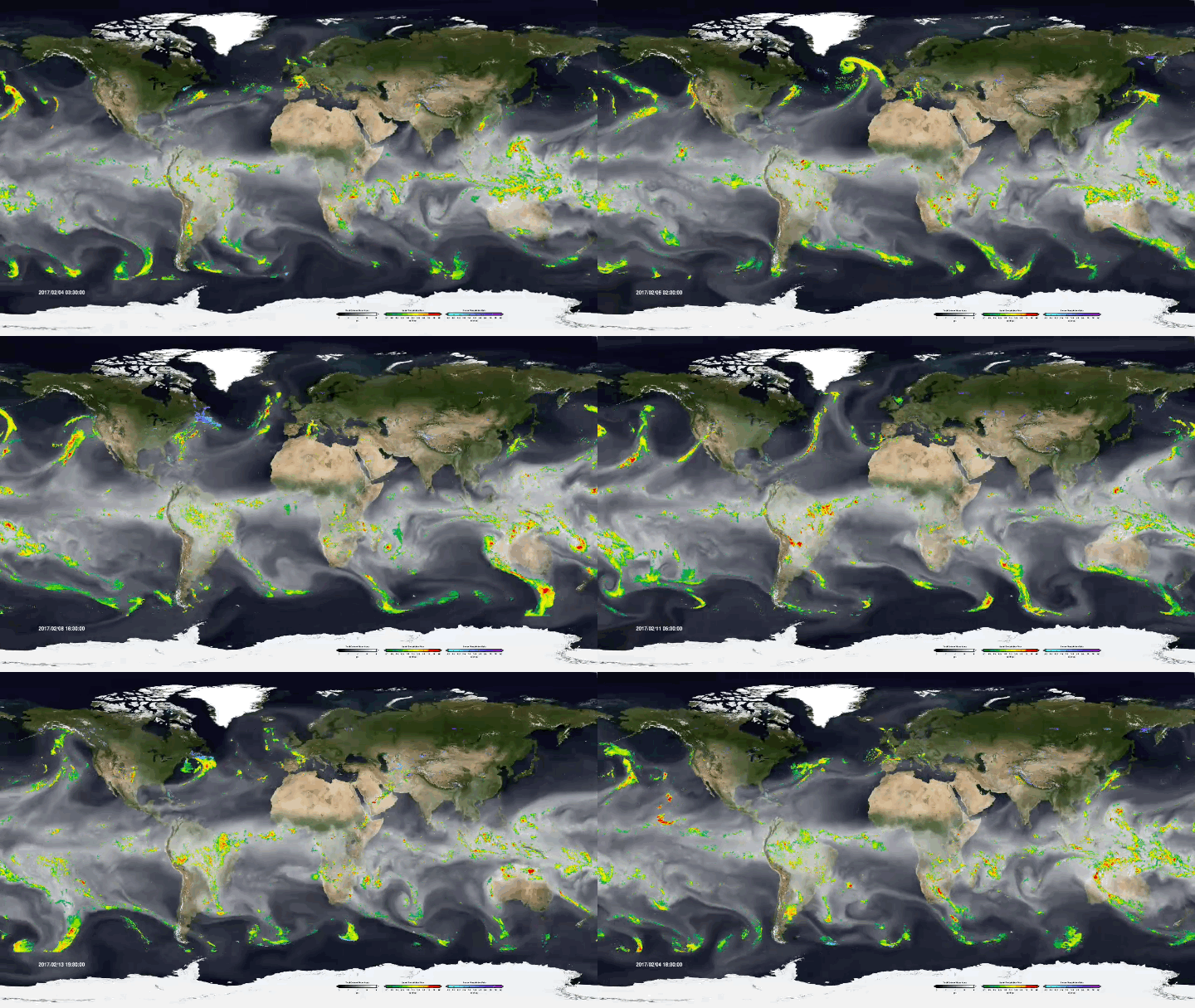
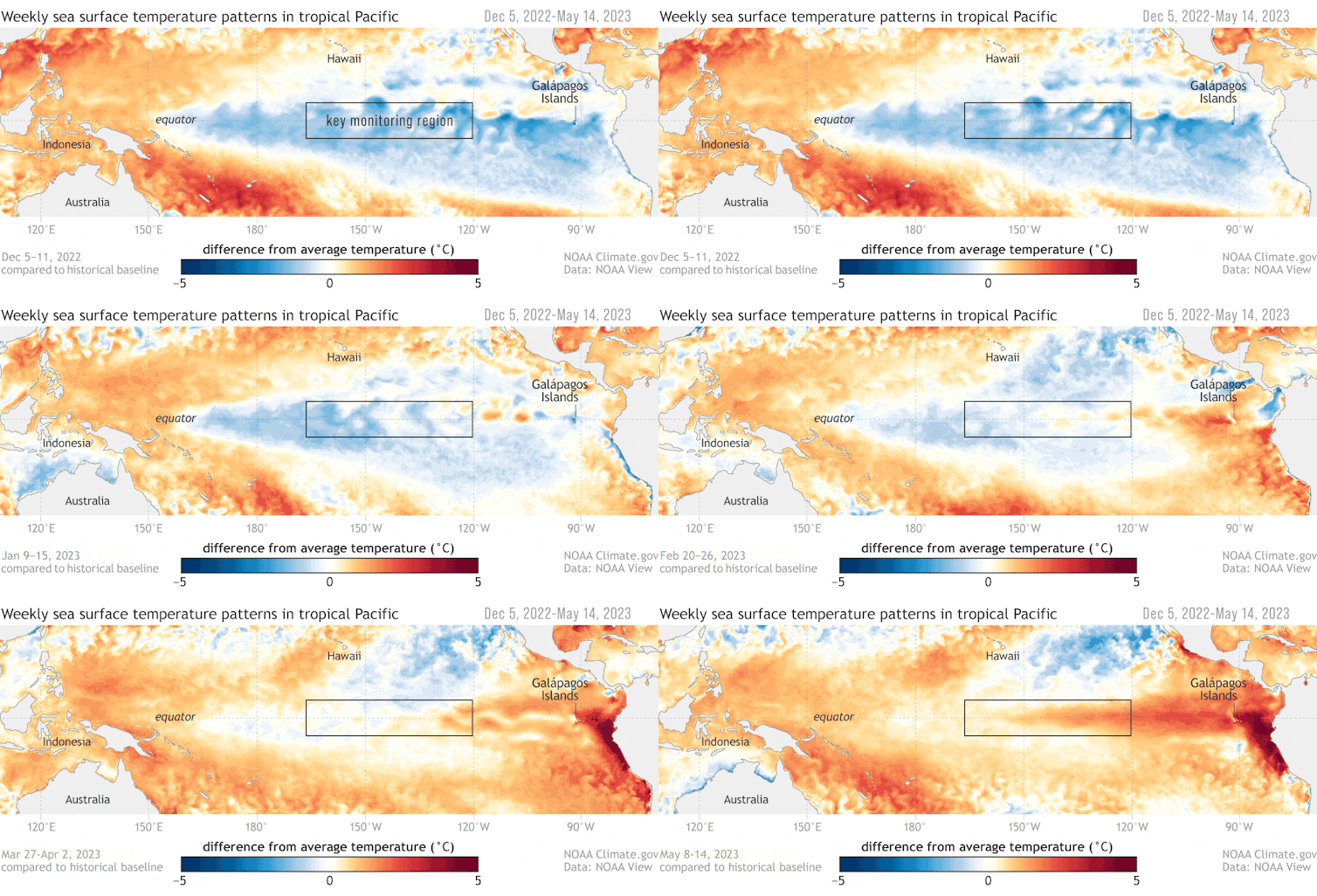
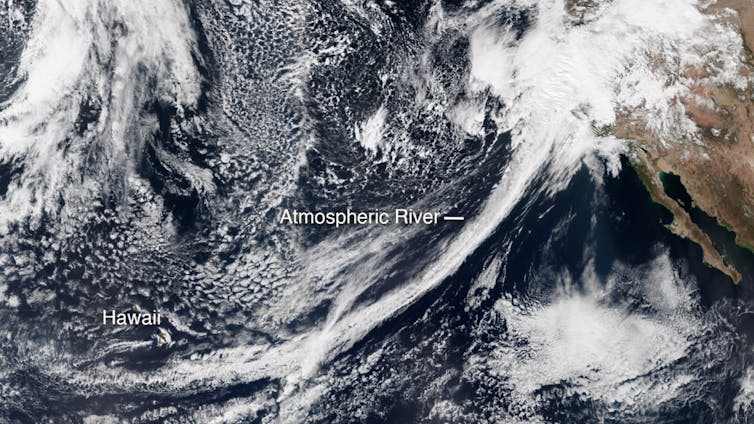
โ€œFour of the top five are in the last five years, and number one was 12 years ago,โ€ NWS meteorologist Paul Schlatter said. โ€œWe keep breaking temperature records globally. Same thing in Denver, especially in the summer. Weโ€™re matching what is happening on a global scale. Some parts of the world are warming faster than others. It is definitely hitting our summers.โ€

Metro Denverโ€™s night temperatures generally cooled off with an average of 59.2 degrees this summer, records show. The governmentโ€™sย drought indexย on Wednesday designated 40% of Colorado as โ€œabnormally dryโ€ withย  8.5% of the state registering in drought.

Opinion: Time is now for a new #ColoradoRiver Basin process to bring together and engage sovereigns and stakeholders — Lorelai Cloud #COriver #aridification

Animas River. Photo credit: The Southern Ute Indian Tribe

From email from John Berrgren:

August 15, 2024

The foundation of the laws, treaties, acts and policies that govern the Colorado River is the Colorado River Compact of 1922. Over the past 100 hundred years, dozens of additional agreements and decisions have been layered on top, providing for the management framework we know today. 

As we look to the future, and as individuals who represent Tribal and environmental interests in the Colorado River Basin, we believe it is time to return to โ€” and reimagine โ€” one of the primary stated purposes of the 1922 Compact: to provide for the equitable use of water.

For me, Lorelei, itโ€™s personal. Rooted in the Southern Ute Indian Tribe and raised on the Reservation in southwestern Colorado, my life has been deeply intertwined with water. 

We lived in one of the first adobe houses on the Reservation and did not have running water. We relied in part on groundwater, but the well often dried up. So, we hauled water once a week and my grandmother boiled ditch water for drinking water as needed. 

Water was a scarce resource, and we often had to choose between using water for drinking, taking showers or flushing the toilet. This scarcity is still a reality for many Native Americans today across the country.

I grew up knowing that water is a living, sacred being. Our Ute (Nuuchiu) culture centers around water, and we offer prayers for and with it. Water is the heart of our ceremonies. We were taught early on to take and use only what is needed. Above all else, we must care for the spirit of the water.

From the 2018 Tribal Water Study, this graphic shows the location of the 29 federally-recognized tribes in the Colorado River Basin. Map credit: USBR

When I was first elected to the Southern Ute Tribal Council in 2015, I was asked to participate in the Ten Tribes Partnership, or TTP, which is a coalition of the 10 Tribes along the Colorado River focused on securing and using tribal water. After one year, I was asked to chair TTP.

I drew on my personal and spiritual connection to water and started learning about the complex legal and technical issues related to managing water in the American West. I was stunned to learn that Tribes have historically delegated to have little to no role in managing Western water, and that tribal needs and interests are often marginalized.

In recent years, I have had the opportunity to work alongside many people from diverse walks of life to begin addressing these inequities: lack of inclusion in decision-making; lack of access to clean water; and lack of capacity to manage, develop and use water. 

I became a founding member of the Water and Tribes Initiative, or WTI, for the Colorado River Basin; was the first Native American appointed to the Colorado Water Conservation Board and the Colorado Chapter of The Nature Conservancy; co-founded the Indigenous Womenโ€™s Leadership Network, a program of WTI; and helped forge an historic agreement among the six tribes in the Upper Basin the Colorado River and the states of Wyoming, Colorado, Utah, and New Mexico to allow Tribes to be more meaningfully involved in collaborative problem-solving (but not decision-making per se).

Like Tribes, environmental interests have mostly taken a backseat to the use of the Colorado River for municipal and agricultural purposes. Most adjustments to address cultural and ecological values have been treated as subservient to the allocative laws that largely service municipal and agricultural interests.

Returning to the primary purpose of the 1922 Compact, we believe that providing for the equitable use of water includes substantive and procedural elements. Thereโ€™s a huge difference between how the Colorado River is managed for multiple values (substance) and how people who care about such issues determine what ought to happen (process). 

We are offering a process improvement. We believe itโ€™s time to establish an ongoing, whole-basin roundtable that would embrace the entire transboundary watershed, address the major water issues facing the basin, and, importantly, provide an equitable process to engage all four sets of sovereigns (United States, Mexico, seven basin states and 30 Tribal nations), water users and stakeholders. 

The late University of Colorado law professor David Getches, an astute observer of Colorado River law, noted in 1997 that โ€œthe awkwardness and the intractability of most of the Colorado Riverโ€™s problems reflect the absence of a venue to deal comprehensively with Colorado River basin issues.โ€ He called for โ€œthe establishment of a new entity that recognizes and integrates the interests and people who are most affected by the outcome of decisions on major Colorado River issues.โ€ 

Many other scholars and professionals have supported a whole-basin approach to complement, not duplicate, other forums for engagement and problem-solving in the basin. Establishing a whole-basin forum is also consistent with international best practices, as most transboundary river basins throughout the world have some type of river basin commission.ย 

A whole-basin forum would be a safe place to have difficult conversations, to exchange information, build trust and relationships, and to develop collaborative solutions. It should rely on the best available information, including Indigenous knowledge.

Addressing the historic inequities built into the fabric of governing the Colorado River requires innovative substantive tools as well as procedural reforms focused on engagement and problem-solving. We look forward to working with all of you to shape a more equitable, more sustainable future for the Colorado River.

Vice Chairman Lorelei Cloud lives on the Southern Ute Indian Reservation and is the first Native American appointed to the Colorado Water Conservation Board and the Colorado Chapter of The Nature Conservancy.

John Berggren lives in Boulder and is the Regional Policy Manager, Healthy Rivers for Western Resource Advocates.

Map credit: AGU

Aurora Borealis images from northern #Colorado October 10, 2024

Two of my colleagues at the City of Thornton granted me the permission to use the photos below.

Northern Lights from northern Colorado near Thornton October 10. 2024. Photo credit: Matt Stockton
Northern Lights from Nunn October 10, 2024. Photo credit: Karen Langston

Water Year 2024 Brought Record-Breaking Temperatures and Varied Precipitation to the Intermountain West, Leading to a Mix of #Drought Degradation and Improvement — NIDIS

Click the link to read the article on the NIDIS website:

October 10, 2024

Key Points

  • Water Year 2024 overall was warmer than normal across the Intermountain West, with variable precipitation across the region, contributing to drought development in Wyoming and limiting drought amelioration in southern New Mexico.ย 
  • Drier-than normal-conditions were noted in northwestern Arizona, southern New Mexico, western and southwestern Utah, north-central and southeastern Colorado, and eastern and southern Wyoming.ย 
  • Wetter-than-normal conditions were logged in northern portions of New Mexico, much of the southern Rockies of Colorado, areas of central and west-central Utah, and parts of northwestern Wyoming.ย 
  • Overall, the 2024 North American Monsoon season precipitation underperformed in Arizona and southern/western New Mexico and overperformed in eastern and northern Utah, northern New Mexico, and all but the Front Range and eastern Rockies of Colorado.
  • As of October 7, 2024, El Niรฑo-Southern Oscillation (ENSO) neutral conditions are expected to transition to La Niรฑa by November (71% chance), which typically increases likelihood of drier winter conditions across the Southwest, and is expected to persist through Januaryโ€“March 2025.

Jump to: 

Intermountain West Water Year 2024 Summary

  • Water Year 2024 (October 1, 2023โ€“September 30, 2024) included a mixed bag of record-breaking temperatures, precipitation anomalies, and both drought development and improvement in the Intermountain West.ย 
  • Drought developed in Wyoming and improved in parts of New Mexico, Arizona, and Colorado.ย Long-term drought impacts remain in many areas of the region, including persistent drought in southern New Mexico, despite normal to above-normal precipitation in many areas.ย 
  • Roughly the same percentage of the Intermountain West was in drought at the start of Water Year 2024 (38.27%), as the start of Water Year 2025, October 1, 2024 (36.55%). However,ย  drought conditions shifted across the region. At the onset of Water Year 2024, 94.86% of New Mexico was in Moderate to Exceptional Drought (D1โ€“D4) and 0.0% of Wyoming was in drought. Drought has increased in Wyoming to 71.33% and improved in northern/central New Mexico (now covering only 34.73% of the state), eastern Arizona, and southwestern Colorado.ย ย 
  • Most of the Intermountain West experienced average- to above-average snowpack over the course of Water Year 2024. However,ย snow droughtย persisted throughout winter in much of northern Wyoming, with record-low snow water equivalent at several long-term SNOTEL stations.
  • The 2024 North American Monsoon cumulatively delivered an underperforming season of precipitation for Arizona and southern/western New Mexico, while overperforming in eastern Utah, northern New Mexico, and all but the front range and eastern Rockies of Colorado,ย improving drought conditions in manyย areas.
    • Coloradoย received 95% of normal precipitation for Water Year 2024, but areas were both much wetter than normal and much drier than normal. In Colorado, Monte Vista in the San Luis Valley recorded its wettest water year on record (since 1944) with 14.56 inches of precipitation.ย 
    • New Mexicoย statewide precipitation was 87% of average. Southern New Mexico was below average, and Las Cruces reported its driest water year on record with just 3.32 inches recorded.ย 
    • Utahย experienced record rainfall totals in the southeast (parts of Emery, Wayne, and Garfield counties), which coincided with an eastern shift of the monsoon pattern.ย 
  • Above-normal temperatures impacted the entire Intermountain West region, which contributed to new drought development in Wyoming, Arizona, and eastern Colorado and long-term drought persistence in southern New Mexico.
    • Arizonaย experienced its hottest summer (Juneโ€“August) on record (130 years).
    • Coloradoย experienced its 7th warmest water year on record, and its 5th warmest Juneโ€“September. Grand Junction recorded its warmest summer on record, and eastern Colorado, including Kiowa, Bent, and Prowers Counties, continues to suffer from Severe Drought (D2).ย 
    • New Mexicoย had its 5th warmest water year and 3rd warmest summer (Juneโ€“August) on record.ย 

Figure 1: Intermountain West Water Year 2024 Drought Change Map: October 3, 2023โ€“October 1, 2024

Key takeaway:ย In Water Year 2024, Wyoming experienced significant drought development, with a 3-4 category drought degradation (going from 0% of the state in drought to 71.33%). Much of New Mexico experienced notable drought recovery.ย 

52-week U.S. Drought Monitor change map, showing where drought has improved (green), is unchanged (gray), or has worsened (yellow to orange) from October 3, 2023โ€“October 1, 2024. Source: National Drought Mitigation Center.

Figure 2: Percent of Average Precipitation: Water Year 2024

Key takeaway:  Water Year 2024 was drier than normal across northwestern Arizona, southern New Mexico, western and southwestern Utah, north-central and southeastern Colorado, and eastern and southern Wyoming. Northern portions of New Mexico, much of the southern Rockies of Colorado, areas of central and west-central Utah, and parts of northwestern Wyoming saw wetter-than-normal conditions. 

Percent of normal precipitation for Water Year 2024 (October 1, 2023โ€“September 30, 2024), compared to historical conditions. Red and orange hues indicate below-normal precipitation, yellow to light green hues indicate near-normal precipitation, and dark green, blue, and purple hues indicate above-normal precipitation. Valid October 9, 2024. Source: Western Regional Climate Center.

Figure 3: Water Year 2024 Mean Temperature Departure (ยฐF) from Normal for the Western U.S.

Key takeaway:ย The entire Western U.S. experienced above- and much-above-normal mean temperatures this water year, with record warm temperatures in several locations across the region.ย In much of the Intermountain West, mean temperatures for the water year were between 1โ€“4ยบ F above normal.ย 

Departure from normal mean temperatures (ยฐF) across the western U.S. for Water Year 2024 (October 1, 2023โ€“September 30, 2024), compared to historical conditions from 1981โ€“2010. Source: Western Regional Climate Center, WestWide Drought Tracker, using PRISM data.

Figure 4: Summer 2024 Mean Temperature Rankings for the Western U.S. 

Key takeaway: Summer 2024 saw record warm temperatures in many areas of Arizona, New Mexico, eastern Colorado, southwestern Utah, and southeastern Wyoming, compared to 1895โ€“2010.

Mean temperature rankings (percentiles) across the western U.S. for Juneโ€“September 2024, compared to historical conditions from 1895โ€“2010. Blue hues indicate below-normal temperatures, yellow and orange indicate above-normal temperatures, and red indicates record warm temperatures. Source: Western Regional Climate Center, WestWide Drought Tracker, using PRISM data.

Figure 5: 6-Month Evaporative Demand Drought Index (EDDI): September 1, 2024

Key takeaway: Impacts of high spring and summer temperatures are evident in the Evaporative Demand Drought Index (EDDI), notably in southeastern Wyoming, southwestern Arizona, and southeastern New Mexico. Despite normal or above-normal precipitation, high evaporative demand (the โ€œthirstโ€ of the atmosphere) kept drought recovery to a minimum.

The Evaporative Demand Drought Index (EDDI) is a drought monitoring tool that shows the anomaly in daily evaporative demand (“the thirst of the atmosphere”) over a given period time. Unusually high evaporative demand can lead to moisture stress on the land surface, and ultimately to droughtโ€”even when precipitation has been near-normal. This map represents evaporative demand over the 6 months leading up to September 21, 2024 across the Intermountain West. Source: NOAA Physical Sciences Laboratory. Map from Dave Simeral.

2024 Water Year Drought Impacts

  • Wyoming degraded, from no drought a year ago to 71% of the state as of October 1, 2024. The worst agricultural impacts are in the northeastern corner of the state, where poor rangeland conditions, reduced crop yields, reduced irrigation water, water hauling for livestock, supplemental feeding, decreased stock weights, and dry creeks/stock ponds were reported.ย 
  • Central Utah and east-central and southern Colorado also reported agricultural and rangeland impacts with lack of forage production and dry soils impacting planting winter wheat requiring drilling into the ground in some fields.
  • High temperatures affected water supply, irrigation, and hydropower generation. Warm temperatures reduced snowpack accumulation, produced an earlier snowmelt-driven run-off, and negatively impacted associated water management decisions for communities and land managers (e.g., agriculture, ranches, public lands) over the summer months.ย 
  • Lake Powellย andย Lake Meadย maintain well-below-normal storage levels compared to long-term averages.โ€‹

Drought impacted wildfire activity in UtahWyoming, and Arizona. Grassland growth in low elevations in Arizona was high due to wet conditions in winter 2024, which led to a 60% increase in acreage impacted by wildland fire, exacerbated by low summer precipitation in the lower desert areas. 

Reservoir Levels Across the Intermountain West

  • Over Water Year 2024, reservoir storage increased in Lake Powell, though it is still below average. Other reservoirs hit historic lows.
  • As of June 2024, in the Upper Colorado River Basin, the U.S. Bureau of Reclamation reported reservoir levels for Flaming Gorge at 87% full, Blue Mesa at 63% full, and Navajo at 72% full. Lake Powell was 37% full. Unregulated inflow into Lake Powell for the Aprilโ€“July runoff period was approximately 5.32 million acre-feet (MAF), or 83% of average. As of October 4, 2024, Lake Powell was at 60.4% of average levels for this time of year.ย 
  • After the irrigation season ended on the lower Rio Grande in New Mexico, Caballo Dam was shut off (September 28), and water releases from the Elephant Butte dam ended on September 26, 2024.ย Elephant Butte is currently 6%ย full (13.2% of average storage for this time of year).ย 

Figure 6: October 2024 Reservoir Storage Levels 

Key Takeaway: Lake Powell storage improved over the course of Water Year 2024, while Lake Mead (Colorado River) and Elephant Butte (Rio Grande) are both at historical lows.

ReservoirStateOctober 2024 Level in Acre-FeetEnd of Water Year Percent of Average
Lake Powell/Glen Canyon DamArizona9,125,90260.5%
Lake Havasu – Parker damArizona562,27198.1%
Lake Mohave/Davis DamNevada/Arizona1,567,73795.8%
Lake Mead – Hoover DamNevada8,717,73154.5%
Flaming Gorge ReservoirWyoming3,150,682100.2%
Blue Mesa ReservoirColorado556,29896.9%
McPhee ReservoirColorado216,336 77.2%
Navajo ReservoirNew Mexico1,085,80482%
Elephant Butte Dam New Mexico113,170 13.2%

Source: U.S. Bureau of Reclamation Reservoir Storage Dashboard. Data valid October 4, 2024. 

What Is the North American Monsoon? Why Does It Matter?

The North American Monsoon is a seasonal circulation of subtropical moisture that develops over northern Mexico and extends into the Southwest U.S. from June 15โ€“-September 30. Monsoonal surges can occur north and west of these “core” areas, reaching Nevada, southeastern California, and Wyoming, including the Greater Yellowstone Region. Monsoonal rainfall accounts for nearly 50% of the total annual precipitation across much of Arizona and New Mexico. Learn more about the North American Monsoon.

How Did the 2024 North American Monsoon Impact Drought in the Intermountain West?

  • Pre-Monsoon Conditions:
    • As of June 4, 2024,ย  drought conditions were most severe in southern New Mexico, with areas experiencing drought in Arizona, Colorado, New Mexico, Utah, and Wyoming.ย 
  • Following a strong El Niรฑo winter (with normal to above-normal snowpack for most of the region), a climate pattern that resembled the monsoon developed in June and July, caused by unusually high thunderstorm activity in the southwestern Atlantic Ocean, Caribbean, and Gulf of Mexico. This resulted in an increase in near-surface Gulf moisture and increased winds from the two jet streams, and facilitated better organization of thunderstorms (which were not a monsoon pattern).ย 
  • The August- September precipitation was a traditional North American Monsoon pattern (south to north steering flow similar to theย 2016ย monsoon), which brought average to above-average precipitation for some of the southwestern U.S., including the four corners region, areas of northern New Mexico, southeastern Arizona and southwestern Colorado.ย 
  • Prior to the 2024 Monsoon season, all five Intermountain West states were experiencing some level of drought. As of June 4, 2024 the U.S. Drought Monitor reported that 20.02% of Arizona, 72.41% of New Mexico, 12.89% of Colorado, 6.17% of Wyoming, andย  0.40% of Utah were in drought.ย 
  • The highest monsoon seasonal precipitation totals were in northern New Mexico (betweenย 90%-150%ย of normal) and the Four Corners region.
  • State-by-State Summary:
    • New Mexico:ย Monsoon precipitation was below normal in southern New Mexico (25% of normal monsoon precipitation) and the southwestern climate district (30th driest monsoon season). However, the northeastern climate district had its 29th wettest monsoon, which improved drought in some areas of New Mexico. Statewide precipitation in New Mexico ranked 65th driest between June-September.
    • Arizona:ย Areas of western and central Arizona had an underperforming monsoon season. Phoenix experienced 30% of normal monsoon season precipitation, while Tucson was at 101% of normal precipitation.ย ย 
    • Colorado:ย Areas of southern and western Colorado received normal to above-normal precipitation. The eastern plains received below-normal precipitation.
    • Utah:ย Statewide, Utah cumulatively experienced well-above normal rainfall. but July precipitation conditions were well-below average with several counties in east central Utah experiencing record dry rainfall totals, followed by record wet August precipitation. Though short-term drought conditions impacting agriculture and rural communities worsened, healthy soil moisture and reservoir levels demonstrate gradual hydrologic drought improvement.ย ย 
    • Wyoming:ย Wyoming was largely very dry through the 2024 Monsoon Season, outside of a wet August in the far southeast part of the state. Less than 50% of normal precipitation fell in parts of central and northeast Wyoming, leading to rapid expansion of drought. As of October 1, 2024, 71% of the state was in drought, with 12% of the state in Extreme Drought (D3).ย 

Figure 7: 2024 Monsoon Precipitation (June 1โ€“October 4, 2024)

Key takeaway: Favorable monsoon seasonal precipitation fell in northern New Mexico, southeastern Arizona, and southwestern Colorado. 

June 1โ€“October 4, 2024 precipitation totals (inches) across the Intermountain West. Source: GridMET via Climate Engine. View an interactive version of this map.

Did the El Niรฑoโ€“Southern Oscillation (ENSO) Neutral Conditions Impact the 2024 North American Monsoon? 

The relationship between the monsoon and El Niรฑo/La Niรฑa events is hard to predict, though there is evidence of a correlation. Several physical mechanisms link wet winters in the monsoonal region during El Niรฑo years with high spring soil moisture that delays the monsoonal onset. However, the extreme year-to-year variability inherent to monsoonal activity limits the statistical ability to anticipate ENSO conditions with summer precipitation outlooks, where seasonal conditions are often driven primarily by event-level weather patterns. 

  • Winter 2023โ€“2024โ€™s El Niรฑo conditions brought normal toย above-normal snowpackย for much of the region, including Utah, Colorado, and northern New Mexico.ย 
  • Some research suggests summers with La Niรฑa conditionsย tend to favor robust monsoonย activityย in June and July, and summers with El Niรฑo conditions tend to favor less active monsoons, but wetter winter precipitation.ย 
  • Summer and early fall 2024 were ENSO-neutral.ย ENSO-neutralย conditionsย can result in strong or weak monsoon precipitation for the Southwest and Four Corners areas.ย 

Looking Ahead

Figure 8: Seasonal Precipitation and Temperature Outlooks (Octoberโ€“December 2024)

Key takeaway: According to NOAAโ€™s Climate Prediction Center, odds favor both below-average precipitation and above-average temperatures across the Intermountain West, southern California, and southern Nevada from Octoberโ€“December 2024. 

The probability (percent chance) of above-normal (green hues), near-normal (gray hues), or below-normal (brown hues) precipitation from Octoberโ€“December 2024. Source:ย NOAAโ€™s Climate Prediction Center. Maps fromย Drought.gov.
The probability of above-normal (red hues), near-normal (gray hues), and below-normal (blue hues) temperatures for Octoberโ€“December 2024. White areas indicate equal chances of above-, near-, or below-normal conditions. Source:ย NOAAโ€™s Climate Prediction Center. Maps fromย Drought.gov.

Additional Resources

Prepared By

Gretel Follingstad, Amanda Sheffield, Kelsey Satalino, Eleanor Hasenbeck
CU Boulder/Cooperative Institute for Research in Environmental Sciences (CIRES), NOAA/National Integrated Drought Information System (NIDIS) 

Dave Simeral
Western Regional Climate Center/Desert Research Institute

Erinanne Saffell
Arizona State Climate Office 

Peter Goble
Colorado Climate Center

Jon Meyer
Utah Climate Center

Michael Natoli, Andrew Mangham
NOAAโ€™s National Weather Service

Paul Miller
NOAAโ€™s National Water Prediction Service Colorado River Basin Forecast Center

Mike Crimmins
Arizona State University

Dave DuBois
New Mexico State Climatologist, New Mexico State University 

Laura Haskell
Utah Department of Natural Resources

Explainer: #LaNiรฑa and #Colorado winters — Peter Goble (@ColoradoClimate Center) #ENSO

I had the occasion in my professional work this week to email Peter Goble with a question about accessing La Niรฑa data. Below is his explainer:

October 10, 2024

You can find ENSO (El Nino/La Nina)ย data from the Earth Systems Research Physical Sciences Laboratory (ESRL)here. The first graph below is a scatterplot of temperatures in the first eight days of the water year at Denver International Airport as a function of ENSO. Normally I would use the Denver Central Park station for the longer data record, but the data are a few days behind right now. El Nino vs La Nina barely explains 1% of the variance in temperature over the first eight days of the water year, which is not statistically significant. [ed. emphasis mine] I would caution, however, that eight days is simply not a large enough sample to clearly see the influence of El Nino or La Nina on our weather. Looking at a full season (such as October-December) gives us a far better sample of day-to-day weather variability. The second and third figures below (also fromย ESRL) show us that there is not a significant increase in the risk of a warm or dry extreme this time of year based on La Nina. That said, we do tend to see wetter, snowier winters (DJF) during winter (December-February) in north-central Colorado duringย La Nina, so maybe this warm, dry pattern will turn around eventually. Here’s hoping.

As you know, our climate is warming. We have seen a stronger warming trend in autumn than any other season. I don’t mean to suggest that the anomalous warmth we are experiencing to start this October is the new normal. Every year is different. But the temperatures we are experiencing now probably fit more comfortably into the new normal range of variability.

Data link for graphics that follow.

A timy critter that has a lot to say about our rivers — @AmericanRivers

West Branch of the Saco River, Bartlett, New Hampshire | Andy Fisk

Click the link to read the article on the American Rivers website (Andrew Fisk):

July 9, 2024

While many are familiar with the fish and wildlife that define our landscapes there are other lesser-known critters that play a role in creating and maintaining a healthy ecosystem. This little guy isnโ€™t flashy with brilliant plumage, a thrilling call, or a remarkable migration story. It is very difficult to see by the naked eye, doesnโ€™t have a dramatic migration story, and isnโ€™t tasty to eat. But you can always know where to find it โ€ฆ in clean clear healthy waters.

So what is this new river friend of ours?

Cymbella cistula photomicrograph. Via: American Rivers

Cymbella cistula shown here is one of the many members of the genera and among the many thousands of varieties of diatoms, or what are commonly called algae. Diatoms are microscopic cells with an outer body shaped in a dramatic and diverse array of wondrous forms. These individual diatoms can exist as individuals or group together in visible colonies (such colonies can be mistaken for a vascular plant, e.g., a plant that has circuitry like blood vessels for transporting water and nutrients through their stems โ€ฆ as a simpler form of life, diatoms have none of this circuitry).

Diatoms generate oxygen through photosynthesis โ€“ the process where sunlight and carbon dioxide are converted to oxygen, energy, and water. They are often referred to as planktonic (from the Greek for โ€œwanderingโ€) because despite some having the ability to swim about, they spend their time moving with the currents. The companion group of critters to the plant-like diatoms, or phytoplankton, are the zooplankton, the first consumer in the ocean that eats phytoplankton, also small or early life stage animals that swim or float about.

These two types of planktonic organisms are critical to freshwater and marine food webs and make up a tremendous amount of the living biomass, or organic matter, in our rivers and streams.

Algae? Phytoplankton? You may be envisioning a lake or stream covered in green, making recreation discouraging or even hazardous with certain types of algae blooming in the heat of summer. Too many nutrients from treated wastewater and lawn or farm chemicals allow many species of diatoms to excessively thrive. Impoundments behind dams are often subject to algae blooms due to the decreased flow of water and higher water temperatures. And while abundant amounts of algae generate oxygen from their photosynthesis, inevitably an excessive amount of algae biomass will crash and decay. And decay then consumes all that oxygen. What was a naturally clear and clean waterbody turns a murky green with little oxygen. And some species of diatoms generate toxins that are harmful to humans and animals, making an impoundment or lake not just unappealing to swim, but hazardous to your health. But what about our new friend Cymbella cistula? Not all diatoms are alike! And many species are quite sensitive to an abundance of nutrients and do not thrive in enriched and warmer waters. Cymbella diatoms are one of the diatoms that can really only flourish in low nutrient (โ€œoligotropicโ€) conditions, waterbodies that run clear and clean. Here is where this tiny organism has an out-sized role in our work to protect and restore our waters.

To chart a course away from polluted and degraded rivers, streams, lakes, and wetlands we need to set a destination. One destination is a waterbody that has little or no impact from humans, or what scientists and regulators call a baseline condition. Because different types of waterbodies โ€“ wetlands, estuaries, lakes, streams, and rivers โ€“ all have different chemical, biological, and physical characteristics no two types of baseline conditions are exactly the same. Pristine rivers and streams in the northeast are generally those that run clear and cold and flow through forests and areas of little human disturbance. While you may know a pristine stream when you see it, in order to make decisions about how to restore an unloved reach of river, scientists and regulators need precise and measurable indicators of what a pristine baseline condition means.

Macro Invertebrates via Little Pend Oreille Wildlife Refuge Water Quality Research

For many years those indicators were chemical measures of water cleanliness โ€“ dissolved oxygen, suspended solids, or temperature. But these indicators only describe a condition at a point in time when the measurement was taken and donโ€™t integrate conditions over longer periods. And they can miss other problems that may be present. So these chemical measures alone are not the best for ensuring we make it to our destination of healthy water. To get the get fullest and most robust picture of the health of a river or stream we need to listen to the critters!

To make a better roadmap (rivermap?) to our destination scientists have for years been exploring what types of fish, insects, and diatoms live in the different types of waterbodies. This work over the last 30 years has created biological definitions of a waterbodyโ€™s health to complement the more simplistic chemical measures. One of those biological definitions is based on the description of the types and amounts of diatoms present different environmental conditions. In many parts of the country including here in New England scientists have now collected enough diatom data across enough waterbody types and conditions to create statistical models that show us what diatoms should be living in what types of water conditions. These data and models allow environmental professionals to design clean-up plans or demonstrate how a high-quality water body can remain in good health. In our work to ensure our rivers can be as clean and healthy as possible we rely on the most robust tools, regulations, and policies that help guide science-based decision making. Biological indicators of river health are one of those important tools. The Cymbella diatoms whose presence in these models provides a scientifically robust measure of what constitutes high-quality water are ones we need to listen and pay attention to. So the next time you are paddling down or wandering along that clear and cold stream give a nod to that other โ€œwandererโ€ helping guide us on our journey to clean and healthy water for all!

Lawmakers advance measure opening Wyoming to possible #nuclear fuel waste storage — @WyoFile #ActOnClimate

Nuclear Regulatory Commission Chairman Christopher T. Hanson (fourth from right) is with other NRC staffers and licensee personnel in protective gear inside Unit 3 containment at the decommissioning San Onofre Nuclear Generating Station. (courtesy of Southern California Edison/FlickrCommons)

Click the link to read the article on the WyoFile website (Dustin Bleizeffer):

October 8, 2024

With a handful of dissenting votes, a legislative panel has advanced a draft measure that proponents say merely provides the opportunity to discuss changing Wyoming statutes to enable temporary storage of high-level radioactive fuel waste from nuclear power plants.

The Minerals, Business and Economic Development Committee on Tuesday voted in favor of the draft bill Used nuclear fuel storage-amendments, which means the committee will sponsor the measure when the full Legislature convenes in January. 

Committee Co-chairman Rep. Donald Burkhart Jr. (R-Rawlins), a longtime proponent of bringing nuclear fuel waste into the state, first rolled out the potential for new legislation regarding the matter in July, but neither he nor the committee shared a draft of the proposed legislation until weeks before the October meeting. The bill draft would amend past legislation mostly to align existing state statute with updated language regarding commercial nuclear waste storage with the U.S. Nuclear Regulatory Commission and the Department of Energy, Burkhart said.

โ€œThis is not a discussion of why or why not to have this,โ€ Burkhart said at the onset of the discussion, adding that the committee took up the issue at the request of the Legislatureโ€™s Regulatory Reduction Task Force. โ€œThis is simply to amend the current statute.โ€

A spent nuclear fuel cask is moved at the Surry Power Station nuclear plant in Virginia in 2007. (Nuclear Regulatory Commission/FlickrCommons)

Burkhart was clear in July when he notified his fellow committee members of the pending proposal in draft form โ€” which he shared with them, but not with the public โ€” that nuclear storage held financial promise. The outlook for Wyomingโ€™s fossil fuel-dependent budget is trending downward, and the state could reap more than $4 billion a year from nuclear waste storage, โ€œjust to let us keep it here in Wyoming,โ€ he said then.

Also in July, Burkhart said heโ€™d recently visited with a private landowner in Fremont County who, as in the past, is interested in selling land for such a storage facility. The land purchase would cost an estimated $2 million, Burkhart had said, and it would cost about $400 million to build the facility. โ€œNone of which would come from the state,โ€ he said. โ€œIt would all come from private enterprise.โ€

#Drought news October 10, 2024: Dryness was exacerbated by high temperatures averaging at least 5 deg. F above normal last week in the High Plains region, and more than 10 deg. F above normal in most of #Colorado and #Wyoming,

Click on a thumbnail graphic to view a gallery of drought data from the US Drought Monitor website.

Click the link to go to the US Drought Monitor website. Here’s an excerpt:

This Week’s Drought Summary

After the intense rains from Hurricane Helene tapered off, this past week was extremely dry over a large majority of the contiguous 48 states. Rainfall totals exceeding 2 inches were limited to much of the Florida Peninsula, the immediate central Gulf Coast, the Louisiana Bayou, and Deep South Texas. Several small, isolated locations across these areas reported as much as 5 inches of rain. Significant rainfall was hard to find in other areas. Several tenths of an inch, with isolated totals up to 1.5 inches, fell on Maine, southeastern New England, the central Appalachians and foothills, southeastern Virginia, the Upper Peninsula of Michigan, southeastern Iowa, west-central Illinois, and the Pacific Northwest from the Washington and northern Oregon Cascades to the Pacific Coast. The remainder of the country recorded at most 0.25 inch of precipitation, with a vast majority of the area measuring no precipitation for the week. This abetted recovery in places devastated by the intense rains and flooding associated with Hurricane Helene, but also caused dryness and drought to persist or intensify. Rapid deterioration was starting to take place in parts of the Lower Mississippi Valley and southern Great Plains while deterioration proceeded at a slower pace in other parts of the Nation affected by dryness and drought. In addition, unseasonably high temperatures accentuated the dryness in many areas, particularly in the Southwest…

High Plains

It was very warm and almost bone dry throughout the region for the second successive week. As a result, D0 to D3 conditions all expanded broadly, and most of the region is currently experiencing some degree of dryness or drought. The only areas free of abnormal dryness are central and eastern North Dakota, a few parts of southwestern Nebraska and western Kansas, northeastern Colorado, and parts of southern and western Colorado. A small patch of exceptional drought (D4) was introduced in east-central Wyoming, and extreme drought (D3) expanded across a large part of eastern Wyoming, much of the western tier of the Dakotas, and a couple small patches in southeastern Kansas. Since early June, precipitation has totaled less than half of normal through most of east-central and northeastern Wyoming, and shorter-term deficits of varying intensities envelop most of the High Plains Region. In addition, dryness was exacerbated by high temperatures averaging at least 5 deg. F above normal last week region-wide, and more than 10 deg. F above normal in most of Colorado and Wyoming, plus a few other scattered patches…

Colorado Drought Monitor one week change map ending October 8, 2024.

West

For the last couple of weeks, several tenths of an inch to over an inch of precipitation fell from the Cascades of Washington and northern Oregon westward to the Pacific Ocean, allowing temperatures to climb only slightly above normal and bringing an end to abnormal dryness in a small section of northwestern Washington where precipitation has been most significant. Slightly-elevated temperatures extended eastward through the state of Washington and some adjacent areas, but the rest of the West Region was significantly warmer than normal, with many areas reporting record or near-record heat for this time of year. Areas from southern Montana, central Idaho, and southern Oregon southward through the Great Basin, California, Arizona, and western New Mexico reported high temperatures averaging over 10 deg. F above normal, with most of California and the adjacent Southwest enduring almost summerlike heat 15 to 20 deg. F above normal for this time of year. For the past 2 months, high temperatures have averaged 4 to 8 deg. F above normal over central and eastern Montana, and through most of Arizona and some adjacent areas, including southern Nevada. A few locations in eastern Montana averaged more than 8 deg. F higher than normal. Drought tends to move slowly this time of year in the West Region, where light precipitation often doesnโ€™t keep up with water loss to evapotranspiration and human usage, but the excessive heat has caused drought conditions to intensify at a quicker rate than usual. This past week, much of the West south and east of the Cascades saw conditions deteriorate sufficiently to justify an increase in the Drought Monitor classification, with a large D2 expansion in the Southwest as well as parts of eastern Washington and Idaho. D2 to D4 conditions (severe to exceptional drought) also covered western Montana, unchanged over the past several weeks. On the southern tier of the West Region, D2 and D3 conditions increased slightly in coverage over southern New Mexico. The area with some improvement was found in central Idaho due to the sustained effects of precipitation a few weeks back…

South

Over 2 inches of rain soaked Deep South Texas and the Louisiana Bayou, but amounts decreased rapidly moving away from these areas, and a vast majority of the region saw no measurable rain during the week. As a result, conditions began to quickly deteriorate over a large part of the region. Dryness and drought of most intensities (D0 to D3) expanded in coverage across large parts of Oklahoma and adjacent Texas, western and eastern Texas, and parts of Louisiana. In Mississippi, a re-assessment of 90- to 180-day precipitation totals and some unfavorably low agricultural statistics, such as reduced hay production, led to the re-introduction of some D2 in west-central and east-central Mississippi, although most locations in that state changed little from last week. Dryness and drought in Tennessee worsened in a few areas, but most locations were not declining as quickly as some areas farther west on the other side of the Mississippi River. Currently, exceptional drought (D4) covers a sizeable portion of western Texas, and extreme drought (D3) was assessed in the rest of western Texas, much of the Red River Valley (South), parts of northern Oklahoma, and northwestern Arkansas. Much of Oklahoma outside the Panhandle, adjacent Texas, and western Arkansas are 4 to 8 inches below normal rainfall since early June. Less than half or normal rain has fallen during this period across and near the Red River Valley (South). Daily high temperatures averaging over 10 deg. F above normal across most of Oklahoma and some adjacent locations worsened the rate of deterioration…

Looking Ahead

During the next five days (October 10 – 14), Hurricane Milton will contribute to excessive rainfall across much of the central and northern Florida Peninsula, but most other parts of the Nation should expect little precipitation, if any. Between 10 and 15 inches of rain are expected in part of the northeastern Florida Peninsula, and totals of at least 5 inches are expected from St. Petersburg and Cedar Key northward to the Florida Big Bend and the south side of Jacksonville. To the north and south of this band, precipitation totals will be considerably lower. Near or less than an inch is expected over most of the southern Florida Peninsula. Farther north, there will be a tight gradient between heavy rain and little or none, with totals over 0.25 inch no farther north than just north and west of the Florida Big Bend through extreme southeastern Georgia. Elsewhere, a frontal system is expected to drop 0.5 to 1.0 inch of rain from the northern and eastern Great Lakes through northwest Pennsylvania, upstate New York, and central and northern New England. Light to locally moderate totals (0.1 to 0.5 inch) are forecast aross the Upper Ohio Valley and southern New England, and across northwestern California from San Francisco to the Oregon border. Little or no precipitation is expected across the remainder of the contiguous U.S., including most areas impacted by dryness and drought. Near or slightly less than normal precipitation is expected in far southeastern Alaska. Meanwhile, temperatures are anticipated to be above normal from most of Texas and the High Plains westward to the Pacific Coast. Daily maximum temperatures are forecast to average 10 to 16 deg. F above normal across the northern halves of the Rockies and Intermountain West. In contrast, most locations east of the Mississippi River are expected to average cooler than normal, with highs averaging 4 to 6 deg. F below normal through most of the Appalachians, eastern Great Lakes, and New England.

US Drought Monitor one week change map ending October 8, 2024.

Just for grins here’s a slideshow of early October US drought Monitor maps for the past few years.

Fear: When It Helps, When It Hurts — Bill McKibben #ActOnClimate

[3:00am EDT Oct 10] A Flash Flood Emergency continues over portions of west-central Florida. Hurricane #Milton continues to move ENE across the Florida Peninsula. http://hurricanes.gov/#Milton

Click the link to read the newsletter on The Crucial Years website (Bill McKibben). Here’s an excerpt:

October 9, 2024

Since I couldnโ€™t sleep, I figured I might as well write. I couldnโ€™t sleep because of the picture in my mindโ€”that tightly coiled ball of physics weโ€™re calling Hurricane Milton as it tracks mercilessly across the Gulf of Mexico, headed toward a landfall tonight along the west coast of Florida. It scares me, for two reasons.

The first is the unrivaled speed with which it spun up, from tropical storm to Category 5 monster inside a day. This โ€œrapid intensificationโ€ has become an increasingly common feature of hurricanes, because the heat content in the ocean is so high that the old models no longer suffice. We live, more and more, in a world of instant chaos: where wildfires can โ€œblow upโ€ in a matter of minutes because the fuels that feed them are so desiccated, where โ€œflashโ€ floods can, in minutes, turn a record rain into a street clogged with bobbing cars. These things have always been possible, but now they are common: we have in our minds the idea that the world changes at a geologic pace, moving in stately fashion through epochs and eras. But right nowโ€”as carbon dioxide accumulates more quickly in the atmosphere than at any point in the last 500 million yearsโ€”โ€geologic paceโ€ is measured in months. Hell, glaciersโ€”our metaphor for moving slowlyโ€”disappear from one winter to the next.

And the second reason is: this speeded up physics is increasingly crashing into the heart of the civilizations that weโ€™ve built. Given the size of the planet, itโ€™s more likely than not that a disaster will happen in somewhere sparsely populatedโ€”the boreal forests of Canada burned last summer, displacing Indigenous people of the north but mostly avoiding cities. Even Hurricane Helene last week came ashore in the Big Bend country north of Cedar Key, where people are thin on the ground. But just as Californiaโ€™s wildfires eventually and inevitably started taking out whole towns, Milton is aimed at one of the most built-up and vulnerable landscapes on earth. I thinkโ€”from this morningโ€™s bearingsโ€”that the very worst outcome may be dodged: if the hurricane comes in just south of Tampa Bay, its counterclockwise winds will work to drive the storm surge off that body of water. But if so it will mean sheer agony for somewhere further south, somewhere almost as overbuilt. Sarasota? Port Charlotte? And in very short order that will mean deep trouble for the insurance industry, already tottering in Florida

(Itโ€™s worth noting, if only in passing, that the two places Americans of my age thought of as refuges, idylls, dreams of the easy life were California and Florida. No longer).

Weโ€™ve spent some time in recent years worrying that there was too much fear-mongering and doom-saying in the way we talked about climate changeโ€”that it was wearing people out. And indeed thereโ€™s truth thereโ€”if weโ€™re going to do what we must, the story in the years ahead needs to be as much about the adventure of turning our planet solar as the dread that weโ€™ll turn our planet Venus.

But there are important moments when fear is a crucial resource. A week ago, in the wake of Helene, the veteran climate activist and North Carolina native Anna Jane Joyner wrote this dispatch from New Yorkโ€™s โ€œClimate Weekโ€

And yesterday, on air, the veteran Florida weatherman John Morales let his fearย show through.ย As Cara Buckleyย recountedย in the Times,

This kind of fear is entirely usefulโ€”there are, I have no doubt, people who left their homes and drove north towards Georgia after hearing the break in Moralesโ€™ voice. He saved lives. And he did it entirely honestly. โ€œYou know whatโ€™s driving that,โ€ he said to viewers. โ€œI donโ€™t need to tell you. Global warming. Climate change.โ€ Itโ€™s honest fear, driven by deep understanding.

Bill McKibben, right, conferring with Land Institute founder Wes Jackson at the 2019 Prairie Festival, has strongly motivated many, including some CRES members. Photo/Allen Best

The sweaty September scourge strikes again: September, once the sweet harbinger of autumn, sets another heat record. The rising heat affects @DenverWater supplies — News on Tap #ActOnClimate

Click the link to read the article on the Denvver Water website (Todd Hartman):

October 4, 2024

Last year in this space, we asked โ€œWhatever happened to the September swoon?โ€ as we noted the fact that Septembers โ€” once the month for a gentle, luscious cooldown as we eased into autumn โ€” have become August 2.0.

Story update for 2024: September was hot. Again. Breaking-records hot for Denver, in fact.

Chris Bianchi, a meteorologist at 9News, included this list of hottest Septembers in recent years in a tweet on X.

National Weather Service data shows Septemberโ€™s average temperature (across both the daytime and nighttime) for Denver was 70 degrees. That beats the old record of 69.4 degrees set back in 2015, not even 10 years ago.

Experts suggest the rising average temperatures are a key indicator for climate change in Colorado, as the trend seems to have solidified. Four of the last six Septembers have been the four hottest on record.

These hot Septembers are creating ripples for the environment and for water managers.

“The hot September trend is concerning. It means less natural streamflow in the rivers that provide Denver Water’s supply as more water is lost to evaporation and taken up by thirstier plants,โ€ said Nathan Elder, Denver Waterโ€™s manager of supply. 

Thatโ€™s also affecting Denver Waterโ€™s collection system. Natural streamflow in September has fallen below the systemโ€™s long-term average every year since 2014.

Hot Septembers also mean Denver Water customers are using more water on their landscaping during the month. Since 2017, customersโ€™ outdoor usage during September has been roughly 20% higher compared to September usage between 2000 and 2016.

So, what do we do about it? Itโ€™s another reason we make water conservation and efficiency a high priority for the 1.5 million people we serve. 

Oct. 1 marked the end ofย summer watering rules, so first and foremost itโ€™s time to dial back on the watering and let your lawn and plants prepare for winter dormancy.ย 

Denver Waterโ€™s annual summer watering rules ended Oct. 1, meaning itโ€™s time to dial it back on the watering to allow your lawn and landscapes to ease into winter dormancy. Photo credit: Denver Water.

Better yet, start to think about long-term landscape changes that would reduce your need for higher summer watering. Purchasing a Garden In A Box kit through Resource Central is one great avenue to explore.

Small steps are a perfect way to start, too. Thereโ€™s no need to tear out all your grass or make giant changes all at once. Taking it slow and learning as you go works too.

You can learn about waterwise plants and landscape transformation on our TAP news site. Try these links for a small sample: Myths and tips about waterwise plantsFive water-wise favorites from Plant Select!Creating a ColoradoScape.

Meanwhile, we can hope October doesnโ€™t follow Septemberโ€™s hot trend.

Trout restocked in #YampaRiver following wildlife area aquatic restoration project — Steamboat Pilot & Today

Sunset over the Yampa River Valley August 25, 2016.

Click the link to read the article on the Steamboat Pilot & Today website (Suzie Romig). Here’s an excerpt:

October 8, 2024

As volunteers with Trout Unlimited Yampa Valley Fly Fishers, husband and wife Steve Randall and Kathy McDonald were happy to help with the release of some 20,000 rainbow trout fingerlings into the Yampa River on Monday…Randall and other volunteers helped Colorado Parks & Wildlife staff carry, release and disperse into the Yampa River many tubs of squirming 3-inch trout raised at the fish hatchery in Glenwood Springs. The small fish were dispersed where CPW supervised $500,000 is aquatic habitat improvement work this summer at the upstream reach of Chuck Lewis State Wildlife Area…

Randall called it โ€œso coolโ€ to see the newly restored section of the river that before was full of โ€œold cars, junk and eroded streambanks silting in different places.โ€

[…]

CPW Aquatic Biologist Billy Atkinson said with rapid initial grown of young trout, the released fingerlings should be 10 inches and ready to challenge anglers in about two years. Standing along the river in waders, Atkinson explained that a previous restoration project in 2008 in the river section was not successful for sustained habitat for bigger fish and not structurally sound. The previous project failed so much so that the river was threatening to reroute and cut west away from the fixed point of a bridge downstream, he said. The redesigned restoration project that started in mid-July included constructing multiple rock structures to direct stream energy away from banks, adding bank full bench features with coir fiber wrapped sod and willow vegetation mats, adding an inner berm design feature to help fish during lower flows, regrading vertical eroding banks and removing transverse and mid-channel bars to reshape the channel bed to appropriate dimensions. The project is intended to prevent further degradation that would result in more costly maintenance, additional loss of habitat and continued contributions of excessive gravel to the river system, according to CPW.

Yampa River Basin via Wikimedia.