Douglas County: Colorado Congressional Delegation Supports Efforts for Chatfield Study

A picture named chatfieldreservoirace.jpg

Here’s a release from the Douglas County Water Resource Authority (Thanks to Mark Shively for the link):

A study process concerning how water can best be stored at Chatfield Reservoir will soon be moving forward to invite public comment. The effort at Chatfield has brought together farmers in northern Colorado, municipal water users in Douglas and Arapahoe Counties, as well as recreational and environmental users throughout the Metro Denver area. “This sort of cooperation is unprecedented”, said Jeff Shoemaker, Executive Director of The Greenway Foundation, an environmental advocate for Front Range water issues.

Colorado’s federal elected officials have been instrumental in the success of this process. All nine members of the delegation recently pulled together in signing a letter of support for the completion of the study in a timely fashion. Sen. Udall’s staff helped pull together this joint letter effort. Sen. Michael Bennet personally made telephone calls to help facilitate communication with Federal agencies. Congresswoman Betsy Markey directed her staff to attend meetings with the Chatfield supporters to talk out issues with federal agencies. Congressman Ed Perlmutter worked hard to make sure the Chatfield study is completed, not lost in the shuffle with other Federal initiatives. Congresswoman DeGette and Congressman Coffman directed their staff to participate in conference calls on important interagency cooperation. Congressman John Salazar and Congressman Doug Lamborn have been untiring in their support for good process and successful completion of the study effort. Without this support and teamwork from our Federal elected officials, this important cooperative study of a Front Range water project may not have been possible.

The state is the local sponsor of the effort. Special thanks to Gov. Ritter for his letters of support.

The study will determine if additional water can be stored at the existing facility, without having to perform any new construction on the existing dam facilities. The study will consider mitigation of environmental impacts as well as recreational modifications that will be required at the facility. “This is a Win-Win-Win situation for the environment, for recreational users, and for water users. It could be water supply for farmers to grow crops, and water for families along the Front Range” said Shoemaker, who also heads the Foundation for Colorado State Parks. The process is being directed by the US Army Corps of Engineers in partnership with the Colorado Water Conservation Board, and water users with service areas that stretch from Park County, through the Denver Metro area, to Ft. Morgan. Invitation for public comment on the process is expected early next year.

More South Platte River basin coverage here.
San Luis Valley: Now is the time for sandhill crane viewing

A picture named sandhillcrane.jpg

From the Associated Press (Jan Nesset) via Washington Examiner:

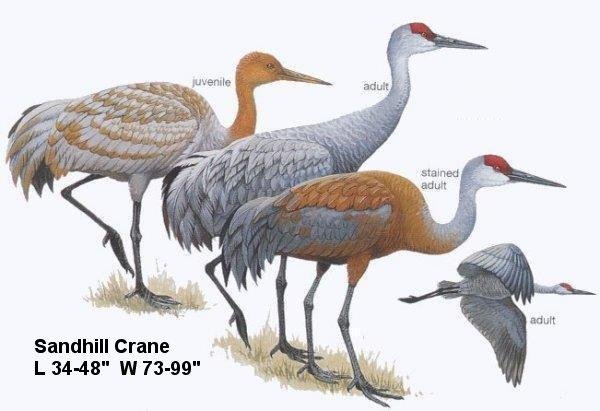
Miller said the ducks and geese depart when temperatures consistently dip below freezing. Colonial waterbirds, such as the white-faced ibis, snowy egrets and black-crowned night herons, are already gone, he said, but sandhill cranes remain in abundance. Vocal birds, a spree of squeaky-wheel yawps from a congregation of excited sandhill cranes is unforgettable. In the fall, sandhill cranes use the San Luis Valley as a major stopover point on their migration from their breeding grounds in the greater Yellowstone area. From the valley, cranes fly to wintering grounds in New Mexico. “Right now, we have about the peak numbers that we’ll have in the fall,” Miller said. “We’d estimate about 18,000 to 20,000.”

Meanwhile the San Luis Valley irrigation ditches will be turned off on Monday. Here’s a report from the Valley Courier. From the article:

The November 1 ending of the season applies to all irrigation ditches and canals that divert water from the Rio Grande or its tributaries in Water District 20, and it also applies to all irrigation wells in Water District 20, which is generally the drainage area of the Rio Grande above Alamosa.

More Rio Grande Basin coverage here.

Arkansas Valley: Water court judge Dennis Maes signs new surface water irrigation rules

A picture named irrigation.jpg

From The Pueblo Chieftain (Chris Woodka):

“The process worked,” said State Engineer Dick Wolfe, who filed the application for the rules. “That was our vision from the outset. Even after we filed the rules, we continued to work with the objectors, and that led to productive changes in the rules.” Settlements reached earlier this month with all of the objectors in the case avoided the need for a trial that was scheduled for November.

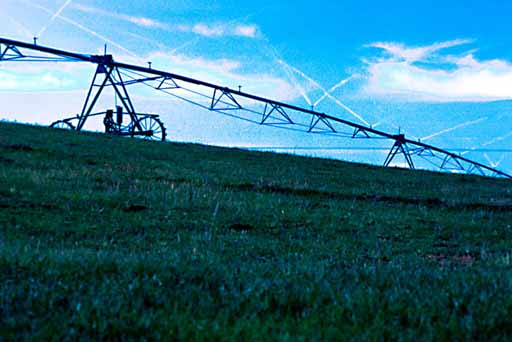
The rules apply only to the Arkansas River basin and are designed to prevent farm improvements such as sprinklers, drip irrigation or canal lining from increasing consumptive use, in order to comply with the Arkansas River Compact between Colorado and Kansas…

The rules become effective Jan. 1 and require anyone making an improvement to a surface irrigation system to file an application. Those who installed sprinklers or drip irrigation systems after Oct. 1, 1999, also must file.

The rules were first suggested in 2007 by Water Division 2 Engineer Steve Witte to address the possibility that farm efficiencies would increase consumptive use and deplete return flows — the water that drains off fields. That could violate a section of the Arkansas River Compact that prohibits developing “works” that increase the use of water in Colorado. Kansas sued Colorado in 1985, leading to a 24-year lawsuit in the U.S. Supreme Court…

There are three ways of complying with the rules: through direct engineering reports, under a general permit or through a compact compliance plan. The Lower Arkansas Valley Water Conservancy District is developing a compliance plan, which would charge farmers for administration and allow those who show a gain in return flows under the model to claim a credit. The compliance plan would be for farmers in the areas below Pueblo Dam.

More Ark Valley consumptive use rules coverage here.

Southern Delivery System update

A picture named sdspreferredalternative.jpg

From The Pueblo Chieftain (Chris Woodka):

SDS is still on course for completion by 2016, [John Fredell, SDS project director] said…

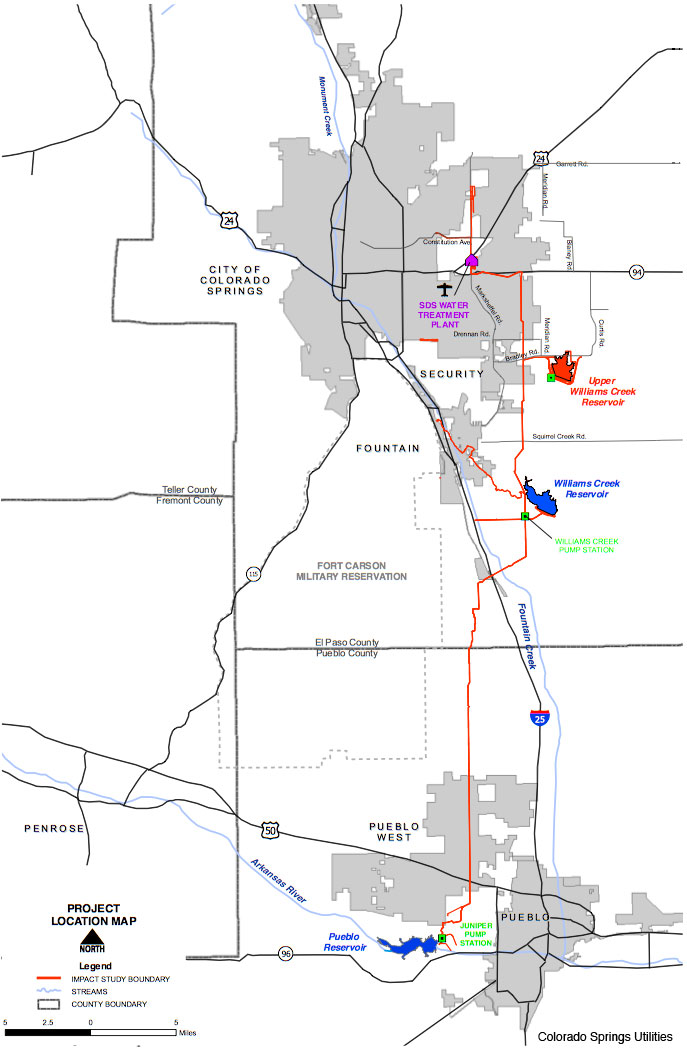
The first phase of SDS — pipelines, pump stations and a treatment plant — would cost $880 million and require $2.3 billion in financing costs. Colorado Springs water rates are expected to double by the time it’s built. Colorado Springs has spent $108.3 million on SDS so far and issued the first round of bonds to pay for the project. Money has been spent primarily on permitting, engineering, land acquisition and project management.

Growth is only one of the primary reasons for constructing SDS, Fredell said. “It’s also related to reliability of supplies, drought protection and the backup of our other pipelines,” Fredell said.

The Homestake system, which brings water from the Eagle River through a tunnel into Turquoise Lake and through the Otero Pipeline, has been taken offline seven times in the last 10 years, most recently for six months, he noted. “Reliability goes beyond that, however,” Fredell said. “We also have to take drought, climate change and Colorado River issues into account.”[…]

Colorado Springs and its SDS partners are still working out contract details with the Bureau of Reclamation for the storage and delivery contracts needed to make the project a reality. Public negotiations on the SDS contracts wrapped up in August, but the final contracts have not been prepared.

More Southern Delivery System coverage here and here.