From The Denver Post (Conrad Swanson):
With each passing, snowless day, Denver extends its new record of the latest date at which the first measurable snow falls, busting through the old record of Nov. 21, set in 1934.
Climatologists are watching as the record climbs, estimating Denver’s dry spell could last until early December. But that’s not nearly as worrisome as the lagging snowpack levels in southwest Colorado, they say, specifically in the Sangre de Cristo, San Juan and San Miguel mountains.
Colorado needs an above-average snowpack year to start recovering from a dry summer this year and last year, Climatologist Becky Bolinger of Colorado State University said. Without that snowpack, water levels along the parched Colorado River will likely remain low…
“We’re not off to a very good start,” Russ Schumacher, another CSU climatologist and director of the Colorado Climate Center said.
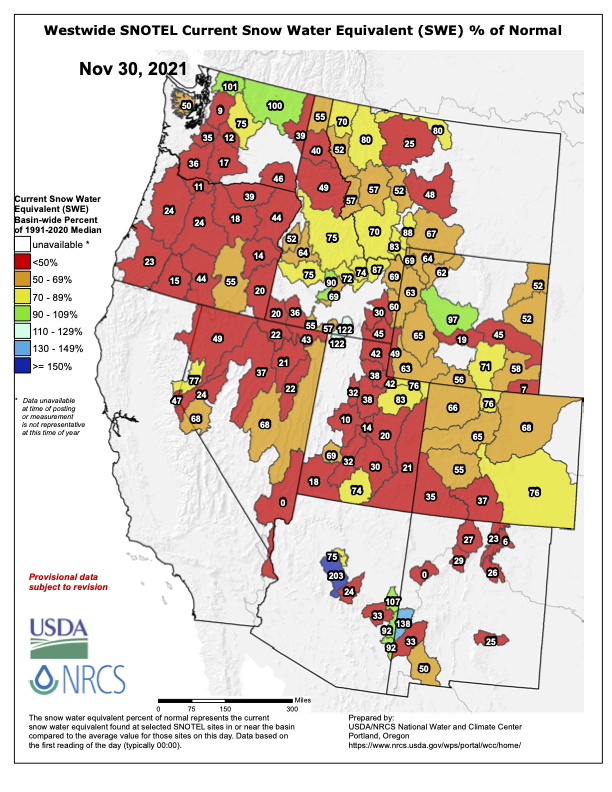
Data collected by the U.S. Department of Agriculture’s Natural Resources Conservation Service shows that snowpack around Alamosa sits at 37% of normal levels. Further west, around Durango, snowpack sits at 34% of normal levels.
Mountains further north are faring better, the data shows. Snowpack around Ouray and Gunnison is 61% of normal. Snowpack around Aspen and Glenwood Springs is 72% of normal.
The gap between current conditions and normal snowpack is concerning, Bolinger said, but it’s also early in the season. Peak snowpack levels don’t come around until mid-April, and between now and then the difference will shrink as storms pass through…
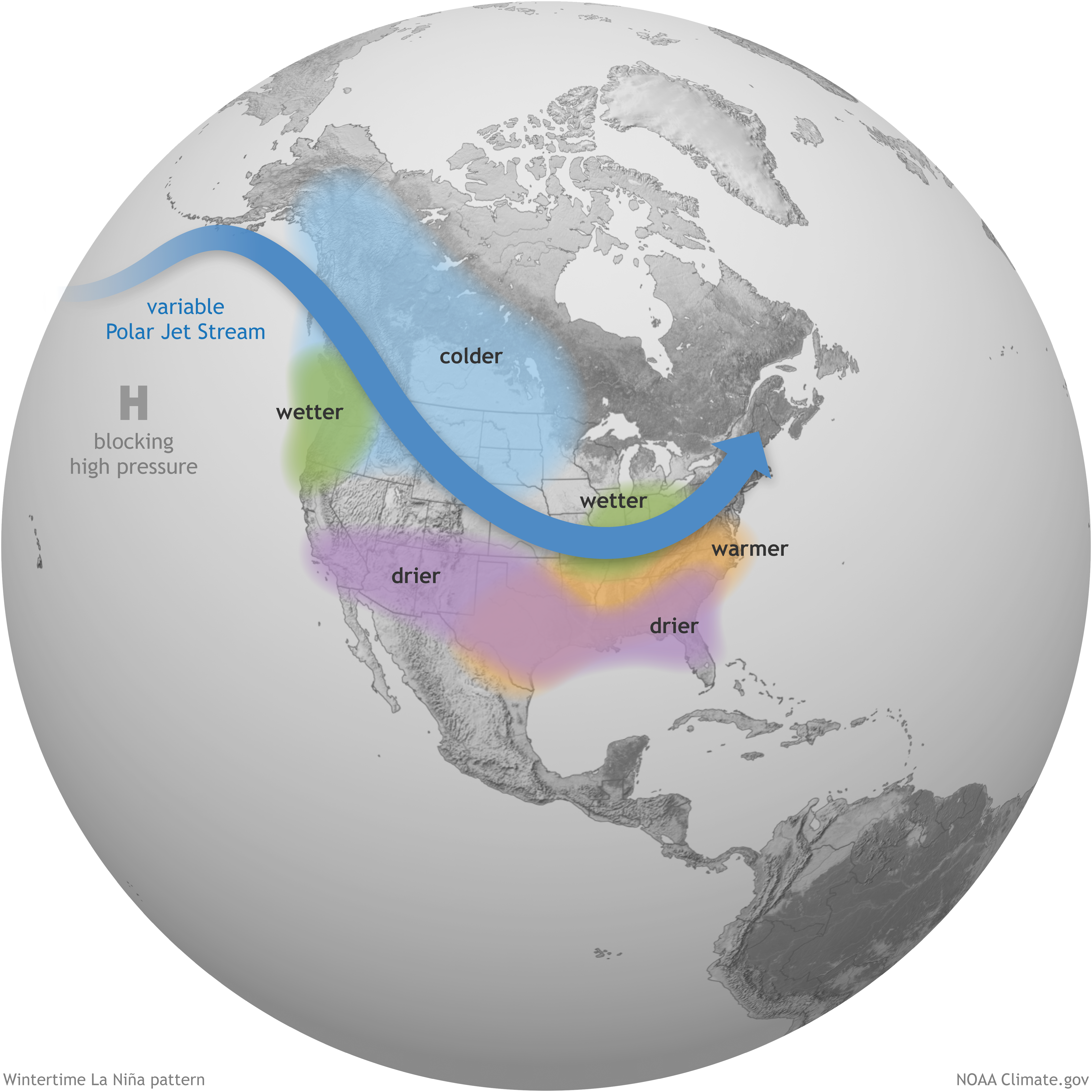
Schumacher said he expects snow to accumulate better in the northern portion of the state this winter while the southwest is more likely to remain drier and warmer…
Basically, La Niña years typically translate to a good supply of winter storms in Colorado’s northern mountains, Schumacher said…
If La Niña conditions persist, Schumacher said he’s worried about a dry winter. Plus, what little moisture might fall during that time could also be lost as warmer temperatures melt snow prematurely and it’s absorbed by the dry ground, he said.