Click the link to read the article on The Aspen Times website (Scott Condon). Here’s an excerpt:
Two prolific storm cycles this ski season have produced more than one-third of the total snowfall on the ski slopes so far this season, according to Aspen Skiing Co.’s snow reports. A four-day storm during Christmas week and the three-day powder wave last week produced a cumulative 50 inches of snow at Aspen Mountain and 62 inches of snow at Snowmass, the snow reports show.
Since opening day of ski season, Aspen Mountain has received 150 inches of snow, so the two big storms combined for 33% of the total. Snowmass has received 180 inches of snow since opening day, so the one-two punch of the storms accounted for 35% of the total.
In other words, only seven days of the 96 days of the ski season thus far have produced one-third of the snow…
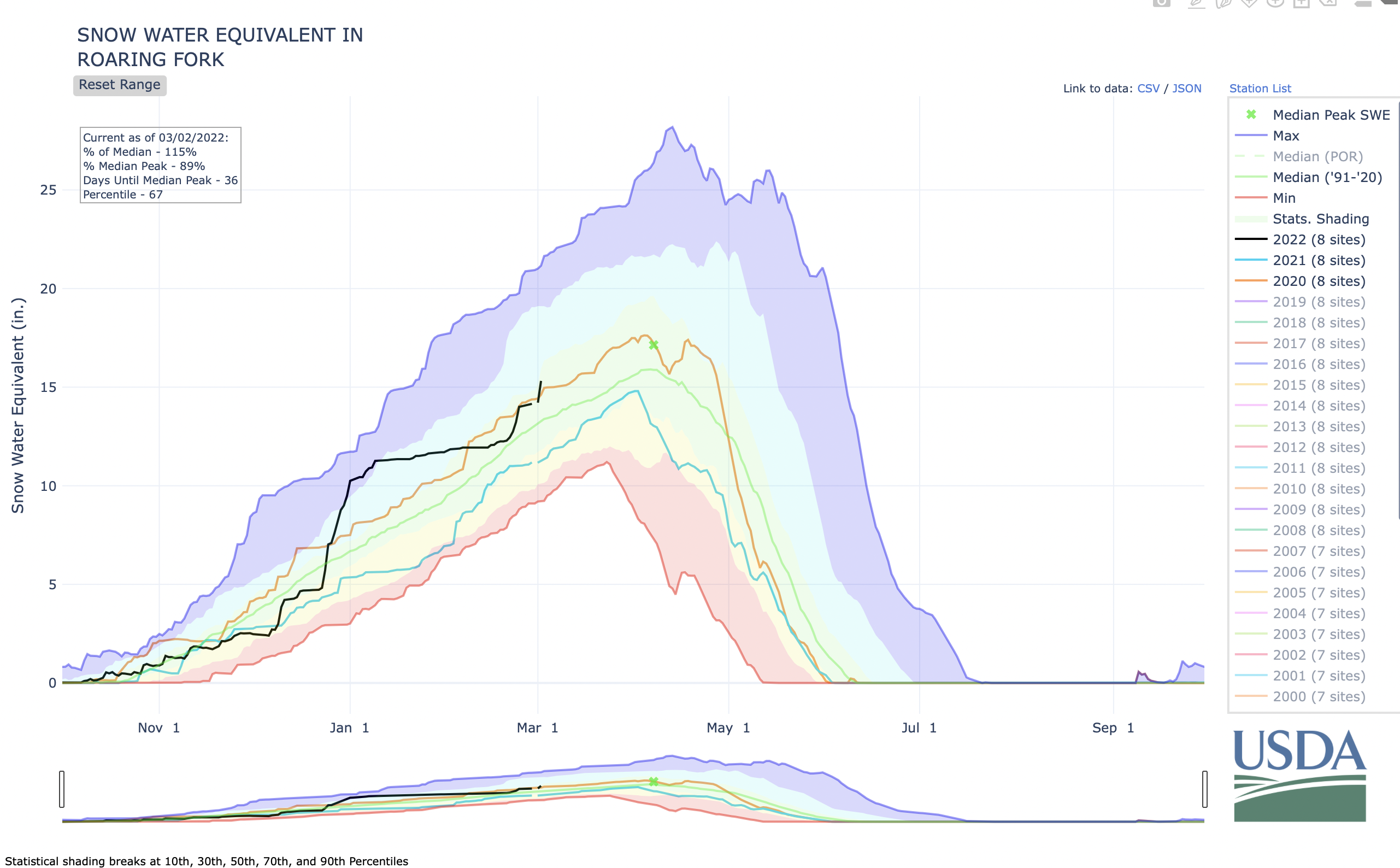
Even with last week’s big storm, the snowpack in the Roaring Fork watershed is still a mixed bag. The snowpack at the headwaters of the Roaring Fork River east of Aspen was only 86% of median as of Monday, according to the U.S. Natural Resources Conservation Service. The Ivanhoe site near the headwaters of the Fryingpan River was at 107% of median. Three sites in the Crystal River basin varied widely, according to NRCS data. McClure Pass was only 91% of median on Monday while North Lost Trail outside of Marble was at 127% and Schofield Pass measured at 128%.
Click the link to read “Drought threatens Rio Grande levels, again” from the El Paso Matters website (Danielle Prokop). Here’s an excerpt:
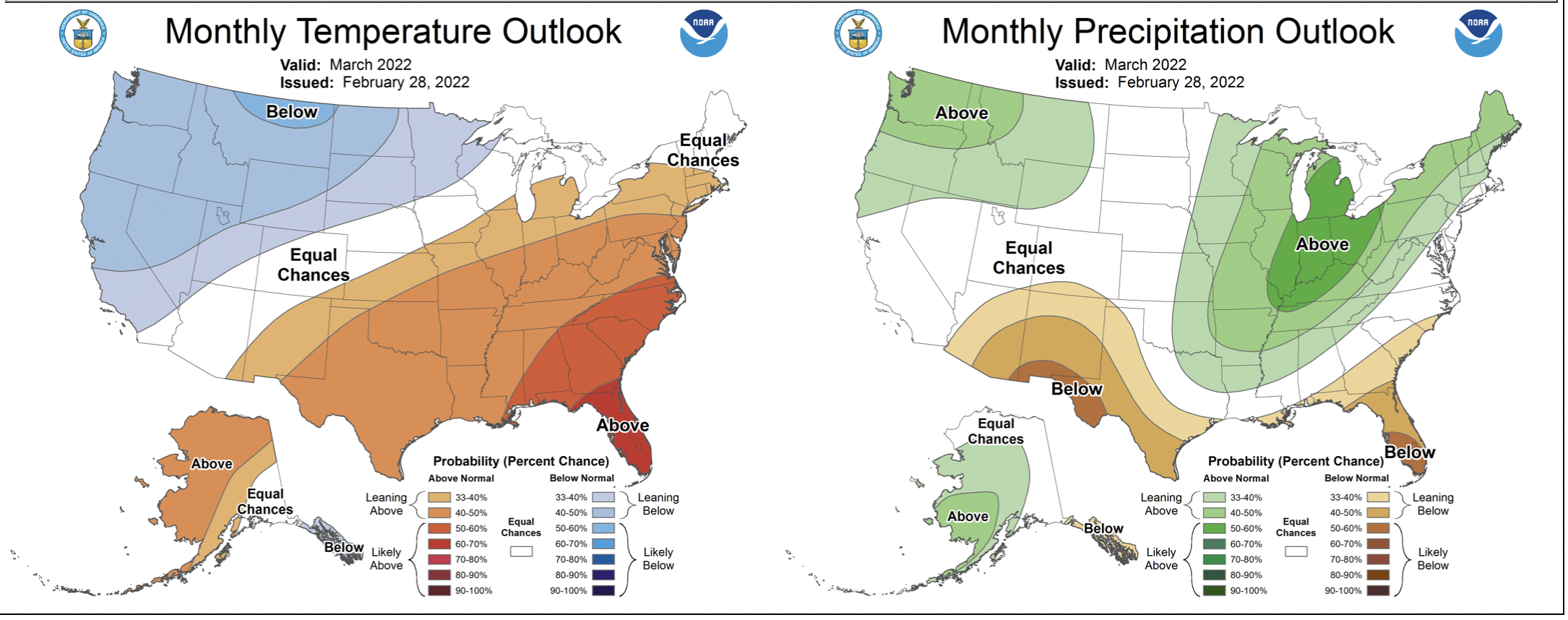
Climate experts and irrigation districts are warning that 2022 is looking dry for the Paso del Norte region. New forecasts released Monday from the National Oceanic and Atmospheric Administration predict hotter temperatures and low chances for moisture in the Southwest, stemming from the cooling of Pacific waters known as the La Niña weather pattern. That pattern usually prevents a wet winter in the Western United States, exacerbating the region’s 20-year megadrought…
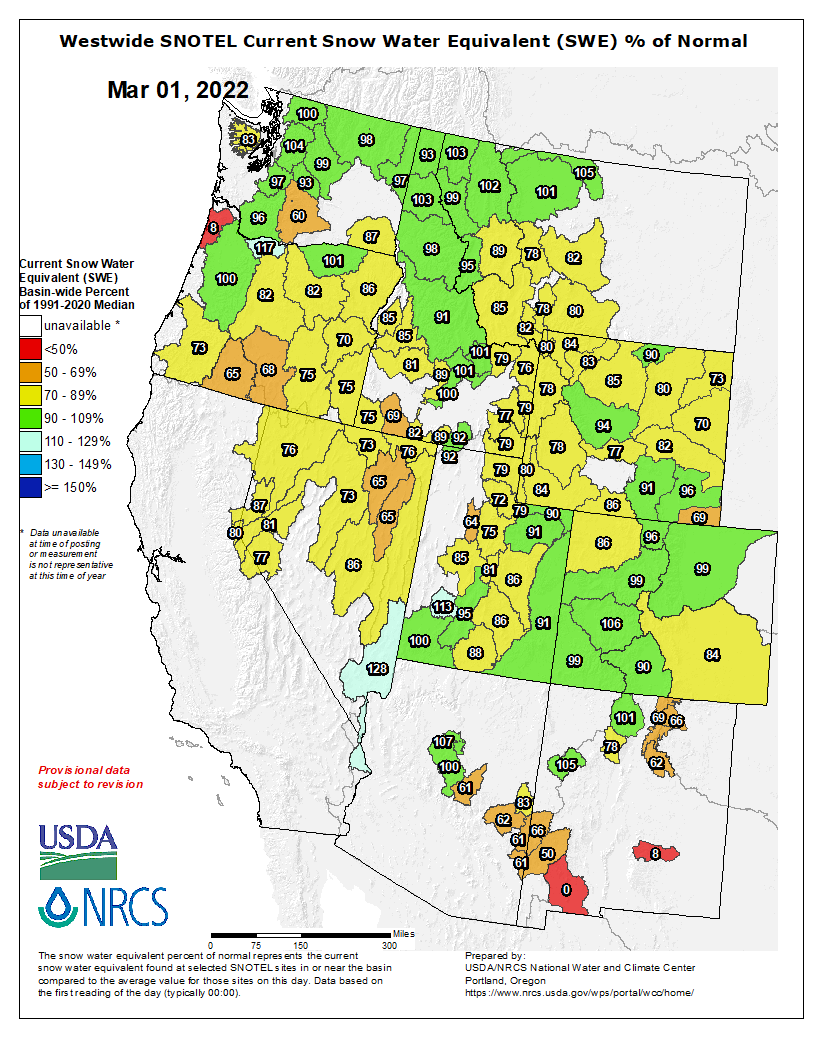
While the Colorado snowpack improved with snowstorms in January and February, the Rio Grande basin has only seen about 64% of average precipitation. Climate change has already shrunk what is now considered a “normal” annual snowpack. Decades of rising temperatures and fluctuating precipitation have dried out soils, which both prevents waters from flowing into streams and causes more dust, melting snowpacks at faster rates. Snowpack across most of northern New Mexico is between half to 75% of normal right now — with about two months before April’s expected peak levels for snowmelt.