The health of our waters is the principal measure of how we live on the land — Luna Leopold
#Colorado isn’t getting enough snow to fully recover #drought-stricken rivers and reservoirs: Winter snowfall started off strong in late December and early January but lost momentum in the following weeks — The #Denver Post #snowpack
Click the link to read the article on The Denver Post website (Conrad Swanson). Here’s an excerpt:
For a glimpse of the bigger picture across the American West, [Becky] Bolinger, also a climatologist with Colorado State University, pointed to the Lake Powell Reservoir, which is already at a record low.
“We’re not going to recover,” she said.
A drought like the one enveloping the West, which has lasted for two decades, needs much more than a single winter of average snowfall to bounce back, Bolinger said.
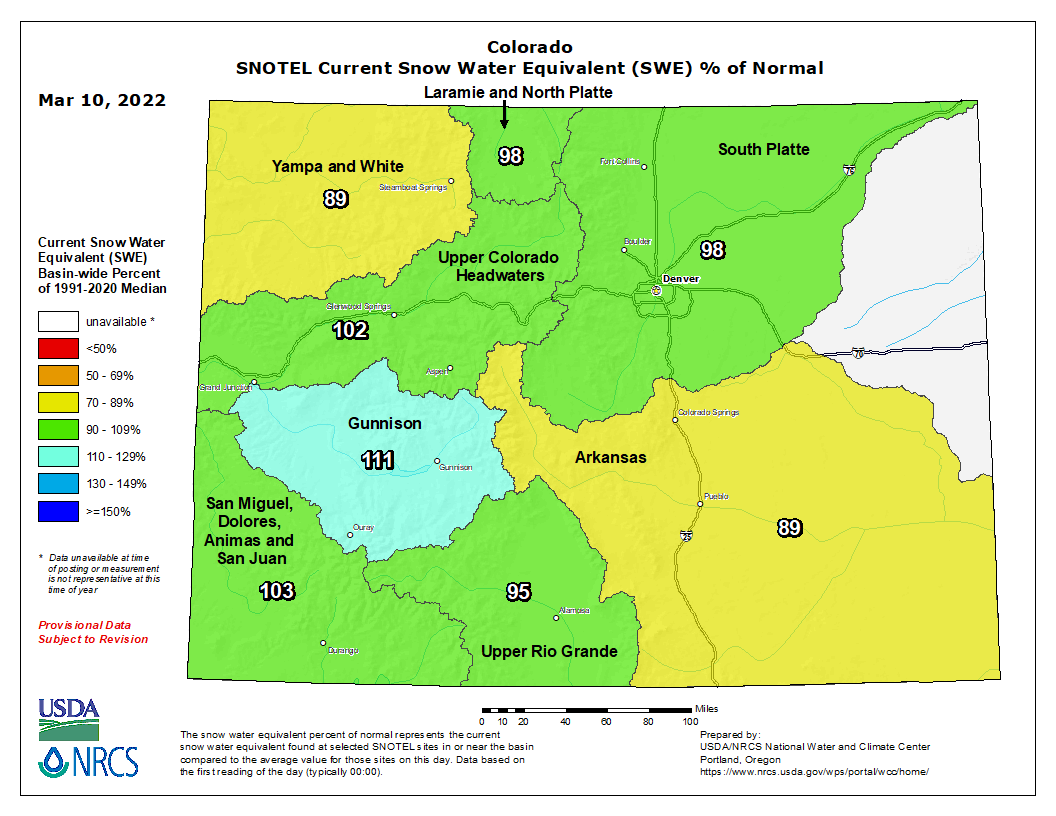
Colorado snowpack basin-filled map March 10, 2022 via the NRCS.
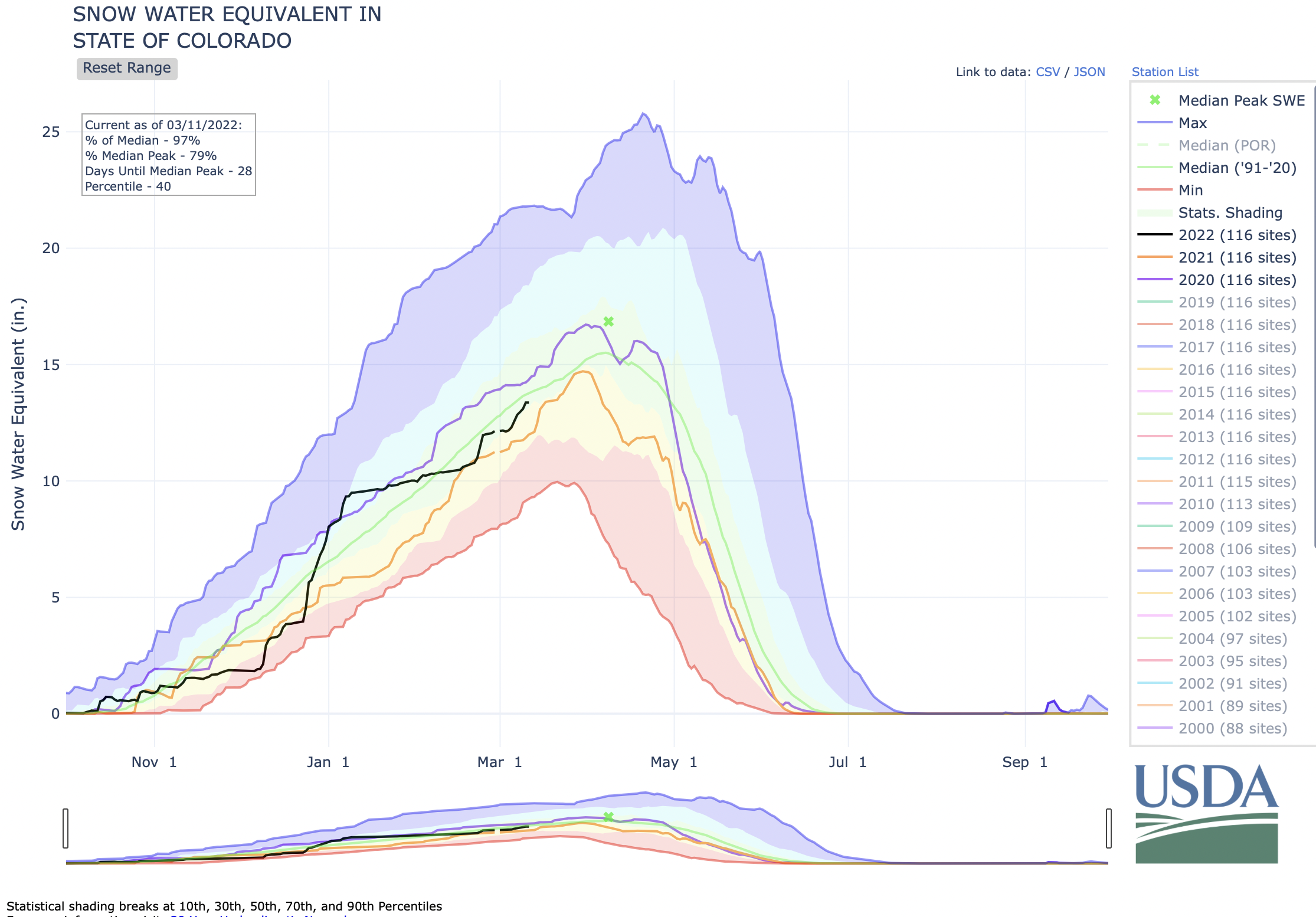
Snowpack data shows that accumulation around Gunnison and Ouray sit at 109% of normal levels, down from 148% in early January. Snowpack around Durango sits at 101% of normal, down from 137%. Levels around Aspen and Glenwood Springs are 100% of normal, down from 124% in early January and the area around Steamboat Springs sits at 88%, down from 115%, according to the data, collected by the U.S. Department of Agriculture’s Natural Resources Conservation Service. Snowpack around Denver sits at 96%, down from 114%…
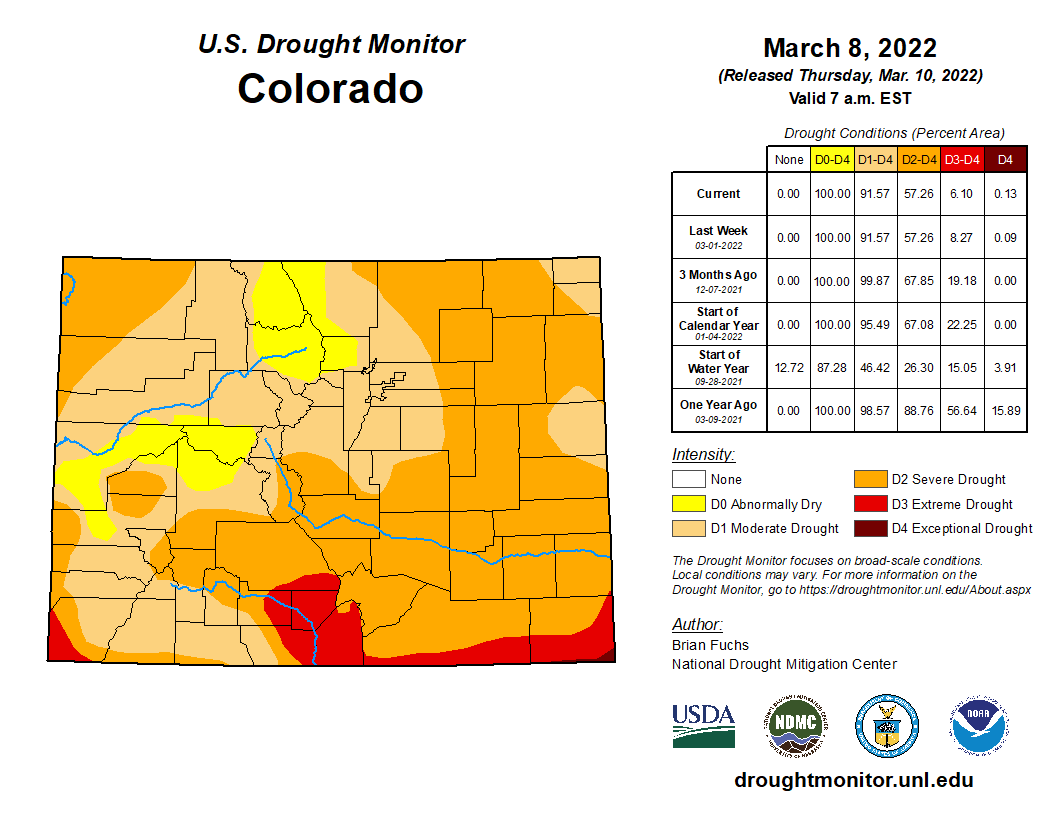
Colorado Drought Monitor map March 8, 2022.
More than 90% of the state is considered to be in a drought, according to data released Thursday by the National Drought Mitigation Center. The rest of the state is still considered abnormally dry.