The health of our waters is the principal measure of how we live on the land — Luna Leopold
Opinion: Will a summer of wildfires become the new normal for #Colorado? — The #Pueblo Chieftain #wildfire #aridification #ActOnClimate
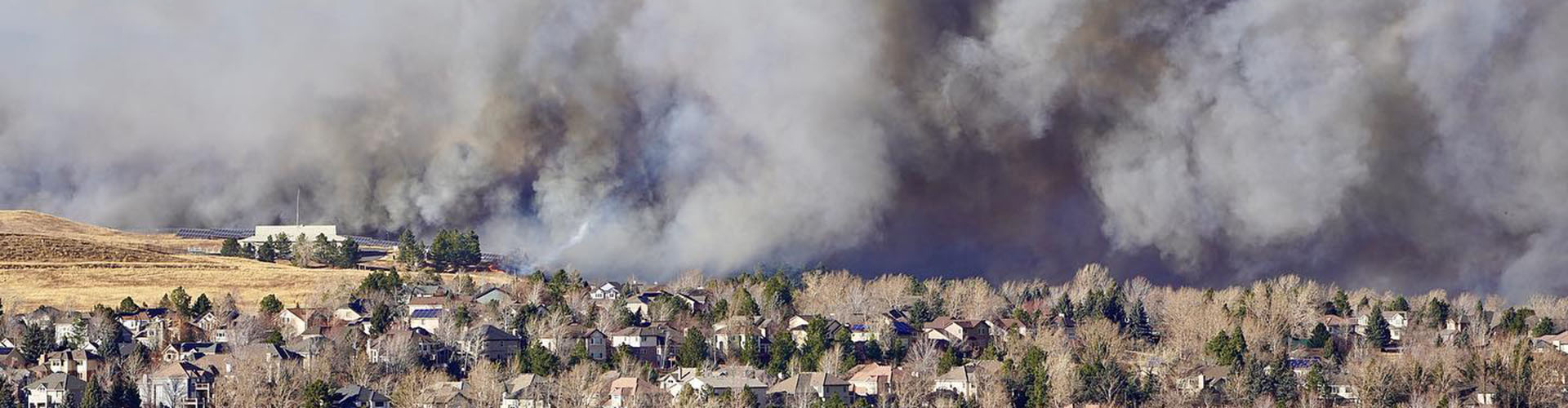
Marshall Fire December 30, 2021. Photo credit: Boulder County
Click the link to read the article on the Pueblo Chieftain website (Sophie Potts). Here’s an excerpt:
Over the past decade, the number of wildfires Colorado has experienced fluctuates, but the amount of damage each one does is steadily increasing. Until 2002, Colorado had never seen a wildfire burn over 100,000 acres, in 2020 we saw our first 200,000 acre fire. On the eve of 2022, we saw the most destructive forest fire in Colorado history destroy nearly 1,000 homes in the Boulder area. It is no coincidence that these numbers are becoming more and more terrifying. And, as so many dire issues do, the whole thing boils down to climate change. As global temperatures rise and climate patterns change, drier summers and warmer temperatures provide the ideal conditions for destructive and powerful wildfires…
We call this phenomenon global warming. But that label is an oversimplification. Climate change can also manifest as new weather patterns or even a dip in temperature. While the issue of global warming has been highly politicized in the American media, its effects are unequivocal and universal. While the most obvious negative impact of wildfires is the physical devastation they wreak on both the natural and man-made landscape, there are more subtle long term effects of wildfires that must also be acknowledged…
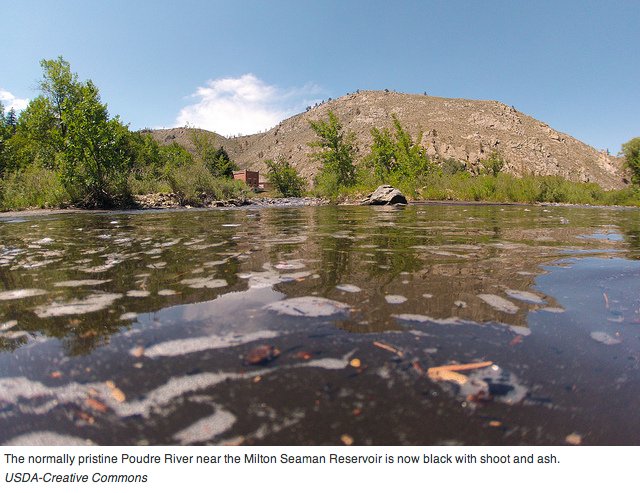
Ash and silt pollute the Cache la Poudre River after the High Park Fire September 2012
Wildfires have been found to contribute to the contamination of our water supply. When large rain storms follow a wildfire event, as is common in Colorado, the rainfall funnels particulate matter high in nitrate and manganese into the water supply, making it dangerous for human consumption and aquatic life…
I want to end on a positive note, to leave you with a glimmer of hope or a light at the end of the tunnel. But I can’t do that. Humanity is not taking enough action against the climate crisis. Instead we waste our time squabbling about a multitude of details about how to reduce carbon emissions, who pays for it, objections from those benefiting financially, and on and on. I worry that there will come a day when we look up and realize that everything that makes our planet the beautiful and unique place it is has been destroyed and we have little left to protect or argue about. It is our own inaction that is obscuring hope. So the light at the end of the tunnel is not mine to offer, but rather yours to create.