The health of our waters is the principal measure of how we live on the land — Luna Leopold
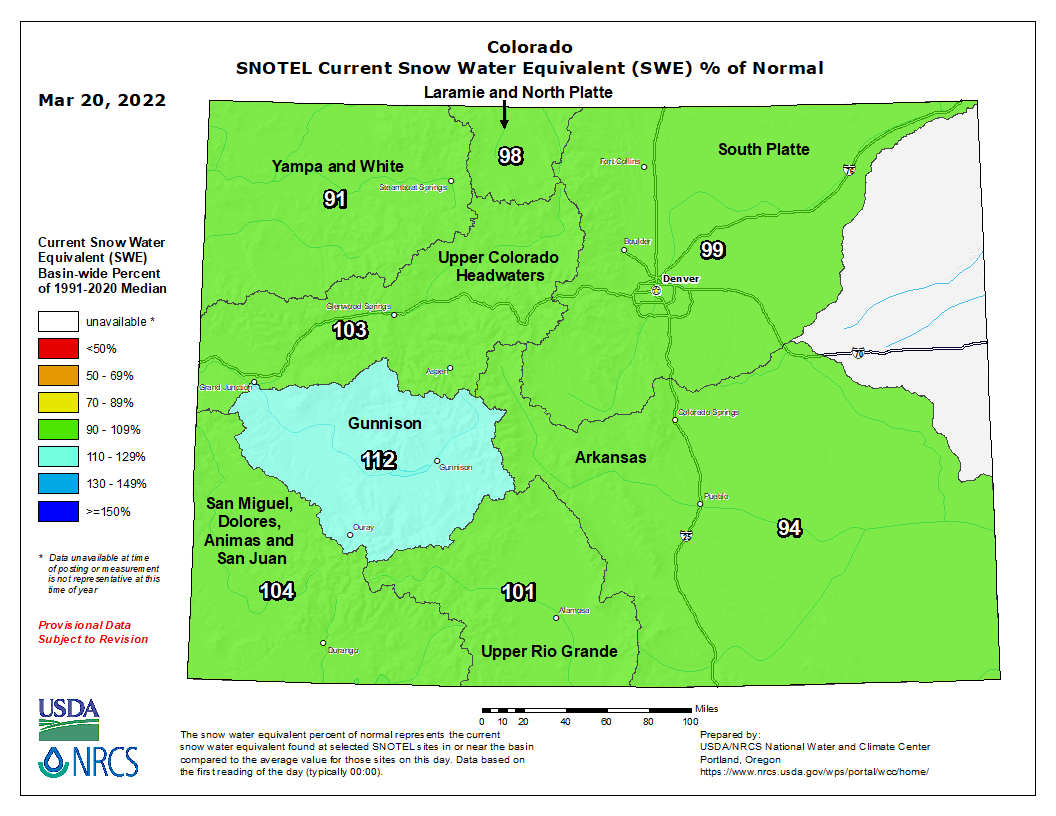
#Snowpack news: #Colorado basins all in the average range except #GunnisonRiver Basin = 112% of normal
Colorado snowpack basin-filled map March 20, 2022 via the NRCS.
Click the link to read a snowpack article on the Summit Daily website (Eliza Noe). Here’s an excerpt:
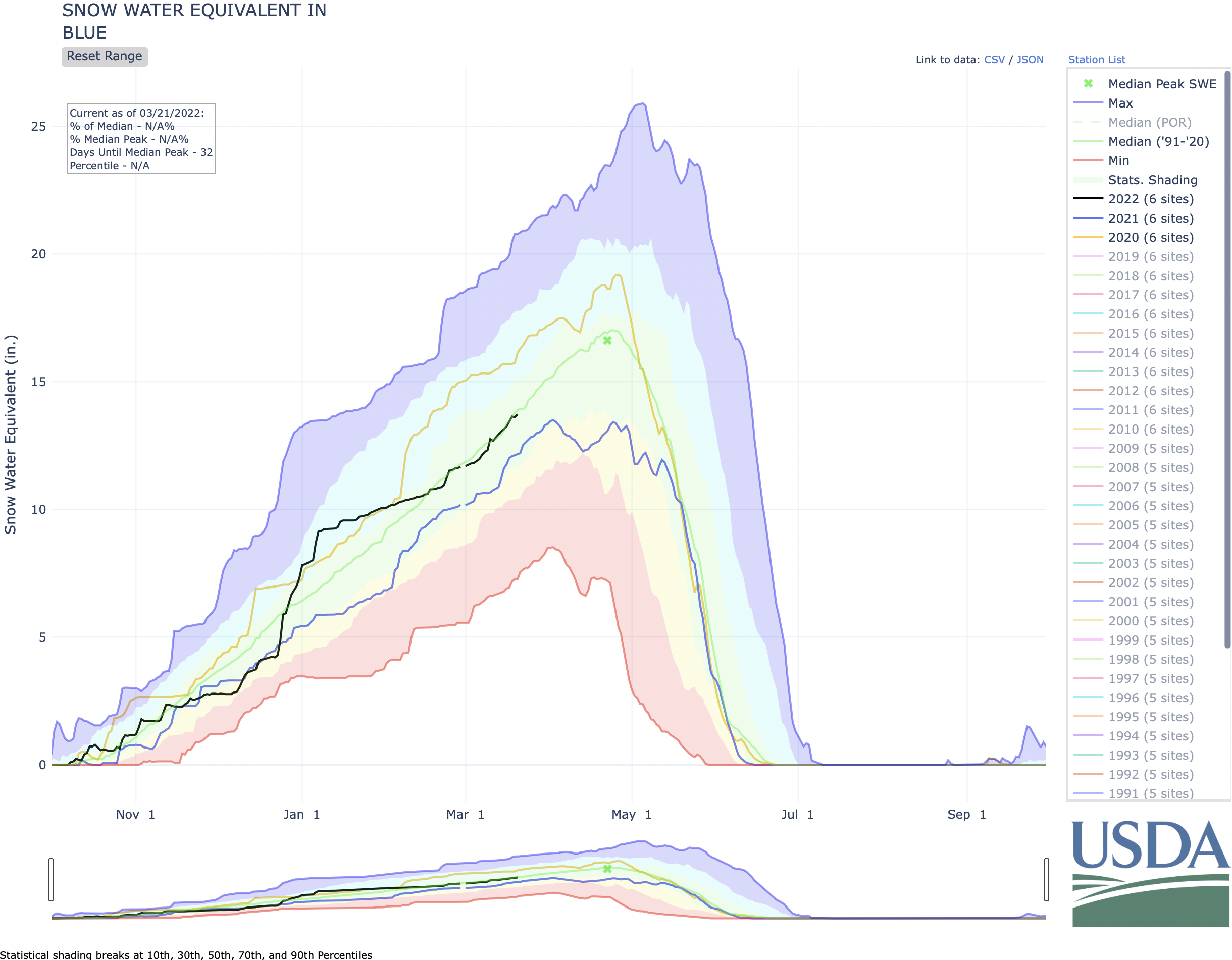
Last week’s snowfall has finally pushed local river basins to over the average median, a level that water experts have been following for months into this water year, which runs from October through September.
According to data from the National Resource Conservation Service, the Blue River Basin was steadily on par with its median over the last 10 days. Last week, the basin had been almost exactly along the median before dipping very slightly by Sunday, March 20.
Sunday’s most recent data shows that current levels have a snow-water equivalent of 13.7 inches, whereas the 30-year median is 13.9 inches. This puts the Blue River Basin at 99% of the median at this point in the year and 83% of the median’s peak. The median’s peak is set to crest on April 27, so it is possible that future snowfalls in coming weeks could keep the basin’s trajectory on track.
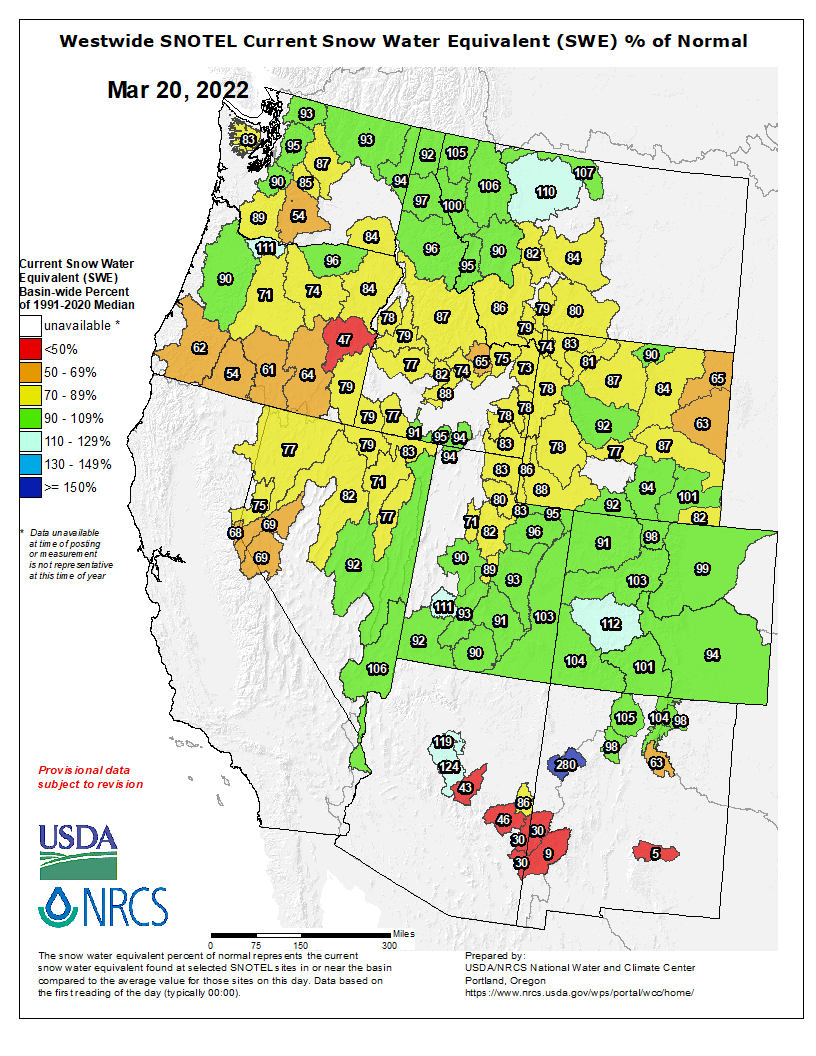
Westwide SNOTEL basin-filled map March 20, 2022 via the NRCS.
Click the link to read “Colorado snowpack 100% of median Friday ahead of next week’s storm” on TheDenverChannel.com website (Blair Miller). Here’s an excerpt:
Colorado’s snowpack sat at 100% of median Friday after this week’s snowstorm and ahead of another storm that will bring snow to the state on Monday, though forecast models are still showing wide variations in how much snow will fall. The snowpack has increased fairly steadily over the past two weeks after a dry period at the end of January and beginning of March. The foothills west of Denver and Boulder saw the most snow in this week’s storm, but other areas of the state saw a few inches as well…
All eight of the state’s river basins were above 90% median snowpack levels as of Friday. The Gunnison basin (112% of median) had the most robust snowpack, followed by the San Miguel, Dolores, Animas and San Juan (104% of median), the Upper Colorado Headwaters (104% of median), Upper Rio Grande (101% of median), and South Platte (101% of median) basins. The Laramie and North Platte (99% of median), Arkansas (96% of median), and Yampa and White (91% of median) basins were all slightly below median levels…
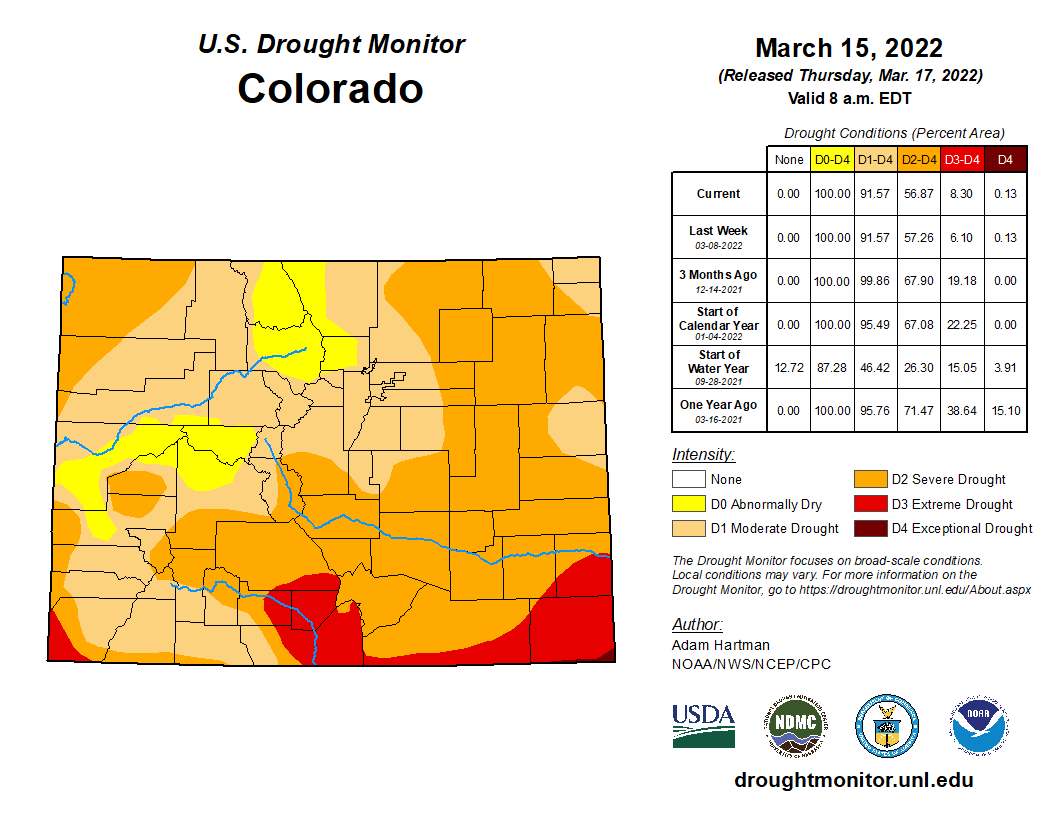
Colorado Drought Monitor map March 15, 2022.
While the snowpack is at 100%, Colorado’s drought remains relatively unchanged again this week. Ninety-two percent of Colorado is experiencing moderate or worse drought. Fifty-seven percent of the state, mostly along the eastern plains, is experiencing severe drought or worse. And about 8% of the state – mostly along the southern border with New Mexico – is experiencing extreme or exceptional drought conditions, according to the U.S. Drought Monitor.