Click the link to read the article on The Los Angeles Times website (Hayley Smith and Ian James). Here’s an excerpt:
At the heart of the feud is the “Law of the River,” a body of agreements, court decisions, contracts and decrees that govern the river’s use and date back to 1922, when the Colorado River Compact first divided river flows among the states. [ed. note: George Sibley argues the “Prior Appropriation” is the base of the Law of the River.]
But as California argues most strongly for strict adherence to this system of water apportionment, the other states say it makes little sense when the river’s largest reservoir, Lake Mead, continues to decline toward “dead pool” level, which would effectively cut off the Southwest from its water lifeline. The Law of the River, they say, is getting in the way of a solution.
“We can argue about whether interpretations of the Law of the River match the physical reality,” said Tom Buschatzke, director of the Arizona Department of Water Resources. “But if you end up in a courtroom arguing these points and something isn’t done, the Colorado River system is going to crash.”
[…]
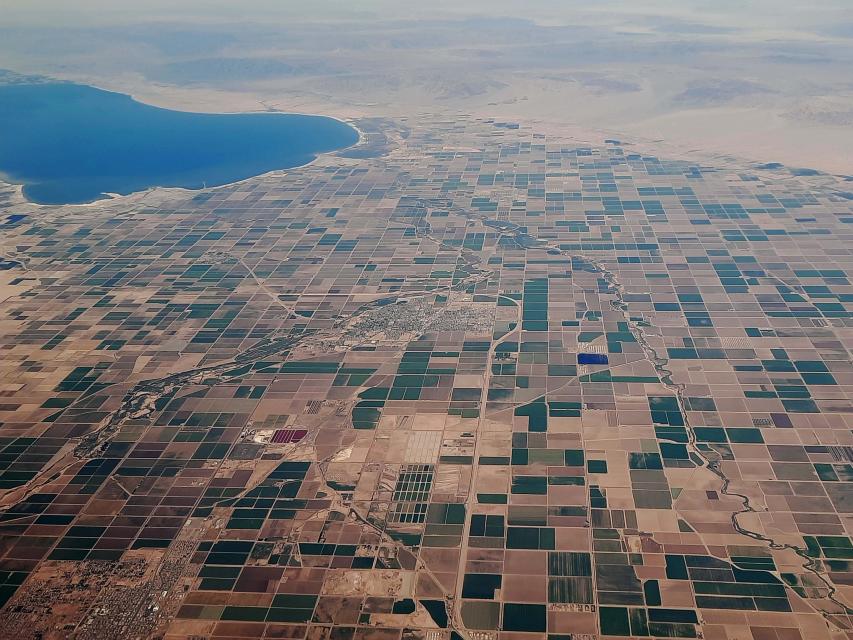
California’s legal position is based on several factors, said James Salzman, a professor of environmental law at UCLA and UC Santa Barbara. First, the authors of the original Colorado Compact made the “fateful decision” to divvy up water for the river’s lower-basin states of California, Arizona and Nevada in absolute quantities instead of percentages. That means upper-basin states are obligated to deliver 7.5 million acre-feet per year to the lower states, no matter what, which “turned out to be a tragically bad design,” Salzman said. Additionally, the massive Imperial Irrigation District in California established senior rights to the water before the Colorado River Compact — meaning it holds high-priority rights to deliver the single largest share of the river’s water to Imperial Valley farmlands.
Arizona, by contrast, agreed to junior rights to the river in 1968 in exchange for building the Central Arizona Project, the system that transports river water through the state.
In other words, according to the Law of the River, if there’s not enough water to go around, states like Arizona are supposed to be cut off before California.