

Click the link to read the article on The Land Desk website (Jonathan P. Thompson):
When the Interior Department issued a draft of a new Public Lands Rule, designed to “guide the balanced management of public lands” and put conservation on a par with other uses, like oil and gas drilling, grazing, and mining, I thought I had been transported back in time to 1976. That’s when Congress passed the Federal Land Policy and Management Act, or FLPMA, which was supposed to elevate conservation and rid the Bureau of Land Management of the well deserved monicker: Bureau of Livestock and Mining.
FLPMA didn’t always do the job it intended: While the BLM as a whole has progressed, many of the agency’s field offices still behave as if it’s the 1950s, prioritizing drilling and grazing above all other uses, regardless of what policies are handed down from Washington.
Given that history, I wondered whether this proposed rule really amounted to more than merely “rearranging the deck chairs on the Titanic” as the Center for Biological Diversity put it. If it was just reiterating FLPMA policies, how could it make any difference on the ground now? I don’t have the answer, but I did dig into the rule and looked at some of the details in a recent High Country News column.
To sum it up, the rule would elevate conservation by:

- … applying land health standards and guidelines to all BLM-managed public lands and uses; current BLM policy limits their application to grazing authorizations. The problem is that the agency is doing a piss-poor job applying land health standards to rangelands. So how can we expect them to do any better with other lands?
- … making conservation leases available to entities that seek to restore public lands or provide mitigation for a particular action. A nonprofit could lease a parcel, pay rent, and post a reclamation bond to do riparian area restoration, for example, or a solar company might lease a parcel to do some land-healing to offset its impacts to other public land.
- … amending the existing Area of Critical Environmental Concern (ACEC) regulations to emphasize the areas as the primary designation for protecting important natural, cultural, and scenic resources and contributing to ecosystem resilience by protecting intact landscapes and preserving habitat connectivity. It would also establish a more comprehensive framework for identifying and evaluating these areas.
The biggest change, then, appears to be the conservation leases. But it’s still unclear exactly how they’d work or what could be done with them. In theory, someone could lease out a parcel for conservation, thereby precluding grazing or oil and gas leasing from the parcel during the lease. But what happens when the lease term ends? Josh Osher, Public Policy Director for the Western Watersheds Project, pointed out that an organization could use the leases to, say, do a regenerative grazing project, and cynically use it to lock the land into a grazing lease afterwards. He also noted that even though oil and gas drilling and mining are restricted in ACECs, grazing typically is not.
This only reinforced my skepticism about the rule. But then I started looking at industry’s reactions to the rule and I have to say, I was a little taken aback.
Sen. John Barrasso, the Wyoming Republican, compared the bureaucrats who wrote the “decree” to the tree-spiking eco-warriors of the 1980s, while the ranching industry feels “betrayed” by what it says is a plan to “eradicate” grazing on public lands. Say, what?!
Chris Saeger, an advocate and consultant from Montana, gathered some more responses and sent them my way, including these gems:
“‘[T]he administration is making a policy shift of gigantic proportions with this proposed rule by giving conservation equal footing to all other public land uses.’ – Mallori Miller, vice president of government relations for the Independent Petroleum Association of America
“‘The rule would make conservation one of the uses on equal footing as the uses listed above [grazing, water rights, oil, gas and mining].’ – Rancher Rachel Gabel
“‘[W]hen BLM is analyzing projects and uses because they are mandated as a multiple use public land agency, conservation will now have as much standing as recreation, grazing, mining and other uses as outlined in FLPMA.’ – Blue Ribbon Coalition Action Alert email, titled: Proposed BLM Rule to Devastate Public Land Access
“‘The Biden Administration has proposed significant changes to how federal lands are managed…with the department to issue conservation leases on par with grazing and mineral leases.’ – Rancher Cat Urbigkit“
And then there’s the reaction by Rep. Matt Rosendale, a Montana Republican. In a hearing, Interior Secretary Deb Haaland said the rule would put conservation on equal footing with other uses. Rosendale responded, rather testily: “Well, they’re not supposed to be on equal footing.”
Wow. Just wow. See, here I thought that conservation already was on an equal footing with drilling, mining, and so forth, as mandated by FLPMA. Obviously I was wrong! All of these folks are acknowledging that, in fact, the agency has been kowtowing to the oil and gas, drilling, and livestock industries all along while shirking their duties as stewards of the public’s land.
In that case, this new rule might actually have some real on the ground impacts. That is if the Biden administration implements it quickly enough to insulate it from future efforts to rescind it. And if they can ensure that the new policies are implemented on a field-office level rather than sitting around moldering on some Washington D.C. desk.
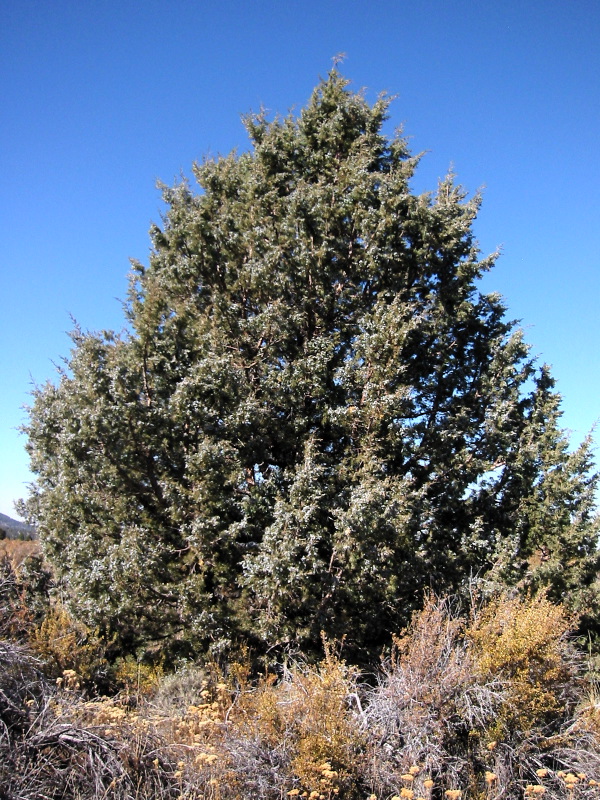
Piñon-Juniper Watch
Speaking of the BLM, rules, and conservation … Back in 2020, the Trump administration (of course) quietly enacted the “Pinyon-Juniper Categorical Exclusion Rule.” It allowed the BLM to cut, hydro-mow, chain, or otherwise mechanically raze up to 10,000 acres of piñon-juniper forests without environmental review or even notifying the public. The BLM justifies these types of projects by saying they allow sagebrush to establish itself and benefit mule deer or sage grouse. They also can convert forest land into foraging land for cows.
Of course, these brutal and violent projects destroy not only the targeted trees, but also all of the other vegetation and the cryptobiotic soils. And they harm other species that rely on them for habitat, such as the piñon jay.
That’s why Defenders of Wildlife and Southern Utah Wilderness Alliance challenged the rule in court, which in turn led to a court-approved settlement: The BLM has agreed to drop the rule. That won’t stop the projects altogether, but it will require the agency to analyze the environmental impacts before proceeding. It’s an important victory. But, to the Biden administration’s credit, it actually directed the agency to discontinue the use of the categorical exclusion rule in December.