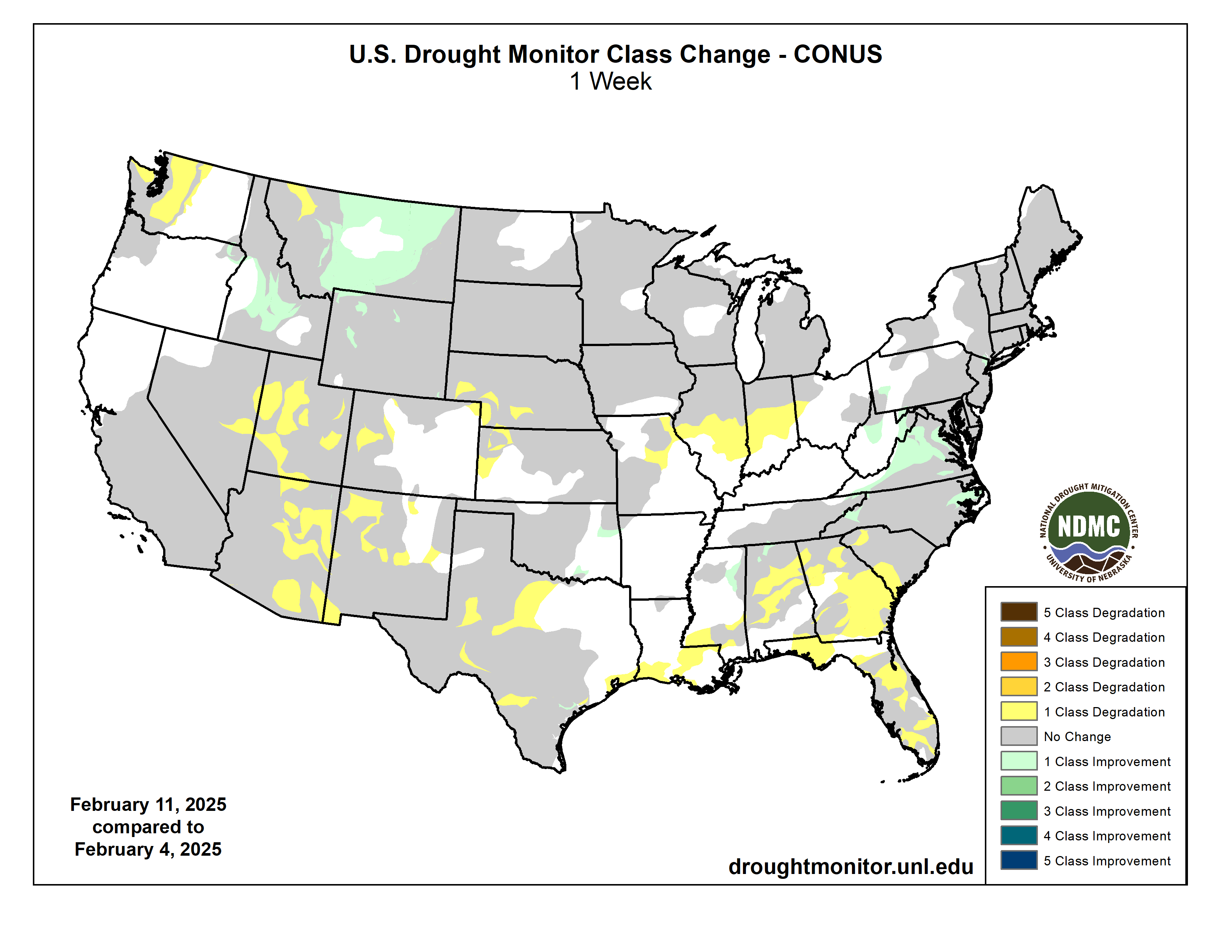
Click on a thumbnail graphic to view a gallery of drought data from the US Drought Monitor website.
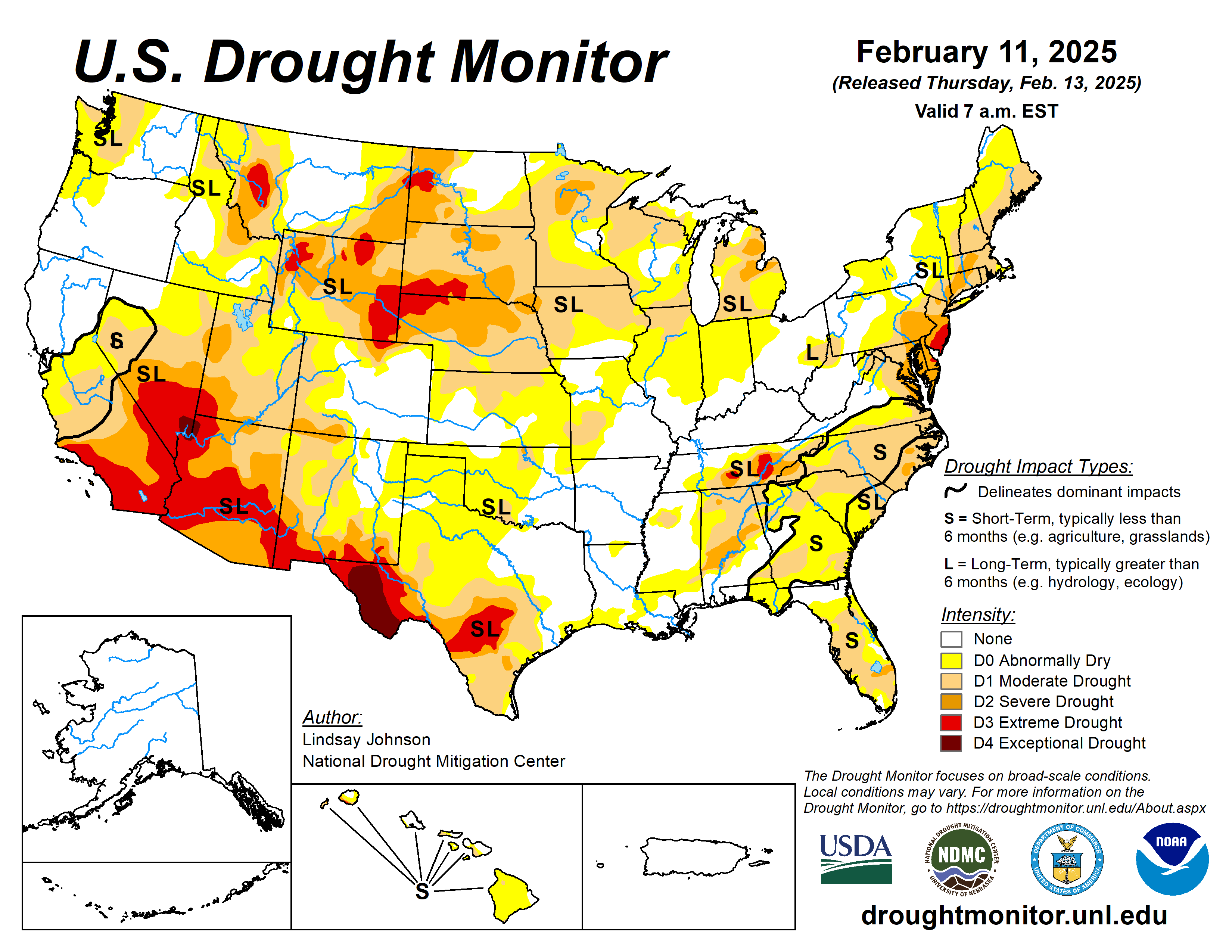


Click the link to go to the US Drought Monitor website. Here’s an excerpt:
This Week’s Drought Summary
Conditions this week were largely based on where precipitation fell. Storms across the Ohio River Valley and Mid-Atlantic brought very beneficial rainfall, leading to improvements in eastern Oklahoma, northeast Mississippi, northern Alabama, the Tennessee-North Carolina border, Virginia and northern West Virginia. Outside of this band of precipitation in the center and eastern U.S., conditions continued to deteriorate after weeks of little to no precipitation. Many of the coastal states in the Southeast saw widespread degradation as short-term indicators show deteriorating conditions. High temperatures in many of these areas make conditions worse. Snow in the Northern Rockies and central Montana brought improvements but the rest of the West was not so lucky. Precipitation along coastal mountains kept conditions in Oregon and California unchanged, Nevada and the four-corners region saw conditions continue to deteriorate. Areas of higher elevation are seeing low snowpack for this time of year. Hawaii also saw conditions improve, while Alaska and Puerto Rico remain free of any dry or drought conditions…
High Plains
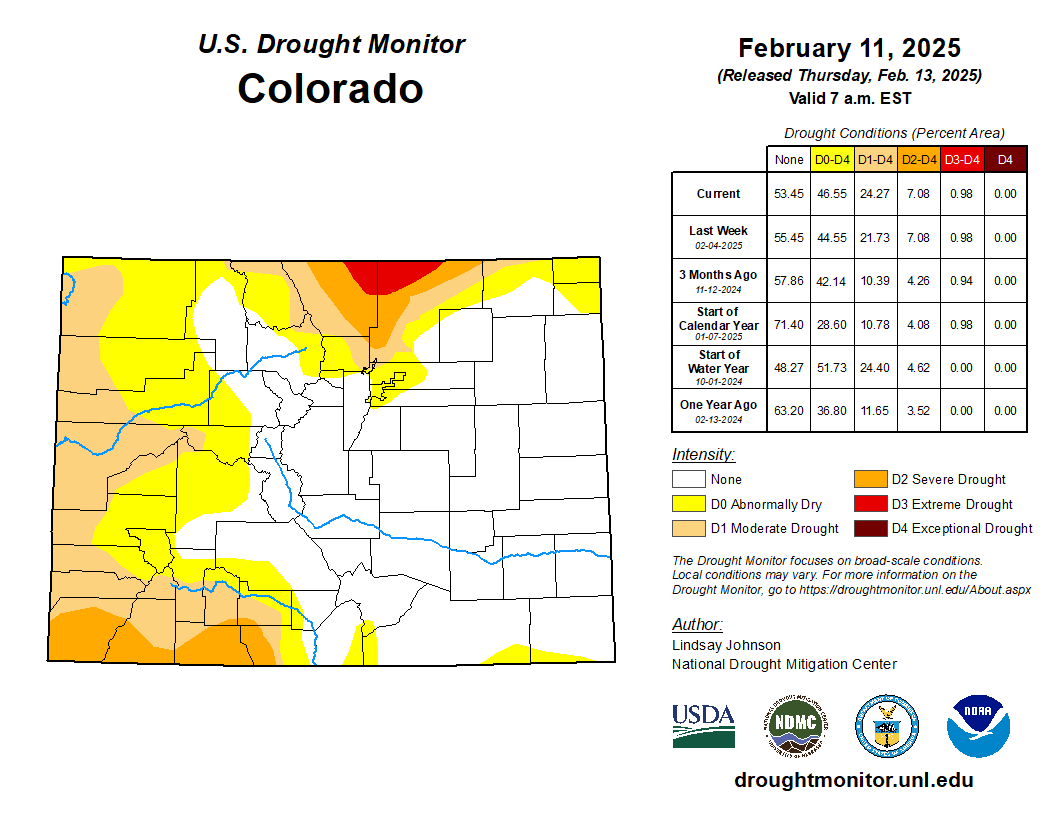
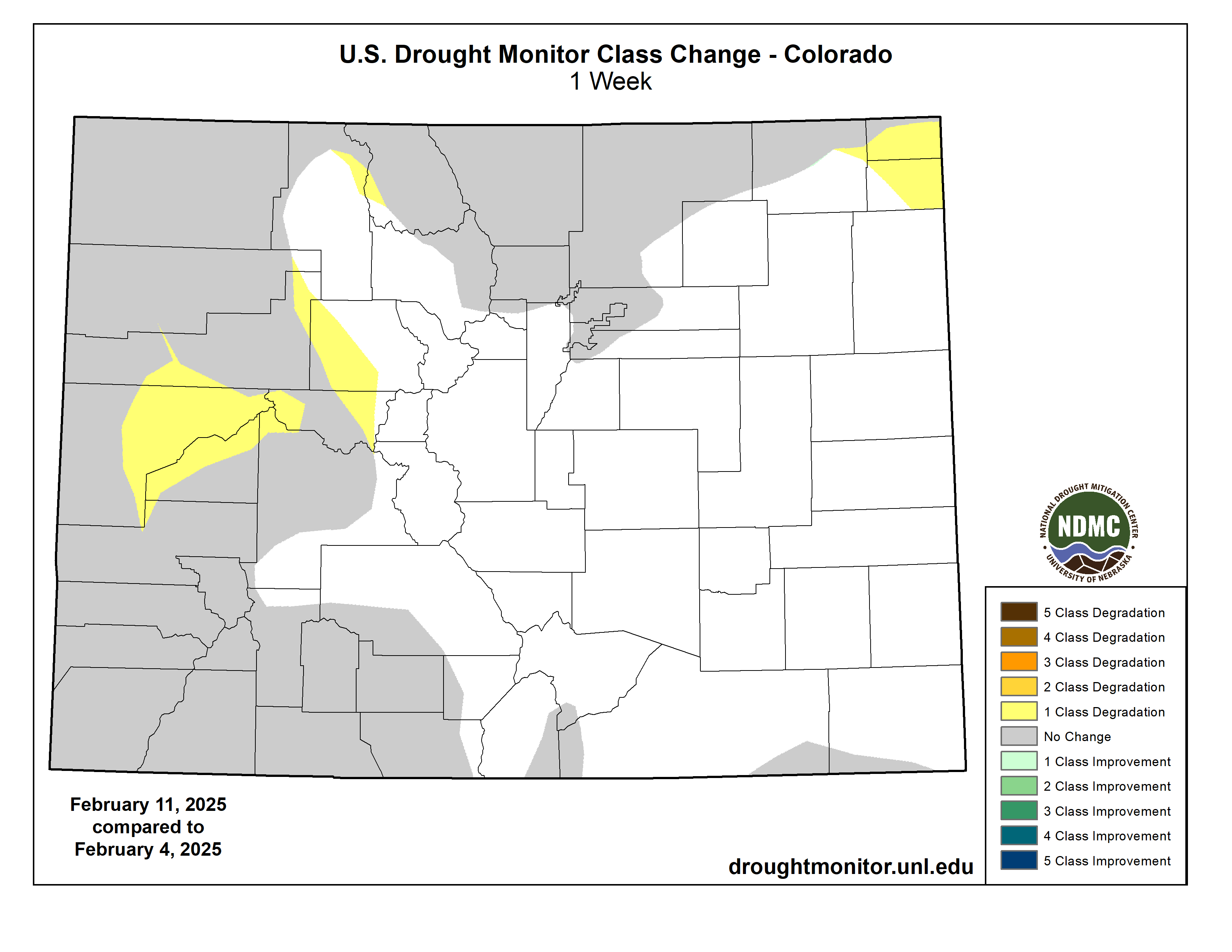
The High Plains once again missed out on the precipitation that moved through the Southeast and Mid-Atlantic parts of the U.S. Western Nebraska and Kansas saw degradation as the lack of precipitation continues to affect the area. Colorado also saw degradations. In the far Northeast, abnormally dry conditions expanded from Nebraska and Kansas. Western Colorado continues to see degradations in the Western Slope and San Juan regions. Wyoming did see some extreme drought removal in the northwest and north central areas as snowpack has markedly improved in the non-mountainous areas…
West
Washington and northwestern Montana saw moderate drought expansion. Despite recent snow accumulation, they are still experiencing large moisture deficits. Conversely, central Idaho into central Montana saw widespread improvements as conditions continue to improve. Idaho has benefited from the recent snow from Boise into the Rocky Mountains into Montana. California remained unchanged this week. Conditions continue to deteriorate across the Four Corners area in the Southwest. Snowpack is below normal for this time of the year and soil moisture and streamflow levels are well below normal…
South
Heavy precipitation fell across western Oklahoma into Kentucky, bringing improvements to the few remaining areas of dry or drought conditions. Northwest Oklahoma saw the removal of some abnormal drought along with northeast Mississippi. Western and central Texas, Louisiana and southern Mississippi missed out on the band of heavy precipitation and saw degradations…
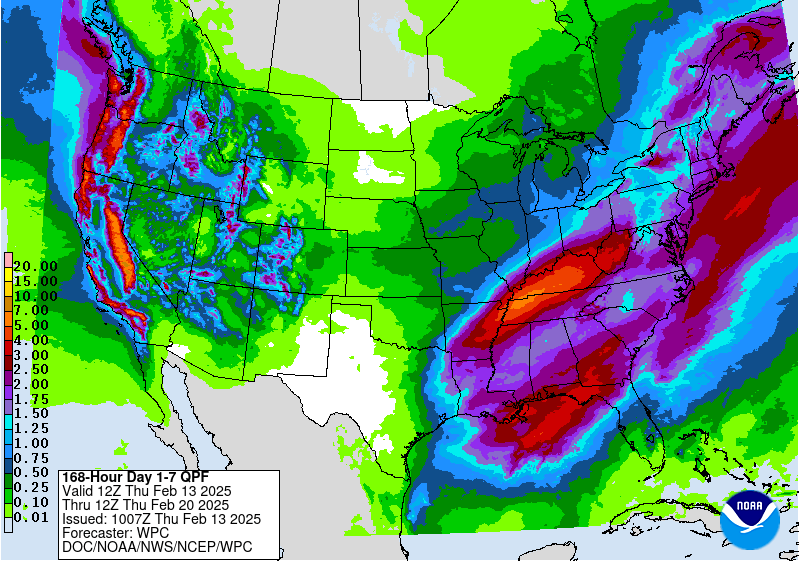
Looking Ahead
Over the next five to seven days, some coastal areas of the West could see precipitation from the Washington Cascades into most of California. Other higher-elevation areas in the Intermountain West as well as in the Southwest, are also expected to receive some precipitation. Heavy precipitation is expected across the South, Southeast and Northeast where amounts are estimated to reach 1.25 to 5 inches in the lower Ohio River Valley and through Alabama. Once again, much of the Plains, from North Dakota through central-west Texas, are expected to see less than a quarter of an inch of precipitation.
The 6-10 day outlook shows the greatest probability of below-normal temperatures are in the central Midwest. Below-normal temperatures are expected to be below-normal from central Montana to central Texas and all the way into Maine. The best chances of above-normal temperatures will likely be across Alaska and Hawaii. Southern Arizona and southern Florida are expected to stay near normal temperatures. The greatest chances of above-normal precipitation are expected to be across the Gulf Coast from Texas and across the Florida Peninsula. A large swath of the country (Washington towards the Gulf of Mexico) is leaning towards above-normal precipitation. Alaska is also leaning toward above-normal precipitation. Along California’s central and southern coast precipitation are expected to be drier –than normal, and to a lesser extent, Arizona, Nevada, and southwest New Mexico. The northern Midwest and Great Lakes region, along with Hawaii, are expected to have near or just below normal precipitation.