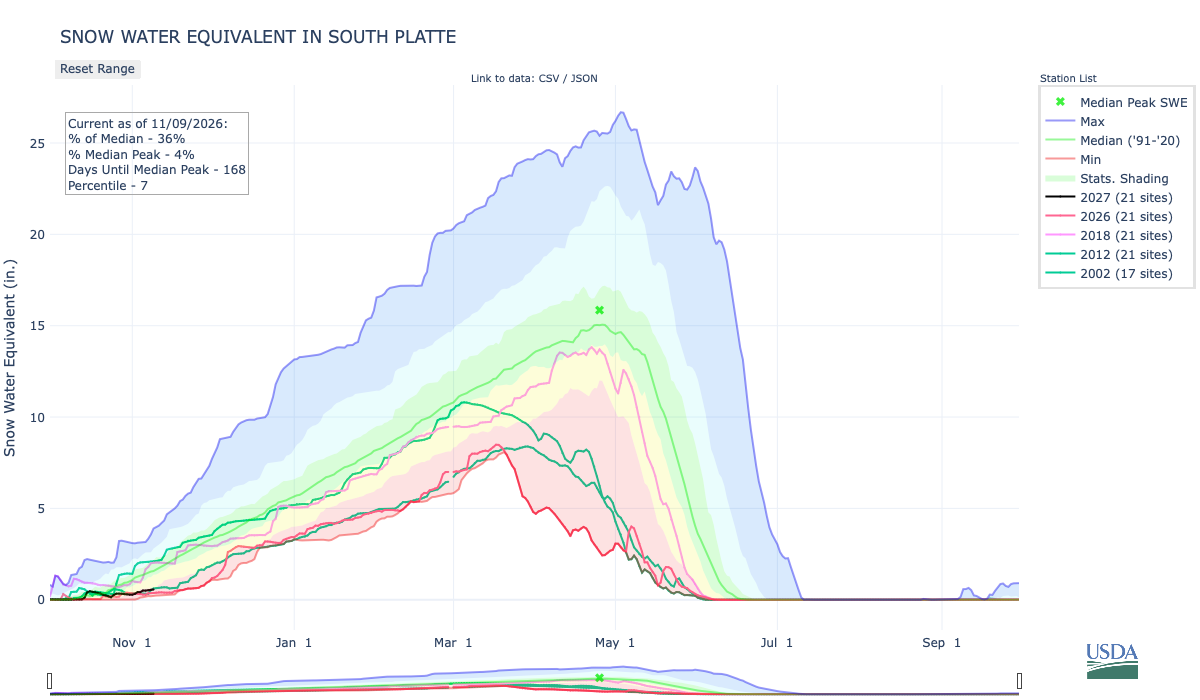
Below is the Snow Water Equivalent in South Platte graph from the NRCS for November 9, 2026. Snowpack is 36% of the median (up 8% one week, wild swings this time of the accumulation season) and 4% of the median peak (up 2% one week). There are 168 days until the median peak. I’ve added the lines for 2026, 2018, 2012, and 2002 since drought in the South Platte River Basin is still very pronounced.
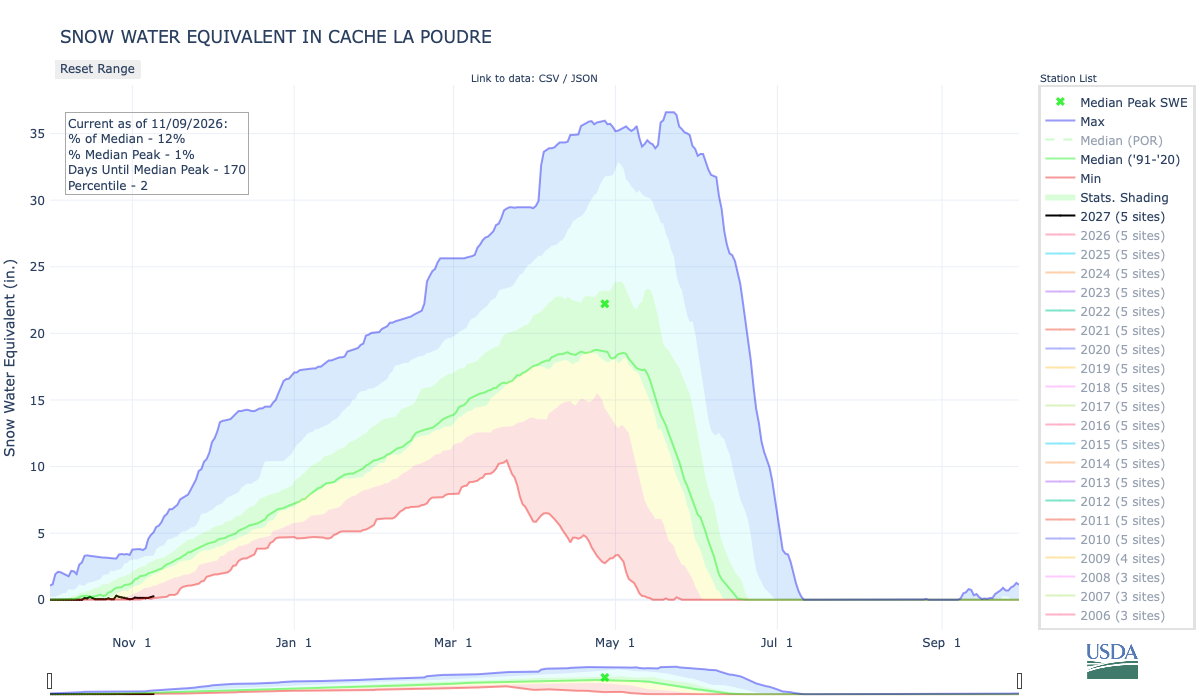
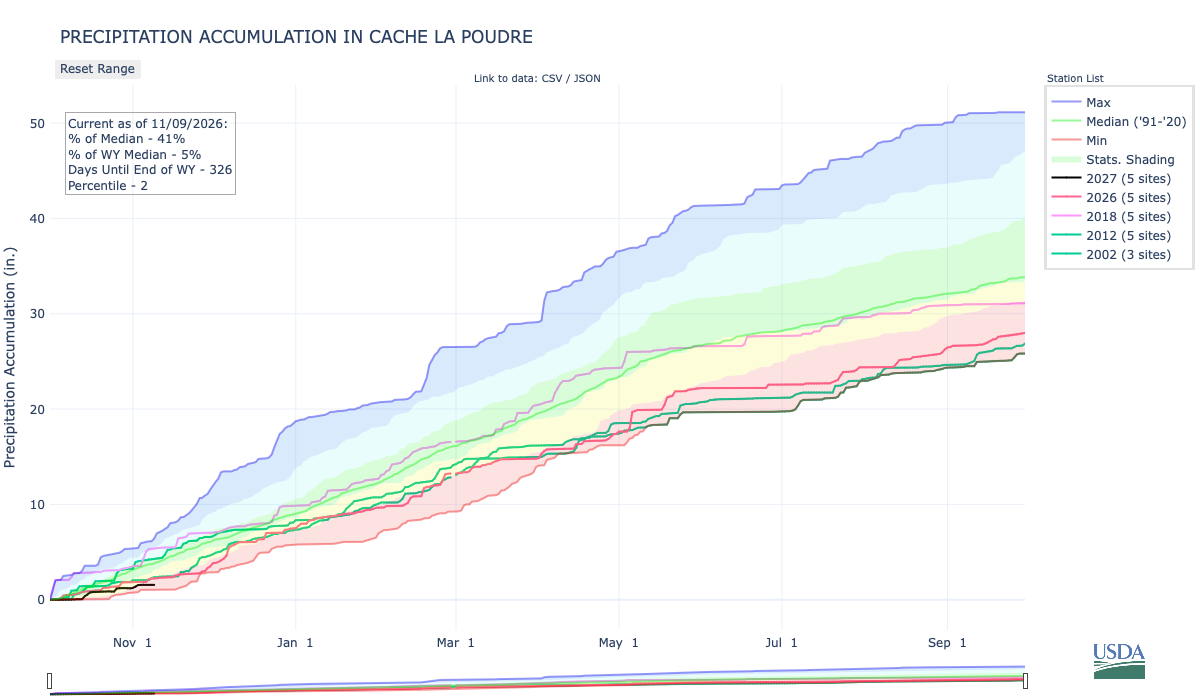
There is a gradient from south to north in the South Platte River Basin. Check out the graphs for the Upper South Platte (74% of the median) and the Cache la Poudre (12% of the median).

Below is the Precipitation Accumulation in South Platte graph from the NRCS for November 9, 2026. This morning precipitation, at the SNOTEL stations, is at 68% of the median (no change one week), and 7% of the water year median (up 1% one week), There are 326 days left in the water year. I’ve added the lines for 2026, 2018, 2012, and 2002 since drought in the South Platte River Basin is still very pronounced.
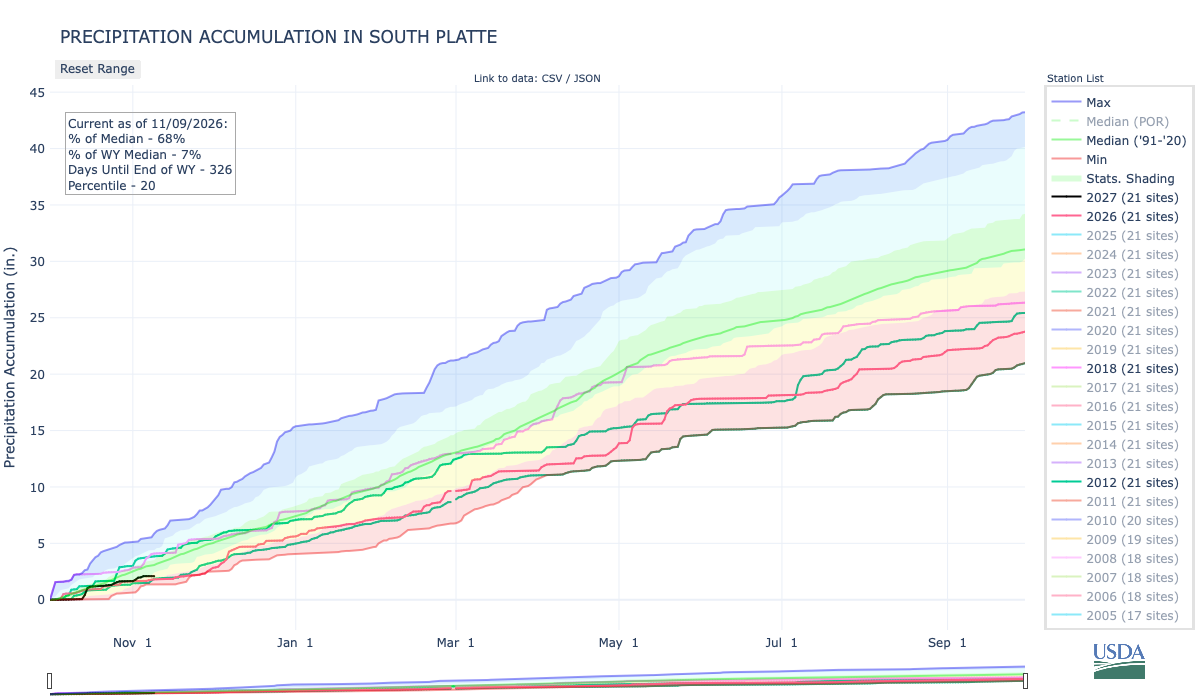
The gradient from south to north is even more pronounced in accumulated precipitation.

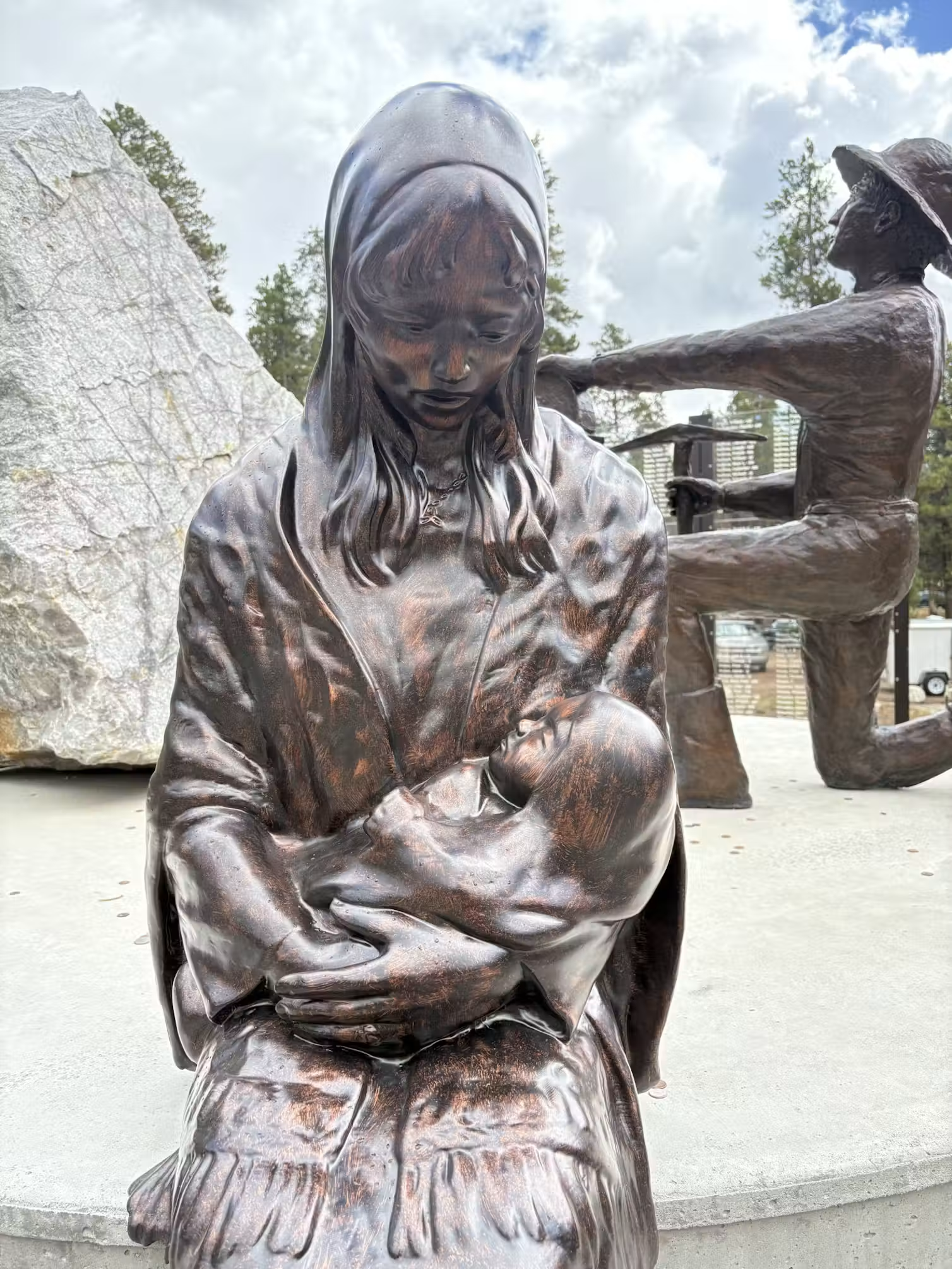
The forecast for the central and northern mountains is sunny and warm through Sunday. It will also be sunny and warm down here, about 101 miles from the Leadville Irish Miners Memorial. From The Conversation:
Local Irish and Irish American communities unveiled a significant public history space near Leadville, Colorado, in 2023. Roughly 600 people gathered to pay tribute to the Leadville Irish Miners’ Memorial. The memorial is impressive and symbolic. A spiral walkway acts as a labyrinth that ushers visitors to statues of a kneeling miner holding a harp and a pickax, and a woman holding a baby The statues are surrounded by glass panels that feature the names and ages of the 1,339 people who were buried in the Catholic Free Section of Evergreen’s pauper cemetery in the late 1800s. I am a political scientist and historian who has spent decades researching the history of Leadville’s Irish immigrant community. The idea for this memorial grew out of my doctoral dissertation research conducted between 2001 to 2010. Based on surnames and archival church, cemetery and newspaper records, I’ve determined that as many as two-thirds of those buried in the pauper cemetery were Irish or Irish American – and half were babies and young children. Their deaths tell a hidden story of the toll that industrial labor took on immigrant communities…
The silver rush in Leadville led to a massive influx of immigrants. The city’s population exploded from a few hundred gold miners during the early 1870s to as many as 35,000 people during the mid-1880s, according to the Federal Census. The Irish became the largest ethnic group in the city and one of the largest in the American West. Upward of 5,000 Irish and Irish Americans lived in or near Leadville in the 1880s. Nearly two-thirds of Irish men in the 1880 Federal Censuswere miners. Leadville became an important Irish cultural space, attracting figures such as author Oscar Wilde and Michael Davitt, founder of the Irish Land League in 1879. The Land League was a transatlantic political movement, funded largely by Irish Americans, to reshape Irish land law and protect Irish tenants from exploitation by landlords. But for Irish immigrants and their families, Leadville was a death trap, claiming the lives of countless miners, women, children and infants. Irish workers responded by organizing and making demands through massive strikes.
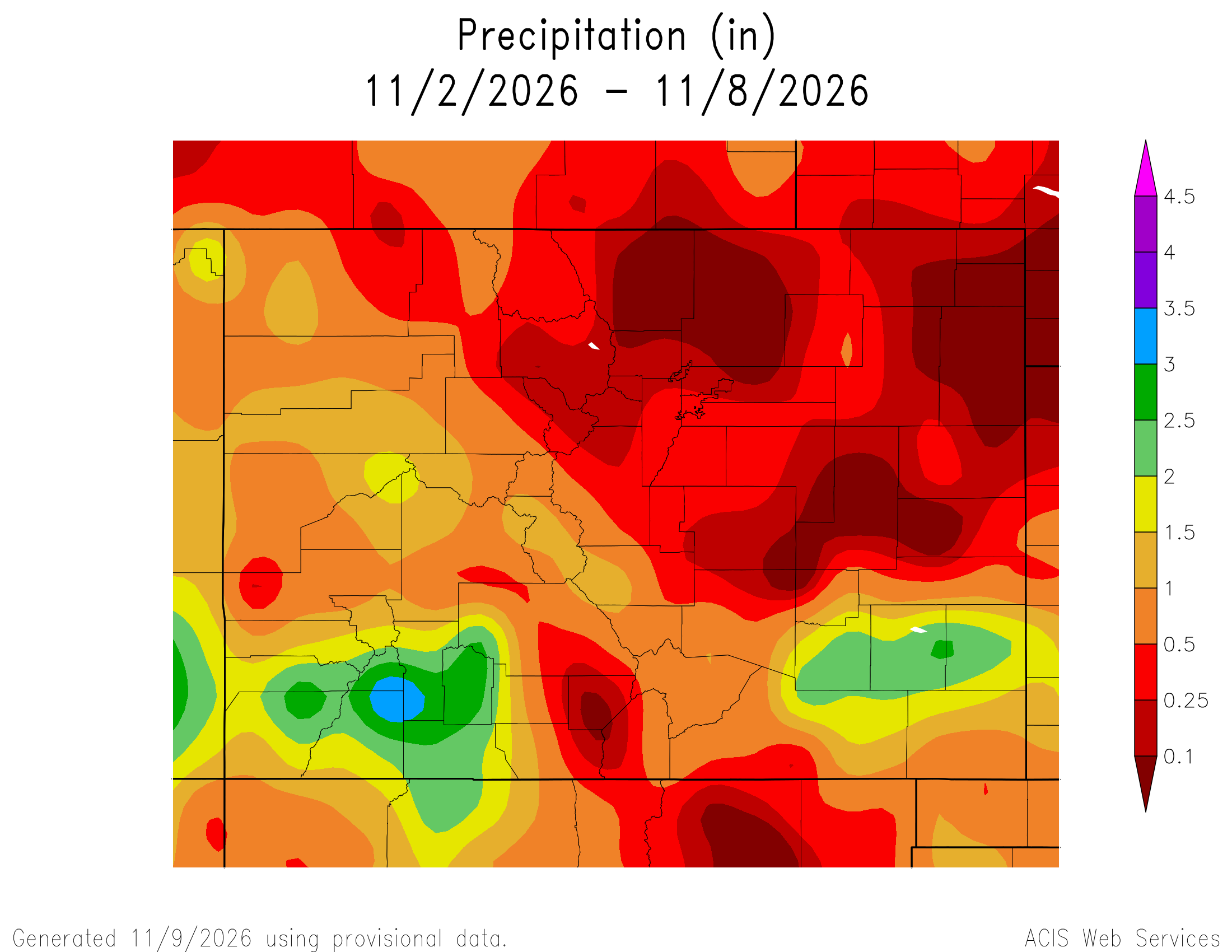
Here’s a look at the Colorado 7-Day precipitation map through November 8, 2026 from the High Plains Regional Climate Center. Precipitation in the South Platte Basin along the Continental Divide of the Americas ranged from 0.00” to 1.00″.
Here’s the Colorado 7-Day percent of normal precipitation map through November 8, 2026 from the High Plains Regional Climate Center. Precipitation in the South Platte River Basin along the Continental Divide of the Americas ranged from 0% to 800% of normal.

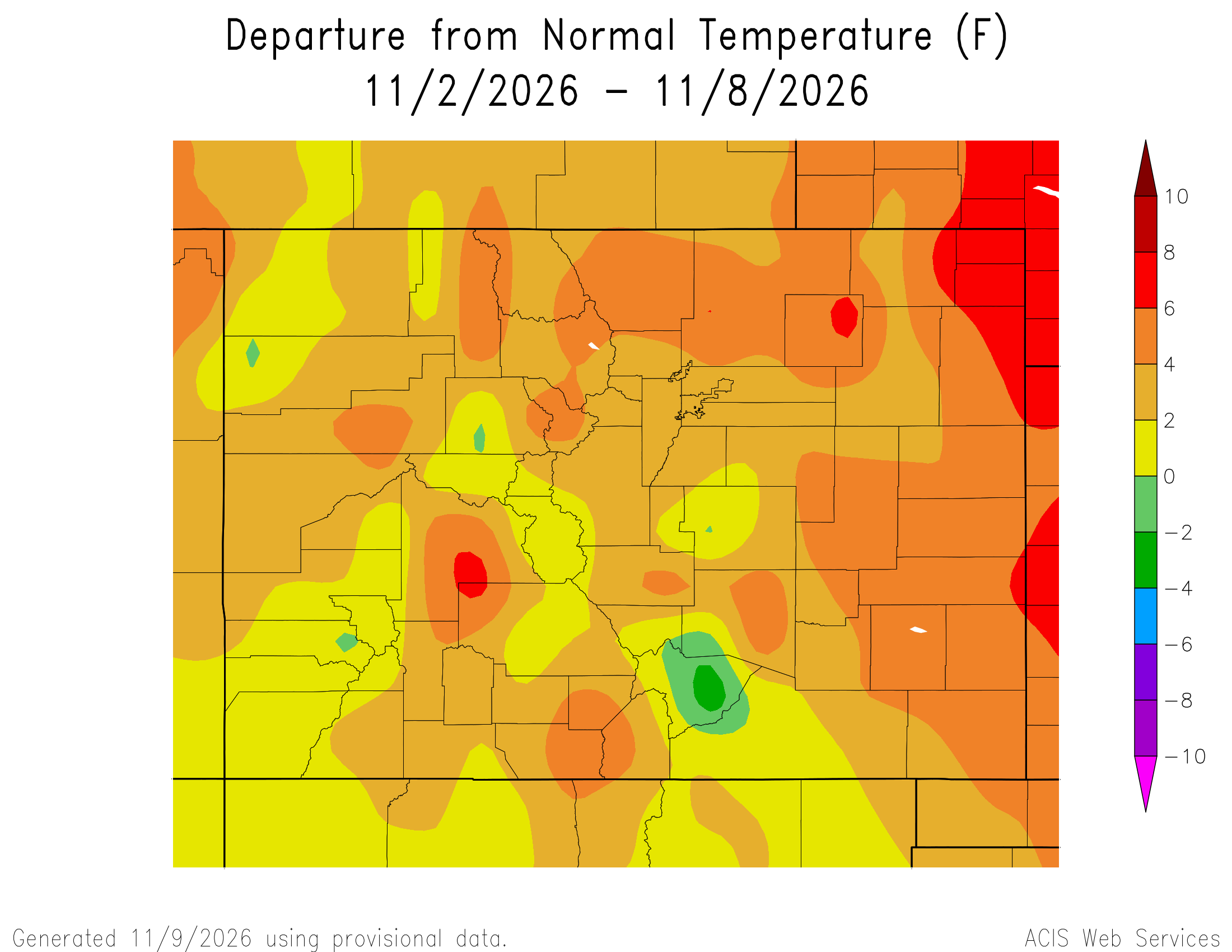
Here’s the most recent 7-Day Departure from Normal Temperature (F) for Colorado through November 8, 2026 from the High Plains Regional Climate Center.
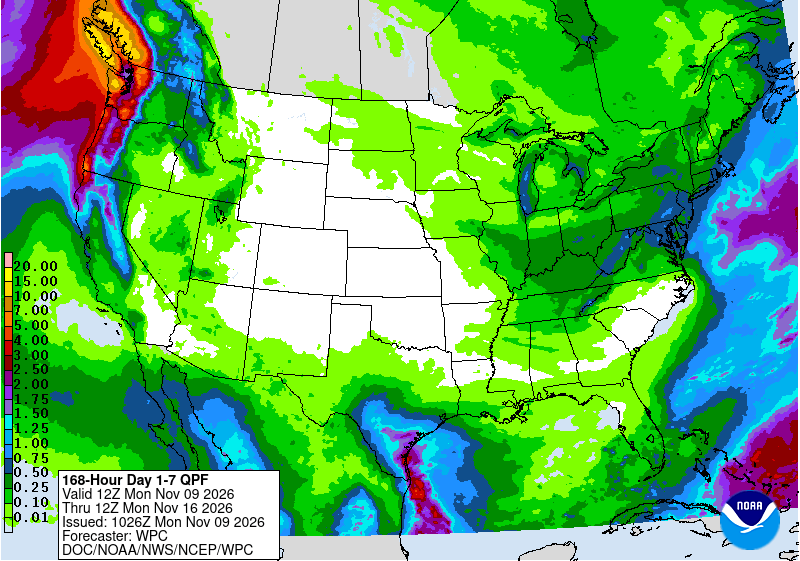
Below is the 7-day Quantitative Precipitation Forecast for the week of November 2, 2026. No precipitation is anticipated for the mountains of the South Platte River Basin.
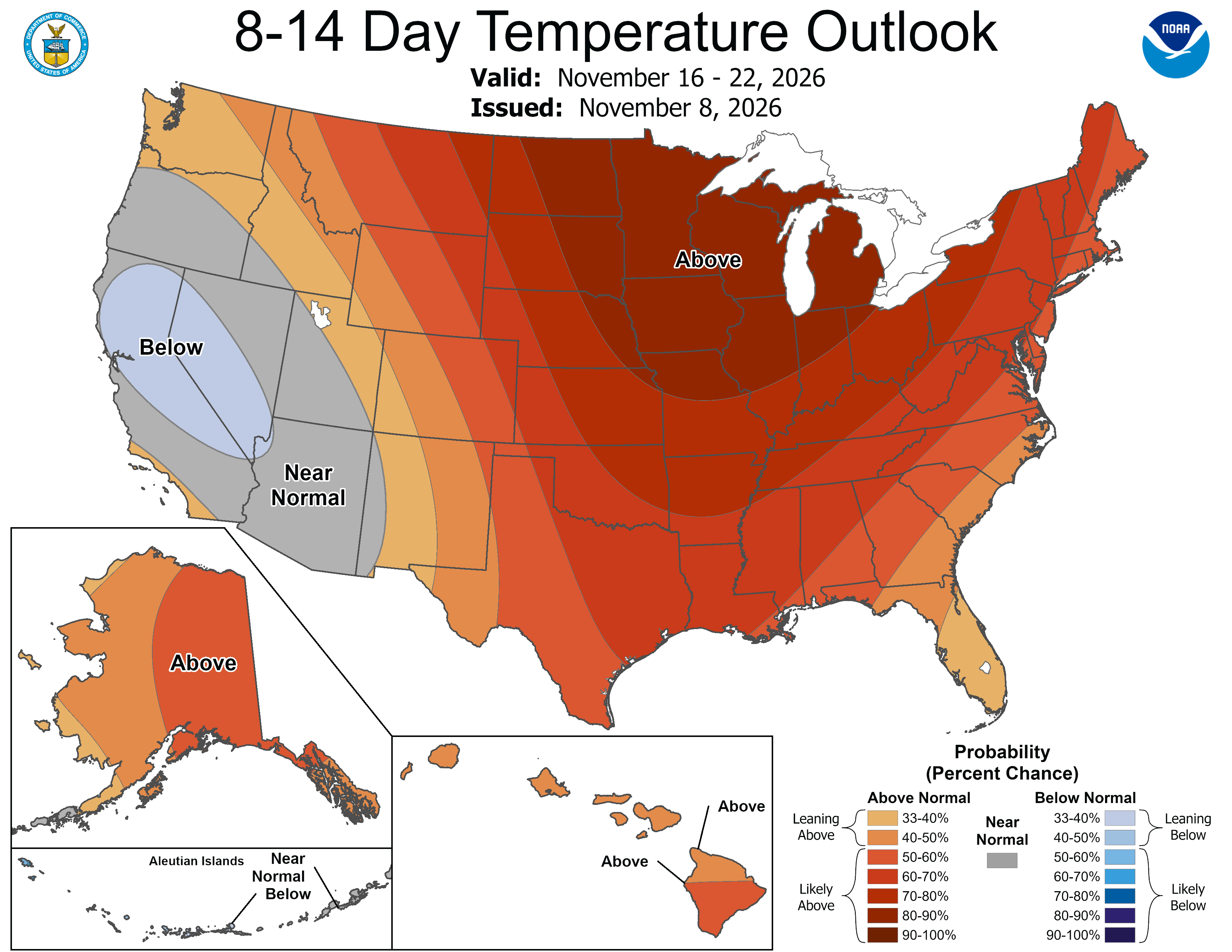
Below are the 8-14 day outlooks from the Climate Prediction Center, issued November 8, 2026, for temperature and precipitation, for the week starting November 16, 2026. The CPC expects above normal temperatures and above normal precipitation for the mountains of the South Platte River Basin.

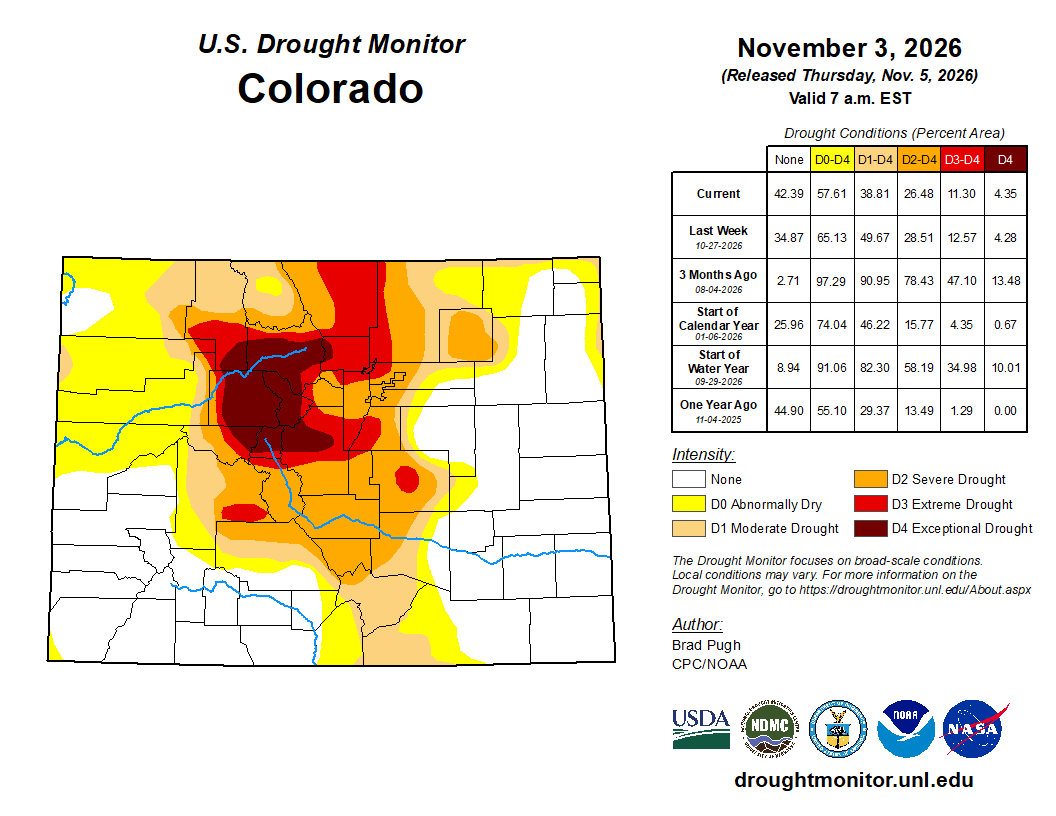
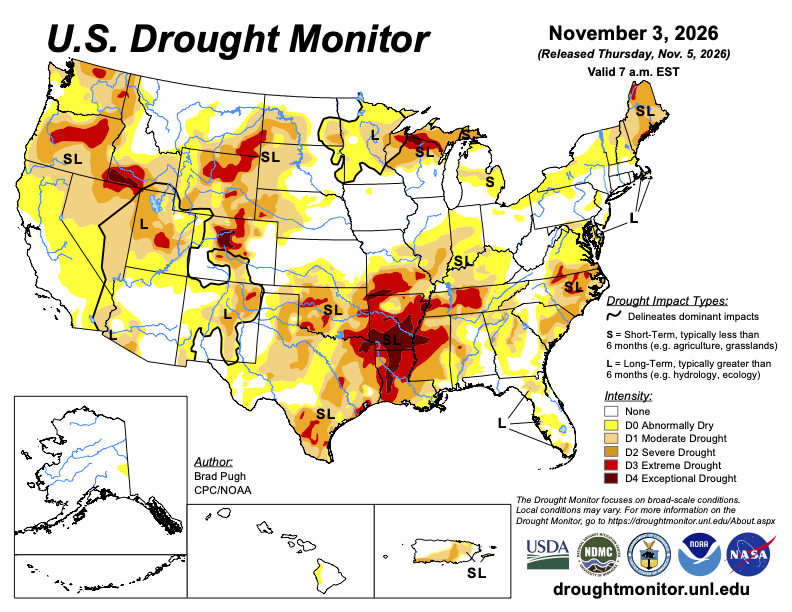
Below is the Colorado Drought Monitor map from November 3, 2026. There was a one category degradation in Boulder County. Drought and abnormal dryness covers 57.81% of Colorado. The South Platte Basin is experiencing Abnormally Dry, Moderate, Severe, Extreme, and Exceptional drought conditions.
Below is the Colorado Drought Monitor one week change map ending November 3, 2026.
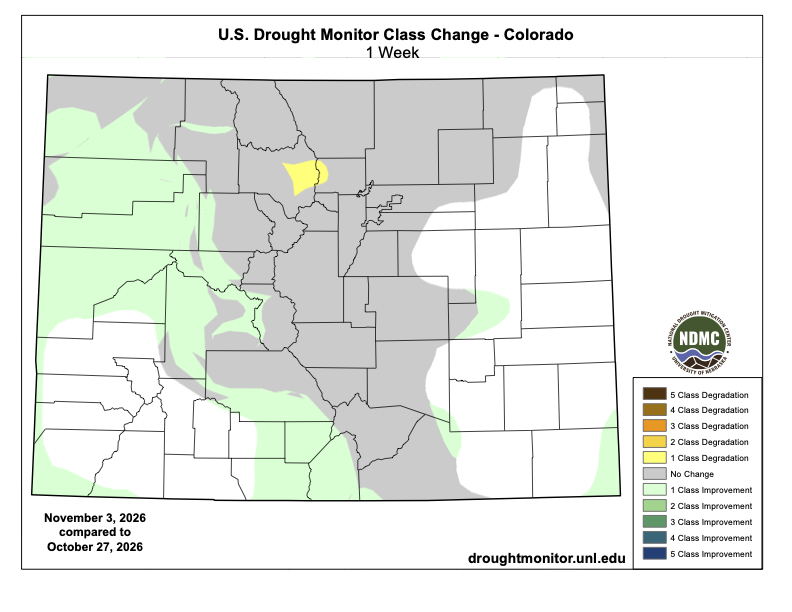
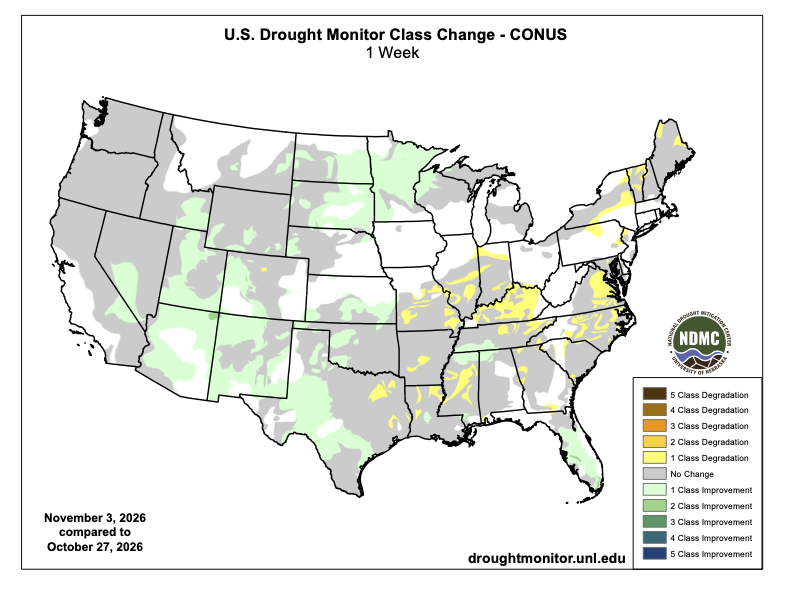
Here’s the US Drought Monitor Map from last week along with the one week U.S. change map.
Finally, various water providers in the South Platte River Basin import a significant volume of water from the Colorado River Basin. Climate Scientist Brad Udall spoke recently at a forum in Jefferson County that was sponsored by the Colorado Renewable Energy Society and New Energy Colorado. From Big Pivots:
Colorado State University’s Brad Udall makes the case that the Colorado River Basin is the world’s first place where climate change is “forcing a complete redo of water management.” The climate change component of that statement seems unassailable. Flows in the Colorado River have declined 21% this century. A river that averaged 15.2 million acre-feet in flows during the 20thcentury has fallen to 12.2 million acre-feet in the 21st. It has further tapered off to 10 million acre-feet in the last few years. Temperature increases of 3.3 degrees Fahrenheit since 1970 explain much of that decline. A one-degree Fahrenheit rise in temperature results in 5% loss due to increased evaporation. “Hot drought,” the phrase Udall favors, will only worsen, he says, as the process he and others call aridification will continue to worsen. Temperatures, said Udall at a recent forum, can continue to rise.
“The latest science tells us that the rate of warming has almost doubled. And the fossil fuel industry is showing no signs of exit or no signs of transformation to some other business model that doesn’t involve polluting the Earth,” he said.
Existing greenhouse gas emissions will, he added, continue to incrementally heat the Earth into the 22nd century even if humanity can reduce greenhouse gas emissions to zero. As for the water management redo, it’s still early. Colorado River runoff has been in decline for the last quarter-century.
