Colorado Water 2012: Jay Winner — ‘Acquiring irrigation water is the easiest, most efficient and lowest cost way for growing Front Range municipalities to obtain additional water supplies’

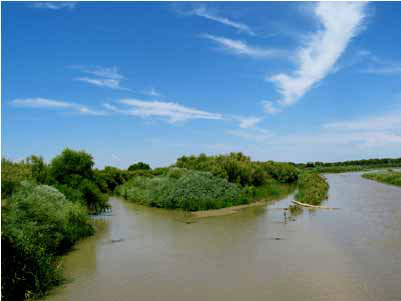
arkbasinditchsystem.jpg

Here’s the latest installment of the Valley Courier’s Colorado Water 2012 series. Today, Jay Winner, General Manager, Lower Arkansas Valley Water Conservancy District, discusses rotational fallowing. In particular he explains the Arkansas Valley Super Ditch project being spearheaded by the Lower Ark district. Here’s an excerpt:

In 2002, residents of the Lower Valley voted two to one to create the Lower Arkansas Valley Water Conservancy District (“Lower District”) to protect the Valley’s water resources, and with them, their social and economic future.

While the Lower District has aggressively fought additional agricultural to municipal transfers, it has just as steadfastly worked to develop an alternative that will meet inexorable municipal demands while protecting and enhancing the value of remaining irrigation water.

LEASING. Water leasing, pioneered during California’s 1990s drought, emerged as the most promising answer for several reasons.

First, leasing would not require current irrigators to sell their water to realize its current value, preserving the long-term ownership of the water in the Valley.

Second, most irrigated land would remain in production every year.

Third, water leasing would create a “new crop,” one with a predictable cash flow that irrigators could use for on-farm improvements, debt reduction, equipment upgrades and the like.

Fourth, cities could obtain the water supplies they need – an irrigated field is functionally equivalent to a reservoir that can be tapped (dried up) when needed for municipal uses…

Shareholders of the Rocky Ford High Line Canal, Oxford Farmers Ditch, Otero Canal, Catlin Canal, Holbrook Canal, and the Fort Lyon Canal (later joined by the Bessemer Ditch) met in Rocky Ford on May 7, 2008. They incorporated the Lower Arkansas Valley Super Ditch Company, a Colorado for-profit corporation managed by a Board of Directors elected by Valley irrigators. The Super Ditch negotiates on behalf of irrigators to make water available to other water users through long-term leases, interruptible water supply agreements, and water banking.

Meanwhile, Aurora is assuring the Arkansas Basin that their new contract with water bottler Niagara Bottling will be for single-use, non-transbasin water. Here’s a report from Chris Woodka writing for The Pueblo Chieftain. From the article:

“It’s an industrial use in the city of Aurora,” said Greg Baker, spokesman for Aurora Water. He said there are few other industrial users in the Denver suburban community.

Aurora gets about one-quarter of its supply from purchases of water rights it has made in the Arkansas River basin, one-quarter from the Colorado River and half from the South Platte.

“This is single-use water, so the paper accounting for it will be from the South Platte,” Baker said.

Return flows from water brought in from either the Arkansas or Colorado basins can be reused, and Aurora built the $650 million Prairie Waters Project to directly recapture those flows.

A bottled water plant would use all of the water, however, so Aurora will credit supplies to its Platte River water resources.

More Colorado Water 2012 coverage here.

Colorado Springs Utilities’ Steve Berry: ‘In looking at the numbers in this executive summary, it does not appear that many of our comments were considered’

transmountaindiversionscoloradostateengineer2011

Last week, the day before the Statewide Roundtable Summit, Western Resource Advocates, et. al., released a report titled, “Meeting Future Water Needs in the Arkansas Basin.” Colorado Springs and Pueblo are taking a hard look at the report, according to this article from Chris Woodka writing for The Pueblo Chieftain. Here’s an excerpt:

There may be a question whether water providers accept the figures used in the reports. “Colorado Springs Utilities was asked to peer review the draft version, and made extensive and substantial comments on it. In looking at the numbers in this executive summary, it does not appear that many of our comments were considered, and many of our suggested changes or corrections were not made,” said Steve Berry, spokesman for Utilities. The largest amounts of water, and presumably the largest conservation and reuse savings, come from Colorado Springs.

The Pueblo Board of Water Works is also reviewing the final report for accuracy, said Alan Ward, water resources manager…

The environmental groups say a combination of projects already on the books — conservation, reuse and temporary ag-urban transfers — could provide as much as 140,000 acre-feet, more than enough to meet the needs. Those numbers are being examined by urban water planners, who say the savings might not be attainable. “In general, we were unable to verify or recreate most of the numbers cited in their report, and their estimates for conservation and reuse are significantly greater than what our water conservation experts have calculated as realistic,” Berry said…

When asked how conservation savings would be applied to new supplies, a practice cities find risky, Jorge Figueroa, water policy analyst for Western Resource Advocates, said they could be put into “savings accounts” for future use. When asked where the water would be stored, he cited the T-Cross reservoir site on Williams Creek in El Paso County that is part of the Southern Delivery System plan…

Drew Peternell, director of Trout Unlimited’s Colorado Water Project, said the group supports [the Southern Delivery System]. Because the project already is under way, the groups look at SDS as a key way to fill the gap. The report also supports programs like Super Ditch as ways to temporarily transfer agricultural water to cities without permanently drying up farmland.

Meanwhile, here’s a look at a report from the Northwest Council of Governments, “Water and Its Relationship to the Economies of the Headwaters Counties,” from Bob Berwyn writing for the Summit County Citizens Voice. From the article:

The report, released in January at a Denver water conference, takes a fresh look at the critical importance to the economy of water in West Slope rivers, and why Colorado leaders may want to take careful thought before making future transmountain diversion policy decisions. Visit the NWCCOG website for the full 95-page report.

“This report makes an important contribution to the on-going dialogue about adverse economic impacts associated with losing water by focusing attention on Eagle, Grand, Gunnison, Pitkin, Routt and Summit counties,” said Jean Coley Townsend, the author of the report. “This has never been done before. The report provides an important counterbalance to earlier studies that show economic impacts of losing water from the Eastern Plains.”

Balancing the supply and demand of water could be the State’s most pressing issue. The report does not take issue with Front Range municipal or Eastern Plains agricultural water users — all parties have important and worthy concerns and points of view — but is meant as a thorough review of water as an economic driver of headwaters economic development.

The report provides a balance to the existing solid body of work that measures the potential economic effects of less water on the Front Range and the Eastern Plains and the loss of agriculture in those parts of the state.

“If we … are going to solve our Statewide water supply shortage challenges there must first be statewide mutual respect and true understanding of each other’s water supply challenges,” said Zach Margolis, Town of Silverthorne Utility Manager. “The report is a remarkable compilation of the West Slope’s water obligations and limitations as well as the statewide economic value of water in the headwater counties of Colorado.”

More transmountain/transbasin diversions coverage here.

Woodmoor Water and Sanitation withdraws water court change case, cites purchase of JV Ranch as reason

denveraquifer.jpg

From The Pueblo Chieftain (Chris Woodka):

Woodmoor completed its purchase of the JV Ranch near Fountain in late November, and its board last week voted to pull a water court case that sought to deliver water by exchange from three ditch systems east of Pueblo. Woodmoor also has terminated all of the contracts on the Holbrook, High Line and Excelsior ditch systems…

The water court application had been moving toward trial after the Pueblo Board of Water Works refused to settle the case. The Pueblo water board objected to the plan partly because it could involve the removal of water from Pueblo County to another basin. Woodmoor straddles the Arkansas and South Platte basins…

The Lower Arkansas Valley Water Conservancy District also opposed the move, and took steps to help a farmer buy one of the farms Woodmoor was seeking on the High Line Canal, putting it in a conservation easement to ensure continued farming. “We ensured the water will run to the end of the High Line Canal forever,” said Jay Winner, general manager of the Lower Ark district…

After dropping its plans for Lower Ark water, Woodmoor opted to purchase the 3,500-acre JV Ranch, which has water rights of 2,500-3,500 acre-feet of water as well as a 70-acre reservoir. The purchase price will be $25 million to $35 million, depending on the historic average amount of water determined when a water rights change case is filed.

More Woodmoor Water and Sanitation District coverage here and here.

Rules designed to limit consumptive use now cover nearly 20,000 acres in the Arkansas Valley

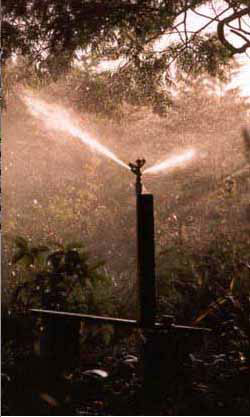
irrigation.jpg

From The Pueblo Chieftain (Chris Woodka):

Understanding irrigation in the Lower Arkansas Valley

Consumptive use refers to the amount of water a crop uses to grow, either through uptake into the plant and transpiration, or through evaporation. Usually it is measured in inches, but presumptive factors have been incorporated into the hydrologic-institutional model under the U.S. Supreme Court Kansas v. Colorado case.

Return flow is excess water applied to fields that runs off as tailwater or infiltrates soil. Water also can seep out of earthen ditches as it makes its way to the fields.

Water-short ditches, such as the Fort Lyon Canal or Holbrook Ditch, typically have more ground available to irrigate than water supplies will cover. Other ditches, such as the Catlin or High Line canals, have plentiful water except in very dry years.

Sprinklers, drip irrigation and ditch lining allow water to be applied more efficiently to fields. In the process, more water could be consumed as more acreage is planted on water-short ditches or used more often on ditches with adequate water. Return flows could be reduced as a result.

State engineer rules were adopted in Division 2 water court in 2009 to prevent shortages of return flows on the Arkansas River, to downstream users in both Colorado and Kansas…

This year, the Lower Arkansas Valley Water Conservancy District established a group plan for farmers who use ponds to feed sprinklers to comply using formulas under Rule 10 of the surface irrigation rules. The plan also covers other types of improvements such as ditch lining and drip irrigation, but sprinklers account for nearly all of the impact so far. The Lower Ark district will use water from other sources, such as a five-year lease agreement with the Pueblo Board of Water Works, to provide augmentation water to make up depletions from increased consumptive use.

While the group plan requires a retainer fee and payment for augmentation water if the formula shows depletion, the payment is far less than farmers otherwise would spend on engineering at each site to show losses. So far, 88 farms with 104 improvements covering 19,767 acres are enrolled in the Lower Ark’s Rule 10 plan, said Heath Kuntz, the district’s engineering consultant. “We’re anticipating a lot of growth over the next few years,” Jay Winner, general manager of the Lower Ark district, told the compact administration.

From the state’s point of view, the program has been the backbone for enforcing the new rules. About 75 farms were signed up at the beginning of the program in April, and the others have signed on at the end of the irrigation season as the state assessed impacts, said Bill Tyner, assistant engineer for Water Division 2. “The Rule 10 plan has turned out to be the most successful part of the rules,” Tyner said, thanking the Lower Ark district and the Colorado Water Conservation Board for the seed money which launched the group plan.

More Ark Valley consumptive use rules coverage here and here.

Arkansas River Compact Administration meeting recap: Colorado is 44,000 acre-feet in the black for deliveries at the Kansas border

arkansasriverbasinwikipedia.jpg

From The Pueblo Chieftain (Chris Woodka):

Accounting for flows through 2010 shows that Colorado has credits of about 44,000 acre-feet in a 10-year running average of flows, said Kevin Salter, of the Kansas engineering staff. The accounting is required as part of the Kansas v. Colorado U.S. Supreme Court lawsuit filed in 1985 and concluded in 2009…

Despite below-average precipitation and river flows in the Arkansas River basin the past decade, actions by water users have been paying off, said Bill Tyner, assistant Colorado Water Division 2 engineer. “LAWMA (the Lower Arkansas Water Management Association) has really helped themselves with the Kessee Ditch purchase in 2004. It has increased their ability to supply water to the appropriate account.”

More coverage from Chris Woodka writing for The Pueblo Chieftain. From the article:

“We see the water lease-fallowing program to be an alternative to buy-and-dry in the Western United States,” said Jay Winner, general manager of the Lower Arkansas Valley Water Conservancy District, which has supported the [Arkansas Valley Super Ditch] with legal and engineering help. Winner was speaking Thursday at the annual meeting of the Arkansas River Compact Administration. He also updated the administration on the Lower Ark district’s assistance to farmers in forming a group plan for compliance to surface irrigation rules and on the progress of Fountain Creek studies and projects. A pilot program next year will involve a one-year sale of up to 500 acre-feet of water from the Catlin Canal, one of seven ditches which could participate in Super Ditch. No contracts for the lease have been signed, but El Paso County water users such as Fountain have been approached. The district is doing engineering work to determine how to mimic return flows from land temporarily taken out of production for the pilot program. The district is looking at options like ponds on the ditch itself to provide them…

“I think the transparency of the project is important and that you continue to keep us informed,” said David Barfield, chief engineer for Kansas.

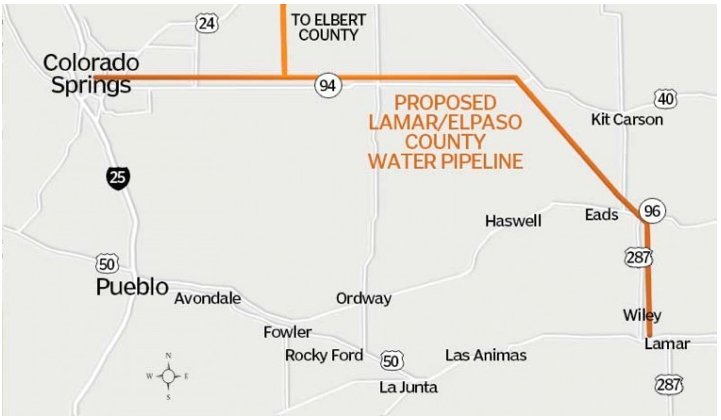
lamarpipeline.jpg

More coverage from Chris Woodka writing for The Pueblo Chieftain. From the article:

The administration board heard a report on the pipeline in its engineering committee, but did not refer it to a special engineering committee that has been formed to resolve issues during and after the U.S. Supreme Court case filed in 1985 and resolved in 2009. The move means it would be at least another year before the pipeline could even be discussed, barring a special meeting.

“My suggestion is that we wait until they make a filing in water court and then decide on how to move forward,” said David Barfield, chief engineer for Kansas. “There’s clear language under compact article 5H on moving water out of District 67. It’s never been done before.”

“We have to let the proponent move forward and then determine the best process to address this,” said Matt Heimerich, of Olney Springs, a Colorado administration member.

More Arkansas River basin coverage here.

Mark Pifher (Aurora water): ‘We don’t plan to buy or lease any more water in Arkansas basin in the near future’

arkansasriverbasin.jpg

From The Pueblo Chieftain (Chris Woodka):

Aurora’s water rights include nearly all of the Rocky Ford Ditch in Otero County, about one-third of the Colorado Canal in Crowley County and water from 1,750 acres of ranches in Lake County. Those rights provide an average yield of 22,800 acre-feet per year — the equivalent of 80 percent of the potable water used by Pueblo each year.

– Aurora also uses the Homestake Project, Twin Lakes, Busk-Ivanhoe diversion and the Columbine Ditch to bring water from the Western Slope through the Arkansas River basin and into the South Platte basin. The average yield of those water rights is about 21,500 acre-feet annually.

– The city can reuse its Arkansas and Colorado basin water imports, and has built the $650 million Prairie Waters Project to directly recapture flows, rather than exchange them.

– Aurora’s South Platte water rights include wells, ranches, ditches and direct flow from the South Platte. They total about 46,000 acre-feet annually.

– Aurora has an agreement to trade 5,000 acre-feet of water a year with Pueblo West from Lake Pueblo to Twin Lakes beginning next year. It will replace a similar agreement with the Pueblo Board of Water Works that expires this year.

– The Pueblo water board sells Aurora 5,000 acre-feet of water each year.

– Aurora has a contract with the Bureau of Reclamation to store 10,000 acre-feet of water in Lake Pueblo and to move the same amount to Twin Lakes by paper trade.

– The water is moved from Twin Lakes to Spinney Mountain Reservoir through the Homestake pipeline system…

“We don’t have any current plans beyond what we’re already doing,” said Mark Pifher, director of Aurora water. “We don’t plan to buy or lease any more water in Arkansas basin in the near future.”

Instead, the city will continue developing Prairie Waters, a reuse project that pumps sewer return flows through a filtration and purification system, only at about 20 percent capacity so far. Aurora calculates that its average yield from its Arkansas River basin water rights is about 22,800 acre-feet annually. That’s roughly one-fourth of its total yield from its entire system, which includes South Platte and Colorado River basin rights. From a practical standpoint, Aurora does not move all of its water out of the Arkansas River basin each year.

More Aurora coverage here and here.

The Preferred Options Storage Plan surfaces again after dismissal of lawsuit over Aurora’s excess capacity contract with Reclamation

puebloreservoir.jpg

In the late 20th century the Southeastern Colorado Water Conservancy Board floated the idea of expanding Pueblo Reseroir since new mainstem reservoirs are nearly impossible to permit nowadays and more storage is identified as one of Colorado’s big needs going forward. Aurora’s insistence on being part of the authorization legislation stalled the project. They are out now so expansion of storage in Lake Pueblo is back on the table. Here’s report from Chris Woodka writing for The Pueblo Chieftain. From the article:

“This allows us in the basin to concentrate on storage and move the PSOP process ahead,” said Alan Hamel, executive director of the Pueblo Board of Water Works.

PSOP stands for the Preferred Storage Option Plan, developed by the Southeastern Colorado Water Conservancy district in the late 1990s, when Hamel was president of the Southeastern board.

Aurora remained at the table during PSOP discussions through 2007, when talks organized by U.S. Sen. Ken Salazar broke off when the Lower Ark district sued the Bureau of Reclamation over an Aurora storage contract. In the newest agreement, reached as part of the conditions of a motion to dismiss a federal lawsuit, Aurora has dropped its claim to be included in PSOP legislation, while agreeing to support the 2001 PSOP implementation report.

Here’s a look at the settlement that led to the dismissal, from Chris Woodka writing for The Pueblo Chieftain. From the article:

A joint motion filed by all parties in the case asks federal District Judge Philip Brimmer to dismiss the case with prejudice, meaning it cannot be reopened. Stipulations attached to the case require Aurora to abide by an intergovernmental agreement reached with the Lower Arkansas Valley Water Conservancy District in 2009.

“It means the lawsuit is completely over,” said Jay Winner, general manager of the Lower Ark district. “I think this puts the final part of the fence around Aurora. Our agreement restricts them from putting any more infrastructure into the valley to move more water out of here.”

The agreement also reinforces past agreements Aurora has made to limit the amount of water it can move from the valley and defines the service area in which water from the Arkansas River basin can be used. Aurora also has agreed to withdraw its claims from any future legislation to study the enlargement of Lake Pueblo.

Aurora, a city of 300,000 east of Denver, owns water rights in Otero, Crowley and Lake counties and pumps it from Twin Lakes into the South Platte River basin through the Homestake Project, which is operated jointly with Colorado Springs…

One year ago, the case was administratively closed by Brimmer, but Aurora and the Lower Ark initially continued to work for federal legislation to study the enlargement of Lake Pueblo, a condition of the 2009 IGA…

As part of the final IGA, Aurora agreed to withdraw its insistence for a clause allowing it to use the Fry-Ark Project in any legislation to enlarge Lake Pueblo. That has been a sticking point for 10 years, and was one reason for the 2003 agreement. Aurora will unconditionally support a federal study of the enlargement of Lake Pueblo. Aurora also has agreed to fully support projects backed by the Lower Ark District, including Fountain Creek improvements, the Arkansas Valley Super Ditch and the Arkansas Valley Conduit. The city will contribute $2 million over 10 years to such projects. It will also continue funding and support of water quality projects in the Arkansas River basin. The agreement also strengthens Aurora’s commitment to continue revegetation of farmland it dried up with the purchase of water from Crowley County.

More Preferred Options Storage Plan coverage here and here. More Aurora coverage here and here

The Lower Arkansas Valley Water Conservancy District files change case for the Larkspur Ditch

coloradotransmountaindiversions.jpg

From The Pueblo Chieftain (Chris Woodka):

The Lower Arkansas Valley Water Conservancy District has spent $1 million over the past three years to purchase the ditch from the Catlin Canal. It owns about 73 percent of the Larkspur. In November, the district filed for a change of use in Division 2 Water Court to allow for domestic and augmentation uses in addition to agriculture for the water. “It’s a transmountain water right, so it’s valuable because the water can be reused after it is brought over,” said Jay Winner, general manager of the Lower Ark district.

Larkspur Ditch brings 300-500 acre-feet of water annually from the Gunnison River basin into the Arkansas River basin through several collection ditches and a high-mountain ditch at Marshall Pass southwest of Salida. The Lower Ark district has improved the yield over the last seven years under a cooperative arrangement with the Catlin Canal Co.

Under a 1041 land-use agreement with the Otero County Commissioners, the Lower Ark has committed to offering first use of the water to users within the county. Initially, some of the water will be applied to Rule 10 group plans under the surface irrigation consumptive use rules approved in water court in 2010. The water is used to augment on-farm sprinkler systems. Several Otero County farms are enrolled in the Lower Ark’s augmentation plan.

More transmountain/transbasin diversions coverage here.

Lower Arkansas Valley Water Conservancy District board meeting recap

lowerarkansasriver.jpg

From the La Junta Tribune Democrat (Bette McFarren):

The financial report was presented by Director Wayne Whitaker, treasurer. October revenues were $17.91. Expenses were $37,575.37, for a net deficit of $37,557.46 for the month of October. “Sounds like farming,” commented Director Leroy Mauch. There are other assets, as shown on the LAVWCD Enterprise-Activity Account Balance Sheet as of Oct. 31, 2011. Total current assets are $462,903.82 and total property and equipment are $16,916,269.78. Total current liabilities are $125,686.97.

More Lower Arkansas Valley Water Conservancy District coverage here and here.

The Fountain Creek Master Plan was the topic of discussion at Friday’s meeting of the Fountain Creek Watershed Flood Control and Greenway District

fountaincreek.jpg

Here’s a in-depth report from Chris Woodka writing for The Pueblo Chieftain. Click through and read the whole article. Here’s an excerpt:

A corridor master plan Friday was combed over by the citizens advisory group to the Fountain Creek Watershed Flood Control and Greenway District board. The panel could not agree on whether a dam or series of dams is needed to protect projects that beautify the creek with trails and parks on Fountain Creek, a normally gentle stream prone to occasional violent floods. There also was no consensus on whether water quality should be improved before or after people are encouraged to enjoy the water…

The corridor plan addresses just the area in the flood plain between Pueblo and Colorado Springs, and is aimed at projects that will fit within the $50 million the district expects to receive five years from now. The district also needs to have projects that could convince voters to approve a mill levy when the time comes, said Larry Small, general manager of the district…

A dam on Fountain Creek could require moving railroad tracks and Interstate 25 or acquiring private land. A series of dams could be built on any of 21 tributaries along Fountain Creek and would be easier to clear as they periodically filled with sediment, Ready said. “You need a greenway so the creek can meander to slow down the water,” [Tom Ready, a Pueblo member of the committee] said. “You need to keep construction away from the creek. But no big dam will ever work.”[…]

[Larry Howe-Kerr of Better Pueblo] questioned the wisdom of drawing people to the creek if the water quality remains impaired. Small, Ready and others on the committee said the corridor plan does recommend actions that would improve water quality. They said recreation on the creek would get people to care about it, and does not necessarily mean coming in contact with the water…

The district is awaiting information from a U.S. Geological Survey study of the impact dams would have on Fountain Creek. In addition, Colorado Springs is developing a stormwater criteria manual which the district wants other communities to consider as well. It won’t be finalized until 2013. A white paper that looks at a comprehensive stormwater plan for El Paso County communities also is being drafted and should be presented to the district in the near future.

Meanwhile, two technical advisory committee meetings are on the horizon to discuss dam proposals and water rights issues on the creek, according to Chris Woodka writing for The Pueblo Chieftain. From the article:

The technical advisory committee of the Fountain Creek Watershed Flood Control and Greenway District will discuss the U.S. Geological Survey study of Fountain Creek dams at 10 a.m. Nov. 30 at the Pikes Peak Area Council of Governments office, 15 S. Seventh St., Colorado Springs.

The committee will have a panel discussion of water rights by experts from various organizations at 1 p.m. Dec. 7 at Fountain City Hall.

The USGS study is looking at the impacts of putting dams at various points along Fountain Creek to control floods. The study would not design or recommend dams, but is designed to measure the effectiveness of single projects or combinations of projects. The study is expected to be ready for review late next year and completed in 2013. The study is funded, in part, by $300,000 from Colorado Springs Utilities as a condition of the Pueblo County 1041 permit for the Southern Delivery System.

The water rights discussion is needed as the district and its partners develop demonstration projects for Fountain Creek, said Dennis Maroney, chairman of the technical committee.

More Fountain Creek coverage here and here.

The Fountain Creek Corridor Restoration Master Plan is hot off the press from the Fountain Creek Watershed Flood Control and Greenway District

fountaincreekwatershed.jpg

From The Pueblo Chieftain (Chris Woodka):

The plan builds on past studies of Fountain Creek by recommending specific actions and strategies for reaches south of Colorado Springs to the confluence with the Arkansas River in Pueblo. The plan includes the 100-year floodplain for about 46 miles of the creek. The plan is the completion of efforts to improve Fountain Creek that began in 2007 with negotiations between Colorado Springs and the Lower Arkansas Valley Water Conservancy District. The Fountain Creek district signed a partnership with those entities in 2009 to complete the plan…

A total of $1 million has been spent on the plan, which was financed equally by Colorado Springs and the Lower Ark district. THK Associates was the primary contractor. “This plan defines the elements that are included in a healthy reach of the creek versus an unhealthy reach of the creek,” said Larry Small, executive director of the Fountain Creek district. “The plan establishes a series of restoration techniques, including conservation, that are intended to be the toolbox of techniques used as a part of revitalizing Fountain Creek.”

The plan notes that most of the land in the unincorporated areas along Fountain Creek is privately owned, and generally healthy. The problem areas in Fountain and Pueblo, on mostly public land, receive the most attention. To improve the health of the stream, the plan recommends bank restoration, side detention ponds, wetlands and removal of invasive species that choke out other vegetation. The plan also seeks ways to connect communities to Fountain Creek to treat it as an asset rather than a problem…

The U.S. Geological Survey, in connection with the district, is studying the impact of a dam or series of dams on Fountain Creek. Results from that study are expected next year.

Comments on the corridor master plan may be made to fountainck dist@aol.com.

More Fountain Creek coverage here and here.

The Lower Arkansas Valley Water Conservancy District has contracted with the Pueblo Board of Water Works for a five year augmentation plan supply

lowerarkansasriver.jpg

From The Pueblo Chieftain (Chris Woodka):

The Lower Arkansas Valley Water Conservancy District will buy 500 acre-feet of water from the Pueblo Board of Water Works each year for the next five years under the lease agreement. The Lower Ark board approved the lease Wednesday, while the Pueblo water board is expected to consider it in November. The price is $196.54 per acre-foot, the same rate as paid by Two Rivers, which is using the water in its project to restore agriculture on the Huerfano-Cucharas Ditch in Pueblo County…

The water is needed to fill augmentation needs calculated under the district’s group plan that allows farmers to comply with state rules adopted last year. The district has other water resources, but some are dedicated to other purposes. The Pueblo water board, in nearly every year, has surplus water available for leases and has the option to curtail the deliveries if supplies run short. “We want to make sure we have a reliable supply of water for the Rule 10 plan,” said Jay Winner, general manager of the Lower Ark district.

State Engineer Dick Wolfe successfully guided the rules through Water Court to ensure that improvements such as large irrigation sprinklers, drip irrigation and canal lining did not increase consumptive use. Increasing consumptive use would decrease return flows used by ditches downstream and possibly reduce Arkansas River flows at the Kansas state line…

Rule 10 allows farmers to join a group plan rather than go through more costly engineering on individual systems. The Division 2 engineer’s office developed a model that assures compliance with the formula governing well augmentation under the federal lawsuit. More than 70 wells signed up for the Rule 10 plan under this year, its first year. More are expected next year. Lower Ark has the only group plan in the Arkansas Valley…

Water Division 2 Engineer Steve Witte said six owners of 10 irrigation sprinklers were issued notices of violation of the rules this year. One of those proved the sprinkler was installed prior to 1999, and thus exempt; one is in appeal; and the rest are apparently joining the Rule 10 plan.

More Arkansas Valley consumptive use rules coverage here and here.

Lamar pipeline: The Lower Ark Board listened politely (and critically) to GP Resources’ project preview yesterday

denverbasinwellsandpumping.jpg

From The Pueblo Chieftain (Chris Woodka):

The board had questions about the projected yield of the project, the problem of brine disposal from a proposed treatment plant and the idea of moving water out of the Arkansas Valley — which goes against the mission adopted by the district after voters formed it in 2002. “I compliment your approach, opposed as I am to any water leaving the valley,” said Reeves Brown, a Beulah rancher who sits on the Lower Ark board. “There’s a limit to what we think agriculture can give up in order to support growth in Colorado.”[…]

Upon questioning from the Lower Ark board, Nyquist said the only definite use for the water is in Elbert County. The Cherokee Metro District in Colorado Springs and Castle Rock in Douglas County have been approached, but decided on other options, at least in the short term, Nyquist said. “Right now, the pipeline ends at Falcon,” Nyquist said.

“It’s only a short distance to Reuter-Hess Reservoir (in Parker), which has 60,000 acre-feet of empty storage space,” said Jay Winner, general manager of the Lower Ark district…

GP is looking at either deep injection of brine or a solar heating system that would evaporate the water [ed. by-product of the proposed reverse osmosis water treatment plant]. The heating system, which could also generate steam to power turbines, has not been tested on a large scale, Nyquist said. It would also generate 16 truckloads of salt per week. “It could be used as sidewalk deicer,” Nyquist said. “As a private business, we will figure out another manufacturing opportunity for something that would just be waste.”[…]

[Karl Nyquist] said the assessed valuation of the ground on which the treatment plant is built would be greater than the value of the ground dried up. The combined wages from jobs at the treatment plant, reservoir and continued farm operations would more than make up for the temporary farm jobs that would be lost as a result of the dry-up, Nyquist said.

More Lamar pipeline coverage here.

The need for more storage in the Arkansas River basin was a discussion point at last week’s meeting of the UAWCD

upperarkansasvalley.jpg

From The Mountain Mail (Joe Stone):

District Manager Terry Scanga said his counterparts Jim Broderick, Southeastern Colorado Water Conservancy District, and Jay Winner, Lower Arkansas Valley Water Conservancy District, attended the meeting, as did Alan Hamel, executive director with Pueblo Board of Water Works.

Scanga said the men agreed that more storage in the Arkansas basin is crucial for meeting future municipal and industrial water demand as identified by the Statewide Water Supply Initiative, which projects a significant supply shortfall by 2050.

Scanga also said new storage capacity would be needed if more Western Slope water were to be diverted into the Arkansas Basin and additional storage is needed to support effective environmental conservation along basin waterways.

The Multi-Use Project recently proposed by the Upper Arkansas district would increase basin storage capacity and has generated interest among other conservancy districts and municipal water providers, Scanga said.

More Arkansas River basin coverage here.

Results of a $42,000 study of Upper Arkansas River streamflows show the need for increased communication and more storage

upperarkansasvalley.jpg

From The Pueblo Chieftain (Chris Woodka):

Those conclusions are the result of a $42,000 study of the Upper Arkansas River by Paul Flack, a former hydrologist for the Arkansas Headwaters Recreation area, who was contracted last year under a grant sponsored by the Southeastern Colorado and Upper Arkansas water conservancy districts. Flack shared some conclusions of his study Wednesday with the Arkansas Basin Roundtable, saying there is a need for all of the users who are concerned about flows in the upper basin to get together to reach solutions. In addition, about 20,000 acre-feet of new reservoir storage is needed to meet all the needs.

The Upper Arkansas has, for years, become a complicated operation as water users have tried to balance releases from Turquoise and Twin Lakes and levels in Lake Pueblo with flows for recreation and fish.

Flows also have to be kept in check below Turquoise in the Lake Fork watershed to avoid disturbing old mine tailings that could leach heavy metals into the Arkansas River…

Chaffee County recreational in-channel diversion rights, which support boat courses in Buena Vista and Salida, are problematic because they depend on other river operations…

Flows in the river to meet the needs of fish, a component of a 20-year-old voluntary flow agreement among several agencies, could be a potential source of conflict. “The fishing flow can be in opposition to the needs of the Fryingpan-Arkansas Project,” Flack said.

At Lake Pueblo, Flack looked at the possibility of changing the timing of spring releases for if-and-when or winter water storage accounts. “There could be significant water savings, up to thousands of acre-feet,” he said. “But, there would be a ripple effect upstream.”[…]

Adding 20,000 acre-feet of storage is needed to smoothly operate the increasingly complex river system. Planning should involve those affected, and not just with phone calls to Reclamation in an emergency, Flack said.

More Arkansas River basin coverage here.

‘Colorado Water 2012’ scores $25,000 from the Lower Arkansas Valley Water Conservancy District

arkansasriverbasin.jpg

From The Pueblo Chieftain (Chris Woodka):

The Lower Arkansas Valley Water Conservancy District allocated $25,000 Wednesday to help with the Colorado Water 2012 initiative in the Arkansas River basin.

The initiative is an effort by the state’s water community to commemorate several events, including the 50th anniversary of the Fryingpan-Arkansas Project, and the 75th anniversary of the Colorado Big-Thompson Project, which led to the formation of the Colorado Water Conservation Board, Colorado River Conservation District and Northern Colorado Water Conservancy District…

The Lower Ark board intends to stay involved for the planning of Colorado Water 2012 as a way to promote its mission of keeping water in the Arkansas River basin. [Perry Cabot, a research scientist with Colorado State University Extension] outlined a broad approach that builds on activities in the state and in the valley to celebrate water next year. For example, it will tie into the Southeastern Colorado Water Conservancy District’s plans to mark the 50th anniversary of Fry-Ark and the Arkansas River Basin Water Forum in Leadville next spring. There are other water education programs being initiated by CSU Extension as well.

More Colorado Water 2012 coverage here.

Reeves Brown: Why should agriculture, which is already short on water, be the reservoir for the state?

irrigatedagriculture.jpg

From The Pueblo Chieftain (Chris Woodka):

“Why should agriculture, which is already short on water, be the reservoir for the state?” Brown asked. “We need to go forward with a better analysis of the shortage and what is needed to support agriculture.” Brown also is a member of the Lower Arkansas Valley Water Conservancy District and Arkansas Basin Roundtable, and has often tried to keep the issue in front of those groups…

Earlier this month, the [Arkansas Basin] roundtable formed a committee to address Brown’s concerns. In the process, he hopes to guide the state to a new way of thinking about its water needs. At last week’s Lower Ark meeting, Brown expanded on the need for the committee, which is closely aligned with the district’s goals. “The agriculture industry deserves to be more than the stepchild for water supply in the future,” Brown said…

Water users in El Paso County — Fountain, Widefield, Woodmoor and Donala — have been buying farms and ranches for water in recent years. Large blocks of water have been purchased on the Fort Lyon and Bessemer canals for future municipal use. Half of the Amity Canal was sold to Tri-State Generation & Transmission Association for a future power plant. And there are agricultural operations that easily could turn into municipal supply projects throughout the valley, potentially catching the valley off-guard as GP’s plan did. Large blocks of agricultural water have been consolidated in Pueblo and Otero counties, causing public officials to worry about where the water could be headed…

The Lower Ark board is one of few water agencies in the state that firmly supports a Flaming Gorge pipeline. Last year, it supported Aaron Million’s idea for the 560-mile line from the Green River in Wyoming to Colorado’s Front Range because it would develop unused state entitlement in the Colorado River basin and take pressure off Arkansas Valley farms. Million has always insisted that some water from the pipeline be set aside for agricultural and environmental uses. The state’s roundtables have committed to investigating Million’s plan, along with a similar proposal by the Colorado-Wyoming Coalition, as a way of filling the water supply gap…

At a roundtable meeting earlier this month, Fremont County rancher Tom Young asked whether the state should seriously consider importing water from the Missouri River basin in South Dakota, rather than looking for more out of the Colorado River basin from Flaming Gorge Reservoir.

More Arkansas River basin coverage here.

A June agreement between the Lower Arkansas Valley Water Conservancy District and Aurora may pave the way for the expansion of Pueblo Reservoir

puebloreservoir.jpg

From The Pueblo Chieftain (Chris Woodka):

“I think this [June agreement] has opened the door for success in the Arkansas basin,” Jay Winner, general manager of the Lower Arkansas Valley Water Conservancy District, told the Southeastern Colorado Water Conservancy District board on Thursday. Aurora would not be included in any federal legislation to enlarge Lake Pueblo under its agreement with the Lower Ark in June meant to settle the Lower Ark’s 2007 federal lawsuit against the Bureau of Reclamation over a 40-year contract that allows Aurora to store and ex- change water in the Fryingpan-Arkansas Project…

Now that Aurora has removed its demand to be included in the federal legislation, the district could move ahead in seeking the legislation. No new PSOP bill has been introduced. While there are 27 intergovernmental agreements that “put a fence” on Aurora’s future activities in the Arkansas Valley, the new Lower Ark agreement does other things to prevent Aurora from taking even more water from the Arkansas River basin, Winner said. One of those is stopping Aurora’s ability to build new infrastructure to move water out of the valley. “It’s cheaper to build infrastructure in 2011 than 40 years from now,” Winner said. “This stops Aurora.”[…]

“I think this agreement can open the door for more storage in Pueblo Reservoir, which this basin needs,” Winner said. “It is very protective of the Arkansas basin.”

More Arkansas River basin coverage here.

Lower Arkansas Valley Water Conservancy District board meeting recap: The board approves dropping challenges to Aurora’s 2007 deal for excess capacity storage in Lake Pueblo

puebloreservoir.jpg

From The Pueblo Chieftain (Chris Woodka):

A new agreement that removes Aurora’s connection with federal legislation that would look at enlarging Lake Pueblo was approved Wednesday by the Lower Arkansas Valley Water Conservancy District. The Aurora City Council would have to approve the agreement to put it into place. The agreement would end any further attempts by the Lower Ark district to challenge Aurora’s 2007 contract with the Bureau of Reclamation. the district sued Reclamation in federal court shortly after the contract was awarded…

Under the new agreement with the Lower Ark district, Aurora would support federal legislation to enlarge Turquoise Lake and Lake Pueblo without its previous insistence on including provisions that allow Aurora to use Fry-Ark facilities. The new agreement also would require Aurora to support using its payments on the contract to help fund the Arkansas Valley Conduit.

More Lower Arkansas Valley Water Conservancy District coverage here.

Conservation: Lawn irrigation analysis kits available for rent

A picture named watersprinkler.jpg

From The Pueblo Chieftain (Chris Woodka):

“If you don’t know how to program your sprinkler system, one of the studies I’ve seen shows a net gain of water used,” Perry Cabot, an education outreach coordinator for CSU, told the Lower Arkansas Valley Water Conservancy District board Wednesday.

Instead, water systems that can be programmed could be used to prevent applying more water than necessary to lawns, Cabot said. CSU has a kit available through Pueblo County Cooperative Extension (583-6566) that allows sprinkler system owners to measure how much water their sprinklers apply to the lawn in a cycle. The Lawn Irrigation System Analysis kits can be rented for $10 under the pilot program. Using the measurement information, consumers can go online and tap into a program that will provide an optimum watering schedule based on local weather patterns.

Cabot, along with Anne Casey of the state Extension program, obtained a $46,000 grant from the Colorado Water Conservation Board to take the lawn watering analysis a step further.

More conservation coverage here.

Arkansas River basin: The Lower Arkansas Valley Water Conservancy District approves funds for water quality study

A picture named lowerarkansasriver.jpg

From The Pueblo Chieftain (Chris Woodka):

The U.S. Geological Survey monitors the entire Arkansas River in Colorado from Leadville to the Kansas state line through a series of stream gauges and testing stations. The Lower Arkansas Valley Water Conservancy District board voted [May 18] to continue funding of a water quality station below John Martin Reservoir and seven stream gauge stations for $31,500. The USGS picks up $18,100 of the cost.

The major water quality issue on the Arkansas River remains salinity, which increases from less than 100 parts per million at Granite, near the headwaters in Lake County, to more than 3,000 ppm at the state line, said David Mau of the Pueblo USGS office. “We also have 120 wells to monitor groundwater levels and look at changes in the aquifer,” Mau said. “That gives us information as there are changes in water and land use.”

More Arkansas River basin coverage here.

Monument: Board of trustees meeting recap

A picture named monumentlake.jpg

From the Tri-Lakes Tribune (Lisa Collacott):

The town of Monument unanimously approved four resolutions pertaining to water at its most recent board of trustees meeting.

To establish a contract with El Paso County Water Authority and make the name change to Pikes Peak Regional Water Authority.

To participate in the Colorado-Wyoming Project Participation agreement.

To sign on the Super Ditch Project Participation agreement.

To sign on the Southern Delivery System Project Participation agreement.

Monument has been paying dues to the EPCWA and PPRWA. Recently the two water authorities merged and stayed with the name of PPRWA. The dues to the water authority for 2011 will cost the town $2,950. “It’s a good thing for the town. We were paying dues to two authorities and there really was no need for two authorities,” said Rich Landreth, public works director…

The Board of Trustees also approved the resolution for the Super Ditch Participation Agreement. The Lower Arkansas Valley Water Conservancy District is considering a plan to lease water used for agricultural purposes to cities. The town of Monument has been part of the project for several years.

The final resolution approved was the Southern Delivery System Project Participation Agreement. The project would allow members to negotiate, as a group or individually, the delivery of water through the SDS with Colorado Springs Utilities.

More Arkansas River basin coverage here.

Arkansas River basin: Storage update

A picture named puebloreservoir.jpg

From The Pueblo Chieftain (Chris Woodka):

At the heart of the area’s storage system is Lake Pueblo, built in the early 1970s as part of the Fryingpan-Arkansas Project. It was the last large reservoir to be built in the Arkansas River basin. Lake Pueblo not only provides storage, but flood control and recreation as well. A full reservoir is good for recreation, but too much water would diminish its value for flood control. Storage remains the core purpose, however, and space is getting tighter…

Since 2003, municipal storage in Lake Pueblo has tripled, and half of the water in the reservoir is in temporary accounts that mainly serve cities. Pueblo, Colorado Springs, Aurora and other cities have sought long-term contracts for storage to replace the one-year contracts to provide better long-term planning. More municipal storage will be needed when the Arkansas Valley Conduit is built to serve communities east of Pueblo. “The reality of this is that it reduces the yearly available storage space in Pueblo Reservoir,” [Roy Vaughan, manager of the Fry-Ark Project] said. “This has resulted in water managers re-evaluating the need for additional water storage in the basin.”[…]

The Southeastern Colorado Water Conservancy District has led efforts for more than 10 years to study enlargement of Lake Pueblo. The Preferred Storage Options Plan looked at enlargement of Lake Pueblo and Turquoise Lake as the best ways to gain needed storage space, and agreements among the largest municipal water users to open the study were reached in 2004. Attempts to ramrod legislation through Congress were abandoned in 2005, and new rounds of talks began that brought other interests to the table. In 2007, former Sen. Ken Salazar hosted public sessions that were making progress until the Lower Arkansas Valley Water Conservancy District sued the Bureau of Reclamation in federal court for its decision to issue Aurora a long-term storage contract. The Lower Ark and Aurora reached a settlement in 2009 that could revive the PSOP legislation, although serious discussions among the as many as 12 different interests have not resumed…

It’s unlikely that any new reservoir would be built on the Arkansas River mainstem — as witnessed by the public outrage at Colorado Springs proposal to build a dam near Buena Vista in the early 1990s. Colorado Springs plans two large reservoirs on Williams Creek, a tributary of Fountain Creek, as part of its Southern Delivery System second phase. There are several gravel pits along Fountain Creek and the Arkansas River that could be converted to storage reservoirs in the future. There is abundant space in reservoirs east of Pueblo, such as John Martin in Bent County and the Plains Reservoirs in Kiowa County, but they are located downstream of the population centers to directly use them.

Click through for Mr. Woodka’s short bio of Ray Vaughan.

More Arkansas River basin coverage here.

Lower Arkansas Valley Water Conservancy District lawsuit against the Bureau of Reclamation over Aurora long-term storage contract ‘administratively closed’

A picture named puebloreservoir.jpg

From The Pueblo Chieftain (Chris Woodka):

U.S. District Court Phillip Brimmer on Wednesday “administratively closed” a lawsuit by the Lower Arkansas Valley Water Conservancy District against the Bureau of Reclamation for issuing Aurora a 40-year contract in 2007 to store and exchange water at Lake Pueblo…

“What this means is that the case can be opened for cause if Aurora is not abiding by its agreement with the Lower Ark,” said Jay Winner, general manager. “I think we have tied their hands.”

“I think the agreement is in place, the judge’s action doesn’t change the obligations of Aurora to follow the agreement,” said Mark Pifher, director of Aurora Water. Pifher said Aurora is committed to living up to all of the provisions of its agreement with the Lower Ark district. The agreement, reached in 2009, asked the judge to stay the case for two years while Lower Ark and Aurora, among other things, worked for federal legislation to allow Aurora to use the Fry-Ark Project…

In the most recent report to the court, lawyers for the two sides indicated Sen. Mark Udall, D-Colo., agreed to look at legislation. Since then, Udall has made it clear he would not support any legislation unless there is agreement from all members of the Colorado congressional delegation and all parties involved. That could involve as many as 11 separate entities and the Bureau of Reclamation, which were engaged in talks prior to the lawsuit.

“The decision takes the pressure off getting the federal legislation done,” Winner said. “It also gives us the opportunity to educate people that what we are doing is about keeping other people out of the valley.” The agreement with Aurora enlists the city’s support of Lower Ark programs in the Arkansas Valley that keeps other cities in the Northern part of the state from using Fry-Ark facilities to move water out of the Arkansas Valley.

More Fryingpan-Arkansas Project coverage here and here.

Arkansas Valley Super Ditch update

A picture named arkbasinditchsystem.jpg

From The Pueblo Chieftain (Chris Woodka):

“We’ve still got a long ways to go, because there’s a lot of legal stuff,” said Super Ditch President John Schweizer. “There is a lot of paperwork and permits involved, but it all looks very promising.”[…]

Super Ditch delayed its signup date to Feb. 15 at the request of the High Line board in order to give shareholders on all seven ditches time to consider the pros and cons of signing on.

High Line shareholders also approved a feasibility study that would allow the ditch company to buy shares that are for sale. “It might be a way to help young farmers get a start,” [Superintendent Dan Henrichs] said.

More than 80 percent of those on the Fort Lyon Canal have returned cards saying they are interested in participating in Super Ditch contracts. Dale Mauch, a former Fort Lyon president who represents the canal on Super Ditch, said there are many frustrations that have been expressed by farmers, and more are interested in participating in a water leasing program. “The groundswell of Super Ditch is gaining momentum,” Mauch said. “It’s a way to deal with all these issues we’re facing.”[…]

The Lower Ark district is paying for the legal and engineering fees to jump-start Super Ditch, and is sponsoring the compliance plan for the irrigation rules to reduce the costs to farmers. On behalf of the Super Ditch, the Lower Ark sent out packets asking 2,000 shareholders on the seven ditch systems if they are interested in the program and has received more than 600 positive replies with some replies from each ditch.

More Arkansas Valley Super Ditch coverage here and here.

The Lower Arkansas Valley Water Conservancy District board meeting recap

A picture named lowerarkansasriver.jpg

From The Pueblo Chieftain (Chris Woodka):

The Lower Arkansas Valley Water Conservancy District adopted a $2.5 million budget Thursday. Nearly half of the budget is designated for water rights acquisition. The district is in the process of buying shares in the Larkspur Ditch from the Catlin Canal. Larkspur brings water from the Gunnison River basin into the Arkansas River basin. The district also owns Twin Lakes shares and has water rights on several ditches. The rest of the budget goes to support its activities, which are aimed at keeping water in the Arkansas River basin and the Lower Arkansas Valley, General Manager Jay Winner said.

More Lower Arkansas Valley Water Conservancy District coverage here.

Lower Arkansas Valley Water Conservancy District board meeting recap

A picture named arkbasinditchsystem.jpg

From The Pueblo Chieftain (Chris Woodka):

Two meetings today will help test support for the Super Ditch. The Super Ditch board this month sent signup cards and information packets to shareholders on seven ditches in advance of the meetings, which are at 1 p.m. at the Gobin Community Building in Rocky Ford and at 6 p.m. at the Bowman Building at Lamar. The process will gauge interest among water rights owners for contracts with the Pikes Peak Regional Water Authority and Aurora. While agreements have been signed, the specific water rights to be used in meeting supply have to be identified to satisfy legal and engineering requirements. The Bessemer, Catlin, Fort Lyon, High Line, Holbrook, Otero and Oxford ditch systems are eligible for participation…

The Lower Ark is seeking two grants from the Colorado Water Conservation Board for Super Ditch projects:

– $254,000 for engineering of delivery systems, including storage; the Lower Ark would match with $28,000.

– $28,000 to study long-term farm financial planning from temporary water transfers, with $3,000 from the Lower Ark.

The CWCB funds would come from $1.5 million which is available for studies of alternative projects to municipal purchases of water rights in agriculture.

[Colorado State University] is doing studies on farms owned by the Lower Ark district on the High Line and Holbrook canals to determine how much expense per acre farmers could expect during a lease. That would include the value of crops not grown and ground preparation. Part of the study mirrors corn test plot research at the CSU Arkansas Valley Research Center, but there is an additional economic component as well. Cabot is developing a spreadsheet tool that farmers could use to calculate whether a lease makes sense for them. The research also is looking at whether alternative crops that require less water, such as canola or sorghum, could be grown on irrigated ground as dryland crops during fallowing periods.

More coverage from Chris Woodka writing for The Pueblo Chieftain. From the article:

A group plan for irrigators that would allow them to comply with new state rules on surface irrigation in the Arkansas Valley was approved Wednesday. The Lower Arkansas Valley Water Conservancy District approved its plan 6-1 and will begin signing up farmers immediately in advance of Jan. 1, when the new rules take effect. Otero County Director Wayne Whittaker opposed the plan, saying it costs farmers too much and puts the Lower Ark district in a role that should belong to the state. “When we first discussed this, it was going to cost farmers $100 and we would just do the paperwork to submit to the division engineer,” Whittaker said.

More Lower Ark coverage here and here.

Senator Udall intends to sponsor legislation next year authorizing Aurora to use Fryingpan-Arkansas facilities to move water out of the Arkansas Basin

From The Pueblo Chieftain (Chris Woodka):

The information was included in a report by attorneys for Aurora and the Lower Arkansas Valley Water Conservancy District filed late Friday in the Denver U.S. District Court. The report says Udall has agreed to circulate draft legislation along the lines of past attempts to change federal law to allow Aurora to use Fry-Ark storage and exchange contracts to move water from farms dried up in Lake, Crowley and Otero counties into its South Platte collection system. “Senator Udall indicated that he intends to circulate draft legislation in the next Congress so that the congressional delegation can reach consensus on language that will implement the settlement agreement,” wrote attorneys Stuart Somach, for Aurora, and Peter Nichols, for the Lower Ark, in the joint filing.

The legislation is expected to be much the same as language included in earlier versions of the Preferred Storage Options Plan, a provision of a 2003 agreement with the Southeastern Colorado Water Conservancy District, and in the 2004 intergovernmental agreement among Pueblo, the Pueblo water board, Colorado Springs, Fountain, the Southeastern district and Aurora…

The report indicates that if Congress has not enacted legislation by May 13, 2011 — the two-year anniversary of the settlement agreement [In 2009, the Lower Ark and Aurora reached a settlement that included additional concessions by Aurora and placed a stay on the case for two years. Among the provisions was new federal legislation that cleared Aurora to use the Fry-Ark project.] — Aurora and the Lower Ark will provide an amended settlement agreement recommending administrative closure of the case that preserves the right to reopen the case. Periodic status reports also would be included.

More Fryingpan-Arkansas Project coverage here and here.

Arkansas Valley: Seep ditch enforcement met with consternation on the part of farmers

A picture named rockyfordditch.jpg

From The Pueblo Chieftain (Chris Woodka):

“It has been OK for 100 years. It does not seem right. It does not seem fair,” said Lynden Gill, a Lower Ark board member and Bent County commissioner, at the Lower Ark’s monthly meeting Wednesday. “In my mind, it brings up a lot of questions and concerns about how the state engineer has approached this.”[…]

Seep ditches intercept return flows — water that drains from other fields — and have water rights that are generally junior to the major ditches. Water Division 2 Engineer Steve Witte said he is enforcing the rights to bring them into compliance with the priority system.

The owners of the seep ditch rights argue that they have used them — for more than a century in some cases — without complaints from downstream senior water rights holders. At last month’s meeting, Witte and Wolfe said the enforcement is taking place to protect rights in Colorado, rather than to guard against more legal action by Kansas on the Arkansas River Compact…

[State Engineer Dick Wolfe] defended the action as working within the law to protect all water rights holders. “That’s the way our system has developed. If people want to change the law, we need to hear that, but this is embedded in the state Constitution,” Wolfe said at the September meeting. The Lower Ark plans to bring Wolfe back to meet with some of the affected farmers in November, said Jay Winner, general manager of the Lower Ark district.

More Arkansas River basin coverage here.

The Lower Arkansas Valley Water Conservancy District approves IGA with Otero County that will keep water from the Larkspur ditch in the Arkansas Basin

A picture named arkbasinditchsystem.jpg

From The Pueblo Chieftain (Chris Woodka):

The Lower Ark board approved the agreement Wednesday, after county commissioners held a hearing and approved the agreement earlier this month…

Water from the Gunnison basin is imported through the mountain ditch in Saguache County above Poncha Creek, and traditionally was used by Catlin Canal irrigators as a supplemental water source. Typically, it diverts less than 500 acre-feet annually, and is only a small part of the Catlin’s supply. The Lower Ark wants to change the water right to use for purposes within the basin. Under the agreement, the water first must be offered to any water user in Otero County, but there are further limitations.

They include:

– No permanent transfers off the main stem of the Arkansas River.

– No more than one-third of the water produced by Larkspur over any 10-year period could be used outside the mainstem of the Arkansas River by any means, including trades and exchanges.

– The main stem, as defined in the agreement, includes the Arkansas River and tributaries below Pueblo Dam, excluding Fountain Creek.

– The Lower Ark district is also asking the Otero County commissioners to maintain conditions at least as restrictive as in the agreement, or to amend the agreement if other agreements get more lenient conditions.

More Lower Arkansas Valley Water Conservancy District coverage here.

The Lower Arkansas Valley Water Conservancy District approves conservation easement rules

A picture named irrigation.jpg

From The Pueblo Chieftain (Chris Woodka):

The district has more than 60 conservation easements throughout the Arkansas River basin, and uses them to protect water resources. The state is adopting new policies after abuses of a tax-credit law led to improper valuations on some properties, many in Southeastern Colorado. In one Weld County lawsuit, landowners who claimed $160,000 in tax credits are facing repayment of $250,000, said Jay Winner, Lower Ark general manager. The new policies would make sure the easements are valued properly and executed according to standards that align with the new state policies. They also spell out legal actions to deal with violations of easement agreements…

“We’re doing this already, but have not adopted these specific measures,” said attorney Bart Mendenhall. “This gets our policies in line with state policies.”

More conservation easements coverage here and here.

The Lower Arkansas Valley Water Conservancy District is finalizing their compliance plan for the new ag rules in the valley

A picture named dripirrigation.jpg

From The Pueblo Chieftain (Chris Woodka):

The board heard the first draft of the plan at its monthly meeting, but won’t decide whether to adopt it or how to set fees until its Sept. 15 meeting. The rules are being sought by State Engineer Dick Wolfe to ensure that improvements like canal lining, sprinklers and drip irrigation do not increase consumptive use. They are primarily aimed at avoiding future claims by Kansas that Colorado is violating the Arkansas River Compact…

The Lower Ark is developing a compliance plan that would provide water to make up deficiencies when they occur and would allow payment to farmers when they save water by changing structures…

[Heath Kuntz of Leonard Rice Engineering] made suggestions for fee schedules that would require $500 per farm unit to sign up and $25 per acre-foot for replacement water, based on estimates that it would cost $131,000 to sign up 100 farms and replace water in the first year. That also includes a $75,000 grant from the Colorado Water Conservation Board to get the program off the ground. The fee would be adjusted in subsequent years, because the Lower Ark board wants the program to be revenue-neutral. Enrollment would begin in November, assuming the rules are adopted, and be finalized in January. There would be additional fees for late signups or for re-entering the program after dropping out.

More Arkansas Valley consumptive use rules coverage here.

Lower Arkansas Valley Water Conservancy District board meeting recap

A picture named lowerarkansasriver.jpg

From The Pueblo Chieftain (Chris Woodka):

“In 2002, everyone changed their thought patterns, and more people are holding onto their water,” Jim Broderick, executive director of the Southeastern Colorado Water Conservancy District told the Lower Arkansas Valley Water Conservancy District board Wednesday. “This means you will see a full Pueblo Reservoir more of the time.” Broderick explained the timing of a request for a master storage contract by the Southeastern district coincides with an application to build the Arkansas Valley Conduit in an effort to save money on both projects. Because they both use parts of the Fryingpan-Arkansas Project, authorized by Congress in 1962, both require environmental impact statements…

By combining the two studies, the costs of the master contract EIS could be reduced to $500,000 from an estimated $2 million in 2001, Broderick said. The master contract would allow long-term storage at a locked-in rate, which particularly helps cities within the Southeastern district plan for the future, Broderick said…

Colorado Springs dropped out of the master contract process, but the remaining SDS partners have continued. Pueblo West, not in the original group, is in the current master contract. The Lower Ark district, which was formed by a 2002 vote, is among newcomers to the master contract as well, and indicated a need for 15,000 acre-feet of storage…

The Southeastern district also is requesting space not in the original plan, 5,000 acre-feet, primarily for future use in the conduit. Conduit participants La Junta and Crowley County both want space through the master contract, but Lamar dropped its request. Salida, Florence, Canon City and the Upper Arkansas Water Conservancy District remain in the contact and were among the original users. Other new users include Poncha Springs, Penrose, Widefield and Stratmoor Hills, which joined at various times in the past decade. In all, the contract totals 28,200 acre-feet of storage.

More Arkansas Basin coverage here.

The Lower Arkansas Valley Water Conservancy District is buying Larkspur Ditch shares

A picture named coloradotransmountaindiversions

From the La Junta Tribune Democrat (Bette McFarren):

The Larkspur Ditch is a transmountain diversion into the Arkansas Basin which was purchased by the Catlin Canal. The Larkspur, until recently, has been tied to Catlin Canal Shares, but because it produced such a small portion of Catlin’s needs (between 250 and 300 acre feet per year – on 185,650 acres of irrigated ground), had not attempted to divert any of the Larkspur water for a number of years nor maintained facilities on the Larkspur…

The conservancy district assured the county that all acreage that has in the past benefited from Larkspur water will continue to be served by the Catlin Canal. In conjunction with this purchase, the conservancy would like to enter into an Intergovernmental Agreement with Otero County, rather than going through the Otero County 1041 process. Intergovernmental Agreement is allowed by Section 2.204 of Otero County’s 1041 Regulations. Otero County agrees with the idea, with the assurance that agricultural needs will continue to be met by the Catlin Canal.

More Arkansas Basin coverage here.

Flaming Gorge pipeline: Lower Arkansas Valley Water Conservancy District looks favorably on the project

A picture named flaminggorgepipelinemillion.gif

From The Pueblo Chieftain (Chris Woodka):

The [Lower Ark] district board voted to back a plan by Fort Collins entrepreneur Aaron Million to build a 560-mile pipeline that could bring water into the Arkansas River basin. The U.S. Army Corps of Engineers is evaluating the project under the National Environmental Policy Act. “This is a letter indicating interest, and there is no commitment to the project,” said Pete Moore, chairman of the Lower Ark board…

Million came to the board seeking endorsement at its April meeting. Million Resource Conservation Group is raising $18 million to finance permits for the project, and has already put $2 million into the effort. Investors are being lined up for the second phase of the project, which would begin in 2013, if the environmental impact statement is complete at that time. Million’s plan is to build a project that would deliver 165,000-250,000 acre-feet of water from the Green River and Flaming Gorge at a cost of $2.5 billion-$3.4 billion.

A request for a water supply contract was made to the Bureau of Reclamation, which operates Flaming Gorge, in 2006. Million filed for a water rights permit in Wyoming in 2007.

Meanwhile, Steve Witte, Water Division 2 engineer briefed the Lower Ark on the proposed Arkansas Valley irrigation efficiency rules water court case on Wednesday. Here’s a report from Chris Woodka writing for The Pueblo Chieftain. From the article:

After the consumptive use rules were filed in September, more than 20 statements of opposition were filed in Division 2 Water Court at Pueblo. That resulted in a case management order to attempt to work out issues identified in the objections, Witte said. The state met with attorneys in the case on April 29, and with technical advisers of the objectors on May 3 to sort through the issues. “The discussion was good, and helped to resolve the misunderstanding of the rules by some of those who were not on the advisory committee,” Witte said. The committee changed the rules as Witte originally proposed them in 2006, more closely defining which on-farm or canal changes would be addressed.

Basically, surface-fed sprinklers or drip irrigation systems on farms are regulated, while canal lining or pipes ditchwide are subject to regulation. The rules are meant to avoid violation of the Arkansas River Compact with Kansas as well as to protect senior water rights in Colorado, Witte said.

At the meetings, Witte also explained how compliance plans outlined in the rules would work, and clarified that the state’s model of consumptive use, called the Irrigation Systems Analysis Model, would only be one way by which use is calculated.

More Flaming Gorge pipeline coverage here and here. More Arkansas Valley consumptive use rules coverage here and here

Tamarisk control: The Lower Arkansas Valley Water Conservancy District ponies up $36,000 for herbicide operations

A picture named tamarisk.jpg

From The Pueblo Chieftain (Chris Woodka):

One of the largest tamarisk removal projects in the Arkansas River basin apparently was successful last year and sponsors are ready to go after some more. The Lower Arkansas River Water Conservancy District board voted unanimously Wednesday to contribute $36,000 toward this year’s $130,000 project to use helicopter spraying to kill tamarisk in Prowers County. Last year, 1,414 acres of mostly private land was sprayed at a cost of $117,000 in the Arkansas River flood plain, said Nolan Daskam, of the Natural Resources Conservation Service. The estimate for the cost of the project was $200 per acre, but was completed for $84 per acre. The price of the chemical used, Habitat, dropped because of competition from a generic brand, Daskam explained. The project also pinpointed spraying through use of global positioning system technology, he added. “I think if we get a handle on this, we can keep it in control,” Daskam said. “We can make progress up to the county line and into Bent County…

The project’s goals include restoring native vegetation, improving wildlife habitat and reducing the flood hazard from clogged river and stream channels, Daskam said. There are other methods of tamarisk removal in Prowers County as well, including grinding and bulldozing, with follow-up hand spraying to kill plants that regenerate. “Mechanical control still has its place,” Daskam said. “For some landowners, it’s the only option.”

About 45,000 beetles that eat tamarisk leaves have been released in Prowers County. “In October, we found them (beetles released earlier in the year), and they were thriving,” Daskam said. “We’re waiting to see how they over-wintered. It’s the cheapest method, so we’re hoping they’re successful.”

More tamarisk control coverage here and here.

Lower Arkansas Valley Water Conservancy District board meeting recap

A picture named arkansasriverbasin.jpg

From The Pueblo Chieftain (Chris Woodka):

The Arkansas River basin has the highest number of acres infested with tamarisk in Colorado, and much of it is in the upland areas, Edelmann said. “The [recent U.S. Geological Survey scientific assessment] doesn’t mean there weren’t water savings from tamarisk removal, just that they couldn’t be detected,” Edelmann said. “That’s not to say there could be some savings in the upland areas of the Arkansas River basin.”

Tamarisk consumptive use was reported as high as 9 feet per year in studies from the 1940s-70s, but the scientific methods did not take into account weather factors. Newer studies show the probable consumptive use is closer to 3-4 feet per year…

There could be a savings to the river by increasing the amount of water available to the Arkansas River, but any measurement would have to look at all components of the water budget — the water table, canal leakage and weather factors. “The river is a drain, so you should be able to see a net difference,” Edelmann said. “A lot of variables come into play.” So far, there have not been comprehensive studies showing the water-saving benefits of tamarisk removal in the Arkansas River basin. There is some anecdotal evidence,” Edelmann said. “The wetlands returned at Bent’s Fort when the tamarisk was cleared.” There are other benefits, such as improved flood protection in the river channel and improved wildlife habitat, Edelmann said.

More tamarisk control coverage here and here.

Lower Arkansas Water Conservancy District board meeting recap

A picture named arkbasinditchsystem.jpg

From The Pueblo Chieftain (Chris Woodka):

More than 20 questions relating to river flows, measurement, consumptive use, exchanges and the scope of the company were relayed to the engineers working on the project at meetings with the Upper Arkansas and Southeastern Colorado water conservancy districts and the roundtable earlier this year. Some also wanted to know how leases would be structured and if they had any implications for water deliveries to Kansas under the Arkansas River Compact. “These questions will be answered in the report,” Greg Ten Eyck, of Leonard Rice Engineers, told the Lower Ark board Wednesday…

Only the consumptive use of the water could be sold, with the acreage it irrigates dried up for the period of the lease. The water would have to be exchanged upstream, and the Super Ditch has filed an application for the exchange in Division 2 Water Court…

Ten Eyck also updated the Lower Ark board on policies that would be used to replace depletions under proposed consumption rules for surface irrigation in the Arkansas Valley. The Colorado Division of Water Resources has filed the rules in Water Court with the intent to implement them by 2011. Using a state grant, the Lower Ark district is developing a plan that would allow a large group of irrigators to enter a plan to account for depletions. The idea is to reduce the engineering and paperwork requirements for irrigators, while preserving flows to the river…

In other business, the board:

– Adopted a ballot resolution opposing Initiatives Nos. 10, 12 and 21. The issues would affect the district’s ability to collect property tax, vehicle fees and accrue debt, attorney Peter Nichols said. He added that the district cannot spend money or actively campaign against the November ballot proposals.

– Agreed to stop leasing Twin Lakes shares at a loss from Ordway, Crowley and Sugar City this year under terms of a contract. The district was losing money on the leases.

More Lower Ark coverage here.

Woodmoor Water and Sanitation District approves purchase of three High Line Canal farms

A picture named arkbasinditchsystem.jpg

From The Pueblo Chieftain (Chris Woodka):

he water district will pay three sellers $1.79 million for 41.2 shares of High Line Canal water rights if the sales are closed following due diligence investigations. The purchase would amount to $4,300 per acre. A smaller water right is also included in the package. The farms are a small part of the High Line’s 2,250 shares, and all are near the end of the 85-mile long ditch in Otero County. The High Line diverts south of the Arkansas River east of Boone and ends at Timpas Creek.

“We anticipate using the water in accordance with our exchange decree filed in December,” said Jessie Shaffer, manager of the Woodmoor district. Under that application, water would be exchanged upstream along the Arkansas River and Fountain Creek to Woodmoor, which is in the far northern part of El Paso County, just east of Interstate 25…

Woodmoor would still need to obtain approval from the High Line board and obtain a change of use decree in Division 2 Water Court to move the water. The district does not know when it would seek those changes, Shaffer said…

Two conservancy districts are opposing Woodmoor’s exchange application in Water Court. The Southeastern Colorado Water Conservancy District board voted to file a statement of opposition in the case in January in order to protect its own exchange capacity on the Arkansas River below Pueblo Dam, which eventually will be needed for the Arkansas Valley Conduit. The district also is concerned the Woodmoor exchange could use Lake Pueblo, part of the Fryingpan-Arkansas Project, to take water outside the district’s boundaries. The Lower Arkansas Valley Conservancy District opposed the Woodmoor exchange application largely because it could be used to move water outside the Arkansas River basin…

Woodmoor serves 8,400 people in 3,300 homes. About 400 of the homes are on the other side of the Palmer Divide in the South Platte River basin. All sewer return flows from the district come down Monument Creek, but flows from lawn watering on some homes would end up in the South Platte basin, Shaffer said…

Woodmoor, a part of the [Pikes Peak Regional Water Authority], dropped out of Super Ditch negotiations because of the objections to taking water over the Palmer Divide.

More infrastructure coverage here.

Fryingpan-Arkansas Project: Lower Ark and Southeastern working to get Aurora federal legislative approval to use the project

A picture named puebloreservoir.jpg

From The Pueblo Chieftain (Chris Woodka):

The Lower Arkansas Valley Water Conservancy District sued the Bureau of Reclamation in federal court over a 2007 contract that allows Aurora to store and exchange water at Lake Pueblo. As part of a settlement last year, the Lower Ark and Aurora agreed to try to persuade Congress to adopt legislation that officially lets Aurora into the Fry-Ark project. The federal court case was put on hold for two years. Thursday, the South- eastern Colorado Water Conservancy District board was given a progress report on how that legislation is developing. “It all will depend on whether Rep. (John) Salazar is ready to move or not,” Executive Director Jim Broderick said. Reps. Salazar, Betsy Markey and Ed Perlmutter — all Colorado Democrats — hosted meetings about the possibility of legislation and other water issues in Rocky Ford and Lamar last year. By the end of the year, no legislation had been introduced. The Southeastern district has supported the Aurora legislation since 2003, as part of its own agreement with the suburban Denver city of 300,000…

Meanwhile, the two districts took slightly different tacks this week in dealing with two water court filings by Aurora. Aurora is seeking a change of use for water in the Busk-Ivanhoe Ditch, which it shares with the Pueblo Board of Water Works. The ditch was once agricultural and owned by the High Line Canal. Pueblo already has a decree for uses other than agriculture. Aurora and Climax Molybdenum have formed the Fremont Pass Ditch Co. after buying the Columbine Ditch from the Pueblo Board of Water Works last year. They are seeking a change of use related to their own operations. Both are transmountain diversions, and identical water court cases have been filed in Water Divisions 1, 2 and 5.

The Lower Ark board Wednesday voted to enter the cases in order to monitor them and to protect the interests of their own transmountain diversion, the Larkspur Ditch. Lower Ark is buying Larkspur, which imports water from the Gunnison River basin, from the Catlin Canal. The Southeastern board voted to file a statement of opposition in the Busk-Ivanhoe case because the diversion for that tunnel is above the Fry-Ark collection system on the Western Slope.

More Fryingpan-Arkansas Project coverage here and here.

Otero County water providers huddle up over possible regional water authority

A picture named arkansasriverbasin.jpg

From the La Junta Tribune Democrat (Dave Vickers):

Nearly all of the 27 entities that provide water to Otero County residents heard [at a meeting at Otero Junior College Tuesday night] Bill Hancock from Lower Arkansas Valley Water Conservancy District and Gary Barber from Pikes Peak Regional Water Authority explain the potential benefits of forming a rural water authority.

Barber said he and Hancock have been working for the past six months to identify problems rural water providers currently face and are expect to encounter in coming years. They have also begun to identify solutions to those various problems, of which compliance with federal Safe Drinking Water Act standards will be paramount in the future and could pose tremendous financial burdens on the water providers, especially the smaller companies that have as few as 20 customers. “Please join us in making this happen,” Barber said, noting that if water providers in Southeastern Colorado move quickly to address the proposal with their separate boards of directors, formation of the quasi-governmental authority could begin as soon as next fall. Barber said the greatest benefit a rural water authority could bring to the region would be the ability to gain access to grants and loans that would help solve the myriad problems water providers face today. Nearly all water providers aren’t eligible to apply for such funding currently because of their status as private, for-profit companies.

More Arkansas River Basin coverage here and here.

Lower Arkansas Valley Water Conservancy District hosts informational meeting on proposed irrigation rules

A picture named irrigation.jpg

From The Pueblo Chieftain (Chris Woodka):

There is no question the rules are needed to keep Kansas at bay after 24 years of litigation over the Arkansas River Compact, State Engineer Dick Wolfe told about 75 irrigators gathered at the offices of the Lower Arkansas Valley Water Conservancy District. “We’re acutely aware of our requirements under the compact,” Wolfe said. “It is the tail that wags the dog.”[…]

Wolfe convened a committee to reshape the rules after initial objections, including a meeting of the Lower Ark packed by more than 100 people objecting the early version. “It’s been a very effective process for us and useful to us in developing the rules,” Wolfe said. “The state is not against irrigation improvements . . . The rules allow systems to operate, but also preserve the priority system (of water rights).” During the committee process, changes favorable to irrigators were made, added Peter Nichols, water attorney for the Lower Ark District. Many on-farm improvements were taken off the table, leaving sprinklers and drip irrigation. The rules now also accommodate seepage from ponds. “The rules are an attempt to avoid a train wreck like we had on the South Platte in 2002-03,” Nichols said. “They’ve changed a lot, for the better.”[…]

One of those changes involves a compliance plan by the Lower Ark district, which would allow farmers to fill out a form once, make a payment and, barring major changes in irrigation, leave the engineering and water augmentation headaches to the district, said Gregg Ten Eyck, an engineer with Leonard Rice consultants. The Lower Ark has spent about $325,000 so far developing the compliance plan, which it plans to operate at cost. The fees for the plan have not been set. The plan would average out wet and dry years, transferring risks from irrigators to the district. It would draw water from numerous sources to be used at the right time and place to augment flows on the Arkansas River.

The state still would have to verify the plans were accurate, using water commissioners and satellite images to check on the written reports. “The enforcement action would be targeted at the individual farmer,” said Steve Witte, Division 2 engineer.

More Arkansas Valley consumptive use rules coverage here.

Arkansas Valley: Highline Ditch shareholders meeting recap

A picture named arkbasinditchsystem.jpg

From The Pueblo Chieftain (Chris Woodka):

High Line shareholders Monday agreed to Aurora’s request for more engineering on the ditch that sold Aurora water in a lease agreement to speed the city’s recovery from the 2002 drought. The decision came after a long day of re-examining the past deal with Aurora, complaints from shareholders that they are not being kept informed and debates about the merits of forming a leasing company vs. joining the Super Ditch. “We want to know if we should begin working on the engineering to move forward to get a permanent water right to lease to Aurora or others,” said Tom Simpson, Aurora engineering supervisor for the Arkansas Valley. “Do the shareholders want to move forward?” About five hours later, shareholders voted to allow Aurora to continue the engineering studies that will make future water deals easier.

Aurora and the High Line Canal jointly filed for an exchange water right in 2005 after a two-year lease program that was deemed successful by all involved. Aurora was able to replenish its badly depleted reservoirs, while High Line farmers had an instant source of income after a couple of tough farming years. The exchange right, however, still would require a substitute water supply plan from the state Division of Water Resources. Aurora wants to get started on a change of use decree in water court because it would save time in the future…

Simpson said the 2008 agreement is merely a framework and does not obligate shareholders. In fact, it benefits High Line by providing a $15,000-$25,000 annual maintenance payment. In the past two years, High Line has taken the payment by leasing water from Aurora for prices of $5-$10 per acre-foot. “We did not intend to say that anyone has to lease to Aurora rather than anyone else,” Simpson said. Aurora also has had preliminary discussions with the board about long-term leases in the future. The city is limited by a 2003 agreement with the Southeastern Colorado Water Conservancy District about how much water it can lease from the Arkansas Valley.

High Line is also exploring forming its own water leasing company, Superintendent Dan Henrichs said, in explaining a $70,000 grant from the Colorado Water Conservation Board. The canal wants to spend $30,000 of that toward setting up a company, and $40,000 to study water quality at the point on the river near its headgate. The idea would be to build a pipeline on land the canal owns on the north side of the river to serve customers in northern El Paso County or the South Platte River basin, Henrichs said. Other ditches could be brought into the plan, which might not materialize for 25 years, Henrichs said…

One board member candidly expressed his dismay over the afternoon’s arguments: “I’m disappointed,” said Vernon John Proctor. “I thought we were going to have a meeting about what was best for the High Line Canal Co., not talk about the Super Ditch and the Lower Ark.”

More coverage of the meeting from Chris Woodka writing for The Pueblo Chieftain. From the article:

The biggest immediate problem facing the 87-mile-long ditch in Pueblo and Otero counties includes a stretch of canal that has washed out in recent years. If the canal were to break during irrigation season, it could mean three months without water for 23,000 acres of farmland.

The ditch company also had to take out a loan to build a new caretaker’s home at Boone and spend down reserves to repair another house in Manzanola. Those are the type of routine concerns large ditches traditionally face. But much of Superintendent Dan Henrichs’ time is spent outside the routine jobs, attending regional or state water meetings on behalf of the High Line board. He also is developing a project that eventually could lead to a program to sell water through leases outside the ditch.

In 2008, Henrichs applied for a $325,000 state grant to fund steps that lead to a leasing program, a future pipeline north and water quality studies. The ditch company was awarded $70,000 for part of the studies by the Colorado Water Conservation Board. “The board’s thinking in applying for the grant was maximizing the value of our water,” the board’s president, Stan Fedde, told shareholders who questioned why the canal company was moving in that direction…

Many farmers are older, and may be looking to retire. Selling water at higher prices is a way to pay off debts or may be the closest thing they have to a 401(k) plan. That’s played out in different ways throughout the valley in the past few years:

Most of the remaining shares on the Rocky Ford Ditch were sold to Aurora, which bought half of the ditch in the 1980s. Aurora and Colorado Springs bought the vast majority of the Colorado Canal in the 1980s as well.
The Fort Lyon Canal agreed to allow High Plains A&M (now Pure Cycle) to move water from the canal as long as it was done in rotation. High Plains bought about 20 percent of the ditch.
Nearly half of farms on the Amity Canal were purchased by the Tri-State Generation and Transmission Association in order to use the water in future power projects.
The Pueblo Board of Water Works bought 27 percent of shares on the Bessemer Ditch for future water use.

The High Line was faced with the same pressures during the drought and many shareholders were looking at selling. Instead, they held on to their water rights by selling water to Aurora under a lease agreement…

The arrangement with Aurora has had other benefits for the ditch, other than an infusion of cash that paid down debt, bought new equipment and allowed repairs on farms. Aurora improved structures on the ditch and built an augmentation station that will allow future leases. Henrichs pointed out that Aurora has helped High Line by providing crews to burn ditches when weeds became a problem. Shareholders Monday also recognized the value of Aurora’s engineering studies of the canal, voting to give the city permission to develop more studies toward a 2005 exchange case and Aurora’s plans for an upcoming water court case to change the use of High Line water. The Aurora lease agreement also opened the door for other cooperative ventures. The High Line wants to draw in other canals, at the ditch-board level, to sell water. Meanwhile, the Super Ditch has formed with shareholders from seven canals and an agreement in hand to enter a long-term lease with Pikes Peak Regional Water Authority in 2011.

More Arkansas River Basin coverage here.

Arkansas Valley Super Ditch announces plans to sell water to districts in El Paso County in 2011

A picture named denveraquifer.jpg

From The Pueblo Chieftain (Chris Woodka):

A lease agreement to provide 2,000 acre-feet of water annually for $500 an acre-foot (325,851 gallons) to the Pikes Peak Regional Water Authority was announced Wednesday at the monthly meeting of the Lower Arkansas Valley Water Conservancy District by John Schweizer, a Rocky Ford farmer who is president of the Super Ditch…

“We do not have a signed lease, but we are making excellent progress,” said Gary Barber, agent for the Pikes Peak group. He said chances of a contract are good, if all of the boards of the El Paso County water districts approve the deal. The details of which farmers will participate in the deal, how dried-up land will be accounted for, how water will be moved to the communities that are purchasing it and other technical matters have yet to be worked out…

The Lower Ark board, which supported the formation voted unanimously Wednesday to allow water attorney Peter Nichols to file a change of use case for the Super Ditch. Until that change is approved in Division 2 Water Court, the lease would be administered under a Substitute Water Supply Plan by the Division of Water Resources, Nichols said. Division Engineer Steve Witte said the plan would be similar to one used to regulate the lease deal between the High Line Canal and Aurora in 2004-05…

The timing and location of flows to augment the Arkansas River will depend on where water is taken from under the Super Ditch lease, Witte said. Nichols said the amount of water leased to the Pikes Peak group could increase to up to 8,000 acre-feet annually over the next 20 years. “The numbers will increase as we prove the ability to move the water,” said Jay Winner, executive director of the Lower Ark district.

One big problem will be moving the water to El Paso County. That has not stopped El Paso County from pursuing water rights along the Arkansas River, however. Fountain and Widefield have purchased a ranch in Custer County for its water rights, while Donala bought a Lake County ranch water rights. “We will see a working model of how the water will be moved in January,” Barber said. Most of the Pikes Peak group is located in Northern El Paso County, outside of Colorado Springs, which controls most of the pipelines leading from the Arkansas River. Colorado Springs has discussed using Southern Delivery System capacity to assist the other communities, but no decisions have been made and SDS is at least seven years from completion. One Pikes Peak participant, Fountain, has a share of the Fountain Valley Conduit from Lake Pueblo, however and could use the excess capacity to bring water into the community. Fountain also has the most urgent need because of its rapid growth in recent years.

More coverage from Dave Vickers writing for the La Junta Tribune-Democrat. From the article:

The deal calls for PPWA to pay $500 per share to lease the water from shareholders of the Bessemer Ditch, Highline Canal Co., Oxford Ditch, Catlin Canal, Otero Ditch, Holbrook Canal and Fort Lyon Canal.

The seven entities in the PPRWA that want access to the farmers’ water include Academy Water and Sanitation District, Cherokee Metropolitan District, Donala Water and Sanitation District, Triview Metropolitan District, The Town of Monument, the Town of Palmer Lake and Woodmoor Water and Sanitation District. All are in northern El Paso County. Some, including Cherokee Metropolitan District, have been battling to preserve their rights and struggling to obtain more water because the aquifers that currently supply their members are drying up…

As members of the Super Ditch, shareholders from the seven canals are not contractually tied to any deal. The Super Ditch, incorporated last year as a private company, was developed by farmers who have searched for ways through the Lower Arkansas Valley Water Conservancy District to market their water in a way that would avoid what happened in Crowley County. Colorado Springs and Aurora purchased water rights to the Colorado Canal and Rocky Ford Ditch in the 1980s and 1990s, then exchanged those rights upstream so they could transport the water to their cities. In the process about 70,000 acres of former farm land was dried up. Schweizer said that perhaps as much as 25 percent to 30 percent of the land under the seven ditches would be without water eventually, but only during years when the seven El Paso County entities need water to overcome shortages there. “It would probably be done with rotational fallowing,” Schweizer said. “Some years none of the land would be dried, some years, like 2002 and 2003 (when severe drought fell upon Colorado), more land could be fallowed.” Although the leasing and fallowing program is scheduled to start in 2011, Schweizer said most Super Ditch members believe it will take at least that long to “work the kinks out and get the program approved in water court.”

Colorado Springs Utilities has been working on a second pipeline, called the Southern Delivery System, which recently was approved by both federal officials and officials from Pueblo County, El Paso County and the cities of Pueblo and Colorado Springs. The SDS project is intended to meet the drinking water needs of the Colorado Springs metropolitan area past the year 2040. Officials from CSU have said in the past they are open to use of SDS by other entities, including Super Ditch, that could use excess delivery capacity SDS might provide. “Some of the little communities have engineered their own plans for a pipeline from Pueblo Reservoir, but the cost of it was out of their reach,” Schweizer said. “They believe it would be better to go with SDS, at least at first. I know they would like to have a permanent place for getting water from that pipeline when it’s built. “A whole lot will depend on SDS and whether Colorado Springs allows it to be used to transport water for other water users,” he said.

More Super Ditch coverage here and here.

Arkansas Valley: Where is the tipping point for farm communities as farms are dried up?

A picture named rockyfordditch.jpg

From The Pueblo Chieftain (Chris Woodka):

The Lower Arkansas Valley Water Conservancy District Wednesday voted to help find the answer by folding the task into its existing research on the Arkansas Valley Super Ditch…

The Colorado Water Conservation Board already is funding research by the Lower Ark district in connection with the Super Ditch, a land-fallowing, water-leasing program that is seen as a possible answer to traditional buy-and-dry. The idea of the tipping point came out of a recent meeting of the Interbasin Compact Committee, looking at ways to share the state’s water in the future.

Implement dealers, farm supply stores and retail stores suffer as water leaves farming communities, but no one has determined a threshold. The IBCC would like to plug that sort of information into its model that looks at balancing various water supply strategies. “No one has done this before,” Nichols said. “In the past, you got models that told you nothing.”

More Colorado Water coverage here.

Lower Arkansas Valley Water Conservancy District budget meeting December 14

A picture named arkbasinditchsystem.jpg

From The Pueblo Chieftain (Chris Woodka):

The Lower Arkansas Valley Water Conservancy District will have a public hearing on a $2.76 million budget for 2010 at 10 a.m. Dec. 14 at its office, 801 Swink Ave., Rocky Ford. The district collects a 1.5-mill tax on property…

The Lower Ark’s draft budget includes $1.18 million for water rights acquisition, $529,000 for administrative expenses, $400,000 for assistance to other entities, $180,000 for legal services and $150,000 for the Fountain Creek study. Legal fees are projected to be about $40,000 less in 2010, while most of the other large expenses are close to this year’s projections.

More Lower Arkansas Valley Water Conservancy District coverage here.

Interior Secretary Salazar appoints Deanna Archuleta to work ‘full-time’ on Southern Delivery System mitigation requirements

A picture named sdspreferredalternative.jpg

Here’s a recap of yesterday’s meeting on water issues in Pueblo hosted by Ken Salazar, from Chris Woodka writing for The Pueblo Chieftain. From the article:

Deanna Archuleta, deputy assistant secretary for water and science, will work “full-time” on the issue, Salazar said at a water issues summit in Pueblo…

Salazar called Fountain Creek a “shared resource” that is important to Colorado Springs and Pueblo, as well as the downstream farms and cities. As a U.S. senator, Salazar urged the Fountain Creek Vision Task Force to make the creek a “crown jewel” and he applauded the task force and state lawmakers for making the Fountain Creek Flood Control and Greenway District a reality. As secretary of the Interior, Salazar said he now has the authority to make sure the promises made by Colorado Springs to win approval for building the Southern Delivery System from Pueblo Dam are fulfilled. “Deanna Archuleta will help to identify the resources we need to get this done,” Salazar said. “I’m looking forward to working on this project,” Archuleta said after the meeting. “There has been exceptional collaboration and phenomenal work so far on this. It really is precedent-setting.” Salazar said Archuleta will lead a team directly inside the secretary of Interior’s office that includes Bureau of Reclamation Commissioner Mike Connor…

Salazar voiced strong support for the Arkansas Valley Conduit, a $300 million project authorized by Congress this year that would build a drinking water line from Pueblo Dam to Lamar and Eads. “I am 100 percent behind getting the Arkansas Valley Conduit built,” Salazar said. “I will look at our budget to see if there is any money we can put into it. Unless we get this process moving, we are not going to get it done.”[…]

Secretary Salazar also said the “right kind of limits” on taking water from the Arkansas River basin have to be found before federal legislation is crafted to allow Aurora to use the Fry-Ark Project. “It’s not going to happen unless my big brother’s (Rep. Salazar’s) concerns can be satisfied,” he said.

Here’s a look at U.S. Representive John Salazar’s views on legislation that would allow Aurora to benefit from Fryingpan-Arkansas facilities, from Chris Woodka writing for The Pueblo Chieftain. From the article:

No federal legislation to allow Aurora to use the Fryingpan-Arkansas Project will pass unless U.S. Rep. John Salazar is part of the discussion on how that legislation is drafted. The Colorado Democrat made that clear Friday in his closing remarks at a water summit he and his brother, Secretary of the Interior Ken Salazar, hosted in Pueblo. “I’ve always been one to seek the middle ground on issues, but I’m adamant on agriculture,” Rep. Salazar said. “I want to make sure we don’t destroy one economy to make another.”[…]

In March, the Lower Ark and Aurora agreed to work for a change in federal legislation that would legitimize Aurora’s use of the Fryingpan-Arkansas Project. They later obtained a stay in the Lower Ark’s lawsuit against the Bureau of Reclamation, which in 2007 issued a 40-year storage and exchange contract for excess capacity in Lake Pueblo. “We believe these issues can be solved and we’re working to solve them,” Aurora Mayor Ed Tauer said.

There was no mistaking Rep. Salazar’s parting words, however. “I don’t like to be excluded when legislation is proposed. I want to be part of that discussion,” Salazar said.

More Arkansas Basin coverage here, Arkansas Valley Conduit coverage here and here, Super Ditch coverage here and here, Fryingpan-Arkansas Project coverage here and here.

Lower Arkansas Valley Water Conservancy District meeting recap

A picture named arkansasriverbasin.jpg

From The Pueblo Chieftain (Chris Woodka):

The Lower Arkansas Valley Water Conservancy District Wednesday heard a report on the concept for the compliance plan from Gregg Ten Eyck of Leonard Rice Engineers. “There are really two plans,” Ten Eyck said, separating the valley into regions where flows are returned either above or below John Martin Reservoir. “There are different requirements in timing, the types of water and how they respond to the rest of the river system.”

The plan is being developed in response to State Engineer Dick Wolfe’s plan to file the rules in Division 2 Water Court on Sept. 30. There will be one more meeting, on Sept. 21, of an advisory committee before the rules are filed. The rules primarily are aimed at large irrigation sprinkler systems fed by ponds put in since 1999 and are meant to avoid further violations of the Arkansas River Compact. The compliance plans would cost farmers $100 per farm headgate, plus fees of up to $25 an acre-foot for replacement water under the plan presented by Ten Eyck. A 10-year average, calculated for each farm in the plan, would be used to determine how much water the Lower Ark would be expected to provide. Once a farmer signed on, the Lower Ark district would absorb the ups and downs of the hydrologic cycle.

More Arkansas Basin consumptive use rules coverage here and here.

From The Pueblo Chieftain (Chris Woodka):

The Lower Arkansas Valley Water Conservancy District board Wednesday agreed to extend its agreement to help improve Fountain Creek for another two years. The new agreement will include the Fountain Creek Watershed Flood Control and Greenway District as well as Colorado Springs Utilities. The Fountain Creek District board will consider on Aug. 28 an offer by the Lower Ark and Colorado Springs as a way to fund a director and administrative costs until a $50 million commitment by Colorado Springs kicks in.

More Fountain Creek coverage here and here.

Fountain Creek: Master plan requires millions

A picture named fountaincreekwatershed.jpg

The master plan for Fountain Creek includes projects $40 million in projects, according to a report from Chris Woodka writing for The Pueblo Chieftain. From the article:

The Fountain Creek Corridor Master Plan, which has been in the works for two years, was shared last week with the Fountain Creek Flood Control and Greenway District at its inaugural meeting. The projects have been developed by the Lower Arkansas Valley Water Conservancy District and Colorado Springs Utilities in an effort that began in 2007 as a way to resolve some of the differences in negotiations over a broad range of water issues…

Soon, money may be available from many sources to bring plans into reality, and the new district logically will serve as the conduit to channel money to projects. There are others involved – a newly formed Fountain Creek Foundation, cities in the watershed, Colorado Open Lands – but the district is the first choice of the partners in the corridor plan. And the corridor plan should be the first choice of the district as it looks toward its first major funding source, Jay Winner, Lower Ark general manager, said at last week’s meeting. “With all these grants coming in, you need someone to manage the funds,” Winner said. That could be provided if Colorado Springs and the Lower Ark extend their agreement another year this fall. The two have agreed to make $100,000 of the $300,000 they annually put into Fountain Creek available to hire an employee and set up an office. The district will receive $100,000 from Colorado Springs this year and in each of the following two years to study a dam, series of dams or other means of flood control on Fountain Creek, under conditions agreed to with Pueblo County commissioners for the Southern Delivery System. The bulk of the $50 million committed to Fountain Creek, however, would not be paid until SDS is under construction. The funds are set aside in five annual payments for control of floods, erosion and sedimentation…

Money already is trickling into Fountain Creek: a $75,000 planning grant from Great Outdoors Colorado, a $70,000 grant from the Colorado Water Conservation Board for a fish passage design at Clear Springs Ranch and $20,000 for trail development from Colorado State Parks…

The city of Pueblo is pursuing $1 million in funding for an East Side redevelopment project that includes dredging Fountain Creek and fortifying earthen levees. Colorado Springs is looking for another $1.5 million in funds for the immediate future for other projects at Clear Springs Ranch, land owned by Colorado Springs south of Fountain. Long-range projects include up to $8 million for the East Side Project, $20 million for an environmental stewardship center envisioned near Pinon, $2 million to build the fish passage at Clear Springs Ranch, up to $2.5 million for trails and parks, up to $400,000 to help landowners protect wetlands, up to $1 million from the Federal Emergency Management Agency and $1 million to $5 million for a GOCo legacy grant…

At last week’s meeting, Baker also reviewed the commitments Colorado Springs has made under SDS to improve Fountain Creek. In addition to the $50 million, they include: $75 million for wastewater system improvements by 2025; Sediment control and dredging at Clear Springs Ranch; Continued evaluation and management of Fountain Creek projects; Continued stormwater management; Improvement of wetlands and control of invasive species, like tamarisk.

The district is working on an intergovernmental agreement that would incorporate the corridor plan into the district’s planning. The board meets again at 1 p.m. July 31 at Fountain City Hall.

More Coyote Gulch coverage here and here.

Lower Arkansas Water Conservancy District meeting recap

A picture named arkansasriverbasin.jpg

Here’s a recap of last week’s meeting of the Lower Ark, from Chris Woodka writing for The Pueblo Chieftain. From the article:

“Our research shows some major downstream impacts relative to the Fountain Creek drainage and the Lower Arkansas River,” Colorado State University-Pueblo biology professor Scott Herrmann told the Lower Arkansas Valley Water Conservancy District last week. Herrmann thanked the Lower Ark board for its support of the studies over the last three years in purchasing equipment and supporting research on Fountain Creek. The board has provided $375,000 for the Fountain Creek studies. The Lower Ark board helped to purchase an inductively coupled mass spectrometer for the university. The equipment is critical to timely measurement of trace metals in water, plants, animals, insects and other life on the creek…

“They came back for $100,000 this year, and we’re hoping they can find more funding,” said Jay Winner, Lower Ark general manager. “We just don’t have the money.”

The work includes five projects on Fountain Creek that look at levels of metals, bacteria and other contaminants both in the water and in aquatic life along the creek. During the studies, a sewer line leak was found and corrected in Manitou Springs. Most recently, traces of mercury were found in Fountain Creek water where none had been previously been detected. The CSU-Pueblo team plans to begin a sixth project to analyze municipal, industrial and agricultural releases of organic compounds in Fountain Creek and downstream.

More coverage from The Pueblo Chieftain (Chris Woodka):

Earlier this month, a three-judge panel of the 11th U.S. Circuit Court of Appeals in Atlanta decided that the Environmental Protection Agency’s interpretation of the Clean Water Act is correct and no permit is required to transfer water from one area to another. The decision, which is likely to face appeal to the U.S. Supreme Court, overturned a Miami federal judge’s ruling in a case where environmental groups Miccosukee Indian tribe had sued the South Florida Water Management District for its practice of pumping contaminated farm water into Lake Okeechobee. Nichols and other lawyers in the case were surprised that all three judges supported the decision in the case, which has already moved to the Supreme Court and back on some points. “This is important to the Western United States, but it’s not over yet,” [Water attorney Peter] Nichols said.

Subjecting transfers of water, including transmountain diversions, to water quality permits could end up costing Colorado water suppliers millions of dollars. Water providers could be required to build treatment plants if the Miami ruling were upheld. “The Colorado-Big Thompson Project has 17 diversions and plants would cost $3 million each,” Nichols said. “Colorado has 105,000 miles of mountain streams and not one foot is affected by this issue.” Nichols said the issues in the Eastern United States are different than in Colorado and other Western States. “In the Eastern states, they are concerned about flooding, while the West moves water to where it is needed,” Nichols said. “There is no evidence that transfers cause the same sorts of problems in the Western United States.”

More coverage from The Pueblo Chieftain (Chris Woodka):

This spring, the city of Pueblo removed about 30 acres of tamarisk and Russian olive trees that were blocking access to the lake, said Scott Hobson, city planner. “The lake has nice shoreline areas that were being blocked by about 16 acres of tamarisk and 17 acres of Russian olive,” Hobson told the Lower Arkansas Valley Water Conservancy District board at its monthly meeting this week. “A year ago you could not see the lake. The lake area has opened up.”

City crews cut out the trees – invasive species which use large amounts of water – at a cost of about $90,000, Hobson said. The city has followed up with the release of beetles last week in an effort to knock back tamarisks, or salt cedars, not only at Lake Minnequa, but along the Arkansas River and Fountain Creek. The $5.2 million park project is being funded by a combination of Great Outdoors Colorado and federal grants, as well as from collections of the stormwater utility fee. Bids were opened Thursday for the next phase of projects to improve wetlands, extend a road into the park, build basketball courts, create a playground area and build a trail around the lake. Council is expected to act on the bids at its meeting Monday. The next phase will cost $3.5 million, mostly for earth-moving and restoration projects, and must be completed by the end of the year to meet the conditions of the state grant, Hobson said…

The city already has spent $1.5 million for land acquisition and water piping needed to channel stormwater into the lake and connect it with existing stormwater lines. The 100-acre lake will have a base pool of about 600 acre-feet, which will be supplied by the Lower Ark and supplemented by the Pueblo Board of Water Works under an agreement reached last year. It also will have the capacity to detain up to a 100-year flood and release that volume of water back into the Arkansas River over a 96-hour period, Hobson said.

More Coyote Gulch coverage here.