Fryingpan-Arkansas Project update: Reclamation is on board with compromise for the spending of project revenues

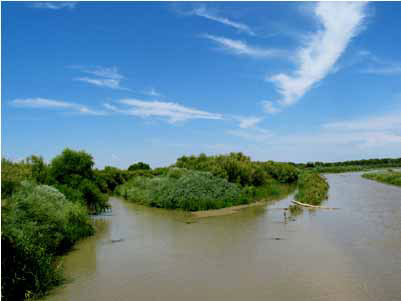
fryingpanarkansasproject.jpg

From The Pueblo Chieftain (Chris Woodka):

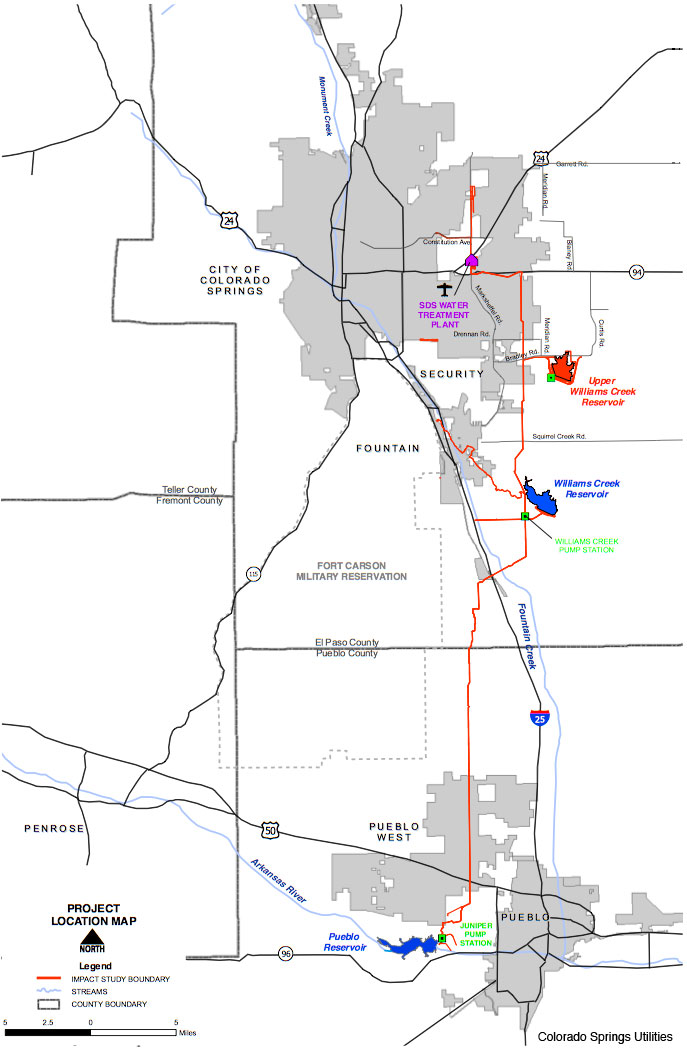
The plan pays off the South Outlet Works connection to Pueblo Dam, about $2 million, using revenues from 2010-11 this year, and begin paying down federal debt on the Fountain Valley Conduit and Ruedi Reservoir next year. During that time, the groups will work on a mutually acceptable plan for future years…

The new plan backs off the Southeastern’s insistence that Arkansas River basin parts of the project be paid down before Ruedi, a compensatory storage reservoir for the Western Slope above Basalt near Aspen…

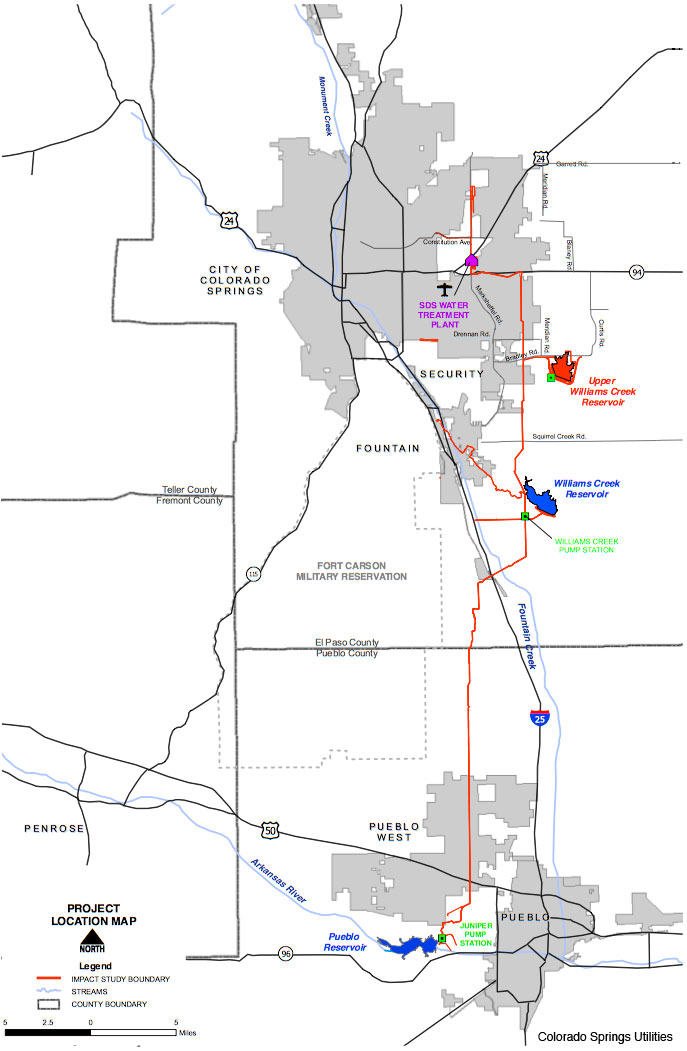
The South Outlet Works delivers water from the Pueblo Dam to the Pueblo Board of Water Works, Fountain Valley Authority, Pueblo West and the future Arkansas Valley Conduit. Payment of the debt on the South Outlet Works benefits Pueblo water customers, who otherwise would have to pay about $169,000 a year over the next 12 years. More than $52 million is owed on the Fountain Valley Conduit, which serves Colorado Springs, Fountain, Security, Widefield and Stratmoor Hills. Payments for those users total $5.6 million a year, through property tax assessment. More than $32 million is owed on Ruedi, and interest payments increase the amount by $2 million annually. The reservoir was built larger than necessary at the request of Western Slope interests, and the large debt is a result of unused accounts at the reservoir.

More Fryingpan-Arkansas Project coverage here.

Lamar pipeline: Arkansas River basin roundtable members had many questions for Karl Nyquist yesterday

lamarpipeline.jpg

From The Pueblo Chieftain (Chris Woodka):

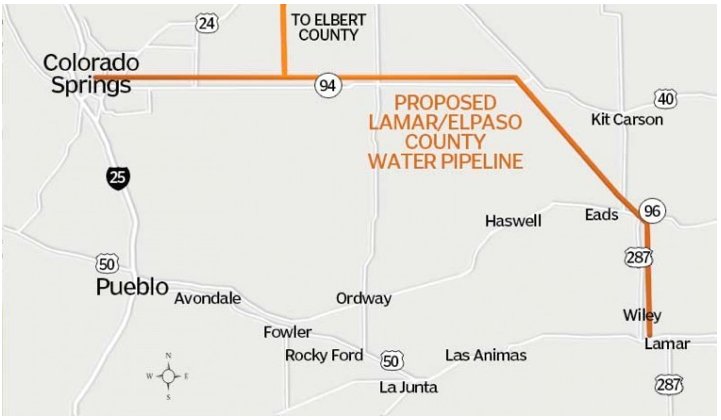
Questions about cost, economic impact, water quality and whether the project is speculative greeted Karl Nyquist, a partner in GP Water, which is proposing a 150-mile, $350 million pipeline from the Lamar Canal to northern El Paso County and other points along the Front Range. Up to 12,000 acre-feet of water annually could be delivered…

“You’ve said the water template [ed. ag water transfers template developed by the Arkansas basin roundtable] would be used as a guide, how does it get enforced?” asked Dave Taussig, an attorney from Lincoln County.

Nyquist responded that a change case in Water Court, when it is filed, would protect other water rights in the Arkansas Valley. The socioeconomic concerns identified in the roundtable report could be addressed in the Prowers County 1041 land-use process, he added…

Others wanted to know if GP Water was merely a water speculator. “We own the water and won’t go to court until we have end users in mind,” Nyquist said.

During his presentation, he said GP has bid for water service to Cherokee, Castle Rock, Bennett, the district it controls in Elbert County and others. Nyquist said the plan had come to light through media reports before it was fully formed…

The project includes a reservoir, underground storage and treatment plant near Lamar in Prowers County, which Nyquist said would more than offset the loss of agricultural jobs…

GP submitted a proposal to the Cherokee Metropolitan District in Colorado Springs to provide up to 4,000 acre-feet annually for $7 per 1,000 gallons. That works out to about $9 million per year for about one-third of the projected supply…

GP plans to reduce its storage costs by using underground reservoirs, which will cut down on water losses from evaporation. Water quality is better during high flows when GP would store the water, Nyquist explained…

About 40,000 acre-feet of underground storage is available under the ground GP owns. GP estimates its water rights would yield an average of 8,000-10,000 acre-feet annually to move from the Arkansas River basin.

Brine from the treatment plant — which Nyquist said would be about 3-5 percent of the total water supply — would be injected 4,000-8,000 feet underground into formations that are already watered, Nyquist added.

More Lamar pipeline coverage here.

Arkansas Valley Conduit: $3 million funding study should be included in this year’s omnibus funding bill from the U.S. Congress

arkansasvalleyconduitproposed

From The Pueblo Chieftain (Chris Woodka):

The study’s nearly $3 million in funding for next year received support in committee, and should be part of an anticipated omnibus funding bill later this year, lobbyist Christine Arbogast told the Southeastern Colorado Water Conservancy District on Thursday. “We should receive just under $3 million unless there are across-the-board cuts,” Arbogast said…

The Southeastern board is the primary sponsor of the conduit, and has combined the EIS for the conduit with a master storage contract in Lake Pueblo on behalf of both conduit participants and other members of the Southeastern district.

More Arkansas Valley Conduit coverage here and here.

Fryingpan-Arkansas Project update: Potential customers voice concerns over storage pricing at Reclamation ‘listening session’

puebloreservoir.jpg

From The Pueblo Chieftain (Chris Woodka):

“Are you trying to maximize return to the Bureau of Reclamation, or maximize benefits to the area?” asked Terry Book, deputy executive director for the Pueblo Board of Water Works. The water board has the lowest rate for storage at Lake Pueblo under a 25-year contract signed in 2000. “At the end of 25 years, if the price is too high, will we have to seek alternatives elsewhere? If the price we passed on were too high, would that keep others out and defeat the whole purpose?”

Reclamation plans to develop a pilot program in the Arkansas River basin that would determine how market pricing for storage contracts could be used throughout the western United States, explained Mike Collins, area manager for Reclamation. “We have no draft documents or analysis,” Collins said, adding that the listening session was to gain input from Arkansas River water users on how to determine market prices.

Collins offered no concrete responses about how the criteria for market pricing are being developed, and said a document would be available further into the process. “We’re gathering perspectives to get this process started,” Collins said.

Ed Harvey, an economist who represented the SDS group and Aurora, told Reclamation that it would be difficult to apply market rates in the Arkansas River basin across the western United States. Water markets are few in number and subject to local conditions. “It’s a difficult, but laudable goal that is fraught with difficulties,” Harvey said. He suggested developing a market simulation, looking at comparable situations in the Arkansas River basin. Harvey did that sort of analysis in 2006 for the Aurora contract hearings, and found storage rates varied from $3-$68 per acre-foot, depending on variables like location and the relationship between buyer and seller. Reclamation basically ignored Harvey’s work during those hearings. Reclamation’s current contracts at Lake Pueblo range from $17.25-$51.32 per acre-foot.

Meanwhile there are problems getting consensus on where to apply Fry-Ark revenues. Here’s a report from Chris Woodka writing for The Pueblo Chieftain. From the article:

The Southeastern Colorado Water Conservancy District last October proposed paying off the South Outlet Works first, the Fountain Valley Conduit second and Ruedi last until the Arkansas Valley Conduit is built. The [2009 law that uses excess-capacity revenues to fund parts of the Fryingpan-Arkansas Project] itself does not indicate priorities among the projects prior to completion of the new conduit. Reclamation suggests other alternatives, including paying the majority of the funds from Ruedi, paying equal shares to all three or adjusting payments to the total amount currently owned. It has not chosen an alternative.

“Our expectations are that the East Slope facilities and obligations will be paid off first, with consideration for Ruedi in the future,” Alan Hamel, executive director of the Pueblo Board of Water Works, told Reclamation officials at a meeting to discuss the law Wednesday. “It starts to appear that there will be additional mitigation for the West Slope.”[…]

Reclamation charges fees to store water in Lake Pueblo, primarily, under either long-term or short-term contracts. Previously, the revenues from that went to the general fund of the federal government. Under the new law, they are to be put toward Fry-Ark debt. This year, $2.2 million is available from short- and long-term excess-capacity contracts — enough to cover the South Outlet Works debt. In the next six years, the revenues drop to about half of that because of the structure of the Southern Delivery System contracts. By 2018, revenues are expected to resume at $2.4 million and begin climbing again. Revenues would be sufficient to pay off the Fountain Valley Conduit by 2020, under the Southeastern District plan, but the Ruedi debt would climb to more than $50 million.

More Fryingpan-Arkansas Project coverage here.

Lower Arkansas Valley Water Conservancy District board meeting recap: The board approves dropping challenges to Aurora’s 2007 deal for excess capacity storage in Lake Pueblo

puebloreservoir.jpg

From The Pueblo Chieftain (Chris Woodka):

A new agreement that removes Aurora’s connection with federal legislation that would look at enlarging Lake Pueblo was approved Wednesday by the Lower Arkansas Valley Water Conservancy District. The Aurora City Council would have to approve the agreement to put it into place. The agreement would end any further attempts by the Lower Ark district to challenge Aurora’s 2007 contract with the Bureau of Reclamation. the district sued Reclamation in federal court shortly after the contract was awarded…

Under the new agreement with the Lower Ark district, Aurora would support federal legislation to enlarge Turquoise Lake and Lake Pueblo without its previous insistence on including provisions that allow Aurora to use Fry-Ark facilities. The new agreement also would require Aurora to support using its payments on the contract to help fund the Arkansas Valley Conduit.

More Lower Arkansas Valley Water Conservancy District coverage here.

Arkansas Valley Conduit: Most communities have signed on the bottom line for the project environmental impact study

A picture named arkansasvalleyconduitproposed.jpg

From The Pueblo Chieftain (Chris Woodka):

Nearly all potential water users in the Arkansas Valley Conduit project have signed memorandums of understanding to participate in the Environmental Impact Study for the project…

Two of the communities, Valley Water and Lamar, have yet to sign agreements, but are expected to do so at future meetings, said Phil Reynolds, project manager. The agreements define how local matching costs of the EIS will be shared, based on projected use of the conduit…

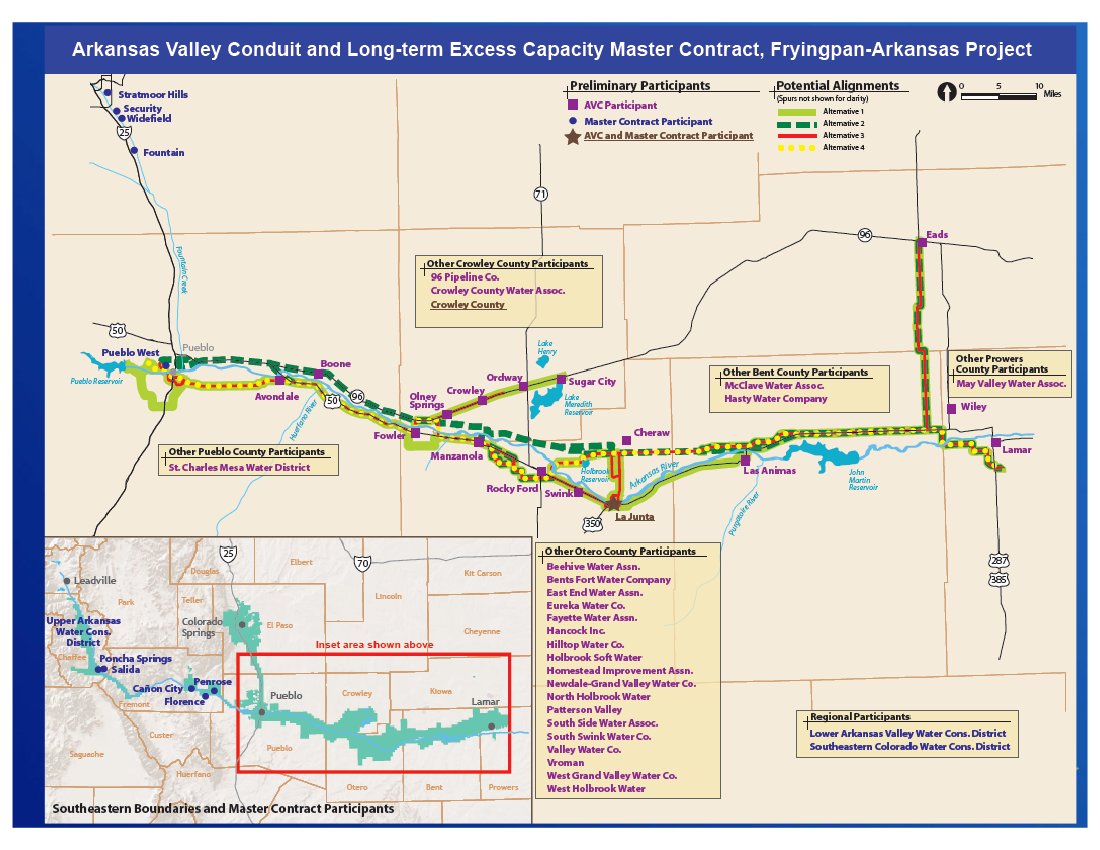
The EIS also includes an excess-capacity master contract that would allow long-term temporary storage in Lake Pueblo for some of the conduit participants and 12 other water providers in the Arkansas River basin. All of the excess-capacity MOUs have been signed.

More Arkansas Valley Conduit coverage here and here.

Arkansas Valley Conduit update: The communities east of Pueblo are starting to plan for the project

A picture named arkansasvalleyconduitproposed.jpg

From The Pueblo Chieftain (Chris Woodka):

The Southeastern Colorado Water Conservancy District is forging ahead with the 40 communities east of Pueblo that will be part of the conduit — a 130-mile line that will provide clean drinking water to 50,000 people. “Some of what we are figuring out is making sure everyone is in the game,” said Jim Broderick, executive director of the Southeastern district. “People are asking valid questions, and we don’t have all the answers. The biggest issue is sitting down to communicate. It’s hard to get people to understand what occurs 50 years in the future.”[…]

The district spent the last few weeks working out agreements with conduit participants to pay the local costs of an environmental impact study being developed by the U.S. Bureau of Reclamation. To gain time to find some answers to questions that were raised, the district postponed a meeting that was to be Tuesday until sometime in June. The $4.6 million study also is looking at a master excess-capacity storage contract for Lake Pueblo that includes some conduit participants and 12 other participants who are not part of the conduit. The study will determine the best route for the conduit, as well as identify impacts to the Arkansas River.

More Arkansas Valley Conduit coverage here and here.

Arkansas Valley Conduit: The Fowler town council votes to drop support for conduit EIS

A picture named arkansasvalleyconduitproposed.jpg

From The Pueblo Chieftain (Chris Woodka):</p<

The main reason for deciding against the project was not having information on its cost as it plays out, said Town Manager Wayne Snider on Tuesday. “I think the council wanted to consider other options.” Snider was out of town when the vote was taken, but said the council had expressed concerns over signing a “blank check” for the conduit. Fowler currently has adequate water resources for its population, relying on springs north of the town.

It is also looking at working with Innovative Water Technologies of Rocky Ford on a membrane treatment system to improve water quality and with BiO2 Solutions of Strasburg on an algae treatment for wastewater systems. “We were concerned about the conduit, because you can’t project the cost: not only for the study but for future construction,” Snider said.

More Arkansas Valley Conduit coverage here and here.

Arkansas River basin: The Lower Arkansas Valley Water Conservancy District ponies up $400,000 towards the Arkansas Valley Conduit environmental impact statement

A picture named arkansasvalleyconduitproposed.jpg

From the La Junta Tribune Democrat (Bette McFarren):

The Lower Arkansas Valley Water Conservancy District Wednesday committed $400,000 over a three year period to a Memorandum of Understanding for the Environmental Impact Study now in progress.

More Arkansas Valley Conduit coverage here.

Fryingpan-Arkansas Project: Lake Pueblo master storage contract update

A picture named puebloreservoir.jpg

Here’s an in-depth look at what it’s going to take to get a contract in place, including an environmental impact statement, from Chris Woodka writing for The Pueblo Chieftain. Click through and read the whole thing. Here’s an excerpt:

The EIS will study the cumulative impacts of storing non-project water in Fry-Ark reservoirs, which could total close to 100,000 acre-feet in the next 50 years. A 2006 Reclamation study determined there is about 130,000 acre-feet of storage space available annually. Current contracts account for about 50,000 acre-feet of storage annually, and Southern Delivery System contracts now under final review would amount to 40,000 acre-feet. Security, Fountain and Pueblo West are in both the SDS and Arkansas Valley Conduit contract processes. Many other current users who rely on one-year contracts are in the Southeastern’s master contract proposal.

Thursday’s meeting was primarily about the cost of the EIS to each participant, and there was some wrangling about how some participants had reduced the amount requested, thus increasing bills for smaller districts…

Joe Kelley, La Junta water superintendent, asked if communities could expect to see as much or more of the water they signed up for in determining their share of the EIS cost. [Southeastern Colorado Water Conservancy District general manager Jim Broderick] and [Southeastern attorney Lee Miller] said the numbers used for the EIS are most likely a minimum that communities can expect to receive if they participate in the later phases of building and operating the conduit. Some communities may drop out, and the final decision will be made by future Southeastern boards. “We have spent four to five years in this process to determine use,” said Bill Long, president of the Southeastern board. “It’s not likely that the board would make changes.”

More Lake Pueblo coverage from Chris Woodka writing for The Pueblo Chieftain. From the article:

Under operating guidelines, an estimated 12,800 acre-feet of water would have to be released from the dam beginning April 15 to maintain flood storage capacity in the reservoir. But the Corps has agreed to allow 25,000 acre-feet of the flood control pool to be used to store water until May 1, and 12,500 acre-feet until May 15, said Roy Vaughan, U.S. Bureau of Reclamation manager of the Fryingpan-Arkansas Project. “Unless something unusual happens, we shouldn’t have to release anyone’s water,” Vaughan told the Southeastern Colorado Water Conservancy District board Thursday.

Here’s a look at the Arkansas Valley’s winter water program from Chris Woodka writing for The Pueblo Chieftain. From the article:

The winter water program was first envisioned in the 1930s, and began after completion of Pueblo Dam in 1975. It was formalized in a Water Court decree in 1987. It allows irrigators to store water from Nov. 15 to March 15. “One of the multiple purposes of the Fryingpan-Arkansas Project was to store . . . irrigation water for summer use,” attorney Alix Joseph told the Southeastern Colorado Water Conservancy District board Thursday. The southeastern district oversees the operation of the program, which benefits most of the major ditches between Pueblo and John Martin Reservoir, as well as the Amity Canal. The glaring exception is the Rocky Ford Ditch, which is now almost largely owned and controlled by Aurora. Rocky Ford always had the opportunity to join the winter water program, but Aurora’s decrees have changed how it uses the water.

The use of winter water, or Fry-Ark water, is frequently referenced in Water Court applications, which is always a red flag for southeastern district lawyers. When water changes from agricultural to urban uses, the accounting becomes complicated. “Any decree that uses winter water for purposes other than agriculture cannot store in Pueblo Reservoir,” Joseph said. That provision relates to the repayment of the Fry-Ark Project.

More Fryingpan-Arkansas Project coverage here.

Arkansas Valley Conduit update

A picture named arkansasvalleyconduitproposed.jpg

From The Pueblo Chieftain (Chris Woodka):

“The fact that it’s in the president’s budget gives us the dollars to get us where we need to be,” Executive Director Jim Broderick told the Southeastern Colorado Water Conservancy District board Thursday. The federal budget request, which still has to find its way through Congress, should provide enough money to finish an Environmental Impact Study that will determine the best route for the conduit. The conduit will be a mostly gravity-fed water line from Pueblo Dam to Lamar that would provide clean drinking water to more than 40 communities and 50,000 people along its 130-mile route. In the past, the district has requested more money to work on different parts of the project, such as preliminary engineering and land acquisition.

More Arkansas Valley Conduit coverage here and here.

Reclamation’s fiscal year 2012 budget request — $1.0 billion

A picture named olympusdam.jpg

Here’s the release from the Bureau of Reclamation (Dan DuBray):

President Barack Obama’s FY 2012 budget request released today includes a total of $1,018.4 billion for the Department of the Interior’s Bureau of Reclamation. The President’s request reflects his continuing commitment to be prudent with taxpayer dollars while setting priorities for spending. The 2012 budget reflects many difficult budget choices, cutting worthy programs in order to fund the highest priority requirements, and advancing efforts to shrink Federal spending while being mindful of ongoing opportunities.

“The President’s budget proposal promotes fiscal responsibility while maximizing the community, economic, and environmental benefits of Reclamation’s projects and programs by promoting certainty, sustainability, and resiliency with respect to the use of water resources,” Reclamation Commissioner Michael L. Connor said today. “The President’s proposal continues to ensure the reliable and efficient delivery of water and production of renewable, clean hydropower, but also reflects the tough choices we must make in order to address the critical budget deficit.”

The budget emphasizes Reclamation’s core mission to address the water needs of a growing population in an environmentally responsible and cost-efficient manner; and assisting States, Tribes and local entities in solving water resource issues. It also emphasizes the operation and maintenance of Reclamation facilities in a safe, efficient, economic and reliable manner; ensuring systems and safety measures are in place to protect the public and Reclamation facilities. Reclamation’s funding request addresses Administration, Departmental, and Reclamation priorities. These priorities include Ecosystem Restoration, Renewable Energy, Cooperative Landscape Conservation, Water Conservation and the WaterSMART Program, Strengthening Tribal Nations and Youth Recruitment activities.

The President’s budget proposal for Reclamation’s Water and Related Resources account of $805.2 million includes $398.5 million for water and energy, land, and fish and wildlife resource management and development activities. This funding provides for planning, construction, water conservation activities, management of Reclamation lands including recreation and actions to address the impacts of Reclamation projects on fish and wildlife. The request also emphasizes reliable water delivery and power generation by requesting $406.7 million to fund operation, maintenance and rehabilitation activities at Reclamation facilities, including dam safety. Reclamation is committed to working with water and power users, States, Tribes, and other stakeholders to find ways to address and meet the mix of water resource needs in 2012 and beyond. Specifics of the budget request include:

Ecosystem Restoration – In carrying out its mission Reclamation has a responsibility to focus on the protection and restoration of the aquatic and riparian environments affected by its operations. Some highlights of Reclamation’s Ecosystem Restoration activities, many of which support the President’s America’s Great Outdoors initiative, and are also needed to fulfill Endangered Species Act recovery programs, include:

– Of the $154.6 million for the Central Valley Project (CVP), a significant portion is for ecosystem restoration including $34.8 million for the Red Bluff Pumping Plant and Fish Screen and $10.5 million for the Trinity River Restoration Program.

– $18.3 million for the Multi-Species Conservation Program within the lower Colorado River basin to provide long-term Endangered Species Act compliance for river operations.

– $20.0 million for Endangered Species Act Recovery implementation programs including $11.0 million to implement the Platte River Endangered Species Recovery Implementation Program and $6.2 million for the Upper Colorado and San Juan River Basin Endangered Fish Recovery Programs.

– $18.6 million for the Klamath Project, of which a significant portion is for environmental protection and restoration; to continue funding for studies and initiatives related to improving water supplies to meet the competing demands of agricultural, tribal, wildlife refuge; and to address environmental needs in the Klamath River basin including endangered species recovery and other restoration activities.

– $39.7 million for the California Bay-Delta Program for categories aligned with the Interim Federal Action Plan are as follows: $26.2 million to address degraded Bay-Delta ecosystem activities; $11.5 million for smarter water supply and use; and $2.0 million for a renewed Federal-State partnership.

– $53.1 million for the Central Valley Project Restoration Fund to continue funding a variety of activities to restore fish and wildlife habitat and populations in the Central Valley Project service area of California.
$23.6 million for the Middle Rio Grande Project, of which a significant portion is to support environmental activities developed through the ESA Collaborative Program.

– $17.8 million for the Columbia and Snake River Salmon Recovery Project for implementation of the Biological Opinions for the Federal Columbia River Power System.

Renewable Energy and Cooperative Landscape Conservation – Reclamation is supporting the Department’s integrated strategy for responding to climate change impacts:

– Reclamation is working with the U.S. Army Corp of Engineers and the Department of Energy and its Power Marketing Administrations to determine the climate change effects to hydropower generation.

– $7.0 million will support both the continued implementation of Reclamation’s West-wide Climate Risk Assessments and co-coordination of two Landscape Conservation Cooperatives, under Reclamation’s Basin Study Program; and Reclamation’s Science and Technology Program supporting research improving our capability to manage, conserve, and expand water supplies in response to multiple stresses in the West, including drought and climate change.

The WaterSMART Program – The FY 2012 budget for Reclamation proposes $58.9 million for the WaterSMART Program – Sustain and Manage America’s Resources for Tomorrow – to assist local communities in stretching water supplies and improving water management. The WaterSMART Program will help to improve water management by encouraging voluntary water banks, reducing demand, implementing water conservation and Title XVI water reuse projects, and taking action to improve energy efficiency, promote renewable energy and reduce environmental conflicts. Reclamation will also partner with States, Tribes and local entities under the WaterSMART Program to develop the WaterSMART Clearinghouse website as a resource to provide leadership and assistance in coordinating and integrating water conservation and sustainable water strategies.

Strengthening Tribal Nations – The FY 2012 budget continues support of tribal nations through Reclamation’s request of $12.8 million for the Animas La Plata Project (Colorado, New Mexico) to continue construction and implementation of the Colorado Ute Settlement Act Amendments of 2000; and $7.0 million for the Native American Affairs Program to continue support of Reclamation activities with Indian tribes. These activities include providing technical support for Indian water-rights settlements; assisting tribal governments to protect, manage and develop water and related resources; and supporting Indian self-governance and self-determination programs.

Additionally, the Columbia/Snake River Salmon Recovery, Klamath, Central Valley Project Trinity River Division, Yakima and Yakima River Basin Water Enhancement projects mentioned above under Ecosystem Restoration and five of the eight authorized rural water projects (discussed below) benefit Tribal nations in recognition of their long-standing treaty rights.

Further, in FY 2012 Reclamation will enhance support of tribal nations, most notably through the establishment of a new Indian Water Rights Settlements account in response to the Claims Resolution Act of 2010, which authorizes and establishes requirements for four water rights settlements benefiting the White Mountain Apache Tribe in Arizona, the Crow Tribe in Montana, the Taos Pueblo in New Mexico, and the Nambe, Pojoaque, San Ildefonso, and Tesuque Pueblos in New Mexico. Reclamation is requesting $51.5 million for the account with $26.7 million to begin implementation of the four new settlements. The new account would also include $24.8 million for the implementation of the Navajo-Gallup Water Supply Project, for which mandatory funding is provided under Title VII of the Act and appropriations are authorized by P.L. 111-11, of the Omnibus Public Land Management Act of 2009. The Navajo-Gallup Water Supply Project is a key element of the Navajo Nation Water Rights Settlement on the San Juan River in New Mexico.

Other Project Highlights include

– $35.5 million for ongoing construction on seven rural water projects in Montana, New Mexico, North Dakota and South Dakota and as well as operation and maintenance on completed tribal features for two of the projects. Five of the projects directly benefit tribal nations.

– $83.7 million for the Dam Safety Program to continue dam safety risk management and risk reduction activities throughout Reclamation’s inventory of high- and significant-hazard dams. Corrective actions are planned to continue or start at a number of facilities. A major focus continues to be modifications at Folsom Dam (California).

– $25.9 million for Site Security to continue Reclamation’s on-going site-security program that includes physical security upgrades at key facilities, guards and patrols, anti-terrorism program activities and security risk assessments.

The Bureau of Reclamation throughout the 17 western states is committed to helping meet the many water challenges of the West. A driving force behind Bureau initiatives is resolution of water issues that will benefit future generations.

More coverage from Chris Woodka writing for The Pueblo Chieftain. From the article:

The funds [request for the Arkansas Valley Conduit] total $2.958 million and are included in the Department of Interior’s budget request for the Bureau of Reclamation. “We have to finish up the NEPA (National Environmental Policy Act) study before we can proceed with the construction,” said Kara Lamb, public information officer for the Bureau of Reclamation at Loveland. “We’re still in the very beginning stages.”

The Environmental Impact Statement for the conduit is on track to be completed by late 2012 or early 2013. It will determine the corridor the conduit will follow along its 130-mile route from Pueblo Dam to Lamar and Eads, as well as other details of the project…

“The Arkansas Valley Conduit is more than a priority,” said Sen. Mark Udall, D-Colo. “It is necessary to provide and protect water supplies for more than 40 communities along the Arkansas Valley.”

More Reclamation coverage here. More Arkansas Valley Conduit coverage here and here.

Arkansas Valley Conduit update

A picture named arkansasvalleyconduitproposed.jpg

From The Pueblo Chieftain (Chris Woodka):

“If we don’t get the conduit, the Fryingpan-Arkansas Project will be the worst thing we’ve ever done. The Fry-Ark will be used to dry up this valley. We will have had a benefit for a short time with the ag water and the storage, but it will have done the damage,” said Bill Long, a member of the Southeastern Colorado Water Conservancy District board in 2006.

This year, Congress for the first time approved funding for the conduit, finally launching a long-awaited study. Corresponding legislation also opened the door to using other revenues from the Fry-Ark Project to pay for the conduit.

That’s important to Long, a Las Animas businessman who now is president of the Southeastern district.
“This is an opportunity to put forth a very valuable project that will be repaid,” Long said. “We will be contributing to the funding stream ourselves as we store more water.”

Click through for Mr. Woodka’s short bio of Bill Long.

More Arkansas Valley Conduit coverage here and here.

Arkansas Valley Conduit: Reclamation record of decision could be ready in two years

A picture named arkansasvalleyconduitproposed.jpg

From The Pueblo Chieftain (Chris Woodka):

developed for the conduit and a master storage contract being sought by the Southeastern Colorado Water Conservancy District. The report lays out a timetable to develop and analyze alternatives for the conduit and develop a draft EIS by the end of next year. Public hearings on the EIS are scheduled for early 2012. The record of decision, which will choose the preferred route for the conduit, would be complete by December 2012 or January 2013, under current plans…

The EIS will differ from past studies of water in the Arkansas River basin by taking into account cumulative impacts of water projects and the possibility of climate change over the next 50 years. Issues identified as important during public meetings in August include water quality, environmental justice, invasive species, wetlands and water conservation…

The 135-mile conduit could follow any of four alignments, and would provide between 14 million and 20 million gallons per day. The master contract for excess-capacity storage would be for 40 years, the maximum time frame under Reclamation policy. Between 28,000 to 32,000 acre-feet would be stored.

More Arkansas Valley Conduit coverage here and here.

Southwestern Colorado Water Conservancy District board meeting recap

A picture named pipeline.jpg

From The Pueblo Chieftain (Chris Woodka):

“We’re running into an issue of timing and trying to keep the contracts we have [for the Arkansas Valley Conduit] on schedule,” Southeastern Colorado Water Conservancy District Executive Director Jim Broderick told his board Thursday…

However, actual engineering for the conduit has slowed down, as Southeastern works to complete the EIS as quickly as possible. The goal is to finish the study within two years, Broderick said.

Broderick also thanked Colorado Springs Utilities for making engineering models of river operations available for the EIS.

Meanwhile, the district is preparing agreements for consideration by each of the more than 40 participants in the conduit. Those could be ready by the end of the year, depending on whether the funding picture clears up.

More Arkansas Valley Conduit coverage here and here.

Arkansas Valley Conduit update

A picture named pipeline.jpg

From the Pueblo Chieftain (Chris Woodka):

n the past month, there have been several changes in the evaluation of [the] conduit under the National Environmental Policy Act by the U.S. Bureau of Reclamation, Project Manager Phil Reynolds told the Southeastern Colorado Water Conservancy District Board on Thursday.

The connection at Pueblo Dam could tie together the existing South Outlet Works with a new North Outlet Works that is part of the proposed Southern Delivery System, Reynolds said. The south connection already is used by the Pueblo Board of Water Works, Pueblo West and the Fountain Valley Authority. Colorado Springs, primary sponsor of SDS, had discussions with Reclamation during contract hearings about the north connection, which it plans to build at the river outlet on the north side of Pueblo Dam. Colorado Springs asked for credit in building the connection, as well as for future excess capacity revenues. In a compromise, Reclamation reduced the price of storage and conveyance in exchange for federal control of the North Outlet Works. One of the selling points of the north connection was always that it would provide redundancy for other systems now using the South Outlet Works. It could provide protection if one outlet were unavailable because of the need for repairs or infestation of invasive species, such as zebra or quagga mussels…

Reclamation also is looking at water quality in the conduit. The plan by the Southeastern district called for raw, filtered water, but higher levels of treatment also will be studied, Reynolds said…

In meetings with conduit participants, the Southeastern district has determined that more than 10,000 acre-feet of additional storage is needed. The storage is for water outside the Fryingpan-Arkansas Project — imported water from the Western Slope stored to supplement native supplies.

More Arkansas Valley Conduit coverage here and here.

Arkansas Valley: Colorado Water Supply Reserve Account distribution recap

A picture named arkansasriverbasin.jpg

From The Pueblo Chieftain (Chris Woodka):

In 2006, SB179 had created the Water Supply Reserve Account, and the roundtables were being asked to bring forward projects that would use money to identify water needs, evaluate available water supplies or build projects. There weren’t hard-and-fast guidelines and proposals had to pass muster of the Colorado Water Conservation Board. Three proposals moved ahead that day: the Arkansas Valley Conduit, tamarisk removal and a study of recharge in the Upper Black Squirrel Aquifer in El Paso County. Since then, more than $4 million has been brought into the Arkansas River basin for 21 water projects or activities through the roundtable. The Rio Grande basin also has received about $4 million Like a snowball, those funds have leveraged more money as they were spent. Statewide, $26 million in grants from the account have been matched by $50 million from other sources…

BASIN BENEFITS

Since 2007, the Arkansas River Basin has received more than $4 million from a state fund established in 2006 to fund water activities. Projects include:

2007

Arkansas Valley Conduit, $200,000
Tamarisk control, $50,000
Upper Black Squirrel recharge, $45,200
Groundwater conference, $24,721
Fountain Creek Vision Task Force, $75,000
Round Mountain Water District, $120,000
Lower Ark Rotational Fallowing, $150,000

2008

Upper Big Sandy water balance, $45,000
Transfers subcommittee, $23,860
Las Animas water, $300,000
Zebra mussels, Lake Pueblo, $1 million
Colorado State University basinwide investigation, $600,000
Zero liquid discharge (reverse-osmosis brine), $725,000
Upper Ark water monitoring devices, $285,000

2009

Headwaters diversion improvements, $58,000
Non-consumptive needs quantification, $148,975
Fountain Creek sediment removal demonstration, $225,000
Groundwater policy, aquifer storage and recovery, $225,000

2010

Upper Arkansas water balance, $190,000
Fountain Creek flathead chub study, $35,000
Flaming Gorge Task Force study, $40,000

More IBCC — basin roundtables coverage here.

Otero County: County commissioners approve IGA to allow the Lower Arkansas Valley Water Conservancy District to possibly transfers shares of the Larkspur Ditch

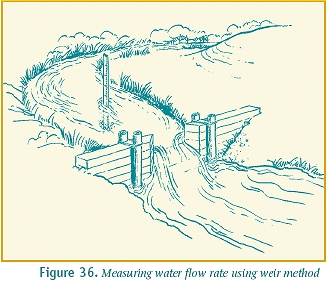
A picture named measuringwithweir.jpg

From the La Junta Tribune:

The agreement stipulates that “Lower Ark is in the process of purchasing individual shares in the Larkspur Ditch Company from Catlin Canal Shareholders, and that Lower Ark may not be able to achieve absolute control of said Larkspur Ditch Company. This Agreement will only apply to the shares of the Larkspur Ditch Company that Lower Ark actually is able to purchase and own.” This transfer is made possible by the validity of the Larkspur Transmountain Decree. In other words, this is Western Slope water being transferred to the Lower Ark, made possible by a previous agreement with the Catlin.

The Catlin Ditch uses very little Larkspur water and can easily supply water to its agricultural interests without the Larkspur. The ditch had fallen into some disrepair during the years it did not have much use, but is now being brought up to good usage condition. The Lower Ark continues to work on seepage issues.

The water from the Larkspur diversion is of a higher quality than other water locally obtained, and is of imminent suitability for municipal use from the proposed Conduit project, which is now moving along rapidly (in comparison with before, when it seemed the impossible dream – completion still looms at least ten years in the future). It is also to be used to freshen the water supply to Lake Minnequa. Larkspur water may not be used out of the lower Arkansas basin, as described in the agreement.

More Arkansas River basin coverage here.

Arkansas Valley Conduit update

A picture named pipeline.jpg

From The Pueblo Chieftain (Chris Woodka):

The conduit could serve more than 40 communities from Pueblo to Lamar. The largest eight are St. Charles Mesa Water District, La Junta, Lamar, Las Animas, Rocky Ford, May Valley, Fowler and Crowley County. They will meet today with the Southeastern district to discuss the next steps in the project…

[Jim Broderick, executive director of the Southeastern Colorado Water Conservancy District] said the local communities are enthusiastic about moving the project ahead, and are concerned about costs, but realize there are possibilities for partnerships. “The cost factor is a surprise,” Broderick said. “When you combine all of the things that are involved, the costs are favorable to getting this accomplished.” The estimated cost of the conduit several years ago was $300 million, and a state loan of $60 million was obtained for 20 percent of the cost. The federal legislation signed by President Barack Obama provides a 65-35 federal split, with revenues from excess-capacity contracts with Reclamation — such as Southern Delivery System, Aurora storage and the Southeastern district’s proposed master contract — paying part of the costs. One of the purposes of today’s meeting is to go over cost estimates and ranges, Broderick said.

While preliminary studies of the conduit indicate there would be a gap between current supplies and future needs, they do not identify how additional supplies would be acquired. [Dale Mauch, a farmer who supports the Arkansas Valley Super Ditch] said that could be an opportunity for farmers. “People ask me why I’m on this bandwagon to support the Super Ditch when I don’t want to lease my water. It’s just that I don’t like the circumstances now, but those circumstances can change if we get drier. It could change in a hurry,” Mauch said. “It’s amazing how everything is all tied together, and it all revolves around water.” Mauch pointed out that some of those who farm in the Lower Arkansas Valley also are served by water districts that provide domestic water and could benefit from the conduit.

More Arkansas Valley Conduit coverage here and here.

Arkansas Valley Conduit update

A picture named pipeline.jpg

From the La Junta Tribune Democrat (Bette McFarren):

[Southeastern Colorado Water Conservancy District Manager Jim Broderick] and his staff have figured out a financial model which will be affordable for the “Big Eight” participants: La Junta, Lamar, Las Animas, Rocky Ford, May Valley, Fowler, St. Charles Mesa, and Crowley County Water Association and also all other conduit participants. “It’s better than I thought it would be,” said Joe Kelley, director of [La Junta] water and waste water…

This year the master contract participants and the conduit project agreed to share expenses for the Environmental Impact Study, saving money for both entities. The study is in progress and will be completed by December 2012. The expected date for the conduit project to be online is 2021, said Broderick. This is very close to the payoff date for La Junta’s reverse osmosis plant, 2023, which will free up money for operation and maintenance. Water from the conduit will be much freer from contaminants than the water presently processed, saving on the plant operation and maintenance costs, plus providing better water to the city.

More Arkansas Valley Conduit coverage here and here.

Arkansas Valley Conduit: Reclamation scoping meetings recap

A picture named puebloreservoir.jpg

From The Pueblo Chieftain (Chris Woodka):

“I was struck by the widespread support for the project. I’ve never been in a situation where there wasn’t opposition to a project. . . . At a couple of the meetings, we actually got applause,” said Signe Snortland, environmental specialist for the U.S. Bureau of Reclamation. “People have waited a long time for this — since 1962.”

Reclamation officials and consultants spent last week hearing public comments as it develops the scope of an environmental impact study for the conduit and a 28,200 acre-foot excess-capacity storage contract for the Southeastern Colorado Water Conservancy District…

During all previous discussions of the conduit, it was assumed it would connect to the South Outlet Works, where Pueblo, Pueblo West and the Fountain Valley Conduit already draw water. However, one option could be taking water downstream from Pueblo Dam, Snortland said. Nothing has been decided, and there is still capacity at the dam for 30 cubic feet per second — enough to meet the peak capacity of about 20 million gallons per day. With moderate growth, the conduit is expected to pump an average of 14 million gallons per day by 2050. There also are choices to make on where a filter plant will be built and where the 40 communities involved in the project will connect. While the pipeline is largely gravity-fed, pumping stations would be needed at key points.

After last week’s meetings, Reclamation plans to consolidate and analyze the comments that were made, and develop a scope of what will be studied. Comments are being accepted through mid-September. Through its website and a newsletter, the agency will keep participants and interested parties informed about the progress of the EIS, which is expected to take more than two years to complete.

More Arkansas Valley Conduit coverage here and here.

Arkansas Valley Conduit: New report says that the project may end up serving 80,000 customers and cost $400 million

A picture named pipeline.jpg

From The Pueblo Chieftain (Chris Woodka):

Updated figures were presented Thursday to the Southeastern Colorado Water Conservancy District, sponsors of the conduit. The district received the final report produced in preparation for the National Environmental Policy Act review now being conducted by the U.S. Bureau of Reclamation…

The 500-page report also revises cost estimates of four alternatives for the 135-mile conduit. Construction costs range from $330 million to $396 million — up from $300 million in 2006 — depending on the alignment of the conduit, said Kevin Meador of Black and Veatch Engineering…

In addition to the population increase, the amount of water needed for the conduit on average each year would increase to 14,000 acre-feet — or 12.3 million gallons per day from current levels of about 10,000 acre-feet, the report revealed. While there could be 42 communities in the project, the nine largest participants would use 80 percent of the water, Meador said.

More Arkansas Valley Conduit coverage here and here.

Lower Arkansas Valley Water Conservancy District board meeting recap

A picture named lowerarkansasriver.jpg

From The Pueblo Chieftain (Chris Woodka):

“In 2002, everyone changed their thought patterns, and more people are holding onto their water,” Jim Broderick, executive director of the Southeastern Colorado Water Conservancy District told the Lower Arkansas Valley Water Conservancy District board Wednesday. “This means you will see a full Pueblo Reservoir more of the time.” Broderick explained the timing of a request for a master storage contract by the Southeastern district coincides with an application to build the Arkansas Valley Conduit in an effort to save money on both projects. Because they both use parts of the Fryingpan-Arkansas Project, authorized by Congress in 1962, both require environmental impact statements…

By combining the two studies, the costs of the master contract EIS could be reduced to $500,000 from an estimated $2 million in 2001, Broderick said. The master contract would allow long-term storage at a locked-in rate, which particularly helps cities within the Southeastern district plan for the future, Broderick said…

Colorado Springs dropped out of the master contract process, but the remaining SDS partners have continued. Pueblo West, not in the original group, is in the current master contract. The Lower Ark district, which was formed by a 2002 vote, is among newcomers to the master contract as well, and indicated a need for 15,000 acre-feet of storage…

The Southeastern district also is requesting space not in the original plan, 5,000 acre-feet, primarily for future use in the conduit. Conduit participants La Junta and Crowley County both want space through the master contract, but Lamar dropped its request. Salida, Florence, Canon City and the Upper Arkansas Water Conservancy District remain in the contact and were among the original users. Other new users include Poncha Springs, Penrose, Widefield and Stratmoor Hills, which joined at various times in the past decade. In all, the contract totals 28,200 acre-feet of storage.

More Arkansas Basin coverage here.

Arkansas Valley Conduit: Reclamation scoping meeting recap

A picture named fountainpavementdrawing.jpg

From The Pueblo Chieftain (Chris Woodka):

“Water quality is the main concern in the Lower Arkansas Valley, this represents a supplemental supply that will help us stay in compliance,” said Otero County Commissioner Kevin Karney. Karney also is a member of the Southeastern Colorado Water Conservancy District board, sponsors of both the conduit and a master contract for water storage that are being evaluated by the Bureau of Reclamation during a series of meetings this week.

Of the 40 communities that could participate in the conduit, 12 have elevated levels of radionuclides and must begin to take action in thenext few years to reach compliance. Without the conduit, they will be looking at even more expensive solutions to purify water…

La Junta and Las Animas already are using reverse osmosis systems and discharging brine into the Arkansas River. In the future, those communities could face more costly disposal of the brine, Karney noted. “The conduit also is needed for economic development in the lower valley,” he said…

The environmental impact study, which will determine the best route for the conduit as well as locations of filter plants or pumping stations, is expected to be complete in two years, said Reclamation Environmental Specialist Signe Snortland…

Snortland said population projections will be a part of the impact study.
One environmental impact statement and record of decision will be issued for the conduit and the master contract.

More Arkansas Valley Conduit coverage here and here.

Arkansas Valley Conduit: Recap of Reclamation open house in Salida

A picture named pipeline.jpg

From The Pueblo Chieftain (Chris Woodka):

The U.S. Bureau of Reclamation kicked off a week of meetings dealing with the Arkansas Valley Conduit and a master storage contract sought by the Southeastern Colorado Water Conservancy District. “Most of the impacts are below Pueblo Reservoir, but storage in Pueblo benefits us because we can release water for downstream calls,” said Terry Scanga, general manager of the Upper Arkansas Water Conservancy District. “Where the excess-capacity contract will help is if we have to spill Twin Lakes water and store it in Pueblo.”[…]

[Salida City Councilman Jay Moore] said Salida’s interest in an excess-capacity contract is to strengthen an already diverse water portfolio. “The main thing is that we can have an absolute surplus by storing water in Lake Pueblo and releasing it when needed,” Moore said.

Greg Smith, public works director for Poncha Springs, agreed.
“It’s a way for us to acquire and maintain additional storage,” Smith said…

At Monday’s open house, Signe Snortland, environmental specialist for Reclamation, clarified that only one Environmental Impact Statement and record of decision will be issued for the conduit and the master contract.

More Arkansas Valley Conduit coverage here and here.

Arkansas Valley: Southern Delivery System and Arkansas Valley Conduit open meetings this week

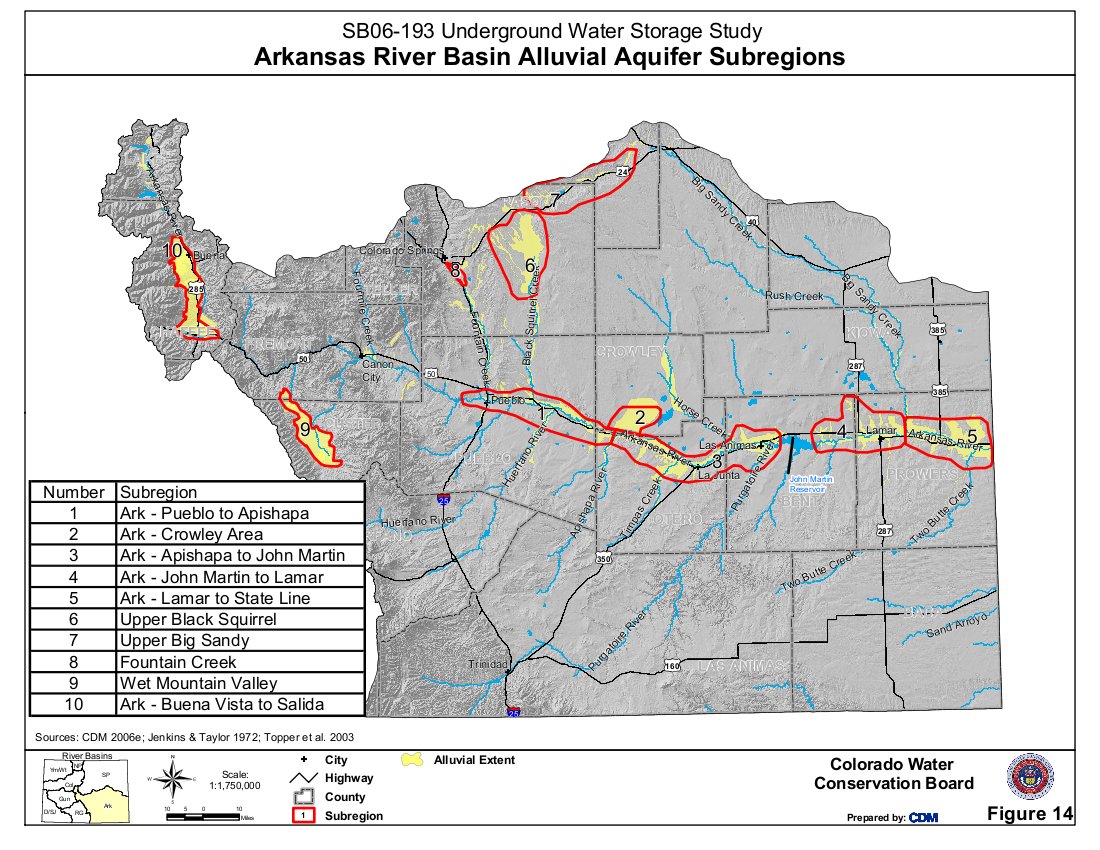
A picture named arkansasbasinalluvialaquifersubregions.jpg

From The Pueblo Chieftain (Chris Woodka):

The Bureau of Reclamation will conduct the meetings as it prepares for environmental impact statements for both projects: the Arkansas Valley Conduit and a master contract for excess-capacity storage in Fryingpan-Arkansas Project reservoirs. “Each open house will consist of informational displays, a brief presentation and opportunities for providing comments,” said Kara Lamb, Reclamation spokeswoman. The open houses are Monday in Salida, Tuesday in La Junta, Wednesday in Lamar and Thursday in Fountain and Pueblo.

More Southern Delivery System coverage here and here. More Arkansas Valley Conduit coverage here and here.

U.S. Bureau of Reclamation: Arkansas Valley Conduit and Long-Term Excess Capacity Master Contract EIS

A picture named pipeline

From the Arkansas Valley Conduit Long-Term Excess Capacity Master Contract Environmental Impact Statement website:

erm Excess Capacity Master Contract website. This website will update regularly with new information related to the EIS. Documents and quick links will be listed in the menu on the left. Upcoming events, recent accomplishments and contact information will be posted in the box below.

Reclamation is preparing an environmental impact statement (EIS) to evaluate the effects associated with the proposed construction of the Arkansas Valley Conduit (AVC), an authorized feature of the Fryingpan-Arkansas Project, and issuance of an Excess Capacity Master Contract to the Southeastern Colorado Water Conservancy District.

On July 30, Reclamation published its Notice of Intent in the Federal Register. Publication of the Notice initiates the public scoping period during which the public has an opportunity to provide comments for input and direction on the EIS. The public scoping period closes on September 13, 2010.

Part of the EIS process relies heavily on public involvement and comments. Public comments help Reclamation identify: (1) issues relevant to the proposal; (2) elements of the environment that could be affected by the proposal; and (3) possible alternatives to the proposal. These items will all be evaluated and described in the Draft EIS.

Reclamation will host five public open houses the week of August 16. Each open house will consist of informational displays, a brief presentation and opportunities for providing comments.

Here’s the scoping letter (pdf) from Reclamation via Kara Lamb.

More Arkansas Valley Conduit coverage here and here.

Arkansas Valley Conduit: Scoping sessions to start next week

A picture named pipeline

From The Pueblo Chieftain (Chris Woodka):

Public scoping meetings for the Arkansas Valley Conduit and a master contract for communities up and down the valley will begin next week. The Bureau of Reclamation announced the meeting schedule Sunday…

The master contract is being sought by the Southeastern Colorado Water Conservancy District for up to 28,000 acre-feet of excess-capacity storage in Lake Pueblo. While part of the contract is tied to the conduit, also sponsored by Southeastern, other communities also want a long-term option to store water in Lake Pueblo. Pueblo West, Fountain and Security, partners in the Southern Delivery System who would gain storage under SDS, also want to participate in the master contract. Also involved in the master contract discussions, which have been going on since the Preferred Storage Option Plan was developed in 2001, are communities upstream of Lake Pueblo on the Arkansas River. In June, the Southeastern district decided to pair the environmental evaluations of the conduit and the master contract as a cost-saving option. The National Environmental Policy Act process can cost sponsors millions of dollars, and the federal government would be required to assess both efforts in the same geographic location.

More Arkansas Valley Conduit coverage here and here.

Southern Delivery System: Colorado Springs City Councilman Tom Gallagher wants Reclamation to start over with project EIS

A picture named sdspreferredalternative

From The Pueblo Chieftain (Chris Woodka):

[Tom Gallagher] is charging that there was a conflict of interest in developing the environmental impact statement, that concerns brought up in the EIS process were ignored and that Reclamation would ignore its own policies if it allows SDS storage in Lake Pueblo…

“I ask you on behalf of myself and my constituents to suspend the current SDS contract negotiations and reopen the SDS National Environmental Policy Act process so that these and other questions can be asked and directly answered,” Gallagher concludes at the end of a 27-page letter he wrote last month to Secretary of Interior Ken Salazar. “If the NEPA process for the SDS proposal has been conducted objectively (rather than as an exercise in engineered outcome), it should be able to withstand the added scrutiny.”[…]

Reclamation Commissioner Michael Connor answered the letter this week by defending the EIS and declining to reopen the NEPA process. “Reclamation believes the NEPA process used during preparation of the SDS Project (final) EIS was analytically and procedurally complete,” Connor wrote. “Your letter states numerous conditions which you believe trigger a need to revise or supplement the FEIS. The issues you raise have been previously considered and responded to by Reclamation.”

Gallagher disagrees, saying concerns he presented at public meetings on the EIS were never answered. In his letter, he adds new issues that have arisen in the last year. Chief among those is the dissolution of the stormwater enterprise by Colorado Springs voters in 2009, which was also brought up by state Rep. Sal Pace, D-Pueblo, in a letter to Reclamation, the Environmental Protection Agency and the Army Corps of Engineers earlier this year. It was assumed in the EIS that the stormwater enterprise would be in place to help address negative impacts from the EIS, Gallagher said.

The EIS also ignored the Arkansas Valley Conduit as a reasonably foreseeable project, even though it is part of the Fryingpan-Arkansas Project, Gallagher said. The conduit this year received funding for the first time, and its storage space in Lake Pueblo, guaranteed under operating principles of the Southeastern Colorado Water Conservancy District, could affect the availability of future storage for SDS, Gallagher said.

Gallagher asserts that the use of MWH, and principal partner Bill Van Derveer, as primary contractor for the EIS was a conflict of interest because the engineering firm at the same time received $5 million in payments for design work related to the Lower Fountain Valley Wastewater Treatment Facility, which has been shelved for now but which was at the time a component of the SDS preferred action. MWH also was hired this year by Colorado Springs to manage construction of the SDS project.

More Southern Delivery System coverage here and here.

Arkansas Valley Conduit: Will Reclamation place too high a financial burden on the project?

A picture named fountainpavementdrawing

From The Pueblo Chieftain (Chris Woodka):

The Southeastern Colorado Water Conservation District is watching the current proceedings with interest, and the implications of the [Southern Delivery System] outcome for the district were frequently mentioned during two days of negotiations last week.

“Do you remain comfortable charging less for out-of-district users than for those of us in the district?” David Robbins, an attorney for Colorado Springs, asked Mike Collins, area manager for Reclamation at one point. Robbins referred to a 2007 storage contract with Aurora that amounts to $46 per acre-foot in 2011 vs. proposals that have ranged from $50-100 per acre-foot for SDS.

Collins replied, after a barrage of questions and a day of banter, that Reclamation from now on would use a “negotiated market” method of determining contract prices in the Arkansas Valley. That is a change from past contracts based on cost of service that Collins discounted as “snapshots in time.”[…]

The rate Colorado Springs eventually reaches in SDS — right now, it’s expected to come down between $25 and $40 — will also provide revenues to repay the costs of the conduit under a 2009 law. Even the low end fits into the projections made by federal staff on the repayment strategy, Broderick said. “I’m not seeing this as having much impact on the funding of the conduit,” he said.

More Arkansas Valley Conduit coverage here and here.

Arkansas Valley Conduit: The project is on track for $6 million in funding in 2011

A picture named pipeline

From The Pueblo Chieftain (Peter Roper):

Rep. John Salazar, D-Colo., is a member of the House Appropriations Energy and Water Subcommittee, and he announced that panel had agreed to dedicate $6 million to the project in 2011. That follows the historic award of $5 million this year. “This is a promise that is long overdue, since 1962 to be exact, and it is time that these communities in Southern Colorado have the clean, reliable water delivery system they were promised,” Salazar said in a statement after the vote…

Rep. Betsy Markey, D-Colo., whose 4th Congressional District include the lower Arkansas Valley, issued a statement that said, “I will fight every day to make sure that funding for the conduit continues.” The funding for the conduit project is now part of the 2011 water and energy appropriations bill and will next be considered by the full House Appropriations Committee.

More Arkansas Valley Conduit coverage here and here.

Southern Delivery System: Lake Pueblo storage negotiations with Reclamation update

A picture named sdspreferredalternative

From The Pueblo Chieftain (Chris Woodka):

Colorado Springs, in the current negotiations with the Bureau of Reclamation for its proposed Southern Delivery System, argues that it would be fair to be granted the same rate Pueblo has for storage in Lake Pueblo, and to not pay an annual fee for conveyance.

Pueblo’s rate and payment arrangements were determined under different circumstances and for different reasons during negotiations in 2000. Pueblo received a 25-year contract to store nonproject water in Lake Pueblo in 2000 for a fixed price of $17.35 per acre-foot. The contract began at 3,000 acre-feet, and increases to 15,000 acre-feet by 2025. At the same time, it agreed to pay its share, 77.58 percent, for construction of the South Outlet Works and Delivery Manifold over a 25-year contract at 3.046 percent — about $169,000 annually, or $4.2 million over time.

Reclamation offered Colorado Springs storage and conveyance for $75 an acre-foot and an exchange contract for $50 per acre-foot, a deal termed “unacceptable” by SDS Project Director John Fredell at the end of a June 15 negotiating session. Throughout the negotiations, Colorado Springs tried to hammer home the point that as part of the Southeastern Colorado Water Conservancy District, it should be entitled to the same terms Pueblo received in its 2000 contract. Colorado Springs also maintains it should not have to pay to use the North Outlet Works, which it intends to pay for and construct, along with its SDS partners — Security, Fountain and Pueblo West.

The North Outlet Works was bumped up in Colorado Springs planning in 2008, after it became apparent the connection on the south end of the dam, either through excess capacity or enlargement, would not be available. Colorado Springs wants the power to sell its own excess capacity in the new connection to help pay for it…

Colorado Springs already benefits from the Fry-Ark Project through the Fountain Valley Conduit, as well as arrangements made for the use of Twin Lakes and Turquoise Lake by the Homestake Project, which includes Aurora as a partner. Fountain Valley (Colorado Springs, Security, Widefield, Fountain, Stratmoor Hills) is entitled to 25 percent of the relatively cheap Fry-Ark allocations each year, as well as ample storage space for project water in Lake Pueblo. But Colorado Springs and its SDS partners want more. SDS is seeking to use excess-capacity space in Lake Pueblo that was never part of the Fry-Ark Project to accommodate growth, provide redundancy and fully use water rights obtained after the Fry-Ark Project began. Negotiations continue July 15 in Fountain.

Pueblo, on the other hand, received contracts for parts of the Fry-Ark Project that were envisioned as far back as 1960. At that time, Congress was getting close to passing the Fryingpan-Arkansas Project Act, and a large treatment plant was envisioned at the base of Pueblo Dam that would provide water for Pueblo and communities below…

Concurrently, Pueblo was improving its own system. In the 1950s, Pueblo’s two water companies, which served either the north or south side of the Arkansas River, merged. Both operated river intakes, which are still used occasionally. There also were wells at the honor farm. When Pueblo Dam was completed in the 1970s, the South Outlet Works was built with a capacity of about 359 cubic feet per second. In all the planning documents, 310 cfs were reserved for Pueblo and the Arkansas Valley Conduit, as part of the Fry-Ark Project. The final allocation gives Pueblo capacity of 278.5 cfs (180 million gallons per day); Fountain Valley, 30.6 cfs; Pueblo West, 18.94 cfs; and future Arkansas Valley Conduit, 30.94 cfs. Pueblo is nowhere near using that full capacity, while Fountain Valley and Pueblo West already occasionally hit the limits. Land was set aside on federal property for a filter plant that would eventually be built to serve Pueblo and the conduit. In addition, there was an understanding throughout the development of the Fry-Ark Project that Pueblo would receive consideration on 20,000 acre-feet of storage space, said Terry Book, deputy director of the Pueblo Board of Water Works. “When we did our negotiations, we looked at what the legislation said and documented the history and correspondence between the parties,” Book said. Those records show a clear trail back to 1967 of official correspondence between Reclamation, Pueblo water board and the Southeastern district that led up to the 2000 negotiations. Over that time, Pueblo constructed a new water treatment plant north of the Arkansas River in 1977, and completed a major upgrade of the plant in 2003. By about 1999, the water demand in Pueblo was sufficient to construct the pipeline from the South Outlet Works to the water treatment plant…

Since the Pueblo contract, Aurora — a city of 300,000 east of Denver that uses the Fry-Ark Project to move water out of the basin — was given a 40-year contract. Colorado Springs was successful in gaining Reclamation’s approval of a 40-year contract after the first SDS negotiating session in May.

More Southern Delivery System coverage here and here.

Southeastern Colorado Water Conservancy District board meeting recap

A picture named pipeline

From The Pueblo Chieftain (Chris Woodka):

The district is wrapping up a study of the [Arkansas Valley Conduit] alignment, technical evaluations, environmental reviews, permit scoping and water supply evaluation that began last year under an Environmental Protection Agency grant. That work should be wrapped up in August and will allow the district to move into the more formal environmental impact statement required for the conduit under the National Environmental Policy Act.

At the same time, the district will begin working on a long-term contract for excess-capacity storage at Lake Pueblo that includes both conduit users and suppliers elsewhere in the Southeastern district. The contract essentially is the reoperations portion of the former Preferred Storage Options Plan, although the amount of storage requested and the parties requesting it have changed. “This study is allowing us to be ahead in working on the conduit,” Executive Director Jim Broderick told the Southeastern board Thursday. “We still have to look at the gap between the water now available and the amount of water needed in the future.”

More Arkansas Basin coverage here.

Arkansas Basin Roundtable public outreach meeting recap

A picture named arkansasriverbasin

From The Pueblo Chieftain (Chris Woodka):

The meeting, attended by about 50 people, was the first of three planned this year to share roundtable accomplishments and concerns with the community. Others will be in Salida and La Junta. “We’re not sure what is going to happen, but it’s not going to be like it was,” [Gary Barber, chairman of the roundtable] said.

The roundtable’s essential purpose is to apply the prior appropriation doctrine to a changing set of circumstances that incorporates new needs, such as recreation and the environment, with traditional water uses, such as municipal and agriculture, he explained. Barber used the analogy of a house with one bathroom to illustrate how prior appropriation has changed. It works well if only a couple of people live in the house. When 20 people move in, life gets more complicated. “It’s at the point where we have to do something about it,” Barber said.

Roundtables were created in each of the state’s eight river basins, along with the Denver metro area, in 2005 after top-down approaches were rejected by the state’s voters. Referendum A, which proposed $2 billion for unspecified water projects, was defeated by voters in every county in the state in 2003. Progress has been slow because members were asked to organize themselves. In addition, the ideas from the roundtables have been directed largely at problems within the basins. “We began to hear each others’ stories,” Barber said…

Barber said it is important to develop solutions that are sustainable over time, rather than easy fixes. One model for success during the first five years of the roundtables has been the Fountain Creek Vision Task Force, and that collaborative approach is being applied to other issues, such as the current effort to study whether a task force should look at the Flaming Gorge project to bring water from Wyoming into Colorado’s Front Range, Barber said.

There have been many tangible successes. The roundtable also has been successful in bringing in $4 million for 21 projects — including three pending projects — and another $1 million in emergency funding for the zebra mussel threat in 2008. The group also has completed studies for consumptive needs such as cities, farms and industry, and nonconsumptive needs such as recreation and the environment.

Pat Wells, a Colorado Springs Utilities water resources engineer, worked with Roundtable members to develop the nonconsumptive needs study, which looked at the recreation and environmental values of every watershed in the Arkansas River basin. “From the start, we saw that nonconsumptive needs were important,” Wells said. “There is a lot of interplay between water supply and recreation needs. We really think this contributes to future water supply planning.”

Mike Applegate is a water consultant who developed the consumptive needs report. The 2008 study found that new projects will be needed to supply up to 32,000 acre-feet — possibly enough for more than 100,000 homes — to meet the basin’s needs in the next 40 years. However, the needs continue beyond that into the future as growth occurs, Applegate said. Most of the need, 22,600 acre-feet, is in El Paso County, and some of the needs are shifting. But every amount counts…

New projects could include the Super Ditch water leasing program and building more storage, he added. “Storage has a bad name, but now people are talking about it. To meet the future needs of our state, we need more buckets,” Applegate said. “The problem is here today. We need to do something about it now.”

More IBCC — basin roundtables coverage here.

Arkansas Valley Conduit update

A picture named pipeline.jpg

From The Pueblo Chieftain (Chris Woodka):

“We need to get this group back together (in June) to talk about the cost estimates before the district goes to each city and water utility,” Southeastern Colorado Water Conservancy District President Bill Long told the conduit advisory committee Tuesday. The committee has met for years discussing the engineering, route and benefits of the conduit. Now, with $5 million in federal funding this year, the project is finally approaching reality. Southeastern is trying to secure $8 million from Congress to continue work next year.

Revised cost estimates are expected next month, and cities or districts east of Pueblo will be formally asked to sign funding agreements later this year. The local share of funding for construction would be offset by federal legislation that allows payment from excess-capacity contracts to defray those costs. Area water suppliers would still have to fund operation and maintenance, said Phil Reynolds, project director. The conduit could be built as soon as 2018, if the environmental review process is not drawn out, if Congress fully funds it and if no major snags develop, said Kevin Meador of Black & Veatch, the lead consultants. With any luck, the National Environmental Policy Act review — most likely an Environmental Impact Statement — by the Bureau of Reclamation will take about 2 years, Meador said…

Four alternatives have been identified either along U.S. 50 or north of the Arkansas River. More than 200 miles of pipeline, a treatment plant to filter the water, storage tanks and pumping stations are part of the plans…

Making its way through Pueblo, the conduit’s route would either cut through the city in a more-or-less straight shot from the Whitlock plant on the north-of-the-river route, or follow the Bessemer Ditch to the St. Charles Mesa, hooking up with U.S. 50 near Avondale…

East of Las Animas, the routes to Lamar and Eads are fairly well determined…

The Southeastern District has determined there are 41 water providers serving 57,655 people who are still interested in participating in the conduit, said Hal Simpson, a former state engineer who is working as a water resources consultant on the conduit. By 2050, the population is projected to increase to between 76,000-82,000. Because some cities are projecting mixing their current supplies with the conduit water, the projected demand from the conduit would be about 9.3 million gallons per day now, increasing to 12.3 million gallons per day by 2050. The pipeline would be sized to deliver for the peak day. Fryingpan-Arkansas Project supplies, on average, would amount to about three-fifths of the water delivered through the conduit. The rest would come from already identified sources, with some potential gaps that could mean the purchase of agricultural water rights, Simpson said.

More Arkanasas Valley Conduit coverage here and here.

Arkansas Valley Conduit: Southeastern Colorado lawmakers hope to protect CWCB funds including the conduit

A picture named pipeline.jpg

From the La Junta Tribune Democrat (Debi Brazzale):

Early indications are that the funding will be left largely intact in the coming budget year after having been diverted last year to help cover the state’s budget deficit. Neverthess, Rep. Wes Mckinley, a Democrat from Walsh, and Republican Sen. Ken Kester, of Las Animas, say they are on guard and that the Colorado Water Conservation Board’s funds need to be protected to keep water projects going in their districts.

Of special concern is the Arkansas Conduit Project, which took a temporary hit last year when more than $100 million was diverted from the water conservation board to help the state through its fiscal straits and balance the state budget. Some $35 million of that total came out of the conduit project’s funding, putting federal matching dollars at risk as well. The project provides treated water to southeastern Colorado. That money since has been recouped through higher-than-anticipated revenue from the state’s severance tax, according to Colorado Water Conservation Board Direction Jennifer Gimbel. Gimbel also said that, so far, next’s year’s pending budget takes $11 million from the board’s funds but that the diversion won’t affect the conduit or any other current projects.

McKinley acknowledged the budget process is far from over. “I wouldn’t be surprised if they did take some more,” said McKinley. “It seems like if there’s money out there, there’s several hands grabbing for it.”

More Arkansas Valley Conduit coverage here and here.

Arkansas Valley Conduit update: $3 million in President Obama’s budget will enable the final design by 2013

A picture named pipeline.jpg

From The Pueblo Chieftain (Chris Woodka):

“It will allow us to finish the preliminary work to get to the final design by January 2013. Then we can move into land acquisition and construction,” Jim Broderick, executive director of the Southeastern Colorado Water Conservancy District, said Thursday…

The conduit received $5 million in funding this year, and funding for $3 million is included in President Barack Obama’s budget for next year. The Southeastern district is trying to convince members of Congress to add an additional $5 million in the 2010-11 fiscal year. The district is working with the Bureau of Reclamation to “fast-track” the project, allowing the environmental review and conceptual design to move ahead on parallel tracks. Meanwhile, the district is wrapping up its $1 million project to develop baseline engineering data for the conduit, said consultant Kevin Meador.

More Arkansas Valley Conduit coverage here and here.

Arkansas Valley Conduit: $3 million shows up in President Obama’s budget

A picture named arkansasriverbasin.jpg

From The Fort Morgan Times (Aaron Burnett):

U.S. Representatives Betsy Markey and John Salazar announced that the 2011 federal budget released Monday includes $3 million for the Arkansas Valley Conduit, a proposed 130-mile water delivery system from Pueblo Dam to communities throughout the Arkansas River Valley. The Conduit was originally authorized in 1962 as part of the Fryingpan-Arkansas project. It is intended to provide high quality, clean water to more than 40 municipalities and water districts serving approximately 50,000 people. “Water sustains our farms, our families and our communities in southeast Colorado,” said Markey. “This project has been a long time coming, and I’m happy to see this funding in the budget. Construction of the conduit will not only help ensure clean, reliable water in the future, but it will put Coloradans to work today.”

Bill Long, a Bent County commissioner and a Southeastern Colorado Water Conservancy District board member, said the inclusion in the federal budget by the president is a first for the project. “This is the first time that any administration has included funding for the conduit for their budget. We had $5 million in the budget last year, initially it was not part of the budget, but we got it added through John Salazar and Betsy Markey and the two senators.”

More Arkansas Valley Conduit coverage here and here.

$3 million for the Arkansas Valley Conduit shows up in President Obama’s budget

A picture named puebloreservoir.jpg

From the La Junta Tribune Democrat:

The Conduit was originally authorized in 1962 as part of the Fryingpan-Arkansas project. It got its initial $5 million from the federal government last year and that money will be spent during the next two and a half years on the Environmental Impact Statement.

“This project has been on the back burner for over four decades,” said [U.S. Representative John Salazar]. “I have been working hard to push it to the front burner and I’m glad that President Obama has recognized that generations of Southeastern Coloradoans have waited too long for a reliable water delivery system. With this funding, we will put hard-working Americans to work repairing our aging infrastructure and we will provide clean and safe drinking water for generations to come.”

“Water sustains our farms, our families and our communities in Southeast Colorado,” said U.S. Representative Betsy Markey]. “This project has been a long time coming, and I’m happy to see this funding in the budget. Construction of the conduit will not only help ensure clean, reliable water in the future, but it will put Coloradans to work today.”

More Arkansas Valley Conduit coverage here and here.

$3 million for the Arkansas Valley Conduit shows up in President Obama’s budget

A picture named pipeline.jpg

From The Pueblo Chieftain (Chris Woodka):

It’s the first time conduit funds have been in the presidential budget since the project was authorized in 1962 as part of the Fryingpan- Arkansas Project. “We’re pleased we are finally part of the proposed budget without having to go to the legislators, but we will keep working for the full amount of our request,” said Bill Long, president of the Southeastern Colorado Water Conservancy District, conduit sponsors. “The $3 million in the budget is very much appreciated.”

More Arkansas Valley Conduit coverage here and here.

CWCB: Board meeting recap

A picture named coloradoriverbasin.jpg

From the Grand Junction Daily Sentinel (Gary Harmon):

The Colorado River probably still has water that could be used for development in Colorado, but how much remains unknown, according to a new study of the river. As many as 900,000 acre-feet of water could be available for development, the study suggests. It also suggests that under a worst-case scenario, there could be no water for development by 2040. The Colorado River Water Availability Study presented to the Colorado Water Conservation Board on Tuesday is the first phase of two phases of study on the river. “We are on the cutting edge, and we are far ahead of the other basin states” in determining how much water is available, said Jennifer Gimble, director of the water conservation board.

The study will be released next month for public comment, which will be used to develop the second phase of the study, Gimble said. The second phase is to address availability of water for municipal, industrial, agricultural, recreational and other needs. The study, which was authorized by the Legislature in 2007, examined 1,100 measuring stations in the Colorado River Basin to predict how climate change would affect individual streams. Five climate-change models were applied to the basin in an effort to predict how much water would be available by 2040.

Meanwhile the CWCB has set aside funds for the next two years for the Arkansas Valley Conduit, according to a report from Chris Woodka writing for The Pueblo Chieftain. From the article:

“We don’t foresee a problem right now,” said Jennifer Gimbel, executive director of the Colorado Water Conservation Board Tuesday. The Conduit was awarded a $60.6 million construction loan by the state Legislature. However, about half of that was suspended last year to cope with budget shortfalls in other areas. The remainder is being rebuilt as other state loan payments are made, Gimbel said…

Gimbel earlier this month asked state lawmakers not to make further cuts in state water construction project funds, saying it would cripple development and create revenue shortfalls in future years…

Under legislation passed last year, the local share is 35 percent, while CWCB loan represents about 20 percent of the total costs. Other funding would come through contributions from communities and revenues from Bureau of Reclamation contracts. Repayment of the CWCB loans would not begin until the project is completed. Last year, Congress allocated $5 million to the conduit, for pre-engineering work and to begin the environmental impact statement. The Southeastern Colorado Water Conservancy District, sponsor of the project, is seeking $14 million in next year’s budget to continue work on the conduit.

Meanwhile to the north Wyoming has their own study to chew on, according to a report from the Environmental News Service. From the article:

The Ruckelshaus Institute of Environment and Natural Resources produced the report, “Assessing the Future of Wyoming’s Water Resources: Adding Climate Change to the Equation,” as a basis for water management strategies. “This report covers what we know and what we wish we knew about Wyoming and the West’s changing climate and the various impacts on water resources,” says Wyoming State Climatologist Steve Gray, the lead author and director of the Water Resources Data System at University of Wyoming…

First, Wyoming is the fifth driest state in the United States. More than 70 percent of the state receives less than 16 inches of precipitation on average each year. Though technically speaking, much of Wyoming does not qualify as true desert, it is a dry state by any measure.

Second, the majority of snowpack in Wyoming is concentrated in a relatively small area that is responsible for the majority of Wyoming’s runoff and surface water supplies. Any events such as changes in climate, vegetation change, fires, or insect outbreaks that impact these mountain watersheds will have major consequences for all of Wyoming’s water users, and for water users far downstream.

Finally, Wyoming is a headwaters state for some of the largest river systems in North America, including the Snake-Columbia, Green-Colorado, Yellowstone-Missouri, and Platte Rivers. This puts Wyoming at a disadvantage when faced with many scenarios for climatic, economic, and demographic change, according to the report.

More Colorado River Basin coverage here.

Arkansas Valley Conduit: $14 million for project to be included in next year’s federal budget

A picture named pipeline.jpg

From The Pueblo Chieftain (Chris Woodka):

“What we hope for is that it will be part of the president’s budget on February 1,” lobbyist Christine Arbogast told the Southeastern Colorado Water Conservancy District on Thursday. “If it’s not all there, we’ll work with the congressional delegation (to get the full amount). . . . The deadline for that process is February 26.”[…]

This year could be the first time funds for the project are included in a presidential budget request, and hopes have been bolstered after Interior Secretary Ken Salazar’s visit to Pueblo last August. At a public meeting, Salazar made Arkansas Valley issues, including the conduit, a high priority. Meanwhile, the Southeastern district is moving ahead on pre-project activities on an accelerated schedule using an Environmental Protection Agency grant, said project manager Phil Reynolds…

Consultants also have begun discussing issues with the Colorado Department of Public Health and Environment, Bessemer Ditch and the Pueblo Board of Water Works. The initial path of the pipeline would cross Pueblo and could follow the ditch route toward the first customer, the St. Charles Mesa Water District…

The largest users are St. Charles, 17.47 percent; Lamar, 16.66 percent; La Junta, 14.22 percent; Rocky Ford, 8.05 percent; Las Animas, 6.7 percent; and Crowley County Water Association, 6.68 percent. Another 3 percent was set aside for contingencies. Communities east of Pueblo are entitled to 12 percent of the total yield of the Fryingpan-Arkansas Project under past allocation principles. That averages 9,643 acre-feet per year, but can vary widely from one year to the next. The communities are entitled to more than 37,000 acre-feet of Fryingpan-Arkansas Project storage in Lake Pueblo, however.

More Arkansas Valley Conduit coverage here and here.

Arkansas Basin Roundtable meeting recap

A picture named arkansasriverbasin.jpg

From The Pueblo Chieftain (Chris Woodka):

The Joint Budget Committee has asked Jennifer Gimbel, director of the Colorado Water Conservation Board, to assess the impact of transferring $106.5 million from water project funds to the state general fund, said Reed Dils, the basin’s representative on the CWCB. Gimbel is scheduled to speak to the JBC today. The move would come on top of a $107 million transfer last year from the CWCB’s construction funds. That would leave only about $70,000 in the funds. “The combination of taking over $213 million could reduce the value of the funds by $287 million over the next 20 years,” Gimbel said in written comments shared with the roundtable by Dils. The construction fund and perpetual base account of the mineral severance trust fund are used to fund water projects of all sizes in Colorado through low-interest loans.

The $300 million Arkansas Valley Conduit, which is in line for a federal allocation of $5 million, received CWCB approval for a $60 million loan from the CWCB. At the same time, there are $105 million worth of projects under $10 million each lined up in the next decade, Gimbel said. “These projects allow water users to put their rights to the maximum beneficial use and increase their economic viability,” Gimbel said. “On the larger scale, the state will not be able to meet its water needs in the near future without water projects moving forward.” Smaller communities, in particular, are hard-pressed to fund those projects and have relied on state funds…

There have been no formal suggestions to use the water funds to balance the state budget, and the CWCB might have a better idea of legislative intent by its meeting later this month, Dils said. “It’s unknown what will happen,” Dils said. “Last year was rough, and if you don’t already know it, the next year looks like it will be worse.”

Roundtable members agreed with Dils that lawmakers need to fully understand the impact of raiding the water funds. “The giant majority of legislators don’t understand water,” said Bud Elliott, mayor of Leadville. “What the letter doesn’t say is that water is more valuable than money when it comes to our future.”

More IBCC — Basin roundtables coverage here.

Fountain Creek Watershed Flood Control and Greenway District board meeting recap

A picture named fountaincreek.jpg

From The Pueblo Chieftain (Chris Woodka):

Colorado Springs Utilities and the Lower Ark already have committed $200,000 toward district expenses for the next two years. The district also will receive $300,000 over its first three years from Colorado Springs for a study of dams for flood control on Fountain Creek, a condition of the Pueblo County permit. Lower Ark and Colorado Springs also are spending $400,000 to complete the corridor study. Costs are shared equally. But the seed money has the potential to bring in other funding, including a possible $8 million legacy grant from Great Outdoors Colorado, Winner said. The master plan already has raised $1.5 million from other sources, said Carol Baker, Fountain Creek specialist for Colorado Springs Utilities.

More Fountain Creek coverage here and here.

Arkansas Valley Conduit: Kickoff celebration recap

A picture named pipeline.jpg

From The Pueblo Chieftain (Chris Woodka):

“This is our future,” Southeastern Colorado Conservancy District President Bill Long said Friday at a celebration marking the beginning of the conduit’s construction. “Sometimes I worry that we don’t think about the future the way they did in 1962 or 1942.”[…]

Members of Colorado’s congressional delegation evoked the words of President John F. Kennedy and the continued support of valley leaders such as Pueblo Chieftain Publisher Bob Rawlings, Long and others in moving the project toward reality. “I think Jack Kennedy would be enormously proud of the Southeastern district and Southern Colorado for hanging in there all these years,” Sen. Michael Bennet, D-Colo., said. “This is a touchstone for what we should be doing when our politics becomes crazier and crazier.” Bennet quoted Kennedy’s speech in Pueblo in 1962 that praised the public benefits of the Fryingpan-Arkansas Project as he signed it into law. The conduit was a crucial part of that project, and would benefit those with the poorest quality drinking water, the Lower Arkansas Valley. It was ballyhooed as a primary benefit when golden frying pans were sold to raise money to support the project. Enthusiasm grew in the 1960s – Lamar joined the Southeastern district in 1968 to partake of the conduit – and continued well into the 1970s…

It wasn’t until this year, when a concept that would use excess-capacity revenues from the Fry-Ark Project to repay federal costs of the conduit and other unfunded portions of the project, that the project took off…

“You’ve seen what happens when water moves away from communities,” Rep. Salazar said. “What we are here today to assure is that every community in the Arkansas Valley gets good, clean drinking water.”[…]

Both Bennet and Salazar mentioned [Bob] Rawlings’ role in promoting the conduit for decades, but Rawlings went even further in history to praise the efforts of others in the history of the Fry-Ark Project. “I think this is a wonderful day,” The Chieftain publisher said. “It’s been a long time coming. The efforts of Frank Hoag, Damian Ducy, Charles Beise, Charles Boustead and many others are looking down on us and grateful that this finally is getting done.”

More Arkansas Valley Conduit coverage here and here.

Southeastern Colorado Water Conservancy District hatches plan to accelerate the Arkansas Valley Conduit

A picture named lowerarkansasriver.jpg

Hoping to alleviate building delays due to the vagaries of federal funding the Southeastern Colorado Water Conservancy District is shortening the timeline for the environmental (NEPA) reports. Here’s a report from Chris Woodka writing for The Pueblo Chieftain. From the article:

The Southeastern Colorado Water Conservancy District Thursday approved a plan to wrap up major parts of an Environmental Protection Agency grant by next March, allowing the Bureau of Reclamation to begin work on an environmental impact statement by April. “The NEPA (National Environmental Policy Act) piece of this needs to get started,” said Phil Reynolds, project manager. In order to do that, an EPA grant that was going to take 27 months to complete will be pushed ahead of schedule. The work also includes identifying the route of the pipeline and looking at rights of way. The parts affecting the EIS, however, need to be completed so Reclamation can begin work.

At a meeting this week with the Bureau of Reclamation officials in Billings, Mont., the district received assurances that the $5 million appropriated by Congress for 2010 will be spent in this fiscal year, Executive Director Jim Broderick told the board. “Between now and March 31, we will enter into a third-party agreement with the Bureau of Reclamation,” Broderick said. “If we had not done that, the intent was to spend $2 million this year, and encumber $3 million for the following year.” That would make it difficult for the district to ask for more money in the following year, Broderick said.

Meanwhile, here’s the SECWCD budget news, from Chris Woodka writing for The Pueblo Chieftain. From the article:

“We are not looking at a huge shortfall,” said Kathie Fanning, chief financial officer. “So many things are coming to fruition.” Most of the district’s revenues – $12 million – go toward repayment of the Fryingpan-Arkansas Project, including $5.3 million for the Fountain Valley Conduit. The district began repaying $132 million on the Fry-Ark Project in 1982, and still owes $68 million on the 50-year loan. This year’s payments toward the project are about 6.5 million. Other payments toward operation of the winter water program, operation and maintenance. The largest expenses in the operating fund go toward employees, $1 million, and legal work, $515,000. Both figures are essentially unchanged from 2009. The district also has budgeted nearly $3 million for its enterprise fund, which includes an accelerated payment schedule for an Environmental Protection Agency grant for the Arkansas Valley Conduit. The budget includes property tax collections of 0.944 mills for parts of nine counties. El Paso County contributes 72 percent, while Pueblo County contributes almost 16 percent. Counties west of Pueblo contribute almost 9 percent, while those east of Pueblo make up the remainder.

More Arkansas Valley Conduit coverage here and here.

Southeastern Colorado Water Conservancy District to host celebration for $5 million in funding for the Arkansas Valley Conduit Friday November 13

A picture named pipeline.jpg

From The Pueblo Chieftain (Chris Woodka):

A dedication for the Arkansas Valley Conduit will be at 11 a.m. Friday at the base of the Pueblo Dam. The $300 million conduit received $5 million in funding from Congress in October as part of an energy and water appropriations bill signed by President Barack Obama last week. U.S. Reps. John Salazar and Betsy Markey and U.S. Sens. Michael Bennet and Mark Udall, all Colorado Democrats, have been asked to speak at the event. The public is invited to attend, and may enter through the south entrance to Lake Pueblo State Park, and follow signs indicating where the ceremony will be.

More Arkansas Valley Conduit coverage here and here.

Southeastern Colorado Water Conservancy District to host celebration for $5 million in funding for the Arkansas Valley Conduit Friday November 13

A picture named pipeline.jpg

From the La Junta Tribune-Democrat:

It will be on the south bank of the Arkansas River below Pueblo Dam. People are asked to arrive by 10:45 a.m. by traveling west on Colorado Highway 96, turning right on Juniper Road and following directions to the park and event site. The public is invited to participate in the event.

More Arkansas Valley Conduit coverage here and here.

Pueblo West: Looking at options to enable reuse of effluent

A picture named prairiewaterstreatment.jpg

From The Pueblo Chieftain (Chris Woodka):

Pueblo West indicated it would still submit a site application to the state for a $6.5 million project to discharge sewer flows into a wash two miles above Lake Pueblo near the golf course, even after the Pueblo Area Council of Governments rejected the proposal on an 11-1 vote earlier this month. “We don’t know what’s going to transpire with the lawsuit against the county,” said Steve Harrison, Pueblo West utilities director. “In case we can’t come to some sort of agreement, we are applying for the site application.”

PACOG rejected the proposal because it goes against county regulations on Section 208 of the federal Clean Water Act, adopted in 1993. Pueblo West would pursue the plan because it offers the best solution for future water needs. The 208 regulations are being applied to the metro district selectively and are out of date, Harrison said.

Most of Pueblo West water comes from the Colorado River Basin, which means the community can reuse the non-native flows to extinction. Currently, Pueblo West reuses the water by exchange, sending its treated sewer flows down Wild Horse Dry Creek, and recapturing about 30 percent of them after transit losses. Pueblo West estimates it could recapture 98 percent of flows with a direct exchange into Lake Pueblo.

But other water users like the Pueblo Board of Water Works and the Fountain Valley Authority are concerned that nutrient loading from the proposed pumpback could upset the biological balance of the reservoir and create new water quality issues. There is also growing pressure to regulate traces of compounds from pharmaceuticals, detergents and fertilizers that would be more likely to make their way into the water supply. “We have serious concerns for the health of the reservoir, not only in terms of water quality, but taste and odor issues as well,” said Alan Hamel, executive director of the Pueblo water board. “Pueblo Reservoir is also the most-used recreational facility in the state.”[…]

Wild Horse Dry Creek discharges into the Arkansas River about six miles downstream of a river gauge critical to the flow program, and about one mile above the river intake for the Historic Arkansas Riverwalk of Pueblo and Black Hills Energy. It is a significant source of selenium loading, probably because of the geology of the area – water running over shale formations.

Among the alternatives that have surfaced are:

-Building a discharge pipeline to discharge just below Pueblo Dam above the river gauge.

-Building a discharge pipeline to carry effluent to the Wild Horse confluence at the Arkansas River.

-Creating a trade with the Pueblo water board to use Pueblo West effluent to supply the Comanche Power Plant, with the water board providing water to Pueblo West. The water would still get payments from outside water sales.

-Possibly developing a cooperative arrangement among Pueblo West, Colorado Springs and the Pueblo water board to recapture flows downstream.

-Maintaining the status quo, which could leave Pueblo West in the position of having to buy new water rights if its other plans fail or with a pumpback plan in place despite the local objections…

The State Department of Public Health and Environment would have to buck the PACOG recommendation if it approves the site application…

Pueblo County also has notified Pueblo West that it would require a 1041 permit for the pumpback plan, since Pueblo West identified it as a water supply issue, Headley said.

More Pueblo West coverage here.

Southeastern Colorado Water Conservancy District budget hearing November 12

A picture named puebloreservoir.jpg

From The Pueblo Chieftain (Chris Woodka):

The Southeastern Colorado Water Conservancy District will have a hearing next month on its proposed 2010 budget, which totals $14.5 million. The hearing will be at 1 p.m. Nov. 12 at the district’s offices, 31717 United Ave., Pueblo, in the Airport Industrial Park…

About $5.3 million would repay the Fountain Valley Pipeline and is assessed only in El Paso County. The pipeline, built in the 1980s, serves Colorado Springs, Fountain, Security, Stratmoor Hills and Widefield. About $6.5 million would repay the costs of building the Fry-Ark Project itself. Personnel costs are about $1 million, while legal fees are a little more than $500,000. The overall amounts would not change significantly from the 2009 budget.

More Southeastern Colorado Water Conservancy District coverage here.