New tests by Clovis’ water utility show toxic chemicals associated with groundwater contamination from Cannon Air Force Base have been found in the city’s water supply.
According to a letter sent to customers of the utility EPCOR late this week, trace amounts of PFAS, or per- and polyfluoroalkyl substances were found in about 10 percent of the company’s 82 intake wells. In the letter, Clovis operations supervisor Mark Huerta wrote that EPCOR detected the chemicals at levels between four and seven parts per trillion.
In his letter, EPCOR’s Huerta wrote, “None of the sample results came close to EPA’s health-based recommended advisory level. And none of the water EPCOR supplies to you comes from the area surrounding the Cannon plume…”
[…]
The presence of the toxic chemicals in the municipal water supply for Clovis, however, raises questions about how the plume might be moving underground, or if other above-ground uses could be spreading contaminated water.
In the letter to customers, Huerta wrote that “there is no health concern,” and added that the wells that sampled positive for PFAS have been taken out of service…
The Air Force and the New Mexico Environment Department have filed suits and countersuits over the PFAS contamination and its cleanup.
In early 2019, the Air Force sued the state, challenging New Mexico’s attempt to force the military to address the PFAS contamination under the hazardous waste permit issued by NMED. In March 2019, New Mexico filed its own complaint against the Air Force, asking a federal District Court judge to order the military to act on and fund cleanup at Cannon and Holloman.
On Feb. 14, New Mexico In Focus will feature an interview with New Mexico Environment Department Secretary James Kenney about PFAS contamination, including the latest revelations by EPCOR. In August 2019, environmental correspondent Laura Paskus interviewed Kenney about the state’s battle with the Air Force over PFAS.
If you’ve been affected by PFAS contamination in your community, call our tip line at (505) 433-7242.
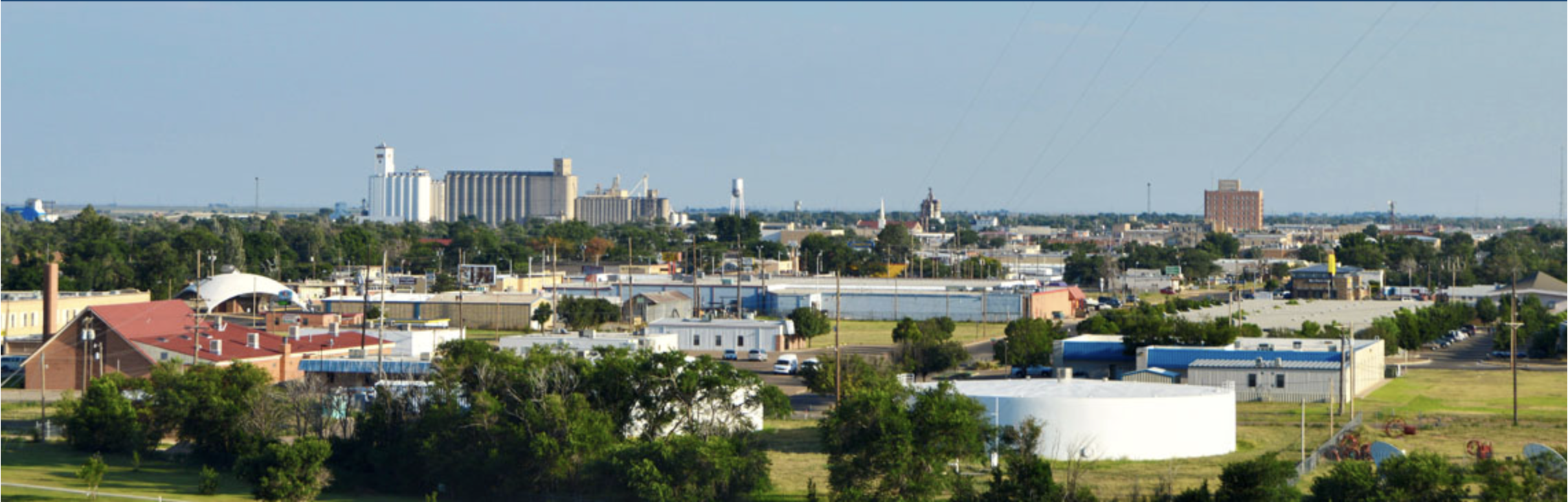
Clovis, New Mexico. Photo credit: Clovis and Curry County Chamber of Commerce
On Jan. 23, the Trump administration finalized a rule that would remove protections for waterways throughout the country, and as much as 70% of Colorado’s water, according to the Colorado Department of Public Health and the Environment…
The new Navigable Waters rule specifies four protected types of waterways: territorial seas and large rivers and lakes; tributaries that flow year-round; lakes and ponds that are connected to larger bodies; and adjacent wetlands. In the West, where many tributaries don’t flow in warm months, and are being drained and diverted due to infrastructure projects, the amount of impacted waterways is likely to be large…
In the face of the Navigable Waters rule and the NEPA rollbacks, it will be up to Western states to ensure appropriate environmental protections are enacted to mitigate the new rules’ impact.
FromThe Grand Junction Daily Sentinel (Dennis Webb):
Denver next week will be the site of one of two public hearings scheduled nationally on controversial proposed changes by the Trump administration regarding how a 50-year-old environmental law is carried out.
The White House Council on Environmental Quality is proposing what it calls an update to the regulations governing how the National Environmental Policy Act is implemented.
The act requires federal agencies to assess the environmental impacts of actions, including public lands management decisions applying to oil and gas leasing and well permitting, grazing and mining, and other uses. The requirement also pertains to construction of roads, bridges, power lines, water projects and other infrastructure, and the act process provides for public input.
The proposal would streamline the act process, consistent with direction from President Trump. This includes creating presumptive two-year time limits for completing environmental impact statements, which on average now take four and a half years to complete, and creating presumptive one-year limits in the case of less-involved environmental assessments.
It also specifies presumptive page limits on these documents. Agencies on average prepare about 170 environmental impact statements a year and about 10,000 environmental assessments.
The proposal also seeks to reduce unnecessary burdens and delays through facilitating the use of environmental assessments versus environmental impact statements, or categorical exclusions from either of these forms of review. Such exclusions are already applied to about 100,000 agency actions a year.
It also would state that analysis of cumulative effects isn’t required under the environmental policy act. Such analysis is sometimes pushed by entities such as conservation and activist groups. A current lawsuit challenging the Bureau of Land Management’s resource management plan for the Grand Junction Field Office alleges a failure to consider cumulative climate impacts of local oil and gas development in combination with other development under the BLM’s national oil and gas program.
Public hearings on the proposed changes are scheduled Tuesday in Denver and Feb. 25 in Washington, D.C.. People were asked to sign up online for free tickets to attend the Denver event, and all tickets for the morning and afternoon sessions were quickly snatched up. That prompted the addition of an evening session, for which tickets also are gone…
In a Natural Resources Defense Council blog, Gilchrist contends the National Environmental Policy Act process has proven important in Colorado, such as in causing the BLM to defer oil and gas leasing in the North Fork Valley in response to public comments, and resulting in the U.S. Forest Service scaling back plans to clearcut aspen on the Grand Mesa, Uncompahgre and Gunnison National Forests.
After results late last year showed water wells in three out of 18 homes in a mountain community west of Boulder had elevated levels of polyfluoroalkyl substances, or PFAS, the county and Colorado Department of Public Health and Environment plan to test the water at 10 additional properties this year.
Ron Falco, safe drinking water program manager for the state of Colorado, said the department and county are in the process of finalizing an a $8,000-contract to continue testing in the Boulder Heights subdivision. The cost will be covered by the CDPHE. Falco said officials hope more water samples will provide answers on the extent of the contamination and bring awareness to residents…
Testing is anticipated to begin mid-February. Results could be ready sometime in March. The testing follows an announcement last year that contaminated water was found in a well at the Boulder Mountain Fire Protection District’s Station 2.
Joe Malinowski, the environmental health, division manager for Boulder County Public Health, said it still is unknown what the source for contamination is…
The three homes that tested above the health advisory of 70 parts per trillion last year, showed combined levels of perfluorooctanic acid, PFOA, and perfluorooctane sulfate, PFOS, at 2,057 parts per trillion, 416 parts per trillion and 200 parts per trillion…
Homeowners who live in the mountain community depend on wells as a source of water…
Many PFAS chemicals found in water have been traced to a type of fire suppressant, called Class B firefighting foam, according to the CDPHE. The foam is used to fight industrial and chemical fires. Benson emphasized in a September meeting that the station does not use this type of foam. Last year, state legislature passed House Bill 19-1279, calling on state health departments to conduct surveys every three years of fire departments to determine use and disposal of the foam.
The CDPHE, county and fire department have worked together to determine which homes should be tested, Falco said. The properties are near the fire station or slightly outside the 1,500-foot radius, according to Malinowski.
Click here to read the January 2020 Western Water News from Audubon. Here’s an excerpt:
Western Water News
UPDATE: New Federal Rule Reduces Protections for Water in the West, Harming People and Birds
The Trump Administration’s revised Waters of the United States rule shrinks the number of waterways protected under the Clean Water Act.
Phainopepla. Photo: Elaine Padovani/Great Backyard Bird Count via Audubon Rockies
UPDATE (1/23/2020): Today, the Trump Administration announced finalization of rollbacks to the Clean Water Rule. The newly published Navigable Waters Protection Rule removes Clean Water Act protections for many rivers, streams, and wetlands, which could allow them to be altered, degraded or filled without first seeking a federal permit. For example, a large number of streams and wetlands that only flow or are wet for part of the year are now exempt from Clean Water Act protections. Some 138 species and subspecies of birds in the U.S. are designated as “wetland dependent” and many more are threatened by the new rule.
At Audubon, we know the value that wetlands, rivers, lakes, and streams provide to birds. These waterways are critical habitat for the lifecycle of millions of birds, not to mention the millions of people who rely on clean water to drink, bathe, wash, and grow our food.
Riverside forests and wetlands—fed by both continuous and intermittent water sources—are essential for birds, particularly in the arid Southwest.
However, under the 2019 Proposed Revised Definition for Waters of the United States (WOTUS) many waterways that flow for only portions of the year would be excluded from Clean Water Act protections. This means ephemeral waterways like the Rio Puerco in New Mexico, Centennial Wash in Arizona, Milpitas Wash in Southern California’s Imperial County and Chemehuevi Wash in San Bernardino County would no longer be protected. Without WOTUS protections, developers can build in these areas without federal permits, and the waterways and their surrounding environments would be unprotected from potentially harmful discharges. In the past, industrial operators used these dry washes as disposal sites for pollutants, only to end up contaminating the groundwater below.
Along many of the dry washes in the desert Southwest, trees like mesquite, palo verde, and ironwood thrive. When water occasionally flows through these normally dry washes, these thrifty trees take advantage. Along these washes, trees grow tall and into dense desert forests. They support abundant avian life, especially Lucy’s Warblers, Bell’s Vireos, Black-tailed Gnatcatchers, Phainopeplas, and Ladder-backed Woodpeckers. These woodlands comprise only five percent of the acreage in the desert regions of the Southwest but support 90 percent of the bird life, according to A Natural History of the Sonoran Desert. For these habitats to be stripped of their protections under the Clean Water Act means a serious risk of habitat loss in areas of outsized importance for birds.
On the human side of the equation, excluding dry washes and ephemeral streams and rivers risks damage to property through flooding. In Arizona, for example, drainages coming off local mountain ranges flow infrequently. However, when they do flow due to rain or snow events, floodwaters can overwhelm the normally dry channels. Clean Water Act protections can require that developers mitigate impacts to these washes, or mandate that development keep the washes intact in order to act as drainages for storm events. As part of the urban fabric, these washes serve as flood protection for communities during storm events and as corridors for wildlife when dry.
Losing protections on thousands of stream and river miles because they only flow seasonally or after rain events or snowmelt will negatively impact the birds and people who rely on these important water resources throughout the Southwest. Audubon will submit formal comments on the proposed WOTUS definition to the Environmental Protection Agency and the Army Corps of Engineers by the April 15, 2019 deadline, and we invite you to do the same.
Jan. 23, 2020, the Environmental Protection Agency (EPA) Administrator Andrew Wheeler announced the improved definition for “waters of the United States” (WOTUS) with the Navigable Waters Protection Rule. “ The Navigable Waters Protection Rule ends decades of uncertainty over where federal jurisdiction begins and ends. For the first time, EPA and the Army Corps of Engineers are recognizing the difference between federally protected wetlands and state protected wetlands. It adheres to the statutory limits of the agencies’ authority. It also ensures that America’s water protections – among the best in the world – remain strong, while giving our states and tribes the certainty to manage their waters in ways that best protect their natural resources and local economies.”
In March 2014, the Obama administration released a regulation that would assert Clean Water Act jurisdiction over nearly all areas including those with undiscernible connections to water resources and man-made conveyances. Specifically, the Obama WOTUS rule expanded agency control over 60 percent of the country’s streams and millions of acres of wetlands that were previously non-jurisdictional. In September 2019, the Trump administration, EPA and Army Corps of Engineers repealed the controversial 2015 WOTUS rule and proposed a new Clean Water rule clarifying which level of government, federal or state, would oversee water features and dry land that is sometimes wet.
The revised WOTUS definition identifies four clear categories of waters that are federally regulated under the Clean Water Act: the territorial seas and traditional navigable waters; perennial and intermittent tributaries; certain lakes, ponds and impoundments; and wetlands that are adjacent to jurisdictional waters. The final action also details what waters are not subject to federal control, including features that only contain water in direct response to rainfall; groundwater; many ditches, including most farm and roadside ditches; prior converted cropland; farm and stock watering ponds; and waste treatment systems.
Leaders of the National Potato Council (NPC) welcomed the announcement that the U.S. Environmental Protection Agency (EPA) finalized its proposed rule defining the Waters of the United States (WOTUS) rule with the Navigable Waters Protection Rule. EPA’s action also defines what waters are not subject to federal control, including most farm and roadside ditches, prior converted cropland, and farm and stock watering ponds.
“Potato farmers are committed to protecting the nation’s waters,” said Britt Raybould, President of the National Potato Council. “However, the imposition of unnecessary federal burdens, such as regulating ditches on private farms that are generally dry throughout the year, undermines that overall mission by creating uncertainty and increasing costs. EPA’s newly issued rule avoids those negative outcomes and provides increased clarity regarding the responsibilities of farmers under the Clean Water Act in protecting our nation’s surface water resources.”
[…]
Contrastingly, Jill Hunsaker Ryan, executive director, Colorado Department of Public Health and Environment stated, “The EPA’s announcement today is alarming as it puts our precious waters at risk. Every Coloradan, and so many others from neighboring states, are dependent on Colorado’s healthy waterways. At the department, regardless of what happens at the federal-level, we’ll always be committed to the health of our waters. Healthy waters mean healthy Coloradans,” said Jill Hunsaker Ryan, executive director, Colorado Department of Public Health and Environment.
“In the absence of federal leadership, we are going to do everything possible to protect streams and wetlands in Colorado. It’s sad that we have to step up in contrast with our federal government on something so basic as protecting our water, but we must. The rollback removes huge swaths of Colorado’s waters from federal jurisdiction, waters used by 19 states and Mexico. It’s estimated that almost 70 percent of our Colorado Waters could be impacted by this rule. Additionally, the change will impose significant burdens upon the State of Colorado,” said Patrick Pfaltzgraff, director, Water Quality Control Division.
Earlier in the year, the Colorado Department of Public Health and Environment, Colorado Department of Natural Resources, and Colorado Department of Agriculture collectively rebuked the EPA’s proposed rule change.
When Wendy Rash was diagnosed in 2005 with a thyroid disorder, chronic fatigue and other ailments, her doctor couldn’t explain her suddenly failing health.
Soon, other family members became ill. Her brother-in-law contracted fatal kidney cancer. Her father-in-law developed esophageal cancer. Then her 32-year-old son began having severe kidney problems.
It wasn’t until 2016 that scientists tested the tap water they had been drinking and found it was contaminated with man-made chemicals known as per-fluorinated compounds, part of a family of chemicals called PFAS. The chemicals were traced to firefighting foam from a nearby military airfield, one of hundreds of Pentagon bases nationwide that for decades may have contaminated drinking water used by tens of thousands of people.
“We had no clue,” said Rash, 58.
The role played by PFAS in the family’s illnesses is not known. Studies have shown a link between the chemicals and a range of health problems, including an elevated risk for some cancers, but they have not established a clear cause-and-effect relationship.
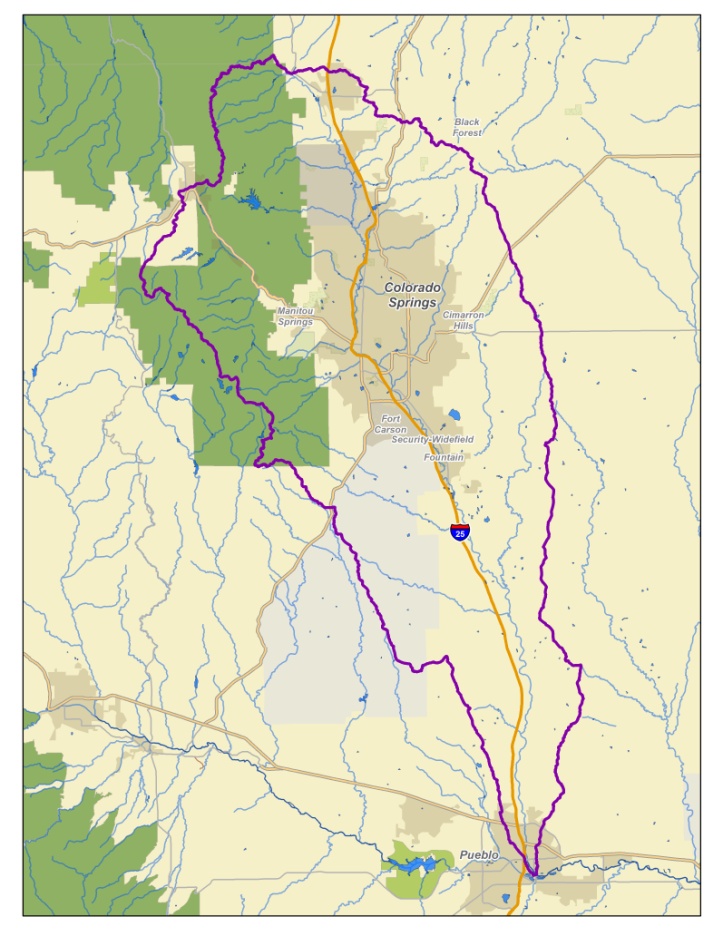
Widefield aquifer via the Colorado Water Institute.
Rash’s family history of illnesses is common in Fountain, a Colorado Springs suburb flanked by mountains and military bases. And the scientific uncertainty about how much risk residents face has only worsened the anxiety many feel, as Fountain and surrounding towns have become a center of the growing national furor over the possible health effects of ingesting PFAS.
Congress is trying to expand regulation of the chemicals. Earlier this month, the House voted 247 to 159 in favor of a bill requiring the Environmental Protection Agency to designate PFAS as hazardous substances, which would free up funds for the cleanup at contaminated sites.
But the Trump administration has threatened to veto the bill, saying in a Jan. 7 statement that such a move would force high compliance costs on businesses and states, and that the EPA, not Congress, should make the decision.
The Trump administration formally proposed a rule last week that strips away protections that have been in place 50 years for waters all across the U.S. In what is seen as a victory for fossil fuel producers, farmers, and real estate developers, the proposed rule retains protections for large bodies of water, rivers, and streams—but removes safeguards for many wetlands, intermittent streams, and groundwater.
E & E News reports that a group called Public Employees for Environmental Responsibility, made up of current and former EPA scientific advisers, has filed a complaint calling for an investigation into the process leading to the new rule, charging that it was based more on politics than science. They claim that the final rule contradicts the overwhelming scientific consensus on the connectivity of wetlands and rivers and streams. They add that officials instructed staff not to submit comments for the record.
The new rule, which will be implemented in 60 days, is sure to be challenged in court by environmental groups and some state attorneys general. The outcome, if it makes it to the Supreme Court, is not certain. One environmental law expert told Politico that conservative justices on the Court may not like the way the Trump administration ignored both science and the experts it picked to advise the EPA.
A wetland area along Homestake Creek in an area that would be flooded by a potential Whitney Reservoir. The cities of Aurora and Colorado Springs are looking to develop additional water in Eagle County and divert it to the Front Range. Photo credit: Brent Gardner-Smith/Aspen Journalism
Here’s the release from American River (Chris Williams):
The Trump Administration [on January 23, 2020] announced the release of its Revised Definition of the Waters of the United States, a sweeping federal rule that drastically weakens the reach and authority of the Clean Water Act to protect the Nation’s rivers, small streams and wetlands.
In 2001 and 2006, two convoluted Supreme Court rulings created uncertainty about the extent of the Clean Water Act’s jurisdiction. The Obama administration engaged in a lengthy rulemaking process to clarify the authority of the Act to protect small streams and wetlands that are so important to river health and contribute to the drinking water supplies of two in three Americans. Following years of painstaking scientific, economic and legal analysis, hundreds of public meetings, and a comment period that produced over a million comments, the “Clean Water Rule” was adopted in 2015, reaffirming the Act’s broad authority “to restore and maintain the chemical, physical, and biological integrity of the Nation’s waters.”
The Trump administration’s rule replaces the Clean Water Rule, undermining protection of rivers, wetlands, and clean water. It uproots decades of regulatory practice and judicial precedent with little public input and virtually no scientific analysis. It is setting aside the findings of over 1,200 peer-reviewed studies, collected in EPA’s own Connectivity Report, that demonstrate the vital importance of small streams and wetlands to the water quality, flow, and overall ecological health of larger rivers downstream. The rule deals a crippling blow to the Act’s authority to protect wetlands, excluding more than half of the nation’s wetlands from the Clean Water Act’s reach, and eliminating protection for almost 20% of the nation’s rivers and streams.
Bob Irvin, President and CEO of American Rivers made the following statement regarding the Trump Administration’s Revised Definition of the Waters of the United States:
“The Trump administration’s Dirty Water Rule is an affront to the health and safety of hundreds of millions of people across the country who depend on rivers and streams for clean water. It is reckless and capricious, reversing the Clean Water Rule which was firmly based on sound legal and scientific analyses, extensive fact-finding and stakeholder input, and broad popular support.
President Trump has frequently said he wants ‘crystal clean water.’ This rule will result in dirty water, plain and simple.”
Fen soils are made of a rich, organic peat material that take thousands of years to form and require a constant groundwater source to survive. At the Rocky Mountain Fen Research Project, scientists transplanted fen soils from another site to the “receiver” site south of Leadville where they restored a groundwater spring to sustain the transplanted soils. Photo credit: Sarah Tory/Aspen Journalism
Elected officials and advocacy groups in Colorado responded to a change to a federal rule on water protections.
The previous rule, called “Waters of the United States,” or WOTUS, was established in 2015 by the Obama administration. That rule, however, was under intense scrutiny by Republicans, property rights groups, and several industries for what they perceived as federal regulatory overreach, citing it’s expansive interpretation.
That rule was repealed by the U.S. Environmental Protection Agency and the Department of the Army in September.
The new rule, called the Navigable Waters Protection Rule, was announced on Thursday at a builders’ industry trade show in Las Vegas.
The Trump administration says the new rule will still protect navigable waters from pollution but also will provide regulatory relief and more certainty for development.
“EPA and the Army are providing much needed regulatory certainty and predictability for American farmers, landowners and businesses to support the economy and accelerate critical infrastructure projects,” EPA Administrator Andrew Wheeler said in a statement. “After decades of landowners relying on expensive attorneys to determine what water on their land may or may not fall under federal regulations, our new Navigable Waters Protection Rule strikes the proper balance between Washington and the states in managing land and water resources while protecting our nation’s navigable waters, and it does so within the authority Congress provided.”
The new rule creates four different categories for bodies of water to be federally regulated under the Clean Water Act, and excludes certain types of bodies of water such as ditches.
The new rule drew broad criticism from Colorado Democrats and environmental groups that work in the state.
“In Colorado, we value our clean water. Our rivers, streams, and lakes serve as the lifeblood of our communities and help support our thriving outdoor and agriculture industries,” Gov. Jared Polis said. “Our administration will continue to reject attempts by the Trump administration to gut proven ways to protect our health and environment.”
U.S. Rep. Ed Perlmutter, D-Colo., tweeted that the new rule “removes protections for smaller bodies of water & rolls back federal protections for smaller headwaters that have been protected for almost 50 years – including the Colorado River.”
Western Resource Advocates, an environmental advocacy group headquartered in Boulder, in a tweet urged state lawmakers “to stand w/ their communities & lead where the federal government won’t. We’re calling on our leaders throughout the West to come together & safeguard healthy rivers & clean water.”
Republicans and some industry groups praised the rule change for reducing regulations.
“The uncertain interpretation of the term ‘navigable waters’ created by WOTUS has left farmers, ranchers and private land owners unprotected from federal land and water grabs,” U.S. Rep. Scott Tipton, R-Colo., said “Over the last three years, President Trump’s administration has worked to repeal unnecessary and burdensome regulations with updated versions that better suit the needs of our agricultural communities.”
Don Shawcroft, president of the Colorado Farm Bureau, which advocates for agricultural interests, said the new “rule provides clarity and stability for farmers and ranchers everywhere, ensuring that farmland remains healthy and productive, and our waters protected. It is a major win for Colorado agriculture.”
Both the Colorado Chamber of Commerce and the National Federation of Independent Business-Colorado supported the rule change.
“The Trump Administration’s new water rule makes it a lot easier to pave America’s critical wetlands and put up parking lots,” said David Yarnold, president and CEO, National Audubon Society (@david_yarnold) after the Administration announced the finalization of its rollbacks to the Clean Water Act. “Wetlands are not only important places for birds, they also are natural buffers that absorb flood waters and purify water for us all.”
The newly published, Navigable Waters Protection Rule, removes Clean Water Act protections for many rivers, streams, and wetlands that could allow them to be altered, degraded or filled. For example, a large number of streams and wetlands that are only wet for part of the year are now exempt from Clean Water Act protections. Some 138 species and subspecies of birds in the U.S. are designated as “wetland dependent” and many more are threatened by the new rule.
“This disintegration of Clean Water Act protections further threatens birds by putting critical habitat at risk of pollution and destruction of habitat,” said Julie Hill-Gabriel, vice president for water policy at the National Audubon Society. “We’ve already lost 3 billion birds in the past 50 years and we know that two-thirds of North American bird species are at risk of extinction from climate change.”
Birds use lakes, tributaries, streams, ponds, wetlands, prairie potholes, and other water bodies for breeding, nesting, and raising young. These water bodies provide crucial sources of drinking water and food, stop-over locations during migration and needed shelter for birds as they seek protection from predators and harsh weather.
The rule will adversely impact birds in the arid southwest, in the Great Lakes to the north, in the Everglades to the south, and in the Delaware River basin to the east. The Clean Water Act is one of our most powerful environmental laws. The final rule undermines the science-based definition of “Waters of the United States” and is another example of this Administration passing laws and policies that are bad for birds and people.
Photo credit from report “A Preliminary Evaluation of Seasonal Water Levels Necessary to Sustain Mount Emmons Fen: Grand Mesa, Uncompahgre and Gunnison National Forests,” David J. Cooper, Ph.D, December 2003.
The Trump administration on Thursday will finalize a rule to strip away environmental protections for streams, wetlands and other water bodies, handing a victory to farmers, fossil fuel producers and real estate developers who said Obama-era rules had shackled them with onerous and unnecessary burdens.
From Day 1 of his administration, President Trump vowed to repeal President Barack Obama’s “Waters of the United States” regulation, which had frustrated rural landowners. His new rule, which will be implemented in the coming weeks, is the latest step in the Trump administration’s push to repeal or weaken nearly 100 environmental rules and laws, loosening or eliminating rules on climate change, clean air, chemical pollution, coal mining, oil drilling and endangered species protections…
His administration had completed the first step of its demise in September with the rule’s repeal.
His replacement on Thursday will complete the process, not only rolling back 2015 rules that guaranteed protections under the 1972 Clean Water Act to certain wetlands and streams that run intermittently or run temporarily underground, but also relieves landowners of the need to seek permits that the Environmental Protection Agency had considered on a case-by-case basis before the Obama rule.
It also gives President Trump a major policy achievement to bring to his political base while his impeachment trial continues.
“Farmers coalesced against the E.P.A. being able to come onto their land, and he’s delivering,” said Jessica Flanagain, a Republican strategist in Lincoln, Neb. “This is bigger news for agricultural producers than whatever is happening with the sideshow in D.C.,” she added…
The new water rule will remove federal protections from more than half the nation’s wetlands, and hundreds of thousands of small waterways. That would for the first time in decades allow landowners and property developers to dump pollutants such as pesticides and fertilizers directly into many of those waterways, and to destroy or fill in wetlands for construction projects.
“This will be the biggest loss of clean water protection the country has ever seen,” said Blan Holman, a lawyer specializing in federal water policy at the Southern Environmental Law Center. “This puts drinking water for millions of Americans at risk of contamination from unregulated pollution. This is not just undoing the Obama rule. This is stripping away protections that were put in place in the ’70s and ’80s that Americans have relied on for their health.”
The Obama rule protected about 60 percent of the nation’s waterways, including large bodies of water such as the Chesapeake Bay, Mississippi River and Puget Sound, and smaller headwaters, wetlands, seasonal streams and streams that run temporarily underground. It limited the discharge of pollutants such as fertilizers, pesticides and industrial chemicals into those waters…
The new rule, written by the Environmental Protection Agency and the Army Corps of Engineers, will retain federal protections of large bodies of water, as well as larger rivers and streams that flow into them and wetlands that lie adjacent to them. But it removes protections for many other waters, including wetlands that are not adjacent to large bodies of water, some seasonal streams that flow for only a portion of the year, “ephemeral” streams that only flow after rainstorms, and water that temporarily flows through underground passages.
Legal experts say that Mr. Trump’s replacement rule would go further than simply repealing and replacing the 2015 Obama rule — it would also eliminate protections to smaller headwaters that have been implemented for decades under the 1972 Clean Water Act.
“This is rolling back federal jurisdiction of the Clean Water Act further than it’s ever been before,” said Patrick Parenteau, a professor of environmental law at Vermont Law School. “Waters that have been protected for almost 50 years will no longer be protected under the Clean Water Act.”
That could open millions of acres of pristine wetlands to pollution or destruction, and allow chemicals and other pollutants to be discharged into smaller headland waters that eventually drain into larger water bodies, experts in water management said. Wetlands play key roles in filtering surface water and protecting against floods, while also providing wildlife habitat.
Ean Thomas Tafoya, a Colorado-based clean water activist with the group GreenLatinos, said the new rule could harm the quality of the water in the Colorado River, which supplies water to 17 western states.
“We are a headwater state,” he said. “This rollback will affect almost every single stream that flows into the Colorado River.”
Mr. Tafoya said about 90 percent of the streams that supply the Colorado River run only after rainfall or snowmelt. Under the new Trump water rule, many of those streams will not qualify for federal pollution protection. But Mr. Tafoya said pollutants such as chemical pesticides that end up in those dry stream beds could nonetheless be swept into larger bodies of water when the streams begin running after the spring thaw of mountain snow.
“The toxics or poisons that lie dormant will still be there when the streams are reactivated,” he said. “They will still get into the larger bodies of water.”
Government scientists, even those appointed by the Trump administration, say those concerns are justified. The E.P.A.’s Scientific Advisory Board, a panel of 41 scientists responsible for evaluating the scientific integrity of the agency’s regulations, concluded that the new Trump water rule ignores science by “failing to acknowledge watershed systems.” They found “no scientific justification” for excluding certain bodies of water from protection under the new regulations, concluding that pollutants from those smaller and seasonal bodies of water can still have a significant impact on the health of larger water systems.
Those scientific findings, although they are not reflected in the administration’s policy, could still play a role in the fate of the new rule. Several state attorneys general are expected to join with environmental groups to sue to overturn the Trump water rule, and those groups are likely to cite those findings as evidence that the rule is not legally sound.
“The legal standing all has to do with whether you have a rational basis for what you’re doing,” said Mr. Parenteau. “And when you have experts saying you’re not adhering to the science, that’s not rational, it’s arbitrary.”
About 60 percent of Colorado fire departments report that they have firefighting foam with synthetic chemicals known as PFAS, according to a recent survey by the Colorado Department of Public Health and Environment…
“We are highly cognizant of how dangerous PFAS can be in terms of the cancer-causing properties for our firefighters,” said Greg Pixley, a public information officer with Denver Fire Department “We are working every effort we can to reduce PFAS in our day-to-day operations.”
[…]
An older generation of the firefighting foam containing PFAS has been retired from use in Colorado, and across military bases. Now, a newer version with a different chemical formula is available. Originally it was believed to not accumulate in the body, but research is emerging that shows potentially toxic health effects are concerns for many of the firefighters who use this product on the front lines…
State health officials know PFAS chemicals are a problem. Conducting a survey is one part of the state’s plan to address the health risks. In addition to reporting PFAS foam supplies, health officials asked which fire departments had used PFAS firefighting foam in the past. About 19 departments reporting using the foam.
However, it’s unclear what, if any, testing will happen across those departments that reported using the foam.
The state government has made about $500,000 available with a priority for Colorado’s 890 drinking water districts for testing of PFAS chemicals. But fire departments will be at the back of the line behind drinking water districts to access to those funds, according to state health officials…
According to the state survey, the largest caches of the new PFAS foam is held by Suncor, the Denver Fire Department, South Metro Fire Rescue and the Pueblo Fire Department.
The departments that have large quantities of the new form on hand use it because they respond to fires at regional or municipal airports. The Federal Aviation Administration requires fire responders at some airports to have the PFAS foam on hand to ensure “the extinguishment of the fire for the successful evacuation of passengers and aircrew during an aircraft fire,” according to a statement from the FAA.
“It was a compromise,” said Eric Hurst, a public information officer with South Metro Fire Rescue. “We essentially worked with Centennial Airport to find the safest environmentally friendly [firefighting foam] available and used that.”
The FAA is under the gun to find a replacement by Oct. 4, 2021, at which time it can no longer require the use of PFAS foam.
The agency is currently researching and evaluating replacement firefighting foams. Some airports like London-based Heathrow have switched to a fluorine-free foam that doesn’t have PFAS chemicals linked to health issues…
“[DIA] along with other commercial airports and airport industry associations, continues to press the FAA for a firefighting alternative that would satisfy commercial travel safety responsibilities while reducing the potential for environmental impact,” said Emily Williams, a public information officer with Denver International Airport.
State law does set some limits on how the new PFAS foam can be used. Legislation in 2019 prevents fire districts from using it to conduct training exercises. It is only to be used to fight fires.
The team responsible for the development of the enhanced contact electrical discharge plasma reactor, a novel method for degrading poly- and perfluoroalkyl substances (PFASs). Professors Selma Mededovic Thagard and Thomas Holsen with Nicholas Multari and Chase Nau-Hix (shaved head), pose in the CAMP lab, October 6, 2017.
Colorado officials will continue to reach out to drinking water districts to encourage testing for synthetic chemicals known as Per- and Polyfluoroalkyl Substances — otherwise known to the public under the PFAS acronym umbrella.
The sign-up rate, however, has been minimal.
About one week into the Colorado Department of Public Health and Environment’s campaign, officials said about 8 percent of Colorado’s roughly 790 drinking water districts have signed up for tests…
That’s not to say that officials aren’t pleased with the sign-up rate so far. They plan to send email notifications to drinking water districts to remind them of the available funds over the coming weeks…
While the [EPA’s] current advisory limits are voluntary, they are determining whether to formally regulate two of the chemicals, PFOA and PFOS. A decision is expected later in 2020.
The U.S. House voted Friday to pass a comprehensive legislative package that would crack down on per- and polyfluoroalkyl substances, a class of chemicals known as PFAS that are said to cause serious health problems.
Used in tape, nonstick pans and other everyday substances, PFAS have been linked to cancer, decreased fertility, developmental delays and other conditions and have been found in high concentrations in sources of public drinking water and other sites around the country.
The PFAS Action Act includes a series of provisions designed to mitigate their harm. It cleared the House with support from 223 Democrats and 24 Republicans. One hundred and fifty seven Republicans voted against it, as did one Democrat and Michigan independent Rep. Justin Amash. Twenty-four lawmakers did not vote.
Colorado’s delegation was split on the vote, with Democratic representatives voting for the bill and Republicans voting against it…
Friday’s vote came after supporters of the legislation suffered a stinging setback last month, when key PFAS provisions were struck from the National Defense Authorization Act (NDAA) before it was signed into law.
Opposition to those provisions from Senate Republicans prompted House Democrats to call the PFAS bill to the floor this month, House Speaker Nancy Pelosi (D-Calif.) said Friday.
“Last year, our members worked relentlessly to pass bold legislation to tackle the PFAS crisis,” Pelosi said on the House floor. “Unfortunately, at the end of the year, the Senate GOP refused to join the House to secure full, robust protections against PFAS chemicals and key provisions were cut from the NDAA.”
The “Senate GOP obstruction,” she said, “is why we are here today.”
The NDAA does take some steps to address PFAS. It includes provisions that require the U.S. military to transition off of PFAS-laden fire-fighting foam by 2024, ban the foam in exercises and training and test PFAS levels in military firefighters’ blood.
But supporters said the PFAS Action Act passed Friday goes much further.
It would require the U.S. Environmental Protection Agency to list certain PFAS chemicals as hazardous substances under the EPA’s Superfund program, which would accelerate cleanup of contaminated sites. That would be a “significant first step while we allow the EPA to study the remaining compounds — which needs to start now,” Dingell said in a press release.
The bill would also create a national drinking standard for certain PFAS chemicals, help people understand water testing results, prevent new PFAS chemicals from being approved and more…
Colorado public health officials acknowledge federal action on creating a legally binding drinking water standard is lagging, forcing the state to address a public health crisis it’s ill-equipped to handle. The state is in the process of adopting new regulations after finding PFAS levels above the federal health advisory limit in groundwater across the Denver metro region, Colorado Springs and Boulder County. In September, lawmakers approved $500,000 so that the Colorado Department of Public Health can begin testing public drinking water supplies for the toxic chemical…
Despite its bipartisan support in the House, the bill faces an uphill battle.
First, it must pass the GOP-controlled Senate, where hundreds of House-passed bills are languishing on the desk of Majority Leader Mitch McConnell (R-Ky.). Senate Environment and Public Works Committee Chairman John Barrasso (R-Wyo.) told Bloomberg News that the legislation had “no prospects in the Senate.”
If it passes the Senate, then it would move to the White House, which issued a veto threat on Tuesday…
The EPA is already “taking extensive efforts” to address PFAS across the nation, it added — an assertion underscored by the EPA in a statement released on the same day as the White House veto threat.
But critics say the EPA’s “action plan” doesn’t go far enough to contain and clean up PFAS and are skeptical the agency will put public health over corporate profits.
Bonita Mine acid mine drainage. Photo via the Animas River Stakeholders Group.
From the Associated Press (Ellen Nickmeyer, Matthew Brown, and Ed White) via The Aurora Sentinel:
The Trump administration has built up the biggest backlog of unfunded toxic Superfund cleanup projects in at least 15 years, nearly triple the number that were stalled for lack of money in the Obama era, according to 2019 figures quietly released by the Environmental Protection Agency over the winter holidays.
The accumulation of Superfund projects that are ready to go except for money comes as the Trump administration routinely proposes funding cuts for Superfund and for the EPA in general. The four-decade-old Superfund program is meant to tackle some of the most heavily contaminated sites in the U.S. and Trump has declared it a priority even while seeking to shrink its budget…
The unfunded projects are in 17 states and Puerto Rico. They range from abandoned mines that discharged heavy metals and arsenic in the West to an old wood pulp site in Mississippi and a defunct dry cleaner that released toxic solvents in North Carolina…
two former EPA officials whose work dealt with Superfund oversight said the growing backlog of stalled Superfund projects under the Trump administration, and steady or ebbing numbers of cleanup construction projects completed, point to a different picture.
“They’re misleading Congress and the public about the funds that are needed to really protect the public from exposure to the toxic chemicals,” said Elizabeth Southerland, who worked for 30 years at EPA, including as director of science and technology in the water office, before retiring in 2017. ”It’s detrimental.”
This is a “regulatory failure,” said Judith Enck, who served as the EPA’s regional northeastern U.S. administrator under President Barack Obama…
Asked what the EPA spent money on instead, and why the agency didn’t ask Congress for more to deal with the growing backlog, EPA spokeswoman Maggie Sauerhage offered few specifics Thursday.
The EPA’s Superfund program “will continue to prioritize new construction projects based on which sites present the greatest risk to human health and the environment,” Sauerhage said in an email. “Further, the agency maintains the authority to respond to and fund emergencies at these sites if there is an imminent threat to human health and the environment.”
She pointed to some areas where Trump’s Superfund effort was more on par with that of his predecessors. Long-term remedial efforts to make sure contamination didn’t rebound at existing Superfund sites, for example, averaged 64 a year under Trump. That compares with an average of 60 a year in Obama’s last five years.
But overall, the backlog of 34 unfunded projects is up from only 12 in 2016, Obama’s last year , and the most at least since 2004.
At the site of another of 2019’s unfunded Superfund projects, Montana’s Upper Tenmile mining region, which includes the community of Rimini and a subdivision downstream, the EPA has been providing bottled water to residents for the past decade in response to water supplies polluted by about 150 abandoned gold, lead and copper mines.
Pollution still flows from the mines and into Upper Tenmile Creek more than 20 years after the area was added to the Superfund list.
About 6 miles from Rimini in the rural Landmark subdivision is a huge pile of contaminated soil that was removed from residential yards. It was supposed to be hauled away but now has weeds growing over it after sitting untouched for several years, said Patrick Keim, who lives nearby…
EPA has been one of the main focuses of Trump’s efforts to cut federal regulations and oversight that he sees as burdening businesses. Trump each year has asked Congress for nearly one-third cuts in EPA’s budget, and has sought much smaller cuts for Superfund.
Congress has kept both levels of funding roughly even.
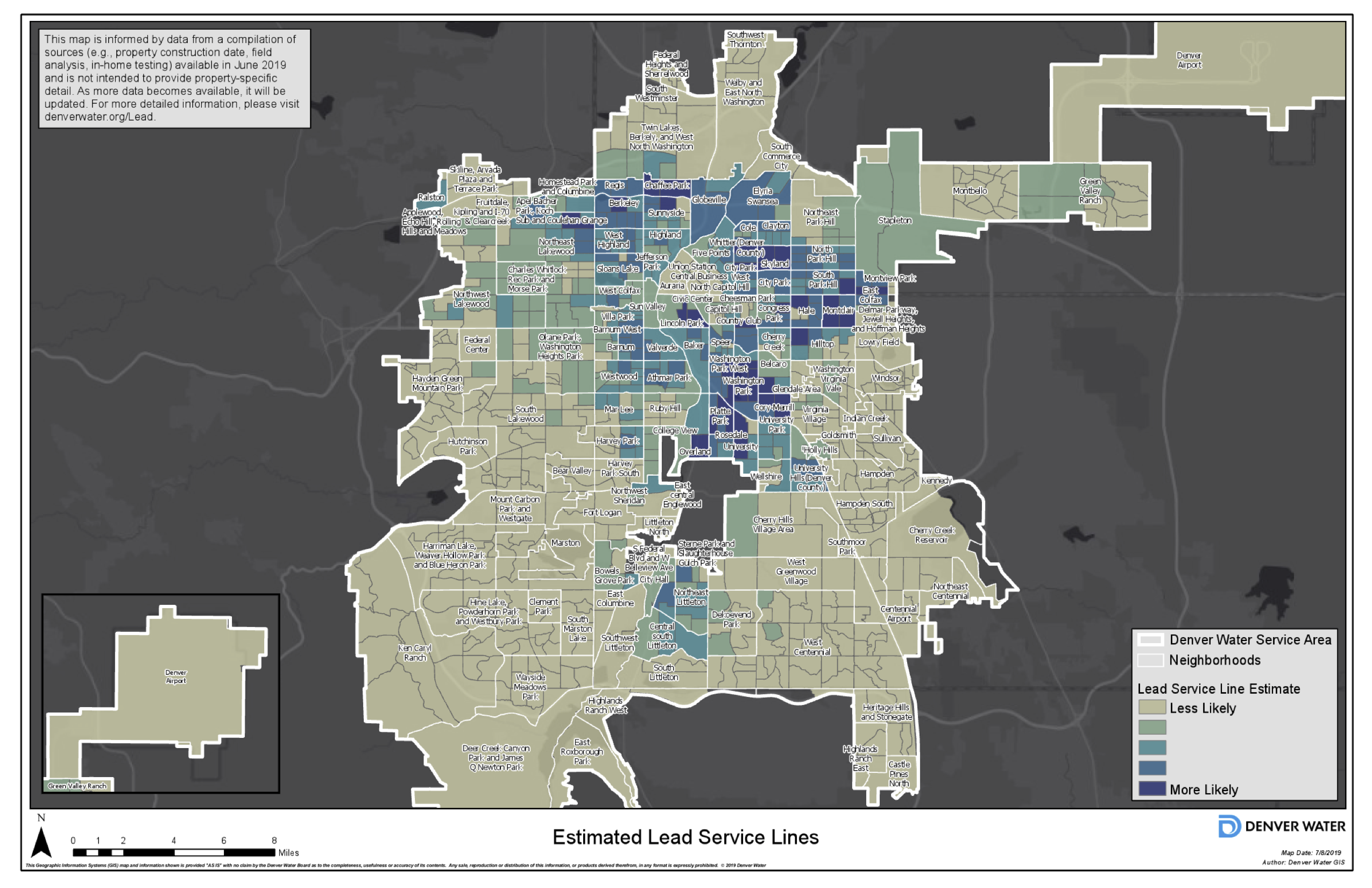
U.S. EPA Region 8 approved a variance under the Safe Drinking Water Act for Denver Water. This variance will allow Denver Water to implement a Lead Reduction Program Plan (LRPP) as an alternative to treating for the corrosion of lead and copper with orthophosphate. EPA believes that Denver’s LRPP will provide health benefits and will be as protective in lowering the lead levels as the requirements under the Lead and Copper Rule. Under the LRPP, Denver will implement a holistic lead management strategy that requires an accelerated lead service line replacement schedule, provides filters to customers, and controls corrosion through pH/alkalinity adjustments. Additionally, Denver Water will develop a comprehensive lead service line inventory and conduct an extensive community outreach campaign. This variance is effective for an initial period of three years and may be extended if Denver Water demonstrates that that LRPP can be effectively implemented and results in reductions to lead in drinking water.
Concurrent with this action, EPA is asking for comments on the potential criteria for how the Agency will determine whether to extend this variance for up to an additional twelve years. EPA is accepting public comments on these criteria and on EPA’s interpretation of the statutory standard for future variance requests. See the Federal Register notice in the docket for specific questions on which EPA is seeking feedback.
Denver Water will expedite the removal of lead pipes from homes across the metro area after the Environmental Protection Agency granted approval Monday.
The public agency will launch the program in 2020 and expects it to take 15 years and cost $500 million to complete. Officials estimate there are between 64,000 and 84,000 lead service lines in the system.
High lead exposure can lead to kidney and brain damage as well as developmental issues for children. Homes built prior to 1951 are more likely to have lead service lines, according to Denver Water…
Denver Water proposed the program to the EPA in July. Without the approved plan, it would take 50 years to remove the lead pipes, Lochhead said.
Denver Water has committed to remove at least 4,500 lines annually under an agreement with the EPA and the Colorado Department of Public Health and Environment.
The idea for the program came soon after the state ordered Denver Water to do orthophosphate treatment in its water supply in March of 2018. The treatments are used to reduce lead and copper in water that’s delivered to peoples’ taps.
“That did not cure the overall cause of the problem, which is the lead service lines,” Lochhead said. “Orthophosphate treatment, being a nutrient, creates water quality and environmental issues in the water supply as well as costing more than simply going in and removing them.”
Denver Water worked with federal and state agencies to develop this alternative approach. It will be funded through water rates, bonds, new service fees and hydropower generation. The company said it will also look for funding through loans, grants and partnerships.
Prior to mining, snowmelt and rain seep into natural cracks and fractures, eventually emerging as a freshwater spring (usually). Graphic credit: Jonathan Thompson
Sunnyside Gold Corporation, the last mining company to actively operate in the Silverton caldera, was recognized for “five years of responsible mining and 30 years of successful remediation and reclamation,” according to the award announcement provided to The Daily Times by Sunnyside Gold Corporation.
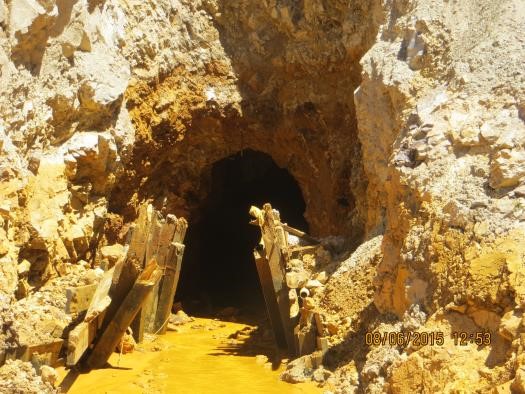
This award comes as Sunnyside faces continued litigation alleging the bulkheads it installed in the Sunnyside Mine’s American Tunnel led to changes in water levels. The suit claims this eventually created a buildup of water in the Gold King Mine that U.S. Environmental Protection Agency contractors later accidentally released when they breached a collapsed portal into the mine.
“The primary purpose of the engineered concrete bulkheads was to isolate the interior workings of the Sunnyside Mine, and to prevent water flow from the interior workings to the Animas Basin,” said Kevin Roach, Sunnyside’s director of reclamation, in an email to The Daily Times.
Roach said that while Sunnyside owns mines near the Gold King, it never owned or operated the Gold King Mine. He said the company was not involved in the Gold King Mine spill and has no responsibility for it.
“There is no physical man-made connection between the Sunnyside and Gold King mine workings,” Roach said.
And Roach stood by the decision to install bulkheads in Sunnyside’s mine workings.
“One of the most important lessons that can be derived from SGC’s successful reclamation is that, in appropriate circumstances, bulkheading of closed mines can be an effective method to improve water quality,” he said.
Sunnyside has maintained the U.S. Environmental Protection Agency, which triggered the spill, bears the responsibility. Roach further highlighted studies showing the water quality in the Animas River returned to pre-spill conditions shortly after the incident…
The award also comes after Sunnyside refused to comply with an order the EPA sent the company to install groundwater wells and meteorological stations as part of the Bonita Peak Mining District Superfund Site remediation work. The Superfund site includes 48 mine sites believed to have impacted water quality in the Animas River. Some of these mine sites were related to Sunnyside’s operations…
Working to reclaim land
Over the past 30 years, Sunnyside has spent $30 million on reclamation work. Roach said much of Sunnyside’s work occurred at sites it does not own. In addition to installing bulkheads, this work included relocating or removing mine tailings from several sites, including near the Animas River and its tributaries.
Sunnyside Gold Corporation was a latecomer to the mining activity in the Silverton caldera, entering the region in 1985 when it acquired the Sunnyside Mine, which it operated until 1991. The mine itself dates back to 1873 and includes two tunnels for hauling ore and drainage, one of which is the American Tunnel.
Following the installation of bulkheads in the American Tunnel, the Sunnyside Gold Corporation was released from liabilities in 2003 when the Colorado Department of Public Health and Environment concluded it had completed its obligations laid out in a consent decree.
In terms of the future, Sunnyside does not have plans to resume mining in the Silverton caldera. However, that does not necessarily mean mining is gone from the caldera forever.
In a park, nestled in a red rock canyon outside Moab, Utah — a short drive from a giant pile of uranium tailings — a crowd gathered for a celebration. Elected officials and community members mingled, and enjoyed refreshments.
Volunteers placed pieces of yellow cake in small paper bowls.
It was a facetious nod to the gathering’s purpose: to celebrate the removal of 10 million tons of toxic uranium tailings from the banks of the Colorado River.
“You never would have thought you would have all these people congratulating themselves in the community on moving 10 million tons,” said Sarah Fields, executive director of the nonprofit Uranium Watch. “They seem to be really dedicated to getting this done.”
[…]
Before cleanup efforts began about 10 years ago, elevated levels of uranium and ammonia were showing up in the river’s water near Moab. The contamination alarmed officials downstream in Nevada and California, and they called for the Department of Energy to step in.
Getting the pile out of the floodplain became a community rallying cry as well, Fields said.
“The (Department of Energy) pretty much from the beginning realized that if they decided to leave it in place they would be standing alone because the town, the city, most of the members of the community, the state, the EPA all said, ‘Move the pile,’” Fields said.
Workers began moving the pile in 2009. The tailings are loaded into train cars, and sent 30 miles north where they’re stored away from the river in the middle of the desert. With the 10 millionth ton moved, more than 62% of the pile is gone, which means many Moabites could see completion in their lifetimes.
Moab tailings site with Spanish Valley to the south
Here’s the release from the Environmental Protection Agency (Lisa McClain-Vanderpool):
EPA and the state partner with the agriculture industry to restore watersheds
The U.S. Environmental Protection Agency (EPA) has awarded $1,170,000 to the Colorado Department of Public Health and Environment (CDPHE) to improve water quality in streams, rivers and lakes. The funding comes through a Nonpoint Source Program Clean Water Act (Section 319) grant, which is given to states to implement programs that address various sources of pollution in surface and groundwater to meet and maintain water quality standards.
“EPA is partnering with CDPHE to restore water quality in two critical river basins, the Lower Arkansas and the Lower Gunnison,” said EPA Regional Administrator Gregory Sopkin. “These rivers are important environmental, economic and recreational resources for the state of Colorado. By working together to reduce pollutants, we will continue to improve these beautiful, natural resources well into the future.”
These watershed projects will result in a significant reduction of pollutants such as selenium, metals and nutrients. CDPHE will use the grant money to support the Lower Arkansas Valley Water Conservancy District to implement agricultural best management practices that improve water quality in the Arkansas River. In addition, work on the Lower Aspen Canal pipeline and interconnect will be carried out in partnership with the Crawford Water Conservancy District to address water quality issues in the Gunnison River basin. The grant will also fund outreach, education and planning.
Funding for this project is one part of EPA’s overall effort to ensure that America’s waters are clean and safe. This year, EPA is distributing more than $165 million in section 319 grants to states, territories, and tribes to reduce nonpoint runoff in urban and rural settings, including efforts to reduce excess nutrients that can enter our waters and cause public health and environmental challenges. Over the last two years, states restored over 80 waters and reduced over 17 million pounds of nitrogen, nearly 4 million pounds of phosphorus, and 3.5 million tons of excess sediment through section 319 projects. This 319 grant received by Colorado complements the $12.7 million Clean Water State Revolving Fund grant Colorado received this year.
The Crawford Water Conservancy District provides supplemental irrigation water supplies for approximately 8,200 acres and full water supplies for 1,423 acres in Delta and Montrose counties, according to its website.
It has operated the Smith Fork Project for the Bureau of Reclamation, which includes the Aspen Canal, since 1964.
The Smith Fork Project utilizes flows from the Smith Fork, Iron, Muddy, and Alkali Creeks…
Over the last two years, states restored more than 80 waters and reduced more than 17 million pounds of nitrogen, nearly 4 million pounds of phosphorus, and 3.5 million tons of excess sediment through section 319 projects, according to the EPA.
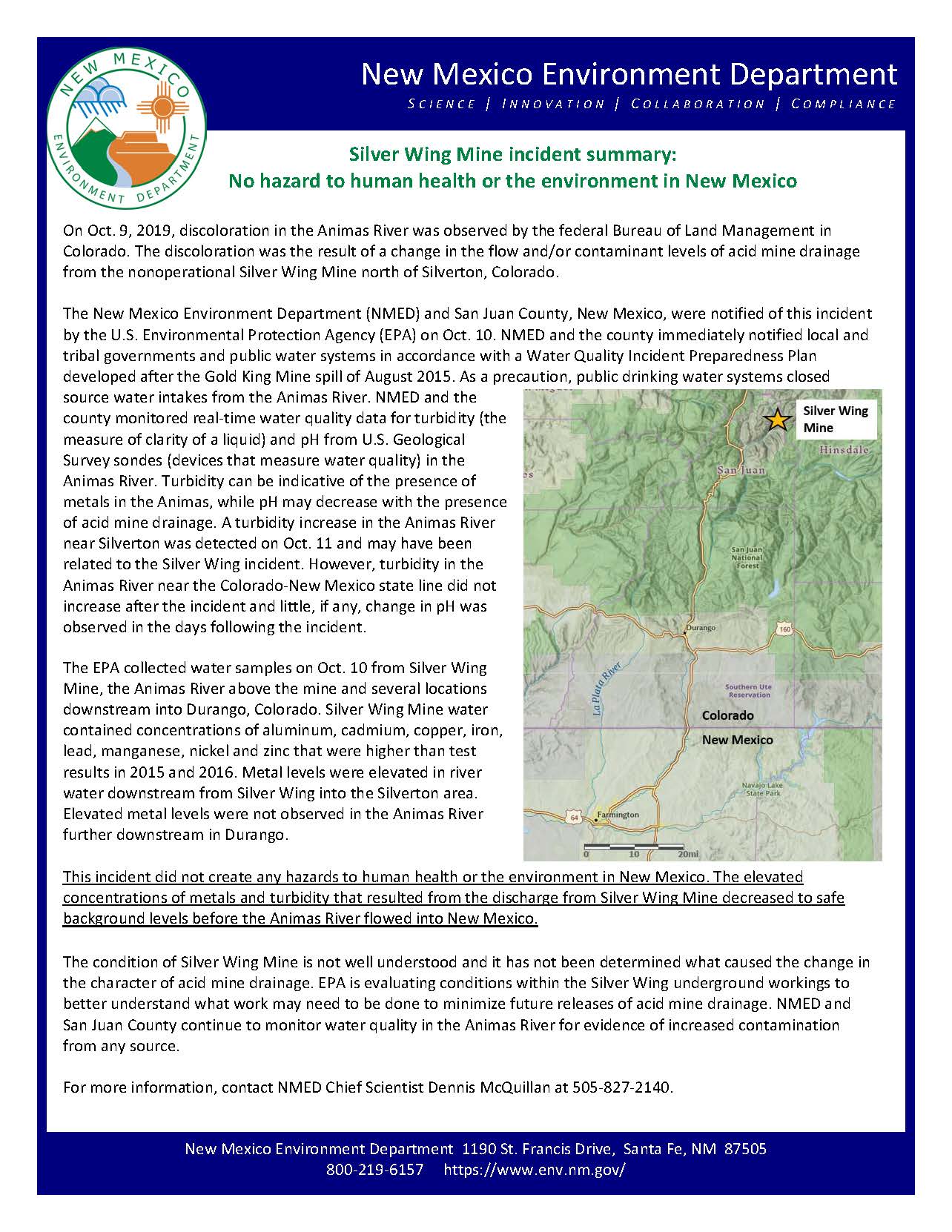
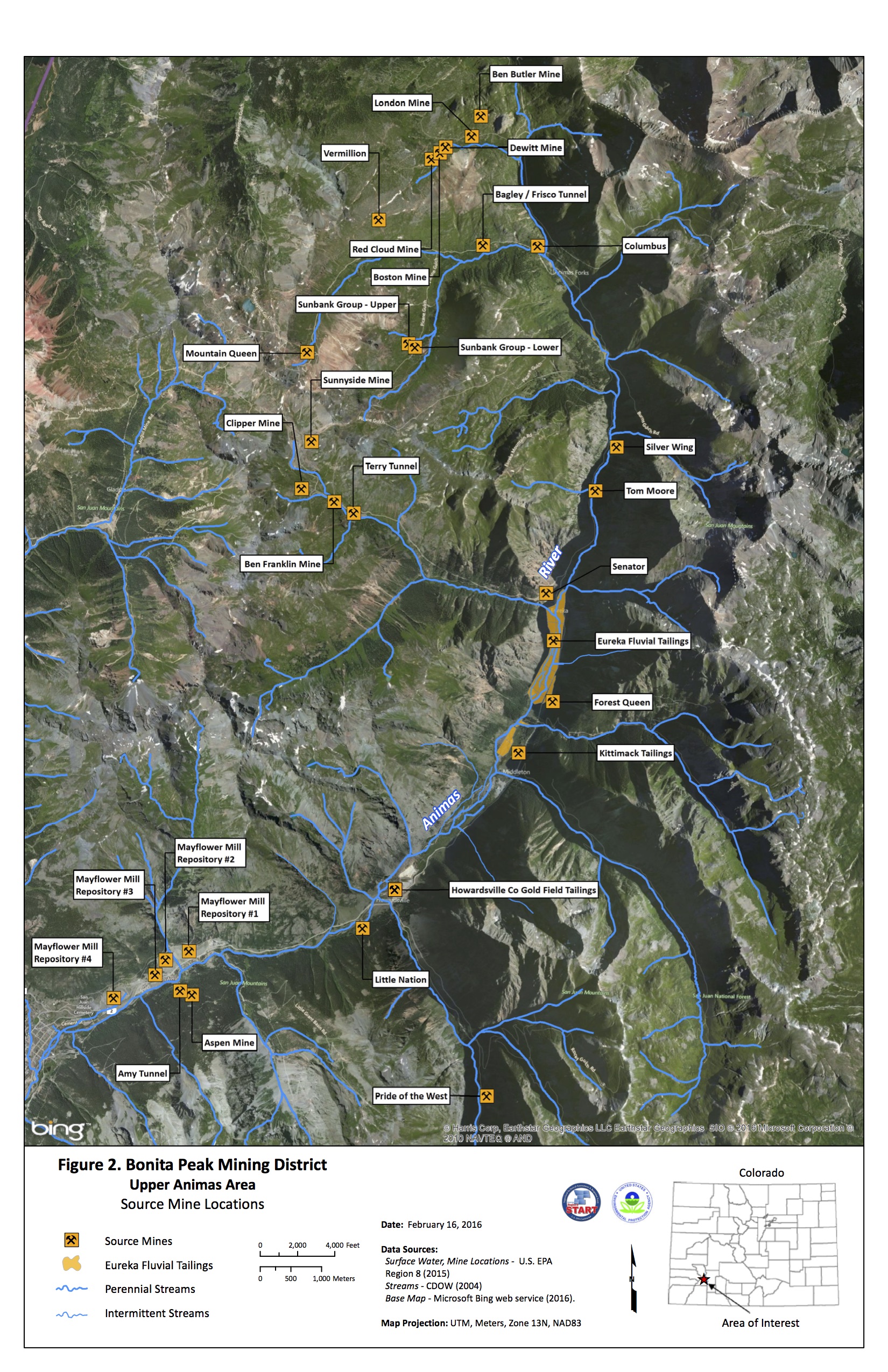
The additional discharge from the Silver Wing Mine into the Animas River did not have a negative impact on water quality, according to the New Mexico Environment Department.
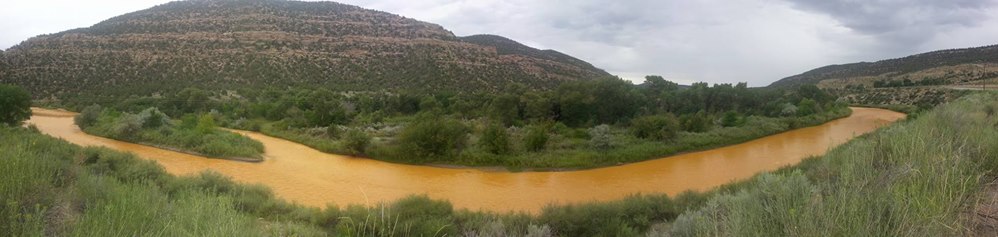
The Silver Wing Mine discharged a larger amount of water than usual last week, causing some discoloration in the Animas River near Silverton, Colorado.
However, the discoloration was not visible downstream, and NMED does not see any evidence of negative impacts to water quality…
NMED has been monitoring water quality data for both turbidity and pH in the Animas River in Colorado and New Mexico. According to the slides, the Silver Wing Mine has not, to date, caused potentially harmful changes in turbidity or pH in the Animas River as it flows from Colorado into New Mexico at Cedar Hill.
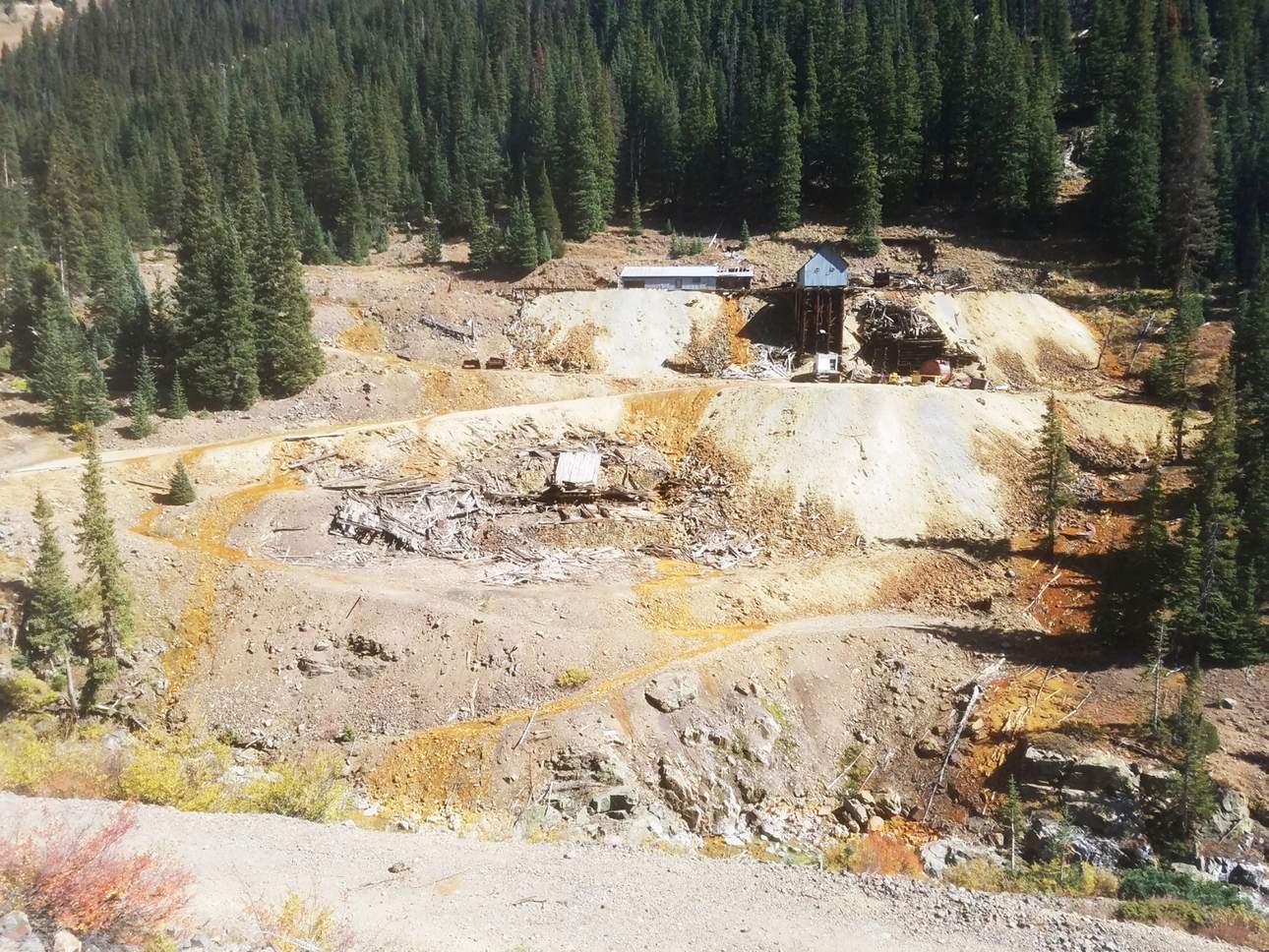
Sliver Wing Mine: Photo credit: San Juan County Sheriff Bruce Conrad
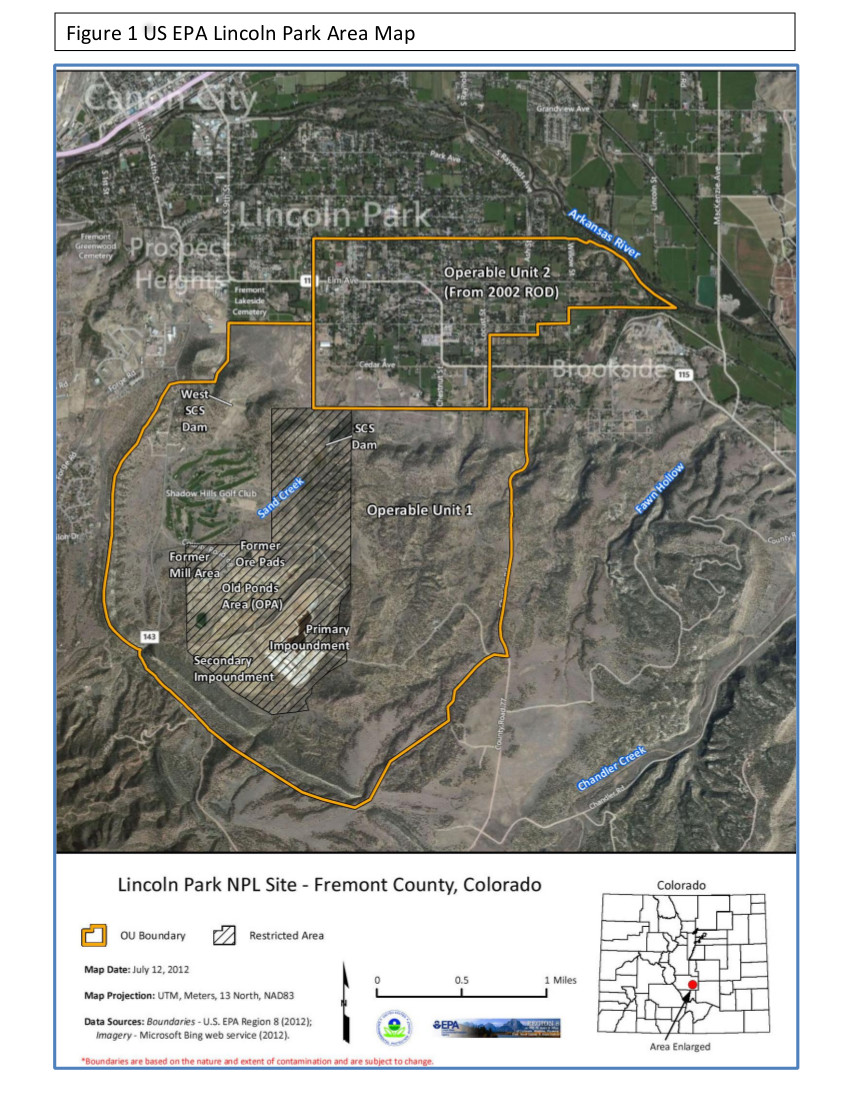
The EPA Annual Meeting reporting on activities at the Superfund site will be from 6 to 8 p.m. Thursday at the Abbots Room, Abbey Conference Center. Colorado Department of Public Health and Environment and Environmental Protection Agency officials will be present as well as representatives of Colorado Legacy Land to answer questions and take comments from Fremont County residents. The Lincoln Park neighborhood and the site of the former Cotter uranium mill south of Cañon City were declared a Superfund site in 1984 due to the widespread groundwater and soils contamination from the operation of the mill.
The September meeting of the Community Advisory Group for the Lincoln Park Cotter Superfund site was held Sept. 19 at the Garden Park Room.
Updates on early cleanup actions included the TCE (trichloroethylene) plume near the Shadow Hills Golf Club. The Work Plan was approved in July 2019 by the agencies. Testing of all the soil borings is complete and installation of monitoring wells began Sept. 26.
The Soil Excavation Evaporation Pond Construction Plan is out for comment. This plan is proposed to speed the dewatering of the radioactive tailings located at the former Cotter mill site. The CDPHE and EPA, as well as the community, have an opportunity to review the plan. The deadline for comments is 5 p.m. Oct. 15 to Dustin McNeil at dustin.mcneil@state.co.us. A link to the work plan and other documents is available at: https://sites.google.com/state.co.us/cotter-uranium-mill/documents-available-for-public-review-and-comment.
Emily Tracy, chairperson of the Community Advisory Group, states “Now that early actions toward the cleanup of the Lincoln Park Site are moving forward under the ownership of Colorado Legacy Land, the community will be able to have critical input in the process. At the meeting, you will be able to ask why these actions are being taken and how the physical action of removal, moving soils, pumping water from the primary impoundment will move the cleanup toward the Remedial Investigation of the site. That is the next step in the EPA CERCLA process which may be proposed as early as next year.”
Tracy continued: “It should be remembered that 5-6 million tons of toxic materials sit in the 157-acre impoundment ponds. According to past estimates, 1.5 million gallons of contaminated water and 1.5 million tons of contaminated soils sit waiting for cleanup, and still threaten our community if anything goes wrong.”
“If a Lincoln Park resident has a well, they are advised not to use it because of contamination from the uranium mill. Wouldn’t it be great to have the use of that water?” asks CAG member Sharyn Cunningham, who had to stop using her wells many years ago. “If there is any hope for cleaning up our Lincoln Park wells, we all need to make sure it is done and done right!”
Both the New Mexico Environment Department and the San Juan County Office of Emergency Management reported today that they were notified by the U.S. Environmental Protection Agency of a wastewater spill from the Silver Wing Mine in the area of Eureka Gulch, north of Silverton, Colorado, which occurred Wednesday afternoon.
According to the San Juan OEM, the spill was the result of a “burp” from the mine and is unrelated to either the Gold King Mine or the Bonita Peak Superfund site.
The source is 10 miles from the Animas River and the spill was expected to dilute by the time it reached Silverton. The spill was moving slowly and was expected to reach the San Juan River.
So far, “Data do not currently indicate any evidence of water quality impacts that could affect human health and the environment,” stated NMED in a press release, adding that the department will continue to monitor the situation.
Although the EPA has not issued a notice to close municipal drinking water supplies, the cities of Farmington and Aztec, New Mexico and the Lower Valley Water Users Association have shut off water intakes to municipal drinking water supplies “out of an abundance of caution.”
Neither the volume of the spill nor the contents of the water were known as of 4 p.m. Thursday. EPA officials were conducting tests to learn more.
Yolanda Barney, program manager for the Navajo Nation Environmental Protection Agency’s Public Water Supply Program, said Thursday NNEPA is aware of spill and is still gathering information.
Sources in Durango, Colorado, reported Thursday the river appears normal.
Local environmental activists and state lawmakers gathered near Colorado Springs on Tuesday to call for more federal support in cleaning up toxic PFAS chemical contamination near some of the state’s military bases, most recently including the U.S. Air Force Academy.
Firefighting foams used regularly on military bases for decades leached chemicals into local groundwater supplies. In 2016, the Environmental Protection Agency issued a health advisory warning of a connection between PFAS and certain types of cancer.
The military has spent hundreds of millions of dollars on cleanup nationwide, including $50 million at Peterson Air Force Base alone.
But speakers at the event organized by the nonprofit Environment Colorado said much more funding is still needed.
Fountain Valley Clean Water Coalition founder Liz Rosenbaum urged Colorado’s congressional delegation to fight for more PFAS cleanup funds in next year’s National Defense Authorization Act (NDAA).
“We have done everything that we can possibly do from the local level, from our city, the county and the state,” Rosenbaum said. “This is a national contamination because it has been done by the department of defense. So we have to look to Congress and our elected officials in D.C.”
Republican Rep. Doug Lamborn sits on the conference committee which is working out differences between Senate and House versions of the NDAA. Lamborn’s office did not send a representative to the press conference.
Republican state Sen. Dennis Hisey said he doesn’t think it matters where the money comes from, as long as Congressional leaders work to raise awareness of how much is left to do in cleaning up these so-called “forever chemicals.”
A wetland along Castle Creek. Photo credit: Brent Gardner-Smith/Aspen Journalism
Here’s a guest column by Robert Redford that’s running in The Washington Post:
Robert Redford is an actor, director and trustee of the Natural Resources Defense Council.
The real star of my 1992 movie, “A River Runs Through It,” was not supposed to be Brad Pitt. It was supposed to be Montana’s iconic Big Blackfoot River, which starts as a watery thread up near the Continental Divide and runs down to its confluence with the Clark Fork near Missoula, about 75 miles west. The Blackfoot was so badly degraded by decades of gold mining and logging waste, though, we shot the film instead mostly on the Gallatin River 200 miles away.
Today, the Blackfoot is on the mend, thanks to state and local action grounded in common-sense federal protections for clean water in our rivers, lakes, estuaries and bays.
If there’s one thing, in fact, we should all be able to agree on as Americans, it’s that clean water is life itself. Any threat to that imperils us all.
That’s why we need to stand up to President Trump’s attempt to replace the clean water rule with a flimsy substitute that would leave half the nation’s wetlands and millions of miles of streams without the protection they need. That’s what Trump plans to do by December, unless enough of us speak out before then.
That’s worth protecting. Trump, though, is putting it all at risk by repealing the rule. The substitute rule he expects to finalize in December would lack the protections we need to prevent oil and gas companies, shopping-center developers, factories, coal companies and others from contaminating our waters, sending the pollution downstream and leaving our families and communities to pay the price.
In fact, when Andrew Wheeler, the Environmental Protection Agency administrator, announced the formal repeal of the clean water rule this month, he did so, not at EPA headquarters or near a treasured body of water as we might expect, but at the National Association of Manufacturers, which fought the clean water rule tooth, nail and hair. Wheeler, a former coal lobbyist, decried the clean water rule as “an egregious power grab” by Washington, claiming it creates uncertainty for farmers and other property owners.
And yet, in the roughly half of the country where its implementation hadn’t been halted by court challenges, the clean water rule set fair and consistent rules of the road for everyone. And the rule wouldn’t affect normal farming and ranching operations.
Americans of both parties began working on clean water nearly 50 years ago. We have come a long way. You don’t see worrisome debris and disgusting suds in our rivers the way we did when I was younger. It’s been slow and steady work to clean these watersheds, and we still have a long way to go. Even today 8 in 10 Americans worry about pollution to our rivers, lakes and reservoirs.
Trump wants to leave it largely up to states to protect fresh water. Nothing in the clean water rule, though, stops states from doing so; it simply provides a minimum standard of protection nationwide. That’s important for many reasons, including keeping one state’s pollution from flowing downstream to another.
When he announced the new proposed rule, Wheeler said the rule was an example of regulatory “overreach. ”
Consider that statement for a minute. Wheeler is supposed to be the nation’s chief environmental steward, our last line of defense against toxic pollution and industrial ruin. Now he says it’s a stretch to expect him to protect clean water?
It shows you how far down the rabbit hole we’ve gone with an administration that’s waging the single worst administrative assault in history against our environment and health. Trump has tried to weaken, delay or repeal more than 80 different safeguards that protect the air we breathe, the water we drink, and our lands, wildlife and habitat.
These are needed rules, each one grounded in sound science, the public interest and the rule of law.
On September 20th, the U.S. Environmental Protection Agency (EPA) finalized a partial deletion of the Vasquez Boulevard/Interstate 70 (VB/I-70) Superfund site in Denver, Colorado from the National Priorities List (NPL) of the nation’s most contaminated sites. EPA and the Colorado Department of Public Health and Environment have determined that all required cleanup activities are complete in the area proposed for deletion.
“The deletion of this area from the Superfund list represents the culmination of two decades of efforts to sample, clean up and restore residential yards affected by lead and arsenic contamination in north Denver,” said EPA Regional Administrator Gregory Sopkin. “We share this residential cleanup achievement with our partners at the State of Colorado, the City of Denver and the local community.”
Under the Trump administration, EPA’s Superfund program has reemerged as a priority to fulfill and strengthen the agency’s core mission of protecting human health and the environment. In fiscal year 2018, EPA deleted all or part of 22 sites from the Superfund’s NPL, the largest number of deletions in one year since FY 2005 and a significant increase over the past few years.
EPA is finalizing the deletion of the residential area of the VB/I-70 Superfund site, also called Operable Unit 1, based on a determination that no further action is needed to protect human health and the environment. EPA received public comments on the proposed deletion from February 6th to April 8th 2019 and prepared a responsiveness summary to those comments, which is available online at http://www.regulations.gov (Docket # EPA-HQ-SFUND-1999-0010) or at the Valdez-Perry Branch Library, 4690 Vine Street, Denver, Colo.
The area will continue to be subject to regular EPA review for protectiveness. EPA will continue to address contamination concerns at remaining portions of the VB/I-70 site, which includes the locations of two former smelters. EPA proposed the deletion of Operable Unit 1 earlier this year and concluded a public comment period in March.
The VB/I-70 Superfund site includes four square miles in north Denver, including the Cole, Clayton, Swansea/Elyria, southwest Globeville and northern Curtis Park neighborhoods. EPA placed the site on the NPL in 1999 due to metals contamination, mainly lead and arsenic, associated with historic smelter operations in the area. In 2003, EPA selected a remedy for residential properties that included extensive soil sampling, soil removal, and a community health program. In completing that work, EPA has sampled more than 4,500 residential yards and cleaned up more than 800.
Historically, the affected north-Denver neighborhoods were a major smelting center for the Rocky Mountain West. Two smelting plants—Omaha & Grant and Argo—operated at the site for varying lengths of time, beginning as early as the 1870s, refining gold, silver, copper, lead and zinc. As a result, heavy metals were deposited in area soils at levels that, in some cases, posed a health risk to residents. Groundwater impacted at the former smelter locations is currently being addressed as Operable Units 2 and 3 of the VB/I-70 Superfund site.
Colorado Attorney General Phil Weiser is taking a hard look at the Trump administration’s decision last week to roll back Obama-era clean water regulations as he determines how to respond.
The Democrat says that he might challenge the unwinding of the Waters of the United States Rule if he determines that the Environmental Protection Agency has gutted the policy to the extent that Colorado’s water quality could suffer without sufficient oversight…
Weiser said his office worked with lawyers in a host of Colorado departments, including the heads of agriculture, natural resources and public health and environment, earlier this year to urge the EPA not to cut clean water regulations beyond what they were in 2008 as they slashed the Waters of the United States rule.
In 2008, the EPA issued guidance on which waterways, including wetlands and streams, are covered by the Clean Water Act. The Waters of the United States rule implemented by the Obama administration shored up and expanded that guidance.
Weiser told The Colorado Sun last week that he was still examining the rollback and didn’t yet know exactly how the state would respond.
“The sort of guideposts are how close to the rules that were adopted to what we recommended,” Weiser said…
The Trump administration has vowed to implement revised clean water policies before the end of the year, and they are expected to be less inclusive than the Obama-era policy. President Donald Trump ordered the Waters of the United States rule repealed and replaced in February 2017.
Now that the 2015 extensions have been rolled back, federal water rules revert back to where they were in 1986. Experts say while the move has created uncertainty, it does not erase the bulk of federal water protections.
“Having the rule removed doesn’t remove the regulation,” said Colorado River District spokesman Chris Treese. “It doesn’t remove the protections that are still there. So I don’t think people have to worry.”
[…]
“There is state permitting and there is local permitting that would protect from any of the horribles that people suggest could happen.” Treese said. “That you could dump a toxic waste with impunity if the Trump era rule were in place. I don’t believe that’s true.”
The 2015 rule expanded the types of waterways that can receive federal protection under the Clean Water Act. Now, WOTUS will go back to it’s form before 2015. A member of the local Sierra Club disagrees with the decision. “Would allow people to pollute much more easily, there’s no longer a permit requirement, and because of that they can carry on activities without the government oversight,” said Jim Lockhart, the Conservation Chair of the Pikes Peak Group of the Sierra Club.
Lockhart said the 2015 rule defined what waterways should be protected more specifically, and now he’s interested to see what the new definition will be. “Rescinded the rule and promised new definitions, they could have waited and created the new definitions and then let the public see them and then let the public decide,” said Lockhart.
EPA Administrator Andrew Wheeler said the new definition will come in December, and would mean farmers, landowners, and businesses will spend less time and money determining whether they need a federal permit.
Arizona Rivers Map via Geology.com.
FromThe Cronkite News (Kailey Broussard) via KOAA.com:
…while some welcomed the end of the “Waters of the United States” rule, environmental groups warned that the change would mean virtually no environmental protection for the nation’s waterways – particularly in the West.
“We know where we are going, and that is going to be a world where wetlands, especially in the arid West, get almost no protection,” said Brett Hartl, government affairs director for the Tucson-based Center for Biological Diversity.
A 2018 report by the center estimated that more than 3,000 U.S. watersheds would lose Clean Water Act protections under the replacement plan proposed by the Trump administration. That, in turn, could accelerate the extinction of more than 75 endangered species, the report said.
Critics of the Obama-era rule – known as WOTUS – disagree, saying the full range of federal pollution regulations does more than enough to protect waterways…
In the meantime, federal officials are developing and presenting a new plan. That process has garnered more than 621,000 comments on the federal regulations website…
…Sandy Bahr, president of the Sierra Club’s Grand Canyon chapter, said the EPA is “not being honest” about the change’s impact. WOTUS protected arterial waterways, she said, by protecting the less-obvious waters.
“If you take a very narrow view of that and say, ‘Oh, only waters that are navigable,’ then you’re not even going to be protecting those navigable waters,” she said.
Bahr and others have pointed to the San Pedro River, a ribbon-like stream that meanders some 140 miles through southern Arizona and part of Mexico. The stream’s limited navigability means it most likely would not receive protection under the repeal.
“You can talk about these things in the abstract, but when you look at what is happening on the ground already, we’re struggling to protect rivers like the San Pedro River, which is so important ecologically and economically,” Bahr said. “Something like this rollback makes it so much more difficult to do.”
Hartl said that, except for the Colorado River, the change would mean most of Arizona would not be protected. A map included with the center’s study showed much of the Southwest losing Clean Water Act protection without WOTUS…
Meanwhile, Bahr is certain the proposed rule will be challenged.
“We need to have the most stringent requirements possible to protect what we have left because we have lost so much,” she said.
A wetland area along Homestake Creek. Photo credit: Brent Gardner-Smith/Aspen Journalism
FromThe Grand Junction Daily Sentinel (Dennis Webb):
Another Obama administration environmental rule is now history, as the Environmental Protection Agency on Thurday finalized its repeal of a 2015 rule expanding waterway and wetlands protections.
The 2015 “Waters of the United States” rule had support from environmentalists but faced criticism from agricultural and other interests…
Its action restores regulations that were in place prior to the 2015 rule, ending inconsistent regulations in different states as a result of various court actions on that rule. EPA Administrator Andrew Wheeler said in a news release that the action Thursday “fulfills a key promise of President Trump” and sets the stage for a second EPA action, a new waters of the U.S definition “that will provide greater regulatory certainty for farmers, landowners, home builders, and developers nationwide.”
[…]
…the conservation group Western Resource Advocates said the EPA actions will significantly weaken protections for thousands of miles of waterways and millions of acres of wetlands across the West. It said the EPA’s efforts aim to remove protections for rivers and streams that flow intermittently after rain or snow, and its proposed new definition threatens Western water supplies.
It says the EPA estimates that in Colorado and Utah alone, more than 5 million people receive drinking water from public systems relying at least in part on intermittent, ephemeral or headwater streams.
“This assault on the Clean Water Act makes it more important than ever for local lawmakers and water leaders to enact state-level policies that protect our rivers and our communities,” Robert Harris, a senior staff attorney for the group, said in a statement.
As an increasing number of communities across the country continue to grapple with contamination of per- and polyfluoroalkyl substances (PFAS) in drinking water sources, U.S. Senator Tom Carper (D-Del.), top Democrat on the Environment and Public Works Committee (EPW), reacted to a breakthrough moment in this afternoon’s U.S. House of Representatives Committee on Oversight on Government Reform (OGR) Subcommittee on Environment hearing, in which two major chemical manufacturers announced their support for policies that would clarify polluter liabilities and clean up contaminated sites.
Just one day after members from the U.S. House of Representatives and U.S. Senate returned to Washington this week to negotiate PFAS provisions to be included in theNational Defense Authorization Act for Fiscal Year 2020 (NDAA) – and, just days after the Office of Management and Budget (OMB) warned Congressional leaders about the president’s “strong” opposition to those provisions – today, chemical manufacturers DuPont de Nemours, Inc. and The Chemours Company announced their support for policies that are currently being negotiated for inclusion in NDAA. The companies signaled their support for setting a national drinking water standard, enhancing public awareness of chemical releases and designating legacy PFAS as “hazardous substances” under the Superfund law to ensure contaminated sites are cleaned up.
“This is a breakthrough moment on PFAS solutions. It should send a clear message to the president and any member of Congress who might still have some misplaced concerns about potential regulatory burdens associated with PFAS solutions, including declaring some PFAS chemicals as hazardous substances under the Superfund law,” Senator Carper said. “Some of the companies that would be regulated under these policies have now publicly declared their support for them – that’s consequential, and I commend them for their constructive engagement on the legislation being considered by Congress.”
[…]
The measures supported by these two companies include measures added to the Senate version of the NDAA by Senators Carper, Shelley Moore Capito (R-W.V.) and EPW Chairman John Barrasso (R-Wyo.), including requirements that EPA set a national primary drinking water standard for some legacy PFAS chemicals and require PFAS manufacturers to report environmental releases of PFAS as part of Toxic Release Inventory releases.
In today’s hearing, the companies also declared their support for designating some legacy PFAS as hazardous substancesunder the Superfund law. Senator Carper’s bill, the PFAS Action Act of 2019, would mandate EPA within one year of enactment declare per- and polyfluoroalkyl substances (PFAS) as hazardous substances eligible for cleanup funds under the EPA Superfund law, and also enable a requirement that polluters undertake or pay for remediation. The legislation currently has 43 cosponsors and its companion bill in the U.S. House of Representatives, authored by Rep. Debbie Dingell (D-Mich.), was approved unanimously by the House as part of the House NDAA in July.
In a historic win of the common man against a powerful corporate, chemical giant Monsanto was ordered to pay $289m damages to a man who claimed he got cancer after being directly exposed to the company’s glyphosate-based weedkillers, including the widely used Roundup. Screenshot from meaww.com
From the Associated Press via the The Aurora Sentinel:
EPA won’t approve warning labels for Roundup chemical
The Trump administration has instructed companies not to warn customers about products that contain glyphosate, a move aimed at California as it fights one of the world’s largest agriculture companies about the potentially cancer-causing chemical.
The U.S. Environmental Protection Agency says it will no longer approve labels warning glyphosate is known to cause cancer. The chemical is marketed as a weed killer by Monsanto under the brand Roundup.
California requires warning labels on glyphosate products because the International Agency for Research on Cancer has said it is “probably carcinogenic.”
The EPA disagrees, saying its research shows the chemical poses no risks to public health.
“It is irresponsible to require labels on products that are inaccurate when EPA knows the product does not pose a cancer risk,” EPA Administrator Andrew Wheeler said in a statement. “We will not allow California’s flawed program to dictate federal policy.”
California’s Safe Drinking Water and Toxic Enforcement Act, approved by voters in 1986, requires the government to publish a list of chemicals known to cause cancer, as determined by a variety of outside groups that include the EPA and IARC. The law also requires companies to warn customers about those chemicals.
California regulators have twice concluded glyphosate did not pose a cancer risk for drinking water. But in 2015, the IARC classified the chemical as “probably carcinogenic,” triggering a warning label under California law. Monsanto sued, and last year a federal judge blocked California from enforcing the warning label until the lawsuit is resolved.
Federal law regulates how pesticides are used and how they are labeled. States are often allowed to impose their own requirements, but they can’t be weaker than the federal law, according to Brett Hartl, government affairs director for the Center for Biological Diversity.
Hartl said it is unusual for the EPA to tell a state it can’t go beyond the federal requirements.
“It’s a little bit sad the EPA is the biggest cheerleader and defender of glyphosate,” Hartl said. “It’s the Environmental Protection Agency, not the pesticide protection agency.”
In a letter to companies explaining its decision, Michael L. Goodis, director of EPA’s registration division in its Office of Pesticide Programs, said the agency considers labels warning glyphosate to cause cancer to “constitute a false and misleading statement,” which is prohibited by federal law.
EPA scientists ordered to allow Alaska mine to move forward; could endanger wildlife
In a major environmental reversal, EPA scientists have been ordered to get out of the way of a massive, controversial copper and gold mine slated for a highly sensitive area in Alaska.
The order may have originated from the President himself.
The meeting took place on the tarmac during an Air Force One stopover June 26. Alaska Gov. Mike Dunleavy, a pro-mining, pro-business, anti-EPA governor, met with Donald Trump for nearly a half-hour.
Dunleavy has been pushing for approval of a massive gold and copper mine known as the Pebble Mine, planned for Alaska’s Bristol Bay watershed, home to the breeding grounds for one fo the world’s largest and most pristine sockeye salmon fisheries.
After his meeting on Air Force One, Dunleavy said, “He (Trump) really believes in the opportunities here in Alaska and he’s doing everything he can to help us on our mining concerns.”
Inside EPA sources now tell CNN the very next day, June 27, top EPA officials in Washington held an internal video conference with Seattle, and told staff the EPA was removing a special protection for Bristol Bay, and, in essence, clearing the way for what could be one fo the largest open-pit mines in the world.
That internal announcement was a “total shock” to top EPA scientists, sources told CNN, because their environmental concerns were overruled by Trump political appointees at EPA headquarters in Washington.
Bristol Bay and its tributaries are regarded as one of the world’s most important salmon fisheries, roughly half the world’s sockeye salmon come from there.
It’s been protected since 2014, when after three years of study, the Obama-era EPA used a rare provision of the Clean Water Act — to basically veto any mining that could pose a threat.
“EPA scientists writing a mine ‘would result in complete loss of fish habitat’ that was ‘irreversible.’ It’s mindboggling that it’s still being considered at all,” said Christine Todd Whitman, former EPA administrator.
Todd Whitman is a Republican, former New Jersey governor, and under President George W. Bush, ran the EPA. She has joined several other former EPA chiefs to publically oppose the mine.
“The potential damage is overwhelming,” she said. “The opposition to it up there is amazing and everywhere. I mean, this was a huge, the potential of over 80 miles of streams, thousands of acres, could be damaged from this project.”
This is the second time during the Trump administration the political appointees at the EPA have decided to remove special protections for Bristol Bay to pave the way for this huge mine.
In 2017, President Trump’s first EPA administrator, scandal-plagued Scott Pruitt, canceled the protections after a private meeting with the mine company’s CEO.
After a report exposed the meeting and the lack of scientific debate behind the reversal, Pruitt backed down and put the protections back in place.
Now, another private meeting, this time with the president himself, has led to yet another win for the mine, and the removal of environmental protections for this pristine watershed.
“One of the most troubling things about this administration, I mean there are a lot of things that trouble me, but on the environmental side is this disregard of science,” Todd Whitman said. “They’re gutting science across the agencies, across the departments, across the government.”
If the order is followed through with, Todd Whitman sees a number of lawsuits possibly being filed.
“Environmental groups, native Alaskans, you’ll have a host of lawsuits, I’m convinced,” she said…
At EPA headquarters, Andrew Wheeler, the former coal company lobbyist who now runs the agency, has a tie to Pebble Mine, too. He has recused himself from decision making on the project because his former law firm represents the mine.
EPA scientists said political and business favors are driving decision making.
One top EPA official said, “We were told to get out of the way and just make it happen.”
The EPA said the Obama-era protections were outdated and the mine still has to go through the approval process.
When asked about the internal EPA meeting on June 27, at first, the EPA denied it happened, but when presented with evidence, they admitted the meeting took place.
Sources said the meeting is when officials told scientists the decision had been made and their work was not needed.
FromThe Albuquerque Journal (Therasa Davis) via The Farmington Daily Times:
[After the August 5, 2015 spill]…The EPA paid state and tribal governments for emergency water tests, but initially denied 79 economic damage claims.
In August 2017, EPA administrator Scott Pruitt – who resigned in July 2018 – visited the spill site and said the agency would reconsider the claims. The New Mexico Environment Department said Friday that it was unaware whether any of those payments have been made.
Animas River at the New Mexico/Colorado State line August, 2015.
NMED chief scientist Dennis McQuillan said there is ongoing monitoring to determine long-term effects of the spill.
“Dozens of mines are leaking acid mine water into the watershed,” McQuillan said. “Gold King was just one of those.”
Under new administrator Andrew Wheeler, the federal agency, its contractors and mining companies asked for dismissal of the lawsuits, arguing the EPA had immunity and was already working on cleanup.
Environment Department general counsel Jennifer Howard said a federal judge in Albuquerque rejected that argument in March, so the lawsuits “should definitely start proceeding at a faster pace.”
A November 2018 EPA report showed fish had elevated metal levels in the weeks after the spill, but returned to pre-spill levels by spring 2016.
Gold King Mine Entrance after blow out on August 5, 2015. Photo via EPA.
Research by the New Mexico Bureau of Geology and Mineral Resources, New Mexico Game and Fish, Mountain Studies Institute, San Juan Basin Public Health and Colorado Parks and Wildlife echo that claim.
“The farming industry is still hurting,” McQuillan said. “I’ve talked to farmers who said their sales are down 25% from before the spill because people say they won’t buy food grown on the San Juan. But our agriculture products are safe. The fish are safe to eat. The river is safe for irrigation.”
McQuillan said the federal WIIN Act (Water Infrastructure Improvements for the Nation) will provide money for the Navajo Nation to test fish in the spill area and start outreach to address the misconception that the river water is unsafe.
In 2016, the EPA designated the area around the spill site as the Bonita Peak Mining District Superfund site, which opens up money for cleanup and places the site on a priority action list. Howard and McQuillan agreed that was a positive development, but Superfund cleanup is a slow process.
“It was a significant issue four years ago and remains a significant issue,” Howard said. “The motivation for our lawsuit is to have EPA step up to the plate and address the economic impact this (spill) had on agriculture and tourism for our state.”
The “Bonita Peak Mining District” superfund site. Map via the Environmental Protection Agency
Here’s the release from the Bureau of Reclamation and Environmental Protection Agency (Theresa Eisenman and the EPA Press Office):
Today, senior administration officials participated in the Second National Drought Forum where they announced Priority Actions Supporting Long-Term Drought Resilience. This document outlines key ways in which federal agencies support state, tribal and local efforts to protect the security of our food supply, the integrity of critical infrastructure, the resilience of our economy, and the health and safety of our people and ecosystems.
The document was developed by the National Drought Resilience Partnership (NDRP), a federal collaborative formed to promote long-term drought resilience nationwide. While authority lies with the states to manage water resources, federal agencies play a key role in supporting states, tribes, communities, agriculture, industry, and the private sector owners and operators of critical national infrastructure to prepare for, mitigate against, respond to, and recover from drought.
The following statements were released after today’s panel:
“Under the leadership of President Trump, we are taking unprecedented steps at the federal level to coordinate and empower states, tribes, local communities, and water users to promote drought preparedness and resiliency and ensure reliable water supply throughout the West. The U.S. Geological Survey and Bureau of Reclamation play integral parts in this, whether it’s the science or infrastructure piece of this equation,” said U.S. Department of the Interior Assistant Secretary for Water and Science Dr. Tim Petty.
“The Western states have experienced intense drought with the potential to severely impact agriculture, municipal water supplies and hydropower production. We’ve demonstrated that infrastructure investments, innovative approaches to conservation, and collaboration build drought resiliency and reduces risks,” said Bureau of Reclamation Commissioner Brenda Burman.
“We know we can accomplish more when we work together, and the National Drought Resilience Partnership facilitates collaboration among federal partners to help the country respond to drought and to prepare for the future” said U.S. Department of Agriculture Under Secretary for Farm Production and Conservation Bill Northey. “These priorities are a large part of our game plan to how we can protect our food and water supply, and to build resilience on our farms and ranches and in our communities and businesses”
“The impact of drought on public health and the environment is far reaching because it reduces both water quantity and water quality,” said U.S. Environmental Protection Agency Assistant Administrator for Water David Ross. “Through EPA initiatives, such as the National Water Reuse Action Plan, we are working to ensure a sufficient supply of clean water for the American people.”
“Water quality and availability is a national issue and it is one that affects every American. Through this partnership, the data produced by the U.S. Geological Survey will be integrated into a comprehensive framework of information sharing that is flexible and responsive to the nation’s decision-makers, ensuring every community understands drought preparedness, mitigation, and resiliency,” said U.S. Geological Survey Director James Reilly.
“The National Drought Resilience Partnership is essential to the continued collaboration amongst federal agencies regarding the nation’s water resources. I am committed to this partnership and will ensure the Corps’ support to other agencies as they work drought-related issues and coordinate to reduce duplicative and redundant efforts,” said U.S. Department of Army Assistant Secretary of the Army for Civil Works Ricky “R.D.” James.
“The National Drought Resilience Partnership is inspiring action across the federal government. DOE is pleased to collaborate with other agencies to stimulate American innovation and technology solutions that address drought resilience through the Water Security Grand Challenge and other activities,” said U.S. Department of Energy Assistant Secretary for Energy Efficiency and Renewable Energy Daniel Simmons.
The NDRP and the document released today focus on fostering a national dialogue about how federal agencies can support these entities in building a more drought-resilient nation for sufficient water quality and quantity and a vibrant economy at the local level. NDRP categorizes its drought resilience efforts along six goal areas, which provide a framework to systematically address how the federal government supports building long-term drought resilience:
Data Collection and Integration
Communicating Drought Risk to Critical Infrastructure
Drought Planning and Capacity Building
Coordination of Drought Activity
Market-based Approaches for Infrastructure and Efficiency
Innovative Water Use, Efficiency, and Technology
Background
Established in 2016, the NDRP is comprised of federal agencies that work together to leverage technical and financial federal resources, strengthen communication, and foster collaboration among its members to productively support state, tribal, and local efforts to build, protect, and sustain drought resilience capacity at regional and basin scales.
The NDRP co-chairs are the Department of Agriculture and Environmental Protection Agency. The additional interagency NDRP Member Agencies and offices include the Department of Defense; the Department of the Interior (DOI); the Department of Commerce; the Department of Energy; the Department of Homeland Security (DHS); the Office of the Assistant Secretary of the Army for Civil Works; the Office of Management and Budget; the Office of Science and Technology Policy; the National Economic Council; the Council on Environmental Quality; the National Security Council staff; and such other agencies or offices as the agencies set forth above, by consensus, deem appropriate. Currently, other offices include: the Office of Water Prediction, the National Weather Service, the National Oceanic and Atmospheric Administration, the National Integrated Drought Information System, which all are within the Department of Commerce; the Bureau of Reclamation and the United States Geological Survey, within the DOI; National Aeronautics and Space Administration; DHS Cybersecurity and Infrastructure Security Agency – National Risk Management Center; the Centers for Disease Control; and the Federal Emergency Management Agency. Member agencies collaborate to ensure successful outcomes with maximum efficiency and minimal duplication.
Hydro-Illogical Cycle graphic via the University of Nebraska Lincoln.
The Fountain Creek Watershed is located along the central front range of Colorado. It is a 927-square mile watershed that drains south into the Arkansas River at Pueblo. The watershed is bordered by the Palmer Divide to the north, Pikes Peak to the west, and a minor divide 20 miles east of Colorado Springs. Map via the Fountain Creek Watershed Flood Control and Greenway District.
Officials of Pueblo County and of the Lower Arkansas Valley are making significant progress to resolve a lawsuit against Colorado Springs for years of defiling Fountain Creek.
“The parties have made significant progress toward settlement,” states a July 23 report obtained by The Pueblo Chieftain.
The report was submitted to a judge in Denver of the U.S. District Court for Colorado, where the lawsuit is pending.
The Chieftain reported in December that both sides of the dispute had begun meeting to discuss a potential resolution without further litigation.
The new report and the one in December were signed by attorneys for the litigants: the county commissioners, the Lower Arkansas Water Conservancy District, the U.S. Environmental Protection Agency and the state Department of Public Health and Environment on one side, and the city of Colorado Springs on the other side…
After a trial last year, the judge overseeing the case decided in November that the Colorado Springs violated its permit that regulates discharges into the creek from the city’s storm water sewer system.
The next step would have been for another trial to determine what the city must do to remedy the violations.
The commissioners, the water conservancy district, plus the federal and state environmental agencies stated in December they would ask a judge to order Colorado Springs to improve its storm water system, impose monetary penalties “and other appropriate remedies” if both sides could not agree on how to resolve the dispute.
In last week’s report, all sides stated they “have been meeting regularly and intensively to reach settlement.”
They asked the judge to put the case on hold in order to give them at least until Nov. 22 “to focus on settlement.”
It’s one example of the financial burden this region still bears from the pollution, despite the $50 million the Air Force has spent on cleanup around Peterson.
“There are 60,000 stories just like this and they’re happening at the kitchen sink in every Fountain, Widefield and Security home,” Clark said of the communities whose water was tainted by the foam.
The foundation, as well as the nearby Security Water District, have sued the Air Force over the chemicals. District general manager Roy Heald said they had to find a new source of water for their customers, a complicated process which involved the construction of a mile-long pipeline to buy water from Colorado Springs. The cost of the pipeline and the first two years of water set the district back $6 million…
In 2018, the Air Force stepped in to cover the district’s water costs until the construction of a new treatment facility was completed. The Air Force will also pay for the facility. Still, Heald said it’s unclear what the ongoing long-term costs will be for the district when it comes to the new facility. It will be needed as long as the contamination remains in the groundwater, which could essentially be forever…
As of this June, $357 million has been spent on PFAS cleanup around 22 Air Force installations nationwide. It’s a lot of money that many who live near the sites say barely touches on the full problem…
There’s disagreement even between government agencies about what concentration of PFAS is safe for humans. A division of the Centers for Disease Control and Prevention found that levels should be set seven to 10 times lower than the EPA’s health advisory.
Genna Reed, the lead PFAS researcher for the Union of Concerned Scientists, has said the Department of Defense “misrepresented the scope of this issue in order to avoid having to pay.”
The Air Force would not grant an interview for this story, but states on the PFAS website it established that “protecting human health is our priority.”
Reed said the Department of Defense has limited which PFAS chemicals it tests for in groundwater and only releases data when the results are above the higher EPA threshold.
“Community members who have been exposed to this chemical and were not told of its release are being the ones left with the burden of paying for this contamination and paying to find out how much is in their water and also to find out how much is in their blood,” Reed said.
Rosenbaum said the full blood panel to test for PFAS chemicals costs about $700 — out of reach for many living near Peterson AFB.
Rosenbaum has organized a local clean water coalition to go after grants to test residents’ blood and water. She’s frustrated they have to do that work themselves.
“There’s absolutely no reason for our communities to go into debt over another water contamination that we didn’t cause,” she said.
Driven by desire to know what lies beneath, crews bore deeper every day
EPA crews last week started to bore into the ground in what is expected to be a more than 500-foot journey to reach the American Tunnel in hopes of better understanding a complex network of mines in the upper Cement Creek basin, a tributary of the Animas.
It’s these mines that are considered the worst polluters of heavy metals seeping into the Animas River…
In 1959, however, when Standard Metals announced it was going to reopen the Sunnyside Mine, the now-defunct company also said it was going to extend the American Tunnel from the vast mine network to Gladstone, an old mining community about 10 miles north of Silverton.
Extending the tunnel solved two costly problems for previous mining companies: It allowed for ore to be easily taken out for further processing, and it created a better system for groundwater to exit the mine.
The move led to a three-decade period of prosperity, said Bev Rich, Silverton native and director of the San Juan County Historical Society.
“They discovered some really good gold, and a good reserve of it,” she said.
In 1991, however, the Sunnyside Mine, which had been taken over by Sunnyside Gold Corp., closed as a result of depressed gold prices. What was left behind, in terms of the American Tunnel, was a never-ending pathway for acidic discharges.
Sunnyside Gold initially pulled water coming out of the American Tunnel into a treatment plant, a costly yet effective method that took metals out of Cement Creek and greatly improved the quality of the Animas River.
But, in a move hoping to end its financial involvement in the Animas River basin, Sunnyside Gold entered an agreement in 1996 with the state of Colorado to shut down the treatment plant and instead install three bulkheads that essentially function as plugs to stem the acidic flow.
By 2001, though, it was thought the water had backed up and reached capacity within the Sunnyside Mine network, which has led some researchers and experts familiar with the basin to believe that water is spilling out into adjacent mines, like the Gold King.
Sunnyside Gold, which was purchased by international mining conglomerate Kinross Gold Corp. in 2003, has adamantly denied that its mine pool is the cause of discharge from other mines, saying there is no factual evidence for the assertion…
One thing is clear: After the Bonita Peak Mining District Superfund site was officially listed in fall 2016, EPA made it a priority to figure out what was happening with water movement underground. This past winter, a helicopter carrying an electromagnetic mapping device made the rounds around Silverton to try to understand the geological makeup of the San Juan Mountains, and hopefully, its groundwater workings.
This desire to know what lies beneath is what ultimately led to EPA drilling into the American Tunnel…
Guy, with the EPA, said it could take almost a month to reach the American Tunnel, boring through 20 to 30 feet of hard rock per day. The intent is to reach a portion of the tunnel between bulkheads 2 and 3, but it’s going to take more wells and more research to form a better grasp on how water moves underground in this geological puzzle…
Butler said the project plays into the larger question surrounding the Bonita Peak Superfund site: What is the ultimate strategy to fix issues in the upper Cement Creek area? EPA, for its part, has said that question warrants further investigation and time before being answered.
For two decades, hydrogeologist Lee Pivonka has monitored toxic waste at and around the Superfund site for Colorado Department of Public Health and Environment.
He’s one of the most prominent voices in the state calling for more scrutiny of the site.
Pivonka told Sentinel Colorado that pollution testing wells — not private wells for drinking — north of the Superfund site boundary were found to have unacceptably high levels of contamination as far back as 1995, when city councillors gave Murphy Creek the green light. Chemicals in many wells have never returned to acceptable levels, he said.
Dioxine plume Lowry Landfill via The Denver Post.
In 2002, EPA became concerned with a chemical called 1,4 dioxane. The stuff is widely found in trace amounts in household products such as detergents and shampoos. It is probably a carcinogen if ingested in high-enough concentrations through drinking contaminated water, the EPA says, but most people will not be exposed to it that way in their lifetimes. The New York state legislature recently passed a ban on products with more than trace amounts of 1,4 dioxane. The bill is pending Governor Andrew Cuomo’s signature.
For Murphy Creek golfers teeing off and residents, the danger is low, the WSDs said.
Further to their point, it’s unheard of for golfers to drink the creek water. The course itself, like the Murphy Creek neighborhood, is irrigated with clean City of Aurora water.
But scientists have also monitored 1,4 dioxane because it moves quickly in water. They believe that tracking the chemical could indicate other toxic waste following it.
As the state government’s lead researcher for the site, Pivonka has watched for the last 20 years and conducted more evidence about the leaking waste. In 2015, he co-authored a lengthy analysis to try and spur new fixes.
That paper mapped underground chemicals spreading down the Murphy Creek wash past East Jewell Avenue, below the edge of the Murphy Creek Golf Course and the community itself.
The paper estimated that 425.6 million gallons of contaminated water has leaked from the site in the plume, according to data from about a decade earlier. It’s a worrisome prospect for homes near the plume and on well water, such as the Raders’.
In the paper, Pivonka recommended that the EPA and the polluters try something new. The EPA recently heeded his suggestion that EPA stop injecting huge amounts of treated water north of the site.
Water was treated for various chemicals except for 1,4 dioxane, and pumped north of the site until the early 2000s. The WSDs then began treating water for 1,4 dioxane and injecting that north of the site until October 2018.
But while Pivonka and others conduct their own studies, the EPA and polluters have relied on separate studies and often come to separate conclusions. The debate over how and when the pollution has spread is rooted in a parallel universe of research at the EPA.
That agency’s conclusions, however, are often based on research commissioned by the WSDs.
The WSDs told Sentinel Colorado that, based on their information and EPA conclusions, the plan for containing the waste is currently protecting the public.
Karen Crummy of public relations firm BluePrint Strategies responded to Sentinel Colorado as the WSD spokeswoman. Crummy is routinely a spokesperson for oil and gas industry political causes.
The group believes the plume exists but is shrinking, pointing to data from a commissioned 2018 study indicating decreases in 1,4 dioxane levels at various locations north of the site.
Dave Wilmoth, a City and County of Denver official and environmental engineer, recently toured the site. He is a site expert representing Denver in the WSD group…
Wilmoth said the plan in place is working effectively. The contamination north of the site is little more than trace amounts of 1,4 dioxane, he said, blaming the outdated practice of dumping water contaminated with the stuff beyond the site’s northern barrier wall.
“No regulations,” he said of 1,4 dioxane. “No one knew.”
But that was almost two decades ago.
EPA spokesperson Rich Mylott said the containment plan is “working effectively to prevent off-site exposure to contaminants.”
However, the EPA is not sure that shallow and deep groundwater is safe from contamination, and directed the WSDs to commission their own studies of possible contamination. Two years ago, the agency declined to say in a multi-year study and report whether the site was adequately protecting the public.
The possible contamination of aquifers is a huge concern for Pivonka and Rader.
Two aquifers, the Denver and Dawson, overlap just north of the site where the plume is contaminating surface waters. The Dawson formation lies above the Denver, a 3,000-square mile table of water, separated by a leaky barrier of earth.
Both are important sources of drinking water for the dry Front Range. Serious contamination would threaten a key resource that scientists believe will become more scarce in the decades to come.
The EPA also acknowledges the existence of the surface water plume in the review but said the WSDs need to conduct more studies before it creates a plan.
In the years since, the polluters’ group has been doing just that. They say they are working to get the additional data EPA needs to again find the site remedy “effective and protective.”
The WSDs said it could also consider new solutions, such as drilling new monitoring wells — in addition to the 500 that already exist — changing how they monitor the groundwater, and studying the impact of injecting water north of the site.
The prospect of polluters running their own studies for the EPA worries Bonnie Rader, who is now chairing the site Community Advisory Group.
The group has long received funds from the EPA to hire out its own, independent contractors to study the pollution.
She doesn’t trust the polluters nor the EPA to reach their own conclusions.
The CAG consultant, McGinnis and Associates, reviewed a polluter-funded study of the site in 2013. Rader sent the review to a lead scientist at the EPA, who analyzed the study line-by-line, finding inaccuracies and omissions. The errors include misrepresenting levels of 1,4 dioxane in test wells.
McGinnis also believes the plume is growing, not shrinking.
It’s emblematic of an information gap that strains relationships between the various consultants and agencies.
Different studies come to different conclusions, frustrating all parties involved. Technical disagreements can turn sharky in tone.
Generally, the EPA and polluters believe they should stay the course, while CDPHE and the citizen-hired McGinnis and Associates think more should be done to contain and clean up the waste.
The EPA and polluters can press ahead with their own plans, but area residents and their consultants are extremely concerned about the leaking waste and continue to pressure them.
In the 2017 review, EPA staffers conducted interviews with locals. “All private citizens interviewed are concerned about groundwater contamination and the use of private residential wells,” the report says.
The gulf between the parties has also widened because of little trust and bad communication.
Four years after his paper’s findings, Pivonka said the EPA and polluters “have not been receptive to the recommendations, and continue the same approach to the site.”
Rader is disillusioned with the WSDs and their studies. She said she’s been hearing the same old reassurances for the last 30 years while the waste spreads north, closer to her home.
The polluters’ trust disagrees with the notion that they have not listened to residents, Crummy said. She said WSD representatives regularly attend meetings with locals.
The mass of evidence, varying conclusions and convictions on all sides leaves residents with vague concerns at best but nightmares at worse about the situation actually harming people…
…the mere possibility of pollution has encouraged new, suburban residents to forge an alliance with Rader and other environmental crusaders. While a subdivision lies close to the spreading plume, they are vehemently opposed to a new plan to house thousands of new residents on its doorstep, for reasons of their own…
The Superfund site and its leaking waste was not news to [Nicole] Johnston, who represents the eastern frontier region of the city. She actually became involved in the CAG herself before running for city council, and was interviewed in the EPA’s 2017 review study that downgraded the protectiveness of the site.
She said that 1,4 dioxane may not even be her biggest concern, compared to other chemicals dumped in the Superfund site.
“They put some really, really bad things in there,” she said. “Those other, really bad chemicals could be right behind it.”
Johnston met with Rep. Jason Crow that April afternoon when he visited the plume.
She said that, although the plume concerns her very much, the possibility of two injection wells about five miles from the site could dramatically change the area’s geology.
The wells, proposed by Wyoming- and Denver-based Expedition Water Solutions, would flush mostly saltwater and other by-products from oil and gas extraction more than 10,000 feet below the surface.
Injection wells are known to cause earthquakes in some circumstances, according to the United States Geological Survey.
But the science that the Superfund site geology could be disrupted is far from certain.
Zach Neal, a spokesperson for EWS, said the proposed location was the only possible place for the injection wells because of county zoning restrictions.
He added that the wells would be safely built and regulated. EWS would inject the waste far deeper below the surface than the Denver and Dawson aquifers.
Arapahoe County officials told Sentinel Colorado that staff are still reviewing the applications, and the state government agency charged with reviewing proposals has not taken action since EWS filed its paperwork in February.
Arapahoe County Commissioner Jeff Baker represents the Superfund site area and the residents that live in the unincorporated county. He said he’s also worried about the injection well permits and will be scrutinizing them, he said.
But Baker said he is also open to considering whether the solution to keeping residents safe from the Lowry Landfill should still be trying to contain the waste. He’s open to discussing a plan to clean up the waste, once and for all.
It’s an idea that Bonnie Rader has clamored for during the last 50 years.
The EPA recently ordered the Sunnyside Gold Corp. to do some drilling work to investigate where the water originates to help with cleanup. But just a few days ago, Sunnyside Gold sent a letter to the EPA essentially saying, “No, we’re not going to do it.”
What’s their rationale for refusing?
Back in 1992 when Sunnyside Gold Corp. closed the mine and started cleaning up, the company came to an agreement with Colorado that they would plug the mine and do a certain amount of cleanup.
Sunnyside Gold also agreed to clean up unrelated, neighboring mines to offset the pollution in the river. In a way, they were like pollution credits.
The company spent well over $20 million on clean-up. Now they’re basically saying, “Look, we came to this agreement with the state — the EPA signed off on the agreement — and we did everything that we were supposed to do.”
So what’s the next step?
We’ll it’s going to be another court battle, likely. So far, it has been the subject of a number of ongoing lawsuits. This is just going to add to that legal quagmire. In the meantime, it’s just going to delay progress on the superfund cleanup.
Do you foresee the cleanup will eventually finish?
It will take place, it’s going to take a long time. And that’s not totally surprising. Superfund designations tend to be very long, drawn out processes. Don’t expect them to wrap up the cleanup any time in the next 10 years, maybe not the next 20.
What are the detrimental effects to the environment?
Mostly it’s to aquatic life: bugs and fish. It’s bad for them. We’ve seen that dramatically on the Animas River, where the mine spilled into. The number of species of fish downstream for maybe 40 miles downstream has declined.
Are people threatened by these kinds of spills?
Not necessarily. People were certainly affected because they had to close the river and they had to shut off irrigation ditches. And it was also emotionally and psychologically traumatic for people, to see the river turn that color. As far as health effects go, there wasn’t enough lead or mercury in the spilled water to really affect human health, and many wastewater treatment facilities downstream are able to clean these things out.
Prior to mining, snowmelt and rain seep into natural cracks and fractures, eventually emerging as a freshwater spring (usually). Graphic credit: Jonathan Thompson
On April 7, 2016, the Environmental Protection Agency proposed adding the “Bonita Peak Mining District” to the National Priorities List, making it eligible for Superfund. Forty-eight mine portals and tailings piles are “under consideration” to be included. The Gold King Mine will almost certainly be on the final list, as will the nearby American Tunnel. The Mayflower Mill #4 tailings repository, just outside Silverton, is another likely candidate, given that it appears to be leaching large quantities of metals into the Animas River. What Superfund will entail for the area beyond that, and when the actual cleanup will begin, remains unclear. Eric Baker
Click here to read the report. Here’s the introduction:
The Bonita Peak Mining District Superfund Site (Site) is located in southwestern Colorado. The Site consists of 48 historic mines or mining-related sources where ongoing releases of metal- laden water and sediments are occurring within the Mineral Creek, Cement Creek, and Upper Animas River drainages in San Juan County. Drainages within the Site contain over 400 abandoned or inactive mines, where large- to small-scale mining operations occurred. San Juan County is comprised of 10 historic mining districts (Colorado Geological Survey 2017). Historic mining districts within the Mineral Creek, Cement Creek, and Upper Animas River drainages include Animas, Animas Forks, Cement Creek, Eureka, Ice Lake Basin, and Mineral Point. Hereafter, the term “mining districts” or “Site” is used to refer to the mining districts within these three drainages. This document is a baseline human health risk assessment (HHRA) for the mining districts. The purpose of this document is to characterize the potential risks to humans, both now and in the future, from exposures to contaminants that may be present in the mining districts, assuming that no steps are taken to remediate the environment or to reduce human contact with contaminated environmental media. The mining districts are primarily used by humans for recreational, occupational, and tribal purposes. The receptor populations of interest for the risk assessment included campers, hikers, hunters, recreational fishermen, all-terrain vehicle (ATV) guides, ATV recreational riders, and county road workers. An addendum to this risk assessment will be developed to evaluate tribal exposures once the necessary exposure data are available.
The results of this assessment are intended to help inform risk managers and the public about current and potential future health risks to humans that may occur as a result of exposure to mining-related contaminants due to recreational and occupational activities, and to help determine if there is a need for action to protect public health at the Site. Site managers will also consider the results of the ecological risk assessment and any regulatory requirements in determining appropriate remedial actions for the Site. As appropriate, discussions and recommendations on how to manage potential risks will be provided in the Feasibility Study. The identification of remedial action levels, which will guide future remediation efforts, will be provided in the Record of Decision.
The methods used to evaluate risks in this HHRA are consistent with current guidelines for human health risk assessment provided by the U.S. Environmental Protection Agency (EPA) for use at Superfund sites (EPA 1989, 1991a, 1991b, 1992, 1997, 2002a, 2002b, 2002c, 2004, 2009a).
Despite findings, agency says cleanup remains a priority
A new study has found no serious risk to human health stemming from mines included in a Superfund site around Silverton, according to the Environmental Protection Agency.
“This is a good news story,” said Christina Progess, Superfund remedial project manager. “And it’s a really important milestone for the project that paints a more full picture in terms of what cleanup work needs to be done.”
[…]
As part of the Superfund process, the EPA must evaluate the risks contamination slated for cleanup has on human health. In the case of Bonita Peak, exposure to mine waste through incidental ingestion and inhalation stood as the highest possibilities for people who visit the area.
But, for the most part, the study showed there doesn’t seem to be much risk to human health…
“Overall, there’s a lot of good news in here,” Progess said. “It doesn’t impact the local tourism industry, and folks working out in the district aren’t at risk from a human health standpoint. But (the study) also helps us highlight there are some areas that people come in contact with it.”
While Superfund sites with clear and significant human health risks receive priority within the EPA for funding, Progess said she doesn’t expect the study’s findings to affect Bonita Peak.
“Bonita Peak has always been and continues to be one of the administration’s top priority Superfund sites in the nation,” she said. “I don’t anticipate (funding) being a concern.”
In April, the EPA released a study assessing risks to aquatic habitats, which showed that in areas where water had low pH and elevated metals, fish and other aquatic life populations were highly impaired or nonexistent.
The study helped EPA identify four areas where the agency would like to improve water quality in the Animas River watershed to the point where restoration of aquatic life could be achievable.
Prior to mining, snowmelt and rain seep into natural cracks and fractures, eventually emerging as a freshwater spring (usually). Graphic credit: Jonathan Thompson
FromThe Associated Press (Dan Elliott) via The Denver Post:
The work includes dredging contaminated sediment from streams and ponds, diverting water away from tainted mine waste piles and covering contaminated soil at campgrounds.
The agency first outlined the plan last June and finalized it Thursday.
This summer’s work is aimed at reducing the volume of toxic heavy metals that escape from mining sites and into rivers while the EPA searches for a more comprehensive solution under the Superfund program…
The Gold King is not on the list of 23 sites chosen for this summer’s work. The EPA installed a temporary treatment plant below the Gold King two months after the spill, and it’s still cleaning up wastewater flowing from the mine.
Two of the 23 sites are campgrounds, and three are parking areas or places where people meet for tours. The EPA plans to cover contaminated rocks and soil at those sites with gravel or plant vegetation to reduce the chance of human exposure and keep contaminants from being kicked into the air.
Besides the dredging work, the EPA will dig ditches and berms to keep rain, melting snow and mine wastewater from reaching piles of contaminated waste rock and carrying pollutants into streams.
The initial project will cost about $10 million and take up to five years, the agency said.
The EPA said last year the initial cleanup would include 26 sites. But three mines were removed from the list because work will be done there later.
Ventucci Farm pumpkin harvest back in the day. Photo credit: Facebook.com
Here’s a report from Tom Dart that’s running in The Guardian. Click through and read the whole thing. Here’s an excerpt:
In Colorado Springs, businesses are suing the military for perfluorinated compounds, which some are calling ‘Agent Orange 2.0’
Over the last 80 years, much of the land surrounding Venetucci Farm was sold to the US army to establish the base now known as Fort Carson, and today it is hemmed in by highways. Still, with its 200 acres of fields, farmhouse and big red barn, it is a beloved institution in Colorado Springs. As the only community urban farm left in the sprawling city, it is a valuable resource, educating thousands of children about agriculture, sustainability and healthy eating and known above all for its annual pumpkin giveaways.
The autumn pumpkin event has taken place for decades, and a local brewer still makes Venetucci Pumpkin Ale, but now the pumpkins are bought elsewhere. The produce is no longer available for public consumption because farming activities have stopped. In 2016, irrigation water was found to be contaminated with elevated levels of perfluorinated compounds (PFCs).
The foundation that runs the farm has joined forces with a local water district to sue the US air force, alleging that toxic chemicals used in firefighting foam at a nearby base have tainted the water, perhaps for decades, prompting health worries and causing economic losses.
Similar concerns have been raised about dozens of other bases across the country. But the problem is not limited to areas close to military installations.
PFCs and related human-made chemicals, more generally known as per- and polyfluoroalkyl substances (PFAS), have been virtually unregulated since at least the 1950s. As well as at industrial sites, airports and bases, PFAS have long been used in household products thanks to their grease- and stain-resistant properties. They are everywhere: from fast-food packaging to carpets and furniture, water-repellent clothing and non-stick cookware such as Teflon.
The extraordinary resilience that led to them being dubbed “forever chemicals” no longer seems such a boon. As more becomes known about their widespread presence in the environment and the potential health risks, activists are urging state and federal regulators take action to increase oversight and even ban PFAS outright.
Here’s the release from the Environmental Protection Agency:
The U.S. Environmental Protection Agency (EPA) announced the availability of $2.6 billion in new funds to assist states, tribes and territories with improving drinking water and wastewater infrastructure across the country. This funding advances President Trump’s efforts to rebuild the country’s aging water infrastructure, create local jobs, and ensure all Americans have safe and clean water.
“EPA is delivering on President Trump’s commitment to modernize our nation’s water infrastructure and improve public health and environmental protections,” said EPA Administrator Andrew Wheeler. “EPA’s $2.6 billion contribution to the State Revolving Funds will enable more communities to make the investments needed to ensure Americans have safe water for drinking and recreation. These funds can also be combined with EPA’s WIFIA loans to create a powerful, innovative financing solution for major infrastructure projects nationwide.”
The State Revolving Funds (SRFs) require state match, loan repayments, and interest that flows back to the funds. With more than 30 years of federal capitalization grants and state contributions, approximately $80 billion has been invested into these programs. According to the agency’s estimate of national drinking water and wastewater needs, over $743 billion is needed for water infrastructure improvements. Through loan repayments and investment earnings, the SRFs have leveraged these contributions to provide more than $170 billion in financial assistance to over 39,900 water quality infrastructure projects and 14,500 drinking water projects across the country.
This year, EPA is making available more than $1 billion in new federal grant funding for the Drinking Water State Revolving Fund (DWSRF). This funding can be used for loans that help drinking water systems install controls to treat contaminants such as PFAS and improve distribution systems by removing lead service lines. In addition, more than $50 million in DWSRF grant funding is available to tribes, U.S. territories, and the District of Columbia to use for drinking water system upgrades.
EPA is also providing approximately $1.6 billion in new federal grant funding for the Clean Water State Revolving Fund (CWSRF). This funding is available for a wide range of water infrastructure projects, including modernizing aging wastewater infrastructure, implementing water reuse and recycling, and addressing stormwater. More than $64 million in CWSRF grant funding is available to tribes, certain U.S. territories, and the District of Columbia for infrastructure projects.
Background:
Under the Clean Water and Drinking Water State Revolving Fund programs, EPA provides funding to all 50 states and Puerto Rico to capitalize SRF loan programs. The states and Puerto Rico contribute an additional 20% to match the federal grants. The 51 SRF programs function like infrastructure banks by providing low-interest loans to eligible recipients for drinking water and clean water infrastructure projects. As the loan principal and interest are repaid over time, it allows the state’s DWSRF or CWSRF to be recycled or “revolve.” As money is returned to the state’s revolving loan fund, the state makes new loans to other eligible recipients.
In 2018, the SRFs committed $9.6 billion in drinking water and clean water infrastructure loans and refinancing and disbursed $8.8 billion for drinking water and clean water infrastructure.
The State of Colorado filed comments with the U.S. Environmental Protection Agency today expressing concerns about the proposed rule concerning waters of the United States (WOTUS). This proposed rule would remove protections for a number of Colorado streams and wetlands.
“Colorado places the highest priority on the protection of the State’s land, air, and water, and relies on a combination of federal and state regulations to ensure that protection,” the comments read. “The headwaters of Colorado provide a water supply to 19 states and Mexico, providing millions of people with water for drinking, agriculture, industries, and recreation and are critical to the survival of numerous species of concern.”
“If enacted, the Proposed Rule will remove huge swaths of Colorado’s waters from federal jurisdiction. In doing so, the Proposed Rule will impose significant burdens upon the State of Colorado’s government,” the comments explained.
These comments are the result of a collaborative effort by a number of state agencies and the lawyers in the Attorney General’s Office who represent them. “In Colorado, we work together to develop innovative solutions and address our challenges, such as protecting our land, air, and water. Exemplifying the Colorado way, our comments do not simply reflect what we believe needs to be changed in the proposed rule, we propose solutions that reflect the range of concerns related to how we protect water quality, providing a roadmap for the federal government,” said Governor Jared Polis.
“I am proud of how a range of agencies and the lawyers who represent them worked together so effectively on a complex issue. At this time in our history, we need to demonstrate leadership based on listening to a range of concerns and developing thoughtful solutions. Thanks to everyone involved for working hard to do just that,” said Attorney General Phil Weiser. “As this process goes forward, we will continue to operate in this manner.”
Officials will hear confirmation from the county’s emergency management manager on Wednesday that contaminated water recently released from the Gold King Mine did not adversely impact water quality downstream in the Animas River.
San Juan County Emergency Manager Mike Mestas will speak about the mine’s status in his presentation to the San Juan Water Commission during its monthly meeting at 9 a.m. Wednesday at the San Juan Water Commission Office Building, 7450 E. Main St. in Farmington.
The presentation will serve as an update for county water commissioners on the Gold King Mine spill of 2015, and what has happened since then.
The mine, near Silverton, Colorado, created concerns for water quality this winter when storms and avalanche danger cut off access to the facility that treats water draining from the mine.
The facility also lost power at that time, causing untreated water to bypass the plant and drain into Cement Creek for 48 hours.
Yesterday, EPA released preliminary water quality sampling data related to the temporary shutdown of the interim water treatment plant at the Bonita Peak Mining District Superfund site at Gladstone (Colorado). EPA’s analysis confirms that there were no adverse impacts to downstream drinking water or agricultural users associated with the short-term shutdown of the plant based on data that indicate minimal to no changes in water quality at sampling points downstream of Silverton in Durango. There were no observed impacts to aquatic life. Any impacts to aquatic life would be limited to the Animas River near Silverton.
The water treatment plant went offline on the evening of 14 March due to extreme weather conditions resulting in a power surge that tripped critical circuit breakers at the facility. The same weather event triggered an avalanche and several snow slides across the county road and prevented access to the plant. After a period of less than 48 hours, EPA brought plant back online and resumed normal operations on the afternoon of 16 March.
“EPA appreciates the efforts of our partners in San Juan County Colorado and the water plant operators for working quickly to minimise the length of time the facility was out of operation and limit any localised impacts to water quality,” said EPA Regional Administrator Doug Benevento.
“During and after the treatment plant shutdown, real time measurements of turbidity, pH and electrical conductivity from sondes in the Animas River provided no indication that downstream water users would be adversely impacted,” said New Mexico Environment Department Chief Scientist Dennis McQuillan.
“EPA’s laboratory test results confirm the interpretation of real time sonde data.”
EPA collected water samples at four locations along the Animas River from Cement Creek to Durango from 15 – 21 March. A preliminary analysis of the sampling data from 15 – 20 March shows a measurable elevation of metals concentrations, particularly copper, at the confluence of Cement Creek and the Animas River, about six miles below Gladstone. Levels of metals were slightly elevated at a location on the Animas River approximately one mile south of Silverton.
Heavy metal concentrations in the Animas River at two sampling locations in Durango were well within the range of concentrations previously observed when the treatment plant is operating. The detections of low concentrations of metals in the Animas River may be associated with the temporary closure of the plant, but they may also be related to several other factors that should be considered when evaluating these data.
These include snow and avalanche debris being deposited in Cement Creek, the Animas River and local waterways which potentially introduced metals containing soils and sediments. There is also the potential for the ongoing rain and runoff at lower elevations to mobilise metals containing sediments from the 416 fire at locations below the confluence of Hermosa Creek and the Animas River.
Preliminary data can be viewed at https://response.epa.gov/GladstoneWTP. Data from samples collected on 21 March will available on this website later this week.
The Pentagon is reportedly lobbying for a more lenient standard for cleaning up toxic chemicals used for decades in firefighting foam that have been found in drinking water in southern El Paso County and around the country.
Even if the Pentagon is successful, the Air Force appears unlikely to get off the hook for cleaning up the contaminated Widefield aquifer serving tens of thousands of residents south of Colorado Springs, state health officials said.
The Defense Department’s push to revise safety standards comes as it faces billions of dollars in cleanup costs tied to its decades-long use of a firefighting foam laced with per- and polyfluoroalkyl substances. The chemicals, known as PFAS, are tied to cancer, liver disease and low infant birth weight.
The lobbying appears aimed at influencing the Environmental Protection Agency’s groundwater cleanup standard — a level at which cleanup would be required of polluters.
In a report to Congress, the Pentagon said an appropriate level is 380 parts per trillion, the New York Times reported. It’s at least five times what the EPA says could be harmful to people, and dozens of times higher than another federal agency says is toxic to people.
At that level, the military could avoid paying to clean up many contaminated sites across the nation, said David Andrews, senior scientist for the Washington D.C.-based Environmental Working Group, an advocacy group.
“Even if it’s the same number of sites, the amount of cleanup you’re doing at each site would be drastically reduced,” Andrews said. “The likely impact is that DoD is really trying to pass on the responsibilities and the cost for cleaning up this contamination. Which is dreadful.”
In a statement, the Pentagon said it takes its cleanup responsibility “seriously.”
“DOD is not seeking a different or weaker cleanup standard but wants the standard risk-based cleanup approach that is based on science and applies to everyone,” the statement said.
Still, one of Delaware’s Democratic U.S. senators, Tom Carper, claimed in a letter to the EPA that the Defense Department is currently only cleaning up sites where groundwater readings exceed 400 parts per trillion, and only removing the chemicals to 70 ppt. The Pentagon was joined by NASA and the Small Business Administration in lobbying for more relaxed standards, the senator said.
The Pentagon report only referenced two PFAS varieties — PFOA and PFOS — even though thousands of other varieties are known to exist. The report was issued last year, and reported Thursday by The New York Times, along with Carper’s letter.
The Defense Department’s maneuvering is expected to have little impact on cleanup operations around Peterson Air Force Base, Colorado health officials say.
State regulations would still force the Air Force to clean up the tainted Widefield aquifer to a more stringent standard that is in line with the EPA’s current health advisory, according to Kelly MacGregor, a Colorado Department of Health and Environment spokeswoman.
The state’s Water Quality Control Commission voted unanimously in April to adopt a site-specific groundwater quality standard of 70 ppt for the same two chemicals — PFOA and PFOS — combined.
Even without the state standard, the aquifer’s contamination downstream from the base is so bad that cleanup efforts around Peterson would likely go unaffected by the Pentagon’s lobbying.
Seven wells drilled about three years ago in the Widefield aquifer showed PFOS at levels of 400 ppt or greater. One well drilled at the Colorado Springs Airport found the chemical at 1,600 ppt.
Neither the state’s adopted groundwater standard, nor lobbying efforts in Washington, D.C., touch on the thousands of other types of chemicals, also called perfluorinated compounds.
For communities affected by use of the foam, such as Security, Widefield and Fountain, that could be a significant problem, Andrews said.
For example, another type of chemical called PFHxS is often associated with use of the firefighting foam. And no other type of perfluorinated compound was as common in drinking water samples taken from Security or Fountain wells as PFHxS, nor present at such high levels, according to EPA drinking water data.
A couple of other chemicals were reported as frequently in wells serving Widefield. But again, none were as consistently high as PFHxS.
It also has been found in the drinking water of dozens of other water districts across the country, EPA results show. The federal Agency for Toxic Substances and Disease Registry says it could cause liver damage and a decreased ability to respond to vaccines.
Several other types of PFAS also have raised health concerns while being found in water systems across the country.
“Really we’d like to see the EPA and the DoD focusing on reducing the total PFAS contamination … shifting into high gear and taking responsibility for cleaning up all of this contamination,” Andrews said.
Colorado Springs and the four parties suing the city now have an extra month to either settle a longstanding lawsuit over federal stormwater permit violations or agree how to continue the case in court.
U.S. District Judge Richard P. Matsch in December ordered the case paused until this month so the parties could find common ground. The lawsuit was to restart last week, but Matsch extended the break by more than a month.
Now the parties have until April 12 to agree on next steps, or the case goes back to court.
The request for a break in the case came from the plaintiffs — the U.S. Environmental Protection Agency, the Colorado Department of Public Health and Environment, Pueblo County and the Lower Arkansas Valley Water Conservancy District — after Matsch ruled that Colorado Springs violated federal stormwater regulations at three development sites.
A federal judge has denied a motion to dismiss claims brought by state, federal and local governments and private entities related to damages caused by the Gold King Mine spill.
U.S. District Court Judge William P. Johnson denied the motion on Feb. 28 by the U.S. Environmental Protection Agency, its contractors and mining companies…
New Mexico, Navajo Nation and Utah, along with residents in Aztec and on the Navajo Nation, have filed lawsuits for environmental damages and tort claims against the federal agency and its contractors and mining companies since May 2016.
The defendants requested that the court dismiss claims, arguing sovereign immunity barred the litigation.
The two states and the tribe are seeking to recover the costs of their responses to the spill under the Comprehensive Environmental Response, Compensation and Liability Act.
New Mexico officials commended the latest court decision.
James Kenney, secretary for the environment department, said the state will continue to hold the defendants responsible for the environmental and economic harms caused by the spill.
Among damages the state is seeking on its behalf and for agricultural and recreational operations is more than $130 million in lost income, taxes, fees and revenues…
Navajo Nation President Jonathan Nez said the tribe is pleased with the judge’s decision.