#Colorado Springs councillors OK @CSUtilities water sales to Security

Widefield aquifer via the Colorado Water Institute.

From KKTV.com:

On Tuesday afternoon, Colorado Springs City Council voted to help their neighbors deal with [pollution of the Widefield Aquifer]. They voted unanimously on the agenda item that will allow Colorado Springs Utilities to sell their water to Security Water District. The resolution goes into effect immediately.

It’s a short term deal – just up to three years as of now, but Springs Utilities says the have more than enough resources to help.

Big Johnson Reservoir outlet works repair update

Big Johnson Reservoir via Dan Aquino

From The Colorado Springs Gazette (Matt Steiner):

The diminishing water level in the 280-acre lake south of the Colorado Springs Airport is intentional. Gary Steen, manager of the Fountain Mutual Irrigation Company that owns the Big Johnson, said Tuesday morning that his company has been draining the reservoir since the summer of 2016 and preparing to repair three outlet gates…

The irrigation company typically fills the reservoir in the fall and winter months before the irrigation season begins in early April. Steen said crews have been building a bypass pipeline for the last few weeks and will finish the work prior to April 1.

When Fountain Mutual built the reservoir in 1910, it took control of a water storage decree that dates back to 1903, Steen said. That decree allows the company to store up to 10,000-acre feet of water in the lake. But, according to Steen, sediment in the reservoir has diminished its capacity over the years to about 5,000-acre feet.

#Colorado Springs responds to @EPA/CDPHE lawsuit

From The Pueblo Chieftain (Robert Boczkiewicz):

The city’s denial is its first response in court to a lawsuit that claims discharges of pollutants into Fountain Creek and other tributaries violate the laws. The discharges are from Colorado Springs’ stormwater system…

Colorado Springs asserted in Monday’s filing that it “has at all times been in compliance” with permits issued by the state agency to govern the discharges and the stormwater system.

The city contends it should not be subjected to court orders or monetary penalties that the environmental agencies want a judge to impose.

Colorado Springs also contends that allegations in the lawsuit misrepresent the facts of issues in dispute.

Colorado Springs with the Front Range in background. Photo credit Wikipedia.

Fountain Creek: Pueblo County and Lower Ark join @EPA/CDPHE lawsuit

From The Colorado Springs Gazette (Billie Stanton Anleu):

Pueblo County commissioners and the Lower Arkansas Valley Water Conservancy District can intervene in the suit, U.S. District Judge Richard P. Matsch ruled Thursday.

A year ago, Pueblo County commissioners signed off on an intergovernmental stormwater agreement with Colorado Springs, ensuring that the city will spend $460 million over 20 years to provide 71 stormwater projects aimed at minimizing Fountain Creek’s effects on downstream communities.

The creek flows downstream carrying excess sedimentation, E. coli contamination and other pollution, claims the Lower Ark, which represents the largely agricultural areas of Bent, Crowley, Otero, Prowers and Pueblo counties.

County officials have echoed those concerns.

And the EPA, after conducting audits in 2013 and 2015 of the city’s stormwater system, found that the creek and its tributaries were eroded and widened, their waters combining with surface runoff to create excessive sedimentation and substandard water quality.

Federal officials upbraided the city for not demanding enough infrastructure from developers and for not maintaining the culverts and creeks snaking through the city.

The lawsuit, filed by the U.S. Department of Justice on the EPA’s behalf, and by the Colorado Department of Public Health and Environment, is a serious concern for Mayor John Suthers, who has made the city’s long-neglected stormwater infrastructure a top priority.

In addition to the agreement with Pueblo County, he has more than doubled the stormwater division’s staff, added a new manager and overseen the Nov. 2 release of an inch-thick Stormwater Program Implementation Plan.

The EPA and state filed suit one week later, on Nov. 9.

From The Pueblo Chieftain (Anthony A. Mestas):

Pueblo County was granted a motion Thursday that allows the county to join in a federal/state lawsuit against the city of Colorado Springs.

The Lower Arkansas Valley Water Conservancy District also was allowed to join the case as an intervenor to protect the district’s interest during the litigation…

Pueblo County filed the motion to intervene last week. The lawsuit was filed Nov. 9 in U.S. District Court in Denver by the Environmental Protection Agency and the Colorado Department of Public Health and Environment against Colorado Springs.

The Lower Ark district filed the same motion in November.

The lawsuit claims there is harm caused by discharges of pollutants down Fountain Creek into Pueblo and east to the Arkansas River’s other tributaries.

It also claims the city of Colorado Springs made numerous violations of their Municipal Separate Storm Sewer System permit issued by the state.

Alleged violations by Colorado Springs include the failure to adequately fund its stormwater management program, to properly maintain its stormwater facilities and to reduce the discharge of pollutants to the maximum extent practicable.

Hart and fellow Commissioners Sal Pace and Garrison Ortiz have said they cherish the relationship the county has developed with Colorado Springs through negotiations over the Southern Delivery System’s 1041 permit agreement and hope this will not do anything to damage it.

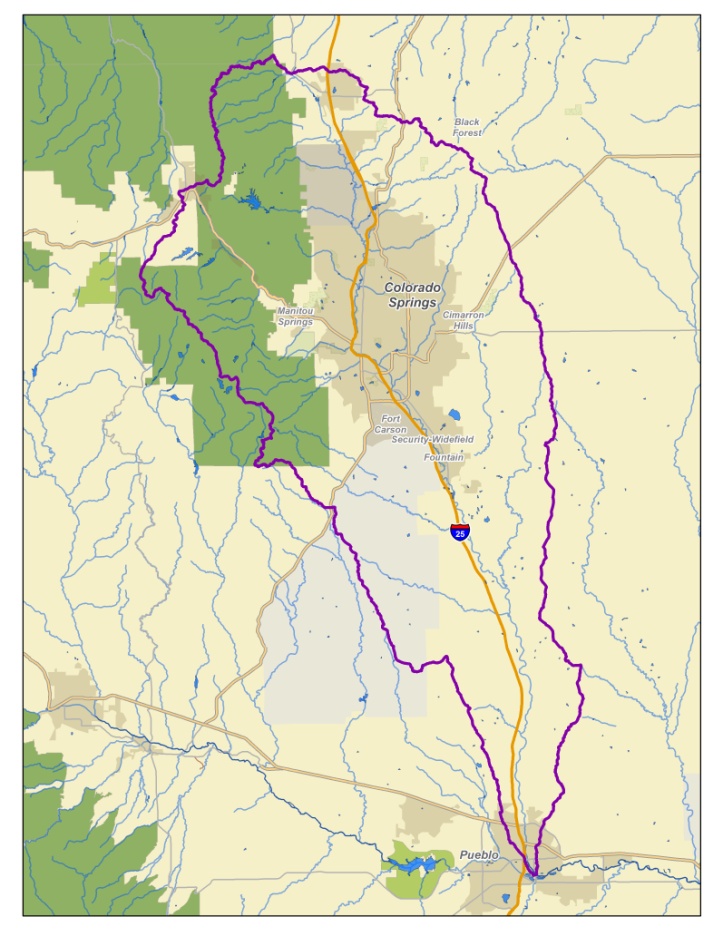
The Fountain Creek Watershed is located along the central front range of Colorado. It is a 927-square mile watershed that drains south into the Arkansas River at Pueblo. The watershed is bordered by the Palmer Divide to the north, Pikes Peak to the west, and a minor divide 20 miles east of Colorado Springs. Map via the Fountain Creek Watershed Flood Control and Greenway District.

Fountain Creek: Pueblo County commissioners approve county joining @EPA, CDPHE lawsuit

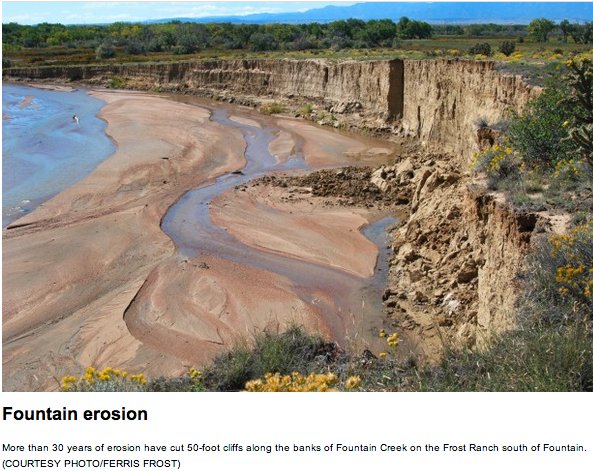
Fountain Creek erosion via The Pueblo Chieftain

From The Pueblo Chieftain (Anthony A. Mestas):

The Pueblo County commissioners on Wednesday asked staff to file a motion to intervene in a lawsuit filed Nov. 9 in U.S. District Court in Denver by the Environmental Protection Agency and the Colorado Department of Public Health and Environment against Colorado Springs.

Pueblo County wants to join the case to protect its interest during the litigation.

“We did it primarily to make sure we have a seat at the table,” said Pueblo County Commission Chairman Terry Hart.

“It’s one of those issues that whenever any kind of conversation is going on that concerns Fountain Creek or the water volume or quality that’s in the creek, we feel it affects the citizens in our community.”

[…]

By intervening in the lawsuit Pueblo County hopes to:

Support the EPA and CDPHE in its regulatory mission.

Ensure that stormwater control infrastructure within Colorado Springs is properly operated and maintained.

Ensure that there are no conflicts or inconsistencies between the stormwater intergovernmental agreement recently entered by the county and Colorado Springs and any remedy, judgment or settlement entered in this case.

Require Colorado Springs to become, and then remain, compliant with the Clean Water Act, the Colorado Water Quality Control Act, stormwater regulations and the conditions of Colorado Springs’ MS4 permit, and protect against future violations.

Work with Colorado Springs to develop, implement and enforce its’ Stormwater Management Program as required by the MS4 permit.

Prohibit Colorado Springs from discharging stormwater that is not in compliance with its MS4 permit or its SMP.

@csindependent: A toxic water supply has left beloved Venetucci Farm in limbo

Widefield aquifer via the Colorado Water Institute.

From the Colorado Springs Independent (Nat Stein):

To say that the 2016 season didn’t go well for Venetucci Farm is an understatement.

It was historically bad, but not for lack of rain or a pest infestation or anything that farmers are accustomed to dealing with. First, toxic chemicals discovered in the farm’s water supply in May prompted the suspension of produce sales mid-season. Then, at season’s end, a brutal hail storm wiped out the remaining solace of Venetucci’s fans — its hallmark pumpkin crop.

News isn’t improving. In a normal year, planting would be coming up in late March, but operations on the farm are currently stalled. This could be the first season in over a century that area consumers go without fresh, local food from the region’s oldest working farm.

Uncertainty reigns. Nobody knows the full consequences of irrigating crops with water containing perfluorinated chemicals (PFCs) at levels above what the Environmental Protection Agency considers safe for drinking. And then there’s the question of who will own and run Venetucci Farm, which was entrusted to the Pikes Peak Community Foundation in 2006 by Bambina “Bambi” Venetucci after the 2004 death of her husband, local farmer Dominico “Nick” Venetucci.

Bambi passed away in 2015 with the desire and belief that the family’s land would carry on in perpetuity as a working farm that welcomes schoolchildren to come pick pumpkins, free of charge, every fall. (Their generosity remains legendary — there’s a statue of Nick next to the Pioneers Museum and a depiction of him gifting a pumpkin on the label of Bristol Brewing Company’s highly popular annual Venetucci Pumpkin Ale.)

But, even before the water crisis arose, PPCF, under new leadership, had begun reevaluating all of its legacy assets, including Venetucci Farm. Over the past few months, an advisory committee has been meeting to vet visions for a post-PPCF Venetucci, with a recommendation expected in early March. The board will take it from there — without any chance for public input.

Whatever the foundation decides to do with the farm, recently installed CEO Gary Butterworth is unequivocal that the legacy of Nick and Bambi Venetucci will carry on. But no matter who stewards it into the future, their legacy may already be tainted by decades of chemical build-up in the aquifer beneath the farm.

Indeed, none of this sits well with longtime consumers like across-the-street neighbor Brittany McCollough. She’s less worried about what’s in the water — “everything’s poison these days,” she notes dryly — and more worried that those who actually eat Venetucci-grown food no longer have a seat at the table.

“It seems like the ‘community’ part has been taken out of ‘community foundation,'” she says, telling the Independent that “[consumers] have been left in the dark even though we’re impacted the most.” A teacher during the school year, McCollough helps run Venetucci’s farm stand over the summers, distributing weekly boxes of produce to community-supported agriculture (CSA) members in exchange for her own share. She’s been getting fresh vegetables for herself and her young son this way for about seven years. For her, all the extraneous factors affecting the farm are beside the point. “There are so many choices to make in the world and knowing the people who grow my food, right across the street in my own watershed — that’s really important to me,” she says.

From the Colorado Springs Independent (Nat Stein):

Scientists from the Colorado School of Mines in Golden, the University of Colorado at Colorado Springs and Axys, a private lab in Canada, all came to the farm to investigate. They took water, soil, plant and meat samples to test for PFC content. It took months for results to come back, and even then, their data took the form of raw numbers — not risk assessment, which is what the farm really needed.

For an official interpretation of the results, Venetucci counted on the Colorado Department of Health and Environment (CDPHE). Chief Epidemiologist Dr. Mike Van Dyke was willing to oblige, since he had received multiple inquiries from citizens who wanted to know whether food grown with PFC-contaminated water was safe. There just wasn’t much research out there.

“If it were something like lead, that’s more common and actually regulated, there’d be a framework out there,” he tells the Indy. “But basically what we did was the School of Mines had done some research on uptake of PFCs by fruits and vegetables. So they’ve developed models saying, ‘If you have x amount in soil and x amount in water, you’re likely to end up with x amount in the vegetables.”

So he and his team looked at the data those other labs had previously collected, picking out the highest concentrations to use in their analysis.

“We used maximums, not averages, to kind of get a worst case scenario,” Van Dyke says. “The idea was to get a conservative estimate at first, then become more lenient over time if we get additional data that warrants it.”

For the other variables, the team borrowed federal standards: EPA’s drinking water advisory for the acceptable limit of PFCs and USDA’s recommendations for daily food consumption. (That’s three vegetable servings and two fruit servings for children, and one more of each for adults. A serving equates to 100 grams of vegetables and 150 grams of fruit.)

Given all that, CDPHE found that eating the federally-recommended amount of Venetucci’s produce, even with the highest possible uptake levels, likely won’t expose you to dangerous levels of PFCs. And in reality, let’s admit it, most people get their produce from different sources and don’t eat enough of it.

Fountain Creek: Pueblo County Commissioners direct staff to draft motion to join @EPA, CDPHE lawsuit

Fountain Creek swollen by stormwater November 2011 via The Pueblo Chieftain

From The Colorado Springs Gazette (Billie Stanton Anleu):

Pueblo County – having already received a commitment of $460 million in stormwater projects from Colorado Springs over 20 years – now wants to join in a federal and state lawsuit citing Colorado Springs for violating its federal stormwater permit…

Wednesday, Pueblo County commissioners decided to try to join in the lawsuit, following a December effort by the Lower Arkansas Valley Water Conservancy District to also become a plaintiff. The motion to include the Lower Ark, as it is known, hasn’t been decided.

The Lower Ark, representing Bent, Crowley, Otero, Prowers and Pueblo counties, has seen Colorado Springs break stormwater promises repeatedly, said district Executive Director Jay Winner.

Pueblo County commissioners echoed such complaints, saying the city doesn’t adequately fund its stormwater management program, maintain the infrastructure or reduce discharge of pollutants.

In addition to the $460 million stormwater pact, the city has increased stormwater funding to $19 million a year, including $3 million from Colorado Springs Utilities. That’s up from $5 million in 2015.

Pueblo County and Lower Ark both cite increased E. coli levels, erosion, sedimentation and flooding.

The county’s action was another blow for Mayor John Suthers, who has committed to rectifying the city’s stormwater problems since he took office in June 2015…

Said Pueblo County Commission spokeswoman Paris Carmichael: “This isn’t about picking a fight with Colorado Springs. This is about giving the citizens of Pueblo County a voice.”

The county had threatened last year to withhold a permit essential for completion of the $825 million Southern Delivery System, a massive water project delivering Arkansas River water to Colorado Springs, Security, Fountain and Pueblo West.

So Suthers and other city officials worked with Pueblo city and county officials to hammer out the $460 million intergovernmental agreement, which facilitated release of the permit.

Meanwhile, Suthers also got to work reorganizing the city’s Stormwater Division, bringing in new director Richard Mulledy, who had worked in Pueblo; ratcheting up its staff from 28 to an eventual 66; and releasing an inch-thick new Stormwater Program Implementation Plan on Nov. 2, one week before the EPA filed suit.

The mayor now is asking voters to approve an April 4 ballot measure that would let the city retain $6 million in excess sales tax revenues to further improve the stormwater system. The city’s extra tax money is expected to top out at $9 million or more, with any amount above the $6 million request being refunded to residents if the ballot issue passes.

From The Pueblo Chieftain (Anthony A. Mestas):

The Pueblo County commissioners on Wednesday asked staff to file a motion to intervene in a lawsuit filed Nov. 9 in U.S. District Court in Denver by the Environmental Protection Agency and the Colorado Department of Public Health and Environment against Colorado Springs.

Pueblo County wants to join the case to protect its interest during the litigation.

“We did it primarily to make sure we have a seat at the table,” said Pueblo County Commission Chairman Terry Hart.

“It’s one of those issues that whenever any kind of conversation is going on that concerns Fountain Creek or the water volume or quality that’s in the creek, we feel it affects the citizens in our community.”

[…]

Hart and fellow Commissioners Sal Pace and Garrison Ortiz said although there are pros and cons in entering the lawsuit, representing Pueblo County citizens is the most important issue.

“I feel that we have an obligation as a board, as elected officials and as leaders in Pueblo County to ensure that we are doing absolutely everything we can to protect our infrastructure, quality of water and the health and welfare of our citizens,” Ortiz said.

Pace said he greatly cherishes the relationship the county has developed with Colorado Springs through negotiations over the Southern Delivery System’s 1041 permit agreement and hopes this will not do anything to damage it…

Suthers’ office issued a statement from the mayor when contacted Wednesday.

“In light of the fact that Pueblo County is well aware of the outstanding stormwater program Colorado Springs is putting together and that we are meeting and exceeding our commitments under the intergovernmental agreement between our entities, I am very disappointed in their decision to seek to intervene in the EPA lawsuit. Intervention by parties without regulatory authority will only serve to make the litigation more complex, more lengthy, more expensive for all parties and possibly more unproductive.”

[…]

The Lower Arkansas Valley Water Conservancy District also wants to join the case as an intervenor to protect the district’s interest during the litigation.

The district filed the same motion in November. A federal judge has yet to make a decision on if the district can join the suit…

Pueblo City Council President Steve Nawrocki said the city manager will ask Council on Monday to give him direction on the issue…

WHAT IT MEANS

By intervening in the lawsuit Pueblo County hopes to:

Support the EPA and CDPHE in its regulatory mission.

Ensure that stormwater control infrastructure within Colorado Springs is properly operated and maintained.

Ensure that there are no conflicts or inconsistencies between the stormwater intergovernmental agreement recently entered by the county and Colorado Springs and any remedy, judgment or settlement entered in this case.

Require Colorado Springs to become, and then remain, compliant with the Clean Water Act, the Colorado Water Quality Control Act, stormwater regulations and the conditions of Colorado Springs’ MS4 permit, and protect against future violations.

Work with Colorado Springs to develop, implement and enforce its’ Stormwater Management Program as required by the MS4 permit.

Prohibit Colorado Springs from discharging stormwater that is not in compliance with its MS4 permit or its SMP.

USAF to step up RE: Widefield Aquifer pollution

Photo via USAF Air Combat Command

From The Colorado Springs Gazette (Matt Steiner):

While Col. Doug Schiess, commander of the 21st Space Wing at Peterson Air Force Base, wouldn’t elaborate on details of the five-year plan, he said information about an internal Air Force report would be released in late June or early July.

The Air Force used firefighting foam at the base for decades that contained perfluorinated compounds. High quantities of the chemical in drinking water from the Widefield Aquifer triggered an EPA advisory last spring.

A Gazette investigation in October revealed that the service kept the foam in use despite Defense Department studies over the years that showed it was harmful to laboratory animals.

Commissioners Longinos Gonzalez and Mark Waller pressed Schiess to reveal how much the mitigation work would cost and who would pay the bill if more contamination was found after the five-year time frame.

“That will be done at a much higher level in the Air Force,” Schiess said, when asked if the reclamation funds were readily available now. “They know that that is a big bill and they have put some money aside. That is being budgeted, but I don’t have details.”

[…]

Schiess said the five-year plan will ensure that the ground near Peterson and at the Colorado Springs Airport is free of perflourinated compounds. When ingested, the chemicals can remain in the body for decades. The colonel said natural, untainted runoff will eventually dilute the watershed and bring it up to Environmental Protection Agency standards for safe water…

Perfluorinated chemicals have been used in nonstick pans, in stain-resistant treatments for carpet and even in fast-food containers for decades.

Air Force studies done as early as 1979 revealed that the perfluorinated chemical in its firefighting foam caused liver damage, cellular damage and low birth weight to laboratory animals. It has also been tagged as a potential carcinogen.

Last year, EPA lowered its health advisory levels for perfluorinated compounds to 70 parts per trillion, changing the status of some wells that had been previously deemed safe.

On Thursday, Schiess said that the internal draft report about the contamination in southern El Paso County will likely be completed by the contractor in March. The Air Force will send its final report to the EPA in late April. And that information will be ready for public consumption in June or July, he said.

Schiess also brought the commissioners up to date on interim efforts to treat drinking water using filters for homes and businesses.

He said the Air Force had contacted about two dozen residents who had been using bottled water in their homes. According to the colonel, six homeowners declined offers to install reverse osmosis filtration systems, and four have had those measures implemented.

Schiess said the Fountain Valley Shopping Center is still using bottled water and others, such as Venetucci Farm and the Norad View Mobile Home Park are using granular activated carbon filters.

@springsgov: TABOR surplus — stormwater or taxpayer refund?

Colorado Springs with the Front Range in background. Photo credit Wikipedia.

From KOAA.com (Greg Dingrando):

Colorado Springs Mayor John Suthers has made a change to his plan on how to spend the city’s $9 million surplus.

With the TABOR law, how to spend the money will ultimately be up to the voters, but the city can request to use it.

Originally, if he got voter approval, the mayor was wanting to spend all of the money on storm water improvements. But the alternative option of $50 in pocket would have likely been more appealing to voters.

With Colorado Springs’ ongoing flood issues and looming lawsuits from Pueblo, the decision was pretty easy for some voters.

“I’d say fix the storm water,” resident Craig Lindal said “I’d go with storm water. Help get more drains in so there’s not as much floods and stuff,” resident Juan Lopez said…

Suthers proposed the city should get $6 million for storm water and the remaining $3 million plus will go back to the voters.

“I think its also nice to reward consumers spending that money and refund as much as we can,” Suthers said, all while addressing what he calls the city’s top priority. “This allows us to make investment in an area we have significant legal problems and hopefully solve that problem.”

Suthers said it could also protect the city down the road. For the next five years the city has to pay $17 million a year on storm water to avoid getting sued. Suthers said using money from the surplus will save general funds in the future.

“Being able to apply the $6 million now in good times to save and invest that will shield us from having to make any cuts if there’s a downturn a couple years from now,” Suthers said.

The council will vote on the proposal Tuesday to put it on the April ballot. Either way, voters are in a pretty good position. If they say no to the city, roughly $50 will go back to each household through a utility bill reduction. If voters say yes, the city gets $6 million for storm water and each household would get about $20 back.

CDPHE and @EPA hope the Lower Ark is allowed to join their lawsuit

Report: Remediation Scenarios for Attenuating Peak Flows and Reducing Sediment Transport in Fountain Creek, Colorado, 2013

From The Pueblo Chieftain (Robert Voczkiewicz):

The state and federal agencies told a judge Thursday that they support the Lower Arkansas Valley Water Conservancy District’s request to have a courtroom voice in a clean-water lawsuit against Colorado Springs.

The Colorado Department of Public Health and Environment and the U.S. Environmental Protection Agency are suing the city, which discharges pollutants into Fountain Creek and other tributaries.

The Lower Ark district wants to join the case as an intervenor to protect the district’s interest during the litigation…

Senior Judge Richard Matsch is presiding over the case in U.S. District Court in Denver and will decide whether to grant Lower Ark’s request.

The EPA and the state health-environment department filed the lawsuit Nov. 9. It alleges that Colorado Springs’ storm sewer system is violating federal and state clean water laws.

The city denies it is violating the laws. Mayor John Suthers recently pointed to additional expenditures the city is making as an example of its commitment to correct storm water problems.

The storm water contains pollutants, including E. coli, that flow into the river from creek tributaries.

The district encompasses Bent, Crowley, Otero, Prowers and Pueblo counties, where considerable produce, including Rocky Ford melons, are grown.

In Thursday’s court filing reviewed by The Pueblo Chieftain, the EPA and the department told Matsch they agree with Lower Ark that it should have a voice in court because the district wants the river water to have adequate quality.

To achieve that, the agencies and the district want Colorado Springs to reduce the amount of polluted discharges.

The environmental agencies contend Colorado Springs mischaracterizes the lawsuit as being focused on past issues, but it in fact “seeks to remedy current and ongoing violations.”

The environmental agencies disagree with Colorado Springs’ arguments that the district has no legal right to become an intervenor and that intervention will unduly complicate the litigation.

The lawsuit seeks a court order requiring the city “to develop, implement and enforce” its stormwater management program, as required by permits the government has issued. The lawsuit goes on to ask a judge to impose monetary penalties on Colorado Springs for the violations.

Colorado Springs denies Fountain Creek pollution in first salvo against @EPA, CDPHE

Fountain Creek
Fountain Creek

From The Pueblo Chieftain (Robert Boczkiewicz):

The city of Colorado Springs, in response to a lawsuit that seeks court action against the city for discharging pollutants into tributaries of the Arkansas River, denies it is violating clean water laws.

The city’s denial is its first response in court to a lawsuit that claims discharges of pollutants into Fountain Creek and other tributaries violate the laws. The discharges are from Colorado Springs’ stormwater system.

“The City has complied with the law,” states the response filed Monday in U.S. District Court in Denver.

The lawsuit was filed Nov. 9 against Colorado Springs by the U.S. Environmental Protection Agency and the Colorado Department of Health and Environment.

The lawsuit seeks a court order requiring the city “to develop, implement, and enforce” its stormwater management program as specified in permits the government has issued in past years.

Colorado Springs asserted in Monday’s filing that it “has at all times been in compliance” with permits issued by the state agency to govern the discharges and the stormwater system.

The city contends it should not be subjected to court orders or monetary penalties that the environmental agencies want a judge to impose.

Colorado Springs also contends that allegations in the lawsuit misrepresent the facts of issues in dispute.

Dredging of Fountain Creek will improve flood carrying capacity — The Pueblo Chieftain

Fountain Creek swollen by stormwater November 2011 via The Pueblo Chieftain

From The Pueblo Chieftain (Jon Pompia):

The Pueblo Levee Dredging and Maintenance Project, which will run through April, is being undertaken to improve the flood carrying capacity of Fountain Creek from the confluence with the Arkansas River upstream to the East Eighth Street bridge.

The work also will see the removal of undesirable vegetation on the east levee embankment (stream side only), on the east bank of the creek and on a portion of the west bank of the creek.

The work is being handled by Sun Construction, which has contracted with the Fountain Creek Watershed, Flood Control and Greenway District.

After the dredging of the creek, the bed material will be hauled by trucks to disposal sites. The work also will include the demolition of two of the abandoned railroad bridge piers.

Truck and equipment access to the creek will be from two staging areas on city property — one at the location off South Joplin Avenue near the abandoned railroad bridge and the second at the west end of East 11th Street.

During the project, the contractor will manage vehicle traffic interactions on public streets and with traffic on the river trail adjacent to the levee. Currently, the bike trail on the east side of the river is closed.

Removal of vegetation on the east and west banks will be limited to non-native, “invasive species” and will not include desirable species such as willows and cottonwoods.

Removed vegetation on the east levee and invasive species will be treated with a herbicide to hinder regrowth.

The removal of vegetation is expected to occur between April and August.

The city will benefit from the delivery of about 55,000 cubic yards of material that will be trucked to sites near Lake Minnequa and near Plaza Verde Park.

While the dredging and demolition will continue through April, the operation will be suspended during the period of higher creek flows — until approximately August and concluding by the end of December.

Colorado Springs hopes to prevent Lower Ark joining EPA and CDPHE lawsuit

Fountain Creek flood debris May 2014 via The Pueblo Chieftain

From The Pueblo Chieftain (Jon Pompia):

Colorado Springs is opposing an Arkansas River water district’s request to join a lawsuit that seeks to stop the city from discharging pollutants into Fountain Creek and other tributaries of the river.

The Lower Arkansas Valley Water Conservancy District wants a voice against Colorado Springs by being allowed to take part in the litigation.

The U.S. Environmental Protection Agency and the Colorado Department of Health jointly filed the lawsuit Nov. 9 in U.S. District Court in Denver against Colorado Springs. The lawsuit claims that the city’s discharges of polluted stormwater into the tributaries violate state and federal clean water laws.

The lawsuit seeks a court order requiring Colorado Springs “to take all steps necessary to redress or mitigate the impact of its violations.”

The lawsuit also seeks a court order to require the city “to develop, implement and enforce” its stormwater management program, as required by permits the government has issued. The lawsuit goes on to ask a judge to impose monetary penalties on Colorado Springs for the violations.

Water runoff from streets, parking lots and other surfaces picks up pollutants that drain into the stormwater sewage system, which discharges it into the creeks.

Pollutants include accumulated debris, chemicals and sediment. They “can adversely affect water quality, erode stream banks, destroy needed habitat for fish and other aquatic life, and make it more difficult and expensive for downstream users to effectively use the water,” the lawsuit states

The water district on Dec. 9 asked Senior Judge Richard Matsch for permission to become an intervenor to protect the district’s interests to have clean and usable water from the river.

The city on Dec. 22 filed arguments opposing the district’s request. The city contends that the district has no legal right to intervene.

The district — as well as Pueblo officials — has long been a critic of Colorado Springs for sending polluted and sediment-filled stormwater, including dangerous E. coli bacteria, into the river and for not controlling flooding the water causes.

The district encompasses Bent, Crowley, Otero, Prowers and Pueblo counties, where considerable produce, including Rocky Ford melons, are grown.

Colorado Springs officials have negotiated a deal with Pueblo County for the city to spend $460 million over 20 years on Fountain Creek flood control.

The Gazette newspaper in Colorado Springs reported last Friday that Mayor John Suthers cited that commitment as an example of how his administration is working to resolve the complaints of its downstream neighbors.

In its court filing opposing allowing the district to become a participant in the litigation, the city said the case will be greatly complicated and costs of litigating it will increase. The city also said that the EPA and state environment department will adequately represent the district’s interests.

Attorney Peter Nichols, representing the district, sees it differently, according to The Gazette: “The question is whether the city is already putting a lot of political pressure on the state and EPA to back off. The district is concerned they might be successful with that pressure, and water quality wouldn’t be improved in Fountain Creek,” Nichols said.

The newspaper reported that district Executive Director Jay Winner said Colorado Springs repeatedly had broken promises about the stormwater problems.

Colorado Springs hopes to keep the Lower Ark out of its legal wrangling with the EPA and CDPHE

The Fountain Creek Watershed is located along the central front range of Colorado. It is a 927-square mile watershed that drains south into the Arkansas River at Pueblo. The watershed is bordered by the Palmer Divide to the north, Pikes Peak to the west, and a minor divide 20 miles east of Colorado Springs. Map via the Fountain Creek Watershed Flood Control and Greenway District.

From The Colorado Springs Gazette (Billie Stanton Anleu):

Colorado Springs filed arguments last week to keep an Arkansas River water district from joining the federal and state lawsuit that’s demanding cures to city stormwater violations.

But with Rocky Ford melons and other crops at stake, the water district plans to fire back by the Thursday deadline with counterarguments to the U.S. District Court in Denver.

Fountain Creek flows through Colorado Springs and into the Arkansas, bringing excess sedimentation, E. coli contamination and other pollution, the Lower Arkansas Valley Water Conservancy District claims.

The lawsuit it wants to join was filed last month by the U.S. Department of Justice on behalf of the Environmental Protection Agency and by the Colorado Department of Public Health and Environment.

The EPA and Department of Justice negotiated with the city unsuccessfully over the past year to resolve the violations cited in EPA audits in 2013 and in August 2015, two months after Mayor John Suthers took office.

Suthers has made the issue a priority, crafting an agreement with Pueblo County to provide $460 million worth of stormwater projects by 2035, beefing up the city’s stormwater division with a new manager and added engineers and inspectors, and releasing an inch-thick Stormwater Program Implementation Plan on Nov. 2.

The EPA and state nonetheless filed suit one week later, on Nov. 9.

“From my perspective, they’re dwelling in the past,” Suthers said. “We feel very strongly the EPA and state health need to get down to El Paso County and see how many problems we’ve already fixed.”

The Lower Ark, as the district is known, had given notice in November 2014, that it would sue the city for violating its MS4 permit, which allows for the municipal separate storm sewer system.

That’s what the EPA and state now are suing over as well.

“We were precluded from filing our own lawsuit because our claims were essentially the same,” said Peter Nichols, lawyer for the Lower Ark.

“The question is whether the city is already putting a lot of political pressure on the state and EPA to back off. The district is concerned they might be successful with that pressure, and water quality wouldn’t be improved in Fountain Creek,” Nichols said.

The Lower Ark – which represents Bent, Crowley, Otero, Prowers and Pueblo counties – has seen Colorado Springs break stormwater promises repeatedly, said district Executive Director Jay Winner.

The city was collecting about $15 million a year through its Stormwater Enterprise Fund until voters passed ballot Issue 300 in 2009, restricting city enterprise funds. Days later, the City Council voted to phase out the fund by 2011.

Then the Waldo Canyon fire erupted in 2012, creating a burn scar that spawned widespread flooding in 2013, exacerbating problems with Fountain Creek, Monument Creek and other tributaries while spewing sediment and floodwaters downstream.

That year, the EPA audited the city’s stormwater system Feb. 4-7.

Between 2011 and 2014, the city spent $1.6 million a year average on stormwater and had nine full-time employees in that division. Degradation, widening and erosion of streambeds, combined with surface runoff, led to sedimentation and substandard water quality, the EPA and state say.

The next EPA audit, conducted on 14 sections of the city’s system Aug. 18-19, 2015, found “continuous failure” to meet standards or remediate problems highlighted in 2013.

Lower Ark district joins federal lawsuit against #Colorado Springs — @ChieftainNews

From The Pueblo Chieftain (Peter Roper):

The Lower Arkansas Valley Water Conservancy District has joined a federal lawsuit against Colorado Springs for not controlling stormwater flooding and discharging pollutants into Fountain Creek and the Arkansas River.

The lawsuit was filed last month in U.S. District Court in Denver by the Environmental Protection Agency and the Colorado Department of Health and Public Environment.

Essentially, the suit argues that Colorado Springs has continued to violate federal clean water standards with discharges into Fountain Creek that sometimes contain high levels of E. coli bacteria and fecal coliform.

The lack of stormwater controls isn’t in question. Colorado Springs officials have negotiated a deal with Pueblo County to spend $460 million over 20 years on flood control.

When the lawsuit was filed, Colorado Springs Mayor John Suthers complained that any money the city spends fighting lawsuits over stormwater flooding would be better spent on fixing the problems.

But the Lower Arkansas board decided last month that too little has been done. Its lawyers urged the board to join the lawsuit to make certain the district participates in any negotiated settlement with Colorado Springs over flooding problems on Fountain Creek.

The Fountain Creek Watershed is located along the central front range of Colorado. It is a 927-square mile watershed that drains south into the Arkansas River at Pueblo. The watershed is bordered by the Palmer Divide to the north, Pikes Peak to the west, and a minor divide 20 miles east of Colorado Springs. Map via the Fountain Creek Watershed Flood Control and Greenway District.

UAWCD files objection in Coaldale water case — The Mountain Mail

Graphic via the Upper Arkansas Water Conservancy District

From The Mountain Mail (Joe Stone):

The Upper Arkansas Water Conservancy District board of directors voted at its recent meeting to file an objection to the Security Water District’s court application for a change of water rights on Hayden Creek in Coaldale (Division 2, case 2016CW3055).

In discussing whether or not to get involved in the case, Upper Ark directors mentioned unresolved issues with Hill Ranch near Nathrop after the Pueblo West Metropolitan District purchased the ranch, changed the water right and dried up the land.

The directors’ discussion highlighted three main concerns:

  • Ensuring that the amount of water claimed by Security is not excessive.
  • Ensuring that Security administers the amount and timing of return flows so that other water rights are not injured by the change of use.
  • Ensuring that the dried-up ranch land is properly revegetated.
  • Security acquired the 1894 agricultural water rights when it purchased a Coaldale ranch that, according to the filing, historically used the water to irrigate 195 acres.

    The filing cites Security’s own study of consumptive water use on the ranch from 1912 through 2006 in asserting that historical water use “resulted in net stream depletions (consumptive use credits) of approximately 236 annual acre-feet.”

    Security seeks to change the Hayden Creek water rights from an agricultural use in Coaldale to a municipal use in Security, allowing the water to flow into Pueblo Reservoir before diverting the proposed 236 acre-feet per year through the Fountain Valley Conduit.

    The Security filing indicates that the water right may be used for continued irrigation on the ranch “to the extent not limited by municipal use of the depletion credits and dry-up requirements.”

    In the filing Security commits to constructing a Coaldale augmentation station to measure and administer the Hayden Creek water rights. The filing also indicates Security “may construct a groundwater recharge facility” that “may be used for recharge to the aquifer and later delivery of accretion credits back to the Arkansas River” (i.e., return flows).

    This would help prevent injury to other water rights holders because the return flows would be delivered to the river in the same location as the historical return flows created by irrigating the ranch.

    But the filing also indicates that Security may “replace return flow obligations to the Arkansas River” by means of “releases from Pueblo Reservoir,” which could injure other water rights between Coaldale and Pueblo Reservoir.

    Since Security owns the Hayden Creek water rights, the Upper Ark district’s filing won’t prevent the change of use, but as an objector, the conservancy district will receive future filings in the case and will have the opportunity to negotiate stipulations to address concerns.

    City’s stormwater inspectors keep an eye out for violations — The #Colorado Springs Independent

    Channel erosion Colorado Springs July 2012 via The Pueblo Chieftain
    Channel erosion Colorado Springs July 2012 via The Pueblo Chieftain

    From The Colorado Springs Independent (Pam Zubeck):

    [Stormwater enforcement actions represent] a 10-fold increase over 2015 and a dramatic uptick from a time when the city largely ignored violations of its own stormwater regulations. And this could just be a start — the city is also looking at a new program that would give it even more muscle against violators.

    The ramp-up is due in part to Mayor John Suthers’ response to pressure from the Environmental Protection Agency and the Colorado Department of Public Health and Environment. Those agencies issued two highly critical reports of the city’s stormwater maintenance and regulation enforcement in recent years, and on Nov. 9 the EPA filed a lawsuit alleging the city’s lax approach violates its MS4 permit and the Clean Water Act. The lawsuit could bring multi-million-dollar civil penalties and federal monitoring.

    In early 2007, City Council imposed stormwater fees on property owners, raising about $16 million a year for drainage projects and maintenance.

    But in 2009, the Council defunded the program after voters approved a measure aimed at killing the fees. After that, the EPA lawsuit states, the city’s stormwater program limped along on an average of $1.6 million a year from 2011 to 2014.

    Despite a scathing EPA report in 2013, then-Mayor Steve Bach did little, and even opposed a citizen-driven ballot measure for drainage that failed in 2014. Without more money, city officials have said, they couldn’t effectively track down violators.

    That neglect had ramifications: In addition to possible EPA fines, uncontrolled drainage enraged officials in downstream Pueblo County, who in turn threatened agreements on Colorado Springs Utilities’ Southern Delivery System pipeline. So, earlier this year, Suthers and Council adopted a $460-million, 20-year stormwater program to fend off fines and cope with the city’s extensive drainage problems. One part of that program: oversight to verify compliance by contractors. Last year, the city’s stormwater staff numbered about 20. Today, it stands at 56, and another 10 will be added next year. Many of those are inspectors who troll for violators…

    Though stormwater program manager Rich Mulledy says inspectors fan out over the city, most offenses were spotted on the city’s northeast side where development is brisk, records show…

    Mulledy stresses the city would rather gain compliance than punish builders. He doesn’t like the word “crackdown” to describe the city’s approach in enforcing its MS4 permit, which requires erosion control for all projects larger than one acre.

    “Just because of the number of houses being built, we’ve really stepped up,” he says, quickly adding that the industry has proven a willing partner. The city, he notes, has the authority to issue summonses that carry fines of $500 per day, but no fines have been levied so far.

    “We’ve had compliance,” he says, “We’re committed from the city’s standpoint to make sure we’re doing the right thing to meet our permit going forward, and I feel the industry is supportive going forward. We have to meet the federal permit for sure, but we want to do the right thing and still have developers make progress and be able to do business.”

    Builders and developers are all in, says Tim Seibert, president of the Housing and Building Association of Colorado Springs.

    “Obviously, just like the mayor stated, we’re not pleased to hear the EPA has filed a lawsuit,” Seibert says. “We think there is a better solution. But at the end of the day, we want to be at the table and be sure we’re in compliance.”

    Seibert says the HBA hosts monthly “Wet Wednesday” meetings at which its members are instructed in stormwater regulations, such as erosion control and best management practices.

    “With the recent enforcement, we’ve stepped that up,” he adds. “We’ve made it more thorough. We’ve gotten a lot of cooperation from the city telling us, ‘These are the practices we need to see.’ I think that’s been very helpful for them to get in contact with guys in the field doing the implementation.”

    The HBA also added a monthly meeting with Mulledy at which design standards are discussed. “We want to make sure we’re not getting ourselves in trouble, and we don’t want the city to get in trouble,” Seibert says.

    He also says that as the city shapes its program to satisfy federal authorities, HBA members realize more enforcement is coming.

    Mulledy won’t discuss details of the new program — still being worked out — but says it will clarify enforcement steps, and allow officials to “jump steps” if a violation poses an immediate threat to the city’s stormwater system or downstream. Currently being reviewed by stakeholders, the program will be introduced within a few months.

    “In general,” Mulledy says, “it’s going to be more specific and give us more tools.”

    Widefield Water and Sanitation stops use of contaminated aquifer water — The #Colorado Springs Gazette

    Widefield aquifer via the Colorado Water Institute.
    Widefield aquifer via the Colorado Water Institute.

    From The Colorado Springs Gazette (Jakob Rodgers):

    The Widefield Water and Sanitation District became the last major water system to stop using well water from the tainted aquifer, according to the district’s water manager, Brandon Bernard.

    As of Nov. 10, all of the district’s customers receive cleaner surface water from the Pueblo Reservoir.

    “We’re looking forward to moving forward without having to worry about PFCs,” said Bernard, using an acronym for the toxic chemicals.

    The announcement ends one chapter of a water crisis that sent thousands of residents scrambling for bottled water…

    The contamination has spawned two class-action lawsuits against companies that manufactured the foam. The Air Force, which found the chemical harmful to laboratory animals as early as the 1970s, also is studying its role in the contamination by drilling several test wells around Peterson Air Force Base…

    For months, local water officials raced to limit residents’ exposure to the chemicals, which remain unregulated by the EPA.

    Fountain officials shut off their wells in fall 2015 – relying instead on cleaner water from the Pueblo Reservoir. But other water districts couldn’t meet customers’ demands this past summer without using contaminated well water.

    Security Water and Sanitation Districts weaned itself from the aquifer in September.

    Officials for all three water districts are optimistic that customers will no longer receive contaminated water from the aquifer, unless its cleansed of the toxic chemicals.

    Officials in Security and Fountain have previously voiced plans to build treatment plants to filter the fouled water. Water rates there could rise to help finance those projects.

    Widefield officials, however, are conducting two test projects to determine whether ion exchange or granular activated carbon filters best remove the chemicals, Bernard said.

    Widefield’s test projects, which began in October, are expected to last six months, he said.

    The district also is planning a $1 million project to install a pipe under Interstate 25 capable of bringing in more water from the Pueblo Reservoir. Widefield has several thousand acre feet of water stored at the Pueblo Reservoir, and officials there are no longer concerned about running out of water rights this year.

    District leaders also plan to meet with Air Force officials on Thursday to coordinate how the military can help filter water. In July, the Air Force vowed to spend $4.3 million to supply bottled water and well water filters for the affected communities.

    Unlike other water districts, Widefield is not planning to raise rates in 2017 to pay for the water projects, Bernard said. Rather, they will be paid for using reserve funding.

    Customers are only likely to pay for operations costs once a treatment plant is built, he said.

    “It’s nice just to not have to worry about our customers being concerned,” Bernard said. “And now we can just move forward with fixing the problem.”

    Photo via USAF Air Combat Command
    Photo via USAF Air Combat Command

    Lower Ark joins Fountain Creek lawsuit — The Pueblo Chieftain

    Heavy rains inundate Sand Creek. Photo via the City of Colorado Springs and the Colorado Springs Independent.
    Heavy rains inundate Sand Creek. Photo via the City of Colorado Springs and the Colorado Springs Independent.

    From The Pueblo Chieftain (Anthony A. Mestas):

    During their monthly meeting…Lower Arkansas board members voted unanimously to join a lawsuit filed last week against Colorado Springs for discharging pollutants into Fountain Creek and the Arkansas River.

    Members also said they have asked Pueblo City Council and the Pueblo County commissioners to join the lawsuit, as well.

    “I can’t see where Pueblo County and the city cannot step up and do the same thing,” said Anthony Nunez, a former Pueblo County commissioner who sits on the Lower Ark board…

    Peter Nichols, an attorney and a Lower Ark director, told board members that intervening in the lawsuit would give them a seat at the table in any sort of trial or negotiated settlement that might occur…

    Nunez said Colorado Springs needs to be held accountable and, in the nearly six years he has been on the board, he’s heard the same thing from Colorado Springs over and over again.

    “We’ve met with the (Colorado Springs) City Council. I guess to put it in better terms, we meet with half of the City Council because they are always waiting for the next city council,” Nunez said.

    “We have talked and talked, and I think it is time that actions be taken.”

    […]

    “As long as they can keep giving us the stiff arm — put us off, put us off, put us off — they don’t feel like they have any obligation because, quite frankly, if they have a violation, they pay a small fine and that fine is far less than rectifying the entire problem,” [Melissa Esquibel] said.

    Lower Ark District letter triggers Fountain Creek lawsuit

    The confluence of Fountain Creek and the Arkansas River in Pueblo County -- photo via the Colorado Springs Business Journal
    The confluence of Fountain Creek and the Arkansas River in Pueblo County — photo via the Colorado Springs Business Journal

    From The Pueblo Chieftain (Robert Boczkiewicz):

    The district says the lawsuit, filed by the federal and state governments, followed on the heels of a letter of concern the district sent Oct. 28 to the U.S. Environmental Protection Agency.

    The lawsuit was filed Wednesday in U.S. District Court in Denver by the EPA and the Colorado Department of Public Health and Environment against the city of Colorado Springs.

    The lawsuit alleges that discharges into the creek from the city’s stormwater sewage system violate the federal Clean Water Act and the state Water Quality Control Act.

    “It’s time Colorado Springs be held accountable for its continued violations of discharge limits into Fountain Creek,” said Jay Winner, general manager of the Lower Arkansas district. Its mission is to protect water resources of the Lower Arkansas River Valley.

    “We’ve been trying to get the Springs to recognize their responsibility to Pueblo and the Lower Arkansas Valley for the past 12 years, but there has been close to zero progress when it comes to cleaning up the mess on Fountain Creek,” Winner said.

    He said the Oct. 28 letter expressed concerns with Colorado Springs’ 2016 Stormwater Program Implementation Plan. The letter was part of the district’s long-standing complaints about the city’s discharges into the creek.

    The lawsuit seeks:

    • A court order requiring Colorado Springs “to take all steps necessary to redress or mitigate the impact of its violations.”
    • A court order requiring the city “to develop, implement and enforce” its stormwater management program, as required by permits the government has issued. The federal and state laws invoked by the lawsuit regulate the discharges.
    • Imposition of monetary penalties on Colorado Springs for the violations.

    “This is an historic day for Pueblo, which has been waiting decades for Colorado Springs to clean up Fountain Creek,” Anthony Nunez, a former Pueblo County commissioner who sits on the Lower Ark board, said in a statement issued by the district.

    Melissa Esquibel, another Pueblo County member of the district’s board, said the board intends to discuss the lawsuit at its Wednesday meeting in Rocky Ford. The district encompasses Bent, Crowley, Otero, Prowers and Pueblo counties.

    The Gazette newspaper in Colorado Springs reported Thursday that the city’s mayor, John Suthers, expressed frustration that the EPA and state environmental agency filed the lawsuit rather than recognize recent strides the city has made to deal with its storm sewer discharges.

    “They know they have a mayor and City Council that recognize the problem, understand the problem and are intent on fixing the problem,” the mayor said. “Rather than working with us to get this done, they file a lawsuit.

    “Every single dime going to litigate this thing and pay fines should be going into fixing the problem,” Suthers said.

    The district sees it differently.

    “They’ve dumped on Pueblo in the past, and it looks like they’ll keep on dumping,” Winner said. “We’ve seen nothing to convince us they have changed their attitude that Fountain Creek can be used as an open sewer.”

    Fountain Creek erosion via The Pueblo Chieftain
    Fountain Creek erosion via The Pueblo Chieftain

    From The Pueblo Chieftain (Robert Boczkiewicz):

    The lawsuit seeks a court order requiring Colorado Springs “to take all steps necessary to redress or mitigate the impact of its violations.”

    Colorado Springs’ discharge from its storm sewer system of toxic pollutants into Fountain Creek has long been a cause of distrust and bad relations between Pueblo and its upstream neighbor.

    The lawsuit was filed Wednesday in U.S. District Court in Denver.

    The U.S. Department of Justice filed the lawsuit at the request of the Environmental Protection Agency. The Colorado Attorney General’s office filed the lawsuit at the request of the Colorado Department of Public Health and Environment.

    The lawsuit claims that polluted discharges from Colorado Springs’ stormwater system violate the federal Clean Water Act and the state Water Quality Control Act.

    The 51-page lawsuit states that the discharges flow into Monument Creek, Camp Creek, Cheyenne Creek and Shooks Run, as well as into Fountain Creek.

    The lawsuit also seeks a court order to require Colorado Springs “to develop, implement and enforce” its stormwater management program, as required by permits the government has issued. The federal and state laws invoked by the lawsuit regulate the discharges.

    The lawsuit also asks a judge to impose monetary penalties on Colorado Springs for the violations.

    Water runoff from streets, parking lots and other surfaces picks up pollutants that drain into the stormwater sewage system, which discharges it into the creeks.

    Pollutants include accumulated debris, chemicals and sediment. They “can adversely affect water quality, erode stream banks, destroy needed habitat for fish and other aquatic life, and make it more difficult and expensive for downstream users to effectively use the water,” the lawsuit states.

    Under federal courts rules, the city is required to respond to the lawsuit after it is served on a city official. In their responses filed at the court, defendants typically state their position on the allegations and claims against them.

    Report: Remediation Scenarios for Attenuating Peak Flows and Reducing Sediment Transport in Fountain Creek, Colorado, 2013
    Report: Remediation Scenarios for Attenuating Peak Flows and Reducing Sediment Transport in Fountain Creek, Colorado, 2013

    @EPA, @CDPHE lawsuit zeroes in on #Colorado Springs stormwater violations

    The Fountain Creek Watershed is located along the central front range of Colorado. It is a 927-square mile watershed that drains south into the Arkansas River at Pueblo. The watershed is bordered by the Palmer Divide to the north, Pikes Peak to the west, and a minor divide 20 miles east of Colorado Springs. Map via the Fountain Creek Watershed Flood Control and Greenway District.
    The Fountain Creek Watershed is located along the central front range of Colorado. It is a 927-square mile watershed that drains south into the Arkansas River at Pueblo. The watershed is bordered by the Palmer Divide to the north, Pikes Peak to the west, and a minor divide 20 miles east of Colorado Springs. Map via the Fountain Creek Watershed Flood Control and Greenway District.

    From The Colorado Springs Gazette (Billie Stanton Anleu):

    The U.S. Environmental Protection Agency and the state health department filed a lawsuit Wednesday against the City of Colorado Springs over water quality violations and stormwater program shortfalls dating to 2009.

    Mayor John Suthers, who began building a new stormwater program immediately after taking office in June 2015, expressed frustration over the decision by the EPA and the Colorado Department of Public Health and Environment to file legal action rather than recognize recent strides the city has made.

    The federal and state agencies are seeking civil penalties that Suthers said could amount to “millions and millions of dollars.”

    “What’s frustrating is: They know they have a mayor and City Council that recognize the problem, understand the problem and are intent on fixing the problem,” the mayor said. “Rather than working with us to get this done, they file a lawsuit.

    “This is the kind of lawsuit that gives the EPA a reputation for being over-reaching. Every single dime going to litigate this thing and pay fines should be going into fixing the problem.”

    Over the past 18 months, the city has:

    ◘ Negotiated and signed a $460 million, 20-year intergovernmental agreement with Pueblo County to build 71 major stormwater projects. The work is designed to eliminate sedimentation, detain excessive flows and improve water quality in Fountain Creek for local and downstream communities. That pact is backed by Colorado Springs Utilities, which will appropriate needed funds should the city experience a shortfall.

    ◘ Recruited professional engineer Richard Mulledy to manage the stormwater division and beef up the staff of stormwater inspectors and engineers from 28 to 49 full-time employees, with a total of 66 to be on board within the next several months.

    ◘ Increased spending on stormwater from $5 million in 2015 to $19 million a year, including $9.2 million for capital projects, $3 million from Utilities and $7.1 million to $7.8 million, when fully staffed, for the city’s Municipal Separate Storm Sewer System, known as an MS4 federal permit, which allows Fountain Creek to flow into the Arkansas River, to the Mississippi River and into the Gulf of Mexico.

    ◘ Started building a $3 million detention pond on Sand Creek; spending $2 million to rehabilitate wash-out areas, remedy sediment-transport issues and improve water quality since 2013 flooding, and retrofitting a King Street detention pond so it not only controls flood waters but also manages flow to mimic natural discharge.

    When Suthers took office, he lamented a former City Council’s decision in 2009 to eliminate the city’s Stormwater Enterprise Fund, which had collected $15 million to $16 million a year in fees from property owners to spend on stormwater projects.

    “Fountain Creek is one of the most unstable, flashy creeks in all the nation. It’s a unique animal,” engineer Mulledy told The Gazette in March.

    The base flow of 120 cubic feet per second can reach 20,000 cfs during a 25-year event, swelling the creek to 100 feet wide and 10 feet deep, he said. “On top of that, the material along that creek is an alluvial field. It’s sand. So it’s kind of the perfect storm,” Mulledy said.

    The mayor recognized that city voters repeatedly voted down stormwater measures, so he and the council agreed to address the need directly from the general fund. In order to do so, he froze employee salaries and vacancies, squeezed the police and fire departments, and shelved several planned capital projects this year.

    But the EPA and state point to average annual stormwater expenditures of $1.6 million from 2011 through 2014, when only nine full-time employees worked in stormwater. So surface runoff, streambed degradation, widening and erosion led to sedimentation and unacceptable water quality.

    The suit cites a 2000 planning study for the Cottonwood Creek Drainage Basin that eliminated six detention basins and structural measures originally planned, reducing costs by $11.4 million, but notes that the plan now is being updated and revised.

    A 2013 EPA audit identified water-quality control structures at two developments that didn’t treat stormwater before discharging it into state waters; seven residential developments without stormwater controls or waivers for such; failure to submit development, inspection and maintenance plans to Engineering Development Review before grading permits were issued, and other failures since 2013 to ensure that policies protecting water quality were followed.

    Larry Small, executive director of the Fountain Creek Watershed, Flood Control and Greenway District, has long despaired of the city’s years of neglect toward Fountain Creek and stormwater issues.

    But that’s in the past, Small said.

    “John (Suthers) put in that $460 million plan, he’s increased the stormwater department significantly in staffing, he’s put processes in place, and he’s started at least three significant projects in the last year to deal with it,” Small said. “He’s got an agreement with Pueblo County that we haven’t had in years on managing and monitoring stormwater and to review progress annually and adjust the priorities. As far as John’s performance, he’s done a great job in the last year and a half.

    “From the time the city discontinued its stormwater enterprise until John put planning in place, we had a large number of years with a huge deficiency. But I don’t see how a lawsuit is going to correct the problem,” he said. “The only thing a lawsuit is going to do is bring in money for the federal government in fines, and what good does that do for the city or the problem?

    “A better solution would have been to sit down with monitoring and performance guidelines and allow the city to use that money to make improvements instead of pay fines with it. This is just another example of the federal government using a local issue to raise money.”

    Peterson AFB Is Drilling, Testing To Get A Handle On PFC Problems — #Colorado Public Radio

    Widefield aquifer via the Colorado Water Institute.
    Widefield aquifer via the Colorado Water Institute.

    From Colorado Public Radio (Grace Hood):

    The sight of a drilling rig on an Air Force base may seem unusual. The work to drill 17 wells is part of an effort at Peterson to understand how use of a firefighting foam with perfluorinated chemicals may have seeped into the groundwater…

    A preliminary assessment on base identified six specific points — former training sites, fire department sites, and hangers — where fire fighting foam with PFCs could have entered the environment. Now the military is investigating each of those sites in depth, with a full report expected in mid 2017.

    The firefighting foam in question is known as A-FFF: Aqueous Film Forming Foam. The Air Force began to use it in the 1970s to put out fires from lots of gasoline or jet fuel.

    At a news conference, the Air Force confirmed details of one practice that could have had an impact to nearby groundwater. Col. Douglas Schiess said the base released PFC laden water about three times a year into the Colorado Springs sewer system. Those releases happened from a fire training system from 1990 to August of 2016.

    “The last time that we discharged water into the sewer system was early August,” he said.

    Col. Schiess said soon after that release, the Air Force tested water in its system for PFCs and found high concentrations. The decision was made to no longer “discharge [the water] into the sanitation system.”

    The practice spanned 26 years. Schiess clarified that reports of a more recent discharge of 150,000 gallons in October were made in error by the Air Force.

    Peterson isn’t the only base grappling with these issues.

    Deputy Assistant Secretary of the Air Force for Environment, Safety and Infrastructure Mark Correll called the PFC contamination issue “a really big deal.” He said there are investigations at 183 sites across the country. The inspections alone are estimated to cost $250 million, with another $2 billion needed for cleanup.

    Meantime, the Air Force has already started phasing out the PFC-laden firefighting foam at Peterson with something more environmentally friendly. The move — expected to take 14 months, Correll said — will eventually happen across all Air Force installations.

    #Colorado Springs to invest heavily in stormwater improvements, hoping to stave off EPA action — The Colorado Springs Gazette

    Heavy rains inundate Sand Creek. Photo via the City of Colorado Springs and the Colorado Springs Independent.
    Heavy rains inundate Sand Creek. Photo via the City of Colorado Springs and the Colorado Springs Independent.

    From The Colorado Springs Gazette (Billie Stanton Anleu):

    The EPA threatened to sue after it audited the city stormwater system in August 2015 – two months after Mayor John Suthers took office – and found no improvement since a dismal state audit in February 2013.

    “We have not yet resolved the issues (with the EPA),” Suthers said in an interview Wednesday. “Our emphasis of course is looking forward: Let’s make things right. We think any kind of large fine would be unproductive. We feel we’ve done a really good job at addressing all the deficiencies.”

    A new Stormwater Program Implementation Plan released Wednesday outlines how the division staff will more than double, from 28 to 66 full-time employees, all dedicated to stormwater, with 49 already on board.

    The annual city budget for MS4 permit compliance climbs from about $3 million to about $7.1 million this year. That Municipal Separate Storm Sewer System permit allows the flow into interstate waters, from Fountain Creek into the Arkansas River to the Mississippi River and into the Gulf of Mexico.

    The $7.1 million devoted to MS4 comes in addition to $9.2 million a year being spent on capital projects, plus $3 million from Colorado Springs Utilities, for a total of more than $19 million a year.

    In order to protect water quality, strict enforcement will be launched at construction and industrial sites and with private developers who don’t comply.

    In all, 71 projects will be completed over the next 20 years, with channel improvements consuming the most funds. In order to speed such improvements, though, the city might use outside contractors on capital projects until all additional staff members are on board.

    Suthers had a message for the community. “We have to face the fact that Colorado Springs has underfunded its stormwater program for a number of years. And we have a lot of work to do.”

    Unlike most every other city in America, he said, “We don’t have a dedicated fund for stormwater.”

    The City Council could create a stormwater fund unilaterally if it chose to do so. But the mayor wants more information first, so members of public works, finance and the city attorney’s office are researching how other cities’ stormwater programs are structured…

    But without a stormwater fund, how will the city pay its $16 million annual obligation?

    “We’re going to get it from the general fund until we can get it from another fund. If the city falls short in any five-year period with the intergovernmental agreement (with Pueblo County), Utilities makes up the difference,” he said.

    “I’m not worried about that. What I’m worried about rather is the consequences to the city if this doesn’t get funded. I would hope the average Joe would want the city of Colorado Springs to be compliant. The EPA does have jurisdiction over stormwater.”

    This strong push to “make things right” comes after nearly a decade of essentially ignoring stormwater concerns. The recession started in 2008, and voters in 2009 backed Issue 300, which weakened city use of enterprise funds. The then-City Council promptly eliminated the city’s Stormwater Enterprise Fund, which levied fees based mostly on a property’s impervious surface area.

    The loss of that $15 million to $16 million a year infuriated officials in Pueblo County, who threatened to withdraw the vital 1041 permit for the Southern Delivery System, an $825 million project that was 20 years in the making. Pueblo County, after all, was receiving heavy sedimentation in flows from Fountain Creek.

    Suthers soon found himself surfing dual waves of stormy waters – negotiating with Pueblo County to save the delivery system, and conferring with the EPA on how best to meet requirements of the MS4 permit.

    Months of frustrating negotiations with Pueblo County finally resulted in April in the 20-year agreement for the city to complete 71 capital projects, spending more than $460 million over 20 years.

    The money will be spent in five-year increments, at a rate of $100 million the first five years followed by $110 million, $120 million and $130 million. Any developers’ projects or other efforts would be in addition to the promised amounts.

    If the projects aren’t done in time, the accord will be extended five years. And if Colorado Springs can’t come up with the money required, the city-owned Utilities will have to do so.

    But while negotiations with Pueblo County were tough, efforts to satisfy the EPA evidently have proven even more difficult. A decision from the federal agency is expected “relatively quickly,” Suthers said.

    Whatever the EPA decides, Suthers long has insisted that the city’s stormwater shortcomings must be fixed.

    “I mean this very sincerely,” he told The Gazette last April. “It’s the right thing to do. And it’s something we should do.”

    Air Force plans to spend $2 billion to clean up PFC-contaminated water — The Denver Post

    Widefield aquifer via the Colorado Water Institute.
    Widefield aquifer via the Colorado Water Institute.

    From The Denver Post (Bruce Finley):

    A Pentagon team met leaders of Colorado communities whose water has been contaminated with a toxic chemical used to fight fuel fires — and a top official on Wednesday declared the Air Force will move aggressively nationwide, expecting to spend $250 million on studies and $2 billion for cleanup.

    Meanwhile Environmental Protect Agency officials said the agency will back increased testing of groundwater in Colorado. Initial tests found the Fountain Creek watershed contaminated with the perfluorinated chemicals (PFCs) at levels exceeding a federal health limit nearly as far south as Pueblo. EPA officials also said they’ll consider developing regulations for PFCs, which have been linked by scientists to low birth weights, cancers of the kidneys and testicles, and other problems.

    And military officials at Peterson Air Force Base, where contractors are drilling for 77 samples of soil and 24 samples of groundwater to try to find sources of PFC contamination, announced that their recent report of a 150,000-gallon spill into Colorado Springs sewers was erroneous. They said they now believe 20,000 gallons laced with PFCs flowed into a pond and evaporated.

    Colorado residents in 25 homes south of the base whose municipal well water tested bad will receive reverse-osmosis water treatment systems, officials told utilities officials from Widefield, Fountain and Security. Military contractors have tested water in 68 homes so far.

    In using Aqueous Film-Forming Foam (AFFF) containing PFCs to fight fuel fires at bases nationwide, the Air Force did not know PFCs could cause harm, said Mark Correll, deputy assistant secretary of the Air Force. While studies for decades have looked at these and other chemicals, Corell said none concluded AFFF shouldn’t be used. Correll rejected suggestions the Air Force was negligent…

    The $250 million for studying contamination at bases nationwide and $2 billion for cleanups is in addition to a $900,000 research contract to the Colorado School of Mines to develop a system to destroy PFCs in water.

    “This is a really big deal for the Air Force,” Correll said. “The business of the U.S. Air Force is to defend the people of this country. The last thing we want to do is put them at risk.”

    Air Force: Toxic wastewater sent into Fountain Creek [via sewer system] up to three times a year until 2015 — The Colorado Springs Gazette

    The Fountain Creek Watershed is located along the central front range of Colorado. It is a 927-square mile watershed that drains south into the Arkansas River at Pueblo. The watershed is bordered by the Palmer Divide to the north, Pikes Peak to the west, and a minor divide 20 miles east of Colorado Springs. Map via the Fountain Creek Watershed Flood Control and Greenway District.
    The Fountain Creek Watershed is located along the central front range of Colorado. It is a 927-square mile watershed that drains south into the Arkansas River at Pueblo. The watershed is bordered by the Palmer Divide to the north, Pikes Peak to the west, and a minor divide 20 miles east of Colorado Springs. Map via the Fountain Creek Watershed Flood Control and Greenway District.

    From The Colorado Springs Gazette (Tom Roeder):

    Peterson Air Force Base sent water laced with toxic firefighting foam into Colorado Springs Utilities sewers as often as three times a year, the service said in an email response to Gazette questions.

    The service said the practice of sending the wastewater mixed with perfluorinated compounds from the firefighting foam into sewers stopped in 2015 and said criminal investigators are looking into a discharge of 150,000 gallons of chemical-laden water from the base announced last week…

    The Air Force contends its earlier discharges of contaminated wastewater were “in accordance with (utilities) guidelines,” which Colorado Springs Utilities disputes.

    “I’m not aware that we have ever authorized them to discharge that firefighting foam into the system,” Utilities spokesman Steve Berry said.

    The chemicals in the firefighting foam, which can’t be removed by the Utilities sewage treatment plant, flowed into Fountain Creek, which feeds the Widefield Aquifer. Unlike other contaminants which settle out of water into sediment, perfluorinated compounds remain in solution, increasing the likelihood of contamination stemming from a release into the sewer system.

    The impact on other water users is unclear. Colorado Springs’ and Pueblo’s drinking water does not come from the creek…

    Berry said the last release of contaminated water from Peterson flowed through the Las Vegas Street sewage treatment plant before the utility was told of the 150,000-gallon discharge from a holding tank on the base. That means utility workers had no way to measure the toxicity of the water.

    “Once we were notified, that stuff had long moved through our system and out of service territory,” Berry said.

    The Air Force said an investigation into the discharge is ongoing and involves the service’s Office of Special Investigations and experts from the Environmental Protection Agency.

    Last week, Peterson officials said releasing the contaminated water from a holding tank near the base fire training area required opening two valves and activating an electric switch, making it possible that the release was intentional.

    The fire training area includes a collection system meant to contain the foam in a pair of holding tanks…

    Berry said in the wake of the latest incident, Utilities has told the Air Force that its firefighting foam isn’t welcome in city sewers.

    He called on the Air Force to release the alleged “guideline” the service cited to justify its earlier releases.

    “That does not sound right to me at all,” he said.

    The Air Force on Friday reiterated its contention that the service has been a good neighbor. The service has contributed $4.3 million toward filtering water for Security, Widefield and Fountain. Peterson is also replacing the foam in its firetrucks this week with a substance deemed less hazardous. The old foam is being disposed of as toxic waste.

    But scrutiny is building for the Air Force, which faced fire from Pikes Peak region politicians this week after a Gazette investigation showed the service ignored decades of warnings from its own researchers in continuing to use the foam. Air Force studies dating to the 1970s determined the firefighting foam to be harmful to laboratory animals.

    “We are working together with the community as a good neighbor who has a portion of our 12,000 employees in the affected area,” The Air Force said Friday.

    Test wells may determine path of water contamination south of #Colorado Springs — The Colorado Springs Gazette

    Graphic via GeologicResourcs.com
    Graphic via GeologicResourcs.com

    From The Colorado Springs Gazette (Tom Roeder):

    Drilling has begun on a test well near Peterson Air Force Base to assess how military firefighters contributed to water contamination south of Colorado Springs, and an investigation into a recent, massive release of water tainted with toxic firefighting foam at the base remains ongoing.

    The first of 18 test wells was being drilled Thursday near the Colorado Springs Airport terminal close to a runway on the south side of the base. The Air Force said soil samples will be checked for perfluorinated compounds contained in the firefighting foam and groundwater contamination will be monitored…

    [The Colorado Department of Health and Environment] said it was waiting for the conclusion of the Air Force’s investigation into the discharge to determine impacts.

    The Air Force is in the process of installing $4.3 million worth of filters to scrub the chemical from the aquifer’s water with charcoal. The service has also paid nearly $900,000 for a Colorado School of Mines study into more efficient ways to remove the chemical from drinking water.

    “The Air Force is still determining the ideal site for conducting the demonstration test,” the school said in a news release. “Due to the benefits of proximity, Mines researchers hope the chosen site will be in Colorado.”

    Widefield aquifer via the Colorado Water Institute.
    Widefield aquifer via the Colorado Water Institute.

    Widefield Aquifer: Local, state and federal pols put pressure on the Air Force

    The Fountain Creek Watershed is located along the central front range of Colorado. It is a 927-square mile watershed that drains south into the Arkansas River at Pueblo. The watershed is bordered by the Palmer Divide to the north, Pikes Peak to the west, and a minor divide 20 miles east of Colorado Springs. Map via the Fountain Creek Watershed Flood Control and Greenway District.
    The Fountain Creek Watershed is located along the central front range of Colorado. It is a 927-square mile watershed that drains south into the Arkansas River at Pueblo. The watershed is bordered by the Palmer Divide to the north, Pikes Peak to the west, and a minor divide 20 miles east of Colorado Springs. Map via the Fountain Creek Watershed Flood Control and Greenway District.

    From The Colorado Springs Gazette (Tom Roeder and Jakob Rodgers):

    Local, state and federal politicians Monday called for accountability and more investigation into the military’s use of firefighting foam after a Gazette investigation showed the Air Force ignored decades of warnings from its scientists about a toxic chemical in the foam. The chemical is suspected in widespread water contamination.

    The investigation, published Sunday, found that the Air Force ran a series of tests dating back to the 1970s that found the foam harmed laboratory animals. The service also ignored warnings from the Army Corps of Engineers and continued to use it for 16 years after a major manufacturer and the EPA agreed to phase it out, citing environmental and health dangers.

    “That’s the definition of negligence,” said Colorado Springs Democratic state Rep. Pete Lee, whose district spans Fountain Creek…

    “We cannot be in a situation where we are allowing this to continue,” said Fountain Republican state Rep. Lois Landgraf, whose district also spans Fountain Creek…

    What accountability could look like is up in the air.

    Landgraf said she wants a state inquiry and may call for a hearing at the General Assembly.

    “We need to be looking out for our citizens,” Landgraf said. “That’s the No. 1 priority.”

    Lee said he wants the Colorado Department of Public Health and Environment to investigate the Air Force as a likely polluter, saying the agency should “also impose, if appropriate, fines and a sanctions.”

    Fountain Mayor Gabriel Ortega said he is focused on working with the Air Force to improve the city’s water supply.

    “My hope is they’re in for the long haul,” Ortega said.

    Unlike the Security and Widefield water districts, Fountain switched entirely to cleaner surface water last year. Security stopped using the fouled aquifer last month, and Widefield has yet to announce such a move.

    Ortega voiced confidence the Air Force would follow through with its promise to spend about $4.3 million helping the impacted communities install well water filters.

    “We can’t really go back and change what has happened in the past,” Ortega said. “It’s upsetting, but we’re going to work with what we can.”

    Widefield aquifer via the Colorado Water Institute.
    Widefield aquifer via the Colorado Water Institute.

    PFCs: Air Force studies dating back decades show danger of foam that contaminated local water — The #Colorado Springs Gazette

    Photo via USAF Air Combat Command
    Photo via USAF Air Combat Command

    From The Colorado Springs Gazette (Tom Roeder and Jakob Rodgers):

    The Air Force ignored decades of warnings from its own researchers in continuing to use a chemical-laden firefighting foam that is a leading cause of contaminated drinking water for at least 6 million Americans, including thousands of people south of Colorado Springs. Multiple studies dating back to the 1970s found health risks from the foam, and even an agreement 16 years ago between the Environmental Protection Agency and the foam’s main manufacturer to stop making the substance did not curtail the Air Force’s usage. Until drinking water tests announced by health officials this year revealed contaminated wells here, the Air Force did almost nothing to publicly acknowledge the danger of the firefighting chemical.

    That contamination sent residents across southern El Paso County scrambling to buy bottled water and to test their blood for the toxic chemical, which, when ingested, can remain in the body for decades.

    The Gazette’s investigation into the military’s research of perfluorinated compounds, the intensely powerful chemical in the foam, found:

    – Studies by the Air Force as far back as 1979 demonstrated the chemical was harmful to laboratory animals, causing liver damage, cellular damage and low birth weight of offspring.

    – The Army Corps of Engineers, considered the military’s leading environmental agency, told Fort Carson to stop using the foam in 1991 and in 1997 told soldiers to treat it as a hazardous material, calling it “harmful to the environment.”

    – The EPA called for a phaseout of the chemical 16 years ago and 10 years ago found the chemical in the foam “likely to be carcinogenic to humans.”

    Despite the warnings, the Air Force still uses the chemical in Colorado Springs, with at least 600 gallons of the firefighting chemical at Peterson Air Force Base. While that might not sound like much, it is mixed as a 3 percent solution with water. At that ratio, 600 gallons of chemical would combine with about 20,000 gallons of water to make 80 tons of fire suppressant.

    The service plans to phase out the chemical in its firetrucks in coming weeks, but the Air Force still hasn’t determined when it will remove the chemical from firefighting foam systems at Peterson’s hangars.

    The urgency of the issue came clearly into focus last week when Peterson Air Force Base announced the release of an additional 150,000 gallons of water polluted with the chemical into the Colorado Springs sewage system and from there into Fountain Creek.

    After acknowledging the spill, Peterson officials said they weren’t required by law to notify downstream users of the water in the contaminant’s path.

    “At this point, this is a nonregulated substance,” Peterson environmental chief Fred Brooks said…

    Air Force Undersecretary Miranda Ballentine highlighted the Air Force’s $24 million effort to deliver clean water to the Pikes Peak region and elsewhere and defended the toxic foam as the “only fire-fighting product that met military specifications used to protect people and property from aviation fuel-based fires.

    “The Air Force takes ownership of the possible negative impacts of our fire-fighting mission, and where we are responsible we will do the right thing to protect people and the environment,” she wrote in an email to The Gazette.

    But even as the Air Force spends millions of dollars to filter water from the fouled aquifer below Security, Widefield and Fountain, the problem could last for generations…

    EPA-mandated testing found at least 6 million Americans are dealing with water contaminated by the firefighting chemical and similar compounds – with many of them drinking from wells that likely were fouled by the Air Force, other military services or manufacturing sites.

    Studies show that such chemicals can slowly kill. They can cause immune system and liver damage and have been linked to cancers, especially of the kidneys and testicles. Fetal development problems and low birth weight are a concern. And at a minimum, the firefighting foam can cause high cholesterol, a precursor to heart disease.

    Exactly how the foam’s chemical harms people remains unclear, though scientists have strong theories. Researchers generally agree the chemical doesn’t directly damage human genetic material. Rather, it has largely been shown to suppress the immune system – allowing disease and ailments to surface over time.

    Each person’s risk is based on myriad factors, including one’s genetic makeup, lifestyle, gender and the length of exposure to the chemical.

    “It just tells us that it’s not possible under our current testing guidelines to fully capture every potential toxicological effect that could occur from exposure to a synthetic compound,” said Jamie DeWitt, associate professor of pharmacology and toxicology at the University of East Carolina’s Brody School of Medicine.

    “I think it’s important that the people who are getting exposed understand that these exposure levels are based on probabilities,” DeWitt said. “So exposure does not equal toxicity – it equals probability of toxicity at a sustained exposure.”

    […]

    While the Air Force has offered $4.3 million to help filter water in the Security, Widefield and Fountain areas, it claims that serious concerns first arose in 2009 – 30 years after its first known studies into the toxic effects of the chemical and 16 years after the EPA and the chemical’s largest manufacturer, 3M, issued a strong warning. By that time, such man-made chemicals had been found on every continent.

    “3M data supplied to EPA indicated that these chemicals are very persistent in the environment, have a strong tendency to accumulate in human and animal tissues and could potentially pose a risk to human health and the environment over the long term,” the EPA said in a 2000 news release.

    The EPA has yet to ban the chemical. The Air Force says it will remain in use through the end of the year. The military and the Department of Veterans Affairs said they have no plans to study the effects of the firefighting chemical on airmen and other troops who may have used it…

    Studies show the first laboratory rats died from exposure to a perfluorinated compound in the 1960s.

    More studies have found rats in the experiments had pups with low birth weights. Some rats suffered liver and kidney damage. Some contracted cancers.

    According to Air Force documents obtained by The Gazette, a study by the service’s research laboratory in 1979 linked the chemical to damaged “thymus, bone marrow, stomach, mesentery, liver, and testes in the male rats.”

    The service ordered a study published in 1981 that found the chemical could cause damage to female rats and their offspring, including low birth weight.

    In the second study, pregnant female lab rats died when exposed to high doses of the chemical. The researchers wrote that the 1979 study confirmed exposure danger for male airmen, “but did not depict the potential hazard in Air Force women,” necessitating the follow-up.

    That study also says the Air Force was a leader in studying the toxicity of firefighting foam, with the only literature on the subject coming from the service’s laboratory at Wright-Patterson Air Force Base in Ohio.

    More Air Force studies came after that, with several in the 1980s and 1990s.

    Despite alarming findings, the service kept using it, leading it to seep into drinking water in Colorado and around the globe.

    In response to Gazette questions about its studies, an Air Force spokeswoman questioned the validity of the service’s own scientific work in the 1981 study of the foam.

    “We were able to do an initial review of the report you provided and determined that specific chemical was never used in our Aviation Fire Fighting Foam and was only used for the purpose of that study,” spokeswoman Laura M. McAndrews wrote.

    The study, though, says the chemical tested was a perfluorinated acid that Air Force scientists called “structurally related to a surfactant agent used in fire retardant foams by the Air Force.”

    […]

    A different view

    The Air Force’s view of the chemical’s history is different.

    The Air Force’s top expert on the toxic chemical said the military didn’t really understand the danger of such chemicals, also known as PFCs, until 2009.

    “So in 2009, taking this through 2009, EPA then issued a provisional health advisory for PFCs. And I think this is a real key point here is that’s when they issued that provisional health advisory,” explained Daniel Medina, a civilian at the Air Force’s Civil Engineer Center in San Antonio.

    While the Air Force studied the firefighting foam’s toxicity, Medina said, the service would not change its chemical policies without direction from the EPA.

    “Right, so again that’s where we’d look at the regulations that EPA and in this case the health advisories put out there to look to defer to that,” he said.

    The toxic chemical in the firefighting foam and its sister chemical, a key ingredient in Teflon, were born out of the chemistry revolution after World War II.

    The firefighting foam is a Vietnam-era military invention patented by the Navy’s Naval Research Laboratory as an alternative for battling aircraft fires aboard carriers.

    The foam is credited with saving thousands of lives from shipboard and fuel fires. It seems almost miraculous for stopping burning fuel, forming a Jello- like barrier between the flames and the fuel that quickly stops the blaze.

    “What it does is it helps you against flammable liquid fires,” explained the Air Force’s fire chief, James E. Podolske Jr…

    Once the foam gets into the environment, though, it’s not going away.

    Like fuel, the chemical’s backbone is a long string of carbon atoms – eight of them. Attached to those carbons is fluoride, forming a remarkably stable concoction using one of the strongest chemical bonds known to science. Perfluorinated compounds in the environment could outlast the sun before breaking down in a time frame normally precise scientists like Colorado School of Mines chemist Christopher Higgins can only describe as “geologic.”

    Concerns about the firefighting foam were serious enough that a 1991 environmental assessment of Fort Carson by the Army Corps of Engineers concluded, “Firefighting operations that use (the foam) must be replaced with nonhazardous substitutes.”

    In June, Gardner sent a letter to Air Force Secretary Deborah Lee James asking the Air Force to publicly release all information it possessed on contamination in the Pikes Peak region. The senator, though, hadn’t been made aware of the repeated Air Force studies into the health risks of the foam.

    “We have to have the measures taken to assure public safety,” Gardner told The Gazette. “We need the commitment of the Air Force to do a full reckoning of the documents you have cited.

    “This isn’t something that can be swept under the rug,” Gardner said. “It has to be met with the full faith and credit of the United States.”

    Routine use of foam for years

    Even as the Air Force studied the risks of its firefighting foam, firefighters at Peterson Air Force Base sprayed the foam over and over onto the ground as practice for putting out airplane fires.

    Using two unlined pits, firefighters dumped pools of jet fuel on the ground and lit it – simulating the perils of an airplane crash. The flames were extinguished by coating the pond in foam, said Kjonaas, the former base fire chief.

    The practice at those pits continued until the early 1990s, when the Air Force completed a lined pit for those exercises, sending the remnants into the base’s sewer system. Scientists say a sewer system, though, is unlikely to remove the toxic firefighting chemical from water.

    The foam was used routinely until 1999, when a propane-and-water system was installed.

    The exact number of times the training was conducted at Peterson has not been released. Kjonaas said training was routine at Peterson during his time as chief, which ended in 2007, with foam being used as often as quarterly.

    Until last year, the Air Force also put a small amount of foam on the ground for a daily check to make sure the foam system on fire trucks worked properly, said Podolske, the Air Force’s top firefighter.

    “Spray testing at Fire Station No. 1 is done on the concrete ramp during good weather and at the volleyball court during inclement weather,” a report on contamination at Peterson says.

    That daily testing has stopped.

    “Because of the environmental concerns and the health hazard concerns right now while we were working this, we put out a cease and desist,” Podolske said.

    One of the largest known local uses of the foam in recent years came on Dec. 23, 2010, when a single-engine plane crashed just north of a Peterson runway, killing the pilot and his passenger. A report on contamination at Peterson says “at least 100 gallons” of firefighting foam was sprayed to extinguish the wreckage…

    Asked what he would do to clean up the new release, Peterson’s Brooks said there was little he could do because the chemical had left his base.

    Pattern of contamination found

    Industry has found plenty of uses for the same sturdy chemical in firefighting foam as well as similarly structured compounds. Most commonly, they’ve been used to treat carpets as a stain fighter. They were also used in nonstick cookware and at one time were used in food wrappers.

    Those manufacturers harbored concerns about such chemicals decades ago.

    DuPont issued an internal memo raising health concerns in the early 1960s, according to a Harvard University report. A study in the 1970s on the chemical’s effects on monkeys’ immune systems went unpublished, though other studies in the 1980s and 1990s deepened health concerns, the Harvard report said.

    But the firefighting foam, so commonly sprayed on the ground in large quantities, is “likely the most important way in which we have contaminated water supplies around the globe with fluorochemicals,” said Higgins, the School of Mines chemist.

    A recent study by Higgins and other researchers found that one of the greatest predictors of contaminated water systems in the U.S. is their proximity to a military firefighting training area that used the foam, along with manufacturing sites and wastewater treatment plants.

    The Air Force is studying an estimated 2,800 fire training areas and other places the foam was sprayed at present and past installations around the world. That includes a half-dozen sites at Peterson Air Force Base and the Colorado Springs Airport.

    Results of the Colorado Springs study are not due until March.

    Near Fairchild Air Force Base outside Spokane, Wash., researchers found how the firefighting foam chemical is passed through the ecosystem, with each species accumulating more of the toxin as it moves up the food chain.

    The study, by the Washington State Department of Ecology, focused on ospreys, the predatory birds that rule lakes and rivers around the Spokane base.

    “The osprey come back in the spring, and they just eat a ton of fish,” said Callie Mathieu, a research coordinator for the agency.

    The fish swim in Medical Lake, near the base, where a sewage outflow has pumped the firefighting chemical. Ospreys pick up more of the chemical with each fish they consume.

    “When they lay their eggs a month later, they pass on that contaminate burden to their eggs,” Mathieu said.

    The concept is the same for humans. When the EPA issued its latest advisory in May, Colorado health officials said women who are pregnant or breastfeeding or bottle-feeding infants may want to avoid their water. That’s largely because infants are the most susceptible to the dangers such chemicals pose. The threat includes miscarriage and low birth weight, a key factor in infant mortality.

    That EPA advisory warned that water could be harmful if such chemicals surpassed more than 70 parts per trillion – significantly lower than an advisory issued in 2009. Speaking again to the power of the foam, the 3 percent chemical with 97 percent water solution used to fight fires is 300,000 parts per trillion. A tablespoon of the chemical in 20 Olympic-sized pools would easily exceed the EPA threshold.

    Contamination in wells in the Security, Widefield and Fountain areas ranged from just a couple of parts per trillion to 2,000 parts per trillion, nearly 30 times the EPA’s advisory level, tests this year showed. The average reading of 108 groundwater test sites was 164 parts per trillion, according to the Colorado Department of Public Health and Environment, more than two times the EPA’s health advisory level. The median for those groundwater tests was about 115 parts per trillion.

    Philippe Grandjean, who teaches at Harvard and the University of Southern Denmark, isn’t satisfied with current limits. He wants the EPA to further limit exposure to an infinitesimal level – 1 part per trillion, because such chemicals stay in the body for years.

    “These compounds are much more toxic than we thought,” Grandjean said.

    ‘A lot of unanswered questions’

    The military has yet to face any lawsuits stemming from its use of the chemical in Colorado. For the most part, federal agencies are immune from liability.

    Some local politicians have praised the military for its actions to clean Pikes Peak region drinking water while refusing to comment on how the water got contaminated.

    “The Air Force is going above and beyond in their willingness to be a good community partner and neighbor with their multi-million dollar response commitment to this particular issue,” Colorado Springs Republican U.S. Rep. Doug Lamborn, a member of the House Armed Services Committee, said in a statement. “The money and time they are investing will go a long way toward addressing the needs of the citizens of our region.”

    Several firefighting foam manufacturers and other companies making perfluorinated compounds have been sued.

    Manufacturers of certain perfluorinated compounds have faced lawsuits since at least the late 1990s, and a landmark settlement in one case led to Dr. Brooks’ research project that collected blood samples from 69,000 people in the mid-Ohio Valley, a region east of Cincinnati centered on Parkersburg, W.Va.

    Brooks said the study revealed many health problems, especially high cholesterol stemming from such chemicals. Worse, he said, the health impacts can last a lifetime because the human body can’t get rid of them.

    Two federal lawsuits seeking class-action status for Security, Widefield and Fountain residents have been filed against 3M and several other companies that made the foam and supplied it to Peterson Air Force Base. They seek money for local medical studies and damages.

    A spokesman for the law firm representing 3M, which phased out production of the chemical in 2002, said last month that the company will “vigorously” defend itself against the lawsuits, just as it has in the past.

    The chemical that 3M included in its foam is similar – though slightly different – from what DuPont made. The EPA, however, lumped them together in its May advisory, citing similarities and health concerns about each.

    A resolution to the lawsuits might take years.

    For now, the people receiving contaminated water in their kitchen taps have been left with the tab…

    Combined, Security, Widefield and Fountain water officials have spent millions of dollars purchasing additional, cleaner water from other agencies or to widen their existing pipes and install new ones that bring in contaminant-free water from the Pueblo Reservoir or both.

    Permanently disconnecting from the Widefield aquifer is infeasible, water district leaders say, because too little water exists elsewhere to meet demand without skyrocketing costs. As a result, the water district might build new treatment plants to filter the chemicals from their well water.

    Those projects, however, typically cost millions of dollars and take years to complete…

    But long after the Air Force follows through with its plan to destroy its remaining stocks of firefighting foam, a toxic legacy will remain for those who drank water from contaminated wells, Dr. Brooks said.

    “If you are 60 years old, you can’t live long enough to get down to a level that it is not going to bother you.”

    From The Colorado Springs Gazette:

    Timeline: History of contamination

    1947: Perfluorinated compounds are produced at a 3M plant in Cottage Grove, Minn.

    1962: DuPont issues an internal memo raising health concerns.

    1967: The Naval Research Laboratory patents Aqueous Film-Forming Foam to fight shipboard fires. “This firefighting foam is now used on all U.S. Navy aircraft carriers and by major airports, refineries, and other areas where potentially catastrophic fuel fires can occur,” the lab says on its website.

    About 1970: The Navy’s foam is adopted by the Air Force for airfield use, replacing earlier foams that were less effective but nontoxic.

    1979: An Air Force study using perfluorinated chemicals similar to those in firefighting foam finds it damaged “thymus, bone marrow, stomach, mesentery, liver, and testes in the male rats.”

    1980: A study finds high concentrations of fluorochemicals in the blood of plant workers at a manufacturing plant, though researchers found no attributable health effects.

    1981: Another Air Force study finds the chemical in the firefighting foam is harmful to female rats. The Air Force says the study was needed to show “the potential hazard in Air Force women.”

    1983: An Air Force study on the effects of firefighting foam chemicals on mouse tissue found they “caused impairment of clone-forming (cell replication) ability after treatment with concentrations that were non-toxic in suspension.”

    1985: An Air Force study finds that perfluorinated compounds could be harmful to cellular growth. “This would imply that these perfluorinated acids are producing toxicity through a membrane interaction.”

    1991: The Army Corps of Engineers tells Fort Carson to quit using the firefighting foam at the post, saying it “must be replaced with nonhazardous substitutes.”

    1993: An Air Force study finds that rats exposed to firefighting foam chemicals suffer liver effects.

    1997: An Army study tells soldiers to treat the firefighting foam as hazardous waste. “In large volumes, AFFF foam can be harmful to the environment. AFFF solution should not be allowed to flow untreated into the ecosystem, or into the sewage systems in large quantities.”

    1997: A Navy study attempts to break down the toxic chemicals of firefighting foam using bacteria. The experiment fails.

    2000: The EPA and manufacturer 3M issue joint statement warning of the chemicals’ dangers.

    2002: 3M finishes phasing out its production of perfluorinated compounds.

    2005: A landmark settlement is reached between DuPont and residents in the mid-Ohio Valley over water contamination near a manufacturing plant. It established the C8 Project that tested the blood of 69,000 people and led researchers to say the chemicals are associated with six health conditions: kidney and testicular cancers, diagnosed high cholesterol, ulcerative colitis, thyroid disease and pregnancy-induced hypertension.

    2005-06: An EPA draft assessment finds a “suggestive” link to cancer, and a follow-up review finds one such chemical is “likely to be carcinogenic to humans.”

    2006: A study finds levels of one type of perfluorinated compound “greatly exceeded general population medians,” largely due to drinking water contamination from a nearby chemical manufacturing plant.

    2006: The eight leading manufacturers of perfluorinated compounds commit to ending production of the chemicals by 2015 as part of an EPA stewardship program.

    2007: The Air Force says in 2007 it first learned from the EPA that firefighting foam might be dangerous. The service doesn’t take action until a stronger warning in 2009.

    2009: The EPA issues its first provisional health advisories about perfluorinated compounds that say “epidemiological studies of exposure to (the chemicals) and adverse health outcomes in humans are inconclusive at present.”

    2011: An Army study finds the chemical in firefighting foam causes immune system damage. “However, autism risk cannot be determined from these data alone.”

    2012: A study shows perfluorinated compounds are associated with reduced vaccine effectiveness among children ages 5 and 7.

    2013: Water districts – largely those serving 10,000 customers or more – begin an EPA-led effort to test their water for perfluorinated compounds through 2015.

    2014: Reduced vaccine effectiveness is found in the mid-Ohio Valley population.

    2015: A statement authored by 14 leading scientists on perfluorinated compounds, called The Madrid Statement, warns of the dangers these chemicals pose.

    May 2016: The EPA tightens its guidance regarding PFCs, issuing a health advisory for water containing 70 parts per trillion or more of perfluorinated compounds.

    August: A study is published that finds firefighting sites that used the chemical-laden foam were one of the greatest predictors of nearby water contamination.

    Widefield aquifer via the Colorado Water Institute.
    Widefield aquifer via the Colorado Water Institute.

    Fountain Creek: 150 KGAL of PFC-laden water released into #Colorado Springs sewer system by Peterson AFB

    The Fountain Creek Watershed is located along the central front range of Colorado. It is a 927-square mile watershed that drains south into the Arkansas River at Pueblo. The watershed is bordered by the Palmer Divide to the north, Pikes Peak to the west, and a minor divide 20 miles east of Colorado Springs. Map via the Fountain Creek Watershed Flood Control and Greenway District.
    The Fountain Creek Watershed is located along the central front range of Colorado. It is a 927-square mile watershed that drains south into the Arkansas River at Pueblo. The watershed is bordered by the Palmer Divide to the north, Pikes Peak to the west, and a minor divide 20 miles east of Colorado Springs. Map via the Fountain Creek Watershed Flood Control and Greenway District.

    From The Denver Post (Bruce Finley):

    The spill, which Air Force officials said they’re investigating, happened as the Air Force increasingly faces scrutiny as a source of groundwater contamination nationwide.

    The surge of waste containing elevated perfluorinated chemicals (PFCs) — used at military airfields to douse fuel fires and linked by federal authorities to kidney cancer, testicular cancer, low birth weights and other health problems — flowed through a Colorado Springs Utilities wastewater treatment plant before crews could try to block it. Then it trickled into Fountain Creek.

    “Even if we would have been able to head it off at the plant, we’re not equipped. I don’t know of any wastewater plants in the country equipped to remove PFCs,” utilities spokesman Steve Berry said. “We would not have been able to remove that chemical before it was discharged back into the environment from our effluent.”

    Fountain Creek flows south toward Pueblo and into the Arkansas River.

    Pueblo Board of Water Works spokesman Paul Fanning said Pueblo didn’t hear about the spill until reporters made inquiries Tuesday.

    “We don’t use any groundwater or surface water from Fountain Creek. We use water from the Arkansas River taken upstream from where Fountain Creek flows in,” Fanning said. “But it is not a good thing to have those contaminants anywhere in our water. There are some reported health effects. It is in our interest to protect our public.”

    […]

    The PFC-laced waste was held in a tank at a firefighter training area on the base, located at the southeastern edge of Colorado Springs. PFCs are a component in the aqueous film-forming foam used to extinguish fuel fires.

    Air Force officials said in the statement that they discovered the spill Oct. 12 during an inspection. They notified Colorado Springs Utilities the next day. The tank was part of a system used to recirculate water to a firefighter training area…

    In Colorado, government well test data show PFCs have contaminated groundwater throughout the Fountain Creek watershed, nearly as far south as Pueblo, at levels up to 20 times higher than that EPA health advisory limit of 70 parts per trillion.

    Public-water authorities in Fountain, Security and Widefield have scrambled to provide enough alternative water. Security has been purchasing millions of gallons of diverted Arkansas River water from Colorado Springs, installing new pipelines and minimizing pumping from contaminated municipal wells. Since Sept. 9, Security has not pumped any water from wells, water and sanitation district manager Roy Heald said. “This spill does not affect us immediately,” Heald said. “Our only concern would be the long-term effect on Fountain Creek and the Widefield Aquifer.”

    Some parents south of Colorado Springs began paying for bottled water — to be safe. A contractor delivers emergency bottled water to at least 77 households.

    The Air Force has contributed $4.3 million to help communities deal with the contamination.

    Colorado Springs utilities crews will work with the military “to keep PFCs out of our system. That is the goal,” Berry said. “How do we protect our customers and our system from this chemical? That is the focus. It goes beyond the Air Force. It is any industrial process that may use that chemical.”

    El Paso County Public Health “takes this discharge seriously and will coordinate with the Colorado Department of Public Health and the Environment to collect water samples along Fountain Creek, if warranted,” spokeswoman Danielle Oller said.

    CDPHE has been informed, agency spokesman Mark Salley said, adding: “It is under investigation by the Air Force, and the department is waiting for information. … The Air Force has demonstrated its commitment to identifying and addressing PFC contamination at Peterson Air Force Base and facilities nationwide.”

    From The Colorado Springs Gazette (Tom Roeder and Jakob Rodgers):

    The release last week posed no threat to Colorado Springs drinking water.

    The base said the release was discovered Oct. 12. The cause hasn’t been determined, but Fred Brooks, Peterson’s environmental chief, said the holding tank was designed to be difficult to discharge.

    “It’s not a direct connection,” Brooks said. “This tank would have to have numerous valves switched to actually discharge.”

    Was it intentional?

    “That’s a possibility,” Brooks said…

    An investigation has been opened to determine the cause of the discharge, said Col. Doug Schiess, who commands Peterson’s 21st Space Wing, in the statement.

    Colorado Springs Utilities said the chemical-laden water passed through the utility’s Las Vegas Street sewage treatment plant and was released into Fountain Creek. The plant does not have the capacity to remove the chemical.

    “There was no risk to the drinking water,” said Steve Berry, a Utilities spokesman. “This did not impact the drinking water, the finished water system, in any way. It went directly into the wastewater system.”

    While Peterson notified Colorado Springs, base officials didn’t warn others downstream. Brooks said the base isn’t required to issue a wider notification, noting that the chemical is “unregulated” – a term used for substances that haven’t drawn enforceable drinking water standards…

    Peterson had scheduled a public firefighting demonstration on Oct. 12, the day the discharge was discovered. The fire training exercise was canceled, with a spokesman at the base blaming the delay on a “bad valve”

    Brooks, the base environmental officer, said two mechanical valves and an electric one must be switched to allow water to flow out of the tank, which held the outflow from fire training exercises dating back as far as 2013.

    He said the water wasn’t tested for levels of the firefighting chemical.

    A second tank on the base holding fire training residue wasn’t discharged.

    The Air Force banned use of the foam outside fire emergencies last year and last month announced a plan to replace the product at all of its bases around the globe. Brooks said the foam at Peterson will be replaced in about two weeks.

    The water contamination in Security, Widefield and Fountain has drawn a pair of lawsuits against the manufacturers of the firefighting foam alleging they sold it to the Air Force despite its toxic risks.

    Although downstream, no drinking water supplied to Pueblo residents by the Pueblo Board of Water Works comes from Fountain Creek, said Paul Fanning, the agency’s spokesman. The Pueblo Reservoir does not pull from Fountain Creek.

    The Widefield Water and Sanitation District is the only water system immediately downstream of the treatment plant now using the Widefield Aquifer, which leaches water from Fountain Creek, where the chemicals flowed.

    Widefield officials have previously said they plan to shut off their wells by sometime in October.

    Other communities have shut off their wells to the tainted aquifer.

    All the water flowing to homes supplied by the Security and Fountain water systems now comes from the Pueblo Reservoir – meaning that last week’s spill should not affect those communities.

    “The long-term effects would be concerning,” said Roy Heald, Security water district’s general manager. “But short-term immediate effects – there wouldn’t be any for us.”

    The EPA said it wasn’t involved with the spill.

    The Colorado Department of Public Health and Environment gave the Air Force a vote of confidence despite the chemical discharge.

    “The Air Force has demonstrated its commitment to identifying and addressing (perfluorinated compound) contamination at Peterson Air Force Base and facilities nationwide,” the state agency said.

    Photo via USAF Air Combat Command
    Photo via USAF Air Combat Command

    Pueblo County: $6 million Fountain Creek levee dough before commissioners tonight

    The Fountain Creek Watershed is located along the central front range of Colorado. It is a 927-square mile watershed that drains south into the Arkansas River at Pueblo. The watershed is bordered by the Palmer Divide to the north, Pikes Peak to the west, and a minor divide 20 miles east of Colorado Springs. Map via the Fountain Creek Watershed Flood Control and Greenway District.
    The Fountain Creek Watershed is located along the central front range of Colorado. It is a 927-square mile watershed that drains south into the Arkansas River at Pueblo. The watershed is bordered by the Palmer Divide to the north, Pikes Peak to the west, and a minor divide 20 miles east of Colorado Springs. Map via the Fountain Creek Watershed Flood Control and Greenway District.

    Update: The commissioners approved the project according to Anthony A. Mestas writing for The Pueblo Chieftain:

    The deal is one piece of an intergovernmental agreement between Pueblo County, the city of Colorado Springs and Colorado Springs Utilities.

    Utilities agreed to provide up to $3 million as matching funds to repair or improve the levee system within Pueblo.

    On Monday, the commissioners released funds previously obtained by Pueblo County under the Southern Delivery System 1041 permit to use the monies toward meeting the funding match and the $6 million total.

    The commissioners passed the resolution 2-0. Commissioner Sal Pace was excused from the meeting Monday.

    “We are pretty thrilled with it. The IGA allowed us to leverage an additional $3 million from Colorado Springs to match $3 million coming from Pueblo to go into this project,” said Commissioner Terry Hart.

    Hart said The Lower Arkansas Valley Conservancy District also stepped up to help with debris removal from the creek in the amount of $100,000. The county previously paid $100,000 for the debris removal.

    The county is offsetting the city’s three-year obligation of $3 million with $1.6 million, Hart said.

    “The city’s obligation over three years is basically the remaining $1.2 million. They (city) stepped to the plate Monday (at a council meeting) and said this will work,” Hart said.

    “All of this is designed to see if we can get working as quickly as possible right now that the water is down for the year,” Hart said.

    Hart said the project should start within the next few weeks.

    “We are hoping to get it done as quickly as possible to protect our town as quickly as possible and then go on to all the other things we are supposed to be doing under the intergovernmental agreement under the 1041 permit,” Hart said.

    Hart said the work needs to happen for the safety of citizens and businesses in the event of flooding.

    “We all saw the effect when you have a problem with a levee system when it came to (Hurricane) Katrina and what happened in New Orleans,” Hart said.

    From The Pueblo Chieftain (Anthony A. Mestas):

    The Pueblo County commissioners are scheduled to vote Monday on an agreement with the city of Pueblo and its Stormwater Utility Enterprise that will provide up to $6 million to fund a high-priority project to maintain the integrity of the Fountain Creek levee system.

    County officials said as part of an intergovernmental agreement negotiated between Pueblo County, Colorado Springs and Colorado Springs Utilities, it was agreed upon by Utilities to provide up to $3 million as matching funds to repair or improve the levee system within Pueblo.

    The agreement under consideration by the commissioners today would release funds previously obtained by Pueblo County under the Southern Delivery System 1041 Permit and use the monies toward meeting the funding match and the $6 million total.

    Colorado College community pitches in on Fountain Creek cleanup

    CC President Jill Tiefenthaler hands out snacks to volunteers. Photo via Colorado College.
    CC President Jill Tiefenthaler hands out snacks to volunteers. Photo via Colorado College.

    Here’s the release from Colorado College:

    More than 350 members of the Colorado College community participated in a local day of service, cleaning up trash along neighboring Monument Creek. Participants worked in two-hour shifts and collected a total of 3,140 pounds of trash from both sides of a two-mile stretch of the creek.

    The daylong event, sponsored by CC’s Collaborative for Community Engagement, EnAct, and the Regional Business Alliance, brought out CC faculty, students, and staff, as well as neighbors and area alumni.

    The lure of the water and the potential of the area appealed to many, including those who went as part of a CC class called Re-enchanting the World: Reality in Ecological Perspective, co-taught by mathematician Mike Siddoway and theologian Phil Devenish. Among them:

  • Cassie Cohen ’17, a psychology major from Lincoln, Massachusetts, says she wanted to help clean up the creek “because it feels like a part of our campus.”
  • Leah Di Filippo ’17, an economics major from Gladstone, New Jersey, says cleaning the watershed area “will help change how it’s viewed and how it’s branded.”
  • Ben Garinther ’17, a fly fisherman from Baltimore with a self-designed major in environmental philosophy, says “This creek should be valued more. It would be unreal to come down here and fish in Monument Creek.”
  • Rebecca Glazer ’18 from San Francisco with a self-designed major in philosophies of sustainable development, says “It’s important. CC has a responsibility for the waterway that flows through it.”
  • Local alumna Carrie Ryden ’95, MAT ’96 joined the cleanup effort, along with husband Doug and 9-year-old daughter Hazel. “It’s something we can all do together as a family, and the fact that we’re doing it as part of a community is even better,” she says.
  • Other communities were represented as well. All six Greek life organizations on campus participated, and well as nine Colorado College athletic teams, including men and women’s lacrosse, women’s basketball, men’s soccer, cross-country, tennis, women’s rugby, Nordic skiing, and swimming and diving.

    A variety of student organizations joined the effort, including Mortar Board, CC’s Student Government Association, President’s Council, Chinese Students Association, Community Engaged Scholars, and Boettcher Scholars. Entire CC offices had strong showings, including Human Resources, the Career Center, and Communications. Colorado College President Jill Tiefenthaler was on site during the afternoon, handing out water and a variety of snacks to the volunteers.

    Community members got involved as well, with participants from the Pikes Peak Area Council of Governments, Regional Business Alliance, Old North End Neighborhood, Steele Elementary School, Palmer High School, and Patty Jewett Neighborhood Association.

    Jake Walden ’16, a fellow in the President’s Office and lead coordinator on campus for the effort, said he was pleased with the enthusiastic turnout. The event was capped off by a community barbecue for volunteers, which was hosted by members of EnAct, a CC student environmental organization, and paid for by the CC Student Government Association.

    Security now on 100% surface water

    Widefield aquifer via the Colorado Water Institute.
    Widefield aquifer via the Colorado Water Institute.

    From KOAA.com:

    All Security Water District customers are now using Perflourinated Chemical (PFC) free surface water. According to Security Water officials, the surface water is brought in from the Pueblo Reservoir. Groundwater wells in the area have been shut down since the EPA found elevated levels of PFC’s, a man-made chemical, in water sources used by Fountain, Security, and Widefield.

    The US Air Force plans on changing the type of firefighting foam it uses because of concerns that the foam is responsible for the water contamination.
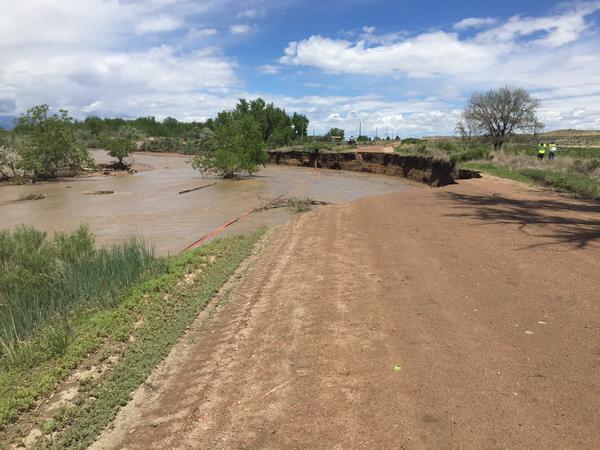
    Photo via USAF Air Combat Command
    Photo via USAF Air Combat Command

    From The Colorado Springs Gazette (Jakob Rodgers):

    The move by Security Water and Sanitation Districts signaled the last time that contaminated water is expected to reach residents’ homes, said Roy Heald, the water district’s general manager.

    “We’re confident now that we can maintain this, really, until we can get treatment online,” Heald said.

    Security’s announcement comes as temperatures cool and the summer watering season comes to a close.

    Water districts in Security, Widefield and Fountain have traditionally relied largely on surface water pumped into the area from the Pueblo Reservoir during winter months. However, those water districts relied much more heavily on the Widefield aquifer during the spring and summer months to meet demand.

    That strategy became a problem in May when the Environmental Protection Agency tightened its guidelines over perfluorinated compounds and left residents in Security, Widefield and Fountain scrambling to find other water sources.

    Fountain managed to go the entire summer without dipping into the aquifer, due largely to watering restrictions.

    Widefield Water and Sanitation District, however, does not expect to completely wean itself from the contaminated aquifer until “sometime in October,” according to Brandon Bernard, Widefield’s water department manager.

    In Security, multiple projects are underway to ensure the chemicals no longer get into the drinking water, Heald said.

    This year, the district purchased extra surface water from Colorado Springs Utilities to limit its well water use.

    And this winter, Security plans to install a second line connecting it to the Southern Delivery System – a move that should significantly boost its capacity for bringing in cleaner water from the Pueblo Reservoir.

    Both moves are meant to keep the district from using well water until it can be filtered. The Air Force has promised to provide nearly $4.3 million in water filters to affected water systems and well owners, though Security may not get any filters until next year…

    The chemicals have been associated with a host of health ailments, including kidney and testicular cancers, thyroid disease and high cholesterol.

    Two lawsuits seeking class-action status have been filed on behalf of residents in the area against the manufacturers who produced and sold the chemicals.

    Creek Week volunteers work to beautify Fountain Creek watershed — The #Colorado Springs Gazette

    UCCS Clean the Stream Team at the 2015 Creek Week. Photo via the Fountain Creek Watershed, Flood Control and Greenway District.
    UCCS Clean the Stream Team at the 2015 Creek Week. Photo via the Fountain Creek Watershed, Flood Control and Greenway District.

    From The Colorado Springs Gazette (Chhun Sun):

    …a group of 15 volunteers didn’t mind an early wake-up call Sunday before coming together at Palmer Lake to pick up trash, pull weeds and do cleanup as part of the third annual Creek Week – an effort to protect the Fountain Creek Watershed.

    The goal is to reduce pollution that clogs waterways and leads to flooding, improves wildlife habitat and protects drinking water by collecting and removing litter and debris within the watershed during a nine-day period, according to an El Paso County news release.

    Sunday was the second day of the cleanup project, and volunteers arrived at 8:30 a.m. to the Palmer Lake Recreation Area – located at the foot of Ben Lomand Mountain – and dedicated nearly three hours to beautifying the park. A few people spent their time gathering debris around the lake and pulling out weed, while others cleared some brushes near the entrance.

    Then, there was the 21st Medical Group at Peterson Air Force Base that was in charge of replacing old railroad ties along the dirt path. Though the morning was cold and windy, the group didn’t mind being outside. They’re used to working inside a clinic with each other, so this was a good excuse to work up a sweat.

    “We are dependent on the community,” said technical Sgt. Jamin Norton of Pennsylvania. “We need to be out there in the community, showing that we’re giving back and getting to know folks in the community. We move around a lot, so we don’t necessary have local ties. Some of us do, but a lot of us don’t. This way, we get out there and get involved. We meet some of the local folks. They see us and get to know us on a personal level and not just someone in a uniform.”

    The project started as a way to maintain the watershed – which includes Fountain Creek, related wetlands, trails and recreational facilities – as an “important resource and asset of the people of El Paso County and the Pikes Peak region,” the county’s District 4 commissioner, Dennis Hisey, said during a county proclamation reading. The watershed features multiple streams that goes into Fountain Creek and that “an empty plastic water bottle discarded up north in Cottonwood Creek eventually floats south through Fountain and continues on past Pueblo.”

    The first year of Creek Week drew 625 volunteers who collected seven tons of litter. The following year attracted 1,500 volunteers who picked up 10 tons of litter. This year, organizers expect about 2,000 volunteers who will clean up 12 tons of litter.

    “There’s so many reasons to participate in Creek Week,” said Dana Nordstrom, the county’s community outreach coordinator. “There’s beautification, wildlife habitat, water ecology. We tell people to pick a reason, to pick a day and pick it up.”

    For volunteer information and cleanup locations, visit http://www.fountaincreekweek.com.

    Class-action certification sought by residents of Fountain, Security and Colorado Springs — The Denver Post

    Photo via USAF Air Combat Command
    Photo via USAF Air Combat Command

    From The Denver Post (Kirk Mitchell):

    The lawsuit seeking class-action certification was filed Thursday on behalf of the nine residents living near Peterson Air Force Base, was filed by Colorado Springs attorney Michael McDivitt and New York City attorneys Hunter Shkolnik, Paul Napoli and Louise Caro.

    Other companies named as defendants in the lawsuit include The Ansul Company of Wisconsin; National Foam, Inc. of Pennsylvania; Angus Fire of Bentham, United Kingdom; Buckeye Fire Equipment Company of Mountain, N.C.; and Chemguard of Wisconsin.

    The plaintiffs are seeking a declaration that the defendants acted with gross negligence and careless disregard for the safety of residents who use water from the contaminated watershed. They are seeking a court order requiring defendants to test and monitor each property and all drinking water within the contamination area.

    They are also asking that a judge order defendants to provide medical monitoring for all those in the proposed class, the lawsuit says. The plaintiffs are also seeking compensatory and punitive damages.

    The lawsuit says the U.S. Air Force and other branches of the military, including the Army, use or have used firefighting foams that degrade into perfluorooctanoic acid (C8), which is highly soluble in water and likely to contaminate water supplies. The so-called aqueous film forming foam is water-based and used to fight difficult fires, particularly those that involve petroleum or flammable liquids.

    A similar federal civil lawsuit was filed Wednesday against 3M, Ansul and National Foam by Denver attorneys Kevin Hannon and Justin Blum on behalf of three Colorado Springs residents. Plaintiffs in that case are seeking class-action certification and damages in excess of $5 million.

    Peterson, Fort Carson and the Colorado Springs Airport have been linked to contamination of the Fountain Watershed area, the lawsuit says.

    The Fountain Creek Watershed is located along the central front range of Colorado. It is a 927-square mile watershed that drains south into the Arkansas River at Pueblo. The watershed is bordered by the Palmer Divide to the north, Pikes Peak to the west, and a minor divide 20 miles east of Colorado Springs. Map via the Fountain Creek Watershed Flood Control and Greenway District.
    The Fountain Creek Watershed is located along the central front range of Colorado. It is a 927-square mile watershed that drains south into the Arkansas River at Pueblo. The watershed is bordered by the Palmer Divide to the north, Pikes Peak to the west, and a minor divide 20 miles east of Colorado Springs. Map via the Fountain Creek Watershed Flood Control and Greenway District.

    C8 has been detected in levels exceeding EPA health standards of 70 parts per trillion in the Fountain Creek watershed that provides municipal water and feeds private wells, the lawsuit says. In fact, the Fountain watershed is one of the hardest-hit of 63 areas nationwide where C8 contamination exceeds EPA risk levels, it says.

    A panel of scientists, including three epidemiologist formed to study water contamination in Wood County, W.Va., “found probable links between (C8) and kidney cancer, testicular cancer, ulcerative colitis, thyroid disease, pregnancy induced hypertension and hypercholesterolemia,” the lawsuit says.

    The plaintiffs all tested for elevated levels of C8 in their blood and their properties likewise had elevated levels of C8. They include:

  • Alan and Leslie Davis and Donald and Theresa Easter, all of Colorado Springs, get their water from the Widefield Water and Sanitation District.
  • Billy and Linda Long, and Lonnie Rouser Sr., all of Fountain, get their water from Fountain Water District.
  • Joyce Moore and Rhonda Sharkey, both residents of Security, receive their water from the Security Water District.
  • Besides being used in firefighting foams, C8 was once widely used in nonstick cookware and as surface coatings for stain-resistant carpets and fabric, the lawsuit says. The chemical is readily absorbed in the blood stream, kidney and liver after consumption or inhalation, the lawsuit says.

    The EPA issued lifetime health advisories about the health effects of C8, the lawsuit says. It can remain in the environment, particularly in water, for many years and can be carried in the air.

    An August 2016 the U.S. Army Corps of Engineers study found that the source of groundwater contamination of the Fountain watershed could have come from fire training areas at Peterson Air Force Base, the lawsuit says.

    All 32 of Security Water and Sanitation District’s municipal wells are contaminated, the lawsuit says. One well was 20 times the EPA’s risk level and the EPA recommended that pregnant women and small children should not drink the water.

    The class-action designation is sought in part because it would be impractical for the great numbers of people affected by the pollution to litigate their claims individually, the lawsuit says.

    Widefield aquifer via the Colorado Water Institute.
    Widefield aquifer via the Colorado Water Institute.

    The latest “Fountain Creek Chronicle” is hot off the presses

    UCCS Clean the Stream Team at the 2015 Creek Week. Photo via the Fountain Creek Watershed, Flood Control and Greenway District.
    UCCS Clean the Stream Team at the 2015 Creek Week. Photo via the Fountain Creek Watershed, Flood Control and Greenway District.

    Click here to read the newsletter from the Fountain Creek Watershed, Flood Control and Greenway District. Here’s an excerpt:

    The 2016 Steering Committee has been working very hard to make this 3rd annual event bigger and better than ever, including a new website! Mark your calendars for Sept. 24-Oct 2 , gather up your Creek Crew and get ready to make a huge difference for our watershed and beyond. Read about last year’s event for inspiration. Interested in getting involved, need more info, want to sponsor – contact us (creekweeksoco@gmail.com)!

    Fountain Creek stormwater mitigation update

    The Fountain Creek Watershed is located along the central front range of Colorado. It is a 927-square mile watershed that drains south into the Arkansas River at Pueblo. The watershed is bordered by the Palmer Divide to the north, Pikes Peak to the west, and a minor divide 20 miles east of Colorado Springs. Map via the Fountain Creek Watershed Flood Control and Greenway District.
    The Fountain Creek Watershed is located along the central front range of Colorado. It is a 927-square mile watershed that drains south into the Arkansas River at Pueblo. The watershed is bordered by the Palmer Divide to the north, Pikes Peak to the west, and a minor divide 20 miles east of Colorado Springs. Map via the Fountain Creek Watershed Flood Control and Greenway District.

    From The Colorado Springs Independent (Pam Zubeck):

    While the [Fountain Creek Watershed Drainage, Flood Control and Greenway District] has limped along for seven years with more hopes than funding, now it’s flexing some muscle after an injection of $10 million from Colorado Springs Utilities. It was the first of five such payments through 2020 that are part of the city’s deal with Pueblo County for the city’s Southern Delivery System pipeline from Pueblo Reservoir, completed in April.

    But so much needs to be done that the money quickly will be absorbed into a long list of projects, leaving the district, again, penniless.

    “What we’re going to find out is that $50 million is much less than what we need for that project list,” says district executive director Larry Small, former Springs vice mayor.

    The district has conducted a host of studies over the years and done a few projects, including sediment reduction near the confluence of Fountain Creek and the Arkansas River east of downtown Pueblo. Thus far, its projects have been largely funded through grants from such agencies as the Colorado Water Conservation Board.

    Now, with the Utilities money, it wants to take on the herculean task of trying to reshape the creek.

    First up is a bank restoration project along the Masciantonio Trust farm just south of the El Paso County-Pueblo County line where, over the years, the creek’s rushing waters have carved away a massive amount of land, leaving sand bars behind and sending tons of sediment down the creek every year.

    “The creek has seriously eroded the bank there,” Small says. “It’s taken 12 acres of farm land.”

    The project’s engineering study was launched in July, and a construction contract will be awarded next year, he says, with a budget of $2.5 million.

    It’s unclear if the project actually will restore those 12 acres, because that would require a huge amount of fill material, Small says.

    “We are looking at an option to restore the creek to the 1955 channel,” he says, “but we have to figure out how to deal with the hole that would leave behind the wall we would have to build.”

    The problem, he adds, is that Young’s Hollow flows into the creek at that point and can carry a water flow of up to 6,000 cubic feet per second during heavy storms, so the creek has to be equipped to handle that volume.

    “This is a challenge,” he says.

    Two more projects for the farm also are planned, he says, noting, “That whole 4-mile stretch is seriously eroded.”

    Another project will assess stability and sediment along the entire 51 miles of the creek from Colorado Springs to its confluence with the Arkansas.

    “That’s going to generate a project list where we need to do bank restoration,” Small says. Started in May this year, the study will wind up in March and be followed by an evaluation of flood control alternatives, which includes a dam.

    That study, also started in May, will address how much land would be required, how a dam would function, what property the district would need to acquire and what permitting processes would be necessary, among other things.

    This month, the district began compiling a drainage criteria manual, which will enable the board to evaluate development that takes place within the district and recommend requirements to the jurisdictions at issue, such as city of Fountain, city of Colorado Springs, Pueblo County or El Paso County.

    So as Small says, the district has quickly picked up the pace this year.

    “As I told some people recently, on May 31, I had one project, and on June 1, I had five projects,” he says.

    The biggest single project undertaken by the district so far is dredging the levees east of Pueblo at a total cost of $5.25 million. Funded with additional money from Springs Utilities, Pueblo County and Pueblo’s stormwater enterprise fund, the project will be overseen by the Fountain Creek district, which also will loan $1.25 million to Pueblo to be repaid in 2018, Small says.

    The project will begin this year — the district hopes to let the contract this fall — and be finished next year, if all parties sign off on the plan, which is expected, he says. The dredging will start at 18th Street and extend to the creek’s confluence with the river. The job will include removing vegetation and two railroad piers that act as debris traps.

    The source of money for projects when the $50 million from Springs Utilities runs out isn’t clear. Small says the board, in coming years, will start researching a ballot measure for a property tax to fund the district. Even after all the projects are built, money will be needed for maintenance, he says.

    The district covers all of El Paso and Pueblo counties. One mill would generate roughly $6.85 million from El Paso County taxpayers and $1.6 million from Pueblo County taxpayers, for a total of about $8.5 million a year. (Assessed value of property in El Paso County totals $6.85 billion, and in Pueblo County, $1.66 billion.)

    About $8 million a year is a lot for a district that’s never spent more than $480,000 in any single year so far and relied on grants from various agencies and member contributions from Green Mountain Falls, Palmer Lake, Manitou Springs, Fountain, Colorado Springs, Pueblo, El Paso County and Pueblo County.

    Any infusion of cash, though, is subject to revenue limits imposed by the Taxpayer’s Bill of Rights, so in early 2015 the district created a companion agency, the Fountain Creek Watershed Water Activity Enterprise. The enterprise is exempt from TABOR revenue caps, Small says, as long as less than 10 percent of its funding comes from state and local grants. The $10 million annual payments for five years from Utilities are not considered grants, he says.

    But the Utilities’ payments, while large, won’t fix all the creek’s problems, says Greg Lauer, Fountain city councilor and district board member.

    “When you look at the substantial need for projects and maintenance, these numbers barely scratch the surface,” he says. Lauer predicts the board will begin discussing a tax measure next year, though it’s unlikely it would appear on the 2017 ballot.

    For one thing, he notes, the board needs “legal clarification.” For example, would a tax measure approved by voters in El Paso County but not in Pueblo County result in the tax being applied only in El Paso County, or would it be considered defeated? Would a tax approved by a majority of voters, regardless of their place of residency, result in it being added to the tax rolls in both counties?

    Regardless, Lauer says it’s hard to argue against ongoing funding when the board is reminded regularly by landowners along the creek about flood damage.

    For now, though, the board is eager to get long-awaited projects underway with the money it has.

    “We are so beyond excited,” Lauer says. “It’s been a long time coming.”

    Water restrictions lifted in Fountain — The #Colorado Springs Gazette

    Widefield aquifer via the Colorado Water Institute.
    Widefield aquifer via the Colorado Water Institute.

    From The Colorado Springs Gazette (Rachel Riley):

    Stage 3 water restrictions, which were put in place in Fountain June 24 after perfluorinated compounds were found in area groundwater wells, were lifted Thursday.

    The restrictions, which limited irrigation to two days a week to avoid using well water and meet demands with surface water, were imposed after contamination was found in groundwater wells in Fountain, Widefield and Security at levels above Environmental Protection Agency recommendations…

    Stage 1 voluntary water restrictions remain in place in Fountain until Sept. 30, according to the utilities’ website.

    Under the voluntary restrictions, property owners and renters with street addresses ending in an even number are encouraged to use water outdoors on even-numbered calendared days, and vice-versa with residents with street addresses ending in an odd number. Property owners and renters area also encouraged to refrain from using water outdoors on the last day of each calendar month.

    Colorado Springs completes first stormwater project promised under new commitment — KRDO.com

    The Fountain Creek Watershed is located along the central front range of Colorado. It is a 927-square mile watershed that drains south into the Arkansas River at Pueblo. The watershed is bordered by the Palmer Divide to the north, Pikes Peak to the west, and a minor divide 20 miles east of Colorado Springs. Map via the Fountain Creek Watershed Flood Control and Greenway District.
    The Fountain Creek Watershed is located along the central front range of Colorado. It is a 927-square mile watershed that drains south into the Arkansas River at Pueblo. The watershed is bordered by the Palmer Divide to the north, Pikes Peak to the west, and a minor divide 20 miles east of Colorado Springs. Map via the Fountain Creek Watershed Flood Control and Greenway District.

    From KRDO.com (Chris Loveless):

    The City of Colorado Springs says it has finished building a detention and water quality basin on the city’s northeast side as part of a new commitment to stormwater projects.

    The city has committed to spending $19 million a year on stormwater projects.

    The new detention basin at Woodmen Road and Sand Creek cost $3 million and is designed to reduce the velocity of flows in Sand Creek and to prevent downstream erosion while creating a more natural environment.

    The city says 71 projects were selected based on negotiations with Pueblo County to identify and prioritize stormwater projects that would benefit both Colorado Springs and downstream communities…

    All of the projects are designed to reduce flooding, provide improved water detention, and reduce flows, sediment and other pollutants entering drainages and going downstream.

    Peterson AFB likely source of Widefield aquifer PFC pollution

    Photo via USAF Air Combat Command
    Photo via USAF Air Combat Command

    From the Associated Press (Dan Elliott):

    The state Department of Public Health and Environment said Wednesday it hasn’t ruled out additional sources, but officials believe at least some of the chemicals came from Peterson Air Force Base, where firefighters used the foam in training exercises.

    The foam contained perfluorinated compounds, or PFCs, which have been linked to prostate, kidney and testicular cancer, along with other illnesses.

    The comments by state officials were the most definitive statement to date linking the contamination to Peterson. It came hours after the military released a report identifying six sites at the base where the foam may have escaped into the environment after firefighting drills or fire equipment tests…

    Colorado and Air Force officials will meet next week to discuss their next steps, said Roland Clubb of the state health department. The next phase will include drilling monitoring wells and taking soil samples, which the Air Force announced last month.

    Clubb said state officials also want assurances from the Air Force about seven other sites at Peterson where the foam was used, but where the military said no follow-up investigation is needed. The Air Force said any foam released at those sites went through a treatment system…

    The Security Water District has shifted almost entirely to surface water — from rivers and lakes — since the PFCs were found, Manager Roy Heald said Wednesday. Previously, about half the district’s water came from wells and half from surface water.

    Heald expects the district to soon use surface water entirely, after modifications to the system.

    The Fountain Water Department has not used wells since October and got through this summer’s peak demand period entirely on surface water, Utilities Director Curtis Mitchell said.

    From The Colorado Springs Gazette (Tom Roeder):

    Six sites at Peterson Air Force Base were singled out for follow-up tests, the report submitted by the Army Corps of Engineers found.

    The firefighting foam was used most heavily from about 1970 through the early 1990s at two fire training areas, which have since been decommissioned, the report said. A former assistant fire chief, however, told investigators that he remembered it twice being used in a lined basin during the last decade.

    Also at risk of exposure is the installation’s golf course, which sits on a former leach field and is watered from an untreated pond that collects all runoff from the central and western areas of the base, the report said. Investigators were not certain how much firefighting foam made its way into the pond since it was built in 1979.

    The chemicals also have been used during equipment tests in two areas, including a dirt-and-grass volleyball court near one fire station and along a concrete road near another, the report said…

    The EPA says the chemicals are “toxic to laboratory animals and wildlife, producing reproductive, developmental, and systemic effects in laboratory tests.”

    In the new report, investigators say none of the sites on Peterson contaminated with the firefighting chemicals “identified as presenting an imminent risk to public health or the environment.”

    The base has at least 600 gallons of the chemicals in storage. The military has said it’s working to find a replacement for the firefighting chemicals.

    Studies of the contamination, including the drilling of test wells, are expected to continue through the fall. Another report is due in March.

    This year, the military said 664 sites in the U.S. and elsewhere may have used the toxic firefighting chemicals. They were mixed with water to create a foam used to extinguish fuel fires.

    Widefield aquifer via the Colorado Water Institute.
    Widefield aquifer via the Colorado Water Institute.

    #Colorado Springs: Erosion eats away property near Sand Creek — KRDO.com

    Heavy rains inundate Sand Creek (2013). Photo via the City of Colorado Springs and the Colorado Springs Independent.
    Heavy rains inundate Sand Creek (2013). Photo via the City of Colorado Springs and the Colorado Springs Independent.

    From KRDO.com:

    A 15-foot ledge is inching its way closer to several homes in southwest Colorado Springs.

    The city’s storm water manager says the fix is a priority, but can it wait?

    The city admits that Sand Creek isn’t maintained. Due to recent rains and July’s huge hailstorm the channel is growing wider and washing away the land.

    Homes are now just feet away from a 15-foot drop-off…

    Kelley says his team is ready to take action.

    “This area is a top priority. I say that because it’s actually going into construction in 2016,” said Kelley.

    The city of Colorado Springs is using $1.3 million of FEMA money to secure the channel.

    “We are anticipating construction to begin in November after the monsoon,” said Kelley.

    Funding problems for Fountain Creek flood control project

    The Fountain Creek Watershed is located along the central front range of Colorado. It is a 927-square mile watershed that drains south into the Arkansas River at Pueblo. The watershed is bordered by the Palmer Divide to the north, Pikes Peak to the west, and a minor divide 20 miles east of Colorado Springs. Map via the Fountain Creek Watershed Flood Control and Greenway District.
    The Fountain Creek Watershed is located along the central front range of Colorado. It is a 927-square mile watershed that drains south into the Arkansas River at Pueblo. The watershed is bordered by the Palmer Divide to the north, Pikes Peak to the west, and a minor divide 20 miles east of Colorado Springs. Map via the Fountain Creek Watershed Flood Control and Greenway District.

    From The Colorado Springs Gazette (Matt Steiner):

    DOLA had awarded the county $945,000 in Community Development Block Grant money in late 2015 for a much-needed project along Fountain Creek near U.S. Highway 85/87 south of Colorado Springs, but in June, the county got some bad news:

    The award would be much smaller than expected.

    Federal guidelines cap at $250,000 the money that can be given out for projects that involve the Army Corps of Engineers – which is administering the work near 85/87 and Maxwell Street.

    The project, necessary after torrential floods badly damaged the banks of the creek in September 2013, would shore up a 1,000-foot section of the creek, keep the highway safe and prevent eroded river banks from approaching a mobile home park during the next large flood event.

    “Now we have a fear of losing this project,” Brian Olson of the county’s budget division said Friday. “If we don’t have the funding on this, they’ll take that money and use it somewhere else.”

    The total cost of the work is estimated at more than $2.5 million, according to a May 2015 project overview. The Army Corps of Engineers will pick up three quarters of that tab, and the rest was expected to come from the money awarded to El Paso County, but the cap leaves the county short.

    “We’re still trying to figure how we can fill that gap,” county Commissioner Sallie Clark said.

    Olson said the project is doing feasibility analysis, a study that will cost the county $180,000. If the Army decides the project isn’t worth the cost, no grant money will be available at all, Olson said. The actual cost the county must pay will be determined after the feasibility study is complete.

    While the county still has at least two months before the feasibility study is complete and the Army Corps’ determination on the value of the project is made, the county has shown urgency about finding alternate sources of money. They hope to receive some assistance in solving that problem.

    “The state has got a lot on their plate,” Olson said. “They made an error on this. I’m hoping they’ll help us get through this thing.”

    Fountain Creek damage in 2015 pegged at $76 million — The Pueblo Chieftain

    Overton Road flood damage photo via KOAA.com.
    Overton Road flood damage photo via KOAA.com.

    From The Pueblo Chieftain (Chris Woodka):

    More than one-quarter of the banks along Fountain Creek were severely damaged by last year’s continual high water that would cost $76 million to fully repair.

    Mostly in Pueblo County.

    That assessment was given Friday to the Fountain Creek Watershed Flood Control and Greenway District by Executive Director Larry Small…

    That’s significant because it shows the prolonged flows from increased water in Fountain Creek are more destructive than the one-time spikes in volume typical of flash flooding. It also shows there was more damage than the high visibility impacts, such as the washout of Overton Road, the exposure of buried cables and utility lines, the threat to operational railroad tracks and damage to individual property owners.

    The results came after an aerial survey that is part of collecting data for an upcoming needs assessment study. Both sides of Fountain Creek between Colorado Springs and Pueblo were studied, about 102 miles of river bank.

    Severe damage — altering the shape of the bank or the course of the stream — was found along sections totaling 28 miles. The damaged areas are not in one place but spread throughout the 50 miles along Fountain Creek, Small explained.

    Small estimated the damage at $76 million based on the average cost of restoration to stream banks at $500 per foot.

    The district does not have money to make repairs on that scale. Right now, it is embarking on a $2.5 million project to repair about 1,500 feet of bank on the Masciantonio property in Pueblo County, about 10 miles north of Pueblo.

    A demonstration project on the Frost property in El Paso County had been completed but washed out in the 2015 flooding because of the high volume of water over a six-week period.

    Small said assessments of how to proceed will be determined with more on-the-ground inspections.

    Fountain Creek Watershed district is asking Colorado Springs-area to pony up some operating dough

    The Fountain Creek Watershed is located along the central front range of Colorado. It is a 927-square mile watershed that drains south into the Arkansas River at Pueblo. The watershed is bordered by the Palmer Divide to the north, Pikes Peak to the west, and a minor divide 20 miles east of Colorado Springs. Map via the Fountain Creek Watershed Flood Control and Greenway District.
    The Fountain Creek Watershed is located along the central front range of Colorado. It is a 927-square mile watershed that drains south into the Arkansas River at Pueblo. The watershed is bordered by the Palmer Divide to the north, Pikes Peak to the west, and a minor divide 20 miles east of Colorado Springs. Map via the Fountain Creek Watershed Flood Control and Greenway District.

    From The Colorado Springs Gazette (Matt Steiner):

    The executive director of the Fountain Creek Watershed Flood Control and Greenway District visited officials in Pueblo County on Monday and stopped by meetings of El Paso County, Colorado Springs and Fountain leadership on Tuesday.

    [Larry] Small’s travels aren’t to say “Hello.” He is asking municipalities from Palmer Lake south to the Arkansas River to include money in their 2017 budgets to help his ever-growing organization.

    “Our workload has gone up significantly,” Small said.

    In 2013 the district had two projects. He expects at least six to be underway in 2017.

    At the El Paso County commissioners’ meeting Tuesday, Small brought a letter requesting almost $50,000 from the county. He asked for just more than $100,000 from Colorado Springs and almost $40,000 from Pueblo County and the city of Pueblo combined. Small said his organization will need $200,000 from local municipalities to help take care of administrative fees and grant-matching funds for upcoming projects.

    “We can ask, but there is no obligation,” he said.

    The Fountain Creek Watershed and Greenway District is wrapping up its seventh year since Gov. Bill Ritter signed a bill creating the legal entity in April 2009.

    Small’s group is part of the Regional Resiliency Collaborative, formerly known as the Waldo Canyon Fire Regional Recovery Group. The district has played an integral role in helping acquire grant money and managing projects during the post-fire recovery and flash-flood mitigation along Fountain and Monument creeks.

    The district had a budget of more than $1.1 million in 2016, up from about $786,000 the year before, Small said. He expects his 2017 budget to be “pretty close” to this year’s. Most of the district expenses are covered by matching funds and grants from organizations like the Colorado Water Conservation Board and the Community Development Block Grant Program, and other state and federal sources.

    Small said the district has not asked local municipalities for monetary help since 2013. He will continue his 2016 tour next week, soliciting funds from smaller towns and cities like Monument, Palmer Lake, Green Mountain Falls and Manitou Springs.

    “That money will go a long way,” he said.

    #Stormwater: Colorado Springs businesses closed amid flood cleanup — KOAA.com

    Colorado Springs City Hall back in the day via the City of Colorado Springs.
    Colorado Springs City Hall back in the day via the City of Colorado Springs.

    From KOAA.com (Lena Howland):

    Thursday night’s wild weather left behind a trail of damage, causing problems for businesses as they went in to open up shop on Friday morning.

    A handful of businesses had so much damage, they had to close down for the day…

    After a hail storm wiped through the area, debris started to clog up a nearby drain, forcing water to rush through the doors of surrounding businesses.

    Here’s a photo gallery from KRDO.com.

    Venetucci Farm suspends sales over water concerns — KOAA

    Widefield aquifer via the Colorado Water Institute.
    Widefield aquifer via the Colorado Water Institute.

    From KOAA (Jessi Mitchell):

    Venetucci Farm announced it would suspend the sale of its produce due to concerns over contamination in the Widefield aquifer.

    The farm pumps its water from a well attached to the aquifer, and it was among the first properties to be tested for contamination. Those results are still pending, which led to Friday’s decision.

    The EPA’s latest advisory level for PFCs is equivalent to one teaspoon of chemical in 20 Olympic-sized swimming pools. It may not sound like a lot, but in drinking water there are proven health impacts. Scientists are still studying fruits and vegetables grown with the water, but restaurants like Tapateria in Old Colorado City are hoping for the best.

    “I think we just had some beets in about two weeks ago,” says Tapateria chef Jay Gust of his dealings with Venetucci Farm. He gets much of his meat and produce from southern Colorado growers.

    “There’s been a huge push in getting local farmers into restaurants and I think it’s great and we definitely need it,” says Gust. “We need more of it, and hopefully this is just a mild speed bump and get back on track and just keep on pushing local cuisine.”

    The EPA and Army Corps of Engineers tell Venetucci managers it could be up to two more months before there are any conclusive answers showing just how many, if any, PFCs show up in fruits and vegetables grown on the farm. So far, the EPA only advises pregnant and breastfeeding women to avoid drinking contaminated water, but there are no advisories for food at this point.

    The farm’s owner, Pikes Peak Community Foundation, is acting in an abundance of caution. CEO Gary Butterworth says, “The concern was in our distribution to restaurants that we would not be able to communicate that, convey that to the end user, so we have not been providing products to restaurants directly for a period of time.”

    Here’s the release from the Pikes Peak Community Foundation:

    The Pikes Peak Community Foundation (PPCF) has decided to temporarily suspend sales and distribution of Venetucci Farm products until results from water, soil and produce testing are complete.
    Venetucci Farm draws its irrigation water from the Widefield Aquifer, which recently was deemed to have exceeded health advisory limits for perfluorinated chemicals (PFCs) levels by the Environmental Protection Agency.

    “While we do not believe there are any health risks associated with the consumption of Venetucci Farm products, it is with the best interest of the community in mind that we have decided to temporarily suspend sales and distribution of our products while we gather additional information and data,” said Gary Butterworth, CEO of the PPCF. “We are awaiting more conclusive water, produce and soil test results to inform our decisions moving forward. We feel this precautionary measure is the best course of action based on the information we have today.”

    The Foundation will continue to work with officials in Widefield, Security, Fountain, the Colorado Department of Public Health and Environment and the El Paso County Public Health Department as these agencies and municipalities gather additional data.

    ABOUT VENETUCCI FARM
    Located on the southwestern edge of Colorado Springs, this historic 190-acre urban farm, known as the “Pumpkin Farm” was established by the Venetucci Family in 1936. In later years, Nick and Bambi Venetucci were known for giving away thousands of pumpkins each fall to area school children.
    Wanting to preserve this valuable piece of land as a farm, the Venetuccis put it into conservancy and gifted it to the Pikes Peak Community Foundation in 2006. Thanks to the generosity of the Venetucci Family and the Pikes Peak Community Foundation, Venetucci Farm is a working farm committed to growing healthy food and providing positive experiences for the Colorado Springs community.

    ABOUT PIKES PEAK COMMUNITY FOUNDATION
    The Pikes Peak Community Foundation (PPCF) was founded in 1996. The Foundation creates custom-designed charitable gift funds for individuals, families, and businesses, including donor-advised funds, donor-designated funds, endowment funds, memorial funds, and scholarship funds, providing flexible and inexpensive alternatives to setting up private or family foundations. PPCF also makes grants to support nonprofit organizations and community projects for the benefit of our community and stewards Venetucci Farm and Aspen Valley Ranch. For more information, visit http://PPCF.org.

    #Colorado Springs: “Sustainable stormwater funding and management is not optional” — John Suthers

    coloradospringsstormwaterimplementationplan072016cover

    Click here to read the plan.

    Here’s the release from the City of Colorado Springs:

    The City of Colorado Springs today released the draft Stormwater Program Improvement Plan designed to dramatically improve the city’s infrastructure and meet federal requirements.

    City Public Works Director Travis Easton provided this statement.

    “Today the City of Colorado Springs has released a draft Stormwater Improvement Plan. This is significant for our stormwater program, our citizens, and our City. The draft Stormwater Program Improvement Plan reflects strong leadership by the Mayor and City Council. We began this effort last fall and we reached a preliminary draft in January. Today’s release includes updates through July 2016.

    “The City’s Public Works Department would appreciate the public’s comments and suggestions for improvement of the plan over the next 60 days. We will take public input into account and release the Plan in final form shortly thereafter.

    “Thank you in advance for helping to shape this plan, and being a part of the process.”

    Individuals wishing to provide feedback on the plan can contact Richard Mulledy, the City’s Stormwater Division Manager at stormwater@springsgov.com or by mail to: Richard Mulledy, Stormwater Division Manager, City of Colorado Springs, 30 S. Nevada Avenue, Suite 401, Colorado Springs, CO 80901.

    The City of Colorado Springs and Colorado Springs Utilities have committed to investing a total of $460 million over 20 years, beginning this year. The commitments essentially replace the city Stormwater Enterprise that was defunded in 2009.

    “Fixing the stormwater issues that we inherited stemming from the dissolution of the stormwater enterprise has been a top priority for me and the City Council,” said Colorado Springs Mayor John Suthers. “Sustainable stormwater funding and management is not optional – it is something that we must do to protect our waterways, serve our downstream neighbors, and meet the legal requirements of a federal permit.”

    From The Pueblo Chieftain (Chris Woodka):

    Colorado Springs this week released its draft stormwater plan, which was spurred earlier this year by negotiations with Pueblo County commissioners over permits for the Southern Delivery System.

    The 305-page implementation plan mirrors the terms of an intergovernmental agreement, outlining at least $460 million in expenditures over the next 20 years and restructuring the city’s stormwater department. It was released Wednesday on the city’s website (http://coloradosprings.gov).

    It’s important to Pueblo because work within Colorado Springs is expected to reduce damage along Fountain Creek.
    Work already has started on some of the projects that are expected to benefit Pueblo County as well as Colorado Springs. A total of 61 of the 71 critical projects have downstream benefits to Pueblo and other communities, in a March assessment that included input from Wright Water Engineers, which has been hired by Pueblo County as consultant for Fountain Creek issues.

    That list can change, depending on annual reviews of which work is needed, according to the IGA.

    The plan also attempts to satisfy state and federal assessments that the existing stormwater services failed to meet minimum conditions of the city’s stormwater permits. An Environmental Protection Agency audit last year found Colorado Springs had made no progress on improving stormwater control in more than two years.

    This year, Colorado Springs formed a new stormwater division and plans on doubling the size of its stormwater staff.

    The plan includes a funding commitment of $20 million annually by the city and $3 million per year by Colorado Springs Utilities to upgrade creek crossings of utility lines.

    The plan acknowledges that Colorado Springs significantly cut staff and failed to maintain adequate staffing levels after City Council eliminated the city’s stormwater enterprise in 2009. Pueblo County suffered significant damage, including the washout of part of Overton Road and excess debris in the Fountain Creek channel through Pueblo, during prolonged flows last May.

    Other parts of the Pueblo County IGA expedited funding for flood control studies and projects by the Fountain Creek Watershed Flood Control and Greenway District, as well as providing an additional $3 million for dredging in Pueblo.

    #Colorado Springs to spend $460 million on Storm Water Improvement Plan — KRDO

    Channel erosion Colorado Springs July 2012 via The Pueblo Chieftain
    Channel erosion Colorado Springs July 2012 via The Pueblo Chieftain

    From KRDO:

    The city of Colorado Springs plans to spend around $460 million over the next 20 years on its Storm Water Improvement Plan.

    To see the plan, click here

    The city is asking anyone in the community that has suggestions or comments regarding this plan to contact Richard Mulledy, the City’s Stormwater Division Manager at rmulledy@ springsgov.com or by mail to: Richard Mulledy, Stormwater Division Manager, City of Colorado Springs, 30 S. Nevada Avenue, Suite 401, Colorado Springs, CO 80901.

    Arkansas Basin Roundtable approves grant application for Fountain Creek flood control alternatives

    Fountain Creek erosion via The Pueblo Chieftain
    Fountain Creek erosion via The Pueblo Chieftain

    From The Pueblo Chieftain (Chris Woodka):

    Flood control alternatives for Fountain Creek would be studied under a grant approved this week by the Arkansas Basin Roundtable.

    “It will look at storage alternatives and determine a preferred alternative for future needs,” said Larry Small, executive director of the Fountain Creek Watershed Flood Control and Greenway District.

    The district is seeking $93,000 in Water Supply Reserve Account grants through the Colorado Water Conservation Board. The board will vote on the application in September. The district will add $40,000 in local funds to the study.

    The U.S. Geological Survey completed a study in December 2013 of 13 alternatives that would reduce the impact of a major flood on Pueblo, determining either a dam or series of detention ponds along Fountain Creek between Pueblo and Colorado Springs would be the best solution.

    Last year, it completed a study that showed agricultural water rights downstream could be met through augmentation. Fountain Creek is the only drainage in the state not covered by a 72-hour store-andrelease law (SB212) passed last year by the state Legislature, Small explained.

    Small assured some roundtable members that the protection of ag water rights would remain prominent, saying farmers have been invited to participate in past studies.

    “We would keep the dialog open through the entire flood control study,” Small said.

    Among the factors to be considered are the cost of projects and their ability to contain floods of four different magnitudes: 10-, 50-, 100- and 500-year floods.

    The study also will evaluate where flood control structures should be located, what sort of property would need to be acquired and which permits are needed. It would evaluate the costs and benefits as well.
    There would also be the opportunity to see if other storage needs, as identified in Colorado’s Water Plan and the basin implementation plan, could be filled. Those include municipal, agricultural and wildlife habitat purposes.

    Public Invited to Discuss Progress on Monument Creek Watershed Restoration Planning

    Monument Creek, taken looking south from the northern section of Monument Valley Park via Loraxis
    Monument Creek, taken looking south from the northern section of Monument Valley Park via Loraxis

    Here’s the release from Colorado Springs Utilities:

    The Fountain Creek Watershed Flood Control and Greenway District will hold its second round of public open houses to present information on the Monument Creek Watershed Restoration Master Plan project and to collect input from the public. The public will have an opportunity to learn about analysis results to date and provide input on alternatives being considered to mitigate flooding and erosion issues within the study area.

    Please join the Fountain Creek Watershed Flood Control and Greenway District, the City of Colorado Springs, El Paso County, Colorado Springs Utilities and the United States Air Force Academy at public information open houses regarding flood restoration and mitigation planning within the Monument Creek Watershed.

    The Fountain Creek Watershed Flood Control and Greenway District has received funding from the Colorado Department of Local Affairs to investigate restoration planning options for the Monument Creek Watershed. Several of the creeks within the watershed suffered from extensive flooding during the summer and fall of 2013, as well as from the recent Waldo Canyon and Black Forest fires. El Paso County, the City of Colorado Springs, the United States Air Force Academy and other regional municipalities and agencies have undertaken various projects to mitigate the risk and maintain the proper flow and water levels in the main stem of Monument Creek and a number of tributaries. The Fountain Creek Watershed Flood Control and Greenway District has organized the public stakeholders to coordinate the restoration planning and implementation of projects to restore the Monument Creek Watershed to a resilient and naturally-stable condition and mitigate the risk of future flooding.

    Two open house meetings will be held in July 2016 in ADA-accessible facilities. Each meeting will address the alternatives being considered for restoring the watershed.

    Public Invited to Discuss Progress on Monument Creek Watershed Restoration Planning
    OPEN HOUSE DATES:
    Wednesday, July 20, 2016
    5 to 7 p.m.
    Discovery Canyon Campus, Middle School Library 1810 North Gate Blvd.
    Colorado Springs, CO 80921

    Thursday, July 21, 2016
    4to6p.m.
    Rockrimmon Library, Meeting Room 832 Village Center Drive
    Colorado Springs, CO 80919

    A Telecommunications Device for the Deaf (TDD/TTY) is available to the public at each of these meetings by calling 7-1-1 and asked to be connected to 719-447-9012. Persons with disabilities may contact the Fountain Creek Watershed, Flood Control and Greenway District and request reasonable accommodations such as a sign language interpreter by contacting Larry Small or Graham Thompson at the numbers/email addresses below as soon as possible.

    For more information contact Larry Small, Executive Director, Fountain Creek Watershed Flood Control and Greenway District at (719) 447-5012 (lsmall42@comcast.net) or Graham Thompson, Matrix Design Group at (719) 575-0100 (graham_thompson@matrixdesigngroup.com).

    PFC pollution’s 800 pound gorilla — what are the costs for clean up?

    Photo via USAF Air Combat Command
    Photo via USAF Air Combat Command

    From The Colorado Springs Gazette (Jakob Rodgers):

    Government agencies are just beginning to scratch the surface of costs incurred by a frustratingly hardy, toxic chemical polluting waterways across the U.S.

    Air Force officials already expect to spend more than $400 million to study the chemical’s use in a firefighting foam at nearly 200 sites and replace it. Peterson Air Force Base and the Air Force Academy are on that list.

    And on a local level, officials for water districts serving Security, Widefield and Fountain say they also may have to pay millions of dollars upgrading their water systems over the next few years to filter it out of tap water.

    The tabs are expected to grow, and they don’t include costs associated with cleanup efforts. In one such project, the Air Force will pay $4.3 million to help filter well water across southeast El Paso County.

    Nor does that tally include similar assessment efforts being conducted by the Navy and Army as well as clean up efforts in many other communities across the nation. One such study at Fort Carson had yet to start as of Wednesday.

    All of it is for a chemical that the Environmental Protection Agency says may cause health ailments at levels no greater than a drop of water in a string of railroad tank cars 10 miles long.

    “The fact that it doesn’t go away – it doesn’t degrade naturally, it stays in the environment – is a cause for concern,” said Daniel Medina, who is heading up the Air Force Civil Engineer Center’s response.

    The substance, called perfluorinated compounds, or PFCs, remains unregulated by the Environmental Protection Agency. However, the EPA has grown increasingly concerned about the substance.

    In May, the EPA’s health advisory level dropped to 70 parts per trillion – leaving every well used by water districts in Security, Widefield and Fountain above the new limit.

    The advisory was tailored to ensure it protected the most sensitive population – in this case, developing fetuses and breast-fed and bottle-fed infants. That means people using water below that level should not expect health effects, even if drinking that water over a lifetime, state and federal health officials said at a town hall Thursday.

    Communities across the U.S. are grappling with the chemical.

    To mitigate residents’ exposure here, local water officials have relied more heavily on surface water pumped in from the Pueblo Reservoir.

    Doing so has limited the number of people receiving contaminated tap water to 10,000 to 15,000, said Tyson Ingels, with the Colorado Department of Public Health and Environment’s Water Quality Control Division.

    Officials running local water districts are working to drop that number to zero, though it may take time. Projects underway or in development are unlikely to change how many people receive PFC-laden water this summer, water district officials say (see accompanying report).

    In the meantime, people receiving water above the EPA’s new limit should consider other water sources – especially women who are pregnant, planning to become pregnant or breastfeeding, as well as infants, a Colorado health department official said Thursday.

    The exact source of the PFCs in the Widefield aquifer remains unclear, though an Air Force official recently said that the chemicals possibly originated at Peterson Air Force Base.

    From 1970 through the mid-1990s, firefighters at the base used a type of foam laden with the chemicals while training to extinguish high-intensity fires, such as during plane crashes.

    Ever since then, firefighter have trained using water in a lined basin. It still has the firefighting foam that contains PFCs, but it is only used in emergency situations, Medina said.

    The Air Force has spent more than $137 million through Thursday as part of an effort to study 191 sites across the nation where the foam is believed to have been used, Medina said. They include active duty and National Guard installations, as well as decommissioned bases.

    So far, assessments have been completed at 96 percent of those sites, he said.

    The Air Force also expects to spend another $271 million incinerating that foam and replacing it with another substance, Medina said. That effort is underway at Peterson, base officials said.

    The price tag is expected to grow as more thorough assessments are ordered across the nation.

    At Peterson, for example, officials plan to drill monitoring wells to pinpoint the source, and a draft report is due in March 2017.

    Widefield aquifer via the Colorado Water Institute.
    Widefield aquifer via the Colorado Water Institute.