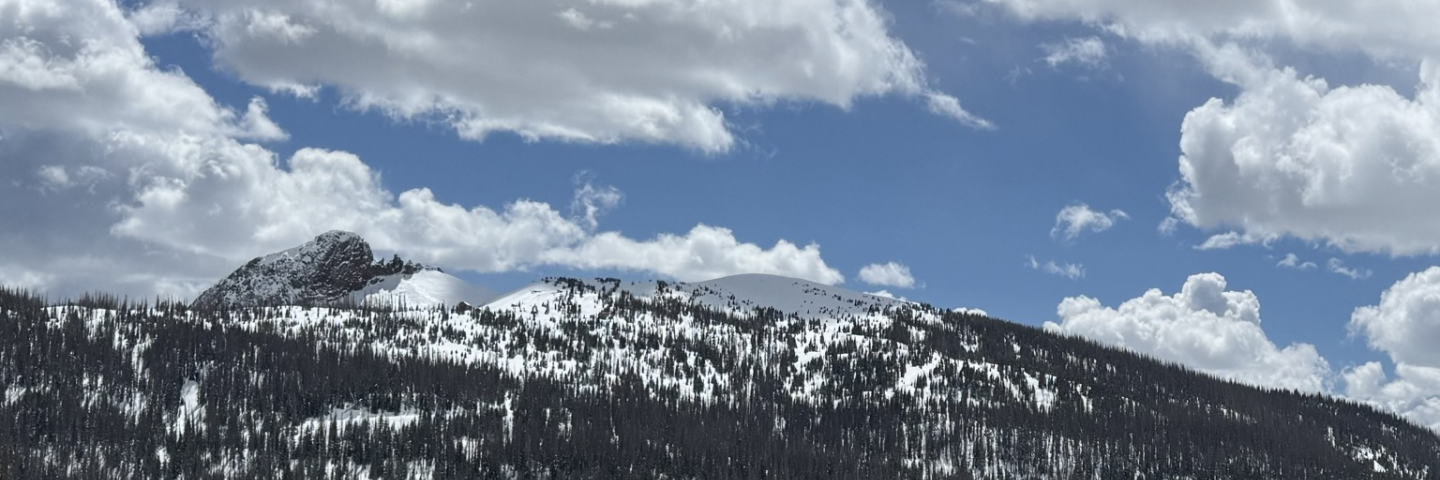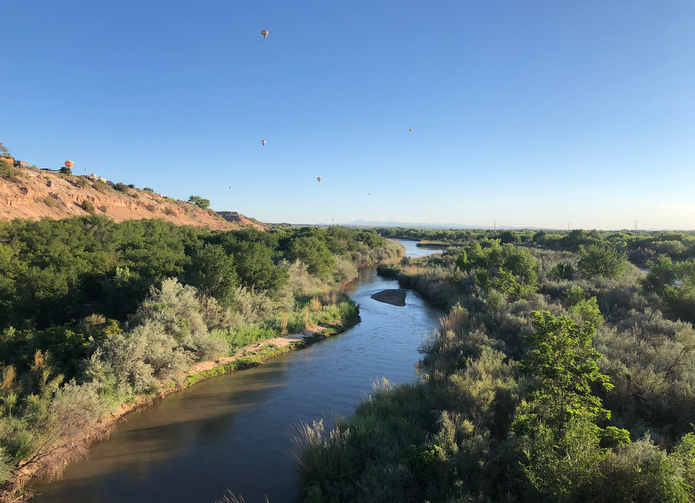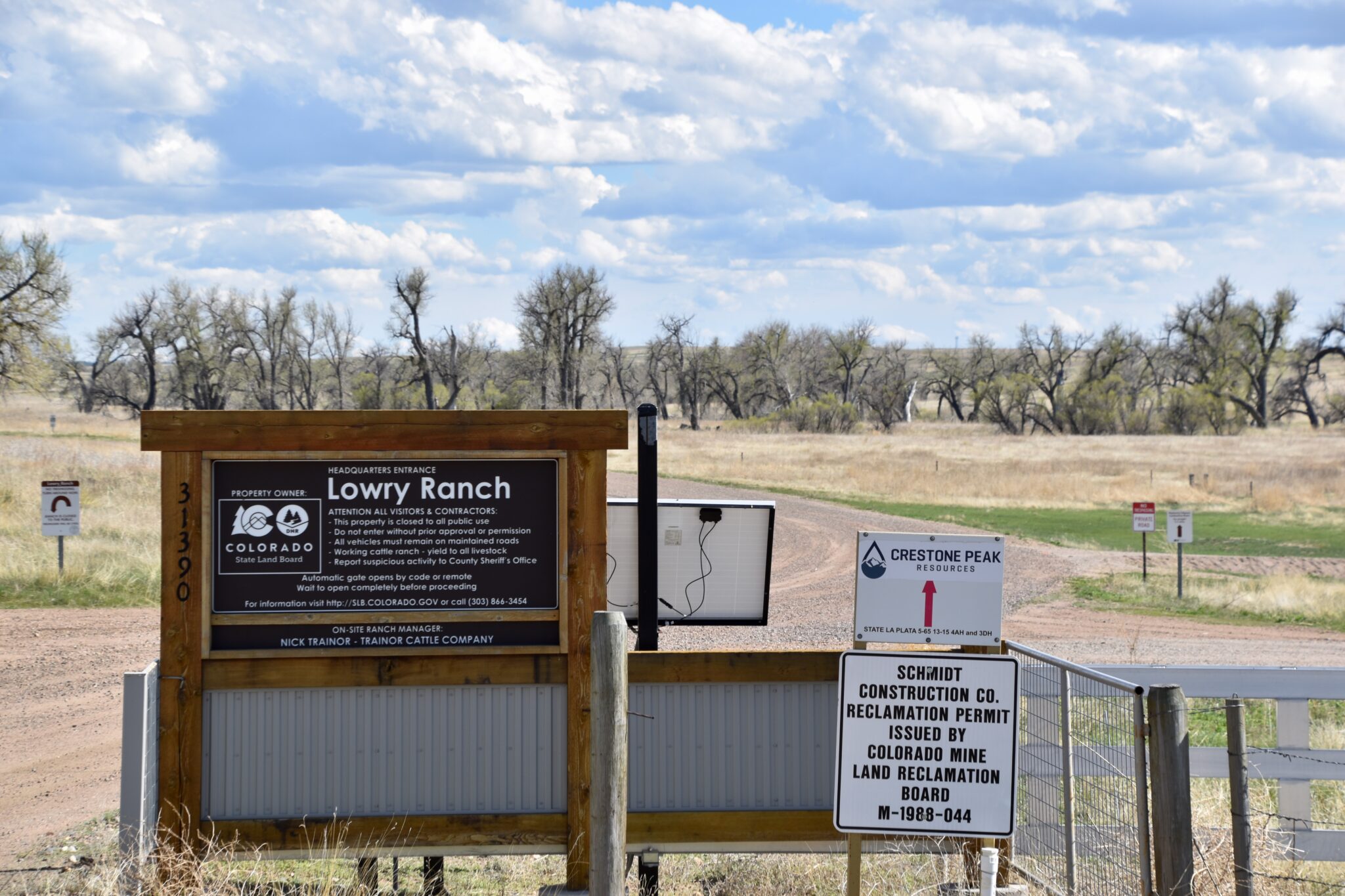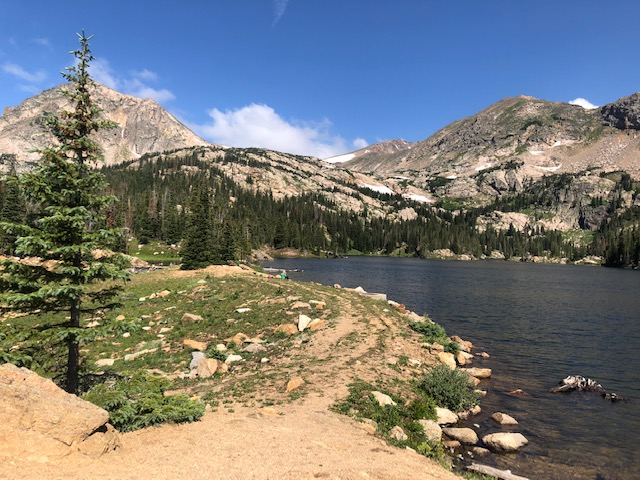
The entrance to the Colorado State Land Boardโs Lowry Ranch property in Arapahoe County is pictured on May 16, 2024. (Chase Woodruff/Colorado Newsline)
Colorado regulators on Wednesday gave the go-ahead to a sweeping oil and gas drilling plan on a large tract of state-owned land east of Aurora, with several conditions aimed at addressing concerns from nearby residents opposed to the project.
On a 3-1 vote, members of the Colorado Energy and Carbon Management Commission approved the 32,000-acre โcomprehensive area planโ proposed by Denver-based Civitas Resources, which aims to streamline permitting for 156 new oil and gas wells at seven drilling locations in Arapahoe County. But they moved to require that Civitas use emissions-reducing electric drilling equipment, and left the door open to denying permits for proposed well pads nearest to several southeast Aurora subdivisions.
โI do see concerns with the CAP, and I do think thereโs additional work that could have and probably should have been done,โ said ECMC Commissioner Mike Cross. โBut I still do think that it does meet our rules, and is approvable.โ
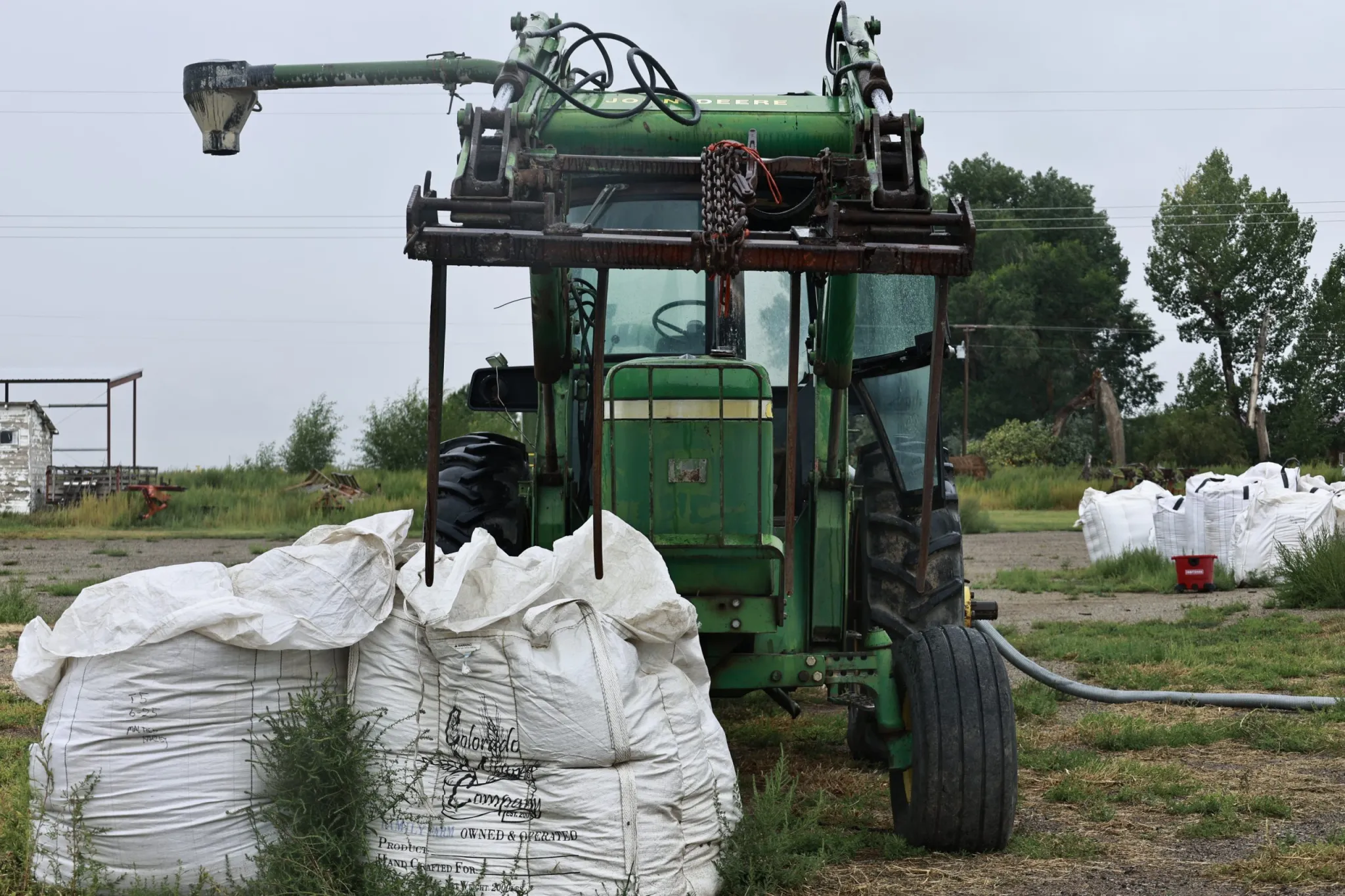
Most of the area in Civitasโ CAP proposal consists of the sprawling Lowry Ranch property, a former U.S. Air Force missile launch site and gunnery range acquired by the Colorado State Land Board in the 1960s. Limited drilling has taken place on the property since the Land Board first issued a lease for oil and gas development in 2012, but the CAPโs approval could fast-track drilling in the area for the next six years.
Save the Aurora Reservoir, a community activist group formed to oppose the project, made their case against its approval in a two-day hearing last week, citing concerns about increased noise, truck traffic, air pollution and wildfire risk. They also worry about the proximity of the Lowry Landfill Superfund Site, on the northwest corner of the project area. Civitas agreed not to drill under the Superfund site at the Environmental Protection Agencyโs request.
โWe are devastated by the Commissionโs decision,โ Marsha Goldsmith Kamin, STARโs president, said in a press release. โThis is without doubt the wrong decision for the health, safety, and environment of our community.โ
The approval also drew condemnations from state and national environmental groups, including the Sierra Club, which called the plan โreckless.โ
โThe grassroots efforts in Aurora have been powerful, passionate and persistent,โ Ben Jealous, the Sierra Clubโs executive director, said in a statement. โMembers of this community deserve access to healthy air and clean water, and shouldnโt have to live in fear of fracked gas operations beneath their homes and schools.โ
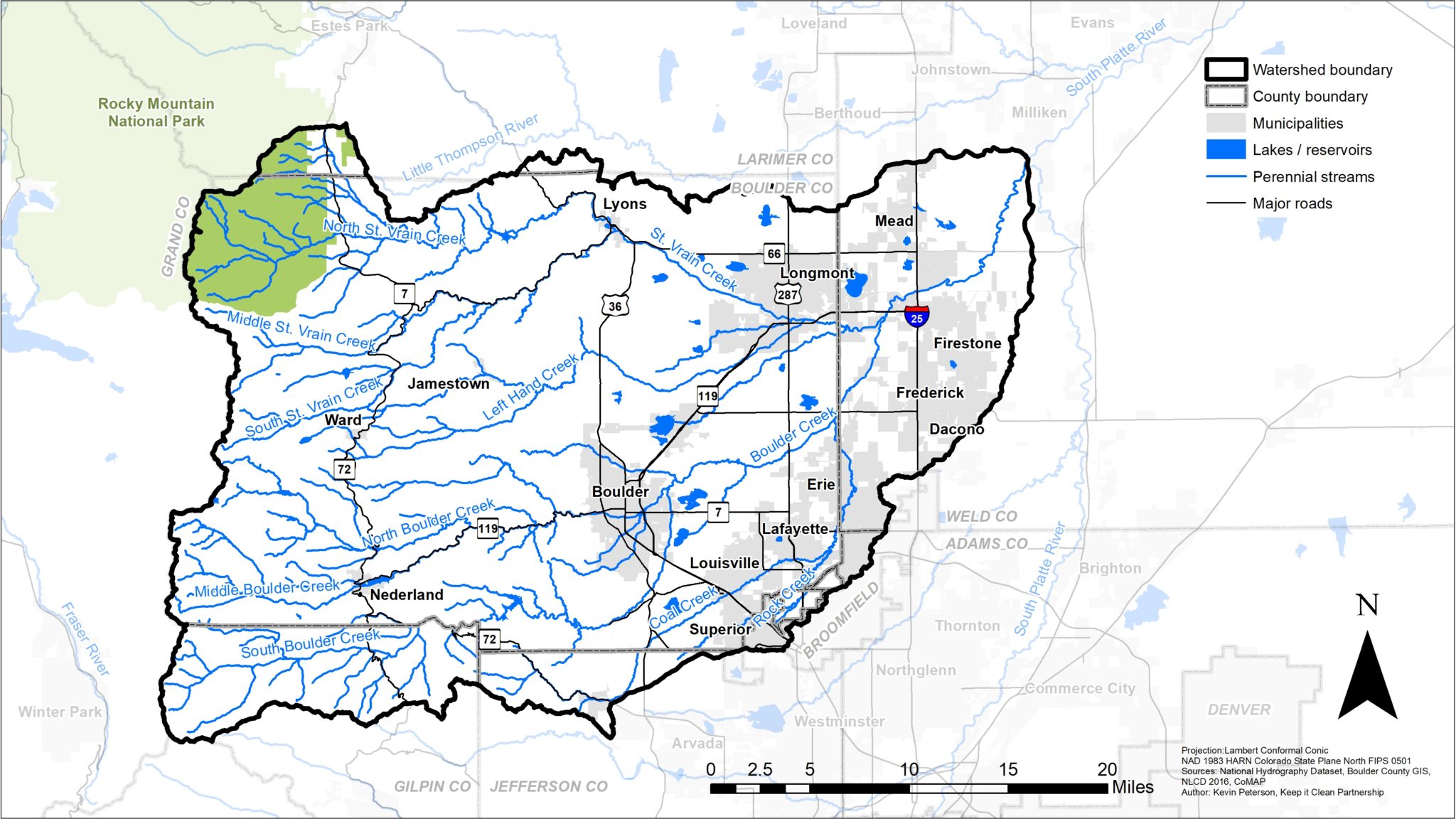
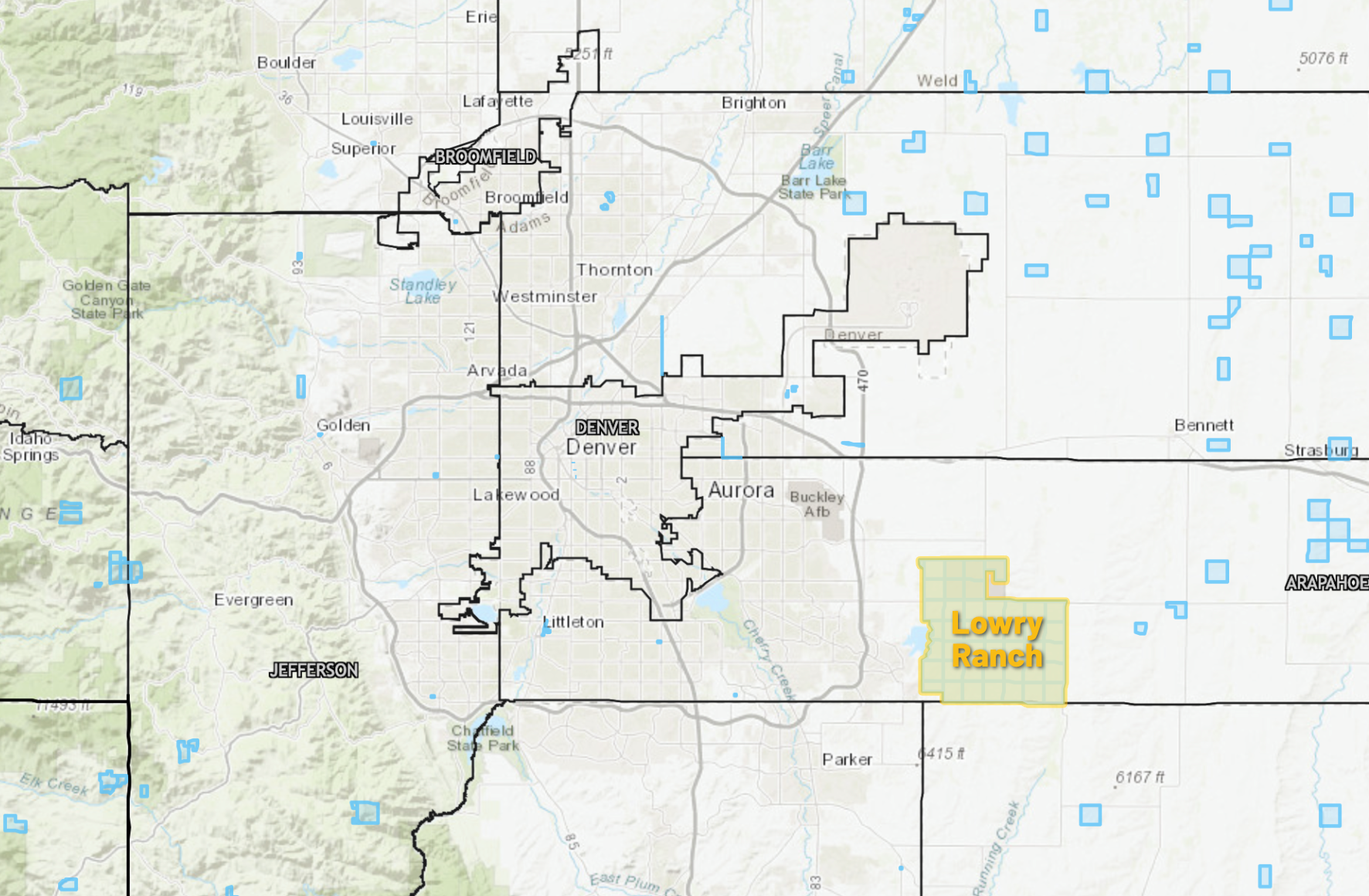
The 26,500-acre Lowry Ranch, a former U.S. Air Force missile site and bombing range, was acquired by the Colorado State Land Board in the 1960s. (Colorado Newsline illustration/State Land Board map)
Two-year process
Civitas first submitted its CAP application in 2022. Jamie Jost, an attorney representing Civitas, told commissioners Wednesday that the companyโs proposal had โevolved for the betterโ over the course of two years of community outreach and feedback, โincluding input and influence from STAR.โ
โItโs a comprehensive area plan thatโs the result of thousands of hours of consultation, cooperation and collaboration with multiple federal, state and local governmental stakeholders, oil and gas operators, mineral owners, community groups and citizens,โ Jost said of the proposal.
But Jost also criticized the testimony from STAR and its expert witnesses during last weekโs hearings, accusing the group of spreading โmisinformation intended to incite fear.โ Civitas was particularly adamant throughout the proceedings that STARโs fears about induced seismic activity โ a phenomenon that has been documented elsewhere but is considered a low risk in the geological formations drilled in northeast Colorado โ are unfounded.
In a statement, Kait Schwarz, director of the Colorado branch of the American Petroleum Institute, called it โdisappointing and revelatoryโ that environmental groups continue to offer โsignificant resistanceโ to drilling proposals following the passage of stricter laws and regulations in recent years.
โOur operators are proud to produce in Colorado, yet it is disheartening to encounter such opposition even when the regulations and requirements are strictly adhered to,โ Schwartz said. โThis application and decision should serve as a model for addressing future projects.โ
None of the drilling sites proposed in the Lowry Ranch CAP would be closer than 3,000 feet from the nearest subdivision โ satisfying the 2,000-foot setback requirement adopted by the ECMC in 2020 โ but the planโs opponents say itโs still far too close to neighborhoods, schools, recreation areas like the Aurora Reservoir and environmentally hazardous sites like the Lowry Landfill.
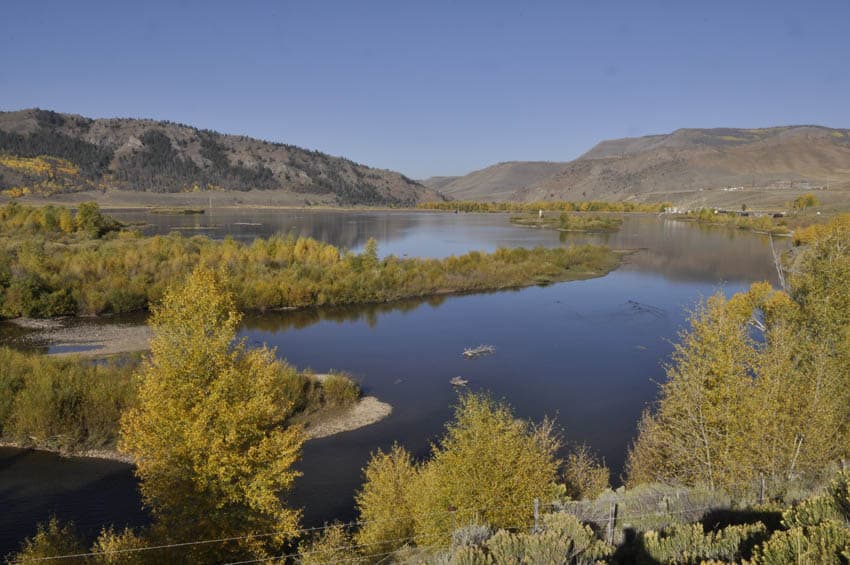
The Lowry Landfill superfund site east of Aurora in Arapahoe County is pictured on May 16, 2024. (Chase Woodruff/Colorado Newsline)
Commissioner John Messner was the lone vote against the planโs approval. Trisha Oeth, the commissionโs newest member, did not take part in the proceedings because they began prior to her appointment to the panel by Gov. Jared Polis in June.
Messner objected to the โvague and noncommittal effortsโ made in the proposal to minimize the projectโs cumulative impacts on public health and the environment.
โThe CAP application as a whole, as presented, does not meet the intent and requirements of our rules, and has not shown that it is protective,โ Messner said.
ECMC staff recommended the Lowry Ranch planโs approval earlier this year. Itโs the fourth CAP considered by the commission since its 2020 rules overhaul, and Wednesdayโs vote marks the fourth consecutive approval. But Commissioner Brett Ackerman said prior to the vote that โthis one felt close.โ Commissioners debated whether to delay a decision on the plan, but ultimately moved forward with an approval with the attached conditions.
โLike Commissioner Cross, I do not believe itโs perfect,โ Ackerman said. โLike Commissioner Messner, I do have some concerns that it can more closely comply with the intent and specificity of our regulations with a little more work.โ
Civitas will still be required to seek ECMC approval for each proposed drilling location in the plan through a process known as an โoil and gas development plan,โ or OGDP. That process could include revisions to the proposed sites as a result of a required โalternative locations analysis,โ commissioners said Wednesday.
โIn order of the things that cause me the most concern, first and foremost would be the proximity of the primary line of well pads to the line of residential developments,โ said Ackerman. โThey feel a little deaf to some of the concerns of the nearby residents, as opposed to promoting maybe a couple of opportunities for working together with those residents to minimize impacts.โ
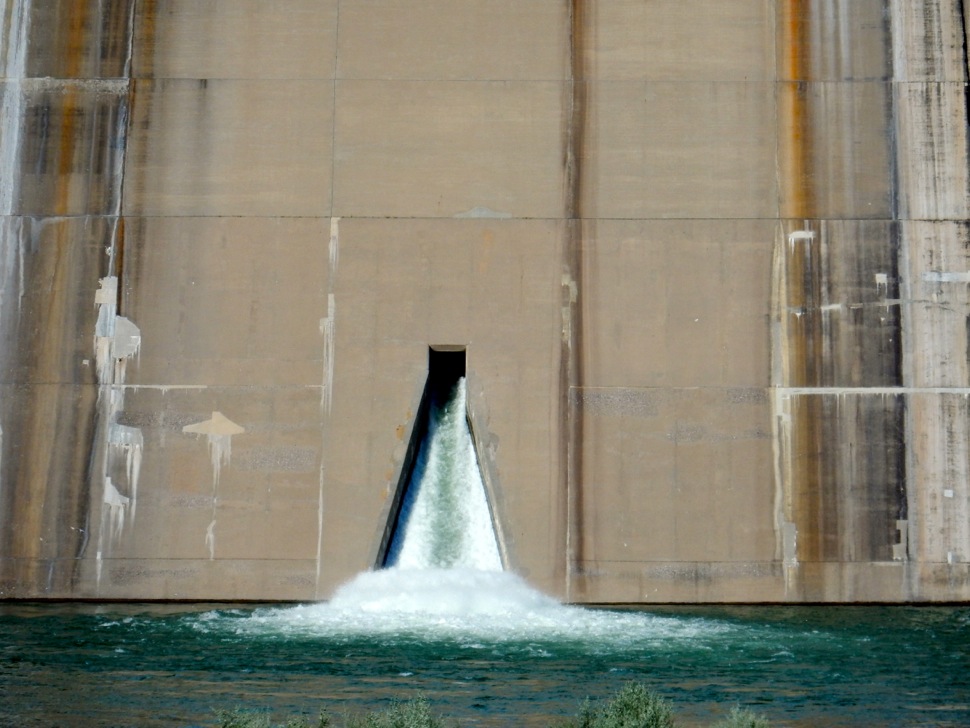
Releases from the Aspinall Unit will be decreased from 1550 cfs to 1500 cfs on Wednesday, August 21st. Releases are being decreased as flows on the lower Gunnison River are well above the baseflow target of 1050 cfs. Another reduction in the release at Crystal is expected to occur next week if river levels remain above the target.
Flows in the lower Gunnison River are currently above the baseflow target of 1050 cfs. River flows are expected to remain above the baseflow target for the foreseeable future.
Pursuant to the Aspinall Unit Operations Record of Decision (ROD), the baseflow target in the lower Gunnison River, as measured at the Whitewater gage, is 1050 cfs for August through December.
Currently, Gunnison Tunnel diversions are 1050 cfs and flows in the Gunnison River through the Black Canyon are around 500 cfs. After this release change Gunnison Tunnel diversions will still be 1050 cfs and flows in the Gunnison River through the Black Canyon will be around 450 cfs. Current flow information is obtained from provisional data that may undergo revision subsequent to review.
This scheduled release change is subject to changes in river flows and weather conditions. For questions or concerns regarding these operations contact:
“New plot using the nClimGrid data, which is a better source than PRISM for long-term trends. Of course, the combined reservoir contents increase from last year, but the increase is less than 2011 and looks puny compared to the โholeโ in the reservoirs. The blue Loess lines subtly change. Last year those lines ended pointing downwards. This year they end flat-ish. 2023 temps were still above the 20th century average, although close. Another interesting aspect is that the 20C Mean and 21C Mean lines on the individual plots really donโt change much. Finally, the 2023 Natural Flows are almost exactly equal to 2019. (17.678 maf vs 17.672 maf). For all the hoopla about how this was record-setting year, the fact is that this year was significantly less than 2011 (20.159 maf) and no different than 2019” — Brad Udall
A plan from water officials in Arizona, Nevada and California to cut back on the amount of water those states use from the Colorado River in exchange for money with hopes of saving 3 million acre-feet of water over three years is meeting conservation goals, a top water official said Wednesday. The 2023 agreementย has already seen 1.7 million acres of improvement less than one year into the effort, Bureau of Reclamation Commissioner Camille Touton said. She says she believes the states are on pace to reach their original goal.
โThere is proof here that we can take on these hard moments, but we have to do it together,โ said Touton, who spoke during a summit hosted by U.S. Rep. Susie Lee, D-Nev., at Springs Preserve. โWeโve been able to stabilize the system in the short term, and now we are focused on what this river looks like for the future.โ
[…]
The $1.2 billion plan in 2023 called for half of the cuts to be made by the end of 2024 โ a benchmark that has already been hit. The agreement runs through 2026, when the 100-year legal document about how Colorado River water is shared will expire, and negotiations could bring deeper cuts in water usage based on climate modeling and future warming in the West.ย
โWe really were on the brink of catastrophe in this basin if we got another dry year,โ said Colby Pellegrino, Southern Nevada Water Authorityโs deputy general manager of resources, of the Colorado River prior to the agreement. โMother Nature was kind to us, and Congress was very kind to us. And those two things together are what enabled us to get there voluntarily.โ
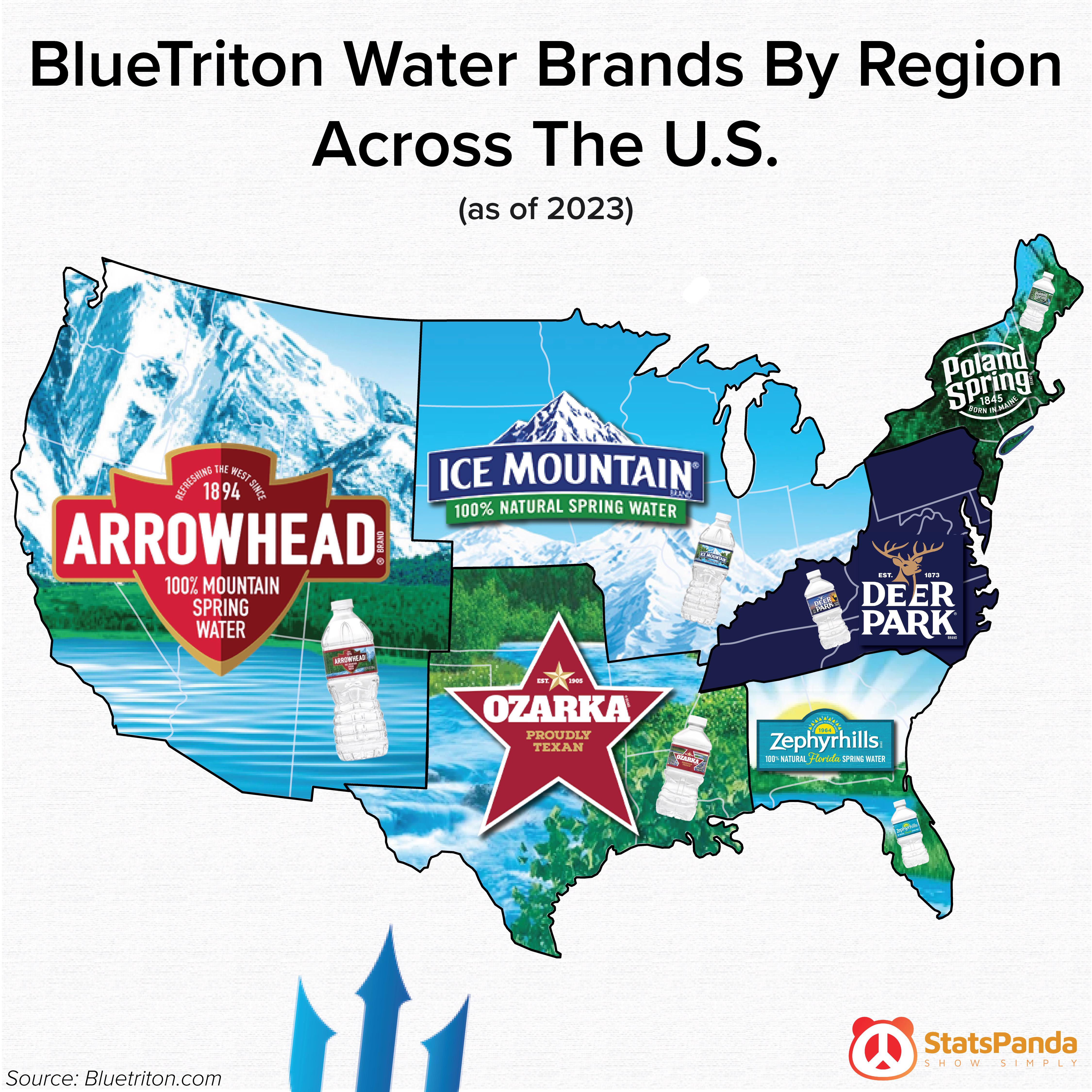
In a decision that could end a years-long battle over commercial extraction of water from public lands, the U.S. Forest Service has ordered the company that sells Arrowhead bottled water to shut down a pipeline and other infrastructure it uses to collect and transport water from springs in the San Bernardino Mountains. The Forest Service notified BlueTriton Brands in a letter last month, saying its application for a new permit has been denied. District Ranger Michael Nobles wrote in the July 26 letter that the company โmust cease operationsโ in the San Bernardino National Forest and submit a plan for removing all its pipes and equipment from federal land. The company hasย challenged the denialย in court.
Environmental activists praised the decision.
โItโs a huge victory after 10 years,โ said Amanda Frye, an activist who has campaigned against the taking of water from the forest. โIโm hoping that we can restore Strawberry Creek, have its springs flowing again, and get the habitat back.โ
She and other opponents say BlueTritonโs operation has dramatically reduced creek flow and is causing significant environmental harm. The Forest Service announced the decision one month after a local environmental group, Save Our Forest Assn.,ย filed a lawsuitย that alleged agency was illegally allowing the company to continue operating under a permit that had expired.
Painting by Henry C. Pitz showing John Wesley Powell and his party descending the Colorado River through the Grand Canyon, presumably during the historic 1869 expedition. (Image credit: Smithsonian Institution, Bureau of American Ethnology)
Intensifying extreme weather events and an insurance crisis are likely to cause significant economic and political disruption in the U.S. sometime in the next 15 years.
The words of explorer John Wesley Powell on the eve of his departure into the unexplored depths of the Grand Canyon in 1869 best describe how I see our path ahead as we brave the unknown rapids of climate change:
Powellโs expedition made it through the canyon, but the explorers endured great hardship, suffering near-drownings, the destruction of two of their four boats, and the loss of much of their supplies. In the end, only six of the nine men survived.
Likewise, we find ourselves in an ever-deepening chasm of climate change impacts, forced to run a perilous course through dangerous rapids of unknown ferocity. Our path will be fraught with great peril, and there will be tremendous suffering, great loss of life, and the destruction of much that is precious.
It is inevitable that climate change will stop being a hazy future concern and will someday turn everyday life upside down. Very hard times are coming. At the risk of causing counterproductive climate anxiety and doomism, I offer here some observations and speculations on how the planetary crisis may play out, using my 45 years of experience as a meteorologist, including four years of flying with the Hurricane Hunters and 20 years blogging about extreme weather and climate change. The scenarios that I depict as the most likely are much harsher than what other experts might choose, but Iโve seen repeatedly that uncertainty is not our friend when it comes to climate change. This will be a long and intense ride, but if you stick through the end, I promise there will be a rainbow.
By late this century, I am optimistic that we will have successfully ridden the rapids of the climate crisis, emerging into a new era of non-polluting energy with a stabilizing climate. There are too many talented and dedicated people who understand the problem and are working hard on solutions for us to fail.
Figure 1. America is about as unprepared for a dangerous trip down the rapids of climate change as this group would have been going down the rapids of the Colorado River in Grand Canyon. Photo taken at the Colorado River crossing at Hite Ferry, Utah, in 1946. (Image credit: Utah Historical Society)
The 1974 made-for-TV movieย Hurricaneย included a subplot loosely based on the hurricane party that allegedly occurred during the 1969 landfall of category 5 Hurricane Camille in Mississippi. The predictable catastrophic end to the party is depicted at 0:05-second mark of the trailer above.ย Though the party never happened, legendary TV anchorman Walter Cronkite perpetuated the hurricane party story during one of his broadcasts after the hurricane. As the camera panned over the cement slab littered with debris that marked the former location of the Richelieu Apartments, Cronkite narrated:ย โThis is the site of the Richelieu Apartments in Pass Christian, Mississippi. This is the place where 23 people laughed in the face of death. And where 23 people died.โ
Although there is a major climate change hurricane approaching, weโre busy throwing a hurricane party, charging up our planetary credit card to pay for the expenses, with little regard to the approaching storm that is already cutting off our escape routes. This great storm will fundamentally rip at the fabric of society, creating chaos and a crisis likely to last for many decades.
The intensifying climate change storm will soon reach a threshold I think of as a category 1 hurricane for humanity โ when long-term global warming surpasses 1.5 degrees Celsius above preindustrial temperatures, a value increasingly characterized over the last decade as โdangerousโ climate change.
Assuming that we donโt work exceptionally hard to reduce emissions in the next 10 years, the world is expected to reach 2 degrees Celsius of warming between 2045 and 2051. In my estimation, that will be akin to a major category 3 hurricane for humanity โ devastating, but not catastrophic.
Allowing global warming to exceed 2.5 degrees Celsius will cause category 4-level damage to civilization โ approaching the catastrophic level. And warming in excess of 3 degrees Celsius will likely be a catastrophic category 5-level superstorm of destruction that will crash civilization.
We must take strong action rapidly to rein in our emissions of heat-trapping gases to avoid that outcome โ and build great resilience to the extreme climate of the 21st century that we have so foolishly brought upon ourselves.
According to the Carbon Action Tracker (see tweet below), we are on track for 2.7 degrees Celsius of warming; if the nations of the world meet their targets for reducing heat-trapping climate pollution, warming will be limited to 2.1 degrees. Thereโs a big difference between being hit by a Cat 4 versus a Cat 3, and every tenth of a degree of warming that we prevent will be critical.
Two years on from Glasgow and our warming estimates for government action have barely moved. Governments appear oblivious to the extreme events of the past year, somehow thinking treading water will deal with the flood of impacts? https://t.co/fbM4xY9OJepic.twitter.com/MekGIeU1Z3
As climate scientist Michael Mann explains in his latest book, โOur Fragile Moment,โ great climate science communicator Stephen Schneider once said, โThe โend of the worldโ or โgood for youโ are the two least likely among the spectrum of potential [climate] outcomes.โ So forget sci-fi depictions of planetary apocalypse. That will not be our long-term climate change fate.
But the impacts of climate change will be apocalyptic for many nations and people โ particularly those that are not rich and White. People and communities with the least resources tend to be the first and hardest hit by climate change, not only because poorer people and communities are inherently more vulnerable to the impacts of any disaster, but also because the extremes induced by climate change tend to be worse in the tropics and subtropics, home to many poor nations.
In the U.S., climate change has already turned life upside down for numerous communities. For example, in North Carolina, the financially strapped, Black-majority towns of Fair Bluff and Princeville are in danger of abandonment from hurricane-related flooding (from Hurricane Floyd in 1999, Matthew in 2016, and Florence in 2018). Seven Springs, North Carolina (population 207 in 1960, now just 55) is largely abandoned.
Climate change was a key contributor to these floods; a 2021 study found that about one-third of the cost of major U.S. flood events since 1988, totaling $79 billion, could be attributed to climate change. And for the town of Paradise, California โ utterly destroyed by the devastating Camp Fire of 2018, which killed 85 and caused over $16 billion in damage โ climate change has been apocalyptic.
In the U.S., the most likely major economic disruption from climate change over the next few years might well be a collapse of the housing market in flood-prone and wildfire-prone states. Billion-dollar weather disasters โ which cause about 76% of all weather-related damages โ have steadily increased in number and expense in recent years and would be even worse were it not for improved weather forecasts and better building codes. The recent increase in weather-disaster losses has brought on an insurance crisis โ especially in Florida, Louisiana, California, and Texas โ which threatens one of the bedrocks of the U.S. economy, the housing and real estate market.
In California, the insurer of last resort, the FAIR plan, had only about $250 million in cash on hand as of March 2024.
โOne major fire near Lake Arrowhead, where the Plan holds $8 billion in policies, would plunge the whole scheme into insolvency,โ observed Harvardโs Susan Crawford, author of โCharleston: Race, Water, and the Coming Storm.โ
It is widely acknowledged that higher weather disaster losses result primarily from an increase in exposure: more people with more stuff moving into vulnerable places, including those at risk of floods. Martin Bertogg, Swiss Reโs head of catastrophic peril, said in a 2022 AP interview that two-thirds, perhaps more, of the recent rise in weather-related disaster losses is the result of more people and things in harmโs way.
But this balance will likely shift in the coming decades. Increased exposure will continue to drive increased weather disaster losses, but the fractional contribution of climate change to disaster losses โ at least for wildfire, hurricane, and flood disasters โ is likely to increase rapidly, making the insurance crisis accelerate.
Figure 2. County-level overvaluation of property from flood risk. Florida had the highest property overvaluation โ about $50 billion. In 2021, Floridaโs real estate industry accounted for $294 billion, or 24% of the gross state product, according to a report from the National Association of Realtors. (Image credit: Gourevitch et al., 2023, Unpriced climate risk and the potential consequences of overvaluation in US housing markets, Nature Climate Change volume 13, pages 250โ257)
A 2023 study (Fig. 2) drew attention to a massive real estate bubble in the U.S.: the vast number of properties whose purported value doesnโt account for the true costs of floods. The study estimated that across the U.S., residential properties are overvalued by a total of $121-$237 billion under current flood risks. This bubble will likely continue to grow as sea levels rise, storms dump heavier rains, and unwise risky development continues.
Likewise, U.S. properties at risk of wildfires are collectively overvalued by about $317 billion, according to David Burt, a financial guru who foresaw the 2008 subprime mortgage crisis. Insurers are already pulling out of the areas most at risk, threatening to make property ownership too expensive for millions and posing a serious threat to the economically critical real estate industry.
Climate futurist Alex Steffen has described the climate change-worsened real estate bubble this way:
Something brittle is prone to a sudden, catastrophic failure and cannot easily be repaired once broken. The popping of the real estate Brittleness Bubble will potentially trigger panic selling and a housing market collapse like a miniature version of the Great Financial Crisis of 2008 but focused on the 20% of American homes in wildfire and flood risk zones. In his 2023 Congressional testimony, Burt estimated that a wildfire and flood-induced repricing of risk of the U.S. housing market could have a quarter to half the impact of the 2008 Great Financial Crisis.
However, the 2008 crisis was relatively short-lived, as fixes to the financial system and a massive federal bailout led to a rebound in property values after a few years. A climate change-induced housing crisis will likely be resistant to a similar fix because the underlying cause will worsen: Sea levels will continue to rise, flooding heavy rains will intensify, and wildfires will grow more severe, increasing risk.
Science writer Eugene Linden wrote in 2023, โas we saw in 2008, a housing crisis can quickly morph into a systemic financial crisis because banks own most of the value, and thus the risk, in housing and commercial real estate.โ
Crawford of Harvard recently wrote: โBecause insurance can help communities and households recover more quickly from disasters, and because so much of the U.S. economy is driven by spending on housing, the inaccessibility and unaffordability of insurance poses a threat to the stability of the entire economy.โ
As Sen. Sheldon Whitehouse, a Democrat from Rhode Island, said earlier this year, โThe thing about economic crises is that they come on slowly, until they come on fast.โ
How the insurance crisis may play out: the โWholly irrational and completely ad-hoc pirate capitalismโ solution
In his blunt 2023 essay, โInsurance Politics at the End of the World,โ journalist Hamilton Nolan offers these thoughts on the potential ways this climate change-induced insurance crisis could be addressed:
When will the Brittleness Bubble pop?
When might this โcrash into the wall of realityโ happen and the Brittleness Bubble pop? Politicians are working extremely hard to keep their jobs by delaying this day of reckoning, artificially limiting insurance rate rises and offering state-run insurance plans of last resort. This approach โ the equivalent of giving a blood transfusion to the injured, without stopping the bleeding โย does not fix the underlying problem and all but guarantees that the pain of the eventual national reckoning will be much larger. Insurance is designed to transfer risk, but risk is rising everywhere. [ed. emphasis mine]
As the hurricane season is set to begin soon and wildfire risk gradually increasing, private insurers in some states are fleeing areas considered at high risk.
Crawford addressed the issue in a 2024 essay, โWho ends up holding the bag when risky real estate markets collapse?โ Citing financial guru Burt, she concluded: โ2025 or 2026 is when things give way and it becomes very difficult to offload houses and buildings in risky places where mortgages are suddenly hard to get, much less insurance.โ When asked in anย interview with Marketplaceย if the market is due for another correction, as homeowners in places with growing risk of flooding and wildfire have to pay more for insurance, Burt said:
In the same Marketplace story, though, Ben Keys, a professor of real estate and finance at the University of Pennsylvaniaโs Wharton School, said, โThe idea that we would expect there to be a huge wave of defaults or delinquencies feels relatively unlikely.โ
But like Burt, climate change futurist Steffen predicts the real estate Brittleness Bubble will pop within five years (10 at the most).
People are beginning to grasp the seismic implications of a widespread loss of home insurance. Good.
But the economic shocks created by finally being forced to acknowledge that our society is unprepared for the realities of climate chaos won't end there.
This reckoning could come sooner for Florida if another $100-billion hurricane hits. The Florida insurance and coastal property market did manage to withstand the $117-billion cost of Category 4 Hurricane Ian of 2022, but another blow like that might well cause a severe downward spiral in the Florida real estate market from which it might never fully recover. This vulnerability was underscored by Florida Gov. DeSantis during a 2023 radio interview with a Boston host, when DeSantis suggested homeowners should โknock on woodโ and hope the state didnโt get hit by a hurricane in 2024.
But โknocking on woodโ is not an effective climate adaptation strategy for Florida. Because of climate change, Mother Nature is now able to whip heavier bowling balls with more devastating impact down Hurricane Alley. Itโs only a matter of time before she hurls a strike into a major Florida city, causing an intensified coastal real estate and insurance crisis. And the odds of such a strike are higher than average in 2024 because of record-warm ocean temperatures in the tropical Atlantic, combined with a developing La Niรฑa event.
Like this hyper-strike rolling robot, Mother Nature is now able to whip heavier bowling balls with more devastating impact down hurricane alley because of the extra heat energy in the oceans from human-caused global warming.
Watch out for increased coastal flooding in the mid-2030s
We may manage to avoid a coastal real estate market crash in the next 10 years if we get lucky with hurricanes and if our politicians continue to pump huge amounts of money to bail out the failing system.
But it will become increasingly difficult to keep the coastal property market propped up beginning in the mid-2030s, because of accelerating sea level rise combined with an 18.6-year wobble in the moonโs orbit. Thus, I expect that the longest we might stave off the popping of the coastal real estate Brittleness Bubble is 15 years.
Figure 3. Predicted change in minor flooding days (>1.74 feet above high tide) in St. Petersburg, Florida, under an โintermediate-highโ sea level rise scenario (5.33 feet of sea level rise in 2100 compared to 2000). (Image credit: NASA sea level rise tool)
As I wrote in my 2023 post, 30 great tools to determine your flood risk in the U.S., beginning in 2033, the moon will be in a position favorable for bringing higher tides to locations where one high tide and low tide per day dominate. This will bring a rapid increase in high tide flooding to the coasts of the Gulf of Mexico, the Southeast, the West Coast, and Hawaii. This expected acceleration in the mid-2030s is obvious for St. Petersburg (Fig. 3), plotted using NASAโs Flooding Analysis Tool and Flooding Days Projection Tool. The rapid acceleration in coastal flooding simultaneously along a huge swathe of heavily developed U.S. coast in the mid-2030s will be sure to significantly stress the coastal housing market. And according to the Coastal Flood Resilience Project, the nation is flying blind on the possible impacts: There are no national assessments of the potential loss of major, critical infrastructure assets to coastal storms and rising seas.
Another immediate danger: a series of global extreme weather events affecting agriculture, causing global economic turmoil.
In my 2024 post, โWhat are the odds that extreme weather will lead to a global food shock?โ I reviewed aย 2023 reportย by insurance giant Lloydโs, which modeled the odds of a globally disruptive extreme food shock event bringing simultaneous droughts in key global food-growing breadbaskets. The authors estimated that a โmajorโ food shock scenario costing $3 trillion globally over a five-year period had a 2.3% chance of happening per year (Fig. 4). Over a 30-year period, those odds equate to about a 50% probability of occurrence โ assuming the risks are not increasing each year, which, in fact, they are.
Figure 4. The 2023 โExtreme weather leading to food and water shockโ scenario from Lloydโs. (Image credit: modified from this image)
Yet another concern for the U.S. is the risk of wholly unanticipated โblack swanโ extreme weather events that scientists didnโt see coming. As Harvard climate scientists Paul Epstein and James McCarthy wrote in a 2004 paper, โAssessing Climate Instabilityโ: โWe are already observing signs of instability within the climate system. There is no assurance that the rate of greenhouse gas buildup will not force the system to oscillate erratically and yield significant and punishing surprises.โ
One example of such a punishing surprise was Superstorm Sandy of 2012, that unholy hybrid spawn of a Caribbean hurricane/extratropical storm that became the largest hurricane ever observed and one of the most damaging, costing $88 billion. And who anticipated that a siege of climate-change-intensified wildfires in western North America beginning in 2017, causing multiple summers of horrific air quality that would significantly degrade the quality of life in the West? Or the jet stream experiencing a sudden increase in unusually extreme configurations over the past 20 years, leading to prolonged periods of intense extreme weather over multiple portions of the globe simultaneously? As the late climate scientist Wally Broecker once said, โClimate is an angry beast, and we are poking at it with sticks.โ
Just as concerning might be future โgray swanโ events โ extreme weather events that climate models anticipate could happen but exceed anything in the historical record. (โGray swanโ is an expression first coined by hurricane scientist Kerry Emanuel in his 2016 paper, โGrey swan tropical cyclones.โ) Several potential gray swan events I have written about include a $1 trillion California โARkStormโ flood, the potential failure of the Old River Control Structure during an extreme flood that allows the Mississippi River to change course, or a storm like 2015โs Hurricane Patricia, with winds over 200 mph, hitting Miami, Galveston/Houston, Tampa, or New Orleans. The risk of gray swan events is steadily increasing.
Iโm often asked if the absurdly extreme weather events weโve been experiencing recently are the new normal. โNo!โ I reply. โHeat is energy, so the energy to fuel more intense extreme weather events will increase until we reach net-zero emissions. At that time, the climate will finally stabilize at a new normal with a highly dangerous level of extreme weather events.โ
Barring a series of extraordinary volcanic eruptions or a majorย geoengineeringย effort, even under an optimistic โlowโ emissions climate scenario, the earliest the climate might stabilize is in the mid-2070s (Fig. 5); thus, the weather will grow more extreme, on average, for at least the next 50 years. Considering that CO2 emissions have not yet peaked and may be following the โIntermediateโ pathway shown below, there is considerable danger that the weather will still be growing more extreme when todayโs children are very old early next century. But even when net zero emissions are reached, sea level rise will continue to occur at a pace difficult to adapt to, and the climate crisis will continue to intensify.
Figure 5. Wishful thinking: Weโve reached a โnew normalโ of extreme weather. In reality, the weather will keep growing more extreme until net-zero emissions are reached. Under the optimistic โLowโ scenario presented here, that will not occur until the mid-2070s. (Image credit: 2023 U.S. National Climate Assessment, with annotation added)
The high probability that the weather will grow more extreme throughout the lifetime of everybody reading this essay means that we have to take seriously some very bad long-term threats. As I wrote in my 2022 post, โThe future of global catastrophic risk events from climate change,โ a global catastrophic risk event is defined as a catastrophe global in impact that kills over 10 million people or causes over $10 trillion (2022 USD) in damage. Since the beginning of the 20th century, there have been only three such events: World War I, World War II, and the COVID-19 pandemic. But climate change is a threat multiplier, increasing the risk of five types of global catastrophic risk events:
Drought
War
Coastal flooding from sea-level rise and land subsidence
Collapse of theย Atlantic Meridional Overturning Circulationย (AMOC), the powerful currents that circulate warm water in the tropical Atlantic Ocean to the Arctic and back (anย August 2024 studyย gave a 59% chance of an AMOC collapse occurring before 2050)
The likeliest of these is a global catastrophic risk event from sea level rise, which is highly likely to occur by the end of the century. For example, a moderate global warming scenario will put $7.9-12.7 trillion dollars of global coastal assets at risk of flooding from sea level rise by 2100, according to a 2020 study, โProjections of global-scale extreme sea levels and resulting episodic coastal flooding over the 21st century.โ Although this study did not take into account assets that inevitably will be protected by new coastal defenses, neither did it consider the indirect costs of sea level rise from increased storm surge damage, mass migration away from the coast, increased saltiness of fresh water supplies, and many other factors. A 2019 report by the Global Commission on Adaptation estimated that sea level rise will lead to damages of more than $1 trillion per year globally by 2050.
Furthermore, sea level rise, combined with other stressors, might bring about megacity collapse โ a frightening possibility when infrastructure destruction, salinification of freshwater resources, and a real estate collapse potentially combine to create a mass exodus of people from a major city, reducing its tax base to the point that it can no longer provide basic services. The collapse of even one megacity might have severe impacts on the global economy, creating increased chances of a cascade of global catastrophic risk events. One megacity potentially at risk of this fate is the capital of Indonesia, Jakarta, with a population of 10 million. Land subsidence of up to two inches per year and sea level rise of about an eighth of an inch per year are causing so much flooding in Jakarta that Indonesia is constructing a new capital city in Borneo.
Is the #AMOC approaching a tipping point? Here's my take after researching this topic for over 30 years. Open access, peer-reviewed, in full colour & understandable for non-experts.https://t.co/gMu6Zw5mR7pic.twitter.com/mrgzO9NMxR
— Prof. Stefan Rahmstorf ๐ ๐ฆฃ (@rahmstorf) April 11, 2024
I also expect one or more climate change-amplified global catastrophic risk events from drought will occur this century. Mexico City, with a metro area population of 22 million, has suffered record heat over the past year, is in danger of its reservoirs running dry, and is drilling ever-deeper wells to tap an overtaxed aquifer. Though the city will muddle through the crisis now that the summer rains have come this year, what is the plan for 30 years from now, when the climate is expected to be drier and much, much hotter? Although Mexico City can greatly improve its water situation by fixing a poorly maintained system that has a 40% loss rate, it is unclear how the city will be able to survive the much hotter and drier climate of 30 years from now. And at least 10 other major cities are in a similar bind.
Technology can help us adapt to a hotter climate by providing air conditioning (if you are rich enough), but technological solutions to create more water availability when the taps run dry are much more difficult to achieve. I believe water shortages will drive a partial collapse of and mass migration out of multiple major cities 20-40 years from now, significantly amplifying global political and economic turmoil. For example, a 2010 study, โLinkages among climate change, crop yields and Mexico-US cross-border migration,โ found that a 10% reduction in crop yields in Mexico leads to an additional 2% of the population emigrating to the United States.
In his frightening 2019 book โFood or War,โ science writer Julian Cribb documents 25 food conflicts that have led to famine, war, and the deaths of more than a million people โ mostly caused by drought. Since 1960, Cribb says, 40-60% of armed conflicts have been linked to resource scarcity, and 80% of major armed conflicts occurred in vulnerable dry ecosystems. Hungry people are not peaceful people, Cribb argues.
Though climate change itself is not accelerating faster than what climate scientists and climate models predicted, devastating impacts from climate change do seem to be accelerating. That is because the new climate is crossing thresholds beyond which an infrastructure designed for the 20th century can withstand. These breaches are occurring in tandem with an increase in exposure โ more people with more stuff living in harmโs way โ which is the dominant cause of the sharp increase in weather-disaster losses in recent years. Itโs sobering to realize that the current U.S. insurance crisis has primarily been driven by increased exposure and foolish insurance policies that promote development in risky places โ not climate change โ and that climate changeโs relative contribution to the crisis is set to grow significantly.
Accelerating sea level rise alone is sure to cause a massive shock to the U.S. economy; according to a 2022 report from NOAA, sea level along the U.S. coastline is projected to rise, on average, 10-12 inches (0.25-0.30 meters) in the next 30 years (2020-2050), which will be as much as the rise measured over the last 100 years (1920-2020). At this level, 13.6 million homes might be at risk of flooding by 2051, triggering a mass migration of millions of people away from the coast.
If we add to sea-level-rise-induced migration the additional migration that will result from climate change-intensified wildfires, heatwaves, and hurricanes, we are forced to acknowledge the reality that a nation-challenging Hurricane Katrina-level climate change storm has already begun in the U.S., one which has the potential to cause catastrophic damage. As I wrote in my June post, The U.S. is finally making serious efforts to adapt to climate change, there have been some encouraging efforts to prepare for the coming mass migration. But, as I argued in my follow-up post, The U.S. is nowhere near ready for climate change, we remain woefully unprepared for what is coming.
And my subsequent post, Can a colossal extreme weather event galvanize action on the climate crisis?, argues that we should not expect that any future extreme weather event or breakdown of the climate system will galvanize the type of response needed โ weโve already had at least 13 events since 1988 that should have done so, yet have not. Even if such an event did prompt strong, transformative change, itโs too late to avoid having life turned upside-down by climate change. Itโs like weโve waited until our skin started getting red before seeking shade from the sun, and weโre only now taking our first stumbling steps toward shade. Well, itโs a long hike to shade, and a blistering sunburn is unavoidable.
Given the unprecedented nature and complexity of this planetary crisis, there is huge uncertainty on how this drama may unfold; there are climate scientists who offer a more optimistic outlook than I do (for example, Hannah Ritchie, author of โNot the End of the Worldโ), and those who are more pessimistic (James Hansen).
I suggest that you make the most of the current โcalm before the stormโ and prepare for the chaotic times ahead, which could begin at any time. I will offer my recommendations on how to do this in my next post in this series, โWhat should you do to prepare for the climate change storm?โ
The urgency to rapidly deal with the climate crisis was succinctly summarized by the Intergovernmental Panel on Climate Change in its latest summary report: โThere is a rapidly closing window of opportunity to secure a livable and sustainable future for all.โ
But taking advantage of that window of opportunity is difficult because of human psychological and political realities. In climate scientist Peter Gleickโs 2023 book, โThe Three Ages of Water,โ he quotes Harvardโs E.O. Wilson, father of sociobiology, who perhaps said it best: โThe real problem of humanity is the following: We have Paleolithic emotions, medieval institutions, and godlike technology. And it is terrifically dangerous, and it is now approaching a point of crisis overall.โ
The boat of civilization has already hit multiple rocks along the rapids of climate change and is taking on water. Perilous rapids with even more dangerous rocks and waterfalls lie before us, but the course of our boat cannot be so easily altered to avoid the rocks, because of our Paleolithic emotions and medieval institutions. As a result, we may have only a few more years โ or perhaps as long as 15 years โ of relative normalcy in our everyday lives here in the U.S. before the approaching climate change storm ends our golden age of prosperity. But this โgolden ageโ was made of foolโs gold, paid for with wealth plundered from future generations.
Figure 6. The North Rose window of Chartres Cathedral, France, 1190-1220 CE. The stained glass window shows scenes of Jesus Christ, the prophets and 12 kings of Judah. (Image credit: Walwyn) Licensed under Creative Commons BY-NC.
Though this essay has dwelt on some grim realities, I am optimistic that we will prevent climate change from becoming a civilization-destroying category 5-level catastrophe. But we must fight extremely hard to correct the course of our boat and not allow its inertia to carry us into the rocks that stud the rapids of climate change. This is not a task that can be accomplished in our lifetimes.
Susan Joy Hassol, the climate communication veteran who served as a senior science writer on three National Climate Assessments, put it this way in an interview with Yale Climate Connections contributor Daisy Simmons: โThis is the fight of our lives, and itโs a multigenerational task. We need whatโs been called โcathedral thinking.โ That is, the people who started working on that stone foundation, they never saw the thing finished. It took generations to get these major works done. This is that kind of problem. And we have to all do our part. The more I act, the better I feel, because I know Iโm part of the solution.โ
Actions we take now will yield enormous future benefits, and the faster we undertake transformative actions to adapt to the new climate reality, the less suffering will occur. The Global Commission on Adaptationย saysย that โevery $1 invested in adaptation could yield up to $10 in net economic benefits, depending on the activity.โ We should work to build our cathedral of the future with the thought that each action we take now will multiply by a factor of 10 in importance in the future.
An excellent @nytimes article on rapid growth of wind, solar, & EVs, including factories, in the US. Costs are below fossil and nuclear (see graphs). Reasons why, graphs with how fast, pictures of it happening. https://t.co/uglQDnE97tpic.twitter.com/oIpLmlp28v
But some of the hardest work has been done: The cornerstone of this cathedral of the future has already been laid. The clean energy revolution is here and has progressed far more rapidly than I had dared hope. Passage of the 2021 Bipartisan Infrastructure Law and 2023 Inflation Reduction Act has been instrumental in getting this cornerstone laid. Solar energy is now the cheapest source of energy in world history, and the costs of wind power and battery technology have also plummeted. Two recent reports were optimistic that climate-warming carbon dioxide emissions had finally peaked in 2023, and GDP growth has decoupled from carbon dioxide emissions in recent years, giving hope that economic growth can still occur without making the planet hotter.
At its heart, the root of the climate crisis is humanityโs spiritual inharmoniousness: We overvalue the pursuit of material wealth and we worship billionaires but undervalue growing more connected to our spiritual selves and acting to preserve and appreciate the natural systems that sustain us. Making yourself more peaceful and loving through quiet spiritual pursuits and time spent in nature will help counteract the anxiety and fear sparked by the climate crisis. But in tandem with your increased peace must come a righteous anger to โthrow the money changers out of the templeโ and topple the might of the fossil fuel industry and its enablers.
So put your shoulder to an oar! Help us power the boat of civilization through the rapids of climate change. All of humanity shares the same boat, and you have the opportunity to make your own unique and valuable contribution to the effort.
We're loving this exercise created by @AyanaEliza & shared by @allwecansave for figuring out what you should do about the climate crisis:
Make a Venn diagram and notice what's at the center: 1. What brings you joy? 2. What is the work that needs doing? 3. What are you good at? pic.twitter.com/m0uVd6ctug
Figure 7. A portion of a 360-degree rainbow seen from a NOAA P-3 hurricane hunter aircraft as it flew through a rain shower near South Florida in 1988. (Image credit: Jeff Masters)
As promised, here is the rainbow at the end. Itโs the intro image from my first and last Weather Underground blog posts, โThe 360-degree Rainbow,โ and โSo long, wunderground!โ My unique and valuable contribution to building our new cathedral has not yet reached the end of the rainbow, for a rainbow has no end โ it is a full circle. One just has to fly high in a rainstorm where the sun is shining to see it.
I will continue to make my voice heard as long as climate science-denying politicians, corporations, media pundits, and wealthy individuals continue to row the boat of civilization into the rocks of climate-change catastrophe. I encourage those of you who have learned about extreme weather and climate change from me to do the same. To get started, learn from one of the best communicators in the business, climate scientist Katherine Hayhoe:
A grassland in an area formerly dominated by boreal forest. Photo credit: Dawn Magness, U.S. Fish & Wildlife Service.
Click the link to read the article on the NOAA website (Wynne E. Moss):
August 5, 2024
Alaskaโs boreal forests are declining, as increasing drought stress and fire kill off the next generation of conifer trees. Where boreal forest has disappeared, new plant communitiesโlike grasslands and aspen forestsโhave begun to take its place.
Elsewhere, in the southeastern United States, droughts have decimated saltmarsh vegetation, turning saltmarshes into mudflats or open water.
In the Southwest, pinyon pines have experienced widespread die-offs during extreme droughts. Meanwhile, junipers and grasses have expanded.
Across the globe, natural resource managers now face the reality of stewarding such landscapes with vastly different species and functions. These are just three examples of drought-triggered ecological transformation, a growing phenomenon that is highlighted in a new paper in the journal BioScience.
Research on ecological drought demonstrates that while many species are tolerant of water shortages, others may experience declines, with recovery taking years or even decades after drought ends. The new study, funded by the U.S. Geological Survey (USGS) National Climate Adaptation Science Center, discussed an even more extreme possibilityโthat some ecosystems will never recover from drought. Instead of returning to pre-drought conditions, some ecosystems may undergo transformation, or a shift into a new, persistent state, dominated by different forms of vegetation.
Ecosystem transformations represent a major challenge for natural resource agencies. Those caused by drought can be particularly rapid and surprising. To aid preparedness, researchers synthesized science on the mechanisms involved in drought-triggered transformation. Their work provides a broad overview of this phenomenon and highlights three major points about droughtโs ability to cause long-term ecological change:
1. Drought-triggered transformations are happening across the globe.
The paper highlights a dozen examples of transformations triggered by drought. They occur in many types of ecosystems, including temperate and tropical forests, grasslands, and woodlands. This suggests the risk of transformation is not limited to arid ecosystems or forests, which have received the bulk of scientific attention.
2. Shifting drought regimes are eliciting more extreme ecosystem responses.
As the climate warms, many regions of the planet are expected to experience novel and more extreme drought regimes. This is true even where annual precipitation is increasing. Certain forms of drought, including hotter droughts, snow droughts, and flash droughts, are becoming more common. Plant communities in a location may not be adapted to the changing character of drought, which may have greater impacts and exacerbate the risk of transformation.
3. Drought interacts with stressors that reduce ecosystem resilience.
Increasing drought severity is not the only factor causing transformation. The ability of ecosystems to recover from drought is also changing in the 21st century. Stressors like habitat loss, invasive species, and fire are increasingly likely to occur alongside or after drought and disrupt recovery after drought. Although managers have little control of the severity of drought, they may be able to reduce the likelihood of transformation by addressing these stressors.
Twelve locations where drought has caused a significant and permanent change in ecosystem composition. Examples occur across an aridity gradient and involve multiple different mechanisms. Figure modified from Moss et al. 2024. Base Map: World Terrestrial Ecosystems 2020.
The Next Challenge: Preparing for the Future
Translating this information into readiness is the next challenge. Many managers are already aware that climate change can trigger large shifts in the systems they manage. But they may not be aware that these changes could happen quite rapidlyโafter the next severe drought. Syntheses such as this can help managers develop both proactive and reactive strategies to respond to drought. A better understanding of the mechanisms involved also aids in developing predictive science to tell us what systems are most vulnerable. However, some aspects of ecosystems are just not predictable. Rather than aiming to perfectly predict the future, managers could prepare for a range of potential outcomes and consider how their actions could steer the recovery of ecosystems towards preferred conditions after drought.
Denver’s City Ditch is celebrating its 150th anniversary in 2017. Learn about the Ditch’s important role in Denver’s history and how Denver Water helps out.
August 14, 2024
Long before Denver was established, residents of the area drank water directly from the South Platte River and Cherry Creek.
But the surface wells and buckets of water used as a delivery system were not an adequate means of providing the one thing these early travelers needed for survival: water. Irrigation ditches were the next step forward for the growing population spurred by the cityโs Gold Rush of 1859.
But the surface wells and buckets of water used as a delivery system were not an adequate means of providing the one thing these early travelers needed for survival: water. Irrigation ditches were the next step forward for the growing population spurred by the cityโsย Gold Rush of 1859.
Crews work on City Ditch in this 1935 photo. Photo credit: Denver Water
โCity Ditch first started flowing in 1867,โ said Sarah McCarthy, Washington Park community member. โItโs a huge part of the Denver community.โ
City Ditch was the vision of the Capitol Hydraulic Company, which saw an opportunity to bring more water to Denver from the South Platte River system, explained Holly Geist, Denver Waterโs records management analyst.
โThe Kansas Territorial Legislature allowed the company to build a ditch and use water for agricultural, mining, mechanical and city purposes,โ Geist said.
The companyโs first attempt to build the ditch failed in the early 1860s in part because the slope wasnโt high enough for water to flow to Denver.
According to Geist, surveyor and engineer Richard Little โ the man for whom Littleton is named โ was brought in to build a new flow path for the ditch that was farther up the river, closer to Waterton Canyon. Businessman John W. Smith was brought in to complete building the ditch and water began flowing into the city in 1867.
โThere really was nothing in the area but scrub where Washington Park is today,โ McCarthy said. โThe ditch brought water for farms and homes and helped transform City and Washington parks into the urban gardens they are today.โ
The city of Denver took control of the ditch in 1875, and by 1898 nearly all of the ditch within city limits had been placed in pipes. Denver Water acquired the ditch in 1918.
Community members “christen the monument with water balloons” during a celebration at Washington Park in Denver on Aug. 12, for the 150th anniversary of City Ditch. Photo credit: Denver Water
City Ditch continues to flow today, but in two sections. The southern section is managed by the city of Englewood and the northern section by Denver Water.
Denver Waterโs portion of the open ditch can still be found flowing through Denverโs Washington Park. City Ditchโs primary function now is to irrigate and fill the lakes in Washington and City parks.
In an effort to conserve more river water supplies, Denver Water began using water from its Recycling Plant in 2004 for the northern section of the ditch. Stormwater also flows through it. Washington Park and the open section of City Ditch were listed on the National Register of Historic Places in 1976 and designated a Denver Landmark in 1977.
McCarthy hopes people will visit a monument at Washington Park that honors John W. Smith and the people who helped build City Ditch. The monument is located south of the playground near Smith Lake.
โIf John W. Smith were here today, heโd be very proud that City Ditch is still supplying water thatโs vital to our community,โ McCarthy said. โWe hope the anniversary raises awareness about the ditch and its history and increases our communityโs pride in the city.โ
Colorado River “Beginnings”. Photo: Brent Gardner-Smith/Aspen Journalism
Click the link to read the article on the InkStain website (Kathryn Sorensen, Sarah Porter and John Fleck):
August 16, 2024
Colorado River Basin governance is increasingly struggling with a deep question in water management: When we reduce our use of water, who gets the savings?
If I install more efficient irrigation equipment, should I get credit for the saved water to expand my acreage, or save the water in an upstream reservoir as a hedge against next yearโs drought? If I tear out lawns, can I use the saved water to help build the next subdivision, or save the water in an upstream reservoir as a hedge against that next year of drought?
Or should the savings contribute, not to my own resilience and well-being, but to the resilience and the well-being of the system as a whole by simply reducing overall water use?
In a deeply insightful 2013 book, British scholar Bruce Lankford bestowed the unfortunately wonky name of โthe paracommonsโ to this question, and it dogs water policy management around the world.
This issue has been lurking in Colorado River management for a long time. Should we create legal structures that allow users to bank the savings for their own use later? Or should the reductions benefit the health of the system as a whole? There are advantages and disadvantages to both approaches, and we need to design new rules for managing the Colorado River with our eyes open on this question.
Assigned Water
In a new paper, we explore the implications of the two paths for the management of a post-2026 Colorado River.
One is to incentivize conservation by giving water users the chance to bank saved water for later use. Known most commonly as Intentionally Created Surplus (ICS), and more broadly in a series of increasingly creative implementations as โAssigned Water,โ this creates short term savings.
The other involves permanent reductions โ โSystem Water.โ Water use is reduced for the benefit of the Colorado River as a whole.
In more than a decade of experimentation with these policy tools, we have seen the results. Investment in Assigned Water, attractive to water managers because of the allure of getting their water back, has crowded out investment in the more durable System Water reductions that will be needed to bring the Colorado River into balance.
As we develop new operating rules for the river, we need to be mindful of the differences involved.
Assigned Water does not solve the problem of overallocation because when it is deployed we are borrowing against our own bank. Enduring solutions on the river can only be found by addressing overallocation.
Assigned Water creates critically important operational flexibility; it allows its owner to either forgo water deliveries in one yearโor pay someone else toโand take delivery of that water during another potentially desperate time.
Assigned Water is generally insulated from shortage, forfeiture and abandonment.
Protection from shortage and forfeiture has value; Assigned Water createsย individual resilienceย for its owner.ย Because of this, the availability of Assigned Water appears to crowd out investment inย collective resilienceย in the form of System Water.
In conversations about post-2026 operations negotiators are contemplating extending, enlarging and/or enhancing Assigned Water and/or creating an operationally neutral form called Top Water. In any form, Assigned Water lives outside of the existing priority system.ย In this regard, the conversation involves the reallocation of water in Lakes Powell and Mead.
Critics of the Westโs priority system of water delivery can rejoiceโnearly 40% of the water in Mead in 2023 was Assigned Water, meaning that Assigned Water is replacing priority to a significant degree. But is the priority system like capitalism in that it has its warts but the alternatives are far worse? As the expansion of the rights of municipal water providers, irrigation districts, foreign nations and tribes to own even more and different kinds of Assigned Water is contemplated for a post-2026 world, consideration should also be given to how these changes may also inure to the benefit of environmental non-governmental organizations, hedge funds and water speculators. Those who share John Wesley Powellโs fears will understand the implications because the expansion of Assigned Water in Lakes Powell and Mead may bring about the ultimate divorce of priority-based water rights from arid lands in the Colorado River Basin.
There are important elements of transparency and fairness at play. The large, powerful players on the River received Assigned Water through negotiations not available to othersโmeaning, there was no open bidding process or invitation to smaller entities to acquire this valuable water. Apparently, there still isnโt. Thought ought to be given to those other stakeholdersโsmaller cities, farmers, tribes and othersโwho have made investments and built economies based on the priority system. Imagine a restaurant that operates on a first-come-first-serve basis and a hungry patron who waits patiently in line for the doors to open only to be told that the rules changed while he was waiting and all of the reservations have been claimed through a process from which he was excluded.
It is helpful to continue to deploy a tool as flexible and alluring as Assigned Water, particularly in the form of operationally neutral Top Storage, so thereโs no need to throw the baby out with the bath water. A reasonable path forward may be to allow the creation of Top Storage with appropriate guardrails while including a 50% cut for System Water. Post 2026, Assigned Water will be so valuable that entities likely will be willing to take a big haircut to get it, and such a required contribution solves the problem of developing enduring funding for System Water to a significant degree. Maybe ultimately environmental non-governmental organizations, hedge funds and water speculators get a piece, but if so, it will be at the price of protecting and respecting the priority system upon which so many depend.
Editorโs note: Kyle Hilburn, a research scientist in the Department of Atmospheric Science at Colorado State University, wrote this piece for The Conversation in August 2024. Colorado State University is a contributing institution to The Conversation, an independent collaboration between editors and academics that provides informed news analysis and commentary to the general public. See the entire list of contributing faculty and their articles here.
Wildfire blowups, fire whirls, towering thunderstorms: When fires get large and hot enough, they can actually create their own weather.
In these extreme fire situations, firefightersโ ordinary methods to directly control the fire donโt work, and wildfires burn out of control. Firefighters have seen many of these risks in the enormous Park Fire burning near Chico, California, in summer 2024.
But how can a fire create weather?
Satellite images shows how the Park Fire near Chico, Calif., created intense pyrocumulonimbus plumes, visible in white, in July 2024. CSU/CIRA and NOAA
Iโm an atmospheric scientist who uses data collected by satellites in weather prediction models to better anticipate extreme fire weather phenomena. Satellite data shows fire-produced thunderstorms are much more common than anyone realized just a few years ago. Hereโs whatโs happening.
The wildfire and weather connections
Imagine a wildland landscape with dry grasses, brush and trees. A spark lands, perhaps from lightning or a tree branch hitting a power line. If the weather is hot, dry and windy, that spark could quickly ignite a wildfire.
When vegetation burns, large amounts of heat are released. This heats the air near the ground, and that air rises like a hot air balloon because hot air is less dense than cool air. Cooler air then rushes in to fill the void left by rising air.
Fires create their own wind patterns and weather as their heat rises. The illustration is based on a coupled fire-atmosphere computer model, WRF-SFIRE-CHEM. Adam Kochanski/San Jose State University/WIRC
What happens next depends on the stability of the atmosphere. If the temperature cools rapidly with elevation above the ground, then the rising air will always be warmer than its surroundings and it will keep rising. If it rises high enough, the moisture will condense, forming a cloud known as a pyrocumulus or flammagenitus.
If the air keeps rising, at some point the condensed moisture will freeze.
Once a cloud has both liquid and frozen water particles, collisions among these particles can lead to electrical charge separation. If the charge buildup is large enough, an electrical discharge โ better known as lightning โ will occur to neutralize the charges.
Whether a fire-induced cloud will become a thunderstorm depends on three key ingredients: a source of lift, instability and moisture.
Dry lightning
Wildfire environments typically have limited moisture. When conditions in the lower atmosphere are dry, this can lead to whatโs known as dry lightning.
No one living in a wildfire-prone environment wants to see dry lightning. It occurs when a thunderstorm produces lightning, but the precipitation evaporates before reaching the ground. That means there is no rain to help put out any lightning-sparked fires.
Fire whirls
As air rises in the atmosphere, it may encounter different wind speeds and directions, a condition known as wind shear. This can cause the air to spin. The rising air can tilt the spin to vertical, resembling a tornado.
These fire whirls can have powerful winds that can spread flaming ash, sparking new areas of fire. They usually are not true tornadoes, however, because they arenโt associated with rotating thunderstorms.
Timelapse footage shows ‘fire tornado’ form in California wildfire. Timelapse video from 25 July captured California’s Park fire creating what appears to be a โfire tornadoโ. Subscribe to Guardian News on YouTube โบ http://bit.ly/guardianwiressub The fire, burning northeast of Chico California, forced thousands of residents in Butte County, about 100 miles northeast of Sacramento, to evacuate their homes. The fire, which stretched over four counties, was believed to be caused by arson, after authorities say a man was seen pushing a burning car into a ravine. Firefighters battle Californiaโs seventh largest wildfire on record as thousands under threat โบ https://www.theguardian.com/world/art… The Guardian publishes independent journalism, made possible by supporters. Contribute to The Guardian today โบ https://bit.ly/3uhA7zg
Decaying storms
Eventually, the thunderstorm triggered by the wildfire will begin to die, and what went up will come back down. The downdraft from the decaying thunderstorm can produce erratic winds on the ground, further spreading the fire in directions that can be hard to predict.
When fires create their own weather, their behavior can become more unpredictable and erratic, which only amplifies their threat to residents and firefighters battling the blaze. Anticipating changes to fire behavior is important to everyoneโs safety.
Satellites show fire-created weather isnโt so rare
Today, these satellites can alert firefighters to a new blaze even before phone calls to 911. Thatโs important, because there is an increasing trend in the number, size and frequency of wildfires across the United States.
As more people move into fire-risk areas in this warming climate, the risk of fires starting is also rising. With fires come cascading hazards that persist long after the fire is out, such as burn-scarred landscapes that are much more susceptible to landslides and debris flows that can affect water quality and ecosystems.
Itโs important to remember that fire is a natural part of the Earth system. As fire scientist Stephen J. Pyne writes, we as humans will have to reorient our relationship with fire so we can learn to live with fire.
For the San Juan Southern Paiute Tribe, the Northeastern Indian Water Rights Settlement Act means more than water โ it means finally claiming land they can call home. Although the tribe has lived in their current home base for hundreds of years, they were only federally recognized in 1989, and the land they lived on, in northern Arizona and southern Utah, was incorporated into the Navajo Nation. The Paiutes are the only federally recognized tribe in Arizona without a reservation or land.
In 2000, leaders from the Navajo Nation and the San Juan Southern Paiute Tribe signed a historic treaty, the first intertribal treaty in 160 years. The treaty granted the Paiutes approximately 5,400 acres of land, divided into two parcels, that was occupied by Paiute families. The treaty has never been ratified by Congress, and nearly a quarter century later, the land still has not been granted to the Paiutes. That could change ifย Congress approves and President Joe Bidenย signs the water settlement, which would finally allocate these parcels to the San Juan Paiute Tribe…
โWith this water settlement, of course water being a precious commodity to this day and it is worth everyone fighting for, what this settlement will actually helps us do get our reservation secured,โ said San Juan Paiute President Robbin Preston Jr., โso that all our tribal members can say โyes, i do have a home.โโ
The science behind the city of San Diegoโs multibillion dollar effort to recycle wastewater into drinking water.
Try driving up Morena Boulevard in Mission Valley, or north through Bay Park and Clairemont, and chances are youโll be bottlenecked by an army of orange traffic cones demarking a huge construction project that will consume northern San Diego for years to come.
The city of San Diego is currently building a massive wastewater-to-drinking water recycling system โ but it must tear up the streets to do it. The new pipe route tunnels from Morena Pump Station near the San Diego International Airport, then 10 miles north to University City and then another 8 miles to Miramar Reservoir, the final stop for all our transformed toilet water.
But wait โ why is San Diego drinking its own sewage in the first place? And how is that even possible?
Thatโs why San Diego is very proud of its recycling project, called Pure Water, which will turn 42 million gallons of wastewater into 34 million gallons of drinking water per day once the first phase is complete around 2027. But the project is actually a compromise the city made after years of wrangling over sewage, of which unlike drinkable water, the city often has too much.
A bit of history: In the 1930s, San Diego dumped its sewage into San Diego Bay which began to corrode the hulls of Navy ships and drove tourists away. In 1963, the city, with support from neighboring cities, opened the Point Loma Wastewater Treatment Plant which cleaned wastewater one way, but soon fell short of what the 1972 Clean Water Act required.
San Diego was on the hook to make billions of dollars in upgrades to Point Loma, even though it argued dumping treated wastewater should be OK because, as the saying goes, โthe solution to pollution is dilution.โ Congress agreed to give the city a pass on the Clean Water Act requirements for a decade until it failed to reapply for a waiver, setting off a wave of litigation. Thatโs about the time San Diego offered to do something different: Make its wastewater drinkable.
Filtration membranes at the city of San Diegoโs new wastewater-to-drinking water facility on June 11, 2024. / MacKenzie Elmer
That seemed to settle qualms from environmentalists angered by Point Lomaโs ocean pollution and the feds that were upset over continued Clean Water Act waivers. And here we are.
Pure Water officials told me the water produced on the other side of the multi-step recycling process is so clean, the city must add minerals back in at the end. And thereโs the added bonus of San Diego having to buy less imported water โ one of the cityโs biggest monthly bills. Pure Water is supposed to provide over half the cityโs water needs when itโs complete.
So instead of billions in upgrades to Point Loma, the cityโs spending billions on Pure Water, about $1.5 billion just for the first of its two phases.
Beyond the miles of new pipeline and pumps yet to be built to round out the system, an expansion of the existing North City Water Reclamation Facility in Miramar is the heart of the purification process. Juan Guerreiro, the director of the city of San Diegoโs Public Utilities Department, gave me and our social media journalist, Bella Ross, a tour of the construction.
The North City reclamation plant, and its sister plant in South Bay, were built about 25 years ago to divert some of the waste being sent to Point Loma, clean it, and use it for irrigation. The massive expansion effort is underway while the North City plant is still doing its 24/7 job.
Juan Guerreiro, the director of the city of San Diegoโs Public Utilities Department, points to the new Pure Water North City facility under construction on June 11, 2024. / MacKenzie Elmer
โItโs like open heart surgery. Youโre running the plant producing recycled water while itโs being expanded,โ Guerreiro said.
That plant already strains out all the solids, adds bacteria to eat up bad gunk, chlorinates and then runs water through coal filters โ like a big Brita filtration system. You could probably drink the end product, but it wouldnโt pass Californiaโs drinking water standards. Pure Water adds five extra treatment steps, including shooting every water molecule through a filter membrane with pores that are 500,000 times smaller than a human hair.
After all that energy-intensive cleaning, the city dumps the purified water in the Miramar Reservoir where San Diego stores much of its untreated drinking water already. But wait, isnโt it kind of a shame to dump that extra-purified water into a reservoir filled with yet untreated drinking water, then treat it again?
In an abundance of caution, California requires the treated wastewater-turned-drinking water be stored in an โenvironmental bufferโ like a reservoir or an underground aquifer, instead of pumping it straight to public taps. Itโs a kind of โjust in caseโ measure for a lot of these new recycling projects. Orange County built a similar wastewater-to-drinking water system in 2008 that injects the treated water into underground aquifers. San Diego doesnโt have many aquifers so the next best buffer is the reservoir.
City of San Diego digging a megatrench to transport treated water from its new Pure Water facility on June 11, 2024. / MacKenzie Elmer
Building Pure Water is a massive undertaking that involves building what officials called a โmega trenchโ artery connecting the North City Reclamation facility and the new Pure Water facility underneath Eastgate Mall road. But the city is also building a Pure Water education center on site to cure any skeptics of their suspicion of the process.
Now, students, don your lab goggles and learn how Pure Water is done:
How it works now: Someone in the city of San Diego flushes their toilet. The waste flows through pipes in a building then out to the street into a large sewer main. Eventually it hits a pump station which shoots the sewage to its traditional final destination: The Point Loma Wastewater Treatment Plant.
How it will work once Pure Water is complete: Everything is the same at the start, except a new pump station off Morena Boulevard and north of Interstate 8 will be responsible for diverting 32 million gallons of wastewater away from Point Loma and sending it northward to the reclamation plant.
Workers erect a massive retaining wall at the city of San Diegoโs new Pure Water facility on June 11, 2024. / MacKenzie Elmer
Once it makes its miles-long journey to the plant, the sewage moves through the first steps of a typical treatment process, starting with whatโs called primary. That phase gets rid of the most obvious gross stuff. The water sits still in a settling tank so fats, oils, grease and plastic float to the top where that gunk is skimmed off and sent to disposal. Organic solids (fecal matter, etc.) sink to the bottom and separate from the water.
That water is not ready to drink yet. Its next stop is secondary treatment, where the wastewater moves into huge concrete bathtubs and pumped through with air and microbes that eat up a lot of the organic stuff still floating around. The microbes burp out ammonia, carbon dioxide gases and water. If that bacteria begins to die during this process, itโs a signal to treatment plant staff that something toxic and unusual may have been illegally dumped into the sewage system. (That happened once back in 2016 when a port-a-potty company called Diamond Enviornmental Services got caught dumping its outhouse contents into the cityโs wastewater system. The FBI raided the companyโs offices. Some of its executives got prison time.)
The wastewater moves to more settling tanks where that well-fed bacteria clump together, die and sink to the bottom. Cleaner water remains at the top inch of the surface, which then flows out onto the cityโs prized Pure Water, five-step purification process โ and reportedly exceed โ drinking water standards.
The reclaimed water first goes through ozone and biologically active carbon filtration. Any pharmaceuticals or personal care products one might worry survived the primary and secondary treatment get broken down by ozone and become food for additional biology in the carbon filter. Ozone, when dissolved in water, turns into a kind of biocide that kills bacteria, parasites, viruses and other bad stuff.
By this stage, the water is ready to be shot at high speed through a membrane filter, which looks like a large PVC pipe filled with straws that contain ultra-small pores. The idea is any microscopic grime or grit still floating around wonโt be able to make it through those pores.
Juan Guerreiro, director of the cityโs Public Utilities Department, holds a piece of the new Pure Water filtration system at the North City Water Reclamation Facility in Miramar. Ally Berenter and Anna Vacchi Hill with the city of San Diego on June 11, 2024. / MacKenzie Elmer
Next, the water goes through reverse osmosis, another kind of filter with even smaller pores, about the size of a water molecule. This helps remove any excess salts or minerals. โThe water that comes through reverse osmosis is some of the cleanest weโve seen compared to distilled water quality,โ said Doug Campbell, the assistant director of the cityโs Public Utilities Departmentโs wastewater branch. It cleans the water so well, Campbell said, minerals must be added back to the water later.
A filtration membrane thatโs part of the city of San Diegoโs wastewater-to-drinking water system called Pure Water on June 11, 2024. / MacKenzie Elmer
Thereโs one more step, the water gets flashed by ultraviolet light at the most lethal wavelength for germs or microorganisms. โUV light is really good at harming organic things. So if any viruses, parasites or bacteria make it through the other steps, then the UV light will quickly destroy it,โ said Campbell said.
Black Canyon July 2020. Photo credit: Cari Bischoff
From email from Reclamation (Erik Knight):
Releases from the Aspinall Unit will be decreased from 1650 cfs to 1550 cfs on Tuesday, August 20th. Releases are being decreased as flows on the lower Gunnison River are well above the baseflow target of 1050 cfs. Further reductions in the release at Crystal may occur soon if river levels remain well above the target.
Flows in the lower Gunnison River are currently above the baseflow target of 1050 cfs. River flows are expected to remain above the baseflow target for the foreseeable future.
Pursuant to the Aspinall Unit Operations Record of Decision (ROD), the baseflow target in the lower Gunnison River, as measured at the Whitewater gage, is 1050 cfs for August through December.
Currently, Gunnison Tunnel diversions are 1050 cfs and flows in the Gunnison River through the Black Canyon are around 600 cfs. After this release change Gunnison Tunnel diversions will still be 1050 cfs and flows in the Gunnison River through the Black Canyon will be around 500 cfs. Current flow information is obtained from provisional data that may undergo revision subsequent to review.
This scheduled release change is subject to changes in river flows and weather conditions. For questions or concerns regarding these operations contact:
The Central Arizona Project canal passes alfalfa fields and feedlots in La Paz County, Arizona. The fields are irrigated with pumped groundwater, not CAP water. Source: Google Earth.
Imagine that youโve set off for a hike in the desert of western Arizona, hoping to get up high so you can get a view of the juxtaposition of alfalfa fields against the sere, rocky earth. But you somehow get disoriented, the sun reaches its apex and beats down on you, the temperature climbing into the triple digits. The ground temperature becomes so hot you can feel it through the soles of your Hoka running shoes. Your water bottle is empty. Feeling certain you are going to die you pick a direction and stagger in as straight a line as you can manage, rasping for help. And then, just when youโre about to curl up under a rock and surrender, you see, coming straight out of a hillside, a virtual river. It must be a mirage, you think, or a hallucination, you run toward it, climb the fence, and dive into the cool, deep water.
This is not a fantasy scenario. There is, in fact, a place in the western Arizona desert where a lost traveler could stumble upon a giant canal emerging from the earth.
The Central Arizona Projectโs Mark Wilmer pumping plant at Lake Havasu. The 14 plants on the CAP system push water across more than 300 miles with a vertical gain of 3,000 feet. Moving water requires enormous amounts of power, making the CAP the stateโs largest single electricity user, with annual power bills totaling $60 million to $80 million. Source: Google Earth.
Central Arizona Project canal daylighting at the Buckskin Mountain Tunnel. Source: Google Earth
The outlet of the San Juan Chama Project runs into Willow Creek west of Los Ojos before running into Heron Lake. Source: Google Earth
The Rio Blanco intake for the San Juan-Chama Project, which takes water from three upper San Juan River tributaries and ships it across the Continental Divide to the Chama River watershed and, ultimately, the Rio Grande. Source: Google Earth
Itโs just one of theย crazy plumbing projects along the Colorado Riverย and its tributaries. And they can look pretty weird when you stumble upon them in remote places. Thatโs what happened to me the other day โ virtually. I was using Google Earth to chart the 1776 Escalante-Dominguez expeditionโs path when, near Chama, I came across a large volume of water emanating from an arid meadow. After some thought I realized it was the outlet for the San Juan-Chama Project that diverts about 90,000 acre-feet of water annually from three tributaries of the San Juan River, sends it through the Continental Divide via a tunnel, and delivers it to Willow Creek and Heron Reservoir. From there it can be released into the Chama River, which runs into the Rio Grande, which is used by Albuquerque and Santa Fe to supplement groundwater and the shrinking Rio Grande.
The Big Thompson Project sucks water out of the Colorado River near its headwaters and siphons it through the mountains via the Alva Adams Tunnel. The water feeds reservoirs that feed Front Range cities and is used to generate hydropower. Adams tunnel inlet at Grand Lake. Source: Google Earth
The Big Thompson Project sucks water out of the Colorado River near its headwaters and siphons it through the mountains via the Alva Adams Tunnel. The water feeds reservoirs that feed Front Range cities and is used to generate hydropower. Penstocks and powerplant at Flatiron reservoir on the right. Source: Google Earth
These things arenโt only unsettling in a visual way, but in a conceptual way as well. One would expect cities and agricultural zones to rise up around where the water is and to grow according to how much water is locally available. Instead, cities rise up in places of limited water and grow as if there were no limits, importing water (and power and other resources) from far away.ย
The Julian Hinds pumping station, near Desert Center, California, lifts water from the Colorado River Aqueduct 441 feet as it makes its way toward Los Angeles. Source: Google Earth
The Southern Nevada Water Authority was forced to build a third water intake from Lake Mead that was able to draw water as the reservoir continued to shrink. The pumping plant is pictured. Source: Google Earth
View of Shoshone Hydroelectric Plant construction in Glenwood Canyon (Garfield County) Colorado; shows the Colorado River, the dam, sheds, a footbridge, and the workmen’s camp. Creator: McClure, Louis Charles, 1867-1957. Credit: Denver Public Library Digital Collections
Western Colorado financial support for purchasing major Colorado River water rights is broadening beyond local governments and water entities thanks to commitments made in recent days by the boards of Colorado Mesa University and Grand Valley Power. CMUโs board on Friday unanimously agreed to commit up to $500,000 toward the effort to purchase the water rights for the Shoshone hydroelectric power plant in Glenwood Canyon for $99 million, and Grand Valley Powerโs board recently pledged $100,000…
โWeโve been of course following like everyone else the importance of the Shoshone right and this regional community effort to try and protect western Colorado,โ CMU President John Marshall said Friday in an interview. โIt just seemed like the obvious thing for the regional comprehensive university here to be in that conversation.โ
He said heโs pleased to see the CMU board take the initiative to contribute to the purchase. Thanks to state and CMU funds, the college this summer began a three-year project to upgrade its geothermal-geoexchange plant that it uses for heating and cooling on campus. Already the system saves CMU about $1.6 million a year, and the latest upgrade will result in an additional $260,000 a year in forgone energy costs, Marshall said. He said CMUโs intention is to contribute a total of up to $500,000 over two years resulting from those forgone energy costs to the water rights purchase. Marshall said he thinks every entity that is committing funds to the effort is doing it for the same reason, which is the long-term health of the river…
Grand Valley Power is a not-for-profit electric cooperative serving 19,000 meters in and around Mesa County. Reached for comment Friday afternoon on its $100,000 commitment, Grand Valley Power CEO Tom Walch said in a prepared statement, โGrand Valley Power serves a rural consumer base, a large segment of which relies on agriculture. GVPโs contribution will come from unclaimed patronage capital and wonโt affect the electric cooperativeโs rates. What the contribution will affect is the rights of our members to feel secure about the future of sustainable water on the Western Slope. Our board recognizes the immense value these water rights hold for our region.โ
Jul 24, 2024 How have glaciers changed in the last 100 year? Thanks to the Glacier RePhoto project and many forward-looking photographers, we have this powerful collection of repeat photos to share. Why does it matter: Mountain glaciers are critical to the western United States and other mountainous regions around the world. They provide key water resources, habitat for wildlife and fish, and areas to explore, recreate in, and be inspired by. But they are rapidly receding around the world due to climate change. Places and glaciers included in this video: Cascades, Sierra Nevada, Rocky Mountains, Three Sisters, Glacier National Park, Mount Rainier National Park, Mount Baker, Mount Hood, Mount Adams, Grinnell Glacier, Coe Glacier, Blackfoot Glacier, Emmons Glacier, Collier Glacier, Boulder Glacier, Thunderbird Glacier, and more. To learn more about the Glacier RePhoto project and browse their map of repeat images, visit: https://www.hassanbasagic.com/project…
About me: I’m Scott Hotaling–an Assistant Professor at Utah State University in the Department of Watershed Sciences. My lab studies high mountain ecosystems and the impact climate change and loss of snow and ice is having on them. I created this YouTube channel to share our research and information about climate change with the rest of the world. Learn more about my lab: https://qcnr.usu.edu/research/ccml/ Interested in studying aquatic ecosystems for an undergraduate or graduate degree? Check out my department at Utah State University: https://qcnr.usu.edu/wats/
The Great Salt Lake released 4.1 million tons of carbon dioxide and other greenhouse gases in 2020, researchers found โ more evidence that dried-out lakes are a significant source of emissions.
In aย new studyย in the journal One Earth, the researchers [Melissa Cobo and Soren Brothers] calculated that 4.1 million tons of carbon dioxide and other greenhouse gases were released from the drying bed of theย Great Salt Lakeย in 2020, the year Cobo and others collected the samples. This would amount to about a 7 percent increase in Utahโs human-causedย emissions,ย the authors found. While other researchers have documented carbon emissions from dried-out lakes โ including theย Aral Seaย in Central Asia โ Brothers said that his study tried to calculate what part of the emissions from this major saline lake could be attributed to humans, as the Great Salt Lake has beenย drawn down for human use, a declineย worsened by climate changeย and theย Westโs megadroughtย of the past two decades.
โThis is the first time weโre saying, โThis is something thatโs on us,โโ said Brothers, now a climate change curator with the Royal Ontario Museum…Lakes around the world normally store carbon. Plant and animal remains settle on theย bottom over thousands of years as sediment,ย much of it in low-oxygen layers that degrade slowly. When lakes dry out, oxygen can penetrate deep into the sediment, waking up microorganisms that start to feast on the organic matter, releasing carbon dioxide, Marcรฉ said…
Utahโs Great Salt Lake โ the largest saline lake in the Western Hemisphere โ has been a buffet for microorganisms in recent years. Lake levels fell to record lows two years ago. It rebounded some after the past two wet winters, but vast stretches of dry lake bed remain, and levels still lie below what state officialsย consider a healthy range.ย There are many dangers posed by its diminished state, including toxic dust, loss of habitat for birds, and impact on brine shrimp and other industries.
Sunset from the western shore of Antelope Island State Park, Great Salt Lake, Utah, United States.. Sunset viewed from White Rock Bay, on the western shore of Antelope Island. Carrington Island is visible in the distance. By Ccmdav – Own work, Public Domain, https://commons.wikimedia.org/w/index.php?curid=2032320
An aerial view of the Jemez Watershed on June 28, 2024. (Photo by Danielle Prokop / Source NM)
Click the link to read the article on the SourceNM.com website (Danielle Prokop):
July 29, 2024
If approved, the settlements would bring in more than $3.7 billion in federal funds and end decades of water rights litigation
The Navajo Nation president and leaders from Acoma, Ohkay Owingeh and Zuni Pueblos joined tribal leadership from across the nation on Capitol Hill, offering testimony about the benefits of $3.7 billion federal dollars in six proposed water rights settlements across New Mexico.
The deals would settle tribes and Pueblosโ water rights in four New Mexico rivers: the Rio San Josรฉ, the Rio Jemez, Rio Chama and the Zuni River.
Another bill would also correct technical errors in two previously ratified water rights settlements: Taos Pueblo and the Aamodt settlement Pueblos of Nambรฉ, Pojoaque, Tesuque and San Ildefonso. Finally, a sixth bill would add time and money for the Navajo-Gallup water project to construct drinking water services.
New Mexico representatives presented a record six settlements for Pueblos and tribes at a subcommittee hearing Tuesday, the first step in getting needed Congressional approval to end decades of litigation. Companion proposals from the Senate were heard Friday in the Senate Indian Affairs Committee. Mescalero Apache Tribe President Thora Padilla was introduced to senators with support for the settlements.
As climate change reshapes the Southwest into something hotter and drier, with more strain on its water resources, approaching water collaboratively means communities have a chance to stay, and tribes can exercise their sovereignty.
In front of House members on Tuesday, Ohkay Owingeh Gov. Larry Phillips Jr. said the settlement of the Ohkay Owingehโs rights on the Rio Chama will offer a means of long-awaited restoration.
โThe U.S. bulldozed our river, it destroyed our rivers and bosque,โ he said. โThis needs to be fixed, the settlement gives us the tools to do that.โ
Rep. Teresa Leger Fernรกndez (D-N.M.) said tribes and Pueblos gave up certain acreage that they are entitled to, and worked out drought-sharing agreements to benefit everybody in the region.
Leger Fernรกndez sponsored five of the bills, and Rep. Gabe Vazquez (D-N.M.) sponsored a sixth that was heard on Tuesday.
Additionally, she said the funds will enable more infrastructure, bosque restoration and ensuring water rights protections for neighboring acequias.
Acoma Pueblo Gov. Randall Vicente told the committee that making concessions in the settlement was crucial to preserving water for future generations.
โIt is better to have adequate wet water, than paper rights without a water supply,โ he said.
Even if the Pueblo enforced having the oldest water right, Vicente said the Rio San Josรฉโs system is so damaged, it would take decades for water to reach Acoma.
The settlements can help redress the federal governmentโs injustices towards Ohkay Owingeh Pueblo, Phillips said. He pointed to the U.S. Army Corps of Engineers and U.S. Bureau of Reclamationโs channelizing of the Rio Chama and the building of Abiquiu Reservoir in the 1950s, which moved water away from the Pueblo.
โBoth of these actions resulted in depriving us of our bosque and waters necessary for a proper river,โ he said. โWe entered into the settlement in order to protect, preserve our water resources and the bosque.โ
The loss of water not only impacts the health of Pueblo communities, Phillips said, but it splits people from their lands and means the loss of sacred bodies of water and ceremonies to celebrate them.
Water offers a lifeline to traditional ways and offers prosperity, said Zuni Pueblo Gov. Arden Kucate.
Zuni Pueblo will work to build new drinking water treatment systems and restore waffle garden irrigation practices, a technique used for generations until the turn of the 19th century, when settlers diverted water and clearcut the Zuni River watersheds.
โIt will usher in, what I sincerely believe, will be a new chapter for our tribe, allowing us to protect and sustainably develop our limited water resources, to restore traditional agriculture and facilitate much-needed economic development,โ Kucate said about the settlement.
Navajo Nation President Buu Nygren also spoke, celebrating water rights settlements with both New Mexico and Arizona.
Some of the settlement agreements are already two years old.The administration supports all of the New Mexico settlements, said Bryan Newland (Ojibwe), the assistant secretary for Indian Affairs at the U.S. Department of the Interior.
โAny delay in bringing clean, drinkable water to communities is going to harm the people who live in those communities,โ Newland said. โWe also know from our experience that these settlements only get more expensive, and implementation only gets more expensive the longer we wait.โ
Tribal water rights are not entirely settled in New Mexico, mostย notably on the Rio Grande, where a federal assessment teamย started addressing water claims issues in 2022. Leger Fernรกndez said she hopes the six water rights settlements in other watersheds will provide a model for collaborative management of water rights on New Mexicoโs largest river.
An aerial view of the Jemez Watershed on June 28, 2024. (Photo by Danielle Prokop / Source NM)
โThese water rights settlements provide the framework for future water rights settlements, which include those involved in Rio Grande,โ Leger Fernรกndez said.
Leger Fernรกndez said the moment was still momentous, even if itโs only the first step.
โThereโs never been this many settlements at one time,โ she said. โThere has never been a hearing that was this big.โ
Whatโs the process?
The House Committee on Natural Resources held a legislative hearing on 12 water rights settlements across the U.S. with a projected cost of $12 billion.
The hearing consisted of testimony from federal agencies and heads of tribal governments.
The settlements can now head into a process called mark-up and means they can be added to legislative packages moving forward. Both of New Mexicoโs senators sponsored companionate bills.
Itโs just the first step in the process, but Leger Fernรกndez said sheโs looking to face the biggest hurdle of cost head-on. She and members of the Department of the interior testified that continuing to fight court battles will cost the federal government more money, and that waiting isnโt an option.
โThe longer we wait, the more expensive it will be,โ she said.
New Mexico Lakes, Rivers and Water Resources via Geology.com.
Coal fired plant near Hayden with the Yampa River 2015. Photo credit: Ken Nuebecker
Click the link to read the article on the Big Pivots website (Allen Best):
August 17, 2024
Will there be a water bonus as we close coal plants? In the short term, yes. Itโs harder to say in the long term. Hereโs why.
Use it or lose it. Thatโs a basic premise of Colorado water law. Those with water rights must put the water to beneficial use or risk losing the rights to somebody who can. Itโs fundamentally anti-speculative. But Colorado legislators this year created a major exception for two electric utilities that draw water from the Yampa River for coal-burning power plants. They did so through Senate Bill 24-197, which Gov. Jared Polis signed into law in Steamboat Springs in late May.
The two utilities, Xcel Energy and Tri-State Generation and Transmission Association, plan to retire the five coal-burning units โ two at Hayden and three at Craig โ they operate in the Yampa River Basin by late 2028. These units represent Coloradoโs largest concentration of coal plants, 1,874 megawatts of generating capacity altogether. Thatโs 40% of Coloradoโs total coal-fired electrical generation. Together, they use some 19,000 acre-feet of water each year.
What will become of those water rights when the turbines cease to spin? And what will replace that power? The short answer is that the utilities donโt know. Thatโs the point of the legislation. It gives the utilities until 2050 to figure out their future.
While the legislation is unique to the Yampa Valley, questions of future water use echo across Colorado as its coal plants โ two units at Pueblo, one near Colorado Springs, one north of Fort Collins, and one at Brush โ all will close or be converted to natural gas by the end of 2030.
This story was originally published in the July 2024 issue of Headwaters Magazine. Photo above of the Hayden Generating Station and the Yampa River was taken by Ken Neubecker in spring 2015. All other photos by Allen Best unless otherwise noted.
Both Xcel and Tri-State expect that at least 70% of the electricity they deliver in 2030 will come from wind and solar. The final stretch to 100%? Thatโs the hard question facing utilities across Colorado โ and the nation and world.
Natural gas is expected to play a continued role as backup to the intermittency of renewables. Moving completely beyond fossil fuels? No one technology or even a suite of technologies has yet emerged as cost-effective. At least some of the technologies that Xcel and Tri-State are looking at involve water.
Fossil fuel plants use less than 1% of all of Coloradoโs water. Yet in a state with virtually no raw water resources left to develop, even relatively small uses have gained attention. Coloradoโs power future will have implications for its communities and their water, but how exactly that will look remains unknown.
Emissions Goals
The year 2019 was pivotal in Coloradoโs energy transition. State lawmakers adopted legislation that specified a 50% economy-wide reduction in greenhouse gas emissions by 2030 and 100% by 2050. A decade before, that bill would have been laughed out of the Colorado Capitol. Even in 2019, some thought it unrealistic. But proponents had the votes, and a governor who had run on a platform of renewable energy.
Something approaching consensus had been achieved regarding the risks posed by climate change. Costs of renewables had plummeted during the prior decade, 70% for wind and 89% for solar, according to the 2019 report by Lazard, a financial analyst. Utilities had learned how to integrate high levels of renewables into their power supplies without imperiling reliability. Lithium-ion batteries that can store up to four hours of energy were also dropping in price.
Colorado lawmakers have adopted dozens of laws since 2019 intended to dramatically reduce greenhouse gas emissions. Photo credit: Allen Best/Big Pivots
Tied at the legislative hip to the targets adopted in 2019 were mandates to Coloradoโs two investor-owned electric utilities, Xcel Energy and Black Hills Energy. By 2030 they must reduce emissions by at least 80% compared to 2005 levels. Both aim to do even better.
Xcel, the largest electrical utility in Colorado, was already pivoting. In 2017, it received bids from wind and solar developers in response to an all-sources solicitation that caused jaws across the nation to drop. In December 2018 shortly after the election of Gov. Polis, Xcel officials gathered in Denver to boldly declare plans to reduce emissions by 80% by 2030. Platte River Power Authority, the provider for Fort Collins and three other cities in the northern Front Range, later that month adopted a highly conditioned 100% goal. In January 2020, Tri-State announced its plans to close coal plants and accelerate its shift to renewables โ it plans to reduce emissions by 89% by 2030. In December 2021, Holy Cross Energy, the electrical cooperative serving the Vail and Aspen areas, adopted a 100% goal for 2030. It expects to get to 91% by 2025.
Colorado Springs Utilities burned the last coal at the Martin Drake power plant along Fountain Creek in August 2022. Photo credit: Allen Best/Big Pivots
Coloradoโs emissions-reduction goals are economy wide, not just for power production. In practice, this means replacing technologies in transportation, buildings and other sectors that produce greenhouse gas emissions with low- or no-emissions energy sources. As coal plants have closed, transportation has become the highest-emitting sector. Colorado had 126,000 registered electric vehicles and hybrids as of June but hopes to have 940,000 registered by 2030. Buildings pose a greater challenge because most of us donโt replace houses the way we do cars or cell phones. Solutions vary, but many involve increased use of electricity instead of natural gas.
A final twist that has some bearing on water is Coloradoโs goal of a โjust transition.โ House Bill 19-1314 declared that coal-sector workers and communities were not to be cast aside. Efforts would be made to keep them economically and culturally whole.
Possible Water Dividends
The Cherokee Generating Station north of downtown Denver is now a natural gas-fired power plant.
Where does this leave water? Thatโs unclear and, as the 2024 legislation regarding the Yampa Valley spelled out, it is likely to remain unclear for some time. The law prohibits the Division 6 water judge โ for the Yampa, White and North Platte river basins โ from considering the decrease in use or nonuse of a water right owned by an electric utility in the Yampa Valley.
In other words, they can sit on these water rights through 2050 while they try to figure what technologies will emerge as cost competitive. Xcel Energy and Tri-State will not lose their water rights simply because theyโre not using them during this time as would, at least theoretically, be the case with other water users in Colorado.
Conversion of the Cherokee power plant north of downtown Denver from coal to natural gas provides one case study of how energy shifts can affect water resources. Xcel converted the plant to natural gas between 2010 and 2015. Its capacity is now 928 megawatts.
Richard Belt, a water resources consultant for Xcel, says that when Cherokee still burned coal, it used 7,000 to 8,000 acre-feet of water per year; since 2017, when natural gas replaced coal, it uses 3,000 to 3,500 acre-feet per year.
Does that saved water now flow downstream to farmers in northeastern Colorado?
โIf the wind is really blowing, there could be some water heading downstream on certain days,โ Belt answered. In other words, thereโs so much renewable energy in the grid that production from the gas plant at times is not needed. A more concrete way to look at this conversion, Belt says, is to step back and look at Xcelโs water use more broadly across its system. It also has the Rocky Mountain Energy Center, a 685-megawatt combined-cycle natural gas plant along Interstate 76 near Keenesburg that it bought in 2009 and began operating in 2012. With the plant came a water contract from Aurora Water.
Xcel has been renegotiating that contract, which it projects will be effective in early 2025. The new contract will allow Xcel to take water saved at Cherokee and instead use it at the Rocky Mountain Energy Center. That will allow it to use 2,000 acre-feet less of the water it has been leasing from Aurora each year. Belt says it will save Xcel customers around $1 million a year in water costs.
โAnother way to look at this dividend is that weโre going to hand [Aurora] two-thirds of this contract volume, around 2,000 acre-feet a year, and they can use that water within their system,โ Belt explains.
Other coal-burning power plants have also closed in recent years, with water dividends of their own. One small coal plant in southwestern Colorado at Nucla, operated by Tri-State, was closed in 2019. In 2022, Xcel shut down one of its three coal units at the Comanche Generating Station in Pueblo.
Colorado Springs Utilities stopped burning coal at its Martin Drake coal-fired plant in 2021, which is located near the cityโs center, and replaced it with natural gas. It used some 2,000 acre-feet of water per year in the early 2000s, and was down to only 14 acre-feet per year in 2023. Colorado Springs Utilities โ a provider of both electricity and water โ delivers 70,000 to 75,000 acre-feet of water annually to its customers. Whatever water savings were achieved in that transition will be folded into the broader operations. The cityโs remaining coal plant, Ray Nixon, burns both coal and natural gas. The city delivers about 2,000 acre-feet per year to Nixon to augment groundwater use there.
The 280-megawatt Rawhide coal-fired power plant north of Fort Collins is to be shut down by 2030. Platte River Power Authority, which owns and operates the plant, had not yet chosen a replacement power source as of June 2024. Platte River delivers electricity to Estes Park, Fort Collins, Longmont and Loveland.
The Cherokee plant along the South Platte River north of downtown Denver uses significantly less water since tis conversion from coal to natural gas. Photo credit: Allen Best/Big Pivots
That leaves just the 505-megawatt Pawnee among Coloradoโs existing coal plants. The plant near Brush is to be retrofitted to burn natural gas by 2026. The water dividend? Xcel is trying to keep its options open.
The one commonality among all the possible power-generating technologies that Xcel may use to achieve its goal of emissions-free energy by 2050 is that, with the exception of some battery technologies, they all require water, says Belt. And that, he says, means it would be unwise to relinquish water without first making decisions about the future.
Thatโs why this yearโs bill was needed. Coloradoโs two biggest electrical providers, Xcel and Tri-State, both with coal plants retiring in the Yampa Valley, have questions unanswered.
The Future of Energy
Strontia Springs Dam and Reservoir, located on the South Platte River within Waterton Canyon. It is ranked #32 out of 45 hydroelectric power plants in Colorado in terms of total annual net electricity generation. Photo by Milehightraveler/iStock
What comes next? Obviously, lots more wind and solar. Lots. The graph of projected solar power in Colorado through this decade looks like the Great Plains rising up to Longs Peak. Construction of Xcelโs Colorado Power Pathway, a 450-mile transmission line looping around the Eastern Plains, will expedite renewables coming online. Tri-State is also constructing new transmission lines in eastern Colorado. The plains landscape, San Luis Valley, and other locations could look very different by the end of the decade.
Very little water is needed for renewables, at least once the towers and panels are put into place.
You may well point out that the sun goes down, and the wind doesnโt always blow. Storage is one holy grail in this energy transition. Lithium-ion batteries can store energy for four hours. That works very effectively until it doesnโt. Needed are new cost-effective technologies or far more application of known technologies.
One possible storage method, called iron-rust, will likely be tested at Pueblo in 2025 by a collaboration between Xcel and Form Energy, a company that proclaims it will transform the grid. It could provide 100 hours of storage. Tri-Stateโs electric resource plan identifies the same technology.
Granby Dam was retrofitted at a cost of $5.1 million to produce hydroelectricity effective May 2016. It produces enough electricity for about 570 homes. Photo/Northern Water
Other potential storage technologies involve water. Pumped-storage hydropower is an old and proven technology. It requires vertical differences in elevation, and Colorado has that. In practice, finding the right spots for the two reservoirs, higher and lower, is difficult.
Xcel Energyโs Cabin Creek project between Georgetown and Guanella Pass began electrical production in 1967. In this closed-loop system, water from the higher reservoir is released through a three-quarter-mile tunnel to the second reservoir 1,192 feet lower in elevation. This generates a maximum 324 megawatts to help meet peak demands or to provide power when itโs dark or the wind stops blowing. When electricity is more freely available, the water can be pumped back to the higher reservoir. Very little water is lost.
Near Leadville, the U.S. Bureau of Reclamation has a pumped-storage hydropower project at Twin Lakes, the Mt. Elbert Power Plant, with a more modest elevation difference. The plant can generate up to 200 megawatts of electricity.
Graphic credit: Joan Carstensen
A private developer with something similar in mind has reported reaching agreements with private landowners along the Yampa River between Hayden and Craig. With private landowners, the approval process would be far easier than if this were located on federal lands. Cost is estimated at $1.5 billion.
Belt points out that the Federal Energy Regulatory Commission has streamlined the permitting process for pumped-storage hydro but that technology remains expensive and projects will take probably 10 to 12 years to develop if everything goes well.
โDuring that 10 to 12 years, does something new come along? And if youโre committed to pumped storage, then you canโt pivot to this new thing without a financial impact,โ he says, explaining a hesitancy around pumped storage.
Green hydrogen is another leading candidate in the Yampa Valley and elsewhere. It uses electrolysis to separate the hydrogen and oxygen in water. Renewable energy can be used to fuel the electrolysis. Thatโs why it is called green hydrogen as distinct from blue hydrogen, which uses natural gas as a catalyst. A news story in 2023 called it a โdistant proposition.โ Costs remain high but are falling. Tax incentives seek to spur that innovation.
Gov. Polisโ administration remains optimistic about hydrogen. It participated in a proposal for federal funding that would have created underground hydrogen storage near Brush. That proposal was rejected, but Will Toor, the chief executive of the Colorado Energy Office, has made it clear that green hydrogen and other emerging technologies remain on the table. Xcel says the same thing. โItโs not something we are going to give up on quite yet,โ says Belt. The water savings from the conversion of coal to natural gas could possibly play into those plans.
Gov. Jared Polis stopped by the Good Vibes River Gear in Craig in March 2020 prior to attending a just transition workshop. Photo credit: Allen Best/Big Pivots
Polis is bullish on geothermal, both kinds. The easier geothermal uses the relatively constant 55 degree temperatures found 8 to 10 feet below ground to heat and cool buildings. The Colorado Capitol has geothermal heating, but the most famous example is Colorado Mesa University, where geothermal heats and cools about 80% of the campus. This technology may come on strong in Colorado, especially in new construction.
Can heat found at greater depths, say 10,000 feet or from particularly hot spots near the surface, be mined to produce electricity? California generates 10.1% from enhanced geothermal, Nevada 5.1%, and Utah 1.5%. Colorado generates zero. At a June conference, Polis said he thought geothermal could produce 4% to even 8% of the stateโs electricity by 2040. Geothermal for electric production would require modest water resources.
Nuclear? Those plants, like coal, require water. Many smart people believe it may be the only way that civilization can reduce emissions as rapidly as climate scientists say is necessary to avoid catastrophic repercussions. Others see it as a way to accomplish just transition as coal plants retire.
Costs of traditional nuclear remain daunting. Critics point to projects in other states. In Georgia, for example, a pair of reactors called Vogtle have been completed but seven years late and at a cost of $35 billion, more than double the projectโs initially estimated $14 billion price tag. The two reactors have a combined generating capacity of 2,430 megawatts.
New reactor designs may lower costs. The Nuclear Regulatory Commission in 2023 certified design of a small-modular reactor by NuScale. It was heralded as a breakthrough, but NuScale cancelled a contract later that year for a plant in Idaho, citing escalating costs.
With a sodium fast reactor, integrated energy storage and flexible power production, the Natrium technology offers carbon-free energy at a competitive cost and is ready to integrate seamlessly into electric grids with high levels of renewables. Graphic credit: http://NatriumPower.com
Greater optimism has buoyed plans in Wyoming by the Bill Gates-backed TerraPower for a 345-megawatt nuclear plant near the site of a coal plant at Kemmerer. It has several innovations, including molten salt for energy storage and a design that allows more flexible generation, creating a better fit with renewables. Ground was broken in June for one building. An application for the design is pending with the U.S. Nuclear Regulatory Commission. Gates has invested $1 billion and expects to invest many billions more in what he estimates will be a $10 billion final cost. He also hopes to see about 100 similar plants and reduced costs. Other companies with still other designs and ideas say they can also reduce costs. All these lower-cost nuclear solutions exist in models, not on the ground. Uranium supply remains problematic, at least for now, but more difficult yet is the question of radioactive waste disposal.
Into The Future
The potential for nuclear is balled up in the issue of just transition. Legislators in 2019 said that coal communities would not be left on their own to figure out their futures. What this means in practice remains fuzzy.
Consider Pueblo. Xcel Energy on August 1 is scheduled to submit to the Colorado Public Utilities Commission what is being called the Pueblo Just Transition Electric Resource Plan. Through that plan, Xcel must determine to what extent it can, through new generating sources, leave Pueblo economically whole after it closes the coal plants. Existing jobs will be lost, although others in post-closure remediation of the site will be gained. What, then, constitutes a just transition for Pueblo?
What will Xcel propose in October for Pueblo as it makes plans for the retired of the last of the Comanche coal-burning units in 2030? Photo credit: Allen Best/Big Pivots
A task force assembled by Xcel Energy in January delivered its conclusions after nearly a year of study: โOf all of the technologies that we studied, only advanced nuclear generation will make Pueblo whole and also provide a path to prosperity,โ concluded the task force. They advised that a natural gas plant with carbon capture would be a distinctly secondary choice.
What will happen with the water in Pueblo? Xcel Energy has a take-or-pay water contract with Pueblo Water for 12,783 acre-feet per year for the Comanche Generating Station. It must pay for the water even if it does not take it. Pueblo Water has a similar take-or-pay contract for 1,000 acre-feet annually for the 440-megawatt natural gas plant operated by Black Hills Energy near the Pueblo airport.
The draw of these water leases from the Arkansas River isnโt that notable, says Chris Woodka, president of the Pueblo Water board, even in what he describes as a โsmall year,โ with low flows in the river. These water leases constitute some 5% or less of the riverโs water, Woodka says. Xcel could tap that same lease for whatever it plans at Pueblo. And if it has no use? โWe havenโt had many conversations around what we would do if that lease goes away, because it is so far out in the future.โ
Xcel and Tri-State both own considerable water rights in the lower Arkansas Valley, near Las Animas and Lamar. Neither utility has shared plans for using the water, as the ideas of coal or nuclear power plants that initially inspired the water purchases never moved forward. Water in both cases has been leased since its acquisition to Arkansas Basin agricultural producers in order to maintain an ongoing beneficial use.
Yampa River. Photo credit: Yampa River Integrated Water Management Plan website
Why donโt Tri-State and Xcel lease their water in the Yampa River as they do in the Arkansas? Jackie Brown, the senior water and natural resources advisor for Tri-State, explains that there is no demand for additional agricultural water in the Yampa Basin. About 99% of all lands capable of supporting irrigated agriculture already get water. This is almost exclusively for animal forage. This is a valley of hay.
However, the Yampa River itself needs more water. The lower portion in recent years has routinely suffered from low flows during the rising heat of summer. Some summers, flows at Deerlodge, near the entrance to Dinosaur National Monument, have drooped to 20 cubic feet per second. Even in Steamboat, upstream from the power plants, fishing and other forms of recreation, such as tubing, have at times been restricted.
One question asked in drafting the legislation this year was whether to seek protection with a temporary instream flow right for some of the 45 cfs that Tri-State and Xcel together use at the plants at Craig and Hayden. The intent would have been to protect the delivery of some portion of that water to Dinosaur National Monument through 2050. That idea met resistance from stakeholders.
Instead, a do-nothing approach was adopted. Those framing the bill expect that most of the time, most of the water will flow downstream to Dinosaur anyway. In most years, no demands are placed on the river from November through the end of June. The challenge comes from July through October. The amount of water, used formerly by coal plants, that reaches Dinosaur will depend upon conditions at any particular time. Have the soils been drying out? Has the summer monsoon arrived?
The Yampa River at Deerlodge Park July 24, 2021 downstream from the confluence with the Little Snake River. There was a ditch running in Maybell above this location. Irrigated hay looked good. Dryland hay not so much.
โEven if youโre adding even half of that [45 cfs], it is a big deal,โ says Brown. โIf you can double the flow of a river when itโs in dire circumstances itโs a big deal.โ
A study conducted by the Colorado River Water Conservation District several years ago examined how much water released from Elkhead Reservoir, located near Hayden, would reach Dinosaur. The result: 88% to 90% did.
Brown says river managers will be closely studying whether the extra water can assist with recovery of endangered fish species and other issues. โThereโs a lot of learning to be done. My key takeaway is that thatโs really going to contribute to the volume of knowledge that we have and the future management decisions that are made.โ
A larger takeaway about this new law is that it gives Coloradoโs two biggest electrical providers time. Xcel and Tri-State donโt know all the answers as we stretch to eradicate emissions from our energy by mid-century. Many balls are in the air, some interconnected, each representing a technology that may be useful or necessary to complement the enormous potential of wind and solar generation now being created. All of these new technologies will require water. Some water in the conversion from coal is being saved now, but itโs possible it will be needed in the future.
No wonder Xcelโs Belt says its โimprudent in a very water-constrained region to let go of a water asset that you may not get back, until you know how some of these balls are going to land.โ
Receding waters at Lone Rock in Lake Powell illustrate the impacts of megadrought. Hydroelectric generation will be endangered if the lake continues to shrink. Credit: Colorado State University
Colorado River officials in four states, including Colorado, are negotiating a new agreement with the federal government to conserve water and get credit to protect against possible cutbacks in the future.
Water conservation is a big issue in the Colorado River Basin, where prolonged drought, a changing climate, and overuse have strained the water supply for 40 million people. Currently, water conserved on a farm simply reenters streams and can be used by anyone downstream. The negotiations aim to set up a program to track, count and store that water so it can benefit the four Upper Basin states โ Colorado, New Mexico, Utah and Wyoming.
Coloradans have asked for a conservation credit program, and this is a way of addressing that feedback, said Commissioner Becky Mitchell, Coloradoโs representative on the Upper Colorado River Commission.
โOne of the things that I heard primarily was that we need to be getting credit for the work that we are doing, and we need to be getting credit for it now,โ Mitchell said Monday during the commissionโs meeting.
Farmers, ranchers and other water users are already being paid to cut back their use of Colorado River water. Last year, taxpayers paid farmers and ranchers $16 million to cut their water use through the System Conservation Pilot Program.
The program led to water savings, but it did not require tracking and storing the water. Theoretically, water conserved in the Upper Basin could simply flow downstream to be used on farms, ranches and cities in the Lower Basin, according to critics of the program.
After years of debating and studying possible water credit programs, the commission ramped up its efforts to set up a program in July.
The commission hasnโt explicitly defined how credits will be used yet beyond saying they will benefit Upper Basin states. One possible use is to save up the credits and use them to fulfill the Upper Basinโs interstate water sharing obligations if river conditions worsen drastically and trigger mandatory cuts in the Upper Basin.
Commissioners and officials from the U.S. Bureau of Reclamation, which manages the basinโs vital storage reservoirs, aim to draft a conservation-for-credit agreement by the end of September.
It will identify general criteria for projects that could potentially conserve water for credit, like where conservation is taking place, who can participate, how the program would be regulated and how they plan to calculate conserved water.
If the commissioners approve the draft agreement, they will also have the option to move forward with accepting project proposals. The goal is to have applications in by October and to launch conservation projects in 2025, said Chuck Cullom, the commissionโs executive director.
Establishing a conservation-for-credit program wonโt be simple.
Building a long-term program to track and store conserved water raises questions about equity, funding, economic impacts and whether the idea is feasible at all.
The devil is in the details, said Andy Mueller, general manager of the Colorado River Water Conservation District, a public water planning and policy agency that spans over half the Western Slope (which is part of the Colorado River Basin).
Andy Mueller, the general manager of the Colorado River District, speaking at the district’s annual seminar on the Colorado RIver, on Sept. 14, 2018 in Grand Junction. Muller expressed concerns about how the state of Colorado might deal with falling water levels in Lake Powell and Lake Mead. Photo credit: Brent Gardner-Smith/Aspen Journalism
He wants to make sure a future program will not disproportionately impact one region, like the Western Slope. Farmers and ranchers in western Colorado have made nearly all of the water cuts through the conservation pilot program, even though communities across the state use Colorado River water.
โItโs a complex accounting world, and it takes time,โ he said Monday after tuning into the virtual commission meeting along with about 100 other participants. โWe do think theyโre moving in the right direction.โ
The potential program also has to coordinate with a set of high-stakes negotiations among all seven Colorado River states to decide the rules for storing, releasing and cutting back on water in the riverโs main reservoirs, like Lake Powell and Lake Mead. These new rules wonโt go into effect until after 2026.
Any credits gained before the end of 2026 will be counted but wonโt be able to be used by the Upper Basin until after that process is complete, Cullom said.
The Upper Basin promised to conserve water in a proposal outlining how the four states envision future Colorado River management. Setting up a new conservation program shows the entire basin that the Upper Basin is taking action to cut back on water use, the state commissioners said.
A view of the popular Pumphouse campground, boat put-in and the upper Colorado River. Photo credit: Brent Gardner-Smith/Aspen Journalism
Click the link to read the article on the Summit Daily website (Ryan Spencer). Here’s an excerpt:
August 14, 2024
Grand, Eagle, Garfield and Mesa counties as well as local governments and water entities in Colorado have also pledged funds towards the $99 million purchase of the Shoshone water rights
The Summit County Commissioners have committed $1 million to support the Colorado River Districtโs effort toย purchase and permanently protect the water rightsย associated with the Shoshone Hydroelectric Power Plant. For decades, the Colorado River District has been in talks with Xcel Energy to buy the rights to water used for Xcelโsย Shoshone Generating Station, a hydroelectric plant in Glenwood Canyon. Last winter, the river districtย reached a historic dealย to purchase the water rights from the utility company forย $99 million. To date, more thanย half of that moneyย has been raised. The vote Tuesday, Aug. 13, by the Summit County Commissioners moves the water district a step closer to closing on water rights important to communities up and down the Colorado River.
Rafters lift their paddles in the air as they make their way through a series of rapids on the Blue River as the Gore Range rises above the scene. Performance Tours Rafting/Courtesy photo
The flows guaranteed by the Shoshone rights provide critical water supplies that drive the recreation economies including rafting, kayaking and fishing in Summit, Grand and Mesa counties, according to the river district. Colorado River District general manager Andy Mueller called the commitment from Summit County, โa powerful statement of solidarity and foresight.โ
This map shows the 15-mile reach of the Colorado River near Grand Junction, home to four species of endangered fish. Map credit: CWCB
The river district says the flows also are critical to the habitat of four fish listed on the federal Endangered Species Act as well as water security and quality for Western Slope agriculture and drinking water supplies. Since the river district struck a deal to purchase the water rights from Xcel in December, more than 20 Western Slopeย water entitiesย andย local governmentsย have contributed $15.25 million in local funding. That includes the $1 million from Summit County,ย $1 million pledged by Grand County,ย $1 million from Mesa County,ย $2 million from Eagle Countyย andย $3 million from Garfield County. The state government has contributed anย additional $20 million, and the Colorado River Districtโs Community Funding program has also contributed $20 million, bringing the total funds secured to date to $55.25 million, according to the river district. The river district says it is now turning its sights to a federal funding opportunity to secure additional funds toward the $99 million required to purchase the water rights
Widespread improvements to ongoing areas of abnormal dryness or drought continued across parts of the eastern United States this week as the remnants of Hurricane Debby moved up the Atlantic Coast. Locally over 10 inches of rain fell in parts of the eastern Carolinas, while widespread rain amounts of at least an inch or two (locally much higher) were common through the eastern Mid-Atlantic and Northeast states. In these areas of heavier rains, one- or two-category improvements to ongoing drought or abnormal dryness were widespread. In eastern portions of the Midwest and across much of the Southeast and south-central United States (except for Oklahoma and the Texas Panhandle), primarily dry weather prevailed, mostly leading to unchanged or worsening drought or abnormal dryness. Swaths of heavy rain fell in parts of northwest Missouri, Oklahoma, northeast New Mexico, Colorado, and southeast Wyoming, leading to localized improvements in drought or abnormal dryness in these areas. The central and north-central United States were mostly cooler than normal this week, especially from Kansas north into the Dakotas and Minnesota, where temperatures from 6 to 12 degrees below normal were widespread. Near- or warmer-than-normal temperatures were common in the West, with the warmest temperatures of 3 to 9 degrees above normal primarily occurring in California, Nevada, and Utah. The eastern United States saw a mix of above- and below-normal temperatures, though most places finished the week within 3 degrees of normal…
Mostly cooler-than-normal weather occurred this week across the High Plains states east of the Continental Divide. Temperatures from Kansas northward into the Dakotas ranged mostly from 6 to 12 degrees below normal. Precipitation amounts varied more widely; parts of southwest Nebraska, Kansas, Colorado, and southeast Wyoming saw heavier rains. This led to improvements in drought or dryness where precipitation deficits lessened. Other areas of central and eastern Nebraska, southeast and northeast Kansas, and western North Dakota were drier, leading to development or expansion of drought and abnormal dryness. Mostly dry weather also continued in western South Dakota where moderate and severe drought continued, and continued dry weather may lead to worsening conditions. Western Wyoming also saw expansions of drought conditions along the Idaho border amid continued dry short-term conditions…
Colorado Drought Monitor one week change map ending August 13, 2024.
Mostly warmer-than-normal weather occurred this week across the West, especially in Utah, Nevada, and Californiaโwhere temperatures were locally 3-9 degrees warmer than normal. West of Utah and Arizona, mostly dry weather occurred, while heavier rains fell in parts of northeast New Mexico and portions of Utah. The locally heavy rains in northeast New Mexico led to local improvements where precipitation deficits lessened in the short- and long-term. Recent rainfall led to local improvements to ongoing short-term moderate drought along the Utah-Colorado border. Elsewhere, scattered degradations occurred in the northern half of the West region. Northeast Montana saw expansion of moderate and severe drought due to short-term precipitation deficits and deficits in streamflow and soil moisture. A few degradations occurred across southern Idaho due to short-term dryness and streamflow deficits. Similar conditions in southeast Oregon and portions of Washington led to degrading conditions…
Except for the Texas Panhandle and Oklahoma, the South saw primarily dry weather this week. Soil moisture and streamflow dropped in parts of western Tennessee amid growing precipitation deficits, leading to expansion of abnormal dryness and short-term moderate drought there. Similar conditions in Mississippi, portions of Louisiana, and Arkansas led to moderate drought and abnormal dryness expansion. Farther west in Oklahoma, a couple heavy bands of rain fell across central and eastern parts of the state during nighttime thunderstorm complexes. This led to widespread improvements in ongoing drought. A two-category improvement occurred from southern Oklahoma City through Norman, where rainfall amounts of 6 or more inches were common. Heavier rains in the western Texas and Oklahoma Panhandles led to localized improvements where precipitation deficits lessened. Much of Oklahoma and Texas along and just south of the Red River saw short-term dryness intensify, leading to large-scale degradation in drought and abnormal dryness. Temperature anomalies across the region varied north to south. The northern half the region was mostly near normal or cooler than normal (locally 3 or more degrees below normal), while the southern half of the region ranged from near normal up to 3 or more degrees above normal…
Looking Ahead
Through August 19, the National Weather Service Weather Prediction Center is forecasting mostly drier weather in the West, aside from some monsoonal moisture in Utah and Arizona and precipitation in northwest parts of Montana and Washington. Heavier rainfall amounts, locally exceeding an inch, are possible primarily east of the Missouri River and along and north of the Ohio River, covering parts of the Midwest and Northeast.
Looking ahead to the period from August 20-24, the National Weather Service Climate Prediction Centerโs forecast favors below-normal temperatures in the Great Lakes, parts of the Upper Midwest and Northeast. South and west of here, warmer-than-normal temperatures are favored, especially from Arizona and New Mexico through Texas and the Gulf Coast. A small area of below-normal temperatures is favored from northern California through the western halves of Washington and Oregon. Wetter-than-normal weather is slightly favored along the Atlantic Coast, the northwest Great Plains, and the central and northern Rocky Mountains, while higher confidence for wetter-than-normal weather exists from northwest California through northwest Oregon and most of Washington. Warmer-than-normal weather is favored in Hawaii, and above-normal precipitation is favored on the Big Island, while equal chances for above- or below-normal precipitation exist elsewhere in Hawaii. In Alaska, warmer-than-normal temperatures are favored in the southeast, while cooler-than-normal temperatures are more likely in central and western portions of the state. The forecast favors drier-than-normal weather in the southeast half of Alaska, while central and northwest Alaska are more likely to receive above-normal precipitation.
US Drought Monitor one week change map ending August 13, 2024.
37% of the Lower 48 is short/very short, 2% more than last week. Topsoils dried out in Nevada and from the Gulf to the Midwest. Driest soil conditions remain in New Mexico, West Virginia, and the Pacific Northwest.
JB Hamby, Imperial Irrigation District’s vice chairman, walks near an irrigated field in the Imperial Valley on June 20, 2023. A new water conservation plan in the district will see more than half a billion dollars spent to incentivize farmers to use less. Photo credit: Alex Hager/KUNC
Click the link to read the article on the KUNC website (Alex Hager):
August 14, 2024
This story is part of ongoing coverage of the Colorado River, produced by KUNC and supported by the Walton Family Foundation. KUNC is solely responsible for its editorial coverage.
The Colorado Riverโs largest water user agreed to leave some of its supplies in Lake Mead in exchange for a massive federal payout. But environmental advocates say the plan was rushed and could harm wildlife habitat and air quality.
The Imperial Irrigation District, which supplies water to farms in the Southern California desert, stands to receive more than $500 million from the Inflation Reduction Act. The cutbacks, spread out over the next three years, are part of a plan to prop up Lake Mead. Mead is the nationโs largest reservoir and holds water for farms and major cities like Los Angeles, Phoenix and Las Vegas.
State and federal leaders are under pressure to cut back on water demand as climate change shrinks supplies. Imperial, which has a larger allocation of Colorado River water than any other farming district or city between Wyoming and Mexico, has ended up in the crosshairs as a result.
โIID has cleared enormous hurdles to make this deal happen,โ JB Hamby, Imperialโs vice chairman, wrote in a press release. โThere is no excuse for inaction anywhere along the river.โ
In 2023, farmers in the Imperial Valley told KUNC that payments were the only way to get them to use less. That message has landed with policymakers too. The federal government set aside $4 Billion for Colorado River work, and a sizable portion of that has been directed specifically at programs that incentivize farmers to reduce their water use. Those programs have already spent big in the Imperial Valley and other faraway farm districts.
Sun bakes the Salton Sea on June 21, 2023. Environmental advocates worry that a new water-saving plan would result in the lake drying further, harming wildlife habitat and air quality by sending windblown dust toward nearby communities. Photo credit: Alex Hager/KUNC
But as money flows to the Imperial Valley, environmental and health advocates want to make sure thereโs enough set aside to stave off negative impacts of bringing less water to the area.
Changes to Imperial Valley water use are virtually inseparable from changes to the Salton Sea.
Itโs a giant lake on the Valleyโs north end, and itโs mostly filled with runoff from nearby farm fields. As the valleyโs farmers use less water, the Salton Sea will continue to dry up, reducing habitat for the flocks of migratory birds that stop there and producing dust storms that increase the risk of asthma and other respiratory diseases among the valleyโs residents.
Nataly Escobedo Garcia, water policy coordinator at the Leadership Counsel for Justice & Accountability, co-signed a July letter asking the federal government to go further in protecting wildlife and air quality as it works on water cutbacks near the Salton Sea.
โWe completely believe in conserving that water,โ she said. โWe want to make sure that we have a healthy system, because we also depend on the Colorado River water system. But given the amount of funding that’s available to do this conservation, we don’t see why some of that can’t go towards these direct impacts that communities are going to feel.โ
Some critics of the conservation planโs rollout said the process was rushed, and didnโt allow enough time for public comment on its impacts to the environment. The conservation agreement was inked about five hours after the federal government released its Environmental Assessment.
โYou had ample time to do a full environmental impact report, which our community deserves,โ Eric Reyes, executive director of local nonprofit Los Amigos de la Comunidad, said at the Imperial Irrigation District board meeting on Tuesday.
โMy disappointment overflows,โ he said. โThe public needs to be informed, we need to be engaged, and this is not the way to do it, at the last second.โ
In response to a flash drought that has developed throughout the northern Front Range, the Board of Directors of the Northern Colorado Water Conservancy District has increased the quota allocation of the Colorado-Big Thompson Project by 10 percentage points.
In a unanimous vote, the Board on August 14, 2024, increased the quota from 70 percent to 80 percent, meaning an approximate 31,000 acre-feet of water will be made available to allottees of the Project.
According to the U.S. Drought Monitor, a large area of eastern Boulder and Larimer counties have entered severe drought status in July, and an area of drier conditions in the Longmont-Boulder area has worsened into extreme drought conditions, putting at risk the ability of farmers to finish production of their crops for 2024.
Water storage levels in the Project are adequate to meet the additional quota declaration.
Northern Waterโs Board typically sets an initial quota in November and a supplemental quota in April, but there have been occasions in which additional quota has been allocated, including in 2020 and 2022. In April, the Board set the quota at 70 percent, which allowed project allottees to access seven-tenths of an acre-foot for each allotment contract unit they own.
The Imperial Irrigation District in California, which uses more Colorado River water than any other district in the West, finalized an agreement on Monday to leave up to 700,000 acre-feet of water in Lake Mead through 2026.
As part of the landmark conservation agreement with the U.S. Bureau of Reclamation, the district will receive federal funding for conservation programs from 2024 through 2026 to conserve up to 300,000 acre-feet a year of water that will remain in Lake Mead to aid the drought-stricken Colorado River.
Funding will be used to pay agricultural water users to implement field-level conservation measures, and short-term pauses of water-intensive crops like established Alfalfa, Bermuda grass, and Klein grass crops.
The agreement approved on Monday by the Imperial Irrigation District Board of Directors is the largest conservation agreement in terms of volume anywhere in the Colorado River Basin, according to the district. The Imperial Irrigation District, serves a large portion of the Coachella Valley in the Colorado Desert region of Southern California.
As of August, Lake Mead is at 33% of capacity, meaning even the latest conservation efforts in California are unlikely to halt emergency water cuts this summer. In 2021 and 2022, Lake Powell and Lake Mead โ the two largest reservoirs in the nation โ both fell below critical thresholds, triggering emergency cuts and federal action to protect the lakes.
Rebecca Mitchell, John Entsminger, Estevan Lopez, Gene Shawcroft, JB Hamby, Tom Buschatzke at the Getches-Wilkinson Center/Water and Tribes Initiative Conference June 6, 2024. Photo credit: Rebecca Mitchell
JB Hamby, the Vice Chairman of the Imperial Irrigation District and the Colorado River Commissioner for California, said the Imperial Irrigation Districtโs โefforts provide an example for other states and regions to follow as we plan for a drier future in the Colorado River basin.โ
โIID has cleared enormous hurdles to make this deal happen โ there is no excuse for inaction anywhere along the river,โ he continued.
The new agreement builds on the 100,000 acre-feet of water the Imperial Irrigation District agreed to conserve in Lake Mead last year, a total of about 800,000 acre-feet of conservation through 2026.
Under additional water transfer agreements, the Imperial Irrigation District plans to conserve about 24% of their annual water entitlement for the next three years, or about 500,000 acre feet a year of water.
The districtโs aggressive conservation efforts are part of the Lower Basin Plan between Arizona, California, and Nevada to conserve 3 million acre-feet of water by 2026 to protect the Colorado River system from extended drought.
In total, the agreement adds up to over half of Californiaโs commitment to conserve up to 1.6 million acre-feet of water, a total approved by the Bureau of Reclamation for the final Supplemental Environmental Impact Statement for Near-term Colorado River Operations drafted last year.
In 2022, Congress passed the Inflation Reduction Act to provide $4 billion in funding to the Bureau of Reclamation to mitigate drought in the western United States, prioritizing the Colorado River Basin.
โThe decisive action taken by our Board today demonstrates how the District and our water users work together to make meaningful contributions to the Colorado River,โ said Gina Dockstader, Imperial Irrigation District Director. โWe value the collaborative relationship with the Bureau of Reclamation that has allowed us to craft an agreement we can all support and make a difference.โ
Salton Sea with the Imperial Valley in the foreground. Ted Wood/The Water Desk
Click the link to read the release on the Imperial Irrigation District website:
August 12, 2024
Today,the Imperial Irrigation District Board of Directors approved a landmark conservation agreement with the federal government to leave up to 700,000 acre-feet of water in Lake Mead through 2026.
The Boardโs approval of the System Conservation Implementation Agreement (SCIA) with the U.S. Bureau of Reclamation will provide funding for the implementation of conservation programs from 2024 through 2026 to conserve up to 300,000 acre-feet a year of water that will remain in Lake Mead to aid the drought-stricken Colorado River.
The conservation programs authorized under the SCIA include expanding IIDโs existing On-Farm Efficiency Conservation Program (OFECP) and a new Deficit Irrigation Program (DIP). The OFECP incentivizes agricultural water users to implement field-level conservation measures while the DIP would fund short-term idling of established Alfalfa, Bermuda grass, and Klein grass crops. These water conservation measures will unlock the balance of nearly $250 million in federal funding for Salton Sea restoration efforts, authorized in a 2022 historic agreement to accelerate the construction of thousands of acres of dust suppression and aquatic habitat projects.
โThe decisive action taken by our Board today demonstrates how the District and our water users work together to make meaningful contributions to the Colorado River and the Salton Sea,โ said Gina Dockstader, IID Director and Salton Sea Authority President. โWe value the collaborative relationship with the Bureau of Reclamation that has allowed us to craft an agreement we can all support and make a difference.โ
โIIDโs efforts provide an example for other states and regions to follow as we plan for a drier future in the Colorado River basin,โ stated JB Hamby, IID Vice Chairman and Colorado River Commissioner for California. โIID has cleared enormous hurdles to make this deal happen โ there is no excuse for inaction anywhere along the river.โ
A Collaborative Effort with Far-Reaching Impact
Advocated by the seven Colorado River Basin States, Congress in August 2022 authorized the Inflation Reduction Act to provide $4 billion in funding to the Bureau of Reclamation to mitigate drought in the western United States, prioritizing the Colorado River Basin. In October 2022, the Bureau of Reclamation established the Lower Colorado River Basin System Conservation and Efficiency Program for water delivery contractors, entitlement holders, and tribes.
The program provides funding for near-term water conservation, through 2026, to generate conserved water that remains in the Colorado River system. The agreement approved today by IID is the largest volumetric SCIA anywhere in the Colorado River Basin, and when combined with IIDโs 2023 SCIA, will create in excess of 800,000 acre-feet of conservation.
The 2024 โ 2026 SCIA will fund the development of significant volumes of conserved water over the next three years that, when combined with IIDโs existing 2003 Quantification Settlement Agreementlarge-scale conservation and transfer programs, will total up to 750,000 acre-feet of conservation each year, or about 24 percent of IIDโs annual Colorado River entitlement. The federal funding for this conservation is commensurate with IIDโs San Diego County Water Authority water transfer program.
About IID and Farming in Imperial Valley:
IID has conserved over 7.7 million acre-feet of water since 2003, with 1.5 million generated through the On-Farm Efficiency Conservation Program since 2013.
Last year, IID conserved 106,111 AF of System Conservation Water that was left in Lake Mead under a 2023 SCIA.
In 2023, IID generated over 500,000 AF of conservation with 215,382 AF created by IID growers participating in the On-Farm Efficiency Conservation Program.
Imperial Valley farmers and IID continue to ramp up water conservation efforts annually, utilizing advanced irrigation technologies and sustainable farming practices, including the installation and use of sprinklers, drip systems, field reconfiguration and precision land-leveling, tailwater return systems, and other field-level conservation measures.
Imperial Valley remains one of California’s and the Colorado River Basinโs top agricultural producers, with one in every six jobs directly related to agriculture, the backbone of the local economy.
“New plot using the nClimGrid data, which is a better source than PRISM for long-term trends. Of course, the combined reservoir contents increase from last year, but the increase is less than 2011 and looks puny compared to the โholeโ in the reservoirs. The blue Loess lines subtly change. Last year those lines ended pointing downwards. This year they end flat-ish. 2023 temps were still above the 20th century average, although close. Another interesting aspect is that the 20C Mean and 21C Mean lines on the individual plots really donโt change much. Finally, the 2023 Natural Flows are almost exactly equal to 2019. (17.678 maf vs 17.672 maf). For all the hoopla about how this was record-setting year, the fact is that this year was significantly less than 2011 (20.159 maf) and no different than 2019” — Brad Udall
Proposed bypass channel for the Colorado River with Windy Gap Reservoir being taken offline, part of the agreements around Northern Water’s Windy Gap Firming project.
The finishing touches are just around the corner for the historic and broadly supported Colorado River Connectivity Channel (CRCC). After having been talked about for decades, the CRCC, which has aquatically reconnected two segments of the Colorado River around Windy Gap Reservoir for the time since the reservoir was built in the 1980s, is heading into its third and final construction season, with work expected to wrap up this fall. In this new 5-minute video, Northern Water and Colorado Parks and Wildlife officials discuss the ramping back up of construction, goals for the final construction season, and how fish have been successfully using the new channel since water first started flowing though it back in October.
The Department of the Interior today announced a nearly $105 million investment as part of the Presidentโs Investing in America agenda for 67 water conservation and efficiency projects that will enhance drought resilience across the nation. The investment comes from the Bipartisan Infrastructure Law and annual appropriations.
President BidenโsโฏInvesting in America agendaโฏrepresents the largest investment in climate resilience in the nationโs history and provides much-needed resources to enhance Western communitiesโ resilience to drought and the effects of climate change. Through the Bipartisan Infrastructure Law, the Bureau of Reclamation is investing a total of $8.3 billion over five years for water infrastructure projects, including rural water, water storage, conservation and conveyance, nature-based solutions, dam safety, water purification and reuse, and desalination. Since the President signed the Bipartisan Infrastructure Law in November 2021, Reclamation has announced $4.2 billion for 575 projects to date.
โAccess to clean, reliable water is essential for feeding families, growing crops, sustaining wildlife, and powering agricultural businesses,” said Acting Deputy Secretary Laura Daniel-Davis. “Enabled by the Presidentโs Investing in America agenda, the Biden-Harris administration is bringing historic resources to bear to ensure the stability and sustainability of the Colorado River Basin in the wake of severe drought and to safeguard communities across the West, by strengthening climate resilience and facilitating water conservation.โ
โAs we work to counter the impacts of drought and climate change, we must embrace opportunities to increase water and energy efficiency wherever possible,โ said Reclamation Commissioner Camille Calimlim Touton. โThe Presidentโs Investing in America agenda provides the resources to expand these conservation efforts that include canal lining, meter installation, conservation incentives, and gate automation.โ
Reclamation anticipates that the projects, located in Arizona, California, Colorado, Idaho, Kansas, Montana, Nebraska, Nevada, Texas, Utah and Wyoming, will save more than 111,000 acre-feet of water annually. Thatโs enough water to supply approximately 447,000 people for a year. This builds upon $140 million announced for water and energy efficiency projects last year. The complete list of projects can be found on Reclamation’s website.
The Colorado River Indian Tribes have the right to divert 662,402 acre-feet of water per year from the Colorado River for use on their lands in Arizona. Congress recently granted the tribes authority to lease some of this water to entities elsewhere in the state. Photo ยฉ Brett Walton/Circle of Blue
PARKER, Arizona โ South of Headgate Rock Dam, beyond riverbanks lined with willow and mesquite, the broad floodplain of the Colorado River spreads across emerald fields and sun-bleached earth.
The Colorado River has nourished these lands in present-day western Arizona for millennia, from the ancestral Mohave people who cultivated corn, squash, beans, and melons, to the contemporary farmers of the Colorado River Indian Tribes, or CRIT, whose reservation extends for 56 miles along its namesake river.
CRIT has rights to divert a large volume of Colorado River water โ nearly 720,000 acre-feet in Arizona and California combined, which is more than twice Nevadaโs allocation from the river. To this point, the water has remained within the bounds of the CRIT reservation. But soon, the water might flow to lands far beyond CRITโs borders.
Due to an act of Congress signed into law in January 2023, CRIT now has the authority to lease or exchange its water for use elsewhere in Arizona. (The authority does not apply to water rights held by CRIT on the California portion of its reservation.) Agreements signed in April with the Arizona Department of Water Resources and the federal Bureau of Reclamation to fulfill administrative requirements in the legislation brought the tribes another step closer to greater control over their water.
What remains is the work of negotiation, both within CRIT and with potential leaseholders. CRIT leadership must decide what it wants in leasing deals โ how much water to part with, to whom, for what price, and for how many years. And they will have to find a partner who agrees to those terms.
CRITโs leasing authority opens a new chapter, not only for the tribes but for other water users in the state who might covet CRITโs high-value, high-priority Colorado River water. Leasing this water would represent a financial windfall for CRITโs more than 4,600 enrolled members. CRIT leadership has framed it as an economic and civic development opportunity. For those on the other side of the deal โ be they environmental groups, farm districts, mining companies, or fast-growing cities in the center of the state โ it is a rare chance for a relatively secure source of water in an arid region where most supplies are already claimed or running out. Homebuilders west of Phoenix, for instance, have recently seen their access to local groundwater restricted by state regulators.
For CRIT leaders, the new powers come at an auspicious time. They see their duty as stewards of the river intersecting with the mounting challenges of maintaining Arizonaโs desert empire amid merciless heat and a drying climate.
โWith the climate crisis and the drought going on at the present time, thereโs going to be a major shortage of water,โ Dwight Lomayesva, CRIT Tribal Council vice chairman, said at a conference in March. โBut we would like to be part of the solution to the problem.โ
A Valuable Asset
CRIT is a union of sorts. Four tribes with distinct histories live on the 278,000-acre reservation that spans Arizona and California. The Mohave, known for farming and beadwork, and the Chemehuevi, masterful basket weavers, were original inhabitants of the land. The Hopi and Navajo came later. The federal Bureau of Indian Affairs relocated members of the two northeastern Arizona tribes to the area after World War Two.
Some 79,350 acres are farmed on the Arizona portion of CRITโs reservation. More acres are dedicated to alfalfa than any other crop. Photo ยฉ Brett Walton/Circle of Blue
CRITโs history and location translate into a strong water rights position. Like in most western states, water in Arizona is based on a priority system. โFirst in time, first in right,โ as the saying goes. Junior users, who have a later priority date, are cut off first in times of shortage, while senior users like CRIT who have earlier claims can continue to divert.
CRITโs reservation along the banks of the Colorado was established in 1865, making it one of the first in time in Arizona for water rights โ and one of the last to lose access to water. Crucially, leased water retains its place in the priority system. Thatโs what makes it valuable, said Cynthia Campbell, the water resources management adviser for Phoenix. โThatโs front of the line, basically.โ
Not only does CRIT have secure water. The tribes also have a lot of it. Comparatively speaking, their water rights are massive. A display at the CRIT Museum makes the point visually. Tubes of foam insulation painted blue depict the volume of water held by tribes along the lower Colorado River. CRIT has the right to divert 662,402 acre-feet per year to its Arizona lands and 56,846 acre-feet to its much smaller landholdings across the river in California. The museum display reflects this bounty โ the blue foam bar representing CRITโs water towers over the others.
For now, CRIT is keeping its water leasing intentions close to the vest. Chairwoman Amelia Flores and Tribal Council members declined to be interviewed for this story.
John Bezdek, CRITโs lawyer, said that Tribal Council had been focused on finalizing the state and federal agreements and is now turning its attention to how it might structure leases. โThereโs a number of additional steps that need to be done in terms of developing a water code, developing provisions on how proposals will be evaluated, looking at those types of things,โ Bezdek said. โAnd so that is all being done right now. Weโre working on the next steps internally.โ
Despite that public reticence, the contours of CRITโs thinking have been previewed in other venues. Vice Chairman Dwight Lomayesva outlined his thoughts on the matter in a panel discussion earlier this year, when he participated in the Eccles Family Rural West Conference, held in Tempe, on March 27.
Lomayesva reiterated the cultural and spiritual significance of the Colorado River to his people. โWe want to save the river,โ he said. โWeโre not just a benevolent nation trying to help other countries and tribes and water districts.โ
CRIT has a history of working with state and federal agencies to protect the Colorado River. The tribes participated in a pilot farmland fallowing program from 2016 to2019, in which they saved 45,373 acre-feet for storage in Lake Mead. That deal was the precursor to a larger commitment in 2020, when the tribes pledged to fallow 10,000 acres of farmland and store 50,000 acre-feet of water per year in the basinโs largest reservoir. For the three-year effort, the tribe earned $38 million, from the state and the Environmental Defense Fund.
CRITโs capacity to lease water is directly related to the farming operations that take place on the reservation. About 79,350 acres are farmed on its Arizona lands, mostly for alfalfa. Some of the land is farmed by a tribal enterprise, but many of the acres are leased by non-tribal members. A majority of the fields are flood irrigated, an inefficient method in which only half of the water is taken up by the crop. The rest eventually flows back to the river or evaporates.
This is important because CRIT can only lease water that it has put to consumptive use in at least three of the previous five years. The consumptive-use stipulation is part of the agreement signed with Arizona and Reclamation in April. CRIT diverts less Colorado River water than its allocation, so the agreement dictates that the tribes canโt part with unused water to which they have rights but bypasses their fields. In effect, it means that water conserved from farming is water that can be leased.
โThatโs a very, very important component that we then have to factor into in terms of how we want to develop the program,โ Bezdek said.
A huge impediment is CRITโs obsolete means of moving water to its fields. The Bureau of Indian Affairs, a federal agency, owns and operates the Colorado River Irrigation Project, an irrigation system that is, by all accounts, deteriorating and badly needs repair. It was developed piecemeal starting in the 1870s and diverts water into the main line canal at Headrock Gate Dam. Two-thirds of the 232 miles of lateral canal are made of packed dirt, Lomayesva said. (All quotes from Lomayesva in this piece are from his comments at the March conference.)
Lomayesva said that one study pegged the cost of rehabilitating the system at $300 million โ an amount of money that CRIT cannot afford. And even if it could, Lomayesva said that because the tribes do not own the water delivery infrastructure, they would hesitate to invest in it. But he said that leasing deals could provide the capital for farming on the reservation to become more efficient.
โWeโre going to only market the water if we can use those funds to develop conservation systems โ sprinklers instead of flood [irrigation], pipes instead of dirt ditches, recycle some of that water and reuse it again,โ Lomayesva said. โThatโs the only reason why we would market our water.โ
Others have concluded that the outdated irrigation system is a hindrance. โThe high cost to repair infrastructure, including lining canals, reconstructing gates and turnouts, and realigning reaches of the system, limit the Tribesโ ability to realize the full potential value of its water,โ according to a 2018 Bureau of Reclamation study.
CRIT recently asked BIA to increase the amount it charges for irrigation water because the tribes believe that the system is underfunded and additional revenue could improve the irrigation infrastructure.
BIA did not respond to interview requests.
The Bureau of Indian Affairs, a federal agency, owns and operates the canal system that supplies the Colorado River Indian Tribes reservation with irrigation water. The system, which draws from the Colorado River, was developed piecemeal starting in the 1870s and needs repair. Photo ยฉ Brett Walton/Circle of Blue
Tribal members voted on an ordinance in 2019 that endorsed leasing and set certain boundaries for its implementation. The ordinance, which passed with 63 percent of the vote, was the result of an attempt a year earlier to recall all nine council members over some residentsโ objections to leasing. Two council members, including former chairman Dennis Patch, lost their seats.
Under the ordinance, Tribal Council intends that the same number of acres will be farmed after water is leased. โWe are farmers,โ Lomayesva said. โWe are farmers first, and we will probably always be farmers. And we want to continue farming. But the savings from conservation efforts, we could make some of that water available.โ
The way for that to happen is for farming on the reservation to become more efficient โ and that means applying less water to the fields. It could happen through conservation. But what tribal leaders like Lomayesva really want is a better irrigation system.
โWater could be made available for conservation or off-reservation leasing, exchange or storage in accordance with the requirements of the federal legislation and agreements if deferred maintenance was addressed along with improvements to the irrigation project,โ according to a statement from the tribal government.
From the 2018 Tribal Water Study, this graphic shows the location of the 29 federally-recognized tribes in the Colorado River Basin. Map credit: USBR
How much water might be available? In 2018, CRIT participated in a Bureau of Reclamation study to assess current and future tribal water use in the Colorado River basin. CRIT told Reclamation to assume that up to 150,000 acre-feet per year might be leased and moved off the reservation by 2060. CRIT used the same figure in a December 7, 2020, public meeting discussing the proposed legislation to authorize leasing. However, at the end of July the tribal government said in a statement, โNo decisions have been made on a baseline amount of water to be available for leasing.โ
What about the length of the leases? Many leases signed as part of a settlement extend for 99 or 100 years. CRITโs authorizing legislation caps leases or exchange agreements at 100 years. But otherwise CRIT will be a free agent, able to negotiate its terms. Several water policy experts in Arizona interviewed for this story said they heard CRIT was considering a lease length of 25 years. The tribes, however, said in a statement that they have not decided any lease parameters.
Farming is a cultural legacy and economic driver for the Colorado River Indian Tribes. Photo ยฉ Brett Walton/Circle of Blue
The length is significant because of state water supply rules for municipalities. The Arizona Department of Water Resources requires proof of a 100-year supply. A shorter lease would not fully satisfy that requirement, but the water could be used in other ways, said Kathryn Sorensen, the former director of the Phoenix water department. It could be stored underground to offset groundwater pumping, or be paired with other water to fulfill the stateโs 100-year directive. In the end, it will be a cost-benefit analysis for cities whether to lease CRIT water with a shorter term, she said.
โEach provider is going to have to weigh the length of the lease versus the priority and weigh the value,โ said Sorensen, who is now with the Kyl Center for Water Policy at Arizona State University. โBut, look, itโs the highest priority Colorado River water in the state. So itโs bound to be very valuable, even with a short [lease] term.โ
Autonomy and Flexibility
Though it has liquid riches, this form of tribal wealth has been stuck in place. Tribes elsewhere in Arizona determined their rights to the Colorado, Gila, Salt, Verde and other rivers through negotiated settlements.
In these agreements, tribes generally ceded a portion of their historical rights in exchange for state and federal funding to build the infrastructure that would deliver water to their lands. A settlement currently before Congress โ the Northeastern Arizona Indian Water Rights Settlement โ is the largest yet, a $5 billion proposal to determine water rights and build water supply and energy generation systems for the Navajo Nation, Hopi Tribe, and San Juan Southern Paiute.
Those settlements typically include leasing provisions. Twenty-four tribes in the West and eight in Arizona currently have leasing authority. The Fort McDowell Indian Communityโs settlement, approved by Congress in 1990, for instance, sends 4,300 acre-feet a year to Phoenix. The lease extends for 99 years. Other central Arizona cities, including Gilbert, Glendale, Mesa, and Scottsdale, lease Colorado River water from the tribes, as do mining companies and a housing developer.
CRIT, however, is an entirely different case study. The tribes did not receive their water through a settlement. Their rights were part of the U.S. Supreme Court decree in 1964 that resolved a Colorado River quarrel between Arizona and California and set water allocations in the lower basin. The decree granted CRIT a significant volume of Colorado River water but it did not confer the right to lease. Instead, CRIT had to seek the blessings of Congress to gain leasing authority.
CRIT is now celebrating that authority. In April, three weeks before the state and federal agreements were signed, the tribes held a Water Rights Day, a community festival โhonoring our continued commitment to the living river.โ
This story was produced by Circle of Blue, in partnership with The Water Desk at the University of Colorado Boulderโs Center for Environmental Journalism.
Native America in the Colorado River Basin. Credit: USBR
Moab tailings site with Spanish Valley to the south
Click the link to read the article on The Deseret News website (Amy Joi O’Donoghue). Here’s an excerpt:
August 6, 2024
Sixteen million tons of radioactive uranium tailings once sat near the banks of the Colorado River, putting the waterway in peril of contamination on the outskirts of Moab. Removal began in 2009 and was halted for a time due to lack of funding for the U.S. Department of Energy cleanup project, but work is continuing at a steady clip โ with nearly 15 million tons shipped by rail to a disposal cell about 30 miles away at Crescent Junction. At this rate, the tailings removal may be completed by next year, but much work remains to be done afterward for full remediation of the area in which the uranium mill operated for nearly three decades…
Mary McGann, a Grand County commissioner who heads up the steering committee involved in the project, said she envisions something similar toย Las Colonias Park in Grand Junction, Colorado.ย It, too, was a remediation site for tailings removal and it, too, is adjacent to the Colorado River…
Contamination from what the locals call โThe Pileโ has been a problem for the Colorado River in Grand County โ before the establishment of the Moab Uranium Mill Tailings Remedial Action, or UMTRA, Project. But the project established groundwater wells to prevent the leaching and to serve other useful purposes.
During the reporting period, which ran in mid-July of 2023 to mid-July this year, officials noted there were over 1,036,719 tons of uranium mill tailings shipped by rail four times a week. To date, the project has shipped more than 14.8 million tons, or about 92% of the total estimated 16 million tons in the tailings pile to be moved. During that same reporting period, more than 151,162 tons of debris was placed in the disposal cell โ also shipped by rail. That includes the successful removal of 14 autoclaves โ each weighing 16,000 pounds, according to project spokeswoman Barbara Michel.
This tiny young zebra mussel larvae was found in water from the Colorado River near Grand Junction. Wildlife officials are doing more tests to find the source of the invasive mussels and stop them from establishing. Photo credit: Colorado Parks & Wildlife
Click the link to read the article on the KUNC website (Alex Hager):
August 5, 2024
This story is part of ongoing coverage of the Colorado River, produced by KUNC in Colorado and supported by the Walton Family Foundation. KUNC is solely responsible for its editorial coverage.
Water users in Western Colorado are awaiting results of ramped-up testing efforts to control invasive zebra mussels after they were found in the Colorado River and an irrigation canal near Grand Junction. The mussels spread quickly, and can cause wide-reaching harms such as damage to irrigation equipment and disruptions to river ecosystems for native fish.
Ongoing testing is aimed at finding the source of the young zebra mussel larvae and stopping them before they become fully established.
โIt’s really kind of looking for a needle in a haystack,โ said Rachel Gonzales, a spokeswoman for Colorado Parks and Wildlife.
Colorado Parks and Wildlife found young zebra mussel larvae during routine testing in early July. A few weeks later, more samples from two different locations in the Colorado River included those young mussels, called veligers. Another sample, taken from the Government Highline Canal also had a mussel veliger.
Zebra mussel infestation
State officials and local agricultural leaders have sounded an alarm about the mussels, which had never before been seen in that particular stretch of the Colorado River. Tina Bergonzini, Grand Valley Water Users Association General Manager, called the discovery โdevastating.โ
The mussels, which latch on to hard surfaces, can clog irrigation pipes and cut off farmers from their water supplies. That would cause harm for the areaโs economy, much of which relies on irrigation.
โThe Grand Valley is based on agriculture,โ Bergonzini said. โA lot of it is vineyards and peach growers. So having zebra mussels get infested into the infrastructure of our commercial ag growers hits not only the agricultural industry, but also our tourism industry.โ
Bergonziniโs agency, which provides irrigation water to more than 23,000 acres in Mesa County, is working with an environmental consultant to come up with a response plan. She said the consultant has learned from other mussel infestations in the region. Similar mussels are a persistent challenge for some water providers in the lower portion of the Colorado River Basin, such as the Central Arizona Project, which carries Colorado River water to the Phoenix area.
Cattle graze in the Grand Valley on Jan. 25, 2024. Zebra mussels could clog the valley’s irrigation pipes and cause trouble for the area’s agriculture-driven economy. Alex Hager/KUNC
โWe are going to be quite aggressive with mitigating and managing moving forward to make sure that we don’t have the presence of adult mussels,โ Bergonzini said.
Wildlife experts also worry about the impact of zebra mussels on the river food chain. They eat small aquatic prey like plankton, adding new competition for fish with similar diets.
Zebra mussels and a related species called the quagga mussel are widespread throughout the Great Lakes region and other areas east of the Colorado River basin. Native to Europe, they were likely introduced and spread throughout parts of the U.S. by boats. To stem further spread in the Southwest, wildlife agencies track boats to prevent cross-contamination and require boaters to clean, drain and dry their watercraft before putting them back in a new body of water.
Petersen Air Force Base. Photo credit: Peterson Air and Space Museum
Click the link to read the article on The Guardian website (Tom Perkins). Here’s an excerpt:
August 12, 2024
The US air force is refusing to comply with an order to clean drinking water it polluted in Tucson,ย Arizona, claiming federal regulators lack authority after the conservative-dominatedย US supreme courtย overturned the โChevron doctrineโ. Air force bases contaminated the water with toxicย PFAS โforever chemicalsโย and other dangerous compounds. Though former USย Environmental Protection Agencyย (EPA) officials and legal experts who reviewed the air forceโs claim say the Chevron doctrine ruling probably would not apply to the order, theย militaryโsย claim that it would represents an early indication of how polluters will wield the controversial court decision to evade responsibility. It appears the air force is essentially attempting to expand the scope of the courtโs ruling to thwart regulatory orders not covered by the decision, said Deborah Ann Sivas, director of the Stanford University Environmental Law Clinic…
The supreme court in late Juneย overturned the 40-year-old Chevron doctrine, one of its most important precedents. The decision sharply cut regulatorsโ power by giving judges the final say in interpreting ambiguous areas of the law during rule-making. Judges previously gave deference to regulatory agency experts on such questions. The ruling is expected to have a profound impact on the EPAโs ability to protect the public from pollution, and the Tucson dispute highlights the high stakes in such scenarios โ clean drinking water and the health of hundreds of thousands of people hangs in the balance…
Several air force bases are largely responsible for trichloroethylene (TCE) โ volatile organic compounds โ andย PFASย contaminating drinking water sources in Tucson. A 10-sq-mile (26 sq km) area around the facilities and Tucson international airport were in the 1980s designated as a Superfund site, an action reserved for the nationโs most polluted areas. The EPA in late Mayย issued an emergency orderย under the Safe Drinking Water Act requiring the air force to develop a plan within 60 days to address PFAS contamination in the drinking water.
Subscribe to The Yโall โ a weekly dispatch about the people, places and policies defining Texas, produced by Texas Tribune journalists living in communities across the state.
EDINBURG โ The Rio Grande is no longer a reliable source of water for South Texas.
Thatโs the sobering conclusion Rio Grande Valley officials are facing as water levels at the international reservoirs that feed into the river remain dangerously low โ and a hurricane that could have quenched the area’s thirst turned away from the region as it neared the Texas coast.
Although a high number of storms are forecast this hurricane season, relief is far from guaranteed and as the drought drags on.
For now, the stateโs most southern cities have enough drinking water for residents. However, the regionโs agricultural roots created a system that could jeopardize that supply. Cities here are set up to depend on irrigation districts, which supply untreated waters to farmers, to deliver water that will eventually go to residents. This setup has meant that as river water for farmers has been cut off, the supply of municipal water faces an uncertain future.
This risk has prompted a growing interest among water districts, water corporations and public utilities that supply water to residents across the Valley to look elsewhere for their water needs. But for several small, rural communities that make up a large portion of the Valley, investing millions into upgrading their water treatment methods may still be out of reach.
A new water treatment facility for Edinburg will undoubtedly cost millions of dollars but Tom Reyna, assistant city manager, believes the high initial investment will be worth it in the long run.
“We see the future and we’ve got to find different water alternatives, sources,” Reyna said. “You know how they used to say water is gold? Now it’s platinum.”
For Edinburg, one of the fastest growing cities in the Valley, the need for water will only grow as their population does. While the city hasnโt faced a water supply issue yet, the ongoing water shortage in South Texas combined with the growing population has put local officials on alert for the future of their water supply.
The Falcon and Amistad International reservoirs feed water directly into the Rio Grande. And while water levels have been low, cities and public utilities have instituted water restrictions that limit when residents can use sprinkler systems and prohibits the washing of paved areas.
Cities have priority over agriculture when it comes to water in the reservoirs. Currently, the reservoirs have about 750,000 acre feet of which 225,000 acre feet are reserved for cities.
A former channel of the Rio Grande, or resaca, winds through agriculture fields near Los Fresnos, on Wednesday. The Rio Grande Valley is facing a drought, greatly affecting farmers in the region. Credit: Eddie Gaspar/The Texas Tribune
Of those 225,000 acre feet, each city or public utility or water supply corporation can purchase what are known as โwater rightsโ which grants them permission from the state to use that water.
But without water for farming, more and more of the water that they own is being lost just in transporting the water to their facilities and thatโs directly due to the loss of water for farmers.
This relationship with the agriculture industry arose because irrigation districts were created here first. Cities came after and because they used less water, they were set up to depend on irrigation districts.
Water meant for residential use rides atop irrigation water to water treatment plants. Without irrigation water, cities start to use water they already own to push the rest of their water from the river to a water treatment facility. Itโs referred to as โpush water.โ Much of that water is lost for this purpose.
When water levels at the reservoirs got dangerously low in in the late 1990s, the average city would only get about 68% of the water it owns because the rest would be used as push water, according to Jim Darling, board member of the Rio Grande Regional Water Authority and chair of the local water planning group, a subset of the Texas Water Development Board.
The board is tasked with managing the stateโs water supply.
Darling, a former McAllen mayor, has been trying to get cities to think of ways to increase their water supply.
As cities try to temper water demand by issuing restrictions on water usage, Darling said public utilities need to think about the drought not just from the standpoint of managing demand but also by increasing supply.
Jim Darling, chair of the Rio Grande Regional Water Planning Group and former McAllen mayor, points at rivers and tributaries shown on a map at the South McAllen Water Plant, in McAllen, on Monday. Credit: Eddie Gaspar/The Texas Tribune
Darling has been floating the idea of creating a water bank of push water so that water districts can get by without having to go through the process of obtaining approval from the state for more water.
These discussions have been ongoing with the watermaster from the Texas Commission on Environmental Quality, who ensures compliance with water rights. The talks are still preliminary, but a conversation with the watermasterโs office in early July revealed that three or four of the Valleyโs 27 irrigation districts were out of water.
โSomething needs to be done,โ Darling said.
Edinburgโs proposed water plant is still in the early planning stages, but the goal is to stave off water woes by turning their attention to water sources underground.
Their plan is to dig up water from the underground aquifers as well as reuse wastewater. The two sources of water would be blended and treated through reverse osmosis.
Reserve osmosis consists of pushing water through membranes, large cylinders that filter the water. This is done several times until the water is pure and meets drinking water standards set by the Texas Commission on Environmental Quality.
This method isn’t new.
By implementing this practice, Edinburg is following in the footsteps of the North Alamo Water Supply Corporation, a utility that supplies water to eastern Hidalgo County, Willacy County, and northwestern Cameron County.
Filtered groundwater is desalinated through reverse osmosis at the Southmost Regional Water Authority brackish groundwater treatment facility in Brownsville on Monday. The facility treats water to distribute to its five partners, including the Brownsville Public Utilities Board, its main customer and is seeking funding to expand the facility in order to address the regionโs drought and water shortage. Credit: Eddie Gaspar/The Texas Tribune
After the drought in 1998, North Alamo turned to reverse osmosis in the early 2000s.
Their facilities currently treat about 10 million gallons of water per day through reverse osmosis which represents one-third of all the water they treat. The rest is surface water from the river but they aim to switch that split, treating two-thirds through reverse osmosis and have a third of surface water.
“We’ve got that mindset that we have to get away from the river,” said Steven P. Sanchez, general manager of North Alamo. “We have to start going to reverse osmosis.”
Hidalgo County officials are trying to take a more “innovative” approach to the area’s water problems.
In April, county officials touted a proposed regional water supply project, dubbed the Delta Water Reclamation Project, that would capture and treat stormwater to be used as drinking water.
The project, expected to cost $60-70 million, started off as a project to mitigate flooding by drawing water away from a regional drainage system. But now, plans include a water plant that would take daily runoff and treat it through reverse osmosis.
โWe are the first drainage district to do something like this and of course thatโs an exciting thing for us, to be able to do something thatโs so innovative and green,โ said Hidalgo County Commissioner David Fuentes who sits on the drainage district board. โBut it comes with a lot of obstacles and a lot of unknowns.โ
One challenge will be financing the water plant. Drainage districts are limited on the bonds they can issue in exchange for a loan. Obtaining funds from the Texas Water Development Board would also be an uphill battle since a drainage district doesnโt fit the usual metrics that a water supply corporation does.
County leaders made the case for their project before a Texas Senate committee hearing in May on water and agriculture, requesting that legislative leaders direct the water development board to give a higher consideration to projects like theirs or to provide a grant program their project would qualify for.
The county drainage district already completed a pilot test of the project and those results are now under TCEQ for review. They expect TCEQ will give them the green light as well as instructions on how to design the plant and steps they need to take to ensure water quality.
Fuentes said they expect that review to be completed early in the legislative session, which would give them a better idea of what they need to ask legislators for.
If the project becomes a reality, the county would sell to water corporations like North Alamo.
Members of the public listen to Cameron County Judge Eddie Treviรฑo Jr. as he begins to lead a water conservation meeting with various stakeholders across the Rio Grande Valley at the county courthouse on Tuesday in Brownsville. Credit: Eddie Gaspar/The Texas Tribune
In Cameron County, located on the east end of the Valley, the Brownsville Public Utilities Board was also motivated by drought conditions to reduce their dependence on the river. With help from their partners in the Southmost Regional Water Authority, the public utilities board spearheaded the construction of a desalination facility that also employs reverse osmosis.
Despite its growing popularity in the Valley, desalination has its drawbacks. The process has faced pushback from environmentalists over the disposal of the concentrated salts and because the process requires a lot of energy.
Southmost and North Alamo hold permits from TCEQ to discharge the concentrate, or reject water, into the Brownsville Ship Channel and a drainage ditch that flows to the Laguna Madre, respectively.
Representatives for both entities said the salinity of the concentrate is less than the salinity of the bodies of water that are receiving that discharge.
โAll the aquatic life thatโs there, the plant life and everything that feeds off that water is not being harmed at all,โ Sanchez said. โWe monitor that.โ
Sanchez said other solutions would be drying beds, a process of evaporating the water into sludge, and injecting the water about 20,000 feet back into the ground.
North Alamo has also made improvements to their energy consumption. In May, the water corporation upgraded their 16-year-old water filtering equipment, reducing the amount of energy used to create the pressure to push the water through their filtration system.
Sanchez said reverse osmosis has also been more efficient for North Alamo.
North Alamo Water Supply Corporation General Manager Steven P. Sanchez at the NAWSC water treatment facility in Edinburg, on Tuesday. Credit: Eddie Gaspar/The Texas Tribune
Their surface water treatment plant treats about 2.7 million gallons of water daily while the reverse osmosis plant treats 3 million gallons. It’s also become cheaper in the last few years. Treatment of surface water costs them $1.21 per thousand gallons while reverse osmosis costs $0.65 per thousand gallons, according to Sanchez who said RO would still be cheaper even with depreciation.
This wasn’t always the case, he said, but the high cost of chemicals is driven up the cost in treating surface water. But where surface water treatment is cheaper is in the initial cost to establish it.
Sanchez estimated that the initial capital investment for reverse osmosis treatment capable of treating a million gallons per day would conservatively cost about $6-7 million while a surface treatment facility of the same capacity would cost $3-4 million.
Southmostโs plans to double their plantโs capacity would cost an estimated $213 million.
Reyna, the Edinburg assistant city manager, agreed that the initial investment would be the biggest cost for the city but believes it will end up paying for itself.
Not all cities have that as a viable option, though. That initial cost can be an insurmountable hurdle for smaller, rural communities that leaves them unable to invest in solutions. The state could possibly alleviate some of that cost.
During the last legislative session, lawmakers established the Texas Water Fund with a billion dollar investment that will go to a number of financial assistance programs at the Texas Water Development including one that has never had funding before called the Rural Water Assistance Fund.
This will be additional state funding to help rural communities with technical assistance on how to decide what kind of design and what kind of assistance is best for their community. This will help them navigate the process of applying for funding.
Rigoberto Ortaรฑes looks at a rising pool of water, flooding the excavation site, as a crew works on upgrading pipes and valves at a North Alamo Water Supply Corporation water plant in Donna on Thursday. The utility company supplies water to eastern Hidalgo County, Willacy County, and northwestern Cameron County. Credit: Eddie Gaspar/The Texas Tribune
Plans for how the water development board will allocate funds to these new financial assistance programs will be released in late July.
Sarah Kirkle, the director of policy and legislative affairs at the Texas Water Conservation Association expects the state will provide interest rate reductions for loans that will be used on expensive projects.
However, the $1 billion allocated to the Texas Water Fund will not get very far.
“The needs for implementing this state water plan are something like $80 billion and those are outdated numbers that we’re looking to update in the new water planning cycle,” Kirkle said, adding that the plan doesn’t include the cost of wastewater or flood infrastructure.
She noted that the cost of water infrastructure is about two or three times what it was before the COVID-19 pandemic because of disruptions in the supply chain and additional federal requirements for federally-funded projects.
Many small communities also don’t have the resources to plan for their needs, Kirkle said, so many of them don’t participate in the water planning process, leaving no one to speak up for them.
“We really need to make sure that as we see additional water scarcity around the state, that our communities are engaged in planning for their needs and understand where they might have risks and where their water might not be reliable,” Kirkle said.
Reporting in the Rio Grande Valley is supported in part by the Methodist Healthcare Ministries of South Texas, Inc.
Big news: director and screenwriter Richard Linklater; NPR President and CEO Katherine Maher; U.S. Rep. Pete Aguilar, D-California; and Luci Baines Johnson will take the stage at The Texas Tribune Festival, Sept. 5โ7 in downtown Austin. Buy tickets today!
The Texas Tribune is a member-supported, nonpartisan newsroom informing and engaging Texans on state politics and policy. Learn more at texastribune.org.
Click the link to read the release on the WMO website:
05 June 2024
There is an 80 percent likelihood that the annual average global temperature will temporarily exceed 1.5ยฐC above pre-industrial levels for at least one of the next five years, according to a new report from the World Meteorological Organization (WMO). This is a stark warning that we are getting ever closer to the goals set in the Paris Agreement on climate change, which refers to long-term temperature increases over decades, not over one to five years.
The global mean near-surface temperature for each year between 2024 and 2028 is predicted to be between 1.1ยฐC and 1.9ยฐC higher than the 1850-1900 baseline, according to theย WMO report. It says that it is likely (86%) that at least one of these years will set a new temperature record,ย beating 2023 which is currently the warmest year.
The chance (80%) of at least one of the next five years exceeding 1.5ยฐC has risen steadily since 2015, when such a chance was close to zero. For the years between 2017 and 2021, there was a 20% chance of exceedance, and this increased to a 66% chance between 2023 and 2027.
The update is produced by the UKโs Met Office, which is the WMO Lead Centre for Annual to Decadal Climate Prediction. It provides a synthesis of predictions from WMO designated Global Producing Centres and other contributing centres.
โWe are playing Russian roulette with our planet,โ said Mr Guterres. โWe need an exit ramp off the highway to climate hell. And the good news is that we have control of the wheel. The battle to limit temperature rise to 1.5 degrees will be won or lost in the 2020s โ under the watch of leaders today.โ
Mr Guterres also drew on supporting evidence from the European Union-funded Copernicus Climate Change Service implemented by the European Centre for Medium Range Weather Forecasts. This showed that each of the past 12 months has set a new global temperature record for the time of year.
Given these 12 monthly records, the global average temperature for the last 12 months (June 2023 โ May 2024) is also the highest on record, at 1.63ยฐC above the 1850โ1900 pre-industrial average, according to the Copernicus Climate Change ERA5 dataset.
Ensemble mean forecast 2024-2028. Credit: WMO
โBehind these statistics lies the bleak reality that we are way off track to meet the goals set in the Paris Agreement,โ said WMO Deputy Secretary-General Ko Barrett. โWe must urgently do more to cut greenhouse gas emissions, or we will pay an increasingly heavy price in terms of trillions of dollars in economic costs, millions of lives affected by more extreme weather and extensive damage to the environment and biodiversity.โ
โWMO is sounding the alarm that we will be exceeding the 1.5ยฐC level on a temporary basis with increasing frequency. We have already temporarily surpassed this level for individual months โ and indeed as averaged over the most recent 12-month period. However, it is important to stress that temporary breaches do not mean that the 1.5 ยฐC goal is permanently lost because this refers to long-term warming over decades,โ said Ko Barrett.
Under the Paris Agreement, countries agreed to keep long-term global average surface temperature well below 2ยฐC above pre-industrial levels and pursue efforts to limit it to 1.5ยฐC by the end of this century. The scientific community has repeatedly warned that warming of more than 1.5ยฐC risks unleashing far more severe climate change impacts and extreme weather and every fraction of a degree of warming matters.
Even at current levels of global warming, there are already devastating climate impacts. These include more extreme heatwaves, extreme rainfall events and droughts; reductions in ice sheets, sea ice, and glaciers; accelerating sea level rise and ocean heating.
โWe are living in unprecedented times, but we also have unprecedented skill in monitoring the climate and this can help inform our actions. This string of hottest months will be remembered as comparatively cold but if we manage to stabilise the concentrations of greenhouse gases in the atmosphere in the very near future we might be able to return to these โcoldโ temperatures by the end of the century,โ said Carlo Buontempo, Director of Copernicus Climate Change Service.
The global average near-surface temperature in 2023 was 1.45 ยฐCelsius (with a margin of uncertainty of ยฑ 0.12 ยฐC) above the pre-industrial baseline, according to the WMO State of the Global Climate 2023. It was by far the warmest year on record fuelled by long-term climate warming which combined with other factors, most notably a naturally occurring El Niรฑo event, which is now waning.
Last yearโs global temperature was boosted by a strong El Niรฑo. A new WMO Update predicts the development of a La Niรฑa and a return to cooler conditions in the tropical Pacific in the near-term, but the higher global temperatures in the next five years reflect the continued warming from greenhouse gases.
Other key messages:
Arctic warming over the next five extended winters (November to March), relative to the average of the 1991-2020 period, is predicted to be more than three times as large as the warming in global mean temperature.ย
Predictions of sea-ice for March 2024-2028 suggest further reductions in sea-ice concentration in the Barents Sea, Bering Sea, and Sea of Okhotsk.
A non-native smallmouth bass on the Green River, caught with a native bluehead sucker in its mouth. The biggest threat to native endangered fish are non-native predators, especially the smallmouth bass. Credit: USFWS.
Credit: USFWS
โWeโre reengineering the river in even crazier waysโ
In an effort to prevent smallmouth bass โ an invasive, voracious predator that feasts on native fish, including the threatened humpback chub โ from establishing populations below Glen Canyon Dam, the U.S. Bureau of Reclamation in early July began releasing colder water from Lake Powell via the river outlet works (which are 100 feet lower in a cooler part of the water column) in addition to the hydropower penstocks. Known as the โCool Mix Alternative,โ Reclamation chose this option with the goal of keeping water temperatures below the dam under 15.5 degrees Celsius (60 degrees Fahrenheit), which is too cold for smallmouth bass to thrive.
But a report by a group of scientists at the Center for Colorado River Studies at Utah State University says that factors other than temperature should be taken into consideration when trying to manage the nonnative species. The Western Area Power Administration, which sells the hydropower generated by Glen Canyon Dam, funded the participation of two of the four scientists who authored the report.
The report says the nearest population center of humpback chub is 76 river miles downstream in Grand Canyon water that is too turbid for smallmouth bass to proliferate.
โWe think the uncertainty in predictions about smallmouth bass establishment near the downstream humpback chub population centers and their impact on chub populations if smallmouth bass do become established is not adequately recognized,โ the report reads.
The report urges water managers to not develop reservoir operation plans that are too prescriptive given the uncertainty about hydrology in the coming years.
โWe think the various management actions being considered to control smallmouth bass recruitment are unlikely to be effective given the modest history of success of similar actions in the last two decades in the Colorado River ecosystem,โ the report reads. โWe recognize that our report differs from the dominant paradigm related to smallmouth bass in the Colorado River basin and that even suggesting this alternative paradigm will likely create disagreements among scientists and โฆ stakeholders.โ
This infographic shows how as Lake Powell water levels decline, warm water containing smallmouth bass gets closer to intakes delivering water through the Glen Canyon Dam to the Grand Canyon downstream. Credit: U.S. Geological Survey
Jack Schmidt, a Colorado River expert, professor and lead author on the report, said that itโs ironic that in order to preserve one of the last remaining native components of the riverโs natural ecosystem (humpback chub), water managers are looking to increasingly unnatural actions on the already highly engineered river. Messing with nature only begets more messing.
โWeโre making the river more unnatural, and weโre reengineering the river in even crazier ways to try to protect the remaining elements of the native ecosystem,โ Schmidt said. โAnd although the intentions of that are incredibly well-meant, over the long run, that may not be possible. โฆ At what point does making the river more unnatural just not make sense anymore?โ
What is another way to ensure that releases out of Lake Powellโs hydropower penstocks are cold enough to prevent the establishment of smallmouth bass? Keep the reservoir more full. But with the effects of steady demand, drought and climate change, thatโs easier said than done.
The back of Glen Canyon Dam circa 1964, not long after the reservoir had begun filling up. Here the water level is above dead pool, meaning water can be released via the river outlets, but it is below minimum power pool, so water cannot yet enter the penstocks to generate electricity. Bureau of Reclamation photo. Annotations: Jonathan P. Thompson
With the election season in full swing, you are likely hearing a lot about something called โProject 2025.โ Project 2025, a document produced by the conservative think-tank, the Heritage Foundation with the support of 30 other leading conservative organizations, is a suggested blueprint for the next conservative President. Regardless of your politics, there are a number of recommendations that have a serious impact on the environment and rivers and clean water, specifically. On the positive side, there are multiple suggestions for infrastructure investment, which would likely be a good thing for rivers. Unfortunately, the vast majority of the changes the blueprint proposes would have a decidedly negative impact on rivers.
In addition to broad cuts within the Department of Agriculture, the Forest Service, and the Department of Energy, among other agencies, there are specific changes called out that will have significant repercussions for rivers.
1. Within the Environmental Protection Agency (EPA), it suggests eliminating the
Office of Environmental Justice and External Civil Rights
Office of Enforcement and Compliance Assistance
Office of Public Engagement of Environmental Affairs
The plan also recommends to โreview grant programs to ensure that taxpayer funds go to organizations focused on tangible environmental improvements free from political affiliation.โ Project 2025 also recommends a โday one executive orderโ to stop all grants to advocacy groups. And on water specifically, Project 2025 recommends codifying a โnavigable waterโ clause to โrespect private property rights
What this means for rivers:ย This means that federal funding currently going to conservation organizations, like American Rivers or those on the ground removing dams to restore rivers, could be held up or eliminated. Weakening federal safeguards for clean water means that it will be up to the states to decide, meaning access to clean water will be depend on the politics of oneโs state, not necessarily what is needed for healthy communities or ecosystems. And because rivers donโt stop at state borders, pollution could increase everywhere. Many federal safeguards currently in place to protect rivers and clean water, especially in communities that have traditionally been under-served due to their race, cultural, or income makeup, will no longer be enforced.
2.ย Project 2025 suggests lifting the ban on fossil fuel extraction on federal lands, which would put countless miles of rivers and streams at risk.
What this means for rivers: Putting climate change concerns aside for the moment, with any new fossil fuel extraction, the risk of accidents, leaks, and spills goes up considerably. And as we have seen numerous times before, one accident can damage a river and clean water supplies for decades. Further, the headwaters of many rivers in the U.S. are found on national public land. More pollution, means more risk to the literal places where rivers are born, and that will have impacts to everyone who uses it as a water source.
3. Project 2025 calls for the dismantling of the National Oceanic and Atmospheric Administration (NOAA) by moving some responsibilities to other agencies and privatizing other duties. The National Marine Fisheries Service would be streamlined and some duties transferred to the Fish and Wildlife Service, and the โAmerica the Beautifulโ and โ30ร30โ programs withdrawn.
What this means for rivers: The NOAA website says it best:
โFrom daily weather forecasts, severe storm warnings, and climate monitoring to fisheries management, coastal restoration and supporting marine commerce, NOAAโs products and services support economic vitality and affect more than one-third of Americaโs gross domestic product. NOAAโs dedicated scientists use cutting-edge research and high-tech instrumentation to provide citizens, planners, emergency managers and other decision makers with reliable information they need, when they need it.โ
Without a central agency monitoring our climate and weather, and informing the many parts of our government that need that data, we run the risk of being unprepared for the next hurricane, storm, flood, or drought. We already know that climate change impacts every drop of water in our lives. Ignoring this fact threatens our safety and way of life on Earth.
Eastern North Carolina. after Hurricane Matthew | U.S. Army National Guard, Capt. Michael Wilber
4. With the Department of Energy (DOE), Project 2025 reinforces support for fossil fuels by encouraging more extraction and streamlining public safeguards.
What this means for rivers: We already know that a reliance on fossil fuels will continue to warm our world and intensify floods and droughts. With more drilling and fewer safeguards, threats to rivers and their wildlife and communities will increase.
5. The plan recommends moving the Federal Emergency Management Agency (FEMA) from the Department of Homeland Security (DHS) to the Department of Interior or Department of Transportation, and suggests phasing out programs like the National Flood Insurance Program (NFIP) to private insurance. Disaster preparedness grants would be changed to only go to states โ NGOs, Tribal governments, and localities would need to go through State governments for funds.
What this means for rivers: As floods become more frequent and severe, FEMA and the resources it provides become more and more vital. Moving these critical emergency response tools away from an agency that already has the national infrastructure set up to respond when needed would be unnecessarily putting lives at risk. Eliminating federal support programs in favor of state or โ even worse โ private, control, assures the same vulnerable communities that historically have suffered the most will continue to be under-served, and will have a harder time recovering from the next disaster.
Interested in doing more for rivers? Download our election guide to better understand the threats rivers face in this election. Or join us right now in taking action for clean water by asking Congress to increase federal protections for all streams and wetlands. This is our chance to make a difference!
Colorado River water is the lifeblood of Mesa County and the western U.S. as a whole, and the protection of this resource is crucial for the future prosperity of our community. For this reason, Commissioners approvedย a letterย to Senators Bennet and Hickenlooper in support of the Colorado River Water Conservation Districtโs (Colorado River Districtโs) effort to acquire and permanently protect the Shoshone water rights at theirย July 30 administrative public hearing. The letter is from the Western District of Colorado Counties, Inc. (CCI), which consists of 16 counties on the Western Slope, including Mesa County.
The Shoshone hydroelectric plant is owned by Xcel Energy and is located alongside the Colorado River in Glenwood Canyon. It produces 15 megawatts of electricity and holds some of the largest and most senior non-consumptive water rights on the river, dating back to 1902. An agreement to transfer ownership of these water rights was signed with Xcel Energy in December 2023 for $98.5 million, and the Colorado River District is currently in the process of securing funds for the transfer. Xcel will continue to own and operate the hydroelectric plant, but full ownership of the non-consumptive Shoshone water rights will transfer to the Colorado River District.
Non-consumptive water can be protected from diversion and allowed to continue flowing at a specific rate for a prescribed benefit, which is especially beneficial for water conservation purposes in drought situations and for ensuring flow rates are maintained to protect endangered species.
Administration and permanent protection of the Shoshone water rights by the Colorado River District will:
Maintain Coloradoโs agricultural and recreational industries.
Maintain and improve water quality.
Ensure ample stream flow to maintain ecosystem benefits and support endangered fish species in the river.
This agreement is a critical first step toward permanent protection of the benefits provided by the Shoshone water rights. It is a significant step toward ensuring stable and sustainable water flow for our regionโs agricultural, recreational, economic, and ecological needs.
To learn more about the Shoshone Water Right Preservation Coalition and Campaign, visit the website.
Click the link to read the article on the NOAA website:
Last month, areas of the U.S. sweltered through record heat and the impacts from raging wildfires, while others experienced the fury of Hurricane Beryl.
Also, through July, the U.S. has endured 19 separate billion-dollar weather and climate disasters โ second only to 2023 for the highest amount for the first seven months of the year, according to experts from NOAAโs National Centers for Environmental Information.
Below are more takeaways from NOAA’s latest U.S. monthly climate report:
Climate by the numbers
July 2024
The average July temperature across the contiguous U.S. was 75.7 degrees F (2.1 degrees F above average), ranking as the 11th warmest in the 130-year record.
Temperatures were above average to record-warm across much of the contiguous U.S. California and New Hampshire had their warmest July on record, with 19 other states seeing their top-10 warmest July on record.
July precipitation across the U.S. was 3.04 inches โ 0.26 of an inch above average โ ranking in the wettest third of the historical record.
Precipitation was below average across much of the West, eastern parts of the Ohio Valley to the Mid-Atlantic, southern Florida and across portions of the Plains. West Virginia had its eighth-driest July on record. Conversely, precipitation was above average across much of the South, Southeast, Midwest, Great Lakes and northern New England. Illinois had its seventh wettest July, while North Carolina had its eighth wettest.
Year to date (YTD, January through July 2024)
The YTD average temperature for the contiguous U.S. was 54.4 degrees F (3.2 degrees F above average), ranking as the second-warmest YTD on record. Temperatures were above average across nearly all of the contiguous U.S., while record-warm temperatures were observed in parts of the Northeast, Great Lakes, southern Plains and Mid-Atlantic. New Hampshire and Vermont both saw their warmest JanuaryโJuly period. An additional 25 states had a top-five warmest year-to-date period. All states ranked in the warmest third of the historical record during this period.
The YTD precipitation total was 20.44 inches, 2.36 inches above average, which ranked 11th -wettest on record. Precipitation was above average across a large portion of the Upper Midwest, Northeast and Deep South, with Rhode Island, Minnesota and Wisconsin each ranking second wettest. Precipitation was below average across parts of the Northwest, northern Plains and west Texas during the JanuaryโJuly period.
A map of the U.S. plotted with 19 weather and climate disasters each costing $1 billion or more that occurred between January and July, 2024. (Image credit: NOAA NCEI)
These events resulted in at least 149 fatalities and caused more than $49.6 billion in damages (Consumer Price Index (CPI)-adjusted). Since 1980, when NOAA began tracking these events in the U.S., the nation has experienced 395 separate weather and climate disasters, where overall damages/costs reached or exceeded $1 billion (based on the CPI adjustment to 2024). The total cost of these 395 events exceeds $2.770 trillion.
Other notable highlights from this report
A map of the U.S. plotted with 19 weather and climate disasters each costing $1 billion or more that occurred between January and July, 2024. (Image credit: NOAA NCEI)
Beryl barrels into the record books:ย On July 1, Beryl became the earliest Category 5 hurricane and the second Category 5 on record during the month of July in the Atlantic Ocean.
Wildfires scorching the West:ย The Park Fire, which started July 24, is currently the fourth-largest wildfire in California history, burning more than 400,956 acres.ย The Thompson Fire caused more than 13,000 people to evacuate around Oroville, California, from July 2-3.
Bringing the heat:ย An early July heat wave broke records in the West: Palm Springs (124 degrees F on July 5); Las Vegas (120 degrees F on July 7); Redding, California (119 degrees F on July 6); Barstow, California (118 degrees F on July 7 and 8) and Palmdale, California (115 degrees F on July 6.)
Colorado River in Grand Junction. Photo credit: Allen Best
From email from Reclamation (Erik Knight):
The next coordination meeting for the operation of the Aspinall Unit is scheduled for Thursday, August 15th 2024, at 1:00 pm.
This meeting will be held at the Western Colorado Area Office in Grand Junction, CO. There will also be an option for virtual attendance via Microsoft Teams. A link to the Teams meeting is below.
The meeting agenda will include a review of the spring runoff conditions and the forecasting , a summary of reservoir conditions and river flows since April including the spring peak operation, the weather outlook, and planned operations for the remainder of the year.
Handouts of the presentations will be emailed prior to the meeting.
Click the link to read the article on the InkStain website (John Fleck):
I’ve been
a) Playing with Datawrapper as a tool for displaying data here on Inkstain, and
b) Thinking about Albuquerque’s aquifer as bad summer river flows force us back onto groundwater
(City #2, in the North Valley, is one of a quartet of groundwater monitoring wells drilled in the late ’50s as Albuquerque’s population and groundwater pumping began to grow. I use it for big picture attention because it’s reasonably well placed to give a good rough picture of what’s going on, and has a nice long time horizon.)
update:
City Well #2
USGS Groundwater Monitoring Well 350824106375301, better known as Albuquerqueโs โCity Well #2โ
Map: John Fleck, Utton Center, University of New Mexico School of LawSource: USGSCreated with Datawrapper
Last night’s storm (July 30, 2021) was epic — Ranger Tiffany (@RangerTMcCauley) via her Twitter feed.
Click the link to read the article on the NOAA website:
August 8, 2024
Key Points:
The average temperature of the contiguous U.S. in July was 75.7ยฐF, 2.1ยฐF above average, ranking 11th warmest in the 130-year record.
The Park Fire is the fourth-largest wildfire in California history as of August 6; beginning on July 24, it burned approximately 401,000 acres and destroyed over 560 structures.ย
On July 15, a derecho that spawned 32 tornadoes broke the Chicago-area record for most tornadoes in a day.ย
On July 1, Beryl became the earliest Category 5 hurricane and the second Category 5 on record during the month of July in the Atlantic Ocean.
July temperatures were above average to record warm across much of the western and eastern contiguous U.S.: California and New Hampshire each had their warmest July on record with 19 additional states seeing their top 10 warmest July on record.
The Alaska statewide July temperature was 52.8ยฐF, 0.1ยฐF above the long-term average, ranking in the middle third of the 100-year period of record for the state. Near-average temperatures were observed throughout most of the state, with above-average temperatures observed across much of the Northeast Gulf, Aleutians and South Panhandle.
For the JanuaryโJuly period, the average contiguous U.S. temperature was 54.5ยฐF, 3.2ยฐF above average, ranking second warmest on record. Temperatures were above average across nearly all of the contiguous U.S., while record-warm temperatures were observed in parts of the Northeast, Great Lakes, southern Plains and Mid-Atlantic. New Hampshire and Vermont both saw their warmest JanuaryโJuly period on record. An additional 25 states had a top-five warmest year-to-date period. All states ranked in the warmest third of the historical record during this seven-month period.
The Alaska JanuaryโJuly temperature was 28.6ยฐF, 2.8ยฐF above the long-term average, ranking in the warmest third of the historical record for the stateโmuch of the state was warmer than average while temperatures were near average across parts of the Panhandle.
Precipitation
July precipitation for the contiguous U.S. was 3.04 inches, 0.26 inch above average, ranking in the wettest third of the historical record. Precipitation was below average across much of the West and Rockies, eastern parts of the Ohio Valley to the Mid-Atlantic, southern Florida and across portions of the Plains. West Virginia had its eighth-driest July on record. Conversely, precipitation was above average across much of the South, Southeast, Midwest, Great Lakes and northern New England. Illinois had its seventh wettest July, while North Carolina had its eighth wettest.
Alaskaโs average monthly precipitation ranked wettest in the historical record. Much of the state was wetter than average for the month of July, with the Central Interior having its wettest July on record and the North Slope, West Coast and Northeast Interior each experiencing their second wettest July.
The JanuaryโJuly precipitation total for the contiguous U.S. was 20.44 inches, 2.36 inches above average, ranking 11th wettest in the 130-year record. Precipitation was above average across a large portion of the Upper Midwest, Northeast and Deep South, with Rhode Island, Minnesota and Wisconsin each ranking second wettest. Conversely, precipitation was below average across parts of the Northwest, northern Plains and west Texas during the JanuaryโJuly period.
The JanuaryโJuly precipitation for Alaska ranked in the wettest third of the 100-year record, with below-average precipitation observed across parts of the Cook Inlet, Aleutians and South Panhandle regions, near-average precipitation in the Northeast, Central and Southeast Interior regions and above-average precipitation observed across the remaining climate divisions.
Billion-Dollar Disasters
Four new billion-dollar weather and climate disasters were confirmed in July 2024, including one severe weather event that impacted the southern U.S. in mid-May, New Mexico wildfires during June and July, one severe weather event that impacted the central and northeastern U.S. (June 24โ26) and Hurricane Beryl (July 8โ9).
There have been 19 confirmed weather and climate disaster events this year, which is second only to 2023 for the highest amount for the first seven months of the year, each with losses exceeding $1 billion. These disasters consisted of 15 severe storm events, one tropical cyclone event, one wildfire event and two winter storms. The total cost of these events exceeds $49.6 billion, and they have resulted in at least 149 fatalities.
The U.S. has sustained 395 separate weather and climate disasters since 1980 where overall damages/costs reached or exceeded $1 billion (including CPI adjustment to 2024). The total cost of these 395 events exceeds $2.770 trillion.
Other Notable Events
On July 2โ3, the Thompson Fire caused over 13,000 people to evacuate around Oroville, California.
Hurricane Beryl made landfall near Matagorda, Texas on July 8, causing significant damage, numerous power outages and eight fatalities.
The Shreveport NWS issued 67 tornado warnings, the most in a single day on July 8 for this office, due to the remnants of Hurricane Beryl.
On July 17, Washington D.C. hit 101ยบF, tying a record for the longest streak of temperatures above 100ยบF with four consecutive days.
An early July heat wave brought all-time record-breaking temperatures to portions of the West during July:
Palm Springs, California: 124ยบF on July 5
Las Vegas, Nevada: 120ยบF on July 7
Redding, California: 119ยบF on July 6
Barstow, California: 118ยบF on July 7 and 8
Palmdale, California: 115ยบF on July 6
US Drought Monitor map July 30, 2024.
Drought
According to the July 30 U.S. Drought Monitor report, about 20% of the contiguous U.S. was in drought, up a little over 1% from the end of June. Drought or abnormally dry conditions expanded or intensified this month across much of the West and Hawaii, and parts of the Central and Northern Plains, the Ohio Valley, the central Appalachians, Tennessee and the Northeast. Drought contracted or was reduced in intensity across much of the Southeast, western portions of the Ohio Valley and parts of Arkansas and Texas.
Monthly Outlook
Above-average temperatures are favored to impact areas across the western and southeastern portions of the U.S. in August, while below-average precipitation is likely to occur in the Northwest and south-central Plains. Drought is likely to persist in the Northwest, Central Plains and Hawaii. Visit the Climate Prediction Centerโs Official 30-Day Forecasts and U.S. Monthly Drought Outlook website for more details.
Significant wildland fire potential for August is above normal across portions of the West, Southern Plains and Hawaii. For additional information on wildland fire potential, visit the National Interagency Fire Centerโs One-Month Wildland Fire Outlook
From satellite view, the land north of the Arkansas River is a seemingly random checkerboard of vital green and desperate brown, quickly fading from a few thriving farm acres to the broad, water-drained desolation of northern Crowley County.
From the cab of Matt Heimerichโs pickup, each alternating square of emerald corn or desiccated knapweed is a decision by a distant big city โ to either share Colorado resources responsibly or toss rural Arkansas River counties to the fate of the hot summer winds.
That square was reseeded with native grass after Aurora bought the water in the 1970s, Heimerich says. That plot, Colorado Springs dried up and itโs all weeds. That farm, Aurora wants to dry it up soon, but the water court referee wants a better reseeding plan.
Heimerichโs family is one of the few farmers remaining in the 790 square miles of Crowley County after city water buy-ups shrank the countyโs irrigated acres from more than 50,000 in the 1970s to just a few thousand this year. He jumps down from the pickup to clear invasive kochia weeds from a pipe opening gushing cool canal water down a 1,500-foot corn row.
Straight line diagram of the Lower Arkansas Valley ditches via Headwaters Magazine
Two miles away is downtown Olney Springs, population 310. Crowley County as a whole has only 5,600 residents, and more than a third of those are inmates at two prisons. The only retail operation left in Olney Springs is a soda vending machine against the wall of town hall.
As Heimerich clears his irrigation pipe, he pauses to jab a thumb over his shoulder 150 miles to the north at Aurora, where the population increased by more than 100,000 over 20 years. โWhen you build a new development, at the end of the day, youโre drying up a farm,โ Heimerich said. โWhere else is it going to come from?โ
โCrowley is just the worst example of what can happen when nobody cares, and nobody pays attention,โ he said. The tiny community serves as an enduring reminder of the cultural and economic ruin that occurs when big cities in Colorado and elsewhere purchase farms, dry up the land and move the water to urban areas. It gave rise to the term โbuy and dry,โ a practice now widely condemned.
The practice was supposed to end in the Lower Arkansas Valley in 2003 with a hard-fought federal court battle and settlement. Since then, state lawmakers and top water and farm agencies have changed laws and spent millions of dollars testing new protective methods for sharing water temporarily between rural and urban areas. They have also spent heavily to improve water quality for thousands of people living near the river who still donโt have clean water to drink.
The big cities insist they have learned their lessons from the Crowley County disaster.
โThe results of what happened in Crowley County are unacceptable and widely recognized as a travesty,โ said Colorado Springs Utilities spokesperson Jennifer Jordan. โWeโve taken those lessons to heart.โ
Arkansas River Basin — Graphic via the Colorado Geological Survey
But outraged Lower Arkansas growers and water districts say new efforts to protect their farm water arenโt working. At the same time, the big cities say new laws making it easier to share farm water donโt provide enough reliable water to grow their communities.
The cities also say big changes in the future water picture, climate-driven reductions in stream flows and threats to their Colorado River supplies leave them little choice but to draw more farm water.
This year they did that, inking deals in the Lower Arkansas worth more than $100 million to buy and lease land and water, raising alarms among local growers and generating big questions about whether the state is doing enough to protect rural farm communities and the water that keeps them going.
Buy and dry light
The cities say a lot has changed in the past 20 years and that these new deals represent innovations in water sharing. But critics in the Lower Arkansas Valley say these same deals signal that no one is doing enough to prevent โbuy and dryโ or the latest tool in the water acquisition quiver, โlease and dry,โ in which water is pulled from farmland periodically.
Aurora, for instance, spent $80 million in April to buy nearly 5,000 acres of farms in Otero County and the more than 6,500 acre-feet of water associated with that land. An acre-foot equals nearly 326,000 gallons of water, enough to irrigate half an acre of corn, or supply at least two urban homes for one year.
Aurora plans to use the water itself in three out of 10 years, leaving it on the farms the rest of the time. Some 4,000 acres of land will be dried up intermittently when Aurora is using the water, according to Karl Nyquist, a developer and grower who negotiated the deal with Aurora and who is operating the farms for Aurora under the lease agreement.
Colorado Springs has a different arrangement just downriver in Bent County, where it will permanently purchase up to 15,000 acre-feet of water from local farmers. Colorado Springs will also help pay local farmers to install modern center pivot irrigation systems that use less water, allowing the city to keep the saved water for its use.
In Crowley County. Photo: Brent Gardner-Smith/Aspen Journalism
In this deal, Colorado Springs and the farmers will be responsible for revegetating any dried-up land. It will use the water in five out of 10 years, and it has agreed to make a one-time, upfront payment of $2.5 million to Bent County plus payments each year based on how much water is taken off the fields. The money is in addition to payments to farmers.
โWe wanted to make sure Bent County was kept whole,โ said Scott Lorenz, a senior water projects manager with Colorado Springs Utilities.
Bessemer Ditch circa 1890 via WaterArchives.org
And in Pueblo County, perhaps the least controversial of the three deals, Pueblo Water agreed to purchase nearly one-third of the shares in the local historic Bessemer Ditch system for $56.2 million. Pueblo continues to lease the water back to the farmers for now. At the same time, the Palmer Land Conservancy has developed a sophisticated new framework that measures farm productivity on land watered by the Bessemer Ditch and will eventually help direct water to the most productive farms as Pueblo takes its water. The hope is that the new system will increase overall farm productivity on the ditch system and help make up for anything lost when the less productive lands are dried up, according to Dillon OโHare, Palmerโs senior conservation manager.
Palmer is also working to analyze the impact of the deals on water quality downstream and how to prevent further damage, OโHare said.
Irrigated farmland is evaporating
The three projects come as new data shows Coloradoโs irrigated farmlands are shrinking. Since 1997, the state has lost 32% of these lands, with areas in the Lower Arkansas Valley seeing losses higher than that, according to an analysis of federal agricultural data by Fresh Water News.
Crowley County has lost 90% of its irrigated lands in that period. Pueblo has lost 60.2%, and Bent and Otero have lost 37.6% and 35.2%, respectively.
State agriculture and water officials are worried about the decline, but say they have few tools to prevent it because farmers are free to sell their water rights to whomever they want.
โAm I concerned? Definitely,โ said Robert Sakata, a long-time vegetable grower near Brighton, and former member of the Colorado Water Conservation Board who now serves as the director of water policy for the Colorado Department of Agriculture. โWe all talk about water being a limited resource, but prime farmland is also limited and itโs important to take that into consideration.โ
Not all these losses are due to big city water prospecting. Climate change, market challenges and legal obligations to deliver water to downstream states are also fallowing Colorado farmlands.
Everyone is sympathetic. No one is in charge.
Still, more than 20 years after the intergovernmental peace accords, it wasnโt supposed to be this way.
The Lower Arkansas Valley region is part of the sprawling Arkansas River Basin. The river has its headwaters near Leadville and flows through Buena Vista, Salida, Caรฑon City, into Pueblo Reservoir and on over the state line east of Lamar.
Its counties were once a sweet spot in the basinโs agriculture economy. The river fed a bountiful chain of tomato, sugar beet and onion fields, as well as acres of luscious Rocky Ford melons, and chiles, corn and alfalfa.
Cities say these latest deals, which they call โwater sharingโ agreements, will bolster the agricultural economies and keep remaining water on farm fields forever. But the term โsharingโ doesnโt sit well with some local farmers and water officials who have a deep distrust of the cities they blame for the regionโs decline.
โI call it a charade,โ said Mike Bartolo, a retired Colorado State University Extension research scientist who farms in Otero County near Rocky Ford. โYou dry up an acre, youโre drying up land that was formerly irrigated. Thatโs buy and dry.โ
While the stateโs highly touted Water Plan cheers for the concept of cities helping rural areas thrive after water losses, there is no mechanism or state law or bureaucracy to watchdog new sales.
After the 2003 agreement in the Lower Arkansas Valley, state and local water leaders began testing new ways for cities and farmers to temporarily share water, something that had been almost impossible under older water law.
But Aurora and Colorado Springs say the early experimental programs didnโt provide enough water at reasonable prices to fulfill their fast-growing community needs permanently.
Lorenz, the Colorado Springs Utilities manager, said the city does lease some water in the valley, but it hasnโt been enough to ensure the stability of its long-term water supply.
โThe major concern is that we would lease from a particular farmer, and then a different city would come out and buy those water rights and the farmer wouldnโt lease to us anymore,โ he said.
And in fact that is what just happened in April, when Aurora purchased the Otero County farms, which had formerly leased water to Colorado Springs.
Colorado Springs Utilities formally opposes the latest Aurora water deal, as do the Southeastern Colorado Water Conservancy District based in Pueblo, and the Lower Arkansas Valley Water Conservancy District in Rocky Ford.
But their anger has so far been expressed by passing resolutions, not filing lawsuits.
How Aurora Water and other cities have treated Arkansas River counties like Crowley after past buy-ups leaves nothing but suspicion about newly announced deals, local leaders say.
Though Aurora says it is not attempting any more permanent dry-ups of local land, โI donโt think any of us believe them,โ said Heimerich, Crowley Countyโs representative on the Southeastern Conservancy board. Heimerich also is a member of the board of Water Education Colorado, which is a sponsor of Fresh Water News. โTheyโll do whatever they need to do and apologize later.โ
Thornton, Larimer and Weld counties conducted a similar debate publicly โ from the 1990s to this year โ as Thornton bought up 17,000 acres of northern Colorado farms and their water rights and began drying up the land. County commissioners and other local officials brought their legal weight and bully pulpits to bear in demanding extensive concessions from Thornton. The Adams County city has been reseeding dried up land with native grass and backfilling lost property taxes, but gets mixed reviews from locals.
The latest Lower Arkansas water deals are also pitting Coloradoโs big cities directly against each other in conflicts not seen for decades. When the board of Colorado Springs Utilities passed a resolution earlier this year condemning Auroraโs Otero County deal, it was a direct shot from leadership of a city of nearly 500,000 โ the Colorado Springs City Council is the utility board.
โThe idea is that thereโs Denver, thereโs a Denver metro complex and theyโre going to just do whatever they want to do and the rest of the state has to go along with it,โ City Councilman Brian Risley said.
But Alex Davis, a top Aurora Water official, said Colorado Springsโ ire is unwarranted.
โAurora has worked in close partnership with Colorado Springs for decades and that will continue,โ she said. โThis is a case where we disagree.โ
Peter Nichols, general counsel for the Lower Arkansas Water Conservancy District in La Junta, said he is deeply concerned by what cities are proposing now.
โWe thought we were through with all of this. We thought we had it under control,โ he said of the Aurora and Colorado Springs purchases.
Nichols is among those who have spent much of the past 20 years creating a system, now known as the super ditch, that allows seven local irrigation companies to negotiate leases with cities.
A map of the Fry-Ark system. Aspen, and Hunter Creek, are shown in the lower left. Fryingpan-Arkansas Project western and upper eastern slope facilities.
Importantly, it also won the legal right to move leased water stored in Pueblo Reservoir out of the valley, via the federal Fryingpan-Arkansas Project and the Otero Pipeline, removing what had been a key barrier to leasing.
Nichols said local growers and water districts have worked hard to find ways to share water so that it doesnโt permanently leave the valley. That the cities are now jumping the line with these new deals isnโt OK with him.
A farmerโs โ and a countyโs โ greatest asset
Colorado Springs and the other thirsty Front Range cities want farmers like the young Caleb Wertz to be the new face of urban water agreements. On a recent 95-degree summer afternoon, Wertz high-tailed it across Bent County driving an ambulance to take an injured neighbor to the hospital. He had planned to be on his farm, but thatโs life in the Lower Arkansas Valley.
The population is shrinking, and everyone has too many jobs to count. The local farmer is also a first responder. Your primary care provider is a farmerโs wife.
Arriving back at the farm just after 5 p.m., Wertz talks about what is perhaps the most controversial decision he has ever made: Selling a portion of his agricultural water to fuel housing growth in Colorado Springs.
The deal will pay him enough so that he can install modern irrigation systems, drying up portions of the fields, known as corners, that wonโt be reached by the new, center pivot sprinklers, and allow Colorado Springs to buy the saved water.
He is also planting cotton alongside his traditional corn, and he believes he is the first in the state to do so. A new modern variety is supposed to use half the water, just one acre-foot per acre, rather than the two acre-feet of water that older types, such as those grown in Arizona, use.
For Wertz, the agreement will give him enough money to keep farming and enough new technology to make his remaining agricultural water go farther. He will become a rarity in the area: A young farmer with enough land and water to continue the business his family started in 1919 and to expand it.
โThe water purchase makes it a lot more doable because we can farm those acres so much more with pivots,โ Wertz said. โThatโs the case even though weโre drying up the corners. โฆ That has a bad connotation to it. But Colorado Springs is reimbursing the farmers to turn those corners into pasture land or to revegetate. โฆ Even if it is not producing corn, itโs not just becoming wasteland.โ
But to some of his neighbors in the valley, Wertz has entered a hostile no-manโs land, facilitating yet another dry-up of farmland in a region that has already lost too much water and land to urban thirst.
โI know people donโt like it and people are entitled to their opinions, but a lot of those are the older generation who donโt like seeing it because of what happened years before I was even born,โ said Wertz, who is 23. โI was glad to see the Springs come in and ask questions about working with us.
โWe were quite leery at first. But they have proved it to us. It is extending the water use for them and us, and allowing my brother and I to start taking over some of these acres that havenโt been farmed for a while because there isnโt enough manpower.โ
But can the land come back after fallowing?
Another worry for Lower Arkansas growers is whether new methods that allow cities to take the water off the fields for one or more years and then return it at a later time, do more harm than good. Theyโre not sure farmland in the region is resilient enough to bounce back from cycles of city-caused drought.
Perry Cabot, a research scientist and specialist in farming practices and farm economies, has spent years studying the issue. He says that there is hope for fallowing, after years of experiments and tests, but only with crops such as alfalfa and other grasses and sometimes corn.
โThe programs we have done saw alfalfa return almost with a vengeance,โ Cabot said. โGrass hay is the second-best candidate.โ
Nyquist, the developer and grower who is leasing back and farming the land he recently sold to Aurora, agreed, saying fallowing programs do work, but they are not good for small growers who donโt have the cash to buy the necessary new equipment and nutrients that are needed to help fully restore the crops once water returns.
Still, Jack Goble, general manager of the Lower Arkansas Valley Water Conservancy District in Rocky Ford is wary of plans that take water from parts of farm fields over long periods of time.
โAnd I havenโt found a farmer yet that believes that thatโs a viable farming situation, โ he said. โItโs tough to bring that land back.โ
Dan Hobbs irrigating from the Bessemer Ditch. Credit: Greg Hobbs
For years, valley water hasnโt been drinkable
Anger aimed west and north from Lower Arkansas Valley towns extends to water quality issues, not just water volume.
For many decades, groundwater wells and the river have been contaminated by farm runoff, mining operations and some naturally occurring pollutants.
The same federal Fryingpan-Arkansas Project that in 1962 created Pueblo Reservoir was also supposed to solve the drinking water problem for 40 communities downriver by building the 130-mile Arkansas Valley Conduit to move clean water from Pueblo Reservoir. But it wasnโt until 2023 that final funding for the $610 million pipeline arrived.
Some downstream leaders are galled that Aurora can start taking more fresh water out of the Arkansas before serious pipeline construction has begun to serve the 50,000 people in long-suffering downstream towns.
โMy whole life has been under drinking water restrictions, not being able to attain safe drinking water except to go buy it or to go through extraordinary measures to treat it,โ said Dallas May, whose family ranches 15,000 acres north of Lamar. May also is on the Southeastern Colorado Water Conservancy District board.
The Colorado Department of Public Health and Environmentโs Water Quality Division, which tests Lower Arkansas water a few times a year, classifies most of the river below Pueblo Reservoir as not supporting drinking water or โaquatic life use.โ The classification calls the Lower Arkansas suitable for โwarm-water aquatic lifeโ and recreation.
The state did not respond to requests for more detailed assessments of Lower Arkansas water health. Asked if state efforts were improving water quality on the Arkansas, a spokesperson said in an email, โTrend studies require extensive data over a significant period of time. The water quality in watersheds is influenced by a wide variety of factors, including precipitation and weather trends that can highly influence the water quality from year to year.โ
Some Lower Arkansas farmers and officials are tired of waiting. They see the problem getting worse as, for instance, Aurora takes more water out of Otero County, โWhat happens is all of the bad things are concentrated into what is left,โ May said, โand that is a huge problem.โ
Silence at the state level?
The Colorado Water Conservation Board spent years writing the statewide Water Plan, convening forums and task forces, and conducting listening sessions on the tensions between city water needs and the survival of agricultural communities. They say they are concerned about new city water buys, but add they have no authority to influence any deals because water rights are private property rights and can be bought and sold at will.
The board declined an interview request about Auroraโs water purchase or the broader water use questions.
โThe Colorado Water Plan sets a vision for meeting the stateโs future water needs and was broadly supported by local communities,โ Russ Sands, the boardโs water supply planning chief, said in email responses to questions. โBut the decisions that happen in local communities regarding their water purchases and planning are largely outside of the stateโs control. Accountability for staying true to the vision of the Water Plan is a collective responsibility.โ
The loss of irrigated farmland isnโt expected to slow anytime soon as climate change dries up streams and population growth drives cities to buy more. The Colorado Water Planโs forecast shows the population of the Arkansas River Basin, which includes Colorado Springs and Pueblo, surging more than 60% by 2050, increasing the pressure to tap farm water.
Sakata, the state water policy advisor, who farms near Brighton, said protecting the stateโs irrigated farmland will take more work. โWe canโt just say lease the water for three out of 10 years. We need to have agreements so that water sharing will be really available.โ
As an onion grower, Sakata canโt do interruptible water supply agreements because he has long-standing yearly agreements with suppliers that require him to deliver vegetables. If he fallows his land for a year, the money he would likely be paid wouldnโt be enough to compensate him for the loss of onion sales and the need to support his employees during the break.
Farm research scientist Cabot would like to see the state begin buying irrigated farms, using conservation easements to protect them from development or purchase, and then leasing that land and its water to young growers.
What else state leaders can do to preserve whatโs left of Coloradoโs irrigated land isnโt clear yet, but Alan Ward, a Pueblo native who is also director of water resources for the Pueblo Water, said the state needs to reexamine its policies and goals.
โThere is only so much water available, and I donโt think itโs realistic for the state to continue to think that we can control our urban areas and grow them fast without impacting agriculture.โ Clarifying that he was speaking as a private individual, rather than a water official, he said, โIโd rather have the farms continue and not have the urban growth, but I am probably in the minority on that.โ
Where does the battle flow next?
Water veterans such as Cabot said the state is likely doing everything it can right now to protect irrigated ag lands. But like Sakata, he says more work needs to be done to shore up farm markets and to create easier, more lucrative water sharing arrangements.
โI donโt want to oversimplify this,โ Cabot said, โbut the simplest way for cities to get this water is to go to farmers and say โHow much did you make last year?โ and then offer them 10% more. โฆ These are not just fields. They are farm enterprises.โ
Kate Greenberg, Coloradoโs agriculture commissioner, is overseeing multimillion-dollar efforts to protect farmlands by improving soil health, solving market challenges and making farm water use more efficient. She says the people of Colorado are on board with her agencyโs efforts.
โWe did a study last year that showed over 98% of Coloradans believe agriculture is an integral part of our state. If weโre taking water out of agriculture, where are we putting it to beneficial use?
โAre we conserving it to grow urban developments and do we want to see that over preserving agriculture and biodiversity. We need to answer that question as a state.โ
Bartolo, the retired CSU researcher, hopes the answer comes soon, before any more of the valley water is siphoned off for urban use.
As news of the deals spreads, Bartoloโs sense of deja vu is growing and his fears for the future of the valleyโs irrigated ag lands is growing too. No one knows yet what will happen when Auroraโs contract to use the Fryingpan-Ark to deliver water expires in 2047.
โHaving lived through it in my lifetime, I have seen the drastic changes,โ Bartolo said.
What worries him, and other growers too, is โwhat happens if they come back after 2047? What happens then?โ
A look at Kamala Harris’ record on clean energy, climate diplomacy, and environmental justice in California, the Senate, and the White House
After weeks of intense media speculation and sustained pressure from Democratic lawmakers, major donors, and senior advisors, President Joe Biden has announced that he is bowing out of the presidential race. He is the first sitting president to step aside so close to Election Day. โI believe it is in the best interest of my party and the country for me to stand down and focus entirely on fulfilling my duties as president for the remainder of my term,โ Biden said in a letter on Sunday.
He endorsed his vice president, Kamala Harris, to take his place. โToday I want to offer my full support and endorsement for Kamala to be the nominee of our party this year,โ he said in another statement. Not long after, Harris announced via the Biden campaign that she intends to run for president. โI am honored to have the presidentโs endorsement and my intention is to earn and win this nomination,โ she said.
During his term, President Biden managed to shepherd a surprising number of major policies into law with a razor-thin Democratic majority in the Senate. His crowning achievement is signing theย Inflation Reduction Act, or IRA โ the biggest climate spending law in U.S. history, with the potential to help reduce greenhouse gas emissions up to 42 percent below 2005 levels by 2030. While announcing his withdrawal, Biden called it โthe most significant climate legislation in the history of the world.โ
Despite his legislative successes, the 81-year-old Democrat couldnโt weather widespread blowback following a debate performance in June in which he appeared frail and struck many in his party as ill-equipped to lead the country for another four years. He will leave office with a portion of hisย proposed climate agenda unpassedย and the U.S.ย still projected to missย his administrationโs goal ofย reducing emissions at least 50 percent by 2030.ย
Former president Donald Trump has vowed to undo many of the policies Biden accomplished if he becomes president,ย including parts of the IRA. And scores of his key advisors and former members of his presidential administration contributed toย a blueprintย that advocates for scrapping the vast majority of the nationโs climate and environmental protections. Whichever Democrat runs against Trump has a weighty mandate: protect Americaโs already tenuous climate and environmental legacy from Republican attacks.
With Bidenโs endorsement, Vice President Harris, aย former U.S. senator from California, is the favored Democratic nominee, but that doesnโt mean she will automatically get the nomination. There are fewer than 30 days until the Democratic National Convention on August 19. The thousands of Democratic delegates who already cast their votes for Biden will either decide on a nominee before the convention, or hold an open convention to find their new candidate โ something thatย hasnโt been done since 1968.ย
As vice president, Harris argued for the allocation of $20 billion for the EPAโs Greenhouse Gas Reduction Fund, aimed at aiding disadvantaged communities facing climate impacts. She also frequently promoted the IRA at events, touting the billโs investments in clean energy jobs, including installation of energy-efficient lighting and replacing gas furnaces with electric heat pumps. She was the highest-ranking U.S. official to attend the international climate talks at COP28 in Dubai last year, where she announced a U.S. commitment to double energy efficiency and triple renewable energy capacity by 2030. At that same conference, Harris announced a $3 billion commitment to the Green Climate Fund to help developing nations adapt to climate challenges, although Politico reported that the sum was โsubject to the availability of funds,โ according to the Treasury Department.
โVice President Harris has been integral to the Biden administrationโs most important climate accomplishments and has a long track record as an impactful climate champion,โ Evergreen Action, the climate-oriented political group, said in a statement.
As a presidential candidate in 2019, Harris proposed a $10 trillion climate plan to achieve carbon neutrality by 2045 on the campaign trail, including 100 percent carbon-neutral electricity by 2030. Under the plan, 50 percent of new vehicles sold would be zero-emission by 2030, and 100 percent of cars by 2035. But that proposal, like similarly ambitious climate change proposals released by other Democrats during that election cycle, was nothing more than a campaign wishlist. A better indicator of what her plans for climate change as president would look like โ better, even, than her record as vice president, since much of her agenda was set by the Biden administration โ could be buried in her record as San Franciscoโs district attorney from 2004 to 2011 and as Californiaโs attorney general from 2011 to 2017.
As district attorney, Harris created an environmental justice unit to address environmental crimes affecting San Franciscoโs poorest residents and prosecuted several companies, including U-Haul, for violation of hazardous waste laws. Harris later touted her environmental justice unit as the first such unit in the country. An investigation found the unit only filed a handful of lawsuits, though, and none of them were against the cityโs major industrial polluters.
As attorney general, Harris secured an $86 million settlement from Volkswagen for rigging its vehicles with emissions-cheating software and investigated Exxon Mobil over its climate change disclosures. She also filed a civil lawsuit against Phillips 66 and Conoco Phillips for environmental violations at gas stations, which eventually resulted in an $11.5 million settlement. And she conducted a criminal investigation of an oil company over a 2015 spill in Santa Barbara. The company was found guilty and convicted on nine criminal charges.
โWe must do more,โ Harris said late last year at the climate summit in Dubai. โOur action collectively, or worse, our inaction, will impact billions of people for decades to come.โ
An aerial view of Assignation Ridge in the Thompson Divide area of Colorado. Project 2025 calls to restore mining claims and oil and gas leases in the Thompson Divide withdrawal area. (Courtesy of EcoFlight)
Written by former members of the Trump administration and other conservative leaders, Mandate for Leadership exhorts its readers to โgo to work on Day One to deconstruct the Administrative state.โ Among many other measures, it calls for radical reductions in the federal workforce and in federal environmental protections, and for advancing a โTrump-era Energy Dominance Agenda.โ
The full text of Mandate for Leadership is below, preceded by an agency-by-agency overview of the proposals that could have the greatest impact on Western land, water and wildlife โ as well as on Westerners themselves.
DEPARTMENT OF THE INTERIOR (p. 517)
The Project 2025 recommendations for the Department of the Interior were primarily authored by attorney William Perry Pendley, a vociferous opponent of protections for public lands and wildlife. As acting director of the Bureau of Land Management during the Trump administration, he transformed the agency into what one high-level employee described as a โa ghost ship,โ in which โsuspicion,โ โfearโ and โlow moraleโ abounded.
Energy Policy
Pendley notes that the energy section was written โin its entiretyโ by Kathleen Sgamma of theย Western Energy Alliance, an oil and gas industry group; Dan Kish of theย Institute for Energy Research, a think tank long skeptical of human-caused climate change; and Katie Tubb of The Heritage Foundation. They recommend reviving the โTrump-era Energy Dominance Agendaโ by:ย
reinstating a dozen industry-friendly orders issued by the Trump administrationโs secretaries of the Interior (p. 522);
expanding oil and gas lease sales onshore and offshore (p. 522);
and weakening theย National Environmental Policy Act, which requires environmental reviews of federally funded projects, by restoringย Trump-era changesย that set time limits for reviews, allowed agencies to skip some reviews altogether and eliminated any consideration of a projectโs climate impacts (p. 533).
Land Conservation
The project aims to undo large landscape protections by:
ending theย America the Beautifulย initiative (aka the โ30 x 30โ plan) (p. 531);ย
reviewing national monument designations with an eye to reducing their size (p. 532);
The Cascade-Siskiyou National Monument was expanded via proclamation from President Obama in 2017, making the new monument approximately 112,000 acres. Bob Wick/Bureau of Land Management
Wildlife
Pendley expresses particular hostility toward the U.S. Fish and Wildlife Service, whose work he described as โthe product of โspecies cartelsโ afflicted with group-think, confirmation bias, and a common desire to preserve the prestige, power, and appropriations of the agency that pays or employs them.โ He recommends:
delisting the grizzly bearย in the Greater Yellowstone and Northern Continental Divide Ecosystems (p. 534);
ending the reintroduction of โexperimental populationsโ outside a speciesโ historic range (p. 534);
abolishing the Biological Resources Division of the U.S. Geological Survey โ which will be difficult to do, as it no longer exists as such and is now part of theย National Park Service(p. 534);
The free-market advocate behind Project 2025โs section on the USDA has long railed against the subsidies and food stamp programs administered by the agency. As a fellow at The Heritage Foundation, Daren Bakst penned a lengthy report, Farms and Free Enterprise, that objects to many aspects of the farm bill, which funds annual food assistance and rural development programs. His vision, documented in the report, is present throughout Project 2025โs proposed agency overhaul.
Agency Organization
Project 2025 seeks to limit regulation in favor of market forces by:
reducing annual agency spending, including subsidy rates for crop insurance andย additional programsย that support farmers for lost crops (p. 296);ย
eliminating theย Conservation Reserve Program, which pays farmers to enrich and protect parts of their land from agricultural production (p. 304);ย
removing climate change and equity from the agencyโs mission (p. 290, 293);ย
and working with Congress to undo theย federal labeling law, which requires consumer products to disclose where they were made and what they contain, as well as encouraging voluntary labeling (p. 307).ย
Forestry
The project will reduce forests on public lands by:
and rescinding the Biden administrationโsย Roadless Rule for the Tongass National Forest, which preserves 9.37 million acres of the worldโs largest temperate rainforest and puts a cap on logging in the region (p. 531).
Logging within the Cougar Park timber sale in Kaibab National Forest in 2018. The timber project was part of an initiative intended to treat more than 2.4 million acres of ponderosa pine forest across northern Arizona. Dyan Bone/U.S. Forest Service
ENVIRONMENTAL PROTECTION AGENCY (p. 417)
Prior to serving as the EPAโs chief of staff during the Trump administration, Mandy Gunasekara was famous for handing Republican Sen. James Inhofe a snowball to disprove the existence of human-caused climate change. At the EPA, she played a key role in the United Statesโ withdrawal from the Paris Agreement and in the dismantling of the Obama-era Clean Power Plan. Gunasekaraโs vision for the EPA is characterized by staff layoffs, office closures and the embrace of public comment over peer-reviewed science.
Agency Organization
The plan will diminish the agencyโs scope of work by:
reducing full-time staff and cutting โlow-valueโ programs (p. 422);
eliminating all research that is not explicitly authorized by Congress (p. 436);
restructuring scientific advisory boards and engaging the public in ongoing scrutiny of the agencyโs science โ potentially opening the door to a wave of pushback against theย international consensusย on climate change (p. 422, 436-438);
eliminating the use of catastrophic climate change scenarios in drafting regulation (p. 436);
relocating a restructured American Indian Office to the West (p. 440);
partially shifting personnel from headquarters to regional offices (p. 430);
and striking the regulations, including a program to reduce methane and VOC emissions, that enable the EPA to work with external groups to help enforce laws (p. 424).
Natural Resources
The project would jeopardize clean air and water by:
limiting Californiaโsย effort to reduce air pollutionย from vehicles by ensuring that its standards and those of other states avoid any reference to greenhouse gas emissions or climate change (p.426);
supporting the reform of the Endangered Species Act to ensure a full cost-benefit analysis during pesticide approval (p. 434-435);ย
repealing some regulations imposed by the Biden administration to limit hydrofluorocarbons, a particularly potent greenhouse gas (p. 425);
and undoing the expansion of theย Good Neighbor Program, which requires states to reduce their nitrogen oxide emissions, beyond power plants to include industrial facilities like iron and steel mills (p. 424).
This U.S. Drought Monitor (USDM) week saw widespread improvement in drought-related conditions on the map across areas of the Southeast, Mid-Atlantic, and in areas of the Midwest. Elsewhere, hot and dry conditions prevailed in areas of the West, Plains, and the South during the past 14-to-30-day period, leading to the expansion and intensification of drought on this weekโs map with particular concern over the developing flash drought situation in areas of the Plains states. In the Southeast, Hurricane Debby (Category 1) made landfall Monday morning in Floridaโs Big Bend region bringing a powerful storm surge, strong winds, torrential rains, and severe flooding to much of Floridaโs Gulf Coast region from southwest Florida to the north-central region. Rainfall accumulations ranged from 2 to 20+ inches across affected areas with the heaviest accumulations logged in the greater Sarasota area. The impacts of Hurricane Debby, which weakened to a tropical storm shortly after making landfall, were also felt across the coastal zones and plains of Georgia and South Carolina with heavy rainfall (up to 15 inches according to radar estimates) and flooding. On the map, some drought-related improvements were made this week in the Carolinas in association with the remnant moisture from Hurricane Debby. However, it is noteworthy that this weekโs drought depiction is representative of rainfall that fell until the data cutoff at 8 a.m. ET on Tuesday and additional improvements are expected on next weekโs map. Elsewhere, light-to-moderate rainfall accumulations (2 to 4 inches) were observed across areas of the Northeast, Midwest, and in isolated areas of the Northern Plains. Out West, some monsoon-related storm activity was observed in isolated areas of the Four Corners states and Nevada as well as some light shower activity in areas of Idaho and Montana. In terms of reservoir storage in areas of the West, Californiaโs reservoirs continue to be near or above historical averages for the date (August 6) with the stateโs two largest reservoirs (Lake Shasta and Lake Oroville) at 111% and 116% of their averages, respectively. In the Southwest, Lake Powell is currently 39% full (64% of typical storage level for the date) and Lake Mead is 33% full (53% of average) with the total Lower Colorado system 44% full as of August 5 (compared to 44% full at the same time last year), according to the U.S. Bureau of Reclamation. In Arizona, the Salt River Project is reporting the Salt River system reservoirs 85% full, the Verde River system 64% full, and the total reservoir system 83% full (compared to 91% full a year ago). In New Mexico, the stateโs largest reservoir along the Rio Grande is currently 11% full (25% of average). In the Pacific Northwest, Washingtonโs Franklin D. Roosevelt Lake is 93% full (121% of average for the date) and Idahoโs American Falls Reservoir on the Snake River is 50% full (84% of average)…
On this weekโs map, all states within the High Plains region saw degradations in response to a combination of factors including below-normal precipitation (past 30-60-day period), above-normal temperatures (+4 to 10 degrees F during the past 14 days), high evaporative demand, and intensifying flash drought conditions in recent weeks. Moreover, within the past 30 days, numerous agricultural impacts have been reported by extension agents as well as by local farmers and ranchers to the National Drought Mitigation Centerโs (NDMC) Condition Monitoring Observer Reports (CMOR) system. Impact reports include crop stress, critically low soil moisture, water hauling, and reduced forage, with the highest concentration of reports coming in from western portions of the Dakotas, western Nebraska, and eastern portions of Montana and Wyoming. According to the USDA (August 4), statewide topsoil moisture rated by percent short to very short is as follows: Kansas 55%, Nebraska 49%, South Dakota 32%, North Dakota 25%, Montana 68%, Wyoming 83%, and Colorado 58%….
Colorado Drought Monitor one week change map ending August 6, 2024.
Out West, the overall hot and dry pattern observed during the past 30-60-day period continued to desiccate many parts of the region leading to the addition of numerous areas of Abnormally Dry (D0) as well as expansion of areas of drought (primarily Moderate Drought D1) in the Pacific Northwest, California, Intermountain West, and the Southwest. Furthermore, the hot and dry weather continued to exacerbate fire conditions with numerous large fires burning across the region, including Californiaโs Park Fire (northeast of Chico, CA), which has burned ~414,890 acres and was only 34% contained, according to the U.S. Forest Service on August 7. In terms of wildland fire potential for the remainder of August 2024, the National Interagency Fire Centerโs Significant Wildland Fire Potential Outlook is forecasting above-normal fire potential across areas of Washington, Idaho, Montana, California, Nevada, and Utah. Looking at statewide reservoir storage (August 1), reservoir storage (as compared to the 1991-2020 median) is above normal in Arizona, Idaho, Nevada, Oregon, and Utah with below-normal levels in Colorado, Montana, New Mexico, Washington, and Wyoming, according to the National Resources Conservation Service…
Across the region, dry conditions prevailed this week as well as above-normal temperatures with the greatest anomalies (+4 to 8 degrees F) observed in the Texas Panhandle and Trans-Pecos regions as well as in areas of southeastern Oklahoma, and southern portions of Louisiana and Mississippi. On the map, deterioration occurred in northern and western portions of Texas, eastern Oklahoma, southern Arkansas, and Mississippi, while near- to above-normal precipitation during the past 30-day period led to widespread improvements across Tennessee. In Oklahoma, the rapidly declining soil moisture and escalating fire danger are heightening concerns about widespread flash drought, according to the Oklahoma Climatological Survey. In Texas, Water for Texas (August 7) is reporting statewide reservoirs currently at 76.7% full with numerous reservoirs in the eastern part of the state in good condition, while many reservoirs in the western half of the state are experiencing below-normal levels. In terms of topsoil conditions across the region, the USDA (week August 4) is reporting the statewide topsoil moisture rated by percent short to very short as follows: Tennessee 29%, Mississippi 39%, Arkansas 47%, Louisiana 22%, Oklahoma 59%, and Texas 67%…
Looking Ahead
The NWS Weather Prediction Center (WPC) 7-Day Quantitative Precipitation Forecast (QPF) calls for moderate-to-heavy rainfall accumulations ranging from 4 to 10 inches across areas of the Eastern Seaboard from Georgia to New England. Lesser accumulations, ranging from 1 to 2 inches, are expected across areas of the Four Corners states as well as in the Central Plains and southwestern portion of the Midwest. Elsewhere in the conterminous U.S., generally dry conditions are forecasted. The Climate Prediction Center (CPC) 6-10-day Outlook calls for a moderate-to-high probability of above-normal temperatures across much of the Four Corners States, much of the Plains states, the South, and Southeast. Conversely, below-normal temperatures are expected across much of California, eastern portions of the Midwest, and the Northeast. In terms of precipitation, there is a low-to-moderate probability of above-normal precipitation across the Pacific Northwest, Intermountain West, areas of the Desert Southwest, Central and Northern Plains, and in Alaska. Below-normal precipitation is expected across most of the South, Southeast, and western portions of the Great Basin.
US Drought Monitor one week change map ending August 6, 2024.
Just for grins here’s slideshow of early August US Drought Monitor maps for the past few years.
Click the link to access the article on the MDPI website (Spencer Blevins, Kristiana M. Hansen, Ginger B. Paige, Anne MacKinnonย and Christopher T. Bastian). Here’s the abstract:
Water use efficiency measures are generally recommended to reduce water use. Yet, flood irrigation practices in high-elevation mountain valleys of the Colorado River Basin headwaters generate return flows, which support late-season streamflow and groundwater recharge. Return flows support the ecosystem and provide recreational benefits. This study provides a framework for quantifying how land-use changes and associated return flow patterns affect the economic value of water across uses in a hydrologically connected, shallow alluvial aquifer system. This study first investigates how return flow patterns could change under three alternatives to flood irrigation: an increased use of center pivots, increased residential development, and conversion to pasture. The brown trout was used as an indicator species to track eco-hydrology, return flow, and capacity for recreational activities under each alternative. Estimates from the non-market valuation literature coupled with predicted changes in brown trout productivity approximate associated changes to recreational angler value. Recreational angler values are highest under the flood irrigation alternative. The inclusion of recreational angler values with agricultural values alters the magnitude of returns but not the rankings. These results highlight the potential heterogeneity of conclusions to be drawn regarding water use efficiency, depending on the economic value of water in different uses and the degree of hydrologic connectivity. This study also highlights data gaps and modeling needs for conducting similar future analyses.
Proposed Uinta Basin rail project in #Utah could result in surge of hazardous shipments along Colorado River
Coloradoโs attorney general recently left open the possibility he will take a formal role in a case before the U.S. Supreme Court to help block a proposal that would send a massive surge of oil trains along the Colorado River.
โThe proposed plan to run two-mile-long trains filled with hundreds of thousands of barrels of waxy crude oil along the Colorado River daily poses an extreme risk to this critical water source and the communities, industries, and farmers that rely on it,โ Weiser wrote in an email statement to Colorado Newsline. โThis proposal was rightfully tossed out by an appellate court. I am presently considering all options to protect the Colorado River โ that includes weighing in with the U.S. Supreme Court as it reviews the case.โ
The U.S. Court of Appeals for the D.C. Circuit last year ruled the U.S. Surface Transportation Board, which is the primary federal regulatory agency overseeing U.S. rail projects, erred under the National Environmental Policy Act and ordered the agency to fix significant problems with the proposed 88-mile rail spurโs environmental impact statement.
The appeals court found the STB failed to properly weigh both the upstream and downstream impacts of oil production, including accident data, downline fire risks and the impact to endangered fish from predicted oil spills in the Colorado River.
The seven Utah counties surrounding the Uinta Basin oil fields, which formed the Seven County Infrastructure Coalition, petitioned the Supreme Court to hear the case in March. The Seven County Infrastructure Coalition v. Eagle County case will be heard during the high courtโs next session, which begins in October.
Weiser โ a former Supreme Court clerk to justices Byron White and Ruth Bader Ginsburg, former dean of the University of Colorado law school, and former U.S. Justice Department attorney in the anti-trust division โ has been one of the top state officials critical of the Uinta Basin Railway project.
โI am disappointed the Supreme Court heard (the Uinta Basin) case. We won an important decision,โ Weiser said in a phone interview last week. โI have been a vocal critic of the idea of taking what seems to me a high-risk move through a fragile ecosystem by allowing there to be the shipping of oil in railway cars that could lead to the sort of ecological harms weโve seen happen elsewhere.โ
Weiser points to the environmental devastation of Norfolk Southern railroadโs East Palestine, Ohio, chemical train derailment last year.
โIt doesnโt take much for a single incident to create extraordinary and lasting damage, and that, too, is a good basis for prohibiting (the Uinta Basin) project for going forward, so weโll continue to make that case,โ Weiser said. โI worry that a Supreme Court that is not interested in protecting our land, air and water could be less sympathetic to this point. We did see that lack of sympathy in the case involving the Clean Water Act.โ
Weiser said the only silver lining in that case was that conservative Justice Brett Kavanaugh sided with the liberal minority, joining Justices Sonia Sotomayor, Elena Kagan and Ketanji Brown Jackson in dissenting against the ruling.
โWe were successful in that case with Justice Kavanaugh, but obviously we were still a vote short,โ Weiser said. โIโm worried about all of our environmental statutes if the mindset is, โHow do we gut any environmental protections?โ We as a society are going pay a price for that, whether thatโs coming from the Supreme Court or a second Trump administration.โ
From an antitrust standpoint, Weiser says consolidation in the railroad industry has opened up new risks of harm, because less competition leads companies to be less committed to reliable, safe service and adequate staffing. While federal legislation is stalled, Colorado lawmakers took up the issue last session and set up a new state rail safety office.
โPart of the challenge from a competition standpoint is the Surface Transportation Board I believe has had the sole authority to evaluate mergers in rail, and theyโve been willing to approve mergers in rail that really highly concentrated that industry,โ Weiser said, specifically referring to the U.S. Justice Department objecting to the Union Pacific merger with Southern Pacific in 1996.
โI think the system of oversight that does not allow the Justice Department to stop anti-competitive mergers is problematic, and itโs problematic that the Surface Transportation Board took action in this case and did not take the Department of Justice competition concerns more seriously,โ Weiser added. Now Union Pacific controls most east-west freight through Colorado and is currently negotiating with the state for a new lease at the state-owned Moffat Tunnel.
Eagle County officials have said they hope the state will take a more active role in the Uinta Basin Railway battle going forward, citing $450,000 in legal fees.
Democratic Colorado Gov. Jared Polis, in a rare statement on the Utah oil-train project, which has united the stateโs Democratic lawmakers in opposition, said that if the Supreme Court greenlights the Uinta Basin Railway this fall, it will have โprofound implications across the West.โ
โItโs a legal case that weโre following, of course,โ Polis said recently in Vail, as quoted in the Colorado Times Recorder. โWeโre actively monitoring it. It would have a major impact on our state for sure, in terms of transportation. I donโt have any say over it. Itโs not up to the governor. Itโs a pending court case, so weโre aggressively monitoring it, and it would have profound implications across the West.โ
It was nine years ago yesterday, while I was sitting in our Durango home, when a tweet from La Plata County popped up on my screen warning residents of an upstream spill of some sort. โI gotta see this,โ I said to myself, running out to the old Silver Bullet and driving it to the 32nd Street Bridge. When I found the water to be its usual placid green, brimming with SUPers and boaters and scantily-clad tubers, I continued north into the broad, flat-bottomed Animas Valley, where the generous monsoon had left pastures green and cottonwoods lush.
I turned onto Trimble Lane, passed the golf course and rows of McMansions to a little turnout by the bridge and was transfixed by the river: Turbid, electric-orange water, utterly opaque, sprawled out between the sandy banks, as iron hydroxide particles thickened within the current like psychedelic smoke.
This image was taken during the peak outflow from the Gold King Mine spill at 10:57 a.m. Aug. 5, 2015. The waste-rock dump can be seen eroding on the right. Federal investigators placed blame for the blowout squarely on engineering errors made by the Environmental Protection Agencyโs-contracted company in a 132-page report released Thursday [October 22, 2015]
The crazy color was the result, of course, of the Gold King Mine spill, when contractors for the EPA inadvertently breached an earthen plug in the portal of the Gold King Mine, releasing some 3 million gallons of TANG-hued, acidic, metal-tainted water into a tributary of the Animas River, turning the waterways various shades of yellow and orange for a good 100 miles downstream. The incident drew global attention, shut down the river, and affected recreation, commerce, and agriculture, as well as inflicting trauma on the collective psyches of the riverside communities โ some of which still lingers today.
It really seemed, at the time, to be a turning point. After years of lurking under the public radar, abandoned mines and the ways they harm the environment, impair water quality, and sometimes harm human health were finally getting attention. There were congressional hearings on the problem, dozens of stories in the national media, and Gold King downstreamers demanded that the Upper Animas River watershed be declared a Superfund site in order to fix the problem, once and for all.
The โBonita Peak Mining Districtโ superfund site. Map via the Environmental Protection Agency
Nine years have passed, a Superfund site โ the Bonita Peak Mining District โ was established, numerous lawsuits have played out, and as much as $160 million has been spent responding to the initial disaster and on Superfund-related activities in the years since. And yet, no meaningful federal policy regarding abandoned mines has been passed by Congress or implemented by the White House. And while Gold King Mine discharges are being treated, keeping some harmful metals out of the streams, very little additional progress has been made on solving the larger problem of abandoned mines in the Upper Animas watershed and their effect on water quality.
It is all a bit discouraging, to say the least. Though none of it is all that surprising.
On the federal policy part, the Biden administration issued a report last summer calling for major reforms to the 1872 General Mining Law. The proposed changes would increase protections on mining claim/lease and permitting end, so as to avoid future Gold King events. And they would establish a reclamation fee and royalties on federal hardrock minerals to help fund a restoration industry tasked with cleaning up abandoned mines.
It all sounds great, but so far has yielded very little actual policy. Yes, the Biden administration increased mining claim fees from $165 to $200. And the Infrastructure Investment and Jobs Act and the Inflation Reduction Act did earmark billions of dollars for abandoned mine โ and oil and gas well โ cleanup. As for Congress, the closest theyโve gotten to a viable mining law reform bill is one clearing the way for corporations to use public lands as waste dumps.
The problem is that the mining industry wields a great deal of power, especially in Nevada, Arizona, and Utah. And that means that even Democratic, otherwise green-leaning politicians tend to bow down to industry (see Sens. Jacky Rosen and Catherine Cortez Masto, both of Nevada). The Biden administration, meanwhile, has developed a case of carbon tunnel vision, and is looking to streamline and encourage mining for so called โgreen metalsโ such as lithium, manganese, cobalt, and copper. And it has also signed on to efforts to bolster the domestic uranium mining industry to support a growing advanced nuclear reactor sector. Implementing the administration’s own recommended reforms could slow those efforts.
Prior to mining, snowmelt and rain seep into natural cracks and fractures, eventually emerging as a freshwater spring (usually). Graphic credit: Jonathan Thompson
As for a lack of progress in the Upper Animas? Thatโs a more complicated situation. In fact, itโs the complicated nature that makes it so challenging.
Superfund โ or CERCLA โ seems to work well as a blunt instrument for cleaning up old factories, waste dumps, or other contained industrial sites, and for holding the responsible parties to account. It has a good track record on some mining sites, as well, including several in the West. Even then, however, the cleanup can last for decades, and in the case of draining mines, may require water treatment in perpetuity.
But thereโs nothing straightforward or simple about the environmental legacy of mining in the Upper Animas watershed and the 48 sites within the Bonita Peak Mining District Superfund site. The mountainsโ innards resemble Swiss cheese, with miles and miles of drifts and shafts in addition to natural fractures and faults that blur hydrological understanding. Indeed, mysteries remain around the exact source and pathways of the water that blew out of the Gold King in 2015. (For what is likely the most exhaustive, and exhausting, chronological dive into the Gold King/Sunnyside/American Tunnel connections, check out this old Land Desk wonkfest. But remember, only paid subscribers have access to the archives!)
Further complicating issues is a fair amount of natural acidity and metal loading that can never be cleaned up, along with the still unanswered question of which stretches of stream may have been able to support fish before mining commenced, and which ones may feasibly be able to support fisheries in the future. In other words, what is the end goal of the project? What would โfixingโ the problem, as downstreamers demanded in 2015, look like in terms of specific water quality improvements in specific stretches of streams? And are those desired fixes feasible? Nine years later and those questions linger.
The saddest part of it all, perhaps, is the fact that those questions were being asked and answered, and solutions were being implemented, prior to the Gold King spill. The Animas River Stakeholders Group moved maddeningly slow at times, but they were thorough, realistic in what could be achieved, and effective. They were also efficient: Since their funding was limited, they had to prioritize projects that would give them the biggest water quality bang for their buck. They were also somewhat limited in what they could do thanks to liability issues. While moving or capping a waste pile is fairly low risk, if a โgood samaritanโ like ARSG tries to fix a draining, abandoned mine, it could become responsible for future problems โ like the Gold King blowout, for example. So, ARSG relied on industry partners for draining adits, or called in the EPA.
A lot of folks, myself included, hoped that the Superfund cleanup would incorporate ARSG as an active partner and build upon their efforts. Just imagine what the group, which was formed in 1994 and included a vast storehouse of water quality data and analysis and human expertise, could have done with EPA funding and liability protection? Instead, the EPA started virtually from scratch. The ARSG ultimately disbanded and was replaced by the citizens advisory group, or CAG. Former ARSG Coordinator Peter Butler was brought on as CAGโs chair.
Iโd run into Butler on occasion while running or hiking the trails around Durango, and he always seemed a bit frustrated about the lack of progress at the Superfund site and the EPAโs lack of receptiveness to the advisory groupโs advice and data collection.
Shortly after the Gold King spill, the EPA had spent many millions of dollars setting up a water treatment facility in the former mining town of Gladstone, at the mouth of the bulkheaded and defunct American Tunnel (which accessed the Sunnyside, the last operating mine in the region, which was shuttered in 1991). But it only treats drainage from the Gold King, letting acid mine drainage from other nearby adits flow unmitigated into Cement Creek, which ultimately joins up with the Animas River. Other than that, the EPA had done very little in the way of substantive remediation, and downstream water quality has remained poorer than it was in the early 2000s, when the Sunnysideโs treatment plant was still up and running. (Itโs a very long story, but to sum it up: Legal issues, a lack of funding, and an eviction shut treatment down in 2004, causing water quality and downstream fish populations to deteriorate).
Still, I was a bit shocked when Butler announced his resignation from the CAG late last year, and sent a letter detailing his reasons for moving on. He cited the lack of CAG influence on decision-making, the high turnover among local EPA administrators, and the EPAโs failure to honor promises made to the local community prior to Superfund designation. And, he wrote:ย
(The EPA later responded, as reported by the Durango Heraldโs Reuben M. Schafir)
It was damning criticism and the EPA lost an important advisor when Butler stepped down. And while the CAG continues its work with a capable group of local advisors, Butlerโs exit also seemed to signal the end of the Animas River Stakeholders Group era, in which environmentalists, bureaucrats, scientists, and industry collaborated to find working solutions to complex problems.
It has taken me a while to write about this, in part because I do find it somewhat heartbreaking. It also worries me. Earlier this year Navajo Nation advocates and residents celebrated when the EPA finally designated the Lukachukai Mountains Mining District Superfund site after years of lobbying for it. They saw it as a guarantee that dozens of abandoned, Cold War-era uranium mines would finally be cleaned up and would stop oozing toxic material into the water and homes. And maybe it is, but how long will it take?
The sad reality is that no one โ not the EPA, not the Stakeholders group, not industry โ will ever totally fix the problem of polluting abandoned mines in the Upper Animas watershed. All they can really do is manage it and, in an ideal world, learn from the experience and develop better and more innovative ways to carry out that management. I suppose in EPA-time, nine years isnโt all that long. Thereโs still time to right the ship so that the project can benefit the water and the local community.
Last weekโs $90 millionย settlementย relating to the 2015 Gold King Mine Blowoutย that turned the Animas and San Juan Rivers TANG-orange for over 100 miles downstream did not bring an end to the legal saga that has dragged on for more than six years (lawsuits against the federal government are still pending). But when the agreement is finalized, Sunnyside Gold Corpโthe owner of the nearby, now-shuttered Sunnyside Mineโwill finally be free of the mess. Extricating themselves from any further liabilities has cost them about $67.6 million: $40.5 million to the feds;ย $6.1 millionย to the State of Colorado;ย $11 millionย to the State of New Mexico; and $10 million to the Navajo Nation, not to mention the tens of millions theyโd already spent cleaning up a centuryโs worth of mining mess.
๐ฅต Aridification Watch ๐ซ
Glen Canyon Dam. Photo credit: Jonathan P. Thompson/The Land Desk
Iโve seen a bunch of headlines lately to the effect of: โLake Powell water hits highest level in three years.โ Itโs accurate and itโs certainly good news for everyone who relies on water from the Colorado River, but it doesnโt really tell the whole story. Yes, deadpool has been delayed for another year or so, boaters have better access to the reservoir, hydropower output should be a bit better, and the ferry between Halls Crossing and Bullfrog Marinas is operating once again.
That said, the headline is a bit of a glass half-full sort of thing. Yet in this case, it wasnโt even half full, at its seasonal peak in early July it was only about 41% of capacity โ or 59% empty for all the pessimists. Now water levels are dropping again and likely will continue to do so until next spring, as releases exceed inflows.
In some ways you could say that Lake Powellโs levels are a microcosm of the Southwestโs climate as a whole. Weโve had a few decent to downright-abundant water years, which have eased the drought in most places and helped reservoir levels recover. But the wet years have not ended the Southwest megadrought, now going on its 25th year, which is the most severe dry spell of the last 1,200 years, according to new research out of UCLA. Nor has the above-average snowpack brought Lakes Powell or Mead back to their 1980s glory days. It will take several more consecutive wet years to make that happen.
The increase may not be enough to quell concerns about future water supplies, but the ferryโs up and running again, which is a good sign. I’ve only taken it once: My dad and brother and I took the Lowrider, a 1967 Pontiac Catalina, across Lake Powell many years ago, before taking some hairball, oil-pan-busting Henry Mountain route for which the car was not appropriate. The ferry ride only lasts a few minutes, but itโs kind of cool, and it allows you to see a lot more country with less driving. It only runs when the water level is above 3,575 feet, though, which means you probably only have a month or two to try it out.
Figure 4. Graph showing the distribution of reservoir storage in different parts of the Colorado River basin between 1 January 2021 and 15 July 2024. Credit: Jack Schmidt/Center for Colorado River Studies