Wastewater: Garney will build the new Metropolitan Wastewater Reclamation District treatment plant near Brighton

A picture named wastewatertreatmentprocess.jpg

From Utility Infrastructure Management:

Garney is teamed with CH2M Hill as the design-builder for the 24 mgd Northern Treatment Plant, which will be part of the Metro District’s service to about 1.7 million people. Existing facilities are expected to soon reach capacity, according to Metro District Manager Catherine R. Gerali, but the new facility in the in the northern metropolitan Denver region will be one of the most advanced in the western United States. The plant is expected to be fully operational by December of 2015.

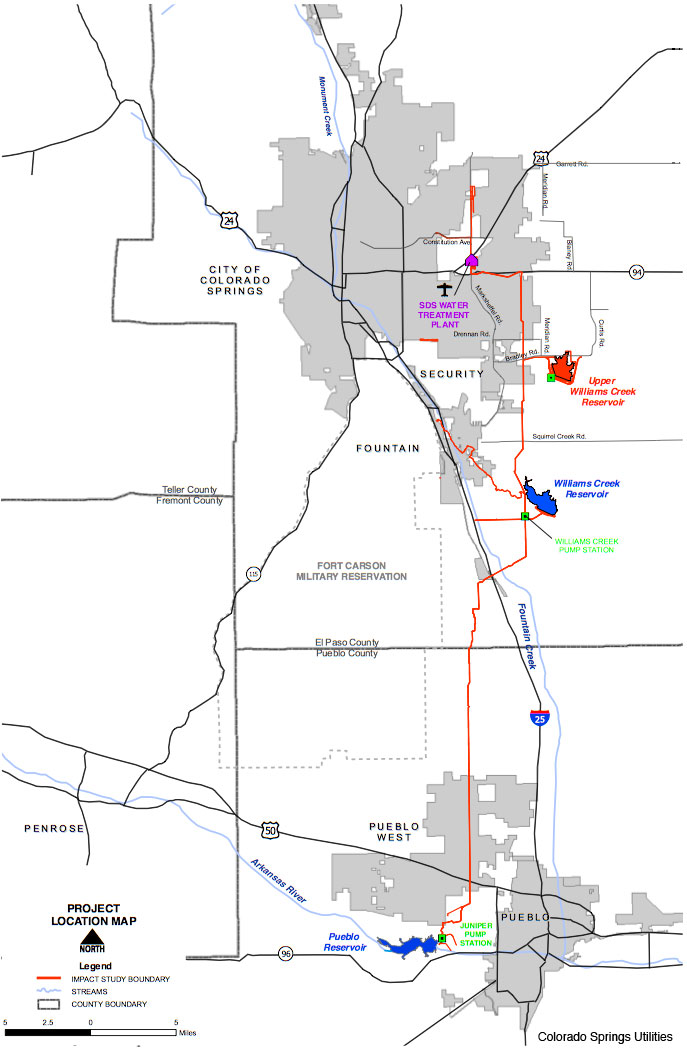
In Colorado Springs, Garney will construct approximately 6.4 miles of 66-inch steel pipeline, a portion of the Southern Delivery System (SDS) Raw Water Transmission Pipeline. Once completed, the SDS will bring water from the Arkansas River to Colorado Springs, Fountain, Security and Pueblo West, ensuring uninterrupted water for homes and businesses, even as other aging pipelines require repair. Water delivery from SDS is expected to begin in 2016.

More infrastructure coverage here.

Southern Delivery System update: Crews are busy constructing the outlet works from Pueblo Dam

A picture named puebloreservoir.jpg

Here’s a report from Chris Woodka writing for The Pueblo Chieftain. Click through for the before and after construction photos. Here’s a excerpt:

A 75-foot hole is being dug down to bedrock in the narrow shale arroyo below where the North Outlet Works will be installed later this year. Much of the work is within the federal security boundary that protects the dam, so workers are under 24-hour surveillance by armed guards. To the south, water is gushing mightily out of all three outlets on the face of the dam. The workers are protected by a coffer dam made from more than 300 giant bags, each filled with 2 tons of sand. It seems safe enough, although work already is about 35 feet below the water level and getting deeper. Soon, a ramp will be built to get equipment in and out. For now, if the coffer dam should fail, a 220-ton crane is standing by to pluck out the track hoe and loader in the hole. For the workers, it would mean a mad dash for a ladder that leads to safety…

“We found a buffalo skull,” said MWH engineer Greg Minnick, when asked whether anything unusual has been encountered. “Other than that, just a lot of wet dirt.”[…]

The digging at the base of the dam should be complete by early July. About 6,000 cubic yards of material will have been removed. About 350 to 400 truckloads of concrete will be placed in the hole to form an apron about 30 feet from the dam. The rest of the area will be back-filled. Minnick said about 15 to 16 trucks a day will come to the site, pouring in the early morning hours to take advantage of lower temperatures. That work should be finished in August. After that, a stainless steel sleeve will be placed inside the dam outlet. It will connect to a Y-shaped pipe that will supply both the river — at the same rate as the old outlet did — and the Juniper Pump Station to be built about one-quarter mile to the northeast. The first section of pipe from the North Outlet Works will taper out to a maximum of 90 inches in diameter, separating into a 48-inch line that will supply Pueblo West with up to 18 million gallons of water daily, and a 66-inch line that will deliver up to 78 million gallons daily to El Paso County. Part of that pipe will have to be installed through the rocky formations at the base of the dam, and engineers are now working on a design and work plan to do that without causing vibrations that could disturb the dam, Tunnah said.

More Southern Delivery System coverage here and here.

Southern Delivery System update: Colorado Springs Utilities is at odds with some of the landowners along the route

A picture named sdspreferredalternative.jpg

From NewsFirst5.com (David Ortiviz):

The billion dollar pipeline project will transfer water from the Pueblo Dam to Colorado Springs, Fountain, Security and Pueblo West. The issue–the pipeline will intersect more than a hundred properties. Land owners are being compensated, but some say they’re not being offered enough money. “I’m not going to let them bully me and take my property and give me peanuts for it,” said [Lavetta Kay]. Kay was offered $5,300 for her easement, however she wants triple that amount. Kay points out land owners won’t be able to build any permanent structures above the pipeline. “(Realtors) said my property won’t be able to be sold. It’s stigmatized,” said Kay…

Rummel says they’ve reached an agreement with most property owners, but they’re at an impasse with about ten of them like Kay who think they’re being ripped off. Rummel says SDS will still get to use the land through eminent domain. “The court will come in decide what we should pay these property owners and they will be compensated,” said [Janet Rummel, a spokesperson for SDS].

More coverage from NewsFirst5.com (David Ortiviz):

Construction is underway on a massive underground pipeline designed to meet future water needs in Southern Colorado…

From the reservoir the pipeline will run north through Pueblo West up to Colorado Springs. Phase one, which includes pump stations and a water treatment plant should be finished by 2016…

Phase two of the project is to build two new reservoirs in El Paso County. Rummel says construction on the reservoirs should start around 2020. Although it’s a lengthy and expensive project, Rummel says it gives communities a reliable water system for years to come. “It’s really an investment in our future, for future generations,” said Rummel.

More Southern Delivery System coverage here and here.

Southern Delivery System update: Construction starting in earnest this summer

A picture named sdspreferredalternative.jpg

From The Denver Post (Bruce Finley):

Construction crews this week began work on the $2.3 billion Southern Delivery System. It is designed to pump water uphill and north from Pueblo Reservoir — through a 62-mile pipeline — to sustain Colorado Springs, which owns the rights to the river water, and other growing Front Range cities. The cities embarked on this project because water supplies have emerged as a constraint on population growth.

CH2MHill project engineers and construction chiefs at Pueblo Reservoir this week re-channelled the river below the 240-foot-high dam using sandbags. They’re adjusting dam valves to dry an area so that digging crews can start laying the pipeline without relying on expensive underwater divers. Three 15,000-horsepower pumps are to propel the water through a pressurized 66-inch-diameter steel pipeline. Moving water to the planned end points — two 30,000 acre-foot reservoirs to be built east of Colorado Springs — requires an elevation gain of 1,600 feet…

The Pueblo Reservoir, built in 1975, holds 357,000 acre-feet of water, and the diversion is expected to lower the average water level by about six feet…

Meanwhile, the $50 million for cleaning and restoration of Fountain Creek could enable new recreation, reservoirs and fishing, [Pueblo County Commissioner John Cordova said. “We could have trout,” he said…

Environmental groups “are generally satisfied,” as long as Colorado Springs live up to its commitments to ensure appropriate water levels in the Arkansas River above and below the reservoir, Trout Unlimited water project director Drew Peternell said.
Huge amounts of energy required to pump water uphill, however, looms as “a greenhouse gas issue,” Peternell said. “We’d encourage them to consider renewable sources” of electricity, he said.

More Southern Delivery System coverage here and here.

Southern Delivery System update: Colorado Springs Utilities inks the final contracts with the Bureau of Reclamation

A picture named sdspreferredalternative.jpg

From The Colorado Springs Gazette (Debbie Kelley):

The U.S. Bureau of Reclamation on Wednesday signed final contracts with Colorado Springs Utilities, the city of Fountain, Pueblo West Metropolitan District and the Security Water District, Kara Lamb, a Bureau spokeswoman said Friday. “All of the issues have been resolved, and the construction of the pipeline can go forward,” she said…

Construction for the pipeline’s first phase is expected to cost $880 million, plus financing costs of 40-year bonds, Rummel said. Utilities issued $180 million in Build America Bonds in September, to pay for construction for this year and 2012. Water rate hikes will help fund the project. Two 12 percent increases, one of which took effect in January, have been approved so far. The connection to two new man-made reservoirs, Upper and Lower Williams Creek reservoirs, is in a future phase and expected to raise the cost of the system…

The final sign-off by participants comes after a 60-day public comment period for 38-year storage, conveyance, and exchange contracts. The period ended April 25.

More Southern Delivery System coverage here and here.

Southern Delivery System: The Colorado Springs city council is looking at speeding up the project to take advantage of favorable contractor pricing

A picture named sdspreferredalternative.jpg

From the Colorado Springs Independent (Pam Zubeck):

Colorado Springs Utilities officials gave an update of SDS, along with several other utilities matters, to a Council that contains six new faces after the April 5 election: Angela Dougan, Lisa Czelatdko, Tim Leigh, Merv Bennett, Brandy Williams and Val Snider. During the presentation, the Council was told the city is getting good prices on SDS construction because of the gloomy state of the economy and intense contractor competition. That led Leigh to suggest that if it’s cheaper to build now, the city might think about pushing forward now, even if it means higher water rates for customers in the short run. In response, SDS program manager John Fredell told the Council that Utilities officials will “be ready to talk more detail in July about the project,” including, he said, “about accelerating” it.

More Southern Delivery System coverage here and here.

Southern Delivery System update: Comments on the contracts to use Fryingpan-Arkansas project facilities close April 25

A picture named sdspreferredalternative.jpg

From The Pueblo Chieftain (Chris Woodka):

The contracts will allow Colorado Springs, Fountain, Security and Pueblo West to store water in Lake Pueblo, connect a pipeline to Pueblo Dam and change the operation of the Fountain Valley Conduit. Colorado Springs also will have the ability to move water upstream through a paper trade.

“We have not received any comments on the draft contracts,” said Kara Lamb, spokeswoman for the Bureau of Reclamation. Deadline for comments is April 25.

Colorado Springs Utilities expects to begin construction of the SDS project in Pueblo County beginning next month. While SDS was raised as a campaign issue in Colorado Springs elections, all seven council candidates elected last week, as well as the two other members, are supporters of SDS…

Construction on the North Outlet Works, a new connection to the dam, will begin in May. The lead contractor is ASI Constructors of Pueblo West. Construction on pipelines through Pueblo West and through Walker Ranches in northern Pueblo County is scheduled to begin in late summer. Some construction has begun in El Paso County, and fabrication of parts for the dam connection is nearly complete…

As part of SDS, however, each community will store water in excess-capacity accounts in Lake Pueblo beginning this year. Lake Pueblo was built as part of the Fryingpan-Arkansas Project, authorized by Congress in 1962. Nonproject water can be stored in most years. Excess capacity space in Lake Pueblo will be allocated at $36 per acre-foot with an increase of 1.79 percent annually over the 40-year life of the contract with the four communities. For the first seven years of storage, the bills will be reduced by a total of $6 million in recognition of oversizing the initial quarter-mile of pipeline from Pueblo Dam to the Juniper Pump Station. Once that section of pipeline is completed, it will be deeded to Reclamation. Consequently, payments through 2017 will total about $760,000. Payments from the four communities will total more than $1.25 million in 2018, and will increase each year by terms of the contract and as more water is stored.

More Southern Delivery System coverage here and here.

Fryingpan-Arkansas Project: Lake Pueblo master storage contract update

A picture named puebloreservoir.jpg

Here’s an in-depth look at what it’s going to take to get a contract in place, including an environmental impact statement, from Chris Woodka writing for The Pueblo Chieftain. Click through and read the whole thing. Here’s an excerpt:

The EIS will study the cumulative impacts of storing non-project water in Fry-Ark reservoirs, which could total close to 100,000 acre-feet in the next 50 years. A 2006 Reclamation study determined there is about 130,000 acre-feet of storage space available annually. Current contracts account for about 50,000 acre-feet of storage annually, and Southern Delivery System contracts now under final review would amount to 40,000 acre-feet. Security, Fountain and Pueblo West are in both the SDS and Arkansas Valley Conduit contract processes. Many other current users who rely on one-year contracts are in the Southeastern’s master contract proposal.

Thursday’s meeting was primarily about the cost of the EIS to each participant, and there was some wrangling about how some participants had reduced the amount requested, thus increasing bills for smaller districts…

Joe Kelley, La Junta water superintendent, asked if communities could expect to see as much or more of the water they signed up for in determining their share of the EIS cost. [Southeastern Colorado Water Conservancy District general manager Jim Broderick] and [Southeastern attorney Lee Miller] said the numbers used for the EIS are most likely a minimum that communities can expect to receive if they participate in the later phases of building and operating the conduit. Some communities may drop out, and the final decision will be made by future Southeastern boards. “We have spent four to five years in this process to determine use,” said Bill Long, president of the Southeastern board. “It’s not likely that the board would make changes.”

More Lake Pueblo coverage from Chris Woodka writing for The Pueblo Chieftain. From the article:

Under operating guidelines, an estimated 12,800 acre-feet of water would have to be released from the dam beginning April 15 to maintain flood storage capacity in the reservoir. But the Corps has agreed to allow 25,000 acre-feet of the flood control pool to be used to store water until May 1, and 12,500 acre-feet until May 15, said Roy Vaughan, U.S. Bureau of Reclamation manager of the Fryingpan-Arkansas Project. “Unless something unusual happens, we shouldn’t have to release anyone’s water,” Vaughan told the Southeastern Colorado Water Conservancy District board Thursday.

Here’s a look at the Arkansas Valley’s winter water program from Chris Woodka writing for The Pueblo Chieftain. From the article:

The winter water program was first envisioned in the 1930s, and began after completion of Pueblo Dam in 1975. It was formalized in a Water Court decree in 1987. It allows irrigators to store water from Nov. 15 to March 15. “One of the multiple purposes of the Fryingpan-Arkansas Project was to store . . . irrigation water for summer use,” attorney Alix Joseph told the Southeastern Colorado Water Conservancy District board Thursday. The southeastern district oversees the operation of the program, which benefits most of the major ditches between Pueblo and John Martin Reservoir, as well as the Amity Canal. The glaring exception is the Rocky Ford Ditch, which is now almost largely owned and controlled by Aurora. Rocky Ford always had the opportunity to join the winter water program, but Aurora’s decrees have changed how it uses the water.

The use of winter water, or Fry-Ark water, is frequently referenced in Water Court applications, which is always a red flag for southeastern district lawyers. When water changes from agricultural to urban uses, the accounting becomes complicated. “Any decree that uses winter water for purposes other than agriculture cannot store in Pueblo Reservoir,” Joseph said. That provision relates to the repayment of the Fry-Ark Project.

More Fryingpan-Arkansas Project coverage here.

Southern Delivery System: Colorado Springs Chamber of Commerce calls the project an economic driver for El Paso County

A picture named pikespeak.jpg

From the Colorado Springs Independent Indy blog (Pam Zubeck):

The study sets the cost at $880 million for phase one, to be completed by 2016, and up to $740 million for subsequent phases. Those costs don’t include financing charges, which drive the cost of the first phase up to more than $2 billion.

But researchers emphasize the great deal we’re getting by noting that bonds issued per capita for the Homestake transmountain project during the 1960s cost more than $4,000, compared to $1,600 for SDS. Homestake drove water bills up by 141 percent in eight years, while water bills will double for SDS within six years (by 2016). However, the study notes that only 75 percent of that increase is due to SDS, with the balance paying for upkeep and upgrades to the existing system.

The bottom line is we can’t all get as rich as we are hoping without SDS, the study says. “Without additional water capacity, economic friction surfaces; thereby limiting growth and opportunity by creating economic drag,” the study notes, and then says without SDS, we’d see 35 percent less population growth by 2050, leading to less personal income — $866 million by 2020 and increasing to $6.7 billion by 2050.

More Southern Delivery System coverage here and here.

Southern Delivery System: Colorado Springs Chamber of Commerce calls the project an economic driver for El Paso County

A picture named sdspreferredalternative.jpg

Update From The Colorado Springs Gazette (Daniel Chacón):

“The findings of this report indicate new water supply capacity is critical to support future economic development,” according to Summit Economics, LLC, which prepared the report. The report, which cost $15,000 was funded primarily by Colorado Springs Utilities, which is building SDS, a 62-mile pipeline between the city and Pueblo Reservoir. The Center for Regional Advancement, an arm of the pro-SDS Greater Colorado Springs Chamber of Commerce, and the Pueblo Board of Water Works also contributed money, said Stephannie Finley, the chamber’s president of governmental affairs and public policy…

…the report also found that the project will come at a heavy price. “While the financial impact of SDS on water rates is consistent with past water projects in Colorado Springs, it is a large amount of money that impacts area households, companies and organizations,” the report states. “Lower income homeowner households and water intensive businesses are impacted disproportionately. This creates hardships, especially with a utility rate structure that cannot discriminate between economic classes or business types.”

From The Pueblo Chieftain (Chris Woodka):

The Center for Regional Advancement commissioned a report on the economic impacts of SDS by Summit Economics LLC that shows water demand by 2050 would increase about 125 percent without SDS, compared with 175 percent with SDS. Summit Economics partners include Dave Bamberger, Tucker Hart Adams, Mike Anderson, Tom Binnings and Paul Rochette…

The report was released this week partly because of concern about upcoming mayoral and council elections, said Stephanie Finley, executive director of the center…

“The Southern Delivery System has been two decades in the making, and we believed it was time for an independent analysis of the economic impact of SDS, now and for the future,” added Martin Wood, chairman of the center’s board…

The center concluded that SDS is necessary for reliability of water supply for the future growth of Colorado Springs, which affects the entire region. Without SDS, the reduced water demand would mean a reduction in the rate of growth by about 41 percent…

The Summit Economics analysis predicts that Colorado Springs would gain 107,000 less people without SDS by 2050. That still implies there would be some population growth, just not as rapidly as what would occur if SDS is built. The growth rate would decline because of reduced jobs for current families, fewer military retirees, manufacturers locating elsewhere, fewer small business opportunities and slowdown in construction and home-building industries, according to the report…

The Summit Economics Report stresses the interconnected nature of El Paso County with its neighbors. While Colorado Springs dominates the economic landscape with $50.3 billion in sales — compared with $10.3 billion in Pueblo County, $2.4 billion in Fremont County, and $1.3 billion in Teller County — there is about $1.5 billion in trade among the four counties…

Colorado Springs’ demand for water peaked at 85 million gallons per day in 2000, but has slowed to around 70 million gallons per day since the drought of 2002. The capacity of the system is rated at about 90 million gallons per day. Colorado Springs Utilities estimates its needs will exceed supply by 2016, when it is scheduled to complete SDS. Work already has started on some portions of the project. However, if the rate of growth in demand for water follows the track for the past 25 years, demand would remain under the 90 million gallon-per-day threshold until at least 2030, according to the report. Utilities’ projection more closely follows the steep increase that the city experienced in the 1995-2000 period.

More Southern Delivery System coverage here and here.

Southern Delivery System: Pueblo County D.A. Thiebaut files appeal over the Colorado Water Quality Control Division’s issuance of a water quality certification permit for the project

A picture named fountaincreek.jpg

From The Pueblo Chieftain (Jeff Tucker):

The appeal, which was filed in Pueblo District Court, names Colorado Springs Utilities, the Colorado Water Quality Control Commission and Steven H. Gunderson, director of the water quality control division, as defendants. Thiebaut claims their actions to approve a certification for SDS were arbitrary, capricious and contrary to law. He has asked the court to reverse the decisions by the division and commission, and declare they exceeded their jurisdiction or abused discretion in issuing the certification. The appeal also asks the court to issue an injunction prohibiting the water quality division and the commission from taking any action contrary to the court’s order…

It also claims the approval of the certificate by the Water Quality Control Division and its commission failed to comply with public notice requirements and anti-degradation requirements. The division’s certificate and the commission’s affirmation of the permit” was not based on a reliable scientific or quantitative methodology or competent evidence,” the suit stated…

Further, the appeal claims that the determinations SDS would cause no significant degradation to water quality on the Arkansas and Fountain or that water quality standards would be met weren’t supported by any facts, data or analysis in the record…

Finally, the appeal claims the Water Quality Control Division failed to conduct a full analysis of whether SDS would degrade water quality or whether the degradation was necessary to accommodate important economic or social development in the area.

More Southern Delivery System coverage here and here.

Southern Delivery System update

A picture named sdspreferredalternative.jpg

Colorado Springs Utilities and some 13 property owners in Pueblo West are still dealing with respect to easements for the Southern Delivery System. Not everyone is happy with the situation, including the Pueblo County Commissioners. Here’s a report from Chris Woodka writing for The Pueblo Chieftain. From the article:

Commissioners on Feb. 8 wrote a letter to SDS project Director John Fredell that pointed to conditions in the 1041 land-use permit requiring Colorado Springs to pay for a second appraisal if any landowner disagrees with the SDS appraisal. Colorado Springs is expected to discuss issues raised in the letter at the commissioners meeting at 9 a.m. today, said John Cordova, Pueblo County Commission chairman…

On Tuesday, Fredell told Colorado Springs City Council that Utilities had agreed to pay for second appraisals in any case, but Maxwell made a point of bringing up the letter from commissioners. Council members indicated they had copies of the letter as well. All three of the property owners spoke at Tuesday’s council meeting and said Colorado Springs had offered to pay for new appraisals only in the past few days, telling them that up until that time they were told the option wasn’t available…

Commissioners indicated Colorado Springs may not be in compliance with the land acquisition portion of the [1041 permit from Pueblo County]. In his reply to commissioners, Fredell said all of the concerns brought up by commissioners have been addressed. In the case of the action that already was filed, he said Utilities has tried for more than a year to contact the heirs of the deceased landowner…

This is the second time in recent months commissioners have contacted Colorado Springs about 1041 issues. In December, the commissioners asked Colorado Springs to pay almost $150,000 in legal fees for a Pueblo West lawsuit against the county over SDS issues. Colorado Springs declined to pay.

More coverage from Daniel Chaćon writing for The Colorado Springs Gazette. From the article:

A reluctant City Council authorized the use of eminent domain Tuesday to acquire 15 property easements in Pueblo West that Colorado Springs Utilities needs to build the 62-mile Southern Delivery System water pipeline. The council voted 7-1 to move forward with condemnation proceedings but instructed the city-owned utility to continue to negotiate with property owners until after appraisals on their land have been completed…

Despite a month of phone calls, letters and two group meetings with property owners to try to reach agreement, including an explanation on how the offers were developed, Utilities officials said the two sides were at an impasse. “We need to move forward,” Fredell said. “There has to be a point where we decide we can’t reach agreement.”

More Southern Delivery System coverage here and here.

Southern Delivery System update

A picture named sdspreferredalternative.jpg

From The Pueblo Chieftain (Chris Woodka):

[Colorado Springs City Council] voted 7-1 to proceed with eminent domain, believing Utilities staff has exhausted all other avenues to solve the problem. Even at that, Mayor Lionel Rivera questioned Project Director John Fredell after it was revealed that Colorado Springs could spend up to $5,000 to help settle disputes of easement payments as low as $1,550. “There has to be flexibility in the real estate manual,” Rivera said. “You, the project director, can use your discretion.”

Fredell earlier explained that 120 of 133 properties or easements in Pueblo West are under contract, with new settlements on Monday with 2 of the 15 holdouts. All of the remaining properties are for easements valued at $1,550-$5,000. While Utilities will continue to work with the remaining 13, Fredell said they appear to have reached a dead end. There has already been one condemnation filed, approved at a meeting last October. “I believe we’ve reached a point where we cannot agree on compensation with the remaining properties,” Fredell said.

More coverage of the city council meeting, and the opposition to SDS, from Chris Woodka writing for The Pueblo Chieftain. From the article:

Councilman Tom Gallagher, who has been at odds with the rest of council for years over SDS, took the opportunity to call SDS, “The greatest boondoggle that’s ever been conceived by this community.” At one point Gallagher, who is running for mayor in the April election, called SDS Project Director John Fredell to task for not including options to locate the pipeline in a less disruptive manner during the Bureau of Reclamation’s Environmental Impact Statement that evaluated the project. Fredell started to defend the EIS process, which determined the ultimate route of the pipeline from Pueblo Dam to Colorado Springs, when Gallagher cut him off. “This is a case of you deciding where you wanted it to go,” Gallagher said.

Dwain Maxwell, a property owner in Pueblo West whose Kirkwood Drive property is likely to be condemned for an SDS easement, goaded council by saying they were in a hurry to wrap up land deals quickly because the makeup of the council could change dramatically in the April elections. There are nine candidates for a new position of strong mayor and 22 candidates for seven open council seats. “I know you’re trying to get this done before the first of April,” Maxwell said…

[Sean Paige] later said Colorado Springs has gone out of its way to make accommodations on all parts of SDS. The first phase of the project will cost $880 million, including more than $133 million in concessions during the Pueblo County 1041 process. Scheduled for completion in 2016, the project will cost ratepayers $2.3 billion over the next 40 years in financing.

More Southern Delivery System coverage here and here.

Southern Delivery System update

A picture named sdspreferredalternative.jpg

From The Pueblo Chieftain (Chris Woodka):

Pueblo West landowners who are unhappy with offers for easements as part of the Southern Delivery System have been unable to reach settlements with Colorado Springs. Next week, Colorado Springs Utilities is expected to report to City Council on the progress in dealing with holdouts on 15 of 133 properties it must acquire to build SDS…

Colorado Springs City Council told utilities to make another attempt to negotiate with Pueblo West property owners last month, and is scheduled to review progress at its meeting Tuesday. The city has offered residents payments for easements across part of their property. Landowners say the amount is too small for the inconvenience they expect to endure as SDS is being built…

Colorado Springs committed to use eminent domain only as a last resort in obtaining property or easements for SDS under its 1041 land-use permit with Pueblo County in 2009. Utilities wants to begin building the water pipeline from Pueblo Dam soon in order to meet a projected completion date in 2016. Last month, Dan Higgins, SDS construction delivery manager, said Colorado Springs will continue to work with landowners even if condemnation actions begin in court.

More Southern Delivery System coverage here and here.

Monument: Board of trustees meeting recap

A picture named monumentlake.jpg

From the Tri-Lakes Tribune (Lisa Collacott):

The town of Monument unanimously approved four resolutions pertaining to water at its most recent board of trustees meeting.

To establish a contract with El Paso County Water Authority and make the name change to Pikes Peak Regional Water Authority.

To participate in the Colorado-Wyoming Project Participation agreement.

To sign on the Super Ditch Project Participation agreement.

To sign on the Southern Delivery System Project Participation agreement.

Monument has been paying dues to the EPCWA and PPRWA. Recently the two water authorities merged and stayed with the name of PPRWA. The dues to the water authority for 2011 will cost the town $2,950. “It’s a good thing for the town. We were paying dues to two authorities and there really was no need for two authorities,” said Rich Landreth, public works director…

The Board of Trustees also approved the resolution for the Super Ditch Participation Agreement. The Lower Arkansas Valley Water Conservancy District is considering a plan to lease water used for agricultural purposes to cities. The town of Monument has been part of the project for several years.

The final resolution approved was the Southern Delivery System Project Participation Agreement. The project would allow members to negotiate, as a group or individually, the delivery of water through the SDS with Colorado Springs Utilities.

More Arkansas River basin coverage here.

Southern Delivery System update

A picture named sdspreferredalternative.jpg

From The Pueblo Chieftain (Chris Woodka):

While 118 agreements have been reached in Pueblo West, 15 property owners are holding out, saying the offers made for easements across their land are too low. Colorado Springs City Council last week told Utilities officials to try to reach a compromise with Pueblo West landowners who are not happy with what they’ve been offered so far. “We have written each of the property owners asking them to provide a proposal for counteroffers and information to substantiate the compensation,” said Dan Higgins, SDS construction delivery manager. “We will carefully consider that information once we receive it. New offers will be considered if the property owners can provide information or documentation that would support additional compensation.”

More coverage from Chris Woodka writing for The Pueblo Chieftain. From the article:

“They did send a proposal that was laughable, even if we did want to sell,” Walker said. “We’re sitting in limbo, not knowing what they’re going to do. If they cut through the middle of the ranch, I’ll have to move all the cattle over to Turkey Creek.”

Southern Delivery System would follow a route through about 7 miles of Walker Family Ranches, located north of Pueblo West, and west of Interstate 25. “We have had ongoing discussions with Mr. Walker and his attorney,” said Dan Higgins, SDS construction delivery manager for Colorado Springs Utilities.

Walker and his wife Georgia also own the Turkey Creek Ranch to the west. Between the two ranches, there should be about 2,000 mother cows, but he is holding the size to half of that. “It takes years to put together a herd of quality black Angus cattle,” Walker said.

More Southern Delivery System coverage here and here.

Southern Delivery System: Colorado Springs Utilities is moving dirt but contract negotiations with Reclamation are delaying the construction start at the Pueblo Dam

A picture named sdspreferredalternative.jpg

From The Colorado Springs Gazette (Daniel Chaćon):

…a late-in-the-game tangle with the federal government means Utilities still doesn’t have key contracts it needs to start construction at the Pueblo Reservoir, the mouth of the 62-mile pipeline…

Utilities officials insist the unfinished contracts won’t stop or delay construction. They point to a 4,000-foot section of pipeline that workers recently laid along Marksheffel Road, marking the unofficial start of the project. And, they say, a 4-mile stretch of construction will start in El Paso County in February or March. Utilities has already invested more than $100 million in the project. “It’s important that we take the time to get these final details resolved in a way that protects our customers’ best interests,” John Fredell, SDS project manager, said Friday.

Although it’s unclear when Utilities and the bureau will reach agreement on the contracts, it’s primarily “lawyerly language” that needs to be ironed out, said David Robbins, outside legal counsel for Utilities. “I hope we’re pretty close,” he said this week.

According to interviews and e-mails between Utilities officials and bureau representatives, three significant issues remain unresolved:

• A termination, or “subject to appropriation of funds,” provision.

• A desire by Utilities officials to take advantage of lower water storage rates if other entities get such rates in the future.

• A schedule detailing how much water each of the SDS partners needs to store each year and the cost over the life of the contracts.

More Southern Delivery System coverage here and here.

Southern Delivery System update

A picture named fountaincreek.jpg

From The Pueblo Chieftain (Chris Woodka):

The state’s certification of the Southern Delivery System under the federal Clean Water Act is a way to attain better monitoring and protection of water quality, says a local member of the state board that approved the action. “Our purpose is to protect water quality, and it affects me because I’ve experienced the negative impacts,” said John Klomp, a member of the Water Quality Control Commission and a former Pueblo County commissioner…

Klomp sees numerous positive impacts for state certification of SDS. Among them:

– The alternative will be the least damaging to the environment, with annual reviews and continued oversight from the Water Quality Control Division.
– Colorado Springs will comply with the Upper Arkansas and Pueblo flow programs.
– More monitoring stations — 13 on Fountain Creek — may help identify and prevent adverse changes in water quality.
– A fish and wildlife plan approved by the Wildlife Commission provides additional protection for water.

More Southern Delivery System coverage here and here.

Southern Delivery System: Colorado Water Quality Control Commission affirms the state Water Quality Control Division’s decision for 401 certification for the project

A picture named sdspreferredalternative.jpg

From The Pueblo Chieftain (Chris Woodka):

The certification is needed before work on SDS may begin…

At a hearing in December, lawyers for the coalition and Thiebaut argued that numeric standards are needed to determine how SDS will affect levels of contaminants such as selenium and E. coli in Fountain Creek and the Arkansas River.

Colorado Springs and state lawyers argued for an adaptive management plan, which was described in the Bureau of Reclamation’s Environmental Impact Statement for SDS, that would provide flexibility in dealing with future problems…

Colorado Springs lawyers also defended the city’s 2009 decision to eliminate a stormwater enterprise that figured heavily into protection of Fountain Creek, assuring the state that other provisions were in place to control stormwater.

“It’s pretty clear to me that the division and the commission have bent over backward to accommodate Colorado Springs and its SDS partners,” said Ross Vincent of the local Sierra Club, a member of the coalition. “Without seeing the written decision, it’s inconceivable to me that the commission can justify supporting the division’s decision.” Vincent pointed to a budget briefing by the division last month, which acknowledged that the division does not have adequate funding to perform all of the duties required by the Legislature. The Dec. 22 memo claims the division would need more than 30 additional employees to keep up with the current workload of permits and inspections. The adaptive management plan relies on Colorado Springs to monitor itself, in much the same way that other compromises have been negotiated, Vincent said…

[Pueblo County District Attorney Bill Thiebaut] said he will wait until a written decision is issued before deciding how to proceed. “Our office is disappointed with the decision and direction of the Water Quality Control Commission. We will assess our legal options after receiving the written decision,” Thiebaut said. “The Bureau of Reclamation’s study showed that the SDS project will further degrade water quality in Pueblo County. Yet again, Colorado Springs will benefit from the project and Pueblo will be harmed,” he said. Thiebaut also questioned the state’s ability to enforce water quality laws. “I am concerned that the Water Quality Control Division does not utilize adequate information when making their decisions, and they fail to effectively respond to the current and future challenges of protecting and restoring the integrity of Colorado’s water bodies, including our Fountain Creek and Arkansas River,” Thiebaut said.

More Southern Delivery System coverage here and here.

Roaring Fork River basin: ‘Front Range Water Supply Planning Update’ authors seek to inform on transmountain diversions

A picture named roaringfork.jpg

Here’s a look at the report prepared for the Ruedi Water and Power Authority, from Scott Condon writing for the Glenwood Springs Post Independent. From the article:

The study was commissioned by the Ruedi Water and Power Authority, which represents local governments on watershed issues. The study was conducted by G. Moss Driscoll, a Colorado attorney with experience in water law, environmental law and natural resource management. Mark Fuller, director of the Ruedi Water and Power Authority, said the study was designed to educate Roaring Fork Valley government officials and residents about how water issues could affect them in the future. It wasn’t intended to drive a wedge deeper in the relationship between the valley and Front Range water rights owners. To the contrary, he said, the study, “opened lines of communication.” “There are people in Colorado Springs who know what’s on our minds. That wasn’t the case a year ago,” Fuller said.

The study provides a thorough inventory of who owns what when it comes to the Roaring Fork watershed’s liquid gold and it describes the infrastructure associated with each of the three major diversion projects. For example, the Independence Pass Transmountain Diversion system diverts water from numerous creeks east of Aspen into Grizzly Reservoir, then sends the water east via two tunnels. The major shareholders and recipients of the water in that system are Colorado Springs, Pueblo, Pueblo West and Aurora. The system yields an annual average of 40,589 acre feet, the study said. Fuller said he learned from the study that the Front Range cities that own the system have conditional water rights that could be converted into regular rights, meaning more water gets diverted. One example would be getting court approval to extend their diversion season. “They basically don’t have to ask our permission” to exercise those conditional rights, Fuller said.

In other cases, greater diversions would be difficult, in practical terms, Fuller said. The Fryingpan-Arkansas Project is approved for additional diversion structures, but constructing them would require local government approvals. The Front Range cities understand the political and public relations challenges they face from adding diversions or developing new water resources, Fuller said. He is of the opinion that water supply and demand issues will be negotiated on a broad scale in an amicable way but he acknowledged that other observers believe the historically contentious issue of West Slope water supply and Front Range use will lead to a sort of “World War III” before settled.

He hopes that the Front Range Water Supply Planning Update will be used by officials in governments and entities in the Roaring Fork Valley to inform themselves on the big issues coming in the future. The more officials know, the better they can represent the valley and protect water resources, he said.

From the executive summary:

Three major transmountain diversions currently operate in the Roaring Fork Watershed – the Fryingpan-Arkansas Project (“Fry-Ark Project” or “Fry-Ark”), the Busk-Ivanhoe System, and the Independence Pass Transmountain Diversion System (“Twin Lakes System”) (see inset). At present, these three systems collectively divert over forty percent of the flow in the headwaters of the Roaring Fork and Fryingpan rivers for use in the Arkansas and South Platte basins. Although these diversions have been in operation for decades, each of the projects are still incomplete, with undeveloped conditional water rights, excess diversion capacity, and even major structural components that could yet be built.

According to the Colorado Water Conservation Board’s most recent estimates, the Arkansas and South Platte basins are facing a combined shortfall in water supply of at least 130,000 acre- feet of water (and potentially as great as 470,000 acre-feet) by 2050, due to the influx of another 3.2 to 4.5 million new residents by that time.3 To meet this projected gap, Front Range water providers are scrambling to secure additional sources of water. For many of them, the options for new water supplies are limited: most of the rivers on the East Slope are already over-appropriated; groundwater supplies are declining in some areas due to excessive well pumping; and in recent decades, the costs and uncertainty surrounding new transmountain diversions have prevented many such projects from being built.

For many Front Range water providers, firming up existing transmountain water rights and maximizing the diversion capacity of existing infrastructure is likely to represent one of the most cost-effective, publicly acceptable means of developing additional water supplies. Local interests in the Roaring Fork Watershed should therefore expect Front Range water providers to eventually attempt to firm up undeveloped water rights and excess diversion capacity associated with the Fry-Ark Project, Busk-Ivanhoe System, and Twin Lakes System. In fact, such efforts may already be underway on the East Slope.

More Roaring Fork River watershed coverage here and here.

Southern Delivery System: Colorado Water Quality Control Commission affirms the state Water Quality Control Division’s decision for 401 certification for the project

A picture named sdspreferredalternative.jpg

From The Colorado Springs Gazette (Daniel Chaćon):

The Rocky Mountain Environmental Labor Coalition and Pueblo County District Attorney Bill Thiebaut had appealed the 401 certification. They claimed that SDS failed to comply with all applicable state water quality requirements, among other assertions. They asked the commission to set aside the certification or send it back for further review.

Colorado Springs Mayor Lionel Rivera, a strong proponent of SDS, hailed Monday’s vote, saying the attempt to overturn the 401 certification was rooted in politics. “I think it highlights again that Bill Thiebaut is all about political grandstanding than actually prosecuting or spending his time on issues,” Rivera said…

The 401 certification was a prerequisite to the 404 permit issued by the U.S. Army Corps of Engineers, the last major approval Utilities needed for SDS.

More Southern Delivery System coverage here and here.

Southern Delivery System: Update for contract negotiations between Reclamation and Colorado Springs Utilities

A picture named sdspreferredalternative.jpg

From The Colorado Springs Gazette (Daniel Chaćon):

“There’s a couple of points they’re trying to work out and get clarified with the bureau,” Mayor Lionel Rivera said Friday. The mayor declined to elaborate on those sticking points because of ongoing discussions.

More Southern Delivery System coverage here and here.

Arkansas River basin: Storage update

A picture named puebloreservoir.jpg

From The Pueblo Chieftain (Chris Woodka):

At the heart of the area’s storage system is Lake Pueblo, built in the early 1970s as part of the Fryingpan-Arkansas Project. It was the last large reservoir to be built in the Arkansas River basin. Lake Pueblo not only provides storage, but flood control and recreation as well. A full reservoir is good for recreation, but too much water would diminish its value for flood control. Storage remains the core purpose, however, and space is getting tighter…

Since 2003, municipal storage in Lake Pueblo has tripled, and half of the water in the reservoir is in temporary accounts that mainly serve cities. Pueblo, Colorado Springs, Aurora and other cities have sought long-term contracts for storage to replace the one-year contracts to provide better long-term planning. More municipal storage will be needed when the Arkansas Valley Conduit is built to serve communities east of Pueblo. “The reality of this is that it reduces the yearly available storage space in Pueblo Reservoir,” [Roy Vaughan, manager of the Fry-Ark Project] said. “This has resulted in water managers re-evaluating the need for additional water storage in the basin.”[…]

The Southeastern Colorado Water Conservancy District has led efforts for more than 10 years to study enlargement of Lake Pueblo. The Preferred Storage Options Plan looked at enlargement of Lake Pueblo and Turquoise Lake as the best ways to gain needed storage space, and agreements among the largest municipal water users to open the study were reached in 2004. Attempts to ramrod legislation through Congress were abandoned in 2005, and new rounds of talks began that brought other interests to the table. In 2007, former Sen. Ken Salazar hosted public sessions that were making progress until the Lower Arkansas Valley Water Conservancy District sued the Bureau of Reclamation in federal court for its decision to issue Aurora a long-term storage contract. The Lower Ark and Aurora reached a settlement in 2009 that could revive the PSOP legislation, although serious discussions among the as many as 12 different interests have not resumed…

It’s unlikely that any new reservoir would be built on the Arkansas River mainstem — as witnessed by the public outrage at Colorado Springs proposal to build a dam near Buena Vista in the early 1990s. Colorado Springs plans two large reservoirs on Williams Creek, a tributary of Fountain Creek, as part of its Southern Delivery System second phase. There are several gravel pits along Fountain Creek and the Arkansas River that could be converted to storage reservoirs in the future. There is abundant space in reservoirs east of Pueblo, such as John Martin in Bent County and the Plains Reservoirs in Kiowa County, but they are located downstream of the population centers to directly use them.

Click through for Mr. Woodka’s short bio of Ray Vaughan.

More Arkansas River basin coverage here.

Southern Delivery System: Colorado Water Quality Control Division 401 certification challenge recap

A picture named sdspreferredalternative.jpg

From The Pueblo Chieftain (Chris Woodka):

The Colorado Water Control Commission, which oversees the division, heard testimony on the appeal of the certification at an all-day meeting Tuesday. The commission did not reach a decision, choosing to consider some points in executive session and deferring discussion and a ruling to a meeting at a later date. The case apparently is the first time a Section 401 certification has been appealed in Colorado…

Rather than set numeric standards for selenium, sulfates and E. coli levels that will increase as a result of SDS, the state chose instead to allow monitoring and cooperative action outlined in the adaptive management plan, Barth said. “There was no analysis done, and everything was based on a gut feeling,” Barth said in summarizing an eight-hour deposition of John Hranac, the state employee primarily involved with the Section 401 certification…

Barth continued to hammer on his point that there need to be specific limits on discharges because the streams already are impaired. Barth also said the state failed to look at how increased sanitary sewer and stormwater flows that will result from SDS will affect water quality on Fountain Creek and in the Arkansas River. The state ignored the demise of a stormwater enterprise that was used in the EIS adaptive management plan, he said. The division also didn’t take into account the high number of violations of water quality laws Colorado Springs has had over the past 12 years, he added. “There have been repeated violations that resulted in fines from the division and from federal courts,” Barth said, pointing out that some of the sewer line breaks were a direct result of lines crossing channels that washed out during floods. “Now you add more water? It’s putting more flame on the fire.” Barth, along with the coalition’s attorney Susan Eckert, asked the commission to either deny certification or remand the decision to the water quality division to develop numeric standards and analyze growth as a part of the process.

Colorado Springs argued that the scope of the certification is narrowly defined as a step toward a Section 404 permit from the U.S. Army Corps of Engineers that would allow digging and dredging in Fountain Creek and the Arkansas River. “The pipeline and treatment plants (in SDS) do not include any discharges,” said Jennifer Hunt, an attorney for Colorado Springs…

During questioning by Colorado Springs Utilities’ attorney David Robbins, SDS Project Director John Fredell said growth will occur with or without SDS, and that the project has other purposes — including providing redundancy of water delivery systems, reliability of service and development of water rights. Annette Quill, the state’s attorney, argued the adaptive management plan is enforceable, and defended the division staff as using their “best professional judgment,” not a gut reaction, to make the decision to certify SDS. The state favored the adaptive management plan rather than a strict limit on contaminants, said Steve Gunderson, director of the Water Quality Control Division. “An adaptive management program made sense, because you could study this thing to death and still not be conclusive,” Gunderson said. “Fountain Creek involves as much scrutiny as any basin in the state, and we’re definitely going to be involved.”

More coverage from The Colorado Springs Gazette (R. Scott Rappold):

State regulators Tuesday delayed a decision until next month on a dispute involving Colorado Springs Utilities’ Southern Delivery System water pipeline. The group Rocky Mountain Environmental Labor Coalition and Pueblo County District Attorney Bill Thiebaut have challenged a water-quality certification obtained by Utilities in April.

More Southern Delivery System coverage here and here.

Southern Delivery System: Rocky Mountain Environmental Labor Coalition challenge to the project’s 401 certification is today

A picture named arkansasfountainconverge.jpg

From The Colorado Springs Gazette (Daniel Chaćon):

“We have asked in our papers that the commission set aside the certification or remand it, which means send it back to the Water Quality Control Division for further review based on the various issues we’ve raised,” Susan Eckert, a Littleton-based attorney representing the Rocky Mountain Environmental Labor Coalition, said Monday. The coalition, which describes itself as a non-profit dedicated to the protection of the environment and worker interests in the Rocky Mountain region, filed the appeal along with [Pueblo County District Attorney Bill Thiebaut] in June. Among their assertions is that SDS, as presently configured, will not comply with all applicable state water quality requirements.

[Colorado Springs] Utilities spokeswoman Janet Rummel said SDS has “extensive mitigation requirements” that “fully address” the issues cited in the appeal.

More Southern Delivery System coverage here and here.

Southern Delivery System: Colorado Springs Utilities refuses to pay Pueblo County’s legal bills in winter flow program lawsuit

A picture named pikespeak.jpg

From The Pueblo Chieftain (Chris Woodka):

“We are unwilling to accept an implied obligation to pay for costs incurred by the county when our understandings were that, upon dismissal of the Pueblo West litigation, all parties would bear their own attorneys fees and costs,” John Fredell, Southern Delivery System project manager, wrote in an answer to Pueblo County commissioners this week.

Commissioners are seeking nearly $150,000 for litigation costs in reaching a settlement with Pueblo West that will lead to dismissal of the lawsuit. They maintain it was Colorado Springs’ job to gain compliance of all of its SDS partners with all of the conditions of a 1041 land-use permit. A 2008 agreement signed by Pueblo West authorized Colorado Springs to negotiate all permits…

In his response to commissioners, Fredell outlined the events that led up to the dispute. Colorado Springs was notified of the condition for all participants in SDS to comply with the flow program created in the 2004 intergovernmental agreement in January 2009, Fredell said. “Obviously, Colorado Springs was in no position to reject that proposed condition either for itself or for any of its participants,” Fredell said. After the full set conditions was presented in February 2009, Pueblo West expressed concern about the condition requiring compliance with the flow program in the permit. On April 16, 2009, Pueblo County issued the 1041 permit, and Pueblo West filed its lawsuit one month later…

Colorado Springs said nothing has happened that would trigger a dispute resolution clause of the 1041 permit, Fredell said. “We don’t believe that there has been a dispute between Colorado Springs and Pueblo County over the provisions of the 1041 permit that would have triggered the dispute resolution process,” Fredell said. He also said the settlement agreement itself has a provision that all parties would pay their own legal expenses.

More Southern Delivery System coverage here and here.

Southern Delivery System: Colorado Springs Utilities refuses to pay Pueblo County’s legal bills in winter flow program lawsuit

A picture named puebloleveearkansasriver.jpg

From The Colorado Springs Gazette (Daniel Chaćon)

The litigation was between Pueblo County and the Pueblo West Metropolitan District.

But Pueblo County contends it had to resolve an “agency dispute” between Colorado Springs Utilities and Pueblo West, one of the SDS partners.

“We consider reimbursement to be a matter of good faith and fairness on the part of CSU and within the spirit of the dispute resolution and fee reimbursement process outlined in Section 29 of the SDS 1041 Permit,” the three-member Pueblo Board of Commissioners said Monday in a letter to John Fredell, SDS project manager.

At issue is a condition of the 1041 Permit that Colorado Springs obtained from Pueblo County to build SDS, a 62-mile pipeline that starts at the Pueblo Reservoir.

The condition required Pueblo West to participate in the Arkansas River Flow Program, which Pueblo West claimed would cost it millions of gallons of water, the Pueblo Chieftain reported.

A settlement between Pueblo County and the metro district was reached last month.

Colorado Springs Utilities participated in negotiations and agreed to provide a paper trade of water in Twin Lakes to make up any losses Pueblo West would suffer, The Chieftain reported Thursday.

In a letter to Pueblo County, Fredell said Thursday the settlement agreement was fair and didn’t contemplate the payment of attorney fees or costs “beyond those which each party determined were necessary to represent its own interest.”

More Southern Delivery System coverage here and here.

Long range Woodmoor Water and Sanitation District plan update

A picture named arkbasinditchsystem.jpg

From The Pueblo Chieftain (Chris Woodka):

“This is going to be a marathon in the future,” Manager Jessie Shaffer said Tuesday. “Our goal is to get a renewable water supply for all of our customers.”

Woodmoor is committed to spending as much as $138 million over 12 years. The district began preparing for its drier future five years ago, and has no intention of pulling out.

Woodmoor has met opposition to its plan from more than 20 objectors in Water Court, including outspoken criticism from the Pueblo Board of Water Works that its plan is speculative and potentially harmful to other water rights. “Our attorney has been talking with their attorneys,” Shaffer said…

Shaffer brushed aside questions about whether water used in Woodmoor would cross the Palmer Divide into the South Platte River basin. He has said in the past that return flows from the Woodmoor system ultimately flow down Monument Creek, which joins with Fountain Creek at Colorado Springs…

The plan calls for exchanges to a reservoir south of Fountain, where it could be piped about 35 miles north through a 16-inch pipeline for use in Woodmoor with an elevation gain of roughly 1,500 feet, according to an engineering report produced as part of the court case. Woodmoor plans to develop its own reservoir at Stonewall Springs, near the Pueblo Chemical Depot, as part of the exchange system…

Shaffer could not say when the project would become critical for Woodmoor’s future water needs, citing the general plan that is posted on the district’s website when asked about the need for new supply. “The Denver Basin aquifers are in decline, and it’s a finite resource. At some point they become less reliable,” he said. “The board has decided to move forward on a renewable supply.”

More Arkansas River basin coverage here.

Pueblo County plans to bill Colorado Springs a little over $148,000 for legal costs associated with the Southern Delivery System and the winter flow program

A picture named puebloleveearkansasriver.jpg

From The Pueblo Chieftain (Chris Woodka):

“Colorado Springs should have had this taken care of,” said Jeff Chostner, chairman of the Pueblo County commissioners. “We’re not happy about having to fight with our neighbors because Colorado Springs did not do their job.”

On Tuesday, Pueblo County commissioners and the Pueblo West Metropolitan District board approved a settlement agreement that would end the lawsuit by providing a road map to allow Pueblo West to recover more of the water it’s entitled to under exchanges.Colorado Springs Utilities and the Pueblo Board of Water Works also were part of negotiations and must approve the agreement as well.

More Southern Delivery System coverage here and here.

Southern Delivery System update

A picture named sdspreferredalternative.jpg

From the Colorado Springs Independent (Pam Zubeck):

But on this day, as we hop into Utilities’ 2001 Dodge Durango for a day-long tour of the project, [Dan] Higgins’ spirits are high. “It’s actually happening,” he says…

The pipe along Marksheffel, which extends 4,000 feet and burrows under Sand Creek, is the first segment under construction; it’s being buried in tandem with El Paso County’s widening of the road. Next month, Utilities will open bids from seven pre-qualified pipeline contractors for a four-mile segment southeast of Colorado Springs, several miles east of Interstate 25, where pipe at least 66 inches in diameter will be buried.

SDS — which includes 62 miles of pipe, three pump stations and the treatment plant — represents a dozen construction contracts that will require 700 workers at the peak of construction. And contractors are hungry. Higgins says the Marksheffel stretch drew bids 15 percent below the engineer’s estimate.

Heading south, we pull off Marksheffel along vacant rolling hills where Utilities has acquired 120 acres for a treatment plant, slated for construction in mid-2012.

Northeast of here lies Jimmy Camp Creek, where the city sunk more than $6 million into 14 tracts targeted for a treatment plant and reservoir. The deals, which paid some landowners up to four times their property’s assessed value, triggered an overhaul of city land acquisition rules in 2006.

The federal environmental study later identified archaeological and paleontological artifacts at Jimmy Camp. Also, developers alleged putting a reservoir there would violate the 1988 Banning Lewis annexation agreement, which calls for a passive park — one without the distractions of a reservoir and other activities on the site. Moreover, downstream residents feared loss of life and property if the dam failed.

Now, Jimmy Camp is held as an option to a new site. That site, Upper Williams Creek, is farther south, along Bradley Road, on hundreds of acres that an 1893 map in Penrose Library’s archives shows is near “Burial Rocks” amid former Arapahoe Indian territory. The site, which Utilities has not yet acquired, also might sit atop a network of abandoned mines. A 1967 city Planning Department geology report shows mines in that general area from which more than 445,000 tons of coal were removed from 1883 to 1964…

Our next stop is Pueblo West, a project partner that will be bisected by the pipeline. Utilities is making headway on land acquisition here, having bought several easements and six homes at prices that nearly match assessed values. Higgins notes the homes are being stripped of reusables, such as appliances, windows and doors, to be used by Habitat for Humanity.

At Pueblo Dam, Higgins points out a gushing stream from the dam’s north side. A new outlet from the dam will be built there so that some water can still empty into the Arkansas River to nurture habitat, while another stream goes into Utilities’ new pipeline. This is the site of SDS’ first construction contract, awarded to Pueblo West-based ASI Constructors…

Pushing all that water 1,100 feet uphill will require three 21,000-horsepower pump stations. Power will come from Black Hills Electric and Mountain View Electric, Higgins says. Power for Phase 1 is estimated to cost $1.5 million annually; after both phases are implemented, the bill will be $7.4 million a year.

More Southern Delivery System coverage here and here.

Southern Delivery System update

A picture named sdspreferredalternative.jpg

From the Colorado Springs Independent (Pam Zubeck):

Within a month or so, a segment of pipeline installation south of Colorado Springs will be awarded to one of seven prime contractors who have been pre-qualified for the work. Most are based in the Front Range area. The pipeline will bring water from Lake Pueblo to Colorado Springs by 2016, Utilities officials say.

More Southern Delivery System coverage here and here.

Colorado Springs: Stormwater projects update

A picture named arkansasfountainconverge.jpg

From The Pueblo Chieftain (Chris Woodka):

The city plans to eat up the last of its stormwater funds generated from 2007-09 to finish up one project and meet its requirements for Environmental Protection Agency and Colorado Department of Public Health and Environment stormwater permits through next year.
Then, it will have to look to its general fund to meet the permit costs.

Colorado Springs will spend only one-fifth of what it would have generated if the stormwater enterprise were still in place, and has nothing left for capital projects. City Council eliminated the enterprise nearly one year ago.

The news rankled Pueblo political and environmental leaders, who say Colorado Springs told the U.S. Bureau of Reclamation and Pueblo County commissioners the stormwater enterprise would help deal with growth issues created by the Southern Delivery System. “They consistently mentioned the stormwater enterprise and the $70 million in critical projects it would address,” said state Rep. Sal Pace, D-Pueblo, who protested unsuccessfully to Reclamation when the enterprise was dissolved. “It really appears Colorado Springs is not meeting their obligations under the Pueblo County 1041 permit as well.”[…]

In a memo presented to Council Monday, city staff reported there are only enough funds to partially cover next year’s projected stormwater costs.
The city only spent $26.5 million to deal with six of the highest priorities on a $300 million list of backlogged projects, $66 million of which were called critical. Of that, $5.6 million came from grants and partnerships. “No dedicated funding or engineering staff are projected to be budgeted in 2011 for stormwater capital improvement projects,” the memo states. Stormwater maintenance projects have been turned over to the the city street department, which will mainly respond to citizen complaints about structures that are not working properly, according to the staff report.

More stormwater coverage here.

Southern Delivery System update

A picture named sdspreferredalternative.jpg

From The Pueblo Chieftain (Chris Woodka):

SDS is still on course for completion by 2016, [John Fredell, SDS project director] said…

The first phase of SDS — pipelines, pump stations and a treatment plant — would cost $880 million and require $2.3 billion in financing costs. Colorado Springs water rates are expected to double by the time it’s built. Colorado Springs has spent $108.3 million on SDS so far and issued the first round of bonds to pay for the project. Money has been spent primarily on permitting, engineering, land acquisition and project management.

Growth is only one of the primary reasons for constructing SDS, Fredell said. “It’s also related to reliability of supplies, drought protection and the backup of our other pipelines,” Fredell said.

The Homestake system, which brings water from the Eagle River through a tunnel into Turquoise Lake and through the Otero Pipeline, has been taken offline seven times in the last 10 years, most recently for six months, he noted. “Reliability goes beyond that, however,” Fredell said. “We also have to take drought, climate change and Colorado River issues into account.”[…]

Colorado Springs and its SDS partners are still working out contract details with the Bureau of Reclamation for the storage and delivery contracts needed to make the project a reality. Public negotiations on the SDS contracts wrapped up in August, but the final contracts have not been prepared.

More Southern Delivery System coverage here and here.

Lower Arkansas Valley Water Conservancy District board meeting update

A picture named flatheadchub.jpg

From The Pueblo Chieftain (Chris Woodka):

“One of the exciting things we are finding is that we can fallow land and not be penalized,” Jim Valliant, coordinator of the study, told the Lower Arkansas Valley Water Conservancy District on Wednesday. “Now we are looking at the economics: What does the farmer have to have to make it worthwhile to fallow the land.” Valliant explained that fertilization is typically best done in the fall for two reasons:

– Fertilizer is generally cheaper at that time of year.

– It allows the fertilizer to blend with the soil. “If you get a little moisture in the fall, it mellows the land for planting,” Valliant said.

A study began in 2007 at the Arkansas Valley Ag Research Center, operated by Colorado State University, to look at what is needed to bring land back into production after it has been fallow for one to three years. Four plots were cultivated, with corn planted each year on one, three years on a second, two years on a third and one year on the fourth. The harvests from the fourth year were just completed, so the final results aren’t known. However, the nitrogen levels for all four years show the soil retained sufficient levels of nutrients to produce a crop without fertilization up to three years after first being fallowed. Fertilization was considered sufficient if at least 200 bushels of corn per acre were harvested. In each of the first three years, each plot yielded more than 200 bushels, except the initial year when just one of the four was planted and harvested. In other words, the plots that had been fallowed still produced adequately in the first or second year after replanting. That reduces the input cost to farmers during the fallow years, although there are still labor and fuel costs to maintain fallowed land.

Valliant said the next step is to analyze the relative cost of taking land out of production to determine how much farmers should reasonably charge for water when land is taken The Lower Ark district initiated and funded the study — about $50,000 over four years — as part of its efforts to establish the Super Ditch. At the time, there were few reports on the cost of bringing land back into production, or the financial risk farmers take by breaking cropping cycles.

More coverage from Chris Woodka writing for the The Pueblo Chieftain:

A survey by the U.S. Geological Survey and other partners began sampling fish in Fountain Creek in April and collected 20,000 fish at 10 sites, Pat Edelmann, head of the USGS office in Pueblo, told the Lower Arkansas Valley Water Conservancy District Wednesday. In the 10 areas, reaches of just 150-500 feet were studied, raising the possibility of many more fish in the creek, Edelmann said.

Of special interest is the flathead chub, a plains fish that is abundant in many places, but listed as a species of special concern in Colorado, and threatened or imperiled in several other states. In Colorado, the fish is found primarily in the Arkansas River basin below Florence and in the Rio Grande basin. “Some people say it is a trash fish, but our data collectors had a discussion with the blue herons and they think the chub are an excellent source of food,” Edelmann quipped…

The study is important to Colorado Springs Utilities, which is considering a fish ladder that would allow the chub to swim upstream. The project is part of the Army Corps of Engineers Fountain Creek Watershed Study and Pueblo County requirements for the Southern Delivery System. An earlier study found the flathead chub are poor jumpers, but persistent in finding their way around obstacles like rocks. Surprisingly, 15 of the tagged fish were found upstream of the Clear Springs Ranch site, presumably during the brief time once a week when a gate is opened to flush sediment. Some fish moved as much as 18 miles upstream.

More Fountain Creek coverage here and here.

Southern Delivery System update

A picture named sdspreferredalternative.jpg

From The Colorado Springs Gazette (Daniel Chacón):

So far, Utilities has paid nearly $4 million to acquire easements on 131 properties. That’s more than one-third of the property it will need to build the pipeline. Utilities has a $37 million land acquisition budget for phase one of the pipeline project. Some of that money will help buy the estimated 760 acres needed for the future Upper Williams Creek Reservoir about 14 miles southeast of downtown Colorado Springs. The reservoir will be built in the project’s second phase…

To build the pipeline, Utilities must acquire mostly easements. Property owners retain the use of their land after construction. But permanent structures cannot be placed above the pipeline in case Utilities needs access for maintenance. All the land acquisitions to date have been “consensual transactions.” About 169 parcels are left. Utilities pledges to work cooperatively with the remaining property owners, paying them a fair price and then revegetating their land…

Although Utilities plans to build the pipeline in segments rather than starting in Pueblo and working its way to Colorado Springs, the land acquisitions will affect the construction schedule. They’re working to acquire adjacent properties to speed up the building. “It makes sense for us to start on the areas where we have a good section of land acquired, so we’re going to try to move forward with some of those sections early on in the schedule,” Rummel said. “For those sections that may take more time for the land acquisition, those will come later in the schedule.”

More Southern Delivery System coverage here and here.

Southern Delivery System: Colorado Springs Utilities sells $180 million in stimulus-subsidized bonds

A picture named sdspreferredalternative.jpg

From the Denver Business Journal (Cathy Proctor):

The utility said the bonds were sold at an interest rate of 5.51 percent a year. Through the Build America Bonds program, part of the American Recovery and Reinvestment Act, the federal government will reimburse 35 percent of the bond’s interest cost. That subsidy brings the net interest on the bonds down to 3.62 percent, the utility said.

The bond money will pay for initial construction of a raw-water pipeline, a treated-water pipeline, a connection to the Pueblo Reservoir dam, land and engineering work on pump stations and a treatment plant, the utility said…

“Interest rates on 40-year bonds are at historic lows,” said Bill Cherrier, Colorado Springs Utilities chief planning and finance officer, in a statement. “This is an opportune time to build SDS. Contracted construction costs are less than we projected, and there is a strong pool of highly qualified contractors available and eager to work on the project.”

More coverage from Daniel Chacón writing for The Colorado Springs Gazette. From the article:

The interest rate on the so-called Build America Bonds is 5.51 percent, but since the federal government reimburses 35 percent of the interest cost on those bonds, the net interest rate is 3.62 percent, according to the municipally owned utility. “By executing this strategy, Colorado Springs Utilities estimates it will realize total savings in interest expense of $31.5 million over the life of the bonds,” Utilities said today.

More Southern Delivery System coverage here and here.

Energy policy coalbed methane: Aguilar town council hears presentation about coalbed methane well produced water

A picture named apishapariver.jpg

From The Trinidad Times (Randy Woock):

A presentation at the town council meeting on the water monitoring had been arranged, Pioneer’s Senior Public Relations Advisor, Karen Brown, told the meeting’s attendees, “So you all could hear more about what it is we do to protect the water that is coming off of the discharges CBM production…the intent (of the presentation) is to open the discussion, provide some information about how Pioneer is approaching this, that we want to approach it from a scientific perspective and have documentation to prove that, in fact, water is, in fact, within its permit limits.”

Pioneer has been discharging around the Apishapa River since 2005, though none of its four outfalls are on the Apishapa River’s mainstem. Pioneer is currently discharging at a rate of 1.8 acre-feet of water, or 600,000 gallons, per day. Pioneer has about 2,450 wells in the basin. The National Pollution Discharge Elimination System permit it has applied for, according to Pioneer’s senior energy environmental advisor, Gerald Jacob, would allow for a maximum surface discharge amount of 999,999 gallons per day.

The discharge permitting process begins with the preparation of a draft permit, of which are considered possible impacts of the proposed discharge levels, measured against the water quality standards as adopted by the Water Quality Control Commission. The standards consider variables like effluent limits based on in-stream water quality, the quality and types of expected effluents coming from the discharge facility and as well as impacts on the stream at extreme low-flow periods…

The three monitoring stations deployed on the Apishapa River — at Lisonbee, Eichler and Nations — were placed and are monitored by the Norwest Corporation, a environmental consulting firm specializing in hydrology. Norwest’s stations monitor in 15-minute intervals water levels and salinity at their deployment points, as well as conducting flow measurements and water quality sampling every two weeks. Processed data and the resultant charts are uploaded to the website, apishapawatershed.org, after several weeks, though each station also contains a direct display that updates every minute. “I really encourage you to use the website, and if you’re concerned and you want to keep track of stuff…we post all the lab data results, we’re comparing it to what we’re finding in the stream…it’s a really useful tool,” Hyrdrologist Angela Welch of Norwest said. “We really are trying to help you guys out by protecting your assets, which is your stream.”

More coalbed methane here and here.

Southern Delivery System: Colorado Springs Utilities plans a trip to the bond market this week to the tune of $180 million

A picture named sdspreferredalternative.jpg

From the Colorado Springs Independent (Pam Zubeck):

Colorado Springs Utilities plans to market $180 million in bonds this week to help fund the Southern Delivery System pipeline, the New York Times reported. That’s part of the roughly $800 million project cost, which, when financing costs are added over the project’s 40-year life, will cost ratepayers $2.3 billion.

More Southern Delivery System coverage here and here.

Pueblo: Fountain Creek flood mitigation project groundbreaking ceremony tomorrow

A picture named fountaincreek.jpg

From The Pueblo Chieftain (Chris Woodka):

U.S. Rep. John Salazar, D-Colo., will be on hand for the groundbreaking of a $1 million flood mitigation at 3 p.m. Monday at the site of a side detention pond in Pueblo near Colorado 47 and Dillon Road.

The area, behind the North Side Walmart, is a site that captured some flood water during a major 2007 thunderstorm after an embankment failed. There were damaging floods in a nearby neighborhood that might have been alleviated if the flood detention pond was in place, city officials said at the time. “This project is a demonstration of the tremendous benefits that can be delivered to Fountain Creek when people work together,” Salazar said. “It’s refreshing to see a group create a vision, devise a plan and carry it out. I look forward to continuing my support of collaborative efforts to restore this watershed.”

More Fountain Creek coverage here and here.

Southern Delivery System: Colorado Springs Utilities ponies up $2.2 million for Fountain Creek mitigation

A picture named arkansasfountainconverge.jpg

From The Pueblo Chieftain (Chris Woodka):

The settlement is based on figures prepared by CH2MHill for Colorado Springs Utilities, independently verified by K.R. Swerdfeger Construction of Pueblo. Those figures showed $35,000 for sediment analysis, $500,000 for dredging, $1.3 million for sediment collection devices and $367,000 for project management and contingencies. [Pueblo County] will look at recommendations from the city of Pueblo and the Fountain Creek Watershed Flood Control and Greenway District on how to spend the money.

City stormwater consultant Dennis Maroney earlier this year recommended removal of an out-of-service railroad bridge, combined with modification of the approach to the bridge as a better long-term solution than repeated dredging. The city is still in negotiation with the Union Pacific Railroad for purchase or removal of the bridge.

That is just one of the possible uses of the money, [Commissioner Jeff Chostner] said. “The county will not purchase the bridge,” Chostner said, adding that there are unknown costs associated with potential environmental cleanup. “We will review a number of projects before deciding how the money will be spent.” The $2.2 million is in addition to $50 million Colorado Springs committed to the Fountain Creek district under a separate condition of the 1041 permit.

More Southern Delivery System coverage here and here.

Colorado Water Congress Annual Summer Conference recap

A picture named coloradopipelineconcepts.jpg

From The Pueblo Chieftain (Chris Woodka):

“Is there a way for the state to encourage private investment in water infrastructure, such as the Million project,” Bob Trout, senior partner in Trout, Raley, Montano, Witwer & Freeman, asked state lawmakers at the Colorado Water Congress summer conference. Trout said the water community and Colorado water law are hostile toward public-private partnerships…

While public water providers want certainty, they also don’t want competition from private developers. “They want ownership, but for hugely expensive projects, ownership might not be an option,” Trout said. “In addition, Colorado water law is antithetical to private water development.”

Prior appropriation, anti-speculation and interstate compacts make it difficult to approve and permit private projects, Trout said. For instance, Aaron Million’s proposal to move water from Flaming Gorge Reservoir in Wyoming to Colorado triggered discussions about the availability of water under the Colorado River Compact and worries about speculation in the federal permit process.

Public water providers say they need certainty and have to keep water rates low. “We’re not opposed to public-private projects, but we need to maintain control of the supply to consumers,” said Mark Pifher, director of Aurora Water. “For us, failure is not an option.”[…]

“We have to have certainty that a private project will provide the water, but the question is how do you structure it to guarantee that certainty?” said Bruce McCormick, Colorado Springs Utilities chief of water services. “We’re responsible to our ratepayers, not stockholders.”[…]

“The most important thing the Legislature can do is stay the hell out of the road so you can have those public-private partnerships,” said Rep. Jerry Sonnenberg, R-Sterling. “More than 100 years ago, Sterling Reservoir was built in two years with horses and wagons. It takes more time than that today to get the paperwork out of the way.”

Travis Smith, a member of the Colorado Water Conservation Board and the Interbasin Compact Committee, said it is time for the state to support water projects, whether public or private. There may be a role for private development. “Through the IBCC, we’re looking at the question, ‘Does the state have a role in supporting and facilitating water projects?’ ” Smith said. “We have to look at whether the state takes a permissive view of private water projects or a prohibitive view.”

More coverage from Joe Hanel writing for The Durango Herald. From the article:

“What I was surprised about when I looked at these new quote-unquote normals is they really haven’t changed very much,” [State Climatologist Nolan Doesken] said Thursday in a presentation to the Colorado Water Congress. Climatologists calibrate normal temperatures every 10 years, based temperatures over the last 30 years. So by the end of this year, the “normal” data will kick out the 1970s and introduce the warm 2000s.

Temperatures at a weather station in Mesa Verde National Park are on track to rise 0.8 degrees Fahrenheit in the new period – in line with most of the rest of the state, according to Doesken’s data about the last 29 years. But compared to the 1951 to 1980 period, temperatures at the Mesa Verde station have fallen 1.3 degrees. Most of the other weather stations in Colorado show slight temperature increases over the same time frames. Doesken knows his numbers don’t match up with the perception of a rapidly warming planet. He watches data gathered at weather stations, while projections of global warming are made through computer models that attempt to predict the future, he said. Despite the models of warmer future weather, he has not seen drastic warming so far in Colorado. “You’ve got to be thinking beyond that to plan for the future, but the current data are showing pretty small changes so far. But it leans in the warm direction,” Doesken said in an interview.

The heat in the 2000s is masked in Doesken’s data, he said, because the two 30-year periods he was comparing overlap by two decades…

The weather created dramatic changes this spring, said Mike Gillespie, who oversees the Natural Resources Conservation Service’s network of snow gauges. The El Niño weather pattern kept Southwest Colorado cool and flush with snow through most of the winter, while northern river basins teetered on the edge of drought, he said. The San Juan River Basin, which drains most of Southwest Colorado, reached its peak snowpack on April 4, when it was exactly 100 percent of the long-term average. Then El Niño left in April, and the storm track shifted north. Suddenly the parched northern part of the state was getting snow, while the south saw rapid melting.

More coverage from Joe Hanel writing for the Cortez Journal. From the article:

[Dan Maes and John Hickenlooper] made separate appearances at the group of savvy water lawyers and engineers Thursday and Friday.

Maes, the Republican, went first. He admitted that he has a lot to learn about water, and he invited input from the group. “I have a pretty simple policy on water so far: If it starts in Colorado, it’s our water,” Maes said. He would support new reservoirs to keep Colorado water in state. He also played to Western Slope sentiments about Front Range water grabs. “There is not a head of cattle or a field of crops that will want for water because of a green yard in Denver on my watch, I promise you that,” said Maes, who lives in Evergreen, about 20 minutes west of Denver.

Hickenlooper, the Democratic Denver mayor, said he would help everyone in the state cooperate on water by applying the same skills that helped him rebuild Denver’s adversarial relationships with its suburbs. He tells Denverites who think the city’s senior water rights should give them plentiful, cheap water to think again. “In the end, maybe it’s not Denver’s water. Maybe it’s all of our water,” Hickenlooper said. “Part of what makes Denver Denver is the fact that we are in Colorado.” He pointed proudly to Denver Water’s conservation rate of nearly 20 percent since the 2002 drought. Hickenlooper would not commit to supporting large new reservoirs because public opinion is so divided on what to do about the water supply. “I think right now, the basic level of public sentiment is so fractured that we’re almost not in a position to make reliable decisions,” he said.

More Colorado Water coverage here.

Southern Delivery System: The next step is public comment before the contracts between Reclamation and Colorado Springs Utilities are finalized

A picture named fryingpanarkansasproject.jpg

From The Pueblo Chieftain (Chris Woodka):

“We have a few more edits to make to the contract,” said Kara Lamb, public information officer for the Bureau of Reclamation. “Then, it will be made publicly available for review and comment.” Reclamation is not sure about the timetable, Lamb added…

Negotiations concluded on Wednesday as Colorado Springs and Reclamation wrapped up a process that began in May to allow SDS participants — Colorado Springs, Fountain, Security and Pueblo West — to connect a 50-mile pipeline to Pueblo Dam and to store water in Lake Pueblo. Colorado Springs also will receive a contract to move up to 10,000 acre-feet of water annually in a paper trade from Lake Pueblo to Twin Lakes. The storage rate would be $36 per acre-foot annually, increasing by 1.79 percent each year. At the end of the contract term of nearly 40 years, the rate would be doubled. The SDS partners also will receive $5 million in credit over five years for oversizing the $30 million North Outlet Works. Initially, about 28,000 acre-feet of water would be stored. The amount will ramp up to 42,000 acre-feet over several years. That would generate about $1 million in the first year, and more than $3 million annually by 2050. The money goes toward repayment of the Fryingpan-Arkansas Project, including the Arkansas Valley Conduit, under a law signed by President Barack Obama earlier this year.

There actually are five contracts involved. Colorado Springs is representing all of its partners on a conveyance contract that would transfer the North Outlet Works title to the federal government and determine how operating, maintenance and replacement costs would be paid. Each of the four communities also would have a storage contract, with Colorado Springs’ exchange included in its contract. Another provision allows Fountain to trade space in the Fountain Valley Conduit for SDS pipeline space with Colorado Springs.

More Southern Delivery System coverage here and here.

Southern Delivery System: Colorado Springs Utilities and Reclamation reach accord on Lake Pueblo storage

A picture named sdspreferredalternative.jpg

Update: From The Colorado Springs Gazette (Eileen Welsome):

After a 12-hour session Tuesday, the two sides returned to the bargaining table Wednesday morning and agreed on a price of $36 dollar per acre foot to store, convey and exchange water through the federally owned Pueblo Reservoir. That means that SDS and its partners, which include Pueblo West, Fountain and Security, will pay about $70 million over a 38-year period, or approximately one-fifth of the bureau’s opening offer of roughly $350 million. “The contracts are another significant milestone for the project,” said John Fredell, SDS project director and chief negotiator. “This ensures a reliable supply of water for our community well into the century.”[…]

Once the terms of the contracts have been finalized, the public will have 60 days to comment, [Mike Collins, the bureau’s area manager and chief negotiator] said.

The price of the water contracts negotiated by Utilities was within its projected budget and won’t affect already projected water rates, said Janet Rummel, a Utilities spokewoman. If Reclamation had held out for the higher number, it “definitely” would have affected rates, Rummel said. To help pay for the SDS pipeline, the Utilities plans to increase rates by 12 percent a year through 2016.

In a major concession, the bureau offered to give Utilities a $5 million credit for construction of an outlet in the dam for the pipeline. That’s nearly 20 times more than an earlier offer of $287,500. The North Outlet Works, as it’s called, will cost Utilities $31 million to construct and will be available to other water users…

The SDS partners have been seeking contracts to store, convey and transport roughly 42,000 acre feet of water through Pueblo Reservoir…Three types of contracts are involved. One will allow the SDS partners to store nonproject water in the reservoir if and when space is available. A second will enable pipeline participants to convey water through the reservoir. A third will allow Utilities to move water, through paper transfers, to other reservoirs in the Fry-Ark system.

From The Pueblo Chieftain (Chris Woodka):

“Let’s split the difference,” SDS Program Manager John Fredell said Wednesday, after recapping a marathon session the previous day that left the two sides $2 apart. Colorado Springs, Fountain, Security and Pueblo West will pay $36 per acre-foot annually for excess-capacity storage under the SDS contract beginning next year. The rate will increase 1.79 percent annually, and Colorado Springs will get an additional credit of $5 million over five years for sizing the North Outlet Works to allow more capacity than SDS requires. Colorado Springs also will pay the same rate for paper trades of water from Pueblo to Twin Lakes up to 10,000 acre-feet each year…

Throughout the rest of the day in Pueblo West, the two sides ironed out the contract line by line and concluded negotiations…

Currently, there are 24 contracts for nearly 62,000 acre-feet of excess-capacity space in Lake Pueblo, said Roy Vaughan, Fryingpan-Arkansas Project manager. Excess-capacity space is available only when there is not enough Fry-Ark water to fill Lake Pueblo. If the lake’s conservation pool fills, the excess-capacity accounts spill. About 25 percent of the space in Lake Pueblo is set aside for flood control. Only two of the contracts are long-term, Pueblo‘s for 6,000 acre-feet and Aurora’s for 10,000 acre-feet. Aurora’s water would be the first to spill if Fry-Ark water and other accounts begin filling Lake Pueblo. Pueblo’s water is relatively protected from spilling.

Next year, the SDS partners are planning to begin using accounts under the new contract totaling nearly 28,000 acre-feet, meaning revenues of more than $1 million that could be applied to the Fryingpan-Arkansas Project. In 2011, Colorado Springs plans to store 18,000 acre-feet; Pueblo West, 9,000 acre-feet; Fountain 400 acre-feet; and Security, 250 acre-feet, according to water managers from each community. By 2050, Colorado Springs would ramp up to 28,000 acre-feet; Pueblo West, 10,000 acre-feet; Fountain, 2,500 acre-feet; and Security, 1,500 acre-feet. They would ramp up, over a period of several years, to 42,000 acre feet. A master contract by the Southeastern Colorado Water Conservancy District for 28,200 acre-feet is also being considered, and Pueblo’s contract will ramp up to 15,000 acre-feet by 2025. Many of the smaller entities now using one-year excess-capacity contracts would be part of the Southeastern master contract.

Meanwhile, State Representative Sal Pace is concerned that the contract will be used to move water out of the Arkansas Basin, according to a report from Chris Woodka writing for The Pueblo Chieftain. From the article:

The Pueblo Democrat also repeated his contention that the demise of the Colorado
Springs stormwater enterprise renders the SDS Environmental Impact Statement invalid, and he wants a new EIS “from scratch.” “It is imperative that Reclamation halt all negotiations immediately and restart the National Environmental and Policy Act process,” Pace wrote in a letter Tuesday to the Bureau of Reclamation and to Interior Secretary Ken Salazar. Pace said there have been substantial alterations to SDS from both the end of the stormwater enterprise and the potential sale of water to other communities in El Paso County that are not in the Southeastern Colorado Water Conservancy District.

Woodmoor Water and Sanitation District, which straddles the Palmer Divide between the Arkansas and South Platte river basins in northern El Paso County, is among communities interested in working with Colorado Springs to obtain water or carriage of water in the future.
Colorado Springs has made no deals, and is not in active negotiations with any communities other than its SDS partners at this time.

Also, Bob Norris, who owns the T-Cross Ranch, which has been identified as the site for storage reservoirs for both SDS and Aaron Million’s Flaming Gorge Pipeline, was at Tuesday’s negotiations looking for information, according to a report from Chris Woodka writing for The Pueblo Chieftain. From the article:

“It’s a little strange that they haven’t nailed down where they’re going to put the water,” said Bob Norris, owner of the T-Cross Ranches in El Paso and Pueblo counties. “They’ve bought and paid for rights of way, but not the reservoir site.”[…]

While Million has offered a letter of intent for the site, Colorado Springs Utilities has not fully shared its plan, Norris said…

The first phase of SDS is scheduled to be completed in 2016, but the terminal storage reservoir is more than a decade away. The first phase of the project will cost $880 million, with $2.3 billion in financing.

Colorado Springs Utilities has not finalized a cost for the second phase, which includes two 30,000 acre-foot reservoirs on Williams Creek. The upper reservoir would be built first and used for terminal storage, while the lower one would regulate flows on Fountain Creek. The upper reservoir is at the site identified in both Million’s plan and SDS. Originally, a site further north on Jimmy Camp Creek was identified for terminal storage, but the Williams Creek option was deemed the least environmentally damaging by the U.S. Army Corps of Engineers, resulting in the supplemental report.

More Southern Delivery System coverage here and here.

Southern Delivery System: Reclamation and Colorado Springs Utilities are close to a deal for storage in Lake Pueblo

A picture named sdspreferredalternative.jpg

From The Pueblo Chieftain (Chris Woodka):

After 12 hours of negotiations Tuesday, the two sides ended within $2 per acre-foot annually in payments to store water in Lake Pueblo and in agreement on all other substantial matters…

The major item under negotiation is the cost of storage in Lake Pueblo for SDS partners under a nearly 40-year contract. Colorado Springs is seeking 28,000 acre-feet; Pueblo West, 10,000 acre-feet; Fountain, 2,500 acre-feet; and Security, 1,500 acre-feet. Reclamation ended the day with an offer of $37 per acre-foot annually, about $6 less than its previous low offer. Reclamation also offered to give Colorado a $5 million credit over five years for oversizing the proposed North Outlet Works. An inflation factor of 1.79 percent per year would be added. Colorado Springs’ last offer was $35 an acre-foot, with agreement on the other issues.

Reclamation rejected its previous cost-based model for a market approach that Colorado Springs accepted in July, but came back Tuesday with a modified approach that incorporated overall costs of the Fryingpan-Arkansas Project. “We’re trying to find a path forward,” replied Michael Collins, area manager for Reclamation. “We’re not looking at a cost-of-service rate. We’re looking for a base number.”

“This is a public negotiating session. You are not entitled to hide behind ‘Trust me,’ ” snapped Colorado Springs attorney David Robbins Robbins also argued for a “normalization” rate that would be applied to future contracts for entities within the Southeastern Colorado Water Conservancy District. Robbins’ idea was that SDS contracts could be adjusted up or down in future years to reflect changing market rates. Reclamation does not allow that type of deal, because future contracts have not yet been negotiated and the negotiated contract price is a floor that can only be increased, Collins said.

More coverage from Eileen Welsome writing for The Colorado Springs Gazette. From the article:

After nearly 12 hours of talks, the two sides came to agreement on several key aspects of the 38-year contracts that the SDS partners will need to store and convey up to 42,000 acre feet of water through Pueblo Reservoir…

“We’ve made some real progress in a number of areas, and we still have some work to do to reach an agreement,” said John Fredell, SDS project director and chief negotiator. The SDS partners scored a major win, however, when Reclamation increased the amount of financial credit it was willing to give Utilities for construction of an outlet in the dam that will connect with the pipeline. The federal agency initially offered Utilities a $288,000 credit for what’s called the “North Outlet Works.” By the end of the day, it had increased the amount to $5 million.

The major issue still to be resolved is how much per acre-foot the SDS partners will pay for what’s called “excess capacity contracts.” Those contracts will enable the participants to store water in the reservoir if and when the space is available…

In another concession to the SDS partners, Reclamation dropped the annual inflation fee it wants to tack onto the contracts from about 3 percent to 1.79 percent.

Meanwhile, Colorado Springs City Councilman, Tom Gallagher, is still banging the drum for Reclamation to redo the Southern Delivery System environmental impact statement, according to a report from Chris Woodka writing for The Pueblo Chieftain. From the article:

Gallagher explained that excess-capacity contracts like the one being sought for SDS would not guarantee that space is available every year. He said the EIS is flawed, in part, because it does not weigh the cumulative effect of adding storage from a proposed master contract and the Arkansas Valley Conduit being proposed by the Southeastern Colorado Water Conservancy District…

Judy Rae Carson and her son Jared Diaz spoke about the dangers of Fountain Creek. Diaz, now 26, was curious about the “eight-legged frogs” he would find in Fountain Creek when he was about 8 years old. He developed a brain tumor, which doctors at Children’s Hospital in Denver told Carson were caused by environmental factors. She blames his adventures in Fountain Creek. “You have no business being here until you fix that creek,” she told Colorado Springs and Reclamation officials.

More Southern Delivery System coverage here and here.

Southern Delivery System: Colorado Springs Utilities offers Pueblo County $2.2 million in lieu of dredging Fountain Creek

A picture named fountaincreek.jpg

From The Pueblo Chieftain (Chris Woodka):

Under its 1041 agreement with Pueblo County commissioners for the Southern Delivery System, Colorado Springs is obligated to dredge Fountain Creek through Pueblo to maintain the effectiveness of flood-control levees. Commissioners are looking at the purchase of an out-of-service railroad bridge, combined with sediment collection and removal systems, as an alternative to dredging…

Earlier this year, Pueblo’s stormwater consultant, Dennis Maroney, told commissioners that the out-of-service Union Pacific railroad bridge sits too low in the Fountain Creek channel and could act as a dam during high flood flows. Removing it, then improving the approach to the bridge, would be a more effective solution than continually dredging the channel, he said.
Commissioners have not decided how to proceed or how the money would be spent.

Meanwhile the Bureau of Reclamation is assuring residents below Pueblo Dam that the structure is safe despite recent warnings from a group — Consumer Advocates, Inc. Here’s a report from Chris Woodka writing for The Pueblo Chieftain. From the article:

A group called Consumer Advocate Inc., run by Michael Satterfield, raised questions of the dam’s safety based on a 1977 report by W.A. Wahler. The report found safety flaws in the dam just two years after it was completed. In an open letter in the Colorado Springs Gazette earlier this month, Satterfield wrote: “It has gone on to become one of the most safety modified dams in the country. Several of the problems cannot be fixed by additional engineering. Wahler’s report states that the soil under the dam is unstable and undermines the stability of the dam itself.” The same report has been cited by Colorado Springs Councilman Tom Gallagher in his claims that Pueblo Dam cannot be operated for its designated purposes, much less for the proposed Southern Delivery System, which Gallagher opposes.

Reclamation has updated its publication, “Safe Then; Safe Now, a Summary of Pueblo Dam’s history.” It addresses the Wahler report, saying that two terms in the report have been “widely misused and misunderstood.” The Wahler report calls Pueblo Dam a “high hazard dam” and talks about “seepage.” Reclamation responded:

– “ ‘High hazard dam’ is a classification term used in reference to dams located above populated areas, such as Pueblo, and does not indicate anything about a dam’s overall performance.

– “ ‘Seepage’ describes the water that moves through all dams. Pueblo Dam has features to control and collect the seepage in a safe manner and equipment that monitors seepage through the structure.”

In a 2000 updated study on the safety of dams, Reclamation concluded that 17,000 Puebloans could be at risk if Pueblo Dam were to fail. The scenario would involve a “probable maximum flood” that would be many times greater than the largest recorded flood on the Arkansas River in 1921. Since 1977, several improvements have been made on the dam, Reclamation said. In 1981, a stability berm was added to the base of the northern earthen embankment. In 1998, drain pipes were installed downstream of the north embankment to collect and monitor seepage that occurs at high water elevations. In 1998-99, Reclamation added a massive concrete “door stop” in the stilling basin and tied the foundation of Pueblo Dam into underlying rock with long metal rock bolts to prevent possible slippage of the concrete buttresses in the middle of the dam. The Reclamation report also notes that the full capacity of the dam, almost 350,000 acre-feet, is not used in order to provide flood protection for Pueblo.

More Southern Delivery System coverage here and here.

Southern Delivery System: Fourth round of negotiations between Reclamation and Colorado Springs Utilities Tuesday

A picture named sdspreferredalternative.jpg

From The Colorado Springs Gazette (Eileen Welsome):

The session is the fourth – and possibly final — in a series of talks over how much the utility should pay to store and convey water through Pueblo Reservoir. Although the utility has managed to whittle down the federal government’s demands, the two sides are still millions of dollars apart. Reclamation wants Utilities to pay about $41.56 per acre foot to store and convey water in Pueblo Reservoir, or about $76.6 million, over the life of a 38-year contract. The utility has countered with an offer to pay $25.31 per acre foot, or about $38.3 million. “We will continue to advocate for a fair and equitable rate for our customers,” John Fredell, SDS project director, said Friday…

Utilities officials want to reach an agreement with Reclamation on pricing before construction begins on the 62-mile pipeline, which will transport water from Pueblo Reservoir to Colorado Springs. The first phase of the project is expected to cost roughly $2.3 billion in construction and financing costs over the next four decades.

The federal government is a key player in the negotiations because Pueblo Dam is part of the federally owned Fryingpan-Arkansas Project, a complex series of dams, reservoirs, tunnels and conduits that deliver water from the Western Slope to the Front Range. The Arkansas River is the main delivery vehicle, and Pueblo Reservoir is the final reservoir in the system. The entities that get to store water in the reservoir, how much water they can store, and whose water spills first in the event the reservoir is full are spelled out in complex rules and regulations.

Colorado Springs, as one of the original beneficiaries of the Fry-Ark Project, has 56,000 acre feet of what’s called firm storage in the reservoir…What the utility is seeking through the current negotiations is the right to store an additional 28,000 acre feet under what’s called “excess capacity storage contracts,” if and when space is available.

More coverage from Chris Woodka writing for The Pueblo Chieftain. From the article:

A little more than a month ago, Colorado Springs Utilities asked the U.S. Bureau of Reclamation for quick action on its proposal for rates for contracts associated with SDS. But in that month, letters from Colorado Springs Councilman Tom Gallagher to Interior Secretary Ken Salazar have brought up concerns about how the proposed pipeline from Pueblo Dam to El Paso County was evaluated and the costs to Colorado Springs residents…

Tuesday’s session will be in Pueblo West, a community caught in the crossfire over SDS since it joined the project three years ago. Pueblo West hopes to tap into the proposed pipeline as it travels 50 miles from Pueblo Dam to serve Colorado Springs, Fountain and Security. The connection would expand the capacity of its water system from 12 million gallons per day — a figure already nearly reached on the hottest summer days — by 18 million gallons per day. The pipeline could carry 78 million gallons per day to El Paso County, and there have been discussions about letting other communities to the north use the pipeline when space is available. Colorado Springs has not made any deals, however, and would require any future users to secure their own contracts with Reclamation and comply with all Pueblo County 1041 regulations. Pueblo West needs the higher capacity to serve the number of homes that could be built one day…

As for the contract itself, Reclamation last offered to store and convey water for SDS at $41.56 per acre-foot annually, the rate Aurora pays less a 10 percent discount because all of the pipeline participants are members of the Southeastern Colorado Water Conservancy District, which serves the Fryingpan-Arkansas Project. Colorado Springs last offered to pay $25.31 per acre-foot annually, with an annual adjustment fee of 1.79 percent, about 1 percent lower than Reclamation’s proposal. SDS would use 42,000 acre-feet of excess-capacity storage in Lake Pueblo over a 40-year period: Colorado Springs, 20,000 acre-feet increasing to 28,000 acre-feet over the first 10 years; Pueblo West, 10,000 acre-feet; Fountain, 2,500 acre-feet; and Security, 1,500 acre-feet. Colorado Springs also is requesting an exchange of up to 10,000 acre-feet annually from Pueblo to Turquoise and Twin Lakes, where it could use water through the Homestake Project’s Otero pipeline and pumping station. Colorado Springs would trade space in the Fountain Valley pipeline to Fountain for space in the SDS pipeline.

More Southern Delivery System coverage here and here.
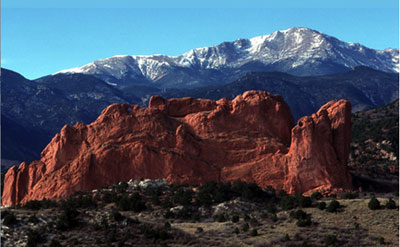
Southern Delivery System: Colorado Springs City Councillor Tom Gallagher wants Reclamation to redo the project EIS

A picture named sdspreferredalternative.jpg

From The Colorado Springs Gazette (Eileen Welsome):

In a 27-page letter sent last month to Interior Secretary Ken Salazar, Councilman Tom Gallagher, a longtime critic of the SDS project, asked that negotiations be suspended and the environmental review process be re-opened to address numerous questions. “It’s time to put the brakes on this and look at alternatives that don’t use Pueblo Reservoir,” he said Thursday…

In his July 7 letter, Gallagher argued that major events have occurred since the environmental review process was completed in 2009, including the abolishment of the stormwater enterprise by Colorado Springs voters and the imminent construction of another pipeline, the Arkansas Valley Conduit, which will be built to serve communities east of the Pueblo Reservoir in the Arkansas Valley.

CSU spokesperson Janet Rummel pointed to letters from the Environmental Protection Agency, the Army Corps of Engineers and U.S. Bureau of Reclamation stating that CSU will still be able to meet its commitment to protect water quality in Fountain Creek, despite the loss of the stormwater enterprise. The construction of the Arkansas Valley Conduit will not affect the storage space that SDS will need in Pueblo Reservoir, she added.

Michael Connor, head of the Bureau of Reclamation, rejected Gallagher’s request on Aug. 3, saying that the environmental review process was complete and that issues raised by Gallagher had been adequately addressed. He added, however, that Reclamation, an agency within the Interior Department, was continuing to monitor this “local and regionally significant” project.

Gallagher’s letter has drawn fire from Mayor Lionel Rivera, who penned his own letter to Salazar, telling him the dissident council member “does not represent the official position of the Colorado Springs City Council on the SDS project.”

More Southern Delivery System coverage here and here.

Southern Delivery System: Pueblo County commissioners make offer to settle Pueblo West lawsuit over facilities

A picture named sdspreferredalternative.jpg

From The Pueblo Chieftain (Chris Woodka):

The settlement agreement was worked out last month by attorneys for Pueblo County, Pueblo West and other water agencies as a way to settle a lawsuit brought by Pueblo West in District Court in April 2009.
In the lawsuit, Pueblo West claimed it would lose water over time if forced to comply with conditions in the county’s 1041 permit that would allow the Southern Delivery System to be built.

In the settlement agreement, the county, Colorado Springs Utilities and the Pueblo Board of Water Works would allow Pueblo West to maximize return flows down Wild Horse Creek through a pipeline return. In return, Pueblo West would shelve its plan for a pumpback into Lake Pueblo through a wash behind the golf course…

Commissioners acted on the resolution Monday to preserve both the Pueblo flow management program created under 2004 intergovernmental agreements and Pueblo West’s participation in the SDS, according to the resolution.

Pueblo West is expected to take up the agreement on Aug. 24, said Director Jerry Martin. “Conceptually, we’re on board with it, but we haven’t heard it at a public meeting,” Martin said. “The lawyers have been preparing it, since there are more parties involved than just Pueblo County and Pueblo West.”

Meanwhile not all property owners along the SDS right-of-way have signed agreements with Colorado Springs Utilities. Here’s a report from Chris Woodka writing for The Pueblo Chieftain. From the article:

The Maxwells were offered $2,100 by Colorado Springs Utilities for the easement on the back of the property, a sum they consider too small when thinking about the noise and dust construction will bring. The cleanup, upkeep and taxes on the property will still be their responsibility. “They don’t want to work with us,” Helen Maxwell said. “They think $2,100 is enough for us to suffer the inconvenience.”[…]

“My concern is that there is such a vacancy of property in Pueblo West that we’re going to lose value,” said Pam Williams, who doesn’t intend to sell the easement at the price she was offered and is now being told Colorado Springs City Council could begin condemnation procedures in September. The homeowners were sent letters saying they have until Wednesday to settle or risk legal action. They feel like they’ve been picked off, since Utilities rejected the Maxwell’s suggestion for a joint meeting.

[Darlene Garcia, land acquisition manager for Colorado Springs Utilities] said condemnation through eminent domain is a last resort, but will be used if settlements can’t be reached. “We have to make our construction schedule and that requires a clear right of way for the pipeline proposal,” Garcia said.

Southern Delivery System: Colorado Springs Mayor Lionel Rivera is pushing back against Councillor Tom Gallagher over the EIS for the project

A picture named puebloreservoir.jpg

From The Pueblo Chieftain (Chris Woodka):

Last week, Bureau of Reclamation Commissioner Michael Connor responded to a 27-page letter from Colorado Springs City Councilman Tom Gallagher to Secretary of Interior Ken Salazar challenging Reclamation’s evaluation of SDS and claiming that MWH, the engineering firm hired to complete an environmental impact statement, had a conflict of interest. Gallagher asked Salazar to suspend negotiations and reopen the EIS…

Meanwhile, Colorado Springs Mayor Lionel Rivera wrote [U.S. Representative John Salazar] to say the other eight members of the city council want to see a contract awarded so that construction can begin and the project come on line by 2016. “We strongly disagree with Mr. Gallagher’s assertions that SDS requires additional analysis through the National Environmental Policy Act,” Rivera said. “The project has been the subject of analysis for more than a decade, including a comprehensive 5-year review process for the EIS which cost our community $17 million.”[…]

Gallagher said the EIS does not take into account changes in the project that have taken place since Reclamation issued its record of decision in March 2009…

Rivera staunchly defends Reclamation’s process in completing the study. “The SDS alignment originating from Pueblo Reservoir was deemed the preferred alternative,” Rivera said, adding that the Colorado Springs City Council voted 8-1 on July 22, 2009, to implement the alternative with the goal of going online in 2016.

More Southern Delivery System coverage here.

Southern Delivery System: Colorado Springs Utilities lays out the conditions to share the pipeline facilities

Southern Delivery System map via Colorado Springs Utilities
>

From The Pueblo Chieftain (Chris Woodka):

Colorado Springs Utilities’ position is that new users would provide their own water and storage; meet all the environmental, land-use and federal contracting requirements, and not impede Colorado Springs Utilities water operations and must provide a financial benefit to our customers. Colorado Springs City Council would have to individually approve each application.

In May, the Colorado Springs City Council, sitting as the Utilities Board, agreed to change its policy to allow more flexibility to offer water-related services to other water providers in the region. That ended a long-standing policy that limited water service to the city’s boundaries other than for emergencies or special circumstances and opens new questions about how SDS could be used. The road map for the change was drawn after months of deliberation by the Utilities Policy Advisory Committee, which authored a white paper on regional water delivery in April. During presentations, Colorado Springs made it clear there would be additional capacity in the SDS pipeline to bring water to other communities. At one meeting, Wayne Vanderschuere, Colorado Springs Utilities Water Resources Manager, said there would be available space in the 50-mile pipeline from Pueblo Dam to El Paso County during the winter months, and that off-season pumping would be a way to even out flows and allow full use of the pipeline…

Colorado Springs has not solicited participation, but there has been interest as communities acquire water rights in the Arkansas Valley. The Pikes Peak Regional Water Authority and El Paso County Water Authority provided input for the white paper. Among communities not in SDS that have water rights purchases or pending contracts in the Arkansas Valley are Donala, Widefield and Woodmoor water districts…

The report also reveals that Colorado Springs would need new sources to meet population projections beginning in the 2040 decade. Those sources could include new purchases of water rights, sales of water through lease agreements with the Super Ditch or other entities, physical reuse or other options, Vanderschuere said…

Regional water service would provide financial relief for Colorado Springs’ ratepayers and open the door for other regional water cooperation, such as the lingering issue of stormwater control, the report states.

More coverage from Chris Woodka writing for The Pueblo Chieftain. From the article:

he Bureau of Reclamation has received 19 comments on the Southern Delivery System since negotiations with Colorado Springs began in May. The number contrasts sharply with the nearly 400 comments received in 2008 while Reclamation was preparing an environmental impact statement, and the comments are divided between support or criticism of the project. Only three people have spoken during public comment periods during the negotiations: Marilyn June of Pueblo, Pueblo Chieftain Assistant Publisher Jane Rawlings and Walter Lawson, a Colorado Springs resident.

More Southern Delivery System coverage here and here.