Southern Delivery System: Colorado Springs City Councilman Tom Gallagher wants Reclamation to start over with project EIS

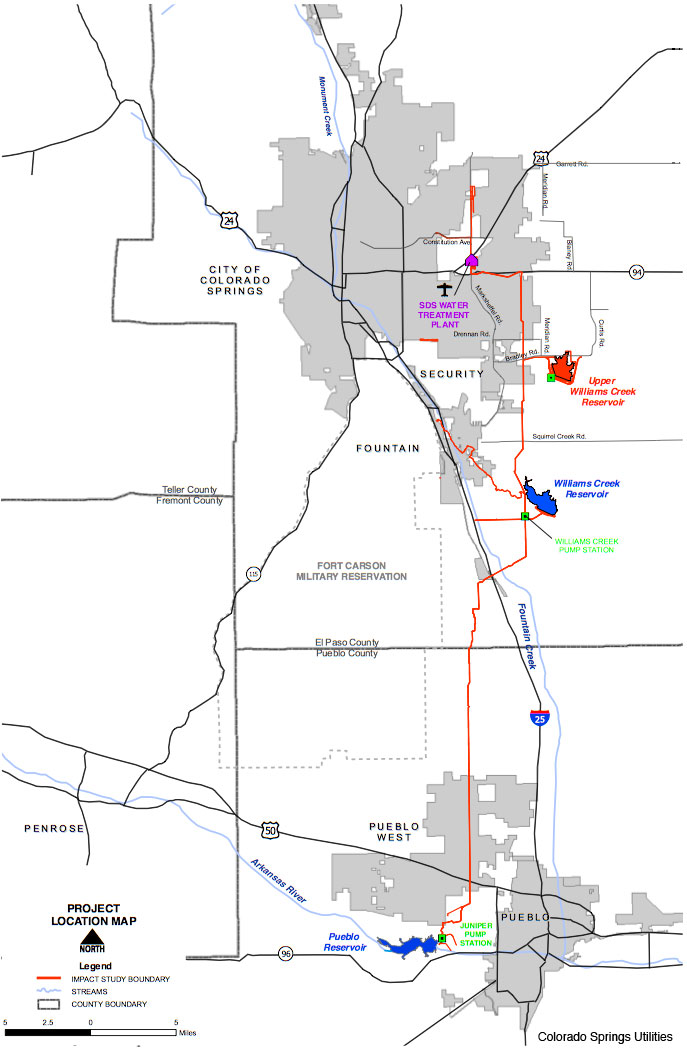
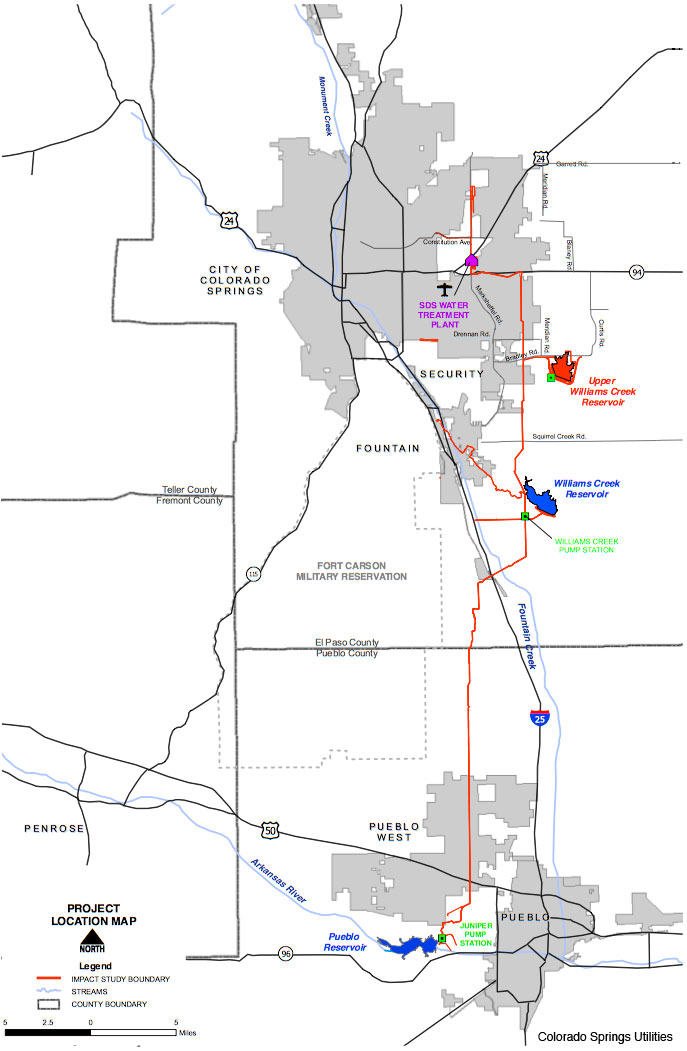
A picture named sdspreferredalternative

From The Pueblo Chieftain (Chris Woodka):

[Tom Gallagher] is charging that there was a conflict of interest in developing the environmental impact statement, that concerns brought up in the EIS process were ignored and that Reclamation would ignore its own policies if it allows SDS storage in Lake Pueblo…

“I ask you on behalf of myself and my constituents to suspend the current SDS contract negotiations and reopen the SDS National Environmental Policy Act process so that these and other questions can be asked and directly answered,” Gallagher concludes at the end of a 27-page letter he wrote last month to Secretary of Interior Ken Salazar. “If the NEPA process for the SDS proposal has been conducted objectively (rather than as an exercise in engineered outcome), it should be able to withstand the added scrutiny.”[…]

Reclamation Commissioner Michael Connor answered the letter this week by defending the EIS and declining to reopen the NEPA process. “Reclamation believes the NEPA process used during preparation of the SDS Project (final) EIS was analytically and procedurally complete,” Connor wrote. “Your letter states numerous conditions which you believe trigger a need to revise or supplement the FEIS. The issues you raise have been previously considered and responded to by Reclamation.”

Gallagher disagrees, saying concerns he presented at public meetings on the EIS were never answered. In his letter, he adds new issues that have arisen in the last year. Chief among those is the dissolution of the stormwater enterprise by Colorado Springs voters in 2009, which was also brought up by state Rep. Sal Pace, D-Pueblo, in a letter to Reclamation, the Environmental Protection Agency and the Army Corps of Engineers earlier this year. It was assumed in the EIS that the stormwater enterprise would be in place to help address negative impacts from the EIS, Gallagher said.

The EIS also ignored the Arkansas Valley Conduit as a reasonably foreseeable project, even though it is part of the Fryingpan-Arkansas Project, Gallagher said. The conduit this year received funding for the first time, and its storage space in Lake Pueblo, guaranteed under operating principles of the Southeastern Colorado Water Conservancy District, could affect the availability of future storage for SDS, Gallagher said.

Gallagher asserts that the use of MWH, and principal partner Bill Van Derveer, as primary contractor for the EIS was a conflict of interest because the engineering firm at the same time received $5 million in payments for design work related to the Lower Fountain Valley Wastewater Treatment Facility, which has been shelved for now but which was at the time a component of the SDS preferred action. MWH also was hired this year by Colorado Springs to manage construction of the SDS project.
More Southern Delivery System coverage here and here.

Southern Delivery System: Lake Pueblo storage and conveyance contract negotions between Colorado Springs Utilities and Reclamtion to resume on August 24

A picture named sdspreferredalternative

From The Pueblo Chieftain (Chris Woodka):

The Bureau of Reclamation Thursday announced the next session of negotiations with Colorado Springs will begin at 9 a.m. Aug. 24 at the Pueblo Shrine Club, 1501 West McCulloch Blvd., Pueblo West. Colorado Springs is negotiating contracts with Reclamation for SDS for storage and conveyance of water on behalf of its partners, Fountain, Security and Pueblo West. Colorado Springs also wants a contract for a paper trade exchange of water between Lake Pueblo and Twin Lakes. As part of the deal, Fountain and Colorado Springs would exchange space in the existing Fountain Valley pipeline…

Colorado Springs is seeking 20,000 acre-feet of storage in Lake Pueblo in 2011, and would increase it to 28,000 acre-feet over the next 10 years. Pueblo West wants 10,000 acre-feet; Security, 2,500 acre-feet; and Fountain, 1,500 acre-feet. Colorado Springs also wants an annual contract for a paper trade of up to 10,000 acre-feet annually, which would trade water it stores in Lake Pueblo for Fryingpan-Arkansas Project water in Twin Lakes. Colorado Springs can pump water from Twin Lakes through the Otero Pumping Station, part of the Homestake Project it shares with Aurora.

In a related matter Thursday, Colorado Springs Project Director John Fredell and Project Manager Keith Riley presented an update on dredging costs for Fountain Creek to the Pueblo County commissioners as part of the compliance process for the county’s 1041 permit for SDS. Costs ranged from $500,000 to $1.3 million.

More Southern Delivery System coverage here and here.

Southern Delivery System: Pueblo County plans to hold Colorado Springs Utilities to the requirement not to use SDS to move water out of basin

A picture named sdspreferredalternative

From The Pueblo Chieftain:

“Any use of SDS to take water out of the basin is a violation of their 1041 permit,” County Commissioner Jeff Chostner said Wednesday…

Chostner was referring to news reports that Colorado Springs may sell excess space in the SDS pipeline to other users, including the Woodmoor Water and Sanitation District in northern El Paso County. “Any uses of SDS water to supply Woodmoor would be a violation of Colorado Springs’ permit,” Chostner said, noting that such a violation would be grounds for the county revoking the SDS permit. The reason for concern is that part of Woodmoor, an upscale housing development near the El Paso-Douglas County line, is outside the Arkansas basin. But in applying for its land-use permit to take water out of Lake Pueblo and through Pueblo West, Colorado Springs pledged not to use SDS to deliver water outside this basin.

More Southern Delivery System coverage here and here.

Southern Delivery System: Colorado Springs Utilities presents Reclamation with a counter-proposal in the ongoing negotiations for a an excess capacity storage contract

A picture named sdspreferredalternative

From The Pueblo Chieftain (Chris Woodka):

Colorado Springs backed into a proposed figure of $25.31 per acre-foot annually beginning in 2011. Eventually, the SDS partners would like to store 42,000 acre-feet of water in Lake Pueblo in excess-capacity space — capacity in Lake Pueblo that is not needed for storing Fryingpan-Arkansas Project water. The move came after Michael Collins, Reclamation’s area manager, asked Colorado Springs for a counter-proposal based on a market approach in a Thursday negotiating session at the Fountain Valley School.

His request had come at the end of a day of heated discussions where Reclamation would not respond to a proposal by Colorado Springs based strictly on cost of service. Collins and the rest of Reclamation’s team — federal attorney Chuck Cahoy and contract officer Lynette Smith — faced pointed questioning from SDS Project Director John Fredell and attorney David Robbins. Reclamation had dropped the rate from $50 per acre-foot to $41.56 per acre-foot annually at the end of Thursday’s session…

The proposal would resolve a dispute over control of excess-capacity in the first few hundred feet of pipeline, allowing Colorado Springs to recoup some of the cost, but making it part of the Fryingpan-Arkansas Project managed by Reclamation. Reclamation would apply the same rate to an exchange — really, a paper trade of water stored in Lake Pueblo for project water in upper reservoirs — of up to 10,000 acre-feet annually that Colorado Springs alone is requesting. Colorado Springs would pay for 1,000 acre-feet annually, but there is still disagreement about whether the city would be reimbursed if it did not use the exchange in any given year. “We appreciate receiving the proposal,” Collins said. “We’ll not give it consideration today, but withhold our decision until the next session.”

Here’s where things stood after Friday’s session according to a report from Daniel Chaćon writing for the The Colorado Springs Gazette. From the article:

…representatives from both sides said they were optimistic they could reach a deal. “It’s hard to predict how close we are, really, but I’m very encouraged by the negotiation process,” said Michael Collins, manager of the federal agency’s Eastern Colorado Area Office in Loveland. “We’ve had good sessions all the way along.”[…]

Before the end of today’s negotiation session – the fourth since May – Utilities proposed paying $25.31 per acre-foot, plus a 1.79 percent annual inflation fee. Collins said the federal agency would give the proposal “serious consideration” and provide a response at the next negotiation session, which has not yet been scheduled.

More coverage from Chris Woodka writing for The Pueblo Chieftain. From the article:

On Friday, Colorado Springs proposed building a 90-inch pipeline from the North Outlet Works to the point where the SDS pipeline would turn out to provide Pueblo West water, several hundred feet from the dam. SDS would use a maximum of 150 cubic feet per second in the pipeline, which would have a capacity of roughly four times that. “The SDS partners would use 25 percent,” John Fredell, SDS project director told Reclamation’s negotiating team. “The excess-capacity, you would control.”[…]

Reclamation Area Manager Michael Collins offered Colorado Springs a payment of $287,500 — Colorado Springs estimated $500,000; Reclamation, $75,000 — over three years to oversize the line to 90 inches to the point where SDS becomes a single-purpose project. “Future generations would say we were short-sighted if we did not do this,” Collins said. David Robbins, Colorado Springs attorney, argued that while the cost of using larger pipe is minimal, SDS participants should not bear the costs of building the $30 million North Outlet Works alone if others hook on in the future. “If third parties want to use it, they should be asked to pay the cost,” Robbins said. Friday’s proposal backed off that position. Under Colorado Springs’ calculations, the oversized portion of the pipeline would cost $23 million, but in negotiations reimbursement for only $5 million was requested…

Colorado Springs and Reclamation made progress toward a conveyance contract Friday that would be separate from the excess-capacity storage and exchange contracts that are being negotiated. Robbins suggested numerous changes in the contract language that did not substantially alter the substance of the deal. Reclamation backed off its original stance of charging for conveyance from Pueblo Dam, instead letting the SDS participants use the North Outlet Works they build at no additional charge.

More Southern Delivery System coverage here and here.

Colorado Springs: Peterson Air Force Base conservation efforts

A picture named watersprinkler

From the Colorado Springs Independent (Pam Zubeck):

The base pays $100,000 a month for water, according to this story. Hence, base officials recently began developing a system that will shut off sprinklers after it rains one-eighth of an inch. The base also hopes to switch its irrigation system to non-potable water after the pipeline project is completed.

More conservation coverage here.

Southern Delivery System: Reclamation raises the stakes $200 million

A picture named sdspreferredalternative

From The Colorado Springs Gazette (Eileen Welsome):

At issue are $200 million in potential additional costs that the federal government wants to impose on Utilities and its partners for storage and conveyance of water through Pueblo Reservoir. Utilities contends the costs are unfair and much higher than what other water providers, such as Pueblo, are charged. “We should be treated fairly and equitably,” said Utilities’ John Fredell, SDS project director.

Colorado Springs City Councilman and Utilities board member Sean Paige said the fees are outrageous. “The whole thing is appalling,” Paige said. “The Bureau of Reclamation isn’t there to squeeze every dollar that it can from the city through these negotiations. They’re supposed to be helping us to come to an equitable arrangement to manage this water project.”[…]

Fredell and his team will face off against Bureau of Reclamation officials in a two-day session scheduled to begin 9 a.m. Thursday at Fountain Valley School of Colorado. The negotiations are scheduled to resume 8 a.m. Friday at the same location. Like the previous two sessions, May 25 in Pueblo and June 15 in Colorado Springs, the public is invited. Although public negotiations are a little like showing your cards to opponents in a high-stakes poker game, it’s the policy of the bureau to conduct negotiations in public, said spokeswoman Kara Lamb.

More coverage from Chris Woodka writing for The Pueblo Chieftain. From the article:

The next round of negotiations will begin at 9 a.m. Thursday and continue at 8 a.m. Friday at the Fountain Valley School, 6155 Fountain Valley School Road, Colorado Springs. It will be held in the Bancroft Room of the campus library. The two sides ended far apart at the end of the last session in June. Reclamation’s offer calls for storage and conveyance for $75 an acre-foot and $50 per acre-foot for an annual exchange. An annual inflation factor of 3.08 percent is included.

The terms were called “unacceptable” by SDS Project Director John Fredell at the conclusion of the last session. Colorado Springs is asking for a storage and exchange fee of $17.35 per acre-foot, with no conveyance fee for the structure it wants to build, a North Outlet Works on the face of Pueblo Dam. Its inflation factor is 1.79 percent annually. Colorado Springs is negotiating on behalf of its SDS partners, Security, Fountain and Pueblo West.

More Southern Delivery System coverage here and here.

Southern Delivery System: Lake Pueblo storage negotiations with Reclamation update

A picture named sdspreferredalternative

From The Pueblo Chieftain (Chris Woodka):

Colorado Springs, in the current negotiations with the Bureau of Reclamation for its proposed Southern Delivery System, argues that it would be fair to be granted the same rate Pueblo has for storage in Lake Pueblo, and to not pay an annual fee for conveyance.

Pueblo’s rate and payment arrangements were determined under different circumstances and for different reasons during negotiations in 2000. Pueblo received a 25-year contract to store nonproject water in Lake Pueblo in 2000 for a fixed price of $17.35 per acre-foot. The contract began at 3,000 acre-feet, and increases to 15,000 acre-feet by 2025. At the same time, it agreed to pay its share, 77.58 percent, for construction of the South Outlet Works and Delivery Manifold over a 25-year contract at 3.046 percent — about $169,000 annually, or $4.2 million over time.

Reclamation offered Colorado Springs storage and conveyance for $75 an acre-foot and an exchange contract for $50 per acre-foot, a deal termed “unacceptable” by SDS Project Director John Fredell at the end of a June 15 negotiating session. Throughout the negotiations, Colorado Springs tried to hammer home the point that as part of the Southeastern Colorado Water Conservancy District, it should be entitled to the same terms Pueblo received in its 2000 contract. Colorado Springs also maintains it should not have to pay to use the North Outlet Works, which it intends to pay for and construct, along with its SDS partners — Security, Fountain and Pueblo West.

The North Outlet Works was bumped up in Colorado Springs planning in 2008, after it became apparent the connection on the south end of the dam, either through excess capacity or enlargement, would not be available. Colorado Springs wants the power to sell its own excess capacity in the new connection to help pay for it…

Colorado Springs already benefits from the Fry-Ark Project through the Fountain Valley Conduit, as well as arrangements made for the use of Twin Lakes and Turquoise Lake by the Homestake Project, which includes Aurora as a partner. Fountain Valley (Colorado Springs, Security, Widefield, Fountain, Stratmoor Hills) is entitled to 25 percent of the relatively cheap Fry-Ark allocations each year, as well as ample storage space for project water in Lake Pueblo. But Colorado Springs and its SDS partners want more. SDS is seeking to use excess-capacity space in Lake Pueblo that was never part of the Fry-Ark Project to accommodate growth, provide redundancy and fully use water rights obtained after the Fry-Ark Project began. Negotiations continue July 15 in Fountain.

Pueblo, on the other hand, received contracts for parts of the Fry-Ark Project that were envisioned as far back as 1960. At that time, Congress was getting close to passing the Fryingpan-Arkansas Project Act, and a large treatment plant was envisioned at the base of Pueblo Dam that would provide water for Pueblo and communities below…

Concurrently, Pueblo was improving its own system. In the 1950s, Pueblo’s two water companies, which served either the north or south side of the Arkansas River, merged. Both operated river intakes, which are still used occasionally. There also were wells at the honor farm. When Pueblo Dam was completed in the 1970s, the South Outlet Works was built with a capacity of about 359 cubic feet per second. In all the planning documents, 310 cfs were reserved for Pueblo and the Arkansas Valley Conduit, as part of the Fry-Ark Project. The final allocation gives Pueblo capacity of 278.5 cfs (180 million gallons per day); Fountain Valley, 30.6 cfs; Pueblo West, 18.94 cfs; and future Arkansas Valley Conduit, 30.94 cfs. Pueblo is nowhere near using that full capacity, while Fountain Valley and Pueblo West already occasionally hit the limits. Land was set aside on federal property for a filter plant that would eventually be built to serve Pueblo and the conduit. In addition, there was an understanding throughout the development of the Fry-Ark Project that Pueblo would receive consideration on 20,000 acre-feet of storage space, said Terry Book, deputy director of the Pueblo Board of Water Works. “When we did our negotiations, we looked at what the legislation said and documented the history and correspondence between the parties,” Book said. Those records show a clear trail back to 1967 of official correspondence between Reclamation, Pueblo water board and the Southeastern district that led up to the 2000 negotiations. Over that time, Pueblo constructed a new water treatment plant north of the Arkansas River in 1977, and completed a major upgrade of the plant in 2003. By about 1999, the water demand in Pueblo was sufficient to construct the pipeline from the South Outlet Works to the water treatment plant…

Since the Pueblo contract, Aurora — a city of 300,000 east of Denver that uses the Fry-Ark Project to move water out of the basin — was given a 40-year contract. Colorado Springs was successful in gaining Reclamation’s approval of a 40-year contract after the first SDS negotiating session in May.

More Southern Delivery System coverage here and here.

Southern Delivery System: The EPA and the U.S. Army Corps of Engineers are not planning a new EIS now that Colorado Springs’ stormwater enterprise is kaput

A picture named sdspreferredalternative

From The Pueblo Chieftain (Chris Woodka):

The Army Corps of Engineers and Environmental Protection Agency told state Rep. Sal Pace, D-Pueblo, that the EIS is sufficient and no further study for SDS is needed. Pace is disappointed with the response. “These federal agencies put no effort into their responses,” Pace said. Pace wrote to the federal agencies, including the Bureau of Reclamation, in April and requested additional environmental studies of how Fountain Creek will be protected without a stormwater enterprise…

Both the Corps and EPA said Colorado Springs has made commitments to protect water quality through Reclamation and Pueblo County 1041 processes. “The loss of the stormwater enterprise adds to Colorado Springs Utilities’ challenge in meeting relevant conditions of the various authorizations for SDS, but does not preclude it,” said Lt. Col. Kimberly Colloton, Corps district commander.

“EPA does not believe that the revocation of Colorado Springs’ stormwater enterprise in December 2009 affects these commitments made by the SDS participants to protect water quality,” said Larry Svoboda, NEPA compliance director for Region 8 of the EPA.

“They both sent one-page letters,” Pace said. “I was surprised how they didn’t address any of the numerous points I made. I would have expected a more thorough response from the agencies charged with protecting the waters of the nation and enforcing the National Environmental Policy Act.

More Southern Delivery System coverage here and here.

Southern Delivery System: Contract negotiations between Colorado Springs Utilities and Reclamation to continue Tuesday

A picture named sdspreferredalternative

From The Pueblo Chieftain (Chris Woodka):

Colorado Springs, Security and Fountain are seeking contracts for excess-capacity storage in Lake Pueblo and conveyance through the dam. Colorado Springs also wants a contract to exchange water, through a paper trade, from Pueblo to Turquoise or Twin Lakes.

More Southern Delivery System coverage here and here.

Southern Delivery System: What are the impacts from sharing project facilities with providers that were not included in the Reclamation evaluation?

A picture named sdspreferredalternative

From The Pueblo Chieftain (Chris Woodka):

…at contract negotiations last week, Colorado Springs worked very hard to insert provisions that would allow the use of excess capacity of SDS, partly to help pay for the expense. “We need to be clear that there are plans on the part of several SDS participants to serve others through the project,” Colorado Springs water attorney David Robbins told the Bureau of Reclamation at the negotiations in Pueblo. While Colorado Springs and its SDS partners intend to stay within the limit of taking a maximum of 78 million gallons of water a day from Lake Pueblo into El Paso County, more water could be wheeled through the pipeline than was envisioned in Reclamation’s environmental impact study. Colorado Springs wants to build in the ability to use the project for neighboring communities in El Paso County, asking for changes in Reclamation’s proposed contract to allow for “excess-capacity” users.

That point was raised two years ago by Pueblo County water attorney Ray Petros during the EIS comment period.

Petros pointed out environmental impacts were modeled on moving an average of 52,900 acre-feet of water delivered annually through the pipeline, with a firm yield of 42,400 acre-feet. That is only about 60 percent of the capacity of the pipeline and pumping stations to move 87,000 acre-feet per year. “Any approval should condition the use of the project on the use of only existing water rights without further environmental study and review,” Petros told Reclamation in June 2008. At the time, he also advised against allowing additional users on the pipeline. “The draft EIS does not consider the impacts associated with Colorado Springs supplying raw water or substantial amounts of treated water outside its city boundaries. Such water contracts could increase the amount of water projected to be delivered through the pipeline,” Petros said. “Additional taps to the pipeline could mean unplanned growth and impacts along the pipeline.”

Reclamation responded to Petros’ comments by saying the final EIS would have commitments that require Colorado Springs to stay within the limits modeled. “A commitment not to contract or operate the preferred alternative in a manner that differs substantively from that evaluated in the final EIS, except under emergency conditions, has been included,” Reclamation replied. “Because of this commitment only the water supplies analyzed in this final EIS could be delivered through SDS facilities without NEPA analysis.” Petros brought up the concerns again when Pueblo County’s hearings began for a 1041 permit in December 2008. Throughout the hearings, the concern never went away, and it led to a procedure to deal with new water rights added to SDS or third-party users. Under one condition, Pueblo County can reopen 1041 hearings if new water rights are added. Third-party contracts would require support for the Fountain Creek Watershed Flood Control and Greenway District, a commitment not to serve customers outside the Arkansas River basin, adoption of stormwater controls similar to the now-defunct stormwater enterprise in Colorado Springs, cooperation in the Pueblo flow program, participation in water-quality monitoring and support of studies for a flood control dams on Fountain Creek…

During last week’s negotiations, Reclamation asked Colorado Springs to provide an inventory of the water rights that were used to develop the EIS during discussions about excess capacity. In its statement of purpose and need for SDS, Colorado Springs said it was needed to meet future needs of participants, provide redundant systems and develop existing water rights. Nothing was mentioned about supplying the water needs of neighboring communities in the statement…

“If Colorado Springs Utilities doesn’t become the regional water supplier, someone else will step in and do it,” Tony Elia, chairman of the Utilities Policy Advisory Council, told Colorado Springs City Council last July, on the day it decided to delay SDS completion until 2016. The council pushed back SDS to provide breathing room for ratepayers, who nevertheless will be looking at a doubling in water rates by the time SDS is projected to go online.

More Southern Delivery System coverage here and here.

Southern Delivery System: Sierra club official pans environmental protections in proposed SDS contract with Reclamation

A picture named arkansasfountainconverge

From The Pueblo Chieftain (Chris Woodka):

“They appear to me to be very weak,” said Ross Vincent, president of the local Sierra Club chapter. “My impression is that they fall far short of the protection that is needed. The language is fuzzy and does not require much of anything.” The Sierra Club and the Rocky Mountain Environmental Labor Coalition have continued to question the Bureau of Reclamation’s environmental impact statement’s adequacy and to raise questions about the impact SDS will have on Fountain Creek…

The problem, as Vincent sees it, is that water-quality conditions spelled out in Reclamation’s proposed contract require a determination by the Colorado Department of Public HealthandEnvironment that SDS is causing “significant adverse effects” before any action is taken. The requirements talk about “elevated concentrations” of selenium, E. coli and sulfates attributed to SDS. “What triggers it?” Vincent said. “We all know there are elevated concentrations now, so any increase at all would be a violation. My guess is the CDPHE would not reach a formal determination, so in effect there is no procedure.”

Vincent disagrees with Reclamation’s adaptive management plan as the way to handle unexpected changes in water quality or quantity due to SDS. “The Bureau of Reclamation is passing the buck to other agencies for its responsibility to protect water quality,” Vincent said.

More Southern Delivery System coverage here and here.

Colorado Springs Utilities board approves entering into water supply contracts with other area providers

A picture named denveraquifer

From The Tri-Lakes Tribune (Nicole Chillino):

After discussing the policy change for about a year-and-a-half, the utilities board approved an agreement that permits the utilities provider to, with approval, enter into contracts with other water purveyors to lease, store, treat and transport water through its system to entities, according to the May 19 agenda. The price for tapping into Colorado Springs’ system would be paid by the entity connecting to it and there would be a premium paid on top of the cost of providing the water. “The concept is any additional cost would be born by the entity that is causing that,” said Gary Bostrom, the utility provider’s water resource manager.

Donala Water and Sanitation District General Manager Dana Duthie attended the meeting at which the regional cooperation was approved as a representative of the Pikes Peak Regional Water Authority. He said the authority endorses the Utilities Policy Advisory Committee’s recommendations for the item. “We think it establishes a basis for collaboration that will definitely benefit everybody,” he said.

More Denver Basin Aquifer System coverage here and here.

Southern Delivery System: State Representative Sal Pace says that the effects on the project from the demise of Colorado Springs’ stormwater enterprise are still up in the air

A picture named arkansasfountainconverge

From The Pueblo Chieftain (Chris Woodka):

“The Bureau of Reclamation must not award any contract without first demanding that the stormwater enterprise be re-instituted,” state Rep. Sal Pace, D-Pueblo, said. “We in Pueblo must have that assurance before SDS is given a contract in Lake Pueblo.” In April, Pace called for a new environmental analysis of SDS in light of Colorado Springs City Council’s decision to abolish the stormwater enterprise last year. Pace was unable to attend the first negotiating session for SDS this week because of a family emergency, but said his stance has not changed. “If the stormwater enterprise was deemed so important in these environmental studies by Reclamation and Colorado Springs officials when promoting SDS, then there must be serious consequences upon its demise,” Pace wrote in the letter.

Colorado Springs attempted to head off controversy over the issue in the opening round of negotiations for federal SDS contracts, even though the issue wasn’t raised by the Bureau of Reclamation. “Colorado Springs’ stormwater-control measures for new development are totally independent from the stormwater enterprise and will remain unchanged,” SDS Project Director John Fredell said. Reclamation’s environmental impact statement concluded that SDS return flows would have a small impact on storm flows, Fredell said…

Pueblo County, in its comments on the environmental impact statement by attorney Ray Petros, told Reclamation additional environmental studies would be needed if Colorado Springs eliminated its stormwater enterprise. Reclamation answered Pueblo county’s concerns with the environmental impact statement by saying the stormwater enterprise appeared to be a reasonably foreseeable action, so was included as part of the cumulative effects analysis. “Implementation of the Colorado Springs stormwater enterprise has purposes that are independent of the SDS Project and is not considered a mitigation measure,” Reclamation stated in the reply.

More Southern Delivery System coverage here and here.

Southern Delivery System: Details of Colorado Springs Utilities’ plans for the Pueblo Dam north outlet works include others in the service area

A picture named sdspreferredalternative

From The Pueblo Chieftain (Chris Woodka):

Colorado Springs Utilities water attorney David Robbins took pains to explain that excess capacity in the North Outlet Works, pumping station and pipeline would be different than the concept currently used by Reclamation. “We need to be clear that there are plans on the part of several SDS participants to serve others through the project,” Robbins said.

In fact, contracts being sought by Colorado Springs, Security, Fountain and Pueblo West would use excess capacity of the Fryingpan-Arkansas Project in Lake Pueblo. Colorado Springs wants to apply the same concept to the North Outlet Works, which it would build at its own expense and deed to the Bureau of Reclamation. While a maximum of 96 million gallons a day could be diverted through the new structure Colorado Springs intends to build at the base of Pueblo Dam, not all of it would be needed immediately, and over time the full amount would not be needed every day. Of the capacity, up to 78 million gallons daily would go to El Paso County, and up to 18 million gallons daily to Pueblo West. Colorado Springs City Council has discussed the possibility of allowing El Paso County water users other than Security and Fountain to use the pipeline, but would stay within the 78 million gallon per day limit, Fredell said.

Colorado Springs also wants to build a pipeline from the dam to its connection with Pueblo West’s intake larger than it needs to be to serve the needs of SDS. During negotiations, Colorado Springs revealed it intends to recoup costs for building the North Outlet Works by selling the excess capacity for hydroelectric projects or future connections to the line. The first portion of the pipeline would be 90 inches in diameter, narrowing to 66 inches in diameter as it heads north through Pueblo West. Only about 25 percent of the maximum capacity would be used, said Keith Riley, SDS project manager. The cost for that part of SDS would be about $30 million. “It would be a multiuse pipeline with the potential for others to tie on,” Riley said. “The SDS participants wouldrecapture revenue from it.”[…]

Colorado Springs also asked for changes in the contract that would allow it to use water from any source, rather than just native Arkansas River flows as the contract originally stated. Fredell said water from any source could be used in the pipeline, and those uses might be for augmentation as well as municipal needs. Reclamation officials asked Colorado Springs to review all of the water rights that would be used in SDS at the next negotiating session to verify what was studied in the EIS.

More Southern Delivery System coverage here and here.

Southern Delivery System: Colorado Springs Utilities experiences sticker shock with Reclamation contract offer

A picture named puebloreservoir

From The Pueblo Chieftain (Chris Woodka):

“We are shocked by the starting point you have provided,” said John Fredell, SDS project director. “We believe that we should be treated fairly, equitably and similarly to the existing contract for the Pueblo Board of Water Works.”

After spending most of the day politely listening to Fredell pick apart Reclamation’s proposed contract to tailor it to the needs of Colorado Springs and its SDS partners, Area Manager Michael Collins proposed a menu of prices that led to an abrupt silence. Collins proposed $50 per acre-foot for storage, $50 per acre-foot for conveyance at the North Outlet Works and $50 per acre-foot for an exchange. There was also a 3.08 percent annual increase built into the fee structure.

hat provoked incredulity from Colorado Springs water attorney David Robbins. “Fifty dollars an acre-foot for a facility we build and turn over to you?” Robbins asked…

Fredell then presented Colorado Springs’ proposal: $17.35 per acre-foot for storage and exchange, with no charge other than maintenance and operation fees for the North Outlet Works. The annual increase would be 1.79 percent. “We’ve heard the numbers,” Collins replied. “We’ll wait to respond until the next negotiating session.”

Later, Fredell returned, asking Reclamation to reconsider the Colorado Springs proposal. “Our residents pay 70 percent of the ad valorem of the Southeastern district,” Fredell said. “We have nothing more to give you until you consider our proposal.”[…]

Colorado Springs is seeking a long-term contract to store 20,000 acre-feet of water — about what it stores now — in an excess-capacity account in Lake Pueblo for 2011, with 800 acre-feet added annually until a total of 28,000 acre-feet is reached. Reclamation is considering a request by Colorado Springs for a 40-year contract, even though the environmental impact statement was conducted through 2046. Its partners want long-term contracts as well: Pueblo West, 10,000 acre-feet; Security, 2,500 acre-feet; Fountain, 1,500 acre-feet. All have used similar one-year excess capacity contracts in the past. Under Colorado Springs’ banner, one conveyance contract for the North Outlet Works is being sought, with the SDS agreement among all four partners used to assure payments are made. Fredell requested the annual charge for the new facility be waived since Colorado Springs is building the new structure and plans to deed it to Reclamation. Colorado Springs is the only SDS partner seeking a 10,000 acre-foot exchange — a paper trade — to Twin Lakes from Lake Pueblo, which would allow it to move water through the Homestake Pipeline as well and would benefit Reclamation by removing the transit loss of 10 percent that occurs as the water flows down the Arkansas River…

Colorado Springs wants to pay what the Pueblo Board of Water Works is paying for its 25-year storage contract, $17.35 per acre-foot. The rate of inflation of 1.79 percent was the same as Reclamation negotiated for a 40-year project with Aurora in 2007, Fredell said. Reclamation now leases excess-capacity space in Lake Pueblo for $24 per acre-foot to members of the Southeastern Colorado Water Conservancy District, which includes all of the SDS participants. The Aurora contract is now at about $50 per acre-foot, for both storage and exchange. However, Aurora is not in the Southeastern district and is charged more. The city east of Denver uses Reclamation’s Fryingpan-Arkansas Project to move water out of the Arkansas Valley.

More Southern Delivery System coverage here and here.

Southern Delivery System: Contract negotiations between Colorado Springs Utilities and the Bureau of Reclamation for use of Fryingpan-Arkansas Project facilities start tomorrow

A picture named sdspreferredalternative

From The Pueblo Chieftain (Chris Woodka):

The Bureau of Reclamation will negotiate with Colorado Springs and its SDS partners beginning at 9 a.m. Tuesday in the third floor boardroom of the Sangre de Cristo Arts and Conference Center, 210 N. Santa Fe Ave. A second session is planned at Colorado College in Colorado Springs on June 15. The negotiations are open to the public, and there will be an opportunity for public comments at the meeting.

Colorado Springs, Fountain, Security and Pueblo West have applied for Bureau of Reclamation contracts to store, exchange and move water from Pueblo Dam. The pipeline could carry up to 78 million gallons per day to El Paso County, with capacity of 18 million gallons per day to Pueblo West…

According to the draft contract, Colorado Springs is requesting contracts for conveyance, long-term storage of 28,000 acre-feet of water in Lake Pueblo, and exchange of 10,000 acre-feet of water to Turquoise or Twin Lakes. No rates for any of the activities have been set, and should be the primary area of discussion during negotiations. The contract also specifies that SDS will be constructed by the participants at their sole expense.

More Southern Delivery System coverage here and here.

Southern Delivery System: Colorado Springs city council approves water rate hikes

A picture named pikespeak.jpg

From The Pueblo Chieftain (Chris Woodka):

Colorado Springs City Council voted 8-1 Tuesday to increase water rates 12 percent in 2011 and 2012, largely to pay for the costs of the Southern Delivery System. Councilman Tom Gallagher was the lone vote in opposition to the rate increase…

Colorado Springs Utilities officials say similar increases will be needed each year until the project is completed in 2016. That will double rates, which are now at the midpoint for cities on the Front Range. The increase also is needed for maintenance on an aging infrastructure, such as a break on the Homestake Pipeline last month when a boulder fell on it. The line is still being repaired. The rate increase will amount to about $5 per month each year for the average home in Colorado Springs

More coverage from Eileen Welsome writing for The Colorado Springs Gazette. From the article:

The city-owned utility plans to seek a 3 percent rate increase in 2017, no increase in 2018 and a 2 percent rate increase in 2019, the forecast shows. Utilities spokesman Dave Grossman emphasized that the proposed increases are based on assumptions that could change dramatically in coming years. “A dry or wet summer can change the amount of revenue by millions of dollars,” he said. The increases will come on top of six planned 12 percent rate hikes scheduled for 2011 through 2016. The six increases come after a 40.6 percent rate hike that went into effect in 2009 and a 6.2 percent increase that went into effect on Jan. 1. In sum, that means that water bills for CSU customers could more than triple from 2008 to 2019, with the typical residential bill going from $24.67 to $76.37. Utilities officials have said the bulk of the rate hikes will pay for SDS, while the rest will be used for repairs and upgrades on existing facilities.

More SDS coverage from Charlotte Burroughs writing for the Cañon City Daily Record. From the article:

The workshop provided information on the opportunities for businesses regarding work related to the new Southern Delivery System. “We’re really excited to be moving out of the permitting phase that we’ve been in for seven years and move into the implementation phase to get rolling with construction here,” said SDS Project Director John Fredell. “That’s a huge step forward for the project.” He stressed there are real regional opportunities and benefits in terms of employment for the businesses in Fremont County. Available jobs include carpentry, civil contractors, job site trailers, electrical, equipment, insulation, gravel, landscaping, welding, truck drivers, rebar and more. “We’re already seeing that come to fruition,” Fredell said. “One of the first pieces of work we’re going to do is the dam connection to Pueblo Reservoir.”

Fredell estimated the major permits would be completed by the end of the year. It also has its record of decision from the Bureau of Land Reclamation and is nearing 30 percent of the initial components from the Army Corps of Engineering. “We only need about 100 permits to actually build everything for the projects,” Fredell said. But the company also needs to attain about 300 land acquisitions before it begins construction. “We’ll be ready to start up in 2015 or 2016,” he said. “In 2010, we plan to complete the dam connection. We also have to put in some pipe on the other end of the pipeline at Mark Sheffield Road.”[…]

SDS will be completed in two phases, which include the Juniper Valley, Williams Creek and Bradley pump stations then 62 miles of underground pipeline and a water treatment plant, which initially will treat 50 million gallons and then be expandable to more than 100 million gallons. “The first piece of the dam will connect to the north outlet works, which will begin later this summer or early fall,” Fredell said…

Phase 2 is roughly between 2020 and 2025, which will expand the pump stations, the water treatment plant and building Williams Creek Reservoir and Upper Williams Creek Reservoir. “We won’t build phase 2 all at once,” Fredell said. “We’ll start with Upper Williams Creek first, expanding the treatment facility then Williams Creek last.”[…]

When asked how to bid on the projects, Fredell said it would post a general list of jobs to bid on every week. To stay in touch with the program, register for the e-newsletter or e-mail sdsinfo@csu.org or http://www.sdswater.org.

More Southern Delivery System coverage here and here.

Southern Delivery System: Cost update

A picture named sdspreferredalternative.jpg

From the Colorado Springs Independent (Pam Zubeck):

At the contractor meeting, Utilities CEO Jerry Forte and Colorado Springs Mayor Lionel Rivera call SDS’ pipeline, pump stations and water treatment plant a shot in the arm for the local economy, one that will grease the way for growth. “There is no question this is the most important project in the region,” Rivera says. He and Utilities officials dangle $550 million in construction projects in front of the hungry contractors. They note that during the six-year construction period, up to 700 workers (at peak employment in 2014) will share in a $160 million payroll.

What they don’t say is how much it will cost all of us. Estimates for Phase 1, which includes construction of the pipeline, pump stations, dam hookup and a water treatment plant, have changed through the years due to inflation and growing construction costs, Utilities officials explain. The estimate has gone from $490 million in 2002 to $631 million in 2007 to $880 million in 2009. After the city’s partners — Fountain, Security and Pueblo West — pay their shares, Utilities’ cost now will be $838 million. But wait. Inflation will add another $140 million during the construction period, according to Utilities, as estimated using the Construction Cost Index, an industry standard for project pricing. And then there’s borrowing costs spanning 40 years of $1.33 billion, for a grand total of $2.3 billion.

And that doesn’t include Phase 2, which would expand the treatment plant and pumping capability and build two reservoirs. Those components are now termed “not essential” — however, $22 million to buy land for the reservoirs is included in Phase 1, so the reservoirs apparently are essential. In fact, Phase 2 gives the project its biggest selling point: redundancy.

In a 2008 permit application submitted to Pueblo County, Utilities wrote, “The SDS project will allow the Applicant [Utilities] to develop water storage, delivery, and treatment capacity to provide critical system redundancy.” But Phase 1 includes no water storage facility. Phase 2, to be built from 2020 to 2025 at the earliest, would range from $387 million to $744 million, not including financing costs. “It’s so far out in the future, you’re fooling yourself if you say you have a grasp on it,” Utilities chief water services officer Bruce McCormick says. He notes too many unknowns — reservoir size, dam type, treatment regulations — preclude a more exact estimate. And with a slow economy, Phase 2 could move “way, way out” into the future.

Councilor Tom Gallagher says ratepayers haven’t seen the half of it, because considerable costs, starting with power, aren’t included in the SDS estimates. “I’m not opposed to bringing the water to this community,” he says. “It just needs to be done in a way we can afford. … We are following the defense contractor model, which produces $2,000 hammers, $10,000 toilet seats and $18,000 coffee pots.”

More Southern Delivery System coverage here and here.

Southern Delivery System: Colorado Springs city council approves water rate hikes

A picture named sdspreferredalternative.jpg

From The Colorado Springs Gazette (Eileen Welsome):

“We recognize the sacrifice that our citizen-owners are making, but we also recognize that SDS is the very best cost alternative for our future,” he said in a brief interview after the vote.

Councilor Tom Gallagher and several witnesses who spoke during the hearing urged councilmembers to postpone a vote until further information could be obtained.

But William Cherrier, the utility’s chief planning and finance officer, told council members that up to $49 million — or $1 million a year — could be saved over the life of the project if the utility was able to take advantage now of historically low interest rates and special bonds available through the American Reinvestment and Recovery Act.

More coverage from KKTV.com. From the article:

At Tuesday’s city council meeting, Tom Gallagher was the only vote in opposition to the hike. He asked council to postpone the vote to do more research on the project. “There will be no second chance and I believe we have just gone down a road that future generations will look back and curse this council,” said Gallagher.

More coverage from Fox21 (Rachel Welte). From the article:

“I think it is the right thing to do for our community, it is going to secure our water supply for at least 40 years,” Mayor Lionel Rivera said. Mayor Rivera said the city has done numerous studies dating back to 1997 on the project. He said in the long run it is going to benefit more than just the residents of Colorado Springs. “We are going to be developing regional partnerships to provide water for some of our neighbors who rely on ground water,” Rivera said.

More Southern Delivery System coverage here and here.

Donala Water and Sanitation District’s special election recap

A picture named denveraquifer.jpg

From The Tri-Lakes Tribune (Nicole Chillino):

Voters approved a measure to allow the district to expand its debt by up to $20 million, with about 67 percent of votes, or 1020 out of 1515, being cast in favor of the measure. The district also received permission to increase the district’s mill levy up to five mills, with nearly 73 percent of votes, or 1098 out of 1508, supporting the ballot question. Approximately 33 percent of the district’s residents participated in the election, according to general manager Dana Duthie. “The number of voters is phenomenal,” he said…

Now that the measures have passed, the district is waiting on a decision from Colorado Springs Utilities regarding whether to relax its limitations and city code to allow it to engage in regional partnerships, Duthie said. If the change comes through, Donala hopes it will allow the district to hookup to the utility district to move water from the Arkansas River, its access point to the water rights it purchased on Mount Massive Ranch near Leadville.

The district’s future actions with regard to its potential use of at least a portion of the money approved by voters will also partially depend on whether it can get water from the Flaming Gorge Reservoir, Duthie said. While the district might have to wait for either of its potential uses of the money, it wanted to receive voter approval to increase its debt and increase its mill rate prior to the passage of several pieces of legislation coming down the pipe that, according to Duthie, would curtail the financing of infrastructure for small districts like Donala. Donala Water and Sanitation District also elected three members, including William Nance, David Powell and incumbent Timothy Murphy, to its board of directors for four-year terms.

More infrastructure coverage here.

Southern Delivery System: Contractors meet with the project management team

A picture named sdspreferredalternative.jpg

From The Pueblo Chieftain (Chris Woodka):

SDS will provide an average of 380 jobs annually, with a peak of 700 jobs in 2014, said Dan Higgins, construction manager for Colorado Springs Utilities. “Utilities will not be doing the main hires, that will be done by the primes and subs,” Higgins told a crowd of about 60 local contractors.

The purpose of Monday’s workshop, along with one last week in Colorado Springs and another planned for Thursday in Canon City, is to guide contractors through a procurement process that can be daunting. SDS has been broken down into several project segments that will give local firms the opportunity to meet bonding requirements, rather than running the whole project under one large contractor. That also includes a wide array of jobs ranging from carpenters, landscapers, fencing, stucco and welding to sign-making, security and traffic control. Colorado Springs has hired MWH, the same engineering firm that completed the Environmental Impact Statement, to manage construction, but is keeping CH2MHill on board to bring design up to 30 percent levels…

“We’re really excited at this point to stop planning and permitting and begin constructing,” said John Fredell, SDS project manager. “This is truly a regional project, situated well for Pueblo and El Paso counties. The regional economic benefits are going to be huge.”[…]

A second phase of the project is planned to construct two reservoirs on Williams Creek, probably sometime after 2020.

More Southern Delivery System coverage here and here.

Colorado Springs: Council poised to raise water rates May 11

A picture named pikespeak.jpg

From The Colorado Springs Gazette (Eileen Welsome):

The rate hikes are the first of six planned increases through 2016, documents submitted to the City Clerk’s Office show. If approved, water bills will more than double.

More Southern Delivery System coverage here and here.

Southern Delivery System: Project costs now stand at $2.3 billion

A picture named sdspreferredalternative.jpg

From The Pueblo Chieftain (Chris Woodka):

Financing for the first phase of the Southern Delivery System will push costs for Colorado Springs to $2.3 billion, a financial analysis of the project reveals. The cost includes inflation over the next six years and financing for bonds, according to a memo to Colorado Springs City Council released this week…

The first phase of the project includes the North Outlet Works at Pueblo Dam, a 66-inch diameter pipeline 50 miles north, a treatment plant and additional water delivery lines in Colorado Springs. The total cost of that portion of the project is $880 million, of which Colorado Springs Utilities would pay $838 million. Its partners, Security, Fountain and Pueblo West also are paying into the project. Pueblo West is paying about $1 million to tap into the line from the North Outlet Works. Of the $880 million, $761 million is going for design and construction of SDS, while the remaining $119 million is accounted for by land, permitting and mitigation. Colorado Springs has budgeted an additional $10 million for the North Outlet Works, $22 million for land acquisition for the Upper Williams Creek Reservoir and $56 million for Pueblo County 1041 permit mitigation to cover changes in the project during the last two years.

Meanwhile State Representative Sal Pace is pushing on the project permitting agencies to reopen the applications in light of Colorado Springs’ voters dismantling of Colorado Springs stormwater enterprise fund. Here’s a report from Chris Woodka writing for The Pueblo Chieftain. From the article:

Rep. Sal Pace, D-Pueblo, last month asked three federal agencies to perform a supplemental evaluation of SDS because of the demise of Colorado Springs’ stormwater enterprise last year. The enterprise would have generated $17 million per year over the 40-year life of the project to deal with a $300 million backlog of stormwater projects, planning and new problems. Only a portion of the most critical projects were completed, Pace said.

The study that you have requested at this late stage will undoubtedly reach the same conclusions that have already been reached by the numerous permitting entities and will only serve to delay a project that is critically important to the communities of Colorado Springs, Security, Fountain and Pueblo West,” Bruce McCormick, chief of water services, replied in a letter this week…

Without written commitments to control stormwater, there would be no leverage to insist on the action when SDS is built, Pace implied. “History proves that without available stormwater funding, Colorado Springs, on its own, will not tax itself or fund stormwater projects to protect downstream landowners and communities on Fountain Creek,” Pace wrote. “Instead, Colorado Springs will effectively levy a tax on downstream residents in Pueblo County without their vote, and it will rely upon federal subsidies to undo the damage.”

McCormick responded that the controls are in place through Bureau of Reclamation and Pueblo County processes that have led to measures designed to improve Fountain Creek. Among those efforts are:

* Drainage control policies are still being studied by Colorado Springs and could be implemented regionally to contain flows throughout the watershed.

* Drainage basin studies already conducted by Colorado Springs have led to $20 million in projects that primarily benefit those downstream on Fountain Creek. Other identified projects would have more specific benefits within Colorado Springs.

* The new Fountain Creek Watershed Flood Control and Greenway District will receive a $50 million payment when SDS is completed, in addition to other projects Colorado Springs has agreed to complete.

Colorado Springs also plans to charge new development with the costs of managing stormwater flows so they do not increase the intensity of floods…

McCormick said the adaptive management plan, which Reclamation included as a way to manage stormwater flows in its evaluation of SDS, is sufficient to deal with the impacts directly associated with the project. “It is our firm belief and commitment that the measures put in place through the 1041 permit and (Reclamation’s) record of decision, as well as the numerous other agency permits and approvals, will adequately address the impacts of the SDS,” McCormick said. “We are doing our part to address regional water quality and quantity issues.”

More Southern Delivery System coverage here and here.

Southern Delivery System: SDS partners starting negotiations with Reclamation for excess capacity contracts in Lake Pueblo

A picture named sdspreferredalternative.jpg

From The Pueblo Chieftain (Chris Woodka):

The first negotiation session is planned for 9 a.m. May 25 in the third floor boardroom of the Helen T. White building at the Sangre de Cristo Arts and Conference Center, 210 N. Santa Fe. The second session is set for 9 a.m. June 15 in the Max Kade Theater in the Armstrong Building at Colorado College, 14 E. Cache La Poudre St., Colorado Springs. Colorado Springs and its SDS partners are asking the Bureau of Reclamation for federal excess-capacity contracts to store water, connect a pipeline to Pueblo Dam and to exchange water as part of SDS, a $1 billion-plus project that would build a pipeline through Pueblo and El Paso counties…

The hearings are open to the public, and will include public comments at the end of each negotiating session, said Kara Lamb, spokeswoman for Reclamation. “Written comments also may be submitted on the draft contract,” Lamb said…

Colorado Springs Utilities intends to begin construction later this year, and has identified ASI Constructors of Pueblo West as the lead contractor on building the North Outlet Works at Pueblo Dam. Utilities also hosted its first workshop for contractors Thursday in Colorado Springs. Other workshops are planned for 3:30 p.m. Monday at El Pueblo History Museum, 301 N. Union Ave., and 3:30 p.m. Thursday at the Fremont Campus of Pueblo Community College at 51320 W. U.S. 50, Canon City. The first phase of SDS will cost about $880 million, with $550 million going toward construction. The rest goes toward planning, legal and permit costs. An average of 380 workers is anticipated with a labor costs of $160 million by the time the project is completed in 2016. During that time, Colorado Springs ratepayers could see their rates double, if Colorado Springs City Council implements 12 percent rate increases Utilities is seeking.

From email from Reclamation (Kara Lamb):

The Bureau of Reclamation invites the public to attend two contract negotiation sessions on May 25 and June 15. Reclamation is negotiating with the cities of Colorado Springs and Fountain, the Security Water District, and the Pueblo West Metropolitan District for the proposed excess capacity contracts related to the Southern Delivery System Project. The first contract negotiation session will be held May 25 at the Sangre de Cristo Arts and Conference Center in the 3rd Floor Board Room at 210 N. Santa Fe Avenue in Pueblo, Colo. The second negotiation session will be held June 15 in the Max Kade Theater at Colorado College, 14 East Cache la Poudre Street in Colorado Springs, Colo. Each session will begin at 9 a.m. There will be a designated time in each session for public comments to be heard. Reclamation is also accepting written comments on the draft contract.

For more information, to obtain a copy of the draft contract, or to submit written comments, please contact Kara Lamb at (970) 962-4326 or klamb@usbr.gov.

More Southern Delivery System coverage here and here.

Southern Delivery System update

A picture named sdspreferredalternative.jpg

From The Pueblo Chieftain (Chris Woodka):

Colorado Springs City Council last week approved closing on one home and 24 easements in Pueblo West for more than $250,000. That was added to 18 properties at more than $750,000 earlier this year. Colorado Springs, as part of Pueblo County 1041 negotiations, agreed to use eminent domain only as a last resort…

Colorado Springs plans to begin building the $1 billion-plus SDS later this year, but must first begin contract negotiations with the Bureau of Reclamation. A date for negotiations has not been set. Pueblo West would benefit from SDS by tapping into the line near Pueblo Dam. A Pueblo West company, ASI Constructors, has been chosen to build the North Outlet Works as one of the initial SDS projects. A workshop for SDS contractors is planned for 3:30 to 6:30 p.m. Monday at El Pueblo History Museum, 301 N., Union Ave.

Meanwhile, Colorado Springs Utilities will have to raise rates 12% to pay for the pipeline and increasing maintenance costs. Here’s a report from Chris Woodka writing for The Pueblo Chieftain. From the article:

Colorado Springs City Council Tuesday will consider approving water rate hikes of 12 percent for 2011 and 2012. Similar increases are foreseen for 2013-16, according to testimony last week at a public hearing on the rate hikes. The hikes are needed not only to pay for the bonds to finance SDS, but increasing maintenance costs. In April, for instance, a boulder damaged part of the Homestake Pipeline that brings water to Colorado Springs from Twin Lakes. Currently, the residential water bill in Colorado Springs is near the average among Front Range utilities, about $37 per month. Cities on rivers, like Pueblo and Denver, have the lowest rates, while cities with complicated water systems like Aurora, Palmer Lake and Woodmoor, are at the upper end of the scale. If the 12 percent increases are approved, that would jump to about $41 a month in 2011 and $46 a month in 2012. If the 12 percent rate hikes continue through 2016, the Colorado Springs average would be about $71.

More Southern Delivery System coverage here and here.

Southern Delivery System: Colorado Springs Utilities pitches rate hike to city council

A picture named sdspreferredalternative.jpg

From The Colorado Springs Gazette (Eileen Welsome):

Colorado Springs Utilities presented a formal rate case to the City Council Tuesday, asking for two consecutive rate hikes of 12 percent each that would go into effect in 2011 and 2012 and would be used to begin construction on the $1.2 billion Southern Delivery System. Jerry Forte, chief executive officer of the municipal utility, said the pipeline is needed not only to ensure a water supply for future customers, but also to create hundreds of jobs. “It’ll be an economic boost to the region,” he said.

Meanwhile Colorado Springs Utilities is spreading the word about the jobs side of the project to El Paso, Pueblo and Fremont counties. Here’s a report from Pam Zubeck writing for the Colorado Springs Independent. From the article:

And Utilities wants contractors and businesses to know how to get a piece of the action, compliments of its ratepayers, which will see rates swell by 12 percent per year from 2011 through 2016. So, the city has set up workshops in El Paso, Pueblo and Fremont counties to spread information about how to bid on the massive pipeline project that will bring about 70 million gallons a day to Colorado Springs, increasing the city’s water supply by a third…

All meetings are from 3:30 to 6:30 p.m. Dates and locations:

Colorado Springs: May 6, Leon Young Service Center, 1521 Hancock Expressway, Pikes Peak Room

Pueblo: May 10, El Pueblo History Museum, 301 N. Union Ave.

Canon City: May 13, Pueblo Community College, Fremont Campus – 51320 W. Hwy 50

More Southern Delivery System coverage here and here.

Southern Delivery System: State Representative Sal Pace wants Reclamation, the U.S. Army Corps of Engineers and the Environmental Protection Agency to reevaluate project in light of Colorado Springs’ dissoulution of their stormwater enterprise

A picture named sdspreferredalternative.jpg

From The Pueblo Chieftain (Chris Woodka):

State Rep. Sal Pace, D-Pueblo, has asked the Bureau of Reclamation, Army Corps of Engineers and Environmental Protection Agency to develop supplemental environmental studies to determine the impact of SDS without the assumption that stormwater flows would be restricted to current conditions. “This had to happen before the process is closed,” Pace said, when asked about the timing of the letter.

In the letter, Pace uses a quote from Colorado Springs Mayor Lionel Rivera, which appeared in The Pueblo Chieftain in 2005 when the stormwater enterprise was created and again late last year after the stormwater enterprise was ended following interpretation of a ballot question in November: “We’re looking at a population of 900,000 in 35 years,” Rivera said. “If we’re not willing to address stormwater today, I don’t think it’s fair to ask others in the region to endorse the Southern Delivery System.”

More Southern Delivery System coverage here and here.

Southern Delivery System: Colorado Springs Utilities names some contractors

A picture named sdspreferredalternative.jpg

From The Pueblo Chieftain (Chris Woodka):

ASI Constructors of Pueblo West has been chosen as the primary contractor for the North Outlet Works connection to Pueblo Dam as part of the Southern Delivery System. The contract will be for roughly $6 million, but negotiations are still continuing, according to Colorado Springs Utilities. Other area subcontractors were also chosen, including High Country Pipeline of Fremont County, Transit Mix of Pueblo and Springs Fabrication and Rocky Mountain Crane Service of Colorado Springs…

Construction cannot begin until the Bureau of Reclamation approves a contract to use the dam for SDS. Pueblo Dam was constructed in the early 1970s as part of the Fryingpan-Arkansas Project and Colorado Springs must get approval to hook up to the dam and build a pumping station on federal property. Contracts also are needed for conveyance and exchange for Lake Pueblo in order for SDS construction to begin…

Once Colorado Springs obtains contracts, it would take about one year to complete the dam connection. [Lee Schermerhorn, vice president of ASI Constructors] said the first step in the project would be to use a crane on a barge and divers to install a bulkhead upstream of Pueblo Dam on the river outlet. Water would be diverted through another outlet on the face of the dam during construction. “That will provide extra safety to the workers in the tunnel during construction,” Schermerhorn said.

After that, a 30-foot cube of concrete would be installed upstream of the dam, where releases over the past 35 years have cut a deep pool by the face of the dam. Finally, a manifold that could direct flows to the river, the SDS pumping station and a future cross-connection to the joint use manifold would be built. “It’s a neat job,” Schermerhorn said.

More Southern Delivery System coverage here and here.

2010 Arkansas River Basin Water Forum recap

A picture named sdspreferredalternative.jpg

From The Pueblo Chieftain (Chris Woodka):

[Jay Winner, general manager of the Lower Arkansas Valley Water Conservancy District] defended the [Arkansas Valley Super Ditch] concept as the best way to keep water rights in the hands of farmers while allowing cities to meet future needs. Aurora is the only community outside the Arkansas River basin that has discussed lease possibilities with Super Ditch, he said. “It’s important to retain water rights in the Arkansas basin. The lease-fallowing program (Super Ditch) is only stop-gap, but it keeps water rights from being sold,” Winner said. “In 20 years, we don’t know what the world is going to look like. We’re trying to keep water in the valley. That goal has not changed.”

Winner also said moving the water to El Paso County water districts outside Colorado Springs could be accomplished in the short term by using the [Southern Delivery System] pipeline. Colorado Springs Utilities is wrapping up studies started last year to look at that possibility, said John Fredell, SDS project director.

In fact, a committee looking at changing Colorado Springs’ policy of not providing water outside city limits is finalizing its work today for possible action later this month by City Council, sitting as the utilities board. SDS also would serve Fountain, Security and Pueblo West. Colorado Springs already has carriage contracts with other communities, but opening SDS to more water providers could be a way for the Pikes Peak Regional Water Authority to accept deliveries from Super Ditch after SDS is completed in 2016. “They would have to go through their own NEPA (National Environmental Policy Act) process,” Fredell said…

Meanwhile, the High Line Canal is looking at the possibility of another pipeline heading north from Boone, said Dan Henrichs, High Line superintendent…A preliminary study of a pipeline in that general area last year by the Pikes Peak water group showed it too would cost more than $1 billion.

More Arkansas Basin coverage here.

Southern Delivery System: Fountain Creek Watershed Flood Control and Greenway Board approves project

A picture named sdspreferredalternative.jpg

From The Pueblo Chieftain (Chris Woodka):

The Fountain Creek Watershed Flood Control and Greenway District board voted unanimously to approve the $1.4 billion water delivery project, and to recommend approval to the El Paso County Commissioners, one of the final agencies that must approve the project before contract negotiations with the Bureau of Reclamation begin…

SDS requires contracts with Reclamation to use Fryingpan-Arkansas Project facilities. Reclamation approved the project in a record of decision last year, but has not set a date to begin contract talks. “We can begin contract negotiations without those approvals, but we can’t sign a contract until everything else is done,” said Kara Lamb, Reclamation public information officer.

The Fountain Creek board approval came with a couple of new conditions, approved by the board in January. Its approval signifies that the project is in compliance with the district’s visions and goals and serves the best interests of health safety and welfare in the district, according to the resolution passed by the board. The district includes all of Pueblo and El Paso counties.

On the advice of its technical advisory committee and citizens advisory group, the board requested detailed site development plans for the parts of the project that are in the Fountain Creek floodplain between Fountain and Pueblo. The district was given land-use authority in the corridor when the state Legislature created it last year. The district also requested that it be included in the integrated adaptive management plan, which is a requirement of Reclamation approval. The process reviews water quality and quantity issues periodically to determine if further mitigation is needed. The district also included Pueblo County’s permit condition that requires stormwater controls to ensure that SDS does not increase flooding potential beyond current conditions.

Meanwhile, Chris Woodka (The Pueblo Chieftain) sat down recently with Gary Barber, the interim director of the district, to look at what’s happened so far and what the board looks to do in the future. From the article:

The board has had eight months of intense on-the-job training, cooperating with Fountain to permit a new subdivision and recommending against locating a gravel mine near Pikes Peak International Raceway between Interstate 25 and Fountain Creek. The El Paso County Commissioners later approved the gravel pit, contrary to the recommendations of the district and its own planning commission. While all of the members of the district board are experienced public officials, they were in new territory, acting on the advice of attorneys from both counties.

Now, they have an administrator to work on some sticky issues. Barber has plunged into his role, and stresses the “interim” nature of it. Without more funding, the district itself could be interim, he told the board Friday at its monthly meeting. The district only has $100,000 funding this year and a like amount in 2011, thanks to an agreement with the Lower Arkansas Valley Water Conservancy District and Colorado Springs. It is also cooperating in a two-year, $400,000 effort with Lower Ark and Colorado Springs to complete a corridor master plan. Additionally, Colorado Springs is paying the district $300,000 over three years to study flood-control options on Fountain Creek.

The board also adopted a fee schedule for evaluating land-use proposals and agreed to administer Pueblo grants on Fountain Creek Friday…

The big payday for the district would come in 2016, when the Southern Delivery System is scheduled to be completed. Under Pueblo County’s 1041 agreement, the district would get $49.4 million more over five years from Colorado Springs…

Showing a map with three stars identifying two ongoing projects in Pueblo — a side retention at the North Side Walmart and the Fountain Creek confluence park — and Colorado Springs’ Clear Springs Ranch, Barber said more should be added. “I call it ‘the string of pearls offense.’ I would like to see a dozen projects up and down the creek,” Barber said. He told the board the next year should be spent planning the projects, and the district should launch them in 2011. Without other sources of funding in sight, 2012 could be the year to ask voters to chip in with a tax, he said.

Finally, the district is in line to manage $1 million in grants that Pueblo County garnered for Fountain Creek, according to a report from Chris Woodka writing for The Pueblo Chieftain. From the article:

“The city is not saying we can’t do these grants,” Scott Hobson, assistant city manager for community development, told the board. “We applied for these grants prior to the formation of the district. We would have partnered with the district.” The grants are for demonstration of a streamside sediment removal system, work toward creating a greenway park on Fountain Creek from Eighth Street to the Arkansas River confluence and for a side retention pond near the North Side Walmart. The district is in a better position to organize the projects, because the city is involved with other projects as well. The city would have to use contractors to coordinate the projects anyway, Hobson said. “It’s difficult for us to move forward aggressively,” he said.

Gary Barber, the interim executive director of the Fountain Creek district, said it is a natural fit for him to get involved with the active management of the Pueblo projects. “I’m going to do the job anyway, spend my time doing this,” Barber said, saying he has already attended about a half dozen planning meetings.

More Southern Delivery System coverage here and here.

Southern Delivery System: Colorado Springs weighing the synergies of allowing northern El Paso County water providers to use project for raw water transport

A picture named sdspreferredalternative.jpg

From the Colorado Springs Independent (Pam Zubeck):

All concerned say that cooperation would help water districts that rely on dwindling groundwater supplies, while stemming sharp rate hikes for Utilities’ customers in coming years. From now until 2016, when water is first delivered, rates will increase 12 percent a year. And that’s just for half the project; the other half, which includes a reservoir, will be built later. If other communities pay to piggy-back onto the pipeline, say some city officials, everybody wins. “That’s the whole goal, is to use that pipeline to its maximum capacity to reduce the impact of SDS on ratepayers,” Vice Mayor Larry Small says…

…recent analysis shows the SDS pipeline won’t be fully used year round, says Gary Bostrom, with Utilities’ water services division. Between November and April, when water demand is low, consumers will use 10 million to 20 million gallons a day from Pueblo Reservoir. That leaves plenty of room for more water to be pumped into storage, whether for pipeline customers or others, to be used during summer months, Bostrom says. “There is ample space in Southern Delivery for regional purposes,” he says…

Bostrom insists the city doesn’t intend to sell its water rights, only to deliver water for others. But even that might bring a squall of costs and red tape. First, city codes restrict water service to within the city limits or to subdivisions agreeing to be annexed. To accommodate outlying partnerships requires changes to the code, and perhaps the City Charter. Second, Pueblo Reservoir storage contracts are available only for those entities located within the Southeastern Colorado Water Conservancy District, a multi-county area that’s been taxed for years to build and maintain the reservoir. Some subdivisions interested in SDS don’t lie within the district, Utilities officials say. Then there’s return flows. Fountain Creek is subject to government protection against pollution and erosion. Lastly, the Bureau of Reclamation, which runs Pueblo Reservoir and permits water projects, might need a say-so about new partners’ plans, such as Petersen’s idea to enlarge Upper Williams Creek reservoir. That would take time and money. Colorado Springs’ arduous application process, which included a National Environmental Policy Act study, took nearly six years and cost $19 million. Bostrom says the city will try to recoup a portion of that from any future partners, and Utilities spokeswoman Janet Rummel says SDS construction costs also could become part of any partnership deal…

A fly in the ointment is a recent analysis showing that if [Colorado Springs’] 200 square miles are built out in 30 to 40 years, the city will need 17 million gallons more water than SDS can deliver. The city’s federal application predicted SDS would satisfy needs through 2046. That leads Wayne Vanderschuere with Utilities’ water services division to warn, “I would be concerned about making promises that we may not be able to keep.”

More Southern Delivery System coverage here and here.

Southern Delivery System: Colorado Springs Utilities briefs CDOW about potential fish and wildlife impacts

A picture named arkansasdarter.jpg

From The Pueblo Chieftain (Chris Woodka):

The draft plan was presented Thursday at a Colorado Wildlife Commission workshop. It includes aquatic wildlife research and monitoring throughout the life of SDS and working with the Division of Wildlife to improve habitat and expand fish stocking operations during the second phase of SDS, when reservoirs in El Paso County would be created. The plan also incorporates mitigation measures that have been included as conditions for other permits that would benefit wildlife.

Colorado Springs has been in discussions with Division of Wildlife staff for years in developing its fish and wildlife mitigation plan, said Tim Monahan, attorney for the state agency. In the past year, the details of the plan have been worked out and were presented to the public for the first time. During the next month, the plan will be finalized, and the public will have the opportunity to comment on it in the next month, Monahan said. Colorado Springs is asking the Colorado Wildlife Commission to approve the plan at its March meeting. The plan would then be referred to the Colorado Water Conservation Board and Gov. Bill Ritter for final approval, Monahan said…

The most important parts of the mitigation, in the state’s view, would be the impacts on the fishery at Lake Pueblo once Colorado Springs begins storing water in its proposed Upper Williams Creek reservoir, said Greg Gerlich, aquatic section manager for the DOW. “We spent a considerable amount of time looking at the littoral zone, the shallow water in Lake Pueblo,” Gerlich said. “Also the Upper Williams Creek reservoir would be highly productive as it comes on line.”[…]

A few examples:

– Wetlands are minimally affected because the original terminal site at Jimmy Camp Creek was scrapped in favor of Upper Williams Creek.
– Construction will be broken into segments that allow for wildlife corridors.
– A new district on Fountain Creek would get $50 million in funding from Colorado Springs, which could be used to improve habitat.
– Work at Clear Springs Ranch, south of Fountain, will create wetlands and improve river health.

In addition, there would be fishing and recreation activities at the Upper Williams Creek reservoir. Colorado Springs Utilities plans to post the draft plan on its SDS Web site today.

More Southern Delivery System coverage here and here.

Southern Delivery System: First phase to tally $800 million including $160 million payroll

A picture named sdspreferredalternative.jpg

From The Pueblo Chieftain (Chris Woodka):

The water pipeline project will employ an average of 380 workers per year through 2016 with the peak hiring anticipated to come in 2014 with an estimated 700 jobs, according to Colorado Springs Utilities. “As you can imagine, once construction begins this year, a project of this scope and magnitude will have a significant impact on local economies,” said John Fredell, SDS project manager for Colorado Springs Utilities.

Of the total, about $550 million will go for construction of the connection to Pueblo Dam, the 50-mile pipeline, three pump stations along the route and a treatment plant east of Colorado Springs. About $400 million of that will go for the El Paso County portion of the project and $150 million will go for the Pueblo County portion. The remaining $330 million will go for property acquisition, legal, engineering and permitting costs. The first phase is scheduled to be completed by 2016. Labor costs are estimated at $160 million. “We are committed to hiring as much local labor as possible,” Fredell said. “We expect average employment of 380 workers between 2010 and 2016 with a peak employment of 700 workers anticipated for 2014.”

More Southern Delivery System coverage here and here.

Colorado Springs’ sewer improvements as part of its commitment to Pueblo County in 2009 total $9 million

A picture named fountainpavementdrawing.jpg

From The Pueblo Chieftain (Chris Woodka):

The largest expenditure reported by Colorado Springs was $7.7 million to inspect and rehabilitate sanitary sewer pipes less than 10 inches in diameter. About 20.5 miles of pipe were repaired or rehabilitated under this year’s program.

Other expenditures included:

Repair of 131 manholes at a cost of $413,000.
Repair or enlargement of 3,741 feet of pipelines greater than 10 inches in diameter.

The inspections and repairs reduce the risk of sewer spills or overflows, the report states.

Meanwhile the Colorado Water Quality Control Commission is stirring up controversy with their plans to possibly list Fountain Creek as only seasonally impaired for E.coli and delist it for selenium, according to Chris Woodka writing for The Pueblo Chieftain. From the article:

If approved, that would remove some limits on effluent put into Fountain Creek and further harm water quality, say groups opposing the move. “Their position is that the waterway will always accept more effluent,” said Joe Santarella, attorney for the Rocky Mountain Environmental Labor Coalition and Sierra Club. “There is no incentive for dischargers to meet TMDL limits.”

TMDL — total maximum daily load — on any pollutant is a standard adapted under Section 303(d) of the federal Clean Water Act to ensure that levels in an impaired stream do not become worse. The state’s action would relax the need for sewer dischargers to meet such levels, Santarella said. “State regulation has rendered the 303(d) process meaningless,” he said.

Pueblo District Attorney Bill Thiebaut is joining the environmental groups in opposing the state Division of Water Quality Control recommendations on Fountain Creek.

The Water Quality Control Commission will have a hearing on recommendations on streams statewide beginning at 9:30 a.m. Monday at state Department of Public Health and Environment offices, 4300 Cherry Creek Drive South, Denver…

The data used to make the determination show that overall, Fountain Creek E. coli is just below year-round levels for E. coli impairment, but reaches double the acceptable level from May to October. After challenges to the methodology, the division revised the seasonal limits to January to October on the reach above Pueblo instead. “The WQCD fails to explain what would be accomplished by eliminating two months (November and December) from the current annual impairment listing. In fact, nothing beneficial would be accomplished. Instead, the WQCD’s proposal would only confuse the general public and pose a risk to public health,” John Barth, Thiebaut’s attorney, noted in comments to the commission.

Colorado Springs Utilities attorney Richard Griffith supports the initial state recommendations, arguing recreation is not likely to occur during the winter months. “Utilities supports the seasonal listing methodology because recreation is most likely to occur during the warmer months of the year and impairment evaluation of E. coli data limited to those months can reveal impairment which may not be evident when calculated on an annual basis,” Griffith said.

In its comments, the Environmental Protection Agency supports seasonal limits, but warned against increases of flow. “EPA believes that it would be unwise to allow any new or increased discharges outside of the seasonal window (whatever season that is determined to be) that would result in the attainment in the E. coli standard,” said Karl Hermann, of the Region 8 water quality unit…

The state also is ignoring a Colorado State University-Pueblo study of how living plants along Fountain Creek absorb pollutants because it is still in progress. That could be the crux of future water quality problems on Fountain Creek, Vincent said.

More Southern Delivery System coverage here and here. More Fountain Creek coverage here and here.

Gary Barber: ‘[SDS] infrastructure to deliver water needs to support a regional solution’

A picture named sdspreferredalternative.jpg

From The Pueblo Chieftain (Chris Woodka):

“The infrastructure to deliver water needs to support a regional solution and the funding must be equitable,” Gary Barber, chairman of the roundtable, said in comments accompanying an official report to the state. “Otherwise, the Arkansas Basin may not be able to meet the gap, and the consequences will be felt beyond the borders of El Paso County.”

The largest portion of a statewide gap in future water supply is 22,600 acre-feet needed to supply communities outside Colorado Springs in El Paso County, according to the needs assessment included in the report. About 40 percent of that will be new demand, while 60 percent is loss of existing water supplies as pumping increases in the Denver Basin aquifers. As roundtable president, Barber pushed for completion of the reports, “Projects and Methods to Meet the Needs of the Arkansas Basin.” The document includes consumptive and nonconsumptive needs studies and represents the consensus of the roundtable’s first four years of meetings. It also begins to rate the relative importance of projects in meeting the state “gap” in water supply identified in 2004 by the Colorado Water Conservation board. It places the highest priority on sustainable projects. The ideas included in the report are rated on three questions: Is it viable? Is it equitable? Is is bearable?…

Every member of the roundtable represents a constituency – special interests – and Barber’s are his clients in El Paso County, which include two water authorities whose members are hunting for future water supplies. Three of them have purchased ranches for water rights in the past three years, one is trying to buy rights on two valley canals and collectively, they unsuccessfully tried to buy control of the Bessemer Ditch in 2008…

Barber’s comments about SDS reflect years of frustration over including other areas of El Paso County besides Colorado Springs, Security and Fountain in the $1 billion-plus project. He has frequently been outspoken on the need for regionalism…

A study by the Pikes Peak Regional Water Authority concluded it would cost at least $1 billion to build its own pipeline from the lower Arkansas Valley…

Colorado Springs City Council, sitting as the utilities board, has discussed including other El Paso County users as customers of SDS and the possibility of using it as a regional delivery system. No formal decisions on that concept have been made, however.

More Southern Delivery System coverage here and here.

Pueblo West: Southern Delivery System route to cost the Springs’ $740,000 for six properties

A picture named sdspreferredalternative.jpg

From The Pueblo Chieftain (Chris Woodka):

An agenda item at today’s Colorado Springs City Council meeting would authorize Colorado Springs Utilities to close contracts on the six properties. Four homes and two vacant lots in Pueblo County are included in a list of 14 properties in a resolution to be presented to council today. The other eight properties are in El Paso County…

Colorado Springs indicated during the county hearings that it would work to obtain easements on most of the Pueblo West properties it crosses, but was forced to purchase some outright because of their location. The city also must reach agreement with rancher Gary Walker on the part of the 14-mile route that crosses his family’s land. The agreements reached represent a small part of the impact of SDS on Pueblo West. There are 26 homes touched by the route, and more than 500 properties within 500 feet of the construction, according to Pueblo County documents.

More Southern Delivery System coverage here and here.

Donala Water and Sanitation District meetings to discuss ‘water for the future’ January 13 and 14

A picture named denveraquifer.jpg

From The Tri-Lakes Tribune:

The Donala Water & Sanitation District, which serves the community of Gleneagle and surrounding developments, is holding two “town meetings” at 7 p.m. Jan. 13 and 14 at the Gleneagle Golf Club, 345 Mission Hill Way. The meetings will be the same both nights, allowing for as many constituents as possible to attend. The topic will be “water for the future,” and the plans that Donala has for bringing renewable water into the district. “We have been working on finding a renewable source of water to replace our depleting Denver Basin of aquifer supply for several years,” said Dana Duthie, Donala’s general manager. “We have kept our customers informed through newsletters, past town meetings and phone surveys. Now we have settled on what we believe is the solution — a connection to the distribution system of Colorado Springs Utilities.

More Denver Basin Aquifer System coverage here and here.

Fountain Creek: Colorado Springs’ stormwater efforts are under the magnifying glass

A picture named arkansasfountainconverge.jpg

From The Pueblo Chieftain (Chris Woodka):

In addition to paying the district $50 million and spending $75 million to fortify wastewater structures if SDS is built – conditions imposed by Pueblo County in its 1041 permit – Colorado Springs would be required to use an adaptive management program to monitor and evaluate changes on Fountain Creek over time. The program would be part of its federal contract with the Bureau of Reclamation. Colorado Springs has requested contract negotiations on behalf of its partners in Security, Fountain and Pueblo West, but no timetable has been set. No one can be certain of exactly what the program would require until SDS is built, however. “The (program) will allow changes to be tracked over time, judging whether these changes are likely caused by operation of the SDS project and addressing actual effects in a systematic manner,” the application states. “The combination of these two projectwide commitments ensures that there are data available to make informed decisions on the impacts of the SDS project, and that there is money available to address impacts to Fountain Creek different than those anticipated.”

In an interview this week, the district’s interim Director Gary Barber called the federal requirement a more powerful motivator to improve Fountain Creek than the defunct stormwater district…

The city has committed to dredging the channel of Fountain Creek through Pueblo to restore levees to 100-year flood capacity. It will also restore 4 miles of creek and wetlands at its Clear Springs Ranch south of Fountain and 3 miles near the Sand Creek confluence.

More Fountain Creek coverage here and here.

Fountain Creek: CWQCC weighing removing impairment status on two sections

A picture named fountaincreek.jpg

From The Pueblo Chieftain (Chris Woodka):

The Colorado Water Quality Control Commission will consider recommendations by the state Water Quality Control Division to remove impairment status on two sections of Fountain Creek for selenium and arsenic. The division also is recommending E. coli impairment designation only during summer months.

“We’re convinced that if the commission simply accepts the division’s proposed changes in the impairment rules – the likely path of least resistance for the commission – our collective efforts to achieve clean water in Fountain Creek will suffer a serious setback,” said Ross Vincent, of the Sangre de Cristo chapter of the Sierra Club. The Sierra Club and the Rocky Mountain Environmental Labor Coalition filed a joint pre-hearing statement Tuesday asking the commission not to remove the designations.

A similar statement opposing the changes was filed Wednesday by Pueblo District Attorney Bill Thiebaut, supporting the environmental group’s position and adding that there is no “statement of basis” for removing the stricter designations from Fountain Creek.

The impairment designation creates a higher standard for discharging treated effluent into Fountain Creek under Section 303(d) of the federal Clean Water Act. Currently, sewer plants in El Paso County are permitted to discharge nearly 100 million gallons per day into the Fountain Creek watershed – a number that could increase by 60 percent in the next 40 years.

More Fountain Creek coverage here and here.

Colorado Springs city council approves $1.11 billion budget for Colorado Springs Utilities

A picture named pikespeak.jpg

From the Colorado Springs Independent:

In approving Colorado Springs Utilities’ $1.11 billion budget, City Council this week allowed the city-owned agency to use water rate money to fund $75.8 million in projects over 10 years. The projects will satisfy regulations imposed on the Southern Delivery System pipeline that will bring water from Pueblo Reservoir. Money for those projects is included in the rate base starting in January, although roughly $64 million in work won’t begin until after 2010. The idea is to spread the cost over 10 years, rather than coming up with all the money now, says Councilman Randy Purvis, adding that amortizing payments spreads the cost to future ratepayers. Projects include dredging Fountain Creek, developing wetlands and erosion control. The largest sum, $49.7 million, comprises five annual cash payments to the Fountain Valley Watershed Flood Control and Greenway District formed this year to improve and preserve the corridor. The Utilities budget contains rate increases that will raise the typical residential bill by about $1.90 a month, which would have been larger but for reductions in gas charges due to falling fuel costs.

More Southern Delivery System coverage here.

Southern Delivery System: Colorado Springs Utilities submits application to Fountain Creek Watershed Flood Control and Greenway District

A picture named fountaincreekwatershed.jpg

From The Pueblo Chieftain (Chris Woodka):

“We’re very proud that we have reduced the wetlands impacts to one-quarter acre, and that we will add 12 new acres of wetlands on Clear Springs Ranch,” said Keith Riley, SDS planning and permit manager. “This is an environmentally responsible project. The citizens advisory committee of the district reviewed the proposal Friday. Last week, the technical advisory committee looked at the same presentation. The district board will consider it in January…

The Fountain Creek district has authority over part of the pipeline’s path where it crosses Fountain Creek and will make recommendations to El Paso County commissioners…

There have been discussions, however, that other El Paso County water users might use it to move water uphill from the Arkansas River. “Do you see it as a regional opportunity?” asked Jay Winner, general manager of the Lower Arkansas Valley Water Conservancy District and a representative from the Arkansas Basin Roundtable to the Interbasin Compact Committee. “Not beyond Monument Hill,” Riley quickly replied…

Ross Vincent of the Sierra Club asked about the adaptive management plan, which is mentioned in Reclamation’s environmental impact statement as a way to mitigate potential impacts on Fountain Creek. “That will be wrapped up in the contract negotiations,” Riley said. “It would be helpful to have that in hand,” Vincent said.

More coverage of Friday’s meeting from Chris Woodka writing for The Pueblo Chieftain. From the article:

Water quality and standards for development on Fountain Creek are important issues that cannot be abandoned, a committee dedicated to improvement of the creek told Southern Delivery System officials Friday. “The discussions have focused on water volume, but no one’s talking about water quality,” said Ross Vincent of the Sierra Club. “The demise of the stormwater enterprise re-raises the question.”[…]

Vincent also was concerned about the opportunity for public comment on Colorado Springs plans to dredge Fountain Creek through Pueblo. “Is there a public process for review?” Vincent asked Keith Riley, SDS planning and permit manager. Riley said SDS officials will be meeting with Dennis Maroney, Pueblo stormwater director, next week to review the dredging program. “We’ll be identifying high spots to determine where dredging will occur,” Riley said. “We want to be sure we’re doing the right project.” Pueblo has partnered with Colorado Springs, the Lower Arkansas Valley Water Conservancy District and various state and federal agencies to use a continuous flow dredging collector to remove bedload sediment from the channel through Pueblo. The project also will analyze the material being removed and consider alternative means of dredging the channel, Riley said.

Maroney had his own questions about whether the city would complete the drainage criteria manual now that the stormwater enterprise is ending. The manual would provide standards for new development in terms of impacts to Fountain Creek and its tributaries. Holding developers to those standards is part of Pueblo County conditions for SDS. “You need the drainage criteria manual,” Maroney said. “If you don’t have it, it’s like going bear hunting with a 30.06 and only having the ammunition for a .22.” Colorado Springs developer Kevin Walker, another member of the committee, said developers have a keen interest in seeing the manual developed and noted that Fountain already has bought into the concept of using it as a regional tool. “The development community and the building industry know that the manual has to be completed,” Walker said. “The political and business interests (of Colorado Springs) are obliged to get to the finish line.”[…]

…another $500,000 grant to develop a mini-dam, wetlands and detention pond near Pueblo’s North Side Kmart is part of this year’s Natural Resources Conservation Service budget, Jay Winner, general manager of the Lower Ark District, reported at the meeting. The project was first envisioned by Maroney following a flood of a nearby area and a breach of an old railroad berm as a way to siphon off flows in small floods. It was approved in the same package of federal legislation that will grant the Arkansas Valley Conduit $5 million this year.

More Fountain Creek coverage here and here.

Southern Delivery System: Colorado Springs Utilities pledges not to back down from stormwater commitments for Fountain Creek

A picture named fountaincreek.jpg

From The Pueblo Chieftain (Chris Woodka):

McCormick said Colorado Springs’ commitments on stormwater do not depend on the enterprise. Those commitments are contained within both the conditions of Pueblo County’s 1041 permit and the Bureau of Reclamation’s environmental impact statement. “We clearly have a stormwater commitment to SDS and we will maintain that,” McCormick said. “The EIS requires us to annually evaluate flows in Fountain Creek. If they exceed historic flows, we have to sit down with Reclamation to address that.” At the same time, there are other benefits to Fountain Creek f r o m SDS, he said. Those include $50 million that will be paid directly to the district after SDS is complete in 2016 and $75 million in continued improvements to the wastewater system, including stream crossing susceptible to flooding. McCormick said dredging the channel in Pueblo and wetlands enhancement projects are planned for 2010. “Fountain Creek is better off with SDS than without it,” McCormick said.

In other Fountain Creek news the Fountain Creek Watershed Flood Control and Greenway District has chosen an interim manager, according to Chris Woodka writing for The Pueblo Chieftain. From the article:

Gary Barber, who worked on a grant to fund the Fountain Creek Vision Task Force and helped craft legislation to form a district, was chosen as interim director of the Fountain Creek Watershed Flood Control and Greenway District.

Meanwhile here’s a recap of a study of selenium in Fountain Creek by Colorado State University – Pueblo, from Chris Woodka writing for The Pueblo Chieftain. From the article:

“Selenium is definitely in the water. It is definitely taken in by plants, and it increases as you go downstream,” said Del Nimmo, a biology research associate leading the study. “What was a surprise to us was the relationship between selenium and the hardness of water.”

Selenium, an element essential to life but toxic at elevated levels, is being evaluated by the Environmental Protection Agency. The EPA finding on selenium levels could lead to new state standards. While the standards could mean higher compliance levels for sewage discharge permits in the area, including Pueblo’s and all those along Fountain Creek, there could also be consequences to wildlife. Selenium was listed as a cause of wildlife death and deformity in the Kesterson Wildlife Refuge in the San Joaquin Valley in California, largely due to agricultural sources. Selenium in Fountain Creek and the Arkansas River have been identified in past studies by the U.S. Geological Survey and Colorado State University-Fort Collins.

The CSU-Pueblo study, however, is the first to establish a link between selenium and living organisms, in this case bryophytes, mossy plants that are exceptionally good at absorbing minerals from water. That’s important because the EPA criteria most likely will be based on levels in fish or bird tissues, rather than concentrations in the water…

The clearest trend was the accumulation of selenium in the water as it moves downstream. “While we cannot detect an impact on Fountain Creek, the Arkansas River flowing into John Martin Reservoir may cause loading systems to become toxic,” Nimmo said. “If the EPA criterion is based on tissue levels, we should have levels all along the river to John Martin.” John Martin Reservoir is home to two threatened and endangered bird species, the piping plover and least tern, said Scott Herrmann, a CSU-Pueblo biology professor.

Another part of the Fountain Creek study is looking at concentrations of selenium in fish tissue, but has not yet been completed, Herrmann said. “If we can find the money to do the (Arkansas River) bryophytes study, we can collect fish at the same time,” Herrmann said…

The Fountain Creek study is important for several reasons. It could serve in future state water quality ratings for stream segments in the watershed. That affects the discharge permits for water treatment plants. The study also could provide a baseline for monitoring the environmental impacts of the Southern Delivery System, which will provide more water to Colorado Springs, Fountain and Security, and increase discharges into Fountain Creek.

The life span of Colorado Springs’ stormwater enterprise is getting shorter. Here’s a report from Daniel Chaćon writing for The Colorado Springs Gazette. From the article:

A majority of the City Council now favors immediately eliminating the controversial city-owned agency that levies a fee to pay for drainage projects. City Councilman Bernie Herpin announced Monday he no longer supports a two-year phase-out, indicating there are now five votes on the nine-member panel to get rid of the enterprise at the end of this year.

More Southern Delivery System coverage here and here. More Fountain Creek coverage here and here.

Southern Delivery System: Colorado Springs Utilities requests Reclamation move forward on contract talks

A picture named sdspreferredalternative.jpg

From The Pueblo Chieftain (Chris Woodka):

“To maintain our current schedule to begin construction on the Pueblo Dam connection in early 2010, we have requested that Reclamation move forward with the contracting process as soon as possible,” said John Fredell, project director…

The contract negotiations will provide an additional opportunity for public comment on SDS, a $1 billion-plus pipeline project on track to be completed by 2016…

Colorado Springs Utilities also is seeking permits in El Paso County, and expects to present its case to the El Paso County Planning Commission in February, Fredell said. The city also has scheduled meetings with the Fountain Creek Watershed Flood Control and Greenway District, its technical advisory committee and its citizens advisory group during December and January.

More Southern Delivery System coverage here and here.

Colorado Springs: Which stormwater efforts will be funded now that the enterprise fund is kaput?

A picture named fountaincreekwatershed.jpg

From The Pueblo Chieftain (Chris Woodka):

a vote on Tuesday confirmed the [Colorado Springs city] council’s position to phase out the stormwater enterprise within two years. Unless another funding mechanism is found, Colorado Springs will absorb only the minimal funding for federal requirements, maintenance, health, safety and emergencies in its general fund beginning in 2012. Colorado Springs council adopted the new policy in response to Doug Bruce’s Issue 300, which implies the voters chose to end the stormwater enterprise, without actually saying so. Bruce campaigned for the issue as an end to what he and others called a “rain tax” and celebrated by tearing up his stormwater bill on television.

Council also agreed to include a $4.24 million-$6.7 million project to upgrade the Templeton Gap levee, which protects thousands of homes, was not on the critical projects list. In all, about $9 million of work on projects from the critical list are likely to be completed under the two-year phase-out.

Council members did not come up with an alternative for funding the remainder of critical projects on the list, although some talked about developing a regional approach with other El Paso County communities or putting a stormwater question on a future municipal ballot.

At the same time, Colorado Springs is planning on spending $46.2 million on SDS in the coming year, according to its published 2010 annual operating plan. The city has issued bonds for the project.

Colorado Springs also will spend almost more than $27 million for maintenance, repair, inspection and replacement of sanitary sewer lines in the city, including $7.5 million for ultraviolet treatment at its Las Vegas Street treatment plant, $7 million for sewer line upgrades and $6 million to fortify stream crossings, according to the operating plan. The city committed to spend at least $75 million in sanitary sewer upgrades, which are costs paid by customers and have nothing to do with the stormwater enterprise.

The city is obligated to make some of the repairs to its sanitary sewer system under state compliance orders, which are also a factor in a federal lawsuit won by the Sierra Club.

More stormwater coverage here.

Colorado Springs: City council approves dismantling of stormwater enterprise

A picture named fountaincreekwatershed.jpg

From The Pueblo Chieftain (Chris Woodka):

The phase-out [over two years] will give the city time to finish some projects already under way, allow it to repair a levee that protects thousands of homes and meet unfunded federal mandates. It will mean the city won’t be able to start several projects that are needed or to respond to citizen requests regarding stormwater. Colorado Springs also intends to fulfill its commitments on Fountain Creek related to Southern Delivery System despite ending the stormwater enterprise, and several on council voiced support for a regional solution in El Paso County that could include a vote to create a stormwater enterprise in the future. “The two-year phaseout will give us time to work on a regional solution, allow us to complete our projects and come up with a regional stormwater plan,” said Bernie Herpin, one of five council members supporting the phase-out…

The Templeton Gap Levee is the only Army Corps of Engineers levee in Colorado Springs, said stormwater director Ken Sampley. The levee, built in the late 1940s, needs between $4.24 million and $6.74 million in work to protect up to 3,000 homes and 300 businesses. If the work is not done, they would be required to obtain flood insurance.

Under the two-year phaseout, Templeton Gap will be completed, but more than 20 other projects won’t begin as scheduled. When the stormwater enterprise was created, there was a $300 million backlog in projects, with $60 million in critical needs. Sampley showed slides of bridge supports beginning to wash out and areas that were eroding because there has been only funding for piecemeal work…

In addition to Templeton Gap, there are $2.3 million of projects that have been started remaining in the pipeline, and four projects on Sand Creek totalling about $2.4 million. Sampley also recommended maintaining minimum funding for regulatory requirements, emergency operations, health and safety, which together total almost $5 million. By 2012, all those costs will be paid for from the general fund under the plan reviewed by council Monday…

The city also is prepared to meet its obligations of $125 million of spending on Fountain Creek through the financing of SDS, a $1 billion-plus water supply project that includes a pipeline from Pueblo Dam. Colorado Springs ratepayers will bear that expense. Colorado Springs also has included funds for improvements at Clear Springs Ranch south of Fountain and dredging the Fountain Creek channel in Pueblo as part of next year’s budget.

More coverage from The Colorado Springs Gazette (Daniel Chaćon):

A split Colorado Springs City Council decided Monday to phase out the enterprise over two years, allowing the city-owned business to finish projects under construction and also reconstruct a decades-old drainage channel that’s been deemed “minimally acceptable.” Council members Tom Gallagher, Darryl Glenn, Jan Martin and Randy Purvis called for an immediate end of the enterprise…

Enterprise Manager Ken Sampley said the council’s decision could hamper the enterprise’s ability to collect fees over the next two years, even from people who have been paying them. “I’d like to think that everybody paid them (in the past) because they were good citizens and wanted to pay their Stormwater Enterprise fee,” he said. “That may not be the case. I think it’s reasonable to believe that if there is no provision for certifying (delinquent accounts) to the treasurer, we will be collecting, definitely, a lower percentage.”[…]

The initiative requires an immediate end to the enterprise, said [Douglas Bruce sponsor of Issue 300 passed by Colorado Springs voters November 3], who is threatening to start a petition drive for a permanent property tax cut if the city doesn’t get rid of the enterprise right away. “I don’t make threats,” Bruce said Monday night. “I’m just advising them that there’s going to be adverse consequences if they don’t give the people what they want.”

More stormwater coverage here.

Southern Delivery System: Fountain Creek improvements still on tap despite Colorado Springs’ stormwater enterprise fund uncertainty

A picture named sdspreferredalternative.jpg

From The Pueblo Chieftain (Chris Woodka):

The stormwater enterprise, which is expected to be phased out over eight years after Colorado Springs voters passed Doug Bruce’s Issue 300 last week, was linked to the Bureau of Reclamation’s environmental impact statement. “We need to read the language carefully,” Bruce McCormick, Colorado Springs water chief, said Friday. “While the enterprise is losing funding over time, SDS is still going to be funded according to the commitments in the EIS.” If necessary, Colorado Springs would pay for those commitments through the rate structure associated with building the $1 billion-plus SDS project, McCormick said. The EIS, released earlier this year by Reclamation, says Colorado Springs is responsible for improving storm drainage in the city as it grows, so that it will not exacerbate problems associated with runoff into Fountain Creek – erosion, sedimentation and pollution…

In replies to concerns about the future of the enterprise, Reclamation responded that the actions promised by Colorado Springs are independent of the enterprise. The EIS talks about the purposes for forming the enterprise in 2005. Colorado Springs sought to address a 20-year backlog of $300 million in stormwater improvements and strengthen planning with $17 million annually in new revenues. Some of those improvements were tied to correcting conditions that led, in part, to more than 100 sanitary sewer spills between 1998 and 2005, which were cited in a federal lawsuit by the Sierra Club. Colorado Springs has promised Pueblo County it would make $75 million in improvements to fortify its sanitary sewer system, pay $50 million to the Fountain Creek Watershed Flood Control and Greenway District and make other improvements as a condition for a 1041 permit. “We plan to begin dredging in the channel through Pueblo and enhancing wetlands in 2010,” McCormick said. “Those actions have nothing to do with the stormwater enterprise. The commitments are a separate component.”

Meanwhile it looks like there will be a legal challenge to Douglas Bruces’s Issue 300, passed by Colorado Springs’ voters last week. 300 would phase out the city’s stormwater enterprise. Here’s a report from Daniel Chaćon writing for The Colorado Springs Gazette. From the article:

The confusing and ambiguous language of ballot issue 300 is subject to various legal interpretations, and unnamed citizens groups are already talking about challenging the legality of a major part of the initiative, outgoing Assistant City Manager Mike Anderson said Thursday. The ballot initiative, which voters approved last week, is apparently in conflict with the city charter, Anderson said during a candid and wide-ranging speech before the Colorado Springs Press Association…

Anderson said Issue 300 amended the city code, but not the city charter, and the city charter allows payments in lieu of taxes. The city charter, which is analogous to state or U.S. constitutions for the city, trumps the city code, which is comprised of enacted city ordinances, he said…

Anderson said the city at this point doesn’t plan to challenge the legality of Issue 300, and he wouldn’t identify the citizens groups considering the legal challenge. Anderson would only say that “there’s some talk out there.” But the city is just starting to “dig into the implications” of 300, he said.

More Southern Delivery System coverage here and here.

Colorado Springs voters approve Douglas Bruce’s Issue 300 but Mayor Rivera says it will have no effect on the operation of the city’s stormwater enterprise fund

A picture named arkansasfountainconverge.jpg

From The Colorado Springs Gazette (R. Scott Rappold):

The Douglas Bruce-sponsored ballot measure requires payments in lieu of taxes to the city to be phased out over eight years, beginning in July 2010, and the money returned to rate payers. The payments are designed to compensate the city for tax revenue it would receive if Utilities were privately owned. That amounts to more than $3 million in 2010. According to the city clerk’s analysis of the ballot measure, residential bills would drop 52 cents each month, beginning in January 2010.

More coverage from The Colorado Springs Gazette (Lance Benzel). From the article:

“Even though the language was extremely vague, I’m going to be recommending on Monday that we adopt a resolution repealing the Stormwater Enterprise and the fee (associated with it),” [Colorado Springs Councilman Darryl Glenn] said. Glenn said he plans to propose the immediate creation of a committee that would include county officials. The group would be tasked with developing a proposed regional stormwater authority to take to voters for their approval in November 2010. “That’s the way we should have done it in the first place instead of imposing a fee,” he said. But in the short-term, the council has a “responsibility to carry out the voters’ intent,” Glenn said. “One thing you can’t argue is that if you drove around the community, there were enough signs that clearly stated that this issue dealt with the stormwater tax and fee,” he said. “This council is in trouble if we, in my opinion, ignore the will of the voters on 300,” he added. “We need buy-in, and there has to be a relationship of trust with the electorate and to me, this will be a slap in the face if we don’t follow the direction that we’ve been given.”

More coverage from The Colorado Springs Gazette (Daniel Chacon). From the article:

Mayor Lionel Rivera, who said Tuesday night that issue 300 wouldn’t affect the Stormwater Enterprise, left open the possibility that it did. “There’s a question on whether or not the language the way it was spelled out in 300 really applies to the Stormwater Enterprise,” he said during a news conference. “I don’t know the answer,” he added. “We have to have a discussion with the city attorney to determine how we’re going to do an implementing ordinance to put all this into effect.”

The Douglas Bruce-sponsored ballot measure requires payments in lieu of taxes to the city to be phased out over eight years, beginning in July 2010, and the money returned to ratepayers. Bruce said it was “absurd” for city officials to say the ballot issue didn’t apply to the Stormwater Enterprise…

Meanwhile, Colorado Springs Utilities officials said they were still determining when ratepayers will see an impact from issue 300. The payments made by Utilities to the city, designed to compensate the city for tax revenue it would receive if Utilities were privately owned, amounts to more than $3 million in 2010. According to the city’s analysis of 300, residential bills would drop 52 cents each month, beginning in January 2010.

Folks in Pueblo County are looking north to see if Issue 300 will effect Colorado Springs’ commitments to Fountain Creek imposed on the city utility through the permitting process earlier this year. Colorado Springs Utilities is planning to build the Southern Delivery System pipeline through Pueblo County. Here’s a report from Chris Woodka writing for The Pueblo Chieftain. From the article:

Wednesday morning, Mayor Lionel Rivera and Councilman Scott Hente challenged Bruce’s interpretation that Issue 300 ended the stormwater enterprise. On Tuesday night, Bruce triumphantly tore up his stormwater bill for TV cameras, proclaiming the end of what he calls a “rain tax.” The stormwater enterprise was approved by Colorado Springs City Council in 2005 and implemented in 2007. It was designed to raise $17 million a year to address a $300 million backlog of storm sewer projects in the Fountain Creek watershed. In 2008, Colorado Springs voters rejected a similar attempt by Bruce to gut the stormwater fees. This year’s version did not mention the stormwater enterprise by name, but Bruce campaigned against it while promoting Issue 300.

Colorado Springs issued a statement Wednesday that made it clear there are no intentions to remove the stormwater fee: “The passage of Issue 300 created a new ordinance relating to City Enterprises. City Council will have to take action to implement any changes as a result of the new ordinance. “Unless and until that occurs, we will continue to proceed under current City Code. Any changes made to the Stormwater Enterprise would require future action by City Council. “City Council has publicly stated that Issue 300 will not impact the stormwater enterprise so we do not anticipate any changes at this time to our operations.”[…]

In Pueblo, those who fought to gain concessions from Colorado Springs believe the stormwater enterprise is needed. “We believe the interpretation that storm sewers were not included in the ballot language is correct,” said Pueblo County Commissioner Jeff Chostner, who is also a member of the Fountain Creek Watershed Flood Control and Greenway District. “I think the people of Colorado Springs see good things happening on Fountain Creek and realize that on an important issue like this, you need to establish trust,” Chostner. Regardless of what happens to the stormwater enterprise, Colorado Springs is still obligated to meet the $125 million in payments under Pueblo County conditions, Chostner said. “I don’t think that voting down the stormwater enterprise would affect the SDS requirements,” Chostner said. “Then, the question for them internally would be how they fund it.”[…]

Ross Vincent, of the Sierra Club, said Colorado Springs still has an obligation to take care of Fountain Creek regardless of what happens as a result of Tuesday’s vote. The Sierra Club successfully sued Colorado Springs in 2005 over violation of the federal Clean Water Act. “It’s disconcerting to say the least,” Vincent said. “Clearly, the Springs has got to capture and manage its stormwater effectively, and the residents and taxpayers of Colorado Springs will have to find a way to pay for it. “If not the current stormwater enterprise, then what, and paid for by whom? They need answers – quickly – and so do we.”

More Fountain Creek watershed coverage here and here.

Colorado Springs Utilities to hike water rates

A picture named sdspreferredalternative.jpg

From The Colorado Springs Gazette (R. Scott Rappold):

for the first time Utilities officials are aware of, the utility will ask for approval of a multi-year schedule of water rate hikes, 12 percent a year from 2011 through 2017, to pay for the $1.4 billion Southern Delivery System water pipeline, which would double water rates in Colorado Springs. Construction is expected to begin in 2010. Officials said the future water rate hikes would kick in automatically unless city council takes action to stop them.

More Southern Delivery System coverage here and here.

Southern Delivery System: Colorado Springs Utilities jumps into the permitting process in El Paso County

A picture named sdspreferredalternative.jpg

From The Pueblo Chieftain (Chris Woodka):

The El Paso County Planning Commission will have a public hearing and solicit comments, most likely in early 2010. In addition, the SDS partners will host two public meetings in November to explain the project.

In Phase 1, a treatment plant in the northeast part of the city, two pumping stations and 33 miles of pipeline will be constructed in El Paso County as part of a $1 billion-plus plan to build a 50-mile pipeline from Pueblo Dam. The pipeline would serve Colorado Springs, Security, Fountain and Pueblo West and would be designed to meet water supply needs until about 2046. The first phase of the project is expected to be complete by 2016, but construction of parts of the project would begin in 2010. Colorado Spring Utilities plans to begin work on the dam connection and some of the pipeline in El Paso County next year, as well as dredging and restoration projects on Fountain Creek, according to a timeline. Construction on the treatment plant and pump stations is not expected to begin until 2012.

In Phase 2 of the project, scheduled to begin in 2020-25, two reservoirs would be constructed on Williams Creek. Colorado Springs already has obtained approval for the project from the Bureau of Reclamation, but has not begun contract negotiations for storage, exchange and conveyance at Lake Pueblo. An Army Corps of Engineers permit under the Clean Water Act is in progress, as is an agreement with the Colorado Division of Wildlife.

More Southern Delivery System coverage here and here.

Fountain Creek: Pueblo County Commissioners approve the use of SDS mitigation funds to hire administrator for the Fountain Creek Watershed Flood Control and Greenway District

A picture named arkansasfountainconverge.jpg

From The Pueblo Chieftain (Chris Woodka):

Pueblo County commissioners Tuesday approved applying Colorado Springs funds from the Fountain Creek Corridor Master Plan effort toward its conditions on a 1041 permit for the Southern Delivery System…

The move clears the way for hiring an administrator by the end of this year, according to a timeline presented at earlier meetings of the newly created district. [Pueblo County Commissioner Jeff] Chostner is the vice-chairman of the Fountain Creek Watershed Flood Control and Greenway District, formed earlier this year by the Legislature to improve Fountain Creek. The new district, Colorado Springs and the Lower Arkansas Valley Water Conservancy District reached an intergovernmental agreement to provide $100,000 for each of the next two years to hire an administrator and fund office expenses.

The money would be part of $600,000 committed jointly by Colorado Springs and the Lower Ark to complete the Corridor Master Plan. Colorado Springs’ $300,000 for that effort will be credited toward the $50 million the city would pay over five years once SDS is completed. Colorado Springs will pay another $300,000 over the next three years for a study of a dam or other means of flood control on Fountain Creek…

The district has direct land use authority in the Fountain Creek floodplain from Fountain to Pueblo, but will make recommendations on pertinent land use matters throughout the watershed. In its first three months, the district has recommended approval for a 62-unit subdivision that will be annexed into the city of Fountain, and denial of approval for a gravel-pit operation proposed near Pikes Peak International Raceway.

More Fountain Creek coverage here and here.