Today, Congress passed the Bipartisan Infrastructure Deal (Infrastructure Investment and Jobs Act), a once-in-a-generation investment in our nation’s infrastructure and competitiveness. For far too long, Washington policymakers have celebrated “infrastructure week” without ever agreeing to build infrastructure. The President promised to work across the aisle to deliver results and rebuild our crumbling infrastructure. After the President put forward his plan to do exactly that and then negotiated a deal with Members of Congress from both parties, this historic legislation is moving to his desk for signature.
This Bipartisan Infrastructure Deal will rebuild America’s roads, bridges and rails, expand access to clean drinking water, ensure every American has access to high-speed internet, tackle the climate crisis, advance environmental justice, and invest in communities that have too often been left behind. The legislation will help ease inflationary pressures and strengthen supply chains by making long overdue improvements for our nation’s ports, airports, rail, and roads. It will drive the creation of good-paying union jobs and grow the economy sustainably and equitably so that everyone gets ahead for decades to come. Combined with the President’s Build Back Framework, it will add on average 1.5 million jobs per year for the next 10 years.
This historic legislation will:
Deliver clean water to all American families and eliminate the nation’s lead service lines. Currently, up to 10 million American households and 400,000 schools and child care centers lack safe drinking water. The Bipartisan Infrastructure Deal will invest $55 billion to expand access to clean drinking water for households, businesses, schools, and child care centers all across the country. From rural towns to struggling cities, the legislation will invest in water infrastructure and eliminate lead service pipes, including in Tribal Nations and disadvantaged communities that need it most.
Ensure every American has access to reliable high-speed internet. Broadband internet is necessary for Americans to do their jobs, to participate equally in school learning, health care, and to stay connected. Yet, by one definition, more than 30 million Americans live in areas where there is no broadband infrastructure that provides minimally acceptable speeds – a particular problem in rural communities throughout the country. And, according to the latest OECD data, among 35 countries studied, the United States has the second highest broadband costs. The Bipartisan Infrastructure Deal will deliver $65 billion to help ensure that every American has access to reliable high-speed internet through a historic investment in broadband infrastructure deployment. The legislation will also help lower prices for internet service and help close the digital divide, so that more Americans can afford internet access.
Repair and rebuild our roads and bridges with a focus on climate change mitigation, resilience, equity, and safety for all users. In the United States, 1 in 5 miles of highways and major roads, and 45,000 bridges, are in poor condition. The legislation will reauthorize surface transportation programs for five years and invest $110 billion in additional funding to repair our roads and bridges and support major, transformational projects. The Bipartisan Infrastructure Deal makes the single largest investment in repairing and reconstructing our nation’s bridges since the construction of the interstate highway system. It will rebuild the most economically significant bridges in the country as well as thousands of smaller bridges. The legislation also includes the first ever Safe Streets and Roads for All program to support projects to reduce traffic fatalities, which claimed more than 20,000 lives in the first half of 2021.
Improve transportation options for millions of Americans and reduce greenhouse emissions through the largest investment in public transit in U.S. history. America’s public transit infrastructure is inadequate – with a multibillion-dollar repair backlog, representing more than 24,000 buses, 5,000 rail cars, 200 stations, and thousands of miles of track, signals, and power systems in need of replacement. Communities of color are twice as likely to take public transportation and many of these communities lack sufficient public transit options. The transportation sector in the United States is now the largest single source of greenhouse gas emissions. The legislation includes $39 billion of new investment to modernize transit, in addition to continuing the existing transit programs for five years as part of surface transportation reauthorization. In total, the new investments and reauthorization in the Bipartisan Infrastructure Deal provide $89.9 billion in guaranteed funding for public transit over the next five years — the largest Federal investment in public transit in history. The legislation will expand public transit options across every state in the country, replace thousands of deficient transit vehicles, including buses, with clean, zero emission vehicles, and improve accessibility for the elderly and people with disabilities.
Upgrade our nation’s airports and ports to strengthen our supply chains and prevent disruptions that have caused inflation. This will improve U.S. competitiveness, create more and better jobs at these hubs, and reduce emissions. Decades of neglect and underinvestment in our infrastructure have left the links in our goods movement supply chains struggling to keep up with our strong economic recovery from the pandemic. The Bipartisan Infrastructure Deal will make the fundamental changes that are long overdue for our nation’s ports and airports so this will not happen again. The United States built modern aviation, but our airports lag far behind our competitors. According to some rankings, no U.S. airports rank in the top 25 of airports worldwide. Our ports and waterways need repair and reimagination too. The legislation invests $17 billion in port infrastructure and waterways and $25 billion in airports to address repair and maintenance backlogs, reduce congestion and emissions near ports and airports, and drive electrification and other low-carbon technologies. Modern, resilient, and sustainable port, airport, and freight infrastructure will strengthen our supply chains and support U.S. competitiveness by removing bottlenecks and expediting commerce and reduce the environmental impact on neighboring communities.
Make the largest investment in passenger rail since the creation of Amtrak. U.S. passenger rail lags behind the rest of the world in reliability, speed, and coverage. China already has 22,000 miles of high-speed rail, and is planning to double that by 2035. The legislation positions rail to play a central role in our transportation and economic future, investing $66 billion in additional rail funding to eliminate the Amtrak maintenance backlog, modernize the Northeast Corridor, and bring world-class rail service to areas outside the northeast and mid-Atlantic. This is the largest investment in passenger rail since Amtrak’s creation, 50 years ago and will create safe, efficient, and climate-friendly alternatives for moving people and freight.
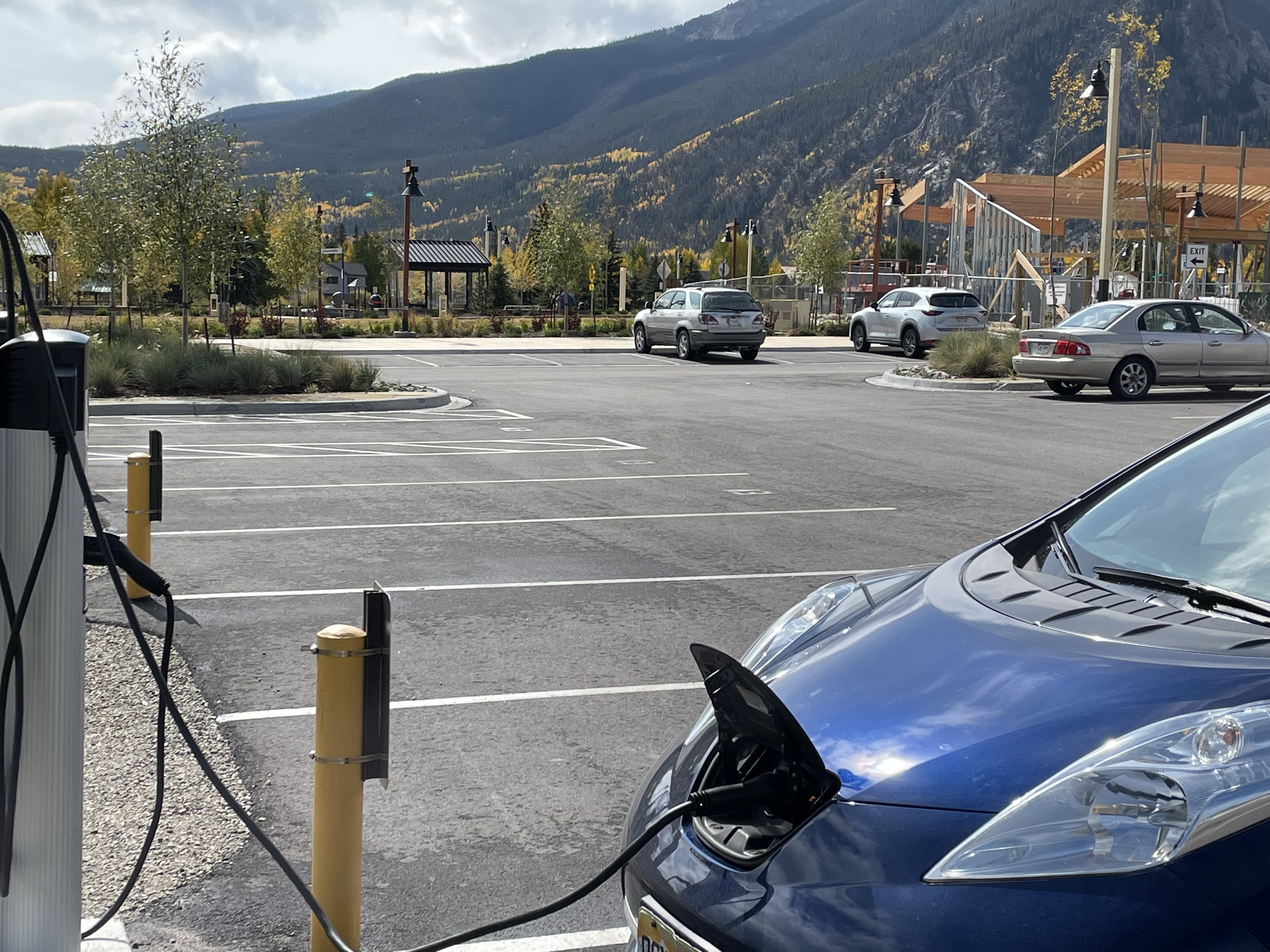
Leaf charging in Frisco September 30, 2021.
Build a national network of electric vehicle (EV) chargers. U.S. market share of plug-in EV sales is only one-third the size of the Chinese EV market. That needs to change. The legislation will invest $7.5 billion to build out a national network of EV chargers in the United States. This is a critical step in the President’s strategy to fight the climate crisis and it will create good U.S. manufacturing jobs. The legislation will provide funding for deployment of EV chargers along highway corridors to facilitate long-distance travel and within communities to provide convenient charging where people live, work, and shop. This investment will support the President’s goal of building a nationwide network of 500,000 EV chargers to accelerate the adoption of EVs, reduce emissions, improve air quality, and create good-paying jobs across the country.
Upgrade our power infrastructure to deliver clean, reliable energy across the country and deploy cutting-edge energy technology to achieve a zero-emissions future. According to the Department of Energy, power outages cost the U.S. economy up to $70 billion annually. The Bipartisan Infrastructure Deal’s more than $65 billion investment includes the largest investment in clean energy transmission and grid in American history. It will upgrade our power infrastructure, by building thousands of miles of new, resilient transmission lines to facilitate the expansion of renewables and clean energy, while lowering costs. And it will fund new programs to support the development, demonstration, and deployment of cutting-edge clean energy technologies to accelerate our transition to a zero-emission economy.
Make our infrastructure resilient against the impacts of climate change, cyber-attacks, and extreme weather events. Millions of Americans feel the effects of climate change each year when their roads wash out, power goes down, or schools get flooded. Last year alone, the United States faced 22 extreme weather and climate-related disaster events with losses exceeding $1 billion each – a cumulative price tag of nearly $100 billion. People of color are more likely to live in areas most vulnerable to flooding and other climate change-related weather events. The legislation makes our communities safer and our infrastructure more resilient to the impacts of climate change and cyber-attacks, with an investment of over $50 billion to protect against droughts, heat, floods and wildfires, in addition to a major investment in weatherization. The legislation is the largest investment in the resilience of physical and natural systems in American history.
Deliver the largest investment in tackling legacy pollution in American history by cleaning up Superfund and brownfield sites, reclaiming abandoned mines, and capping orphaned oil and gas wells. In thousands of rural and urban communities around the country, hundreds of thousands of former industrial and energy sites are now idle – sources of blight and pollution. Proximity to a Superfund site can lead to elevated levels of lead in children’s blood. The bill will invest $21 billion clean up Superfund and brownfield sites, reclaim abandoned mine land and cap orphaned oil and gas wells. These projects will remediate environmental harms, address the legacy pollution that harms the public health of communities, create good-paying union jobs, and advance long overdue environmental justice This investment will benefit communities of color as, it has been found that 26% of Black Americans and 29% of Hispanic Americans live within 3 miles of a Superfund site, a higher percentage than for Americans overall.
Map of the North Platte River drainage basin, a tributary of the Platte River, in the central US. Made using USGS National Map and NASA SRTM data. By Shannon1 – Own work, CC BY-SA 4.0, https://commons.wikimedia.org/w/index.php?curid=79266632
Here’s the release from the Colorado Department of Natural Resources (Chris Arend):
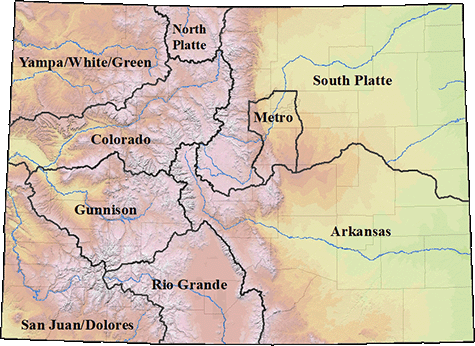
The Colorado Division of Water Resources (DWR) is announcing a virtual Measurement Rules Rulemaking stakeholder meeting to present an update of the draft Measurement Rules for Water Division 6 (North Central and Northwest Colorado for the Yampa, White, and North Platte River basins) and gather feedback and comment. DWR conducted in-person stakeholder meetings during October 2021 in Steamboat Springs, Oak Creek, Rangely, Meeker, Walden, and Craig, CO.
DWR invites participants from those meetings, as well as those who have not been to an in-person public meeting, to attend.
The purpose of the rulemaking is to develop consistent, stakeholder-driven standards for the implementation of DWR’s statutory authority for requiring measuring devices for water diversion and storage and reporting of records.
For questions, to submit written comments, or sign up for notification lists, please see Division 6 Measurement Rules Rulemaking section on DWR’s website (scroll down to Water Administration Rulemaking and click on Rule-making – Division 6 Measurement Rules (2CCR-402-18): https://dwr.colorado.gov/services/water-administration#div6-rulemaking
WHO: Colorado Division of Water Resources
WHAT: Virtual Public Meeting on Yampa, White, and North Platte River Basins Measurement Rules Rulemaking
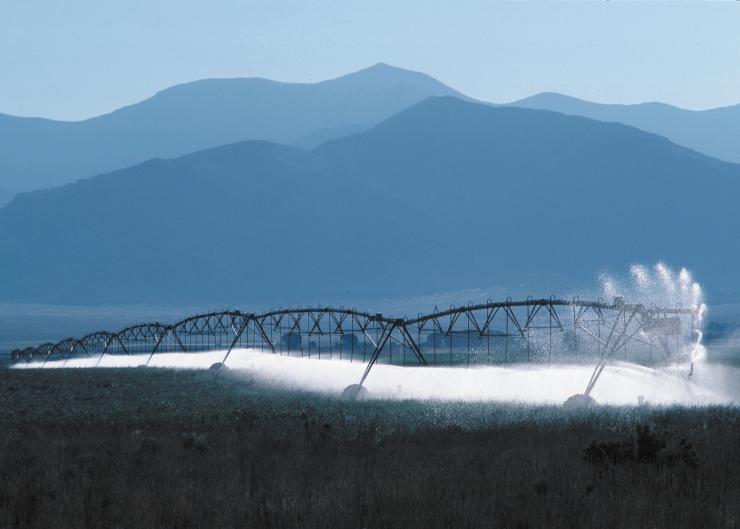
A center pivot irrigates a field in the San Luis Valley, where the state is warming farmers that a well shut-down could come much sooner than expected. Credit: Jerd Smith via Water Education Colorado
Center pivot sprinklers in the Arikaree River basin to irrigate corn. Each sprinkler is supplied by deep wells drilled into the High Plains (Ogallala) aquifer.
Here’s the release from the Colorado Department of Agriculture:
The Colorado Department of Agriculture (CDA) and the Department of Natural Resources (DNR) joined together in strong support of $15,000,000 “high impact” stimulus funds in Governor Polis’ FY 2022-2023 budget to preserve agriculture, meet interstate river compact obligations, and reduce rural economic impacts in the Republican and Rio Grande River basins .
“The producers in the Republican and Rio Grande basins are up against quickly approaching deadlines to reduce their water use to avoid mandatory curtailment of groundwater pumping on a scale that could devastate these agricultural communities,” said Commissioner of Agriculture Kate Greenberg. “Directing federal funds to water users in these two basins will help ag producers mitigate the costs of reducing water use while ensuring a future for agriculture in these regions. With Governor Polis’s leadership, CDA is working closely with the Department of Natural Resources to ensure these funds support the farmers, ranchers, and other water users who are facing the greatest challenges.”
The Republican and Rio Grande River basins contain some of Colorado’s most productive farm and ranchlands, and agriculture remains the economic backbone of these regions. Governor Polis’s proposal is for $15,000,000 in high impact American Rescue Plan Act (ARPA) funds for the Task Force on Economic Recovery and Relief to consider.
The Republican River basin needs to come into compliance with its downstream river compact by retiring 25,000 acres of groundwater irrigated land by the end of 2029, 10,000 of which must be retired by the end of 2024. Simultaneously, the Rio Grande basin is facing imminent groundwater curtailment to prevent further drawdown of confined underground aquifers.
Despite efforts by water conservation districts and water users in both basins to solve this challenge on their own, one bad drought year can push back years of progress. This was the case in 2021 and with the high probability of subsequent droughts, more resources are needed to assist local farmers and ranchers in transitioning to a future of greater water scarcity in a way that sustains agriculture, the economy, and local communities.
“With Colorado’s ongoing systemic drought many of our communities are feeling the impact, none more acutely than agriculture, as our water supplies diminish,” said Dan Gibbs, the executive director of the Department of Natural Resources. “Working with the Colorado Department of Agriculture we need to do all we can to preserve our agricultural lands and the rural economies that depend on them. The Governor’s high impact stimulus proposal will help these river basins meet our river compact obligations and protect our groundwater resources while ensuring agriculture continues in these productive regions of Colorado.”
If passed by the legislature, this additional funding will augment local and federal conservation incentive programs to ensure the retirement of groundwater pumping is voluntary, compensated, and on a scale that minimizes disruption to agricultural production while still meeting Colorado’s compact obligations.
Agriculture generates nearly $370 million worth of ag products in the seven Colorado counties the Rio Grande supplies with water. Staple crops include barley, oats, hay, and potatoes. Colorado’s Eastern Plains are home to nine of the state’s top ten agricultural counties in terms of value of agricultural products sold, with the majority of crops grown used to feed livestock. The Republican River Basin produces nearly $1.4 billion in agricultural products, including corn, wheat, cattle, and hogs.
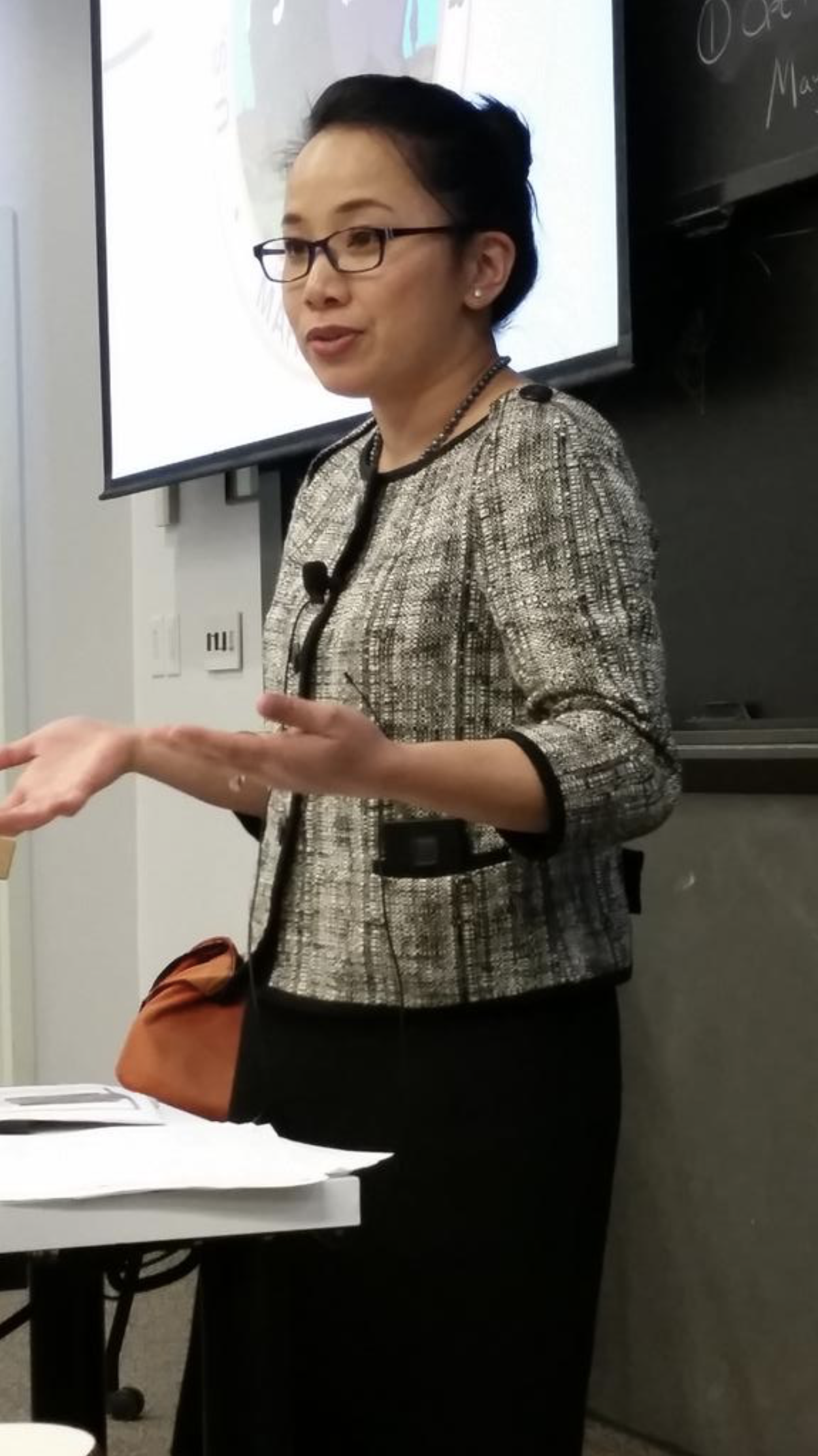
Camille Touton of Nevada was confirmed by the Senate on Thursday to be commissioner of the Bureau of Reclamation, which oversees water management of the Colorado River in Western states.
Democratic and Republican senators approved President Joe Biden’s nominee on a voice vote.
Touton, of Filipino ancestry, moved as a child to Nevada. Las Vegas became her adopted home and she became interested in water, she told the Senate Energy and Natural Resources Committee during a September hearing.
She told the panel water management in the West is a major concern and priority.
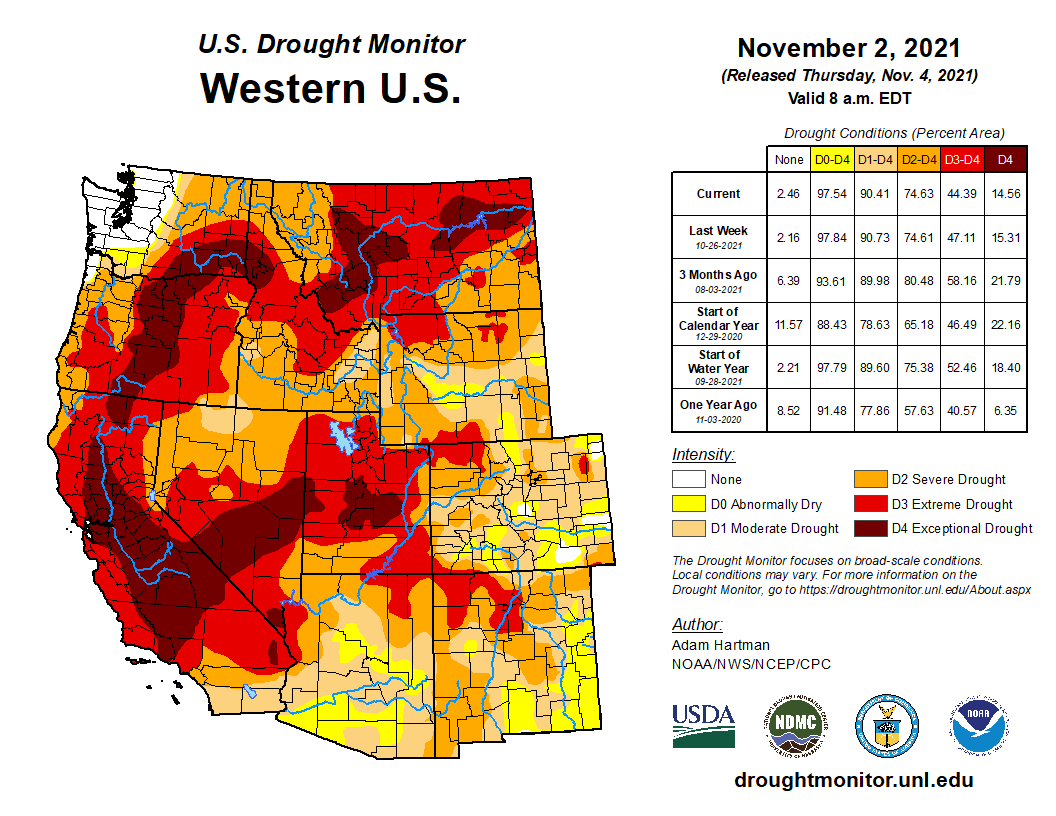
West Drought Monitor map November 2, 2021.
“The unprecedented drought has made the task even more challenging, as major reservoirs are at their lowest levels since filling, and the projections for relief in the face of climate change are not encouraging,” she told the hearing.
She was introduced to the panel by Sen. Catherine Cortez Masto, D-Nev., a member of the committee. Touton sailed through the confirmation process with bipartisan support, particularly from Western state Republican senators.
Touton recently served as Bureau of Reclamation deputy commissioner. She received degrees from the University of Nevada-Las Vegas and George Mason University…
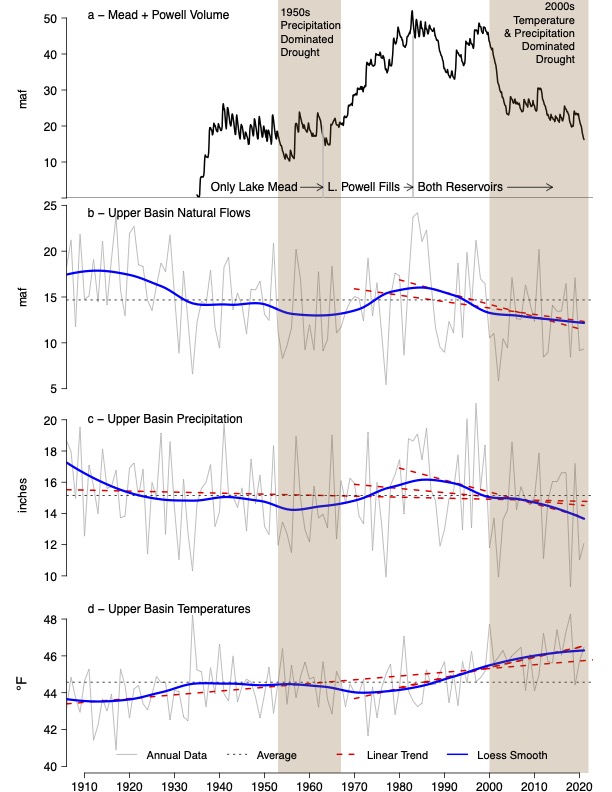
Brad Udall: Here’s the latest version of my 4-Panel plot thru Water Year (Oct-Sep) of 2021 of the Colorado River big reservoirs, natural flows, precipitation, and temperature. Data (PRISM) goes back or 1906 (or 1935 for reservoirs.) This updates previous work with @GreatLakesPeck.
Touton will be directly involved in Colorado River management, Lake Mead and water issues that impact Nevada and other Western states, Tobias said…
She also becomes the first Filipino-American to hold such a position in the Interior Department.
Interior Secretary Deb Haaland said Touton would bring a wealth of knowledge and experience to manage water for current and future generations.
Join us and stand up for reality. http://climaterealityproject.org – This film exposes the parallels between Big Tobacco’s denial of smoking’s cancer-causing effects and the campaign against the science of climate change — showing that not only are the same strategies of denial at work, but often even the same strategists.
Researchers in Colorado State University’s Department of Atmospheric Science have developed a tool for predicting heavy rainfall that is now used daily by the Weather Prediction Center, part of the National Weather Service.
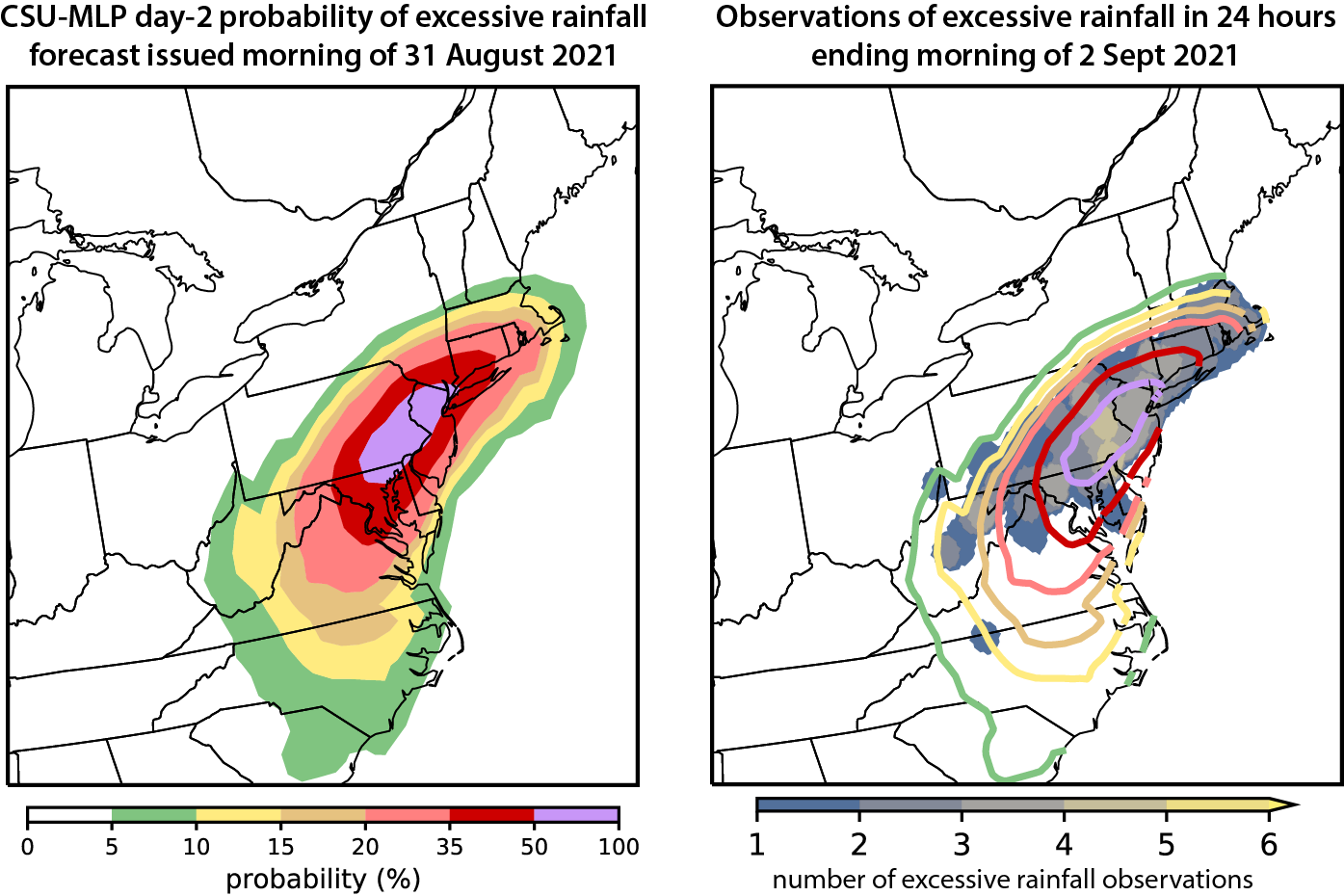
Example CSU-MLP forecast, for the extreme rainfall associated with the remnants of Hurricane Ida in the mid-Atlantic states in September 2021. The left panel shows the forecast probability of excessive rainfall, available on the morning of August 31, over a day in advance of the event. The forecast includes a “high risk” (probability exceeding 50%) for an area from Maryland through Pennsylvania, New Jersey and New York. The right panel shows the resulting observations of excessive rainfall (including flash flood reports and rainfall totals exceeding specified thresholds). The CSU-MLP correctly highlighted the corridor where widespread heavy rain and flooding would occur.
By working with the Weather Prediction Center over the past several years, Associate Professor Russ Schumacher and his group were able to tailor the tool to suit forecasters’ needs.
A concept-to-operations success story
Excessive rainfall is difficult to forecast, and Weather Prediction Center forecasters needed a tool to help them generate Excessive Rainfall Outlooks, which are issued for the contiguous United States one to three days in advance. These outlooks predict the probability for rainfall that may lead to flash flooding, so they are important for alerting people in harm’s way.
WPC forecasters examine many different data sources in creating Excessive Rainfall Outlooks, and the number of data sources have multiplied in recent decades. Given the tight turnaround, WPC meteorologists were interested in a tool that could synthesize at least some of the data and give them a reasonable starting point.
Enter machine learning plus atmospheric science Ph.D. student Greg Herman, whose undergraduate background included computer science and meteorology. Computers are good at quickly filtering huge datasets into a comprehensible output, and Herman and Schumacher harnessed that strength for the Colorado State University Machine Learning Probabilities system.
“The CSU-MLP prediction system provided the first such forecast, and represents the first machine-learning tool incorporated into WPC’s operations,” said Mark Klein, the Weather Prediction Center’s Science and Operations Officer. “Its forecasts have proven very skillful when compared to observations, and thus it has become a critical tool for our meteorologists.”
NOAA’s reforecasts, retrospective forecasts run with today’s improved numerical models, made it possible for Herman and Schumacher to train their machine-learning model using a consistent dataset. The CSU-MLP algorithm searches historical data from the reforecasts and rainfall record for conditions similar to the current weather forecast. It is able to quickly determine whether those conditions led to heavy rain.
The machine-learning model calculates the probability for heavy rain across the entire U.S., and it has adapted over time based on regional differences.
Herman and Schumacher first presented the tool to a testbed, the annual Flash Flood and Intense Rainfall experiment, in 2017. Based on user feedback from the testbed and WPC forecasters, they fine-tuned the model until it was ready for operations in late 2019. Schumacher’s group continued to work with forecasters to make improvements and released an update in 2020.
“Transitioning research work to operations at NWS is difficult; this project is one of few success stories,” Klein said. “Russ’ group has proven to be one of the best collaborators in academia that WPC has worked with.”
The forecast model is intended to make forecasters’ jobs easier by giving them a starting point to build on with their expertise and meteorological knowledge of the area.
“I’m really proud of the work my group and our partners at WPC have done on this,” said Schumacher, who is also Colorado’s state climatologist and director of the Colorado Climate Center. “It’s really satisfying to see a project go from the research idea all the way to the end product that you know somebody’s looking at every day.”
How much rain is ‘excessive’?
One challenge to forecasting excessive rain is defining what that means for a given area. A few inches of rain can be a bigger deal in Colorado than Louisiana, for example.
Forecasters go by how unusual the amount is for that area and whether it will cause flooding, which is also difficult to predict because terrain is an important factor. The same amount of rain will impact a burn scar very differently than a field.
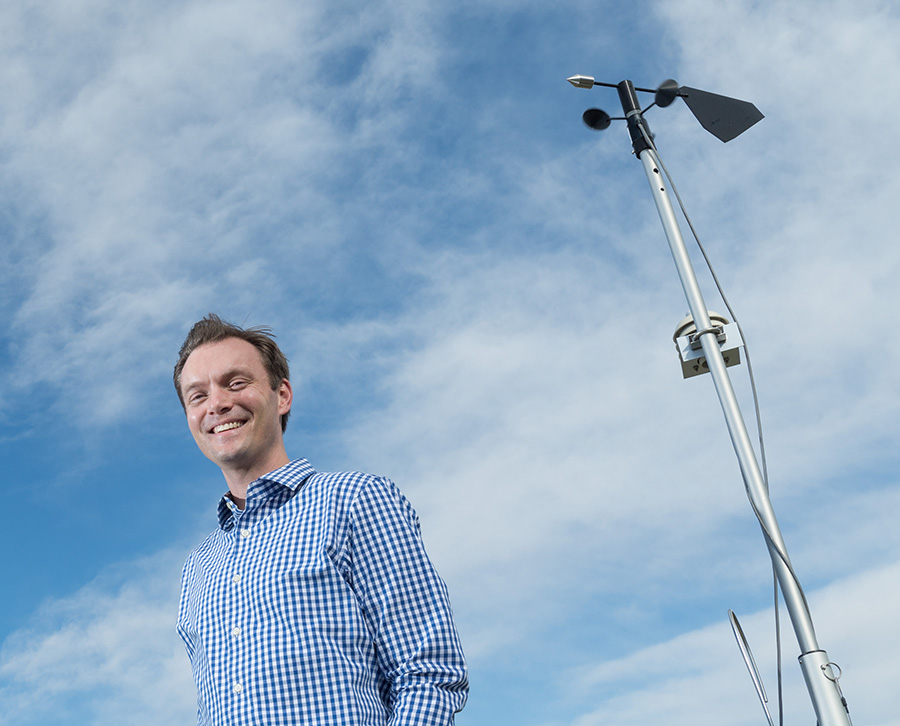
Professor Russ Schumacher and his research group developed a tool for predicting heavy rainfall that is used daily by the Weather Prediction Center.
“We’ve used average recurrence intervals as our definition of excessive rain,” Schumacher said. “Does this amount of rain typically occur at this particular location once a year, twice a year, and so on. That helps to identify how unusual the rainfall is for that area.”
Schumacher’s group has adjusted the threshold for excessive rain to make their model more accurate for specific areas, but there’s still no consensus on what constitutes excessive rain.
“The heavier the rain is, the more difficult it is to forecast in general,” he said.
With a warmer climate expected to bring more heavy rain because warmer air can hold more water vapor, the CSU-MLP tool will be useful in predicting the extreme flooding that will follow.
Schumacher’s group, including research scientist Aaron Hill, recently received funding to work on extending the CSU-MLP system’s forecast range to four to eight days. They also are collaborating with the Storm Prediction Center to apply the CSU-MLP system to other types of hazardous weather, including tornadoes, hail and damaging winds.
Development of the CSU-MLP system was funded by NOAA’s Joint Technology Transfer Initiative. Schumacher and his colleagues wrote about this model and collaboration in the paper, “From Random Forests to Flood Forecasts: A Research to Operations Success Story,” published in the Bulletin of the AMS. Herman graduated from CSU with his Ph.D. in 2018 and now works as a research scientist for Amazon.com.
Click on a thumbnail graphic to view a gallery of drought data from the US Drought Monitor.
US Drought Monitor map November 2, 2021.
High Plains Drought Monitor map November 2, 2021.
West Drought Monitor map November 2, 2021.
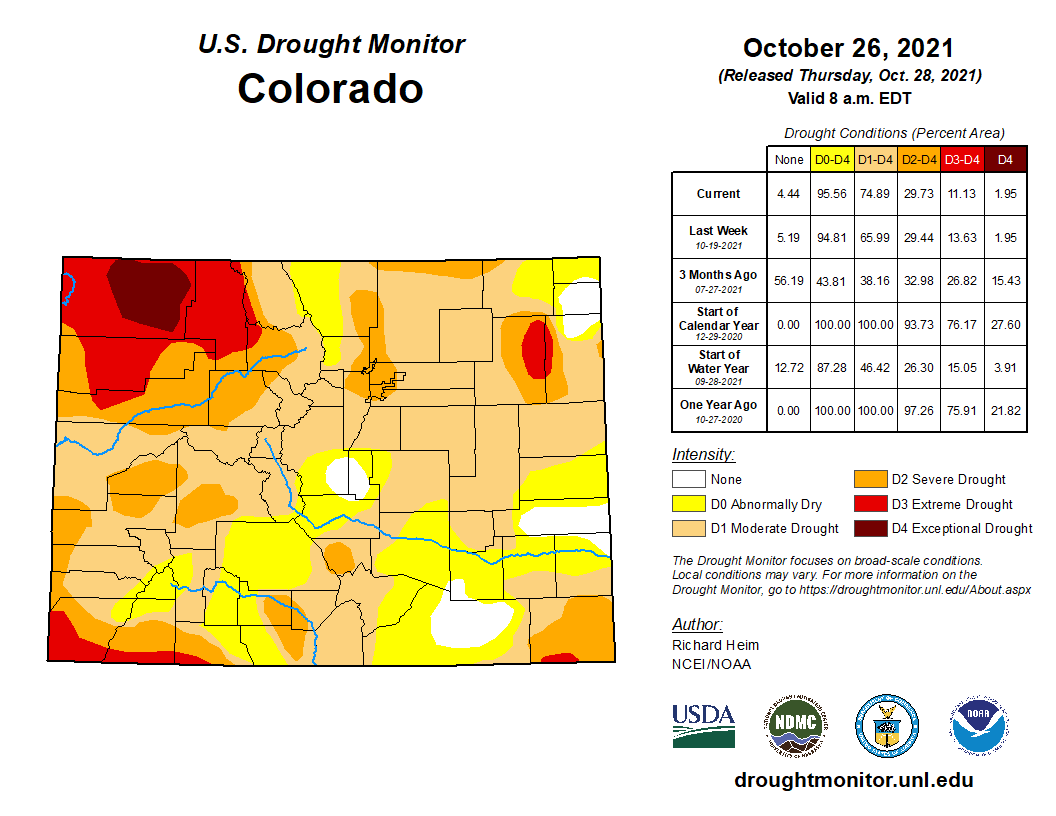
Colorado Drought Monitor map November 2, 2021.
Click here to go to the US Drought Monitor website. Here’s an excerpt:
This Week’s Drought Summary
This week, a low pressure system slowly moved eastward across the eastern contiguous U.S. (CONUS) bringing heavy rainfall to many areas from the Mississippi Valley to the East Coast. Parts of the Central Plains, Gulf Coast, Northeast, and Mid-Atlantic saw over 2 inches of rainfall. Improvements were warranted where the heaviest precipitation fell across parts of the Central and Northern Plains, the Corn Belt, and northern New York and New England. Conversely, areas that missed out on adequate precipitation across the western Great Lakes and the Carolinas experienced degradation of ongoing abnormally dry and drought conditions, exacerbated by above-normal temperatures and increased evaporative demand. Across the western CONUS, an active storm track in the Pacific Northwest resulted in another week of improvements from Washington to northwest Montana. Soil moisture indicators continue to improve across much of the Western Region, leading to some localized improvements, but for most areas, long-term deficits remain intact and groundwater and reservoir levels remain well below-normal. Additionally, it is too early in the season for solid snowpack to build across many areas. Some localized degradations were warranted in Montana, east of the Front Range, and in the Southern Plains, as above-normal temperatures and high wind events have helped to worsen ongoing drought in those areas…
Many locations across the High Plains Region experienced improvement in drought conditions this week, from eastern Kansas and Nebraska northward, and westward to the northern Front Range. In eastern portions of the High Plains, above-normal precipitation in excess of 1.5 inches for several areas led to 1-category improvements. This region has also benefited from improved soil moisture in recent weeks as the storm track remained active during October. Across the western Dakotas and parts of Wyoming, improvements were also warranted, despite rainfall lacking for many locations, as drought indicators have continued to improve due to many locations receiving over 200 percent of normal precipitation since the beginning of October. Soil moisture and short-term rainfall deficits are much improved for most areas. However, while ground reports corroborate the improved soil conditions, they also indicate that rangeland conditions are slow to recover and stock ponds remain below-normal with poor water quality, indicative of longer-term hydrologic deficits. Along the southern Front Range, above-normal temperatures and below-normal precipitation resulted in further degradation, as evaporative demand has remained high, exacerbated by high winds…
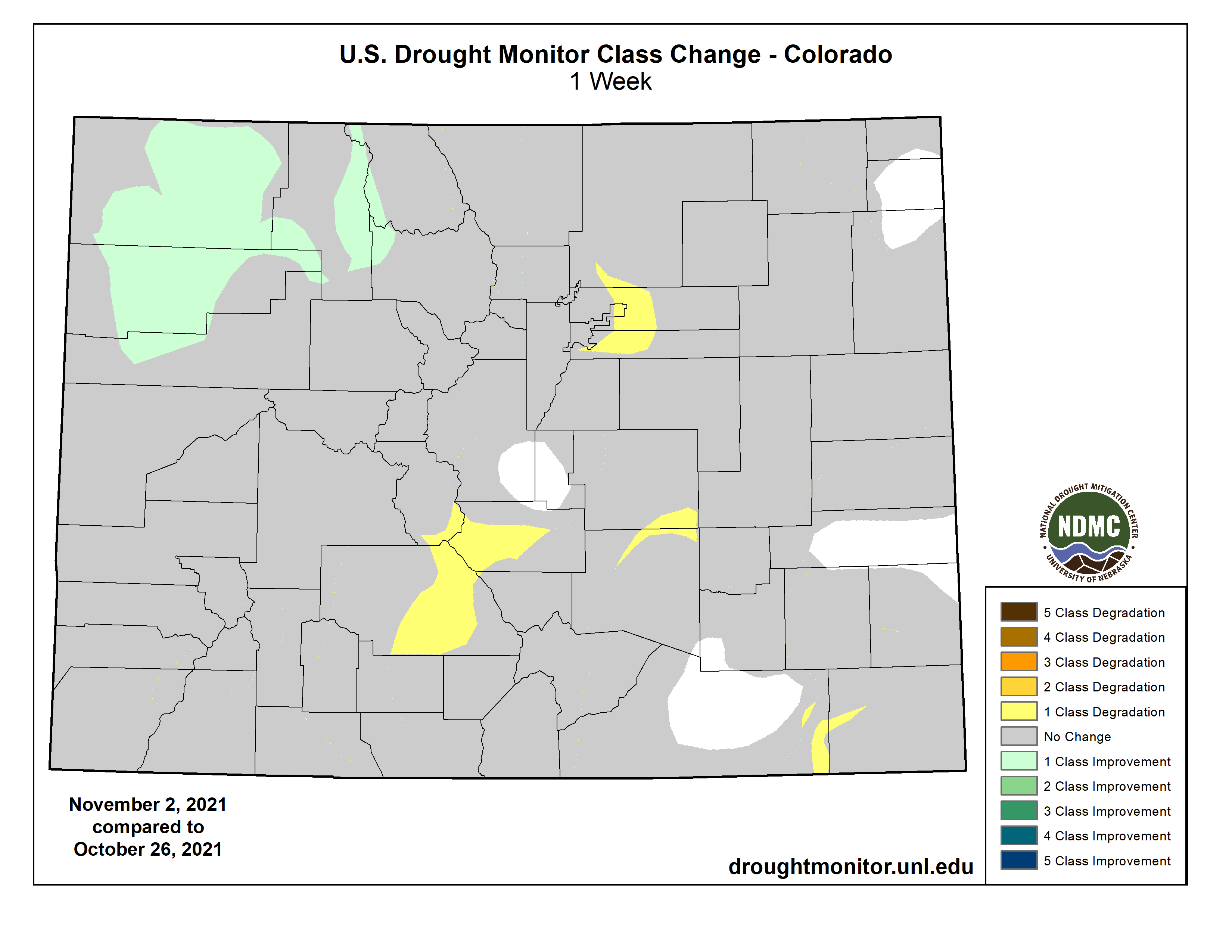
Colorado Drought Monitor one week change map ending November 2, 2021.
An active storm track across the Pacific Northwest and northern California has resulted in improving conditions during October, with improvements in northern California and the central Great Basin being attributed mainly to the strong atmospheric river event in late October, which dropped record 24-hour precipitation in several locations. This week the active storm track persisted, leading to improvements across parts of western Washington and the interior Pacific Northwest. Soil moisture has and stream flows have improved greatly for many areas in the central and northern Great Basin, warranting some improvements across southern Idaho, northeastern Nevada, and northern Utah. However, groundwater and reservoir levels are slow to respond and will need continued above-normal precipitation this season to recharge. Snowpack has started to build across the northern Rockies and the Cascades, and even into parts of the Sierra Nevada, but it is still early in the season to reap the benefits. D4 (exceptional drought) expansion was warranted in central Montana, as stream flows have fallen below the 2nd percentile, NASA SPoRT and CPC soil moisture have fallen below the 2nd percentile, vegetation indices show increased stress, and 30-60 day SPIs have fallen to D4 levels. In addition, parts of this new D4 area have experienced a record dry period spanning September to October. The timing of this dryness has also stunted winter wheat growth in the region. Status quo was warranted elsewhere in the West as antecedent 30-day wetness and improved soil moisture offsets the observed above-normal temperatures for the 7-day period…
Rainfall amounts, associated with a slow-moving low pressure system traversing the eastern half of the Southern Region (eastward from Arkansas and Louisiana) were just enough to warrant a status quo depiction this week. Conversely, rainfall from this same low pressure system early in the week was heavy enough to warrant improvements across much of eastern Oklahoma, where many locations received more than 150 percent of normal precipitation for the 7-day period. Farther south, in eastern Texas, 7-day precipitation was below-normal, despite 0.5-1 inch of rainfall across a large region experiencing moderate (D1) to severe (D2) drought. Above-normal temperatures and high winds associated with the exiting low pressure system resulted in increased evaporative demand across much of eastern Texas. Despite the rainfall, there was even a report of a wildfire near Rusk County, Texas. Farther west across the Southern High Plains, conditions also deteriorated, resulting from D1 to D3-equivalent 30-90 day Standardized Precipitation Indices (SPIs), widespread NASA SPoRT soil moisture rankings below the 10th percentile (below the 5th percentile at shallower depths for many locations), below-normal precipitation, and above-normal temperatures (2-6°F above-normal)…
Looking Ahead
During the next 5 days (November 4 to 8), an active storm track across the Pacific Northwest and northern California is likely to continue, with locally more than 5 inches of liquid-equivalent precipitation falling along the coastal ranges and the Cascades. The southwestern, central, and much of the eastern CONUS is expected to remain dry. However, a mean frontal boundary is favored to set up along the Gulf Coast and Southeast Atlantic Coast, bringing the potential for some locations across southern Texas and the Florida Peninsula to pick up over 1 inch of rainfall. Maximum temperatures are expected to remain below-normal across the West Coast and above-normal across much of the central CONUS. Over the eastern CONUS, below-normal maximum temperatures are likely to moderate leading up to Tuesday, November 9.
The CPC 6-10 day extended-range outlook (valid from November 8 to 12) favors above-normal temperatures across the central and much of the eastern U.S. with below-normal temperatures likely for the Pacific Northwest, northern California, and the southern Florida Peninsula. Below-normal temperatures are favored for southern Alaska. Above-normal precipitation is likely from the Pacific Northwest and northern California, eastward to the Great Lakes and Ohio Valley, and southward to the Lower Mississippi Valley, with the greatest odds for above-normal precipitation across the northwestern CONUS. Below-normal precipitation is most likely across the southwestern CONUS, the Northeast, and Mid-Atlantic. In Alaska, odds are enhanced for below-normal precipitation across much of the state.
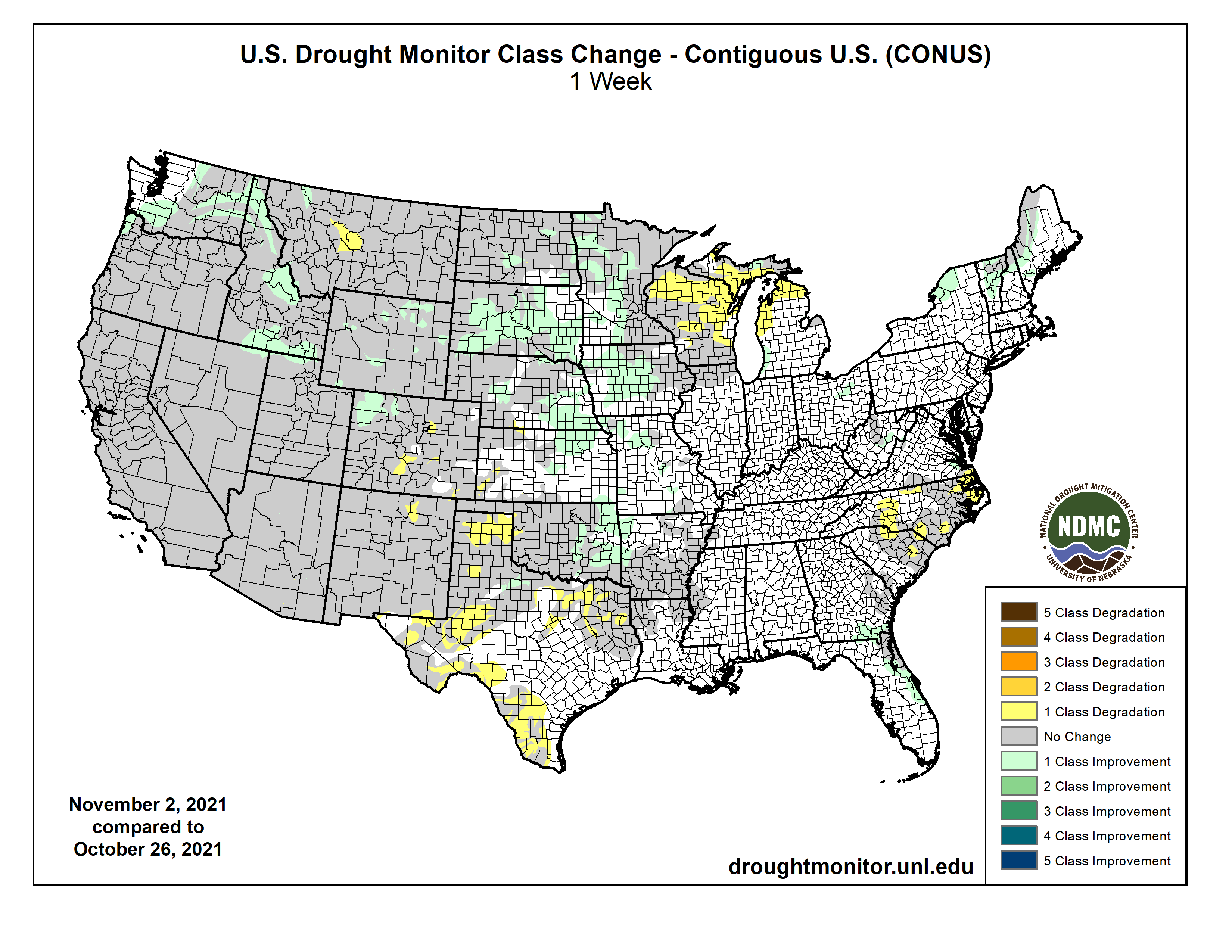
US Drought Monitor one week change map ending November 2, 2021.
Just for grins here’s a gallery of early November US Drought Monitor maps for the past few years.
“During our brainstorming process for a good farm name, we all had all these botany books in front of us,” recalls Noelle Trueheart. She and her business partners were searching for words that would represent their farming philosophy, and they were going back and forth between scientific names and the Latin terms for different species and crop varieties.
At a certain point, though, they stopped looking at the books. “That’s not really who we are,” Trueheart explains.
Though they have many years of experience in production agriculture, the three founders — Trueheart, Phil Cordelli and Betzi Jackson — wanted to honor a more humble inspiration: the common stories, farming practices and community spirit that exist beyond scientific frameworks.
They settled on Common Name Farm, and broke ground this past April. Throughout their first season, they’ve sought to prioritize passion, play and goals that nurture both the community and the land.
Their combination of new farming techniques and age-old practices complement Common Name Farm’s location on the remnants of a 150-year-old farm that once covered two square miles across what’s now the city of Lakewood. They’re renting three acres from the Shelleys, a family that has raised horses and hay on the property for generations.
As the season winds down, the Common Name Farm partners are still harvesting squash varieties and root vegetables, creating bouquets from flowering herbs and planning to save seeds for next year.
Trueheart and Cordelli have each been farming for a little over a decade. “I think in retrospect, I’m not suited for much other than farming,” Cordelli admits. “I’m kind of loud. I don’t wear deodorant. I went to art school.” He was first introduced to farming in northern California, where he worked deep in a redwood forest a few miles from the Pacific Ocean. He’s been drawn to cultivating plants ever since.
Trueheart stumbled onto farming while working as a field archeologist in western Colorado. One day she found an orchard in Paonia and “was totally enamored,” she recalls. “The first day I was there, I was like, ‘Oh, my God, I have to know everything about this.’” A year a half later, farming had become her top priority — a priority that cost her about half her pay.
Last fall, Cordelli, Trueheart and Jackson, who’d grown up in unincorporated Jefferson County, made the decision to stop working for others and start their own farm. Finding land was a challenge, though. They looked for properties from Boulder to Sedalia. When they found places they liked, they sent owners “handwritten letters of inquiry,” Trueheart explains.
By late winter, they were close to signing a lease for a property in Boulder, but the landowners backed out.
After that, Cordelli, Trueheart and Jackson searched for part-time jobs. Jackson found a position on the Western Slope and moved in April, though she remains a mentor, advisor and friend to Cordelli and Trueheart.
The other two spent the early spring growing seedlings in Cordelli’s sunroom on “a wing and a prayer,” he remembers.
Then the Shelleys reached out in early April. Cordelli had known Terol Shelley’s daughter Kamise and son-in-law Derek for a few years. They’d met through the Rocky Mountain Farmers Union and once traded garlic seed and pepper starts for tarps. Cordelli and Trueheart wound up renting three acres from the family for their farm.
Colorado’s Front Range farming community is pretty small, Cordelli explains, and most people involved know each other. Many are younger farmers like Cordelli and Trueheart — though at 42, “perhaps in no other profession would I be considered young,” Cordelli notes.
The local farming community “has really supported us,” he adds. Throughout the spring and summer, Cordelli and Trueheart were able to borrow tractors and rototillers to prep the field. Other farms donated seedlings to help them catch up after their late start to the season.
“Both of us hate the toxic American masculine culture of ‘I did this all myself,’” Cordelli notes. “It’s not about ego. It’s about creating community and relying on community.”
It’s also about the land. “We attribute a lot of the [farm’s] success to the quality of the soil,” Trueheart explains.
“We had a hunch that the land would be productive,” Cordelli continues. “It’d never been sprayed. It was covered by plant material continuously — no bare soil blown away by the wind or burned up by the Colorado sun.”
“I don’t think anything’s ever been raised on this ground except hay and grass and cattle,” says Miss Betty Opal Mae Shelley. Now 97, she moved to the farm in the 1940s with her husband, Arthur George Shelley, when this corner of Garrison and Dakota streets was rural pasture. Today her next-door neighbors include Family Wine & Liquors, a 7-Eleven and rows of houses lining the streets.
Her husband’s family had lived on the property since the 1870s. John Everitt started with twenty acres — including the land where Common Name Farm sits — and eventually expanded the property from what is now Mississippi Avenue to Alameda Avenue and from Garrison to Union Street, for a total of two square miles.
Even after Lakewood incorporated fifty years ago and development began to boom, the Shelleys continued to farm their land. Both Trudy and Terol grew and sold hay with their children. Then Derek and Kamise ran the Everitt Family Farm until they moved to Idaho a couple of years ago…
Other remnants of Lakewood’s agricultural past are less obvious, including the 100-year-old apple trees that dot nearby yards and the ditch irrigation that Common Name Farm uses as a water source. Trudy and Terol Shelley’s grandfather was the ditch rider who built the waterway down from Clear Creek in the 1920s.
“Neither of us have ever farmed on ditch irrigation land before,” Trueheart says. “It is a little bit challenging, but this is where the anthropology nerd in me comes out.” Ditch irrigation has been an agricultural technique for thousands of years; the human-made ditches allow water to travel from rivers to crops, and farmers monitor how much to allow into their fields…
And that’s not the only way that Trueheart and Cordelli hope to take care of the land they’re farming. Part of their practice is keeping the soil covered and letting plants go to seed, including the brightly colored purple dragon tongue beans they’re saving…
They’re taking a regenerative approach to agriculture that prioritizes sustainability and working within natural systems. They practice techniques such as planting flowers like marigolds that attract beneficial bugs and help repel pests, and keeping the ground between covered rows with low-growing clover.
Cordelli and Trueheart are also dedicated to donating portions of their harvest to those in need. Trueheart and her daughter live at Warren Village, a housing option for single mothers experiencing homelessness. “It’s been a great place to start with our food-access work,” Trueheart explains. “We’ve learned about what people like and don’t like as much, and the food they care about.”
[…]
Common Name Farm produced many varieties of vegetables and herbs during its first season. Alongside rows of tomatoes, corn, beans, potatoes and leafy greens, the partners experimented with okra and de-hybridizing a Korean hot pepper into the single varieties from which it was created. Soon they’ll be planting garlic seeds for spring.
Late in the summer of 2020, as hunting seasons ramped up and the world reeled from the COVID pandemic, a fire ignited in southeast Wyoming’s Snowy Range.
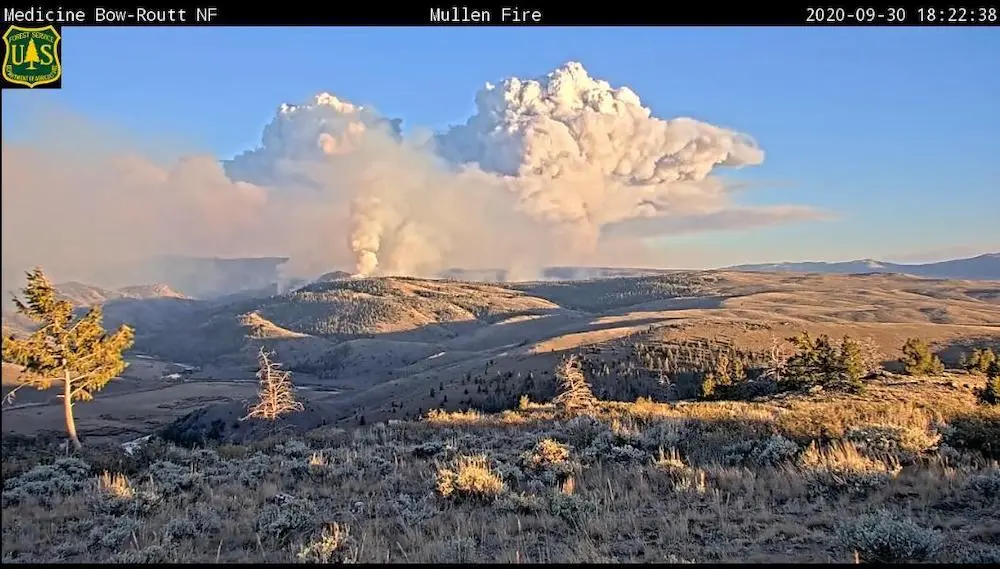
It sparked to life on Sept. 27 and grew rapidly, fueled by winds that raged to 70 mph. What would ultimately be called the Mullen Fire consumed or damaged dozens of structures over more than 176,000 acres.
Researchers say the size and intensity resulted from a combination of vast swaths of beetle-killed trees and unusually dry conditions exacerbated by climate change. While fire is natural, and in many ways necessary, biologists and fire managers weren’t sure how a blaze that big would impact the health of the ecosystem.
Smoke from the Mullen Fire on Sept. 30, 2020. (InciWeb)
A little more than a year later, they have a much clearer picture. In some places, the Mullen Fire burned so hot it sterilized the soil — meaning plant regeneration may take decades. In other places, the threat of invasive plant species looms large, and runoff, erosion and water degradation remain possibilities. But across the bulk of the forest, scientists have found, the fire may well provide long-term benefits to wildlife. It cleared away dead trees that needed to go and ushered in aspens, willows, wildflowers and grasses.
“Hopefully we have a good snowpack and greater spring rain next year for continued recovery,” said Ryan Amundson, a Wyoming Game and Fish Department terrestrial habitat biologist.
There’s still much to be learned, but for now, wildlife and land managers are encouraged by what remains from Wyoming’s largest wildfire in recent history.
Wildlife habitat
Amundson was nervous when he first ventured into the burn area after snow melted and summer began, he said.
Little moisture fell on the area in April, May and June. Snowpack had been low. Spring regeneration — the plants that usually sprout as soon as the snow melts — was almost nonexistent. Then record high heat in June, cut the growing season short. He wondered if any plants would have a chance to grow back.
But summer rains arrived. By late September, some aspens in the burn area measured three feet tall. Willows and wildflowers flourished.
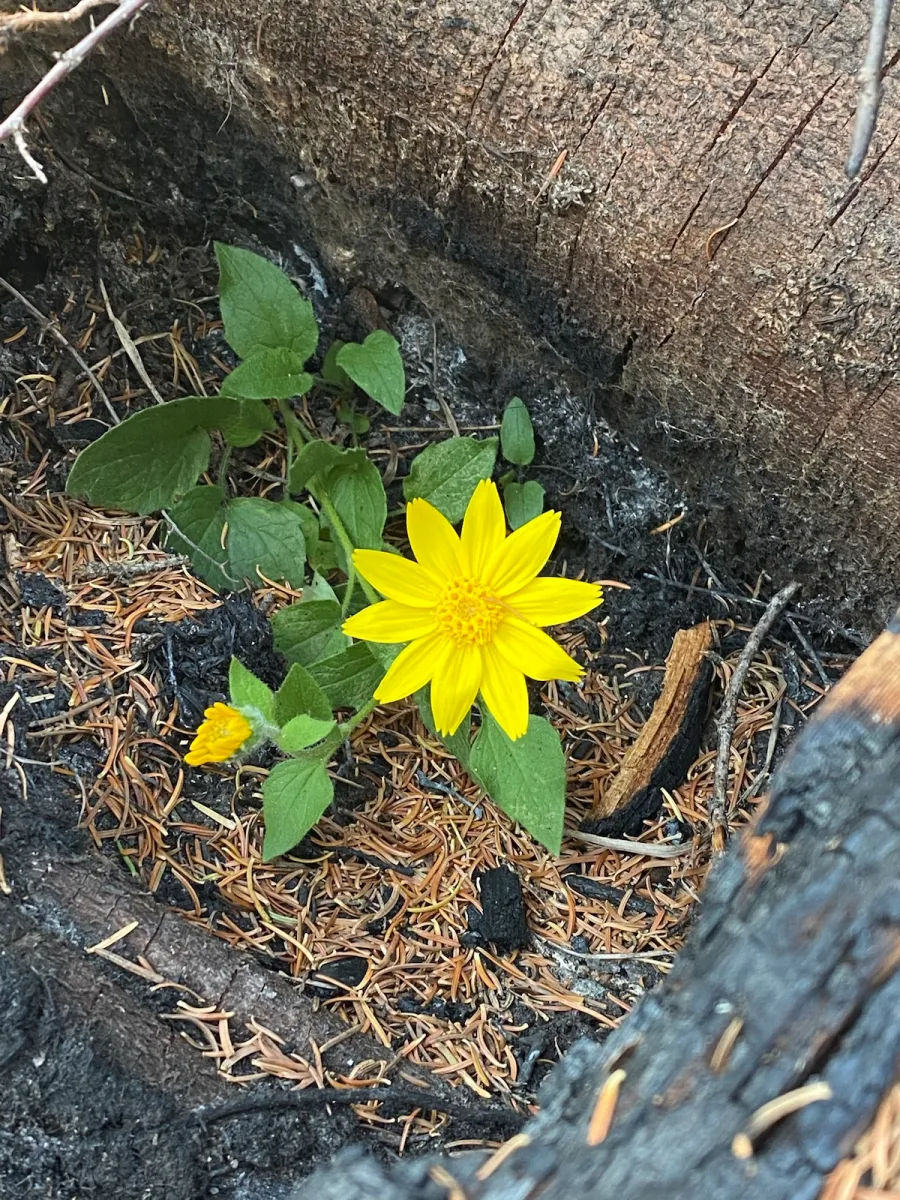
A yellow heart leaf arnica grows in the Mullen Fire burn zone. (Christine Peterson)
“In areas we were assessing in early spring, I thought I was going to see very high shrub mortality, but we just needed to be patient and let Mother Nature do her thing,” he said.
Not only did species like elk, deer and bighorn sheep survive into this year, they are thriving, said Lee Knox, Wyoming Game and Fish wildlife biologist in the Laramie region.
Deer killed during this year’s hunting season are fat, nourished by the new growth that sprouted in areas now cleared of stands of dead trees.
Bighorn sheep will particularly benefit from open areas created by the fire. Sheep need to be able to see long distances, and tree encroachment shrinks their available habitat. Wildlife officials are conducting a study with collared sheep to track their movements and progress in the newly cleared areas.
The post-burn forage in some places may be so good that Knox is concerned about elk and deer overgrazing the new aspen and willow growth, he said. He and other wildlife biologists will continue to encourage hunters to focus on herds in and around the burn area to be sure the new shrubs have a chance to grow.
“Deer and elk thrive in successional change,” Knox said. “There’s not a lot for them in old growth forests. They need forbs and grasses and aspen communities to allow them to be fatter and have healthier babies and expand.”
The lack of spring moisture and low snowpack also resulted in minimal runoff and erosion, according to a recent study completed by Game and Fish.
WyoFile is an independent nonprofit news organization focused on Wyoming people, places and policy.
A center pivot irrigates a field in the San Luis Valley, where the state is warming farmers that a well shut-down could come much sooner than expected. Credit: Jerd Smith via Water Education Colorado
The Colorado General Assembly’s interim Water Resources Review Committee is recommending new legislation that, if approved, could set aside millions to help water-strapped regions of the state meet their obligations to deliver water to Kansas, New Mexico and Texas.
It also recommended another bill designed to curb water speculation. Both measures are expected to be considered by the Colorado General Assembly next year.
Groundwater compact compliance
The committee on Oct. 27 approved a draft bill that creates a Groundwater Compact Compliance and Sustainability Fund to help pay for the purchase and retirement of farm wells and irrigated acreage in the Republican and Rio Grande river basins. The action was taken to reduce groundwater use that diminishes surface flows and ensure compliance with interstate compacts on both rivers. Legislative appropriations and federal revenue would bankroll the fund. The Colorado Water Conservation Board would distribute the money based on recommendations from the Republican River Water Conservation District and the Rio Grade Water Conservation District, with approval by the state engineer.
So how much land are we talking about? To comply with compact water delivery obligations and groundwater sustainability rules, 25,000 acres of irrigated land would have to be retired in the Republican basin and 40,000 acres in the Rio Grande basin by 2029. To date, just 3,000 acres in the Republican and 13,000 acres in the Rio Grande have been retired from production. Absent those reductions, well pumping could be curtailed.
When asked how much money is needed, Sen. Jerry Sonnenberg, R-Sterling, whose district includes the Republican River basin, said the conservation district there is looking for $50 million in addition to the $50 million it already has. Pinning the cost down is difficult; Sonnenberg noted that, “It’s harder to retire farm ground when you have $5 [per bushel] corn than it is when you have $3 corn.”
David Robbins, general counsel to both the Republican and Rio Grande districts, testified at an earlier committee meeting that the Rio Grande would also require at least $50 million on top of the $69 million it has already raised by taxing its farmers for sustainability efforts.
Water speculation
The committee also reported a bill that it views more as a vehicle for further discussion than a finished product. It prohibits the purchaser of a water right from engaging in “investment water speculation” and empowers the state engineer to investigate alleged violations. Investment water speculation is defined as “the purchase of agricultural water rights that are represented by shares in a mutual ditch company in the state with the intent…to profit from the increase in the water’s value in a subsequent transaction…or by receiving payment from another person for nonuse of all or a portion of the water” unless it’s part of a water conservation or instream flow program.
Committee members struggled with trying to balance concerns over speculation with protecting property rights. Sen. Kerry Donovan, D-Vail, committee chair and one of the bill’s sponsors, said she continues to hear from constituents on the West Slope about what looks like investment water speculation and its impact on farming operations. At the same time, she noted other groups are sending “a very conflicting narrative now that we actually have bills to respond to…and the feedback is don’t do anything, slow down.”
Sen. Don Coram, R-Montrose, another bill sponsor, emphasized that “it’s not our intent to take away the ability of a farmer whose 401K is his water [if that water were sold], but somehow we need to put some constraints” on speculative investments. “This bill as written,” he continued, “probably doesn’t get us there, but it does give us the opportunity to work through the session.”
With that said, Coram proposed an amendment that broadened the bill’s title by shortening it, from a bill “Concerning a Prohibition Against Engaging in Investment Water Speculation in the State” to one “Concerning Water Speculation in the State.” That change provides the bill sponsors with flexibility to flesh it out over the coming months without being locked in to the current text.
Water infrastructure investment
The committee also approved a letter to the state’s Task Force on Economic Relief and Recovery Cash Fund to consider investing money in water projects. The task force was created by the General Assembly last session to receive federal dollars from the American Rescue Plan Act of 2021 and recommend how to spend it. The legislature transferred nearly $850 million into the fund and among the eligible uses are “investment in water, sewer, or broadband infrastructure.”
The legislature convenes Jan.12…
Larry Morandi was formerly director of State Policy Research with the National Conference of State Legislatures in Denver, and is a frequent contributor to Fresh Water News. He can be reached at larrymorandi@comcast.net.
Click here to read the report. Here’s the executive summary:
The climate is changing. Global air temperatures are rising, as are sea levels throughout most of the U.S. Heavy rainfall is increasing in intensity and frequency. Atlantic hurricane intensity is on the rise, and the number of large forest fires in the western U.S. and Alaska is increasing and is exacerbated by drought and heat. In Alaska and the Arctic, sea ice is declining, permafrost is thawing, and warming is more than twice the global average (Walsh et al., 2014; Hayhoe et al., 2018; USGCRP, 2017).
Given close relationships with the natural world stemming from deep spiritual and cultural connections and subsistence lifeways, Indigenous peoples are on the frontlines of those experiencing and adapting to climate change. Indigenous peoples possess incredible resiliency and innovation, borne from Indigenous knowledges, worldviews, and countless generations of connection to place (Ford et
al., 2020). At the same time, climate change impacts for many Tribal communities are already severe (such as shifts in/loss of key cultural species and land loss due to erosion, flooding, and permafrost thaw), and the challenges they face responding to impacts are daunting (such as lack of funding and technical resources and legacies from colonialism and discrimination). The time to at is now, and the way to act is together: in community, taking care of one another and all our relations.
What Is the Status of Tribes and Climate Change (STACC) Report?
The Status of Tribes and Climate Change (STACC) Report seeks to uplift and honor the voices of Indigenous peoples across the U.S. to increase understanding of Tribal lifeways, cultures, and worldviews; the climate change impacts Tribes are experiencing; the solutions they are implementing; and ways that all of us can support Tribes in adapting to our changing world. Given this, the STACC Report was written for diverse audiences, including Tribal managers, leaders, and community members; the authors of future National Climate Assessments; federal and state agencies and decision-makers; and nongovernmental organizations. Over 90 authors representing diverse entities and perspectives contributed to this report, including the authors of 34 personal narratives and author teams who wrote topic reviews using elements from their own experiences and knowledge as well as information from the most current peer-reviewed literature. The development of the STACC Report was coordinated by the Institute for Tribal Environmental Professionals (ITEP), which was established in 1992 at Northern Arizona University with a cooperative agreement with the Bureau of Indian Affairs’ Tribal Climate Resilience Program. ITEP is honored to have worked with these authors, who together, along with the Steering Committee, form the STACC Working Group.
Why This Report Was Created
The Indigenous peoples of North America have seen many hardships, including legacies of colonialism, forced assimilation, intergenerational trauma, upheaval and repression of Native economic systems, and the loss of ancestral lands, languages, natural resources, and traditions. Due to colonialization and subsequent land dispossession, social exclusion, and discrimination, researchers have identified Indigenous peoples globally and in the U.S. as populations “at-risk” to environmental change (Ford et al., 2020; Nakashima et al., 2018). Tribes have, however, continually proven to be resilient and innovative, which is evident in their creating adaptation and mitigation plans and continuing to rely on traditional knowledges to inform actions and strategies. This resiliency and adaptation dates back thousands of years and holds true in today’s changing climate.
As numerous Indigenous persons would attest to, the close relationship that Tribes have with their lands, waters, resources, and heritage includes a responsibility to one another, to all relations, and to the past and future generations of human and nonhuman relatives alike. It embodies the need to care for and respect the needs of all things and recognizes the responsibility to honor the wisdom of their ancestors and carefully consider the consequences of their decisions and actions for future generations. This may lead Tribal members to ask: what does it mean to be a good ancestor?
Due in part to these worldviews that are tightly interwoven with many compounding dimensions, Tribal experiences with climate change can make Indigenous peoples particularly vulnerable to cascading and disproportionate impacts, while their responses simultaneously support Tribal resilience to those impacts and are discussed throughout the STACC Report.
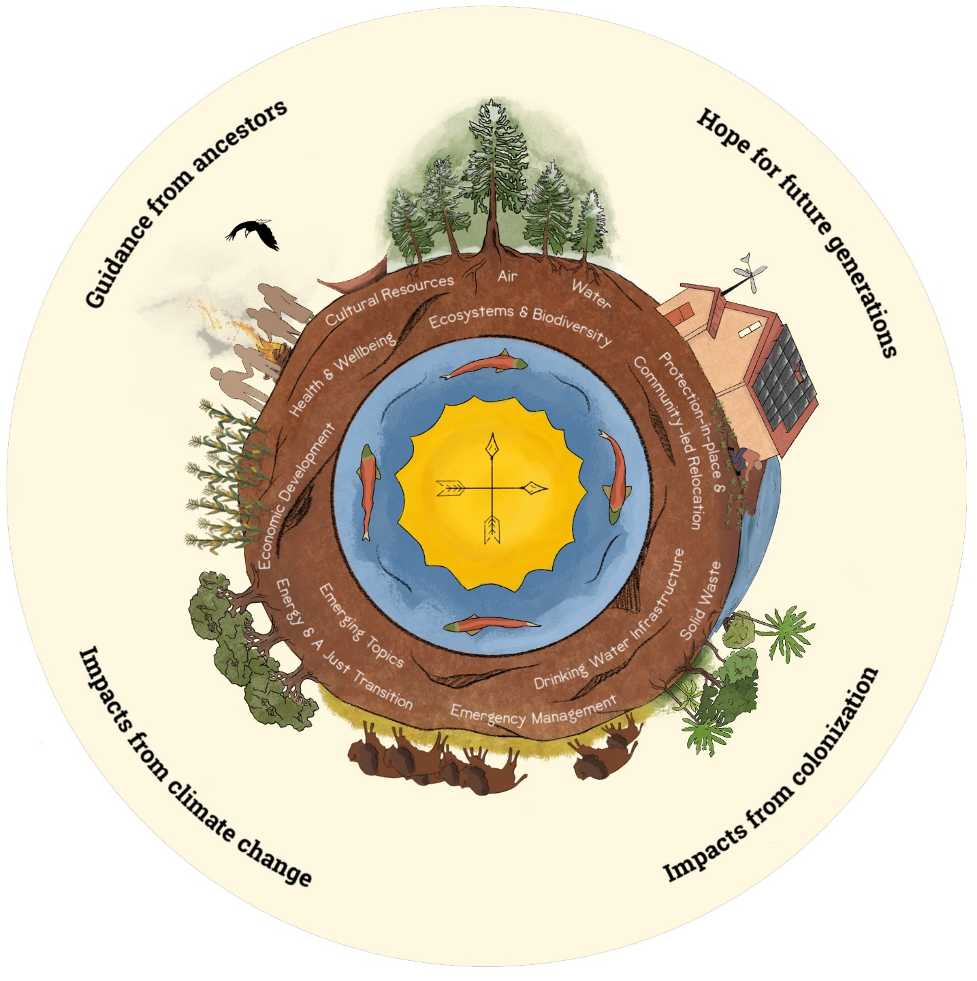
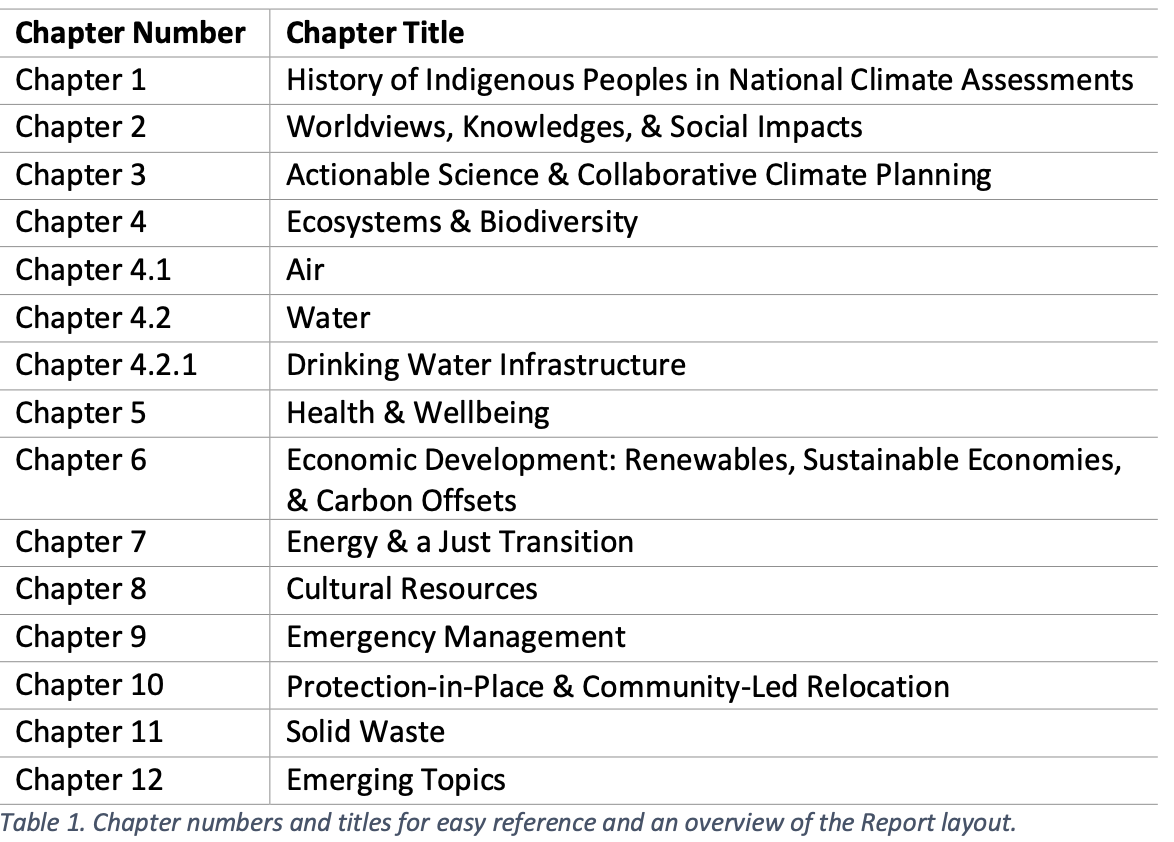
While Tribes cannot be thought of as one monolithic group, diverse Indigenous persons are in dialogue about synergies that exist among their worldviews. Numerous Indigenous persons have articulated that their worldviews understand all things as an interconnected whole, as shown in Figure 1, the Indigenous Holistic Worldview Illustration. There is inherent difficulty in writing a report that includes sectoral chapters about impacts experienced by Indigenous peoples that also reflects the interconnected nature of those experiences. However, as Figure 1 shows, each topic is interwoven with the others and all the systems of the world.
Although Indigenous peoples have been involved in various scientific reports related to climate change (see Ch. 1), a gap exists in the published literature of a holistic, in-depth review of the unique experiences of and threats to Tribes, in particular with first-hand experiences described. The STACC Report aims to fill this gap as well as provide recommendations for decision-makers and others supporting Tribal efforts.
Understanding Tribal Sovereignty
In order to effectively support Tribes in their efforts to address climate change, it is vital to understand Tribal sovereignty, self-determination, the federal trust responsibility, and consultation requirements within the government-to-government relationship. Tribal sovereignty is the inherent right of American Indians and Alaska Natives to govern themselves, and any decisions that could impact their property or citizens must be made with their participation and consent (NCSL, 2013; USDOI Frequently Asked Questions, n.d.). Similar to states, Tribes “possess the right to form their own governments; to make and enforce laws, both civil and criminal; to tax; to establish and determine membership (i.e., tribal citizenship); [and] to license and regulate activities within their jurisdiction…” (USDOI Frequently Asked Questions, n.d.). The Indian Self-Determination and Education Assistance Act of 1975 articulates a
The Indigenous Holistic Worldview Illustration visually depicts the interconnected way in which many Indigenous peoples experience the world and includes factors that influence the natural world. The various topics that the STACC Report addresses are included in the roots to demonstrate that while the Report is divided into independent chapters, the topics are, in reality, part of an interdependent whole. This illustration’s shape resembles a turtle in reference to Turtle Island, as some of the creation stories of Indigenous peoples of North America include a turtle, which can be thought of as either the continent of North America or as the entire Earth, depending on the storyteller. -Illustration design: Coral Avery and Molly Tankersley
pathway for Tribal control, responsibility, and autonomy over programs and services usually administered by the Bureau of Indian Affairs (USDOI Self-Determination, n.d.; USDOI Frequently Asked Questions, n.d). The federal trust responsibility addresses the reality that Tribal nations ceded their homelands in exchange for the guarantee of protection of their rights to self-government and lands and to provide for federal assistance (NCAI Tribal Governance, n.d.). The government-to-government (or nation-to-nation) relationship is a fundamental principle of the federal trust responsibility (NCAI State/Tribal Relations, n.d.), and government-to-government consultation must occur from the beginning stages of all decision-making that could potentially impact Tribes.
Executive Order 13175, which was established in 2000, “reaffirms the Federal government’s commitment to tribal sovereignty, self-determination, and self-government. Its purpose is to ensure that all Executive departments and agencies consult with Indian tribes and respect tribal sovereignty as they develop policy on issues that impact Indian communities” (DOE, 2000). This executive order was reaffirmed by the Biden administration on January 26, 2021. Sovereignty is an inherent right of Tribes, and the onus is on the federal government to ensure that right and government-to-government consultation are upheld. It is important to note that not all Indigenous groups/peoples have federal recognition, which limits their access to federal resources and impacts their ability to address climate change.
Interwoven Key Messages & Recommendations
The full list of Key Messages & Recommendations can be found within each chapter and in the Conclusion. Much like the interwoven nature of all the topics addressed in this report, the key messages and recommendations are interdependent and can be distilled into two themes: Respect and uphold Tribal sovereignty and self-determination and Integrate holistic responses in line with Tribal values.
Key Message & Recommendation: Respect and Uphold Tribal Sovereignty and Self-Determination
Tribal sovereignty and self-determination help to counteract historical trauma, disproportionate climate change impacts, and vulnerability and are strong themes in the Recommendations across all chapters. The remedial dynamic of recognizing and respecting the pre-existing right of self-determination of Tribes should be acknowledged. Each chapter identifies key ways to promote Tribal sovereignty, including, but not limited to, the following actions and examples:
Engage Tribes early and often in decision-making processes (Chs. 3 and 10). Many federal programs and policies affecting Tribes have been designed without meaningful Tribal participation. Tribes should be central to such decision-making. Engaging Tribes early and often helps to ensure that programs developed are accessible to Tribal communities and that Tribal concerns, values, and priorities are included in decisions such as those about land or water management, the development of regulations, choices about what science questions to pursue, and more. One best “early and often” engagement practice is to establish Tribal partnerships before developing project proposals. Building relationships with Tribal leaders, managers, and community members is key to ensuring respectful dialogue and that intentions are trustworthy.
Increase co-management of natural resources. Co-management of natural resources involves cross-jurisdictional, cooperative, participatory collaboration in decision-making, planning, and enforcement (Ch. 3), and contributes to strengthening of food security and the realization of food sovereignty (Ch. 5). As the Kootenai Tribe of Idaho describes in their narrative in Ch. 4.1, their state-Tribal partnership improved monitoring capabilities during the 2020 wildfire smoke season.
Respect, include, and protect Indigenous and traditional knowledges in climate change actions. Such knowledges are a fundamental and interwoven part of Indigenous cultures and are important for understanding and responding to changes that are occurring. For instance, during climatic and other disruptions such as wildfires, extreme weather, and the COVID-19 pandemic, when access to commercial foods may be cut off, traditional hunting, fishing, and gathering methods form a source of local resilience. In addition to the information in Chs. 2, 3, 4, 5, and 12, a resource for better understanding this concept is the Guidelines for Considering Traditional Knowledges in Climate Change Initiatives.1 As described in the Guidelines, Tribes must be able to choose to share or not share traditional knowledges with others.
Provide adequate funding for climate change adaptation (Chs. 4–12 and Appendix A). Inadequate funding remains one of the greatest barriers for Tribes to plan for and adapt to climate change, as well as to mitigate climate change through greenhouse gas reductions and developing a zero- carbon economy (Chs. 4.2.1, 6, 7, and 12). For example, across the U.S., Tribal communities are experiencing land loss due to erosion, flooding, and permafrost thaw (Chs. 4 and 10). Nationwide, at least $6.2 billion is needed over the next 50 years to protect, replace, and move existing Tribal infrastructure. This amount includes at least $175 million needed annually nationwide over the next ten years (Ch. 10).
Increase coordination among federal programs so that financial and technical resources are more easily accessed by Tribes and are used more efficiently. When accessing climate change adaptation resources, Tribes may face hurdles navigating a federal system in which funding and technical expertise are dispersed across multiple departments and programs, each with differing and sometimes complicated processes for accessing resources (Ch. 4.2.1, 9, and 10). For example, programs that provide funding to construct public drinking water systems are located within seven different federal agencies, and there is no lead federal agency or program to help communities facing relocation (Ch. 4.2.1 and 10).
Build and retain capacity within Tribes to manage and adapt their resources and infrastructure to climate change through passing down of knowledge between elders and youth, workforce development, professional training to increase technical and managerial expertise, and the equitable and ethical use of Indigenous knowledges and Western science (see Chs. 3, 4.2.1, 5, 7, and 12). Tribal Colleges and Universities, for example, are important institutions for students to transition from education to their careers as professionals; on-the-job training programs allow for the application of emerging technologies such as those in energy generation; and hiring community members first ensures the local community will benefit. Workforce development can transcend inequity issues, contribute to strong economies, and help maintain cultural integrity. Federal responses should integrate support for these local capacity-building and retention efforts.
Provide Tribally-focused data, resources, and actionable science to support Tribal decision-making (Chs. 3 and 6 and Appendix B). Climate change occurs globally but is experienced locally in a variety of ways. Climate change data that is more local and integrated with local observations and knowledge can be more relevant for planning and actions. The University of Washington’s Tribal Climate Tool,[2] for instance, provides Pacific Northwest Tribes with reservation-specific climate change data. Actionable science helps people make better decisions about things they care about and should start off with the question, “What does this community value?” This is aided by engaging Tribes early and often (see above).
Support the planning and implementation of Tribally-led solutions to Tribally-identified needs (Chs. 4.1 and 12 and Appendix A). Due to colonization, Tribes have had decisions about their futures imposed on them from outside entities. A key element of Tribal sovereignty involves Tribes identifying their own needs and priorities and leading their own responses and actions. The Climate Science Alliance’s Tribal Working Group is one example of successfully building, supporting, and accelerating Tribal resilience in a Tribally-led environment in which the planning and implementation aspects are fully supported (narrative, Ch. 12). Another example is described by the Nottawaseppi Huron Band of the Potawatomi in Ch. 4.1: they had concerns about air pollution from area sources, which led to them directing their resources to strategically install PurpleAir monitors and develop an Environmental Dashboard to help protect the health of their Tribal members.
Key Message & Recommendation: Integrate Holistic Responses in Line with Tribal Values
As described above, Tribal worldviews, experiences, and responses embody interconnectedness. Cascading impacts from, and holistic and interconnected responses to, climate change are addressed throughout the STACC Report and include actionable steps such as:
When developing climate change solutions, recognize the interconnectedness of systems and consider strategies that achieve multiple objectives (see Chs. 4.2 and 5). Ocean acidification and harmful algae events negatively affect Indigenous food systems and security, human health, and local economies. Solutions like clam gardens—essentially, rock walls in bays or inlets that increase shellfish productivity—are an integrated response to multiple climate change impacts (e.g., rising tides, food security, and ocean acidification) and draw upon traditional knowledges. Exerting economic sovereignty through sustainable enterprise development is another strategy Tribes use to address system interconnectedness and achieve multiple objectives (see Ch. 6). Additionally, rising air temperatures and increasing drought may stress native vegetation, leaving plants more vulnerable to insect outbreaks and providing greater opportunities for invasive plants to become established. Large-scale, uncharacteristically high-severity wildfires that could contribute to ecosystem conversion may continue to increase. Cultural burning is a stewardship practice that can enhance ecosystem resilience to climate change and achieve multiple objectives by promoting drought-tolerant and fire-adapted vegetation species; inhibiting insect pests that affect foods such as nuts, seeds, and berries; mitigating large-scale detrimental fires; and promoting the growth of basket-weaving materials and medicinal and food species. By working with the fire regimes of native and nonnative vegetation, cultural burning can also inhibit the establishment of invasive plants. Momentum is gaining for the use of this multifaceted strategy as recognition of the benefits of cultural burning spreads beyond Tribal communities, scientific understanding of the role that fire plays in ecosystems builds, and legal policies that limit cultural burns shift (Chs. 4, 4.1, 5, 8, and 12.)
Increase partnerships across jurisdictional boundaries and at different scales and integrate climate change considerations into ongoing planning and implementation processes (Chs. 3, 4.2, 6, 9, and 12). Climate change impacts are often interconnected and complex, sometimes crossing jurisdictional lines. Integrating climate change into ongoing planning and implementation, along with collaborative responses at larger geographic scales, has the potential to be more cost- efficient, more inclusive with respect to decision-making, and less time-consuming and to lead to actions that are more sustainable in the long term. Ch. 12 describes how Tribes are participating in a variety of cross-boundary, collaborative projects, including the Rio Grande Water Fund hosted by The Nature Conservancy. The Fund supports large-scale forest restoration by a variety of entities in the aftermath of an extensive wildfire to ensure a clean water supply for the region’s people and wildlife, both now and in the future. Examples of plans in which climate change can be considered as one factor among many include: FEMA Tribal Hazard Mitigation Plans; EPA Tribal Environmental Plans; Land/Resource Management Plans; Community Comprehensive Plans; and BIA forest, wildland fire, irrigation, fish and wildlife, agricultural, and integrated resource management plans.
Implement climate adaptation strategies that are proactive versus solely reactive (Chs. 4.2, 4.2.1, and 11). In contrast to reactive responses, proactive strategies anticipate future scenarios and plan for problems that may occur before they take place, helping to minimize harm. Climate-resilient drinking water systems, for example, provide reliable service with limited disruptions and/or harm in the face of changing environmental conditions and extreme climate events. If disruptions occur, systems can recover quickly. Infrastructure deficiencies provide opportunities to install new infrastructure in climate-resilient ways that can help decrease emergencies. System upgrades provide occasions to improve the climate resiliency of existing infrastructure.
Connect solutions to Tribal values and priorities, and recognize the tangible and intangible significance of climate change impacts. Tribes may have different views than their non-Tribal counterparts with respect to what they value and prioritize, and not all resources have tangible value or risk of loss (Ch. 8). Ch. 5 describes how the Swinomish Indian Tribal Community, for instance, developed Indigenous Health Indicators (IHIs) that contrast somewhat with a more western view of health. The indicators include community connection, cultural use, education, natural resource security, self-determination, and resilience. The Swinomish Tribal government used these IHIs to prioritize and make decisions about how to use limited time and resources to address sea level rise and storm surge impacts to key first foods habitats.
Support Tribes’ just transitions away from fossil fuels. Tribal self-determination means that decisions made by individual Tribes will vary, but a just transition away from fossil fuels and towards renewable energy will ensure that regenerative and sustainable economies are a part of the restoration of Indigenous peoples’ lifeways (Chs. 6 and 7). Some Tribal economies are dependent on fossil fuels, which is an unsustainable economic model, and the burning of fossil fuels is ultimately driving climate change. The Hopi Tribe’s economy has depended on coal for 50 years, and the closure of the area’s coal mine was a devastating loss. The Tribe is working towards transitioning to renewable energy development to improve the health of the community while also creating new revenue and jobs (narrative, Ch. 7).
The 2021 STACC Report is the first of its kind. Future STACC Reports will seek to identify new topics and developments important to Tribes and current topics that this edition did not cover. The authors of future Reports will also continue to strive to integrate topics holistically.
Building on the successes of Tribes and individuals who have dedicated their lives to elevating Indigenous peoples’ concerns and implementing the changes imperative to improving their lives, the 2021 STACC Report demonstrates the unique climate change impacts experienced by Tribes and the many ways they are responding. Gaining an understanding of Tribal worldviews, traditional knowledges, and the increased impacts that many Tribal communities face may lead to improved responses to climate change in the U.S. and greater environmental and social justice for the original peoples of this land. When we recognize we are not separate from our natural environment and value justice, equity, and respect for all our relations, we may collectively achieve a society in which all can thrive.
Orchard Mesa Irrigation District power plant near Palisade. Water from Colorado’s snowpack is distributed across the region through a complex network of dams, pipelines and irrigation canals. Photo credit: Orchard Mesa Irrigation District
The Orchard Mesa Irrigation District held a ceremony for the new power plant constructed.
The Grand Valley Power Plant was switched off in today’s groundbreaking ceremony as construction began on the new hydroelectric Vinelands Power Plant.
Max Schmidt, the manager of Orchard Mesa Irrigation District, says it was time to pull the plug.
“We took operation of the old power plant, and it’s 90 years old built in 1932, and it’s completely worn out. We are going to shut it down today [October 28, 2021], hopefully for the last time,” said Schmidt…
This new plant will allow for more power to be produced at the same flow rates.
“I can rebuild it for 3.5 megawatt, but if I build a brand new power plant for 4.54 megawatts. It will produce an extra four megawatts. Three megawatts is enough to power to the city of Palisade,” said Schmidt.
We are told the construction of a new plant is a win-win situation for the community.
“Number one is it provides additional water for recreation from the start Colorado river clear down to Lake Powell. Secondly, it provides clean energy generation, which we all know is a necessary thing. Third, it provides water for the 50-mile reach,” said Rob Talbott, the Orchard Mesa Irrigation District president…
The project has been in the works for about five years.
“We had to secure funding for the funding. This project is almost 65-70 percent funded by grants. Secondly, we were working with various agencies. We had to get the ability to sell the electricity to a buyer who’s willing to pay an adequate fee for the electricity we needed to work with the bureau of reclamation,” said Talbott.
Sorenson Engineering will construct the Vinelands Power Plant, and energy will be used by Holy Cross Energy.
The eight major river basins, plus the Denver metro area, are shown on this map from the South Platte River Basin Roundtable. Each basin has its own roundtable, made up of volunteers, to address local water issues. Credit: Colorado Water Conservation Board
Here’s the release from Governor Polis’ office (Chris Arend):
Colorado Governor Jared Polis announced the appointment of Dan Gibbs, Executive Director, Colorado Department of Natural Resources (DNR), as Chair of the Interbasin Compact Committee (IBCC).
The IBCC was established to share information across Colorado’s eight major river basins and to facilitate negotiations amongst them. Its members provide expertise in water-related environmental, recreational, local governmental, industrial, and agricultural policy matters and it serves as a venue for consensus-building.
In this role, Director Gibbs will Chair the IBCC, a 27-member committee that includes representatives from the nine basin roundtables, Colorado Senate and House Agriculture Committee representatives, and six Governor appointees from geographically diverse parts of the state.
“Water is so important for Colorado’s economy and our quality of life,” said Governor Jared Polis. “Today now more than ever, we need strong leadership to ensure a healthy environment, viable agriculture, and thriving recreation and tourism across the state. Appointing Dan as Chair of IBCC will ensure we will have the leadership, communication, and collaboration needed to protect and preserve all of Colorado’s river basins.”
The 2005 Water for the 21st Century Act (HB 05-1177) ushered in a new era of regionally inclusive and collaborative water planning. It created the IBCC and the nine basin roundtables to secure an informed constituency and to expand public education, participation and outreach efforts for water policy.
“Now is the time to seek cooperative solutions to Colorado’s greatest water challenges,” said Dan Gibbs, Director, Colorado Department of Natural Resources. “As our state grapples with climate change, population growth, drought, wildfires and depleted water supplies, we need our river basins and the IBCC to be communicating and working together to help inform the Colorado Water Conservation Board as it creates policy. I look forward to working with members of the IBCC to continue their strong role in building collaboration and engaging with the basin roundtables on water issues.”
Director Gibbs will replace Russell George, who formerly chaired the IBCC. Russ’s steadying leadership helped to promote collaboration throughout Colorado’s water community.
From protecting customers from the risk posed by old lead service lines to preparing to meet the challenges of the future, Denver Water takes a long-term view when planning for the future.
And the utility has been recognized nationally for its work, by peer utilities as well as by federal officials.
Denver Water in early October was recognized — for the second time — by the Association of Metropolitan Water Agencies, a group representing the largest publicly owned drinking water suppliers in the United States.
At the association’s annual meeting, held in Denver this year, Denver Water received the group’s 2021 AMWA Sustainable Water Utility Management Award for its work to curb carbon emissions, increase its use of renewable energy and protect the environment and its communities.
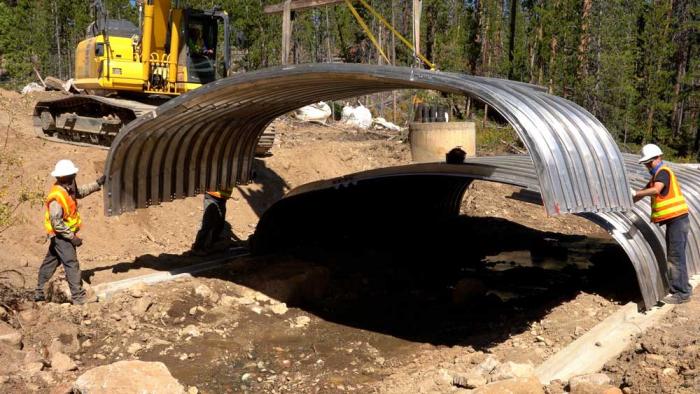
Denver Water crews install a new culvert over Cabin Creek in Grand County in partnership with the U.S. Forest Service and Grand County Learning By Doing. The new culvert will improve habitat for native cutthroat trout in the stream. Photo credit: Denver Water.
Denver Water’s groundbreaking Lead Reduction Program was recognized by the national utility association and also was highlighted by leaders at the Environmental Protection Agency earlier this year for the jobs it created and its unique approach to diverse communities.
Replacing all the old, customer-owned lead service lines in Denver Water’s service area at no direct cost to the customer will take 15 years to complete, and it’s just one of the major undertakings that make up the utility’s 10-year forecast for an estimated $2.6 billion investment into the system that supports about 25% of the state’s population, including Colorado’s capital city.
About 90% of the forecast investment over the next decade is dedicated to large projects and regular annual inspection and maintenance programs that protect customers, position Denver Water for the future and continue regular monitoring programs for infrastructure already in place. The remaining investment focuses on maintenance and improving the resiliency of the system.
Rivers and creeks in Grand County are part of Denver Water’s North Collection System. Water flows through the Moffat Tunnel, under the Continental Divide, to Gross and Ralston reservoirs. Image credit: Denver Water.
Here’s the release from Denver Water (Todd Hartman):
Denver Water and Boulder County have entered into an agreement related to the Gross Reservoir expansion that marks the final step in a nearly 20-year federal, state and local review to permit the project. Denver Water will commit nearly $13 million and make significant adjustments to construction practices to address the County’s concerns over impacts to the local community and environment, as well as provide a contribution of land to Boulder County’s open space inventory. In exchange, Boulder County agrees that the project may proceed, with construction expected to begin in April 2022.
“We appreciate the County’s effort to work through the issues and come to an agreement that will help ease concerns about the project’s impact on nearby residents, bring benefits to Boulder County residents through enhancements to its trails and open spaces and allow Denver Water to proceed on an undertaking critical to the water security of 1.5 million people in the Denver region,” said Denver Water CEO/Manager Jim Lochhead. “Denver Water and Boulder County have shared values. We both believe deeply in the need to address climate change, conserve our water resources and protect the region’s precious environment. This agreement reflects those values through dedicated funding and actions on the ground.”
The settlement puts to rest a federal lawsuit filed by Denver Water in July, asking the court to resolve a conflict centered around whether Boulder County has any land-use permitting authority over the project given the Federal Energy Regulatory Commission’s order requiring Denver Water to proceed with expansion of the reservoir.
The agreement includes numerous components across multiple areas of emphasis. They include:
Reducing construction and traffic impacts
$5 million to be administered by Boulder County to address specific concerns that may arise over noise, light and dust impacts to residents near the project.
Steps to reduce haul traffic on area roads, including development of an on-site quarry (later to be largely submerged by the reservoir), restrictions on hours when travel and work can occur on local roadways and other efforts to limit congestion.
Permanent improvements to some roads and intersections.
Traffic reduction efforts to include a rideshare program that creates incentives for workers to carpool from a staging area below Coal Creek Canyon, and certain “no truck” days.
Environmental and recreational enhancements
Transfer of 70 acres of Denver Water land near Walker Ranch Open Space to Boulder County, with deed restrictions limiting it to open space and conservation uses, along with easements over utility-owned land to allow for trail connections through the reservoir area.
$5.1 million for use in acquiring land for open space, conservation easements and trail corridors.
$1 million for restoration of the South Saint Vrain Creek on the Hall Ranch Lyons Quarry site; any remaining funds from the project can be used for other creek or wetland projects in the South Boulder Creek watershed.
$250,000 over the five-year construction period for use by Boulder County for additional rangers, communication staff, signage and shuttles to address recreational closures during construction.
Commitments to conservation and climate action
$1.25 million to offset carbon emissions estimated to be generated by the project, even as Denver Water notes those emissions will be offset over time by the hydropower produced by the dam. The county will invest the funds in various emissions reductions projects.
$250,000 toward a pilot program to explore using “biochar” to reduce the carbon emissions related to tree removal associated with the project.
Use of hydropower to operate most of the construction project and fly ash or other natural constituents in the concrete, which reduces CO2 production.
Continued work by Denver Water to conserve and reduce water use, spanning programs that include recycled water, limits on summer water, tiered rate structures and efficiency improvements at the customer-by-customer level.
Denver Water has worked earnestly for years with local governments and citizen groups on the West Slope to address the impacts of an expanded Gross Reservoir. Those talks, often intense, and spanning half a decade, resulted in the Colorado River Cooperative Agreement in 2013, an unprecedented collective effort involving 18 signatories and 40 partner organizations that began a new era of collaboration and conflict-resolution between Denver Water and the West Slope to provide environmental benefits and protections for the Colorado River watershed.
The utility also made — and in many cases has already carried out — additional commitments worth tens of millions of dollars to offset impacts of the reservoir expansion in conditions attached to permits issued by the U.S. Army Corps of Engineers and the Federal Energy Regulatory Commission, as well as through separate agreements with the U.S. Forest Service.
Previous commitments have also included projects of direct benefit to Boulder County: raising the dam by an additional 6 feet to create 5,000 acre-feet of storage space in Gross Reservoir for environmental flows in South Boulder Creek as well as to bolster water supplies for the cities of Boulder and Lafayette, greater production of clean energy from the hydroelectric facility at Gross Reservoir, improvements to portions of South Boulder Creek damaged in the 2013 floods and expanded recreational opportunities at the reservoir.
“In the two decades Denver Water has spent preparing for the project, we have been driven by a singular value: the need to do this expansion the right way, by involving the community, by upholding the highest environmental standards and by protecting and managing the water and landscapes that define Colorado,” Lochhead said. “Boulder County and its residents share these perspectives, and we look forward to continuing to work with them as the project moves ahead.”
Changes in landscaping regulations for new Colorado Springs developments are on the horizon, the latest effort to curtail the use of water-thirsty lawns as drought continues to grip the West and pressure the Colorado River, the source of up to 70 percent of the city’s water supply.
The rules would reduce the amount of turf a residential lot would be allowed to have to minimize use of the city’s water supply on landscaping.
Part of Retool COS, a revamp of all city regulations governing development, the turf restrictions could be adopted as early as next May.
But those rules won’t affect existing sprawling lawns and high water-using plants. Officials hope the use of tiered water rates and education will encourage property owners to reduce demand, which already has happened.
As the consequences of severe drought become more apparent, Colorado Springs residents should recognize the condition of the state’s rivers has a direct impact on them, says Colorado Springs Utilities spokesperson Natalie Eckhart…
West Drought Monitor map October 26, 2021.
Drought in the West has spanned 20 years, and on Oct. 18, the Bureau of Reclamation released its Two-year Probabilistic Projections that updated modeling for inflows at Lake Powell and Lake Mead, fed by the Colorado River, showing the reservoirs are at risk of reaching critically low levels…
The Bureau of Reclamation study removed the wet period of the 1980s from the calculations and “further underscores the possible dire drought conditions that the [Colorado] Basin may experience in the next two years and the need for immediate action to bolster resiliences going forward,” the Water for Colorado Coalition said in a release. The coalition is made up of nine organizations — including The Nature Conservancy, Conservation Colorado, Trout Unlimited and Western Resource Advocates — that work to ensure the state’s rivers support those who depend on them.
The study and projections illustrate “the grim state of hydrology in the Basin and offers an impetus for urgent collaborative action,” the coalition said.
“The Colorado River is in trouble, and under the status quo there is uncertainty as to how the River system will continue to support thriving economies, communities, and river systems within the state, let alone the 40 million people, trillion dollar economic market, diverse cultures, and myriad fish and wildlife habitats that rely on it.”
The coalition urged water users to incorporate all the tools available to “increase preparedness and resilience to climate change,” including voluntary conservation efforts, forest management and restorative agricultural practices to boost soil health and reduce loss of water…
For Colorado Springs Utilities, the need to monitor and conserve water is a pragmatic one, not being located on a river system but rather relying heavily on transmountain supplies, most notably from the Colorado River.
About 50 percent of the city’s water supply comes from the Colorado River Basin. That portion rises to 70 percent with reuse, a method that allows for additional use of previously used water. For example, once water is used for domestic purposes, it’s treated and reused in the city’s non-potable system.
“We take the risks very seriously and employ a number of mitigation strategies,” Colorado Springs Utilities Board Chair Wayne Williams says via email.
Among those:
• Diversifying Colorado River sources by acquiring and developing rights from various other sources, including share agreements with lower Arkansas River Valley agricultural users.
• Expanding the current infrastructure to allow for more storage. Utilities has spent millions of dollars in recent years repairing and upgrading dams at its reservoirs for maximum storage potential. It secured the equivalent of a third of the city’s supply by inking a storage contract at Pueblo Reservoir and building the Southern Delivery System pipeline to Colorado Springs, which became operational in 2016. It’s also in the planning and research stage of building a new reservoir in the White River National Forest in Eagle County to perfect water rights owned by the city and Aurora since the 1950s.
• Reducing per capita water consumption through efficiency and conservation measures. Data show the average use per person in Colorado Springs dropped from 139 gallons per day in 2000 to 82 gallons per day this year, Springs Utilities spokesperson Jennifer Kemp says. Moreover, of that 139 gallons some 20 years ago, 60 percent went for outdoor use, while outdoor use today comprises only 41 percent of total usage per person.
• Exploring more uses for the city’s non-potable water supply.
• Researching the feasibility of incorporating recycled water into the domestic supply.
Now, the city’s Retool COS land use code proposes to incorporate “recognized water conservation principles” into development requirements to conserve water.
The proposal calls for reducing consumption through use of xeriscape concepts and “standards for the selection, installation, and maintenance of organic soil amendments and plant materials, and the conservation of indigenous plant[s].”
Those steps will, in turn, reduce mowing and fertilization requirements of limited turf areas, preserve species habitat, and curtail air, water and noise pollution, Retool COS says.
Specifically, the proposed code change would apply to all single-family and two-, three- and four-family residential projects by limiting turfgrass to no more than 25 percent of the portion of the lot not covered by a primary or accessory structure or a driveway, patio, deck or walkway.
Also, no contiguous area of less than 100 square feet could be planted with high-water-use turfgrass or other landscaping with spray irrigation. This provision’s intent is to minimize pockets of high water turf outside of the “tree lawn” — that space between a detached sidewalk and street curb, Planning Supervisor Morgan Hester says in an email…
Past efforts have included education about plants and their individual watering needs, and tiered rate structures that increase the per-unit cost of water based on levels of usage. Simply put, the more water you use, the higher the price, or the less water you use, the lower your bill will be.
Much of the news coming out of the U.N. climate conference has focused on the spectacle, and how countries’ pledges aren’t on track to prevent dangerous climate change. But behind the scenes, there is reason for hope.
In many countries, the energy transition is already underway as falling costs make renewable energy ubiquitous and more affordable than fossil fuels. A growing number of world leaders agreed at the climate summit to reduce methane emissions and aim for net-zero emissions.
The challenge for government officials now is figuring out how to help scale up clean energy dramatically while reducing fossil fuel emissions, and still meeting the rapidly growing energy demands of billions of people in developing and emerging economies. With an ongoing energy crisis creating shortages and record high prices in several countries, navigating this early stage of the energy transition requires thoughtful policies and well-prioritized plans.
As climatepolicy experts with decades of experience in international energy policy, we identified six strategic priorities that could help countries navigate this tricky terrain.
Meeting the Paris climate agreement goal of keeping global warming under 1.5 degrees Celsius (2.7 F) will require reducing fossil fuels and increasing renewable energy and energy efficiency, as well as keeping carbon dioxide out of the atmosphere with techniques such as carbon capture and storage or use (CCS and CCU). International Renewable Energy Agency
A price on carbon, often created through a tax or carbon market system, captures the cost of harms caused by greenhouse gas emissions that companies don’t currently pay for, such as climate change, damage to crops and rising health care costs. It is particularly critical for power production and energy-intensive industries.
One goal of the Glasgow negotiations is to write rules to help carbon markets function well and transparently. That’s essential for effectively meeting the many net-zero climate goals that have been announced by countries from Japan and South Korea to the U.S., China and those in the European Union. It includes rules on the use of carbon offsets, which allow individuals or companies to invest in projects elsewhere to offset their own emissions. Carbon offsets are currently highly contentious and not delivering trustworthy emissions credits.
2) Focus attention on the hard-to-decarbonize sectors
Shipping, road freight and industries like aluminum, cement and steel are all difficult places for cutting emissions, in part because they don’t yet have tested, affordable replacements for fossil fuels. While there are some innovative ideas, competitiveness concerns – such as companies moving production out of the country to avoid regulations – have been a key barrier to progress.
Europe is trying to overcome this barrier by establishing a carbon border adjustment mechanism, which would tax imports of goods that didn’t face the same level of carbon taxes at home.
3) Get China and other emerging economies on board
It is clear that coal, the most carbon-intensive fossil fuel, needs to be phased out fast, and doing so is critical to both the U.N.‘s energy and climate agendas. Given that more than half of global coal is consumed in China, its actions stand out, although other emerging economies such as India, Indonesia and Vietnam are also critical.
Support for innovation has brought cutting-edge renewable power and electric vehicles much faster than anticipated. More is possible. For example, offshore wind, geothermal, carbon capture and green hydrogen are new developments that can make a big difference in years to come.
At the climate conference, a coalition of world leaders launched what they call the “Breakthrough Agenda” – a framework for bringing governments and businesses together to collaborate on clean energy and technology. The Glasgow Breakthroughs include making electric vehicles the affordable norm, bringing down clean energy costs, scaling up hydrogen energy storage and getting steel production to near-zero emissions, all by 2030.
The countries and companies that lead in developing these new technologies will reap economic benefits, including jobs and economic growth. More opportunities exist in market design, social acceptance, equity, regulatory frameworks and business models. Energy systems are deeply interconnected to social issues, so changing them will be successful only if the solutions look beyond the technology to societal needs.
5) Prioritize green financing
Over 160 banks and investment groups are involved in another coalition that has agreed to put pressure on high-emissions industries by tying lending decisions to the goal of global net-zero emissions by 2050.
Ramping up green financing will require transparent taxonomies, or guidelines, for defining green and clean investments; science-based transition plans for companies and financial institutions; and a hard look at portfolios of financial institutions given the risk of substantial stranded fossil fuel assets, such as coal power plants that haven’t reached the end of their life spans but can no longer be used.
The Biden administration announced a sweeping set of rules on Nov. 2, 2021, for reducing emissions of methane, a greenhouse gas many times more potent than carbon dioxide that comes from leaking oil and gas infrastructure, coal mines, agriculture and landfills. Methane doesn’t stay in the atmosphere as long, so stopping emissions can have faster climate benefits while carbon emissions are reduced.
This type of coalition, based on a tightly focused issue, can bring meaningful emissions reductions in places that are less likely to support broader climate agreements.
Not one solution
It is likely that U.N. energy and climate deliberations will continue to move in fits and starts. The real work needs to take place at a more practical implementation level, such as in states, provinces and municipalities.
If there is one thing we have learned, it is that mitigating climate change will be a long slog. While it’s uncontested that the benefits of greenhouse gas mitigation far exceed the costs, politicians need to show that the many energy transitions emerging are good for economies and communities, and can create long-lasting jobs and tax revenue.
This story is part of The Conversation’s coverage of COP26, the Glasgow climate conference, by experts from around the world.
Amid a rising tide of climate news and stories, The Conversation is here to clear the air and make sure you get information you can trust. Read more of our U.S. and global coverage.
This article was updated Nov. 3, 2021, with over 100 countries signing onto the methane pledge.
Gross Reservoir — The Gross Reservoir Expansion Project will raise the height of the existing dam by 131 feet, which will allow the capacity of the reservoir, pictured, to increase by 77,000 acre-feet. The additional water storage will help prevent future shortfalls during droughts and helps offset an imbalance in Denver Water’s collection system. With this project, Denver Water will provide water to current and future customers while providing environmental benefits to Colorado’s rivers and streams. Photo credit: Denver Water
Commissioners say they hate the project, but the odds of winning a lawsuit were poor. Denver Water upped the offer to help mitigate impacts of construction to $12.5 million.
The Boulder County Commissioners on Tuesday unanimously approved a settlement allowing Denver Water to expand the dam and pool at Gross Reservoir, despite vocal opposition from some residents, after a $10 million mitigation deal was sweetened by $2.5 million to soften construction impacts for neighbors.
Denver Water is likely to vote Wednesday to approve a total of $12.5 million in mitigation and open space donations for Boulder County, after last-minute talks raised the sum.
The commissioners said they were heartsick at the destruction the dam expansion will cause for neighbors and for revered county open lands. But, they added, county attorneys advised them that federal laws preempt their planning process because the existing dam includes a hydroelectric generator and is therefore controlled by federal laws.
The attorneys said Boulder County would lose a federal suit filed by Denver Water and that the agency would withdraw its mitigation offer if they delayed a vote.
Denver Water already has the federal approval it needs to raise the dam on South Boulder Creek by 131 feet, and inundate the surrounding forest for 77,000 more acre-feet of storage, nearly tripling capacity…
The commissioners wanted Denver Water to go through the county’s existing “1041” land use process, allowed under state law, before construction on the Gross Reservoir expansion begins. But in July, Denver Water sued, saying federal laws superseded Boulder County’s process and that its federal permit required the utility to begin construction by 2022. Boulder County was intentionally slowing down the project, Denver Water argued…
Denver Water Manager Jim Lochhead said in a statement after the vote, “I appreciate that this was a hard and emotional decision for the Boulder County Commissioners.
“We have tried for the last year to go through the County’s 1041 land use process, and only after delays were we forced to file litigation to prevent violation of the order by FERC for us to commence construction of the project. Denver Water continues to be committed to do everything in our power to mitigate local impacts of construction,” Lochhead said.
Construction would impact surrounding forests, trails, roads and neighbors, and also temporarily cut off access to popular open spaces in parts of the area. Commissioner Marta Loachamin said she toured areas around Gross Reservoir for the first time in June, and was struck by markings in the forest showing how many trees will have to be removed and how high the new water pool will rise in the canyon.
Conservation groups who have sued to stop the dam expansion can continue to negotiate with Denver Water for additional mitigation, deputy county attorney David Hughes told the commissioners. Denver Water has indicated they would continue to talk with the groups, he said…
The conservation groups are adamant Boulder County could have negotiated for more mitigation. Save the Colorado and PLAN-Boulder County said they had proposed $70 million in mitigation as a settlement, and that Boulder County stopped including them in talks last week.
Gross Dam enlargement concept graphic via Denver Water
The agreement with Denver Water now includes:
$5 million for the construction impacts on immediate neighbors of the reservoir.
$5.1 million to Boulder County open space funding to acquire new land or repair and maintain trails and facilities under extra strain from visitors who can’t use Gross Reservoir spaces.
$1.5 million to mitigate greenhouse gas emissions from construction.
$1 million for South St. Vrain Creek restoration.
A transfer of 70 acres of Denver Water land near Gross Reservoir to Boulder County to expand Walker Ranch Open Space.
With the United Nations’ climate conference in Scotland turning a spotlight on climate change policies and the impact of global warming, it’s useful to understand what the science shows.
I’m an atmospheric scientist who has worked on global climate science and assessments for most of my career. Here are six things you should know, in charts.
What’s driving climate change
The primary focus of the negotiations is on carbon dioxide, a greenhouse gas that is released when fossil fuels – coal, oil and natural gas – are burned, as well as by forest fires, land use changes and natural sources.
The Industrial Revolution of the late 1800s started an enormous increase in the burning of fossil fuels. It powered homes, industries and opened up the planet to travel. That same century, scientists identified carbon dioxide’s potential to increase global temperatures, which at the time was considered a possible benefit to the planet. Systematic measurements started in the mid-1900s and have shown a steady increase in carbon dioxide, with the majority of it directly traceable to the combustion of fossil fuels.
Once in the atmosphere, carbon dioxide tends to stay there for a very long time. A portion of the carbon dioxide released through human activities is taken up by plants, and some is absorbed directly into the ocean, but roughly half of all carbon dioxide emitted by human activities today stays in the atmosphere — and it likely will remain there for hundreds of years, influencing the climate globally.
If civilization stopped its carbon dioxide-emitting activities today, it would still take many hundreds of years for the concentration of carbon dioxide in the atmosphere to fall enough naturally to bring the planet’s carbon cycle back into balance because of carbon dioxide’s long life in the atmosphere.
How we know greenhouse gases can change the climate
Multiple lines of scientific evidence point to the increase in greenhouse emissions over the past century and a half as a driver of long-term climate change around the world. For example:
Laboratory measurements since the 1800s have repeatedly verified and quantified the absorptive properties of carbon dioxide that allow it to trap heat in the atmosphere.
Long-term records from ice cores, tree rings and corals show that when carbon dioxide levels have been high, temperatures have also been high.
Our neighboring planets also offer evidence. Venus’ atmosphere is thick with carbon dioxide, and it is the hottest planet in our solar system as a result, even though Mercury is closer to the sun.
Temperatures are rising on every continent
The rising temperatures are evident in records from every continent and over the oceans.
The temperatures aren’t rising at the same rate everywhere, however. A variety of factors affect local temperatures, including land use that influences how much solar energy is absorbed or reflected, local heating sources like urban heat islands, and pollution.
The Arctic, for example, is warming about three times faster than the global average in part because as the planet warms, snow and ice melt makes the surface more likely to absorb, rather than reflect, the sun’s radiation. Snow cover and sea ice recede even more rapidly as a result.
What climate change is doing to the planet
Earth’s climate system is interconnected and complex, and even small temperature changes can have large impacts – for instance, with snow cover and sea levels.
Changes are already happening. Studies show that rising temperatures are already affecting precipitation, glaciers, weather patterns, tropical cyclone activity and severe storms. A number of studies show that the increases in frequency, severity and duration of heat waves, for example, affect ecosystems, human lives, commerce and agriculture.
Historical records of ocean water level have shown mostly consistent increases over the past 150 years as glacier ice melts and rising temperatures expand ocean water, with some local deviations due to sinking or rising land.
While extreme events are often due to complex sets of causes, some are exacerbated by climate change. Just as coastal flooding can be made worse by rising ocean levels, heat waves are more damaging with higher baseline temperatures.
Climate scientists work hard to estimate future changes as a result of increased carbon dioxide and other expected changes, such as world population. It’s clear that temperatures will increase and precipitation will change. The exact magnitude of change depends on many interacting factors.
A few reasons for hope
On a hopeful note, scientific research is improving our understanding of climate and the complex Earth system, identifying the most vulnerable areas and guiding efforts to reduce the drivers of climate change. Work on renewable energy and alternative energy sources, as well as ways to capture carbon from industries or from the air, are producing more options for a better prepared society.
At the same time, people are learning about how they can reduce their own impact, with the growing understanding that a globally coordinated effort is required to have a significant impact. Electric vehicles, as well as solar and wind power, are growing at previously unthinkable rates. More people are showing a willingness to adopt new strategies to use energy more efficiently, consume more sustainably and choose renewable energy.
Scientists increasingly recognize that shifting away from fossil fuels has additional benefits, including improved air quality for human health and ecosystems.
The Dixie wildfire in California this year was the second-largest in state history, and was fuelled by high temperatures and drought. Credit: Eric Thayer/Bloomberg/Getty
A Nature survey reveals that many authors of the latest IPCC climate-science report are anxious about the future and expect to see catastrophic changes in their lifetimes.
As a leading climate scientist, Paola Arias doesn’t need to look far to see the world changing. Shifting rain patterns threaten water supplies in her home city of Medellín, Colombia, while rising sea levels endanger the country’s coastline. She isn’t confident that international leaders will slow global warming or that her own government can handle the expected fallout, such as mass migrations and civil unrest over rising inequality. With such an uncertain future, she thought hard several years ago about whether to have children.
“My answer was no,” says Arias, a researcher at the University of Antioquia in Medellín, who was one of the 234 scientists who wrote a climate-science report published by the Intergovernmental Panel on Climate Change (IPCC) in August (see go.nature.com/3pjupro). That assessment, which makes clear that the world is running out of time to avoid the most severe impacts of climate change, will figure prominently in climate negotiations over the next two weeks at the COP26 meeting in Glasgow, UK.
Many other leading climate researchers share Arias’s concerns about the future. Nature conducted an anonymous survey of the 233 living IPCC authors last month and received responses from 92 scientists — about 40% of the group. Their answers suggest strong scepticism that governments will markedly slow the pace of global warming, despite political promises made by international leaders as part of the 2015 Paris climate agreement.
Six in ten of the respondents said that they expect the world to warm by at least 3 °C by the end of the century, compared with what conditions were like before the Industrial Revolution. That is far beyond the Paris agreement’s goal to limit warming to 1.5–2 °C.
Most of the survey’s respondents — 88% — said they think global warming constitutes a ‘crisis’, and nearly as many said they expect to see catastrophic impacts of climate change in their lifetimes. Just under half said that global warming has caused them to reconsider major life decisions, such as where to live and whether to have children. More than 60% said that they experience anxiety, grief or other distress because of concerns over climate change.
For Arias, who frequently sees the impacts of political instability out of her office window as immigrants from strife-torn Venezuela wander the streets seeking food and shelter, the choice about children came naturally. She says many friends and colleagues have arrived at the same conclusion. “I’m not saying that that is a decision that everyone should make,” she says, “but it’s not something I am struggling with much any more.”
The pessimism expressed by some IPCC panellists underscores the vast gulf between hopes and expectations for the climate summit that began this week in Glasgow. In advance of the meeting, the United States, the European Union, China and others have announced new plans to curb greenhouse-gas emissions, although scientific analyses suggest those plans still fall well short of the Paris goals. Over the next two weeks, countries will formalize — and perhaps even strengthen — those commitments. But making them a reality will require as-yet-unprecedented political mobilization at the national level once leaders return home.
“Right now, governments are just at the stage of providing green promises, but so far we have not seen any actions to curb greenhouse-gas emissions,” says Mouhamadou Bamba Sylla, an IPCC author and climate modeller at the African Institute for Mathematical Sciences in Kigali, Rwanda. Sylla says his home country of Senegal has gone through all the motions and developed adaptation plans for a warming climate, but is anything changing on the ground? “I don’t think so,” he says.
Climate anxiety
The scientists surveyed by Nature are part of the IPCC working group charged with assessing the causes and extent of climate change. Their latest report, approved by 195 governments in August, concluded that fossil-fuel emissions are driving unprecedented planetary changes, threatening both people and the ecosystems that humans rely on for food and other resources. “Unless there are immediate, rapid and large-scale reductions in greenhouse gas emissions, limiting warming to close to 1.5 °C or even 2° C will be beyond reach,” the IPCC said. But in announcing the report, IPCC scientists stressed that these goals could still be achieved.
A separate report from the United Nations Environment Programme last week projected that the climate commitments already announced by nations would put the world on a path towards 2.7 °C of warming by the end of the century (see http://go.nature.com/3vphvtu). Other projections raise the possibility of even more reductions. The Climate Action Tracker, a consortium of scientific and academic organizations, estimates that warming would be limited to 2.4 °C if countries follow through on their latest pledges under the Paris agreement. One of the goals of the climate negotiations is to prompt more-ambitious steps for limiting greenhouse-gas emissions, but most respondents to the Nature survey seemed to be pessimistic about future policies and the amount of warming (see Supplementary information for survey data tables).
The survey results might not be surprising given the decades of limited progress in tackling climate change, but the opinions of climate researchers should raise alarms, says Diana Liverman, a geographer who studies climate at the University of Arizona in Tucson. “I suppose the fact that they’re pessimistic should make us even more worried.”
The Nature survey has limitations: it doesn’t capture the views of 60% of the IPCC authors, and two scientists wrote separately to Nature expressing concerns about the poll precisely because it taps into opinions rather than science. Those who took part did so in a personal capacity, not as representatives of the IPCC. Still, the survey provides a snapshot of the views of a significant proportion of the researchers who wrote the report.
Positive signals
Although the results indicate that many harbour deep concerns, the survey also revealed signs of optimism. More than 20% of the scientists said they expect nations to limit global warming to 2 °C, and 4% said the world might indeed meet its most aggressive goal of limiting warming to 1.5 °C — a target that many scientists and academics wrote off from the moment the Paris agreement was signed in 2015.
Charles Koven, a climate scientist at Lawrence Berkeley National Laboratory in California, draws hope about the future because of advances in science and technology, and rapidly evolving public opinion. One positive development, he says, is that results in the past few years indicate that global average temperatures will level off quickly once humanity stops emitting greenhouse gases into the atmosphere. This is contrary to long-held expectations that warming would continue for decades even if emissions were halted, owing to a lag in the climate system. He also cites plummeting costs of clean-energy technologies, as well as rising public demand for action in the face of increasingly visible climate impacts — such as the wildfires that he and his family have grown accustomed to each year in California.
“Fundamentally, I believe that the majority of people really do care about the future, and that it is possible for governments to coordinate and avoid the worst climate outcomes,” Koven says.
Two-thirds of the respondents said they engage in climate advocacy, and almost all of those who do said they promote climate science through speeches, publications or videos. Some 43% of those who engage said they have signed letters or petitions, and 40% said they have contacted lawmakers to advocate for climate policies. One-quarter said they have joined demonstrations.
The tables turned, however, when scientists considered whether the IPCC should take on more of an advocacy role, which would be a sharp break from its remit of neutrally assessing the science: nearly three-quarters of the respondents said the IPCC should refrain from climate advocacy. One survey respondent gave the IPCC credit for sticking to its core mission. “By focusing on the best available scientific information, it has avoided the politicization that has occurred with other scientific issues, such as masking and vaccinating for COVID-19,” the respondent said.
When asked to name the biggest accomplishments of the IPCC’s climate-science working group, nearly 40% of the respondents said the panel effectively informs the public and policymakers about climate change and the part that humans are playing. Many (27%) also value how the IPCC assesses and synthesizes evidence.
Since it issued its first report in 1990, the IPCC has gradually increased the representation of researchers from the global south. Nearly 80% of respondents said that the IPCC includes suitable representation of experts from all countries. Arias disagrees, saying it could do more to actively recruit scientists from the global south. Sylla says the IPCC has done an adequate job on that front, given the geographical imbalance in the broader climate-science community. However, he adds, the organization could do more in terms of local outreach to promote the science and to engage policymakers after its reports are published. “I want the IPCC to be more aggressive on that,” he says.
Like Arias, Sylla sees the impacts of political and economic instability as people pile aboard small boats leaving Senegal for a perilous journey in search of a better future. He also fears the situation will only get worse as the climate warms. Although he is currently planning to build a house for his family — far from the sea and in a location that is unlikely to flood — Sylla isn’t convinced that Senegal is where he wants to ride out the climate storm. But he is keenly aware of the fact that Europe and the United States are also vulnerable to the inevitable impacts of global warming. “So the question is, where do you go?”
Western Navajo could have an innovative economy with water, said Delegate Paul Begay.
“The number one need here in Western Navajo is water,” Begay said. “Economic development – hotels, restaurant – we can do all that, we can build all that, but we don’t have water.”
Once a water main is constructed, perhaps Western Navajo can compete with cities and municipalities nearby, said Begay, who’s pushing for the Antelope Canyon (Tsébighánlini/Tsébii’ Hazdeestas) Development Area in Łichíi’ii and for Phase I of the Western Navajo Pipeline.
Both water delivery system projects amount to $84.3 million. The pipeline alone is estimated to be nearly $45 million, the development area $30.7 million, and Antelope Marina $8.5 million.
The pipeline would take water from Lake Powell through the city of Page and along Navajo Route 20 (U.S. Route 89T) toward Coppermine, Bodaway-Gap, U.S. Route 89, and up toward Na’ní’á Hasani.
In the future, the pipeline would have lateral roots to Tónaneesdizí and Moenkopi on U.S. Route 160.
“This will get water to LeChee,” Begay explained. “It will get water to Coppermine, down to Bodaway-Gap and surrounding areas.
“It’s a seed that will be planted,” he said. “Ten to twenty years from now, we anticipate that the water will reach Tuba City, Coalmine Canyon, Cameron – the whole western region (18 chapters). Tonalea-Red Lake, Kaibeto, Ts’ahbiikin – we’ll eventually reach those areas.”
Infrastructure system
Both projects involve planning and constructing various water infrastructure components and facilities in Łichíi’ii, Bodaway-Gap, and Cameron.
Those components include a water treatment plant, miles of water and power lines, wells, and storage tanks.
Begay said there isn’t a water main in Western Navajo because of water rights and claims in the upper and lower Colorado River basins. The Navajo Nation has completed a water settlement that recognizes some of its water rights to the Colorado River system. The tribe also has an additional outstanding claim.
Right now, the Page Water Treatment Plant provides safe drinking water to the community of Łichíi’ii.
“So, we are basically at the mercy of the city when it comes to that,” Begay said. “One of our justifications for beginning this Western Navajo Pipeline is that we want to be self-sufficient, self-reliant…
Begay’s legislation (CJY-39-21) asks for $58.2 million in Sih Hásin Funds to the Navajo Nation Water Management Branch for Phase I of the Western Navajo Pipeline.
“We (along with co-sponsors Carl Slater, Herman Daniels Jr., Otto Tso and Thomas Walker Jr.) asked for $58 million because that was the shortfall,” Begay said.
Begay said Phase I could be eligible for funding under the American Rescue Plan Act. If it is suitable, the funds will replace the money allocated from Sih Hásin.
“Funding will jump start our (own) water treatment facility (in Western Navajo),” Begay said. “We don’t know exactly how many phases (it will take to complete the pipeline).
“We’re looking at this (Sih Hásin Fund) to help us with our procurement process,” he said, “the assessment process, getting the right-of-way. This $58 million will fund that (over) two to two and half years.
“That’s what we call a ‘shovel-ready project,’ ready for work to begin,” he said. “After that, it’ll take another four to four and half years for the actual work to happen and to complete.”
This means that Phase I will be completed within five years, and the pipeline should reach Tónaneesdizí and the rest of the Western Navajo region within 20 years…
No water in the west
A water settlement nine years ago would have sent a water delivery pipeline from Lake Powell through the entire Navajo Nation and connected to the Navajo-Gallup Water Supply Project, which is now under construction.
President Jonathan Nez, then a Council delegate, and his colleagues voted down the Navajo-Hopi Little Colorado River Rights Settlement.
The Council at the time, in 2012, voted six in favor and 15 opposed.
The proposed settlement agreement included about $4 million for water projects for the Navajo and Hopi nations.
Now, Western Navajo is at risk from a water crisis. While a storage tank that will provide water storage for the Gap Water System, a health clinic, and the Indian Health Service Koko pipeline (extending water to 32 existing homes) is being built in Bodaway-Gap, tour businesses in the Tsébighánlini/Tsébii’ Hazdeestas area need water.
“We have over 15 businesspeople that run the slot canyon tours, and that’s all they have,” Begay said. “They don’t have water. They would like to add restaurants and motels (to their businesses), so we can be competitive. This Western Navajo Pipeline will help in that area…
Begay added, “If anybody needs water, it’s the Navajo people. We’ve been here for hundreds of years, supposedly … the original landlords here. We should be the one who should have use of the water first rather than transported or just being let go, and it’ll go somewhere else.”
From the 2018 Tribal Water Study, this graphic shows the location of the 29 federally-recognized tribes in the Colorado River Basin. Map credit: USBR
The Southwest’s active monsoon season this year washed tons of sand into the Colorado River, where it could have helped shore up the Grand Canyon’s withering beaches, if not for one big problem: The water stored behind Glen Canyon Dam is at an all-time low after more than two decades of drought.
As a result, the federal government’s dam managers have hit pause on an environmental program that calls for controlled floods out of Lake Powell when there’s enough sand for the water to push up and rebuild sandbars and beaches, preserving the national park’s ecology, river trip campsites and archaeological sites.
Prodigious rains from the summer and fall monsoon dumped the sand that created the right conditions for a November flood but left nowhere near enough water to prop up the shrinking reservoir.
The U.S. Bureau of Reclamation cited projected losses in the dam’s hydropower production as a reason to hold back the envisioned floodwaters. That could save up to $4 million for electric ratepayers across the West, but it also sets an ominous precedent for a river that’s becoming too drained by aridification and overuse to sustain its own health…
The dam that created Lake Powell in the early 1960s choked off more than nine-tenths of the Colorado’s contribution to Grand Canyon’s sand flow, dropping it on the new lakebed and sending clear water downstream from the hydropower plant’s turbines.
That left the sand that the Paria River washes out of southern Utah toward the Colorado at Lees Ferry to build beaches in the upper Grand Canyon, and the sand from Arizona’s Little Colorado River deeper in the canyon…
Starting in the 1980s, a group of scientists puzzling over how to restore a semblance of nature in the canyon imagined a program opening the dam’s bypass tubes to create artificial floods whenever enough sand accumulated for the pulse of water to push it downstream and deposit it on bars and beaches.
Benefits would include everything from the creation of shallow, warm backwaters more familiar to the river’s native fishes to coverage of threatened artifacts, and restoration of beaches for float trips that account for more than 100,000 user days on the river each year.
The occasional planned floods began in 1996, four years after Congress passed the Grand Canyon Protection Act mandating dam operations that balance water and power needs with the canyon’s environment. The floods continued haltingly, every several years until the Obama administration adopted a plan that supporters believed took costs and politics out of the equation and would trigger a flood whenever sand measurements at Lees Ferry warranted one.
That would include this fall when Utah State University river researcher Jack Schmidt said the sand is more plentiful than it is in three out of every four years.
Schmidt was among the scientists who first envisioned the controlled floods, and he later directed the U.S. Geological Survey’s Grand Canyon Monitoring and Research Center. He said he fears the government’s decision against flooding when there’s this much sand indicates that low water levels are leading to backsliding on the commitment to manage according to the science.
“This decision takes us dangerously close to the old world where politics dictates not having a flood,” Schmidt said…
Reclamation officials at the bureau’s Upper Colorado Basin office in Salt Lake City decided against conducting a flood this fall. They did not respond to a request for comment, but a bureau presentation at the technical work group’s fall meeting cited the Western Area Power Administration’s hydropower cost estimates as a reason that regional state and federal officials advised against pushing more water downstream.
They determined that a 60-hour flood of the sort that has occurred before would cost $1.3 million in lost hydropower revenues, while an unprecedented 192-hour flood — allowed by rule when sand accumulates like it did this year — would cost $3.7 million.
A 192-hour flood could have been especially problematic, the officials reported, because it would have dropped the lake’s elevation by 5 feet, to within about 10 feet of the dam’s buffer zone for producing hydropower without damaging the turbines. A 60-hour flood would limit the reduction to about 2 feet…
Before and after photos of results of the high flow experiment in 2008 via USGS
Controlled floods, officially known as high-flow experiments, are no cure for what ails the Grand Canyon. They temporarily restore beaches, which are then eroded over time by flows that fluctuate to meet water and power demands. Only the next flood can keep them from eroding to critically low levels.
Today, with no flood since 2018, the sandbars and beaches are as low as they’ve been in a decade, and are projected to decline another 10% before next year’s rafting season. Had the government scheduled a 192-hour flood, the beaches were projected to grow by 75%, and to remain 50% larger after winter erosion…
“It seems as though the Grand Canyon Protection Act was not given much weight,” said Peter Bungart, a cultural resources officer for the Hualapai Tribe.
That law’s mandate for managing the dam in harmony with canyon resources is “clear as mud,” according to University of Utah law professor Robert Adler. It first directs the government to release water in a way that protects and restores the natural and recreational resources for which Grand Canyon National Park and Glen Canyon National Recreation Area were established.
Then it says to do that in a way that’s consistent with the suite of other laws governing the river’s water storage and distribution agreements, laws often in conflict with the canyon’s environmental interests…
Still, environmental groups and tribes objecting to the flood’s rejection and the exclusive decision-making process sent a joint letter to the Bureau of Reclamation on Wednesday seeking a greater role in future flood debates, and greater consideration to the Grand Canyon Protection Act…
If losing a few million dollars in revenues is to become a flood disqualifier, [Larry] Stevens said, there may never be more floods.
November 2012 High Flow Experiment via Protect the Flows
Colorado’s map from the Oct. 26, 2020, U.S. Drought Monitor looked like some kind of fresh hell, its swaths of red and orange highlighting what happens when there is too much heat and not enough water for a long time. Colorado’s resulting fire crisis had good company; much of the Western United States had similar stories of people running from their homes as the fires closed in.
It was so 2020, as further evidenced by the strain on the Colorado River and the ongoing wake-up calls in communities that receive its water – directly or diverted.
Locally, Chaffee County’s economies lean on supplemental summer releases into the Arkansas River. Despite two decades of drought and aridification, the Arkansas has been able to remain visually stunning in the high season – not entirely due to the workings of nature. It’s uncertain how that may change.
Colorado Drought Monitor October 27, 2020.
One year later, the colors on Colorado’s map have softened to shades of beige and an innocuous-looking lemon-yellow, with darker spots remaining in the northwest corner and the far southwest edge. With some rain to its credit over this past summer and perhaps just plain luck, Colorado managed to escape the land-killing infernos such as the Cameron Peak Fire and the aptly named East Troublesome Fire of 2020.
Nobody knows exactly how those 2020 fires would have raged had not a major snowstorm rolled in on Oct. 25 last year and snuffed their trajectories. As it stood, East Troublesome charred 193,212 acres and 580 structures.
Snow is good. And traditionally it has been the utility player, if not hero, in the seven-state region served by the Colorado River, where, in a perfect world, it stores naturally on Colorado’s mountain peaks. Upon melting with a timed grace and running off in mid-spring, it flows south and west to the Gulf of California, serving some 40 million people en route.
Thanks to warmer temperatures and aridification, that sweet rhythm is off. Spring runoff gushes from the peaks too fast and sinks into the parched landscape before enough of it gets to its intended waterways.
Colorado Drought Monitor map October 26, 2021.
That said, later-season snows helped address an alarming dry trend in the spring of 2021, helping Chaffee County look better on the Drought Monitor and delighting those with fixations on the SNOTEL system and its high-country snowpack reports. The infusion of summer rain gave the appearance of a kinda-maybe monsoon pattern locally.
Water flowing through the Fry-Ark system, the trans-basin diversion from the Colorado River that flows out of the Frying Pan River in Pitkin County and which is released from Turquoise Lake and Twin Lakes, once again plumped the moneymaking waves in the Arkansas River from July 1 until mid-August this year.
Under the Voluntary Flow Management Program with the Southeastern Colorado Water Conservancy District (SECWCD), 10,000 acre-feet of water is allocated during that time; moved to benefit recreation. All told, Fry-Ark sends out an average of 58,000 acre-feet each year, much of it going to agriculture below the Pueblo Reservoir.
It didn’t hurt that the Pueblo Board of Water Works was able to release 6,000 acre-feet from Clear Creek Reservoir early in the summer season. It echoed the cooperative dance of moving large amounts of water that has, by necessity, developed between water entities. This highlights the increased communication that is one of the upsides in the long-reaching, exhaustive conversations about water among an exhaustive list of stakeholders in Colorado and the West.
Chris Woodka, Senior Policy and Issues Management Manager with the Southeastern Colorado Water Conservancy District, said the increasing pressures on water have caused groups to come to the table and seek solutions. “What’s different is we’re talking all the time with each other,” he said. “There was a time when people were wary of how other people were moving water. Everyone now realizes it’s to their advantage to talk.”
With water from Fry-Ark and Clear Creek Reservoir – not to mention rain, the fattened Arkansas River gurgled through the county once again and gave more than a passing nod to the local economies over the summer. Pandemic aside, things seemed nice and easy.
“It almost gives you a false sense of security,” [Greg] Felt said, noting that with continuing drought and aridification, there are increasing signs of hydrological systems not being able to correct themselves.
“That whole program is built on Fry-Ark water,” he said. “There’s a lot at stake here. Diversions from the Fry-Ark project could be seriously impacted, and that’s a major concern.”
“It’s a no-brainer, probably, that a voluntary flow management program will be a lower priority than delivery for consumptive use,” he added.
Indeed, nothing is truly nice and easy anymore as the West faces challenges to just about everything that is known about water and how it continues to serve us…
…with average temperatures in the Colorado River Basin running 2 degrees Fahrenheit hotter than in the 20th century, those original nice ideas [Colorado River Compact] are being retooled or sidelined in the name of badly needed, better ideas; addressing drought, aridification and salination, and how to feed people when the river can’t help so much anymore. A new plan for operating the Colorado River is due in 2026.
The outflow at the bottom of Navajo Dam in New Mexico. Photo: Brent Gardner-Smith/Aspen Journalism
From email from Reclamation (Susan Novak Behery):
In response to decreasing irrigation and increasing flows in the critical habitat reach, the Bureau of Reclamation has scheduled a decrease in the release from Navajo Dam from 350 cubic feet per second (cfs) to 300 cfs for Tuesday, November 2nd, at 4:00 AM.
Releases are made for the authorized purposes of the Navajo Unit, and to attempt to maintain a target base flow through the endangered fish critical habitat reach of the San Juan River (Farmington to Lake Powell). This release change is calculated as the minimum required to maintain the target baseflow.
The San Juan River Basin Recovery Implementation Program recommends a target base flow of between 500 cfs and 1,000 cfs through the critical habitat area. The target base flow is calculated as the weekly average of gaged flows throughout the critical habitat area from Farmington to Lake Powell. Due to low storage and forecast levels in WY 2022, the minimum release of 250 cfs, as documented in the Navajo Record of Decision (2006), may be implemented this winter as long as that release can satisfy the target baseflow.
The world spends an astounding US$423 billion annually to subsidize fossil fuels for consumers – oil, electricity that is generated by the burning of other fossil fuels, gas, and coal. This is four times the amount being called for to help poor countries tackle the climate crisis, one of the sticking points ahead of the COP26 global climate conference next week, according to new UN Development Programme (UNDP) research.
The amount spent directly on these subsidies could pay for COVID-19 vaccinations for every person in the world, or pay for three times the annual amount needed to eradicate global extreme poverty. When indirect costs, including costs to the environment, are factored into these subsidies, the figure rises to almost US$6 trillion, according to data published recently by the International Monetary Fund (IMF).
Instead, UNDP’s analysis highlights that these funds, paid for by taxpayers, end up deepening inequality and impeding action on climate change.
The main contributor to the climate emergency is the energy sector which accounts for 73 percent of human-caused greenhouse gas emissions. Fossil fuel subsidy reforms would contribute to reducing CO2 emissions and benefit human health and well-being, and they are a first step towards correctly pricing energy – one that reflects the ‘true’ and full cost of using fossil fuels to society and the environment.
But UNDP’s analysis shows that fossil fuel subsidy reforms can also be unfair and harmful for households and society if they are poorly designed. While fossil fuel subsidies tend to be an unequalising tool – as the lion’s share of the benefits concentrate among the rich – these subsidies also represent an important portion of poor peoples’ incomes that otherwise must be paid for energy consumption. Fossil fuel subsidies’ removal thus could easily become an income- and energy-impoverishing strategy. This contributes to making fossil fuels reform difficult, and imposes a key barrier to transitioning to clean and renewable energy sources.
The Don’t Choose Extinction campaign features a collective intelligence platform, the Global Mindpool, to help tackle the most important issues of our time. Linking insights from around the world – on the climate emergency, the crisis in nature and inequality – the Global Mindpool will support UNDP to better inform and equip policy makers in government, civil society, and the private sector.
UNDP is the leading United Nations organization fighting to end the injustice of poverty, inequality, and climate change. Working with our broad network of experts and partners in 170 countries, we help nations to build integrated, lasting solutions for people and planet.
For decades scientists have tried to make people care about climate change. We present cogent arguments with perfectly graphed facts and figures. We hold lectures, write articles and point out extreme weather phenomena.
Despite clear data, only six in 10 American adults think climate change might impact them personally, and one third still doesn’t acknowledge human-caused climate change at all.
From a neuroscience perspective, it’s not entirely surprising. Climate change is the perfect challenge for human beings. Our brains are best wired for imminent threats, not ones in the future. Especially when our present-day actions have little to no immediate repercussions — or worse, when our bad behavior is reinforced — it’s particularly challenging to make changes.
Take gas-powered vehicles for example. At least two thirds of Americans recognize these are bad for the environment, yet most continue to use them — even many policy leaders and activists who could otherwise afford to switch. Why the contradiction?
It’s not strictly economics or infrastructure, although these certainly contribute. A large part is arguably due to there being no immediate punishment to driving these vehicles and, rather, they usually offer us a reward by getting us where we need to go. Psychologically, there’s little to inspire immediate change, and even those who want electric vehicles are faced with perceived punishments such as higher upfront costs.
In this light, facts and figures can rarely compete with such reinforcements. Other than strict regulations — which we should also implement for this reason — what else might help?
One possibility may be to increase the perceived urgency through messaging that makes the topic more relatable on a daily basis. While it’s highly accurate to discuss extreme weather events or long-term impacts to steel bridges, these can sometimes feel like more conceptual topics rather than everyday, personal implications.
On the other hand, tackling climate change by featuring the effects on popular topics such as food could help spur interest on a more regular basis. For example:
Photo credit: The First Year blog
Chocolate
In 25 to 30 years, cacao production may be extinct. In eight years, major chocolate companies already expect deficits of an estimated 4.4 billion pounds. This stems from changes in cacao growing environments, specifically evapotranspiration, and chocolatiers have been investing billions in bioengineering hoping to save their products. In this context, it’s almost like every time you drive a gas-powered car you kill a Kit Kat bar.
Photo credit: The Conversation
Coffee
Industry leaders project that up to half of the lands currently producing the best coffee beans could be inactive by 2050. In some regions, that number could be as high as 88%. This is in part due to a disease called “stem rust” that increases with climate change. As one small coffee farmer put it, “Climate change is good … if you sell rust.”
Photo credit: Glass of Bubbly
Wine
Wine grapes are incredibly sensitive to changes in climate, making even small changes seem big. Vintners are attempting to overcome the challenges with relocation and growing season strategies, but unfortunately, some vineyards have already been lost due to extreme wildfires, heat exposure or severe drought.
Pasta
Hopefully you’re ready to switch to gluten-free pasta, or are at least prepared to pay 50% more for the real deal, because shortages of durum wheat are already happening due to extreme droughts. Other staples like corn, beans and rice are also being affected.
Seafood
Thanks to rising levels of carbon dioxide in the oceans, a process called ocean acidification is threatening a wide range of species harvested as culinary delights including scallops, oysters, lobsters and many fish.
Photo credit: SAN blog
Maple Syrup
National Public Radio clearly has a social scientist writing their headlines. In a 2018 article titled, “Climate Change Could Mean Less Maple Syrup For Your Pancakes” the news outlet encapsulated the argument in a nutshell: It might take 80 years for the full effects to be felt, but your kid’s breakfast might one day be drier than ever.
Photo credit: The Pioneer Woman
Pumpkin spice
It’s the perfect time of year with pumpkin spice everything. But climate change is costing you precious time. In data analyzed from 1952 to 2011, researchers found that every season except for summer was shrinking. Autumn lost nearly a week during that time, with an average loss of one day per decade and growing.
Certainly, shortages or extinctions of popular foods are merely one effect of a rapidly changing climate. However, focus on popular topics may resonate more strongly than messages of extreme weather thanks to the emotional relationship we have with them.
For political reasons, we may not ever be able to convince the remaining one third of Americans that human-caused climate change is a fact, but creating an increased sense of urgency in the Americans who do may help expedite political will for changes in policy.
Trish Zornio is a scientist, lecturer and writer who has worked at some of the nation’s top universities and hospitals. She’s an avid rock climber and was a 2020 candidate for the U.S. Senate in Colorado.
The widely used pesticide thiacloprid can cause a large-scale decline in freshwater insects. This was discovered by researchers from the Living Lab in Leiden. For three months they counted the flying insects in the 36 ditches of the lab. Their research appeared in PNAS.
In the ditches of the Living Lab, Henrik Barmentlo and his colleagues exposed freshwater insects to different concentrations of thiacloprid. This substance belongs to the neonicotinoids, the world’s most widely used group of insecticides. ‘We used realistic concentrations,’ says Barmentlo. They correspond to concentrations we actually measure in the surface water.
Dramatic decline in all species
That neonicotinoids can be harmful to many insects had already been proven. But there was no conclusive evidence that these insecticides are at least partly responsible for the large-scale insect decline.
Therefore, in a unique experiment, the researchers caught no less than 55,574 insects that flew out of the lab’s 36 thiacloprid-contaminated ditches over a period of three months. Afterwards, they identified all specimens. They compared the results with nine control ditches, without added thiacloprid. Barmentlo: ‘We saw dramatic declines in all the species groups studied, such as dragonflies, beetles and caddisflies. Both in absolute numbers and in total biomass. In the most extreme scenario, the diversity of the most species-rich group, the dance flies, even dropped to a single species.’
Henrik Barmentlo at work at the Living Lab, accompanied by Professor Martina Vijver. Photo: Edwin Giesbers
Consequences for the whole ecosystem
And that while all these insects have an important role in their ecosystem. For example, they serve as food for many insect-eating bird species. Previously, other researchers had already discovered that these bird species occur in lower numbers when there are more neonicotinoids in the water. Barmentlo: ‘So it is quite possible that these bird species suffer from a lack of insects, or in other words: food.’
Barmentlo calls the results alarming. ‘Given the urgency of the large-scale decline in insects, we think the mass use of these insecticides should be reconsidered. In the EU, the use of thiacloprid was banned last year, but not yet in other parts of the world. In order to protect freshwater insects and all the life that depends on them, we must stop using these neonicotinoides as soon as possible.’
Moving water from mountain reservoirs to household taps is never easy. For the next several months, Denver Water will be doing it with the equivalent of one hand tied behind its back.
A series of major maintenance and construction projects will require Denver Water to, essentially, shut down the entire north side of its collection, delivery and treatment system, and rely wholly on the southern end to supply 1.5 million people with water as the utility heads into the colder seasons.
The work has required a Colorado Ballet level of choreography to move water around the system months in advance in preparation for a rare set of circumstances.
This summer, divers spent several weeks installing a new, massive grate at the bottom of Gross Dam. The grate protects the outlet works from potential damage from large debris. Photo credit: Black & Veatch
“Shifting all that water here and there, it’s a lot to keep straight, a lot to think about, a lot to juggle,” said Nathan Elder, manager of water supply for Denver Water. “And it all comes on top of watching the weather to see what it might — or might not — bring us as far as precipitation.”
Rivers and creeks in Grand County are part of Denver Water’s North Collection System. Water flows through the Moffat Tunnel, under the Continental Divide, to Gross and Ralston reservoirs. Image credit: Denver Water.Denver Water’s entire collection system. Image credit: Denver Water.
Denver Water is conducting several projects that required the utility to turn off the spigot on its north side supply system late this summer. Those include:
Replacing a massive grate at the bottom of Gross Dam that prevents heavy debris from finding its way into the pipes and valves that calibrate water releases at the base of the dam. The project is so complex it requires specially trained diving crews working hundreds of feet under the reservoir surface.
Replacing concrete at the Moffat Canal near the east portal of the Moffat Tunnel. The freeze-thaw cycle at 9,200 feet has taken a toll and allowed for water to seep underneath concrete and create the potential for damaging erosion.
Repairing deteriorated concrete within the Moffat Tunnel caused by years of scour within the tunnel.
Replacing key structures at Ralston Reservoir along Highway 93 near Golden. The work to replace equipment that regulates the way water is carried through the dam will allow for safer operation of reservoir releases. Replacing that equipment requires draining the reservoir.
A project to connect the emerging Northwater Treatment Plant to Denver Water’s distribution system. This work, the overarching reason for shutting down north side flows, also requires taking the existing Moffat Treatment Plant offline for modifications related to the Northwater connections.
Ralston Reservoir, a key water supply bucket near Golden, has been drained to allow Denver Water to construct a new outlet works to release water from the base of the dam. Photo credit: Denver Water.
All that north side work means Denver Water will have to rely almost fully on supplies from its southern end that gather water from the South Platte River as well as from Dillon Reservoir in Summit County.
This north side shutdown is even more complicated than the maneuverings required in the summer of 2020, when Denver Water had to undertake big shifts in how it moved water through its system due to repair work that closed the Roberts Tunnel for two months, closing off access to water from Dillon Reservoir.
That orchestration was hard enough. Planning for the current shutdown began months ago when engineers decided to coordinate several projects to contain the treatment and delivery disruptions to a single fall and winter cycle.
“Doing it this way made the most sense,” explained Jennifer Gelmini, a senior engineer at Denver Water who is coordinating the projects. “We realized we were going to have a long outage for the work needed for the Northwater plant connections and Moffat modifications and looked at how we could take advantage of this big shutdown and what other projects could fit into that timeframe.”
Work started in August to replace concrete at the East Portal of the Moffat Tunnel near Rollinsville. Repairs were required on both the inside and outside of the portal area. Photo credit: Denver Water.
That plan made it critical to maintain as much water as possible in Dillon Reservoir to help with supplies in the late summer and fall, while also keeping levels high at Cheesman and Marston reservoirs so they can be relied on over the upcoming winter months.
Anglers and Sunday drivers may have noticed big flows in the North Fork of the South Platte River, too, in late summer, as the utility moved more water than usual from Dillon, through the Roberts Tunnel under the Continental Divide and into the North Fork. At times, late summer flows reached 450 cubic feet per second, compared to a more typical September flow of one-third that volume.
“We’ve been setting the stage on this for months,” Elder said. “Taking the north end out of the equation means we have to set up our southern end for all the heavy lifting for nearly an eight-month span. It’s a highly unusual and tricky undertaking.”
Ralston Reservoir near Golden must be drained completely to replace the outlet works at the base of the earthen dam. That reservoir holds nearly 11,000 acre-feet and will be out of commission until the beginning of runoff season in April 2022, creating a dramatic gap in Denver Water’s typical water delivery and treatment pattern.
Because the 84-year-old Moffat Treatment Plant also will be offline for that period, all the water treatment needs are pushed to the utility’s Marston and Foothills plants in the southwest side of the region.
Construction continues at the emerging Northwater Treatment Plant below Ralston Reservoir. Work this fall and winter will connect the facility to Denver Water’s distribution system. The plant is expected to be complete in 2024. Photo credit: Denver Water.
Further complicating such an extended dance: Denver Water this summer had to release large volumes of water from two West Slope reservoirs (Williams Fork and Wolford Mountain) to make up for a water debt it owed on the other side of the Continental Divide.
While those releases weren’t tied to the projects on the north end, it was another factor water managers had to keep in mind as they ensured Denver Water met all its many obligations, both to its customers and to agreements related to Colorado River flows.
“This year has been unusual,” Elder said. “No year is ever the same in water supply, but between a pretty dry winter, then a wet spring and early summer, followed by another dry stretch as we try to set the system up for these construction projects, there were a lot of details to sweat.”
The good news: Come spring, a lot of key projects will be wrapped up, and water managers will once again have more flexibility to manage water between its north and south systems.
The soil beneath our feet has the power to be one of the greatest solutions to climate change, and local farmers in Colorado are harnessing it.
That’s right, the earth’s soil currently holds 2,500 gigatons of carbon , which is three times the amount that is in the atmosphere. However, conventional agriculture methods deplete the soil of the nutrients needed to sequester carbon, leading to a net release of carbon into the atmosphere. This is because conventional agriculture relies on pesticides, fertilizers, tilling and monocrops that degrade the soil and reduce its ability to hold carbon.
Our traditional agricultural system contributes to climate change, but there is hope coming from some local farmers in Colorado who are implementing sustainable techniques known as regenerative agriculture. This type of farming helps maximize a farm’s ability to sequester carbon by focusing on rebuilding the health of the soil, maximizing its water capacity and increasing the nutrient density of the crops. These techniques use the power of photosynthesis to pull carbon out of the air and could potentially sequester 1.85 gigatons of carbon per year — equal to the annual emissions from the global transportation sector.
To support healthy soils using regenerative agriculture, farmers use cover crops, crop rotations, and intercrops. The use of cover crops in the off-season helps to keep weeds at bay without the use of pesticides and adds nutrients to the soil when the land is not being used for crops. Crop rotation ensures the nutrients in the soil stay balanced because different plants provide and use different nutrients in the soil. And, intercrops allow the farmer to plant crops within and between other crops, which can help keep weeds under control and reduce the use of resources on the farm. Regenerative agriculture is a holistic approach to managing the land, and farmers are continuing to find new, innovative ways to implement these methods.
Our Denver branch of the American Conservation Coalition has worked with two local farms — The Urban Farm and Cottonwood Farm — paving the way for regenerative agriculture in Colorado. These farmers are dedicated to sustainable practices, but the high up-front costs of switching from conventional to regenerative agriculture is still a significant obstacle. Farmers have to sacrifice a high crop yield in the beginning of this transition, and that is just not a viable option for most farmers who depend on their crop yield each year to sustain them financially.
The Urban Farm relies on volunteers to help soften the blow of these costs because the farmer can only afford to pay for one employee on the small farm. Cottonwood Farms chooses not to use volunteers because they need specialists, and volunteers can result in a net loss for their farm if the job is not done right. Both farms stay resilient in the face of these challenges because they are committed to a brighter agricultural future. Still, this industry needs more support if it is going to become commonplace.
Farmers who are switching over to regenerative agriculture need economic incentives to do so. The initial years after the switch can be difficult, and farmers cannot expect to receive their average yield as they restore the health of their soil. To support these farmers, we need to continue to find places in the market to provide an incentive for regenerative practices.
In Colorado, a few local governments have implemented a program called Restore Colorado that offers an optional 1% fee at participating restaurants that goes into a fund to support farmers that are making the switch. In addition, Cottonwood Farms received a grant from Boulder County that helped them buy tractors that support their regenerative agriculture methods. On a national level, the Growing Climate Solutions Act will create a market for sequestered carbon for farmers that are using regenerative agriculture. The farmers can sell their sequestered carbon to emitters that want to offset their emissions.
Farmers are taking the initiative to protect our environment despite their challenges, and we need to support them. I’m attending COP26 as a climate activist this year, and I plan to use my voice to advocate for natural climate solutions such as regenerative agriculture that I see right in my own back yard.
Sarah Jensen is a master’s student at the University of Colorado-Boulder and the branch leader of the American Conservation Coalition’s (ACC) Denver branch.
Efficient irrigation systems help save water and decrease leaching of salts. Photo credit: U.S. Climate Resilience Toolkit
Click here to read the paper (C. Dionisio Pérez-Blanco, Adam Loch, Frank Ward, Chris Perry, and David Adamson). Here’s the abstract:
A zombie idea is one that has been repeatedly refuted by analysis and evidence, and should have died, but clings to life for reasons that are difficult to understand without further investigation. The perception that investments in modern irrigation systems automatically save water constitutes a zombie idea. On face value, most would accept that modernizing irrigation systems makes sense: agriculture represents 70% of global water withdrawals while physical irrigation efficiencies range between 25-50% worldwide—that is, most of the water entering the irrigation system never makes it to the targeted crop. However, the impacts of modern irrigation systems are complex, and as we show, usually have the opposite effect to that intended through altered cropping and water application decisions by farmers that aggravate water scarcity. This paper investigates how this zombie idea forms; why it persists, even when proven wrong by scientific evidence; and how to overcome it.
The Surface Atmosphere Integrated Field Laboratory (SAIL) near Crested Butte, Colo., will start collecting a vast range of weather data on September 1, when scientists flip the switch on a slew of machinery that has been amassed in the Upper Colorado River Basin. (Lawrence Berkeley National Laboratory)
The mobile observatory is manned by 100 scientists who hope to show how the West can get a better handle on where and when water will be available
Eight white shipping containers, instruments spouting from the tops of some and a generator humming away in another, sit in the East River valley, on the outskirts of this mountain town, pulling data out of the air.
The containers, a “mobile atmospheric observatory,” will gather bits of information over the next two years about the winds and clouds and rain and snow and heat and cold above the silvery and serpentine waterway as it slides past the gray granite dome of Gothic Mountain on its way to the Colorado River.
“It is like a satellite, but on the ground looking up,” said Heath Powers, who oversees the atmospheric observatory program operated by the U.S. Department of Energy. “It’s a traveling scientific carnival.”
Gothic mountain shrouded in clouds behind several cabins. Site of the Surface Atmosphere Integrated Field Laboratory. Gothic, Colorado, USA. By Charlie DeTar – Own workby uploader, CC BY-SA 3.0, https://commons.wikimedia.org/w/index.php?curid=4795644
Traveling, indeed. The last assignment for the observatory, now in the old mining town of Gothic, 9 miles north of Crested Butte, was on the deck of a German research vessel icebound in the Arctic…
The observatory, while in demand all over the world, is the centerpiece in an unprecedented effort to understand how — and how much — water moves from the sky to the rivers of the West. Three separate teams, nearly 100 scientists in all, are in the East River valley studying every facet of the question.
The researchers are employing an equally large array of instruments, from balloons to drones to aircraft to multiple kinds of radar to cloud chambers and flux sensors to stream gauges and rain buckets.
The goal is to better understand the “water story” so that water managers across the West can, from year to year, have a better handle on how much water will be available.
The Western United States has always relied on water resources that come from these rugged mountain systems,” said Dan Feldman, the principal researcher for the project using the mobile observatory.
Those systems, however, are not well understood, hobbling forecasting. “We know the list of physical, chemical and biological processes that affect water,” Feldman said. “The question is how do they fit together?”
It is more than just a theoretical question. As the climate changes, and the world gets warmer, the Rocky Mountain snowpack, which provides 75% of the water for the Colorado River Basin, has already declined by a fifth in the past 30 years and by 2050 the flow of the river, supplying water to 40 million people, could drop by as much as 20%…
And so, Feldman is leading a group of scientists in the Surface Integrated Atmosphere Laboratory project (SAIL), while Gijs de Boer, is heading the National Oceanic and Atmospheric Administration’s Study of Precipitation, the Lower Atmosphere and Surface for Hydrometeorology (SPLASH).
Both are seeking to better understand the atmospheric dynamics — clouds and rain, wind and snow…
Can studying a single, small watershed — with measurements from the size of raindrops to the amount of water finding its way deep into bedrock — tell the tale for the 1,450-mile-long Colorado River and its 246,000-square-mile basin?
“The East River shares characteristics with the vast majority of headwaters in the Rocky Mountains,” Williams said. “What we are learning in the East River will be translatable to other mountain systems.”
The switch was flipped on at DOE’s mobile observatory Sept. 1 and it will gather data through the next seven seasons…
Overseeing the operation is John Bilberry, 43, the lead project manager for SAIL. “I run the circus,” he said. Bilberry was with the mobile observatory in the Arctic (he had to hitch a ride on a Russian icebreaker to get there) and got stranded onboard by the outbreak of the COVID-19 pandemic…
SAIL, which is being run under the auspices of the Lawrence Berkeley National Laboratory, has deployed about 50 different instruments, some on the roofs or inside the shipping containers, some on valley hillsides.
The project also releases weather balloons twice a day and has a larger tethered balloon with an array of instruments that will be trucked around the watershed.
Those devices will gather detailed data on eight elements that affect the water cycle: the fine particles floating in the air called aerosols, clouds, rain and snow and the winds that drive them, sunlight, thermal energy and temperatures.
The total sky imager is tracking the horizontal distribution of clouds, microwave radiometers are measuring the water content of those clouds, doppler lidar radar is gauging the direction and speed of the wind, and a nephelometer is measuring the behavior of aerosols…
Other instruments will log ozone levels, the water content of falling snow, how much snowpack is lost to evaporation (known as sublimation) and the surface energy balance — heat coming in from the sun and that radiating back into the air.
Every hour a bank of computers, linked to the sensors, collects all the data and uploads it to the internet for use by SAIL and researchers around the world. “It is a virtual machine,” Bilberry said…
Fitting the data into a big picture will be a challenge as the behavior of any one element can be complex.
Aerosols, for example, can, in the form of soot, warm the air, while sulfate aerosols can cool it. Dust covering the snowpack leads to a quicker melt. Aerosols create the nucleus around which moisture in the air forms rain and snow. Too little aerosol, no rain, too much and the moisture is disbursed and again there is no rain or snow, until it builds up and leads to really heavy downpours or snows.
“Aerosols have all these different effects that they are exerting on these mountainous watersheds,” Feldman said. “Aerosols are impacting the way water is delivered downstream.”
While SAIL efforts are centered in Gothic, NOAA’s SPLASH gear will be arrayed over more than 10 miles and will be focused on gathering data to help improve the administration’s forecasting tools.
These include the Unified Forecast System, which makes up to 14-day forecasts, the Rapid Refresh Forecast System, which provides hourly updates, and the National Water Model, which predicts stream flows.
“SPLASH was born out of a desire to build upon SAIL and tune things to be more specific to NOAA needs,” said de Boer, a University of Colorado researcher who works at NOAA. “That has turned into a very significant investment from NOAA.”
The project is being led by NOAA’s Physical Science Laboratory in Boulder and CU, in collaboration with about a dozen other institutions, including Colorado State University and the National Center for Atmospheric Research.
Among SPLASH’s installations will be a 33-foot tower to measure winds, turbulence, radiation and temperatures. It will also deploy three drones to measure things such as soil moisture and snow reflectivity…
Some water near Gothic has been underground for 2,000 years
On a late summer morning, the SFA’s Williams was up on Snodgrass Mountain drilling a deep well into the mountaintop — SAIL’s white shipping containers could be glimpsed down below.
Granite dust billowed from the hole as the drill pounded away searching for groundwater.
Williams, a Berkeley Laboratory geologist, has drilled wells across the East River valley — into the shale beneath Aspen forests, the loose landslide deposits of Alpine meadows and hard granite of conifer forests — in search of groundwater.
That mixture of granite, shale and soils from mountainside erosion, and the spruce, aspen and evergreen forests, along with Alpine meadow sitting atop them, is a terrain widely shared by Rocky Mountain watersheds…
Williams’ wells have hit groundwater 15 to 20 feet below the surface, but in the well atop Snodgrass Mountain they found no water even at 300 feet. A dry hole. Williams lowered a borehole camera and found only fractures with seepage. Still, they are being monitored. “All data is useful data,” he said.
Once the water is found in a well, sensors are lowered to measure the soil moisture content at different depths. Samples are also taken for geochemical analysis, such as water dating. Some of the groundwater SFA has found has been down there for as long as 2,000 years.
Williams’ team of 55 scientists, buttressed by collaborators at universities around the country, is trying to write the last chapter in the mountain water story, how a mountainous watershed retains and releases water and how much actually gets to the river.
SFA researchers are trying to measure every drop from tree top to bedrock, down to the role microbes play…
Among the questions Watershed Function is trying to answer is how much of the precipitation is lost to trees and plants sucking it up. In one experiment flux meters have been attached to trees to chart the water flowing from roots to leaves and out as water vapor.
Another question is how much water ends up in aquifers and how long does it stay there? While snowpack runoff feeds the river in the spring, by late summer more than 50% of the East River’s flow is coming from ground water, Williams said.
All the SFA data is also being put up on the internet — so far 69 data sets containing millions of data points — although not by the hour.
Data for modeling for everything from next week’s weather to climate change
The tools for understanding the massive amounts of data being collected by the three projects are computer models that aim to reflect everything from how much water flows in a stream, to next week’s weather, to the future impact of climate change on the world.
The models, however, are vulnerable in two ways. First, they are based on assumptions about how the world works — how much water vegetation absorbs or how snow gathers on mountainsides — and then they are only as good as the data they crunch…
“There is a critical linkage between measurement and modeling,” Williams said. “The models need to be informed by the data being collected, to show they are anchored in reality.”
“It is data gathering not for the sake of data gathering, but to assure that our predictive models are as accurate as possible,” he said. Scientists call it “ground truthing.”
The data can aid in refining the assumptions and algorithms that run the model. “They can help improve our knowledge of the chemistry and physics of how the world works,” said Alejandro Flores, associate professor of geoscience at University of Idaho and a SAIL researcher focused on models.
Mountains have been particularly difficult to model…
SPLASH, de Boer said, is seeking a better understanding of the “physics of key processes,” such as sublimation of snow, snow crystals and rain-on-snow events, that govern how much water ends up in the river…
Those data and insights will be used to evaluate the performance of the Weather Service forecasting and other NOAA models.
Ultimately, the data and knowledge of chemical, biological and physical processes gleaned from the East River could inform the Earth Systems Models that project the world’s climate…
And it is not just a question of what happens in the West. Between 60% and 90% of the world’s water comes from mountainous watersheds. “Mountain environments are important and they are changing rapidly,” Flores said. “This is an important part of the world and it is important to focus on it.”