
Click the link to read the article on the Deseret News website (Amy Joi O’Donoghue). Here’s an excerpt:
Owens Lake is surrounded by those monitors that measure PM10 pollution, but in Utah there has not been that much regulatory focus on examining dust levels whipped up from the 800 square miles of exposed lakebed of the Great Salt Lake. There have, however, been academic studies that point to the Great Salt Lake as a significant contributor of dust — as much as 30% — to the northern Wasatch Front. But a state regulatory authority like the Utah Division of Air Quality can’t manage what is not being actively measured. House Speaker Brad Wilson, R-Kaysville, does not think the Great Salt Lake is at the point where it needs its own monitoring system or a regulatory authority — yet — but it could be coming if lake levels keep dropping.
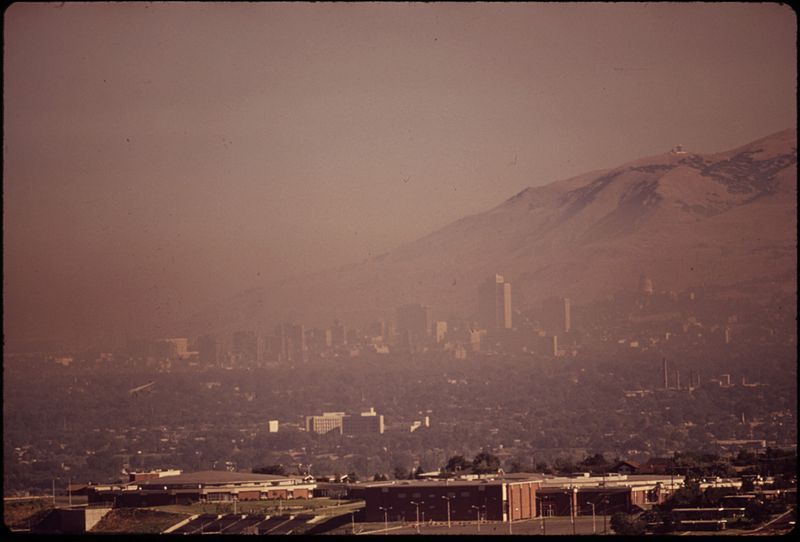
Greg Carling, an associate professor in Brigham Young University’s Department of Geological Sciences, asserts more could be done via the Division of Air Quality or refined academic research when it comes to dust off the Great Salt Lake.
“We need monitors east and north of the lake because that is where the dust is going to come from these southerly winds,” he said. “I think that would be the prudent thing to do.”
The issue is whether the state wants to open the door to more regulatory oversight on pollution problems that are already a headache in other areas, like PM2.5, or fine particulate matter. What would it look like to invite extra controls?