
Click the link to read the release on the DOI website:
The Department of the Interior today announced a historic agreement funded by the Inflation Reduction Act that will mitigate impacts from the worsening drought crisis impacting the Salton Sea in Southern California.
Established by Deputy Secretary Tommy Beaudreau and leaders from the California Natural Resources Agency, Imperial Irrigation District (IID) and Coachella Valley Water District (CVWD), the agreement will accelerate implementation of dust suppression and aquatic restoration efforts at the Salton Sea in Southern California. The agreement, which is set for consideration by the IID board of directors at its meeting tomorrow, will expedite implementation of the state’s 10-year plan and enable urgent water conservation needed to protect Colorado River reservoir storage volumes amid persistent climate change-driven drought conditions.
“The Biden-Harris administration is committed to bringing every resource to bear to help manage the drought crisis and provide a sustainable water system for families, businesses and our vast and fragile ecosystems. This landmark agreement represents a key step in our collective efforts to address the challenges the Colorado River Basin is facing due to worsening drought and climate change impacts,” said Deputy Secretary Beaudreau. “Historic investments from the Inflation Reduction Act will help to support the Imperial and Coachella Valley and the environment around the Salton Sea, as well as support California’s efforts to voluntarily save 400,000 acre-feet a year to protect critical elevations at Lake Mead.”
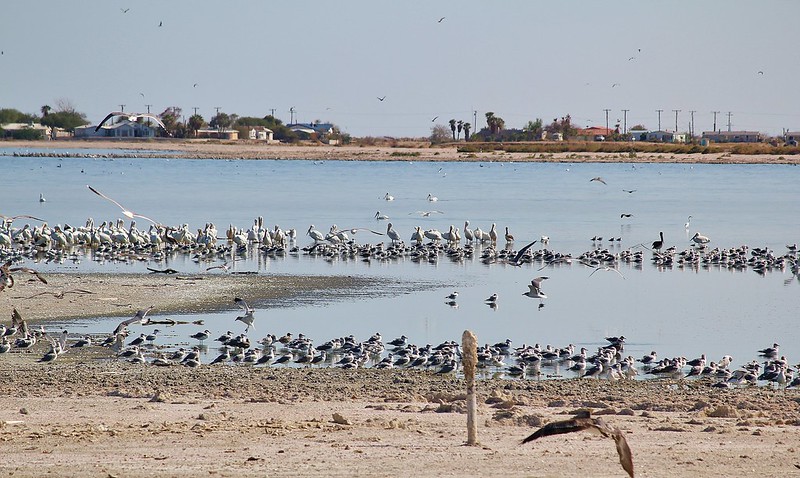
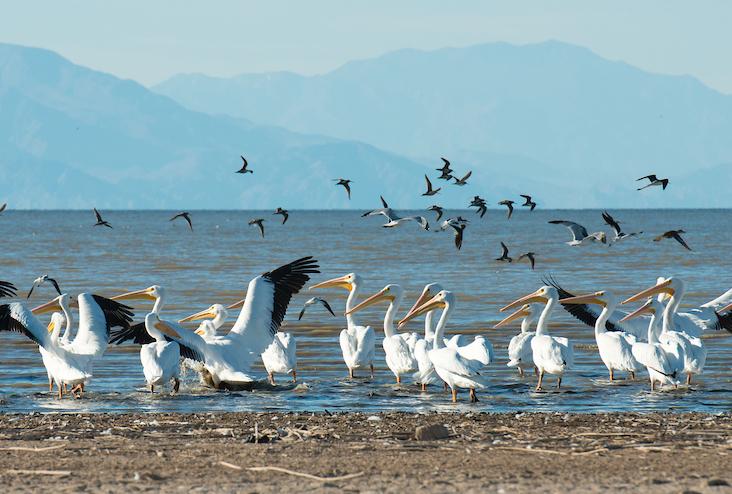
The Salton Sea, California’s largest lake, is receding due to the drought crisis gripping the West and resulting necessary conservation actions in the Imperial Valley that have reduced inflows to the Sea. Exposed lakebed is contributing to harmful dust emissions to the surrounding environment and reducing important environmental habitat for wildlife.
Under the agreement, the Interior Department’s Bureau of Reclamation will provide $22 million in new funding through the Inflation Reduction Act in fiscal year 2023 to implement projects at the Sea, support staffing at the Torres Martinez Desert Cahuilla Indian Tribe, and conduct scientific research and management that contributes to project implementation.
Subject to the implementation of voluntary conservation actions proposed by IID and CVWD, Reclamation will also provide an additional $228 million over the next four years to expedite existing projects and bolster staffing capacity at the water agencies to help deliver new projects. This is in support of California’s commitment to voluntarily conserve 400,000 acre-feet annually, starting in 2023. This $250 million investment from the Inflation Reduction Act will complement the $583 million in state funding committed to date.
“This agreement is a huge step forward,” said California Natural Resources Secretary Wade Crowfoot. “It builds our momentum delivering projects at the Sea to protect communities and the environment and ensures that California’s leadership conserving Colorado River water supplies doesn’t come at the expense of local residents.”
Under the agreement, the California Natural Resources Agency commits to accelerating project delivery through permit streamlining and use of its full contracting authority. It also commits to continue pursuing additional funding for projects to build on state funding already committed to Salton Sea Management Program implementation.
The Interior Department, IID and CVWD have agreed to establish programmatic land access agreements to enable state agencies to implement projects. In addition, the two water agencies will provide available future water supplies for new projects. This will enable California water agencies to commit to voluntarily reduce their water usage each year beginning in 2023 through 2026 to protect critical elevations in Lake Mead.
The Colorado River provides water to two countries, seven western states, 30 Tribal Nations and 40 million residents. It is currently experiencing the longest and worst drought on record, driven by hotter temperatures under climate change. Efforts continue in California and across the Colorado River Basin to find ways to stabilize water storage volumes in Lakes Powell and Mead. Reclamation and water agencies are working closely to take extraordinary actions to protect the Colorado River System.

Click the link to read “Drying California lake to get $250M in US drought funding” on the Associated Press website (Kathleen Ronayne). Here’s an excerpt:
The future of the Salton Sea, and who is financially responsible for it, has been a key issue in discussions over how to prevent a crisis in the Colorado River. The lake was formed in 1905 when the river overflowed, creating a resort destination that slowly morphed into an environmental disaster as water levels receded, exposing residents to harmful dust and reducing wildlife habitat. The lake is largely fed by runoff from farms in California’s Imperial Valley, who use Colorado River water to grow many of the nation’s winter vegetables as well as feed crops like alfalfa. As the farmers reduce their water use, less flows into the lake. California said it would only reduce its reliance on the over-tapped river if the federal government put up money to mitigate the effects of less water flowing into the sea. The deal announced Monday needs approval from the Imperial Irrigation District, the largest user of Colorado River water. The water entity’s board will take it up on Tuesday. Both the district’s general manager and board member JB Hamby applauded the deal Monday.
“The collaboration happening at the Salton Sea between water agencies and state, federal, and tribal governments is a blueprint for effective cooperation that the Colorado River Basin sorely needs,” Hamby said in a statement.
The $250 million will come out of the recently passed Inflation Reduction Act, which set aside $4 billion to stave off the worst effects of drought across the U.S. West. Most of the money is contingent on the Imperial Irrigation District and Coachella Valley Water District making good on their commitments to reduce their own use of river water. Both submitted proposals to cut back their usage for payment as part of a new federal program.
Click the link to read “U.S. government pledges $250 million to help ailing Salton Sea” on The Los Angeles Times website (Ian James). Here’s an excerpt:
This year, federal officials demanded large-scale water cutbacks throughout the Southwest to try to prevent the Colorado River’s reservoirs from dropping to dangerously-low levels. Four major California water districts have proposed to reduce water use by up to 400,000 acre-feet per year for the next four years, about 9% of the state’s total water allotment.
The Imperial Irrigation District has pledged to take on the largest share of California’s reductions, up to 250,000 acre-feet of water per year.
“From the outset, IID made it clear that taking action to protect the Colorado River system would have significant impacts on the Salton Sea, and that IID’s participation was conditioned on real efforts and dollars to protect public health and wildlife around the sea,” Hamby said.
He said the federal government’s new commitment “makes it much easier and simpler for us to make large contributions toward the Colorado River system.”
The infusion of federal money is the central feature of an agreement among the federal government, the Imperial Irrigation District, the California Natural Resources Agency and the Coachella Valley Water District. The Interior Department announced the plan on Monday, and the Imperial Irrigation District’s board narrowly endorsed the agreement in a 3-2 vote at a meeting Tuesday. The debate was contentious, with some farmers, community advocates and local officials saying they didn’t think the agreement was a good deal for the Imperial Valley, or that the community should have more time to weigh in.
Luis Olmedo, executive director of the nonprofit group Comite Civico del Valle, said his organization opposed what he called a “hastily announced, half-baked deal.” He said in a statement, which a colleague read at the meeting in El Centro, that the board was deciding with little public scrutiny.