

Click the link to read the article on the AZCentral.com website (Arlyssa D. Becenti). Here’s an excerpt:
June 5, 2024
In June 2018, Virginia Beyale and her brother set out to retrace the steps their ancestors took from Fort Sumner in New Mexico back to Diné Bikéyah, the Navajo Reservation. It was there the people were released after Diné leaders on June 1, 1868, signed what is now referred to as the Treaty of 1868 with the U.S. government. The siblings were dropped off at Fort Sumner (Hwéeldi) to begin the over 300-mile journey that about 8,000 surviving Diné undertook to get home 150 years before. On this arduous trek, known today as the Long Walk, about 2,600 Navajos died. The forced march to Fort Sumner was a horrific four-year ordeal, one of many genocidal and ethnic cleansing campaigns that took place against the Indigenous peoples at that time.
“The reason we did it was not only to commemorate the 150 years, but to do a lot of healing and understand how it felt,” Beyale said. “There was a lot of reflecting of understanding on what our people went through.”
[…]
“The Long Walk and 1863 to 1868 is a watershed in Diné history because that is the point where we lost our freedom and our independence,” Jennifer Nez Denetdale said. “That is when we became another occupation of the American colonial government. We are still under their control and under their authority.”
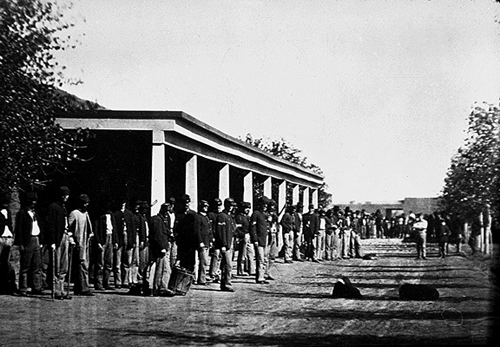
Nearly 10,000 Navajo men, women and children were forcibly marched to Bosque Redondo. Approximately 200 died of starvation and exposure during the walk, Charles said.
“Nearly a quarter of our people died in the conditions at Bosque Redondo,” [Mark] Charles said. “The government called Bosque Redondo a reservation but it wasn’t a reservation, it was a death camp. A death camp that was approved by Abraham Lincoln on Jan. 15, 1864.”
[…]
One notable aspect of Navajo stories is that they often contradict American historical narratives, Denetdale said. These narratives claim that the Navajo returned from Fort Sumner as a better people, having learned to get along with others, mastered silversmithing and understood government.
“This is what I had to read when I was in graduate school and I said, ‘no,’” Denetdale said. “This is not how I am going to read this, and I am not going to agree with you. So you go to oral history and to your own people’s stories.”
She sought out her own grandparents to hear their stories about this period. One story from her book, which she discussed during her presentation on the Long Walk and the Treaty of 1868, highlighted that the treaty included an agreement by Navajo leaders that Navajo children would receive an American education.
“They call it assimilation, I call it genocide and ethnic cleansing,” Denetdale said. “They never lived up to that article of 1868.”