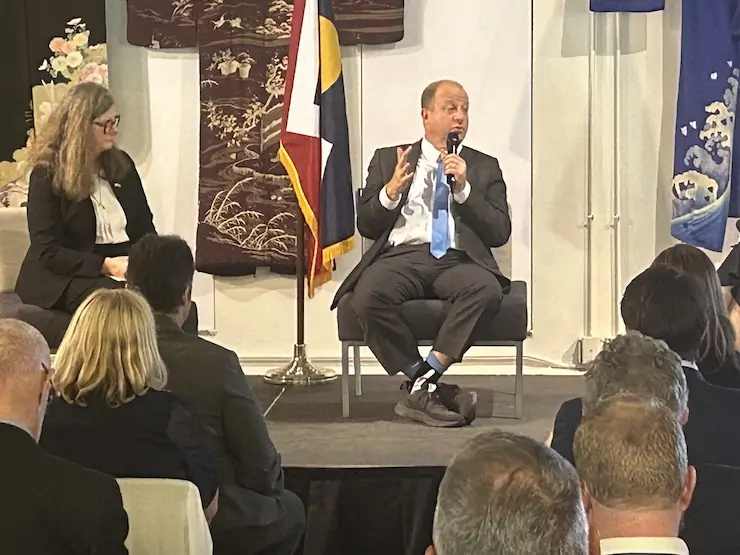
Colorado Governor Polis during a meeting at the McNichols Building in Denver with a delegation from Iceland. Photo credit: Allen Best/Big Pivots
Click the link to read the article on the Big Pivots website (Allen Best):
June 26, 2024
Colorado governor had made Heat Beneath Our Feet his signature initiative during his year as chair of the Western Governors’ Assocation
Geothermal comes in primarily two kinds. There’s heat for warming buildings, which Colorado already has, if in limited areas, most notably Colorado Mesa University.
But can it also get reliable generation of electricity?
In a meeting with a delegation from Iceland, Colorado Gov. Jared Polis suggested that geothermal wells could provide at least part of the answer as Colorado stretches to decarbonize its electricity with near-zero carbon emissions by 2040. He said that Colorado hopes to get to 96% or 97% carbon-free electricity by 2040.
When he ran for governor in 2018, said Polis, he adopted a platform of 100% renewables by 2040. “At the time, people thought that was very hard and that we would never achieve it. Our plans show we will certainly be in the high 90s percentile by 2040, hopefully in excess of 96% or 97%.”
The last coal plant will close no later than the end of 2030. (At the meeting on June 20 in Denver, Polis said 2029). And Colorado hopes to mostly squeeze natural gas out of its system.
Colorado has a lot of wind and solar, he explained, and he called them the “lowest-cost workhorses of the clean energy economy. We can probably get to 80-85%, maybe with some storage as high as 90% with solar and wind.”
What gets it the rest of the way to 365 days of no or low carbon?
Hydro is about 3% of Colorado’s grid; Polis said it might grow to 4%. “We don’t have a lot of water here,” he noted. In Iceland, hydro provides about 40%.
“The biggest opportunity that exists today is around geothermal. And that’s why we are so excited about how this can be 4 or 6 or 8% of our energy by 2040. Currently, it’s 0%.”
More on what was said at this meeting at the McNichols Building in Denver in the next issue of Big Pivots.
Geothermal Electrical Generation concept — via the British Geological Survey
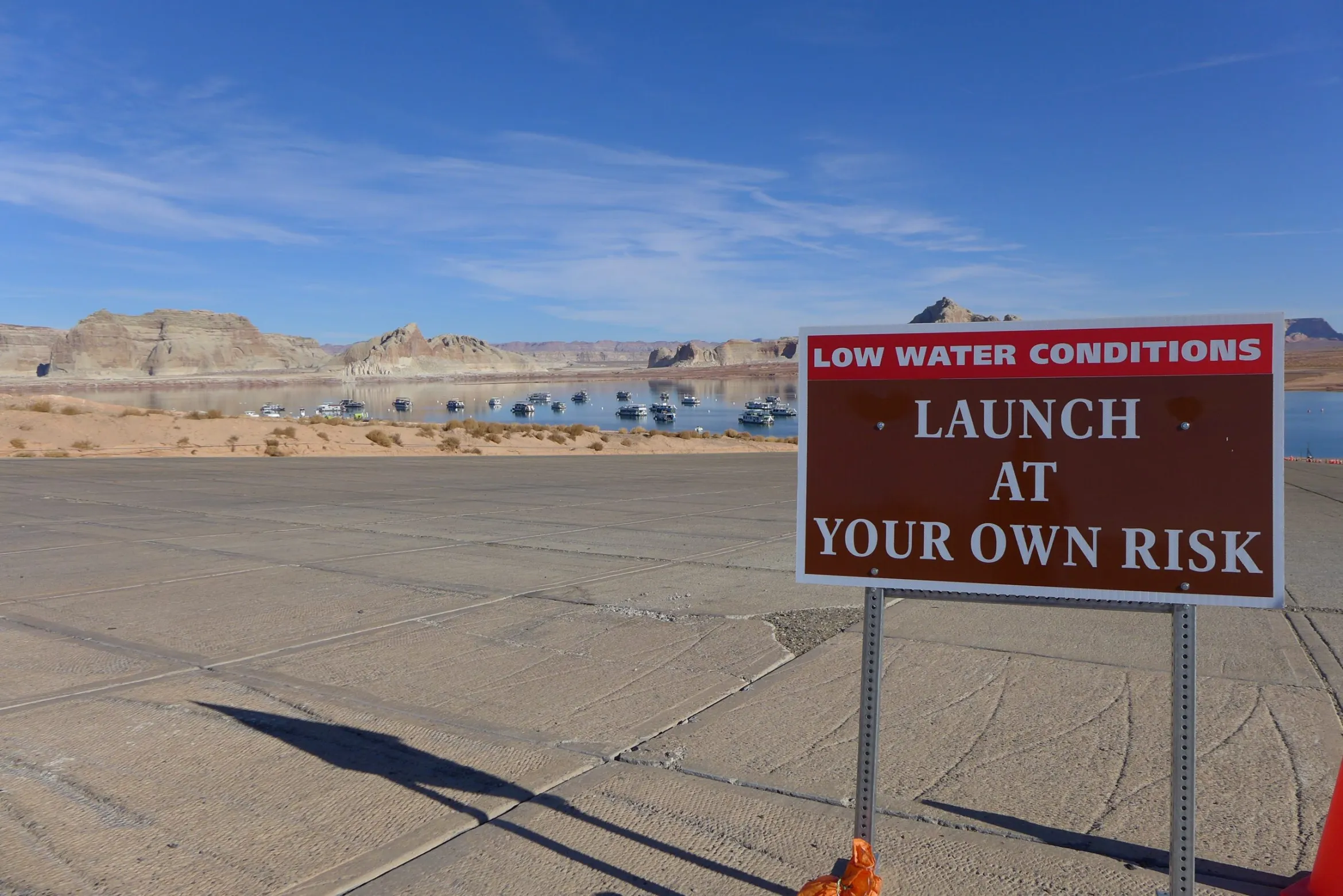
The main boat ramp at Wahweap Marina was unusable due to low water levels in Lake Powell in December 2021. Upper Colorado River Basin water managers took a step this week toward protecting water saved through conservation programs in Lake Powell. CREDIT: HEATHER SACKETT/ASPEN JOURNALISM
Water managers in the upper Colorado River basin took another step this week toward a more formal water conservation program that they say will benefit the upper basin states.
Representatives from Colorado, Utah, Wyoming and New Mexico unanimously passed a motion Wednesday at a meeting of the Upper Colorado River Commission to explore creating a way to track, measure and store conserved water in Lake Powell and other upper basin reservoirs.
The motion directed staff and state advisers to prepare a proposal that lays out criteria for conservation projects and creates a mechanism for generating credit for those projects. The deadline for the proposal is Aug. 12, and commissioners plan to consider it at a late-summer meeting.
With an infusion of federal dollars from the Inflation Reduction Act, the UCRC in 2023 rebooted the System Conservation Pilot Program, which pays water users — most of them in agriculture — to leave their fields dry for the season and let that water run downstream. Over two years, system conservation is projected to save about 101,000 acre-feet of water at a cost of about $45 million.
But how much of that water actually made it to Lake Powell is anyone’s guess. Despite one of the stated intentions of the program being to protect critical reservoir levels, SCPP has, so far, not tracked the conserved water, a process known as shepherding. The laws that govern water rights allow the next downstream users to simply take the water that an upstream user leaves in the river, potentially canceling out the attempt at conservation.
Some water managers and users have criticized SCPP for this lack of accounting, saying the water conserved by the upper basin is simply being sent downstream to be used by the lower basin. The UCRC’s motion Wednesday for a proposal is an attempt to remedy that.
“We have heard from water users and others across the Upper Basin that there is interest in ‘getting credit’ for conserved water — in other words, protecting this water in Lake Powell,” Amy Ostdiek, the Colorado Water Conservation Board’s Interstate, Federal & Water Information section chief said in a prepared statement. “What the commissioners directed staff to do was simply to explore opportunities to do so.”
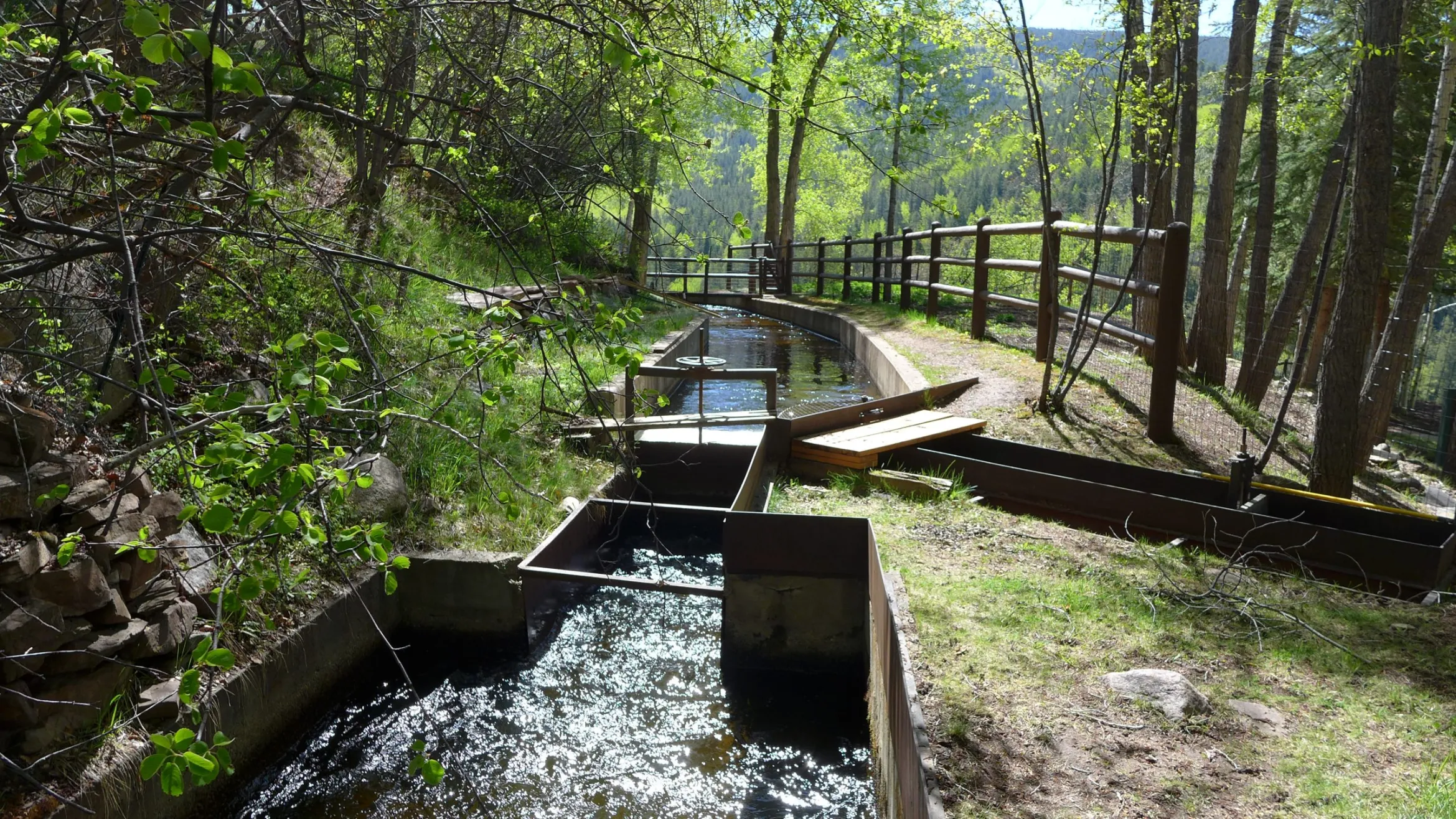
This Parshall flume on Red Mountain measures the amount of water diverted by the Red Mountain Ditch. CREDIT: HEATHER SACKETT/ASPEN JOURNALISM
Tracking, measuring and storing the water saved by the upper basin states in Lake Powell is not a new idea. The concept was part of the 2019 Colorado River Drought Contingency Plan. The DCP created a special 500,000-acre-foot pool in Lake Powell for the upper basin to store water saved through a temporary, voluntary and compensated conservation program known as demand management. Demand management is conceptually the same as system conservation, with the main difference being that system conservation water simply becomes part of the Colorado River system with no certainty about where it ends up, while demand management water would be shepherded, measured and stored in Lake Powell for the benefit of the upper basin.
“We can do things like the System Conservation Program, and if we set up an account such that we can put that conserved water into a pool, that can then accrue over time,” New Mexico Commissioner Estevan Lopez said at Wednesday’s meeting. “That can be a very useful tool when things get really dry in the system. Overall, we can make that water available to continue operations with additional stability.”
The goals of demand management were to help boost water levels in Lake Powell, allow for continued hydropower production at Glen Canyon Dam and, perhaps most important, help the upper basin states meet their obligations to deliver a minimum amount of water to the lower basin states under the terms of the 1922 Colorado River Compact. As climate change continues to rob rivers of flows, it becomes more likely that the upper basin won’t be able to deliver the 7.5 million acre-feet annually that is the lower’s basin’s share of the Colorado River, even if upper basin use doesn’t increase.
The conserved water “could be for compact compliance, or it could be for simply greater storage volume in the upper basin reservoirs to provide resilience against future dry years,” said Anne Castle, federal appointee and chair of the UCRC. “It would be credited to the benefit of the upper basin, and that’s a little vague, but it’s because we haven’t designed that mechanism yet.” [ed. emphasis mine]
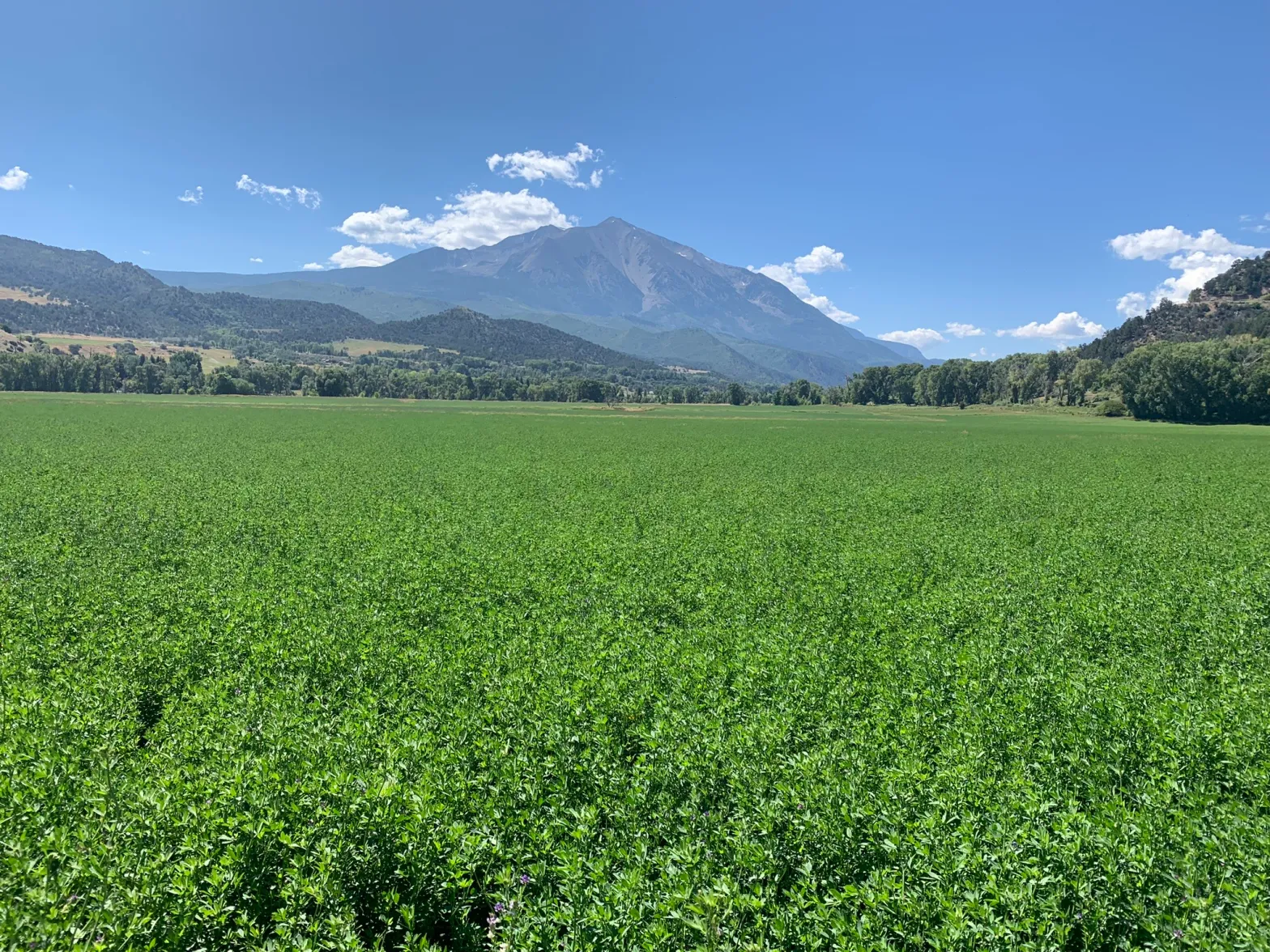
This field of alfalfa is grown near Carbondale. Upper Colorado River Basin water managers are continuing to make tweaks to a program that pays agricultural water users to conserve.CREDIT: HEATHER SACKETT/ASPEN JOURNALISM
In line with upper basin proposal
After two decades of drought, climate change and overuse, water levels in Lake Powell fell to their lowest point ever in 2022, threatening the ability to make hydropower at Glen Canyon Dam. Officials scrambled for solutions, with the UCRC putting forth a “5-Point Plan,” one arm of which was restarting SCPP, which was originally tried from 2015-18.
Upper basin officials have long maintained that the responsibility for a solution to the Colorado River crisis rests with the lower basin states: California, Arizona and Nevada. And they are still reluctant to say that Wednesday’s motion is a move toward a long-term conservation program for the upper basin.
“I wouldn’t say that we’re on the cusp of a permanent program, but rather that this is an evolving overall conservation effort that is incorporating what we’ve learned from the previous iterations,” Castle said.
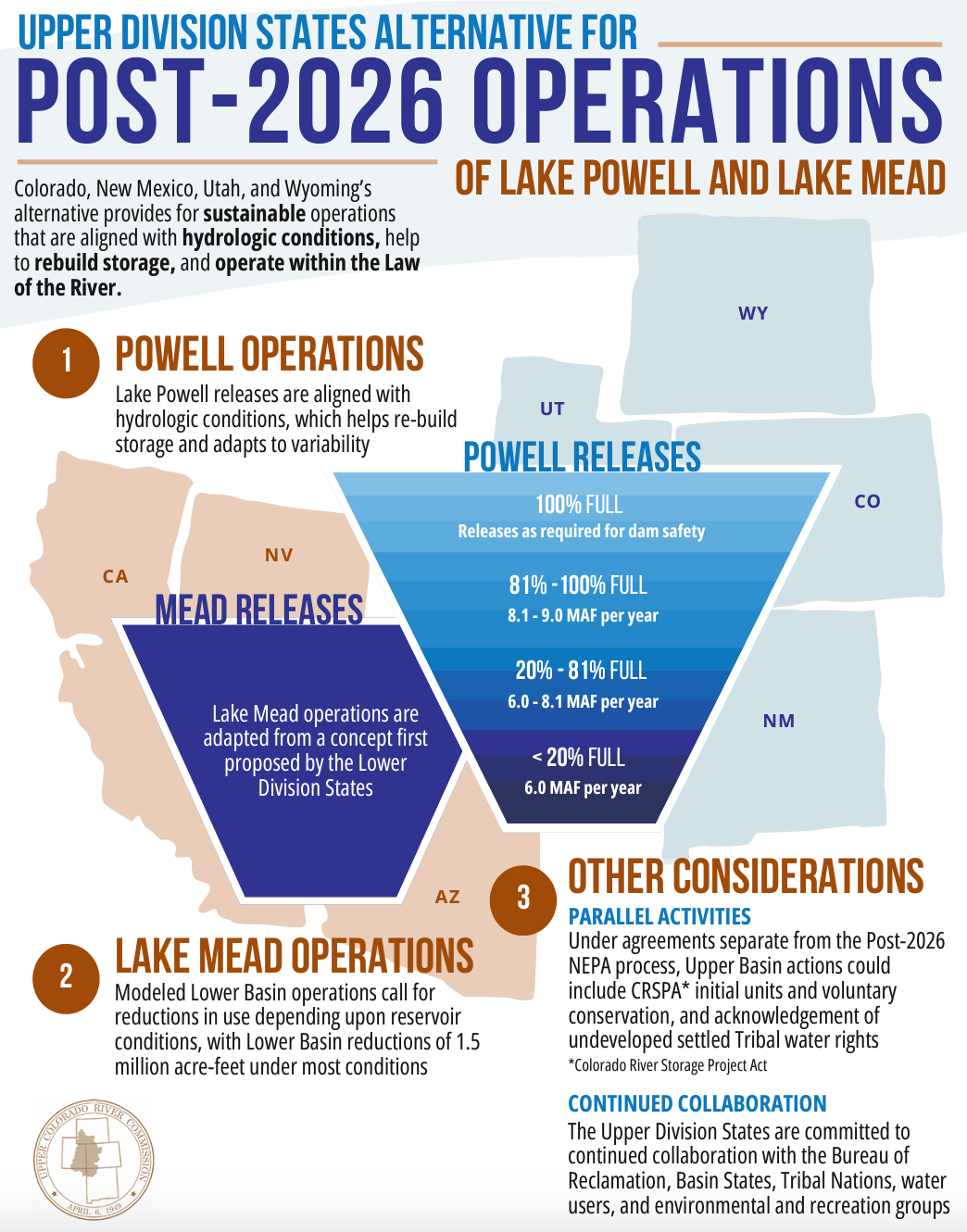
The Upper Basin’s alternative, summed up. Source: Upper Colorado River Commission.
Wednesday’s motion was also the beginning of making good on a promise laid out in the upper basin’s alternative proposal for how the river and reservoirs should be operated in the future. The proposal says the four states will pursue “parallel activities” that include voluntary, temporary and compensated reductions in use, such as conservation programs that store water in Lake Powell.
“I think it’s important to acknowledge that this is in line with the parallel activities component of the upper division state’s alternative,” said Colorado Commissioner Becky Mitchell. “However, as I’ve always said, we cannot be doing conservation work to prop up overuse, and so I think this is in line with the commitments that we’ve made, but to remember that that was part of a larger package that requires responsible management.”
The authorization for system conservation runs out at the end of 2024, but earlier this month, U.S. senators from Colorado, Utah and Wyoming introduced a bill to extend the SCPP through 2026. UCRC commissioners would still have to approve continuing the program past this year.
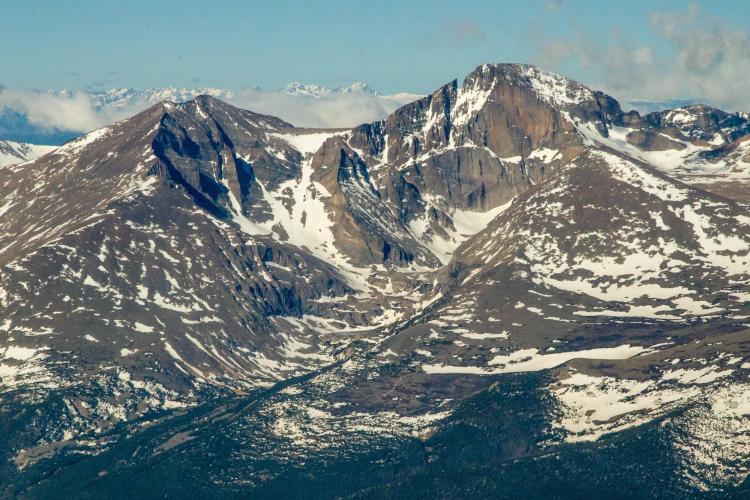
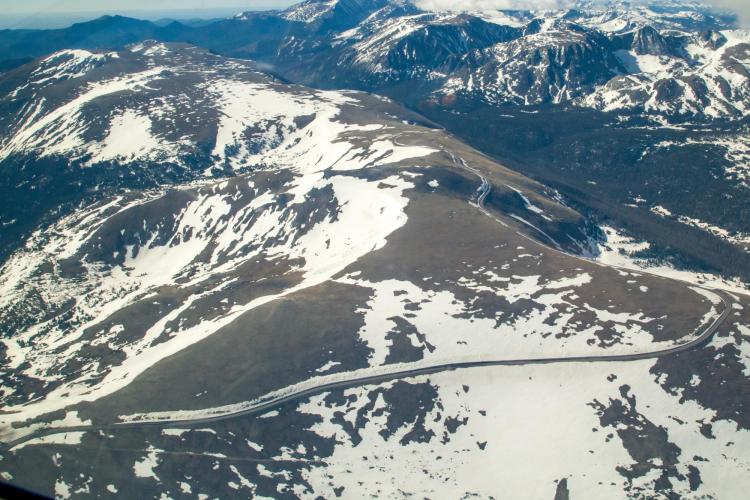
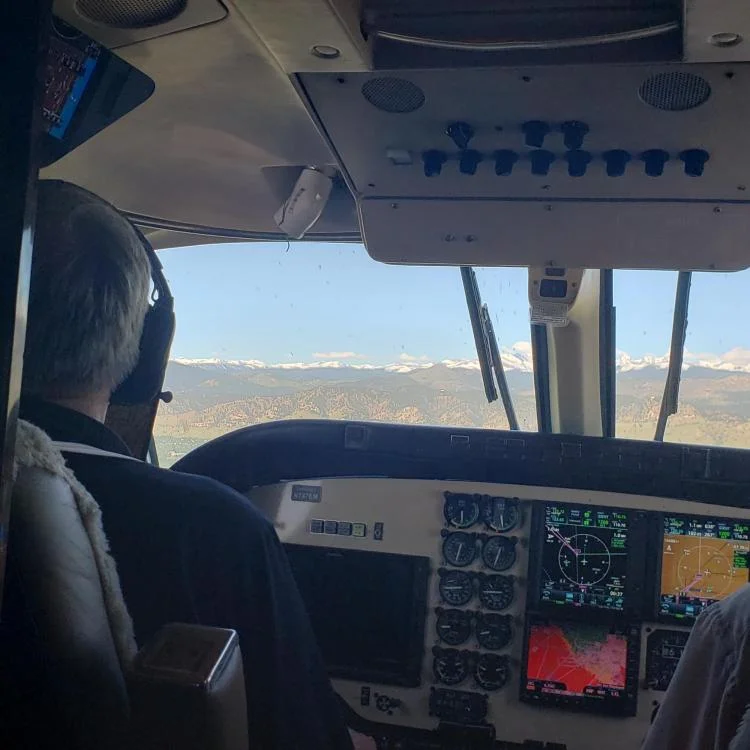
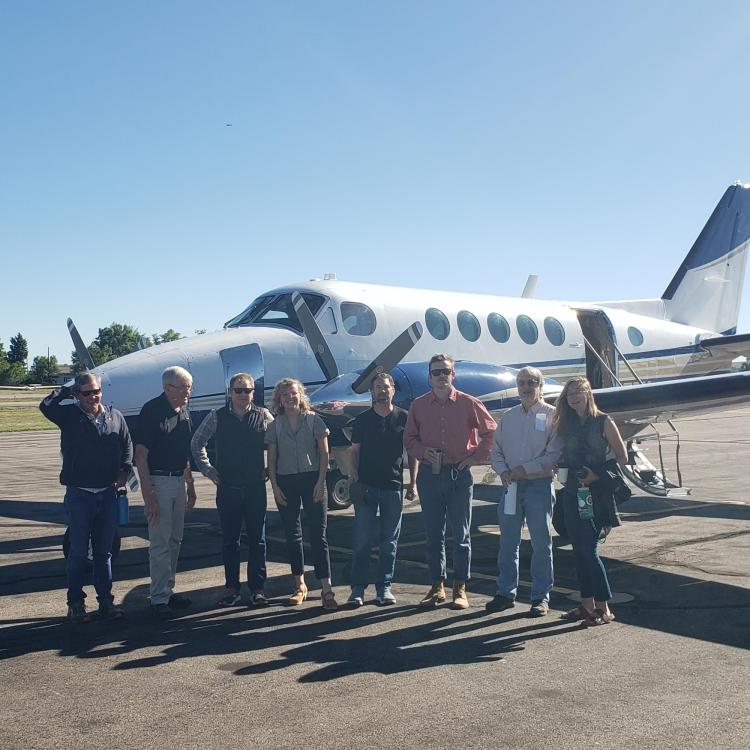
Trail Ridge Road, Rocky Mountain National Park, June 5, 2024. Photo credit: LighthawkPilot Mike Schroeder. Photo credit: LighthawkGetches-Wilkinson conference attendees with Mike Schroeder’s aircraft June 5, 2024. Photo courtesy of Lighthawk.Carter Lake June 5, 2024. Photo credit: Lighthawk
Water, it is safe to say, is of the moment. Safer yet, the drought-stricken Colorado River is center stage. Seemingly overnight, the water beat has transcended from dusty backroads and Southwestern capitols to the front page of mainstream media outlets. Giving rise to that newfound coverage are the conferences and events that produce the soundbites and backroom deals that make the latest scoop in Western water such a juicy one.
Yet like many stories about natural resource issues, what can often feel missing is a sense of place; after all, slide shows and headlines can only spur so much. For water in particular, geography is everything—a factoid we know very well here in Colorado.
Enter LightHawk, an organization whose mission is “dedicated to accelerating conservation success through the powerful perspective of flight.” LightHawk does so by seeking out conservation projects and partners that could benefit from aviation, then leveraging their team of 300 volunteer pilots to provide zero cost flights. The organization’s focus areas include climate resilience, rivers and wetlands, and wildlife conservation.
On June 5th, the day before the Getches-Wilkinson Center’s 2024 Conference on the Colorado River, LightHawk and the GWC teamed up to find that elusive sense of place. That morning a group of 15 participants boarded three separate planes to take an aerial tour of Front Range water projects, including the Gross Reservoir expansion and Chimney Hollow Reservoir construction, as well as a look at the Colorado River headwaters in Rocky Mountain National Park and the infrastructure that makes up the Colorado-Big Thompson Project.
The passenger list comprised professionals from many different backgrounds, all sharing a focus on water and, more specifically, the Colorado River. There were tribal leaders, water lawyers, ranch managers, reporters, policy analysts, river advocates, foundation directors, GWC staff, and one very luck law student in myself. And that diversity of backgrounds was precisely the point: Come gather ‘round a birds-eye view of this imperiled river’s headwaters and let us see where the conversation goes.
As a student eager to find his way in the world of western water, this was a dream experience. The more casual setting (if you can call being a mile above the Earth in a little piston jet casual) allowed for plenty of quips, insights, and hard-hitting questions on all that construction going on down there. For me, the conversation highlighted how inherently political and value-based decisions on the River are, and how that is nothing to shy away from. Moreover, I gained a new appreciation for the number of different stakeholders and the good ideas they each bring—the flight itself atop that list.
Diverse and impressive of backgrounds as they were, nobody’s professional resume quite prepared them for how bumpy a ride Cessnas can deliver. The thermals coming off the foothills made for a turbulent ascent into the alpine. And the calamity of red lights and alarm noises coming from the cockpit certainly didn’t help settle the group’s collective stomach. But fortunately for your correspondent’s plane, all one had to do for a sigh of relief was look to pilot Mike Schroeder, cool as a cucumber at the helm.
Then, touchdown on the tarmac (coolest part of the day, IMHO) and back to business casual, powerpoints and panel presentations. Alas. However, with a subject matter like the Colorado River, two things are granted. First, a vast majority of folks working in this world also play in this world, and their sense of place is long-established. Second, a gathering of the minds to discuss the future of the River will be informative and provocative regardless of whether an airplane is involved. And sure enough, the conference was a smashing success.
But for me and surely the fourteen other flight members, the LightHawk flight was nonetheless a remarkable experience. The opportunity to fly across the part of the Continental Divide that not only separates the Front Range from the Western Slope but also boasts a colorful history of transbasin projects and state politics, all while chatting with a group of thought leaders in the water space, was truly invaluable. Hats off to LightHawk and all the volunteer pilots that made it possible.
*All photos shared are thanks to aerial support provided by LightHawk.