
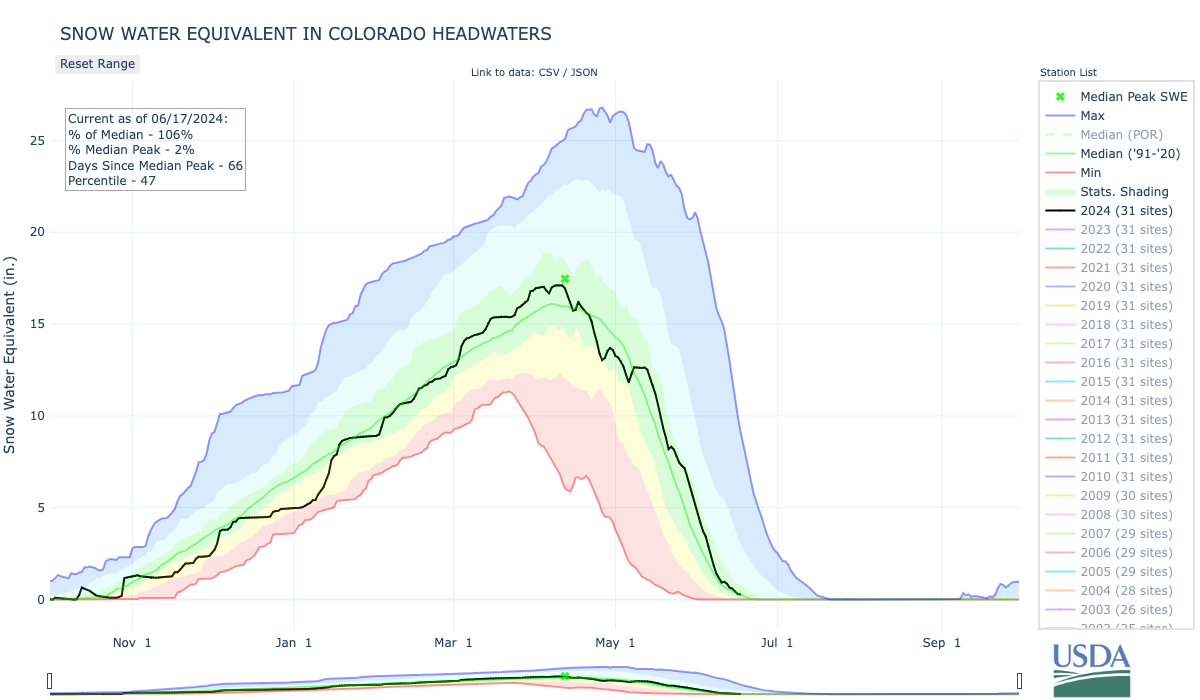
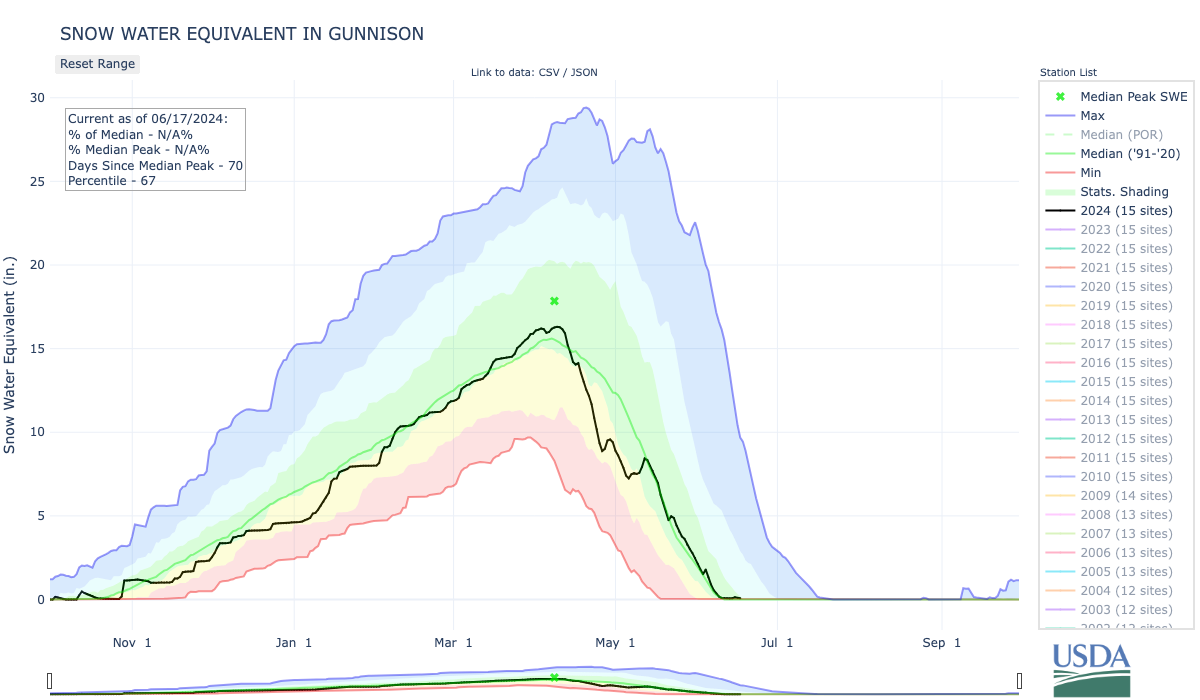
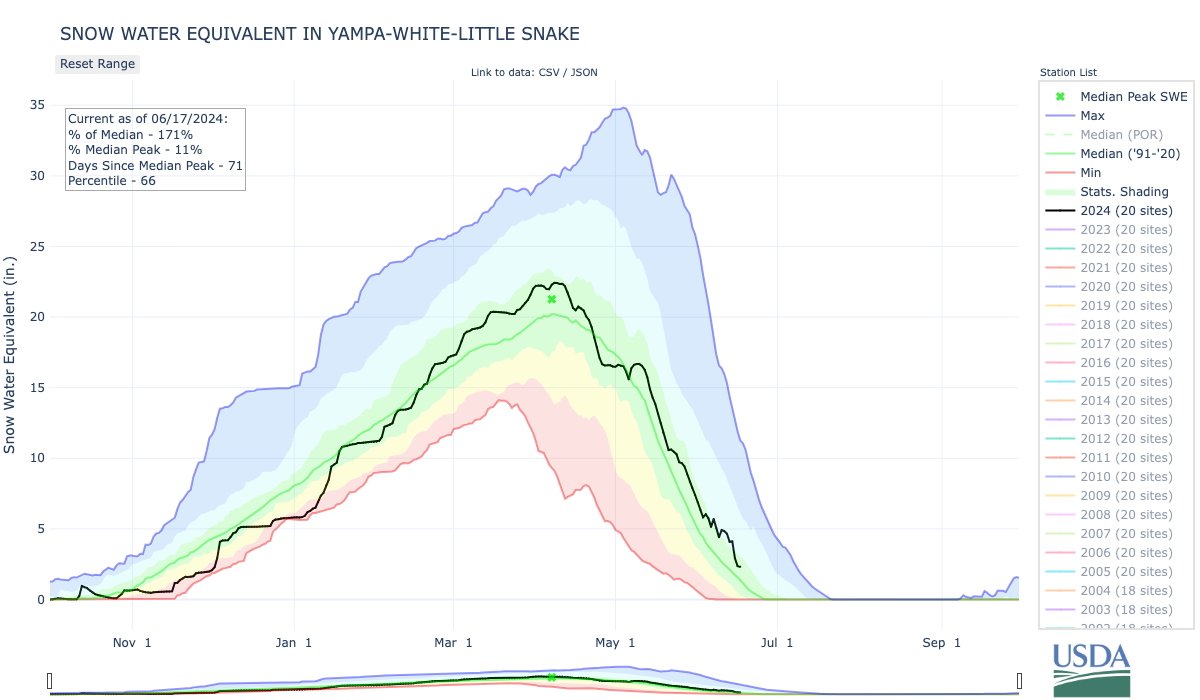
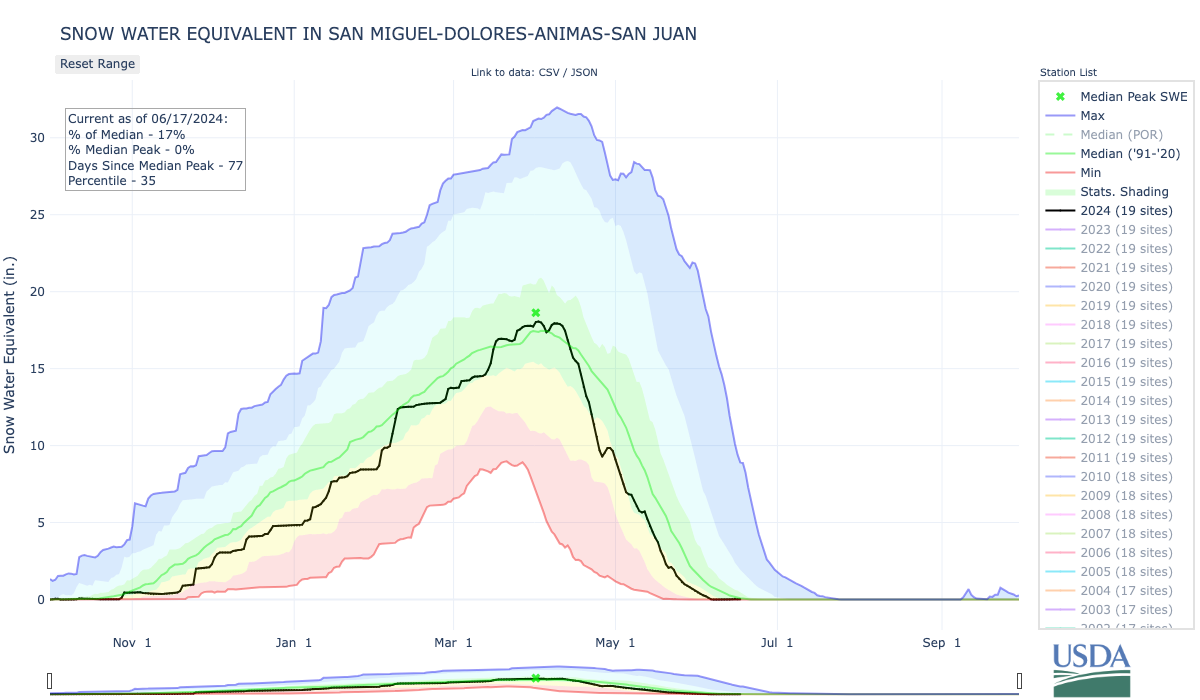

Click the link to read the article on the Colorado Newsline website (Lia Chien):
May 31, 2024
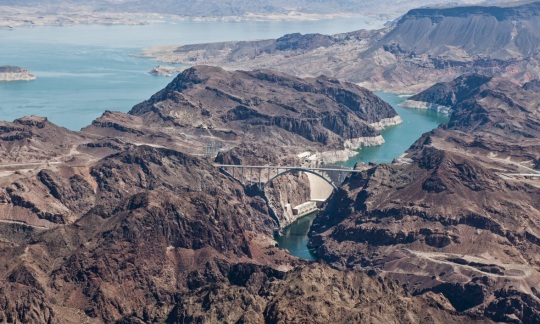
The U.S. Department of the Interior and Bureau of Reclamation will send $242 million to five projects in Western states to improve water storage and clean drinking water supply, the bureau said Thursday.
The money, part of the president’s domestic infrastructure and manufacturing agenda and funded through the 2021 bipartisan infrastructure law, is expected to develop 1.6 million acre-feet of water storage, supporting 6.4 million people per year. Projects in Colorado, Arizona, Washington state and California will receive funding.
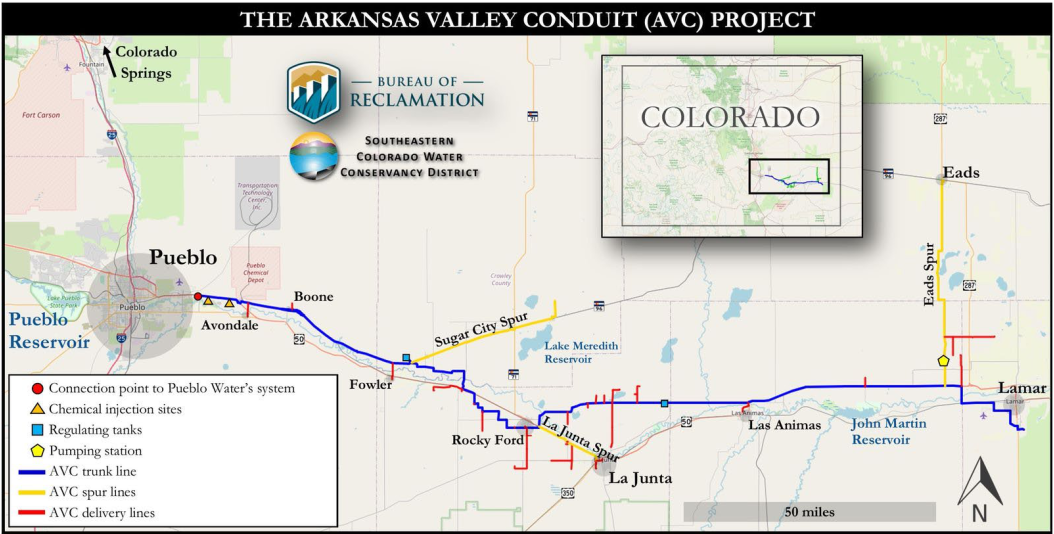
The Arkansas Valley Conduit, a major pipeline project in Colorado that has stalled for decades, is set to receive $90 million. Once completed, it will bring clean water to 50,000 people in 39 communities across the southeastern portion of the state, according to a release from the Bureau of Reclamation.

Finishing the project has been a long time coming. President John F. Kennedy signed a law in 1962 to authorize construction of the pipeline, but work on the project has stalled over the past six decades due to lack of funding.
This year’s spending comes after almost $250 million in previous appropriations from the infrastructure law and other laws. The project overall is estimated to cost over $600 million, according to Colorado Public Radio.
Sen. John Hickenlooper, a Democrat from Colorado, said he is excited to see the project move along.
“We broke ground on the Arkansas Valley Conduit to finally deliver clean drinking water to Southeast Colorado. Now, more Bipartisan Infrastructure Law investments like this one will speed up the timeline,” Hickenlooper said in a written statement Friday.
Washington state Cle Elum Pool Raise Project will receive $1 million to increase water capacity an additional 14,600 acre-feet. Cle Elum Lake is on the Cle Elum River, a tributary of the Yakima River that provides essential, high quality drinking water to the city of Cle Elum.
A feasibility study to address water storage solutions in Arizona’s Horseshoe and Bartlett reservoirs is also receiving $8.5 million. The reservoirs provide drinking water to the greater Phoenix area. Over many years, sediment build-up in the Horseshoe Reservoir has reduced water storage capacity.
Climate change affects water supply
Investments in conservation projects like these will also help provide water storage and safe drinking water as Western states feel the effects of climate change, like drought, more frequently, according to the Center for Climate and Energy Solutions, a research and advocacy group.
Rep. Raúl Grijalva, a Democrat from Arizona and the ranking member of the House Natural Resources Committee, said water infrastructure projects like these are critical as the West faces climate change.
Grijalva credited the bipartisan infrastructure law and Democrats’ 2022 energy, taxes and health policy law known as the Inflation Reduction Act with helping to boost federal spending on Western water projects.
“The more than $15 billion for western water projects and programs that Democrats passed in the Inflation Reduction Act and the Infrastructure Law is a gamechanger in our fight to secure clean drinking water, build our resilience to climate change, and restore critical rivers and watersheds,” said Grijalva in a statement.
Grijalva added that more investments are needed, especially to protect the most vulnerable populations from the effects of water shortages.
“While these investments will deliver much-needed relief to communities in Arizona and all over the West, much more must be done, especially for those underserved and Indigenous communities that are being disproportionately impacted by the climate crisis and are too often left behind,” he said.
Southwestern states, including Arizona, are expected to face more intense droughts as climate change intensifies, according to the Center for Climate and Energy Solutions. In the summer of 2021, drought conditions across the West were at their highest levels since 2000, according to the Bureau of Reclamation. Drought conditions worsened in 2022.
Washington state officials declared a drought emergency this April as they expect high temperatures and water shortages this summer.
Click the link to read the article on The Los Angeles Times website (Ian James). Here’s an excerpt:
June 2, 2024
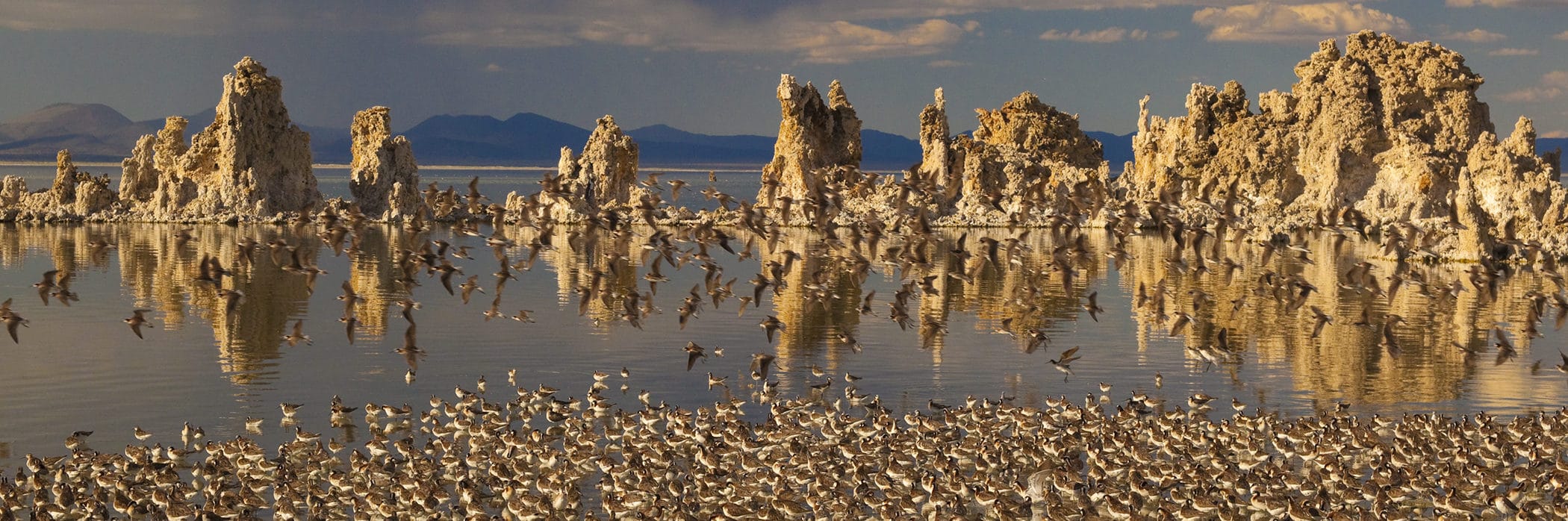
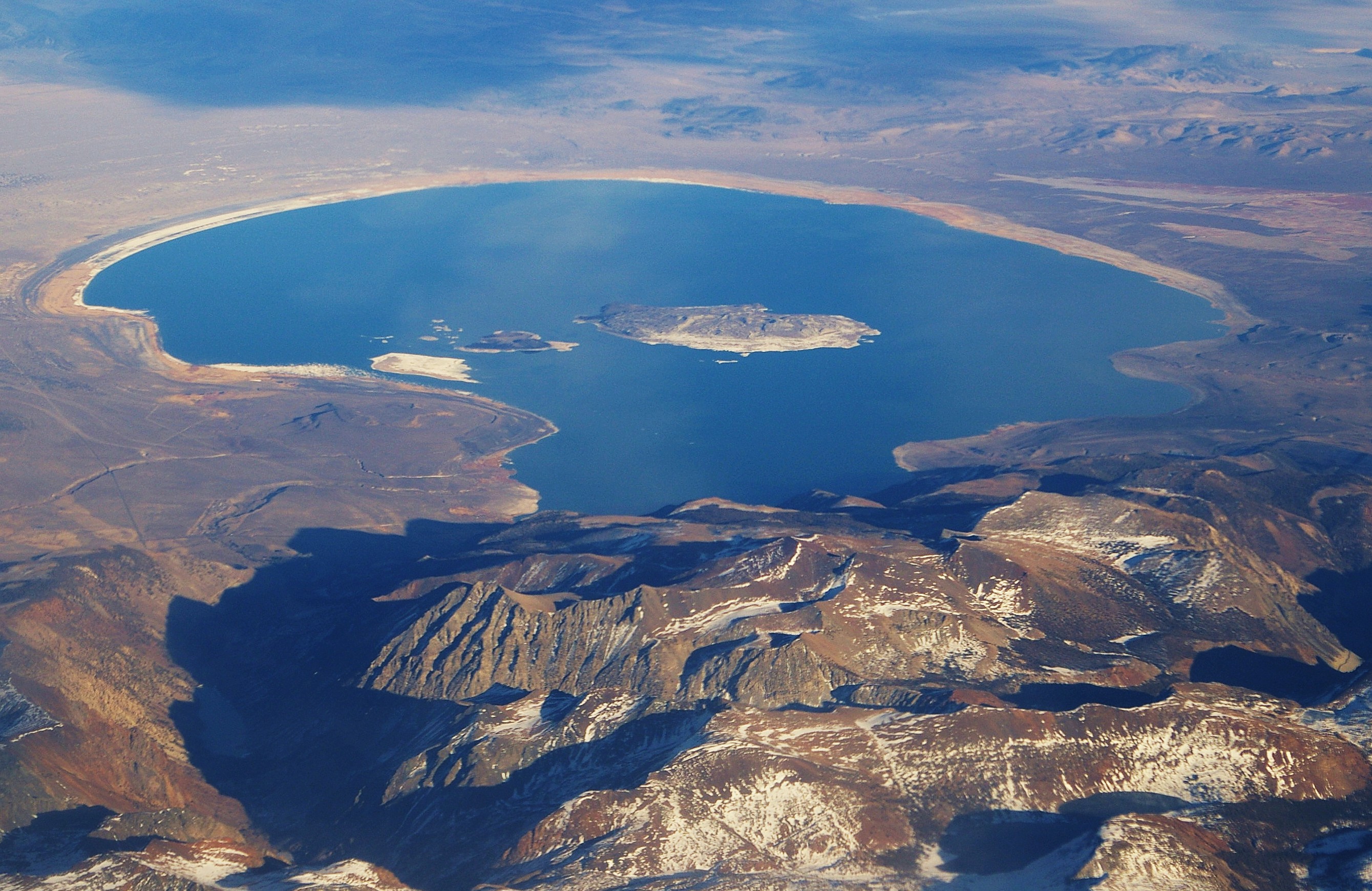
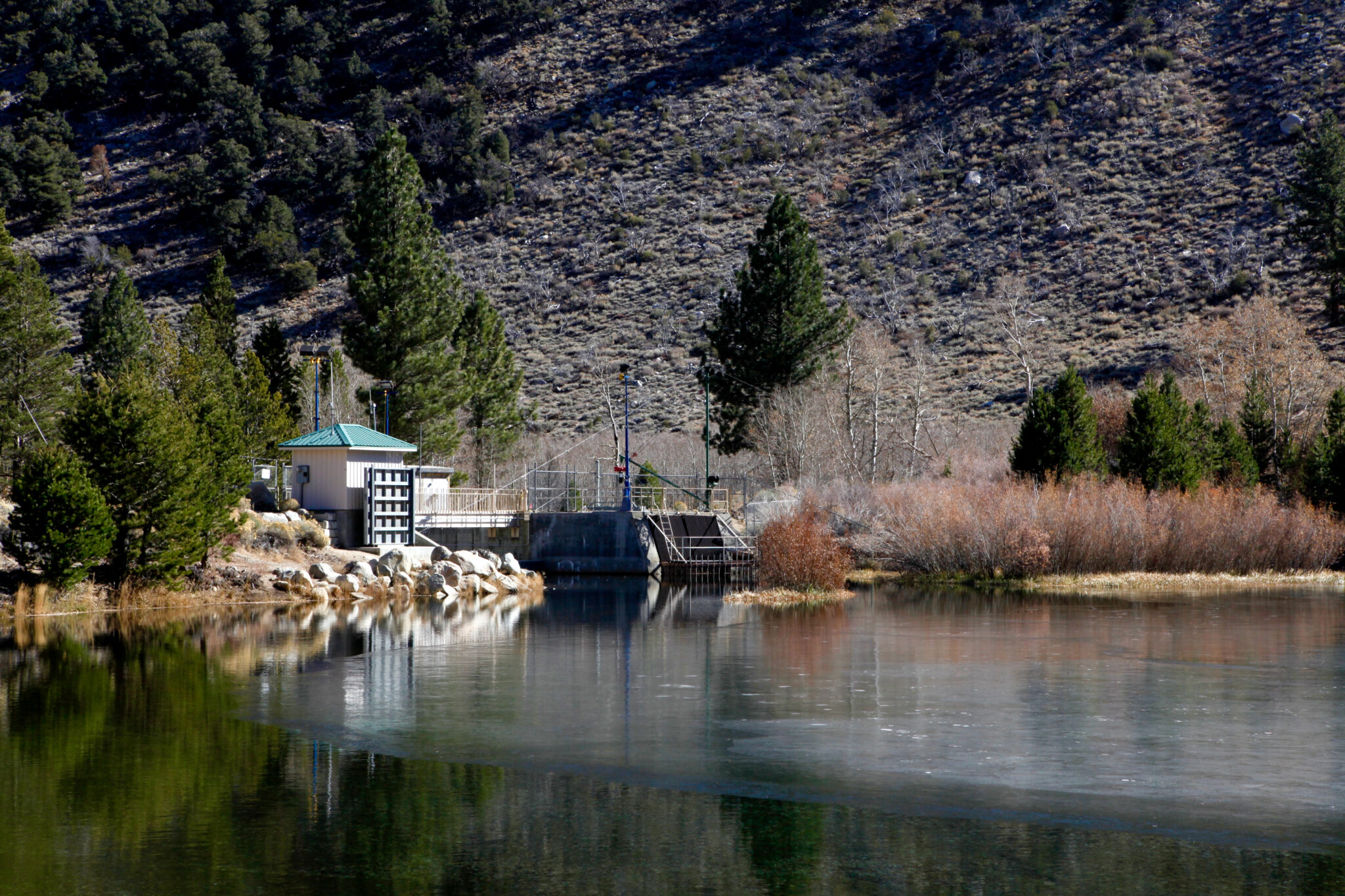
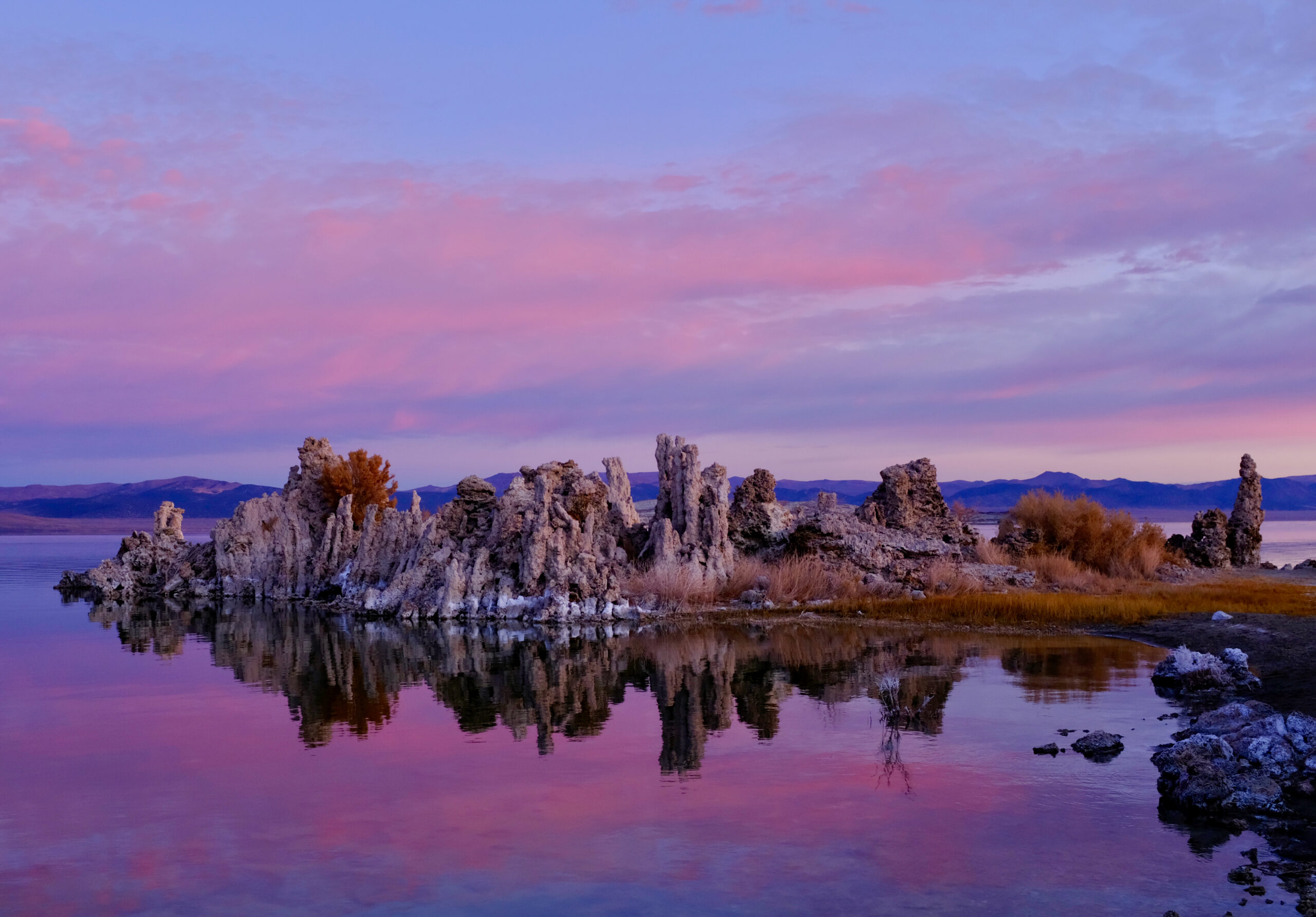
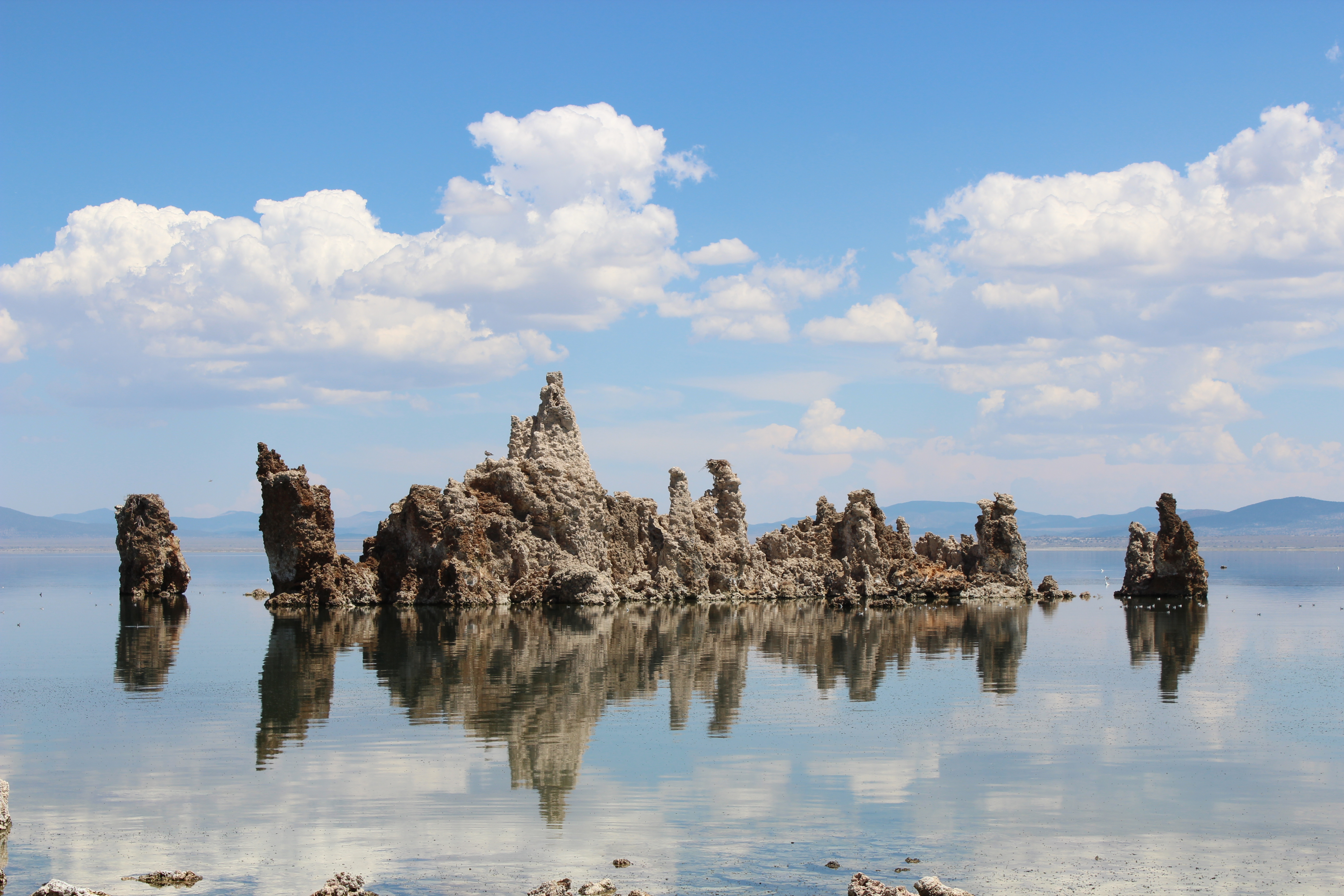
The Los Angeles Department of Water and Power said it plans to export 4,500 acre-feet of water from the Mono Basin during the current runoff year, the same amount that was diverted the previous year, and enough to supply about 18,000 households for a year. Under the current rules, the city could take much more — up to 16,000 acre-feet this year. But environmental advocates had recently urged Mayor Karen Bass not to increase water diversions to help preserve recent gains and begin to boost the long-depleted lake toward healthier levels. They praised the decision by city leaders as an important step.
“It’s a historic decision in the history of Mono Lake,” said Mark Gold, director of water scarcity solutions for the Natural Resources Defense Council. “I think it’s the first major environmental accomplishment for water in the Bass administration.”
DWP officials detailed their expected water diversions from the region of the Eastern Sierra in an annual plan for the runoff year, which began in April. Environmentalists said it’s the first time in 30 years that city officials have announced plans to take less water than the maximum amount allowed under a 1994 decision by the State Water Resources Control Board. However, DWP said in the plan that it will review water conditions in November, and at that point could still decide to export additional water if deemed necessary, up to the limit of 16,000 acre-feet.
Click the link to read the release on the NRCS website (Melvin J. Baker, Summer Begay, Petra Popiel):
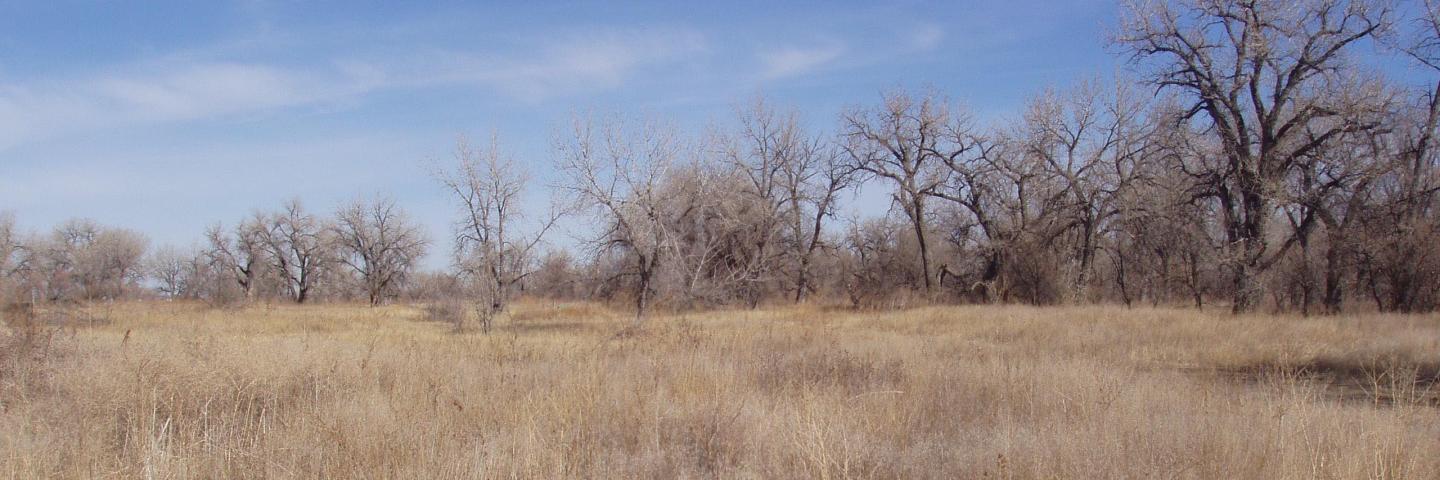
May 31, 2024 – Southern Ute Indian Reservation – A historic partnership is forging between the Southern Ute Indian Tribe and the United States Department of Agriculture’s Natural Resources Conservation Service (NRCS). Through the USDA or NRCS Agency’s Conservation Stewardship Program (CSP), the entities have jointly entered an alternative funding arrangement (AFA) to improve rangeland resiliency and health on Tribal lands. This project is funded through the 2022 Inflation Reduction Act (IRA).
“The Southern Ute Indian Tribe is the first Tribe in the nation to enter into an AFA through CSP. We’re proud of what that means for future relations between NRCS and the Tribe. We also get to play a role and join them as they expand their natural resource conservation journey,” said Clint Evans, NRCS State Conservationist in Colorado.
CSP, a Farm Bill program, builds upon existing conservation efforts while strengthening agricultural operations. “The Southern Ute Indian Tribe’s forward thinking and resource conservation focused mindset made them the perfect candidate for a CSP AFA,” said Liz With, NRCS Assistant State Conservationist for Partnerships in Colorado. “They already implement top tier rangeland management and monitoring practices, and this agreement will assist in maintaining that high standard while also helping to more widely adopt and implement a strategic invasive noxious weed treatment plan over the next five years. That treatment will target species from Colorado noxious species list to improve rangeland health and resiliency in face of the increasing drought conditions.”
“This partnership will assist with improving our land, it will also honor the legacy of stewardship entrusted to us by our ancestors. By working together, we can ensure these rangelands remain healthy and productive for generations to come, all while setting a strong example of Tribal leadership in conservation”, said Chairman Melvin J. Baker of the Southern Ute Indian Tribe.
The scope and magnitude of this historic project is also noteworthy. The Southern Ute Indian Tribe has agreed to enroll all rangeland acres managed by its Department of Natural Resources, totaling approximately 125,000 acres. Conservation practices implemented will help improve and favor deep rooted, native perennial plants that can help sequester more carbon and build soil health. This partnership represents a tremendous opportunity for the Tribe, NRCS, producers, and the environment as a whole.
“This partnership and project will lead to additional opportunities with the Southern Ute Tribe,” said Astor Boozer, NRCS Regional Conservationist for the West. “We will have future opportunities to address other resource concerns together, the NRCS will learn from the Tribe about indigenous and other traditional ecological practices. We are excited for this great opportunity.”
For more information about the Natural Resources Conservation Service, its programs, benefits, and opportunities, please visit www.co.nrcs.usda.gov. For more information about this partnership, please contact the Southern Ute Department of Natural Resources at 970-563-2912.

Click the link to read the article on the WyoFile website (Mike Koshmrl):
May 31, 2024
A gas exploration company with Florida ties is pursuing plans to pull groundwater out of existing coalbed methane wells in southern Wyoming, then pipe it into the lower reaches of the water-stressed Colorado River Basin.
The project was formally initiated in December, when the State Engineer’s Office received 21 groundwater test well applications from Mark Dolar of Dolar Energy, LLC. The test wells are all located on Bureau of Land Management property south of Rawlins in the Atlantic Rim gas field.
Two test well applications have since been rescinded by Dolar to comply with the state of Wyoming’s sage grouse and big game migration policies, according to an email from State Engineer Brandon Gebhart.
A project review letter from the Wyoming Game and Fish Department summarizes what the project proponent seeks to do with the water.
“If the water is of sufficient quality, the applicant hopes to transport groundwater to Colorado via a pipeline,” states a letter signed by Habitat Protection Supervisor Will Schultz.
But Sen. Larry Hicks (R-Baggs), who’s on staff with the Little Snake River Conservation District, has met with Dolar and believes that’s one of several uses of the water being considered if the plans move forward. Exchanges within Wyoming, he said, could also be an outcome.
“The simple fact is the market’s much more lucrative now than it was 20 years ago,” Hicks told WyoFile. “He doesn’t have to send it to Colorado.”

Hicks used that rough historic benchmark because there have been repeated efforts since Atlantic Rim field drilling started in the mid-2000s to make use of the water surfaced during gas production. Currently, he said, the produced water is injected back into the ground — which takes energy and money — and it doesn’t make sense given the currently dismal economics of natural gas.
“The water is probably, at this point in time, as valuable or more valuable than the natural gas,” Hicks said. “It’s just a matter of figuring out how you utilize that water, and whether there’s a sufficient enough quantity to justify a lot of expenditures.”
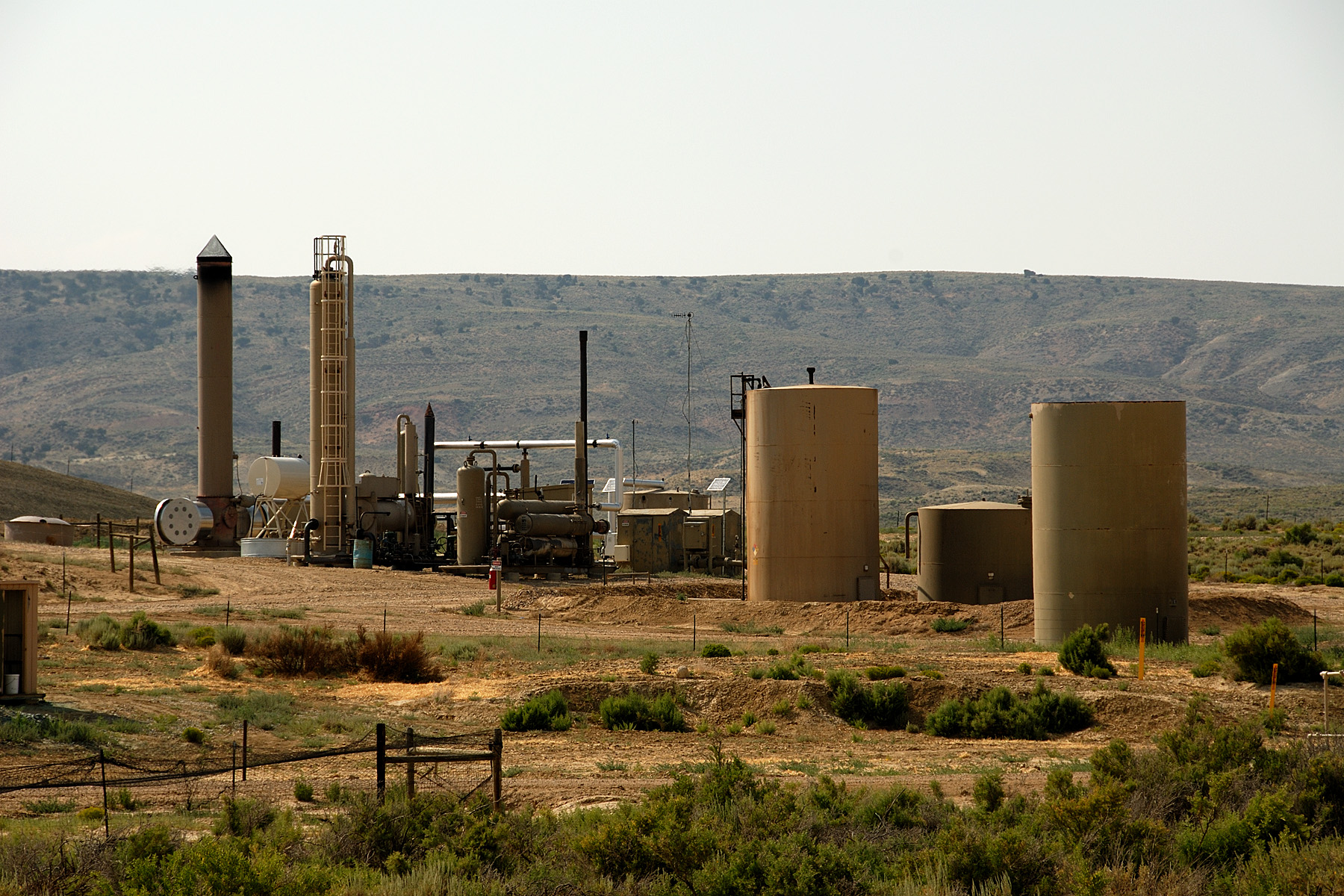
Energy companies in the past ultimately determined that using Atlantic Rim formation water didn’t pencil out, even though it’s considered pretty high quality. And they’ve tried, even building out infrastructure.
A historic endeavor
Steve Degenfelder, then a land manager for Atlantic Rim driller Double Eagle Petroleum, recalled that his former employer secured permits to surface discharge a limited volume of untreated water via a pipeline and separately desalinate other volumes. Neither worked out long-term.
“We did discharge some into Muddy Creek, but very little,” Degenfelder said. “We just got a lot of resistance from the environmental community and BLM.

Groundwater in the Atlantic Rim area is both abundant and filled by snowmelt coming off the west slope of the Sierra Madre Range, Degenfelder said. During the heyday of the Atlantic Rim field’s development, the two largest drilling companies were producing roughly 100,000 barrels of byproduct water daily — the equivalent of a small stream that flows continuously carrying nearly 7 cubic feet per second. Oftentimes water encountered during the drilling process has a lot of organic matter like oil, but in this region, it’s pretty pristine, he said.
“There’s a great deal of water to be had and it’s class three water [in Wyoming regulation],” Degenfelder said, “so it’s very good for livestock and wildlife to consume.”
But it’s also too salty for the most likely use: irrigation. The Wyoming Department of Environmental Quality has standards, and the Atlantic Rim water generally doesn’t cut it.
“The sodium is too high,” Hicks said. “[DEQ] was concerned that when you irrigate with high-sodium water, you poison the soil. It turns white.”

Already, there are issues with too much salt in Atlantic Rim waterways, and disturbing the soil in the region through industrial activity might have increased salinity levels at times. Salt concentrations in the main drainage in the area — Muddy Creek — increased by between 33% and 71% in the years 2009-2012 compared to 2005-2008, according to a 2015 U.S. Geological Survey study. But the sharp uptick in salinity also doesn’t perfectly align with the height of the drilling boom, the Earth Island Journal reported at the time.
It’s unclear how Dolar Energy would deal with water that’s too salty for irrigation.
Hicks’ understanding is that Dolar Energy seeks to “cherry pick” the highest-quality water from the test wells and potentially market that only.
What’s the plan this time?
Mark Dolar did not respond to multiple WyoFile requests for an interview. His company’s website includes little information, though it does feature a short podcast that describes his interest in natural gas resources in the Atlantic Rim field. A map included on the website shows that he’s also done business in the Pinedale area, three parts of Utah plus Colorado’s Piceance Basin.
Dolar Energy at one time was a registered business with the Wyoming Secretary of State Office, though it’s been listed as inactive since 2018. The LLC for the oil and gas exploration company is currently registered and considered active with the Florida Department of State.
Dolar’s bid to put Wyoming water in a pipeline and send it to Colorado has been attempted before on a much larger scale.

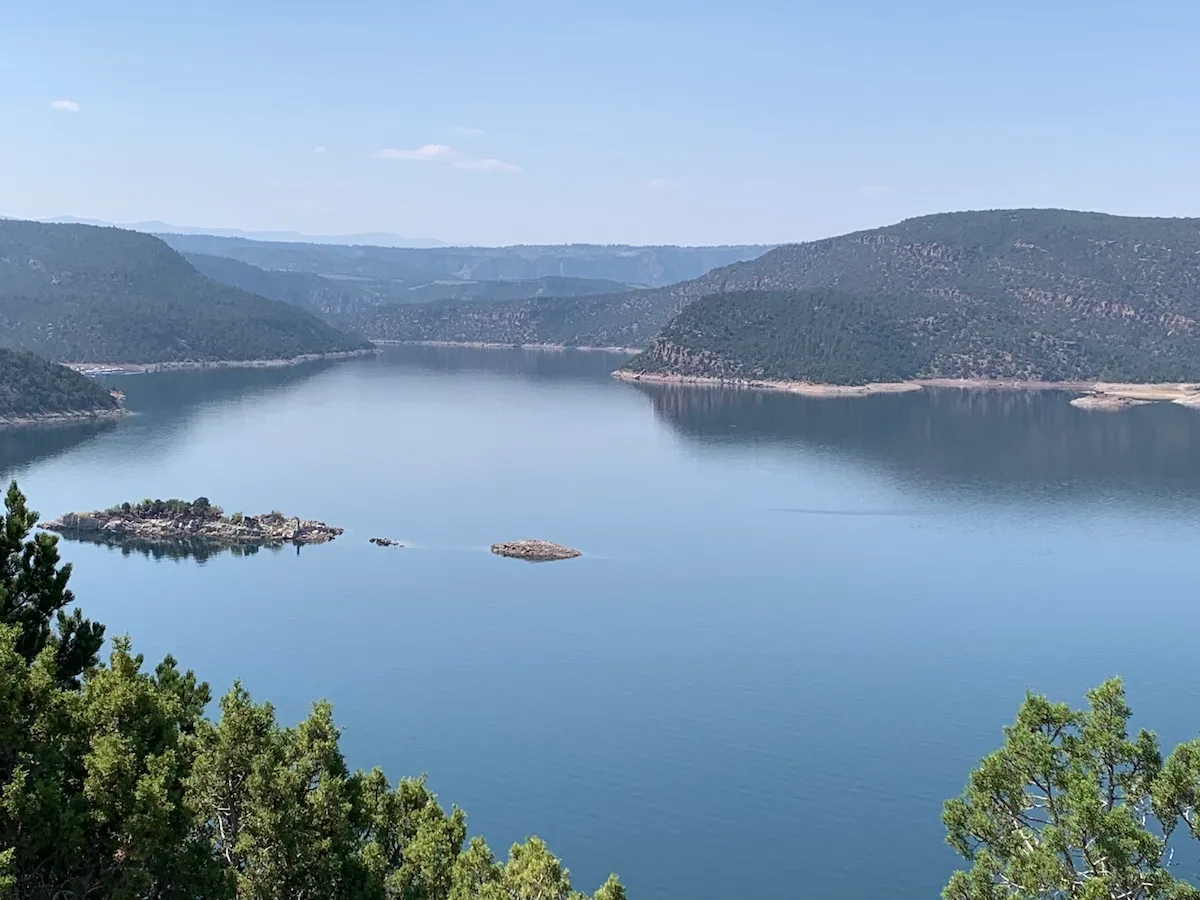
More than a decade ago Fort Collins, Colorado resident Aaron Million pushed a failed proposal to tap Flaming Gorge Reservoir and pipe the water across southern Wyoming and the Continental Divide to the Colorado Front Range. Although it’s been shot down repeatedly, a fourth iteration of the project was still on the table as of 2022, and the dream of the largest privately funded water project in the history of the West is still not dead, according to a recent feature story in the progressive magazine Mother Jones.
Degenfelder has met Dolar before but was unaware of his recent proposal. “I wonder what those guys can sell Wyoming water to Colorado for?” he asked.
The Atlantic Rim and Muddy Creek drain into the Little Snake River Basin, a tributary of the Green River that’s part of the overallocated Colorado River Basin. Amid long-term drought, it’s an era of depleted reservoirs and cuts to water allocations in the region — which may be mandatory in Wyoming’s portion of the basin by 2025.
Given the shortages, Hicks’ sense is that the value of water in the Colorado River Basin has increased “astronomically” and that there’d be a market for the Atlantic Rim water. Still, he said, there are many factors that could prevent the plan from coming to fruition, one of them being the economics of tapping less than two dozen abandoned wells.
“Is there enough water there of sufficient quality that it doesn’t have to be treated?” Hicks asked.
Hurdles and hurdles
Hicks sees another hurdle: It’s unclear whether water taken out of Atlantic Rim-area aquifers and surface discharged is subject to interstate water agreements.
“If he produces all of that [water] and they say, ‘That’s connected to the surface water,’ Wyoming’s only entitled to 14% of that under the Upper Colorado River Compact,” the state senator said.
Groundwater is subject to the Colorado River Compact “to the extent it is Colorado River System water as that term is used in the compact,” Gebhart, the state engineer, explained in an email.
“However, the seven states which are subject to the compact have never mutually determined to what extent groundwater constitutes Colorado River System water,” Gebhart wrote. “The ability to use groundwater within Wyoming is only subject to our individual state laws.”
Constitutionally, the groundwater is owned by the state of Wyoming. If Dolar Energy proceeds with its plans, the company intends to file applications for the “points of use” of the Atlantic Rim groundwater, Gebhart said.
Permitting for activities and disturbances to federal land is another potential obstacle.
The State Engineer’s Office sent Dolar Energy’s 21 groundwater test well applications to the Bureau of Land Management on Feb. 15, according to the state engineer. At that time, the state office shared concerns about who would be responsible for the currently plugged and abandoned coalbed methane wells if they weren’t going to be used after being reentered.
The BLM’s Wyoming office hasn’t taken any action because Dolar Energy hasn’t submitted anything, said Brad Purdy, deputy state director for communications. All of the leases for the old wells have been terminated, he said.
“If the company is interested in doing commercial H2O wells off of those CBM wells, we have to get some applications,” Purdy said. “We don’t have any right-of-way applications, we have no [applications to drill] to reenter a plugged well. The proponent has a lot of stuff they need to submit before we can run NEPA and even begin to analyze this.”
Wildlife managers’ concerns are another potential impediment to Dolar Energy’s plans.
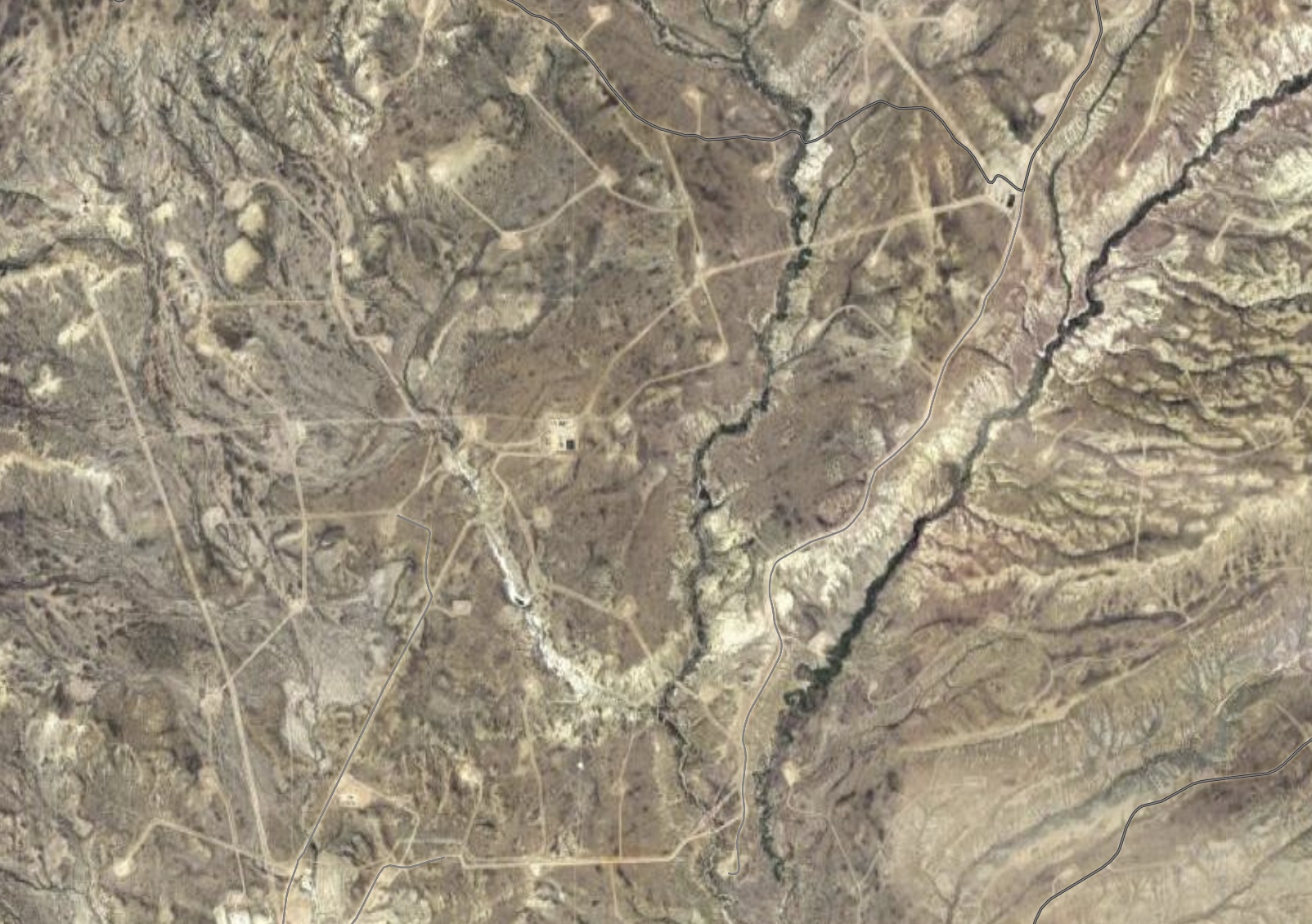
The Wyoming Game and Fish Department’s review letter shows that 19 of the 21 applied-for test wells (two were later rescinded) are located within the designated Baggs Mule Deer Migration Corridor. Of those, six wells are located on ground that’s both “stopover” and “high use” habitat. One well each fell solely within high use and stopover areas, while the remainder would be located within “low” or “medium” use areas.
“The proposed well sites were recently plugged and the pads reclaimed,” Game and Fish’s letter states. “We are concerned that disturbance at these well sites, specifically within the high use area and stopovers within high use areas, will impede or reverse the reclamation process while also negatively impacting migrating mule deer.”
“Lastly, it should also be noted that a water pipeline in the Baggs area will likely traverse sensitive and vital wildlife habitats, much like these exploratory wells,” the letter noted.

Click the link to read the article on the Alamosa Citizen website:
May 30, 2024
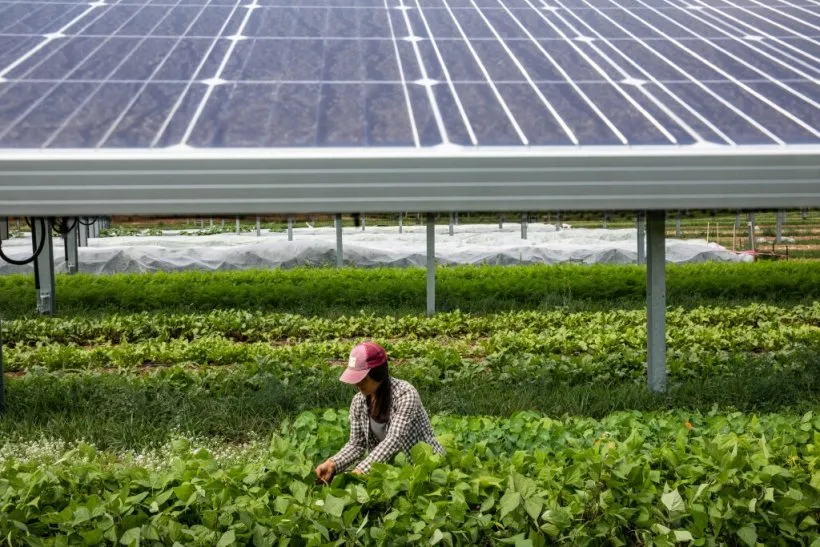
For a second straight year the Colorado Department of Agriculture is looking to distribute grants up to $500,000 for projects that demonstrate and research the use of solar generation on agriculture land. The grants are part of the state’s Agrivoltaics Research and Demonstration program which came into existence through legislation sponsored by state Sen. Cleave Simpson of Alamosa.
The grant program is particularly relevant to the San Luis Valley, where the reduction in groundwater irrigation has led to thousands of farming acres retired. Generating more renewable solar is part of the Valley’s strategy to find alternative uses for a growing number of retired fields that now dot the landscape.
“The first year of these grants was a tremendous success. Awardees have explored groundbreaking methods to effectively develop energy on the same land that is used to grow food and fiber,” said Cindy Lair, Deputy Director of the Conservation Services Division. “We can’t wait to see the new, innovative proposals that will be submitted for this next round of funding.”
Up to $500,000 is available for projects that study the potential, benefits, and tradeoffs of agrivoltaics in Colorado.
The Agrivoltaics grant program is part of CDA’s Agricultural Drought and Climate Resilience Office (ADCRO), which helps Colorado producers mitigate and respond to drought and a changing climate.
Applicants can find the Grant Guidelines as well as instructions for submitting an application on the ADCRO website, at ag.colorado.gov/adcro. The maximum grant award is $249,000 for a single project application. Eligible project types include construction or expansion of agrivoltaics systems and demonstration projects, outreach and communication efforts focused on agrivoltaics benefits or obstacles, and research projects that focus on understanding the benefits, incremental costs, and tradeoffs of agrivoltaics systems.
Applications should be submitted via email to Rosalie.Skovron@state.co.us by July 21, 2024.
ADCRO staff will host a webinar on the application process on June 18. Anyone interested in applying for the grant can participate. A recording will be available on the CDA YouTube channel.
In the Fiscal Year 2023-24, seven different projects received grant funding to showcase diverse ways of generating electricity from solar arrays on Colorado farms and ranches. One of the projects, completed by Longboard Power, included installing solar wind breaks on a farm and monitoring soil benefits and energy output. Another, through the Colorado Cattlemen’s Agricultural Land Trust, is creating template conservation easement language that would allow for solar power generation while maintaining ag production and applying conservation values.
The other five projects were by Namaste Solar, Colorado State University, American Farmland Trust, Sandbox Solar, and Summit Cellars.
Webinar Information
Date and Time: Tuesday, June 18, 2024 from 1:00 p.m. – 2:00 p.m. MDT
Registration link: June 18 registration link or go to ag.colorado.gov/ADCRO
Description: This grant encourages innovative projects, including demonstrations of agrivoltaics, research projects, and outreach campaigns to further agrivoltaics and Colorado’s agricultural economy. CDA staff will explain the application process for the grant and answer questions.
Colorado acepta solicitudes para la subvención de Investigación y Demostración de Agrivoltaicos
Por segundo año consecutivo, el Departamento de Agricultura de Colorado busca distribuir subvenciones de hasta $500,000 para proyectos que demuestren e investiguen el uso de generación solar en tierras agrícolas. Las subvenciones son parte del programa estatal de Investigación y Demostración de Agrivoltaicos, que se creó a través de una legislación patrocinada por el senador estatal Cleave Simpson de Alamosa.
El programa de subvenciones es particularmente relevante para el Valle de San Luis, donde la reducción del riego con agua subterránea ha llevado a retirar miles de acres de tierras de cultivo. Generar más energía solar renovable es parte de la estrategia del Valle para encontrar usos alternativos para un número creciente de campos retirados que ahora salpican el paisaje.
“El primer año de estas subvenciones fue un éxito tremendo. Los beneficiarios exploraron métodos innovadores para desarrollar eficazmente la energía en la misma tierra que se utiliza para cultivar alimentos y fibras,” declaró Cindy Lair, Subdirectora de la División de Servicios de Conservación. “Tenemos muchas esperanzas de ver propuestas nuevas e innovadoras que se puedan presentar en esta próxima ronda de financiamiento.”
Se dispone de hasta $500,000 para proyectos que estudien el potencial, los beneficios y las soluciones intermedias y compensatorias de la agrovoltaica en Colorado.
El Programa de Subvenciones Agrovoltaicas forma parte de la Oficina de Sequía Agrícola y Resiliencia Climática (ADCRO) de CDA, que ayuda a los productores de Colorado a mitigar y responder a la sequía y al cambio climático.
Los solicitantes pueden encontrar las directrices para la concesión de subvenciones, y las instrucciones para postularse, en la página de internet de ADCRO ag.colorado.gov/adcro. El máximo de subvención para una solicitud es $249,000 para un solo proyecto. Los proyectos elegibles incluyen la construcción o ampliación de sistemas agrovoltaicos; proyectos de demostración; esfuerzos de divulgación y comunicación centrados en los beneficios u obstáculos de la agrovoltaica, y proyectos de investigación centrados en comprender los beneficios, costos incrementales y las soluciones intermedias y compensatorias de los sistemas agrovoltaicos.
Las solicitudes deben enviarse al correo electrónico Rosalie.Skovron@state.co.us antes del 21 de julio de 2024.
ADCRO organizará una junta virtual para ver el proceso y los detalles de solicitud el 18 de junio. Cualquier persona interesada en postularse para la subvención puede participar. La grabación quedará disponible en el canal de YouTube de CDA.
En el ejercicio fiscal 2023-24, siete proyectos diferentes recibieron subvenciones para mostrar diversas formas de generar electricidad a partir de paneles solares en granjas y ranchos de Colorado. Uno de los proyectos, realizado por Longboard Power, incluía instalar un cortavientos solar en una granja y monitorear los beneficios para el suelo y la producción de energía. Otro, a través del Fondo de Tierras Agrícolas de los Ganaderos de Colorado, está creando un modelo de servidumbre de conservación que permitiría generar energía solar mientras siga la producción agrícola y aplicando los valores de conservación.
Los otros cinco proyectos son de Namaste Solar, Colorado State University, American Farmland Trust, Sandbox Solar y Summit Cellars.
Información sobre el webinario
Fecha y hora: martes, 18 de junio de 2024 de 1:00 a 2:00 p. m. (zona horaria MDT)
Enlace de inscripción: regístrese para la reunión del 18 de junio o visite ag.colorado.gov/ADCRODescripción: esta subvención fomenta proyectos innovadores como demostraciones de agrovoltaica, proyectos de investigación y campañas de divulgación para impulsar la agrovoltaica y la economía agrícola de Colorado. CDA explicará el proceso de solicitud de la subvención y responderá preguntas en esta junta virtual.

Click the link to read the article on the High Country News website (Natalie Mesa):
April 19, 2024
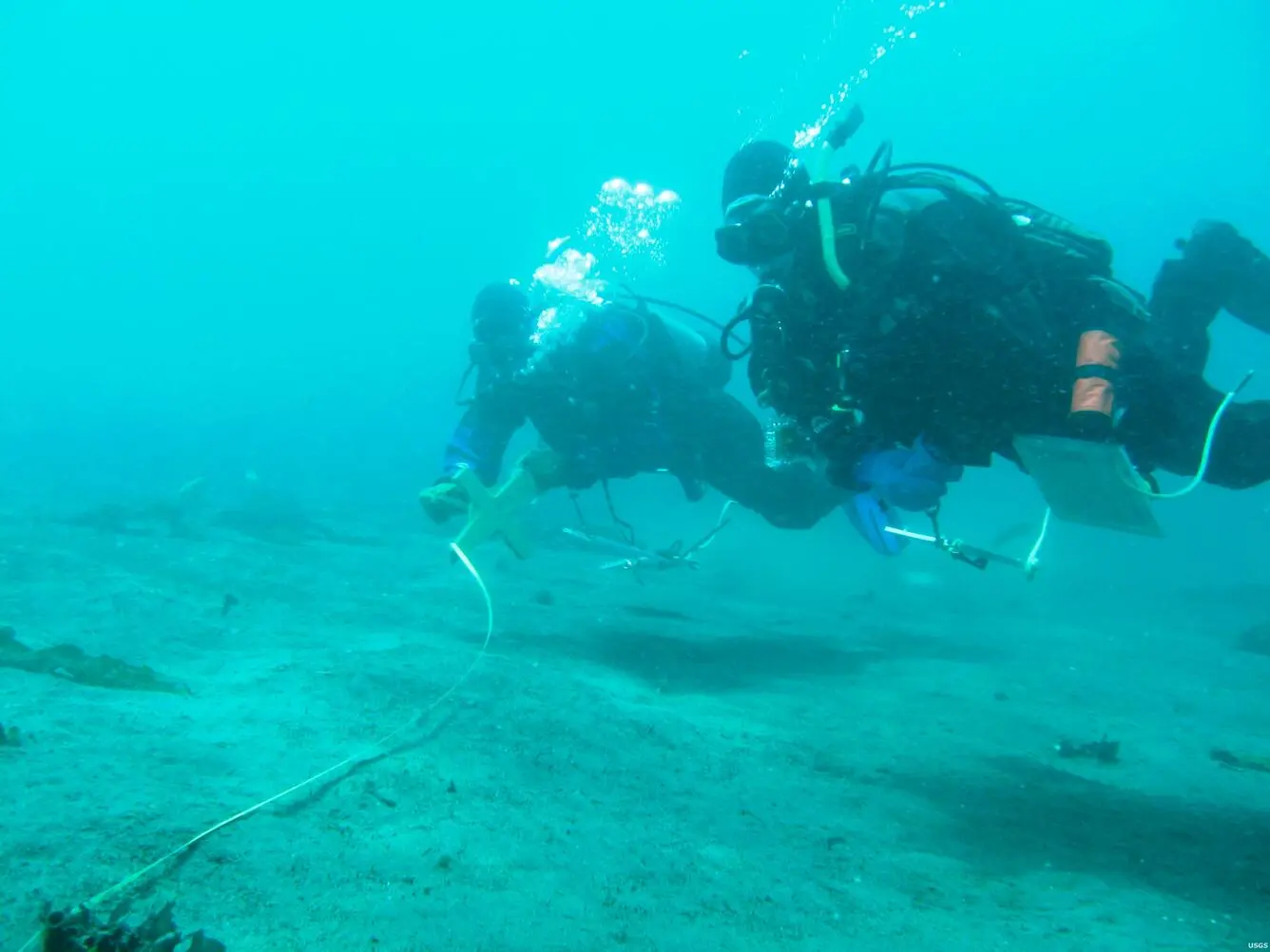
In late August, Steve Rubin, a fish biologist with the United States Geological Survey, will dive into the frigid, briny water of the Strait of Juan de Fuca, roughly a mile from the mouth of the Elwha River. It will be Rubin’s 12th dive at the site since the Elwha Dam was breached in 2011, sending a century’s worth of accumulated sediment surging downstream.
The megatons of sediment that were released by the dam’s removal were expected to help rebuild the twists and turns of the Elwha River. But some feared that they might end up suffocating the coastal ecosystems near the delta.
During Rubin’s first post-removal dive, he documented kelp, algae, invertebrates and fish. The changes he saw were striking: Where there had been dense kelp forests, there was now bare ocean floor. The water was opaque with suspended sediment. At some dive sites near the delta, he could hardly see his outstretched hand. “It’s hard to describe. In some of our sites there was nothing — literally zero individuals of some of these kelp and algae species,” Rubin said.
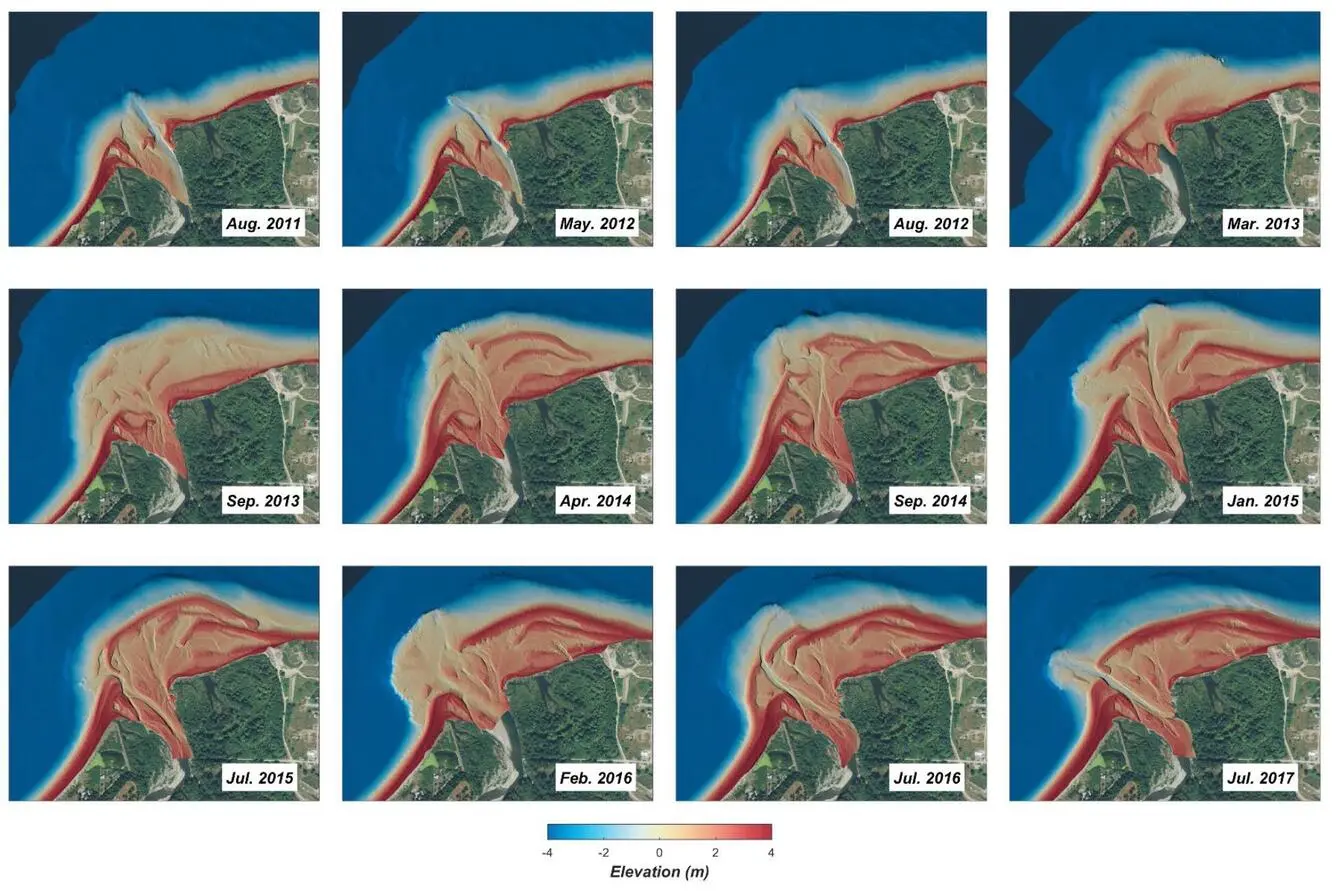
The kelp density near the river mouth decreased 77% in just a year, a worrisome development that the Seattle Times described as a “kelp Armageddon.” The removal of the Glines Canyon Dam, 8 miles upriver of the Elwha River and 14 miles from the delta, started in 2013, releasing even more sediment. Kelp continued to decline in 2013, decreasing by 95% since before dam removal.
That wasn’t the whole story, though. When Rubin returned in 2015, he saw that, in many of his survey sites, the kelp had started to rebound. In 2018, studies revealed that the density of kelp in these sites resembled pre-removal levels. Researchers believe that the initial die-off was due to suspended sediment blotting out much of the sunlight that kelp needs to grow. Once that sediment settled or washed away, the kelp recovered.
More than a decade after the Elwha Dam’s removal, researchers are finally getting a fuller picture of its impact on coastal ecosystems. When the dams were breached, the coastline near the river’s mouth was completely remodeled. Sediment built stretches of sandy beaches and a series of swirling sand bars that peek above the water’s surface. These beaches and bars have allowed water to pool, forming a series of brackish lagoons. Plants and animals quickly colonized the new ecosystem. “It was like seeing a geologic event in a human timeframe,” said Anne Shaffer, executive director and lead scientist of the Coastal Watersheds Institute and affiliate professor at Western Washington University.
Though some of the early arrivals were invasive plants, like dunegrass, yearly surveys reveal that the beaches are now dominated by native plants. The increased turbidity of the water initially decimated invertebrate species, including insects and crabs. But preliminary research led by the Lower Elwha Klallam Tribe shows that since around 2018, invertebrate populations have rebounded, and the species diversity continues to increase.
In late 2023, Rubin, Miller and their team reported the results of their 11 years of SCUBA surveys in the journal Frontiers in Ecology and Evolution. At some of their survey sites along the delta, there have been lasting changes: The sediment released when the dam came down still covers the coarse, rocky seafloor. “As long as they’re buried, it’s a different kind of substrate with different species,” Rubin said.
But while such sites can’t support kelp, other species are finding a home. The Pacific sand lance, a silver, sword-shaped fish that buries into soft sediment and is a key food source for salmon, was not seen in these areas before dam removal. “Now, you dive there, and you can barely swing a cat without hitting a sand lance,” said Miller. Geoducks and Dungeness crabs have also settled into the sandy depths.
The Elwha shoreline has clearly changed, but it is also undeniably healthier as a whole, said Shaffer, noting that restoration is a long process that takes decades. The removal has reversed the erosion of beaches near the river’s mouth, and the river’s undamming has transformed them into “a beautiful deltaic habitat. It’s gorgeous,” she said. And the salmon have also likely benefited from more than just fish passage in the river: There’s been a noticeable increase in the number of surf smelt spawning on the delta’s beaches, Shaffer said.
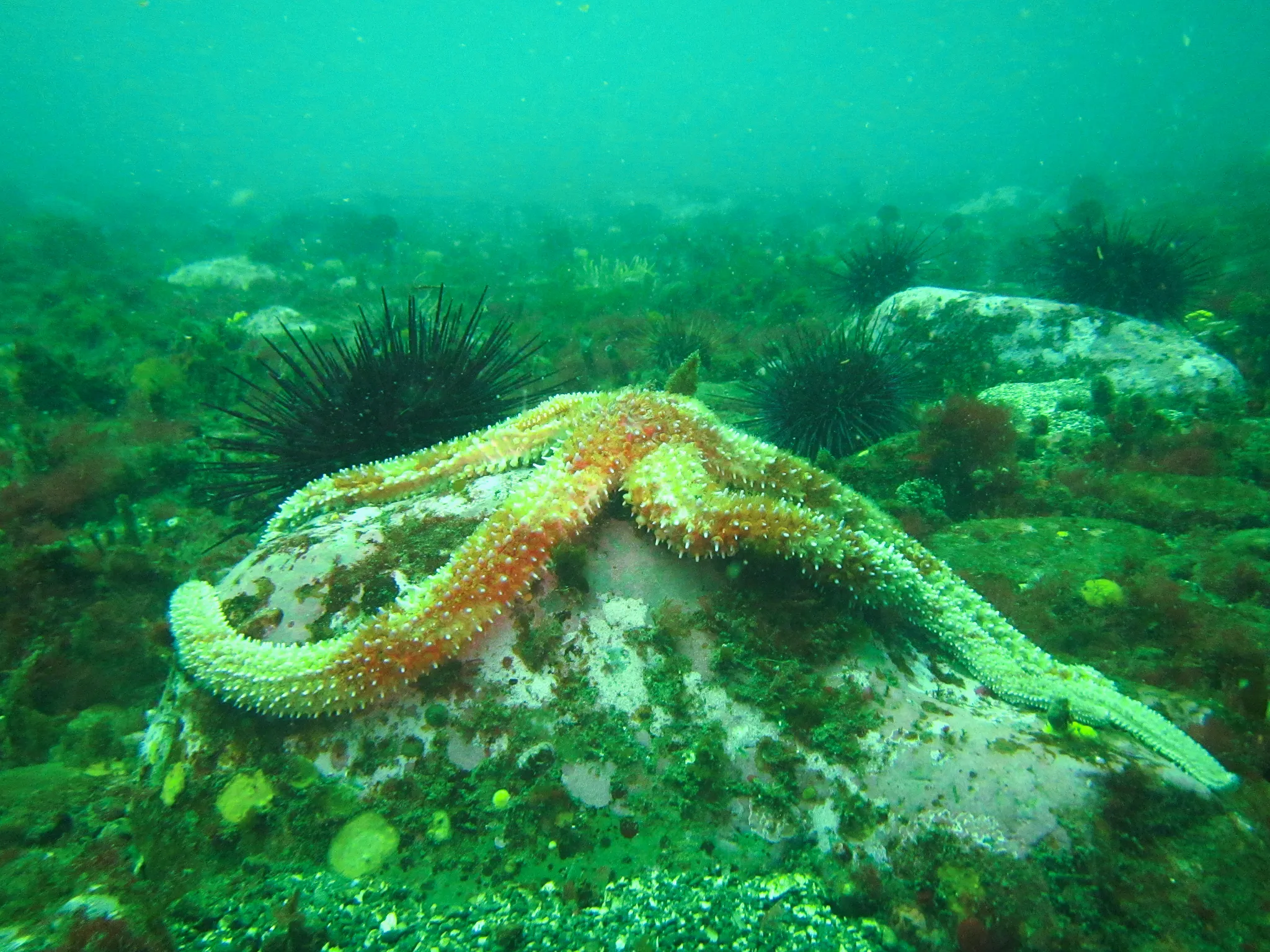
Rubin and Miller also noted that dam removal might not be responsible for all the changes seen in the delta since the dams came down. Around 2014, for example, sea star wasting disease decimated the region’s starburst-like sunflower sea stars, while a heat wave starting in 2014 disrupted dozens of marine species, including kelp.
Right now, other researchers are preparing to study the removal of four dams from the Klamath River in southern Oregon and Northern California. As with the Elwha removals, some locals worry that the sediment will harm the coastal ecosystem near the delta. But scientists don’t expect trouble: Since the Klamath flows into the open ocean, where the currents are strong and fast, the sediment is likely to wash away quickly. As the sediment moves south along the coast, however, it may help to rebuild and bolster beaches eroded by sea-level rise, making them more resistant to flooding.
This summer’s survey of the Elwha River Delta will be the last of its kind, as the project’s funding is set to expire. The delta is still changing and remodeling, so how its newly established communities will evolve in the long run remains uncertain. Even the most persistent sediment deposits may erode in the coming years, decades or centuries. “The key takeaway is if you remove a dam, you can change the marine ecosystem,” Miller said.
Shaffer noted that the Elwha River offers an important lesson for future dam removal projects: Conserving and restoring nearshore habitats should not be an afterthought. “The nearshore is a critical zone for fish like salmon and forage fish,” she said. “Include your nearshore (in restoration planning); don’t overlook it. When you restore it, things come back quickly.”


Click the link to read the article on the Circle of Blue website (Brett Walton):
June 14, 2024
As the Colorado River declines, one fundamental question hangs over the Southwest’s most important waterway: can its people and industries slash their water use, thus aligning their water demands with a shrinking supply?
The answer so far – with important caveats – is a clear but qualified ‘yes.’
The latest evidence: the three lower basin states of Arizona, California, and Nevada whittled their take from the river last year. Their combined consumption of just under 5.8 million acre-feet is the lowest annual total since 1983. That represents a decline of 13 percent compared to 2022, when Lake Mead, the basin’s largest reservoir hit a record low and a simmering crisis morphed into a full-blown emergency.
The 2023 water consumption numbers are detailed in a Bureau of Reclamation report published last month. Reclamation is the federal agency that oversees the basin.
The report comes as the seven basin states – including Colorado, New Mexico, Utah, and Wyoming in the upper basin – plus the basin’s tribes and the federal government are negotiating how the river should be managed in the future. The centerpiece of those talks is how to reduce demand.
Tom Buschatzke, director of the Arizona Department of Water Resources, told Circle of Blue that the drop in water consumption last year is an indicator that longer-term reductions are possible.
“I think it is a good precursor to getting used to living with less water as the river is expected to shrink,” Buschatzke said.
The report provides headline numbers, but it does not explain why demand fell. Water agencies in the basin point to at least three factors that contributed to the drop.
One is the availability of other water sources. California’s Colorado River consumption was just 3.7 million acre-feet last year, the lowest since 1949, according to Bill Hasencamp, the manager of Colorado River resources for the Metropolitan Water District of Southern California, a big regional wholesaler.
Met, as the district is known, is California’s largest municipal user of Colorado River water, and it reduced its take from the river by 40 percent last year. It was able to do so, in part, because of a robust snowpack in the Sierra Nevada mountains. That meant more water was available from the State Water Project, a canal system that exports water from Northern California to purveyors like Met hundreds of miles away.
“When you have a good year from the State Water Project, we can back off on our Colorado use,” Hasencamp explained. “So that has this ‘yo-yo effect’ for our demands on an annual basis. Sometimes more, sometimes less.”
For Met, the unreliability of these distant sources is a second factor, Hasencamp said. Met and other agencies are attempting to source more water locally, through reuse, desalination, or cleaning up groundwater basins contaminated with industrial chemicals. Met is in the design stage of the country’s largest water recycling facility, a roughly $8 billion project that will eventually provide water for 1.5 million people.
The move away from distant sources is already evident. Hasencamp said that Met’s imported water from Northern California and the Colorado River combined is down by more than half in the last two decades.
The third and most essential factor is conservation. Some reductions have occurred organically as outdated and wasteful appliances and toilets have been replaced with newer, more efficient models, as residents have swapped grass lawns with drought-tolerant landscaping, and as subdivisions have supplanted irrigated farmland, the largest water user in the basin.
Much of the recent conservation, however, has taken a different form. Some of the cuts were voluntary and compensated with cash payments. But most were mandated by rules put in place in 2007 and then expanded in 2019 under the basin’s drought contingency plan, or DCP. For instance, Arizona’s voluntary and mandatory conservation, compared with the volume of water it is legally entitled to consume from the river, was nearly 1 million acre-feet last year.
Conservation got an extra boost in 2022, when Congress passed the Inflation Reduction Act. That law provided $4 billion for drought response in the Colorado River and other western states. In effect, it enabled payments to farmers and cities to conserve water. Arizona, California, and Nevada worked out a deal last year that their water users would be paid not to use 2.3 million acre-feet over the next three years, through 2026.
Payments are an appealing carrot when forced to cut demand rapidly. What happens when that funding runs out? Current operating rules for the basin will expire at the end of 2026, and future conservation is not likely to be so generously compensated.
“Clearly the Inflation Reduction Act conservation money was a critical piece of achieving the additional conservation beyond our required DCP and 2007 guidelines shortages in Arizona,” Buschatzke said. “And there is a question about how or if you can maintain that post-2026.”
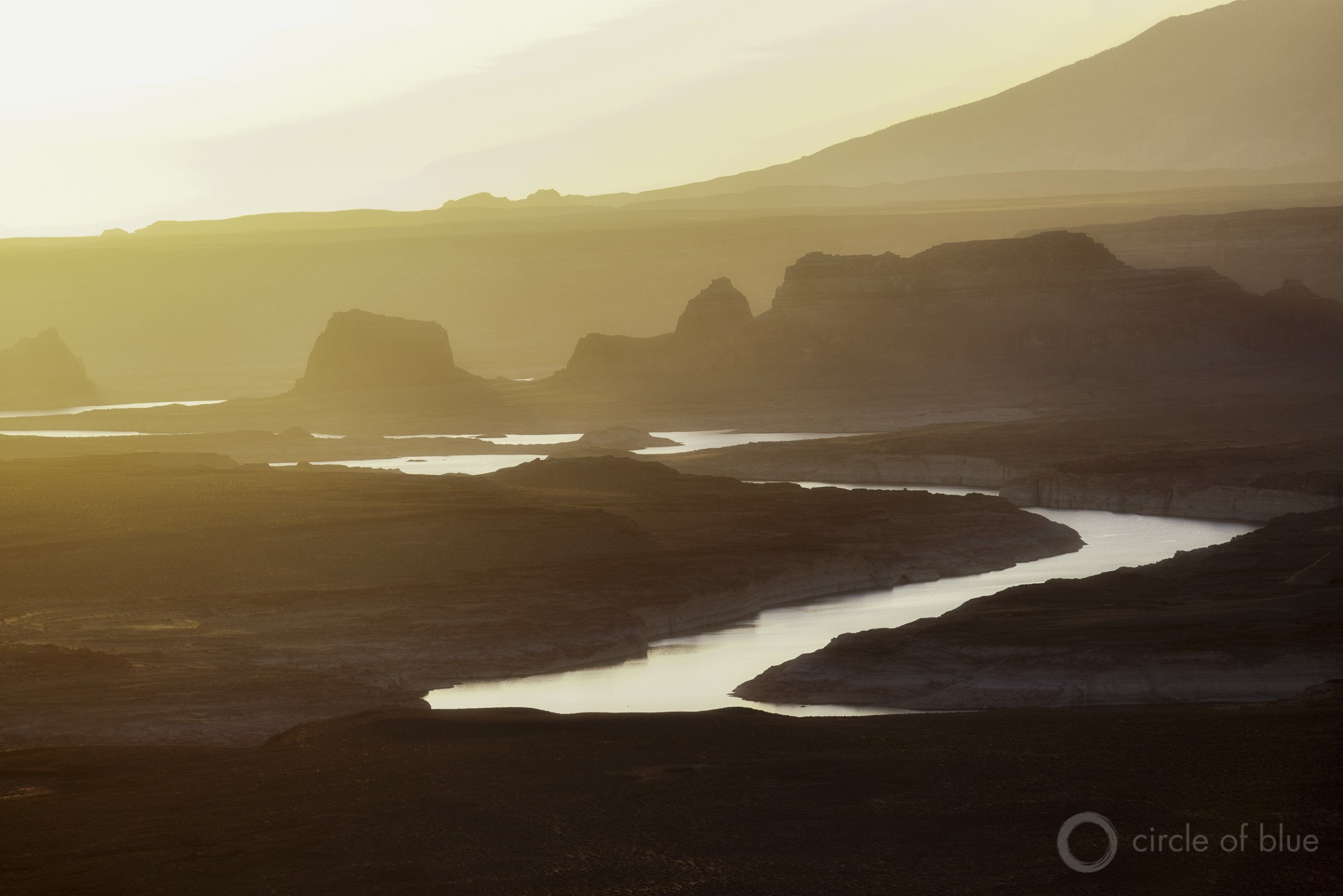
Cuts in water demand last year have stabilized – but not rescued – the basin’s reservoirs. Lake Powell is 38 percent full, and Lake Mead just 34 percent. There are still sharp disagreements between states, farmers, cities, and tribes about the distribution and severity of future water cuts. The conservation success in 2023 provided a rosy view of possibility. But take off the glasses, and the outlook is a bit fuzzier.


Jessica Ray, University of Washington
Close to half of America’s tap water contains PFAS, or perfluoroalkyl and polyfluoroalkyl substances. These “forever chemicals” are in thousands of products, from clothing and cosmetics to cleaning products, and are linked to cancers, liver damage, high cholesterol and asthma.
Dr. Jessica Ray, assistant professor of civil and environmental engineering at the University of Washington, explains what PFAS are, how scientists are trying to remove them from the environment, and what you can do to reduce the impact of PFAS on your own health. https://player.vimeo.com/video/946246279 Dr. Jessica Ray discusses PFAS in our water supply.
The Conversation has collaborated with SciLine to bring you highlights from the discussion, which have been edited for brevity and clarity.
What are PFAS, and how are they used?
Jessica Ray: PFAS are a class of thousands of synthetic chemicals originally manufactured and heavily used in the 1950s. They were the active ingredient in fire suppressant foams that were used at military bases on aircraft fires.
Since then, they’ve been used in many applications and consumer products – shampoos, dental floss, nail polish. They’ve been used in waxy coatings found in food containers. They have also been applied as nonstick coatings; for example, in cookware. They’ve been used in outerwear to help with rain protection.
Why are PFAS called “forever chemicals”?
Jessica Ray: It is difficult for PFAS to degrade naturally in the environment or even during processes like water treatment.
How do PFAS move through the environment?
Jessica Ray: Unfortunately, PFAS like to stick to solid surfaces like soils. They can dissolve in water and enter the Earth’s atmosphere. And because PFAS can permeate air, water and soil, humans and animals can be exposed to them in a multitude of ways.
For example, if PFAS are present in ocean water, and then the fish ingest and become contaminated with PFAS, and then we consume those fish, then we are exposed to PFAS. And unfortunately, researchers have detected PFAS in many, many different drinking water sources worldwide. Not just surface water and groundwater, but bottled water as well.
What are the health impacts of PFAS?
Jessica Ray: PFAS have been linked to liver tissue damage and kidney cancer. If a fetus is exposed to PFAS during pregnancy, that can lead to low birth weight and accelerated puberty. PFAS have also been linked to impairments of the immune system.
How can we reduce personal exposure to PFAS?
Jessica Ray: You can do a number of things. If you’re cooking, you could purchase and use stainless steel or cast iron cookware, very tried and true cookware that should not contain PFAS.
Also look for products that explicitly state they are PFAS-free. And you could buy organic products, those should have lower PFAS loads. Finding ways to reduce PFAS loads to the environment and to drinking water will be important given the Environmental Protection Agency ruling in April 2024 to regulate several PFAS in drinking water. https://www.youtube.com/embed/UpobOQ54bWc?wmode=transparent&start=0 The Environmental Protection Agency has targeted six chemicals for removal from drinking water.
How can we remove PFAS from our drinking water?
Jessica Ray: A handful of companies are selling essentially a version of a Brita water filter that are targeted for PFAS. Generally though, just using something like a Brita or Pur water filter at home should help reduce exposure to not only PFAS, but other contaminants that might persist even in drinking water that’s distributed to your tap at home.
What about your research on removing PFAS from water?
Jessica Ray: My research group is exploring two different approaches for treating PFAS in water. One approach is to remove or separate PFAS from water. The other is to destroy PFAS in water.
For the separation approaches, we’re looking at existing water treatment processes used in drinking water and wastewater treatment, and then trying to modify those processes to selectively target PFAS in water apart from other contaminants that might be in the water.
How is your group trying to improve PFAS filtration?
Jessica Ray: If you are filtering your water at home using a filtration cartridge, then that can help to remove a wide variety of contaminants. These contaminants can include heavy metals or other dissolved contaminants in water.
But often, PFAS in drinking water sources tend to exist in very, very low concentrations, while other contaminants exist at much higher ones. Filters only have so many adsorption sites available where contaminants are bound. And so there is a strong likelihood the adsorption sites will be occupied before the PFAS can be removed from the water.
One approach that we’ve been using is to develop new adsorbents that help target PFAS. My group has been developing this material for the last couple of years. And we’ve been talking to people who can help commercialize this technology so consumers can apply these kinds of point-of-use treatments to help protect them from PFAS. It’s hard to say exactly how long it will be until the treatments will be commercially available – maybe in one or two years.
Are there alternatives to PFAS that are safer to use?
Jessica Ray: Researchers are looking into what’s called green chemistry – designing chemicals that behave similarly to PFAS but aren’t as toxic and will break down in the environment. So there is hope for the future.
Watch the full interview to hear more.
SciLine is a free service based at the nonprofit American Association for the Advancement of Science that helps journalists include scientific evidence and experts in their news stories.
Jessica Ray, Professor of Civil & Environmental Engineering, University of Washington
This article is republished from The Conversation under a Creative Commons license. Read the original article.