A selection of Colorado butterfly and bee species in the University of Colorado Museum of Natural History Entomology Collection. A collaborative study found that pollinators provide billions of dollars’ worth of services to Colorado, and they are at risk. Credit: Adrian Carper/CU Museum of Natural History
Pollinators are responsible for everything from the food we eat to the clothes we wear, and Colorado would not be so colorful without their contributions to the state’s landscape. But studies have shown that even in protected areas of Colorado, insects have declined by more than 60% over the past few decades.
A pollinator study led by Colorado State University Extension has found that native pollinators are worth billions of dollars to Colorado, and they need protection. The study has resulted in a state law that dedicates public funding to studying and conserving invertebrates and rare plants.
Legislators wasted no time in applying recommendations from the study, which was released in January. The law addresses the No. 1 priority outlined by the study: Protect imperiled native pollinating insects.
Deryn Davidson, principal investigator of the study and CSU Extension sustainable landscape state specialist, said the study and now the law recognize the importance of pollinators and called them significant steps toward invertebrate protection.
“The quick action on this bill is really fantastic because if we do nothing, the decline in not just pollinators but all invertebrates is going to be serious, and we’ll all be affected far more than people realize,” Davidson said.
Squash bees, like this Peponapis pruinosa, are among the most effective squash and melon pollinators. More than a third of the world’s crops depend on pollinators. Credit: Adrian Carper
Before the law, signed by Gov. Jared Polis on May 17, invertebrates were not included among wildlife managed by the state. The law authorizes Colorado Parks and Wildlife to make land management decisions based on pollinator conservation and establishes pollinator-related staff positions.
“The ability to specifically study pollinators and the plants that depend on them is crucial to our understanding of factors impacting native pollinators and how we can best support them,” said Adrian Carper, an entomologist with the University of Colorado Museum of Natural History and co-lead author of the study with Davidson and Steve Armstead of the Xerces Society for Invertebrate Conservation. Carper led the study’s science team, and Armstead led its land management team, while Davidson managed the project overall.
The combined team of experts spent a year synthesizing pollinator data and best management practices for large-scale pollinator conservation to present to the governor’s office at the end of 2023. The 306-page study, commissioned by the Colorado General Assembly in 2022, is the most detailed account of statewide pollinator health ever undertaken.
“This bill begins to implement the recommendations of Colorado’s Native Pollinator Study by enabling our state wildlife professionals to study and conserve all native species, including invertebrates and rare plants that serve as the foundation of healthy, functional ecosystems,” said Sen. Janice Marchman, who co-sponsored the bill in the Colorado Senate.
An orange-tipped cactus borer pollinates a curly cup gumweed; both species are native to Colorado. A collaborative study led by Colorado State University Extension is the most detailed account of statewide pollinator health ever undertaken. Credit: Adrian Carper
Protecting pollinators
The study found that pollinators are worth billions of dollars to Colorado agriculture alone. They are also essential for the plants, wildflowers and wildlife that make the Colorado outdoors so desirable for recreation – a significant economic driver for the state in addition to a quality-of-life enhancer for residents.
“Native pollinators are crucial to our crops, economy, natural areas, and overall health and wellbeing,” Carper said. “Without the pollination services they provide, our landscapes would be much less productive, diverse and sustainable.”
“They’re not just creepy-crawly annoyances,” Davidson added. “Pollinators are the unsung heroes.”
Without protection, however, the outlook for Colorado’s native pollinators is dire. Research in a protected high-altitude meadow near Crested Butte over the past 35 years found that there are about 61.5% fewer insects, due mainly to warmer temperatures and less precipitation.
Habitat loss, climate change, pesticides, inadequate land-management practices and competition from non-native species are the primary causes of pollinator decline.
Colorado has 24 species of bumblebees, and nearly one-fifth are under review for federal protection under the Endangered Species Act. Three Colorado butterflies already are listed as endangered.
“This bill takes a big step forward in making sure we’re managing and protecting the state’s wildlife holistically,” said Marchman, who represents Larimer and Boulder counties in the Senate.
Davidson said that there are simple things people can do in their own yards to help support pollinators, adding that pollinator habitat can boost the curb appeal of your home, too. For more information on how to create pollinator habitat in your own yard, view the video below.
Declining stream flows can have cascading impacts on communities, fish, and wildlife. WRA is supporting policies and agreements to put water back into the rivers that sustain the West.
Healthy rivers are the foundation of the West, but climate change and growing water demands have stretched our rivers thin. Across the region, low flows have resulted in cascading impacts to communities, fish, and wildlife. Drying streams become disconnected from the rest of the river system. Low water levels inhibit fish passage, cause harmful algal blooms, result in higher water temperatures that are dangerous to fish, and increase the spread of invasive species. Communities feel the effects of these low flows as water supplies decline and popular outdoor recreation spots close.
Fortunately, there is a solution to this problem – add water. But unfortunately, water is in short supply in the West. In many cases, much of the water flowing in our rivers is already spoken for, having been legally allocated to cities, farmers and ranchers, industry, and other water users. Under state law in Colorado, water users have long been incentivized to use their full water allotment or risk losing it – a huge deterrent for water conservation.
Thankfully this is changing, as new policies are adopted that promote conservation while protecting water rights. For example, in 2013, a law was passed that allows water users who participate in water conservation programs to leave water in rivers and streams while still maintaining their full water rights. This helped open the door to innovative water sharing agreements to boost river flows.
In 2020, WRA worked with a team of partners to compile a list of high priority streams across Colorado that could benefit from such agreements. Among these streams was Slater Creek.
Located northwest of Steamboat Springs, the picturesque Slater Creek watershed supports numerous ranches, sustains habitat for native fish, and is a popular destination for camping, hunting, and boating. But in the hot summer months, flows in Slater Creek often drop below what is needed to maintain a healthy stream for fish and wildlife.
Seeing this, WRA sprang into action and met with members of the local ranching community to discuss a water sharing project to restore Slater Creek. We built relationships within the community, listened to their concerns, and assured them that any project would be protective of their water rights, and any water sharing agreement would be voluntary, fairly compensated, and mutually beneficial to participants and the river. Through these conversations, we were introduced to a rancher who was interested in working with us. We connected with the Colorado Water Trust, an organization with expertise in water sharing agreements, to get the project off the ground.
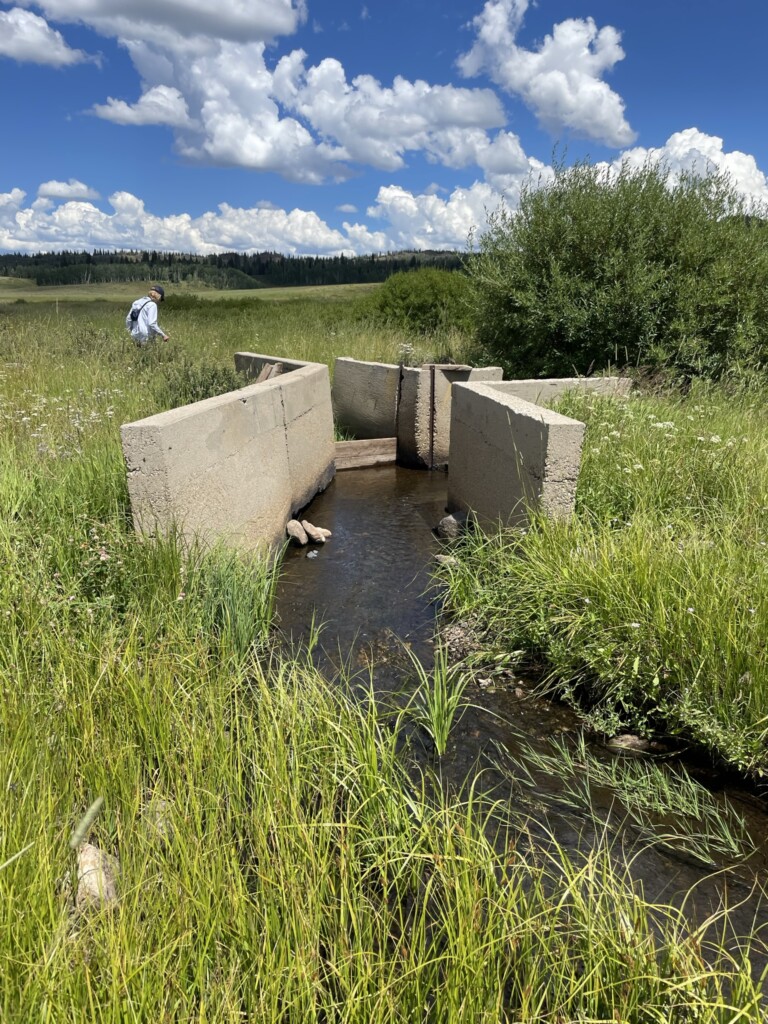
Ditch headgate that will be closed under the agreement to leave water in Slater Creek. Photo credit: Western Resource Advocates
Under this new agreement, WRA and the Colorado Water Trust will lease water from the rancher this summer to boost flows in Slater Creek. The rancher will be paid to stop irrigating from mid-July through October, when the river needs water the most. This will benefit 32 miles of Slater Creek, including reaches with instream flow water rights, and will put up to 130 million gallons of water back into the stream. WRA will be monitoring stream health and documenting river flows over the course of the lease. State law limits such leases to five out of every ten consecutive years to preserve agricultural lands. WRA and the Colorado Water Trust plan to continue working in Slater Creek to lease water in the years when it is most needed.
The water sharing agreement in Slater Creek is a prime example of how we can work together to implement solutions that both protect rivers and benefit communities in the face of drought and climate change.
Across the West, WRA is supporting agreements and policies that put water back into the streams that sustain our communities, fish, and wildlife.
For decades, courts have deferred to federal agencies when interpreting vague statutes. What constitutes the “take” or killing of an animal? What does it mean to maintain a wildlife population’s viability? What does “multiple use” mean when it comes to managing Forest Service or Bureau of Land Management lands?
But a recent ruling by the U.S. Supreme Court, Loper Bright Enterprises v. Raimondo, has shifted the authority to make these decisions from the executive branch to the federal judiciary. The 6-3 decision, split along ideological lines and written by Chief Justice John Roberts, did away with what’s known as the Chevron precedent, which instructed courts to defer to agency expertise regarding ambiguous laws, as long as those readings were reasonable.
The Chevron doctrine was one of the most-cited administrative law cases ever. In striking it down, the Supreme Court made an untold number of statutes vulnerable to legal challenges, while curtailing the ability of federal regulators to interpret and enforce existing laws.
“I think the bottom line is it will undoubtedly be disruptive,” said Martin Nie, a professor of natural resource policy at the University of Montana.
High Country News has compiled a list of some of the issues and topics in our core coverage areas that are likely to be impacted by Chevron’s repeal.
Lands, water and wildlife
Multi-use mandates: Several of the agencies that oversee land, water and natural resources are governed by multiple use mandates. Enacted in the 1960s and 1970s, these instruct agencies like the Bureau of Land Management and the Forest Service to promote a variety of outcomes, including recreation, sustained yield of natural resources and conservation.
“The statutes governing the Forest Service and the BLM are famously vague and discretionary,” Nie said.
This is especially true of the Federal Land Policy Management Act, which has directed public land regulation since 1976. The law has been flexible enough to accommodate both the Trump administration’s energy dominance agenda and the Biden administration’s recent conservation rule. The latter involved a new interpretation of FLPMA, elevating conservation to the same level of importance as energy extraction. Without the deference standard, Biden’s new rule will likely face legal challenges.
Josh Osher, public policy director at the Western Watersheds Project, thinks it’s now going to be difficult to impossible for the Fish and Wildlife Service to delist the Greater Yellowstone population of grizzly bears. Amaury Laporte/CC via Flickr
Unexpected upsides: For the nonprofit organizations that watchdog the federal government’s wildlife and natural resource agencies, the ruling may actually offer some benefits.
“The agency deference that has been part of the Chevron decision has worked against us in many cases,” said Josh Osher, public policy director at the Western Watersheds Project.
The nonprofit regularly challenges agency rulemaking and any other decisions that its staff believe do not follow the law. With Chevron’s agency deference gone, Osher thinks it’s now going to be difficult to impossible for the Fish and Wildlife Service to delist the Greater Yellowstone or Northern Continental Divide population of grizzly bears.
Nie believes that environmental laws, like the Endangered Species Act, that are relatively prescriptive as written and may potentially be less impacted by Chevron’s absence. The same legal specificity may help uphold decisions pertaining to national wildlife refuges — given that the U.S. Fish and Wildlife Service has a mandate to protect biological integrity, diversity and environmental health — and the Wilderness Act, which specifically prohibits “trammeling” protected areas.
This optimism is not universal, of course – especially given the uncertainty inherent in undoing 40 years of legal precedent.
“It reduces the effectiveness of our federal agencies that have the expertise on staff because it is up to the judges to interpret technical and scientific aspects of implementing the law, rather than the professional scientists within agencies,” wrote Rebecca Turner, chief policy and partnerships officer at American Forests, in an email to HCN.
The Albuquerque Indian Health Center, in New Mexico, run by the Indian Health Service. C Hanchey/CC via Flickr
Tribal law
Bureau of Indian Affairs: Legal experts say that the repeal of the Chevron precedent will have broad implications for Indian Country.
James Meggesto, an Onondaga citizen who leads the Native American law team at Holland & Knight, said that, on the one hand, the Supreme Court’s decision levels the playing field for tribes that wish to challenge federal regulations that “negatively impact Indian Country.”
“Not every decision of, say, the Bureau of Indian Affairs or the Indian Health Service when they were interpreting statutes necessarily benefited tribal interests,” he said.
But this cuts both ways. Meggesto mentioned two recent Biden administration rules that could now be vulnerable to lawsuits: a move to ease the process of transferring land into trusts to be held for the benefit of a tribe and a revision of regulations governing gaming compacts.
”This (ruling) is going to encourage anti-tribal interests to potentially challenge those in court,” he said. “And so tribes are going to be in a position of wanting to assist the government in defending those positive regulations.”
Meggesto said the recent ruling doesn’t affect the key tenets of Indian law, as expressed in the Canons of Construction of 1832. Those principles, he said, are “that treaties are to be construed as the Indians would have understood them, and federal laws, if they’re ambiguous, should be construed in a manner most favorable to the tribal interest.”
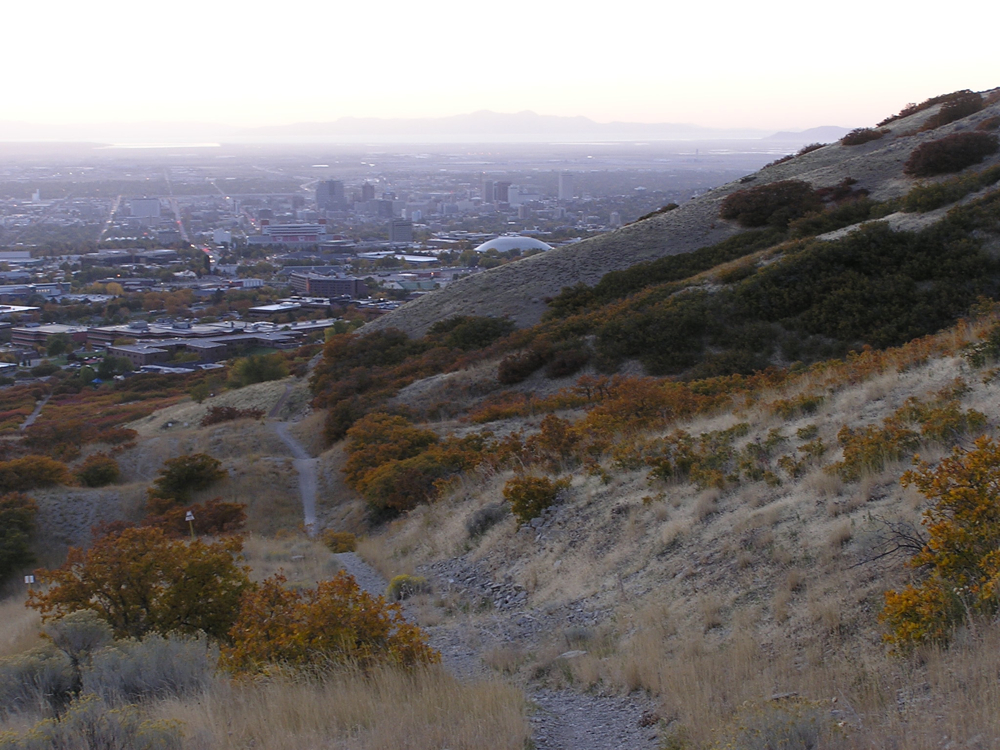
The Bonneville Shoreline Trail winds along the hills above Salt Lake City. Michlaovic/Wikimedia Commons
Climate and clean air
Tailpipe emissions: One of President Biden’s signature climate policies — an Environmental Protection Agency rule that uses the Clean Air Act to limit tailpipe emissions from cars sold in the U.S. — was under threat before Chevron’s repeal. The attorneys general of more than two dozen states, including Idaho, Montana, Utah and Alaska, sued the EPA in April, shortly after it released a final rule that aims to dramatically reduce nationwide carbon emissions by pushing automakers to sell greater proportions of hybrid and electric vehicles.
Existing laws are not explicit regarding whether regulators can take action against mobile sources of greenhouse gases — such as cars — as opposed to stationary sources like an industrial plant, according to Reuters.
The U.S. Court of Appeals for the District of Columbia Circuit will decide whether the rule will stand, without the leeway for agency interpretation that Chevron allowed.
Power plant emissions: Released in April, the EPA’s new carbon rule is ripe for legal challenges in a post-Chevron landscape. The regulation relies on the Clean Air Act, Clean Water Act and Resource Conservation and Recovery Act to limit pollution from power plants, including coal and natural gas plants, effectively pushing them to retire or install carbon capture technology to cut 90% of their greenhouse gas emissions by 2032 — a move hailed by climate advocates. Many states, however, argue that the drastic limits are unreasonable and vastly exceed the EPA’s authority under written law.
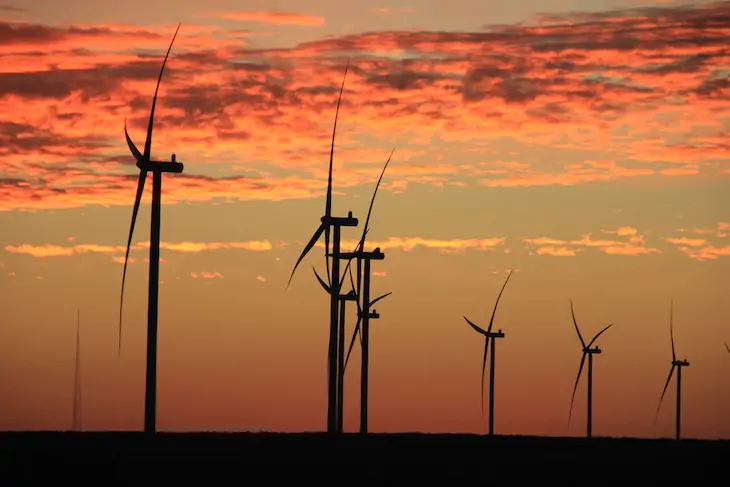
The Crossing Trails Wind Farm between Kit Carson and Seibert, about 150 miles east of Denver, has an installed capacity of 104 megawatts, which goes to Tri-State Generation and Transmission. Photo/Allen Best
Clean energy
IRA tax credits: In 2022, Congress passed the Inflation Reduction Act, a sweeping piece of legislation that included numerous tax incentives to spur the clean energy transition.
While the law itself remains intact, in a future without Chevron, legal experts are concerned that agencies will struggle to implement it. Some lawmakers disagreed, for instance, on whether sourcing electric vehicle components from certain foreign countries should be allowed; others have protested a Treasury Department rule that blocks nuclear plants from receiving funding for clean hydrogen projects.
Without the Chevron precedent, legal challenges to agency rules meant to implement the IRA could significantly stall the nation’s progress toward rapid decarbonization.
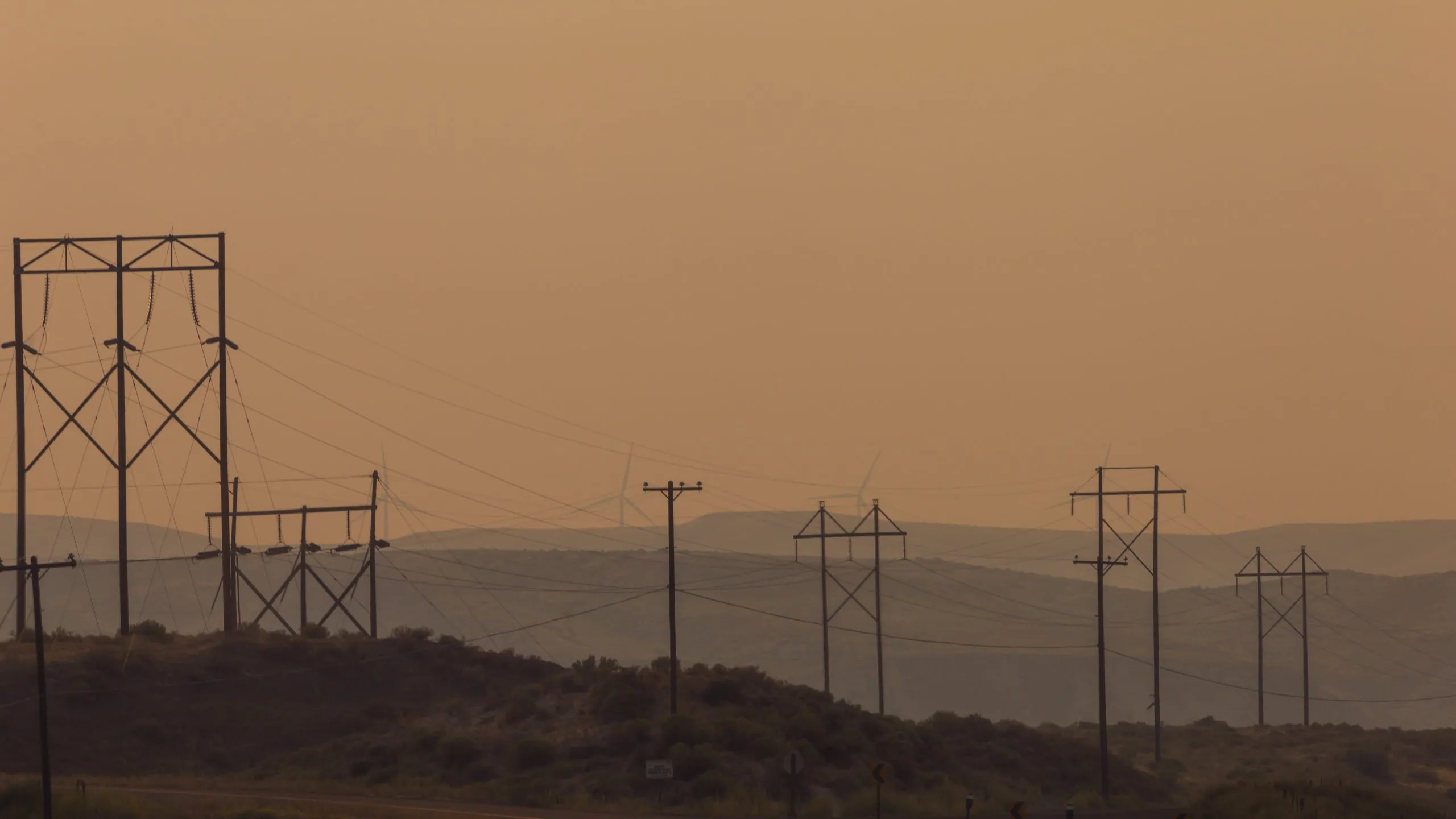
Wind turbines and utility lines in central Idaho, amid smoke from wildfires in 2021. Simon Foot/CC via Flickr
Transmission lines: To bring more decentralized solar and wind farms onto the power grid, developers need more transmission lines. The long wait times to get them approved have become a bottleneck, endangering the nation’s climate goals.
That’s why, in May, the Federal Energy Regulatory Commission released Order 1920, a regulation that forces transmission operators to be more proactive in their planning process, with the aim of easing connections to the grid. It’s already received partisan pushback from Republican states and state utility commissions, who say that the rule is too prescriptive and limits their legal role in the planning process.
FERC’s sole Republican Commissioner, Mark Christie, is already arguing that Chevron’s repeal will likely nullify Order 1920.
“The most important legal lifeline that Order No.1920 needed was pulled away today,” Christie wrote on the day of Chevron’s repeal, “and the final rule’s chances of surviving court challenges just shrank to slim to none.”
Labor Day Parade on Silverton’s Greene Street, once a strong Union town photo via The Denver Public Library.
Labor
The Fair Labor Standards Act, passed in 1938, mandated a national minimum wage, ended child labor and established overtime pay rules. But the law is at times ambiguous regarding which workers benefit from these standards. Historically, the U.S. Department of Labor issues rules clarifying issues like safety regulations, unemployment standards and union-organizing protections.
Without Chevron, decades of these interpretations are now subject to legal scrutiny. A blog post by Littler Mendelson P.C., a well-known law firm that often represents employers in union and labor litigation, predicts that federal labor regulators will issue fewer and more narrow regulations.
A Texas judge has already ruled to block the Department of Labor’s new overtime rule from going into effect. Devon Ombres, an attorney for the Center for American Progress, a progressive think tank, said that “labor law is so dependent on Chevron deference that virtually any type of progressive regulation that protects workers is going to be challenged under this new paradigm.”