2024 #COleg: #Colorado Water Quality Control Commission to kick off high-stakes wetlands regulatory process Sept. 4 — Jerd Smith (Fresh Water News)

Blanca Wetlands, Colorado BLM-managed ACEC Blanca Wetlands is a network of lakes, ponds, marshes and wet meadows designated for its recreation and wetland values. The BLM Colorado and its partners have made strides in preserving, restoring and managing the area to provide rich and diverse habitats for wildlife and the public. To visit or get more information, see: http://www.blm.gov/co/st/en/fo/slvfo/blanca_wetlands.html. By Bureau of Land Management – Blanca Wetlands Area of Critical Environmental Concern, Colorado, Public Domain, https://commons.wikimedia.org/w/index.php?curid=42089248

Click the link to read the article on the Water Education Colorado website (Jerd Smith):

August 28, 2024

Dozens of environmentalists, homebuilders, farmers and road builders, along with Colorado water quality regulators, will buckle down next week to begin work on a complex new set of rules designed to protect thousands of acres of wetlands for years to come.

And, yes, they want your help.

Colorado’s Water Quality Control Commission plans a series of public meetings in the coming months, with a kickoff meeting Sept. 4, followed by workshops Sept. 13 and Oct. 4. Meetings will be held virtually and workshops will be held virtually and in person, according to state health officials.

Colorado is the first state to address a major gap created last year when the U.S. Supreme Court, in its Sackett v. EPA decision, wiped out a critical set of environmental safeguards contained in the Clean Water Act. 
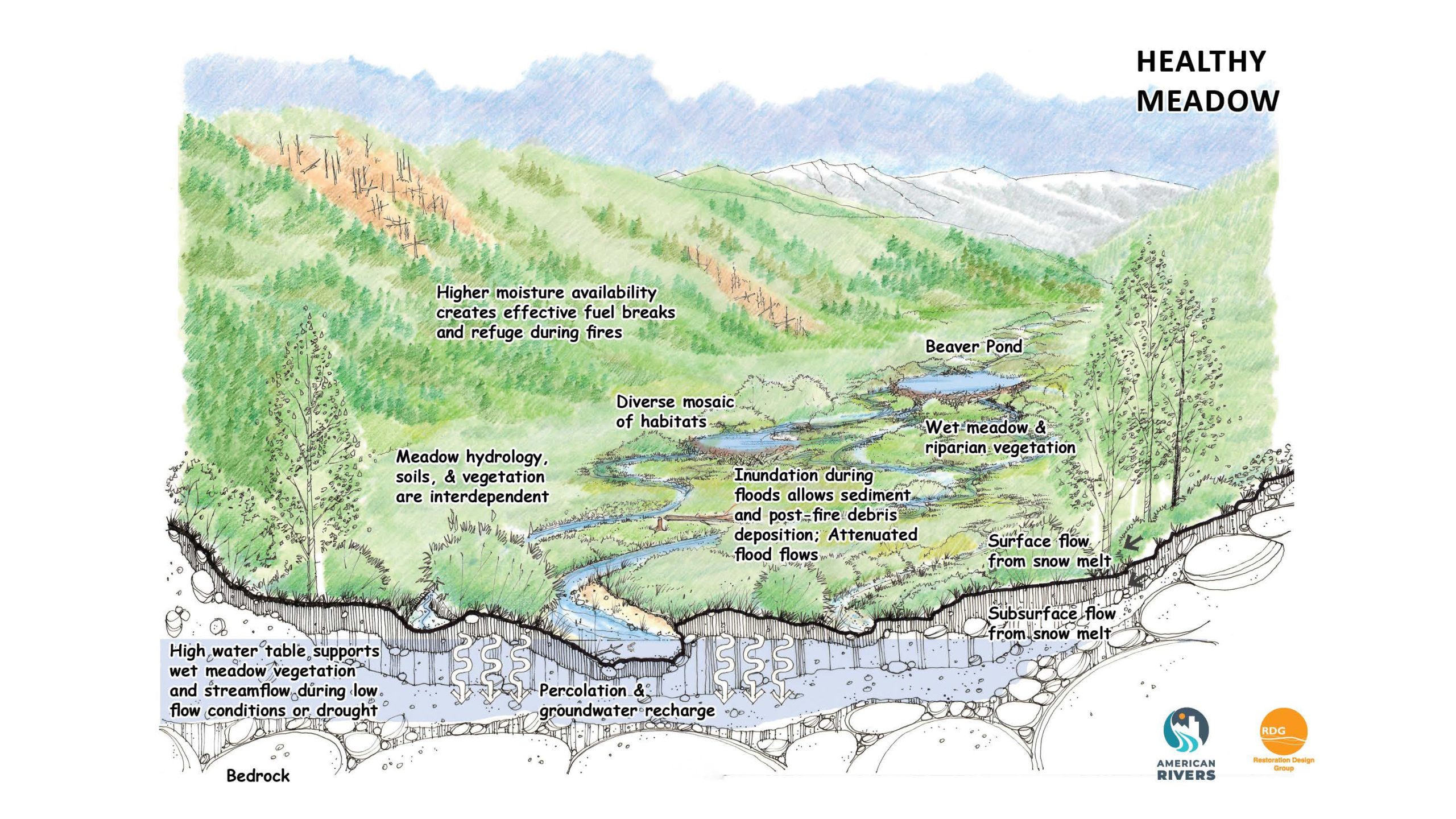
Healthy mountain meadows and wetlands are characteristic of healthy headwater systems and provide a variety of ecosystem services, or benefits that humans, wildlife, rivers and surrounding ecosystems rely on. The complex of wetlands and connected floodplains found in intact headwater systems can slow runoff and attenuate flood flows, creating better downstream conditions, trapping sediment to improve downstream water quality, and allowing groundwater recharge. These systems can also serve as a fire break and refuge during wildfire, can sequester carbon in the floodplain, and provide essential habitat for wildlife. Graphic by Restoration Design Group, courtesy of American Rivers

House Bill 1379, approved by Colorado lawmakers in May, identifies which streams and wetlands must be protected, and where exceptions and exclusions for such things as homebuilding, farming and road building will apply. During the next 16 months, the rules spelling out how the law will be enforced must be crafted and approved by the Colorado Water Quality Control Commission.

Lawmakers have given the regulators and participants until December 2025 to finish the rules and launch the oversight program.

“For 50 years we all depended on the Clean Water Act to protect our watersheds,” said Stu Gillespie, an attorney with EarthJustice who helped negotiate House Bill 1379. “But that was taken away by the Supreme Court. Now we all need to be involved because we all rely on these watersheds. I hope people will keep tabs and engage from the outset so we don’t lose any more wetlands and streams.”

Ephemeral streams are streams that do not always flow. They are above the groundwater reservoir and appear after precipitation in the area. Via Socratic.org

The Sackett case had major impacts in Colorado and the West, where vast numbers of streams are temporary, or ephemeral, flowing only after major rainstorms and during spring runoff season, when the mountain snow melts. The Sackett decision said, in part, that only streams that flow year-round are subject to oversight. It also said that only wetlands that had a surface connection to continually flowing water bodies qualified for protection. Many wetlands in Colorado have a subsurface connection to streams, rather than one that can be observed above ground.

House Bill 1379 corrected those problems.

But lawmakers and others remain worried that the Colorado Department of Public Health and Environment’s Water Quality Control Division, already facing a major backlog on issuing permits for one of its programs, will have difficulty keeping up with the permitting demands of the new wetlands program.

Sen. Barbara Kirkmeyer, a Republican from Brighton, said she is hopeful that new requirements calling for frequent reporting to the state’s Joint Budget Committee, or JBC, and lawmakers will keep the program on track and help fill the funding gaps that have plagued the health department in recent years.

Lawmakers have provided nearly $750,000 this year for the initial work and OK’d four new full-time positions for the program as well as part-time legal support, according to the final fiscal note on House Bill 1379.

“We’ve always understood that we needed a permitting process in place,” Kirkmeyer said Aug. 20 at a meeting of the Colorado Water Congress. “But we also need safeguards to ensure there is oversight at the JBC so we can ensure permits are being processed in a timely manner.”


More by Jerd Smith

Wetlands, which are havens of biodiversity, offer priceless ecological benefits. (Photo Credit: John Fielder via Writers on the Range)

Farming and ranching statistics in Southwest #Colorado trend opposite to national numbers: As U.S. agriculture shrinks, La Plata County grows — The #Durango Herald

Billy Goat Hop Farm is a dream come true for beginning farmers Audrey Gehlhausen and Chris Dellabianca. Photo courtesy of Billy Goat Hop Farm LLC.

Click the link to read the article on The Durango Herald website (Sophia McCrackin). Here’s an excerpt:

August 26, 2024

High and increasing costs are barriers to establishing operations for new or young farmers and ranchers. As a result, there are fewer agricultural producers nationwide, and the average age of those producers is rising. The problem is worse in Colorado, where land especially has become extraordinarily expensive, and water access incredibly valuable. But data from the U.S. Department of Agriculture shows growth in Southwest Colorado, especially La Plata County. Farms and ranches are opening and expanding, and the average age of local agricultural producers is dropping…

Education is huge nonfinancial barrier for new agricultural producers. Without knowledge of agricultural science and market conditions, becoming a farmer or rancher turns from fiscally difficult to nearly impossible. The former site of Fort Lewis College, the Old Fort, hosts hands-on agricultural education, including Farmers in Training, Farm Incubator and Ranching Apprenticeship programs. The Old Fort also offers programs for high school students. Around 2008, Beth LaShell, director of the Old Fort, noticed an influx of new farmers and ranchers in the county. Most of those operations disappeared after a few years of trial and error because of high costs and lack of experience…So the Incubator Program was born. It is designed to share the Old Fort’s land, water, infrastructure and training with prospective farmers and ranchers. It gives new farmers the opportunity to gain experience in the industry and take classes without taking on serious debt in an uncertain endeavor.

#OakCreek hustles to address water and sewer compliance, Sheriff Reservoir improvements — Steamboat Pilot & Today

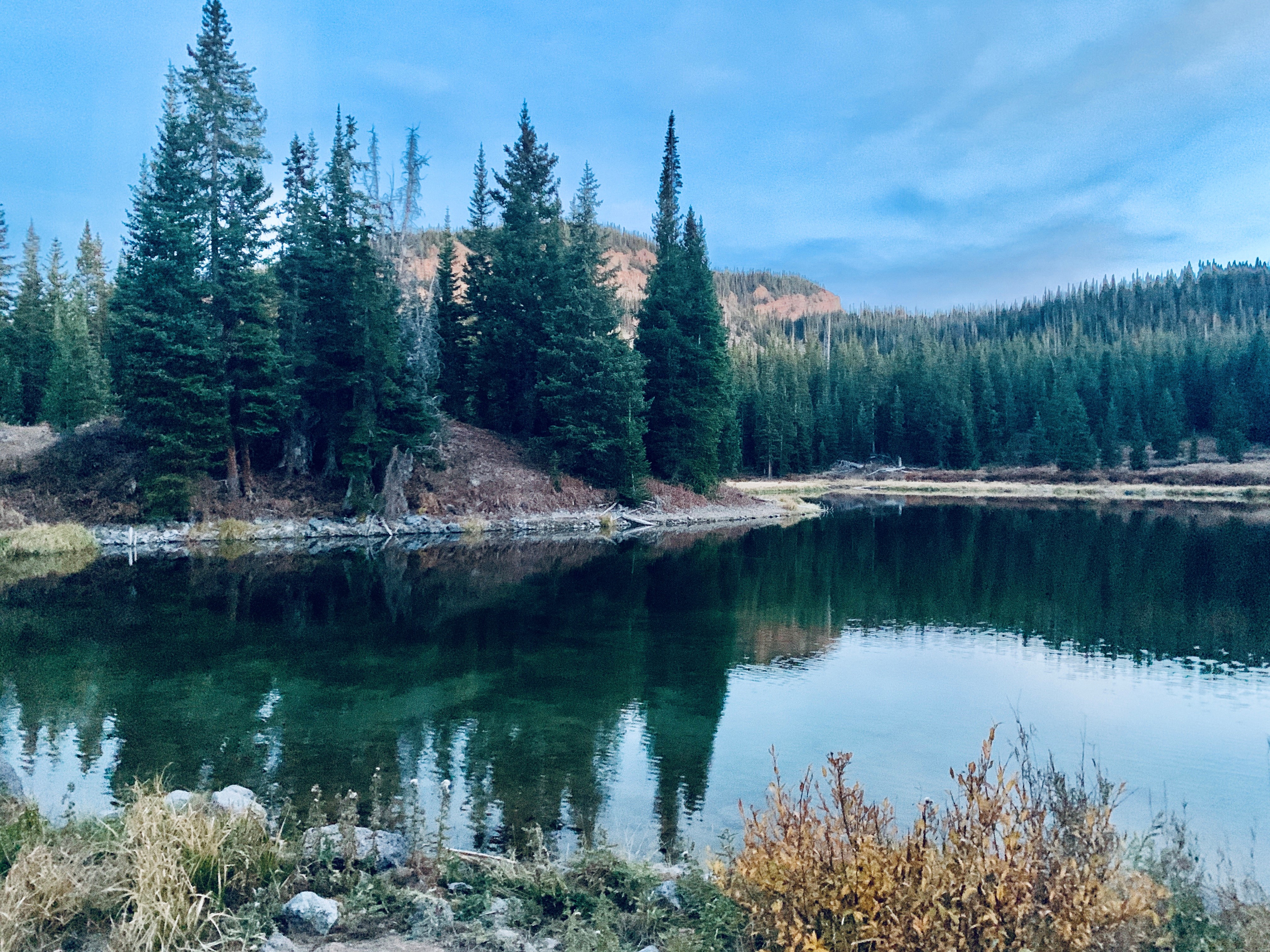
Photo credit: Medicine Bow National Forest

Click the link to read the article on the Steamboat Pilot & Today website (Trevor Ballantyne). Here’s an excerpt:

August 27, 2024

Oak Creek officials are moving quickly to address needed rehabilitation work at the Sheriff Reservoir Dam while also working to identify and undertake improvements to the town’s drinking water and wastewater treatment systems. Town Council members on Thursday approved $10,000 in funding to hire W.W. Wheeler & Associates in its effort to secure funding for the dam rehabilitation project. In a separate decision, council approved $50,000 for an agreement with AquaWorks DBO Inc. to support wastewater and drinking water improvements needed for the town to comply with state and federal regulations…

Built in 1954 and located 12 miles southwest of Oak Creek within the Medicine Bow-Routt National Forest in Rio Blanco County, the Sheriff Reservoir Dam is owned and operated by the town of Oak Creek. The dam is currently subject to storage restrictions and is considered a “high-hazard embankment dam,” according to the state’s Division of Water Resources. Conditions leading to that designation include inadequate spillway capacity and operational issues linked to an aging low-level outlet works gate. Other issues include a sinkhole discovered in the dam’s foundation and outlet issues linked to a stem casing that is not watertight and a gate that does not close properly. W.W. Wheeler & Associates estimates total cost of the rehabilitation work to be $5.5 million…